

Submitted:
03 January 2026
Posted:
04 January 2026
Read the latest preprint version here
Abstract
In today’s digitally connected world, social media has become central to culture, shaping how we interact, see ourselves, and feel. Platforms like Facebook, Instagram, and TikTok are promoted as ways to connect, but growing evidence shows they can also cause anxiety, social comparison, and emotional strain. Many studies explore these positive and negative effects, but fewer examine changes in academic discussion about social media and well-being over time. To address this issue, the present study employs BERTopic, a dynamic topic model, to analyze 7,254 journal articles indexed in the Web of Science between 2010 and 2025. The analysis identifies 110 distinct research topics and reveals that the most prominent themes converge around anxiety-related outcomes, social connection and support, as well as contextual and methodological developments such as COVID-19 communication and AI-based depression detection. Temporal trend analysis indicates a clear shift in scholarly focus. Research published between 2010 and 2016 adopted a relatively balanced perspective, addressing both the connective potential and the psychological risks associated with social media use. However, since 2017—coinciding with the rapid rise of visually oriented platforms—academic attention has increasingly centered on anxiety-related issues, particularly fear of missing out and body image concerns. By mapping the shift from connection to anxiety focus, the study shows how academic research tracks social change. The results also suggest that future research should explore platform-specific mechanisms, identify protective factors against digital stress, and contribute to the creation of healthier online spaces.
Keywords:
digital anxiety
; BERTopic
; fear of missing out
; FoMO
1. Introduction
Social media is no longer merely a technological tool but has increasingly become a real-time reflection of society, functioning as a dual mirror that both shapes and reveals collective psychological processes (Twenge, 2017). Platforms such as Facebook have incorporated billions of users into densely interconnected digital networks, while newer visually oriented platforms, including Instagram and TikTok, have redefined modes of self-presentation through symbolic and image-based communication. These platforms now serve as essential infrastructures for interpersonal interaction, information acquisition, and identity construction, deeply embedded in everyday life (Valkenburg, 2022). However, while social media promises unprecedented connectivity—enabling accessible social support and easy maintenance of distant relationships—it also brings the contrasting reality of growing concerns related to anxiety, depression, and psychological strain. Prior research has demonstrated that increased time on Facebook correlates with declines in subjective well-being, indicating that the expansion of digital connectedness may have hidden psychological costs (Kross et al., 2013).
Over the past decade, “connection” and “anxiety” have emerged as central and contrasting themes in psychological research on social media. Scholars adopting a connection-oriented perspective argue that the effects of social media vary depending on the quality of online interactions. When users receive personalised and meaningful messages from close ties, feelings of loneliness are significantly reduced, and well-being is enhanced (Burke & Kraut, 2016). Social media platforms can thus strengthen existing relationships and provide peer-to-peer support networks for individuals experiencing mental health challenges, complementing traditional clinical services (Naslund et al., 2020). In contrast, a separate stream of research has reported a significant positive association between overall social media use and the risk of depression among younger populations (Lin et al., 2016). Here, social comparison theory (Festinger, 1954) becomes especially relevant: social media use—particularly on Facebook—can trigger upward comparisons, evoke envy, and subsequently increase depressive symptoms (Appel et al., 2015; Tandoc et al., 2015). The debate thus centres on whether the benefits of online connection outweigh the psychological risks, or vice versa.
2. Literature Review
The impact of social media on well-being has long been a central yet highly contested topic in psychological research. To bridge the debate outlined above, some studies portray social media as a “utopian” space that facilitates interpersonal connection and emotional support, whereas others emphasise its potential to foster social comparison, anxiety, and loneliness, thereby producing a more “dystopian” psychological landscape. Rather than privileging one perspective over the other, the present study seeks to integrate these competing views from both theoretical and empirical standpoints. Particular attention is given to anxiety-related discourses and the interplay among multiple psychological mechanisms, which together form the theoretical foundation of this research.
2.1. Connection Mechanisms in Social Media Use
The theoretical core of the utopian perspective lies in the potential of social media to function as a medium for social support. Early research quickly moved beyond the simplistic assumption that increased usage necessarily leads to stronger social ties, shifting instead toward a more nuanced examination of interaction quality. A landmark study of Facebook users demonstrated that the effects of social media are not homogeneous. Compared with passive consumption of others’ content, active and personalised communication with strong ties, such as close friends, was found to significantly enhance well-being and perceived social connectedness while reducing feelings of loneliness (Burke & Kraut, 2016). This finding underscores a crucial mechanism: the psychological value of social media lies not in its mere presence but in its capacity to facilitate meaningful and targeted interactions. Subsequent meta-analytic evidence further confirms that perceived social support derived from high-quality online interactions serves as a key positive mediator between social media use and life satisfaction (Huang, 2020).
In recent years, this line of research has expanded into applied domains, particularly in mental health. Scholars have shown that social media platforms can provide valuable support networks outside traditional healthcare systems for individuals facing psychological challenges. These platforms enable peer-to-peer support, allowing individuals with shared experiences to exchange information, express emotions, and receive empathy. Such organically formed online communities demonstrate substantial potential to reduce stigma and promote recovery from mental health difficulties (Naslund, Aschbrenner, Marsch, & Bartels, 2020).
2.2. Psychological Mechanisms Linking Social Comparison and Problematic Use
In contrast to utopian narratives, the dystopian perspective is supported by a larger and increasingly robust body of empirical evidence. Its explanatory power lies not only in documenting negative outcomes of social media use, but also in elucidating a complex psychological process that links external exposure, internal motivational states, and maladaptive behavioural patterns. Within this framework, social comparison and fear of missing out (FoMO) have emerged as two interrelated mechanisms that jointly drive anxiety-related outcomes and problematic social media use.
Social comparison theory (Festinger, 1954) provides a foundational lens for understanding how social media environments may undermine well-being. Platforms characterised by visual and idealised self-presentation, such as Facebook and Instagram, create unprecedented conditions for upward social comparison. A substantial body of research consistently demonstrates that exposure to others’ carefully curated “highlight reels” readily elicits envy, a distressing social emotion that has been shown to directly predict the onset and intensification of depressive symptoms (Appel, Gerlach, & Crusius, 2015; Tandoc, Ferrucci, & Duffy, 2015). Importantly, these effects are not uniform across individuals. Social comparison orientation has been identified as a key moderating factor, with individuals high in this trait engaging more frequently with social media and experiencing greater declines in self-esteem and more intense negative affect following exposure to comparison-related content (Vogel & Rose, 2016). This line of evidence highlights a vulnerability mechanism: certain personality characteristics increase susceptibility to harm in comparison-laden digital environments.
Beyond social comparison, fear of missing out has been identified as a central internal motivational force rooted in the always-connected architecture of social media. FoMO is defined as a pervasive apprehension that others may be having rewarding experiences from which one is absent (Przybylski, Murayama, DeHaan, & Gladwell, 2013). Rather than representing a transient form of anxiety, FoMO has become a key construct for explaining why users engage in compulsive checking behaviours and struggle to disengage from digital platforms. Research examining its antecedents consistently shows that FoMO is positively associated with a heightened need for belonging, neurotic personality traits, and insecure attachment styles, particularly anxious attachment (Beyens, Frison, & Eggermont, 2016; Blackwell, Leaman, Tramposch, Osborne, & Liss, 2017). Individuals who are more sensitive to exclusion and relational uncertainty are therefore more likely to experience FoMO. In terms of outcomes, FoMO has been identified as one of the strongest predictors of problematic social media use (PSMU) (Weaver & Swank, 2021). Path-analytic models further clarify this mechanism by demonstrating that insecure attachment undermines self-esteem, which in turn intensifies FoMO and ultimately leads to maladaptive patterns of social media use (Gori, Topino, & Griffiths, 2023). This sequential pathway illustrates how psychological insecurity may gradually escalate into persistent digital anxiety.
FoMO-driven compulsive engagement subsequently gives rise to a range of observable maladaptive outcomes. For example, phubbing behaviours have been shown to erode the quality of face-to-face interactions and interpersonal relationships (Tandon, Dhir, Talwar, Kaur, & Mäntymäki, 2022). Over time, the combined pressures of compulsive checking, social overload, and persistent comparison contribute to social media fatigue, which is significantly associated with heightened levels of anxiety and depressive symptoms (Dhir, Yossatorn, Kaur, & Chen, 2018). Importantly, recent research has moved beyond correlational evidence to establish stronger causal links. Large-scale longitudinal studies first demonstrated that overall social media use is positively associated with the risk of depression (Lin et al., 2016). Subsequently, a randomised controlled trial showed that limiting daily social media use to 30 minutes led to significant reductions in loneliness and depressive symptoms, providing direct causal evidence for these effects (Hunt, Marx, Lipson, & Young, 2018). At a broader structural level, a quasi-experimental study exploiting the staggered introduction of Facebook across U.S. universities found that the platform’s diffusion was associated with measurable declines in student mental health, further reinforcing the causal relationship between social media adoption and psychological harm (Braghieri, Levy, & Makarin, 2022).
2.3. The Dual Intensification of Connection and Anxiety During COVID-19
The COVID-19 pandemic, which began in early 2020, created a unique natural experiment to examine the dual effects of social media. Under conditions of physical distancing and social isolation, reliance on digital platforms reached unprecedented levels, simultaneously amplifying both their supportive and harmful potentials.
During lockdowns, social media played a critical role as a social buffer, enabling individuals to maintain interpersonal connections and access emotional support to mitigate loneliness (Geirdal et al., 2021). It also functioned as a key channel for disseminating public health information and mobilising collective coping strategies within virtual public spheres (Abbas, Wang, Su, & Ziapour, 2021). At the same time, the pandemic intensified digital anxiety. Early evidence showed that increased exposure to social media content during the outbreak was positively associated with anxiety and depressive symptoms (Gao et al., 2020). Information overload and the proliferation of misinformation further exacerbated public fear and uncertainty (Ni et al., 2020). Prolonged home confinement may also increase exposure to idealised content, thereby exacerbating social comparison and body image concerns. Emerging post-pandemic research suggests that even short-term social media abstinence can improve body image satisfaction, indicating that some of these effects may persist beyond the crisis period (de Hesselle & Montag, 2024).
2.4. Research Gaps
Although prior narrative reviews and meta-analyses have synthesised the positive and negative mechanisms linking social media use and well-being (e.g., Keles, McCrae, & Grealish, 2020; Huang, 2020; Valkenburg, 2022), these studies primarily focus on effect sizes and causal relationships. In contrast, there remains a limited understanding of how the field itself has evolved over time. While COVID-19–related research provides a salient temporal snapshot, it remains unclear how scholarly attention unfolded during the decade preceding the pandemic, which anxiety-related topics emerged earlier, and whether shifts in research focus reflect broader technological transitions from text-based to image-based platforms and changing sociocultural attitudes.
To address this gap, the present study adopts a bibliometric perspective to revisit the intellectual development of social media and well-being research. Rather than concentrating solely on causal outcomes, this approach emphasises changes in scholarly attention and thematic evolution over time, offering a comprehensive view of the field’s longitudinal trajectory.
3. Research Methodology
To present the knowledge structure of social media and well-being research and its temporal evolution in an objective and systematic manner, this study adopts bibliometric analysis as its primary research method. Bibliometric analysis enables quantitative examination of large-scale scholarly literature by analysing bibliographic metadata and textual content, thereby revealing developmental trends, core themes, and emerging research frontiers within a given field (Zupic & Čater, 2015). Compared with traditional narrative reviews, this approach relies on data-driven procedures that reduce researcher subjectivity and enhance objectivity and reproducibility. This section outlines the data collection process, analytical tools, and the overall workflow of the dynamic topic modelling procedure to establish a coherent research design.
3.1. Data Sources and Corpus Construction
The construction of the literature corpus followed principles of systematicity and reproducibility and proceeded as follows.
First, Web of Science (WoS) was selected as the primary data source. WoS indexes high-quality journals across multiple relevant disciplines, including psychology, sociology, information science, communication studies, and medicine, and provides comprehensive bibliographic metadata, including titles, abstracts, keywords, authorship, and publication years. This makes it particularly suitable for large-scale bibliometric and text-based analyses.
Second, the temporal scope of the literature search was defined as January 1, 2010, to January 31, 2025. The year 2010 was chosen as the starting point because it marks not only the launch of Instagram but also the emergence of a new generation of social media platforms centred on visual content and mobile devices. Following this shift, research on social media and psychological well-being began to expand rapidly.
Third, to balance recall and precision, a Boolean search strategy was designed. To ensure that social media constituted the primary focus rather than a peripheral variable, retrieved articles were required to include core social media–related terms in their titles. In addition, the topic field—covering titles, abstracts, and author keywords—was required to include constructs related to well-being or mental health. The complete search query was as follows:
TI = (“social media” OR “social networking sites” OR “SNS” OR “Facebook” OR “Instagram” OR “Twitter” OR “TikTok”) AND TS = (“well-being” OR “wellbeing” OR “happiness” OR “life satisfaction” OR “anxiety” OR “depression” OR “loneliness” OR “stress” OR “mental health” OR “social comparison” OR “FOMO” OR “fear of missing out” OR “social support” OR “belonging” OR “connection”)
Finally, after the initial retrieval, non-journal document types, such as conference proceedings and book chapters, were excluded. The final dataset comprised 7,254 journal articles. For each article, full records—including titles, abstracts, author keywords, and publication years—were exported and consolidated into a structured JSON-format corpus, which served as the basis for subsequent analyses.
3.2. BERTopic Dynamic Topic Modelling
Traditional topic modelling approaches, such as Latent Dirichlet Allocation (LDA), require researchers to predefine the number of topics and rely primarily on word co-occurrence patterns. As a result, they often struggle to capture deeper semantic relationships within large-scale textual data. To more effectively uncover latent semantic structures and automatically identify research topics, this study employs the BERTopic model, an advanced topic modelling framework that integrates transformer-based language representations with clustering techniques (Grootendorst, 2022). The analytical workflow consists of four core steps, as illustrated in Figure 1.
First, all article abstracts were transformed into numerical semantic representations. We employed the pre-trained transformer-based language model all-MiniLM-L6-v2 to encode each abstract into a high-dimensional semantic vector. Compared with traditional bag-of-words approaches, this method offers substantial advantages in contextual understanding, as it captures subtle semantic differences across varying contexts. Consequently, documents that are semantically similar—despite not sharing identical vocabularies—are mapped closer together in the embedding space.
Second, dimensionality reduction was applied to the high-dimensional semantic vectors to facilitate clustering. We used Uniform Manifold Approximation and Projection (UMAP), a nonlinear dimensionality reduction algorithm that preserves the topological structure of the original high-dimensional space. By compressing complex semantic relationships into a lower-dimensional representation while maintaining relative distances between documents, UMAP provides an effective foundation for accurate topic clustering.
Third, document clustering was performed in the reduced semantic space using Hierarchical Density-Based Spatial Clustering of Applications with Noise (HDBSCAN). As a density-based clustering algorithm, HDBSCAN does not require the number of clusters to be specified in advance and can detect clusters of varying shapes and sizes based on the data’s intrinsic structure. Importantly, it can identify documents that do not belong to any dense region as noise or outliers, which is particularly valuable when analysing large and heterogeneous academic corpora. Each HDBSCAN cluster was treated as a distinct research topic.
Finally, representative keywords were generated for each topic to facilitate interpretation.BERTopic adopts a class-based term frequency–inverse document frequency (c-TF-IDF) approach, aggregating all documents within a topic into a single document. Term frequencies within each topic are then weighted against their overall frequencies across the entire corpus. This procedure highlights words that are frequent within a given topic but relatively rare elsewhere, thereby producing highly discriminative and interpretable topic descriptors. In this study, the c-TF-IDF procedure was implemented using a CountVectorizer, with English stop words removed to further enhance keyword quality.
3.3. Dynamic Topic Trend Analysis
To examine how research topics have evolved over time, this study utilised the dynamic topic analysis functionality implemented in BERTopic. The publication year of each article was treated as a temporal timestamp. For each year, the model calculated the relative prevalence of each identified topic as its proportion among all documents published that year. These yearly topic distributions were aggregated and visualised as time-series line plots, enabling an intuitive examination of the rise and decline of core research themes between 2010 and 2025. By tracing longitudinal changes in topic prevalence, this dynamic analysis provides direct quantitative evidence of shifts in scholarly attention and serves as a key empirical basis for addressing the study’s central research questions.
4. Result
Based on the analysis of 7,254 journal articles, this study employed BERTopic dynamic topic modelling to examine the research landscape of social media and well-being from a macro-to-micro perspective. The results first outline the overall knowledge structure and core research themes identified by the model, then explore semantic relationships and clustering patterns among topics using a topic space visualisation, and finally present the temporal evolution of key themes between 2010 and 2025 to capture shifts in scholarly attention over time.
4.1. The Coexistence of Connection- and Anxiety-Oriented Research Landscapes
Using BERTopic clustering, 110 distinct research topics were identified from the abstracts of 7,254 articles, excluding outlier documents assigned to Topic −1. To focus on mainstream academic discourse within the field, subsequent analyses concentrated on the fifteen most prevalent topics ranked by document frequency.
Qualitative interpretation of the topic keywords reveals that these core themes are not randomly distributed but instead form three clearly distinguishable functional clusters. As summarised in Table 1, the first cluster is dominated by anxiety-oriented discourse and encompasses a range of negative psychological outcomes associated with social media use, including anxiety, depression, social comparison, and problematic usage patterns. The second cluster reflects connection-oriented discourse, focusing on the positive social functions of social media, such as social support, belongingness, and relationship maintenance. The third cluster captures contextual and methodological themes, reflecting the influence of specific social events and the evolution of research methods within the field.
This static structural analysis provides an initial overview of the intellectual landscape of social media and well-being research. Notably, anxiety-oriented topics account for a substantially larger proportion of the core themes than connection-oriented topics, with six topics falling into the former cluster compared with only two in the latter. This imbalance suggests that contemporary scholarly discourse places greater emphasis on the potential psychological risks and adverse outcomes of social media use. Such a pattern likely reflects heightened academic concern regarding mental health issues in digital environments and offers an important foundation for subsequent analyses of temporal change.
This static structural analysis provides a preliminary overview of the knowledge landscape within the field. Notably, anxiety-oriented topics substantially outnumber connection-oriented topics, with six themes classified under the former and only two under the latter. This distribution indicates that current scholarly discourse is more strongly oriented toward the negative psychological consequences associated with social media use. Such a pattern may reflect heightened academic concern regarding potential risks and mental health issues in digital environments and offers important cues for subsequent analyses.
4.2. Semantic Relationships Among Topics
The most prominent pattern is the emergence of a dense and cohesive cluster composed of Topic 0 (social comparison), Topic 1 (body image), Topic 2 (fear of missing out), Topic 4 (adolescent problematic use), Topic 8 (sleep quality), and Topic 14 (cyberbullying). As illustrated in Figure 2, the close semantic proximity among these topics indicates that the academic literature tends to conceptualise these seemingly distinct negative phenomena as interrelated manifestations driven by shared psychological mechanisms, such as comparison processes, dependency, and anxiety. Rather than a loose aggregation of topics, this cluster forms a structured, internally connected knowledge domain.
In contrast, topics associated with positive social functions—specifically Topic 5 (perceived social support) and Topic 11 (online communities)—are positioned close to each other and form a relatively distinct “social connection” island. However, as shown in Figure 3, this island remains separated from the anxiety-dominated cluster by a substantial semantic distance. This spatial separation suggests that, within academic discourse, research examining how social media fosters support and belonging relies on conceptual frameworks and vocabularies that are fundamentally different from those used to investigate anxiety-related outcomes.
Between these two major clusters, topics addressing individual differences, such as Topic 10 (self-esteem and personality), tend to occupy intermediary positions in the semantic space. This pattern implies that personality traits and related moderating variables are commonly treated as mechanisms that influence both positive and negative outcomes of social media use, thereby serving a theoretical bridging function between connection- and anxiety-oriented research streams. In contrast, methodologically oriented topics, such as Topic 6 (AI-based detection), appear relatively isolated within the overall map due to their reliance on specialised technical terminology, as illustrated in Figure 4.
4.3. Dynamic Evolution of Knowledge Focus
During the initial stage between 2010 and 2016, the research landscape exhibited a relatively balanced pattern. Perceived online social support (Topic 5) emerged as a stable and prominent theme, developing in parallel with anxiety-related topics such as social comparison (Topic 0). This period reflects a cautious exploratory phase in which scholars simultaneously examined the potential connective benefits of social media and its possible psychological risks.
A clear turning point becomes visible around 2016–2017, marking the second stage characterised by the rapid rise of anxiety-related themes. Following this point, several topics associated with digital anxiety experienced sharp increases in prevalence. Fear of missing out (Topic 2), which had previously occupied a peripheral position, quickly emerged as a central research focus. At the same time, topics related to body image (Topic 1) and adolescent problematic use (Topic 4) expanded markedly. This shift closely coincides with the growing popularity of visually oriented platforms such as Instagram among younger users and the conceptual consolidation of FoMO as a form of digital stress.
In the third stage, spanning approximately 2018 to the present, anxiety-oriented topics became clearly dominant in the research landscape. Fear of missing out (Topic 2) emerged as the most influential theme, with research volume substantially surpassing that of other topics. Social comparison (Topic 0) and body image (Topic 1) continued to attract sustained scholarly attention. In contrast, perceived online social support (Topic 5), while remaining a stable line of inquiry, gradually shifted from a central position to a more peripheral yet consistent role within the field.
In addition to these core trends, two supplementary patterns merit attention. First, Topic 3 (COVID-19–related social media discourse) displayed a sharp but temporally bounded surge after 2020, forming a pronounced research pulse that reflects the academic community’s immediate response to a major public health crisis. Second, Topic 6 (AI-based depression detection) showed a steady upward trajectory over time, suggesting a potential methodological shift toward integrating computational techniques into mental health research, particularly for early detection and intervention.
Taken together, the results from both static and dynamic analyses delineate the major contours of social media and well-being research. While connection- and anxiety-oriented perspectives have long coexisted within the field, the temporal evidence indicates that scholarly attention has increasingly converged on anxiety-related themes over the past decade. This shift mirrors the growing entanglement between contemporary social media use and psychological experience and provides a foundation for further discussion of its theoretical and practical implications.
5. Conclusion and Future Directions
Over the past decade, how has scholarly attention toward the relationship between social media and well-being evolved? Has academic discourse continued to emphasise the connective value of social media, or has it gradually shifted toward critical reflection on anxiety and psychological risk? By applying BERTopic dynamic topic modelling to 7,254 psychology-related journal articles, this study provides a quantitative mapping of the field’s knowledge structure and its temporal evolution. The findings reveal not only the coexistence of competing discourses but also a clear trajectory in which scholarly focus has moved from relative balance toward increasing concentration on anxiety-related concerns.
5.1. Main Finding
The results demonstrate a pronounced shift in the centre of gravity within research on social media and well-being. During the early phase (approximately 2010–2016), studies tended to adopt a relatively balanced perspective. Connection-oriented discourse, as reflected in perceived online social support (Topic 5), developed alongside anxiety-related themes, such as social comparison (Topic 0). However, around 2017, a marked change in research orientation emerged. Topics associated with digital stress—including fear of missing out (FoMO; Topic 2), body image concerns (Topic 1), and adolescent problematic use (Topic 4)—experienced rapid growth and gradually came to dominate academic attention. In contrast, although social support remained a stable topic, it no longer occupied a central position; instead, it became a secondary but consistent line of inquiry.
This shift closely coincided with the widespread adoption of visually oriented platforms such as Instagram and the theoretical consolidation of FoMO as a key construct in digital psychology. Taken together, the findings indicate that scholarly attention has progressively moved from parallel consideration of potential benefits and risks toward more intensive examination of digital anxiety and psychological vulnerability.
5.2. Implications
As stronger causal evidence has accumulated—most notably through randomised controlled trials (Hunt et al., 2018) and quasi-experimental studies (Braghieri et al., 2022)—scholarly discussions of social media have increasingly centred on psychological risk and harm. In response, new theoretical constructs, such as digital stressors and social media fatigue (Dhir et al., 2018), have emerged, contributing to more layered and integrative frameworks in psychology and information behaviour research. These conceptual developments have advanced understanding of how digitally mediated environments reshape mental health experiences, while also clarifying the mechanisms through which social media use may lead to anxiety and psychological strain.
At the same time, the observed research trends carry important practical implications. Anxiety-related problems associated with social media use have become a salient social reality, underscoring the need for educators, clinicians, and policymakers to incorporate digital well-being literacy into educational and preventive frameworks. Such efforts are particularly critical for adolescents, who may benefit from enhanced critical awareness and self-regulation skills when navigating social media environments (Aalbers et al., 2024). Importantly, connection-oriented discourse has not disappeared but has evolved in focus. Rather than asking whether social media can provide social support, recent research increasingly examines how platform design, usage guidance, and intervention strategies can more effectively foster meaningful social connection and psychological well-being (Burke & Kraut, 2016; Naslund et al., 2020). This shift provides a valuable foundation for future work on digital mental health interventions and human-centred platform design.
5.3. Future Research Directions
Future studies may benefit from greater attention to platform-specific mechanisms. Although social media is often treated as a unified category, platforms differ substantially in their affordances and underlying architectures. For example, algorithmic recommendation systems on TikTok and network-based interactions on Facebook may trigger distinct psychological processes. Comparative research examining how platform characteristics interact with phenomena such as social comparison and FoMO would therefore be particularly valuable.
In addition, given the extensive documentation of negative effects, future research should place greater emphasis on identifying protective factors that buffer against digital stress. Variables such as digital literacy, mindfulness, attachment styles, and personality traits may function as moderating mechanisms in the relationship between social media use and mental health.
Finally, there is considerable scope for advancing research on positive technology and intervention design. Future work could explore how digital platforms and applications can be intentionally designed to promote psychological well-being, encourage meaningful interaction, and reduce harmful comparison. In parallel, the development and evaluation of digital interventions targeting high-risk phenomena—such as FoMO-focused cognitive behavioural therapy (CBT) applications—represent promising directions for both research and practice.
References
- Abbas, J., D. Wang, Z. Su, and A. Ziapour. 2021. The role of social media in the advent of COVID-19 pandemic: Crisis management, mental health challenges and implications. Risk Management and Healthcare Policy 14: 1917–1932. [Google Scholar] [CrossRef] [PubMed]
- Appel, H., A. L. Gerlach, and J. Crusius. 2016. The interplay between Facebook use, social comparison, envy, and depression. Current Opinion in Psychology 9: 44–49. [Google Scholar] [CrossRef]
- Baumeister, R. F., and M. R. Leary. 1995. The need to belong: Desire for interpersonal attachments as a fundamental human motivation. Psychological Bulletin 117, 3: 497–529. [Google Scholar] [CrossRef]
- Beyens, I., E. Frison, and S. Eggermont. 2016. “I don’t want to miss a thing”: Adolescents’ fear of missing out and its relationship to adolescents’ social needs, Facebook use, and Facebook related stress. Computers in Human Behavior 64: 1–8. [Google Scholar] [CrossRef]
- Blackwell, D., C. Leaman, R. Tramposch, C. Osborne, and M. Liss. 2017. Extraversion, neuroticism, attachment style and fear of missing out as predictors of social media use and addiction. Personality and Individual Differences 116: 69–72. [Google Scholar] [CrossRef]
- Braghieri, L., R. Levy, and A. Makarin. 2022. Social media and mental health. American Economic Review 112, 11: 3660–3693. Available online: https://www.google.com/search?q=https://doi.org/10.1257/aer.20211218. [CrossRef]
- Burke, M., and R. E. Kraut. 2016. The relationship between Facebook use and well-being depends on communication type and tie strength. Journal of Computer-Mediated Communication 21, 4: 265–281. [Google Scholar] [CrossRef]
- de Hesselle, L. C., and C. Montag. 2024. Effects of a 14-day social media abstinence on mental health and well-being: Results from an experimental study. BMC Psychology 12, 1: 141. [Google Scholar] [CrossRef]
- Dhir, A., Y. Yossatorn, P. Kaur, and S. Chen. 2018. Online social media fatigue and psychological wellbeing-A study of compulsive use, fear of missing out, fatigue, anxiety and depression. International Journal of Information Management 40: 141–152. [Google Scholar] [CrossRef]
- Ellison, N. B., C. Steinfield, and C. Lampe. 2007. The benefits of Facebook “friends:“ Social capital and college students’ use of online social network sites. Journal of Computer-Mediated Communication 12, 4: 1143–1168. [Google Scholar] [CrossRef]
- Festinger, L. 1954. A theory of social comparison processes. Human Relations 7, 2: 117–140. [Google Scholar] [CrossRef]
- Gao, J., P. Zheng, Y. Jia, H. Chen, Y. Mao, S. Chen, Y. Wang, H. Fu, and J. Dai. 2020. Mental health problems and social media exposure during COVID-19 outbreak. PLoS ONE 15, 4: e0231924. [Google Scholar] [CrossRef]
- Geirdal, A. Ø., M. Ruffolo, J. Leung, H. Thygesen, D. Price, T. Bonsaksen, and M. Schoultz. 2021. Mental health, quality of life, wellbeing, loneliness and use of social media in a time of social distancing during the COVID-19 outbreak. A cross-country comparative study. Journal of Mental Health 30, 2: 148–155. Available online: https://www.google.com/search?q=https://doi.org/10.1080/09638237.2021.1875413. [CrossRef] [PubMed]
- Gori, A., E. Topino, and M. D. Griffiths. 2023. The associations between attachment, self-esteem, fear of missing out, daily time expenditure, and problematic social media use: A path analysis model. Addictive Behaviors 141: 107633. [Google Scholar] [CrossRef] [PubMed]
- Grootendorst, M. 2022. BERTopic: Neural topic modeling with a class-based TF-IDF procedure. arXiv arXiv:2203.05794. [Google Scholar]
- Huang, C. 2020. A meta-analysis of the problematic social media use and mental health. International Journal of Social Psychiatry 68, 1: 12–33. [Google Scholar] [CrossRef] [PubMed]
- Hunt, M. G., R. Marx, C. Lipson, and J. Young. 2018. No more FOMO: Limiting social media decreases loneliness and depression. Journal of Social and Clinical Psychology 37, 10: 751–768. [Google Scholar] [CrossRef]
- Keles, B., N. McCrae, and A. Grealish. 2020. A systematic review: The influence of social media on depression, anxiety and psychological distress in adolescents. International Journal of Adolescence and Youth 25, 1: 79–93. [Google Scholar] [CrossRef]
- Kross, E., P. Verduyn, E. Demiralp, J. Park, D. S. Lee, N. Lin, H. Shablack, J. Jonides, and O. Ybarra. 2013. Facebook use predicts declines in subjective well-being in young adults. PLoS ONE 8, 8: e69841. [Google Scholar] [CrossRef] [PubMed]
- Lin, L. Y., J. E. Sidani, A. Shensa, A. Radovic, E. Miller, J. B. Colditz, B. L. Hoffman, L. M. Giles, and B. A. Primack. 2016. Association between social media use and depression among U.S. young adults. Depression and Anxiety 33, 4: 323–331. [Google Scholar] [CrossRef] [PubMed]
- Naslund, J. A., K. A. Aschbrenner, L. A. Marsch, and S. J. Bartels. 2016. The future of mental health care: Peer-to-peer support and social media. Epidemiology and Psychiatric Sciences 25, 2: 113–122. [Google Scholar] [CrossRef]
- Ni, M. Y., L. Yang, C. M. C. Leung, N. Li, X. I. Yao, Y. Wang, G. M. Leung, B. J. Cowling, and Q. Liao. 2020. Mental health, risk factors, and social media use during the COVID-19 epidemic and Cordon Sanitaire among the community and health professionals in Wuhan, China: Cross-sectional survey. JMIR Mental Health 7, 5: e19009. [Google Scholar] [CrossRef] [PubMed]
- Pittman, M., and B. Reich. 2016. Social media and loneliness: Why an Instagram picture may be worth more than a thousand Twitter words. Computers in Human Behavior 62: 155–167. [Google Scholar] [CrossRef]
- Primack, B. A., A. Shensa, C. G. Escobar-Viera, E. L. Barrett, J. E. Sidani, J. B. Colditz, and A. E. James. 2017. Use of multiple social media platforms and symptoms of depression and anxiety: A nationally-representative study among U.S. young adults. Computers in Human Behavior 69: 1–9. [Google Scholar] [CrossRef]
- Przybylski, A. K., K. Murayama, C. R. DeHaan, and V. Gladwell. 2013. Motivational, emotional, and behavioral correlates of fear of missing out. Computers in Human Behavior 29, 4: 1841–1848. [Google Scholar] [CrossRef]
- Putnam, R. D. 2000. Bowling alone: The collapse and revival of American community. Simon & Schuster. [Google Scholar]
- Tandon, A., A. Dhir, S. Talwar, P. Kaur, and M. Mäntymäki. 2022. Social media induced fear of missing out (FoMO) and phubbing: Behavioural, relational and psychological outcomes. Technological Forecasting & Social Change 174: 121149. [Google Scholar] [CrossRef]
- Tandoc, E. C., P. Ferrucci, and M. Duffy. 2015. Facebook use, envy, and depression among college students: Is Facebooking depressing? Computers in Human Behavior 43: 139–146. [Google Scholar] [CrossRef]
- Twenge, J. M. 2017. iGen: Why today’s super-connected kids are growing up less rebellious, more tolerant, less happy--and completely unprepared for adulthood--and what that means for the rest of us. Simon and Schuster. [Google Scholar]
- Valkenburg, P. M. 2022. Social media use and well-being: A review and synthesis. Annual Review of Psychology 73: 219–242. Available online: https://www.google.com/search?q=https://doi.org/10.1146/annurev-psych-020821-112328. [CrossRef]
- Vogel, E. A., and J. P. Rose. 2016. Self-comparison and the idealized images of Facebook. In The Psychology of Social Networking. De Gruyter: Vol. 1, pp. 1–17. [Google Scholar]
- Vogel, E. A., J. P. Rose, B. M. Okdie, K. Eckles, and B. Franz. 2015. Who compares and despairs? The effect of social comparison orientation on social media use and its outcomes. Personality and Individual Differences 86: 249–256. [Google Scholar] [CrossRef]
- Weaver, J. L., and J. M. Swank. 2021. An examination of college students’ social media use, fear of missing out, and mindful attention. Journal of College Counseling 24, 2: 132–145. Available online: https://www.google.com/search?q=https://doi.org/10.1002/jocc.12181. [CrossRef]
- Zupic, I., and T. Čater. 2015. Bibliometric methods in management and organization. Organizational Research Methods 18, 3: 429–472. [Google Scholar] [CrossRef]
Figure 1.
The flowchart of the BERTopic algorithm.
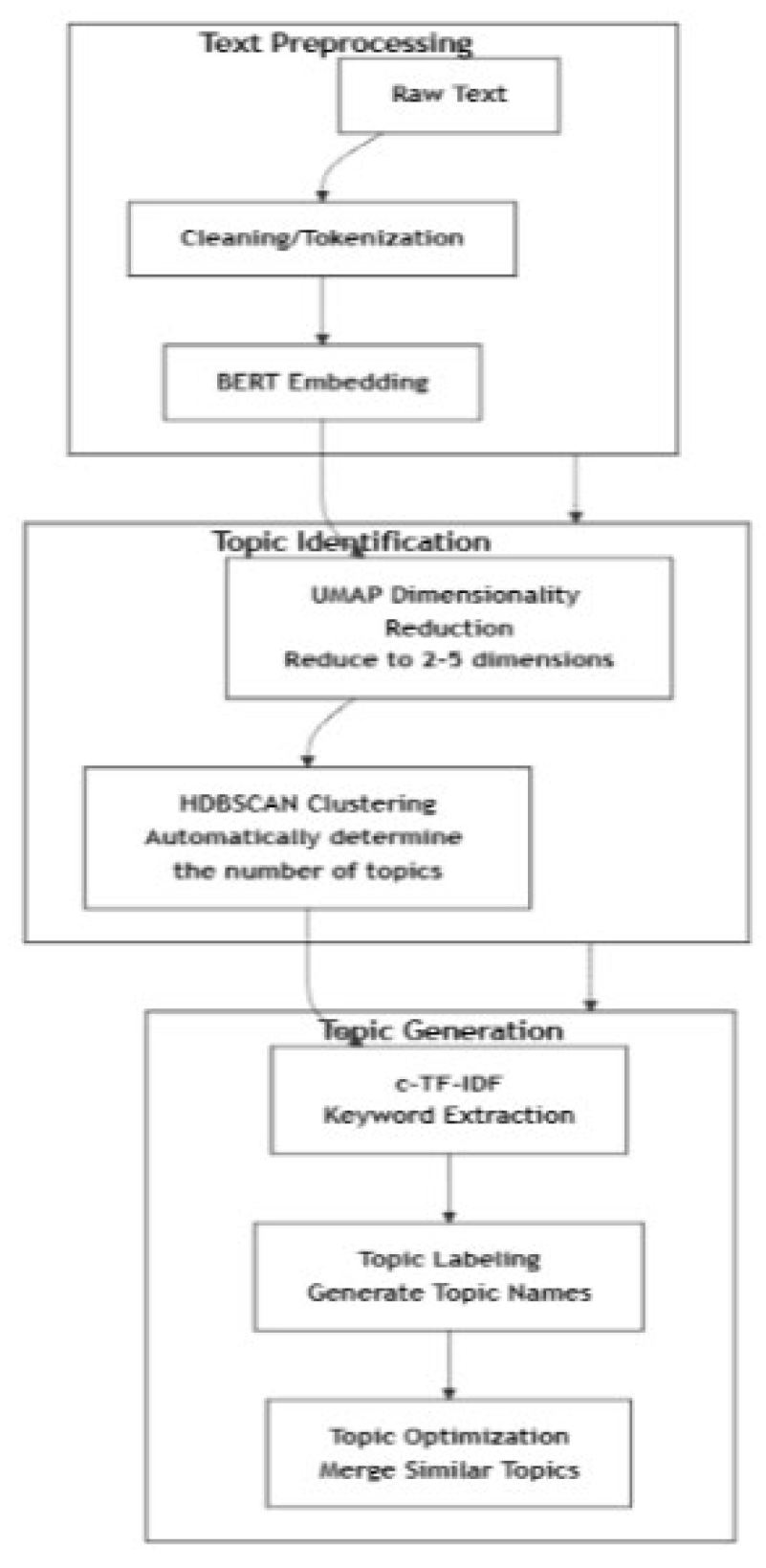
Figure 2.
The Coherent Core of Digital Anxiety.
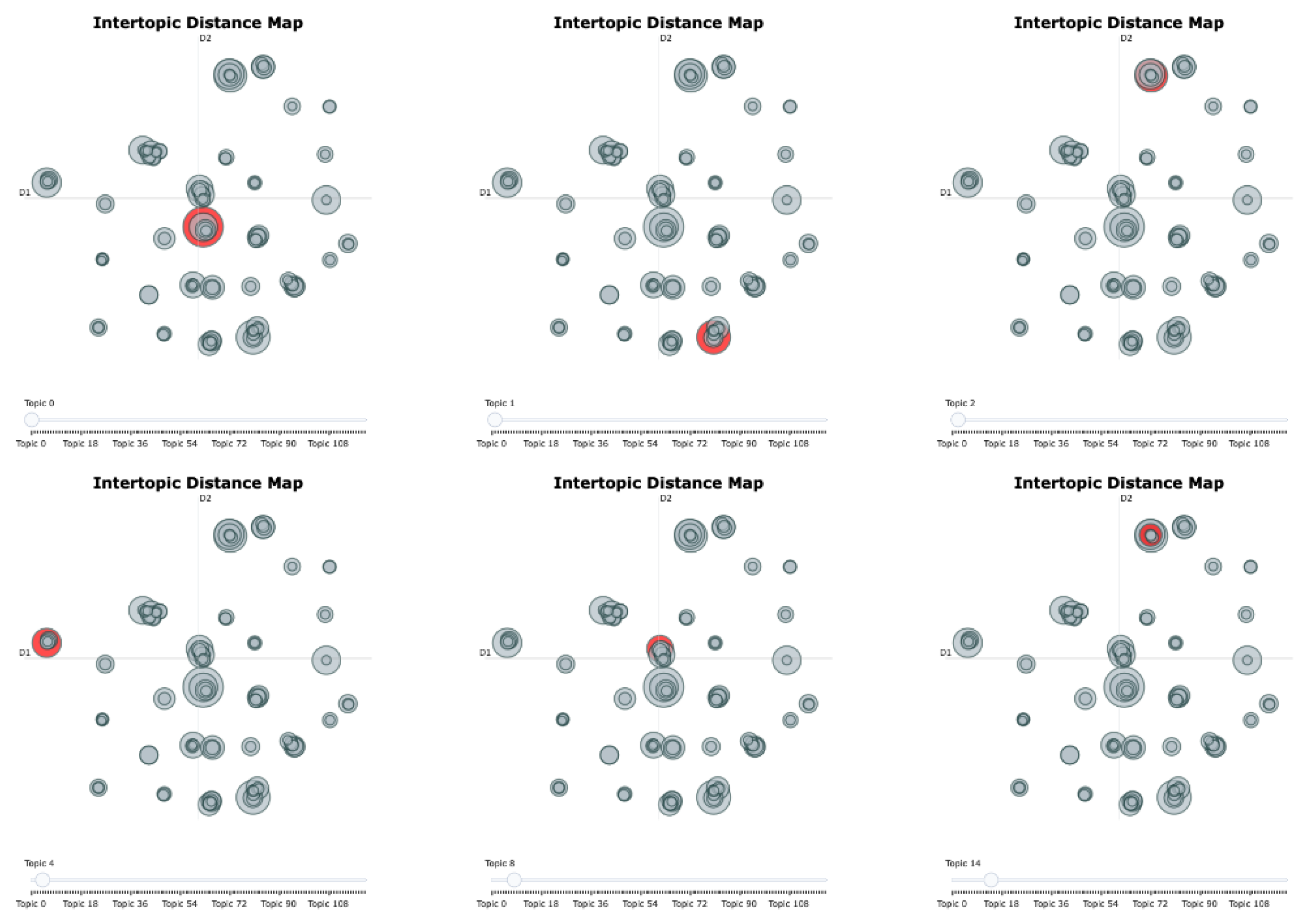
Figure 3.
Social Connection’ as an Isolated Island.
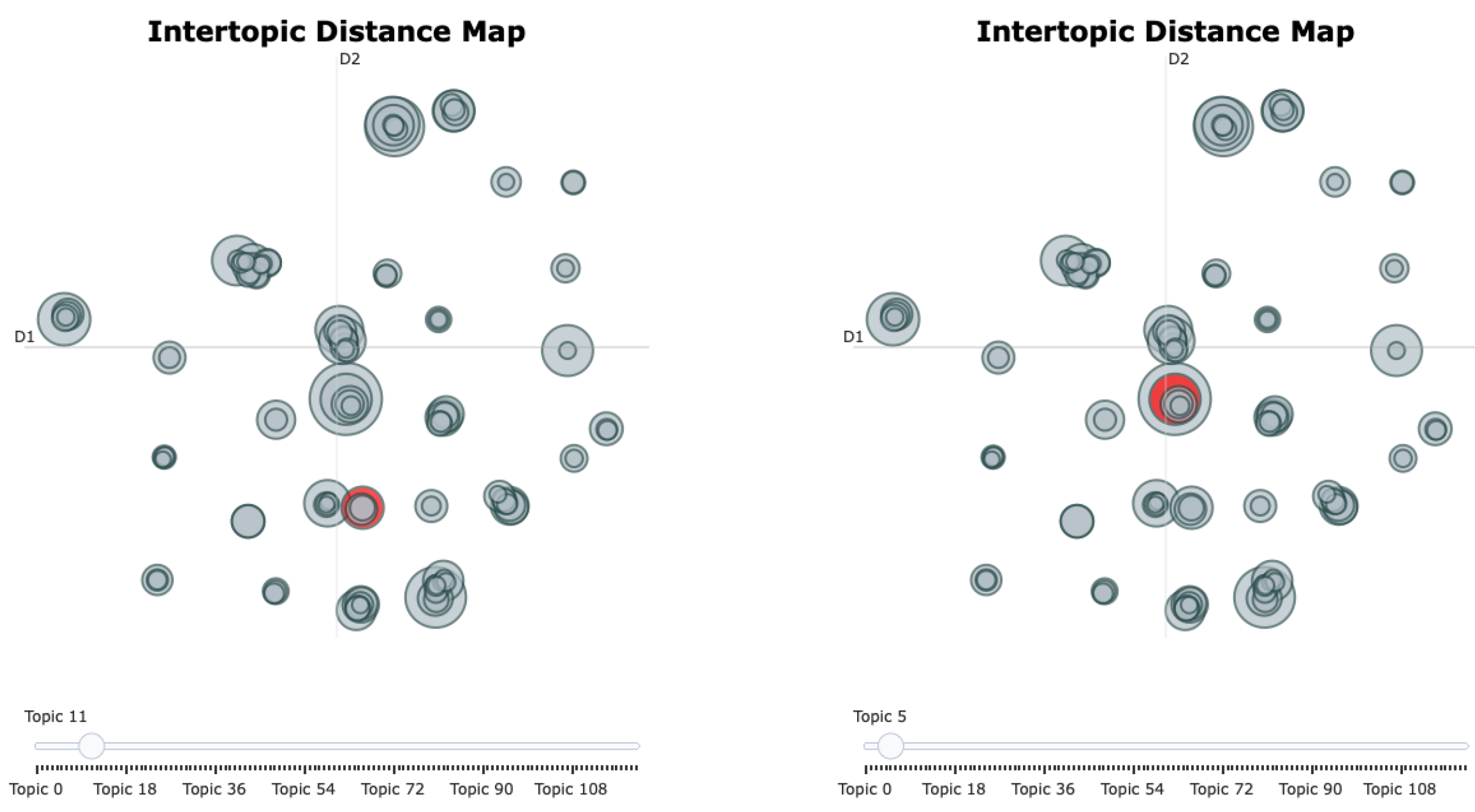
Figure 4.
The Bridge between Methodology and Application.
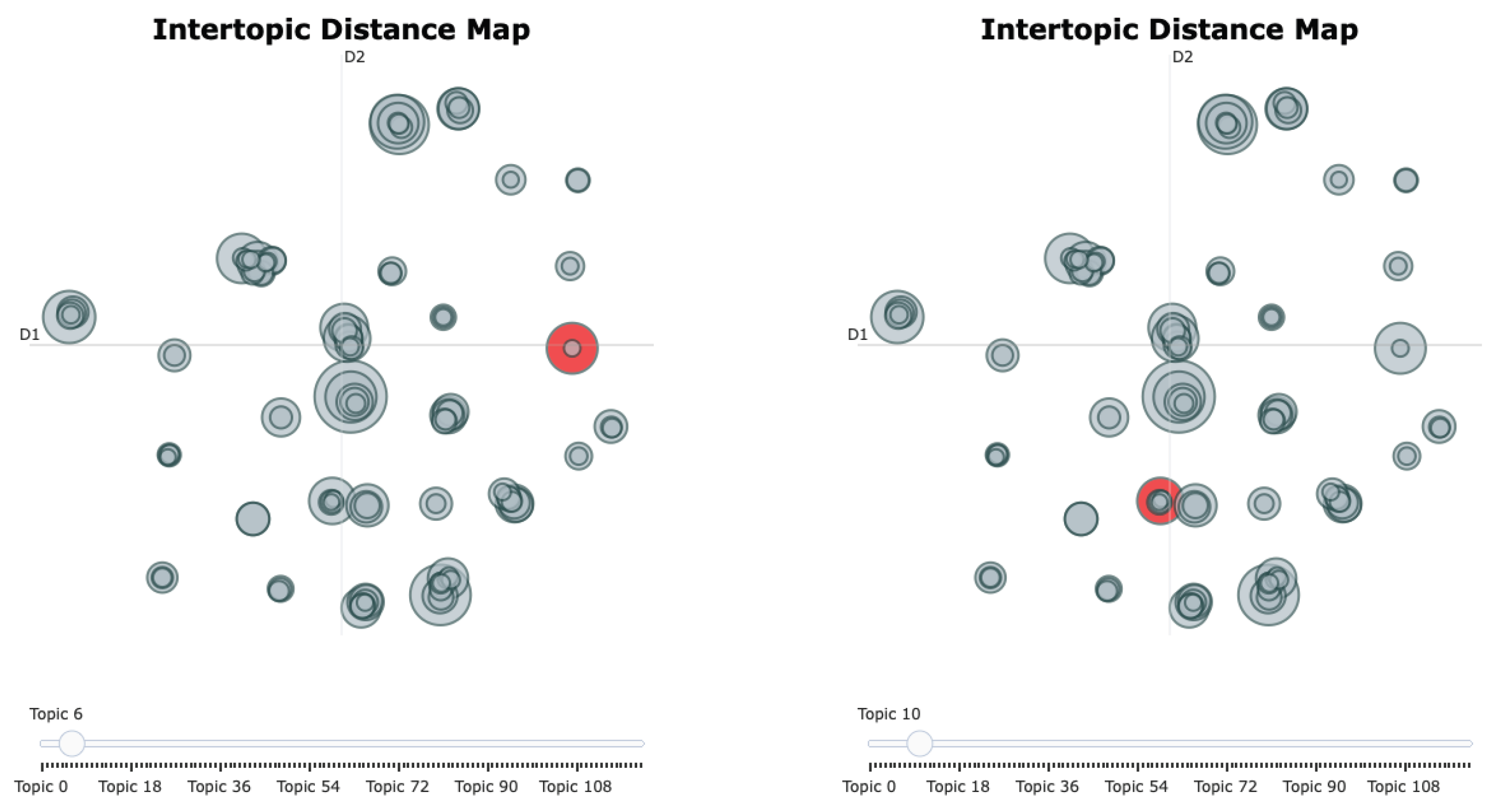

Table 1.
Interpretation and Classification of the Top 15 Core Research Topics.
| Topic | Topic Label | Representative Keywords | Cluster |
| Topic 0 | Social Comparison and Envy on Facebook | Facebook, self, comparison, envy, disclosure | Anxiety-oriented |
| Topic 1 | Body Image and Appearance-Related Anxiety | body, appearance, image, eating, dissatisfaction | Anxiety-oriented |
| Topic 2 | Fear of Missing Out (FoMO) and Problematic Use | fomo, missing, fear, phubbing, psmu | Anxiety-oriented |
| Topic 4 | Adolescent Problematic Use and Psychological Symptoms | adolescents, symptoms, use, smu, problematic | Anxiety-oriented |
| Topic 8 | Social Media Use and Sleep Quality | sleep, quality, anxiety, use, psmu | Anxiety-oriented |
| Topic 14 | Cyberbullying and Aggressive Online Behaviours | cyberbullying, bullying, aggression, victimization | Anxiety-oriented |
| Topic 5 | Perceived Online Social Support | support, social, perceived, online, capital | Connection-oriented |
| Topic 11 | Online Communities and Sense of Belonging | community, online, belonging, identity, support | Connection-oriented |
| Topic 3 | Social Media Discourse During the COVID-19 Pandemic | covid, 19, pandemic, tweets, public | Contextual and methodological |
| Topic 6 | AI-Based Depression Detection | depression, detection, learning, model, instagram | Contextual and methodological |
| Topic 7 | Online Discourse on Mental Health Stigma | stigma, mental, health, twitter, tweets | Contextual and methodological |
| Topic 9 | Student Learning and Educational Applications | students, learning, education, academic, teachers | Contextual and methodological |
| Topic 10 | Personality Traits and Motivations for Use | self, esteem, personality, use, narcissism | Contextual and methodological |
| Topic 12 | Political Participation and Information Diffusion | political, news, information, participation, fake | Contextual and methodological |
| Topic 13 | Branding, Marketing, and Consumer Behaviour | brand, consumer, purchase, intention, instagram | Contextual and methodological |
Disclaimer/Publisher’s Note: The statements, opinions and data contained in all publications are solely those of the individual author(s) and contributor(s) and not of MDPI and/or the editor(s). MDPI and/or the editor(s) disclaim responsibility for any injury to people or property resulting from any ideas, methods, instructions or products referred to in the content. |
© 2026 by the author. Licensee MDPI, Basel, Switzerland. This article is an open access article distributed under the terms and conditions of the Creative Commons Attribution (CC BY) license.
Copyright: This open access article is published under a Creative Commons CC BY 4.0 license, which permit the free download, distribution, and reuse, provided that the author and preprint are cited in any reuse.