3. Results
To provide background context,
Table 1 summarizes the demographic characteristics of the participants, including gender, age, marital and employment status, which serve as descriptive information rather than central findings.
Table 2,
Table 3,
Table 4,
Table 5,
Table 6,
Table 7,
Table 8 and
Table 9 present the detailed findings derived from the questionnaire, focusing on the eight key behavioral parameters related to food behavior. Each table highlights specific dimensions of eating practices, offering a structured overview of the responses and statistical outcomes. Together, these tables provide a comprehensive depiction of the behavioral constructs under investigation, thereby enabling a nuanced interpretation of how Generation Z university students in Greece engage with nutrition, emotion, identity, and sustainability in their dietary choices.
The study sample was predominantly female (73.6%), with males representing 23.8% and a small proportion (2.5%) not reporting gender. This gender distribution reflects the broader demographic trends often observed in health and nutrition research among university populations, where female students are typically more represented and more engaged in studies related to dietary behaviors and sustainability [
30].
Age distribution revealed that the majority of participants were between 21 and 25 years old (57.9%), followed by younger students aged 18–20 years (31.8%). Together, these groups accounted for nearly 90% of the sample, underscoring that the study primarily captures the perspectives of Generation Z in its formative academic years. A smaller proportion of respondents were aged 26–30 (8.8%), representing older or non-traditional students who may balance different life responsibilities and thus provide additional diversity in eating behavior profiles. Missing data was minimal (1.6%) and did not affect the overall interpretation.
Regarding occupational status, most participants were exclusively students (67.9%), while nearly one third (31.6%) combined studies with employment. This distinction is particularly relevant in the context of sustainability and eating behaviors, as working students may face different time constraints, financial pressures, and food choice environments compared to their non-working peers.
Taken together, the demographic profile highlights a sample that is strongly representative of Generation Z university students in Greece, with a clear predominance of young adults under 25 years of age and a notable female majority. These characteristics provide a robust foundation for examining the interplay between taste, emotion, identity, and sustainability in eating behaviors, while also allowing for nuanced comparisons across gender, age, and occupational subgroups.
Analysis of hunger-related food behavior revealed moderate mean scores across the items, indicating that participants experienced hunger cues with some regularity but not at extreme levels (
Table 2.). The highest mean value was observed for the statement
“I often feel hungry” (M = 2.94), suggesting that a considerable proportion of students reported recurrent sensations of hunger. Similarly, items reflecting immediate physiological responses, such as
“I often feel so hungry that I have to eat something right away” (M = 2.61) and
“I often notice my stomach rumbling” (M = 2.57), demonstrated moderate endorsement, highlighting the presence of tangible hunger signals in daily life.
In contrast, items associated with more disruptive consequences of delayed meals, such as “If my meals are delayed I get light-headed” (M = 2.36) and “If I miss a meal I get irritable” (M = 2.41), yielded slightly lower mean values. This pattern suggests that while students frequently recognize and respond to hunger sensations, fewer report experiencing pronounced physical or emotional discomfort when meals are postponed.
Taken together, these findings indicate that hunger is a salient but not overwhelming driver of eating behavior among Generation Z university students. The moderate scores across all items point to a balanced profile, where hunger cues are acknowledged yet do not consistently escalate into severe physiological or emotional reactions. This nuanced pattern provides an important foundation for understanding how hunger interacts with broader determinants of food behavior, including emotion, identity, and sustainability.
The analysis of food responsiveness revealed a differentiated pattern across the items, with moderate mean values for most statements and a notably higher score for sensory-driven eating cues (
Table 3.). The strongest response was observed for
“When I see or smell food that I like, it makes me want to eat” (M = 3.88), indicating that external sensory stimuli exert a substantial influence on participants’ eating behavior. This finding highlights the salience of environmental triggers, such as visual and olfactory cues, in shaping food choices among university students.
In contrast, items reflecting more generalized or constant preoccupation with food, such as “I am always thinking about food” (M = 2.61) and “Given the choice, I would eat most of the time” (M = 2.74), yielded moderate values, suggesting that while food occupies a meaningful place in students’ daily lives, it does not dominate their thoughts or actions. Similarly, the statement “I often feel hungry when I am with someone who is eating” (M = 2.79) points to a moderate level of social influence, where the presence of others eating can stimulate hunger but not uniformly across the sample.
Taken together, these results suggest that food responsiveness among Generation Z university students is primarily driven by external sensory cues, rather than constant internal preoccupation or strong social triggers. This profile underscores the importance of the food environment in shaping eating behaviors, with implications for both nutritional interventions and sustainability strategies. By recognizing the role of sensory stimuli, future research and public health initiatives can better address how external factors contribute to dietary choices and potentially influence the adoption of healthier and more sustainable eating patterns.
The analysis of emotional overeating revealed moderate mean values across the items, suggesting that participants generally experience satiety cues at a relatively balanced level (
Table 4.). The highest mean score was observed for
“I get full up easily” (M = 3.09), followed closely by
“I often get full before my meal is finished” (M = 3.00). These findings indicate that many students report reaching satiety relatively quickly, which may act as a protective factor against excessive food intake.
In contrast, lower mean values were recorded for items such as “I cannot eat a meal if I have had a snack just before” (M = 2.66) and “I often leave food on my plate at the end of a meal” (M = 2.53). These responses suggest that while satiety is acknowledged, it does not consistently translate into reduced meal consumption or food waste behaviors. The relatively modest endorsement of these items points to a nuanced relationship between emotional states, satiety, and actual eating practices.
Taken together, the pattern of results highlights that Generation Z university students in Greece demonstrate a moderate tendency toward emotional overeating, with satiety cues being recognized but not always fully regulating food intake. This profile underscores the importance of considering both physiological and emotional dimensions of eating behavior, particularly in the context of nutrition and sustainability. Understanding how satiety interacts with emotional drivers of food consumption may inform targeted interventions aimed at promoting healthier and more sustainable eating practices among young adults.
The analysis of food enjoyment revealed that negative emotional states were consistently associated with reduced food intake among participants (
Table 5.). The highest mean values were observed for
“I eat less when I’m worried” (M = 3.47),
“I eat less when I’m anxious” (M = 3.45), and
“I eat less when I’m upset” (M = 3.45), indicating that psychological distress exerts a notable influence on eating behavior. These findings suggest that worry, anxiety, and emotional upset are particularly salient factors that diminish appetite and enjoyment of food in this population.
Moderate mean values were also reported for “I eat less when I’m angry” (M = 3.32) and “I eat less when I’m annoyed” (M = 3.12). While anger and irritation appear to reduce food consumption, their impact was slightly less pronounced compared to worry and anxiety. This pattern underscores the differential effects of specific emotional states on eating behavior, with internalized emotions such as worry and anxiety exerting stronger suppressive effects on appetite than externalized emotions such as anger.
Taken together, these results highlight that Generation Z university students in Greece demonstrate a clear tendency to eat less when experiencing negative emotions, particularly those linked to psychological distress. This profile emphasizes the importance of considering emotional well-being in the study of food behavior, as reduced enjoyment of food under stress may have implications for both nutritional adequacy and long-term health. Moreover, the findings provide a valuable foundation for exploring how emotional regulation strategies and supportive food environments can promote healthier and more sustainable eating practices in young adults.
The analysis of satiety responsiveness revealed a clear inclination toward openness and enjoyment of diverse food experiences among participants (
Table 6.). The highest mean value was recorded for
“I am interested in tasting new food I haven’t tasted before” (M = 4.00), followed closely by
“I enjoy tasting new foods” (M = 3.95) and
“I enjoy a wide variety of foods” (M = 3.88). These findings highlight a strong curiosity and willingness to explore novel dietary options, suggesting that Generation Z university students in Greece demonstrate a positive orientation toward food diversity and experimentation.
In contrast, lower mean values were observed for items reflecting initial reluctance or premature judgments, such as “I refuse new foods at first” (M = 2.37) and “I often decide that I don’t like a food, before tasting it” (M = 2.73). This pattern indicates that while some hesitation exists, it is relatively limited compared to the strong endorsement of openness and enjoyment.
Taken together, the results suggest that satiety responsiveness in this cohort is characterized by a balanced but predominantly exploratory approach to food. Students appear receptive to new tastes and dietary experiences, which may facilitate the adoption of healthier and more sustainable eating practices. This openness to variety and novelty is particularly relevant in the context of nutrition and public health, as it provides opportunities for interventions that promote diverse, plant-based, and environmentally sustainable diets.
The analysis of emotional under-eating revealed consistently low mean values across all items, suggesting that negative emotional states do not typically lead to increased food consumption among participants (
Table 7.). The highest scores were observed for
“I eat more when I’m worried” (M = 2.34) and
“I eat more when I’m anxious” (M = 2.34), though these values remain below the midpoint of the scale. Similarly, items such as
“I eat more when I’m upset” (M = 2.33),
“I eat more when I’m annoyed” (M = 2.26), and
“I eat more when I’m angry” (M = 2.22) were endorsed at comparably low levels.
This pattern indicates that emotional distress among Generation Z university students in Greece is more likely to suppress rather than stimulate food intake. Unlike emotional overeating, where satiety cues may be overridden, emotional under-eating reflects a tendency for negative effects to diminish appetite and reduce food enjoyment. The consistently low scores across all items highlight that emotional triggers such as anger, annoyance, or worry do not substantially drive overeating behaviors in this cohort.
Taking together, these findings suggest that emotional under-eating is not a dominant behavioral pattern in this population. Instead, the data point to a more nuanced relationship between emotions and eating, where negative effect may reduce appetite but does not strongly promote compensatory increases in food intake. This distinction is important for nutritional and public health research, as it underscores the need to differentiate between emotional overeating and under-eating when designing interventions aimed at supporting healthier and more sustainable eating practices among young adults.
The analysis of food fussiness revealed consistently high mean values, indicating that participants generally expressed strong enjoyment and positive attitudes toward eating (
Table 8.). The highest endorsement was observed for
“I love food” (M = 4.02), followed closely by
“I enjoy eating” (M = 4.00). These results suggest that food is not only a functional necessity but also a source of pleasure and satisfaction for Generation Z university students in Greece.
The item “I look forward to mealtimes” (M = 3.57) received a slightly lower, though still positive, mean score. This finding implies that while anticipation of meals is present, it may be moderated by lifestyle factors such as academic schedules, social contexts, or emotional states. Nevertheless, the overall pattern reflects a cohort that values food highly and associates it with enjoyment rather than fussiness or avoidance.
Taken together, these results highlight that food fussiness is minimal in this population, with students demonstrating a clear orientation toward food appreciation and positive engagement with eating occasions. This profile is particularly relevant in the context of nutrition and sustainability, as a strong enjoyment of food may facilitate openness to diverse dietary options, including healthier and environmentally sustainable choices. By recognizing the role of food enjoyment, interventions can build on this positive foundation to encourage balanced eating behaviors and broaden acceptance of sustainable dietary practices.
The analysis of slowness in eating revealed moderate mean values across most items, suggesting that participants display a balanced eating pace rather than a consistent tendency toward either slow or rapid consumption (
Table 9.). The statements
“I eat slowly” (M = 2.96) and
“I often finish my meals quickly” (M = 2.96) yielded identical mean scores, indicating variability within the cohort and highlighting that eating speed is not strongly polarized in this population.
Similarly, “I am often last at finishing a meal” (M = 2.88) was endorsed at a moderate level, suggesting that while some students perceive themselves as slower eaters, this is not a dominant characteristic. The lowest mean value was observed for “I eat more and more slowly during the course of a meal” (M = 2.58), pointing to limited evidence of progressive slowing as meals progress.
Taken together, these findings suggest that Generation Z university students in Greece demonstrate a relatively neutral profile with respect to eating speed. Eating pace appears to be situational rather than habitual, with moderate scores reflecting flexibility rather than a fixed behavioral pattern. This balanced profile is relevant for nutritional and public health research, as both rapid and slow eating have been linked to satiety regulation, energy intake, and long-term health outcomes. Understanding how eating speed interacts with other behavioral parameters—such as hunger, emotional states, and food responsiveness—may provide valuable insights into strategies that promote healthier and more sustainable eating practices among young adults.
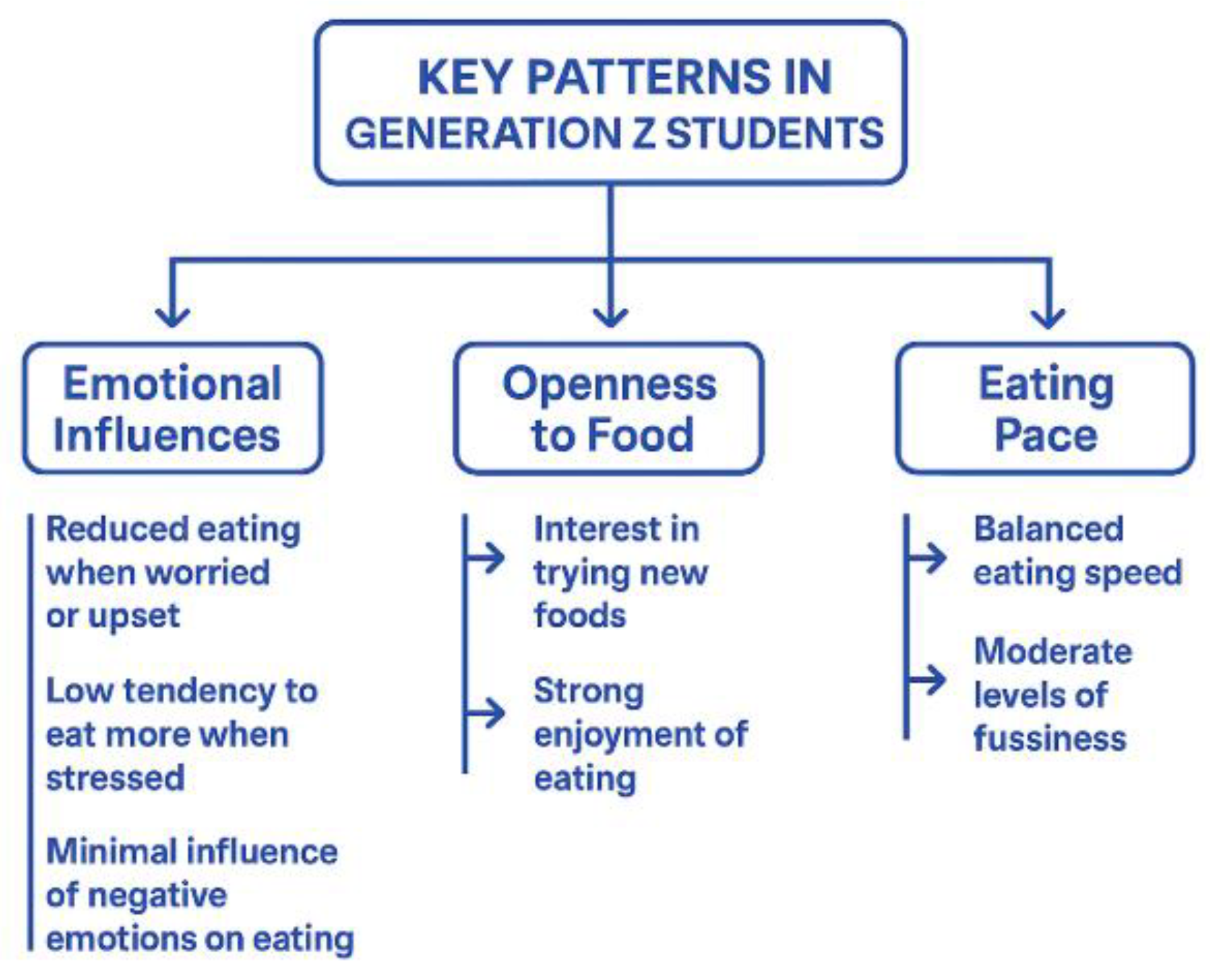
To visually consolidate the findings from
Table 2,
Table 3,
Table 4,
Table 5,
Table 6,
Table 7,
Table 8 and
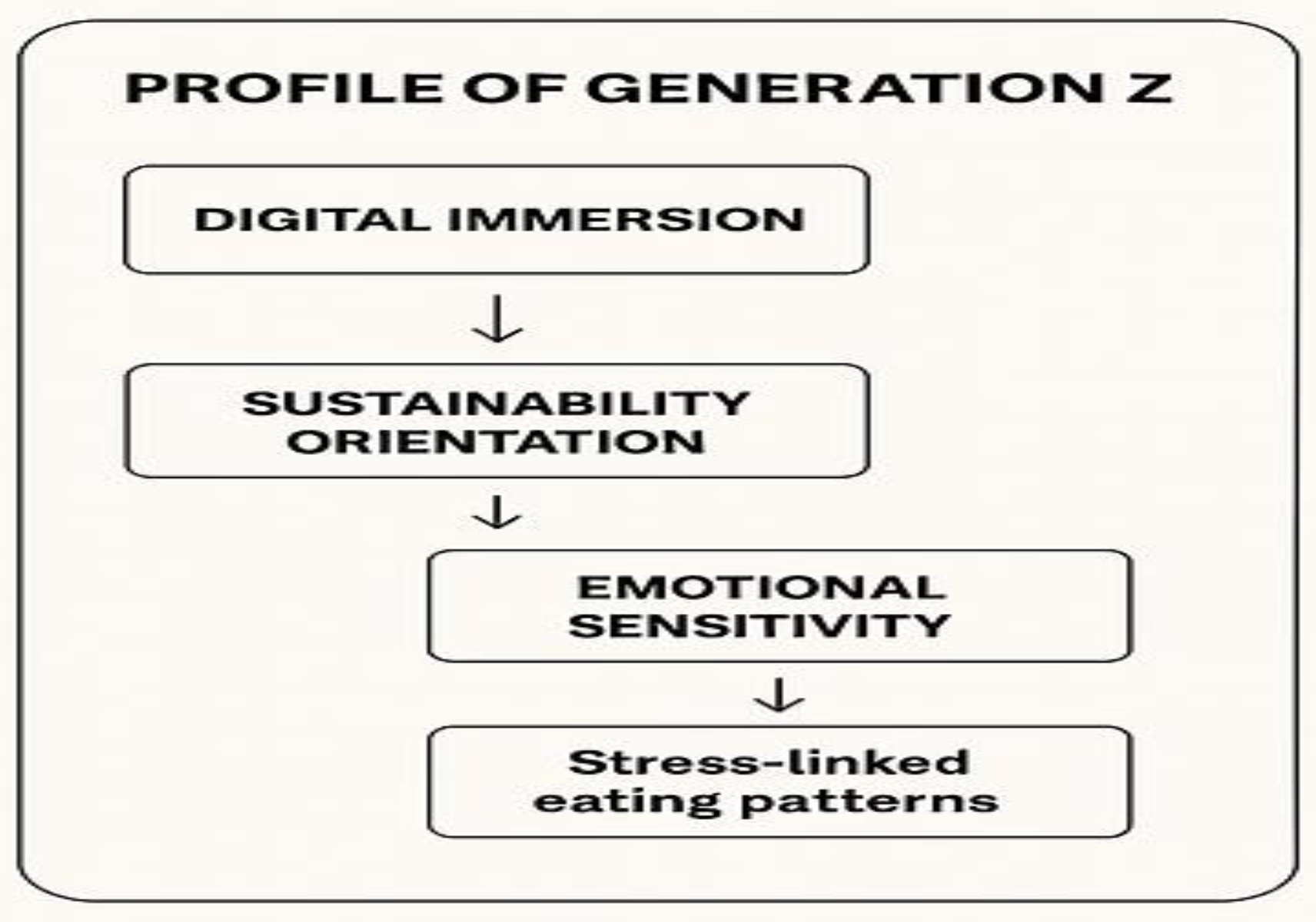
Table 9, the following flow diagram (
Figure 3.), presents the key behavioral trends observed among Generation Z university students in Greece. Each parameter is mapped according to its dominant pattern, offering a structured overview of how hunger, responsiveness, emotional states, satiety, and eating pace interact within the broader context of food behavior. This visualization serves as a conceptual bridge between the descriptive results and the interpretive discussion that follows.
The results of the Principal Component Analysis (PCA) are summarized in
Table 10, which presents the factor loadings and communalities for all retained items. The adequacy of the data for factor analysis was confirmed by the Kaiser–Meyer–Olkin (KMO) measure of sampling adequacy (0.859) and Bartlett’s test of sphericity (χ² = 15,733.504, p < 0.001). Nine distinct components with eigenvalues greater than 1.0 were extracted using Varimax rotation with Kaiser normalization, cumulatively explaining 69.7% of the total variance. Items with loadings ≥ 0.50 were considered significant and retained in their respective components. The overall internal consistency of the scale was acceptable (Cronbach’s α = 0.698).
To facilitate interpretation of the extracted components,
Table S2 in the supplementary material provides a concise mapping of all items (Q1–Q8) to their respective factors, which give a total of 9 factors. This table summarizes the questions that loaded significantly on each component and highlights the thematic content they represent. By presenting the item–factor associations in a clear format, the table complements the detailed loadings shown in
Table 10 and enhances the transparency of the factor structure.
The extracted components reflect distinct dimensions of eating behavior, each capturing unique aspects of emotional, cognitive, and physiological responses to food. The following paragraphs describe the main themes represented by the nine components.
Factor description
This component reflects the tendency to eat less when experiencing negative emotions such as anxiety, upset, or anger. Strong loadings confirm that emotional distress consistently suppresses appetite, highlighting the role of affective states in reducing food intake.
Items clustered around both reluctance and willingness to try new foods. Negative loadings captured avoidance of unfamiliar foods, while positive loadings emphasized curiosity and enjoyment of dietary variety. This bidirectional pattern illustrates individual differences in openness to novelty.
This factor encompassed items related to pleasure and anticipation of eating. Participants reported enjoying meals and looking forward to food, with moderate to high loads confirming that food enjoyment is a distinct and reliable dimension of eating behavior.
Items describing slow versus fast eating loaded strongly on this factor. Positive loadings reflected slow eating tendencies, while the strong negative loading for “finishing meals quickly” emphasized the inverse relationship within the same construct. This factor highlights variability in meal duration and speed.
This component captured increased food intake under emotional arousal, particularly anger and distress. High communalities support the stability of this construction, underscoring the tendency of some individuals to use food as a coping mechanism during negative emotional states.
Items reflect sensitivity to fullness and the tendency to leave food unfinished clustered together, indicating responsiveness to satiety cues. Moderate loadings suggest that satiety plays an important role in regulating meal termination and portion control.
This factor comprised items describing physiological hunger signals, such as stomach rumbling and urgent need to eat. These items highlight the bodily experience of hunger and its influence on eating behavior, with consistent communalities supporting the robustness of this dimension.
Items describing irritability and dizziness when meals are delayed loaded strongly. This factor isolates the emotional and physical consequences of unmet hunger, emphasizing the impact of delayed food intake on mood and physical well-being.
This component included items related to external food cues, such as thinking about food, eating when others eat, and responding to sensory stimuli. Although loadings were moderate, the factor contributed to the overall variance explained and highlights the influence of environmental triggers on eating behavior.
Together, these nine components provide a comprehensive framework for understanding individual differences in eating behavior. They capture both emotional regulation of food intake (under- and over-eating), cognitive and sensory responsiveness to food cues, and dispositional traits such as neophobia, enjoyment, and eating pace. Importantly, the multidimensional structure revealed by the Principal Component Analysis (PCA) reflects the eating behavior patterns of Generation Z students at the University of Ioannina, supporting the construct validity of the scale and offering valuable insights into the complex interplay between emotions, physiology, and external stimuli in shaping eating patterns within this population.
Based on the results of the PCA, the nine extracted factors were further organized into two overarching categories to facilitate interpretation of the multidimensional structure (
Table 11). This grouping was informed by the thematic clustering of items and the statistical coherence observed in the rotated component matrix. Specifically, factors loading on emotional and physiological aspects of eating behavior were distinguished from those reflecting cognitive and behavioral dimensions. Together, these two categories provide a parsimonious yet comprehensive framework, cumulatively explaining 69.7% of the total variance and highlighting the dual nature of internal versus external drivers of eating.
Group analyses
Group A – Emotional and Physiological Drivers of Eating
This category encompasses factors that capture the internal regulation of food intake through both affective and physiological mechanisms. Emotional states such as anxiety, anger, or distress were found to either suppress or increase consumption, reflecting the bidirectional influence of effect on appetite. Satiety responsiveness and hunger sensations further highlight the role of physiological cues in meal initiation and termination, while irritability and dizziness when meals are delayed underscore the consequences of unmet hunger. Collectively, these components represent the internal drivers of eating behavior, with high communalities and consistent loadings confirming their statistical robustness. Importantly, these findings reflect the internal regulation patterns observed among Generation Z students at the University of Ioannina, underscoring the relevance of affective and physiological cues in this young adult cohort.
Group B – Cognitive and Behavioral Dimensions of Eating
This category reflects the cognitive and behavioral aspects of food interaction, emphasizing how attitudes, preferences, and external stimuli shape eating practices. Food neophobia versus interest captures individual differences in openness to dietary novelty, while food enjoyment highlights the anticipatory and hedonic aspects of eating. Eating pace emerged as a distinct behavioral dimension, differentiating slowly from fast eaters, and food responsiveness illustrates the impact of environmental cues such as social context and sensory stimuli. Together, these factors represent external and cognitive influences on eating, complementing the internal drivers identified in Group A and reinforcing the multidimensional nature of the construction. These external and cognitive dimensions were particularly evident in the Generation Z cohort of the University of Ioannina, highlighting how social and environmental contexts interact with individual dispositions in shaping eating behavior.
In the subsequent stage of the analysis, a cluster analysis (K-means) was performed using only the items with the highest factor loadings from the PCA (
Table S2). This approach allowed the identification of distinct participant profiles based on their responses to the most discriminative questions. The items included in the clustering procedure were: Q4 [3. “I eat less when I am anxious”], Q5 [4. “I enjoy tasting new foods”], Q7 [2. “I love food”], Q8 [2. “I am often last at finishing a meal”], Q6 [5. “I eat more when I am angry”], Q3 [3. “I often leave food on my plate at the end of a meal”], Q1 [1. “I often notice my stomach rumbling”], Q4 [1. “I eat less when I’m annoyed”], and Q1 [5. “If I miss a meal I get irritable”]. The analysis yielded two clusters: the first comprising 292 participants (36.4%), and the second comprising 503 participants (52.6%).
Table 12 presents the mean values of the selected items across the two clusters.
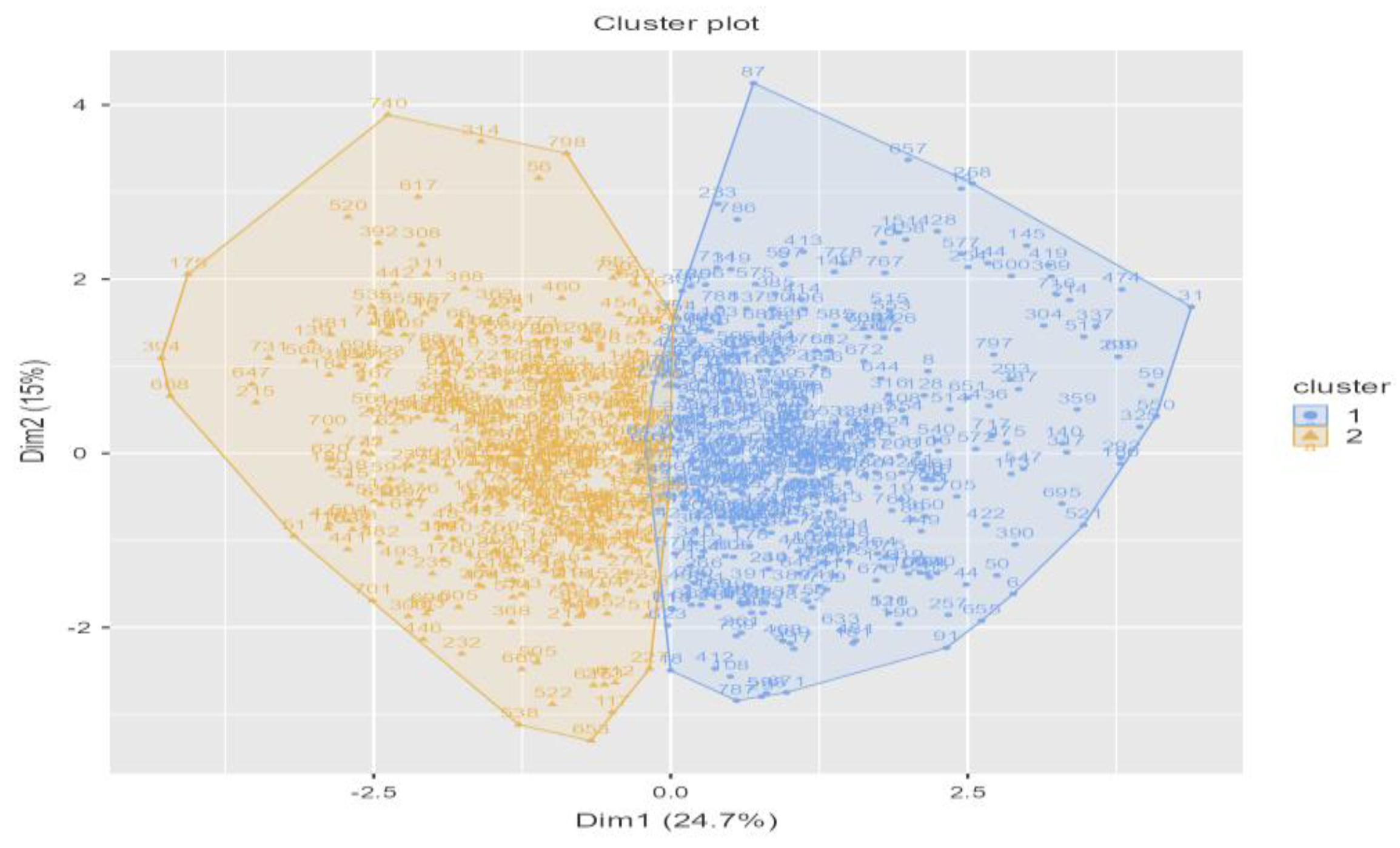
To further explore the multidimensional structure revealed by PCA, a K-means cluster analysis was performed using the most discriminative items - those with the highest factor loadings. This approach enabled the identification of distinct participant profiles based on their eating behavior patterns. The resulting clusters were visualized in a two-dimensional plot (
Figure 4), offering a clear representation of the distribution and separation of individuals according to their responses. The plot illustrates the presence of two well-defined groups within the Generation Z student population at the University of Ioannina, each characterized by unique behavioral tendencies.
Cluster 1 was characterized by higher mean scores in items related to food enjoyment (Q7) and willingness to try new foods (Q5), suggesting a profile more oriented toward positive attitudes and openness toward food. This cluster also reported slightly higher sensitivity to hunger cues (Q1.1) and irritability when meals were missed (Q1.5), indicating stronger physiological responsiveness. In contrast, Cluster 2 showed relatively higher mean values in items reflecting emotional over-eating (Q6) and satiety responsiveness (Q3), suggesting a tendency toward increased food intake under negative emotions and a greater likelihood of leaving food unfinished.
Although differences between clusters were moderate, the patterns highlight meaningful distinctions in eating behavior. Specifically, Cluster 1 aligns more closely with hedonic and exploratory tendencies, whereas Cluster 2 reflects a profile shaped by emotional regulation and satiety cues. These findings underscore the heterogeneity of eating behaviors within the sample and provide further evidence for the multidimensional nature of the construct identified in the PCA.
To further substantiate these distinctions, a K-means clustering procedure was applied using the most discriminative items, those with the highest factor loadings. This analysis yielded two complementary yet differentiated participant profiles within the Generation Z student population at the University of Ioannina.
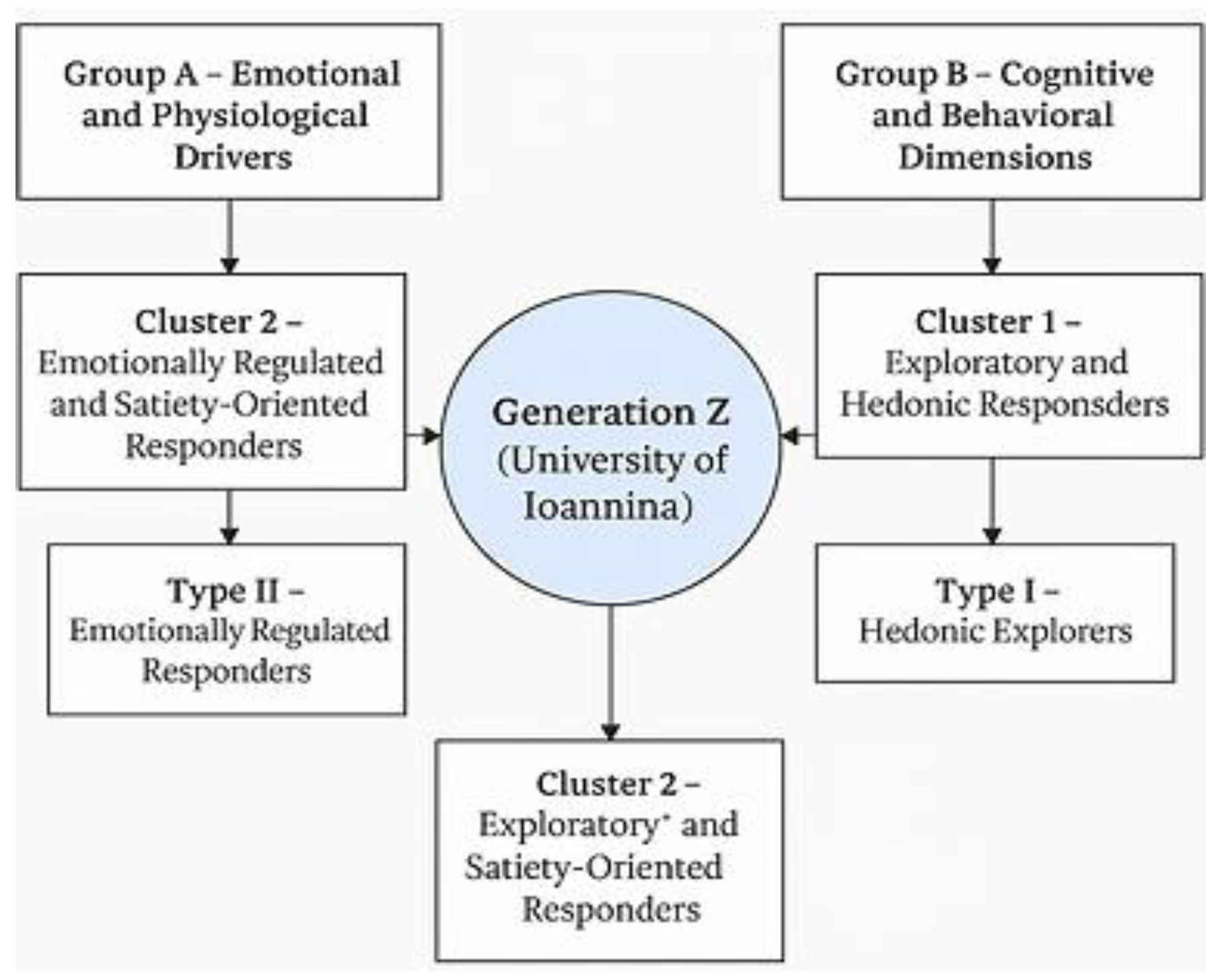
Cluster 1 – “Exploratory and Hedonic Responders”: Characterized by higher mean scores in food enjoyment and willingness to try new foods, alongside stronger sensitivity to hunger cues and irritability when meals were missed. This profile highlights openness, curiosity, and hedonic engagement with food, combined with heightened physiological responsiveness.
Cluster 2 – “Emotionally Regulated and Satiety-Oriented Responders”: Defined by relatively higher scores in emotional over-eating and satiety responsiveness, suggesting a tendency to increase food intake under negative emotions and to leave meals unfinished. This profile emphasizes the role of affective regulation and internal satiety cues in shaping eating behavior.
Together, these clusters provide a nuanced depiction of the diversity of eating patterns among young adults, complementing the multidimensional framework identified in the PCA and reinforcing the dual nature of internal versus external drivers of eating behavior.
The cluster plot visually represents (
Table S3 in the appendix) the segmentation of respondents into the two distinct clusters.
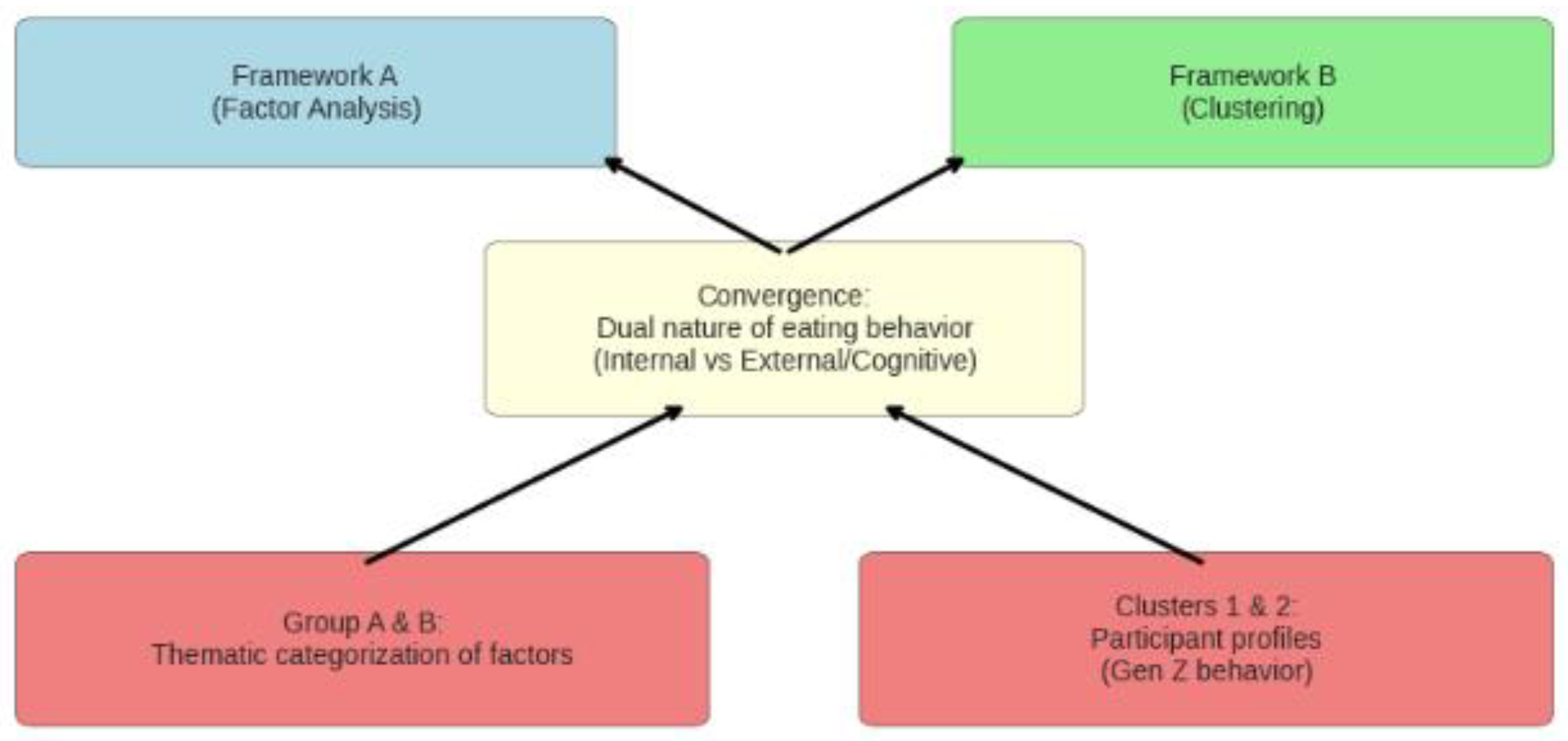
A comparative examination of the thematic grouping factors (Group A and Group B) with the participant clusters (Cluster 1 and Cluster 2) reveals important points of convergence and divergence. While the factor groups represent conceptual dimensions of eating behavior, the clusters embody lived participant profiles, thereby offering complementary perspectives on the multidimensional construct. This juxtaposition allows for a deeper understanding of how internal and external drivers of eating manifest within the Generation Z student population at the University of Ioannina, bridging theoretical categorization with empirical behavioral patterns.
Group A – Emotional and Physiological Drivers overlaps conceptually with Cluster 2, as both emphasize internal regulation through emotions, satiety, and hunger cues. Cluster 2 participants mirror the affective and physiological dimensions captured in Group A.
Group B – Cognitive and Behavioral Dimensions aligns more closely with Cluster 1, reflecting openness to novelty, enjoyment of food, and responsiveness to external cues. Cluster 1 participants embody the exploratory and hedonic tendencies highlighted in Group B.
Both frameworks underscore the dual nature of eating behavior—internal regulation versus external/cognitive influences—demonstrating consistency across methodological approaches (factor analysis vs. clustering) (
Figure 5). Divergence: While Groups A and B categorize factors thematically, Clusters 1 and 2 represent actual participant profiles, showing how these dimensions manifest in lived behavior among Generation Z students (
Figure 5).
The integration of the two analytical approaches points toward a refined categorization of eating behavior within the Generation Z cohort at the University of Ioannina, offering a more comprehensive framework for interpreting their multidimensional profiles.
Type I – Hedonic Explorers (Cluster 1 + Group B): Students driven by enjoyment, curiosity, and openness to food variety, moderated by external cues.
Type II – Emotionally Regulated Responders (Cluster 2 + Group A): Students whose eating behavior is shaped by emotional states, satiety signals, and physiological sensitivity. This integrated categorization highlights the interplay of cognitive, behavioral, emotional, and physiological dimensions, offering a comprehensive framework for understanding eating behavior in this young adult cohort.
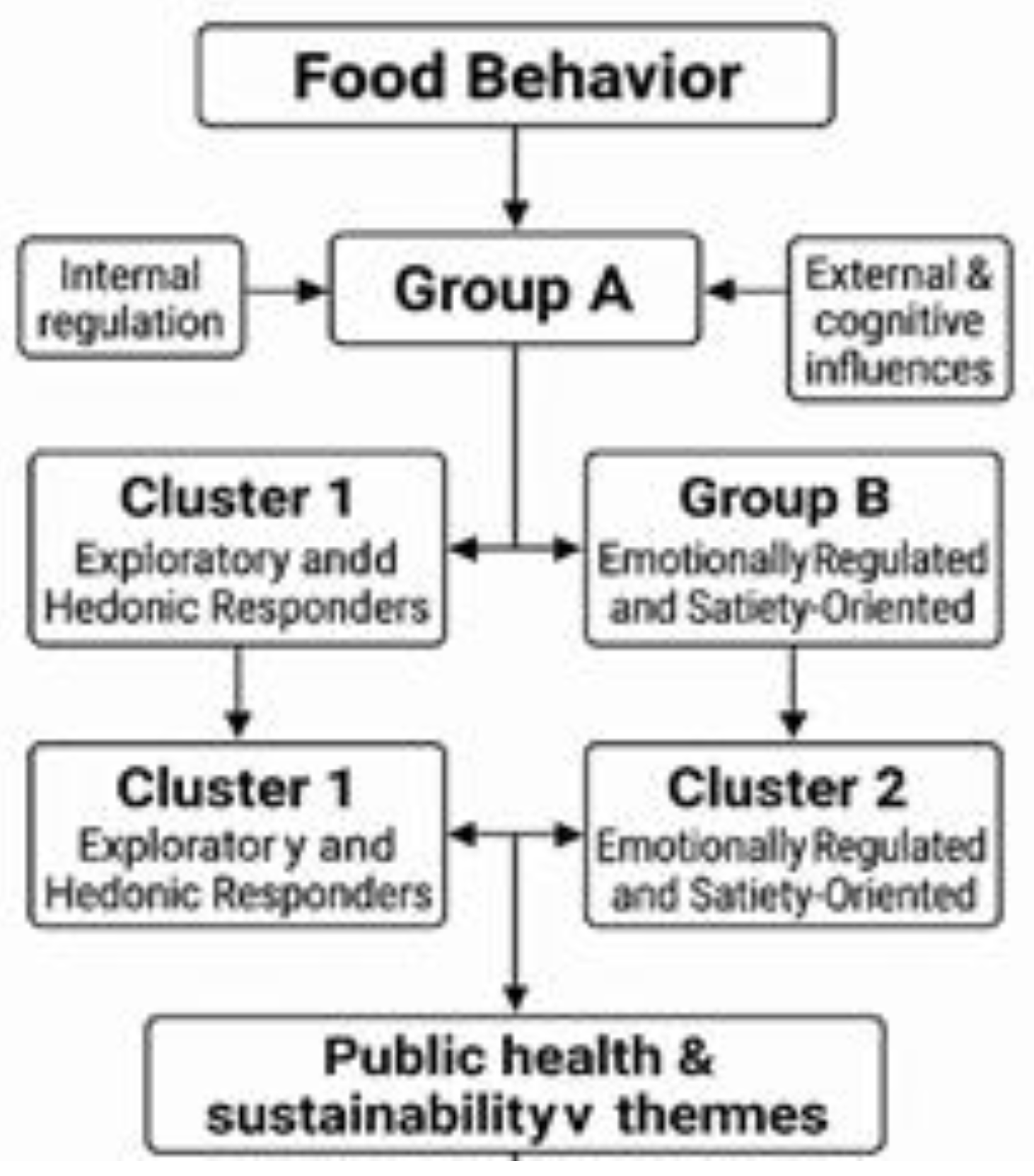
The categorizations developed thus far—encompassing thematic factor groups, participant clusters, and the refined typology—are synthesized and visually represented in the diagram below (
Figure 6), illustrating their interconnections within the Generation Z cohort at the University of Ioannina.
In the final stage of the analysis, a binomial logistic regression was conducted to identify dietary attitudes that significantly predict cluster membership. All questionnaire items were initially included in the model; however, only those variables that reached statistical significance are presented here. This approach allowed the identification of specific behavioral indicators that differentiate participants between the two clusters.
Table 13 summarizes the regression coefficients (B), standard errors (S.E.), Wald statistics, significance levels, and odds ratios (Exp(B)) for the significant predictors.
The logistic regression analysis highlighted several key variables that significantly contributed to the prediction of cluster membership. Negative coefficients were observed for items related to satiety responsiveness (Q3.4), hunger sensations (Q1.3), physical symptoms of hunger (Q1.4), responsiveness to social eating cues (Q2.3), and food enjoyment (Q7.1). These results indicate that higher scores on these dimensions decreased the likelihood of belonging to Cluster 2, suggesting that participants with stronger physiological and hedonic responses were more likely to be classified in Cluster 1.
Conversely, positive coefficients were found for leaving food unfinished (Q3.3) and initial reluctance toward novel foods (Q5.1), both of which increased the probability of membership in Cluster 2. This profile reflects a more restrained eating style, characterized by satiety-driven regulation and neophobic tendencies. Taken together, the regression results provide robust statistical evidence that specific emotional, physiological, and cognitive attitudes toward food are decisive in distinguishing between the two clusters, thereby reinforcing the multidimensional framework established by the PCA and cluster analyses.