
Submitted:
29 December 2025
Posted:
29 December 2025
You are already at the latest version
Abstract
For fruit trees produced in nurseries, effective irrigation management is essential, especially in climates that are becoming more unpredictable and exacerbate seasonal soil moisture deficiencies. This study assessed the effects of varying irrigation depth on the vegetative growth and soil water availability of apricot (Prunus armeniaca L.) nursery plants grown in an open-field system in northwest Romania over the 2024 growing season. Four irrigation depths (0, 10, 20, and 30 mm each irrigation event) were applied to two commercially significant cultivars (Excelsior and Favorit) that were grafted onto Prunus cerasifera rootstock. Tensiometers were used as indicators of relative soil water availability to track soil moisture dynamics in the 0–30 cm root zone, and total branch length was used as an integrative growth parameter to evaluate vegetative performance. While controlled irrigation reduced soil drying in a depth-dependent way, seasonal soil moisture indicators demonstrated significant depletion under rainfed settings during times of high atmospheric demand. In all cultivars, increasing irrigation depth was linked to increased cumulative vegetative growth; however, responses varied by genotype in terms of both magnitude and stability. Higher irrigation depths encouraged more vegetative growth with falling marginal returns, whereas moderate irrigation depths supported steady shoot development. These results highlight cultivar-specific sensitivity to soil moisture conditions and show that irrigation depth significantly affects soil water availability and nursery-stage vegetative growth of apricot plants. The results shed light on how irrigation depth influences early plant-water interactions and vegetative development in nursery-grown apricot plants under varying environmental circumstances.
Keywords:
apricot liner plants
; irrigation depth
; soil moisture dynamic
; vegetative development
; cultivar response
; nursery production
1. Introduction
Water supply limits in horticulture production systems around the world are becoming more severe due to climate change, which is increasing the frequency of erratic precipitation patterns, heat waves, and brief drought episodes [1,2,3]. For nursery production, these adjustments are especially difficult because young plants have shallow, underdeveloped root systems that limit their ability to withstand brief variations in soil moisture [4]. Because of this, controlling irrigation throughout the early phases of plant development has become essential to preserving plant quality in the face of shifting environmental conditions.
The economically significant temperate fruit species apricot (Prunus armeniaca L.) is grown extensively in Europe and Asia for both fresh consumption and processing [5,6]. Apricot production in temperate continental locations, such as Eastern and Central Europe, is becoming more and more dependent on irrigation to guarantee consistent vegetative growth and superior planting material [7]. Irrigation management during the nursery stage has received relatively little attention, despite the fact that irrigation techniques for mature apricot orchards have been thoroughly studied, mainly with regard to productivity, fruit quality, and physiological water relations [8,9,10,11].
In terms of rooting depth, canopy structure, and water demand dynamics, apricot liners planted in nurseries are essentially different from mature orchard trees [12]. Young plants are particularly vulnerable to brief decreases in soil water availability because of their shallow and spatially limited root systems, especially during times of high atmospheric evaporative demand [13]. As a result, watering techniques that are best suited for mature orchards cannot be simply applied to nursery systems. Competing goals must be balanced for nursery irrigation to be effective. While excessive irrigation may encourage nutrient leaching, decreased soil aeration, and excessively vigorous growth with weak structural traits, insufficient water delivery might limit shoot initiation, diminish branch extension, and affect plant uniformity after transplanting [14,15,16]. Maintaining steady but controlled vegetative growth during the nursery phase is a crucial management objective since early shoot and branch development has a significant impact on canopy design, mechanical stability, and eventual orchard establishment [17,18].
The amount of water sprayed during each irrigation event, or irrigation depth, is one of the irrigation management variables that has received very little attention in nursery-scale research. The distribution of soil moisture within the active root zone in drip-irrigated systems is directly influenced by irrigation depth, which also controls the equilibrium between soil water replenishment and depletion under varying climatic circumstances [19,20,21]. Even small variations in irrigation depth can cause noticeable variations in soil water availability for nursery plants with shallow effective rooting depth during crucial growth phases, especially in mid-to late-summer circumstances marked by high evaporative demand.
In apricot nurseries, genotypic heterogeneity makes irrigation management even more challenging. Growth vigor, branching patterns, and sensitivity to decreased soil moisture availability vary among apricot cultivars [22,23]. Despite the fact that cultivar-specific reactions to water availability have been extensively studied in mature orchards, little is known about how they manifest during the nursery stage, despite the fact that it is crucial for the production of well-branched and structurally consistent planting material [24,25,26]. In order to establish irrigation strategies that guarantee constant nursery plant quality, it is crucial to comprehend genotype-dependent growth responses at early developmental stages.
The availability of soil water in nursery systems also indirectly controls the movement and accessibility of nutrients within the root zone, connecting irrigation control to more extensive plant–water–nutrient interactions [15,27]. As a result, irrigation depth affects the whole soil environment that developing plants encounter in addition to the soil moisture state. In order to improve sustainable irrigation techniques under increasingly variable environmental conditions, it is crucial to assess how irrigation depth influences soil water dynamics and vegetative growth during the nursery stage.
Despite substantial study on irrigation management in mature apricot orchards, the nursery stage is relatively unexplored, especially in terms of irrigation depth as a discrete management variable. The current study is unique in that it focuses only on nursery-grown apricot liner plants growing in open fields and investigates how irrigation depth affects seasonal soil moisture dynamics and early vegetative development. This study sheds fresh light on plant-water interactions throughout early developmental stages by comparing cultivar-specific growth responses and integrating vegetative performance with a cumulative growth index. The findings help to improve our understanding of how irrigation depth influences growth size and uniformity in nursery systems, bridging a key knowledge gap between orchard-scale irrigation studies and nursery production techniques under changing environmental conditions.
The current study examines the effects of varying irrigation depth on soil water availability and the vegetative growth of apricot trees cultivated in nurseries in open fields. The goals were to (i) evaluate seasonal soil moisture dynamics in response to irrigation depth, (ii) quantify cultivar-specific vegetative growth responses using integrative growth indicators, and (iii) identify irrigation depths that support uniform nursery plant development under changing environmental conditions, with a focus on two commercially relevant cultivars grafted onto Prunus cerasifera rootstock. This work advances knowledge of plant–water interactions pertinent to sustainable nursery production systems by addressing irrigation depth as a useful management variable during the nursery stage.
2. Materials and Methods
2.1. Experimental Site: Soil and Climate Conditions
In a commercial apricot nursery in northwest Romania (47°03′12′ N, 21°56′48′ E), close to Oradea, Bihor County, the experiment was carried out throughout the 2024 growing season. The location is characteristic of an open-field nursery system that operates in a temperate continental climate with warm summers, erratic rainfall patterns, and sporadic summer droughts.
An automated weather station (Bresser, Germany) placed next to the experimental field was used to record meteorological data, such as air temperature, precipitation, relative humidity, wind speed, and sun radiation. The manufacturer specified sensor accuracies of ±0.5 °C for air temperature, ±3% for relative humidity, and ±5% for precipitation. Table 1 summarizes the monthly climatic parameters that were recorded during the study period.
With an Am–ABw–BvG profile, the soil at the experimental site is categorized as a Luvic Gleysol. A medium-textured loam with a pH of 6.8 and an organic matter level of roughly 2.1% makes up the upper 0–30 cm horizon. The volumetric water content was 32% for field capacity (FC) and 17% for permanent wilting point (PWP). This top soil layer was chosen for soil moisture monitoring because it matches the effective rooting depth of apricot liners cultivated in nurseries.
2.2. Plant Material and Experimental Design
In this study, two commercially significant apricot (Prunus armeniaca L.) cultivars, "Excelsior" and "Favorit," were grafted onto Prunus cerasifera rootstock. The cultivars were chosen to reflect the divergent growth vigor and branching traits that are frequently seen in Romanian nursery production. At the start of the trial, every planting material was the same size and age.
In an open-field nursery, plants were grown in single rows with a 0.8 m gap between rows and a 0.3 m gap between plants within rows. Three replications of each cultivar and four irrigation treatments were used in the randomized complete block design (RCBD) experiment. Ten plants made up each replication, and in order to reduce edge effects, measurements were gathered from plants in the middle of each plot.
2.3. Irrigation Treatments and Scheduling
For each irrigation event, four distinct irrigation depths were used: 0 mm (rainfed control), 10 mm, 20 mm, and 30 mm. For nursery-grown plants with shallow effective rooting depth, these irrigation depths were chosen to provide a realistic gradient of water replenishment levels. While the irrigated treatments represented low, moderate, and high irrigation inputs typically possible in drip-irrigated nursery systems, the rainfed treatment indicated conditions of limited water supply.
The irrigation depths (0, 10, 20, and 30 mm per irrigation event) were chosen to approximate a feasible water supply gradient that is routinely used in open-field fruit tree nurseries in temperate continental climates. The rainfed (0 mm) treatment served as a baseline for precipitation-dependent soil moisture dynamics. The 10 mm irrigation depth is a low supplemental input that is commonly used to partially alleviate short-term soil moisture deficits, whereas the 20 mm treatment represents a moderate replenishment level aimed at restoring a significant portion of the estimated soil moisture depletion in the active root zone. The 30 mm irrigation depth was chosen to simulate a higher-input scenario that approaches full soil water replenishment after periods of high evaporation demand. Together, these treatments enabled for the evaluation of plant growth responses over a realistic and operational range of irrigation depths without imposing abrupt or contrived water stress conditions.
A drip irrigation system with inline emitters (2 L h⁻¹) that were positioned to evenly water the active root zone across treatments was used to administer irrigation. Rather than using set calendar intervals, irrigation scheduling was dependent on soil moisture criteria. When soil matric potential in the 0–30 cm soil layer hit 40–55 kPa, which corresponds to substantial soil moisture depletion relative to field capacity, irrigation events were initiated.
at the growth season, irrigated treatments received seven irrigation events, which were place on predetermined dates at times of rising atmospheric demand. With the exception of the irrigation depth per event, all irrigated treatments received water on the same dates.
2.4. Soil Moisture Monitoring
Ceramic-cup tensiometers placed 20 cm below the active root zone of nursery plants were used to track the dynamics of soil moisture. To guarantee constant placement across treatments, two tensiometers were positioned in each experimental plot, next to drip emitters. Before being installed, the instruments were field-checked, factory-calibrated, and used within their dependable measurement range (<80 kPa).
In times of rapid soil drying, measurements were taken every day; in times of constant soil moisture, measurements were taken at least twice a week. Tensiometer values were interpreted as measures of relative soil water availability rather than as exact measurements of volumetric soil water content since drip irrigation results in spatially diverse wetting patterns. This method made it possible to compare the dynamics of soil moisture across irrigation treatments under consistent placement and monitoring circumstances.
2.5. Climatic Conditions during the Growing Season
The on-site automated weather station's observed meteorological data was used to describe the climate conditions during the 2024 growth season. Seasonal weather patterns and times of higher atmospheric demand linked to improved soil drying were described using daily air temperature and precipitation.
There were multiple warm and dry spells during the growing season, especially in the middle to late summer when high air temperatures were accompanied by little precipitation. Particularly in non-irrigated plots, these circumstances exacerbated the upper soil layer's moisture depletion. Rather than measuring air water demand, climate data are provided to provide environmental context for understanding soil moisture dynamics and vegetative growth responses under different irrigation regimens.
2.6. Analysis of Soil Moisture Dynamic
Time-series data of soil matric potential from tensiometer measurements mentioned in Section 2.4 were used to assess soil moisture dynamics in the 0–30 cm soil layer. Finding temporal patterns of soil drying and rewetting in response to rainfall and irrigation events at various irrigation depths was the main goal of the analysis.
The frequency, duration, and severity of soil moisture depletion and recovery within the measured soil layer were used to compare irrigation regimens. The relative soil water availability in the active root zone was inferred from the measurements of soil matric potential. Soil moisture results are interpreted comparably among treatments rather than as absolute measurements of soil water storage because lateral water movement and deep percolation beyond the monitored layer were not measured.
2.7. Vegetative Growth Measurements
Total branch length was used as an integrative indication of nursery plant development to evaluate vegetative growth at the conclusion of the growing season (September 2024). To reduce edge effects, one representative plant per replication was chosen for measurement; border plants were not included.
The sum of all first-order shoots produced throughout the growing season was used to determine the total branch length. A flexible measuring tape with millimeter accuracy was used to measure each shoot's length from the main stem's site of emergence to its apical tip. The analysis was limited to current-season shoots. Because it incorporates shoot initiation and extension activities, which have a direct impact on nursery plant quality, canopy structure, and subsequent orchard establishment, total branch length was chosen.
2.8. Integrative Growth Assessment using the Lp- Norm Index
An Lp-norm index (p = 2.5) was computed to summarize vegetative growth responses across cultivars and irrigation regimens. A dimensionless scale with 0 denoting the rainfed treatment and 1 denoting the maximum irrigation depth (30 mm) was used to normalize the irrigation depth measurements. Proportional scaling was used for intermediate irrigation levels.
Before calculating the index, the total branch length values were normalized using the same method. In order to enable integrated comparison and assessment of treatment success based on cumulative vegetative growth responses, the Lp-norm index was employed as a supplementary metric to traditional statistical studies.
2.9. Statistical Analysis
Analysis of variance (ANOVA) was used to examine the effects of cultivar, irrigation depth, and their combination on vegetative growth metrics. Tukey's honestly significant difference (HSD) test was used for post hoc multiple comparisons at a significance threshold of p < 0.05 when significant effects were found.
Standard statistical software was used for all statistical analyses. Unless otherwise noted, results are displayed as mean values ± standard error.
3. Results
3.1. Seasonal Soil Moisture Dynamics under Different Irrigation Regimes
All treatments had comparatively consistent soil moisture conditions in the 0–30 cm root zone at the start of the 2024 growing season, with estimated soil water reserves equaling roughly 84–88% of field capacity (Table 2). These numbers show that at ideal soil moisture levels, nursery plants entered the active growth phase, and there were no discernible irrigation-induced variations in early spring. Precipitation inputs played a major role in controlling soil moisture dynamics in April and May. All treatments had comparatively steady soil moisture conditions throughout this time because rainfall was enough to compensate for soil water losses. Irrigation was not necessary before early summer since there was little temporal change in the estimated soil water stores during this phase. Natural precipitation appears to have been the primary source of soil water availability during the early stages of plant development, based on the comparability of soil moisture conditions across treatments during this time. In late spring and early summer, soil moisture availability rose even further, peaking in June. This rise is a result of decreased soil moisture depletion in relation to water supply and cumulative rainfall inputs. All treatments saw an increase in soil water reserves at this period, with little variation between irrigation regimens. The convergence of soil moisture conditions during this time suggests that precipitation-driven soil water recharging successfully offset the effects of irrigation. Beginning in July, there was a noticeable change in the dynamics of soil moisture, which was accompanied by less precipitation and longer-lasting drying conditions. From this point on, soil moisture availability decreased in all treatments, although irrigation regimes varied significantly in the amount and pace of reduction. Calculated soil water reserves under rainfed conditions showed a consistent and noticeable decline over July, August, and September, reaching their lowest seasonal values by the end of the growth season. The protracted restriction of soil water supply in the shallow root zone during the middle to late summer is reflected in this steady drop.
These late-season soil moisture trajectories were changed by irrigation application in a depth-dependent way. Compared to the rainfed control, lower irrigation depth somewhat reduced soil moisture loss, but it did not stop a gradual decline during protracted dry spells. On the other hand, during the summer, higher and intermediate irrigation depths preserved greater soil moisture availability. In comparison to non-irrigated plots, these treatments produced consistently greater late-season moisture levels because soil water stores decreased more slowly and showed partial recovery after irrigation episodes (Figure 1). While intermediate irrigation depths created intermediate soil moisture conditions, the maximum irrigation depth among irrigated treatments maintained the highest soil moisture availability during mid-to late summer. During July and August, when precipitation inputs were low and soil drying increased, differences across irrigation regimes were most noticeable. Soil moisture conditions across treatments converged during times of higher rainfall, momentarily lessening irrigation-related differences.
The combined study of Table 2 and Figure 1 shows that throughout the early part of the growing season, when precipitation was sufficient to maintain optimum soil water conditions, irrigation depth had little effect on soil moisture dynamics. In contrast, during the second half of the growing season, when natural soil water replenishment was restricted, irrigation emerged as the main factor controlling soil moisture availability. These seasonal patterns demonstrate how crucial irrigation depth is for controlling soil moisture availability in nursery-grown apricot plants during times of climatic water scarcity.
3.2. Effects of Irrigation Depth on Total Branch Growth
Total branch length varied consistently between irrigation treatments in both apricot cultivars, showing a robust relationship between irrigation depth and vegetative development in the nursery stage (Figure 2). Although treatment effects were not statistically significant (p < 0.05), persistent and directional patterns were detected over the irrigation gradient, indicating biologically important responses to variation in soil water availability.
Total branch length in the cultivar 'Excelsior' rose significantly as irrigation depth increased. Under rainfed conditions (0 mm), 'Excelsior' had the shortest cumulative branch length at the conclusion of the growing season, indicating restricted shoot initiation and limited cumulative shoot extension due to reduced soil moisture availability. This response implies that this cultivar is highly sensitive to seasonal soil moisture depletion during the nursery phase. Irrigation at 10 mm per event resulted in a significant increase in total branch length compared to rainfed treatment, demonstrating that even minor increases in soil water availability stimulated vegetative development in 'Excelsior'. The 20 mm irrigation depth resulted in the most significant increase in cumulative branch length, since shoot growth was more constant throughout the growing season. At this irrigation level, plant branch development was more uniform, indicating better vegetative growth synchronization. Increasing the irrigation depth to 30 mm resulted in additional increases in total branch length; however, the size of this response was smaller than the rise found at lower irrigation levels. Furthermore, significant heterogeneity among plants was seen at the maximum irrigation depth, showing diverse growth responses within the cultivar under conditions of increased soil water availability.
In contrast, the cultivar 'Favorit' showed a more progressive and consistent growth response across irrigation depths. Under rainfed conditions, 'Favorit' had a relatively longer total branch length than 'Excelsior', indicating a decreased vulnerability to reduced soil moisture availability over the growing season. Increased irrigation depth resulted in mild but consistent increases in total branch length in 'Favorit'. Unlike 'Excelsior', there was no dramatic growth response between irrigation levels. Instead, cumulative branch length increased continuously from the rainfed treatment to the maximum irrigation depth. The largest branch length values for 'Favorit' were obtained at 30 mm, however the variations between intermediate and high irrigation depths were minor. Variability in branch length among 'Favorit' plants was generally modest across irrigation treatments, especially at intermediate irrigation depths. This pattern reveals a more consistent response to irrigation, implying that 'Favorit' is more stable in vegetative development under variable soil moisture levels.
A comparison of the two cultivars reveals distinct growth strategies in response to irrigation depth. 'Excelsior' had a steeper growth response over the irrigation gradient, indicating better responsiveness to increased soil water availability, but also greater variability at higher irrigation depths. In contrast, 'Favorit' demonstrated a more conservative and steady growth response, with generally constant branch development throughout irrigation regimes and lower vulnerability to both soil moisture limitation and high-water availability. These findings show that irrigation depth effects the amplitude and uniformity of vegetative growth in nursery-grown apricot plants, as well as how cultivar-specific growth responses shape early plant development under varying soil moisture conditions.
3.3. Integrated Vegetative Performance Assessed Using the Lp- Norm Index
Total branch length represents a direct measure of vegetative growth; however, it captures only a single dimension of plant development. To facilitate an integrated comparison of cumulative vegetative performance across irrigation treatments and cultivars, total branch length data were synthesized using the Lp-norm index (p = 2.5). This index integrates normalized growth magnitude and variability into a single standardized metric, allowing comparative evaluation of vegetative performance across treatments. In both cultivars, Lp-norm values fluctuated consistently with irrigation depth (Figure 3). Under rainfed conditions (0 mm), both cultivars had the lowest index values, indicating poor cumulative vegetative performance over the growth season. These low values imply restricted shoot development due to poor soil water availability throughout the mid- to late-summer timeframe. Irrigation led in successive improvements in Lp-norm values, showing that the cumulative vegetative performance improved as irrigation depth increased. At 10 mm irrigation, both cultivars demonstrated moderate increases in index values compared to rainfed conditions. This reaction suggests that partial relief of soil moisture limitation was adequate to increase cumulative vegetative development, despite the fact that soil moisture levels did not entirely settle throughout the growing season.
Both cultivars' Lp-norm values increased significantly after 20 mm watering. At this irrigation depth, cumulative vegetative performance improved while variability among plants decreased, leading in more consistent growth responses. The stabilization of index values at this level suggests a consistent improvement in vegetative development across populations.
The irrigation depth of 30 mm yielded the greatest Lp-norm values. However, the incremental rise in index values relative to the 20 mm treatment was rather minimal, demonstrating diminishing marginal advantages in cumulative vegetative performance as irrigation inputs increased. This pattern was similar across both cultivars.
The size and course of Lp-norm responses showed clear cultivar-specific variation. The cultivar 'Excelsior' showed a steeper increase in index values across irrigation depths, indicating a stronger response to increasing soil water availability. In contrast, 'Favorit' showed a more gradual increase in Lp-norm values and remained reasonably consistent throughout treatments, indicating decreased sensitivity to irrigation depth fluctuation.
Overall, the Lp-norm analysis confirmed trends found in individual growth indicators and gave a comprehensive view of vegetative performance under different irrigation regimes. This approach allowed for the assessment of cumulative growth responses across cultivars and irrigation depths while accounting for plant heterogeneity.
4. Discussion
This study examines how irrigation depth affects soil water availability and vegetative development in apricot liner plants grown in temperate continental conditions at the nursery scale. While precipitation predominantly drove early-season soil moisture dynamics, irrigation depth emerged as a dominating factor affecting soil water availability and vegetative development from mid- to late-summer. These findings highlight the nursery-grown apricot plants' vulnerability to seasonal declines in soil water availability, which reflects the poor buffering capacity associated with shallow and spatially restricted root systems during early developmental phases. A crucial innovative part of this study is the nursery-scale emphasis on irrigation depth rather than irrigation presence alone. While prior research has primarily focused on irrigation impacts in fruit-bearing orchards, the current study indicates that cultivar-specific growth responses to irrigation depth are already evident during the nursery stage. This work, which links seasonal soil moisture dynamics to cumulative vegetative development in young apricot plants, provides additional evidence that early-stage plant-water interactions are critical in defining nursery plant quality under changeable climatic conditions.
The observed drop in vegetative growth under rainfed conditions in late summer emphasizes the need of irrigation in maintaining shoot development during periods of low precipitation. Similar growth limits under restricted soil moisture have been seen in young fruit trees in nursery systems, where temporary water shortages can limit canopy development and branch expansion [28,29]. The current work expands on these findings by demonstrating that irrigation depth, rather than just the presence or absence of irrigation, plays an important role in determining soil moisture conditions and growth responses throughout the nursery stage.
There were clear cultivar-dependent changes in growth response throughout irrigation depths. The cultivar 'Excelsior' showed a steeper increase in cumulative branch length with increasing irrigation depth, indicating a stronger sensitivity to increased soil water availability. In comparison, 'Favorit' responded more gradually and steadily to rainfed circumstances, maintaining considerably higher vegetative development. These opposing trends are consistent with earlier research on genetic heterogeneity in growth vigor and water sensitivity among apricot cultivars and other Prunus species [30]. Importantly, the current findings show that such genotype-dependent responses are already present during the nursery phase, when early vegetative development is important for future orchard establishment.
The application of the Lp-norm index gave a comprehensive view of cumulative vegetative performance across irrigation treatments and cultivars. This approach enhanced standard single-parameter assessments by combining normalized growth magnitude and variability, allowing for greater separation between irrigation depths. Although Lp-norm techniques have been used in agronomic and horticultural studies [31,32], their applicability to nursery-scale irrigation research is restricted. In this study, Lp-norm trends confirmed individual growth responses while also highlighting disparities in cumulative performance and uniformity among treatments.
Taken together, these findings show that nursery-grown apricot plants are more sensitive to seasonal soil moisture dynamics, and that irrigation depth has a considerable influence on vegetative development under changeable environmental conditions. As climate change causes more erratic precipitation patterns and summer drying, irrigation solutions adapted specifically to nursery systems will become increasingly critical. Nursery systems, unlike mature orchards, have plants with restricted root system development and a lower capacity to buffer short-term water shortages, emphasizing the need for irrigation schemes that take into account both plant developmental stage and cultivar-specific growth behavior.
Several limitations to this study should be addressed. The experiment was carried out at a single location and during a single growing season, therefore it reflects soil and climatic variables unique to that location. Furthermore, only two cultivars grafted onto a single rootstock were tested, and results may change for various cultivar-rootstock combinations. Total branch length was used to assess vegetative performance, which is important for nursery plant quality but does not account for underlying physiological processes. Future study incorporating plant-based physiological markers, as well as multi-site, multi-season trials, would improve our understanding of plant-water interactions in the nursery. These results suggest that genetic background determines how young apricot plants respond to irrigation depth in the nursery stage.
5. Conclusions
This study investigated the effects of irrigation depth on soil water availability and vegetative development in nursery-grown apricot liner plants cultivated in temperate continental settings. The findings showed that irrigation depth had little influence on soil moisture dynamics during the early growing season, when precipitation was plentiful, but became a critical factor in regulating soil water availability and vegetative growth during mid- to late-summer periods with low rainfall. In both cultivars, vegetative growth responses changed consistently with irrigation depth, with cumulative branch development increasing as irrigation depth increased. Clear cultivar-specific variations were identified, with 'Excelsior' responding faster to increased soil water availability, whilst 'Favorit' responded more gradually and consistently across irrigation regimes. These results suggest that genetic background determines how young apricot plants respond to irrigation depth in the nursery stage.
The use of an integrative growth index supplemented traditional growth measurements and allowed for comparison of cumulative vegetative performance across irrigation regimens and cultivars. These findings underscore the significance of irrigation depth as a separate management variable that influences early plant-water interactions in nursery systems.
This study provides new nursery-scale evidence that irrigation depth effects the size and uniformity of vegetative development in apricot liner plants under varying environmental conditions. By focusing on early developmental phases and cultivar-specific responses, the study serves to bridge the knowledge gap between orchard-scale irrigation research and nursery production systems, thereby promoting the development of more resilient nursery techniques in the face of changing climate circumstances.
Supplementary Materials
The following supporting information can be downloaded at: Preprints.org, Table S1: Effects of cultivar, irrigation depth, and their interaction on branch number. Table S2: Effects of cultivar, irrigation depth, and their interaction on total branch length. Tables S3 and S4: Lp-norm index values and quartile classification for branch number and total branch length. Figures S1–S11: Graphical representations of branch number, total branch length, interaction effects, and Lp-norm heatmaps.
Author Contributions
Conceptualization, A.C.T. and A.V.; methodology, A.V.; software, A.C.T.; validation, A.C.T.; formal analysis, A.V.; investigation A.C.T. and A.V; resources, A.V.; data curation, A.C.T. and A.V.; writing—original draft preparation, A.C.T.; writing—review and editing, A.V.; visualization, A.C.T.; supervision, A.C.T.; project administration, A.V.; funding acquisition, A.V. All authors have read and agreed to the published version of the manuscript.
Funding
The APC was funded by the University of Oradea.
Data Availability Statement
Data is contained within the article or supplementary material.
Conflicts of Interest
The authors declare no conflicts of interest.
References
- IPCC. Climate Change 2021: The Physical Science Basis; Cambridge University Press: Cambridge, UK, 2021. [Google Scholar]
- Trenberth, K.E.; Dai, A.; van der Schrier, G.; Jones, P.D.; Barichivich, J.; Briffa, K.R.; Sheffield, J. Global warming and changes in drought. Nat. Clim. Change 2014, 4, 17–22. [Google Scholar] [CrossRef]
- Allen, R.G.; Pereira, L.S.; Raes, D.; Smith, M. Crop Evapotranspiration—Guidelines for Computing Crop Water Requirements. In FAO Irrigation and Drainage Paper No. 56; FAO: Rome, Italy, 1998. [Google Scholar]
- Atkinson, D.; Else, M.A.; Taylor, L.; Dover, C.J. Root and shoot responses of fruit tree plants to soil water deficits. Plant Soil 2000, 217, 95–104. [Google Scholar]
- Layne, D.R.; Bassi, D. The Peach: Botany, Production and Uses; CAB International: Wallingford, UK, 2008. [Google Scholar]
- FAOSTAT. FAO Statistical Database; Food and Agriculture Organization of the United Nations: Rome, Italy; Available online: https://www.fao.org/faostat.
- Ruiz-Sánchez, M.C.; Domingo, R.; Castel, J.R. Review: Deficit irrigation in fruit trees and vines in Spain. Span. J. Agric. Res. 2010, 8, S5–S20. [Google Scholar] [CrossRef]
- Pérez-Pastor, A.; Ruiz-Sánchez, M.C.; Domingo, R.; Torrecillas, A. Growth and yield response of apricot trees to deficit irrigation. Agric. Water Manag. 2007, 85, 95–102. [Google Scholar]
- Girona, J.; Mata, M.; Marsal, J. Regulated deficit irrigation during the kernel-filling period and optimal irrigation rates in almond. Agric. Water Manag. 2005, 75, 152–167. [Google Scholar] [CrossRef]
- López-Bernal, Á.; García-Tejero, I.; Testi, L.; Orgaz, F.; Villalobos, F.J. Orchard water relations and irrigation management. Agric. Water Manag. 2018, 202, 94–105. [Google Scholar]
- Ferree, D.C.; Warrington, I.J. Apples: Botany, Production and Uses; CAB International: Wallingford, UK, 2003. [Google Scholar]
- Comas, L.H.; Becker, S.R.; Cruz, V.M.; Byrne, P.F.; Dierig, D.A. Root traits contributing to plant productivity under drought. Front. Plant Sci. 2013, 4, 442. [Google Scholar] [CrossRef] [PubMed]
- Silber, A.; Bar-Tal, A. Nutrition of substrate-grown plants. In Hydroponics: A Practical Guide; Elsevier: Amsterdam, 2008; pp. 291–339. [Google Scholar]
- Marschner, P. Marschner’s Mineral Nutrition of Higher Plants, 3rd ed.; Academic Press: London, UK, 2012. [Google Scholar]
- Savvas, D.; Gruda, N. Application of soilless culture technologies in greenhouse horticulture. Eur. J. Hortic. Sci. 2018, 83, 280–293. [Google Scholar] [CrossRef]
- Webster, A.D. Tree architecture, branch growth, and orchard systems. Hortic. Rev. 2004, 29, 1–50. [Google Scholar]
- Costes, E.; Lauri, P.-É.; Regnard, J.-L. Analysing fruit tree architecture. Ann. Bot. 2006, 97, 731–749. [Google Scholar]
- Assouline, S.; Or, D. The concept of soil water potential revisited. Water Resour. Res. 2013, 49, 5271–5283. [Google Scholar]
- Skaggs, T.H.; Trout, T.J.; Šimůnek, J.; Shouse, P.J. Comparison of drip irrigation strategies. Vadose Zone J. 2010, 9, 153–163. [Google Scholar]
- Camp, C.R. Subsurface drip irrigation. Agric. Water Manag. 1998, 37, 1–13. [Google Scholar]
- Ruiz, D.; Egea, J. Phenotypic diversity and relationships of apricot cultivars. Euphytica 2008, 163, 143–158. [Google Scholar] [CrossRef]
- Badenes, M.L.; Martínez-Calvo, J.; Llácer, G. Analysis of apricot germplasm. Plant Breed. 1998, 117, 403–408. [Google Scholar]
- López, G.; Boini, A.; Manfrini, L.; Torres-Ruiz, J.M.; Pierpaoli, E.; Zibordi, M.; Losciale, P. Rootstock effects on water relations of young fruit trees. Agric. Water Manag. 2019, 222, 77–87. [Google Scholar]
- Atkinson, C.J.; Else, M.A. Understanding how root systems respond to water limitation. J. Exp. Bot. 2015, 66, 3439–3448. [Google Scholar]
- Goldhamer, D.A.; Fereres, E. Irrigation scheduling of fruit trees. Hortic. Rev. 2001, 27, 1–60. [Google Scholar]
- Hinsinger, P.; Bengough, A.G.; Vetterlein, D.; Young, I.M. Rhizosphere: biophysics, biogeochemistry and ecological relevance. Plant Soil 2009, 321, 117–152. [Google Scholar] [CrossRef]
- Davies, W.J.; Zhang, J. Root signals and the regulation of growth and development of plants in drying soil. Annu. Rev. Plant Physiol. Plant Mol. Biol. 1991, 42, 55–76. [Google Scholar] [CrossRef]
- Torrecillas, A.; Ruiz-Sánchez, M.C.; Domingo, R. Water stress effects on apricot trees. Plant Soil 1989, 119, 1–8. [Google Scholar]
- Saltelli, A.; Tarantola, S.; Campolongo, F.; Ratto, M. Sensitivity Analysis in Practice: A Guide to Assessing Scientific Models; Wiley: Chichester, UK, 2004. [Google Scholar]
- Fereres, E.; Soriano, M.A. Deficit irrigation for reducing agricultural water use. J. Exp. Bot. 2007, 58, 147–159. [Google Scholar] [CrossRef]
- Geerts, S.; Raes, D. Deficit irrigation as an on-farm strategy to maximize crop water productivity. Agric. Water Manag. 2009, 96, 1275–1284. [Google Scholar] [CrossRef]
- Wheeler, T.; von Braun, J. Climate change impacts on global food security. Science 2013, 341, 508–513. [Google Scholar] [CrossRef] [PubMed]
Figure 1.
Seasonal soil water reserves (m³ ha⁻¹) from April to September in the 0–30 cm soil layer under four irrigation depths (0, 10, 20, and 30 mm). Springtime saw an increase in soil moisture, which peaked in June before sharply declining in July and September. During the summer, irrigated treatments—especially 30 mm—maintained larger reserves, while the non-irrigated treatment displayed constant depletion. For clarity, end-point values are displayed.
Figure 1.
Seasonal soil water reserves (m³ ha⁻¹) from April to September in the 0–30 cm soil layer under four irrigation depths (0, 10, 20, and 30 mm). Springtime saw an increase in soil moisture, which peaked in June before sharply declining in July and September. During the summer, irrigated treatments—especially 30 mm—maintained larger reserves, while the non-irrigated treatment displayed constant depletion. For clarity, end-point values are displayed.
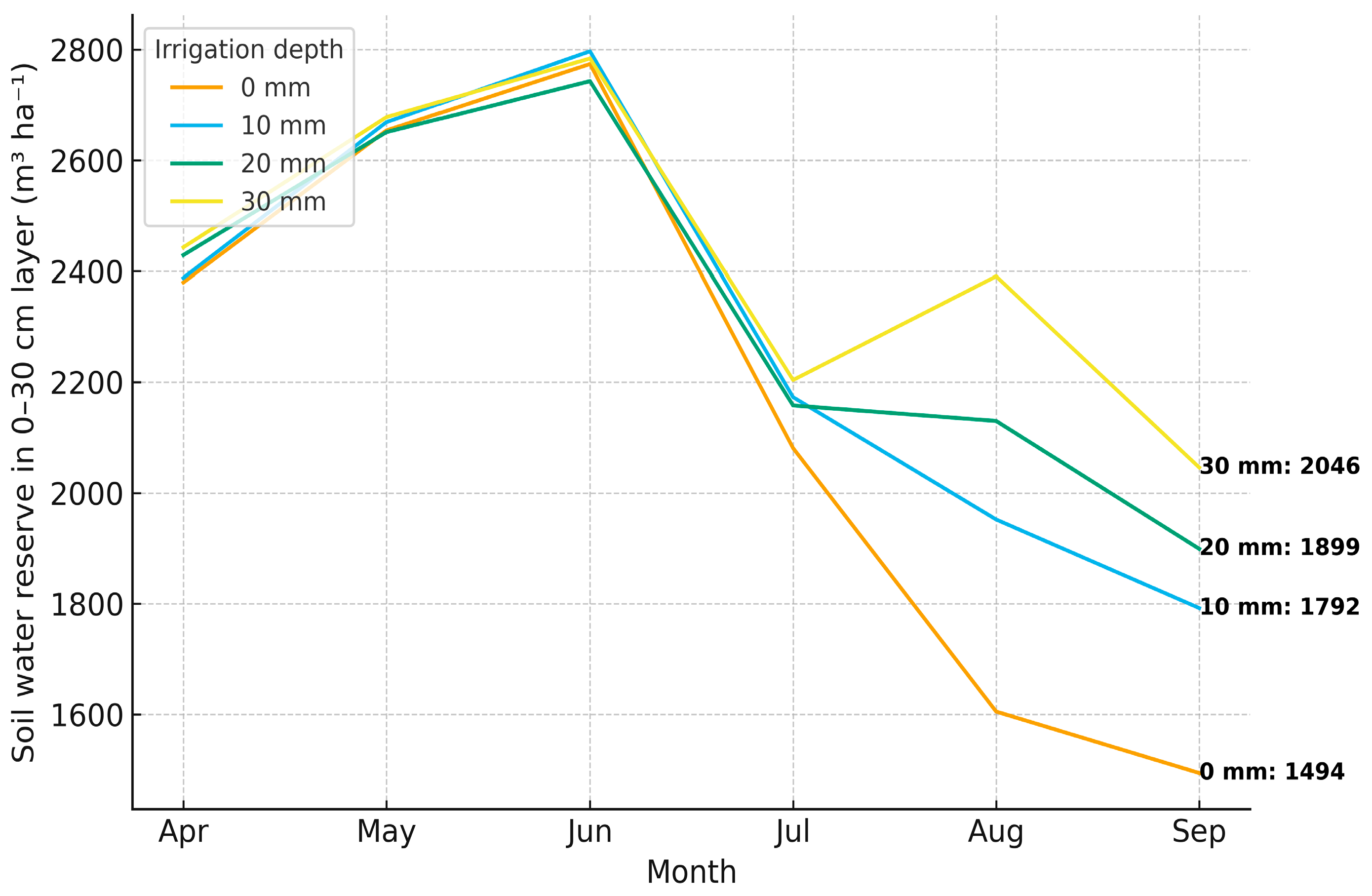
Figure 2.
Total branch length (cm) ± standard error (SE) in apricot liner plants (‘Excelsior’ and ‘Favorit’) exposed to four irrigation treatments (0, 10, 20, and 30 mm per cycle). The figures indicate average growth responses at the conclusion of the 2024 growing season.
Figure 2.
Total branch length (cm) ± standard error (SE) in apricot liner plants (‘Excelsior’ and ‘Favorit’) exposed to four irrigation treatments (0, 10, 20, and 30 mm per cycle). The figures indicate average growth responses at the conclusion of the 2024 growing season.
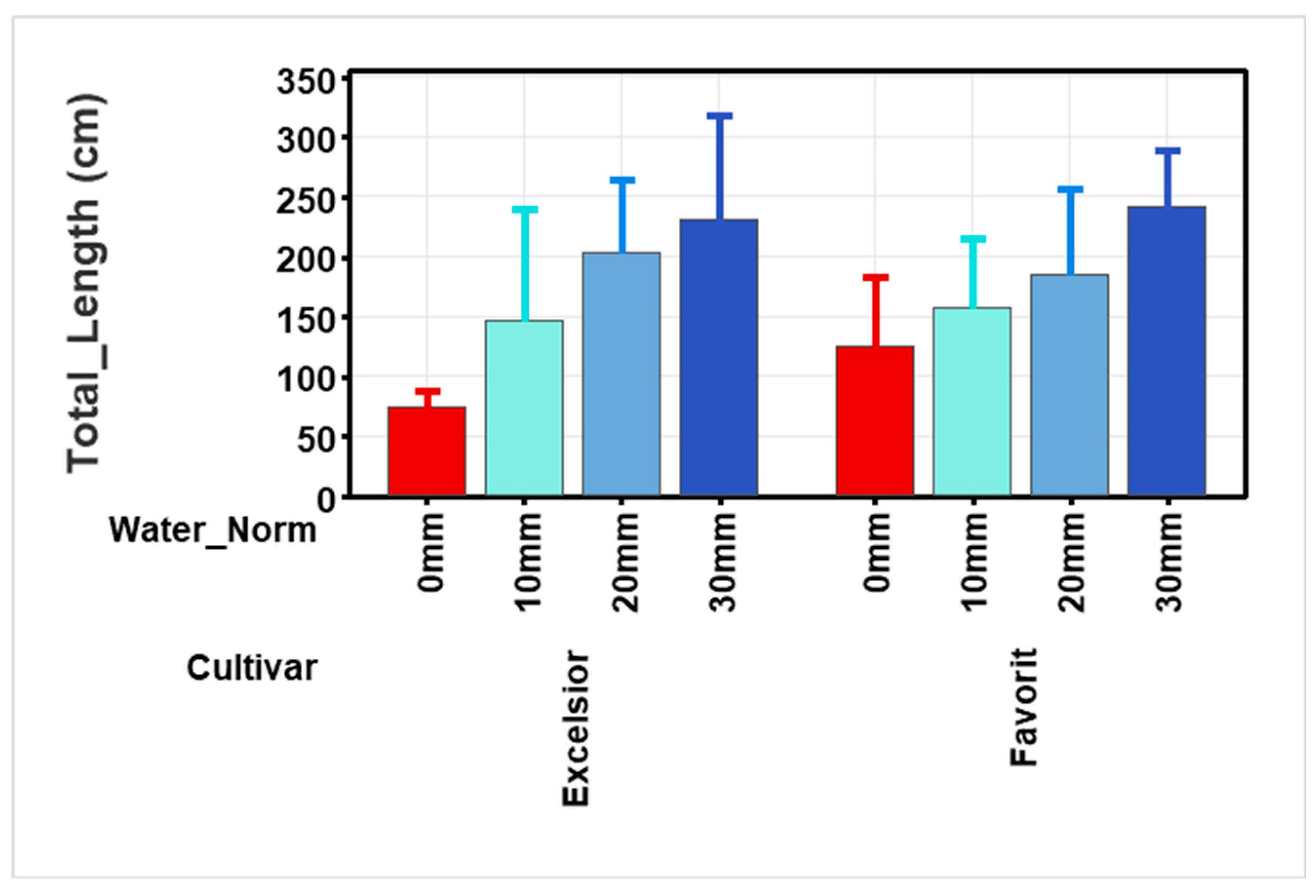
Figure 3.
Normalized Lp-norm values (p = 2.5) representing cumulative vegetative performance of apricot cultivars ‘Excelsior’ and ‘Favorit’ under four irrigation levels. Higher Lp-norm values correspond to enhanced branch development. Error bars indicate SE; differences were analyzed using two-way ANOVA.
Figure 3.
Normalized Lp-norm values (p = 2.5) representing cumulative vegetative performance of apricot cultivars ‘Excelsior’ and ‘Favorit’ under four irrigation levels. Higher Lp-norm values correspond to enhanced branch development. Error bars indicate SE; differences were analyzed using two-way ANOVA.
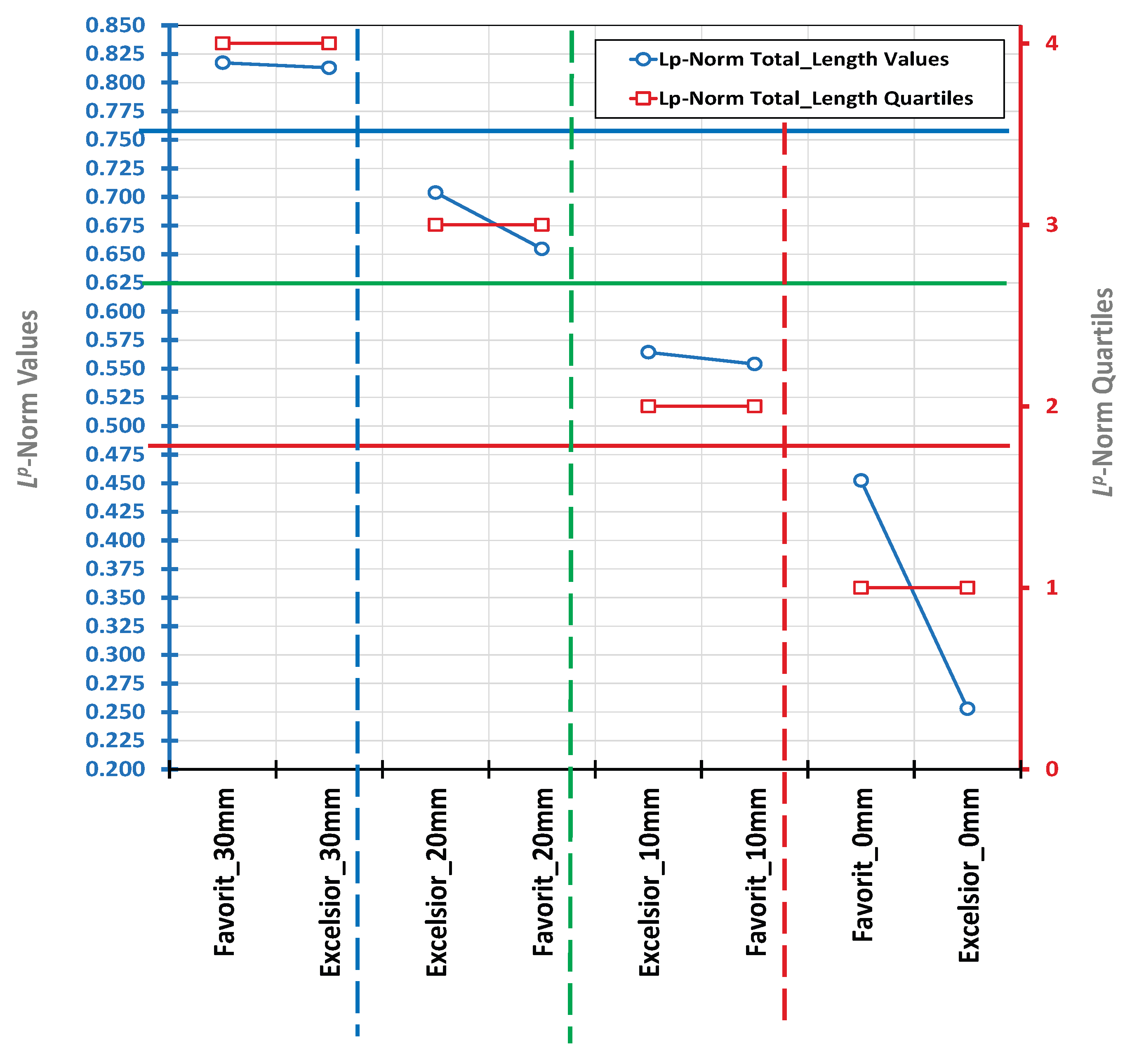

Table 1.
Monthly climatic parameters recorded at the experimental site in 2024.
| Month |
Mean temperature (0 C ) |
Precipitation (mm) | Relative humidity (%) |
| Jan. | 3.2 | 32.2 | 82 |
| Febr. | 1.3 | 58.6 | 91 |
| Mar. | 3.8 | 65.8 | 76 |
| Apr. | 15.7 | 38.3 | 34 |
| May | 19.7 | 57.6 | 27 |
| June | 21.2 | 83.6 | 24 |
| July | 22.0 | 127.6 | 23 |
| Aug. | 24.1 | 36.9 | 20 |
| Sept. | 17.8 | 22.1 | 30 |
| Oct. | 13.7 | 12.7 | 39 |
| Nov. | 8.0 | 39.8 | 57 |
| Dec. | 1.2 | 61.0 | 92 |
Table 2.
Parameters of soil moisture in nursery-grown apricot liner plants.
| Watering norms | Month | ||||||
| Elements | IV | V | VI | VII | VIII | IX | |
| Non-irrigated | Ri (m3/ha) | 2,367 | 2,380 | 2,654 | 2,774 | 2,081 | 1,605 |
| Pe (m3/ha) | 426 | 879 | 965 | 211 | 113 | 313 | |
| ET (m3/ha) | 413 | 605 | 845 | 905 | 589 | 423 | |
| 0 mm | Rf(1) (m3/ha) | 2,380 | 2,654 | 2,774 | 2,081 | 1,605 | 1,494 |
| M (m3/ha) | - | - | - | - | - | - | |
| Rf(2) (m3/ha) | - | - | - | - | - | - | |
| Irrigated | Ri (m3/ha) | 2,407 | 2,388 | 2,669 | 2,797 | 2,173 | 1,952 |
| Pe (m3/ha) | 426 | 879 | 965 | 211 | 113 | 313 | |
| ET (m3/ha) | 445 | 598 | 837 | 936 | 634 | 472 | |
| 10 mm | Rf(1) (m3/ha) | 2,388 | 2,669 | 2,797 | 2,073 | 1,652 | 1,792 |
| M (m3/ha) | - | - | - | 100 | 300 | - | |
| Rf(2) (m3/ha) | - | - | - | 2.173 | 1.952 | - | |
| Irrigated | Ri (m3/ha) | 2,458 | 2,429 | 2,651 | 2,743 | 2,158 | 2,130 |
| Pe (m3/ha) | 426 | 879 | 965 | 211 | 113 | 313 | |
| ET (m3/ha) | 455 | 657 | 873 | 997 | 741 | 543 | |
| 20 mm | Rf(1) (m3/ha) | 2,429 | 2,651 | 2,743 | 1,958 | 1,530 | 1,899 |
| M (m3/ha) | - | - | - | 200 | 600 | - | |
| Rf(2) (m3/ha) | - | - | - | 2,158 | 2,130 | - | |
| Irrigated | Ri (m3/ha) | 2,436 | 2,443 | 2,678 | 2,784 | 2,204 | 2,391 |
| Pe (m3/ha) | 426 | 879 | 965 | 211 | 113 | 313 | |
| ET (m3/ha) | 419 | 644 | 859 | 1.092 | 826 | 657 | |
| 30 mm | Rf(1) (m3/ha) | 2,443 | 2,678 | 2,784 | 1,904 | 1,491 | 2,046 |
| M (m3/ha) | - | - | - | 300 | 900 | - | |
| Rf(2) (m3/ha) | - | - | - | 2,204 | 2,391 | - | |
Ri- Initial Reserve; Pe- Useful Precipitation; ET-Evapotranspiration; Rf1- Final Reserve without irrigation; M- Irrigation Norm; Rf2- Final Reserve with irrigation. The monthly observation periods that correspond to April (IV), May (V), June (VI), July (VII), August (VIII), and September (IX) are denoted by the notation Elements IV, V, VI, VII, VIII, and IX. These components were utilized to indicate successive growing season stages when irrigation effects and soil water balance components were assessed.
Disclaimer/Publisher’s Note: The statements, opinions and data contained in all publications are solely those of the individual author(s) and contributor(s) and not of MDPI and/or the editor(s). MDPI and/or the editor(s) disclaim responsibility for any injury to people or property resulting from any ideas, methods, instructions or products referred to in the content. |
© 2025 by the authors. Licensee MDPI, Basel, Switzerland. This article is an open access article distributed under the terms and conditions of the Creative Commons Attribution (CC BY) license (http://creativecommons.org/licenses/by/4.0/).
Copyright: This open access article is published under a Creative Commons CC BY 4.0 license, which permit the free download, distribution, and reuse, provided that the author and preprint are cited in any reuse.


