

Submitted:
23 December 2025
Posted:
26 December 2025
You are already at the latest version
Abstract
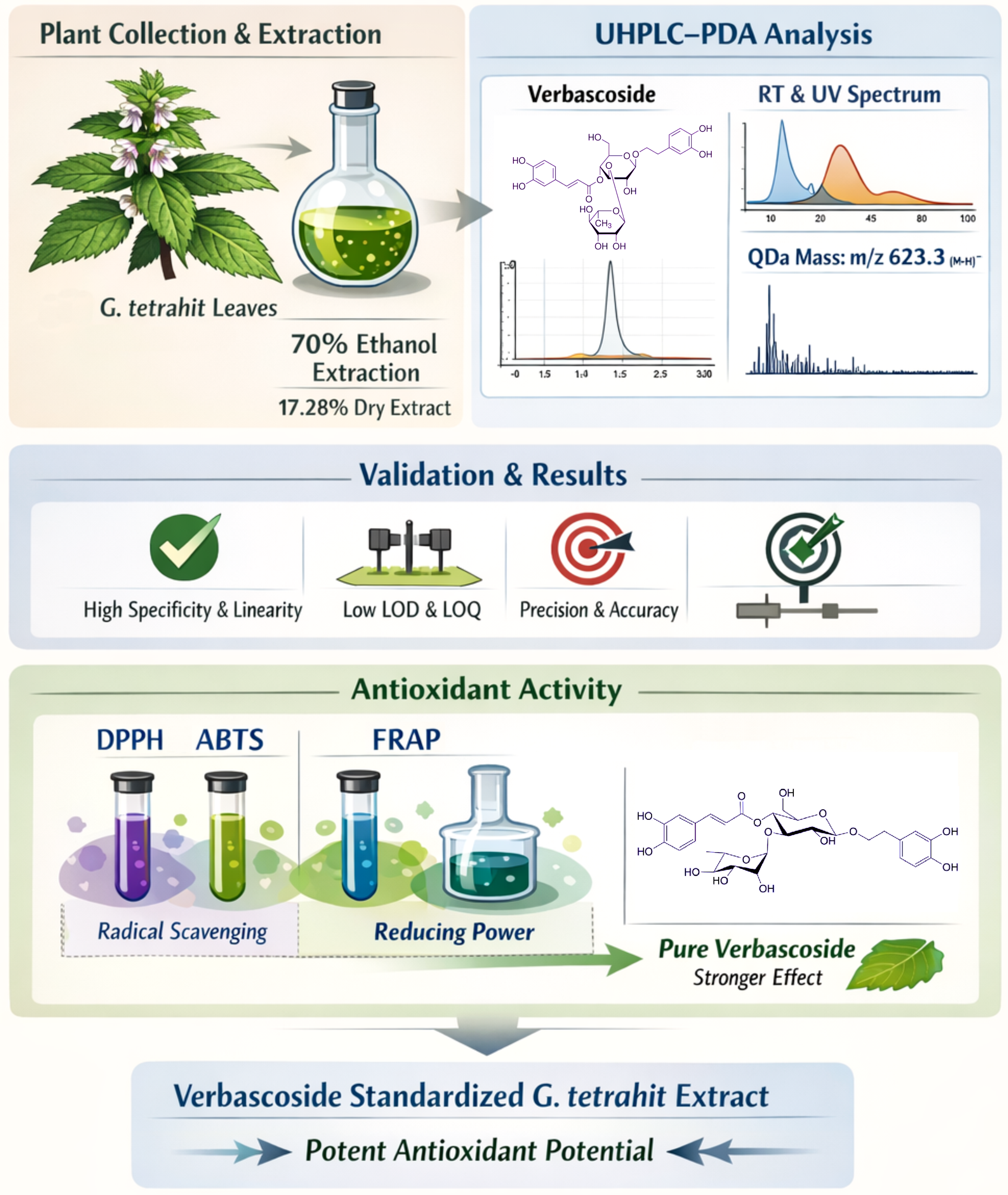
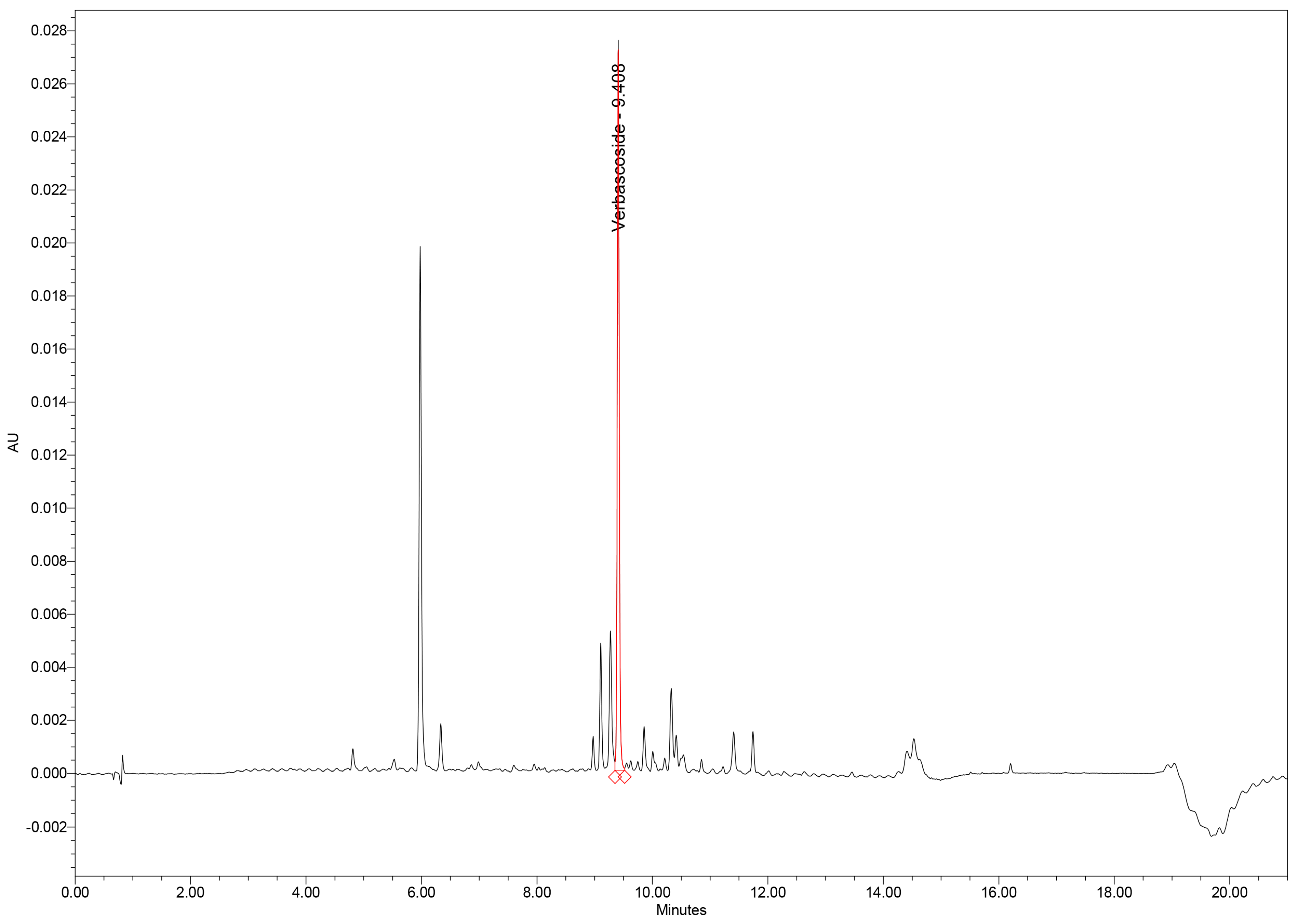
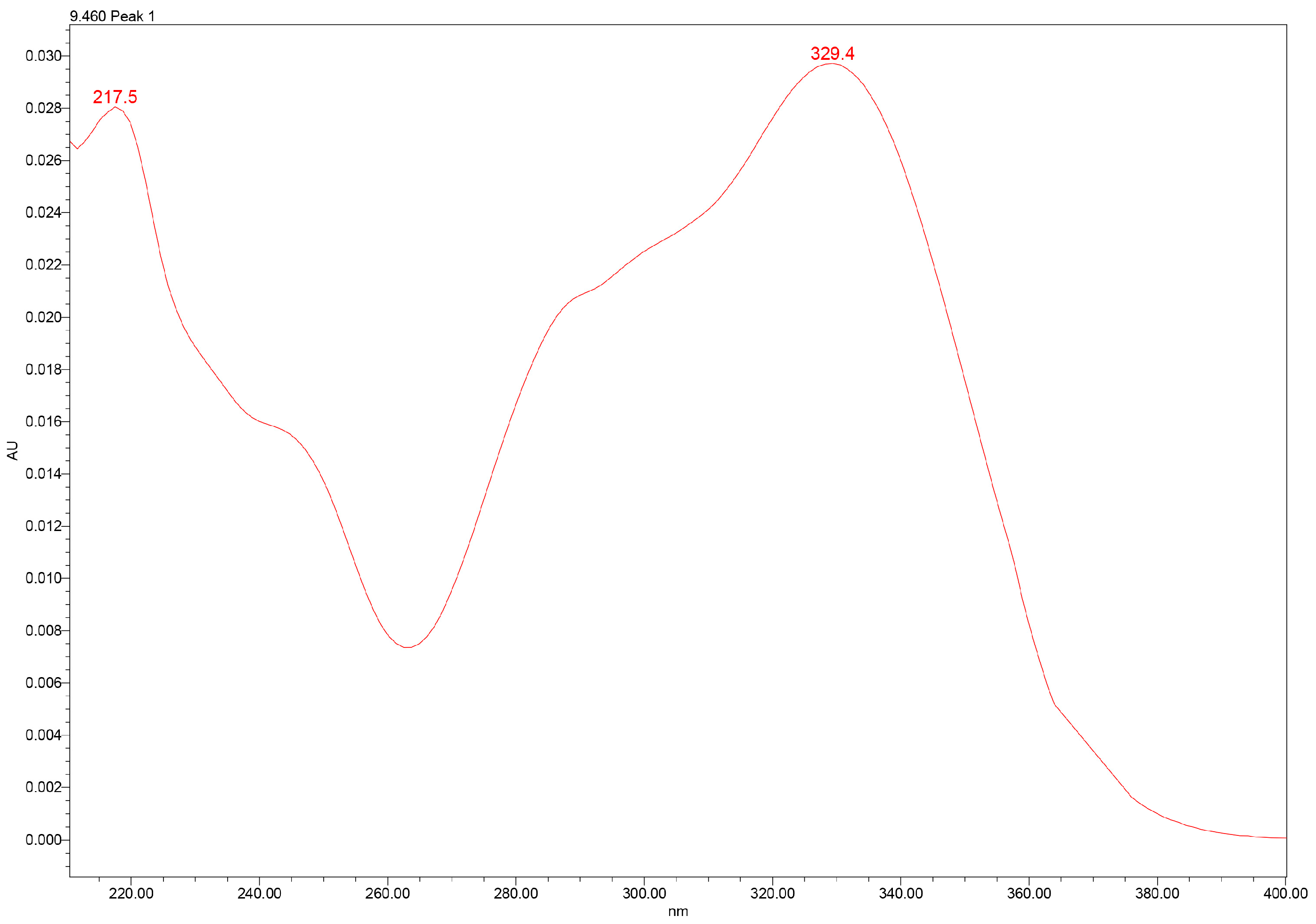
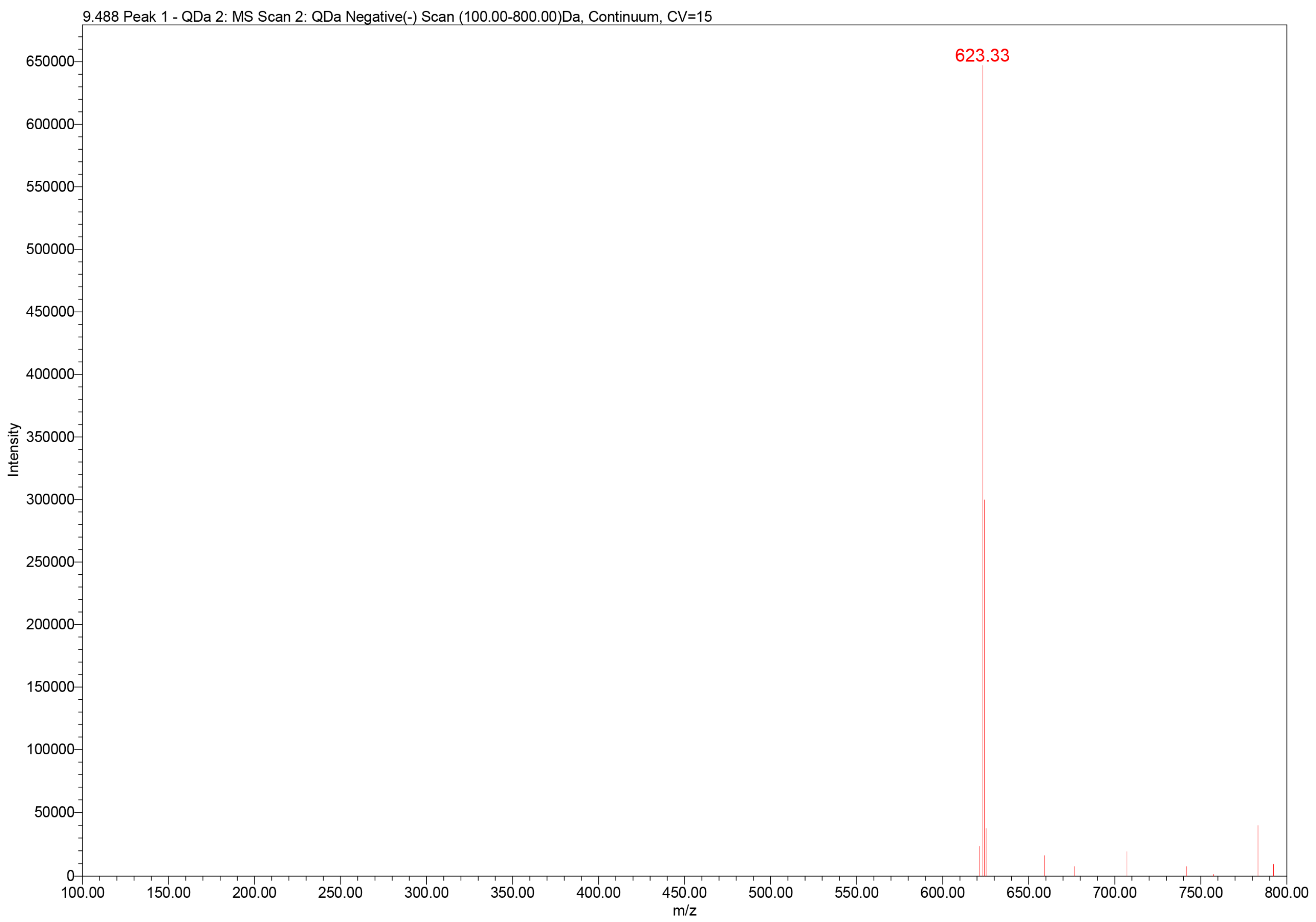
Galeopsis tetrahit L. (Lamiaceae) is a traditional European medicinal species rich in phenolic compounds, among which verbascoside is a key bioactive marker with strong antioxidant potential. This study reports the standardization of a G. tetrahit leaf extract in verbascoside using a fully validated UHPLC–PDA method developed according to ICH Q2(R2) requirements. Leaves of wild-grown G. tetrahit collected from southwest Romania flora were extracted with 70% ethanol, yielding 17.28% dry extract. Chromatographic identification of verbascoside was confirmed by retention time, UV–PDA spectra, and QDa mass spectrometry (m/z 623.3 [M–H]–). The method showed excellent performance, including high specificity, linearity over 1.875–60 μg/mL (r = 0.999955), low LOD and LOQ (0.2649 and 0.8028 μg/mL, respectively), and robust precision and accuracy. Dry extract contained 345.8 ± 28.3 mg verbascoside per g (34.6%, w/w), corresponding to approximately 59.8 mg/g in dried leaves. Antioxidant assays (DPPH, ABTS, FRAP), TPC and TFC confirmed notable radical scavenging and reducing activity, with pure verbascoside showing markedly stronger effects, supporting its major contribution to the extract’s antioxidant potential. These results demonstrate a reliable analytical approach and establish a verbascoside-based standardization framework for G. tetrahit extracts of documented Romanian origin.
Keywords:
1. Introduction
2. Results
2.1. Chromatographic Behavior, Peak Identification, and Spectral Confirmation
2.2. System Suitability Evaluation
2.3. Linearity, Calibration Model, and Analytical Range
2.4. Accuracy (Recovery Study)
2.5. Precision: Repeatability and Intermediate Precision
2.6. Specificity and Peak Purity
2.7. Robustness Considerations
2.8. Quantification and Standardization of G. tetrahit Extract
2.9. Antioxidant Profile of Extract and Standard
3. Discussion
3.1. Extraction Performance and Verbascoside Yield in Romanian G. tetrahit
3.2. Chromatographic Behavior and Analytical Advantages of the UHPLC–PDA Method
3.3. Specificity and Peak Purity as Indicators of Method Reliability
3.4. Linearity, Sensitivity, and Range: Suitability for Both Trace and High-Concentration Analysis
3.5. Accuracy and Precision Demonstrate Method Robustness
3.6. Robustness Considerations and Instrumental Stability
3.7. Antioxidant Activity and the Contribution of Verbascoside
3.8. Implications for Standardization, Quality Control, and Phytopharmaceutical Development
3.9. Limitations and Future Directions
3.10. Overall Significance
4. Materials and Methods
4.1. Plant Material and Authentication
4.2. Chemicals and Reagents
4.3. Preparation of the G. tetrahit Extract
4.4. Preparation of Standard and Sample Solutions
4.5. UHPLC–PDA–MS Analysis
4.6. Method Validation
4.7. Antioxidant Activity Assays
4.8. Statistical Analysis
5. Conclusions
Author Contributions
Funding
Data Availability Statement
Acknowledgments
Conflicts of Interest
Abbreviations
| ABTS | 2,2′-Azino-bis(3-ethylbenzothiazoline-6-sulfonic acid) |
| DPPH | 2,2-Diphenyl-1-picrylhydrazyl |
| ESI | Electrospray ionization |
| FeCl3·6H2O | Ferric chloride hexahydrate |
| FeSO4·7H2O | Ferrous sulfate heptahydrate |
| FRAP | Ferric-reducing antioxidant power |
| GAE | Gallic acid equivalents |
| GtE | Galeopsis tetrahit extract |
| HH | Half height |
| HPLC | High-performance liquid chromatography |
| IC50 | Half-maximal inhibitory concentration |
| ICH | International Council for Harmonisation |
| LC–MS/MS | Liquid chromatography–tandem mass spectrometry |
| LOD | Limit of detection |
| LOQ | Limit of quantification |
| m/z | Mass-to-charge ratio |
| MS | Mass spectrometry |
| PDA | Photodiode array |
| PhGs | Phenylethanoid glycosides |
| QE | Quercetin equivalents |
| r | Correlation coefficient |
| r2 | Coefficient of determination |
| RSD | Relative standard deviation |
| SD | Standard deviation |
| TFC | Total flavonoid content |
| TPC | Total phenolic content |
| TPTZ | 2,4,6-Tris(2-pyridyl)-1,3,5-triazine |
| tR | Retention time |
| UHPLC | Ultra-high-performance liquid chromatography |
| USP | United States Pharmacopoeia |
| UV | Ultraviolet |
References
- Harley, R.M.; Atkins, S.; Budantsev, A.L.; Cantino, P.D.; Conn, B.J.; Grayer, R.; Harley, M.M.; de Kok, R.; Krestovskaja, T.; Morales, R.; et al. Labiatae. In Flowering Plants · Dicotyledons. Lamiales (except Acanthaceae including Avicenniaceae);Series: The Families and Genera of Vascular Plants, 1st ed.; Kadereit, J.W., Ed.; Springer-Verlag: Berlin/Heidelberg, Germany, 2004; Volume 7, pp. 167–275. [Google Scholar] [CrossRef]
- O’Donovan, J.T.; Sharma, M.P. The biology of Canadian weeds. 78. Galeopsis tetrahit L. Can. J. Plant Sci. 1987, 67, 787–796. [Google Scholar] [CrossRef]
- Flora Europaea. In Diapensiaceae to Myoporaceae, 1st ed.; Tutin, T.G., Heywood, V.H., Burges, N.A., Moore, D.M., Valentine, D.H., Walters, S.M., Webb, D.A., Eds.; Cambridge University Press: Cambridge, UK, 1972; Vol. 3, pp. 145–147. [Google Scholar]
- Bendiksby, M.; Thorbek, L.; Scheen, A.-C.; Lindqvist, C.; Ryding, O. An updated phylogeny and classification of Lamiaceae subfamily Lamioideae. Taxon 2011, 60, 471–484. [Google Scholar] [CrossRef]
- Flora R.P.R., 1st ed.; Săvulescu, T., Ed.; Romanian Academy Publishing House: Bucharest, Romania, 1961; Volume VIII, pp. 187–198. (In Romanian) [Google Scholar]
- Ciocârlan, V. Flora ilustrată a României. Pteridophyta et Spermatophyta, (In Romanian), 3rd ed.; Ceres Publishing House: Bucharest, Romania, 2009; pp. 652–653. [Google Scholar]
- Sârbu, I.; Ştefan, N.; Oprea, A. Plante Vasculare Din România. Determinator Ilustrat de Teren, (In Romanian), 1st ed.; Victor B Victor Publishing House: Bucharest, Romania, 2013; pp. 654–656. [Google Scholar]
- Istudor, V. Farmacognozie, Fitochimie, Fitoterapie. In Principii active azotate (alcaloidice şi nealcaloidice), (In Romanian), 1st ed.; Medical Publishing House: Bucharest, Romania, 2005; Vol. 3, pp. 40–41. [Google Scholar]
- Olennikov, D.N. Synanthropic Plants as an Underestimated Source of Bioactive Phytochemicals: A Case of Galeopsis bifida (Lamiaceae). Plants 2020, 9, 1555. [Google Scholar] [CrossRef]
- Trotin, F.; Pinkas, M. Sur les polyphenols du Galeopsis ochroleuca Lam. (Labiées) [The polyphenols of Galeopsis ochroleuca Lam. (Labiatae)]. Plantes Med. Phytother. 1979, 13, 94–98. Available online: https://www.cabidigitallibrary.org/doi/full/10.5555/19790378158 (accessed on 12 December 2025).
- Piozzi, F.; Savona, G.; Rodriguez, B.; Servettaz, O. Galangustin, a New Flavone from Galeopsis angustifolia. Heterocycles 1982, 19, 1581–1584. [Google Scholar] [CrossRef]
- Tomás-Barberán, F.A.; Gil, M.I.; Ferreres, F.; Tomás-Lorente, F. Correlations between flavonoid composition and infrageneric taxonomy of some European Galeopsis species. Phytochemistry 1991, 30, 3311–3314. [Google Scholar] [CrossRef]
- Tomás-Barberán, F.A.; Gil, M.I.; Ferreres, F.; Tomás-Lorente, F. Flavonoid p-coumaroylglucosides and 8-hydroxyflavone allosylglucosides in some Labiatae. Phytochemistry 1992, 31, 3097–3102. [Google Scholar] [CrossRef]
- Frezza, C.; Venditti, A.; Serafini, I.; Carassiti, A.; Foddai, S.; Bianco, A.; Serafini, M. Phytochemical characteristics of Galeopsis ladanum subsp. angustifolia (Ehrh. ex Hoffm.) Gaudin collected in Abruzzo region (Central Italy) with chemotaxonomic and ethnopharmacological implications. Trends Phytochem. Res. 2017, 1, 61–68. Available online: https://journals.iau.ir/article_531708_3d0c3d3f4d8c80871382cd7c0f24e936.pdf (accessed on 12 December 2025).
- Sticher, O.; Rogenmoser, E.; Weisflog, A. Neue iridoidglucoside aus Galeopsis tetrahit L. und Galeopsis pubescens Bess. (Labiatae). Tetrahedron Lett. 1975, 16, 291–294. [Google Scholar] [CrossRef]
- Wieffering, J.H. Chromosome numbers, scutellarin and iridoid patterns in the genus Galeopsis (Labiatae). Bot. Helv. 1983, 93, 239–253. Available online: https://www.e-periodica.ch/digbib/view?pid=bhl-002%3A1983%3A93%3A%3A258#258 (accessed on 12 December 2025).
- Frezza, C.; Venditti, A.; Giuliani, C.; Foddai, S.; Maggi, F.; Fico, G.; Bianco, A.; Serafini, M. Preliminary study on the phytochemical evolution of different Lamiaceae species based on iridoids. Biochem. Syst. Ecol. 2019, 82, 44–51. [Google Scholar] [CrossRef]
- Rodríguez, B.; Savona, G. Diterpenoids from Galeopsis angustifolia. Phytochemistry 1980, 19, 1805–1807. [Google Scholar] [CrossRef]
- Pérez-Sirvent, L.; Rodríguez, B.; Savona, G.; Servetta, O. Rearranged labdane diterpenoids from Galeopsis angustifolia. Phytochemistry 1983, 22, 527–530. [Google Scholar] [CrossRef]
- Savona, G.; Bruno, M.; Servettaz, O.; Rodríguez, B. Galeuterone and pregaleuterone, labdane diterpenoids from Galeopsis reuteri. Phytochemistry 1984, 23, 2958–2959. [Google Scholar] [CrossRef]
- Flamini, G.; Cioni, P.L.; Morelli, I. Essential oils of Galeopsis pubescens and G. tetrahit from Tuscany (Italy). Flavour Fragr. J. 2004, 19, 327–329. [Google Scholar] [CrossRef]
- Olennikov, D.N.; Dudareva, L.V.; Tankhaeva, L.M. Chemical composition of essential oils from Galeopsis bifida and Phlomoides tuberosa. Chem. Nat. Compd. 2010, 46, 316–318. [Google Scholar] [CrossRef]
- Gusakova, S.D.; Vinokurov, I.I.; Umarov, A.U. Epoxy and hydroxy acids of the seed oil of Galeopsis bifida. Chem. Nat. Compd. 1981, 17, 217–223. [Google Scholar] [CrossRef]
- Khomova, T.V.; Gusakova, S.D.; Umarov, A.U. Structure of the triacyl- and epoxyacyldiacylglycerols of the seeds of Galeopsis bifida. Chem. Nat. Compd. 1983, 19, 225–226. [Google Scholar] [CrossRef]
- Gusakova, S.D.; Khomova, T.V. New oxo acids of the seed oil of Galeopsis bifida. Chem. Nat. Compd. 1984, 20, 266–270. [Google Scholar] [CrossRef]
- Asilbekova, D.T.; Gusakova, S.D.; Moiseeva, G.P.; Glushenkova, A.I. New epoxy acids of Galeopsis bifida. Chem. Nat. Compd. 1987, 23, 186–192. [Google Scholar] [CrossRef]
- Gusakova, S.D.; Asilbekova, D.T. Hydroxy acids of the reserve lipids of Galeopsis bifida. Chem. Nat. Compd. 1991, 27, 655–663. [Google Scholar] [CrossRef]
- Alipieva, K.; Korkina, L.; Orhan, I.E.; Georgiev, M.I. Verbascoside—A review of its occurrence, (bio)synthesis and pharmacological significance. Biotechnol. Adv. 2014, 32, 1065–1076. [Google Scholar] [CrossRef]
- Saha, R.; Majie, A.; Baidya, R.; Sarkar, B. Verbascoside: comprehensive review of a phenylethanoid macromolecule and its journey from nature to bench. Inflammopharmacol 2024, 32, 2729–2751. [Google Scholar] [CrossRef] [PubMed]
- Hsieh, P.-F.; Yu, C.-C.; Chu, P.-M.; Hsieh, P.-L. Verbascoside Protects Gingival Cells against High Glucose-Induced Oxidative Stress via PKC/HMGB1/RAGE/NFκB Pathway. Antioxidants 2021, 10, 1445. [Google Scholar] [CrossRef]
- Xiao, X.; Yang, F.; Huang, Y.; Liu, S.; Hu, Z.; Liao, S.; Li, Y. Enhanced In Vitro Efficacy of Verbascoside in Suppressing Hepatic Stellate Cell Activation via ROS Scavenging with Reverse Microemulsion. Antioxidants 2024, 13, 907. [Google Scholar] [CrossRef]
- Burgos, C.; Muñoz-Mingarro, D.; Navarro, I.; Martín-Cordero, C.; Acero, N. Neuroprotective Potential of Verbascoside Isolated from Acanthus mollis L. Leaves through Its Enzymatic Inhibition and Free Radical Scavenging Ability. Antioxidants 2020, 9, 1207. [Google Scholar] [CrossRef] [PubMed]
- Chen, S.; Liu, H.; Wang, S.; Jiang, H.; Gao, L.; Wang, L.; Teng, L.; Wang, C.; Wang, D. The Neuroprotection of Verbascoside in Alzheimer’s Disease Mediated through Mitigation of Neuroinflammation via Blocking NF-κB-p65 Signaling. Nutrients 2022, 14, 1417. [Google Scholar] [CrossRef] [PubMed]
- Marčetić, M.; Bufan, B.; Drobac, M.; Antić Stanković, J.; Arsenović Ranin, N.; Milenković, M.T.; Božić, D.D. Multifaceted Biological Properties of Verbascoside/Acteoside: Antimicrobial, Cytotoxic, Anti-Inflammatory, and Immunomodulatory Effects. Antibiotics 2025, 14, 697. [Google Scholar] [CrossRef]
- Khalaf, H.; Jasim, R.; Ibrahim, I. Verbascoside—A Review of Its Antitumor Activities. Pharmacol. Pharm. 2021, 12, 109–126. [Google Scholar] [CrossRef]
- Pongkitwitoon, B.; Putalun, W.; Triwitayakorn, K.; Kitisripanya, T.; Kanchanapoom, T.; Boonsnongcheep, P. Anti-inflammatory activity of verbascoside- and isoverbascoside-rich Lamiales medicinal plants. Heliyon 2023, 10, e23644. [Google Scholar] [CrossRef]
- Moshari-Nasirkandi, A.; Alirezalu, A.; Alipour, H.; Amato, J. Screening of 20 species from Lamiaceae family based on phytochemical analysis, antioxidant activity and HPLC profiling. Sci. Rep. 2023, 13, 16987. [Google Scholar] [CrossRef]
- Golu, R.M.; Bejenaru, C.; Bejenaru, L.E.; Segneanu, A.-E.; Biţă, A.; Radu, A.; Tîrnă, A.C.; Ciocîlteu, M.V.; Mogoşanu, G.D.; Neamţu, J.; et al. Phenolic Acid Investigation and In Vitro Antioxidant and Antiacetylcholinesterase Potentials of Galeopsis spp. (Lamiaceae) from Romanian Flora. Pharmaceuticals 2025, 18, 599. [Google Scholar] [CrossRef]
- Ncube, B.; Finnie, J.F.; Van Staden, J. Quality from the field: The impact of environmental factors as quality determinants in medicinal plants. S. Afr. J. Bot. 2012, 82, 11–20. [Google Scholar] [CrossRef]
- Qaderi, M.M.; Martel, A.B.; Strugnell, C.A. Environmental Factors Regulate Plant Secondary Metabolites. Plants 2023, 12, 447. [Google Scholar] [CrossRef]
- Stalikas, C.D. Extraction, separation, and detection methods for phenolic acids and flavonoids. J. Sep. Sci. 2007, 30, 3268–3295. [Google Scholar] [CrossRef]
- Rosendo, L.M.; Brinca, A.T.; Pires, B.; Catarro, G.; Rosado, T.; Guiné, R.P.F.; Araújo, A.R.T.S.; Anjos, O.; Gallardo, E. Miniaturized Solid Phase Extraction Techniques Applied to Natural Products. Processes 2023, 11, 243. [Google Scholar] [CrossRef]
- Alves, O.J.A.; Ozelin, S.D.; Magalhães, L.F.; Candido, A.C.B.B.; Gimenez, V.M.M.; Silva, M.L.A.E.; Cunha, W.R.; Januário, A.H.; Tavares, D.C.; Magalhães, L.G.; et al. HPLC method for quantifying verbascoside in Stizophyllum perforatum and assessment of verbascoside acute toxicity and antileishmanial activity. Front. Plant Sci. 2023, 14, 1324680. [Google Scholar] [CrossRef]
- Akşit, H.; Şimşek, S. Assessment of antioxidant potential, verbascoside, and sugar composition of the floral parts of Verbascum sinuatum. Turk. J. Anal. Chem. 2025, 7, 370–376. [Google Scholar] [CrossRef]
- International Council for Harmonisation (ICH). Validation of Analytical Procedures: Text and Methodology Q2(R2); ICH Secretariat: Geneva, Switzerland, 2023. Available online: https://database.ich.org/sites/default/files/ICH_Q2(R2)_Guideline_2023_1130.pdf (accessed on 30 November 2025).
- Bouloumpasi, E.; Koskeridou, A.; Irakli, M.; Karioti, A.; Tsivelika, N.; Chatzopoulou, P. Bioactive Compounds of Green Phenolic Extracts Obtained via Microwave-Assisted Extraction of Sideritis Species Grown in Greece. Molecules 2024, 29, 5612. [Google Scholar] [CrossRef] [PubMed]
- Waters Corporation. ACQUITY Arc System Instrument Specifications; Waters Corporation: Milford, MA, USA, 2016. Available online: https://www.waters.com/nextgen/us/en/products/chromatography/chromatography-systems/acquity-arc-system.html?srsltid=AfmBOopk8ME4bdmMFPOJV_Zatmmn1Za5YTdI4tvX_pxrd_oOoTHPbIRf (accessed on 12 December 2025).
- Oalđe, M.M.; Kolarević, S.M.; Živković, J.C.; Vuković-Gačić, B.S.; Jovanović Marić, J.M.; Kračun Kolarević, M.J.; Đorđević, J.Z.; Alimpić Aradski, A.Z.; Marin, P.D.; Šavikin, K.P.; et al. The impact of different extracts of six Lamiaceae species on deleterious effects of oxidative stress assessed in acellular, prokaryotic and eukaryotic models in vitro. Saudi Pharm. J. 2020, 28, 1592–1604. [Google Scholar] [CrossRef]
- Teofilović, B.; Gligorić, E.; Ninić, M.; Vukmirović, S.; Gagić, Ž.; Mandić-Kovačević, N.; Tubić, B.; Đukanović, Đ.; Grujić-Letić, N. Green Extraction Combined with Chemometric Approach: Profiling Phytochemicals and Antioxidant Properties of Ten Species of the Lamiaceae Family. Separations 2025, 12, 155. [Google Scholar] [CrossRef]
- Mungwari, C.P.; King’ondu, C.K.; Sigauke, P.; Obadele, BA. Conventional and modern techniques for bioactive compounds recovery from plants: Review. Sci. Afr. 2025, 27, e02509. [Google Scholar] [CrossRef]
- Attia, Y.M.; El-Kersh, D.M.; Wagdy, H.A.; Elmazar, M.M. Verbascoside: Identification, Quantification, and Potential Sensitization of Colorectal Cancer Cells to 5-FU by Targeting PI3K/AKT Pathway. Sci. Rep. Erratum in: Sci. Rep. 2019, 9, 18659. https://doi.org/10.1038/s41598-019-55121-x.. 2018, 8, 16939. [Google Scholar] [CrossRef] [PubMed]
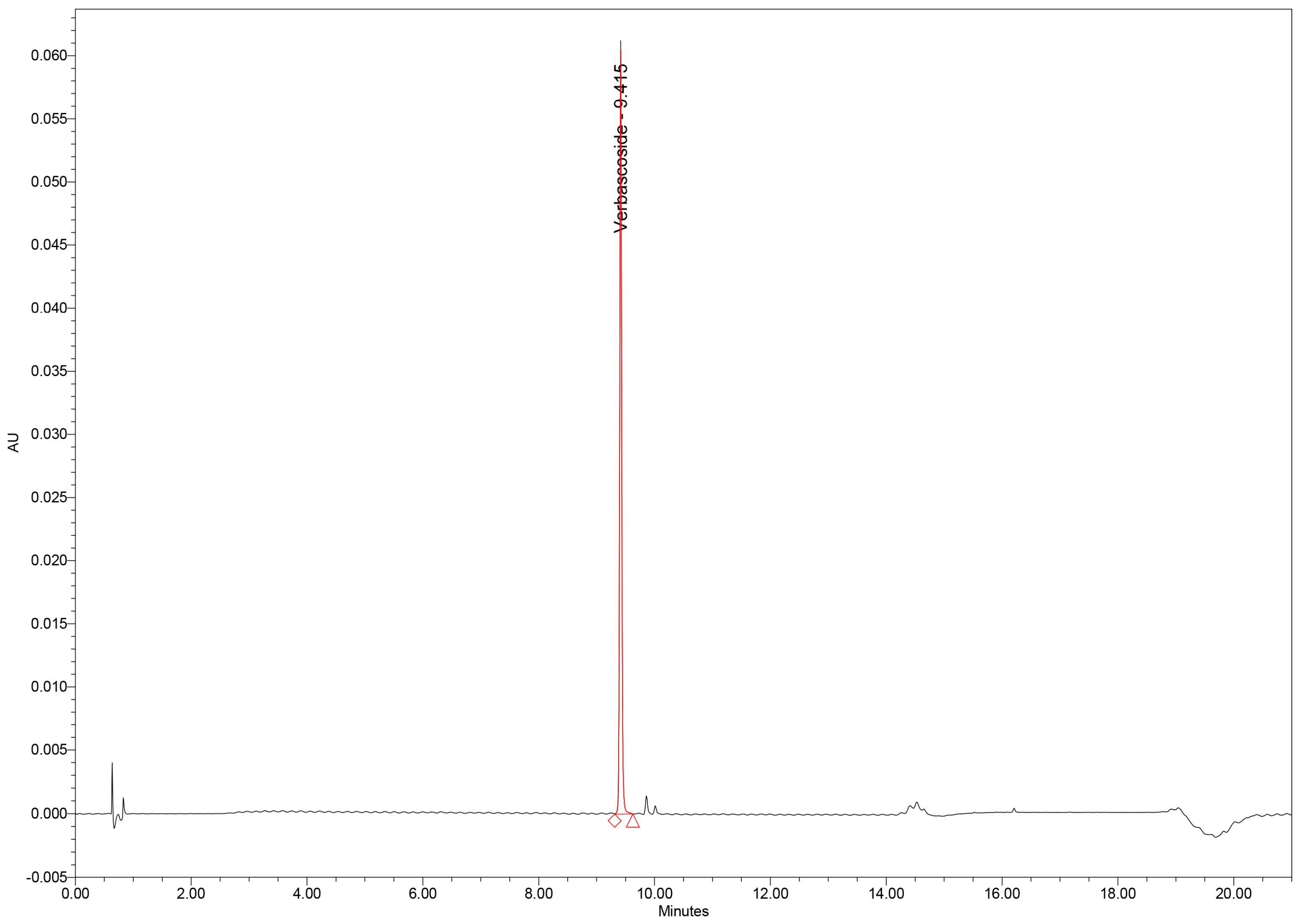

| Parameter | tR (min) | USP Plate Count | USP Tailing | Resolution | %RSD (Area) |
| verbascoside | 9.41 | 366,000 | 1.09 | 1.96 | 0.11 |
| Parameter | Value |
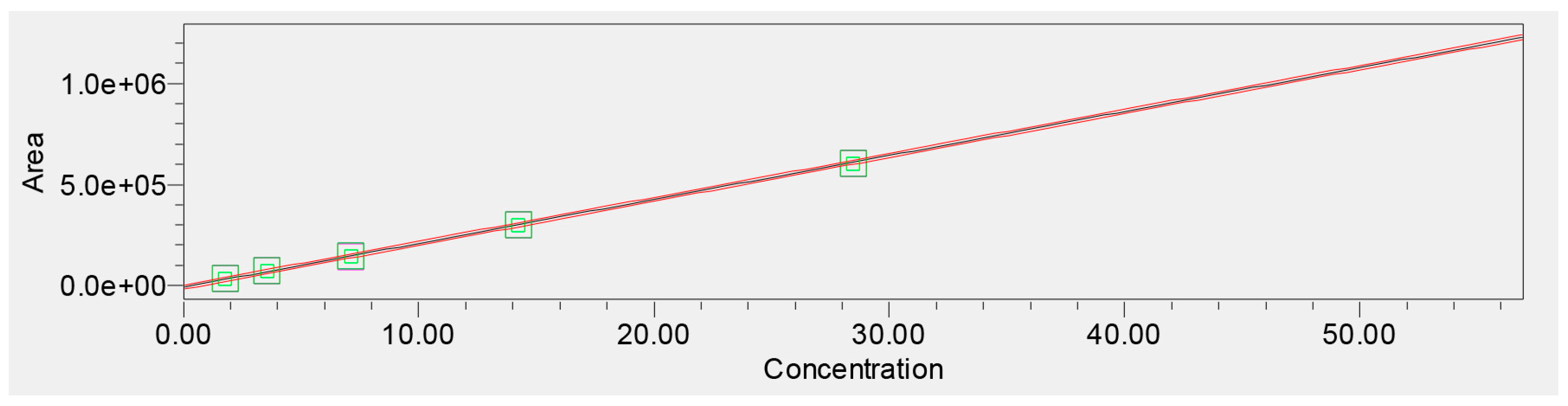
| linearity range (μg/mL) | 1.875–60 |
| regression equation | y = 21,747.58x – 8472.86 |
| correlation coefficient (r) | 0.999955 |
| coefficient of determination (r2) | 0.999911 |
| slope | 21,747.58 |
| intercept | –8472.86 |
| LOD (μg/mL) | 0.264 |
| LOQ (μg/mL) | 0.802 |
| Parameter | L2 (3.75 μg/mL) | L4 (15 μg/mL) | L5 (30 μg/mL) |
| replicate 1 area | 71,369 | 299,693 | 603,315 |
| replicate 2 area | 71,831 | 299,430 | 603,808 |
| replicate 3 area | 71,800 | 299,971 | 600,622 |
| replicate 4 area | 71,822 | 300,050 | 602,625 |
| mean area | 71,705.50 | 299,786.00 | 602,592.50 |
| %Recovery | 101.24 | 99.82 | 99.27 |
| %RSD (area) | 0.27 | 0.08 | 0.20 |
| Injection | System Precision – Area (μV·s) | Intermediate Precision – Area (μV·s) |
| 1 | 299,224.81 | 299,693 |
| 2 | 299,391.70 | 300,297 |
| 3 | 298,771.53 | 300,298 |
| 4 | 299,043.18 | 299,430 |
| 5 | 299,405.77 | – |
| 6 | 299,391.70 | – |
| mean | 299,204.95 | 299,929.40 |
| SD | 248.31 | 438.11 |
| %RSD | 0.08 | 0.15 |
| Parameter | Value | Acceptance Criterion |
| purity angle | 0.376 | purity angle < purity threshold |
| purity threshold | 0.844 | – |
| peak purity conclusion | pure | no co-eluting peaks |
| USP resolution (verbascoside vs. nearest peak) | 1.96 | ≥ 1.5 |
| USP resolution (HH) | 2 | ≥ 1.5 |
| Replicate | Measured Concentration (μg/mL) |
| 1 | 37.672 |
| 2 | 33.955 |
| 3 | 32.119 |
| mean ± SD | 34.582 ± 2.829 |
| verbascoside in dry extract | 345.8 ± 28.3 mg/g GtE (34.6%, w/w) |
| verbascoside in dried leaves | 59.8 mg/g plant material |
| Sample | DPPH IC50 (μg/mL) | ABTS IC50 (μg/mL) |
FRAP (mM Fe2+) |
TPC (μg GAE/mL) |
TFC (μg QE/mL) |
| GtE | 183.200 | 153.200 | 16.937 | 1434.287 | 449.161 |
| verbascoside | 25.270 | 21.289 | 26.245 | n/a | n/a |
Disclaimer/Publisher’s Note: The statements, opinions and data contained in all publications are solely those of the individual author(s) and contributor(s) and not of MDPI and/or the editor(s). MDPI and/or the editor(s) disclaim responsibility for any injury to people or property resulting from any ideas, methods, instructions or products referred to in the content. |
© 2025 by the authors. Licensee MDPI, Basel, Switzerland. This article is an open access article distributed under the terms and conditions of the Creative Commons Attribution (CC BY) license (http://creativecommons.org/licenses/by/4.0/).