
Submitted:
25 December 2025
Posted:
26 December 2025
You are already at the latest version
Abstract
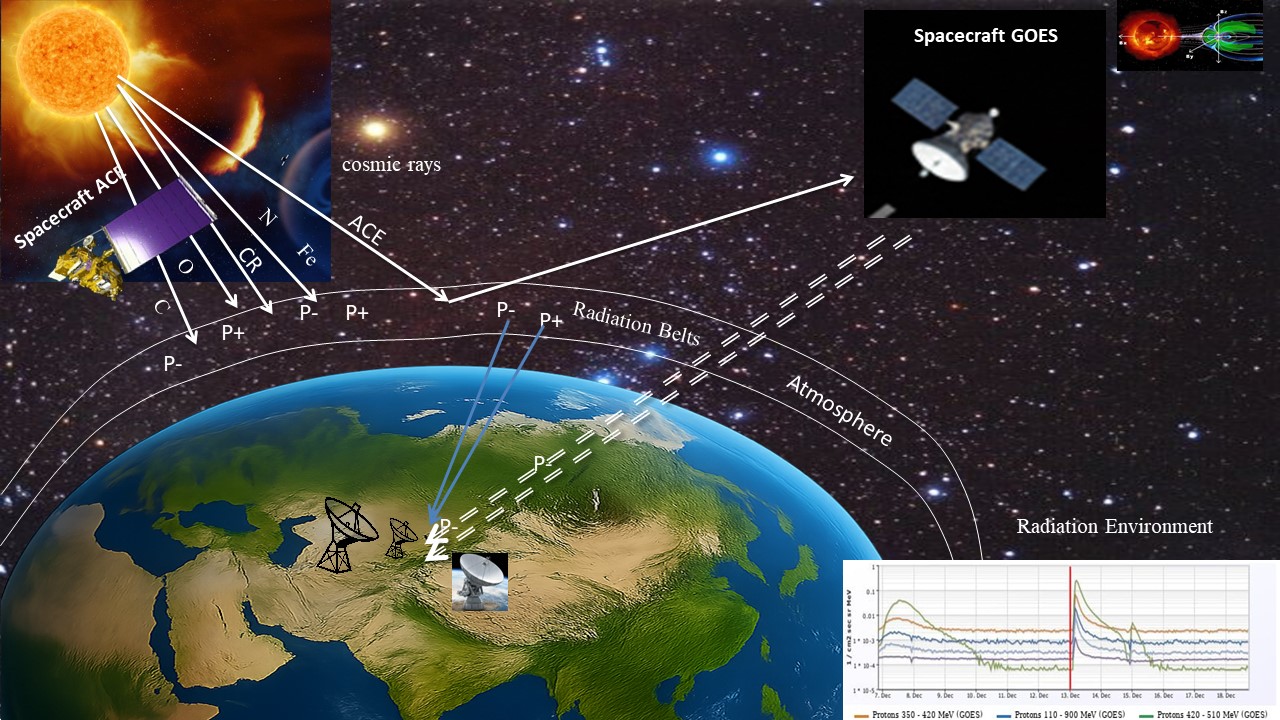
The paper analyzes the energy spectra (ES) of cosmic ray (CR) nuclei H, Ne, Si, Fe in the energy range from E = 1 MeV nucleon-1 to 1000 MeV nucleon-1. The calculated values of the ES are compared with experimental data obtained from the GOES and ACE spacecraft over 7 years of operation. A new effect has been discovered in near-Earth space: a bend in the energy spectrum of nuclei in the energy range from 8 to 50 MeV nucleon-1. A possible mechanism for the complex influence of space factors on CR fluxes in near-Earth space is discussed.
Keywords:
energy spectrum
; cosmic rays
; radiation environment
1. Introduction
Known that during the operation of space systems, failures and errors occur, leading to the development of abnormal situations on spacecraft of various purposes. Most failures during the operation of space systems occur as a result of the combined effects of space environment factors, including radiation. To assess the radiation risk during the operation of spacecraft, it is necessary to know the radiation environment in orbit.
There are a number of studies that present and examine the ES of CR nuclei.
Solar cosmic rays (SCR). The main components of the SCR are protons, electrons, and various groups of nuclei (C, N, O, Fe) with an average energy ≤ 100 MeV nucleon-1 and an intensity of (10-4 – 10-6) particles cm-2 s-1 sr-1 MeV-1. The maximum intensity is observed for protons with an energy of 30 MeV at an altitude of 500 km, and is F = 106 cm-2 s-1 [8].
Galactic cosmic rays (GCRs). GCRs also include protons with an energy range of 200 MeV nucleon-1 at altitudes above 1000 km and nuclei of all groups, up to transuranic elements. It should be noted that the content of heavy nuclei, for example, the Fe group, is several orders of magnitude less than that of nuclei with a charge of Z ~ 2÷5.
Earth’s radiation belts (ERB). There are three known radiation belts: the inner proton belt, whose center in the equatorial plane is at an altitude of about (2500 - 5000 km), and the electron belt (14,000 - 18,000 km). Protons with an energy of 30 MeV form the inner belt, and protons with an energy > 1 MeV form the outer belt.
The energy range of electrons in the ERB varies from 0.3 MeV to 100 MeV. The maximum intensity is observed for electrons with an energy of 250 KeV and is F = 107 cm-2 s-1, while for electrons with an energy of 3.0 MeV, the flux reaches ~ 105 cm-2 s-1 [9]. In 2013, at an altitude of 19,100 to 22,300 km from Earth, a third radiation belt of Earth was discovered at the inner edge of the outer belt. It consists exclusively of the most energetic (ultrafast) ultra-relativistic electrons with maximum penetrating power.
It should be noted that the flows of GCR, SCR, and ERB particles mainly differ in intensity at different orbits and phases of solar activity (SA) cycles. Thus, the SCR particle flux is also recorded at low orbits, mainly above the South Atlantic Anomaly (SAA) region, where the magnetic field is significantly weaker, so the ERB in this region reach the ISS orbits (400–450 km) [10].
The dynamics of the radiation environment in near-Earth space depend not only on SA cycles. Centuries-long drifts in the Earth’s magnetic field and geomagnetic activity also play a significant role. Experimental studies have shown that the dipole moment of the Earth’s magnetic field has decreased, and over the last ~30 years, its center has shifted ~10° westward. This effect has led to a shift in the magnetic field lines near the Earth and a change in the particle flux at low altitudes (up to 1000 km), especially in the SAA region [11].
In the paper [2] presents differential ES recorded by the Voyager 1 probe in 2005. The authors reported unusual spectral features in the fluxes of H, He, N, O, and Ne ions with energies ranging from 40 KeV to 1 GeV in the inner heliosphere since 2002, which they attributed to a possible new source of energetic particles. In the authors, point to the presence of a low-energy increase in particle fluxes with energies of 1–10 MeV, which had not been previously taken into account.
The paper [3], the ES of cosmic ray ions were studied, including the most significant anomalous features of their behavior. An increase in the intensity of nitrogen and oxygen nuclei by up to 20 times compared to galactic and/or SCR in the energy range of 3-30 MeV nucleon⁻1 was revealed. The authors believe that these nuclei are of extrasolar origin. The ES of CR ions were studied, including the most significant anomalous features of behavior, revealing an increase in the intensity of nitrogen and oxygen nuclei up to 20 times compared to galactic and SCR in the energy range of 3-30 MeV nucleon-1. The authors believe that these nuclei are of extrasolar origin. Studies have shown that the spatial location in the heliosphere, in particular the latitude and distance from the Sun, can influence the manifestation of spectral anomalies. The authors suggest that the presence of an extrasolar component of cosmic rays indicates an energy-dependent source composition or the nearby source rich in oxygen and nitrogen. However, the available evidence is limited.
In paper [4], it is reported, that measurements of CR nuclei aboard spacecraft at energies from 3 to 125 MeV per nucleon reveal distinct spectral anomalies that depend on the type of nuclei, the phase of the solar cycle, and the position in the heliosphere. In paper [5], it is shown that the helium spectral peak shifted from approximately 5 MeV nucleon⁻1 during the 1998 modulation minimum to 20–25 MeV nucleon-1 after the reversal of the solar magnetic field polarity in 2001.
The paper [6], an analysis of data from Voyager 1 and Voyager 2 (August–September 2007) cast doubt on the existence of a third source of cosmic rays. The differential energy spectrum has the form of a power function with a spectral index exceeding 1.5. The authors of the paper developed a model of magnetic reconnection, according to which anomalous cosmic rays are generated.
Data are also available from other spacecraft. For example, paper [7] presents the main results of the NUKLON space experiment. The aim of the experiment aboard the RESURS-P No. 2 satellite was to measure the chemical composition and ES of cosmic rays in the 2–500 TeV range. A universal “knee” was discovered in the energy spectrum according to magnetic rigidity. In the range of ~10 TV, the spectra become softer. The ratio of proton and helium nucleus spectra decreases with increasing rigidity, but in the “knee” region, it reaches a constant level.
2. Materials and Methods
The following methodology was used in this work. The ES of H, Ne, Si, and Fe nuclei were calculated in the energy range from E = 1 MeV nucleon-1 to 1000 MeV nucleon-1 during the maximum and minimum periods of the 23rd solar cycle for specific events, which are designated by the corresponding code. The events are systematized by a 6-digit code: 000000. The first 2 digits are the last 2 digits of the year. The second 2 digits are the month number, and the third 2 digits are the day when the proton flux with an energy of 15–40 MeV began to increase compared to the background particle flux. Radiation levels were given as examples for only two events: 061213 min (December 13, 2006) and 011122 max (November 22, 2001). Here, ‘min’ and ‘max’ denote the phases of minimum and maximum solar activity SA, respectively.
A bend was detected in the ES of nuclei. For each event in which a bend was detected, the fluxes of nuclei and the energy of cosmic ray particles in the bend region, which depend on the Z of the nucleus, were determined.
The calculated values were compared with the experimental data for these events. To analyze the appearance of anomalies in the ES of SCR at the moment of event registration, data on the radiation environment for these events were obtained from works [12,13,14,15]. The radiation environment was characterized by proton fluxes of different energies on the GOES and ACE spacecraft in accordance with works [12,13] and the values of the Dst magnetic disturbance index according to work [14,15]. The radiation environment values for all calculated events were obtained only for anomalous ES.
3. Calculation of Energy Spectra of Cosmic Ray Nuclei
Calculation of the ES of CR nuclei. In this work, the ES of CR nuclei H, Ne, Si, and Fe were calculated in the energy range from E = 1 MeV nucleon-1 to 1000 MeV nucleon-1 during the maximum and minimum periods of the 23rd SA cycle [14,16].
The differential ES of fluxes [F(E)] or peak fluxes [(E)] of protons (in general) are represented as power functions of proton rigidity R:
β - particle’s relative velocity, which is calculated by:
where E = ion’s kinetic energy, in MeV nucleon-1;
= the rest energy of a nucleon, equal to 938 MeV for a proton;
R = particle rigidity, is calculated using the formula:
The variable R, expressed in gigavolt (GV), denotes the magnetic rigidity of a particle, while the constant value of 239 MV serves as a normalization constant.
The ES of particles are determined using three parameters (5): - spectral coefficient; - spectral index; - spectrum cutoff index [16]. The spectrum cutoff index is an indicator that describes how quickly the number of particles (in this case, protons) decreases with increasing energy. Figure 1 shows the calculated ES of protons for various events.
A 24-hour period with maximum particle flux was selected. Figure 2, Figure 3 and Figure 4 show the calculated ES of various SCR nuclei for the corresponding events. The program uses a 6-digit code. For example, in Figure 1: 050913 should be read as September 13, 2005; accordingly, 041101 is October 1, 2004; 040725 is July 25, 2011; and 041110 is November 10, 2004.
In Figure 2, Figure 3 and Figure 4, in the center of the graph, the first three digits represent the energy value at the point of inflection on the X-axis, and the next three digits represent the particle flux value at the point of inflection on the Y-axis.
The work used the database from [17], which includes:
– protons and helium ions, according to data from the GOES spacecraft (Telescope and DOME instruments), selected from [12];
available online: http://ngdc.noaa.gov/stp/ and http://spidr.ngdc.noaa.gov/spidr;
– high-energy heavy ions (Z = 6–26), using SIS instrument data obtained from [13];
available online: http://www.srl.caltech.edu/ACE/ace_mission.html.
4. Analysis of the Results Obtained
Analysis of the results showed that the bending region depends on the Z of the incident CR particles. For this purpose, the calculated values of the ES for some nuclei were compared with the data measured on the GOES series satellites (Telescope and DOME instruments) and ACE (SIS instruments) for the corresponding time periods using the database from [12,13]. This database contains experimental values of CR and ES, proton fluencies according to the 4th channel (15–40 MeV) data from the GOES series satellites [13], and Ne-Fe nucleus fluxes on the ACE spacecraft [12]. This work uses a reliable approximation of proton fluxes in the widest possible energy range, developed in [17].
To obtain data on the correlation between the appearance of bending and the radiation environment, the calculated values were compared with real data on the radiation environment, which contained proton fluxes of various energies E = 0.7– 40 MeV (GOES), 38–82, 200 MeV; 110–900 MeV (GOES), as well as the Dst and Kp magnetic disturbance indices [15]. The Dst and Kp indices are the main indicators of geomagnetic activity, describing disturbances in the Earth’s magnetic field. They serve as a measure of the impact of solar wind on the magnetosphere. Dst is a geomagnetic disturbance index that allows quantitative assessment of the phases of development and strength of a magnetic storm. Kp is an index that measures the overall geomagnetic activity of the planet. It shows the degree of disturbance of the Earth’s magnetic field caused by streams of charged particles from the Sun. Figure 5 shows the calculated values and measured spectrum data for event 061213 (average values for December 13, 2006) for the minimum SA phase.
The experimental spectra were averaged over 24-hour intervals; standard deviations do not exceed 5%. The radiation environment for Figure 5 is shown in Figure 6.
In Figure 6, the upper panel shows the radiation environment for event 061213 max (December 13, 2006) for the minimum phase of SA. The Y-axis shows the particle flux (1 cm-2 s-1 sr-1 MeV-1; the X-axis represents the time (month) of recording the situation. In Figure 6 (upper panel), the red vertical line corresponds to the time of recording the particle flux. The lower panel of Figure 6 shows the values of the Dst and Kp indices characterizing the level of magnetic disturbance.
Accordingly, the references to the maximum and minimum SA phases were taken from the same source (available online: https://swx.sinp.msu.ru/tools/ida.php?gcm=1). Figure 7 shows the calculated and experimental ES of protons for the event 011122 max (November 22, 2001) corresponding to the phase of maximum SA. The radiation environment for Figure 7 is presented in Figure 8.
The experimental spectra are averaged over 24-hour intervals; the standard deviations do not exceed 5%.
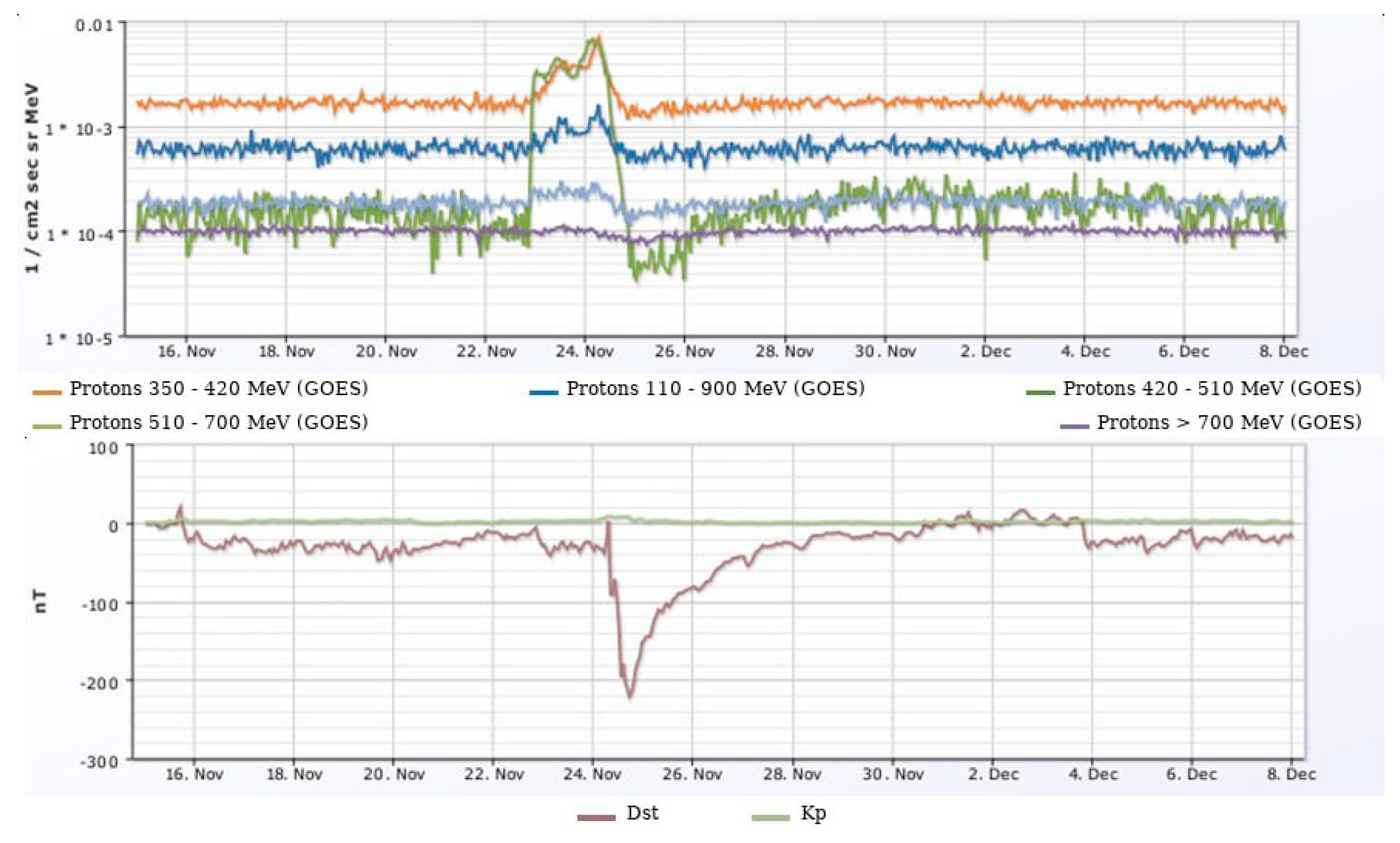
In Figure 8, the upper panel shows the radiation environment for event 011122 max (November 22, 2001) corresponding to the phase of maximum solar activity SA. The Y-axis represents the particle flux (1 cm-2 s-1 sr-1 MeV-1; the X-axis represents the time (month) of observation. The lower panel of Figure 8 shows the values of the Dst and Kp indices, which characterize the level of magnetic disturbance.
When analyzing the energy spectra ES of nuclei for various events, a discontinuity in the nuclear energy spectrum was detected. For each event, the fluxes of CR nuclei in the discontinuity region were determined, which depend on the nuclear charge Z.
Analysis of the obtained data showed that the energy range in the gap region for all nuclei lies between 17 and 22 MeV. Taking into account the spread of experimental values of nuclear fluxes, it can be assumed that the average energy at which a gap in the energy spectrum of nuclei is observed is 20 MeV for all analyzed nuclei. It has been established that the formation of bends in the ES is characteristic of events preceding an increase in proton fluxes generated by solar flares.
The newly discovered effect is currently being studied, and future publications will present a possible mechanism for the dependence of the bending region in the ES on the peak flux and on the Z nuclei of cosmic rays. The obtained values of ES can be used in planning missions of various spacecraft and selecting trajectories for low-orbit Event 061213 (December 13, 2006): This is a well-known solar proton event (Ground Level Enhancement - GLE), and its spectra are often used for spacecraft of various purposes with minimal radiation risk.
5. Discussion
The calculation represented by the solid curve in Figure 1, Figure 2, Figure 3, Figure 4 and Figure 5 and Figure 7 was performed using the SEP probabilistic model developed at the D.V. Skobeltsyn Institute for Nuclear Research of Moscow State University, information about which is available on its website (swx.sinp.msu.ru).
This model, developed by R. Nymmik [15], is used to calculate and predict the characteristics of solar proton fluxes (and other particles) during solar proton events (SEP events). The same model is used in the standard GOST R 25645.165–2001: Cosmic Solar Rays: Probabilistic Model of Proton Fluxes (2001).
Key features of the model:
- ES in this model are described by a power function of particle momentum (or sometimes energy).
- Event 061213 (December 13, 2006): this is a well-known solar proton event (GLE), and its spectra are often used to test and calibrate models. The calculation of the continuous curve is the result of approximating the experimental data presented in the figure using the analytical form of the spectrum.
In this work, solar CR nuclei were recorded on a spacecraft in near-Earth space. The novelty of the results of this work lies in the discovery of an anomaly in the energy spectrum of solar CR nuclei in near-Earth space. We believe that the detected anomalies reflect the interaction of particle flows with local magnetic heterogeneities, resulting in a redistribution of the particle flow. In Figure 6 (upper panel), the red vertical line corresponds to the time of particle flux registration. As can be seen in Figure 6, the flux of protons with energies of > 700 MeV decreases several days before the proton surge, then increases sharply. It is known that proton increases are formed as a result of solar flares accompanied by the ejection of coronal mass. This moment is reflected in Figure 6. At the same time, there are no noticeable changes in the Dst and Kp indices characterizing the level of magnetic disturbance.
The originality of our study is as follows.
We detected anomalies in the experimental differential energy spectrum in near-Earth space. It was important for us to find out what the radiation environment was like during this period. By radiation environment, we mean whether there were solar flares accompanied by a powerful stream of solar plasma causing local magnetic heterogeneities in near-Earth space. Our research has shown that the anomalies detected coincide with solar proton events.
Evidently, there is abnormal behavior in certain particle fluxes - SCR - during solar flares, which may reflect the interaction of solar CR fluxes with local magnetic heterogeneities in near-Earth space.
The scientific originality of the research consists in the experimental detection of spectral anomalies.
Consistency with previous observations
Our results are consistent with data obtained during the Voyager 1 mission, which recorded similar spectral anomalies in the same energy range (1–1000 MeV nucleon-1) [23,24]. For example, M. E. Hill, R. B. Decker, E. K. Roelof, S. M. Krimigis, and G. Glockler reported comparable effects in the article “Heliospheric particles, anomalous cosmic rays, and a possible ‘third source’ of energetic ions” [23].
Similarly, W.R. Webber, A.C. Cummings, E.C. Stone, F.B. McDonald, N. Lal, and B. Heikkila discussed similar differences in the spectra of anomalous helium nuclei from cosmic rays in two solar magnetic polarity cycles [24]. Both studies suggest the existence of a “third source” of energetic ions, potentially of galactic origin.
In paper [25], the authors assume spatially homogeneous propagation. Through measurements on Voyager 1-2, complex ES of cosmic rays beyond the Solar System were revealed, with noticeable differences between nuclear species. Studies show that Voyager measurements provide unique information about CR spectra beyond the solar system [25]. Helium and carbon CR nuclei show similar spectral injection indices, with helium being harder than hydrogen.
Different types of nuclei show subtle but significant spectral differences. These observations point to potential changes in CR sources and acceleration processes, and the measurements provide unprecedented information about the characteristics of interstellar cosmic rays.
In paper [26], special attention is paid to unexplained anomalies found in the CR spectrum, and their possible interpretations are discussed. Precise measurements of high-energy carbon and oxygen made by AMS-02 and CALET provide important evidence that the hardening of the CR spectrum is a common feature of all primary nuclei. Further understanding of the slope of secondary and primary ratios is driven by the effects of CR propagation in the interstellar medium. The authors believe that interstellar hardening may be caused by self-generated turbulence of CR.
Our results show that the anomalies we have detected have similar energy characteristics and spectral shapes to those observed by Voyager 1, but occur in near-Earth space, closer to the Sun. This means that the Sun itself may act as an additional source of radiation capable of generating transient populations of energetic particles under certain heliophysical environments.
Conceptual progress and scientific implications
A comparison of measurements near Earth and interplanetary data suggests that the mechanisms accelerating energetic particles from the Sun may penetrate deeper into the heliosphere than previously thought.
The results confirmed that the detected anomalies coincided with known solar proton events, indicating anomalous behavior of solar CR fluxes during flare activity.
It should be emphasized that the results obtained have both scientific and practical significance. The combined influence of near-Earth space factors often leads to malfunctions and failures in the onboard electronic equipment of spacecraft, causing abnormal situations and, in some cases, the complete loss of satellites. The causes and characteristics of such failures are diverse. Although many failures are associated with solar flares, others occur during quiet solar conditions.
One of the most critical space factors affecting the reliability of onboard electronics is the flux of SCR, GCRs, and particles of the Earth’s radiation belts.
As part of this study, a database was created on the characteristics of near-Earth space based on measurements obtained using the GOES spacecraft, including proton and electron fluxes of various energies, gamma radiation, as well as geomagnetic and planetary disturbance indices (Dst and Kp). The database covers a series of key events between 2000 and 2006, which served as the basis for the analysis.
6. Conclusions
The main results obtained in this work are as follows:
Experimental anomalies have been clearly identified in the differential ES of CR nuclei. It has been demonstrated that these anomalies are associated with solar flares accompanied by intense plasma ejections capable of generating local magnetic heterogeneities in the, near-Earth interplanetary space.
The observed particle flux behavior deviates from the expected smooth power-law energy distribution and points to energy-dependent scattering processes in the, near-Earth plasma events.
New empirical data are presented, establishing a correlation between solar proton events and localized magnetic heterogeneities with short-term enhancements in anomalous particle fluxes.
These findings support the hypothesis that the heliosphere is not merely a passive modulation region, but rather a dynamic medium where secondary particle acceleration can occur under the influence of solar disturbances.
Currently, follow-up investigations are underway to explore the transport mechanisms that may enable solar-origin energetic particles to reach remote regions such as the outer heliosphere, as previously observed by the Voyager 1 spacecraft.
The newly detected bending of ES in near-Earth space may be attributed to the interaction of particle fluxes with localized magnetosphere irregularities. To further study this phenomenon, it is necessary to launch a satellite constellation for synchronous monitoring of near-Earth space.
The obtained energy spectral values can be used in mission planning for various spacecraft and in selecting trajectories for low-orbit spacecraft for various purposes that minimize radiation risk.
Author Contributions
Conceptualization, V.G. and M.N.; methodology, V.G.; validation, A.B., A.M. and A.K.; formal analysis, A.B., A.M.; investigation, V.G.; resources, A.B.; data curation, A.M.; writing - original draft preparation, V.G.; writing - review and editing, M.N.; visualization, A.K.; supervision, V.G.; project administration, V.G.; funding acquisition, V.G.
Funding
This research is funded by the Committee of Science of the Ministry of Science and Higher Education of the Republic of Kazakhstan (Grant No. BR20280979 “Comprehensive study of the impact of disturbance sources of solar origin on the state of near - Earth space”).
Institutional Review Board Statement
Not applicable.
Informed Consent Statement
Not applicable.
Data Availability Statement
The data supporting the findings of this study are openly available. Proton and helium ion data were obtained from the GOES spacecraft (Telescope and DOME instruments) at http://ngdc.noaa.gov/stp/ and http://spidr.ngdc.noaa.gov/spidr. High-energy heavy ion data were obtained from the ACE SIS instrument at http://www.srl.caltech.edu/ACE/ace_mission.html.
Acknowledgments
The authors express their gratitude to Doctor, Professor Mikhail Igorevich Panasyuk for his interest in the work and valuable comments, which were taken into account when writing this work. The authors are also grateful to the Institute employee Kadyr Askaruly for performing the necessary calculations.
Conflicts of Interest
The authors declare no conflicts of interest.
Abbreviations
The following abbreviations are used in this manuscript:
| GOES | Geostationary Operational Environmental Satellite |
| ACE | Advanced Composition Explorer |
| NES | Near-Earth space |
| GCR | Galactic cosmic rays |
| SCR | Solar cosmic rays |
| ERB | Earth’s radiation belts |
| ES | Energy spectra |
| ISS | International Space Station |
| MeV | Mega-electronvolt |
| ECR | Energetic Cosmic Rays |
| SAA | South Atlantic Anomaly |
| SA | Solar activity |
| Dst | Disturbance storm time Index |
| Kp | Kennziffer planetarisch (Planetary K-Index) |
| GV | Gigavolts |
| cm | Centimeter |
| GOST | State Standard (Gosudarstvennyy Standart) |
References
- Kuznetsov, N.V. Radiation conditions in spacecraft orbits. In Model of space, Nauka: Moscow, 2007; Vol. 1, pp. 25–30.
- M. E. Hill, R. B. Decker, E. C. Roelof, S. M. Krimigis, and G. Gloeckler. Heliosheath particles, anomalous cosmic rays and a possible “third source” of energetic ions. Cite as: AIP Conference Proceedings 858, pp. 98-103 (2006). [CrossRef]
- McDonald, F. B., Teegarden, B. J., Trainor, J. H., & Webber, W. R. (1974). The anomalous abundance of cosmic-ray nitrogen and oxygen nuclei at low energies. Astrophysical Journal, vol. 187, p. L105, 187, L105. [CrossRef]
- Cummings A. C., Stone E. C., Webber W. R. Changes in the energy spectrum of anomalous oxygen during 1977–1985 //Journal of Geophysical Research: Space Physics. [CrossRef]
- Webber W., Cummings A., Stone E., Mcdonald F., Lal N., Differences in the spectra of anomalous cosmic ray helium nuclei in two solar magnetic polarity cycles, Journal of Geophysical Research, 2005, Vol.110, P. 1-6. [CrossRef]
- A magnetic reconnection mechanism for the generation of anomalous cosmic rays. Astrophysical Journal, P. 963-974, February 1, 2010. [CrossRef]
- Turundaevsky A. N., Vasilyev O. A., Karmanov D. E., Kovalev I. M., Kudryashov I. A., Kurganov A. A., Panov A. D., Podorozhny D. M. / Main results of the NUKLON experiment. Izvestiya PAN, Physics Series, 2021, vol. 85, no. 4. pp. 478-481.
- Musabayev, T.; Zhantayev, Z.; Grichshenko, V. Complex influence of space environment on materials and electronic devices in the conditions of microgravity. Advances in Space Research 2016, 58, 1138–1145. [CrossRef]
- Musabayev T., ZhantayevZh., Grichshenko V., Kulanov I. The failures of the electronics of the Space vehicles in the conditions of complex influence of Space factors // Space Safety is No Accident. The 7thIAASS Conference. Springer, 2016, 216.–P. 515-525. [CrossRef]
- Myagkova, I.N.; Bogomolov, A.V.; Eremeev, V.E.; Shiryaev, A.O.; Ginzburg, E.A. Dynamics of the radiation environment in near-Earth space in September–November 2020 from data of METEOR-M and ELEKTRO-L satellites. Cosmic Research 2021, 59, 433–445. [CrossRef]
- Dorman, L.I.; Smirnov, V.S.; Tyasto, M.I. Cosmic Rays in the Earth’s Magnetic Field; Nauka: Moscow, 1971.
- NOAA National Geophysical Data Center. GOES Spacecraft Data. http://ngdc.noaa.gov/stp/. Accessed: September 5, 2025.
- ACE Science Center, California Institute of Technology. ACE Mission Data (SIS Instrument). http://www.srl.caltech.edu/ACE/ace_mission.html. Accessed: September 5, 2025.
- Space Weather: Real-time data and analysis. https://swx.sinp.msu.ru/models/index.php?gcm=1. Accessed: September 5, 2025.
- Altaibek, A.; Zhumabayev, B.; Sarsembayeva, A.; Nurtas, M.; Zakir, D. Enhancing Geomagnetic Disturbance Predictions with Neural Networks: A Case Study on K-Index Classification. Atmosphere 2025, 16. [CrossRef]
- GOST R 25645.165-2001. Cosmic solar rays. Probabilistic model of proton fluxes, 2001.
- Nymmik, R. Radiation environment induced by cosmic ray particle fluxes in the international space station orbit according to recent galactic and solar cosmic ray models. Advances in Space Research 1998, 21, 1689–1698. [CrossRef]
- Sun. X.; Zheng, S.; Shi. Z.; Liu, B.; Yang, R. Low-Energy Cosmic Rays and Associated MeV Gamma-Ray Emissions in the Protoplanetary System. Universe 2024, 10, 310. [CrossRef]
- Arcani. M.; Liguori, D.; Grana, A. Exploring the Interaction of Cosmic Rays with Water by Using an Old-Style Detector and Rossi’s Method. Particles 2023, 6, 801–818. [CrossRef]
- Arcani. M.; Conte, E.; Monte, O.D.; Frassati, A.; Grana, A.; Guaita, C.; Liguori, D.; Nemolato, A.R.M.; Pigato, D.; Rubino, E. The Astroparticle Detectors Array—An Educational Project in Cosmic Ray Physics. Symmetry 2023, 15, 294. [CrossRef]
- Zhao, B.; Guo, Y.; Zhou, X. Geminga SNR: Possible Candidate of Local Cosmic-Ray Factory (II). Universe 2023, 9, 93. [CrossRef]
- Li, A.; Liu, W.; Guo, Y. Cosmic Ray Anisotropy and Spectra as Probes for Nearby Sources. Symmetry 2024, 16, 236. [CrossRef]
- Hill, M.E.; Decker, R.B.; Roelof, E.K.; Krimigis, S.M.; Gloeckler, G. Heliospheric Particles, Anomalous Cosmic Rays, and a Possible “Third Source” of Energetic Ions. AIP Conf. Proc. 2006, 858, 98–103. [CrossRef]
- Webber, W.R.; Cummings, A.C.; Stone, E.C.; McDonald, F.B.; Lal, N.; Heikkila, B. Differences in the Spectra of Anomalous Helium Nuclei from Cosmic Rays in Two Solar Magnetic Polarity Cycles. Journal of Geophysical Research 2005, 110, A07106. [CrossRef]
- Pan, X.; Yuan, Q. Injection spectra of different species of cosmic rays from AMS-02, ACE-CRIS and Voyager-1. Res. Astron. Astrophys. (Manuscript/Preprint) 2024.
- Tomassetti, N. Direct Measurements of Galactic Cosmic Rays. In Proceedings of the 27th European Cosmic Ray Symposium (ECRS); Nizhny Novgorod, Russia, 25–29 July 2022; PoS 2022, 423, 007. [CrossRef]
Figure 1.
Calculated energy spectrum of protons for various events.
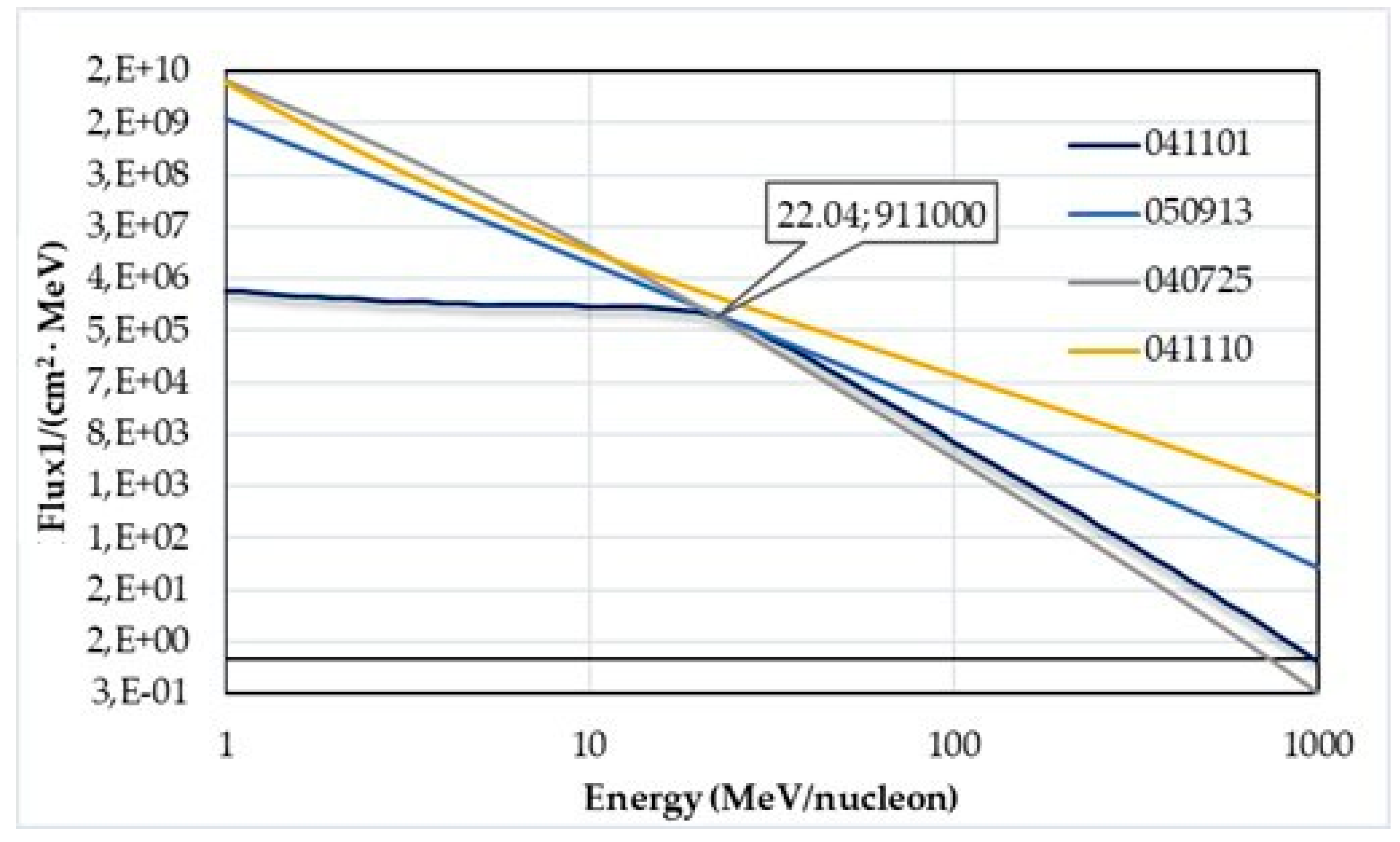
Figure 2.
Calculated energy spectrum of Ne nuclei for various events.
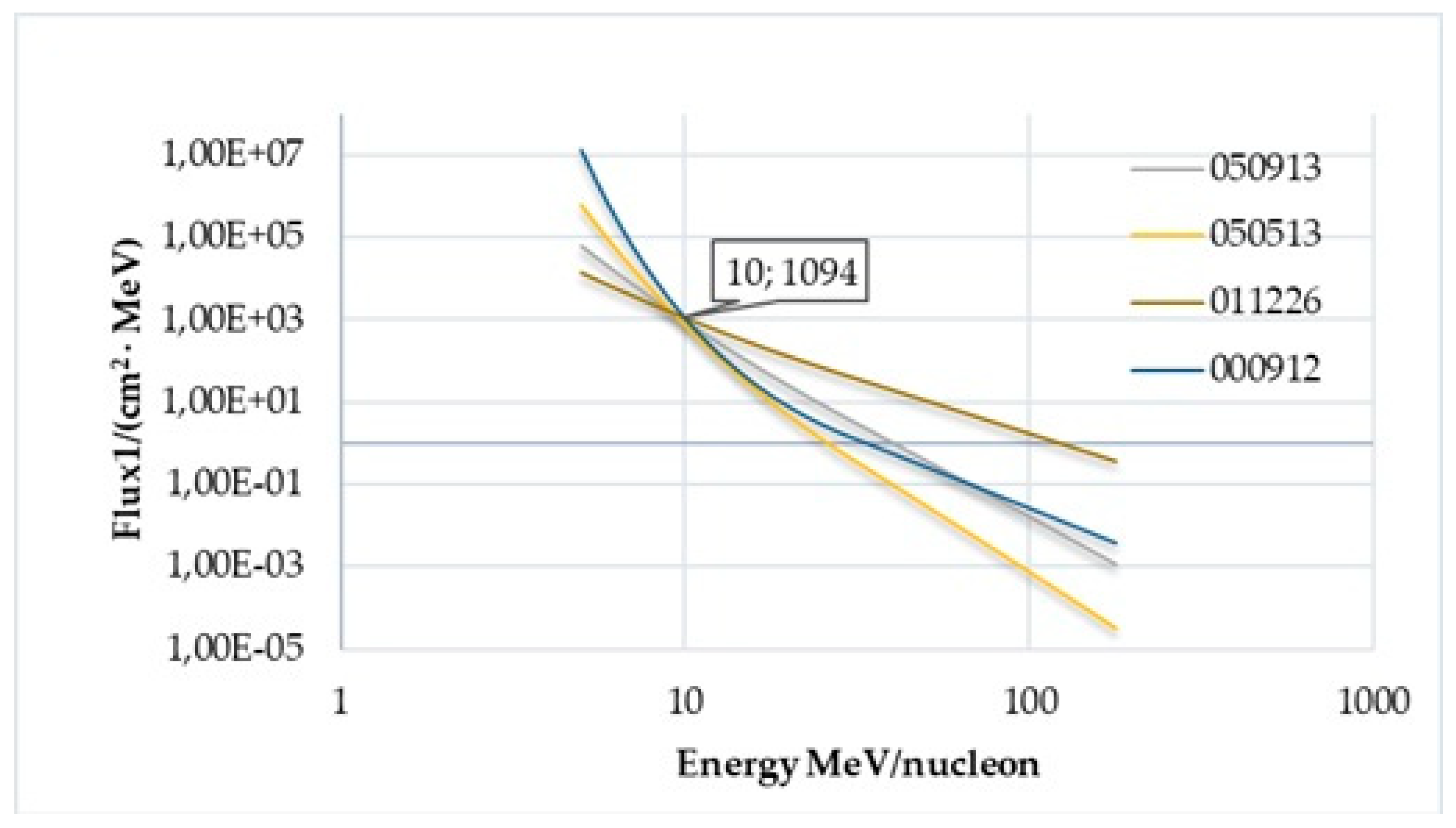
Figure 3.
Calculated energy spectrum of Si nuclei for various events.
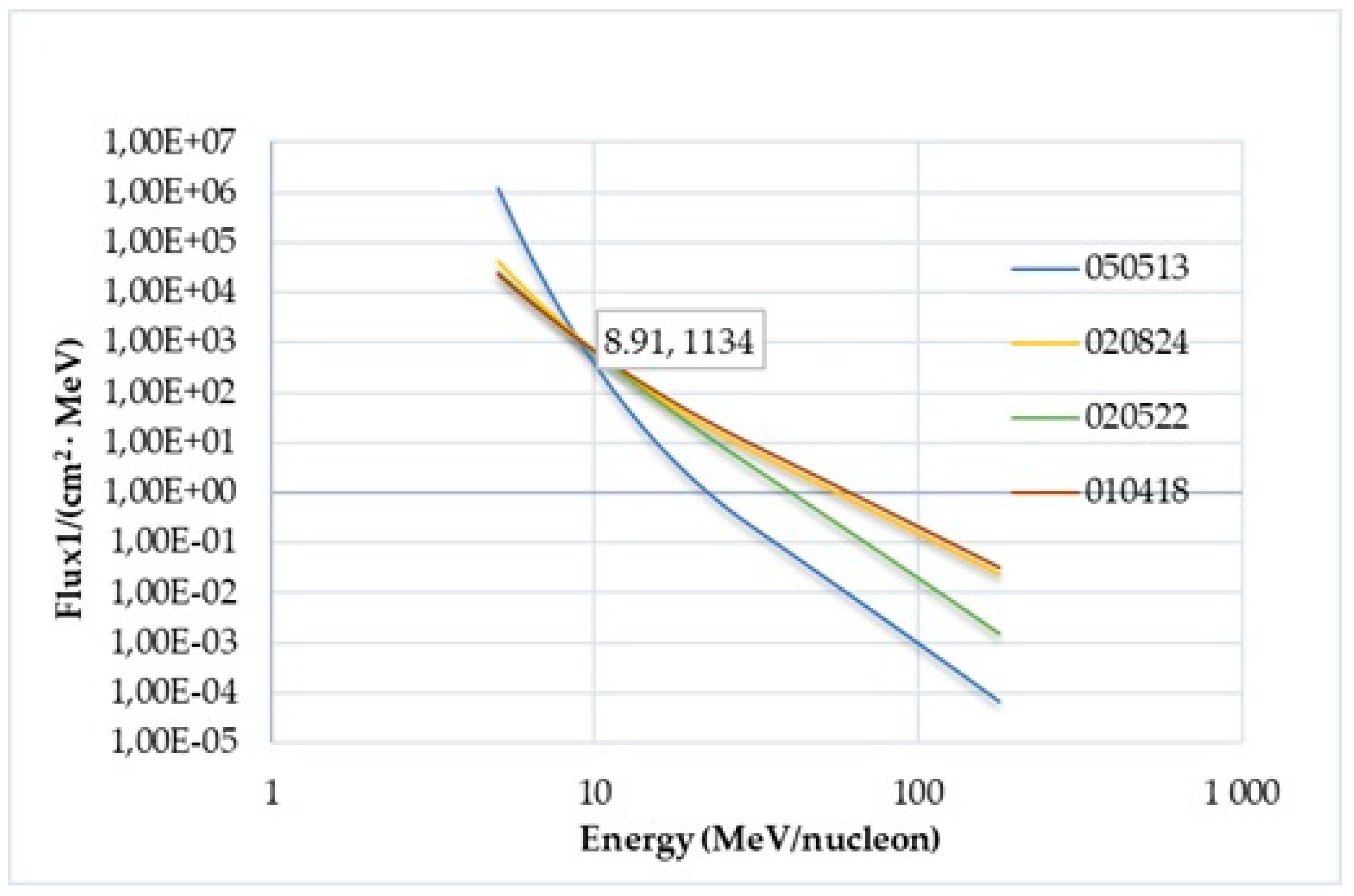
Figure 4.
Calculated energy spectrum of Fe nuclei for various events.
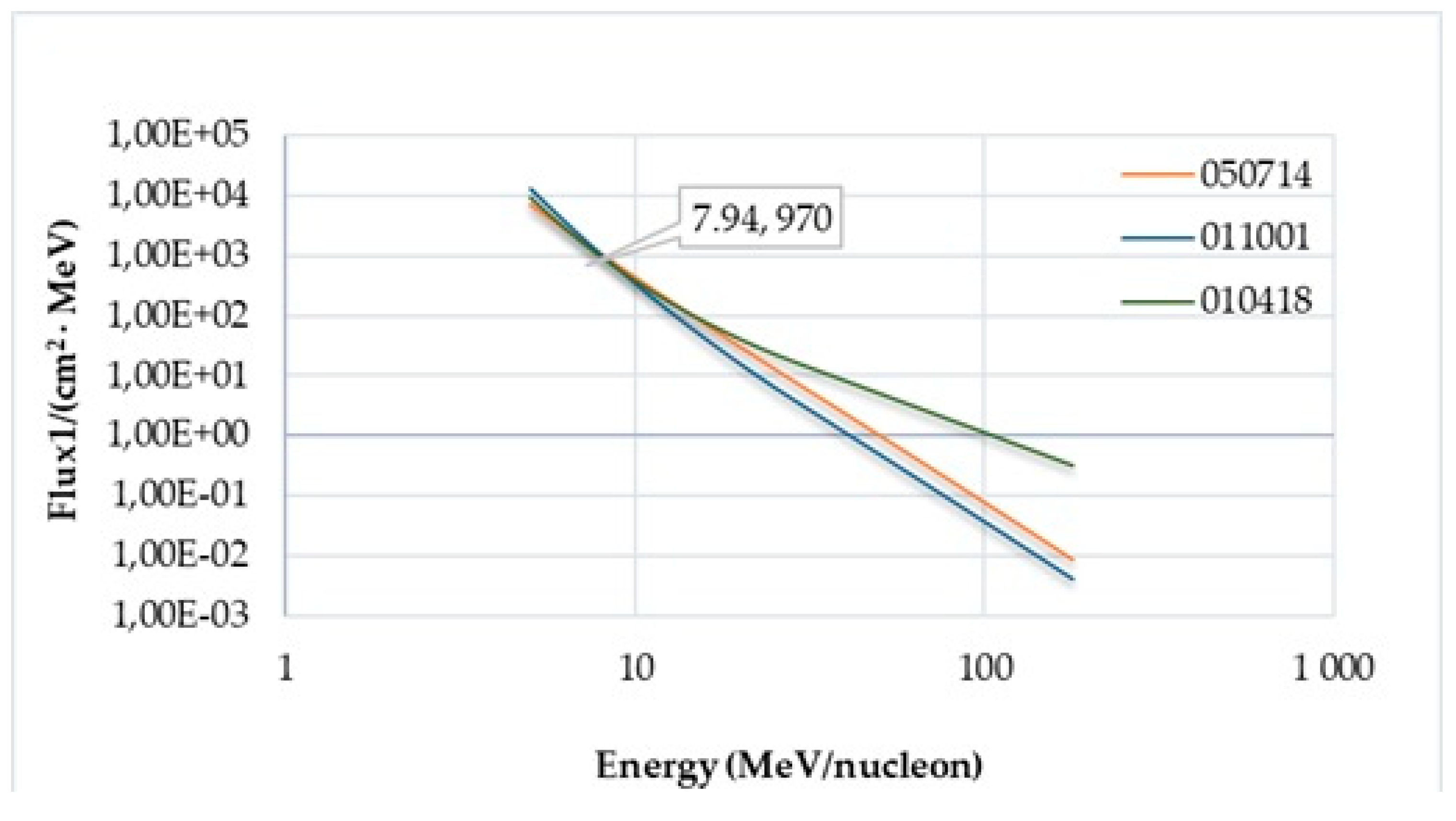
Figure 5.
Calculated and experimental ES of protons for event 061213 (December 13, 2006) for the minimum SA phase (solid line – calculation; dashed line – experiment).
Figure 5.
Calculated and experimental ES of protons for event 061213 (December 13, 2006) for the minimum SA phase (solid line – calculation; dashed line – experiment).
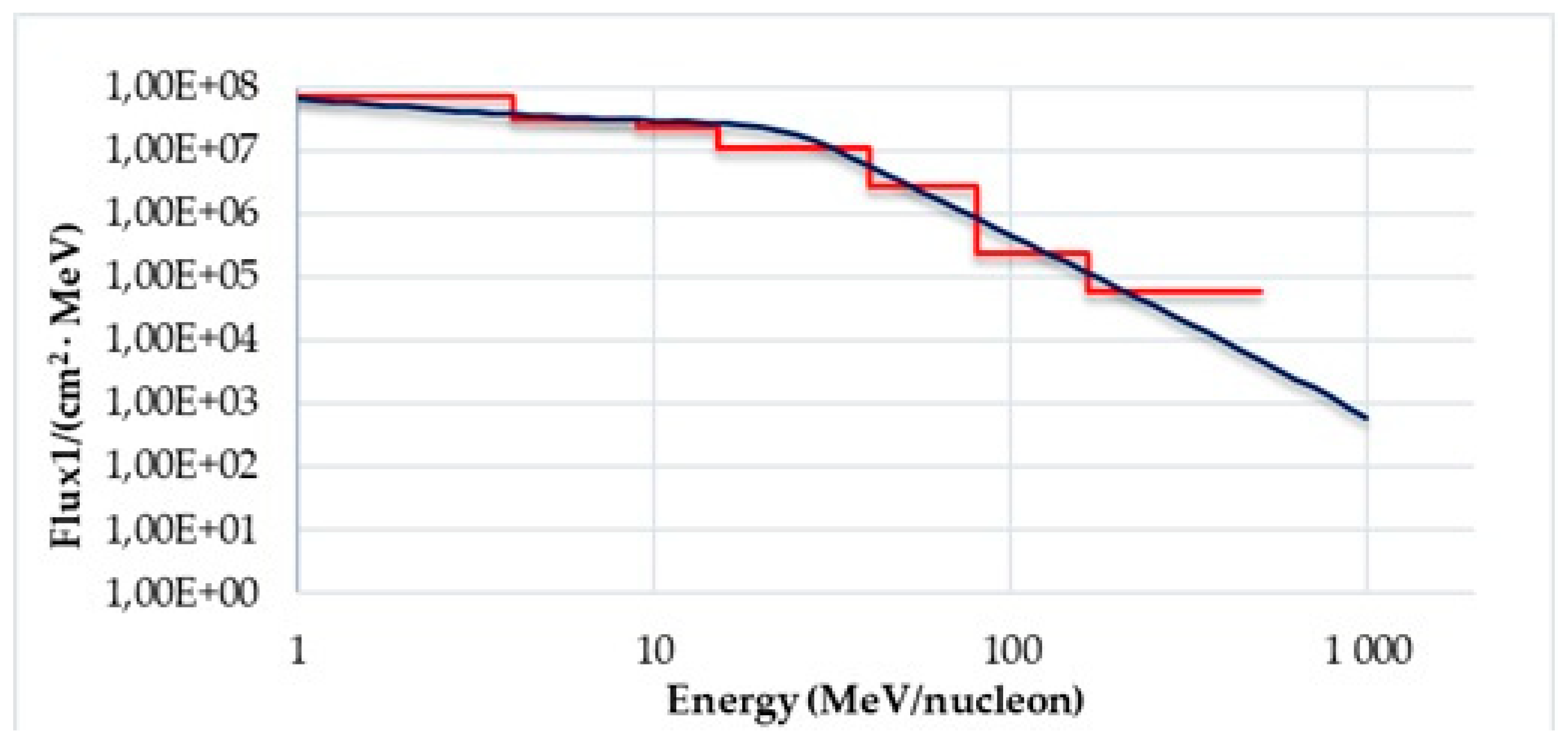
Figure 6.
Radiation environment for event 061213 min (December 13, 2006) for the minimum phase of the SA.
Figure 6.
Radiation environment for event 061213 min (December 13, 2006) for the minimum phase of the SA.
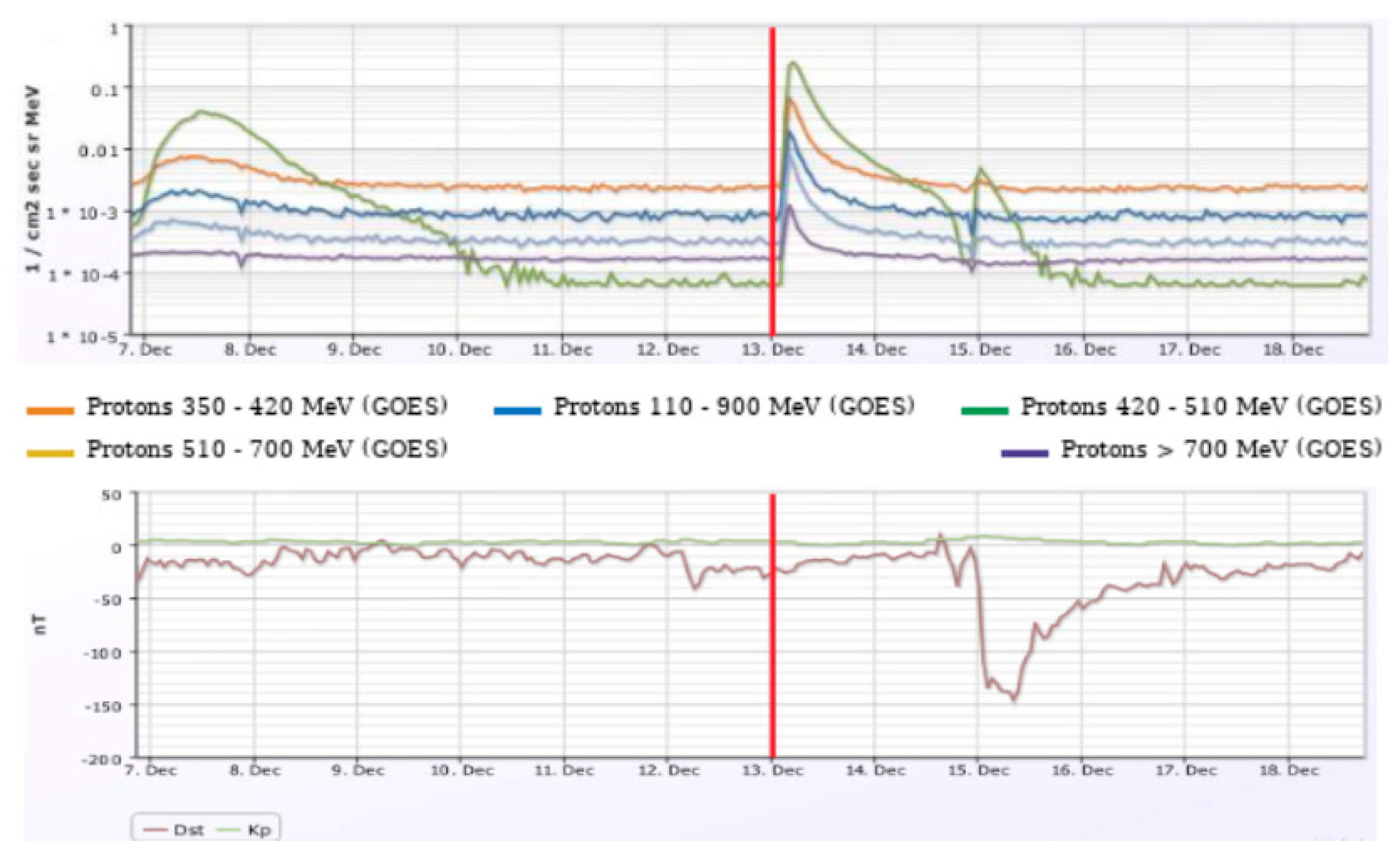
Figure 7.
Calculated and experimental energy spectra ES of protons for event 011122 max (for November 22, 2001) for the SA maximum phase (solid line – calculation; dashed line – experiment).
Figure 7.
Calculated and experimental energy spectra ES of protons for event 011122 max (for November 22, 2001) for the SA maximum phase (solid line – calculation; dashed line – experiment).
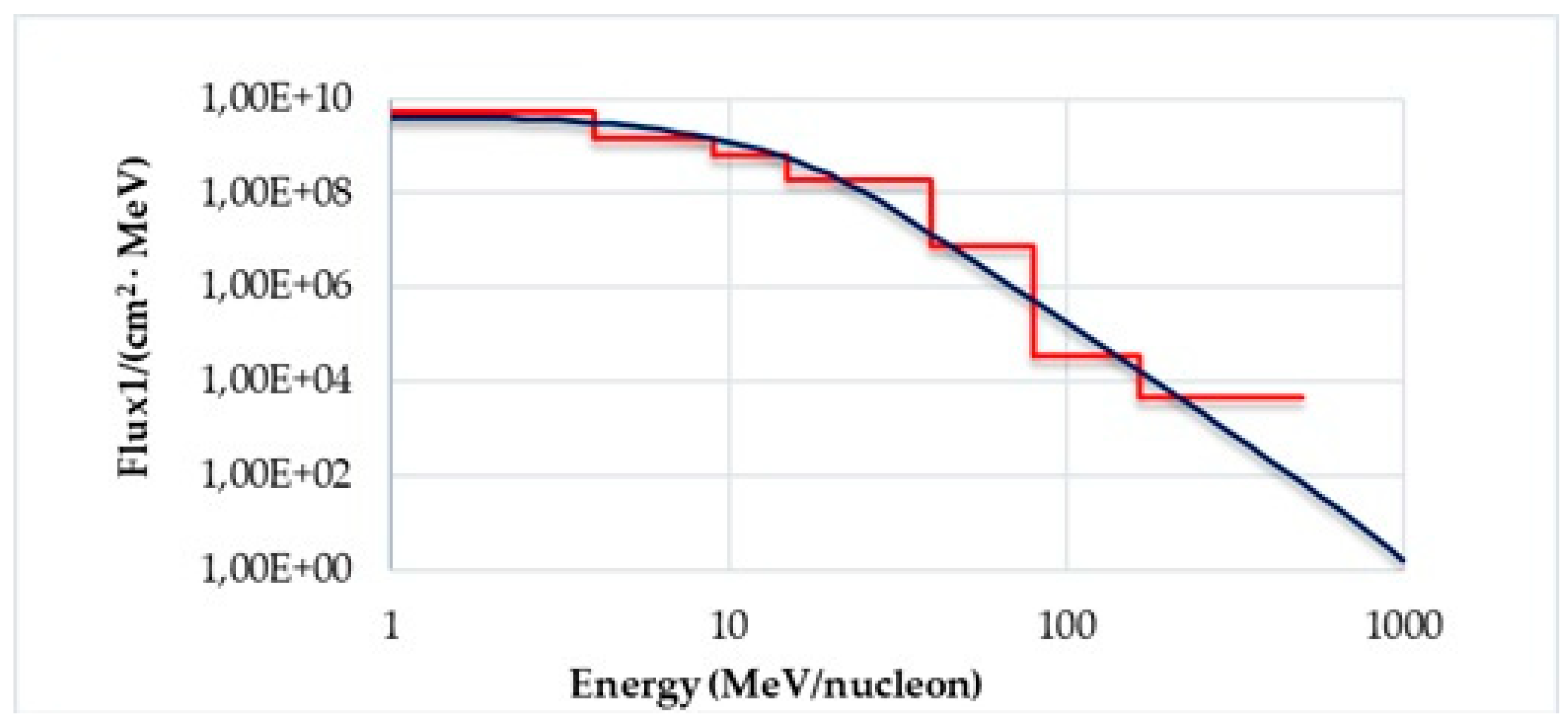
Figure 8.
Radiation environment for event 011122 max (for November 22, 2001) for the maximum phase of SA.
Figure 8.
Radiation environment for event 011122 max (for November 22, 2001) for the maximum phase of SA.
Disclaimer/Publisher’s Note: The statements, opinions and data contained in all publications are solely those of the individual author(s) and contributor(s) and not of MDPI and/or the editor(s). MDPI and/or the editor(s) disclaim responsibility for any injury to people or property resulting from any ideas, methods, instructions or products referred to in the content. |
© 2025 by the authors. Licensee MDPI, Basel, Switzerland. This article is an open access article distributed under the terms and conditions of the Creative Commons Attribution (CC BY) license.
Copyright: This open access article is published under a Creative Commons CC BY 4.0 license, which permit the free download, distribution, and reuse, provided that the author and preprint are cited in any reuse.


