WHAT IS KNOWN
Preoperative anxiety is a common issue in children, with approximately 60% experiencing significant anxiety before surgery, which can lead to distress behaviors and complications during anesthesia induction.
Traditional methods like sedative premedication and parental presence during induction are commonly used to reduce preoperative anxiety, but they have limitations, including delayed discharge and potential adverse effects
WHAT IS NEW
This study introduces a novel approach using hand-drawn pictures to explain the perioperative process to children, significantly reducing their preoperative anxiety and emergence agitation.
The findings demonstrate that visual aids not only lower children’s anxiety but also reduce parental anxiety, highlighting the interconnectedness of child and parent stress levels in the surgical context.
The study provides evidence that simple, low-cost visual interventions can be effective in reducing preoperative anxiety, particularly in settings with limited access to advanced technology.
1. Introduction
Anxiety is a negative emotional state triggered by stressful or threatening conditions [
1]. Approximately 60% of children experience significant anxiety before surgery. These children may exhibit distress behaviors such as fear, crying, clinging to loved ones, or attempting to escape, which can complicate anesthesia induction [
2]. High preoperative anxiety levels are associated with difficulties during anesthesia induction, increased postoperative analgesic requirements, emergence agitation, and negative behavioral changes after surgery [
3,
4].
Sedative premedication is one of the most commonly used interventions to prevent and treat preoperative anxiety in children [
4,
5]. However, sedatives are typically administered 30 minutes before surgery, while children’s anxiety often begins at hospital admission or even earlier. Additionally, sedatives are associated with potential adverse effects [
6]. Non-pharmacological alternatives, such as psychological preparation programs [
7] and parental presence [
8] during anesthesia induction, have been proposed.
The primary aim of this study was to test the hypothesis that explaining the perioperative process using pictures would reduce anxiety levels in children undergoing adenotonsillectomy. The secondary aim was to investigate the effects of this intervention on emergence agitation, hemodynamic parameters, and parental anxiety.
2. Materials and Methods
2.1. Study Design, Population, and Data
The research adhered to the CONSORT guidelines. This study was designed as a prospective, randomized, and controlled study and commenced after obtaining ethical approval from the committee at Gazi Yaşargil Training and Research Hospital, under decision number 43 dated May 10, 2024. The trial was registered with the Clinical Trials Registry (NCT06427928) on 16.05.2024. Patient enrollment began after trial registration, and both verbal and written informed consent were obtained from all participants before their inclusion in the study. The study was completed on 27.01.2025. The study was meticulously planned following the ethical guidelines outlined in the 2013 Declaration of Helsinki. Informed consent for participation was obtained from the parent or legal guardian of each participant under 16. This study adheres to CONSORT guidelines.
2.2. Eligibility Criteria
Children aged 5 to 12 years [
9,
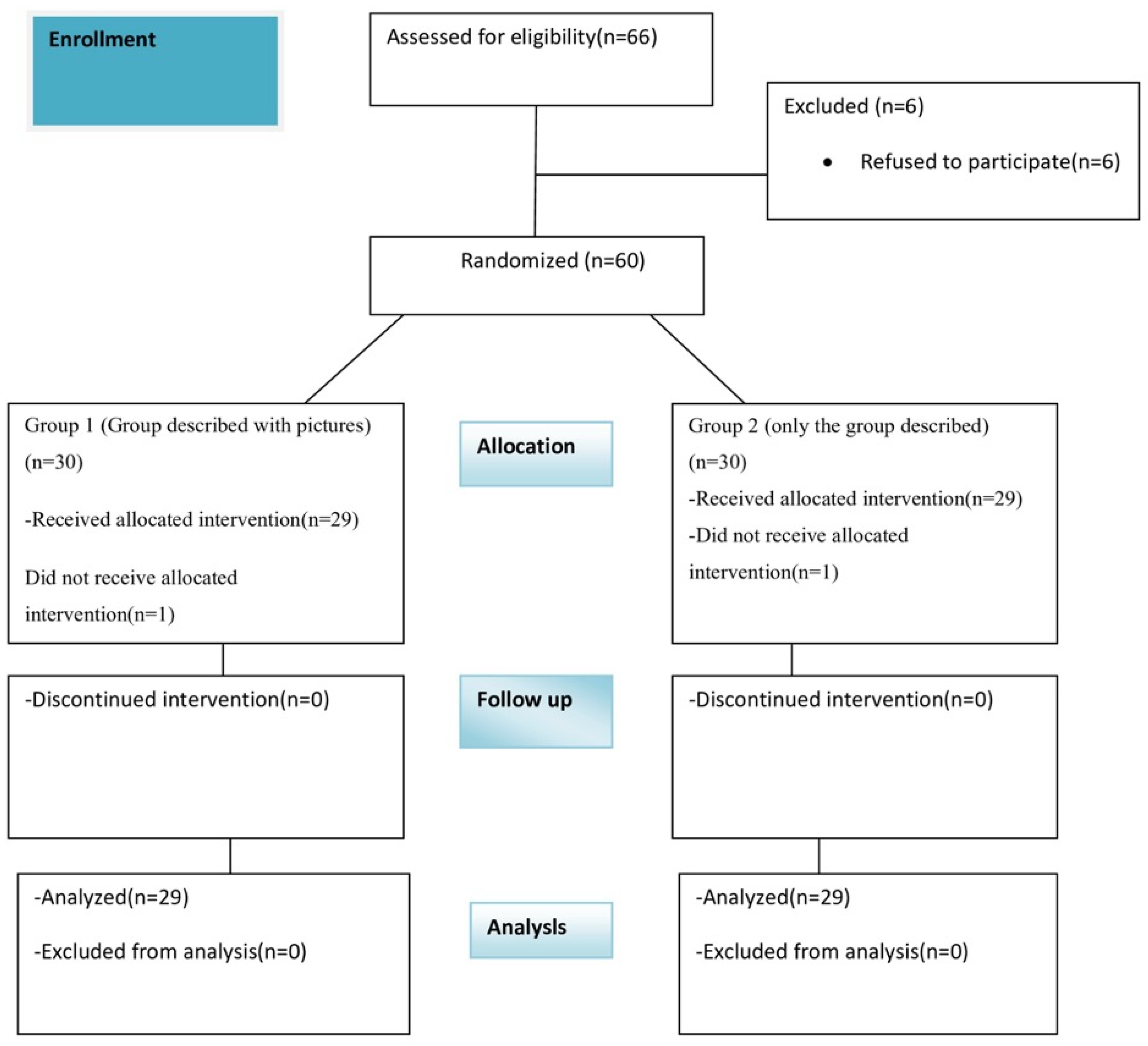
10], with ASA physical status I-II, who did not have any anxiety problems and underwent elective adenotonsillectomy under general anesthesia (tonsillectomy, etc.) were included in the study. The patient enrollment flowchart is shown in
Figure 1. Exclusion criteria included parents’ rejection, significant hearing or vision impairments, developmental delay, neurological diseases, and having had any previous surgery.
2.3. Randomization
Patients were randomly allocated to either Group 1 or Group 2 through a computerized random number generator, and the assignments were secured within sealed and numbered envelopes.
Group 1: Patients who received information about the perioperative process in addition to traditional information provided through pictures.
Group 2: Patients who received traditional information about the perioperative process without pictures.
2.4. PICO Strategy
Participants/Population(s): Both male and female patients between the ages of 5 and 12 who will undergo adenotonsillectomy.
Intervention: Patients who received information about the perioperative process in addition to traditional information provided through pictures.
Control: Patients who received traditional information about the perioperative process without pictures.
Outcomes: modified Yale Preoperative Anxiety Scale Short Form (mYPAS-SF), Visual Analogue Scale (VAS), Riker Sedation-Agitation Scale (RSAS)
2.5. Masking
Research data collectors, anesthesiologists, surgeons, and operating room nurses were unaware of group assignment. General information, including fasting duration, surgical procedure, anesthesia risks, and pain management, was provided to both groups during their first visit to the anesthesia clinic before surgery.
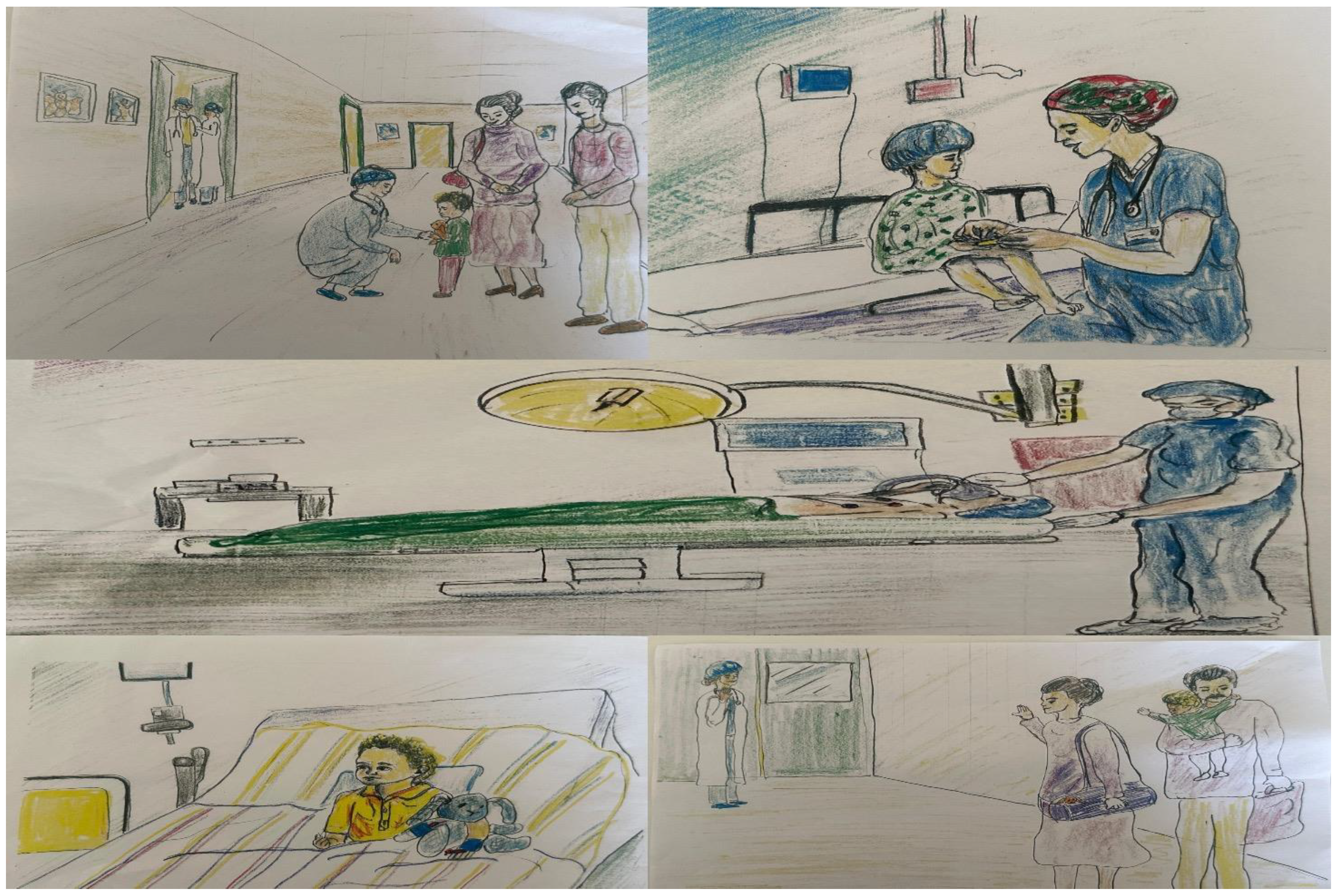
Patients were admitted to the surgical ward the day before surgery and were assessed by an anesthesiologist from the research team during the pre-anesthesia visit. This allowed parents and children to be given more details about the surgery and anesthesia and to have their concerns addressed and questions answered. In this study, two anesthesiologists were assigned to inform and evaluate the patients. One provided the information, while the other blindly assessed the anxiety and other parameters of the patients and their parents after the information was provided. The perioperative process was explained to the patients in Group 1 using pictures drawn by a child psychiatrist (
Figure 2), while the same anesthesiologist explained the process to the patients in Group 2 using traditional verbal instructions.
For anesthesia induction and patient compliance, all patients arrived at the preoperative waiting area approximately 30 minutes before the start of anesthesia, and no premedication was given. In our hospital, one parent was allowed to accompany the child to the waiting area, and the parent was separated from the child just before the operating room time.
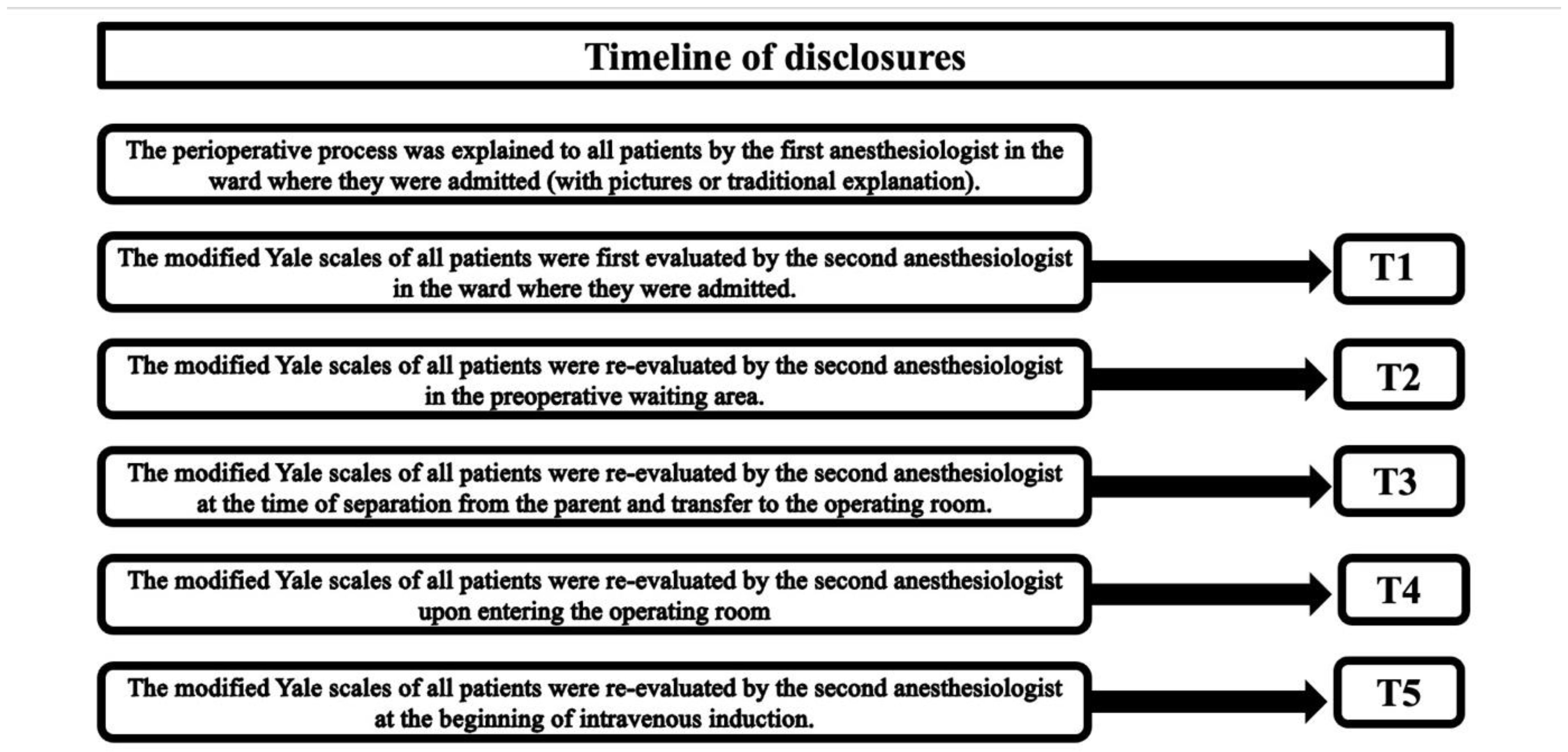
The modified Yale Preoperative Anxiety Scale Short Form (mYPAS-SF) was used by a blind anesthesiologist to assess all children’s anxiety [
11]. Children’s anxiety was assessed as follows: during the preanesthetic visit by the anesthesiologist shortly after admission to the surgical ward (T1), in the preoperative waiting area (T2), at the time of separation from the parent to the operating room (T3), upon entry to the operating room (T4), and at the time of starting intravenous induction (T5) (
Figure 3).
Patients’ heart rates were recorded before induction, after intubation, and finally after extubation.
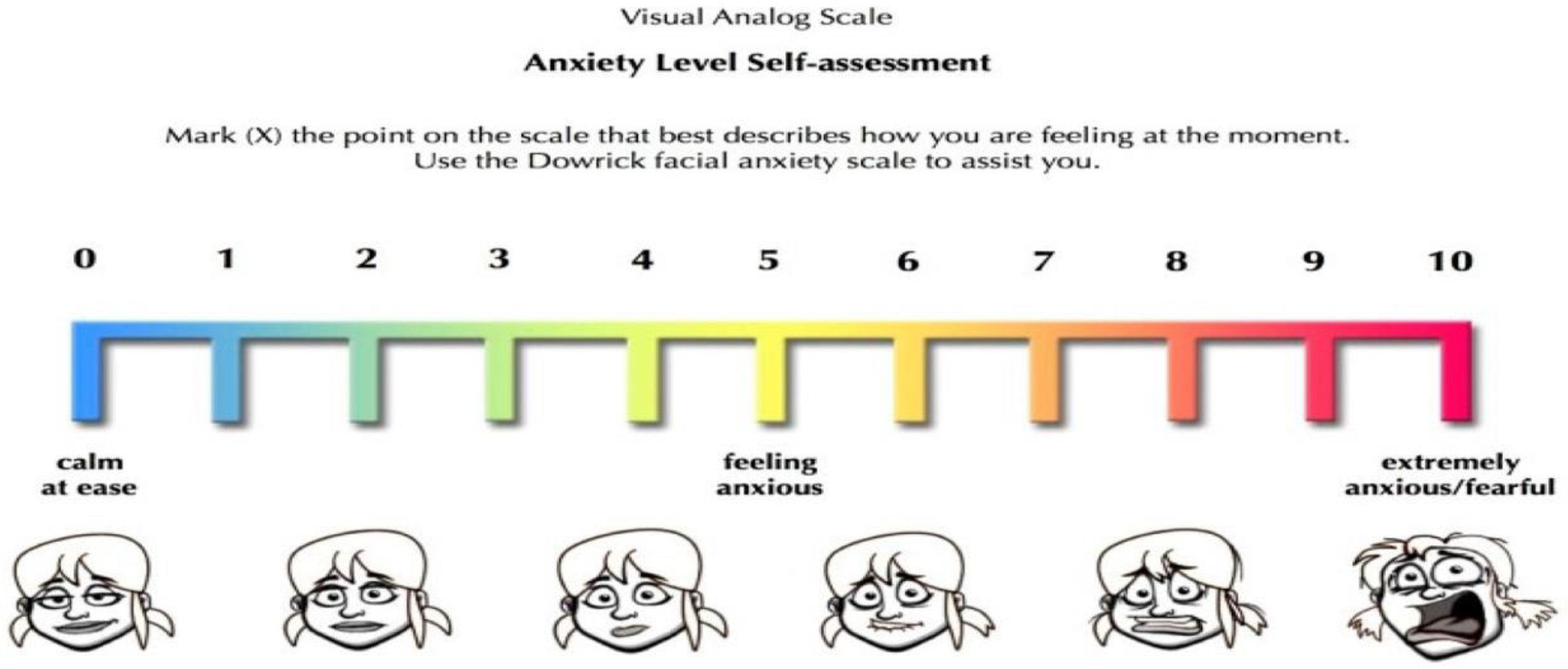
Parental anxiety was measured using a visual analog scale (VAS) from T1 to T3 [
12]. surgical ward (T1), in the preoperative waiting area (T2), and at the time of separation from their child (T3) (
Figure 3). The scale ranged from 0 to 10, where 0 represented no anxiety, and 10 represented extreme anxiety (
Figure 4).
2.6. Routine Preoperative and Intraoperative Procedures
No patients received premedication. All patients began standard anesthesia monitoring, including electrocardiography, noninvasive blood pressure, peripheral oxygen saturation, and temperature assessment on the operating table. All patients received preoxygenation at a rate of 4 L/min for 3 min before the induction of anesthesia. To induce anesthesia, 1 µg/kg fentanyl ((Fentaver 0,5 mg/10 ml, Haver Farma İlaç A.Ş., Osel İlaç San. Ve Tic. A.Ş., İstanbul, Türkiye) and 2 mg/kg propofol (Propofol-PF 1%, Polifarma İlaç Sanayi ve Ticaret A.Ş., Tekirdağ, Türkiye) were administered intravenously. Additionally, 0.6 mg/kg rocuronium (Muscobloc 50 mg/5 ml, Polifarma İlaç Sanayi ve Ticaret A.Ş., Tekirdağ, Türkiye) was administered intravenously within 20–30 s to induce neuromuscular blockade. After the administration of medications, all patients were manually ventilated with 100% oxygen until endotracheal intubation was accomplished. Endotracheal intubation was performed using a cuffed endotracheal tube of suitable diameter corresponding to the patient’s age and body structure. Following endotracheal intubation, ventilation was conducted in volume control mode using the Dräger Primus (Dräger, Medizintechnik, Germany) anesthesia device, with a tidal volume of 6–8 mL/kg, respiratory frequency set at 12–18/min, and positive end-expiratory pressure maintained at 3–5 cmH2O. Soda-lime (Sorbolime, Berkim, Turkey) was used as the CO2 absorbent in the anesthesia machine.
Demographic data such as age, gender, body weight, and ASA status, as well as heart rate (HR) and mean arterial pressure (MAP) were recorded before surgery, after intubation, and during extubation. Additionally, the duration of surgery and anesthesia were documented. In the postoperative period, on the operating table after extubation, the Riker Agitation Scale (RSAS) was recorded.
2.7. Statistical Analysis
The required sample size was calculated using G*Power software (version 3.1.9.4; University of Kiel, Kiel, Germany). A minimum of 58 patients (29 in Group 1 and 29 in the control group) was determined, assuming a one-tailed alpha error of 0.05, a power of 0.80, an allocation ratio of N2/N1 = 1, and an effect size of 0.67 (
Table 1) [
12,
13,
14].
Statistical analysis was performed using SPSS 26.0 software for Windows (SPSS Inc., Chicago, IL, USA). The Kolmogorov-Smirnov test was used to assess the normality of the data. Continuous data are presented as mean ± standard deviation, while categorical data are expressed as frequencies and percentages. Categorical data were compared using the chi-square and Fisher’s exact tests. For normally distributed data, Student’s t-test was used, while the Mann-Whitney U test was applied for non-normally distributed data. A p-value < 0.05 was considered statistically significant. To reduce the risk of type I error inflation due to multiple testing, the Bonferroni correction was applied. Accordingly, the adjusted significance threshold was set at p < 0.01 (0.05/5). The effect size (r) was calculated using the formula r = Z/√ N, where Z represents the z-value obtained from the Mann–Whitney U test and N is the total sample size.
3. Results
A total of 66 patients were initially enrolled in the study. Six patients declined to participate, and two patients were excluded due to adverse respiratory events, resulting in 58 patients completing the study (
Figure 1). The mean age of the included patients was 7.34 ± 1.36 years. Demographic data of the patients are presented in
Table 2. No significant differences were observed between the two groups in terms of age, weight, gender, ASA score, anesthesia duration, or surgical duration (p > 0.05).
When comparing heart rates between the two groups, patients in Group 1 had significantly lower heart rates during induction and the intraoperative period compared to Group 2 (p = 0.031 and p = 0.025, respectively). However, no significant difference was observed in postoperative heart rates (p = 0.583).
In terms of anxiety and RSAS scores, patients in Group 1 had significantly lower mYPAS-SF scores at time points t2, t3, t4, and t5 compared to Group 2 (t2: p = 0.001; t3-t5: p < 0.001). No significant difference was observed at t1 (p = 0.068). The mean RSAS scores were also significantly lower in Group 1 compared to Group 2 (p = 0.029). Parental anxiety, as measured by the VAS-A scale, was significantly lower in Group 1 at all three time points (t1: p = 0.017; t2: p = 0.006; t3: p = 0.036) (
Table 3). There were no children who reacted negatively to the visual materials.
4. Discussion
In this study, we investigated the effect of explaining the perioperative process using pictures on anxiety levels in children undergoing adenotonsillectomy. We found that children who were shown pictures had significantly lower anxiety levels. Additionally, their parents also exhibited lower anxiety levels, and the children experienced a smoother emergence from anesthesia.
Traditional methods of explaining anesthesia and surgery may not fully help children understand the process or may even increase their psychological burden due to the abstract nature of the information [
4]. Previous studies have explored various preoperative preparation programs, including sedative premedication, hypnosis, parental presence, behavioral preparation programs, music therapy, and acupuncture [
16,
17,
18]. Some of these methods, such as midazolam, parental presence, and behavioral preparation programs, are commonly used in pediatric patients [
19]. Currently, parental presence during anesthesia induction is a popular evidence-based behavioral intervention, and it has been confirmed that this approach not only reduces children’s anxiety but also improves their cooperation [
20]. However, overly anxious parents may inadvertently increase their child’s anxiety during induction [
21]. While pharmacological interventions such as sedatives are effective in alleviating children’s anxiety, they are associated with delayed discharge [
22] and adverse behavioral changes [
19,
23,
24]. Additionally, administering oral premedication to children can be challenging due to their reluctance or refusal. In contrast, explaining the process using pictures is easy to implement and has no side effects.
Initial studies on audiovisual distraction during anesthesia induction in pediatric patients have used technologies such as smartphones, video glasses, and even traditional laparoscopic surgical monitors. These tools have been shown to reduce mYPAS scores [
25,
26]. Yang et al. demonstrated that providing children with an animated picture book about surgery was associated with lower anxiety levels [
15]. In our study, we used hand-drawn pictures to familiarize children with the operating room environment and the surgical process. To our knowledge, this is the first study of its kind. Given the increasing use of technology today, this approach is particularly useful in settings with limited access to advanced technology. Indeed, Bedaso et al. highlighted that in low- and middle-income countries, one in two patients experiences preoperative anxiety, underscoring the need for accessible interventions [
27].
Cordray et al. conducted a prospective randomized controlled trial in which children aged 5–12 years were divided into two groups: one group received a pop-up book about anesthesia, while the other received standard information. The group that received the book showed a significant reduction in anxiety during anesthesia induction [
10]. Similarly, Lee et al. found that showing animated cartoons to children aged 3–7 years before induction reduced preoperative anxiety [
28]. Hou et al. also reported lower anxiety levels in children who received preoperative education using comic books, videos, and coloring books [
29]. In contrast, Kulkarni et al. found no significant difference in anxiety levels between children who received a comic brochure and those who received only verbal information [
30]. Our findings align with most studies in the literature and support the use of visual presentation techniques to reduce preoperative anxiety in pediatric patients. Our study contributes to the existing literature by demonstrating that explaining the perioperative process with simple visuals can significantly reduce both physiological (e.g., heart rate) and behavioral indicators of anxiety in children.
It is well-established that children’s preoperative anxiety positively correlates with parental anxiety. Li et al. observed that parental anxiety can make children feel more fearful and less cooperative [
31]. Wolfer and Visintainer emphasized that parental stress is a significant factor in determining how a child emotionally responds to the stress of surgery [
32]. They also provided evidence that parental stress related to upcoming surgery can easily be indirectly transferred to the child, potentially harming their recovery. Therefore, efforts should be made to reduce parental stress through behavioral or other interventions that can also alleviate children’s anxiety. Hou et al. found that parents whose children received preoperative education using visual aids had lower anxiety levels [
28]. This finding suggests that interventions that not only support the child’s psychological preparedness but also reduce the parent’s emotional burden can provide twofold benefits. Visual-based informational methods should be considered an important tool for family-centered care approaches and should be more widely implemented in clinical practice. Furthermore, future research should thoroughly examine how the indirect effects of parental anxiety translate into broader domains such as surgical outcomes, patient satisfaction, and healthcare utilization. Therefore, developing holistic strategies focused on both the child and the parent in the preoperative period can make the pediatric surgical experience less traumatic and more positive.
Limitations
Our study has several limitations. First, the pictures were shown to children one day before surgery and again on the day of surgery, which may not have fully addressed preoperative anxiety. Second, there was no standardized scale or scoring system to assess how deeply the children understood the pictures. Third, the educational background of the parents was not evaluated. Fourth, the visual materials used are not standard or accepted. Therefore, it is not possible to standardize our method. Our study was designed for a single center, a single operation, and a limited population. Therefore, our results are not generalizable. Our results may not be applicable to ASA III-IV patients. We only included adenotonsillectomy patients in our study. Although the images used in our study were drawn by a child psychiatrist, it seems impossible to standardize these images. Additionally, because patients and their parents were informed about the study design, patients in the group who saw the pictures may have believed they were receiving enhanced preparation. This may have caused the patients to feel more confident due to a placebo effect, which may have influenced the study results. Finally, postoperative anxiety levels were not assessed.
4. Conclusions
Our study results demonstrate that illustrating the perioperative process in children undergoing adenotonsillectomy can significantly reduce preoperative anxiety and prevent awakening agitation. Given its ease of implementation, we believe that using visual aids to explain the perioperative process to pediatric patients can facilitate process management for patients, parents, and physicians.
Author Contributions
Conceptualization: Hülya Tosun Söner, Süleyman Kızıldağ; Methodology: Hülya Tosun Söner, Osman Uzundere, Süleyman Kızıldağ; Software: Osman Uzundere, Erhan Gökçek; Validation: Hülya Tosun Söner, Süleyman Kızıldağ, Meral Erdal Erbatur; Formal Analysis: Hülya Tosun Söner, Selen Topalel; Investigation: Hülya Tosun Söner, Fatma Acil, Selen Topalel, Ayhan Kaydu, Ömer Erdağ; Resources: Ayhan Kaydu, Meral Erdal Erbatur, Erhan Gökçek, Sedat Kaya; Data Curation: Hülya Tosun Söner, Osman Uzundere, Cem Kıvılcım Kaçar; Writing and Original Draft Preparation: Hülya Tosun Söner, Fatma Acil; Writing, Review & Editing: Hülya Tosun Söner, Cem Kıvılcım Kaçar, Ömer Erdağ, Sedat Kaya; Visualization: Hülya Tosun Söner, Enes Sırma, Cem Kıvılcım Kaçar; Supervision: Hülya Tosun Söner, Süleyman Kızıldağ, Ayhan Kaydu; Project Administration, Hülya Tosun Söner.
Institutional Review Board Statement
The study was conducted in accordance with the Declaration of Helsinki and approved by the local ethics committee of Gazi Yaşargil Training and Research Hospital, under decision number 43 dated May 10, 2024.
Informed Consent Statement
Informed consent for participation was obtained from the parent or legal guardian of each participant under the age of 16. And written informed consent has been obtained from the patients to publish this paper.
Data Availability Statement
The data associated with the paper are not publicly available but are available from the corresponding author on reasonable request.
Conflicts of Interest
The authors declare no conflict of interest.
References
- Patel, R. I., Hannallah, R. S., & Verghese, S. T. PREOPERATIVE ANXIETY IN CHILDRENDOES IT AFFECT GASTRIC ACIDITY?. Anesthesiology, (1992) 77(3A Supplement), A1168-A1168.
- Sola C, Lefauconnier A, Bringuier S, Raux O, Capdevila X, Dadure C. Childhood preoperative anxiolysis: Is sedation and distraction better than either alone? A prospective randomized study. Paediatr Anaesth. 2017 Aug;27(8):827-834. [CrossRef] [PubMed]
- Kain ZN, Wang SM, Mayes LC, Caramico LA, Hofstadter MB. Distress during the induction of anesthesia and postoperative behavioral outcomes. Anesth Analg. 1999 May;88(5):1042-7. [CrossRef] [PubMed]
- Fortier MA, Del Rosario AM, Martin SR, Kain ZN. Perioperative anxiety in children. Paediatr Anaesth. 2010 Apr;20(4):318-22. Epub 2010 Feb 23. [CrossRef] [PubMed]
- Rosenbaum A, Kain ZN, Larsson P, Lönnqvist PA, Wolf AR. The place of premedication in pediatric practice. Paediatr Anaesth. 2009 Sep;19(9):817-28. [CrossRef] [PubMed]
- Mason KP, Seth N. Future of paediatric sedation: towards a unified goal of improving practice. Br J Anaesth. 2019 May;122(5):652-661. Epub 2019 Mar 2. [CrossRef] [PubMed]
- Patel A, Schieble T, Davidson M, Tran MC, Schoenberg C, Delphin E, et al. Distraction with a hand-held video game reduces pediatric preoperative anxiety. Paediatr Anaesth. 2006 Oct;16(10):1019-27. [CrossRef] [PubMed]
- Kain ZN, Caldwell-Andrews AA, Mayes LC, Wang SM, Krivutza DM, LoDolce ME. Parental presence during induction of anesthesia: physiological effects on parents. Anesthesiology. 2003 Jan;98(1):58-64. [CrossRef] [PubMed]
- Aliyattukudy, P., Vergis, S., Nazar, S. M., Marie, D., Chandy, M. R., & Aliyattukudy, S. T. A. (2025). Effectiveness of Instructional Video on Preoperative Anxiety in Children: A Randomized Controlled Trial. International Medicine ISSN: 2667-7008, 11(1).
- Cordray H, Patel C, Prickett KK. Reducing Children’s Preoperative Fear with an Educational Pop-up Book: A Randomized Controlled Trial. Otolaryngol Head Neck Surg. 2022 Aug;167(2):366-374. Epub 2021 Oct 26. [CrossRef] [PubMed]
- Topalel S, Orekici Temel G, Azizoğlu M. Evaluation of Preoperative Anxiety in Turkish Paediatric Patients and Validity and Reliability of the Turkish Modified Yale Preoperative Anxiety Scale. Turk J Anaesthesiol Reanim. 2020 Dec;48(6):484-490. Epub 2020 May 18. [CrossRef] [PubMed] [PubMed Central]
- Kindler CH, Harms C, Amsler F, Ihde-Scholl T, Scheidegger D. The visual analog scale allows effective measurement of preoperative anxiety and detection of patients’ anesthetic concerns. Anesth Analg. 2000 Mar;90(3):706-12. [CrossRef] [PubMed]
- Cesana BM, Cavaliere F. Could the use of a table make power analysis description more reader-friendly? Minerva Anestesiol. 2020 Oct;86(10):1003-1005. Epub 2020 Aug 5. [CrossRef] [PubMed]
- Jenkins BN, Fortier MA, Kaplan SH, Mayes LC, Kain ZN. Development of a short version of the modified Yale Preoperative Anxiety Scale. Anesth Analg. 2014 Sep;119(3):643-650. [CrossRef] [PubMed]
- Yang Y, Zhang M, Sun Y, Peng Z, Zheng X, Zheng J. Effects of advance exposure to an animated surgery-related picture book on preoperative anxiety and anesthesia induction in preschool children: a randomized controlled trial. BMC Pediatr. 2022 Feb 14;22(1):92. [CrossRef] [PubMed] [PubMed Central]
- Kain ZN, Caldwell-Andrews AA, Mayes LC, Weinberg ME, Wang SM, MacLaren JE, et al. Family-centered preparation for surgery improves perioperative outcomes in children: a randomized controlled trial. Anesthesiology. 2007 Jan;106(1):65-74. [CrossRef] [PubMed]
- Ejiri H, Imura H, Baba R, Sumi A, Koga A, Kanno K, et al. Parental Accompaniment in Operating Rooms Reduces Child Anxiety. Healthcare (Basel). 2023 Aug 14;11(16):2289. [CrossRef] [PubMed] [PubMed Central]
- Esteves, Ines Martins, et al. “Effectiveness of perioperative family-centered educational interventions in the anxiety, pain and behaviors of children/adolescents and their parents: Systematic Review Protocol.” Enfermería Actual de Costa Rica 44 (2023).
- Wright KD, Stewart SH, Finley GA, Buffett-Jerrott SE. Prevention and intervention strategies to alleviate preoperative anxiety in children: a critical review. Behav Modif. 2007 Jan;31(1):52-79. [CrossRef] [PubMed]
- Messeri A, Caprilli S, Busoni P. Anaesthesia induction in children: a psychological evaluation of the efficiency of parents’ presence. Paediatr Anaesth. 2004 Jul;14(7):551-6. [CrossRef] [PubMed]
- Lake, A. P. J. Parental anxiety before elective surgery in children. Anaesthesia, 1999 54(1), 91-92.
- Viitanen H, Annila P, Viitanen M, Tarkkila P. Premedication with midazolam delays recovery after ambulatory sevoflurane anesthesia in children. Anesth Analg. 1999 Jul;89(1):75-9. [CrossRef] [PubMed]
- Strom S. Preoperative evaluation, premedication, and induction of anesthesia in infants and children. Curr Opin Anaesthesiol. 2012 Jun;25(3):321-5. [CrossRef] [PubMed]
- McGraw T, Kendrick A. Oral midazolam premedication and postoperative behaviour in children. Paediatr Anaesth. 1998;8(2):117-21. [CrossRef] [PubMed]
- Mifflin KA, Hackmann T, Chorney JM. Streamed video clips to reduce anxiety in children during inhaled induction of anesthesia. Anesth Analg. 2012 Nov;115(5):1162-7. Epub 2012 Oct 9. [CrossRef] [PubMed]
- Seiden SC, McMullan S, Sequera-Ramos L, De Oliveira GS Jr, Roth A, Rosenblatt A, et al. Tablet-based Interactive Distraction (TBID) vs oral midazolam to minimize perioperative anxiety in pediatric patients: a noninferiority randomized trial. Paediatr Anaesth. 2014 Dec;24(12):1217-23. Epub 2014 Jul 17. [CrossRef] [PubMed]
- Bedaso A, Mekonnen N, Duko B. Prevalence and factors associated with preoperative anxiety among patients undergoing surgery in low-income and middle-income countries: a systematic review and meta-analysis. BMJ Open. 2022 Mar 11;12(3):e058187. [CrossRef] [PubMed] [PubMed Central]
- Lee J, Lee J, Lim H, Son JS, Lee JR, Kim DC, et al. Cartoon distraction alleviates anxiety in children during induction of anesthesia. Anesth Analg. 2012 Nov;115(5):1168-73. Epub 2012 Sep 25. [CrossRef] [PubMed]
- H Hou H, Li X, Song Y, Ji Y, Sun M, Wang D, et al. Effect of interactive, multimedia-based home-initiated education on preoperative anxiety inchildren and their parents: a single-center randomized controlled trial. BMC Anesthesiol. 2023 Mar 28;23(1):95. [CrossRef] [PubMed] [PubMed Central]
- Kulkarni MM, Pradeep S, Rao M, & Kulkarni MM. A randomized controlled trial to study the effect of a pediatric anesthesia comic information leaflet on preoperative anxiety in children. Anaesthesia, Pain & Intensive Care, 2022 26(1), 75-80.
- Li HC, Lopez V, Lee TL. Psychoeducational preparation of children for surgery: the importance of parental involvement. Patient Educ Couns. 2007 Jan;65(1):34-41. Epub 2006 Jul 26. [CrossRef] [PubMed]
- Wolfer JA, Visintainer MA. Pediatric surgical patients’ and parents’ stress responses and adjustment as a function of psychologic preparation and stress-point nursing care. Nurs Res. 1975 Jul-Aug;24(4):244-55. [PubMed]
|
Disclaimer/Publisher’s Note: The statements, opinions and data contained in all publications are solely those of the individual author(s) and contributor(s) and not of MDPI and/or the editor(s). MDPI and/or the editor(s) disclaim responsibility for any injury to people or property resulting from any ideas, methods, instructions or products referred to in the content. |
© 2025 by the authors. Licensee MDPI, Basel, Switzerland. This article is an open access article distributed under the terms and conditions of the Creative Commons Attribution (CC BY) license (http://creativecommons.org/licenses/by/4.0/).