

Submitted:
22 December 2025
Posted:
24 December 2025
You are already at the latest version
Abstract
This research work presents a novel integrated approach combining experimental mechanical characterization of a manufactured AA6061 aluminum alloy with quality control procedures to ensure product reliability. The quality control framework includes microstructural examination, tensile testing, and measurement uncertainty assessment in accordance with relevant international standards. The combined standard uncertainty was calculated using the law of propagation of uncertainty, and the expanded uncertainty was obtained with a coverage factor of k=2, corresponding to a confidence level of approximately 95%. The measured tensile strength was found to be 309.4±4.0 N/mm², demonstrating good repeatability and a low relative uncertainty of about 1.3%. The results are in accordance to the international standard mechanical property requirements for AA6061 alloy, confirming both the reliability of the experimental procedure and the suitability of the material for structural and engineering applications.
Keywords:
mechanical characterization
; tensile strength
; measurement uncertainty
; quality control
; aluminum alloy
1. Introduction
Nowadays, aluminum alloys play an important role in modern mechanical engineering due to their good corrosion resistance, high specific strength, low density, and excellent adaptability to different manufacturing processes [1,2,3,4]. These characteristics make aluminum alloys particularly suitable for mechanically loaded components in structural applications, aerospace, automotive, transportation, and energy. Based on it, aluminum alloys are essential materials for lightweight and high-performance in most of the engineering systems [5,6,7,8,9].
In comparison to the other aluminum alloy families, the Al–Mg–Si series are the most popular due to its balanced combination of ductility, strength, and manufacturability. In this group series, AA6061 aluminum alloys are the most extensively used heat-treatable alloys which is commonly employed in machine components, structural frames, welded assemblies, and pressure vessels [10]. Its mechanical properties can be significantly improved through the heat treatment process, most notably the T6 condition, which enhance the yield strength and ultimate tensile strength while preserving acceptable elongation and fracture toughness [11]. Additionally, AA6061 exhibits good weldability and machinability, enabling its use in complex mechanical components produced by extrusion, rolling, forging, and machining processes [4,12,13].
Despite the availability of standardized mechanical properties reported in international standards, the real mechanical behavior of AA6061 components in different engineering applications often deviates from their experimental measurement values. Manufacturing-related parameters like heat treatment uniformity, chemical composition tolerances, cooling rates, thermomechanical processing history, and residual stresses can have strong influence on the microstructure characterization, and in the mechanical response of the alloy [13]. These factors may lead to variability in ultimate tensile strength, yield strength, elastic modulus, and ductility, which can significantly influence in the structural performance and safety margins in mechanical design.
As a result, it is necessary to obtain realistic material properties through experimental mechanical characterization of manufactured AA6061 aluminum alloy which will predict in-service behavior. Tensile testing is one of the key experimental techniques to assess the stress-strain response of metallic materials and determine the other relevant mechanical parameters used for structural analysis and numerical modelling [14]. Furthermore, experimental results are inherently affected by scatter due to material heterogeneity, specimen preparation, testing machine calibration, and environmental conditions. As a consequence, mechanical properties obtained from experimental testing should not be interpreted as deterministic values but rather as quantities subject to uncertainty.
In recent years, uncertainty quantification has gained increasing importance in mechanical engineering, particularly in the context of reliability-based design and performance assessment [15,16,17,18,19,20]. Measurement uncertainty plays an important role in the material properties which can significantly influence in finite element simulations, fatigue life predictions, and failure assessments. Ignoring these uncertainties may result in either overly conservative designs or non-conservative predictions that compromise structural safety. Therefore, incorporating uncertainty evaluation into mechanical characterization improve the robustness and credibility of experimental results and supports informed engineering decision-making [21,22,23,24].
Within this framework, the present study aims to perform a comprehensive mechanical characterization of manufactured AA6061 aluminum alloy through experimental testing, with particular emphasis on tensile behavior and key mechanical parameters relevant to mechanical engineering applications. In parallel, an uncertainty evaluation is conducted to quantify the reliability and confidence levels associated with the measured properties. By combining experimental characterization with systematic uncertainty analysis, this work seeks to provide reliable material data suitable for advanced mechanical modeling, structural integrity analysis, and optimized engineering design involving AA6061 aluminum alloy.
The novelty of this research work is focused on the integration approach which combines experimental mechanical characterization of manufactured AA6061 aluminum alloy with a systematic uncertainty evaluation framework. This research work provides not only the mechanical property values but also confidence intervals and the measurement uncertainty that are directly applicable to reliability-based mechanical design and numerical modeling. This approach offers a more realistic and engineering-relevant representation of material behavior, thereby bridging the gap between experimental material testing and advanced mechanical engineering applications.
2. Materials and Methods
2.1. Material Properties and Sample Preparation
Table 1 depict the chemical composition of the aluminum alloy 6061. AA6061 has been manufactured by following the technological production scheme shown in the Figure 1.
The material used in this research work is a commercially manufactured aluminum alloy type 6061 supplied in the form of flat stock. AA6061 was provided through a heat-treated condition such as T6 which is standard process for industrial usage in Everest ltd company.
Additionally, rectangular tensile sample type AA60661 has been machined in accordance to the ASTM E8/E8M standard by using CNC machine for ensuring dimensional consistency and repeatability [14]. It has been selected five samples that are obtained from the same material batch in relation to the same chemical composition. Figure 2 and Table 2 showing the rectangular tension test sample accompanied with their measured dimensions.

Table 1.
Summary of the geometrical dimensions and tensile test results.
| Sample No. | b (mm) |
t (mm) |
S0 (mm2) |
L0 (mm) |
L (mm) |
F (N) |
Rm (N/mm2) |
A (%) |
|---|---|---|---|---|---|---|---|---|
| 1 | 2.68 | 12.54 | 33.6 | 80.03 | 91.03 | 10395.672 | 309.40 | 13.74% |
| 2 | 2.65 | 12.66 | 33.55 | 80.04 | 91.16 | 10379.364 | 309.37 | 13.89% |
| 3 | 2.66 | 12.61 | 33.54 | 80.02 | 91.11 | 10376.605 | 309.38 | 13.86% |
| 4 | 2.67 | 12.56 | 33.54 | 80.04 | 91.07 | 10374.593 | 309.32 | 13.78% |
| 5 | 2.65 | 12.65 | 33.51 | 80.02 | 91.14 | 10365.983 | 309.34 | 13.90% |
Where, b is the width, t is thickness, S0 is the surface section, L0 is the original length, L is the length of displacement measurement section, Fmax is the maximum applied force, A is the elongation, and Rm is the tensile strength. It has been seen that the total length of the sample corresponds to H = 250 mm.
2.2. Tensile Testing Procedure
The tensile testing procedure of the samples AA6061 has been realized in room temperature and in accordance to the ISO 6892-1:2020 standard [25]. Figure 3 depict the test set-up for the calibrated uniaxial tensile testing device type EUROTEST-100. Extensometer is attached in the sample and it has been used to measure the axial strain. The force and displacement were measured where all the data have been recorded continuously until the fracture of the sample.
Additionally, the tensile strength has been calculated by using equation (1).
Elongation (A), one of the key indicators of mechanical properties like ductility, safety, and quality was calculated using equation (2).
3. Quality Control
Quality control plays an important role for ensuring that the final product meet the required specifications. In the present study, the quality control has been realized as follows:
- Micrographic investigation
- Tensile testing
- Evaluation of the measurement uncertainty
3.1. Micrographic Examination
The ingots sample with a diamater of 178 mm for AA6061 has been selected and ivestigated, see Figure 4. The standards ASTM E3-11, ASTM E112-13, and ASTM E407-07 has been used for determination of the micrographic investigation [26,27,28]. The macrographic has been investigated through the stereo microscope type LEICA Z16APOA [29].
Figure 5 depict the micrograph investigation of the ingot selection for the sample AA6061.
In Figure 5a, the microstructure is characterized by an α-aluminum matrix containing interdendritic intermetallic constituents of complex morphology and finely dispersed intermetallic compounds. In Figure 5b, surface discontinuities observed in longitudinal section reveal the presence of segregations attributable to solidification folds identified during macroscopic examination, associated with shrinkage micro-cavities and porosity. These defects extend to depths ranging from 3 to 5 mm. In Figure 5c and Figure 5d, a microstructure characterized by an α-aluminum matrix with interdendritic intermetallic constituents of complex morphology and finely dispersed intermetallic compounds is observed.
3.2. Tensile Testing Results
The tensile testing results has been mentioned in the Table 1 for five selected samples. Figure 6 depict the digram of the selected sample no. 1 which correspond to the largest tensile strength.
3.3. Measurement Uncertainty
Evaluation of the measurement uncertainty play an important role for assuring the quality control of the manufactured AA6061. Uncertainty evaluation has been based on Guide to the Expression of Uncertainty in Measurement (GUM) [30]. The uniaxial tensile strength measurement model y has been used for evaluation of the measurement uncertainty and will be focused on the sources of uncertainty shown in equation (3).
y = x + K1 + K2 + K3 + K4 + K5 + K6
Where, x is the measurement value of the tensile strength, K1 represent the correction from the reading of the width, K2 show the correction from the reading of the thickness, K3 is the correction from the reading of the force, K4 depict the correction that arise the calibration of uniaxial tensile strength device, K5 is the correction from width resolution, and K6 is the correction from thickness resolution.
The law of uncertainty propagation was applied to evaluate the combined uncertainty using equation (4). Combined uncertainty is based on the input of the sources of uncertainty.
where is the standard uncertainty of the width measurement, is the standard uncertainty of the thickness measurement, is the standard uncertainty associated with the applied load reading, is the calibration uncertainty of the tensile strength device, is the uncertainty due to the caliper resolution for width, and is the uncertainty due to the caliper resolution for thickness.
Due to the repeatability measurements, statistical analysis was applied to determine the standard uncertainty of the width and thickness respectively by using Equations (5) and (6).
Where uw and ut are the standard uncertainties of the readings of width and thickness. Furthermore, and are the relative uncertainties of the width and length which corresponds to the values = 0.05 mm.
The standard uncertainty associated with applied load reading has been calculated as the standard deviation of the reading of applied load, see equation (7).
Where n is a complete set of the applied load measurement values, xi is the individual measurement value, and xm is the arithmetic mean of individual measurements.
The calibration uncertainty of the tensile strength device is calculated via the equation (8).
Where, p is the relative accuracy of the load cell that correspond to the value 0.005 and Fm is the mean measured force value.
Uncertainty due to the caliper resolution for width and thickness has been calculated by using the equation (9).
Where a is the caliper resolution which correspond to the value 0.01 mm.
Furthermore, the sensitivity coefficients of the force, width and thickness have been calculated through the partial derivate of the tensile strength from the equation (1) which is respectively expressed via equations (10) until (12).
Additionally, the expanded uncertainty U has been calculated by using the equation (13).
Where, k is the coverage factor with the value 2 that correspond for the probability distribution 95%.
The uncertainty budget for determination the mechanical resistance of the manufactured AA6061 sample has been shown in the Table 3.
The obtained tensile strength value of N/mm2 for k = 2 demonstrates good agreement results with the standard requirements of the AA6061 alloy. The relative uncertainty is calculated via equation (14)
The relative uncertainty corresponds to the value 1.3% which confirms the reliability of the experimental procedure and the adequacy of the applied uncertainty evaluation. Therefore, the results are accurate and suitable for quality control and mechanical characterization purposes.
4. Conclusions
This research work presents a novel integrated approach combining experimental mechanical characterization of a manufactured AA6061 aluminum alloy with a systematic framework for measurement uncertainty evaluation. Quality control procedures were applied, demonstrating very good results in microstructural examination, tensile testing, and uncertainty assessment in accordance with relevant international standards. Based on the experimental results, the following conclusions can be drawn:
- The tensile strength of the manufactured AA6061 specimen was determined to be 309.4 ± 4.0 N/mm2 for k = 2, which lies within the typical range specified for AA6061 alloys and therefore satisfies standard mechanical property requirements.
- The relative expanded uncertainty was low, with a value of 1.3%, indicating high measurement precision and good experimental repeatability.
- The uncertainty budget analysis revealed that specimen thickness measurement is the dominant source of uncertainty, while the contribution from force measurement is comparatively small, which is consistent with expectations for tensile testing of flat specimens.
- The applied uncertainty evaluation methodology is fully compliant with ISO/IEC Guide 98-3 (GUM) and can be reliably used for quality control, mechanical characterization, and conformity assessment of aluminum alloys.
- The measurement results confirm that the tested AA6061 material exhibits reliable and consistent mechanical performance.
- The adopted experimental and analytical approach provides accurate and reproducible results, making it suitable for engineering practice and scientific research applications.
Author Contributions
“Conceptualization, A.N. and K.D.; methodology, A.N.; software, P.K.; validation, A.N., K.U. and K.D.; formal analysis, A.S.; investigation, A.P.; resources, K.D.; data curation, O.K.; writing—original draft preparation, K.D.; writing—review and editing, P.K.; visualization, A.S.; supervision, K.D.; project administration, K.D.; funding acquisition, K.D. All authors have read and agreed to the published version of the manuscript.”.
Institutional Review Board Statement
Not Applicable.
Data Availability Statement
All the data are available in the text.
Acknowledgments
The authors gratefully acknowledge the Everest Ltd. Company in Albania for providing the AA6061 samples used in this work and Polytechnic University of Tirana for partial funding of this work.”.
Conflicts of Interest
The authors declare no conflicts of interest.
References
- Wang, L.; Zhang, Z.; Luo, Y.; Xiao, Y.; Tan, F.; Liu, K. Understanding the Influencing Mechanism of CNTs on the Microstructures and Wear Characterization of Semi-Solid Stir Casting Al-Cu-Mg-Si Alloys. Metals 2022, 12, 2171. [Google Scholar] [CrossRef]
- Pramono, A.; Dhoska, K.; Moezzi, R.; Milandia, A. Ti/SiC based metal matrix composites by using self-propagating high temperatures synthesis (SHS). Revue des Composites et des Matériaux Avancés-Journal of Composite and Advanced Materials 2021, 31, 125–129. [Google Scholar] [CrossRef]
- Shi, W.; Chen, L.; He, B.; Lu, B.; Yang, J. Effect of Al-5Ti-2B on the Microstructure and Mechanical Properties of Recycled Al-7Si-0.3Mg-1Fe Alloy. Crystals. 2025, 15, 584. [Google Scholar] [CrossRef]
- Dhoska, K.; Markja, I.; Bebi, E.; Sulejmani, A.; Koça, O.; Sita, E.; Pramono, A. Manufacturing Process of the Aluminum Alloy AA6063 for Engineering Applications. Journal of Integrated Engineering and Applied Sciences. 2023, 1, 1–13. [Google Scholar]
- Khalilpoor, H.; Larouche, D.; Chen, X.G.; Phillion, A.; Colbert, J. Investigation of the Hydrostatic Pressure Effect on the Formation of Hot Tearing in the AA6111 Alloy During Direct Chill Casting of Rectangular Ingots. Applied Mechanics 2025, 6, 53. [Google Scholar] [CrossRef]
- Pramono, A.; Nežerenko, O.; Fitrullah, M.; Suryana. Microstructural Evolution and Mechanical Properties Enhancement of Ti/SiC Metal Matrix Composites. Journal of Transactions in Systems Engineering 2024, 2, 295–305. [Google Scholar]
- Duan, S.; Lu, Y.; Li, A.; Tang, M.; Chen, W.; Huang, C.; Du, J.; Xu, Y.; Yan, Y. Synergistic Effect of Cu Addition and Pre-Straining on the Natural Aging and Artificial Age-Hardening Behavior of AA6111 Alloy. Materials 2025, 18, 1635. [Google Scholar] [CrossRef]
- Markja, I.; Dhoska, K.; Elezi, D.; Moezzi, R.; Petru, M. Effect of the grain sizes on the ultrasonic propagation and attenuation on different types of steels microstructure during non-destructive testing. Ann. Chim. Sci. Matériaux 2021, 45, 329–334. [Google Scholar] [CrossRef]
- Dhoska, K.; Spaho, E.; Sinani, U. Fabrication of Black Silicon Antireflection Coatings to Enhance Light Harvesting in Photovoltaics. Eng. 2024, 5, 3358–3380. [Google Scholar] [CrossRef]
- Totten, G.E.; MacKenzie, D.S. Handbook of Aluminum: Volume 1: Physical Metallurgy and Processes; Marcel Dekker: New York, 2003. [Google Scholar]
- Polmear, I.J. Light Alloys: From Traditional Alloys to Nanocrystals, 4th ed.; Butterworth-Heinemann: Oxford, 2006. [Google Scholar]
- Chen, Z.; Li, C.; Li, F.; Li, C. Enhancing the mechanical properties of 6061 aluminum alloy through the synergistic effects of twins, stacking faults, nanograins and lattice distortions. Journal of Materials Research and Technology 2025, 35, 6650–6658. [Google Scholar] [CrossRef]
- Rao, P.N.; Singh, D.; Jayaganthan, R. Mechanical properties and microstructural evolution of Al 6061 alloy processed by multidirectional forging at liquid nitrogen temperature. Mater Des 2014, 56, 97–104. [Google Scholar] [CrossRef]
- ASTM E8/E8M-24; Standard Test Methods for Tension Testing of Metallic Materials. ASTM International: West Conshohocken, PA, 2024.
- Dhoska, K.; Lumi, D.; Sulejmani, A.; Koca, O. Measurement uncertainty for mechanical resistance of manufactured steel bar. Pollack Periodica 2022, 17, 104–108. [Google Scholar] [CrossRef]
- Motra, H.B.; Dimmig-Osburg, A.; Hildebrand, J. Evaluation of experimental measurement uncertainty in engineering prop- erties of PCC samples. J. Civil. Eng. Res. 2013, 3, 104–113. [Google Scholar]
- Brizard, D.; Ronel, S.; Jacquelin, E. Estimating measurement uncertainty on stress-strain curves from SHPB. Exp. Mech. Society for Experimental Mechanics 2017, 57, 735–742. [Google Scholar] [CrossRef]
- Salicone, S. New Frontiers in Measurement Uncertainty. Metrology 2022, 2, 495–498. [Google Scholar] [CrossRef]
- Dhoska, K.S.; Tola, S.; Pramono, A.; Vozga, I. Evaluation of measurement uncertainty for the determination of the mechanical resistance of the brick samples by using uniaxial compressive strength test. Int. J. Metrol. Qual. Eng. 2018, 9, 01–05. [Google Scholar] [CrossRef]
- Kuhinek, D.; Zorić, I; Hrženjak, P. Measurement uncertainty in testing of uniaxial compressive strength and deformability of rock samples. Meas. Sci. Rev. 2011, 11, 4. [Google Scholar] [CrossRef]
- Kommey, B.; Kyei Agyemang, S.; Owusu Yeboah, J.; Tunteiya Hardy, H.; Asuo-Darko, S. A Comprehensive Study of Causal Factors and Their Effects on the Human Body for the Design of a Smart Bedsore Prevention System. International Journal of Innovative Technology and Interdisciplinary Sciences 2023, 6, 1220–1235. [Google Scholar]
- Koça, O.; Sulejmani, A.; Dhoska, K. Pressure distribution on rolling-slide contact problem. Pollack Period. 2021, 16, 71–76. [Google Scholar] [CrossRef]
- Rodriguez-Alabanda, O.; Narvaez, M.A.; Guerrero-Vaca, G.; Romero, P.E. Manufacturing of Non-Stick Molds from Pre-Painted Aluminum Sheets via Single Point Incremental Forming. Applied Sciences 2018, 8, 1002. [Google Scholar] [CrossRef]
- Khosal, S.; De, D.; Kar Ray, D.; Roy, T. Condition Monitoring of Fixed and Dual Axis Tracker using Curve Fitting Technique. International Journal of Innovative Technology and Interdisciplinary Sciences 2023, 6, 1264–1272. [Google Scholar]
- UNI EN ISO 6892-1:2020; Metallic materials - Tensile testing - Part 1: Method of test at room temperature. International Organization for Standardization.
- ASTM E3-11:2017; Standard Guide for Preparation of Metallographic Specimens. ASTM International: West Conshohocken PA USA.
- ASTM E112-13:2021; Standard Test Methods for Determining Average Grain Size. ASTM International: West Conshohocken PA USA.
- ASTM E407-07:2015; Standard Practice for Microetching Metals and Alloys. ASTM International: West Conshohocken PA USA.
- Leica Z16 APO Stereo Motorized Microscope. Available online: https://coastalmicroscopes.com/products/leica-z16-apo-stereo-motorized-microscope-bm-1890?srsltid=AfmBOooBg1p_xGivDzenJrUioPxgaZEa4AgBFv5YqfKP7KvM4bXDOqs1 (accessed on 12 October 2025).
- ISO/IEC Guide 98-3:2008; Uncertainty of Measurement—Part 3: Guide to the Expression of Uncertainty in Measurement (GUM). ISO: Geneva, Switzerland.
Figure 1.
Technological production scheme, located in Everest ltd [9].
Figure 1.
Technological production scheme, located in Everest ltd [9].
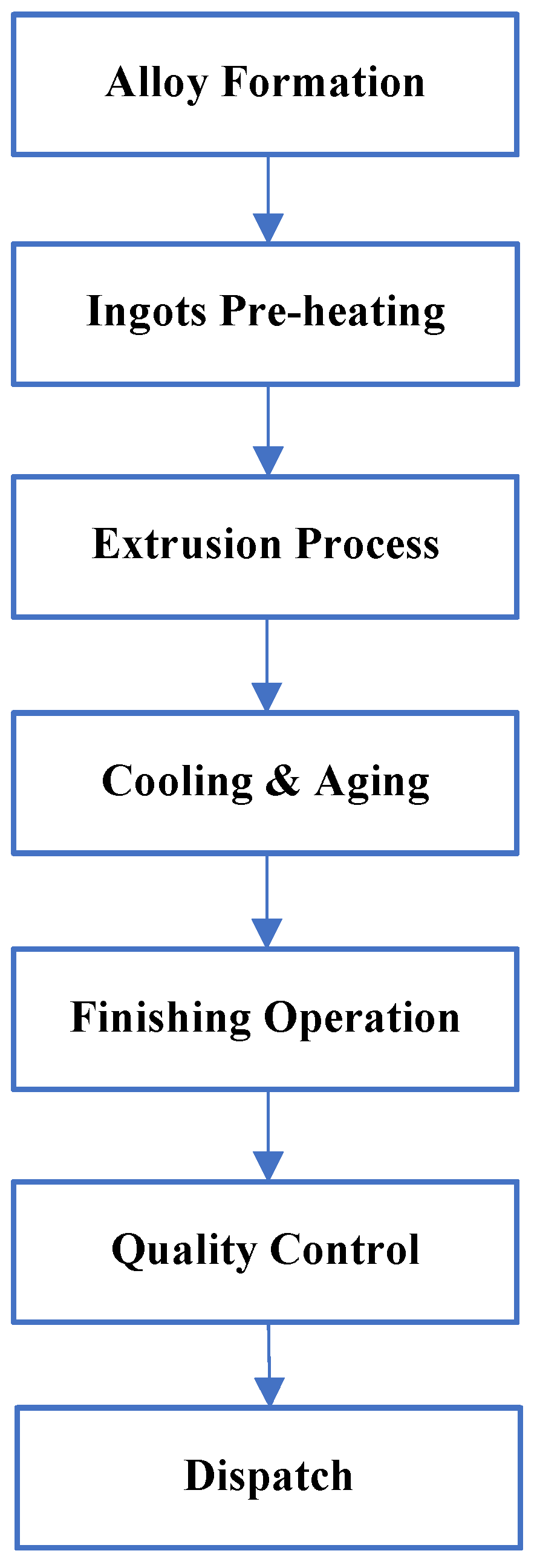
Figure 2.
Tensile sample design for manufactured AA6061.
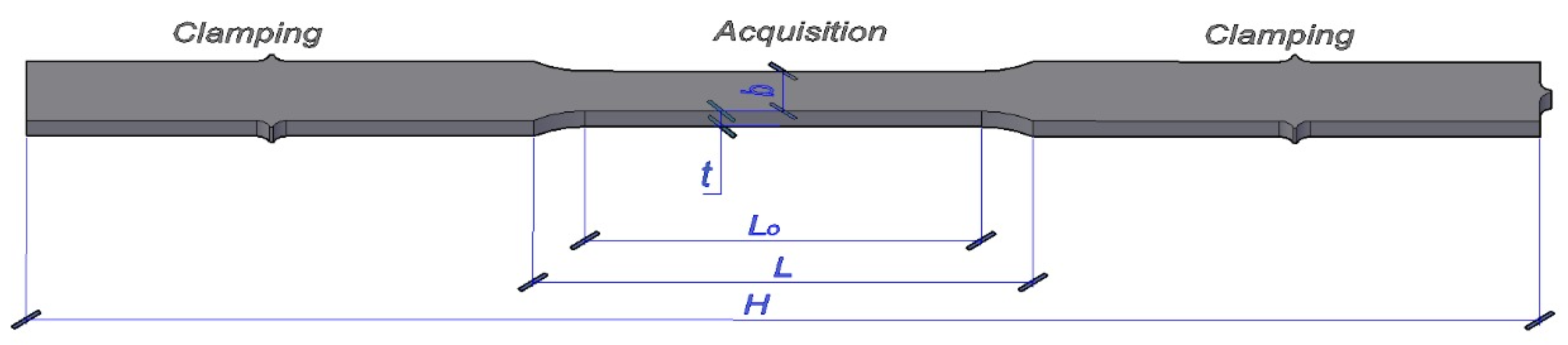
Figure 3.
Tensile test set-up of the manufactured AA6061-T6.
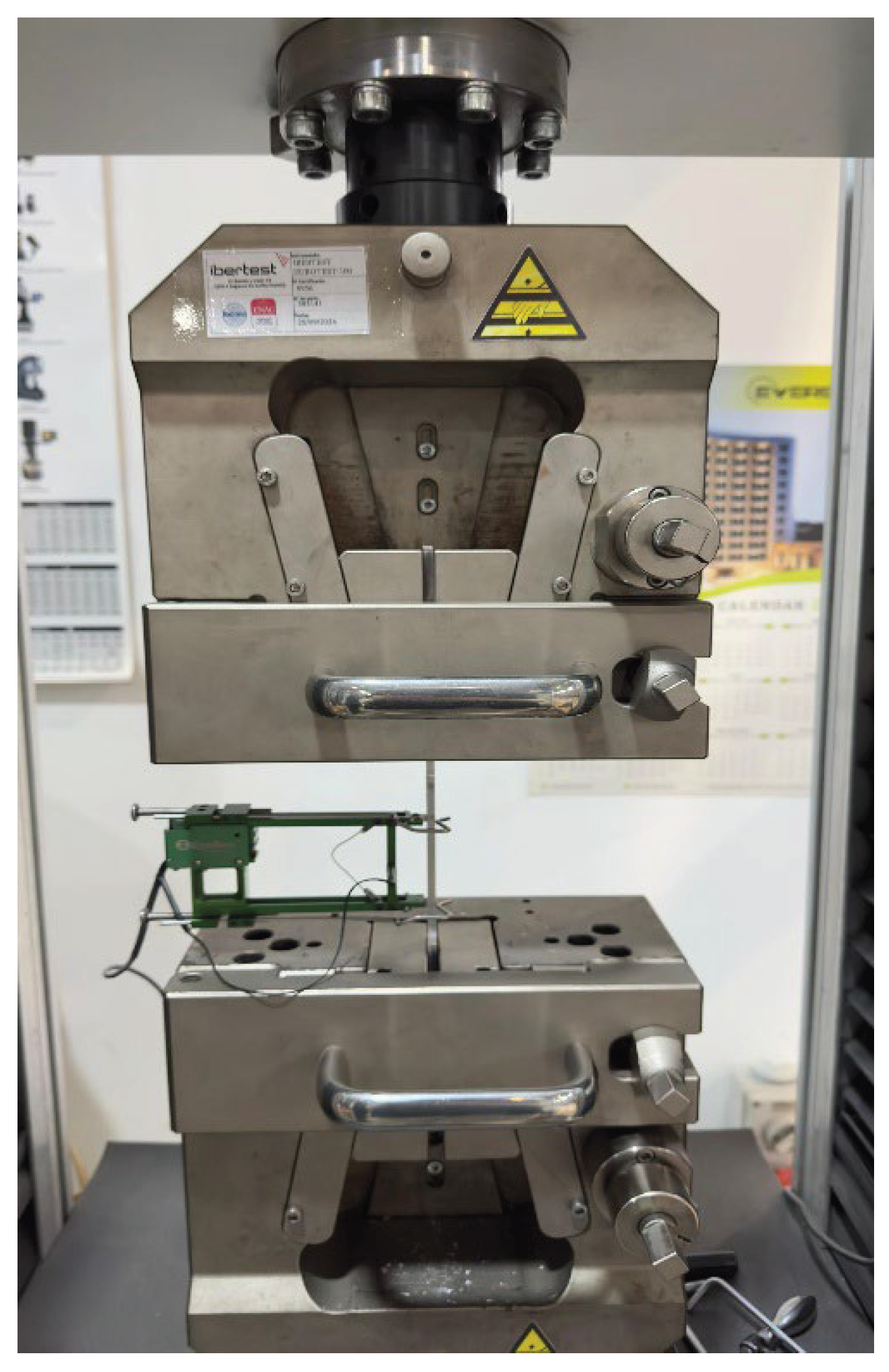
Figure 4.
The ingot selection for the sample AA6061.
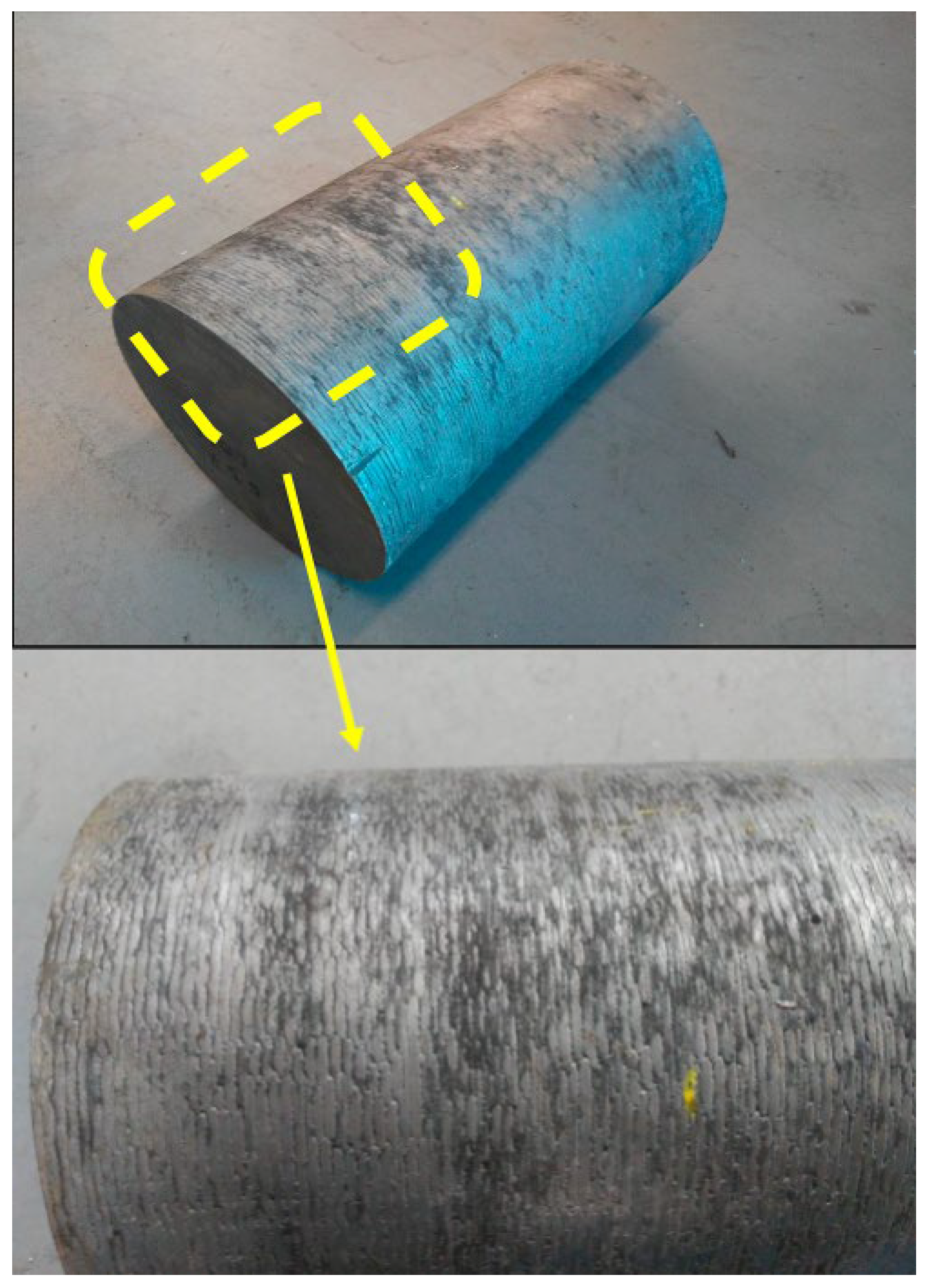
Figure 5.
Micrograph investigation of the ingots for AA6061. (a) - transverse section, at the outer surface; (b) - longitudinal section, at the outer surface; (c) - longitudinal section, at mid-radius; transverse section, at the center.
Figure 5.
Micrograph investigation of the ingots for AA6061. (a) - transverse section, at the outer surface; (b) - longitudinal section, at the outer surface; (c) - longitudinal section, at mid-radius; transverse section, at the center.
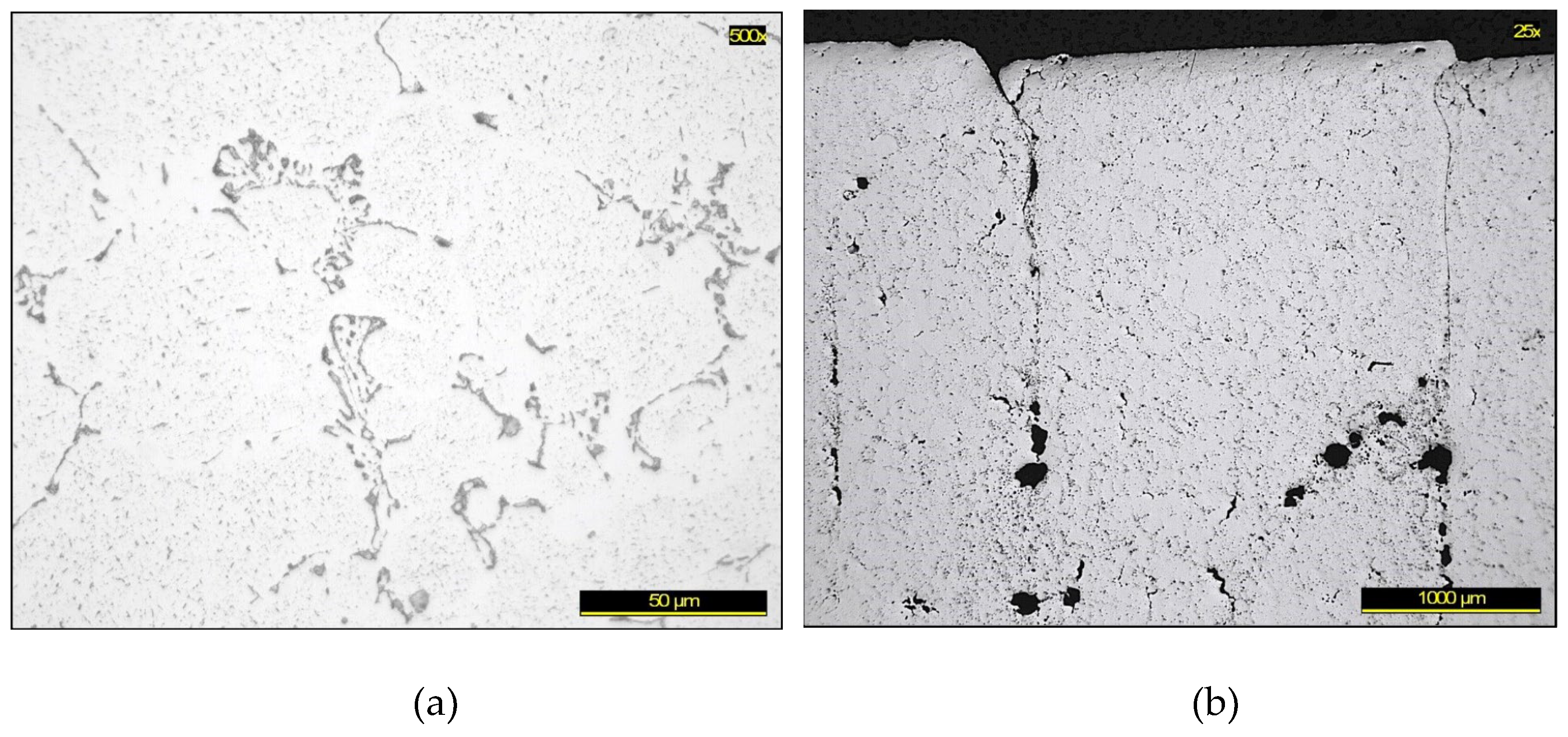
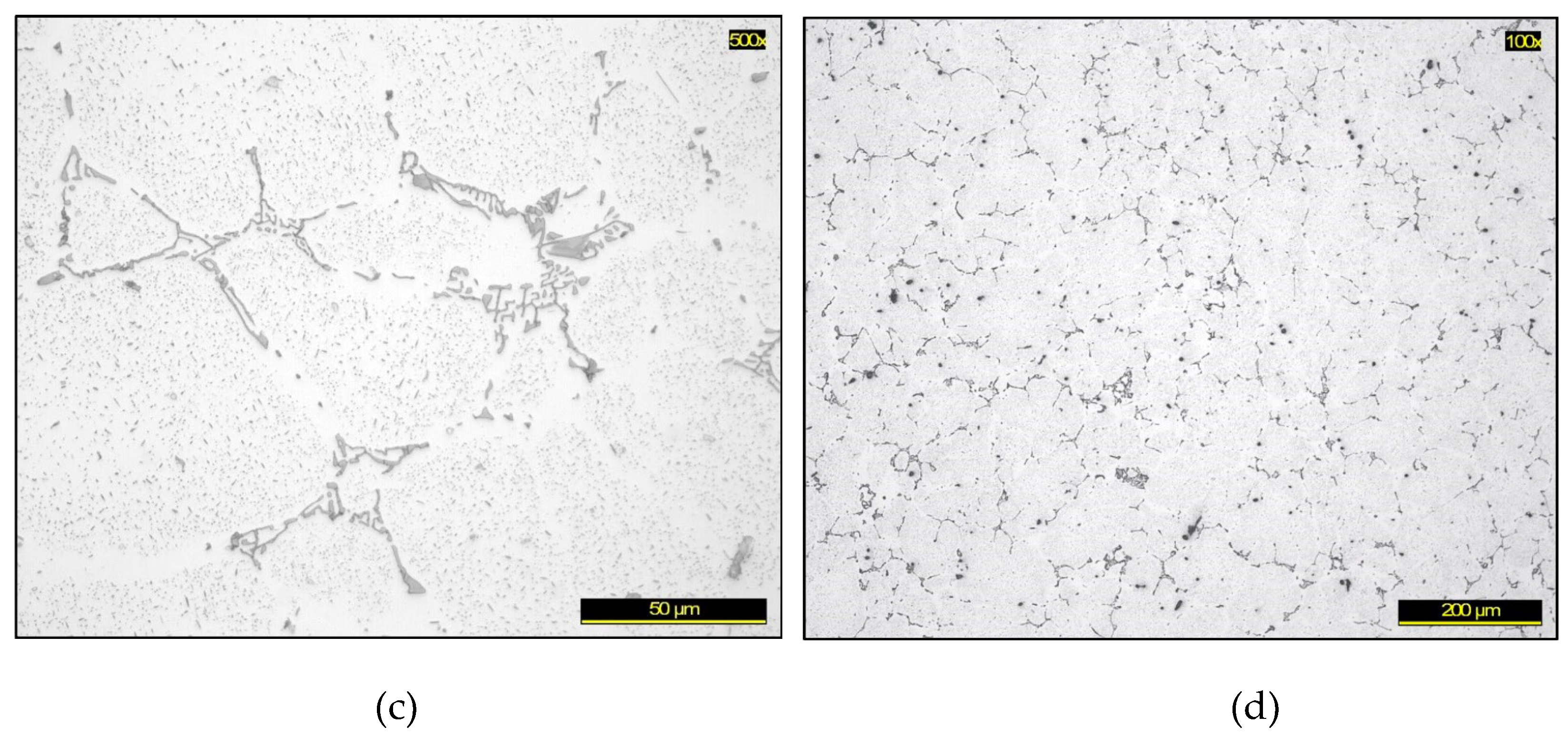
Figure 6.
Diagram of the AA6061 tensile test results.
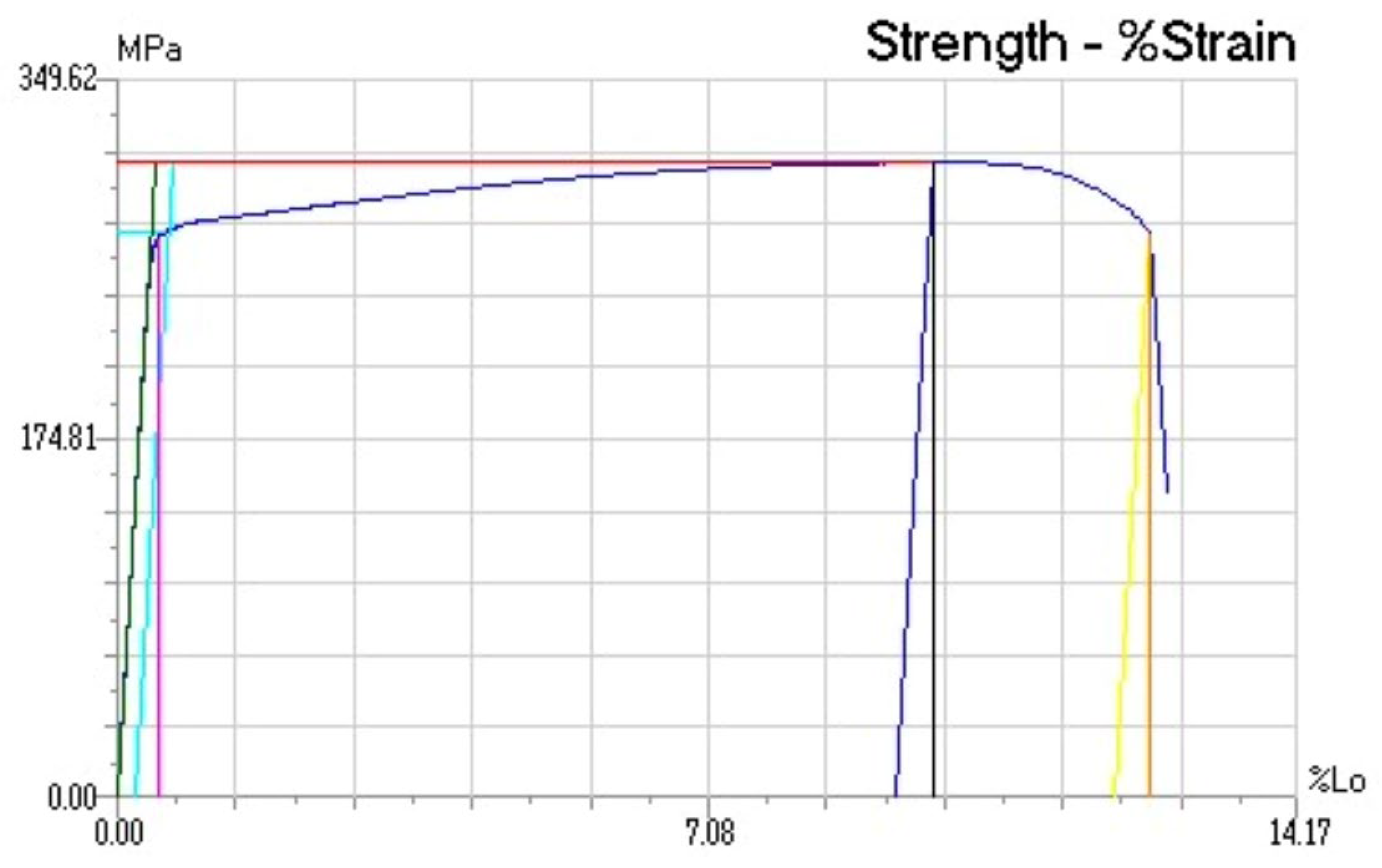
Table 1.
Chemical composition of the manufactured AA6061-T6.
| Elements | Weights (%) |
|---|---|
| Aluminum (Al) | 97.29 |
| Cooper (Cu) | 0.15 |
| Silicon (Si) | 0.65 |
| Chromium (Cr) | 0.06 |
| Manganese (Mn) | 0.05 |
| Zinc (Zi) | 0.05 |
| Magnesium (Mg) | 0.92 |
| Titanium (Ti) | 0.02 |
| Others (%) | 0.81 |
Table 3.
Uncertainty budget of the manufactured AA6061 sample.
| Sources of Uncertainty | Standard Uncertainty, ui | Probability Distribution | Sensitivity Coefficient, Ci | Uncertainty (N/mm2) |
|---|---|---|---|---|
| Reading of the width | 0.006 (mm) | Normal | 116.3 (N/mm3) | 0.69 |
| Reading of the thickness | 0.026 (mm) | Normal | 65.6 (N/mm3) | 1.71 |
| Reading of the applied load | 5.426 (N) | Normal | 0.0029 (1/mm2) | 0.015 |
| Caliper resolution, width | 0.0058 (mm) | Rectangular | 116.3 (N/mm3) | 0.67 |
| Caliper resolution, thickness | 0.0058 (mm) | Rectangular | 65.6 (N/mm3) | 0.38 |
| Calibration, Tensile Strength Device | 29.9 (N) | Rectangular | 0.0029 (1/mm2) | 0.087 |
| Combined Uncertainty, k = 1 | 2 | |||
| Expanded Uncertainty, k = 2 | 4 |
Disclaimer/Publisher’s Note: The statements, opinions and data contained in all publications are solely those of the individual author(s) and contributor(s) and not of MDPI and/or the editor(s). MDPI and/or the editor(s) disclaim responsibility for any injury to people or property resulting from any ideas, methods, instructions or products referred to in the content. |
© 2025 by the authors. Licensee MDPI, Basel, Switzerland. This article is an open access article distributed under the terms and conditions of the Creative Commons Attribution (CC BY) license (http://creativecommons.org/licenses/by/4.0/).
Copyright: This open access article is published under a Creative Commons CC BY 4.0 license, which permit the free download, distribution, and reuse, provided that the author and preprint are cited in any reuse.


