

Submitted:
22 December 2025
Posted:
23 December 2025
You are already at the latest version
Abstract
Oxidative stress results from an imbalance of reactive oxygen species and antioxidant mechanisms and is associated with chronic and degenerative diseases. The use of natural and artificial antioxidants is commonly prescribed to manage it. In nature, some plants synthesize specialized metabolites with significant biological activity. This applies to Bixa orellana L., which contains carotenoids and terpenes. The present study purpose to per-form a phytochemical analysis of B. orellana seeds and determine their antioxidant activity using in vitro assays. The seed extract obtained by maceration in hexane, ethyl acetate, and methanol was analyzed by gas chromatography-mass spectrometry (GC-MS). In vitro antioxidant activity was also evaluated using the DPPH assay, with ascorbic acid as the reference control. A two-way ANOVA followed by Dunnett's multiple comparisons test was performed. A total of 141 volatile and semi-volatile compounds were identified, mainly terpenes, esters, and fatty acids, among which geranylgeraniol (27.50%), ish-warane (11.01%), and geraniol acetate (7.76%) were the most prominent. The extract showed significant dose-dependent antioxidant activity, with an IC50 of 0.5108 mg/mL-1, compared to ascorbic acid with an IC50 of 0.2266 mg/mL-1. The results indicate that the seeds of B. orellana L. possess metabolites capable of inhibiting free radicals such as DPPH.
Keywords:
specialized metabolites
; terpenes
; free radicals
1. Introduction
Oxidative stress occurs when there is an imbalance in cells between the production of reactive oxygen species (ROS) and an organism’s ability to eliminate them through endogenous or exogenous antioxidant systems [1]. Free radicals are molecules characterized by having unpaired electrons in their outer orbital, a condition that makes them highly reactive; therefore, they are also called reactive oxygen and nitrogen species (ROS/RNS) [2,3]. Their accumulation can induce oxidative damage to a variety of biomolecules, which is a precursor to neurological diseases such as Alzheimer’s, Parkinson’s, and multiple sclerosis [4,5]. It also contributes to aging, cancer, diabetes, high blood pressure disorders, and cardiovascular diseases [4,6].
Antioxidants are chemical compounds capable of neutralizing reactive oxygen species through electron donation, hydrogen atom transfer, or metal ion chelation, thereby attenuating oxidative stress induced damage [3]. Among the natural sources of antioxidants, phenolic compounds, flavonoids, terpenoids, and carotenoids stand out, and their potential has been extensively studied [7,8,9]. These metabolites provide protection against biotic and abiotic stress in plants, and in humans, they exhibit antioxidant, anti-inflammatory, and chemoprotective properties [7,10,11].
Bixa orellana L. is a shrub belonging to the Bixaceae family, characterized by producing reddish, triangular seeds contained within a fruit capsule (Figure 1). It is cultivated in the tropics worldwide [12]. Its commercial importance lies in the dye obtained from the seed, primarily bixin and norbixin [13,14]. In addition to these carotenoids, the presence of terpenoids, flavonoids, alkaloids, and glycosides have also been reported [15,16,17], to which antimicrobial and antiproliferative activity is attributed [14,15,17,18,19].
Despite advances in phytochemical research on B. orellana L., comparative studies integrating specialized metabolite analysis with antioxidant activity using standardized methods are still needed. This will help to achieve a better understanding of the relationship between phytochemical composition and the ability to neutralize free radicals. Therefore, the present study purpose to perform a phytochemical analysis of B. orellana seeds and determine their antioxidant activity using in vitro assays.
2. Materials and Methods
2.1. Biological Material
Bixa orellana L. seeds collected in San Juan Comaltepec, Oaxaca, were used to obtain crude extracts from 50 g of dried and crushed seeds. An extraction train was performed in increasing order of polarity with hexane (Mc. Meyer), ethyl acetate (Mc. Meyer), and methanol (Mc. Merck), macerating for one week with solvent changes every 24 hours. The extract was filtered using Whatman No. 1 filter paper and evaporated in a rotary evaporator (Buchi B-480, Equipar, Switzerland) at 45 °C to concentrate and recover the extract for each solvent. The yield of the resulting extracts was calculated, and a pool was prepared to obtain a sample containing the mixture of metabolites extracted with the three solvents. This sample was stored in amber bottles at 4 °C until analysis.
2.2. Phytochemical Analysis
Qualitative identification of the compounds in the seed of B. orellana L. was performed using an Agilent 7890B gas chromatograph (GC-MS), and quantification of their relative abundances was performed using an Agilent 5977a mass selective detector (MSD).
An amount of 50 mg of the sample was dissolved in 2 mL of HPLC grade methanol (Meyer brand). The sample was passed through a PTFE microfilter and injected into the gas chromatograph in splitless mode. The chromatographic conditions were as follows: DB-WAX Ultra Inert column 60m x 250 µm x 0.25 µm, column temperature was 40 °C for 9 °C/min to 240 °C for 10 min, carrier gas was helium, flow rate was 1 mL/min, and the injection of temperature was 220 °C. The conditions of the mass selective detector were as follows: the electron ionization energy was 70 Ev, the scan range between 30 and 550 amu, the reading speed of 13.8 spectra/s, the temperature of the ionization chamber of 200 °C and that of the transfer line of 250 °C.
Data processing was performed using MassHunter Workstation software (Agilent Technologies, Inc. 2012). Compounds were identified based on mass spectral fragmen-tation patterns, which were compared with chemical compound information in the NIST (National Institute of Standards and Technology) database and the Flavor fragrance da-tabase [20,21].
2.3. Antioxidant Activity by DPPH
The determination of antioxidant activity was performed by DPPH (2,2-Diphenyl-1-picrylhydrazyl) according to the methodology followed by Liu et al. [22] and Ibarra Estrada et al. [23].
The DPPH radical scavenging assay provides an approximation for evaluating the antioxidant potential of an extract. The radical exhibits a violet coloration, and the reduced form is yellow; therefore, the decrease in absorbance at 517 nm determines the activity of the compound compared to the DPPH control solution [3].
A 0.1 mM methanolic solution of DPPH was prepared. The initial absorbance of DPPH in methanol was measured at 517 nm, and no changes were recorded during the assay with the samples. A standard curve was constructed from the absorbance measurements of the DPPH radical at different DPPH concentrations (2.0, 1.6, 1.2, 0.08, 0.04, 0.02, and 0 mM). The crude extract of B. orellana L. seed was dissolved in methanol (5mg in 1 mL) (Mc. Merk), from which three concentrations were established (0.05, 0.5 and 1 mg/mL-1).
One milliliter of each treatment was added to 3 mL of methanolic DPPH solution. The resulting mixture was incubated for 30 minutes in the dark at room temperature. Absorbance was measured at 517 nm using a spectrophotometer (Spectronic Genesis 5). Ascorbic acid was used as a reference control at the same concentrations as the seed sample. Measurements were performed in triplicate. Results were expressed as IC50 and as the percentage of DPPH inhibition compared to the control, according to the following formula:
where A control is the absorbance of the control and A sample is the absorbance of the sample
% DPPH inhibited= (A control – A sample) x 100/A control
The IC50 was determined from the graph of the percentage of inhibition using the linear regression method with GraphPad Prism version 10.0 [24] and corresponds to the concentration at which 50% of the free radicals were neutralized.
2.4. Statistical Analysis
The evaluations were done in triplicate. To determine differences between treatments, a two-way ANOVA was performed followed by Dunnett’s multiple comparisons test using GraphPad Prism version 10.0 [24].
3. Results and Discussion
3.1. Extract Yield
The pool of extracts had a total yield of 16.03% per gram of crude B. orellana L. seed extract.
3.2. Phytochemical Profile
Gas chromatography-mass spectrometry (GC-MS) analysis of the crude extract of B. orellana L. seeds identified 141 volatile and semi-volatile compounds (Figure 2) between 8.5 and 38 minutes. Few compounds were observed between 8.5 and 13 minutes. Between 14 and 20 minutes, a more complex region was observed with numerous small and medium peaks, and between 30 and 38 minutes, high molecular weight peaks were observed. Fifteen compounds had a relative abundance greater than 1%, while the rest had lower abundances.
Table 1 presents the 141 identified compounds. In general, the phytochemical profile is grouped into terpenes, esters, alcohols, ketones, and fatty acids. Fifty-five compounds were detected within the terpene group, with sesquiterpenes predominating at 43 compounds, representing a total relative abundance of 19.74%. Only six diterpenes were present, with a total relative abundance of 28.61%. Among the terpenes, geranylgeraniol (27.50%), ishwarane (11.016%), and geraniol acetate (7.76%) stand out with the highest relative abundance. Figure 3 shows the molecular structures of these compounds.
The phytochemical profile obtained shows agreement with previous research on the composition of B. orellana L. seeds. This species has been documented to contain higher levels of sesquiterpenes, diterpenes, and fatty acid esters, as well as prenylated alcohols such as geraniol, geranylgeraniol, and their derivatives [13,25,26]. Raju et al. [26] reported the presence of ishwarane as one of the sesquiterpenes present in various parts of the plant. On the other hand, geranylgeraniol, a diterpene associated with carotenoid metabolism and the biosynthesis of bixin and norbixin [27], has been reported as one of the most abundant constituents in the volatile fraction of the seed [14,18].
A considerable proportion of fatty acids was also present, including linoleic acid at 3.06%, palmitic acid at 3.66%, and oleic acid at 0.948% relative abundance. This is consistent with the oily nature of the seeds and with research describing that up to 30-445% of the seed weight corresponds to unsaturated oils [13,26].
The profile obtained confirms that the seeds of B. orellana L. contain a mixture of volatile metabolites, highlighting the abundance of sesquiterpenes, diterpenes and lipophilic compounds.
3.3. Antioxidant Activity
Table 2 presents the inhibitory concentrations 50 (IC50) of the crude extract of B. orellana L. seed and ascorbic acid, both at three concentrations (1.0, 0.5 and 0.05 mg/mL-1).
The seed extract shows clear, dose dependent antioxidant activity, with inhibition reaching 59.70% at 1 mg/mL-1, decreasing to 47.50% at 0.5 mg/mL-1. At 0.05 mg/mL-1, activity barely reaches 37.45%. Ascorbic acid, on the other hand, exhibits greater antioxidant activity, which is expected given its high reducing capacity as a pure compound.
Regarding the IC50, the value obtained for ascorbic acid (0.2266 mg/mL-1) indicates that it has a high antioxidant potential, as very little is required to achieve 50% inhibition. The IC50 of the crude seed extract (0.5108 mg/mL-1) shows that more than twice the concentration of ascorbic acid is needed to inhibit 50% of DPPH. The larger standard deviation indicates greater variability in the extract’s behavior, which is typical of complex mixtures.
Figure 4 graphically represents the percentage of DPPH radical inhibition and confirms the trend of the values in Table 2. Therefore, the seed extract of B. orellana L. exhibits significant, concentration dependent antioxidant activity, suggesting that some secondary metabolites can donate hydrogens or electrons to neutralize free radicals. According to the molecular structure of geranylgeraniol (Figure 3), which contains -OH groups, it has the capacity to donate H to neutralize free radicals; furthermore, the presence of double bonds may enhance its radical scavenging capacity, thus promoting antioxidant activity [3].
4. Conclusions
Gas chromatography-mass spectrometry (GC-MS) analysis of B. orellana L. seeds reveals a diverse phytochemical composition of volatile and semi-volatile compounds, predominantly terpenes and fatty acids. The abundance of specialized metabolites such as geranylgeraniol and ishwarane suggests their contribution to the antioxidant activity observed in the DPPH assay.
Although the crude extract of B. orellana L. seed showed a lower antioxidant capacity than ascorbic acid, its action demonstrates that the compounds present in the volatile fraction can participate in free radical neutralization mechanisms.
The results obtained indicate that the seed of B. orellana L. could be a potential source of cosmetic or pharmaceutical applications, although further studies are needed to explore its mechanism of action and its stability in biological systems.
Author Contributions
Conceptualization, LAGL and LMRP; methodology LAGL, RMSH, RSMCh, EEDT and GEJG; material collected, JFAM, JCI and CCAA; validation JCI, LAGL, GEJG and EEDT; writing—original draft preparation, LAGL and LMRP.; writing—review and editing LALG, LMRP and RMSH. All authors have read and agreed to the published version of the manuscript.
Funding
This research received no external funding.
Institutional Review Board Statement
Not applicable for studies not involving humans or animals.
Acknowledgments
The authors would like to thank the Secretaría de Ciencia, Humanidades, Tecnología e Innovación (SECIHTI) for the for the support provided.
Conflicts of Interest
The authors declare no conflicts of interest.This section may be divided by subheadings. It should provide a concise and precise description of the experimental results, their interpretation, as well as the experimental conclusions that can be drawn.
References
- Viada Pupo, Esther, Gómez Robles, Lisvelt, & Campaña Marrero, Ibel Reyna. (2017). Estrés oxidativo. Correo Científico Médico, 21(1), 171-186. http://scielo.sld.cu/scielo.php?script=sci_arttext&pid=S1560-43812017000100014&lng=es&tlng=es.
- Guija-Poma, Emilio, Inocente-Camones, Miguel Ángel, Ponce-Pardo, John, & Zarzosa-Norabuena, Edwin. (2015). Evaluación de la técnica 2,2-Difenil-1-Picrilhidrazilo (DPPH) para determinar capacidad antioxidante. Horizonte Médico (Lima), 15(1), 57-60. http://www.scielo.org.pe/scielo.php?script=sci_arttext&pid=S1727-558X2015000100008&lng=es&tlng=es.
- Charlton, N. C., Mastyugin, M., Török, B., & Török, M. (2023). Structural Features of Small Molecule Antioxidants and Strategic Modifications to Improve Potential Bioactivity. Molecules, 28(3), 1057. [CrossRef]
- Rajendran, P.; Nandakumar, N.; Rengarajan, T.; Palaniswami, R.; Gnanadhas, E.N.; Lakshminarasaiah, U.; Gopas, J.; Nishigaki, I. (2014). Antioxidants and human diseases. Clin. Chim. Acta, 436, 332–347.
- Kumar, Vinay, Khan; Khan, Abdullah; Tripathi, Anu; Praveen, Dixit; Bajaj, U.K. (2015). Role of oxidative stress in various diseases: Relevance of dietary antioxidants. The Journal of Phytopharmacology, 4(2): 126-132.
- Aouache, R.; Biquard, L.; Vaiman, D.; Miralles, F. (2018). Oxidative Stress in Preeclampsia and Placental Diseases. Int. J. Mol. Sci., 19(5), 1496.
- Echavarría, A., D’Armas, H., Matute-L., N., Jaramillo, C., Rojas-de-Astudillo, L., & Benítez, R. (2016). Evaluación de la capacidad antioxidante y metabolitos secundarios de extractos de dieciséis plantas medicinales. Revista Ciencia Unemi, 9 (20), 29-35.
- Salas-Pérez, Lilia, Moncayo-Lujan, María del Rosario, Borroel-García, Victoria Jared, Guzmán-Silos, Tania Lizzeth, & Ramírez-Aragón, Mercedes Georgina. (2022). Composición fitoquímica y actividad antioxidante en tres variedades de albahaca por efecto de distintos solventes. Revista mexicana de ciencias agrícolas, 13(28), 113-123. [CrossRef]
- Gallegos Zurita, Maritza, Castro Posligua, Aída Águeda, Salazar Carranza, Luz Angélica, Mazacon Mora, Maite Cecilia, Orellana Villegas, Margarita, & Guija Poma, Emilio Teodoro. (2023). Metabolitos secundarios y capacidad antioxidante de especies vegetales en Ecuador. Salud(i)Ciencia, 25(7), 410-419. [CrossRef]
- Vilela, Alejandra E, González-Paleo, Luciana, & Ravetta, Damián A. (2011). Metabolismo secundario de plantas leñosas de zonas áridas: mecanismos de producción, funciones y posibilidades de aprovechamiento. Ecología austral, 21(3), 317-327. https://www.scielo.org.ar/scielo.php?script=sci_arttext&pid=S1667-782X2011000300007&lng=es&tlng=pt.
- Ramírez R., Dranguet A., Morales L. (2020). Actividad antiiflamatoria de plantas medicinales. Revista Granmnese de Desarrollo Rural. 16: 320-332.
- Nyonje, W.A., Owino, W. & Abong, G.O. Biochemical evaluation of spent Bixa (Bixa Orellana) seeds for potential application in the food industry. Discov Food 5, 193 (2025). [CrossRef]
- Hirko B., Getu A. (2022). Bixa orellana (Annatto Bixa): a review on use, structure, extraction methods and analysis. Journal of Agronomy, Technology and Engineering Management, 5(1): 687-696.
- De Oliveira, J. R. G.; Bonnet, A.; Braconnier, E.; Groult, H.; Prunier, G.; Beaugeard, L.; Grougnet, R.; Guedes, J. R. S.; Alves, C. A. F.; Picot, L. (2019). Bixin, an apocarotenoid isolated from Bixa orellana L., sensitizes human melanoma cells to dacarbazine-induced apoptosis through ROS-mediated cytotoxicity. Food and Chemical Toxicology, 125,549-561. doi: ff10.1016/j.fct.2019.02.013ff. ffhal-02074546f.
- Cuong Tran, V. and Chin Koo, B. (2016). Effects of annatto (Bixa orellana L.) seeds powder on physicochemical properties, antioxidant and antimicrobial activities of pork patties during refrigerated storage. Korean J. Food Sci. An., 36 (4), 476~486.
- Zarza-García, A. L.; Sauri-Duch, E.; Raddatz-Mota, D.; Cuevas-Glory, L. F.; Pinzón-López, L., L.; Rivera-Cabrera, F.; Mendoza-Espinoza, J. A. (2017). Pharmacological, phytochemical and morphological study of three Mayan accessions of Bixa orellana L. leaves. Emirates Journal of Food and Agriculture, 29(3), 163-169.
- Kusmita, L.; Franyoto Y.D.; Mutmainah M.; Puspitaningrum I.; Nurcahyanti A.D. (2022). Bixa orellana L. carotenoids: antiproliferative activity on human lung cancer, breast cancer, and cervical cancer cells in vitro. Nat Prod Res., 36(24):6421-6427. [CrossRef]
- Tarkany, B. R.; Barreto, de A. P. M.; de Oliveira S. I. M.; de Carvalho J. E; Nogueira, C. P. R., y Ann, F. M. (2020). Bixa orellana L. by-products’ fractions from an industrial process: antiproliferative activity on tumor cells and chemical profile. Nat Prod Res, 85(4):431-40. DOI.10.1080/14786419.2020.1826482.
- Valencia, D.; Aguilar González, D. I.; Ortega Gacía, J.; Godoy Hernández, G.; Leyva Peralta, M. A.; Moo Huchin, V. M.; Clarenc Aarland, R.; Quintero Vargas, J.; Mendoza Espinoza, J. A.; Zarza García, A. L. (2023). Phytochemical profile, antioxidant and antiproliferative activity from leaves and seeds of Bixa orellana L. from the Yucatán Peninsula, Mexico. Pharmacognosy Magazine, 19(2): 482–490. [CrossRef]
- Technologies, Inc. (2012). Mass Spectrometry Software. https://www.agilent.com/en/product/software-informatics/mass-spectrometry-software?Campaign_Source=PAN_PSM_Brand_G&gclsrc=aw.ds&gad_source=1&gad_campaignid=21857819690&gbraid=0AAAAADSHcWcc-Jpyzc19xKtqEx2nHE9be&gclid=Cj0KCQiAiqDJBhCXARIsABk2kSmnt7No7uSJF7pAtz-4MaZQnFrw9YqFfT5pB8gWRpsqafAO-Jk8lIcaAskKEALw_wcB.
- National Institute of Standars and Technology. (2025). https://www.nist.gov/.
- Liu L, Y Sun, T Laura, X Liang, H Ye, X Zeng (2009) Determination of polyphenolic content and antioxidant activity of kudingcha made from Ilex kudingcha C. J. Tseng. Food Chem. 112:35-41.
- Ibarra Estrada E., Pacheco Sánchez M., García Mateos R., San Miguel Chávez R., Ramírez Valverde G., & Soto Hernández M. (2011). Actividad antioxidante de alcaloides de Erythrina americana Miller. Revista fitotecnia mexicana, 34(4), 241-246. http://www.scielo.org.mx/scielo.php?script=sci_arttext&pid=S0187-73802011000400005&lng=es&tlng=es.
- GraphPad Prism. (2025). Versión 10.0. Consultado el 10 de noviembre de 2025. https://www.graphpad.com/.
- Valarezo, E.; Torres Torres, S.; Pineda Guamizo, N.; Jaramillo Fierro, X.; Cartuche, L.; Morocho, V.; Meneses, M. A. (2023). Study of essential oil Isolated from achiote (Bixa orellana) leaves: chemical composition, enantiomeric distribution and antimicrobial, antioxidant and anticholinesterase activities. Antibiotics. 12(4), 710. [CrossRef]
- Raju SK, Chandrasekar S, Vengadhajalapathy P, Sundaram R, Periyasamy S, Chinnaraj T, Sekar P, Kumar S. (2022). Revisión de la composición fitoquímica y las actividades farmacológicas de Bixa orellana L. J Pharm Biol Sci, 10(2):57-67. [CrossRef]
- Raddatz-Mota D, Pérez-Flores LJ, Carrari F, Mendoza-Espinoza JA, de León-Sánchez FD, Pinzón-López LL, Godoy-Hernández G, Rivera-Cabrera F. (2017). Achiote (Bixa orellana L.): a natural source of pigment and vitamin E. J Food Sci Technol., 54(6):1729-1741. [CrossRef]
Figure 1.
Bixa orellana L.: (a) shrub, (b) fruit capsules and (c) seeds.
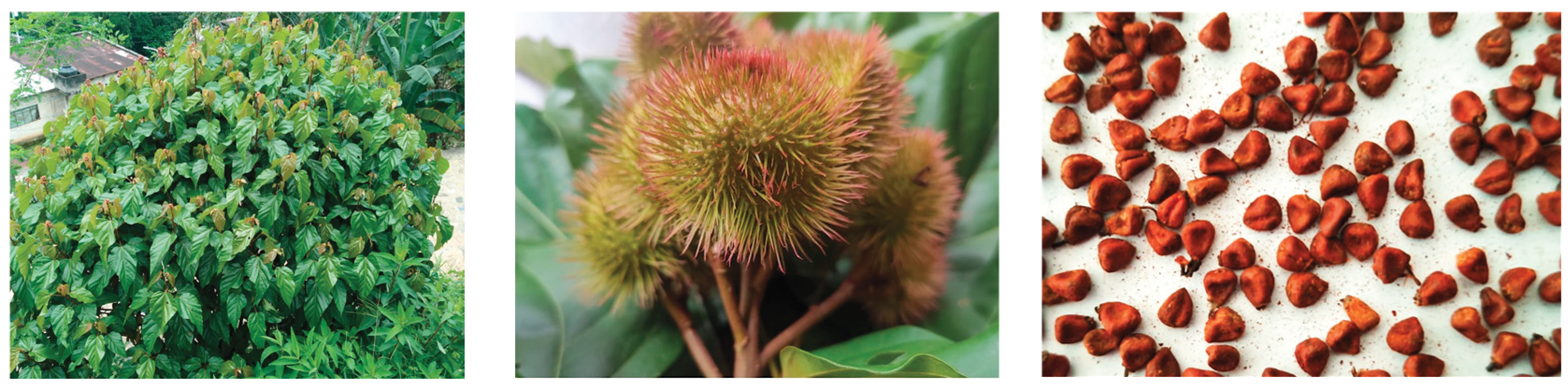
Figure 2.
Chromatogram of the crude seed extract of Bixa orellana L., obtained by Gas Chromatography coupled to Mass Spectrometry (GC-MS). The numbers correspond to the compound number in Table 1.
Figure 2.
Chromatogram of the crude seed extract of Bixa orellana L., obtained by Gas Chromatography coupled to Mass Spectrometry (GC-MS). The numbers correspond to the compound number in Table 1.
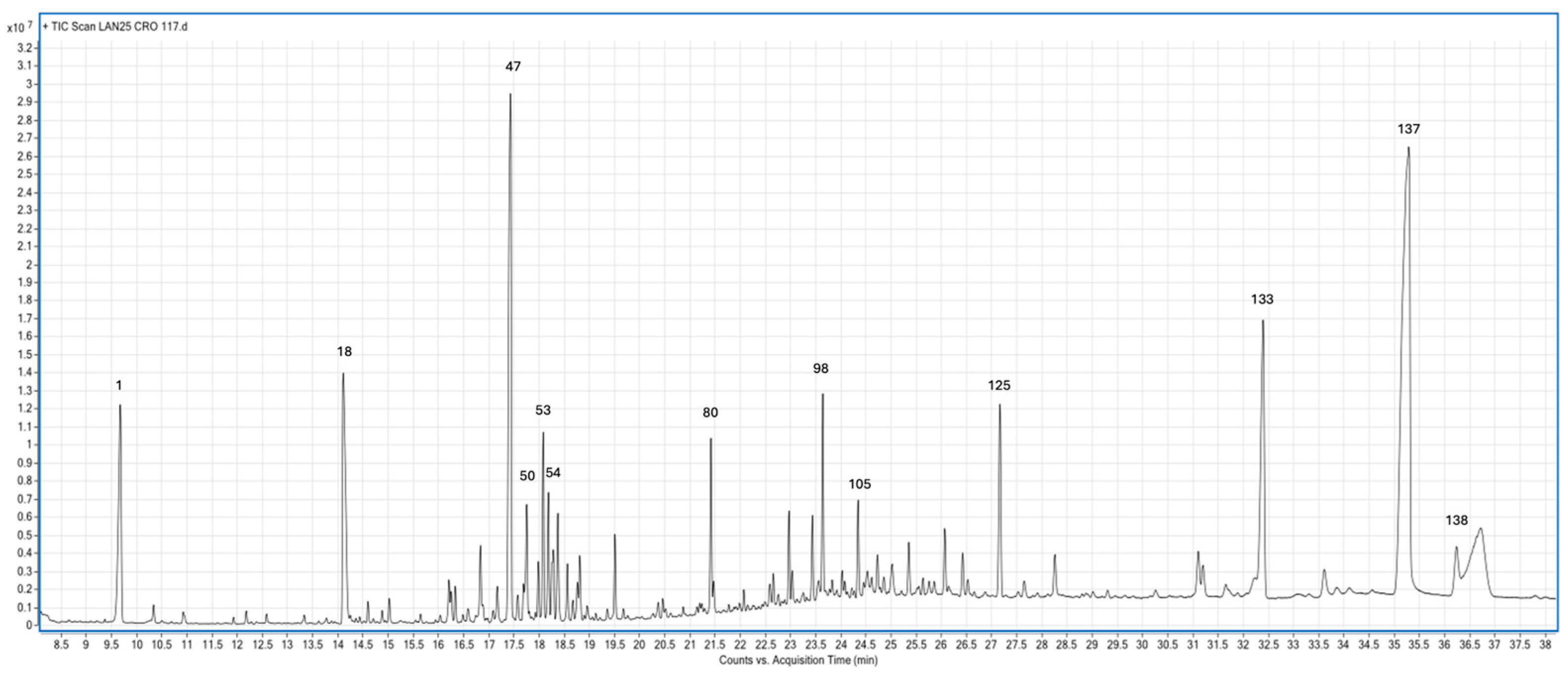
Figure 3.
Molecular structure of (a) geranylgeraniol, (b) ishwarane, (c) geraniol acetate.
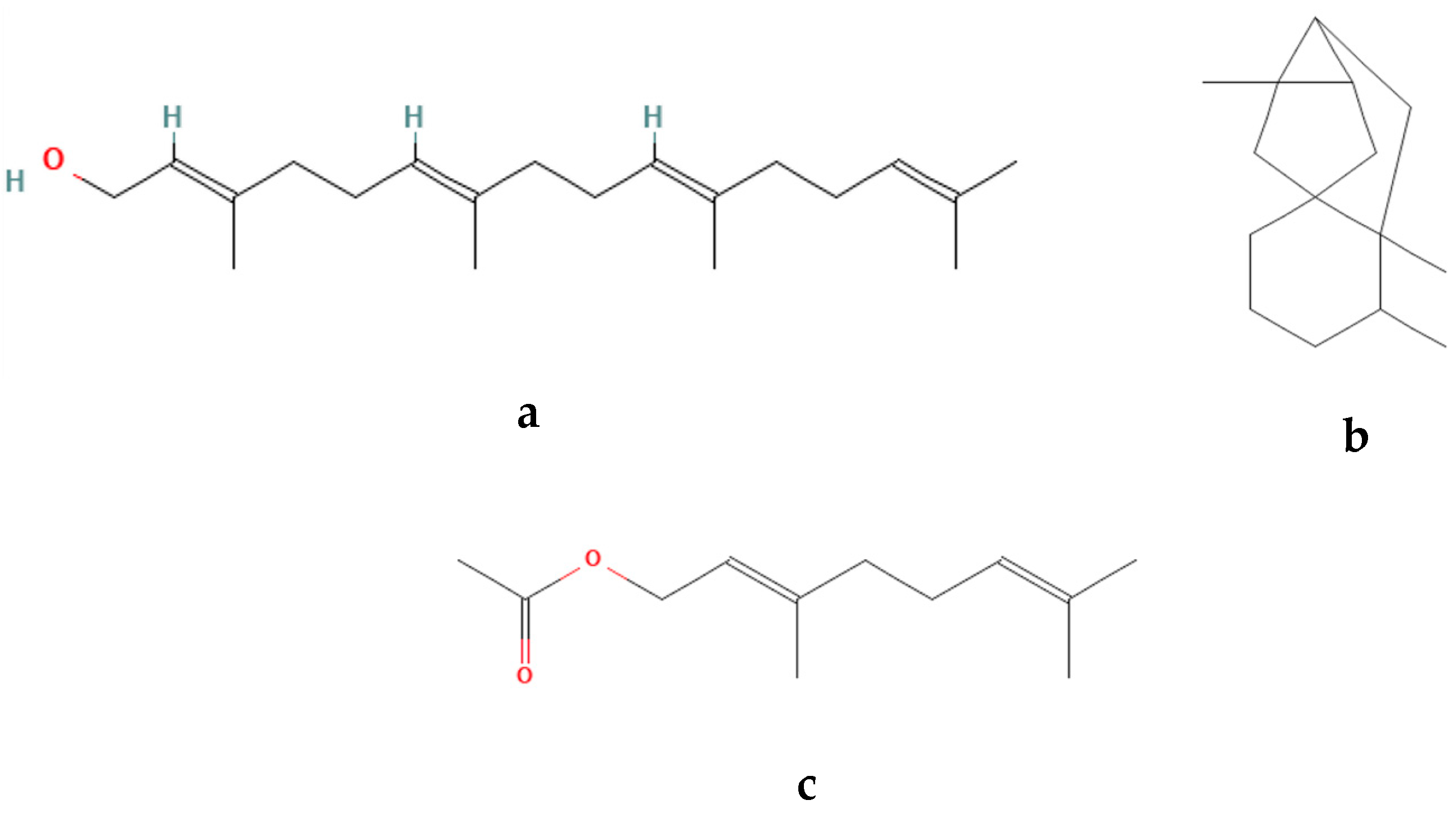
Figure 4.
Percentage of DPPH inhibition of three concentrations (1, 0.5 and 0.05 mg/mL-1) of the organic crude extract of Bixa orellana L. seed.
Figure 4.
Percentage of DPPH inhibition of three concentrations (1, 0.5 and 0.05 mg/mL-1) of the organic crude extract of Bixa orellana L. seed.
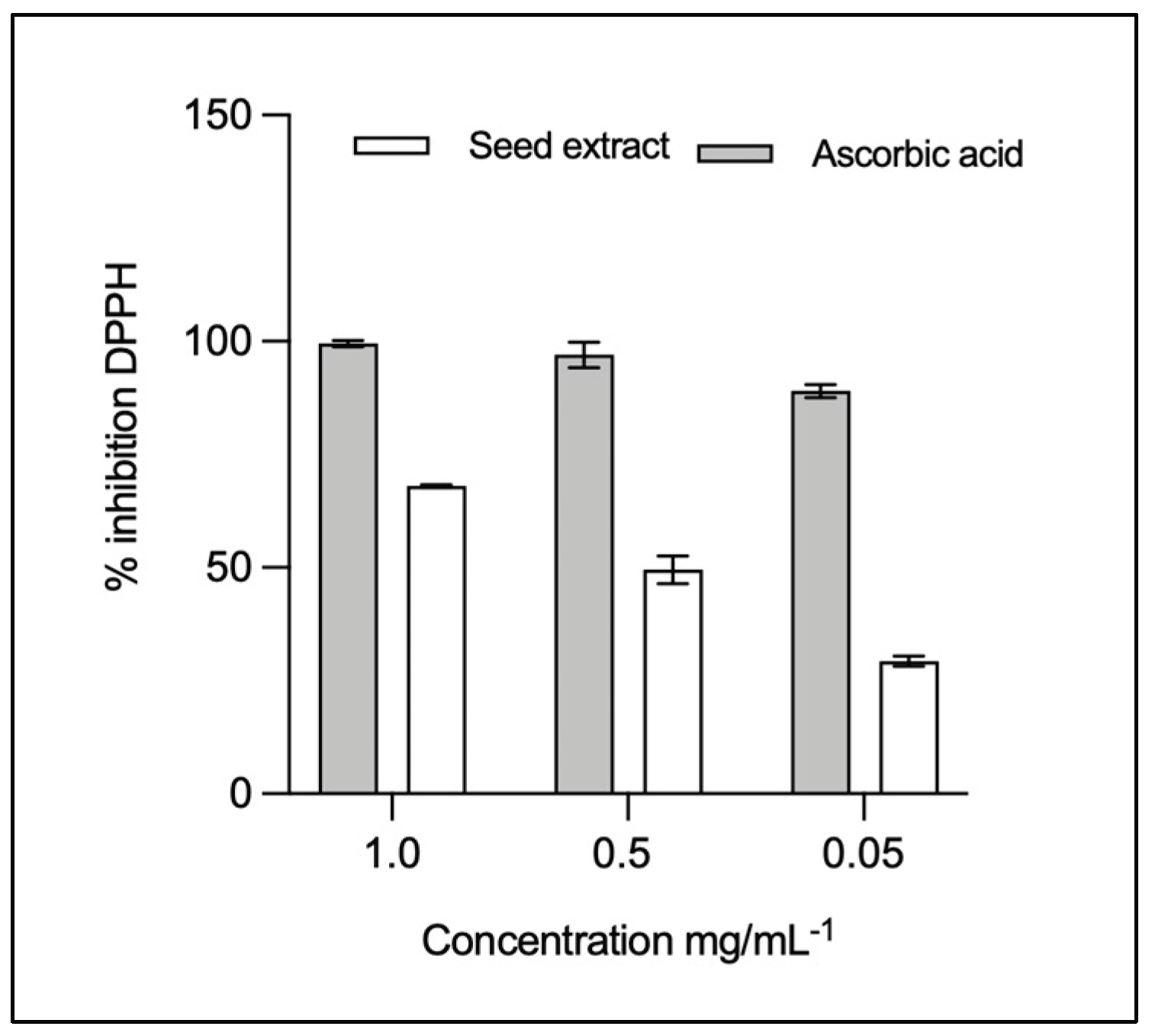

Table 1.
Compounds identified in the chromatogram obtained by gas chromatography coupled to mass spectrometry (GC-MS) of the organic crude extract of Bixa orellana L. seed.
Table 1.
Compounds identified in the chromatogram obtained by gas chromatography coupled to mass spectrometry (GC-MS) of the organic crude extract of Bixa orellana L. seed.
| Number | Name | RT Min | Percentage % | Chemical group |
| 1 | Isobutyl acetate | 8.656 | 0.0189 | Ester |
| 2 | 2,2,5-trimetilhexano | 8.88 | 0.0129 | Alkano |
| 3 | 2-Butenal, 2-methyl- | 9.087 | 0.0112 | Aldehyde |
| 4 | Benzene, 1,3-dimethyl- | 9.675 | 4.9286 | Aromatic hydrocarbon |
| 5 | Dodecane | 10.337 | 0.2762 | Alkane |
| 6 | 2-Hexanol | 10.696 | 0.0162 | Alcohol |
| 7 | Cyclopentanol, 1-methyl- | 10.927 | 0.1195 | Alcohol |
| 8 | 2-Propanone, 1-hydroxy- | 12.179 | 0.1542 | Hydroxyacetona |
| 9 | Propanoic acid, 2-hydroxy-, methyl ester, (.+/-.)- | 12.281 | 0.0195 | Fatty acid ester |
| 10 | Acetaldehyde, hydroxy- | 12.389 | 0.08592 | Hydroxyaldehyde |
| 11 | 5-Hepten-2-one, 6-methyl- | 12.584 | 0.09831 | Ketone |
| 12 | Acetic acid, hydroxy-, methyl ester | 13.302 | 0.0256 | Carboxylic ester |
| 13 | Tetradecane | 13.333 | 0.0894 | Alkane |
| 14 | Ethanol, 2-butoxy- | 13.621 | 0.0261 | Alcohol |
| 15 | 2,2’-Bioxirane | 13.774 | 0.0663 | Epoxide |
| 16 | Benzene, 1,3-bis(1,1-dimethylethyl)- | 13.874 | 0.0233 | Alkylbenzene |
| 17 | Dodecane, 1-iodo- | 13.938 | 0.0215 | Alkane |
| 18 | Acetic acid | 14.107 | 6.0109 | Carboxylic acid |
| 19 | 2(3H)-Furanone, 5-methyl- | 14.166 | 0.068 | Lactone |
| 20 | Propanoic acid, 2-oxo-, methyl ester | 14.25 | 0.0758 | Fatty acid |
| 21 | α-Cubebene | 14.435 | 0.0571 | Sesquiterpene |
| 22 | σ-Elemene | 14.599 | 0.2261 | Sesquiterpene |
| 23 | 2-Ethyl-1-hexanol | 14.705 | 0.0575 | Alcohol |
| 24 | Ylangene | 14.882 | 0.1443 | Sesquiterpene |
| 25 | α-Copaene | 15.023 | 0.2872 | Sesquiterpene |
| 26 | 2,4-Dihydroxy-2,5-dimethyl-3(2H)-furan-3-one | 15.256 | 0.0613 | Furano |
| 27 | cis-Muurola-4(15),5-diene | 15.644 | 0.1055 | Sesquiterpene |
| 28 | Furan, 2-ethyl-5-methyl- | 15.76 | 0.0133 | Furan |
| 29 | 2-Furancarboxaldehyde, 5-methyl- | 15.88 | 0.0092 | Furan |
| 30 | 1,2-Propanediol, 1-acetate | 15.943 | 0.0351 | Ester |
| 31 | Pentanoic acid, 4-oxo-, methyl ester | 16.037 | 0.0772 | Fatty acid |
| 32 | Hexadecane | 16.181 | 0.0417 | Alkane |
| 33 | (-)-Aristolene | 16.208 | 0.5095 | Sesquiterpene |
| 34 | Methyl 4-oxo-2-pentenoate | 16.253 | 0.3422 | Ester |
| 35 | β-Elemene | 16.334 | 0.3993 | Sesquiterpene |
| 36 | B-copaene | 16.487 | 0.0888 | Sesquiterpene |
| 37 | Cyclooctasiloxane, hexadecamethyl- | 16.571 | 0.029 | Xylosane |
| 38 | Caryophyllene | 16.589 | 0.1648 | Sesquiterpene |
| 39 | 1,2-Ethanediol, monoacetate | 16.809 | 0.099 | Ester |
| 40 | Naphthalene | 16.835 | 0.9478 | Sesquiterpene |
| 41 | Isoledene | 16.887 | 0.1224 | Sesquiterpene |
| 42 | Benzaldehyde, 4-methyl- | 16.941 | 0.0451 | Aldehyde |
| 43 | Elixene | 16.976 | 0.0253 | Sesquiterpene |
| 44 | Isoledene | 17.087 | 0.1501 | Sesquiterpene |
| 45 | Cyclosativene | 17.17 | 0.4759 | Sesquiterpene |
| 46 | Glyoxal, 4-methylphenyl- | 17.31 | 0.0259 | Aldehyde |
| 47 | Ishwarane | 17.433 | 11.0164 | Sesquiterpene |
| 48 | Humulene | 17.579 | 0.3048 | Sesquiterpene |
| 49 | 2-Furancarboxylic acid, 3-methyl-, methyl ester | 17.639 | 0.0112 | Ester |
| 50 | α-Amorphene | 17.755 | 1.7063 | Sesquiterpene |
| 51 | δ-Selinene | 17.928 | 0.0724 | Sesquiterpene |
| 52 | Aristolochene | 17.984 | 0.6452 | Sesquiterpene |
| 53 | β-Cubebene | 18.082 | 2.2405 | Sesquiterpene |
| 54 | Valencene | 18.185 | 1.4967 | Sesquiterpene |
| 55 | 2-Isopropenyl-4a,8-dimethyl-1,2,3,4,4a,5,6,7-octahydronaphthalene | 18.285 | 0.974 | Sesquiterpene |
| 56 | Benzoic acid, 3-methyl-, methyl ester | 18.353 | 0.2178 | Carboxylic acid |
| 57 | Naphthalene | 18.373 | 1.1754 | Aromatic hydrocarbon |
| 58 | δ-Cadinene | 18.563 | 0.6178 | Sesquiterpene |
| 59 | γ-Cadinene | 18.675 | 0.1652 | Sesquiterpene |
| 60 | 1,2-Cyclopentanedione | 18.754 | 0.3006 | Ketone |
| 61 | (-)-.α-Panasinsen | 18.808 | 0.775 | Sesquiterpene |
| 62 | Valencen | 18.895 | 0.0481 | Sesquiterpene |
| 63 | Ethanone, 1-(4-methylphenyl)- | 18.956 | 0.1712 | Ketone |
| 64 | 2-Hexanone, 6-(acetyloxy)- | 19.127 | 0.0699 | Ketone/ester |
| 65 | 4-Methylphenyl acetone | 19.355 | 0.1071 | Ketone |
| 66 | Acetic acid | 19.464 | 0.0477 | Aromatic hydrocarbon |
| 67 | 1H-Cyclopropa[a]naphthalene | 19.508 | 0.9378 | Sesquiterpene |
| 68 | Calamenene | 19.577 | 0.0111 | Sesquiterpene |
| 69 | 5,9-Undecadien-2-one, 6,10-dimethyl-, (Z)- | 19.676 | 0.1084 | Monoterpene |
| 70 | 2,5-Dihydroxyheptane | 19.763 | 0.0511 | Alcohol |
| 71 | Epicubebol | 20.245 | 0.0349 | Alcohol |
| 72 | 2,6-Bis(1,1-dimethylethyl)-4-(1-oxopropyl)phenol | 20.322 | 0.0108 | Phenol |
| 73 | 2,5-Dihydroxyheptane | 20.368 | 0.2035 | Alcohol |
| 74 | Furan, tetrahydro-2,5-dimethyl- | 20.458 | 0.1935 | Ester |
| 75 | Naphthalene | 20.625 | 0.0329 | Aromatic hydrocarbon |
| 76 | Carotol | 20.864 | 0.0966 | Sesquiterpene |
| 77 | β-Calacorene | 21.124 | 0.0448 | Aromatic hydrocarbon |
| 78 | Cadina-1(10),6,8-triene | 21.191 | 0.1192 | Sesquiterpene |
| 79 | 1,5-Hexanediol | 21.234 | 0.1271 | Alcohol |
| 80 | Benzaldehyde | 21.415 | 2.0419 | Aldehyde |
| 81 | γ-Gurjunene | 21.468 | 0.3336 | Sesquiterpene |
| 82 | 1,1,4,7-Tetramethyldecahydro-1H-cyclopropa[e]azulene-4,7-diol | 21.771 | 0.0685 | Sesquiterpene/alcohol |
| 83 | Geranil hexanoato | 21.873 | 0.0463 | Ester |
| 84 | Cyclododecasiloxane | 21.901 | 0.0158 | Xylosane |
| 85 | Cyclohexylideneacetone | 21.981 | 0.0852 | Ketone |
| 86 | 1,3,6,10-Cyclotetradecatetraene | 22.071 | 0.2154 | Diterpene |
| 87 | 1,3,6,10-Cyclotetradecatetraene | 22.487 | 0.0918 | Diterpene |
| 88 | Dihydroxyacetone | 22.584 | 0.3637 | Ketone |
| 89 | 1,2,4-Trimethoxybenzene | 22.655 | 0.3557 | Benzene |
| 90 | 5-Cyclodecen-1-ol | 22.759 | 0.0946 | Sesquiterpene |
| 91 | Piperazine, 1,4-dimethyl- | 22.826 | 0.053 | Ester |
| 92 | Espatulenol | 22.965 | 1.0143 | Sesquiterpene |
| 93 | γ-Costol | 23.027 | 0.3133 | Alcohol |
| 94 | 1-Nonanol | 23.125 | 0.0319 | Alcohol |
| 95 | Cembrene | 23.252 | 0.1186 | Diterpene |
| 96 | Selin-6-en-4.alpha.-ol | 23.431 | 0.9214 | Sesquiterpene |
| 97 | Germacreno-δ-4-ol | 23.558 | 0.2542 | Alcohol |
| 98 | Palmitic acid | 23.637 | 2.3622 | Fatty acid |
| 99 | Glycerol α-monoacetate | 23.826 | 0.1558 | Alcohol |
| 100 | α-Springene | 23.917 | 0.0507 | Diterpene |
| 101 | Ethyl palmitate | 24.02 | 0.2777 | Fatty acid ester |
| 102 | 4(15),5,10(14)-Germacratrien-1-ol | 24.075 | 0.1772 | Sesquiterpene |
| 103 | Isospathulenol | 24.222 | 0.1035 | Sesquiterpene |
| 104 | 1-Naphthalenol | 24.271 | 0.0543 | Sesquiterpene |
| 105 | Isospathulenol | 24.35 | 1.131 | Sesquiterpene |
| 106 | 1-Naphthalenol | 24.459 | 0.1421 | Sesquiterpene |
| 107 | Glycerol 1-monoacetate | 24.539 | 0.3332 | Ester |
| 108 | 4H-Pyran-4-one, 2,3-dihydro-3,5-dihydroxy-6-methyl- | 24.621 | 0.1979 | Ketone |
| 109 | Humulane-1,6-dien-3-ol | 24.736 | 0.5011 | Sesquiterpene |
| 110 | α-Muurolene-14-ol | 24.865 | 0.2078 | Alcohol |
| 111 | Glycerin | 25.004 | 0.2592 | Alcohol |
| 112 | Sobrerol | 25.024 | 0.216 | Alcohol |
| 113 | β-Selinene | 25.035 | 0.2466 | Sesquiterpene |
| 114 | Viridiflorol | 25.358 | 0.7184 | Sesquiterpene |
| 115 | Farnesyl acetone | 25.559 | 0.12 | Ketone |
| 116 | 7R,8R-8-Hydroxy-4-isopropylidene-7-methylbicyclo [5.3.1]undec-1-ene | 25.641 | 0.1988 | Alkene |
| 117 | 2-Decenoic acid | 25.763 | 0.1744 | Fatty acid |
| 118 | 2-Naphthalenol, | 25.865 | 0.2292 | Sesquiterpene |
| 119 | Methyl stearate | 26.074 | 0.8862 | Fatty acid ester |
| 120 | Isobutyl palmitate | 26.195 | 0.0468 | Ester |
| 121 | Elaidic acid | 26.427 | 0.5943 | Fatty acid |
| 122 | Elaidic acid | 26.527 | 0.1887 | Fatty acid |
| 123 | Dehydrofukinone | 26.537 | 0.1071 | Ketone/sesquiterpene |
| 124 | Cyclododecasiloxane | 26.953 | 0.014 | Xylosane |
| 125 | Linoleic acid | 27.169 | 3.0674 | Fatty acid |
| 126 | 5-Hydroxymethylfurfural | 27.527 | 0.0946 | Aldehyde/alcohol |
| 127 | Linoleic acid | 27.649 | 0.2297 | Fatty acid |
| 128 | Linolenic acid | 28.261 | 0.7189 | Fatty acid |
| 129 | trans-2-Dodecenoic acid | 29.014 | 0.0979 | Fatty acid |
| 130 | Eicosanoic acid, methyl ester | 29.306 | 0.1185 | Fatty acid |
| 131 | Geranyl-.α.-terpinene | 31.203 | 0.6396 | Diterpene |
| 132 | Geranylgeranyl formate | 31.656 | 0.2687 | Terpenoid ester |
| 133 | Gernylgeraniol acetate | 32.397 | 7.7694 | Acetate ester |
| 134 | Acetic acid, 2-(1-buten-3-yl)-2-nitro-, ethyl ester | 33.614 | 0.7082 | Ester |
| 135 | Farnesyl propionate | 33.856 | 0.17078 | Sesquiterpene |
| 136 | Adipic acid | 34.102 | 0.1543 | Carboxylic acid |
| 137 | Geranylgeraniol | 35.293 | 27.5022 | Diterpene |
| 138 | Palmitic acid | 36.239 | 1.3027 | Fatty acid |
| 139 | Tyrosol, acetate | 37.8 | 0.0942 | Ester |
| 140 | Tyrosol, acetate | 37.8 | 0.0941 | Ester |
| 141 | Phthalic acid, butyl 2-pentyl ester | 37.998 | 0.0365 | Ester |
Table 2.
Percentage of inhibition and IC50 of the Bixa orellana L. seed treatments on DPPH.
| Extract or compound | Concentration (mg/mL-1) | DPPH radical inhibition (%) | IC50 ± DE (mg mL-1) |
| Ascorbic acid | 1.0 0.5 0.05 |
99.50 97.00 89.00 |
0.2266 ± 0.0303 |
| Seed | 1.0 0.5 0.05 |
59.70 47.50 31.45 |
0.5108 ± 0.1891 |
SD = Standard deviation. Percentage inhibition values are presented as means. IC50 values are presented as means ± standard deviation.
Disclaimer/Publisher’s Note: The statements, opinions and data contained in all publications are solely those of the individual author(s) and contributor(s) and not of MDPI and/or the editor(s). MDPI and/or the editor(s) disclaim responsibility for any injury to people or property resulting from any ideas, methods, instructions or products referred to in the content. |
© 2025 by the authors. Licensee MDPI, Basel, Switzerland. This article is an open access article distributed under the terms and conditions of the Creative Commons Attribution (CC BY) license.
Copyright: This open access article is published under a Creative Commons CC BY 4.0 license, which permit the free download, distribution, and reuse, provided that the author and preprint are cited in any reuse.