

Submitted:
13 December 2025
Posted:
22 December 2025
You are already at the latest version
Abstract
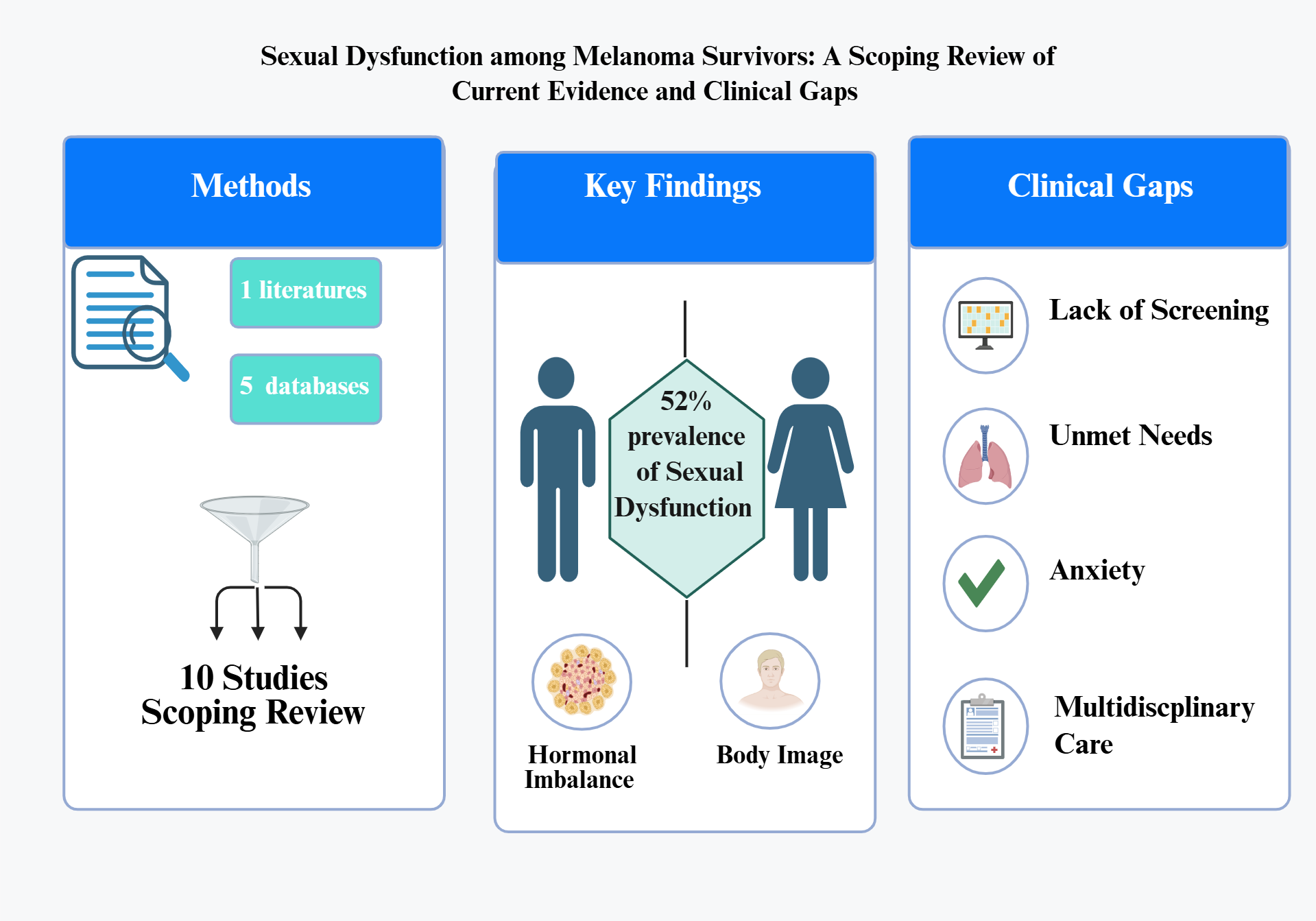
Sexual health is a fundamental component of quality of life that is frequently compromised in cancer patients. In melanoma care, these issues remain under addressed despite increasing survivorship. This scoping review aimed to map the current literature on sexual health concerns in melanoma patients. Following PRISMA-ScR guidelines, five databases were searched (2010–2025). Ten studies met the inclusion criteria, including cross-sectional, qualitative, and systematic reviews. Sexual dysfunction affected up to 52% of melanoma patients, with higher prevalence in men (68.9%) than women (41.3%). Contributing factors included visible scarring, hormonal imbalances (e.g., testosterone deficiency in 69% of men receiving immunotherapy), body image concerns, anxiety, and depression. Women were more affected by body image and recurrence anxiety, while men experienced higher rates of treatment-induced hypogonadism. Sexual health concerns are highly prevalent yet systematically overlooked in melanoma care. Gaps remain in longitudinal data, cultural considerations, and evidence-based interventions. Routine screening and integrated psychosocial support are critical to improving patient-centered survivorship care.
Keywords:
1. Introduction
2. Materials and Methods
2.1. Research Question
2.2. Eligibility Criteria (Table 1)
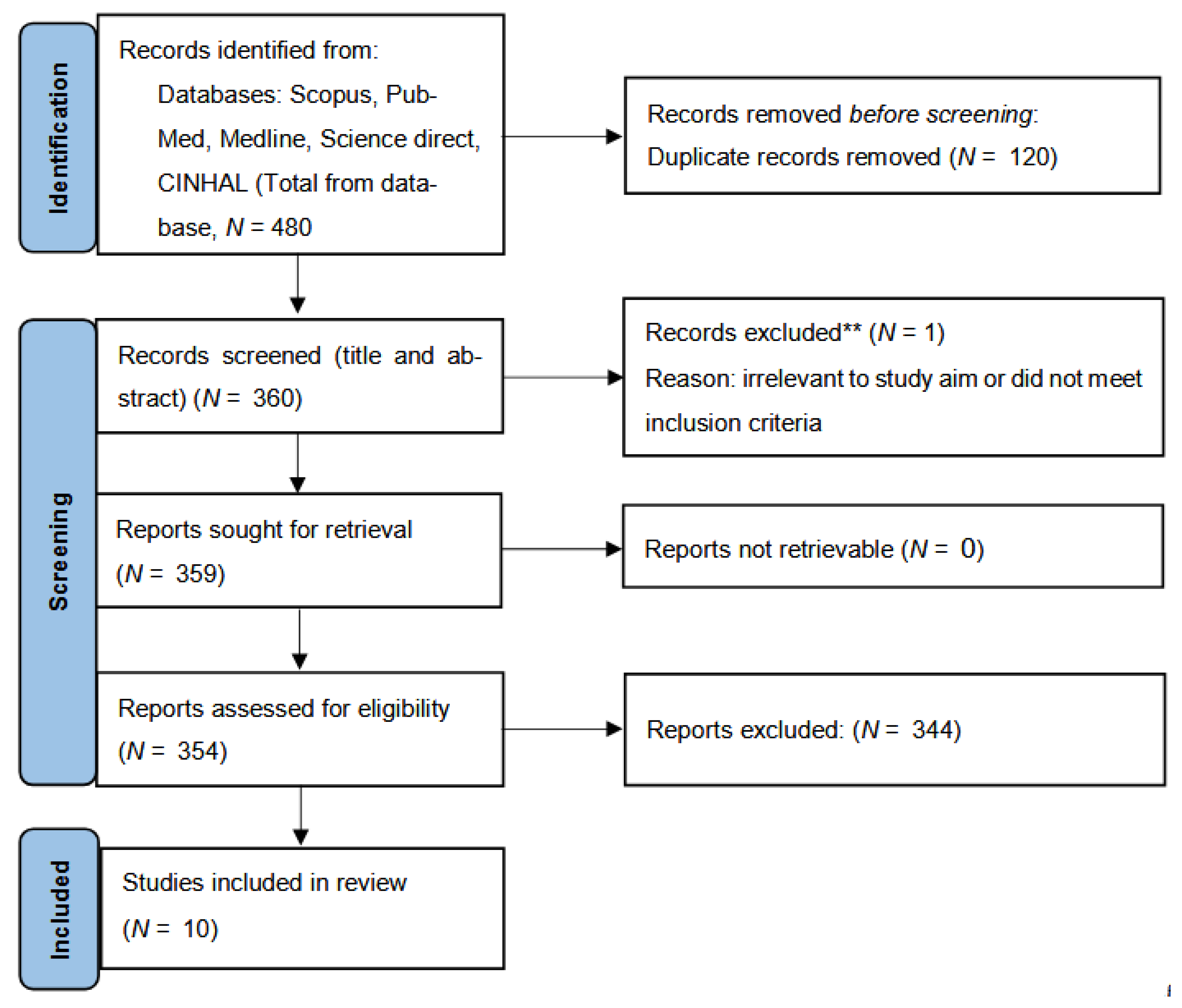
2.3. Search Strategy
2.4. Quality Appraisal (JBI)
2.5. Data Extraction
3. Results
3.1. Study Characteristics and Populations
3.2. Prevalence of Sexual Dysfunction in Melanoma Patients
3.3. Gender-Specific Differences in Sexual Health Outcomes
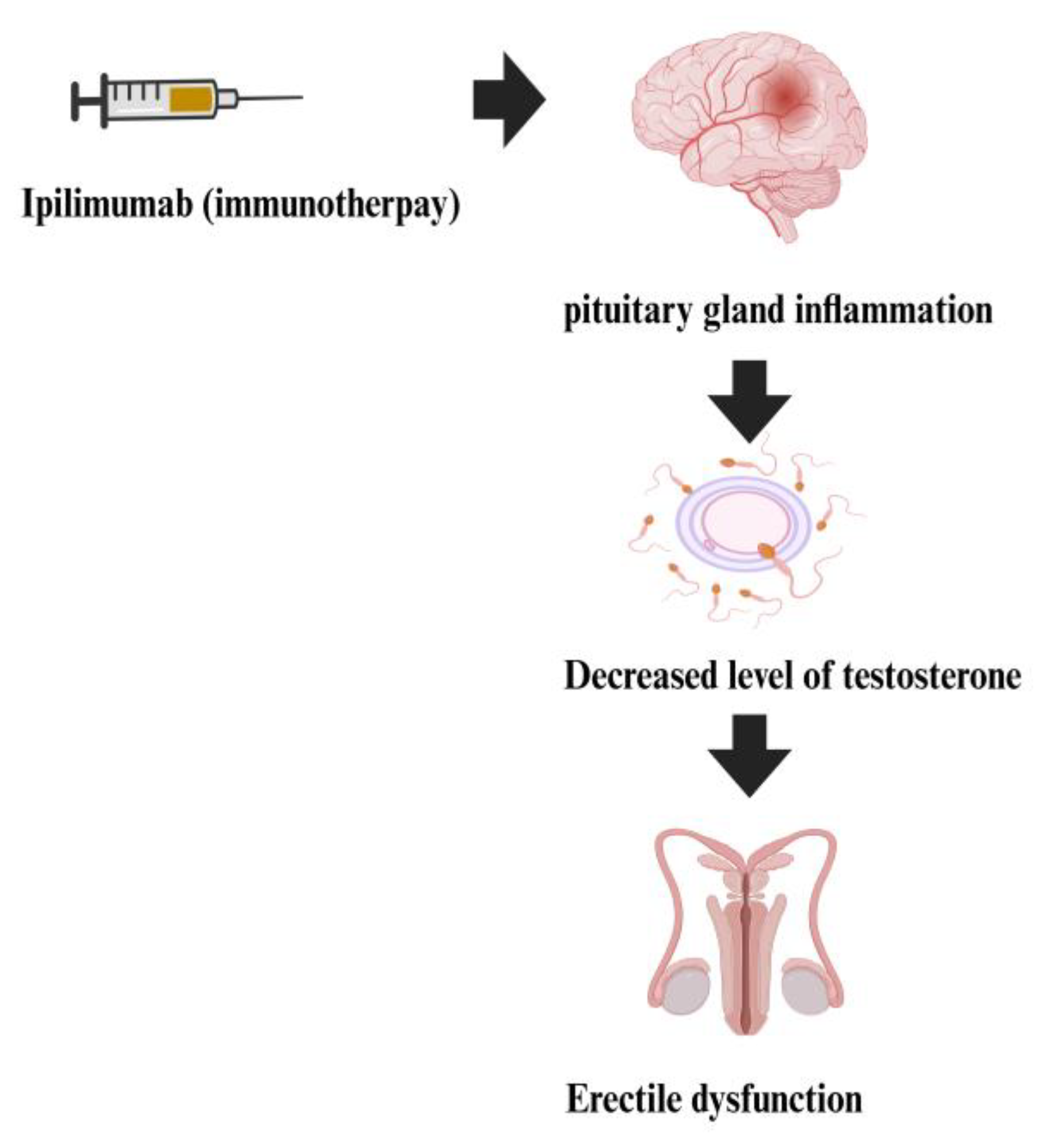
3.4. Hormonal Effects
3.5. Body Image and Psychosocial
3.6. Treatment-Related Issues
4. Discussion
4.1. Research Gaps and Methodological Considerations
4.2. Limitation of Current Evidence
4.3. Directions for Future Research
5. Conclusions
Supplementary Materials
Author Contributions
Funding
Institutional Review Board Statement
Informed Consent Statement
Data Availability Statement
Conflicts of Interest
Abbreviations
| ADOREG – Arbeit gemeinschaft Dermatologist Oncology Registry |
| AEs – adverse events |
| BRAF – Rapidly Accelerated Fibrosarcoma B-type |
| DLQI – Dermatology Life Quality Index |
| EORTC QLQ-C30 – European Organization for Research and Treatment of Cancer Quality of life Questionnaire - Core 30 |
| FSFI – Female Sexual Function Index |
| GAD-7 – general anxiety disorder - 7 items |
| HADS – The Hospital Anxiety and Depression Scale |
| HRQoL – health-related quality of life |
| ICI – immune checkpoint inhibition |
| IIEF – International Index of Erectile Function |
| JBI – Joanna Briggs Institute |
| MeSH terms – Medical Subject Headings terms |
| MEK – Mitogen-Activated Protein Kinase |
| N/A – Not Available |
| NMSC – non-melanoma skin cancers |
| NRS – Numeric Rating Scale |
| PCC – population-concept-context |
| PD-1 – programmed cell death protein 1 |
| PHQ-9 – Patient Health Questionnaire - 9 items |
| PRISMA – Preferred Reporting Items for Systematic Reviews and Meta-Analyses |
| PRISMA-ScR – Preferred Reporting Items for Systematic Reviews and Meta-Analysis extension for scoping review |
| QoL – quality of life |
| SD – sexual dysfunction |
| TT – targeted therapy |
| 1 | Kasparian NA, McLoone JK, Butow PN. Psychological responses and coping strategies among patients with malignant melanoma: a systematic review of the literature. Archives of dermatology, 2009. 145(12): p. 1415-1427. |
| 2 | Saw RPM, Bartula I, Winstanley JB, Morton, RL, Dieng M, Lai-Kwon J, Thompson J, Mostafa N, et al. Melanoma and quality of life, in Handbook of Quality of Life in Cancer. 2022, Springer. p. 439-466. |
| 3 | Camejo N, Montenegro C, Amarillo D, Castillo C, Krygier G. Addressing sexual health in oncology: perspectives and challenges for better care at a national level. ecancermedicalscience, 2024. 18: p. 1765. |
| 4 | Arksey H, O’Malley L. Scoping studies: towards a methodological framework. Int J Soc Res Methodol. 2005;8(1):19–32. doi:10.1080/1364557032000119616. Available from: https://doi.org/10.1080/1364557032000119616
|
| 5 | Levac D, Colquhoun H, O’Brien KK. Scoping studies: advancing the methodology. Implement Sci. 2010;5:69. doi:10.1186/1748-5908-5-69. Available from: https://implementationscience.biomedcentral.com/articles/10.1186/1748-5908-5-69
|
| 6 | Tricco AC, Lillie E, Zarin W, O'Brien KK, Colquhoun H, Levac D, Moher D, Peters MDJ, Horsley T, Weeks L, et al. PRISMA extension for scoping reviews (PRISMA-ScR): checklist and explanation. Ann Intern Med. 2018;169(7):467–73. doi:10.7326/M18-0850. Available from: https://www.acpjournals.org/doi/10.7326/M18-0850
|
| 7 | Bulechek GM, Butcher HK, Dochterman JM, Wagner CM. Nursing Interventions Classification (NIC). 7th ed. St. Louis: Elsevier; 2022. |
| 8 | EBSCO Information Services. CINAHL Database. Ipswich, MA: EBSCO; 2025. Available from: https://www.ebsco.com/products/research-databases/cinahl-database. (Accessed on 11 Oct 2025) |
| 9 | Alqaisi O, Subih M, Joseph K, Yu E, Tai P. Oncology nurses' attitudes, knowledge, and practices in providing sexuality care to cancer patients: a scoping review. Curr Oncol 2025;32(6):337-46. |
| 10 | Alqaisi O, Al-Ghabeesh S, Tai P, Wong K, Joseph K, Yu E. A narrative review of nursing roles in addressing sexual dysfunction in oncology patients. Curr Oncol. 2025;32(8):457-75. |
References
- Roky, A.H.; et al. Overview of skin cancer types and prevalence rates across continents. Cancer pathogenesis and therapy 2025, 3, 89–100. [Google Scholar] [CrossRef] [PubMed]
- Zhang, M.; et al. Advances in cancer immunotherapy: historical perspectives, current developments, and future directions. Molecular Cancer 2025, 24, 136. [Google Scholar] [CrossRef] [PubMed]
- Marquez-Rodas, I.; et al. Immune checkpoint inhibitors: therapeutic advances in melanoma. Annals of translational medicine 2015, 3, 267. [Google Scholar] [PubMed]
- Schadendorf, D.; et al. Melanoma. Nature reviews Disease primers 2015, 1, 1–20. [Google Scholar] [CrossRef] [PubMed]
- Muñoz-Barba, D.; et al. Sexual Dysfunction in Melanoma Survivors: A Cross-Sectional Study on Prevalence and Associated Factors. Journal of Clinical Medicine 2025, 14, 4891. [Google Scholar] [CrossRef] [PubMed]
- Kasparian, N.A.; McLoone, J.K.; Butow, P.N. Psychological responses and coping strategies among patients with malignant melanoma: a systematic review of the literature. Archives of dermatology 2009, 145, 1415–1427. [Google Scholar] [CrossRef] [PubMed]
- Saw, R.P.; et al. Melanoma and quality of life. In Handbook of Quality of Life in Cancer; Springer: Berlin/Heidelberg, Germany, 2022; pp. 439–466. [Google Scholar]
- Camejo, N.; et al. Addressing sexual health in oncology: perspectives and challenges for better care at a national level. ecancermedicalscience 2024, 18, 1765. [Google Scholar] [CrossRef] [PubMed]
- Sanft, T.; et al. NCCN Guidelines® Insights: Survivorship, Version 2.2025: Featured Updates to the NCCN Guidelines®. Journal of the National Comprehensive Cancer Network 2025, 23, 208–217. [Google Scholar] [CrossRef] [PubMed]
- Haboubi, N.; Lincoln, N. Views of health professionals on discussing sexual issues with patients. Disability and rehabilitation 2003, 25, 291–296. [Google Scholar] [CrossRef] [PubMed]
- Katz, A., L.S. Agrawal, and B. Sirohi. Sexuality After Cancer as an Unmet Need: Addressing Disparities, Achieving Equality. in American Society of Clinical Oncology Educational book. American Society of Clinical Oncology. Annual Meeting. 2022.
- Krouwel, E.; et al. Discussing sexual health in the medical oncologist’s practice: exploring current practice and challenges. Journal of Cancer Education 2020, 35, 1072–1088. [Google Scholar] [CrossRef] [PubMed]
- Amarsi, A.; et al. Bridging gaps throughout a patient’s journey with melanoma: A systematic review. medRxiv 2025, 2025.05. 13.25327522. [Google Scholar] [CrossRef] [PubMed]
- Queirolo, P.; et al. Sex and gender influence on adverse events for melanoma patients: A comprehensive review and meta-analysis. 2025, American Society of Clinical Oncology.
- Leven, A.-S.; et al. Sex-specific survival in advanced metastatic melanoma–a DeCOG study on 2032 patients of the multicenter prospective skin cancer registry ADOREG. European Journal of Cancer 2025, 115668. [Google Scholar] [CrossRef] [PubMed]
- Carli, B.; et al. The Impact of Advanced Melanoma on the Relational Sphere, Body and Quality of Life: A Phenomenological-Hermeneutic Study. 2024. [Google Scholar]
- Heyne, S.; et al. Physical and psychosocial factors associated with sexual satisfaction in long-term cancer survivors 5 and 10 years after diagnosis. Scientific reports 2023, 13. [Google Scholar] [CrossRef] [PubMed]
- Cosci, I.; et al. Cutaneous melanoma and hormones: focus on sex differences and the testis. International Journal of Molecular Sciences 2022, 24, 599. [Google Scholar] [CrossRef] [PubMed]
- Vogel, R.I.; et al. Cross-sectional study of sex differences in psychosocial quality of life of long-term melanoma survivors. Supportive Care in Cancer 2021, 29, 5663–5671. [Google Scholar] [CrossRef] [PubMed]
- Peters, M., et al., Testosterone deficiency in men receiving immunotherapy for malignant melanoma. Oncotarget. 2021, 12, 199–208. A novel study assessing the association between immunotherapy and testosterone deficiency.) Article PubMed PubMed Central.
- Sampogna, F.; et al. Comparison of quality of life between melanoma and non-melanoma skin cancer patients. European Journal of Dermatology 2019, 29, 185–191. [Google Scholar] [CrossRef] [PubMed]
- Pereira, M.G.; et al. Quality of life in patients with skin tumors: the mediator role of body image and social support. Psycho-oncology 2017, 26, 815–821. [Google Scholar] [CrossRef] [PubMed]
- Fobair, P.; et al. Body image and sexual problems in young women with breast cancer. Psycho-Oncology: Journal of the Psychological, Social and Behavioral Dimensions of Cancer 2006, 15, 579–594. [Google Scholar] [CrossRef] [PubMed]
- Bowie, J.; et al. Body image, self-esteem, and sense of masculinity in patients with prostate cancer: a qualitative meta-synthesis. Journal of Cancer Survivorship 2022, 16, 95–110. [Google Scholar] [CrossRef] [PubMed]

| Inclusion criteria |
Exclusion criteria |
|---|---|
| Population: adult patients (≥ 18 years) diagnosis with cutaneous melanoma at any stage, including survivors in remission. |
1. Focused solely on other skin cancers without specific melanoma data 2. Addressed general quality of life without specific mention of sexual health components. 3. Non-human studies 4. Editorials, letters to editors, or opinion pieces without original data 5. Duplicate publications of the same datasets. |
| Concept: studies addressing sexual health, sexual function, sexual dysfunction, body image related to sexuality. | |
| Context: healthcare settings, survivorship programs, or community-based studies | |
| Study design: all study designs including quantitative, qualitative, and mixed-methods studies; systematic reviews. | |
| Language: studies published in English | |
| Time frame: studies published from September 2010 to September 2025 |
| Author | Purpose | Country | Sample size | Design | Main findings |
|---|---|---|---|---|---|
| Muñoz-Barba (2025) [5] |
To assess the prevalence of sexual dysfunction (SD) among melanoma patients and identify associated clinical and psychological factors using validated assessment tools |
Spain |
75 melanoma patients | Cross-sectional study | SD in 52% (69% men, 41% women); linked to depression, anxiety, scars, and QoL |
| Queirolo (2025) [14] | To systematically review and meta-analyze the effect of sex and gender on adverse events (AEs) in melanoma patients | Italy | Data from 70 independent studies | Systematic review and meta-analysis | Women at higher risk of thyroid and dermatologic AEs; need close monitoring. |
| Leven (2025) [15] |
To examine sex-specific survival in advanced metastatic melanoma and to evaluate the impact of sex on clinical outcomes following first-line treatments with PD-1–based immune checkpoint inhibition (ICI) or BRAF/MEK-directed targeted therapy (TT) |
Germany | 2032 patients (1274 males, 758 females) | Prospective multicenter study using the ADOREG registry | No major sex differences in survival; slight male advantage with PD-1. |
| Carli (2024) [16] |
To explore the psychosocial impact of advanced melanoma, focusing on the relationship with the body, the relational/social sphere, coping strategies, and overall quality of life. |
Italy | 22 advanced melanoma (III-IV) . | Qualitative (narrative) | Body image disruption, social isolation, resilience, need for psychosocial support |
| Heyne (2023) [17] |
To assess sexual satisfaction in long-term cancer survivors (5- and 10-years post-diagnosis) and examine the physical and psychosocial factors influencing it. |
Germany |
924 cancer survivors | Survey (longitudinal) | ~50% reduced sexual satisfaction; fatigue, pain, and depression strongest predictors |
| Cosci (2023) [18] | To explore sex-specific differences in cutaneous melanoma, with a focus on hormonal influences and male reproductive health | Italy | N/A (Review) |
Narrative review | Men at higher incidence and mortality; ICIs may impair fertility; sperm banking advised. |
| Vogel (2021) [19] |
To describe sex differences in cancer-specific psychosocial quality of life among long-term melanoma survivors |
USA | 724 long term survivors | Cross- sectional |
Women reported more appearance concerns & fear of recurrences. |
| Peters (2021)[20] | To assess the prevalence of testosterone deficiency in men undergoing immunotherapy for malignant melanoma and to evaluate the management of this condition. |
USA | 49 males on immunotherapy | Retrospective cohort | 69% had low testosterone; often untreated; risk increased with ipilimumab, obesity. |
| Sampogna (2019) [21] | To compare quality QoL between patients with melanoma and NMSC | Italy | 65 melanomas 368 NMSC patients |
Cross- sectional | Melanoma →higher emotional distress; NMSC →more physical burden |
| Graça Pereira (2017) [22] |
To analyze the impact of body image and social support on psychological morbidities. | Portugal | 106 patients with skin cancer | Cross- sectional |
Body image & social support mediated QoL, stress, & psychological morbidity. |
| Study | Measure | Sample (n) | Overall SD (%) | Male SD (%) | Female SD (%) |
| Munoz-Barba (2023) [5] | FSFI/IIEF criteria | 75 | 52.0% | 68.9% | 41.3% |
| Hyene (2023) [17] | Self-rated satisfaction loss | 924 survivors | ~50% (reduced satisfaction) |
____ |
____ |
| Vogel (2021) [19] |
Melanoma specific QoL survey | 724 survivors | N/A (gender comparison |
____ |
____ |
Disclaimer/Publisher’s Note: The statements, opinions and data contained in all publications are solely those of the individual author(s) and contributor(s) and not of MDPI and/or the editor(s). MDPI and/or the editor(s) disclaim responsibility for any injury to people or property resulting from any ideas, methods, instructions or products referred to in the content. |
© 2025 by the authors. Licensee MDPI, Basel, Switzerland. This article is an open access article distributed under the terms and conditions of the Creative Commons Attribution (CC BY) license (http://creativecommons.org/licenses/by/4.0/).