1. Introduction
Industry 4.0 (I4.0) represents a technological transformation that is constantly evolving within the global industrial sector. This change is driven by the convergence of innovations such as the Internet of Things (IoT), Artificial Intelligence (AI), Big Data (BD), robotics, and cloud computing. In this context, the integration of digital technologies with sustainable practices provides organizations with the opportunity to optimize their operational efficiency, reduce their environmental impact, and move towards a more responsible development model [
1,
2].
Organizations are increasingly adopting sustainable management approaches as an alternative to traditional methods, with the purpose of improving their environmental, social, and economic performance [
3,
4,
5].
Industry 4.0 has a high potential to promote the creation of sustainable value in the industrial field, promoting greater efficiency in the use of resources. On the social level, it also strengthens respect for labor rights, safety at work and constructive interaction with local communities [
6].
Other aspects where Industry 4.0 and sustainability converge include logistics performance, especially in terms of costs and flexibility, as well as the incorporation of sustainable values in business management. In addition, this technological revolution has favored the adoption of more responsible practices, such as supply chain optimization, efficient resource management, and cost reduction [
7,
8,
9].
Sustainable development, driven by the United Nations Sustainable Development Goals (SDG), encompasses a broad set of goals aimed at balancing economic growth, social inclusion, poverty eradication and environmental protection by 2030. In this context, SDG 9 seeks to foster a resilient industry, promote innovation and develop sustainable infrastructure, with an emphasis on energy efficiency and responsible industrialization. In turn, SDG 12 focuses on promoting sustainable consumption and production patterns, which includes proper waste management and efficient use of natural resources. It should be noted that the SDG are interconnected and seek to address global challenges through a comprehensive approach, promoting sustainable practices in all spheres of human activity through cooperation and joint action [
10,
11,
12].
Industry 4.0 technologies promote seamless integration between production lines, business processes, and work teams, overcoming barriers such as geographical distance, time zones, and connectivity limitations.
Smart factories, powered by these innovations, allow for rapid adaptation in the scale of production, resulting in increased revenues for manufacturing plants. However, moving towards a sustainable mindset requires sharing information collaboratively, driving innovation, and adopting practices that are environmentally friendly, economically viable, and focused on human well-being [
13,
14,
15], and examine the evolution of the Internet of Things (IoT) and sustainability within the field of industrial engineering, through a systematic review of the literature. To this end, an exhaustive analysis is developed that offers a solid theoretical framework, complemented by a detailed description of the methodology used for the search and selection of relevant studies. Finally, a bibliometric analysis is carried out to identify the main trends in publications on quality management, highlighting the potential benefits that these transformations offer to organizations.
1.1. Main Contributions of the Study
This study contributes to the literature on Industry 4.0 and corporate sustainability by providing an integrated and holistic perspective on how Internet of Things (IoT) technologies support sustainable organizational transformation. Unlike prior reviews that address technological, environmental, or managerial dimensions separately, this research consolidates four interrelated domains resource efficient operations, energy efficiency and green digital transformation, circular-economy practices, and Green Human Resource Management (GHRM) into a unified analytical framework that explains the role of IoT as a strategic enabler of corporate sustainability. By bridging technological capabilities with organizational and human centered practices, the study advances the theoretical understanding of sustainability oriented digital transformation within Industry 4.0 ecosystems.
From a methodological perspective, the study strengthens existing review-based research by combining a PRISMA 2020 compliant systematic literature review with bibliometric techniques, including keyword co-occurrence analysis and temporal heatmapping. This integrative approach enables both a rigorous synthesis of the evidence and the identification of dominant research clusters and emerging thematic trajectories, offering a structured overview of the evolution of IoT-driven sustainability research over time.
In addition, the study identifies critical gaps in the current body of knowledge, particularly the limited empirical evidence from Latin American contexts, the lack of integrative theoretical models linking IoT with multi-dimensional sustainability outcomes, and the scarcity of longitudinal assessments evaluating the long-term impact of IoT enabled sustainability initiatives. By explicitly articulating these gaps, the research provides a clear agenda for future studies and supports the development of more context-sensitive and theoretically grounded investigations.
Finally, the proposed conceptual model offers practical and policy relevant insights for organizations and decision makers seeking to align Industry 4.0 strategies with sustainability objectives and the Sustainable Development Goals, especially SDGs 7, 9, and 12. In this way, the study contributes not only to academic discourse but also to managerial practice and policy formulation aimed at fostering resilient, resource efficient, and sustainability oriented industrial systems.
2. Literature Review
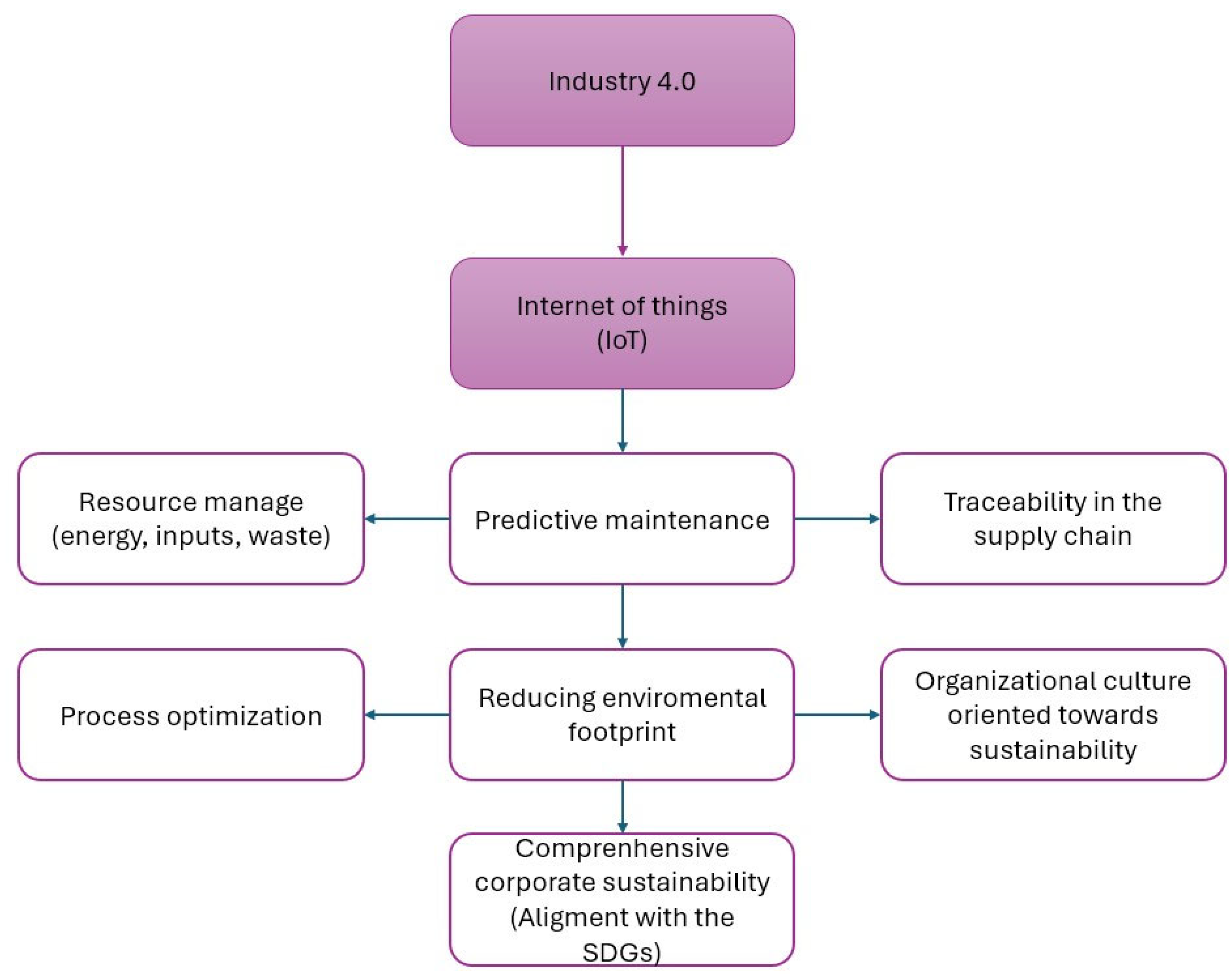
Next, a theoretical outline is presented that condenses the connection between Industry 4.0 enabling technologies, especially the Internet of Things (IoT), and their influence on the sustainability of the organization.
Figure 1 guides the methodical review carried out in this section, highlighting the relationships between technological applications, operational advantages and strategic results in line with sustainable development.
2.1. The Role of IoT in Corporate Sustainability: A Holistic View
Industry 4.0, through the integration of emerging technologies such as artificial intelligence, the Internet of Things (IoT) and data analytics, has not only transformed industrial processes, but also driven responsible practices aimed at long-term economic stability. This new technological revolution allows for more efficient and conscious production, where the preservation of the environment becomes a strategic axis for development. In particular, the social pillar of sustainability becomes relevant by leveraging these innovations to facilitate equitable access to essential services such as education, health, and clean water, while promoting more inclusive, safe, and resilient work environments. Thus, Industry 4.0 contributes to building fairer and more equitable societies, where technological progress not only improves operational efficiency, but also quality of life and social cohesion, consolidating a solid foundation for sustainable and inclusive progress in the long term [
16,
17].
Digital transformation, driven by emerging technologies such as the Internet of Things (IoT), has established itself as a key factor for business sustainability. Studies such as those of [
18,
19] highlight that this evolution requires a constant renewal of business models, which allows greater operational efficiency, cost reduction, and adaptability to changing environments. In this context, the IoT facilitates the automation of processes and intelligent data management, contributing significantly to the optimization of resources, the reduction of the environmental footprint and the improvement of real-time decision-making [
20].
In addition, as highlighted by [
21,
22], these technologies not only enhance customer experience and innovation, but also reduce human error and strengthen organizational resilience. In this context, digitalization is positioned as a key strategy to increase competitiveness and ensure the long-term viability of companies, promoting more efficient, intelligent business models focused on value generation [
23,
24].
Digital technologies, such as the Internet of Things (IoT), play a critical role in adopting more responsible business practices, facilitating the closing of material and energy cycles, and by supporting strategies such as recycling, reuse, and remanufacturing [
25,
26]. In this sense, the IoT allows continuous and real-time monitoring of resources, optimizing their use and minimizing waste.
To fully realize the potential of data-driven technologies in sustainable business model (BMI) innovation, companies can adopt approaches such as smart manufacturing [
27], where IoT enables adaptive and efficient production systems, or implement digital servitization [
28] which transforms products into sustainable services through connectivity and predictive analytics.
The intervention of the IoT has transformed the way companies interact with their customers, market their products and provide services. By collecting real-time data using sensors and connected devices, key processes are optimized, waste is reduced, and operational efficiency is improved. In terms of environmental responsibility, this translates into more efficient management of resources and decision-making based on accurate information. Likewise, the combination of IoT with mobile devices and digital platforms has driven the development of more sustainable omnichannel strategies, enabling companies to offer integrated and personalized customer experiences, while minimizing their ecological impact and optimizing energy consumption throughout the value chain [
29].
The use of the Internet of Things (IoT), coupled with big data, is transforming the way organizations manage their operations, by providing real-time and predictive monitoring capabilities. This allows for more agile and informed decision-making, which translates into greater operational efficiency, reduced waste and a significant improvement in business sustainability indicators [
30]. In the field of supply chain, the IoT acts as a strategic tool that strengthens integration between trading partners, optimizing logistics flows and promoting more sustainable and collaborative practices [
31].
As an essential component of Industry 4.0, IoT must be strategically integrated into logistics operations to maximize its impact on efficiency and sustainable development. Its implementation allows for improvements in operational performance, which has a positive impact on corporate management [
32]. Thanks to the smooth transfer of data and the automation of workflows, supply chain integration (SCI) becomes a key factor in achieving more efficient business operations, reflected in cost reduction, service strengthening, more agile decision-making and effective collaboration both within the organization and with external partners [
33,
34].
The IoT has a direct and significant influence on this integration, by facilitating the automated exchange of information between multiple actors and processes along the entire value chain. A prominent example of this commitment to sustainable development is Saudi Arabia, which is making significant investments in IoT as part of its national transformation strategy, Vision 2030. This approach seeks not only technological modernization, but also the promotion of sustainable economic growth. The IoT industry in Saudi Arabia is expanding, with multiple segments including technology providers, system integrators, telecommunications companies, and service providers, competing and collaborating to generate innovative and responsible solutions [
35].
Digital transformation, enabled by key Industry 4.0 technologies such as the Internet of Things (IoT), artificial intelligence (AI), big data analytics, and predictive maintenance, represents a strategic opportunity to improve efficiency in logistics and transportation systems. These tools enable real-time monitoring, more agile decision-making, and predictive capabilities that optimize routes, reduce fuel consumption, and minimize greenhouse gas emissions, setting up more efficient and environmentally responsible transportation networks [
30]. Through IoT, for example, it is possible to collect constant data on vehicle performance and road conditions, while AI algorithms allow logistics operations to be dynamically adjusted, generating energy savings and substantial operational improvements.
However, despite the demonstrated potential, the adoption of these technologies remains uneven due to obstacles such as poor infrastructure, high upfront costs, and organizational resistance to change. In addition, although the literature broadly highlights the overall benefits of digital transformation, there is still limited empirical exploration on its direct impact on transport sustainability, evidencing an urgent need for focused studies that address this gap and propose effective implementation strategies aligned with the global sustainable development goals.
2.2. IoT and Efficient Resource Management in Organizations
Technological evolution in various economic sectors has made the Internet of Things (IoT) an essential tool for optimizing resource management within organizations. Its ability to automate processes and provide real-time monitoring facilitates a more efficient and accountable operation. A prominent example is found in the agricultural sector, where the integration of smart systems facilitates activities more autonomously and accurately, improving the use of inputs and resources such as water and energy [
36,
37].
However, as in other industries, technological upgrading often increases energy demand, which in many cases remains dependent on fossil sources [
36]. To mitigate this impact, the implementation of IoT-based solutions makes it possible to monitor and regulate energy consumption, promoting rational and efficient use. This type of management is especially relevant in the context of the global commitment to reducing greenhouse gas emissions and combating climate change, which has driven the adoption of renewable energies, despite the technical and economic challenges it entails [
38].
Initiatives such as the European Green Deal underline the need to transform the economy into a more resource-efficient model, with the aim of achieving climate neutrality by 2050 [
39]. In this scenario, IoT-based technologies not only improve energy efficiency, but also facilitate the integration of renewable sources through more precise consumption and storage management, supported by lower costs in PV modules, wind systems, and batteries [
40].
The energy used in organizational operations can be classified as direct, such as that used in lighting, air conditioning, or industrial processes, and indirect, related to the production of inputs or auxiliary services [
36]. The IoT makes it possible to differentiate and manage these consumptions strategically, facilitating data-based decisions that contribute to operational efficiency and environmental responsibility. Thus, the incorporation of this technology not only represents a competitive advantage, but also a fundamental step towards a more sustainable economy.
On the other hand, the development of cloud computing has been decisive in the expansion of IoT in various organizational environments, including logistics, energy management, health, transportation, smart cities, and environmental monitoring. This technological convergence drives the modernization of traditional industries, encourages the emergence of new sectors and generates tangible improvements in the quality of life, while reinforcing strategic aspects such as safety. According to projections such as those of the Blue Book of IoT in China, as early as 2015 it was estimated that the global IoT market would reach 350 billion dollars, which shows its enormous potential for growth in the efficient management of resources within organizations [
41].
The integration of the Internet of Things (IoT) has transformed resource management in various sectors, highlighting its impact on efficiency, reliability, and environmental responsibility. Smart grids, initially designed to optimize energy consumption, have proven to be a model applicable to the management of other organizational assets, such as technological infrastructure, the use of space, and the management of human talent. Emerging technologies, such as metaverse-compatible platforms and ultra-efficient physical components for 5G applications, have expanded the reach of IoT, enabling the creation of integrated systems that improve decision-making and optimize organizational performance [
42].
IoT plays a key role in capturing and analyzing large volumes of operational data in real-time, facilitating strategic decision-making and resource optimization. In combination with artificial intelligence and machine learning, industrial systems acquire adaptive capabilities, solving problems autonomously and contributing to goals such as carbon neutrality, waste recycling or the use of biodegradable materials [
43].
Efficient resource management through IoT not only seeks to maximize performance with minimal environmental impact, but also boosts the autonomy of production systems, through the self-management of advanced machinery and robotic spaces.
However, this technological sophistication requires specialized talent and organizational resilience in the face of change, as the interaction between innovation and business processes remains a challenge [
44].
Success in implementing IoT as a management tool depends on both the technological infrastructure and the ability of organizations to attract, retain and develop qualified talent. One sector that has experienced great benefits from this technology is the construction industry, which, despite its economic relevance, faces challenges related to low productivity and operational efficiency due to the complexity of its processes [
45,
46,
47].
In this context, intelligent resource management becomes essential to ensure the efficient execution of projects. The IoT allows the implementation of devices equipped with sensors and actuators capable of collecting, transmitting and analyzing data in real time, which facilitate precise monitoring of the status, location and use of resources on site. This advanced visibility optimizes material utilization, reduces waste, improves predictive maintenance, and strengthens data-driven decision-making [
48].
The impact of the IoT is enhanced by integrating with Construction 4.0 technologies, such as 3D modeling, augmented and virtual reality, and computer-aided design (CAD), tools that improve precision in the design, monitoring and control of works. These innovations are enabling organizations in the sector to overcome traditional management models, characterized by their rigidity and high costs, promoting a transition to a digitalized, agile and results-oriented environment [
49,
50,
51,
52].
Within organizations, IoT has emerged as a key technology to transform traditional processes through advanced architecture. Various studies have proposed models aimed at optimizing critical resources, especially in environments with energy and bandwidth limitations. Some solutions, such as the OpenIoT project [
53], rely on intensive use of cloud resources to compensate for local restrictions. Others address more specific challenges, such as latency and energy efficiency in smart city applications, through fog-based architecture [
54] or resilient IoT models [
55].
Innovative approaches such as the use of wireless sensor networks (WSNs) to improve IoT efficiency [
56] have also been explored, as well as virtual network function mapping schemes (VNFs) and virtual machines (VMs) in the cloud [
57]. In addition, research such as [
58,
59] has proposed methods of remote resource management based on virtualization technologies, such as QEMU, and the use of mobile agents for more flexible computing.
On the other hand, the LP-Optima (Lean Production-Optima) framework has contributed to improving the performance of low-power integrated systems through data control mechanisms (DCM), which allow anomalies in the flow of information to be detected. Likewise, the implementation of particle swarm-based graph programming algorithms (PSOs) has facilitated a more efficient allocation of resources within organizations [
60,
61]. These proposals reflect a significant move towards intelligent organizational environments, capable of dynamically managing their resources, improving operational efficiency and responding in an agile way to changing environmental conditions.
2.3. IoT and Energy Sustainability in the Green Digital Transformation
Green digital transformation (G-IoT) integrates technologies such as artificial intelligence (AI), the Internet of Things (IoT), and cloud computing with environmental sustainability principles, with the purpose of reducing ecological impact and fostering more responsible economic and social development [
62].
The adoption of IoT as a driver of this transformation depends largely on the design of nodes capable of operating autonomously for years, without the need to replace their energy storage systems (ESS), such as batteries, capacitors or supercapacitors. This challenge is particularly relevant in large-scale applications and in remote locations, such as agricultural fields or pipe networks, where replacing components is costly and environmentally harmful. To address this problem, energy packages have been developed that optimize the energy performance of green IoT nodes, integrating mechanisms that dynamically adjust the modes of operation towards energy-saving regimes when energy levels reach critical thresholds.
Machine-to-machine communication in industrial processes is essential, and green IoT has helped reduce the energy consumption associated with these interactions without compromising system reactivity. Technologies such as Wake-up Radio (WuR) have optimized energy efficiency in machine-to-machine (M2M) communications, combining it with neural networks that predict traffic patterns in MTC-type communication networks [
63,
64].
Green grids in the IoT (G-IoT) play a critical role in reducing polluting emissions, conserving the environment, and decreasing operating costs and energy consumption. In this approach, energy efficiency is established as a central criterion during the design and development of IoT solutions, through the application of optimization techniques at both hardware and software level. These strategies contribute to reducing the impact of greenhouse gas emissions associated with existing applications and services, while minimizing the environmental footprint of the IoT ecosystem itself. The development of G-IoT solutions follows a comprehensive ecological approach, ranging from design and manufacture to use, disposal or recycling, with the aim of minimizing environmental impact. This approach is particularly relevant considering that Information and Communication Technologies (ICTs) currently generate approximately 0.86 metric tons of carbon emissions per year, representing about 2% of global emissions. Nonetheless, these same technologies, including IoT solutions, have the potential to mitigate climate change by optimizing processes and encouraging more responsible practices [
65].
The accelerated growth of the information and communication technology (ICT) industry poses significant environmental challenges. It is estimated that, by 2040, this sector will be responsible for approximately 14% of global greenhouse gas emissions, driven by the energy consumption of data centers, communication networks and mobile devices [
66,
67]. From this scenario, the proliferation of the IoT introduces a new challenge, and that is that, although its carbon footprint has not yet been accurately quantified, the mass production of devices could exceed the energy impact of traditional computer systems.
In addition, inadequate e-waste management exacerbates this problem. IoT nodes, composed of hazardous materials and batteries that are difficult to recycle, increase the volume of technological waste, which in 2016 reached 44.7 million tons, with an alarming growth trend. This scenario highlights the urgent need for sustainable strategies that guide the evolution of IoT towards a truly green digital transformation [
68].
Maintenance plays a crucial role in extending the lifespan of IoT deployments, ensuring the systematic monitoring, repair, and replacement of devices, solar panels, and batteries, the failure of which could compromise the full operability of the system. This maintenance can be corrective, carried out after the detection of faults, or preventive, focused on anticipating and avoiding possible breakdowns. Given the diversity of devices and the variability in the useful life of their components, an opportunistic maintenance strategy is adopted [
69,
70] which makes it possible to take advantage of each intervention to carry out preventive replacements simultaneously, optimizing costs and reducing the frequency of individual interventions.
2.4. IoT and Green Talent Management in the Circular Economy
Green Human Resource Management (GHRM) has established itself as a strategic approach to maximize the positive impact of organizations on environmental recovery, while minimizing their ecological footprint. This model integrates a set of practices designed to encourage responsible behaviors among employees, promoting a more sustainable work environment aligned with the principles of environmental conservation [
71,
72].
Within the framework, the GHRM encompasses key functions such as talent attraction and selection, training and professional development, performance appraisal, and the implementation of compensation and recognition systems [
73]. According to [
74] GHRM's set of practices includes job description and analysis, recruitment and selection, training and development, as well as performance appraisal and reward systems.
In particular, green recruitment and selection, as put to it [
75], focuses on attracting and choosing candidates who are committed to environmental challenges and with an active interest in sustainability. This approach not only strengthens the organizational culture but also contributes to the adoption of more responsible business practices, aligned with sustainable development goals.
The integration of the Internet of Things (IoT) with Green Human Resources Management (GHRM), within the framework of Industry 4.0 and the principles of the Circular Economy (CE), represents an innovative and still underexplored way to strengthen organizational sustainability. As the technological axis of Industry 4.0, the IoT allows the collection and analysis in real time of data on energy consumption, mobility, use of materials and environmental performance of employees, facilitating more responsible decisions in talent management. By combining these capabilities with GHRM practices, such as green training, environmental performance evaluation, and the promotion of a green organizational culture, an enabling environment is created to reduce the environmental footprint and improve efficiency in human capital management. At the same time, the Circular Economy (CE) provides principles such as the regenerative use of resources and the extension of the life cycle of products and processes, which can be reinforced through digital tools and algorithms based on Big Data. However, the current literature offers little empirical evidence on the synergistic integration between these dimensions, which underscores the need for research that articulates their joint impact on the strategic sustainability of organizations [
72].
The GHRM has established itself as a strategic approach to align talent management with the environmental sustainability objectives of organizations. Its fundamental purpose is to enhance the positive impact of organizational and individual activities on the environment, minimizing negative effects. This model is configured as a comprehensive set of practices that encourage ecological behaviors among employees, contributing to the construction of more sustainable and responsible work environments.
Various authors have outlined the main components of the GHRM approach, structuring it around staff attraction and selection, training and development, performance management and evaluation, and compensation and reward systems [
71,
73]. In a complementary way, [
74], the analysis and description of jobs, green recruitment, green training and environmental performance evaluation stand out as key elements. In this line, green selection is aimed at attracting candidates with a strong commitment to sustainability, while environmental training strengthens the ecological skills of staff, increasing their awareness of responsible practices within the work environment [
75,
76].
Performance evaluation with an environmental approach makes it possible to measure the degree of involvement of workers in green initiatives, reinforcing an organizational culture committed to sustainability. Likewise, GHRM policies have the potential to activate pro-environmental behaviors by developing skills, creative capacities, and ecological awareness in employees. In general terms, GHRM allows environmental objectives to be effectively integrated into strategic decisions of human resources, facilitating the execution of sustainable projects, the offer of responsible products and services, and the overcoming of challenges associated with environmental management. Recent studies, such as those by Hong et al., show that GHRM has impacts at both the macro (organizational) and micro (individual) levels, consolidating itself as an essential tool to materialize sustainability within the corporate sphere [
77,
78].
2.5. Identifying gaps in Literature and Research Opportunities
Despite the growing volume of studies addressing the convergence between Industry 4.0, the Internet of Things (IoT) and corporate sustainability, the current literature presents significant gaps that limit a comprehensive understanding of the phenomenon and its effective application in real environments. This review has identified the following key gaps:
There is little presence of empirical studies applied to Latin American contexts, where sociotechnical and regulatory conditions differ from those commonly addressed in research focused on Europe or Asia.
Lack of integrative theoretical frameworks that link IoT tools with sustainable practices in areas such as resource management, energy efficiency, and organizational culture. Most of the studies reviewed analyze these elements in isolation.
Limited evidence on the integration of IoT into human resource management, particularly about measuring environmental performance, green training, and promoting a sustainable work culture.
Lack of longitudinal studies analyzing the lasting impact of IoT on sustainability indicators beyond immediate operational improvements, making it difficult to assess its structural contribution to sustainable development.
Lack of longitudinal studies analyzing the lasting impact of IoT on sustainability indicators beyond immediate operational improvements, making it difficult to assess its structural contribution to sustainable development.
These gaps highlight the need for future studies that address the interplay between sustainability, digital transformation, and organizational management in a holistic and contextualized way. There is also a need to develop conceptual frameworks and practical tools that adapt to different industries and technological intensities and guide organizations towards a truly sustainable, ethical, and resilient digital transformation.
3. Methodology
This section may be divided by subheadings. It should provide a concise and precise description of the experimental results, their interpretation, as well as the experimental conclusions that can be drawn.
The study adopts a systematic review of the literature [
79] with the purpose of identifying and analyzing research that offers a comprehensive vision of Industry 4.0, with emphasis on the Internet of Things as a strategic component in corporate management. Its impact on fundamental aspects such as business sustainability, efficient resource management and organizational transformation is examined, including ecological practices in human talent management.
To this end, a standardized protocol was followed that included the bibliographic search, data extraction, and synthesis of the information, the details of which are presented in the following sections. The research team, made up of five specialists based in Mexico, jointly established the search criteria, as well as the definitions and scope of the study from its inception.
The literature collection focused on empirical studies published in international peer-reviewed scientific journals, encompassing qualitative, quantitative, and mixed-methods articles examining the integration of Industry 4.0 and IoT in corporate governance. The search was carried out using the following four strategies:
String 1: The Role of IoT in Corporate Sustainability: Emerging Technologies 4.0, Digital Transformation, Organizational Sustainability, IoT and Sustainability, Digitalization and Business Sustainability.
String 2: IoT and efficient resource management in organizations: economic benefits in sustainability, technological architecture, sustainable organizational resources, and performance of organizational processes.
String 3: IoT and energy sustainability in green digital transformation: process communication, green grids, expenditure and consumption, disposal and recycling, industrial growth, and industrial maintenance.
String 4: IoT and Green Talent Management in the Circular Economy: Environmental Recovery, Job Analytics, Training and Development, Circular Economy, Decision-Making, Talent Management, Performance Evaluation.
To strengthen methodological clarity and ensure alignment with PRISMA 2020 standards, the search strings were applied across the period 2009–2025, corresponding to the years in which Industry 4.0 and IoT-related sustainability research has shown significant development. Specifically, String 1 was applied to identify studies on IoT and corporate sustainability (2009–2025), String 2 to research on IoT-based resource management (2010–2025), String 3 to publications on green digital transformation and energy sustainability (2012–2025), and String 4 to studies linking IoT with Green Human Resource Management and circular-economy practices (2010–2025). The systematic review was guided by three research questions: RQ1: How does the integration of IoT technologies contribute to corporate sustainability within Industry 4.0 ecosystems? RQ2: What organizational domains, resource efficiency, energy management, digital transformation, and human capital, show the strongest evidence of IoT-driven sustainability outcomes? RQ3: What gaps and research opportunities persist in linking IoT with long-term sustainability strategies across different industrial and regional contexts? These additions enhance transparency in the review protocol and ensure replicability of the search and selection process.
Despite the efforts made, only 62 studies were identified that met the established criteria. To ensure the validity and reliability of the process, advanced algorithms were used in three databases: Ebsco Essential, Scopus, and MDPI. These were applied uniformly, using appropriate truncations and Boolean operators such as AND and OR, with the aim of optimizing the identification of relevant studies. (see
Table 1).
The inclusion criteria are:
Articles related to Industry 4.0 and the Internet of Things in business sustainability, smart resources, digital transformation, and green human resources, and topics focused on technological benefits for a sustainable company.
Articles in English and Spanish
Peer-reviewed journals and articles that include empirical data
Articles published in the period 2009-2025
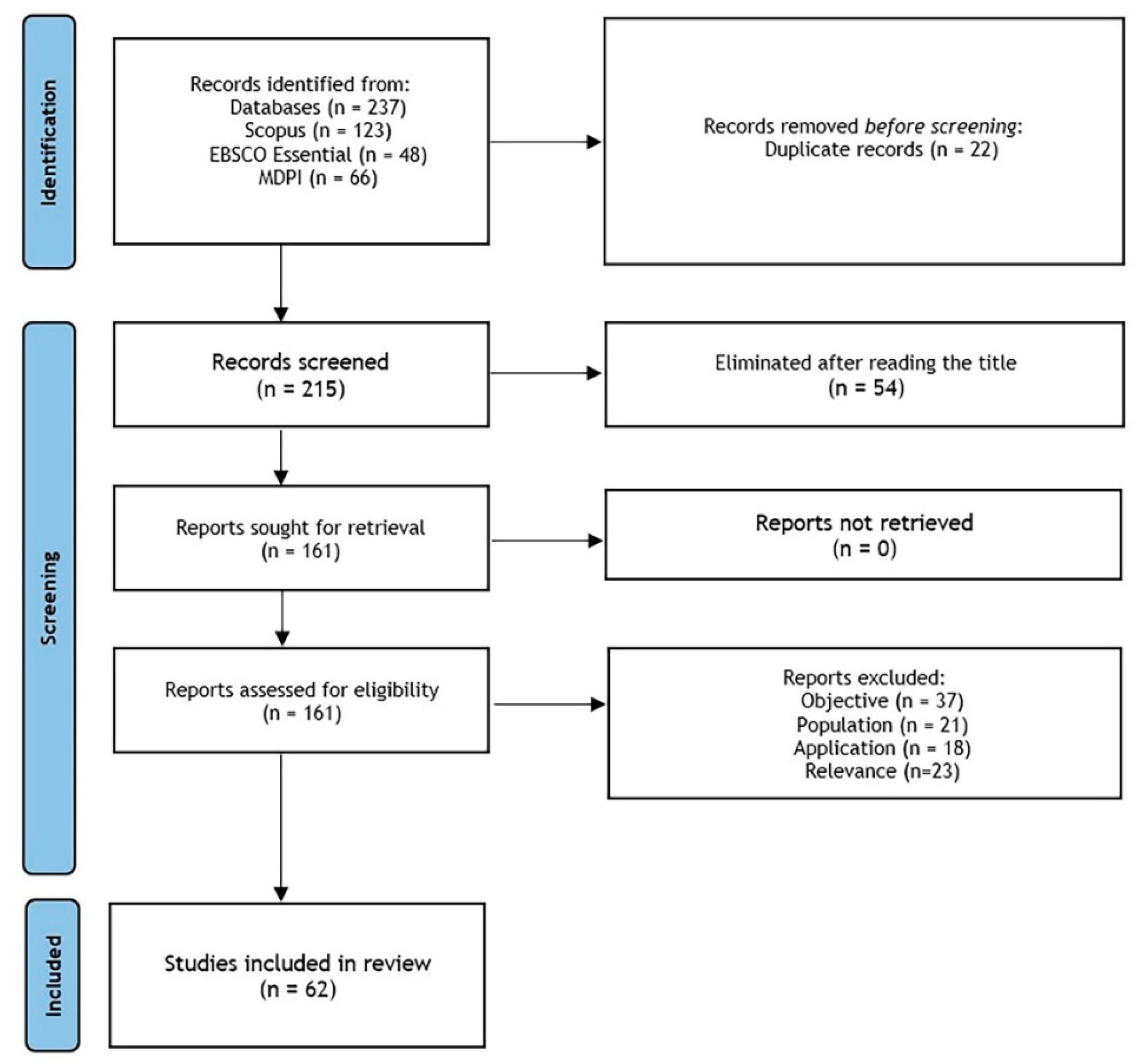
The PRISMA [
80] framework was employed to organize and analyze the information. Initially, 237 documents were identified and reviewed, prioritizing their relevance to the research topic. In the first stage, 22 documents were eliminated due to duplication or significant similarities, reducing the total to 215. Subsequently, a relevance analysis based on the article titles was conducted, which led to the exclusion of 54 documents. These were then subjected to a thorough evaluation by expert researchers in the field, applying specific exclusion criteria.
The exclusion criteria considered included lack of alignment with the research objectives, irrelevance of the target population, absence of significant applications within the field of engineering, and lack of relevant content. As a result of this evaluation, 37 articles were excluded for not meeting the research objectives, 21 for not addressing the target population, 18 for lacking practical applications in engineering, and 23 for not providing substantial information related to the topic.
Finally, 62 documents that met the established criteria were selected for inclusion in the systematic review (
Figure 2).
4. Results
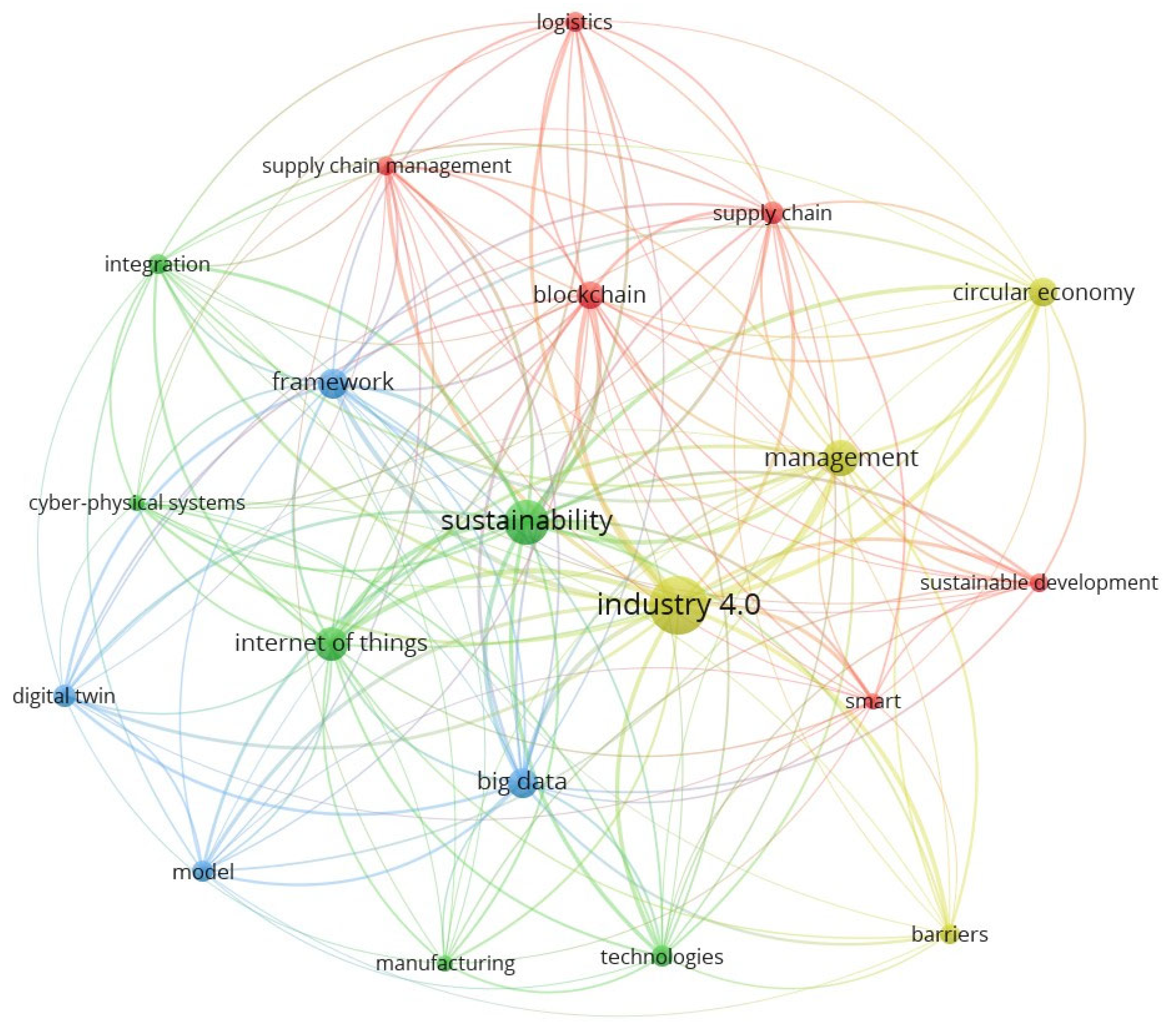
To complement the descriptive assessment of the selected studies, a keyword co-occurrence analysis was performed using VOSviewer. This bibliometric visualization makes it possible to identify dominant thematic clusters, conceptual relationships, and the degree of semantic proximity among research topics associated with Industry 4.0, sustainability, and IoT.
Figure 3 illustrates the main co-occurring terms across the 62 selected articles and highlights the thematic structure of the field.
The map shows that Industry 4.0 and sustainability constitute the central concepts of the research field, forming dense networks that connect with key enabling technologies such as IoT, big data, digital twin, and cyber-physical systems. A second cluster is associated with logistics, supply chain integration, and blockchain, reflecting the operational dimension of sustainability in industrial contexts. Meanwhile, terms such as circular economy, management, and sustainable development indicate the incorporation of broader organizational and environmental perspectives. Overall, the co-occurrence structure confirms that current research emphasizes the interdependence between digital transformation and sustainable corporate performance.
4.1. Identifying Gaps in Literature and Research Opportunities
Table 2 summarizes the most representative characteristics of a selection of 27 articles derived from an initial set of 62 studies identified through a systematic search. This selection was made based on criteria of thematic relevance, methodological representativeness, and significant contributions around the technologies associated with business sustainability, to facilitate a more focused and understandable analysis. In the field of corporate sustainability, contributions related to sustainable development, safe work environments, digital transformation, renewal of business models, recycling and remanufacturing strategies, smart manufacturing, and supply chains as strategic tools stand out. About the intelligent management of resources in organizations, proposals are examined on the Internet of Things applied to the improvement of organizational resources, real-time supervision, optimization of inputs, energy efficiency, use of renewable energies, technologies such as 5G, VNF, Edge computing, and CAD tools. Finally, in the axis of green digital transformation and green management, the role of G-IoT, reduction of energy consumption, technologies such as WuR, M2M, MTC, integration of ICTs, IoT nodes, preventive maintenance, circular economy strategies, Big Data, environmental sustainability, environmental performance and green human management practices (GHRM) aimed at promoting ecological behaviors are addressed.
Table 3 presents a summary of the distribution of the 62 articles according to the expected research outcomes, organized into eight analytical categories. In addition to this thematic classification, the table reports the percentage of impact and the total number of citations associated with each category, providing an initial quantitative perspective on the relevance and visibility of the reviewed studies. To further interpret this citation-based impact beyond categorical aggregation, a closer examination of the most influential individual contributions was conducted.
Citation-based influence also highlights three prominent thematic anchors. Reference [
25] (4349 citations) represents a research stream centered on virtual reality and real-time simulation tools for business-process optimization. Reference [
16] (4302 citations) is strongly aligned with Industry 4.0 and digitalization, emphasizing their potential to advance industrial sustainability. Reference [
73] (3235 citations) reflects the Green Human Resource Management stream, focusing on environmental sustainability, organizational culture, and managerial practices that promote continuous performance improvement
.
This analysis highlights the influence of these authors in their respective fields and their contribution to the development of innovative strategies within Industry 4.0 and sustainable management.
A classification of the technologies that had an impact by year is also presented, classified into 10 groups (see
Table 4).
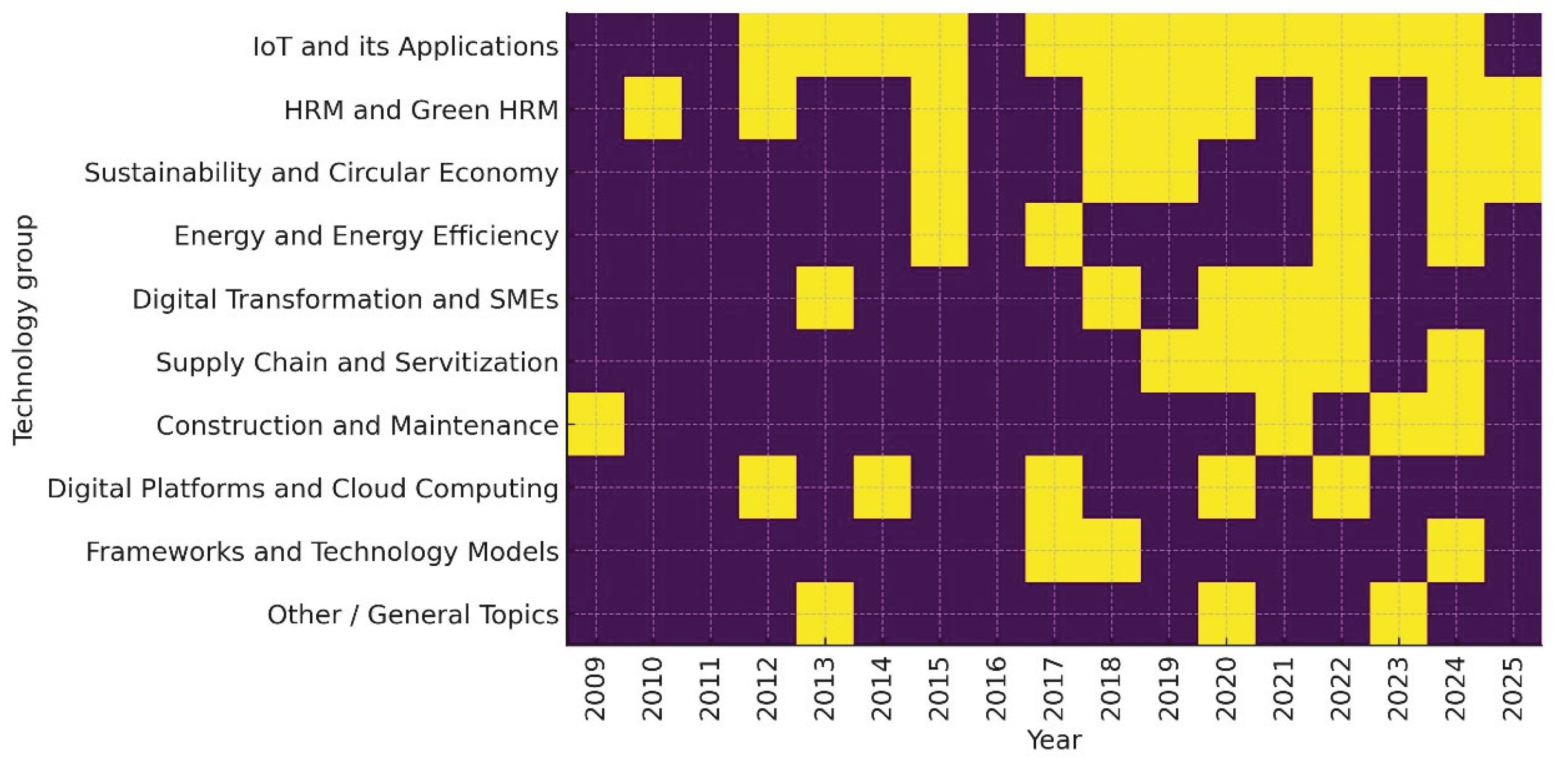
To complement the information presented in
Figure 4, a heatmap was developed to visualize the temporal distribution of the technology groups across the period 2009–2025. This representation facilitates the identification of periods of greater concentration of studies and the emergence of specific technology clusters over time (
Figure 4).
The heatmap shows that IoT and its applications exhibit a continuous research trajectory from 2012 onwards, with a clear intensification after 2017. Human resource management and green HRM appear more intermittently but with renewed interest in recent years (2022–2025). Sustainability and circular economy, together with energy and energy efficiency, gain relevance particularly from 2015 onwards, reflecting the growing concern for environmental and resource-related dimensions. In contrast, topics such as construction and maintenance or digital platforms and cloud computing appear more concentrated in specific years, suggesting more specialized or context-dependent research niches.
According to the results obtained, three key elements are identified that stand out in research on sustainability and the Internet of Things (IoT).
Industry 4.0, IoT, and associated technologies, driving digital transformation and the integration of intelligent systems to improve industrial sustainability (26 documents).
Green management of human resources, focused on environmental sustainability through strategies that strengthen organizational culture and promote responsible practices (16 documents).
Use of virtual machines, essential for process optimization and operational efficiency in digital environments (12 documents).
These factors reflect the convergence between technology and sustainability, evidencing their impact on the evolution of organizational models.
4.2. Virtual Machine and Sustainability
In the contemporary business environment, 4.0 technologies are radically transforming production processes through the integration of digital solutions that increase efficiency, lower costs, and promote sustainability. Among these innovations, the use of virtual machines stands out, which make it possible to simulate manufacturing environments and validate processes before their physical implementation, thus contributing to the reduction of waste of resources and the optimization of energy consumption.
Sustainability in the manufacturing sector goes beyond the mere minimization of environmental impact but also encompasses the improvement of productivity through the digitalization of processes. In this context, modeling tools such as IDEF0 play a fundamental role. IDEF0 is a methodology that allows the functions of a manufacturing system to be represented in a structured way, facilitating the analysis, design, and integration of processes. Combined with the use of virtual machines, this methodology enables the advanced simulation of scheduling and process verification, which favors more informed decision-making and a more efficient and sustainable implementation [
81,
82].
Beyond real-time data analysis, the metaverse emerges as the next evolution of the internet, constituting a space where the digital and physical worlds converge and offering a new layer of technological integration with a high potential to strengthen sustainability in smart cities. The metaverse is defined as a simulated digital environment, closely linked to the physical world, in which people can communicate, interact, and explore through digital avatars and immersive technologies, such as virtual reality (VR) devices, head-mounted displays (HMDs), VR headsets, and smart glasses [
83,
84,
85].
4.3. Industry 4.0 and Sustainability
Industry 4.0 is characterized by the incorporation of advanced technologies, such as artificial intelligence (AI) and the Internet of Things (IoT), which transform industrial processes towards greater efficiency and sustainability. The integration of AI in resource management enables streamlined collaboration between companies, suppliers, and recyclers, facilitating data-driven decision-making and promoting intelligent supply chain management. AI-enabled platforms interconnected using IoT provide real-time insights, improving coordination and enabling more efficient use of available resources.
This approach not only optimizes industrial operations but also drives the transition to circular economy models, where products are designed for disassembly, recycling, or reuse, thus contributing to the fulfillment of business sustainability goals without sacrificing competitiveness. Key benefits of these technologies include reduced costs and increased operational reliability, which justify their adoption in the context of ongoing digital transformation. In a context where consumers place increasing value on environmental commitment, organizations that implement sustainable solutions gain a significant competitive advantage. In this way, sustainability emerges not only as a corporate responsibility but also as a strategic factor of differentiation and business growth [
86,
87,
88].
Industry 4.0 ushers in a new era in production systems, defined by the integration of digital technologies such as IoT, AI, and data analytics into business processes. Unlike the traditional industrial paradigm, which associates growth with the physical expansion of facilities, Industry 4.0 promotes development based on operational efficiency, connectivity, and intelligent automation. The interconnection of machines, sensors, and digital systems allows companies to optimize their production processes, minimize waste, and respond with agility to market demands. These innovations not only strengthen the competitiveness and customization of products but also open new opportunities to move towards more sustainable and environmentally responsible production models [
89,
90,
91]
In this context, the virtualization of resources using virtual machines is a fundamental strategy for the development of sustainable technological infrastructures. Virtualization allows you to optimize the use of physical resources, reduce the need for additional hardware, and reduce energy consumption, thus helping to mitigate the environmental impact of data centers. To maximize these benefits, the implementation of good practices for the management and optimization of virtual resources is essential. As digital demand continues to rise, virtualization is consolidating not only as an operational efficiency tool but also as a key pillar in technology sustainability strategies.
4.4. Green HR Management and Sustainability
Green HRM (GHRM) is a strategic pillar to drive sustainability in the banking sector, as it guides HR policies and practices towards the achievement of environmental objectives [
92]. Among the main actions of the GHRM are the selection of personnel with ecological awareness, training in sustainability issues, and the promotion of an organizational culture committed to the environment.
However, for the GHRM to have a profound and lasting impact on sustainability, it is essential to integrate it with other organizational capacities, such as organizational resilience (OR) and organizational learning (ENT) [
93]. RO refers to the ability of the organization to adapt and thrive in the face of adverse situations; In the field of sustainability, this capacity is crucial to face challenges such as resource scarcity, changes in regulation, and the effects of climate change [
94].
Organizational learning (ORL) is essential to promote continuous improvement in environmental performance. Given the dynamics and volatility of the global environment, organizations, including banks, must be innovative and anticipate changes. ENT facilitates the development of new sustainable strategies and solutions, strengthening both environmental performance and adaptability to future demands [
95,
96,
97].
The integration of GHRM, RO, and ENT not only enhances sustainability in the banking sector but also contributes to the construction of more resilient, innovative organizations committed to sustainable development.
5. Discussion
The results of this systematic review demonstrate that the Internet of Things (IoT) plays a multifaceted role in advancing corporate sustainability within Industry 4.0 environments. Beyond validating the benefits reported across individual studies, the synthesis reveals structural patterns and theoretical gaps that warrant deeper examination.
First, although IoT consistently enhances operational efficiency through real-time monitoring, automation, and predictive analytics, most studies assess these improvements without integrating them into broader sustainability frameworks. Similar observations have been made in conceptual analyses of integrated sustainability [
16], where authors emphasize the need for holistic approaches that explicitly link technological advancements with environmental and organizational performance. The findings of this review confirm that few studies measured sustainability outcomes using comprehensive indicators, and most lacked longitudinal or multi-dimensional assessment.
Second, the review highlights significant disparities in IoT-driven energy optimization and resource management across industries and regions. Research in smart energy management platforms [
54], environmental impact estimation of Green IoT deployments [
7], and communication-energy optimization through advanced algorithms [
56] demonstrates clear technical potential for reducing environmental burdens. However, evidence from developing regions, particularly in Latin America, remains scarce, suggesting the presence of infrastructural and policy constraints that limit large-scale implementation. This uneven progress underscores the importance of understanding contextual factors that shape digital sustainability transitions.
Third, IoT adoption supports circular-economy practices by enabling remote monitoring, lifecycle analytics, and improved resource traceability. Foundational work on the circular economy [
25] emphasizes the need for systemic and technology-supported strategies to close material loops. Although several reviewed studies report improvements in waste reduction and resource optimization, the technological capabilities identified, such as smart platforms, virtual machines, and fast emulation systems [
38,
58], are not yet widely embedded into formal circularity frameworks. This indicates that IoT has strong potential to operationalize circular-economy principles, but its strategic integration remains limited.
Fourth, the intersection of IoT and Green Human Resource Management (GHRM) emerges as an underdeveloped area. While GHRM literature highlights its importance for strengthening environmental performance and promoting pro-environmental behaviors [
55,
73,
75], current empirical studies rarely examine how IoT-generated data can enhance green competencies, environmental awareness, or sustainability-oriented organizational culture. This represents an important opportunity for interdisciplinary research connecting digital transformation, environmental management, and workforce development.
Overall, the findings reinforce that IoT’s contribution to sustainability is not solely technological but deeply organizational and strategic. Its effectiveness depends on governance structures, cross-functional integration, environmental policy alignment, and the development of green capabilities within firms. Future research should therefore move beyond isolated case analyses and explore how digital, managerial, and behavioral factors interact to support long-term sustainability transitions across diverse industrial contexts.
6. Practical Implications for the Manufacturing Industry
The convergence of IoT technologies with sustainability-oriented strategies in Industry 4.0 generates significant opportunities for transforming manufacturing systems. The bibliometric results—supported by the temporal heatmap, keyword co-occurrence networks, and the three dominant thematic clusters identified—reveal several practical implications for industrial organizations.
- -
Operational efficiency and process optimization
IoT-based sensing and monitoring systems enable real-time control of production parameters, early detection of deviations, and continuous quality improvements. These capabilities reduce material waste, minimize process variability, and improve throughput, strengthening both economic and environmental performance.
- -
Energy management and environmental monitoring
Granular tracking of energy consumption across machines and production lines allows manufacturers to identify inefficiencies, implement targeted corrective measures, and adopt energy-saving practices. This contributes directly to reduced emissions, cost savings, and alignment with sustainability goals such as SDG 7 and SDG 12.
- -
Predictive and condition-based maintenance
The integration of IoT with predictive analytics facilitates the early identification of equipment failures, extension of asset lifespan, and reduction of unplanned downtime. This reinforces the reliability of manufacturing systems and supports sustainable resource usage by optimizing maintenance cycles.
- -
Enhanced supply-chain traceability and transparency
IoT-supported logistics systems improve tracking of raw materials, inventory, and finished products, enabling better visibility across the value chain. These capabilities support responsible sourcing, reduce operational uncertainties, strengthen compliance with environmental standards, and improve overall supply-chain sustainability.
- -
Enabling circular-economy and resource-regeneration strategies
Lifecycle data obtained through IoT infrastructures allows organizations to redesign products for reuse, improve recycling processes, and track material flows more accurately. This promotes circular business models and reduces environmental impact through more efficient resource regeneration.
- -
Reinforcing sustainability-oriented organizational culture
By integrating environmental metrics and IoT-generated indicators into managerial dashboards, companies can enhance awareness and accountability at all organizational levels. This contributes to cultural change, supports employee engagement in sustainability initiatives, and strengthens decision-making toward long-term environmental goals.
7. Conclusions
This study provides a comprehensive synthesis of how Internet of Things (IoT) technologies contribute to corporate sustainability within Industry 4.0 ecosystems. Through a systematic literature review of 62 studies published between 2009 and 2025, complemented by bibliometric analysis, four domains of influence were identified: resource-efficient operations, energy optimization and green digital transformation, circular-economy practices, and the integration of IoT with Green Human Resource Management (GHRM). These domains highlight that IoT not only enhances operational and environmental performance but also has the potential to support organizational strategies aligned with sustainable development.
The findings demonstrate that IoT applications directly contribute to several Sustainable Development Goals (SDGs). SDG 7 (Affordable and Clean Energy) is supported through smart energy management systems and energy-efficient IoT architectures [
54,
56]. SDG 9 (Industry, Innovation and Infrastructure) is advanced by IoT-enabled automation, optimization platforms, and remote technological infrastructures [
38,
58]. SDG 12 (Responsible Consumption and Production) benefits from IoT-driven waste reduction, resource traceability, and data-based circular-economy interventions [
25]. Collectively, these contributions illustrate how digital transformation can accelerate sustainability transitions in industrial environments.
Despite these advances, the study identifies several limitations in existing literature. Empirical evidence remains concentrated in technologically advanced regions, with limited representation from Latin America and other developing economies. Most studies assess IoT outcomes through short-term or isolated indicators, with few adopting longitudinal frameworks or integrating environmental, social, and economic dimensions simultaneously. Additionally, the relationship between IoT and GHRM, although conceptually promising, lacks robust empirical validation.
Future research should therefore explore IoT-enabled sustainability from a more systemic perspective, considering governance, policy environments, and organizational culture as mediating factors. Studies are encouraged to develop integrative models that link IoT capabilities with multi-dimensional sustainability metrics, investigate barriers to adoption in emerging economies, and examine the role of green competencies and workforce transformation in digital sustainability.
In summary, this review reinforces that IoT technologies represent a powerful driver of sustainable industrial development when strategically aligned with organizational objectives, human resource practices, and global sustainability agendas.
Author Contributions
For research articles with several authors, a short paragraph specifying their individual contributions must be provided. The following statements should be used “Conceptualization, M.A.D.-M; R.V.R.-S; and Y.A.F.-R; methodology, M.A.D.-M; Y.A.F.-R; and G.C.-Z; software, M.A.D.-M; and R.V.R.-S; validation, Y.A.F-R; M.A.M.-R; and G.C.-Z; formal analysis, M.A.D.-M; investigation, M.A.D.-M; and R.V.R.-S; resources, M.A.D.-M; data curation, M.A.D.-M; writing—original draft preparation, M.A.D.-M.; and R.V.R.-S; writing—review and editing, M.A.D.-M; visualization, M.A.M-R; and G.C.-Z; supervision, Y.A.F.-R; project administration, M.A.D.-M. All authors have read and agreed to the published version of the manuscript.”
Funding
This research received no external funding.
Institutional Review Board Statement
Not applicable
Informed Consent Statement
Not applicable.
Data Availability Statement
This study follows a predefined review protocol registered in the Open Science Framework (OSF). Although the protocol was registered under a different working title, it corresponds directly to the methodological framework applied in this article and was refined during the manuscript development process. The protocol is available at
https://doi.org/10.17605/OSF.IO/GJD8E.
Conflicts of Interest
The authors declare no conflicts of interest.
References
- Melo, L. da S.; Fernandes, R. M.; Nunes, D. R. d. L.; Oliveira, R. M. e S.; Silva, J. M. N.; Avila, L. V.; Martins, V. W. B. Industry 4.0 and Sustainability: Empirical Validation of Constructs of Industry Technology and Sustainable Development. Platforms 2024, 2(4), 150–164. [Google Scholar] [CrossRef]
- Culot, G.; Nassimbeni, G.; Orzes, G.; Sartor, M. Behind the Definition of Industry 4.0: Analysis and Open Questions. Int. J. Prod. Econ. 2020, 226, 107617. [Google Scholar] [CrossRef]
- Kibe, L.W.; Kwanya, T.; Nyagowa, H. Harnessing Fourth Industrial Revolution (4IR) Technologies for Sustainable Development in Africa: A Meta-Analysis. Technol. Sustain. 2023, 2(3), 244–258. [Google Scholar] [CrossRef]
- Pansare, R.; Yadav, G.; Garza-Reyes, J. A.; Nagare, M. R. Assessment of Sustainable Development Goals through Industry 4.0 and Reconfigurable Manufacturing System Practices. J. Manuf. Technol. Manag. 2023, 34(3), 383–413. [Google Scholar] [CrossRef]
- Yavuz, O.; Uner, M. M.; Okumus, F.; Karatepe, O. M. Industry 4.0 technologies, sustainable operations practices and their impacts on sustainable performance. J. Clean. Prod. 2023, 387, 135951. [Google Scholar] [CrossRef]
- Khan, M. H.; Muktar, S. N. A Bibliometric Analysis of Green Human Resource Management Based on Scopus Platform. Cogent Bus. Manag. 2020, 7(1), 1831165. [Google Scholar] [CrossRef]
- Al-Khatib, A. W. The Impact of Industrial Internet of Things on Sustainable Performance: The Indirect Effect of Supply Chain Visibility. Bus. Process Manag. J. 2023, 29(5), 1607–1629. [Google Scholar] [CrossRef]
- Erboz, G.; Yumurtacı Hüseyinoğlu, I.Ö. The Role of Industry 4.0 on Supply Chain Cost and Supply Chain Flexibility. Bus. Process Manag. J. 2023, 29(5), 1330–1351. [Google Scholar] [CrossRef]
- Khodair, A. Key Embrace Factors for Designing Sustainable Supply Chains in Egyptian Industry 4.0. Bus. Process Manag. J. 2024, 30(4), 1111–1130. [Google Scholar] [CrossRef]
- Aravindaraj, K.; Rajan Chinna, P. A Systematic Literature Review of Integration of Industry 4.0 and Warehouse Management to Achieve Sustainable Development Goals (SDGs). Clean. Logist. Supply Chain 2022, 5, 100072. [Google Scholar] [CrossRef]
- Rampasso, I. S.; Martins, V. W. B.; Serafim, M. P.; Cavaliero, C. K. N.; Quelhas, O. L. G.; Leal Filho, W.; Anholon, R. Brazilian Contributions to the Sustainable Development Goal 7 and Policy Implications. Kybernetes 2021, 51(10), 3025–3040. [Google Scholar] [CrossRef]
- Rasheed, M.; Liu, J.; Ali, E. Incorporating Sustainability in Organizational Strategy: A Framework for Enhancing Sustainable Knowledge Management and Green Innovation. Kybernetes 2024, 54(4), 2363–2388. [Google Scholar] [CrossRef]
- Gu, F.; Guo, J.; Hall, P.; Gu, X. An Integrated Architecture for Implementing Extended Producer Responsibility in the Context of Industry 4.0. Int. J. Prod. Res. 2019, 57(5), 1458–1477. [Google Scholar] [CrossRef]
- Ford, S.; Despeisse, M. Additive Manufacturing and Sustainability: An Exploratory Study of the Advantages and Challenges. J. Clean. Prod. 2016, 137, 1573–1587. [Google Scholar] [CrossRef]
- Mishra, P. Mapping the Evolution of Industry 4.0 and Sustainability Research: A Comprehensive Bibliometric Study. Sustain. Oper. Comput. 2024, 5, 227–238. [Google Scholar] [CrossRef]
- Purvis, B.; Mao, Y.; Robinson, D. Three Pillars of Sustainability: In Search of Conceptual Origins. Sustain. Sci. 2019, 14(3), 681–695. [Google Scholar] [CrossRef]
- Saleh, M. A. S.; AlShafeey, M. Examining the Synergies Between Industry 4.0 and Sustainability Dimensions Using Text Mining, Sentiment Analysis, and Association Rules. Sustain. Futures 2025, 9, 100423. [Google Scholar] [CrossRef]
- Kraus, S.; Jones, P.; Kailer, N.; Weinmann, A.; Chaparro-Banegas, N.; Roig-Tierno, N. Digital Transformation: An Overview of the Current State of the Art of Research. SAGE Open 2021, 11(3), 21582440211047576. [Google Scholar] [CrossRef]
- Bouwman, W. A.; Nikou, S.; de Reuver, M. Digitalization, Business Models, and SMEs: How Do Business Model Innovation Practices Improve Performance of Digitalizing SMEs? Telecommun. Policy 2019, 43(9), 101828. [Google Scholar] [CrossRef]
- Niaz, M. Revolutionizing Inventory Planning: Harnessing Digital Supply Data through Digitization to Optimize Storage Efficiency Pre- and Post-Pandemic. BULLET: Jurnal Multidisiplin Ilmu 2022, 1(03). Available online: https://journal.mediapublikasi.id/index.php/bullet/article/view/3534.
- Kamalaldin, A.; Linde, L.; Sjödin, D.; Parida, V. Transforming provider-customer relationships in digital servitization: A relational view on digitalization. Ind. Mark. Manag. 2020, 89, 306–325. [Google Scholar] [CrossRef]
- Matarazzo, M.; Penco, L.; Profumo, G.; Quaglia, R. Digital Transformation and Customer Value Creation in Made in Italy SMEs: A Dynamic Capabilities Perspective. J. Bus. Res. 2021, 123, 642–656. [Google Scholar] [CrossRef]
- Hasan, N. A.; Rahim, M. A.; Ahmad, S. H.; Meliza, M. Digitization of Business for Small And Medium-Sized Enterprises (SMEs). Environment-Behaviour Proceedings Journal 2022, 7, 11–16. [Google Scholar] [CrossRef]
- Bouwman, H.; Nikou, S.; Molina-Castillo, F. J.; de Reuver, M. The Impact of Digitalization on Business Models. Digit. Policy Regul. Gov. 2018, 20(2), 105–124. [Google Scholar] [CrossRef]
- Murray, A.; Skene, K.; Haynes, K. The Circular Economy: An Interdisciplinary Exploration of the Concept and Application in a Global Context. J. Bus. Ethics 2017, 140(3), 369–380. [Google Scholar] [CrossRef]
- Langley, D. J. Digital Product-Service Systems: The Role of Data in the Transition to Servitization Business Models. Sustainability 2022, 14(3), 1303. [Google Scholar] [CrossRef]
- González-Varona, J. M.; Poza, D.; Acebes, F.; Villafáñez, F.; Pajares, J.; López-Paredes, A. New Business Models for Sustainable Spare Parts Logistics: A Case Study. Sustainability 2020, 12(8), 3071. [Google Scholar] [CrossRef]
- Paiola, M.; Schiavone, F.; Grandinetti, R.; Chen, J. Digital Servitization and Sustainability Through Networking: Some Evidences from IoT-based Business Models. J. Bus. Res. 2021, 132, 507–516. [Google Scholar] [CrossRef]
- Park, A. Use of Internet-of-Things for Sustainable Art Businesses: Action Research on Smart Omni-Channel Service. Sustainability 2023, 15(15), 12035. [Google Scholar] [CrossRef]
- Fatorachian, H.; Kazemi, H.; Pawar, K. Digital Transformation for Sustainable Transportation: Leveraging Industry 4.0 Technologies to Optimize Efficiency and Reduce Emissions. Future Transp. 2025, 5(2), 34. [Google Scholar] [CrossRef]
- De Vass, T.; Shee, H.; Miah, S. J. The Effect of “Internet of Things” on Supply Chain Integration and Performance: An Organisational Capability Perspective. Australas. J. Inf. Syst. 2018, 22, 1734. [Google Scholar] [CrossRef]
- Tiwari, S. Supply Chain Integration and Industry 4.0: A Systematic Literature Review. Benchmarking 2021, 28(3), 990–1030. [Google Scholar] [CrossRef]
- Abdallah, A. B.; Rawadiah, O. M.; Al-Byati, W.; Alhyari, S. Supply Chain Integration and Export Performance: The Mediating Role of Supply Chain Performance. Int. J. Prod. Perform. Manag. 2021, 70(7), 1907–1929. [Google Scholar] [CrossRef]
- Mashat, R. M.; Abourokbah, S. H.; Salam, M. A. Impact of Internet of Things Adoption on Organizational Performance: A Mediating Analysis of Supply Chain Integration, Performance, and Competitive Advantage. Sustainability 2024, 16(6), 2250. [Google Scholar] [CrossRef]
- Quasim, M. T.; Khan, M. A.; Algarni, F.; Alharthi, A. Internet of Things: On the Opportunities, Applications and Open Challenges in Saudi Arabia. Proc. Int. Conf. Advances in Emerging Computing Technologies (AECT), 2020; pp. 1–5. [Google Scholar] [CrossRef]
- Rahman, M. M.; Khan, I.; Field, D. L.; Techato, K.; Alameh, K. Powering Agriculture: Present Status, Future Potential, and Challenges of Renewable Energy Applications. Renew. Energy 2022, 188, 731–749. [Google Scholar] [CrossRef]
- Branquinho, R.; Briga-Sá, A.; Ramos, S.; Serôdio, C.; Pinto, T. Sustainable Irrigation Systems in Vineyards: A Literature Review on the Contribution of Renewable Energy Generation and Intelligent Resource Management Models. Electronics 2024, 13(12), 2308. [Google Scholar] [CrossRef]
- Fellmann, T.; Witzke, P.; Weiss, F.; Van Doorslaer, B.; Drabik, D.; Huck, I.; Salputra, G.; Jansson, T.; Leip, A. Major Challenges of Integrating Agriculture into Climate Change Mitigation Policy Frameworks. Mitig. Adapt. Strateg. Glob. Change 2018, 23(3), 451–468. [Google Scholar] [CrossRef] [PubMed]
- European Commission. Strategy and Policy — European Commission. Available online: https://commission.europa.eu/strategy-and-policy_es (accessed on 11 December 2025).
- Energy Watch Group; LUT University. Global Energy System Based on 100 % Renewable Energy: Power, Heat, Transport and Desalination Sectors. April 2019. Available online: https://energywatchgroup.org/wp/en/2019/04/12/new-study-global-energy-system-based-100-renewable-energy.
- Chai, M. Design of Rural Human Resource Management Platform Integrating IoT and Cloud Computing. Comput. Intell. Neurosci. 2022, 2022, 4133048. [Google Scholar] [CrossRef]
- Ahmed, R. A.; Abdelraouf, M.; Elsaid, S. A.; ElAffendi, M.; El-Latif, A. A. A.; Shaalan, A. A.; Ateya, A. A. Internet of Things-Based Robust Green Smart Grid. Computers 2024, 13(7), 169. [Google Scholar] [CrossRef]
- Vaníčková, R. The Influence of the Human Factor on the Success of the Localization Project of the Automated Technological Line for Wood Production. TEM J. 2021, 10(1), 5–12. [Google Scholar] [CrossRef]
- Enderwick, P. Rising Regionalization: Will the Post-COVID-19 World See a Shift from Globalization to Regionalization? SSRN 2020, abstract 3692317. Available online: https://ssrn.com/abstract=3692317 (accessed on 11 December 2025).
- Raja, K. A. K.; Murali, K. Resource Management in Construction Project. Int. J. Sci. Res. Publ. 2020, 10(05), 252–259. [Google Scholar] [CrossRef]
- Althoey, F.; Waqar, A.; Alsulamy, S. H.; Khan, A. M.; Alshehri, A.; Falqi, I. I.; Abuhussain, M.; Abuhussain, M. A. Influence of IoT Implementation on Resource Management in Construction. Heliyon 2024, 10(15), e32193. [Google Scholar] [CrossRef] [PubMed]
- Sadeghi Darvazeh, S.; Mansoori Mooseloo, F.; Aeini, S.; Rezaei Vandchali, H.; Babaee Tirkolaee, E. An Integrated Methodology for Green Human Resource Management in Construction Industry. Environ. Sci. Pollut. Res. Int. 2023, 30(60), 124619–124637. [Google Scholar] [CrossRef]
- Pandey, S.; Chaudhary, M.; Tóth, Z. An Investigation on Real-Time Insights: Enhancing Process Control with IoT-Enabled Sensor Networks. Discover Internet Things 2025, 5(1), 29. [Google Scholar] [CrossRef]
- Amade, B.; Nwakanma, C. I. Identifying Challenges of Internet of Things on Construction Projects Using Fuzzy Approach. J. Eng. Proj. Prod. Manag. 2021, 11(3), 215–227. [Google Scholar] [CrossRef]
- Khurshid, K.; Danish, A.; Salim, M. U.; Bayram, M.; Ozbakkaloglu, T.; Mosaberpanah, M. A. An In-Depth Survey Demystifying the Internet of Things (IoT) in the Construction Industry: Unfolding New Dimensions. Sustainability 2023, 15(2), 1275. [Google Scholar] [CrossRef]
- Katiyar, A.; Kumar, P. A Review of Internet of Things (IoT) in Construction Industry: Building a Better Future. Int. J. Adv. Sci. Comput. Eng. 2021, 3(2), 65–72. [Google Scholar] [CrossRef]
- Maqbool, R.; Saiba, M. R.; Ashfaq, S. Emerging Industry 4.0 and Internet of Things (IoT) Technologies in the Ghanaian Construction Industry: Sustainability, Implementation Challenges, and Benefits. Environ. Sci. Pollut. Res. Int. 2023, 30(13), 37076–37091. [Google Scholar] [CrossRef]
- Kim, J.; Lee, J. W. OpenIoT: An Open Service Framework for the Internet of Things. Proc. 2014 IEEE World Forum on Internet of Things (WF-IoT) 2014, 89–93. [Google Scholar] [CrossRef]
- Alhasnawi, B. N.; Jasim, B. H.; Anvari-Moghaddam, A.; Blaabjerg, F. Energy Management-as-a-Service Over Fog Computing Platform. IEEE Internet Things J. 2016, 3(2), 161–169. [Google Scholar] [CrossRef]
- Abreu, D. P.; Velasquez, K.; Curado, M.; Monteiro, E. A Resilient Internet of Things Architecture for Smart Cities. Ann. Telecommun. 2017, 72, 19–30. [Google Scholar] [CrossRef]
- Rani, S.; Talwar, R.; Malhotra, J.; Ahmed, S. H.; Sarkar, M.; Song, H. A Novel Scheme for an Energy Efficient Internet of Things Based on Wireless Sensor Networks. Sensors 2015, 15(11), 28603–28626. [Google Scholar] [CrossRef]
- Wuhib, F.; Yanggratoke, R.; Stadler, R. Allocating Compute and Network Resources Under Management Objectives in Large-Scale Clouds. J. Netw. Syst. Manage. 2015, 23(1), 111–136. [Google Scholar] [CrossRef]
- Gao, Y.; Zhang, Y.; Zhou, Y.-Z. A Remote Resource Management Method for Transparent Computing. Proc. 2012 Int. Conf. Computer Science and Information Processing (CSIP), 2012; pp. XX–XX. [Google Scholar] [CrossRef]
- Xiong, Y.; Huang, S.; Wu, M.; Zhang, Y.; She, J. A Novel Resource Management Method of Providing Operating System as a Service for Mobile Transparent Computing. Sci. World J. 2014, 2014, 153847. [Google Scholar] [CrossRef] [PubMed]
- Papaioannou, A.; Dimara, A.; Kouzinopoulos, C. S.; Krinidis, S.; Anagnostopoulos, C.-N.; Ioannidis, D.; Tzovaras, D. LP-OPTIMA: A Framework for Prescriptive Maintenance and Optimization of IoT Resources for Low-Power Embedded Systems. Sensors 2024, 24(7), 2125. [Google Scholar] [CrossRef]
- Li, J.; Li, F.; Li, X.; Li, Y. Resource Optimization Scheduling and Allocation for Hierarchical Distributed Cloud Service System in Smart City. Future Gener. Comput. Syst. 2020, 107, 247–256. [Google Scholar] [CrossRef]
- Zahedi, A.; Liyanapathirana, R.; Thiyagarajan, K. Biodegradable and Renewable Antennas for Green IoT Sensors: A Review. IEEE Access 2024, 12, 189749–189775. [Google Scholar] [CrossRef]
- Ruiz-Guirola, D. E.; Rodríguez-López, C. A.; Montejo-Sánchez, S.; Souza, R. D.; López, O. L. A.; Alves, H. Energy-Efficient Wake-Up Signalling for Machine-Type Devices Based on Traffic-Aware Long-Short Term Memory Prediction. IEEE Internet Things J. 2022, 9(21), 21620–21631. [Google Scholar] [CrossRef]
- Rup, C.; Bajic, E. Green and Sustainable Industrial Internet of Things Systems Leveraging Wake-Up Radio to Enable On-Demand IoT Communication. Sustainability 2024, 16(3), 1160. [Google Scholar] [CrossRef]
- Alqahtani, H. Green IoT: How Wireless Sensor Networks Are Paving the Way for Sustainable Internet-of-Things Deployment. Big Data Comput. Vis. 2023, 3(2), 39–44. [Google Scholar] [CrossRef]
- Belkhir, L.; Elmeligi, A. Assessing ICT Global Emissions Footprint: Trends to 2040 & Recommendations. J. Clean. Prod. 2018, 177, 448–463. [Google Scholar] [CrossRef]
- Baldé, C.P.; Forti, V.; Gray, V.; Kuehr, R.; Stegmann, P. The Global E-Waste Monitor 2017: Quantities, Flows and Resources
. United Nations University, International Telecommunication Union, and International Solid Waste Association. 2017. Available online: https://ewastemonitor.info/gem-2017/ (accessed on 11 December 2025).
- Modarress Fathi, B.; Ansari, A.; Ansari, A. Threats of Internet-of-Thing on Environmental Sustainability by E-Waste. Sustainability 2022, 14(16), 10161. [Google Scholar] [CrossRef]
- Nowakowski, T.; Werbińka, S. On Problems of Multicomponent System Maintenance Modelling. Int. J. Autom. Comput. 2009, 6(4), 364–378. [Google Scholar] [CrossRef]
- Baldini, E.; Chessa, S.; Brogi, A. Estimating the Environmental Impact of Green IoT Deployments. Sensors 2023, 23(3), 1537. [Google Scholar] [CrossRef]
- Ahmad, S. Green Human Resource Management: Policies and Practices. Cogent Bus. Manag. 2015, 2(1), 1030817. [Google Scholar] [CrossRef]
- Singh, R.; Joshi, A.; Dissanayake, H.; Iddagoda, A.; Khan, S.; Félix, M. J.; Santos, G. Integrating Industry 4.0, Circular Economy, and Green HRM: A Framework for Sustainable Transformation. Sustainability 2025, 17(7), 3082. [Google Scholar] [CrossRef]
- Renwick, D. W. S.; Redman, T.; Maguire, S. Green Human Resource Management: A Review and Research Agenda. Int. J. Manag. Rev. 2013, 15(1), 1–14. [Google Scholar] [CrossRef]
- Jabbour, C. J. C.; Santos, F. C. A.; Nagano, M. S. Contributions of HRM Throughout the Stages of Environmental Management: Methodological Triangulation Applied to Companies in Brazil. Int. J. Hum. Resour. Manag. 2010, 21(7), 1049–1089. [Google Scholar] [CrossRef]
- Saeed, B. B.; Afsar, B.; Hafeez, S.; Khan, I.; Tahir, M.; Afridi, M. A. Promoting Employee’s Pro-Environmental Behavior Through Green Human Resource Management Practices. Corp. Soc. Responsib. Environ. Manag. 2019, 26(2), 424–438. [Google Scholar] [CrossRef]
- Pinzone, M.; Guerci, M.; Lettieri, E.; Huisingh, D. Effects of “Green” Training on Pro-Environmental Behaviors and Job Satisfaction: Evidence from the Italian Healthcare Sector. J. Clean. Prod. 2019, 226, 221–232. [Google Scholar] [CrossRef]
- Iddagoda, Y.A.; Bulińska-Stangrecka, H.; Abeysinghe, R. Greening of Military Personnel: Conceptual Exploration of Green Work Behaviour in Military Context. Bezpieczeństwo, Obronność, Socjologia 2020, 1–2(13–14), 103–117. Available online: https://repo.pw.edu.pl/info/article/WUT81a2ebf9847e4601919d0d888752eb8f?affil=TCTI&r=publication&lang=pl (accessed on 11 December 2025).
- Nguyen Thi Hoa Hong, T. H.; Hanh, Truong Thi; Anh, Nguyen Quynh; Anh, Dang Ngoc; Ngoc, Tran Minh; Nhi, Nguyen Duong Lan. Green Human Resources Management and Employees’ Green Behavioral Intention: The Role of Individual Green Values and Corporate Social Responsibility. Cogent Bus. Manag. 2024, 11(1), 2386464. [Google Scholar] [CrossRef]
- Grant, M. J.; Booth, A. A Typology of Reviews: An Analysis of 14 Review Types and Associated Methodologies. Health Info Libr. J. 2009, 26(2), 91–108. [Google Scholar] [CrossRef] [PubMed]
- Haddaway, N. R.; Page, M. J.; Pritchard, C. C.; McGuinness, L. A. PRISMA2020: An R Package and Shiny App for Producing PRISMA 2020-Compliant Flow Diagrams, With Interactivity for Optimised Digital Transparency and Open Synthesis. Campbell Syst. Rev. 2022, 18(2), e1230. [Google Scholar] [CrossRef] [PubMed]
- Piccoli, G.; Pigni, F. Information Systems for Managers: With Cases, 4th ed.; Prospect Press: Burlington, VT, USA, 2018. [Google Scholar]
- Živanović, S.; Dimić, Z.; Furtula, M.; Slavković, N.; Đurkovic, M.; Vidaković, J. A Flexible Programming and Verification Methodology for Reconfigurable CNC Woodworking Machine. BioResources 2024, 19(4), 9708–9726. [Google Scholar] [CrossRef]
- Lifelo, Z.; Ding, J.; Ning, H.; Qurat-Ul-Ain; Dhelim, S. Artificial Intelligence-Enabled Metaverse for Sustainable Smart Cities: Technologies, Applications, Challenges, and Future Directions. Electronics 2024, 13(24), 4874. [Google Scholar] [CrossRef]
- Wang, Y.; Su, Z.; Zhang, N.; Xing, R.; Liu, D.; Luan, T. H.; Shen, X. A Survey on Metaverse: Fundamentals, Security, and Privacy. IEEE Commun. Surv. Tutor. 2023, 25(1), 319–352. [Google Scholar] [CrossRef]
- Sarwatt, D. S.; Lin, Y.; Ding, J.; Sun, Y.; Ning, H. Metaverse for Intelligent Transportation Systems (ITS): A Comprehensive Review of Technologies, Applications, Implications, Challenges and Future Directions. IEEE Trans. Intell. Transp. Syst. 2024, 25(7), 6290–6308. [Google Scholar] [CrossRef]
- Voulgaridis, K.; Lagkas, T.; Angelopoulos, C. M.; Nikoletseas, S. E. IoT and Digital Circular Economy: Principles, Applications, and Challenges. Comput. Netw. 2022, 219, 109456. [Google Scholar] [CrossRef]
- Awan, U.; Rafiq, M.; Shahbaz, M.; Sroufe, R.; Khan, M. Industry 4.0 and the Circular Economy: A Systematic Literature Review and Future Research Directions. Bus. Strategy Environ. 2022, 31(1), 189–208. [Google Scholar] [CrossRef]
- Necula, A.-T.; Tanase, A. G.; Maldareanu, A.; Cretu, R.-F.; Banta, V. C. Circular Economy Through Integrating Industry 4.0: Sustainable Transformation Via IoT And AI
. Annals – Economy Series 2025, 1, 184–189. Available online: https://ideas.repec.org/a/cbu/jrnlec/y2025v1p184-189.html (accessed on 11 December 2025).
- Kamble, S. S.; Gunasekaran, A.; Gawankar, S. A. Achieving Sustainable Performance in a Data-Driven Agriculture Supply Chain: A Review for Research and Applications. Int. J. Prod. Econ. 2020, 219, 179–194. [Google Scholar] [CrossRef]
- Dalenogare, L. S.; Benitez, G. B.; Ayala, N. F.; Frank, A. G. The Expected Contribution of Industry 4.0 Technologies for Industrial Performance. Int. J. Prod. Econ. 2018, 204, 383–394. [Google Scholar] [CrossRef]
- Cosma, A. M.; Zangara, G.; Silvestri, L.; Filice, L. Sustainability Impact of Automated Warehouses in an Industry 4.0 Scenario. Procedia Comput. Sci. 2025, 253, 3196–3205. [Google Scholar] [CrossRef]
- Holt, D.; Anthony, S. Exploring “Green” Culture in Nortel and Middlesex University. EcoManage. Audit. 2000, 7(3), 143–155. [Google Scholar] [CrossRef]
- Ouragini, I.; Ben Achour, I.; Lakhal, L. The Effect of Lean, Agile, Resilient and Sustainable (LARS) HRM on Environmental Performance: The Mediating Role of Green Innovation. Int. J. Qual. Reliab. Manag. 2024, 41(10), 2526–2548. [Google Scholar] [CrossRef]
- Song, W.; Yu, H.; Xu, H. Effects of Green Human Resource Management and Managerial Environmental Concern on Green Innovation. Eur. J. Innov. Manag. 2021, 24(3), 951–967. [Google Scholar] [CrossRef]
- Soomro, B. A.; Mangi, S.; Shah, N. Strategic Factors and Significance of Organizational Innovation and Organizational Learning in Organizational Performance. Eur. J. Innov. Manag. 2020, 24(2), 481–506. [Google Scholar] [CrossRef]
- Cegarra-Navarro, J.-G.; Jiménez-Jiménez, D.; García-Pérez, A. An Integrative View of Knowledge Processes and a Learning Culture for Ambidexterity: Toward Improved Organizational Performance in the Banking Sector. IEEE Trans. Eng. Manage. 2021, 68(2), 408–417. [Google Scholar] [CrossRef]
- Kement, Ü.; Zeybek, B.; Eter, E.; Bayram, G. E.; Raza, A. How Does the Green Entrepreneurship Process of Students Undergoing Tourism Education Proceed? Implementation of the Policy Acceptance Model. Int. J. Environ. Workplace Empl. 2023, 7(3), 198–223. [Google Scholar] [CrossRef]
|
Disclaimer/Publisher’s Note: The statements, opinions and data contained in all publications are solely those of the individual author(s) and contributor(s) and not of MDPI and/or the editor(s). MDPI and/or the editor(s) disclaim responsibility for any injury to people or property resulting from any ideas, methods, instructions or products referred to in the content. |