

Submitted:
08 June 2025
Posted:
10 June 2025
You are already at the latest version
Abstract
This paper explores the integration of digital transformation and sustainability, known as the "twin transition," emphasizing how firms and regions simultaneously leverage digital innovation and environmental sustainability to drive comprehensive innovative outcomes. The research identifies five critical findings, which are drawn from the analysis of 43 semi-structured expert interviews conducted across 24 countries. The twin transition is fundamentally driven by interconnected digital enablers, such as Artificial Intelligence (AI) and the Internet of Things (IoT), and growing sustainability imperatives, including regulatory pressures and stakeholder expectations. The successful implementation of these strategies is contingent upon the presence of internal organizational capabilities, particularly the clarity of leadership and the competencies of the workforce. Additionally, the presence of supportive regional innovation ecosystems is essential for the implementation process. The integration of digitalization and sustainability can be achieved through deliberate strategic alignment, leveraging technologies such as digital twins (DT) and blockchain to foster environmental gains and operational efficiencies. The twin transition has been shown to engender substantial innovation outcomes at both the firm and regional levels, thereby enhancing eco-innovation, competitive advantage, resource efficiency, and regional innovation capacities. Notwithstanding these advantages, considerable challenges persist, including internal organizational silos, rebound effects from resource-intensive digital technologies, and regional disparities in innovation capabilities. By underscoring these dynamics, the study offers actionable insights into overcoming barriers and maximizing the synergistic potential of the twin transition. This contributes to theoretical advancement and practical guidance in the integration of digital and sustainable innovation.
Keywords:
Twin transition
; Digital transformation
; Sustainability
; Industry 4.0
; Eco-innovation
1. Introduction
The concurrent pursuit of digital transformation and environmental sustainability—often referred to as the twin transition—has emerged as a focal point in recent innovation research. This concept encapsulates the synergistic integration of digital innovation and green transition processes, with the objective of driving economies towards climate neutrality and long-term sustainability (Aiello et al., 2025). The twin transition, initially emphasized in European strategic agendas, has recently garnered considerable attention in academic discourse as a model for enhancing competitiveness and resilience. The integration of digital and green domains has the potential to yield novel opportunities for enhancing productivity and efficiency. However, the relationship between digitalization and sustainability is not straightforward. Digital technologies have the potential to facilitate cleaner processes, circular economy practices, and eco-innovation. However, these technologies can also be resource- and energy-intensive, potentially counteracting environmental benefits and generating new sustainability challenges. Consequently, digital technologies can be considered a "double-edged sword" in climate transition efforts (Aiello et al., 2025; Gao, 2025).
The intricacies of this relationship have given rise to a vigorous academic discourse surrounding the question of whether digital and green transformations reinforce each other or if they entail inherent trade-offs. This emerging discourse has given rise to a substantial body of research, underscoring instances wherein policy initiatives have outpaced both theoretical development and empirical evidence (Foray et al., 2011; Kovacic et al., 2024). In the nascent stages of research on the environmental impact of information technology (IT), early theoretical contributions have yielded valuable insights into strategies to make IT more environmentally friendly. These strategies include the use of alternative raw materials and the integration of IT for the management of pollution and waste (Faucheux & Nicolaï, 2011). However, the latest digital technologies encompassed under the Industry 4.0 umbrella—such as AI, big data, the IoT, additive manufacturing, and robotics—differ markedly in their general-purpose technological nature and capabilities. This necessitates new conceptual analyses regarding their environmental sustainability implications (Cefis et al., 2023; Martinelli et al., 2021).
The extant body of empirical evidence concerning the development, production, and adoption of advanced digital technologies by firms for the purpose of enhancing environmental impact or introducing green technologies and business practices is limited and fragmented. The extant literature offers a heterogenous set of findings, including both supportive results, e.g., Montresor & Vezzani (2023), and less supportive findings, e.g., Veugelers et al. (2023). A substantial corpus of research underscores the complementary roles that digital technologies can play in driving green innovation. The efficacy of these technologies is contingent upon the existence of pre-existing regional green specializations. However, the research also cautions against the potentially adverse effects of these substances in other contexts (Cicerone et al., 2022). The extensive debate on digitalization's role in the green transition has further emphasized both its positive contributions—such as new business models, skill development, productivity gains, and clean technology solutions (Horner et al., 2016; Nilsson et al., 2018; Shahnazi, 2021)—and negative impacts, including energy intensity, resource scarcity, and waste generation (IEA, 2017; Røpke, 2012). European policymakers have responded by underscoring the digital sector's role as both a solution provider and a pivotal target for reducing carbon footprints (European Commission, 2020, 2021, 2022).
Recent research at the firm and regional levels has begun to elucidate various facets of this twin transition. At the firm level, Montresor and Vezzani (2023) demonstrate that the adoption of advanced digital technologies is positively correlated with eco-innovation in Italian manufacturing firms. In a similar vein, Aiello et al. (2025) demonstrate that particular digital instruments substantially augment circular economy practices among European companies. A body of research, including the study by Bianchini et al. (2023), has identified that regions that are concurrently promoting digital and green innovations experience superior environmental outcomes. However, the diffusion of these innovations remains uneven. Despite the valuable insights presented in the extant literature, the field remains in its nascent stages and is characterized by fragmentation. The literature is primarily quantitative and policy-oriented, with limited qualitative insights into the processes and strategies employed by organizations to link digitalization with sustainability goals. Fundamental questions regarding the drivers, mechanisms, and contextual enablers of successful twin transitions remain to be thoroughly explored (Bianchini et al., 2023; Faggian et al., 2024).
In addressing these gaps, the current study employs a qualitative methodology, conducting 43 in-depth, semi-structured interviews with experts in the fields of digital innovation and sustainability transitions. A conceptual framework guides the analysis, systematically connecting dimensions of digital transformation with aspects of environmental sustainability. This qualitative approach provides nuanced insights into the practical unfolding of the twin transition, revealing enablers, barriers, and dynamic interactions that quantitative analyses may overlook. Consequently, the study contributes to the advancement of theory by empirically substantiating the interplay between digital and green transitions, thereby informing practice by identifying actionable strategies for firms and regional stakeholders. This research contributes to the understanding of the twin transition as a dual innovation paradigm, illuminating the effective harnessing of digital technologies to achieve environmental sustainability and competitive advantage.
The paper's structure is delineated as such. The second section of the text presents a review of the relevant literature on the subject. The subsequent section, Section 3, delineates the methodological framework employed in this study. The principal results are delineated in Section 4. The following section presents the conclusions and policy implications derived from the analysis.
2. Literature Review
2.1. Twin Transition Concept
The twin transition refers to the concurrent advancement of digital transformation and environmental sustainability across sectors. It has become a cornerstone of European policy and scholarly debate, though its precise contours are still evolving (Aloisi, 2025). At its core, the twin transition fosters the integration of advanced digital technologies—such as AI, the IoT, big data, and robotics—with efforts to decarbonize and promote sustainability (Aiello et al., 2025; Colapinto & Masé, 2025). Rather than perceiving digitalization and sustainability as discrete objectives, this approach conceptualizes them as reciprocally reinforcing elements (Fouquet & Hippe, 2022, Muench et al., 2022). The European Commission has identified the twin transition as imperative for achieving climate neutrality and maintaining industrial competitiveness by the year 2050 (European Commission, 2020; Gao, 2025). This approach entails the restructuring of economic systems to incorporate digital innovation, while concurrently promoting decarbonization and circular economy strategies (Muench et al., 2022).
This intersection has led to the emergence of sustainability and Industry 4.0 as the prevailing paradigms in contemporary research (Lopes de Sousa Jabbour et al., 2018; Rosa et al., 2020). The extant literature is predominantly composed of qualitative studies, including reviews and case studies from Agrawal et al., (2022) Centobelli et al. (2020), Chauhan et al. (2022), Dantas et al. (2021), Lei et al. (2023), Patyal et al. (2022), the subject has been thoroughly researched. However, the extant body of quantitative studies remains limited (Lei et al., 2023; Pagoropoulos et al., 2017; Rosa et al., 2020), leaving empirical gaps (Agrawal et al., 2022; Dantas et al., 2021). Firm-level evidence indicates that digitalization plays a substantial role in promoting sustainable outcomes (Ardito, 2023; de Sousa Jabbour et al., 2022; Demirel et al., 2022; Montresor & Vezzani, 2023). Demirel et al. (2022) utilized data from 5,015 firms in 39 countries to ascertain that eco-innovation fosters firm growth exclusively in conjunction with advanced digital strategies. In a similar vein, Montresor and Vezzani (2023) have demonstrated that investments in AI propel eco-innovation within Italian firms. These studies substantiate the twin transition as a viable route for simultaneously enhancing technological and environmental performance.
2.2. Digital Transformation and Industry 4.0 as Drivers of Innovation
Digital transformation, particularly as it pertains to the Industry 4.0 paradigm, has emerged as a pivotal catalyst for innovation within contemporary organizations. Introduced at the 2011 Hanover Fair (Drath & Horch, 2014), Industry 4.0 involves the integration of technologies such as AI, the IoT, cloud computing, big data, robotics, and additive manufacturing into industrial systems to create intelligent and adaptive production environments (Zhou et al., 2016; Trappey et al., 2017). These cyber-physical systems (CPS) facilitate real-time data exchange and automation, enhancing efficiency, innovation, and business agility (Schumacher et al., 2016; Chen et al., 2023; Aiello et al., 2025). Industry 4.0 signifies a comprehensive sociotechnical transformation, integrating digital innovation with organizational and human dimensions (Beier et al., 2020). This transformation aspires to enhance productivity and optimize resource efficiency (Kagermann et al., 2013; Salkin et al., 2018; Ben Youssef, 2020; Ben Youssef & Mejri, 2023).
Empirical studies have confirmed that digitalization reduces information and coordination barriers, thereby enabling eco-innovation and strategic agility, particularly when advanced digital portfolios align with firm objectives (Aiello et al., 2025; Bianchini et al., 2023; Chen et al., 2023). However, the realization of these gains necessitates investment in skills, infrastructure, and collaborative ecosystems (Montresor & Vezzani, 2023). Bianchini et al. (2023) underscore the significance of upskilling in AI, big data, and IoT to capitalize on the comprehensive capabilities of Industry 4.0. These developments are increasingly intersecting with sustainability goals, as firms are now integrating environmental performance into digital key performance indicators (Aiello et al., 2025), contributing to the twin transition where digital transformation supports both economic and ecological outcomes (European Commission, 2020; Colapinto & Masé, 2025).
The advent of Industry 5.0 has further reinforced this trend by integrating human-centric and sustainable values into the realm of digital innovation (Ben Youssef and Mejri, 2023; Colapinto & Masé, 2025). As emphasized by Ben Youssef (2020) and Ben Youssef & Zeqiri (2022), Industry 4.0 should be regarded as a catalyst for decarbonization and climate action. The technologies at its core—the IoT, CPS, big data, and additive manufacturing—have been demonstrated to enhance energy efficiency, enable closed-loop systems, and support real-time environmental monitoring. These tools are designed to integrate sustainability principles into the processes of production and logistics management. However, Ben Youssef (2020) offers a nuanced perspective, underscoring the importance of deliberate governance, inclusive innovation policies, and global cooperation to ensure the equitable dissemination of technology, particularly in developing countries. Consequently, the paradigm of Industry 4.0 must shift from prioritizing industrial continuity to promoting structural transformation in alignment with the objectives of the Paris Agreement and the SDGs (Zeqiri et al. 2025).
2.3. Sustainability Transitions and Sustainable Innovation
The phenomenon of sustainability transitions, defined as systemic shifts toward low-carbon and sustainable industrial systems, has been demonstrated to be increasingly associated with digital innovation. Driven by global imperatives, such as climate change, resource circularity, and the SDGs (UN, 2015), policy frameworks, including the European Green Deal, aim to achieve climate neutrality by 2050 (European Commission, 2020; Montresor & Vezzani, 2023). Consequently, sustainable innovation (eco-innovation) involving new products, processes, and business models has become a strategic priority (Gao & Huang, 2025; Colapinto & Masé, 2025), addressing clean energy, recycling, circular practices, and green design to minimize environmental impacts (Despeisse et al., 2022).
The concept of environmental sustainability, as defined by Keeble (1987) and Morelli (2011), involves the fulfillment of current and future resource needs without inflicting harm upon ecosystems. This principle necessitates the harmonization of manufacturing processes with ecological limits, a concept elaborated upon by Rosen and Kishawy (2012). Regulatory pressures, such as emissions targets and sustainability disclosures, have been identified as significant drivers of this innovation (Bianchini et al., 2023). Market preferences have also been shown to reward green manufacturing practices (Zekhnini et al., 2021). Green manufacturing, synonymous with ES, has been demonstrated to reduce negative production impacts (Haapala et al., 2013). Companies are increasingly integrating sustainability into their research and development processes, establishing dedicated units, and adopting closed-loop supply chains (Montresor & Vezzani, 2023; European Commission, 2022). Empirical studies have demonstrated that prior investments in green initiatives can enhance firms' capacity for advanced eco-innovations (Bianchini et al., 2023). Furthermore, integrating digitalization with lean production has been shown to improve eco-efficiency, operational, and environmental performance ( Liao & Wang, 2021; Touriki et al., 2021). Consequently, sustainability transitions reposition sustainability from a constraint to a strategic opportunity, thereby fostering digital-green convergence, which is central to the twin transition.
2.4. Integrating Digital and Green: Synergies, Tensions, and Enablers
The twin transition—that is, the convergence of digital transformation and sustainability efforts—has emerged as a cornerstone of European industrial strategy and academic discourse. There is increasing recognition of its potential to generate innovation, competitiveness, and environmental progress simultaneously (Aiello et al., 2025; Colapinto & Masé, 2025; European Commission, 2020, 2022). Contrary to the notion of digital and green transformations as either parallel or sequential processes, contemporary perspectives now emphasize their mutual reinforcement. Technological advancements, such as AI, the IoT, and big data, function as enablers of eco-innovation, facilitating energy efficiency, real-time emissions monitoring, and the implementation of circular economy models (Bianchini et al., 2023; Montresor & Vezzani, 2023). Empirical evidence indicates that firms and regions that invest in both domains tend to outperform others in reducing emissions and promoting sustainable innovation (Aiello et al., 2025; Fazio et al., 2025). Conversely, sustainability imperatives influence the trajectory of digital innovation by demanding clean, resource-efficient, and ethically governed applications (Gao, 2025; Findik et al., 2023). However, these efforts have been met with persistent challenges, including the digital sector's expanding energy and material demands, the presence of organizational silos between IT and sustainability units, and the lack of coordinated policy interventions (Bianchini et al., 2023; Gao, 2025).
Rebound effects, such as the increased energy consumption resulting from expanding data infrastructure, pose a particular challenge (Muench et al., 2022; Fazio et al., 2025). Consequently, the integration of these transitions necessitates deliberate governance, encompassing cross-sector coordination, dual-targeted investment, and harmonized regulatory frameworks (Gao, 2025; Aloisi, 2025; Tabares et al., 2025). Key enablers include visionary leadership, integrated roadmaps, and workforce development that bridges digital and environmental skills (Montresor & Vezzani, 2023; Colapinto & Masé, 2025). As emphasized in recent policy initiatives, such as the Toulouse Declaration and the EU Recovery Plan, international cooperation and shared infrastructure—including digital carbon tracking platforms and green data centers—are also critical (European Commission, 2022). The extant literature increasingly conceptualizes the twin transition as a virtuous cycle: digital innovation enhances sustainability outcomes, while sustainability demands accelerate responsible digital development (Muench et al., 2022; Tabares et al., 2025). It is imperative to employ integrated strategies that integrate technology, policy, and organizational change to ensure the optimal utilization of the dual transition's potential benefits. This approach will facilitate the meaningful contribution of digital advancements to climate objectives and the realization of equitable, inclusive development (Ogrean & Herciu, 2021; Jurmu et al., 2023).
3. Methodology
3.1. Research Design and Approach
This research employs a combined qualitative and conceptual approach to investigate the integration mechanisms linking digital transformation and sustainability transitions as shown in Figure 1. Specifically, the study employs a theory-building research design grounded in a carefully developed conceptual framework. This methodological decision is consistent with the necessity to thoroughly examine emerging phenomena where existing theoretical perspectives are fragmented or lacking in detail, particularly with regard to the twin transition—simultaneous digitalization and sustainability transformations (Aiello et al., 2025; Montresor & Vezzani, 2023). Rather than relying on existing theories alone, the study aims to identify, illustrate, and conceptually elaborate upon the critical mechanisms and contextual factors underpinning the synergy between Industry 4.0 technologies (e.g., AI, the IoT, and DT) and environmental sustainability outcomes.
3.2. Sampling and Participant Selection
The study employed purposive sampling to ensure participants possessed relevant expertise and practical experiences directly linked to the conceptual framework guiding this research. Participant selection was guided explicitly by three criteria: (1) in-depth experience with Industry 4.0 technologies and industrial applications of AI; (2) extensive knowledge of managerial challenges related to environmental issues; and (3) clear expertise in understanding the potential sustainability impacts of digital technologies. These criteria ensured that interviewees had both theoretical and applied knowledge, enhancing the rigor and relevance of the qualitative data.
A total of 43 globally recognized experts were selected, evenly split between academic researchers and industry practitioners, including senior consultants and executives actively engaged in relevant digital-sustainability projects. As shown in Figure 2, the participants hailed from a wide array of professional and geographic backgrounds, with representatives from 24 countries, including Croatia, Mexico, France, Tunisia, Malaysia, Saudi Arabia, Switzerland, Brazil, South Korea, Greece, Morocco, Kenya, Germany, India, Sweden, the United States, Hungary, Japan, Serbia, Italy, Argentina, China, Australia, and Spain. This extensive geographic coverage enabled the collection of a wide array of international perspectives, thereby mitigating potential biases arising from localized experiences or singular viewpoints.
Participants were initially recruited during the Smart Factory Summit held in Switzerland in June 2024, after which additional experts were identified through professional networks and snowball sampling techniques. The interview process was conducted until September 2024, yielding approximately 40 hours of recorded material. The 43 subjects included in the study were sufficient to reach theoretical saturation, as further interviews did not yield substantially new insights, confirming comprehensive exploration of the phenomenon (Corbin & Strauss, 2015).
3.3. Data collection Procedure
The primary method of data collection was semi-structured interviews, which were selected to ensure alignment with the study's conceptual framework while maintaining sufficient flexibility to explore relevant insights that emerged organically during discussions. The interview protocol encompassed open-ended inquiries derived from the conceptual framework, encompassing subjects such as the drivers of digital adoption, integration mechanisms between digitalization and sustainability, outcomes, and barriers related to implementing twin-transition strategies. The interviews, which ranged from 40 to 80 minutes in duration, were conducted in person during the initial summit and subsequently via online video conferencing. This sample size ensured theoretical saturation, as no additional interviews yielded significant new insights (Kvale, S., 1994).
At the commencement of each interview, ethical considerations, including confidentiality, anonymity, and informed consent, were explicitly addressed with participants. All interviews were meticulously recorded digitally and transcribed verbatim to ensure comprehensive and accurate representation of the participants' insights. The semi-structured format encouraged open dialogue, allowing participants to elaborate freely on their experiences. This approach yielded rich qualitative data that was closely linked to the study's conceptual framework.
3.4. Data Analysis
The qualitative analysis was guided explicitly by the conceptual framework developed for this study. Adhering to the recommendations of established guidelines (Gopaldas, 2016; Modgil et al., 2025), the analysis placed significant emphasis on the coherent presentation of participant quotations and their integration with emerging theoretical insights. This methodological approach ensured that empirical findings were systematically linked to theoretical constructs, thereby creating a clear narrative that enhanced both the rigor and transparency of the analysis. The analytical process entailed a structured thematic approach comprising three sequential stages: (1) descriptive coding; (2) thematic categorization; and (3) conceptual integration aligned with the predefined conceptual framework dimensions. In the initial phase of the study, descriptive coding was utilized to systematically identify specific practices, experiences, and expert perceptions expressed by participants regarding digital transformation enablers, sustainability drivers, integration mechanisms, innovation outcomes, and implementation barriers. This preliminary coding remained closely linked to the conceptual categories within the guiding framework.
In the subsequent analytical stage, these descriptive codes were methodically organized into coherent thematic categories that reflected the fundamental elements of the conceptual framework. For instance, insights concerning particular digital instruments utilized for the optimization of resources, including AI-driven predictive maintenance and IoT-based energy administration, were grouped under the rubric of "digital as enabler of sustainability." In a similar vein, statements pertaining to leadership roles, internal skill-building, and regional innovation ecosystems were aggregated into themes related to "organizational and regional capabilities." The third analytical stage entailed the conceptual integration of these themes into aggregate dimensions that were explicitly derived from the study's conceptual framework. This methodological approach enabled a straightforward and unambiguous correlation between empirical findings and theoretical constructs. The result was a refined, empirically validated conceptual model illuminating the critical dynamics and mechanisms through which digital and sustainability transitions mutually reinforce each other. These measures—along with reaching data saturation (Kvale, S., 1994)—strengthen the credibility, dependability, and overall validity of the qualitative findings.
The MAXQDA software enabled the efficient management of the data, the maintenance of consistent coding, and transparency throughout this structured thematic analysis, thereby enhancing analytical rigor and reliability. To enhance the reliability of the findings and mitigate potential researcher bias, two researchers independently coded a subset of transcripts. Discrepancies in coding were addressed through collaborative deliberations, leading to enhanced intercoder reliability and analytical precision.
3.5. Validity, Reliability, and Trustworthiness
In order to ensure the validity, reliability, and trustworthiness of the qualitative findings, several methodological safeguards were implemented. The purposeful sampling strategy was implemented to ensure participant relevance and diversity, thereby minimizing biases associated with homogeneous or narrow perspectives. The establishment of clear ethical guidelines and consistent interview protocols served to enhance the reliability and transparency of the data. Additionally, the structured thematic analysis, explicitly grounded in the study's conceptual framework, provided clear theoretical coherence and analytical consistency, reducing risks of subjective bias or interpretive drift. The reliability of the intercoder process was ensured through a multifaceted approach that included independent coding, iterative team discussions, and meticulous reconciliation of discrepancies. Furthermore, member checking was conducted by sharing preliminary results summaries with selected participants, who confirmed the accuracy and representativeness of interpretations. This process enhanced the credibility and dependability of the study's findings.
3.6. Conceptual Framework
The present paper employs a dual methodological approach, integrating both conceptual and qualitative research methodologies. The conceptual approach is consistent with the guidelines for rigorous conceptual research (Jaakkola, 2020) and is appropriate given the emerging nature of Industry 4.0 phenomena (Zeqiri et al., 2025). The conceptual framework, shown in Figure 3, under consideration illustrates the twin transition as an integrated, dynamic process driven by digital enablers (e.g., smart technologies, data platforms) and sustainability drivers (e.g., environmental policies, circular goals). The framework under discussion is predicated on the notion of intermediary capabilities, which are defined as both organizational and regional/institutional. The former category includes visionary leadership, innovation policies, and workforce competencies, while the latter encompasses public-private partnerships and technology access. The integration of these capabilities is said to be facilitated by the intermediary mechanisms. Integration mechanisms, which emphasize synergies such as IoT monitoring, blockchain transparency, AI optimization, renewable energy, eco-design, and ESG alignment, facilitate digital-green interactions, yielding advantageous outcomes at both the firm and regional levels. The framework acknowledges persistent barriers and feedback conditions, such as rebound risks, structural inertia, fragmented governance, and regional disparities, underscoring the need for aligned KPIs and holistic policy responses to sustain successful twin transitions.
4. Results
4.1. Twin Transition Is Primarily Driven by Interlinked Digital Enablers and Sustainability Imperatives
The twin transition—defined as the simultaneous adoption of digital technologies and sustainable practices—is driven fundamentally by intertwined economic and environmental forces. In the contemporary business landscape, Industry 4.0 technologies, particularly AI, the IoT, robotics, cloud computing, and advanced data analytics, have become indispensable for manufacturing firms seeking to maintain competitiveness in the face of global disruptions and intense international competition (Aiello et al., 2025; Montresor & Vezzani, 2023). For instance, manufacturers in economies with high wages frequently leverage automation and digitization to counterbalance the advantages of regions with lower labor costs. As one expert succinctly expressed: "We need to automate, we need to digitize so that we compete better against countries where the labor force is cheaper". This observation highlights how digital adoption directly enhances operational efficiency and productivity, enabling firms to sustain competitive positions within challenging global market contexts (Chen et al., 2023).
Additionally, the COVID-19 pandemic and subsequent global supply-chain disruptions have served as critical accelerators for digital adoption. These external shocks vividly demonstrated the vulnerabilities inherent in traditional manufacturing practices, compelling previously hesitant firms to embrace digital technologies rapidly. Reflecting on these circumstances, an expert noted: "COVID was positive from the perspective of increasing digitalization because it forced companies to adapt rapidly... previously hesitant firms now realized, 'We need to do something'" . This perspective supports recent scholarly observations that external crises frequently act as catalysts, prompting businesses to accelerate their digital transformation initiatives as essential strategies for organizational resilience (Chen et al., 2023).
The mounting significance of sustainability imperatives, including stringent environmental regulations, climate action targets, and elevated stakeholder expectations, exerts a substantial influence on the adoption of digital solutions. In the contemporary business landscape, firms across diverse contexts are progressively acknowledging the pivotal role of digital technologies not only in enhancing economic efficiency but also in addressing regulatory imperatives concerning environmental transparency and sustainability reporting (Bianchini et al., 2023; Gao, 2025). Digital tools, including IoT sensors for emissions monitoring, blockchain for supply-chain traceability, and AI-driven environmental analytics, have emerged as indispensable solutions for complying with complex regulatory frameworks and addressing stakeholder concerns about sustainability performance. An expert from Southeast Asia explicitly highlighted this regulatory pressure, stating: "Sustainability has become critical because new regulations are forcing SMEs in the supply chain of large firms to report their emissions. They are now compelled to implement digital tools for compliance purposes" . This evidence substantiates arguments from Gao (2025) and Ortega-Gras et al. (2021) that stringent regulatory environments and circular economy objectives significantly drive integrated digital and environmental innovation strategies.
The twin transition signifies a foundational reorientation in the domain of industrial innovation. Rather than perceiving digital transformation and sustainability as discrete or disparate agendas, firms are progressively recognizing these transitions as reciprocally reinforcing processes, with each process amplifying the other. Digital technologies have been shown to support operational efficiency and enable robust and transparent sustainability initiatives, thereby enhancing firms' ability to meet complex environmental objectives. Conversely, sustainability goals are increasingly influencing firms' strategic decisions regarding which digital technologies to invest in and how best to deploy them. For instance, investments in DT or AI-driven predictive analytics are no longer evaluated solely on their operational efficiency or cost-saving potential. Instead, these investments are evaluated on their ability to significantly reduce environmental impacts such as energy consumption, emissions, and waste generation. This interconnectedness underscores a more comprehensive approach to innovation, where competitive advantage is increasingly derived from successfully aligning technological advancements with environmental responsibility. This alignment has the potential to reshape not only how firms operate internally but also how they interact externally with customers, regulators, and stakeholders. Consequently, the twin transition is not merely an operational shift but a strategic repositioning that aligns economic success with ecological sustainability. This enables firms to better respond to future uncertainties and build resilience against evolving market demands and regulatory landscapes. This integrated approach signifies a substantial evolution in industrial thinking, indicating the convergence of digital and green pathways as a fundamental element of long-term business sustainability and growth.
4.2. Organizational Capabilities and Regional Conditions Significantly Shape the Success of the Twin Transition
The effectiveness of the twin transition is influenced by a variety of factors, including internal organizational capabilities and external regional conditions. These external factors are critical determinants of a firm's capacity to successfully integrate digital and green innovations. From an organizational perspective, the presence of robust leadership, a firm commitment to the organization's mission, and the articulation of a clear strategic vision are of paramount importance. It has been demonstrated that firms whose leadership establishes a clear connection between digital transformation and sustainability objectives tend to achieve stronger internal alignment and more coherent implementation efforts. For instance, organizations that explicitly frame digital innovation projects within broader environmental goals find it easier to mobilize internal resources and overcome cross-departmental silos. This, in turn, fosters integrated and strategically consistent initiatives (Montresor & Vezzani, 2023; Tabares et al., 2025). As articulated by an industry expert, "The leader must be convinced by digitalization and innovation; otherwise, there is no hope of changing the mindset of the organization". This highlights leadership as not merely symbolic, but instrumental in ensuring organizational coherence and clarity of purpose, essential conditions for navigating the inherent complexity of simultaneously advancing digital and sustainability agendas.
The availability and development of workforce competencies are equally critical, as they directly impact the capacity to leverage twin-transition opportunities effectively. Firms frequently encounter challenges related to skill sets, including a shortage of adequately trained personnel, incongruences between skill sets and available personnel, and discrepancies that impede the implementation of advanced digital technologies and sustainability strategies. Companies with an inadequate foundation of internal digital expertise often encounter challenges in adopting technologies such as the IoT, AI, or advanced data analytics for sustainability purposes (Chen et al., 2023). Furthermore, despite the presence of technical digital competencies, companies frequently encounter challenges in aligning these skills with the competencies essential for achieving environmental and sustainability objectives. This absence of integrated skill sets has the effect of severely limiting the potential synergies that digitalization could bring to sustainability goals, thereby constraining overall innovation outcomes.
The effectiveness of organizational capabilities in realizing the twin transition is further determined by regional contextual conditions. Innovation ecosystems, typified by close collaboration among firms, academic institutions, and governmental entities, have been shown to markedly reduce entry barriers and facilitate innovation diffusion, particularly among SMEs. The implementation of regional clusters and networks that offer shared infrastructures, such as technology demonstration centers or digital innovation hubs, has been shown to significantly mitigate risks associated with digital adoption. In Germany, public-private partnerships provide SMEs with access to technology testbeds and collaborative platforms, enabling them to trial advanced Industry 4.0 technologies without significant upfront investments (Fazio et al., 2025). The implementation of such support mechanisms has been demonstrated to significantly enhance regional innovation capacities, thereby providing firms, particularly smaller enterprises, with the necessary resources and confidence to pursue ambitious integrated strategies.
Public institutions and policy frameworks also considerably shape the speed and scale at which twin transitions occur. Regions benefiting from coherent institutional support frameworks, such as supportive policies, incentives, and collaborative networks, often experience faster and more sustained adoption of digital and green innovations (Gao, 2025). In contrast, regions lacking coordinated support structures typically exhibit fragmented and uneven transitions. As noted by an expert regarding SMEs, "SMEs are hesitant because they fear high costs and uncertainty; public institutions providing partial funding or subsidies significantly reduce these fears and accelerate adoption" . Hence, institutional support not only reduces economic barriers but also addresses psychological and operational uncertainties, crucially fostering an enabling environment for widespread innovation.
Therefore, the twin transition's ultimate success is contingent on a combination of robust internal organizational capabilities and supportive external regional conditions. Firms operating within regions offering comprehensive institutional support, robust innovation ecosystems, and strong public-private collaboration frameworks are better positioned to develop necessary internal competencies and leadership vision, thereby achieving more effective integration of digital and sustainability transformations. Conversely, in environments characterized by fragmented institutional support and insufficient skill development mechanisms, firms tend to pursue isolated or suboptimal initiatives, which limits the overall effectiveness of their twin-transition strategies. The dynamic interplay of internal organizational strengths and favorable regional conditions thus emerges as a critical analytical insight for understanding and facilitating successful twin transitions.
4.3. Effective Integration Mechanisms Between Digitalization and Sustainability Rely on Leveraging Technological Synergies and Aligning Strategic Investments
The successful realization of the twin transition is contingent upon the explicit harnessing of the synergistic potential inherent in the integration of digitalization and sustainability. This integration must be meticulously designed to ensure optimal functionality. Effective integration of digital technologies occurs when these technologies are deliberately deployed to enhance resource efficiency and environmental outcomes. Technologies such as AI, the IoT, and blockchain are increasingly utilized to optimize energy use, reduce waste, enhance environmental monitoring, and streamline sustainability reporting processes (Montresor & Vezzani, 2023; Aiello et al., 2025). Firms that implement these technologies find substantial opportunities to improve their environmental performance while concurrently achieving operational efficiencies. For instance, AI-driven analytics are extensively employed to pinpoint inefficiencies in resource consumption and optimize energy-intensive industrial processes, resulting in substantial emissions reductions and cost savings.
A concrete example that illustrates this synergy is the adoption of DT in manufacturing processes. Digital twins, which are sophisticated virtual replicas of physical production systems, enable companies to conduct detailed simulations and lifecycle analyses digitally, thereby significantly reducing the physical resources consumed in prototype development and process optimization. As one interviewee from a technology firm noted, this integration is a matter of particular importance: "Imagine simulating an entire product lifecycle without a single physical prototype—testing new biomaterials, zero-carbon processes digitally, and then launching only proven, sustainable solutions. That’s what DT enables us to do". Such capabilities not only accelerate innovation cycles but directly enhance firms' environmental sustainability through substantial reductions in materials use, energy consumption, and associated emissions, underscoring the potential of digital technologies to drive significant sustainability outcomes.
Figure 4 provides a clear illustration of the strategic synergies between key Industry 4.0 digital technologies and targeted sustainability outcomes. Each cell in the matrix meticulously delineates practical applications and their associated benefits, emphasizing the manner in which advanced technologies such as AI, IoT, Blockchain, DT, Robotics, and Big Data Analytics substantively support critical sustainability objectives: energy efficiency, waste reduction, emissions reduction, and circular economy practices. For instance, AI-driven predictive optimization has been shown to enhance energy efficiency by anticipating energy demands and optimizing usage patterns. In a similar vein, blockchain's supply-chain transparency robustly facilitates circular economy practices by ensuring traceable and verifiable resource flows. The recently incorporated category of Big Data Analytics further enhances this analytical perspective, underscoring its capacity for predictive emissions modeling and profound consumption pattern analysis, which are indispensable for proactive sustainability management. Collectively, these explicit connections serve to reinforce the conceptual framework, thereby demonstrating how firms and regions can practically and strategically leverage digital innovation pathways to achieve significant sustainability advancements and competitive advantage.
Moreover, the integration of sustainability and digitalization is reinforced when sustainability considerations explicitly guide strategic digital investment decisions. A growing number of firms are placing a premium on investments in digital solutions, particularly due to their environmental benefits, signifying a substantial shift in investment rationales. This strategic alignment is evident in decisions related to the establishment of digital infrastructures, such as data centers increasingly powered by renewable energy, and product development initiatives driven by eco-design principles. In a similar vein, investments in IoT-based monitoring systems and blockchain technologies for supply-chain transparency are often justified not only by operational gains but primarily by the need to ensure compliance with stringent sustainability reporting requirements (Gao, 2025; Bianchini et al., 2023). Consequently, sustainability objectives are exerting a direct influence on the scope, direction, and nature of digital solutions adopted by firms, thereby shaping the broader trajectory of their technological transformation.
Moreover, the integration of sustainability and digitalization is reinforced when sustainability considerations explicitly guide strategic digital investment decisions. A growing number of firms are placing a premium on investments in digital solutions, particularly due to their environmental benefits, signifying a substantial shift in investment rationales. This strategic alignment is evident in decisions related to the establishment of digital infrastructures, such as data centers increasingly powered by renewable energy, and product development initiatives driven by eco-design principles. In a similar vein, investments in IoT-based monitoring systems and blockchain technologies for supply-chain transparency are often justified not only by operational gains but primarily by the need to ensure compliance with stringent sustainability reporting requirements (Gao, 2025; Bianchini et al., 2023). Consequently, sustainability objectives are exerting a direct influence on the scope, direction, and nature of digital solutions adopted by firms, thereby shaping the broader trajectory of their technological transformation.
However, the strength and consistency of these integration mechanisms vary substantially depending on internal alignment and external contextual support. It has been demonstrated that firms that maintain robust internal collaboration across sustainability, operations, and IT departments tend to achieve stronger integration outcomes. Conversely, organizations characterized by fragmented decision-making or departmental silos tend to experience weaker or less consistent synergies, leading to missed opportunities or suboptimal outcomes. Furthermore, the effectiveness of integration mechanisms is amplified within regions that foster collaborative ecosystems, shared technological platforms, and coherent institutional frameworks supporting twin transitions. Therefore, the establishment of effective integration mechanisms necessitates two factors: firstly, the alignment of internal organizational structures, and secondly, the presence of conducive regional innovation conditions. This underscores the multifaceted nature of effective twin-transition strategies.
4.4. The twin Transition Generates Significant Innovation Outcomes, Enhancing Firms' Environmental Performance and Competitive Advantage
The effective integration of digitalization and sustainability strategies has been shown to yield substantial innovation outcomes at both the firm and regional levels. Within firms, the dual transition consistently results in enhanced eco-innovation capabilities, evident in the introduction of new sustainable products, services, and production processes. A body of research has emerged on the adoption of integrated digital and sustainability frameworks within corporate entities. A preponderance of studies have documented tangible enhancements in resource efficiency, substantial reductions in waste generation, and the adoption of circular economy principles within business models (Aiello et al., 2025; Montresor & Vezzani, 2023). For instance, enterprises that utilize the IoT and sophisticated data analytics have notably augmented their ability to supervise and enhance resource utilization, thereby accomplishing substantial environmental benefits while concurrently reducing operating expenses. This alignment has enabled companies to meet increasingly stringent regulatory standards and to capitalize on emerging market opportunities tied to environmentally conscious consumer preferences.
Furthermore, the twin transition has been shown to distinctly enhance firms' competitive positioning by enabling more resilient and agile responses to market volatility and regulatory changes. It has been demonstrated that companies that have effectively integrated digital and sustainability transitions report improved market responsiveness and greater resilience against supply-chain disruptions, particularly in the aftermath of global crises such as the COVD-19 pandemic. It has been demonstrated that firms that leverage digital solutions, such as AI-driven predictive analytics and blockchain-enabled traceability platforms, have exhibited a marked improvement in their forecasting accuracy, product traceability, and regulatory compliance capabilities. Consequently, these firms have been able to enhance their overall strategic responsiveness. This capacity does not merely contribute to enhanced environmental outcomes; it also fortifies the long-term competitive advantage of these enterprises relative to their competitors who adopt digital and sustainability strategies in a fragmented manner or lack the capacity to integrate these approaches in a cohesive manner.
The positive impacts of the twin transition extend significantly beyond individual firms to foster broader regional innovation capacities. Regions that have effectively integrated digital and sustainability innovations have shown significant advancements in their innovation ecosystems, including increased innovation spillovers, enhanced skills development, and greater attractiveness to new and environmentally conscious investments (Bianchini et al., 2023; Fazio et al., 2025). Such regions have been observed to demonstrate notable successes in fostering the growth of green jobs and facilitating new employment opportunities in fields directly tied to digital sustainability practices. These opportunities include positions in digital analytics, environmental management, and advanced manufacturing. For instance, regional innovation clusters and public-private partnerships dedicated to promoting twin transitions have become focal points for knowledge exchange, skill upgrading, and collaborative innovation initiatives, significantly amplifying local innovation capabilities.
Furthermore, the twin transition contributes to greater regional economic resilience by diversifying economic bases and reducing dependence on environmentally unsustainable industries. Regions that have demonstrated robust twin-transition integration have achieved success in attracting new investments in sustainable industries and enhancing their overall economic diversification, thereby reducing vulnerability to sector-specific disruptions. The presence of robust digital and green innovation networks also facilitates more efficient diffusion of innovative technologies and practices among regional actors, especially among small- and medium-sized enterprises that typically face higher barriers to technological and sustainability adoption. Consequently, regions that have undergone successful twin transitions frequently exhibit superior long-term growth trajectories. These trajectories are distinguished by sustainable competitive advantages that are firmly rooted in integrated technology.
4.5. Persistent Organizational Barriers, Rebound Effects, and Regional Disparities Pose Critical Challenges to the Effective Implementation of the Twin Transition
Despite the recognized innovation potential and competitive advantages associated with integrating digitalization and sustainability, substantial internal and external barriers persistently challenge its effective implementation. Figure 5 clearly visualizes the relative significance of various challenges and barriers identified in implementing the twin transition. Notably, KPI misalignment emerges as the most significant barrier, highlighting difficulties organizations face in integrating performance metrics for digital and sustainability goals. Other substantial barriers include rebound effects, regional disparities, organizational inertia (Ben Youssef et al., 2014), and the digital divide (Ben Youssef, 2004), emphasizing the complexity and multi-dimensional nature of successfully executing integrated digital-sustainability strategies. Clearly recognizing and addressing these factors is critical for policy and managerial efforts aiming for effective twin transition implementation.
Organizational inertia and compartmentalized structures have been identified as significant factors that impede the realization of the full benefits of the twin transition. It has been demonstrated that firms characterized by rigid departmental silos, which separate digital transformation initiatives from sustainability programs, typically struggle to achieve cohesive and integrated strategic outcomes (Montresor & Vezzani, 2023; Gao, 2025). Such organizational fragmentation frequently gives rise to duplicated efforts, inefficient resource allocation, and diminished overall effectiveness of twin-transition initiatives (Tabares et al., 2025). Consequently, firms may implement digital solutions without giving due consideration to sustainability, thereby missing critical opportunities to leverage digital technologies fully for environmental performance improvements.
Furthermore, the possibility of rebound effects associated with digital technologies poses an additional impediment to the twin transition. Digitalization has been shown to enhance operational efficiencies and sustainability performance. However, its deployment can paradoxically increase resource consumption, especially in energy-intensive sectors. The proliferation of digital infrastructures, encompassing cloud computing, IoT devices, data analytics platforms, and blockchain technologies, has the potential to inadvertently escalate overall energy demand, thereby potentially nullifying sustainability gains if powered by fossil fuels (Bianchini et al., 2023; Gao, 2025). This risk was highlighted during an expert interview:"If digitalization is not matched with renewable energy sources and strong recycling practices, it may end up creating more environmental problems than it solves" . This insight underscores a critical challenge identified by recent studies, emphasizing that without intentional alignment of digital infrastructure investments with renewable energy strategies and circular economy practices, digital transitions may exacerbate environmental challenges (Bianchini et al., 2023).
Furthermore, companies often encounter difficulties in aligning their digital transformation objectives with sustainability performance indicators. Conventional organizational measurement systems, which are frequently rooted in economic efficiency or siloed sustainability compliance, are inadequate in capturing the intricate interplay and potential synergies between the digital and environmental dimensions. The absence of comprehensive, integrated key performance indicators (KPIs) impedes organizations' ability to effectively monitor and strategically manage twin-transition outcomes, thereby diminishing clarity regarding the returns from digital-sustainability investments (Faggian et al., 2025). The absence of integrated performance management hinders firms' ability to systematically validate the strategic rationale for further digital and sustainability investments.
Externally, pronounced regional disparities significantly complicate the equitable and effective advancement of twin-transition strategies. As indicated by Fazio et al. (2025) and Ortega-Gras et al. (2021), disparities in regional digital infrastructure, innovation capabilities, and institutional support result in inequitable conditions across geographic locations. These disparities tend to favor well-connected urban regions, while peripheral or less-developed regions experience a disproportionate lack of progress (Fazio et al., 2025; Ortega-Gras et al., 2021). Regions with robust innovation ecosystems, strong public-private collaboration frameworks, and comprehensive institutional support tend to achieve accelerated transitions, while those lacking such enabling conditions experience fragmented, slower, or stalled progress. This regional variation engenders a reinforcing innovation gap, which has the potential to exacerbate economic disparities and limit the widespread diffusion of twin-transition benefits.
5. Conclusion, Implications, Limitations and Future Research
5.1. Conclusion
This paper analyzes the twin transition, emphasizing the integration of digital transformation and sustainability to foster innovation and growth. These insights are derived from 43 expert interviews. The study identifies five key findings: First, twin transition initiatives strategically combine digital technologies (i.e., AI, the IoT, robotics, and big data) with sustainability demands, redefining innovation priorities toward environmental goals. Secondly, organizational capabilities—such as strategic leadership and a skilled workforce—in conjunction with supportive regional conditions, including innovation ecosystems and partnerships, exert a significant influence on successful implementation. Thirdly, the strategic utilization of technological synergies, such as DT for lifecycle optimization or blockchain for enhanced transparency, has been demonstrated to result in substantial improvements in resource efficiency and environmental performance. Fourthly, the successful integration of these factors has been demonstrated to yield substantial organizational and regional impacts, including enhanced eco-innovation, resilience, competitiveness, and regional economic stability. Finally, barriers such as organizational fragmentation, digital rebound effects, and regional disparities persist, requiring coordinated organizational and policy responses through integrated KPIs and collaborative ecosystems.
5.2. Theoretical Implications
This paper contributes to the theoretical understanding of the twin transition by elucidating the manner in which digital transformation and sustainability transitions interact to engender innovative outcomes. First, it underscores the symbiotic relationship between digitalization and sustainability, repositioning Industry 4.0 technologies as innovations with dual purposes that transcend conventional efficiency-oriented perspectives. Secondly, it contributes to the advancement of innovation theory by underscoring the significance of internal organizational capabilities, such as strategic leadership and workforce competencies, in facilitating successful innovation integration. Thirdly, the research introduces regional contextual factors, such as innovation ecosystems and institutional support, explicitly linking these to firm-level outcomes and extending theories of regional innovation systems. Fourthly, the study explores technological synergies, including DT and blockchain-based transparency solutions. This exploration contributes to an expansion of theoretical perspectives on strategic technological alignment driving environmental objectives. Finally, the text identifies key barriers—such as rebound effects, organizational silos, and regional disparities—which contribute to a more theoretical understanding of the constraints of integrated innovation. This, in turn, supports a holistic, multi-level framework within transition theory.
5.2. Policy and Managerial Implications
This study offers significant implications for policymakers and managers seeking to adeptly navigate the dual transition of concurrently driving digitalization and sustainability transformations. Figure 6 presents a strategic roadmap offering clear guidance for policymakers and managers to sequentially implement integrated digital-sustainability strategies, thereby facilitating sustainable innovation and strengthening organizational resilience and regional competitiveness.
From a policy perspective, governments and regional authorities must develop integrated frameworks that concurrently incentivize digital and sustainable innovations. It is imperative for policies to transcend the confines of isolated digital or environmental agendas, evolving into strategies that are meticulously designed to capitalize on the synergies inherent in these domains. In practice, this could entail the introduction of joint incentives, such as subsidies or tax relief, for digital technologies explicitly aimed at enhancing environmental performance. Examples of such technologies include AI-based resource optimization and blockchain-based carbon traceability solutions. Furthermore, policies that fortify regional innovation ecosystems through targeted infrastructure investments, public-private partnerships, and knowledge-sharing platforms are imperative. The existence of such supportive ecosystems will help mitigate regional disparities and accelerate the broad diffusion of integrated digital-sustainability innovations, particularly benefiting SMEs that often lack the resources to independently pursue ambitious twin-transition projects.
The findings underscore the critical importance of internal strategic clarity and robust cross-functional collaboration for managers in achieving twin-transition objectives. It is incumbent upon organizational leaders to articulate clearly and systematically their visions for integrated digital sustainability and to align strategic investments with sustainability goals. This strategic alignment can be operationalized through the adoption of integrated Key Performance Indicators (KPIs) that concurrently measure digital performance and sustainability impacts. The adoption of these KPIs would provide clear metrics for evaluating progress and justifying investments. Furthermore, it is imperative for managers to prioritize initiatives that foster combined digital and sustainability competencies within the workforce. This will enhance an organization's capacity to leverage Industry 4.0 technologies effectively for achieving sustainability outcomes. Finally, it is imperative for managers to exercise vigilance regarding potential rebound effects and proactively incorporate sustainability measures within digital transformation strategies. This may entail prioritizing the procurement of renewable energy for digital infrastructures and enforcing robust recycling and reuse practices for digital devices. By proactively overseeing these intricate interrelations, enterprises can optimize the synergies between digital transformation and sustainability, thereby fortifying their competitive edge and long-term resilience in the face of evolving regulatory and market dynamics.
5.3. Limitations and Future Research
Notwithstanding its theoretical and managerial contributions, this study is not without its limitations. First, the qualitative, expert-interview approach employed in this study is noteworthy for its insightfulness; however, it must be noted that this approach is limited in terms of generalizability due to the purposive sampling method that was utilized. The enhancement of contextual depth and applicability in future sector-specific or regional studies is a potential avenue for further research. Secondly, the mechanisms identified through qualitative analysis require quantitative validation. Subsequent studies employing firm-level quantitative data could rigorously test relationships between digitalization, sustainability, and innovation outcomes. Thirdly, the cross-sectional design restricts understanding of temporal dynamics. Longitudinal research has the potential to capture the evolution of organizational capabilities and regional innovation conditions over time. This study places significant emphasis on organizational and regional levels; however, it potentially overlooks broader institutional and global dimensions. Subsequent research that focuses on international policy, cross-border technology transfers, and global governance will further refine our understanding of the efficacy of the twin transition.
References
- Agrawal, R., Wankhede, V. A., Kumar, A., Luthra, S., & Huisingh, D. (2022). Progress and trends in integrating Industry 4.0 within Circular Economy: A comprehensive literature review and future research propositions. Business Strategy and the Environment, 31(1), 559–579. [CrossRef]
- Aiello, F., Cozzucoli, P. C., Mannarino, L., & Pupo, V. (2024). Bayesian insights on digitalization and environmental sustainability practices: Towards the twin transition in the EU. Business Strategy and the Environment, 34(4), 417–432. [CrossRef]
- Aloisi, A. (2025). Integrating the EU twin (green and digital) transition? Synergies, tensions and pathways for the future of work (JRC Working Paper 2025/01). European Commission, Joint Research Centre. https://publications.jrc.ec.europa.eu/repository/handle/JRC140964.
- Ardito, L. (2023). The influence of firm digitalization on sustainable innovation performance and the moderating role of corporate sustainability practices: An empirical investigation. Business Strategy and the Environment, 32(8), 5252–5272. [CrossRef]
- Beier, G., Ullrich, A., Niehoff, S., Reißig, M., & Habich, M. (2020). Industry 4.0: How it is defined from a sociotechnical perspective and how much sustainability it includes—A literature review. Journal of Cleaner Production, 259, Article 120856. [CrossRef]
- Ben Youssef, A. How can Industry 4.0 contribute to combatting climate change? Revue d’Économie Industrielle 2020, 169, 161–193. [Google Scholar] [CrossRef]
- Ben Youssef, A., & Mejri, I. (2023). Linking digital technologies to sustainability through Industry 5.0: A bibliometric analysis. Sustainability, 15(9), Article 7465. [CrossRef]
- Ben Youssef, A., & Zeqiri, A. Hospitality industry 4.0 and climate change. Circular Economy and Sustainability 2022, 2, 1043–1063. [CrossRef]
- Ben Youssef, A., Hadhri, W., & M’Henni, H. (2014). Adoption of information and communication technologies and new organizational practices in the Tunisian manufacturing sector. Economics Bulletin, 34(4), 2237–2252. https://halshs.archives-ouvertes.fr/halshs-01079373.
- Ben Youssef, A. (2004). Les quatre dimensions de la fracture numérique. Réseaux: Communication, Technologie, Société, 2004(127–128), 181–209. [CrossRef]
- Bianchini, S., Damioli, G., & Ghisetti, C. The environmental effects of the “twin” green and digital transition in European regions. Environmental and Resource Economics 2023, 84, 877–918. [CrossRef]
- Cefis, E., Leoncini, R., Marengo, L., & Montresor, S. (2023). Firms and innovation in the new industrial paradigm of the digital transformation. Industry and Innovation 2020, 30, 1–16. [CrossRef]
- Centobelli, P., Cerchione, R., Chiaroni, D., Del Vecchio, P., & Urbinati, A. (2020). Designing business models in circular economy: A systematic literature review and research agenda. Business Strategy and the Environment, 29(4), 1734–1749. [CrossRef]
- Chauhan, C., Parida, V., & Dhir, A. (2022). Linking circular economy and digitalisation technologies: A systematic literature review of past achievements and future promises. Technological Forecasting and Social Change, 177, Article 121508. [CrossRef]
- Chen, X., Kurdve, M., Johansson, B., & Despeisse, M. (2023). Enabling the twin transitions: Digital technologies support environmental sustainability through lean principles. Sustainable Production and Consumption, 38, 13–27. [CrossRef]
- Cicerone, G., Faggian, A., Montresor, S., & Rentocchini, F. (2023). Regional artificial intelligence and the geography of environmental technologies: Does local AI knowledge help regional green-tech specialization? Regional Studies, 57(2), 330–343. [CrossRef]
- Colapinto, C., & Masé, S. (2025). Introducing twin transitions in family businesses: A triple-bottom-line perspective. Business Ethics, the Environment & Responsibility, 1–13. [CrossRef]
- Corbin, J., & Strauss, A. (2015). Basics of qualitative research: Techniques and procedures for developing grounded theory (4th ed.). Sage Publications.
- Dantas, T. E. T., de Souza, E. D., Destro, I. R., Hammes, G., Rodriguez, C. M. T., & Soares, S. R. (2021). How the combination of circular economy and Industry 4.0 can contribute towards achieving the sustainable development goals. Sustainable Production and Consumption 2021, 26, 213–227. [CrossRef]
- de Sousa Jabbour, A. B. L., Jabbour, C. J. C., Choi, T. M., & Latan, H. (2022). ‘Better together’: Evidence on the joint adoption of circular economy and Industry 4.0 technologies. International Journal of Production Economics, 252, Article 108581. [CrossRef]
- Demirel, P., Kesidou, E., & Ozturk Danisman, G. (2022). Digital transformation for green growth: Evidence from micro firms. Academy of Management Proceedings, 2022(1), Article 12356. [CrossRef]
- Despeisse, M., Baumers, M., Brown, P., Charnley, F., Ford, S. J., Garmulewicz, A., Knowles, S., Minshall, T. H. W., Mortara, L., Reed-Tsochas, F. P., & Rowley, J. (2017). Unlocking value for a circular economy through 3D printing: A research agenda. Technological Forecasting and Social Change, 115, 75–84. [CrossRef]
- Drath, R., & Horch, A. (2014). Industrie 4.0: Hit or hype? [Industry Forum]. IEEE Industrial Electronics Magazine, 8(2), 56–58. [CrossRef]
- European Commission. (2020). A new industrial strategy for Europe (COM/2020/102 final). European Commission. https://eur-lex.europa.eu/legal-content/EN/TXT/PDF/?uri=CELEX:52020DC0102.
- European Commission. (2021). 'Fit for 55': Delivering the EU's 2030 climate target on the way to climate neutrality (COM/2021/550 final). European Commission. https://eur-lex.europa.eu/legalcontent/EN/TXT/?uri=CELEX%3A52021DC0550.
- European Commission. (2022). Digital Economy and Society Index (DESI) 2022. Brussels: European Commission. https://digital-strategy.ec.europa.eu/en/policies/desi.
- European Commission. (2022). Legal and regulatory framework for blockchain. European Commission. https://digital-strategy.ec.europa.eu/en/policies/regulatory-framework-blockchain.
- Faggian, A., Marzucchi, A., & Montresor, S. (2024). Regions facing the “twin transition”:combining regional green and digital innovations. Regional Studies, 58(2), 177–185.
- Faucheux, S., & Nicolaï, I. (2011). IT for green and green IT: A proposed typology of eco-innovation. Ecological Economics, 70(11), 2020–2027. [CrossRef]
- Fazio, G., Maioli, S., & Rujimora, N. (2025). The twin innovation transitions of European regions. Regional Studies 2025, 59, 2309176. [CrossRef]
- Findik, D., Yalcinkaya, S., & Ozdemir, S. (2023). Digital technologies and the green transition: Mapping synergies in business strategy. Technological Forecasting and Social Change, 189, 122336. [CrossRef]
- Foray, D., David, P. A., & Hall, B. H. (2011). Smart specialisation: From academic idea to political instrument, the surprising destiny of a concept and the difficulties involved in its implementation (MTEI Working Paper No. 2011-001). École Polytechnique Fédérale de Lausanne.
- Fouquet, D., & Hippe, R. (2022). Twin transition and smart green growth in the European Union. In Muench, S. et al., Towards a green and digital future (pp. 17–23). Publications Office of the European Union.
- Gao, X. (2025). The EU’s twin transitions towards sustainability and digital leadership: A coherent or fragmented policy field? Regional Studies, 59(1), Article 2360053. [CrossRef]
- Gopaldas, A. (2016). A front-to-back guide to writing a qualitative research article. Qualitative Market Research: An International Journal, 19(1), 115–121. [CrossRef]
- Haapala, K. R., Zhao, F., Camelio, J., Sutherland, J. W., Skerlos, S. J., Dornfeld, D. A., Jawahir, I. S., Clarens, A. F., & Rickli, J. L. (2013). A review of engineering research in sustainable manufacturing. Journal of Manufacturing Science and Engineering, 2013; 135, 041013. [CrossRef]
- Horner, N. C., Shehabi, A., & Azevedo, I. (2016). Known unknowns: Indirect energy effects of information and communication technology. Environmental Research Letters, 11(10), Article 103001. [CrossRef]
- International Energy Agency (IEA). (2017). Digitalization and energy. https://iea.blob.core.windows.net/assets/b1e6600c-4e40-4d9c-809d-1d1724c763d5/DigitalizationandEnergy3.pdf .
- Jaakkola, E. (2020). Designing conceptual articles: Four approaches. AMS Review, 10(1–2), 18–26. [CrossRef]
- Jurmu, T., Götzen, A., & Pihkala, T. (2023). Digital circular economy platforms and sustainable business model innovation. Sustainability, 2023; 15, 209. [CrossRef]
- Kagermann, H., Wahlster, W., & Helbig, J. (2013). Recommendations for implementing the strategic initiative INDUSTRIE 4.0: Final report of the Industrie 4.0 Working Group. Acatech – National Academy of Science and Engineering.
- Keeble, B. R. (1987). The Brundtland report: "Our common future". Medicine and War, 4(1), 17–25. [CrossRef]
- Kovacic, Z., García Casañas, C., Argüelles, L., Yáñez Serrano, P., Ribera-Fumaz, R., Prause, L., & March, H. (2024). The twin green and digital transition: High-level policy or science fiction? Environment and Planning E: Nature and Space. Advance online publication. [CrossRef]
- Kvale, S. (1994). Ten standard objections to qualitative research interviews. Journal of Phenomenological Psychology 1994, 25, 141–173. [CrossRef]
- Lei, Z., Cai, S., Cui, L., Wu, L., & Liu, Y. (2023). How do different Industry 4.0 technologies support certain Circular Economy practices? Industrial Management & Data Systems 2023, 123, 1220–1251. [CrossRef]
- Liao, M.-H., & Wang, C.-T. (2021). Using enterprise architecture to integrate lean manufacturing, digitalization, and sustainability: A lean enterprise case study in the chemical industry. Sustainability, 13(9), Article 4851. [CrossRef]
- Lopes de Sousa Jabbour, A. B., Jabbour, C. J. C., Godinho Filho, M., & Roubaud, D. (2018). Industry 4.0 and the circular economy: A proposed research agenda and original roadmap for sustainable operations. Annals of Operations Research, 270(1–2), 273–286. [CrossRef]
- Martinelli, A., Mina, A., & Moggi, M. (2021). The enabling technologies of Industry 4.0: Examining the seeds of the fourth industrial revolution. Industrial and Corporate Change, 30(1), 161–188. [CrossRef]
- Modgil, S., Gupta, S., Kar, A. K., & Tuunanen, T. (2025). How could generative AI support and add value to non-technology companies – A qualitative study. Technovation, 2025; 139, 103124. [CrossRef]
- Montresor, S., & Quatraro, F. (2020). Green technologies and Smart Specialisation Strategies: A European patentbased analysis of the intertwining of technological relatedness and key enabling technologies. Regional Studies, 54(10), 1354–1365. [CrossRef]
- Montresor, S., & Vezzani, A. (2023). Digital technologies and eco-innovation: Evidence of the twin transition from Italian firms. Industry and Innovation, 30(7), 766–800. [CrossRef]
- Morelli, J. (2011). Environmental sustainability: A definition for environmental professionals. Journal of Environmental Sustainability, 1(1), Article 2. [CrossRef]
- Muench, S., Stoermer, E., Jensen, K., Asikainen, T., Salvi, M., & Scapolo, F. (2022). Towards a green and digitalfuture: Key requirements for successful twin transitions in the European Union (EUR 31075 EN). Luxembourg: Publications Office of the European Union. [CrossRef]
- Nilsson, A., Wester, M., Lazarevic, D., & Brandt, N. (2018). Smart homes, home energy management systems and real-time feedback—Lessons for influencing household energy consumption from a Swedish field study. Energy and Buildings 2018, 179, 15–25. [CrossRef]
- Ogrean, C., & Herciu, M. (2021). Industry 4.0 and the twin transition—Digital and green—for sustainable competitive advantages. Quality-Access to Success, 2021; 22, 50–56.
- Patyal, V. S., Sarma, P. R. S., Modgil, S., Nag, T., & Dennehy, D. (2022). Mapping the links between Industry 4.0, circular economy and sustainability: A systematic literature review. Journal of Enterprise Information Management, 35(5), 1529–1559. [CrossRef]
- Røpke, I. (2012). The unsustainable directionality of innovation—The example of the broadband transition. Research Policy, 2012; 41, 1631–1642. [CrossRef]
- Rosa, P., Sassanelli, C., Urbinati, A., Chiaroni, D., & Terzi, S. (2020). Assessing relations between Circular Economy and Industry 4.0: A systematic literature review. International Journal of Production Research, 58(6), 1662–1687. [CrossRef]
- Rosen, M. A., & Kishawy, H. A. (2012). Sustainable manufacturing and design: Concepts, practices and needs. Sustainability, 4(2), 154–174. [CrossRef]
- Salkin, C., Oner, M., Ustundag, A., & Cevikcan, E. (2018). A conceptual framework for Industry 4.0. In A. Ustundag & E. Cevikcan (Eds.), Industry 4.0: Managing the digital transformation (pp. 3–23). Springer. [CrossRef]
- Schumacher, A., Erol, S., & Sihn, W. (2016). A maturity model for assessing Industry 4.0 readiness and maturity of manufacturing enterprises. Procedia CIRP 2016, 52, 161–166. [CrossRef]
- Shahnazi, R. (2021). Do information and communications technology spillovers affect labor productivity? Structural Change and Economic Dynamics, 2021; 59, 342–359. [CrossRef]
- Tabares, S., Parida, V., & Chirumalla, K. (2025). Twin transition in industrial organizations: Conceptualization,implementation framework, and research agenda. Technological Forecasting and Social Change, 213, 123995. [CrossRef]
- Touriki, F. E., Benkhati, I., Kamble, S. S., Belhadi, A., & El Fezazi, S. (2021). An integrated smart, green, resilient, and lean manufacturing framework: A literature review and future research directions. Journal of Cleaner Production, 319, Article 128691. [CrossRef]
- Trappey, A. J. C., Trappey, C. V., Hareesh Govindarajan, U., Chuang, A. C., & Sun, J. J. (2017). A review of essential standards and patent landscapes for the Internet of Things: A key enabler for Industry 4.0. Advanced Engineering Informatics, 33, 208–229. [CrossRef]
- Veugelers, R. , Faivre, C., Rückert, D., & Weiss, C. (2023). The green and digital twin transition: EU vs US firms. Intereconomics, 58(1), 56–62. [CrossRef]
- Zekhnini, K., Cherrafi, A., Bouhaddou, I., Chaouni Benabdellah, A., & Bag, S. (2021). A model integrating lean and green practices for viable, sustainable, and digital supply chain performance. International Journal of Production Research 2021, 60, 6546–6567. [CrossRef]
- Zeqiri, A., Ben Youssef, A., & Maherzi Zahar, T. (2025). The role of digital tourism platforms in advancing Sustainable Development Goals in the Industry 4.0 era. Sustainability 2025, 17, 3482. [CrossRef]
- Zhou, K., Liu, T., & Zhou, L. (2015). Industry 4.0: Towards future industrial opportunities and challenges. In 2015 12th International Conference on Fuzzy Systems and Knowledge Discovery (FSKD 2015) (pp. 2147–2152). IEEE. [CrossRef]
Figure 1.
Methodological steps (Source: Authors).
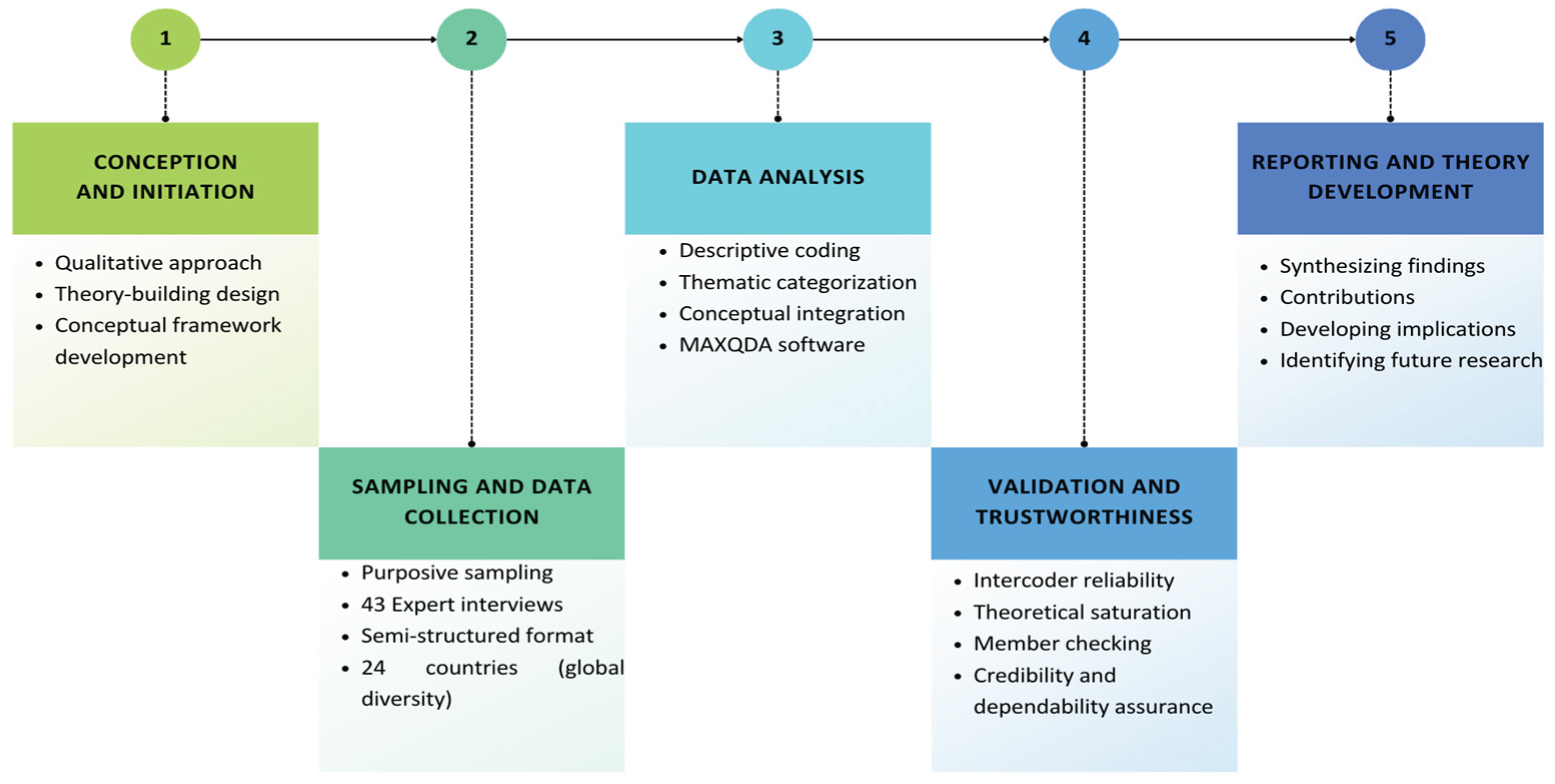
Figure 2.
Geographical coverage of interviews (Source: Authors).
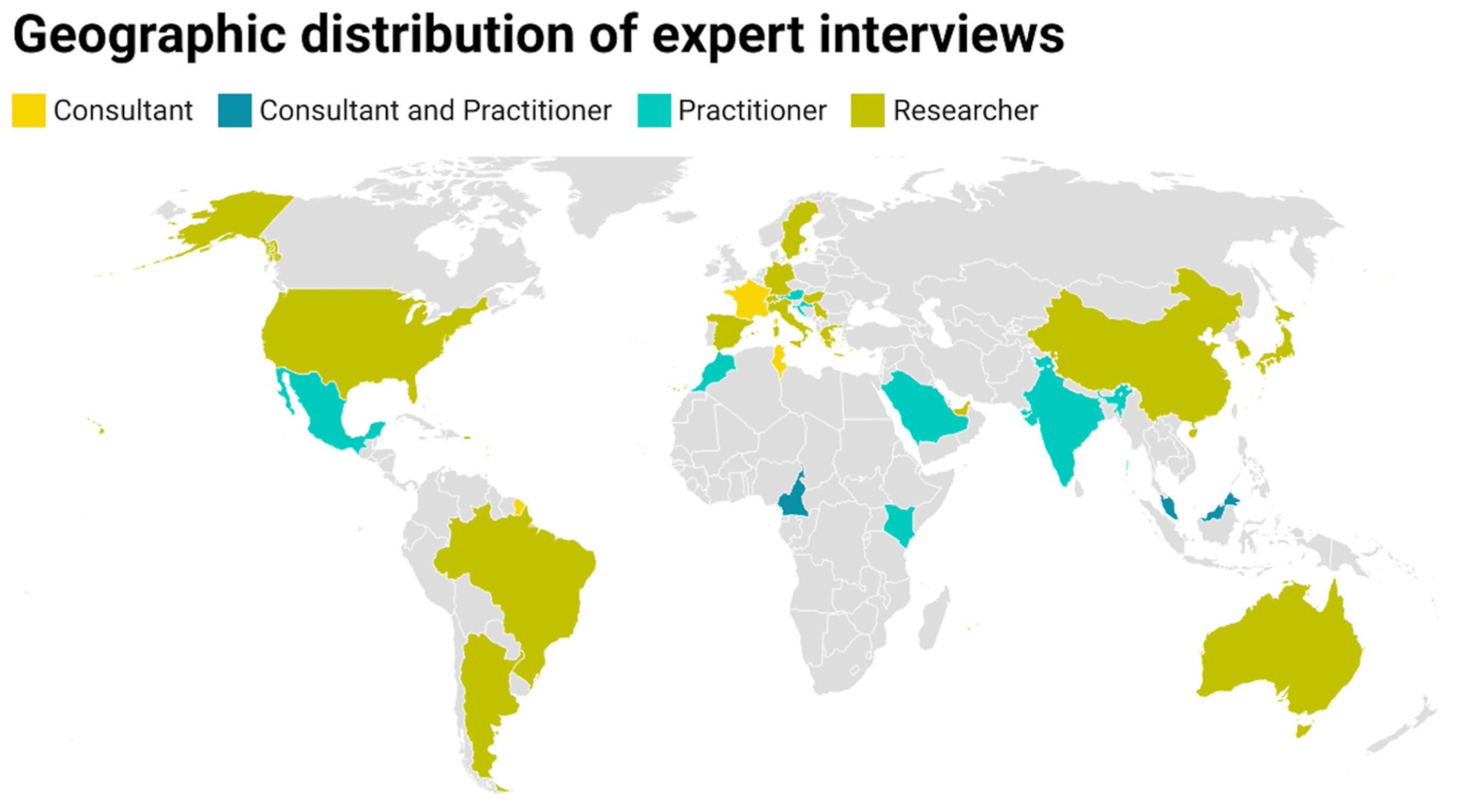
Figure 3.
Conceptual framework (Source: Authors).
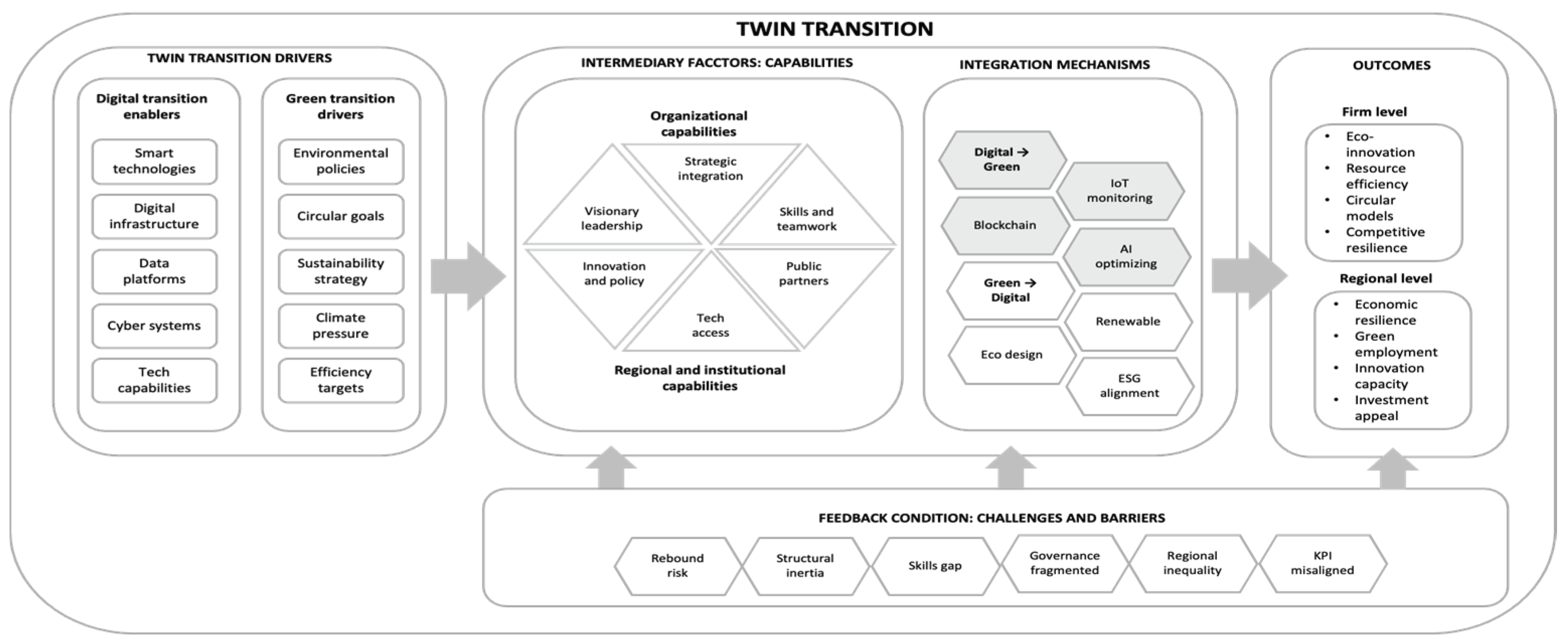
Figure 4.
Technology–sustainability synergy matrix (Source: Authors).
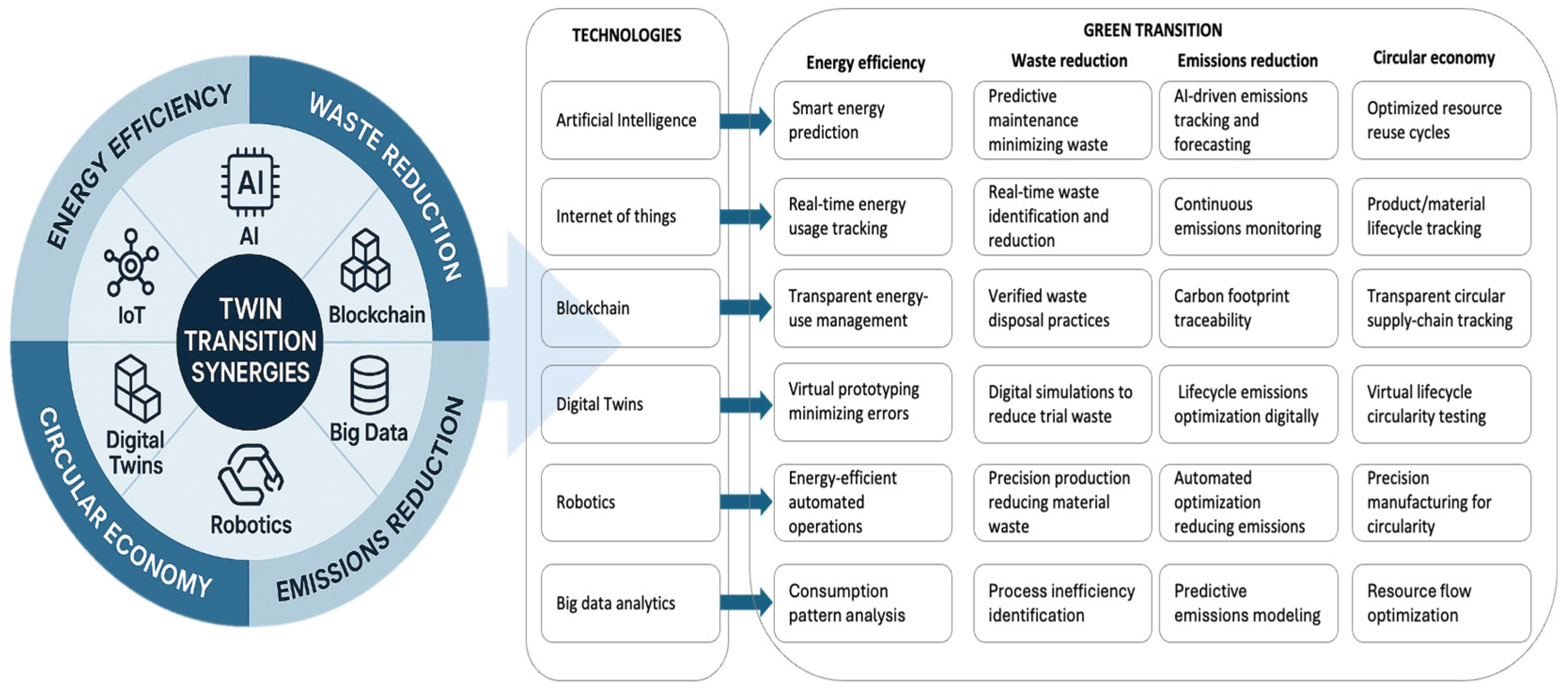
Figure 5.
Challenges and barriers in twin transition (Source: Authors).
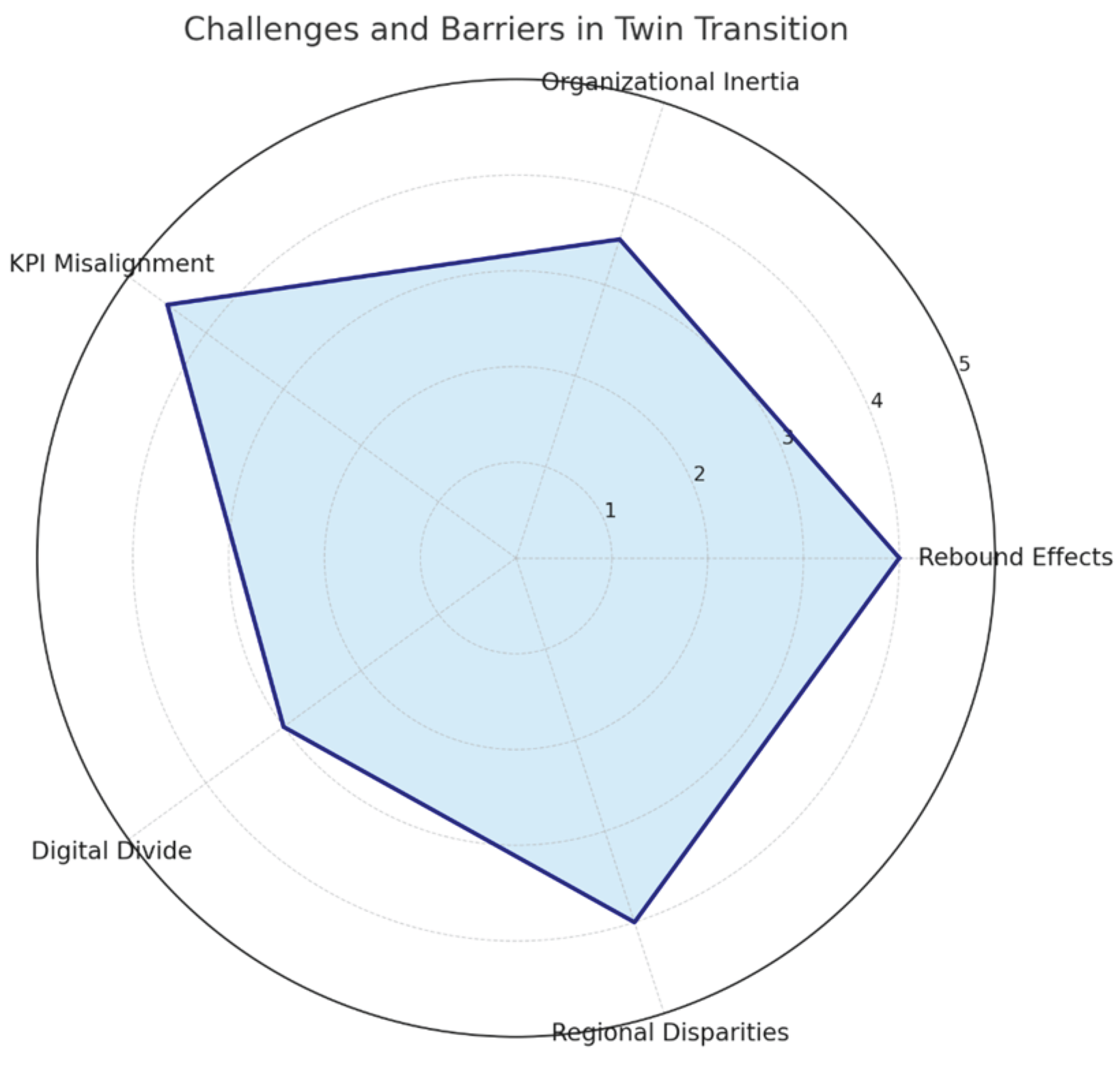
Figure 6.
Roadmap for twin transition (Source: Authors).
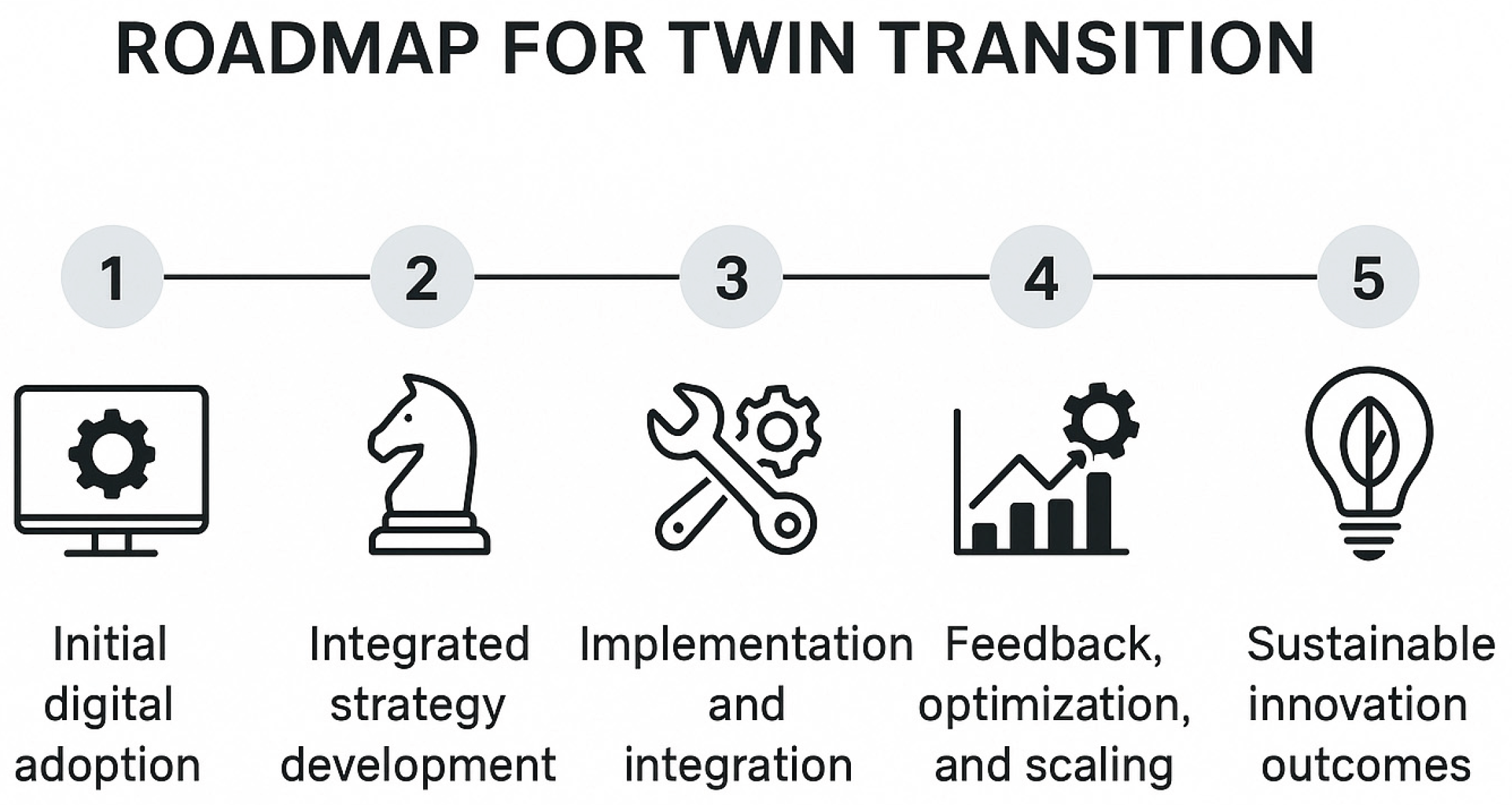
Disclaimer/Publisher’s Note: The statements, opinions and data contained in all publications are solely those of the individual author(s) and contributor(s) and not of MDPI and/or the editor(s). MDPI and/or the editor(s) disclaim responsibility for any injury to people or property resulting from any ideas, methods, instructions or products referred to in the content. |
© 2025 by the authors. Licensee MDPI, Basel, Switzerland. This article is an open access article distributed under the terms and conditions of the Creative Commons Attribution (CC BY) license (http://creativecommons.org/licenses/by/4.0/).
Copyright: This open access article is published under a Creative Commons CC BY 4.0 license, which permit the free download, distribution, and reuse, provided that the author and preprint are cited in any reuse.


