

Submitted:
21 April 2025
Posted:
22 April 2025
You are already at the latest version
Abstract
This paper explores the intricate interplay between digital innovation and the pursuit of sustainable development. As sustainability increasingly underpins global priorities, emerging technologies—such as artificial intelligence, blockchain, and the Internet of Things—offer practical solutions to environmental, social, and economic challenges. Drawing on a systematic bibliometric literature review using the PRISMA framework, this study investigates how digital tools catalyze transformative change across sectors including energy, agriculture, urban development, and governance. Findings indicate that technology enables more transparent, inclusive, and efficient practices, particularly when aligned with the UN Sustainable Development Goals. Notably, digital ecosystems foster real-time data analytics, support resource optimization, and strengthen participatory decision-making. While technological adoption varies by region and capacity, its role in shaping equitable and resilient futures is undeniable. The analysis highlights that progress hinges not merely on innovation itself but on strategic integration within policy and institutional frameworks. The paper concludes that digital development is not a panacea, but when harnessed wisely, it serves as a critical lever in addressing the world’s most pressing sustainability imperatives. Future research should emphasize cross-disciplinary collaboration and adaptive governance to ensure these digital shifts yield enduring impact for both people and planet.
Keywords:
digital development
; sustainable
; sustainable development
1. Introduction
Sustainability has emerged as a critical focus on the global agenda. The urgent need to balance economic growth, environmental protection, and social equity continues to drive the concept's popularity [1]. The world is dealing with the impacts of climate change, resource depletion, and social inequalities. As a result, the need for a holistic approach to development has become evident. This gave rise to the idea of sustainable development, which Harfouche et al. [2] describe as a framework that seeks to meet the needs of the present without compromising the ability of future generations to meet their own needs. The concept of sustainable development was formally introduced by the Brundtland Report in 1987 and has since been at the heart of numerous global initiatives [3]. The most notable is the United Nations Sustainable Development Goals (SDGs), which aim to balance economic growth, social inclusion, and environmental protection.
However, achieving sustainable development remains a significant challenge. Harfouche et al. [2] notes that it is not a “straightforward task” and requires “addressing global grand challenges that are inherently complex, multifaceted, and socially embedded” (p.1989). These challenges include climate change, resource depletion, economic inequalities, and inadequate social services that continue to hinder progress [4,5]. In addition, many countries face difficulties mobilizing the necessary resources and expertise to implement sustainable practices effectively. For example, Iqbal and Pierson [6] note that although developing countries discuss sustainable development, compliance remains poor as they continue engaging in environmentally unfriendly economic practices. These countries prioritize economic growth over environmental, equity, and poverty concerns. These issues pose significant obstacles to realizing a sustainable future, highlighting the need for innovative solutions.
Digital development has emerged as a powerful catalyst for sustainable transformation. Vaishnav [7] explains that digital transformation contributes to sustainability by driving positive social and environmental impacts while ensuring long-term business profitability and viability. The rapid advancement of digital technologies, such as artificial intelligence (AI), big data analytics, blockchain, and the Internet of Things (IoT), offers innovative solutions to longstanding sustainability challenges. Novillo-Ortiz et al. [8] indicate that integrating remote sensors, informatics, and geographic information systems allows the monitoring of environmental changes and the movement of children to schools. Moreover, technologies enhance resource management efficiency, promote transparency in governance, and ensure social inclusion by bridging gaps in education, healthcare, and economic opportunities.
Leveraging digital innovations supports data-driven decisions that optimize resource use and support environmental stewardship while simultaneously empowering communities to participate more actively in sustainable practices. This research paper examines how digital innovations contribute to the realization of global sustainability goals. The findings highlight the transformative potential of technology in building a more resilient and inclusive future.
2. Materials and Research Methods
This study employed a systematic bibliometric literature review (LRSB) guided by the Preferred Reporting Items for Systematic Reviews and Meta-Analyses (PRISMA 2020) framework. The researcher used the LRSB method because it is a transparent, replicable, and scientific process that reduces bias through a comprehensive literature search [9]. It provides an audit trail that shows the researcher's procedures, decisions, and conclusions, making it easier for readers to determine the quality of the findings presented. Page et al. [10] indicate that incorporating the PRISMA 20220 framework helps address poor reporting in systematic reviews. Haddaway et al. [11] further indicate that using the PRISMA guideline results in more complete systematic reviews due to its thorough procedures. Thus, combining LRSB and PRISMA enabled a robust and comprehensive synthesis of scholarly literature on how digital innovations leverage sustainable practices.
The LRSB methodology, thoroughly examined in the works of Rosário and Dias [12] as well as Rosário et al. [13], presents a more structured and in-depth approach to analyzing a body of research than conventional literature reviews. Its emphasis lies in the meticulous selection of sources that are directly aligned with the central research question, thereby ensuring heightened levels of transparency.
This technique enhances the credibility and depth of findings by adhering to a well-defined protocol for identifying and selecting relevant studies. By employing a systematic and sequential process, the LRSB method reinforces the robustness and scholarly value of the collected evidence. It unfolds through three primary phases, each comprising a total of six methodical steps, which are detailed in Table 1 and further discussed by Rosário and Dias [12] and Rosário et al. [13].
The research drew on the Scopus database to identify and select authoritative sources, capitalizing on its reputation for indexing high-quality academic and scientific publications. Nevertheless, the exclusive reliance on Scopus presents a potential limitation, as relevant contributions available through alternative databases may have been overlooked. Furthermore, the search was confined to literature published up until March 2025, which may have restricted the inclusion of the most up-to-date scholarly developments.
In alignment with the pursuit of methodological rigor and academic integrity, the investigation prioritized peer-reviewed scholarly materials, a practice underscored by Rosário and Dias [12] as well as Rosário et al. [13].
The literature search and screening process was conducted using the Scopus database. This database was chosen for its extensive coverage of peer-reviewed academic articles and multidisciplinary focus. The initial search using the keyword "digital development" limited to TITLE-ABS-KEY retrieved 1,741 documents. To refine the results, the researcher applied an additional filter combining "digital development" and "sustainable," narrowing the results to 196 documents. Finally, adding the exact keyword "sustainable development" helped further focus on the intersection between digital innovations and sustainability. This process resulted in 70 relevant documents. These final documents underwent a thorough screening, where duplicates, non-English publications, and articles lacking full-text access were excluded.
To guarantee both the relevance and methodological robustness of the sources incorporated into the final analysis, the study applied a set of clearly established inclusion and exclusion parameters, as outlined in Table 2. The selection process was restricted to peer-reviewed journal articles that specifically investigated how artificial intelligence is applied to optimize marketing strategies within corporate contexts.
In parallel, materials were excluded if they did not explicitly address the role of artificial intelligence, thereby preserving the precision and relevance of the dataset. This rigorous filtering ensured that the selected literature remained closely aligned with the central research objectives. The procedural details of this selection framework are presented in Table 2 and further discussed in the works of Rosário and Dias [12] and Rosário et al. [13].
A comprehensive examination of the selected literature was undertaken through a rigorous process of content and thematic analysis. This approach was structured by the methodological guidelines proposed by Rosário and Dias [12] and Rosário et al. [13]. To ensure that only sources of high academic standing and direct relevance were incorporated, a set of well-defined selection parameters was rigorously enforced.
This analytical process concentrated on academic studies examining how digital Development Leverages Sustainable Development, prioritizing those that showed a clear conceptual and empirical connection to the study's key goals. Each document underwent a thorough assessment, evaluating its relevance to the research topic, the strength of its methodology, and its publication in peer-reviewed scholarly journals. Figure 1 provides a visual summary of the selection framework.
This investigation undertook a comprehensive review of 70 academic and scientific works retrieved from the Scopus database. To ensure a well-rounded examination, the analysis employed a blend of bibliometric techniques and narrative synthesis, promoting a multifaceted interpretation of the selected literature. The methodological design was anchored in the analytical structure proposed by Rosário and Dias [12], along with the enhancements suggested by Rosário et al. [13].
By adopting this dual-method strategy, the study systematically analyzed the content, enabling the recognition of recurring thematic trends directly tied to the primary research questions. This integrative approach not only offered a coherent framework for literature evaluation but also captured the nuances and depth of ongoing scholarly conversations across the field.
Of the 70 documents selected, 43 were articles, 19 were conference papers, 3 were Book chapters, 3 were reviews, and 1 Short survey
3. Publication Distribution
Peer-reviewed articles on a Comprehensive "How Digital Development Leverages Sustainable Development", March 2025. The year 2024 has the highest number of peer-reviewed publications, reaching 23. Figure 2 summarizes the peer-reviewed literature published until March 2025.
The publications were sorted out as follows: Sustainability Switzerland (12), with 2 documents (Procedia Computer Science; Lecture Notes In Networks And Systems; E3s Web Of Conferences); and the remaining publications with 1 document.
Figure 3 illustrates the countries that have made the most substantial academic contributions within specific research areas, highlighting China, Ukraine, Italy, and India as leading sources of scholarly output. The volume of publications originating from these nations reflects their active engagement and influential roles in advancing research and fostering intellectual development within their respective disciplines.
Table 3 and Figure 3 offer a summary of the primary national contributors within the research areas examined. These visuals highlight the ten countries with the highest levels of academic production, underscoring their pivotal role in expanding the body of knowledge on luxury branding and consumer behavior. This analysis provides insight into the spatial distribution of scholarly engagement, revealing how various countries allocate research efforts and resources toward this domain.
The findings enable a comparative perspective on international research patterns, drawing attention to regions that have shown sustained interest in exploring market dynamics and branding strategies. Through these visualizations, the study brings to the forefront variations in academic emphasis and illustrates how different national research cultures shape ongoing discourse related to the intersection of digital development and sustainable progress.
According to Bradford’s law, a core cluster of ten journals—highlighted in Figure 4—emerges as the primary outlets for scholarly work within the studied domain. Collectively, these sources represent around 16% of the total literature produced on the topic. The law posits that as a research field evolves and attracts scholarly interest, a concentrated group of journals typically leads in publishing relevant findings, reflecting their central role in shaping and distributing knowledge in the early stages of the field’s development.
As academic attention toward the subject grows, a group of leading journals begins to serve as central pillars within the research community, gradually becoming the dominant sources for foundational insights. Over time, these prominent outlets not only shape the trajectory of scholarly debate but also influence the inclusion of the topic in a broader range of publications.
Among this emerging core, seven journals stand out for their significant impact, with the first six being particularly instrumental in laying the groundwork for theoretical and empirical development. These journals function as key platforms for academic exchange, enabling scholars to engage with prior studies, cite influential work, and contribute to the progressive accumulation of knowledge in the field.
The subject areas covered by the 70 scientific and/or academic documents were: Environmental Science (31); Computer Science (31); Energy (26); Social Sciences (24); Engineering (16); Business, Management and Accounting (14); Economics, Econometrics and Finance (13); Earth and Planetary Sciences (5); Decision Sciences (4); Mathematics (3); Psychology (2); Agricultural and Biological Sciences (2); Physics and Astronomy (1); Multidisciplinary (1); Materials Science (1); Biochemistry, Genetics and Molecular Biology (1); and Arts and Humanities (1).
The most quoted article was “A comprehensive review of cold chain logistics for fresh agricultural products: Current status, challenges, and future trends", with 222 quotes published in the Trends in Food Science and Technology 3,00 (SJR), the best quartile (Q1), and with H index (251). The main purpose of the study review discusses active research areas, gaps in the existing state of research, and future research challenges for CCL.
In Figure 5, we can analyse citation changes for documents published until March 2025. The period ≤2015-2025 shows a positive net growth in citations with an R2 of 61%, reaching 2015 in 2025 (Appendix A).
The h-index serves as a prevalent indicator for evaluating the influence and output of scholarly work. This metric reflects the maximum number of academic articles (h) that have each been cited at least h times. In the present analysis, it was determined that a total of 15 distinct publications satisfied this criterion, with each accumulating no fewer than 15 citations.
This measure yields meaningful understanding regarding the influence and relevance of scholarly work within its specific domain. By integrating both the number of citations and the quantity of published output, it enables a more comprehensive assessment of academic impact—whether at the individual or disciplinary level. The results underscore the extent to which these works have shaped scholarly discourse and motivated continued inquiry, underscoring their fundamental contribution to the progression of knowledge in the field.
Citations for all scientific and academic documents from the period up to March 2025 totaled 975 (Appendix A), with 22 of the 70 documents remaining uncited.
A bibliometric investigation was carried out employing the core terms "Digital Development", "Sustainable", and "Sustainable Development". This approach facilitated the recognition of key trends and essential metrics that reflect the dynamic progression of scholarly and scientific exploration within this domain. The outcomes of this assessment—presented in Figure 6—offer an in-depth snapshot of the temporal growth and diversification of research related to these themes.
To maintain a methodical and evidence-based framework, the analysis was conducted using the VOSviewer tool. Special attention was directed toward the main search descriptors, allowing the study to effectively reflect the prevailing currents within the existing literature. The resulting insights shed light on the conceptual architecture of the discipline, pinpointing prominent scholarly themes and suggesting avenues for prospective research developments.
This study draws upon a comprehensive review of academic and scientific sources that investigate the intersection between digital innovation and sustainable development. To highlight the central thematic focus, a three-field plot was employed. Within this framework, the code "AU" represents the author, identifying the primary contributor to each publication. This is mapped alongside "CR" (cited references) and "DE" (descriptive keywords provided by the authors), illustrating how individual studies are embedded within and contribute to broader scholarly dialogues.
To explore the relationships among frequently utilized terms in the analyzed literature, a targeted methodological approach was implemented. Through the use of Bilimetrix, a systematic mapping was constructed to illustrate these interrelationships. The visual output—presented in Figure 7—provides a nuanced view of the conceptual associations and thematic overlaps that characterize academic engagement within this area of study.
The Sankey diagram functions as a graphical representation designed to convey the relative weight and prevalence of distinct thematic domains. Each node's size corresponds to how often a particular concept appears, while the links between them illustrate thematic relationships and progression. The breadth of each connecting flow denotes the strength of association between topics. As described by Xiao et al. [14], this technique offers a systematic means of visualizing the development and interconnectedness of foundational ideas within the scholarly landscape.
As illustrated in Figure 7, specific terms stand out as particularly prominent across the dataset. For instance, the term “sustainable development” exhibits 11 incoming associations without corresponding outward links, indicating its central role in the thematic structure. Similarly, “digital economy” reflects 7 inbound connections, while “digitalization” and “digital transformation” display 5 and 3 incoming links, respectively. These pivotal keywords are strongly associated with the most frequently cited sources, underscoring their foundational influence within the scholarly dialogue in this field.
The thematic mapping utilizes specific analytical thresholds: a minimum cluster frequency of 50 (per thousand records), five labels per thematic group, a label size of three, and a scaling factor set at 0.3. A diagonal line is used to represent two key dimensions—relevance (centrality) and maturity (density). As illustrated in Figure 8, the resulting thematic landscape is segmented into four quadrants, each marked by circles of distinct colors to denote thematic intensity.
The upper-right quadrant highlights central themes that are both well-established and influential, characterized by high density and strong centrality—indicating they are driving forces within the field. The lower-right quadrant includes foundational and cross-cutting themes; although these areas show significant relevance (centrality), their low density suggests limited conceptual development. Meanwhile, the lower-left quadrant points to topics that are either nascent or declining, as reflected by low scores on both dimensions. Lastly, the upper-left quadrant represents mature but isolated topics — those that are conceptually developed (high density) yet peripheral in influence (low centrality), suggesting they hold limited relevance to broader disciplinary discourse.
When we look at Figure 8, which covers 70 documents, we see that, on the lower right side of the axis, where the basic and transversal research themes of the period in question are concentrated, "international trade", "carbon", and "ecosystems", appears as the main theme, followed by aspects such as “digital transformation”, “spatiotemporal analysis” and “resource development”.
On the upper right side are the driving themes of the period, in which "sustainable development", "China" and "digitization" are the central themes. To a lesser extent, “competitiveness”, “commerce” and “digital innovation” also appear on that side of the axis.
On the upper left side of the axis we see that as a peripheral theme, there is “clean energy”, “digital government” "energy" and also “agriculture”, supply chains, and "climate change", “digital agriculture” appears, and it can understand that this last theme is on the way to be-coming an emerging or declining theme.
On the lower left side, which corresponds to emerging or declining themes are: “digital development”, "vehicle performance”, “accident prevention", "environmental impact" and, ”comparative analysis" located the axis leaning against the quadrant of basic and transversal themes, these themes can become strong themes in the area.
Figure 9 presents a comprehensive visual representation of the conceptual interrelations found within academic literature, emphasizing the linkages between commonly employed terms. This mapping uncovers the principal thematic clusters that define the field and offers a structured overview of the dominant subjects addressed in scholarly work. Beyond highlighting prevailing research directions, the visualization also reveals underexplored areas that may warrant additional investigation.
The figure further illustrates an expansive network of co-citation patterns and thematic associations, helping to clarify how individual sources are related. Recognizing these citation dynamics is vital to supporting the study’s conclusions, as it uncovers the foundational architecture of academic discourse and the intellectual trajectories shaping current inquiry.
Complementing this, Figure 10 displays an extended citation network that enhances the analytical scope by visualizing how references interconnect within the scholarly ecosystem. This depiction deepens our understanding of academic influence by showcasing the connections among frequently cited works and their broader relevance to the field.
Through the mapping of these interdependencies, the graphical analysis contributes to a more nuanced understanding of citation behavior, reinforcing the coherence and rigor of the literature surveyed. Such an approach is instrumental in pinpointing major contributions and tracing the evolution of thought within the discipline over time.
4. Theoretical Perspectives
The intersection between digital transformation and sustainable development has gained significant scholarly attention in recent years. This reflects the increasing recognition of technology's role in promoting sustainable practices. The evolution of digital innovations offers new opportunities to address global challenges related to economic growth, environmental preservation, and social equity. The convergence of digital development and sustainability initiatives highlights how technologies can contribute to sustainable development [15]. This literature review synthesizes current research on leveraging digital transformation to advance sustainable development goals.
4.1. Sustainability and Sustainable Development
Sustainability is a guiding principle and cross-cutting objective that aims to balance economic growth, social equity and environmental protection to ensure the well-being of present and future generations. This principle is reflected in laws and public policies that aim to respond to global challenges such as climate change, poverty, resource scarcity, disparities and social inequalities that have intensified in recent years [16]. Sustainability is the ability to meet the needs of current communities without compromising the ability to meet the needs of future generations and as a result, sustainability has become a central focus for policy makers, businesses and communities around the world. Toli and Murtagh [17] argue that sustainability definitions incorporate various characteristics, including “intergenerational equity, intra-generational equity (social, geographical, and governance equity), conservation of the natural environment, significant reduction of the use of non-renewable resources, economic vitality and diversity, autonomy in communities, citizen well-being, and gratification of fundamental human needs” (p.2). Thus, sustainability seeks to create a harmonious relationship between human activities and the natural environment, emphasizing responsible resource use, social justice, and long-term economic stability. To effectively address the complexities of modern development, sustainability is typically understood through three interconnected dimensions: economic, social, and environmental.
The economic dimension of sustainability emphasizes the importance of economic growth and stability while minimizing resource depletion and environmental degradation. It advocates for the efficient use of resources, the promotion of green technologies, and the development of sustainable business practices that contribute to long-term economic resilience [16,18]. Sustainable economic strategies also include creating decent work opportunities and inclusive economic development that benefits diverse populations. Social sustainability focuses on equity, social justice and human well-being, and is associated with a society's ability to maintain and improve the quality of life of its citizens over time, ensuring equitable access to opportunities, respect for human rights and dignified living conditions for all. The goal is to create an inclusive, resilient and participatory society, where everyone has access to basic services such as education, health, housing, sanitation, security and job opportunities. It addresses issues such as access to quality education, healthcare, and social services while promoting community empowerment, cultural preservation, and reducing social disparities [19]. Environmental sustainability prioritizes protecting natural ecosystems, conserving biodiversity, and mitigating the impacts of climate change. This dimension encompasses sustainable resource management, pollution reduction, and the transition to renewable energy sources [20,21]. These three pillars provide a holistic framework for sustainability, striving to balance human progress with the preservation of the planet’s health.
The concept of sustainable development emerged as a practical application of sustainability principles. It gained global prominence with the Brundtland Report "Our Common Future" in 1987, where it was defined as "…development that meets the needs of the present without compromising the ability of future generations to meet their own needs" [22] (p.3) (Figure 11). It entails development that considers environmental, economic, social, and governance aspects of sustainability. Over the years, sustainable development has become hegemonic, leading to its use in international treaties, national constitutions, and laws [23,24]. In addition, it is used in various industries including business, agricultural production, urban development, and industry. It has also become a foundational concept in most theories, such as circular and green economies.
The United Nations further solidified the importance of sustainable development by introducing the Sustainable Development Goals (SDGs) in 2015. According to Sachs According to Sachs [25], the SDGs aim to provide a holistic approach to three pillars of sustainability: environmental, economic, and social. The SDGs comprise 17 ambitious objectives designed to address global challenges and promote sustainable growth (Figure 12). These goals encompass a wide range of priorities, including poverty eradication, quality education, clean energy, climate action, and reduced inequalities [20,26]. The SDGs also emphasize partnerships and collaborations to drive collective efforts toward sustainability. Each goal is supported by specific targets and indicators, enabling countries to track progress and develop strategies that address local and global issues.
The adoption of technologies has enhanced the ability of organizations and governments to implement SDGs. For example, Harfouche et al. [2] introduce the Sustainable Development Impact Through Technological Innovations and Data Analytics (SDITIDA) framework that provides a conceptual lens on aligning technologies with sustainable goals. SDITIDA comprises multiple layers, including stakeholders and context, operational aspects, actions, goals and outcomes, and feedback loops (Figure 13).
The Stakeholder and Contexts layer represents institutions and organizations that implement sustainability initiatives. These include local, national, and international governments, communities, business organizations, NGOs, and technology innovators. Contexts refer to the environmental, social, and economic components of sustainability [2]. The Operational Aspects layer focuses on the effectiveness and compatibility of laws and regulations that influence technological innovations like artificial intelligence (AI), big data, and the Internet of Things (IoT). Actions refer to targeted measures stakeholders take to drive sustainable practices. In this case, they utilize technological tools to gain actionable insights, which are useful in implementing appropriate actions. The Goals and SDG Outcomes layer represents the core objectives of sustainability, such as reducing carbon emissions and social inclusion. The Feedback Loops facilitate continuous learning and adaptation by generating actionable insights and responsive strategies. These loops ensure the ecosystem remains resilient and adaptive to changing demands and challenges. As a result, it achieves sustainable development through iterative improvements and data-driven decision-making
4.2. Digital Technologies Driving Sustainable Development
The rapid advancement of digital technologies has significantly transformed how societies address sustainable development challenges. These technologies enhance efficiency and productivity and offer innovative solutions to complex global issues such as climate change, resource management, and social inequality [27,28]. Stakeholders leveraging the potential of emerging technologies can achieve SDGs more effectively and inclusively. Below are some of the most impactful digital technologies driving sustainable development.
4.2.1. Artificial Intelligence
Artificial intelligence (AI) encompasses various technologies designed to replicate human cognitive functions, such as problem-solving, reasoning, and decision-making. Martinez [29] (2019) explains that intelligent machines are defined based on characteristics, including “acting humanely, thinking humanely, thinking rationally, and acting rationally” (p.1025). Thus, Yigitcanlar and Cugurullo [30] define AI as “machines or computers that mimic cognitive functions that humans associate with the human mind, such as learning and problem solving” (p.1). AI can be categorized into different types, including narrow AI and general AI. Narrow AI performs specific tasks such as language translation or image recognition. General AI aims to replicate broader human cognitive capabilities across various activities. It also incorporates technologies such as natural language processing (NLP) for interpreting human language and computer vision for analyzing visual data. As AI continues to evolve, its ability to mimic human-like intelligence becomes increasingly sophisticated. This allows machines to not only perform tasks but also to adapt, learn, and interact in more intuitive ways.
AI is a transformative force in sustainable development. This innovation enhances efficiency, reduces human errors, and facilitates data-driven insights [31]. One of the most significant applications of AI lies in environmental monitoring and conservation. For instance, AI-powered sensors detect air and water pollution levels, sending real-time alerts to environmental agencies [32]. In addition, AI algorithms analyze climate data to predict natural disasters, such as hurricanes or floods. This enables proactive measures and early warning systems. AI-driven smart grids balance energy supply and demand in the energy sector, optimizing electricity distribution while minimizing waste [30,33] Furthermore, Evdokimova [34] found that AI applications in agriculture include automated irrigation systems that use predictive analytics to determine the optimal watering schedule, reducing water consumption. AI chatbots and virtual assistants enhance public awareness on the social front by delivering tailored sustainability messages and answering inquiries about eco-friendly practices. These capabilities make AI indispensable in creating a more resilient and sustainable future
4.2.2. Machine Learning and Deep Learning
Machine learning and deep learning are critical components of artificial intelligence that empower systems to analyze vast amounts of data and make accurate predictions. Machine learning uses algorithms to detect patterns and trends. This allows systems to automate decision-making processes and optimize resource management. Gao et al. (2023) [35] describe deep learning as a more advanced subset that utilizes neural networks to process and interpret complex data structures. The use of these technologies in sustainable development has revolutionized how organizations monitor environmental changes and enhance resource efficiency [36]. For example, predictive analytics powered by machine learning helps forecast climate variations and detect anomalies in weather patterns. This information is crucial for planning disaster responses and mitigating climate-related risks. Moreover, deep learning algorithms support biodiversity monitoring by analyzing satellite images to detect deforestation or habitat loss [37]. Machine learning optimizes crop yield predictions and helps farmers implement precision agriculture practices, thereby minimizing water and fertilizer usage. These technologies' ability to process real-time data enhances decision-making, reduces environmental footprints, and promotes sustainable resource use.
4.2.3. Big Data and Analytics
Big data and analytics refer to the technologies and processes used to collect, manage, and analyze extremely large and complex datasets that traditional data-processing software cannot handle efficiently. Big data is commonly defined by five key characteristics, volume, velocity, variety, veracity, and value [33]. Volume refers to the vast amount of data generated, while velocity is the speed at which data is produced and processed. Variety focuses on a wide range of data types and formats, while veracity refers to the accuracy and trustworthiness of the data, and value is the meaningful insights derived from data analysis [33,38]. Data analytics involves discovering, interpreting, and communicating knowledge gathered from big data to support decision-making [39]. Big data and analytics leverage analytical methods like descriptive statistics, predictive modeling and machine learning algorithms to interpret patterns, forecast outcomes, and support data-driven decision-making.
Big data and analytics play a pivotal role by enhancing the ability to monitor, evaluate, and manage progress toward sustainability goals. For example, El-Haddadeh et al. [40] indicates that big data enables real-time tracking of environmental indicators like air quality, deforestation rates, and energy consumption, providing critical insights for early intervention and policy-making. Data collected from sensors, satellites, and weather models in agriculture can optimize crop yields and resource use [41]. This contributes to food security while minimizing environmental impact. Governments and NGOs use big data to assess social development metrics such as poverty levels, education access, and health outcomes, thereby designing more effective and targeted interventions [16,42]. Furthermore, analytics support forecasting sustainability trends and simulate outcomes of different policy options, helping stakeholders make informed decisions. Big data and analytics empower a data-driven approach to sustainable development, promoting transparency, efficiency, and scalability in achieving long-term goals.
4.2.4. Internet of Things
The Internet of Things (IoT) is a network of interconnected devices embedded with sensors, software, and other technologies to collect and exchange data over the internet. IoT plays a pivotal role in sustainable development by enabling continuous monitoring and data collection in various sectors, such as agriculture, energy, healthcare, and urban planning [30,43]. For instance, IoT devices in smart agriculture help monitor soil moisture, weather conditions, and crop health. This practice provides farmers with data-driven insights to optimize irrigation and reduce chemical usage. In urban environments, IoT-enabled smart grids track energy consumption patterns, allowing for more efficient electricity distribution and minimizing waste [44]. Similarly, smart waste management systems use IoT sensors to detect bin fill levels and schedule waste collection only when needed, reducing fuel consumption and emissions. IoT wearables are used in healthcare to monitor patient health metrics in real-time [44,45]. This promotes proactive care and reduces hospital visits. IoT contributes to resource conservation, operational efficiency, and improved quality of life through data-driven decision-making, aligning well with the principles of sustainable development.
4.2.5. Blockchain
Blockchain technology is a decentralized digital ledger that records transactions transparently and securely. Wu and Tran [46] define it as "a new distributed infrastructure and computing paradigm" (p.3). Its primary appeal lies in its immutability, meaning once data is recorded, it cannot be altered, ensuring data integrity and transparency. This characteristic results from blockchain technology's architecture comprising various layers (Figure 14). These include the “data layer, network layer, consensus layer, incentive layer, contract layer, and application layer” (p.4). Moreover, blockchain entails numerous key technologies including smart contracts, consensus mechanisms, distributed data storage, and encryption algorithms. Smart contracts are self-executing digital agreements that automatically enforce terms without the need for intermediaries [47]. Consensus mechanisms are protocols, such as Proof of Work or Proof of Stake, that validate and confirm transactions across the network to maintain integrity and trust. Distributed data storage ensures that data is stored across multiple nodes, enhancing transparency, fault tolerance, and resistance to tampering. Encryption algorithms secure data within the blockchain, protecting it from unauthorized access and ensuring privacy while maintaining the integrity of the recorded information.
Blockchain's potential in sustainable development is vast since it promotes ethical practices, combats corruption, and builds stakeholder trust. One significant application of blockchain is in supply chain transparency, where it helps track the origin and movement of goods from production to distribution [47]. This enables consumers to verify the sustainability of products, ensuring they meet ethical standards such as fair trade and environmentally friendly practices. Blockchain also supports the development of decentralized energy grids by allowing peer-to-peer energy trading, where households with solar panels can sell excess power to their neighbors [46]. Moreover, blockchain-based carbon credit systems facilitate accurate tracking and trading of carbon offsets, encouraging industries to reduce emissions. Creating verifiable records and fostering transparency using blockchain technologies enhances accountability in sustainable practices.
4.2.6. Augmented and Virtual Reality
Augmented reality (AR) and virtual reality (VR) technologies offer immersive and interactive experiences that blend the virtual and physical worlds. According to Ebinger et al. [48], AR overlays digital information in real-world environments, while VR creates simulated experiences. These technologies hold immense potential in sustainable development by enhancing education, training, and awareness. For instance, AR applications in environmental conservation enable users to visualize the impact of human activities on ecosystems [49]. This creates a deeper understanding of sustainability challenges. VR simulations train professionals in crisis management by allowing them to practice disaster response scenarios without real-world risks. Furthermore, AR and VR enhance sustainable urban planning by offering virtual walkthroughs of proposed infrastructure projects, helping stakeholders assess potential environmental impacts before implementation [48,50]. Educational institutions also use AR/VR to teach students about sustainability practices, making abstract concepts more tangible and engaging. These innovations provide realistic and interactive experiences that bridge the gap between theoretical knowledge and practical application [49]. Ultimately, these applications promote long-lasting behavioral change toward sustainability.
4.3. Emerging Trends Related to Digital Development and Sustainable Development
The intersection of digital development and sustainable development continues to evolve due to technological advancements and an increasing global focus on sustainability. Emerging trends in this space demonstrate how digital solutions are reshaping industries, enhancing resource efficiency, and promoting environmental and social responsibility [51,52]. These trends are key to achieving the SDGs by leveraging digital innovation for long-term economic, environmental, and societal benefits. This section analyzes some of the most significant emerging trends contributing to a more sustainable future:
4.3.1. Digitalization of Logistics Outsourcing
The digitalization of logistics outsourcing refers to the use of advanced digital technologies such as artificial intelligence (AI), blockchain, and the Internet of Things (IoT) to optimize supply chain and logistics operations. This trend enhances efficiency, transparency, and sustainability by reducing transportation emissions, minimizing waste, and improving inventory management [53,54]. Companies are increasingly adopting cloud-based logistics management systems that provide real-time tracking of goods, predictive analytics for demand forecasting, and automated route optimization to reduce fuel consumption. Moreover, digital freight platforms facilitate more sustainable delivery models by matching cargo with available transport capacity [55]. This reduces empty trips and cuts carbon footprints. Parmentola et al. [47] indicate that blockchain technology further enhances supply chain sustainability by ensuring ethical sourcing and traceability of goods. Therefore, digitalizing logistics outsourcing contributes to greener, more efficient supply chains that align with sustainable development objectives.
4.3.2. Automation
Automation is an emerging trend contributing to sustainable development following the increased adoption of advanced technologies like robotics, AI, and machine learning. This trend is revolutionizing industries by increasing efficiency, reducing human error, and optimizing resource utilization [34]. Smart automation minimizes material waste and energy consumption in manufacturing by ensuring precise production processes. Similarly, Rane et al. [49] found that automated warehouses and distribution centers use AI-driven robotics to improve inventory management, reducing waste and operational inefficiencies. Evdokimova [34] explains that automation also plays a key role in smart agriculture, where AI-powered drones and robotic systems monitor crop health, apply fertilizers with precision, and optimize irrigation. This application reduces chemical runoffs and conserves water. Automated systems in the energy sector enhance the efficiency of renewable energy sources by adjusting power grids based on real-time demand and weather conditions [46,56]. While automation has raised concerns about job displacement, it also creates opportunities for upskilling and new employment in the digital economy. Industries that integrate automation into sustainable practices can significantly reduce waste, lower carbon emissions, and enhance overall efficiency.
4.3.3. Sustainable Rural Industrial Development
Sustainable rural industrial development leverages digital technology to support economic growth in rural areas while preserving environmental and social integrity. Digital solutions such as e-commerce platforms, mobile banking, and blockchain-based supply chain tracking enable small-scale rural enterprises to access broader markets, secure fair prices, and reduce inefficiencies [45]. According to Wang et al. [20], renewable energy technologies, such as solar-powered microgrids, provide sustainable energy solutions to rural industries, reducing dependence on fossil fuels. Gao et al. [35] indicate that digital training platforms and online education initiatives empower rural populations with technical skills. These practices improve employment opportunities and support innovation in sustainable industries [57,58]. IoT-driven smart farming techniques also enable precision agriculture, optimizing water use, fertilizer application, and pest management while boosting productivity. Integrating digital tools with sustainable rural development strategies enables countries to address poverty, create resilient local economies, and ensure long-term environmental sustainability.
4.3.4. Smart Cities
Smart cities have emerged as a potential solution to the rapid urbanization. Toli and Murtagh [17] estimate that about 66% of the global population will live in cities by 2050 compared to 54% now. This increase means there will be a significant expansion of urban areas to accommodate the huge number of people. As a result, this will further increase pressure on the natural environment and worsen the current sustainability issues. This is evidenced in Toli and Murtagh [17] findings which show that cities consume more than 75% of natural resources despite occupying only 2% of the earth’s surface. In addition, material consumption in cities is projected to increase from 40 billion tons in 2010 to 90 billion tons by 2050. As a result, this urban development will lead to various problems, such as air pollution, resource scarcity, traffic congestion, and poor waste management. Smart cities leverage advanced technologies to address these challenges, thus supporting sustainable development.
Smart cities incorporate digital technologies to create more sustainable, efficient, and livable urban environments. One of the primary goals of smart cities is to reduce energy consumption and waste through AI-driven infrastructure management that optimizes electricity use in public buildings and residential areas [28]. IoT-powered waste management systems help monitor bin levels, optimizing collection routes to minimize fuel consumption and emissions. Similarly, Yan et al. [59] state that smart water management systems detect leaks in real-time, preventing water waste and improving overall resource efficiency. Smart transportation systems integrate public transit, ride-sharing, and autonomous vehicles to reduce traffic congestion and pollution [60,61]. In addition, smart grids improve energy distribution, integrating renewable energy sources and balancing supply and demand efficiently [17]. Prioritizing technological innovation in urban planning addresses challenges related to overpopulation, pollution, and resource consumption in smart cities. This enables sustainable urban growth while enhancing residents' quality of life.
4.3.5. Green Technology Innovation
Green technology innovation involves developing and applying digital and technological advancements to reduce environmental harm and promote sustainability. This trend encompasses renewable energy technologies, energy-efficient manufacturing processes, and biodegradable materials designed to replace environmentally harmful products [62]. AI-driven energy management systems optimize electricity consumption by analyzing usage patterns and recommending efficiency improvements. In addition, advancements in battery storage technology enhance the viability of renewable energy sources by ensuring a consistent power supply [63]. Digital twin technology, which creates virtual simulations of real-world systems, allows businesses to model and improve sustainability efforts before implementing them physically. Innovations such as carbon capture and storage (CCS) technologies also mitigate climate change by reducing industrial carbon emissions [64,65]. Through continuous research and development, green technology innovation is crucial in minimizing ecological footprints, ensuring a balance between technological progress and environmental responsibility.
4.3.6. Technology-Driven Emission Reduction
Industries worldwide are striving to reduce their carbon footprints. This has led to significant adoption of digital technologies designed to reduce emissions. For example, D'Adamo et al. [66] found that AI and machine learning are used to monitor, analyze, and optimize industrial energy consumption. This helps identify inefficiencies and recommend corrective actions. Blockchain technology is effective in enhancing carbon credit trading and providing transparent and verifiable records of emissions reductions [62,67]. Governments are investing in smart transportation systems powered by IoT and real-time data analytics. These systems improve fuel efficiency and minimize emissions in logistics and urban mobility. D'Adamo et al. [66] found that carbon capture and utilization technologies leverage advanced computational models to enhance the efficiency of greenhouse gas removal from the atmosphere. Companies also use cloud-based sustainability dashboards to track and report emissions data, ensuring regulatory compliance and corporate responsibility [68,69]. These digital solutions for emission reduction empower businesses and governments to accelerate the transition to a low-carbon economy.
4.3.7. Energy Sustainability
Energy sustainability focuses on optimizing the generation, distribution, and consumption of energy to meet current needs without compromising future resources. Digital technologies such as AI, blockchain, and IoT play a crucial role in energy sustainability by enhancing the efficiency and reliability of power systems [28,70]. Smart grids, equipped with AI-driven demand forecasting, allow for dynamic energy distribution, reducing waste and ensuring efficient utilization of renewable energy sources. Vătavu et al. [71] (2022) explain that blockchain-based decentralized energy trading platforms enable peer-to-peer transactions, allowing households with solar panels to sell excess energy to the grid. Wu and Tran [46] found that smart grid and blockchain technologies are used to support Energy Internet, which refers to a power system “with the smart grid as its backbone, and linked by the Internet, big data, cloud computing, and other leading information and communication technologies” (p.8). This Energy Internet is the next-generation energy system incorporating energy and information systems to create sustainable power systems.
Some energy companies are using digital twins to simulate energy infrastructure scenarios. This enables them to optimize power plants and transmission networks. As a result, Song et al. [72] recognize digital twins as a “promising tool for realizing intelligent power systems" (p.2). Moreover, digital twins provide innovations that allow energy companies to observe and predict real-world systems. Thus, Bortolini et al. [56] found that digital twining helps lower maintenance costs alongside monitoring and predicting asset performance. The increasing use of IoT sensors helps monitor energy consumption patterns in buildings and industries, thus providing insights that promote energy conservation [73,74]. These advancements contribute to a cleaner, more resilient energy system that supports long-term sustainability.
4.3.8. Sustainable Digital Economy
Leveraging digital technologies has led to the rise of a sustainable digital economy. This form of economy integrates environmental, economic, and social sustainability principles into the rapidly growing digital sector. A sustainable digital economy includes reducing the carbon footprint of data centers, ensuring ethical labor practices in tech industries, and promoting circular economy models in electronics manufacturing [75,76]. It also promotes green cloud computing initiatives that optimize energy efficiency in data processing and storage. Digital platforms also facilitate sustainable business models, such as the sharing economy, which reduces waste by encouraging resource sharing [77]. For example, a sustainable digital economy encourages consumers to use ride-sharing and co-working spaces. Furthermore, digital financial services promote financial inclusion, allowing underserved populations to access banking, loans, and investment opportunities [78,79]. The sustainable digital economy aims to create a balanced approach to economic growth that leverages digital advancements while minimizing negative environmental and social impacts.
4.3.9. Sustainable Urban Transportation
Sustainable urban transportation focuses on reducing carbon emissions, enhancing mobility efficiency, and integrating environmentally friendly alternatives into urban transit systems. Digital technologies are crucial in transforming transportation systems into more sustainable models [61]. For instance, AI and data analytics are being used to optimize traffic flow, reducing congestion and fuel waste through adaptive traffic light systems and real-time navigation apps. Besides, the rise of electric vehicles (EVs) and autonomous transportation reduces reliance on fossil fuels, cutting down urban air pollution [20]. Consumers are also embracing digital platforms that facilitate Mobility-as-a-Service (MaaS). These platforms integrate multiple transport modes, such as public transit, bike-sharing, and ride-hailing, into a seamless, app-based system that encourages more efficient and sustainable commuting choices [80,81]. Implementing smart parking systems further reduces emissions by minimizing the time drivers spend searching for parking. Cities that leverage these innovations are moving towards cleaner, more efficient, and equitable transportation systems that align with sustainability goals.
4.3.10. Sustainable Agri-Food Systems
Sustainable agri-food systems integrate digital technologies to improve food security, reduce waste, and minimize the environmental impact of agriculture and food production. AI and IoT-driven precision agriculture enable farmers to use real-time data for more efficient water, fertilizer, and pesticide applications [41]. This reduces resource waste and improves yields. Hadizadeh et al. [82] indicate that integrating blockchain technology enhances food traceability, ensures transparency in the supply chain, and reduces food fraud. Furthermore, vertical farming and hydroponics use controlled-environment agriculture (CEA) to produce food with minimal land and water usage, making them viable solutions for urban food security [34,83]. The emergence and popularity of digital marketplaces have helped small-scale farmers connect directly with consumers. As a result, this has reduced food waste and transportation emissions [54,84]. Integrating robotics and automation in food production further enhances efficiency, reducing labor costs while ensuring sustainability. Leveraging these technologies in sustainable agri-food systems contributes to global food security while reducing the agricultural sector's environmental footprint.
5. Conclusions
Pursuing sustainability and sustainable development remains an important global issue grounded in balancing environmental protection, social equity, and economic progress. These three dimensions are the foundation for achieving long-term well-being for people and the planet. The need to achieve sustainable development led to the establishment of Sustainable Development Goals (SDGs). SDGs provide a comprehensive blueprint for tackling global challenges such as poverty, inequality, environmental degradation, and climate change. However, achieving these goals presents complex obstacles, including inadequate resources, infrastructure, limited data and lack of coordination. In response, digital development has emerged as a powerful enabler by offering innovative tools and frameworks that align technological adoption with sustainability objectives. Digital transformation supports the operationalization of the SDGs and actively reshapes how sustainability is conceptualized, implemented, and monitored. Thus, the intersection of digital development with sustainable development represents a paradigm shift, where technology becomes both a catalyst and a compass guiding systemic change.
The research findings identify various digital technologies that support sustainable development. These include artificial intelligence, machine learning, the Internet of Things (IoT), blockchain, augmented and virtual reality (AR/VR), and big data analytics. Each of these innovations contribute uniquely to improving efficiency, transparency, and responsiveness across various sectors. They optimize resource use in agriculture, transforming transportation systems and enabling real-time environmental monitoring. Moreover, these technologies empower decision-makers and communities with timely, data-driven insights. Furthermore, emerging trends such as automation, energy sustainability, green technology innovation, and sustainable digital economies illustrate how digital transformation is influencing broader structural changes. Innovations like smart cities and sustainable urban transportation reflect the urban ecosystems evolution through technology-driven design. Areas like agri-food systems and rural industrial development demonstrate the potential for inclusive, decentralized growth. These technologies and trends reveal a dynamic and evolving relationship between digital and sustainable development. They show the possibility of leveraging technologies to create a more equitable and resilient future. As this field evolves, ongoing interdisciplinary research and inclusive policy frameworks will be essential to ensure that technological advancements translate into tangible and lasting sustainability outcomes.
This research introduces a layered conceptual approach that intertwines advancements in digital technologies with the evolving discourse on sustainable development. Instead of treating technology as a standalone subject, it presents a holistic perspective that weaves together insights from digital change, sustainability strategies, and socio-technical dynamics. Drawing inspiration from the SDITIDA model developed by Harfouche et al. [2], the study illuminates the nuanced interactions between actors, environments, digital processes, and evaluative feedback, providing a tangible framework to interpret the United Nations Sustainable Development Goals (SDGs) through a technological lens.
Crucially, the study reframes digital tools not as passive instruments but as components embedded within social and political value systems—shaped by and shaping institutional behavior, justice, and international agendas. The adoption of a PRISMA-based bibliometric methodology further strengthens the theoretical architecture, as it systematically identifies which digital interventions have demonstrated sustained relevance and impact within the sustainability domain.
On a practical level, the work presents a set of clear strategies that policymakers and institutions can leverage to integrate technologies like blockchain, AI, and IoT into efforts to achieve SDG targets. From precision agriculture to smart grid optimization, the study outlines adaptable, real-world applications. It also emphasizes how regulatory alignment and community-based solutions—especially in low-income regions—can drive inclusive, tech-enabled progress
As the global push for sustainability intensifies, the integration of digital technologies across regions has emerged as both a promising solution and a complex challenge. However, the success of these tools hinges not merely on innovation but on how they are received and adapted within distinct cultural, political, and economic landscapes. Understanding the varying rates and patterns of technological adoption across countries offers critical insight into what drives—or hinders—sustainable progress. For instance, digital strategies that thrive in urban centers of developed nations may encounter resistance or logistical constraints in rural or economically fragile areas. By drawing comparisons across diverse settings, researchers and practitioners can begin to untangle the factors that influence technology uptake and sustainability outcomes. Looking ahead, a deeper, more grounded understanding of digital innovation’s long-term effects is essential. Ongoing observation of how tools like artificial intelligence or blockchain reshape social and environmental dynamics can reveal patterns of transformation or unintended consequences over time. Ethical considerations—ranging from data rights to algorithmic accountability—must also be central to these discussions, particularly as digital systems become more ingrained in public life. Moreover, as global crises such as pandemics and climate emergencies test the resilience of societies, the role of responsive and adaptive technologies will grow increasingly vital. Future research must not only trace outcomes but also interrogate the frameworks that govern how technology is deployed, ensuring solutions are just, inclusive, and context-aware.
Author Contributions
Conceptualization, P.R.L., A.T.R. and F.S.R.; methodology, P.R.L., A.T.R. and F.S.R.; software, P.R.L., F.S.R. and A.T.R.; validation, P.R.L., F.S.R. and A.T.R.; formal analysis, P.R.L., A.T.R. and F.S.R.; investigation, P.R.L., F.S.R. and A.T.R.; resources, P.R.L., A.T.R. and F.S.R.; data curation, P.R.L., A.T.R. and F.S.R.; writing—original draft preparation, P.R.L., A.T.R. and F.S.R.; writing—review and editing P.R.L., A.T.R. and F.S.R.; visualization, P.R.L., A.T.R. and F.S.R.; supervision, P.R.L., A.T.R. and F.S.R.; project administration, P.R.L., A.T.R. and F.S.R.; funding acquisition, P.R.L., A.T.R. and F.S.R. All authors have read and agreed to the published version of the manuscript.
Funding
The first author receives financial support from the Research Unit on Governance, Competitiveness and Public Policies (UIDB/04058/2020) + (UIDP/04058/2020), funded by national funds through FCT—Fundação para a Ciência e a Tecnologia.
Institutional Review Board Statement
Not applicable.
Informed Consent Statement
Not applicable.
Data Availability Statement
Not applicable.
Acknowledgments
We would like to express our gratitude to the Editor and the Referees. They offered extremely valuable suggestions or improvements. The authors were supported by the GOYCOPP Research Unit of Universidade de Aveiro, IADE–Faculdade de Design, Tecnologia e Comunicação, Universidade Europeia, CICANT–Lusófona University.
Conflicts of Interest
The funders had no role in the design of the study; in the collection, analyses, or interpretation of data; in the writing of the manuscript, or in the decision to publish the results.
Appendix A

Table A1.
Overview of document citations period ≤2015 to 2025.
| Documents | ≤2015 | 2016 | 2017 | 2018 | 2019 | 2021 | 2021 | 2022 | 2023 | 2024 | 2025 | Total | |
| How does digitalization affect carbon emissions in animal husbandry? A new evidence from China | 2025 | 5 | 0 | 0 | 0 | 0 | 0 | 0 | 0 | 0 | 0 | 0 | 5 |
| The impact of digital government on energy sustainability: Empirical evidence from prefecture-level cities in China | 2024 | 4 | 0 | 0 | 0 | 0 | 0 | 0 | 0 | 0 | 0 | 0 | 4 |
| Does fishery digitalization matter in the sustainable development of fisheries? Evidence from China | 2024 | 1 | 0 | 0 | 0 | 0 | 0 | 0 | 0 | 0 | 0 | 1 | 1 |
| What business environment element configuration can promote urban digitization development? | 2024 | 0 | 0 | 0 | 0 | 0 | 0 | 0 | 0 | 0 | 0 | 3 | 3 |
| Impact of Digital Development and Technology Innovation on the Marine Fishery Economy Quality | 2024 | 0 | 0 | 0 | 0 | 0 | 0 | 0 | 0 | 0 | 0 | 7 | 7 |
| How Does the Digital Transformation Affect the Carbon Emissions of Manufacturing Enterprises in China? The Perspective of Green Technology Innovation | 2024 | 2 | 0 | 0 | 0 | 0 | 0 | 0 | 0 | 0 | 0 | 2 | 4 |
| Can digital transformation affect coal utilization efficiency in China? Evidence from spatial econometric analyses | 2024 | 4 | 0 | 0 | 0 | 0 | 0 | 0 | 0 | 0 | 0 | 12 | 16 |
| Achieving the Sustainable Development Goals Through Water and Sanitation: Do Information and Communication Technologies (ICTs) Matter for Africa? | 2024 | 0 | 0 | 0 | 0 | 0 | 0 | 0 | 0 | 0 | 1 | 5 | 6 |
| Problems And Prospects Of Implementation Of The “Smart Region” Concept In The Coal Mining Regions Of The Russian Federation | 2024 | 0 | 0 | 0 | 0 | 0 | 0 | 0 | 0 | 0 | 0 | 3 | 3 |
| Digital Transformation in the Context of Sustainable Development of European Countries | 2024 | 0 | 0 | 0 | 0 | 0 | 0 | 0 | 0 | 0 | 0 | 3 | 3 |
| Exploring the Role of Digital Transformation and Breakthrough Innovation in Enhanced Performance of Energy Enterprises: Fresh Evidence for Achieving Sustainable Development Goals | 2024 | 0 | 0 | 0 | 0 | 0 | 0 | 0 | 0 | 0 | 0 | 4 | 4 |
| Exploring Village Spatial Patterns for Sustainable Development: A Case Study of Diqing Prefecture | 2023 | 0 | 0 | 0 | 0 | 0 | 0 | 0 | 0 | 0 | 0 | 4 | 4 |
| Capability of Higher Education in Overcoming Digital Inequality in the Conditions of the Crisis in Ukraine | 2023 | 0 | 0 | 0 | 0 | 0 | 0 | 0 | 0 | 0 | 1 | 2 | 3 |
| An acceptability-based multi-objective traffic flow adjustment method for environmental sustainability and equity | 2023 | 1 | 0 | 0 | 0 | 0 | 0 | 0 | 0 | 0 | 0 | 0 | 1 |
| The realm of metaverse: A survey | 2023 | 0 | 0 | 0 | 0 | 0 | 0 | 0 | 0 | 0 | 20 | 19 | 43 |
| A pathway to sustainable development: Digitization and green productivity | 2023 | 0 | 0 | 0 | 0 | 0 | 0 | 0 | 0 | 0 | 23 | 58 | 93 |
| Can digitalization alleviate multidimensional energy poverty in rural China? Designing a policy framework for achieving the sustainable development goals | 2023 | 0 | 0 | 0 | 0 | 0 | 0 | 0 | 0 | 0 | 3 | 14 | 21 |
| The Sustainable Rural Industrial Development under Entrepreneurship and Deep Learning from Digital Empowerment | 2023 | 0 | 0 | 0 | 0 | 0 | 0 | 0 | 0 | 0 | 1 | 4 | 5 |
| Research on the Impact of Digital Empowerment on China’s Human Capital Accumulation and Human Capital Gap between Urban and Rural Areas | 2023 | 0 | 0 | 0 | 0 | 0 | 0 | 0 | 0 | 0 | 4 | 6 | 13 |
| How can corporate culture contribute to emission reduction in the construction sector? An SME case study on beliefs, actions, and outcomes | 2023 | 4 | 0 | 0 | 0 | 0 | 0 | 0 | 0 | 0 | 4 | 8 | 16 |
| Directions Of The Development Of The Digital Economy In The Conditions Of Military Conflicts | 2023 | 0 | 0 | 0 | 0 | 0 | 0 | 0 | 0 | 0 | 0 | 1 | 1 |
| Sustainability, emission trading system and carbon leakage: An approach based on neural networks and multicriteria analysis | 2023 | 3 | 0 | 0 | 0 | 0 | 0 | 0 | 0 | 0 | 0 | 8 | 11 |
| Role of digitalization of logistics outsourcing in sustainable development of automotive industry in China | 2023 | 0 | 0 | 0 | 0 | 0 | 0 | 0 | 0 | 0 | 0 | 2 | 2 |
| Cluster Assessment of European Countries in Terms of Digitalisation and Sustainable Development | 2023 | 0 | 0 | 0 | 0 | 0 | 0 | 0 | 0 | 0 | 0 | 1 | 1 |
| Digital Development Influencing Mechanism on Green Innovation Performance: A Perspective of Green Innovation Network | 2023 | 0 | 0 | 0 | 0 | 0 | 0 | 0 | 0 | 0 | 5 | 19 | 28 |
| Digital development, inequalities & the Sustainable Development Goals: what does ‘Leave No-One Behind’ mean for ICT4D? | 2023 | 0 | 0 | 0 | 0 | 0 | 0 | 0 | 0 | 0 | 3 | 10 | 16 |
| Environmental and digital innovation in food: The role of digital food hubs in the creation of sustainable local agri-food systems | 2022 | 0 | 0 | 0 | 0 | 0 | 0 | 0 | 0 | 11 | 10 | 11 | 36 |
| Socio-Cultural Capital of Rural Areas in the Context of the Sustainable Development of the Digital Economy | 2022 | 0 | 0 | 0 | 0 | 0 | 0 | 0 | 0 | 0 | 3 | 0 | 3 |
| Application of a multi-field sensor into an office building | 2022 | 0 | 0 | 0 | 0 | 0 | 0 | 0 | 0 | 1 | 0 | 0 | 1 |
| Research on the influence mechanism of the digital economy on regional sustainable development | 2022 | 0 | 0 | 0 | 0 | 0 | 0 | 0 | 0 | 7 | 16 | 17 | 45 |
| Digitalization and automation of the agricultural sector | 2021 | 0 | 0 | 0 | 0 | 0 | 0 | 0 | 1 | 2 | 0 | 0 | 3 |
| A comprehensive review of cold chain logistics for fresh agricultural products: Current status, challenges, and future trends | 2021 | 0 | 0 | 0 | 0 | 0 | 0 | 0 | 8 | 37 | 59 | 94 | 219 |
| Be Digital And Responsible: The Case Of Grand Est Territory In France | 2021 | 0 | 0 | 0 | 0 | 0 | 0 | 0 | 0 | 0 | 0 | 1 | 1 |
| Integral assessment of the state and development potential of info-communication infrastructure for ensuring sustainable digital development | 2021 | 0 | 0 | 0 | 0 | 0 | 0 | 0 | 0 | 1 | 8 | 3 | 12 |
| Digital and green economy: Common grounds and contradictions | 2021 | 0 | 0 | 0 | 0 | 0 | 0 | 0 | 0 | 1 | 7 | 7 | 16 |
| Influence of the level of development of the digital environment on the trend of gross domestic product in the countries of the European Union | 2020 | 0 | 0 | 0 | 0 | 0 | 0 | 0 | 0 | 1 | 1 | 2 | 4 |
| Sustainable digital transformation of disaster risk—integrating new types of digital social vulnerability and interdependencies with critical infrastructure | 2020 | 0 | 0 | 0 | 0 | 0 | 0 | 0 | 4 | 3 | 7 | 0 | 16 |
| Global And Ukrainian Labour Markets In The Face Of Digitalization Challenges And The Threats Of The Covid-19 Pandemic | 2020 | 0 | 0 | 0 | 0 | 0 | 0 | 0 | 0 | 3 | 3 | 1 | 7 |
| Parking management for promoting sustainable transport in urban neighbourhoods. A review of existing policies and challenges from a German perspective | 2020 | 0 | 0 | 0 | 0 | 0 | 0 | 6 | 4 | 9 | 10 | 14 | 46 |
| Smart city technologies as an innovative factor in the development of the sustainable cities | 2020 | 0 | 0 | 0 | 0 | 0 | 0 | 0 | 1 | 0 | 0 | 0 | 1 |
| How to support digital sustainability assessment? An attempt to knowledge systematization | 2020 | 0 | 0 | 0 | 0 | 0 | 0 | 0 | 4 | 2 | 5 | 4 | 16 |
| Dialectics of Sustainable Development of Digital Economy Ecosystem | 2020 | 0 | 0 | 0 | 0 | 0 | 0 | 1 | 3 | 4 | 1 | 3 | 12 |
| Realizing the potential of digital development: The case of agricultural advice | 2019 | 0 | 0 | 0 | 0 | 0 | 0 | 9 | 31 | 31 | 47 | 66 | 206 |
| Economic security of business structures in the digital economy | 2018 | 0 | 0 | 0 | 0 | 0 | 2 | 1 | 0 | 0 | 0 | 0 | 3 |
| Digital strategy of telecommunications development: Concept and implementation phases | 2017 | 0 | 0 | 0 | 0 | 3 | 1 | 0 | 6 | 0 | 0 | 0 | 10 |
| Mail-Doc-Web: A technique for faster, cheaper and more sustainable digital service development | 2017 | 0 | 0 | 0 | 0 | 0 | 0 | 1 | 0 | 0 | 0 | 0 | 1 |
| Advanced system for the control of work regime of railway electric drive equipment | 2010 | 1 | 0 | 0 | 1 | 0 | 0 | 0 | 0 | 0 | 0 | 0 | 2 |
| Challenge future - Technical progress and globalization | 2008 | 1 | 0 | 0 | 0 | 0 | 0 | 0 | 0 | 0 | 0 | 0 | 1 |
| Total | 2 | 0 | 0 | 1 | 3 | 3 | 18 | 62 | 113 | 242 | 419 | 975 |
References
- Li, L., Zhou, H., Yang, S., & Teo, T. S. H. Leveraging digitalization for sustainability: An affordance perspective. Sustainable Production and Consumption 2023, 35, pp. 624-632. [CrossRef]
- Harfouche, A. , Merhi, M. I., Albizri, A., Dennehy, D., & Thatcher, J. B. Sustainable development through technological innovations and data analytics. Information Systems Frontiers 2024, 26(6), 1989–1996. [Google Scholar] [CrossRef]
- Morgado Oliveira, J., & F. Gomes, C. Leveraging digital transformation on the path to sustainable development: the role of excellence models. Business Process Management Journal 2024, 30(4), 1340-1366. [CrossRef]
- George, G., Merrill, R. K., & Schillebeeckx, S. J. Digital sustainability and entrepreneurship: How digital innovations are helping tackle climate change and sustainable development. Entrepreneurship theory and practice 2021, 45(5), 999-1027. [CrossRef]
- Arora, L., Thomas, A. S., Aggarwal, K., & Pathak, S. Digitization for Sustainable Development: Leveraging Technology for Global Progress. In Cutting-Edge Solutions for Advancing Sustainable Development: Exploring Technological Horizons for Sustainability-Part 1 2025, (pp. 176-189). Bentham Science Publishers. [CrossRef]
- Iqbal, I., & Pierson, C. A north-south struggle: Political and economic obstacles to sustainable development. Sustainable Development Law & Policy 2017, 16(2), 16-47. https://digitalcommons.wcl.american.edu/cgi/viewcontent.cgi?article=1579&context=sdlp.
- Vaishnav, D. Leveraging Digital Transformation for Sustainable Development. California Review Management 2024, https://cmr.berkeley.edu/assets/documents/pdf/2024-07-leveraging-digital-transformation-for-sustainable-development.pdf.
- Novillo-Ortiz, D. , Quintana, Y., Holmes, J. H., Borbolla, D., & Marin, H. D. F. Leveraging data and information systems on the sustainable development goals. International Journal of Medical Informatics 2021, 152, 104504. [Google Scholar] [CrossRef] [PubMed]
- Linnenluecke, M. K. , Marrone, M., & Singh, A. K. Conducting systematic literature reviews and bibliometric analyses. Australian Journal of Management 2020, 45(2), 175–194. [Google Scholar] [CrossRef]
- Page, M. J., McKenzie, J. E., Bossuyt, P. M., Boutron, I., Hoffmann, T. C., Mulrow, C. D., ... and Moher, D. The PRISMA 2020 statement: an updated guideline for reporting systematic reviews. Bmj 2021, 372. [CrossRef]
- Haddaway, N. R., Page, M. J., Pritchard, C. C., and McGuinness, L. A. PRISMA 2020: An R package and Shiny app for producing PRISMA 2020-compliant flow diagrams, with interactivity for optimised digital transparency and Open Synthesis. Campbell Systematic Reviews 2022, 18(2), e1230. [CrossRef]
- Rosário, A.T.; Dias, J.C. Exploring the Landscape of Smart Tourism: A Systematic Bibliometric Review of the Literature of the Internet of Things. Adm. Sci. 2024, 14, 22. [Google Scholar] [CrossRef]
- Rosário, A. T., Fernandes, F., Raimundo, R. G., & Cruz, R. N. Determinants of Nascent Entrepreneurship Development. In A. Carrizo Moreira & J. Dantas (Eds.), Handbook of Research on Nascent Entrepreneurship and Creating New Ventures 2021, (pp. 172-193). IGI Global Scientific Publishing. [CrossRef]
- Xiao, Z., Qin, Y., Xu, Z., Antucheviciene, J., & Zavadskas, E. K. The Journal Buildings: A Bibliometric Analysis (2011–2021). Buildings 2022, 12(1), 37–52. [CrossRef]
- Rosário, A. T., Figueiredo, J. Sustainable entrepreneurship and corporate social responsibility: Analysing the state of research. Sustainable Environment 2024, 10(1). [CrossRef]
- Ciacci, A., Ivaldi, E., Penco, L., & Testa, G. Measuring Digital Sustainability Paying Attention to the Economic, Social, and Environmental Dimensions: A European Perspective. Social Indicators Research 2024, 1-29. [CrossRef]
- Toli, A. M. , & Murtagh, N. The concept of sustainability in smart city definitions. Frontiers in Built Environment 2020, 6, 1–10. [Google Scholar] [CrossRef]
- Zaloznova, Y., Pankova, O., & Ostafiichuk, Y. Global and Ukrainian labour markets in the face of digitalization challenges and the threats of the covid-19 pandemic. Virtual Economics 2020, 3(4), 106-130. [CrossRef]
- Fekete, A., & Rhyner, J. Sustainable digital transformation of disaster risk—integrating new types of digital social vulnerability and interdependencies with critical infrastructure. Sustainability (Switzerland) 2020. 12(22 C7 - 9324), 1-18. [CrossRef]
- Wang, Y. , Wang, Z., Shuai, J., & Shuai, C. Can digitalization alleviate multidimensional energy poverty in rural China? Designing a policy framework for achieving the sustainable development goals. Sustainable Production and Consumption 2023, 39, 466–479. [Google Scholar] [CrossRef]
- Wong, X., Kang, W., Kim, J., Xu, Y., & Wang, A. The Criticality of the Digital Economy in Environmental Sustainability: Fresh Insights from a Wavelet-Based Quantile-on-Quantile Approach. Sustainability (Switzerland) 2025, 17(2 C7 - 622). [CrossRef]
- Ruggerio, C. A. Sustainability and sustainable development: A review of principles and definitions. Science of the Total Environment 2021, 786, 147481. [Google Scholar] [CrossRef] [PubMed]
- Tiron-Tudor, A., & Deliu, D. The Sustainability Performance of SMEs in Industry 5.0: A Proposal for a Synergetic Digital Sustainable Development Maturity Model (SDSDMM). Eastern European Economics 2024. [CrossRef]
- Sohail, M. T., Ullah, S., Ozturk, I., & Sohail, S. Energy justice, digital infrastructure, and sustainable development: A global analysis. Energy 2025, 319 C7 - 134999. [CrossRef]
- Sachs, J. D. Achieving the sustainable development goals. Journal of International Business Ethics 2015, 8(2), 53–62. [Google Scholar]
- Nchofoung, T. N. , Nkemgha, G. Z., Fokam, D. N. D. T., & Kengdo, A. A. N. Achieving the Sustainable Development Goals Through Water and Sanitation: Do Information and Communication Technologies (ICTs) Matter for Africa? Journal of the Knowledge Economy 2024, 15(1), 4383–4407. [Google Scholar] [CrossRef]
- Rothe, F. F. , Van Audenhove, L., & Loisen, J. Digital development, inequalities & the Sustainable Development Goals: what does ‘Leave No-One Behind’ mean for ICT4D? Information Technology for Development 2023, 29(1), 9–26. [Google Scholar] [CrossRef]
- Jiang, Y., Huang, L., Liu, Y., & Wang, S. Impact of Digital Development and Technology Innovation on the Marine Fishery Economy Quality. Fishes 2024, 9(7 C7 - 266). [CrossRef]
- Martinez, R. Artificial Intelligence: Distinguishing Between Types & Definitions. Nevada Law Journal 2019, 19(3), 1015–1042. [Google Scholar]
- Yigitcanlar, T., & Cugurullo, F. The sustainability of artificial intelligence: An urbanistic viewpoint from the lens of smart and sustainable cities. Sustainability 2020, 12(20), 1-24. [CrossRef]
- Belyaeva, Z. S. , & Lopatkova, Y. A. Cluster Assessment of European Countries in Terms of Digitalisation and Sustainable Development. Economy of Regions 2023, 19(1), 1–14. [Google Scholar] [CrossRef]
- Voorneveld, M. AI Technology Adoption & Sustainability Improvement Though Cloud Solutions. In Proceedings ICEIS 2024 - 26th International Conference on Enterprise Information Systems 2024, Volume 2, pages 675-687. [CrossRef]
- Ojokoh, B. A., Samuel, O. W., Omisore, O. M., Sarumi, O. A., Idowu, P. A., Chimusa, E. R., ... & Katsriku, F. A. Big data, analytics and artificial intelligence for sustainability. Scientific African 2020, 9, e00551. [CrossRef]
- Evdokimova, Y. Digitalization and automation of the agricultural sector. In IOP Conference Series: Earth and Environmental Science 2021, (Vol. 723, No. 3, p. 032002). IOP Publishing.
- Gao, S., Yang, X., Long, H., Zhang, F., & Xin, Q. The Sustainable Rural Industrial Development under Entrepreneurship and Deep Learning from Digital Empowerment. Sustainability (Switzerland) 2023, 15(9 C7 - 7062). [CrossRef]
- Gulati, S., & Sharma, S. Challenges and responses towards sustainable future through machine learning and deep learning. In Data Visualization and Knowledge Engineering: Spotting Data Points with Artificial Intelligence 2019, (pp. 151-169). Cham: Springer International Publishing.
- Vinuesa, R., & Sirmacek, B. Interpretable deep-learning models to help achieve the Sustainable Development Goals. Nature Machine Intelligence 2021, 3(11), 926-926. [CrossRef]
- Shrivastava, A., Mishra, A., & Talreja, P. An Analysis of the Role of ICT in Digitalization of Banking Financial Services & Insurance Sector. 3rd IEEE International Conference on ICT in Business Industry and Government, ICTBIG 2023 2023, (pp. 1-6). IEEE.
- Sahoo, S., Kaur, M., & Kaur, A. Role of Information and Communication Technology in Poverty Analysis and Reduction. In 2024 11th International Conference on Computing for Sustainable Global Development (INDIACom) 2024, (pp. 945-950). IEEE.
- El-Haddadeh, R., Osmani, M., Hindi, N., & Fadlalla, A. Value creation for realising the sustainable development goals: Fostering organisational adoption of big data analytics. Journal of Business Research 2021, 131, 402-410. [CrossRef]
- Sgroi, F., & Marino, G. Environmental and digital innovation in food: The role of digital food hubs in the creation of sustainable local agri-food systems. Science of the Total Environment, 2022, 810 C7 - 152257. [CrossRef]
- Boonmee, C. Mail-doc-web: A technique for faster, cheaper and more sustainable digital service development. In The Proceedings of 17th European Conference on Digital Government ECDG 2017, 2017, (p. 36).
- Maheswar, R., & Kanagachidambaresan, G. R. Sustainable development through Internet of Things. Wireless Networks, 2020, 26, 2305-2306.
- Martínez, I., Zalba, B., Trillo-Lado, R., Blanco, T., Cambra, D., & Casas, R. Internet of things (Iot) as sustainable development goals (sdg) enabling technology towards smart readiness indicators (SRI) for university buildings. Sustainability 2021, 13(14), 7647.
- Chen, L., Wang, Y., Yan, Y., Zhou, Z., Xie, B., & You, X. Coupling and Coordination Development, Spatiotemporal Evolution, and Driving Factors of China’s Digital Countryside and Inclusive Green Growth in Rural Areas. Sustainability (Switzerland) 2024, 16(13 C7 - 5583). [CrossRef]
- Wu, J., & Tran, N. K. Application of blockchain technology in sustainable energy systems: An overview. Sustainability 2018, 10(9), 1-22. [CrossRef]
- Parmentola, A., Petrillo, A., Tutore, I., & De Felice, F. Is blockchain able to enhance environmental sustainability? A systematic review and research agenda from the perspective of Sustainable Development Goals (SDGs). Business Strategy and the Environment 2022, 31(1), 194-217. [CrossRef]
- Ebinger, F., Buttke, L., & Kreimeier, J. Augmented and virtual reality technologies in education for sustainable development: An expert-based technology assessment. TATuP-Zeitschrift für Technikfolgenabschätzung in Theorie und Praxis/Journal for Technology Assessment in Theory and Practice 2022, 31(1), 28-34. [CrossRef]
- Rane, N., Choudhary, S., & Rane, J. Sustainable tourism development using leading-edge artificial intelligence (AI), blockchain, internet of things (IoT), augmented reality (AR) and virtual reality (VR) technologies. Blockchain, Internet of Things (IoT), Augmented Reality (AR) and Virtual Reality (VR) technologies, 2023.
- Hoong, A. L. S., & Mostafa, K. A Conceptual Study on Utilization of Artificial Intelligence (AI), Virtual Reality (VR) and Augmented Reality (AR) on Green. In Selected Proceedings from the 2nd International Conference on Intelligent Manufacturing and Robotics, ICIMR 2024, 22-23 August, Suzhou, China: Advances in Intelligent Manufacturing and Robotics 2025, (Vol. 1316, p. 270). Springer Nature.
- Andrey, Z. , Evgeniy, K., Yulia, B., & Zarema, D. Influence of the level of development of the digital environment on the trend of gross domestic product in the countries of the European Union. E3S Web of Conferences 2020, 211(2), 04006. [Google Scholar] [CrossRef]
- Kolupaieva, I. , Sheiko, I., & Polozova, T. Digital Transformation in the Context of Sustainable Development of European Countries. Problemy Ekorozwoju 2024, 19(1), 89–103. [Google Scholar] [CrossRef]
- Bing, X. Risk Assessment for International Trade Finance under Digitization Background Based on Mixed Attention and Residual Network. Proceedings of the 13th International Conference on Logistics and Systems Engineering. 29-30 March 2024, Wuhan, China. Editor: Tong, Z. and Zhang, H. et al. 2024, pp861-868. [CrossRef]
- Han, J. W., Zuo, M., Zhu, W. Y., Zuo, J. H., Lü, E. L., & Yang, X. T. A comprehensive review of cold chain logistics for fresh agricultural products: Current status, challenges, and future trends. Trends in Food Science and Technology 2021, 109, 536-551. [CrossRef]
- Chernova, O. A., Liu, L., & Wang, X. Role of digitalization of logistics outsourcing in sustainable development of automotive industry in China. R-Economy 2023, 9(2), 123-139. [CrossRef]
- Bortolini, R., Rodrigues, R., Alavi, H., Vecchia, L. F. D., & Forcada, N. Digital twins’ applications for building energy efficiency: A review. Energies 2022, 15(19), 7002. [CrossRef]
- Sitnova, I. A., Barlybaev, A. A., Ishnazarova, Z. M., Yantilina, N. T., & Barlybaev, U. A. Socio-Cultural Capital of Rural Areas in the Context of the Sustainable Development of the Digital Economy. In Advances in Science, Technology and Innovation 2022, (pp. 127-132). Springer Nature. [CrossRef]
- Sun, D., Yu, B., & Ma, J. Research on the Impact of Digital Empowerment on China’s Human Capital Accumulation and Human Capital Gap between Urban and Rural Areas. Sustainability (Switzerland) 2023, 15(6 C7 - 5458). [CrossRef]
- Yan, M., Yang, F., Pan, H., & Li, C. Research on the Response of Urban Sustainable Development Standards to the United Nations Sustainable Development Goals Based on Knowledge Graphs. Land 2024, 13(11 C7 - 1962). [CrossRef]
- Strelkova, I. A., Antropov, V. V., & Ivanovckya, Z. V. Smart city technologies as an innovative factor in the development of the sustainable cities. In E3S Web of Conferences 2020, (Vol. 208, p. 04014). EDP Sciences.
- Kirschner, F. , & Lanzendorf, M. Parking management for promoting sustainable transport in urban neighborhoods. A review of existing policies and challenges from a German perspective. Transport Reviews 2020, 40(1), 54–75. [Google Scholar] [CrossRef]
- Guo, Z., Yuan, X., Zhou, K., Fu, L., & Song, Y. How Does the Digital Transformation Affect the Carbon Emissions of Manufacturing Enterprises in China? The Perspective of Green Technology Innovation. Sustainability (Switzerland) 2024, 16(8 C7 - 3184). [CrossRef]
- Zhu, Y. A sustainable mechanism for digitization to promote green technological innovation in enterprises. Applied Mathematics and Nonlinear Sciences 2024, 9(1). [CrossRef]
- Tan, X., Jiao, J., Jiang, M., Chen, M., Wang, W., & Sun, Y. Digital Policy, Green Innovation, and Digital-Intelligent Transformation of Companies. Sustainability (Switzerland) 2024, 16(16 C7 - 6760). [CrossRef]
- Li, H. Y., Liu, Q., & Ye, H. Z. Digital Development Influencing Mechanism on Green Innovation Performance: A Perspective of Green Innovation Network. IEEE Access 2023, 11, 22490-22504. [CrossRef]
- D'Adamo, I., Gastaldi, M., Hachem-Vermette, C., & Olivieri, R. Sustainability, emission trading system and carbon leakage: An approach based on neural networks and multicriteria analysis. Sustainable Operations and Computers 2023, 4, 147-157. [CrossRef]
- Isensee, C., Teuteberg, F., & Griese, K. M. How can corporate culture contribute to emission reduction in the construction sector? An SME case study on beliefs, actions, and outcomes. Corporate Social Responsibility and Environmental Management 2023, 30(2), 1005-1022. [CrossRef]
- He, D., Deng, X., Gao, Y., & Wang, X. How does digitalization affect carbon emissions in animal husbandry? A new evidence from China. Resources, Conservation and Recycling 2025, 214 C7 - 108040. [CrossRef]
- Li, J., Zhang, S., Ji, L., & Wang, F. Facilitating or Inhibiting: Digital Transformation and Carbon Emissions of Manufacturing Enterprises. Sustainability (Switzerland) 2025, 17(1 C7 - 360). [CrossRef]
- Lee, C. C., He, Z. W., & Yuan, Z. A pathway to sustainable development: Digitization and green productivity. Energy Economics 2023, 124 C7 - 106772. [CrossRef]
- Vătavu, S., Lobonţ, O. R., Sitnikov, C., & Costea, F. Digitalisation: a new era in the energy industry for sustainability. In Contemporary Studies in Economic and Financial Analysis 2022, (Vol. 109A, pp. 213-230). Emerald Publishing. [CrossRef]
- Song, Z., Hackl, C. M., Anand, A., Thommessen, A., Petzschmann, J., Kamel, O., ... & Hauptmann, S. Digital twins for the future power system: An overview and a future perspective. Sustainability 2023, 15(6), 5259. [CrossRef]
- Rusu-Anghel, S., Gârniţa, I., Gavrila, I., Panoiu, C., Panoiu, M., & Mezinescu, S. Advanced system for the control of work regime of railway electric drive equipment. Sel. Topics in Energy, Environ., Sustainable Dev. and Landscaping - 6th WSEAS Int. Conf. on Energy, Environ., Ecosystems and Sustainable Dev., EEESD'10, 3rd WSEAS Int. Conf. on Landsc. Archit., LA'10 2010, (pp. 115-121).
- Song, Y., Sun, X., Cai, X., & Liu, X. Impacts of the digital economy on urban low-carbon sustainable development. Frontiers in Energy Research 2024, 12 C7 - 1425313. [CrossRef]
- Yu, Y., Ren, F., Ju, Y., Zhang, J., & Liu, X. Exploring the Role of Digital Transformation and Breakthrough Innovation in Enhanced Performance of Energy Enterprises: Fresh Evidence for Achieving Sustainable Development Goals. Sustainability (Switzerland) 2024, 16(2 C7 - 650). [CrossRef]
- Danik, N., Rud, I., Symonenko, O., Bilousko, T., & Tsikalo, Y. Directions of the development of the digital economy in the conditions of military conflictS. Financial and Credit Activity: Problems of Theory and Practice 2023, 1(48), 238-248. [CrossRef]
- Karpunina, E. K., Lapushinskaya, G. K., Arutyunova, A. E., Lupacheva, S. V., & Dubovitski, A. A. Dialectics of sustainable development of digital economy ecosystem. In Scientific and technical revolution: Yesterday, today and tomorrow 2020, (pp. 486-496). Springer International Publishing.
- Karpunina, E. K., Yurina, E. A., & Samoylova, S. S. Economic security of business structures in the digital economy. Proceedings of the 32nd International Business Information Management Association Conference, IBIMA 2018 - Vision 2020: Sustainable Economic Development and Application of Innovation Management from Regional expansion to Global Growth 2018, (pp. 3085-3092).
- Yang, Q., Ma, H., Wang, Y., & Lin, L. Research on the influence mechanism of the digital economy on regional sustainable development. Procedia Computer Science 2022, 202, pp178-183. [CrossRef]
- Rey-Moreno, M., Periáñez-Cristóbal, R., & Calvo-Mora, A. (2022). Reflections on sustainable urban mobility, mobility as a service (MaaS) and adoption models. International journal of environmental research and public health 2022, 20(1), 274. [CrossRef]
- Ashworth, T., Catalano, A., Fabrizio, E., & Filippi, M. Application of a multi-field sensor into an office building. 2022 IEEE International Workshop on Metrology for Living Environment, MetroLivEn 2022 - Proceedings, (pp. 1-6). IEEE.
- Hadizadeh, M., Ghaffari Feyzabadi, J., Fardi, Z., Mortazavi, S. M., Braga, V., & Salamzadeh, A. Digital Platforms as a Fertile Ground for the Economic Sustainability of Startups: Assaying Scenarios, Actions, Plans, and Players. Sustainability (Switzerland), 2024, 16(16 C7 - 7139). [CrossRef]
- Fabregas, R., Kremer, M., & Schilbach, F. Realizing the potential of digital development: The case of agricultural advice. Science, 366, 2019, (6471 C7 - eaay3038). [CrossRef]
- Danskaya, A. V. Digital Transformation of the Labor Market in an Environmentally Oriented Perspective. In Springer Climate, 2023, (Vol. Part F1853, pp. 333-339). Springer Science and Business Media B.V. [CrossRef]
Figure 1.
PRISMA 2020 flow diagram for the systematic literature search [11].
Figure 1.
PRISMA 2020 flow diagram for the systematic literature search [11].
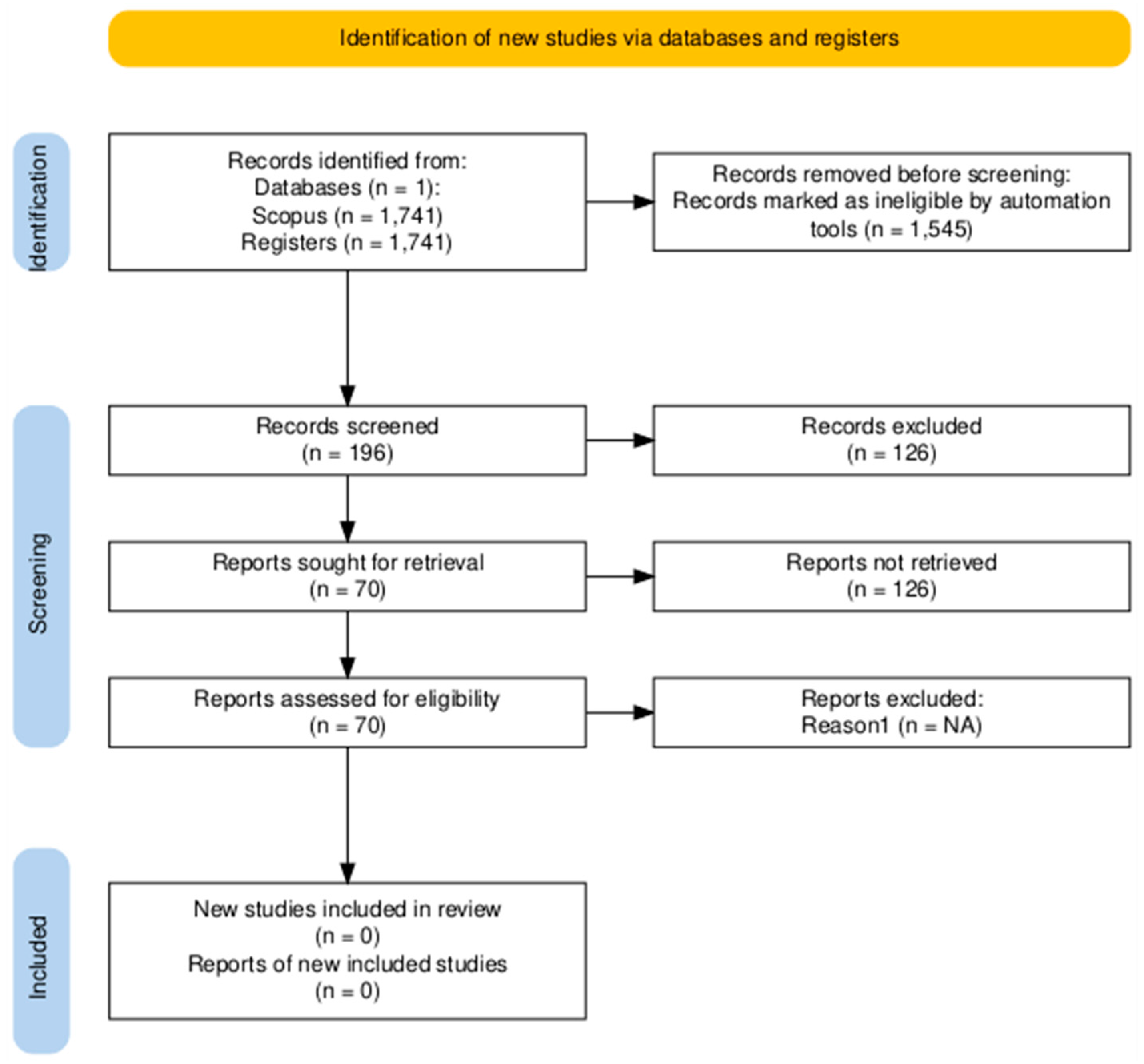
Figure 2.
Documents by year.
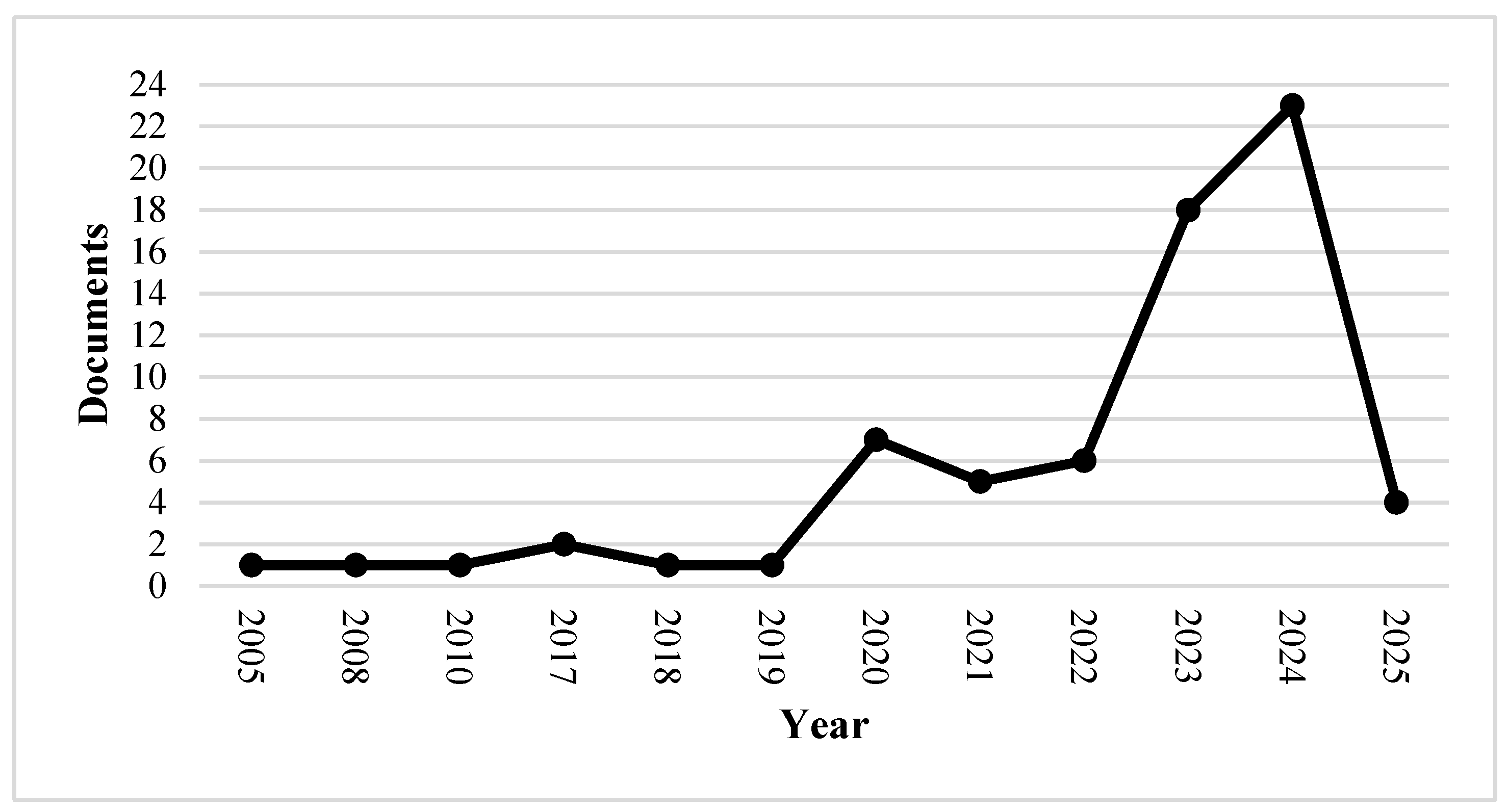
Figure 3.
Scientific production by country.
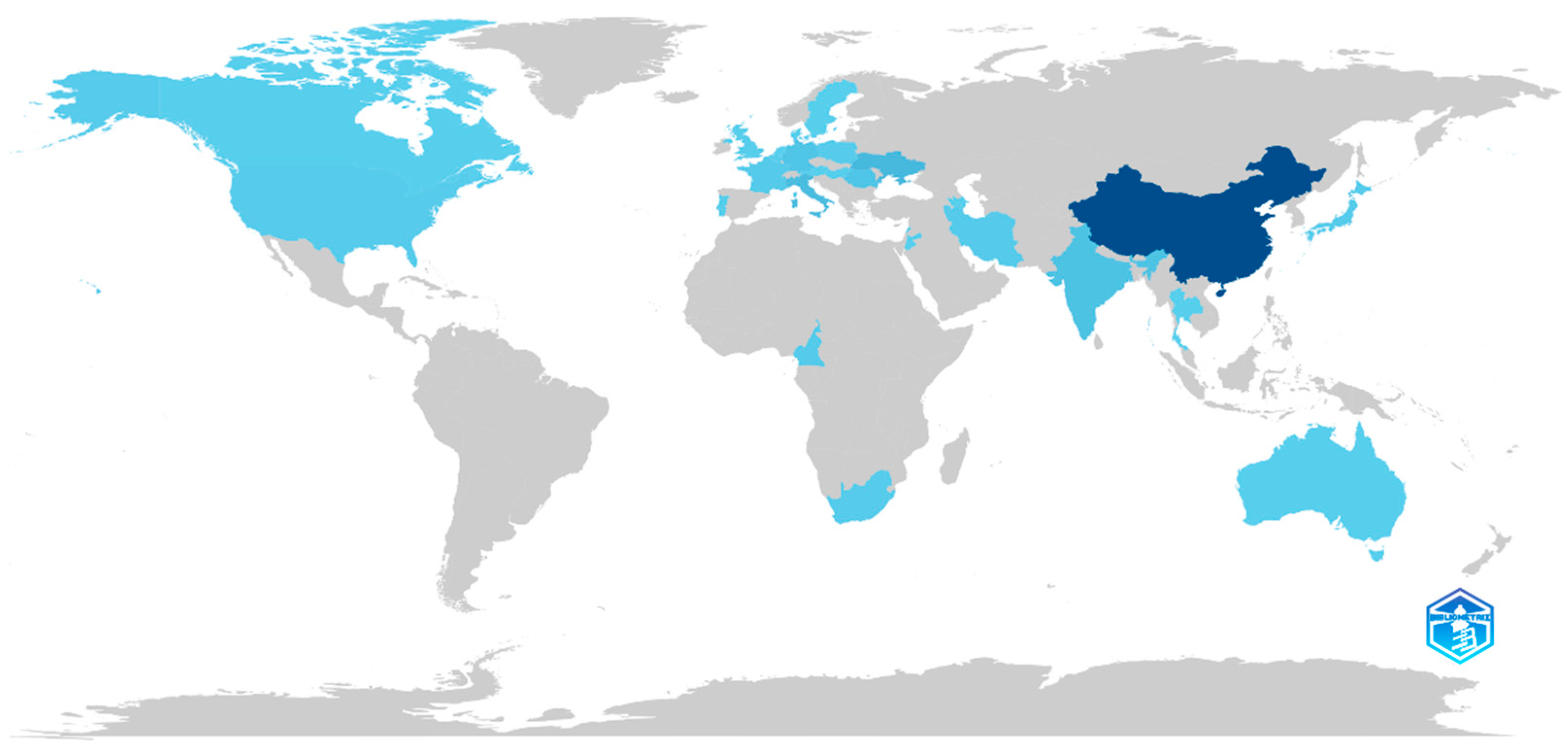
Figure 4.
Core sources by Bradford`s law (2002-2025).
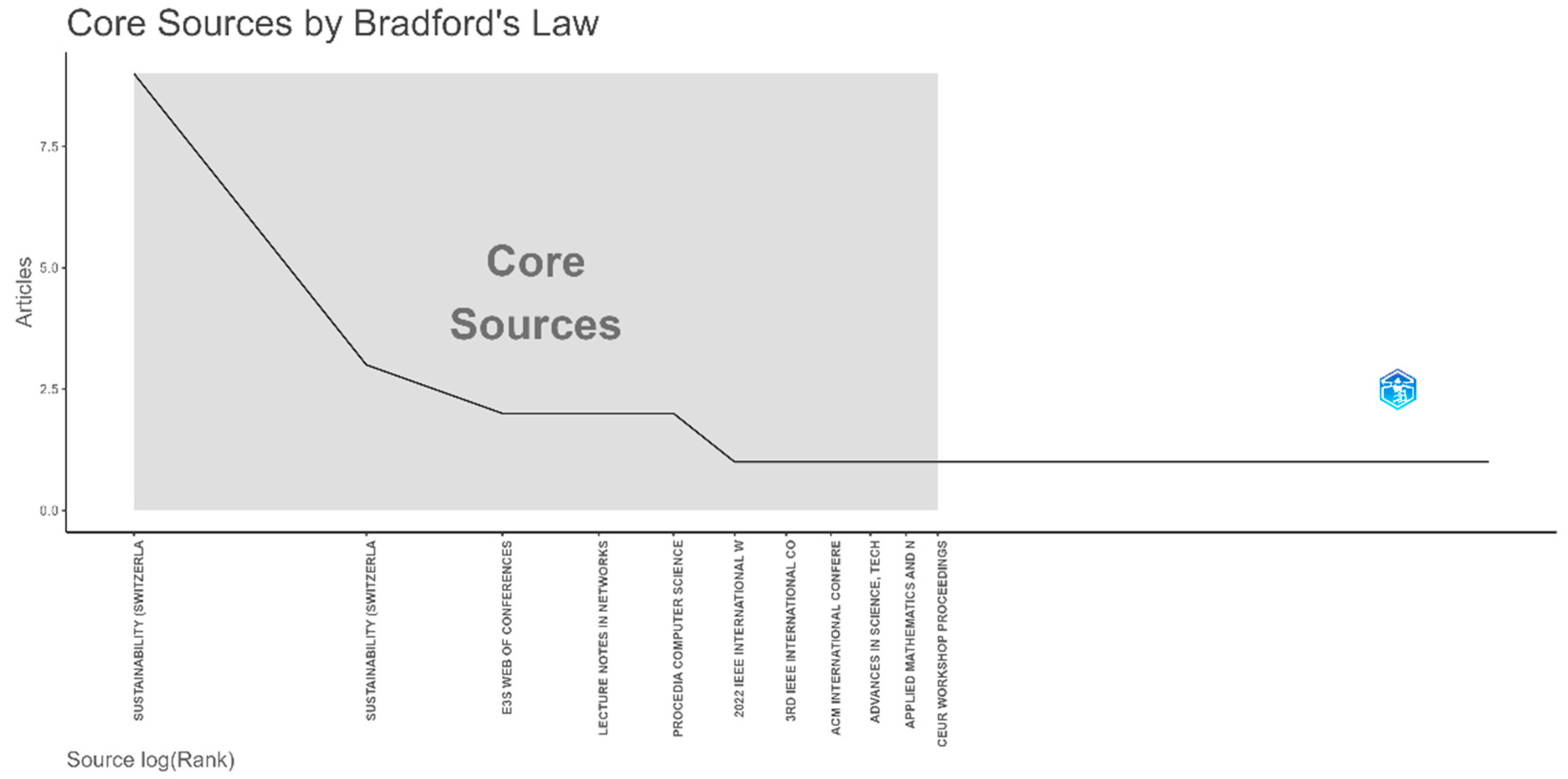
Figure 5.
Evolution of citations between ≤2015 and 2025.
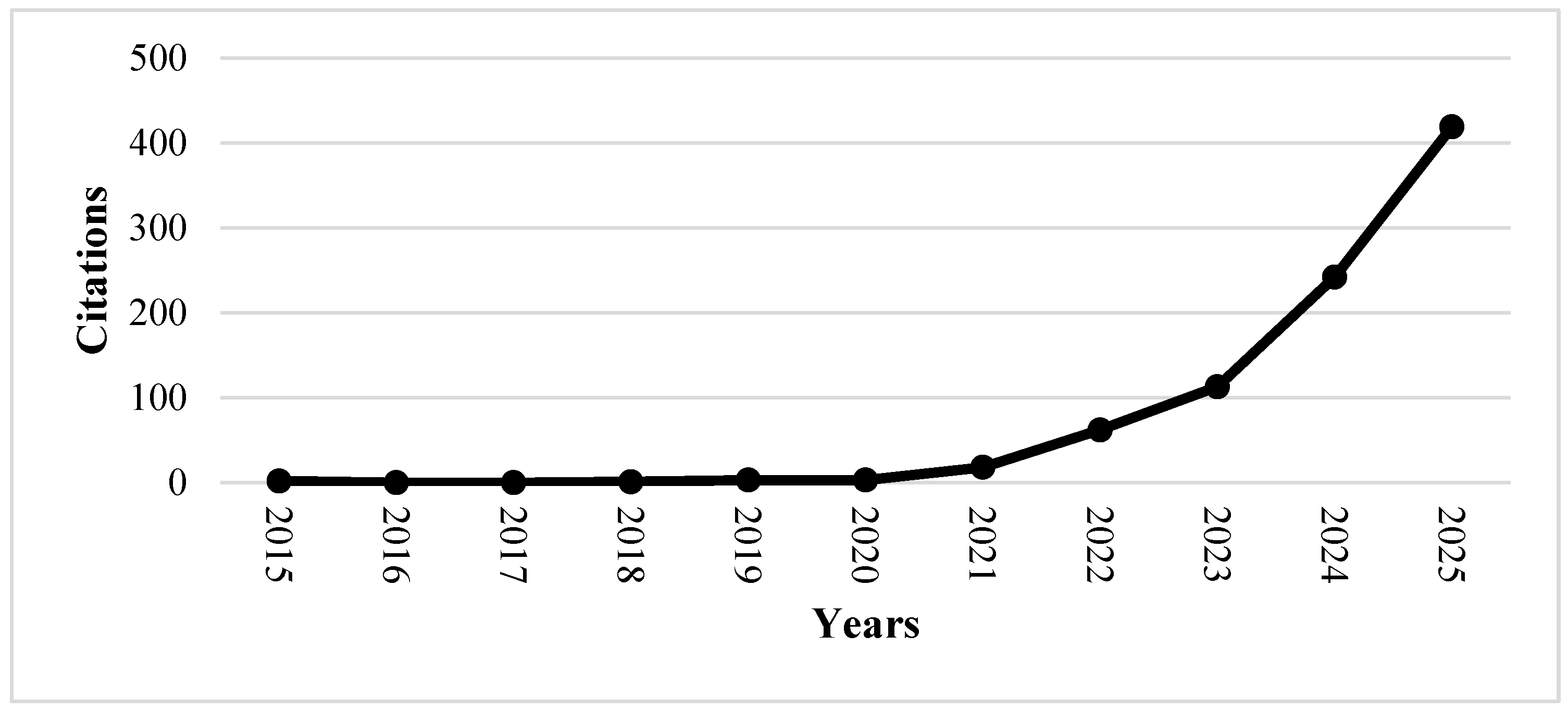
Figure 6.
Network of all keywords.
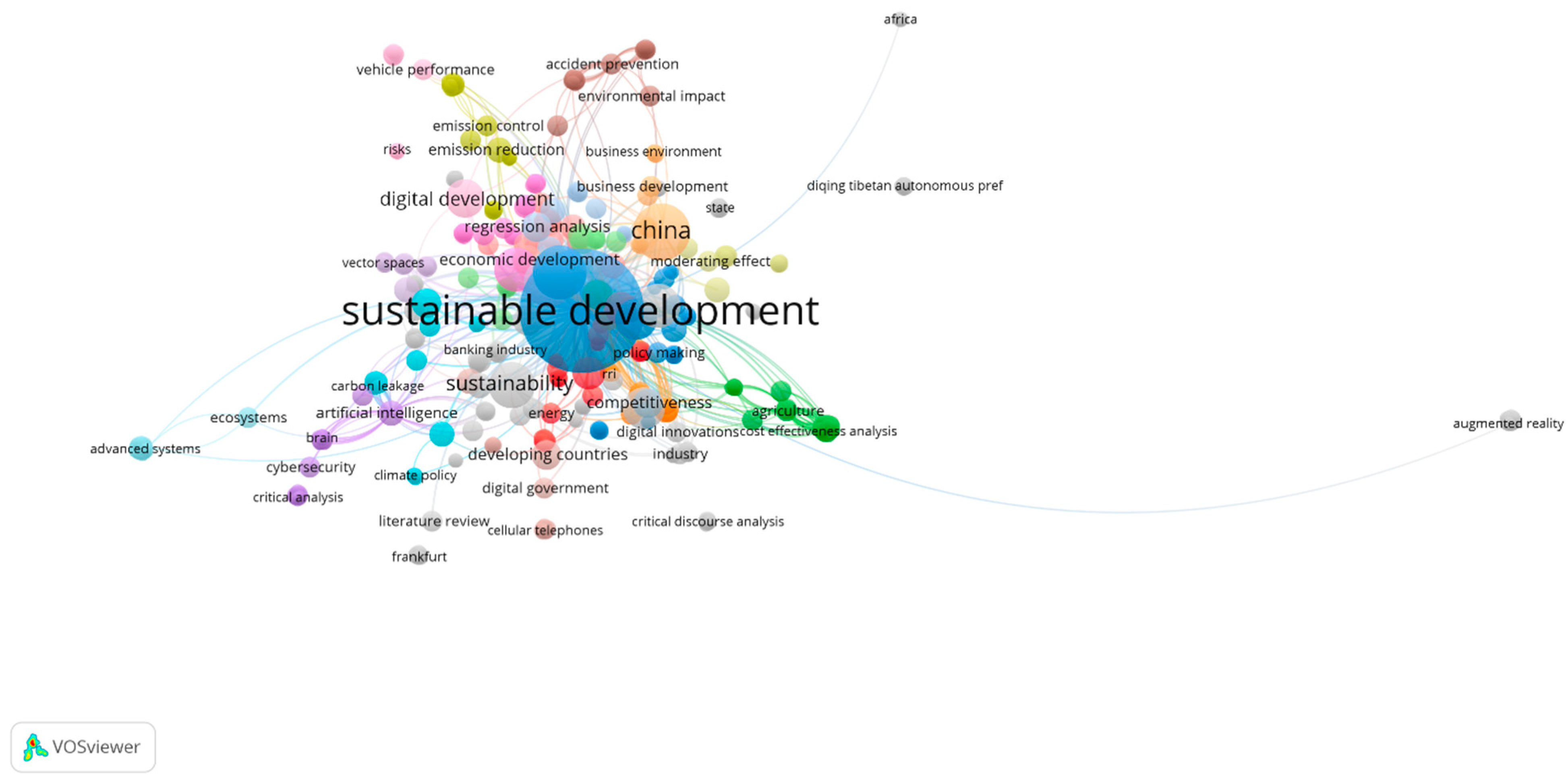
Figure 7.
Three fields plot analysis (AU=authors, CR=references, DE=authors keywords).
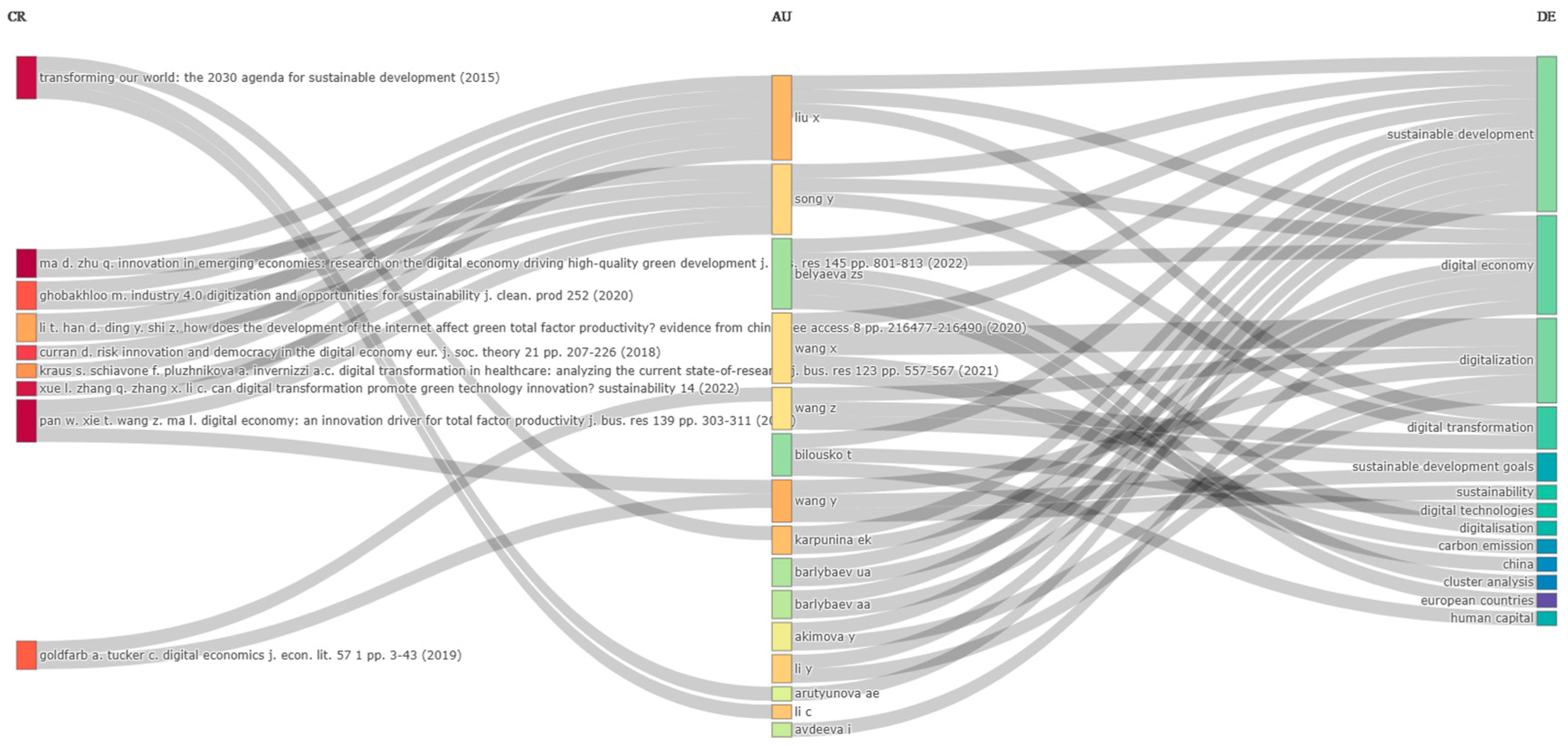
Figure 9.
Network of Linked Keywords.
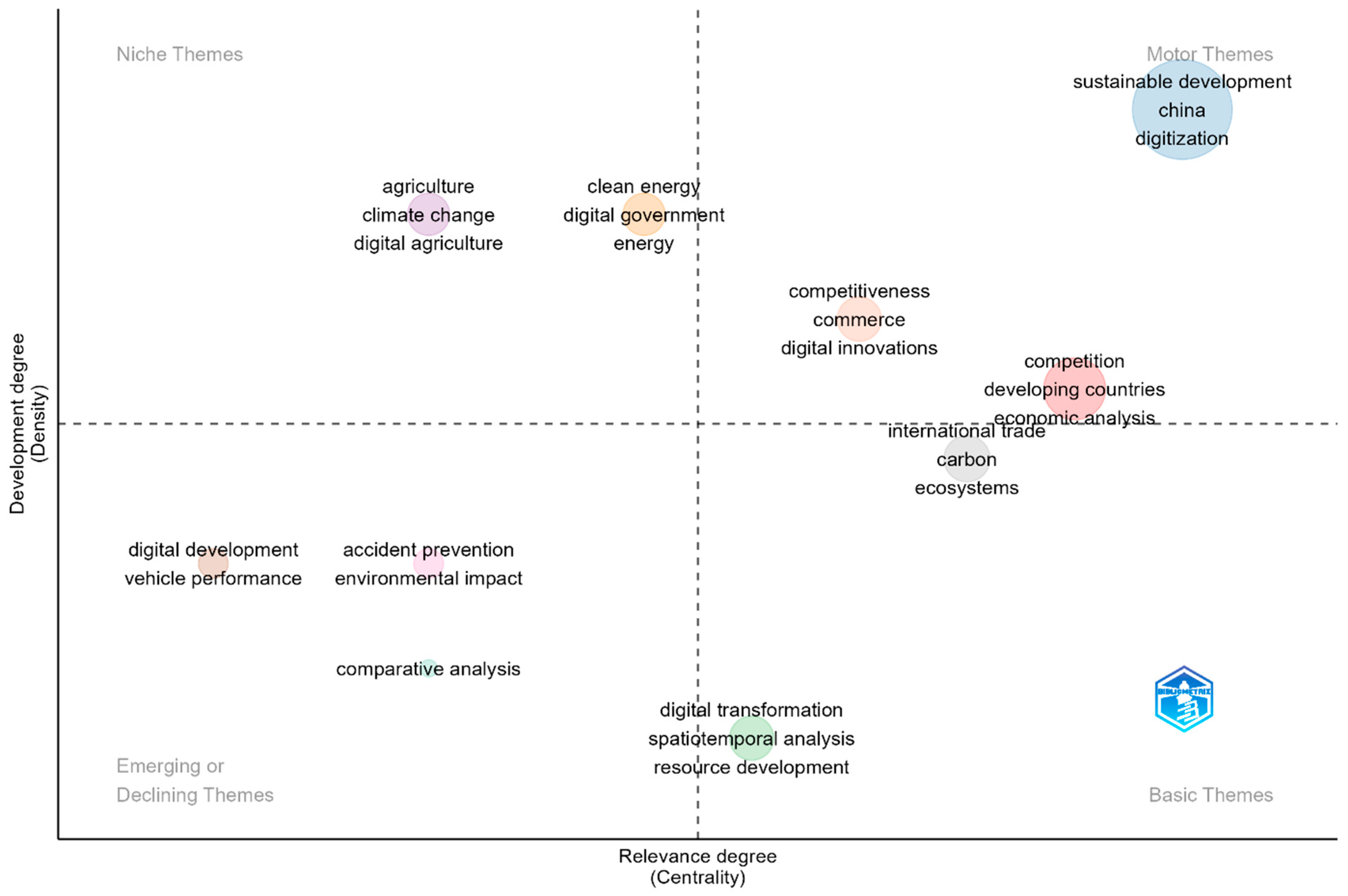
Figure 10.
Network of co-citation.
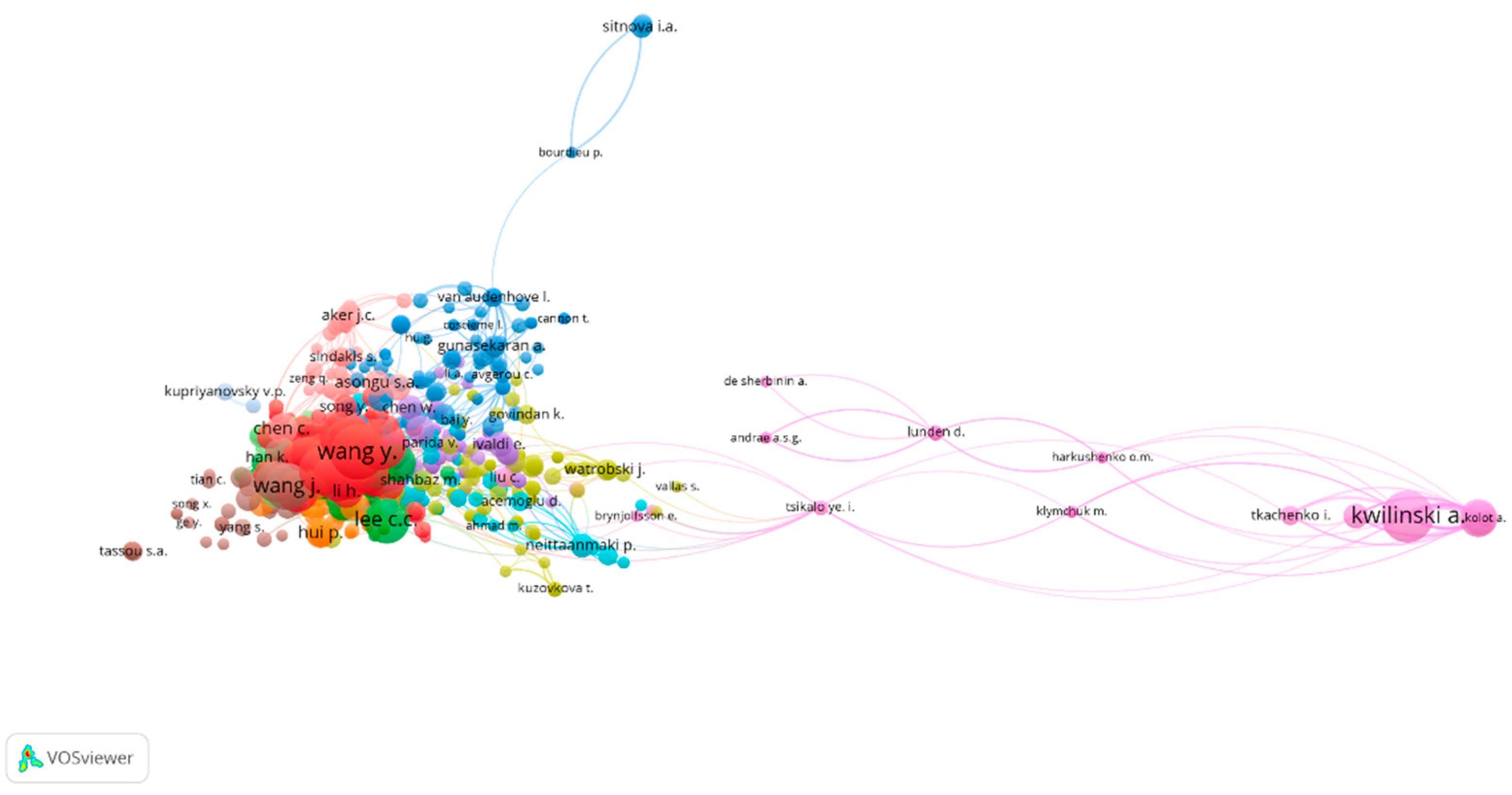
Figure 11.
Components of sustainable development [22].
Figure 11.
Components of sustainable development [22].
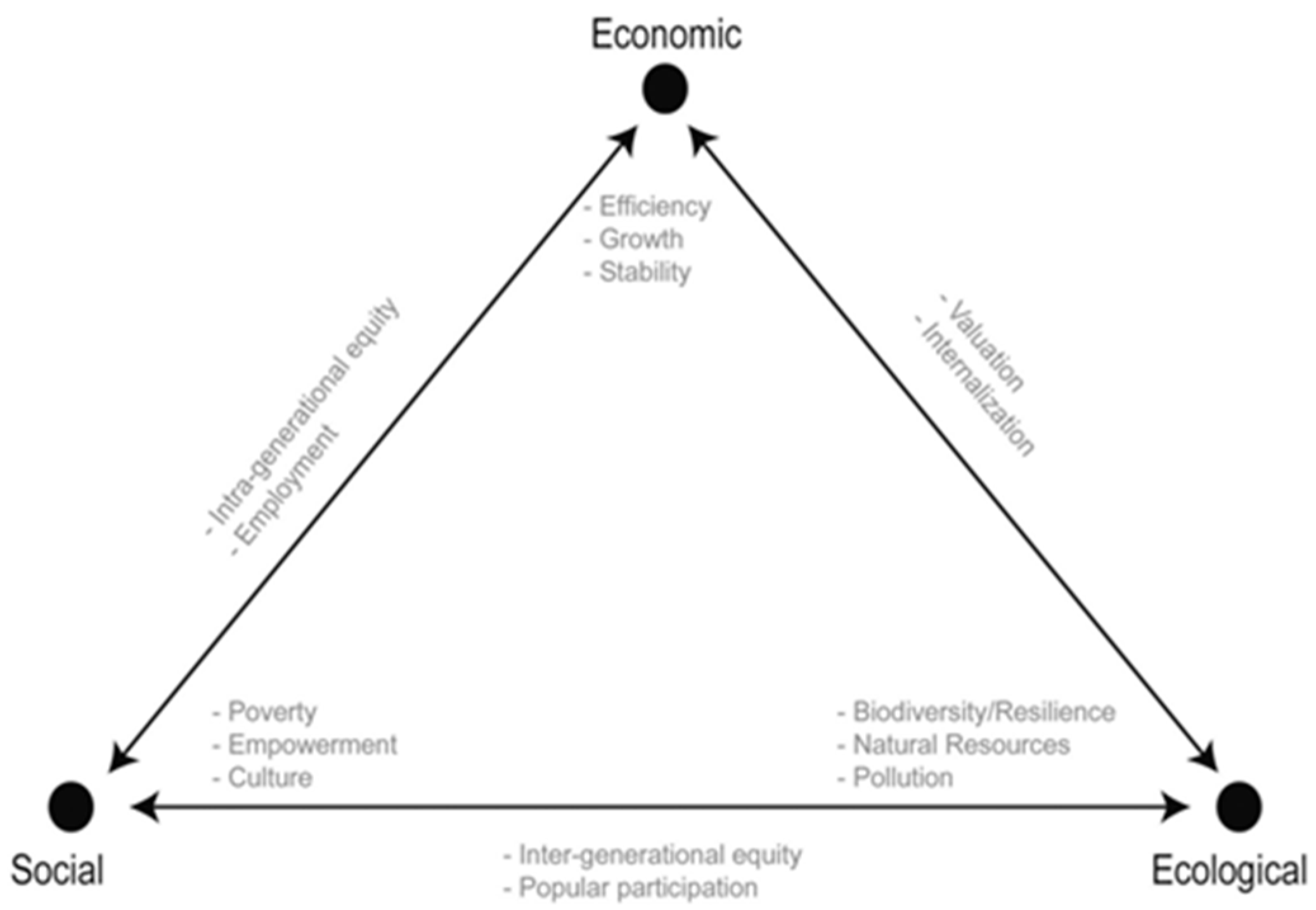
Figure 12.
Sustainable Development Goals (SDGs), [25].
Figure 12.
Sustainable Development Goals (SDGs), [25].
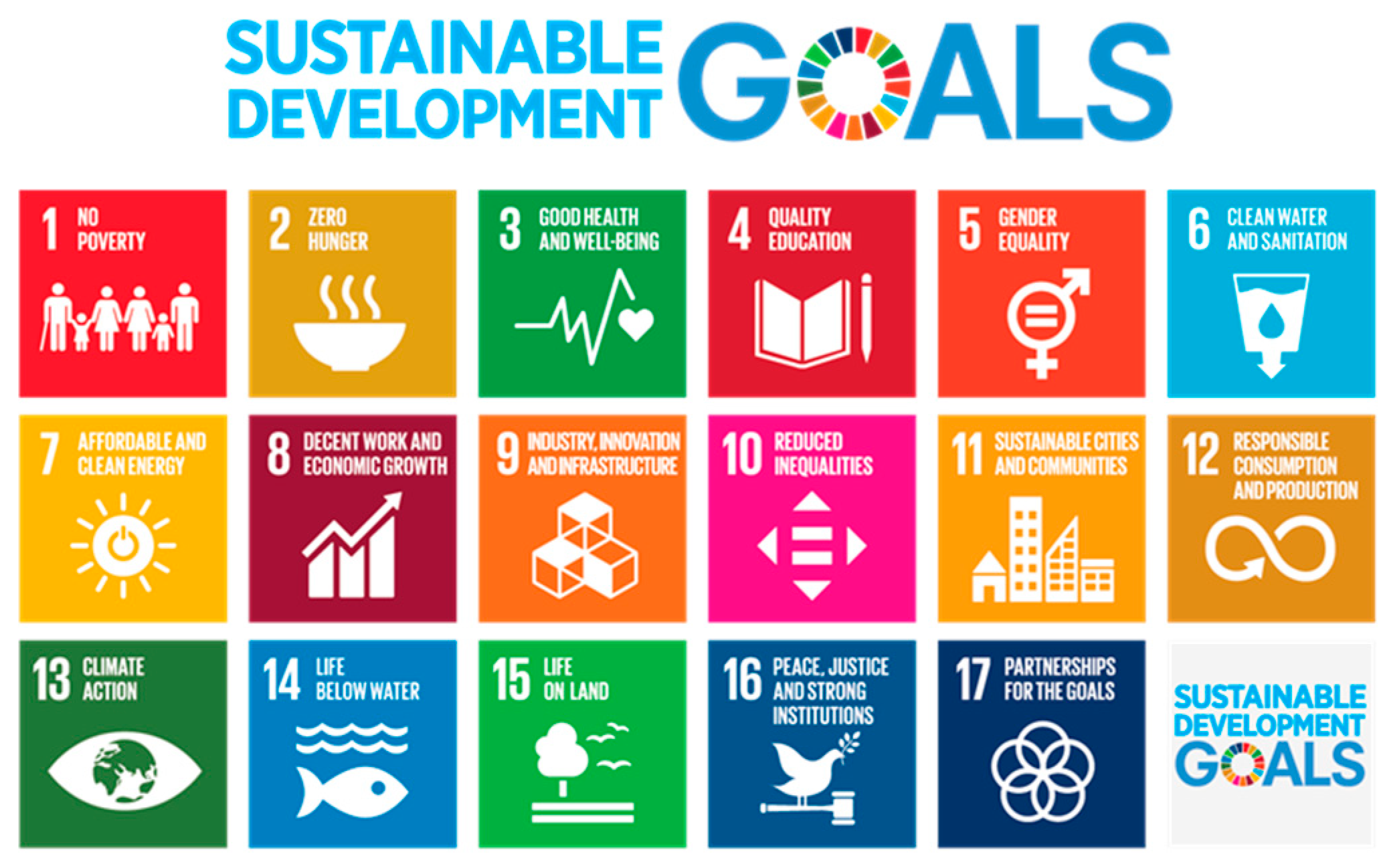
Figure 13.
SDITIDA framework by Harfouche et al. [2].
Figure 13.
SDITIDA framework by Harfouche et al. [2].
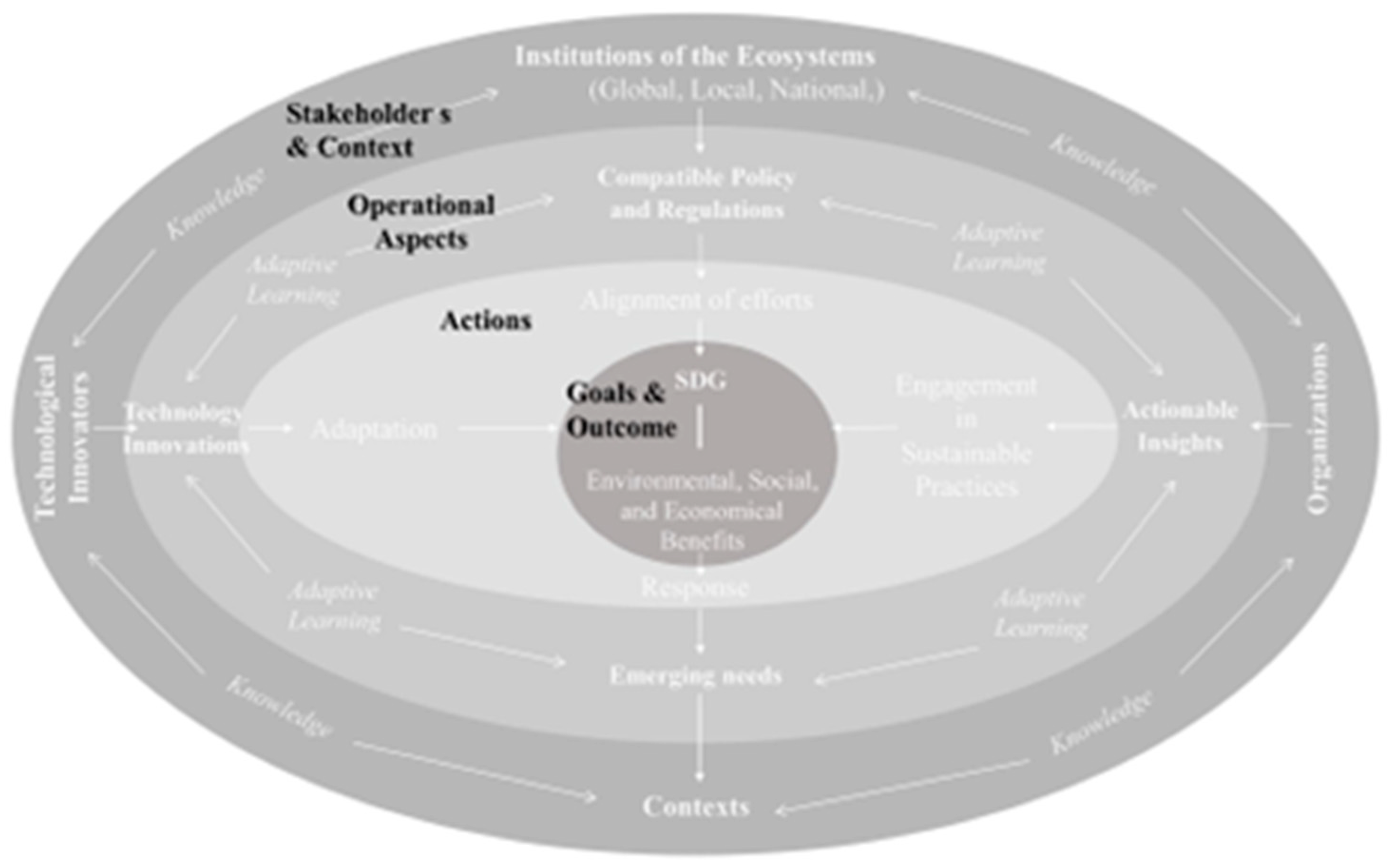
Figure 14.
Layers of blockchain technology [46].
Figure 14.
Layers of blockchain technology [46].
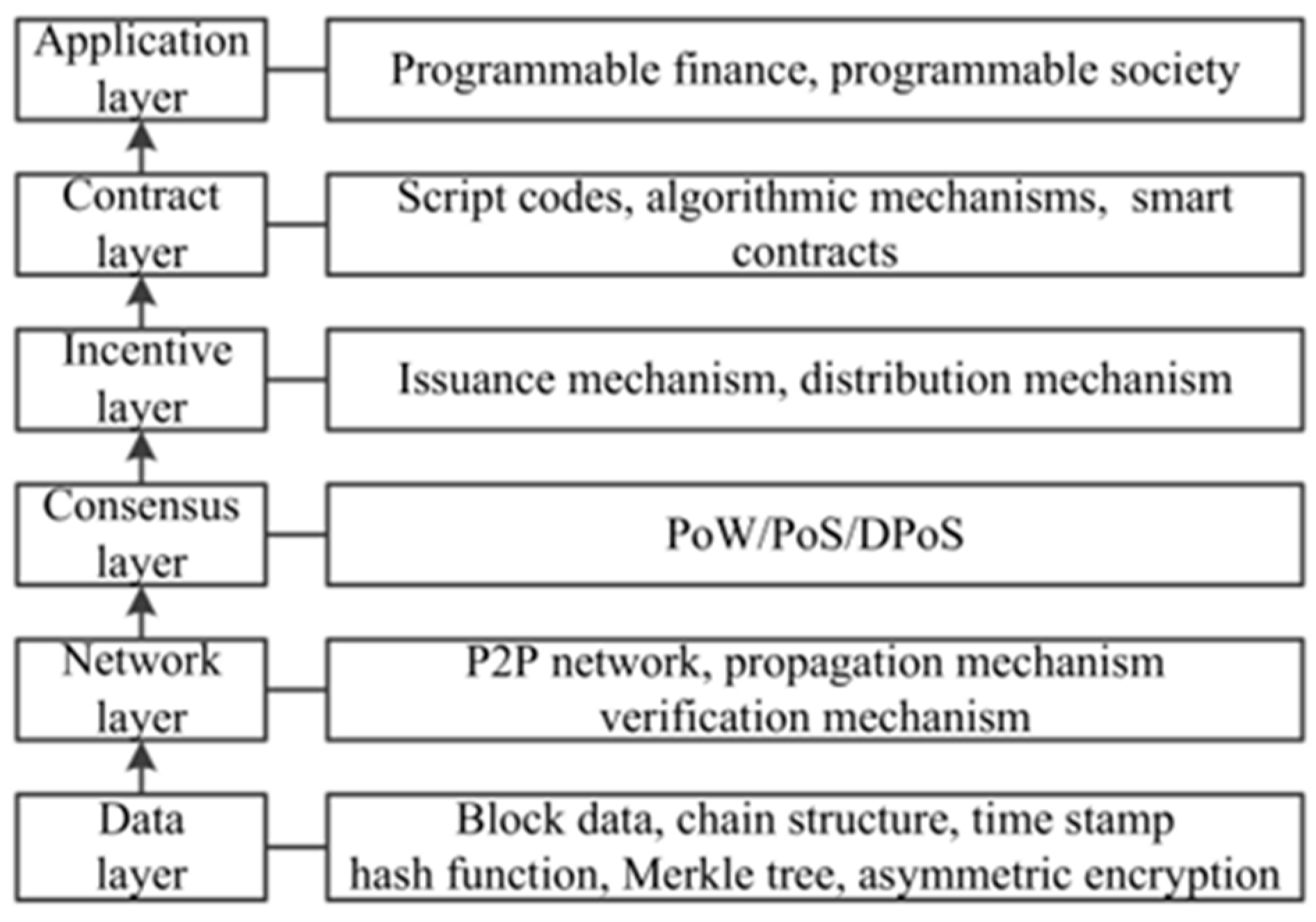
Table 1.
Process of systematic LRSB.
| Fase | Step | Description |
| Exploration | Step 1 | Formulating the research problem |
| Step 2 | Searching for appropriate literature | |
| Step 3 | Critical appraisal of the selected studies | |
| Step 4 | Data synthesis from individual sources | |
| Interpretation | Step 5 | Reporting findings and recommendations |
| Communication | Step 6 | Presentation of the LRSB report |
Source: own elaboration.
Table 2.
Screening Methodology.
| Database Scopus | Screening | Publications |
| Meta-search | Keyword: Digital Development | 1,741 |
| Inclusion Criterion | Keyword: Digital Development, Sustainable | 196 |
| Second Inclusion Criterion |
Keyword: Digital Development, Sustainable Exact Keyword: Sustainable Development |
70 |
| Screening | Keyword: Digital Development, Sustainable Exact Keyword: Sustainable Development Until March 2025 |
Source: own elaboration.
Table 3.
Top 10 countries by number of publications.
| Country | Number of Publications |
| CHINA | 94 |
| UKRAINE | 16 |
| ITALY | 13 |
| INDIA | 9 |
| GERMANY | 8 |
| ROMANIA | 8 |
| CAMEROON | 4 |
| FRANCE | 4 |
| IRAN | 4 |
| JAPAN | 3 |
Source: own elaboration.
Disclaimer/Publisher’s Note: The statements, opinions and data contained in all publications are solely those of the individual author(s) and contributor(s) and not of MDPI and/or the editor(s). MDPI and/or the editor(s) disclaim responsibility for any injury to people or property resulting from any ideas, methods, instructions or products referred to in the content. |
© 2025 by the authors. Licensee MDPI, Basel, Switzerland. This article is an open access article distributed under the terms and conditions of the Creative Commons Attribution (CC BY) license (http://creativecommons.org/licenses/by/4.0/).
Copyright: This open access article is published under a Creative Commons CC BY 4.0 license, which permit the free download, distribution, and reuse, provided that the author and preprint are cited in any reuse.


