

Submitted:
16 December 2025
Posted:
18 December 2025
You are already at the latest version
Abstract
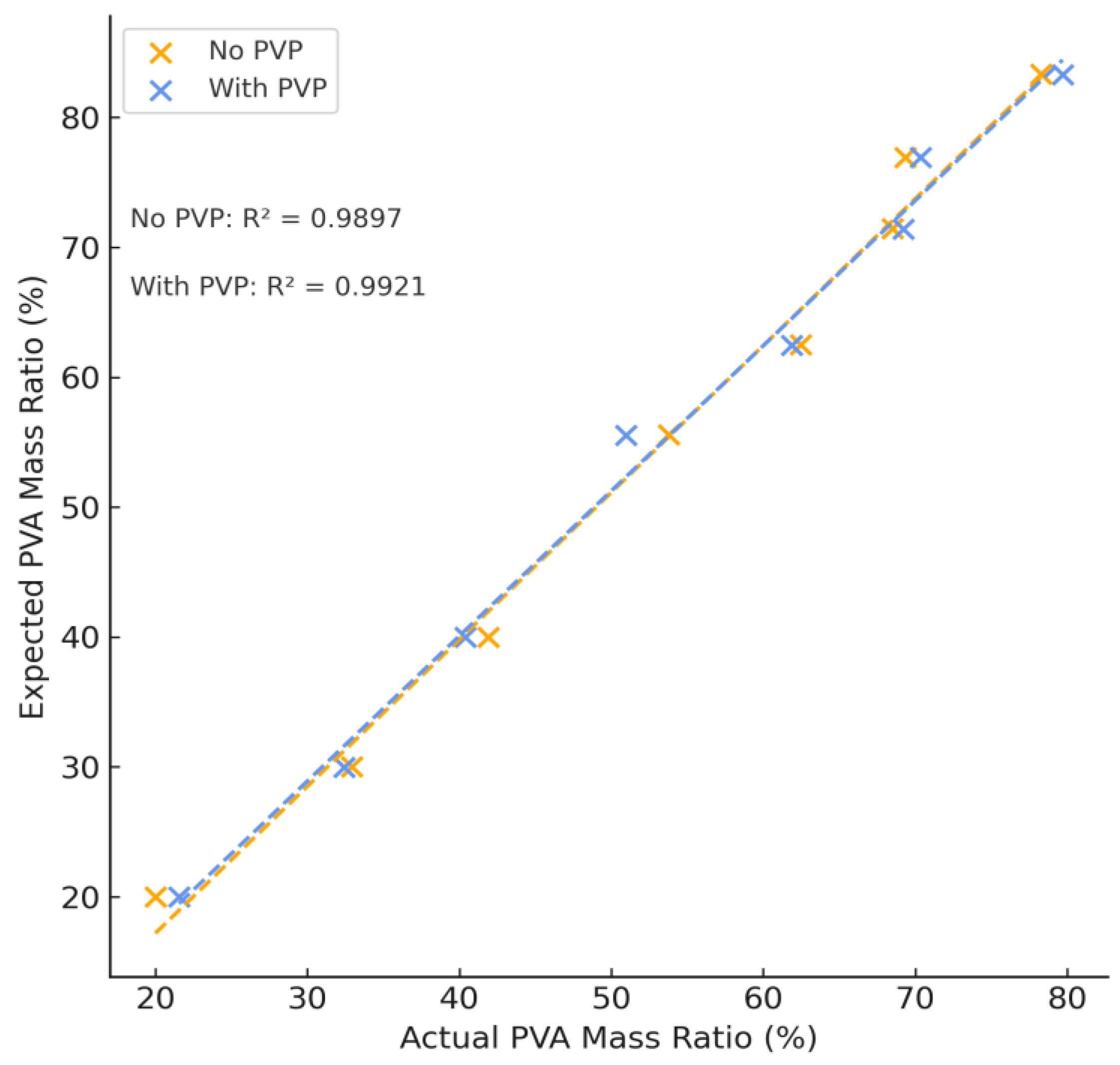
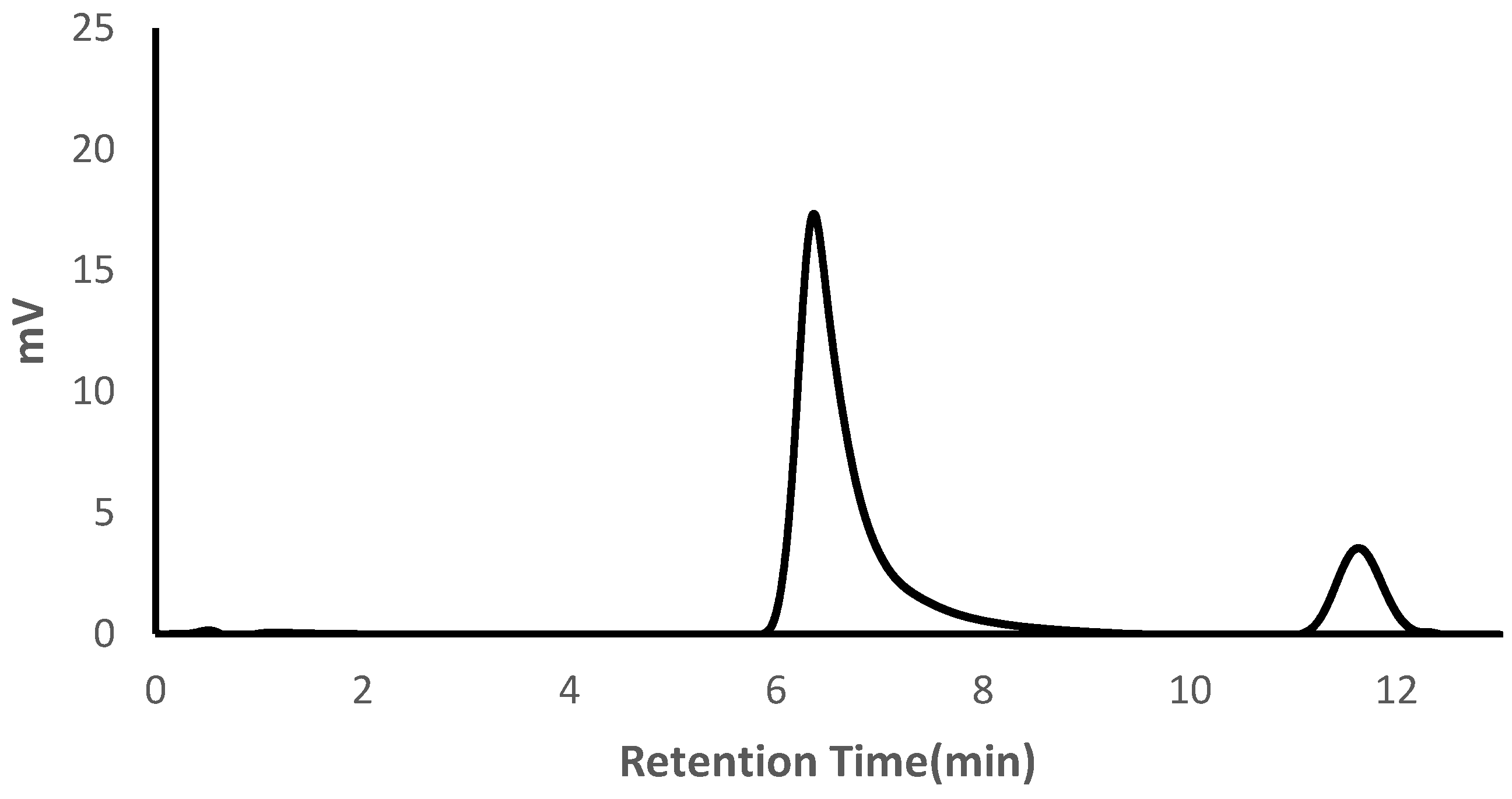
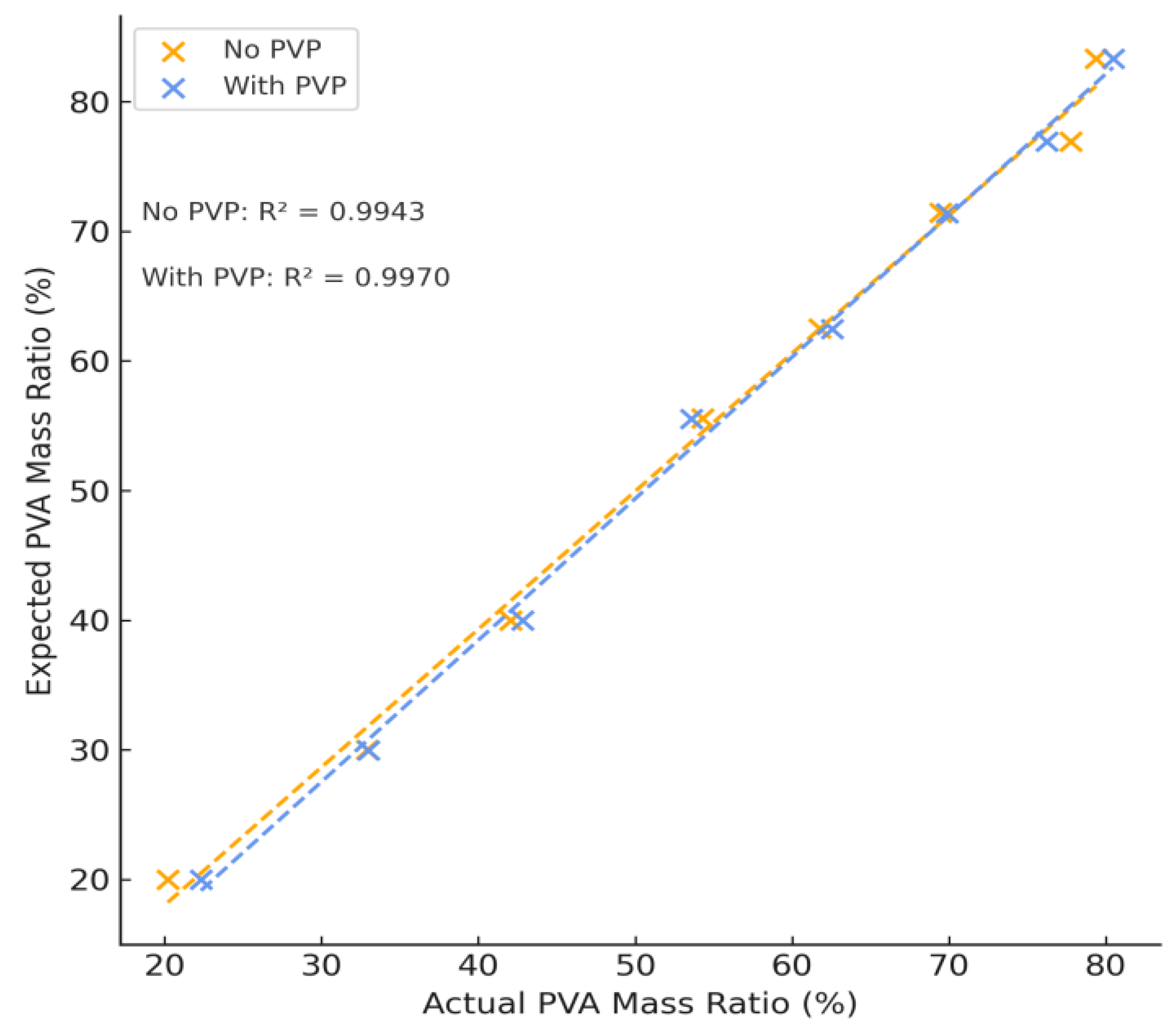
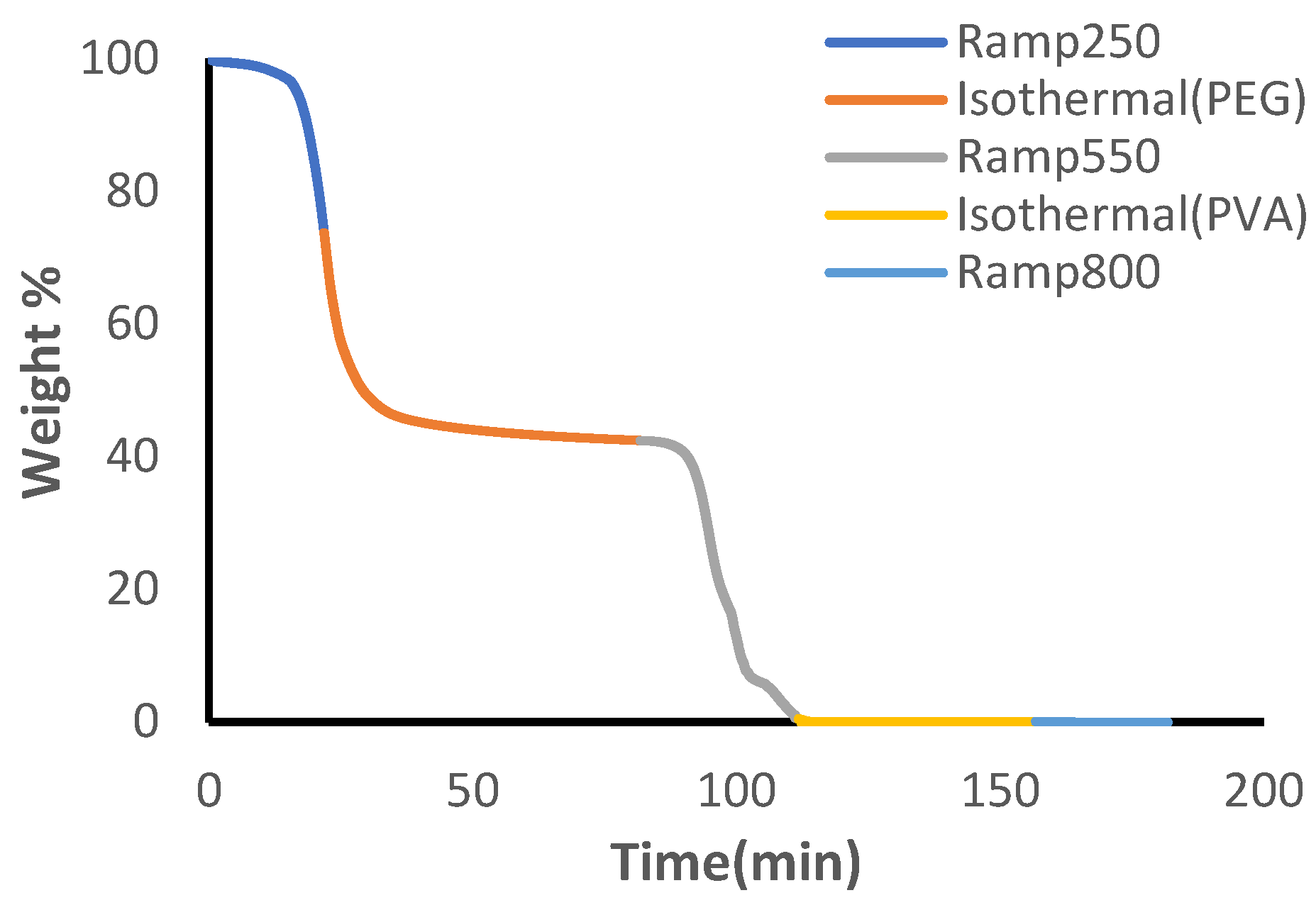
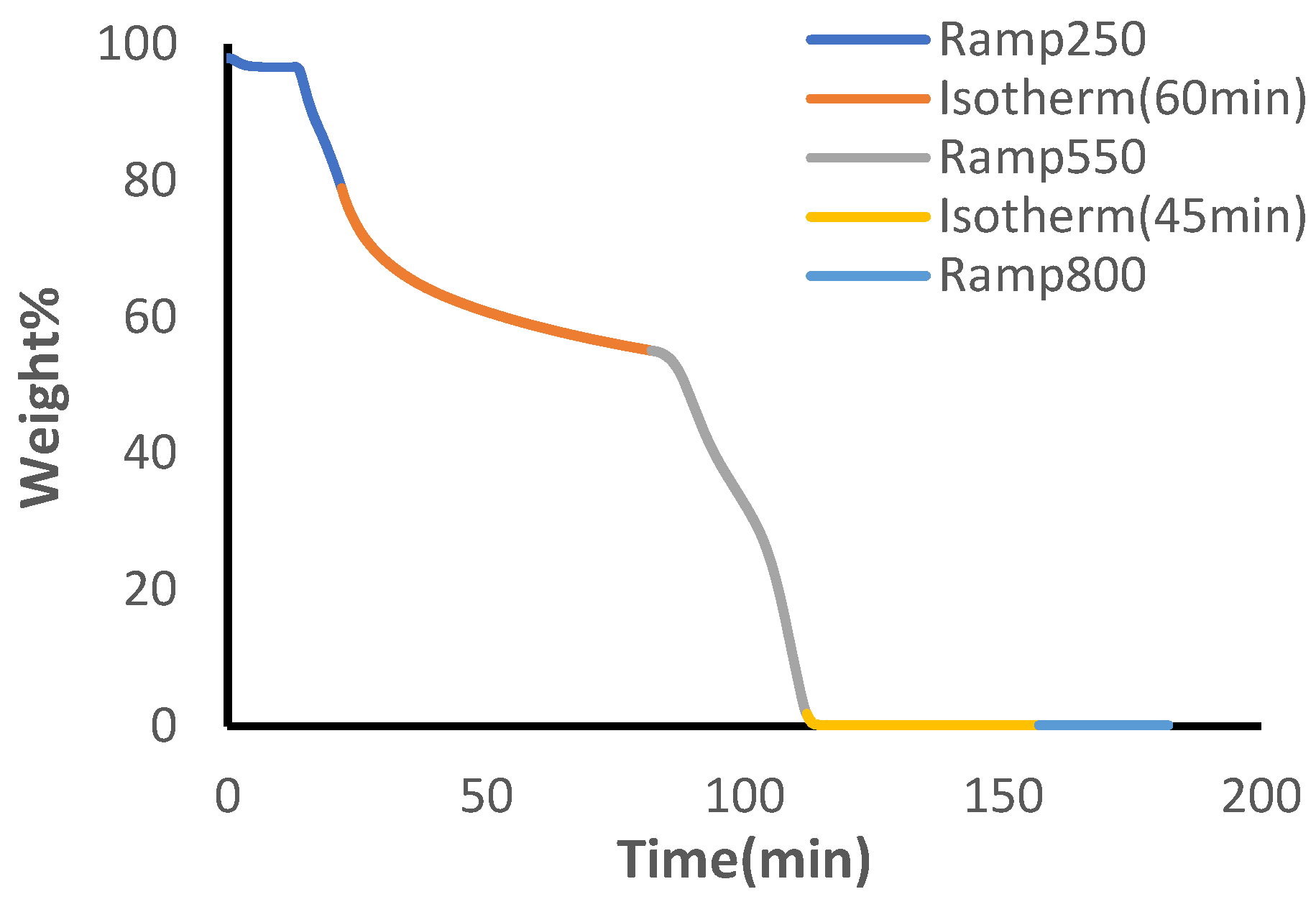
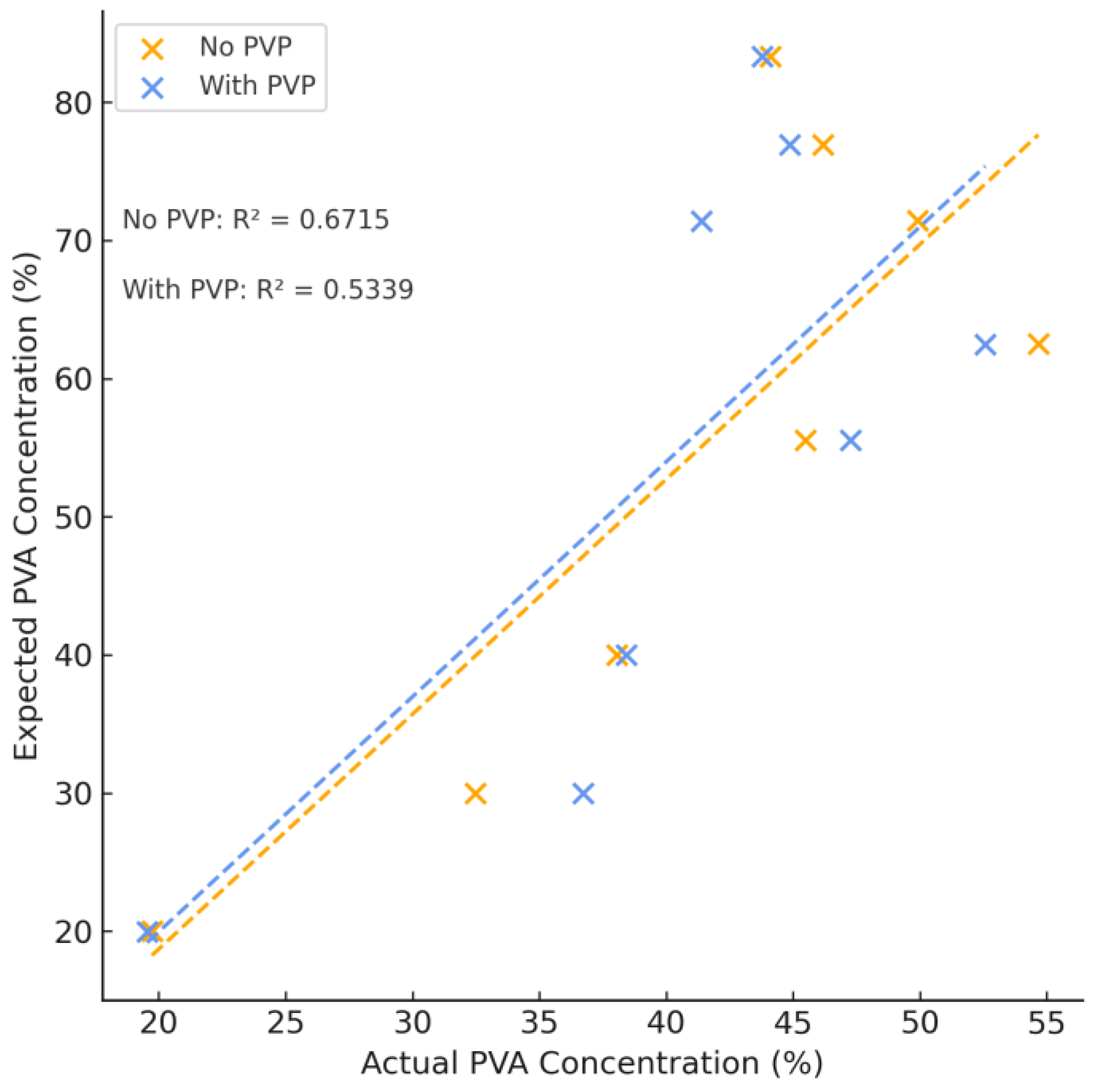
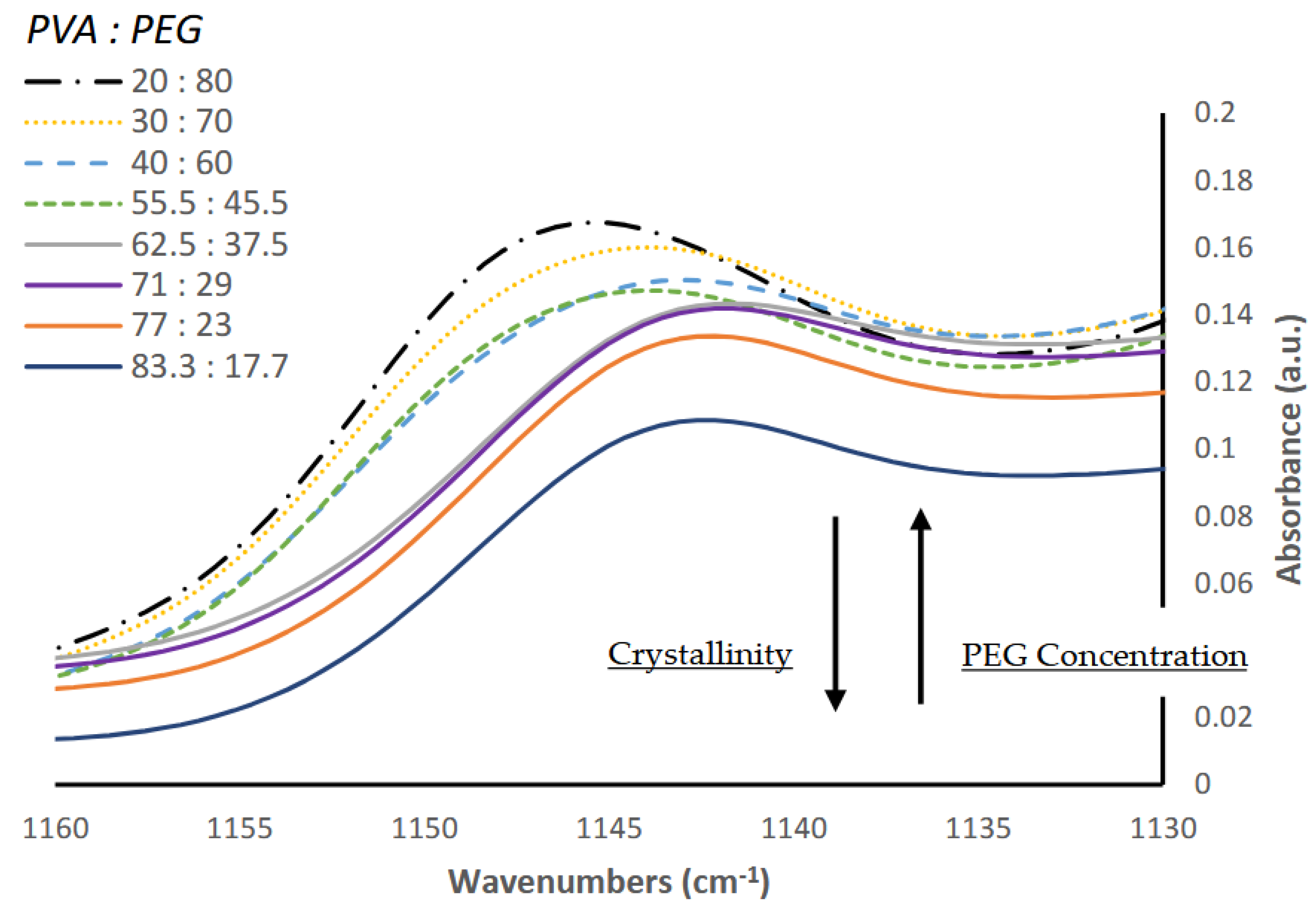
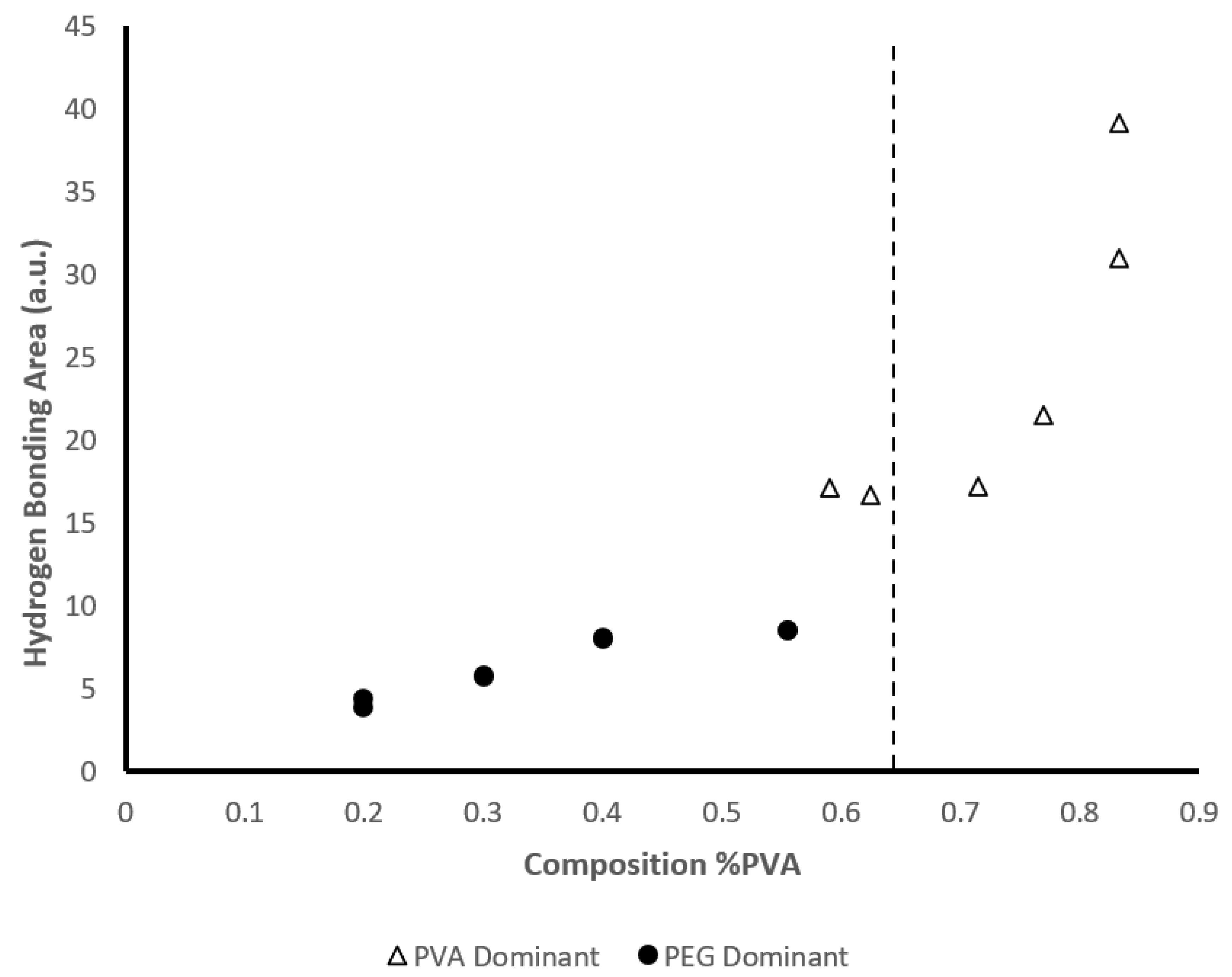
Multi-component polymer hydrogels present complex physiochemical interactions that make accurate compositional analysis challenging. This study evaluates three analytical techniques: Nuclear Magnetic Resonance (NMR), Advanced Polymer Chromatography (APC), and Thermogravimetric Analysis (TGA) to quantify polyvinyl alcohol (PVA) and polyethylene glycol (PEG) content in hybrid freeze-thaw derived PVA/PEG/PVP hydrogels. Hydrogels were synthesized using an adapted freeze–thaw method across a wide range of PVA:PEG ratios, with PVP included at 1 wt% to assess potential intermolecular effects. NMR and APC reliably quantified polymer content with low average errors of 2.77% and 2.01%, respectively, and were unaffected by phase separation or hydrogen bonding within the composite matrix. TGA enabled accurate quantification at PVA contents ≤62.5%, where PEG and PVA maintained distinct thermal decomposition behaviors. At higher PVA concentrations, increased hydrogen bonding and crystalline restructuring, confirmed by FTIR through shifts near 1140 cm⁻¹ and significant changes in the –OH region, altered thermal profiles and reduced TGA accuracy. Together, these findings establish APC as a high-throughput alternative to NMR for multi-component polymer analysis and outline critical thermal and structural thresholds that influence TGA-based quantification. This work provides a framework for characterizing complex polymer networks in biomedical hydrogel systems.
Keywords:
1. Introduction
2. Materials and Methods
2.1. Materials
2.2. Hydrogel Preparation
2.3. Polymer Compositional Analysis
2.3.1. NMR
2.3.2. APC
2.3.3. PVA/PEG Hydrogel Component Analysis Through the Use of TGA
2.3.4. FTIR
3. Results
3.1. NMR
3.2. APC
3.3. PVA/PEG Hydrogel Component Analysis Through the Use of TGA
3.4. FTIR
4. Discussion
5. Conclusions
Supplementary Materials
Author Contributions
Funding
Institutional Review Board Statement
Data Availability Statement
Conflicts of Interest
Abbreviations
| PVA | Polyvinyl Alcohol |
| PEG | Polyethylene Glycol |
| PVP | Polyvinylpyrrolidone |
| NMR | Nuclear Magnetic Resonance |
| APC | Advanced Polymer Chemistry |
| FTIR | Fourier Transform Infrared Spectroscopy |
| TGA | Thermal Gravimetric Analysis |
References
- C. M. Hassan and N. A. Peppas, “Structure and applications of poly(vinyl alcohol) hydrogels produced by conventional crosslinking or by freezing/thawing methods,” 2000. [CrossRef]
- C. M. Hassan and N. A. Peppas, “Structure and Applications of Poly(vinyl alcohol) Hydrogels Produced by Conventional Crosslinking or by Freezing/Thawing Methods,” in Biopolymers · PVA Hydrogels, Anionic Polymerisation Nanocomposites. Advances in Polymer Science, vol. 153, Berlin, Heidelberg.: Springer, Berlin, Heidelberg, 2000, ch. 2, pp. 37–65. [CrossRef]
- J. D. Thomas, “Novel Associated PVA/PVP Hydrogels for Nucleus Pulposus Replacement,” 2001.
- Y. Liu, L. M. Geever, J. E. Kennedy, C. L. Higginbotham, P. A. Cahill, and G. B. McGuinness, “Thermal behavior and mechanical properties of physically crosslinked PVA/Gelatin hydrogels,” J Mech Behav Biomed Mater, vol. 3, no. 2, 2010. [CrossRef]
- J. W. Ruberti and G. J. C. Braithwaite, “Systems and methods for controlling and forming polymer gels,” 20040092653, Feb. 2010.
- I. Inamura, “Liquid-liquid phase separation and gelation in the poly(vinyl alcohol)-poly(ethylene glycol)-water system. dependence on molecular weight of poly(ethylene glycol),” Polym J, vol. 18, no. 3, pp. 269–272, 1986. [CrossRef]
- L. Y. Lim and L. S. C. Wan, “The effect of plasticizers on the properties of polyvinyl alcohol films,” Drug Dev Ind Pharm, vol. 20, no. 6, pp. 1007–1020, 1994. [CrossRef]
- S. P. O. Danielsen et al., “Molecular Characterization of Polymer Networks,” Chem Rev, vol. 121, no. 8, pp. 5042–5092, 2021. [CrossRef]
- B. H. Stuart, Polymer Analysis. 2007. [CrossRef]
- Y. Tanaka, Y. Takeuchi, M. Kobayashi, and H. Tadokoro, “Characterization of diene polymers. I. Infrared and NMR studies: Nonadditive behavior of characteristic infrared bands,” Journal of Polymer Science Part A-2: Polymer Physics, vol. 9, no. 1, 1971. [CrossRef]
- A. M. Striegel, “Method development in interaction polymer chromatography,” 2020. [CrossRef]
- Roy et al., “Development of Comprehensive Two-Dimensional High Temperature Liquid Chromatography x Gel Permeation Chromatography for Characterization of Polyolefins,” Macromolecules, vol. 43, no. 8, 2010. [CrossRef]
- S. R. Stauffer and N. A. Peppast, “Poly(vinyl alcohol) hydrogels prepared by freezing-thawing cyclic processing,” Polymer (Guildf), vol. 33, no. 18, 1992. [CrossRef]
- V. LaMastro, E. Brewer, and A. Lowman, “Crystallinity, reversibility, and injectability of physically crosslinked poly(vinyl alcohol) and poly(ethylene glycol) hydrogels,” J Appl Polym Sci, vol. 137, no. 25, 2020. [CrossRef]
- J. Almond, P. Sugumaar, M. N. Wenzel, G. Hill, and C. Wallis, “Determination of the carbonyl index of polyethylene and polypropylene using specified area under band methodology with ATR-FTIR spectroscopy,” E-Polymers, vol. 20, no. 1, pp. 369–381, 2020. [CrossRef]
- D. A. Ossipov, K. Brännvall, K. Forsberg-Nilsson, and J. Hilborn, “Formation of the first injectable poly (vinyl alcohol) hydrogel by mixing of functional PVA precursors,” J Appl Polym Sci, vol. 106, no. 1, pp. 60–70, Oct. 2007. [CrossRef]
- S. G. Rotman, T. F. Moriarty, B. Nottelet, D. W. Grijpma, D. Eglin, and O. Guillaume, “Poly(Aspartic acid) functionalized poly(ϵcaprolactone) microspheres with enhanced hydroxyapatite affinity as bone targeting antibiotic carriers,” Pharmaceutics, vol. 12, no. 9, pp. 1–17, Sep. 2020. [CrossRef]
- S. Zou et al., “Enhanced apoptosis of ovarian cancer cells via nanocarrier-mediated codelivery of siRNA and doxorubicin,” Int J Nanomedicine, vol. 7, pp. 3823–3835, 2012. [CrossRef]
- T. Wang et al., “In situ gelation behavior of thermoresponsive poly(N-vinylpyrrolidone)/poly(N-isopropylacrylamide) microgels synthesized by soap-free emulsion polymerization,” Polymer Bulletin, vol. 75, no. 10, 2018. [CrossRef]
- A. Petrova et al., “Magnetic Resonance Based Analytical Tools to Study Polyvinylpyrrolidone—Hydroxyapatite Composites,” Oct. 09, 2023. [CrossRef]
- H. S. Mansur, C. M. Sadahira, A. N. Souza, and A. A. P. Mansur, “FTIR spectroscopy characterization of poly (vinyl alcohol) hydrogel with different hydrolysis degree and chemically crosslinked with glutaraldehyde,” Materials Science and Engineering C, vol. 28, no. 4, pp. 539–548, 2008. [CrossRef]
- M. I. Mohammed and F. El-Sayed, “PEG’s impact as a plasticizer on the PVA polymer’s structural, thermal, mechanical, optical, and dielectric characteristics,” Opt Quantum Electron, vol. 55, no. 13, Dec. 2023. [CrossRef]
- F. H. Falqi, O. A. Bin-Dahman, M. Hussain, and M. A. Al-Harthi, “Preparation of miscible PVA/PEG blends and effect of graphene concentration on thermal, crystallization, morphological, and mechanical properties of PVA/PEG (10wt%) blend,” Int J Polym Sci, vol. 2018, 2018. [CrossRef]
- S. B. Chakrapani, M. J. Minkler, and B. S. Beckingham, “Low-field 1H-NMR spectroscopy for compositional analysis of multicomponent polymer systems,” Analyst, vol. 144, no. 5, 2019. [CrossRef]
- J. U. Izunobi and C. L. Higginbotham, “Polymer molecular weight analysis by 1H NMR spectroscopy,” J Chem Educ, vol. 88, no. 8, 2011. [CrossRef]
- D. Sainju, R. Lucas, and A. Le Gresley, “Evaluation of nuclear magnetic resonance spectroscopy for characterisation and quantitation of water-soluble polymers in river water,” Water Res, vol. 245, 2023. [CrossRef]
- Y. E. Shapiro, “1H NMR self-diffusion study of morphology and structure of polyvinyl alcohol cryogels,” J Colloid Interface Sci, vol. 212, no. 2, 1999. [CrossRef]
- J. L. Valentín, D. López, R. Hernández, C. Mijangos, and K. Saalwächter, “Structure of polyvinyl alcohol cryo-hydrogels as studied by proton low-field NMR spectroscopy,” Macromolecules, vol. 42, no. 1, pp. 263–272, Jan. 2009. [CrossRef]
- G. R. da Silva et al., “PLGA-PVA-PEG Single Emulsion Method as a Candidate for Aminolevulinic Acid (5-ALA) Encapsulation: Laboratory Scaling Up and Stability Evaluation,” Molecules, vol. 27, no. 18, 2022. [CrossRef]
- J. H. Flynn and L. A. Wall, “General Treatment of the Thermogravimetry of Polymers.”.


|
With PVP |
PVA Content (wt%) | PEG Content (wt%) |
| 83.32 | 16.68 | |
| 76.91 | 23.09 | |
| 71.41 | 28.59 | |
| 62.48 | 37.52 | |
| 55.53 | 44.47 | |
| 39.98 | 60.02 | |
| 29.98 | 70.02 | |
| 19.98 | 80.02 | |
|
No PVP |
83.33 | 16.67 |
| 76.92 | 23.08 | |
| 71.43 | 28.57 | |
| 62.5 | 37.5 | |
| 55.56 | 44.44 | |
| 40 | 60 | |
| 30 | 70 | |
| 20 | 80 | |
| (Dry Mass Ratios for PVA/PVP/PEG Blends – PVP content is assumed negligible and PVA content is rounded up 0.01% in samples with “No PVP” in accordance). | ||
Disclaimer/Publisher’s Note: The statements, opinions and data contained in all publications are solely those of the individual author(s) and contributor(s) and not of MDPI and/or the editor(s). MDPI and/or the editor(s) disclaim responsibility for any injury to people or property resulting from any ideas, methods, instructions or products referred to in the content. |
© 2025 by the authors. Licensee MDPI, Basel, Switzerland. This article is an open access article distributed under the terms and conditions of the Creative Commons Attribution (CC BY) license (http://creativecommons.org/licenses/by/4.0/).