

Submitted:
14 December 2025
Posted:
16 December 2025
You are already at the latest version
Abstract
The era of green global norms and business competitiveness encourage global companies to increase marketing capability which has an impact on marketing performance. This research examines the gaps in green global norms which are often considered to have consequences for investment in innovation and has an impact on profitability. On the contrary, this pressure encourages companies to remain survive while increasing their competitiveness. This research discusses green dynamic marketing capability as a strategic resource for global companies to survive and continue to improve their competitiveness. Using panel data regression with intervening variables, a study was employed on the variables of organizational learning, green organizational identity, green innovation, green marketing and marketing performance. 40 global companies were used as research samples. Data taken from Refinitiv Eikon Thomson Reuters and Annual Report for the 2019-2023 period. The research results show: (1) the mediating role of green marketing in values transformation of organizational learning and green organizational identity ; (2) green innovation has been shown to have no significant impact on marketing performance. The results clarify the framework of green dynamic marketing capabilities as a process of value transformation of dynamic marketing capabilities to improve marketing performance.
Keywords:
organizational learning
; green organizational identity
; green innovation
; green marketing
; marketing performance
1. Introduction
On September 25, 2015, the United Nations General Assembly adopted a resolution “Transforming our world: the 2030 Agenda for Sustainable Development,” which contains an action plan for the welfare of humanity and the planet in the form of collaborative cooperation, including the affirmation of achieving 17 Sustainable Development Goals (SDGs) with 169 targets. One important aspect of sustainable development, as mentioned in Goal 15, is attention to the environment, namely protecting, renewing, and promoting the sustainable use of natural resources. (Huan & Zhu, 2023 ; Pradhan et al., 2017 ; Sartore-Baldwin, 2022)
The emergence of this resolution has become a green global norm, resulting in the increasing market awareness of environmentally friendly products (Bhujbal & Shafighi, 2022), as well as market recognition for companies that have implemented environmentally oriented management policies. (green orientation). The increasing market awareness and recognition exert pressure on global companies. Businesses need to integrate green orientation triggered by these global green norms into their strategies for improving marketing performance. (Nath & Siepong, 2022 ; Han et al., 2019).
In the Clean200 global company database, the dynamics of company’s rank changed from 2019 to 2024 are shown as business efforts to adapt to an increasingly competitive global environment under the pressure of global green norms.
The global company ranking trends for the 2021–2024 period show a dynamic pattern. Some companies appear to have experienced a decline in rankings, while others have consistently maintained their positions. This dynamic reflects global companies’ efforts to respond to the challenge of implementing more integrated sustainable values to improve marketing performance through strategic assets that can transform and create value.
This intense competition provides a picture of a dynamic environment where companies are struggling to enhance their competitiveness, more importantly to generating values of recognition and market acceptance to improve marketing performance (de Medeiros et al., 2022 ; Ma et al., 2022 ; Lawson & Samson, 2001)
Within perspective of macromarketing, one of the schools of marketing thought (Mishra & Mishra, 2023; Shaw & Jones, 2005), it is explained how companies expand the perspective of marketing activities that have a macro impact. This view emphasizes that the macro perspective of marketing activities is realized as a commitment to creating value performance for the company, customers, and stakeholders through marketing activities. (Gopaldas, 2015 ; Mendoza-Silva, 2021 ; Pan et al., 2021 ; Roh et al, 2022). This context explains how companies contribute to bringing about social change, aligning with prevailing normative values, striving to gain confidence and acceptance from their market, with the ultimate goal of improving marketing performance.
In the view of Dynamic Capability, marketing resources can be allocated to achieve competitive advantage. Business requires the capability to integrate internal and external factors. This perspective explains the optimization of corporate management strategies through the effectiveness of integrating the management of internal and external factors. Internal factors include the company’s organizational learning capacity to accumulate knowledge. Meanwhile, external factors include market perception of the company’s reputation. The market’s perceptual acceptance of the company’s reputation legitimizes the company’s existence, shapes its organizational identity, and simultaneously enhances its marketing performance.
The author proposes the concept of green dynamic marketing capability, which is the implementation of green marketing in the role of transforming and converting the value of green dynamic marketing capabilities to enhance marketing performance.
The concept of green dynamic marketing capability is presented as a novelty in this research. First, marketing performance is discussed using a framework that connects global green norms with trends of competitiveness in a dynamic, rapidly changing, and unpredictable environment. Second, marketing performance is viewed from the perspective of macro-marketing (Mittelstaedt et al., 2015; DeQuero-Navarro et al., 2021 ; Dahlquist & Lehnert, 2023), integrated with dynamic marketing capability (Yousaf, 2021 : Mostafiz et al., 2024 ; Khraim, 2024 ; Fang & Zou, 2009). Five main concepts in green dynamic marketing capability are examined, namely: (1) Organizational learning; (2) Green organizational identity; (3) Green innovation; (4) Green marketing; and (5) Marketing performance.
2. Theoretical View
2.1. Macromarketing
Macromarketing examines the marketing system, the impact of marketing and the marketing system on society (Shaw et al., 2024 ; Haase, 2025). It places the role of the market as a support system in society through a network of exchanges that maximizes the value generated through the sharing of human resources. This view sees the structure of the marketing system as influencing people’s daily lives.
2.2. Dynamic Marketing Capability
The definition of Dynamic Marketing Capability (DMC) is the result of the elaboration of the concept of Dynamic Capabilities. According to Khraim (2024), DMC is a subset of Dynamic Capabilities that focuses on customer value. DMC is also the result of efficiency and responsiveness to the ever-changing market environment. The four components of DMC include: (1) Pro-active market orientation; (2) Brand management capabilities; (3) New product development capabilities; and (4) Customer relationship management capabilities. This context positions DMC as a marketing resource and capability that is able to absorb and use knowledge as a strategic asset. The emphasis of cross-functional understanding in DMC is the ability to process knowledge assets.
2.3. Marketing Performance
According to Gao (2010) marketing performance can be explained using the concepts of marketing effectiveness, efficiency and productivity. Effectiveness is measured through the achievement of organizational goals (Uslay et al., 2009). Marketing effectiveness in this context is the totality of marketing activities that help a company achieve its business goals. Meanwhile, marketing performance which is associated with marketing efficiency is the achievement of business programs through the management of marketing resources (marketing input) which are maximized to produce marketing output (Gupta et al., 2021).
3. Hypotheses
3.1. Organizational Learning
Organizational learning is the process of acquiring new knowledge, including its interpretation and application to improve organizational performance and the ability to adapt to changing environments (Jenatabadi et al., 2023; Zhang et al., 2018 ; Aftab et al., 2023). The meaning of organizational learning is explained using the assumption that companies accumulate knowledge through efforts to adapt to the competitive environment (Chang, 2020). Knowledge can come from other organizations where the entire company acquires valuable knowledge in large quantities. The relevance of organizational learning is that organizations need to learn from other organizations as external sources of knowledge in organizational efforts to obtain new knowledge.
In the context of innovation, absorptive capacity in organizational learning is needed to achieve innovation performance (Huang et al., 2020; Jenatabadi et al., 2023; Song et al., 2021; Zhang et al., 2018). Within green global norma and competitiveness, organizational learning can contribute innovative capabilities by increasing awareness, creativity, use of knowledge, adoption of a culture that supports innovation, adaptability, as well as organizational performance and competitive advantage in the context of environmental sustainability. Thus, organizational learning influences green innovation.
H1:
There is a positive and significant impact of organizational learning on green innovation
3.2. Green Organizational Identity
Green organizational identity is defined as a collective interpretation of environmental protection and management to give meaning to every behavior. Green organizational identity has an important role in interpretive schemes related to environmental issues (Song & Yu, 2018).
Collective perceptions in green organizational identity form an organizational climate which is explained as a concept of employee perception through giving different values to each individual. Organizational climate influences employee productivity, motivation and behavior (Nwangwu et al., 2021).
An organization’s ability to adapt in a changing environment is shaped by a situation where the organization consistently responds to market dynamics. Capabilities are formed through every new problem that arises and is followed up by solving the problem by allocating strategic resources (Song & Yu, 2018). The dynamics of market that are increasingly aware of the environment, as well as the ability of organizations to adapt to environmentally friendly regulations, reshape organizational identity. The formation of organizational identity becomes a continuous process, a manifestation of the organization’s dynamic capabilities (Nwangwu et al., 2021). The green organizational concept contains a number of values, beliefs and practices that are lived and implemented holistically with a foundation of understanding that favors minimizing negative impacts on the environment (Anik & Sulistyo, 2021; Kumar Kar & Harichandan, 2022; Nath & Siepong, 2022; Song & Yu, 2018; Zheng et al., 2022). Green organizational identity is strengthened and empowered by the ability to carry out innovation based on environmental support (green innovation).
An increasingly strong green organizational identity shows a green-oriented commitment in practical application, becoming a practice at both the organizational and individual levels through innovative efforts. Thus, green organizational identity influences green innovation.
H2:
There is a positive and significant impact of green organizational identity on green innovation.
3.3. Green Innovation
Green innovation refers to managerial or process innovations embedded in organizational routines—proactive, firm-initiated, and not mandated by statute—that express an enduring commitment to environmental improvement (Anik & Sulistyo, 2021; Bhatti et al., 2023; Kumar Kar & Harichandan, 2022; Nath & Siepong, 2022; Salim et al., 2019; Song & Yu, 2018; Zheng et al., 2022). The innovation process at the practical level includes: (1) Formulating and implementing a number of environmentally friendly policies; (2) Maximizing internal assessment facilities; (3) Establishing clearer environmentally friendly performance goals; (4) Openness to information related to the company’s environmentally friendly performance; (5) Conducting internal and external environmental audits; and (6) Developing human resource empowerment programs through training and compensation.
As a strategic orientation, green innovation consolidates these practices into capabilities that open new market opportunities and strengthen competitive positioning through the firm’s green marketing activities. Accordingly, green innovation should enhance both green marketing and overall marketing performance.
H3:
Green innovation has a positive and significant effect on green marketing.
H4:
Green innovation has a positive and significant effect on marketing performance.
3.4. Green Marketing
Green marketing is defined as a holistic management process to identify, anticipate and satisfy the interests of customers and society in a profitable and sustainable manner. Green marketing integrates personal, economic, and social considerations to promote resource conservation, environmental protection, and ecological development (Liu et al., 2023).
The strategic perspective on measuring the success of green marketing is explained as a holistic management capability in production, promotion, distribution and environmentally oriented value creation (Bashar et al., 2023). Green marketing is the embodiment of the social marketing concept which considers four important things in making marketing decisions, including: (1) Consumer desires; (2) Consumer interest; (3) Company compliance requirements; and (4) Social welfare. There are indications that the market is increasingly paying attention to environmental issues, linking them to the products purchased, which is referred to as the phenomenon of consumer environmental consciousness. Therefore, green marketing connects the implications of consumer environmental awareness with the product (product’s environmental implications), and the company’s responsiveness to changes in market attitudes as well as understanding the potential of green marketing not just about altruistic actions but profit orientation (Nath & Siepong, 2022; Wang et al., 2022).
The American Marketing Association (AMA) (Azadnia et al., 2021) defines green marketing as the development and marketing of products that are environmentally friendly, or designed to minimize negative impacts on the physical environment, or aim to improve quality. This definition also includes all efforts to produce, promote, package and develop products to be more sensitive and responsive as a form of ecological concern. Green marketing is related to the promotion of consumption and implementation of sustainable production by relevant stakeholders, including government, business organizations and consumers.
Green marketing plays a role in transforming the value of green innovation to improve marketing performance. Thus, green marketing performs the mediatininfluences marketing performance.
H5:
There is a positive and significant impact of green marketing on marketing performance
3.5. The influence of Green Innovation on Marketing Performance Through the Mediating Role of Green Marketing
Green innovation is related to the implementation of environmentally friendly technologies in production processes (Singh et al., 2020). The role of this technology is demonstrated through the ability of businesses to produce goods and services that minimize negative impacts on the environment. Technology in green innovation also contributes to cost reduction, increasing business competitiveness in a dynamic market environment (Song & Yu, 2018 ; Singh et al. 2020 ; Su et al., 2022 ; Takalo et al., 2021). Externally, green innovation can shape a corporate image. Wicki & Hansen (2019) and Zameer & Yasmeen (2022) studied the green purchase intention model. The model shows how green innovation shapes green purchasing intention through the mediating role of: (1) Perception of newness; (2) Perception of usefulness; and (3) Green perception. The customer’s perception of value is the output of a series of value creation processes in applying the marketing concept. In Sarfraz et al. (2023) it is explained about the influence of innovation on marketing which has an impact on performance. Marketing has a role in developing innovation towards the creation of new products that have market value.
Green marketing transforms green innovation to be able to improve market performance, namely consumer-oriented green marketing. Thus, there is a role for green marketing in the influence of green innovation on marketing performance.
H5:
There is a mediating role of green marketing in the impact of green innovation on marketing performance
4. Methods
The research was conducted on global companies that have implemented green marketing strategies as demonstrated by the reputation they have achieved and are recognized globally for their efforts to become leaders in clean energy initiatives and awareness of climate change. The assessment of these environmentally friendly oriented efforts is carried out by reputable rating agencies using the following criteria: (1) The company’s ability to conserve clean energy sources; (2) The company’s ability to obtain income from the use of clean energy such as renewable energy, energy efficiency, electric vehicles, and low-carbon technology; and (3) Company participation in various activities that have environmental and social impacts. In this research, the criteria used by the global Clean200 rating agency are used as the main reference to obtain the names of companies at the global level.
This research uses a quantitative approach with a global company organizational analysis unit. The systematic study conducted focused on testing the hypothesis of the strength of the relationship between the research variables, respectively: (1) Organizational learning; (2) Green organizational identity; (3) Green innovation; (4) Green marketing; and (5) Marketing performance. The detailed research model is presented in Figure 1 below:
The indicators for each variable can be detailed as follows: (1) Marketing performance (Huang et al., 2023 ; Han et al., 2019 ; Roh et al., 2022) is taken from the indicators: Return on Marketing Investment (ROMI), sales ratio, revenue growth, market share, and ability to use renewable energy (renewable energy use). The use of renewable energy in the production or operational process becomes an added value to marketing performance that differentiates the brand from competitors, creates a brand image that cares about the environment so that it is increasingly appreciated by a market that is increasingly aware of the environment; (2) Green marketing (Nath & Siepong, 2022 ; Hasan & Ali, 2015 ; Garcia-Salirrosas & Rondon-Eusebio, 2022 ; Gao et al., 2022 ; Franco et al., 2022 ; Ismail et al., 2023) is taken from indicators of the ability to produce environmentally friendly products that can be accepted by the market (product environmental responsible use), and the ability to manage an environmentally friendly value chain that guarantees the effectiveness of the formation of a green marketing network (environmental supply chain management) ; (3) Green innovation (Huang et al., 2020 ; El-Kassar et al., 2019 ; Song & Yu, 2018 ; Sheikhi et al., 2021 ; Yin & Li, 2022 ; Eiadat et al., 2008) is taken from the company’s expertise indicator expressing innovative ideas in the form of products that are able to minimize negative impacts on the environment (environmental products), and the company’s innovative ideas in environmentally friendly product packaging (eco-design product) ; (4) Organizational learning (Joshi & Dhar, 2020 ; de Medeiros et al., 2022 ; Muisyo et al., 2022 ; Tajpour et al., 2022) is taken from indicators of the ability to manage knowledge assets originating from human resources, including training programs oriented towards instilling environmentally friendly values (environment management training), managing human resources according to their expertise (environment management team), human resource development policy strategies (training and development policy), and managing human resource capacity that can contribute to the company’s progress (employee resource group) ; (5) Green organizational identity (Runco, 2015 ; Singh et al., 2020 ; Xing et al., 2019) is taken from indicators of efforts to use environmentally friendly production materials (environmental materials sourcing), and investment initiatives that have a positive impact on the environment (environmental investments initiatives).
The population of this research is global companies that have implemented green marketing strategies as demonstrated by the reputation they have achieved and are recognized globally for their efforts to become leaders in clean energy initiatives and awareness of climate change as per the criteria used by the global Clean200 rating agency. The assessment of these environmentally friendly oriented efforts is carried out by reputable rating agencies using the following criteria: (1) The company’s ability to conserve clean energy sources; (2) The company’s ability to obtain income from the use of clean energy such as renewable energy, energy efficiency, electric vehicles, and low-carbon technology; (3) Company participation in various activities that have an environmental and social impact; and (4) The company is included in the Refinitiv Eikon Thomson Reuters database, and has data (accessible) on indicators in the research variables for the period 2019 to 2023. Using these criteria, 200 companies were obtained.
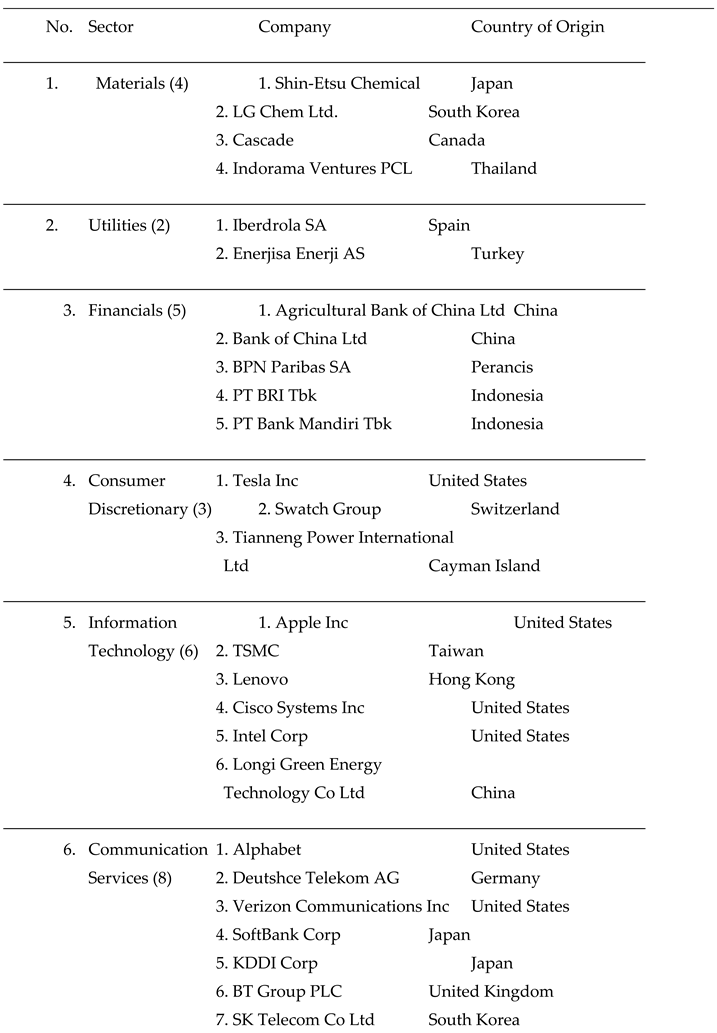
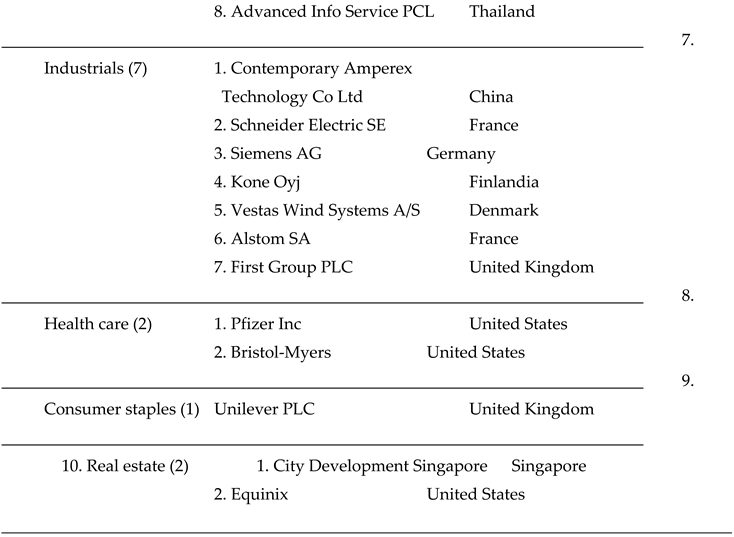
The sampling technique used was purposive sampling. The selection of sample companies is based on the following criteria: (1) Companies that are superior, have rankings or awards in their respective sectors; (2) The company is able to take a central role in becoming a global model and inspiration for other companies, has the same initiative and commitment in efforts to participate, adapt, contribute to environmental sustainability values that have an impact on marketing performance; and (3) As companies that dominate global or national stock markets, they are expected to be able to bring about change towards creating a conducive business environment, strengthening character and sustainable market behavior.
By using these criteria, a research sample of 40 companies can be obtained as detailed in the following Table 2:

Table 1.
Samples.
|
Source: Clean200.
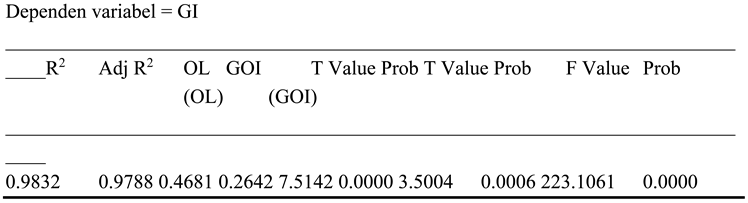
Table 2.
Fixed Effect Model (FEM).
 |
Source: Eviews 11.
The data analysis carried out was panel data path analysis. In this analysis technique, an analysis of the cause and effect relationships that occur in multiple regression is employed where the influence of the independent variable on the dependent variable is not only direct (direct effect) but also indirect (indirect effect). Panel data regression in this research provides three alternative models, respectively: (1) Common Effect Model (CEM); (2) Fixed Effect Model (FEM); and (3) Random Effect Model (REM). The Ordinary Least Squares (OLS) approach estimation technique is used for the Common Effect Model (CEM) and Fixed Effect Model (FEM), while the Generalized Least Squares (GLS) approach is used for the Random Effect Model.
Next, to ensure the suitability of the CEM, FEM and REM models, the following steps are carried out: (1) Chow test is employed to select the CEM or FEM model; (2) The Hausman test is employed to select the FEM or REM model; and (3) The Lagrange Multiplier (LM) test is employed to select the CEM or REM model.
A classical assumption test was employed with the following conditions: (1) If the Common Effect Model (CEM) is selected, then the classical assumption tests required are the Residual Normality Test, Multicollinearity Test, Heteroscedasticity Test, Autocorrelation Test, Cross-Sectional Dependence Test and Linearity Test; (2) If the Fixed Effect Model (FEM) is selected, then the classical assumption tests required are the Multicollinearity Test, Heteroscedasticity Test, Autocorrelation Test, Cross-Sectional Dependence Test, and Residual Normality Test; and (3) If the Random Effect Model (REM) is selected, then the classical assumption tests required are Residual Normality Test, Multicollinearity Test, Heteroscedasticity Test, Autocorrelation Test, Cross-Sectional Dependence Test, REM Consistency Test (Hausman Test).
5. Results and Discussion
This research model identifies variables that influence marketing performance (Y) through structural relationships consisting of four sub-structural models. The main independent variables in this model are Organizational Learning (OL) and Green Organizational Identity (GOI), which play a role in forming Green Innovation (GI) as the first mediating variable.
Green Innovation (GI) plays a mediating role in the influence of Organizational Learning (OL) and Green Organizational Identity (GOI) on Green Marketing (GM). In this research model, Green Innovation (GI) is the first mediating variable. Furthermore, Green Marketing (GM) plays a second mediating variable, transforming Green Innovation (GI) and thus contributing to improve Marketing Performance (MP).
This relationship suggests that to improve marketing performance in the context of sustainability, companies need to strengthen their organizational learning and green identity, which will drive innovation and more effective green marketing strategies.
In Sub-structural Model-1, Sub-structural Model-2, and Sub-Structural Model-3, the suitability test of the panel data regression model was employed. Sub-structural Model-4 is a model for testing the hypothesis of the mediating role of green marketing in the influence of green innovation on marketing performance.
5.1. Sub-Structural Model-1
The following model (Figure 2) examines the impact of Organizational Learning (OL) and Green Organizational Identity (GOI) on Green Innovation (GI).
Sub-structural model-1 regression analysis was employed to see the contribution of the model in explaining the influence of Organizational Learning (OL) and Green Organizational Identity (GOI) on Green Innovation (GI). The R2 value, adjusted R2 and the level of significance of the F value are shown in the following Table 3:
From Table 3 it is shown that the R2 value is 0.98 and the adjusted R2 is 0.98 which is close to 1.00. The model’s contribution to predicting the influence of Organizational Learning (OL) and Green Organizational Identity (GOI) on Green Innovation (GI) is 98%. Likewise, the probability that the F value (223.1061) is known to be 0.00 is smaller than 0.05. This indicates the model is appropriate.
The direction of the T value of the Organizational Learning variable (OL) is positive at 0.47. The probability that the T value for the Organizational Learning variable (OL) is 0.00 is smaller than 0.05. Thus hypothesis-1 (H1) is accepted. There is a positive and significant influence of Organizational Learning (OL) on Green Innovation (GI).
Through this equation it is also known that the direction of the T value of Green Organizational Identity (GOI) is positive at 0.26. The probability that the T value of Green Organizational Identity (GOI) is 0.00 is smaller than 0.05. Thus hypothesis-2 (H2) is accepted. There is a positive and significant influence of Green Organizational Identity (GOI) on Green Innovation (GI).
5.2. Sub-Structural Model-2
In this model, the influence of Green Innovation (GI) on Green Marketing (GM) is studied as in the following Figure 3:
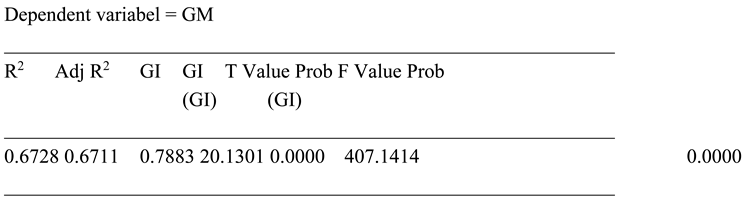
Regression analysis was employed to see the contribution of the model in explaining the influence of Green Innovation (GI) on Green Marketing (GM). The magnitude of the R2 value, adjusted R2 and the level of significance of the F value are shown in Table 4 Random Effect Model (REM) sub-structural model-2 below:
From Table 4 it is shown that the R2 value is 0.67 and the adjusted R2 is 0.67. The model’s contribution to predicting the influence of Green Innovation (GI) on Green Marketing (GM) is 67%. Likewise, the probability that the F value is known to be 0.00 is smaller than 0.05. This indicates that the model is appropriate.
From the regression model equation, it is known that the direction of the T value of the Green Innovation (GI) variable is positive at 0.79. The probability that the T value for the Green Innovation (GI) variable is 0.00 is smaller than 0.05. Thus hypothesis-3 (H3) is accepted. There is a positive and significant influence of Green Innovation (GI) on Green Marketing (GM).
5.2. Sub-Structural Model-3
In this model, the influence of green innovation and green marketing on marketing performance is tested as per the following Sub-structural Model-3 (Figure 4):
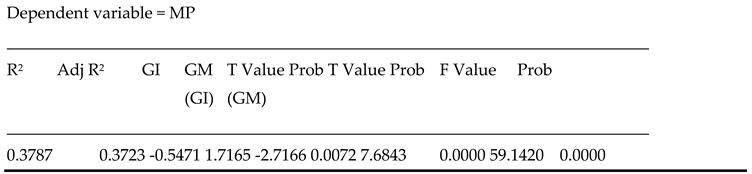
Regression analysis was employed to see the contribution of the model in explaining the influence of Green Innovation (GI) and Green Marketing (GM) on Marketing Performance (MP). The R2 value, adjusted R2 and the level of significance of the F value are shown in Table 5 Random Effect Model (REM) sub-structural model-3 below:
From Table 5 it is shown that the R2 value is 0.37 and the adjusted R2 is 0.37. The model’s contribution to predicting the influence of Green Innovation (GI) on Green Marketing (GM) is 37%. Likewise, the probability that the F value (59.142) is known to be 0.00 is smaller than 0.05. This indicates that the model is appropriate.
From regression model equation it is known that the direction of the T value of the Green Innovation (GI) variable is negative at -2.7166. The probability that the T value of the Green Innovation (GI) variable is 0.0072 (rounded to 0.01) is smaller than 0.05. Thus hypothesis-4 (H4) is rejected. There is a negative and significant influence of Green Innovation (GI) on Marketing Performance (MP).
Through this equation it is also known that the direction of the T value of the Green Marketing (GM) variable is positive at 7.6843 with the probability 0.00 (< 0.05). Thus hypothesis-5 (H5) is accepted. There is a positive and significant influence of Green Marketing (GM) on Marketing Performance (MP).
5.3. Sub-Structural Model-4
In this model, the mediating role of green marketing in the influence of green innovation on marketing performance is tested (Figure 5).
In this model, the mediating role of green marketing in the influence of green innovation on marketing performance is measured using the Sobel Test. The Sobel test is used to test the significance of mediation effects with the following formula:
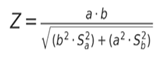 Where,
- a = regression coefficient from the independent variable to the mediator variable
- b = regression coefficient from the mediator variable to the dependent variable
- Sa = standard error of coefficient a
- Sb = standard error of coefficient b
By using this formula, the Z value is calculated using the following regression coefficient values: (1) a = 0.79; (2) b = 1.75 ; (3) SEa = 0.04 ; (4) SEb = 0.30 as follows:
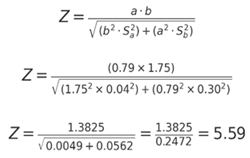
Furthermore, the Z-calculated value is 5.59 compared to the normal distribution critical value of 1.96 at a significance level of 0.05. The results show the Z-calculated value of 5.59 is greater than the Z-table value of 1.96. Thus the solution for the hypothesis test (H6) can be presented as follows:
From the Sobel Test calculation of the mediating role of Green Marketing (GM), a Z value of 5.59 is obtained, which is greater than the Z table value of 1.96. There is a mediating role of Green Marketing in the influence of Green Innovation on Marketing Performance.
5.4. Discussion
The results of hypothesis testing show that all hypotheses proposed in this study are accepted, except H4, with a significance level of less than 0.05 (H1, H2, H3, H5, and H6). In H1, H2, H3, H4, and H6 the resulting path coefficient value is positive, which indicates the relationship between variables is positive. Meanwhile, in H4, it is known that the path coefficient is negative, which indicates negative relationship between the variables (Figure 6).
The era of global green norms and competitive environmental demands has forced companies to implement business management strategies that are not only profit-oriented but also adopt new values where market awareness of the environment (green awareness) is increasingly growing. The research results show that global companies are trying to increase their business capacity by allocating learning resources (organizational learning), shown by an increase of 8.66% in the 2022-2023 period, and the reputation that has been built through green organizational identity, shown by an increase of 8.64% in the same year period. Companies that are able to allocate learning resources and improve their reputation regarding environmentally friendly practices in building their organizational identity tend to be able to develop their innovative capacity (green innovation).
The regression equation in Sub-structural Model-1 shows that every additional 1 unit of organizational learning is able to contribute to an additional increase of 0.4682 (47%) in green innovation, and each additional unit of green organizational identity is able to contribute to an additional increase of 0.2643 (26%) in green innovation. The constant value is known to be 0.0934. In the event that the organizational learning variable and the green organizational identity variable remain constant or do not change, the green innovation variable increases by 0.0934 (9.3%). The model contribution is obtained through an adjusted R2 value of 0.9788. Thus, the model contribution explaining the influence of organizational learning and green organizational identity is 97.88%. These findings are supported by Zhang et al. (2018), Wicki & Hansen (2019), Organizational learning involves the sharing of knowledge, contributing to a company’s increased adaptability and continuous improvement. Establishing a system where knowledge can be shared can create a synergistic and positive impact on green innovation (Li et al., 2022). The findings of this study were also confirmed by Chen & Chang (2013), Song & Yu (2018) and Pan et al. (2021).
which emphasizes green organizational identity as good practices in sharing knowledge and developing openness capacities which are strategic assets for the company. These assets enable companies to implement green innovations effectively.
Companies from America (Alphabet Inc, Equinix Inc, Cisco Systems Inc, Tesla Inc), China (LONGi Green Energy Technology Co Ltd, Bank of China Ltd, Agricultural Bank of China Ltd) and Europe (Vestas Wind Systems A/S/Denmark, BNP Paribas SA/France) excel in organizational learning resource allocation and green organizational identity. In the ranking of the top 10 companies seeking to increase organizational learning capacity, there is also Indonesia, represented by PT Bank Rakyat Indonesia (BRI) Tbk and PT Bank Mandiri Tbk (Table 4.3). This indicates the availability of supporting infrastructure in these countries for businesses to develop their organizational learning resource capacity and green organizational identity to enhance innovative capabilities resulting in improved marketing performance. Data from the 2019-2023 Annual Report of PT Bank Rakyat Indonesia (BRI) Tbk states that Government regulations that have an impact on the development of green innovation assets include Financial Services Authority (OJK) Regulation Number 51/POJK.03/2017 concerning Sustainable Finance, Presidential Regulation Number 59/2017 concerning Sustainable Development Goals (SDG), and the Indonesian Sustainable Finance Roadmap.
The dominant sectors in organizational learning are primarily the communication services sector, information technology, finance, health care, real estate and industrial.. In these sectors, companies invest in technology for service effectiveness, especially in the communication services, information technology, finance, health and housing sectors, as well as production process efficiency in the industrial sector. This finding is accepted by the theoretical framework of dynamic capabilities and dynamic marketing capabilities (Joshi & Dhar, 2020 ; de Medeiros et al., 2022 ; Muisyo et al., 2022 ; Tajpour et al., 2022) which emphasizes the ability of businesses to allocate their organizational learning resources through technology investments in responding to a rapidly changing environment. The application of technology not only contributes to service effectiveness which impacts organizational identity but also the company’s innovation capabilities. Alphabet Inc and Equinix Inc Annual Report data for the 2019-2023 period shows an increase in technology infrastructure investment costs of 37.45% (Alphabet Inc) and 52.38% (Equinix Inc). The research results show that Alphabet Inc and Equinix Inc are ranked in the top 10 companies that are able to increase the percentage score on organizational learning assets (Alphabet Inc = 14.24% ; Equinix Inc = 12.47%), green organizational identity (Alphabet Inc = 16.28% ; Equinix Inc = 19.19%) and green innovation (Alphabet Inc = 11.41% ; Equinix Inc = 14.03).
In testing hypothesis-3 (Sub-structural Model-2) we found a positive and significant influence of green innovation on green marketing with a path coefficient value of 0.7884 and a T value of 20.1302 which was significant at a significance level of 0.00, smaller than 0.05. Every 1 unit in the green innovation variable contributes 0.7883 (78.83%) units of the green marketing variable with a constant value of 0.2695. This constant value indicates an addition of 0.2695 (26.95%) to the green marketing variable when the green innovation variable is in a constant state or does not change. The model contribution is known from the adjusted R2 value of 0.6711. The model can be used to predict the influence of green innovation on green marketing by 67.11%.
Global companies from America dominate the ranking of the top 10 companies capable of increasing green innovation and green marketing scores, namely Pfizer Inc (21.48% ; 13.36%), Bristol-Myers Squibb Co (21.38% ; 13.51%), Equinix Inc (14.03% ; 16.24%), Alphabet Inc (11.41% ; 14.54%). Information from the company’s Annual Report mentions investments in green innovation that have an impact on green marketing, for example Pfizer Inc which implements sustainable manufacturing processes, reduced carbon emissions, and environmentally friendly packages in its pharmaceutical products. Pfizer also invested in the Net Zero Standard commitment initiative to meet the carbon-free target before 2040. The company also issued a 10-year sustainable bond worth US$ 1.25 billion for the development of the bio-pharmaceutical industry, of which US$ 946 million was allocated for green design and construction of new facilities. Data from the annual report also mentions the role of the local government (United States) by issuing a number of policies, for example the Inflation Reduction Act (IRA) and the Environmental Protection Agency (EPA) which provide incentives for clean energy projects. These policies have also proven to be very effective in contributing to companies’ green innovation efforts (Begum et al., 2022 ; Chien & Tsai, 2012 ; Fang & Zou, 2009). Meanwhile, Bristol-Myers Squibb Co invests in green innovation by implementing policies for achieving renewable energy, reducing emissions, managing waste and using sustainability-oriented Artificial Intelligence (AI).
Next, in Sub-structural Model-3, the direct influence of green innovation on marketing performance (Hypothesis-4) and green marketing on marketing performance (Hypothesis-5) is tested. The results show a significant influence of green innovation and green marketing on marketing performance. The adjusted R2 value is 0.3724. The model’s contribution to explaining the influence of green innovation and green marketing on marketing performance is 37.24%. The regression equation model has a constant value of 0.1969. There is a contribution to marketing performance of 0.1969 (19.69%) when the green innovation and green marketing variables remain constant and do not change.
Hypothesis-4 test results show that every additional 1 green innovation variable causes a decrease of 0.5471 (54.71%). The path coefficient value is -0.5471 and the T value is -2.7166 with a significance value of 0.01 which is smaller than 0.05. Green innovation has a negative and significant effect on marketing performance. Thus Hypothesis-4 is rejected. Meanwhile, the Hypothesis-5 test shows that every additional 1 unit of green marketing variable makes an additional contribution to marketing performance of 1.7166. The path coefficient value is 1.7166 and the T value is 7.6843 at a significance level of 0.00, which is smaller than 0.05. Therefore Hypothesis-5 is accepted. Green marketing has a positive and significant effect on marketing performance.
The counterproductive influence of green innovation on marketing performance (path coefficient value -0.5471 and T value -2.7166 significant at the 0.00 significance level is smaller than 0.05) strengthens the results of previous research. Research conducted by (Amendolagine et al., 2021; Borah et al., 2021; Huang et al., 2020; Mellett et al., 2018; Sheikhi et al., 2021)stated that green innovation is indeed able to improve company performance but requires high investment costs. Green innovation investments cannot always provide positive returns that affect marketing performance. Borah et al. (2023)added that green innovation investments may not be able to meet market expectations, and are instead seen as symbolic actions or greenwashing, where companies are inconsistent in implementing environmentally friendly oriented policies which has an impact on decreasing marketing performance.
The research results show that Pfizer Inc, which was ranked 1st out of the 10 largest companies, was able to increase its green innovation score by 21.48%, but fell to 5th place with an increase in marketing performance score of 12.89%. Equinix Inc, which was previously ranked 3rd for increasing green innovation score (14.03%), fell to 6th place for increasing marketing performance score (11.71%). Likewise, Alphabet Inc fell from 5th place for the increase in green innovation score (11.41%) to 8th place for the increase in marketing performance score (9.61%).
In testing Hypothesis-6, the mediating role of green marketing variables in the influence of green innovation on marketing performance was calculated. The Z value on the Sobel Test is 5.59 which is greater than the Z table value of 1.96. Thus Hypothesis-6 is accepted. There is a mediating role of green marketing variables in the influence of green innovation on marketing performance. The results of the Hypothesis-6 test which confirms the mediating role of green marketing complement the results of the Hypothesis-4 test (negative and significant influence of green innovation on marketing performance). The direct influence of counterproductive green innovation on marketing performance emphasizes the important role of mediating variables. Green innovation cannot simply be contributed directly to marketing performance. Green innovation needs to be transformed through the mediating role of green marketing so that it can contribute to improving marketing performance.
The research results show the ranking of the top 10 global companies that have succeeded in increasing their green innovation, green marketing and highest marketing performance scores. Several companies are consistently included in these rankings. Companies that are able to increase the percentage of green innovation and green marketing scores tend to have the ability to increase the percentage of marketing performance scores, including Pfizer Inc (21.48 ; 13.36 ; 12.89), Equinix Inc (14.03 ; 16.24 ; 11.71), and Alphabet Inc (11.41 ; 14.54 ; 9.61).
Pfizer Inc is transforming innovation values in green marketing to improve marketing performance by investing in sustainability initiatives (US$ 345 million), digital transformation (US$ 3 billion), and public awareness campaigns (US$ 1.1 billion) (Pfizer Ltd Annual Report 2023). In 2022, Equinix Inc will invest in innovation and digital transformation by acquiring MainOne, a data provider company in West Africa, for US$ 278.4 million, as well as expanding in Latin America, Asia-Pacific, Europe and Malaysia. In the same year marketing and sales investment amounted to US$ 45.3 million (an increase of 6%). This has an impact on increasing the company’s revenue from US$ 7.26 billion in 2022 to US$ 8.18 billion in 2023. The increase in sustainable marketing performance is also marked by the success of achieving the 96% renewable energy target (renewable energy coverage) for six consecutive years (Equinix Inc. Annual Report 2022 to 2023). Alphabet Inc invests in Artificial Intelligence (AI), cloud computing and machine learning amounting to an average of 14% - 15% of company revenue. In addition, sustainability initiatives were successfully realized with a successful reduction in emissions of 24%. In 2023, Alphabet Inc. succeeded in increasing the company’s revenue from Google Cloud from US$ 13 billion (in 2020) to US$ 33 billion (in 2023) (Alphabet Inc. Annual Report 2018 to 2023).
6. Conclusion
This research proposes the idea of dynamic green marketing capabilities in the context of global companies facing the era of global green norms and the demands of an increasingly fierce competitive environment. Green dynamic marketing capability is defined as the ability of a business to turn challenges into opportunities through strategic management of green marketing resources in the function of transforming green innovation values which have an impact on improving marketing performance.
The research results show positive and significant path coefficient values for: (1) The Effect of Organizational Learning on Green Innovation (H1 accepted); (2) The influence of Green Organizational Identity on Green Innovation (H2 accepted); (3) Green Innovation towards Green Marketing (H3 accepted); and (4) Green Marketing on Marketing Performance (H5 accepted). Green Innovation has a negative and significant effect on Marketing Performance (H4 is rejected). Meanwhile, the Sobel Test results show the mediating role of Green Marketing in the influence of Green Innovation on Marketing Performance (H6 is accepted).
Companies have the ability to allocate organizational learning resources, both intensive use of current knowledge (exploitative learning) and exploratory efforts to create new knowledge (explorative learning). This organizational learning resource allocation capability is at a level that has a positive and significant influence on green innovation. The green organizational identity that is formed through the company’s efforts to build a reputation for its environmental performance can also be realized in green innovation. Next, the company allocates green marketing resources, namely the ability to transform the value of green innovation which has an impact on improving marketing performance. This mediating role is also emphasized by the direct, counterproductive influence of green innovation on marketing performance (H4 is rejected). The intensity of green innovative efforts actually has the potential to reduce marketing performance, and therefore the mediating role of green marketing is needed. The negative and significant influence of green innovation on marketing performance (rejection of H4) and the mediating role of green marketing in the influence of green innovation on marketing performance (acceptance of H6) indicate that companies must pay attention to green innovation that has market value. Creation of market value in green innovation that is able to improve marketing performance includes: (1) Creation of value that strengthens product reputation; (2) Creation of value that strengthens product benefits; (3) Value creation that strengthens market knowledge; and (4) Creation of value that strengthens the network (value chain).
By using a macromarketing perspective, resource-based theory, dynamic capability and dynamic marketing capability, it can be explained how companies try to improve their competitiveness in the era of green global norms in allocating limited resources. Green-oriented practices are no longer imperative ie. businesses are required to adapt to applicable green norms ; but have strategic value. The essence of business to survive is no longer just to respond the challenges but to make out-of-the-box projection through the transformation of challenges into opportunities. This transformative capability is based on the orientation that the company should have holistic vision, becoming an integral part both economically, socially and ecologically.
7. Limitation and Implication
7.1. Limitation
This research only examines global companies that have relatively adequate infrastructure to respond to the challenges of global green norms and the competitive environment, and mainly come from developed countries. Future research can be carried out by taking more samples including global companies from emerging economies.
7.2. Implication
Global companies have a role in developing dynamic green marketing capabilities. One form of implementation is business efforts to adapt to green global norms. In this context, increasing business competitiveness is carried out through strategic resource management of organizational learning and green organizational identity which is able to drive innovativeness where green marketing plays a role in the value transformation process which has an impact on marketing performance.
References
- Aftab, J., Abid, N., Cucari, N., & Savastano, M. (2023). Green human resource management and environmental performance: The role of green innovation and environmental strategy in a developing country. Business Strategy and the Environment, 32(4), 1782–1798. [CrossRef]
- Ahmed, R. R., Akbar, W., Aijaz, M., Channar, Z. A., Ahmed, F., & Parmar, V. (2023). The role of green innovation on environmental and organizational performance: Moderation of human resource practices and management commitment. Heliyon, 9(1). [CrossRef]
- Alkaraan, F., Elmarzouky, M., Hussainey, K., Venkatesh, V. G., Shi, Y., & Gulko, N. (2024). Reinforcing green business strategies with Industry 4.0 and governance towards sustainability: Natural-resource-based view and dynamic capability. Business Strategy and the Environment, 33(4), 3588–3606. [CrossRef]
- Alrawabdeh, W. (2024). Green Marketing Strategies: Research Agenda for Sustainable Consumer Behavior and Corporate Responsibility. Sustainable Horizons for Business, Education, and Technology: Interdisciplinary Insights, 77–84.
- AlQershi, N. A., Saufi, R. B. A., Muhammad, N. M. N., Bin Yusoff, M. N. H., & Thurasamy, R. (2023). Green creativity, TQM and business sustainability of large manufacturing firms in Malaysia. The TQM Journal, 35(4), 924–945. [CrossRef]
- Amaya Rivas, A., Liao, Y.-K., Vu, M.-Q., & Hung, C.-S. (2022). Toward a Comprehensive Model of Green Marketing and Innovative Green Adoption: Application of a Stimulus-Organism-Response Model. Sustainability, 14(6). [CrossRef]
- Amendolagine, V., Lema, R., & Rabellotti, R. (2021). Green foreign direct investments and the deepening of capabilities for sustainable innovation in multinationals: Insights from renewable energy. Journal of Cleaner Production. https://www.sciencedirect.com/science/article/pii/S0959652621016000. [CrossRef]
- Andreoni, V., & Miola, A. (2016). Competitiveness and sustainable development goals. Luxembourg: Publications Office of the European Union, 88.
- Anik, S., & Sulistyo, H. (2021). The role of green intellectual capital and green innovation on competitive advantage of SMEs. International Journal of Learning and Intellectual Capital, 18(1), 28-44. [CrossRef]
- Awan, U., Sroufe, R., & Kraslawski, A. (2019). Creativity enables sustainable development: Supplier engagement as a boundary condition for the positive effect on green innovation. Journal of Cleaner Production. https://www.sciencedirect.com/science/article/pii/S0959652619310248. [CrossRef]
- Arici, H. E., & Uysal, M. (2022). Leadership, green innovation, and green creativity: A systematic review. The Service Industries Journal. [CrossRef]
- Azadnia, A., Geransayeh, M., Onofrei, G., & Ghadimi, P. (2021). A weighted fuzzy approach for green marketing risk assessment: Empirical evidence from dairy industry. Journal of Cleaner Production, null, null. [CrossRef]
- Bataineh, M. J., Sánchez-Sellero, P., & Ayad, F. (2023). Green is the new black: How research and development and green innovation provide businesses a competitive edge. Business Strategy and the Environment. [CrossRef]
- Bashar, S., Wang, D., & Rafiq, M. (2023). Adoption of green supply chain management in developing countries: role of consumer cooperation, eco-design, and green marketing. Environmental Science and Pollution Research, 30(40), 92594-92610. [CrossRef]
- Bhatti, S. M., Al Mamun, A., Wu, M., Naznen, F., Kanwal, S., & Makhbul, Z. K. M. (2023). Modeling the significance of green orientation and culture on green innovation performance: moderating effect of firm size and green implementation. Environmental Science and Pollution Research, 30(44), 99855-99874. [CrossRef]
- Begum, S., Xia, E., Ali, F., Awan, U., & Ashfaq, M. (2022). Achieving green product and process innovation through green leadership and creative engagement in manufacturing. Journal of Manufacturing Technology Management, 33(4), 656-674. [CrossRef]
- Bhujbal, D. D., & Shafighi, N. (2022). Green Logistic and Sustainable Electronic Products Packaging; Consumers Perspective. International Journal of Business and Social Science Research, 3(7-8), 1-9. [CrossRef]
- Borah, P. S., Dogbe, C. S. K., Pomegbe, W. W. K., Bamfo, B. A., & Hornuvo, L. K. (2021). Green market orientation, green innovation capability, green knowledge acquisition and green brand positioning as determinants of new product success. European Journal of Innovation Management, ahead-of-p(ahead-of-print). [CrossRef]
- Chang, T. W. (2020). Corporate sustainable development strategy: Effect of green shared vision on organization members’ behavior. International journal of environmental research and public health, 17(7), 2446. [CrossRef]
- Chaudhary, K., & Agarwal, A. (2024). Analysis of barriers for green marketing using interpretive structure modelling. International Journal of Business and Globalisation, 37(1), 33–46.
- Chen, H. C., & Yang, C. H. (2019). Applying a multiple criteria decision-making approach to establishing green marketing audit criteria. Journal of Cleaner Production. https://www.sciencedirect.com/science/article/pii/S0959652618333602. [CrossRef]
- Chen, Y. S., & Chang, C. H. (2013). The determinants of green product development performance: Green dynamic capabilities, green transformational leadership, and green creativity. Journal of Business Ethics. [CrossRef]
- Chien, S., & Tsai, C. (2012). Dynamic capability, knowledge, learning, and firm performance. Journal of Organizational Change Management, 25(3), 434–444. [CrossRef]
- Chițimiea, A., Minciu, M., Manta, A.-M., Ciocoiu, C. N., & Veith, C. (2021). The Drivers of Green Investment: A Bibliometric and Systematic Review. Sustainability, 13(6). [CrossRef]
- Cicea, C., Țurlea, C., Marinescu, C., & Pintilie, N. (2022). Organizational culture: a concept captive between determinants and its own power of influence. Sustainability, 14(4), 2021. [CrossRef]
- Dangelico, R. M., & Vocalelli, D. (2017). “Green Marketing”: An analysis of definitions, strategy steps, and tools through a systematic review of the literature. Journal of Cleaner Production. https://www.sciencedirect.com/science/article/pii/S0959652617316372. [CrossRef]
- Dahlquist, S., & Lehnert, K. (2023). Strategic Orientation: Market changer or market defender?. Journal of Macromarketing, 43(1), 5-16. [CrossRef]
- DeQuero-Navarro, B., Stanton, J., & Klein, T. A. (2021). A panoramic review of the macromarketing literature. Journal of Macromarketing, 41(1), 48–64. [CrossRef]
- Duarte, L. O., Vasques, R. A., Fonseca Filho, H., Baruque-Ramos, J., & Nakano, D. (2022). From fashion to farm: green marketing innovation strategies in the Brazilian organic cotton ecosystem. Journal of Cleaner Production, 360, 132196. [CrossRef]
- Du, Y., & Yan, M. (2022). Green transformational leadership and employees’ taking charge behavior: The mediating role of personal initiative and the moderating role of green organizational identity. International journal of environmental research and public health, 19(7), 4172. [CrossRef]
- Eiadat, Y., Kelly, A., Roche, F., & Eyadat, H. (2008). Green and competitive? An empirical test of the mediating role of environmental innovation strategy. Journal of World business, 43(2), 131-145. [CrossRef]
- Engelsberger, A., Halvorsen, B., Cavanagh, J., & Bartram, T. (2022). Human resources management and open innovation: The role of open innovation mindset. Asia Pacific Journal of Human Resources, 60(1), 194–215. [CrossRef]
- Ercantan, O., & Eyupoglu, S. (2022). How do green human resource management practices encourage employees to engage in green behavior? Perceptions of university students as prospective employees. Sustainability, 14(3), 1718. [CrossRef]
- Fang, E., & Zou, S. (2009). Antecedents and consequences of marketing dynamic capabilities in international joint ventures. Journal of International Business Studies, 40(5), 742–761. [CrossRef]
- Ferreira, N. C., & Ferreira, J. J. M. (2024). The field of resource-based view research: mapping past, present and future trends. Management Decision. [CrossRef]
- Franco, P., Canniford, R., & Phipps, M. (2022). Object-oriented marketing theory. Marketing Theory, 22(3), 401-420. [CrossRef]
- Gao, Y. (2010). Measuring marketing performance: a review and a framework. The Marketing Review, 10(1), 25–40. [CrossRef]
- Gao, Q., Zhang, Z., Li, Z., Li, Y., & Shao, X. (2022). Strategic green marketing and cross-border merger and acquisition completion: The role of corporate social responsibility and green patent development. Journal of Cleaner Production, 343, 130961. [CrossRef]
- Gopaldas, A. (2015). Creating firm, customer, and societal value: Toward a theory of positive marketing. Journal of Business Research, 68(12), 2446-2451. [CrossRef]
- García-Salirrosas, E. E., & Rondon-Eusebio, R. F. (2022). Green marketing practices related to key variables of consumer purchasing behavior. Sustainability, 14(14), 8499. [CrossRef]
- Gupta, S., Justy, T., Kamboj, S., Kumar, A., & Kristoffersen, E. (2021). Big data and firm marketing performance: Findings from knowledge-based view. Technological Forecasting and Social Change, 171, 120986. [CrossRef]
- Han, M., Lin, H., Wang, J., Wang, Y., & Jiang, W. (2019). Turning corporate environmental ethics into firm performance: The role of green marketing programs. Business Strategy and the Environment, 28(6), 929-938. [CrossRef]
- Hasan, Z., & Ali, N. A. (2015). The Impact of Green Marketing Strategy on the Firm’s Performance in Malaysia. Procedia - Social and Behavioral Sciences, 172, 463–470. [CrossRef]
- Haase, M. (2025). The Nexus of Knowledge, Action, and Values, and the Philosophical, Social, and Normative Foundations of Marketing. Journal of Macromarketing, 45(1), 130–145. [CrossRef]
- Huan, Y., & Zhu, X. (2023). Interactions among sustainable development goal 15 (life on land) and other sustainable development goals: Knowledge for identifying global conservation actions. Sustainable Development, 31(1), 321-333. [CrossRef]
- Huang, L., Liu, M. T., Song, X., & Yen, J. (2023). A method of customer valuation score and implementation for marketing strategy. Asia Pacific Journal of Marketing and Logistics, 35(2), 344-363. [CrossRef]
- Huang, S.-Z., Chau, K. Y., Chien, F., & Shen, H. (2020). The impact of startups’ dual learning on their green innovation capability: the effects of business executives’ environmental awareness and environmental regulations. Sustainability, 12(16), 6526. [CrossRef]
- Huang, Y.-C., & Chen, C. (2021). Institutional pressure, firm’s green resources and green product innovation: evidence from Taiwan’s electrical and electronics sector. European Journal of Innovation Management, null, null. [CrossRef]
- Ismail, I. J., Amani, D., & Changalima, I. A. (2023). Strategic green marketing orientation and environmental sustainability in sub-Saharan Africa: Does green absorptive capacity moderate? Evidence from Tanzania. Heliyon, 9(7). [CrossRef]
- Jaich, H. (2022). Linking environmental management and employees’ organizational identification: The mediating role of environmental attitude. Corporate Social Responsibility and Environmental Management, 29(2), 305–315. [CrossRef]
- Jenatabadi, H. S., Radzi, C. W. J. W. M., AbdManap, N., & Abdullah, N. A. (2023). Factors That Boost the Technological Capability of Malaysian Food Manufacturing Industry. Sustainability, 15(8). [CrossRef]
- Joshi, G., & Dhar, R. L. (2020). Green training in enhancing green creativity via green dynamic capabilities in the Indian handicraft sector: The moderating effect of resource commitment. Journal of Cleaner Production, 267, 121948. [CrossRef]
- El-Kassar, A.-N., & Singh, S. K. (2019). Green innovation and organizational performance: The influence of big data and the moderating role of management commitment and HR practices. Technological Forecasting and Social Change, 144, 483–498. [CrossRef]
- Karray, S., Argoubi, M., & Masmoudi, M. (2024). Identifying hotspots and emerging trends in innovation determinants: A bibliometric analysis in the context of entrepreneurship and resource-based view. Management Decision. [CrossRef]
- Kara, S., Hauschild, M., Sutherland, J., & McAloone, T. (2022). Closed-loop systems to circular economy: A pathway to environmental sustainability? CIRP Annals, 71(2), 505–528. [CrossRef]
- Khan, U., & Liu, W. (2023). The link between green innovations, corporate performance, ESG activities, and sharing economy. Environmental Science and Pollution Research, 1-13. [CrossRef]
- Khraim, H. S. (2024). The impact of dynamic marketing capabilities on startup performance: A case of business incubators in Jordan. Innovative Marketing, 20(1), 132. [CrossRef]
- Kotler, P., & Zaltman, G. (1971). Social marketing: an approach to planned social change. Journal of Marketing, 35(3), 3–12.
- Kumar, P. (2015). Green marketing innovations in small Indian firms. World Journal of Entrepreneurship, Management and Sustainable Development, 11(3), 176-190. [CrossRef]
- Kumar Kar, S., & Harichandan, S. (2022). Green marketing innovation and sustainable consumption: A bibliometric analysis. Journal of Cleaner Production, 361, 132290. [CrossRef]
- Kumari, V., & Yadav, S. (2024). “ Navigating Eco-Friendly Markets: Understanding Green Marketing Concepts and Challenges.
- Latif, B., Gunarathne, N., Gaskin, J., San Ong, T., & Ali, M. (2022). Environmental corporate social responsibility and pro-environmental behavior: The effect of green shared vision and personal ties. Resources, Conservation and Recycling, 186, 106572. [CrossRef]
- Lawson, B., & Samson, D. (2001). Developing Innovation Capability In Organisations: A Dynamic Capabilities Approach. International Journal of Innovation Management, 05, 377–400. [CrossRef]
- Liu, L., Cui, H., & Nie, Y. (2023). Cite Space-Based Bibliometric Analysis of Green Marketing. Sustainability, 15(12), 9840. [CrossRef]
- de Medeiros, J. F., Garlet, T. B., Ribeiro, J. L. D., & Cortimiglia, M. N. (2022). Success factors for environmentally sustainable product innovation: An updated review. Journal of Cleaner Production, null, null. [CrossRef]
- Malhotra, G., Dandotiya, G., Shaiwalini, S., Khan, A., & Homechaudhuri, S. (2024). Benchmarking for organisational competitiveness: a resource-based view perspective. Benchmarking: An International Journal. [CrossRef]
- Mansour, A., Al-Ahmed, H., Deek, A., Alshaketheep, K., Al-Ma’aitah, M., Asfour, B., & Alshurideh, M. (2024). Developing Green Marketing Strategies: A Comprehensive Analysis of Consumer Behaviour and Business Practices. International Review of Management and Marketing, 14(6), 206–212. [CrossRef]
- Mittelstaedt, J. D., Kilbourne, W. E., & Shultz II, C. J. (2015). Macromarketing approaches to thought development in positive marketing: Two perspectives on a research agenda for positive marketing scholars. Journal of Business Research, 68(12), 2513-2516. [CrossRef]
- Mostafiz, M. I., Ahmed, F. U., Ibrahim, F., & Tarba, S. Y. (2024). Innovation and commercialisation: the role of the international dynamic marketing capability in Malaysian international entrepreneurial firms. International Marketing Review, 41(1), 199–236. [CrossRef]
- Ma, L., Ali, A., Shahzad, M., & Khan, A. (2022). Factors of green innovation: the role of dynamic capabilities and knowledge sharing through green creativity. Kybernetes, ahead-of-print(ahead-of-print). [CrossRef]
- Martínez Aragón, C. L., & Aguilar Morales, N. (2023). A systematic review of the organizational learning and performance literature. Visión de Futuro, 27(1), 24–39. [CrossRef]
- Mellett, S., Kelliher, F., & Harrington, D. (2018). Network-facilitated green innovation capability development in micro-firms. Journal of Small Business and Enterprise Development, 25(6), 1004-1024. [CrossRef]
- Mehraj, D., & Qureshi, I. H. (2022). Evaluating the emerging opportunities and challenges from green marketing practices among Indian manufacturing industries. Business Strategy & Development, 5(3), 142-152. [CrossRef]
- Mehraj, D., & Qureshi, I. H. (2020). Determinants of green marketing mix in developing economies: Conceptualisation and scale validation approach. Business Strategy & Development, 3(4), 522–530. [CrossRef]
- Mendoza-Silva, A. (2021). Innovation capability: a systematic literature review. European Journal of Innovation Management. [CrossRef]
- Morgan, N. A., Jayachandran, S., Hulland, J., Kumar, B., Katsikeas, C., & Somosi, A. (2022). Marketing performance assessment and accountability: Process and outcomes. International Journal of Research in Marketing, 39(2), 462–481. [CrossRef]
- Monson, F. K. S. (2024). Unveiling the strategic resource dimension: A bibliometric and systematic review of the Resource-Based View and its application to corporate governance. The Journal of High Technology Management Research, 35(2), 100516. [CrossRef]
- Mishra, A. S., & Mishra, R. R. (2023). Marketing Schools of Thought and Their Present Day Relevance. FIIB Business Review, 12(4), 351-361. [CrossRef]
- Mishra, P., & Sharma, P. (2014). Green marketing: Challenges and opportunities for business. BVIMR Management Edge, 7(1).
- Muisyo, P., Su, Q., Ho, T. H., Julius, M. M., & Usmani, M. S. (2022). Implications of green HRM on the firm’s green competitive advantage: the mediating role of enablers of green culture. Journal of Manufacturing Technology Management, 33(2), 308-333. [CrossRef]
- Nath, P., & Siepong, A. (2022). Green marketing capability: A configuration approach towards sustainable development. Journal of Cleaner Production. https://www.sciencedirect.com/science/article/pii/S0959652622013403. [CrossRef]
- Nwangwu, N. I., Etodike, C. E., Okeke, H. C., & Nnaebue, C. I. (2021). Organizational Climate Factors in Job Creativity among Public University Librarians in Anambra State. South Asian Journal of Social Studies and Economics, 10(1), 34-44. [CrossRef]
- Ofori, D. (2021). Opportunities and challenges of green marketing. Green Marketing in Emerging Markets: Strategic and Operational Perspectives, 251–276.
- Ortiz-Avram, D., Ovcharova, N., & Engelmann, A. (2024). Dynamic capabilities for sustainability: Toward a typology based on dimensions of sustainability-oriented innovation and stakeholder integration. Business Strategy and the Environment, 33(4), 2969-3004. [CrossRef]
- Pan, C., Jiang, Y., Wang, M., Xu, S., Xu, M., & Dong, Y. (2021). How can agricultural corporate build sustainable competitive advantage through green intellectual capital? A new environmental management approach to green agriculture. International Journal of Environmental Research and Public Health, 18(15), 7900. [CrossRef]
- Pradhan, P., Costa, L., Rybski, D., Lucht, W., & Kropp, J. P. (2017). A systematic study of sustainable development goal (SDG) interactions. Earth’s Future, 5(11), 1169-1179. [CrossRef]
- Piwowar-Sulej, K., & Iqbal, Q. (2022). Leadership styles and sustainable performance: A systematic literature review. Journal of Cleaner Production. https://www.sciencedirect.com/science/article/pii/S0959652622041725. [CrossRef]
- Roh, T., Noh, J., Oh, Y., & Park, K. S. (2022). Structural relationships of a firm’s green strategies for environmental performance: The roles of green supply chain management and green marketing innovation. Journal of Cleaner Production. https://www.sciencedirect.com/science/article/pii/S0959652622014871. [CrossRef]
- Runco, M. A. (2015). Meta-Creativity: Being Creative About Creativity. Creativity Research Journal, 27(3), 295–298. [CrossRef]
- Sarfraz, M., Ye, Z., Ozturk, I., & Ivascu, L. (2023). Fostering firm performance through the lens of environmental leadership and knowledge learning: a mediated moderation model. Environmental Science and Pollution Research, 30(15), 44657-44670. [CrossRef]
- Sartore-Baldwin, M. (2022). Measuring Sustainable Development Goal 15. The Routledge Handbook of Sport and Sustainable Development, 382.
- Segarra-Moliner, J. R., & Bel-Oms, I. (2023). How Does Each ESG Dimension Predict Customer Lifetime Value by Segments? Evidence from US Industrial and Technological Industries. Sustainability, 15(8), 6907. [CrossRef]
- Shaw, E. H., & Jones, D. B. (2005). A history of schools of marketing thought. Marketing theory, 5(3), 239-281. [CrossRef]
- Singh, S. K., Giudice, M. Del, Chierici, R., & Graziano, D. (2020). Green innovation and environmental performance: The role of green transformational leadership and green human resource management. Technological Forecasting and Social Change, 150, 119762. [CrossRef]
- Skålén, P., Cova, B., Gummerus, J., & Sihvonen, A. (2023). Marketing-as-practice: A framework and research agenda for value-creating marketing activity. Marketing Theory, 23(2), 185-206. [CrossRef]
- Song, W., & Yu, H. (2018). Green innovation strategy and green innovation: The roles of green creativity and green organizational identity. Corporate Social Responsibility and Environmental Management, 25(2), 135-150. [CrossRef]
- Song, S., Hossin, M. A., Yin, X., & Hosain, M. S. (2021). Accelerating Green Innovation Performance from the Relations of Network Potential, Absorptive Capacity, and Environmental Turbulence. Sustainability, 13(14), 7765. [CrossRef]
- Salim, N., Rahman, M. N. A., & Wahab, D. A. (2019). A systematic literature review of internal capabilities for enhancing eco-innovation performance of manufacturing firms. Journal of Cleaner Production. https://www.sciencedirect.com/science/article/pii/S0959652618335091. [CrossRef]
- Shaw, D., Harris, F., & Ali, H. (2024). Partnerships as strategy in macro-social marketing. Journal of Macromarketing, 44(4), 761–774. [CrossRef]
- Sheikhi, R., Hosseini Shakib, M., Shavvalpour Arani, S., & Khamseh, A. (2021). Identifying the Key Factors Affecting on Enhancing Green Innovation Capabilities in the Automotive Industry. Journal of Environmental Science and Technology, 23(2), 29-44.
- Singh, S. K., Giudice, M. Del, Chierici, R., & Graziano, D. (2020). Green innovation and environmental performance: The role of green transformational leadership and green human resource management. Technological Forecasting and Social Change, 150, 119762. [CrossRef]
- Song, W., & Yu, H. (2018). Green Innovation Strategy and Green Innovation: The Roles of Green Creativity and Green Organizational Identity. Corporate Social Responsibility and Environmental Management, 25(2), 135–150. [CrossRef]
- Su, W., Lei, G., Guo, S., & Dan, H. (2022). Study on the Influence Mechanism of Environmental Management System Certification on Enterprise Green Innovation. International Journal of Environmental Research and Public Health, 19(19), 12379. [CrossRef]
- Sun, H., & Su, Z. (2012). New thoughts of customer value study. Physics Procedia, 24, 1232-1237. [CrossRef]
- Tajpour, M., Hosseini, E., Mohammadi, M., & Bahman-Zangi, B. (2022). The effect of knowledge management on the sustainability of technology-driven businesses in emerging markets: The mediating role of social media. Sustainability, 14(14), 8602. [CrossRef]
- Takalo, S. K., Tooranloo, H. S., & Parizi, Z. S. (2021). Green innovation: A systematic literature review. Journal of Cleaner Production, 279, 122474. [CrossRef]
- Teece, D. J. (2010). Technological innovation and the theory of the firm: the role of enterprise-level knowledge, complementarities, and (dynamic) capabilities. In Handbook of the Economics of Innovation (Vol. 1, pp. 679–730). Elsevier.
- Tuominen, M., Rajala, A., & Möller, K. (2004). How does adaptability drive firm innovativeness? Journal of Business Research, 57(5), 495–506. [CrossRef]
- Uslay, C., Morgan, R. E., & Sheth, J. N. (2009). Peter Drucker on marketing: an exploration of five tenets. Journal of the Academy of Marketing Science, 37, 47–60. [CrossRef]
- Wang, Z., & Kim, H. G. (2017). Can Social Media Marketing Improve Customer Relationship Capabilities and Firm Performance? Dynamic Capability Perspective. Journal of Interactive Marketing, 39(1), 15-26. [CrossRef]
- Weidner, K., Nakata, C., & Zhu, Z. (2021). Sustainable innovation and the triple bottom-line: a market-based capabilities and stakeholder perspective. Journal of Marketing Theory and Practice, 29(2), 141-161. [CrossRef]
- Wang, S., Liu, M., & Pérez, A. (2022). A bibliometric analysis of green marketing in marketing and related fields: From 1991 to 2021. Asia Pacific Journal of Marketing and Logistics, null, null. [CrossRef]
- Wicki, S., & Hansen, E. G. (2019). Green technology innovation: Anatomy of exploration processes from a learning perspective. Business Strategy and the Environment, 28(6), 970-988. [CrossRef]
- Xia, A., Cao, J., & Xu, Y. (2023). Carbon emission reduction alliance, green technology, and emission reduction performance: an empirical study based on the synergistic perspective of environment and economy. Environmental Science and Pollution Research, 30(19), 55864-55883. [CrossRef]
- Xing, X., Wang, J., & Tou, L. (2019). The relationship between green organization identity and corporate environmental performance: The mediating role of sustainability exploration and exploitation innovation. International journal of environmental research and public health, 16(6), 921. [CrossRef]
- Yang, H., Cho, Y., & Han, S.-Y. (2024). Understanding user perceptions toward marketing in the metaverse. Kybernetes. [CrossRef]
- Yin, J., & Li, C. (2022). Data governance and green technological innovation performance: A curvilinear relationship. Journal of Cleaner Production. https://www.sciencedirect.com/science/article/pii/S0959652622040136. [CrossRef]
- Yousaf, Z. (2021). Go for green: green innovation through green dynamic capabilities: accessing the mediating role of green practices and green value co-creation. Environmental science and pollution research, 28(39), 54863-54875. [CrossRef]
- Yuan, B., & Li, J. (2023). Understanding the impact of environmentally specific servant leadership on employees’ pro-environmental behaviors in the workplace: Based on the proactive motivation model. International Journal of Environmental Research and Public Health, 20(1), 567. [CrossRef]
- Zameer, H., & Yasmeen, H. (2022). Green innovation and environmental awareness driven green purchase intentions. Marketing Intelligence & Planning, 40(5), 624–638. [CrossRef]
- Zhang, Z., Duan, H., Shan, S., Liu, Q., & Geng, W. (2022). The impact of green credit on the green innovation level of heavy-polluting enterprises—Evidence from China. International Journal of Environmental Research and Public Health, 19(2), 650. [CrossRef]
- Zhang, C., & Chen, D. (2023). Do environmental, social, and governance scores improve green innovation? Empirical evidence from Chinese-listed companies. Plos one, 18(5), e0279220. [CrossRef]
- Zhang, Y., Sun, J., Yang, Z., & Li, S. (2018). Organizational Learning and Green Innovation: Does Environmental Proactivity Matter? Sustainability, 10(10). [CrossRef]
- Zhang, X., Chu, Z., Ren, L., & Xing, J. (2023). Open innovation and sustainable competitive advantage: The role of organizational learning. Technological Forecasting and Social Change, 186, 122114. [CrossRef]
- Zheng, S., Ye, X., Guan, W., Yang, Y., Li, J., & Li, B. (2022). Assessing the Influence of Green Innovation on the Market Performance of Small- and Medium-Sized Enterprises. Sustainability, 14(20). [CrossRef]
- (https://www.nhtsa.gov/laws-regulations/corporate-average-fuel-economy).
- (https://ec.europa.eu/commission/presscorner/detail/en/ip_19_6691).
- (https://www.asyousow.org/report-page/2024-clean200-investing-in-a-clean-energy-future).
Figure 1.
Research model.
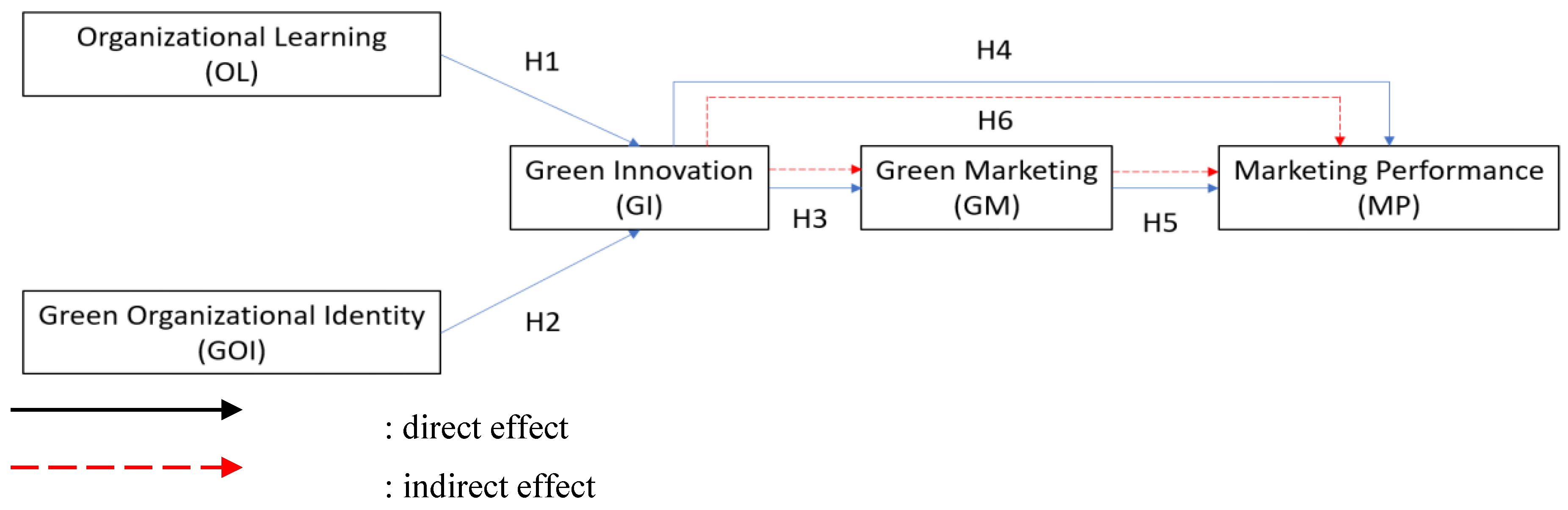
Figure 2.
Sub-structural Model-1.
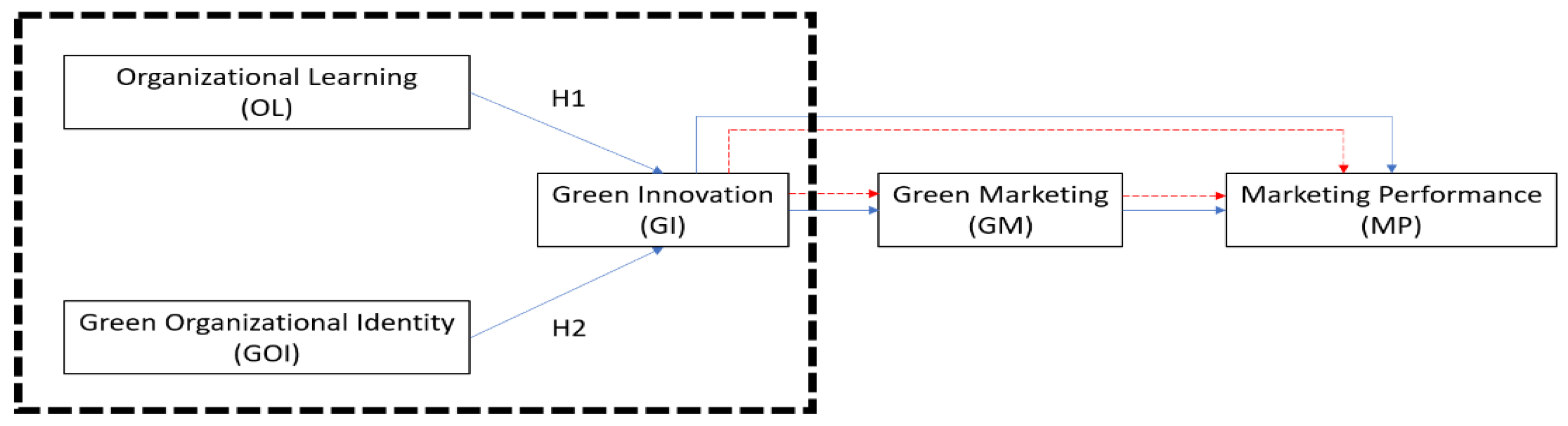
Figure 3.
Sub-structural Model-2.
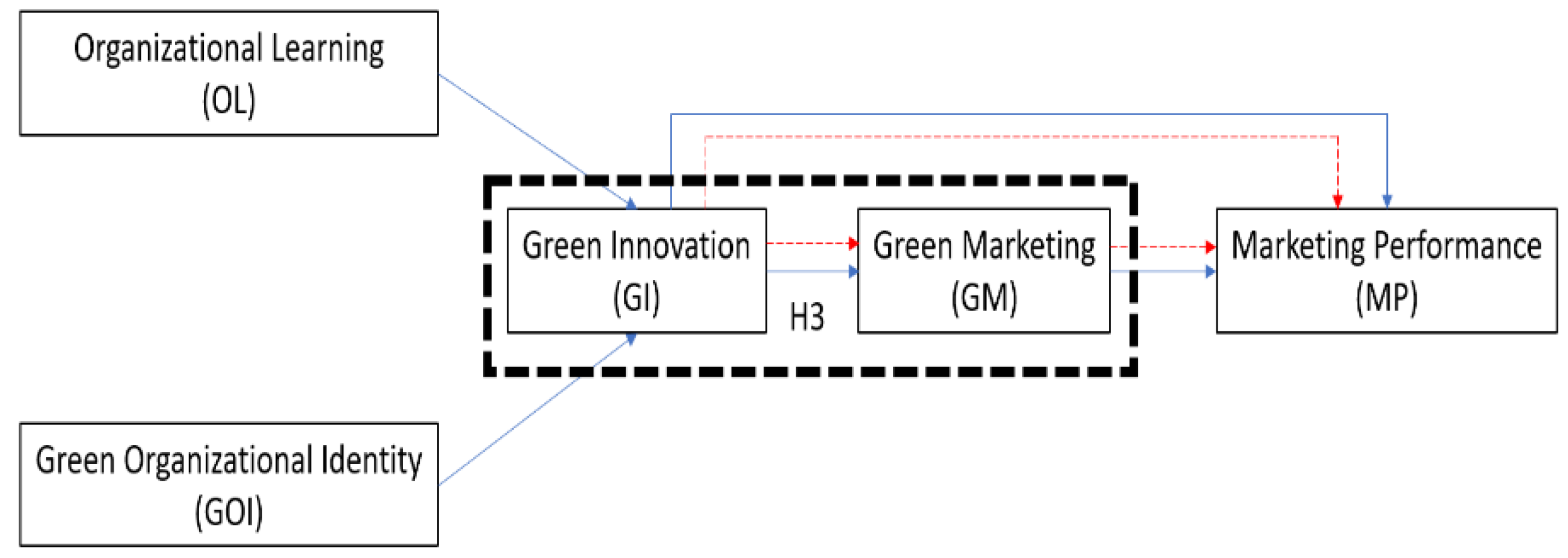
Figure 4.
Sub-structural Model-3.
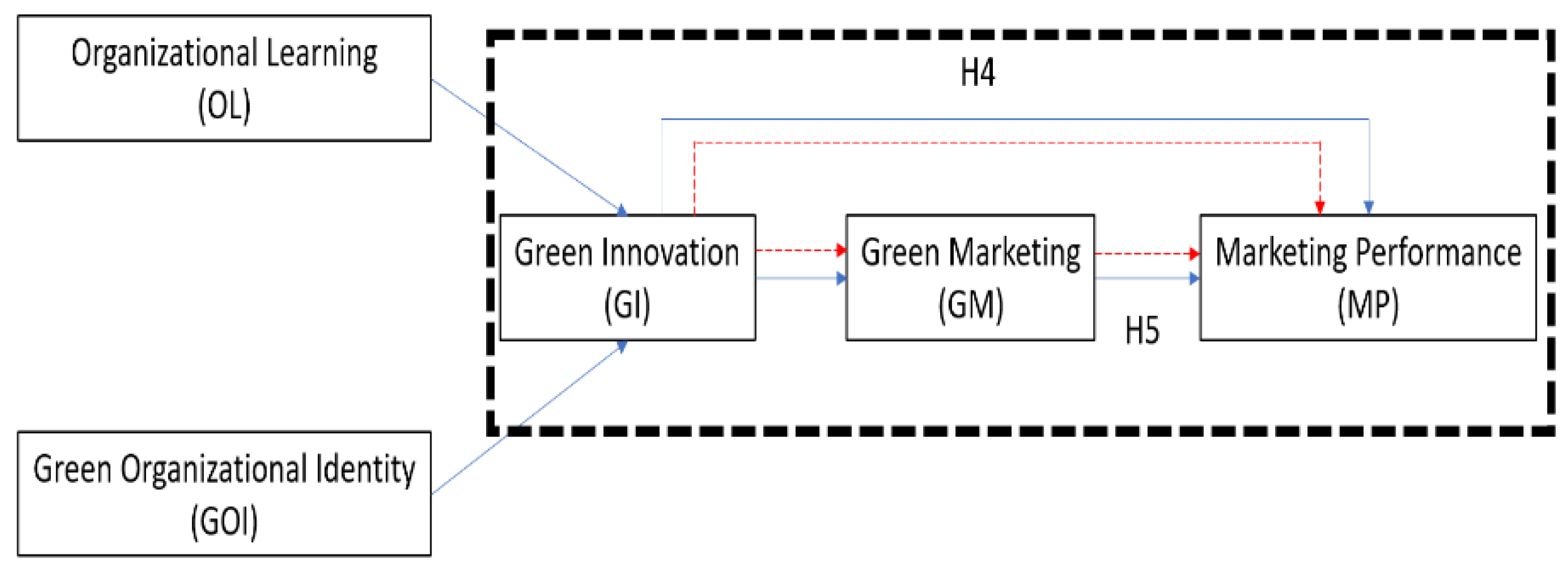
Figure 5.
Sub-structural Model-4.
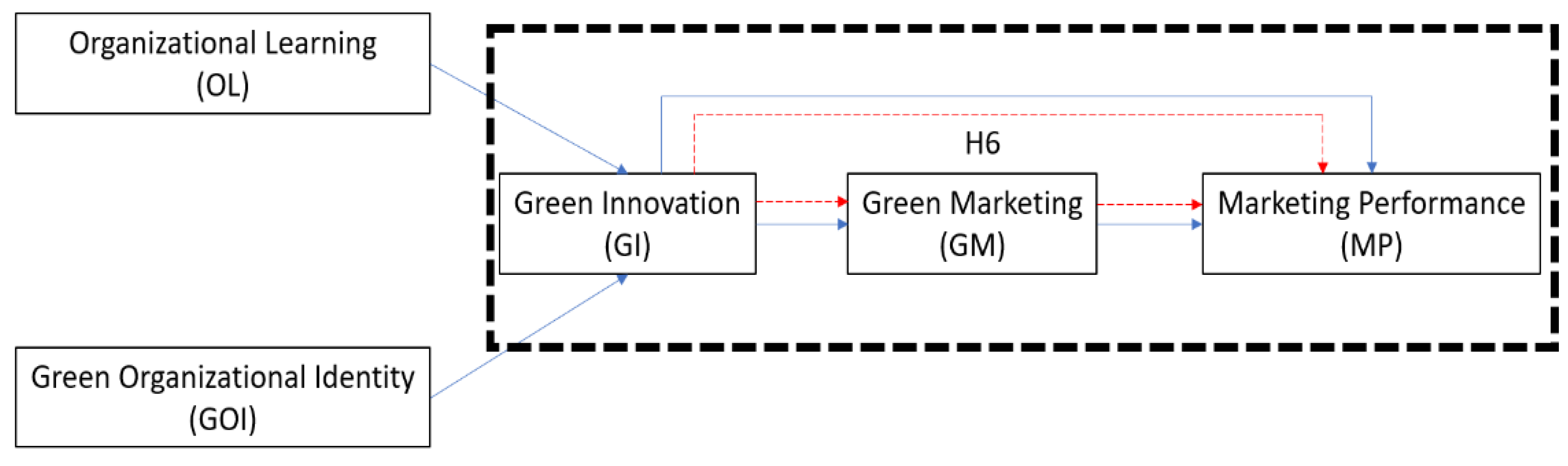
Figure 6.
Research model (integrated).
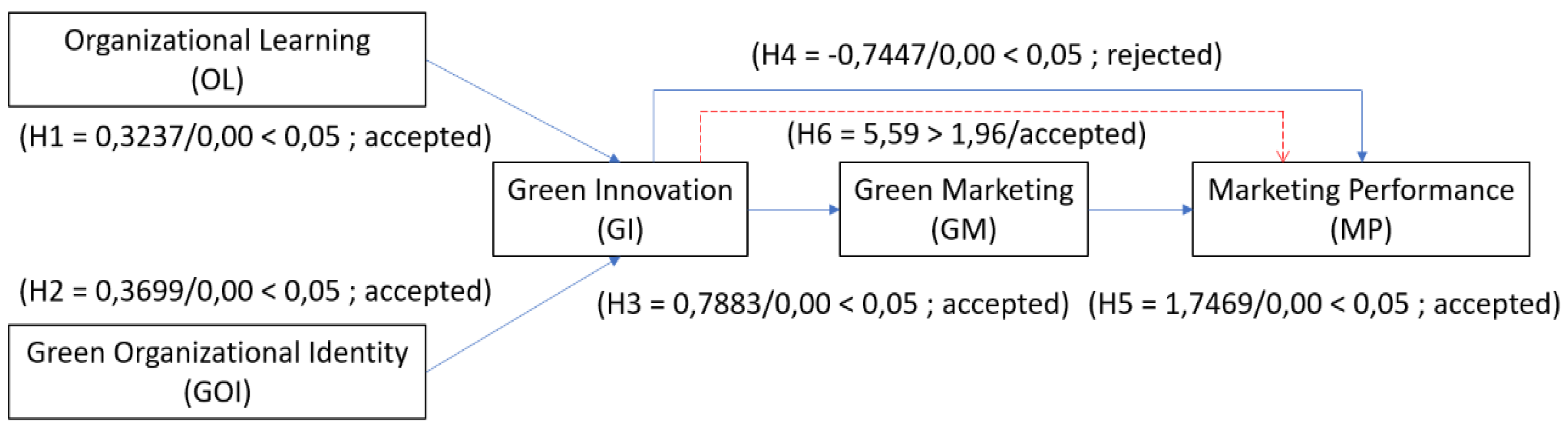
Table 3.
Random Effect Model (FEM).
 |
Source: Eviews 11.
Table 4.
Random Effect Model (REM).
 |
Source: Eviews 11.
Disclaimer/Publisher’s Note: The statements, opinions and data contained in all publications are solely those of the individual author(s) and contributor(s) and not of MDPI and/or the editor(s). MDPI and/or the editor(s) disclaim responsibility for any injury to people or property resulting from any ideas, methods, instructions or products referred to in the content. |
© 2025 by the authors. Licensee MDPI, Basel, Switzerland. This article is an open access article distributed under the terms and conditions of the Creative Commons Attribution (CC BY) license (http://creativecommons.org/licenses/by/4.0/).
Copyright: This open access article is published under a Creative Commons CC BY 4.0 license, which permit the free download, distribution, and reuse, provided that the author and preprint are cited in any reuse.


