

Submitted:
12 December 2025
Posted:
15 December 2025
You are already at the latest version
Abstract
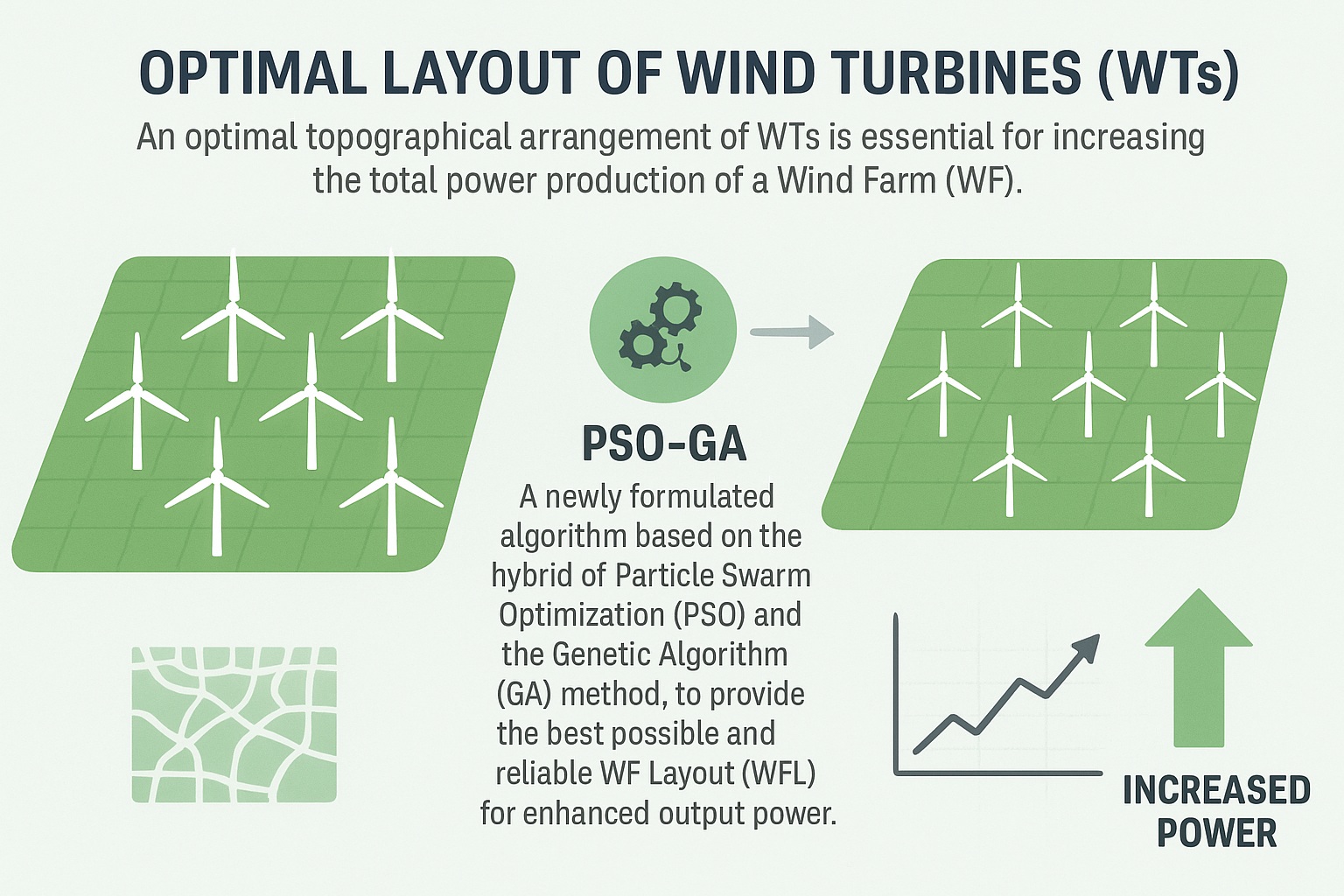
An optimal topographical arrangement of Wind Turbines (WTs) is essential for increasing the total power production of a Wind Farm (WF). This work introduces PSO-GA, a newly formulated algorithm based on the hybrid of Particle Swarm Optimization (PSO) and the Genetic Algorithm (GA) method, to provide the best possible and reliable WF Layout (WFL) for enhanced output power. Because GA improves on PSO-found solutions while PSO investigates several regions, PSO-GA can effectively handle issues with multiple local optima. In the first phase of the framework, PSO improves the original variables; in the second phase, variables are changed for improved fitness. The goal function takes into account both the power production of the WF and the total cost of WTs while analyzing wake upshot using the Jenson-Wake model. To evaluate the robustness of this strategy, three case studies are analyzed. The algorithm identifies the best possible position of turbines and strictly complies with industry-standard separation distances to prevent extreme wake interference. The comparative study with the past layout improvement process models demonstrates that the proposed hybrid algorithm has enhanced performance with the power improvement of 0.03-0.04% with the p value< 0.01 and 24-27.3% reduction in the wake loss. The above findings indicate that the proposed PSO-GA can be better than the other innovative methods, especially in the aspects of quality and consistency of the solution.
Keywords:
1. Introduction
2. Literature Review
3. Materials and Methods
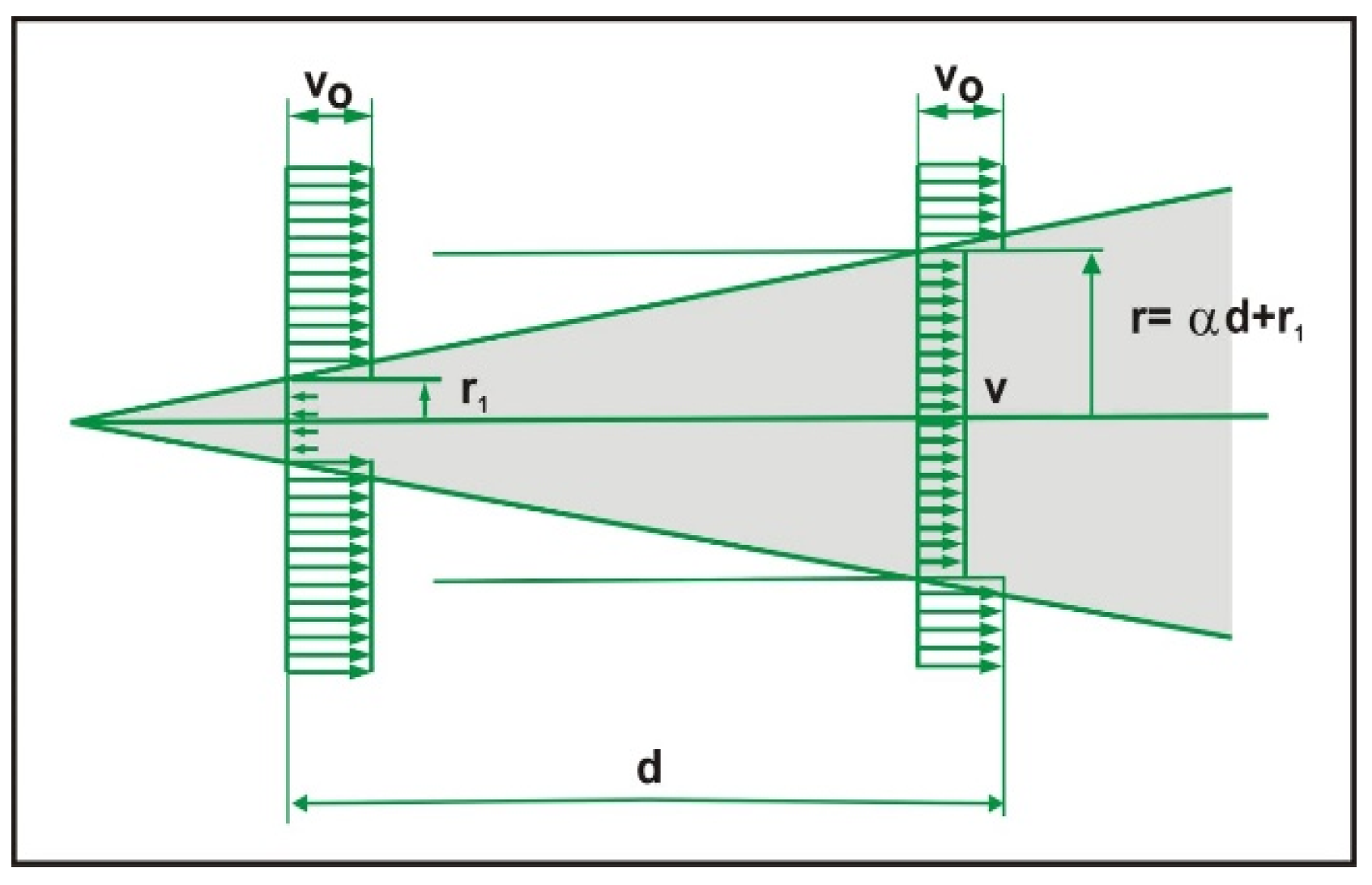
3.1. Wake Model
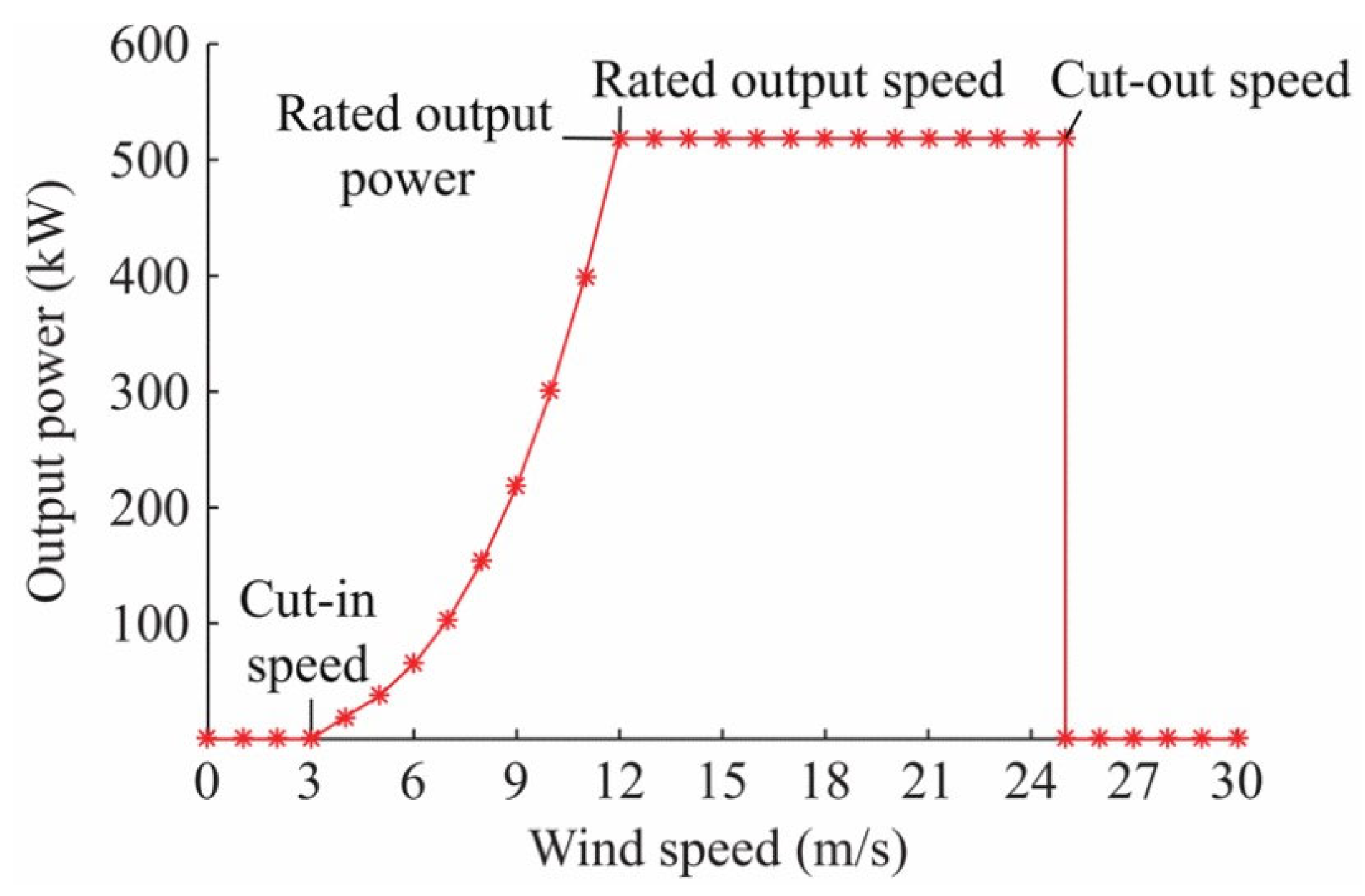
3.2. Power Model
3.3. Cost Model
3.4. Objective Function
3.5. Constraints Modeling
3.6. Energy Efficiency Index (EEI)
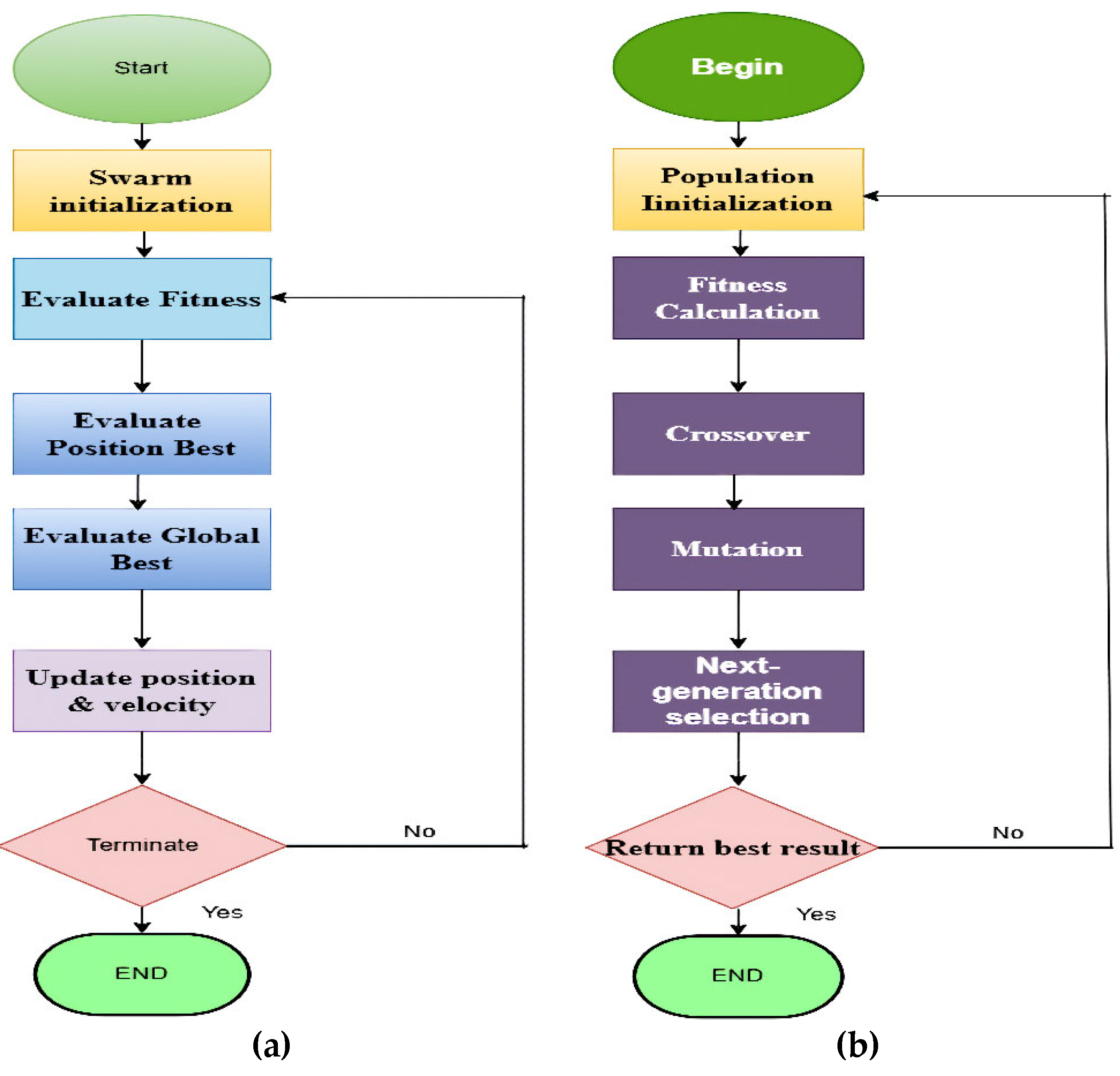
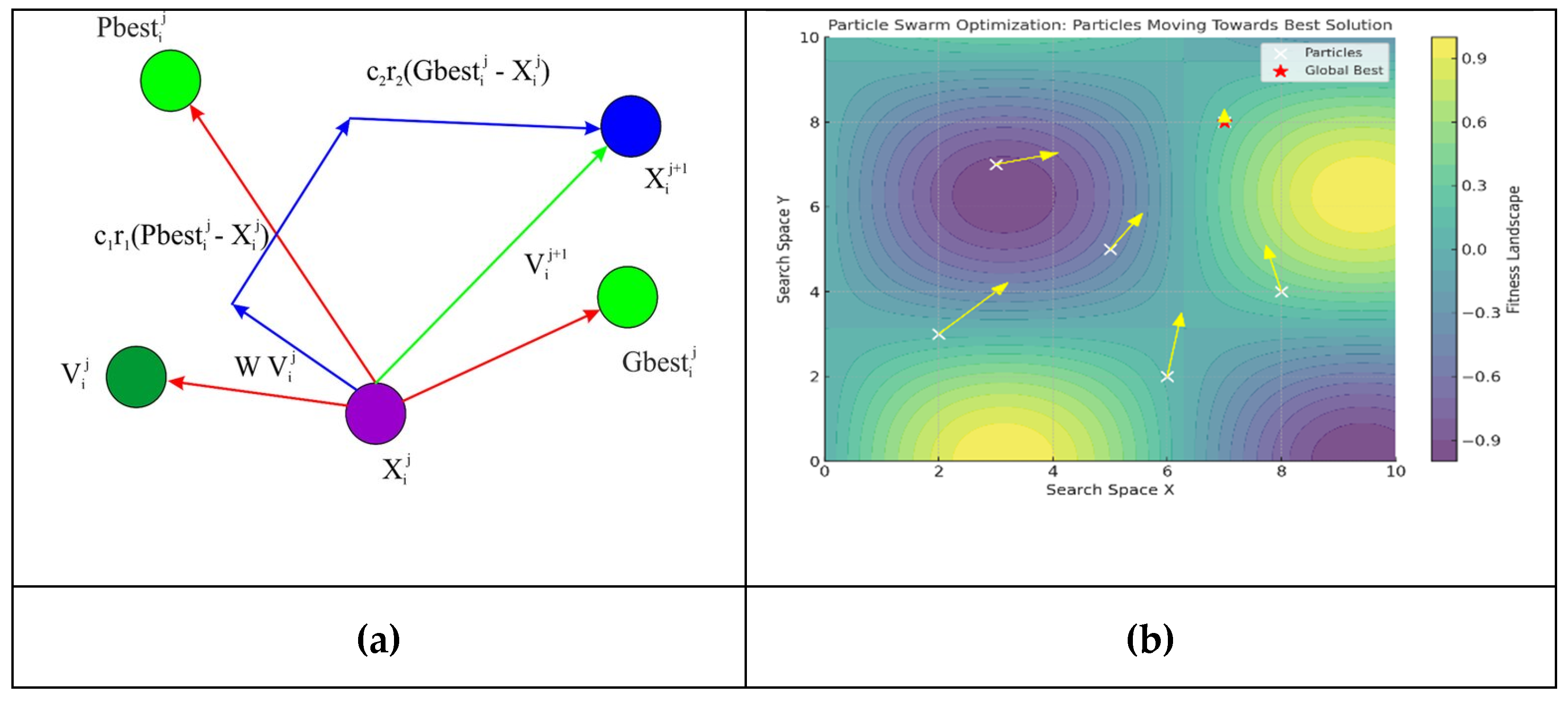
3.7. Particle Swarm Improvement Process (PSO) Algorithm
3.8. Genetic Algorithm (GA)
3.9. Proposed (PSO-GA) Algorithm
4. Results
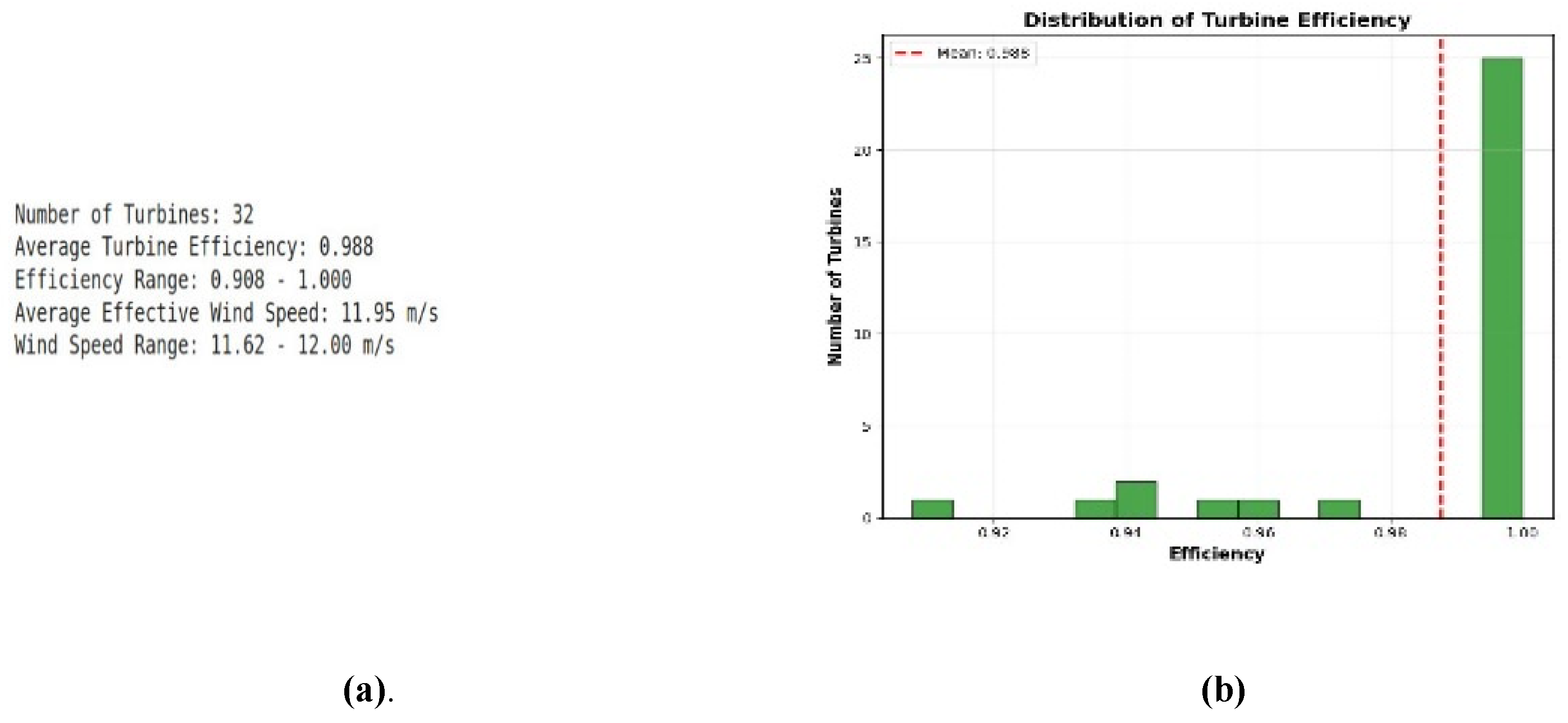
4.1. Case 1
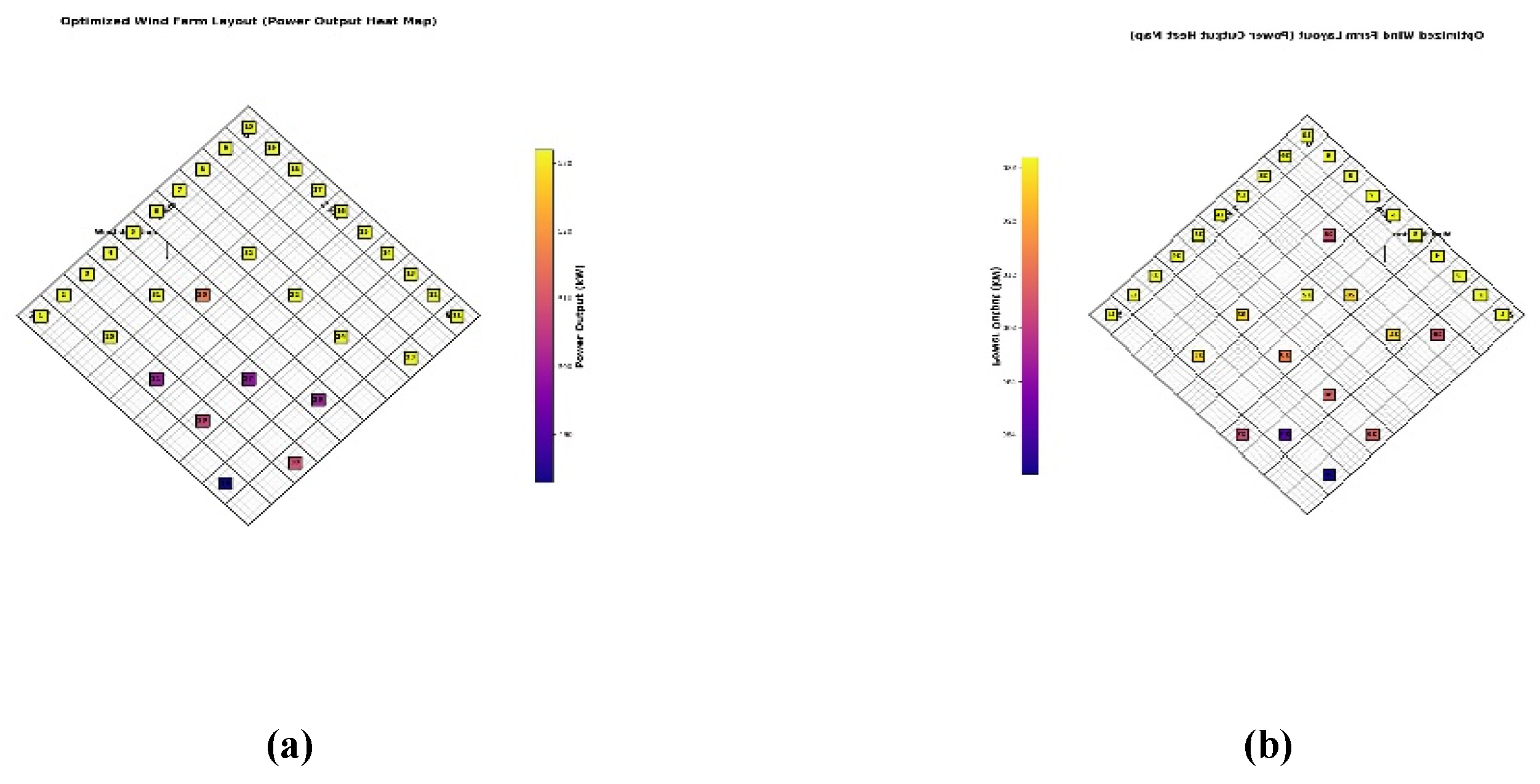
4.2. Case 2
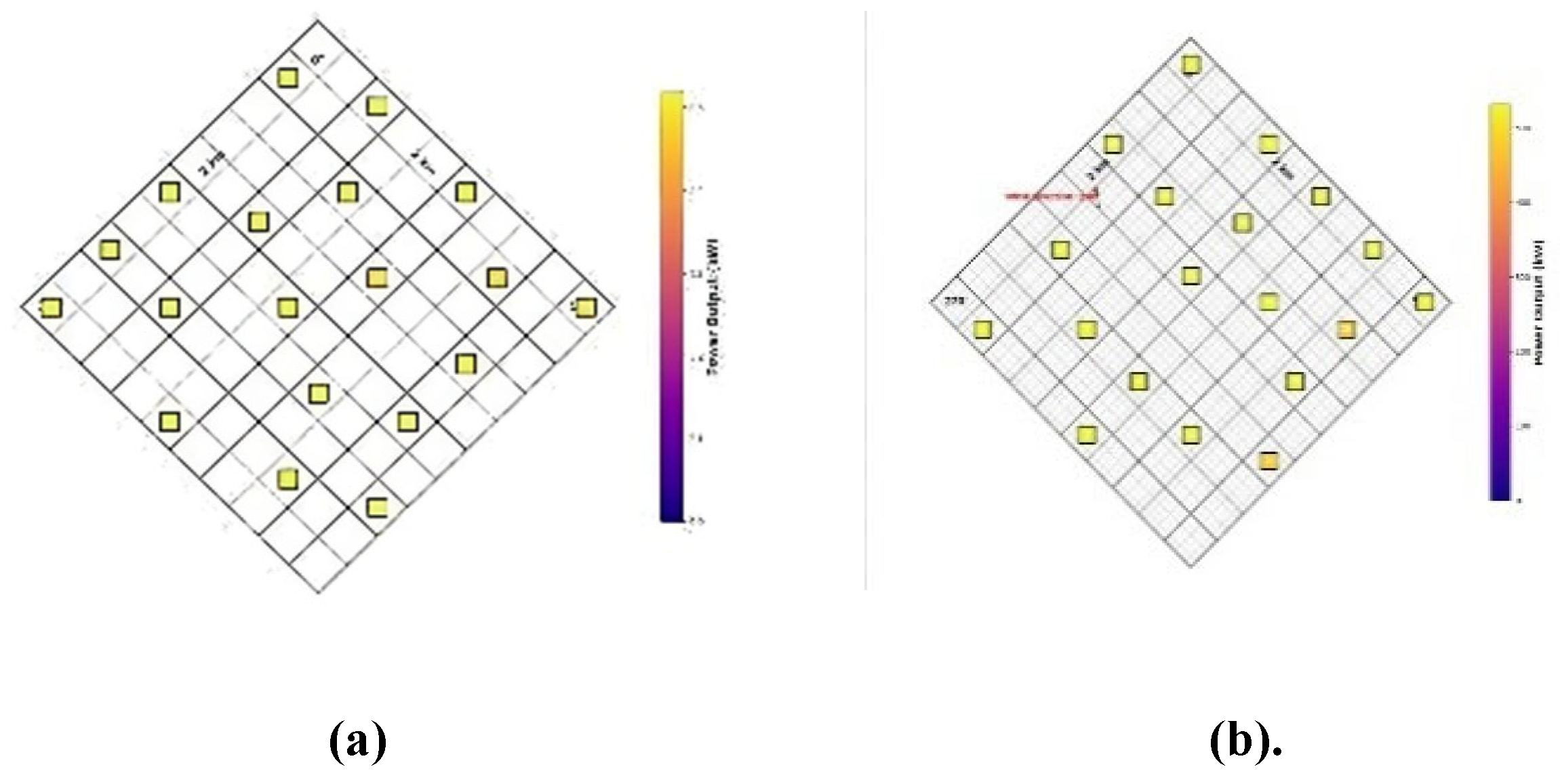
4.3. Case 3
5. Conclusion
Author Contributions
Funding
Data Availability Statement
Conflicts of Interest
Abbreviations
| EEI | Energy Efficiency Index |
| GA | Genetic Algorithm |
| GWEC | Global Wind Energy Council |
| MHMs | Meta-heuristic Methods |
| MOP | multi-objective improvement process |
| NFL | No Free Lunch |
| PSO | Particle Swarm Optimization |
| WF | Wind Farm |
| WFL | Wind Farm Layout |
| WFLO | Wind Farm Layout Optimization |
| WFL-DO | Wind Farm Discrete Optimization |
| WT | Wind Turbine |
References
- Yu, X. and W. Zhang, A teaching-learning-based optimization algorithm with reinforcement learning to address wind farm layout optimization problem. Applied Soft Computing, 2024. 151. [CrossRef]
- Xiong, L., et al., Modeling and stability issues of voltage-source converter-dominated power systems: A review. CSEE Journal of Power and Energy Systems, 2020. 8(6): p. 1530-1549.
- Wang, L., et al., Wind turbine wakes modeling and applications: Past, present, and future. Ocean Engineering, 2024. 309.
- Roga, S., et al., Recent technology and challenges of wind energy generation: A review. Sustainable Energy Technologies and Assessments, 2022. 52. [CrossRef]
- Hou, P., et al., Optimized placement of wind turbines in large-scale offshore wind farm using particle swarm optimization algorithm. IEEE Transactions on Sustainable Energy, 2015. 6(4): p. 1272-1282. [CrossRef]
- Abdelsalam, A.M. and M.A. El-Shorbagy, Optimization of wind turbines siting in a wind farm using genetic algorithm based local search. Renewable Energy, 2018. 123: p. 748-755. [CrossRef]
- Frandsen, S., et al., Analytical modelling of wind speed deficit in large offshore wind farms. Wind Energy, 2006. 9(1-2): p. 39-53.
- Barthelmie, R.J., et al. Modelling and measurements of wakes in large wind farms. in Journal of Physics: Conference Series. 2007. IOP Publishing.
- Mittal, P. and K. Mitra, Determining layout of a wind farm with optimal number of turbines: A decomposition based approach. Journal of cleaner production, 2018. 202: p. 342-359. [CrossRef]
- Şişbot, S., et al., Optimal positioning of wind turbines on Gökçeada using multi-objective genetic algorithm. Wind Energy: An International Journal for Progress and Applications in Wind Power Conversion Technology, 2010. 13(4): p. 297-306.
- Long, H. and Z. Zhang, A two-echelon wind farm layout planning model. IEEE Transactions on Sustainable Energy, 2015. 6(3): p. 863-871. [CrossRef]
- Bastankhah, M. and F. Porté-Agel, A new analytical model for wind-turbine wakes. Renewable energy, 2014. 70: p. 116-123. [CrossRef]
- Yang, Q., J. Hu, and S.-s. Law, Optimization of wind farm layout with modified genetic algorithm based on boolean code. Journal of Wind Engineering and Industrial Aerodynamics, 2018. 181: p. 61-68. [CrossRef]
- Gao, X., H. Yang, and L. Lu, Optimization of wind turbine layout position in a wind farm using a newly-developed two-dimensional wake model. Applied Energy, 2016. 174: p. 192-200. [CrossRef]
- Sun, H., X. Gao, and H. Yang, A review of full-scale wind-field measurements of the wind-turbine wake effect and a measurement of the wake-interaction effect. Renewable and Sustainable Energy Reviews, 2020. 132: p. 110042. [CrossRef]
- Pérez, B., R. Mínguez, and R. Guanche, Offshore wind farm layout optimization using mathematical programming techniques. Renewable energy, 2013. 53: p. 389-399. [CrossRef]
- Wu, Y.-T. and F. Porté-Agel, Simulation of turbulent flow inside and above wind farms: model validation and layout effects. Boundary-layer meteorology, 2013. 146(2): p. 181-205. [CrossRef]
- Mosetti, G., C. Poloni, and B. Diviacco, Optimization of wind turbine positioning in large windfarms by means of a genetic algorithm. Journal of Wind Engineering and Industrial Aerodynamics, 1994. 51(1): p. 105-116. [CrossRef]
- Grady, S.A., M.Y. Hussaini, and M.M. Abdullah, Placement of wind turbines using genetic algorithms. Renewable Energy, 2005. 30(2): p. 259-270. [CrossRef]
- Marmidis, G., S. Lazarou, and E. Pyrgioti, Optimal placement of wind turbines in a wind park using Monte Carlo simulation. Renewable Energy, 2008. 33(7): p. 1455-1460. [CrossRef]
- Sood, P., V. Winstead, and P. Steevens. Optimal placement of wind turbines: A Monte Carlo approach with large historical data set. in 2010 IEEE international conference on electro/information technology. 2010. IEEE.
- Masoudi, S.M. and M. Baneshi, Layout optimization of a wind farm considering grids of various resolutions, wake effect, and realistic wind speed and wind direction data: A techno-economic assessment. Energy, 2022. 244. [CrossRef]
- Boersma, S., et al., A control-oriented dynamic wind farm model: WFSim. Wind Energy Science, 2018. 3(1): p. 75-95. [CrossRef]
- Sun, H., et al., Wind turbine power modelling and optimization using artificial neural network with wind field experimental data. Applied Energy, 2020. 280: p. 115880. [CrossRef]
- Tang, X.-Y., et al., Optimization of wind farm layout with optimum coordination of turbine cooperations. Computers & Industrial Engineering, 2022. 164. [CrossRef]
- Shakoor, R., et al., Wind farm layout optimization using area dimensions and definite point selection techniques. Renewable energy, 2016. 88: p. 154-163. [CrossRef]
- Stanley, A.P.J., A. Ning, and K. Dykes, Optimization of turbine design in wind farms with multiple hub heights, using exact analytic gradients and structural constraints. Wind Energy, 2019. 22(5): p. 605-619. [CrossRef]
- Stanley, A.P. and A. Ning, Coupled wind turbine design and layout optimization with nonhomogeneous wind turbines. Wind Energy Science, 2019. 4(1): p. 99-114. [CrossRef]
- Bouchekara, H.R., et al., Wind Farm Layout Optimization/Expansion with Real Wind Turbines Using a Multi-Objective EA Based on an Enhanced Inverted Generational Distance Metric Combined with the Two-Archive Algorithm 2. Sustainability, 2023. 15(3): p. 2525. [CrossRef]
- Ramli, M.A.M. and H.R.E.H. Bouchekara, Wind Farm Layout Optimization Considering Obstacles Using a Binary Most Valuable Player Algorithm. IEEE Access, 2020. 8: p. 131553-131564. [CrossRef]
- Wolpert, D.H. and W.G. Macready, No free lunch theorems for optimization. IEEE transactions on evolutionary computation, 2002. 1(1): p. 67-82. [CrossRef]
- Chowdhury, S., et al., Optimizing the arrangement and the selection of turbines for wind farms subject to varying wind conditions. Renewable Energy, 2013. 52: p. 273-282. [CrossRef]
- Cao, L., et al., Wind farm layout optimization to minimize the wake induced turbulence effect on wind turbines. Applied Energy, 2022. 323. [CrossRef]
- Shakoor, R., et al., Wake effect modeling: A review of wind farm layout optimization using Jensen׳s model. Renewable and Sustainable Energy Reviews, 2016. 58: p. 1048-1059. [CrossRef]
- Biswas, P.P., P.N. Suganthan, and G.A. Amaratunga. Optimal placement of wind turbines in a windfarm using L-SHADE algorithm. in 2017 IEEE Congress on Evolutionary Computation (CEC). 2017. IEEE.
- Wang, D., D. Tan, and L. Liu, Particle swarm optimization algorithm: an overview. Soft Computing, 2017. 22(2): p. 387-408.
- Kennedy, J. and R. Eberhart. Particle swarm optimization In Proceedings of ICNN’95-International Conference on Neural Networks. in the ICNN'95-International Conference on Neural Networks. 2002.
- El-Shorbagy, M.A. and A.M. El-Refaey, A hybrid genetic–firefly algorithm for engineering design problems. Journal of Computational Design and Engineering, 2022. 9(2): p. 706-730. [CrossRef]
- Haldurai, L., T. Madhubala, and R. Rajalakshmi, A study on genetic algorithm and its applications. Int. J. Comput. Sci. Eng, 2016. 4(10): p. 139-143.
- Asaah, P., L. Hao, and J. Ji, Optimal Placement of Wind Turbines in Wind Farm Layout Using Particle Swarm Optimization. Journal of Modern Power Systems and Clean Energy, 2021. 9(2): p. 367-375. [CrossRef]

| Strategy | Nt | Power Extracted | Wake Loss | AEP (MWh) | Efficiency % |
|---|---|---|---|---|---|
| Proposed | 32 | 16389.73 | 199.06 | 143574034.8 | 98.8 |
| [40] | 32 | 16326.59 | 262.2 | 143020928.4 | 98.42 |
| Strategy | Nt | Power Extracted | Wake Loss | AEP (MWh) | Efficiency % |
|---|---|---|---|---|---|
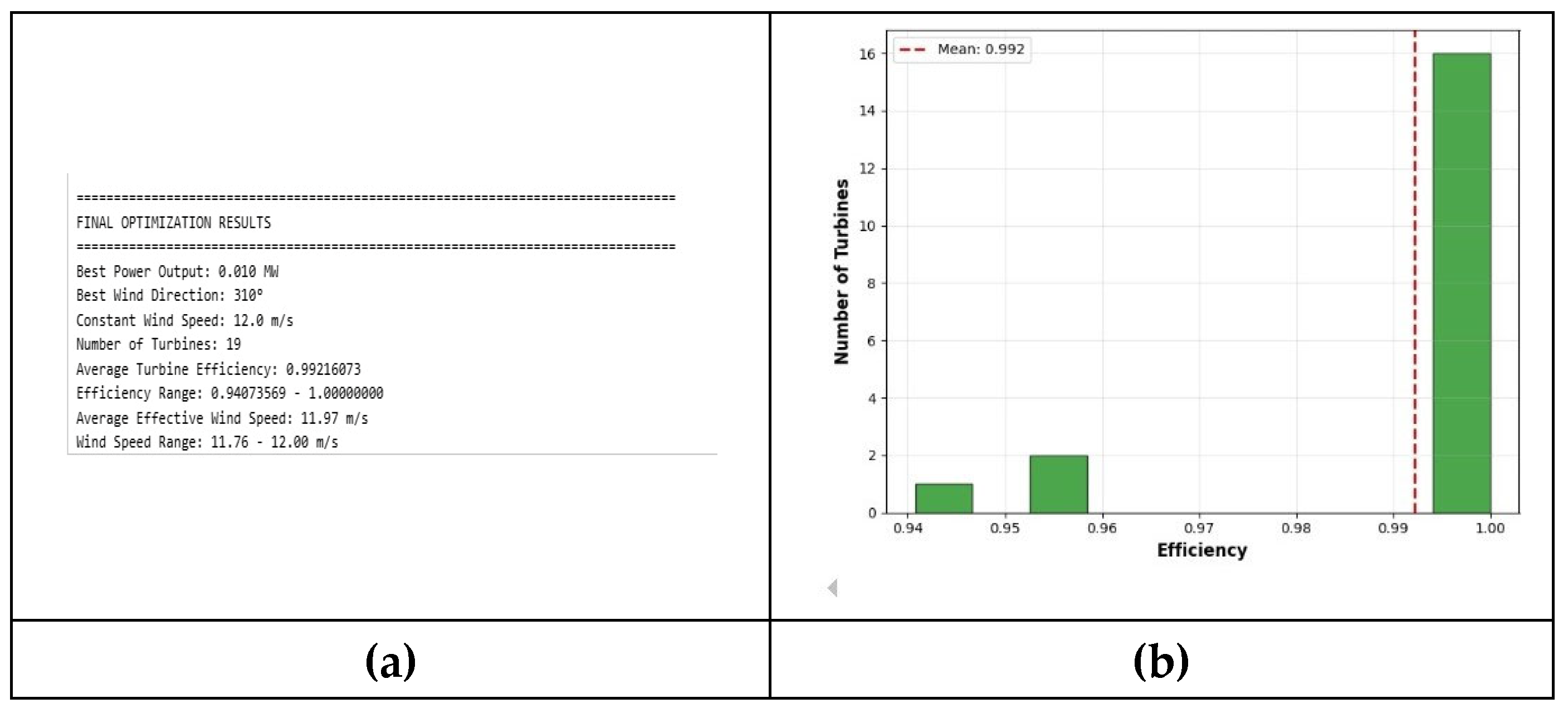
| Proposed | 19 | 9770.8032 | 78.7968 | 85592.2 | 99.2 |
| [40] | 19 | 9741.3 | 108.3 | 85333.79 | 98.9 |
| Strategy | Nt | Power Extracted | Wake Loss | AEP (MWh) | Efficiency % |
|---|---|---|---|---|---|
| Proposed | 15 | 7713.79 | 62.21 | 67572.8 | 99.2 |
| [40] | 15 | 7,690.46 | 85.54 | 67368.4 | 98.9 |
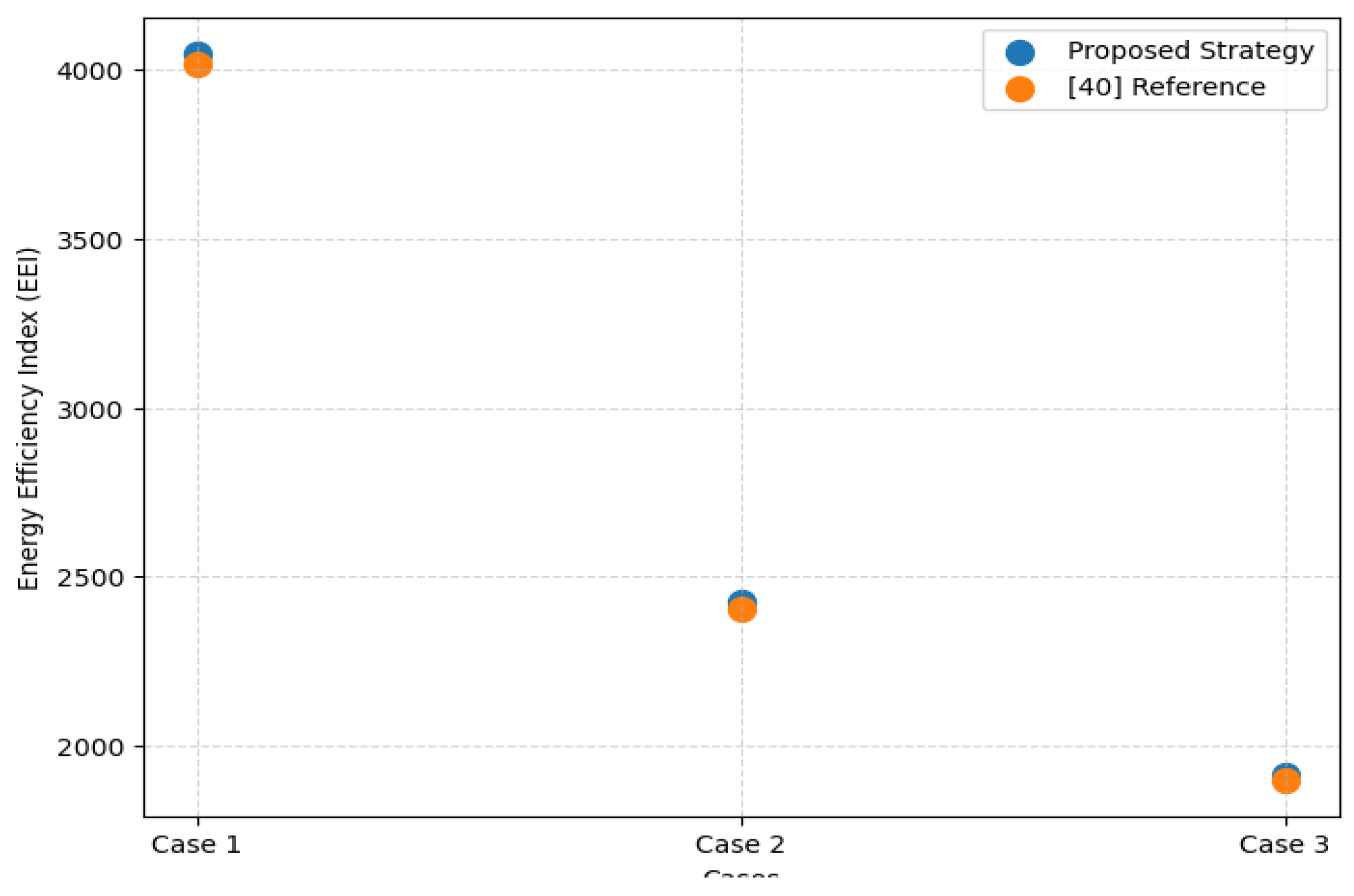
| Case # | EEI by Proposed Strategy | EEI [40] | P-Value |
|---|---|---|---|
| Case 1 | 4048.26 | 4016.34 | 0.0066 |
| Case 2 | 2423.2 | 2406.1 | |
| Case 3 | 1913.01 | 1899.5 |
Disclaimer/Publisher’s Note: The statements, opinions and data contained in all publications are solely those of the individual author(s) and contributor(s) and not of MDPI and/or the editor(s). MDPI and/or the editor(s) disclaim responsibility for any injury to people or property resulting from any ideas, methods, instructions or products referred to in the content. |
© 2025 by the authors. Licensee MDPI, Basel, Switzerland. This article is an open access article distributed under the terms and conditions of the Creative Commons Attribution (CC BY) license (http://creativecommons.org/licenses/by/4.0/).


