Preprint
Article

This version is not peer-reviewed.

Antifungal Potential of Diaporthe sp. Endophytes from Antillean Avocado Against Fusarium spp.: From Organic Extracts to In Silico Chitin Synthase Inhibition

A peer-reviewed article of this preprint also exists.

Submitted:

09 December 2025

Posted:

10 December 2025

You are already at the latest version

Abstract

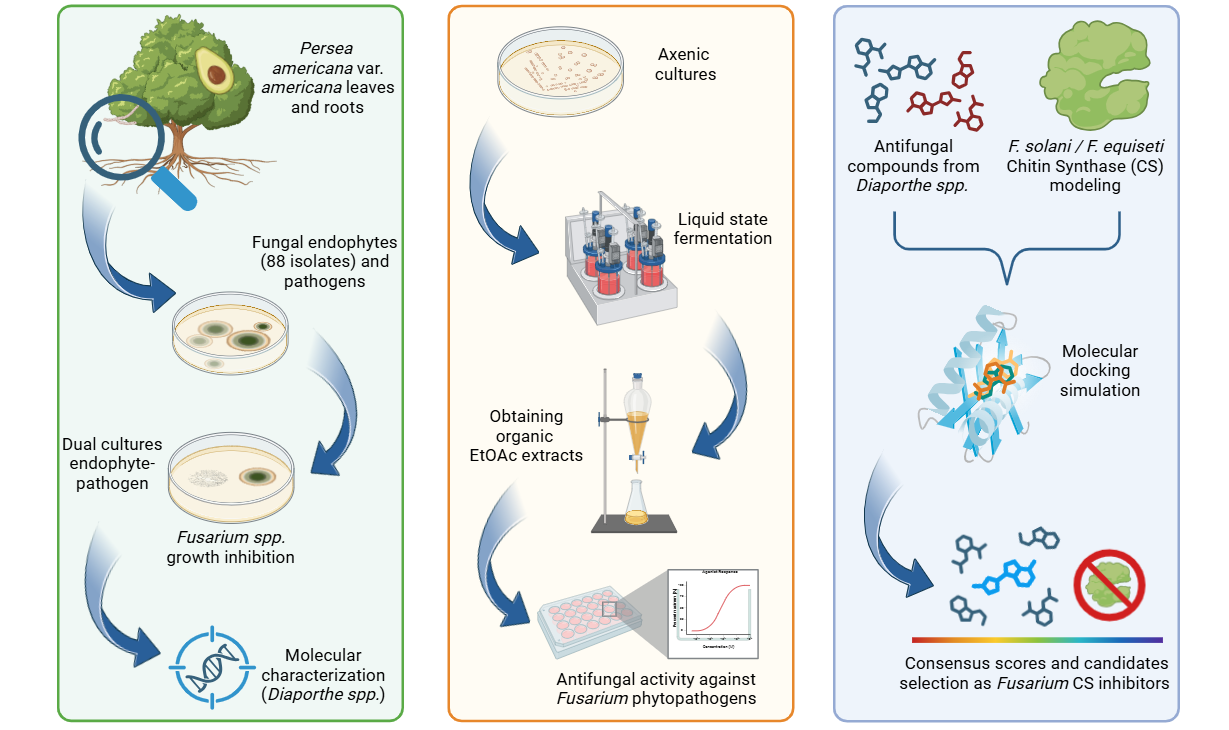
Fungal endophytes have emerged as a promising source of bioactive compounds with potent antifungal properties for plant disease management. This study aimed to isolate and characterize fungal endophytes from Antillean avocado (Persea americana var. americana) trees in the Colombian Caribbean, capable of producing bio-fungicide metabolites against Fusarium solani and Fusarium equiseti. For this, dual-culture assays, liquid-state fermentation of endophytic isolates, and metabolite extractions were conducted. From 88 isolates recovered from leaves and roots, those classified within the Diaporthe genus exhibited the most significant antifungal activity. Their organic extracts displayed median inhibitory concentrations (IC₅₀) approaching 200 μg/mL. To investigate the mechanism of action, in silico studies targeting Chitin Synthase (CS) were performed, including homology models of the pathogens' CS generated using Robetta, followed by molecular docking with Vina, and interaction fingerprint similarity analysis of 15 antifungal metabolites produced by Diaporthe species using PROLIF. A consensus scoring strategy identified diaporxanthone A (12) and diaporxanthone B (13) as the most promising candidates, achieving scores up to 0.73 against F. equiseti, comparable to the control Nikkomycin Z (0.82). These results suggest that Antillean avocado endophytes produce bioactive metabolites that may inhibit fungal cell wall synthesis, offering a sustainable alternative for disease management.
Keywords: 
;  ;  ;  ;  ;  

1. Introduction

Species of the Fusarium genus rank among the most detrimental phytopathogens globally, causing toxin contamination as well as severe diseases and economic losses across a broad spectrum of crops, including cereals, vegetables, and tropical fruits. [1,2] These pathogens induce chlorosis and cotyledon necrosis, water-soaked lesions on the crown and lower stem, pre-emergence and post-emergence growth retardation, brown to black wilt in the lower main root and lateral roots, vascular damage and, in some cases, produce mycotoxins harmful to human and animal health. [3,4]
Current strategies for controlling Fusarium infections encompass the use of resistant crop varieties, implementation of best agricultural practices, and application of synthetic fungicides like phosphine, formaldehyde, carbendazim, thiophanate-methyl or propiconazole + prochloraz, among others. [5,6] However, chemical interventions raise critical concerns regarding environmental sustainability, potential toxicity, and the accumulation of harmful residues in food products. [7] In response to these challenges, plant-microbiome interactions, particularly those involving fungal endophytes, have emerged as a promising avenue for sustainable disease management, due to their ability to enhance plant resilience against both biotic and abiotic stressors. [8,9,10]
Notably, the selection of host plants plays a key role in the successful isolation of endophytes, with highest bioactive potential often found in plants from unique ecosystems like tropical forests, endemic species with unusual longevity, or those that have adapted to extreme environmental conditions. [11,12] That is the case of Antillean avocados (Persea americana var. americana) growth in the Montes de María region (Colombian Caribbean). These plants have been propagated by seed over five decades leading to their classification as endemic varieties well adapted to the region's distinct climatic and geographic conditions (0-1000 m.a.s.l. and 18-27°C). [13,14] The endemic ecotypes—Cebo, Leche, and Manteca— are distinguished based on fruit characteristics, including pulp texture and fat content. However, their cultivation has been severely affected by the Avocado Wilt Complex (AWC), a group of phytopathogens including Fusarium, Verticillium, and Phytophthora, which aggressively compromise the root systems of most avocado trees. [15,16] Remarkably, the survival of some avocado plants suggests the presence of intrinsic defense mechanisms, potentially mediated by a diverse and functionally significant endophytic community. In this context, the present study aims to investigate the microbiota associated with Antillean avocado trees in Montes de María and to evaluate their potential as antifungal metabolites producers, with inhibitory activity against F. solani and F. equiseti.
In the same way, understanding the mechanisms of action of antifungal compounds is fundamental for advancing plant disease management and addressing the growing challenge of fungal resistance. Antifungal compounds target essential structures and metabolic processes in phytopathogenic fungi through multiple mechanisms of action like intracellular reactive oxygen species accumulation, cell membrane disruption, lipid peroxidation, mitochondrial dysfunction [17,18], inhibition of cell wall biosynthesis [19,20], etc. Particularly, the unique composition of the fungal cell wall—dominated by polysaccharides such as glucans and chitins, along with glycoproteins—distinguishes it fundamentally from human cellular structures. [21] Consequently, Chitin Synthase (CS), the enzyme responsible for chitin polymerization, has emerged as a strategic molecular target for the development of selective antifungal agents. [22,23] Despite its clinical and agricultural relevance, structural data for CS in specific phytopathogens such as Fusarium solani and Fusarium equiseti remain limited, often hindering the rational elucidation of inhibition mechanisms. To address this gap and investigate the molecular basis of the antifungal activity observed in this study, an in silico approach was integrated. We performed homology modeling to generate 3D structures of the CS enzymes for both pathogens, followed by molecular docking and interaction fingerprint (PLIF) analyses. This computational strategy was employed to evaluate whether bioactive metabolites, previously isolated from endophytic Diaporthe species, could act as potential inhibitors of this critical enzymatic target.

2. Materials and Methods

2.1. Collection of Plant Material

Leaves and secondary roots from the Cebo, Manteca, and Leche ecotypes of avocado (Persea americana var. americana) cultivated in the Caribbean region of Colombia (09°34′42″N 75°16′15″W), were collected in 2017. The collection of plant material and the study of the isolated fungi were covered by Permission No. 121 of January 22, 2016 (Amendment No. 21), under the Access to Genetic Resources and Derivative Products Agreement No. RGE 46 (Article 6 - Law 1955 of 2019), granted by Ministerio de Ambiente y Desarrollo Sostenible de Colombia. Fungal isolates were placed in the QUIPRONAB strain collection, located at the Chemistry Department of Universidad Nacional de Colombia, Sede Bogotá.

2.2. Avocado Phytopathogens Isolation

Fusarium pathogens were isolated from secondary roots of trees exhibiting symptoms of AWC. Plant material was surface sterilized following established protocols [24], and fungal isolates were identified through a combination of morphological and molecular characterization [25].
Two Fusarium isolates were selected based on an in vivo pathogenicity test. Avocado seedlings, germinated from seeds and cultivated under controlled glasshouse conditions (~18-20 °C day, ~12-15 °C night) for four months, reached 40-50 cm and developed at least four true leaves [26]. Each treatment included ten plants. Conidial suspensions (1 × 10⁷ CFU/mL) were prepared from 14-day-old cultures grown on potato dextrose agar (PDA), and roots were immersed for 2 min prior to transplanting into sterile soil. An additional 1 mL of inoculum was applied near to the root zone. Sterile distilled water served as a negative control. Plants were irrigated weekly for six weeks, and disease severity was evaluated using a 0-3 scale: 0 (no lesion), 1 (chlorosis/slight withering), 2 (severe withering/defoliation), and 3 (plant mortality). The disease index (DI) was calculated using DI = 100 * [(a.X0) + (b.X1) + (c.X2) + (d.X3)] / (N*3), where a-d represents the number of plants at each infection level, and N is the total plants per treatment. Following the experiment, seedlings were uprooted, and the causal agents were re-isolated via root surface sterilization and subsequent culture on PDA.

2.3. Fungal Endophytes Isolation

Healthy leaves and secondary roots were collected from three Antillean avocado ecotypes -Cebo, Leche, and Manteca- that had survived adverse phytosanitary conditions in the Colombian Caribbean region. Plant material was surface sterilized following the previously described protocol. The samples were excised into 5 mm2 segments [27] and plated onto different solid culture media, including V8 juice agar, malt extract agar, yeast glucose extract agar, and potato dextrose agar, all supplemented with chloramphenicol (400 ppm). Following the incubation period, individual fungal morphotypes were subcultured onto PDA to obtain pure isolates. To establish a well-characterized fungal collection and ensure culture purity, axenic cultures were obtained [28]. Endophytic fungal strains were subsequently preserved under cryogenic storage conditions [29] for further study.

2.4. Inhibitory Activity of Fungal Endophytes and Their Organic Extracts

Dual-culture assays were conducted on PDA plates (ø=90 mm) by placing 5 mm agar plugs of the entophytic isolate and the phytopathogen (F. solani or F. equiseti) 50 mm apart. Cultures were incubated at 28°c for 14 days and radial fungal growth was measured daily. Control plates consisting of the pathogen grow under identical conditions without endophyte interaction, were included for comparison [30]. The experiment was performed in triplicate, and only endophytes exhibiting significant inhibitory effects on pathogen growth were selected for subsequent organic extraction.
Selected endophytic isolates were cultured in 250 mL Erlenmeyer flasks containing 100 mL of 2% yeast extract broth and incubated at 28°C with constant agitation (150 rpm) for 14 days. Biotechnological products were extracted via three consecutive ultrasound-assisted extractions using 300 mL of ethyl acetate (EtOAc) per flask. The organic phase was subsequently filtered, separated, and concentrated under reduced pressure to obtain crude extracts (Liu & Liu, 2018).
Fungal extracts were tested for antifungal activity using agar dilution method in 12-well plates. A stock solution (50 mg/mL) was prepared in ethanol, from which 40 µl was combined with 10 µl of MTT (2 mg/mL) and 1950 µL of PDA, resulting in a final concentration of 1 mg/mL per well. Pathogens were inoculated using a sterile toothpick from a seven-day PDA culture and incubated at 28°C for 72 h. Growth inhibition (% MGI) was quantified using ImageJ™ and compared to untreated controls [31]. Extracts exhibiting mycelial growth inhibition (% MGI) ≥ 50% at 1000 µg/mL were selected for further dose-response analysis to determine IC50 values, employing agar dilution with concentrations between 25-3000 µg/mL. All experiments were conducted in triplicate, and IC50 values were calculated using GraphPad Prism software.

2.5. Morphological and Molecular Characterizations of Endophytes

Fungal endophytes exhibiting ≥50 % MGI against Fusarium spp. were identified through a combination of morphological and molecular analyses. Molecular identification was conducted via DNA sequence analysis of the internal transcribed spacer (ITS-1) region of ribosomal DNA, following established protocols comparisons for the internal transcribed spacer ITS-1 of the ribosomal DNA [32]. The resulting sequences were queried against GenBank using the Basic Local Alignment Search Tool (BLAST) hosted at NCBI (https://blast.ncbi.nlm.nih.gov/Blast.cgi) to identify the closest taxonomic matches [33]. All ITS-rDNA sequences were submitted to GenBank to obtain accession numbers (Table S1).

2.6. Homology Modeling and Structural Selection

The amino acid sequences of Chitin Synthase (CS) for F. solani and F. equiseti were retrieved from the UniProtKB database. [34] To identify a suitable structural template, a sequence alignment was performed using BLASTp against the Protein Data Bank (PDB) to find a crystallographic structure with high identity and query coverage. Three independent automated prediction servers were employed to generate the 3D structural models: Robetta[35], AlphaFold[36], and I-TASSER [37]. To select the most reliable structure among the generated predictions, the models were structurally superimposed onto the identified template. The final selection was determined by calculating the Root Mean Square Deviation (RMSD) of the backbone atoms relative to the template; the model exhibiting the lowest RMSD value was chosen.

2.7. Molecular Docking and Interaction Analysis

The molecular docking simulations were performed using AutoDock Vina to predict the binding affinity and orientation of the isolated metabolites within the catalytic site of CS. [38] The selected 3D models of F. solani and F. equiseti CS were prepared by adjusting the protonation states at pH 7.4 were assigned using PDB2PQR, and partial charges were added. [39] The 3D structures of the 15 fungal metabolites were generated and energy-minimized using RDKit (MMFF94 force field). [40] Gasteiger partial charges were assigned, and rotatable bonds were defined before conversion to PDBQT format using OpenBabel of all structures. [41]
The search space was defined centered on the coordinates of the reference inhibitor Nikkomycin Z (derived from the template PDB: 7WJO) and creating a cubic grid box of 8Å in each dimension to cover the active site pocket. [42] Docking runs were executed with an exhaustiveness parameter of 16. To validate the protocol, a re-docking assay was performed using the co-crystallized ligand, calculating the Root Mean Square Deviation (RMSD) between the predicted and experimental poses using spyrmsd. [43] The resulting protein-ligand complexes were analyzed to identify key molecular contacts. Interaction fingerprints (IFP) were generated using ProLIF to map hydrogen bonds, hydrophobic contacts, and pi-stacking interactions. [44] To rank the compounds, a similarity analysis was conducted by calculating the Cosine coefficient between the interaction fingerprint of each metabolite and that of the reference inhibitor (Nikkomycin Z).
To identify the most promising candidates, a consensus scoring function (consensus score) was established by integrating the binding affinity and the interaction similarity. Since the Vina score and the PROLIF similarity possess different units and scales, both variables were normalized using the Min-Max scaling method. The consensus score for each molecule was calculated as the arithmetic mean of these normalized values.

3. Results and Discussion

3.1. Avocado Phytopathogens Isolation

Six fungal strains were isolated from the secondary roots of Antillean avocado trees exhibiting symptoms of root rot. These isolates were subjected to morphological and molecular characterization. DNA sequencing was performed to facilitate taxonomic identification (Table 1).
After pathogenicity assay on avocado seedlings, two Fusarium strains could induce disease symptoms. F. solani and F. equiseti exhibited a 100% disease incidence, with disease severity indices of 77% and 80%, respectively, six weeks post-inoculation. Koch’s postulates were confirmed through the successful re-isolation of the pathogens following surface disinfection of infected seedling roots and subsequent culture on PDA. Morphological identification was confirmed based on macroscopic and microscopic characteristics of the re-isolated strains.
These findings are consistent with previous reports on the phytopathogenic potential of Fusarium species. Indeed, Fusarium spp. are among the most prevalent pathogens affecting avocado crops globally, with F. solani, F. equiseti, and F. oxysporum recognized as the most economically significant. Typical disease symptoms include chlorosis, necrosis, water-soaked lesions, growth retardation, and root wilt [45]. In addition, previous studies have reported the disease incidence of Fusarium species in avocado seedlings. For instance, a study conducted in Michoacán, Mexico, on Persea americana var. drymifolia identified F. oxysporum and F. solani isolates as pathogenic, with 63% causing wilting and 16% inducing necrosis [46]. Similarly, in Kenya, F. solani, F. oxysporum, and F. equiseti were associated with stem-end rot in Hass avocados, with disease severity ranging from 19.2% to 60.8% [47]. All about, and our findings further establish Fusarium as a major pathogen in avocado cultivation.
Although Phytophthora cinnamomi is a primary causal agent of root rot in Colombian avocado orchards [48,49], it was not recovered in this study. Previous research has reported the presence of oomycetes like P. cinnamomi, P. citricola, and P. heveae, as well as fungal pathogens including Lasiodiplodia theobromae, Pythium spp., Fusarium spp., and Verticillium spp., in Hass avocado plantations in Antioquia, with disease incidence ranging from 10% to 65% [50]. Additionally, Phytophthora heveae, Calonectria spp., and Fusarium spp. have been identified in avocado nurseries in Valle del Cauca [51]. In Persea americana var. americana (Antillean avocado), P. cinnamomi has been identified as the primary causal agent of wilt, with an incidence exceeding 40% in 2009 [16]. Moreover, recent studies suggest that Colletotrichum spp. contribute to abnormal seedling development and formation of necrotic acervuli in nurseries settings. Additionally, other pathogenic organisms including P. cinnamomi, Sclerotium rolfsii, and Nectria spp., have been implicated in symptoms such as wilting, necrosis, and terminal stem/root rot [52].

3.2. Avocado Fungal Endophytes Isolation

Following surface disinfection and incubation of plant material, a total of 88 strains were selected as different morphotypes based on their growth on PDA. Of these, 19 endophytic fungi were isolated from avocado roots and 69 were recovered from leaves. Most isolates were obtained from Cebo and Manteca avocado ecotypes, whereas the Leche ecotype exhibited the lowest percentage of fungal endophytes (17%). This reduced endophyte diversity in Leche ecotype may be related to observations reported by local avocado growers, who indicate that this ecotype has been the most susceptible to phytopathogenic infections. Consequently, the Leche ecotype has become increasingly rare in the Montes de María region (Oral communication, Asociación de Productores de Aguacate Tecnificado de los Montes de María, Asproatemom, 2017).
Avocado plants in the Colombian Caribbean, particularly those in Montes de María, serve as reservoirs of microbiological diversity due to their longevity and endemic characteristics. Three key traits distinguish these ecotypes: (1) seed-based propagation, (2) adaptation to tropical environments, and (3) resilience to adverse phytosanitary conditions. These factors contribute to the establishment of endophytic communities with significant bioactive potential. Vertical transmission through seeds facilitates the persistence of endophytes across generations, thereby enhancing host survival and conferring resistance against pathogens. Moreover, the high plant diversity in tropical regions has been correlated with abundant and chemically diverse endophytes [53]. Additionally, endophytes modulate host phenotypes through mutualistic interactions, enhancing stress tolerance by producing antimicrobial metabolites and activating systemic defense mechanisms against pathogens [54].
The inhibitory activity of 88 fungal endophytes was assessed using dual culture assays. After 14 days of incubation, avocado-associated endophytes exhibited four distinct antagonistic interactions: 1). Competition for space and nutrients, promoting high colonization density (Figure 1A); 2). Mycoparasitism, characterized by endophytic overgrowth on the pathogen’s mycelium and the formation of appressoria on hyphae (Figure 1B); 3). Fumigant activity via volatile organic compounds (VOCs), validated through separate inoculation and confrontation assays (Figure 1C) [55]; and 4). Antibiosis, wherein extracellular enzymes, volatiles, and antibiotics inhibited pathogen growth (Figure 1D). In this study, antibiosis was the primary selection criterion for identifying isolates with antifungal potential, with 35 strains exhibiting inhibitory effects against F. solani and 29 against F. equiseti.
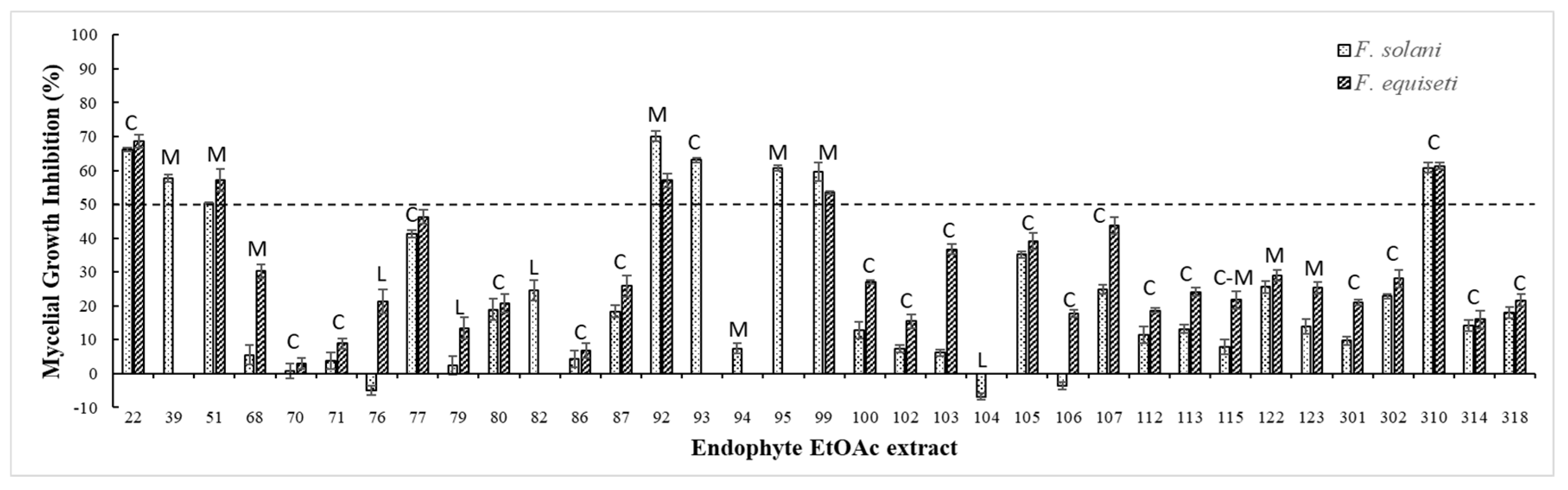
The production of secondary metabolites is typically more pronounced during the late exponential or stationary growth phases, requiring adjustments in harvest time to optimize yield. Notably, most filamentous fungi undergo a 7-day culture for metabolite extraction [56]. Given this, the 35 endophytes isolated from Antillean avocado leaves and roots that exhibited antifungal activity against Fusarium spp. in dual culture assays were incubated for 14 days prior to organic extraction using ethyl acetate (EtOAc). In an agar dilution assay, eight EtOAc extracts demonstrated >50% inhibition of at least one Fusarium pathogen at 1000 µg/mL. However, extracts UN76, UN104, and UN106, derived from Leche and Cebo ecotypes, unexpectedly promoted F. solani growth (Table 2, Figure 2).
The antifungal activity of the extracts evaluated in this study was comparable to that of other extracts described in the literature as promising inhibitors of Fusarium species. For example, the crude extract of the endophyte Fusarium proliferatum, obtained with EtOAc, showed 75.51% inhibition of F. oxysporum at a concentration of 1000 μg/mL [57]. Similarly, the EtOAc extract of the endophyte Chaetomium globosum exhibited mycelial growth inhibition percentages of 59.06%, 64.90%, and 59.41% against F. graminearum, F. oxysporum, and F. moniliforme, respectively [58].
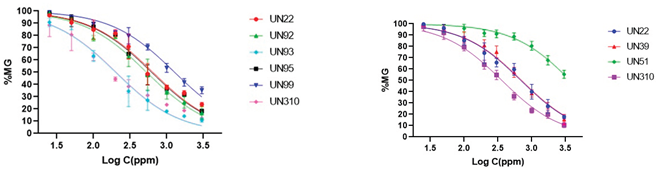
The inhibitory concentrations (IC₅₀) of the most promising extracts, those with MGI higher than 50% at 1000 µg/mL were determined using a standard dose-response model, yielding values ranging from 199 to 688 µg/mL. Notably, the UN310 extract exhibited the highest antifungal activity, with an IC₅₀ of 362 µg/mL against F. equiseti and 204 µg/mL against F. solani. These values were not significantly different from those of the UN93 extract, which displayed an IC₅₀ of 200 µg/mL against F. solani. In contrast, the endophytic fungus UN51 demonstrated the weakest antifungal activity, with an IC₅₀ exceeding 3000 µg/mL against both Fusarium pathogens (Table 3).
Values followed by the same lowercase letters in the columns of % MGI for each pathogen at 1000 µg/mL do not show significant differences according to Tukey's test (p > 0.05). Similarly, means followed by the same uppercase letters in the rows are not significantly different in a one-way ANOVA analysis (p > 0.05).

3.3. Morphological and Molecular Characterizations of the Most Promising Endophytes

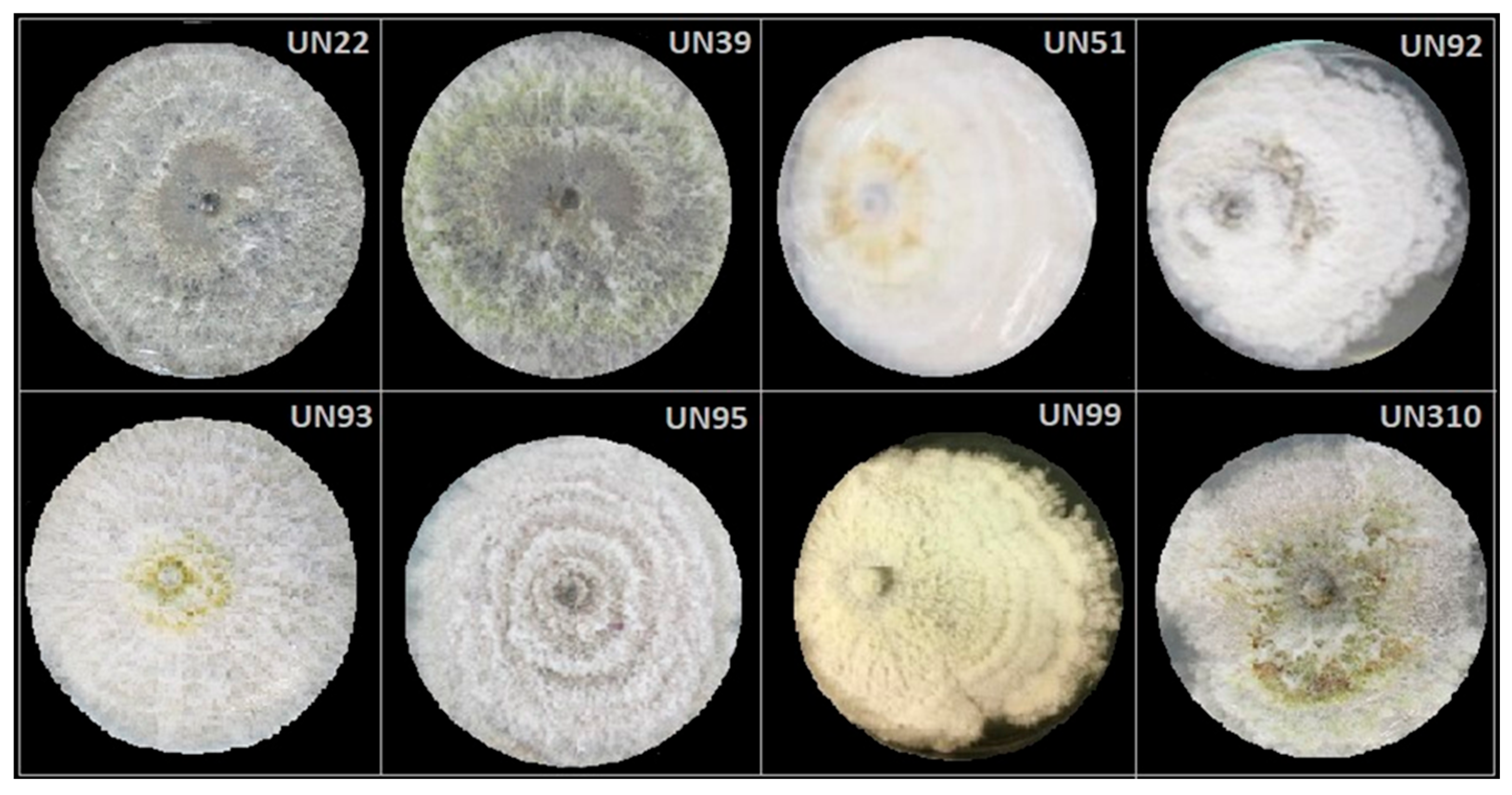
Figure 3 illustrates the macroscopic characteristics of the eight selected endophytic strains cultured on PDA. Colonies of UN22, UN39, UN92, UN93, UN95, UN99, and UN310 exhibited white to gray, woolly aerial mycelium, accompanied by yellow-orange exudates and a dark gray to black reverse pigmentation, with distinct lobed margins. In contrast, strain UN51 displayed the most divergent macroscopic features forming a colony with entire margins, a light-yellow velvety mycelium, and occasional dark brown exudates.
A significant challenge in endophytic fungal identification is the absence of conidia or other reproductive structures when cultured in conventional media, as widely reported in scientific literature [59]. To overcome this limitation, molecular characterization was performed on the eight selected endophytes. Sequence analysis revealed a 99–100% similarity with previously deposited sequences in GenBank, except for strain UN51, which exhibited 96% correspondence (Table 4). All strains coded as UN22, UN39, UN92, UN93, UN95, UN99, and UN310 were closely related to species of the genus Diaporthe. In contrast, strain UN51 was more distantly and showed greater similarity to the ITS1 region of species within the genus Nodulisporium (Figure 3). Given its IC50 value, UN51 was reclassified as an inactive endophytic strain against F. solani and F. equiseti.

3.4. Some Antifungal Compounds from Endophytic Diaporthe sp.

Notably, the endophytic isolates exhibiting the highest antifungal activity against F. solani and F. equiseti were phylogenetically related with the genus Diaporthe (Table 4). This genus, classified within the phylum Ascomycota, comprises over 950 described species that function as endophytes, saprophytes, or pathogens in a diverse range of plant and mammalian hosts [8]. Species within this genus are characterized by their ability to produce a broad spectrum of bioactive metabolites, including terpenoids, steroids, macrolides, alkaloids, flavonoids, and polyketides [60]. These metabolites exhibit cytotoxic and antineoplastic effects [61], anti-inflammatory [62], hypocholesterolemic [63], cytotoxic [64], herbicide [65], antibacterial and antifungal activities [66].
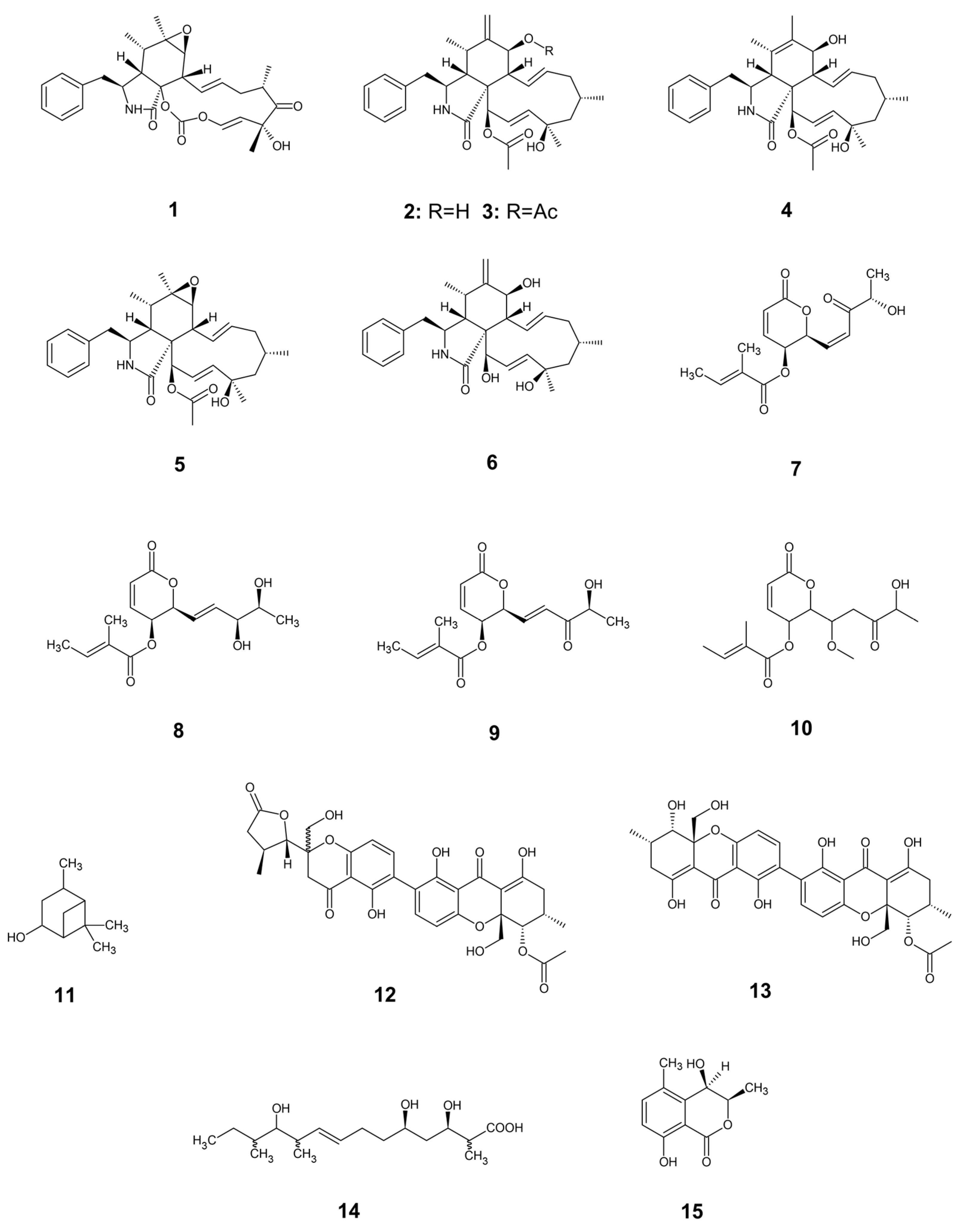
Among antifungal metabolites, cytochalasin-like compounds are the most abundant in Diaporthe genus (Figure 4). These secondary metabolites, derived from polyketide-amino acid fusion, have demonstrated biocontrol potential. They are known as microfilament targeting molecules which exhibit a wide range of biological activities, by interfering with several cellular processes involving cytoskeleton formation [67]. For example, Huang et al. reported the cytochalasins E (1), H (2), and 7-acetoxy-cytochalasin (3) from Diaporthe sp., exhibiting strong antifungal activity against Alternaria oleracea, Pestalotiopsis theae, and Colletotrichum capsici (MIC= 3.125–12.5 μg/mL) [68]. Similarly, cytochalasin H (2), N (4), and epoxy-cytochalasin H (5) from Phomopsis sp. By254 inhibited Sclerotinia sclerotiorum, Fusarium oxysporum, Botrytis cinerea, and Rhizoctonia cerealis (IC50= 0.1–5.0 μg/mL). [69] In addition, cytochalasin J (6) from D. miriciae showed antifungal activity against the fungal plant pathogens Phomopsis obscurans and P. viticola at 300 µM. [70]
Diaporthe species produce another important antifungal compounds that had been evaluated on plant phytopathogens (Figure 4). Among them, phomompsolide A (7), phomopsolide B (8) and phomopsolide C (9), isolated from D. maritima cultures, demostrated growth inhibition on Microbotryum violaceum and Saccharomyces cerevisiae at 25-250 µM. [71] Likewise, phomopsolide G (10) was isolated from Diaporthe sp. AC1 and showed moderate antifungal activity against Fusarium graminearum, F. moniliforme, and Botrytis cinerea. [72] Additionally, the monoterpene verbanol (11) from D. terebinthifolii showed inhibitory activity on the germination of Phyllosticta citricarpa conidia. [73] In the same way, two xanthone dimers, diaporxanthone A (12) and diaporxanthone B (13), produced by D. goulteri L17 exhibited moderate antifungal activities against Nectria sp. and Colletotrichum musae. [74] Gao et.al (2020) isolated from D. eucalyptorum a rare polyketide fatty acid, eucalyptacid A (14),with MIC values ranging from 12.5-50.0 µM against Alternaria solani, B. cinerea, F. solani, and Gibberella saubinettii. [75] The dihydroisocoumarin (−)-(3R,4R)-cis-4-hydroxy-5-methylmellein (15) produced by D. cf. heveae, drastically reduced the growth of Phyllosticta citricarpa and Colletotrichum abscissum, two important citrus diseases worldwide. [76]

3.5. Molecular Docking of Diaporthe Antifungals with Chitin Synthase

The amino acid sequences of CS for F. solani and F. equiseti were retrieved from the UniProt database under accession codes A0A9P9GUZ8 and A0A8J2II09, respectively. A BLASTp search against the PDB identified the cryo-EM structure of Phytophthora sojae chitin synthase 1 (PDB ID: 7WJO) as the most suitable template for homology modeling, given its high sequence identity and structural coverage. Among the 3D models generated by the different servers, those predicted by Robetta exhibited the highest structural fidelity to the template, displaying the lowest Root Mean Square Deviation (RMSD) values of 1.68 Å for F. equiseti and 2.21 Å for F. solani. Consequently, these Robetta-derived models were selected as the reference structures for the subsequent molecular docking simulations.
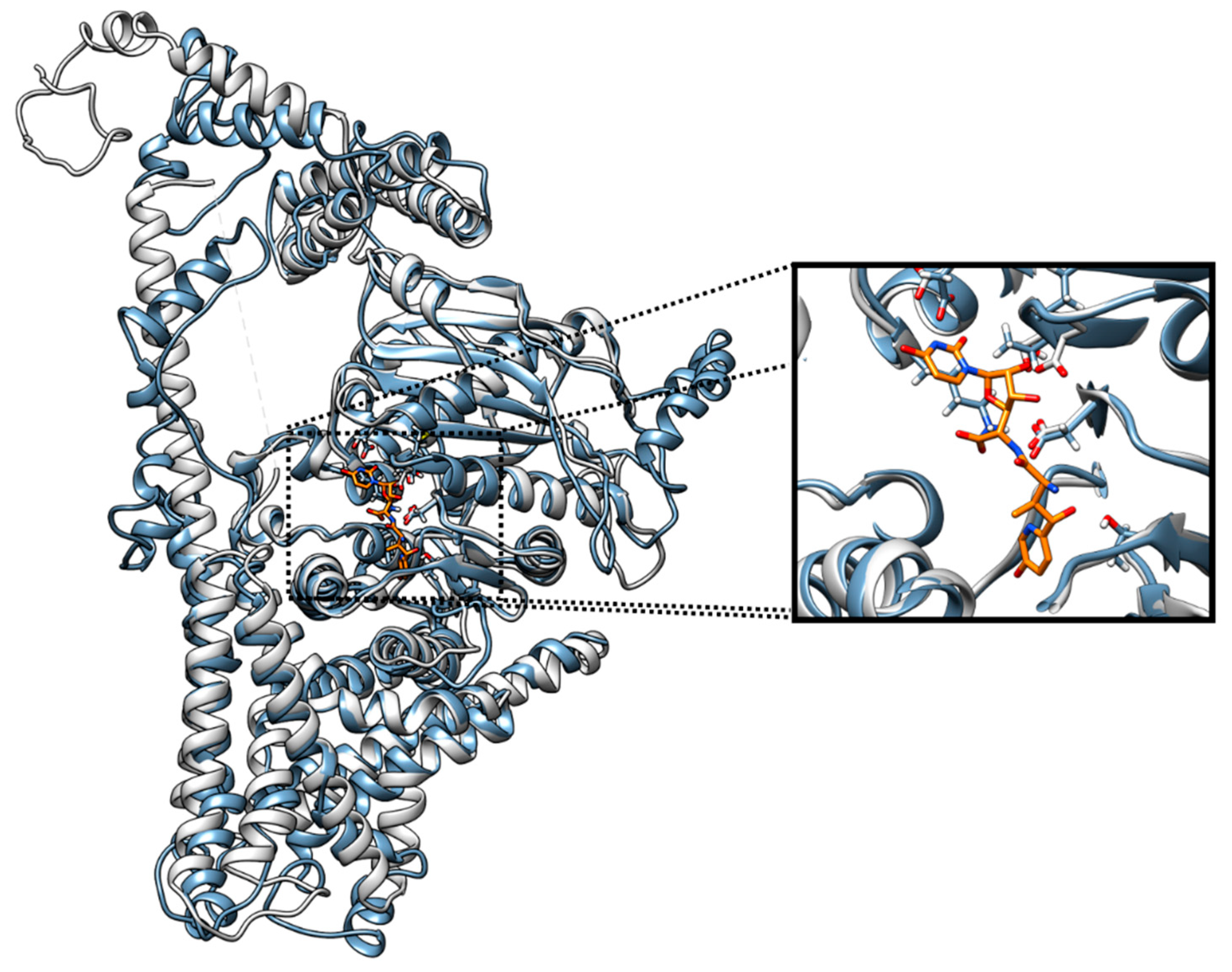
Visual inspection of the superimposed structures confirms a remarkable topological similarity between the generated Fusarium models and the P. sojae template. Crucially, the detailed analysis of the active site reveals that the architecture of the ligand-binding pocket is maintained in both F. solani and F. equiseti models. As depicted in Figure 5, the key amino acid residues responsible for stabilizing the reference inhibitor Nikkomycin Z are spatially conserved. This structural preservation suggests that the generated models possess a binding pocket competent for ligand recognition, thereby validating their use for the subsequent molecular docking of the endophytic metabolites.
The normalized binding energy values (Vina score) shown in Table 5 revealed that several isolated metabolites possess a theoretical affinity for the CS active site that rivals or even surpasses the reference inhibitor. Notably, compound 12 exhibited the highest predicted binding stability, achieving a normalized Vina score of 1.0 in F. equiseti and 0.83 in F. solani. These values suggest that compound 12 has the potential to form a complex with the enzyme that is theoretically more favorable than the control Nikkomycin Z (which scored 0.65 and 0.57, respectively). This predictive data implies that the hydrophobic skeleton of the isolated endophytes metabolites likely fits tightly within the catalytic pocket, potentially driven by strong Van der Waals interactions.
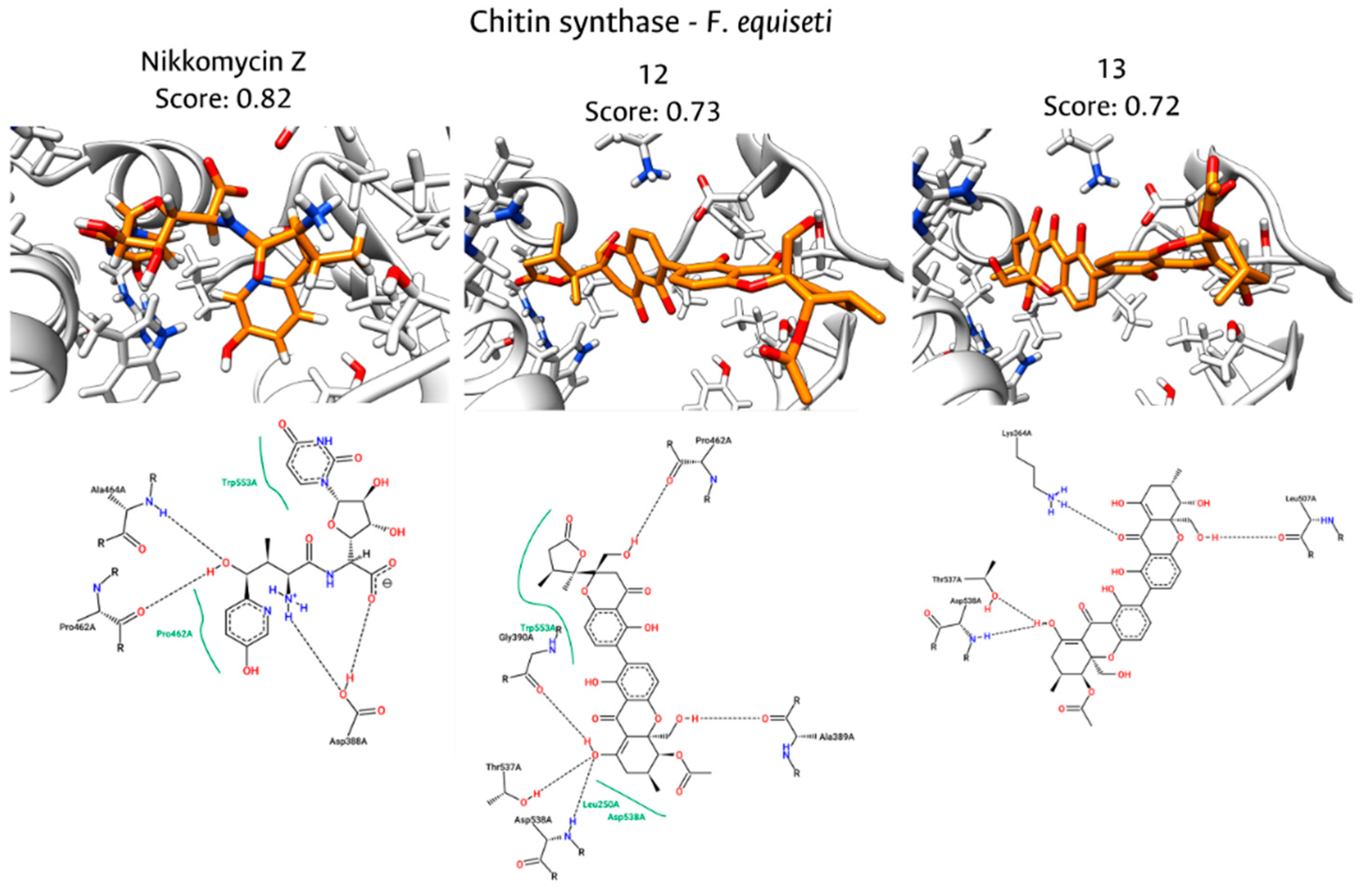
While high affinity is crucial, the specific mode of binding determines the biological outcome. The interaction fingerprint analysis (PLIF) quantified how well the candidates mimicked the key contacts established by Nikkomycin Z. The similarity scores for the top candidates ranged between 0.40 and 0.66. While lower than the control (which is 1.0 by definition), these values are significant for non-peptidic small molecules. Specifically, compound 13 showed the highest structural similarity in interaction patterns against F. equiseti (0.66), implying that it engages conserved residues essential for catalysis, such as those involved in uridine binding or translocation. [77,78] The lower similarity scores observed for compound 12 (approx. 0.40–0.46), despite its high energy, suggest it may occupy the binding pocket in a unique orientation, potentially exploiting auxiliary sub-pockets not accessed by the reference inhibitor.
Detailed inspection of the ligand-receptor contacts in F. equiseti reveals that Nikkomycin Z (NZ), anchors itself within the active site through hydrogen bonds with Asp388, Pro462, and Ala464, while relying on a critical hydrophobic stacking interaction with Trp553 as is show in Figure 6. This tryptophan residue is structurally significant, as it corresponds to the conserved aromatic residues found in the catalytic loop of the P. sojae template and other Family 2 glycosyltransferases, acting as a gatekeeper that stabilizes the GlcNAc sugar ring. [22,79] Notably, compound 12 successfully mimics this pharmacophoric feature, preserving the hydrophobic clamp with Trp553 and the hydrogen bond with Pro462, while further stabilizing the complex through additional hydrogen bonds with Asp538 and Gly390. The engagement with Asp538 is particularly relevant, as aspartate residues in this region are typically involved in coordinating the divalent metal ions essential for catalysis. [80,81]
The structural basis for the consensus ranking becomes evident when comparing these interaction profiles. While compound 13 establishes a strong hydrogen bonding network involving Asp538, Thr537, and Lys364, it notably lacks the hydrophobic interaction with Trp553 observed in both NZ and compound 12. This absence likely accounts for its slightly lower thermodynamic stability (Vina score) compared to compound 12, despite having a high interaction similarity index. Consequently, compound 12 could have a better activity (Consensus Score = 0.73) because it acts as a dual-modality inhibitor: it not only occupies the catalytic center by interacting with essential aspartates but also replicates the hydrophobic stabilization mechanism exploited by the reference inhibitor.
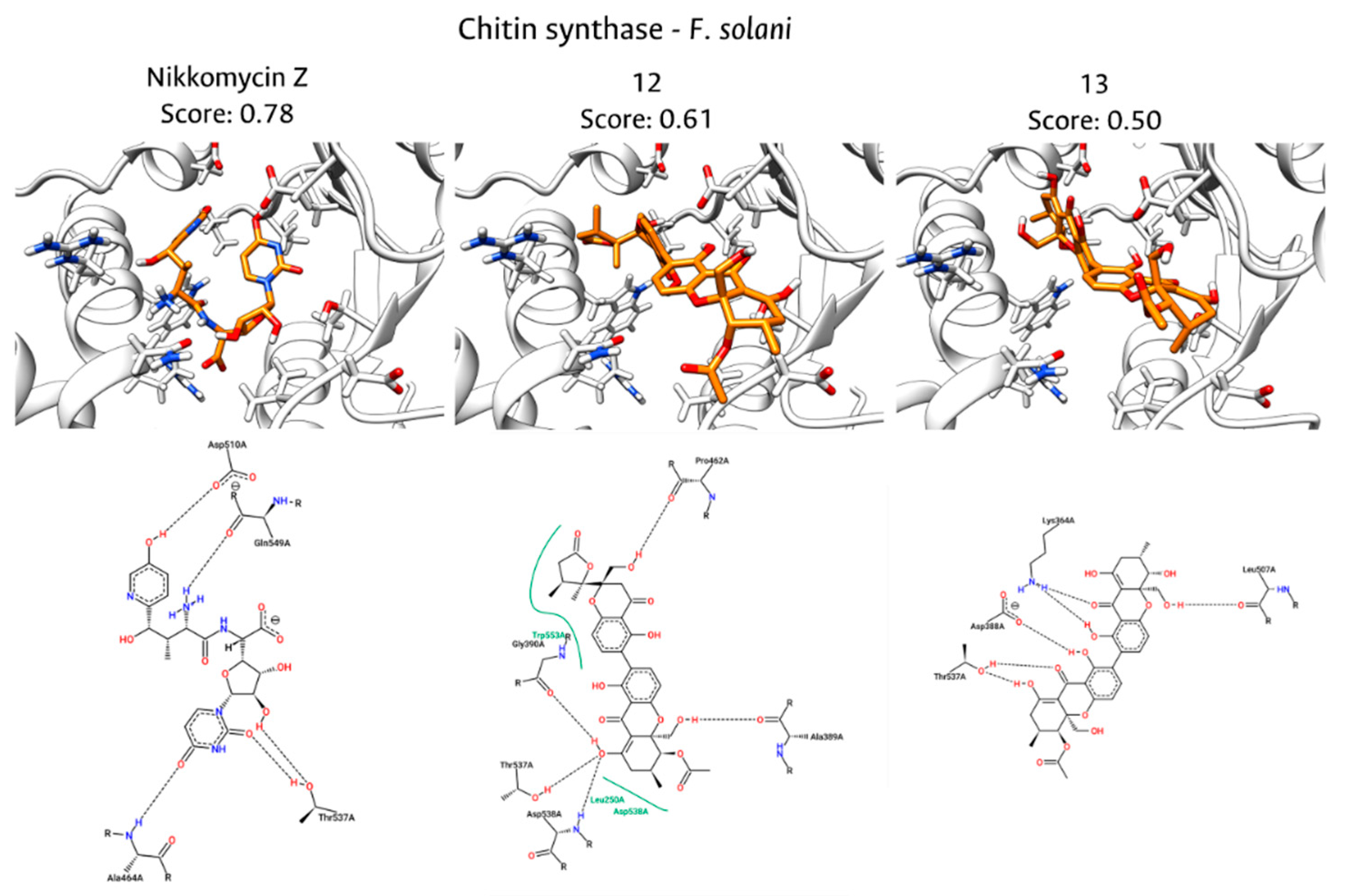
The docking results for F. solani reveal a distinct interaction landscape, likely attributed to the greater structural divergence of its catalytic domain relative to the template. This conformational variability is reflected in the binding mode of Nikkomycin Z, which shifts to a pose dominated by hydrogen bonds with Asp510, Gln549, Thr537, and Ala464, notably losing the strong hydrophobic anchor observed in the F. equiseti model as is displayed in Figure 7. In contrast, compound 12 demonstrates remarkable adaptability to this distorted pocket. It not only establishes a wide hydrogen bonding network with Pro462, Thr537, Asp538, Ala389, and Gly690, but crucially, it recovers the hydrophobic stacking interaction with Trp553. This ability explains the predicted binding energy (0.83 and 0.57 for compound 12 and Nikkomycin respectively).
Compound 13 relies primarily on electrostatic and polar stabilization, anchoring to the active site through hydrogen bonds with Lys364, Asp388, and Thr537. While Thr537 emerges as persistent contact across all ligands, suggesting a pivotal role in substrate orientation, the absence of the hydrophobic clamp with Trp553 limits the binding stability of compound 13. This comparison further validates the consensus scoring hierarchy, identifying compound 12 as the most robust candidate capable of maintaining key inhibitory interactions despite the structural plasticity of the pathogen's target site for chitin synthase in both organisms.

3.6. Concluding Remarks

Antillean avocado trees that survived adverse phytosanitary conditions in Montes de María serve as reservoirs of diverse endophytic fungi, some capable of producing antifungal metabolites against F. solani and F. equiseti. The most active isolates were found in Manteca and Cebo ecotypes, suggesting a potential correlation between endophyte presence and host resilience. Molecular analyses identified these isolates as Diaporthe species, a genus renowned for its production of bioactive secondary metabolites. Notably, crude extracts from Diaporthe sp. strains UN93 and UN310 demonstrated significant antifungal activity, with IC50 values near 200 μg/mL against Fusarium spp.
This study also identified Epicoccum sp. and Colletotrichum sp. in the secondary roots of symptomatic avocado trees, with Fusarium sp. being the most prevalent. No Phytophthora species were isolated, possibly due to their specific growth requirements, though their absence cannot be confirmed. Future research should expand microbiome characterization using genetic sequencing. In addition, the validation of in vitro results through controlled seedling experiments is crucial, as antagonistic effects do not always translate to effective disease control. The challenges in studying the pathosystem open the door to an alternative biocontrol strategy: the direct application of chemical compounds produced by endophytic microorganisms to protect their host against biotic and abiotic stress factors. Thus, further studies should focus on the chemical characterization of promising extracts to identify the bioactive compounds responsible for their antifungal activity and assess their potential applications in plant disease management.
Furthermore, the integrated in silico analysis proposes a plausible molecular mechanism of action, identifying chitin synthase as a potential target for the bioactive metabolites, particularly candidates 12 and 13. However, these computational findings must be interpreted with caution, as they rely on homology models that, despite their structural quality, inherently carry a degree of uncertainty regarding the precise conformational landscape of the native enzymes. Consequently, these predictive results should be viewed as a theoretical framework to guide future molecular exploration. Subsequent investigations must prioritize direct enzymatic inhibition assays to experimentally validate the affinity of these molecules; alongside structural biology efforts aimed at crystallizing the specific Fusarium CS to corroborate the binding modes proposed in this study.

Supplementary Materials

The following supporting information can be downloaded at the website of this paper posted on Preprints.org, Table S1: DNA sequences for ITS1 region of Fusarium pathogens and promising endophytes; Table S2: Extraction yields for antifungal endophytes fermentation using EtOAc.

Author Contributions

Angie T. Robayo-Medina: Investigation, data curation, formal analysis, writing—original draft preparation; Katheryn-Michell Camargo-Jimenez: Investigation; Felipe Victoria-Muñoz: Computational study, writing—original draft preparation; Wilman Delgado-Avila: conceptualization; Luis Cuca Suarez: supervision. Monica Ávila-Murillo: writing—review and editing, project administration, funding acquisition. All experimental section was executed by Universidad Nacional de Colombia and computational study by Fundación Universitaria Salesiana.

Funding

This work was financially supported by Ministerio de Ciencia, Tecnología e Innovación de Colombia: “Fondo nacional de financiamiento para la ciencia, la tecnología y la innovación, Fondo Francisco José De Caldas” contrato 80740-159-2021; Dirección de Investigación y Extensión Sede Bogotá, Universidad Nacional de Colombia, HERMES Project Codes 48477 and 51310; Facultad de Ciencias, Sede Bogotá, Universidad Nacional de Colombia, HERMES Project Code 50092, and the APC was funded 50 percent by Fundación Universitaria Salesiana and 50 percent by the authors.

Data Availability Statement

The authors declare that the data supporting the findings of this study are available within the paper and its Supplementary Information files. Should any raw data files be needed in another format they are available from the corresponding author upon reasonable request.

Acknowledgments

The authors thanks to Asociación de Productores de Aguacate Tecnificado de los Montes de Maria (ASPROATEMON) for their technical guide in sampling Antillean avocado ecotypes.

Conflicts of Interest

The authors declare no conflicts of interest.

Abbreviations

The following abbreviations are used in this manuscript:
AWC Avocado Wilt Complex
CS Chitin Synthase
DMSO Dimethyl Sulfoxide
EtOAc Ethyl Acetate
IC₅₀ Median Inhibitory Concentration
MGI Mycelial Growth Inhibition
MIC Minimal Inhibitory Concentration
PDA Potato Dextrose Agar

References

  1. Hafez, M.; Telfer, M.; Chatterton, S.; Aboukhaddour, R. Specific Detection and Quantification of Major Fusarium spp. Associated with Cereal and Pulse Crops. In Plant-Pathogen Interactions; Springer US: New York: New York, NY, 2023; Volume 2659, pp. 1–21. [Google Scholar] [CrossRef]
  2. Zakaria, L. Fusarium Species Associated with Diseases of Major Tropical Fruit Crops. Horticulturae 2023, 9, 322. [Google Scholar] [CrossRef]
  3. Ekwomadu, T.I.; Akinola, S.A.; Mwanza, M. Fusarium Mycotoxins, Their Metabolites (Free, Emerging, and Masked), Food Safety Concerns, and Health Impacts. Int. J. Environ. Res. Public Health 2021, 18, 11741. [Google Scholar] [CrossRef]
  4. Huang, D.; Cui, L.; Sajid, A.; Zainab, F.; Wu, Q.; Wang, X.; Yuan, Z. The epigenetic mechanisms in Fusarium mycotoxins induced toxicities. Food Chem. Toxicol. 2019, 123, 595–601. [Google Scholar] [CrossRef]
  5. Clements, D.P.; Bihn, E.A. “Safety and Practice for Organic Food,” in Safety and Practice for Organic Food; Elsevier Inc., 2019; Volume ch. The Impact, pp. 321–344. [Google Scholar] [CrossRef]
  6. Tör, M.; Woods-Tör, A. Genetic Modification of Disease Resistance : Fungal and Oomycete Pathogens. Encyclopedia of Applied Plant Sciences 2017, 3, 83–87. [Google Scholar] [CrossRef]
  7. Koli, P.; Bhardwaj, N.R.; Mahawer, S.K. “Climate Change and Agricultural Ecosystems,” in Climate Change and Agricultural Ecosystems; Elsevier Inc., 2019; Volume ch. Agrochemic, pp. 65–94. [Google Scholar] [CrossRef]
  8. Hilário, S.; Gonçalves, M.F.M. Endophytic Diaporthe as Promising Leads for the Development of Biopesticides and Biofertilizers for a Sustainable Agriculture. Microorganisms 2022, 10, 2453. [Google Scholar] [CrossRef]
  9. Sharma, A.; Kaushik, N.; Sharma, A.; Marzouk, T.; Djébali, N. Exploring the potential of endophytes and their metabolites for bio-control activity. 3 Biotech 2022, 12, 1–18. [Google Scholar] [CrossRef]
  10. Mishra, S.; Priyanka; Sharma, S. Metabolomic Insights Into Endophyte-Derived Bioactive Compounds. Front. Microbiol. 2022, 13, 835931. [Google Scholar] [CrossRef] [PubMed]
  11. Harrison, J.G.; Griffin, E.A. The diversity and distribution of endophytes across biomes, plant phylogeny and host tissues: how far have we come and where do we go from here? Environ. Microbiol. 2020, 22, 2107–2123. [Google Scholar] [CrossRef] [PubMed]
  12. Strobel, G.; Daisy, B. Bioprospecting for Microbial Endophytes and Their Natural Products. Microbiol. Mol. Biol. Rev. 2003, 67, 491–502. [Google Scholar] [CrossRef] [PubMed]
  13. Burbano-Figueroa, O. University of Bonn West Indian avocado agroforestry systems in Montes de María (Colombia): a conceptual model of the production system. Rev. Chapingo Ser. Hortic. 2019, 25. [Google Scholar] [CrossRef]
  14. Vega, J.Y. El aguacate en Colombia : Estudio de caso de los Montes de María, en el Caribe colombiano. Banco de la República de Colombia. Centro de estudios económicos regionales. 2012, 171, 1–35. [Google Scholar] [CrossRef]
  15. Puello, A. La transformación de la estructura productiva de los Montes de María: de despensa agrícola a distrito minero-energético. In Revista Digital de Historia y Arqueología desde el Caribe; 2016; vol. 29, pp. 52–83. [Google Scholar]
  16. Gil, J.G.R. Avocado wilt complex disease, implications and management in Colombia. 2018, 71, 8525–8541. [Google Scholar] [CrossRef]
  17. Zou, X.; Wei, Y.; Jiang, S.; Xu, F.; Wang, H.; Zhan, P.; Shao, X. ROS Stress and Cell Membrane Disruption are the Main Antifungal Mechanisms of 2-Phenylethanol against Botrytis cinerea. J. Agric. Food Chem. 2022, 70, 14468–14479. [Google Scholar] [CrossRef]
  18. Oiki, S.; Nasuno, R.; Urayama, S.-I.; Takagi, H.; Hagiwara, D. Intracellular production of reactive oxygen species and a DAF-FM-related compound in Aspergillus fumigatus in response to antifungal agent exposure. Sci. Rep. 2022, 12, 1–12. [Google Scholar] [CrossRef] [PubMed]
  19. Hasim, S.; Coleman, J.J. Targeting the Fungal Cell Wall: Current Therapies and Implications for Development of Alternative Antifungal Agents. Futur. Med. Chem. 2019, 11, 869–883. [Google Scholar] [CrossRef]
  20. Lima, S.L.; Colombo, A.L.; Junior, J.N.d.A. Fungal Cell Wall: Emerging Antifungals and Drug Resistance. Front. Microbiol. 2019, 10, 2573. [Google Scholar] [CrossRef]
  21. Bowman, S.M.; Free, S.J. The structure and synthesis of the fungal cell wall. BioEssays 2006, 28, 799–808. [Google Scholar] [CrossRef]
  22. Wu, Y.; Zhang, M.; Yang, Y.; Ding, X.; Yang, P.; Huang, K.; Hu, X.; Zhang, M.; Liu, X.; Yu, H. Structures and mechanism of chitin synthase and its inhibition by antifungal drug Nikkomycin Z. Cell Discov. 2022, 8, 1–4. [Google Scholar] [CrossRef] [PubMed]
  23. Shi, X.; Qiu, S.; Bao, Y.; Chen, H.; Lu, Y.; Chen, X. Screening and Application of Chitin Synthase Inhibitors. Processes 2020, 8, 1029. [Google Scholar] [CrossRef]
  24. Waheeda, K.; Shyam, K. Formulation of Novel Surface Sterilization Method and Culture Media for the Isolation of Endophytic Actinomycetes from Medicinal Plants and its Antibacterial Activity. J Plant Pathol Microbiol 2017, 8(no. 02), 1–9. [Google Scholar] [CrossRef]
  25. Yang, X.; Xu, X.; Wang, S.; Zhang, L.; Shen, G.; Teng, H.; Yang, C.; Song, C.; Xiang, W.; Wang, X.; et al. Identification, Pathogenicity, and Genetic Diversity of Fusarium spp. Associated with Maize Sheath Rot in Heilongjiang Province, China. Int. J. Mol. Sci. 2022, 23, 10821. [Google Scholar] [CrossRef]
  26. Parkinson, L.E.; Shivas, R.G.; Dann, E.K. Pathogenicity of Nectriaceous Fungi on Avocado in Australia. Phytopathology® 2017, 107, 1479–1485. [Google Scholar] [CrossRef]
  27. Gamboa, M.A.; Laureano, S.; Bayman, P. Measuring diversity of endophytic fungi in leaf fragments: Does size matter? Mycopathologia 2003, 156, 41–45. [Google Scholar] [CrossRef]
  28. Brunner-Mendoza, C.; Navarro-Barranco, H.; Ayala-zermeño, M. A.; Mellín-Rosas, M.; Toriello, C. Obtención y caracterización de cultivos monospóricos de Metarhizium anisopliae (Hypocreales: Clavicipitaceae) para genotipificación. Memorias del XXXVI Congreso Nacional de Control Biológico, Oaxaca de Juárez, 2013; pp. 52–55. [Google Scholar]
  29. Hu, X.; Webster, G.; Xie, L.; Yu, C.; Li, Y.; Liao, X. A new method for the preservation of axenic fungal cultures. J. Microbiol. Methods 2014, 99, 81–83. [Google Scholar] [CrossRef]
  30. Terhonen, E.; Sipari, N.; Asiegbu, F.O. Inhibition of phytopathogens by fungal root endophytes of Norway spruce. Biol. Control. 2016, 99, 53–63. [Google Scholar] [CrossRef]
  31. Amin, J.E.P.; Cuca, L.E.; González-Coloma, A. Antifungal and phytotoxic activity of benzoic acid derivatives from inflorescences of Piper cumanense. Nat. Prod. Res. 2019, 35, 2763–2771. [Google Scholar] [CrossRef] [PubMed]
  32. Arnold, A.E. Understanding the diversity of foliar endophytic fungi: progress, challenges, and frontiers. Fungal Biol. Rev. 2007, 21, 51–66. [Google Scholar] [CrossRef]
  33. Morgulis, A.; Coulouris, G.; Raytselis, Y.; Madden, T.L.; Agarwala, R.; Schäffer, A.A. Database indexing for production MegaBLAST searches. Bioinformatics 2008, 24, 1757–1764. [Google Scholar] [CrossRef]
  34. UniProt Consortium. UniProt: A worldwide hub of protein knowledge. Nucleic Acids Res. 2019, 47, D506–D515. [Google Scholar] [CrossRef] [PubMed]
  35. Ovchinnikov, S.; Park, H.; Kim, D.E.; DiMaio, F.; Baker, D. Protein structure prediction using Rosetta in CASP12. Proteins: Struct. Funct. Bioinform. 2017, 86, 113–121. [Google Scholar] [CrossRef]
  36. Jumper, J.; Evans, R.; Pritzel, A.; Green, T.; Figurnov, M.; Ronneberger, O.; Tunyasuvunakool, K.; Bates, R.; Žídek, A.; Potapenko, A.; et al. Highly accurate protein structure prediction with AlphaFold. Nature 2021, 596, 583–589. [Google Scholar] [CrossRef]
  37. Zheng, W.; Wuyun, Q.; Li, Y.; Liu, Q.; Zhou, X.; Peng, C.; Zhu, Y.; Freddolino, L.; Zhang, Y. Deep-learning-based single-domain and multidomain protein structure prediction with D-I-TASSER. Nat. Biotechnol. 2025. [Google Scholar] [CrossRef]
  38. Trott, O.; Olson, A.J. AutoDock Vina: Improving the speed and accuracy of docking with a new scoring function, efficient optimization, and multithreading. J. Comput. Chem. 2010, 31, 455–461. [Google Scholar] [CrossRef]
  39. Jurrus, E.; Engel, D.; Star, K.; Monson, K.; Brandi, J.; Felberg, L.E.; Brookes, D.H.; Wilson, L.; Chen, J.; Liles, K.; et al. Improvements to the APBS biomolecular solvation software suite. Protein Sci. 2017, 27, 112–128. [Google Scholar] [CrossRef]
  40. Landrum, G. Release 2016_09_4 (Q3 2016) Release · rdkit/rdkit · GitHub. 02 Dec 2025. Available online: https://github.com/rdkit/rdkit/releases/tag/Release_2016_09_4.
  41. O’Boyle, N.M.; Banck, M.; James, C.A.; Morley, C.; Vandermeersch, T.; Hutchison, G.R. Open babel: An open chemical toolbox. J. Cheminform. 2011, 3, 33. [Google Scholar] [CrossRef]
  42. Chen, W.; Cao, P.; Liu, Y.; Yu, A.; Wang, D.; Chen, L.; Sundarraj, R.; Yuchi, Z.; Gong, Y.; Merzendorfer, H.; et al. Structural basis for directional chitin biosynthesis. Nature 2022, 610, 402–408. [Google Scholar] [CrossRef]
  43. Meli, R.; Biggin, P.C. spyrmsd: symmetry-corrected RMSD calculations in Python. J. Chemin- 2020, 12, 1–7. [Google Scholar] [CrossRef]
  44. Bouysset, C.; Fiorucci, S. ProLIF: a library to encode molecular interactions as fingerprints. J. Chemin- 2021, 13, 1–9. [Google Scholar] [CrossRef] [PubMed]
  45. Ajmal, M.; Hussain, A.; Ali, A.; Chen, H.; Lin, H. Strategies for Controlling the Sporulation in Fusarium spp. J. Fungi 2022, 9, 10. [Google Scholar] [CrossRef] [PubMed]
  46. Olalde-Lira, G. G.; Lara-Chávez, B. N. Characterization of Fusarium spp., a Phytopathogen of avocado (Persea americana Miller var. drymifolia (Schltdl. and Cham.) in Michoacán, México. Rev. FCA UNCUYO 2020, 52(no. 2), 301–316. [Google Scholar]
  47. Wanjiku, E.K.; Waceke, J.W.; Wanjala, B.W.; Mbaka, J.N. Identification and Pathogenicity of Fungal Pathogens Associated with Stem End Rots of Avocado Fruits in Kenya. Int. J. Microbiol. 2020, 2020, 4063697. [Google Scholar] [CrossRef]
  48. Rojas, M. Guerrero; Portilla, A. Ramos. Prevenga y maneje la pudrición radical del aguacate causada por el Oomycete Phytophthora cinnamomi Rands; Oficina Asesora de Comunicaciones ICA: Bogotá D.C., Colombia, 2016. [Google Scholar]
  49. Corchuelo, D. Orjuela; Murillo, M. Avila. Microorganismos endófitos como alternativa para el control de hongos patógenos asociados al cultivo del aguacate en Colombia. Tesis de Maestria en Ciencias-Química, Universidad Nacional de Colombia, Bogotá D.C., Colombia, 2018. [Google Scholar]
  50. Ramírez-Gil, J.G.; Ramelli, E.G.; Osorio, J.G.M. Economic impact of the avocado (cv. Hass) wilt disease complex in Antioquia, Colombia, crops under different technological management levels. Crop. Prot. 2017, 101, 103–115. [Google Scholar] [CrossRef]
  51. Palacios Joya, L. Caracterización de microorganismos asociados a la pudrición de raíces de aguacate Persea americana Mill en viveros del Valle del Cauca, Colombia; Palmira, Colombia, 2021. [Google Scholar]
  52. Novoa-Yánez, R. S. Manual de producción de semilla de aguacate criollo en vivero en los Montes de María, Primera Edición; AGROSAVIA: Mosquera, Cundinamarca, 2023. [Google Scholar]
  53. Shahzad, R.; Khan, A.L.; Bilal, S.; Asaf, S.; Lee, I.-J. What Is There in Seeds? Vertically Transmitted Endophytic Resources for Sustainable Improvement in Plant Growth. Front. Plant Sci. 2018, 9, 24. [Google Scholar] [CrossRef]
  54. Chaudhary, P.; Agri, U.; Chaudhary, A.; Kumar, A.; Kumar, G. Endophytes and their potential in biotic stress management and crop production. Front. Microbiol. 2022, 13, 933017. [Google Scholar] [CrossRef] [PubMed]
  55. Verma, S.K.; Kingsley, K.L.; Bergen, M.S.; Kowalski, K.P.; White, J.F. Fungal Disease Prevention in Seedlings of Rice (Oryza sativa) and Other Grasses by Growth-Promoting Seed-Associated Endophytic Bacteria from Invasive Phragmites australis. Microorganisms 2018, 6, 21. [Google Scholar] [CrossRef]
  56. Liu, J.; Liu, G. Analysis of Secondary Metabolites from Plant Endophytic Fungi. Plant Pathogenic Fungi and Oomycetes: Methods and Protocols, Methods in Molecular Biology 2018, 1848, 25–38. [Google Scholar] [CrossRef]
  57. Singh, A.; Kumar, J.; Sharma, V.K.; Singh, D.K.; Kumari, P.; Nishad, J.H.; Gautam, V.S.; Kharwar, R.N. Phytochemical analysis and antimicrobial activity of an endophytic Fusarium proliferatum (ACQR8), isolated from a folk medicinal plant Cissus quadrangularis L. South Afr. J. Bot. 2021, 140, 87–94. [Google Scholar] [CrossRef]
  58. Pan, F.; Liu, Z.-Q.; Chen, Q.; Xu, Y.-W.; Hou, K.; Wu, W. Endophytic fungus strain 28 isolated from Houttuynia cordata possesses wide-spectrum antifungal activity. Braz. J. Microbiol. 2016, 47, 480–488. [Google Scholar] [CrossRef]
  59. Verma, V.C.; Gange, A.C. Advances in Endophytic Research. Adv. Endophytic Res. 2014, 1–454. [Google Scholar] [CrossRef]
  60. Xu, T.-C.; Lu, Y.-H.; Wang, J.-F.; Song, Z.-Q.; Hou, Y.-G.; Liu, S.-S.; Liu, C.-S.; Wu, S.-H. Bioactive Secondary Metabolites of the Genus Diaporthe and Anamorph Phomopsis from Terrestrial and Marine Habitats and Endophytes: 2010–2019. Microorganisms 2021, 9, 217. [Google Scholar] [CrossRef]
  61. Kretz, R.; Wendt, L.; Wongkanoun, S.; Luangsa-Ard, J.J.; Surup, F.; Helaly, S.E.; Noumeur, S.R.; Stadler, M.; Stradal, T.E. The Effect of Cytochalasans on the Actin Cytoskeleton of Eukaryotic Cells and Preliminary Structure–Activity Relationships. Biomolecules 2019, 9, 73. [Google Scholar] [CrossRef] [PubMed]
  62. Liu, Y.; Ruan, Q.; Jiang, S.; Qu, Y.; Chen, J.; Zhao, M.; Yang, B.; Liu, Y.; Zhao, Z.; Cui, H. Cytochalasins and polyketides from the fungus Diaporthe sp. GZU-1021 and their anti-inflammatory activity. Fitoterapia 2019, 137, 104187. [Google Scholar] [CrossRef] [PubMed]
  63. Patil, M.; Patil, R.; Mohammad, S.; Maheshwari, V. Bioactivities of phenolics-rich fraction from Diaporthe arengae TATW2, an endophytic fungus from Terminalia arjuna (Roxb.). Biocatal. Agric. Biotechnol. 2017, 10, 396–402. [Google Scholar] [CrossRef]
  64. Cui, H.; Yu, J.; Chen, S.; Ding, M.; Huang, X.; Yuan, J.; She, Z. Alkaloids from the mangrove endophytic fungus Diaporthe phaseolorum SKS019. Bioorganic Med. Chem. Lett. 2017, 27, 803–807. [Google Scholar] [CrossRef]
  65. de Souza, A.R.C.; Baldoni, D.B.; Lima, J.; Porto, V.; Marcuz, C.; Ferraz, R.C.; Kuhn, R.C.; Jacques, R.J.; Guedes, J.V.; Mazutti, M.A. Bioherbicide production by Diaporthe sp. isolated from the Brazilian Pampa biome. Biocatal. Agric. Biotechnol. 2015, 4, 575–578. [Google Scholar] [CrossRef]
  66. dos Reis, C.M.; da Rosa, B.V.; da Rosa, G.P.; Carmo, G.D.; Morandini, L.M.B.; Ugalde, G.A.; Kuhn, K.R.; Morel, A.F.; Jahn, S.L.; Kuhn, R.C. Antifungal and antibacterial activity of extracts produced from Diaporthe schini. J. Biotechnol. 2019, 294, 30–37. [Google Scholar] [CrossRef]
  67. Zhu, H.; Chen, C.; Tong, Q.; Zhou, Y.; Ye, Y.; Gu, L.; Zhang, Y. Progress in the Chemistry of Cytochalasans. Prog Chem Org Nat Prod 2021, 114, 1–134. [Google Scholar] [CrossRef]
  68. Huang, X.; Zhou, D.; Liang, Y.; Liu, X.; Cao, F.; Qin, Y.; Mo, T.; Xu, Z.; Li, J.; Yang, R. Cytochalasins from endophytic Diaporthe sp. GDG-118. Nat. Prod. Res. 2019, 35, 3396–3403. [Google Scholar] [CrossRef]
  69. Jing, F.; Yang, Z.; Feng, L.H.; Hao, Y.Y.; Hua, G.J. Antifungal metabolites from Phomopsis sp. By254, an endophytic fungus in Gossypium hirsutum. Afr. J. Microbiol. Res. 2011, 5, 1231–1236. [Google Scholar] [CrossRef]
  70. de Carvalho, C.R.; Ferreira-D'Silva, A.; Wedge, D.E.; Cantrell, C.L.; Rosa, L.H. Antifungal activities of cytochalasins produced by Diaporthe miriciae, an endophytic fungus associated with tropical medicinal plants. Can. J. Microbiol. 2018, 64, 835–843. [Google Scholar] [CrossRef] [PubMed]
  71. Tanney, J.B.; McMullin, D.R.; Green, B.D.; Miller, J.D.; Seifert, K.A. Production of antifungal and antiinsectan metabolites by the Picea endophyte Diaporthe maritima sp. nov. Fungal Biol. 2016, 120, 1448–1457. [Google Scholar] [CrossRef] [PubMed]
  72. Gu, H.; Zhang, S.; Liu, L.; Yang, Z.; Zhao, F.; Tian, Y. Antimicrobial Potential of Endophytic Fungi From Artemisia argyi and Bioactive Metabolites From Diaporthe sp. AC1. Front. Microbiol. 2022, 13, 908836. [Google Scholar] [CrossRef]
  73. Tonial, F.; Maia, B.H.L.N.S.; Sobottka, A.M.; Savi, D.C.; Vicente, V.A.; Gomes, R.R.; Glienke, C. Biological activity of Diaporthe terebinthifolii extracts against Phyllosticta citricarpa. FEMS Microbiol. Lett. 2017, 364. [Google Scholar] [CrossRef] [PubMed]
  74. Peng, X.; Sun, F.; Li, G.; Wang, C.; Zhang, Y.; Wu, C.; Zhang, C.; Sun, Y.; Wu, S.; Zhang, Y.; et al. New Xanthones with Antiagricultural Fungal Pathogen Activities from the Endophytic Fungus Diaporthe goulteri L17. J. Agric. Food Chem. 2021, 69, 11216–11224. [Google Scholar] [CrossRef]
  75. Gao, Y.-Q.; Du, S.-T.; Xiao, J.; Wang, D.-C.; Han, W.-B.; Zhang, Q.; Gao, J.-M. Isolation and Characterization of Antifungal Metabolites from the Melia azedarach-Associated Fungus Diaporthe eucalyptorum. J. Agric. Food Chem. 2020, 68, 2418–2425. [Google Scholar] [CrossRef]
  76. Savi, D.C.; Noriler, S.A.; Ponomareva, L.V.; Thorson, J.S.; Rohr, J.; Glienke, C.; Shaaban, K.A. Dihydroisocoumarins produced by Diaporthe cf. heveae LGMF1631 inhibiting citrus pathogens. Folia Microbiol. 2019, 65, 381–392. [Google Scholar] [CrossRef]
  77. Stefan, A.; Hochkoeppler, A. The catalytic action of enzymes exposed to charged substrates outperforms the activity exerted on their neutral counterparts. Biochem. Biophys. Res. Commun. 2025, 751, 151436. [Google Scholar] [CrossRef]
  78. Borkakoti, N.; Ribeiro, A.J.; Thornton, J.M. A structural perspective on enzymes and their catalytic mechanisms. Curr. Opin. Struct. Biol. 2025, 92, 103040. [Google Scholar] [CrossRef]
  79. Dorfmueller, H.C.; Ferenbach, A.T.; Borodkin, V.S.; van Aalten, D.M.F. A Structural and Biochemical Model of Processive Chitin Synthesis. J. Biol. Chem. 2014, 289, 23020–23028. [Google Scholar] [CrossRef]
  80. Curto, M.Á.; Butassi, E.; Ribas, J.C.; Svetaz, L.A.; Cortés, J.C. Natural products targeting the synthesis of β(1,3)-D-glucan and chitin of the fungal cell wall. Existing drugs and recent findings. Phytomedicine 2021, 88, 153556. [Google Scholar] [CrossRef] [PubMed]
  81. Belmonte, L.; Mansy, S.S. Patterns of Ligands Coordinated to Metallocofactors Extracted from the Protein Data Bank. J. Chem. Inf. Model. 2017, 57, 3162–3171. [Google Scholar] [CrossRef] [PubMed]
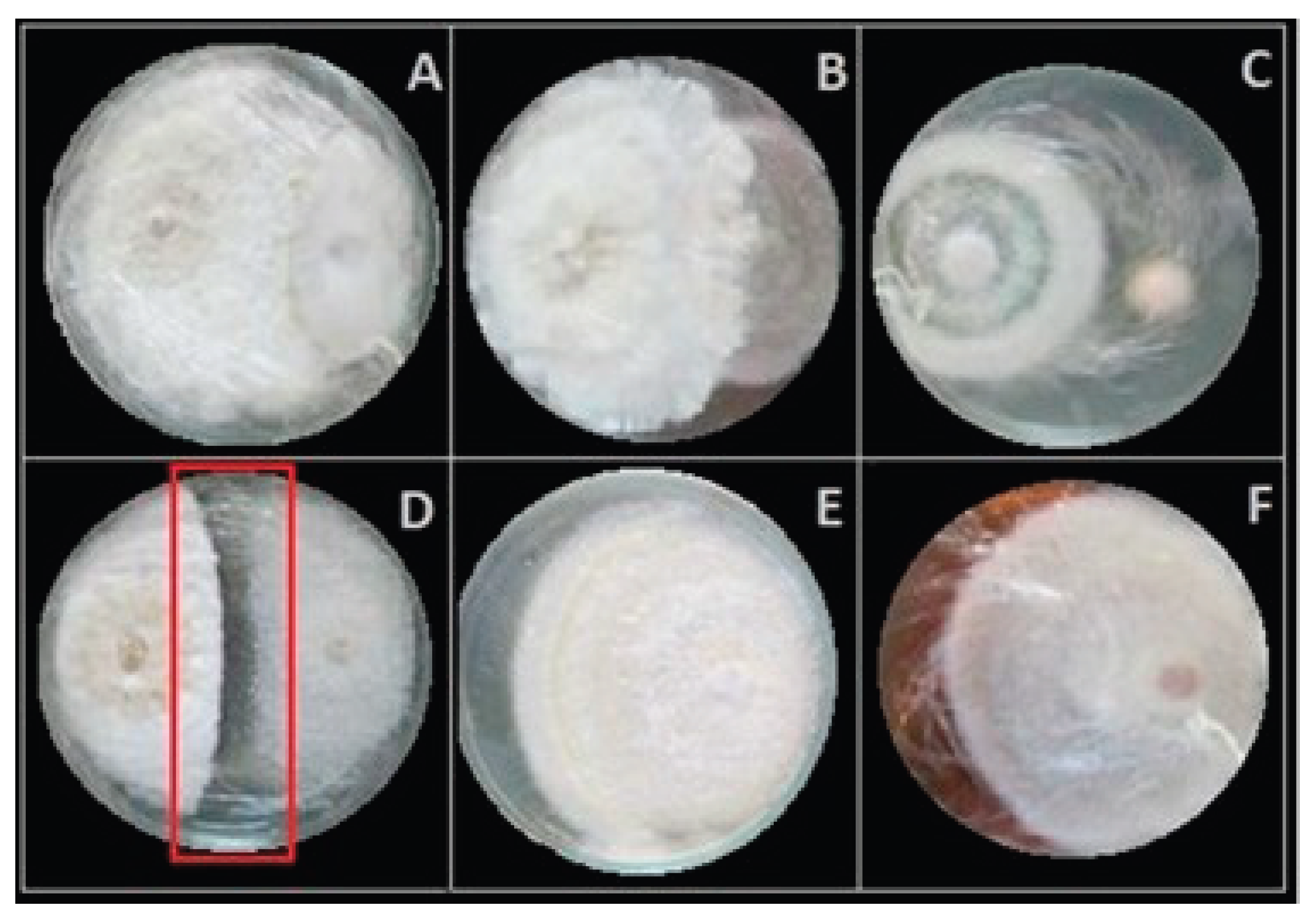
Figure 1. Biocontrol effects of fungal endophytes isolated from Antillean avocado leaves and roots, against Fusarium phytopathogens after 14 days of incubation. (left: endophyte; right: pathogen). Growth control of F. solani (Figure 1.E), and F. equiseti (Figure 1.F).
Preprints 189006 g001
Figure 2. Origin of Antillean avocado endophytes that showed inhibitory activity on F. solani and F. equiseti growth in dual cultures. The graphic highlights those which their EtOAc extracts exhibited % MGI of at least one pathogen over 50% in the agar dilution test. C: Cebo ecotype; M: Manteca ecotype; L: Leche ecotype.
Preprints 189006 g002
Figure 3. Macroscopic features of selected antifungal endophytes. Pictures were taken on PDA plates at 14th day of culture.
Preprints 189006 g003
Figure 4. Antifungal metabolites from Diaporthe sp. with inhibitory activity on plant phytopathogens.
Preprints 189006 g004
Figure 5. Global superimposition of the generated F. equiseti CS model against the P. sojae template (PDB: 7WJO). Grey structure displays the CS template (P. sojae) and blue displays F. equiseti model. At right part of the picture a zoom of binding zone is shown.
Preprints 189006 g005
Figure 6. Interactions between binding site of chitin synthase of F. equiseti and docked molecules (NikkomycinZ, compounds 12 and 13). In the upper part is displayed the 3D interactions and in the lower part the 2D interactions plots.
Preprints 189006 g006
Figure 7. Interactions between binding site of chitin synthase of F. solani and docked molecules (NikkomycinZ, compounds 12 and 13). In the upper part is displayed the 3D interactions and in the lower part the 2D interactions plots.
Preprints 189006 g007
Table 1. Molecular characterization and GenBank accession numbers for isolates from secondary roots of Antillean avocado trees with disease symptoms.
Fungal isolate Accession number Closest related species Similarity (%)
UN02 PP052962 OQ673588.1 Epicoccum sp. 100.00
UN23 PP052963 MG980304.1 Colletotrichum sp. 100.00
UN29 OQ271226.1 MN989030.1 Fusarium solani 100.00
UN31 PP052964 NR_130690.1 Fusarium sp. 100.00
UN36 PP052965 LC406903.1 Colletotrichum sp. 99.65
UN37 OQ344629.1 OP006756.1 Fusarium equiseti 100.00
Table 2. % MGI of endophytic extract at 1000 µg/mL against Fusarium pathogens. Data shows media value ± standard deviation. N/E: Not evaluated (Endophytes didn´t show growth inhibition zones of pathogens in dual cultures).
Endophytic EtOAc
extract N.
% MGI Endophytic EtOAc
extract N.
% MGI
F. solani F. equiseti F. solani F. equiseti
UN22 66,2 ± 0,5h,A 68,6 ± 2,0a,A UN100 12,8 ± 2,5e 27,1 ± 0,6h
UN39 57,7 ± 1,2i 70,9 ± 3,2a UN102 7,3 ± 1,1a,d 15,5 ± 2,1j
UN51 50,2 ± 0,3 57,1 ± 3,3b UN103 6,2 ± 0,9a,d 36,7 ± 1,6f
UN68 5,6 ± 2,9a 30,3 ± 2,1g UN104 -6,8 ± 1,0c N/E
UN70 0,9 ± 2,2b,B 3,0 ± 1,7B UN105 35,1 ± 1,0 39,1 ± 2,5d,e
UN71 3,8 ± 2,5a,b 8,9 ± 1,5k UN106 -3,6 ± 1,0c 17,7 ± 1,1i,j
UN76 -5,1 ± 1,4c 21,3 ± 3,4i UN107 24,9 ± 1,3g 43,8 ± 2,5e
UN77 41,2 ± 1,2k 46,2 ± 2,0d UN112 11,5 ± 2,3e 18,7 ± 0,7i,j
UN79 2,4 ± 2,7a,b 13,5 ± 3,1j UN113 13,2 ± 1,2e 24,1 ± 1,2h
UN80 18,9 ± 3,2f,C 20,8 ± 2,7i,C UN115 8,0 ± 2,2a,d,e 21,7 ± 2,6i
UN82 24,5 ± 3,1g N/E UN122 25,6 ± 1,8g 29,0 ± 1,6g,h
UN86 4,3 ± 2,4a,D 6,7 ± 2,2k,D UN123 14,0 ± 2,2e 25,3 ± 1,7h
UN87 18,3 ± 1,8f 25,9 ± 3,1h UN301 9,7 ± 1,3d,e 21,0 ± 0,8i
UN92 70,1 ± 1,6j 57,1 ± 2,0b UN302 22,8 ± 0,7g 28,0 ± 2,7g
UN93 63,1 ± 0,7h 19,9 ± 1,67 UN310 60,8 ± 1,6h,i,E 61,3 ± 1,0b,c,E
UN94 7,4 ± 1,5a,d N/E UN314 14,3 ± 1,6e,f,F 16,0 ± 2,6j,F
UN95 60,7 ± 0,9h,i 51,1 ± 3,7e UN318 18,0 ± 1,6f 21,6 ± 1,8i
UN99 59,6 ± 2,9h,i 53,4 ± 0,5e --- --- ---
Values followed by the same lowercase letters in the columns of %ICM for each pathogen at 1000 µg/mL do not show significant differences according to Tukey's test (p > 0.05). Similarly, means followed by the same uppercase letters in the rows are not significantly different in a one-way ANOVA analysis (p > 0.05). Bold type: most promising antifungal extracts.
Table 3. Dose-response curves and median inhibitory concentration (IC50) values of EtOAc extracts which showed % MGI >50% on Fusarium phytopathogens.
Preprints 189006 i001
Endophytic
EtOAc N.
F. solani F. equiseti
IC50 (µg/mL) IC50 (µg/mL)
UN22 650 ± 69b,B 688 ± 50a,B
UN39 N/D 710 ± 43a
UN51 N/D ˃3000
UN92 531 ± 51b N/D
UN93 199 ± 29c N/D
UN95 550 ± 40b N/D
UN99 1281 ± 78a N/D
UN310 204 ± 25c,D 362 ± 27b,D
Table 4. Identification of active endophytic fungi isolated from Antillean avocado leaves.
Fungal isolate Accession number Closest related species Similarity (%)
UN22 OQ914368 MW566594.1 Diaporthe ueckeri 99
UN39 OQ914369 MW380843.1 Diaporthe phaseolorum 100
UN51 OQ914370 EF694672.1 Nodulisporium sp. 96
UN92 OQ914371 MW380843.1 Diaporthe phaseolorum 100
UN93 OQ914372 KF498865.1 Diaporthe phaseolorum 100
UN95 OQ914373 KX631735.1 Diaporthe longicolla 100
UN99 OQ914374 AY577815.1 Diaporthe phaseolorum 100
UN310 OQ914375 KF498865.1 Diaporthe phaseolorum 99
Table 5. Scoring table of molecular docking simulations of each metabolite against the CS F. solani and F. equiseti. In Consensus score column green color displays the best scores and red color the worst scores.
F. solani F. equiseti
id Vina score PROLIF similarity Consensus score Vina score PROLIF similarity Consensus score
Nikkomycin Z 0,57 1,00 0,78 0,65 1,00 0,82
Cytochalasin E (1) 0,27 0,63 0,45 0,37 0,48 0,42
Cytochalasin H (2) 0,16 0,49 0,32 0,30 0,38 0,34
7-acetoxy-cytochalasin (3) 0,22 0,75 0,49 0,26 0,85 0,56
Cytochalasin N (4) 0,24 0,44 0,34 0,38 0,75 0,57
Epoxy-cytochalasin H (5) 0,26 0,67 0,46 0,29 0,57 0,43
Cytochalasin J (6) 0,23 0,69 0,46 0,38 0,59 0,48
Phomompsolide A (7) 0,31 0,42 0,37 0,37 0,55 0,46
Phomompsolide B (8) 0,40 0,56 0,48 0,24 0,55 0,39
Phomompsolide C (9) 0,34 0,51 0,43 0,25 0,49 0,37
Phomompsolide G (10) 0,16 0,19 0,17 0,33 0,45 0,39
Verbanol (11) 0,00 0,28 0,14 0,00 0,51 0,26
Diaporxanthone A (12) 1,00 0,22 0,61 0,96 0,50 0,73
Diaporxanthone B (13) 0,71 0,29 0,50 1,00 0,45 0,72
Eucalyptacid A (14) 0,04 0,00 0,02 0,41 0,00 0,20
Dihydroisocoumarin (−)-(3R,4R)-cis-4-hydroxy-5-methylmellein (15) 0,18 0,14 0,16 0,18 0,46 0,32
Disclaimer/Publisher’s Note: The statements, opinions and data contained in all publications are solely those of the individual author(s) and contributor(s) and not of MDPI and/or the editor(s). MDPI and/or the editor(s) disclaim responsibility for any injury to people or property resulting from any ideas, methods, instructions or products referred to in the content.
Copyright: This open access article is published under a Creative Commons CC BY 4.0 license, which permit the free download, distribution, and reuse, provided that the author and preprint are cited in any reuse.
Prerpints.org logo

Preprints.org is a free preprint server supported by MDPI in Basel, Switzerland.

Subscribe

Disclaimer

Terms of Use

Privacy Policy

Privacy Settings

© 2026 MDPI (Basel, Switzerland) unless otherwise stated