

Submitted:
01 March 2026
Posted:
02 March 2026
Read the latest preprint version here
Abstract
This study presents the Structural–Typological–Value Sensitivity Model (STVSM), a multidimensional framework for evaluating vulnerability in historic buildings where physical fragility cannot be adequately captured through structural indicators alone. While existing approaches primarily prioritize load-bearing behaviour, they often overlook typological discontinuity, spatial fragmentation, and the erosion of architectural and cultural value. STVSM addresses this limitation through three weighted sub-indices: structural vulnerability (SV), typological degradation (TV), and heritage value (HV), each calibrated using expert-derived micro- and macro-level weighting coefficients. Field-based deterioration scores (0–1) are combined with these weights to generate SV, TV, and HV values, which are then integrated into a Conservation Priority Index (CPI). Although conceptually informed by building-scale seismic vulnerability literature, the model does not aim to simulate earthquake performance or replace numerical structural analysis. Instead, it operates as a comparative decision-support framework that incorporates seismic-informed deterioration patterns within a broader, conservation-oriented logic. The model is applied to twenty-five historic buildings across three heritage contexts: traditional houses in Cumalikizik, vernacular dwellings in Balıkesir–Karesi, and nineteenth-century Greek Orthodox churches in Bursa. The results demonstrate that integrating structural condition, typological integrity, and heritage value provides a transparent, repeatable, and scalable basis for conservation prioritization across diverse historic building stocks.
Keywords:
structural vulnerability
; typological integrity
; heritage value assessment
; multi-criteria evaluation
; conservation prioritization
1. INTRODUCTION
This study examines heritage environments as multilayered constructs and argues that conservation extends beyond physical intervention to require the integrated consideration of spatial, semantic, and socio-cultural dimensions.
1.1. The Multilayered Nature of Cultural Heritage and the Problem of Fragility
Contemporary heritage scholarship increasingly treats cultural heritage as a relational and negotiated field shaped by identity, collective memory, and institutional practice, rather than a fixed assemblage of material objects. Heritage significance is therefore continually rearticulated through social, political, and economic processes, producing plural and context-dependent values. (Graham et al., 2000). International doctrine reinforces this multidimensional view. The UNESCO World Heritage Convention and ICOMOS charters underline that authenticity, integrity, continuity of use, and collective attachment are inseparable from material conservation. The Nara Document on Authenticity further extends authenticity beyond form and fabric to include function, tradition, spatial experience, and cultural practices. Within this framework, vulnerability cannot be reduced to structural condition alone. Material deterioration is only one dimension of susceptibility. Changes in plan configuration, spatial hierarchy, and architectural organization generate Typological Degradation, while losses in representational capacity, rarity, and mnemonic meaning produce value-based vulnerability. These dimensions interact: physical decay may accelerate the erosion of meaning, and typological disruption or functional displacement may undermine cultural significance even when structural stability persists. In historic environments with limited resources, this multi-dimensional vulnerability complicates transparent prioritization (Waller, 2003; Foster et al., 2013). Existing approaches often remain fragmented across disciplinary boundaries, treating structural condition, architectural form, and cultural significance in isolation. As a result, establishing comparable and defensible priorities across heterogeneous building groups remains methodologically challenging
1.2. Structural Fragility Models: A Robust but One-Dimensional Literature
Research on seismic performance, damage assessment, and structural vulnerability of historic buildings constitutes a mature and methodologically sophisticated international literature, largely focused on estimating expected seismic damage in masonry and traditional construction systems. The Vulnerability Index Method (VIM) operationalizes this approach through weighted parameters related to material quality, wall configuration, openings, connections, regularity, and maintenance (Benedetti & Petrini, 1984). Subsequent adaptations have supported large-scale urban assessments due to their simplicity, comparability, and applicability under limited data conditions. Across European contexts, VIM-based approaches have been refined through macroseismic observations and models incorporating EMS-98 damage grades, mechanical parameters, and structural-behavior typologies, notably the post-2006 formulations by Lagomarsino and Giovinazzi, now widely treated as reference approaches for large-scale assessments of historic building stocks. Complementary research has developed fragility curves, performance levels, and probabilistic damage distributions. For instance, Boukri and Bensaïbi introduced a relative fragility scale for traditional Algerian masonry houses based on opening ratios, wall configuration, and maintenance conditions, while review studies have synthesized seismic assessment approaches for masonry building stocks (Boukri & Bensaïbi, 2008; Lourenço & Mendes, 2012). Despite this methodological robustness, a key limitation persists: fragility is largely reduced to load-bearing behavior and observable physical condition. Typological continuity, spatial organization, and cultural or architectural value are typically treated as external considerations or addressed through parallel frameworks, limiting the usefulness of structural fragility models for conservation prioritization where physical deterioration, architectural transformation, and value loss evolve simultaneously. In parallel, value-oriented conservation theory frames significance as a relational construct encompassing historical, aesthetic, social, and associative dimensions, shaped by cultural meaning, representational value, and collective memory (Russell & Winkworth, 2009).
Accordingly, this study positions STVSM not as a seismic vulnerability model in a strict analytical sense, but as an integrated, seismic-informed decision-support framework for building-scale conservation prioritization that jointly considers structural condition, typological integrity, and cultural–architectural value. Recent studies have sought to address related gaps through multi-criteria decision-making methods such as the Analytic Hierarchy Process to quantify conservation value (e.g., Huang, Mat Sulaiman & Harun, 2025); however, these approaches often remain perceptual or engineering-centric and do not achieve a unified integration of structural condition, typological integrity, and cultural layering within a single assessment framework.
1.3. The Absence of Integrated Models for Typological Integrity, Cultural Value, and Multi-Criteria Assessment
Although structural fragility research provides a mature theoretical foundation, typological integrity and the cultural or aesthetic value of historic buildings are still addressed predominantly through qualitative approaches. Morphological perspectives clarify how plan configuration, volumetric structure, and façade rhythm shape architectural identity, yet these parameters are rarely translated into quantitative indicators suitable for comparative prioritization (Caniggia & Maffei, 2001; Kropf, 2014). Similarly, the Conzenian tradition offers detailed analyses of building–parcel–urban-fabric relationships but lacks a numerical framework capable of informing building-scale intervention ranking (Conzen, 1960). Spatial-analytical methods such as Space Syntax show that plan organization and spatial configuration can be evaluated systematically, as demonstrated in studies of traditional housing environments (Şuta, 2024). However, these analyses remain largely disconnected from vulnerability-oriented prioritization models. In parallel, debates on heritage value address identity, collective memory, and representational capacity, but these dimensions are seldom linked mathematically to structural or typological deterioration. As a result, buildings with high cultural or aesthetic significance do not consistently translate into higher conservation priority within existing assessment frameworks. This limitation is also evident in policy-oriented conservation discourse: although integrated definitions of cultural value and public benefit are articulated, they remain largely non-operational at the building scale due to the absence of quantitative prioritization mechanisms (Kamacı, 2014). Building-scale case studies reinforce this gap. For example, conservation assessments of industrial heritage, such as historical electrical transformer buildings in Bursa, document typological characteristics and contextual value in detail but do not convert them into quantified vulnerability or priority indices that can guide decision-making (Tupal Yeke, 2023). In response, multi-criteria decision-making (MCDM) approaches have increasingly been applied in heritage contexts (Ruiz-Jaramillo et al., 2020; Ravan et al., 2023; Kösem, 2025). Nevertheless, these models rarely compute typological integrity and cultural or architectural value on the same analytical plane as structural condition within a unified building-scale index. At the same time, performance-based structural evaluation continues to face challenges related to modeling assumptions, uncertainty, and the reliability of predicted damage states, limiting its effectiveness as a standalone decision-support tool for conservation prioritization (Bayhan et al., 2014). A common limitation therefore persists across the literature: no existing approach computes structural vulnerability (SV), typological integrity (TV), and cultural or architectural value (HV) as distinct sub-indices and integrates them within a unified mathematical framework. This study addresses that gap through the STVSM model by translating heterogeneous deterioration and value dynamics across different building types into a weighted, repeatable SV–TV–HV prioritization index suitable for comparative conservation assessment.
1.4. Contribution of This Study: The Integrated Logic of the STVSM Model
In the existing literature, structural condition, typological integrity, and cultural or architectural value are typically examined in separate research domains. Structural studies prioritize load-bearing behavior, typological research focuses on plan morphology and spatial organization, and value-oriented approaches emphasize representation, identity, and collective memory. This fragmentation complicates conservation prioritization, particularly for large and heterogeneous historic building stocks where physical deterioration, typological disruption, and value loss co-evolve (Rodrigues et al., 2019). Although multi-criteria decision-making (MCDM) methods are increasingly used in heritage studies, most applications target specific risk categories and do not provide a building-scale index that integrates structural vulnerability (SV), typological degradation (TV), and heritage value (HV) within a single computational structure. This article introduces the Structural–Typological–Value Sensitivity Model (STVSM), an integrated, indicator-based assessment framework. STVSM defines component-specific indicator sets, derives weights through expert-informed procedures, and converts observed conditions into standardized 0–1 sub-indices, which are then combined to produce a composite prioritization output suitable for transparent comparison across buildings. Its distinctive contribution is the explicit quantitative integration of heritage value (HV) into the prioritization logic, allowing culturally significant buildings to be evaluated on the same analytical plane as structural and typological conditions without reducing prioritization to a purely damage-driven ranking. The resulting Conservation Priority Index (CPI) provides a repeatable and scalable decision-support metric. The article presents the model’s conceptual basis, details its indicators, weighting, and computation, and demonstrates its application through case studies from Bursa and Balıkesir.
2. METHODOLOGY
This study employs the Structural-Typological-Value Sensitivity Model (STVSM), a multidimensional assessment framework for conservation prioritization in historic buildings. The model integrates structural condition, typological integrity, and cultural-architectural value within a single analytical system.
Conceptual definition of vulnerability and fragility
Within STVSM, vulnerability is defined independently of hazard-based analytical models. It is treated as a composite conservation condition reflecting a building’s cumulative susceptibility to deterioration, loss of integrity, and reduced capacity to sustain architectural, typological, and cultural values. Accordingly, the Structural Vulnerability (SV) component does not represent seismic risk or probabilistic damage estimation; it quantifies observed deterioration states known to influence performance. Fragility is used in an operational, non-probabilistic sense to denote relative weakness derived from weighted, indicator-based assessment rather than hazard-specific fragility curves.
STVSM is conceptually informed by the literature on seismic vulnerability and structural risk assessment of historic buildings, but it does not aim to predict performance under specific earthquake scenarios or to replace numerical structural analysis. Instead, it functions as a seismic-informed, non-analytical decision-support framework that translates observable condition patterns and expert knowledge into a comparative prioritization tool applicable to heterogeneous historic building stocks.
Methodologically, STVSM combines indicator-based assessment with multi-criteria decision-making (MCDM) principles. Standardized scoring supports consistency in field-based evaluation, while an expert-driven weighting structure supports transparency and cross-case comparability.
Weighting approach
Because indicators do not contribute equally to the composite outcome, weights were derived through an expert-informed hierarchical procedure inspired by the Analytic Hierarchy Process (AHP). Rather than constructing full Saaty-type pairwise comparison matrices, experts assigned direct importance ratings on the Saaty 1-9 scale within each component group (SV, TV, HV). These ratings were normalized within groups and aggregated (mean) to derive relative indicator weights, retaining AHP’s hierarchical aggregation logic while reducing respondent burden.
Because no pairwise comparison matrices were constructed, classical eigenvalue-based AHP consistency ratios (CR) were not calculated. Internal coherence was supported through hierarchical separation of indicator groups, within-group normalization, cross-expert averaging, and sensitivity checks. Macro-level weights for SV, TV, and HV were obtained using the same hierarchical logic. The indicator allocation and integrated weighting structure are summarized in Table 1, while detailed expert inputs and supplementary analyses are provided in the Supplementary Material. The weighting approach is informed by AHP as a foundational MCDM method (Saaty, 1987; Saaty, 2008).
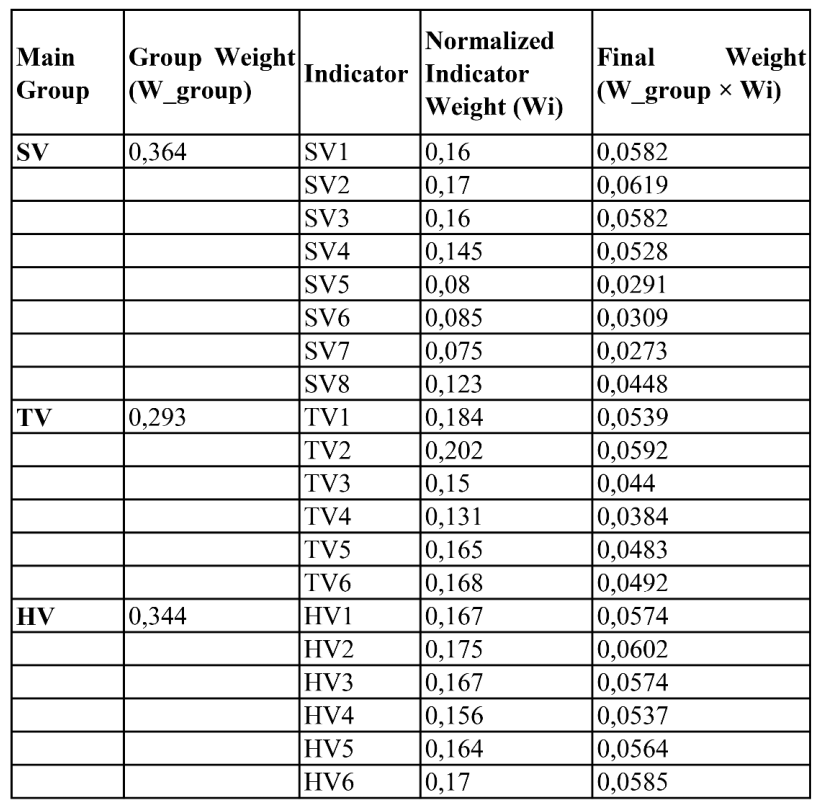
Following weighting, normalized micro-weights were combined with macro-level component weights to derive final indicator weights (w_i_final), which provide the quantitative input to the STVSM formulation (Table 1).Formun Üstü
2.1. Priority İndex Computation and Weighting İntegration
The weighting structure combines (i) within-group normalized micro-weights derived from expert inputs and (ii) group-level macro-weights for the three components SV, TV, and HV. For each indicator i, the final integrated weight is defined as shown in Equation (1).
where the macro-weight of the component W (group) corresponds to SV, TV, or HV, and the within-group normalized micro-weight w (i, micro norm) represents the normalized weight of indicator i within its component group. For each building j, field observations yield a normalized condition value v (i, j) in the range [0, 1], representing the observed state of indicator i on a standardized deterioration scale. Component scores are computed as weighted sums using within-group normalized micro-weights, as shown in Equations (2)–(4), ensuring SV (j), TV (j), and HV (j) remain on a consistent [0, 1] scale:
w (i, final) = w (i, micro norm) × W (group)
SV (j) = Σ [i ∈ SV] w (i, micro norm) · v (i, j)
TV (j) = Σ [i ∈ TV] w (i, micro norm) · v (i, j)
HV (j) = Σ [i ∈ HV] w (i, micro norm) · v (i, j)
The Conservation Priority Index (CPI) is computed in two stages. First, a baseline index is defined as shown in Equation (5):
B (j) = (SV (j) + TV (j)) / 2
Second, the baseline is adjusted by a heritage-value-based multiplier, as defined in Equation (6), and the final CPI is computed accordingly, as shown in Equation (7):
M (j) = 1 + HV (j)
CPI (j) = B (j) × M (j)
For a sensitivity scenario excluding heritage value, the multiplier is fixed at 1; accordingly, the index is computed as shown in Equation (8):
CPI (noHV, j) = (SV (j) + TV (j)) / 2
The full set of coefficients {W (group), w (i, micro norm), and w (i, final)} is reported to ensure transparency and reproducibility (Table 1). The hierarchical organization of the indicator system and the allocation of indicators across the three main components (SV, TV, and HV) are summarized separately to clarify the internal structure of the STVSM framework (Table 2).
2.2. Indicator Dimensions and Assessment Logic
STVSM operationalizes conservation prioritization through three complementary indicator dimensions: Structural Vulnerability (SV), Typological Degradation (TV), and Heritage Value (HV). These dimensions are integrated within a unified analytical structure to capture both physical deterioration and cultural-architectural significance.
SV indicators record observable deterioration affecting load-bearing behavior, including material decay, element discontinuities, and loss of structural coherence (Zuraidi et al., 2018). TV indicators capture transformations that compromise spatial organization, volumetric articulation, facade composition, and typological continuity. HV indicators capture architectural, historical, contextual, and representational attributes contributing to cultural significance.
Within STVSM, TV is not a proxy for structural weakness or hazard-based fragility. It measures departure from the original typological configuration due to spatial fragmentation, volumetric modification, facade alteration, or loss of character-defining elements. Higher TV scores therefore indicate greater transformation relative to the original typological state. This distinction is deliberate: typologically altered buildings are prioritized not because they are structurally weaker, but because continued transformation can accelerate irreversible loss of architectural meaning, spatial integrity, and heritage legibility, even when structural stability remains relatively intact.
HV is aligned with value-based heritage assessment frameworks and is treated not as an intrinsic property, but as a relational construct shaped by cultural meaning, collective memory, and representational importance.
All indicators are evaluated through field-based observation using a standardized 0-1 scoring scale, enabling comparability across building types and conservation contexts. Indicator definitions, assessment bases, and allocation across the three dimensions follow this structured classification approach (Table 3).
2.3. Scoring, Weighting, and Robustness Considerations
All STVSM indicators are scored using a standardized ordinal scale ranging from 0.00 (no degradation) to 1.00 (critical degradation), adapted from established damage-classification approaches to support consistent expert agreement in screening-level assessments (D’Ayala & Fodde, 2008; Lagomarsino & Giovinazzi, 2006; FEMA, 2012; EMS-98; Illescas et al., 2020).
Indicator scores are combined with expert-derived weights to produce three normalized sub-indices (SV, TV, and HV) for each building. This structure limits dominance by any single dimension and preserves the intended interaction among structural condition, typological transformation, and heritage value. To test the effect of HV within the prioritization logic, a sensitivity scenario excluding HV was also computed and is reported in the Supplementary Material.
Expert judgments showed some variability, reflecting the interdisciplinary nature of heritage assessment. Experts therefore assigned direct importance ratings on the Saaty 1–9 scale to each indicator within its component group (SV, TV, HV). Ratings were aggregated (mean) and normalized within groups to derive micro-weights. Because no pairwise comparison matrices were constructed, classical eigenvalue-based AHP consistency ratios were not calculated; the procedure is described as a Saaty-scale, AHP-inspired hierarchical weighting approach. Final indicator weights were obtained by averaging normalized weights across all valid expert inputs.
Indicator scores were assigned through systematic field observation supported by measured drawings, photographic documentation, and material-condition surveys conducted by the author. Detailed expert inputs and robustness procedures are provided in the Supplementary Material (Supplementary Tables S1–S2)
3. STVSM COMPUTATION MODEL AND PRIORITY LOGIC
STVSM integrates expert-derived weights with field-based condition scores to generate normalized SV, TV, and HV sub-indices and a composite conservation-priority output. SV and TV are interpreted jointly as vulnerability in conservation terms, while HV operates as a modifying factor within the prioritization logic. This structure differentiates buildings with comparable physical conditions according to cultural and architectural significance.
For methodological clarity, the workflow from field observation to the Conservation Priority Index (CPI) is summarized in Figure 1, including score normalization, sub-index computation, and value-based adjustment (Figure 1). Further details on computation and threshold interpretation are provided in the Supplementary Material.
Detailed computational procedures and numerical formulations underlying the STVSM workflow are provided in the Supplementary Material.
The computation steps and formulae used to derive SV_j, TV_j, HV_j, and the CPI are formally defined in Section 2.1 and are visually summarized through the computational workflow illustrated in Figure 1.
4. CASE STUDIES AND DOCUMENTATION-BASED ANALYSIS
STVSM is applied as an integrated framework that evaluates not only structural deterioration but also typological continuity, spatial integrity, facade character, and material authenticity. Reliable scoring therefore requires systematic and comparable documentation of each building’s existing condition.
Accordingly, three building groups were documented: traditional houses in Cumalikizik, vernacular residential buildings in Balikesir-Karesi, and nineteenth-century Greek Orthodox churches in Bursa and its surroundings. The dataset includes plans and elevations, spatial-configuration readings, identification of original fabric and later alterations, material-condition surveys, and deterioration mapping.
This documentation enables standardized 0-1 indicator scoring for SV, TV, and HV, the computation of weighted sub-indices, and the calculation of composite outputs (B and CPI). In total, 25 buildings were documented, and the resulting drawings, photographs, and deterioration diagrams provide a consistent empirical basis for cross-typology comparison.
4.1. Example Application of the STVSM Model
To illustrate building-scale application of the STVSM framework, the Nilüfer–Ozluce Church of St. George is presented as a worked example (Figure 2; Supplementary Figure S1). Field observations were translated into standardized 0–1 severity scores and combined with expert-derived weights to compute the SV, TV, and HV sub-indices. This example demonstrates the integrative logic of STVSM at the building scale; detailed indicator-level scores and intermediate calculations are provided in the Supplementary Material.
The resulting sub-index values and the illustrative CPI outcome derived from this example application are summarized below (Table 4).
The worked example demonstrates how STVSM enables transparent and reproducible building-level assessment by integrating indicator scoring, weighting, and aggregation into SV, TV, and HV sub-indices. A CPI value can also be computed for the example building to illustrate the final output of the model; however, its interpretive significance is inherently comparative and is therefore discussed primarily in the Findings section, where CPI patterns and rankings are evaluated across the full building set. Detailed indicator-level scores, weighting coefficients, and intermediate calculations supporting the worked example are provided in the Supplementary Material.
4.2. Descriptions and Documentation Features of the Examined Buildings
This subsection outlines the typological and structural characteristics of the Cumalikizik traditional houses based on measured surveys and on-site documentation.
4.2.1. Traditional Houses of Cumalikizik
Buildings in this group typically comprise rubble-stone ground floors, originally used as stables or storage, with timber-framed bagdadi upper floors accommodating living spaces. While principal typological features remain legible across the sample, many houses exhibit later interventions such as facade extensions, altered openings, balcony additions, and functional transformations that partially compromise original spatial organization and architectural coherence.
Common deterioration patterns include timber section loss in overhanging supports and roof structures, moisture-related masonry decay, plaster detachment, floor deformation, and localized structural instability. Representative plans, facades, and deterioration patterns illustrating these spatial and material characteristics are shown (Figure 3).
4.2.2. Civil Architecture Examples from the Karesi District of Balikesir
Civil architecture examples from the Karesi district of Balikesir represent late Ottoman and early twentieth-century urban domestic typologies, typically comprising masonry ground floors and timber-framed upper levels organized around hall-based (sofa) plans. Across the sample, key typological features remain legible, including cantilevers, window rhythms, broad eaves, and preserved interior elements. However, many buildings exhibit later interventions such as rear extensions, altered interior partitions, roof modifications, and incompatible material replacements that partially disrupt typological coherence.
Common deterioration patterns include moisture-related decay, timber section loss, deformation of bagdadi walls, plaster detachment, joinery loss, and localized structural weakening, in some cases associated with the removal of interior walls. Representative plans, facades, and condition examples are shown (Figure 4).
4.2.3. Nineteenth-Century Greek Orthodox Churches in Urban and Rural Bursa
The nineteenth-century Greek Orthodox churches examined in Bursa and its rural surroundings represent a wide spectrum of typological integrity and material condition, ranging from ruinous remains to well-preserved basilicas in continued use. The sample includes three-aisled basilicas and single-nave churches built in mixed masonry and characterized by apsidal terminations, arched window rhythms, gallery levels over the narthex, and legible basilical spatial organization. Shared architectural features enable comparative evaluation within STVSM.
Several churches survive in a ruinous state, marked by roof loss, wall deformation, joint deterioration, biological decay, and partial collapse, resulting in severe structural vulnerability and reduced typological legibility. Even in these cases, key spatial references such as apse geometry, nave rhythm, and axial organization often remain readable, preserving their value as typological evidence despite advanced material deterioration. Other examples retain partial structural and spatial coherence but exhibit critical weaknesses related to roof failure, moisture penetration, and long-term decay.
At the more preserved end of the spectrum, a limited number of churches maintain both structural continuity and typological integrity through restrained interventions and ongoing cultural use, displaying coherent facade composition and readable interior hierarchies. Representative plans, sections, and condition photographs are shown (Figure 5).
5. FINDINGS: STVSM OUTPUTS AND PRIORITY PATTERNS
CPI values are computed using the weighting scheme and mathematical formulation defined in Section 2.1. In brief, SV and TV are aggregated on a normalized 0–1 scale and combined to form a baseline index, which is then adjusted by the HV component to yield the final CPI. A sensitivity scenario excluding the heritage-value component is also reported (Table 1).
Applying STVSM to the full sample reveals differentiated conservation-priority patterns by integrating structural vulnerability (SV), typological degradation (TV), and heritage value (HV) within a single comparative framework. The weighting scheme maintains a balanced contribution of the three dimensions, avoiding a purely deterioration-driven or purely value-driven ranking. Across the 25 buildings, cases combining advanced physical deterioration with high typological or cultural value tend to cluster in the upper priority range, whereas buildings with limited deterioration and lower heritage significance fall into lower-priority categories. This pattern holds across residential, civilian, and ecclesiastical typologies, and the CPI-based ranking shows distinct priority clusters (Figure 6).
Figure 6 presents the CPI-based conservation priority ranking of the 25 case-study buildings derived from the STVSM model. CPI values are ordered from highest to lowest priority, illustrating how the combined effects of structural vulnerability (SV), typological degradation (TV), and heritage value (HV) produce differentiated conservation urgency across ecclesiastical, rural residential, and urban residential groups.
Greek Orthodox churches generally occupy the upper range of the CPI scale, reflecting the combined influence of advanced structural deterioration and elevated heritage value. Cumalikizik houses cluster mainly in the mid-range, where typological degradation exerts a stronger influence despite relatively moderate structural vulnerability. By contrast, Balikesir urban houses display a more dispersed CPI distribution, indicating heterogeneous intervention histories and varying degrees of typological disruption.
A representative case, the Nilufer-Ozluce Church, illustrates this interaction clearly. The building exhibits pronounced structural vulnerability together with moderate typological degradation and a comparatively high heritage-value component. Rather than occupying the highest conservation-priority tier, its CPI-based position shows how elevated structural concerns may be moderated within the integrated framework when typological degradation and the overall baseline vulnerability remain comparatively lower. This outcome is consistent with structural weaknesses documented in existing static assessment reports, supporting the internal coherence of the proposed model. The CPI value and relative priority position of the Nilufer-Ozluce Church are shown within the CPI-based ranking of the full sample (Figure 6) and are also highlighted in the comparative CPI visualization (Figure 7). Detailed SV, TV, and HV sub-index values for individual buildings are provided in the Supplementary Material to support transparent numerical comparison.
The CPI results are based on an expert-informed weighting scheme applied across the SV, TV, and HV dimensions. Mean expert scores and normalized micro-weights are summarized to clarify the contribution of individual indicators to the final priority calculation (Table 5).
These normalized micro-weights were subsequently combined with the macro-level component weights to derive the final indicator weights (wᵢ,final) used in the STVSM computation (Table 1). The resulting integrated macro–micro weight structure is reported (Table 6).
The STVSM model comprises three sub-indices computed as weighted sums of normalized indicator scores:
SV (Structural Vulnerability): SV_j = sum(w_i * v_i_j)
TV (Typological Degradation): TV_j = sum(w_i * v_i_j)
HV (Heritage Value): HV_j = sum(w_i * v_i_j)
SV and TV represent physical and typological degradation, while HV acts as a value-based multiplier that amplifies conservation priority for culturally significant buildings (Revez et al., 2022; Pereira et al., 2019). A baseline degradation index is defined as B_j = (SV_j + TV_j) / 2, and the final Conservation Priority Index is calculated as CPI_j = B_j * (1 + HV_j). The CPI ranges from 0 to 2 and is interpreted using four classes: 0.00-0.50 (low), 0.50-1.00 (medium), 1.00-1.50 (high), and 1.50-2.00 (critical).
Indicator severity levels follow screening-based damage classifications: minor (0.25), moderate (0.50), severe (0.75), and critical/near-collapse (1.00). (D’Ayala & Fodde, 2008; Lagomarsino & Giovinazzi, 2006; FEMA, 2012; EMS-98). Comparable qualitative damage states have also been documented in post-earthquake field observations in Turkiye, including rapid assessments after the 2020 Elazig-Sivrice earthquake (Caglar et al., 2023). Full indicator-level matrices and weighted calculations are provided in the Supplementary Material (Supplementary Tables S5-S7); the main text reports aggregated SV, TV, HV, and CPI results for the Balikesir houses, Cumalikizik houses, and Greek Orthodox churches.
5.1. CPI Values of the Buildings and Comparative Analysis
Using the final indicator weights defined in the STVSM framework, Structural Vulnerability (SV), Typological Degradation (TV), and Heritage Value (HV) sub-indices were computed for twenty-five buildings across three study areas. Field observations were converted to normalized 0-1 indicator values and aggregated using the expert-derived weighting structure (Section 2.1; Table 1), yielding comparable SV, TV, and HV profiles for each building.
SV was calculated for eight Cumalikizik houses, eight Balikesir urban houses, and nine Greek Orthodox churches as weighted combinations of observed structural deterioration indicators. TV and HV were then computed from typological and value-based indicators, and the three sub-indices were integrated to support comparative conservation prioritization across the full sample.
Cross-group differences are summarized using a radar diagram of mean SV, TV, and HV values (Figure 4). CPI class thresholds (0.00-0.50, 0.50-1.00, 1.00-1.50, 1.50-2.00) are shown as reference lines and further illustrated by the CPI distribution (Figure 8).
On the basis of the summary values derived from these matrices, SV, TV, and HV were calculated on a 0-1 scale (rounded to two decimals). Higher values indicate greater structural deterioration (SV), typological disruption (TV), and heritage-value vulnerability (HV). For comparative prioritization, these components were integrated into the Conservation Priority Index (CPI), where higher CPI values indicate greater conservation urgency. Group-level patterns were visualized using an SV-TV scatter plot with HV represented by marker size (Figure 9).
A comparative reading reveals distinct patterns across the three study areas. Greek Orthodox churches generally show higher SV and TV due to roof loss, upper-wall collapse, and fragmentation of interior spatial continuity; their architectural and historical significance is reflected in elevated HV values that further amplify CPI. In the Cumalikizik and Balikesir vernacular samples, late-period alterations (e.g., added storeys and facade-disrupting interventions) primarily increase typological degradation, while partial survival of the structural system and original fabric moderates CPI in several cases. These results confirm that STVSM moves beyond structural condition by integrating typological disruption and heritage-value sensitivity within a single comparative logic. The heatmap visualizes relative component dominance and intra-group contrasts (Figure 10).
This heatmap supports pattern reading by visualizing relative component dominance (SV, TV, HV) across the sample; CPI-based ranking is reported separately (Figure 6; Supplementary Table S4).
Figure 11.
Component profiles of the top 15 buildings ranked by CPI, showing the relative contributions of SV (Structural Vulnerability), TV (Typological Degradation), and HV (Heritage Value) sub-indices.
Figure 11.
Component profiles of the top 15 buildings ranked by CPI, showing the relative contributions of SV (Structural Vulnerability), TV (Typological Degradation), and HV (Heritage Value) sub-indices.
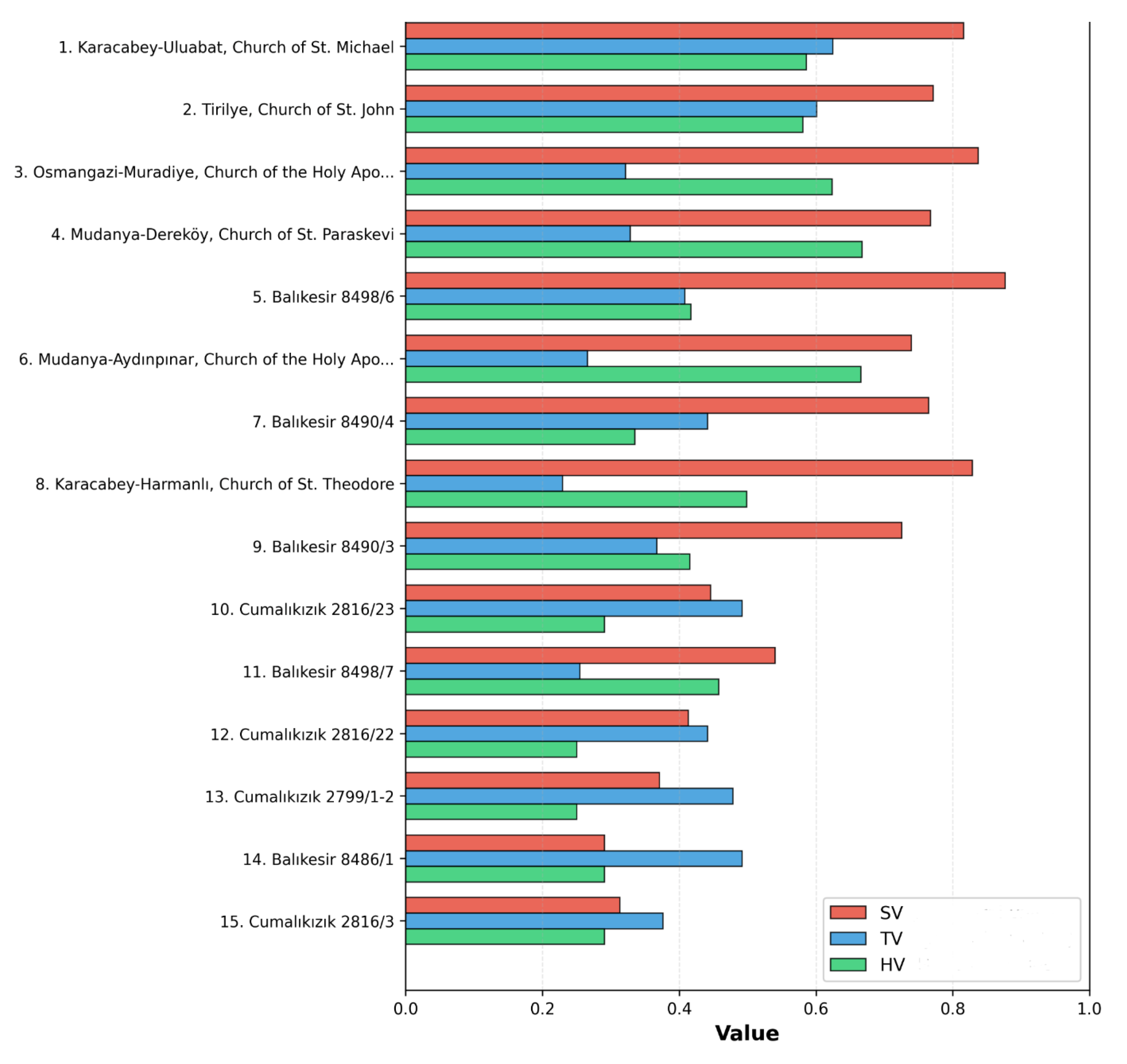
Priority Ranking of the Buildings and Discussion
CPI values reported in Supplementary Table S4 provide a comparative conservation-priority profile for the twenty-five buildings across the three study areas. Because CPI integrates Structural Vulnerability (SV), Typological Degradation (TV), and Heritage Value (HV), it captures physical deterioration together with architectural-cultural loss in a single metric.In this section, qualitative terms (low, medium, high) describe the relative position of SV, TV, and HV within the normalized 0-1 range across the dataset, not the CPI priority classes. CPI classes (low, medium, high, critical) are defined separately by the CPI scale. Accordingly, STVSM operates as a multi-dimensional prioritization tool rather than a single-axis damage index.
Rural Orthodox Churches: Critical priority
Rural Orthodox churches consistently rank highest because high SV (roof collapse, wall deformation) and high TV (loss of liturgical spatial legibility, facade alteration) coincide with high HV. In this group, HV amplifies priority without overriding the near-ruinous physical condition.
Cumalikizik Houses: Typology-driven priority
Cumalikizik houses show generally moderate SV, but CPI is driven mainly by TV. Vertical additions, altered openings, external stairs, and fragmentation of the sofa layout elevate typological degradation. HV remains moderate to high given the settlement’s UNESCO-related heritage context and the integrity of the wider fabric, so priority is shaped primarily by spatial, morphological rehabilitation needs rather than structural stabilization alone (UNESCO, 1972).
Balikesir City-Center Houses: Intervention-driven typological erosion
Balikesir houses display more heterogeneous SV, typically mid-range. CPI is again shaped mainly by TV linked to commercial adaptation, circulation disruption, facade fragmentation, loss of plan schemas, and incompatible extensions, while HV is mostly moderate. Priority in this sample therefore reflects intervention-driven typological erosion more than extreme structural failure.
| Formun Üstü |
| Formun Altı |
Synthesis: Relative vulnerability patterns across building groups
Three recurring prioritization logics emerge across the dataset:
A. Rural churches: high SV + high TV + high HV -> critical priority
B. Cumalikizik houses: low-to-moderate SV + relatively high TV + medium-to-high HV -> medium-to-high priority
C. Balikesir houses: mid-range SV + relatively high TV + medium HV -> medium priority
These patterns show that STVSM is driven by the interaction and relative dominance of SV, TV, and HV within each group, not by any single component alone. Driver breakdowns for the highest-ranked cases are reported in the Supplementary Material (Supplementary Table S4).
Sensitivity to the heritage-value component (HV)
To test the effect of heritage value, a value-neutral scenario was computed by excluding HV: CPI_noHV = (SV + TV) / 2. Resulting CPI values and rank shifts are reported in the Supplementary Material (Supplementary Methods S.2; Supplementary Table S4).The overall ranking structure remains similar, but removing HV reduces the priority of culturally significant cases. Several nineteenth-century Greek Orthodox churches shift downward, while some vernacular houses with comparable physical degradation shift upward. This confirms that HV functions as a controlled value-based modifier rather than overriding SV and TV.
6. DISCUSSION
This study develops a shared vulnerability metric for both civil and religious heritage buildings by applying a unified comparative framework to twenty-five structures with diverse conservation conditions and typological attributes. The Structural–Typological–Value Sensitivity Model (STVSM) integrates structural deterioration, typological integrity, spatial organization, facade character, material authenticity, and contextual/representational value within a single, transparent computational structure. A key issue in this integrated logic is how typological degradation is interpreted in prioritization, especially in cases approaching irreversible transformation.
Here, vulnerability and fragility are used in a comparative, non-probabilistic sense. Within STVSM, vulnerability denotes an overall conservation condition capturing cumulative susceptibility to physical deterioration, typological degradation, and loss of cultural significance, rather than hazard-specific damage probability. Accordingly, SV quantifies observable deterioration states relevant to structural performance but does not constitute seismic risk assessment or a numerical damage model; fragility is treated as relative weakness within an indicator-based prioritization framework.
To check external consistency of the SV component, results for the Nilüfer–Ozluce Church were compared with the statutory structural assessment prepared for its restoration project. The engineering report identifies roof–wall load-transfer discontinuities, localized deformation zones, and vulnerability of elongated wall panels, particularly in the apse and nave. These findings align with the elevated SV score produced by STVSM, indicating that the SV indicators capture degradation patterns also recognized through formal engineering evaluation. This agreement supports STVSM as a screening-level decision-support tool, while detailed structural analysis remains necessary at the design stage.
The internal coherence of expert judgments was evaluated through pragmatic checks consistent with STVSM’s hierarchical weighting logic. Because full pairwise comparison matrices were not constructed, classical eigenvalue-based AHP consistency ratios (CR) were not calculated. Quality control relied on within-group normalization of expert ratings, cross-expert comparison of indicator-importance patterns, and sensitivity tests assessing the stability of derived weights under minor perturbations. These checks indicate that no single expert or indicator unduly influenced the final weighting structure; full details are provided in the Supplementary Material (Supplementary Tables S1–S3).
The expert-calibrated weighting strengthens the model by foregrounding typological integrity and spatial organization, reflected in the Cumalikizik and Balikesir samples where TV differentiates cases with comparable structural vulnerability. By contrast, the Greek Orthodox churches exhibit a dual profile defined by severe structural deterioration (SV) alongside high historical and symbolic value (HV), confirming that conservation urgency cannot be inferred from damage-oriented metrics alone.
A further observation is the tight clustering of weights across HV indicators (approximately 0.16–0.17). This suggests that experts treated historical, architectural, contextual, and representational value attributes as interdependent rather than hierarchically separable. Within STVSM, this balanced distribution allows HV to function as a stable value modifier without letting any single value attribute dominate the final index.
The additive integration of SV and TV reflects a conservation-prioritization logic rather than cumulative physical risk, and it does not imply a causal link between typological alteration and structural damage. Instead, it operationalizes the premise that urgency emerges from the interaction between physical deterioration and the erosion of architectural meaning. Accordingly, a severely deteriorated building with high typological integrity may rank lower than a moderately deteriorated building undergoing extensive typological transformation. This is intentional: the model is designed to flag cases where continued transformation risks irreversible loss of architectural identity, spatial legibility, and cultural representation even before structural stability reaches a critical threshold.
Conversely, buildings that retain typological integrity despite advanced physical deterioration may be addressed through technically driven stabilization or repair, potentially shaped by different funding, planning, or management strategies. STVSM therefore does not replace structural safety assessment; it complements it by foregrounding conservation urgency linked to typological and cultural erosion. Priority is assigned not only to buildings at risk of collapse, but also to cases where delayed intervention would result in irreversible loss of heritage meaning.
The expert-based weighting process shows dispersion across individual indicator scores. This is not a weakness but an expected outcome of interdisciplinary heritage evaluation, especially for typological and value-related indicators that rely on interpretive judgment. Averaging expert weights does not erase disagreement; it stabilizes it into a transparent and collectively defensible weighting structure.
Although STVSM draws on the literature on seismic performance and structural vulnerability of historic buildings, it does not aim to predict response under specific earthquake scenarios. Instead, it translates seismic-informed deterioration patterns and expert knowledge into a comparative prioritization tool for heterogeneous historic building stocks. Index-based and multi-criteria approaches offer a practical advantage in this context by operationalizing heterogeneous parameters (measurable and interpretive) within a single comparable framework, particularly where detailed seismic modelling is impractical or disproportionate to available resources.
Accordingly, STVSM retains seismic vulnerability information through the SV component, but does not treat expected physical damage as the sole determinant of intervention priority. Structural vulnerability is situated within a broader conservation decision logic that also accounts for typological degradation and heritage value.
Comparative results show that buildings with moderate SV may still rank as high priority when typological degradation or cultural-value loss is pronounced. Conversely, severely deteriorated structures do not necessarily dominate the priority hierarchy when typological integrity and representational significance are already critically reduced. This reflects a deliberate shift from damage-prediction logic toward conservation-oriented prioritization, where urgency emerges from the interaction of structural condition, architectural coherence, and heritage significance.
In this sense, STVSM extends seismic vulnerability models interpretively: it preserves their diagnostic capacity through SV while adding a decision layer that enables conservation-relevant comparison across heterogeneous building stocks. Across the dataset, three patterns emerge. In the churches, the concurrent escalation of SV and TV, together with high HV, produces consistently urgent cases. In contrast, the Cumalikizik and Balikesir houses are driven primarily by typological and spatial fragmentation rather than extreme structural instability. These differences underscore the limits of policies based solely on structural-risk assessments and support the need for an integrated framework that evaluates SV, TV, and HV together.
STVSM outputs also imply differentiated intervention logics. For Cumalikizik, priority actions focus on reversing typology-disrupting interventions and stabilizing the timber-frame system through targeted repairs. For Balikesir, where change is often driven by commercial adaptation and incompatible extensions, interventions should prioritize limiting typological erosion and facade deformation. For rural churches, urgency stems from the convergence of advanced structural deterioration and high cultural significance, requiring integrated strategies that couple structural stabilization with the protection of architectural and representational values.
Methodologically, the prioritization results are calibrated through expert-derived weighting and standardized field-based scoring. Sensitivity tests (including HV exclusion and alternative macro-weight scenarios) show that, while value-driven cases shift as expected when HV is removed, the overall ranking, especially among the highest-priority buildings, remains stable. This indicates that STVSM is not driven by a single parameter, but by a controlled interaction of physical deterioration, typological degradation, and heritage value. Detailed driver-based breakdowns and sensitivity results are reported in the Supplementary Material (Supplementary Table S4).
Overall, STVSM provides a scalable decision-support framework applicable both at the building scale and in regional conservation planning. By translating qualitative heritage significance into a structured indicator system, it connects value-oriented heritage reasoning with transparent, reproducible conservation prioritization.
7. CONCLUSION
The STVSM model provides an integrated assessment framework that renders the multi-dimensional nature of deterioration in historic buildings analytically comparable. By combining structural vulnerability (SV), typological degradation (TV), and cultural–architectural value (HV) within a single computational structure, it brings together dimensions often treated separately and clarifies how physical deterioration, typological disruption, and value loss interact in conservation prioritization.
The results show that rural Greek Orthodox churches require urgent intervention due to concurrent escalation of structural vulnerability and typological degradation, amplified by high heritage value. In contrast, the Cumalikizik and Balikesir cases demonstrate that priority can be driven primarily by typological and spatial discontinuity even when advanced structural damage is not the dominant factor. These findings underscore the need for strategies that address not only material condition but also plan-typology continuity, spatial organization, and cultural representation.
By adopting a seismic-informed but non-analytical logic, STVSM helps bridge the gap between detailed structural assessment and large-scale heritage management contexts where full seismic modelling may be impractical relative to available resources.
The framework also has limitations. It relies on expert judgment and indicator-based weighting, which introduces interpretive subjectivity, and the present application does not include independent validation through numerical structural modelling or post-earthquake performance data, particularly for the SV component. Future work should therefore benchmark STVSM against simplified and detailed structural analyses for representative typologies and integrate quantitative datasets (e.g., laser scanning, material testing, deformation monitoring). Applications across different geographic and cultural contexts would further support recalibration of indicator weights and systematic evaluation of transferability, strengthening the model’s robustness as a decision-support tool for heritage management and research.
Supplementary Materials
The following supporting information can be downloaded at the website of this paper posted on Preprints.org.
References
- Bayhan, B.; Kazaz, İ.; Gülkan, P. Persisting challenges for performance-based building assessment . Earthquake Engineering and Engineering Vibration 2014, 13(2), 249–262. [Google Scholar] [CrossRef]
- Benedetti, D.; Petrini, V. On the seismic vulnerability of masonry buildings: Proposal of an evaluation procedure. L’Industria delle Costruzioni 1984, 18(1), 66–74. [Google Scholar]
- Boukri, M.; Bensaïbi, M. Contribution to the evaluation of the vulnerability of old masonry houses in Algeria. Journal of Materials and Engineering Structures 15 2008, 47–56. [Google Scholar]
- Caglar, N.; Vural, I.; Kirtel, O.; Saribiyik, A.; Sumer, Y. Structural damages observed in buildings after the January 24, 2020 Elazığ-Sivrice earthquake in Türkiye. Case Studies in Construction Materials 2023, 18, e01886. [Google Scholar] [CrossRef]
- Caniggia, G.; Maffei, G. L. (2001). Architectural composition and building typology: Interpreting basic building. Alinea Editrice.
- Conzen, M. R. G. Alnwick, Northumberland: a study in town-plan analysis. Transactions and Papers (Institute of British Geographers) 1960, (27), iii–122. [Google Scholar] [CrossRef]
- D’Ayala, D.; Fodde, E. Structural vulnerability of historic buildings in seismic areas: A methodological approach. Journal of Architectural Conservation 2008, 14(2), 63–82. [Google Scholar] [CrossRef]
- EMS-98. (1998). European Macroseismic Scale 1998. Cahiers du Centre Européen de Géodynamique et de Séismologie, 15.
- FEMA. (2012). Rapid visual screening of buildings for potential seismic hazards: A handbook (FEMA P-154). Federal Emergency Management Agency.
- Foster, G.; Bruneau, M.; Williams, T. Indicator-based resilience assessment for the built environment. Earthquake Spectra 2013, 29(3), 1161–1182. [Google Scholar]
- Graham, B.; Ashworth, G. J.; Tunbridge, J. E. (2000). A geography of heritage: Power, culture and economy. Arnold.
- Huang, X.; Mat Sulaiman, S.; Harun, S. N. (2025). A multi-criteria decision-making model for cultural heritage conservation prioritization. Forthcoming / In press.
- Illescas, J.; Núñez, M.; Moreno, S. Standardized damage classification to improve expert agreement in post-earthquake assessments. International Journal of Disaster Risk Reduction 50 2020, 101713. [Google Scholar] [CrossRef]
- Kamacı, E. Evaluation of the Turkish Law No. 2863 on the Protection of Cultural and Natural Assets within the context of international legal frameworks . METU Journal of the Faculty of Architecture 2014, 31(2), 45–66. [Google Scholar]
- Kösem, B. (2025). Multi-criteria evaluation of heritage conservation risks in historic settlements. Forthcoming / In press.
- Kropf, K. (2014). The handbook of urban morphology. Wiley-Blackwell.
- Lagomarsino, S.; Giovinazzi, S. (2006). Macroseismic and mechanical models for the vulnerability assessment of masonry buildings. In Proceedings of the First European Conference on Earthquake Engineering and Seismology (ECEES). Geneva.
- Lourenço, P. B.; Mendes, N. (2012). Seismic assessment of masonry buildings: Review and applications. In P. B. Lourenço & N. Mendes (Eds.), Building pathology, durability and service life (pp. 17–30). CRC Press.
- Pereira, R.; Silva, R.; Pereira, C. Typo-morphological approaches in heritage studies. Urban Morphology 2019, 23(1), 37–52. [Google Scholar]
- Ravan, S.; Rezaei, M.; Khalilzadeh, V. Multi-hazard vulnerability assessment of historic urban fabric. International Journal of Architectural Heritage 2023, 17(4), 512–532. [Google Scholar]
- Revez, M. J.; Mateus, J.; Pereira, A. Heritage values and conservation decision-making. Heritage Science 10 2022, 95. [Google Scholar]
- Rodrigues, H.; Varum, H.; Costa, A. A framework for condition assessment of vernacular masonry buildings. Journal of Building Engineering 26 2019, 100886. [Google Scholar]
- Ruiz-Jaramillo, J.; González, M.; Romero, F. Integrated assessment models for heritage risk and conservation planning. Sustainability 2020, 12(17), 6874. [Google Scholar]
- Russell, R.; Winkworth, K. (2009). Significance 2.0. Collections Council of Australia.
- Saaty, T. L. The analytic hierarchy process—What it is and how it is used. Mathematical Modelling 1987, 9(3–5), 161–176. [Google Scholar] [CrossRef]
- Saaty, T. L. Decision making with the analytic hierarchy process. International Journal of Services Sciences 2008, 1(1), 83–98. [Google Scholar] [CrossRef]
- Şuta, O. Examining the effect of architectural design on space organization through Kırklareli traditional houses . E-SCALA: Journal of the Faculty of Architecture, Kırklareli University 2024, 3(2), 15–34. [Google Scholar]
- Tupal Yeke, S. (2023). Historical electrical transformers in Bursa and the conservation of electrical industrial heritage. Journal of Architectural Conservation. Advance online publication. Debates on the value dimension. [CrossRef]
- UNESCO. (1972). Convention concerning the protection of the world cultural and natural heritage. UNESCO.
- Waller, R. (2003). Cultural property risk analysis model. Göteborg Studies in Conservation, 13.
- Zuraidi, M. S.; Ibrahim, A.; Rahman, N. A. Condition assessment and deterioration mapping of traditional timber heritage buildings. Journal of Building Pathology and Rehabilitation 2018, 3(1), 1–12. [Google Scholar]
Figure 1.
STVSM methodological workflow.
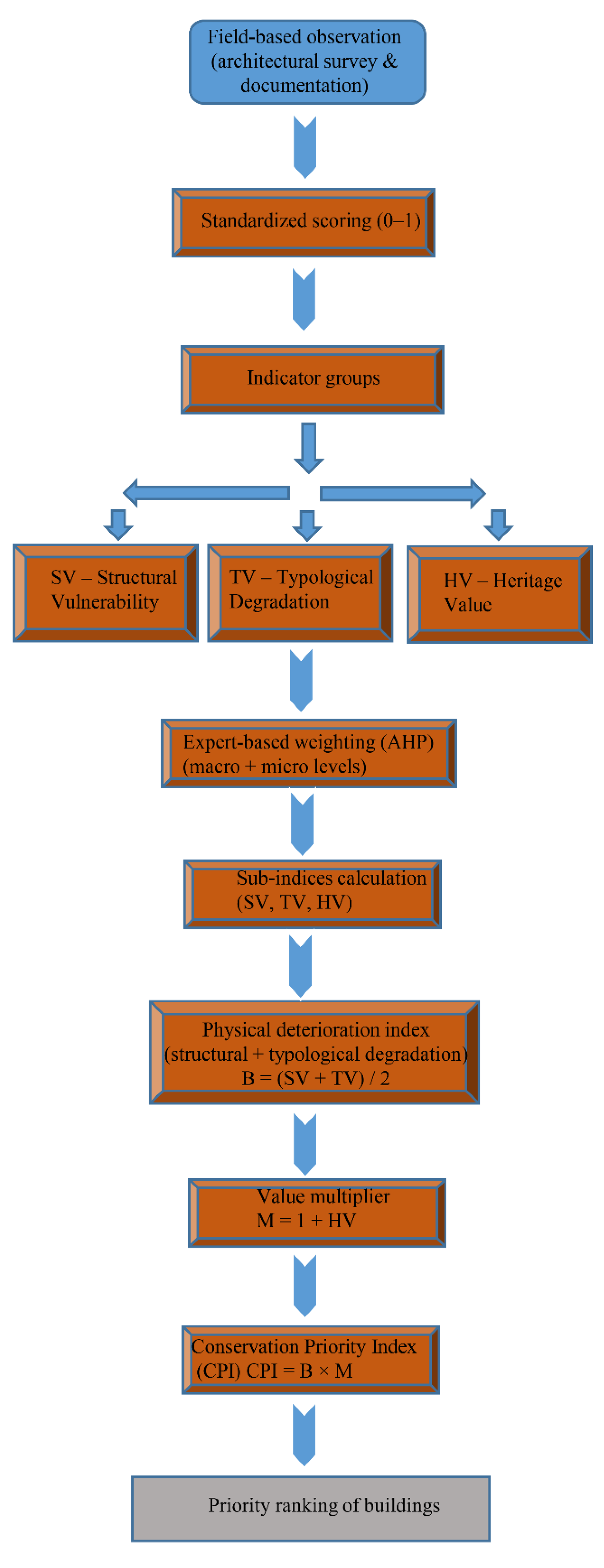
Figure 2.
Example application of the STVSM framework for the Nilüfer–Ozluce Church of St. George, illustrating the assessment of structural vulnerability (SV), typological degradation (TV), and heritage value (HV) prior to index computation.
Figure 2.
Example application of the STVSM framework for the Nilüfer–Ozluce Church of St. George, illustrating the assessment of structural vulnerability (SV), typological degradation (TV), and heritage value (HV) prior to index computation.
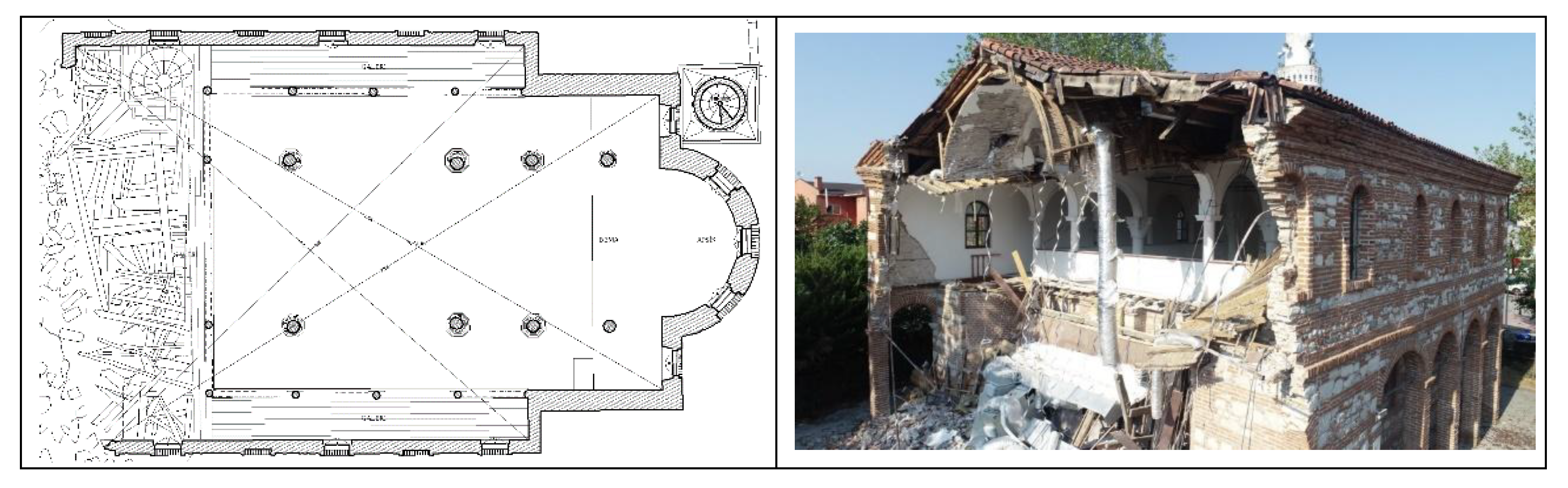
Figure 3.
Measured Drawings and Current Condition Photographs of Selected Houses in the Cumalikizik Study Area.
Figure 3.
Measured Drawings and Current Condition Photographs of Selected Houses in the Cumalikizik Study Area.
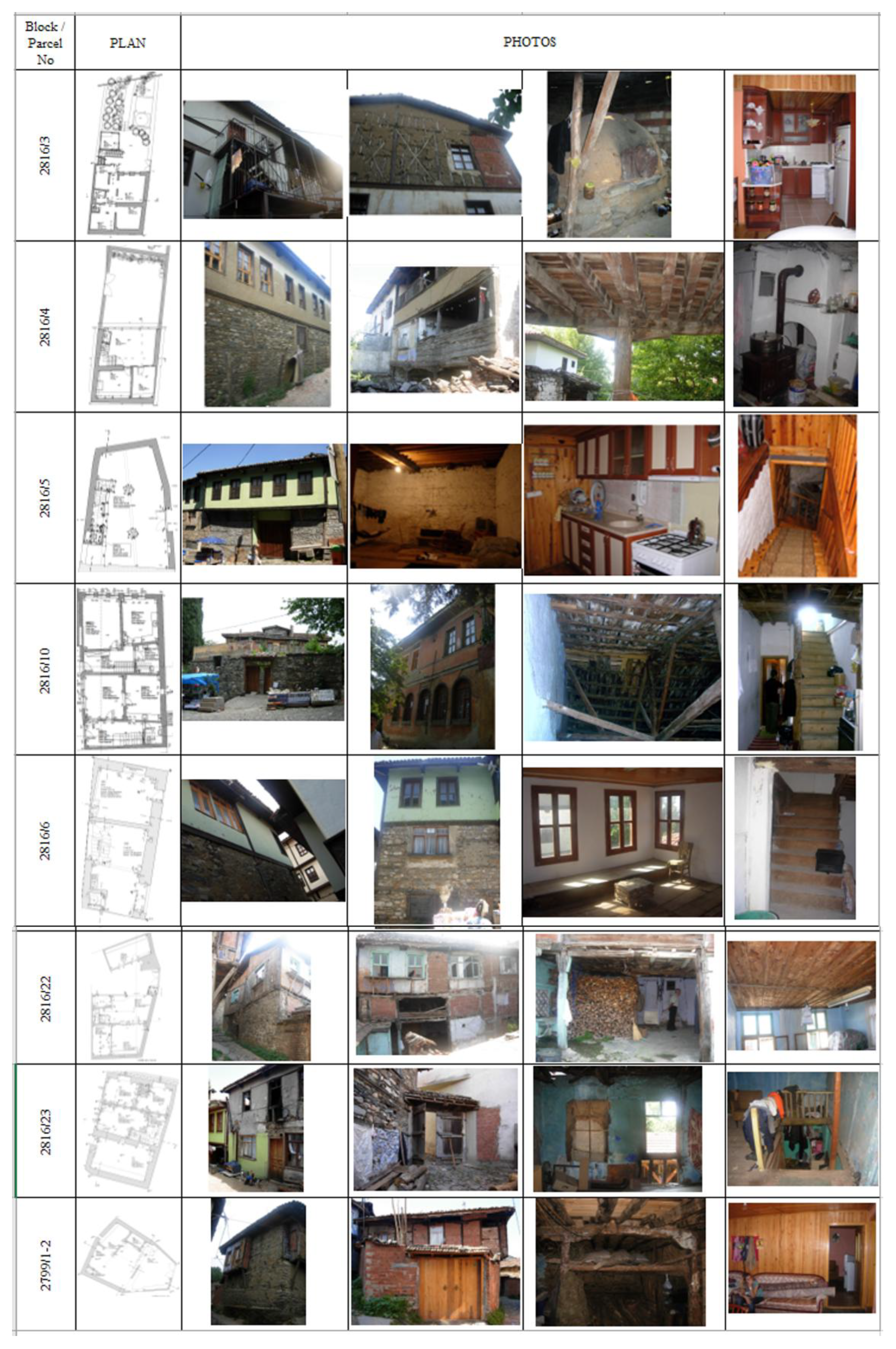
Figure 4.
Measured Drawings and Current Condition Photographs of Selected Houses in the Karesi District of Balıkesir.
Figure 4.
Measured Drawings and Current Condition Photographs of Selected Houses in the Karesi District of Balıkesir.
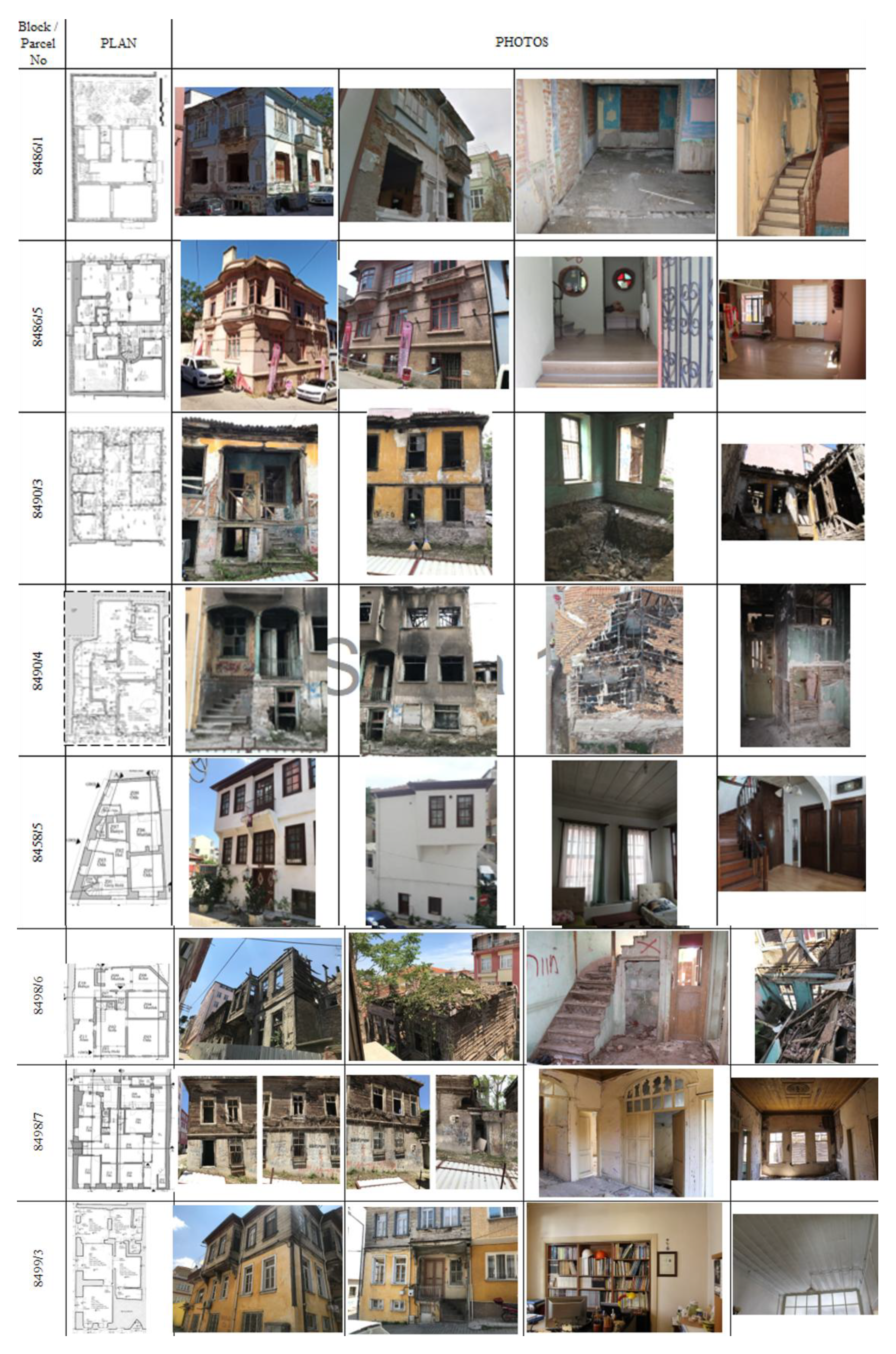
Figure 5.
Measured Drawings and Current Condition Photographs of Selected Nineteenth-Century Greek Orthodox Churches in Bursa and Its Rural Settlement.
Figure 5.
Measured Drawings and Current Condition Photographs of Selected Nineteenth-Century Greek Orthodox Churches in Bursa and Its Rural Settlement.
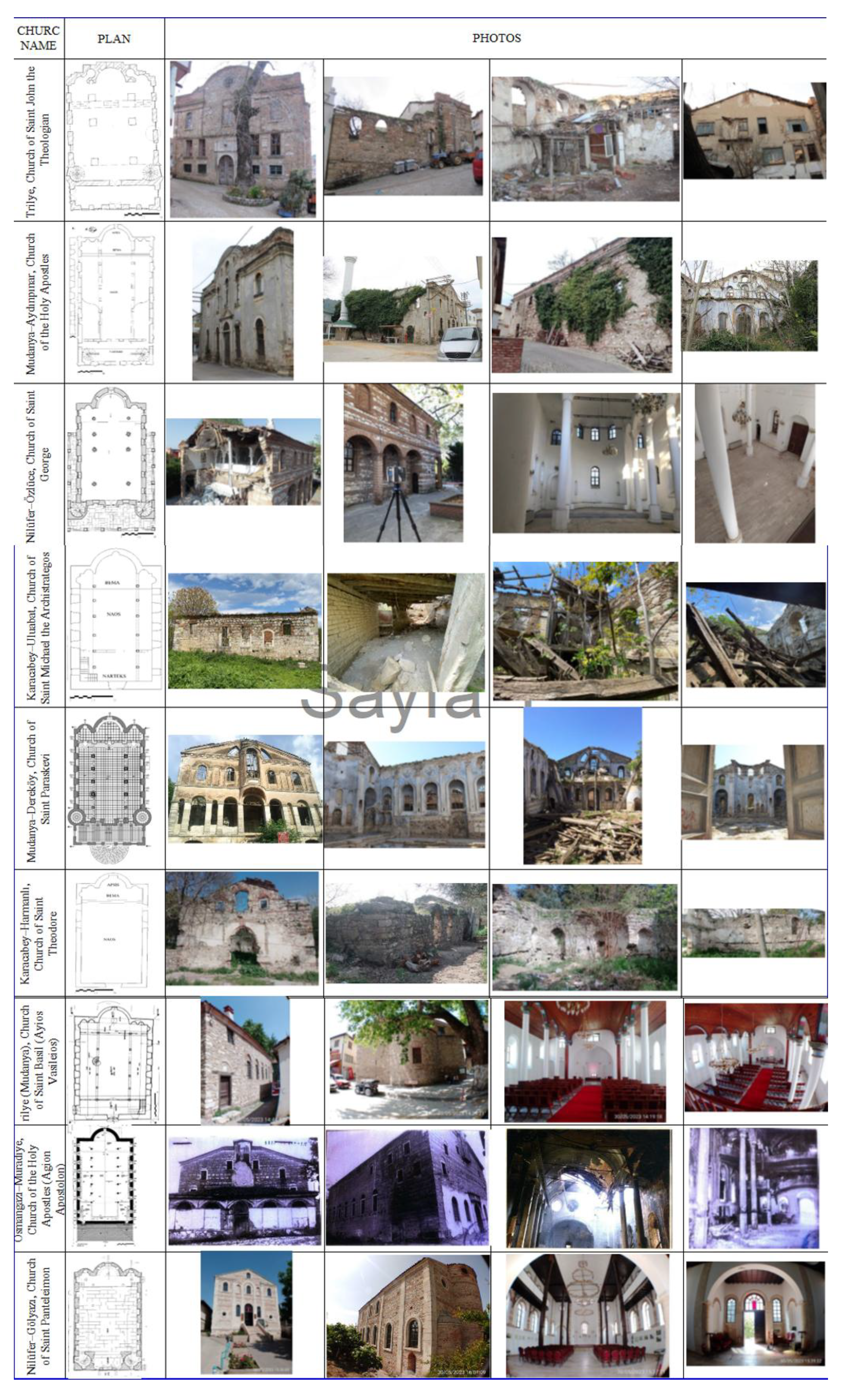
Figure 6.
CPI-based conservation priority ranking of the case-study buildings.
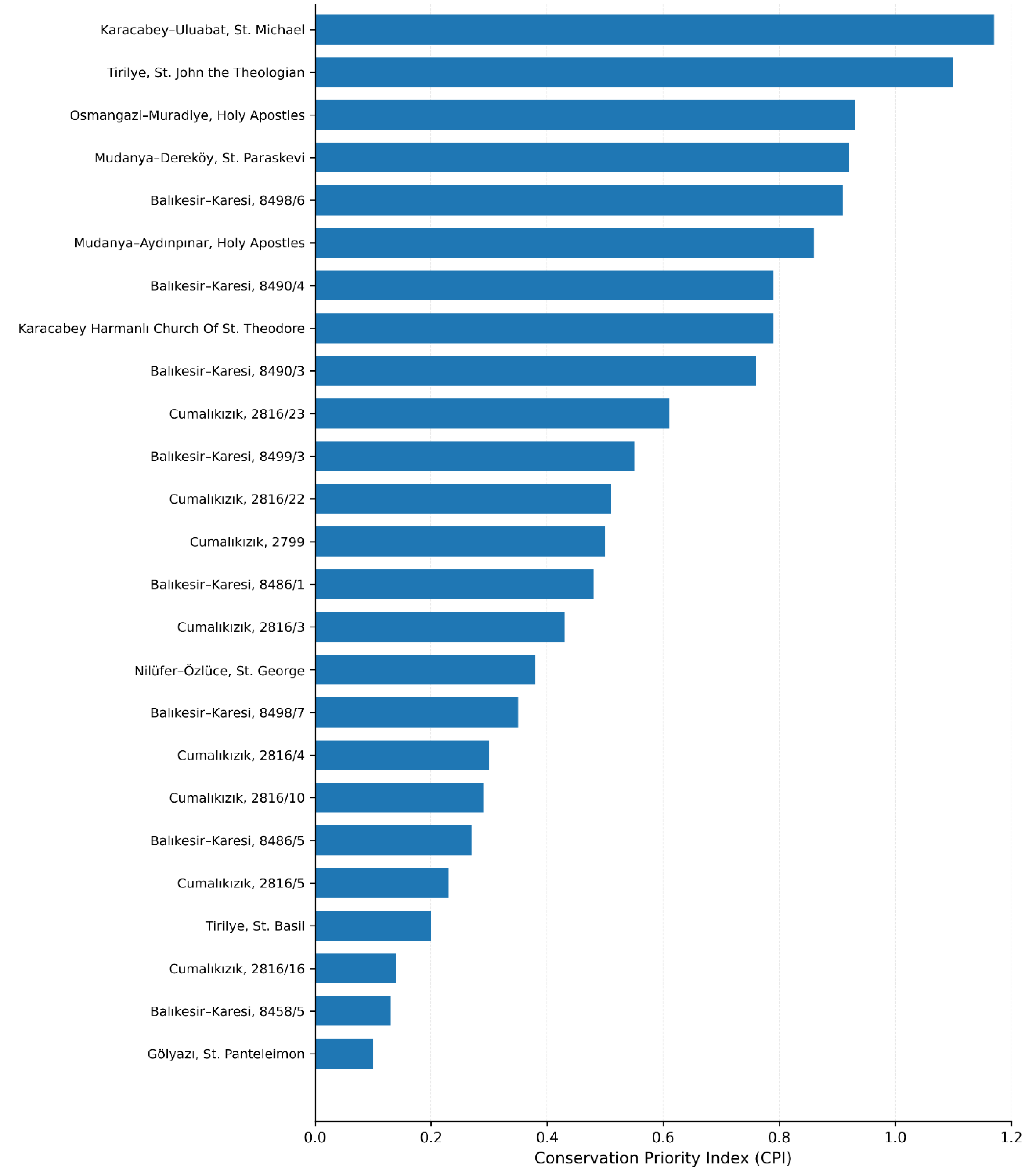
Figure 7.
Visualization of CPI-based conservation priorities across the analyzed buildings. By translating numerical CPI results into a comparative graphical format, the figure facilitates interpretation of relative conservation urgency and reduces reliance on tabular ranking. CPI values integrate structural vulnerability, typological degradation, and heritage value components within the STVSM framework.
Figure 7.
Visualization of CPI-based conservation priorities across the analyzed buildings. By translating numerical CPI results into a comparative graphical format, the figure facilitates interpretation of relative conservation urgency and reduces reliance on tabular ranking. CPI values integrate structural vulnerability, typological degradation, and heritage value components within the STVSM framework.
Figure 8.
Distribution of Conservation Priority Index (CPI) values across the examined building groups. CPI values are presented on a 0–2 scale, corresponding to low (0.00–0.50), medium (0.50–1.00), high (1.00–1.50), and critical (1.50–2.00) conservation priority levels. Dashed lines indicate the threshold boundaries used for CPI classification.
Figure 8.
Distribution of Conservation Priority Index (CPI) values across the examined building groups. CPI values are presented on a 0–2 scale, corresponding to low (0.00–0.50), medium (0.50–1.00), high (1.00–1.50), and critical (1.50–2.00) conservation priority levels. Dashed lines indicate the threshold boundaries used for CPI classification.
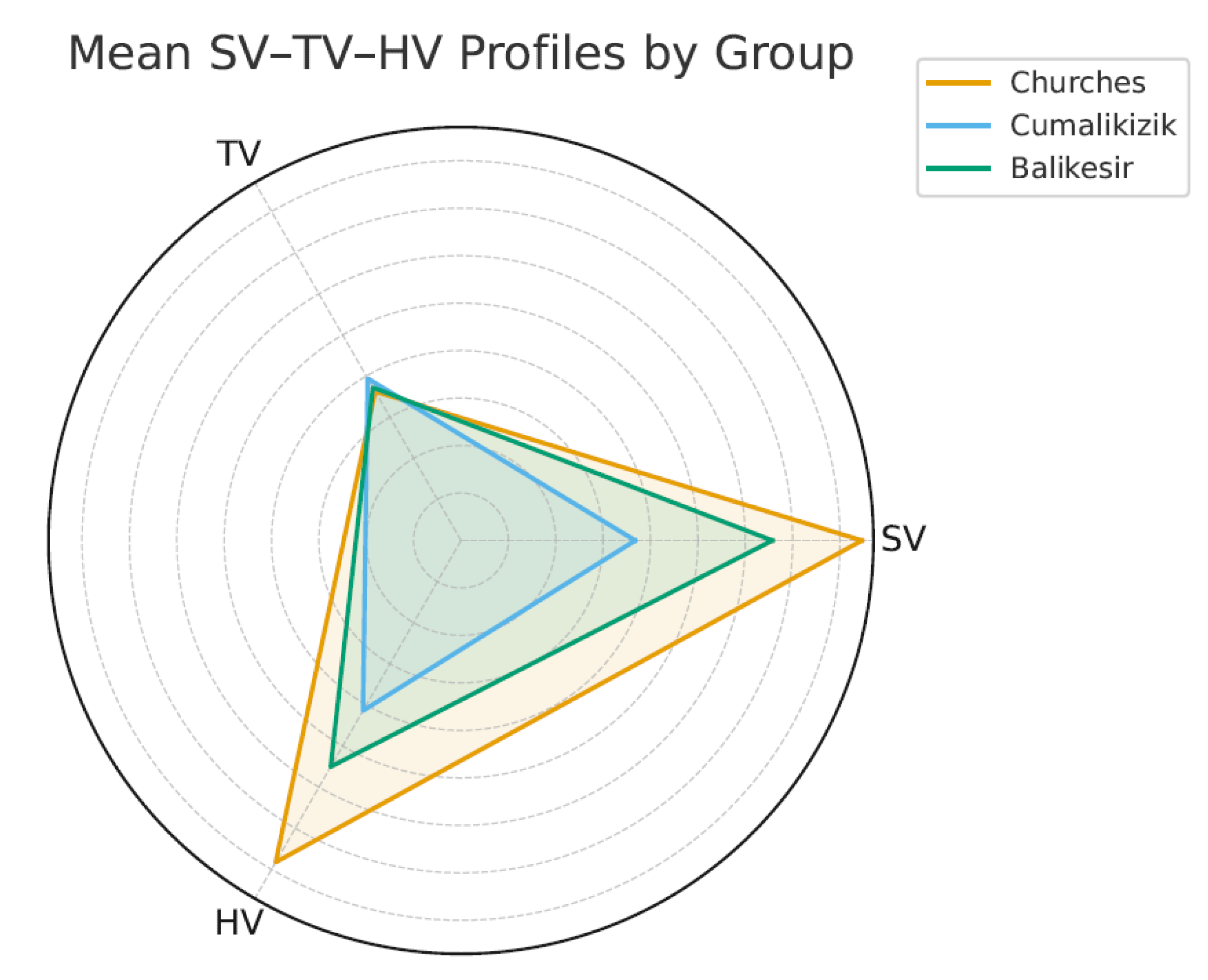
Figure 9.
SV–TV distribution based on macro-weighted component contributions (W_group × sub-index), with marker size reflecting the HV contribution.
Figure 9.
SV–TV distribution based on macro-weighted component contributions (W_group × sub-index), with marker size reflecting the HV contribution.
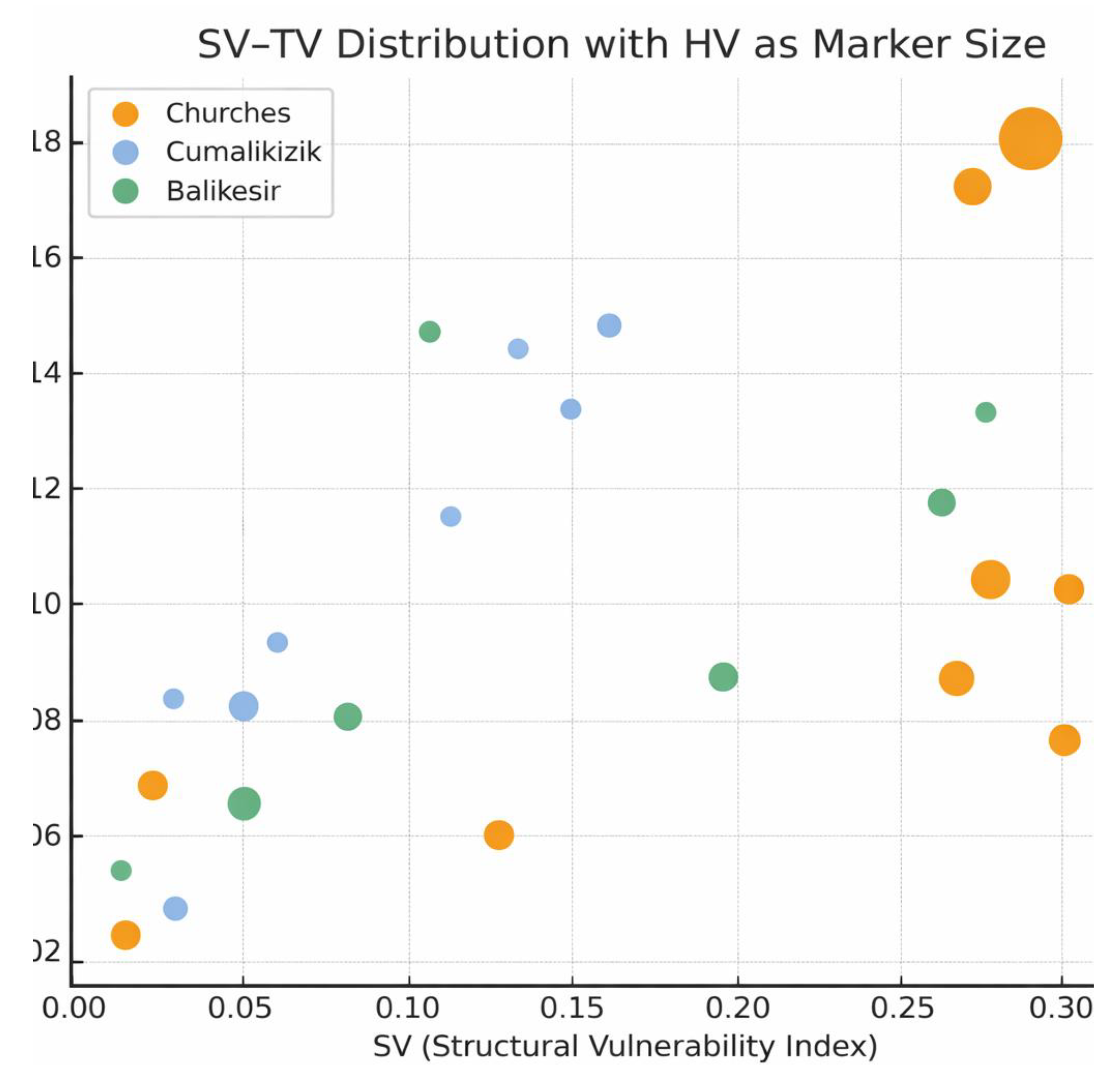
Figure 10.
Comparative heatmap of aggregated SV, TV, and HV sub-index values for all case-study buildings, visualizing relative component dominance and intra-group contrasts across the three building groups. The CPI-based priority ranking is reported separately (Figure 6; Supplementary Table S4).
Figure 10.
Comparative heatmap of aggregated SV, TV, and HV sub-index values for all case-study buildings, visualizing relative component dominance and intra-group contrasts across the three building groups. The CPI-based priority ranking is reported separately (Figure 6; Supplementary Table S4).
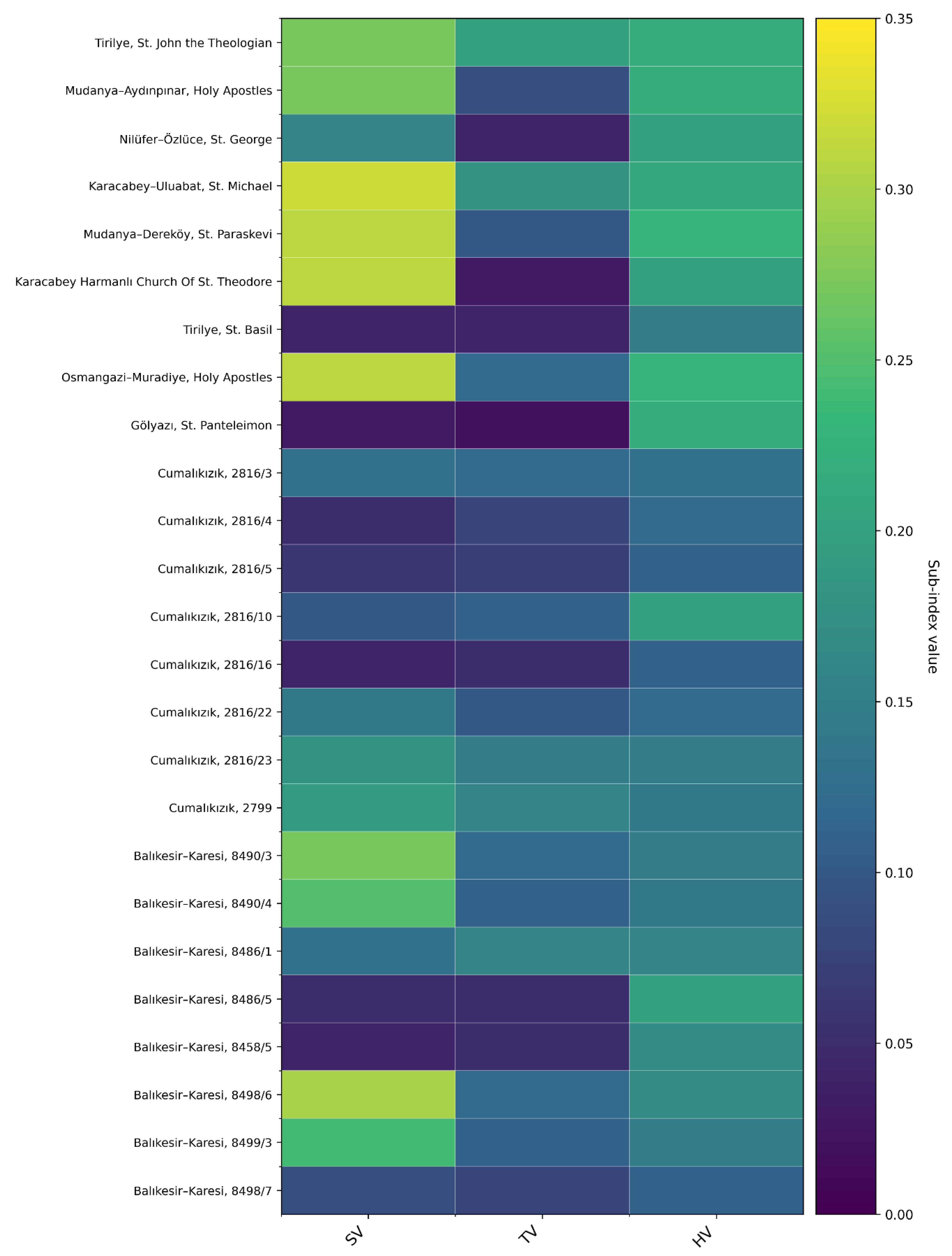

Table 1.
Integrated indicator framework and weighting structure of the STVSM model. The table summarizes the hierarchical organization of indicators under the three main components (structural vulnerability (SV), typological degradation (TV), and heritage value (HV)), together with assessment bases, macro-level component weights (W_group), normalized micro-weights (wi), and final integrated indicator weights (wi_final).
Table 1.
Integrated indicator framework and weighting structure of the STVSM model. The table summarizes the hierarchical organization of indicators under the three main components (structural vulnerability (SV), typological degradation (TV), and heritage value (HV)), together with assessment bases, macro-level component weights (W_group), normalized micro-weights (wi), and final integrated indicator weights (wi_final).
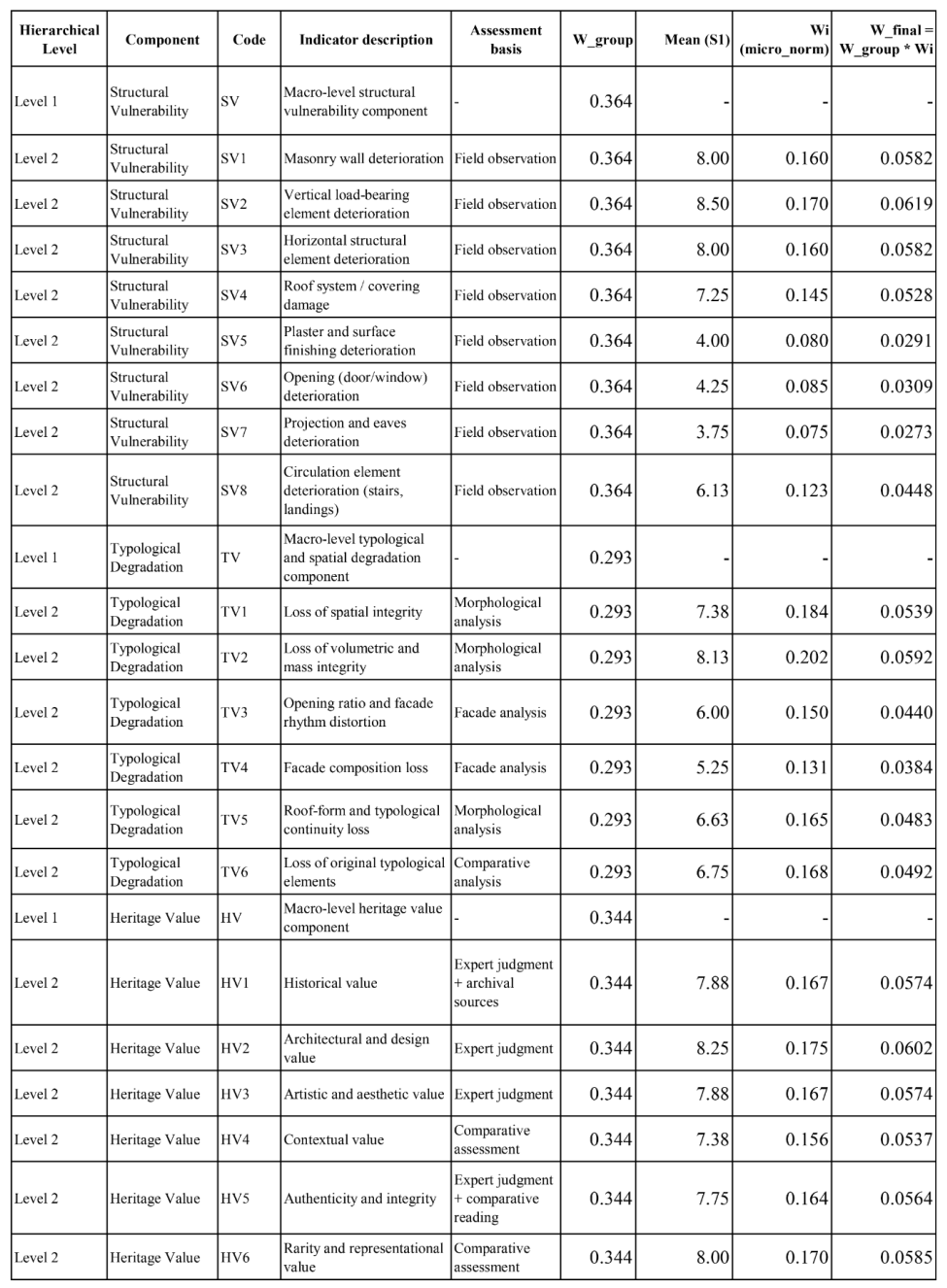 |
Table 2.
Hierarchical organization of the STVSM indicators within the STVSM weighting hierarchy
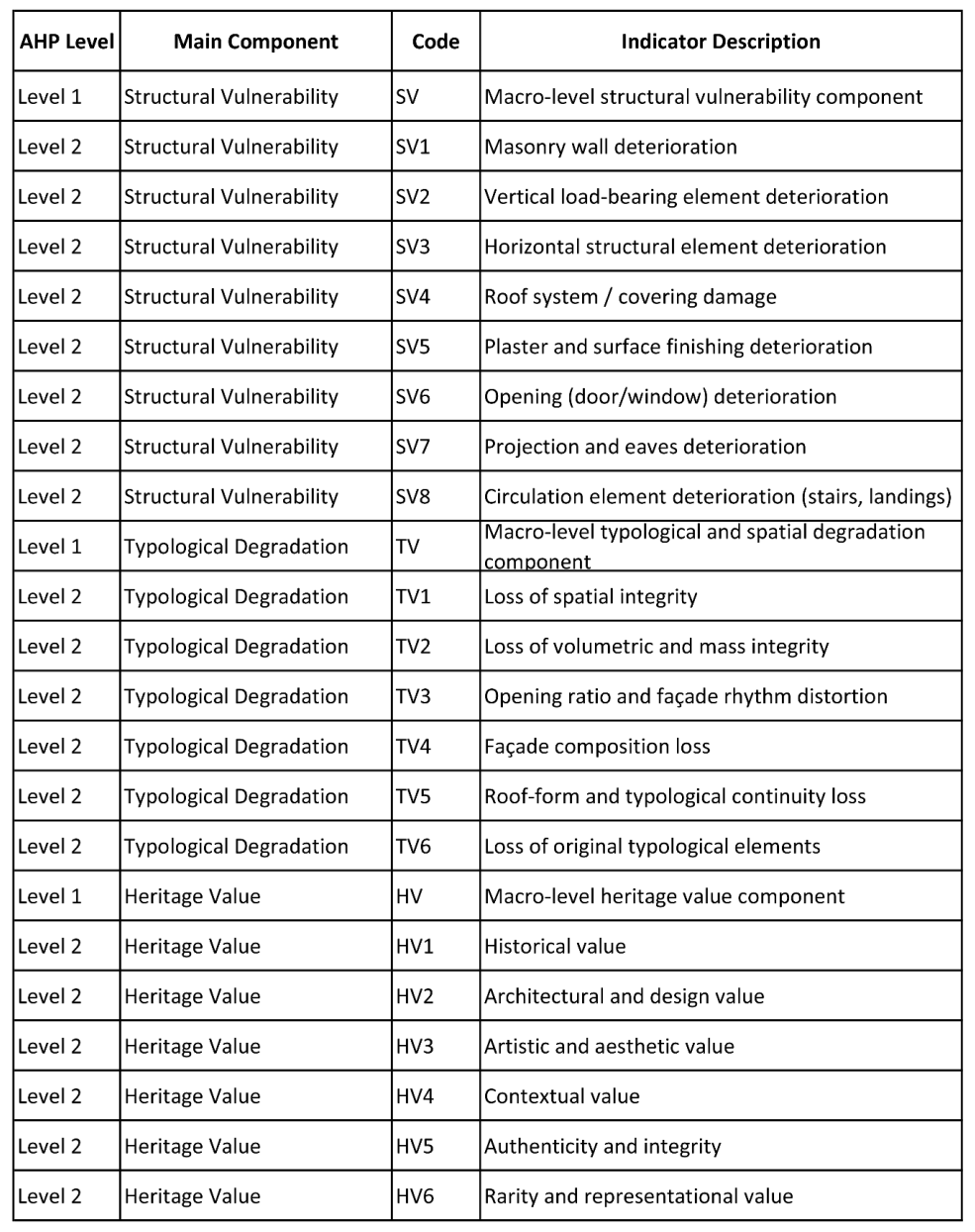 |
Table 3.
STVSM indicator set and assessment framework, illustrating the allocation of indicators across SV, TV, and HV dimensions and their corresponding assessment logic and data bases.
Table 3.
STVSM indicator set and assessment framework, illustrating the allocation of indicators across SV, TV, and HV dimensions and their corresponding assessment logic and data bases.
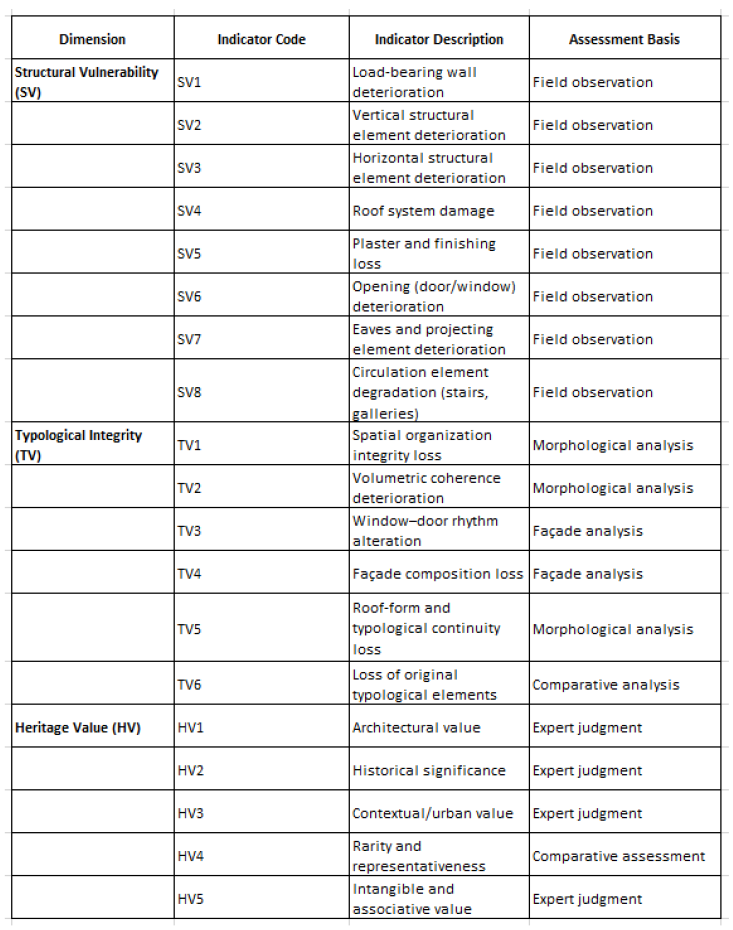 |
Table 4.
Summary of STVSM outputs for the example application presented in Section 4.1. Detailed indicator-level data and full rankings are provided in the Supplementary Material.
Table 4.
Summary of STVSM outputs for the example application presented in Section 4.1. Detailed indicator-level data and full rankings are provided in the Supplementary Material.
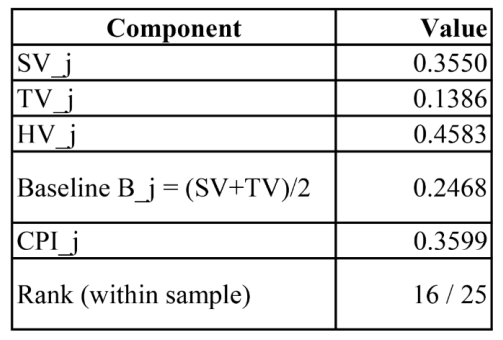 |
Table 5.
Expert Mean Scores and Normalized Micro-Weights (wᵢ) for the SV–TV–HV Indicator Sets.
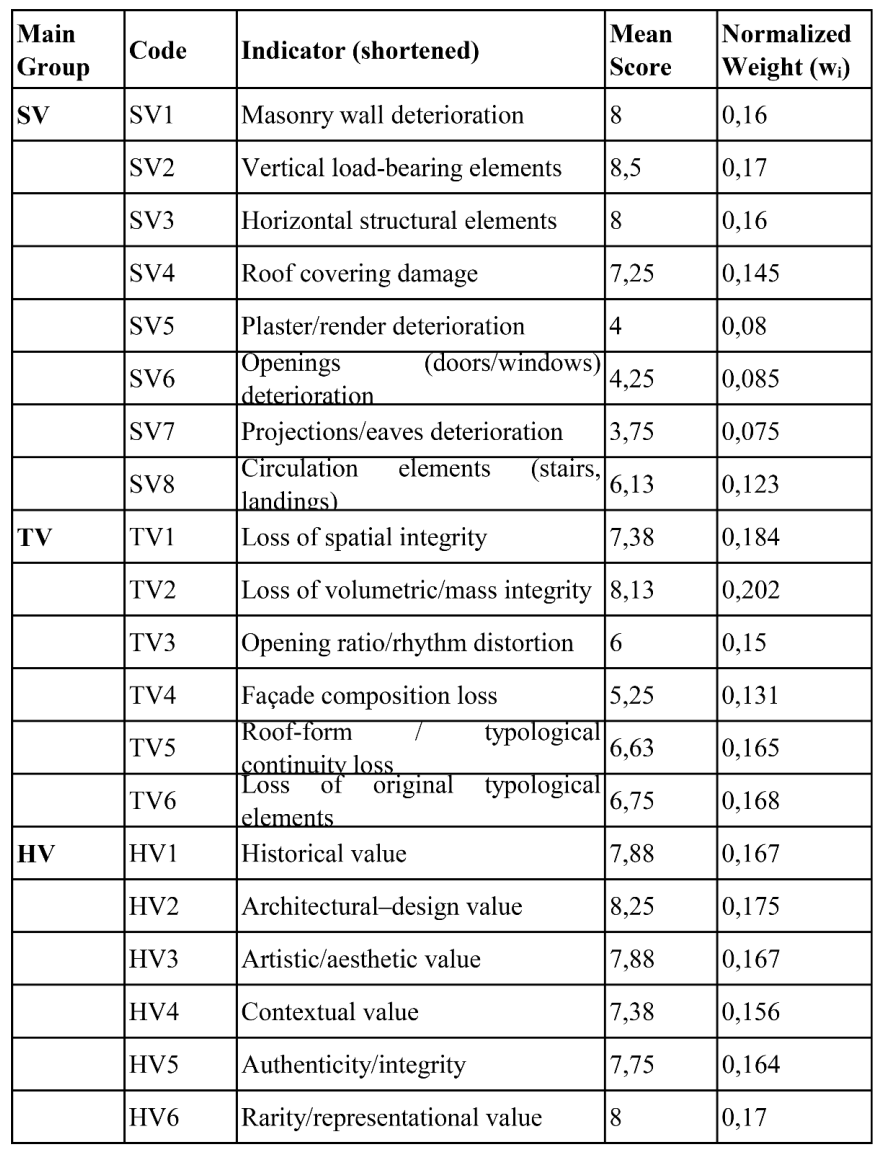 |
Table 6.
Integrated Macro–Micro Weight Structure of STVSM Indicators (wᵢ,final).
 |
Disclaimer/Publisher’s Note: The statements, opinions and data contained in all publications are solely those of the individual author(s) and contributor(s) and not of MDPI and/or the editor(s). MDPI and/or the editor(s) disclaim responsibility for any injury to people or property resulting from any ideas, methods, instructions or products referred to in the content. |
© 2026 by the authors. Licensee MDPI, Basel, Switzerland. This article is an open access article distributed under the terms and conditions of the Creative Commons Attribution (CC BY) license (http://creativecommons.org/licenses/by/4.0/).
Copyright: This open access article is published under a Creative Commons CC BY 4.0 license, which permit the free download, distribution, and reuse, provided that the author and preprint are cited in any reuse.


