

Submitted:
04 December 2025
Posted:
08 December 2025
You are already at the latest version
Abstract
This paper examines the integration of Artificial Intelligence (AI) into business analytics (BA) platforms within small and medium-sized enterprises (SMEs). The study aims to identify and theoretically explain the key determinants, enablers and barriers which influence a successful AI adoption in SME. Building on the Technology-Organization-Environment (TOE) frame-work and the Resource-Based View (RBV), it develops an integrated conceptual model that links technological, organizational and environmental factors with resource-based capabilities. Methodologically, the research follows a Structured Literature Review (SLR) approach and synthesizes the insights from 124 peer-reviewed publications from Scopus. The findings re-veal that successful AI-driven BA implementation largely depends on the development of Big Data Analytics Capabilities (BDAC), management support, integration capability, data gov-ernance and an organizational learning culture. Practically, the paper provides actionable rec-ommendations for SMEs on how to strategically inetgrate AI and analytics initiatives through strong governance, leadership and continuous learning. Overall, it contributes a theory-driven framework that advances the integration of TOE and RBV perspectives and offers a founda-tion for future empirical research on AI adoption in SMEs.
Keywords:
artificial intelligence
; business analytics
; digital transformation
; SMEs
1. Introduction
1.1. Relevance and Problem Statement
Digital transformation has massively increased the importance of data-driven decision-making processes in SMEs. AI technologies offer significant potential for BI, but also pose specific challenges. The role of AI in BI systems ranges from predictive optimization and prescriptive analytics to automated decision support, which is a complex task in SMEs with limited resources, heterogeneous IT landscapes and rare skills (Delgado-Sánchez et al., 2025; Kumar et al., 2025).
Research shows, that linking the TOE framework with RBV provides a complementary theoretical framework for analyzing complex relationships between technology, organization and resources when integrating new technologies. While the TOE framework describes the external and internal contextual factors that influence the introduction of technological innovations, the RBV focuses on the internal resources and capabilities required for the successful use of these technologies (Pham et al., 2022; Ramachandaran et al., 2025; Tian et al., 2021; Lutfi et al., 2020; Hanif et al., 2025).
Therefore, a combination of both approaches enables a holistic understanding of the mechanisms that shape the adoption and implementation of AI in business analytics systems. In the context of this work, this view helps to explain why the intensity, speed and success of AI adoption processes differ significantly between SMEs. Furthermore, the integration of TOE and RBV illustrates that technological innovations alone are not sufficient to generate sustainable competitive advantages (Lutfi et al., 2020; Tian et al., 2021). Only the interplay of resources, competencies and organizational adaptability enables companies to realize added value (Pham et al., 2022; Ramachandaran et al., 2025). The theoretical synthesis of both perspectives provides a basis for identifying the determinants of successful AI-driven business analytics initiatives in SMEs and understanding their mechanisms of action at both the strategic and operational levels.
1.2. Structure of the Work
This paper is divided into five chapters that build on each other both in content and methodology. The aim of this work is to systematically trace the research process from the theoretical foundations through the development of the conceptual model to the results and the resulting implications for research and practice. Chapter 1 introduces the research topic and describes the relevance of integrating AI into business analytics (BA) platforms of small and medium-sized enterprises (SMEs), outlines the research gap and derives the objectives and research questions. Chapter 2 forms the theoretical framework and explains central concepts of BA and AI in the context of digital transformation by presenting the Technology-Organization-Environment (TOE) framework and the Resource-Based View (RBV) as theoretical foundations. Both approaches are critically discussed and combined in a conceptual model that describes the technological, organizational and environmental determinants of AI integration. Chapter 3 explains the methodological approach. The study follows a theory-driven Structured Literature Review (SLR), in which the search strategy, selection criteria and bibliometric and qualitative analysis steps are presented. Chapter 4 presents the results of the analysis along the dimensions of the TOE framework and expands them to include resource-related aspects of the RBV. The findings are discussed, theoretically embedded and practical recommendations for SMEs are derived. Chapter 5 summarizes the key insights, discusses the theoretical contributions and concludes with limitations and perspectives for future research.
2. Methodology
This study is based on a Structured Literature Review (SLR) as the central methodological approach for developing a conceptual model for the integration of AI into business analytics platforms in SMEs. The model is embedded within the TOE framework and the Resource-Based View (RBV). The choice of an SLR follows the established logic of transparent, traceable and reproducible knowledge integration as presented in the works of Webster & Watson as well as Tranfield, Denyer and Smart (Jaidi et al., 2022; Persaud & Zare, 2024). The SLR enables the systematic identification, selection and synthesis of relevant studies and by that, fosters an integrated theoretical orientation that accounts for both technological and organizational factors in SME contexts (Jaidi et al., 2022; Persaud & Zare, 2024). At the same time, the structure of the TOE-RBV framework provides a robust foundation for consistently locating and connecting determinant- and resource-based effects across multiple studies (Rawashdeh et al., 2023; Sharma et al., 2024). In addition, the CEBMa source serves as a pragmatic guide for transparency and traceability in SLR processes (CEBMa Guidelines), which supports clear criteria, protocols and the reproducibility of the review work (Kukreja, 2025). The decision not to use primary qualitative research methods is derived from the aim of establishing a broad, comparative and theory-driven foundation that captures overall AI-enabled analytics in SME environments. While qualitative field research provides deep insights into specific contexts, it typically limits generalizability and theoretical transfer beyond individual case settings. In contrast, an SLR allows for the systematic aggregation of findings across industries, regions and organizational forms and by that, allows the creation a stable theoretical basis for the TOE-RBV framework as well as for deriving theory-driven hypotheses and future validation studies (Jaidi et al., 2022; Persaud & Zare, 2024; Sharma et al., 2024). Therefore, the SLR serves to develop a robust, integrated conceptualisation rather than a focused in-depth investigation of individual cases. The review procedure follows a multi-stage, transparent sequence aligned with classical SLR standards and adapted guidelines from Webster & Watson (Jaidi et al., 2022), which is enriched by the evidence-based management logic of CEBMa (Kukreja, 2025). The research questions focus on (a) identified AI-enabled analytics functionalities in SME contexts, (b) TOE dimensions as determinants or enablers of AI integration and (c) RBV-related resources and capabilities as drivers. The synthesis follows a transparent, theory-oriented logic that first provides descriptive coverage of the identified studies and then enables theoretical integration into a TOE-RBV model. The results are presented as a thematic map of determinants, mediations and drivers, which are enrichted by comparisons of their contextual differences (industry, region, SME size).
2.1. Search Strategy and Bibliometric Analysis
As part of the conducted SLR, a systematic search was carried out in the bibliographic database Scopus to identify relevant scientific studies. The search process was conducted from 02 October 2025 to 04 October 2025. Since English is the predominant language in academic research, only English-language literature was included in the search. The following exclusion criterion was applied: Limit To: Language: English. No further restrictions were imposed. The initial search strategy aimed to capture the overall body of research related to the integration of AI into business analytics systems. Based on an exploratory search query, publications were identified that contained the terms artificial intelligence integration and business analytics. Subsequently, the search strategy was refined to systematically capture thematically and semantically related concepts. Logical and proximity operators were used to ensure higher relevance of the results.
'artificial intelligence' W/5 'integration' AND 'business analytics' OR 'analytics platforms' AND 'smes’ OR 'small and medium-sized enterprises' AND 'challenges' OR 'barriers' OR 'enablers' OR 'drivers' AND ( LIMIT-TO (LANGUAGE , "English")).
The operator W/5 ensures that artificial intelligence and integration appear in close semantic proximity and therefore refer to actual integration processes. By combining these terms with “business analytics” and “analytics platforms”, the focus is directed specifically toward the analytical application context. The logical connection with the terms “challenges”, “barriers”, “enablers” and “drivers” broadens the thematic scope of the search. The search algorithm identified 297 articles on Scopus. An analysis of the search results shows, as illustrated in Figure 1, that publications on the topic have existed since 2018 although the intensity of research increased from 2021 onwards and reached its highest level to date in 2025.
Own Figure, based on the extract from Scopus, 03 October 2025 13:44.
An analysis of the distribution by document types, as shown in Figure 2, reveals that the largest share consists of scientific articles and at the same time indicates intensive research activity in this field followed by books book chapters reviews and conference papers.
Own Figure, based on the extract from Scopus, 03 October 2025 13:44.
To ensure the scientific quality and comparability of the sources, the proximity operator was adjusted. Only peer-reviewed journal articles reviews and selected conference papers were included. Books and book chapters were excluded because they often do not undergo standardized review processes and tend to produce methodologically heterogeneous results. This approach is consistent with established recommendations for structured literature reviews (Webster & Watson 2002; Tranfield et al. 2003; CEBMa Guidelines).
'artificial intelligence' W/5 'integration' AND 'business analytics' OR 'analytics platforms' AND 'smes’ OR 'small and medium-sized enterprises' AND 'challenges' OR 'barriers' OR 'enablers' OR 'drivers' AND (LIMIT-TO ( DOCTYPE,"ar") OR LIMIT-TO (DOCTYPE,"re") OR LIMIT-TO (DOCTYPE,"cp") OR LIMIT-TO (DOCTYPE,"English") )
After applying this filtering, the original search corpus was reduced from 297 results to 186 publications that meet the defined quality and relevance criteria. For additional refinement, a theory-driven keyword filtering was carried out. Based on the keywords identified in Scopus, only publications were included whose keywords show a direct connection to the dimensions of the TOE framework and the Resource-Based View (RBV). The selected keywords are shown in the following table:

Table 1.
Keyword-Grouping in the TOE-RBV context.
| Context | Keywords | Reason |
|---|---|---|
| Technologie (TOE) | Artificial Intelligence, Big Data, Big Data Analytics, Data Analytics | Show technological infrastructure, data integration and AI components. |
| Organizations (TOE) | Decision Making, Digital Transformation, Innovation, Integration, Organzisations, Technology Adoption | Refer to use, management, and change within organizations. |
| Umwelt (TOE) | Sustainable Development, Sustainability, Environmental Management, Environmental Technology | Refer to external framework conditions (sustainability, supply chains, market). |
| RBV | Small and Medium sized Enterprises, Human | Refer to the SME resource perspective. |
After an additional content-based assessment using the title, abstract and keywords, 124 publications remained that were included in the qualitative synthesis in Chapter 2.2.
The proximity operator was used for this purpose as follows:
'artificial intelligence' W/5 'integration' AND 'business analytics' OR 'analytics platforms' AND 'smes’ OR 'small and medium-sized enterprises' AND 'challenges' OR 'barriers' OR 'enablers' OR 'drivers' AND (LIMIT-TO ( DOCTYPE,"ar") OR LIMIT-TO ( DOCTYPE,"re" ) OR LIMIT-TO ( DOCTYPE,"cp" ) OR LIMIT-TO ( DOCTYPE,"English")) AND ( LIMIT-TO ( EXACTKEYWORD,"Artificial Intelligence" ) OR LIMIT-TO ( EXACTKEYWORD,"Big Data" ) OR LIMIT-TO ( EXACTKEYWORD,"Artificial Intelligence (ai)") OR LIMIT-TO (EXACTKEYWORD,"Big Data Analytic") OR LIMIT-TO (EXACTKEYWORD,"Big Data Analytics" ) OR LIMIT-TO ( EXACTKEYWORD,"Decision Making" ) OR LIMIT-TO ( EXACTKEYWORD,"Digital Transformation" ) OR LIMIT-TO ( EXACTKEYWORD,"Innovation" ) OR LIMIT-TO ( EXACTKEYWORD,"Integration" ) OR LIMIT-TO ( EXACTKEYWORD,"Human" ) OR LIMIT-TO ( EXACTKEYWORD,"Sustainability" ) OR LIMIT-TO ( EXACTKEYWORD,"Sustainable Development" ) OR LIMIT-TO ( EXACTKEYWORD,"Environmental Management" ) OR LIMIT-TO ( EXACTKEYWORD,"Environmental Technology" ) OR LIMIT-TO ( EXACTKEYWORD,"Organisational" ) OR LIMIT-TO ( EXACTKEYWORD,"Organizations" ) OR LIMIT-TO ( EXACTKEYWORD,"Technology Adoption" ) OR LIMIT-TO ( EXACTKEYWORD,"Small And Medium-sized Enterprise" ) OR LIMIT-TO ( EXACTKEYWORD,"Technology-organization-environment Frameworks" ) )
The bibliometric analysis of the 124 identified publications shows a clear increase in scientific engagement with the integration of AI into business analytics platforms in SMEs over recent years. As shown in Figure 3, there is a continuous rise in publication numbers between 2020 and 2025. While only two contributions were published in 2020, the number of publications rose moderately to twelve documents by 2023. A strong increase becomes visible from 2024 onward with 40 publications followed by a peak in 2025 with 60 documents. This growth points to the increasing scientific and practical relevance of the topic in the context of ongoing digital transformation and the spread of AI technologies in analytical business systems.
Own Figure, based on the extract from Scopus, 03 October 2025 14:30.
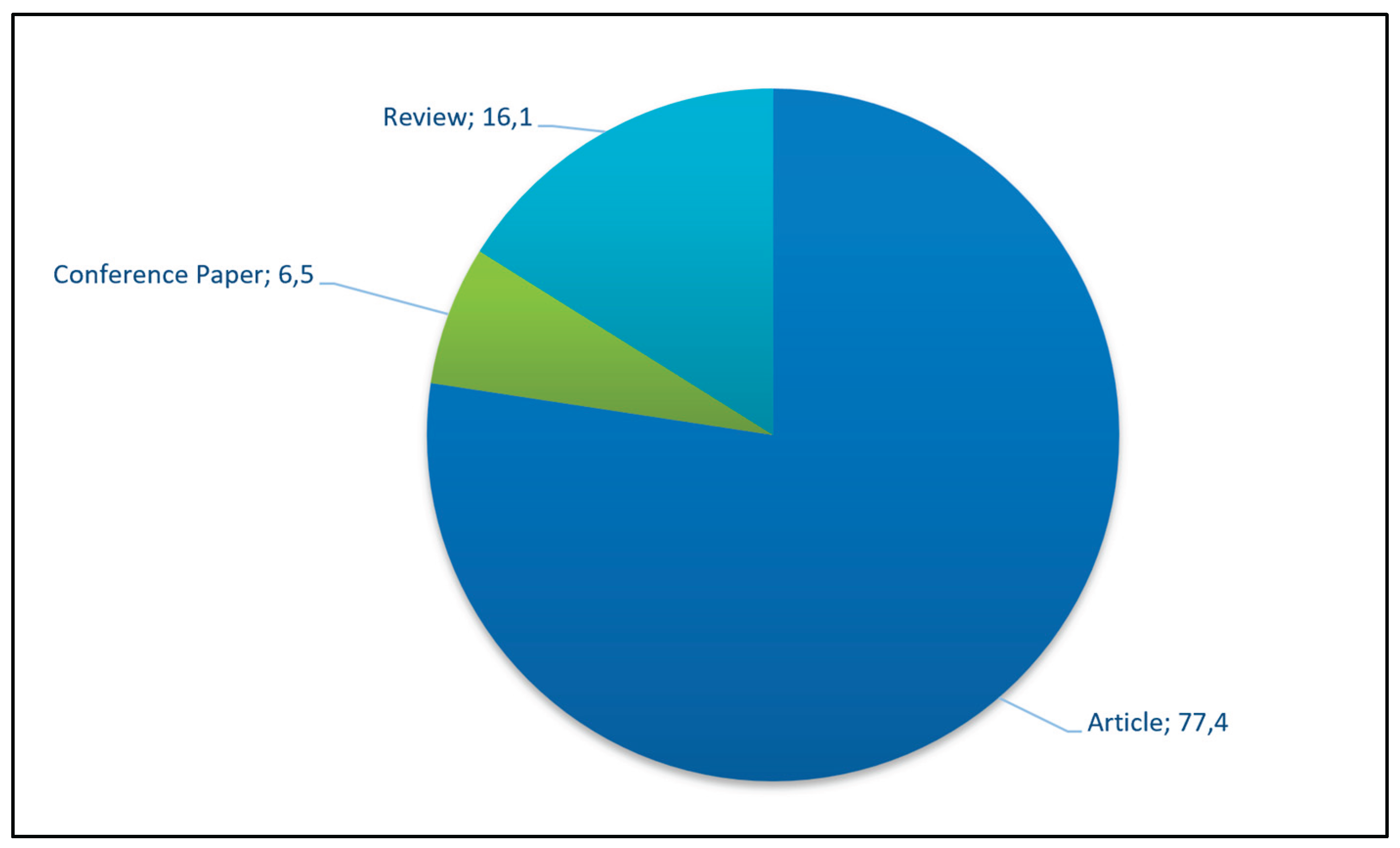
With regard to the document types, there is a clear dominance of scientific articles with a share of 77.4%, followed by review articles (16.1%) and conference papers (6.5%) as shown in Figure 4. This distribution highlights the increasing scientific maturity of the field. While conference papers usually represent early exploratory results, the high share of journal articles reflects an advanced level of theoretical and empirical grounding. The considerable share of reviews also indicates a growing need for synthesis and conceptual consolidation of the research.
Own illustration based on the extract from Scopus, 03 October 2025 14:32.
Based on this final selection, the next step is the content-related and theoretical analysis of the identified studies, the results of which are presented in the following Chapter 2.2.
2.2. Results
The following section presents the results of the synthesis of the selected publications.
2.2.1. TOE Determinants
Technology
- ▪
- Big Data Analytics Capabilities (BDAC) as a core dimension: BDAC functions not only as a technological component but as an organizational skill set that needs to be linked to key processes (for example customer engagement) to realize the financial and non-financial benefits of big data. This perspective is supported by findings showing that BDAC can play a mediating role in the performance effects of open innovation activities (Arias-Pérez et al., 2021). At the same time, other studies emphasize that technological maturity and the ability to make data-driven decisions represent central technological prerequisites (Aldossari et al., 2023; Chen et al., 2024).
- ▪
- Data infrastructure: Studies identify IT infrastructure, security, compatibility and complexity as significant determinants of AI integration in SME environments. Adoption factors include relative advantage compatibility complexity adaptability and regulatory conditions (Aldossari et al., 2023; Shahzadi et al., 2024; Brătucu et al., 2024). Furthermore, the development of integrated AI/BA platforms (for example cloud-native architectures) is described as an enabler that supports scalability and collaboration in SMEs (Alaskar, 2025). The availability of flexible platforms that facilitate data integration and data provision is crucial for scaling analytical capabilities (Chen et al., 2024).
- ▪
- Governance and data protection: The technological side of AI integration includes governance models as well as data protection and ethical aspects to manage risks and strengthen trust in AI systems (Maldonado-Canca et al., 2025). This dimension is especially relevant for SMEs that use AI in sensitive contexts.
- ▪
- Digitalization maturity (tech readiness): The technological maturity of the organization influences the adoption of AI-supported BA systems. A low level of digitalization maturity slows down implementation or requires more extensive preliminary work on the infrastructure (Brătucu et al., 2024; Aftab et al., 2025).
Organisation
- ▪
- Top management support and governance: The selected publications identify top management support the willingness to invest in IT infrastructure and clear governance structures as central organizational drivers of AI integration in SMEs (Aldossari et al., 2023; Aftab et al., 2025; Brătucu et al., 2024).
- ▪
- Training and capability development: Continuing education capability building and comprehensive change management activities correlate positively with the successful implementation of AI initiatives in SMEs (Aldossari et al., 2023; Neamţu et al., 2025; Aftab et al., 2025).
- ▪
- Integration capability (RBV-related): The ability to integrate technological components into existing business processes is a key success factor. This integration capability includes technological and organizational aspects and reflects RBV assumptions stating that resource competencies must be anchored within the organization (Alaskar, 2025; Pantea et al., 2024; Janković & Curovic, 2023).
- ▪
- Organizational culture: The willingness and ability to integrate external knowledge through open innovation formats (co-innovation platforms) is seen as an important organizational driver that supports the AI strategy (Arias-Pérez et al., 2021; Pérez et al., 2023). The literature also emphasizes that organizational learning processes knowledge management strategies and improvisation capabilities are essential for dealing with technological innovation (Arias-Pérez & Cepeda-Cardona, 2022). Systematic knowledge management supports the sustainable implementation of AI in BA platforms in SMEs (Arias-Pérez & Cepeda-Cardona, 2022).
- ▪
- Compliance and legal frameworks (organizational side): SMEs need to establish internal compliance and governance structures to operate AI applications in a legally compliant way. These aspects influence organizational readiness and the speed of implementation (Al-Hunaiti et al., 2025; Aboelazm & Dganni, 2025).
Environment
- ▪
- Stakeholder engagement: Environmental dimensions include regulatory requirements the expectations of stakeholders and the need to cooperate with partners and customers in digital ecosystems. Environmental and market conditions are often described as moderators of AI adoption especially in SMEs that operate within value chains (Shahzadi et al., 2024; Hwang et al., 2025; Al-Hunaiti et al., 2025; Zhong & Zhao, 2024).
- ▪
- Open innovation and co-innovation in ecosystems: The need to use external knowledge sources through open innovation platforms increases the performance of AI integrations in BA systems (Arias-Pérez et al., 2021; Pérez et al., 2023).
- ▪
- Political frameworks: Political factors influence investment decisions data infrastructure and AI compliance. Studies show that regulation shapes SME adoption paths and co-defines governance strategies (Al-Hunaiti et al., 2025; Brătucu et al., 2024).
- ▪
- Competitive dynamics: High competitive dynamics require agile AI solutions and organizational capabilities for adaptation. These dynamics correlate with positive effects of AI integration (Pan et al., 2025; Shahzadi et al., 2024).
The determinants which are identified within the TOE dimensions, show clear overlaps with the resource-oriented perspectives of the RBV, especially with regard to capabilities learning ability and integration potential. This suggests a mutual dependency between context factors and resource factors.
2.2.2. RBV-Determinants
Ressources
- ▪
- Data infrastructure and security capacities: RBV-focused analyses identify BDAC robust IT infrastructure data quality data protection and cybersecurity as key tangible and intangible resources that enable the implementation of AI/BA systems (Aldossari et al., 2023; Alaskar, 2025; Chen et al., 2024; Pantea et al., 2024).
- ▪
- Human capital competencies and learning ability: Employee skills expertise in data analytics AI methods and digital learning are crucial for the success of SMEs with AI/BA initiatives (Neamţu et al., 2025; Aftab et al., 2025; Brătucu et al., 2024).
- ▪
- Knowledge management: Resources in the form of organizational knowledge knowledge bases and cooperation structures represent a resource that influences adoption paths (Arias-Pérez & Cepeda-Cardona, 2022; Pérez et al., 2023).
- ▪
- Digital platforms and integration capabilities: Digital platforms integration capacities and digital leadership act as key resources that support the implementation of AI/BA solutions in line with RBV principles (Alaskar, 2025; Brătucu et al., 2024; Aftab et al., 2025).
Capabilities
- ▪
- Central organizational capability: BDAC is seen as a core capability that enables value creation from BA/AI investments and functions as a mediator between technological investments and performance, especially when open innovation mechanisms are involved (Arias-Pérez et al., 2021).
- ▪
- Integration capability: The ability to integrate analytical capabilities into existing business processes and to balance exploration (innovation) and exploitation (efficiency) at the same time is viewed as a dynamic capability (RBV) that influences AI/BA initiatives (Aldossari et al., 2023; Shahzadi et al., 2024; Pérez et al., 2023).
- ▪
- Digital leadership: Leadership capabilities digital leadership and change readiness are at the center of RBV-driven implementation, since leaders mobilize necessary resources support learning processes and promote attitudes toward data use (Aftab et al., 2025; He et al., 2024; Neamţu et al., 2025).
- ▪
- Integration capabilities: The ability to integrate technology and organization including governance data governance and process integration is highlighted in several studies as a key requirement for successful AI/BA initiatives (Alaskar, 2025; Pantea et al., 2024; Brătucu et al., 2024).
- ▪
- Knowledge management: Effective knowledge management supports the use of AI/BA solutions in uncertain environments (Arias-Pérez & Cepeda-Cardona, 2022; Pérez et al., 2023).
Organizational Routines, Processes and Capability Potentials
- ▪
- Routines: Embedding data-driven routines in decision-making processes supports the sustainable use of AI/BA systems (Arias-Pérez et al., 2021; Janković & Curovic, 2023).
- ▪
- Business process alignment: The alignment of AI/BA solutions with existing processes including governance routines is essential for value creation and is highlighted in the RBV perspective as a stable organizational resource (Alaskar, 2025; Pérez et al., 2023).
- ▪
- Open innovation and cooperation routines: RBV analyses emphasize the establishment of cooperation routines with external partners as a resource that enables the efficient integration of external information into internal BA processes (Arias-Pérez et al., 2021; Pérez et al., 2023).
2.2.3. Enabler, Berriers and Success Factors
Enabler
- ▪
- Strong top management support: Several studies show that leadership the willingness to invest in IT infrastructure and clear governance facilitate the implementation of AI/BA initiatives (Aldossari et al., 2023; Aftab et al., 2025; Brătucu et al., 2024; Al-Hunaiti et al., 2025).
- ▪
- Development of BDAC and comprehensive competency and learning programs: BDAC is identified as a central capability that enables the implementation of BA/AI initiatives. In addition SMEs require accompanying targeted training and change management programs (Arias-Pérez et al., 2021; Aldossari et al., 2023; Neamţu et al., 2025; Aftab et al., 2025).
- ▪
- Integration capability: The ability to integrate data analytics tools and AI models into existing business processes is a key factor that increases the effectiveness of AI/BA investments (Alaskar, 2025; Pantea et al., 2024; Brătucu et al., 2024).
- ▪
- Open innovation and cooperation culture: Open innovation formats and external knowledge sources increase the value of BDAC/AI initiatives in SMEs particularly when internal resources are limited (Arias-Pérez et al., 2021; Pérez et al., 2023).
Barriers
- ▪
- Security data protection and compliance risks: Security and privacy concerns as well as regulatory requirements can hinder the use of AI/BA systems especially where sensitive data is processed (Maldonado-Canca et al., 2025; Al-Hunaiti et al., 2025; Chen et al., 2023).
- ▪
- Architectural and integration complexity: Compatibility and integration issues with existing IT landscapes and interoperability requirements make AI/BA initiatives more difficult (Aldossari et al., 2023; Brătucu et al., 2024).
- ▪
- Lack of skills and resource constraints: Missing expertise insufficient training resources and limited digital maturity in SMEs prevent successful implementations (Neamţu et al., 2025; Brătucu et al., 2024; Aftab et al., 2025).
- ▪
- Organizational inertia and cultural barriers: Resistance to change a lack of learning culture and unclear understanding of the value of analytics act as hindering factors (Maldonado-Canca et al., 2025; Arias-Pérez & Cepeda-Cardona, 2022; Aftab et al., 2025).
Success Factors
- ▪
- Strategic orientation and alignment of IT and business: A clear strategic orientation combined with the alignment of IT and business processes improves the outcomes of AI/BA initiatives (Shahzadi et al., 2024; Cruz-Martínez et al., 2024; Brătucu et al., 2024; Daios et al., 2025).
- ▪
- Data quality governance and data use: Effective data and knowledge management robust data governance and defined usage rules increase the effectiveness of BDAC/AI systems (Arias-Pérez et al., 2021; Aldossari et al., 2023; Pantea et al., 2024; Cruz-Martínez et al., 2024).
- ▪
- Learning ability and continuous improvement: Organizational learning ability continuous training and feedback loops contribute to the sustainable use of AI/BA solutions (Neamţu et al., 2025; Aftab et al., 2025; Pérez et al., 2023).
- ▪
- Cooperative ecosystems and open innovation: The integration of external knowledge sources and cooperation routines increases the innovation capacity and benefits of AI/BA initiatives (Arias-Pérez et al., 2021; Pérez et al., 2023).
2.2.4. Recommendations for the Practice
- ▪
- A holistic implementation path is preferable, one that integrates the development of BDAC data infrastructure governance and learning processes to anchor AI/BA initiatives sustainably in SMEs (Arias-Pérez et al., 2021; Aldossari et al., 2023; Alaskar, 2025; Aftab et al., 2025).
- ▪
- SMEs should develop strategies that consider both internal and external resources to increase the resilience of supply chains and operational performance (Shahzadi et al., 2024; Pan et al., 2025; Al-Hunaiti et al., 2025).
- ▪
- To address environmental and regulatory influences, proactive governance strategies and an open innovation culture are required which alleviate pressures on AI/BA initiatives and strengthen trust in data use (Maldonado-Canca et al., 2025; Al-Hunaiti et al., 2025; Chen et al., 2023).
3. Discussion and Theoretical Positioning
The synthesis of the selected publications shows that the success of AI integration in SME business analytics systems is primarily driven by a close connection between technological capabilities organizational capacities and environmental context factors (TOE) as well as by existing resource capacities and capabilities (RBV). Big Data Analytics Capability (BDAC) emerges as a central driver that aligns both technological and organizational processes. Top management support organizational development training and the integration capability of the systems appear as recurring success factors, while security and data protection concerns as well as organizational inertia often function as barriers. Overall, the synthesis confirms that sustainable AI integration in SMEs depends on the complementary development of technological and organizational capabilities. Successful companies are characterized by the combination of BDAC dynamic integration capabilities and a learning-oriented innovation culture, which together can be regarded as a central success factor in the sense of the TOE-RBV approach.
3.1. Overview of the Core Aspects
The SLR identifies deterministic patterns showing how the integration of AI into business analytics platforms in SMEs is influenced across technological organizational and environmental contexts (TOE) and can be moderated by internal resources and capability aspects (RBV). The technological drivers play a dominant role in shaping the BA architecture. BDAC takes a central role as a mediating capability that transforms analytical potential into usable economic value (Arias-Pérez et al., 2021). Another recurring core insight is that BDAC must not be understood merely as a technological component but as an organization-specific capability in order to realize value creation from large data flows (Arias-Pérez et al., 2021). Technological maturity data quality interoperability and security aspects form further key technological determinants and are emphasized as necessary prerequisites for an integrated BA-AI ecosystem in SMEs (Aldossari et al., 2023). Cloud- and platform-based architectures as well as governance-related elements such as data protection and ethics are seen as key factors that support scalability trust and compliance in AI-supported BA systems (Shahzadi et al., 2024; Al-Hunaiti et al., 2025). At the organizational level, the findings consistently show that top management support and clear governance structures are basic requirements for implementation (Aldossari et al., 2023). Training capability development and effective change management further correlate positively with the success of AI-BDAC initiatives in SMEs (Aldossari et al., 2023). The ability to integrate technological components into existing business processes is seen as an essential RBV component that translates technological investments into performance outputs (Alaskar, 2025). Open innovation cultures and cooperation practices increase the benefits of BDAC-AI initiatives (Pérez et al., 2023). Organizational culture knowledge management and improvisational ability appear as key resource and potential routines that support learning processes and enable adaptation to technological turbulence (Arias-Pérez & Cepeda-Cardona, 2022). Organizational maturity influences the effectiveness of AI/BA initiatives and modulates the value of BDAC for performance outcomes (Aftab et al., 2025). Finally, several studies emphasize regulatory requirements governance models and compliance infrastructures as relevant environmental resources that influence implementation speed and legal conformity (Al-Hunaiti et al., 2025). From an RBV perspective, resources and capabilities such as BDAC robust IT infrastructure data quality data protection and cybersecurity are described as fundamental tangible and intangible resources that enable the implementation of AI-BA (Aldossari et al., 2023; Alaskar, 2025). Digital platforms and integration capabilities act as central resource constants that support operational implementation in line with RBV principles (Alaskar, 2025). Governance and compliance resources are intangible resources that support risk reduction and foster acceptance (Al-Hunaiti et al., 2025). Finally, RBV analyses show that routines of data-driven decision-making process alignment (governance routines) and cooperation routines represent essential resource or dynamic concepts (Arias-Pérez et al., 2021; Alaskar, 2025).
3.2. TOE-RBV Integration
The TOE perspective provides a context-based overview that shows how technological potentials organizational capabilities and environmental factors together form the framework for integrating AI in SMEs (Shahzadi et al., 2024). BDAC functions as a key element that connects external investments and internal processes and in doing so introduces a dynamic capability that allows SMEs to cope with volatile market environments (Arias-Pérez et al., 2021). This combination reflects a growing trend in the literature to conceptualize BDAC as a dynamic capability that mediates between resources (RBV) and context (TOE) (Alaskar, 2025). In this sense, combining TOE and RBV offers a holistic perspective for AI integration in SMEs.
3.3. Implications for the Theory
The paper demonstrates how TOE can be extended through an RBV perspective by introducing BDAC as a central organizational capability and dynamic resource. Linking BDAC with an open innovation culture supports an integrated view in which technological organizational and environmental factors complement each other in a dynamic environment (Arias-Pérez et al., 2021). In contrast to studies that use TOE or RBV in isolation, the integrative perspective provides a more comprehensive explanatory level by bringing contextual drivers and internal resource capacities into a shared analytical approach. For example, SLRs on AI adoption in business analytics projects consistently provide evidence for TOE dimensions, while RBV aspects receive stronger emphasis (Shahzadi et al., 2024; Aldossari et al., 2023). The presented combination offers a basis for systematically testing hypotheses about mediators. Future studies can use BDAC as an explanatory variable and examine external challenges in relation to internal resources (Pérez et al., 2023).
3.4. Implications for the Practice
The practical implications of the study highlight several central action areas for SMEs. First, companies should systematically build BDAC as a strategic core capability that serves as a bridge between data process logic and business value creation (Arias-Pérez et al., 2021). Second, a strong leadership role is necessary, with top management support established governance structures and regular change management needed to guide organizational transformation and anchor data-driven decision-making processes sustainably (Aldossari et al., 2023; Shahzadi et al., 2024).
In addition, SMEs benefit from a proactive learning and integration culture that systematically embeds business analytics functions into operational routines. Knowledge management strategies support organizational improvisation and adaptability in dynamic environments (Arias-Pérez & Cepeda-Cardona, 2022). The findings also show that integrating external knowledge sources and cooperation routines - for example within open innovation ecosystems - significantly increases the value of BDAC and AI initiatives (Pérez et al., 2023; Arias-Pérez et al., 2021).
3.5. Future Research Directions
The present SLR has several methodological limitations. The focus on English-language publications indexed in Scopus may limit the generalizability of the findings, as grey literature and industry-specific studies are not included. Similar limitations have been noted in comparable systematic reviews (Aldossari et al., 2023). In addition, many of the included studies do not present robust models and are often based on cross-sectional data, which restricts the ability to capture the dynamic relationships between resources capabilities and adoption processes (Aftab et al., 2025). From this, several promising avenues for future research emerge.
- ▪
- First, quantitative studies should empirically test the integrated TOE-RBV model.
- ▪
- Second, mixed-methods designs appear useful to examine the dynamics of BDAC development and the effect of digital leadership across different maturity levels in SMEs.
- ▪
- Third, a systematic comparison across industries would be valuable to identify differences in AI and BA adoption along different value chains.
Overall, the findings indicate that integrating the TOE framework and the RBV provides a theory-driven and coherent explanatory model for AI integration in SMEs. Recurring constructs such as BDAC management support integration capability learning culture data governance and cooperative ecosystems form a robust foundation for future theoretical development and practice-oriented implementation strategies that can support SMEs in the sustainable adoption of AI-supported business analytics systems.
Declaration of generative AI and AI-assisted technologies in the manuscript preparation process: During the preparation of this work the author used ChatGPT in order to structure the publication. After using this tool/service, the author reviewed and edited the content as needed and takes full responsibility for the content of the published article.
References
- Aboelazm, K. S., & Dganni, K. M. (2025). Public Procurement Contracts Futurity: Using of Artificial Intelligence in a Tender Process. Corporate Law & Governance Review. [CrossRef]
- Aftab, J., Stan, M.-R., Srivastava, M., Wei, F., & Abid, N. (2025). The Impact of Digital Leadership on Performance: Examining the Roles of Big Data Analytical Capabilities, Green Innovation, And AI Change Readiness in Italian SMEs. Business Strategy and the Environment. [CrossRef]
- Alaskar, T. H. (2025). Integrated AI and Business Analytics for Sustaining Data-Driven and Technological Innovation: The Mediating Role of Integration Capabilities and Digital Platform. Sustainability. [CrossRef]
- Aldossari, S., Mokhtar, U. A., & Abdul Ghani, A. T. (2023). Factor Influencing the Adoption of Big Data Analytics: A Systematic Literature and Experts Review. Sage Open. [CrossRef]
- Al-Hunaiti, M. A., Khrais, L. T., Ali, H., Alkhodary, D., Haikal, E. K., & Morshed, A. (2025). Impact of Advanced Technologies on Supply Chain Management: Legal Challenges and Integration Strategies. Corporate and Business Strategy Review. [CrossRef]
- Arias-Pérez, J., & Cepeda-Cardona, J. (2022). Knowledge Management Strategies and Organizational Improvisation: What Changed After the Emergence of Technological Turbulence Caused by Artificial Intelligence? Baltic Journal of Management. [CrossRef]
- Arias-Pérez, J., Coronado-Medina, A., & Perdomo-Charry, G. (2021). Big Data Analytics Capability as a Mediator in the Impact of Open Innovation on Firm Performance. Journal of Strategy and Management. [CrossRef]
- Brătucu, G., Ciobanu, E., Chițu, I. B., Litră, A. V., Zamfirache, A., & Bălăşescu, M. (2024). The Use of Technology Assisted by Artificial Intelligence Depending on the Companies’ Digital Maturity Level. Electronics. [CrossRef]
- Chen, C.-T., Chen, S., Khan, A., Lim, M. K., & Tseng, M. (2024). Antecedents of Big Data Analytics and Artificial Intelligence Adoption on Operational Performance: The ChatGPT Platform. Industrial Management & Data Systems. [CrossRef]
- Chen, F.-H., Hu, K.-H., Lin, S., & Hsu, M.-F. (2023). A Decision Framework for Assessing and Improving the Barriers of Blockchain Technology Adoption. Journal of Global Information Management. [CrossRef]
- Cruz-Martínez, G. A., Vega-Muñoz, A., Salazar-Sepúlveda, G., & Toledo-Aceituno, P. (2024). Analysis of Studies on Digital Strategy: Bibliometric Research of Three Decades. Sustainability. [CrossRef]
- Daios, A., Kladovasilakis, N., Kelemis, A., & Kostavelis, I. (2025). AI Applications in Supply Chain Management: A Survey. Applied Sciences. [CrossRef]
- Delgado-Sánchez, E., Calderón, R., & Herrera, F. (2025). Artificial Intelligence Adoption in SMEs: Survey Based on TOE-DOI Framework, Primary Methodology and Challenges. Applied Sciences. [CrossRef]
- Hanif, M. S., Khurshid, A., Kulibaba, D., & Sajid, A. (2025). Adoption and Actual Usage of SaaS-Based Cloud Applications Among the Swedish SMEs—A TAM-TOE Integrated Perspective. Human Behavior and Emerging Technologies. [CrossRef]
- He, Y., Zhao-shu, L., & Lee, M. (2024). Navigating Sustainable Value Creation Through Digital Leadership Under Institutional Pressures: The Moderating Role of Environmental Turbulence. Sustainability. [CrossRef]
- Hwang, B., Jitanugoon, S., & Puntha, P. (2025). AI Integration in Service Delivery: Enhancing Business and Sustainability Performance Amid Challenges. Journal of Services Marketing. [CrossRef]
- Jaidi, N., Siswantoyo, S., Liu, J., Sholikhah, Z., & Andhini, M. M. (2022). Ambidexterity Behavior of Creative SMEs for Disruptive Flows of Innovation: A Comparative Study of Indonesia and Taiwan. Journal of Open Innovation Technology Market and Complexity. [CrossRef]
- Janković, S. D., & Curovic, D. M. (2023). Strategic Integration of Artificial Intelligence for Sustainable Businesses: Implications for Data Management and Human User Engagement in the Digital Era. Sustainability. [CrossRef]
- Kukreja, A. K. (2025). AI Adoption in SMEs: Integrating Supply Chain and Financial Strategies for Competitive Advantage. International Journal for Multidisciplinary Research. [CrossRef]
- Kumar, J., Rani, G., Rani, M., & Rani, V. (2025). Big Data Analytics Adoption and Its Impact on SME Market and Financial Performance: An Analysis Using the Technology-Organisation-Environment (TOE) Framework. Creativity and Innovation Management. [CrossRef]
- Lutfi, A., Al-Okaily, M., Alsyouf, A., Alsaad, A., & Taamneh, A. (2020). The Impact of AIS Usage on AIS Effectiveness Among Jordanian SMEs: A Multi-Group Analysis of the Role of Firm Size. Global Business Review. [CrossRef]
- Maldonado-Canca, L.-A., Cabrera-Sánchez, J.-P., Casado Molina, A. M., & Bermúdez-González, G. (2025). AI in Companies’ Production Processes. Journal of Global Information Management. [CrossRef]
- Neamţu, D.-M., Bejinaru, R., Anichiti, A., Butnaru, G. I., & Hapenciuc, C. V. (2025). Current Status and Perspectives Regarding the Skills and Meta-Competencies Needed By employees in the Era 4.0. Kybernetes. [CrossRef]
- Pan, H., Zou, N., Wang, R., Ma, J., & Liu, D. (2025). Artificial Intelligence Usage and Supply Chain Resilience: An Organizational Information Processing Theory Perspective. Systems. [CrossRef]
- Pantea, M. F., Cilan, T. F., Cuc, L. D., Rad, D., Bâtcă-Dumitru, C.-G., Șendroiu, C., Almași, R. C., Fehér, A., & Gomoi, B. C. (2024). Optimizing Romanian Managerial Accounting Practices Through Digital Technologies: A Resource-Based and Technology-Deterministic Approach to Sustainable Accounting. Electronics. [CrossRef]
- Persaud, A., & Zare, J. (2024). Beyond Technological Capabilities: The Mediating Effects of Analytics Culture and Absorptive Capacity on Big Data Analytics Value Creation in Small- And Medium-Sized Enterprises. Ieee Transactions on Engineering Management. [CrossRef]
- Pham, Q. T., Khương, N. V., Cam Anh, N. D., Xuan Hanh, N. T., Anh Thi, V. H., Bao Tram, T. N., & Han, C. G. (2022). The Determinants of the Usage of Accounting Information Systems Toward Operational Efficiency in Industrial Revolution 4.0: Evidence From an Emerging Economy. Economies. [CrossRef]
- Ramachandaran, S. D., Mahalley, Z., Nuraini, R., & Dhar, B. K. (2025). Exploring the Challenges of AI-driven Business Intelligence Systems in the Malaysian Insurance Industry. F1000research. [CrossRef]
- Rawashdeh, A., Bakhit, M., & Abaalkhail, L. (2023). Determinants of Artificial Intelligence Adoption in SMEs: The Mediating Role of Accounting Automation. International Journal of Data and Network Science. [CrossRef]
- Shahzadi, G., Jia, F., Chen, L., & John, A. (2024). AI Adoption in Supply Chain Management: A Systematic Literature Review. Journal of Manufacturing Technology Management. [CrossRef]
- Sharma, S., Singh, G., Islam, N., & Dhir, A. (2024). Why Do SMEs Adopt Artificial Intelligence-Based Chatbots? Ieee Transactions on Engineering Management. [CrossRef]
- Singh, A., Dwivedi, A., Agrawal, D., Bag, S., & Chauhan, A. (2024). Can Sustainable and Digital Objectives Synchronize? A Study of ESG Activities for Digital Supply Chains Using Multi-methods. Business Strategy and the Environment. [CrossRef]
- Tian, M., Huo, B., Park, Y., & Kang, M. (2021). Enablers of Supply Chain Integration: A Technology-Organization-Environment View. Industrial Management & Data Systems. [CrossRef]
- Zhong, Z., & Zhao, E. Y. (2024). Collaborative Driving Mode of Sustainable Marketing and Supply Chain Management Supported by Metaverse Technology. Ieee Transactions on Engineering Management. [CrossRef]
Figure 1.
Scopus result distribution by year using the proximity operator.
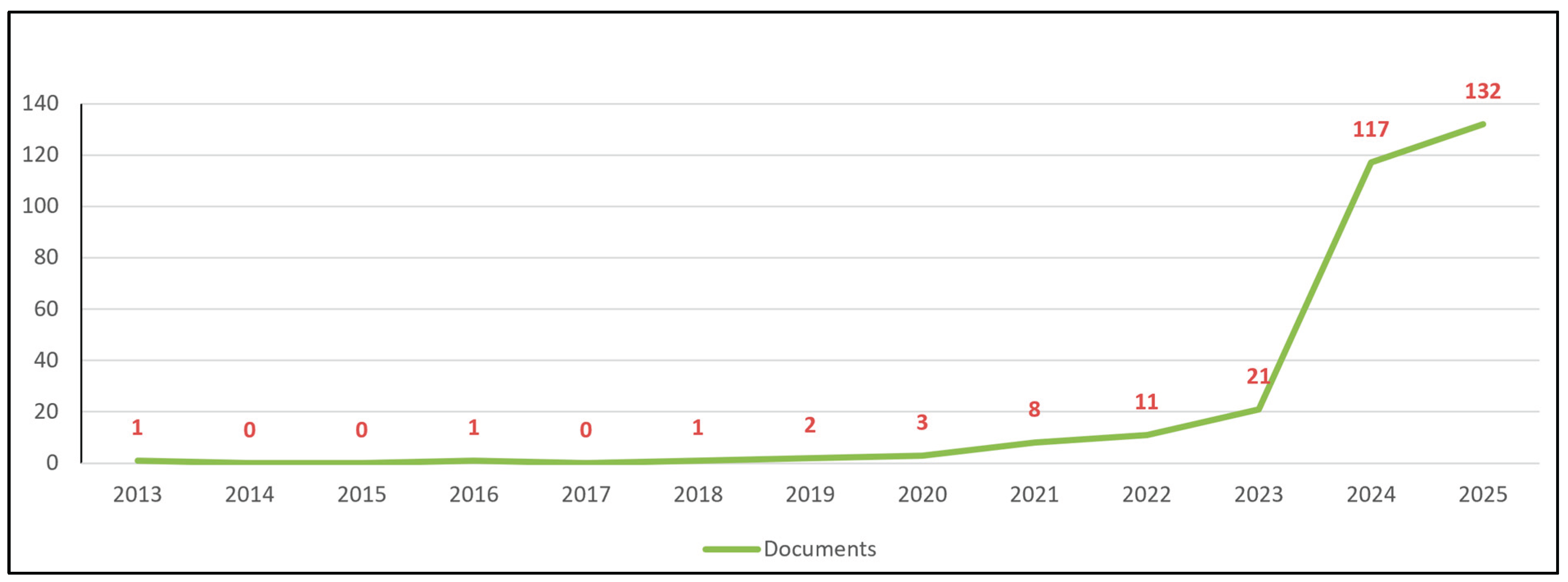
Figure 2.
Scopus result distribution by document types.
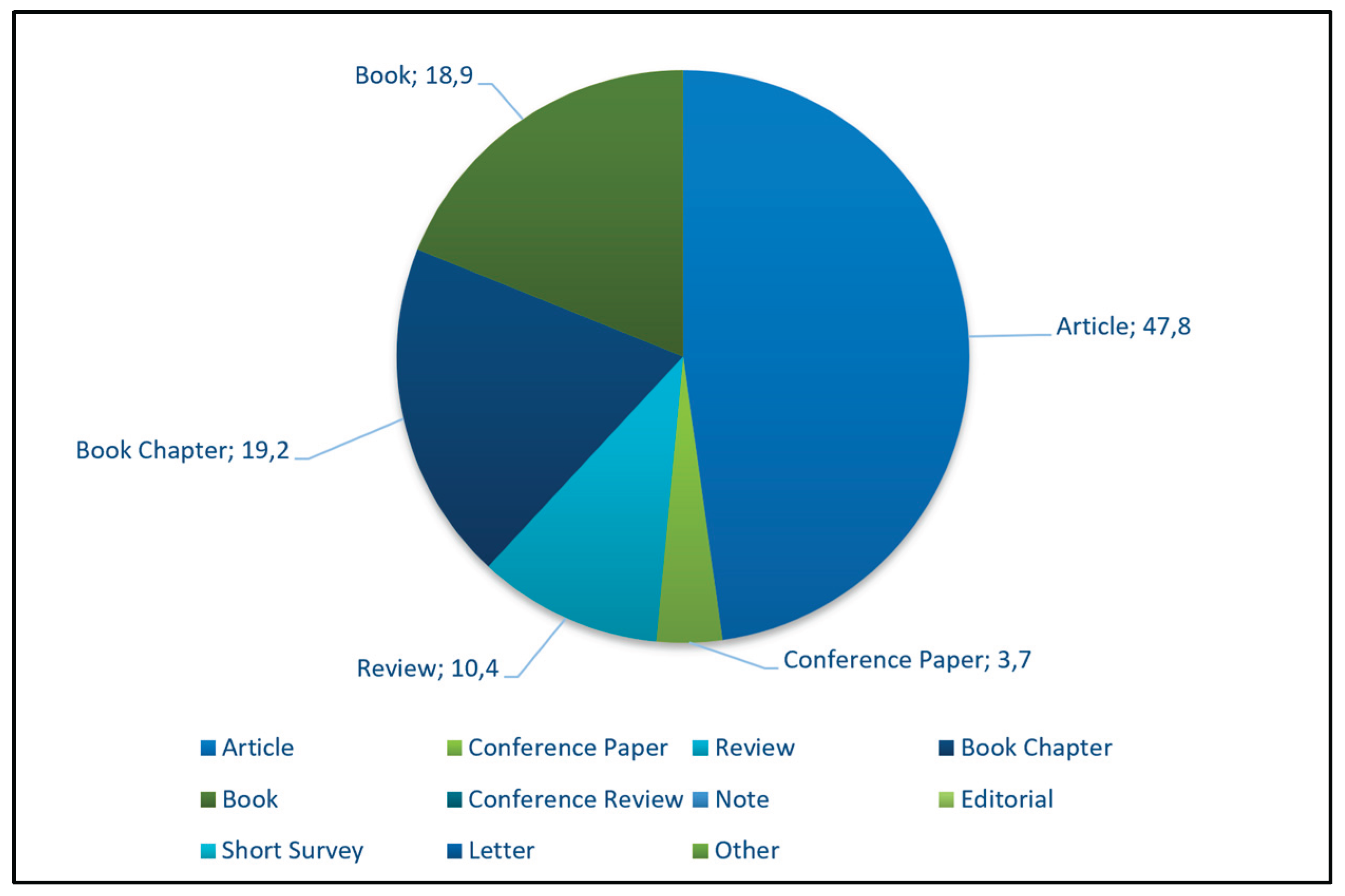
Figure 3.
Scopus results by count.
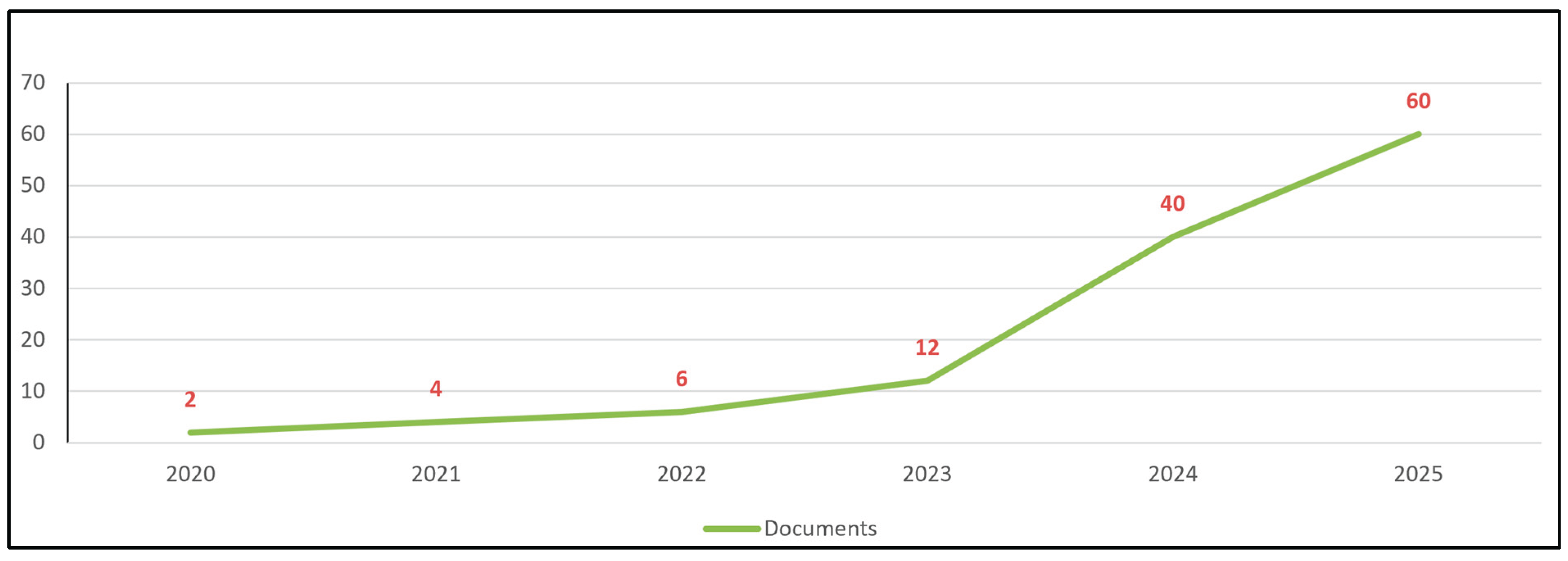
Figure 4.
Scopus results adjusted by document types.
Disclaimer/Publisher’s Note: The statements, opinions and data contained in all publications are solely those of the individual author(s) and contributor(s) and not of MDPI and/or the editor(s). MDPI and/or the editor(s) disclaim responsibility for any injury to people or property resulting from any ideas, methods, instructions or products referred to in the content. |
© 2025 by the authors. Licensee MDPI, Basel, Switzerland. This article is an open access article distributed under the terms and conditions of the Creative Commons Attribution (CC BY) license (http://creativecommons.org/licenses/by/4.0/).
Copyright: This open access article is published under a Creative Commons CC BY 4.0 license, which permit the free download, distribution, and reuse, provided that the author and preprint are cited in any reuse.


