

Submitted:
02 December 2025
Posted:
03 December 2025
You are already at the latest version
Abstract
This study empirically investigated the relationship between digital advertising strategies and the marketing performance of deposit money banks in Rivers State. The study adopted the quantitative research methodology and quasi-experimental research design method through cross-sectional survey design. The population comprised nineteen (19) listed deposit money banks operating in Rivers State. One hundred and twenty-seven (127) questionnaires were distributed; one hundred and nineteen (119) were fit for analysis. Face and content validity and Cronbach's Alpha were used to measure the validity and reliability. All were fit for the analysis. The Pearson Product-Moment Correlation and Partial Correlation tools were adopted with the aid of Statistical Package for Social Sciences (SPSS version 23.0). The findings of the study showed that social media advertising was significantly related with the marketing performance of deposit money banks in Rivers State; e-mail advertising significantly related with marketing performance of deposit money banks in Rivers State; pop-up advertising significantly related with marketing performance of deposit money banks in Rivers State and mobile-based advertising significantly related with marketing performance of deposit money banks in Rivers State. Based on the findings, the study concluded that digital advertising strategies (social media advertising, e-mail advertising, pop-up advertising, and mobile-based advertising) have a positive and significant impact on marketing performance (brand awareness and customer engagement) of deposit money banks in Rivers State. The study thus recommended that deposit money banks should ensure that their E-trade channels command trust in such a way that customers can effectively transact business through such channels without being defrauded. It must be proven at all instances by these deposit money banks that their social media channels are reliable; this must be guaranteed by providing customers with 24-hour information about their offerings.
Keywords:
digital marketing
; online advertising
; marketing performance
; customer engagement
Introduction
The COVID-19 pandemic severely impacted global economic performance, and nearly all sectors of the economy, including Nigeria’s deposit money banks, were affected (Ozili, 2020). The pandemic brought significant changes to the Nigerian banking industry (Alao et al., 2023), as social distancing measures disrupted in-bank transactions and limited customer access due to reduced staff availability (Nwokah & Poi, 2016; Onyekwena & Ekeruche, 2020). The uncertainty surrounding the crisis led to panic buying, hoarding of foreign currency, and the implementation of remote work policies within banks. Many borrowers struggled to service their loans, which weakened banks’ profitability and financial stability (Ozili, 2020). In response, banks have sought innovative ways to reach and retain customers digitally. Digital advertising, a key form of online promotion, enables businesses to communicate marketing messages directly to target audiences and encourage purchasing behavior (Akins, 2023). It supports both local and international transactions and helps firms maintain ongoing customer relationships through websites that provide detailed product information and facilitate informed purchasing decisions (Guo & Li, 2023).
Statement of the Problem
Empirical evidence suggests that the digitalization of banks’ advertising messages has significantly enhanced communication efficiency and customer engagement in the industry. The growing use of digital platforms has improved service delivery, transparency, and transaction speed. However, despite these benefits, many customers remain distrustful of digital advertisements and skeptical about the security of online banking platforms. Studies have identified several challenges associated with digital advertising by deposit money banks, including privacy concerns and online trust issues (Eshiett, 2024), regulatory uncertainty, and limited literacy (Chan, 2018; Crawford University, 2022 & Ihinmoyan, 2022). Consequently, some customers are reluctant to engage in e-transactions despite continuous promotional efforts (Njoku & Ani, 2023). Persistent fears of fraud and data breaches have further reduced patronage and negatively impacted profitability (Umoh, Ofurum, & Soyingbe, 2024). Although extensive research has examined digital advertising within the banking sector, limited attention has been given to its influence on marketing performance. Most existing studies have focused primarily on customers’ perceptions, behavioral intentions, and adoption of digital banking technologies, with little emphasis on how digital advertising strategies affect banks’ marketing outcomes, including customer acquisition, retention, and profitability. This gap necessitates a contextual investigation of how digital advertising strategies contribute to the marketing performance of deposit money banks in Rivers State, Nigeria.
Aim and Objectives of the Study
This study aims to empirically investigate the relationship between digital advertising strategies and the marketing performance of deposit money banks in Rivers State. The specific objectives are to determine the extent to which email, pop-up, and mobile advertising relate to brand awareness and customer engagement among deposit money banks in Rivers State.
Research Hypotheses
Hypotheses were all stated in null form; email advertising, pop-up advertising, and mobile-based advertising have no significant relationship with brand awareness and customer engagement of deposit money banks in Rivers State.
Scope of the Study
This study focuses on the existing literature and the empirical relationship between digital advertising strategies and marketing performance. Specifically, it examines the relationships between the independent variable’s dimensions (email advertising, pop-up advertising, and mobile-based advertising) and the dependent variable’s measures (brand awareness and customer engagement) for deposit money banks in Rivers State, Nigeria. Data were obtained from top and middle managers of these banks.
Literature Review
Conceptual Framework
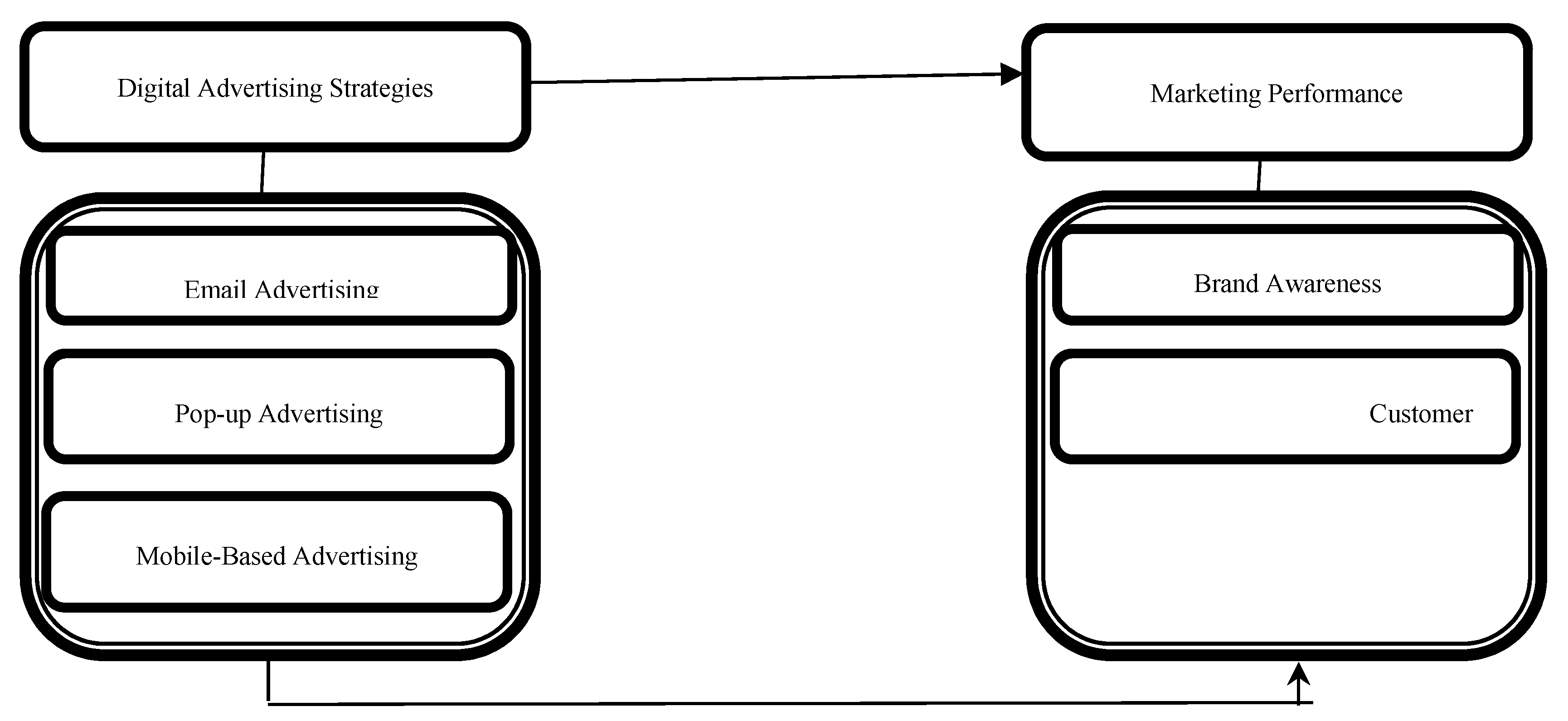
Figure 1.
Conceptual Framework of the Relationship between Digital Advertising Strategies and Marketing Performance. Source: Researcher’s review from relevant literature (2022) adapted from (Craig, 2021).
Figure 1.
Conceptual Framework of the Relationship between Digital Advertising Strategies and Marketing Performance. Source: Researcher’s review from relevant literature (2022) adapted from (Craig, 2021).
Concept of Digital Advertising Strategies
Digital advertising is about delivering advertisements to Internet/online users via websites, e-mail, ad-supported software, and Internet-enabled smartphones. Examples of digital advertising include contextual ads on search engine result pages, banner ads, rich media ads, social network advertising, interstitial ads, digital classified advertising, advertising networks, and email marketing (including spam) (Zhou, 2023). Digital advertising is a modern promotional tool that uses the Internet and the World Wide Web primarily to deliver marketing messages to customers (Kim & Park, 2012; Wuisan & Handra, 2023; Aleisa et al., 2023). Digital advertising involves contextual advertising on search engine results pages, banner ads, social network advertising, advertising networks, and e-mail marketing, including e-mail spam. Online video directories for brands are a good example of interactive advertising. These directories complement television advertising and allow viewers to see commercials for multiple brands (Bettiga & Noci, 2024).
Dimensions of Digital Advertising
E-Mail Advertising
E-mail Advertising is a component of electronic marketing practices and has been shown to significantly influence service satisfaction in Nigerian banks (Oladejo et al., 2024). It serves as a strategic communication tool for educating customers and strengthening their relationship with a brand (Thomas, Chen, & Iacobucci, 2022), E-mail advertising fosters loyalty, trust, and brand awareness, while Dehkordi et al. (2012) note its role in enhancing service quality and customer attention (Ramadhani, Prastowo, & Isrial, 2025). Moreover, email advertising has been shown to offer high returns for a low cost, making it a valuable tool in digital marketing (EmailToolTester, 2024).
Pop-Up Advertising
Pop-up advertisements are a form of online advertising designed to attract attention and direct users to websites where they can engage with products or services (Yetkin & Basal, 2024). pop-up ads alter the user’s visual field, producing greater visual stimulation compared to standard online formats such as banner ads (Suryadi et al., 2024). Empirical evidence shows that pop-up advertisements generate significantly higher click-through rates, up to 13 times greater than conventional display banners (Popupsmart, 2025).
However, despite their effectiveness in capturing user attention, pop-up advertisements are frequently perceived as intrusive and disruptive (Vijayakumar, Rahiman, & Sriranga Prasad, 2024). Their tendency to interrupt browsing activities contributes to unfavorable user attitudes toward them. Nevertheless, from an advertiser’s perspective, this attention-grabbing nature can enhance message recall and purchase intention, positioning pop-ups as an effective yet controversial digital marketing strategy.
Mobile-Based Advertising
Mobile-based advertising (m-advertising) refers to promotional messages delivered through mobile devices such as smartphones and tablets. It enables personalized and interactive communication between advertisers and consumers (Sario et al., 2024). Mobile advertising reaches a wide range of audiences across different demographics and locations (SQ Magazine, 2025). According to Abdelkefi, 2025, understanding consumer attitudes toward mobile advertising is essential for enhancing its effectiveness and user acceptance. Mobile devices facilitate high interactivity, as consumers can respond directly to advertisements via calls, SMS, MMS, or links to the advertiser’s website (Ahmad, Rana, & Anjum, 2023). This interaction fosters two-way communication and encourages engagement. Moreover, mobile advertising supports viral marketing, where users share promotional content with peers, thereby enhancing message credibility and extending reach organically.
Marketing Performance
Marketing performance reflects how effectively a company achieves its marketing objectives with the resources available. It is often evaluated through key indicators such as website traffic, click-through rates, conversion rates, and the influence of digital marketing on brand awareness, customer engagement, and satisfaction (Ahmed, 2024). Measuring marketing performance enables firms to align their strategies, enhance competitiveness, and respond effectively to market changes. From a broader perspective, marketing performance represents the extent to which marketing goals are achieved, encompassing both financial and non-financial outcomes such as profitability, productivity, market share, and customer retention (Mobydeen, 2021). Organizations use key performance indicators (KPIs) to evaluate their progress toward strategic goals and enhance overall effectiveness.
Brand Awareness
Brand awareness refers to the extent to which a consumer can identify a brand. Similarly, Kotler and Keller, 2016; also argued that brand awareness is related to the strength of brand information that allows marketers to measure consumers’ ability to identify brands in various conditions. Brand awareness is understood as the idea that if a customer can hear or see a brand and then see or hear it again, the customer will remember the brand and distinguish it from competing brands. According to Aaker (2015), Brand awareness is an asset that affects perceptions, likes, and even consumer behavior. It can influence purchase decisions about brands, thereby enhancing loyalty (Chen, 2024).
Brand awareness is the ability of a potential buyer to recognize and recall a brand within a particular product category. Brand awareness is recognized as a vital component of overall brand knowledge, shaping how consumers identify and remember a brand (López-Rodríguez & Sánchez-García, 2024). If consumers know a particular brand—whether actively or passively acquired—their brand awareness of that product or service tends to be high (Zhou & Wang, 2023). Following these discussions, this study adopts the definition of Brand awareness as a buyer’s ability to recognize or recall that a specific brand name belongs to a particular product category, reflecting the strength of brand memory and consumer familiarity (Keller & Brexendorf, 2022).
Customer Engagement
Customer engagement refers to the degree of a customer’s cognitive, emotional, and behavioral involvement with a brand or organization, reflecting active participation and the strength of the relationship (Hollebeek, Clark, & Macky, 2021). Customer engagement can also be defined as the intensity of a customer’s emotional and psychological connection with a company’s products or services, reflecting the depth of their relationship and involvement with the brand (Rather, 2023).
Recent studies have identified key customer engagement metrics, including customer lifetime value, referral behavior, influencer value (word-of-mouth impact), and knowledge value, which collectively determine customer contribution to brand growth (Harmeling et al., 2017). Even though this framework is in its infancy, the propositions proposed lack specificity and uniqueness from other constructs. On the positive side, recent studies have identified antecedents of customer engagement such as commitment, satisfaction, trust, and brand image, which are also vital factors influencing employee engagement (Hollebeek et al., 2019). Additionally, recent research has proposed advanced conceptual models of customer brand engagement grounded in empirical studies and qualitative insights (Hollebeek et al., 2022). There is limited empirical evidence to validate proposed customer engagement models; however, recent research highlights key engagement dimensions, such as immersion, passion, and activation (Dessart et al., 2023).
Digital Advertising Strategies and Marketing Performance
The digital advertising industry has seen enormous growth in recent years, an increase that has yet to reach its peak. In the United States, digital ad spending was projected to surpass traditional advertising for the first time in 2019 (eMarketer, 2019). Digital ads allow marketers to build stronger relationships with consumers and give them an active role in the communication process. Today, consumers are not just passive viewers but also share, comment on, and even co-create promotional content. For example, social media influencers now produce and distribute branded material among their followers (De Veirman et al., 2017).
Furthermore, online advertisements are often seamlessly integrated into user-generated or editorial content, making their commercial intent less obvious and more challenging to avoid. Liaukonyte et al. (2015) measured changes in website traffic and conversions within brief time windows around television ad airings, using quasi-random scheduling to ensure that changes in engagement were attributable to the ads themselves. Similarly, Narayanan and Kalyanam (2015) analyzed how ad position affects performance using natural variations in search-ad bidding. A significant advantage of digital media is its ability to target specific audiences by leveraging vast amounts of user data. This enables advertisers to reach relevant segments efficiently while minimizing wasted spending. Data-driven targeting also enables greater personalization, making ads more relevant and persuasive—though this raises important questions about consumer privacy and data control.
Strychartz et al. (2019) explored whether educating users about how personalization works could help them make informed choices. In an online experiment (N = 514), one group viewed a video explaining how Google customizes ads, while another watched a general overview of personalization. Results showed that learning about the process indirectly encouraged users to opt out through heightened awareness and motivation.
Digital ads are also frequently embedded within entertainment such as video games, YouTube clips, or influencer posts. Because these formats blend promotion with leisure content, audiences—especially minors—may struggle to identify them as advertisements. Van Dam and Van Reijmersdal (2019) examined adolescents’ understanding of influencer marketing and found that while young viewers often accept sponsored content, they rarely question its persuasive intent. Their study also revealed that clear sponsorship disclosures can improve awareness of commercial motives.
Theoretical Framework
The study was founded on the diffusion of innovation theory, and the uses and gratification theory constitute the theoretical base for this study. The diffusion of innovation theory explains how new ideas, technologies, or information spread over time through communication channels within a social system (Rogers, 2020). According to recent studies, the uses and gratifications theory explains how individuals actively select and use media to satisfy specific needs, such as information, entertainment, or social interaction (Ruggiero, 2020).
Empirical Review
Empirical evidence across various contexts underscores the positive impact of digital advertising on consumer behavior and organizational performance. Okon and Kolo (2021) found a significant relationship between digital advertising and consumer patronage among business students in Nigeria, highlighting the influence of online promotional strategies on purchasing intent. Similarly, Ihinmoyan (2022) revealed that digital advertising significantly affects consumer buying behavior in Nestle Nigeria Plc., establishing a link between digital exposure and purchase decisions. Sulaimon et al. (2021) reported a strong correlation between digital advertising and consumer buying behavior in Lokoja, emphasizing that social media and online messages enhance buyer engagement and patronage.
Beyond consumer goods, several studies have examined the effectiveness of digital advertising through design and contextual factors. Segev et al. (2014) observed that contextually relevant banner ads foster positive brand attitudes and purchase intent. Conversely, Pasqualoti and Baccino (2014) found that intrusive placements can delay information processing, suggesting the need for strategic ad positioning. Recent research indicates that animated advertisements can sometimes distract viewers, whereas static formats are more effective in sustaining user attention and information retention (Wang & Lang, 2022). These findings collectively emphasize that message clarity, placement, and interactivity significantly shape advertising outcomes.
In addition, Jeshurun (2018) asserted that email marketing remains an effective and cost-efficient digital tool for reaching customers, although regulatory constraints and competition challenge its efficiency.
Methodology
This study adopted a cross-sectional survey design to examine the relationship between digital advertising strategies and marketing performance among deposit money banks (DMBs) in Rivers State. The target population comprised 190 regional heads, area managers, and branch managers from nineteen (19) listed and licensed DMBs operating in the state (CBN, 2024). Using the Krejcie and Morgan sampling table, a representative sample of 127 respondents was selected. Data were collected using a structured questionnaire divided into two sections: Section A captured demographic data, while Section B focused on variables relating to digital advertising and marketing performance. The questionnaire was structured on a five (5) point Likert scale with weights assigned as follows: 5 = Strongly agree, 4 = Agree, 3 = Neutral, 2 = Disagree, 1 = Strongly disagree. Reliability was established using Cronbach’s alpha, with a coefficient ≥ 0.70 considered acceptable (Nunnally, 1978). Data analysis employed Pearson’s Product-Moment Correlation Coefficient (r) using SPSS version 23 to test the stated hypotheses.
Results and Discussion
Data Presentation
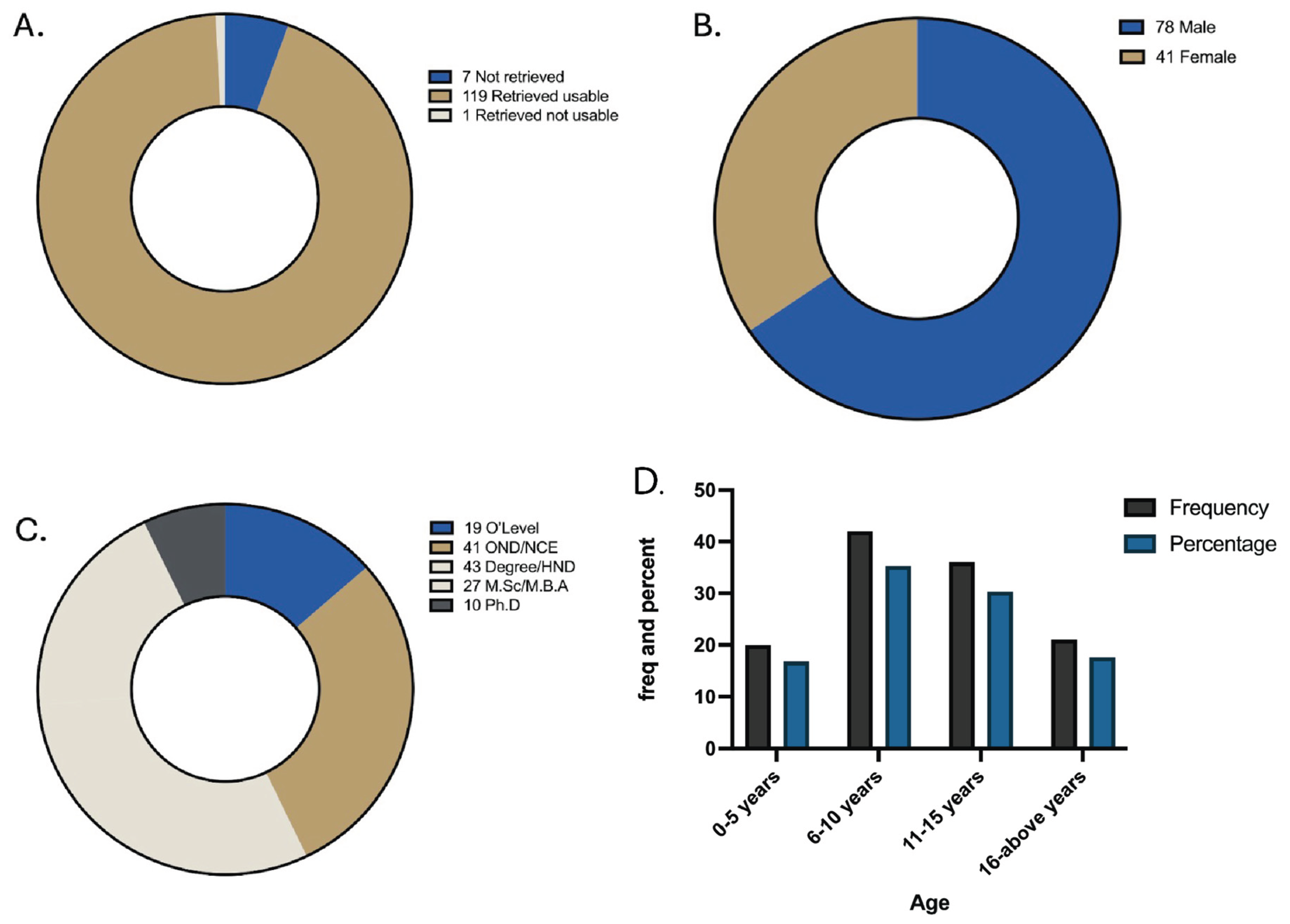
Figure 2 presents the general statistics of the study participants. As shown in Figure 2A, of the 127 distributed questionnaires, 120 were retrieved, yielding a 94.5% response rate and 119 usable copies (99.2%), indicating a highly reliable dataset. Figure 2B shows the gender distribution: 65.5% of respondents were male and 34.5% were female, suggesting a higher male representation in the sample. Figure 2C shows the educational qualifications of respondents, revealing that the majority possessed a Degree or HND (36.1%), followed by M.Sc./MBA holders (22.7%), OND/NCE (16.8%), O-Level (16%), and Ph.D. (8.4%), indicating that most participants were highly educated professionals. Lastly, Figure 2D displays the respondents’ years of experience, where 35.3% had 6–10 years of experience, 30.3% had 11–15 years, 17.6% had over 16 years, and 16.8% had 0–5 years, suggesting that the majority of respondents were seasoned employees with significant industry exposure.
Figure 2.
Overview of respondents’ demographic characteristics. (A) Sample size distribution of the study, (B) Gender composition of participants, (C) Educational qualification levels of respondents, and (D) Years of experience in the banking sector.
Figure 2.
Overview of respondents’ demographic characteristics. (A) Sample size distribution of the study, (B) Gender composition of participants, (C) Educational qualification levels of respondents, and (D) Years of experience in the banking sector.
Univariate Analysis of Digital Advertising Strategies and Marketing Performance
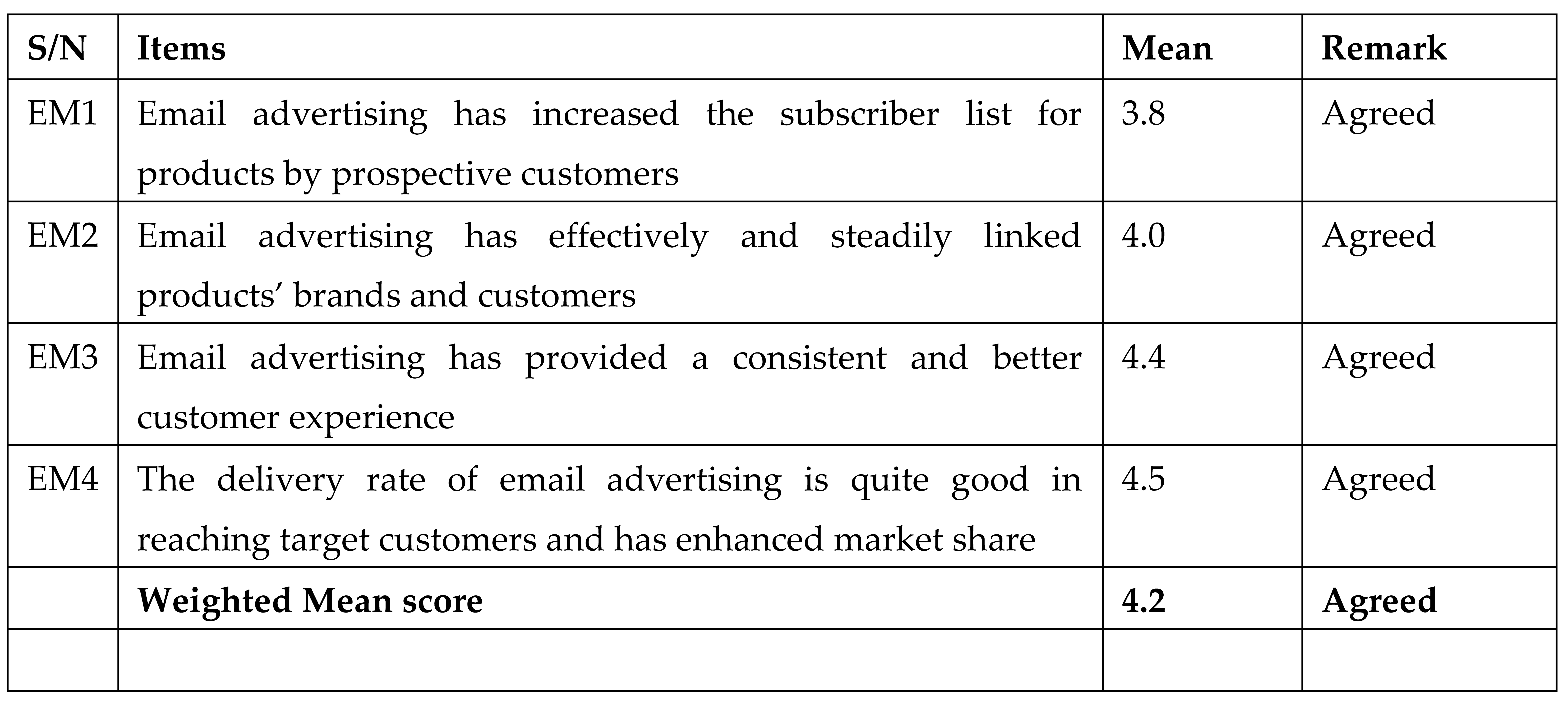
Table 1 and supplementary Table 1 present the frequencies, percentages, and mean scores of the respondents on four statement items of the e-mail advertising scale. The weighted mean scores for responses on EA1, EA2, EA3, and EA4 were 3.8, 4.0, 4.4, and 4.5, respectively. This means that the respondents agreed with each of the four (4) items, with mean scores exceeding the criterion mean (3.0). The grand weighted mean was equally greater than 3.0. It further indicates that e-mail advertising is positively associated with the marketing performance of deposit money banks in Rivers State.

Table 1.
Frequencies of Items of E-mail Advertising Responses.
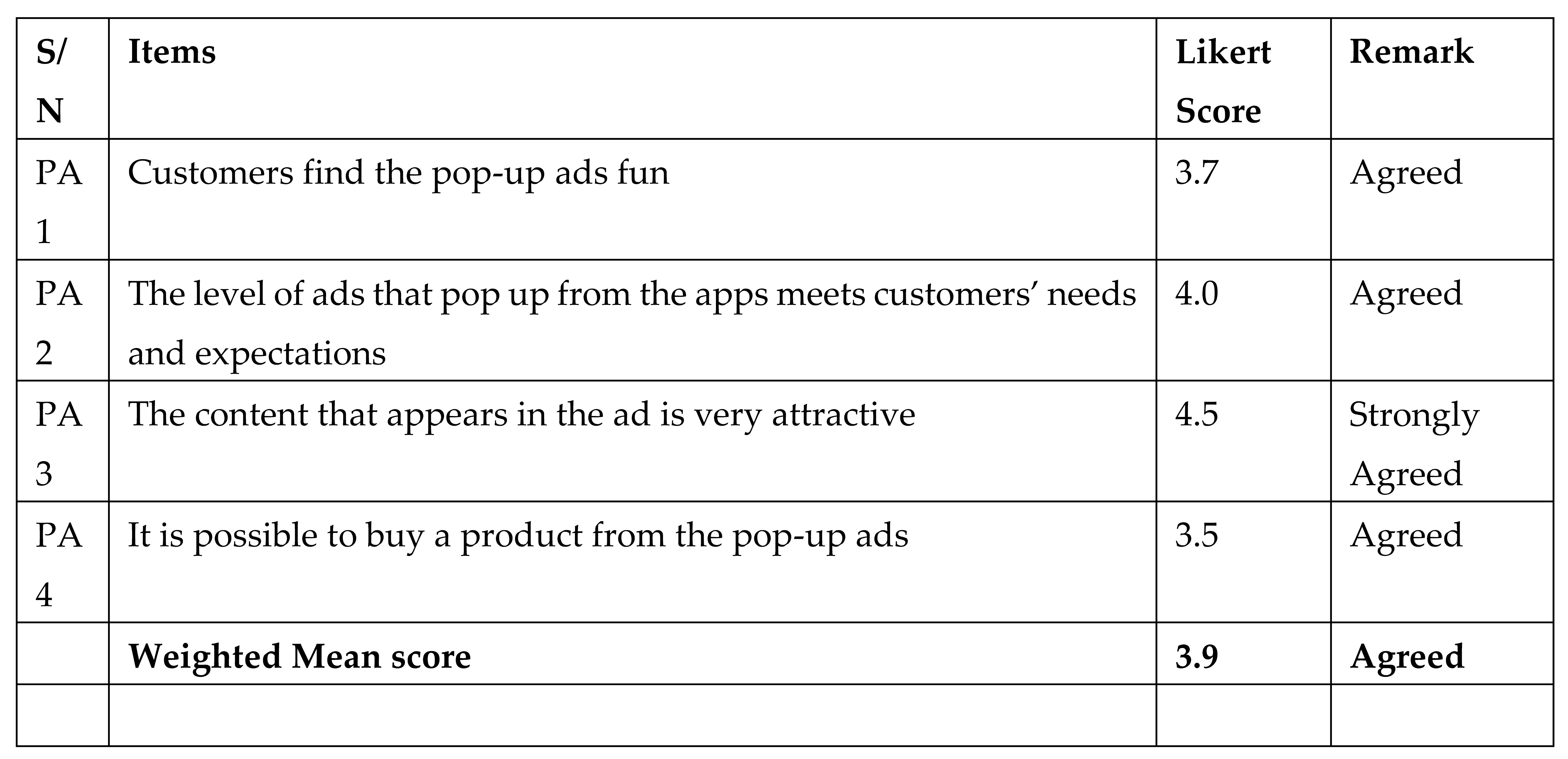
The results in Table 2 and supplementary Table 2 show the frequency, percentages, and mean scores of the respondents on four statement items of the pop-up advertising scale. The weighted mean scores for responses to PA1, PA2, PA3, and PA4 were 3.7, 4.0, 4.5, and 3.5, respectively. This means that the respondents agreed with each of the four (4) items, with mean scores exceeding the criterion mean (3.0). The grand weighted mean was equally greater than 3.0. It further indicates that pop-up advertising is positively associated with the marketing performance of deposit money banks in Rivers State.
Table 2.
Frequencies of Pop-Up Advertising Responses.
The results in Table 3 and supplementary Table 3 show the frequency, percentages, and mean scores of the respondents on four statement items of the mobile-based advertising scale. The weighted mean scores for responses to MBA1, MBA2, MBA3, and MBA4 were 4.4, 4.2, 3.8, and 3.5, respectively. This means that the respondents agreed with each of the four (4) items, with mean scores exceeding the criterion mean (3.0). The grand weighted mean was equally greater than 3.0. It further indicates that mobile-based advertising is positively associated with the marketing performance of deposit money banks in Rivers State.
Table 3.
Frequencies of Mobile-Based Advertising Responses.
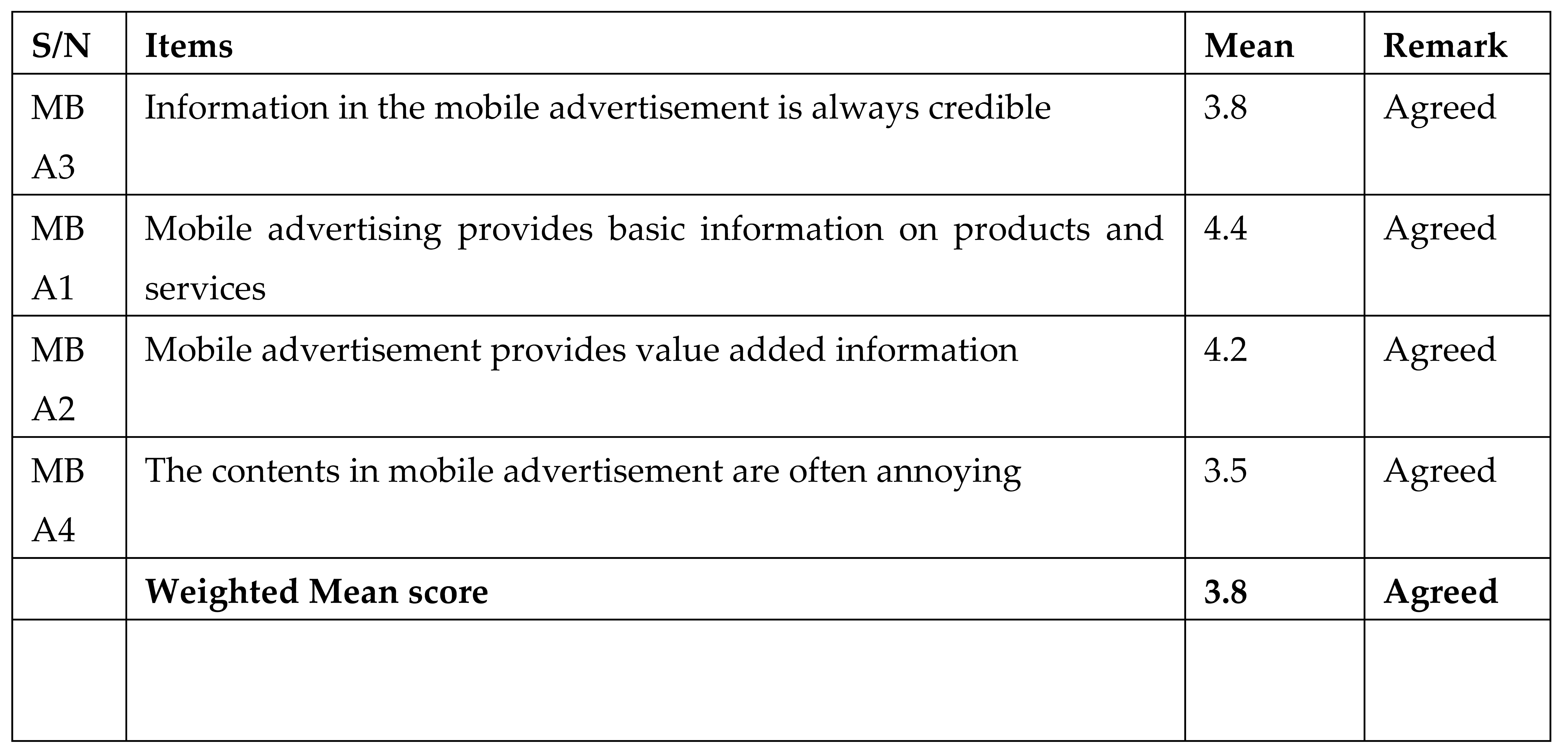
Table 4 and supplementary Table 4 indicate that the respondents in this study agreed with each of the four (4) brand awareness statement items, with weighted means of BA1=4.0, BA2=4.0, BA3=4.4, and BA4=4.1 (mean scores greater than 3.0). The grand mean (4.1) was equally greater than 3.0. These results showed that brand awareness is positively associated with the digital advertising strategies of deposit money banks in Rivers State.
Table 4.
Frequencies of Item Brand Awareness Responses.
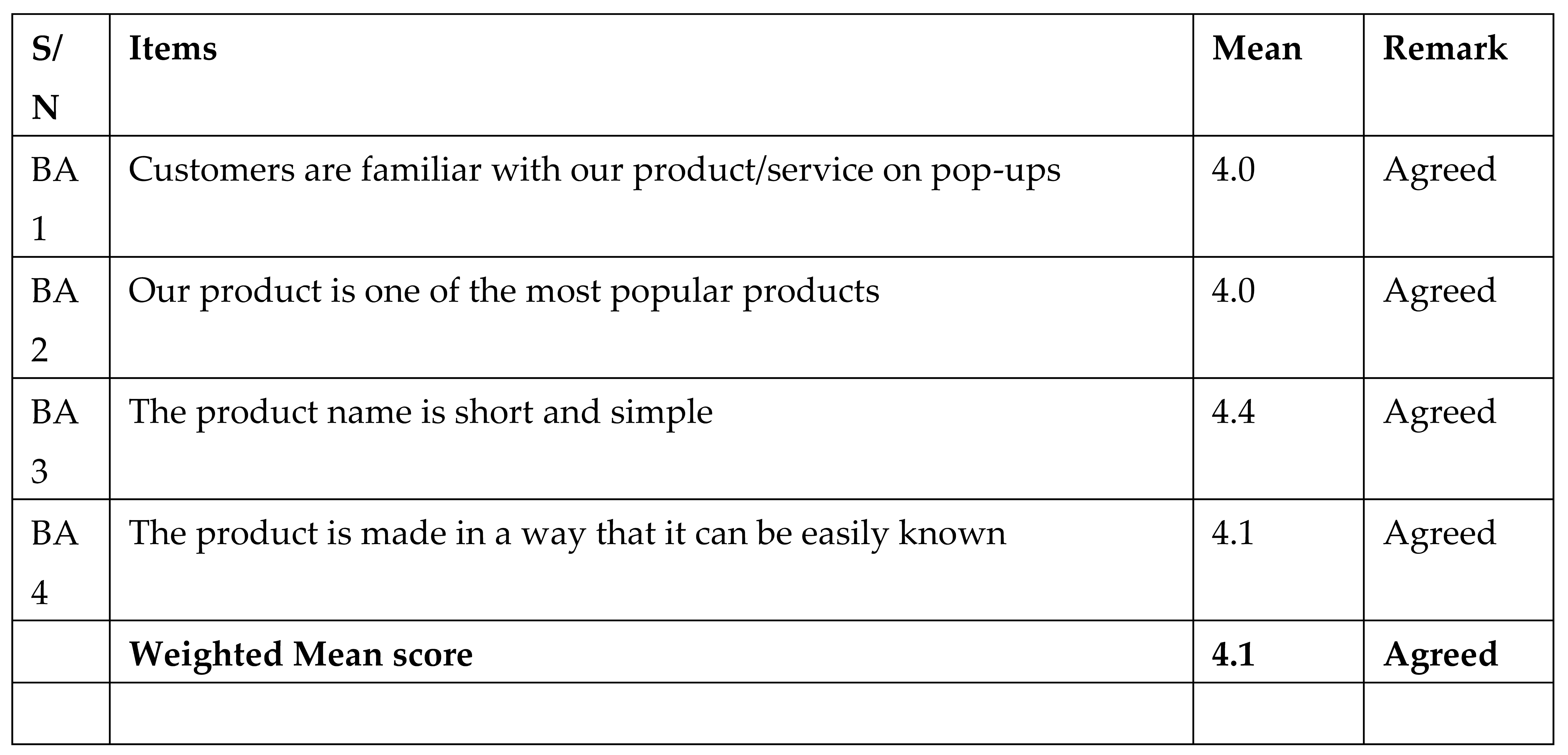
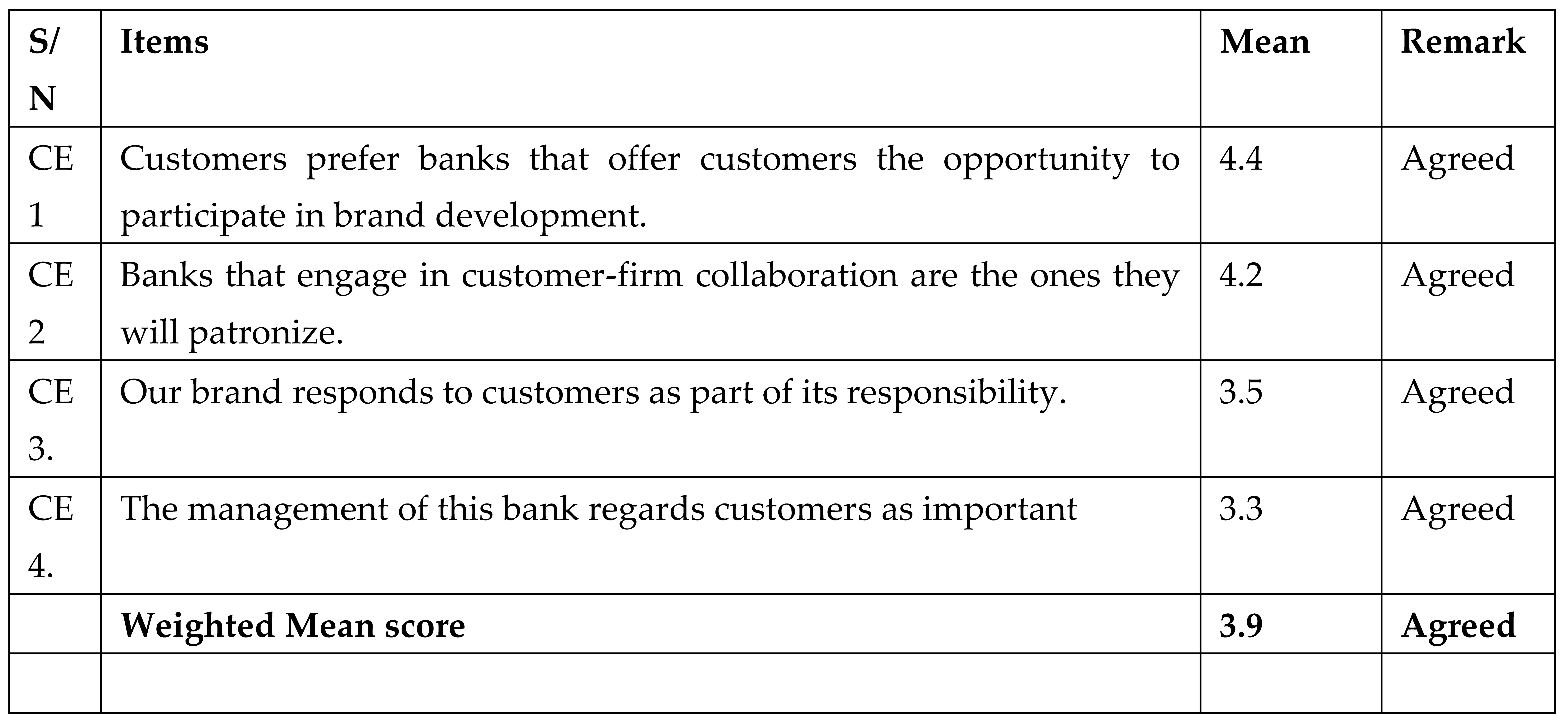
Table 5 and supplementary Table 5 indicate that the respondents in this study agreed with each of the four statement items on customer engagement, with weighted means of CE1=4.4, CE2=4.2, CE3=3.5, and CE4=3.3 (all greater than 3.0). The grand mean (3.9) was equally greater than 3.0. These results showed that customer engagement is positively associated with the digital advertising strategies of deposit money banks in Rivers State.
Table 5.
Frequencies of Customer Engagement Responses.
Bivariate Analysis Using Pearson Product-Moment Correlation Coefficient
Decision Rules: Accept the null hypotheses (Ho) and reject the alternative hypotheses (Ha) if the significant probability value (PV) ˃0.05, that is, no considerable coefficient exists. Reject the null hypotheses (Ho) and accept the alternative hypotheses (Ha) if the significant probability value (PV) ˂0.05, that is, a considerable coefficient exists. The strength of the influence is decided thus; -0.1 to -0.3(weak negative influence), -0.4 to -0.6 (moderate negative influence), -0.7 to -0.9 (strong negative influence), -1 (perfect negative influence); +0.1 to +0.3 (weak positive influence), +0.4 to +0.6 (moderate positive influence), +0.7 to +0.9 (strong positive influence), +1 (perfect positive influence).
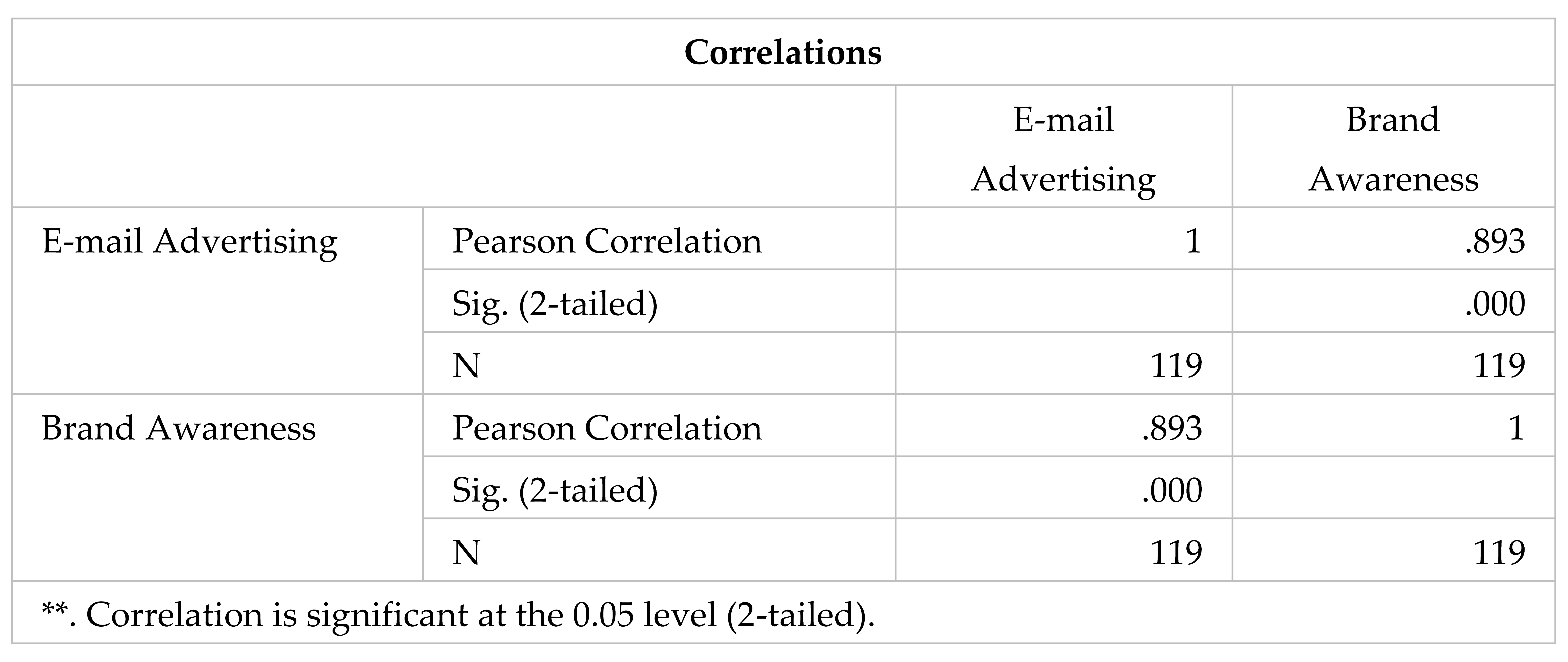
Interpretation: In Table 6 above, a PPMCC(r) of 0.893 and a probability value of 0.000 (Sig.< 0.05). This evidence indicated a positive and significant relationship between e-mail advertising and brand awareness among deposit money banks in Rivers State. Also, at r2 = 0.797, the coefficient of determination for the correlation between e-mail advertising and brand awareness of deposit money banks in Rivers State was 79.7%, indicating a strong, positive correlation. Holding that sig value < 0.05 and r > 0.5, the null hypothesis was rejected, indicating a significant relationship between e-mail advertising and brand awareness of deposit money banks in Rivers State.
Table 6.
Correlation Analysis showing the relationship between e-mail advertising and brand awareness.
Table 6.
Correlation Analysis showing the relationship between e-mail advertising and brand awareness.
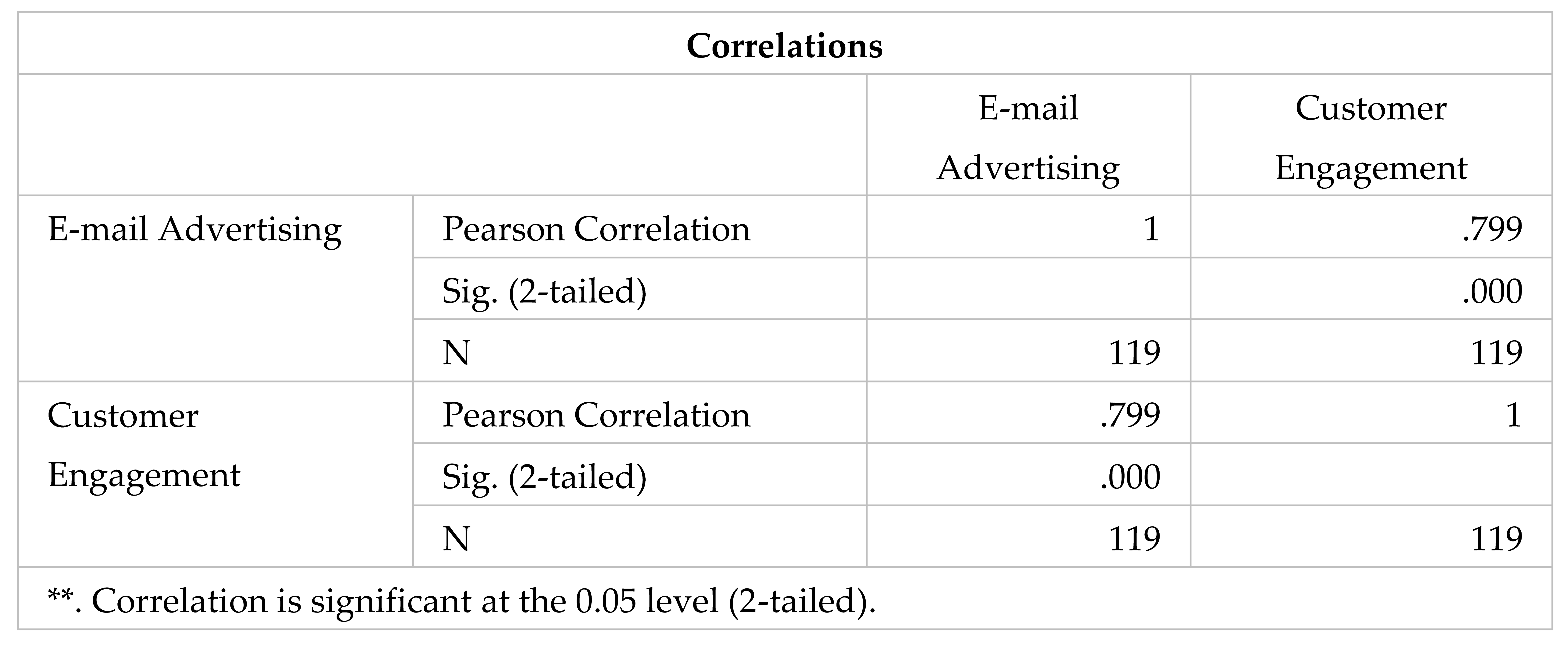
Interpretation: Table 7 above revealed a PPMCC(r) of 0.799 and a probability value of 0.000 (Sig.< 0.05). This evidence indicated a positive and significant relationship between e-mail advertising and customer engagement among deposit money banks in Rivers State. Also, at r2 = 0.638, indicating that the coefficient of determination for the correlation between e-mail advertising and customer engagement of deposit money banks in Rivers State was 63.8%, implying that e-mail advertising has a strong, positive correlation with customer engagement of deposit money banks in Rivers State. Holding that sig value < 0.05 and r >0.5, the null hypothesis four was rejected, which stated that there was a significant relationship between e-mail advertising and customer engagement of deposit money banks in Rivers State.
Table 7.
Correlation Analysis showing the relationship between e-mail advertising and customer engagement.
Table 7.
Correlation Analysis showing the relationship between e-mail advertising and customer engagement.
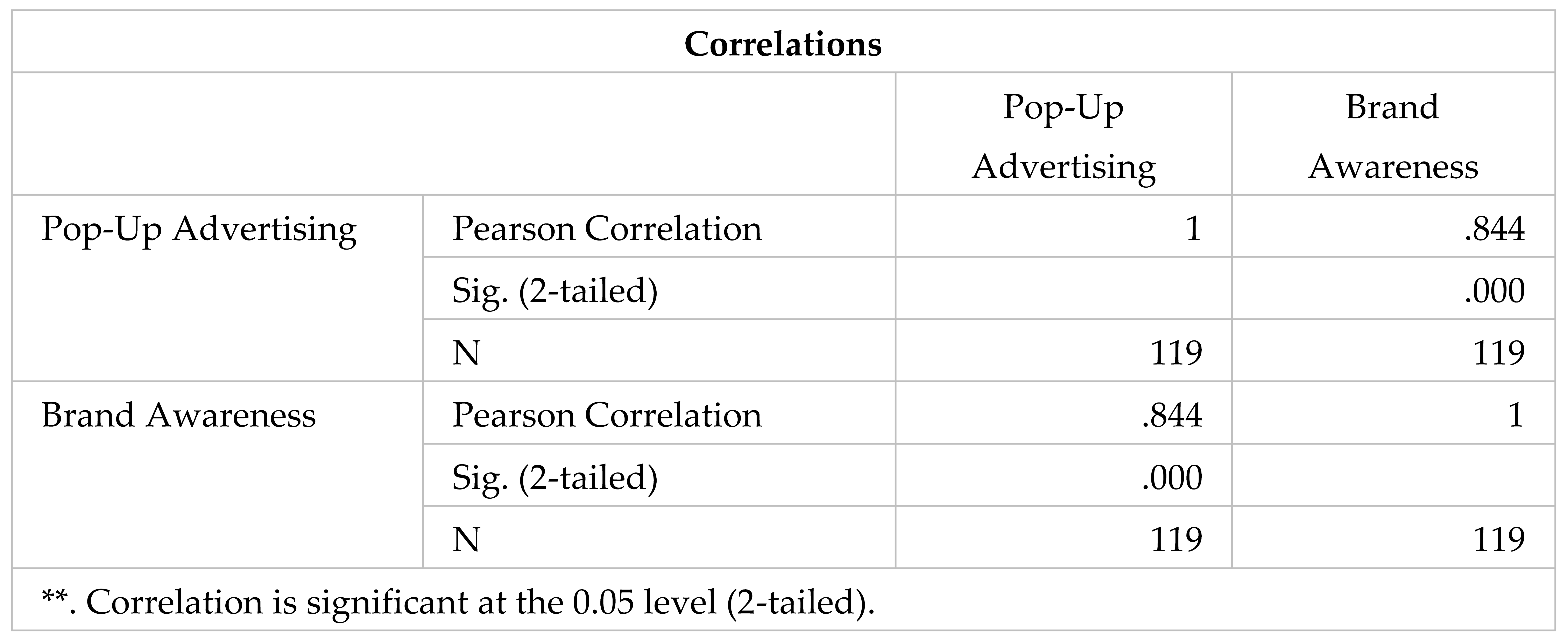
Interpretation: Table 8 above revealed a PPMCC(r) of 0.844 and a probability value of 0.000 (Sig.< 0.05). This evidence indicated a positive and significant relationship between pop-up advertising and brand awareness of deposit money banks in Rivers State. Also, at r2 = 0.712, indicating that the coefficient of determination for the correlation between pop-up advertising and brand awareness of deposit money banks in Rivers State was 71.2%, implying that pop-up advertising has a strong, positive correlation with brand awareness of deposit money banks in Rivers State. Holding that sig value < 0.05 and r > 0.5, the null hypothesis was rejected, indicating a significant relationship between pop-up advertising and brand awareness of deposit money banks in Rivers State
Table 8.
Correlation Analysis showing the relationship between pop-up advertising and brand awareness.
Table 8.
Correlation Analysis showing the relationship between pop-up advertising and brand awareness.
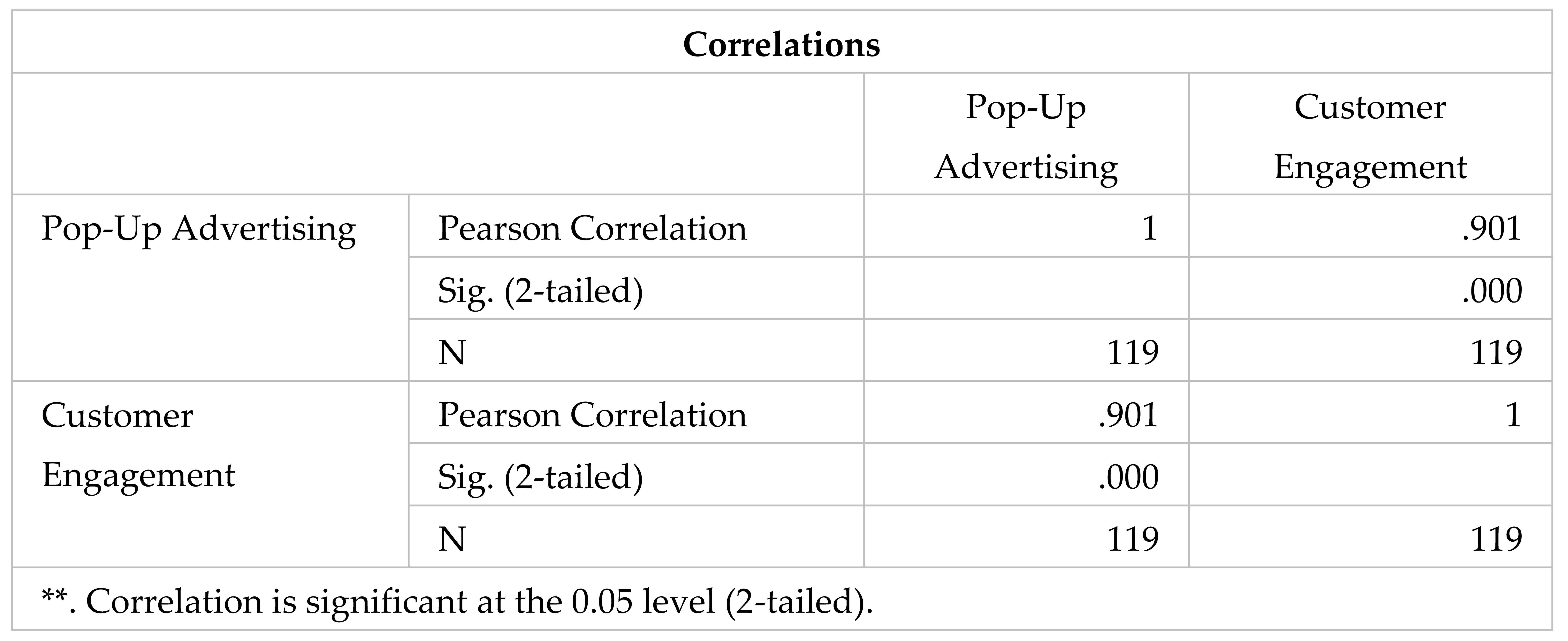
Interpretation: Table 9 above revealed a PPMCC(r) of 0.901 and a probability value of 0.000 (Sig.< 0.05). This evidence indicated a positive and significant relationship between pop-up advertising and customer engagement in deposit money banks in Rivers State. Also, at r2 = 0.812, the coefficient of determination for the correlation between pop-up advertising and customer engagement of deposit money banks in Rivers State was 81.2%, indicating a strong, positive correlation. Holding that sig value < 0.05 and r > 0.5, the null hypothesis six was rejected, which stated that there was a significant relationship between pop-up advertising and customer engagement in deposit money banks in Rivers State.
Table 9.
Correlation Analysis showing the relationship between pop-up advertising and customer engagement.
Table 9.
Correlation Analysis showing the relationship between pop-up advertising and customer engagement.
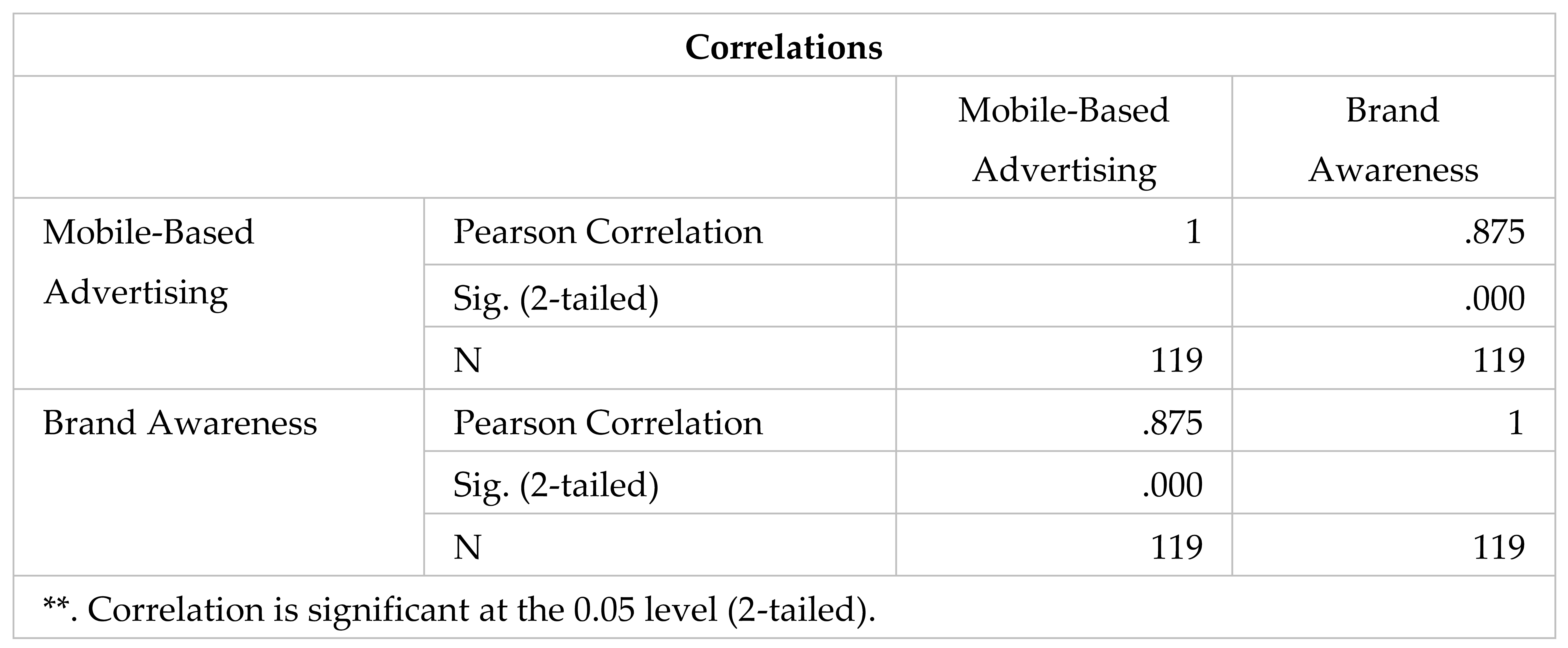
Interpretation: Table 10 above revealed a PPMCC(r) of 0.875 and a probability value of 0.000 (Sig.< 0.05). This evidence indicated a positive and significant relationship between mobile-based advertising and brand awareness of deposit money banks in Rivers State. Also, at r2 = 0.766, indicating that the coefficient of determination for the correlation between mobile-based advertising and brand awareness of deposit money banks in Rivers State was 76.6%, implying that mobile-based advertising has a strong, positive correlation with brand awareness of deposit money banks in Rivers State. Holding that sig value < 0.05 and r > 0.5, the null hypothesis was rejected, indicating a significant relationship between mobile-based advertising and brand awareness of deposit money banks in Rivers State.
Table 10.
Correlation Analysis showing the relationship between mobile-based advertising and brand awareness.
Table 10.
Correlation Analysis showing the relationship between mobile-based advertising and brand awareness.
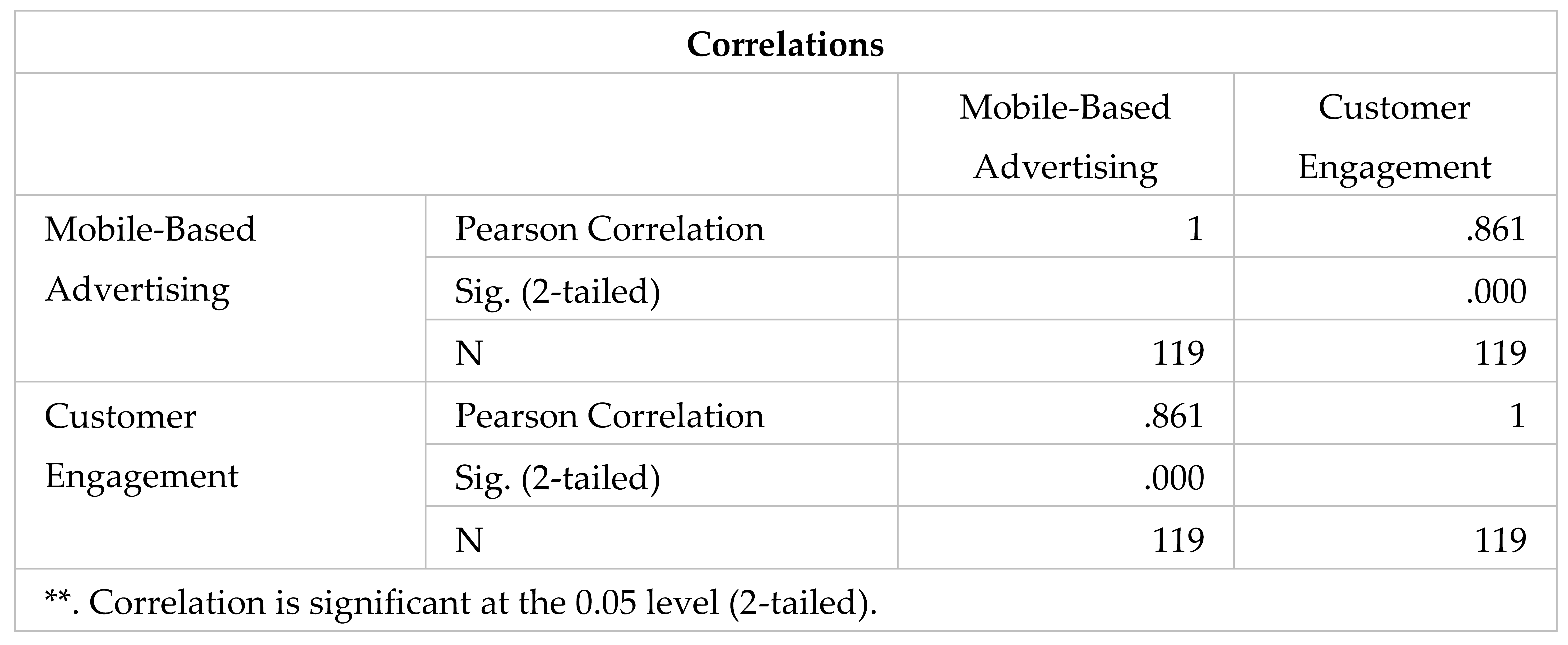
Interpretation: Table 11 above revealed a PPMCC(r) of 0.861 and a probability value of 0.000 (Sig.< 0.05). This evidence indicated a positive and significant relationship between mobile-based advertising and customer engagement among deposit money banks in Rivers State. Also, at r2 = 0.741, the coefficient of determination for the correlation between mobile-based advertising and customer engagement of deposit money banks in Rivers State was 74.1%, indicating a strong, positive correlation. Holding that sig value < 0.05 and r > 0.5, the null hypothesis was rejected, indicating a significant relationship between mobile-based advertising and customer engagement in deposit money banks in Rivers State.
Table 11.
Correlation Analysis showing the relationship between mobile-based advertising and customer engagement.
Table 11.
Correlation Analysis showing the relationship between mobile-based advertising and customer engagement.
Discussion and Findings
Correlation Between e-Mail Advertising and Marketing Performance
Hypothesis One (Ho1) examined the significant relationship between e-mail advertising and brand awareness of deposit money banks in Rivers State. The outputs from PPMCC revealed a positive relationship of 0.893 between e-mail advertising and brand awareness of deposit money banks in Rivers State. Therefore, we rejected hypothesis one, leading us to conclude that e-mail advertising has a significant relationship with brand awareness of deposit money banks in Rivers State. This means that the deposit money banks have become more dependable, consistent, and trustworthy.
Hypothesis two (Ho2) states that e-mail advertising does not have a significant nexus with customer engagement of deposit money banks in Rivers State. The PPMCC results revealed a positive relationship of 0.799 between e-mail advertising and customer engagement in deposit money banks in Rivers State. The P-value is estimated at 0.000, which is less than 0.05. Therefore, the researcher rejected hypothesis two, leading us to conclude that e-mail advertising has a significant nexus with customer advertising of deposit money banks in Rivers State. Our findings align with those of Reimers et al. (2016), who found that email marketing positively influenced perceived usefulness, ease of use, and enjoyment derived from shopping online.
Correlation Between Pop-Up Advertising and Marketing Performance
Hypothesis three (Ho3) examined the significant relationship between pop-up advertising and brand awareness of deposit money banks in Rivers State. The outputs from PPMCC revealed a positive relationship of 0.844 between pop-up advertising and brand awareness of deposit money banks in Rivers State. Therefore, we rejected hypothesis three, leading us to conclude that pop-up advertising has a significant relationship with brand awareness of deposit money banks in Rivers State. This means that the brand awareness of deposit money banks has become more dependable, consistent, and trustworthy.
Hypothesis four (Ho4) states that pop-up advertising does not have a significant nexus with customer engagement of deposit money banks in Rivers State. The PPMCC results revealed a positive relationship of 0.901 between pop-up advertising and customer engagement in deposit money banks in Rivers State. As shown in Table 9, the P-value is 0.000, which is less than 0.05. Therefore, the researcher rejected hypothesis four, leading us to conclude that pop-up advertising has a significant nexus with customer engagement of deposit money banks in Rivers State. Our findings correspond with the work of Lee and Vo (2017).
Correlation Between Mobile-Based Advertising and Marketing Performance
Hypothesis five (Ho5) examined the significant relationship between mobile-based advertising and brand awareness of deposit money banks in Rivers State. The outputs from PPMCC revealed a positive relationship of 0.875 between mobile-based advertising and brand awareness of deposit money banks in Rivers State. Therefore, we rejected hypothesis five, leading us to conclude that mobile-based advertising has a significant relationship with brand awareness of deposit money banks in Rivers State. This means that the deposit money banks have become more dependable, consistent, and trustworthy.
Hypothesis six (Ho6) states that mobile-based advertising does not have a significant nexus with customer engagement of deposit money banks in Rivers State. The PPMCC results revealed a positive relationship of 0.861 between mobile-based advertising and customer engagement in deposit money banks in Rivers State. As evidenced in Table 11, the P-value is estimated at 0.000, which is less than 0.05. Therefore, the researcher rejected hypothesis six, leading us to conclude that mobile-based advertising has a significant nexus with customer engagement of deposit money banks in Rivers State.
The findings align with those of Shahzad et al. (2021).
Conclusions
The findings on the dimensions of digital advertising strategies (e-mail advertising, pop-up advertising, and mobile-based advertising) contribute significantly towards achieving marketing performance (brand awareness and customer engagement) of deposit money banks in Rivers State. The study concludes that a “strong and positive impact relationship” exists between e-mail advertising and marketing performance (brand awareness and customer engagement) of deposit money in Rivers State.
- To answer the 3rd and 4th research questions, the study concludes that a “strong and positive significant relationship” exists between pop-up advertising and the marketing performance (brand awareness and customer engagement) of deposit money banks in Rivers State.
- The results on the relationship between mobile-based advertising and marketing performance (brand awareness and customer engagement) indicated “strong and positive impact”.
In summary, it is concluded that digital advertising strategies have a positive impact on the marketing performance of deposit money banks in Rivers State.
Recommendations
Based on the findings above, the recommendations were forwarded:
- Banks should ensure that their E-trade channels command trust so that customers can transact business through them without being defrauded.
- It must be proven at all times by these deposit money banks that their social media channels are reliable; this must be guaranteed by providing customers with 24-hour access to information about their offerings.
- The electronic banking strategies adopted by banks must be continually evaluated and reviewed so that appropriate measures are put in place to deploy the most profitable digital advertising to help achieve the firm’s operational goals.
- The author also recommends that deposit money banks deliver tangible benefits to prospects and customers and improve performance by providing relevant content that helps solve the most challenging problems they face.
- It also recommends that deposit money banks create content that is creative, original, and appealing to engage consumers with the brand and spread positive word of mouth in the online community.
- The research recommends that banks should enhance their investment in new technologies to drive the development of online platforms.
- The study also recommends that deposit money banks should foster their email and social media marketing tools.
- Regarding social media marketing, the research recommends that banks leverage the seamless communication offered by various social networks to interact with their customers.
- The study also recommends that the regulator foster partnerships with established telecommunications firms and other players in the advertising sector to implement emerging e-mail marketing strategies. These partnerships will bring about enhanced production for both industry players
Conflicts of Interest
The author declares no conflict of interest.
Data Availability
The data supporting the findings of this study are available from the corresponding author upon reasonable request.
References
- Ozili, P.K. COVID-19 pandemic and economic crisis: The Nigerian experience and structural causes. J. Econ. Adm. Sci. 2020, 37, 401–418. [Google Scholar] [CrossRef]
- Alao, B.B.; Adewale, A.A.; Olanrewaju, K.M. Post-pandemic digital transformation and performance of Nigerian banks: Lessons from COVID-19 disruptions. J. Bank. Financ. Technol. 2023, 7, 145–160. [Google Scholar] [CrossRef]
- Nwokah, N.G.; Poi, E.L. Customers’ involvement and retention of deposit money banks in Port Harcourt. J. Mark. Consum. Res. 2016, 29, 53–66. [Google Scholar]
- Akins, J.T. The impact of digital advertising strategies on consumer purchasing behavior in the social media era. J. Digit. Mark. Commun. 2023, 5, 22–35. [Google Scholar] [CrossRef]
- Guo, J.; Zhang, W.; Xia, T. Impact of Shopping Website Design on Customer Satisfaction and Loyalty: The Mediating Role of Usability and the Moderating Role of Trust. Sustainability 2023, 15, 6347. [Google Scholar] [CrossRef]
- Eshiett, I.O. FinTech privacy security and customer engagement in Nigerian financial sector. Open Access Res. J. Sci. Technol. 2024, 12, 155–168. [Google Scholar] [CrossRef]
- Chan, K. Online Hedonic Consumers’ Privacy Concerns: A Systematic Review. Asia-Europe Institute, University of Malaya. 2018. Available online: https://aei.um.edu.my/online-hedonic-consumers-privacy-concerns-a-systematic-literature-review.
- Crawford University. Perceived Risk and Online Shopping Ineffectiveness in Nigeria. 2022. Available online: https://repository.crawforduniversity.edu.ng/bitstreams/577d36bb-eca0-48e8-b7fb-27d3a1d8a98a/download.
- Ihinmoyan, T. Effects of digital advertising on consumer buying behavior in Nestle Plc Nigeria Lagos. Int. J. Multidiscip. Curr. Educ. Res. (IJMCER) 2022, 4, 80–86. [Google Scholar]
- Njoku, I.; Ani, W. Barriers to the Adoption of E-Marketing in The Banking Sector in Nigeria. Int. J. Res. Innov. Soc. Sci. 2023, 7, 1455–1470. Available online: https://www.rsisinternational.org/journals/ijriss/Digital-Library/volume-7-issue-7/1455-1470.pdf. [CrossRef]
- Umoh, B.U.; Ofurum, U.D.; Soyingbe, O. The impact of bank fraud on economic stability and public trust in Nigeria’s financial system. Glob. Acad. J. Econ. Bus. 2024, 6, 187–195. [Google Scholar] [CrossRef]
- Zhou, Z. Digital Transformation of Advertising: Trends, Strategies, and Evolving User Preferences in Online Advertising. Highlights Business, Econ. Manag. 2023, 23, 1224–1229. [Google Scholar] [CrossRef]
- Kim, C.; Park, S.; Kwon, K.; Chang, W. How to select search keywords for online advertising depending on consumer involvement: An empirical investigation. Expert Syst. Appl. 2012, 39, 594–610. [Google Scholar] [CrossRef]
- Wuisan, D.S.; Handra, T. Maximizing Online Marketing Strategy with Digital Advertising. Startupreneur Bus. Digit. (SABDA Journal) 2023, 2, 22–30. [Google Scholar] [CrossRef]
- Aleisa, N.; Alamri, N.; Al-Habeeb, Z.; Maqsood, M.; AboAlsmh, H.M.; Alsedrah, I.T.; Afridi, Z. The impact of digital marketing on customer behaviours and enterprises. Acad. Strateg. Manag. J. 2023, 22, 1–16. [Google Scholar]
- Bettiga, D.; Noci, G. The influence of television content on advertisement: A neurophysiological study. Front. Psychol. 2024, 15, 1266906. [Google Scholar] [CrossRef]
- Oladejo, M.O.; Yinus, S.O.; Tajudeen, S.; Akintunde, H.A. Effect of electronic marketing practice on service satisfaction and legal framework in Nigeria banking sector. Int. J. Res. Innov. Soc. Sci. 2024, 8, 439–449. [Google Scholar] [CrossRef]
- Thomas, J.S.; Chen, C.; Iacobucci, D. Email Marketing as a Tool for Strategic Persuasion. J. Interact. Mark. 2022, 57, 377–392. [Google Scholar] [CrossRef]
- Ramadhani, N.; Prastowo, S.L.; Isrial, I. Digital Marketing, Relationship, and Customer Trust As Key of Brand Loyalty. Int. J. Business, Law, Educ. 2025, 6, 1166–1176. [Google Scholar] [CrossRef]
- EmailToolTester. Email Marketing ROI: Average Return on Email Marketing. 2024. Available online: https://www.emailtooltester.com/en/blog/email-marketing-roi/.
- Yetkin, O.; Basal, M. Brand Attitude Process of Pop-Up Ads Used in Digital Marketing. Open J. Soc. Sci. 2024, 12, 148–159. [Google Scholar] [CrossRef]
- Suryadi, N.; Barinta, D.D.; Fasieh, M.F.I.; Firdausiah, R.A.; Nurmasari, N.D. The effectiveness of pop-up advertising on millennial consumers’ purchase intentions. Rev. Gestao Tecnol. Manag. Technol. 2024, 24, 123–142. [Google Scholar] [CrossRef]
- Popupsmart. Popup Conversion Benchmark Report 2025: 10,000+ Campaigns Analyzed. 2025. Available online: https://popupsmart.com/blog/popup-conversion-benchmark-report.
- Vijayakumar, G.; Rahiman, H.U.; Nawaz, N.; Prasad, N.V.S. Perceived Intrusiveness and Digital Audience : An Empirical Approach. Indian J. Mark. 2024, 54, 51. [Google Scholar] [CrossRef]
- Aliarte, K.N.; Dulay, J.J.; Novilla, N.J.; Sario, Z.M.Z. Improving Marketing Personalization with AI How Self Congruency Influences Consumer Engagement. Int. J. Res. Innov. Soc. Sci. 2024, VIII, 537–549. [Google Scholar] [CrossRef]
- SQ Magazine. Mobile Marketing Statistics 2025: Ad Spend, Engagement & ROI. 20 March 2025. Available online: https://sqmagazine.co.uk/mobile-marketing-statistics/.
- Abdelkefi, M.I. Mobile advertising effectiveness: A digital marketing perspective on consumer attitudes. New Media Mass Commun. 2025, 107, 81–93. [Google Scholar] [CrossRef]
- Ahmad, M.; Rana, M.L.T.; Anjum, Z.U.Z. Fostering Consumer’ Acceptance of SMS-Based Mobile Advertising: A South Asian Perspective. Ann. Hum. Soc. Sci. 2023, 4, 638–651. [Google Scholar] [CrossRef]
- Mobydeen, W.H.O. The Impact of Digital Marketing Practices on the Organizational Performance in the Mobile Phone Companies in Jordan. Master’s Thesis, Near East University Institute of Graduate Studies Business Administration Programme, Nicosia, Cyprus, 2021. [Google Scholar]
- Kotler, P.; Keller, K.L. Marketing Manag ement, 15th ed.; Pearson Prentice Hall: hoboken, NJ, USA, 2016. [Google Scholar]
- Aaker, D. Aaker on Branding: 20 Prinsip Esensial Mengelola dan Mengembangkan Brand; Gramedia Pustaka Utama: Jakarta, Indonesia, 2015. [Google Scholar]
- Mathew, V.; Ali, R.T.M.; Thomas, S. Loyalty intentions: Does the effect of commitment, credibility and awareness vary across consumers with low and high involvement? J. Indian Bus. Res. 2014, 6, 213–230. [Google Scholar] [CrossRef]
- López-Rodríguez, C.E.; Sánchez-García, I. Measures of brand awareness: Bibliometric analysis and implications. TEM J. 2024, 13, 3056–3067. [Google Scholar] [CrossRef]
- Zhou, L.; Wang, H. Exploring the relationship between consumer brand knowledge and brand awareness in digital environments. J. Mark. Commun. 2023, 29, 512–526. [Google Scholar] [CrossRef]
- Keller, K.L.; Brexendorf, T.O. Measuring brand equity and brand value: A critical review and new framework. Int. J. Res. Mark. 2022, 39, 1–17. [Google Scholar] [CrossRef]
- Hollebeek, L.D.; Clark, M.K.; Macky, K. Digital brand engagement: A multi-dimensional conceptualization and research agenda. J. Bus. Res. 2021, 134, 275–285. [Google Scholar] [CrossRef]
- Pang, H.; Ruan, Y. Determining influences of information irrelevance, information overload and communication overload on WeChat discontinuance intention: The moderating role of exhaustion. J. Retail. Consum. Serv. 2023, 72, 103289. [Google Scholar] [CrossRef]
- Harmeling, C.M.; Moffett, J.W.; Arnold, M.J.; Carlson, B.D. Toward a theory of customer engagement marketing. J. Acad. Mark. Sci. 2016, 45, 312–335. [Google Scholar] [CrossRef]
- Hollebeek, L.D.; Srivastava, R.K.; Chen, T. S-D logic–informed customer engagement: Integrative framework, revised fundamental propositions, and application to CRM. J. Acad. Mark. Sci. 2016, 47, 161–185. [Google Scholar] [CrossRef]
- Hollebeek, L.D.; Macky, K. Digital Content Marketing’s Role in Fostering Consumer Engagement, Trust, and Value: Framework, Fundamental Propositions, and Implications. J. Interact. Mark. 2019, 45, 27–41. [Google Scholar] [CrossRef]
- Dessart, L.; Veloutsou, C.; Morgan-Thomas, A. Revisiting consumer engagement: A systematic review and future research directions. J. Bus. Res. 2023, 158, 113725. [Google Scholar] [CrossRef]
- eMarketer Editors. US Digital Ad Spending Will Surpass Traditional in 2019. 2019. Available online: https://www.emarketer.com/content/us-digital-ad-spending-will-surpass-traditional-in-2019.
- De Veirman, M.; Cauberghe, V.; Hudders, L. Marketing through Instagram influencers: The impact of number of followers and product divergence on brand attitude. Int. J. Advert. 2017, 36, 798–828. [Google Scholar] [CrossRef]
- Liaukonyte, J.; Thales, T.; Kenneth, C.W. Television advertising and online shopping. Mark. Sci. 2015, 34, 311–330. [Google Scholar] [CrossRef]
- Narayanan, S.; Kirthi, K. Measuring position effects in search advertising: A regression discontinuity approach. Mark. Sci. 2015, 34, 388–407. [Google Scholar] [CrossRef]
- Strycharz, J.; Van Noort, G.; Smith, E.; Helberger, N. Turning personalization off: Consumer protection against personalized ads online. Cyberpsychology J. Psychosoc. Res. Cyberspace 2019, 13, 33–41. [Google Scholar] [CrossRef]
- Van Dam, S.; Van Reijmersdal, E.A. Insights in adolescents’ persuasion knowledge, perceptions, and responses regarding online sponsored videos. Cyberpsychology J. Psychosoc. Res. Cyberspace 2019, 13, 42–62. [Google Scholar] [CrossRef]
- Rogers, E.M. Diffusion of Innovations, 6th ed.; Free Press: New York, NY, USA, 2020. [Google Scholar]
- Ruggiero, T.E. Uses and gratifications theory in the digital age: A review and future directions. Mass Commun. Soc. 2020, 23, 855–872. [Google Scholar]
- Sulaiman, O.; Ojochenemi, S.Y.; Sadiq, H. Effect of digital advertising on consumer buying behaviour in Lokoja Metropolis. KIU Interdiscip. J. Humanit. Soc. Sci. 2021, 2, 326–344. [Google Scholar] [CrossRef]
- Segev, S.; Wang, W.; Fernandes, J. The effects of ad-context congruency on responses to advertising in blogs: Exploring the role of issue involvement. Int. J. Advert. 2014, 33, 17–36. [Google Scholar] [CrossRef]
- Pasqualotti, L.; Baccino, T. Online advertisement: How are visual strategies affected by the distance and the animation of banners? Front. Psychol. 2014, 5, 211. [Google Scholar] [CrossRef]
- Sokolik, K.; Magee, R.G.; Ivory, J.D. Red-Hot and Ice-Cold Web Ads: The Influence of Web Ads’ Warm and Cool Colors on Click-Through Rates. J. Interact. Advert. 2014, 14, 31–37. [Google Scholar] [CrossRef]
- Wang, Z.; Lang, A. Effects of animation and motion in digital advertising on user attention and cognitive processing. J. Interact. Mark. 2022, 58, 45–58. [Google Scholar] [CrossRef]
- Jeshurun, S.B. A study on the effectiveness of email marketing. Shanlax Int. J. Manag. 2018, 6, 84–86. [Google Scholar]
- Reimers, V.; Chao, C.-W.; Gorman, S. Permission email marketing and its influence on online shopping. Asia Pac. J. Mark. Logist. 2016, 28, 308–322. [Google Scholar] [CrossRef]
- Lee, X.X.; Vo, X.X. Title of the article. Title of the Journal 2017, pages. [Google Scholar]
- Shahzad, K.; Khan, S.; Ahmed, M. Impact of mobile advertising on consumers’ attitude. Ilkogr. Online 2021, 20, 860–868. [Google Scholar]
Disclaimer/Publisher’s Note: The statements, opinions and data contained in all publications are solely those of the individual author(s) and contributor(s) and not of MDPI and/or the editor(s). MDPI and/or the editor(s) disclaim responsibility for any injury to people or property resulting from any ideas, methods, instructions or products referred to in the content. |
© 2025 by the author. Licensee MDPI, Basel, Switzerland. This article is an open access article distributed under the terms and conditions of the Creative Commons Attribution (CC BY) license (https://creativecommons.org/licenses/by/4.0/).
Copyright: This open access article is published under a Creative Commons CC BY 4.0 license, which permit the free download, distribution, and reuse, provided that the author and preprint are cited in any reuse.


