

Submitted:
28 November 2025
Posted:
02 December 2025
You are already at the latest version
Abstract
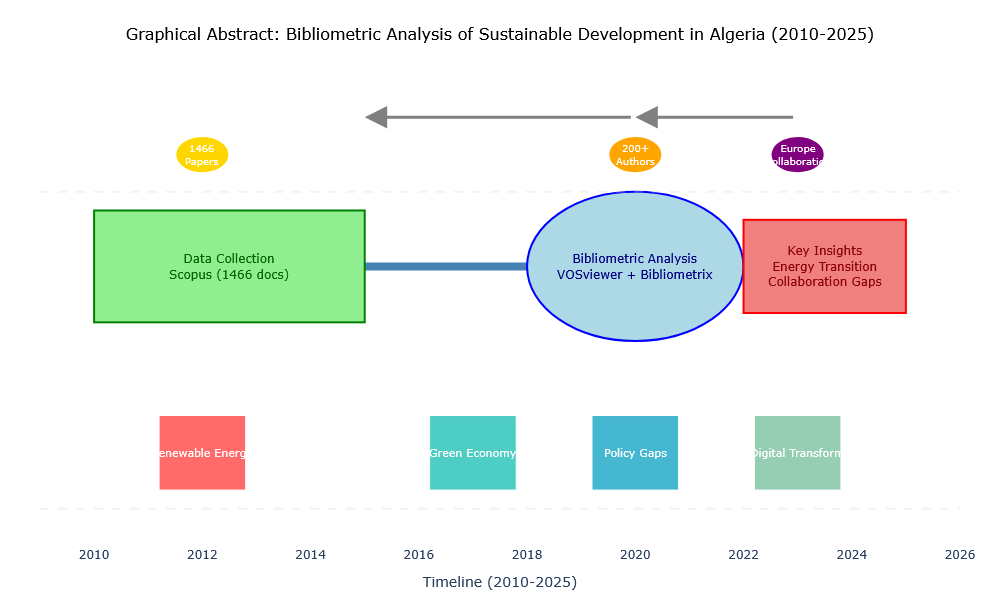
This study utilized Scopus to examine patterns in scientific publications, co-authorship, institutional contributions, and shifts in the discipline's primary themes. Analytical techniques such as VOSviewer and Bibliometric have been employed to identify indicators of success and examine the structure of collaborative networks and word matching. They demonstrate that scientific research continues to improve. Contemporary research topics focus on utilizing renewable energy and ensuring environmental protection. Significant efforts are directed towards environmental policies, hybrid designs incorporating green energy, solar energy systems, and eco-friendly business practices. The collaboration network of co-authors highlights the partnership between leading Algerian institutions and experts. Additionally, international researchers are being brought together to collaborate in innovative ways. Although there has been considerable progress, much of the research in this area remains technology-centric. Taxation policies, green finance, closed-loop economies, and governmental procedures have yet to be fully integrated. The study tells us more about what scientists in Algeria know about sustainability and diversity. It also finds areas where scientists from different fields can work together better and suggests future research and policy initiatives that will help the country move towards a more sustainable and diverse economy.
Keywords:
1. Introduction
1.1. Background
1.2. Problem Statement
1.3. Research Questions and Hypotheses
1.3.1. Research Questions
- What are the temporal trends in Algeria-related scientific publications on sustainable development and economic diversification between 2010 and 2025?
- Which authors, institutions, and countries are most influential in this research domain?
- What thematic clusters dominate the literature, and how have they evolved over time?
- Which research gaps and emerging themes can be identified?
1.3.2. Hypotheses
- H1: Since 2010, there has been a notable rise in research output concerning sustainable development and economic diversification in Algeria, reflecting increased policy focus and alignment with global sustainability goals.
- H2: International partnerships, mainly with Europe and North Africa, play a crucial role in shaping Algeria's research landscape on sustainability.
- H3: The central intellectual framework of the field centres around topics like renewable energy, environmental policy, and economic transition.
- H4: There are research gaps in vital areas such as the circular economy, green finance, and digital transformation, which hinder sustainable competitiveness.
1.4. Study Contribution and Originality
2. Review of Literature
2.1. Summary of Current Research on Sustainable Development in Algeria
2.2. Synthesis and Gap Identification
2.3. Economic Diversification in Algeria: Historical Context
2.4. Bibliometric Analysis: Concepts and Methodologies
3. Materials and Methods
3.1. Data Collection
3.2. Ethical Considerations
3.3. Search Strategy
3.4. Software and Tools
3.5. Final Dataset and Database Justification
3.6. Data Cleaning and Threshold Settings
3.7. Co-Authorship and Co-Occurrence Procedures
3.8. VOSviewer Term Extraction and Mapping Settings
4. Results
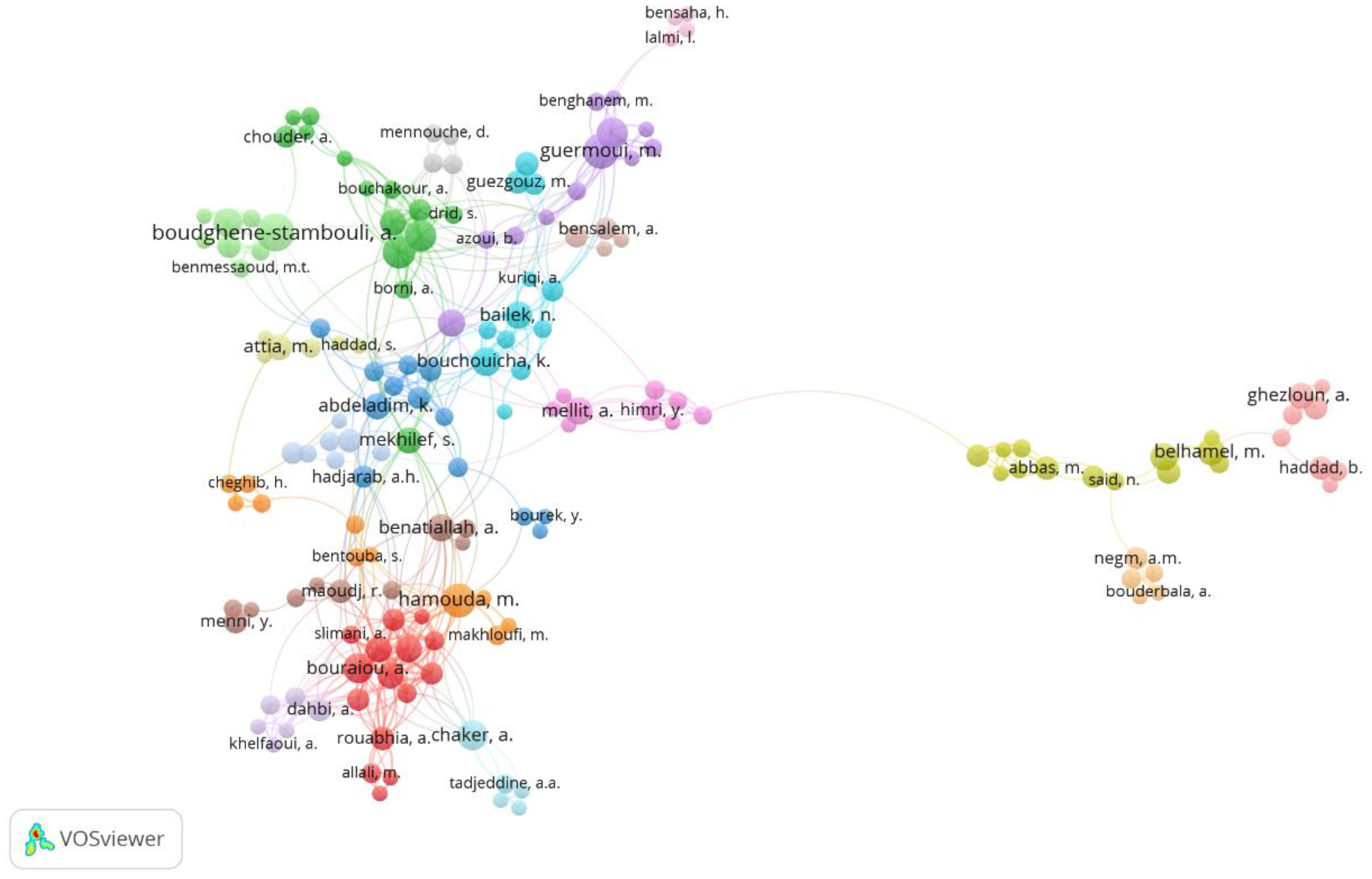
4.1. Co-Authorship Network Results
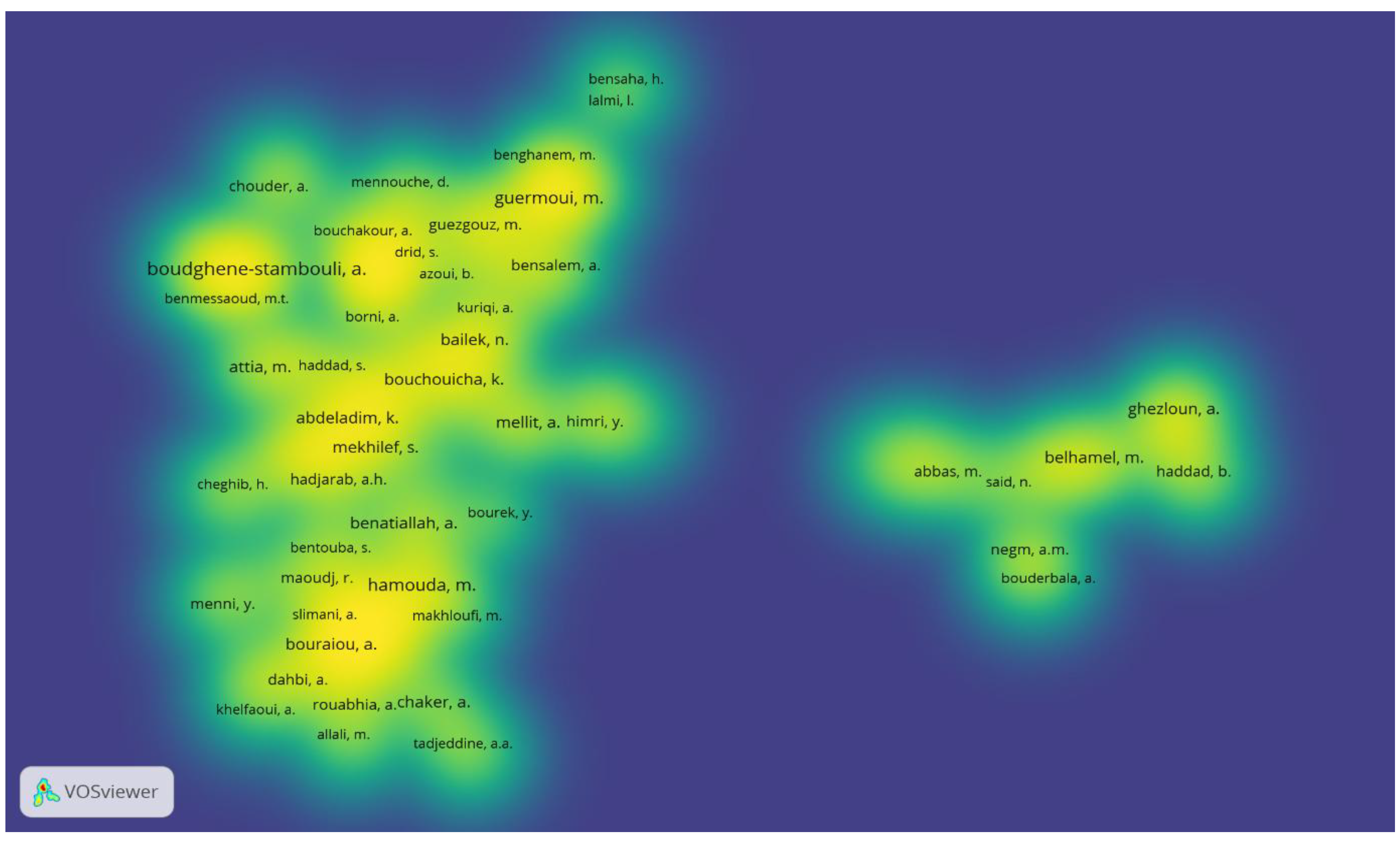
4.1.1. Density Visualization Analysis
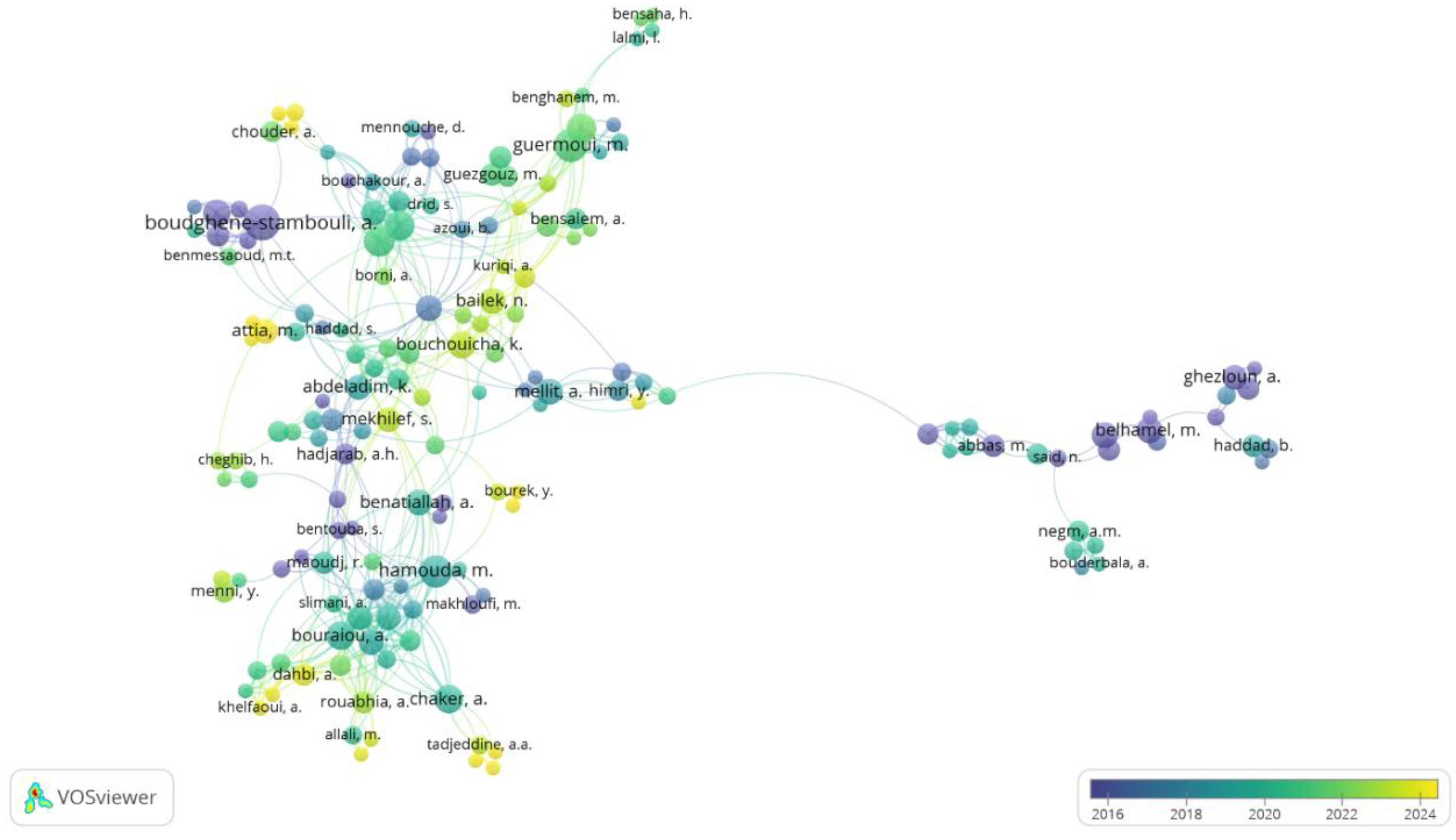
4.1.2. Overlay Visualization Analysis Overlay
4.1.3. Network Visualization Analysis
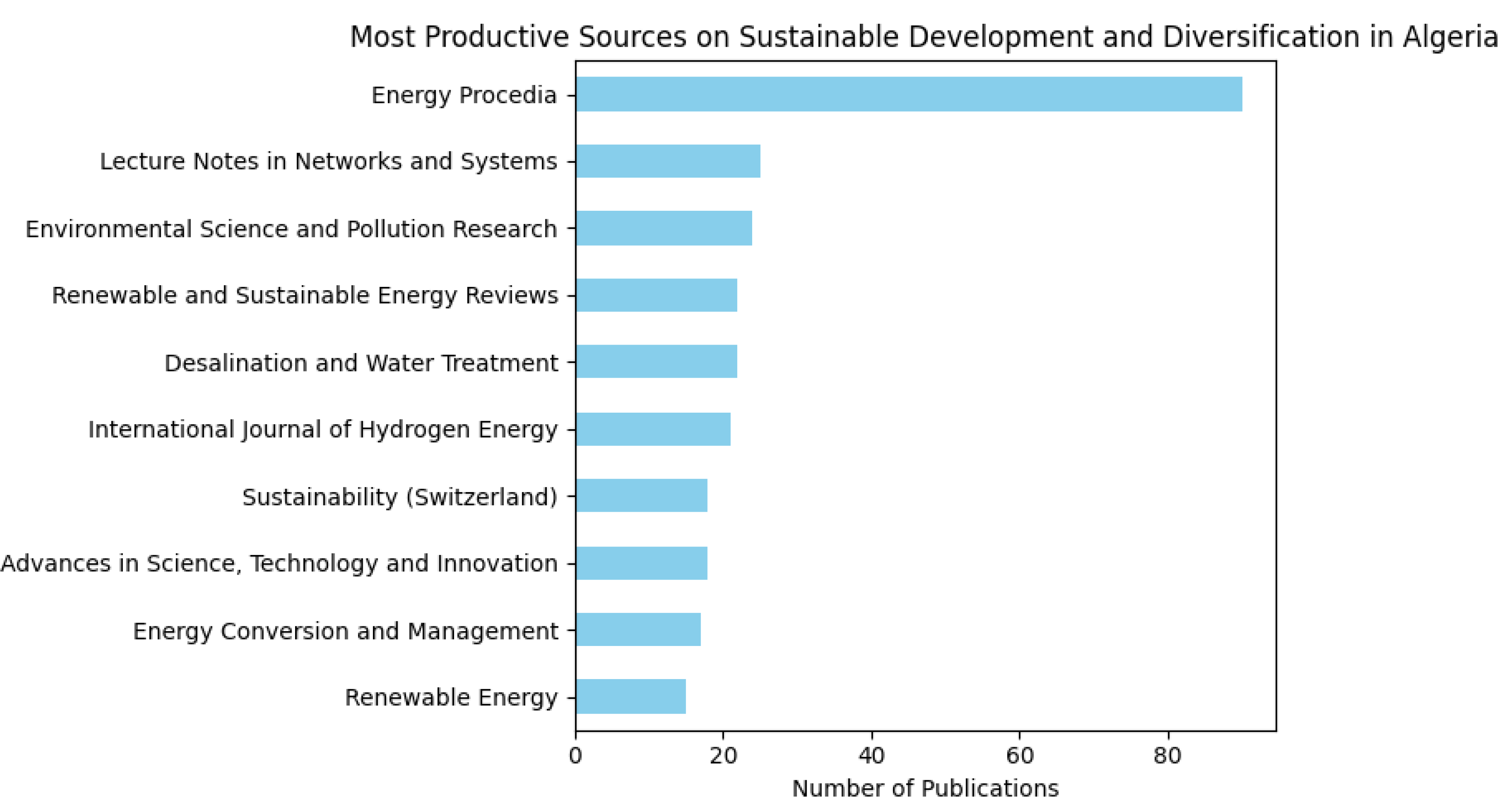
4.2. Bibliometric Performance Analysis
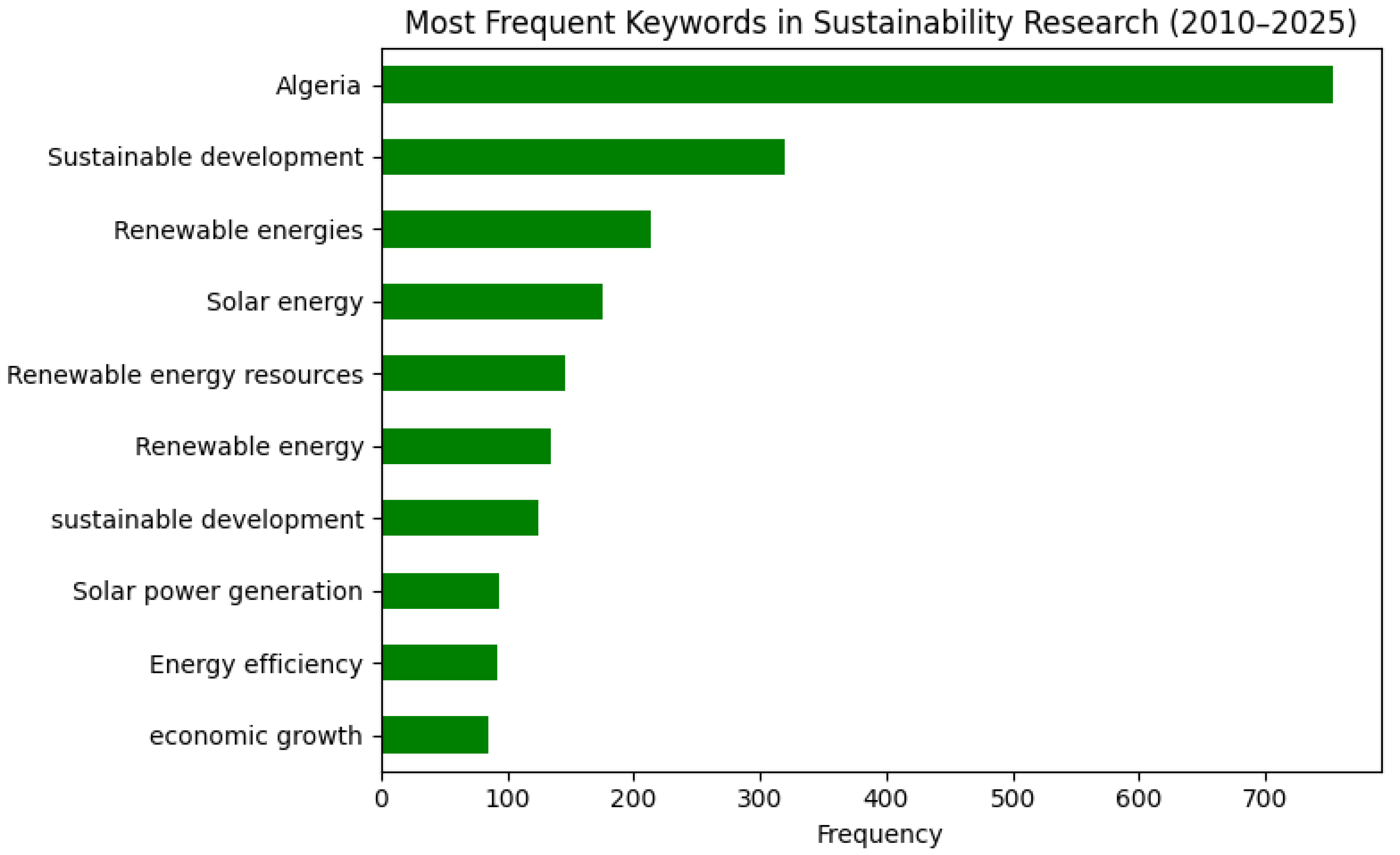
4.3. Network and Cluster Analysis
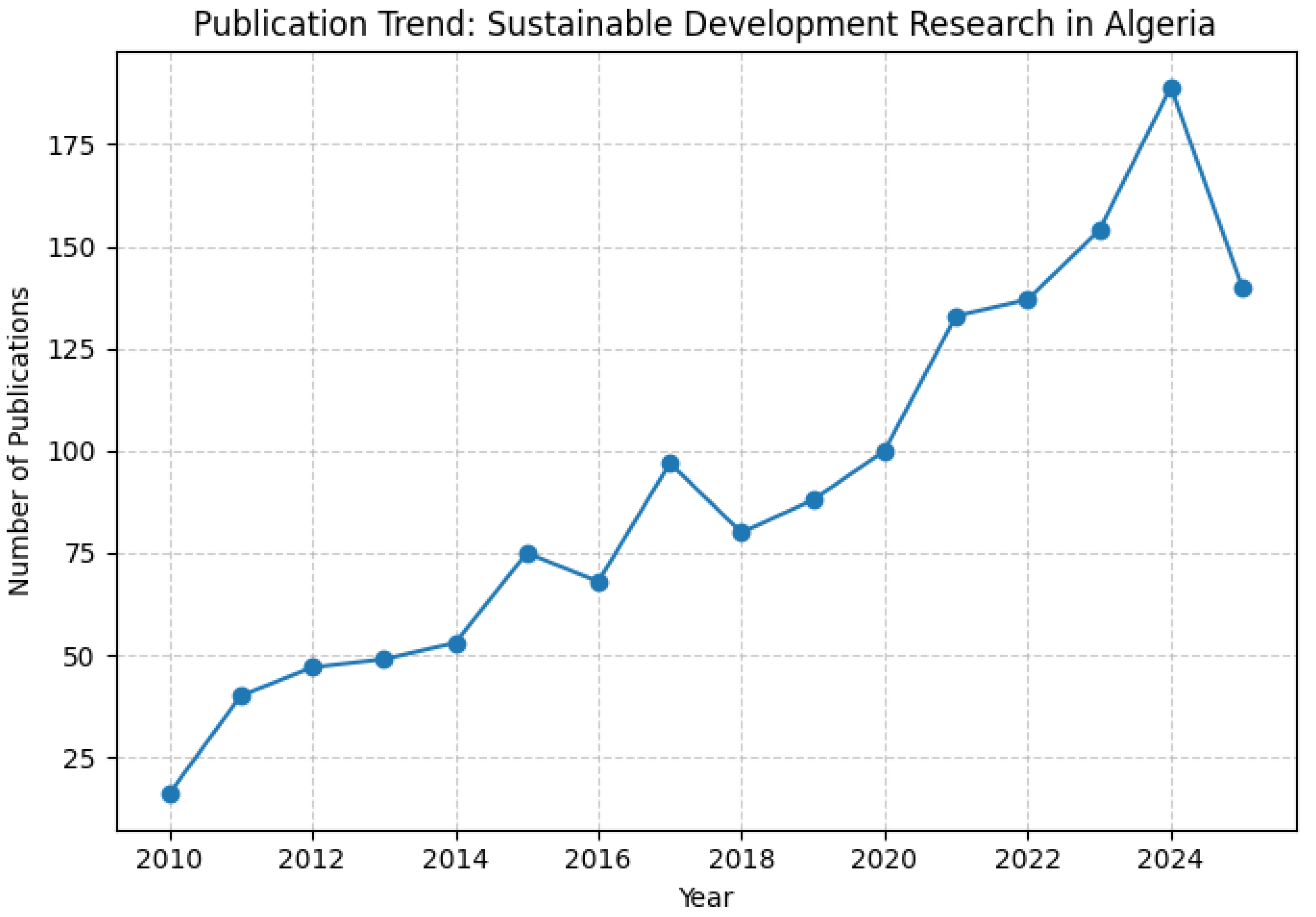
4.4. Temporal Trends
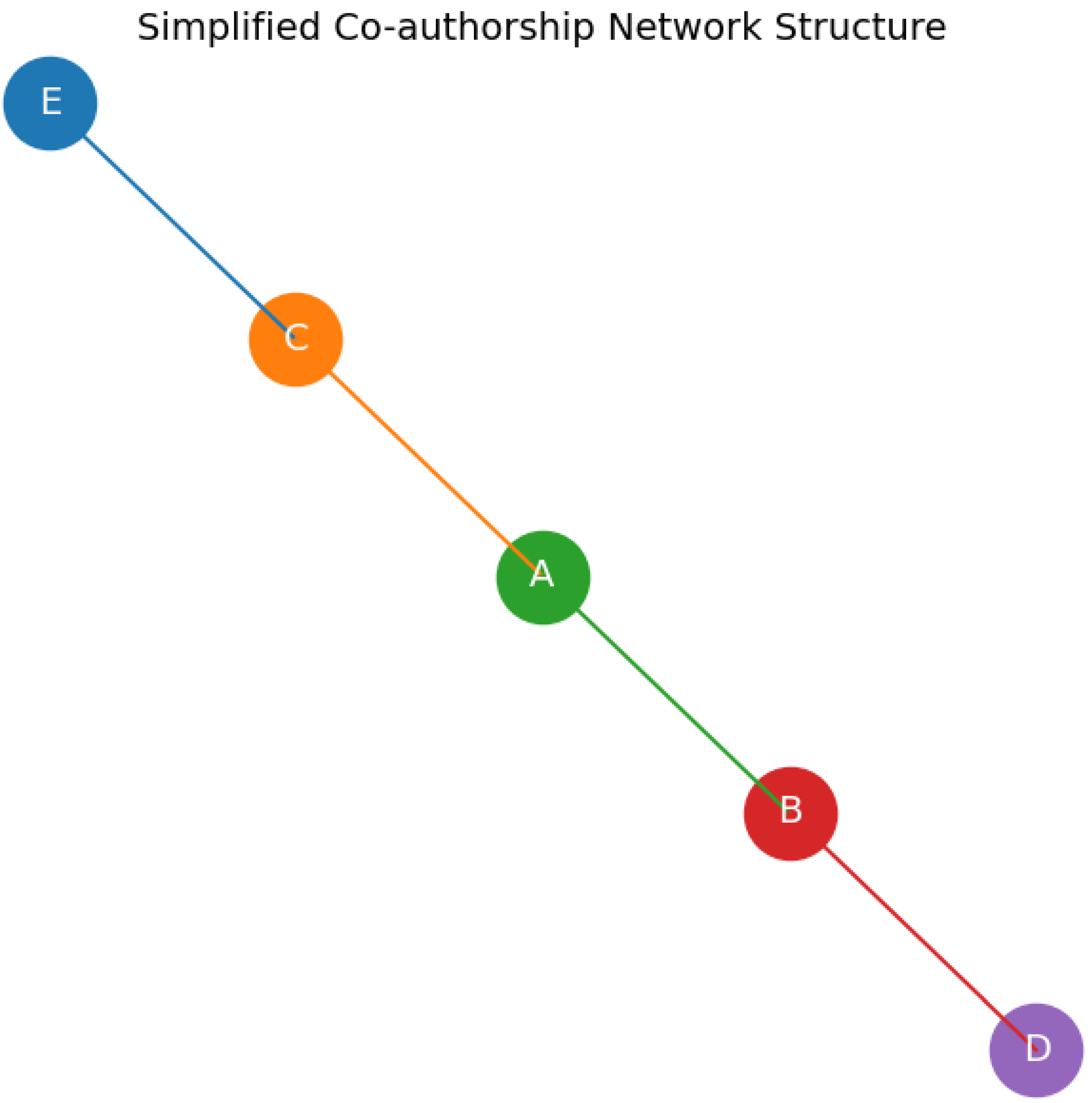
4.5. Collaboration Analysis
4.6. Interpretation of Key Authors and Research Themes
4.7. Cluster-by-Cluster Thematic Explanation
- Cluster 1 (Green cluster): Focuses on photovoltaic systems, solar energy conversion, and hybrid energy architectures, reflecting Algeria’s strategic emphasis on solar resource exploitation.
- Cluster 2 (Blue cluster): Concentrates on electrical engineering, power electronics, and optimization models for energy efficiency, bridging applied engineering with sustainability outcomes.
- Cluster 3 (Red cluster): Engages in wind energy applications, energy storage solutions, and performance modelling of hybrid systems.
- Cluster 4 (Yellow cluster): Addresses environmental sustainability, climate variability, and hydrological or agricultural system dynamics.
- Cluster 5 (Smaller clusters): Represent emerging themes in sustainable industrial development, green innovation, and policy-oriented sustainability research.
4.8. Hypotheses Evaluation
5. Discussion
5.1. Interpretation of Findings
5.2. Theoretical Implications
5.3. Practical Implications
5.4. Policy Implications Based on Network Findings
5.5. Comparison to Regional and Global Research Trends
4. Conclusion
Recommendations
- To support multifaceted sustainability plans, combine study in engineering, economics, environmental science, and digital innovation.
- Create priority for collaborative research projects, mobility programs, and co-funded initiatives with the world's top sustainability research schools.
- Assist Algerian universities and research centres in working together, mainly by offering joint PhD programs and study grants.
- Set up specific funding methods for projects that use renewable energy, support the circular economy, and create new, environmentally friendly products and processes.
- Support training in advanced research analytics, bibliometric tools, and policy analysis based on data to help shape national strategy.
- For sustainable competitiveness, focus on areas that have not been studied much, like green finance, clean-tech entrepreneurship, environmental governance, and digital transformation.
- Universities and businesses should work together on innovation clusters and pilot projects, especially in manufacturing, agriculture, and green energy.
- For a bigger global effect, encourage publication in journals that are indexed by search engines around the world and the creation of open research repositories.
Author Contributions
Funding
Data Availability Statement
Acknowledgments
Conflict of Interest Declaration
Ethical Statement
References
- Boumaraf, H.; Dahmouche, F.; Amireche, L. Boumaraf H, Dahmouche F, Amireche L. Influence of economic and industrial policy on the environmental situation in Algeria. Business Excellence and Management [Internet]. 2022. [Google Scholar] [CrossRef]
- Haddoum, S.; Bennour, H.; Zaïd, T.A. Haddoum S, Bennour H, Zaïd TA. Algerian Energy Policy: Perspectives, Barriers, and Missed Opportunities. 2018. [Google Scholar] [CrossRef]
- Seddiki, S.; Kiheli, A.S. Seddiki S, Kiheli AS. Oil Price Shocks and Algerian Economy: Evidence from the ‘New Economic Model. 2019. [Google Scholar] [CrossRef]
- Hadj Henni, I. Hadj Henni I. Sustainable development in Algeria: Investigating challenges and potential pathways. Journal of Environmental Science and Economics 2024. [Google Scholar] [CrossRef]
- Henneberg, S. Henneberg S. Strategic U.S. Engagement with Algeria: A Pathway amid Shifting Global Dynamics. 2025.
- Ainas, Y.; Ouarem, N.; Souam, S. Ainas Y, Ouarem N, Souam S. Les hydrocarbures: atout ou frein pour le développement de l’Algérie? 2012.
- Bachir, B.T.G. Bachir BTG. Towards Activating the Policy of Economic Diversification in Algeria. European Economics Letters [Internet]. 2024. [Google Scholar] [CrossRef]
- Lefgoum, S. Lefgoum S. Diversification et sophistication des exportations et transformation structurelle en Algérie. 2017; Available from, 2017. [Google Scholar] [CrossRef]
- Rédha, B.M.; Mohamed, Y. Rédha BM, Mohamed Y. L’impact De La Création Des PME/PMI Sur L’idh En Algérie « Étude Économétrique 2001-2013 ». Eur Sci J [Internet]. 2017. [Google Scholar] [CrossRef]
- Testas, A.; Karagiannis, N. Testas A, Karagiannis N. Towards an alternative industrial and trade profile for Algeria: the challenge of the developmental state model. The Journal of North African Studies [Internet]. 2012. [Google Scholar] [CrossRef]
- Bouklia-Hassane, R. Bouklia-Hassane R. L’économie algérienne face à la diversification : quelles perspectives ? Revue Économique Internationale. 2013. [Google Scholar]
- Yusuf, R.; Wahyudi, E. Yusuf R, Wahyudi E. Exploring Research Development on Renewable Energy Technology Innovation in Sustainable Development. 2023. [Google Scholar] [CrossRef]

| Step / Parameter | Description |
| Duplicate removal | Eliminated repeated publication records from Scopus export |
| Record screening | Excluded incomplete, non-English, and irrelevant entries |
| Author name standardization | Unified spelling and initials to avoid fragmentation of author identity |
| Affiliation normalization | Standardized institutional names to reduce noise in institutional analysis |
| Keyword cleaning | Corrected spelling, merged synonyms, removed irrelevant or generic terms |
| Minimum publications per author | ≥ 3 publications required for inclusion |
| Maximum authors displayed | Top 200 authors selected based on total link strength |
| Large-team publication exclusion | Removed publications with >25 authors to avoid consortium bias |
| Output consistency check | Verified metadata structure for VOSviewer and Bibliometric compatibility |
| Year | Publications | Growth Trend |
| 2010–2014 | Low activity | Initial research emergence |
| 2015–2018 | Moderate rise | Policy-driven acceleration |
| 2019–2021 | Significant increase | Renewable energy momentum |
| 2022–2025 | Peak growth | Strong academic expansion |
| Theme | Description | Domain |
| Renewable energy | Solar, hybrid, storage | Engineering |
| Economic diversification | Policy & industrial change | Economics |
| Green economy | Sustainability finance/jobs | Development |
| Environmental systems | Climate & resource mgmt. | Ecology |
| Hypothesis | Statement | Evaluation | Summary Insight |
| H1 | Research output on sustainable development and economic diversification in Algeria has increased significantly since 2010. | Accepted | The publication volume rises notably after 2018, reflecting a strengthened policy focus and academic expansion. |
| H2 | International collaboration plays a significant role in shaping Algeria’s sustainability research landscape. | Partially supported | International cooperation exists but remains less dominant than national collaboration networks. |
| H3 | Renewable energy, environmental policy, and economic transition themes form the core intellectual structure of the field. | Accepted | Clusters show strong emphasis on renewable energy and sustainability engineering; policy themes are present but secondary. |
| H4 | Research gaps exist in circular economy, green finance, and digital transformation for sustainable competitiveness. | Accepted | Underexplored areas identified, particularly sustainability finance, digitalization, and circular economy strategies. |
| Gap Category | Description |
| Green finance | Limited financial transition research |
| Circular economy | Underexplored industrial recycling models |
| Digitalization | Weak coverage of the digital-sustainability nexus |
| Policy governance | Need for applied policy evidence |
Disclaimer/Publisher’s Note: The statements, opinions and data contained in all publications are solely those of the individual author(s) and contributor(s) and not of MDPI and/or the editor(s). MDPI and/or the editor(s) disclaim responsibility for any injury to people or property resulting from any ideas, methods, instructions or products referred to in the content. |
© 2025 by the authors. Licensee MDPI, Basel, Switzerland. This article is an open access article distributed under the terms and conditions of the Creative Commons Attribution (CC BY) license (http://creativecommons.org/licenses/by/4.0/).