Preprint
Article

This version is not peer-reviewed.

Oral Nutritional Supplementation in Routine Clinical Practice to Improve Physical Performance and Nutrition in Frail Adults at Risk of Falls: Preliminary Evidence

Submitted:

24 November 2025

Posted:

26 November 2025

You are already at the latest version

Abstract

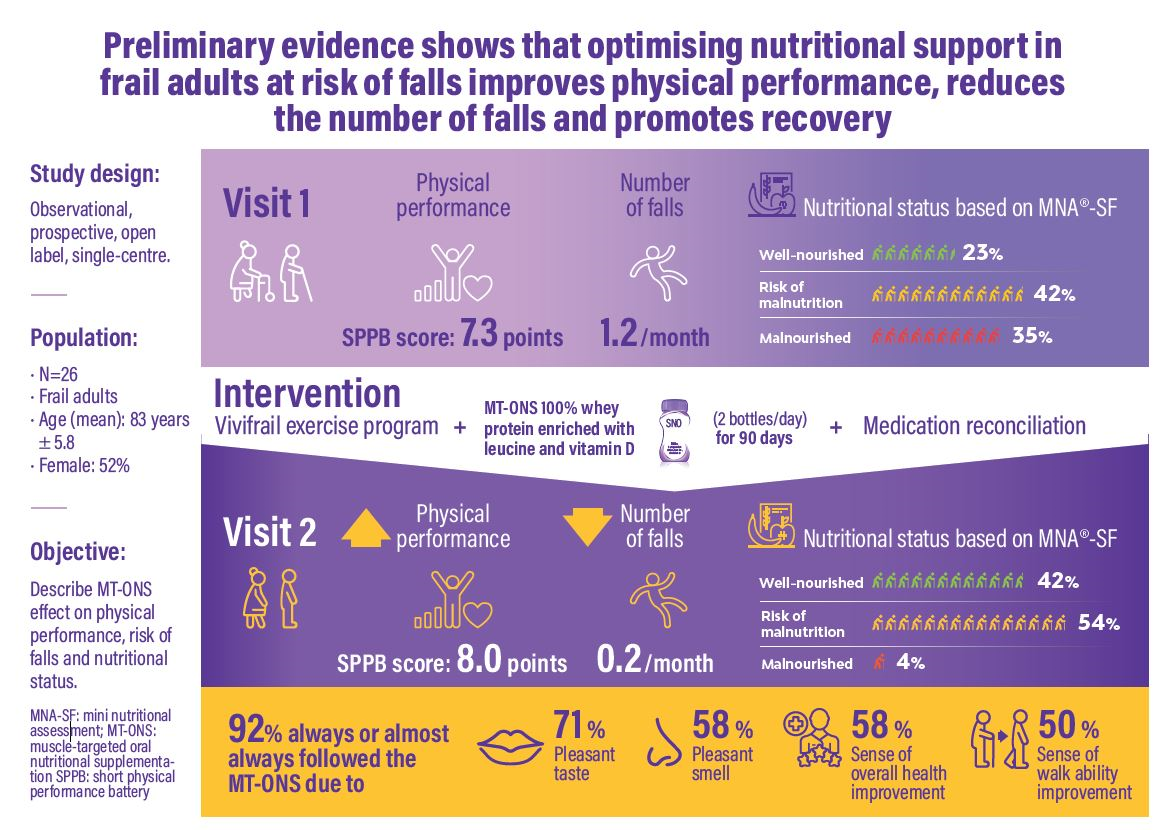
Background/Objectives: The study aimed to describe the effect of muscle-targeted oral nutritional supplementation (MT-ONS) on enhancing physical performance and nutritional status in frail adults at risk of falls. Methods: A prospective, open-label, single-centre, descriptive study was conducted. Patients ≥70 years attending an outpatient fall clinic were recruited, assessed at baseline and after at least 90 days with MT-ONS 100% whey protein enriched with leucine and vitamin D. Sociodemographic, physical performance [Short Physical Performance Battery (SPPB)], nutritional status [Mini Nutritional Assessment-Short Form, (MNA®-SF)], walking ability [Functional Ambulation Categories (FAC)], number of falls, muscle strength (dynamometry), body composition (Tanita), health-related quality-of-life (SF-12), functional capacity (Barthel Index) and adherence data were collected. Descriptive and inferential statistics were performed. Results: Twenty-six patients were assessed (58% women age: 82.1 ±5.4 years). Mean SPPB score increased from 7.3 (±3.6) to 8.0 (±4.0). At baseline, 35% were malnourished, 42% at risk of malnutrition, and 23% well-nourished. After ≥90 days of muscle-targeted ONS, 4% were malnourished; 54% at risk and 42% well-nourished. The number of falls decreased from 1.2 falls/month (±0.9) to 0.2 falls/month (±0.3, p<0.0001). Change to better physical performance correlated positively with better nutritional status (p=0.03) after MT-ONS. 92% of patients nearly always followed the ONS recommendations due to pleasant taste (71%) and smell (58%) and good health perception (58%). Conclusions: Frail adults at risk of falls who received MT-ONS, 100% whey protein enriched with leucine and vitamin D for ≥90 days improved their physical performance and nutritional status and reduced the number of falls.
Keywords: 
;  ;  ;  ;  

1. Introduction

Frailty is a common condition among the elderly, characterized by declines in physical performance, strength, endurance, and overall physiological function [1]. It not only worsens health but also significantly raises the risk of falls, a major concern for older adults. Studies estimate that frailty affects up to 26% of older individuals [2], increasing their vulnerability and both frailty and prefrailty have been linked to higher mortality rates in this population [3].
Frailty arises from various physiological changes, particularly the loss of muscle mass and function, which are central to the aging process [4,5]. Sarcopenia, the progressive loss of skeletal muscle mass and strength, is a key contributor to frailty [6]. This condition weakens the musculoskeletal system, making daily activities more difficult and heightening the risk of falls. Sarcopenia is also strongly associated with an increased risk of falls and fractures in older adults [7].
The prevalence of falls in older adults ranges from 32% to 45%, with recurrent falls occurring in 36% to 51% of cases [8,9]. Beyond physical injuries, such as bone fractures and other traumatic injuries [10], falls can also result in psychological consequences, including long-term fear, which may be equally detrimental [11]. Combined, these effects can lead to disability, increased care needs and to loss of independence, significantly impacting quality of life (QoL) and healthcare costs [12] [13].
Malnutrition is another major risk factor that worsens frailty and sarcopenia in older adults [14]. Poor nutritional status accelerates muscle wasting, reduces strength, and impairs mobility, increasing the likelihood of falls and related complications [7]. Thus, adequate nutrition is critical for preventing and managing frailty. Maintaining muscle mass and function is essential for preserving physical independence in elderly individuals, and nutritional interventions, such as oral nutritional supplementation (ONS), offer a targeted approach to addressing these deficiencies [15,16].
Muscle-targeted (MT)-ONS typically contains a blend of high-quality proteins and essential nutrients, such as vitamins [17]. These proteins are crucial for maintaining and repairing muscle tissue, while vitamin D supports bone health and muscle function. Whey protein is a complete protein that includes all nine essential amino acids, including leucine, which plays a key role in muscle protein synthesis. Consequently, whey protein is highly effective in promoting muscle growth, repair, and recovery, helping to prevent muscle loss [18]. Also, MT-ONS has positive effects on bone mineral density in sarcopenic older adults [19].
Several studies have shown that MT-ONS improves both nutritional status and physical performance in frail individuals, especially in cases of weight loss or undernutrition [20,21,22]. Additionally, MT-ONS decreases the number of older adults who fall and fall incidents [13]. Adequate protein and caloric intake through ONS helps prevent or reverse sarcopenia and frailty, preserving muscle mass, enhancing strength, and improving overall physical function [15].
Incorporating ONS into routine clinical practice may offer a practical solution for addressing frailty, particularly in the elderly at risk of falls. This study aims to assess the effects of MT-ONS on improving physical performance and nutritional status in frail adults attending an outpatient fall clinic. By assessing the effectiveness of MT-ONS in this population, the research seeks to provide evidence supporting its broader use as a practical intervention for managing frailty and reducing fall risk in aged adults in general medicine and geriatric care settings.

2. Materials and Methods

Design

This prospective, open-label, descriptive, single-arm study involved a cohort of frail elderly adults at risk of falls who attended the outpatient fall clinic at the Cantoblanco Geriatric Daycare Unit at La Paz University Hospital in Madrid, Spain. As part of their physical recovery and fall prevention plan, these patients received muscle-targeted ONS to optimize the quality of their caloric and protein intake, with the aim of improving physical performance, nutritional status, muscle health, and overall quality of life.
The primary objective of the study was to assess changes in physical performance after a minimum of 90 days of muscle-targeted ONS, compared to baseline. Additionally, the study evaluated changes in nutritional status, number of falls, muscle strength, weight, quality of life, and functional capacity, as well as adherence to the ONS regimen.

Study Population

Patients satisfying the following inclusion criteria were eligible to enter the study: age ≥ 70 years, presence of 3 or more criteria from the Fried frailty score [23,24], history of three or more falls in the last six months, referred to and actively attending the Cantoblanco Geriatric Daycare Unit, and ability to provide written consent for study participation. Detailed selection and exclusion criteria are provided in Supplementary Table S1.

Recruitment and Assessment

All patients fulfilling the selection criteria were consecutively recruited in accordance with usual clinical practice. Patients were assessed at baseline (visit 1, V1) and at least 90 days after the initiation of muscle-targeted ONS (visit 2, V2) (Figure 1).
At baseline, demographic data (age, gender, marital status, place of residence) and clinical data (laboratory tests, pharmaceutical treatment, physical performance, nutritional status, number of falls, ambulation ability, muscle strength, weight, body composition, and physical functionality) were collected. Physical performance was evaluated using the Short Physical Performance Battery (SPPB) [25]. Nutritional status was assessed with the Mini Nutritional Assessment - Short Form (MNA®-SF) [26,27]. Walking ability was analysed using the Functional Ambulation Categories (FAC) [28]. Body composition was measured using a Tanita device [29], muscle strength was assessed with a handheld dynamometer [30], and quality of life was documented using the 12-item short form health survey (SF-12) questionnaire [31]. Patients’ ability to perform basic activities of daily living was evaluated with the Barthel Index [32,33]. Adherence to the ONS was assessed at V2. Adherence was measured using a 5-point Likert scale (always, almost always, sometimes, almost never, never). Patients adhering always or almost always were asked to indicate the reason for adhering to the ONS (pleasant taste, pleasant smell, impression of improving overall health, ability to walk, pleasant appearance and texture, provides an extra and necessary amount of proteins, and provides an extra and necessary amount of calories).

Intervention

The muscle-targeted ONS was hypercaloric and hyperproteic 100% serum lactoprotein enriched with leucine and vitamin D [34] (Supplementary Table S2). Patients were recommended to take two bottles (200 ml/ bottle) daily for at least 90 days. Patients were also advised to follow other general dietary recommendations, the Vivifrail physical exercise program [35] and to consider structural adaptation at home (Supplementary Table S3).
The Vivifrail project is an international program for the Promotion of Physical Exercise for the prevention of frailty and falls in the older adults part of the Strategy for the promotion of health and Quality of Life in the European Union [35]. The objective is to maintain a level of functionality that ensures the highest possible degree of autonomy for everyone.
Additionally, medication was reconciled to resolve prescription discrepancies, simplify therapies, and personalize the therapeutic plan [36].

Statistical Analysis

Descriptive statistics were applied, including the calculation of percentages, means, standard deviations, medians, interquartile ranges, and minimum and maximum values. Comparisons between two dependent variables were performed using Student’s t-test for normally distributed data; otherwise, the non-parametric Wilcoxon-Mann-Whitney test was used. Spearman’s correlation was employed to assess the relationships between changes in physical performance and changes in other outcomes, such as MNA®-SF, number of falls, walking ability, weight, body mass index (BMI), and Barthel Index.
A subgroup analysis was conducted to evaluate predisposing factors in participants who showed improvements in the SPPB score and MNA®-SF. From the total study population (N=26), participants who demonstrated an increase in SPPB score (N=16) and those with improved nutritional status (N=15) were compared to the overall population based on baseline weight, BMI, walking stability, number of falls per month, MNA®-SF, and SPPB scores, and hand muscle strength. Finally, an inferential regression model was calculated to determine the relationship between participants’ nutritional status and physical performance [37].

Ethical Considerations

Patients were provided with an information sheet detailing the study’s name, objectives, sponsors, data protection and processing procedures, and the voluntary nature of participation. All participants signed a written consent form. The study received approval from the Clinical Research Ethics Committee at La Paz University Hospital in Madrid, Spain (Number 07/2022, approved on April 05, 2022). Clinical trial number: not applicable.

3. Results

Study Population

A total of 43 patients were recruited between 1st June 2022 and 19th January 2024. 26 (60%) completed the study (Supplementary Table S3). The mean age was 82 years (±Standard Deviation, SD) (±5.4), 58% were women, 54% were in a relationship and 69% lived accompanied (Table 1).
Regarding their clinical characteristics at baseline (visit 1), comorbidities that could contribute to an increased risk of falls were present in less than 20% of participants. Specifically, 19% had visual impairments, 15% had cognitive impairments and 11% had hearing impairments or Parkinson’s disease. In contrast, more than 70% of patients were on pharmacological treatments, such as antihypertensives or diuretics, which could potentially compromise balance and increase the risk of falls in frail individuals (Supplementary Table S4).
At baseline, the mean SPPB score was 7.3 (±3.6). The mean number of falls per month was 1.2 (±0.9). Eighty-one percent of participants experienced at least one fall per month and 16% experienced 2 or more falls per month. According to the FAC, 58% walked independently, while 42% required supervision or assistance.
Nutritional assessment using the MNA®-SF score showed that 35% of participants were malnourished, and 42% were at risk of malnutrition, with a mean MNA®-SF score of 9.31 (±2.41) for the entire cohort. The median weight was 66.6 kg (±11.88), and the median body mass index (BMI) was 25.9 (±4.41). Muscle strength was 15.6 kg (±8.65) for the right hand and 12.6 kg (±5.48) for the left hand.
Ninety-two percent of participants had a Barthel Index score of ≥60 at baseline. More than 80% of patients perceived their general health as moderate or good (Table 2).

Clinical and Functional Characteristics at Follow Up (Visit 2)

The average duration between V1 and V2 during MT-ONS was 141 days (±36.5). The mean SPPB score increased by 0.7 points at follow-up (V2) (Figure 2). Sixteen out of 26 patients (61.5%) showed improvement in physical performance. Item analysis of the SPPB revealed the greatest gains in the tandem stand balance test (mean change: 0.46 [±0.95]) and in the ability to complete five chair stands without using arms (mean change: 0.27 [±1.12]). The number of falls per month decreased to 0.2 (±0.3). At follow-up, 73% of participants reported no falls, while 27% experienced one fall per month (Supplementary Table S5).
Nutritional status improved in 15 out of 26 patients (57.7%) according to the MNA®-SF. The proportion of patients classified as malnourished decreased from 35% to 4%, while the proportion of well-nourished individuals increased from 23% to 42%, with 54% remaining at risk of malnutrition (Figure 3). The mean MNA®-SF score increased by 1.7 points at follow-up (V2) (Table 2).
Seventy-three percent of participants (19/26) either gained or maintained their weight, with a mean weight gain of 2 kg (±2.82). Muscle strength increased by an average of 1.2 kg (±4.90) in the left hand and by an average of 0.1 kg (±2.64) in the right hand. Walking ability remained stable, with 92% of participants maintaining their mobility.
Patient-reported health status also improved, with 42% rating their health as good at V1, rising to 54% at V2 (Table 2). The percentage of participants reporting limitations in achieving their desired activities due to emotional problems decreased from 46% at V1 to 15% at V2. Similarly, the impact of physical or emotional health problems on social activities decreased from 31% at V1 to 15% at V2 (Supplementary Table S6).
Ninety- two percent of patients always or almost always followed the MT-ONS recommendations due to pleasant taste (71%) and smell (58%) and good health perception (58%) (Supplementary Figure S1).

Physical Performance, Muscle Strength and Nutritional Status

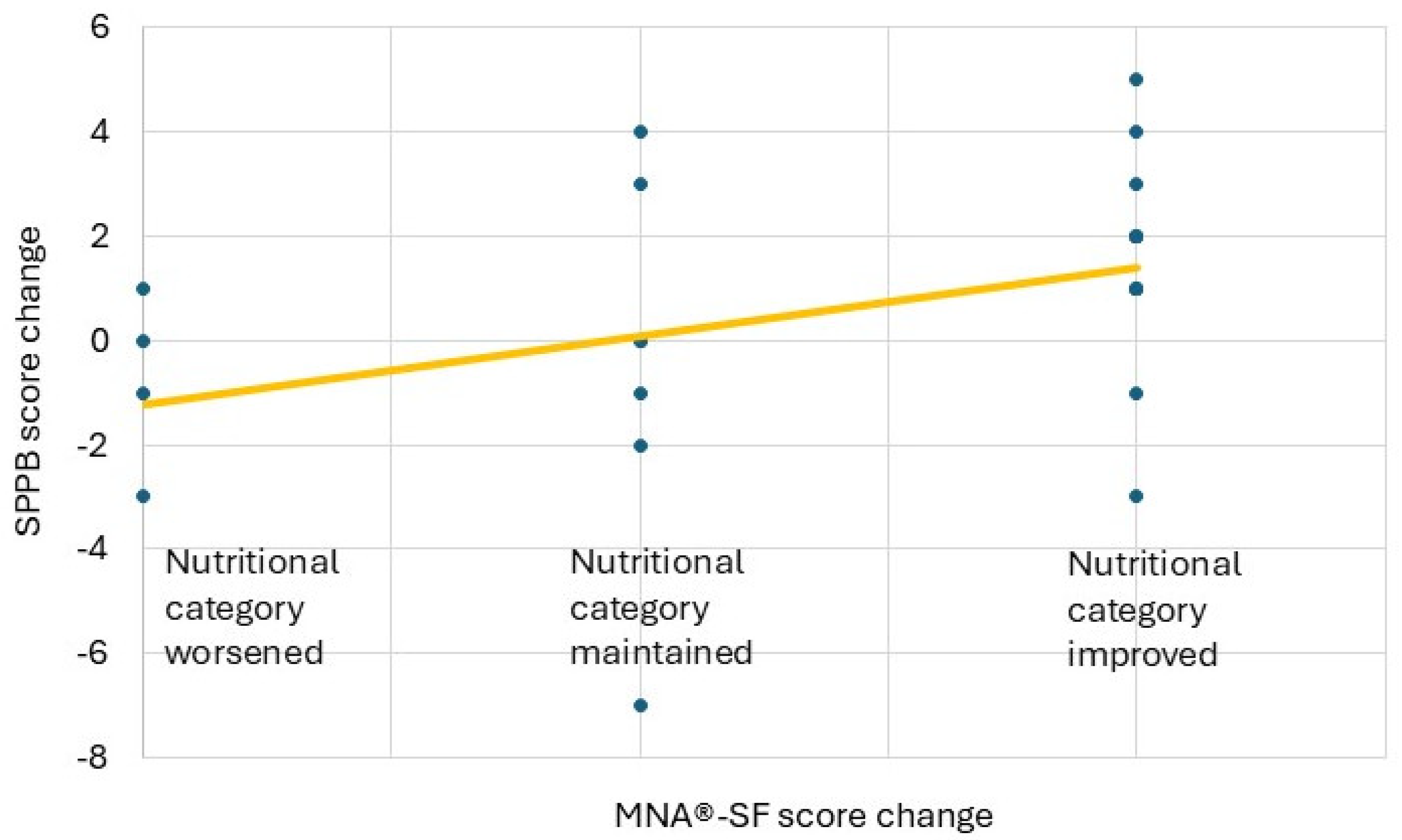
Improvements in physical performance (SPPB) at V2 were positively correlated with greater muscle strength (rho = 0.415, p = 0.02) and enhanced nutritional status according to MNA®-SF scores (rho = 0.498, p = 0.01) (Supplementary Table S7). The inferential regression model demonstrated a positive linear relation between changes in MNA®-SF and SPPB scores, suggesting that improvements in nutritional status (higher MNA®-SF scores) were associated with corresponding increases in physical performance (higher SPPB scores) (Figure 4).

Physical Performance and Health Related Quality of Life

The analysis of SPPB components in relation to health-related quality of life items from the SF-12 (physical functioning, role-physical and social functioning) revealed a strong positive correlation between improvements in the ability to perform five chair stands without using arms and accomplishing more in daily activities despite physical health limitations (rho = 0.686, p < 0.001). This suggests that individuals with increased lower limb strength at V2 felt less restricted in performing their regular daily activities and experienced a better physical functioning.

BMI, Muscle Strength, and Gait Stability as Predictors of SPPB Improvement

Participants with improved SPPB scores showed a statistically significant increase in BMI (p = 0.007) and muscle strength (p = 0.017), unlike the overall study population, where these changes were not significant (p = 0.182 and p = 0.106, respectively). Gait stability also improved significantly in the SPPB improvement group (p = 0.024), but this was not observed in the total population (p = 0.446). MNA®-SF scores improved significantly in both groups (Supplementary Table S8).

BMI, Muscle Strength, Physical Performance and Improved MNA®-SF

Participants with improved MNA®-SF scores demonstrated a significant improvement in physical performance, as measured by SPPB (p = 0.012), which was not observed in the overall study population (p = 0.11). Additionally, those with better nutritional status showed a significant increase in BMI (p = 0.008) and muscle strength (p = 0.049), unlike the overall population (Supplementary Table S9).

4. Discussion

In this study, frail community-dwelling adults who met at least three criteria of Fried’s Frailty Phenotype and were at increased risk of falls received MT-ONS 100% whey protein enriched with leucine and vitamin D as part of their care plan. This intervention aimed to enhance physical performance, walking stability, and overall nutritional status, and to reduce the number of falls. The cohort shared similar demographic and clinical characteristics with frail octogenarians described in other Spanish studies [38,39,40].
Despite common risk factors for falls, such as visual, hearing, or cognitive impairments, fewer than 20% of participants were affected by these conditions. This suggests that, although these comorbidities were present, they likely were not the primary contributors to fall risk in this population. Instead, medication use, particularly those medications that can impair balance, may have been a more relevant risk factor, highlighting the importance of careful monitoring of pharmacological treatments [41,42].
A recent meta-analysis comparing various interventions for fall prevention in older adults found that multicomponent interventions, typically combining nutritional support and physical exercise, are associated with a significant reduction in fall incidence [43]. This was also evident in the present study, where patients received recommendations for both nutrition and physical exercise as part of a comprehensive approach to fall prevention. In line with these findings, the Global Guideline for Falls in Older Adults (2022) recommends nutritional optimization (grade of recommendation: 1, level of evidence: B) and the inclusion of exercise training (grade of recommendation: 1, level of evidence: C) as part of a multidomain strategy for fall prevention [44].
Physical performance was assessed using the SPPB, a validated tool for evaluating lower body function in older adults [45]. At baseline, participants exhibited a range of physical abilities, from moderate limitations to good function. The follow-up data revealed modest but meaningful improvements in SPPB scores, particularly in balance and lower body strength. Although these improvements might seem minor, they are significant for this frail population, as they can lead to increased walking stability and improved ability to perform daily tasks that require strength, mobility, and precision.[45]. In this study, increased lower body strength may have significantly reduced falls, improved physical independence, and enhanced overall health-related quality of life, largely explained by perceived improvements in physical functioning and role-related physical activities. Other studies have also reported that individualized multicomponent interventions, including nutritional support aimed at enhancing physical performance, reduced mobility disability, and prevented a decline in QoL and basic activities of daily living (ADLs) in older adults with frailty and sarcopenia [20,46].
Nutritional status also improved significantly, with 57.7% of participants showing better outcomes at follow-up. The decrease in malnourished individuals and increase in those classified as well-nourished highlight the positive impact of the ONS intervention. An average increase of 1.7 points in the MNA®-SF score reinforces these nutritional gains. However, over half of the cohort remained at risk of malnutrition, emphasizing the need for ongoing nutritional support to prevent disability, as highlighted in previous studies [39,47].
In this cohort, improved nutritional status was linked to gains in physical performance, suggesting a positive relationship between better nutrition and physical function. However, not all participants who experienced an improvement in nutrition also showed enhanced physical performance. While some improved in both domains, others only saw improvements in nutritional status without corresponding physical gains, indicating that other factors beyond nutritional status likely influence physical performance in this population [48].
Likewise, increases in BMI, muscle strength, and gait stability were predictive of improved physical performance, suggesting a potential causal link between these factors and enhanced functional outcomes. A meta-analysis found that low muscle mass, strength, and physical performance were positively associated with dependency in ADL and IADL [49].
This study has several limitations. Its descriptive design, limited to a single hospital without a control group, prevents definitive conclusions. The small, conveniently recruited sample size may have biased the results, making the findings preliminary and suggesting potential relationships that require further testing in more robust studies. Additionally, the small sample size and limited follow-up may have underestimated the true impact of nutritional recovery and functional performance after MT-ONS. Despite these limitations, the study highlights the potential benefits of nutritional support on the physical performance of frail older patients at risk of falls.

5. Conclusions

This study shows that MT-ONS 100% whey protein enriched with leucine and vitamin D, as part of a comprehensive care plan, can lead to meaningful improvements in physical performance and nutritional status, contributing to falls reduction in frail older adults at risk of falls. While the overall improvements in physical function and nutrition are modest, the decrease in the number of falls is significant. Continued nutritional support and individualized interventions targeting physical performance, muscle strength, and walking stability are essential for preventing further decline and promoting functional independence in frail older adults. This preliminary evidence needs to be confirmed through more robust clinical studies.

Supplementary Materials

The following supporting information can be downloaded at the website of this paper posted on Preprints.org, Figure S1: Adherence; Table S1. Inclusion and Exclusion criteria; Table S2. Oral nutritional supplementation composition, 100 ml; Table S3. Additional recommendations at baseline; Table S4. Clinical characteristics, at baseline (visit 1); Table S5. SPPB scores and mean differences between visit 1 and 2 per item in the SPPB; Table S6. Quality of life in visit 1 and 2; Table S7. Spearman correlation between changes in physical performance and nutritional status and the change in other outcomes; Table S8. Subgroup analysis of participants who improved SPPB; Table S9. Subgroup analysis of participants who improved MNA-SF

Author Contributions

Conceptualization, Ivon Rivera Deras, Ana Callejón Martín, Miguel Espuelas Vázquez, Lilia Ruiz Ávila and Jesús López Arrieta; Investigation, Ivon Rivera Deras, Ana Callejón Martín, Miguel Espuelas Vázquez, Lilia Ruiz Ávila and Jesús López Arrieta; Methodology, Ivon Rivera Deras and Jesús López Arrieta; Project administration, Ivon Rivera Deras; Supervision, Ivon Rivera Deras and Jesús López Arrieta; Writing – review & editing, Ivon Rivera Deras, Ana Callejón Martín, Miguel Espuelas Vázquez, Lilia Ruiz Ávila and Jesús López Arrieta. All authors read and approved the final manuscript.

Funding

Danone Nutricia SL provided financial support to develop the study and write the manuscript.

Institutional Review Board Statement

The study was conducted in accordance with the Declaration of Helsinki, and approved by the the Clinical Research Ethics Committee at La Paz University Hospital in Madrid, Spain (Number 07/2022, approved on April 05, 2022).

Informed Consent Statement

Informed consent was obtained from all subjects involved in the study.

Data Availability Statement

Not applicable

Acknowledgments

We thank Silvia Paz Ruiz and Lena Huck at SmartWorking4U for their support in the design of the study, data management, interpretation of results, and writing of the manuscript; Jordi Ollé (Conceptos Claros) for the statistical analysis and Isabel Gotor Miserachs (Selenus) for the graphical design in collaboration with SmartWorking4U.

Conflicts of Interest

The authors declare no conflicts of interest.

Abbreviations

The following abbreviations are used in this manuscript:
ADL Activities of Daily Living
BMI Body Mass Index
FAC Functional Ambulation Categories
IADL Instrumental Activities of Daily Living
MNA®-SF Mini Nutritional Assessment – Short Form
MT-ONS Muscle-Targeted Oral Nutritional Supplementation
ONS Oral Nutritional Supplementation
QoL Quality of Life
SD Standard Deviation
SF-12 12-item Short Form Health Survey
SPPB Short Physical Performance Battery
V1 Visit 1 (Baseline)
V2 Visit 2 (Follow-up)

References

  1. Kwak, D.; Thompson, L.V. Frailty: Past, present, and future? Sport Med Heal Sci. 2021, 3, 1–10. [Google Scholar] [CrossRef] [PubMed]
  2. Rivas-Ruiz, F.; Machón, M.; Contreras-Fernández, E.; Vrotsou, K.; Padilla-Ruiz, M.; Díez Ruiz, A.I.; et al. Prevalence of frailty among community-dwelling elderly persons in Spain and factors associated with it. Eur J Gen Pract. 2019, 25, 190–196. [Google Scholar] [CrossRef] [PubMed]
  3. Davies, B.; Walter, S.; Rodríguez-Laso, A.; Carnicero Carreño, J.A.; García-García, F.J.; Álvarez-Bustos, A.; et al. Differential Association of Frailty and Sarcopenia With Mortality and Disability: Insight Supporting Clinical Subtypes of Frailty. J Am Med Dir Assoc. 2022, 23, 1712–1716. [Google Scholar] [CrossRef] [PubMed]
  4. Doody, P.; Lord, J.M.; Greig, C.A.; Whittaker, A.C. Frailty: Pathophysiology, Theoretical and Operational Definition(s), Impact, Prevalence, Management and Prevention, in an Increasingly Economically Developed and Ageing World. Gerontology. 2023, 69, 927–945. [Google Scholar] [CrossRef] [PubMed]
  5. Hyun KD, Kenneth R. Frailty in Older Adults. N Engl J Med [Internet]. 2024 Aug 7;391(6):538–48. [CrossRef]
  6. Sayer, A.A.; Cooper, R.; Arai, H.; Cawthon, P.M.; Ntsama Essomba, M.J.; Fielding, R.A.; et al. Sarcopenia. Nat Rev Dis Prim. 2024, 10, 68. [Google Scholar] [CrossRef] [PubMed]
  7. Yeung, S.S.Y.; Reijnierse, E.M.; Pham, V.K.; Trappenburg, M.C.; Lim, W.K.; Meskers, C.G.M.; et al. Sarcopenia and its association with falls and fractures in older adults: A systematic review and meta-analysis. J Cachexia Sarcopenia Muscle. 2019, 10, 485–500. [Google Scholar] [PubMed]
  8. Díaz, L.B.; Casuso-Holgado, M.J.; Labajos-Manzanares, M.T.; Barón-López, F.J.; Pinero-Pinto, E.; Romero-Galisteo, R.P.; et al. Analysis of Fall Risk Factors in an Aging Population Living in Long-Term Care Institutions in SPAIN: A Retrospective Cohort Study. Int J Environ Res Public Health. 2020, 17. [Google Scholar]
  9. Blanco-Blanco, J.; Albornos-Muñoz, L.; Costa-Menen, M.À.; García-Martínez, E.; Rubinat-Arnaldo, E.; Martínez-Soldevila, J.; et al. Prevalence of falls in noninstitutionalized people aged 65-80 and associations with sex and functional tests: A multicenter observational study. Res Nurs Health. 2022, 45, 433–45. [Google Scholar] [PubMed]
  10. Komisar, V.; Dojnov, A.; Yang, Y.; Shishov, N.; Chong, H.; Yu, Y.; et al. Injuries from falls by older adults in long-term care captured on video: Prevalence of impacts and injuries to body parts. BMC Geriatr [Internet]. 2022, 22, 343. [Google Scholar] [CrossRef] [PubMed]
  11. Schoene D, Heller C, Aung YN, Sieber CC, Kemmler W, Freiberger E. A systematic review on the influence of fear of falling on quality of life in older people: is there a role for falls? Clin Interv Aging. 2019;14:701–19.
  12. Vaishya R, Vaish A. Falls in Older Adults are Serious. Indian J Orthop. 2020 Feb;54(1):69–74.
  13. Florence CS, Bergen G, Atherly A, Burns E, Stevens J, Drake C. Medical Costs of Fatal and Nonfatal Falls in Older Adults. J Am Geriatr Soc. 2018 Apr;66(4):693–8.
  14. Kurkcu M, Meijer RI, Lonterman S, Muller M, de van der Schueren MAE. The association between nutritional status and frailty characteristics among geriatric outpatients. Clin Nutr ESPEN. 2018 Feb;23:112–6.
  15. Prado CM, Landi F, Chew STH, Atherton PJ, Molinger J, Ruck T, et al. Advances in muscle health and nutrition: A toolkit for healthcare professionals. Clin Nutr. 2022;41(10):2244–63.
  16. Pourhassan M, Rommersbach N, Lueg G, Klimek C, Schnatmann M, Liermann D, et al. The Impact of Malnutrition on Acute Muscle Wasting in Frail Older Hospitalized Patients. Nutrients. 2020 May;12(5).
  17. Cereda E, Pisati R, Rondanelli M, Caccialanza R. Whey Protein, Leucine- and Vitamin-D-Enriched Oral Nutritional Supplementation for the Treatment of Sarcopenia. Nutrients. 2022 Apr;14(7).
  18. Camargo L da R, Doneda D, Oliveira VR. Whey protein ingestion in elderly diet and the association with physical, performance and clinical outcomes. Exp Gerontol. 2020;137:110936.
  19. Hill TR, Verlaan S, Biesheuvel E, Eastell R, Bauer JM, Bautmans I, et al. A Vitamin D, Calcium and Leucine-Enriched Whey Protein Nutritional Supplement Improves Measures of Bone Health in Sarcopenic Non-Malnourished Older Adults: The PROVIDE Study. Calcif Tissue Int. 2019 Oct;105(4):383–91.
  20. Bauer JM, Verlaan S, Bautmans I, Brandt K, Donini LM, Maggio M, et al. Effects of a vitamin D and leucine-enriched whey protein nutritional supplement on measures of sarcopenia in older adults, the PROVIDE study: a randomized, double-blind, placebo-controlled trial. J Am Med Dir Assoc. 2015 Sep;16(9):740–7.
  21. Guo Y, Fu X, Hu Q, Chen L, Zuo H. The Effect of Leucine Supplementation on Sarcopenia-Related Measures in Older Adults: A Systematic Review and Meta-Analysis of 17 Randomized Controlled Trials. Front Nutr. 2022;9:929891.
  22. Rondanelli M, Cereda E, Klersy C, Faliva MA, Peroni G, Nichetti M, et al. Improving rehabilitation in sarcopenia: a randomized-controlled trial utilizing a muscle-targeted food for special medical purposes. J Cachexia Sarcopenia Muscle. 2020 Dec;11(6):1535–47.
  23. Fried LP, Tangen CM, Walston J, Newman AB, Hirsch C, Gottdiener J, et al. Frailty in Older Adults: Evidence for a Phenotype. Journals Gerontol Ser A Biol Sci Med Sci. 2001;56(3):M146–57.
  24. Bouillon K, Kivimaki M, Hamer M, Sabia S, Fransson EI, Singh-Manoux A, et al. Measures of frailty in population-based studies: an overview. BMC Geriatr. 2013 Jun;13:64.
  25. Welch SA, Ward RE, Beauchamp MK, Leveille SG, Travison T, Bean JF. The Short Physical Performance Battery (SPPB): A Quick and Useful Tool for Fall Risk Stratification Among Older Primary Care Patients. J Am Med Dir Assoc. 2021 Aug;22(8):1646–51.
  26. Guigoz Y, Vellas B, Garry PJ. Assessing the nutritional status of the elderly: The Mini Nutritional Assessment as part of the geriatric evaluation. In: Nutrition Reviews. Blackwell Publishing Inc.; 1996.
  27. Molina-Luque R, Muñoz Díaz B, de la Iglesia J, Romero-Saldaña M, Molina-Recio G. Is the Spanish short version of Mini Nutritional Assessment (MNA-SF) valid for nutritional screening of the elderly? Nutr Hosp Hosp. 2019;36(2):290–5.
  28. Holden MK, Gill KM, Magliozzi MR. Gait assessment for neurologically impaired patients. Standards for outcome assessment. Phys Ther. 1986 Oct;66(10):1530–9.
  29. Vasold KL, Parks AC, Phelan DML, Pontifex MB, Pivarnik JM. Reliability and Validity of Commercially Available Low-Cost Bioelectrical Impedance Analysis. Int J Sport Nutr Exerc Metab. 2019 Jul;29(4):406–410.
  30. Cruz-Jentoft AJ, Bahat G, Bauer J, Boirie Y, Bruyère O, Cederholm T, et al. Sarcopenia: revised European consensus on definition and diagnosis. Age Ageing. 2019 Jan;48(1):16–31.
  31. Gandek B, Ware JE, Aaronson NK, Apolone G, Bjorner JB, Brazier JE, et al. Cross-validation of item selection and scoring for the SF-12 Health Survey in nine countries: results from the IQOLA Project. International Quality of Life Assessment. J Clin Epidemiol. 1998 Nov;51(11):1171–8.
  32. Cabañero-Martínez MJ, Cabrero-García J, Richart-Martínez M, Muñoz-Mendoza CL. Structured review of activities of daily living measures in older people. Rev Esp Geriatr Gerontol. 2008;43(5):271–83.
  33. Mahoney FI, Barthel DW. FUNCTIONAL EVALUATION: THE BARTHEL INDEX. Md State Med J. 1965 Feb;14:61–5.
  34. Nutricia. Fortimel Advanced [Internet]. [cited 2024 Oct 3]. p. 1–5. Available from: https://vademecum.nutricia.es/pdf/info_nutricional/prod_304.pdf.
  35. Izquierdo, M. [Multicomponent physical exercise program: Vivifrail]. Nutr Hosp. 2019 Jul;36(Spec No2):50–6.
  36. Beuscart JB, Pelayo S, Robert L, Thevelin S, Marien S, Dalleur O. Medication review and reconciliation in older adults. Eur Geriatr Med. 2021 Jun;12(3):499–507.
  37. Hui EGM. Inferential Statistics and Regressions BT - Learn R for Applied Statistics: With Data Visualizations, Regressions, and Statistics. In: Hui EGM, editor. Berkeley, CA: Apress; 2019. p. 173–236.
  38. Bermejo Boixareu C, Ojeda-Thies C, Guijarro Valtueña A, Cedeño Veloz BA, Gonzalo Lázaro M, Navarro Castellanos L, et al. Clinical and Demographic Characteristics of Centenarians versus Other Age Groups Over 75 Years with Hip Fractures. Clin Interv Aging. 2023;18:441–51.
  39. Solsona Fernández S, Caverni Muñoz A, Labari Sanz G, Monterde Hernandez B, Martínez Marco MA, Mesa Lampré P. Preliminary Evidence on the Effectiveness of a Multidisciplinary Nutritional Support for Older People with Femur Fracture at an Orthogeriatric Unit in Spain. J Nutr Gerontol Geriatr [Internet]. 2022 Oct 2;41(4):270–93. Available from. [CrossRef]
  40. Spanish Ministry of Health. Update of the consensus document on prevention of frailty in elderly people [Internet]. Reports, studies and research 2023. 2022. p. 1–61. Available from: https://www.sanidad.gob.es/areas/promocionPrevencion/envejecimientoSaludable/fragilidadCaidas/home.htm.
  41. Hart LA, Phelan EA, Yi JY, Marcum ZA, Gray SL. Use of Fall Risk-Increasing Drugs Around a Fall-Related Injury in Older Adults: A Systematic Review. J Am Geriatr Soc. 2020 Jun;68(6):1334–43.
  42. Yoshida Y, Ishizaki T, Masui Y, Hori N, Inagaki H, Ito K, et al. Effect of number of medications on the risk of falls among community-dwelling older adults: A 3-year follow-up of the SONIC study. Geriatr Gerontol Int. 2024 Mar;24 Suppl 1:306–10.
  43. Dautzenberg L, Beglinger S, Tsokani S, Zevgiti S, Raijmann RCMA, Rodondi N, et al. Interventions for preventing falls and fall-related fractures in community-dwelling older adults: A systematic review and network meta-analysis. J Am Geriatr Soc. 2021 Oct;69(10):2973–84.
  44. Montero-Odasso M, van der Velde N, Martin FC, Petrovic M, Tan MP, Ryg J, et al. World guidelines for falls prevention and management for older adults: a global initiative. Age Ageing [Internet]. 2022 Sep 2;51(9):afac205. [CrossRef]
  45. de Fátima Ribeiro Silva C, Ohara DG, Matos AP, Pinto ACPN, Pegorari MS. Short Physical Performance Battery as a Measure of Physical Performance and Mortality Predictor in Older Adults: A Comprehensive Literature Review. Int J Environ Res Public Health. 2021 Oct;18(20).
  46. Bernabei R, Landi F, Calvani R, Cesari M, Del Signore S, Anker SD, et al. Multicomponent intervention to prevent mobility disability in frail older adults: randomised controlled trial (SPRINTT project). Bmj. 2022;377:1–13.
  47. Artaza-Artabe I, Sáez-López P, Sánchez-Hernández N, Fernández-Gutierrez N, Malafarina V. The relationship between nutrition and frailty: Effects of protein intake, nutritional supplementation, vitamin D and exercise on muscle metabolism in the elderly. A systematic review. Maturitas. 2016 Nov;93:89–99.
  48. Navarrete-Villanueva D, Gómez-Cabello A, Marín-Puyalto J, Moreno LA, Vicente-Rodríguez G, Casajús JA. Frailty and Physical Fitness in Elderly People: A Systematic Review and Meta-analysis. Sport Med [Internet]. 2021;51(1):143–60. [CrossRef]
  49. Wang DXM, Yao J, Zirek Y, Reijnierse EM, Maier AB. Muscle mass, strength, and physical performance predicting activities of daily living: a meta-analysis. J Cachexia Sarcopenia Muscle. 2020 Feb;11(1):3–25.
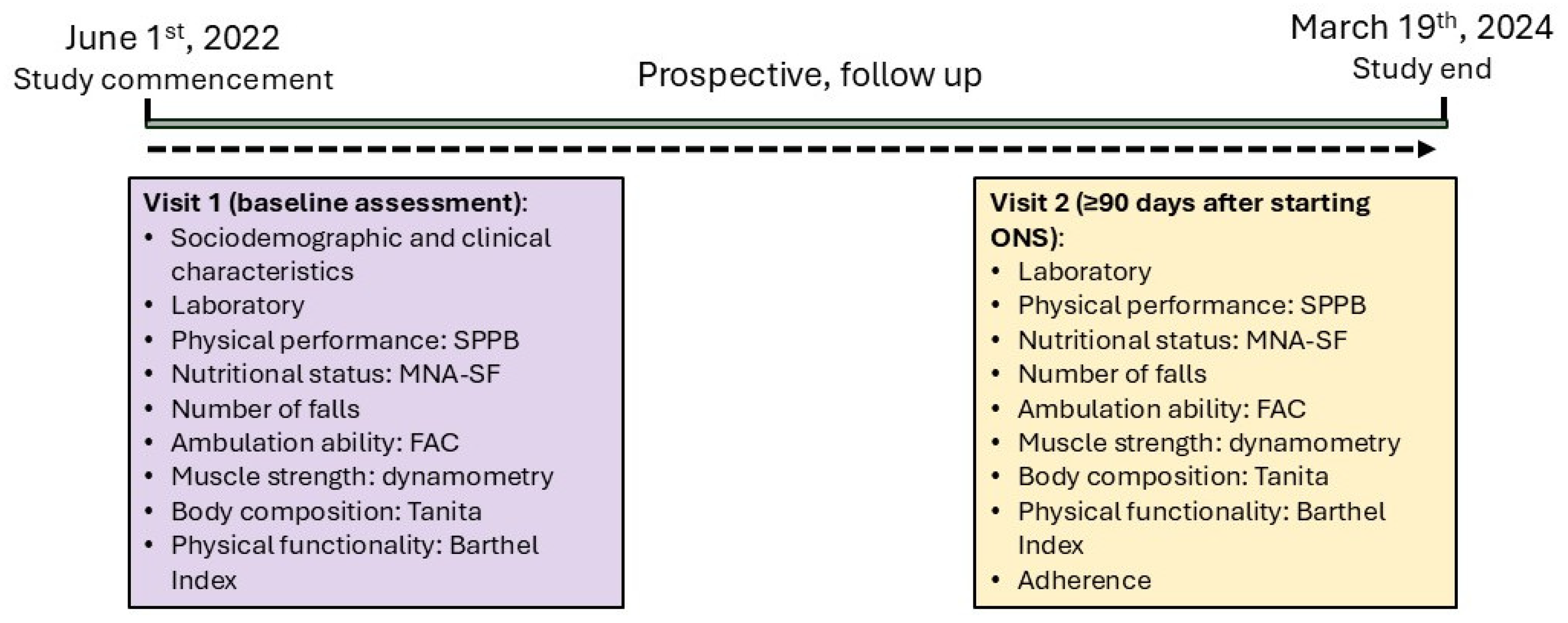
Figure 1. Study schedule. FAC: Functional Ambulation Categories; MNA®-SF: Mini Nutritional Assessment - Short Form; ONS: oral nutritional supplementation; SPPB: Short Physical Performance Battery.
Preprints 186560 g001
Figure 2. Comparison of mean total SPPB scores between Visit 1 and Visit 2, total study population. SPPB: Short Physical Performance Battery.
Preprints 186560 g002
Figure 3. Comparison of nutritional status between Visit 1 and Visit 2, in percentage of patients in each MNA®-SF group. MNA®-SF: Mini Nutritional Assessment Short Form.
Preprints 186560 g003
Figure 4. Scatter plot correlation between changes in MNA®-SF and SPPB scores. MNA®-SF: Mini Nutritional Assessment Short Form; SPPB: Short Physical Performance Battery.
Preprints 186560 g004
Table 1. Baseline demographic characteristics.
Characteristic Title 2
Age, years (±SD) 82 (±5.4)
Gender
Female, n (%) 15 (58%)
Male, n (%) 11 (42%)
Marital status
Single, n (%) 1 (4%)
In a relationship, n (%) 14 (54%)
Married, n (%) 2 (8%)
Divorced, n (%) 0 (0%)
Widow, n (%) 9 (34%)
Household living conditions
Alone, n (%) 8 (31%)
Accompanied, n (%) 18 (69%)
Institution 0 (0%)
SD: standard deviation.
Table 2. Nutritional and functional characteristics, at baseline (visit 1) and follow up (visit 2).
Characteristics Visit 1 Visit 2
Nutritional status: MNA®-SF score
12–14 points, well- nourished, n (%) 6 (23%) 11 (42%)
8–11 points, at risk of malnutrition, n (%) 11 (42%) 14 (54%)
0–7 points, malnourished, n (%) 9 (35%) 1 (4%%)
Laboratory (nutritional) parameters
Serum albumin levels (g/dl) mean (±SD) 4.0 (±0.5) 4.3 (±0.59)
Cholesterol levels (md/dl) mean (±SD) 156.0 (±38.9) 156.0 (±34.67)
Lymphocyte count (x1000/µl) mean (±SD) 1.5 (±0.6) 1.5 (±0.59)
Weight, kg (SD) 66.6 (±11.88) 68.4 (±12.54)
BMI 25.9 (6.61) 26.7 (±4.33)
Body composition: Tanita
Muscle mass (%) 42% 42%
Total body water /%) 48% 47%
Body fat (%) 34% 34%
Bone mass, kg (SD) 3.1 (±4.09) 3.1 (±4.16)
Visceral fat 17.1 (±17.71) 16.2 (±7.20)
Metabolic age 73.6 (±9.55) 74.9 (±9.48)
Lower body physical function: SPPB score, mean (SD) 7.3 (±3.56) 8.0 (±4.03)
Good physical function (SPPB scores 10-12), n (%) 7 (27%) 14 (54%)
Mild limitations (SPPB scores 7-9), n (%) 9 (35%) 3 (12%)
Moderate limitations (SPPB scores 4-6), n (%) 5 (19%) 3 (12%)
Severe physical limitations (SPPB scores 0-3), n (%) 5 (19%) 6 (22%)
Number of falls/month, mean (SD) 1.2 (±0.9) 0.2 (±0.3)
Number of falls/month, n (%)
0 5 (19%) 19 (73%)
1 17 (65%) 7 (27%)
2 1 (4%) 0 (0%)
3 2 (8%) 0 (0%)
4 1 (4%) 0 (0%)
Walking ability: FAC score
5: normal deambulation, n (%) 6 (22%) 9 (35%)
4: able to walk anywhere but with obvious limp or need of technical assistance, n (%) 8 (31%) 6 (22%)
3: able to walk inside and outside of home but limited distances, n (%) 9 (35%) 9 (35%)
2: only able to walk on flat surfaces and known spaces like home, n (%) 3 (12%) 1 (4%)
1: requires external help to be able to walk, n (%) 0 (0%) 1 (4%)
Dynamometry
Muscle strength right hand, kg (SD) 15.6 (±8.65) 15.7 (±9.19)
Muscle strength left hand, kg (SD) 12.6 (±5.48) 13.9 (6.61)
Independence to perform basic activities of daily living: Barthel Index score
≥ 60 points (independent), n (%) 24 (92%) 25 (96%)
< 60 points (dependant), n (%) 2 (8%) 1 (4%)
SF-12, score general health perception
Excellent, n (%) 1 (4%) 1 (4%)
Very good, n (%) 2 (8%) 0 (0%)
Good, n (%) 11 (42%) 14 (54%)
Moderate, n (%) 11 (42%) 9 (35%)
Bad, n (%) 1 (4%) 2 (8%)
BMI: body mass index, FAC: Functional Ambulation Category, MNA®-SF: Mini Nutritional Assessment Short Form SD: standard deviation, SPPB: Short Physical Performance Battery.
Disclaimer/Publisher’s Note: The statements, opinions and data contained in all publications are solely those of the individual author(s) and contributor(s) and not of MDPI and/or the editor(s). MDPI and/or the editor(s) disclaim responsibility for any injury to people or property resulting from any ideas, methods, instructions or products referred to in the content.
Copyright: This open access article is published under a Creative Commons CC BY 4.0 license, which permit the free download, distribution, and reuse, provided that the author and preprint are cited in any reuse.
Prerpints.org logo

Preprints.org is a free preprint server supported by MDPI in Basel, Switzerland.

Subscribe

Disclaimer

Terms of Use

Privacy Policy

Privacy Settings

© 2025 MDPI (Basel, Switzerland) unless otherwise stated