“First come the ideas, then comes an action plan. Never mind the planning required, he excels at this - if a plan is incomplete or not assuring enough, he would correct it. Perfection naturally calls for dedication and diligence”
(Vuong, 2025)
1. Introduction
Community-Based Tourism (CBT) has increasingly been recognized as a strategic pathway for sustainable development, particularly in regions endowed with unique cultural and ecological resources. By enabling local communities to own, manage, and benefit directly from tourism activities, CBT not only promotes inclusive economic growth but also strengthens environmental stewardship and safeguards intangible cultural heritage. This model has been widely acknowledged as an effective mechanism for balancing socio-economic development with cultural and ecological preservation. In Vietnam, where ethnic minority groups predominantly inhabit remote mountainous regions, CBT offers substantial potential to improve livelihoods while preserving traditional practices and fragile ecosystems. The Vietnamese government has institutionalized CBT within several key national policies, notably (PM, 2021), which approved the 2021–2030 National Target Program for socio-economic development in ethnic minority and mountainous regions, and (GOV, 2024) which identifies CBT as a flagship tourism product linked to rural revitalization and poverty reduction. These policies highlight the strategic importance of CBT in advancing both local development and national sustainable development goals.
Lac Village, located in Mai Chau ward, Phu Tho province, exemplifies one of Vietnam’s pioneering CBT destinations. The village is home to the White Thai ethnic group, which has maintained a rich cultural heritage expressed through stilt-house homestays, brocade weaving, traditional folk performances, and community-based hospitality practices. Through active participation from local households, Lac Village has successfully leveraged CBT to contribute to poverty alleviation and strengthen Vietnam’s progress toward the Sustainable Development Goals (SDGs). Visitors to Lac Village are offered authentic cultural experiences that not only generate income for local households but also foster community cohesion and the preservation of traditional knowledge and practices. Despite these achievements, Lac Village now faces substantial challenges (Dias et al., 2024; Ngo et al., 2024; Tosun, 2001). Rapid growth in domestic and international tourism has outpaced the village’s infrastructural and managerial capacities, creating pressures on environmental resources, service quality, and equitable benefit sharing. Additionally, the uneven distribution of investment and tourism management across different hamlets has led to disparities in service standards and, in some cases, undermined the authenticity of cultural experiences. These challenges underscore the need for a more nuanced understanding of how CBT can be sustainably managed to maximize both economic and cultural benefits (Achmad et al., 2023a; Burbano et al., 2022b). Numerous studies have explored the potential development of CBT and sustainable tourism, consistently highlighting that tourist satisfaction (Durán-Román et al., 2021; Homburg et al., 2005). High levels of tourist satisfaction have been shown to correlate with increased financial contributions to community initiatives, while unsatisfactory experiences can undermine both participation and investment in local tourism activities (Ali et al., 2020; Rousta & Jamshidi, 2019). Most existing research, however, has primarily focused on estimating WTP through contingent valuation or similar methods, often emphasizing demographic and socio-economic variables such as income, age, or education level (Batool et al., 2025; Blamey, 1998). While these studies provide valuable insights into general willingness to contribute, they have largely overlooked the influence of cultural dimensions, particularly the roles of cultural identity, traditional practices, and tourism-related cultural values, which are essential for defining the distinctiveness of CBT. Moreover, previous research has rarely investigated the mechanisms through which service quality, including both tangible and intangible aspects of the tourism experience, shapes tourist satisfaction and, subsequently, WTP for community development. This gap is particularly salient in contexts like Lac Village, where the authenticity of cultural experiences is intertwined with service delivery and community engagement.
Addressing these limitations, the present study focuses on Lac Village as a case to investigate the determinants of tourist satisfaction and their willingness to financially contribute to CBT-CP. Specifically, the study examines three interconnected questions: first, which service attributes in CBT have the greatest influence on tourist satisfaction; second, how tourist satisfaction affects their willingness to pay for initiatives aimed at improving CBT; and third, which aspects of service should be prioritized to enhance satisfaction and, in turn, strengthen the financial sustainability of CBT. These questions are designed to provide a holistic understanding of both the structural and psychological drivers of tourist behavior, integrating considerations of service quality, cultural authenticity, and community welfare. The study adopts a Culture Tower-based approach integrating Partial Least Squares Structural Equation Modeling with the Bayesian Mindsponge Framework (CPBM). This approach enables simultaneous examination of structural relationships among service attributes, tourist satisfaction, and willingness to pay, while capturing the psychological mechanisms underlying tourist decision-making. By moving beyond traditional WTP estimation, it provides a more nuanced understanding of how tourists evaluate, experience, and contribute to community-based tourism. The study makes three key contributions: (i) it advances theoretical understanding of the relationships among tourist satisfaction, service quality, cultural identity experiences, and financial contributions within CBT; (ii) it informs local policy and investment priorities by identifying service attributes and initiatives most likely to enhance tourist satisfaction and generate sustainable financial support; and (iii) it offers a novel methodological approach that integrates multidimensional perspectives to better capture the psychological and behavioral mechanisms underlying tourists’ engagement with CBT.
This paper is structured as follows.
Section 2 presents literature review and research hypothesis.
Section 3 outlines the conceptual framework for sustainable tourism.
Section 4 details the method used in the study.
Section 5 and
Section 6 provide the empirical results of the BMF and PLS-SEM models and discuss these results, respectively. Finally,
Section 7 concludes the study's findings and offers suggestions for future research.
2. Literature Review and Hypothesis
Community-based tourism (CBT) has gradually emerged as a strategic avenue to simultaneously pursue economic growth, cultural heritage conservation and environmental sustainability. As Butler, (1999) and Higgins-Desbiolles (2018) argue, sustainable tourism must transcend sector-centric thinking and reorganize around equity and accountability to host societies. In parallel, Streimikiene et al. (2020) and Scott (2021) emphasize that sustainability is increasingly the key factor in destination competitiveness and adaptation to climate change. Within this framing, CBT as operationalized by Okazaki (2008) and Herranz et al. (2004) promotes sustainable tourism by engaging local residents in decision-making and benefit-sharing. This viewpoint is reinforced by Ngo & Creutz (2021) and Doan (2019), who highlight that CBT not only builds community capacity but also aligns with the United Nations Sustainable Development Goals (SDGs), particularly in poverty-reduction and rural job creation. In contexts such as Vietnam, CBT offers clear advantages: it mobilizes local natural and cultural assets; it fosters ethnic minority livelihoods; it delivers more inclusive growth in remote or rural areas. For example, national policy in Vietnam emphasizes community tourism as a key growth engine that combines cultural preservation, job creation, and local development. Nevertheless, the realization of CBT’s promise remains constrained by persistent structural and institutional challenges. Many studies highlight that CBT development demands multi-stakeholder collaboration, local innovation, inclusive participation, and governance transparency (Achmad et al., 2023; Khan et al., 2021). Digital-technology applications (e.g., blockchain, smart management) offer novel opportunities for transparency and resource efficiency in CBT governance (Erol et al., 2022). Yet institutional weaknesses, policy fragmentation and limited managerial capacity continue to hinder CBT, especially in developing economies (Tosun, 2001; Dias & Pereira, 2024). For instance, empirical evidence in the Galápagos Islands (Burbano et al., 2022a) and in Vietnam (Ngo & Creutz, 2021; Nguyen et al., 2024) shows that where economic objectives dominate cultural and environmental stewardship, the long-term sustainability of CBT initiatives becomes jeopardized. CBT development helps to diversify tourism products, empower local communities, preserve cultural heritage, create jobs and channel tourism revenue into community development and conservation. For example, CBT in Vietnam has been shown to raise local incomes, revive handicrafts, and transform rural economies (Viet Nam National Authority of Tourism, 2024). Conversely, major challenges include: weak community participation, limited access to capital and knowledge, infrastructure deficits, unequal benefit distribution, value-chain capture by external actors, and regulatory/governance deficits. At the policy level, even well-intentioned frameworks frequently fall short of providing genuine participatory rights or balanced stakeholder power (Yanes et al., 2019a). Furthermore, digital solutions and infrastructure improvements are often unevenly distributed, leading to spatial and institutional disparities in CBT readiness (Hyun, 2025).
Recent research indicates that multiple interrelated factors shape tourists’ willingness to pay (WTP) for improvements in community-based tourism (CBT). Transparent and emotionally resonant communication from local actors increases tourists’ sense of responsibility and conservation-oriented WTP (Dai et al., 2025), while open resident visitor dialogue also builds trust that supports sustainable tourism advocacy (Yayla et al., 2023; Bajrami et al., 2020). Economic capacity remains a consistent predictor: income and financial resources are repeatedly associated with higher WTP across tourism contexts. Early economic evidence showed income as a strong determinant of payment behaviour (Campbell, 2007), and more recent studies confirm that tourists’ expenditure capacity and household income continue to relate positively to the magnitude of WTP for destination improvements (Ezeh & Dube, 2024). Additionally, environmental attitudes and awareness emerge as robust antecedents of WTP. Studies report that higher ecological literacy, environmental concern and pro-environmental norms are positively associated with tourists’ willingness to contribute financially to conservation and sustainability initiatives, and that authentic local encounters strengthen that environmental commitment. Recent reviews and empirical work further underline that tourists who report elevated environmental awareness are more likely to pay premiums for sustainable options and conservation efforts (García-Salirrosas et al., 2023). In particular, satisfaction with CBT service quality has been shown to be a driver of WTP for environmental and tourism improvement activities. The literature shows that overall satisfaction functions as a psychological motivator that translates positive experiences into financial support: satisfied visitors signal greater readiness to pay more for enhanced facilities or conservation measures. Multiple recent studies confirm a positive correlation between guest satisfaction and the willingness to pay a premium for green or improved tourism services, and they highlight satisfaction as a key mediator between experiential attributes (service quality, infrastructure, food experiences) and WTP (J. Yang et al., 2024). Accordingly, this study also proposes the following hypotheses:
Hypothesis 1: Interactions and communication with local residents positively affects tourists’s WTP more for improving CBT-CP
Hypothesis 2: Satisfaction with the quality of CBT services positively affects tourists’s WTP more for improving CBT-CP
Hypothesis 3: Financial status positively affects tourists’ WTP more for improving CBT-CP.
Hypothesis 4: Environmental awareness and concern positively affects tourists’ WTP more for improving CBT-CP
Moreover, recent studies have shown tourist satisfaction as an immediate psychological outcome through which experience attributes translate into behavioral and financial support for CBT. Satisfaction is increasingly viewed not as the product of any single element, but as the emergent result of multiple, interacting experience dimensions that together form meaningful and memorable visits. Food-related experiences consistently emerge as powerful drivers of satisfaction in tourism. Local gastronomy functions as both an emotional and cultural anchor that helps visitors connect to place, increasing destination attachment and overall life satisfaction. Several recent studies report that authentic local food experiences, sensory food encounters, and gastronomy-related well-being are positively associated with heightened tourist satisfaction and subsequent pro-social behaviours toward destinations (Yang et al., 2024; García-Pérez & Castillo-Ortiz, 2024; Durmaz et al., 2022). On the other hand, tourism and accommodation infrastructure, including transportation, lodging quality, and shared public facilities, frequently appears as a fundamental enabling dimension that reinforces other experiential elements. The literature indicates that adequate, accessible, and well-maintained infrastructure strengthens the benefits of food, service, and cultural offerings by reducing friction, enhancing comfort, and allowing tourists to engage more deeply with local communities; as a result, infrastructure improvements are repeatedly associated with higher satisfaction in rural and community tourism contexts (Munir et al., 2025; Lovato-Torres et al., 2024; Corbos et al., 2024). Service experiences, especially those that are interactive, co-creative, and empowering, play a central role in constructing memorable and meaningful CBT visits. Findings across recent studies indicate that responsive, engaging service encounters increase social trust, deepen community engagement, and directly elevate tourist satisfaction; in many cases, service quality also amplifies the positive effects of food and infrastructure on satisfaction (Nguyen et al., 2024; Bagheri et al., 2023; Yap et al., 2025). Taken together, these accumulated findings show that food, infrastructure, and service experiences are distinct but interrelated antecedents of tourist satisfaction in CBT. Thus, the following hypotheses are proposed:
Hypothesis 5: Food-related experiences positively affect tourists’ satisfaction with tourists’ satisfaction with CBT.
Hypothesis 6: Experiences related to tourism and accommodation infrastructure positively affect tourists’ satisfaction with CBT.
Hypothesis 7: Service experiences positively affect tourists’ satisfaction with CBT.
Although many previous studies have focused on WTP for developing and improving CBT, certain limitations still exist. Most existing CBT studies mainly exploit the estimation of tourists’ willingness to pay (WTP), often emphasizing demographic and socioeconomic factors such as income, age, or education level, while paying insufficient attention to service attributes and cultural identity, which are central to the distinctive identity of CBT. Notably, the relationship between tourists’ satisfaction, shaped by their actual experiences with CBT services, and their willingness to contribute financially to community development has not been thoroughly examined. This gap is particularly evident in contexts such as Lac Village, where authentic cultural experiences are closely linked to service delivery and community participation. To address these gaps, the current study applies the CPBM method, an integrative approach that combines Partial Least Squares Structural Equation Modeling (PLS-SEM) and the Bayesian Mindsponge Framework (BMF) within the Cultural Tower framework. By using a multidimensional perspective to explore tourists’ perceptions, beliefs, and satisfaction with CBT services, this approach enhances understanding of the mechanisms that drive financial contributions to culturally based CBT initiatives, providing deeper insights into responsible cultural tourism behavior.
3. Conceptual Framework of Sustainable Tourism Associated with Financial
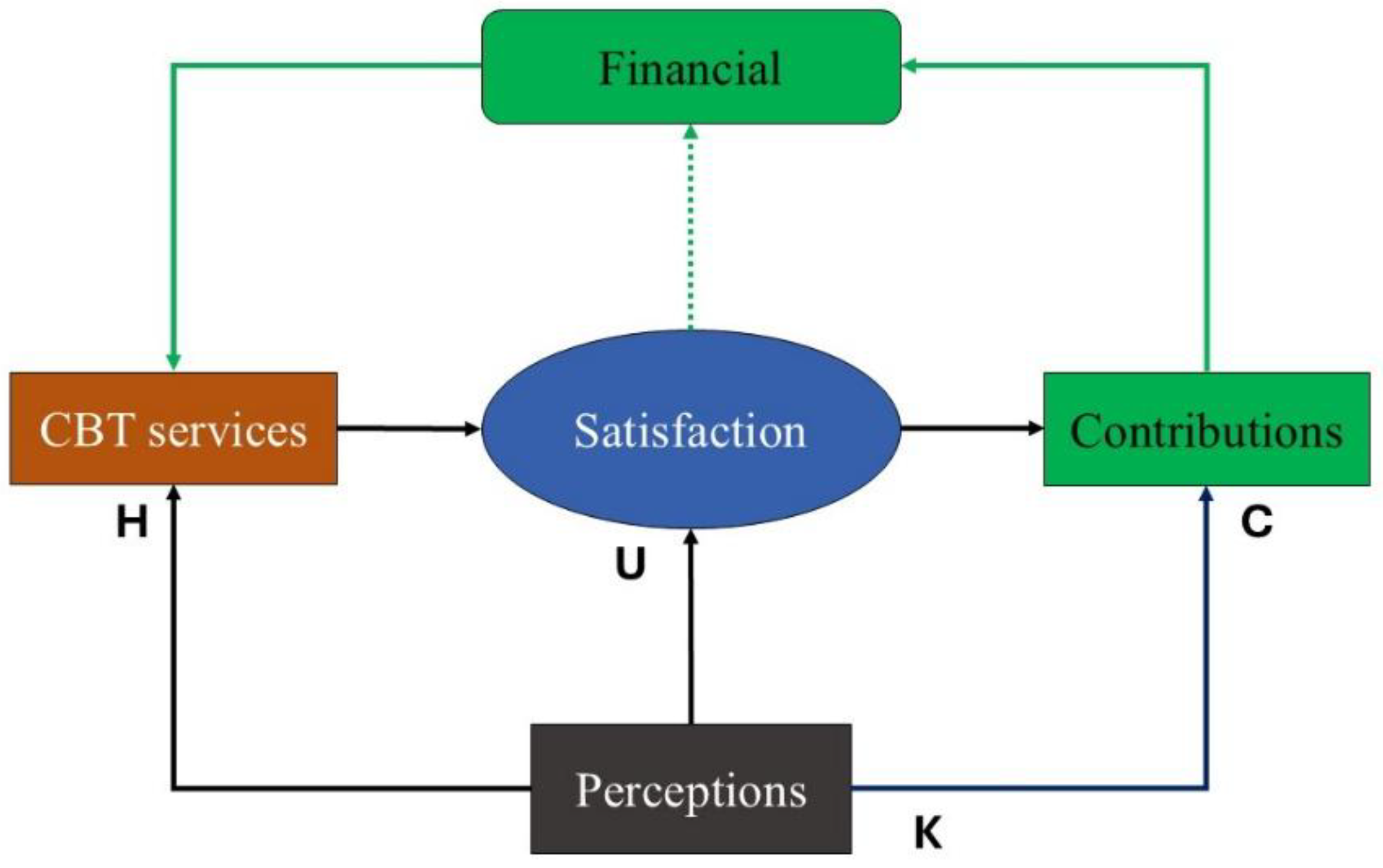
We propose and adopt a conceptual framework of sustainable tourism development, adapted from Culture Tower (Khuc, 2023), the sustainable livelihood framework and service quality theory, to explore the multidimensional interactions between tourists and community-based tourism (CBT) services. This framework examines how financial capital, through service quality improvements, influences tourist satisfaction and ultimately shapes their willingness to pay (WTP) for sustainable tourism development. The framework comprises four interconnected blocks: Knowledge and Perceptions (Block K), Service Quality (Block H), Satisfaction (Block U), and Contribution/Willingness to Pay (Block C), as presented in
Figure 1.
Block K (Knowledge and Perceptions) represents the foundational level of tourist engagement with CBT services. This block encompasses tourists' knowledge, interests, perceptions, and concerns about CBT's services and environmental conditions. It is because tourist knowledge and awareness significantly influence their expectations and subsequent evaluation of tourism experiences (Chen & Tsai, 2007), while environmental awareness and knowledge about local sustainability practices positively affect tourists' perceptions of destination quality and their willingness to support conservation efforts (Pang et al., 2025). Furthermore, tourists who possess greater environmental knowledge and cultural awareness demonstrate higher appreciation for authentic community-based tourism experiences, which shapes their expectations and subsequent satisfaction levels (Jamal et al., 2011).
Block H (Service Quality) represents the operational dimension of CBT services. Service quality in tourism encompasses both the processes of service delivery—such as friendliness, courtesy, efficiency, and reliability—and the outcomes of services, including accommodation quality, food standards, and leisure facilities (Parasuraman et al., 1988). In the CBT context, service quality is fundamentally influenced by financial capital, which determines the capacity of local communities to invest in infrastructure, training, and service improvements (Yanes et al., 2019b). Studies demonstrate that adequate financial resources enable CBT operators to enhance tangible service attributes and improve staff competencies, thereby elevating overall service quality (Abdou et al., 2022; Han & Hyun, 2015). The quality of CBT services directly impacts tourist experiences and plays a crucial mediating role in financial investments and tourist satisfaction outcomes.
Next, positioned at the center of the framework, Block U (Satisfaction) serves as the critical mediating variable that connects service quality with tourists' behavioral intentions. Tourist satisfaction represents the psychological state resulting from the comparison between pre-trip expectations and actual experiences (Oliver, 2010). In sustainable tourism contexts, satisfaction is significantly influenced by service quality dimensions, including responsiveness, assurance, empathy, and tangible service attributes (Abdou et al., 2022). Research consistently demonstrates that higher perceived service quality leads to increased tourist satisfaction, which in turn drives positive word-of-mouth, destination loyalty, and willingness to pay premium prices (Hussain et al., 2023). Moreover, satisfaction mediates the relationship between service quality and tourists' contribution behaviors, as satisfied tourists are more likely to support sustainable tourism initiatives financially and advocate for conservation efforts (Durán-Román et al., 2021).
Block C (Contribution) represents the highest level of tourist engagement, reflecting their willingness to pay for improving CBT services and supporting sustainable tourism development. This block embodies tourists’ financial commitment to destination sustainability and community welfare. It is noted that tourists’ WTP is influenced by multiple factors, including their satisfaction levels, environmental values, and perceptions of how their contributions benefit local communities (Liu & Nguyen, 2025). In addition, tourists are willing to pay premium prices for authentic experiences and eco-friendly services, particularly when they understand that their financial contributions directly support community livelihoods and conservation efforts (Weaver, 1999). Furthermore, tourists who experience high satisfaction and perceive strong service quality exhibit greater WTP for destination improvements, as they recognize the value of preserving tourism resources and supporting local communities.
The interactions among these four blocks reveal the dynamic pathways through which financial capital influences sustainable tourism development. Financial capital enables improvements in CBT service quality, which directly impacts tourist satisfaction. Satisfied tourists, in turn, demonstrate higher willingness to pay for service improvements and sustainability initiatives, creating a virtuous cycle that generates additional financial resources for community development. This cyclical relationship underscores the importance of initial financial investments in service quality, as they catalyze tourist satisfaction and subsequent financial contributions that sustain long-term tourism development. Moreover, tourists' knowledge and perceptions serve as moderating factors that influence how they evaluate service quality and determine their satisfaction levels, ultimately affecting their contribution behaviors.
In summary, this conceptual framework illustrates that sustainable tourism development in CBT contexts depends on strategic financial investments that enhance service quality, foster tourist satisfaction, and stimulate tourists' willingness to contribute financially to destination improvements. Each block interacts dynamically with others, creating feedback loops that either reinforce or hinder sustainable tourism outcomes. This framework helps shape our study’s following sections by providing valuable insights for policymakers and tourism managers seeking to design effective strategies for CBT development that balance economic viability with community welfare and environmental sustainability
4. Methodology
4.1. Culture Tower-Based Approach Integrating PLS-SEM with Bayesian Mindsponge Framework Analysis (CPBM)
In this study, we introduce a novel Culture Tower-based approach integrating PLS-SEM with Bayesian Mindsponge Framework analysis (CPBM) to deepen the understanding of young tourists’ financial contribution behavior to the CBT-CP fund, mediated by their satisfaction with service quality. CPBM builds upon the theoretical foundation of the Bayesian Mindsponge Framework (BMF), a probabilistic framework designed to capture human decision-making processes (Vuong et al., 2020). BMF conceptualizes individuals as information sponges, capable of absorbing, rejecting, or filtering new information based on their mindset, comfort zone, and culturally anchored core values (Vuong & Napier, 2014). Decisions are shaped by both rational and irrational processes, filtered through pre-existing beliefs and cognitive evaluation mechanisms. Within the context of community-based tourism (CBT), BMF provides a robust lens to analyze tourists’ willingness to contribute (WTP), capturing how knowledge, experiences, and perceived utility probabilistically influence their contribution decisions. Additionally, PLS-SEM is recognized as an effective method for exploring and measuring latent variables related to customer satisfaction with service quality in general (Hair et al., 2021). In the CBT context at Lac Village, PLS-SEM enables the identification of latent satisfaction indices derived from tourists’ actual experiences with CBT services. The Culture Tower provides an overarching structure that shapes a sequential pathway from knowledge and experiences to perceived utility and contribution. This integration forms a mixed-methods triangulation, offering strong analytical power to examine complex relationships within community socio-ecological systems, where multiple interacting factors influence outcomes. The approach illustrates how integrated techniques can yield comprehensive insights into normative questions concerning the trade-offs between economic development and sustainability, which are central to responsible tourism development.
The distinctive feature of CPBM lies in its two-step sequential process. First, PLS-SEM is applied to explore the determinants of customer satisfaction with CBT service quality, thereby identifying a latent variable representing overall tourist satisfaction. Second, this latent satisfaction variable, along with other relevant factors, is integrated into the Bayesian Mindsponge model to examine tourists’ probabilistic decision-making regarding contributions to the CBT-CP fund. By leveraging the Bayesian framework and integrating PLS-SEM, CPBM accounts for the inherent uncertainty in human decisions, allows belief updating as new information is processed consistent with the mindsponge mechanism, and provides a comprehensive, multi-layered understanding of how service experiences, satisfaction, and attitudinal factors collectively shape tourists’ willingness to contribute. This framework not only elucidates the pathways from experience to contribution, but also offers practical insights for designing and implementing sustainable, culturally-informed community-based tourism initiatives
4.2. Data Collection
The empirical investigation was carried out in Lac Village, Mai Chau Ward, Phu Tho Province, which serves as a representative example of community-based tourism (CBT) in Vietnam (Khuc et al., 2025). This site was purposively chosen because of its strong alignment with the study objectives and its culturally rich setting, predominantly inhabited by the White Thai ethnic community. The village is well known for its preserved cultural heritage, including traditional stilt houses, brocade weaving, folk performances, and indigenous cuisine, all of which are actively incorporated into local tourism activities. These distinctive features make Lac Village an ideal context for exploring the relationship between tourism development and cultural preservation. Over the past two decades, Lac Village has successfully adopted the core principles of CBT, emphasizing local ownership, active community participation, and a strong commitment to socio-cultural and environmental sustainability. These characteristics are consistent with international CBT models and enhance the site’s relevance for comparative research.
Based on its contextual relevance and educational value, Lac Village was selected as the destination for a field-based learning program organized by the Faculty of Development Economics, University of Economics and Business, Vietnam National University, Hanoi. The two-day field trip, conducted in July 2024, provided students with direct exposure to various aspects of community-based tourism (CBT) and cultural heritage preservation (Khuc et al., 2025). The program aimed to bridge academic theory with local development practices, offering students opportunities to explore real-world economic models, develop analytical and evaluative skills, and enhance teamwork, communication, and presentation competencies. Within this initiative, a targeted research project was conducted to examine young tourists’ perceptions and behaviors related to environmental and cultural sustainability in CBT contexts. Two rounds of data collection were implemented: the first in December 2024 and the second in August 2025. The study focused on university students aged 18 to 24, a demographic group regarded as both an emerging segment of the tourism market and influential cultural transmitters, experiential learners, and potential future consumers of sustainable tourism services. This focus aligns with the broader educational objectives of higher education institutions to foster cultural awareness, national pride, and sustainability-oriented attitudes among younger generations. Beyond exploring tourists’ perceptions and behaviors toward CBT, this study further investigates the relationship between tourists’ satisfaction and the quality of CBT services. This perspective provides valuable insights into how key service quality dimensions, including infrastructure, community management capacity, preservation of local cultural identity, and promotion of distinctive local products, shape overall tourist experiences and influence their willingness to engage in sustainable tourism activities. By integrating service satisfaction assessments with environmental and cultural perception measures, the study offers a comprehensive understanding of the factors influencing young tourists’ participation in CBT initiatives and their support for the Community Culture Preservation and Tourism Development Fund in Lac Village and similar destinations across Vietnam.
Primary data were collected through a combination of online surveys (via Google Forms) and in-person interviews conducted during an evening cultural experience. A total of 275 undergraduate students (aged 18 to 24), all of whom had direct exposure to the tourism environment of Lac Village, provided empirical responses grounded in real-world experience. Although the sample was limited to university students, which may constrain the generalizability of the findings to the broader young tourist population, the exploratory nature of the study presents a unique opportunity to capture the perspectives of the younger generation within an authentic CBT context. The research contributes not only to understanding how young people perceive and engage in shaping a culture of responsible tourism, but also to uncovering critical insights into their satisfaction with CBT service quality. These insights can inform strategies to enhance service delivery and leverage the potential of young tourists as key drivers of sustainable tourism development
4.3. Empirical Models
To empirically examine the factors influencing tourists’ satisfaction and their willingness to contribute to the CBT-CP fund, this study employs CPBM approach through a two-step sequential modeling process based on a set of variables identified from the theoretical review and contextual insights presented in
Section 2. In the first step, the PLS-SEM method is applied to model the latent constructs representing overall satisfaction with the quality of CBT services, derived from tourists’ actual experiences at Lac Village, including dining, accommodation, and cultural activities. In the second step, these latent satisfaction indices, along with additional factors reflecting knowledge, experience, and perceived utility such as perceptions and evaluations of environmental quality, interactions with local residents, and personal financial conditions, are incorporated into a Bayesian model to analyze the probabilistic decision-making processes underlying tourists’ contribution behavior. This sequential approach enables a hierarchical analysis that clarifies how experiential factors, satisfaction levels, and attitudinal components collectively shape tourists’ willingness to contribute to the CBT-CP fund.
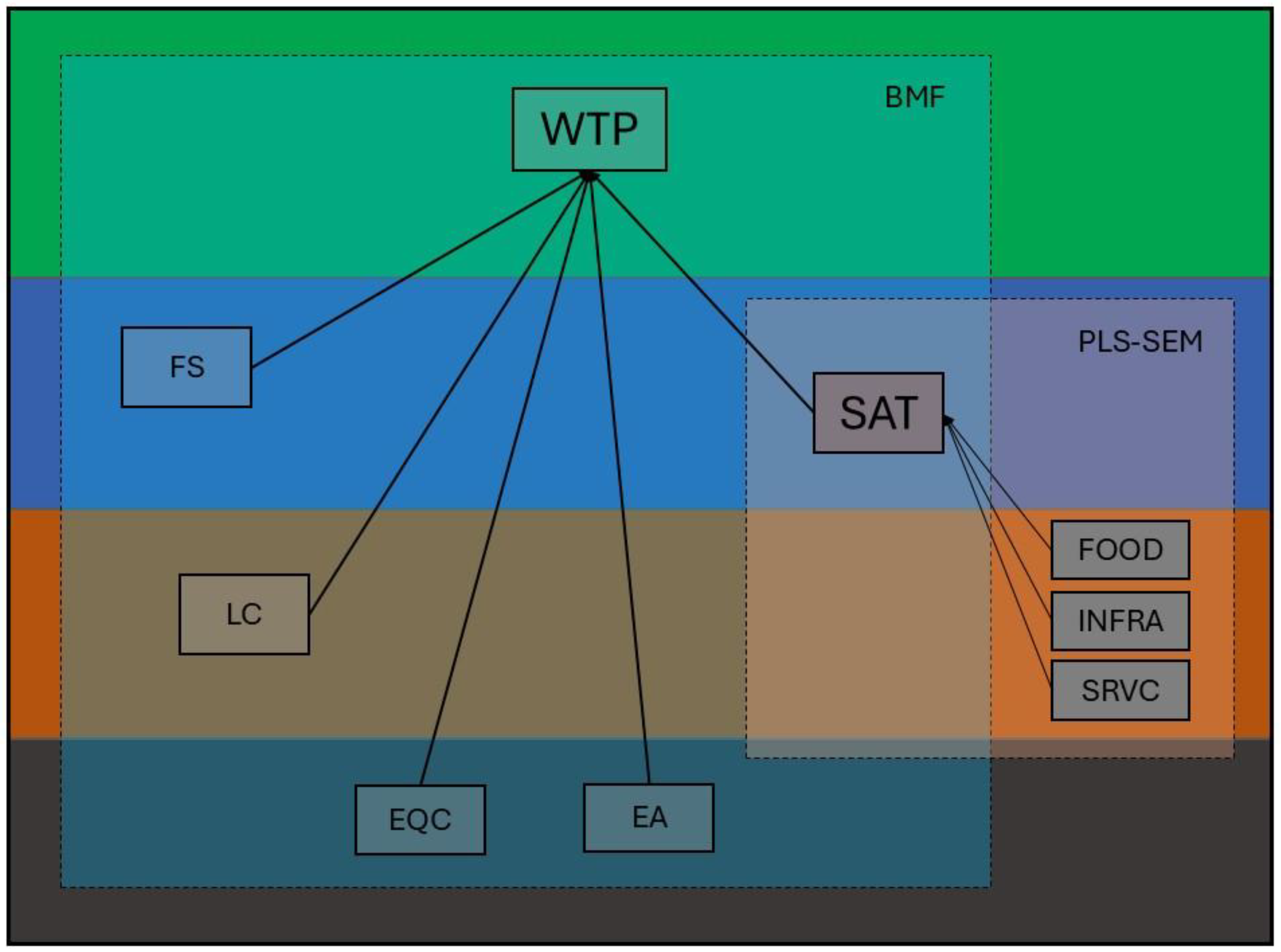
Figure 2 illustrates the overall analytical framework and the relationships among the variables across the two modeling stages
4.3.1. Partial Least Squares Structural Equation Modeling (PLS-SEM)
In the first stage of the CPBM approach, Partial Least Squares Structural Equation Modeling (PLS-SEM) was employed to explore the latent construct representing tourists’ overall satisfaction with the CBT service quality. The satisfaction construct was operationalized as a reflective latent variable measured by three key dimensions: food experience, infrastructure experience, and service experience. These dimensions were identified based on the theoretical framework and prior empirical findings emphasizing that tourists’ satisfaction in community-based tourism (CBT) contexts is multidimensional, encompassing both tangible and intangible aspects of service quality. Each dimension was measured through multiple observed indicators using a five-point Likert scale ranging from “very dissatisfied” to “very satisfied.” The SEM model allowed simultaneous estimation of measurement relationships between indicators and the latent construct, as well as the structural relationships among the constructs, thereby providing a comprehensive understanding of how different aspects of the CBT experience contribute to tourists’ overall satisfaction. The empirical PLS SEM model is presented below.
Model 1:
To ensure the robustness and reliability of the PLS-SEM results, both the measurement and structural models were rigorously validated following established guidelines. Following Henseler et al. (2016), the measurement model was first assessed for internal consistency reliability, convergent validity, and discriminant validity. Cronbach’s alpha and composite reliability (CR) values exceeded the recommended threshold of 0.7, confirming internal consistency among the indicators. Convergent validity was verified through the average variance extracted (AVE), with all constructs achieving values above 0.5, indicating that a substantial proportion of variance was captured by the latent constructs. Discriminant validity was established based on the Fornell–Larcker criterion and the heterotrait-monotrait (HTMT) ratio, where all HTMT values remained below the conservative cut-off of 0.85, confirming satisfactory distinctiveness among constructs. Additionally, collinearity among predictor constructs was tested using the variance inflation factor (VIF), with all values well below 5, confirming the absence of multicollinearity issues. Bootstrapping with 5,000 resamples was conducted to assess the significance of path coefficients, ensuring the stability and robustness of the structural relationships. Overall, the results confirmed that the PLS-SEM model achieved satisfactory levels of reliability, validity, and predictive accuracy, thereby providing a sound basis for subsequent Bayesian analysis in the CPBM approach.
4.3.2. BMF Model
In the second stage of the CPBM approach, a Bayesian Mindsponge Framework (BMF) model was employed to analyze the determinants of tourists’ willingness to pay (WTP) for the CBT community project (CBT-CP). The Bayesian framework was selected due to its ability to incorporate prior information and quantify parameter uncertainty, which is particularly suitable for modeling complex human decision-making processes involving perception, satisfaction, and behavioral intention. The model specification is expressed as follows.
Model 2:
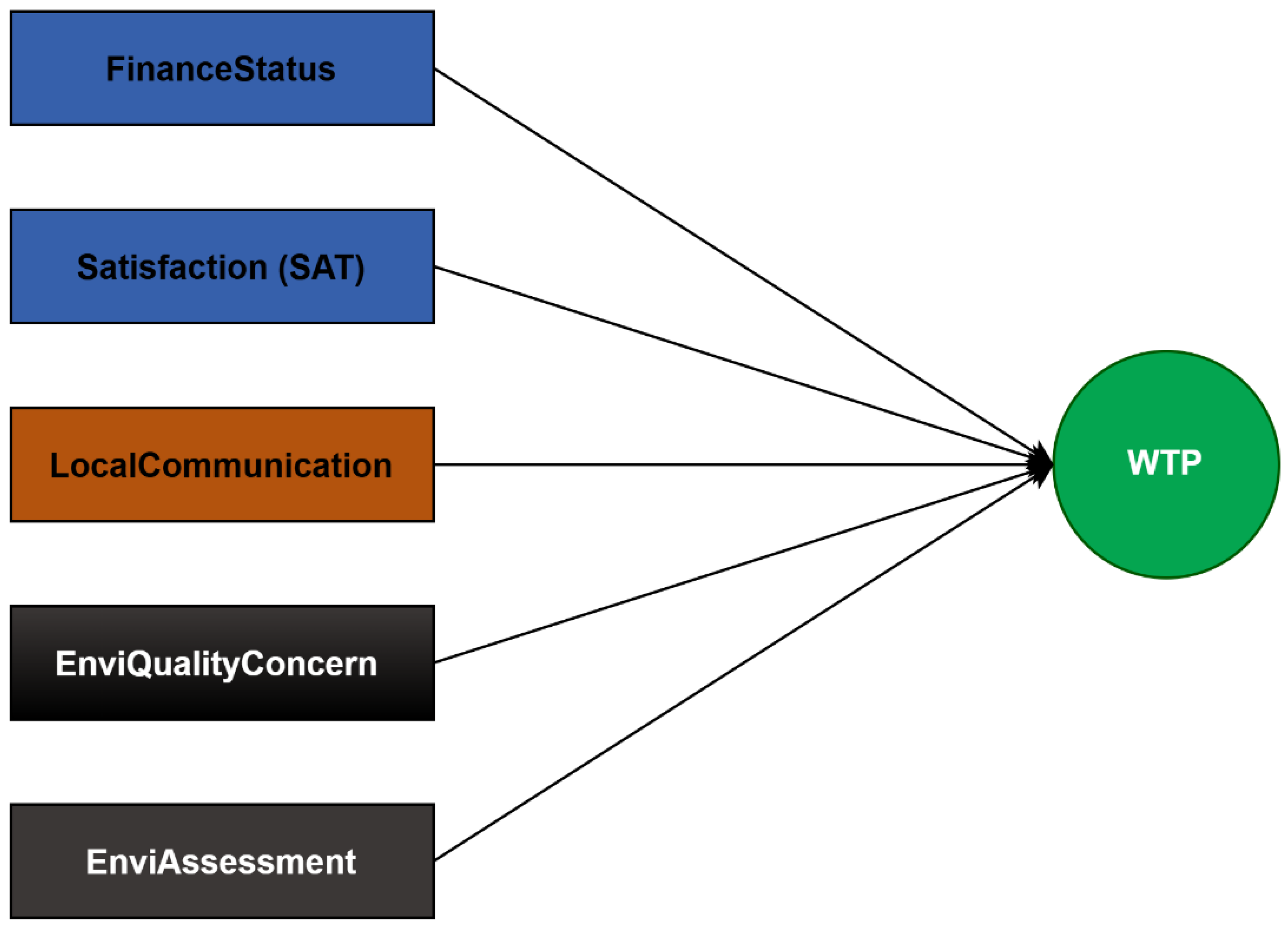
where WTP denotes the tourists’ willingness to pay for the CBT-CP. The variables included in the model capture both psychological and contextual factors that may influence WTP decisions. Satisfaction represents the overall satisfaction level derived from the PLS-SEM results. LocalCommunication measures the extent of interaction between tourists and local residents during their stay. EnviQualityConcern and EnviAssessment capture tourists’ environmental awareness and their evaluations of local environmental quality, respectively. Finally, FinanceStatus reflects respondents’ self-assessed personal financial condition. Detailed descriptions of the variables used in the model are presented in
Table 1 below.
We adopted the Bayesian approach in this study due to its robustness and flexibility in handling complex models grounded in the mindsponge mechanism. This mechanism captures a multifaceted decision-making process that involves information processing, knowledge acquisition, and judgment formation. To effectively model such complexity, parsimonious model structures were constructed to enhance both precision and predictive accuracy. A key advantage of Bayesian inference is its probabilistic treatment of all quantities, including unknown parameters, which makes it particularly suitable for parsimonious and theoretically grounded models (Kruschke, 2021). The application of the Markov Chain Monte Carlo (MCMC) technique further facilitates Bayesian estimation by generating large numbers of iterative samples, allowing efficient fitting of highly complex models. This stochastic sampling process helps satisfy the large-sample requirement for reliable estimation (Baldwin & Fellingham, 2013). Moreover, the Bayesian framework mitigates the replication crisis observed in psychology and social sciences by reducing overreliance on p-values, which are often unstable across samples (Colling & Szűcs, 2021; Gelman, 2015). Finally, by leveraging the integration capability of MCMC and the independence from symmetry assumptions, Bayesian analysis provides accurate estimation even with small sample sizes or asymmetric data distributions (Baldwin & Fellingham, 2013).
5. Results
5.1. Descriptions of CBT Service, Its Quality, Satisfactions and Contributions
To provide a contextual understanding of tourists’ behavioral intentions, this section first presents the descriptive analysis of their willingness to contribute financially to the CBT-CP fund aligns with their satisfaction toward core dimensions of CBT service quality. These descriptive insights offer an essential foundation for interpreting the causal relationships explored in the subsequent inferential models.
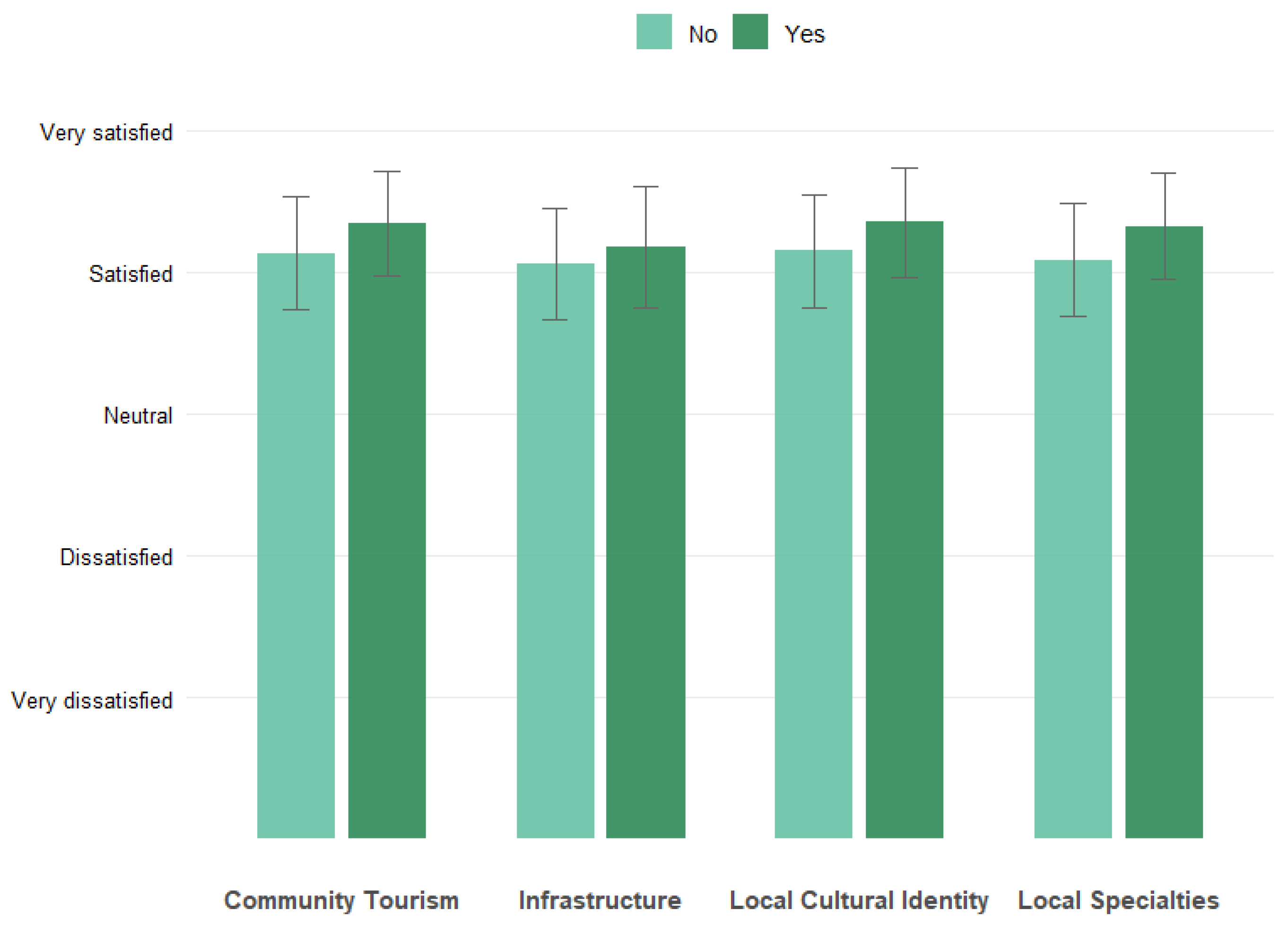
As illustrated in
Figure 3, the differences between respondents who were willing and unwilling to contribute were examined by comparing satisfaction levels across four key dimensions: community-based tourism services quality, infrastructure, and the preservation of local cultural identity and specialties. Overall, respondents who expressed a willingness to contribute reported higher satisfaction across all dimensions, underscoring the pivotal role of positive service experiences in fostering pro-social and pro-environmental behaviors. Among the four dimensions, Local Cultural Identity and Local Specialties achieved the highest satisfaction levels for both groups, reinforcing the central importance of cultural value and local products in shaping memorable and meaningful CBT experiences. Conversely, infrastructure and community-based tourism services showed slightly lower satisfaction scores, indicating the need for improved service coordination and facility enhancement to strengthen tourists’ overall experiences.
Taken together, these descriptive results reveal that tourists’ satisfaction not only reflects perceived service quality but also acts as an important motivational driver of their willingness to contribute to collective community initiatives. The patterns observed here provide preliminary empirical evidence supporting the proposed conceptual model, which posits that service satisfaction and attitudinal, perception, and behavior factors jointly influence tourists’ contribution behaviors toward sustainable community development.
5.2. Results of PLS-SEM (Model 1)
5.2.1. Measurement Model
The results of factor loading are shown in
Table A1 (
Appendix A)
. Overall, the outer loadings for all indicators are above the commonly accepted threshold of 0.7, demonstrating that each observed variable has a high level of correlation with its corresponding latent construct. This suggests that the measurement model has good indicator reliability and that each item effectively reflects its intended latent factor.
The bootstrapped consistency reliability output in
Table 2 shows all three constructs have positive, statistically significant estimates, with 95% CIs that do not include zero. Sample means are slightly above original estimates across the board, suggesting minimal upward bias but overall stability. The results support reliability/consistency of the measured effects, with service-related indicators exerting the most pronounced and reliably estimated influence.
In the given construct reliability results in
Table 3, all constructs meet these thresholds, Cronbach’s alpha values range from 0.918 to 0.948, composite reliability from 0.942 to 0.958, and AVE from 0.743 to 0.863, confirming strong reliability and convergent validity of the measurement model.
To measure the discriminant validity, there are different measures that are used by researchers. However, statistical measures of the heterotrait-monotrait ratio of correlations (HTMT) is widely prevalent among researchers using PLS-SEM as a data analytical tool.
The discriminant validity results of the present research shown in
Table 4 depict that almost all values of HTMT are under the threshold of 0.90. The SRVC-SAT and SAT-INFRA pairs siting near the boundary (SRVC–INFRA = 0.854, SRVC–SAT = 0.900) that ensured by the HTMT inference via bootstrapped that the CI of these pair the upper bound < 1.00 (see
Table A2). So it can be concluded that discriminant validity for the present research has been achieved.
5.2.2. Structural Model
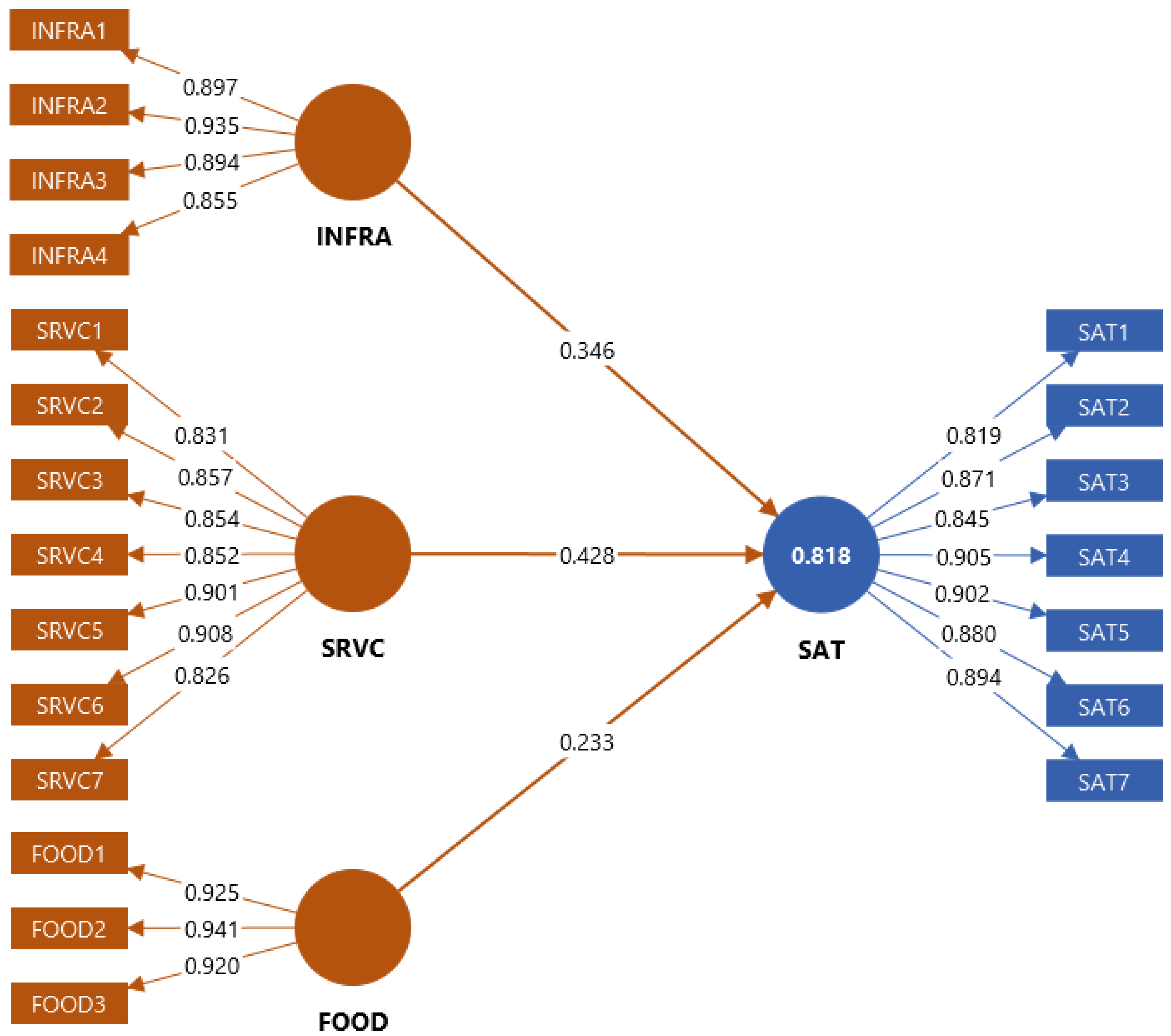
The model explains a substantial share of variance (R² = 0.818). Among the three antecedents, service (SRVC) exerts the strongest association with tourist satisfaction (SAT), while food (FOOD) and infrastructure (INFRA) contributes more modestly (see
Figure 4).
All indicator-level VIFs were < 5 (max 4.84), the f² effects indicate medium contributions of FOOD → SAT (f² = 0.168) and INFRA → SAT (f² = 0.228) and a borderline large effect of SRVC → SAT (f² = 0.335). Global fit is supportive: SRMR = 0.048, while NFI = 0.857 is serviceable; d_ULS and d_G are identical for the saturated and estimated models.
5.3. Results of BMF (Model 2)
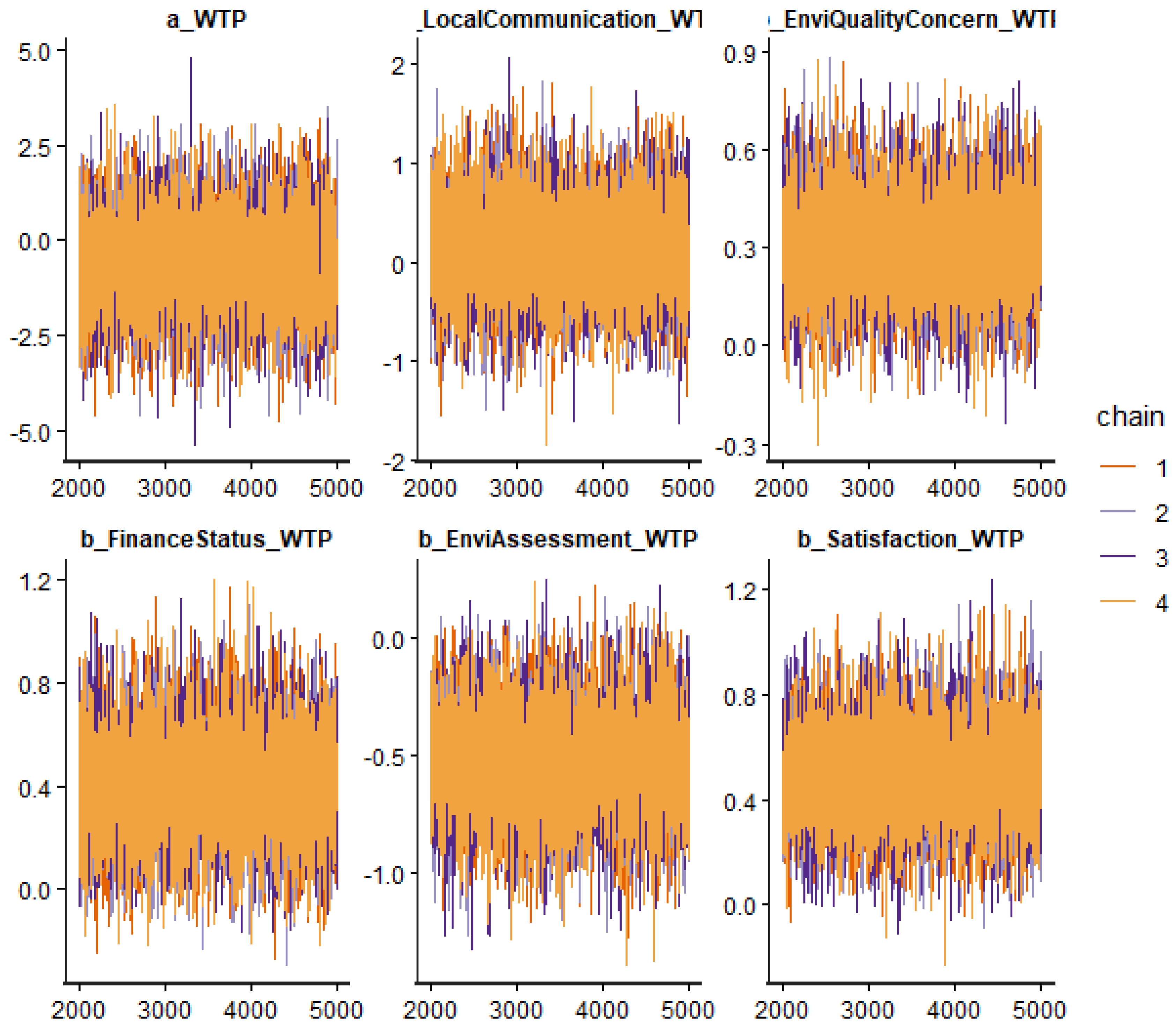
Table 5 provides a breakdown of the factors influencing contribution to improving CBT-CP. In Bayesian estimation, it is essential to verify the convergence of Markov chains to ensure the reliability of simulated posterior draws. The convergence of the Markov chains was evaluated using two standard diagnostics: the effective sample size (n_eff) and the Gelman shrink factor (Rhat). All estimated parameters satisfy the convergence criteria, with n_eff values well above the minimum threshold (the lowest value being 5,694, well above the threshold of 1,000) and Rhat equal to 1 for every coefficient. These results confirm that the Markov chains mixed well and reached stable equilibrium, satisfying the Markov chain central limit theorem. The trace plots further corroborate this stability, displaying rapid oscillations around constant means without visible drift, indicating that the posterior simulations are robust and reliable for interpretation (
Figure 6).
Figure 5 presents the BMF model’s structure, which investigates the intentions of tourists to participate in CBT-CP fund based on their satisfaction, experiences, finances, and environmental concerns
Figure 5.
Factors influencing contribution to improving CBT-CP in study area.
Figure 5.
Factors influencing contribution to improving CBT-CP in study area.
Figure 6.
MCMC trace plot for model convergence.
Figure 6.
MCMC trace plot for model convergence.
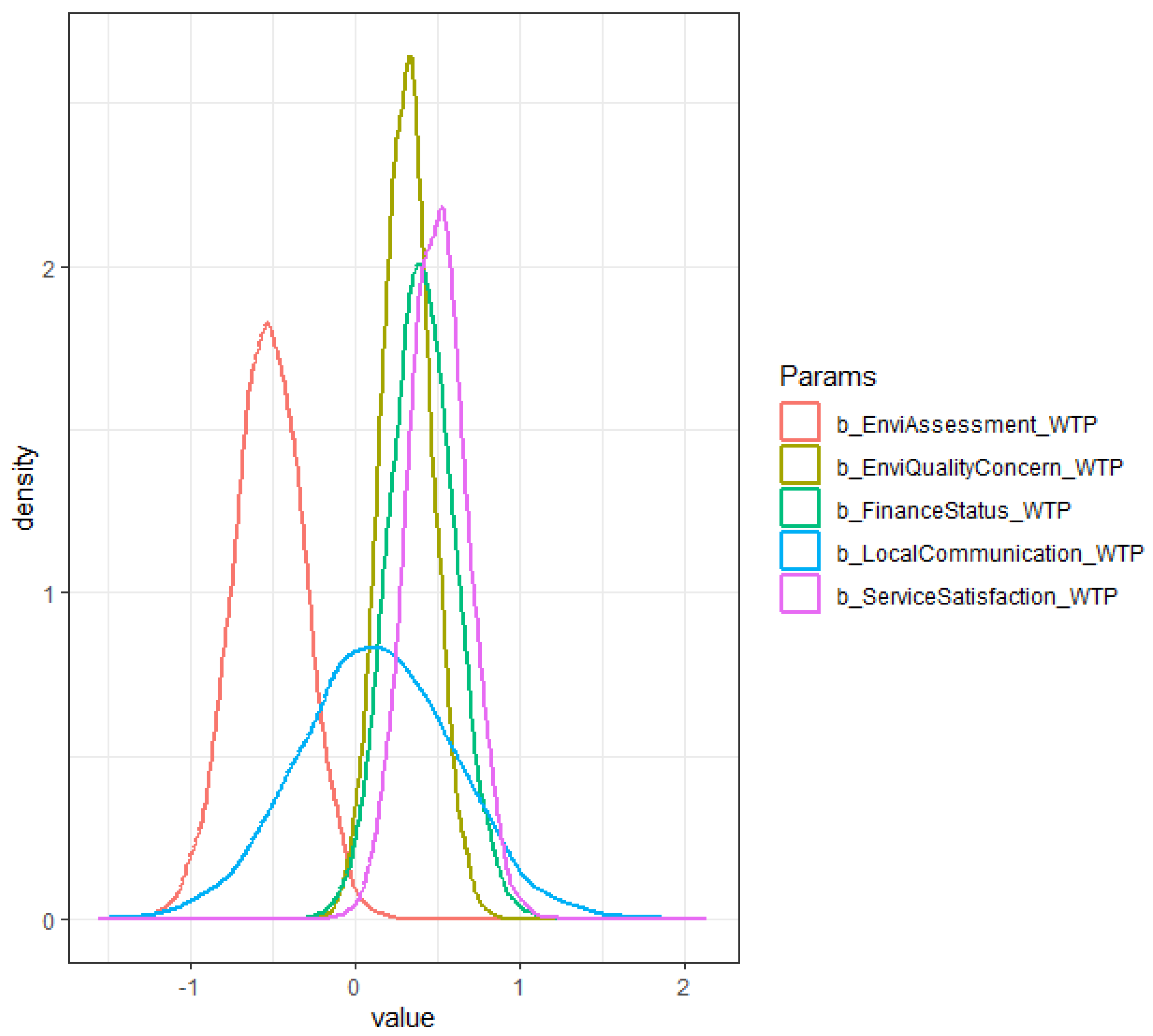
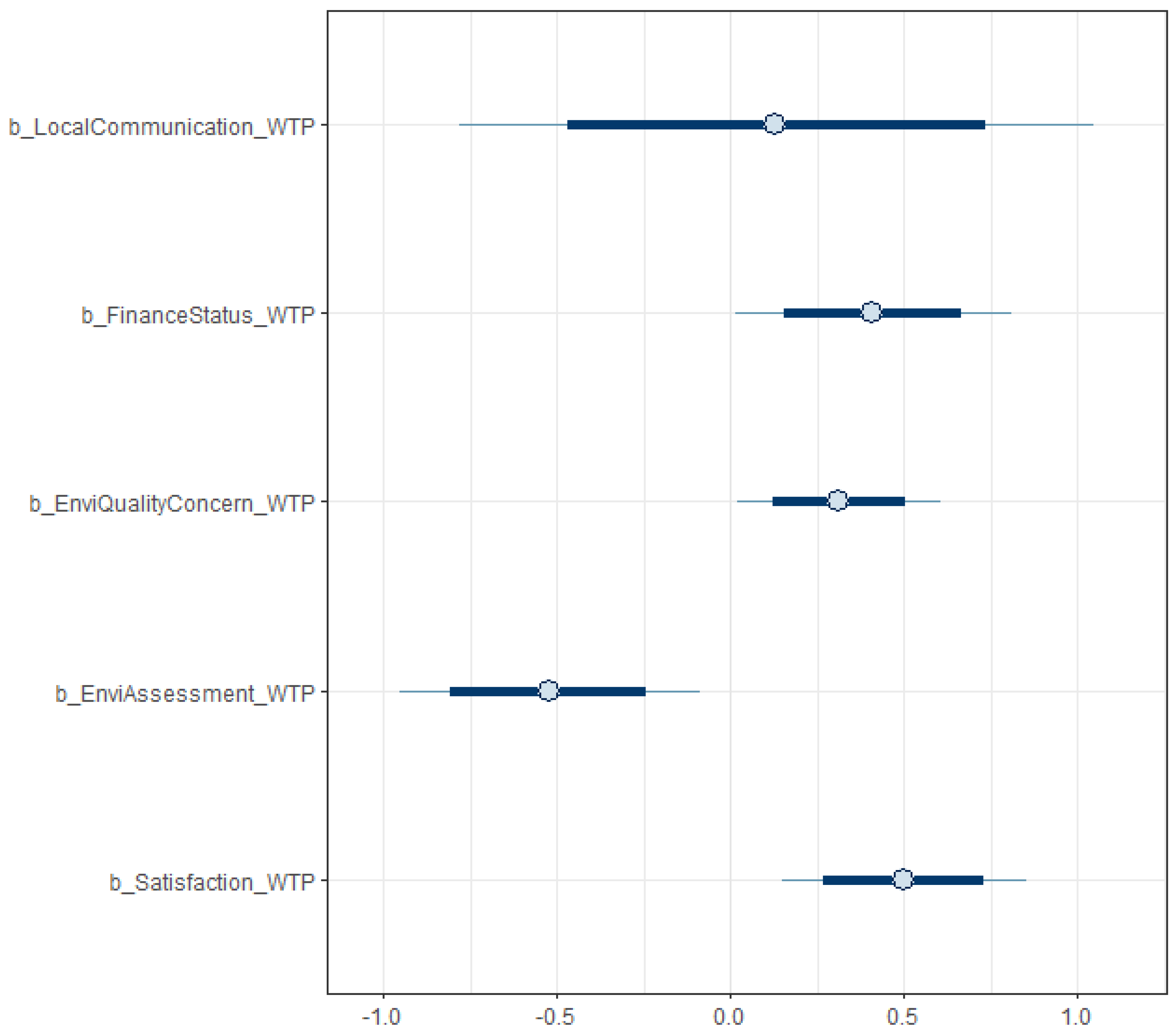
As shown in
Table 5 and
Figure 7, most estimated coefficients have posterior means located on the positive side of the x-axis, indicating that these factors generally increase the probability of tourists’ willingness to contribute to the community-based tourism associated with the cultural preservation fund (CBT-CP). Among them, environmental quality concern (μEnviQualityConcern = 0.31) and financial status (μFinanceStatus = 0.41) show the strongest positive relationships with WTP decisions. This finding suggests that individuals who are more aware of environmental issues and those with better financial capability are more inclined to support cultural preservation through participation in CBT-CP initiatives. The variable EnviAssessment shows a posterior mean entirely located on the negative side of the distribution (μEnviAssessment = -0.52), indicating a significant relationship between tourists’ environmental experiences and their willingness to contribute to the community-based tourism associated with cultural preservation fund (CBT-CP). Tourists who perceive the local environment as polluted or contaminated with plastic waste tend to express a stronger willingness to contribute financially or through participation to restore and maintain the ecological quality of the destination. In contrast, when visitors perceive the surrounding environment as already clean and well-managed, their motivation to further contribute declines, as the perceived need for additional environmental action is lower. In particular, satisfaction with tourism services (μSatisfaction = 0.50) exhibits a positive effect on WTP, implying that a higher level of satisfaction enhances the likelihood of tourists’ engagement in cultural preservation activities. This finding suggests that positive service experiences not only strengthen tourists’ trust in local tourism management but also foster a sense of responsibility and connection to the host community. When visitors perceive that tourism services are reliable, respectful of local culture, and professionally delivered, they are more willing to reciprocate through active financial or behavioral contributions to sustain community-based tourism.
Overall, the findings indicate that tourists’ willingness to contribute to the community-based tourism associated with the cultural preservation fund (CBT-CP) is influenced by multiple interrelated factors, including environmental concern, financial capability, perceived environmental conditions, and service satisfaction. Environmental awareness and financial status show the strongest positive effects, suggesting that both ecological consciousness and economic readiness play vital roles in shaping pro-environmental and cultural support behaviors. Moreover, perceptions of environmental degradation stimulate greater willingness to contribute, reflecting tourists’ sense of responsibility toward restoration and sustainability. Collectively, these results highlight that promoting environmental awareness, improving local service quality, and ensuring transparent fund management are essential strategies to enhance long-term participation in CBT-CP initiatives.
6. Discussions
The tourism sector has emerged as a cornerstone of economic development globally, contributing significantly to GDP growth and employment generation. In Vietnam, tourism accounts for approximately 7% of GDP and creates over 3 million jobs, demonstrating its vital role in the national economy. However, despite this substantial contribution, Vietnamese tourism—including community-based tourism (CBT) initiatives—has not fully capitalized on its revenue-generating potential due to persistent challenges in service quality and infrastructure development. This study's empirical findings offer critical insights into how satisfaction-driven financial mechanisms can unlock untapped revenue streams for CBT sustainability, particularly in culturally rich yet economically constrained settings such as Lac village.
The empirical results reveal a compelling connection between service quality dimensions and tourist satisfaction, which subsequently influences their willingness to pay for CBT service improvements. Specifically, infrastructure quality, food quality, and service delivery emerged as the strongest determinants of tourist satisfaction. These findings resonate with recent research demonstrating that service quality significantly impacts tourist satisfaction and destination competitiveness in community-based settings. It is noted that tangible service attributes, reliability, assurance, and security dimensions substantially influence tourist satisfaction in community tourism contexts, emphasizing that communities must prioritize service quality to ensure sustainable development (Liu & Nguyen, 2025). Similarly, the relationship between service satisfaction and behavioral intentions has been well-documented across diverse tourism contexts, with Abdou et al. (2022) confirming that perceived service quality directly enhances tourist satisfaction, which in turn drives positive word-of-mouth, destination loyalty, and willingness to pay premium prices for sustainable initiatives.
The limited service quality observed in Lac village reflects insufficient investment from both local communities and government entities. Many respondents expressed concerns about inadequate infrastructure, limited service offerings, and suboptimal food quality—collectively diminishing their overall appreciation of the destination's tourism potential. This underinvestment creates a vicious cycle wherein low service quality reduces tourist satisfaction, subsequently limiting revenue generation, which further constrains capacity for service improvements. Breaking this cycle necessitates a strategic injection of financial capital through innovative financing mechanisms. The Public-Private Partnership (PPP) model presents a promising solution to address the substantial capital requirements for infrastructure and service quality enhancement. PPPs have proven effective in Southeast Asian tourism development contexts, as demonstrated in Vietnam's agritourism sector where collaboration between government and private entities has enhanced infrastructure, investment efficiency, and policy integration. Research confirms that PPPs facilitate resource mobilization from private enterprises while ensuring projects remain economically viable, sustainable, and beneficial for local communities and investors alike (Thanh & Lee, 2025). In Vietnam's infrastructure sector, successful PPP implementation requires stable socio-economic environments, transparent legal frameworks, effective risk-sharing mechanisms, and facilitative policy incentives—all critical factors for attracting private investment in CBT development.
The study’s identification of satisfaction as a strong predictor of willingness to pay (WTP) for CBT service improvements offers particularly significant implications for financial sustainability. Tourists who experienced higher satisfaction levels demonstrated greater willingness to contribute financially to destination improvements and cultural preservation initiatives. This finding aligns with Durán-Román et al. (2021), who established that satisfied tourists exhibit elevated WTP for sustainability initiatives, recognizing the value of preserving tourism resources and supporting local communities. The positive association between satisfaction and WTP creates a virtuous cycle: enhanced service quality increases satisfaction, which stimulates financial contributions, thereby generating additional resources for community development and further service improvements. This mechanism provides a pathway for mobilizing young tourists' untapped funding potential—a demographic segment increasingly oriented toward experiential, authentic, and sustainability-focused travel experiences.
Furthermore, the study suggests that environmental quality concerns and financial status represent the strongest positive influences on tourists' WTP decisions. Tourists with heightened environmental awareness and better financial capability demonstrate greater inclination to support cultural preservation through CBT participation. This finding underscores the importance of targeting environmentally conscious and financially capable tourist segments while simultaneously cultivating environmental awareness among broader visitor populations. Interestingly, tourists who perceived environmental degradation or pollution expressed stronger willingness to contribute toward environmental restoration, reflecting a sense of responsibility toward sustainability. This suggests that transparent communication about environmental challenges and conservation needs can actually enhance contribution behaviors, provided tourists trust that their contributions will be effectively utilized.
The integration of these findings into a coherent framework offers several theoretical and practical contributions. First, this research advances understanding of financial sustainability in CBT contexts by demonstrating how satisfaction-driven mechanisms can mobilize tourist funding for service improvements. Unlike traditional approaches relying solely on government subsidies or donor assistance, this satisfaction-WTP pathway offers a more sustainable, market-based financing solution that aligns tourist preferences with community development needs. Second, the study contributes methodologically by employing a novel Culture Tower-based approach integrating PLS-SEM with Bayesian Mindsponge Framework analysis (CPBM). This mixed-methods triangulation provides robust analytical power for investigating complex relationships in community-based socio-ecological systems, where multiple interacting factors influence outcomes. The methodological approach demonstrates how integrated techniques can yield comprehensive insights into normative questions about trade-offs between economic development and sustainability—questions that are central to responsible tourism development.
Third, the research offers practical implications for tourism managers, policymakers, and community stakeholders. Improving tourist satisfaction through strategic investments in infrastructure, food quality, and service delivery should be prioritized as the primary mechanism for enhancing CBT financial sustainability. However, achieving these improvements requires coordinated action across multiple stakeholders. Local governments must strengthen institutional capacity, establish transparent fund management systems, and create enabling policy environments that facilitate PPP engagement. Private sector actors should be incentivized to invest in CBT through risk-sharing mechanisms, preferential financing arrangements, and opportunities for sustainable returns. Meanwhile, community members require capacity-building support to enhance service delivery skills, hospitality management capabilities, and environmental stewardship practices.
The findings also suggest that “one-size-fits-all” policies would be inappropriate for CBT development. Rather, context-specific, constantly improved policies are needed to address the unique conditions and constraints facing different communities. In Lac village's case, priority interventions should focus on infrastructure modernization, hospitality training programs, food safety and quality enhancement, and environmental conservation initiatives—all while preserving the authentic cultural experiences that constitute the destination's primary attraction. Balancing modernization with cultural authenticity represents a delicate challenge requiring careful stakeholder consultation and community-led decision-making processes.
This study has some limitations that should be noted. First, the study’s focus on university students aged 18-24 may limit generalizability to broader tourist populations, although this demographic represents a growing and influential market segment with substantial future tourism consumption potential. Second, the modest sample size, while adequate for exploratory PLS-SEM analysis, should be expanded in future research to improve statistical robustness and enable more nuanced subgroup analyses. Third, the cross-sectional design captures relationships at a single time point, precluding causal inference or assessment of how satisfaction-WTP relationships evolve as service improvements are implemented. Longitudinal research designs tracking tourists' perceptions and behaviors over multiple visits would provide valuable insights into the dynamic processes underlying sustainable CBT development.
Despite these limitations, this research makes substantial contributions to both academic understanding and practical strategies for sustainable tourism development. The findings demonstrate that improving tourist satisfaction represents a strategic lever for enhancing CBT financial sustainability, creating win-win outcomes for tourists, communities, and the environment. By identifying actionable pathways for mobilizing tourist funding through satisfaction enhancement, this study offers evidence-based guidance for destinations seeking to balance economic viability with cultural preservation and environmental protection. As global tourism increasingly shifts toward responsible, authentic, and sustainability-oriented experiences, community-based destinations like Lac village are well-positioned to capitalize on these trends—provided they can overcome current service quality and investment constraints through innovative financing mechanisms and strategic stakeholder partnerships.
7. Conclusion and Policy Implications
This study aims to address the critical financial constraints limiting the development of Vietnam’s Community-Based Tourism (CBT), with a specific focus on Lac village. By integrating the Culture Tower framework with the Bayesian Mindsponge Framework (BMF) and applying PLS-SEM methodology, this research systematically identifies the determinants of tourists’ willingness to pay (WTP) and satisfaction, offering a robust, evidence-based roadmap for enhancing financial sustainability while preserving cultural authenticity and environmental integrity.
Several key findings emerge from this investigation. First, tourist satisfaction positively and significantly influences WTP for service improvements, establishing a vital market-based financing mechanism beyond traditional subsidies. This finding underscores that improving satisfaction is the strategic lever for enhancing financial standing and creating mutually beneficial outcomes for both tourists and local communities. Second, service quality, food quality, and infrastructure emerge as critical determinants of satisfaction. Strategic investments must prioritize enhancing service quality through staff training and cultural interpretation, improving food quality via hygiene standards and authentic local cuisine, and implementing judicious infrastructure modernization in accommodation, sanitation, and connectivity. Critically, these enhancements must be managed carefully to avoid compromising the destination's unique traditional character. Third, environmental quality and tourists' financial status significantly influence WTP, underscoring the need for transparent and robust governance mechanisms, such as the CBT-CP fund model, to collect and deploy tourist contributions effectively toward preservation efforts. Fourth, in alignment with the Culture Tower framework (Khuc, 2023) and SM3D knowledge management theory (Vuong et al., 2022), fostering a responsible travel culture represents a long-term strategic investment with substantial potential to improve financial outcomes. This requires educating tourists about local heritage and vulnerabilities, incentivizing responsible behavior, and designing destination systems that facilitate such practices. However, this transformation demands sustained effort, time, and disciplined implementation to turn this vision into reality. Fifth, the Bayesian Mindsponge Framework has proven to be a powerful methodological approach, as it effectively unravels the complex interactions and relationships between factors influencing tourist satisfaction and WTP, providing nuanced insights that traditional methods might overlook.
Based on these findings, several policy recommendations are proposed. For example, local authorities must prioritize strategic, coordinated investments in quality improvements through Public-Private Partnerships (PPP) to mobilize capital and expertise effectively. Wise management is essential to coordinate these investments and maximize their effectiveness. Establishing transparent CBT-CP fund management systems is crucial for building trust and ensuring resources are directed toward community benefits and environmental conservation. Marketing strategies should be enhanced to attract financially capable and environmentally conscious tourists through authentic cultural portrayals that resonate with responsible travel values. Additionally, capacity-building programs must be implemented for community members in service delivery, entrepreneurship, and environmental stewardship to ensure long-term sustainability. An adaptive, context-specific policy approach is essential, rather than a “one-size-fits-all” strategy, to navigate the complexities of CBT development across diverse communities and contexts. This research demonstrates that by enhancing tourist satisfaction through targeted improvements in service, food, infrastructure, and environmental quality, destinations like Lac Village can position themselves to capitalize on global shifts toward responsible, authentic tourism experiences. With these insights and contributions, this study provides policymakers, practitioners, and community leaders with a comprehensive framework for fostering sustainable Community-Based Tourism development in Vietnam and beyond in the years to come.
Author Contributions
Conceptualization, V.Q.K.; Methodology, V.Q.K., D.N.D., N.K.S.H; Validation, V.Q.K.; Formal analysis, V.Q.K., D.N.D., N.K.S.H; Resources, V.Q.K.; Data curation, V.Q.K.; Writing—original draft, V.Q.K., D.N.D. N.K.S.H; Writing—review and editing, V.Q.K., D.N.D. N.K.S.H.; Project administration, V.Q.K. All authors have read and agreed to the published version of this manuscript.
Funding
This research received no external funding.
Informed Consent Statement
Informed Consent Statement: Informed consent was obtained from all subjects involved in the study. Written informed consent has been obtained from the patients to publish this paper.
Data Availability Statement
The datasets utilized in the present investigation can be obtained from the corresponding author upon reasonable request.
Acknowledgments
We would like to thank all participants who assisted us with the data collection for this study.
Conflicts of Interest
The authors declare no conflicts of interest.
Abbreviations
The following abbreviations are used in this manuscript:
| CBT |
Community-based tourism |
| CBT-CP |
Community-based tourism linked to cultural heritage preservation |
| PLS-SEM |
Partial Least Squares Structural Equation Modeling |
| BMF |
Bayesian Mindsponge Framework |
| WTP |
Willingness-to-pay |
Appendix A
Appendix A.1
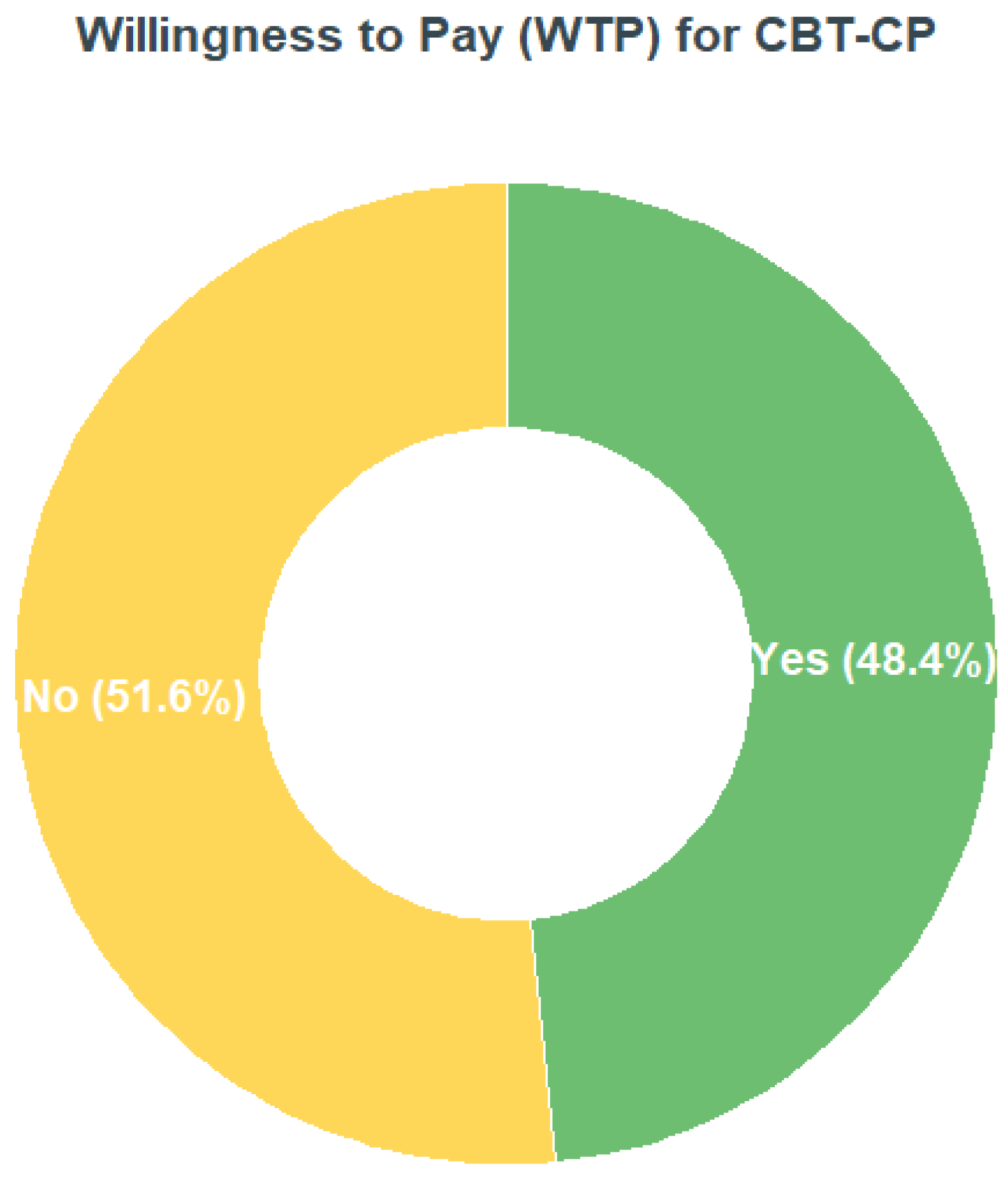
Figure A1.
Tourists’ Willingness to Pay (WTP) for the Community-Based Tourism Community Project (CBT-CP).
Figure A1.
Tourists’ Willingness to Pay (WTP) for the Community-Based Tourism Community Project (CBT-CP).
Figure A2.
Posterior interval plot of key parameters.
Figure A2.
Posterior interval plot of key parameters.
Table A1.
Indicator reliability result.
Table A1.
Indicator reliability result.
| Variable |
Meaning |
Outer loadings |
|
| Food evaluation |
| FOOD1 |
Delicious food |
0.925 |
|
| FOOD2 |
Clean food |
0.941 |
|
| FOOD3 |
Diverse food |
0.920 |
|
| Infrastructure evaluation |
| INFRA1 |
Nice and wide road to the village |
0.897 |
|
| INFRA2 |
Beautiful and spacious house on stilts |
0.935 |
|
| INFRA3 |
Fully equipped with electricity and water |
0.894 |
|
| INFRA4 |
Good internet |
0.855 |
|
| Service evaluation |
| SRVC1 |
Diverse tourist entertainment services |
0.831 |
|
| SRVC2 |
Interesting and rewarding local cultural experiences |
0.857 |
|
| SRVC3 |
Good electric car service |
0.854 |
|
| SRVC4 |
Good photography service |
0.852 |
|
| SRVC5 |
Professional service people |
0.901 |
|
| SRVC6 |
Reasonable and affordable service price |
0.908 |
|
| SRVC7 |
Scenery/landscape |
0.826 |
|
| Tourist Satisfaction |
| SAT1 |
Satisfied with the food |
0.819 |
|
| SAT2 |
Satisfied with the photography service |
0.871 |
|
| SAT3 |
Satisfied with the tram service |
0.845 |
|
| SAT4 |
Satisfied with the tour guide |
0.905 |
|
| SAT5 |
Satisfied with the unique local culture |
0.902 |
|
| SAT6 |
Satisfied with the singing and campfire service |
0.880 |
|
| SAT7 |
Satisfied with the quality of accommodation |
0.894 |
|
Table A2.
Bootstrapped Heterotrait-monotrait ratio result.
Table A2.
Bootstrapped Heterotrait-monotrait ratio result.
| |
Original sample (O) |
Sample mean (M) |
2.5% |
97.5% |
| INFRA <-> FOOD |
0.668 |
0.668 |
0.547 |
0.777 |
| SAT <-> FOOD |
0.767 |
0.767 |
0.684 |
0.841 |
| SAT <-> INFRA |
0.887 |
0.887 |
0.834 |
0.932 |
| SRVC <-> FOOD |
0.682 |
0.681 |
0.570 |
0.778 |
| SRVC <-> INFRA |
0.854 |
0.854 |
0.779 |
0.916 |
| SRVC <-> SAT |
0.900 |
0.899 |
0.843 |
0.943 |
References
- Abdou, A. H., Mohamed, S. A. K., Khalil, A. A. F., Albakhit, A. I., & Alarjani, A. J. N. (2022). Modeling the relationship between perceived service quality, tourist satisfaction, and tourists’ behavioral intentions amid COVID-19 pandemic: Evidence of yoga tourists’ perspectives. Frontiers in Psychology, 13, 1003650. [CrossRef]
- Achmad, F., Prambudia, Y., & Rumanti, A. A. (2023). Sustainable Tourism Industry Development: A Collaborative Model of Open Innovation, Stakeholders, and Support System Facilities. IEEE Access, 11(3), 83343–83363. [CrossRef]
- Ali, A., & Shedayi, A. A. (2023). Willingness to pay as an economic instrument for managing nature-based tourism in Gilgit-Baltistan, Pakistan. Environment, Development and Sustainability, 27, 1–20. [CrossRef]
- Ali, M., Puah, C.-H., Ayob, N., & Raza, S. A. (2020). Factors influencing tourist’s satisfaction, loyalty and word of mouth in selection of local foods in Pakistan. British Food Journal, 122(6), 2021–2043. [CrossRef]
- Bajrami, D. D., Radosavac, A., Cimbaljević, M., Tretiakova, T. N., & Syromiatnikova, Y. A. (2020). Determinants of residents’ support for sustainable tourism development: Implications for rural communities. Sustainability (Switzerland), 12(22), 1–16. [CrossRef]
- Baldwin, S. A., & Fellingham, G. W. (2013). Bayesian methods for the analysis of small sample multilevel data with a complex variance structure. Psychological Methods, 18(2), 151–164. [CrossRef]
- Basak, D., Bose, A., Roy, S., Chowdhury, I. R., & Sarkar, B. C. (2021). Understanding sustainable homestay tourism as a driving factor of tourist’s satisfaction through structural equation modelling: A case of Darjeeling Himalayan region, India. Current Research in Environmental Sustainability, 3, 100098. [CrossRef]
- Batool, N., Wani, M. D., Shah, S. A., & Dada, Z. A. (2025). Tourists’ attitude and willingness to pay on conservation efforts: evidence from the west Himalayan eco-tourism sites. Environment, Development and Sustainability, 27, 18933–18951. [CrossRef]
- Blamey, R. (1998). Contingent valuation and the activation of environmental norms. Ecological Economics, 24(1), 47–722. [CrossRef]
- Burbano, D. V., Valdivieso, J. C., Izurieta, J. C., Meredith, T. C., & Ferri, D. Q. (2022). “Rethink and reset” tourism in the Galapagos Islands: Stakeholders’ views on the sustainability of tourism development. Annals of Tourism Research Empirical Insights, 3(2), 100057. [CrossRef]
- Butler, R. W. (1999). Sustainable tourism: A state-of-the-art review. An International Journal of Tourism Space, Place and Environment, 1(1), 7–25. [CrossRef]
- Campbell, D. (2007). Willingness to Pay for Rural Landscape Improvements: Combining Mixed Logit and Random-Effects Models. Journal of Agricultural Economics, 58(3), 467–483. [CrossRef]
- Chen, C.-F., & Tsai, D. (2007). How destination image and evaluative factors affect behavioral intentions? Tourism Management, 28(4), 1115–1122. [CrossRef]
- Colling, L. J., & Szűcs, D. (2021). Statistical Inference and the Replication Crisis. Review of Philosophy and Psychology, 12, 121–147. [CrossRef]
- Dai, S., Zhang, P., Li, S., & Xu, H. (2025). Environmental communication in wildlife tourism: narrative framing and emotion effect on the willingness to pay for a destination. Journal of Sustainable Tourism, 33(7), 1476–1492. [CrossRef]
- Dias, Á., Viana, J., & Pereira, L. (2024). Barriers and policies affecting the implementation of sustainable tourism: the Portuguese experience. Journal of Policy Research in Tourism, Leisure and Events, 1–19. [CrossRef]
- Doan, C. M. (2019). Phát triển du lịch cộng đồng theo hướng bền vững (Phần 1) [Developing Community-Based Tourism toward Sustainability (Part 1)]. Cục Du Lịch Quốc Gia Việt Nam [Vietnam National Authority of Tourism]. http://vietnamtourism.gov.vn/post/29392.
- Durán-Román, J. L., Cárdenas-García, P. J., & Pulido-Fernández, J. I. (2021a). Tourists’ willingness to pay to improve sustainability and experience at destination. Journal of Destination Marketing & Management, 19, 100540. [CrossRef]
- Durán-Román, J. L., Cárdenas-García, P. J., & Pulido-Fernández, J. I. (2021b). Tourists’ willingness to pay to improve sustainability and experience at destination. Journal of Destination Marketing & Management, 19, 100540. [CrossRef]
- Erol, I., Neuhofer, I. O., True), T. D. (Dr., Oztel, A., Searcy, C., & Yorulmaz, A. (2022). Improving sustainability in the tourism industry through blockchain technology: Challenges and opportunities. Tourism Management, 92, 104628. [CrossRef]
- Estrada, M., Moliner, M. Á., Monferrer, D., & Vidal, L. (2024). Sustainability and local food at tourist destinations: a study from the transformative perspective. Journal of Sustainable Tourism, 32(5), 1008–1026. [CrossRef]
- Gelman, A. (2015). The Connection Between Varying Treatment Effects and the Crisis of Unreplicable Research: A Bayesian Perspective. Journal of Management, 41(2), 632–643. [CrossRef]
- Gupta, S., & Mishra, O. N. (2022). Tourist participation, well-being and satisfaction: the mediating roles of service experience and tourist empowerment. Current Issues in Tourism, 26(16), 2613–2628. [CrossRef]
- Hair, J. F., Hult, G. T. M., Ringle, C. M., & Sarstedt, M. (2021). A Primer on Partial Least Squares Structural Equation Modeling (PLS-SEM) (3rd ed.). Sage Publications.
- Han, H., & Hyun, S. S. (2015). Customer retention in the medical tourism industry: Impact of quality, satisfaction, trust, and price reasonableness. Tourism Management, 46, 20–29. [CrossRef]
- Henseler, J., Hubona, G., & Ray, P. A. (2016). Using PLS path modeling in new technology research: updated guidelines. Industrial Management & Data Systems, 116(1), 2–20. [CrossRef]
- Herranz, J., Jackson, M. R., Kabwasa-Green, F., & Swenson, D. (2004). Community based cultural tourism: Findings from the US. Sustainable Tourism, 191–198.
- Higgins-Desbiolles, F. (2018). Sustainable tourism: Sustaining tourism or something more? Tourism Management Perspectives, 25, 157–160. [CrossRef]
- Homburg, C., Koschate, N., & Hoyer, W. D. (2005). Do Satisfied Customers Really Pay More? A Study of the Relationship between Customer Satisfaction and Willingness to Pay. Journal of Marketing, 69(2), 84–96. [CrossRef]
- Huang, T.-Y. (Tim), Chen, J. S., & Ramos, W. D. (2023). Slow tourism: the relationship between tourists’ slow food experiences and their quality of life. Tourism Review, 78(1), 159–176. [CrossRef]
- Hussain, A., Li, M., Kanwel, S., Asif, M., Jameel, A., & Hwang, J. (2023). Impact of Tourism Satisfaction and Service Quality on Destination Loyalty: A Structural Equation Modeling Approach concerning China Resort Hotels. Sustainability (Switzerland), 15(9). [CrossRef]
- Jamal, Salamiah A, Othman, Nor’Ain, & Nik Maheran Nik Muhammad, . (2011). Tourist perceived value in a community-based homestay visit: An investigation into the functional and experiential aspect of value. Journal of Vacation Marketing, 17(1), 5–15. [CrossRef]
- Kanwal, S., Rasheed, M. I., Pitafi, A. H., Pitafi, A., & Ren, M. (2020). Road and transport infrastructure development and community support for tourism: The role of perceived benefits, and community satisfaction. Tourism Management, 77, 104014. [CrossRef]
- Khan, M. R., Khan, H. U. R., Lim, C. K., Tan, K. L., & Ahmed, M. F. (2021). Sustainable Tourism Policy, Destination Management and Sustainable Tourism Development: A Moderated-Mediation Model. Sustainability, 13(21), 12156. [CrossRef]
- Khuc, V. Q. (2023). Culture Tower. SSRN. [CrossRef]
- Khuc, V. Q., Doan, D. N., Nguyen, A. T., Hoang, K. L., Le, K. C., Tran, T. T., Le, D. H., Nguyen, T. H., Tran, T. Q. T., & Doan, P. T. (2025). Exploring Youth Tourists’ Perceptions and Willingness to Pay for Improving Community-Based Tourism Associated with Cultural Preservation in Vietnam. Tourism and Hospitality, 6(4), 219. [CrossRef]
- Kruschke, J. K. (2021). Bayesian Analysis Reporting Guidelines. Nature Human Behaviour, 5, 1282–1291. [CrossRef]
- Liang, A. R.-D., Tung, W., Wang, T.-S., & Hui, V. W. (2023). The use of co-creation within the community-based tourism experiences. Tourism Management Perspectives, 48, 101157. [CrossRef]
- Liu, C.-H., & Nguyen, H. T. N. (2025). The impact of a friendly tourism environment on tourists’ willingness to pay more: a comparative study. Tourism Review. [CrossRef]
- Müllera, S., Hucka, L., & Markovab, J. (2020). Sustainable community-based tourism in cambodia and tourists’ willingness to pay. Austrian Journal of South-East Asian Studies, 13(1), 81–101. [CrossRef]
- Ngo, T. H., & Creutz, S. (2021). Assessing the sustainability of community-based tourism: a case study in rural areas of Hoi An, Vietnam. Cogent Social Sciences, 8(1). [CrossRef]
- Nguyen, Q. N., Mai, V. N., & Hoang, T. H. L. (2024). Explaining Tourist Satisfaction With Community-Based Tourism in the Mekong Delta Region, Vietnam. Geojournal of Tourism and Geosites, 56(4), 1661–1670. [CrossRef]
- Okazaki, E. (2008). A Community-Based Tourism Model: Its Conception and Use. Journal of Sustainable Tourism, 16(5), 511–529. [CrossRef]
- Oliver, R. L. (2010). Satisfaction: A Behavioral Perspective on the Consumer (2nd Editio). Routledge. [CrossRef]
- Pang, Q., Wu, H., Qiu, R. T. R., Long, Q., & Bao, J. (2025). Tourists’ willingness to pay for pro-poor tourism income distribution: Evidence from revealed and stated preference experiments. Tourism Management, 111, 105222. [CrossRef]
- Parasuraman, A., Zeithaml, V. A., & Berry, L. L. (1988). SERVQUAL: A multiple-item scale for measuring consumer perceptions of service quality. In Journal of Retailing (Vol. 64, Issue 1, pp. 12–40). Elsevier Science.
- Perić, G., Dramićanin, S., & Gašić, M. (2020). Impact of service quality on satisfaction and loyalty of tourists in rural tourism of Šumadija and Western Serbia. Ekonomika Poljoprivrede, 67(4), 1071–1086. [CrossRef]
- Quyết Định Số 1719/QĐ-TTg [Decision No. 1719/QĐ–TTg] (2021). http://dx.doi.org/10.1016/j.neuropsychologia.2015.07.010%0Ahttp://dx.doi.org/10.1016/j.visres.2014.07.001%0Ahttps://doi.org/10.1016/j.humov.2018.08.006%0Ahttp://www.ncbi.nlm.nih.gov/pubmed/24582474%0Ahttps://doi.org/10.1016/j.gaitpost.2018.12.007%0Ahttps:.
- Quyết Định Số 3222/QĐ-BVHTTDL [Decision No. 3222/QĐ/BVHTTDL], Government of Vietnam (2024). https://ci.nii.ac.jp/naid/40021859078/.
- Rousta, A., & Jamshidi, D. (2019). Food tourism value: Investigating the factors that influence tourists to revisit. Journal of Vacation Marketing, 26(1), 73–95. [CrossRef]
- Scott, D. (2021). Sustainable tourism and the grand challenge of climate change. Sustainability (Switzerland), 13(4), 1–17. [CrossRef]
- Streimikien, D., Svagzdiene, B., Jasinskas, E., & Simanavicius, A. (2020). Sustainable tourism development and competitiveness: The systematic literature review. Sustainable Development, 29(1), 259–271. [CrossRef]
- Thanh, N. H. N., & Lee, L. (2025). The role of public–private partnerships in the development of agritourism: the case of Vinh Long, Vietnam. Cogent Social Sciences, 11(1), 2505123. [CrossRef]
- Tosun, C. (2001). Challenges of sustainable tourism development in the developing world: the case of Turkey. Tourism Management, 22(3), 289–303. [CrossRef]
- Vuong, Q. H. (2025). Wild Wise Weird. AISDL.
- Vuong, Q. H., La, V.-P., Nguyen, M. H., Ho, M. T., Tran, T., & Ho, M. T. (2020). Bayesian analysis for social data: A step-by-step protocol and interpretation. MethodsX, 7, 100924. [CrossRef]
- Vuong, Q. H., Le, T. T., La, V. P., Nguyen, H. T. T., Ho, M. T., Van Khuc, Q., & Nguyen, M. H. (2022). Covid-19 vaccines production and societal immunization under the serendipity-mindsponge-3D knowledge management theory and conceptual framework. Humanities and Social Sciences Communications, 9(1), 1–12. [CrossRef]
- Vuong, Q. H., & Napier, N. K. (2014). Making creativity: the value of multiple filters in the innovation process. International Journal of Transitions and Innovation Systems (IJTIS), 3(4). [CrossRef]
- Weaver, D. B. (1999). Magnitude of ecotourism in Costa Rica and Kenya. Annals of Tourism Research, 26(4), 792–816. [CrossRef]
- Yanes, A., Zielinski, S., Cano, M. D., & Kim, S. Il. (2019). Community-based tourism in developing countries: A framework for policy evaluation. Sustainability (Switzerland), 11(9), 1–23. [CrossRef]
- Yayla, Ö., Koç, B., & Dimanche, F. (2023). Residents’ support for tourism development: Investigating quality-of-life, community commitment, and communication. European Journal of Tourism Research. [CrossRef]
|
Disclaimer/Publisher’s Note: The statements, opinions and data contained in all publications are solely those of the individual author(s) and contributor(s) and not of MDPI and/or the editor(s). MDPI and/or the editor(s) disclaim responsibility for any injury to people or property resulting from any ideas, methods, instructions or products referred to in the content. |
© 2025 by the authors. Licensee MDPI, Basel, Switzerland. This article is an open access article distributed under the terms and conditions of the Creative Commons Attribution (CC BY) license (http://creativecommons.org/licenses/by/4.0/).