

Submitted:
11 May 2025
Posted:
12 May 2025
You are already at the latest version
Abstract
This study examines how Chinese tourists perceive the value of sustainable practices implemented in five-star hotels in Phuket, Thailand, through the lens of perceived value theory and the service experience framework. Although luxury hotels have increasingly adopted sustainability initiatives, limited research has explored how tourists evaluate these efforts across the full guest journey. Addressing this gap, the study investigates how functional, emotional, social, and ethical/environmental value dimensions influence guest perceptions at three distinct service stages: pre-consumption, consumption, and post-consumption. Drawing on a cross-sectional survey of 400 Chinese tourists, the research uses K-means clustering to segment respondents by sustainability attitudes, followed by multi-group structural equation modeling to compare value perceptions across clusters. Two segments emerged: Environmentally Engaged Travelers and Conventional Comfort Travelers. Results indicate that emotional value plays a dominant role during the stay, while functional value is most influential before the stay, and ethical and social value are key post-stay. Significant differences were found between the two clusters, with the environmentally engaged group showing stronger responsiveness to ethical and social cues. The findings contribute to the theoretical understanding of sustainability as a multidimensional and temporally dynamic value construct in luxury hospitality. Practically, the study offers actionable insights for hotel managers seeking to align sustainability initiatives with diverse tourist expectations through value-based service design and segmented communication strategies. These insights support more targeted, meaningful, and competitive sustainability integration in luxury tourism contexts.
Keywords:
sustainable hospitality
; perceived sustainability value
; Chinese outbound tourism
; attitudinal segmentation
; luxury hospitality
; guest service journey
1. Introduction
The tourism and hospitality industry are undergoing a profound transformation as sustainability becomes a key driver of consumer expectations and organizational innovation. Hotels, in particular, are central to this shift, facing increasing pressure to integrate sustainable practices across all service touchpoints—from pre-arrival communications to post-stay engagement (ASEAN, 2023; Dang-Van et al., 2024). These practices encompass energy and water efficiency, ethical sourcing, digital innovation, and community involvement (Bittner et al., 2024; Makoondlall-Chadee & Bokhoree, 2024). While many hospitality firms have made substantial progress in implementing green initiatives, there remains a critical gap in understanding how guests perceive the value of these efforts, especially across segments with differing environmental awareness (Hamid et al., 2024; Väisänen et al., 2023).
This issue is particularly salient in the context of five-star hotels, where sustainability efforts are often more advanced and symbolically significant. In luxury hospitality, sustainable practices are not only operational choices but also serve as markers of brand identity and customer engagement. Yet, the perceived value of these initiatives—from functional benefits such as convenience or efficiency to emotional, ethical, and social meanings—has not been thoroughly explored (Dang-Van et al., 2024; Wirtz & Lovelock, 2021). Previous research has primarily focused on service quality or satisfaction in upscale settings (Koc, 2020; Lemon & Verhoef, 2016), leaving a gap in how luxury guests evaluate green initiatives across the holistic guest journey. This study addresses that gap by focusing specifically on perceived value across the pre-consumption, consumption, and post-consumption stages of hotel service.
Phuket, Thailand, serves as a strategic and contextually rich setting for this research. As one of Asia’s most prominent resort destinations, Phuket embodies the tensions between mass tourism development and sustainability imperatives. It has become a focal point for Thailand’s national push toward green tourism, with increasing investment in sustainable infrastructure and hospitality standards (UNWTO, 2023b). Five-star hotels in Phuket are not only prominent actors in this transition but also symbolic arenas where sustainability is performed and evaluated by international tourists. These properties often target environmentally conscious travelers yet face the challenge of catering to guests with diverse values and awareness levels, making them ideal for investigating differentiated perceptions of sustainable value.
The focus on Chinese outbound tourists is both timely and theoretically important. China remains the largest source of international travelers globally, and Thailand, especially Phuket, has consistently ranked among the top destinations (Dobbs, 2018). However, Chinese tourists are far from homogeneous. Recent studies highlight growing variability in their sustainability attitudes, with segments ranging from environmentally committed travelers to those indifferent or skeptical about green claims (Han et al., 2023; Kong et al., 2024; Li et al., 2011). These attitudinal differences influence how sustainability initiatives are interpreted and valued in hotel settings, thus necessitating segmentation approaches that go beyond demographic profiling (Dolnicar & Grün, 2009; Ponnapureddy et al., 2017).
To address these theoretical and practical gaps, this study adopts an attitudinal segmentation approach to classify Chinese tourists staying in five-star hotels in Phuket according to their sustainability orientation. Using K-means clustering, two distinct groups are identified and compared through multi-group structural equation modeling (SEM) to evaluate how they perceive sustainable hotel practices across different service stages. This research aims to (1) classify Chinese tourists based on sustainability attitudes; (2) identify value perceptions linked to sustainable practices at each service stage; and (3) examine attitudinal differences in value assessment. By combining stage-based value theory with attitudinal segmentation, this study advances the literature on sustainable tourism and provides actionable insights for luxury hotel managers seeking to align green strategies with diverse guest expectations.
2. Literature Review
2.1. Chinese Outbound Tourism and Evolving Consumer Profiles
China has remained the world’s largest outbound tourism market for over a decade, with Chinese travelers playing an increasingly influential role in shaping global tourism trends (UNWTO, 2023). In 2019, before the COVID-19 pandemic, nearly 155 million Chinese tourists traveled abroad, with Thailand consistently ranking among the top destinations due to its geographical proximity, affordability, cultural familiarity, and relaxed visa policies (Dobbs, 2018; Li et al., 2011). As the global tourism industry rebounds, forecasts indicate a strong resurgence of outbound Chinese travel, underpinned by pent-up demand, economic recovery, and the gradual relaxation of travel restrictions (Dávid et al., 2024; Zhang et al., 2022).
Critically, the profile of the Chinese outbound tourist has undergone considerable transformation. Earlier outbound tourists were often part of group tours, with a strong emphasis on sightseeing and shopping. In contrast, today's travelers display greater diversity in income, travel frequency, and expectations around personalization and quality (Li et al., 2011; Lushchyk, 2023). Millennials and Gen Z travelers are now central to this market, bringing with them higher levels of digital literacy, a preference for independent and experience-driven travel, and an increasing awareness of ethical and sustainable consumption practices (Jin & Wang, 2016; Xiang, 2013).
This evolution has significant implications for tourism-dependent destinations like Phuket, Thailand, which attract a broad spectrum of Chinese travelers, from affluent leisure seekers to environmentally conscious youth and middle-income families. While Tier-1 cities such as Beijing and Shanghai remain major source markets, outbound tourism is now also driven by travelers from lower-tier cities, empowered by rising disposable income and improved travel infrastructure (Han et al., 2023; Nasolomampionona, 2014).
As this consumer base becomes more complex, conventional segmentation models based solely on demographics, such as age, income, or city of origin, prove increasingly inadequate. Scholars now advocate for a shift toward attitudinal and psychographic segmentation to better understand and predict travel motivations (Dolnicar & Grün, 2009; Xiang, 2013). Attributes such as environmental values, sustainability preferences, and lifestyle choices are increasingly shaping consumer behavior. Notably, while many Chinese tourists express positive attitudes toward sustainable tourism, these attitudes do not always translate into a willingness to pay for sustainable services, especially when skepticism is present (Yan et al., 2010).
Understanding the evolving profile of Chinese outbound tourists, particularly their growing heterogeneity and nuanced attitudes toward sustainability, is critical for hotel operators seeking to implement impactful green practices. By tailoring sustainable initiatives to align with the values of diverse traveler segments, hospitality providers can not only enhance guest satisfaction but also contribute meaningfully to global sustainable tourism goals (Arenas-Resendiz et al., 2016).
2.2. Attitudes Toward Sustainability in Tourism
Attitudes toward sustainability in tourism reflect an individual’s cognitive, emotional, and behavioral orientation toward practices that minimize environmental harm, promote social equity, and ensure the long-term viability of tourism destinations (Chiu et al., 2014). In the travel and hospitality context, these attitudes influence a broad range of decisions including destination choice, accommodation preferences, transportation modes, and willingness to support green services (Lee, 2011). As climate change and environmental degradation become more prominent in public discourse, sustainability attitudes are increasingly significant in shaping tourist behavior, particularly among younger, urban, and educated travelers (Han et al., 2023; Ibnou-Laaroussi et al., 2020; UNWTO, 2023a).
The development of pro-sustainability attitudes is often analyzed using frameworks such as the Value-Belief-Norm (VBN) theory, which explains how biospheric values foster beliefs about environmental consequences and personal responsibility, ultimately guiding pro-environmental behavior (Stern, 2000). In tourism, this model helps explain why some tourists proactively seek eco-labeled hotels and low-impact experiences, while others remain disengaged despite being informed (Kong et al., 2024; Wut et al., 2023). Attitude alone, however, may not always lead to behavior—intervening factors like green skepticism, social norms, and trust in sustainability claims significantly mediate the intention-behavior relationship (Choudhury & Bhattacharjee, 2023).
In China, where economic development historically outpaced environmental considerations, sustainability attitudes have only recently gained prominence. However, recent evidence indicates a shift, particularly among youth from Tier 1 cities who increasingly express concern for the environment and demonstrate a willingness to pay more for eco-friendly accommodations and services (Li et al., 2011; Lushchyk, 2023). Nonetheless, the gap between sustainable attitudes and behaviors remains substantial due to barriers such as price sensitivity, perceived inconvenience, lack of availability, and cultural preferences for comfort and status (Ibnou-Laaroussi et al., 2020; Wut et al., 2023).
Tourists’ attitudes toward sustainability are far from monolithic; they vary considerably by age, region, income, education, and past experiences with nature or sustainability education (Dolnicar & Grün, 2009; Fuchs et al., 2023). This heterogeneity underlines the utility of attitudinal segmentation in hospitality research. By identifying tourist subgroups—such as “strong sustainers” versus “neutral sustainers”—hotels and tourism businesses can craft more tailored and persuasive sustainability strategies (Dang-Van et al., 2024; Zaki & Abuzid, 2017).
Moreover, positive sustainability attitudes are strongly linked to favorable hotel evaluations, brand trust, and guest loyalty. Tourists with pro-environmental mindsets are more responsive to transparency in the pre-booking phase, expect resource-efficient services during their stay, and appreciate responsible communication post-departure (Chang et al., 2024; Passafaro et al., 2015). Therefore, integrating sustainability attitudes into service design and customer segmentation is not only conceptually sound but strategically vital for hospitality providers committed to long-term viability.
2.3. Sustainable Hotel Practices Across the Service Journey
Understanding guest experience in the hospitality industry requires a structured perspective on how service interactions unfold across different phases of the travel process. The hotel guest service journey framework offers a comprehensive model that captures the sequential stages through which guests engage with hotel services: pre-consumption, consumption, and post-consumption (Lemon & Verhoef, 2016; Verhoef et al., 2009). Each stage offers unique opportunities for embedding sustainability, enhancing guest value, and differentiating hotel brands through innovative and responsible practices (Musau et al., 2024).
2.3.1. Sustainable Hotel Practices in the Pre-consumption Stage
The pre-consumption stage encompasses the processes before the actual stay, such as searching for information, evaluating hotel options, and completing the booking. Tourists form first impressions based on digital content, sustainability messaging, green certifications, and the availability of eco-friendly options during this phase (Kandampully et al., 2018). A strong presence of sustainability cues can influence not only the tourist’s choice of hotel but also their perception of the brand's values and trustworthiness (Han et al., 2023).
Expanding on this, digital platforms are increasingly being used by hotels to showcase their sustainability credentials, from interactive web content to virtual tours highlighting eco-friendly amenities and operations (Sriraksa et al., 2024). Tools such as carbon footprint calculators, environmental impact labels, and real-time energy usage dashboards are empowering guests to make more informed decisions (Patwary et al., 2023). Additionally, meta-search engines and online travel agencies (OTAs) now include sustainability filters, enhancing visibility for certified properties. Clear and credible communication is crucial, as studies show that transparency in pre-arrival communication significantly influences booking intentions among eco-conscious travelers (Musau et al., 2024). Thus, the pre-consumption stage offers a critical window for hotels to convey their environmental values, build guest trust, and attract the growing segment of sustainability-oriented travelers.
2.3.2. Sustainable Hotel Practices in the Consumption Stage
The consumption stage refers to the actual stay experience, including check-in, room quality, service delivery, amenities, dining, and on-site interactions with staff. It is during this stage that the physical and experiential aspects of sustainability become visible and impactful, for instance, energy-efficient infrastructure, low-plastic policies, and local sourcing in restaurants (Dang-Van et al., 2024). As tourists increasingly seek immersive and meaningful experiences, this stage becomes critical for reinforcing sustainable value propositions.
Recent studies emphasize that green building design, biophilic elements, and ergonomic interiors not only reduce environmental impact but also enhance guest well-being and satisfaction (Abdullah et al., 2023). Operational features such as keycard-controlled lighting, dual-flush toilets, and refillable dispensers align resource efficiency with guest comfort. Additionally, infrastructure-practice dynamics, how built environments shape and are shaped by guest behavior, play a significant role in determining the success of in-stay sustainability efforts (Liu et al., 2021). Staff engagement is also vital; trained personnel who can communicate sustainability practices and encourage guest participation (e.g., linen reuse programs, composting bins) enhance authenticity and guest buy-in. By embedding sustainability seamlessly into service delivery, hotels not only reduce operational costs but also increase perceived service quality and brand loyalty.
2.3.3. Sustainable Hotel Practices in the Post Consumption Stage
The post-consumption stage covers the period after checkout, involving feedback collection, online reviews, loyalty programs, and long-term brand engagement. This phase is vital for sustaining guest relationships and promoting advocacy behaviors, particularly through personalized follow-ups and transparent communication about sustainability performance (Leung et al., 2022; Wirtz & Lovelock, 2021). For environmentally aware guests, meaningful post-stay engagement reinforces the credibility and authenticity of a hotel’s sustainability claims.
More specifically, hotels are leveraging post-stay touchpoints to communicate guests’ environmental contributions during their stay, for example, how much energy or water was conserved due to their choices (e.g., skipping daily linen changes). This not only reinforces positive behaviors but can also trigger future booking intentions and social sharing (Kapiki, 2012; Sriraksa et al., 2024). Furthermore, sustainability-linked loyalty programs, rewarding guests for participating in green actions, are emerging as effective tools to extend the sustainability narrative beyond the stay (Menegaki, 2025). User-generated content and reviews mentioning sustainability further amplify the brand’s green credentials. For these strategies to be effective, however, hotels must maintain consistency between communicated values and actual performance, as discrepancies can breed skepticism and erode trust. The post-consumption stage thus plays a pivotal role in closing the sustainability loop and cultivating a base of environmentally aligned brand advocates.
2.4. Perceived Value in Sustainable Hospitality
Perceived value in hospitality refers to the guest’s overall assessment of the utility, benefits, and worth derived from a service, relative to the costs incurred (Zeithaml et al., 1988). In the context of sustainable hospitality, perceived value expands beyond conventional functional and economic dimensions to incorporate emotional, environmental, social, and ethical evaluations (Dang-Van et al., 2024). As sustainability becomes a cornerstone of strategic hotel management, understanding how guests perceive and derive value from these efforts is crucial for fostering competitive differentiation and building long-term loyalty.
Literature generally agrees that perceived value is a multi-dimensional construct. Key dimensions in sustainable tourism and hospitality include functional value, such as comfort and operational efficiency; emotional value, including feelings of well-being or pride from supporting responsible practices; social value, which relates to recognition or peer alignment; and ethical or environmental value, referring to the moral satisfaction derived from environmentally responsible consumption (Chen & Peng, 2014; Sweeney & Soutar, 2001). Empirical findings have confirmed the relevance of these dimensions in shaping consumer evaluations of green hotels. For instance, Moise et al. (2021) found that “green” practices significantly enhance functional value, which in turn increases guest satisfaction and positive word-of-mouth. Similarly, Joibi and Annuar (2021) observed that emotional and social values positively influence guests’ intention to visit eco-certified properties.
Perceived value is also influenced by the stage of the hotel service journey. In the pre-consumption stage, value may emerge from access to green booking options, carbon-neutral offers, or transparent communication of sustainability credentials (Font & McCabe, 2017). During the consumption stage, experiences such as low-carbon amenities, ethical food sourcing, or inclusive employment practices contribute to both functional and emotional value (Hu & Dang-Van, 2023) (Hu & Dang-Van, 2023). In the post-consumption phase, personalized follow-ups, loyalty programs linked to eco-behavior, and transparent sustainability reporting have been found to extend the perceived value into ongoing customer engagement and advocacy (Kapiki, 2012; Sriraksa et al., 2024; Wirtz & Lovelock, 2021).
Notably, the perceived value of sustainability efforts varies depending on guest characteristics and sustainability attitudes. Environmentally engaged segments, often labeled “strong sustainers,” are more likely to recognize and appreciate the emotional and ethical value of sustainable practices, whereas more neutral guests may require clearer messaging or direct incentives to perceive added value (Sirakaya-Turk et al., 2014). Moreover, guest skepticism toward green claims can weaken value perceptions, especially when hotels fail to demonstrate authenticity or transparency (Ponnapureddy et al., 2017). Therefore, for sustainability to drive meaningful behavioral outcomes such as satisfaction, loyalty, and advocacy, hotels must not only implement green practices but also communicate their value in ways that resonate with the values and expectations of different guest segments.
2.5. Development Hypotheses and Conceptual Research Framework
To explore whether tourists with different sustainability attitudes evaluate sustainable practices differently, this study also includes a multi-group analysis. Respondents are segmented into two clusters using K-means clustering based on their sustainability attitudes. It is hypothesized that the strength of the relationships between perceived value dimensions and guest journey stages will differ significantly between high and low sustainability perception groups, as travelers with stronger environmental values are more likely to respond positively to sustainable practices across all stages.
In the pre-consumption stage, tourists are exposed to sustainability cues while researching, evaluating, and booking accommodations. Functional value, such as clarity of green certifications or intuitive booking processes, can improve decision-making confidence. Emotional value may be triggered by anticipation, trust, or identification with a sustainable brand. Ethical/environmental value influences tourists’ intention to support eco-conscious hotels, while social value may emerge from wanting to align with socially responsible peers. Therefore, it is hypothesized that all four value dimensions positively influence perceived value during the pre-consumption stage.
During the consumption stage, guests interact directly with hotel services. Functional value arises through the practicality and performance of green amenities (e.g., low-energy rooms, sustainable materials). Emotional value emerges through feelings of comfort, satisfaction, or pride. Social value can be experienced when travelers perceive recognition or alignment with like-minded guests. Ethical/environmental value continues to influence satisfaction through guests’ observation of visible environmental and social practices. Hence, it is hypothesized that each value dimension positively impacts perceived value during the consumption stage.
In the post-consumption stage, guests reflect on their experience and may engage in loyalty behaviors or share their opinions with others. Functional values may influence post-stay satisfaction through convenience and ease of digital communication. Emotional value contributes to feelings of pride or fulfillment that persist after the stay. Social value may be expressed through public reviews or recommendations. Ethical/environmental value becomes salient when guests believe their choice contributed to a positive impact. As such, all four value dimensions are hypothesized to influence post-consumption value.
Based on the arguments above, the following twelve hypotheses are proposed:
- H1a: Functional value positively influences perceived value at the pre-consumption stage.
- H1b: Functional value positively influences perceived value at the consumption stage.
- H1c: Functional value positively influences perceived value at the post-consumption stage.
- H2a: Emotional value positively influences perceived value at the pre-consumption stage.
- H2b: Emotional value positively influences perceived value at the consumption stage.
- H2c: Emotional value positively influences perceived value at the post-consumption stage.
- H3a: Social value positively influences perceived value at the pre-consumption stage.
- H3b: Social value positively influences perceived value at the consumption stage.
- H3c: Social value positively influences perceived value at the post-consumption stage.
- H4a: Ethical/environmental value positively influences perceived value at the pre-consumption stage.
- H4b: Ethical/environmental value positively influences perceived value at the consumption stage.
- H4c: Ethical/environmental value positively influences perceived value at the post-consumption stage.
To explore whether tourists with different sustainability attitudes evaluate sustainable practices differently, this study also includes a multi-group analysis. Respondents are segmented into two clusters using K-means clustering based on their sustainability attitudes. It is hypothesized that the strength of the relationships between perceived value dimensions and guest journey stages will differ significantly between high and low sustainability perception groups, as travelers with stronger environmental values are more likely to respond positively to sustainable practices across all stages.
The proposed conceptual framework is illustrated in Figure 1.
3. Research Methodology
3.1. Research Design
This study adopts a quantitative, cross-sectional research design to explore how Chinese tourists perceive the value of sustainable hotel practices across various stages of the hotel service journey. A segmentation-based approach is employed, using K-means clustering to classify tourists according to their attitudes toward sustainability, an approach that has gained traction in tourism studies for its ability to reveal meaningful behavioral clusters (Picard & Manfredi, 2022; Seputra et al., 2017). Subsequent multi-group analysis is conducted to examine how each cluster evaluates sustainable practices during the pre-consumption, consumption, and post-consumption stages. This design supports statistical rigor and enhances generalizability across wider populations, especially within tourism studies involving perceptual constructs (Ghadban et al., 2010; Penagos-Londoño et al., 2021).
3.2. Population and Sampling
The target population includes Chinese tourists who have visited Phuket, Thailand, and stayed specifically in five-star hotels between 2022 and 202. This group was selected due to China’s continued status as a leading outbound tourism market and the Thai government’s strategic emphasis on high-value and sustainable tourism (Van Nguyen & Bich, 2024). A purposive non-probability sampling technique is employed to ensure that respondents are relevant to the research objectives. Participants are required to (1) be Chinese nationals, (2) have stayed in Phuket hotels, and (3) report exposure to sustainability-related hotel practices during their trip. This sampling strategy aligns with previous segmentation studies in sustainability-focused tourism, where participant relevance outweighs representativeness for exploratory clustering purposes (Annunziata & Mariani, 2018).
To ensure adequate statistical power for clustering and multi-group analysis, the sample size is guided by Krejcie and Morgan (1970) formula. A target of at least 400 valid responses is set, consistent with thresholds found effective in prior segmentation research using similar analytical tools (Apriani & Heikal, 2024). Data are collected both online and on-site to enhance diversity of response, with the survey offered in Mandarin and English to accommodate linguistic variation.
3.3. Research Instrument and Measurement
The research instrument is a structured questionnaire comprising three main components: demographics, sustainability attitudes, and perceived value of sustainable hotel practices. The demographic section includes age, gender, income, education, city of residence, and international travel frequency. Sustainability attitudes are measured through a validated Likert-scale (1 = strongly disagree to 5 = strongly agree), adapted from Han et al. (2023) and Jin et al. (2022), capturing constructs such as environmental concern, personal accountability, and eco-consciousness in travel.
Perceived value is assessed across the three service journey stages, pre-consumption, consumption, and post-consumption, using multidimensional scales adapted from Teng et al. (2023) and Chang et al. (2024). These dimensions include functional (e.g., efficiency, convenience), emotional (e.g., well-being, satisfaction), social (e.g., social approval, recognition), and ethical (e.g., moral fulfillment) value. The questionnaire is pre-tested with 30 Chinese travelers to refine item clarity and ensure cultural sensitivity. Adjustments are made based on pilot feedback, following standard pretesting practices in tourism instrument design (Parvin & Wang, 2014).
3.4. Data Analysis Procedures
Data analysis is conducted using SPSS and AMOS software. The process begins with descriptive statistics to summarize demographic profiles and response patterns. Internal consistency and construct validity are evaluated using Cronbach’s alpha (α ≥ 0.70) and exploratory factor analysis (EFA), respectively. K-means clustering is employed to group respondents by sustainability attitude, with the optimal number of clusters determined via elbow method and silhouette coefficient—both widely accepted in tourism segmentation research (Picard & Manfredi, 2022; Seputra et al., 2017).
Confirmatory factor analysis (CFA) is used to validate the measurement model for perceived value dimensions across the service journey. Multi-group analysis (e.g., independent sample t-tests or MANOVA) then investigates how these segments differ in their evaluations of sustainable hotel practices across different service stages. This combination of analytical techniques provides a rigorous framework for hypothesis testing and has been successfully applied in recent sustainability-focused segmentation studies (Penagos-Londoño et al., 2021).
3.5. Ethical Considerations
Ethical approval for this study is obtained from the author’s institutional review board. All participants are fully informed about the study’s objectives and procedures. Informed consent is obtained prior to participation, and respondents are assured of their anonymity and the confidentiality of their responses. Data are securely stored and used exclusively for academic purposes. These ethical safeguards are consistent with best practices in sustainable tourism research (Maciejewski et al., 2021).
4. Results
4.1. Descriptive Statistics of Respondents
A total of 400 valid responses were collected from Chinese tourists who had stayed in five-star hotels in Phuket, Thailand. Table 1 summarizes the socio-demographic characteristics of the respondents, including gender, age, education, income, travel frequency, and type of city of residence. The sample reflected diversity in travel behaviors and sustainability awareness levels, essential for robust segmentation analysis.
4.2. K-Means Cluster Analysis: Attitudinal Segmentation
To segment Chinese tourists based on their sustainability attitudes, K-means clustering was employed. This unsupervised learning technique is widely recognized in tourism research for its ability to identify distinct market segments based on multidimensional psychographic and attitudinal data (Seputra et al., 2017; Picard, 2022). After testing multiple cluster solutions ranging from two to five groups, the optimal number of clusters was determined to be two, using both the elbow method and silhouette coefficient analysis to validate clustering quality (Table 2). These techniques are consistent with best practices for identifying stable, interpretable segment structures in tourism behavior studies (Damos et al., 2024).
Statistical comparisons of mean scores across sustainability attitude items confirmed significant differences between the two clusters (p < 0.001), validating the segmentation. These results reinforce the usefulness of attitudinal segmentation for tailoring sustainable hospitality strategies to differentiated consumer values (Aldi & Fatah, 2025; Sánchez-Rivero et al., 2023).
The final two-cluster solution revealed meaningful differentiation in sustainability awareness. Cluster 1 scored significantly higher on environmental concern, personal responsibility, and preference for sustainable travel experiences. Members of this cluster actively sought out eco-friendly hotels, valued environmental transparency, and were more likely to engage in green behaviors throughout their hotel stay. This profile aligns with previous findings on tourists who exhibit consistent sustainable preferences across service touchpoints (Dey, 2013).
On the other hand, Cluster 2 displayed lower sustainability awareness and minimal prioritization of environmental considerations in their travel decisions. Their preferences leaned toward convenience, price, and comfort rather than sustainability credentials. While not resistant to green practices, this segment tended to be passive in their engagement with sustainable hotel features unless such practices directly enhanced comfort or convenience (Hasanah et al., 2021).
4.3. Reliability and Validity of Measurement Constructs
To ensure the robustness and measurement quality of the proposed model, both perceived value dimensions (functional, emotional, social, ethical/environmental) and service journey stage-based constructs (pre-consumption value, consumption value, post-consumption value) were subjected to rigorous reliability and validity assessments. These constructs were operationalized based on established literature in sustainable hospitality and service experience (Chang et al., 2024; Dang-Van et al., 2024; Wirtz & Lovelock, 2021).
Internal consistency reliability was assessed using Cronbach’s alpha (α) and Composite Reliability (CR). All constructs exceeded the recommended threshold of 0.70 (Hair et al., 2019; Nunnally & Bernstein, 1994), indicating strong internal consistency. The pre-consumption, consumption, and post-consumption value constructs, each reflecting tourist perceptions of sustainable practices at different hotel service stages, demonstrated α values between 0.84 and 0.86. Similarly, the four perceived value dimensions also recorded high reliability coefficients, with CR values ranging from 0.85 to 0.89. Table 3 summarizes the reliability results for all constructs.
To establish construct validity, both convergent and discriminant validity were tested. Convergent validity was assessed through the Average Variance Extracted (AVE) for each latent variable. All constructs yielded AVE values above 0.50, supporting the conclusion that a significant portion of variance is explained by the underlying indicators.
A Confirmatory Factor Analysis (CFA) was then conducted using AMOS to validate the measurement model. The model demonstrated good fit across multiple indices: Chi-square/df = 1.87, CFI = 0.95, TLI = 0.94, RMSEA = 0.046, and SRMR = 0.041, all of which fall within recommended thresholds for acceptable model fit (Hair et al., 2019). These results are shown in Table 4.
Discriminant validity was examined using the Fornell-Larcker criterion, which compares the square root of AVE for each construct with the inter-construct correlations. As shown in Table 5, the square root of each construct’s AVE (diagonal values) is greater than its correlations with other constructs (off-diagonal values), providing evidence that each construct is distinct from the others (Fornell & Larcker, 1981).
These findings collectively confirm that the perceived value constructs used in this study exhibit satisfactory levels of reliability, convergent validity, and discriminant validity, supporting their appropriateness for subsequent multi-group analysis.
4.4. Multi-Group Comparison of Perceived Value Across Clusters
To examine how tourists with differing levels of sustainability perception evaluate sustainable hotel practices across the guest journey, a multi-group structural equation modeling (SEM) analysis was conducted. Using K-means clustering, participants were segmented into two groups: one with a higher perception of sustainability, and the other with a lower perception. The primary aim was to investigate whether the strength of relationships between perceived value dimensions, functional, emotional, social, and ethical/environmental, and the three stages of the guest service journey, pre-consumption, consumption, and post-consumption, differs significantly between these two clusters.
4.4.1. Path Relationships in the Pooled Model
The structural model was first tested on the full sample to assess the direct effects of each perceived value dimension on the three stages of the guest service journey. As shown in Table 6, the majority of hypothesized relationships were positive and statistically significant (p < 0.05). Functional value demonstrated the strongest influence on the pre-consumption stage (β = 0.41, p = 0.000), while emotional value was most predictive of the consumption stage (β = 0.53, p = 0.000). For the post-consumption stage, both ethical/environmental value and social value showed strong effects (β = 0.47 and β = 0.39, respectively, both p < 0.001).
However, not all hypothesized paths were supported. Specifically, functional value did not significantly influence post-consumption value (H1c: β = 0.29, p = 0.068), social value did not significantly predict pre-consumption value (H3a: β = 0.28, p = 0.072), and ethical/environmental value had no significant effect on pre-consumption value (H4a: β = 0.37, p = 0.083). These non-significant findings suggest that while these value dimensions may play important roles in other stages of the guest journey, their influence is not uniformly strong across all phases.
Overall, the results largely support the conceptual framework and confirm that multiple dimensions of perceived value contribute meaningfully to how tourists evaluate sustainable hotel practices throughout the guest experience, though with some variations in influence depending on the service stage and value type.

Table 6.
Hypothesis Testing Results – Structural Model.
| Hypothesis | Path | Standardized Coefficient (β) | p-value | Result |
|---|---|---|---|---|
| H1a | Functional Value → Pre-Consumption | 0.41 | <0.001 | Supported |
| H1b | Functional Value → Consumption | 0.35 | <0.001 | Supported |
| H1c | Functional Value → post-consumption | 0.29 | 0.068 | Not Supported |
| H2a | Emotional Value → Pre-Consumption | 0.3 | 0.019 | Supported |
| H2b | Emotional Value → Consumption | 0.53 | <0.001 | Supported |
| H2c | Emotional Value → post-consumption | 0.38 | 0.009 | Supported |
| H3a | Social Value → Pre-Consumption | 0.28 | 0.072 | Not Supported |
| H3b | Social Value → Consumption | 0.32 | 0.004 | Supported |
| H3c | Social Value → post-consumption | 0.39 | <0.001 | Supported |
| H4a | Ethical/Environmental Value → Pre-Consumption | 0.37 | 0.083 | Not Supported |
| H4b | Ethical/Environmental Value → Consumption | 0.42 | <0.001 | Supported |
| H4c | Ethical/Environmental Value → Post-Consumption | 0.47 | <0.001 | Supported |
Note: Hypotheses with p-values < 0.05 are considered statistically significant.
4.4.2. Group Differences in Path Strengths
To assess whether tourists with different levels of sustainability perception interpret value dimensions differently across the guest service journey, a multi-group analysis was conducted. As shown in Table 7, the strength of several path relationships varied between the two clusters, those with high sustainability perception and those with low sustainability perception.
Significant group differences were identified in five out of the twelve hypothesized relationships, with critical ratio differences (CRD) exceeding the 1.96 threshold, indicating statistical significance at the p < 0.05 level. The influence of functional value on both the pre-consumption stage (CRD = 2.17) and the post-consumption stage (CRD = 2.01) was significantly stronger for Cluster 1 than for Cluster 2. Similarly, the impact of social value on the post-consumption stage was greater for Cluster 1 (CRD = 2.20). Ethical/environmental value also exhibited stronger effects in Cluster 1 across all three stages: pre-consumption (CRD = 2.41), consumption (CRD = 2.35), and post-consumption (CRD = 2.58).
No statistically significant group differences were found in the path from emotional value to the consumption stage, despite high standardized coefficients for both clusters. Additionally, the paths from functional value to the consumption stage, and from social value to both the pre-consumption and consumption stages, did not differ significantly between the clusters. These results indicate that Cluster 1 and Cluster 2 responded differently to certain perceived value dimensions across the service journey, as measured by structural path differences.
4.4.3. Interpretation of Findings
The findings from both the full-sample structural model and the multi-group analysis provide detailed insights into how Chinese tourists perceive the value of sustainable hotel practices across the stages of the guest service journey. Overall, the results affirm that perceived value is a multidimensional construct, with distinct influences depending on the service stage and tourists’ sustainability orientation.
The pooled structural model results (Table 6) indicated that the most hypothesized relationships between perceived value dimensions and guest journey stages were statistically significant. Emotional value was found to be the strongest predictor during the consumption stage (β = 0.53), highlighting the importance of emotionally resonant experiences with sustainable amenities and services during the hotel stay. Functional value emerged as the most influential factor in the pre-consumption stage (β = 0.41), suggesting that booking transparency, efficiency, and the visibility of sustainability credentials play a key role in shaping initial evaluations. Post-consumption perceptions were most strongly influenced by ethical/environmental value (β = 0.47) and social value (β = 0.39), indicating that guests derive meaning from moral satisfaction and social validation after their stay.
However, three hypothesized paths were not supported. These include the effect of functional value on post-consumption perceptions (H1c), social value on pre-consumption evaluations (H3a), and ethical/environmental value on pre-consumption evaluations (H4a). These results suggest that the influence of perceived value types is stage-specific. For example, functional considerations may not be strongly linked to how guests evaluate the aftermath of their stay, and early-stage decisions such as hotel selection may not be driven by ethical or socially influenced motives.
The results from the multi-group SEM analysis (Table 4.8) indicate that tourists’ sustainability attitudes moderate the strength of value-perception relationships. Tourists in Cluster 1 (high sustainability perception) reported stronger effects from functional value in both the pre- and post-consumption stages, and higher sensitivity to ethical/environmental value across all three stages of the guest journey. These tourists also showed a stronger response to social value in the post-consumption phase. In contrast, tourists in Cluster 2 (low sustainability perception) exhibited weaker path coefficients across most dimensions and stages. Their value assessments appeared to rely more heavily on functional and emotional attributes during the consumption stage, suggesting a less integrated perception of sustainability across the full-service journey. These findings underscore the differential processing of sustainable hospitality experiences across consumer segments and affirm the importance of attitudinal segmentation in understanding how sustainable value is constructed and evaluated by different types of travelers.
5. Discussion and Implications
5.1. Discussion of Clusters and Key Characteristics
The K-means cluster analysis identified two attitudinally distinct groups of Chinese tourists based on their orientation toward sustainability in the hotel context: Cluster 1 – Environmentally Engaged Travelers and Cluster 2 – Conventional Comfort Travelers. These clusters align with existing segmentation frameworks in sustainable tourism literature that distinguish tourists by their value-driven versus convenience-driven behavioral profiles (Dolnicar & Grün, 2009; Kong et al., 2024).
Environmentally Engaged Travelers were characterized by high sustainability perception, demonstrating strong environmental concern, personal responsibility, and a commitment to engaging with sustainable practices. This group assigned significantly higher value to sustainability across all service stages, particularly in the ethical/environmental and social dimensions during the post-consumption stage. Their behavior appears consistent with constructs derived from the Value-Belief-Norm (VBN) theory, which emphasizes the role of internalized environmental norms and moral responsibility in shaping pro-sustainability actions (Han et al., 2023; Stern, 2000). These tourists are likely to resonate with symbolic elements of sustainability, such as third-party certifications, local sourcing, and transparent reporting, features they interpret as indicators of ethical integrity and social alignment. Similar patterns were found by (Zhang, 2022), who reported that younger, urban Chinese tourists from Tier 1 cities are increasingly willing to support green accommodations and pay a premium for authentic sustainable experiences.
In contrast, Conventional Comfort Travelers demonstrated lower environmental awareness and weaker alignment with sustainability-related decision-making. While they did not reject sustainability outright, their responses were less influenced by ethical or social cues. Instead, this group focused more on emotional and functional value, particularly during the consumption stage, where comfort, cleanliness, and service convenience dominated their evaluations. Their profile aligns with previous findings that suggest a substantial portion of Chinese tourists remain motivated by price, familiarity, and emotional comfort, particularly those from lower-tier cities or with less exposure to environmental education (Kong et al., 2024). For these travelers, sustainability may hold value only when it is clearly linked to personal benefit or operational excellence.
The empirical differences between the two clusters were most pronounced in several structural paths. Specifically, Environmentally Engaged Travelers exhibited significantly stronger path coefficients for ethical/environmental value across all three service stages, as well as for functional value in both the pre- and post-consumption stages, and social value in the post-consumption stage. This reflects their holistic integration of sustainability into the travel experience, from intention and booking to post-stay engagement, echoing findings by Teng et al. (2023), who emphasized that emotional and moral congruence enhances tourist satisfaction in green hotel contexts.
Meanwhile, Conventional Comfort Travelers exhibited weaker responses across these dimensions, though they still showed moderate appreciation for emotional value during the in-stay phase. This partially supports the assertion by Lee (2011) that tourists with low environmental orientation may still respond positively to green practices when framed through emotional appeal or convenience-enhancing benefits. Their functional orientation also mirrors Mehmood et al.’s (2024) observation that many outbound Chinese tourists prefer visible, low-effort service enhancements over abstract environmental commitments.
Overall, these cluster-based differences confirm the importance of attitudinal segmentation in sustainable hospitality. Tourists do not perceive or process sustainable value uniformly; rather, their evaluations are shaped Teng et al. (2023)by a combination of personal beliefs, lifestyle orientation, and motivational triggers. As also highlighted by Dolnicar and Grün (2009), segmentation based on psychographic attributes, such as environmental concern and ethical disposition, is more predictive of consumer behavior than demographic segmentation alone. In this study, Cluster 1 clearly prioritizes symbolic, moral, and collective dimensions of sustainability, while Cluster 2 is more attuned to personal comfort and tangible benefits. These insights offer important theoretical and practical foundations for designing differentiated hotel sustainability strategies that align with the nuanced expectations of diverse tourist profiles.
5.2. Theoretical Implications
This study contributes meaningfully to the theoretical discourse on sustainable tourism and service experience by refining and expanding how perceived value is understood and operationalized in the context of environmentally responsible hospitality. First, it extends the application of perceived value theory (Zeithaml, 1988) by empirically validating a multidimensional and dynamic framework of value construction. While prior research in sustainable hospitality has often employed perceived value as a static or monolithic variable (e.g., Sweeney & Soutar, 2001), this study delineates the unique roles played by functional, emotional, social, and ethical/environmental value dimensions across distinct stages of the guest service journey. This stage-specific framing advances existing models by highlighting that guests’ cognitive and affective processing of sustainability cues is contextual—shaped not only by service touchpoints but also by the temporal flow of the experience.
Second, by integrating a service journey framework (Verhoef et al., 2009; Lemon & Verhoef, 2016) into the sustainable tourism context, this research enhances theoretical understanding of how perceived value evolves from pre-stay intentions to post-stay reflections. The finding that emotional value dominates during the consumption stage, while functional and ethical/environmental values are more influential during pre- and post-consumption phases, supports the argument that value is not uniformly distributed across the service cycle. This differentiation contributes to the refinement of service experience theory by showing that sustainability perception is not merely an overarching sentiment, but a composite response that aligns with specific psychological and experiential triggers. These results echo and deepen earlier findings by Lee (2011), who suggested that environmentally motivated behaviors in tourism are influenced by a mix of affective and rational considerations that vary over time.
Third, the study offers empirical validation of attitudinal segmentation as a critical lens for understanding heterogeneity in sustainable consumer behavior. Through the use of K-means clustering, two distinct tourist profiles, Environmentally Engaged Travelers and Conventional Comfort Travelers, were identified and analyzed. This segmentation approach reinforces previous claims by Dolnicar and Grün (2009) that psychographic variables, particularly environmental concern and sustainability attitudes, offer superior explanatory power compared to demographic factors alone. The distinct patterns of value perception observed between the two clusters affirm that personal values and cognitive orientations not only influence general behavior but also moderate the strength and direction of value-to-evaluation relationships across the service experience.
Moreover, this study builds upon Han et al. (2023) and Jin et al. (2022), who reported attitudinal divergence among Chinese tourists regarding sustainability. While previous studies highlighted the growing segment of environmentally aware travelers in Tier 1 cities, this research further illustrates how those attitudes concretely shape the evaluation of green service features. In doing so, it bridges the gap between abstract environmental concern and real-time decision-making across various phases of the hospitality experience.
Finally, by empirically mapping these attitudinal influences to the distinct pre-consumption, consumption, and post-consumption stages, the study offers a theoretical bridge between value perception, sustainability orientation, and experiential temporality. This provides a more granular and psychologically informed view of how sustainable practices are internalized by guests, which has been largely underexplored in the sustainable hospitality literature. As such, this research contributes a new level of specificity and segmentation-based insight to the broader field of sustainable service theory.
5.3. Managerial Implications
The results of this study provide valuable managerial insights for hospitality practitioners aiming to enhance guest satisfaction, deepen sustainability engagement, and differentiate their brand in a competitive tourism landscape. The segmentation of Chinese tourists into Environmentally Engaged Travelers and Conventional Comfort Travelers reveals that guests process and respond to sustainable hotel practices in divergent ways, depending on their environmental attitudes. This highlights the need for targeted communication and differentiated value propositions across guest segments.
First, hotel managers should design sustainability messaging that aligns with attitudinal profiles. For Environmentally Engaged Travelers, who demonstrated high ethical and social value sensitivity across all stages of the service journey, messaging should highlight authenticity, ethical transparency, and tangible post-stay impact. These travelers are more likely to engage in sustainable behaviors when they perceive a hotel’s green efforts as genuine and aligned with broader societal values (Dang-Van et al., 2024). Practical strategies may include pre-stay disclosures of carbon offset programs, in-stay storytelling around local sourcing or fair labor practices, and post-stay follow-up emails detailing the environmental impact of the guest’s stay. As Chang et al. (2024) noted, sustainability-conscious tourists also contribute to brand loyalty and advocacy when they feel that their personal values are reflected in service delivery.
Second, for Conventional Comfort Travelers, sustainability initiatives should be framed in ways that emphasize functional and emotional benefits rather than ethical appeals. This group demonstrated limited sensitivity to social or environmental cues but showed moderate appreciation for convenience, comfort, and emotional resonance, particularly during the consumption stage. Managers should communicate how green features directly enhance the guest experience, such as by promoting energy-efficient rooms as better for sleep quality or highlighting how locally sourced cuisine contributes to taste and freshness. As Luo et al. (2005) noted, even travelers with low sustainability orientation can be positively influenced when eco-friendly practices are linked to personal benefits rather than abstract environmental ideals.
Third, sustainability signals should be integrated consistently across the entire service journey. From pre-consumption touchpoints, such as eco-certifications, booking platform filters, and carbon-neutral add-ons, to in-stay experiences, such as signage on energy-saving features and in-room information on green programs, to post-consumption follow-ups like personalized sustainability reports or loyalty points for green behavior, hotels can build a cohesive and value-driven narrative. Research by Verhoef et al. (2009) and Lemon and Verhoef (2016) underscores the importance of maintaining continuity in the service experience, which helps reinforce guest expectations and contributes to overall satisfaction.
Finally, the use of data-driven attitudinal segmentation, such as the K-means clustering approach used in this study, should be adopted by hotel marketing teams and service designers. Traditional demographic segmentation may no longer capture the nuanced motivations and expectations of today’s travelers, particularly in markets as dynamic as outbound Chinese tourism (Li et al., 2011). By leveraging guest survey data, CRM profiles, or booking behavior, hotel brands can create psychographic profiles that allow for personalized offers, targeted communications, and strategically curated service experiences. This not only enhances operational efficiency and brand loyalty but also positions the hotel as a responsive and socially conscious actor in the growing sustainable tourism movement (Han et al., 2023).
In summary, aligning sustainability practices with the emotional, ethical, and functional priorities of different tourist segments enables hotels to not only meet diverse guest expectations but also to lead meaningful progress toward more sustainable and socially responsible hospitality models.
6. Conclusion, Limitations, and Future Research Directions
6.1. Conclusion
This study examined how Chinese tourists evaluate sustainable hotel practices through the lens of multidimensional perceived value—functional, emotional, social, and ethical/environmental—across the pre-consumption, consumption, and post-consumption stages of the guest journey. Drawing on perceived value theory (Zeithaml, 1988), service experience frameworks (Verhoef et al., 2009; Lemon & Verhoef, 2016), and attitudinal segmentation (Dolnicar & Grün, 2009), the research addressed two central questions: how value dimensions influence evaluations at each stage, and whether these relationships differ based on sustainability attitudes.
Using data from 400 Chinese tourists in five-star hotels in Phuket, Thailand, structural modeling confirmed that value perceptions are stage-specific and moderated by sustainability orientation. Emotional value had the strongest effect during the stay, functional value influenced pre-stay decision-making, and ethical/social value shaped post-stay reflections.
K-means clustering revealed two distinct segments: Environmentally Engaged Travelers, who responded strongly to ethical, social, and functional value across all stages, and Conventional Comfort Travelers, who were more responsive to emotional and functional aspects, particularly during the stay. These findings affirm the importance of both temporal and attitudinal factors in shaping sustainable hospitality experiences.
The study contributes to sustainable tourism theory by advancing a dynamic, segment-sensitive model of perceived value. It also offers practical guidance for hotels to tailor sustainability strategies to guest values, enhancing engagement and loyalty in an increasingly sustainability-conscious market.
6.2. Limitations and Future Research Directions
While this study offers meaningful contributions to sustainable tourism research, several limitations should be acknowledged. First, the sample was limited to Chinese tourists staying in five-star hotels in Phuket. This specific context may constrain the generalizability of findings to other nationalities, hotel tiers, or destinations. Future research should extend the scope to include a broader range of cultural backgrounds, accommodation types, and geographic settings to enhance external validity.
Second, the use of self-reported, cross-sectional survey data for attitudinal segmentation presents limitations in capturing the dynamic nature of tourist behavior. Although K-means clustering provided clear differentiation between segments, alternative methods such as latent class analysis or longitudinal tracking could offer more robust insights into how sustainability perceptions evolve over time.
Third, the conceptual framework focused on four core value dimensions—functional, emotional, social, and ethical/environmental. While comprehensive, it did not include potentially influential constructs such as trust, brand image, or perceived authenticity, all of which may shape evaluations of sustainable services. Future studies could enrich the model by exploring these variables or testing mediators such as satisfaction, perceived risk, or psychological distance.
Lastly, this study employed a quantitative approach using structural equation modeling (SEM). While suitable for testing relationships, the absence of qualitative data limits understanding of the deeper meanings tourists assign to sustainability. Incorporating qualitative methods, such as interviews, focus groups, or ethnographic observation, could reveal more nuanced interpretations and contextual insights. A mixed-methods design may also capture real-time shifts in guest perception across the service journey.
Author Contributions
Conceptualization, N.L. and T.C.; Methodology, N.L.; Software, N.L.; Validation, T.C.; Formal analysis, N.L.; Investigation, N.L.; Data curation, N.L. and T.C.; Writing – original draft, N.L.; Writing – review & editing, N.L. and T.C.; Visualization, N.L.; Supervision, T.C.; Project administration, N.L. All authors have read and agreed to the published version of the manuscript.
Funding
No funding was received for this study.
Institutional Review Board Statement
This study was approved by the Ethics Committee in Human Research at the National Institute of Development Administration (NIDA), Thailand (COA No. 2023/0117). The research complies with international guidelines for human research protection, including the Declaration of Helsinki, CIOMS Guidelines, and the Belmont Report.
Informed Consent Statement
Informed consent was obtained from all subjects involved in the study.
Acknowledgments
This paper is part of the PhD thesis titled "Five-star Hotel Service Quality Management Model to Accommodate High-end Chinese Tourists in Phuket, Thailand," undertaken at the Graduate School of Tourism Management, National Institute of Development Administration (NIDA).
Conflicts of Interest
The authors declare no conflict of interest.
References
- Abdullah, S. N. C., Khalil, N., Haron, S. N., Hamid, M. Y., & Yan, Y. (2023). Unveiling the impact of sustainable interior design criteria on hotel’s operational performance effectiveness and user’s hedonic consumption. International Journal of Sustainable Construction Engineering and Technology, 14(3), 154-165. [CrossRef]
- Aldi, M. A., & Fatah, Z. (2025). IMPLEMENTASI K-MEANS CLUSTERING DALAM PENGELOMPOKAN DATA KUNJUNGAN WISATAWAN ASING DI INDONESIA. Jurnal Ilmiah Multidisiplin Ilmu, 2(1), 13-19. [CrossRef]
- Annunziata, A., & Mariani, A. (2018). Consumer perception of sustainability attributes in organic and local food. Recent patents on food, nutrition & agriculture, 9(2), 87-96. [CrossRef]
- Apriani, A., & Heikal, J. (2024). Segmentation Analysis Using K-Means Clustering Model with SPSS Case Study of Backpacker Jakarta Community Members. Jurnal Indonesia Sosial Sains, 5(03), 441-460. [CrossRef]
- Arenas-Resendiz, T., Tejeida-Padilla, R., Morales-Matamoros, O., Coria-Páez, A. L., & Sánchez-García, J. Y. (2016). Using viable system model for Chinese outbound tourist market sustainability. Proceedings of the 60th Annual Meeting of the ISSS-2016 Boulder, CO, USA.
- ASEAN. (2023). The future of ASEAN tourism: A transformative recovery strategy [Full report].
- Bittner, N., Bakker, N., & Long, T. B. (2024). Circular economy and the hospitality industry: A comparison of the Netherlands and Indonesia. Journal of Cleaner Production, 444, 141253. [CrossRef]
- Chang, R., Chanda, R. C., Vafaei-Zadeh, A., Hanifah, H., & Gui, A. (2024). Assessing green practices on eco-friendly hotel customer loyalty: a partial least squares structural equation modeling and fuzzy-set qualitative comparative analysis hybrid approach. Sustainability, 16(9), 3834. [CrossRef]
- Chen, A., & Peng, N. (2014). Examining Chinese consumers’ luxury hotel staying behavior. International Journal of Hospitality Management, 39, 53-56. [CrossRef]
- Chiu, Y.-T. H., Lee, W.-I., & Chen, T.-H. (2014). Environmentally responsible behavior in ecotourism: Antecedents and implications. Tourism Management, 40, 321-329. [CrossRef]
- Choudhury, D., & Bhattacharjee, A. (2023). Environmental Communication as a Mediator in the Relationship between Environmental Concern and Attitude Towards Green Services in a Sequential Mediation Model: Evidences from Restaurant Industry. PURUSHARTHA-A journal of Management, Ethics and Spirituality, 16(1), 62-77. [CrossRef]
- Damos, M. A., Zhu, J., Li, W., Khalifa, E., Hassan, A., Elhabob, R., Hm, A., & Ei, E. (2024). Enhancing the K-Means Algorithm through a Genetic Algorithm Based on Survey and Social Media Tourism Objectives for Tourism Path Recommendations. ISPRS International Journal of Geo-Information, 13(2), 40. [CrossRef]
- Dang-Van, T., Vo-Thanh, T., Wang, J., Nguyen, H. V., & Nguyen, N. (2024). Green hotel practices and consumer revisit intention: A mediating model of consumer promotion focus, brand identification, and green consumption value. Journal of Vacation Marketing, 30(4), 677-693. [CrossRef]
- Dávid, L. D., Archi, Y. E., Zhu, K., Varga, I., Benbba, B., & Csizmadia, N. (2024). Inbound and outbound tourism in China: A perspective article. [CrossRef]
- Dey, B. (2013). Identifying environmentally-conscious segments of tourists to the biodiversity-rich destinations of north-east India. ASEAN Journal on Hospitality and Tourism, 12(2), 73-88. [CrossRef]
- Dobbs, P. (2018). Chinese tourism and its impact to Thailand economy. Eur. J. Bus. Manag, 10, 182-199.
- Dolnicar, S., & Grün, B. (2009). Environmentally friendly behavior: Can heterogeneity among individuals and contexts/environments be harvested for improved sustainable management? Environment and behavior, 41(5), 693-714. [CrossRef]
- Font, X., & McCabe, S. (2017). Sustainability and marketing in tourism: Its contexts, paradoxes, approaches, challenges and potential. Journal of Sustainable Tourism, 25(7), 869-883. [CrossRef]
- Fornell, C., & Larcker, D. F. (1981). Evaluating structural equation models with unobservable variables and measurement error. Journal of marketing Research, 18(1), 39-50. [CrossRef]
- Fuchs, K., Promsivapallop, P., & Jing, F. (2023). Factors influencing tourism students’ intentions towards environmental sustainability. Current issues in Tourism, 26(11), 1724-1730. [CrossRef]
- Ghadban, S., Shames, M., Abou Arrage, J., & Leroux, E. (2010). SEASONAL TOURISM DEMAND IN LEBANESE SKI RESORTS. Education, 2013. [CrossRef]
- Hair, J. F., Black, W. C., Babin, B. J., & Anderson, R. E. (2019). Multivariate data analysis. In: Cengage Learning EMEA.
- Hamid, M. A., Juhaizi, M. S., Zamuin, N. Z. I. B., Fuza, Z. I. M., & Isa, S. M. (2024). Sustainability and Technology Influence Towards Hotels Guest Satisfaction. International Journal of Research and Innovation in Social Science, 8(11), 1039-1046. [CrossRef]
- Han, W., Wang, Y., Zhang, S., & Jiang, Y. (2023). Internalizing social norms to promote pro-environmental behavior: Chinese tourists on social media. Journal of China Tourism Research, 19(3), 443-466. [CrossRef]
- Hasanah, H., Sudibyo, N. A., & Galih, R. M. (2021). Data mining using K-means clustering algorithm for grouping countries of origin of foreign tourist. Nusantara Science and Technology Proceedings, 88-94. [CrossRef]
- Hu, X. a., & Dang-Van, T. (2023). Emotional and behavioral responses of consumers toward the indoor environmental quality of green luxury hotels. Journal of Hospitality and Tourism management, 55, 248-258. [CrossRef]
- Ibnou-Laaroussi, S., Rjoub, H., & Wong, W.-K. (2020). Sustainability of green tourism among international tourists and its influence on the achievement of green environment: Evidence from North Cyprus. Sustainability, 12(14), 5698. [CrossRef]
- Jin, X., & Wang, Y. (2016). Chinese outbound tourism research: A review. Journal of Travel Research, 55(4), 440-453. [CrossRef]
- Joibi, N. S. B., & Annuar, S. N. S. (2021). The impact of consumption values towards intention to visit green hotel. Eurasian Business and Economics Perspectives: Proceedings of the 30th Eurasia Business and Economics Society Conference. [CrossRef]
- Kandampully, J., Zhang, T., & Jaakkola, E. (2018). Customer experience management in hospitality: A literature synthesis, new understanding and research agenda. International Journal of Contemporary Hospitality Management, 30(1), 21-56. [CrossRef]
- Kapiki, S. (2012). Implementing sustainable practices in greek eco-friendly hotels. Journal of Environmental protection and Ecology, 13, 1117-1123.
- Koc, E. (2020). Cross-cultural aspects of tourism and hospitality: A services marketing and management perspective. Routledge.
- Kong, H., Qiu, X., Wang, K., Bu, N., Cheung, C., & Zhang, N. (2024). Exploring Chinese sustainable tourism: a 25-year perspective. Journal of Sustainable Tourism, 1-19. [CrossRef]
- Krejcie, R. V., & Morgan, D. W. (1970). Determining sample size for research activities. Educational and psychological measurement, 30(3), 607-610. [CrossRef]
- Lee, T. H. (2011). How recreation involvement, place attachment and conservation commitment affect environmentally responsible behavior. Journal of Sustainable Tourism, 19(7), 895-915. [CrossRef]
- Lemon, K. N., & Verhoef, P. C. (2016). Understanding customer experience throughout the customer journey. Journal of marketing, 80(6), 69-96. [CrossRef]
- Leung, W. K., Chang, M. K., Cheung, M. L., & Shi, S. (2022). Understanding consumers' post-consumption behaviors in C2C social commerce: the role of functional and relational customer orientation. Internet Research, 32(4), 1131-1167. [CrossRef]
- Li, M., Zhang, H., Mao, I., & Deng, C. (2011). Segmenting Chinese outbound tourists by perceived constraints. Journal of Travel & Tourism Marketing, 28(6), 629-643. [CrossRef]
- Liu, P., Chen, Y., & Teo, C.-P. (2021). Limousine Service Management: Capacity Planning with Predictive Analytics and Optimization. INFORMS Journal on Applied Analytics, 51(4), 280-296. [CrossRef]
- Luo, M., Feng, R., & Cai, L. A. (2005). Information search behavior and tourist characteristics: The internet vis-à-vis other information sources. Journal of Travel & Tourism Marketing, 17(2-3), 15-25. [CrossRef]
- Lushchyk, M. V. (2023). Features of the outbound tourist market of China in the current realities. Journal of Geology, Geography and Geoecology, 32(2), 310-325. [CrossRef]
- Maciejewski, G., Malinowska, M., Kucharska, B., Kucia, M., & Kolny, B. (2021). Sustainable development as a factor differentiating consumer behavior: The case of Poland. European Research Studies, 24(3), 934-948. [CrossRef]
- Makoondlall-Chadee, T., & Bokhoree, C. (2024). Environmental Sustainability in Hotels: A Review of the Relevance and Contributions of Assessment Tools and Techniques. Administrative Sciences, 14(12), 320. [CrossRef]
- Menegaki, A. N. (2025). Powering Down Hospitality Through a Policy-Driven, Case-Based and Scenario Approach. Energies, 18(2), 328. [CrossRef]
- Moise, M. S., Gil-Saura, I., & Ruiz-Molina, M.-E. (2021). “Green” practices as antecedents of functional value, guest satisfaction and loyalty. Journal of Hospitality and Tourism Insights, 4(5), 722-738. [CrossRef]
- Musau, J., Mapelu, I., & Njeri, A. K. (2024). Perspectives of Urban Hotel Managers and Guests on Environmental, Social, and Economic Sustainability Practices. International Journal of Research and Innovation in Social Science, 8(3s), 1521-1538. [CrossRef]
- Nasolomampionona, R. F. (2014). Profile of Chinese outbound tourists: characteristics and expenditures. American Journal of Tourism Management, 3(1), 17-31. [CrossRef]
- Nunnally, J., & Bernstein, I. (1994). Psychometric Theory 3rd edition (MacGraw-Hill, New York). In. [CrossRef]
- Parvin, S., & Wang, P. (2014). Using Best-Worst Scaling Method to Examine Consumers' Value Preferences. Australian and New Zealand Marketing Academy Conference. [CrossRef]
- Passafaro, P., Cini, F., Boi, L., D'Angelo, M., Heering, M. S., Luchetti, L., Mancini, A., Martemucci, V., Pacella, G., & Patrizi, F. (2015). The “sustainable tourist”: Values, attitudes, and personality traits. Tourism and Hospitality Research, 15(4), 225-239. [CrossRef]
- Patwary, A. K., Aziz, R. C., & Hashim, N. A. A. N. (2023). Investigating tourists’ intention toward green hotels in Malaysia: a direction on tourist sustainable consumption. Environmental Science and Pollution Research, 30(13), 38500-38511. [CrossRef]
- Penagos-Londoño, G. I., Rodriguez–Sanchez, C., Ruiz-Moreno, F., & Torres, E. (2021). A machine learning approach to segmentation of tourists based on perceived destination sustainability and trustworthiness. Journal of destination marketing & management, 19, 100532. [CrossRef]
- Picard, M. S., & Manfredi, L. (2022). Sustainable consumption patterns of young adults in Mexico city. Estudios de la Gestión(12), 171-196. [CrossRef]
- Ponnapureddy, S., Priskin, J., Ohnmacht, T., Vinzenz, F., & Wirth, W. (2017). The effect of consumer scepticism on the perceived value of a sustainable hotel booking. Journal of Tourism & Hospitality, 6(5), 312-319. [CrossRef]
- Sánchez-Rivero, M., Rodríguez-Rangel, M. C., & Ricci-Risquete, A. (2023). K-Means segmentation of tourism accommodation based on the active use of websites: Its application to an emerging destination (Extremadura, Spain). Journal of Vacation Marketing, 29(4), 654-669. [CrossRef]
- Seputra, K. A., Sudarma, I. M., & Jasa, L. (2017). The Optimization of the Dynamic K-Means Clustering Algorithm with the Cluster Initialization in Grouping Travelers Perception to the Beach Tourist Destinations in Bali, Indonesia. International Journal of Research in IT, Management and Engineering, ISSN 2249-1619.
- Sirakaya-Turk, E., Baloglu, S., & Mercado, H. U. (2014). The efficacy of sustainability values in predicting travelers’ choices for sustainable hospitality businesses. Cornell Hospitality Quarterly, 55(1), 115-126. [CrossRef]
- Sriraksa, A., Chaiyakot, P., & Luengchavanon, M. (2024). Sustainability in sustainability certifications in Thai hotel industry. Edelweiss Applied Science and Technology, 8(6), 3150-3160. [CrossRef]
- Stern, P. C. (2000). New environmental theories: toward a coherent theory of environmentally significant behavior. Journal of social issues, 56(3), 407-424. [CrossRef]
- Sweeney, J. C., & Soutar, G. N. (2001). Consumer perceived value: The development of a multiple item scale. Journal of retailing, 77(2), 203-220. [CrossRef]
- Teng, Y. M., Wu, K. S., & Liu, H. H. (2023). Green hotel practices and customer perceived value: A value-attitude-behavior model. International Journal of Hospitality Management, 114. [CrossRef]
- UNWTO. (2023a). International tourism highlights: 2023 edition. [CrossRef]
- UNWTO. (2023b). Tourism stakeholders invited to share progress on climate action. United Nations World Tourism Organization.
- Väisänen, H.-M., Uusitalo, O., & Ryynänen, T. (2023). Towards sustainable servicescape–tourists’ perspectives of accommodation service attributes. International Journal of Hospitality Management, 110, 103449. [CrossRef]
- Van Nguyen, N., & Bich, N. T. (2024). CLUSTER ANALYSIS OF RISK PERCEPTION TO IMPLEMENT TOURIST HEALTH SAFETY IN VIETNAM. Geo Journal of Tourism and Geosites, 56(4), 1533-1541. [CrossRef]
- Verhoef, P. C., Lemon, K. N., Parasuraman, A., Roggeveen, A., Tsiros, M., & Schlesinger, L. A. (2009). Customer experience creation: Determinants, dynamics and management strategies. Journal of retailing, 85(1), 31-41. [CrossRef]
- Wirtz, J., & Lovelock, C. (2021). Services marketing: People, technology, strategy. World Scientific.
- Wut, T. M., Lee, D., & Lee, S. W. (2023). Does attitude or intention affect behavior in sustainable tourism? A review and research agenda. Sustainability, 15(19), 14076. [CrossRef]
- Xiang, Y. (2013). The characteristics of independent Chinese outbound tourists. Tourism Planning & Development, 10(2), 134-148. [CrossRef]
- Yan, J., Zschiegner, A.-K., Xi, J., Barkmann, J., & Marggraf, R. (2010). Is the Chinese tourist ready for sustainable tourism? Attitudes and preferences for sustainable tourism services. International Journal of Chinese Culture and Management, 3(1), 86-106. [CrossRef]
- Zaki, N., & Abuzid, N. (2017). International Tourists’ Behaviors and Environmental Values for Sustainability in Tourism and Hospitality Business: A Systematic Review in Hurghada. International Journal of Heritage, Tourism and Hospitality, 11(3 (Special Issue)), 267-289. [CrossRef]
- Zeithaml, V. A., Berry, L. L., & Parasuraman, A. (1988). Communication and control processes in the delivery of service quality. Journal of marketing, 52(2), 35-48. [CrossRef]
- Zhang, J., Huang, R., Chen, Q., & Zhao, G. (2022). Post-pandemic outbound travel intentions and preparations of Chinese residents: The effects of media coverage and risk perception. Journal of Hospitality and Tourism management, 51, 156-164. [CrossRef]
- Zhang, Y. (2022). Analysis on Psychological Behavior of Chinese Luxury Consumers and Development Strategy of Luxury Goods. 2022 2nd International Conference on Enterprise Management and Economic Development (ICEMED 2022). [CrossRef]
Figure 1.
Conceptual Framework – Perceived Value Dimensions and Guest Service Journey Stages. Source: Created by Authors (2025).
Figure 1.
Conceptual Framework – Perceived Value Dimensions and Guest Service Journey Stages. Source: Created by Authors (2025).
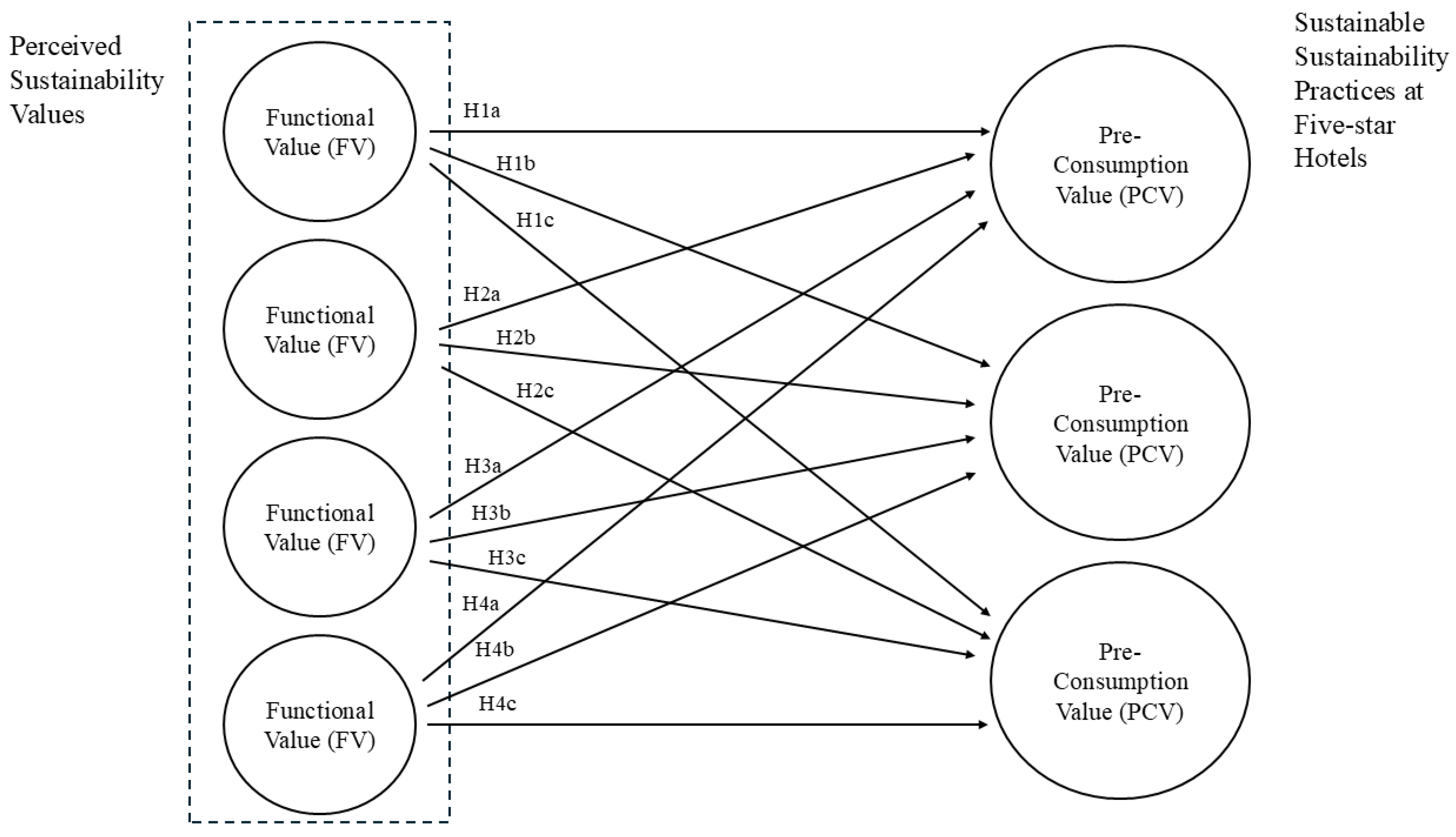
Table 1.
Demographic Characteristics of Respondents.
| Demographic Variable | Category | Frequency (n) | % |
|---|---|---|---|
| Gender | Male | 207 | 51.7 |
| Female | 193 | 48.2 | |
| Age Group | Under 25 | 39 | 9.8 |
| 25 – 34 | 107 | 26.8 | |
| 35 – 44 | 114 | 28.5 | |
| 45 – 54 | 91 | 22.8 | |
| 55+ | 49 | 12.2 | |
| Monthly Income (CNY) | <15,000 | 27 | 6.8 |
| 15,000 – 24,999 | 66 | 16.5 | |
| 25,000 – 34,999 | 89 | 22.2 | |
| 35,000 – 44,999 | 102 | 25.5 | |
| 45,000 – 54,999 | 63 | 15.8 | |
| 55,000+ | 53 | 13.2 | |
| Education Level | High School or Below | 37 | 9.2 |
| Bachelor’s Degree | 213 | 53.2 | |
| Master’s Degree | 118 | 29.5 | |
| Doctorate | 32 | 8 | |
| City of Residence | Urban | 169 | 42.2 |
| Suburban | 176 | 44 | |
| Rural | 55 | 13.8 | |
| Frequency of International Travel | Once a year | 52 | 13 |
| Twice a year | 127 | 31.8 | |
| Three times a year | 138 | 34.5 | |
| Four or more times | 83 | 20.8 |
Table 2.
Cluster Profiles Based on Sustainability Attitudes.
| Cluster 1 | Cluster 2 | |
|---|---|---|
| Number of Respondents | 218 | 182 |
| Top City of Resident Type | Urban | Suburban |
| Avg. Travel Frequency | 3 – 4 times per year | 1 – 2 times per year |
| Avg. Monthly Income (CNY) | 35,000 – 55,000+ | 15,000 – 34,999 |
Table 3.
Reliability and Validity Results for Perceived Value Constructs.
| Construct | No. of Items | Cronbach’s Alpha (α) | Composite Reliability (CR) | AVE |
|---|---|---|---|---|
| Pre-Consumption Value | 4 | 0.84 | 0.88 | 0.59 |
| Consumption Value | 5 | 0.86 | 0.89 | 0.61 |
| Post-Consumption Value | 4 | 0.85 | 0.88 | 0.6 |
| Functional Value | 4 | 0.84 | 0.88 | 0.59 |
| Emotional Value | 4 | 0.87 | 0.89 | 0.62 |
| Social Value | 3 | 0.81 | 0.85 | 0.6 |
| Ethical/Environmental Value | 4 | 0.86 | 0.88 | 0.61 |
Table 4.
Model Fit Summary.
| Fit Index | Value | Threshold |
|---|---|---|
| Chi-square (x^2) | 231.45 | p > 0.05 preferred (if model complex, < 0.001 acceptable) |
| Degrees of Freedom (df) | 124 | - |
| Chi-square/df | 1.87 | < 3.00 |
| Comparative Fit Index (CFI) | 0.95 | > 0.90 |
| Tucker-Lewis Index (TLI) | 0.94 | > 0.90 |
| Root Mean Square Error of Approximation (RMSEA) | 0.046 | < 0.06 |
| Standardized Root Mean Square Residual (SRMR) | 0.041 | < 0.08 |
Table 5.
Discriminant Validity Matrix (Fornell-Larcker Criterion).
| Functional Value | Emotional Value | Social Value | Ethical / Environmental Value | |
|---|---|---|---|---|
| Functional Value | 0.77 | 0.54 | 0.49 | 0.52 |
| Emotional Value | 0.54 | 0.79 | 0.56 | 0.58 |
| Social Value | 0.49 | 0.56 | 0.77 | 0.55 |
| Ethical / Environmental Value | 0.52 | 0.58 | 0.55 | 0.78 |
Table 7.
Multi-Group Path Coefficient Comparison Between Clusters.
| Path | Cluster 1 (β) | Cluster 2 (β) | CRD | Significant Difference |
|---|---|---|---|---|
| Functional Value → Pre-Consumption | 0.48 | 0.36 | 2.17 | Yes |
| Functional Value → Consumption | 0.4 | 0.3 | 1.84 | No |
| Functional Value → Post-consumption | 0.35 | 0.24 | 2.01 | Yes |
| Emotional Value → Pre-Consumption | 0.35 | 0.26 | 1.89 | No |
| Emotional Value → Consumption | 0.57 | 0.48 | 1.92 | No |
| Emotional Value → post-consumption | 0.42 | 0.33 | 1.96 | No |
| Social Value → Pre-Consumption | 0.33 | 0.24 | 1.94 | No |
| Social Value → Consumption | 0.36 | 0.29 | 1.81 | No |
| Social Value → post-consumption | 0.46 | 0.32 | 2.2 | Yes |
| Ethical/Environmental Value → Pre-Consumption | 0.44 | 0.31 | 2.41 | Yes |
| Ethical/Environmental Value → Consumption | 0.49 | 0.36 | 2.35 | Yes |
| Ethical/Environmental Value → post-consumption | 0.54 | 0.39 | 2.58 | Yes |
Disclaimer/Publisher’s Note: The statements, opinions and data contained in all publications are solely those of the individual author(s) and contributor(s) and not of MDPI and/or the editor(s). MDPI and/or the editor(s) disclaim responsibility for any injury to people or property resulting from any ideas, methods, instructions or products referred to in the content. |
© 2025 by the authors. Licensee MDPI, Basel, Switzerland. This article is an open access article distributed under the terms and conditions of the Creative Commons Attribution (CC BY) license (http://creativecommons.org/licenses/by/4.0/).
Copyright: This open access article is published under a Creative Commons CC BY 4.0 license, which permit the free download, distribution, and reuse, provided that the author and preprint are cited in any reuse.


