

Submitted:
21 November 2025
Posted:
24 November 2025
You are already at the latest version
Abstract
Seaweeds are photosynthetic organisms with ecological, social, and economic significance, and they serve as effective bioindicators in marine ecosystems. This study assessed trace element concentrations in beach-cast seaweeds collected from four beaches along the Espírito Santo coast in Brazil - an area impacted by mining-related contamination. Samples of Zonaria tournefortii and Sargassum natans, gathered during low tide (July–August 2022), were analyzed for 15 elements. Aluminum (Al), iron (Fe), and magnesium (Mg) were the most abundant (>100 mg/kg), while minor elements included barium (Ba), arsenic (As), zinc (Zn), vanadium (V), nickel (Ni), chromium (Cr), copper (Cu), lead (Pb), cobalt (Co), cadmium (Cd), silver (Ag), and mercury (Hg). Elemental profiles exceeded those reported in other global regions and closely resembled iron ore tailings. These findings - first for beach-cast seaweeds in this region - suggest that the contamination is related to the collapse of the Fundão dam in Mariana, Minas Gerais, which occurred in 2015, resulting in one of the most serious environmental disasters in Brazilian history. The incident released approximately 60 million cubic meters of mining tailings, that traveled approximately 600 km through the Rio Doce Basin, reaching the north of Espírito Santo and arriving at the ocean.
Keywords:
environmental impacts
; heavy metals
; macroalgae
; Phaeophyceae
1. Introduction
Coastal regions worldwide are experiencing significant environmental stress and are under pressure from various forms of anthropogenic activity [1,2]. These processes end up contaminating rivers and oceans with several kinds of chemicals. One of the most harmful groups is metals and other elements, such as arsenic, known as trace elements in the oceans because of their low levels. Their high concentration can negatively influence biota, impacting even beneficial organisms such as fish and invertebrates [3].
A significant example of an environmental disaster with global repercussions is the contamination of the Brazilian southeast coast with iron ore tailings (IOT). This material was released due to the collapse of the Fundão tailings dam, in Mariana, Minas Gerais, Brazil, in 2015. This event released ~60 million cubic meters of iron mining waste into the Doce River, which spans the states of Minas Gerais and Espírito Santo (ES) [4]. The IOT reached the ocean in a region with elevated biodiversity and different ecosystems like estuaries, mangroves and corals after flowing ~600 km in 16 days. The biogeochemistry of the area was altered with the input of nutrients, hydrocarbons, metals and smaller sediment [4]. The disaster was so severe that the dissolved iron flux of Doce River was calculated to be up to 5% of the global riverine flux [5]. Consequently, phytoplankton, zooplankton, benthos, and fish were negatively impacted, causing great concern. Besides the rich biodiversity, the region has the greatest calcium carbonate bank in the world [6], where macroalgae have an essential function in the food chain.
Macroalgae occur in all oceans and play a significant role in primary productivity [7]. They can be divided into three main groups: Chlorophyta (green), Ochrophyta (brown), and Rhodophyta (red). They have evolved to live under varying environmental stress conditions, such as changes in temperature, salinity, environmental pollutants, or exposure to UV radiation.
Natural phenomena associated with hydrodynamics can cause macroalgae to detach from their substrate in coastal regions, leading to deposition along the shoreline. The resulting algal material deposited on beaches is known as beach-cast seaweeds [8]. This phenomenon is becoming increasingly frequent [8,9,10], and their management is crucial to deal with their vast biomass, which has been more common in the last decade, similar to what has been happening with the formation of the Great Atlantic Sargassum Belt - GASB, extending from West Africa to the Caribbean, reaching a maximum of 20 million wet tons of seaweed in June 2018 [11], reaching many beaches in several countries.
The richness and abundance of beach-cast seaweeds have sparked economic, social, and environmental interest across various sectors of society in many places, although often associated with negative economic impacts on industries such as tourism and artisanal fishing, in addition to requiring ongoing cleaning efforts on affected beaches [12]. This issue is compounded by the foul odor resulting from the decomposition [8] and the production of toxic gases - H2S and ammonia [13]. On the other hand, they are considered a valuable, yet underutilized and underestimated, biomass that should be regarded as a sustainable source of bioactive compounds in the future [8,9,10,14,15,16,17]. [18] showed that this has been the focus of studies regarding animal feed, bioactivity, bioenergy, biosorption of metals, chemical composition, ecology, fertilizer, human food, taxonomy and abundance.
Macroalgae are widely recognized for their ability to be used as contaminants bioindicators [19]. They can adsorb different chemicals, including petroleum hydrocarbon compounds [20] and trace elements [21]. Within this context, the main goal of this research is to verify if metals found in two species of beach-cast seaweeds (Sargassum natans (Linnaeus) Gaillon and Zonaria tournefortii (J.V. Lamouroux) Montagne) collected in four representative beaches from the Espírito Santo (ES) coast, southeastern of Brazil, have a similar pattern of that found in the primary source of recent pollution, the IOT from the Fundão Dam burst, in 2015.
2. Materials and Methods
2.1. Study Area
The beach-cast seaweeds were collected during July and August 2022 in southeastern Brazil, in the North and South regions of Espírito Santo (ES). In the North region, the collections took place in the municipalities of Aracruz (Praia da Barra do Sahy and Praia dos Imigrantes) and Fundão (Enseada das Garças). In the South region, the collections were carried out in the municipality of Itapemirim (Praia de Itaoca) (Figure 1).
The municipalities were selected due to the large biomass of beach-cast seaweeds available throughout the year [10]. These beaches have high accessibility for tourists, the presence of industrial companies, proximity to ports, and intense urbanization. Additionally, boating, fishing and tourist waste pollute the coastal aquatic environment of these regions. In some locations, such as Itapemirim and Aracruz, there are intense urban pressure, while in others, such as Imigrantes and Enseada das Garças, the level of conservation is higher [22]. These beaches are part of the Federal Conservation Unit, the Costa das Algas Environmental Protection Area [23] (Table 1).
2.2. Collection of Field Samples
Sampling was carried out during low tide periods when the probability of the presence of beach-cast seaweeds is higher, as they remain on the sand for longer. The project was authorized by the Biodiversity Authorization and Information System (SISBIO) under No. 78465-1/85335. A field protocol adapted from [24] and [8] was employed to collect macroalgae. Two 50-meter transects were established to delimit the collection areas. The first transect was positioned near the waterline, in a lower intertidal region, while the second was placed near the sandbank vegetation, in an upper intertidal region. In each transect, macroalgae samples were collected randomly in three quadrants (Q1, Q2 and Q3) with an area of 1 x 1 m were arranged. Two species of brown macroalgae were selected, Zonaria tournefortii and Sargassum natans, due to their abundance on the studied beaches [10]. The macroalgae were collected using hands with nitrile gloves and placed in plastic bags labeled with the date and location of collection. They were then transported in coolers and immediately frozen in a freezer at (-10°C) at the Fishing and Aquaculture Extension Laboratory of the Federal Institute of Education (Ifes) Piúma Campus to ensure the integrity of the collected material.
2.3. Sample Preparation
The cleaning of equipment, such as trays, pestles, crucibles, Petri dishes, sieves, and Eppendorf tubes, was initially carried out with running water to remove organisms and sediments. Then, these materials were washed with nitric acid (3%) and subsequently with ultrapure water in three consecutive cycles (this procedure was performed one day before the start of sample processing for metal analysis). Next, the macroalgae were carefully selected and distributed in plastic trays to avoid contact with metallic utensils, which could interfere with the analysis results.
The macroalgae were then washed with nitric acid (3%) and distilled water, repeating the process three times. After washing, the samples were weighed, and the data were recorded in a control spreadsheet. The macroalgae were then transferred to a drying oven, maintained at a temperature between 50 and 60 ºC, where they remained for 72 hours until they were completely dry. After drying, the macroalgae were weighed again, ground into a fine powder, and sieved. The powdered material was stored in Eppendorf tubes containing 1 g of sample for analysis.
2.4. Data Analysis
The distribution of the data was checked with Shapiro-Wilk Test. As some elements presented non-normal distribution, the data will be shown as median, with their interquartile range. The differences between the transects and the species were verified with Mann-Whitney U. As the transects did not show differences for the metals, the data were combined and used for each beach. The same was carried out for the data from the samples of July and August, as these months are not enough to represent a temporal variation. The differences among the data of the beaches were tested with the Kruskal Wallis method. All the analyses were performed using three replicates.
For partial metal analysis, the EPA 3052 method was used. Briefly, about 0.25g of the sample was digested using nitric acid (Merck, sub-boiling) and hydrogen peroxide (30%) in a 9:2 ratio and heated in a microwave oven (MARS 5 X-Press, CEM corporation, North Carolina, USA) following these parameters: 1st temperature ramp from 25ºC to 175ºC in 5:30 minutes and the 2nd ramp from 25ºC to 175ºC in 4:30 minutes, both at 1600 W power. Then, the solution was cooled and filtered using a quantitative filter, followed by analysis using ICP-MS.
The elements, aluminum (Al), vanadium (V), chromium (Cr), manganese (Mn), iron (Fe), cobalt (Co), nickel (Ni), copper (Cu), zinc (Zn), arsenic (As), silver (Ag), cadmium (Cd), barium (Ba), mercury (Hg) and lead (Pb), were determined by inductively coupled plasma mass spectrometry (ICP-MS 7500cx, Agilent Technologies). The method used was described in EPA 6020B (USEPA) adapted from Brito et al. [25]. Quantification was performed using an analytical calibration curve ranging from 0.1 to 40 ppb, using a multi-element standard, with R2 > 0.99. A multielement internal standard (Internal Standard Mix - Bi, Ge, In, Li, Sc, Tb and Y, Agilent Technologies) was used for correction of possible fluctuations in the measurements of the signals from the elements analyzed. Spiked samples were measured to identify matrix effects and determine the recovery of an analyte or the selectivity of a method. Recoveries of the spiked samples ranged from 81.1% (Ni) to 101.9 % (Ba). Hg presented a considerably low recovery from the spike, about 64.8%. Limits of detection and quantification (LD and LQ, respectively) were calculated using 3.3 times and 10 times the quotient of analytical curve angular coefficient and the standard deviation of 10 blanks, respectively (Table 2).
3. Results
The concentrations of 15 trace elements were quantified in two species of beach-cast seaweeds, Sargassum natans and Zonaria tournefortii, collected from four distinct coastal sites (Figure 2 and Figure 3). Statistical analysis using the Kruskal-Wallis test revealed significant interspecific differences in the accumulation of several metals. Specifically, Z. tournefortii exhibited significantly higher concentrations of iron (p = 7.531 × 10⁻⁵), chromium (p = 0.0001989), vanadium (p = 0.0003073), aluminum (p = 0.0005604), and mercury (p = 0.01435), whereas S. natans showed higher levels of cobalt (p = 0.01072) and lead (p = 0.038).
Despite these statistically significant differences, the overall pattern of metal accumulation was remarkably similar between the two species. The median concentrations followed a consistent decreasing order: Al > Fe > Mn > Ba > As > Zn > V > Cu > Cr > Ni > Pb > Co > Cd > Hg > Ag. The most notable divergence between the species was observed in the relative positions of chromium and nickel: in Z. tournefortii, Cr concentrations exceeded those of Ni, while the opposite trend was observed in S. natans. These findings suggest that although species-specific uptake mechanisms may influence the accumulation of certain elements, the general profile of metal distribution remains largely conserved across both macroalgae.
The Kruskal-Wallis test applied to Zonaria tournefortii samples revealed statistically significant differences in the concentrations of seven metals across four sampling sites: Barra do Sahy, Enseada das Garças, Imigrantes, and Itaoca. The metals exhibiting significant variation were manganese (Mn) p = 0.024, arsenic (As) p = 0.020, copper (Cu) p < 0.001, nickel (Ni) p = 0.011, lead (Pb) p = 0.001, cobalt (Co) p < 0.001, and silver (Ag) p = 0.010. To identify which specific beach comparisons accounted for these differences, Dunn’s post hoc test with Bonferroni correction was conducted. For Mn, a significant difference was observed between Barra do Sahy and Imigrantes (p = 0.0097). As concentrations differed significantly between Itaoca and Imigrantes (p = 0.0161). Cu levels were significantly different between Barra do Sahy and Itaoca (p = 0.0009), and between Enseada das Garças and Itaoca (p = 0.0005). Ni concentrations varied significantly between Barra do Sahy and Imigrantes (p = 0.0161), and between Barra do Sahy and Itaoca (p = 0.0088). Pb levels were significantly lower in Barra do Sahy compared to Enseada das Garças (p = 0.0006) and Itaoca (p = 0.0117). For Co, Itaoca showed significantly higher concentrations compared to Barra do Sahy (p = 0.0003), Enseada das Garças (p = 0.0134), and Imigrantes (p = 0.0084). Finally, Ag concentrations were significantly different between Itaoca and Barra do Sahy (p = 0.0204). Overall, Itaoca Beach exhibited distinct metal profiles for six elements (As, Cu, Ni, Pb, Co, and Ag), indicating localized environmental influences affecting metal accumulation in Z. tournefortii.
Statistical analyses using the Kruskal-Wallis and Dunn’s tests on Sargassum natans samples revealed significant spatial variation in the concentrations of 11 trace elements across four beaches: Barra do Sahy, Enseada das Garças, Imigrantes, and Itaoca. The elements showing significant differences were aluminum (Al), iron (Fe), manganese (Mn), barium (Ba), vanadium (V), copper (Cu), chromium (Cr), nickel (Ni), cobalt (Co), lead (Pb), and silver (Ag). For aluminum (Al), the Kruskal-Wallis test (p < 0.001) indicated significant variation, and Dunn’s post-hoc test identified differences between Imigrantes and Barra do Sahy (p = 0.0120), Imigrantes and Enseada das Garças (p = 0.0005), and Itaoca and Enseada das Garças (p = 0.0030). Iron (Fe) also varied significantly (p < 0.001), with Imigrantes differing from Barra do Sahy (p = 0.0002) and Enseada das Garças (p = 0.0051), while Itaoca differed from Barra do Sahy (p = 0.0009) and Enseada das Garças (p = 0.0104). Manganese (Mn) showed highly significant variation (p < 0.001), with Dunn’s test revealing differences between Imigrantes and both Barra do Sahy and Enseada das Garças (p < 0.0001), and between Itaoca and Barra do Sahy (p = 0.0185). Although barium (Ba) showed overall significance (p = 0.04), no pairwise comparisons reached statistical significance in Dunn’s test. Vanadium (V) also exhibited significant differences among beaches (Kruskal-Wallis p < 0.001), though specific pairwise results were not detailed. These findings suggest that S. natans accumulates metals in patterns influenced by local environmental conditions, with Imigrantes and Itaoca beaches showing the most distinct profiles for multiple elements.
Further statistical analysis using Dunn’s post-hoc test revealed significant pairwise differences in metal concentrations among the beaches sampled for Sargassum natans. Specifically, significant differences were observed between Imigrantes and Barra do Sahy (p = 0.0071), Itaoca and Barra do Sahy (p = 0.0013), and Itaoca and Enseada das Garças (p = 0.0059). For copper (Cu), although the Kruskal-Wallis test indicated significant variation among beaches (p = 0.02), none of the pairwise comparisons reached statistical significance. Chromium (Cr) showed significant overall variation (p < 0.01), with Dunn’s test identifying differences between Itaoca and Barra do Sahy (p = 0.0031), and between Itaoca and Enseada das Garças (p = 0.0104). Nickel (Ni) also varied significantly across beaches (p = 0.01), with Imigrantes exhibiting lower concentrations than Barra do Sahy (p = 0.0041). Lead (Pb) showed highly significant variation (p < 0.001), with Dunn’s test revealing differences between Imigrantes and Barra do Sahy (adjusted p = 0.0004), and between Itaoca and Barra do Sahy (p = 0.0061). For cobalt (Co), significant differences were found between Imigrantes and Barra do Sahy (adjusted p = 0.0006), and between Imigrantes and Enseada das Garças (adjusted p = 0.0140). Silver (Ag) also showed significant variation (p < 0.01), with Dunn’s test identifying differences between Itaoca and Barra do Sahy (p = 0.0067), and between Itaoca and Enseada das Garças (adjusted p = 0.0107). Overall, the results suggest that the beaches of Imigrantes and Itaoca tend to exhibit relatively higher concentrations of several trace metals, indicating localized environmental factors influencing metal accumulation in S. natans. In summary, most elements had relatively higher concentrations in the beaches of Imigrantes and Itaoca.
The 3D Principal Component Analysis (PCA) presented in Figure 4 illustrates the variation in metal concentrations across the two macroalgae species. The first three principal components (PC1, PC2, and PC3) collectively explain 57.94% of the total variance in the dataset, indicating a moderate dimensional reduction with meaningful interpretability. PC1 accounts for the largest portion of the variance (29.69%), capturing the primary gradient of metal concentration differences among samples. PC2 contributes 15.83% of the variance, representing secondary patterns of variation, while PC3 explains additional subtle differences not captured by the first two components. The spatial distribution of samples in the 3D PCA plot suggests distinct clustering patterns between species, reflecting underlying differences in metal accumulation profiles.
4. Discussion
The species analyzed in this study represent the most frequent brown macroalgae along the coast of Espírito Santo (ES), with Zonaria tournefortii being the dominant one [10]. Notably, there are no prior reports in the literature addressing metal concentrations in Z. tournefortii, highlighting the novelty of this investigation. In contrast, trace metal accumulation in Sargassum natans (often referred to as S. vulgare) has been previously examined, although existing studies have not focused on drift samples [26,27]. Comparative data from the coast of Ceará, Brazil, indicate that during the rainy season, S. natans exhibits the following order of decreasing metal concentrations: Al > Fe > Mn > As > Ba > Zn > Cr > Cu > Co > Hg > Cd, with V, Ni, Pb below the limit of detection (LOD) for the elements common to this study (Table 3). In the dry season, overall concentrations are lower, and the order shifts to: Al > Fe > Mn > As > Ba > Hg > V > Cr > Co > Cd, with Cu, Ni, Pb, and Zn below LOD [26]. In comparison, S. natans samples from the present study showed elevated concentrations of Ag, while levels of V, Ni, Pb, Ba, and Cu were lower than those reported for the Ceará coast. The remaining elements fell within a similar concentration range, suggesting regional variability in metal accumulation influenced by environmental and hydrodynamic conditions.
Comparative analysis of metal concentrations in Sargassum natans revealed notable geographic variation. In this study, the concentrations of Ba, Ni, Hg, and Cd were higher than those reported for the same species (as S. vulgare) in the Syrian Sea [28], while Pb levels were comparable. The remaining elements exhibited lower concentrations relative to the Syrian dataset. When compared to a more pristine environment, such as the Madeira Archipelago [27], the results from the Espírito Santo (ES) coast showed lower concentrations of Zn and Cd. In contrast, Cu, Cr, Ni, Pb, and Hg were found at higher levels in the ES samples (Table 3). These differences suggest that regional environmental conditions, anthropogenic inputs, and hydrodynamic factors may significantly influence the bioaccumulation of trace metals in S. natans.
Seasonal variation in metal concentrations observed in macroalgae is largely influenced by environmental processes such as the leaching of sediments and continental rocks during the rainy season, as reported by 26]. This influx of dissolved metals contributes to elevated concentrations during wetter periods. In contrast, the dry season is characterized by reduced metal input and increased macroalgal growth rates, which may dilute intracellular metal concentrations. Consequently, the metal levels detected in the present study could have been higher if sampling had occurred during the rainy season. Despite these seasonal fluctuations, a consistent pattern of metal distribution is evident across locations and species. Aluminum (Al), iron (Fe), and manganese (Mn) consistently dominate the elemental profile, followed by intermediate concentrations of zinc (Zn), chromium (Cr), and arsenic (As), while other elements occur at lower levels. This distribution pattern is not only observed in Sargassum natans and Zonaria tournefortii but also aligns with findings from other macroalgal species in different regions, suggesting a conserved physiological or ecological mechanism governing metal uptake [29].
In 2015, the catastrophic failure of the Fundão dam released over 50 million m³ of iron ore tailings (IOT) into the Doce River basin, causing extensive environmental damage to both the river and the adjacent coastal ecosystems [30,31]. The IOT have significantly altered the region’s biogeochemistry and biodiversity, and recent studies confirm that contamination persists nearly a decade later [32,33,34]. Notably, the elemental composition of the iron ore tailings shows a distribution pattern similar to that observed in the macroalgae analyzed in this study. [35] reported the following decreasing order of metal concentrations in residual water contaminated by IOT: Fe > Al > Mn > Cr > Ba > Zn > Cu > Pb > Ni > As > Co > Ag > Hg > Cd. Sa et al. [36], analyzing solid IOT from the burst dam, found a comparable sequence: Fe > Al > Mn > Ba > V > Zn > Pb ≈ Cu > Cr ≈ Ni > As > Cd. The primary discrepancy between these two studies lies in the relative abundance of Cr. When compared to the macroalgae results presented here, four subtle differences emerge: Fe and Al concentrations are relatively higher in IOT; V and Zn show reversed positions; Pb is lower in IOT; and As is notably more concentrated in the seaweed samples. This last point is particularly relevant, as Sargassum species are known to bioaccumulate arsenic even in pristine environments [37], and the Espírito Santo coast has been identified as one of the most chronically arsenic-contaminated regions in Brazil [33,38].
For further comparison, Nassar et al. [39] investigated metal concentrations in Padina gymnospora (Kützing) Sonder, another brown macroalga, in Espírito Santo Bay—a site historically impacted by waste discharge from an iron-ore pellet processing plant for over two decades. This area lies geographically between the northern and southern sampling sites of the present study. Their findings revealed significantly elevated levels of Al, Fe, and Zn (10×, 3×, and 3× higher, respectively) compared to the current results. Manganese (Mn) was lower (2–3×), while Cr, Pb, Ni, Cu, and Cd showed similar concentrations. Based on these data, Nassar et al. [39] concluded that Fe, Al, and Cu could serve as reliable indicators of ore-related pollution. Given the similarity in concentrations of other elements between their control site and our study area—despite being only a few kilometers apart—it is plausible that their reference site may also be subject to contamination.
The spatial variation in metal concentrations observed among the sampled beaches reflects the combined influence of anthropogenic and natural factors, particularly seasonal rainfall patterns and associated runoff that mobilize and transport metals into coastal environments [40,41]. Elevated concentrations of trace elements at specific sites suggest the presence of localized pollution sources, likely linked to industrial and urban effluent discharges, which are further intensified during periods of heavy rainfall [42]. Among the beaches studied, Itaoca consistently exhibited the highest metal concentrations when compared to Imigrantes, Enseada das Garças, and Barra do Sahy. This pattern is likely attributable to Itaoca’s high degree of urbanization and its proximity to the Itapemirim River, which exerts a strong influence on the local marine environment. The Itapemirim River basin spans approximately 6,181 km² and supports a population of over 522,000 inhabitants. Importantly, this basin hosts the largest industrial processing park for ornamental stones in Brazil, contributing significantly to global stone product output. The soils and sediments within the Itapemirim basin are notably enriched in trace elements compared to those of the lower Doce River, as documented by Cunha [43], further supporting the hypothesis that terrestrial inputs from this watershed are a major driver of coastal metal enrichment at Itaoca Beach.
The 3D Principal Component Analysis (PCA) revealed distinct patterns in metal concentrations across macroalgae samples, highlighting both species-specific and environmental influences. The first principal component (PC1), which accounts for 29.69% of the total variance, is primarily driven by vanadium (0.366), iron (0.349), chromium (0.342), and aluminum (0.315). These elements are more concentrated in Zonaria tournefortii, suggesting that species identity is a key determinant of metal accumulation and is reflected in the separation along PC1. The second component (PC2), explaining 15.83% of the variance, is heavily influenced by zinc (0.491), copper (0.418), nickel (0.401), and arsenic (0.404). These metals appear to capture environmental variability, likely associated with differences in pollution levels, water chemistry, and beach-specific conditions. While species remains the dominant factor, the variation along PC2 underscores the role of local environmental factors in shaping metal profiles. The third component (PC3), although accounting for a smaller portion of the variance, still provides meaningful insights. It is influenced by iron (0.380), aluminum (0.337), and mercury (0.437), suggesting more localized or species-environment interactions. The high loading of mercury particularly indicates that its accumulation may vary significantly across sites or be driven by specific conditions affecting one species more than the other. Spatial analysis of maximum metal concentrations across beaches further supports these findings. Itaoca beach exhibited the highest number of elements at peak concentrations (n = 12), followed by Praia dos Imigrantes (n = 8), Enseada das Garças (n = 3), and Barra do Sahy beach, which showed only one element at maximum concentration. This gradient reinforces the influence of localized anthropogenic inputs and environmental conditions on trace metal accumulation in coastal macroalgae.
The detection of potentially toxic elements such as arsenic (As) and mercury (Hg) in macroalgae collected from the four studied beaches is particularly alarming due to their cumulative nature and strong bioaccumulation potential. These metals are recognized for their neurotoxic and carcinogenic effects, even at low concentrations [44]. The elevated levels of As and Hg observed in macroalgae from Itaoca beach raise serious concerns regarding the health of marine ecosystems and the safety of human populations that depend on these resources. The bioaccumulation of heavy metals in fishery products represents a significant public health risk, especially for coastal communities with high seafood consumption. Chronic exposure through contaminated food can lead to severe health outcomes, including kidney dysfunction, neurological impairments, and an increased likelihood of developing various forms of cancer [45,46].
Beyond their ecological and health implications, the accumulation of metals in macroalgae also serves as a valuable indicator of coastal water quality. Due to their capacity to absorb and retain trace elements from their surroundings, macroalgae are widely recognized as effective bioindicators for environmental monitoring [47,48]. Their use in assessing contamination levels provides critical insights into the spatial and temporal dynamics of pollution in marine environments, supporting efforts to manage and mitigate anthropogenic impacts.
Among the major groups of marine macroalgae, brown algae (Phaeophyceae) have demonstrated exceptional capacity for metal retention, positioning them as promising candidates for biotechnological applications in environmental remediation. Species belonging to the genera Sargassum and Zonaria have shown effectiveness in absorbing and retaining heavy metals, making them valuable biosorbents for the removal of contaminants from industrial effluents. [49] reported that the biomass of these macroalgae could remove up to 96% of lead from industrial wastewater, underscoring their potential for large-scale remediation strategies. Additionally, studies such as [50] have evaluated the biosorption potential of beach-cast seaweeds, demonstrating their efficacy in extracting heavy metals from industrial solutions and liquid waste. These findings reinforce the utility of brown macroalgae not only as ecological indicators but also as functional agents in sustainable pollution control technologies.
Species of Sargassum are distinguished by their exceptional capacity to retain heavy and radioactive metals, as well as their chemical and mechanical resilience [51].This high retention ability is largely attributed to the composition of brown macroalgal cell walls, which are rich in alginic acid—a polysaccharide containing carboxylic groups that function as cation exchangers. These groups facilitate the substitution of naturally occurring cations such as Ca²⁺, K⁺, and Na⁺ with heavy metal ions. This mechanism is believed to serve a protective role, trapping metals within the cell wall matrix and preventing their entry into the cytoplasm, thereby mitigating toxic effects [19].
Brown macroalgae have demonstrated an extraordinary ability to bioaccumulate metals, with studies showing that they can accumulate arsenic up to several hundred times more than terrestrial plants [52]. In some cases, the concentration of heavy metals in their cell walls can reach 20,000 to 40,000 times higher than in the surrounding water. Isotherm experiments have quantified the biosorption capacity of Sargassum in single-solute systems, revealing uptake levels of 168.7 mg Pb/g, 45.2 mg Cu/g, 20.3 mg Zn/g, and 16 mg Mn/g. In multi-solute systems, where competition among ions occurs, the biosorption capacity was slightly reduced but still substantial: 44.2 mg Pb/g, 17.7 mg Cu/g, 7.3 mg Zn/g, and 5.7 mg Mn/g. Furthermore, Sargassum has shown promising results in the decontamination of stormwater runoff, effectively removing Pb, Cu, Zn, and Mn. Although its performance was slightly lower than that observed in synthetic metal solutions, likely due to the presence of competing ions and organic matter, the seaweed demonstrated strong potential for removing trace metals from complex environmental matrices [53].
The cell wall architecture of macroalgae varies across major taxonomic groups, with Ochrophyta (brown), Rhodophyta (red), and many Chlorophyta (green) sharing a common structural framework composed of a fibrillar skeleton embedded in an amorphous matrix. The fibrillar component is typically composed of cellulose, although substitutions occur xylan may replace cellulose in Chlorophyta and Rhodophyta, while mannan can substitute cellulose in certain Chlorophyta species. In Ochrophyta, the embedding matrix is primarily composed of alginic acid or its salt form, alginate, accompanied by smaller amounts of sulfated polysaccharides such as fucoidan. Rhodophyta, in contrast, are characterized by a matrix rich in sulfated galactans, including compounds such as agar, carrageenan, and porphyran [54]. These biochemical differences in cell wall composition not only reflect evolutionary divergence but also influence the ecological roles and biotechnological applications of each algal group.
Although statistical differences were observed in the concentrations of certain elements between Sargassum and Zonaria, these variations do not significantly alter the overall elemental distribution pattern. Interestingly, this pattern closely resembles that found in iron ore tailings, suggesting that macroalgae may exhibit a consistent elemental profile, with concentrations fluctuating in response to environmental contamination. As proposed [29], species with similar biochemical composition, thallus morphology, and growth strategies can be effectively used for comparative assessments of elemental contamination. Particular attention should be given to elements such as arsenic (As), which is known to bioaccumulate in seaweeds—especially among brown macroalgae. This is especially relevant when considering the potential consumption of beached macroalgae by animals or humans. Fortunately, macroalgae can partially transform arsenic speciation from its more toxic inorganic form to less harmful organic compounds, thereby reducing its toxicity [37]. The data presented in this study reinforce the notion that macroalgae absorb contaminants in a pattern analogous to that observed in mining-impacted environments, further supporting their role as bioindicators of coastal pollution.
5. Conclusions
This investigation enabled the precise determination and quantification of trace-element concentrations in two marine macroalgal taxa stranded along the southeastern Brazilian coastline—a region historically impacted by inputs from iron ore tailings (IOT), intensive mining activities, and multiple anthropogenic stressors. Mining operations are well established as significant drivers of perturbations in regional and global iron biogeochemical fluxes, while practices such as coal extraction, aggregate production, and sediment dredging from riverine and coastal systems have contributed to extensive geomorphological reconfiguration at broad spatial scales. The congruent patterns of metal distribution observed between macroalgal tissues and IOT materials strongly suggest that mining-derived particulates and dissolved constituents are influencing the marine biogeochemical regime. Documented environmental repercussions of mining include elevated sedimentation loads, disruption of hydrological and fluvial dynamics, and the degradation or loss of ecologically sensitive habitats.
To safeguard public health and maintain the ecological integrity of coastal regions, it is imperative to implement effective control policies and invest in low-cost technologies for sediment remediation. Moreover, sustained environmental monitoring—supported by collaboration among researchers, local communities, and regulatory agencies—is essential to ensure the long-term sustainability of marine ecosystems and the food security of populations that depend on them. This integrated approach underscores the importance of ecological management in preserving coastal and oceanic waters. It also reinforces the urgency of collective action to mitigate heavy metal pollution, protect marine biodiversity, and promote the health and resilience of human communities in the face of escalating anthropogenic impacts.
Author Contributions
Conceptualization: Thiago Holanda Basilio; Material preparation, data collection and analysis: Thiago Holanda Basilio; Bianca Rodrigues Ramalhete Nunes; Angélica Elaine Neto; Weber Adão Rodrigues Luz Junior; formal analyzis and investigation: Eduardo Schiettini Costa; Renato Rodrigues Neto; writing, review and editing: Thiago Holanda Basilio; Eduardo Schiettini Costa; Renato Rodrigues Neto; Daisa Hakbart Bonemann; Danielle Tapia Bueno; Ana Teresa Lima; Iago Alonso; Mutue Toyota Fujii. All authors read and approved of the final manuscript.
Funding
This work was supported by the EJA (Estaleiro Jurong Aracruz - grant numbers 22/2021 – FACTO/EJA/IFES) and Espírito Santo Research and Innovation Support Foundation (FAPES Nº 474 10/2021).
Data Availability Statement
No datasets were generated or analyzed during the current study.
Acknowledgments
We acknowledge the Jurong Shipyard for funding the project, the Espírito Santo Research and Innovation Support Foundation (FAPES) and the Foundation for Support of Science and Technology Development (FACTO) for their support in implementing the activities. We especially thank the residents’ associations and municipal governments that supported the project. MTF thanks Conselho Nacional de Desenvolvimento Científico e Tecnológico – CNPq for the Productivity Fellowships (311195/2021-0). IA thanks CNPq and the Coordenação de Aperfeiçoamento de Pessoal de Nível Superior Brasil (CAPES) Finance Code 001, for the PhD fellowship.
Conflicts of Interest
The authors declare no conflicts of interest. The funders had no role in the design of the study; in the collection, analyses, or interpretation of data; in the writing of the manuscript; or in the decision to publish the results.
References
- Souza, I.C.; Duarte, I.D.; Pimentel, N.Q.; Rocha, L.D.; Morozesk, M.; Bonomo, M.M.; Azevedo, V.C.; Pereira, C.D.S.; Monferrán, M.V.; Milanez, C.R.D.; et al. Matching metal pollution with bioavailability, bioaccumulation and biomarkers response in fish (Centropomus parallelus) resident in neotropical estuaries. Environ. Pollut. 2013, 180, 136–144. [Google Scholar] [CrossRef]
- Correa, J.J.M.; Cutrim, M.V.J.; da Cruz, Q.S. Evaluation of metal contamination in surface sediments and macroalgae in mangrove and port complex ecosystems on the Brazilian equatorial margin. Environ. Monit. Assess. 2023, 195, 432–440. [Google Scholar] [CrossRef]
- Zaynab, M.; Al-Yahyai, R.; Ameen, A.; Sharif, Y.; Ali, L.; Fatima, M.; Khan, K.A.; Li, S. Health and environmental effects of heavy metals. J. King Saud Univ. Sci. 2022, 34, 101653. [Google Scholar] [CrossRef]
- Kütter, V.T.; Martins, G.S.; Brandini, N.; Cordeiro, R.C.; Almeida, J.P.A.; Marques, E.D. Impacts of a tailings dam failure on water quality in the Doce river: The largest environmental disaster in Brazil. J. Trace Elem. Min. 2023, 5, 100084. [Google Scholar] [CrossRef]
- Longhini, C.M.; Mahieu, L.; Sá, F.; van den Berg, C.M.G.; Salaün, P.; Neto, R.R. Coastal waters contamination by mining tailings: What triggers the stability of iron in the dissolved and soluble fractions? Limnol. Oceanogr. 2021, 66, 171–187. [Google Scholar] [CrossRef]
- Amado-Filho, G.M.; Salgado, L.T.; Rebelo, M.F.; Rezende, C.E.; Karez, C.S.; Pfeiffer, W.C. Heavy metals in benthic organisms from Todos os Santos Bay, Brazil. Braz. J. Biol. 2008, 68, 95–100. [Google Scholar] [CrossRef] [PubMed]
- Ren, C.G.; Liu, Z.Y.; Wang, X.L.; Qin, S. The seaweed holobiont: from microecology to biotechnological applications. Microb. Biotechnol. 2022, 15, 738–754. [Google Scholar] [CrossRef] [PubMed]
- Cavalcanti, M.I.L.G.; Fujii, M.T. Macroalgas Arribadas da Costa Brasileira: Biodiversidade e Potencial de Aproveitamento, 1st ed.; Editora CRV: Curitiba, Brazil, 2021. [Google Scholar]
- Harb, T.B.; Pereira, M.S.; Cavalcanti, M.I.L.G.; Fujii, M.T.; Chow, F. Antioxidant activity and related chemical composition of extracts from Brazilian beach-cast marine algae: opportunities of turning a waste into a resource. J. Appl. Phycol. 2021, 33, 3383–3395. [Google Scholar] [CrossRef]
- Martins, I.A.G.; Basílio, T.H.; dos Santos, I.L.F.; Fujii, M.T. Biodiversity and Reproductive Status of Beach-Cast Seaweeds from Espírito Santo, Southeastern Brazil: Sustainable Use and Conservation. Phycology. 2024, 4, 427–442. [Google Scholar] [CrossRef]
- Wang, M.; Hu, C.; Barnes, B.B.; Mitchum, G.; Lapointe, B.; Montoya, J. The great Atlantic Sargassum belt. Science. 2019, 365, 83–87. [Google Scholar] [CrossRef]
- Tocci, B.R.C.; Vieira, L.M.; Tamanaha, M.S.; Charrid, R.J. Stranding events of drift organisms (Arribadas) in southern Brazil and the spread of invasive bryozoan in South America. Mar. Pollut. Bull. 2022, 184, 114120. [Google Scholar] [CrossRef]
- Resiere, D.; Valentino, R.N.; Banydeen, R.; Gueye, P.; Florentin, J.; Cabié, A.; Lebrun, T.; Mégarbane, B.; Guerrier, G.; Mehdaoui, H. Sargassum seaweed on Caribbean islands: an international public health concern. Lancet 2018, 392, 2691. [Google Scholar] [CrossRef] [PubMed]
- Santos, G.N.; Do Nascimentos, O.S.; Pedreira, F.A.; Rios, G.I. Qualitative and quantitative analysis of arribadas algae North of Bahia State, Brazil. Acta Bot. Malacit. 2013, 38, 13–24. [Google Scholar] [CrossRef]
- Sacramento, R.M.O.; Seidler, E.; Souza, M.; Yoshimura, C.Y. Utilização de macroalgas arribadas do litoral catarinense na adubação orgânica de olerícolas. Sci. Plena. 2013, 1, 55–59. [Google Scholar]
- Ali, O.; Ramsubhag, A.; Jayaraman, J. Biostimulant Properties of Seaweed Extracts in Plants: Implications towards Sustainable Crop Production. Plants. 2021, 10, 531. [Google Scholar] [CrossRef]
- Mandalka, A.; Cavalcanti, M.I.L.G.; Harb, T.B.; Fujii, M.T.; Eisner, P.; Scweiggert-Weisz, U.; Chow, F. Nutritional composition of beach-cast marine algae from the brazilian coast: added value for algal biomass considered as waste. Foods. 2022, 11, 1201. [Google Scholar] [CrossRef]
- Harb, T.B.; Chow, F. An overview of stranded seaweeds: Potential and opportunities for the valorization of underused waste biomass. Algal Res. 2022, 62, 102643. [Google Scholar] [CrossRef]
- Coração, A.C.Z.; Santos, F.S.; Duarte, E.A.P.L.F.; De-Paula, J.C.; Rocha, L.M.; Krepsky, N.; Fiaux, S.B.; Teixeira, V.L. What do we know about the utilization of the Sargassum species as biosorbents of trace metals in Brazil? J. Environ. Chem. Eng. 2020, 8, 103941. [Google Scholar] [CrossRef]
- Lourenço, R.A.; Magalhães, C.A.; Taniguchi, S.; Siqueira, S.G.L.; Jacobucci, G.B.; Leite, F.P.P.; Bícego, M.C. Evaluation of macroalgae and amphipods as bioindicators of petroleum hydrocarbons input into the marine environment. Mar. Pollut. Bull. 2019, 145, 564–568. [Google Scholar] [CrossRef]
- Chakraborty, S.; Bhattacharya, T.; Singh, G.; Maity, J.P. Benthic macroalgae as biological indicators of heavy metal pollution in the marine environments: A biomonitoring approach for pollution assessment. Ecotoxicol. Environ. Saf. 2014, 100, 61–68. [Google Scholar] [CrossRef]
- IBGE – INSTITUTO BRASILEIRO DE GEOGRAPFIA E ESTATÍSTICA. Cities and States of Brazil. 2022. Available online: https://cidades.ibge.gov.br/ Accessed on: 22/09/2022.
- Karez, C.S.; Bahia, R.G.; Nunes, J.M.C.; Moraes, F.C.; Moura, R.L.; Salomon, P.S.; Ribeiro, C.C.M.; Silva, C.C.; Cardial, P.; Leal, G.A.; et al. Lista de espécies de macroalgas marinhas da Área de Proteção Ambiental Costa das Algas, ES. In Catálogo de Plantas das Unidades de Conservação do Brasil; Jardim Botânico do Rio de Janeiro: Rio de Janeiro, Brazil, 2023; Available online: https://catalogo-ucs-brasil.jbrj.gov.br (accessed on 28 August 2024).
- Ferreira, G.S.; Brito, P.O.B.; Aderaldo, F.I.C.; Carneiro, P.B.M.; Rocha, A.M.; Gondim, F.A. Arribadas algae from Pacheco beach, Ceará, Brazil. Revista Verde. 2020, 15, 208–214. [Google Scholar] [CrossRef]
- Brito, G.B.; De Souza, T.L.; Bressy, F.C.; Moura, C.W.N.; Korn, M.G.A. Levels and spatial distribution of trace elements in macroalgae species from the Todos os Santos Bay, Bahia, Brazil. Mar. Pollut. Bull. 2012, 64, 2238–2244. [Google Scholar] [CrossRef]
- Ribeiro, E.E.; Nobre, I.G.; Silva, D.R.; Da Silva, W.M.; Sousa, S.K.; Holanda, T.B.; Lima, C.G.; De Lima, A.C.; Araújo, M.L.; Da Silva, F.L.; et al. Profile of inorganic elements of seaweed from the Brazilian Northeast coast. Mar. Pollut. Bull. 2024, 202, 116413. [Google Scholar] [CrossRef]
- Nunes, N.; Ferraz, S.; Venuleo, M.; Barros, A.I.R.N.A.; Pinheiro de Carvalho, M.A.A. From a heavy metal perspective, is macroalgal biomass from Madeira Archipelago and Gran Canaria Island of eastern Atlantic safe for the development of blue bioeconomy products? J. Appl. Phycol. 2024, 36, 811–830. [Google Scholar] [CrossRef]
- Al-Masri, M. S. , Mamish, S. , Budier, Y. Radionuclides and trace metals in eastern Mediterranean Sea algae. J. Environ. Rad., 2003, 67, 157–168. [Google Scholar]
- Malea, P.; Kevrekidis, T. Trace element patterns in marine macroalgae. Sci. Total Environ. 2014, 494–495, 144–157. [Google Scholar] [CrossRef]
- Costa, E.S.; Cagnin, R.C.; Da Silva, C.A.; Longhini, C.M.; Sá, F.; Lima, A.T.; Gomes, L.; Bernardino, A.F.; Neto, R.R. Iron ore tailings as a source of nutrients to the coastal zone. Mar. Pollut. Bull. 2021, 171, 112725. [Google Scholar] [CrossRef]
- Lima, A.T.; Bastos, F.A.; Junior, F.J.T.; Neto, R.R.; Gomes, H.I.; Barroso, G.F. Doce River Large-Scale Environmental Catastrophe: Decision and Policy-Making Outcomes. Environ. Dev. 2021, 2, 11–16. [Google Scholar]
- Bonecker, A.C.T.; Menezes, B.S.; Dias Junior, C.; Silva, C.A.D.; Ancona, C.M.; Dias, C.D.O.; Longhini, C.M.; Costa, E.S.; Sá, F.; Lázaro, G.C.S. An integrated study of the plankton community after four years of Fundão dam disaster. Sci. Total Environ. 2022, 806, 150613. [Google Scholar] [CrossRef] [PubMed]
- Nascimento, R.L.; Alves, P.R.; Di Domenico, M.; Braga, A.A.; De Paiva, P.C.; D’Azeredo Orlando, M.T.; Sant’Ana Cavichini, A.; Longhini, C.M.; Martins, C.C.; Neto, R.R.; et al. The Fundão dam failure: Iron ore tailing impact on marine benthic macrofauna. Sci. Total Environ. 2022, 838, 156205. [Google Scholar] [CrossRef] [PubMed]
- Cagnin, R.C.; Costa, E.S.; Longhini, C.M.; Sá, F.; Neto, R.R. Rare earth elements as tracers of iron ore tailings on the Brazilian eastern continental shelf. Integr. Environ. Assess. Manag. 2024, 20, 79–88. [Google Scholar] [CrossRef] [PubMed]
- Segura, F.R.; Nunes, E.A.; Paniz, F.P.; Paulelli, A.C.C.; Rodrigues, G.B.; Braga, G.U.L.; Pedreira Filho, W.R.; Barbosa Junior, F.; Cerchiaro, G.; Silva, F.F.; et al. Potential risks of the residue from Samarco’s mine dam burst (Bento Rodrigues, Brazil). Environ. Pollut. 2016, 218, 813–825. [Google Scholar] [CrossRef] [PubMed]
- Sá, F.; Longhini, C.M.; Costa, E.S.; Da Silva, C.A.; Cagnin, R.C.; Gomes, L.E.D.O.; Lima, A.T.; Bernardino, A.F.; Neto, R.R. Time-sequence development of metal(loid)s following the 2015 dam failure in the Doce river estuary, Brazil. Sci. Total Environ. 2021, 769, 144532. [Google Scholar] [CrossRef]
- Farias, S.; Smichowski, P.; Vélez, D.; Montoro, R.; Curtosi, A.; Vodopívez, C. Total and inorganic arsenic in Antarctic macroalgae. Chemosphere. 2007, 69, 1017–1024. [Google Scholar] [CrossRef]
- Baeyens, W.; Mirlean, N.; Bundschuh, J.; De Winter, N.; Baisch, P.; Da Silva Júnior, F.M.R.; Gao, Y. Arsenic enrichment in sediments and beaches of Brazilian coastal waters: A review. Sci. Total Environ. 2019, 681, 143–154. [Google Scholar] [CrossRef] [PubMed]
- Nassar, C.; Salgado, L.T.; Yoneshigue-Valentin, Y.; Amado-Filho, G.M. The effect of iron-ore particles on the metal content of the brown alga Padina gymnospora (Espı́rito Santo Bay, Brazil). Environ. Pollut. 2003, 123, 301–305. [Google Scholar] [CrossRef]
- Mabeau, S.; Fleurence, J. Seaweed in food products: biochemical and nutritional aspects. Trends Food Sci. Technol. 1993, 4, 103–107. [Google Scholar] [CrossRef]
- Ortega-Calvo, J.J.; Mazuelos, C.; Hermosín, B.; Sáiz-Jiménez, C. Chemical composition of Spirulina and eukaryotic algae food products marketed in Spain. J. Appl. Phycol. 1993, 5, 425–435. [Google Scholar] [CrossRef]
- Parus, A.; Karbowska, B. Marine Algae as natural indicator of environmental cleanliness. Water Air Soil Pollut. 2020, 231, 97–105. [Google Scholar] [CrossRef]
- Cunha, F.G.; Atlas geoquímico do estado do Espírito Santo. CPRM - Serviço Geológico do Brasil: Brasília, Brazil, 2018. Available online: https://rigeo.sgb.gov.br/handle/doc/21727 (accessed on 28 August 2024).
- Rubio, C.; Napoleone, G.; Luis-González, G.; Gutiérrez, A.J.; González-Weller, D.; Hardisson, A.; Revert, C. Metals in Edible Seaweed. Chemosphere. 2017, 173, 572–579. [Google Scholar] [CrossRef]
- Brandon, E.F.A.; Janssen, P.J.C.M.; de Wit-Bos, L. Arsenic: bioaccessibility from seaweed and rice, dietary exposure calculations and risk assessment. Food Addit. Contam. Part A Chem. Anal. Control Expo. Risk Assess. 2014, 31, 1993–2003. [Google Scholar] [CrossRef]
- Sundhar, S.; Arisekar, U.; Shakila, R.J.; Shalini, R.; Al-Ansari, M.M.; Al-Dahmash, N.D.; Mythili, R.; Kim, W.; Sivaraman, B.; Jenishma, J.S.; et al. Potentially toxic metals in seawater, sediment and seaweeds: bioaccumulation, ecological and human health risk assessment. Environ. Geochem. Health. 2024, 46, 35. [Google Scholar] [CrossRef]
- Mazzuco, A.C.D.A.; Stelzer, P.S.; Bernardino, A.F. Substrate rugosity and temperature matters: patterns of benthic diversity at tropical intertidal reefs in the SW Atlantic. PeerJ. 2020, 8, e8289. [Google Scholar] [CrossRef]
- Carneiro, I.M.; Paiva, P.C.; Bertocci, I.; Lorini, M.L.; de Széchy, M.T.M. Distribution of a canopy-forming alga along the Western Atlantic Ocean under global warming: The importance of depth range. Mar. Environ. Res. 2023, 188, 106013. [Google Scholar] [CrossRef] [PubMed]
- Duarte, M.M.; Silva, J.E.D.; Passavante, J.Z.D.O.; Pimentel, M.F.; Barros Neto, B.D.; Silva, V.L.D. Macroalgae as lead trapping agents in industrial effluents-a factorial design analysis. J. Braz. Chem. Soc. 2001, 12, 499–506. [Google Scholar] [CrossRef]
- Vila Nova, L.L.M.; Costa, M.M.D.A.S.; Costa, J.G.; Da Amorim, E.C.; Guedes, E.A.C. Utilização de “algas arribadas” como alternativa para adubação orgânica em cultivo de Moringa oleifera. Lam. Rev. Ouricuri. 2014, 4, 68–81. [Google Scholar] [CrossRef]
- Calado, S.C.S.; Silva, V.L.; Passavante, J.Z.O.; Abreu, C.A.M.; Lima Filho, E.S.; Duarte, M.M.M.B.; Diniz, E.V.G.S. Cinética e equilíbrio de biossorção de chumbo por macroalgas. Trop. Oceanogr. 2003, 31, 53–62. [Google Scholar] [CrossRef]
- Keiji, I.; Kanji, H. Seaweed: chemical composition and potential food uses. Food Rev. Int. 1989, 5, 101–144. [Google Scholar] [CrossRef]
- Vijayaraghavan, K.; Teo, T.T.; Balasubramanian, R.; Joshi, U.M. Application of Sargassum biomass to remove heavy metal ions from synthetic multi-metal solutions and urban storm water runoff. J. Hazard. Mater. 2009, 164, 1019–1023. [Google Scholar] [CrossRef]
- Davis, T.A.; Volesky, B.; Mucci, A. A review of the biochemistry of heavy metal biosorption by brown algae. Water Res. 2003, 37, 4311–4330. [Google Scholar] [CrossRef]
Figure 1.
Collection areas in southeastern Brazil, on the coast of the State of Espírito Santo, highlighted in yellow. The samples were collected in the north, on the beaches of Barra do Sahy and Imigrantes (municipality of Aracruz - in green) and in Enseada das Garças (Fundão in red); in the south, on the Itaoca beach (Itapemierim in blue).
Figure 1.
Collection areas in southeastern Brazil, on the coast of the State of Espírito Santo, highlighted in yellow. The samples were collected in the north, on the beaches of Barra do Sahy and Imigrantes (municipality of Aracruz - in green) and in Enseada das Garças (Fundão in red); in the south, on the Itaoca beach (Itapemierim in blue).
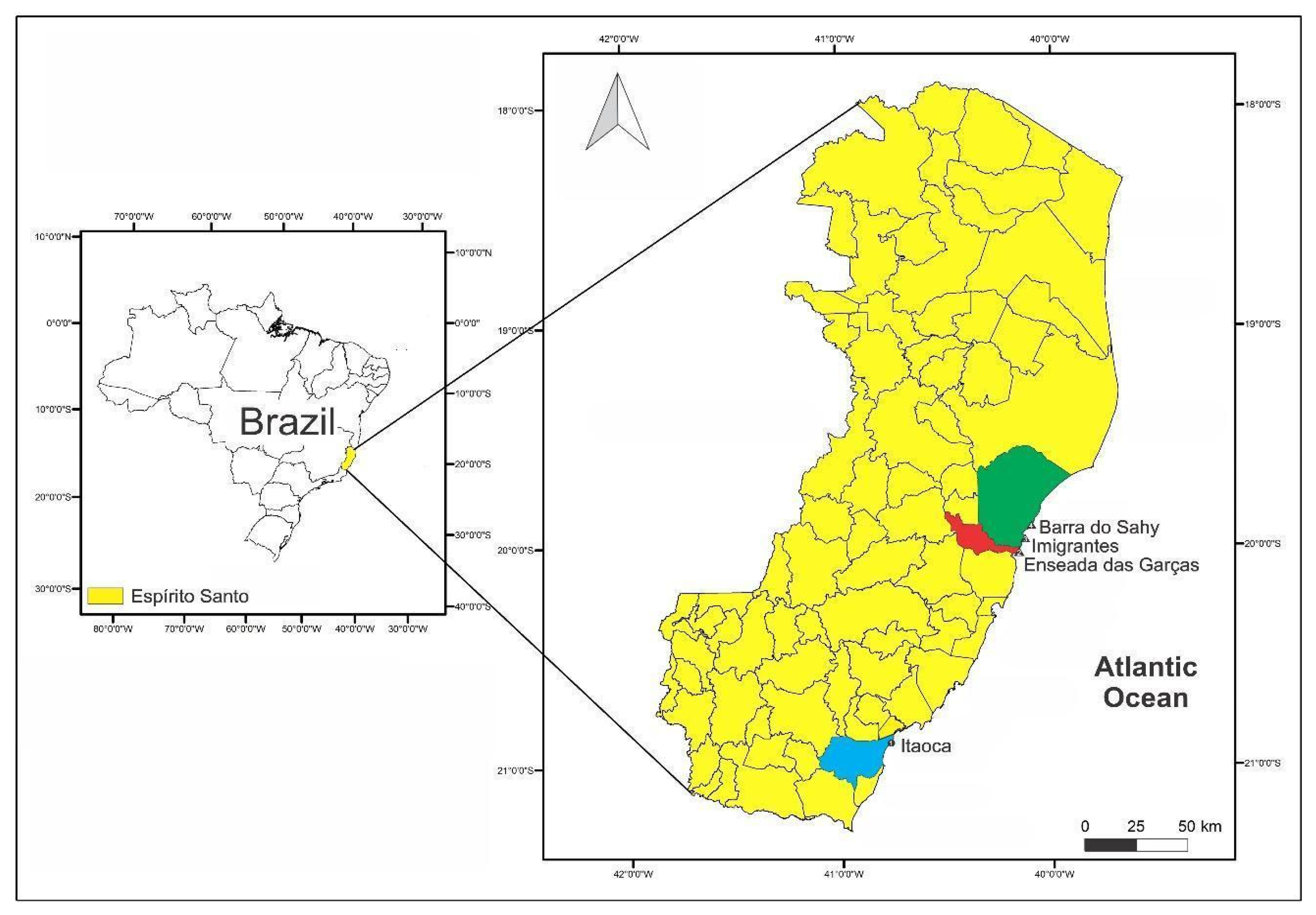
Figure 2.
Boxplots represent the distribution of trace element concentrations (mg kg⁻¹) found in samples of the macroalgae Sargassum natans (n=12 for beach) collected from four beaches in Espírito Santo, Brazil: Barra do Sahy (BDS), Enseada das Garças (EDG), Imigrantes (IMG), and Itaoca (ITC). In each boxplot: the central line represents the median of the data; the edges of the box indicate the interquartile range (IQR), spanning from the first quartile (Q1) to the third quartile (Q3); the "whiskers" extend up to 1.5 times the IQR, representing the typical range of the data; points outside the whiskers are considered outliers, highlighting atypical values. The elements are organized in descending order of median concentration, facilitating the identification of the most prevalent components in the analyzed samples.
Figure 2.
Boxplots represent the distribution of trace element concentrations (mg kg⁻¹) found in samples of the macroalgae Sargassum natans (n=12 for beach) collected from four beaches in Espírito Santo, Brazil: Barra do Sahy (BDS), Enseada das Garças (EDG), Imigrantes (IMG), and Itaoca (ITC). In each boxplot: the central line represents the median of the data; the edges of the box indicate the interquartile range (IQR), spanning from the first quartile (Q1) to the third quartile (Q3); the "whiskers" extend up to 1.5 times the IQR, representing the typical range of the data; points outside the whiskers are considered outliers, highlighting atypical values. The elements are organized in descending order of median concentration, facilitating the identification of the most prevalent components in the analyzed samples.
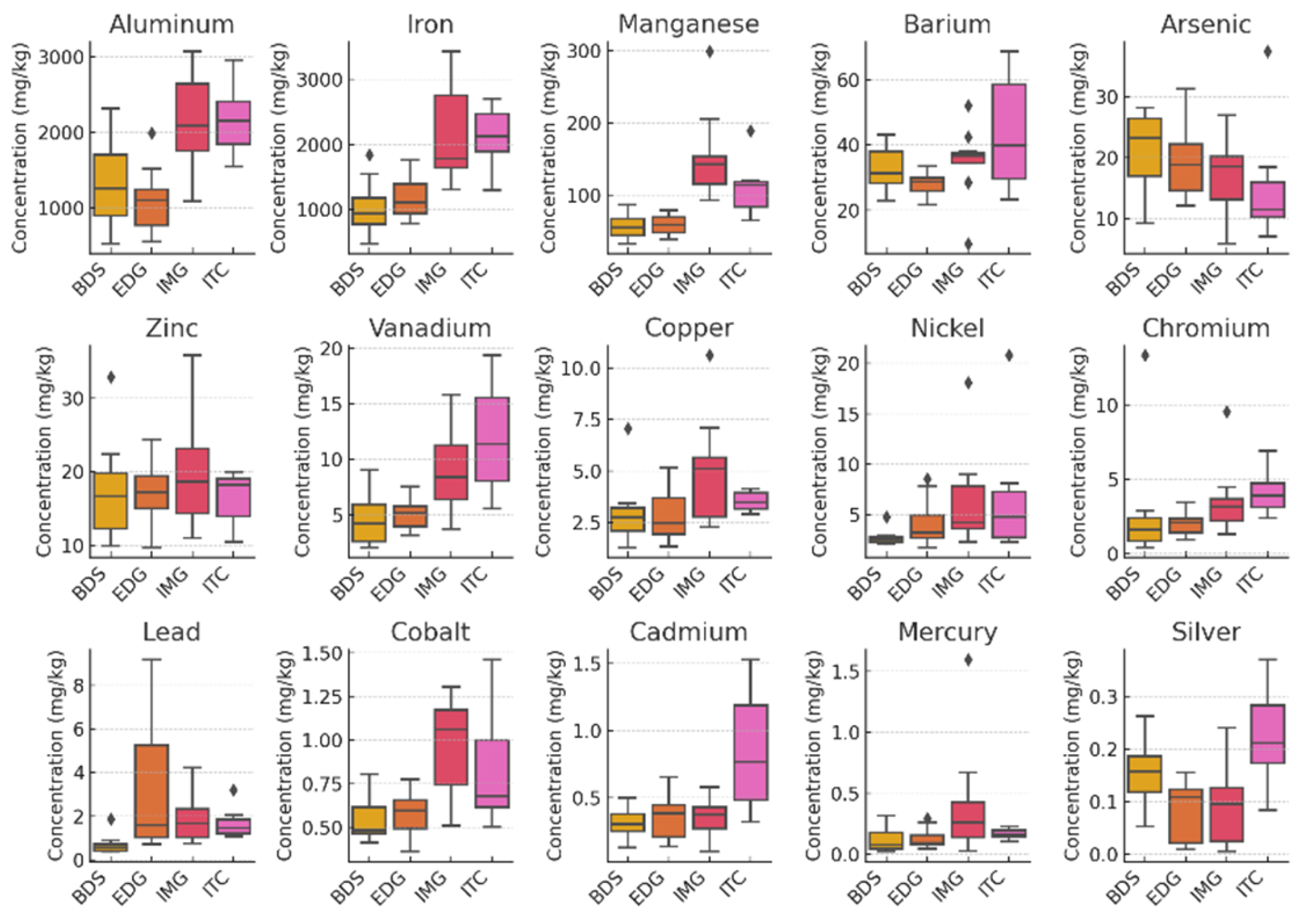
Figure 3.
Boxplots represent the distribution of trace element concentrations (mg kg⁻¹) found in samples of the macroalgae Zonaria tournefortii (n=12 for beach) collected from four beaches in Espírito Santo, Brazil: Barra do Sahy (BDS), Enseada das Garças (EDG), Imigrantes (IMG), and Itaoca (ITC). In each boxplot: the central line represents the median of the data; the edges of the box indicate the interquartile range (IQR), spanning from the first quartile (Q1) to the third quartile (Q3); the "whiskers" extend up to 1.5 times the IQR, representing the typical range of the data; points outside the whiskers are considered outliers, highlighting atypical values. The elements are organized in descending order of median concentration, facilitating the identification of the most prevalent components in the analyzed samples.
Figure 3.
Boxplots represent the distribution of trace element concentrations (mg kg⁻¹) found in samples of the macroalgae Zonaria tournefortii (n=12 for beach) collected from four beaches in Espírito Santo, Brazil: Barra do Sahy (BDS), Enseada das Garças (EDG), Imigrantes (IMG), and Itaoca (ITC). In each boxplot: the central line represents the median of the data; the edges of the box indicate the interquartile range (IQR), spanning from the first quartile (Q1) to the third quartile (Q3); the "whiskers" extend up to 1.5 times the IQR, representing the typical range of the data; points outside the whiskers are considered outliers, highlighting atypical values. The elements are organized in descending order of median concentration, facilitating the identification of the most prevalent components in the analyzed samples.
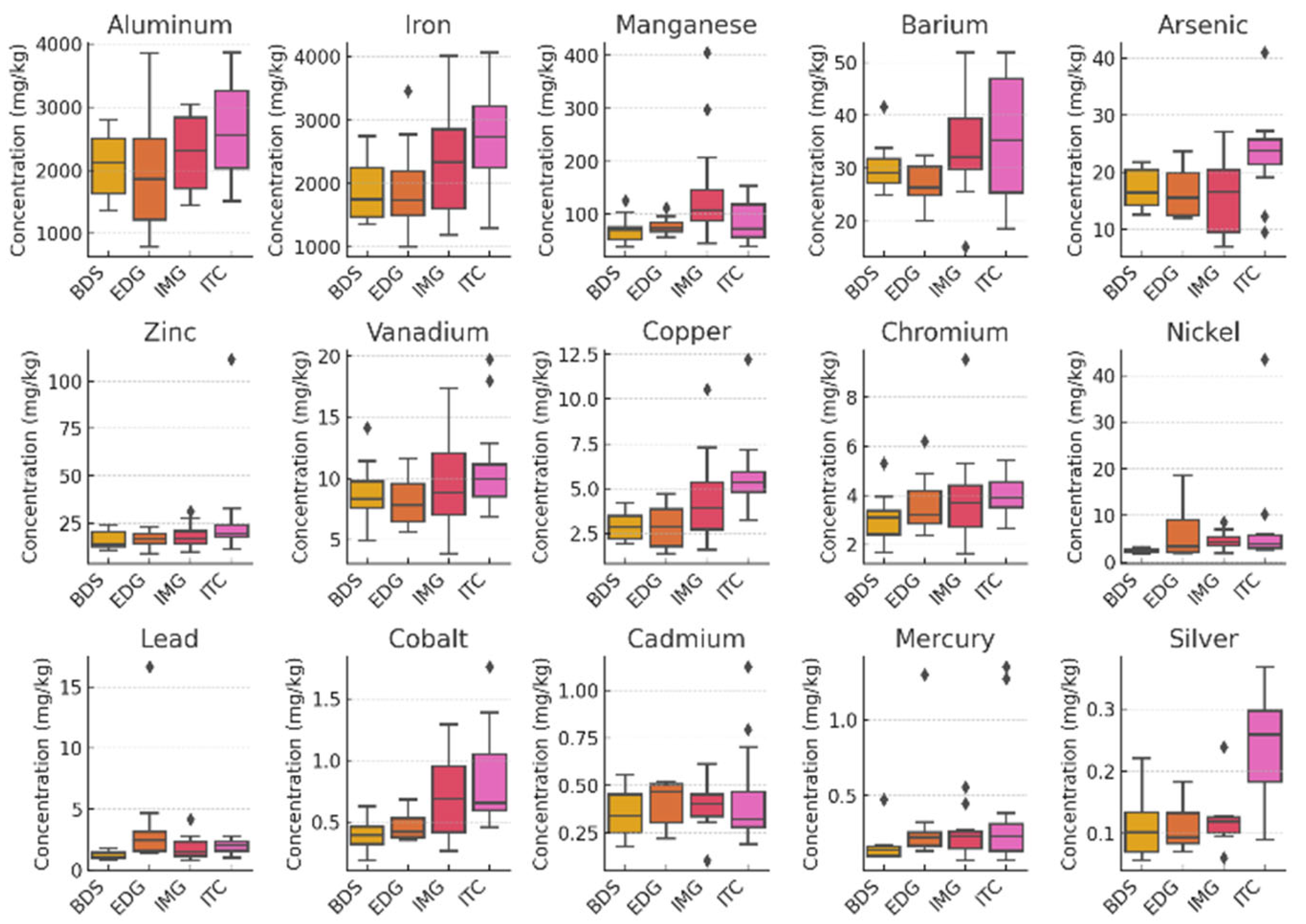
Figure 4.
3D Principal Component Analysis (PCA) plot showing the distribution of metal trace concentrations in two macroalgae species, Sargassum natans (red) and Zonaria tournefortii (blue), collected from four different beaches at the Espirito Santo Coast, Brazil, in 2022.
Figure 4.
3D Principal Component Analysis (PCA) plot showing the distribution of metal trace concentrations in two macroalgae species, Sargassum natans (red) and Zonaria tournefortii (blue), collected from four different beaches at the Espirito Santo Coast, Brazil, in 2022.
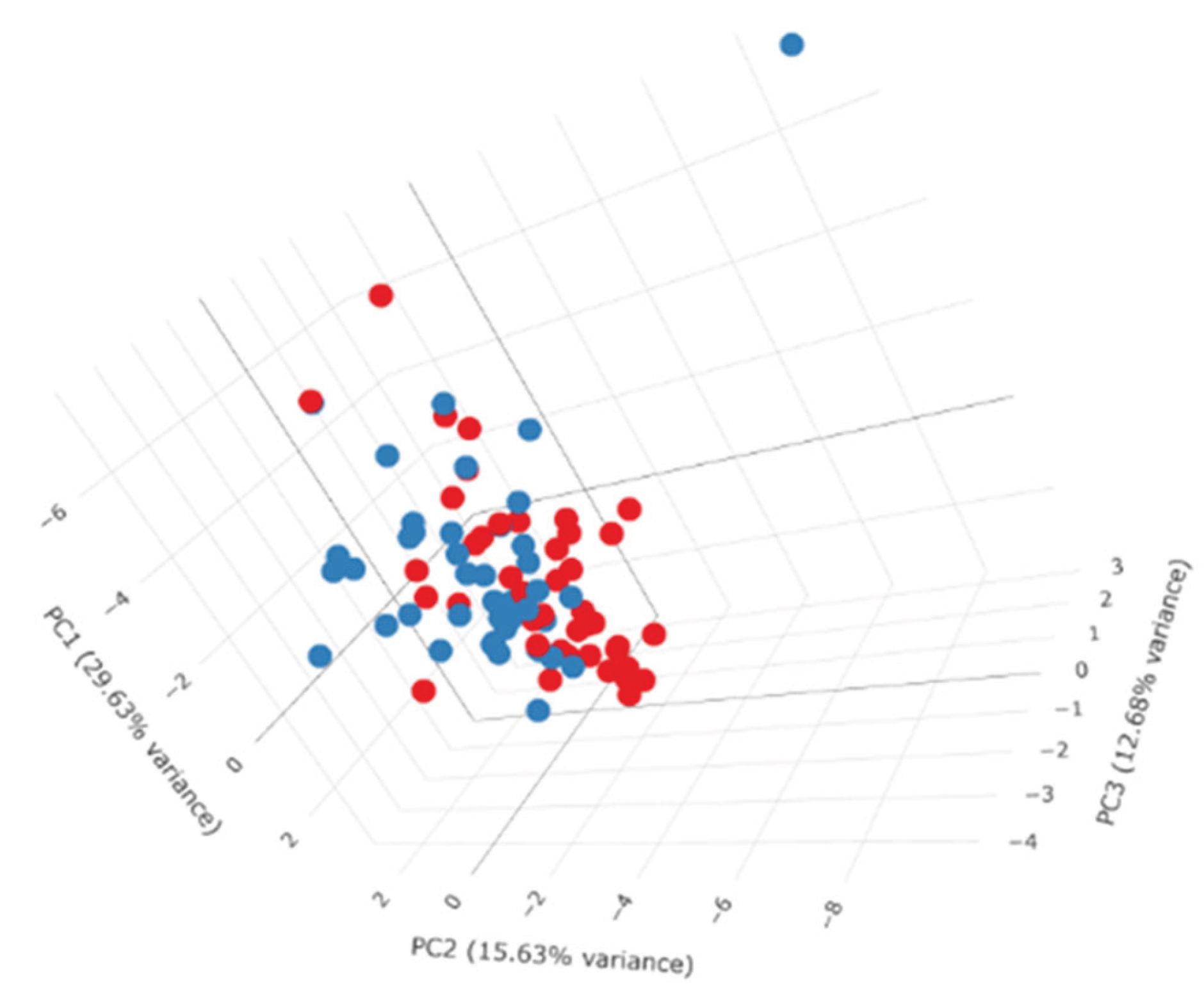

Table 1.
Characteristics of the beaches and geographic coordinates of macroalgae collection areas in Southeastern Brazil.
Table 1.
Characteristics of the beaches and geographic coordinates of macroalgae collection areas in Southeastern Brazil.
| Municipality | Beach | Characteristics of the beaches | Geographic coordinates |
|---|---|---|---|
| Aracruz (94,765 inhabitants) |
Barra do Sahy |
|
19° 52’ 28.056" S 40° 4’ 44.328" W |
| Imigrantes |
|
19°57’13.9" S 40°08’29.3" W |
|
| Fundão (21,948 inhabitants) |
Enseada das Garças |
|
20° 1’ 49.908" S 40° 9’ 31.860" W |
| Itapemirim (34,656 inhabitants) |
Itaoca |
|
20° 54’ 23.220" S 40° 46’ 49.908" W |
| Source: IBGE, 2022 | |||
Table 2.
Limits of detection (LOD) and quantification (LOQ) of the elements analyzed in this study in parts per billion (ppb).
Table 2.
Limits of detection (LOD) and quantification (LOQ) of the elements analyzed in this study in parts per billion (ppb).
| Elements | ppb | |
|---|---|---|
| LOD | LOQ | |
| Ag | 0.030 | 0.090 |
| Al | 0.91 | 2.76 |
| As | 0.048 | 0.147 |
| Ba | 0.045 | 0.136 |
| Cd | 0.002 | 0.007 |
| Co | 0.006 | 0.019 |
| Cr | 0.021 | 0.064 |
| Cu | 0.054 | 0.162 |
| Fe | 2.55 | 7.72 |
| Hg | 0.036 | 0.110 |
| Mn | 0.101 | 0.306 |
| Ni | 0.074 | 0.224 |
| Pb | 0.021 | 0.062 |
| V | 0.007 | 0.020 |
| Zn | 0.089 | 0.269 |
Table 3.
Comparison of 15 elements between beach-cast seaweeds (Zonaria tournefortii and Sargassum natans) collected at four beaches in Espírito Santo (Brazil) and submerged samples of Sargassum natans (as S. vulgare) from the Syrian Sea, Ceará (Brazil), and Madeira Archipelago (Portugal). The concentrations are presented as median ± interquartile range (IQR) or mean ± standard deviation (SD), depending on the study.
Table 3.
Comparison of 15 elements between beach-cast seaweeds (Zonaria tournefortii and Sargassum natans) collected at four beaches in Espírito Santo (Brazil) and submerged samples of Sargassum natans (as S. vulgare) from the Syrian Sea, Ceará (Brazil), and Madeira Archipelago (Portugal). The concentrations are presented as median ± interquartile range (IQR) or mean ± standard deviation (SD), depending on the study.
| Samples analyzed | Beach-Cast | Submerged | |||||
|---|---|---|---|---|---|---|---|
| Species | Zonaria tournefortii | Sargassum natans | Sargassum natans (as S. vulgare) | ||||
| Sampling sites | Espírito Santo | Espírito Santo | Syrian Sea | Ceará (Dry Season) |
Ceará (Rainy Season) |
Madeira Archipelago | |
| Metal (mg kg⁻¹) | Median ± IQR | Median ± IQR | Mean ± SD1 | Mean ± SD2 | Mean ± SD2 | Mean ± SD3 | |
| Aluminum (Al) | 2255 ± 960 | 1612 ± 1080 | 2898 ± 119 | 174 ± 0.1 | 2199 ± 130 | - | |
| Iron (Fe) | 2184 ± 1208 | 1352 ± 833 | 7382 ± 202 | 99 ± 7 | 1730 ± 117 | - | |
| Manganese (Mn) | 74.9 ± 41.2 | 78.6 ± 64.1 | 129 ± 5 | 8.48 ± 0.51 | 220.8 ± 8.4 | - | |
| Barium (Ba) | 29.4 ± 7.9 | 31.4 ± 9.5 | 23 ± 1 | 1.10 ± 0.05 | 27.9 ± 0.3 | - | |
| Arsenic (As) | 19.2 ± 8.8 | 18.4 ± 10.5 | 93.2 ± 3.1 | 5.0 ± 0.3 | 172 ± 6 | - | |
| Zinc (Zn) | 17 ± 8.2 | 17.1 ± 6.4 | 23.74 ± 1.19 | < LOD | 17.6 ± 1.8 | 25.20 ± 4.97 | |
| Vanadium (V) | 8.80 ± 3.8 | 5.70 ± 4.6 | 11.07 ± 7.38 | < LOD | < LOD | - | |
| Copper (Cu) | 3.70 ± 2.5 | 3.20 ± 1.7 | 4.75 ± 0.18 | < LOD | 2.36 ± 0.17 | 1.37 ± 0.04 | |
| Chromium (Cr) | 3.50 ± 1.4 | 2.30 ± 1.9 | 23.1 ± 1.0 | 0.130 ± 0.007 | 6.77 ± 0.48 | 1.19 ± 0.3 | |
| Nickel (Ni) | 3.20 ± 2.5 | 3.00 ± 2.4 | 0.71 ± 0.1 | < LOD | < LOD | 1.37 ± 0.08 | |
| Lead (Pb) | 1.60 ± 1.1 | 1.10 ± 1.2 | 1.04 ± 0.05 | < LOD | < LOD | 0.40 ± 0.04 | |
| Cobalt (Co) | 0.50 ± 0.3 | 0.60 ± 0.3 | 3.60 ± 0.33 | 0.130 ± 0.01 | 2.16 ± 0.06 | - | |
| Cadmium (Cd) | 0.40 ± 0.2 | 0.40 ± 0.2 | 0.16 ± 0.03 | 0.050 ± 0.004 | 1.41 ± 0.01 | 1.75 ± 0.07 | |
| Mercury (Hg) | 0.20 ± 0.1 | 0.10 ± 0.2 | 0.06 ± 0.01 | 0.634 ± 0.058 | 1.479 ± 0.05 | 0.04 ± 0.01 | |
| Silver (Ag) | 0.10 ± 0.1 | 0.10 ± 0.1 | - | - | - | - | |
Disclaimer/Publisher’s Note: The statements, opinions and data contained in all publications are solely those of the individual author(s) and contributor(s) and not of MDPI and/or the editor(s). MDPI and/or the editor(s) disclaim responsibility for any injury to people or property resulting from any ideas, methods, instructions or products referred to in the content. |
© 2025 by the authors. Licensee MDPI, Basel, Switzerland. This article is an open access article distributed under the terms and conditions of the Creative Commons Attribution (CC BY) license (http://creativecommons.org/licenses/by/4.0/).
Copyright: This open access article is published under a Creative Commons CC BY 4.0 license, which permit the free download, distribution, and reuse, provided that the author and preprint are cited in any reuse.


