
Submitted:
18 November 2025
Posted:
19 November 2025
You are already at the latest version
Abstract
The use of Artificial Intelligence (AI) has recently become a key means of learning for learners across various institutions worldwide. For ODL students, AI has become a learner support service, instructor, and peer-learning companion. This study, conducted at the Institute of Adult Education (IAE) in Tanzania, examined students’ perspectives on the use of AI tools in learning. Specifically, it investigated ODL students’ familiarity with AI, AI preferences and use in learning, and perspectives on AI tool use in ODL. Using a single-case study design, the study employed a mixed-methods research approach with a convergent parallel design to collect data from 93 second and third-year ODL students from the Dar es Salaam and Morogoro Campuses. The findings revealed that 94.7% of students were familiar with AI, mainly after joining their studies, 87% used ChatGPT for learning, and 57% used AI to answer their questions. In addition, 98% of students argue that the utilisation of AI in ODL is inevitable, citing its role in enhancing self-learning, improving access to learning materials, and saving time. This study calls for enhanced access to and understanding of diverse AI tools to maximise their potential across all aspects of learning. Also, the study calls for academic integrity, ethical use, peer learning, and human-AI interaction among ODL students and institutions for effective utilisation of AI in ODL.
Keywords:
AI
; utilisation of AI
; ODL
; students
1. Introduction
The utilisation of Artificial Intelligence (AI) has recently become a key means of learning among learners throughout various institutions in the world. Notably, for students studying through Open and Distance Learning (ODL), AI has become a learner support service, an instructor, and a fellow student [1]. Students at the [anonymized], the case for this study, like those in many other institutions, utilise AI in their learning. As such, the current research focuses on the utilisation of AI in ODL by the [anonymized] students. However, before engaging with the focus of this study, the author provides a background of the Institute in relation to its role as a dual-mode institution and highlights the associated literature on the use of AI in ODL.
Established by Parliamentary Act No. 12 of 1975, the [anonymized] is a dual-mode higher-learning institution in Tanzania that offers learning programmes at both basic and higher education levels. From its establishment until the early 2000s, the [anonymized] offered distance education through correspondence at the secondary education level. The [anonymized] introduced ODL in 2004 to the programmes and later to the Ordinary Diploma programmes in 2013. During these days, ODL students relied on the self-instructional learning materials provided by the Institute and support services from instructors during face-to-face sessions administered by [anonymized] twice a year. Technological support was minimal among a few students who had computer skills and access to their own computers and the Internet. In 2021, the [anonymized] began offering bachelor’s degree programmes through ODL. The programmes attracted students from all 26 regions in Tanzania Mainland. Thus, students enrolled in the programme from all [anonymized] regional centers and campuses in the country. Seemingly, the [anonymized] prospective students preferred the ODL over conventional mode programmes. A study conducted at the [anonymized] by [2] indicated that students preferred ODL because of its flexible nature, which allows students to learn at their own pace. Additionally, another study by [3], conducted at [anonymized], emphasises that ODL flexibility enables students to access learning while at their diverse locations, such as offices, homes, or any other places, without the need for physical classroom sessions. Thus, with ODL, [anonymized] students access learning materials, assessments, and support remotely and convene for face-to-face sessions at scheduled times.
Practice shows that students registered in the programmes enjoy not only the mode but also the blended learning model approach. Blended learning is a hybrid model that combines traditional classroom and online learning, making ODL more effective and attractive to learners. Currently, with the hybrid model, learners utilise learning technologies to enhance their learning. The use of blended learning makes ODL more attractive to learners as it accommodates their contexts and preferences [4]. That being the case, AI comes in and enhances learning, considering that in ODL, students spend more of their time on self-learning and less time with their instructors or facilitators.
AI is a computer-generated system that performs activities with human-like intelligence [5]. [6], define AI as computer machines that can simulate human intelligence in terms of thinking and behaviour. Machines act like humans in terms of planning, reasoning, communication, learning, and problem-solving. From an educational perspective, machines can, like humans, capture existing information, analyse, process, and present it, ready for end-user consumption with maximum satisfaction [7]. Thus, in a learning context, AI can be referred to as a computerised system that facilitates learning through problem-solving, intelligent tutoring, and learner support services.
According to the National ICT Policy 2016, the government of Tanzania has been committed to enhancing the use of contemporary technologies, particularly AI. Consequently, the government developed the National Digital Education Strategy 2024/25 – 2029/2030, together with the National Guidelines for AI in Education [8,9]. The policy documents, particularly the guidelines, aimed at ensuring the integration of AI in education, as well as the ethical considerations related to the use of the technologies. Notably, the guidelines reflect the Beijing Consensus on AI and Education 2019 [10] and the Continental AI Strategy 2024 of the African Union [11], which advocated for the integration of AI technologies in enhancing flexible learning pathways and, ultimately, education for all. These policies and strategies, altogether, inform the current study’s perspectives on the utilisation of AI tools among ODL students at [anonymized]. They reflect the efforts to ensure that AI is harnessed in enhancing access to education sustainably. However, the impact of these initiatives on countries, institutions, and individuals, particularly ODL students, requires ongoing research to inform practice.
In recent years, ODL institutions have been experiencing increasing student utilisation of AI [12]. According to [5,13], AI revolutionises learning experiences among ODL students. As such, ODL students in various institutions utilise AI tools in learning and reduce their dependence on facilitators or tutors [5,6,12]. As stated earlier, ODL students used to study remotely with less physical contact with their instructors. Currently, students enjoy blended learning in which the utilisation of learning technologies, especially AI, plays a vital role in self-studying. Contemporary literature indicates that the use of AI among students has demonstrated potential for enhancing learning experiences through self-directed learning [14,15,16]. Students utilise AI as a virtual learning partner and facilitator because it interacts with them in a human-like manner [14,17].
Several studies have indicated that ODL students utilise AI tools, mostly Chat Generative Pre-trained Transformer (ChatGPT), QuillBot, and Grammarly, to generate content, paraphrase, and enhance academic writing [18,19,20]. According to [14], students use AI tools, particularly ChatGPT, because it facilitates effective learning. [14] add that students prefer the tool because it is generative in the sense that it analyses, filters, and produces information as requested, thus enhancing self-directed learning. Likewise, [16] showed that learners consider ChatGPT a useful learning aid and use it throughout their learning process because it is a generative AI tool.
Nonetheless, a study conducted by [18] indicated that among students in Jordanian Universities, the majority of whom study through ODL, 90.4% use ChatGPT. The students use other AI tools, such as Google Gemini, Meta, and Microsoft Bing, at a lower rate below 40%. Another study by [21] indicated that students from selected universities in the United States used ChatGPT at a rate of 88%. In Indonesia, students are familiar with various AI tools but prefer ChatGPT, followed by QuillBot, for generating text, paraphrasing, refining grammar, and enhancing effective writing [19].
A study by [20] in Malaysia showed that AI affects students’ behaviour and their control over their learning. Consequently, ODL students have adopted AI tools in learning, although they have not yet utilised their full potential. This study recommends a supportive environment to enhance students’ effective use of AI tools.
In Tanzania, as in many other countries, the utilisation of AI tools in learning cannot be overemphasised. Studies by [22] and [23] show that students at selected higher learning institutions in Tanzania, namely, the University of Dodoma (UDOM), University of Dar es Salaam (UDSM), Kampala International University in Tanzania (KIUT), and the Institute of Finance Management (IFM), used AI tools to enhance writing skills, conduct assignments, and generate new knowledge. According to the study, approximately 66% of the students were aware of the use of AI tools, particularly ChatGPT, and approximately 72% acknowledged using the AI tool in their learning. Another study by [24] indicates that undergraduate students at the Tanzania Institute of Accountancy, Mbeya Campus, use AI tools, with ChatGPT being the most popular (86%), followed by QuillBot (41%) and Grammarly (12%). Likewise, a study by [25] indicates that students of the Institute of Accountancy Arusha (IAA) and the Open University of Tanzania (OUT) utilise the AI tools of ChatGPT and Grammarly in generating research ideas, improving clarity, searching literature, and generating discussions. [25], adds that with AI, ODL students learned many things on their own with less dependence on instructors.
Seemingly, [anonymized] ODL students, like other students from other higher learning institutions in Tanzania and beyond, utilise AI in their learning. However, the maximisation of its potential has yet to be studied. Thus, the current study fills this gap by investigating the utilisation of AI tools by students. Specifically, this study identifies the preferred AI tools and examines their specific use in learning. Additionally, this study examined students’ perspectives on the use of AI tools in learning. Hence, it sought to answer the following research questions: (1) What is the state of familiarity with AI tools among [anonymized] ODL students? (2) Which AI tools do [anonymized] ODL students prefer to use in their learning? (3) For what specific purposes do [anonymized] ODL students use their preferred AI tools? (4) What are the [anonymized] ODL students’ perspectives on the use of AI tools in learning? To answer the research questions, the following methodology was used.
2. Methodology
2.1. Research Design
The current study is a single-case study of the Morogoro and Dar es Salaam Campuses of [anonymized], focusing on the second- and third-year ODL students of the Institute as the unit of analysis. This study employed a mixed-methods research approach with a convergent parallel design to enhance the parallel collection and analysis of quantitative and qualitative data for triangulation purposes [26]. Figure 1 illustrates the study design.
Figure 1 shows a graphical representation of the survey. It shows that the survey, as explained in the following sections, utilised both the questionnaire and interview methods to enrich separate findings, which were thereafter converged to consolidate and interpret what inspired in the field. The researcher developed questionnaires using the Google Forms worksheet and shared them online via links supplied to students in WhatsApp groups. Regarding the interviews, the researcher, upon reaching data saturation [27], interviewed online 16 participants using convenience sampling. This technique helped obtain participants who were reachable for the online interviews. The interviews aimed to gain an in-depth understanding of the participants’ perspectives and experiences.
2.2. Participants and Sampling
The current study sample comprised all 272 ODL students from the second and third years at the Dar es Salaam and Morogoro Campuses. The researcher purposively sampled the students not only for their longer learning experience at [anonymized] but also because they had already acquired some ICT-related skills from the modules covered during their second year. These sampling justifications place the sampled students in a better position to participate in the current study than those at lower levels. Additionally, the researcher purposively selected the campuses for a case study because they had a larger number of the targeted sample than the remaining campuses in the Ruvuma and Mwanza Regions [22]. Notwithstanding the sampling technique, the current study was not designed to generalise the findings to other [anonymized] campuses.
The findings of this study are based on 93 participants, representing a 34% response rate, which is fair and reasonable for an online survey [28,29]. Of the total participants, 64% were third-year students and 36% were second-year students. Programme-wise, 89.5% of the participants were from the Bachelor’s Degree in Adult Education and Community Development (BAECD) programme and 10.5% from the Bachelor’s Degree in Adult and Continuing Education (BACE) programme. The smaller number of BACE students corresponds to the overall number of students enrolled in the programme, which is significantly lower than that of the BAECD programme.
2.3. Data Analysis and Presentation
Content analysis [26] was used to analyse the data. Deductive content analysis was used to set responses on the Google Forms worksheet. Thereafter, the worksheet provided an auto-analysis of the responses with the respective auto-generated graphical representations in real time, upon submission of each questionnaire online. The generated graphics included pie charts and histograms that were extracted to Microsoft Excel sheets for adjustments and arrangement of details to enhance clarity and visibility. Additionally, the researcher reviewed the interview notes and transcribed the recorded audio data to obtain a narrative summary. Excerpts obtained from the interviews were extracted and presented as quotes to represent the participants’ voices. To maintain confidentiality, the researcher referred to the study participants using pseudonyms. Hence, in the current study, participants are referred to in numbers such as “student 1”, “student 8 “, and “student 13”.
2.4. Ethical Considerations
The study engaged the study participants upon their consent. The researcher contacted the class leaders via phone calls and introduced the study’s purpose. The leaders shared the message with their fellow class members and thereafter agreed to invite the researcher to their class’s WhatsApp group for more clarification. Upon joining the group, the researcher highlighted the key issues to ensure understanding and shared the Google Forms link with the participants. The researcher assured the participants of the anonymity of their identities and that the data would be collected strictly for research purposes.
2.5. AI Use Declaration
The author used Grammarly and Paperpal AI tools to review the grammar, readability, and vocabulary throughout the document. Notably, Grammarly tracked each sentence as it was typed and instantly highlighted errors, whereas Paperpal was used to review the full paper after it was completed. The author then accepted or rejected the suggestions or opted for another word or phrase to avoid the highlighted errors. Additionally, the author used Perplexity AI to search for literature and, in a few cases, to request grammar and clarity checks. In some instances, Perplexity provided false sources and DOIs. However, none of the false sources were used in this study. In addition, none of the content in the current study was AI-generated.
3. Results and Discussion
The Findings are presented in line with the study objectives and research questions. Thus, the current section is presented in subsections covering participants’ familiarity with AI, followed by the preferred AI tools and the specific uses of AI tools in learning. The last subsection presents the participants’ perspectives on AI tool use in learning.
3.1. Participants’ Familiarity with AI Tools
The study findings, presented in Figure 2, show that the surveyed ODL students at [anonymized] are familiar with AI. Some were familiar with AI before joining the [anonymized], while others became familiar after joining the institute.
Figure 2 shows that 94.7% of the [anonymized] ODL students were familiar with AI. However, 64.5% of the respondents indicated that they became aware of AI after joining the [anonymized]. Only 35.5% were familiar with AI before joining the institute. The findings suggest that the students in this study had a higher level of awareness. Interestingly, a similar study conducted in Tanzania by [22] indicated a 66% level of awareness among students, which is significantly lower than that of the current study. However, this could have resulted from differences in the learning context between the two study areas, as most students at [anonymized] became familiar with AI after joining the institute.
Also, Figure 2 shows that the percentage of respondents who were unfamiliar with AI before joining the [anonymized] declined from 64.5% to 5.3%, suggesting that ODL students become familiar with the technology after joining the Institute. As such, [anonymized] plays a transformative role by setting a learning environment that enhances learning through the use of technologies, particularly AI. In addition, since ODL students learn ICT-related modules in their second year, especially multimedia technologies and library search, their skills in utilising AI widen significantly. When interviewed, Students 6 and 10 said they became familiar with AI tools through self-study requirements that required them to complete several individual and group assignments. In response to how they became familiar with AI after joining the [anonymized], the respondents provided a range of responses. Figure 3 presents the distribution of responses on how ODL students familiarised themselves with AI tools.
The findings in Figure 3 indicate that the majority (50%) of respondents became aware of AI tools through their peers, suggesting that peer learning impacted their skills. The findings also show that some respondents (35%) indicated that they familiarised themselves through self-initiatives online, while others (15%) did so through their module facilitators. When interviewed, Student 2 stated that some facilitators guided them in using AI tools, especially ChatGPT. Student 1, when interviewed, said in Kiswahili that, “Wengi tumekuja hatujui haya mambo lakini kiukweli tumejifunzia hapahapa kupitia wanafunzi wenzetu wenye kujuajua haya mambo”. Literally, Student 1 said that most of them joined [anonymized] with no familiarity with AI, but, frankly speaking, they later learned from their peers who had some knowledge of the technology. These findings are consistent with those of other scholars, such as [22] and [20], who show that peer interaction and learning significantly contribute to AI usage among students. These findings implicitly suggest that, with ODL, module facilitators are not necessarily the primary source of AI orientation for students, as students can orient themselves online and through peers, see [5,12].
3.2. Preferred AI Tools Among the [anonymized] ODL Students
The second research question asked about the AI tools [anonymized] ODL students preferred for their learning. The findings indicate various preferred tools, including ChatGPT, Grammarly, QuillBot, Google Gemini, and Perplexity. Figure 4 presents the students’ preferred AI tools.
Figure 4 shows that the use of ChatGPT ranked highest (87%), followed by Google Gemini (25%). The use of Grammarly, QuillBot, and Perplexity was below 3%, suggesting minimal use. These findings suggest a high preference for generative AI, mainly ChatGPT and Google Gemini, which are chatbots capable of engaging in real-time conversational dialogue using natural language processing (NLP). One participant stated, “We prefer using ChatGPT because it is conversational in nature and it studies our problem and provides solutions based on what was actually asked” (Student 14). Another respondent stated, “I use Grammarly very little … ChatGPT is my favourite and I use it throughout my studies. It has become like a library and a tutor for me (Student 8). These findings suggest that students have increased their reliance on AI chatbots, mainly ChatGPT.
Interestingly, the preference for ChatGPT (86%) indicated in Figure 4 aligns with the findings by [24], who reported an 87% preference rate for the same tool among students from the Institute of Accountancy, Mbeya Campus, in Tanzania. The similarity of the findings implies students’ reliance on and confidence in AI technology. Additionally, the findings align with those of [14] and [18], who concluded that ODL students prefer ChatGPT because it generates content in response to their requests.
In comparison with other studies, the current study indicated that the use of other AI tools, apart from ChatGPT and Google Gemini, is minimal, contrary to other studies conducted in Tanzania and elsewhere (cf. [18,19,24]). This suggests a unique context-specific pattern, possibly resulting from exposure factors, familiarity issues, or the dominant preferred tool among ODL students. A wider utilisation of various AI tools among students should be encouraged, as it enriches compelling learning experiences, enables self-learning, enhances better understanding, and ultimately improves learning outcomes [30].
3.3. Utilisation of the AI-Preferred Tools Among ODL Students
The third research question asked about the specific use to which [anonymized] ODL students utilise their preferred AI tools. The distributed questionnaires revealed various uses, including work organisation, improving writing quality, completing assignments and answering questions. Figure 5 shows the percentage distribution of these responses.
The findings in Figure 5 show that the majority (57%) of respondents used their preferred AI tools to answer questions, (40%) to improve the quality of their work, and (22%) to organise their work. A few (17%) used it to complete assignments. A similar picture of the findings was portrayed in the interviews. The following excerpts explains:
I return to ChatGPT whenever I am stuck. It generates answers, fixes language errors, and guides me throughout the process as I work on my assignments. I also enjoy using Google Gemini to structure my essays. … Usually, I write down my ideas to instruct the platform on what I want, and it structures the work for me (Student 2).
Usually, after getting answers from ChatGPT, I tend to assess whether they are correctly responding to my assignment. At the end, I usually ask AI to check for grammar, flow and clarity. In this way, I find my work improved significantly (Student 11).
These findings suggest that [anonymized] ODL students use these tools primarily to conduct their assessments and search the literature. Adding to the findings, another interviewed student added, “I use ChatGPT and Google Gemini to ask questions about particular topics or complex words” (Student 7). With these findings, it is evident that questioning AI for answers has been a widely used practice among ODL students in their learning. Thus, the findings from both questionnaires and interviews reflect students’ reliance on AI in learning. Therefore, AI has become like search engines, libraries, learning peers, and instructors, available at all times. These findings align with those of [14], which highlight the act of self-learning aided by AI’s collaborative nature and flexibility. Moreover, [17] noted similar practices in which students use AI chatbots to ask questions and explore information on complex topics and various issues related to their studies. Such flexible options make AI tools useful and impactful to ODL students. This is also evident in the study by [22]. However, these findings imply that students are highly dependent on AI, which threatens learning collaborations among themselves. As such, traditional learning collaborations through human interaction should be encouraged to maintain the human aspect of learning while also leveraging the benefits of machine learning.
3.4. ODL Students’ Perspectives on the Use of AI Tools in Their Learning
The last research question asked about [anonymized] ODL students’ perspectives on the use of AI tools in learning. Findings were obtained from both questionnaires and interviews. Figure 6 presents the distribution of responses on the students’ perspectives.
The findings from Figure 6 indicate that nearly all respondents (98%; 58% + 40%) agreed that the use of AI in their learning is essential. These results show that the ODL students recognise the role of technology in their learning. It suggests that the utilisation of AI in ODL among students is inevitable. The findings align with those of [12], who encouraged the use of AI in learning to enhance students’ skills and self-competence. When interviewed, participants demonstrated a positive attitude towards the utilisation of AI, citing several associated academic benefits. Notably, they advocated the use of AI in ODL because it facilitates understanding of complex topics and vocabulary, self-learning, searching for learning materials, completing assignments, and gaining a broader knowledge and understanding of various issues, while also saving time. Table 1 presents excerpts from the field that narrate the participants’ perspectives.
The quotes and percentage distributions from the survey demonstrate clear perspectives among ODL students on the use of AI in learning. The perspectives suggest strong student confidence in using AI in learning. These findings align with those of [22,24], in which students advocate for the use of AI in learning. Hence, the findings suggest a significant positive perspective among the ODL students towards the utilisation of AI in their learning.
4. Conclusions and Recommendations
This study investigated the utilisation of AI in ODL using a single-case study design with [anonymized] ODL students at the Morogoro and Dar es Salaam Campuses. The study, in summary, indicates that nearly all the students studied are familiar with AI, mainly after joining their studies, suggesting that their learning engagements enhance their knowledge and skills. The study also revealed that students prefer the generative AI, mainly ChatGPT, as it generates answers to their assignment inquiries and literature searches. Notably, students use AI tools to search for answers, improve the quality of work, complete assignments, and organise their work. The students’ preference for AI reflects their stance on the technology and implies that its use in the ODL context is inevitable. The study, therefore, calls for discussion and discourse on how to engage ODL students broadly in utilising AI in learning. AI complements learning, especially for ODL students, as they study remotely with minimal face-to-face interaction with their facilitators and peers. Also, AI responds to the students’ learning needs instantly and in real time. However, students need to use AI responsibly while observing academic integrity and engaging in active learning without compromising quality. Although the study demonstrated the value of AI in ODL, misusing or abusing the technology might lead to devastating consequences [31]. Also, uncontrolled use may lead to over-dependence, loss of competence among students, and academic dishonesty [32]. The study provides the following recommendations to ensure effective utilisation of AI in ODL at [anonymized] and other similar Institutions in Tanzania.
a. To ensure academic integrity and the ethical use of AI in learning, [anonymized] and other similar Institutions in Tanzania should establish an AI utilisation policy and guidelines.
b. There should be initiatives to enhance students’ access to and understanding of a diverse range of AI tools, maximising their potential across all aspects of learning.
c. Encouraging peer learning and online self-orientation among ODL students for AI familiarisation is essential.
d. Traditional learning collaboration through human-AI interactions should be encouraged to maintain the human aspect of learning, while also enjoying the benefits of machine learning.
Funding
This research received no external funding.
Institutional Review Board Statement
Not applicable.
Data Availability Statement
Data supporting the study results are openly available from the author upon request.
Acknowledgments
[omitted for peer review].
Conflicts of Interest
[omitted for peer review]. To avoid potential bias, all anonymity and ethical protocols were strictly observed.
Abbreviations
The following abbreviations are used in this manuscript:
| AI | Artificial Intelligence |
| BACE | Bachelor in Adult and Continuing Education |
| BAECD | Bachelor in Adult Education and Community Development |
| ChatGPT | Chat Generative Pre-trained Transformer |
| IAE | Institute of Adult Education |
| ICT | Information and Communications Technology |
| ODL | Open and Distance Learning |
References
- S. E. Öncü, M. S. E. Öncü, M. Gevher, and E. Erdoğdu, “Exploring the potential use of generative AI for learner support in ODL at scale,” J. Educ. Technol. Online Learn., vol. 8, no. 1, pp. 80–99, 2025. [CrossRef]
- S. N. Maijo, “Learners’ Perception and Preference of Open and Distance Learning Mode at the Institute of Adult Education, Tanzania,” East African J. Educ. Soc. Sci., vol. 2, no. Issue 3, pp. 79–86, 2021. [CrossRef]
- K. S. Magembe, “Challenges Facing ODL Students when Conducting Research in Tanzania : A Case of Institute of Adult Education Regional Centres,” J. Adult Educ. Tanzania, vol. 25, no. 2, pp. 45–68, 2023. [CrossRef]
- O. Emmanuel, “Challenges of Assessment of Teaching and Learning in Open and Distance Learning (ODL): The Case Study of Diploma Programme Offered by the Institute of Adult Education in Tanzania,” J. Adult Educ. Tanzania, vol. 21, no. 1, pp. 41–63, 2018.
- M. R. M. Amin, I. M. R. M. Amin, I. Ismail, and V. M. Sivakumaran, “Revolutionizing Education with Artificial Intelligence (AI)? Challenges, and Implications for Open and Distance Learning (ODL),” Soc. Sci. Humanit. Open, vol. 11, no. January, p. 101308, 2025. [CrossRef]
- J. O. Oparaduru and F. N. Uchendu, “Integration of Artificial Intelligence in Open and Distance Learning and e-Learning: A Comprehensive Overview,” Niger. Open, Distance e-Learning J., vol. 2, no. May, pp. 54–62, 2024.
- H. Lin and Q. Chen, “Artificial intelligence (AI) -integrated educational applications and college students’ creativity and academic emotions: students and teachers’ perceptions and attitudes,” BMC Psychol., vol. 12, no. 1, p. 487, 2024. [CrossRef]
- URT, “National Guidelines for Artificial Intelligence in Education,” Ministry of Education, Science and Technology, Ministry of Education Science and Technology, 2025.
- URT, “National Digital Education Strategy, 2024/25 - 2029/30,” Ministry of Education, Science and Technology, 2025.
- UNESCO, “Beijing Consensus on Artificial Intelligence and Education,” 2019.
- AU, “Continental Artificial Intelligence Strategy: Harnessing AI for Africa’s Development and Prosperity,” 2024.
- S. A. Itasanmi, O. A. S. A. Itasanmi, O. A. Ajani, H. A. Andong, and C. N. Tawo, “Assessment of Artificial Intelligence (AI) Proficiency and its Demographic Dynamics among Open Distance Learning (ODL) Students in Nigeria,” Int. J. Learn. Teach. Educ. Res., vol. 24, no. 6, pp. 251–272, 2025. [CrossRef]
- F. Yaseenzai, G. F. Yaseenzai, G. Mustafa, M. Zafar, I. Chaudhary, and S. Yasir, “Use of Artificial Intelligence (AI) in Open and Distance Learning (ODL) institutions: Opportunities, Challenges, and the Way Forward,” Jahan-e-Tahqeeq, vol. 7, no. 3, pp. 507–517, 2024.
- Z. Li, C. Z. Li, C. Wang, and C. J. Bonk, “Exploring the Utility of ChatGPT for Self-Directed Online Language Learning,” Online Learn. J., vol. 28, no. 3, pp. 157–180, 2024. [CrossRef]
- T. Sengul, S. T. Sengul, S. Sarikose, B. Uncu, and N. Kaya, “The effect of artificial intelligence literacy on self-directed learning skills: The mediating role of attitude towards artificial intelligence: A study on nursing and midwifery students,” Nurse Educ. Pract., vol. 88, p. 104516, 2025. [CrossRef]
- J. Marquardson, “Embracing Artificial Intelligence to Improve Self-Directed Learning: A Cybersecurity Classroom Study,” Inf. Syst. Educ. J., vol. 22, no. 1, pp. 4–13, 2024. [CrossRef]
- C. Bosch and D. Kruger, “AI chatbots as Open Educational Resources: Enhancing student agency and Self-Directed Learning I chatbot AI come Risorse Educative Aperte: potenziare l’efficacia della partecipazione nel processo educativo e l’apprendimento autoregolato dello studente,” Ital. J. Educ. Technol., vol. 32, no. 1, pp. 53–68, 2024.
- M. Al Mashagbeh, M. M. Al Mashagbeh, M. Alsharqawi, U. Tudevdagva, and H. J. Khasawneh, “Student engagement with artificial intelligence tools in academia : A survey of Jordanian universities,” Front. Educ., vol. 10, 2025. [CrossRef]
- R. P. Suharto, Zubaidi, Nurdjizah, A. N. Putri, and P. Sekarsari, “The use of AI-based Writing Tools ( Quillbot and Chatgpt ) in Developing the Writing Competence of Language Learners,” Esteem J. English Study Program., vol. 8, no. 2, pp. 259–269, 2025. [CrossRef]
- R. Omar, Z. R. Omar, Z. Osman, and O. L. Hsien, “Artificial Intelligence Adoption in Authentic Online Assessments : A Study of Online Distance Learning Institutions,” Int. J. Acad. Res. Progress. Educ. Dev., vol. 14, no. 3, pp. 864–879, 2025. [CrossRef]
- J. Freeman, “Student Generative AI Survey 2025,” HEPI Policy Note 61, no. February. Higher Education Policy Institute, pp. 1–12, 2025.
- H. Mbembati and H. Bakiri, “Generative Artificial Intelligence-Based Learning Resources for Computing Students in Tanzania Higher Learning Institutions,” Univ. Dar es Salaam Libr. J., vol. 20, no. 1, pp. 146–162, 2025. [CrossRef]
- E. M. Stuart, “Effects of Artificial Intelligence on the Academic Competency of Students of Higher Learning Institutions : A Case Study of Kampala International University in Tanzania,” Tanzanian J. Multidiscip. Stud., vol. 1, no. 2, pp. 63–84, 2024.
- G. S. Mollel, “Determinants of AI Utilization among Tanzania Higher Learning Students : Examining Trends, Predictors, and Academic Applications,” East African J. Inf. Technol., vol. 8, no. 1, pp. 57–69, 2025. [CrossRef]
- M. Baynit, C. B. F. M. Baynit, C. B. F. Mnyanyi, and M. S. Msoroka, “Digital Learning in the Age of Artificial Intelligence: Insights from Selected Higher Learning Institutions in Tanzania,” African Q. Soc. Sci. Rev., vol. 2, no. 2, pp. 96–112, 2025. [CrossRef]
- J. W. Creswell and V. L. P. Clark, Designing and Conducting Mixed Methods Research. SAGE Publications, 2017.
- B. E. Mariki, “Multimedia Features towards Skills Development in Open Learning : A Case of the Girls Inspire Project in Tanzania,” East African J. Educ. Soc. Sci., vol. 5, no. 5, pp. 89–98, 2024. [CrossRef]
- D. D. Nulty, “The adequacy of response rates to online and paper surveys: What can be done?,” Assess. Eval. High. Educ., vol. 33, no. 3, pp. 301–314, 2008. [CrossRef]
- L. J. Sax, S. K. L. J. Sax, S. K. Gilmartin, and A. N. Bryant, “Assessing Response Rates and Nonresponse Bias in Web,” Res. High. Educ., vol. 44, no. 4, pp. 409–432, 2003. [CrossRef]
- V. J. Owan, K. B. V. J. Owan, K. B. Abang, D. O. Idika, E. O. Etta, and B. A. Bassey, “Exploring the Potential of Artificial Intelligence Tools in Educational Measurement and Assessment,” EURASIA J. Math. Sci. Technol. Educ., vol. 19, no. 8, p. Article 13428, 2023. [CrossRef]
- C. Wang, “Exploring Students’ Generative AI-Assisted Writing Processes: Perceptions and Experiences from Native and Nonnative English Speakers,” Technol. Knowl. Learn., vol. 30, no. 3, pp. 1825–1846, 2024. [CrossRef]
- T. N. T. Nguyen, N. T. N. T. Nguyen, N. Van Lai, and Q. T. Nguyen, “Artificial Intelligence (AI) in Education: A Case Study on ChatGPT’s Influence on Student Learning Behaviors,” Educ. Process Int. J., vol. 13, no. 2, pp. 105–121, 2024. [CrossRef]
Figure 1.
The Research Design (Source: Author).
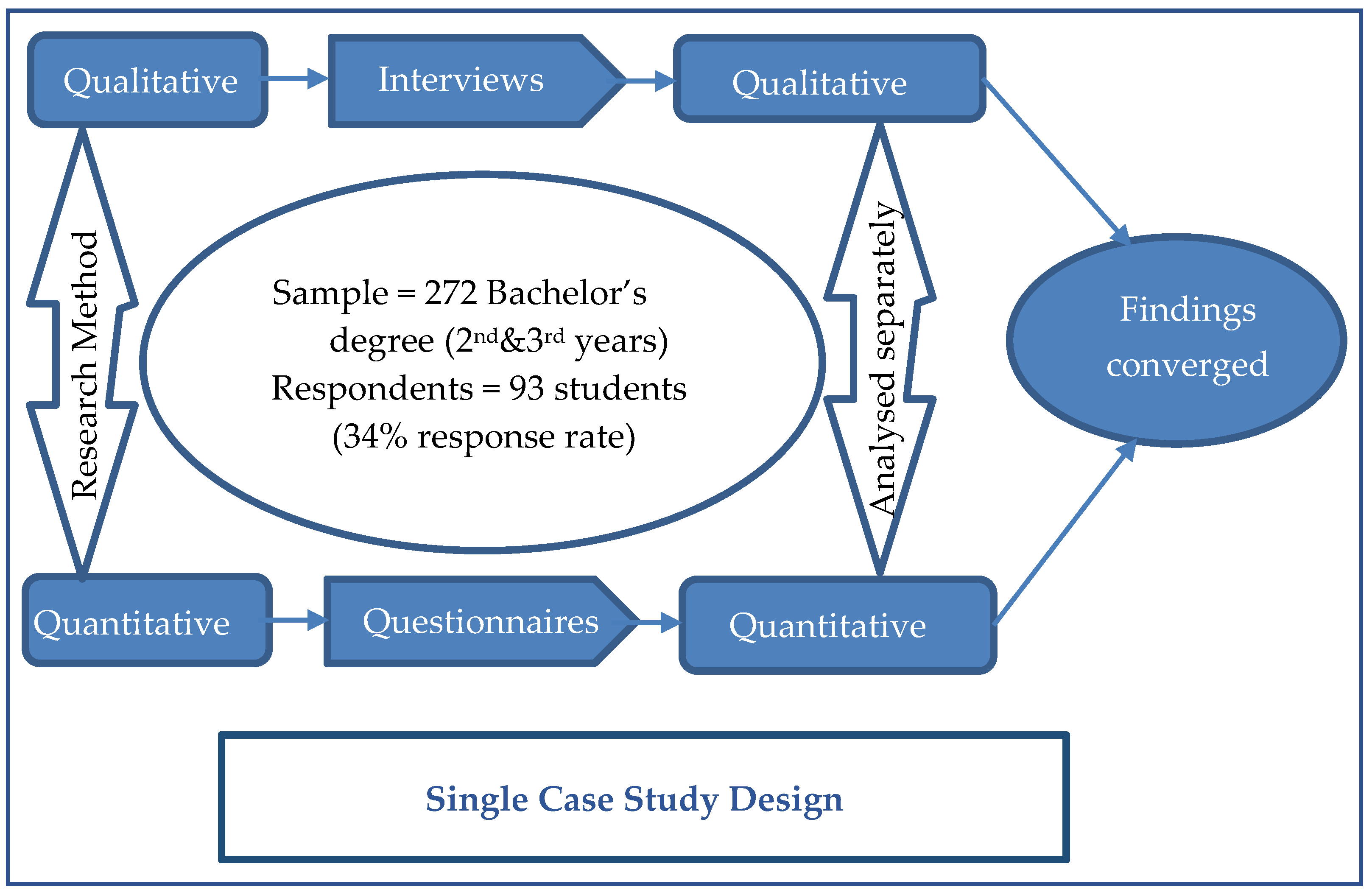
Figure 2.
Participants’ Familiarity Before and After Joining [anonymized].
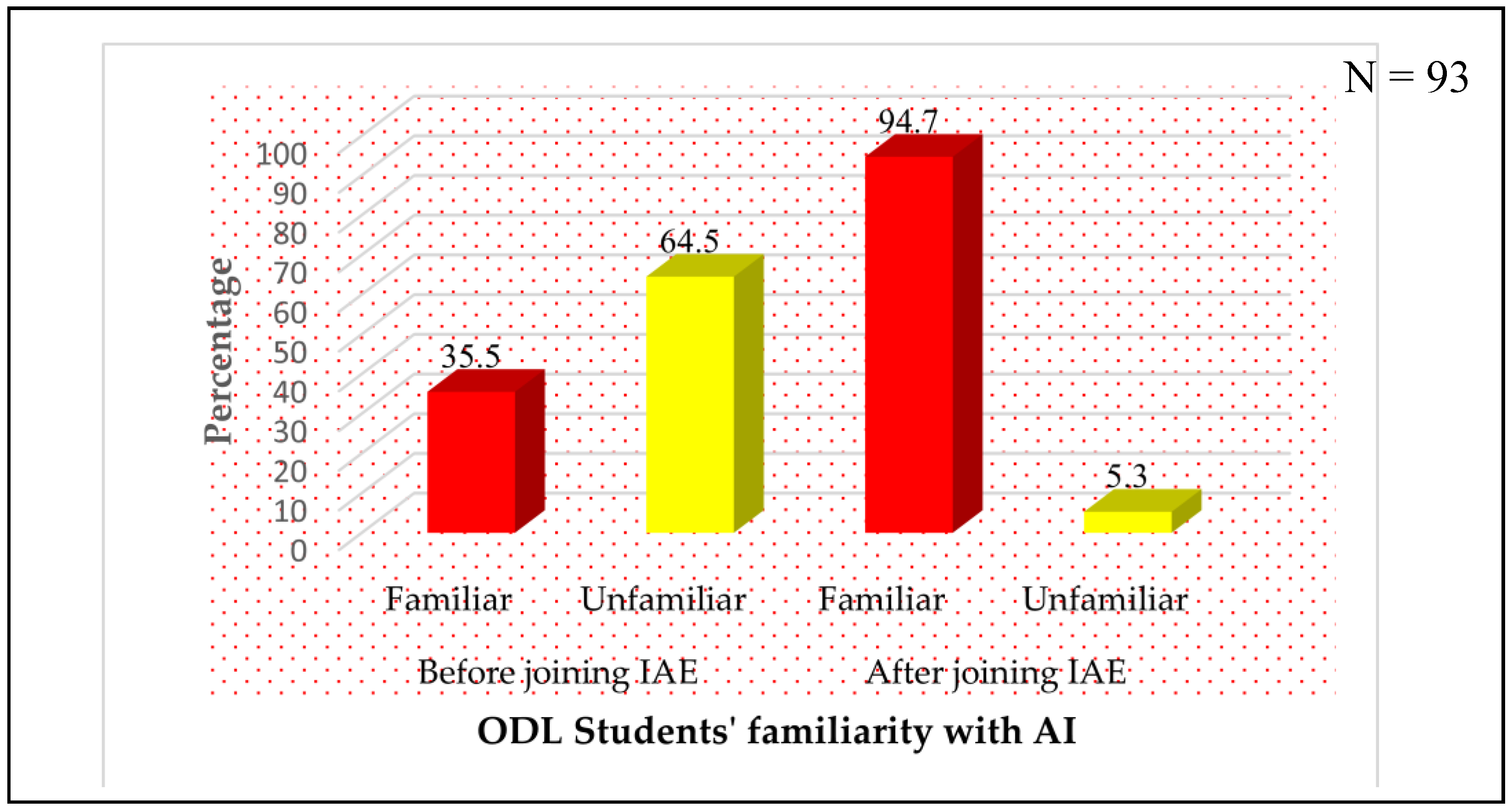
Figure 3.
Respondents’ Percentage Distribution on their familiarity with AI.
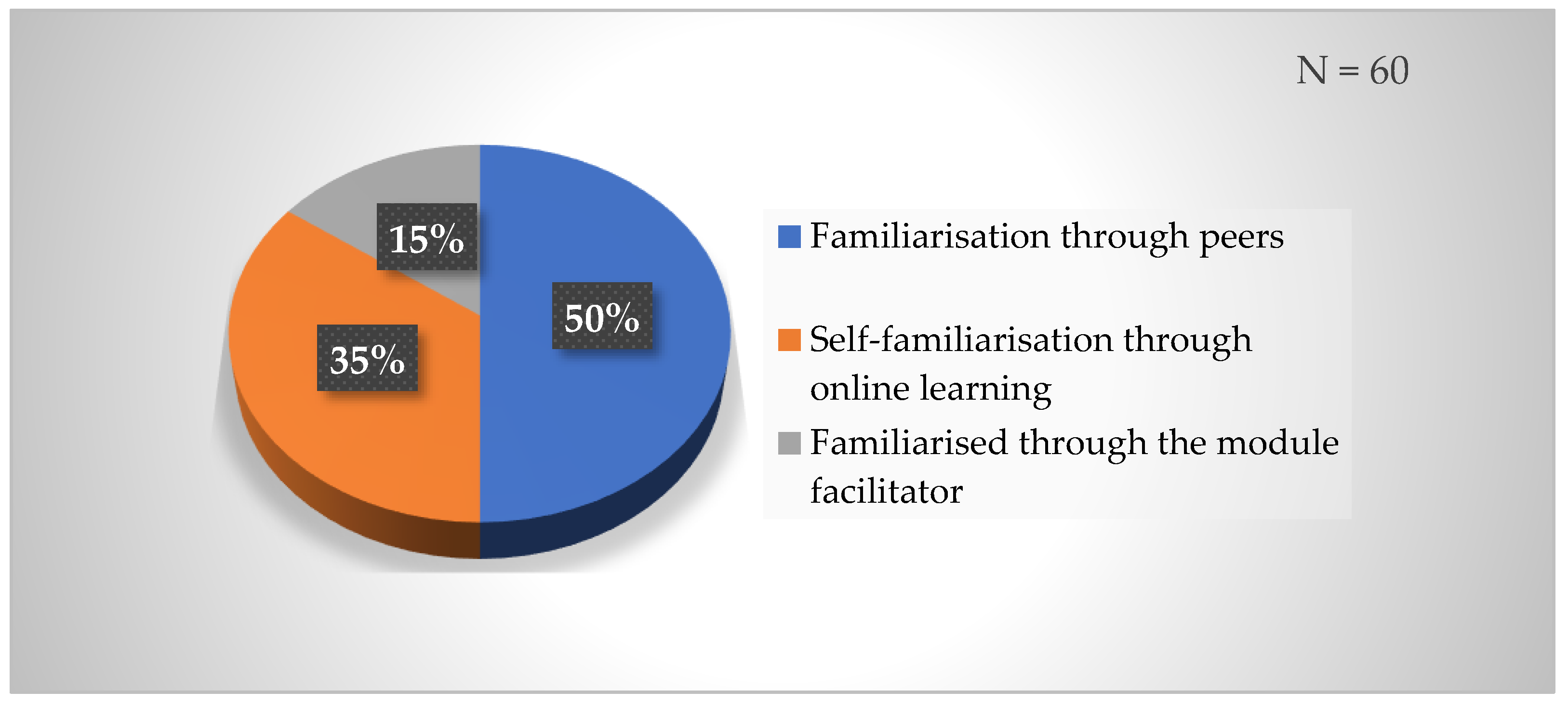
Figure 4.
Percentage Distribution of the Students’ Preferred AI Tools.
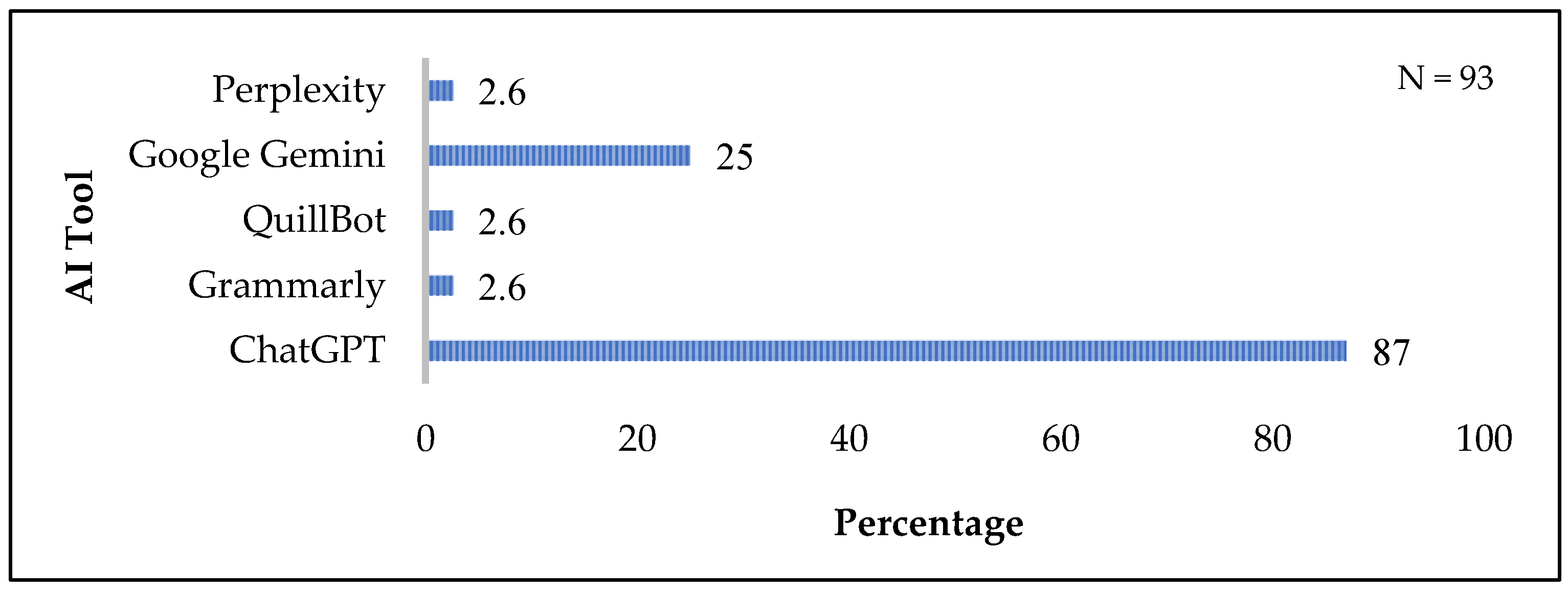
Figure 5.
Percentage Distribution on the Usage of the Preferred AI Tools among ODL students.
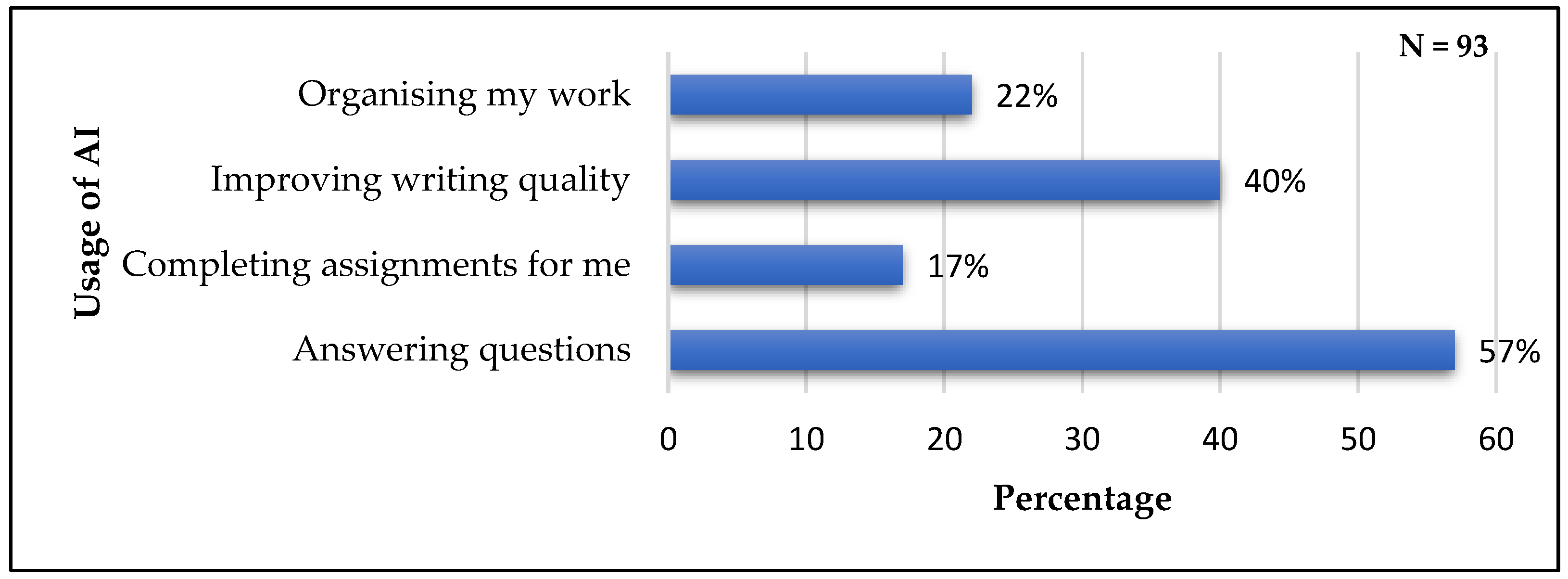
Figure 6.
Percentage Distribution of Students’ Perspectives on the use of AI in ODL.
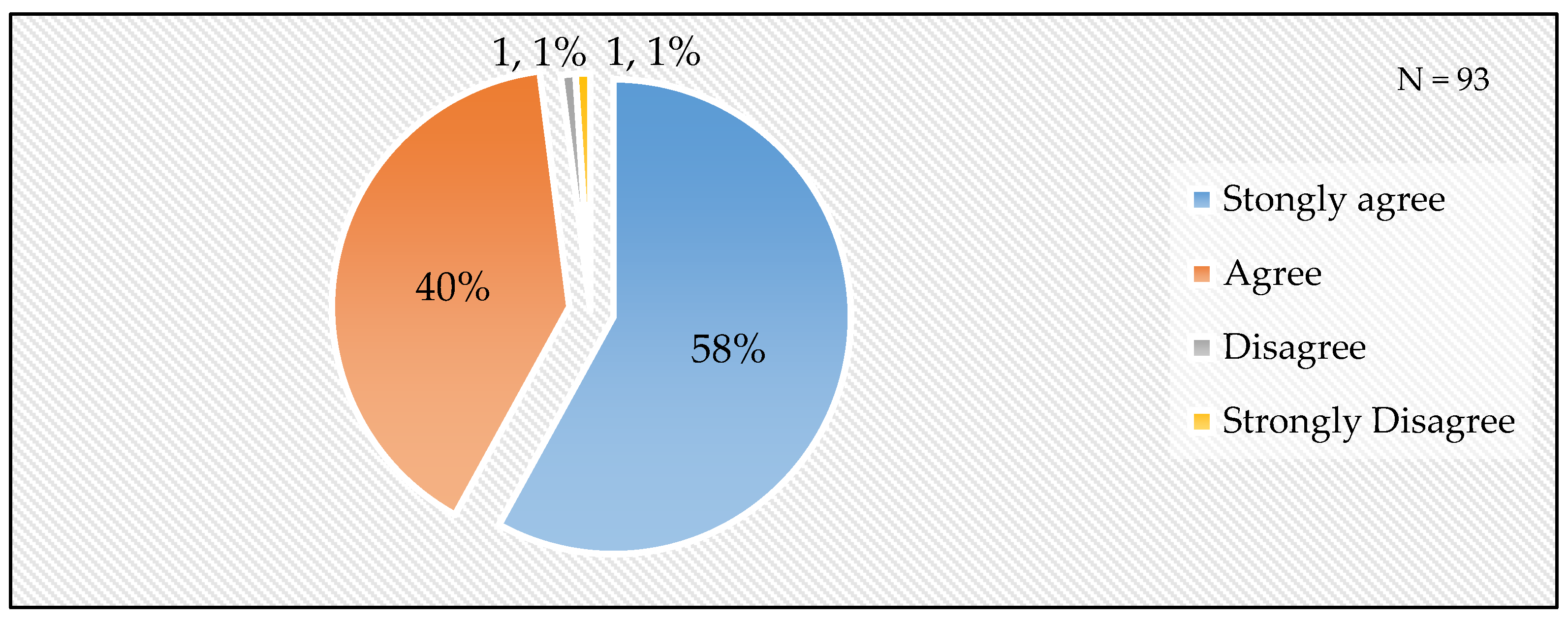

Table 1.
Excerpts on Students’ Perspectives towards the utilisation of AI tools in ODL.
| Participants | Excerpts |
|---|---|
| Student 10 | As distance learners, AI helps us to access learning and understand various issues related to our studies. |
| Student 5 | In cases where clarification is needed on complex words or topics, it is easier for us who study remotely to ask AI than it is to ask fellow students. |
| Student 15 | AI assists us in gaining broader knowledge. |
| Student 9 | AI make our lives easier as it clarifies various issues. |
| Student 13 | We get instant answers to our class assignments. |
| Student 6 | The technology saves time when searching for answers to what we need. |
| Student 4 | The AI tools simplify our learning, help us answer questions with authentic examples and provide us with knowledge beyond the learning materials provided by module facilitators. |
| Student 7 | AI acts like a facilitator … we ask it questions and get answers, sometimes better than those of module facilitators. |
Disclaimer/Publisher’s Note: The statements, opinions and data contained in all publications are solely those of the individual author(s) and contributor(s) and not of MDPI and/or the editor(s). MDPI and/or the editor(s) disclaim responsibility for any injury to people or property resulting from any ideas, methods, instructions or products referred to in the content. |
© 2025 by the authors. Licensee MDPI, Basel, Switzerland. This article is an open access article distributed under the terms and conditions of the Creative Commons Attribution (CC BY) license (http://creativecommons.org/licenses/by/4.0/).
Copyright: This open access article is published under a Creative Commons CC BY 4.0 license, which permit the free download, distribution, and reuse, provided that the author and preprint are cited in any reuse.


