Preprint
Article

This version is not peer-reviewed.

Seed Coating Synergies: Harnessing Plant Growth Regulators to Strengthen Soybean Nodulation and Stress Resilience

A peer-reviewed article of this preprint also exists.

Submitted:

14 November 2025

Posted:

17 November 2025

You are already at the latest version

Abstract

Soybean (Glycine max) is a globally important crop, but its productivity is often limited by suboptimal nodulation and nitrogen fixation, particularly under stress conditions. Bradyrhizobium diazoefficiens strain USDA110 is widely applied to enhance nodulation, yet its efficiency can be further improved by phytohormone modulation. This study examined the effects of seed coatings containing plant growth regulators (PGRs)—acetylsalicylic acid (ASA), aminoethoxyvinylglycine (AVG), indole-3-butyric acid (IBA), and 6-benzylaminopurine (BAP)—at varying concentrations from 5 – 500 nM, in combination with USDA110, on nodulation, nitrogenase activity, ethylene emission, physiological traits, and yield of soybean cultivar CM60. Laboratory assays identified 50 nM AVG, 5 nM IBA, and 5 nM ASA as optimal treatments, significantly enhancing nodule number and nitrogenase activity. Greenhouse trials under both well-watered and water-deficit conditions further demonstrated that USDA110 combined with AVG or IBA markedly improved photosynthesis, stomatal conductance, transpiration, plant height, and yield components compared with USDA110 or PGRs applied alone. Notably, USDA110 + AVG/IBA treatments sustained higher seed weight under drought, indicating strong synergistic effects in mitigating stress impacts. These findings highlighted that integrating USDA110 with specific PGRs represented a promising strategy to optimize nitrogen fixation and enhanced soybean productivity under both favorable and challenging conditions.

Keywords: 
;  ;  ;  ;  

1. Introduction

Soybean (Glycine max) consumption continuously increase worldwide and expected to reach a value of USD 226.28 billion by 2032, which is 40% more than current market value [1]. In Thai soybean, Chiang Mai 60 (CM 60) is one of the most commercial cultivars of soybean in Thailand for food industries, including for tofu, soymilk and plant-based protein food production, which significantly grow in this last decade. It has been commercially important for its high protein content and resistance to soybean rust caused by the fungus Phakopsora pachyrhizi [2]. However, the constrains of production due to nodulation and biological nitrogen fixation efficiency in field condition are still prominent, particularly under stress condition [3,4]. The field efficiency of rhizobium colonization is still deceased by the competition with other bacterial normal flora, and the suboptimal condition in field [3,4].
Bradyrhizobium diazoefficiens strain USDA110 have been used as the commercial rhizobium for soybean production. Inoculation with B. diazoefficiens has been shown to enhance nodulation on roots and positively influence soybean yield, irrespective of the type of bacterial preparation employed [5,6,7]. Its offers advantages over nitrogen fertilizers, primarily due to its cost-effectiveness and nitrogen provision efficiency [8]. A key feature of this interaction is the formation of specialized organs called nodules, facilitating the transfer of carbon from the plant and fixed nitrogen from the bacteria [9]. Additionally, USDA110 is highly effective as promoting nodule formation compared to other strains due to its specific genetic characteristics, superior nitrogen fixation capabilities, and higher biological compatibility with soybeans [10,11].
Understanding of soybean hormonal control on rhizobia compatibility and the autoregulation of nodulation remains limited. Modulation of phytohormones in soybean holds promise for increasing nodulation and nitrogen fixation efficiency of Bradyrhizobium sp. in soybean cultivation, thereby enhancing yield and reducing production costs. Research by Choudhury et al. [12] indicated that 6-Benzylaminopurine (BAP), indole acetic acid (IAA), salicylic acid (SA), gibberellic acid (GA), and jasmonic acid (JA) have the potential to increased nodule number per plant, albeit at higher concentrations resulting in a significant decreased of over 70% in soybean. Additionally, findings by Kempster et al. [13] suggested that low concentrations of cytokinins enhanced nodule development while improving biological nitrogen fixation. Ethylene inhibitors such as silver nitrate (AgNO3) and aminoethoxyvinylglycine (AVG) play a crucial role in inhibiting ethylene synthesis and activity, thereby influencing growth and nodulation in leguminous plants. These inhibitors, commonly used in horticulture for extending shelf life, target 1-aminocyclopropane-1-carboxylate synthase (ACS) and act antagonistically to ethylene in legume plants. Kitaeva et al. [14] also confirmed that using AVG could delay nodule senescence to a certain extent under heat stress in Pisum sativum.
The symbiotic signaling pathway involving plant hormones and rhizobium nodulation is not fully understood. More researches are needed to identify the specific types and concentrations of plant growth regulators (PGRs) that most effectively enhance rhizobium nodulation and nitrogen fixation. To better understand how PGRs affect the symbiosis between Bradyrhizobium and soybean cultivar CM 60. The objectives of this research were aimed to investigated different concentrations of various PGRs to enhance nodulation and nitrogen fixation efficiency under laboratory condition and improve the physiological parameters and yield components of soybeans in greenhouse conditions.

2. Materials and Methods

2.1. Plant Materials

Soybean seeds (cv. CM 60) were obtained from the Chiang Mai Agricultural Research and Development Center. The experiment was conducted at laboratory of Suranaree University of Technology, Thailand during 2022 and 2023. Commercial strains of Bradyrhizobium diazoefficiens strain USDA110, were grown for 3 to 5 d in Yeast extract-mannitol (YM) broth at a 30 °C. Seeds were sterilized by immersion in 70% ethanol for 30 s, repeated twice, followed by a two-time rinse with sterilized water for 2 min each. Then, seeds were disinfected with 3% NaOCl for 5 min and washed with sterilized water. Following this process, seeds were coated with USDA110 along with PGRs.

2.2. Bradyrhizobium and PGRs Inoculant

Bradyrhizobium commercial strain USDA110, was cultivated in YM broth at 30 °C under constant orbital stirring (200 rpm) for 3-5 days. Subsequently, 10 mL of bacterial culture was centrifuged at 5,000 rpm for 10 min. After centrifugation, bacterial strain, equivalent to 106 and 108 cells [15,16] was mixed with 0.6% xanthan gum and PGRs. Preliminary results (see Supplementary Figures S1–S6) showed that the 106 concentrations had a clearer effect on nitrogenase activity, number of nodules and dry weight of shoot and root, as well as a significant difference in treatment compared to the 108 concentrations under environmentally controlled laboratory conditions. Therefore, the 106 concentration was chosen for this experiment.
A 0.6% xanthan gum solution (0.06 g per 10 mL distilled water) was prepared following the method of Dissanayake et al. [17]. Next, 2.16 mL of this solution (for 60 seeds per treatment) was pipetted into a sterilized glass bottle [18,19]. This was done immediately prior to coating the seeds with Acetylsalicylic acid (ASA), Aminoethoxyvinylglycine (AVG), and Indole-3-butyric acid (IBA) at 5, 50 and 500 nM. The components were mixed together thoroughly to ensure a uniform solution.
This mixture was then used to thoroughly coat 60 seeds per treatment (see Supplementary Figure S1). The coated seeds were subsequently germinated in sterilized modified Leonard jars containing NFb medium inside a growth chamber for environmentally controlled laboratory conditions, and in 12” plant pots with sandy loam soil under greenhouse conditions (see Supplementary Figures S1 and S2 and Figures 3 and 4)

2.3. Methods

2.3.1. Screening of Plant Growth Regulators’ Concentrations Affecting Nitrogenase Activity and Nodule Numbers in Soybean Roots

This experimental design was Completely Randomized Design (CRD) with three replication per treatment. B. diazoefficiens commercial ̶ USDA110, equivalent to 106 cells, was mixed with 0.6% xanthan gum along with plant growth regulators (PGRs) at concentrations of 5, 50, and 500 nM of ASA, AVG, IBA and BAP, coated onto sterilized soybean seeds to facilitate the screening of suitable PGRs for studying the effect of plant hormones on rhizobium nodulation and nitrogen fixation under laboratory condition. The germination process occurred within sterilized modified Leonard jars and NFb medium, situated within a growth chamber. Environmental parameters were meticulously controlled, maintaining a temperature of 28 ± 2 °C, a photoperiod of 12 h of light and darkness, with a light intensity of 300 µE m–2 S–1, and humidity set at 50%. The NFb medium, in accordance with Baldani [20], comprised the following constituents per liter: malic acid (5.0 g), K2HPO4 (0.5 g), MgSO4.7H2O (0.2 g), NaCl (0.1 g), CaCl2. 2H2O (0.02 g), and FeEDTA solution (16.4 g L−1). The final volume was adjusted to 1 L with distilled water, and the pH was subsequently adjusted to 6.5.
At 30 days after inoculation (DAI), soybean seedlings were observed for nodule numbers and nitrogenase activity using the Acetylene Reduction Assay (ARA). Additionally, measurements of nodule number per plant, shoot length, and root length were conducted. The most effective PGRs were then be selected and tested under greenhouse conditions.

2.3.2. Plant Growth Regulators’ Effects on Physiological Parameters, Yield, and Yield Components of Soybean in Greenhouse Condition

Seeds were germinated and grown in the 12” plant pots with 9 kg of sandy loam soil per pot under greenhouse condition (see Supplementary Figure S2 and Figures 3 and 4). In well watering conditions, irrigation system was applied twice a week throughout the growing period. While under water stress conditions, irrigation system was applied until anthesis stage then drought stress induction for 7 days. Physiological parameters including net photosynthesis rate (A), stomatal conductance (gs), transpiration rate (E), water use efficiency (WUE), were measured using a LI-6800 Portable Photosynthesis System. Measurements for well-watered plants were taken at 30 DAI, while measurements for water-stressed plants were taken after the 7-day drought induction period. Plant height was also measured.
Yield and its components—dry weight per plant, nodule number per plant, pod number per plant, 100-seed weight, and seed weight per plant—were measured at the harvest stage, or when the plants reached full maturity (when at least 95% of the pods had turned a tan or brown color).

2.4. Statistical Analyses

The SPSS 25 statistical package was used for statistical data analyses. The experiments were based on a Completely Random Design. The data was analyzed using a two-way ANOVA, and mean differences were compared statistically using the Tukey-HSD method.

3. Results

3.1. Effects of Seed Coating Plant Growth Regulators on Nitrogenase Activity and Nodule Numbers in Soybean Roots

The nodule numbers at 30 DAI with USDA110 and treated with plant growth regulators (PGRs) at concentrations of 5, 50, and 500 nM of AVG, BAP, IBA, and ASA, were depicted in Figure 1 and Supplementary Figures S3–S6. Seedlings treated with PGRs, including AVG, IBA, and ASA, exhibited a significant increase in nodule number per plant compared to the control group. Seedlings treated with 50 nM of AVG showed the highest nodule number per plant at 28.67, surpassing those treated with 50 and 500 nM of AVG (Figure 1a). The nodule number of seedlings treated with USDA110 after 30 DAI was higher than those treated with BAP (Figure 1b). Seedlings treated with 5 nM of IBA and ASA in combination with USDA110 exhibited increased nodule numbers (27.67 and 26.00, respectively), surpassing those treated with other concentration levels (Figure 1c,d).
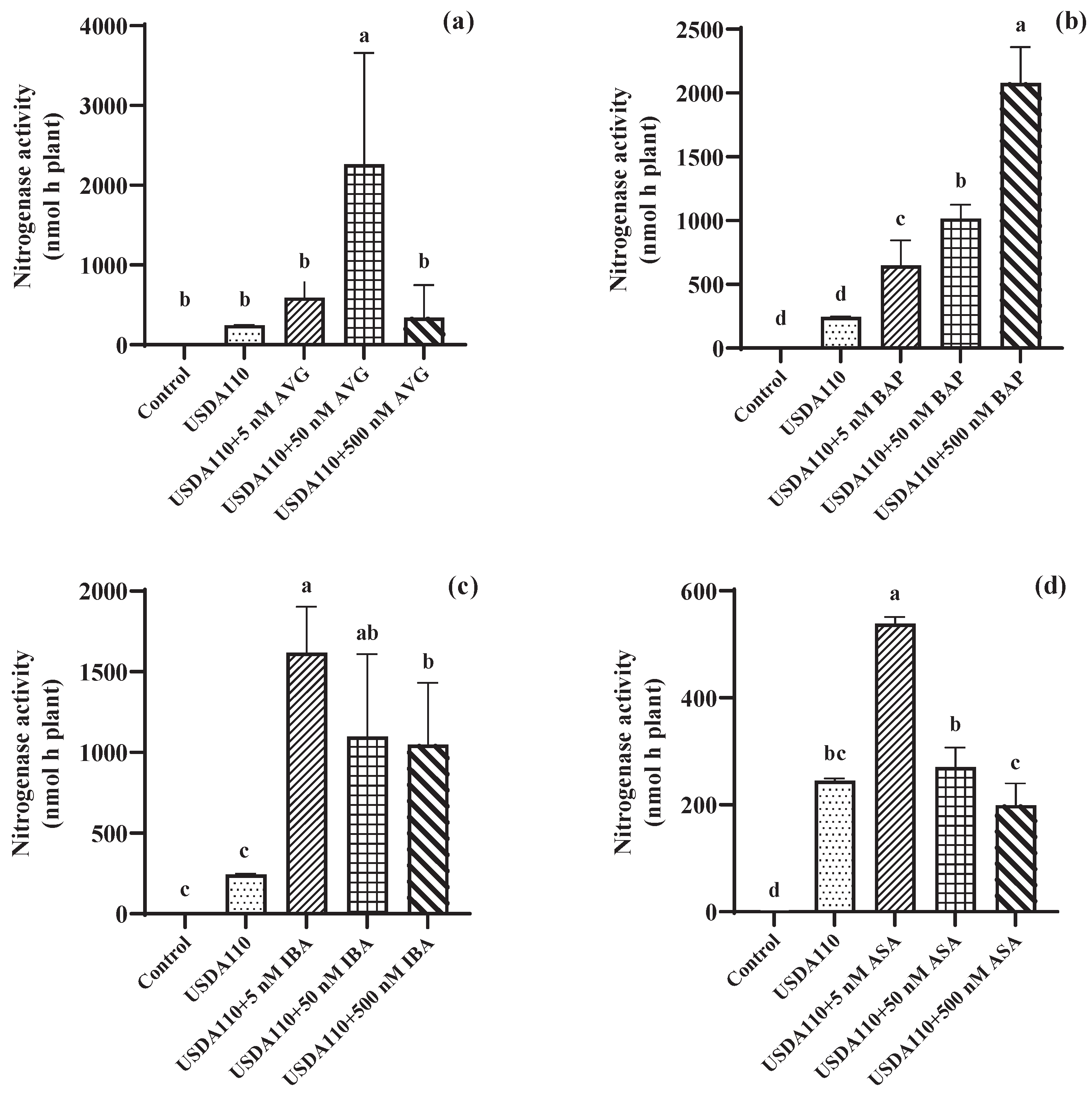
The nitrogenase activity at 30 DAI with USDA110 and various plant growth regulators concentration were presented on Figure 2 and Supplementary Figures S3–S6. Seedlings treated with PGRs showed a significant increase in nitrogenase activity compared to the control and untreated PGR groups. Seedlings treated with 50 nM of AVG exhibited a nitrogenase activity of 2,262.72 nmol h per plant, surpassing those treated with other concentration levels (Figure 2a). Seedlings treated with USDA110 and 500 nM of BAP at 30 DAI showed an increased nitrogenase activity of 2,079.23 nmol h per plant (Figure 2b). Additionally, seedlings treated with 5 nM of IBA and ASA enhanced nitrogenase activity, reaching 1,616.96 nmol h per plant and 538.84 nmol h per plant, respectively, exceeding other concentration levels (Figure 2c,d). Based on the aforementioned findings presented in Figure 1 and Figure 2, it can be inferred that the application of 50 nM of AVG, 5 nM of IBA, and 5 nM of ASA significantly impacts the nitrogen fixation and nodulation processes in soybean cultivar CM60.

3.2. Effects of Plant Growth Regulators on Physiological Parameters, Yield, and Yield Components of Soybean in Greenhouse Condition

The effects of coating soybean seeds with ASA, AVG, BAP, and IBA at concentrations of 5, 50, and 500 nM, combined with USDA110. Seeds treated with USDA110 and PGRs (including ASA at 5 nM, AVG at 50 nM, BAP at 500 nM, and IBA at 50 nM) significantly increased nitrogenase activity, nodule numbers, and the dry weight of roots and shoots at 30 days after inoculation (DAI) compared to the USDA110-only control group (Figure 1 and Figure 2 and Supplementary Figures S3–S6). However, the increase in nodule number and dry weight for IBA and BAP-treated seeds was relatively low compared to other treatments (Figure 1 and Supplementary Figures S5 and S6). As a result, only ASA, AVG, and IBA were selected to determine the potential of PGRs and USDA110 on physiological and yield components in soybean under a greenhouse experiment, both in normal and water-stressed conditions.

3.2.1. Physiological Parameters

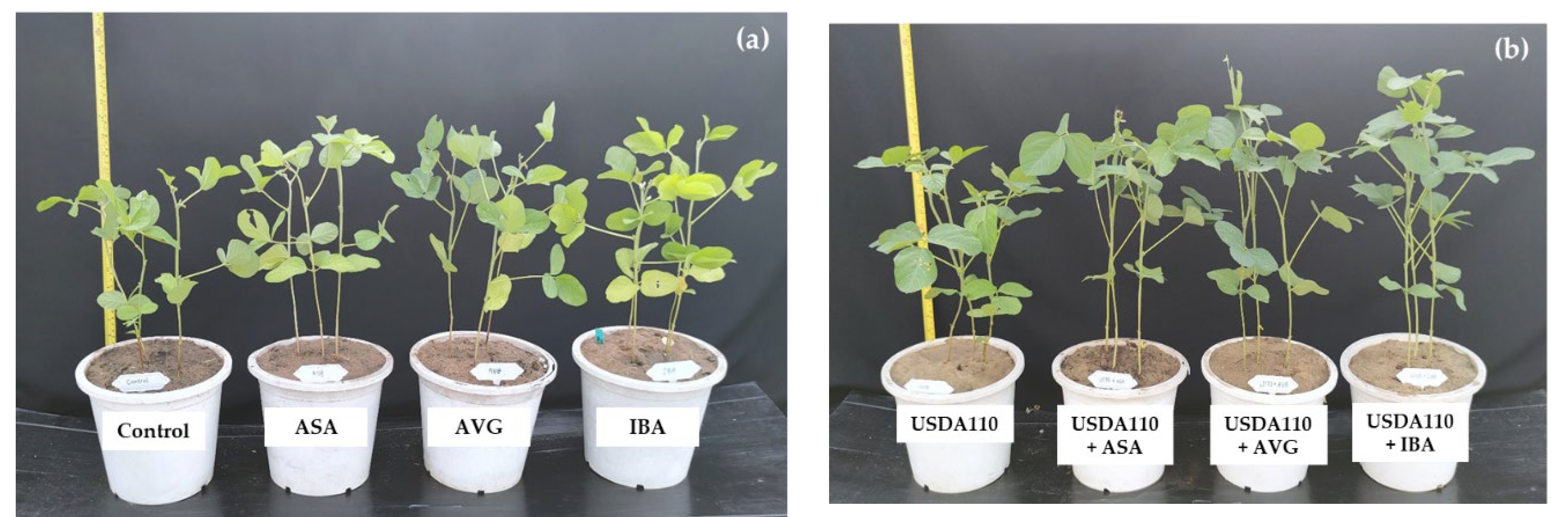
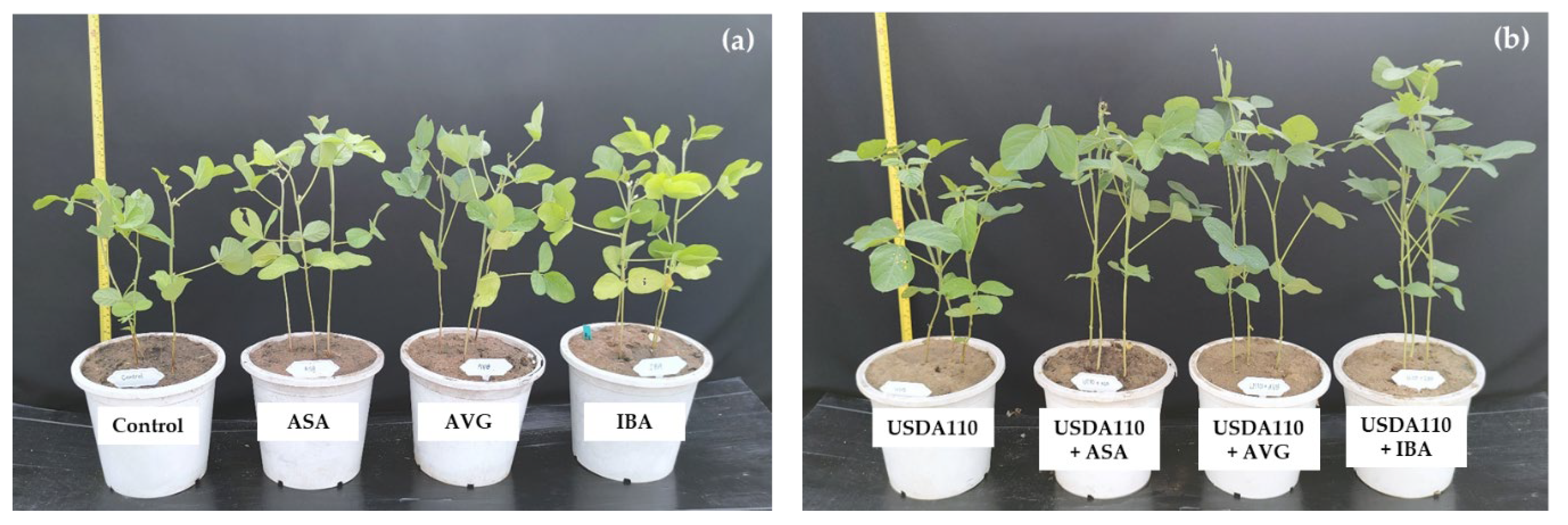
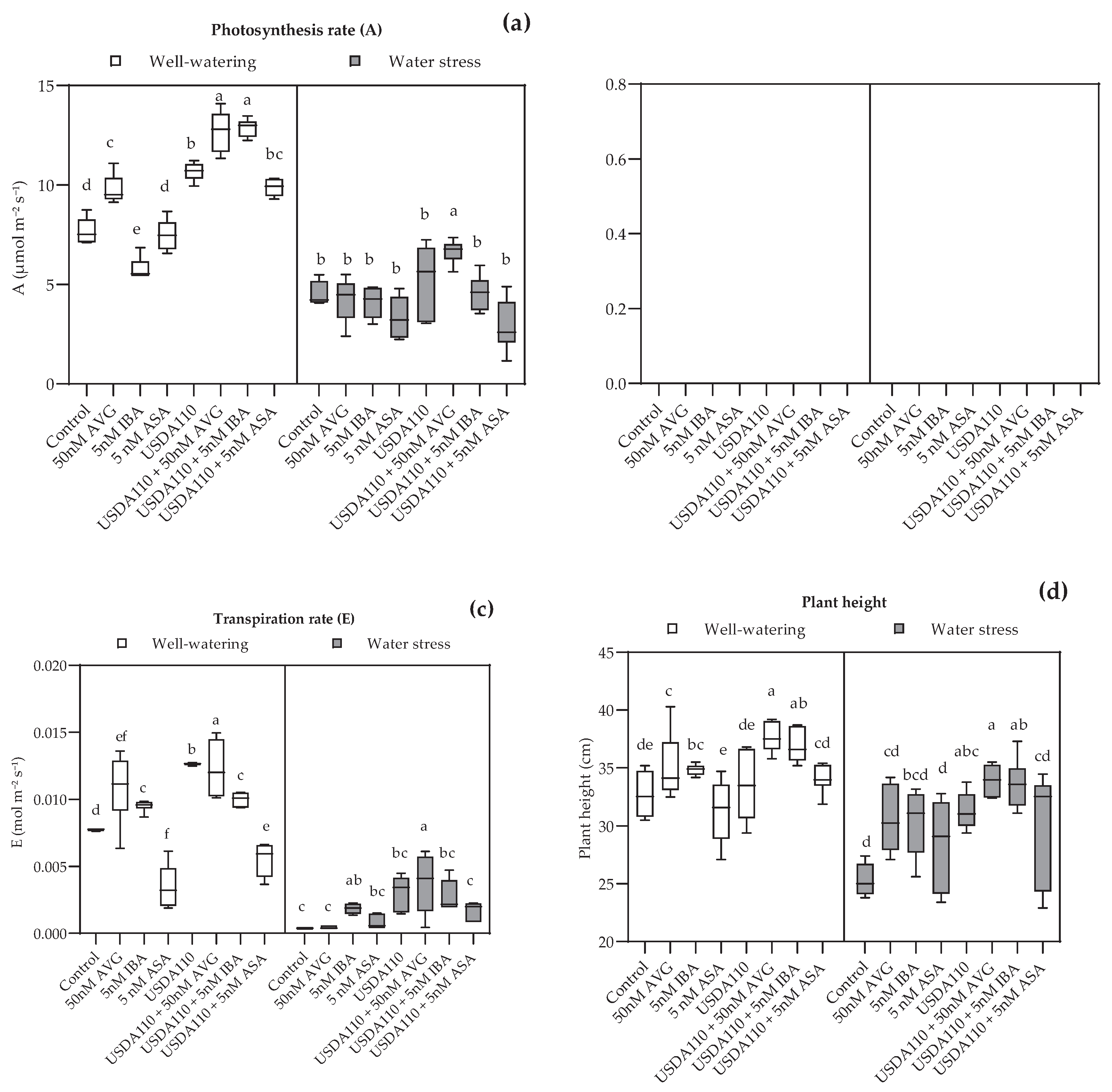
Soybean plants were induced stress of water for 5 days during their vegative stage until before flowering stage showed a decrease in all physiological paramters. These differences were also statistically significant across treatments. Soybean plant treated with AVG/IBA along with the USDA110 at 30 DAI resulted in a significantly higher transpiration rate (E), photosynthetic rate, stomatal conductance (gs), plant height, nitrogenase activity, and number of nodules per plant compared to other treatments and the control under both well watering and water-stressed conditions (Figure 3, Figure 4 and Figure 5), with the treatment combining AVG and USDA110 showing a particularly strong effect. In contrast, soybean plants treated with USDA110 or PGR alone were negatively affected, showing a decline below the levels of other treatments where USDA110 was combined with a PGR.

3.2.2. Yield and Yield Components

The effects of USDA110 and plant growth regulator (PGR) seed coatings on yield and yield components of soybean cultivar CM60 at 30 DAI under greenhouse conditions are presented in Table 1. Water stress significantly reduced all measured parameters across treatments compared with well-watered plants. Although USDA110 alone promoted nodule formation under stress, the number of nodules was lower than under non-stressed conditions (Figure 5 and Table 1). Combination treatments (USDA110 + PGRs) similarly enhanced nodulation and yield components, but values remained reduced relative to well-watered controls. Seeds treated with PGRs alone failed to induce nodulation or improve yield components compared with the untreated control. Overall, USDA110 inoculation substantially improved yield performance, particularly nodule number, under both normal and water-stressed conditions. Under well-watered conditions, the integration of USDA110 with PGRs produced the strongest responses. Specifically, USDA110 + 50 nM IBA and USDA110 + 50 nM AVG treatments achieved the highest values for nearly all parameters, including nodule number (12.78 and 13.33, respectively) and seed weight per plant (8.41 g and 8.24 g, respectively). Notably, under water stress, USDA110 + 50 nM AVG produced the highest seed weight per plant (7.55 g), surpassing several well-watered treatments, while USDA110 + 5 nM IBA also maintained a high seed weight (5.73 g) (Table 2). The most significant finding was the synergistic effect of combining USDA110 with PGRs, specifically AVG and IBA, which resulted in the highest yield even under severe drought condition. This synergistic effect suggests that PGRs might enhance the efficacy of the Bradyrhizobium strain under water deficit condition.

4. Discussions

4.1. Effects of Seed Coating Plant Growth Regulators on Nitrogenase Activity and Nodule Numbers in Soybean Roots

The effects of PGRs coatings at varying concentrations combined with B. diazoefficiens strain USDA110 were investigated after 30 DAI. It was found that seeds treated with USDA110 along with ASA, AVG, BAP, and IBA at concentrations of 5 nM, 50 nM, 500 nM, and 50 nM, respectively, led to a statistically significant increase in nitrogenase enzyme activity, nodule number, and the dry weight of shoots and roots when compared to control groups with only USDA110 or PGR alone (Figure 1 and Figure 2 and Supplementary Figures S3–S6). The treatment combination of USDA110 and either 50 nM AVG performed the best among the other treatments (Figure 1 and Figure 2). For these reasons, this treatment was the most suitable for further studies under greenhouse conditions because it positively affected the number of nodules and the nitrogen fixation process in soybean root nodules. This finding was consistent with the experiments of Lindström & Mousavi [21] and Zhang et al. [22], who studied nodule formation and nitrogen fixation efficiency in soybean nodules. Their research showed that using USDA110 resulted in better and more efficient nodule formation and nitrogen fixation compared to other strains in both greenhouse and field conditions [21,22].
Meanwhile, many studies have shown that using plant growth regulators at appropriate concentrations also enhanced the efficiency of nodule formation and development, leading to increased nitrogen fixation in the nodules. For example, AVG can reduce the negative effects of ethylene, which inhibits nodule formation [23]. Low concentrations of IBA can stimulate and signal nodule development [24], while BAP can stimulate root hair growth and increase the infection and nodulation process in legumes [25].
Interestingly, ASA is a synthetic derivative of salicylic acid (SA) and plays a crucial role in the early stages of the Rhizobium-legume symbiosis [26,27]. Hegazi & El-Shraiy [26] found that foliar application of 1-10 mM SA increased plant height and nodule numbers. However, van Spronsen et al. [28] reported that 100 μM SA inhibited early nodulation in soybean plants and repressed the indeterminate nodulation of Rhizobium leguminosarum cv. viciae. Senaratna et al. [29] also found that pre-soaking bean and tomato seeds with 0.1−0.5 mM salicylic acid (SA) or ASA enhanced tolerance to heat, chilling, and drought stress. Similar stress tolerance was also achieved by applying SA or ASA as a soil drench to seedlings. In contrast, the ASA concentration used in this experiment is quite low. Our preliminary results indicated that ASA concentrations greater than 500 nM did not result in a marked differentiation between the various treatments (Figure 1 and Figure 2 and Suplementary Figure S3).
Similary, the IBA and BAP concentrations used in this experiment (Figure 1 and Figure 2 and see in Suplementary Figures S3–S6) were also lower than those reported in other studies. Radhakrishnan & Ranjithakumari [30] inoculated BAP (at 4.4 μM to 22.2 μM) and IBA (at 4.9 μM to 24.5 μM) onto B5 medium solution to half-seed explants of soybean cv. CO3 for organogenesis. The highest cell proliferation and shoot induction were obtained from explants cultivated in the presence of 13.3 μM BAP and then roots were induced from shoots on B5 media containing IBA at 14.7 μM. Rathod et al. [31] also studied the improvement of the regeneration protocol for local soybean cv. MAUS-71 and MAUS-162 using embryonic axis and cotyledonary node explants. They found that shoot initiation and multiplication were optimized using MS medium supplemented with 3 mg/L BAP while optimal root formation for both explants and cultivars was achieved using MS medium fortified with 0.3 mg/L IBA. Moreover, the application of BAP on soybean at the early reproductive stages in concentrations varying from 0.5 to 1.5 mM in greenhouse and field conditions increased the total number of pods. Low concentrations of BAP (0.5 mM) significantly reduced flower abortion and delayed pod abscission, while 1 mM of BAP significantly increased seed yield and 100-seed weight in in field experiments [32].
van Spronsen et al. [33] investigated the role of cytoplasmic bridges, rhizobial Nod factors (NFs), and ethylene on the early determinate nodulation stages in common bean (Phaseolus vulgaris) and Lotus japonicus. They discovered that AVG at 0.1 mg/L stimulated root nodulation in light-grown L. japonicus, supporting the idea that cytoplasmic bridges play a functional role in its nodulation process. Liu et al. [34] also examined the role of exogenous polyamines and ethylene in regulating amino acid levels in rice by applying 1 mmol L−1 spermidine or 50 μmol L−1 AVG to panicles at the early grain-filling stage. The results showed that the spermidine (Spd) or AVG applications significantly increased Spd contents and decreased ethylene levels in rice grain.
Seed coating technique is also an important factor in modern agricultural seed treatment because it allows for the effective delivery of various beneficial PGRs and B. diazoefficiens directly to the seed surface, thus enhancing plant performance [35,36]. This ensures that as soon as the root hairs emerge after germination, the rhizobia and PGRs are immediately available to initiate the infection and subsequent nodule formation.
Dissanayake et al. [17] prepared a coating by mixing powdered biochar with three different xanthan gum concentrations (0.25%, 0.5%, and 1%). Seeds were dipped in this mixture and air dried. The results showed that seed germination was significantly higher at for both coated and non-coated seeds, but initial bacterial viability dropped significantly after 3 days [17]. Similarly, in the Sheteiwy et al. [37] experiment, soybean seeds were soaked in B.diazoefficiens (former B. japonicum) USDA110 with 16% arabic gum and allowed to air dry before transplanting. They found that B. japonicum significantly improved the growth and yield of soybean plants, even when a 2-week drought stress was induced at the early pod stage [37].
Interestingly, Jarecki [38] developed a two-layer coating (chitosan and sodium alginate) to protect seeds for early sowing. The layering, which included substances like jojoba oil or polyethylene glycol 400 (PEG 400) applied via a spraying device, resulted in a thick film and increased seed weight. For rhizobium inculation, B. japonicum inoculant (Commercial HiStick Soy) which contains a natural polymer, was also dry-mixed with the seeds using a device. Jarecki [38] found that coating seeds with these polymers only fully improved soybean performance when combined with B. japonicum inoculation.
Our research used a thin film coating, similar to the approaches of Dissanayake et al. [17], Sheteiwy et al. [37], and Jarecki [38]. The coating polymer, 0.6% xanthan gum was mixed with PGR and USDA110 for our formulation (see in materials and methods). In contrast, some of the cited studies used different coating polymers like arabic gum, chitosan, and sodium alginate and different methods like soaking [4,5,17], dipping [37], or a coating device [38], which often resulted in a thicker layer that did not quickly dissolve in water.
Film coating is mostly recommended for soybean seed coating due to the characteristic seed shape and component of the soybean. This technique prevents hazardous “dust-off” during handling and sowing and allows for the precise delivery of low-dose active ingredients like PGRs and beneficial microbes [35,39]. This precise delivery, in turn, results in increased growth-promoting bacteria in the rhizosphere, increasing nutrient uptake and stress tolerance. It is the most economical and fastest process; its cost is relatively lower than encrusting and pelleting, without significantly increasing the overall cost [35]. Thicker coatings (encrusting and pelleting) can create a barrier to water uptake and gas exchange, potentially delaying or reducing germination [35,40].

4.2. Effects of Plant Growth Regulators on Physiological Parameters, Yield, and Yield Components of Soybean in Greenhouse Condition

Soybean seedlings at the vegetative stage exposed to five days of water stress exhibited significant reductions in physiological traits, yield, and yield components across all treatments. At 30 DAI, however, seeds coated with USDA110 in combination with either AVG or IBA maintained higher transpiration rates, net photosynthesis, stomatal conductance, nodule number, and plant height than other treatments and the control, under both well-watered and water-stressed conditions. In contrast, treatments with USDA110 or PGRs alone were less effective, resulting in lower values than those receiving the combined USDA110 + PGR treatments (Table 2).
Water stress during both vegetative and reproductive stages markedly reduced yield and yield components compared with well-watered controls. Nonetheless, the combination of USDA110 with either AVG or IBA significantly improved dry weight per plant, nodule number, pod number, 100-seed weight, and total seed yield relative to other treatments under both normal and stress conditions (Table 2). These results clearly demonstrate the synergistic effects of integrating USDA110 inoculation with specific PGRs in mitigating the adverse impacts of drought stress.
Ethylene is a key stress-induced hormone that negatively effects on plant growth by inhibiting photosynthesis, reducing root nodule initiation and function, restricting stomatal opening, and decreasing nitrogenase activity [41,42]. Its production increases dramatically in response to specific developmental stages and environmental stresses, including mechanical wounding, drought, flooding, and pathogen attack, thereby triggering defense-related signaling that limits bacterial growth, spread, and colonization [43,44,45,46]. Conversely, ethylene inhibitors such as AVG, silver ions (Ag+), and 1-methylcyclopropene (1-MCP) are chemical compounds used to reduce the physiological effects of ethylene [47].
AVG effectively suppressed ethylene production level in soybean roots, resulting in significantly lower and more consistent emission rates in AVG and USDA110+AVG treatments than control and USDA110 alone (Supplementary Table S1). This reduction is attributed to the inhibition of ACC synthase (1-aminocyclopropane-1-carboxylic acid synthase), the enzyme responsible for catalyzing the conversion of S-adenosylmethionine (SAM) to 1-aminocyclopropane-1-carboxylic acid (ACC)—a critical, rate-limiting step in the ethylene biosynthesis pathway [48]. By suppressing ethylene accumulation, AVG alleviates its inhibitory effects, thereby promoting nodulation and enhancing root water uptake [41,42]. Najeeb et al. [49] reported that AVG pretreatment effectively inhibited ethylene accumulation, enhancing leaf growth, nitrogen uptake, and photosynthesis under both waterlogged and non-waterlogged conditions in cotton. Similarly, Liu et al. [50] demonstrated that AVG inhibited ethylene production, promoted hypocotyl growth, increased ACS expression and activity, and elevated Zn and Fe concentrations.
Chen et al. [41] reported that AVG can reduce the increase in ethylene levels that occurs during water stress, which can otherwise negatively affect soybean yield and yield components. AVG also allows growth, root development, and pod formation to continue even under water deficit, maintaining the performance nodulation process and nitrogenase activity [41]. This is consistent with Weng et al. [51] and Khalid et al. [52], who reported that the application of AVG with bacterial strain effectively inhibits ethylene synthesis, improving the mechanism of root nodule formation and overall plant growth because AVG reduces stress levels caused by ethylene accumulation. If ethylene accumulates in high amounts, it can disrupt crucial processes like root nodule formation, root development, root elongation, and root branching [51,52].
In the case of IBA, it plays a role in nodule organogenesis and ENOD gene expression, influencing root development, including size, elongation, and formation [8,53,54]. It stimulates cortical cell division, initiating nodule formation in legumes and soybeans [53,54]. IBA could promote root development and improve the plant’s ability to absorb water and nutrients, leading to better overall soybean growth, an increased number of pods, larger seeds, and higher biomass and total yield [54,55]. Moreover, the application of USDA110 also has the ability for its stable root nodule formation and strong response to soybean root exudates, which helps the bacteria attach well to the roots [56,57].

5. Conclusions

The combination treatment between USDA110 and specific PGR concentrations, including 50 nM of AVG, 5 nM of IBA, and 5 nM of ASA, significantly increased the highest value of nodule numbers and nitrogenase activity. These results demonstrated that the specific concentration of these PGRs could improve biological processes related to nitrogen fixation. To better understand the plants’ physiological and yield responses to PGRs and Bradyrhizobium. These treatments are suitable for determining the potential of PGRs and USDA110 in greenhouse conditions. Soybean seeds treated with the combination of USDA110 and specific PGRs, especially AVG and IBA, resulted in the highest values for key physiological parameters and yield components, such as plant height, photosynthetic rate, and seed weight in all conditions. Moreover, the application of USDA110 with either AVG or IBA treatment yielded the highest seed weight even under drought conditions. This synergistic effect proved crucial for mitigating the negative impact of water stress. These findings indicated that coating soybean seeds with a combination of the B. diazoefficiens strain USDA110 and specific PGRs, particularly 50 nM of AVG and 5 nM of IBA, is a highly effective strategy for improving nitrogen fixation and soybean productivity even when water is scarce.

Supplementary Materials

The following supporting information can be downloaded at the website of this paper posted on Preprints.org. Figure S1: Comparing soybean seeds before and after mixed with 0.6% xanthan gum. The mixture of 0.6% xanthan gum along with USDA110 strain and PGRs (b), Figure S2: Soybean growth trials in Laboratory-based trials using modified Leonard’s jars (a), and in greenhouse condition (b). Figure S3: Effect of ASA and Bradyrhizobium on soybean plants under environmentally controlled conditions (a). Response of (b) shoot dry weight, (c) root dry weight, (d) nitrogenase activity, and (e) number of nodules from 30-day-old soybean plants following treatment with various ASA concentrations combined with USDA110 at a 106 concentration. Figure S4: Effect of AVG and Bradyrhizobium on soybean plants under environmentally controlled conditions (a). Response of (b) shoot dry weight, (c) root dry weight, (d) nitrogenase activity, and (e) number of nodules from 30-day-old soybean plants following treatment with various AVG concentrations combined with USDA110 at a 106 concentration. Figure S5: Effect of BAP and Bradyrhizobium on soybean plants under environmentally controlled conditions (a). Response of (b) shoot dry weight, (c) root dry weight, (d) nitrogenase activity, and (e) number of nodules from 30-day-old soybean plants following treatment with various BAP concentrations combined with USDA110 at a 106 concentration. Figure S6: Effect of IBA and Bradyrhizobium on soybean plants under environmentally controlled conditions (a). Response of (b) shoot dry weight, (c) root dry weight, (d) nitrogenase activity, and (e) number of nodules from 30-day-old soybean plants following treatment with various IBA concentrations combined with USDA110 at a 106 concentration. Table S1: The impact of AVG and USDA110 on ethylene emission levels in soybean roots (cv. CM60) after inoculation for 7 days under environmentally controlled laboratory conditions.

Author Contributions

“Conceptualization, K.U. and N.T.; methodology, N.B and K.U.; data curation, S.P.; writing—original draft preparation, S.P.; writing—review and editing, K.U, N.T, N.B; visualization, S.P.; supervision, K.U.; funding acquisition, K.U. All authors have read and agreed to the published version of the manuscript.

Funding

This research was financially supported by Office of the Permanent Secretary, Ministry of Higher Education, Science, Research and Innovation (OPS MHESI), Thailand Science Research and Innovation (TSRI) (Grant number. RGNS 63–115); (i) Suranaree University of Technology (SUT), (ii) Thailand Science Research and Innovation (TSRI), and (iii) National Science, Research and Innovation Fund (NSRF) (NRIIS number 204215).

Acknowledgments

This research was financially supported by Office of the Permanent Secretary, Ministry of Higher Education, Science, Research and Innovation (OPS MHESI), Thailand Science Research and Innovation (TSRI) (Grant number. RGNS 63–115) and Suranaree University of Technology.

Conflicts of Interest

The authors declare no conflicts of interest.

References

  1. EMR. (2024). Global soybean market growth, analysis, trends, forecast (pp. 1–16).
  2. Srinives, P.; Somta, P. Present status and future perspectives of Glycine and Vigna in Thailand. In The 14th NIAS international workshop on genetic resources–Genetic resources and comparative genomics of legumes (Glycine and Vigna). 2011, 63–68. National Institute of Agrobiological Science.
  3. Cerezini, P.; Oliveira, A.F.M.D.; Nogueira, M.A.; Hungria, M. Strategies to promote early nodulation in soybean under drought. Field Crops Research 2016, 196, 160–167. [CrossRef]
  4. Kunert, K.J.; Wilson, C.D.; Fuhrmann, M. Drought stress responses in soybean roots and nodules. Frontiers in Plant Science 2016, 7, 1–7. [CrossRef]
  5. Miljaković, D.; Marinković, J.; Ignjatov, M.; Milosević, D.; Nikolić, Z.; Tintor, B.; Đukić, V. Competitiveness of Bradyrhizobium japonicum inoculation strain for soybean nodule occupancy. Plant, Soil and Environment 2022, 68(1), 59–64. [CrossRef]
  6. Miljaković, D.; Marinković, J.; Tamindžić, G.; Đorđević, V.; Tintor, B.; Milošević, D.; Nikolić, V.; Nikolić, Z. Bio-priming of soybean with Bradyrhizobium japonicum and Bacillus megaterium: Strategy to improve seed germination and the initial seedling growth. Plants 2022, 11(15), 1927. [CrossRef]
  7. Szpunar-Krok, E.; Bobrecka-Jamro, D.; Pikuła, W.; Jańczak-Pieniążek, M. Effect of nitrogen fertilization and inoculation with Bradyrhizobium japonicum on nodulation and yielding of soybean. Agronomy 2023, 13(5), 1341. [CrossRef]
  8. Gebrehana, Z.G.; Dagnaw, L.A. Response of soybean to rhizobial inoculation and starter N fertilizer on Nitisols of Assosa and Begi areas, Western Ethiopia. Environmental Systems Research 2020, 9(1). [CrossRef]
  9. Lin, J.; Frank, M.; Reid, D. (2020). No home without hormones: How plant hormones control legume nodule organogenesis. Plant Communications 2020, 1(5), 100104. [CrossRef]
  10. Zhang, X.X.; Guo, H.J.; Wang, R.; Sui, X.H.; Zhang, Y.M.; Wang, E.T.; Tian C.F.; Chen, W.X. Genetic divergence of Bradyrhizobium strains nodulating soybeans as revealed by multilocus sequence analysis of genes inside and outside the symbiosis island. Applied and environmental microbiology 2014, 80(10), 3181-3190. [CrossRef]
  11. Kaneko, T.; Nakamura, Y.; Sato, S.; Minamisawa, K.; Uchiumi, T.; Sasamoto, S.; Watanabe, A.; Idesawa, K., Iriguchi, M., Kawashima, K.; Kohaea, M.; Matsumoto, M.; Shimpo, S.; Tsuruoka, K.; Wada, T.; Yamada, M.; Tabata, S. Complete Genomic Sequence of Nitrogen-fixing Symbiotic Bacterium Bradyrhizobium japonicum USDA110. DNA Research 2002, 9(6), 189–197. [CrossRef]
  12. Choudhury, S.R.; Johns, S.M.; Pandey, S. A convenient, soil-free method for the production of root nodules in soybean to study the effects of exogenous additives. Plant Direct 2019, 3(4), e00135. [CrossRef]
  13. Kempster, R.; Barat, M.; Bishop, L.; Rufino, M.; Borras, L.; Dodd, I.C. Genotype and cytokinin effects on soybean yield and biological nitrogen fixation across soil temperatures. Annals of Applied Biology 2020, 178(2), 341–354. [CrossRef]
  14. Kitaeva, A.B.; Serova, T.A.; Kusakin, P.G.; Tsyganov, V.E. Effects of elevated temperature on Pisum Sativum nodule development: II—Phytohormonal responses. International Journal of Molecular Sciences 2023, 24(23), 17062. [CrossRef]
  15. Hasibuan, R.F.M.; Miyatake, M.; Sugiura, H.; Agake, S.I.; Yokoyama, T.; Bellingrath-Kimura, S.D.; Katsura, K.; Ohkama-Ohtsu, N. Application of biofertilizer containing Bacillus pumillus TUAT1 on soybean without inhibiting infection by Bradyrhizobium diazoefficiens USDA110. Soil Science and Plant Nutrition 2021, 67(5), 535–539. [CrossRef]
  16. Zadegan, S.B.; Kim, W.; Abbas, H.M.K.; Kim, S.; Krishnan, H.B.; Hewezi, T. Differential symbiotic compatibilities between rhizobium strains and cultivated and wild soybeans revealed by anatomical and transcriptome analyses. Frontiers in Plant Science 2024, 15, 1435632. [CrossRef]
  17. Dissanayake, G.; Wijayasinghe, M.; Yapa, N. Evaluation of potential seed coating formulation with Bradyrhizobium japonicum on soybean (Glycine max L.) seeds. Vingnanam Journal of Science 2024, 19(2).
  18. Souza, M.C.; Chagas, L.F.B.; Martins, A.L.L.; Lima, C.A.; de Oliveira Moura, D.M.; Lopes, M.B.; Leite, A.S.D.F.; Junior, A.F.C. Biopolymers in the preservation of rhizobacteria cells and efficiency in soybean inoculation. Research, Society and Development 2022, 11(7), e21911729688.
  19. Liu, R.; Yan, X.; Liu, R.; Wu, Q.; Gao, Y.; Muhindo, E.M.; Zhi, Z.; Wu, T.; Sui, W.; Zhang, M. Lima bean (Phaseolus lunatus Linn.) protein isolate as a promising plant protein mixed with xanthan gum for stabilizing oil-in-water emulsions. Journal of the Science of Food and Agriculture 2024, 104(2), 818–828. [CrossRef]
  20. Baldani, J.I.; Reis, V.M.; Videira, S.S.; Boddey, L.H.; Baldani, V.L.D. The art of isolating nitrogen-fixing bacteria from non-leguminous plants using N-free semi-solid media: a practical guide for microbiologists. Plant and Soil 2014, 384, 413–431. [CrossRef]
  21. Lindström, K.; Mousavi, S.A. Effectiveness of nitrogen fixation in rhizobia. Microbial biotechnology 2020, 13(5), 1314-1335. [CrossRef]
  22. Zhang, H.; Daoust, F.; Charles, T.C.; Driscoll, B.T.; Prithiviraj, B.; Smith, D.L. Bradyrhizobium japonicum mutants allowing improved nodulation and nitrogen fixation of field-grown soybean in a short season area. The Journal of Agricultural Science 2002, 138(3), 293-300. [CrossRef]
  23. Guinel, F.C. Ethylene, a hormone at the center-stage of nodulation. Frontiers in Plant Science 2015, 6, 1121. [CrossRef]
  24. Patil, P.; Sharma, M.; Singh, R.; Gupta, S. Auxins and nodulation in legume roots: complex signaling pathways. Plant Growth Regulation 2013, 70(2), 89–100.
  25. Liu, J.; Hu, X.; Zhang, L.; Zhang, F. (2011). Cytokinin regulation of soybean nodulation is independent of ethylene signaling. Plant Science 2011, 180(2), 481–490.
  26. Hegazi, A.M.; El-Shraiy, A.M. Impact of salicylic acid and paclobutrazol exogenous application on the growth, yield and nodule formation of common bean. Australian Journal of Basic and Applied Sciences 2007, 1(4), 834–840.
  27. Kuchlan, P.; Kuchlan, M.K. Effect of salicylic acid on plant physiological and yield traits of soybean. Legume Research-An International Journal 2023, 46(1), 56–61.
  28. van Spronsen, P.C.; Tak, T.; Rood, A.M.; van Brussel, A.A.; Kijne, J.W.; Boot, K.J. Salicylic acid inhibits indeterminate-type nodulation but not determinate-type nodulation. Molecular Plant-Microbe Interactions 2003, 16(1), 83–91. [CrossRef]
  29. Senaratna, T.; Touchell, D.; Bunn, E.; Dixon, K. Acetyl salicylic acid (Aspirin) and salicylic acid induce multiple stress tolerance in bean and tomato plants. Plant Growth Regulation 2000, 30(2), 157–161. [CrossRef]
  30. Radhakrishnan, R.; Ranjithakumari, B.D. Callus induction and plant regeneration of Indian soybean (Glycine max (L.) Merr. cv. CO3) via half seed explant culture. Journal of Agricultural Technology 2007, 3(2), 287–297.
  31. Rathod, B.U.; Dattagonde, N.R.; Jadhav, M.P.; Behre, P.P. Effect of different growth regulators on soybean (Glycine max L.) regeneration. Int. J. Curr. Microbiol. App. Sci 2017, 6(11), 2726–2731. [CrossRef]
  32. Cho, Y.; Suh, S.K.; Park, H.K.; Wood, A. Impact of 2, 4-DP and BAP upon pod set and seed yield in soybean treated at reproductive stages. Plant Growth Regulation 2002, 36(3), 215–221. [CrossRef]
  33. van Spronsen, P.C.; Grønlund, M.; Bras, C.P.; Spaink, H.P.; Kijne, J.W. Cell biological changes of outer cortical root cells in early determinate nodulation. Molecular Plant-Microbe Interactions 2001, 14(7), 839–847. [CrossRef]
  34. Liu, Y.; Jiang, Y.; Zhong, X.; Li, C.; Xu, Y.; Zhu, K.; Zhang, W.; Wang, W.; Gu, J.; Zhang, H.; Wang, Z.; Kiu, L.; Zhang, J.; Zhang, W.; Yang, J. Exogenous spermidine and amino-ethoxyvinylglycine improve nutritional quality via increasing amino acids in rice grains. Plants 2024, 13(2), 316. [CrossRef]
  35. Pedrini, S.; Merritt, D.J.; Stevens, J.; Dixon, K. Seed coating: science or marketing spin?. Trends in plant science 2017, 22(2), 106-116. [CrossRef]
  36. Patyal, D.; Sachdeva, K.; Sharma, K.; Khan, R.R. An innovative and sustainable seed coating technology for improving seed quality and crop performance. Journal of Scientific Research and Reports 2025, 597–607.
  37. Sheteiwy, M.S.; Ali, D.F.I.; Xiong, Y.C.; Brestic, M.; Skalicky, M.; Hamoud, Y.A.; Ulhassan, Z.; Shaghaleh, H.; AbdElgawad, H.; Farooq, M; Sharma, A.; Sl-Sawah, A.M. Physiological and biochemical responses of soybean plants inoculated with Arbuscular mycorrhizal fungi and Bradyrhizobium under drought stress. BMC Plant Biology 2021, 21(1), 195. [CrossRef]
  38. Jarecki, W. Physiological response of soybean plants to seed coating and inoculation under pot experiment conditions. Agronomy 2022, 12(5), 1095. [CrossRef]
  39. Rocha, I.; Ma, Y.; Souza-Alonso, P.; Vosátka, M.; Freitas, H.; Oliveira, R.S. Seed coating: a tool for delivering beneficial microbes to agricultural crops. Frontiers in Plant Science 2019, 10, 1357. [CrossRef]
  40. Halmer, P. Seed technology and seed enhancement. In P. Halmer (Ed.), XXVII International Horticultural Congress-IHC2006: International Symposium on Seed Enhancement and Seedling Production 2006 (771, pp. 17–26). International Society for Horticultural Science.
  41. Chen, L.; Yang, W.; Zhang, H. Effect of Aminoethoxyvinylglycine (AVG) on soybean nodulation and root development under different water regimes. Journal of Plant Physiology 2020, 244, 153–162.
  42. Cheng, C.; Zhang, H.; Yang, H. Interaction between plant growth regulators and Bradyrhizobium strains on soybean performance. Plant and Soil 2022, 470(1), 191–204.
  43. Wang, X.; Wen, H.; Suprun, A.; Zhu, H. Ethylene signaling in regulating plant growth, development, and stress responses. Plants 2025, 14(3), 309. [CrossRef]
  44. Broekaert, W.F.; Delauré, S.L.; De Bolle, M.F.; Cammue, B.P. The role of ethylene in host-pathogen interactions. Annual Review of Phytopathology 2006, 44(1), 393–416. [CrossRef]
  45. Ecker, J.R.; Davis, R.W. Plant defense genes are regulated by ethylene. Proceedings of the National Academy of Sciences 1987, 84(15), 5202–5206. [CrossRef]
  46. Nascimento, F.X.; Rossi, M.J.; Glick, B.R. Ethylene and 1-aminocyclopropane-1-carboxylate (ACC) in plant–bacterial interactions. Frontiers in Plant Science 2018, 9, 114. [CrossRef]
  47. Schaller, G.E.; Binder, B.M. Inhibitors of ethylene biosynthesis and signaling. Ethylene Signaling: Methods and Protocols 2017, 223–235. [CrossRef]
  48. McBride, S.; Errickson, W.; Huang, B. Effects of chemical and biological inhibitors of ethylene on heat tolerance in annual bluegrass. HortScience 2025, 60(3), 310-316. [CrossRef]
  49. Najeeb, U.; Atwell, B.J.; Bange, M.P.; Tan, D.K. Aminoethoxyvinylglycine (AVG) ameliorates waterlogging-induced damage in cotton by inhibiting ethylene synthesis and sustaining photosynthetic capacity. Plant Growth Regulation 2015, 76(1), 83-98. [CrossRef]
  50. Liu, C.; Zhao, Y.; Liu, J.; Gen, W.; Cheng, Y. The effects of ethylene on the HCl-extractability of trace elements during soybean seed germination. Electronic Journal of Biotechnology 2015, 18(5), 333-337. [CrossRef]
  51. Weng, J.; Liu, H.; Jiang, C. Ethylene inhibition and nodulation enhancement in soybean by Aminoethoxyvinylglycine (AVG) and its interaction with Bradyrhizobium japonicum. Journal of Plant Growth Regulation 2021, 40(3), 1223–1233.
  52. Khalid, A.; Ahmad, Z.; Mahmood, S.; Mahmood, T.; Imran, M. Role of ethylene and bacterial ACC-deaminase in nodulation of legumes. In Microbes for Legume Improvement 2017, pp. 95–118. Cham: Springer International Publishing.
  53. Frick, E.M.; Strader, L.C. Roles for IBA-derived auxin in plant development. Journal of Experimental Botany 2018, 69(2), 169–177. [CrossRef]
  54. Wang, Y.; Yang, W.; Zuo, Y.; Zhu, L.; Hastwell, A.H.; Chen, L.; Tian, Y., Su, C.; Ferguson, B.J.; Li, X. GmYUC2a mediates auxin biosynthesis during root development and nodulation in soybean. Journal of Experimental Botany 2019, 70(12), 3165–3176. [CrossRef]
  55. Ahmed, M.; Ali, S.; Noor, M. Role of plant growth regulators in enhancing soybean yield and yield stability under water stress. Plant Growth Regulation 2022, 94(3), 489–501.
  56. Gao, Z.P.; Gu, W.C.; Li, J.; Qiu, Q.T.; Ma, B.G. Independent component analysis reveals the transcriptional regulatory modules in Bradyrhizobium diazoefficiens USDA110. International Journal of Molecular Sciences 2023, 24(16), 12544. [CrossRef]
  57. Sandhu, A.K.; Brown, M.R.; Subramanian, S.; Brözel, V.S. Bradyrhizobium diazoefficiens USDA110 displays plasticity in the attachment phenotype when grown in different soybean root exudate compounds. Frontiers in Microbiology 2023, 14, 1190396. [CrossRef]
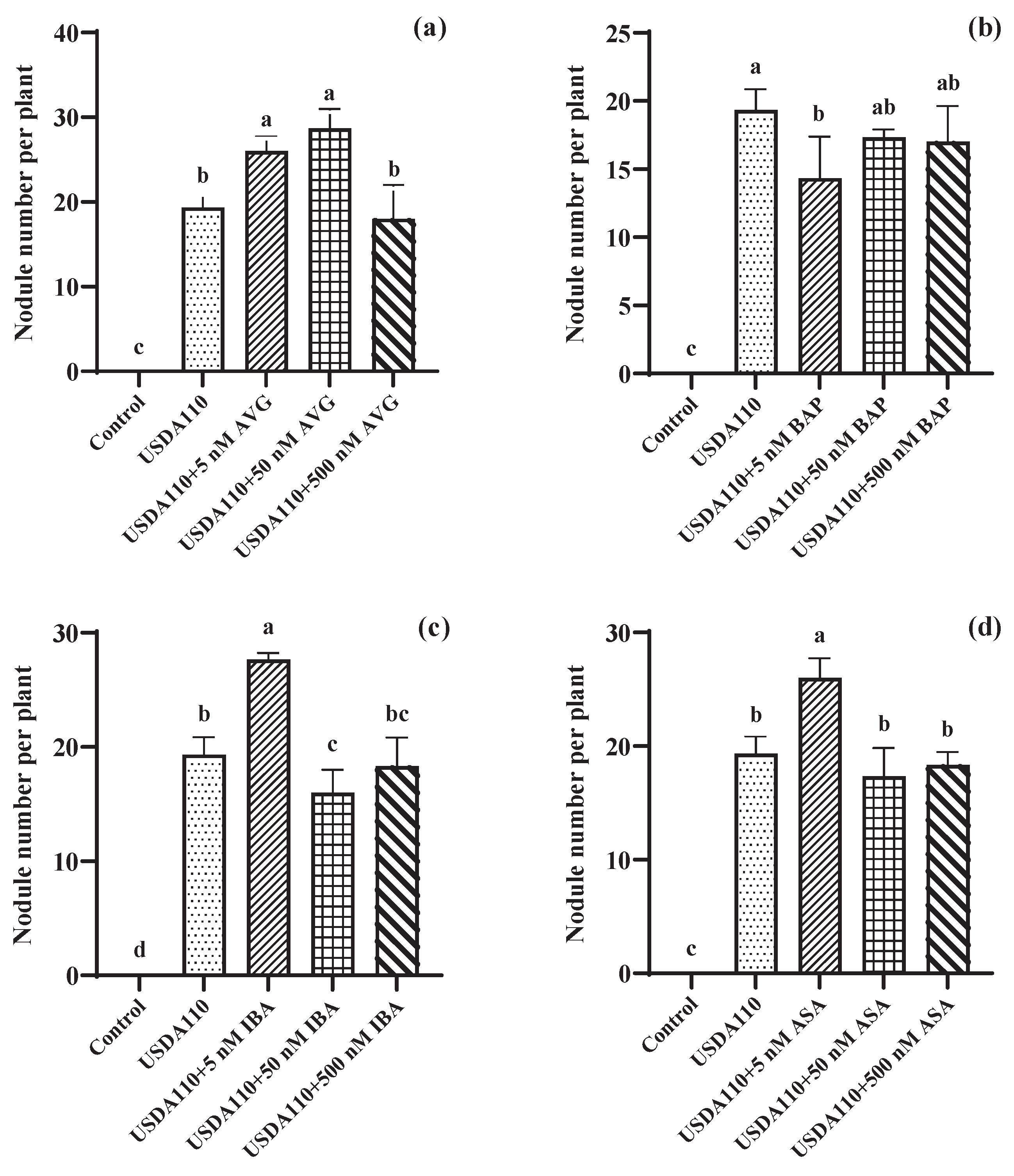
Figure 1. Nodule number of soybean cv. CM60 with ASA (a), AVG (b), IBA (c), AND BAP (d) at 30 days after inoculation.
Preprints 185177 g001
Figure 2. Nitrogenase activity of soybean cv. CM60 with ASA (a), AVG (b), IBA (c), AND BAP (d) at 30 days after inoculation.
Preprints 185177 g002
Figure 3. Response of 30-day-old soybean plants to different PGRs (a) and to the treatment of USDA110 inoculation combined with PGR (b) under normal condition in greenhouse.
Preprints 185177 g003
Figure 4. Response of 30-day-old soybean plants to different PGRs (a) and to the treatment of USDA110 inoculation combined with PGR (b) under water stress in greenhouse.
Preprints 185177 g004
Figure 5. Physiological responses of soybean cv. CM60 at anthesis stage (after 30 DAI) under greenhouse condition. (a) Net photosynthesis rate (A), (b) Stomatal conductance (gs), (c) Transpiration rate (E), and (d) Plant height. The mean values with same alphabets do not differ significantly at P<0.05 level ± standard deviation (SD) (N=6 replicates).
Preprints 185177 g005
Table 1. Yield and yield components of soybean cv. CM60 after inoculation for 30 days under well watering and water stress conditions in greenhouse.
Conditions Treatments Dry weight per plant (g) Nodule number per plant Pod number per plant 100 seed weight (g) Seed weight per plant (g)
Well-watering Control 1.18±0.17c 0.00±0.00c 10.11±1.02abc 2.53±0.19bcd 6.12±0.39c
5nM IBA 1.26±0.16c 0.00±0.00c 7.67±0.37c 1.77±0.17d 6.34±0.39c
50nM AVG 1.53±0.12c 0.00±0.00c 9.11±0.56bc 2.03±0.17cd 6.51±0.11bc
5nM ASA 1.41±0.17c 0.00±0.00c 8.56±1.00bc 2.05±0.13cd 6.56±0.21bc
USDA110 2.54±0.20b 10.33±0.50b 13.56±0.56a 3.34±0.18a 8.06±0.17a
USDA110 + 5nM IBA 3.57±0.29a 12.78±0.86a 11.67±0.50ab 2.70±0.13abc 8.41±0.10a
USDA110 + 50nM AVG 2.54±0.10b 13.33±0.53a 12.00±1.11ab 3.24±0.25ab 8.24±0.19a
USDA110 + 5nM ASA 2.50±0.15b 9.44±0.41b 11.44±1.06ab 2.57±0.14abc 7.43±0.13ab
Sig 0.000** 0.000** 0.000** 0.000** 0.000**
%CV 26.09 22.20 23.43 20.83 9.88
Water stress Control 0.75±0.04d 0.00±0.00c 5.56±0.29bc 1.08±0.64b 4.15±0.13cd
5nM IBA 0.87±0.10cd 0.00±0.00c 4.67±0.33c 1.05±0.06b 3.45±0.13d
50nM AVG 1.36±0.20bc 0.00±0.00c 6.11±0.39abc 1.46±0.12ab 4.49±0.10c
5nM ASA 0.85±0.08cd 0.00±0.00c 5.63±0.38bc 1.33±0.12ab 3.90±0.25cd
USDA110 0.89±0.10cd 5.78±0.22b 5.89±0.66bc 1.58±0.21ab 5.60±0.12b
USDA110 + 5nM IBA 2.05±0.15a 7.33±0.29a 7.67±0.37a 1.88±0.13a 5.73±0.18b
USDA110 + 50nM AVG 1.91±0.12ab 7.11±0.31a 6.44±0.34ab 1.66±0.11a 7.55±0.20a
USDA110 + 5nM ASA 2.04±0.18a 6.00±0.24b 4.89±0.31bc 1.35±0.11ab 5.48±0.19b
Sig 0.000** 0.000** 0.000** 0.000** 0.000**
%CV 29.20 16.99 20.39 25.72 10.00
The mean values with same alphabets do not differ significantly at P<0.05 level ± standard error (SE) (N=9 replicates); CV, coefficient of variation; ** significant differences at ≤0.01.
Disclaimer/Publisher’s Note: The statements, opinions and data contained in all publications are solely those of the individual author(s) and contributor(s) and not of MDPI and/or the editor(s). MDPI and/or the editor(s) disclaim responsibility for any injury to people or property resulting from any ideas, methods, instructions or products referred to in the content.
Copyright: This open access article is published under a Creative Commons CC BY 4.0 license, which permit the free download, distribution, and reuse, provided that the author and preprint are cited in any reuse.
Prerpints.org logo

Preprints.org is a free preprint server supported by MDPI in Basel, Switzerland.

Subscribe

Disclaimer

Terms of Use

Privacy Policy

Privacy Settings

© 2025 MDPI (Basel, Switzerland) unless otherwise stated