Preprint
Article

This version is not peer-reviewed.

Radiation Attenuation Simulation of 3D-Printed Polymers Across Variable Infill Densities and Phase Angles Using EpiXS Program

Submitted:

16 November 2025

Posted:

18 November 2025

You are already at the latest version

Abstract

This study investigates the modulation effects of varying infill densities and phase angles on the radiation attenuation properties of three 3D-printed polymers: acrylonitrile butadiene styrene (ABS), polylactic acid (PLA), and thermoplastic polyurethane (TPU). Using the EpiXS software for radiation attenuation simulations, the study assessed the linear attenuation coefficients (LAC) of the materials under different infill densities (30%, 50%, 70%, 90%, and 100%) and phase angles (0°, 30°, 45°, 60°, and 90°) for radiation in the 1-100 keV energy range, which corresponds to the X-ray spectrum. TPU demonstrated the highest attenuation values, with a baseline coefficient of 20.199 cm⁻¹ at 30% infill density, followed by PLA at 18.835 cm⁻¹, and ABS at 13.073 cm⁻¹. Statistical analysis via the Kruskal-Wallis test confirmed that infill density significantly impacts attenuation, while phase angle exhibited no significant effect, with p-values exceeding 0.05 across all materials. TPU showed the highest sensitivity to infill density, with a slope of 1.1194, compared to 0.7257 for ABS and 0.9251 for PLA, making TPU the most suitable candidate for radiation shielding applications, particularly in applications where flexibility and high attenuation are required. The findings support the potential of 3D printing to produce customized, cost-effective radiation protection gear for medical and industrial applications. Future work can further optimize material designs by exploring more complex infill geometries and testing under broader radiation spectra.

Keywords: 
;  ;  ;  

1. Introduction

The use of ionizing radiation in medical treatments has been highly effective in treating various forms of cancer, but it also presents inherent risks, especially to healthcare practitioners. Professionals consistently exposed to radiation over extended periods are at increased risk of developing radiation-induced health issues, including both acute and chronic conditions. Studies have shown that radiation exposure can result in a spectrum of health effects, ranging from mild radiation sickness to severe illnesses such as cancer. Long-term exposure has even been linked to fatalities in some instances [1,2,3,4].
Global health reports indicate that over 1,000 healthcare professionals worldwide experience significant radiation exposure annually, underscoring the urgent need for more effective protective measures [3,5]. Despite the clear risks, the prohibitive cost of radiation shielding equipment remains a challenge. Modern radiation protective gear can cost from Php 2,500 (per piece) to Php 35,500 (per set), making accessibility difficult for many institutions [6]. As both healthcare workers and patients undergoing radiation therapy or diagnostic procedures face these risks, the scientific community has focused on developing lightweight, wearer-specific, and cost-effective radiation protection gear to mitigate exposure and improve safety [7,8,9,10,11].
Additive manufacturing, particularly 3D printing, has emerged as a promising solution for addressing these challenges in radiation protection[12,13]. Unlike traditional manufacturing methods, 3D printing allows for the creation of custom-fitted radiation treatment aid, such as boluses, which can be tailored to the patient’s anatomy[5,14,15]. This approach enhances treatment accuracy by ensuring that the radiation dose is delivered precisely to the targeted areas, minimizing unnecessary exposure to surrounding tissues. Furthermore, fitted designs are crucial not only for patient safety but also for the medical staff, whose protective gear must offer both comfort and adequate shielding. In contrast to commercially available radiation protection garments, which are often bulky and ill-fitting, 3D-printed, patient-specific designs offer significant advantages in both protection and comfort [5,14].
The integration of additive manufacturing into the production of radiation protection equipment offers significant potential to reduce costs, improve the effectiveness of radiotherapy treatments, and increase the safety of healthcare professionals. By utilizing advanced materials and innovative design techniques, 3D printing can overcome the limitations of traditional radiation shielding gear, paving the way for more efficient and accessible solutions in radiotherapy. This study seeks to design and develop radiation protective gear by employing 3D printing technology, specifically varying infill densities and phase angles, to optimize radiation attenuation.

2. Materials and Methods

The study implementation was subdivided into Computer-Aided Design (CAD) and density calculation, radiation attenuation simulation, and statistical analysis of attenuation effects.

2.1. Computer-Aided Design (CAD) and Theoretical Density Calculation

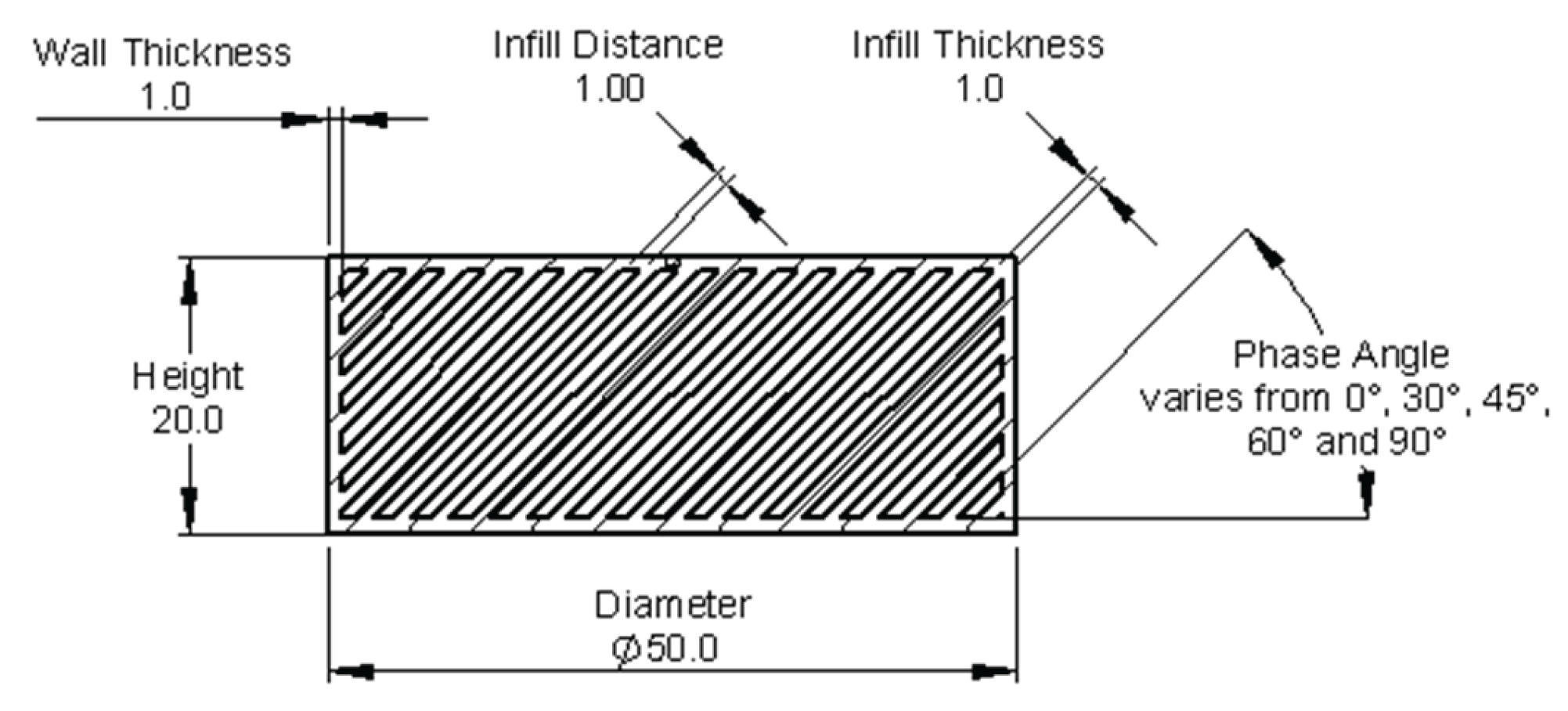
The design of the test specimens for the irradiation tests were generated using a CAD software, Dassault Solidworks version 2020. The sample is a cylinder-shape block with 50mm in diameter and 20mm in height, see Figure 1. The wall and infill thicknesses are both two (2) millimeters. The infill was modeled first using an extruded boss/base command, then extruded cut for the profile of the cylinder. Lastly, the shell of the specimen was created using extrude-thin command.
Based on the design of experiment presented in the previous subsection, distance between infills, see Figure 2. Computed distances are presented in Table 1. A configuration table was used to easily produce CAD models with varying properties in a single “.sldprt” file.
The densities of ABS, PLA, and TPU were obtained from the manufacturers’ datasheets. The relative densities of the materials were then calculated, accounting for the air gaps within the infill structure, which effectively reduced the overall mass of the samples. Using CAD software, the volume of the infill was determined, and from this, the relative mass of each sample was computed. Given that the sample was enclosed by a solid outer wall, the total volume was fixed at 39.25 cm³, corresponding to a cylindrical geometry.

2.2. Radiation Attenuation Simulation

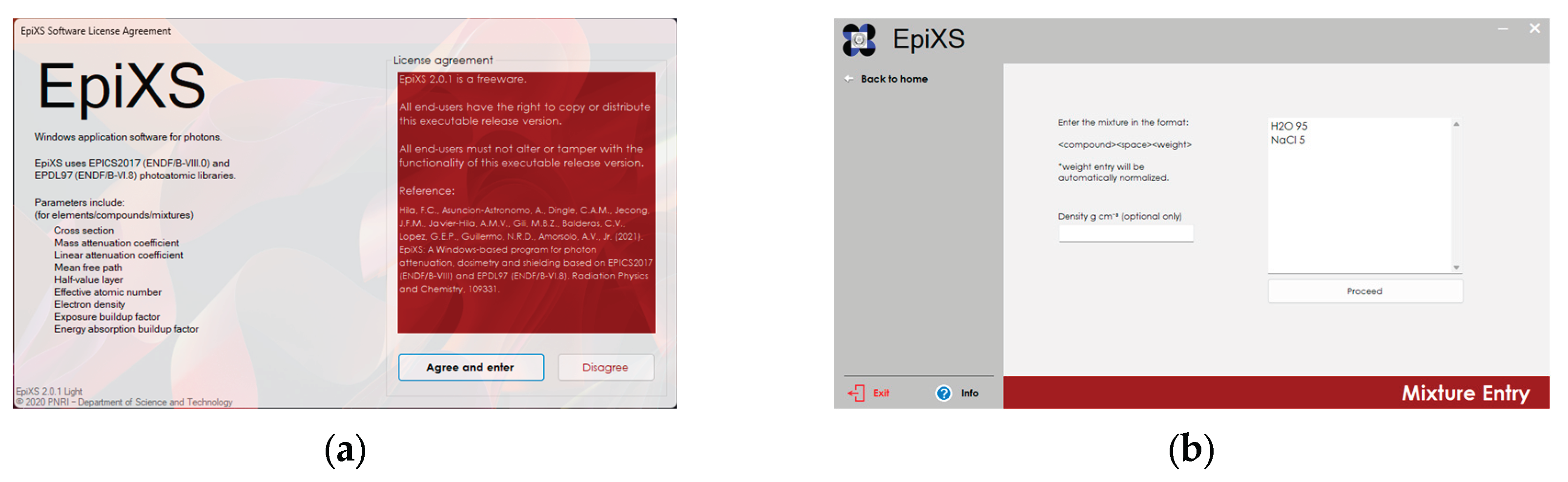
The attenuation modulation of ABS, PLA, and TPU was investigated using EpiXS software (Figure 3) developed by the DOST - Philippine Nuclear Research Institution (PNRI) [16]. This free software requires Windows operating system and can be downloaded through their official website. This study utilized the EPICS2017 photolibrary. Linear attenuation coefficient was extracted from the software by inputting the calculated densities from CAD. Chemical formula of ABS, PLA, and TPU were also included in the simulation parameter as well as the colorant, which is the titanium dioxide. The concentration was based on the manufacturer’s datasheet. To have a uniform comparison, the color selection is limited to white.

2.3. Statistical Analysis of Linear Attenuation Coefficients

Varying the infill density and phase angles imposed varying linear attenuation coefficients. These differences were statistically analyzed using the non-parametric Kruskal-Wallis test and regression analysis through Python/Jupyter Notebook. The statistical analysis provided insights to the modulation effect of varying the infill densities and phase angles of different polymers for the X-ray radiation region.

3. Results and Discussion

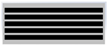
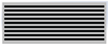
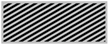
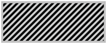
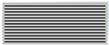
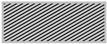
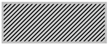
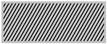
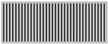
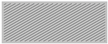
The main advantage of 3D printing in designing radiation protective gears allows introduction of airgaps in a uniform pattern. From Table 2, the gray areas represent the 3D printed and the black ones represent the airgaps. Phase angle orientation is based on the +x-axis as zero angle and in counterclockwise direction. Based on the CAD models, with the increasing infill density, the airgaps were uniformly minimized.
The relative densities of each sample were determined by calculating the volumes using Computer-Aided Design (CAD) software. These calculations provided the total volume of the 3D-printed parts, including both the solid material and any air gaps present in the infill structure. The calculated volumes, detailed in Table 3, allowed for the computation of the relative densities by dividing the measured mass of each sample by its corresponding volume. This method provided a more accurate representation of the material’s density, accounting for variations in infill patterns and the introduction of air gaps, which can significantly impact the overall density of the printed parts.
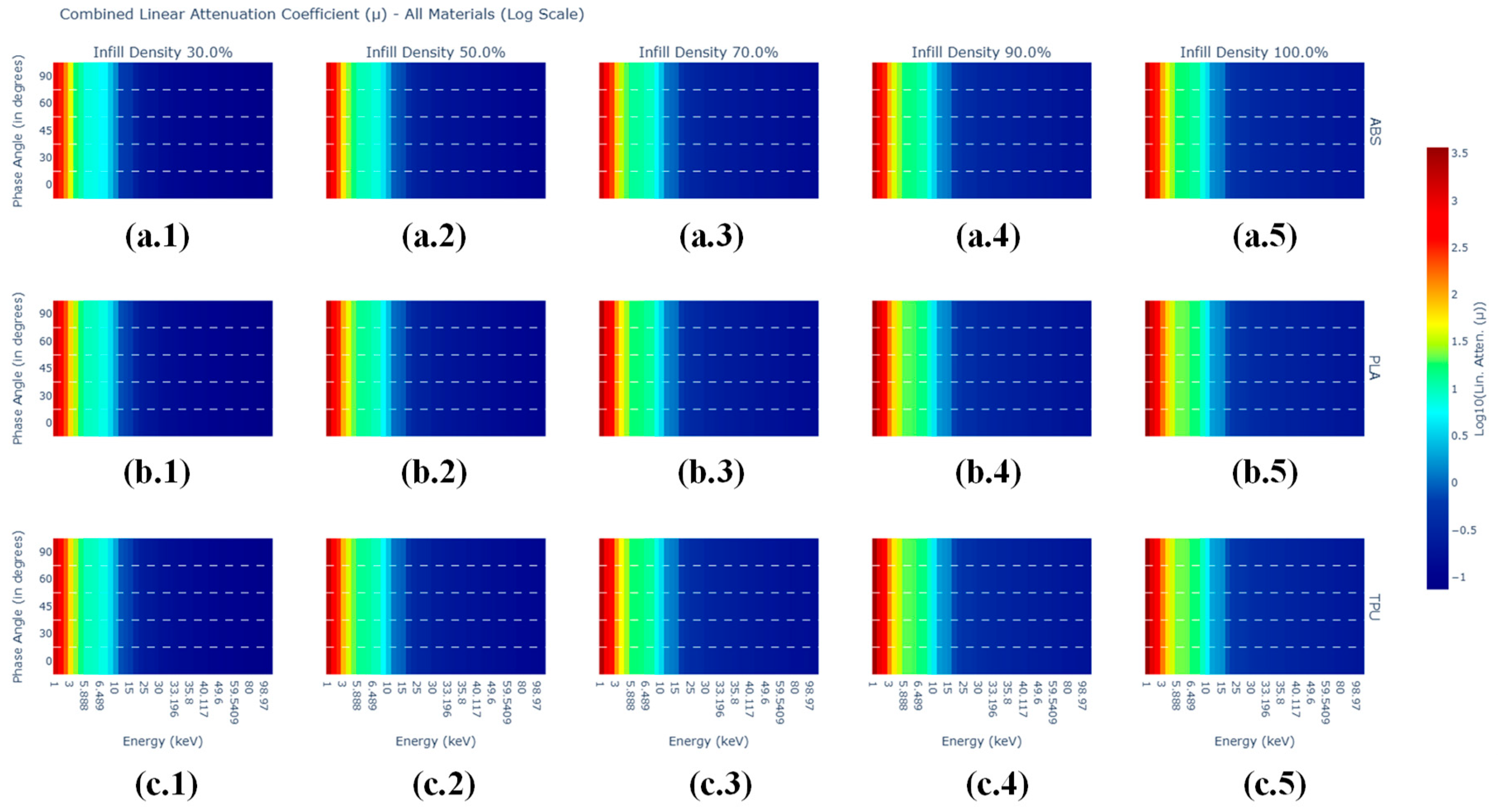
The total linear attenuation coefficient, calculated using the EpiXS program, was set within the 1-100 keV energy range, corresponding to the X-ray region of the radiation spectrum. This energy range is particularly relevant to medical imaging and radiation therapy, where precise control over attenuation is critical for optimizing treatment efficacy and minimizing exposure to surrounding tissues. The results revealed a decreasing trend in attenuation across all the material plots (see Figure 4). This behavior is consistent with the known phenomenon in radiation physics where higher energy photons interact less frequently with matter, leading to reduced photon-material interactions.
At lower photon energies, the probability of interactions, such as the photoelectric effect or Compton scattering, is higher, resulting in greater attenuation. However, as photon energy increases, these interaction probabilities decrease, which is reflected in the observed reduction in attenuation coefficients. This trend is typical for materials used in radiation shielding and imaging, as higher energy photons have enough energy to pass through the material with fewer interactions. Understanding this behavior is essential for designing materials and structures that can effectively modulate radiation exposure in medical and industrial applications.
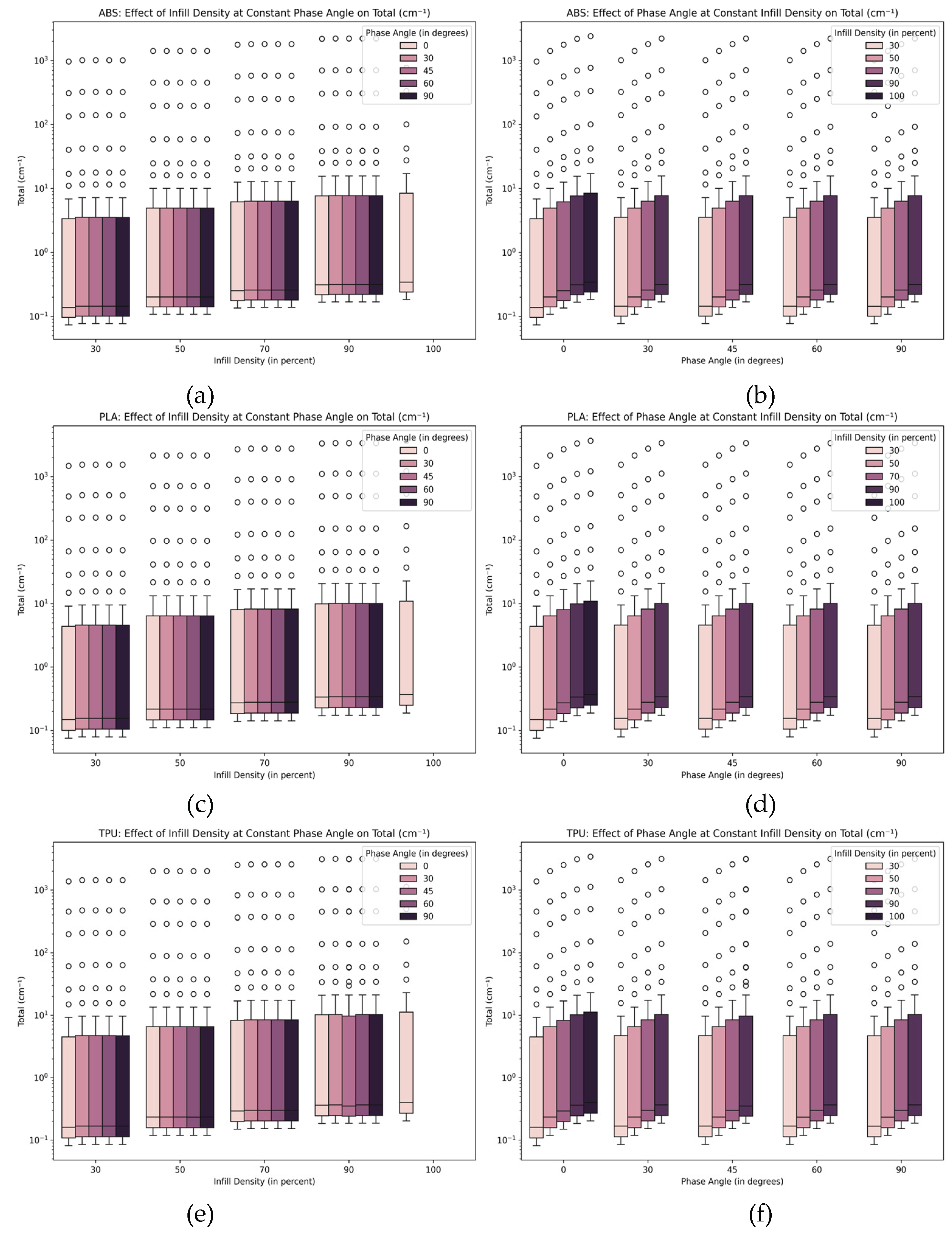
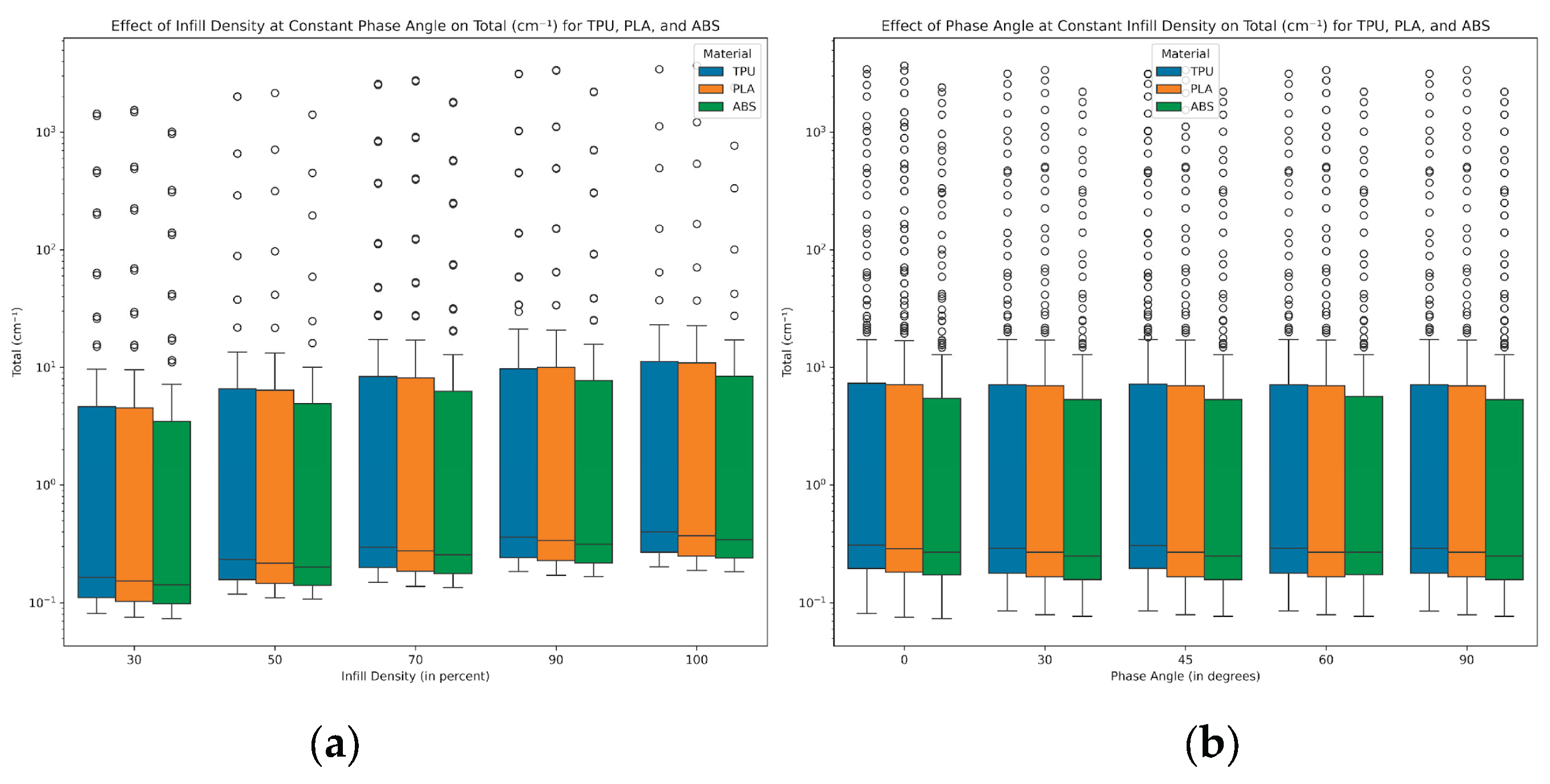
Across all materials tested, consistent patterns were observed, see Figure 5. The median values and the interquartile range (IQR) remained stable, even with variations in infill densities. As expected, the materials showed the highest median values at 100% infill density. While there were some outliers and variations (represented by the whiskers), most data points clustered around consistent values, reflecting reliable trends.
Interestingly, there was a slight increase in the median as infill density increased, particularly at 100%. This suggests that infill density has a noticeable, though moderate, effect on the attenuation coefficient. However, the phase angle didn’t appear to cause significant changes in the distribution of values. This may be due to the fact that the software calculations were primarily based on material densities and atomic concentrations, leaving other variables, like phase angles, with limited impact.
To rigorously assess the data, a Kruskal-Wallis Test was applied to determine the statistical significance of the differences in attenuation across the materials, given the set parameters. The results of the test supported the initial observations from Figure 5, where an increase in infill density was associated with enhanced attenuation. This was confirmed by a p-value of less than 0.05, indicating a statistically significant effect of infill density on attenuation (Table 4).
Conversely, variations in phase angle did not yield statistically significant differences, as the p-value exceeded the 0.05 threshold. This finding aligns with the earlier discussion in Figure 5, reinforcing the conclusion that phase angle has a negligible effect on attenuation under the conditions examined in this study, which was summarized in Figure 6.
Among the three materials, TPU consistently exhibited higher linear attenuation coefficient values across both varying infill densities and phase angles. This can be attributed to its higher intrinsic density and greater atomic concentration compared to the other materials. These material properties contribute to TPU’s superior attenuation capabilities, allowing it to block more radiation than the other tested polymers.
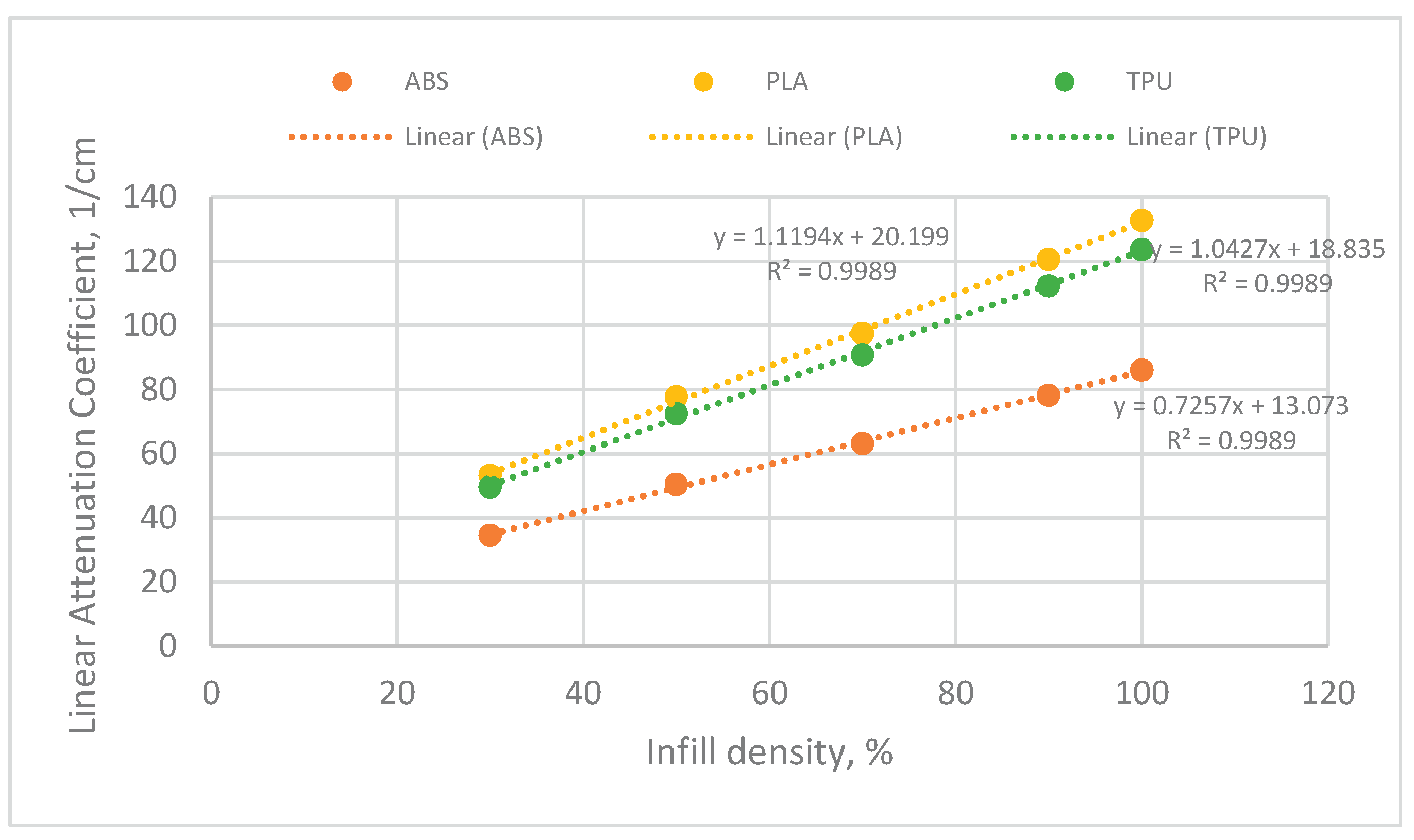
The three materials demonstrated a linear relationship between infill densities and linear attenuation coefficients, as illustrated in Figure 7. Among the polymers, TPU exhibited the greatest sensitivity to changes in infill densities, with a slope of 1.1194, while ABS displayed the least sensitivity, with a slope of 0.7257. This suggests that TPU is the most compatible material for radiation shielding applications, particularly in contexts requiring a flexible interface, given its higher flexibility compared to the other two polymers. Furthermore, the data for all materials showed an excellent linear fit, indicating that interpolation for material design and modulation of attenuation is highly reliable.
When extrapolating to lower infill densities, TPU exhibited the highest baseline attenuation coefficient at 20.199 cm⁻¹, followed by PLA at 18.835 cm⁻¹, and ABS at 13.073 cm⁻¹. These results indicate that even at lower infill densities, such as 30%, TPU maintains effective radiation attenuation properties. PLA, with a relatively small difference from TPU, presents a viable alternative, particularly in situations where a stiffer and more cost-effective material is needed compared to TPU or ABS.

4. Conclusions

This study successfully demonstrated the potential of varying infill densities and phase angles in 3D-printed ABS, PLA, and TPU materials for radiation attenuation applications in the X-ray region. TPU exhibited the highest responsiveness to changes in infill density, with a slope of 1.1194, significantly outperforming ABS (slope of 0.7257) and PLA (slope of 0.9251). The baseline attenuation coefficient for TPU at 30% infill density was the highest at 20.199 cm⁻¹, compared to 18.835 cm⁻¹ for PLA and 13.073 cm⁻¹ for ABS. This indicates that TPU is particularly suited for radiation shielding, especially in applications requiring flexible materials.
The statistical analysis, using the Kruskal-Wallis test, confirmed the significant impact of infill density on attenuation, with p-values less than 0.05 across all materials. In contrast, phase angle did not significantly affect attenuation, with p-values exceeding 0.05, suggesting that phase angle is a parameter that cannot be directly simulated using the EpiXS program. These results highlight the importance of infill density as a key parameter in designing radiation protection materials.
Additionally, TPU’s superior attenuation properties even at lower infill densities, along with PLA’s comparable performance at a slightly lower attenuation (18.835 cm⁻¹ at 30% infill), makes them excellent candidates for radiation-shielding applications. PLA, being a stiffer yet cost-effective alternative to TPU, can also be used in cases where higher rigidity is required without compromising too much on radiation protection.
The integration of additive manufacturing in producing custom-designed radiation protection gear offers significant improvements in the accessibility, performance, and comfort of protective equipment in both medical and industrial contexts. These findings lay a strong foundation for future work, which can explore more complex infill geometries and phase angle combinations, as well as testing under different radiation spectra, to further optimize material design for radiation shielding.

Author Contributions

Conceptualization, TBGL and JHPC; methodology, TBGL, JHPC, and MJSA; software, TBGL and AAA; validation, TBGL, JHPC, and AAA; formal analysis, TBGL, JHPC, and AAA; investigation, TBGL, JHPC, ERA, MLBA, RJWRL, GBBF, and PAM; resources, TBGL, ERA, GNCS, and AAA; data curation, TBGL, JHPC, and ERA; writing—original draft preparation, TBGL, JHPC, MLBA, RJWRL, and GBBF; writing—review and editing, TBGL, JHPC, ERA, MLBA, RJWRL, GBBF, PAM, GNCS, AAA, RCA, and MJSA; visualization, TBGL, JHPC, and ERA; supervision, GNCS, AAA, and RCA; project administration, TBGL and JHPC; funding acquisition, TBGL and JHPC. All authors have read and agreed to the published version of the manuscript.

Funding

This research was supported by the Department of Science and Technology (DOST) under the DOST-Grants in Aid Project No. 11233 under DOST-PCIEERD as a granting agency. The APC was funded by the same project headed by Engr. Fred P. Liza of DOST – Metals Industry Research and Development Center.

Institutional Review Board Statement

Not applicable for this study due to non-involvement of humans or animals.

Data Availability Statement

The raw data supporting the conclusions of this article will be made available by the authors on request.

Acknowledgments

The authors would like to thank Engr. Fred P. Liza for providing the financial assistance through his approved project and for reviewing the paper. During the preparation of this work, the author TBG Lopez used ChatGPT to check grammar, tense consistency, and flow of discussion. After using this tool, the author reviewed and edited the content as needed and took full responsibility for the content of the publication.

Conflicts of Interest

The authors declare no conflicts of interest. The authors agreed to publish the data and hold no interest in disputing for future IP application. The funders had no role in the design of the study, data collection and analysis, decision to publish, or preparation of the manuscript.

Abbreviations

The following abbreviations are used in this manuscript:
ABS Acrylonitrile Butadiene Styrene
PLA Polylactic Acid
TPU Thermoplastic Polyurethane
CAD Computer-Aided Design
LAC Linear Attenuation Coefficient

References

  1. S. M. Magrini et al., “Applying radiation protection and safety in radiotherapy,” Radiol Med, vol. 124, no. 8, pp. 777–782, Aug. 2019. [CrossRef]
  2. Ploussi, E. P. Efstathopoulos, and E. Brountzos, “The Importance of Radiation Protection Education and Training for Medical Professionals of All Specialties,” Cardiovasc Intervent Radiol, vol. 44, no. 6, pp. 829–834, Jun. 2021. [CrossRef]
  3. M. Kitahara et al., “Cancer and circulatory disease risks in US radiologic technologists associated with performing procedures involving radionuclides,” Occup Environ Med, vol. 72, no. 11, pp. 770–776, Nov. 2015. [CrossRef]
  4. S. J. Talley et al., “Flexible 3D printed silicones for gamma and neutron radiation shielding,” Radiation Physics and Chemistry, vol. 188, p. 109616, Nov. 2021. [CrossRef]
  5. F. Kharfi et al., “Implementation of 3D Printing and Modeling Technologies for the Fabrication of Dose Boluses for External Radiotherapy at the CLCC of Sétif, Algeria,” Technol Cancer Res Treat, vol. 23, Jan. 2024. [CrossRef]
  6. MIRA Safety, “MIRA Safety HAZ-SUIT Protective CBRN HAZMAT Suit,” https://www.mirasafety.com/products/mira-safety-haz-suit-hazmat-suit?srsltid=AfmBOoqhBKbIQBDdzPsxVIQiR514TNeLpsu4taPO9OZQ__FtPnA4GtOt.
  7. V. More, Z. Alsayed, Mohamed. S. Badawi, Abouzeid. A. Thabet, and P. P. Pawar, “Polymeric composite materials for radiation shielding: a review,” Environ Chem Lett, vol. 19, no. 3, pp. 2057–2090, Jun. 2021. [CrossRef]
  8. G. ALMisned et al., “Novel Cu/Zn Reinforced Polymer Composites: Experimental Characterization for Radiation Protection Efficiency (RPE) and Shielding Properties for Alpha, Proton, Neutron, and Gamma Radiations,” Polymers (Basel), vol. 13, no. 18, p. 3157, Sep. 2021. [CrossRef]
  9. K. Mokhtari, M. K. Saadi, H. A. Panahi, and G. Jahanfarnia, “The shielding properties of the ordinary concrete reinforced with innovative nano polymer particles containing PbO–H3BO3 for dual protection against gamma and neutron radiations,” Radiation Physics and Chemistry, vol. 189, p. 109711, Dec. 2021. [CrossRef]
  10. InFab, “Radiation Shielding.” Accessed: Jul. 06, 2023. [Online]. Available: https://infabcorp.com/products/radiation-shielding/.
  11. J. P. McCaffrey, H. Shen, B. Downton, and E. Mainegra--Hing, “Radiation attenuation by lead and nonlead materials used in radiation shielding garments,” Med Phys, vol. 34, no. 2, pp. 530–537, Feb. 2007. [CrossRef]
  12. Beck et al., “Additive Manufacturing of Multimaterial Composites for Radiation Shielding and Thermal Management,” ACS Appl Mater Interfaces, vol. 15, no. 29, pp. 35400–35410, Jul. 2023. [CrossRef]
  13. K. Jakupi, V. Dukovski, and A. Kočov, “Analysis of additive manufacturing technology input parameters in manufacturing of bolus,” Mechanical Engieneering – Scientific Journal, vol. 40, no. 1, pp. 17–22, 2022. [CrossRef]
  14. J. A. Diaz-Merchan, S. A. Martinez-Ovalle, and H. R. Vega-Carrillo, “Development of a 3D printing process of bolus using BolusCM material for radiotherapy with electrons,” Applied Radiation and Isotopes, vol. 199, p. 110899, Sep. 2023. [CrossRef]
  15. G. Sands, C. H. Clark, and C. K. McGarry, “A review of 3D printing utilisation in radiotherapy in the United Kingdom and Republic of Ireland,” Physica Medica, vol. 115, p. 103143, Nov. 2023. [CrossRef]
  16. C. Hila et al., “EpiXS: A Windows-based program for photon attenuation, dosimetry and shielding based on EPICS2017 (ENDF/B-VIII) and EPDL97 (ENDF/B-VI.8),” Radiation Physics and Chemistry, vol. 182, p. 109331, May 2021. [CrossRef]
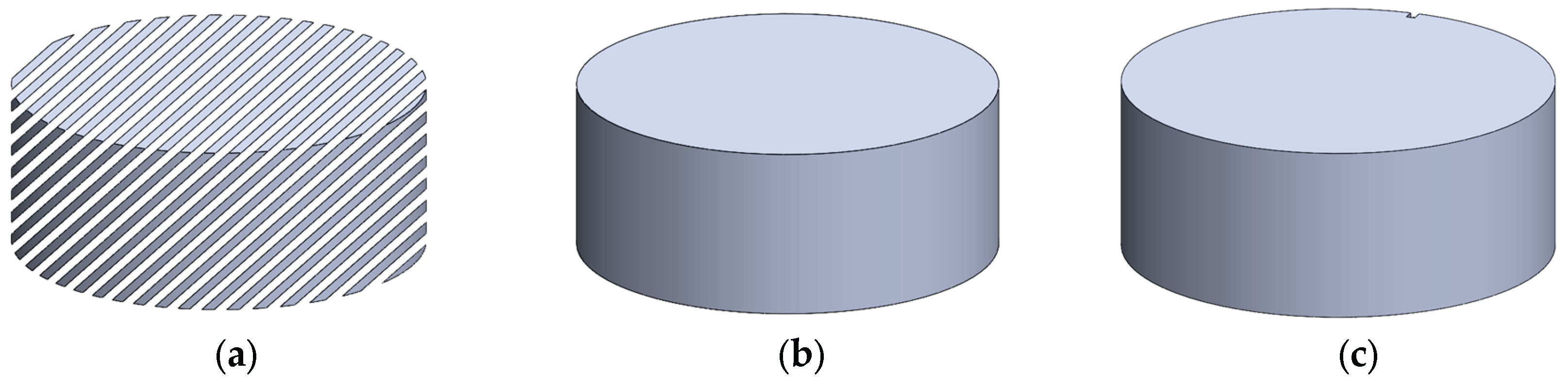
Figure 1. Modeling of the Test Specimen (a) infill design, (b) with walls, and (c) with walls and slot feature.
Preprints 185358 g001
Figure 2. Test Specimen Design.
Preprints 185358 g002
Figure 3. Screenshot of the EpiXS Software: (a) license agreement and (b) input details window.
Preprints 185358 g003
Figure 4. Linear attenuation coefficient heatmap on phase angle vs. energy graphs of (a) ABS, (b) PLA, and (c) TPU in increasing infill densities.
Preprints 185358 g004
Figure 5. Effect of infill density at constant phase angle and effect of phase angle at constant infill density plots of (a-b) ABS, (c-d) PLA, and (e-f) TPU.
Preprints 185358 g005
Figure 6. Effect of (a) varying infill densities and (b) phase angle for different materials.
Preprints 185358 g006
Figure 7. Linear regression analysis of different materials in varying infill densities.
Preprints 185358 g007
Table 1. Summary of Infill Densities.
Infill Density, % Distance of Infills, mm
30 2.33
50 1.00
70 0.44
90 0.11
100 -
Table 2. CAD designs of varying infill densities and phase angles.
Infill Density (%) Angle
30° 45° 60° 90°
30% Preprints 185358 i001 Preprints 185358 i002 Preprints 185358 i003 Preprints 185358 i004 Preprints 185358 i005
50% Preprints 185358 i006 Preprints 185358 i007 Preprints 185358 i008 Preprints 185358 i009 Preprints 185358 i010
70% Preprints 185358 i011 Preprints 185358 i012 Preprints 185358 i013 Preprints 185358 i014 Preprints 185358 i015
90% Preprints 185358 i016 Preprints 185358 i017 Preprints 185358 i018 Preprints 185358 i019 Preprints 185358 i020
Table 3. Summary of Theoretical Densities of Varying Infill Density and Phase Angle of ABS, PLA, and TPU.
Material Infill Density Infill Phase Angle Theoretical
Volume with
airgap, cm3
Theoretical
Volume of Infill, cm3
Theoretical Mass, g Theoretical
density, g/cm3
ABS 30 0 39.25 15.746 17.64 0.44931
ABS 50 0 39.25 22.984 25.74 0.65585
ABS 70 0 39.25 28.815 32.27 0.82224
ABS 90 0 39.25 35.651 39.93 1.01730
ABS 100 0 39.25 39.25 43.96 1.12000
PLA 30 0 39.25 15.746 18.42 0.46937
PLA 50 0 39.25 22.984 26.89 0.68513
PLA 70 0 39.25 28.815 33.71 0.85894
PLA 90 0 39.25 35.651 41.71 1.06272
PLA 100 0 39.25 39.25 45.92 1.17000
TPU 30 0 39.25 15.746 19.21 0.48943
TPU 50 0 39.25 22.984 28.04 0.71441
TPU 70 0 39.25 28.815 35.15 0.89565
TPU 90 0 39.25 35.651 43.49 1.10813
TPU 100 0 39.25 39.25 47.89 1.22000
ABS 30 30 39.25 16.471 18.45 0.47000
ABS 50 30 39.25 22.981 25.74 0.65576
ABS 70 30 39.25 29.498 33.04 0.84173
ABS 90 30 39.25 36.013 40.33 1.02763
ABS 100 30 39.25 39.25 43.96 1.12000
PLA 30 30 39.25 16.471 19.27 0.49098
PLA 50 30 39.25 22.981 26.89 0.68504
PLA 70 30 39.25 29.498 34.51 0.87930
PLA 90 30 39.25 36.013 42.14 1.07351
PLA 100 30 39.25 39.25 45.92 1.17000
TPU 30 30 39.25 16.471 20.09 0.51196
TPU 50 30 39.25 22.981 28.04 0.71431
TPU 70 30 39.25 29.498 35.99 0.91688
TPU 90 30 39.25 36.013 43.94 1.11938
TPU 100 30 39.25 39.25 47.89 1.22000
ABS 30 0 39.25 15.746 17.64 0.44931
ABS 30 30 39.25 16.471 18.45 0.47000
ABS 30 45 39.25 16.468 18.44 0.46991
ABS 30 60 39.25 16.474 18.45 0.47009
ABS 30 90 39.25 16.438 18.41 0.46906
PLA 30 0 39.25 15.746 18.42 0.46937
PLA 30 30 39.25 16.471 19.27 0.49098
PLA 30 45 39.25 16.468 19.27 0.49089
PLA 30 60 39.25 16.474 19.27 0.49107
PLA 30 90 39.25 16.438 19.23 0.49000
TPU 30 0 39.25 15.746 19.21 0.48943
TPU 30 30 39.25 16.471 20.09 0.51196
TPU 30 45 39.25 16.468 20.09 0.51187
TPU 30 60 39.25 16.474 20.10 0.51206
TPU 30 90 39.25 16.438 20.05 0.51094
ABS 50 0 39.25 22.984 25.74 0.65585
ABS 50 30 39.25 22.981 25.74 0.65576
ABS 50 45 39.25 22.984 25.74 0.65585
ABS 50 60 39.25 22.983 25.74 0.65582
ABS 50 90 39.25 22.983 25.74 0.65582
PLA 50 0 39.25 22.984 26.89 0.68513
PLA 50 30 39.25 22.981 26.89 0.68504
PLA 50 45 39.25 22.984 26.89 0.68513
PLA 50 60 39.25 22.983 26.89 0.68510
PLA 50 90 39.25 22.983 26.89 0.68510
TPU 50 0 39.25 22.984 28.04 0.71441
TPU 50 30 39.25 22.981 28.04 0.71431
TPU 50 45 39.25 22.984 28.04 0.71441
TPU 50 60 39.25 22.983 28.04 0.71438
TPU 50 90 39.25 22.983 28.04 0.71438
ABS 70 0 39.25 28.815 32.27 0.82224
ABS 70 30 39.25 29.498 33.04 0.84173
ABS 70 45 39.25 29.497 33.04 0.84170
ABS 70 60 39.25 29.497 33.04 0.84170
ABS 70 90 39.25 29.483 33.02 0.84130
PLA 70 0 39.25 28.815 33.71 0.85894
PLA 70 30 39.25 29.498 34.51 0.87930
PLA 70 45 39.25 29.497 34.51 0.87927
PLA 70 60 39.25 29.497 34.51 0.87927
PLA 70 90 39.25 29.483 34.50 0.87886
TPU 70 0 39.25 28.815 35.15 0.89565
TPU 70 30 39.25 29.498 35.99 0.91688
TPU 70 45 39.25 29.497 35.99 0.91685
TPU 70 60 39.25 29.497 35.99 0.91685
TPU 70 90 39.25 29.483 35.97 0.91641
ABS 90 0 39.25 35.651 39.93 1.01730
ABS 90 30 39.25 36.013 40.33 1.02763
ABS 90 45 39.25 36.013 40.33 1.02763
ABS 90 60 39.25 36.013 40.33 1.02763
ABS 90 90 39.25 36.011 40.33 1.02758
PLA 90 0 39.25 35.651 41.71 1.06272
PLA 90 30 39.25 36.013 42.14 1.07351
PLA 90 45 39.25 36.013 42.14 1.07351
PLA 90 60 39.25 36.013 42.14 1.07351
PLA 90 90 39.25 36.011 42.13 1.07345
TPU 90 0 39.25 35.651 43.49 1.10813
TPU 90 30 39.25 36.013 43.94 1.11938
TPU 90 45 39.25 36.013 43.94 1.11938
TPU 90 60 39.25 36.013 43.94 1.11938
TPU 90 90 39.25 36.011 43.93 1.11932
Table 4. Kruskal-Wallis Test Results for varying infill density and phase angle.
Varying Infill Density at Constant Phase Angle
Material Phase Angle, (o) p-value Statistical Significance
ABS 0 0.000184 Yes
ABS 30 0.001226 Yes
ABS 45 0.001219 Yes
ABS 60 0.000199 Yes
ABS 90 0.001226 Yes
PLA 0 0.000431 Yes
PLA 30 0.002435 Yes
PLA 45 0.002435 Yes
PLA 60 0.002435 Yes
PLA 90 0.002406 Yes
TPU 0 0.000420 Yes
TPU 30 0.002388 Yes
TPU 45 0.000567 Yes
TPU 60 0.002377 Yes
TPU 90 0.002350 Yes
Varying Phase Angle at Constant Infill Density
Material Infill Density, % p-value Statistical Significance
ABS 30 0.986465 No
ABS 50 0.998844 No
ABS 70 0.994958 No
ABS 90 0.996336 No
PLA 30 0.987389 No
PLA 50 0.998844 No
PLA 70 0.995209 No
PLA 90 0.997087 No
TPU 30 0.987771 No
TPU 50 0.998844 No
TPU 70 0.994958 No
TPU 90 0.991924 No
Disclaimer/Publisher’s Note: The statements, opinions and data contained in all publications are solely those of the individual author(s) and contributor(s) and not of MDPI and/or the editor(s). MDPI and/or the editor(s) disclaim responsibility for any injury to people or property resulting from any ideas, methods, instructions or products referred to in the content.
Copyright: This open access article is published under a Creative Commons CC BY 4.0 license, which permit the free download, distribution, and reuse, provided that the author and preprint are cited in any reuse.
Prerpints.org logo

Preprints.org is a free preprint server supported by MDPI in Basel, Switzerland.

Subscribe

Disclaimer

Terms of Use

Privacy Policy

Privacy Settings

© 2025 MDPI (Basel, Switzerland) unless otherwise stated