

Submitted:
12 November 2025
Posted:
14 November 2025
You are already at the latest version
Abstract
Advanced Air Mobility (AAM) has emerged as a transformative solution for time-critical healthcare logistics. It promises to overcome ground transport limitations in emergency response, organ transport, and medical supply distribution. Despite rapid technological progress in electric vertical takeoff and landing (eVTOL) systems, automation, and airspace management, scholarly work on AAM in healthcare remains fragmented across disciplines. Therefore, a systematic synthesis is needed to consolidate knowledge, evaluate methodological maturity, and guide future research and policy directions. This review examines how AAM has been conceptualized, modeled, and applied within healthcare contexts. It addresses three questions: (1) What bibliometric patterns characterize research on healthcare-focused AAM? (2) What technical, regulatory, and societal barriers constrain its integration? (3) How do current approaches optimize time-critical missions? The study conducts a systematic review of 121 peer-reviewed publications (2015–2025) using five major databases. The analysis combines bibliometric mapping, thematic synthesis, and semantic network visualization to identify conceptual patterns, research clusters, and interdisciplinary linkages. Six dominant themes emerge: design, logistics, airspace, acceptance, regulation, and economics. These themes reflect the multidimensional evolution of AAM research. Findings show rapid growth since 2020, driven by advances in automation and electrification. However, the study also reveals persistent fragmentation between engineering-driven feasibility studies and policy or healthcare-oriented research. The field is transitioning from technical prototyping toward integrated frameworks that address safety, governance, and healthcare system alignment. This review contributes a unified socio-technical perspective on AAM for healthcare. It offers conceptual clarity and identifies priority directions for empirical validation, equity-focused deployment, and regulatory harmonization. The study provides actionable insights for researchers, practitioners, and policymakers seeking to translate aerial mobility innovations into resilient, equitable healthcare delivery systems.
Keywords:
Advanced Air Mobility (AAM)
; healthcare logistics
; electric vertical takeoff and landing (eVTOL)
; Emergency Medical Services (EMS)
; airspace integration
; regulatory frameworks
; bibliometric analysis
; thematic synthesis
1. Introduction
The increasing pressure on healthcare systems to deliver rapid, equitable, and resilient services has intensified global interest in next-generation transport technologies. Among these, Advanced Air Mobility (AAM) has emerged as a potential solution for critical medical logistics and emergency response. AAM is characterized by the integration of electric vertical takeoff and landing (eVTOL) aircraft, uncrewed aircraft systems (UAS), autonomous drones, and supporting digital infrastructure [1]. Recent advances in electric propulsion, automation, and digital connectivity have made aerial healthcare logistics technologically feasible and economically attractive [2]. These developments promise to overcome persistent barriers in ground-based delivery systems. These barriers are particularly prominent in remote or infrastructure-constrained regions where delayed access to care can mean the difference between life and death [3].
Yet, the transformative potential of AAM in healthcare presents a paradox. While the enabling technologies evolve rapidly, their systematic integration into healthcare networks remains conceptually fragmented and operationally untested. Studies span diverse disciplines from aeronautical engineering [4] and airspace management [5] to supply chain optimization [6] and medical operations [7]. However, these studies remain isolated within their respective domains. As a result, decision-makers lack a consolidated evidence base to evaluate how AAM can improve time-critical healthcare logistics or what barriers constrain its adoption.
Although previous studies have explored individual aspects of UAS and AAM, most research has remained narrowly focused on design feasibility, energy systems, or regulatory readiness [8]. Few have synthesized these perspectives into an integrated understanding of how AAM technologies can enable medical missions such as organ transport [9], emergency response [10], or pharmaceutical distribution [11]. The rapid expansion of studies since 2020 has produced conceptual overlaps and methodological inconsistencies. This has created an urgent need for systematic synthesis. Moreover, earlier reviews emphasized urban air mobility (UAM), which is a subset of AAM primarily focused on passenger transport within cities [12]. However, the healthcare context requires a broader focus encompassing both regional and rural AAM. In this context, low-altitude airspace integration and logistical efficiency are paramount.
This review responds to that gap by consolidating multidisciplinary research into a coherent framework that bridges the technical, operational, regulatory, and societal dimensions of AAM in healthcare. It advances prior reviews by combining bibliometric analysis with thematic synthesis and semantic mapping. The goal of this cross-sectional analysis is to identify conceptual linkages, assess methodological maturity, and highlight research priorities. Such a synthesis is timely as governments, healthcare providers, and aerospace industries are actively evaluating AAM applications for public health resilience and emergency preparedness.
This review addresses the following research questions:
- What bibliometric patterns characterize research on AAM applications supporting healthcare logistics and emergency care?
- What technical, regulatory, and societal barriers constrain AAM integration into healthcare systems?
- How do proposed AAM methods and systems optimize time-critical healthcare missions?
The scope includes peer-reviewed studies published between 2015 and 2025. These studies explicitly examined AAM or related UAS technologies applied to healthcare logistics, patient transport, or emergency medical response. Conceptually, the study distinguishes AAM as an inclusive framework integrating both UAM and regional-scale aerial logistics systems enabled by autonomous and electric propulsion technologies.
A systematic review methodology guided the study. It combined structured database searches across major scholarly platforms with multistage screening and quality appraisal. The analysis employed bibliometric mapping to examine publication trends, authorship networks, and geographic collaboration. A subsequent thematic synthesis classified conceptual domains and semantic network analysis to reveal interdisciplinary linkages.
The paper proceeds as follows: Section 2 outlines the systematic review design and bibliometric, thematic, and semantic analytical methods. Section 3 presents the results and integrates the bibliometric findings with thematic interpretations and semantic visualizations. Section 4 discusses the implications through a critical assessment, gap analysis, and research roadmap. Section 5 concludes with theoretical and practical implications for advancing AAM in healthcare logistics. This structure establishes a comprehensive foundation for understanding how AAM research is shaping the future of healthcare delivery.
2. Methodology
Figure 1 illustrates the three-pillar methodological workflow. The subsections that follow provide a detailed explanation of each step within each pillar.
2.1. Systematic Review
This study applied a systematic literature review to identify, evaluate, and synthesize research on the application of AAM technologies within healthcare logistics and emergency response. The review followed the principles of methodological transparency, reproducibility, and comprehensiveness to ensure that the selected corpus represented a balanced view of the evolving interdisciplinary field.
2.1.1. Data and Search Strategy
The search strategy combined structured database querying and manual reference tracing to achieve comprehensive coverage. The team selected five data sources to capture diverse disciplinary perspectives across engineering, transportation, and healthcare domains. The selected data sources were Web of Science (WOS), IEEE Xplore (IEEE), ScienceDirect (SD), Scopus (SC), and Google Scholar (GS). The search constructed Boolean operators and wildcard characters tailored to each platform to form search strings combining AAM-related and healthcare-related terms. For example:
Platform-specific constraints required adjustments. For instance, Scopus restricted Boolean expressions to eight operators. Google Scholar required title-limited searches due to limited Boolean functionality. To address this issue, the team applied pairwise keyword combinations to titles, which improved focus and precision.
2.1.2. Screening and Selection
The review employed a multi-stage workflow based on the Preferred Reporting Items for Systematic Reviews and Meta-Analyses (PRISMA) guidelines [13]. It encompassed identification, screening, eligibility assessment, and inclusion. The process merged records from all databases before automated and manual duplicate removal. The team screened the retrieved documents in two stages: first by title and abstract against inclusion criteria, and second by full-text review to confirm relevance. The process ensured that retained studies contributed substantively to understanding healthcare-related AAM technologies, systems, and operations.
2.1.3. Eligibility Filtering
Best practices in systematic reviewing guided the inclusion and exclusion criteria [13]. Table 1 summarizes these criteria. Eligible studies included peer-reviewed journal articles, conference proceedings, and doctoral dissertations that examined AAM or UAS applications in healthcare or medical logistics. This review required publications to be in English, have full-text availability, and fall within the period January 2015 to October 2025. Exclusion criteria removed reports, theses, preprints, and other non-peer-reviewed or grey literature. This framework ensured that only high-quality, relevant studies informed the analysis.
2.1.4. Quality Appraisal
All authors appraised the quality of studies based on their relevance to AAM-healthcare and the degree to which they focused on the research questions. The appraisal evaluated modeling and simulation studies for data adequacy, assumption validity, and reproducibility. All authors assessed empirical studies for sampling rigor, measurement reliability, and contextual transparency. The objective was not to exclude lower-quality studies but to weigh interpretations appropriately within the narrative synthesis. Overall, this systematic approach provided a rigorous foundation for subsequent bibliometric and thematic analyses. It ensured that observed patterns in publication activity, collaboration, and research focus accurately reflect the state of AAM applications in healthcare logistics.
2.2. Bibliometric Analysis
The bibliometric analysis provided a quantitative foundation for understanding the evolution, collaboration patterns, and productivity of research on AAM healthcare applications. This approach complemented the systematic review by identifying structural characteristics of the research landscape. Specifically, it revealed how publication activity, authorship trends, and geographic collaboration patterns have shaped the development of this emerging field.
2.2.1. Analytical Framework
The bibliometric methods quantified temporal growth, collaboration intensity, and geographic diversity within the curated corpus. These indicators revealed the maturity of the research domain, the degree of interdisciplinarity, and the level of international cooperation driving innovation in healthcare-focused AAM. The analysis followed established practices in scientometric research, integrating data extraction, preprocessing, and visualization stages to ensure replicability and comparability with similar technology adoption studies.
2.2.2. Data Preparation and Tools
The dataset derived from the systematic review contained complete bibliographic metadata for all included studies. These included authors’ full names, affiliations, publication year, and country of origin. The team standardized these records for consistency in naming conventions and affiliation formatting. The team cleaned the data, filled in missing information, and processed it using Python and bibliometric visualization tools such as VOSviewer (v1.6.20) [14] and Microsoft Excel. Quantitative analyses employed descriptive statistics, while graphical outputs (e.g., heatmaps, scatter plots, and network diagrams) illustrated relationships among key bibliometric variables.
2.2.3. Temporal Analysis
To assess the growth trajectory of the field, the Python code aggregated publication counts by year from 2015 through 2025. This temporal analysis aimed to identify inflection points that reflect technological advances, regulatory milestones, or increased funding activity influencing healthcare-related AAM research. The visualization of publication trends provided insight into the pace of academic engagement and the diffusion of AAM technologies across healthcare subdomains.
2.2.4. Collaboration Analysis
The team analyzed the authorship distribution to evaluate the degree of collaboration and interdisciplinarity among contributors. For each document, the Python code counted the number of authors and aggregated them to generate a distribution plot. This helped characterize the typical team size and collaboration depth. This quantification and visualization offered insights into whether research efforts are dominated by small expert teams or larger, cross-institutional groups. At the international level, the team constructed collaboration networks using author-affiliation data. The software mapped countries based on co-authorship links to identify the most active nations and their collaborative ties. Network visualization highlighted the density and directionality of cross-border partnerships. This indicated how knowledge exchange and global participation contribute to advancing AAM healthcare research.
2.2.5. Purpose and Integration
Together, these bibliometric measures established the contextual foundation for the thematic synthesis presented in the results section. By combining temporal, authorship, and geographic perspectives, the bibliometric analysis sought to uncover how scholarly attention, research capacity, and institutional collaboration are shaping the trajectory of AAM integration into healthcare systems. This systematic quantification enables the subsequent qualitative analyses to be interpreted within a well-defined structural and temporal framework.
2.3. Thematic Review
The subsections that follow provide details of the approaches employed for the thematic synthesis, thematic analysis, and semantic mapping. They discuss how each of these techniques provide complementary insights while supplementing insights from the bibliometric analysis.
2.3.1. Thematic Synthesis
The thematic synthesis complemented the bibliometric analysis by providing a qualitative understanding of the intellectual structure and research directions within the corpus. Whereas the bibliometric analysis quantified patterns of scholarly activity, the thematic synthesis focused on interpreting the conceptual and methodological content of the studies to reveal the dominant areas of inquiry shaping AAM healthcare applications.
The analytical approach was based on subject matter expert (SME) reviews, inductive coding, and consensus building. The authors of this paper collaborated as SMEs in transportation systems, healthcare logistics, and AAM technologies to conduct the thematic analysis. Each SME independently reviewed the titles and abstracts of all studies in the final corpus to identify recurring concepts, objectives, and methodological approaches. The goal was to extract latent themes that reflected cohesive but distinct areas of research focus. This ensured that categories were comprehensive with minimal overlap. An inductive, iterative process guided the development of the thematic framework. The SMEs initially proposed broad conceptual clusters based on recurring patterns in the literature. Through multiple refinement rounds, they consolidated these clusters and adjusted them until reaching consensus on a final set of themes that collectively represented the field’s conceptual landscape. The iterative review ensured that each theme captured a specific dimension of AAM research relevant to healthcare logistics. These themes ranged from system design and airspace integration to regulatory, economic, and societal aspects.
After finalizing the thematic structure, the SMEs systematically categorized each article within one dominant theme based on its stated objectives, scope, and methodological emphasis. For each theme, the SMEs constructed a table listing all associated studies along with a concise summary describing the article’s focus and a rationale explaining its thematic alignment. This approach assured transparency in categorization while allowing for internal validation across the team. The completed thematic tables provided the foundation for the subsequent synthesis presented in the results section. By combining expert judgment with a structured, consensus-driven classification process, the thematic synthesis offered a coherent qualitative framework that complemented the quantitative bibliometric insights. This approach enabled a holistic interpretation of how technical innovation, operational strategies, regulatory frameworks, and societal factors converge to shape the emerging field of AAM in healthcare logistics.
2.3.2. Thematic Analysis
The thematic analysis extended the systematic review by examining the linguistic and quantitative patterns within each identified research theme. Whereas the thematic synthesis classified studies conceptually, this stage used natural language processing (NLP) and statistical visualization to extract and analyze patterns in the textual and bibliometric data associated with each theme. The objective was to uncover dominant terminologies, evolving research priorities, and the relative academic influence of each thematic area. These combined approaches enriched the interpretive depth of the study.
To visualize the core research vocabulary of each thematic category, NLP techniques preprocessed the titles and abstracts from all included studies. The preprocessing aimed to reduce lexical noise and highlight semantically meaningful terms. This process employed four methods of noise reduction. First, it eliminated “stop words,” which are common grammatical terms such as “been,” “from,” “they,” and “with” that add no conceptual meaning. Second, it removed short words and symbols, which often represent formatting artifacts or abbreviations without analytical relevance. Third, it filtered common-mode noise, defined as words appearing in more than 90% of the documents, to remove overly frequent and non-discriminatory terms. Fourth, it eliminated outlier noise, defined as words appearing in fewer than 5% of documents, to exclude rare or idiosyncratic terms. After preprocessing, the workflow extracted bigram (two-word) combinations to capture contextual relationships among concepts. It generated separate word clouds for each thematic category. This provided the visual prominence of terms to reflect their relative frequency and conceptual importance. These visualizations provided an intuitive overview of the thematic focus areas and helped verify the semantic coherence of the previously identified themes.
To complement the textual analysis, the workflow developed temporal and citation-based visualizations to reveal research activity and impact trends. It produced heatmaps of publications and citations for each thematic category across publication years. The publication heatmap quantified the temporal evolution of research output, while the citation heatmap highlighted the academic influence and maturity of each theme over time. Together, these temporal patterns provided insight into how scholarly attention and impact have shifted across themes as AAM technologies and healthcare applications advanced.
To assess the overall balance of research and the influence of each thematic category, the workflow constructed a scatter plot to reveal the relationship between total publications and cumulative citations. This visualization provided a comparative view of research productivity versus impact. It revealed which themes have generated the most scholarly engagement and which remain underdeveloped or emerging. Hence, the thematic analysis served as a bridge between the bibliometric analysis and the qualitative synthesis. While the bibliometric analysis quantified the structure of the research landscape and the thematic synthesis classified its conceptual domains, the thematic analysis offered a multidimensional perspective that integrated linguistic, temporal, and citation-based insights. Together, these approaches produced a comprehensive understanding of how healthcare-focused AAM research has evolved in scope, influence, and disciplinary integration.
2.3.3. Semantic Network
The semantic network examined the relationships among key terms that co-occur across the corpus to uncover the underlying conceptual structure of research on AAM in healthcare. Whereas the thematic analysis explored textual content within each predefined category, the semantic mapping applied a data-driven approach to identify how terms naturally cluster based on their co-occurrence patterns. This method provided a network-based view of the field’s knowledge architecture, highlighting the degree of interdisciplinarity and conceptual integration across technical, operational, and societal dimensions.
The term co-occurrence network was generated from the processed titles and abstracts of all included studies using the VOSviewer software. Each unique term represented a node. A link between two nodes indicated that the corresponding terms appeared together within the same document. The frequency of joint appearances across the corpus determined the strength of the connection, visualized as the link thickness. To ensure analytical clarity, preprocessing followed the same data cleaning and normalization protocol described earlier to remove stop words, symbols, and low-frequency terms to enhance meaning. The visualization algorithm used a modularity optimization technique to group related terms into clusters, based on their co-occurrence strength. Each cluster represented a cohesive set of terms that frequently appeared together. This signifies a latent research subdomain within the broader AAM healthcare field. The bubble size of each node corresponded to the term’s frequency, reflecting its relative prominence in the literature. The line thickness between nodes represented the strength of their co-occurrence. It indicated how closely related the concepts are in context. Color coding distinguished clusters to allow clear visualization of how different research areas connect or diverge.
This semantic network provided a multidimensional understanding of how research topics intersect across disciplines. By visualizing term connectivity, the analysis aimed to identify these dominant conceptual hubs: bridging terms that link technical and operational perspectives, and peripheral terms representing emerging or specialized niches. The resulting clusters revealed disciplinary concentration such as engineering, healthcare logistics, and airspace management. They also revealed interdisciplinary overlap where these domains converge in addressing shared challenges of safety, efficiency, and regulation. Furthermore, the semantic mapping complemented the preceding bibliometric and thematic analyses by revealing the relational structure of the research vocabulary. While bibliometric analysis quantified authorship and publication patterns, and the thematic analyses explored conceptual classifications and term frequency, the semantic mapping illuminated the connective logic of the field. It revealed through visualization how ideas, methods, and application domains interlink. This synthesis provided an integrative, system-level understanding of the evolving discourse surrounding AAM in healthcare. It emphasized the field’s inherently multidisciplinary and increasingly interdisciplinary nature.
3. Results
3.1. Systematic Review
Table 2 summarizes the search commands and results from five databases. These were WOS, IEEE, SD, SC, and GS, covering publications from 2015 to 2025. The search strategy prioritized breadth while minimizing duplication and irrelevant results. The search initially identified 289 records across all databases. Certain platform constraints required search adjustments: SD limited Boolean connections to eight items. GS lacked full Boolean functionality and required keyword matching either within titles or full texts. To maintain relevance, searches in GS were restricted to document titles using pairwise keyword combinations to capture the intersection of AAM and healthcare.
As illustrated in Figure 2, a multi-stage PRISMA screening process refined the dataset. After removing 148 duplicates, the team screened 141 unique records against inclusion and exclusion criteria. Screening excluded six non-peer-reviewed items (four master’s theses and two preprints), yielding 135 documents for further review. The screeners removed three unverified conference proceedings, leaving 132 for eligibility assessment. This stage excluded 11 additional records due to unavailable full text (n = 2), non-English language (n = 2), or irrelevance to the review scope (n = 7). The final corpus comprised 121 peer-reviewed studies that satisfied all inclusion criteria and served as the foundation for the bibliometric analysis and thematic review.
3.2. Bibliometric Analysis
Figure 3 shows the annual publication trend. It exhibits exponential growth in healthcare-focused AAM research since 2021, with output more than tripling by October of 2025. This rapid rise reflects escalating global interest in integrating eVTOL and drone technologies into healthcare logistics and emergency response. The surge parallels expanding interdisciplinary collaboration across engineering, healthcare, and policy domains.
The author distribution, shown in Figure 4, reveals a collaborative research culture, with most publications involving three to five authors for a mean of 3.9. This pattern reflects interdisciplinary teamwork among engineers, healthcare professionals, and policy researchers. This is an essential characteristic of AAM healthcare studies that demand integrated expertise across technical design, operational planning, and clinical implementation domains.
The country collaboration network, shown in Figure 5, reveals highly concentrated national research clusters with limited international linkages. While the United States dominates output, followed by China, India, and Germany, cross-border co-authorship remains rare. There were only 16 of 36 publishing countries showing collaboration, and just five institutions shared joint authorship, mostly between China and Hong Kong. This insular pattern contrasts with the strong intra-country teamwork. This result highlights a critical gap in global knowledge exchange. Strengthening multinational collaboration could accelerate standardization, harmonize regulatory frameworks, and foster technology transfer essential for scaling AAM healthcare applications across diverse regional contexts.
3.3. Thematic Synthesis
The SMEs identified six thematic clusters in the corpus. Table 3 summarizes the clusters and provides a description of their topics or subtopics. These themes represent the multidisciplinary nature of research in AAM. The subsections that follow comprehensively describe all of the selected studies. This is done within each thematic category to provide insights into how they contribute to the findings of this study and how they collectively inform healthcare transformation.
3.3.1. Healthcare Logistics
Within the logistics theme, the evidence base shows that AAM can measurably shorten time-critical healthcare movements while clarifying where, how, and with what vehicles to operate. Table 4 summarizes the reviewed literature in this thematic category.
Planning studies use GIS methods to inform vertiport placement at hospitals and existing airports [3]. These studies found statistically significant response-time gains for rural emergency medical service (EMS) and hard-to-reach zones [10]. In North Dakota, optimized mixed-mode routes save up to 22 minutes and expand fast-access coverage to more than 45% of populated areas [3]. A complementary rural accessibility analysis showed k-means-based vertiport clustering improves door-to-door access to hospitals [18]. For hospital-to-hospital logistics, Madrid simulations show up to 26 minutes time savings, with drones reliably meeting 15-minute targets and improving predictability under congestion [16]. Organ transport emerges as a high-impact use case. Trip-length distributions in Austria and Germany place 48% to 80% of routes within current AAM ranges [9]. This implied that cold ischemia time reduction was up to 30 minutes, an important factor in organ transplant success. Furthermore, a scheduling heuristic raised on-time delivery success while managing scarce vehicles and costs [22].
Mission-oriented system design extends beyond aircraft to the functional container. These payloads are lightweight, additively manufactured modules that preserve blood, organs, and medicines and support rapid reconfiguration across missions [4]. At the service level, legacy air-based EMS experience highlights cost and availability constraints with elevated off-field risk [2]. Hence, scaling benefits are more likely from new operational models such as revenue management, higher utilization, and automation than from near-term eVTOL performance alone.
Real-world benchmarks reinforce urgency. For instance, offshore medevacs average about 175 minutes end to end [15]. This suggests clear headroom for faster, preplanned AAM corridors. Patient-care integration spans transport biomechanics. In particular, one study found that vacuum mattresses limit thoracic-lumbar motion better than long spine boards during vibration/shock [19]. This finding informs cabin and restraint choices for eVTOL medical missions. Emergency and defense contexts motivate unmanned aircraft concepts that remove crew from contaminated environments [17]. Such designs leverage distributed electric propulsion for safer ingress/egress [24].
At the network scale, literature reviews charted multi-UAV, ground-air collaboration, and real-time optimization as the next frontier for resilient medical logistics [25]. These studies flagged weather, cybersecurity, and standardization gaps [6]. Regional qualitative work and policy roadmaps indicated a high clinical value and strong public support for EMS use [26]. They emphasized the need for staged, low-threshold pilots to accumulate evidence and workforce capacity [23] [7]. Collectively, these studies map a feasible path from demonstrators to scaled healthcare AAM operations with quantifiable time savings and patient-centric design.
3.3.2. System Design
Recent work in the category of system design converges on engineering the aircraft, energy, control, sensing, safety, and infrastructure stack needed to make healthcare AAM practical. Table 5 and Table 6 summarize the reviewed literature in the thematic category of system designs. Concept studies size and configure vehicles explicitly for EMS and air ambulance missions. These designs include tilt-wing and lift-plus-cruise concepts that balance payload, range, and redundancy [27] [28] [29] [30]. Reliability considerations link controllability under failures to sizing decisions. They show that meeting redundancy requirements for medical missions can double required rotor thrust [31]. Control advances push toward safer operations in dense urban airspace. These include analytical tiltrotor models with adaptive controls to smooth transition flights [32], a passive rotor-tilting mechanism to improve stability and power use in winds and failures [33], and multi-objective controller optimization with lead–lag filters to strengthen disturbance rejection and robustness [34].
Energy systems research targeted the core constraints of range and thermal safety. Experiments underlined battery performance and safety trade-offs for eVTOL missions [35]. Research integrated physics-based thermal models to monitor battery health across flight profiles [36]. Hybridization extends endurance. Such designs tune fuel-cell/battery splits and storage to meet UAS demand curves. An example architecture projected approximately 1.5 hours of endurance [37]. Broader reviews mapped pathways to lightweight, high-specific-power stacks that are relevant to medical logistics [38].
Airframe and operations research addressed environmental robustness and community acceptance. These included icing flight tests to quantify aerodynamic, sensing, and power penalties to guide de-icing and sensor redundancy [41]. A toroidal propeller study explored low noise propulsor designs for urban deployments [45]. Safety extends to occupants and patients. Studies included crash-landing simulations to identify skid damping and energy-absorbing structures as injury drivers [44]. One study presented a gyroscopic, AI-stabilized medical module to mitigate motion for in-flight care [43].
At the system level, efficiency benchmarking enables objective design comparison [39]. Patent-literature syntheses highlighted trends in transition efficiency, control, and energy management to guide future designs [40]. Finally, vertiport reviews articulated the charging, pad layout, and multimodal integration requirements that anchor hospital-centric networks [42]. Collectively, these studies demonstrated a maturing design tool chain that aligns aircraft, power, control, sensing, safety, and infrastructure to enable reliable, quiet, and thermally safe healthcare AAM.
3.3.3. Airspace Integration
Within the airspace theme, the literature converges on a layered stack that couples communications, traffic management, sensing, and human supervision to scale BVLOS healthcare flights safely and equitably. Table 7 summarizes the reviewed literature in this thematic category. Architecture papers positioned low-altitude airspace as a cyber-physical system that fuses IoT, AI, and 6G into space–air–ground networks. This system enabled resilient coverage, offloaded computing requirements, and localized corridors [63] [64] [65] [66] [67]. Network-centric proposals detail slice-aware orchestration that dynamically allocates bandwidth, beams, and edge computing to fast-moving eVTOL tasks [68]. A similar study introduced stacked intelligent meta-surfaces with flight-control coupling to maintain high-rate links while preserving separation inside corridors [69].
At the application layer, a 6G relay architecture supports high-bandwidth payloads such as telemedical video for remote triage or en-route care, while stabilizing throughput in dense cities [71]. Multi-hop UAV networking principles offer design guidance for cooperative relay and evaluation tooling [77]. Traffic-management research advances both rulemaking constructs and algorithms. For instance, one study established operation-volume geofences derived from observed visual flight rule (VFR) deviations to improve predictability and separation [70]. Another study created scenario libraries to encode obstacles, airspace classes, and landing zones to benchmark nominal and contingency trajectory generators [74]. A related study simulating airport-proximate integration showed that dynamic airspace reconfiguration with predictive arrival models can shorten eVTOL approaches amid parallel runway operations [5].
A high-density vertiport concept of operations emphasized automated scheduling and spacing [76]. Hence, the pad itself became a critical bottleneck to be optimized. Safety nets increasingly rely on learning-based prediction. A language model embedded in short-term conflict alerting delivered high-accuracy trajectory and collision risk estimates [73]. This is a step toward proactive deconfliction. Compact 3D sensing enabled detect-and-avoid and precision approach to constrained hospital pads [75].
Community impact is incorporated into routing via multi-objective, noise-aware flow control that balances demand, fairness, energy, and acoustic exposure [72]. Finally, system surveys synthesize technologies and open issues [78]. These called for interfaces that manage attentional limits, situation assessment, and calibrated trust across many vehicles [79]. Collectively, these works chart a path to scalable, predictable, and socially responsible airspace services for healthcare AAM.
3.3.4. Acceptance
Public acceptance research highlights that the success of healthcare AAM hinges as much on social perception as on technical feasibility. Studies in this category, summarized in Table 8, emphasize that trust, safety, and contextual framing fundamentally shape willingness to adopt eVTOL and drone services for medical use. Societal readiness requires flexible regulations, transparency, and trust-building to align perceptions with operational realities as autonomous systems mature [80]. Empirical and experimental studies deepen this understanding. Immersive communication tools such as virtual reality can heighten emotional engagement and comprehension of air taxi operations [81]. This is true even if they do not immediately translate into stronger usage intent. This suggests that experiential outreach may foster empathy and curiosity about new mobility technologies. Broader surveys confirm both optimism and hesitation. Çınar and Tuncal (2023) report that Turkish respondents view UAM favorably in emergencies but express concern about integration and awareness gaps [82]. Kalakou et al. (2022) identified six public attitude clusters from early adopters to skeptics [83]. They indicated that differentiated engagement strategies will be needed to sustain acceptance. Consumer-intention modeling reinforces these insights. Liu (2025) showed that perceived behavioral control and attitudes, rather than fear of heights or social pressure, were strong predictors of eVTOL adoption [84]. This insight offers guidance for market positioning and user education.
Environmental perception remains another determinant of acceptance. Foundational emission studies around airports document ultrafine particle pollution and its health implications [91] [86] [85]. These studies examined both community trust and regulatory responses. The noise dimension receives particular focus. Raza and Stansbury (2025) synthesized prediction and mitigation methods for eVTOL acoustic emissions [88]. The study highlighted that tonal qualities, not just volume, drive annoyance. Woodcock et al. (2025) provided rare empirical evidence that contextual framing, i.e., medical use versus general operation, significantly reduces perceived annoyance [92]. This finding highlights that humanitarian purposes can improve tolerance.
Complementary studies expand these findings into cultural and urban contexts. Rice et al. (2022) revealed that safety and security dominate public concern about vertiports and air taxis in both the U.S. and India [90]. Panbeh et al. (2024) argued that UAM could help alleviate Tehran’s congestion and pollution, though awareness of noise and energy impacts remains limited [87]. Reiche et al. (2019) added that weather-related apprehension and perceived flight safety in adverse conditions also temper enthusiasm [89]. Together, these studies depict acceptance as multidimensional. That is, acceptance is rooted in perceptions of safety, environmental stewardship, contextual understanding, and governance responsiveness. For healthcare AAM, these insights are critical. In particular, transparent communication, demonstrable safety performance, and community framing around medical benefits appear to appreciably mitigate concerns. Thus, acceptance research not only gauges readiness but actively informs design and policy strategies to integrate medical eVTOL operations into urban life with minimal social resistance.
3.3.5. Regulations
Within the regulations theme, the selected corpus frames healthcare AAM as a complex, safety-critical system that demands harmonized certification, governance, and planning across air and urban domains. Table 9 summarizes the reviewed literature in this thematic category.
Systems-engineering views highlight the interplay of technology, infrastructure, socio-environmental impacts, and evolving policy. These views call for ecosystem models to guide safe, scalable operations [1] and a unifying taxonomy to resolve inconsistencies among concepts of operation and regulatory maturity [96]. Safety management remains foundational. Historical shifts from technical to total-system safety inform UAM oversight [94]. Evidence from small UAS occurrences reinforces the need for standardized reporting, hazard classification, and phase-of-flight risk controls [98]. Stakeholder syntheses converge on certification standards for eVTOL fleets as near-term prerequisites, with cargo and air-ambulance use cases seen as most regulation-ready [95].
City-facing guidance urges planners to integrate AAM into land use, equity, and multimodal policies to minimize externalities around vertiports and hospital campuses [93]. Security and privacy are regulatory imperatives. Multi-layer threat taxonomies span hardware, software, communications, and sensors [97]. This is complemented by assessments of malicious repurposing risks that argue for defensive design and response doctrine [100]. Environmental governance tightens as traffic grows, as it links net-zero commitments to technology roadmaps and local air-quality management [101]. Policy frameworks propose fast-tracking the “low-altitude economy” through coordinated action across resilience, autonomy certification, infrastructure, regulation, acceptance, coordination, and equity [102]. These frameworks emphasize standards harmonization and participatory rulemaking.
Use-case roadmaps from European programs raise phased regulatory implications for medical applications of transport and logistics services [103]. Meta-reviews note that regulatory uncertainty and data gaps persist despite rapid technical progress [12]. This highlights the need for data governance, interoperable standards, and ethical design to unlock deployment [99]. Finally, occupant-safety reviews and functional hazard assessments provide templates for airworthiness criteria and risk-based certification pathways tailored to eVTOL medical missions [104]. Collectively, these works outline a regulatory trajectory that couples system safety, security, environmental stewardship, and community-centric planning to accelerate trusted healthcare applications of AAM.
3.3.6. Economics
Within the economics theme, studies converge on how demand heterogeneity, operating strategy, and industrial readiness shape the commercial viability of healthcare AAM. Table 10 summarizes the reviewed literature in this thematic category. Market work shows willingness-to-pay and “never-users” materially affect addressable demand [105]. This implies skewed, city-specific niches rather than mass markets [106] [107]. Agent-based and dispatch models translate this heterogeneity into fleet requirements and service quality. Real-time goal-programming and AI schedulers boost utilization and profit under wait-time and charging constraints [108] [109]. Time-varying delivery demand motivates cost-optimal reserve and routing policies for eVTOL stations [110].
Total-cost studies emphasize system levers over speed. Medium charging power and shorter ground handling dominate unit costs, and exceedingly high cruise speeds can raise cost per trip [8]. Also, upstream production economics matter. Parametric cost models identify dominant eVTOL subsystem drivers versus helicopters [111]. Stochastic supply-chain optimization guides factory placement, sourcing, and volume ramps under demand and disruption uncertainty [112].
At the application level, air-EMS analyses caution that near-term all-electric aircraft may not meet mission economics without new operating models, e.g., shared assets, revenue management, and higher utilization [113]. However, automation could improve safety and cost in the future. Energy accounting remains a key input to route and price design. However, comparative drone energy models vary widely by airframe and use case [114]. This implies careful calibration before adoption in business cases.
Macro-frames point to enabling conditions. GDP, regulation, and rigorous forecasting drive adoption trajectories [115]. Life-cycle engineering highlights battery scenario variability for sustainability claims [116]. Practical fuel-saving practices from legacy aviation inform near-term operating efficiencies [117]. Context also matters. For instance, in dense metropolitan areas with strong ground options, UAM may add little congestion relief and attract niche demand [118]. Conversely, rural and “low-altitude economy” strategies anticipate new value chains if workforce, infrastructure, and governance gaps are addressed [119]. Finally, regional studies stress fit-for-market use-case selection, e.g., air ambulance versus leisure [120]. There is also a risk that venture priorities can misalign with critical-service economics [121]. This reinforces the need to design in collaboration with operators and health systems [122].
3.4. Thematic Analysis
The bigram word clouds in Figure 6 visually summarize the lexical patterns that distinguish each thematic cluster. They reveal how research on AAM in healthcare logistics has evolved toward increasingly specialized and multi-disciplinary concerns. Each cell frequently aggregates co-occurring word pairs extracted from article titles and abstracts. This enables a compact representation of the dominant technical and conceptual language that anchors each theme. Each word cloud indicates the number n of articles associated with the theme shown in the header.
The thematic cluster for logistics is characterized by operational and clinical terminology. These include “emergency medical,” “healthcare delivery,” “organ transplantation,” and “vertiport location.” These collocations reinforce that research here centers on time-critical transport, inter-hospital connectivity, and emergency response optimization. The strong presence of “vacuum mattress” and “thoracic lumbar” indicates attention to patient safety and biomechanical considerations in aerial medical evacuation. These elements are less visible in other domains.
The thematic cloud for design shifts toward technological engineering language such as “fixed wing,” “forward flight,” “battery systems,” and “fuel cell.” Its emphasis on “dynamic model,” “flight performance,” and “thermal management” reflects work on propulsion, energy storage, and control strategies. Frequent pairing of “medical transport” within this cluster confirms that performance modeling remains driven by healthcare mission profiles rather than generic passenger transport.
In the thematic cloud for airspace, terms such as “low altitude,” “intelligent transportation,” “traffic management,” and “resource allocation” dominate. These illustrate a strong convergence between communication-network theory and trajectory-management algorithms. The coexistence of “information processing” and “human operator” suggests an active discourse around automation levels and supervisory control. These concepts link digital-twin and AI-based solutions with human-in-the-loop requirements.
The cluster for acceptance exhibits distinct sociotechnical language. They include “public acceptance,” “consumer intention,” “ride eVTOLs,” and “weather conditions.” The prominence of “ultrafine particles” and “emissions inventory” highlights environmental framing within risk perception research. This suggests that air quality and climate factors have become salient determinants of societal readiness.
The cloud on regulations is dominated by governance terms such as “security privacy,” “assured UAM,” “policy deployment,” and *“low altitude economy.” The lexical coupling of “data governance,” “battery innovation,” and “environmental regulation” suggests that safety certification, cybersecurity, and sustainability standards are co-evolving policy concerns. The recurrence of “decades deployment” highlights the longitudinal outlook typical of roadmap and framework studies.
Finally, the thematic cloud for economics reveals market-oriented expressions such as “supply chain,” “energy consumption,” “demand analysis,” and “use case.” Frequent mention of “low altitude” ties economic modeling to the emerging “low-altitude economy.” This bridges micro-level cost optimization with macro-industrial transformation. The density of “lifecycle analysis” reflects an increased attention to sustainability accounting and total-cost frameworks for eVTOL manufacturing and operation.
Viewed collectively, these lexical fields complement the thematic synthesis above by clarifying the disciplinary intersections. For instance, logistics and design connect through mission-specific engineering. Airspace and regulation intersect through digital and policy infrastructure. Acceptance and economics merge around demand, equity, and viability. The visualization thus reinforces that research at the intersection of AAM and healthcare is transitioning from isolated technical prototypes toward an integrated socio-technical ecosystem. That is, operational efficiency, regulatory assurance, and economic scalability must mature in concert to achieve sustainable deployment.
Figure 7 shows an annual distribution of publications by each theme. This trend reveals a sharp growth in AAM healthcare research since 2023. This growth is led by design, airspace, and logistics themes. This surge reflects intensified interest in aircraft performance modeling, traffic management, and regulatory integration as eVTOL technologies mature. Concurrent increases in economics and logistics indicate parallel focus on commercialization and operational viability. Emerging work on acceptance and regulations highlights the field’s transition from technical feasibility toward systemic readiness and real-world implementation.
Figure 8 shows that citations reveal early influence from foundational works within the themes of acceptance and airspace, with a peak in 2018. This trend shaped subsequent discourse from 2021 to 2023. Themes of economics and design gained momentum from 2020 onward. This reflects growing attention to financial feasibility and system engineering. The citation surge in 2023 across design, airspace, and regulations highlights the field’s shift toward integrative frameworks linking technology, policy, and implementation. This trend reflects a maturing research ecosystem focused on practical deployment and cross-sector collaboration in healthcare AAM.
Figure 9 shows the aggregate relationship between publications and citations. It highlights the themes of design and economics as both the most productive and influential. This reflects their centrality in advancing AAM healthcare systems. The themes of airspace and acceptance follow closely. This suggests that early conceptual works within those thematic categories remain highly cited due to their foundational nature. In contrast, the themes of logistics and regulations exhibit modest publication and citation levels. This indicates emerging but underexplored areas that present opportunities for future empirical validation and policy-oriented research to strengthen healthcare-focused AAM deployment.
3.5. Semantic Network
The term co-occurrence network, shown in Figure 10, visualizes how frequently and strongly key concepts appear together across the document corpus. Hence, this semantic network reveals the structural backbone of scholarly discourse on healthcare-related AAM. Each node represents a term that occurred in at least 10 documents. This threshold balanced graph complexity with simplicity to allow clear visual insights. The bubble size reflects the relative term frequency within the corpus, and the line thickness corresponds to the strength of its co-occurrence with other terms. The visualization highlights several densely connected clusters. This indicates communities of research that have developed distinct yet overlapping vocabularies around technology, system design, and operational application.
At the center of the network, “urban air mobility,” “eVTOL,” and “aircraft” form dominant hubs whose large node sizes and multiple interlinkages signify their foundational role in anchoring the literature. The network branches into three major clusters. These are a red cluster centered on “eVTOL,” “aircraft,” and “vehicle”; a green cluster organized around “unmanned aerial vehicle,” “technology,” and “advanced air mobility”; and a blue cluster anchored by “urban air mobility,” “city,” and “infrastructure.” The dense interconnection among these clusters highlights the integrative nature of AAM research where aeronautical engineering, intelligent systems, and urban planning continuously intersect.
The red cluster represents the technical/operational core of AAM. Its emphasis on “aircraft,” “model,” “safety,” and “operation” reflects the design and performance domain previously synthesized under the “design” theme. Frequent connections to “emergency medical service,” “patient,” and “time” reveal how healthcare logistics and medical missions influence engineering priorities such as range, payload, and dispatch time optimization.
The green cluster embodies enabling technologies and automation. In this context, the cluster links “unmanned aerial vehicle,” “technology,” “integration,” and “challenge.” Its network position bridges mechanical and digital layers of innovation, corresponding to the “airspace” and “regulations” themes. The strong ties between “technology” and “integration” point to multidisciplinary efforts uniting AI, communication networks, and safety frameworks within shared airspace governance.
The blue cluster conveys the socio-infrastructural dimension, where “urban air mobility,” “infrastructure,” “city,” “demand,” and “framework” dominate. This segment resonates with the “economics” and “acceptance” themes. These focus on spatial integration, user demand modeling, and investment pathways. The proximity between “framework” and “impact” reflects the growing emphasis on systems planning and public acceptance for equitable implementation.
Interpretively, the network illustrates how healthcare AAM functions as an interdisciplinary ecosystem rather than an isolated technical field. The connectivity between “operation,” “service,” “development,” and “framework” terms demonstrates a maturing dialogue between engineering, economics, and governance perspectives. Moreover, the cluster bridges linking “technology” to “city” and “aircraft” to “infrastructure” highlight the translation of laboratory-level design into urban deployment. This is particularly relevant for hospital logistics and emergency response. Collectively, the term network complements the word-cloud visualizations by exposing the connectivity among the six thematic domains. These linkages emphasize that sustainable AAM advancement depends on concurrent progress in design innovation, regulatory clarity, operational economics, and societal readiness.
4. Discussion
4.1. Critical Assessment
The collective literature on AAM for healthcare logistics reveals a field transitioning from conceptual exploration to early empirical validation. Across the corpus, a clear convergence emerges around the vision of AAM as a transformative enabler of equitable, time-critical healthcare access. However, divergence persists in methodological rigor and system integration maturity. The research trajectory demonstrates a paradigm shift. It goes from technology-driven design studies focused on aircraft performance and safety margins to system-oriented frameworks that integrate operations, airspace management, and regulatory coordination.
The dominant pattern indicates that the discourse is evolving from isolated technical feasibility assessments toward multidisciplinary system optimization. Early works prioritized aircraft configuration, propulsion efficiency, and energy management. This reflected an engineering-centric paradigm. More recent studies extend this foundation through integrated modeling of vertiport placement, demand forecasting, and emergency mission routing. This evolution links AAM to spatial accessibility, cost efficiency, and public health outcomes. This shift highlights the recognition that healthcare applications require end-to-end ecosystem design rather than technological demonstrations alone.
The literature also highlights growing theoretical convergence between transportation systems analysis and healthcare logistics. This convergence is particularly through the adoption of operations research and network optimization frameworks. Yet methodological diversity remains wide. Simulation studies dominate, while empirical validation and policy evaluation lag behind. There is a lack of standardized data, real-world trials, and unified performance metrics. This constrains comparability and theoretical generalization.
Several factors drive the field’s current evolution. Technological advances in electric propulsion, autonomy, and digital connectivity have accelerated feasibility assessments. Social awareness of healthcare inequities, amplified during the pandemic, has reframed AAM as an instrument of resilience. Theoretical perspectives have also matured. These went from viewing AAM as a mode of transport to conceptualizing it as an integrated socio-technical system. Overall, the field is progressing toward methodological coherence and systemic understanding. This evolution is positioning healthcare-focused AAM research for transition from exploration to operational deployment.
4.2. Gap Assessment
Despite its rapid growth, the literature on AAM in healthcare remains fragmented across disciplinary and methodological boundaries. The dominant paradigm remains technocentric. It emphasizes vehicle design, energy systems, and operational modeling. However, it underrepresents social, institutional, and behavioral dimensions, which are critical to real-world adoption. This imbalance reveals a blind spot in understanding how technological readiness intersects with healthcare system capacity, patient needs, and policy frameworks.
Theoretical development lags behind technical progress. Few studies articulate unifying frameworks that explain how AAM integrates within broader healthcare logistics networks or contributes to public health resilience. The reviewed literature lacks theory-driven inquiry, particularly in systems integration, equity assessment, and risk governance. This limits the explanatory and predictive power of current research. Most studies rely on deterministic models and scenario simulations rather than empirical observation or mixed-methods evaluation. This resulted in limited external validity.
Methodological limitations are also evident. The corpus is dominated by simulation and design-based analyses using idealized conditions, small sample sizes, or region-specific case studies. These studies also lack sensitivity testing. Experimental and real-world validation studies are rare. This reflects the nascency of AAM integration and the difficulty of accessing operational data. The reviewed studies had limited geographic diversity. They were heavily concentrated in North America, Europe, and East Asia. This creates contextual bias and restricts understanding of AAM’s applicability in low- and middle-income settings where healthcare access gaps are greatest.
Moreover, cross-institutional collaboration remains weak. Few studies integrate medical, regulatory, and engineering expertise within the same analytical framework. This fragmentation reduces methodological rigor and hinders the translation of research into implementable solutions. Overall, the evidence base lacks the longitudinal and comparative studies needed to establish causal relationships between AAM deployment and healthcare outcomes. Addressing these theoretical and empirical gaps is essential for developing a holistic understanding of AAM as an integrated healthcare logistics system rather than an isolated technological innovation.
4.3. Research Roadmap
Advancing the AAM healthcare field requires a shift from conceptual modeling toward empirically grounded, system-level research. Future investigations should address both empirical and conceptual gaps to build a coherent and actionable knowledge base. Empirically, the most urgent priority is to generate real-world data through pilot projects and operational trials. Studies should evaluate how AAM integrates with existing emergency medical services, pharmaceutical logistics, and hospital supply chains. Key research questions include: how do AAM operations influence patient outcomes and response times across rural and urban contexts, and what cost structures and environmental trade-offs emerge under real operational constraints? Addressing these questions demands multidisciplinary field experiments and long-term monitoring of performance, safety, and reliability.
Conceptually, research must move toward integrated systems thinking. Future studies should develop frameworks that link technological performance with governance, ethics, and social acceptance. Theoretical questions arise around how regulatory design and risk management models can support equitable AAM deployment, and how healthcare networks can optimize aerial and ground mode coordination. Such frameworks will help translate engineering innovation into sustainable, scalable healthcare solutions. Methodologically, harmonized metrics for performance, cost-effectiveness, and social benefit are essential for comparability across studies. Researchers should also expand the geographic scope to include low-resource regions, where AAM could most significantly reduce healthcare access disparities.
This review did not assess financial market dynamics, workforce development, or manufacturing scalability. Although these topics fall beyond the scope of this study, they represent vital extensions for future inquiry. For practitioners and policymakers, advancing this agenda requires coordinated action. This includes establishing demonstration corridors, open data platforms, and interdisciplinary research consortia. Such initiatives would transform AAM research from theoretical potential to operational reality. This shift will accelerate the integration of aerial mobility into resilient and equitable healthcare ecosystems.
5. Conclusions
This review examined how Advanced Air Mobility (AAM) technologies are being studied, developed, and conceptualized for healthcare applications. It addressed three central questions: the bibliometric patterns shaping this emerging field, the barriers and enablers to AAM integration into healthcare systems, and the ways in which proposed systems optimize time-critical missions. Collectively, the findings reveal a dynamic and rapidly expanding domain. Here, technological innovation increasingly intersects healthcare delivery challenges. The evidence shows a field evolving from isolated engineering prototypes to system-level modeling and policy-oriented analyses. These developments highlight growing awareness that healthcare-focused AAM requires integrated frameworks linking design, regulation, and patient outcomes.
Taken together, the literature demonstrates convergence around the vision of AAM as a catalyst for equitable healthcare access, particularly in underserved regions. The literature highlights fragmentation in methodology, geographic scope, and theoretical grounding. The bibliometric trends show rapid growth since 2020. This is driven by advances in electric propulsion, automation, and digital communication. The thematic synthesis identifies six dominant research clusters: design, logistics, airspace, acceptance, regulation, and economics. Together, these themes define the conceptual landscape of AAM in healthcare. They collectively point toward a maturing field that is shifting from feasibility assessment to operational and societal integration.
Theoretically, this review advances understanding by framing AAM as an integrated socio-technical system rather than a discrete transport technology. The synthesis reveals how multidisciplinary inquiry is coalescing into a coherent framework for studying aerial healthcare operations. Conceptually, the field is moving beyond the traditional urban air mobility (UAM) paradigm to embrace broader regional and rural applications that align with healthcare access and resilience goals. This represents a paradigmatic shift from a technology-push to a mission-driven research orientation that connects innovation with a measurable societal benefit.
For practitioners and policymakers, the synthesis provides several actionable insights. First, infrastructure planning should prioritize vertiport placement near hospitals and supply hubs. Second, operational frameworks must align with emergency response protocols. Third, regulatory systems should encourage safe, equitable, and sustainable deployment. Collaboration among healthcare agencies, aviation authorities, and technology developers is essential to transition AAM from an experimental concept to operational reality.
Future research should address both empirical and theoretical gaps. Empirically, field trials are needed to quantify impacts on patient outcomes, cost efficiency, and emissions reduction. Longitudinal and comparative studies could validate simulation models under real-world conditions. Theoretically, new models are required to integrate risk governance, equity, and intermodal coordination across healthcare logistics networks. Priority questions include: how can AAM complement ground-based emergency systems in mixed-mode networks, and what governance models ensure equitable access and safety in low-altitude operations? Addressing these will accelerate theoretical maturity and practical adoption. The review’s scope excluded industry market analyses, workforce readiness, and manufacturing scalability. These remain valuable future directions. Methodologically, the focus on English-language and peer-reviewed sources may limit visibility into early-stage or region-specific innovations, though the systematic approach minimized bias and ensured rigor.
Overall, this review provides an integrated map of how AAM research is converging toward healthcare applications. The evidence suggests a field on the cusp of operational transformation. It is technologically ready and conceptually advancing but not aligned institutionally. The trajectory points toward a future where aerial mobility becomes an embedded layer of healthcare infrastructure, expanding reach, responsiveness, and resilience. As research and policy continue to align, AAM stands poised to redefine access to care as a function not of geography but of innovation.
Author Contributions
Conceptualization, B.D.N. and R.B.; methodology, B.D.N. and R.B.; software, R.B.; validation, B.D.N., R.B. and D.T.; formal analysis, B.D.N. and R.B.; investigation, B.D.N. and R.B.; resources, R.B. and D.T.; data curation, B.D.N. and R.B.; writing—original draft preparation, B.D.N. and R.B.; writing—review and editing, B.D.N., R.B. and D.T.; visualization, B.D.N., R.B. and D.T.; supervision, R.B. and D.T.; project administration, R.B. and D.T.; funding acquisition, R.B. and D.T. All authors have read and agreed to the published version of the manuscript.
Funding
This research received no external funding.
Data Availability Statement
This article includes the data presented in the study.
Conflicts of Interest
The authors declare no conflicts of interest.
References
- Borin, L.F.; Kwasa, B. Advanced Air Mobility: A Systems Engineering Characterization of a Complex Operational Environment. In Proceedings of the International Annual Conference of the American Society for Engineering Management, Huntsville, AL, USA, 6–9 November 2024. [Google Scholar]
- Goyal, R.; Cohen, A. Advanced Air Mobility: Opportunities and Challenges Deploying eVTOLs for Air Ambulance Service. Appl. Sci. 2022, 12, 1183. [Google Scholar] [CrossRef]
- Bridgelall, R. Spatial Analysis of Advanced Air Mobility in Rural Healthcare Logistics. Information 2024, 15, 397. [Google Scholar] [CrossRef]
- Dalpadulo, E.; Vergnano, A.; Leali, F. Urban Air Mobility for Medical Delivery: An Innovative Approach to Healthcare Logistics. In Design Tools and Methods in Industrial Engineering IV. ADM 2024; Lecture Notes in Mechanical Engineering; Springer: Cham, Switzerland, 2025. [Google Scholar]
- von Mengden, D.; Reinisch, F.; Michelmann, J.; Nie, X.; Kirwa, B.; Stute, P.; Buck, F.L.; Canet, A.; Gollnick, V. Conceptualization and Simulation of Advanced Air Mobility (AAM) Operations Within Controlled Airspaces of Airports Running Independent Parallel Runway Operations. In Proceedings of the Aiaa Aviation Forum and Ascend 2024, Reston, VA, USA, 29 July–2 August 2024. [Google Scholar]
- Jahani, H.; Khosravi, Y.; Kargar, B.; Ong, K.-L.; Arisian, S. Exploring the role of drones and UAVs in logistics and supply chain management: A novel text-based literature review. Int. J. Prod. Res. 2024, 63, 1873–1897. [Google Scholar] [CrossRef]
- Karpstein, R.; Holzapfel, F.; Biberthaler, P.; Mueller, S. Advanced air mobility in healthcare: Findings from a qualitative interview series for the hospital sector. Notf. Rettungsmed 2024. [Google Scholar]
- Husemann, M.; Kirste, A.; Stumpf, E. Analysis of cost-efficient urban air mobility systems: Optimization of operational and configurational fleet decisions. Eur. J. Oper. Res. 2023, 317, 678–695. [Google Scholar] [CrossRef]
- Karpstein, R.; Brolli, J.; Stiegler, P.; Sucher, R.; Holzapfel, F.; Biberthaler, P. Evaluation of the advanced air mobility potential for organ transplantation in Austria and Germany. Sci. Rep. 2024, 14, 1–10. [Google Scholar] [CrossRef] [PubMed]
- Espejo-Díaz, J.A.; Alfonso-Lizarazo, E.; Montoya-Torres, J.R. Improving access to emergency medical services using advanced air mobility vehicles. Flex. Serv. Manuf. J. 2023, 1–33. [Google Scholar] [CrossRef]
- Bridgelall, R.; Tolliver, D. Transforming Healthcare Delivery with Advanced Air Mobility: A Rural Study with GIS-Based Optimization. Sustainability 2024, 16, 5709. [Google Scholar] [CrossRef]
- TP, K.K.; Suriakala, R.; Kularajasingam, J.; Mini, C.N.; Vijayamol, K.T. Urban Air Mobility: A Comprehensive Literature Review on the Growth of Air Taxis and Drone Delivery Systems. Int. J. Econ. Pract. Theor. 2025, 147–159. [Google Scholar]
- Page, M.J.; McKenzie, J.E.; Bossuyt, P.M.; Boutron, I.; Hoffmann, T.C.; Mulrow, C.D.; Shamseer, L.; Tetzlaff, J.M.; Akl, E.A.; Brennan, S.E.; et al. The PRISMA 2020 statement: An updated guideline for reporting systematic reviews. BMJ 2021, 372, n71. [Google Scholar] [CrossRef]
- VOSviewer. Available online: https://www.vosviewer.com// (accessed on 7 January 2025).
- Dethleff, D.; Weinrich, N.; Kowald, B.; Hory, D.; Franz, R.; Nielsen, M.V.; Seide, K.; Jürgens, C.; Stuhr, M. Air Medical Evacuations From the German North Sea Wind Farm Bard Offshore 1: Traumatic Injuries, Acute Diseases, and Rescue Process Times (2011-2013). Air Med. J. 2016, 35, 216–226. [Google Scholar] [CrossRef] [PubMed]
- Ganić, E.; Barrado, C.; Simić, T.K.; Kuljanin, J.; Baena, M. Unmanned Aircraft for Emergency Deliveries Between Hospitals in Madrid: Estimating Time Savings and Predictability. Drones 2025, 9, 728. [Google Scholar] [CrossRef]
- Hicks, M.J.; Stoodley, J.C.; Gossen, R.R. Flying Dirty: EVTOL CASEVAC on the Contaminated Battlefield; Naval Postgraduate School: Monterey, CA, USA, 2022. [Google Scholar]
- Lippoldt, K.; Maget, C.; Kessler, L.; Bogenberger, K. Enhancing Accessibility in Rural Areas through Advanced Air Mobility. Transp. Res. Procedia 2025, 86, 397–404. [Google Scholar] [CrossRef]
- Rahmatalla, S.; DeShaw, J.; Stilley, J.; Denning, G.; Jennissen, C. Comparing the Efficacy of Methods for Immobilizing the Thoracic-Lumbar Spine. Air Med. J. 2018, 37, 178–185. [Google Scholar] [CrossRef]
- Roesing, J.; Lima, I.; Feldhoff, E.; Hoenen, S.; Kuehnel, F.; Theissen, A. Identifying requirements for airborne-supplied city hubs. J. Air Transp. Manag. 2022, 107. [Google Scholar] [CrossRef]
- Sarayu, N.S.K.; Manikandan, V.M. Revolutionizing Healthcare: Exploring Robotics’ Role and Impact in the Recent Years. In Advances in Artificial Intelligence for Healthcare Applications, 1st ed.; Verma, A.V.S., Govindarajan, U.H., Eds.; CRC Press: Boca Raton, FL, USA, 2025; pp. 1–18. [Google Scholar]
- Sengupta, D.; Satpathy, A.; Khanda, A.; Das, S.K. CITRUS: Cost and Ischemia Time Reduction using Urban Air Mobility Solutions for Organ Transport. In Proceedings of the 2025 IEEE International Conference on Pervasive Computing and Communications Workshops and other Affiliated Events (PerCom Workshops), Washington, DC, USA, March 17–21 March 2025; pp. 170–175. [Google Scholar]
- Sigari, C.; Biberthaler, P. Medical drones: Disruptive technology makes the future happen. Der Unfallchirurg 2021, 124, 974–976. [Google Scholar] [CrossRef]
- Stanzione, K.A.; Ruff, R.; Schrage, D.P. Impact of Aeromedical Evacuation Air Mobility Operations on Autonomous Systems. In Proceedings of the Vertical Flight Society 74th Annual Forum & Technology Display, Phoenix, AZ, USA, 14–17 May 2018; pp. 1–6. [Google Scholar]
- Wang, Y.; Li, J.; Yang, X.; Peng, Q. UAV–Ground Vehicle Collaborative Delivery in Emergency Response: A Review of Key Technologies and Future Trends. Appl. Sci. 2025, 15, 9803. [Google Scholar] [CrossRef]
- Ziakkas, D.; Natakusuma, H.C. Advanced Air Mobility (AAM)and emergency services: The Association of Southeast Asian Nations(ASEAN)Case study. J. Air Transp. Manag. 2025, 126. [Google Scholar] [CrossRef]
- Goetzendorf-Grabowski, T.; Tarnowski, A.; Figat, M.; Mieloszyk, J.; Hernik, B. Lightweight unmanned aerial vehicle for emergency medical service—Synthesis of the layout. Proc. Inst. Mech. Eng. Part G J. Aerosp. Eng. 2020, 235, 5–21. [Google Scholar] [CrossRef]
- Barra, F.; Capone, P.; Guglieri, G. A Methodology for Preliminary Performance Estimation of a Hybrid-Electric Tilt-Wing Aircraft for Emergency Medical Services. In Proceedings of the 2020 International Conference on Unmanned Aircraft Systems (ICUAS), Athens, Greece, 1–4 September 2020. [Google Scholar]
- Tang, E.; Spieler, P.; Anderson, M.; Chung, S.-J. Design of the Next-Generation Autonomous Flying Ambulance. In Proceedings of the AIAA Scitech 2021 Forum, Reston, VA, USA, 19–21 January 2021. [Google Scholar]
- Mihara, Y.; Nakamura, T.; Nakamoto, A.; Nakano, M. Airframe Design Optimization and Simulation of a Flying Car for Medical Emergencies. Int. J. Autom. Technol. 2022, 16, 183–196. [Google Scholar] [CrossRef]
- Liscouët, J.; Pollet, F.; Jézégou, J.; Budinger, M.; Delbecq, S.; Moschetta, J.-M. A methodology to integrate reliability into the conceptual design of safety-critical multirotor unmanned aerial vehicles. Aerosp. Sci. Technol. 2022, 127. [Google Scholar] [CrossRef]
- Su, W.; Qu, S.; Zhu, G.G.; Swei, S.S.-M.; Hashimoto, M.; Zeng, T. A Control-Oriented Dynamic Model of Tiltrotor Aircraft for Urban Air Mobility. In Proceedings of the AIAA Scitech 2021 Forum, Reston, VA, USA, 19–21 January 2021. [Google Scholar]
- Iriarte, I.; Iglesias, I.; Lasa, J.; Calvo-Soraluze, H.; Sierra, B. Enhancing VTOL Multirotor Performance With a Passive Rotor Tilting Mechanism. IEEE Access 2021, 9, 64368–64380. [Google Scholar] [CrossRef]
- Kotitschke, C.; Rupprecht, T.; Steinert, A.; Müller, P.; Holzapfel, F. Multi-Objective eVTOL Controller Optimization Incorporating Lead–Lag Filters for Increased Robustness. J. Guid. Control. Dyn. 2025, 48, 2572–2584. [Google Scholar] [CrossRef]
- Dixit, M. Balancing battery safety and performance for electric vertical takeoff and landing aircrafts. Device 2023, 1. [Google Scholar] [CrossRef]
- Kulkarni, C.S.; Mehta, M.; Khasin, M.; Lawson, J.W. A Prognostics Framework for Battery Health Monitoring Integrated With Thermal Modeling. In Proceedings of the AIAA Aviation Forum and Ascend 2024, Las Vegas, NV, USA, 29 July–2 August 2024. [Google Scholar]
- Marqués, R.; Montero, Á.; Sánchez-Diaz, C.; Quintanilla, I. Design methodology and simulation analysis of hybrid fuel cell and battery systems for powering unmanned aircraft systems. Energy Convers. Manag. 2024, 306. [Google Scholar] [CrossRef]
- Wang, Z.; Liu, Z.; Fan, L.; Du, Q.; Jiao, K. Application progress of small-scale proton exchange membrane fuel cell. Energy Rev. 2023, 2. [Google Scholar] [CrossRef]
- Bridgelall, R.; Askarzadeh, T.; Tolliver, D.D. Introducing an efficiency index to evaluate eVTOL designs. Technol. Forecast. Soc. Chang. 2023, 191. [Google Scholar] [CrossRef]
- Bridgelall, R. Aircraft Innovation Trends Enabling Advanced Air Mobility. Inventions 2024, 9, 84. [Google Scholar] [CrossRef]
- Han, N.; Siddique, M.; Zhang, Z.; Tian, L.; Hu, H.; Hu, H. A flight-testing campaign to examine inflight icing characteristics and its effects on the flight performance of an Unmanned-Aerial-Vehicle. Cold Reg. Sci. Technol. 2023, 207. [Google Scholar] [CrossRef]
- Mascio, P.D.; Serrone, G.D.; Moretti, L. Vertiports: The Infrastructure Backbone of Advanced Air Mobility—A Review. Eng—Adv. Eng. 2025, 6, 93. [Google Scholar] [CrossRef]
- Patel, A. A solution to stabilizing eVTOL and UAM passenger bodies for medical air transportation (air ambulances). Intersect: Stanf. J. Sci. Technol. Soc. 2025, 18, 1–18. [Google Scholar]
- Hugen Vieira, J.D. Occupant Injury Assessment in an Emergency Landing Condition for a Vertical Take-off and Landing Aircraft; Wichita State University: Wichita, KS, USA, 2020. [Google Scholar]
- Lee, J.; Choi, J. Parametric study of toroidal propellers for development of low-noise design technology using CFD. J. Mech. Sci. Technol. 2025, 39, 3621–3628. [Google Scholar] [CrossRef]
- Ahmed, F. A Data-Driven Framework for the Deployment of Urban Air Mobility; Universite de Toulouse: Toulouse, France, 2022. [Google Scholar]
- Ardiny, H.; Beigzadeh, A.; Mahani, H. Applications of unmanned aerial vehicles in radiological monitoring: A review. Nucl. Eng. Des. 2024, 422. [Google Scholar] [CrossRef]
- Darvishpoor, S.; Roshanian, J.; Raissi, A.; Hassanalian, M. Configurations, flight mechanisms, and applications of unmanned aerial systems: A review. Prog. Aerosp. Sci. 2020, 121. [Google Scholar] [CrossRef]
- Du, Y.; Wu, T.; Li, X.-L.; Zhou, W.-L.; Ding, C.; Yang, Y.-Q.; Wei, J.-G.; Lu, X.; Xie, H.; Qu, J.-P. Efficient fabrication of tilt micro/nanopillars on polypropylene surface with robust superhydrophobicity for directional water droplet rebound. iScience 2022, 25, 105107. [Google Scholar] [CrossRef] [PubMed]
- Hayman, E.; Elchik, A.; Baker, N.; Ghosh, R.; Pandya, A.; Hart, A.; Keele, M. Wolf Airlines: Urban Air Mobility Vehicle for Passenger and Medical Transportation. In Proceedings of the 2024 Regional Student Conferences, Lake Charles, LA, USA, 12–13 April 2024. [Google Scholar]
- Hu, L.; Yan, X.; Yuan, Y. Development and challenges of autonomous electric vertical take-off and landing aircraft. Heliyon 2024, 11, e41055. [Google Scholar] [CrossRef]
- Kamal, T.M.B.; Saha, S. Contrastive Representation Learning for Regression-Based Aerodynamics Problem: Fuselage and Airfoil. In Proceedings of the AIAA SCITECH 2025 Forum, Orlando, FL, USA, 10 October 2024–6 January 2025. [Google Scholar]
- Kourani, A.; Daher, N. Marine locomotion: A tethered UAV-Buoy system with surge velocity control. Robot. Auton. Syst. 2021, 145. [Google Scholar] [CrossRef]
- Liu, Y.; Gangopadhyay, S.; Rathore, A.; Azar, M.-A.; Qiao, T. Application of MBSE Approach in eVTOL Development for Air Ambulance Service. In Proceedings of the 2024 IEEE International Systems Conference (SysCon), Montreal, QC, Canada, 15–18 April 2024; pp. 1–8. [Google Scholar]
- Mohanraj, R.; Vaishnavi, B.K. Data enabling technology in digital twin and its frameworks in different industrial applications. J. Ind. Inf. Integr. 2025, 44. [Google Scholar] [CrossRef]
- Osman, M.; Xia, Y.; Mahdi, M.; Ahmed, A. Hybrid VTOL UAV technologies: Efficiency, customization, and sector-specific applications. Alex. Eng. J. 2025, 120, 13–49. [Google Scholar] [CrossRef]
- Safadi, Y.; Haddad, J. Overview and Perspectives of Air Mobility Operations and Simulation Tools. IFAC-Pap. 2024, 58, 296–301. [Google Scholar] [CrossRef]
- Sengupta, R.; Bulusu, V.; Mballo, C.E.; Onat, E.B.; Cao, S. Urban Air Mobility Research Challenges and Opportunities. Annu. Rev. Control. Robot. Auton. Syst. 2025, 8, 407–431. [Google Scholar] [CrossRef]
- Wen, G.; He, Y.; Liang, Z.; Qiu, W.; Fan, L. Design and Preliminary Results for Eagle of Taihu, a Canard-configured Tail-sitter eVTOL. IEEE Trans. Transp. Electrif. 2025, 1. [Google Scholar] [CrossRef]
- Yang, S.; Chen, C.; Li, A.; Wang, Q.; Zhang, L.; Chen, F.; Zhou, S.; Yan, X. Electric flying vehicles: A promising approach towards multidimensional transportation. eTransportation 2025, 24. [Google Scholar] [CrossRef]
- Yin, Y.; Kang, F.; Yan, X.; Li, T.; Duan, F. A novel Penta-jet VTOL aerial robot: Modeling, control, and simulation verification. Comput. Electr. Eng. 2023, 111. [Google Scholar] [CrossRef]
- Zhou, Y.; Zhao, H.; Liu, Y. An evaluative review of the VTOL technologies for unmanned and manned aerial vehicles. Comput. Commun. 2020, 149, 356–369. [Google Scholar] [CrossRef]
- Huang, C.; Fang, S.; Wu, H.; Wang, Y.; Yang, Y. Low-altitude intelligent transportation: System architecture, infrastructure, and key technologies. J. Ind. Inf. Integr. 2024, 42. [Google Scholar] [CrossRef]
- Wang, L.; Deng, X.; Gui, J.; Jiang, P.; Zeng, F.; Wan, S. A review of Urban Air Mobility-enabled Intelligent Transportation Systems: Mechanisms, applications and challenges. J. Syst. Arch. 2023, 141. [Google Scholar] [CrossRef]
- Deng, X.; Wang, L.; Gui, J.; Jiang, P.; Chen, X.; Zeng, F.; Wan, S. A review of 6G autonomous intelligent transportation systems: Mechanisms, applications and challenges. J. Syst. Arch. 2023, 142. [Google Scholar] [CrossRef]
- Ray, P.P. A review on 6G for space-air-ground integrated network: Key enablers, open challenges, and future direction. J. King Saud. Univ. Comput. Inf. Sci. 2022, 34, 6949–6976. [Google Scholar] [CrossRef]
- Sinha, P.; Chowdhury, M.U.; Guvenc, I.; Matolak, D.W.; Namuduri, K. Wireless Connectivity and Localization for Advanced Air Mobility Services. IEEE Aerosp. Electron. Syst. Mag. 2024, 39, 4–14. [Google Scholar] [CrossRef]
- Xiong, K.; Chen, Y.; He, Z.; Qin, Y.; Leng, S.; Yuen, C. Network Slice-based Low-Altitude Intelligent Network for Advanced Air Mobility. IEEE Trans. Netw. Sci. Eng. 2025, PP, 1–18. [Google Scholar] [CrossRef]
- Xiong, K.; Chen, Z.; Xie, J.; Qin, Y.; Leng, S.; Yuen, C. Digital Twin-based SIM Communication and Flight Control for Advanced Air Mobility. IEEE Trans. Netw. Sci. Eng. 2025, PP, 1–17. [Google Scholar] [CrossRef]
- Andreeva-Mori, A. Balancing predictability and flexibility through operation volume-constrained visual flight rule operations in low altitude airspaces. Front. Aerosp. Eng. 2024, 3, 1338388. [Google Scholar] [CrossRef]
- Chen, L.-C.; Huang, C.-J.; Cheng, Y.-S.; Hu, K.-W.; Jian, M.-E. UAV-Enabled Video Streaming Architecture for Urban Air Mobility: A 6G-Based Approach Toward Low-Altitude 3D Transportation. Drones 2025, 9, 448. [Google Scholar] [CrossRef]
- Gao, Z.; Yu, Y.; Wei, Q.; Topcu, U.; Clarke, J.-P. Noise-aware and equitable urban air traffic management: An optimization approach. Transp. Res. Part C Emerg. Technol. 2024, 165. [Google Scholar] [CrossRef]
- Kim, J.; Yoon, H.; Yoon, S.; Kwon, Y.; Lee, K. A Deep Learning-Based Trajectory and Collision Prediction Framework for Safe Urban Air Mobility. Drones 2025, 9, 460. [Google Scholar] [CrossRef]
- Kunz, J.; Layer-Reiss, S.; Holzapfel, F.; Bittner, M. Development of eVTOL Scenarios for Trajectory Generation. In Proceedings of the AIAA Aviation Forum and ASCEND 2024, Las Vegas, NV, USA, 29 July–2 August 2024. [Google Scholar]
- Lange, R.; Böhmer, S.; Buxbaum, B. CMOS-Based Optical Time-of-Flight 3D Imaging and Ranging; Woodhead Publishing: Cambridge, UK, 2019. [Google Scholar]
- NUAIR. High-Density Automated Vertiport Concept of Operations; NUAIR: Syracuse, NY, USA, 2021. [Google Scholar]
- Sánchez-García, J.; García-Campos, J.; Arzamendia, M.; Reina, D.; Toral, S.; Gregor, D. A survey on unmanned aerial and aquatic vehicle multi-hop networks: Wireless communications, evaluation tools and applications. Comput. Commun. 2018, 119, 43–65. [Google Scholar] [CrossRef]
- Yamani, Y.; Sato, T.; Jackson, A.; Politowicz, M.; Chancey, E.T. A theoretical approach to management of limited attentional resources to support the m: N operation in advanced air mobility ecosystem. Interdependent Human-Machine Teams, 2025. [Google Scholar]
- Zewde, L.; Raptis, I.A. Conceptualizing UAM: Technologies and Methods for Safe and Efficient Urban Air Transportation. Green Energy Intell. Transp. 2025. [Google Scholar] [CrossRef]
- Alzurikat, M.; Chng, S. A Future with Autonomous Urban Air Mobility; Aviation Studies Institute: Singapore, 2024. [Google Scholar]
- Bagratuni, M.; Silberer, J.; Planing, P.; Müller, P. Media immersion and acceptance of technologies: Exploring the influence of virtual reality, video, and photo-based presentations using the case of air taxis. Transp. Res. Interdiscip. Perspect. 2025, 29. [Google Scholar] [CrossRef]
- Çinar, E.; Tuncal, A. A Comprehensive Analysis of Society’s Perspective on Urban Air Mobility. J. Aviat. 2023, 7, 353–364. [Google Scholar] [CrossRef]
- Kalakou, S.; Marques, C.; Prazeres, D.; Agouridas, V. Citizens’ attitudes towards technological innovations: The case of urban air mobility. Technol. Forecast. Soc. Chang. 2022, 187. [Google Scholar] [CrossRef]
- Liu, W.; Liu, Y. Electric vertical takeoff and landing and consumer intention: An empirical test under a theoretical framework. J. Air Transp. Manag. 2025, 124. [Google Scholar] [CrossRef]
- Guttikunda, S.K.; Nishadh, K.; Jawahar, P. Air pollution knowledge assessments (APnA) for 20 Indian cities. Urban Clim. 2019, 27, 124–141. [Google Scholar] [CrossRef]
- Kecorius, S.; Sues, S.; Madueño, L.; Wiedensohler, A.; Winkler, U.; Held, A.; Lüchtrath, S.; Beddows, D.C.; Harrison, R.M.; Lovric, M.; et al. Aerosol particle number concentration, ultrafine particle number fraction, and new particle formation measurements near the international airports in Berlin, Germany—First results from the BEAR study. Environ. Int. 2024, 193, 109086. [Google Scholar] [CrossRef] [PubMed]
- Panbeh, M.M.R.; Gelevardi, A.H. Investigating the Need for Urban Air Mobility in Tehran City. Int. J. Mod. Achiev. Sci. Eng. Technol. 2024, 1, 77–97. [Google Scholar] [CrossRef]
- Raza, W.; Stansbury, R.S. Noise Prediction and Mitigation for UAS and eVTOL Aircraft: A Survey. Drones 2025, 9, 577. [Google Scholar] [CrossRef]
- Reiche, C.; McGillen, C.; Siegel, J.; Brody, F. Are we ready to weather urban air mobility (UAM)? In Proceedings of the 2019 Integrated Communications, Navigation and Surveillance Conference (ICNS), Herndon, VA, USA, 9–11 April 2019; pp. 1–7.
- Rice, S.; Winter, S.R.; Crouse, S.; Ruskin, K.J. Vertiport and air taxi features valued by consumers in the United States and India. Case Stud. Transp. Policy 2022, 10, 500–506. [Google Scholar] [CrossRef]
- Stacey, B. Measurement of ultrafine particles at airports: A review. Atmos. Environ. 2019, 198, 463–477. [Google Scholar] [CrossRef]
- Woodcock, J.; Thomas, A.; Hiller, D.; Maldonado, A.L.P.; McLeod, L.; Sharp, C.; Smith, F. Human response to eVTOL drone sound: An online listening experiment exploring the effects of operational and contextual factors. Front. Acoust. 2025, 3, 1624669. [Google Scholar] [CrossRef]
- Cohen, A.; Shaheen, S.A.; Wulff, Y. Planning for Advanced Air Mobility; American Planning Association: Chicago, IL, USA, 2024. [Google Scholar]
- Cokorilo, O. Urban Air Mobility: Safety Challenges. Transp. Res. Procedia 2020, 45, 21–29. [Google Scholar] [CrossRef]
- Koumoutsidi, A.; Pagoni, I.; Polydoropoulou, A. A New Mobility Era: Stakeholders’ Insights regarding Urban Air Mobility. Sustainability 2022, 14, 3128. [Google Scholar] [CrossRef]
- Lange, R.A.; Rice, S.; Wallace, R.J.; Winter, S.R.; Vasquez, M.N.; Woods, S. Creation of a system taxonomy for advanced air mobility operations. Drone Syst. Appl. 2024, 12, 1–16. [Google Scholar] [CrossRef]
- Mekdad, Y.; Aris, A.; Babun, L.; El Fergougui, A.; Conti, M.; Lazzeretti, R.; Uluagac, S. A survey on security and privacy issues of UAVs. Comput. Netw. 2023, 224, 109626. [Google Scholar] [CrossRef]
- Murray, J.; Richardson, S.; Molloy, O.; Wild, G. Safety Review of Small Unmanned Aircraft Systems Operations. In Proceedings of the AIAA Aviation 2022 Forum, Chicago, IL, USA, 27 June–1 July 2022. [Google Scholar]
- Purtell, C.; Hong, S.-J.; Hiatt, B. Bibliometric analysis on advanced air mobility and drones. J. Air Transp. Manag. 2024, 116. [Google Scholar] [CrossRef]
- Saifudeen, O.A.; Harrison, J.; Teo, H.L.; Charnoff, E. The ongoing evolution of EVTOLs: Urban transport potential and the security dimension. Urban Plan. Transp. Res. 2025, 13. [Google Scholar] [CrossRef]
- E. M. Santana and V. G. Gómez. Environmental Sustainability in the Aviation Sector Addendum 2023. Spain, 2024.
- Sun, X.; Wang, S.; Zhang, X.; Wandelt, S. LAERACE: Taking the policy fast-track towards low-altitude economy. J. Air Transp. Res. Soc. 2025, 4. [Google Scholar] [CrossRef]
- Di Vito, V.; Dziugiel, B.; Melo, S.; Thije, J.T.T.; Duca, G.; Liberacki, A.; Hesselink, H.; Giannuzzi, M.; Menichino, A.; Montaquila, R.V.; et al. Integrating urban air mobility into smart cities: A proposal for relevant use cases in the next decades. Aircr. Eng. Aerosp. Technol. 2024, 97, 2–12. [Google Scholar] [CrossRef]
- Zhyriakov, D.; Ptak, M.; Sawicki, M. Urban Air Mobility, Personal Drones, and the Safety of Occupants—A Comprehensive Review. J. Sens. Actuator Netw. 2025, 14, 39. [Google Scholar] [CrossRef]
- Boddupalli, S.-S.; Garrow, L.A.; German, B.J.; Newman, J.P. Mode choice modeling for an electric vertical takeoff and landing (eVTOL) air taxi commuting service. Transp. Res. Part A Policy Pr. 2024, 181. [Google Scholar] [CrossRef]
- Haan, J.; Garrow, L.A.; Marzuoli, A.; Roy, S.; Bierlaire, M. Are commuter air taxis coming to your city? A ranking of 40 cities in the United States. Transp. Res. Part C Emerg. Technol. 2021, 132. [Google Scholar] [CrossRef]
- Qi, L.; Jun, M.; Jiang, F.; Webster, C. Demand analysis in urban air mobility: A literature review. J. Air Transp. Manag. 2023, 12, 102436. [Google Scholar]
- Rajendran, S. Real-time dispatching of air taxis in metropolitan cities using a hybrid simulation goal programming algorithm. Expert. Syst. Appl. 2021, 178. [Google Scholar] [CrossRef]
- Paul, S.; Chowdhury, S. A Graph-based Reinforcement Learning Framework for Urban Air Mobility Fleet Scheduling. AIAA Aviation 2022 Forum.
- Li, T.; Du, Y.; Zhang, Z.; Wang, Y. eVTOL Dispatch Cost Optimization Under Time-Varying Low-Altitude Delivery Demand. World Electr. Veh. J. 2025, 16, 220. [Google Scholar] [CrossRef]
- D. Carugo. Development and production costs estimation methodology for eVTOL. Italy, 2024.
- Dulia, E.F.; Shihab, S.A. An integrated supply chain network design for advanced air mobility aircraft manufacturing using stochastic optimization. Supply Chain Anal. 2024, 8. [Google Scholar] [CrossRef]
- Chappelle, C.; Li, C.; Vascik, P.D.; Hansman, R.J. Opportunities to Enhance Air Emergency Medical Service Scale through New Vehicles and Operations. 2018 Aviation Technology, Integration, and Operations Conference.
- Zhang, J.; Campbell, J.F.; Ii, D.C.S.; Hupman, A.C. Energy consumption models for delivery drones: A comparison and assessment. Transp. Res. Part D: Transp. Environ. 2021, 90. [Google Scholar] [CrossRef]
- R. Bridgelall and D. Tolliver. Autonomous Aircraft: Challenges and Opportunities. Fargo, ND, 2023.
- Melo, S.P.; Cerdas, F.; Barke, A.; Thies, C.; Spengler, T.S.; Herrmann, C. Life Cycle Engineering Modelling Framework for batteries powering electric aircrafts—the contribution of eVTOLs towards a more sustainable urban mobility. Procedia CIRP 2022, 105, 368–373. [Google Scholar] [CrossRef]
- Inan, I.; Orhan, I.; Ekici, S. Fuel savings strategies for sustainable aviation in accordance with United Nations Sustainable Development Goals (UN SDGs). Energy 2025, 320. [Google Scholar] [CrossRef]
- Pukhova, A.; Llorca, C.; Moreno, A.; Staves, C.; Zhang, Q.; Moeckel, R. Flying taxis revived: Can Urban air mobility reduce road congestion? J. Urban Mobil. 2021, 1. [Google Scholar] [CrossRef]
- Cui, C. Low-Altitude Economy Empowering High-Quality Development of Rural Industries: Internal Mechanisms, Practical Challenges, and Implementation Pathways. Econ. Bus. Manag. 2025, 3, 100. [Google Scholar] [CrossRef]
- A. Nakamoto, P. A. W. Bas and M. Nakano. Evaluation of the Use Cases of eVTOLs with High Potential in the Philippines and Thailand. in Asia-Pacific International Symposium on Aerospace Technology, Singapore, 2021.
- McMillan, G.J.; Xu, H. Helicopter Aerial Work: Technology to Meet Growing Needs in Critical Missions. J. Am. Helicopter Soc. 2023. [Google Scholar] [CrossRef]
- Klophaus, R. AI-generated SWOT analysis of emerging technologies in air transportation: Potential and limitations. Res. Transp. Bus. Manag. 2025, 59. [Google Scholar] [CrossRef]
- Chaudhary, A.K.; Upadhaya, J.P.; Bhattarai, S.; Prasad, K.S.; Ojha, P.R.; Sharma, G.; Sharma, T.; Sahani, S.K. Study on Urban Air Mobility: Overview of Ecosystem, Market Potential, and Challenge. Lett. High Energy Phys. 2025. [Google Scholar]
Figure 1.
Workflow of the review methodology.
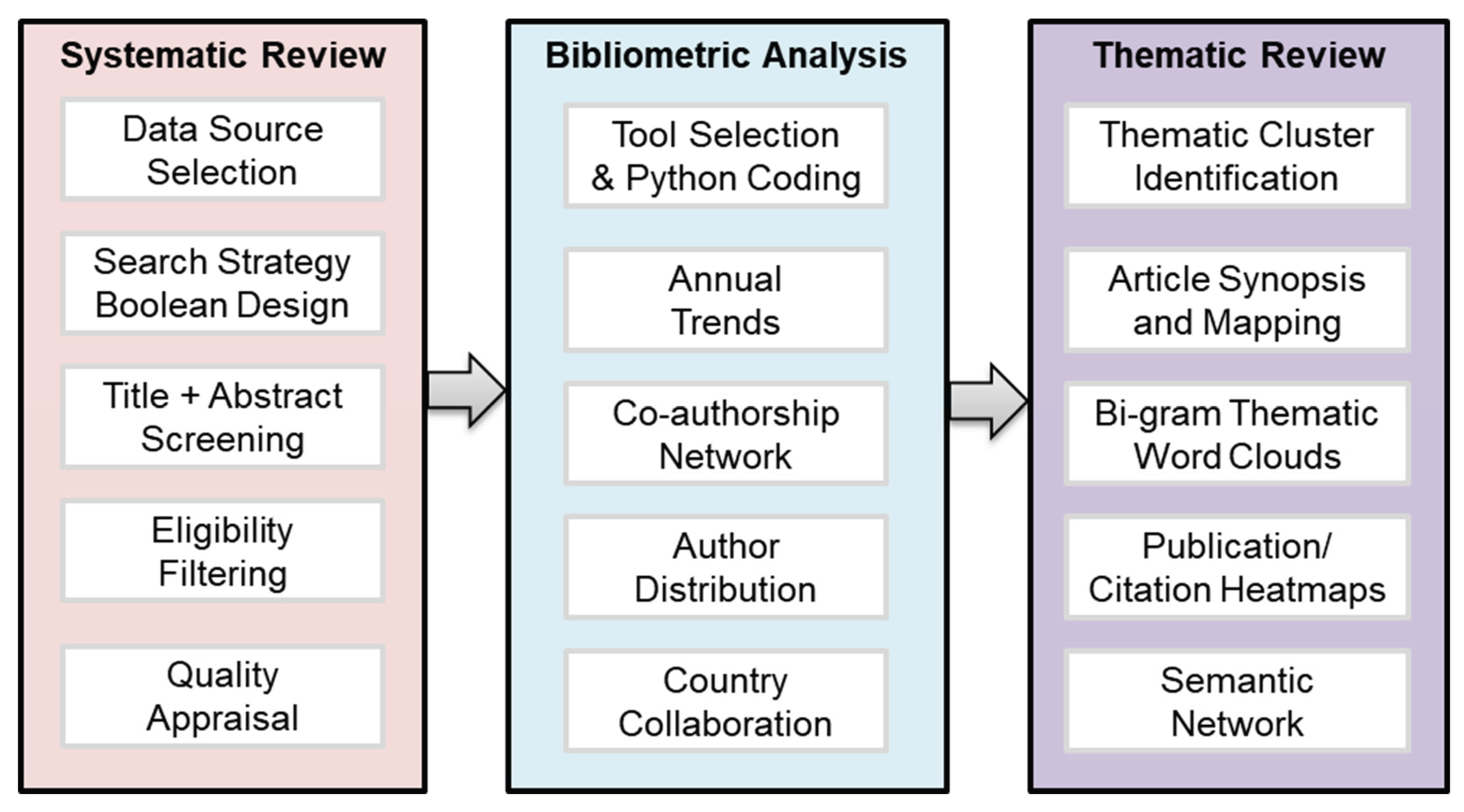
Figure 2.
PRISMA flow diagram for the study selection process.
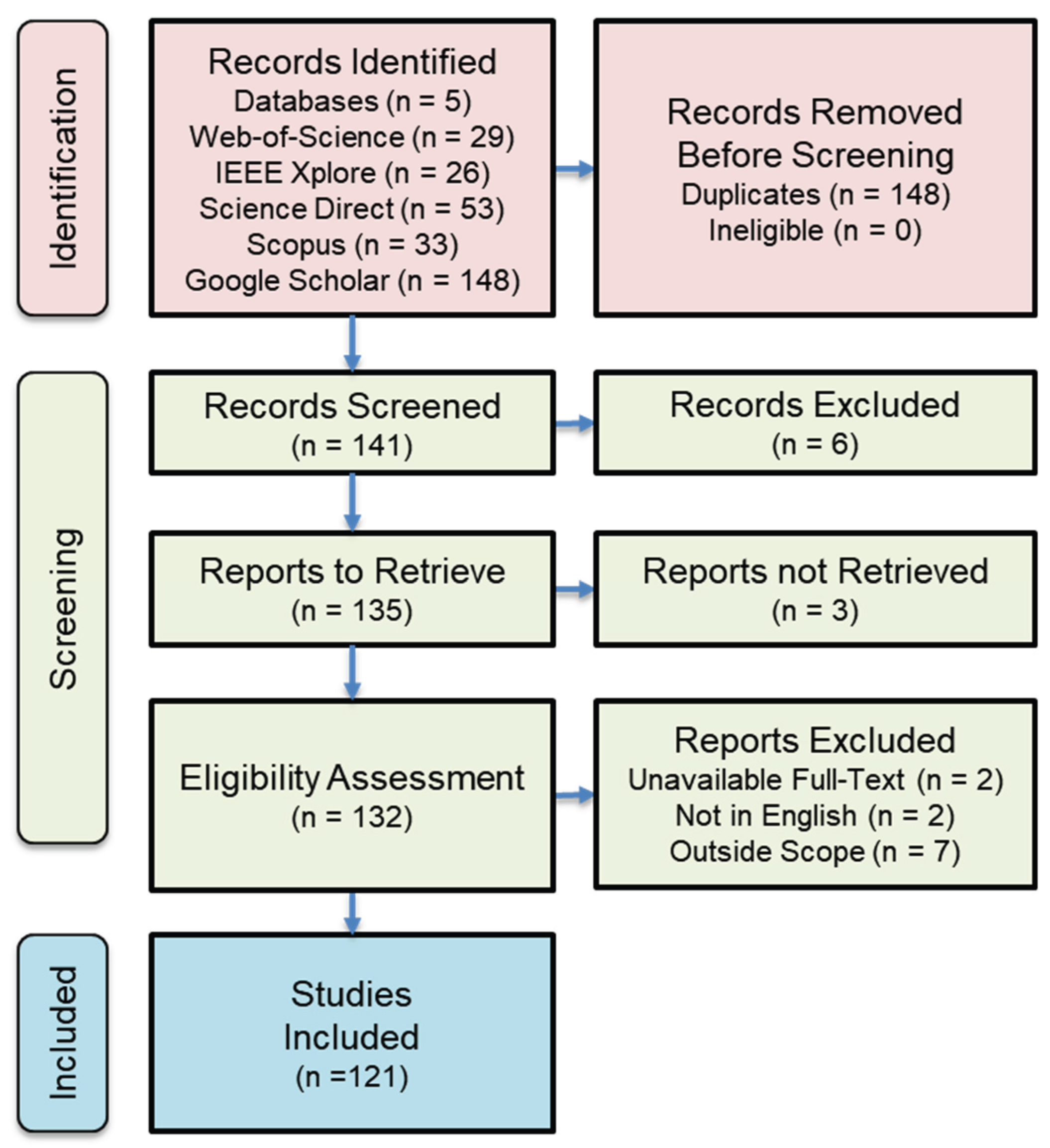
Figure 3.
Annual publication trend.
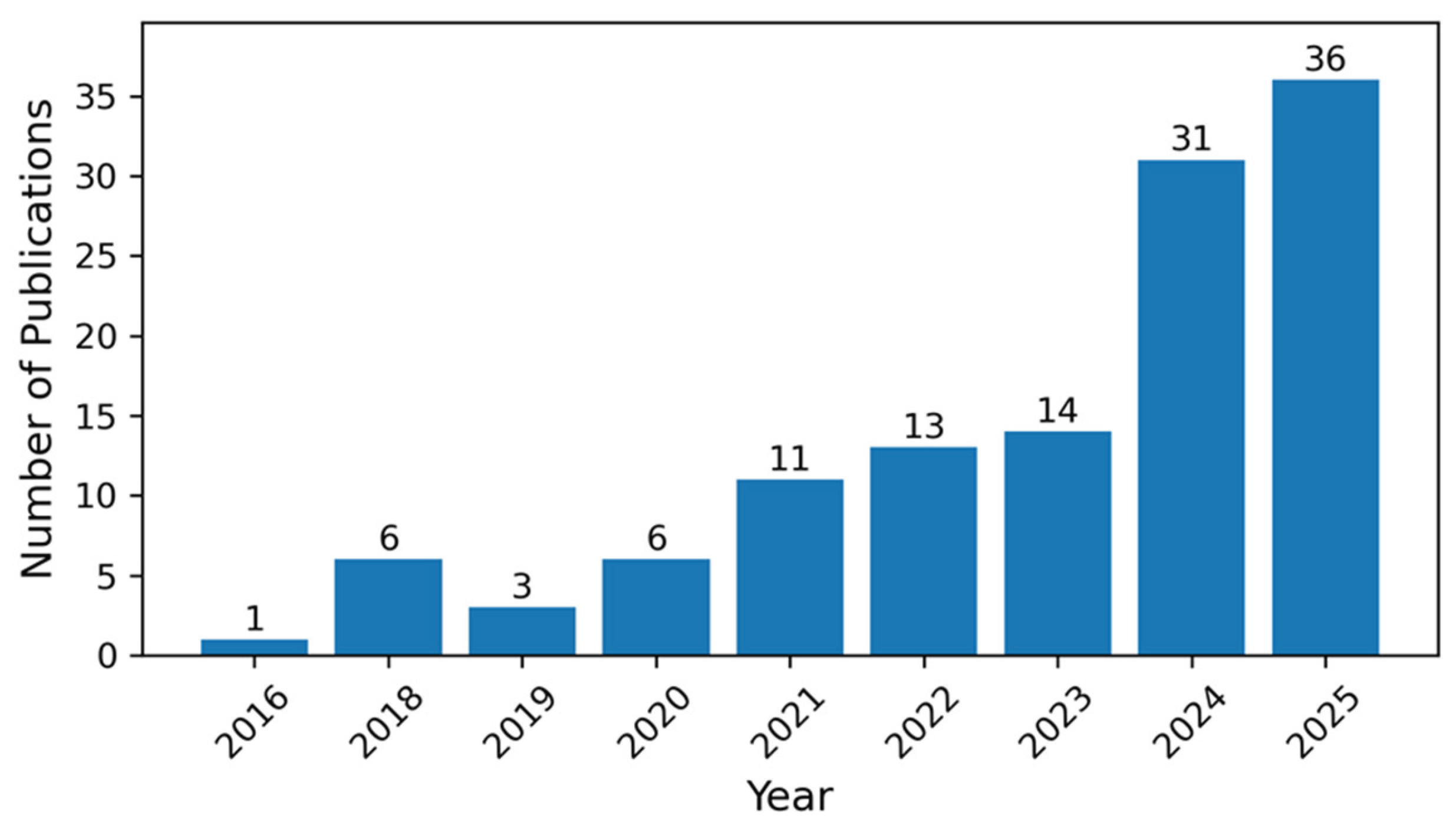
Figure 4.
Distribution of the number of authors per article.
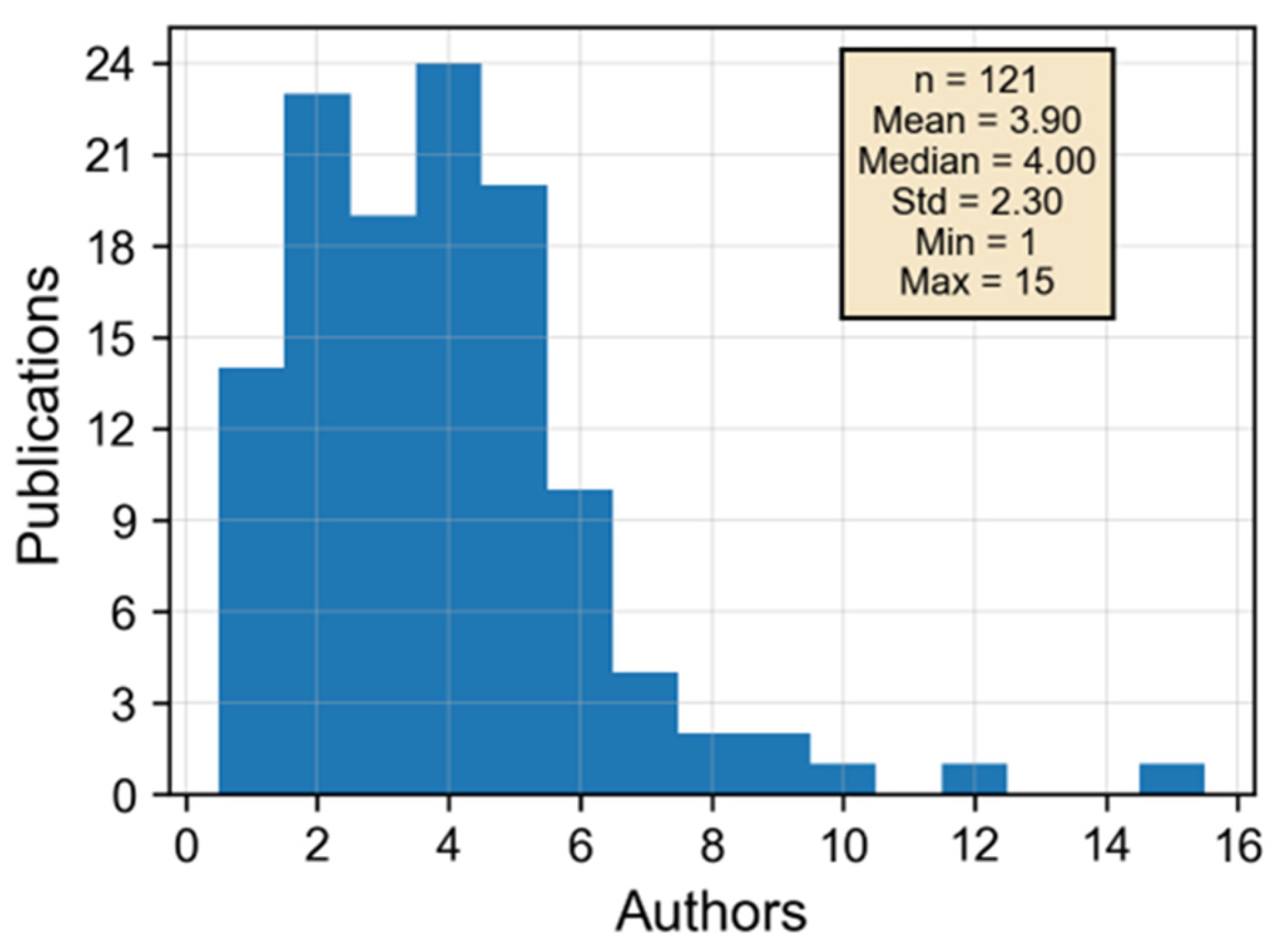
Figure 5.
Country collaboration network.
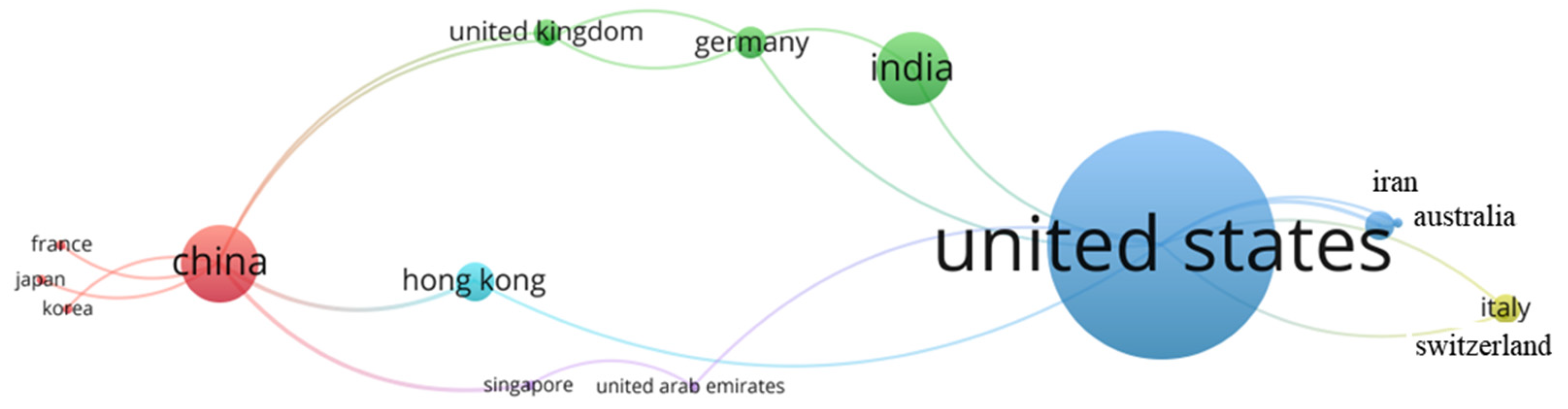
Figure 6.
Bigram word clouds covering each thematic area.
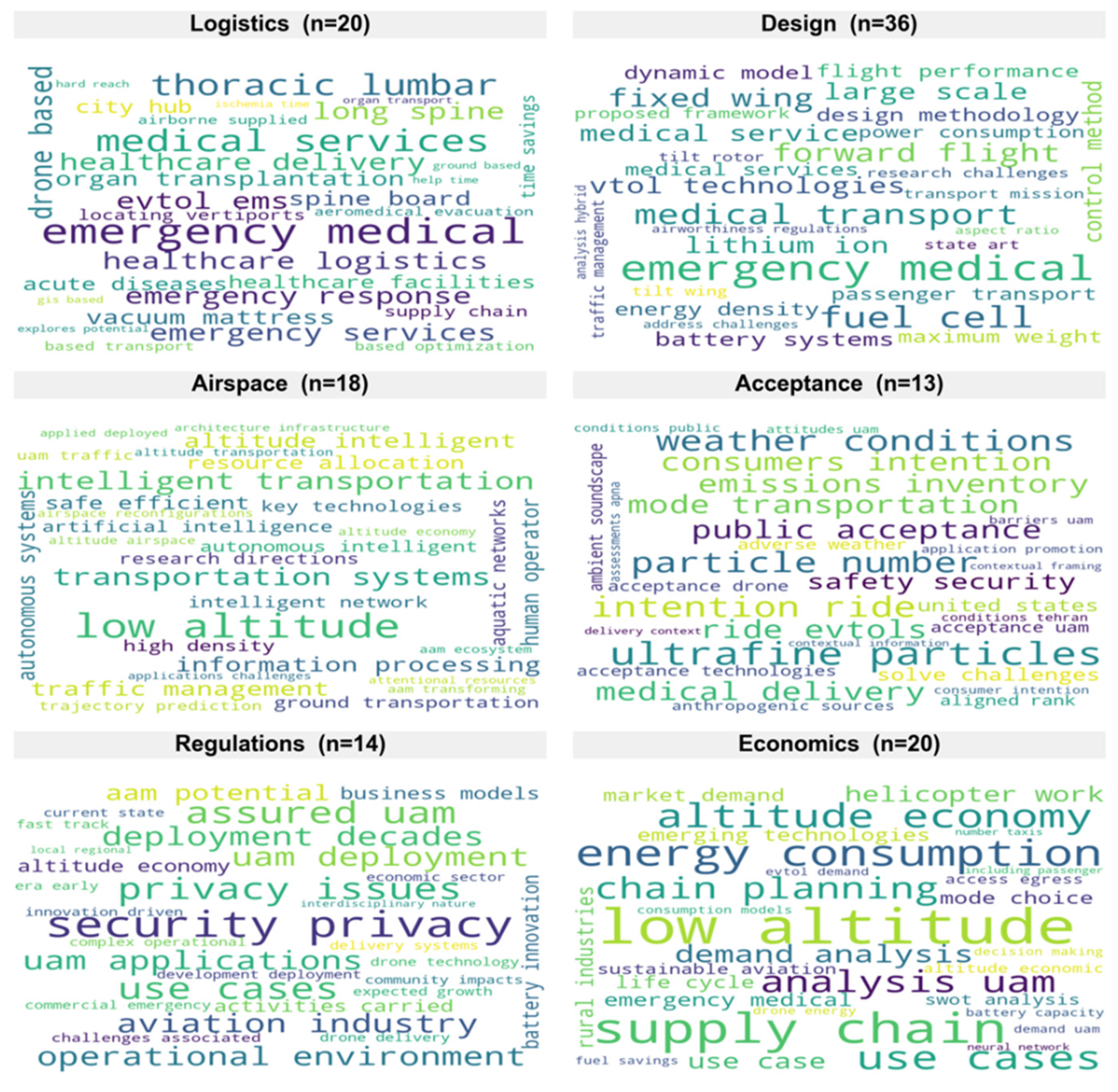
Figure 7.
Number of publications by theme and year.
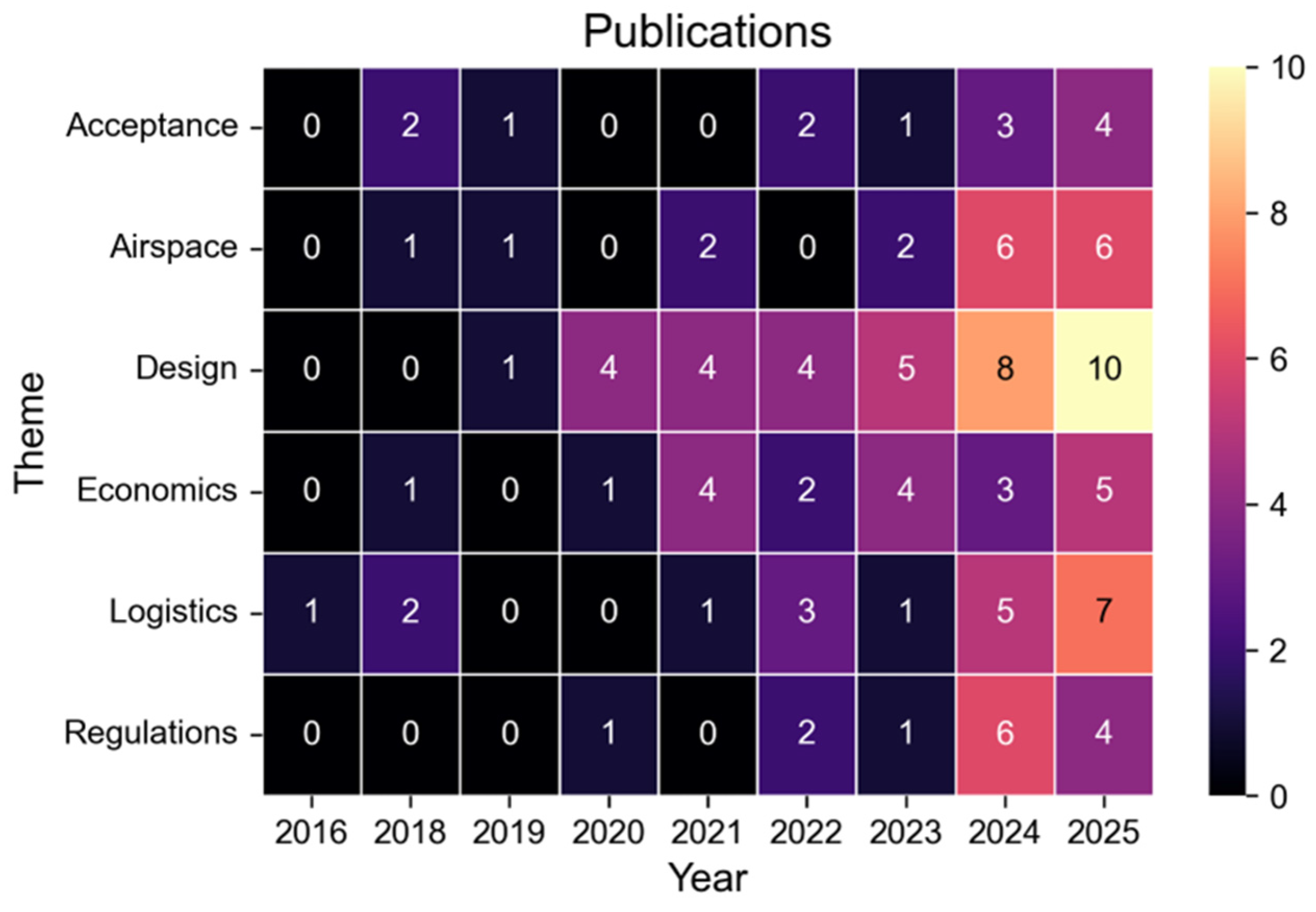
Figure 8.
Number of citations by theme and year.
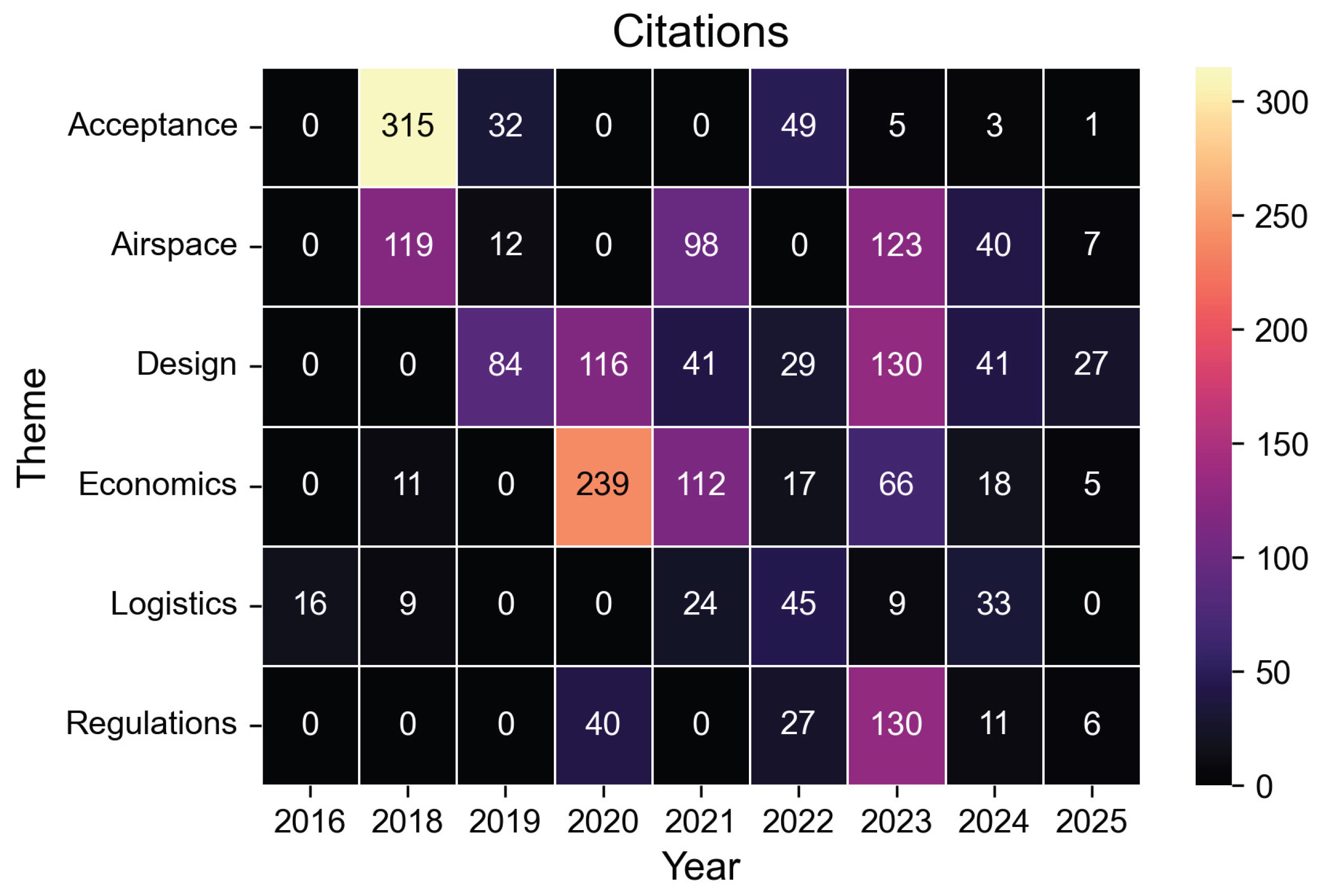
Figure 9.
Number of citations and publications by thematic category.
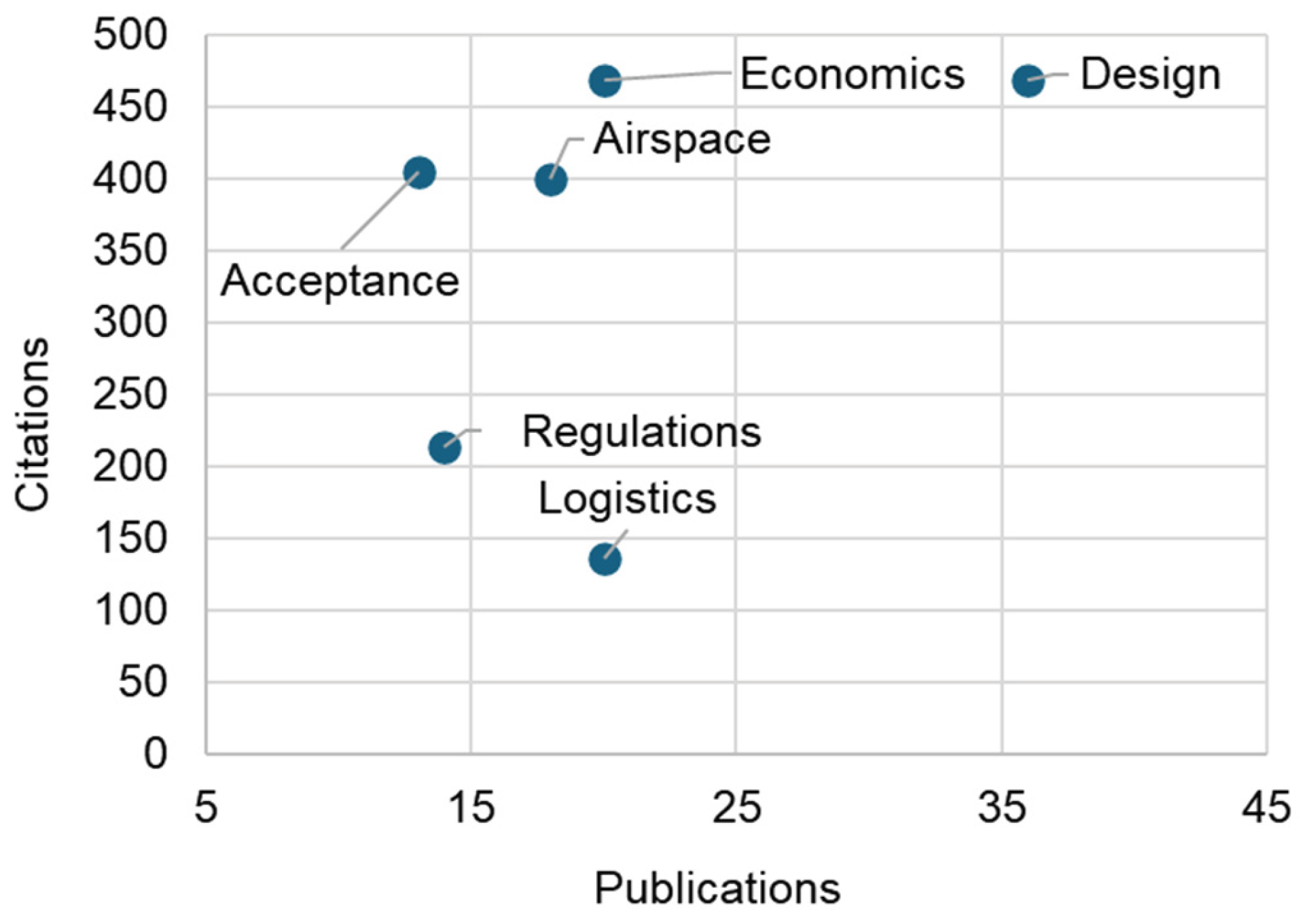
Figure 10.
Term co-occurrence network.
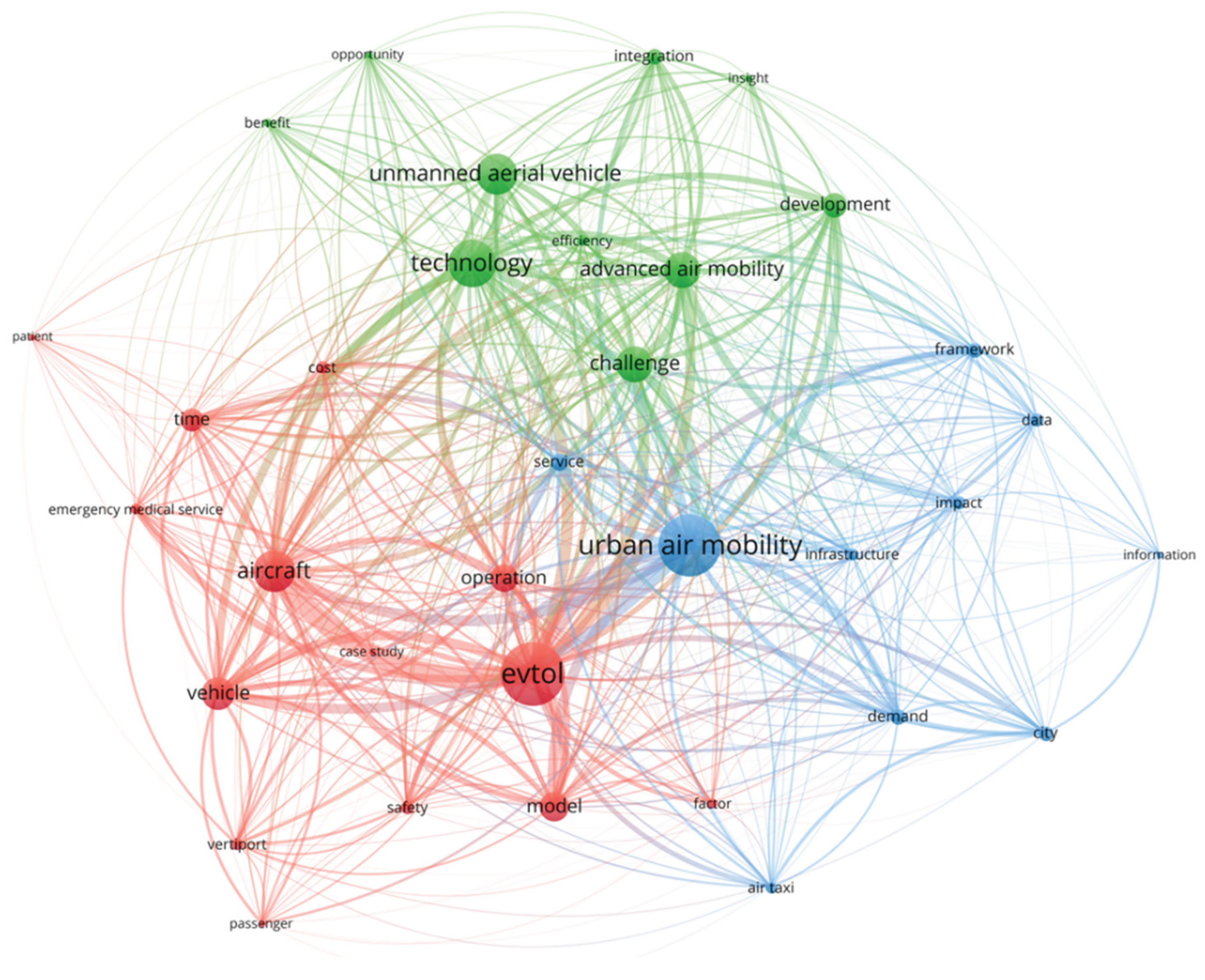

Table 1.
Inclusion and exclusion criteria for literature selection.
| Category | Inclusion Criteria | Exclusion Criteria |
|---|---|---|
| Source Type | Peer-reviewed articles, conference proceedings, doctoral dissertations | Preprints, master’s theses, reports, news articles, magazines, clinical trials, and grants |
| Text accessibility | Full-text access to relevant publications | Availability of only title and/or abstract |
| Language | English language | Non-English articles |
| Search phrases | Based on the selected keywords | Keywords outside the chosen keywords |
| Uniqueness | Non-duplicate relevant studies from the selected databases | Duplicate publications from other databases or the selected databases |
| Focus | Relevant studies focused on healthcare applications of advanced air mobility | Studies outside the defined scope |
| Publication date | January 2015 to October 2025 | Studies published outside of the date range |
Table 2.
Initial database results.
| Source | Command | N |
|---|---|---|
| WOS | TI=((“eVTOL” OR “electric vertical takeoff and landing” OR “air mobility” OR VTOL) AND (healthcare OR medical OR “air ambulance” OR pharma* OR organ OR blood OR vaccine)) OR AB=((“eVTOL” OR “electric vertical takeoff and landing” OR “air mobility” OR “air mobility” OR VTOL) AND (healthcare OR medical OR “emergency medical service*” OR “air ambulance” OR pharma* OR organ OR blood OR vaccine)) | 29 |
| IEEE | (("Document Title":eVTOL) OR ("Document Title":"electric vertical takeoff and landing") OR ("Document Title":"air mobility") OR ("Document Title":"VTOL")) AND (("Document Title":healthcare) OR ("Document Title":medical) OR ("Document Title":”emergency medical service*”) OR ("Document Title":”air ambulance”) OR ("Document Title":pharma*) OR ("Document Title":organ) OR ("Document Title":blood) OR ("Document Title":vaccine)) OR (("Abstract":eVTOL) OR ("Abstract":"electric vertical takeoff and landing") OR ("Abstract":"air mobility") OR ("Abstract":"VTOL")) AND (("Abstract":healthcare) OR ("Abstract":medical) OR ("Abstract":”emergency medical service*”) OR ("Abstract":”air ambulance”) OR ("Abstract":pharma*) OR ("Abstract":organ) OR ("Abstract":blood) OR ("Abstract":vaccine)) | 26 |
| SD | (“eVTOL” OR “electric vertical takeoff and landing” OR “air mobility”) AND (healthcare OR medical OR “air ambulance” OR pharma OR organ OR blood) Year: 2015-2025 | 53 |
| SC | (“eVTOL” OR “electric vertical takeoff and landing” OR “air mobility”) AND (healthcare OR medical OR “air ambulance” OR pharma OR organ OR blood) | 33 |
| GS | allintitle: “unmanned aerial” medical allintitle: “unmanned aerial” healthcare allintitle: “unmanned aerial” blood allintitle: “unmanned aerial” vaccine allintitle: “unmanned aerial” organ allintitle: evtol medical allintitle: evtol organ allintitle: "air mobility" medical allintitle: "air mobility" healthcare allintitle: "air mobility" organ |
63 29 19 6 2 7 1 12 6 3 |
Table 3.
Thematic clusters in the reviewed corpus.
| Thematic Cluster | Description |
|---|---|
| Logistics | Healthcare Logistics: applications involving the transport of medical items such as laboratory samples, laboratory equipment, defibrillators, medicines, human organs, blood, and other time-critical items. Includes inter-hospital emergency deliveries and rural access to hospitals. Applications also include patient care integration such as emergency medical services (EMS) and air ambulance operations, along with impact assessments. |
| Design | System Design and Enabling Technologies: aircraft systems engineering, modeling, simulations, automation, and performance evaluation, and vertiport placement optimization tailored to enable healthcare logistics. These methods inform the design of propulsion systems, control systems, energy storage, power management, thermal management, sensors, advanced materials, weather resilience, cargo pods, vertipads, charging station integration, and other enabling technologies. |
| Airspace | Airspace Integration and Traffic Management: wide-area connectivity, BVLOS operations, aircraft identification, detection and avoidance systems, flight scheduling, routing, secure operations, and system scaling. |
| Acceptance | Societal Readiness: assessments of public acceptance based on perceptions of safety, security, ethics, emissions, and annoyances such as noise and air clutter. |
| Regulations | Regulations and Policy: development of system certifications, standards, data governance, risk management, and policies tailored to spurring the adoption of AAM in healthcare. |
| Economics | Economic Considerations: cost optimization and operational economics under time-varying demand, including various considerations needed for commercialization in AAM. |
Table 4.
Articles focused on healthcare and medical logistics of AAM.
| Article Tag | Article Synopsis |
|---|---|
| Bridgelall (2024)_2 [3] | GIS optimization of vertiports for EMS showed up to 22 minutes of patient transport time savings and widespread ground access benefits. |
| Bridgelall (2024)_3 [11] | Optimized pharma logistics in rural ND; drone routes outperform trucks in cost and utilization; proposes a person-year-saved metric for deployment prioritization. |
| Dalpadulo (2025) [4] | Presented mission-oriented UAS and functional container design for safe and reliable urban medical deliveries. |
| Dethleff (2016) [15] | Retrospective offshore medevac analysis quantified injury/disease patterns and long rescue timelines to inform EMS logistics improvements. |
| Espejo-Díaz (2023) [10] | Optimized EMS vertiport placement with clustering and location models; facility-based placement boosts coverage but trades off response time. Hence, eVTOL range matters. |
| Ganić (2025) [16] | Modeled U-space drone hospital deliveries; showed 35%–58% time savings over road transport, thus enhancing reliability. |
| Goyal (2022) [2] | Evaluated aeromedical viability via scenario modeling and Monte Carlo simulations; found that eVTOLs face range/charging limits versus hybrid/rotorcraft but offers faster turnaround. |
| Hicks (2022) [17] | Argued that unmanned eVTOL can mitigate chemical, biological, radiological, and nuclear weapon risks; outlined technical/cultural adoption barriers and advocacy strategies. |
| Jahani (2024) [6] | Text-mined 5,364 papers with natural language processing to map UAV logistics topics and proposed future research on sustainable, multimodal, and pandemic supply chain uses. |
| Karpstein (2024) [7] | Interviewed hospital stakeholders; identified payload/range constraints, timesaving benefits, and phased low-threshold adoption for healthcare transport. |
| Karpstein (2024)_2 [9] | Monte Carlo analysis showed 48% and 80% of organ trips in Germany and Austria, respectively, were less than 150 km. Saved up to 30 minutes over ground-based transport. |
| Lippoldt (2025) [18] | Applied k-means-based vertiport location analysis showing that AAM improves rural accessibility to hospitals and leisure facilities. |
| Rahmatalla (2018) [19] | Compared spinal immobilization systems and found that vacuum mattress proves superior under simulated transport conditions. |
| Roesing (2022) [20] | Defined urban integration, access, and flight-operation requirements for drone-supported city hubs serving as transshipment centers for express cargo. |
| Sarayu (2025) [21] | Reviewed healthcare robotics innovations, including surgical and telemedicine systems that improve efficiency and patient outcomes. |
| Sengupta (2025) [22] | Presented heuristic scheduling to reduce cost and ischemia time in organ transport using UAM to improve delivery success rates. |
| Sigari (2021) [23] | Highlighted AAM use across trauma care chain to achieve faster medical delivery, telemedicine, and optimized EMS logistics. |
| Stanzione (2018) [24] | Discussed autonomous eVTOL designs for medical evacuations and operational benefits versus gas-powered platforms, informed by helicopter air ambulance and military experience. |
| Wang (2025) [25] | Reviewed UAV-ground delivery systems for emergencies. Outlined coordination algorithms and optimization trends for disaster logistics. |
| Ziakkas (2025) [26] | Examined eVTOL adoption for EMS in Asia. The study showed strong public support, but regulatory and infrastructure gaps require harmonization. |
Table 5.
Part 1—Articles focused on system designs and innovations.
| Article Tag | Article Synopsis |
|---|---|
| Barra (2020) [28] | Developed sizing and performance estimation for hybrid-electric tilt-wing EMS missions. |
| Bridgelall (2023) [39] | Defined a propulsion efficiency index using range, payload ratio, and aspect ratio. |
| Bridgelall (2024) [40] | Combined patent and literature analyses to map VTOL advances in aerodynamics, propulsion, and control. |
| Dixit (2023) [35] | Discussed battery design trade-offs for eVTOL across missions and operating conditions. |
| Goetzendorf-Grabowski (2020) [27] | Performed concept trade-offs for an EMS UAV; selects coaxial quad-plane with redundancy and variants (all-electric/mixed) meeting payload targets. |
| Han (2023) [41] | Flight tests showed icing degrades aerodynamics and propeller performance, corrupts probe readings, and raises power >80%, informing design for icing resilience. |
| Iriarte (2021) [33] | Introduced passive rotor-tilt mechanism; simulations show gains in stability, comfort, power use, and tracking without safety loss. |
| Kotitschke (2025) [34] | Optimized nonlinear eVTOL controllers with lead–lag filters to enhance robustness and disturbance rejection in simulations and flight tests. |
| Kulkarni (2024) [36] | Developed models for battery prognostics and thermal issues to monitor degradation and ensure safe, reliable eVTOL operation. |
| Liscouët (2022) [31] | Introduced reliability-based UAV design and sizing methodology for medical missions. |
| Marqués (2024) [37] | Proposed sizing and simulation method for hybrid fuel-cell/battery UAV power systems optimizing autonomy and efficiency. |
| Mascio (2025) [42] | Reviewed vertiport design, placement, and operation as critical AAM infrastructure linking multimodal networks and ensuring scalability. |
| Mihara (2022) [30] | Optimized airframes for medical emergencies using multi-objective simulations. Found battery energy density as a main limitation. |
| Patel (2025) [43] | Proposed a gyroscopic AI-stabilized medical cabin for air ambulances to improve patient comfort and flight safety. |
| Su (2021) [32] | Developed nonlinear tiltrotor dynamics to achieve smooth transition control. |
| Tang (2021) [29] | Presented a fully electric VTOL concept and scale model for air ambulance transport. |
| Vieira (2020) [44] | Modeled vertical crash scenarios. Showed that skid damping and failure-mode design reduce occupant injury. |
| Wang (2023)_2 [38] | Reviewed electronic advances for portable power while detailing operating complexity and design trade-offs. |
Table 6.
Part 2—Articles focused on system designs and innovations.
| Article Tag | Article Synopsis |
|---|---|
| Ahmed (2022) [46] | Proposed a data-driven systems-engineering framework to guide component interoperability. |
| Ardiny (2024) [47] | Surveyed UAV-based radiation sensing for hazardous environments, outlining sensor options, advantages, and remaining challenges. |
| Darvishpoor (2020) [48] | Reviewed UAS configurations and flight mechanisms with pros/cons and application landscape. |
| Du (2022) [49] | Demonstrated durable airframe surfaces using advanced nanomaterials. |
| Hayman (2024) [50] | Designed a fixed-wing UAM concept with interchangeable medical/passenger cabins and wing devices to meet mission constraints. |
| Hu (2024) [51] | Reviewed autonomous eVTOL technologies and integration challenges. |
| Kamal (2025) [52] | Applied self-supervised contrastive learning on parametrized eVTOL shapes to deliver accurate aerodynamic predictions. |
| Kourani (2021) [53] | Modeled and controlled a tethered UAV to enable surge-velocity manipulations. |
| Lee (2025) [45] | Evaluated toroidal propeller geometries for reduced eVTOL noise in urban areas. |
| Liu (2024) [54] | Designed eVTOL for EMS missions, highlighting payload and integration challenges. |
| Mohanraj (2025) [55] | Reviewed digital twin technologies for manufacturing and integration frameworks emphasizing scalable, secure, and interoperable design. |
| Osman (2025) [56] | Reviewed hybrid VTOL drone technologies across sectors highlighting design trade-offs, autonomy improvements, and material innovations. |
| Safadi (2024) [57] | Overviewed air mobility operations and proposed a modular simulation tool structure to replicate system behaviors for R&D. |
| Sengupta (2025)_2 [58] | Synthesized UAM research trends across aircraft design, traffic management, and urban integration, identifying major research gaps. |
| Wen (2025) [59] | Detailed aerodynamic and propeller design of tail-sitter eVTOL to propose transition control strategies. |
| Yang (2025) [60] | Presented a comprehensive review of flying-vehicle configurations, airworthiness, and key technologies; highlights electrification and safety needs. |
| Yin (2023) [61] | Introduced mini-turbojet VTOL and backstepping control to achieve improved tracking. |
| Zhou (2019) [62] | Evaluated VTOL technologies and projects, summarizing configurations, challenges, and trends relevant to UAM development. |
Table 7.
Articles focused on airspace integration and traffic management.
| Article Tag | Article Synopsis |
|---|---|
| Andreeva-Mori (2024) [70] | Modeled visual-flight-rule trajectory deviations to set safety buffers and geofenced operation volumes for low-altitude aircraft. |
| Chen (2025) [71] | Proposed a 6G-based UAV video streaming architecture with intelligent routing for immersive media in UAM by improving connectivity and stability. |
| Deng (2023) [65] | Outlined 6G-enabled ITS architecture and applications; highlights data-driven, collaborative connectivity required for scalable UAM/UTM. |
| Gao (2024) [72] | Built multi-objective UAM flow control to balance demand, energy, and community noise by using a social-welfare formulation. |
| Huang (2024) [63] | Proposed architecture and life cycle management with IoT/6G/AI for urban low-altitude transport governance and operation. |
| Kim (2025) [73] | Developed a machine learning framework for UAM trajectory and collision prediction to achieve high accuracy and enhance traffic safety. |
| Kunz (2024) [74] | Created realistic eVTOL operational scenarios for trajectory design and safety evaluation using regulatory and environmental parameters. |
| Lange (2019) [75] | Reviewed 3D imaging technology to enable compact range sensors for UAM obstacle detection and navigation. |
| Mengden (2024) [5] | Simulated eVTOL integration into controlled airport airspace; proposed dynamic AI-based reconfiguration to enhance efficiency and reduce conflicts. |
| NUAIR (2021) [76] | Defined NASA’s high-density vertiport concept of operations with automation systems for efficient sequencing, scheduling, and throughput under advanced conditions. |
| Ray (2021) [66] | Surveyed 6G-enabled concepts and enablers to support UAV/satellite-terrestrial integration for resilient aerial connectivity. |
| Sánchez-García (2018) [77] | Surveyed multi-hop networking for aerial/aquatic vehicles and evaluation tools to guide communication design for cooperative UAV networks. |
| Sinha (2024) [67] | Analyzed cellular-based coverage and 3D corridor localization for multi-aircraft communications while outlining open research needs. |
| Wang (2023) [64] | Positioned UAM as a core ITS component; reviewed mechanisms, applications, and broader deployment challenges. |
| Xiong (2025) [68] | Introduced 5G/6G-based network slicing for eVTOL task management to optimize communication and resource allocation. |
| Xiong (2025)_2 [69] | Combined 6G and digital twin technologies to enhance air-ground communication and flight safety within low-altitude corridors. |
| Yamani (2025) [78] | Extended human-information processing theory to identify factors for interface design and resource allocation. |
| Zewde (2025) [79] | Synthesized technologies and methods across aircraft, airspace, and traffic management systems; identified research directions for safe and efficient UAM. |
Table 8.
Articles focused on public acceptance and societal readiness.
| Article Tag | Article Synopsis |
|---|---|
| Alzurikat (2024) [80] | Argued that public trust, socioeconomics, and flexible standards shape autonomous UAM rollout. The study urges user-centric strategies for city integration. |
| Bagratuni (2025) [81] | Tested virtual reality (VR) effects on air-taxi acceptance; found that VR heightens immersion and emotional processing without immediate intent change. |
| ÇINAR (2023) [82] | Survey of residents in Turkey linked perceived benefits (especially emergencies) and challenges to demographics and transit use. |
| Guttikunda (2018) [85] | Developed multipollutant inventories and forecasts to quantify urban exposure; findings inform community impacts relevant to UAM acceptance. |
| Kalakou (2022) [83] | Surveyed Lisbon residents and clustered attitudes, for example first-movers versus deniers. It linked intention to targeted policies for UAM inclusion. |
| Kecorius (2024) [86] | Long-term monitoring around airports showed ultrafine particle reductions after an airport closure and seasonal patterns. This confirmed environmental exposure near air traffic. |
| Liu (2025) [84] | Assessed behavioral factors influencing consumer willingness to use eVTOLs; perceived risk was most influential. |
| Panbeh (2024) [87] | Analyzed Tehran’s traffic, energy, and pollution challenges to justify UAM adoption as a new urban transport mode. |
| Raza (2025) [88] | Comprehensively reviewed noise prediction tools and mitigation strategies for UAS/eVTOLs to support urban noise regulation and design. |
| Reiche (2019) [89] | Identified weather-related safety/cost barriers and gauged public reluctance in adverse weather via climatology and survey of U.S. cities. |
| Rice (2022) [90] | Found safety and security dominate user concerns for vertiports and UAM; recommended messaging that explains how these are ensured. |
| Stacey (2018) [91] | Synthesized evidence on airport ultrafine particle emissions and community exposure; highlighted research gaps and health concerns. |
| Woodcock (2025) [92] | Found contextual framing of medical drone use reduces perceived annoyance to support strategies for improved public acceptance. |
Table 9.
Articles focused on topics relevant to regulations and policy.
| Article Tag | Article Synopsis |
|---|---|
| Borin (2024) [1] | Characterized the complex ecosystem of AAM and identifies safety, infrastructure, socio-environmental, and governance considerations. |
| Cohen (2024) [93] | Guidance for planners on integrating AAM into community plans, emphasizing equity, land-use compatibility, and regulatory processes. |
| Čokorilo (2020) [94] | Traced the evolution of aviation safety paradigms and detailed state roles and risk factors relevant to UAM safety management. |
| Koumoutsidi (2022) [95] | Stakeholder interviews highlighted certification standards and legal updates as prerequisites; cargo and air-ambulance seen as near-term use cases. |
| Lange (2024) [96] | Integrated diverse AAM concept of operations (CONOPS) into a unified taxonomy clarifying maturity levels and guiding regulatory and development pathways. |
| Mekdad (2023) [97] | Systematically classified UAV security and privacy vulnerabilities and countermeasures across hardware, software, and communication levels. |
| Murray (2022) [98] | Analyzed 429 Australian small UAS safety cases; identified patterns in occurrence types and phases to guide risk mitigation and regulation. |
| Purtell (2024) [99] | Performed large-scale bibliometric analysis identifying four research clusters and research gaps in AAM-drone integration studies. |
| Saifudeen (2025) [100] | Explored eVTOL potential and security implications across commercial, emergency, and defense uses while highlighting policy challenges. |
| Santana (2024) [101] | Reviewed emissions trends and net-zero targets. Highlighted policy and coordination needs as operations grow in Europe and the Americas. |
| Sun (2025) [102] | Proposed an integrated policy framework (Latency, Autonomy, Equipment, Regulation, Acceptance, Coordination, Equity) to accelerate the low-altitude economy. |
| TP (2025) [12] | Systematically reviewed air taxi and drone delivery literature to map technological, regulatory, and social challenges. |
| Vito (2024) [103] | Outlined UAM use cases across the 2025, 2030, and 2035 time horizons with enablers and regulatory implications for public and private services. |
| Zhyriakov (2025) [104] | Reviewed occupant safety frameworks and hazard assessments for eVTOLs to guide regulation and design improvements. |
Table 10.
Articles focused on economic considerations.
| Article Tag | Article Synopsis |
|---|---|
| Boddupalli (2024) [105] | Stated-choice models revealed heterogeneous preferences and value-of-time distributions, with segments refusing or favoring eVTOL. |
| Bridgelall (2023)_2 [115] | Synthesized AAM adoption drivers. These include regulatory readiness, market forecasting, and logistics use-cases. They highlighted data-driven methods and GDP effects. |
| Carugo (2024) [111] | Built component-level cost models in MATLAB to estimate eVTOL development/production costs and identify main cost drivers relative to helicopters. |
| Chappelle (2018) [113] | Analyzed air-EMS cost, utilization, and safety; proposed operational models leveraging UAM markets to expand service provision. |
| Chaudhary (2025) [123] | Conducted 106 interviews to assess UAM ecosystem status and market potential. |
| Cui (2025) [119] | Explored mechanisms and challenges of rural, low-altitude economic development. Emphasized regulation, workforce, and infrastructure needs. |
| Dulia (2024) [112] | Formulated a stochastic supply-chain model for eVTOL manufacturing under demand/supply disruptions and showed that profit-maximizing, robust plans outperform benchmarks. |
| Haan (2021) [106] | Estimated commuter UAM demand across highly populated areas using cellphone/census data and stated preference surveys; mapped routes and identified top markets. |
| Husemann (2023) [8] | Optimized UAM fleet design/charging using total cost of ownership. A case study in Germany showed feasible trip costs and that higher cruise speeds can worsen costs. |
| Inan (2025) [117] | Presented operational load/weight and planning tactics that lower fuel burn and costs to align with global climate action goals. |
| Klophaus (2025) [122] | Used AI to generate SWOT (strengths, weaknesses, opportunities, threats) analysis for key air transport technologies like UAM; yielded actionable but caveated insights for strategic planning. |
| Li (2025) [110] | Optimized eVTOL dispatch under dynamic demand using iterative and Monte Carlo methods to improve low-altitude delivery efficiency. |
| McMillan (2023) [121] | Surveyed helicopter aerial work operations and identified unmet technical needs compared to AAM advances; called for collaboration. |
| Melo (2022) [116] | Applied life-cycle engineering modeling to evaluate environmental performance of battery-powered eVTOLs under varying scenarios to assess sustainability impact. |
| Nakamoto (2021) [120] | Interviewed stakeholders to assess eVTOL use cases; found that sightseeing in Cebu (Philippines) was most feasible and EMS less viable due to range limits. |
| Paul (2022) [109] | Developed AI model for decentralized eVTOL fleet scheduling; it improved daily profit by 25% versus baseline by optimizing network operations. |
| Pukhova (2021) [118] | Agent-based simulation showed UAM’s negligible congestion reduction and limited modal shift in exurban Munich (Germany) due to access times. |
| Qi (2023) [107] | Reviewed UAM demand estimation methods and influencing factors; summarized key modeling gaps and future research directions. |
| Rajendran (2021) [108] | Proposed a goal programming dispatching approach; efficient operation in New York City requires 84 air taxis at 66% utilization. Analyzed sensitivity to willingness-to-fly and wait limits. |
| Zhang (2020) [114] | Compared drone energy models. Showed large variability, cautioning on model selection; calls for more empirical validation. |
Disclaimer/Publisher’s Note: The statements, opinions and data contained in all publications are solely those of the individual author(s) and contributor(s) and not of MDPI and/or the editor(s). MDPI and/or the editor(s) disclaim responsibility for any injury to people or property resulting from any ideas, methods, instructions or products referred to in the content. |
© 2025 by the authors. Licensee MDPI, Basel, Switzerland. This article is an open access article distributed under the terms and conditions of the Creative Commons Attribution (CC BY) license (https://creativecommons.org/licenses/by/4.0/).
Copyright: This open access article is published under a Creative Commons CC BY 4.0 license, which permit the free download, distribution, and reuse, provided that the author and preprint are cited in any reuse.


