

Submitted:
21 July 2025
Posted:
22 July 2025
You are already at the latest version
Abstract
Electric mobility is increasingly recognized as a sustainable transportation solution worldwide. While the economic and environmental aspects of e-mobility have been explored extensively, social dimensions such as equity, accessibility, and inclusiveness remain underexplored. Existing literature on these social aspects is fragmented across disciplines, shaped by varying regional contexts, which complicates efforts to form a coherent understanding of the field. To address this gap, a bibliometric analysis was conducted to systematically map the intellectual landscape, identify dominant themes, and highlight critical research gaps in the intersection of e-mobility and social sustainability. A total of 490 publications were extracted from the Scopus database as of 23 March 2025. The findings reveal a sharp increase in scholarly attention since 2018, clustering around four thematic areas: energy and charging infrastructure, social and economic impacts, public policy and regulations, and technological innovations. Despite this growth, persistent gaps remain, particularly concerning social equity, inclusive policy design, socio-economic disparities, and the real-world effects of emerging technologies on vulnerable populations. Future research should specifically explore how e-mobility initiatives can reduce regional access inequalities, generate quality green employment, and ensure that technologies such as vehicle-to-grid systems are equitably deployed to benefit low-income and marginalized populations.
Keywords:
electric mobility
; electric vehicle
; social sustainability
; bibliometric review
1. Introduction
Electric mobility (e-mobility), defined by the use of electric vehicles (EVs) for transportation, is gaining prominence as a sustainable transportation solution [1,2]. Sustainability is commonly viewed through interconnected three pillars: economic, environment, and social [1,3]. While e-mobility’s economic and environmental aspects such as cost efficiency, emissions reduction, and improved energy security have been widely studied, the social pillar remains comparatively underexplored [4,5]. Furthermore, EV literature on social sustainability highlights more technological aspects [6]. While the concept of social sustainability in transport is increasingly acknowledged, it lacks a clear and unified definition [3]. It encompasses non-physical factors like social inclusion, safety, sense of community and belonging, employment, cultural traditions, fair income distribution, participation, education and training, social justice, health, quality of life and well-being [3].
E-mobility presents unique opportunities to advance these goals. It can reduce air and noise pollution, improve urban liveability, and create jobs in sectors such as battery manufacturing, vehicle servicing, and charging infrastructure [4,7]. In addition, e-mobility can help reduce the harmful effects of pollution from conventional vehicles. This significantly improves air quality, reducing cardiovascular and respiratory diseases, as well as enhances the quality of life in urban areas resulting from quieter operation EVs [4,7,8]. Exempting electric vehicles from zone fees in crowded and polluted areas further improves social welfare by reducing pollution and traffic impacts [9].
Despite these benefits, the uptake of e-mobility generates critical social challenges. These include inequitable access to charging infrastructure, high road safety risks (such as pedestrian and cyclist accidents resulting from the quiet operation of EVs), significant cybersecurity risks (due to increased digital integration into EVs), displacement of minority communities, and cultural alignment [10]. Lack of knowledge on electric vehicles, lack of trust from concerns about electric vehicle reliability and battery degradation, lack of desirability (due to lack of qualities such as driving enjoyment, and attractive design), and range anxiety complicate a holistic understanding of the implications of electric vehicles in the USA [11]. Lack of knowledge regarding electric vehicles, preference and trust in conventional vehicles, and competition with other clean technologies have been identified as social barriers to the deployment of electric vehicles in Brazil [12].
A search of existing studies in the Scopus database reveals that existing studies on electric mobility and social sustainability research are scattered across disciplines, with results influenced by regional differences. While some literature reviews have attempted to consolidate aspects of social sustainability in transport, their focus has been either too broad (e.g., sustainable transport systems in general) or too narrow (e.g., EV user perceptions), offering limited insights into the field’s overall intellectual structure [6,13,14]. Existing research has addressed fragmented aspects such as social adoption factors/ impacts [1,4,15], policy and governance [9,16], and charging infrastructure development [17,18,19]. This fragmentation presents a compelling case for a bibliometric review. Bibliometric methods offer a systematic, quantitative approach to analysing large volumes of literature, enabling the identification of influential studies, thematic trends, research gaps, and future directions. To address the lack of integration in the current body of knowledge, this study undertakes a bibliometric analysis of global research on electric mobility and social sustainability. This study is guided by two research questions:
- What are the current and emerging research trends on electric mobility and social sustainability?
- What is the proposed future research agenda on electric mobility and social sustainability?
2. Materials and Methods
A bibliometric analysis was conducted to guide the study. Bibliometric analysis involves using quantitative methods such as performance analysis and science mapping to identify new areas in a field [20,21]. Whereas performance analysis is concerned with quantitative metrics used to present different research constituents (such as authors, institutions, journals, and countries), science mapping relates to the intellectual interactions and structural connections among the research constituents (e.g., co-authorship analysis, co-citation analysis, co-word analysis, and citation analysis [20,21].
To obtain the required data for bibliometric analysis, a search conducted on the Scopus database on 23 March 2025 found 767 publications using a combination of keywords (Article title, Abstract, Keywords (“electric vehicle*” OR “electric car*” OR “electric bike*” OR “electric scooter*” OR “electric rickshaw*” OR “electric automobile*” OR “electric truck*” OR “electric mobility” OR “electric micromobility” OR “EV” OR “BEV” OR “HEV” OR “PHEV” OR “FCEV” OR “EREV” OR “e-vehicle*” OR “e-car*” OR “e-bike*” OR “e-scooter*” OR “e-rickshaw*” OR “e-automobile*” OR “e-truck*” OR “e-mobility” OR “e-micromobility” OR ((“battery” OR “plug-in battery” OR “hybrid” OR “fuel cell” OR “extended range”) AND “electric vehicle*”))) AND (“social sustainability” OR “social responsibility” OR “social impact” OR “social implication” OR “social acceptance” OR “societal implication” OR “social welfare” OR “social wellbeing” OR “social well-being” OR “social development” OR “social outcome”). The search was limited to journal articles, review papers, conference papers, and book chapters written in the English language up to 2025. The Scopus database was used because it is considered a reputable database for quality journals [22].
The topics and abstracts of the 767 publications were examined for relevance, which led to 490 publications after excluding publications that lacked abstracts, topics, and those that were irrelevant. The irrelevant publications relate to topics on chemistry, biology, mining, and human resource management that had concepts abbreviated as EV, an important keyword used in this study. The 490 publications were exported from the Scopus database as a CSV Excel file for further analysis. The R-studio software via the Biblioshiny app was used to perform bibliometric analysis (i.e., performance analysis and science mapping). The results show that the 490 publications comprise 344 articles and 20 reviews (Table 1), a justification for this review. A total of 1 411 authors have contributed to the publications, with only 22 being single-authored (Table 1), indicating preference for collaborative works. Each document has received an average of 31.54 citations, indicating a strong research impact. The wide range of keywords 3 135 keyword plus and 1 562 author keywords) (Table 1), a sign of the diversity of topics being investigated.
3. Results
3.1. Performance Analysis
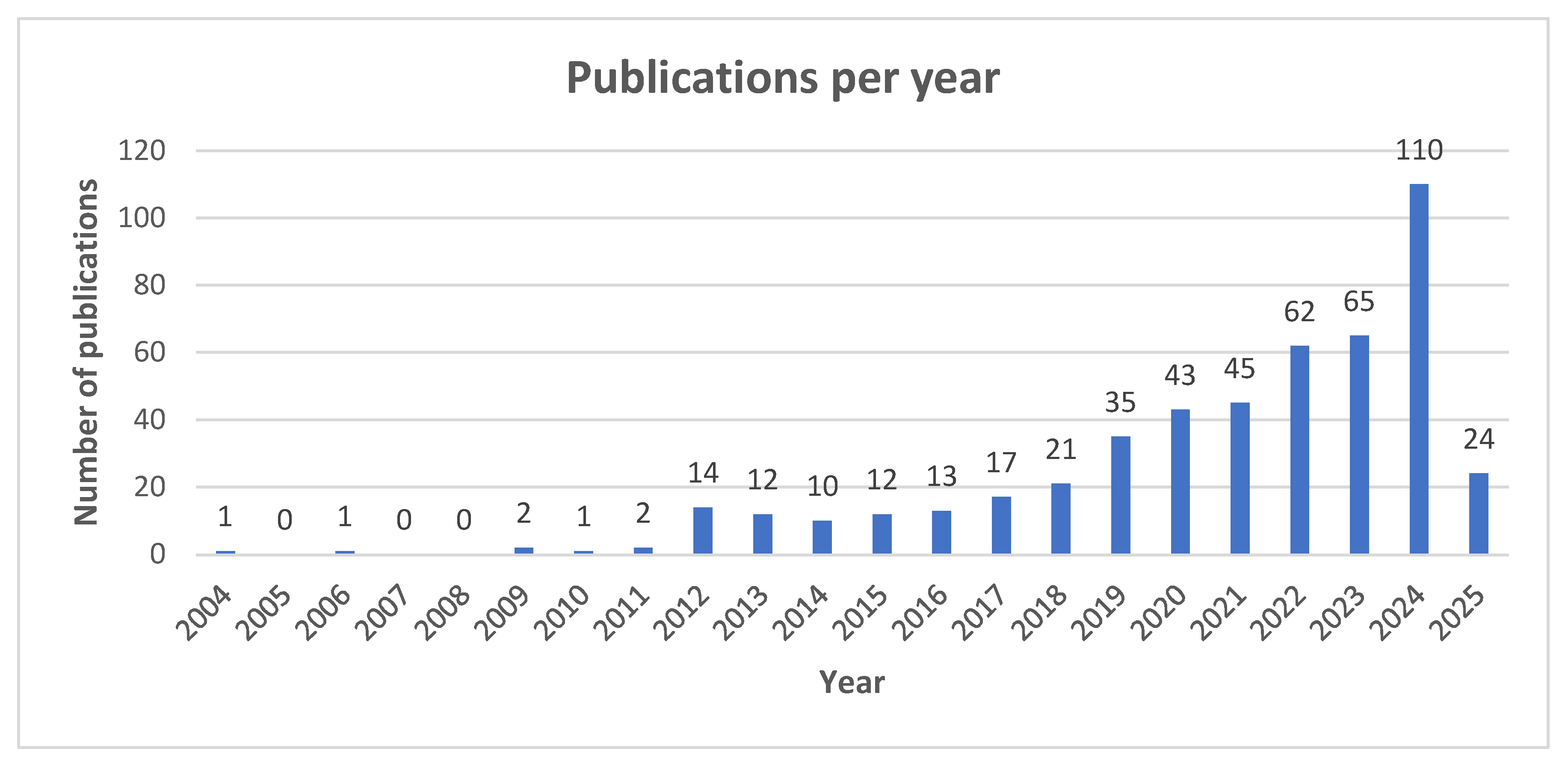
The initial research period between 2000 and 2011 recorded slow growth, with no more than two publications per year. E-mobility was still new, and the link to social sustainability was limited during this period. The following research period between 2012 and 2017 reported a steady growth of 17 publications in 2017. During this period, there was growing interest in e-mobility, arising from environmental benefits and investments in EV charging infrastructure in China, the USA, and Europe. The research period between 2018 and 2023 recorded an exponential growth to reach a high of 65 publications in 2023, followed by a rapid growth to reach 110 publications in 2024. There was increased awareness, widespread adoption of EVs, and more EV charging infrastructure during this period. Even though 2025 is incomplete, 24 publications have been recorded, indicating continued interest in the topic.
Figure 1.
Publications per year on e-mobility and social sustainability (2000 - 2025).
3.1.1. Top Journals
Top journals are high-ranked journals based on the number of publications, the number of citations, the h-index, the g-index, and the m-index. Sustainability is the highest-ranked journal, with 13 publications, an h-index of 8, and a g-index of 13 (Table 2). This broad journal exploring various sustainability topics that are highly relevant when researching e-mobility and societal sustainability. The IEEE Transactions on Intelligent Transportation Systems, IEEE Internet of Things Journal, and IEEE Transactions on Vehicular Technology focus on specialised topics such as EV technologies (Table 2). Sustainable Cities and Society with 8 publications, 288 total citations, and an m-index of 1.167 counted from publications in 2020 (Table 2), is a relatively new journal that publishes highly impactful publications. This journal covers fundamental and applied research to promote socially resilient cities.
The common themes covered by the journals include sustainability and environmental impact (e.g., Sustainability, Journal of Cleaner Productions, Sustainable Cities and Society journals), energy (Energy, Applied Energy, and Energy Policy journals), Technological advancements (IEEE Transactions on Intelligent Transportation Systems, IEEE Internet of Things Journal, and IEEE Transactions on Vehicular Technology), and policy impacts (Energy Policy and Applied Energy journals) (Table 2). This highlights an intersection of EV technology, sustainability, energy, and policy in advancing EV adoption and its societal implications.
3.1.2. Top Authors
Top authors are high-ranked authors based on the number of publications, the number of citations, the h-index, the g-index, and the m-index. The top-ranked author is Li, Y with 12 publications, 664 total citations, and an m-index of 0.778, having started publishing in 2017 (Table 3), a relatively new author publishing highly-impactful studies. Li, Y studies primarily focus on how electric vehicles support social sustainability through cleaner energy, fair policies, and better recycling. Zhang, Y. is an emerging researcher with 8 publications, 1 186 total citations, and an m-index of 0.778, having started publishing in 2017 (Table 3). Zhang, Y.’s studies primarily focus on boosting social welfare and building sustainable EV infrastructure through smart policies. Zhang, J is a veteran researcher who started publishing in 2012 with 7 publications and 120 total citations (Table 3). Zhang, J. studies mainly focus on the role of EVs in cutting emissions, improving social welfare, and enabling smart, sustainable systems through policies, technology, and consumer engagement.
3.1.3. Top Author Affiliations
Top author affiliations are high-ranked institutions where authors work based on the number of publications. From Table 4, China has eight institutions, whereas Canada and the USA have one institution each. The dominance of China reflects China’s leadership in e-mobility and social sustainability research driven by China’s aggressive policies on electrification, energy security, and urban sustainability
3.1.4. Top Countries
Top countries are high-ranked countries where corresponding authors come from based on the number of publications. The top three ranked countries are China (130 publications), the USA (42 publications), and India (32 publications), respectively (Table 5). China’s leadership can be attributed to its aggressive EV policies, large-scale EV manufacturing and adoption. India is an emerging EV market with unique challenges reflecting the government’s efforts to increase EV uptake in congested cities. Asia has four countries (China, India, Korea, and Hong Kong, North America has two countries (USA and Canada), and Europe has three countries (Germany, United Kingdom, and Frame) (Table 5). While the North American countries focus on EV technological advancements, policy, and adoption barriers, the European countries concentrate on EV policies on sustainability and urban mobility. It was noted that South America and Africa are underrepresented regions on the topic (Table 5). Thus, China and USA lead in EV policy and technological advancements, Europe prioritises sustainability, and Africa lags behind.
3.2. Science Mapping
Science mapping was used to understand the intellectual interactions and structural connections in the topic. This involved the use of co-authorship analysis, co-citation analysis, co-word analysis, and citation analysis.
3.2.1. Co-Authorship Analysis
Co-authorship analysis reveals research collaborations in a given topic. The USA and China (dark blue colour) show high-intensity collaborations, while most countries in Africa (grey colour) reported low-intensity collaborations (Figure 2). The USA reported strong collaborations with the UK, Italy, and Canada, while China showed strong collaborations with the USA, Canada, and Hong Kong (Figure 2).
3.2.2. Co-Citation Analysis
Co-citation analysis reveals relationships between two or more authors cited together in other studies. The largest, most central (i.e., Sierzchula W., 2014) green colour) Figure 3), implies a most frequently co-cited publication on the topic. Figure 3 shows the other frequently cited publications on the topic are Huang J. (2013) orange colour), Egbue O. (2012) brown colour), and Li Y. (2018) red colour). The green cluster led by Sierzchula W. (2014) relates to studies on factors determining the adoption of EVs, while the brown cluster led by Egbue O. (2012) focuses on societal acceptance of EVs, the red cluster led by Li Y. (2018) emphasises the role of policy and charging infrastructure in EVs. At the same time, the orange cluster led by Huang J. (2013) relates to consumer preferences and the clusters at the edges of the co-citation network focus on specialised topics such as technological innovations.
3.2.3. Co-Word Analysis
Co-word analysis reveals relationships between keywords in a set of publications on a given topic using techniques like word frequency and word cloud. Table 6 lists the most frequent keywords used on the topic, revealing five main themes: energy and charging infrastructure, social and economic impacts, environmental sustainability, public policy and regulations, and technological innovations. The energy and charging infrastructure theme includes keywords like charging (batteries), charging station, electric vehicle charging, smart grid, energy, energy storage, and energy management (Table 6). The social and economic impacts theme includes keywords like costs, economic and social effects, profitability, social impact, social acceptance, sales, optimisation, social aspects, social welfare maximisation, energy efficiency, and economics (Table 6). The environmental sustainability theme includes keywords such as sustainable development, environmental impact, recycling, lifecycle, sustainability, emission control, gas emissions, climate change, fossil fuels, renewable energies, energy utilisation, and traffic congestion (Table 6). The theme of public policy and regulations includes keywords like subsidy system, competition, government subsidies, public policy, and decision-making (Table 6). The theme of technological innovations includes keywords like secondary batteries, smart grid, smart power grids, environmental technology, blockchain, and technology adoption (Table 6). Thus, the future of e-mobility depends on integrating energy, environment, policy, economy, and continued technological innovations. However, the limited representation of social terms in the most frequent keywords signals a critical gap that must be addressed to ensure socially inclusive and sustainable e-mobility transition.
Figure 4 displays a word cloud created from the most frequent keywords. The research focus areas shown by keywords in large font are charging (batteries), costs, charging station, economic and social effects, and sustainable development (Figure 4). These are among the themes identified in word frequency analysis: energy and charging infrastructure (charging station), social and economic impacts (costs), environmental sustainability (sustainable development), and technological innovations (charging- batteries). Electric vehicle charging is the main focus of e-mobility and social sustainability research. This is attributed to keywords such as charging (batteries), secondary batteries, charging station, electric vehicle charging, and vehicle-to-grid keywords appearing at the centre of the word cloud (Figure 4). Keywords like costs, optimisation, economics, and sales are located around the charging station and related keywords (Figure 4). This implies that research attempts to address the economic viability of EV charging infrastructure. The public policy and regulations related terms like government subsidies, public policy, investments, subsidy system, and decision-making appear at the outer edges of the word cloud (Figure 4), thus emerging research areas. Technological innovations related to keywords like secondary batteries, energy storage, technology adoption, vehicle-to-grid, renewable energies, smart power grids, and environmental technology are located at the outer edges of the word cloud (Figure 4). Thus, e-mobility research mainly focuses on charging infrastructure, economic viability, emerging public policies, and technological innovations.
3.2.4. Thematic Evolution
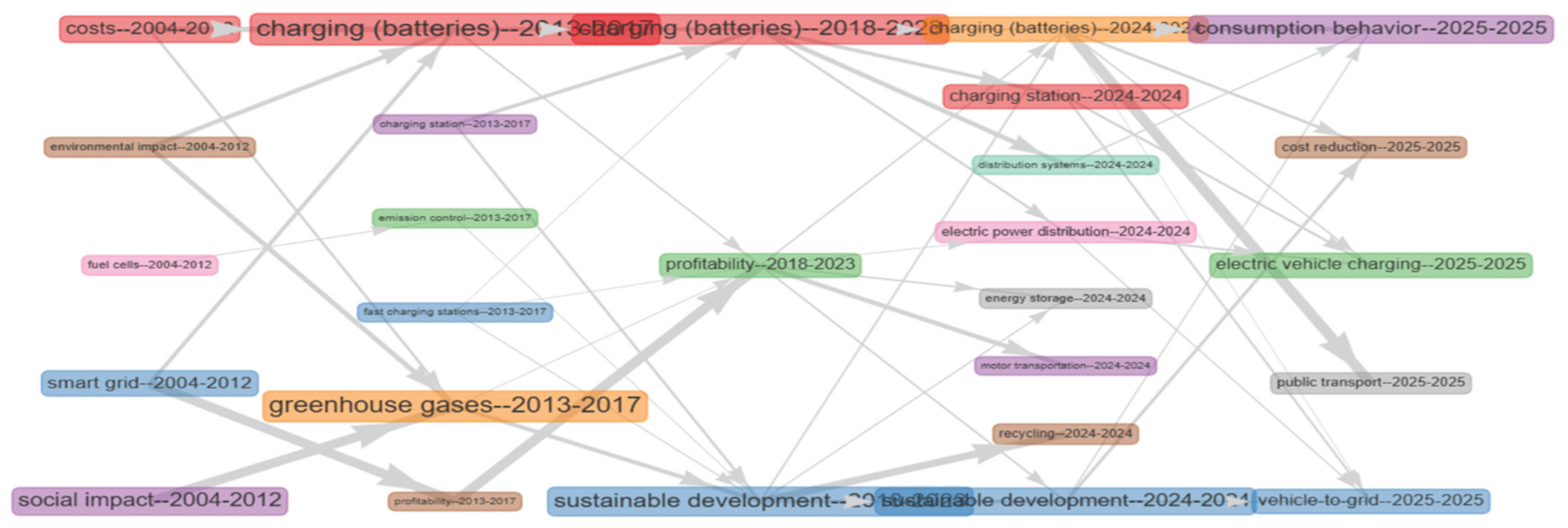
Thematic evolution shows that the early research period from 2004 to 2012 focused on enabling technologies like fuel cells, smart grids, and environmental impact. This suggests initial efforts to develop environmental friendly vehicles. The second period between 2013 and 2023 saw more research on charging infrastructure, emphasis on profitability, and sustainability. Thus, integrating charging infrastructure and economic factors are crucial to the sustainability of EVs. As the field matures, it moves from technological enablers to charging infrastructure and economics. Post-2024 will focus on consumption behaviour, public transport, electric vehicle charging, vehicle-to-grid, and energy storage. Research is expected to be specialised technological topics (e.g., energy storage, vehicle-to-grid) and policy frameworks.
Figure 5.
Thematic evolution on e-mobility and social sustainability (2000 – 2025).
3.2.5. Citation Analysis
Table 7 lists the top-cited publications on the topic. Kang et al. [23] have the highest citation per year of 115.22, examining the use of emerging technologies such as blockchain and edge computing to improve security and privacy in peer-to-peer electricity trading among EVs. The top cited publications focus on three main themes: charging infrastructure and optimisation, EV adoption and social acceptance, energy trading and emerging technologies, sustainability and circular economy, risk management and market readiness. Table 7 shows that charging infrastructure and optimisation is the most common theme [17,18,24]. The studies are widely cited because they focus on optimising charging infrastructure by improving charging station allocation, ensuring efficient charging schedules, and enhancing wireless charging. According to Table 7, EV adoption and social acceptance are common themes in top-cited publications [16,25,26]. These were highly cited for analysing customer preferences, social acceptance, and trust in manufacturers’ influence on EV adoption. From Table 7, the energy trading and emerging technologies theme was identified in the top-cited publications [19,23]. The studies were highly cited for utilising blockchain technology to enhance security and efficiency in peer-to-peer trading and V2G energy frameworks. The other themes in Table 7 include sustainability and circular economy [27](Dunn, Slattery, Kendall, Ambrose, & Shen, 2021) and risk management and market readiness [28]. Dunn et al. [27] highlighted the need for regional recycling and manufacturing infrastructure support of lithium-ion batteries for sustainable EV adoption.
4. Discussion
The findings of this bibliometric review provide an overview of the scholarly landscape at the intersection of electric mobility and social sustainability. The significant increase in publications since 2018 reflects a growing academic and policy interest in understanding not just the technological and environmental dimensions of e-mobility, but also its broader societal implications. This shift aligns with the fact that the concept of social sustainability in transport is increasingly acknowledged [3]. However, this growth has not translated into a balanced research agenda. The thematic analysis reveals four dominant clusters: energy and charging infrastructure, socio-economic impacts, public policy and regulation, and technological innovation. While these areas are foundational to the development of e-mobility systems, they largely reflect a technocratic and economic focus, with limited integration of deeper social sustainability concerns.
From a policy perspective, the findings point to the importance of embedding social equity in EV policies and urban mobility plans. This includes designing incentives and infrastructure rollouts that prioritize low-income neighborhoods, supporting informal transport workers affected by EV transitions, and ensuring public participation in planning processes. There is also a need to anticipate and mitigate unintended consequences, such as displacement due to infrastructure development or algorithmic bias in digital mobility platforms.
A key insight from the review is the fragmented and siloed nature of existing research. Studies tend to focus on isolated aspects, such as infrastructure availability, public acceptance, or emissions benefits, without linking these to systemic social outcomes like inclusion, equity, or justice. In agreement, Tyagi and Vishwakarma [14] found EV literature focuses more on technological aspects than social sustainability. Digalwar and Rastogi [4] and Mogire et al. [5] also agree that while e-mobility’s economic and environmental aspects have been widely studied, the social pillar remains comparatively underexplored. Furthermore, the influence of regional contexts on research themes suggests that findings are not easily generalizable, complicating global policy learning. For instance, studies from North America emphasize technology and barriers, while those from Europe highlight competition with other clean technologies, policies and sustainability of EVs compared to conventional vehicles. This fragmentation underscores the need for comparative, cross-regional research frameworks that account for cultural, economic, and policy diversity in e-mobility adoption.
Moreover, critical social issues remain significantly under-researched. These include unequal access to EV technologies and infrastructure, the risk of reinforcing socio-economic disparities, safety risks, and the ethical concerns linked to global EV supply chains—such as unsafe labor conditions and environmental degradation in mineral extraction [7,10]. The bibliometric trends indicate that while terms like “equity,” “social inclusion,” and “community engagement” appear sporadically, they are not central to most research outputs. This neglect poses a risk of e-mobility becoming a socially regressive innovation, one that benefits wealthier, urban populations while marginalizing vulnerable or rural communities. Key aspects such as social inclusion, equity, participation, and quality of life must therefore be considered to ensure socially sustainable outcomes [3]. This suggest need for deliberate effort in future research to integrate social and sustainable in the EV discourse.
The review also highlights a lack of robust evaluative frameworks for assessing the social impacts of e-mobility initiatives. Most studies measure outputs (e.g., EV adoption rates, number of charging stations) rather than outcomes related to quality of life, accessibility, or social justice. There is a need to adopt or develop multidimensional social sustainability indicators that can guide more inclusive planning and policy design. In particular, the integration of user-centric and participatory approaches, such as co-design, citizen science, or community-based impact assessments could help embed local knowledge and values into e-mobility transitions.
5. Conclusions
This review noted a significant increase in publications on e-mobility and social sustainability since 2018. The notable growth results from rising user awareness, the increased uptake of EVs, and the expansion of charging infrastructure. In addition, research on the topic revolves around four themes: energy and charging infrastructure, social and economic impacts, public policy and regulations, and technological innovations. Future research agendas should focus on filling gaps across the four themes.
- While energy and charging infrastructure is a key focus in e-mobility research, social equity and regional disparities remain underexplored, especially in developing regions. Most studies emphasise technological efficiency, with little attention to access for low-income or rural communities. Future research should explore inclusive infrastructure planning, equitable policy design, and the social impact of emerging technologies like vehicle-to-grid systems.
- Social and economic impacts theme is central focus in e-mobility and social sustainability research. However, there is limited attention to how EV adoption influences employment, affordability, and welfare among vulnerable groups. Future studies should examine the broader socio-economic outcomes of EV transitions, particularly about equity, access, and community-level benefits.
- Public policy and regulations are emerging as key drivers of e-mobility in social sustainability research. However, how specific policy designs influence social outcomes. Is overlooked. While many studies assess policy effectiveness in boosting EV adoption, fewer examine how these policies address justice, inclusivity, and long-term social resilience. Future research should analyse how regulatory frameworks can be shaped to support fair transitions, prioritise the marginalised communities, and align environmental goals with social sustainability.
- Technological innovations are becoming more important in e-mobility research, but their social impact is poorly understood. Most studies focus on technical performance, with little attention to how these innovations affect everyday users or reduce social barriers. Future research should explore how new technologies like smart grids, energy storage, and vehicle-to-grid systems can improve user experience, build trust, and support wider access to electric mobility.
This review is based on publications retrieved from the Scopus database. Although Scopus is a widely trusted source for bibliometric analysis, it may have excluded some specialised or niche studies related to the topic. Future research could broaden the scope by including databases such as PubMed, Web of Science, and ScienceDirect to capture additional relevant literature. In addition, the review utilised the keywords outlined in Section Two (Materials and Methods). Future studies could incorporate emerging or evolving keywords to ensure a more comprehensive field coverage.
Overall, this review advances the theoretical understanding of e-mobility and social sustainability research by identifying four key themes that shape the theory of e-mobility and social sustainability. The themes connect e-mobility to fair access, supportive policies, and user-friendly innovations. This review helps managers and decision-makers understand the importance of aligning e-mobility strategies with social sustainability goals. It shows that beyond technical performance, attention must be given to charging infrastructure accessibility, affordability, and public trust. Managers can use these insights to guide investments in equitable charging networks, develop user-friendly technologies, and craft inclusive policies that support broader EV adoption and long-term social value.
Author Contributions
Conceptualisation, T.O.; methodology, T.O.; software, T.O.; validation, T.O.; formal analysis, T.O.; investigation, T.O.; resources, T.O.; data curation, T.O.; writing—original draft preparation, T.O.; writing—review and editing, T.O.; visualisation, T.O.; supervision, T.O. All authors have read and agreed to the published version of the manuscript.
Funding
This research received no external funding
Data Availability Statement
The original contributions presented in the study are included in the article. Further inquiries can be directed to the corresponding author
Conflicts of Interest
The authors declare no conflicts of interest.
References
- Egbue, O. Assessment of social impacts of lithium for electric vehicle batteries. In IISE Annual Conference. Proceedings, in IISE Annual Conference, 2012.
- Singh, V.; Singh, H.; Dhiman, B.; Kumar, N. & Singh, T. Analyzing bibliometric and thematic patterns in the transition to sustainable transportation: Uncovering the influences on electric vehicle adoption. Research in Transportation Business & Management 2023, 50, 101033. [CrossRef]
- Dempsey, N.; Bramley, G.; Power, S. & Brown, C. The social dimension of sustainable development: Defining urban social sustainability. Sustainable Development 2011, 19(5), 289-300. [CrossRef]
- Digalwar, A. K. & Rastogi, A. Assessments of social factors responsible for adoption of electric vehicles in India: a case study. International Journal of Energy Sector Management 2023, 17(2), 251-264. [CrossRef]
- Mogire, E.; Kilbourn, P. & Luke, R. Electric vehicles in last-mile delivery: A bibliometric review. World Electric Vehicle Journal 2025, 16(1), 52. [CrossRef]
- Omahne, V.; Knez, M, & Obrecht, M. Social aspects of electric vehicles research—trends and relations to sustainable development goals. World Electric Vehicle Journal 2021, 12(1), 15. [CrossRef]
- Rajan, T. S.; Rex, C. E. S.; Shastri, D. S.; Naidu, G. B. S. R.; Kumar, C. S. & Boopathi, S. Study on environmental and social impacts through electric vehicles. In Solving Fundamental Challenges of Electric Vehicles, IGI Global 2024, 352-383.
- Mogire, E.; Kilbourn, P. & Luke, R. Last Mile Delivery Technologies for Electronic Commerce: A Bibliometric Review. Journal of Electronic Commerce in Organizations 2025, 23(1), 1-26. [CrossRef]
- Mirhedayatian, S. M. & Yan, S. A framework to evaluate policy options for supporting electric vehicles in urban freight transport. Transportation Research Part D: Transport and Environment 2018, 58, 22-38. [CrossRef]
- Tilly, N.; Yigitcanlar, T.; Degirmenci, K. & Paz, A. How sustainable is electric vehicle adoption? Insights from a PRISMA review. Sustainable Cities and Society 2024, 105950. [CrossRef]
- Javadnejad, F.; Jahanbakh, M.; Pinto, C. A. & Saeidi, A. Analyzing incentives and barriers to electric vehicle adoption in the United States. Environment Systems and Decisions 2024, 44(3), 575-606. [CrossRef]
- Ruoso, A. C. & Ribeiro, J. L. D. An assessment of barriers and solutions for the deployment of electric vehicles in the Brazilian market. Transport Policy 2022, 127, 218-229. [CrossRef]
- Bao, L.; Kusadokoro, M.; Chitose, A. & Chen, C. Development of socially sustainable transport research: A bibliometric and visualization analysis. Travel Behaviour and Society 2023, 30, 60-73. [CrossRef]
- Tyagi, R. & Vishwakarma, S. Review on research trend and Social Sustainability of E-Mobility. Water and Energy International 2022, 64(10), 39-46.
- Nur, B.M. A case study of socio-cultural and technical factors in automobile design: Discourses between designers and potential users on a new electric vehicle in Africa. Technology in Society 2020, 23, 101398. [CrossRef]
- Helveston, J. P.; Liu, Y.; Feit, E. M.; Fuchs, E.; Klampfl, E. & Michalek, J. J. Will subsidies drive electric vehicle adoption? Measuring consumer preferences in the US and China. Transportation Research Part A: Policy and Practice 2015, 73, 96-112. [CrossRef]
- He, F.; Wu, D.; Yin, Y. & Guan, Y. Optimal deployment of public charging stations for plug-in hybrid electric vehicles. Transportation Research Part B: Methodological 2013, 47, 87-101. [CrossRef]
- Li, R.; Wu, Q. & Oren, S. S. Distribution locational marginal pricing for optimal electric vehicle charging management. IEEE Transactions on Power Systems 2013, 29(1), 203-211. [CrossRef]
- Zhou, Z.; Wang, B.; Dong, M. & Ota, K. Secure and efficient vehicle-to-grid energy trading in cyber physical systems: Integration of blockchain and edge computing. IEEE Transactions on Systems, Man, and Cybernetics: Systems 2019, 50(1), 43-57. [CrossRef]
- Donthu, N.; Kumar, S.; Mukherjee, D.; Pandey, N. & Lim, W. M. How to conduct a bibliometric analysis: An overview and guidelines. Journal of Business Research 2021, 133, 285-296. [CrossRef]
- Saglietto, L. Bibliometric analysis of sharing economy logistics and crowd logistics. International Journal of Crowd Science 2021, 5(1), 31-54. [CrossRef]
- Faheem, A.; Nawaz, Z.; Ahmed, M.; Haddad, H. & Al-Ramahi, N. M. Past trends and future directions in green human resource management and green innovation: A bibliometric analysis. Sustainability 2023, 16(1), 133. [CrossRef]
- Kang, J.; Yu, R.; Huang, X.; Maharjan, S.; Zhang, Y. & Hossain, E. Enabling localized peer-to-peer electricity trading among plug-in hybrid electric vehicles using consortium blockchains. IEEE Transactions on Industrial Informatics 2017, 13(6), 3154-3164. [CrossRef]
- Ahmad, A.; Alam, M. S. & Chabaan, R. A comprehensive review of wireless charging technologies for electric vehicles. IEEE Transactions on Transportation Electrification 2017, 4(1), 38-63. [CrossRef]
- Andwari, A. M.; Pesiridis, A.; Rajoo, S.; Martinez-Botas, R. & Esfahanian, V. A review of Battery Electric Vehicle technology and readiness levels. Renewable and Sustainable Energy Reviews 2017, 78, 414-430. [CrossRef]
- Featherman, M.; Jia, S. J;, Califf, C. B. & Hajli, N. The impact of new technologies on consumers beliefs: Reducing the perceived risks of electric vehicle adoption. Technological Forecasting and Social Change 2021, 169, 120847. [CrossRef]
- Dunn, N.; Kumar, S.; Mukherjee, D.; Pandey, N. & Lim, W. M. Circularity of lithium-ion battery materials in electric vehicles. Environmental Science & Technology, 2021, 55(8), 5189-5198.
- Liu, J.; Chen, C.; Liu, Z.; Jermsittiparsert, K. & Ghadimi, N. An IGDT-based risk-involved optimal bidding strategy for hydrogen storage-based intelligent parking lot of electric vehicles. Journal of Energy Storage 2020, 27, 101057. [CrossRef]
Figure 2.
Country collaborations map on e-mobility and social sustainability (2000 – 2025).
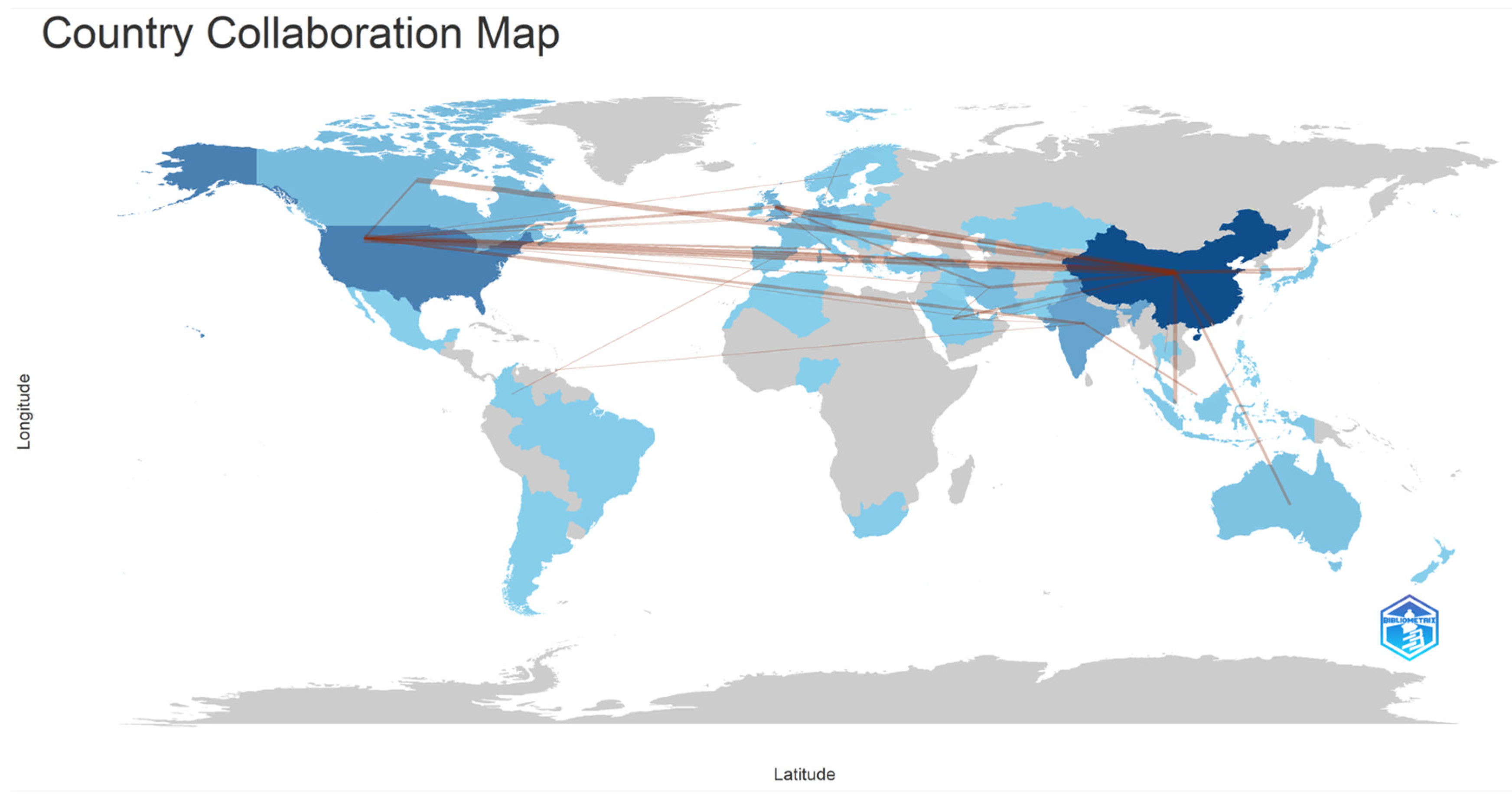
Figure 3.
Co-citation network on e-mobility and social sustainability (2000 – 2025).
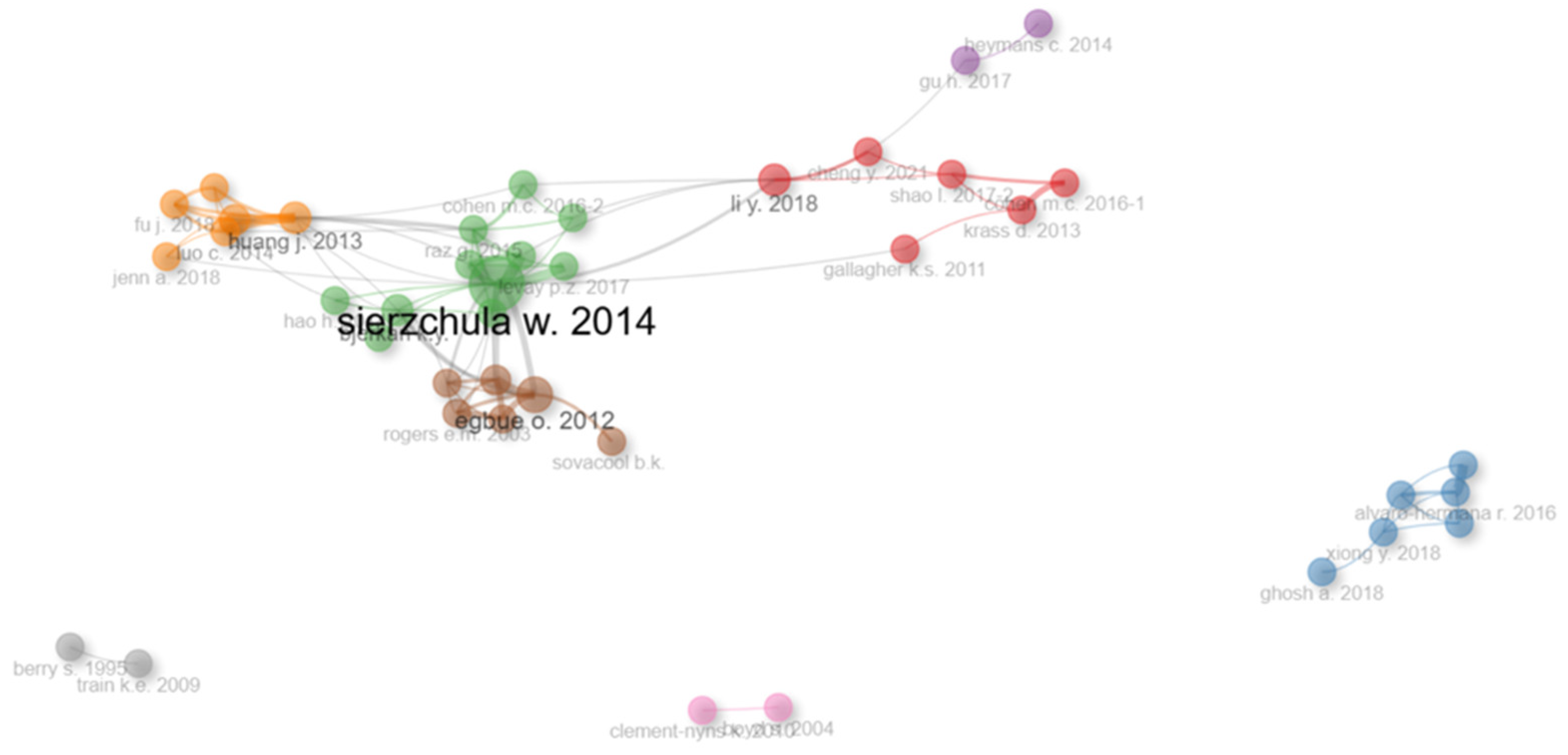
Figure 4.
Word cloud on e-mobility and social sustainability (2000 – 2025).
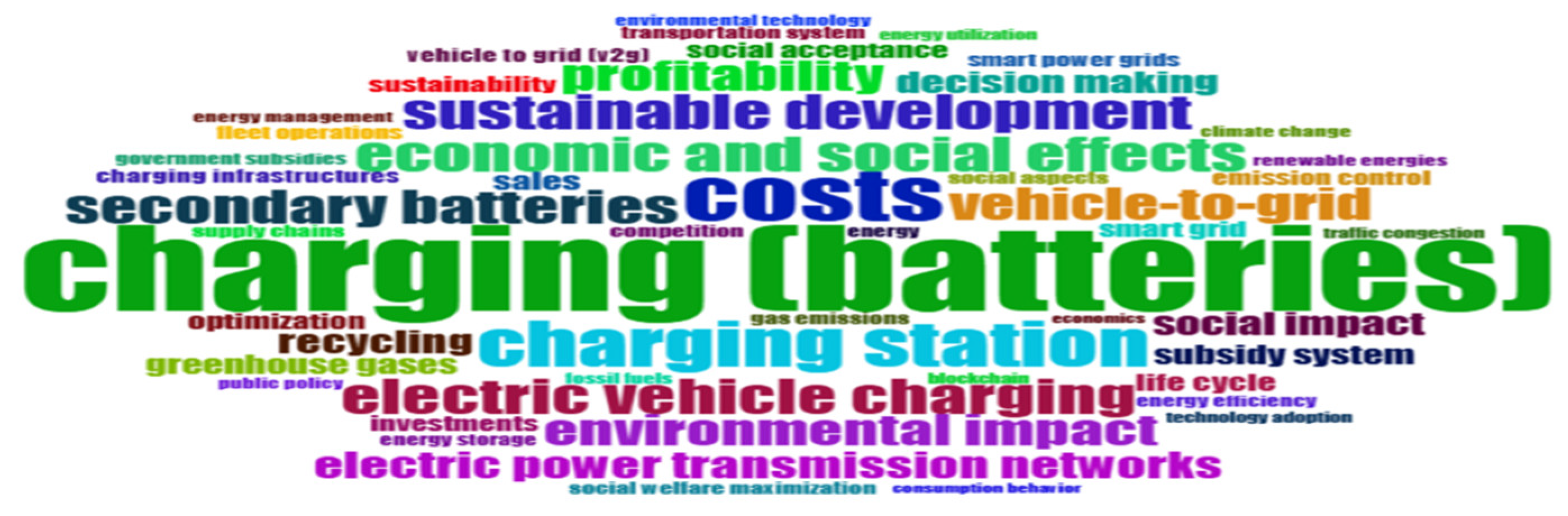

Table 1.
Main information about the publications (2000 – 2025).
| Description | Results |
| Timespan | 2004:2025 |
| Sources (Journals, Books, etc) | 278 |
| Documents | 490 |
| Annual Growth Rate % | 16.34 |
| Document Average Age | 4.29 |
| Average citations per doc | 31.54 |
| References | 20991 |
| DOCUMENT CONTENTS | |
| Keywords Plus (ID) | 3135 |
| Author’s Keywords (DE) | 1562 |
| AUTHORS | |
| Authors | 1411 |
| Authors of single-authored docs | 22 |
| AUTHORS COLLABORATION | |
| Single-authored docs | 22 |
| Co-Authors per Doc | 3.7 |
| International co-authorships % | 32.65 |
| DOCUMENT TYPES | |
| article | 344 |
| book chapter | 10 |
| conference paper | 116 |
| review | 20 |
Table 2.
Top journals on e-mobility and social sustainability (2000 – 2025).
| Rank | Journal | h-index | g-index | m-index | TC | NP | PY_start |
| 1 | Sustainability (Switzerland) | 8 | 13 | 1 | 235 | 13 | 2018 |
| 2 | Energy | 8 | 9 | 0.8 | 386 | 9 | 2016 |
| 3 | Applied Energy | 7 | 11 | 0.7 | 589 | 11 | 2016 |
| 4 | IEEE Transactions on Intelligent Transportation Systems | 7 | 8 | 1 | 307 | 8 | 2019 |
| 5 | Journal of Cleaner Production | 7 | 7 | 0.636 | 459 | 7 | 2015 |
| 6 | Sustainable Cities and Society | 7 | 8 | 1.167 | 288 | 8 | 2020 |
| 7 | Energy Policy | 6 | 7 | 0.273 | 460 | 7 | 2004 |
| 8 | IEEE Internet of Things Journal | 6 | 7 | 0.857 | 278 | 7 | 2019 |
| 9 | IEEE Transactions on Vehicular Technology | 6 | 6 | 0.75 | 334 | 6 | 2018 |
| 10 | Transportation Research Part D: Transport and Environment | 6 | 10 | 0.5 | 518 | 10 | 2014 |
Table 3.
Top authors on e-mobility and social sustainability (2000 – 2025).
| Rank | Element | h-index | g-index | m-index | TC | NP | PY_start |
| 1 | Li, Y | 7 | 12 | 0.778 | 664 | 12 | 2017 |
| 2 | Zhang, Y | 7 | 8 | 0.778 | 1186 | 8 | 2017 |
| 3 | Liu, Z | 6 | 8 | 0.6 | 545 | 8 | 2016 |
| 4 | Wang, C | 6 | 10 | 0.667 | 120 | 10 | 2017 |
| 5 | An, D | 5 | 5 | 0.556 | 115 | 5 | 2017 |
| 6 | Li, D | 5 | 5 | 0.556 | 159 | 5 | 2017 |
| 7 | Li, Z | 5 | 6 | 0.5 | 89 | 6 | 2016 |
| 8 | Liu, J | 5 | 9 | 0.385 | 527 | 9 | 2013 |
| 9 | Zhang, J | 5 | 7 | 0.357 | 120 | 7 | 2012 |
| 10 | Chen, X | 4 | 5 | 0.364 | 145 | 5 | 2015 |
Table 4.
Top institutions on e-mobility and social sustainability (2000 – 2025).
| Rank | Institution of affiliation | Articles |
| 1 | Tsinghua University | 24 |
| 2 | Guangdong University of Technology | 20 |
| 3 | Southeast University | 17 |
| 4 | Xi’an Jiaotong University | 17 |
| 5 | China University of Petroleum-Beijing | 15 |
| 6 | Northeastern University | 14 |
| 7 | Xidian University | 14 |
| 8 | Concordia University | 13 |
| 9 | Wuhan University | 13 |
| 10 | Arizona State University | 12 |
Table 5.
Top countries on e-mobility and social sustainability (2000 – 2025).
| Rank | Country | Articles |
| 1 | China | 133 |
| 2 | USA | 41 |
| 3 | India | 30 |
| 4 | Germany | 23 |
| 5 | United Kingdom | 20 |
| 6 | Iran | 10 |
| 7 | Hong Kong | 9 |
| 8 | Canada | 8 |
| 9 | France | 7 |
| 10 | Korea | 7 |
Table 6.
Top 50 most frequent words on e-mobility and social sustainability (2000 – 2025).
| Rank | Word(s) | Occurrences | Rank | Word(s) | Occurrences |
| 1 | charging (batteries) | 118 | 26 | vehicle to grid (v2g) | 19 |
| 2 | costs | 74 | 27 | fleet operations | 18 |
| 3 | charging station | 63 | 28 | smart power grids | 18 |
| 4 | economic and social effects | 49 | 29 | competition | 17 |
| 5 | electric vehicle charging | 49 | 30 | gas emissions | 17 |
| 6 | sustainable development | 48 | 31 | social aspects | 17 |
| 7 | secondary batteries | 47 | 32 | social welfare maximisation | 17 |
| 8 | vehicle-to-grid | 44 | 33 | supply chains | 17 |
| 9 | environmental impact | 43 | 34 | transportation system | 17 |
| 10 | profitability | 42 | 35 | energy | 16 |
| 11 | electric power transmission networks | 37 | 36 | energy efficiency | 16 |
| 12 | recycling | 32 | 37 | energy storage | 16 |
| 13 | social impact | 31 | 38 | government subsidies | 16 |
| 14 | decision making | 30 | 39 | climate change | 15 |
| 15 | greenhouse gases | 26 | 40 | energy management | 15 |
| 16 | subsidy system | 26 | 41 | environmental technology | 15 |
| 17 | sales | 25 | 42 | fossil fuels | 15 |
| 18 | life cycle | 24 | 43 | public policy | 15 |
| 19 | optimisation | 22 | 44 | renewable energies | 15 |
| 20 | smart grid | 22 | 45 | blockchain | 14 |
| 21 | social acceptance | 22 | 46 | energy utilisation | 14 |
| 22 | investments | 21 | 47 | technology adoption | 14 |
| 23 | sustainability | 21 | 48 | traffic congestion | 14 |
| 24 | emission control | 20 | 49 | consumption behavior | 13 |
| 25 | charging infrastructures | 19 | 50 | economics | 13 |
Table 7.
Top 10 most cited publications on e-mobility and social sustainability (2000 – 2025).
| Author(s) | Total citations per year | Title | Findings |
| Kang et al. [23] | 115.22 | Enabling localised peer-to-peer electricity trading among plug-in hybrid electric vehicles using consortium blockchains | The aim of the paper was to propose a localised peer-to-peer electricity trading model with consortium blockchain (PETCON) for locally buying and selling electricity among PHEVs in smart grids. The proposed model improves transaction security and privacy protection. |
| Ahmad et al. [24] | 86.89 | A comprehensive review of wireless charging technologies for electric vehicles | The aim of the paper was to review all the wireless charging technologies for EVs. Results indicate that the wireless charging system is safer, more reliable, and offers more safety benefits than the wired charging system. |
| Andwari et al. [25] | 69.22 | A review of battery electric vehicle technology and readiness levels | The aim of the paper was to analyse barriers to the market penetration of BEVs. Results indicate that social acceptance (due to high capital cost, range anxiety, and insufficient charging infrastructure) is a major barrier to market penetration of BEVs |
| Liu et al. [28] | 50.00 | An IGDT-based risk-involved optimal bidding strategy for hydrogen storage-based intelligent parking lot of electric vehicles | The aim of the paper was to get optimal bidding curves while considering power price uncertainty and optimal operation of hydrogen storage-based intelligent parking lots for EVs. |
| Zhou et al. [19] | 38.67 | Secure and efficient vehicle-to-grid energy trading in cyber physical systems: Integration of blockchain and edge computing | The aim of the paper was to propose a secure and efficient V2G energy framework by exploring blockchain and edge computing. Energy trading is secured by exploiting consortium blockchain, and the successful probability of block creation can effectively be improved by using edge computing. |
| Helveston et al. [16] | 37.36 | Will subsidies drive electric vehicle adoption? Measuring consumer preferences in the US and China | The paper analysed consumer preferences for EVs in China and the USA. While subsidies in the two countries are the same, American consumers prefer low-range PHEVs despite subsidies, while Chinese consumers are willing to adopt today’s BEVs. |
| He et al. [17] | 36.62 | Optimal deployment of public charging stations for plug-in hybrid electric vehicles | The paper aimed to optimise public charging station allocation to maximise social welfare by modelling interactions between charging availability, electricity prices, and EV destination and route choices. The interactions lead to an equilibrium where equilibrium prices of electricity traffic and power flow distributions can be determined. |
| Featherman et al. [26] | 32.20 | The impact of new technologies on consumers beliefs: Reducing the perceived risks of electric vehicle adoption | The study developed a model for consumers deciding on their next electrified vehicle. It was found that social influences and trust in manufacturers influence EV adoption. |
| Dunn et al. [27] | 29.00 | Circularity of lithium-ion battery materials in electric vehicles | The paper examined the potential of a circular economy for lithium-ion batteries by analysing global material flows, emphasising the need for regional recycling and manufacturing infrastructure to support the sustainable adoption of EVs. |
| Li et al. [18] | 28.25 | Distribution locational marginal pricing for optimal electric vehicle charging management | The paper presented a distribution locational marginal pricing method to address congestion induced by EV loads in future power systems. It was shown that a decentralised mechanism ensures a socially optimum charging schedule as loads autonomously maximise their net surplus. |
Disclaimer/Publisher’s Note: The statements, opinions and data contained in all publications are solely those of the individual author(s) and contributor(s) and not of MDPI and/or the editor(s). MDPI and/or the editor(s) disclaim responsibility for any injury to people or property resulting from any ideas, methods, instructions or products referred to in the content. |
© 2025 by the authors. Licensee MDPI, Basel, Switzerland. This article is an open access article distributed under the terms and conditions of the Creative Commons Attribution (CC BY) license (http://creativecommons.org/licenses/by/4.0/).
Copyright: This open access article is published under a Creative Commons CC BY 4.0 license, which permit the free download, distribution, and reuse, provided that the author and preprint are cited in any reuse.


