Preprint
Article

This version is not peer-reviewed.

Proteomic Characterization of the Clostridium cellulovorans Cellulosome and Noncellulosomal Enzymes with Sorghum Bagasse

A peer-reviewed article of this preprint also exists.

Submitted:

12 November 2025

Posted:

13 November 2025

You are already at the latest version

Abstract

Sorghum, the fifth major global cereal, has potential as a source crop in temperate regions. To completely use sorghum bagasse, the ideal enzyme cocktail aims to identify and select the contributed enzymatic system. This study investigated the enzymatic system of Clostridium cellulovorans cellulosome and noncellulosomal enzymes using SDS-PAGE and LC-MS/MS. Enzyme solutions from treated and untreated sorghum bagasse were prepared and compared based on CMCase activity. As a result, the enzyme solution derived from untreated sorghum bagasse had the highest activity. Protein bands from each C. cellulovorans culture showed distinct patterns on SDS-PAGE examination: three enzyme fractions, including culture supernatants, crystalline cellulose (Avicel) bound, and unbound fractions. These results suggested that untreated sorghum bagasse induced a variety of cellulosomal and uncellulosomal proteins. On the other hand, 5% or 10% sorghum supernatants could not induce Avicel-bound proteins, including the cellulosome, although even 5% sorghum juice induced three major bands: 180-kDa, 100-kDa, and 70-kDa, respectively. In contrast, cellobiose induced three major bands, while the total number of all isolated proteins from the cellobiose medium was the most limited among all culture media. More intriguingly, our investigation detected one cellulosomal protein, HbpA and three noncellulosomal enzymes, indicating that glycosidase GH130 was identified as a biomass-induced enzyme in good accord with previously published proteomic studies. Therefore, the development of an enzyme cocktail for degrading target biomass using artificial intelligence and machine learning might be possible in the near future.

Keywords: 
;  ;  ;  ;  

1. Introduction

The world's expanding population necessitates an immediate solution to lower carbon dioxide emissions and increase the production of green chemicals. The conversion of non-edible and unused biomass into valuable bio-based products stands as a solid solution. However, its complex structure and the inefficiencies of traditional processing methods present challenges in its sustainable conversion. Cellulosic and herbaceous types of biomass (soft biomass) such as rice straw, switchgrass, and bagasse show promise as substrates to produce chemical products and fuels [1]. Sorghum (Sorghum bicolor L.) is a vital source of nutrients in the human diet and ranks as the fifth most important food crop worldwide, with significant implications for human health [2]. In addition, sorghum has attracted strong interest because of its many good characteristics such as rapid growth and high sugar accumulation, high biomass production potential, excellent nitrogen usage efficiency, wide adaptability, drought resistance, waterlodging tolerance, and salinity resistance [3]. Sorghum varieties include grain sorghum, sweet sorghum, and biomass sorghum, and grain sorghum, having starch content equivalent to corn, has been considered as a feedstock for ethanol production. On the other hand, its sorgoleone content interestingly causes the inhibition of bacterial enzymes in soil that turn ammonium into nitrate, slowing nitrogen loss and promoting sustainable farming [4]. Furthermore, sweet sorghum juice contains sucrose, glucose and fructose, which are readily fermented by Saccharomyces cerevisiae and hence are good substrates for ethanol fermentation.
The cellulolytic system of Clostridium cellulovorans mainly consists of a cellulosome which synergistically collaborates with non-complexed enzymes [5,6]. The approaches for the investigation of enzymatic effects were observed in C. cellulovorans. There have so far been reported on proteomic approaches to elucidate the enzymatic and metabolic systems in C. cellulovorans [1,7,8,9]. Morisaka et al. reported proteome analysis of the C. cellulovorans cellulosome after culture in 0.3% (w/v) cellobiose, 0.3% (w/v) Avicel, or 0.3% (w/v) xylan demonstrated the production of carbon source-adapted cellulosome components [7]. With the monolithic column, 679 non-redundant peptides were identified from 193 proteins, while the conventional column yielded 46 peptides from 26 proteins. In the identification of the scaffold protein CbpA, 26% of the sequence coverage, including some peptides that could not be detected using the conventional column by which only 2% of the sequence coverage was identified, was performed by the monolithic column. On the other hand, based on the exoproteome analysis of C. cellulovorans, the protein Clocel_3197 belonging to glycosyl hydrolase (GH) family 130 was found and commonly involved in the degradation of every natural soft biomass such as bagasse, corn germ, and rice straw [1]. Moreover, a total of 1,895 cellular proteins from glucose, cellulose, xylan, galactomannan, and pectin media of C. cellulovorans were identified, among which 865 were common to all carbon sources [8]. Overall, 879 secreted proteins were identified, of which 361 were common to all carbon sources. Thus, the proteome analysis covered approximately 50% of all gene products of C. cellulovorans; this proteome coverage had so far been the highest one reported in C. cellulovorans studies. Finally, Usai et al. had reported focusing on soluble whole-cell extracts to identify proteins specifically associated with glucose or crystalline cellulose (Avicel) metabolism [9]. In this study, 621 proteins were quantified corresponding to about 15% of the C. cellulovorans annotated proteins. To analyze the distribution of their biological functions, the quantified proteins were annotated by means of the Cluster of Orthologous Genes (COGs) categories (http://eggnogdb.embl.de/#/app/home). The large majority (522 proteins, 84%) of quantified proteins were associated with at least a known function grasped by a COG category whereas the remaining 16% consisted of proteins with unknown functions. Of the total quantified proteins, 319 were found to be differentially expressed when comparing the two growth conditions; specifically, they were at least 1.5-fold more abundant (p-value < 0.05) in one growth condition compared to the other.
In our more recent study, we investigated the cellulolytic system of C. cellulovorans mainly consisting of the cellulosome that synergistically collaborates with noncellulosomal enzymes by using cellulosic biomass such as shredded paper, rice straw, and sugarcane bagasse [10]. Regarding the rice straw and sugarcane bagasse, while the degradative activity of rice straw was most active using the cellulosome in the culture supernatant of rice straw medium, that of sugarcane bagasse was most active using the cellulosome from the supernatant of cellobiose medium. Furthermore, since we attempted to choose reaction conditions more efficiently for the degradation of sugarcane bagasse, a wet jet milling device together with L-cysteine as a reducing agent was used in the study.
In the field of energy section using terrestrial plants of Fukushima Institute for Research and Innovation (F-REI), we are carrying out the production of green chemicals by using sorghum as a biomass resource. Sorghum bagasse is focused on as the soul of carbon neutral materials to produce biobutanol with the consolidated bioprocessing (CBP) of Clostridium cocultivation. In this study, the chemical pretreatments of sorghum bagasse were carried out to yield soluble and fermentable sugars and to elucidate the extracellular proteins and enzymes from C. cellulovorans cultivated with several carbohydrate substrates as a carbon source. Furthermore, proteomic analysis of the protein bands from them by SDS-PAGE was carried out and compared with previous proteomic studies on C. cellulovorans.

2. Results

2.1. Evaluation of Chemical Pretreatment of Sorghum Bagasse Based on CMCase Activity

Batch cultivations in 100-mL serum bottles were performed containing 100 mL C. cellulovorans (C.c) medium supplemented with one of the five carbon substrates: 0.5% cellobiose, 1% filter paper, 1% untreated sorghum bagasse, 1% sulfuric acid-butanol treated sorghum bagasse, or 1% alkaline (NaOH) treated sorghum bagasse. All cultures were maintained under anaerobic conditions at 37 °C without shaking. The cultivation of C.c medium containing 0.5% cellobiose was harvested at 48 h post-inoculation, corresponding to the exponential growth phase for enzyme extraction, SDS-PAGE, and proteomic analyses aimed at capturing active enzymatic profiles and avoiding stationary-phase artifacts. On the other hand, all cultivations were collected at 15 time points during the 170-h fermentation period (0, 1, 16, 24, 32, 40, 48, 56, 64, 72, 84, 99, 123, 146, and 170 h) to evaluate temporal changes in enzymatic activity and sugar concentrations. The measurements of CMCase activity up to 170 h of cultivation revealed pronounced substrate-dependent variations in cellulolytic enzyme production (Table 1). Specific activity values, expressed as units per mg of total protein (U/mg), provided insights into the enzymatic quality and efficiency of protein production under different substrate conditions. Especially, untreated sorghum culture demonstrated the highest mean specific activity at 6.63 ± 0.82 U/mg protein (mean ± standard deviation calculated from 15 time points), representing optimal enzymatic quality among all tested conditions. The elevated specific activity suggested that the complex, unmodified lignocellulosic structure of untreated sorghum bagasse induced expression of highly active cellulolytic enzymes. On the other hand, filter paper, serving as pure cellulose control, yielded specific activity of 5.70 ± 0.71 U/mg, demonstrating efficient enzyme production on crystalline cellulose substrates. Cellobiose culture, despite rapid growth and high protein production, showed lower specific activity (4.70 ± 0.58 U/mg), indicating that soluble substrates may not optimally induce cellulolytic enzyme expression. The specific activity hierarchy (untreated sorghum bagasse > filter paper > cellobiose) indicated that substrate complexity positively correlates with enzymatic quality (Figure 1). Furthermore, pretreated sorghum substrates exhibited significantly reduced specific activities compared to untreated controls. Acid-butanol-treated sorghum bagasse showed specific activity of 4.11 ± 0.49 U/mg, representing a 38.0% reduction compared to untreated sorghum bagasse. Thus, the substantial decrease occurred despite comparable total protein production (370.6 μg/mL versus 340.6 μg/mL for untreated sorghum bagasse), indicating that acid-butanol treated sorghum bagasse specifically affected enzymatic quality rather than quantity. On the other hand, alkaline-treated sorghum bagasse demonstrated the lowest specific activity at 3.59 ± 0.43 U/mg, a 45.8% reduction from untreated conditions. As a result, the progressive decrease in specific CMCase activity with pretreatment severity (untreated sorghum bagasse > acid-butanol-treated bagasse > alkaline-treated sorghum bagasse) indicated dose-dependent effects on extracellular enzymatic machinery.

2.2. Proteomic Analysis of Carbohydrate-Related Proteins and Their Comparison Based on Sorghum Bagasse with or Without Chemical Pretreatments

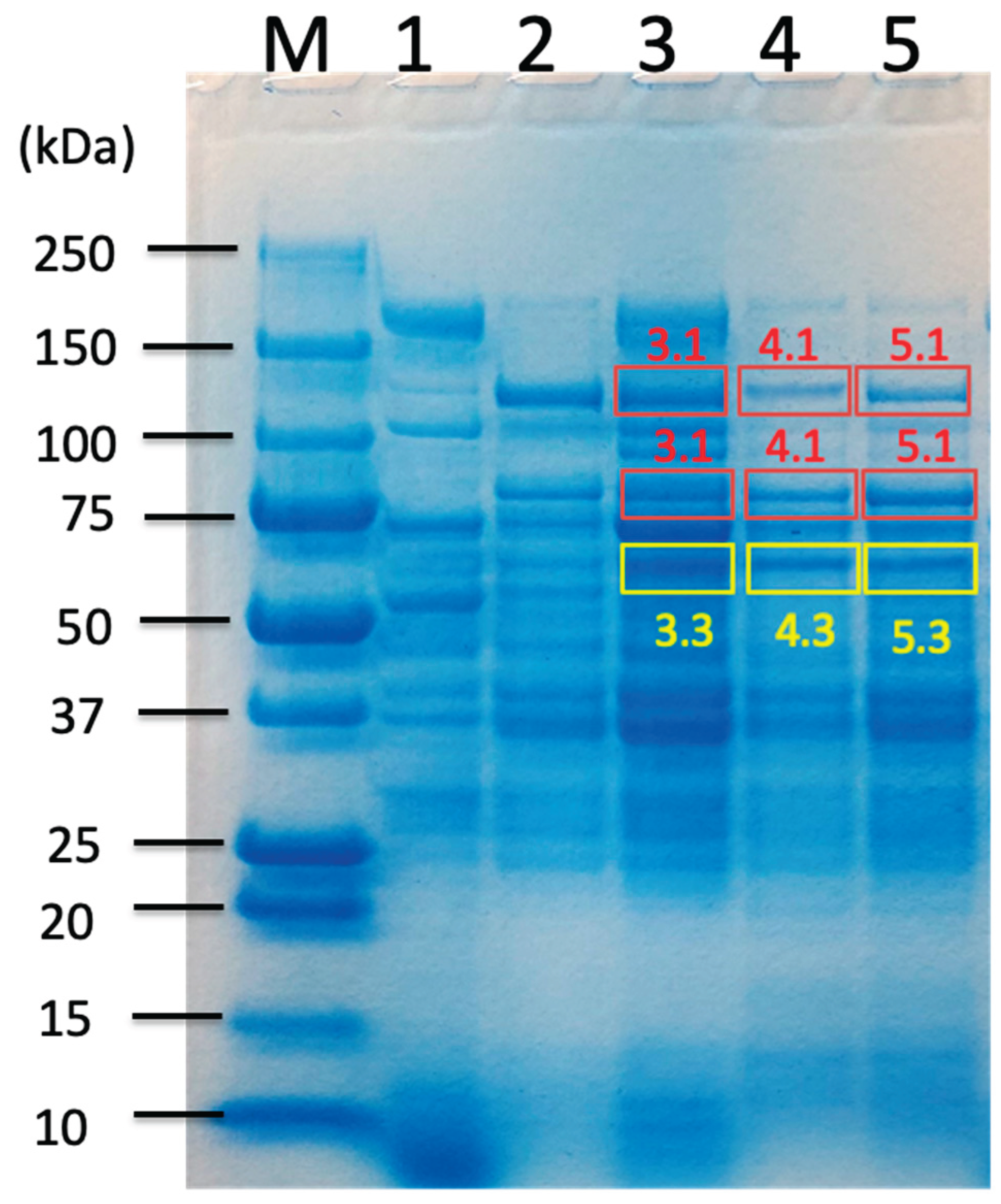
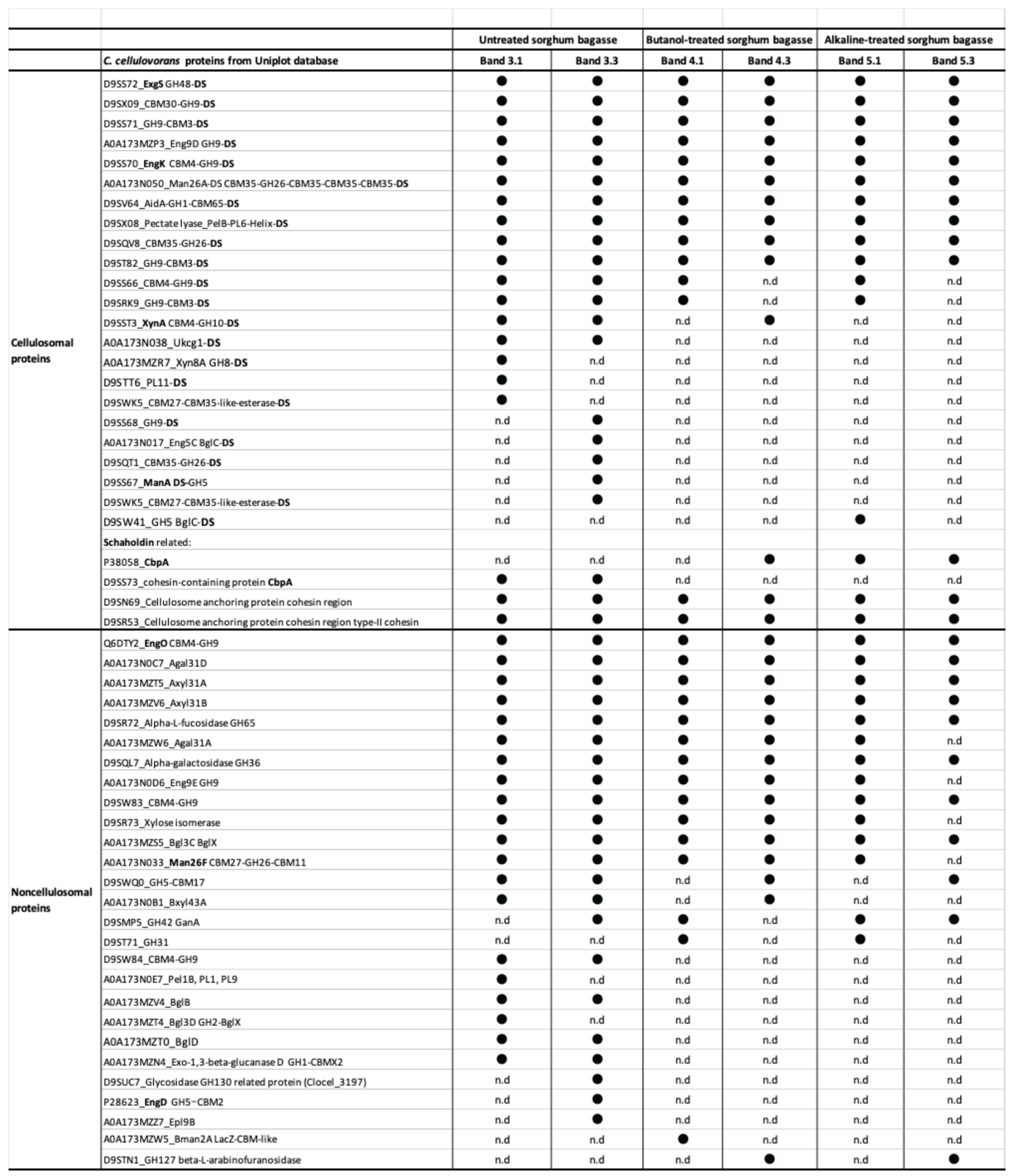
Anaerobic batch cultivations of C. cellulovorans were carried out in a 100-ml medium containing 0.5% cellobiose, 1% filter paper, 1% untreated sorghum bagasse and 1% treated sorghum bagasse with acid-butanol or alkaline at 37 °C without shaking. SDS-PAGE analysis showed 120-kDa bands (upper nos. 3.1, 4.1, and 5.1) in 0.5% cellobiose and 1% untreated sorghum bagasse, respectively (Figure 2, lanes 1 and 3), while no or slight 120-kDa band appeared in 1% filter paper (Figure 2, lane 2) and 1% acid-butanol treated sorghum bagasse and 1% alkaline (NaOH) treated sorghum bagasse (Figure 2, lanes 4 and 5). In addition to 120-kDa bands, 80-kDa bands (lower nos. 3.1, 4.1, and 5.1) obviously appeared in 1% filter paper and 1% untreated or treated sorghum bagasse (Figure 2, lanes 2-5), while a slight 80-kDa band in 0.5% cellobiose was detected in SDS-PAGE (Figure 2, lanes 1). Furthermore, whereas 60-kDa bands (nos. 3.3, 4.3, and 5.3) were obviously found in 1% filter paper and 1% untreated or treated sorghum bagasse (Figure 2, lanes 2-5), only no band appeared in 0.5% cellobiose (Figure 2, lane 1). Therefore, proteomic analysis by LC-MS/MS was performed on 120-kDa, 80-kDa, and 60-kDa bands, respectively. A comprehensive proteomic dataset was yielded comprising a total of 767 protein entries. These entries corresponded to 439 unique proteins after removing redundancies and consolidating multiple peptide identifications to their parent proteins. The distribution of protein identifications across treatment conditions revealed a clear gradient correlating with substrate complexity and pretreatment severity. Untreated sorghum cultures demonstrated the highest protein diversity with a total of 295 proteins identified, representing 67.2% of the total unique protein pool. This extensive protein repertoire suggested broad metabolic activation in response to the complex, unmodified lignocellulosic substrate structure. Finally, a total of 57 carbohydrate-related and cellulosomal proteins, i.e., 27 cellulosomal proteins and 27 noncellulosomal proteins, respectively, was selected from the comprehensive proteomic dataset (Table 2). Cellulosomal proteins from C. cellulovorans involved in not only well-known ExgS (GH48-dockerin sequence (DS)), ManA (DS-GH5), and EngK (CBM4-GH9-DS), but also a largest scaffolding protein, CbpA. These cellulosomal enzymes were located in a large cellulosome gene cluster [6]. Interestingly, the whole type of CbpA (P38058) was found in treated sorghum bagasse, while a variety of CbpA (D9SS73) without a ninth cohesin at the C terminus. In addition, only BglC (GH5)-DS (D9SW41) from alkaline-treated sorghum bagasse was detected in cellulosomal proteins. In contrast, noncellulosomal proteins including well-known EngO (CBM4-GH9) and EngD (GH5-CBM2) were detected in Table 2. Only two enzymes, Bman2A LacZ-CBM-like (A0A173MZW5) and GH127 beta-L-arabinofuranosidase (D9STN1) in noncellulosomal proteins were detected from treated sorghum bagasse.

2.3. Proteomic Analysis of Sorghum-Related Proteins and Their Comparison Based on Untreated Sorghum Bagasse and Its Supernatants, and Sorghum Juice

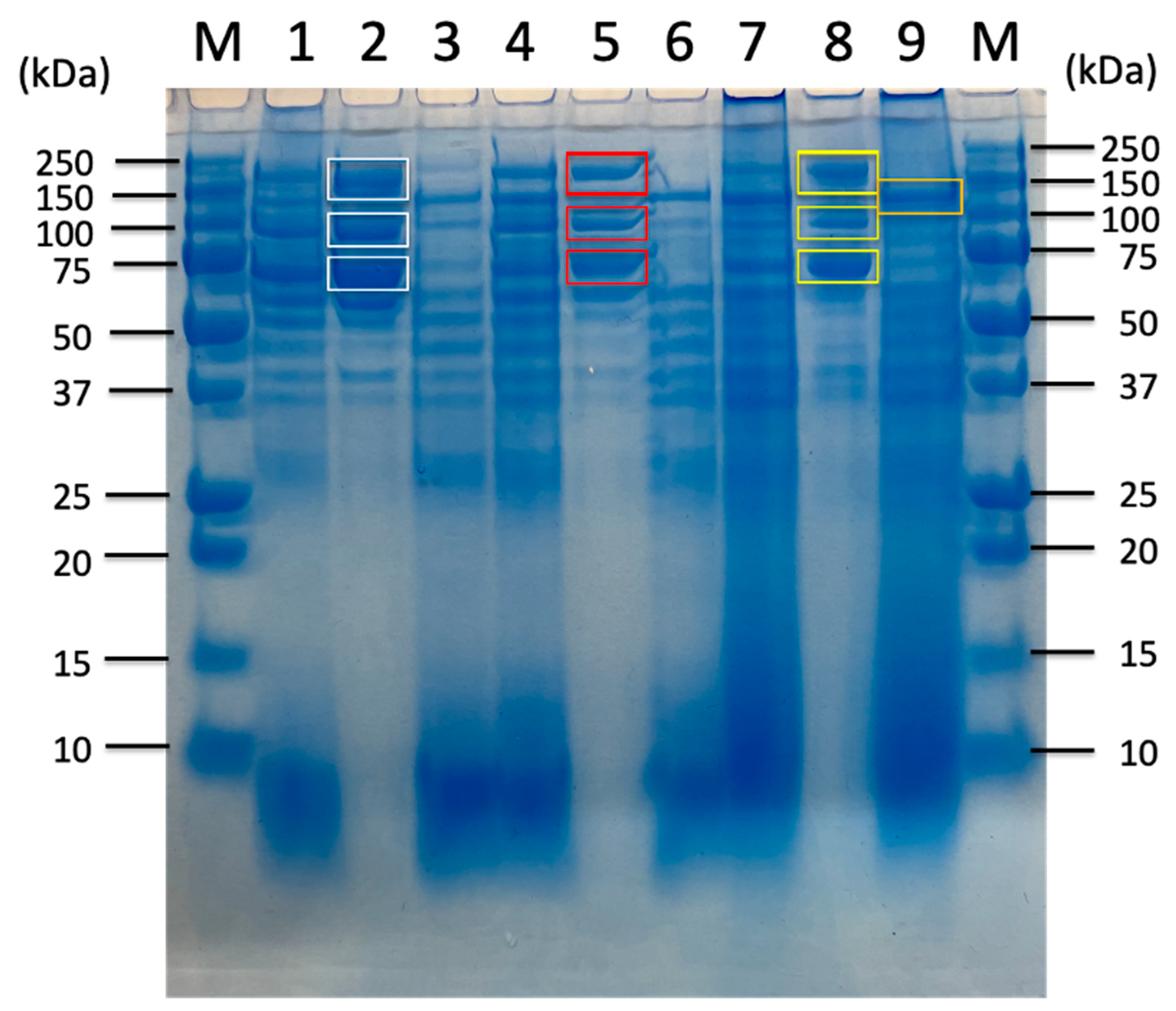
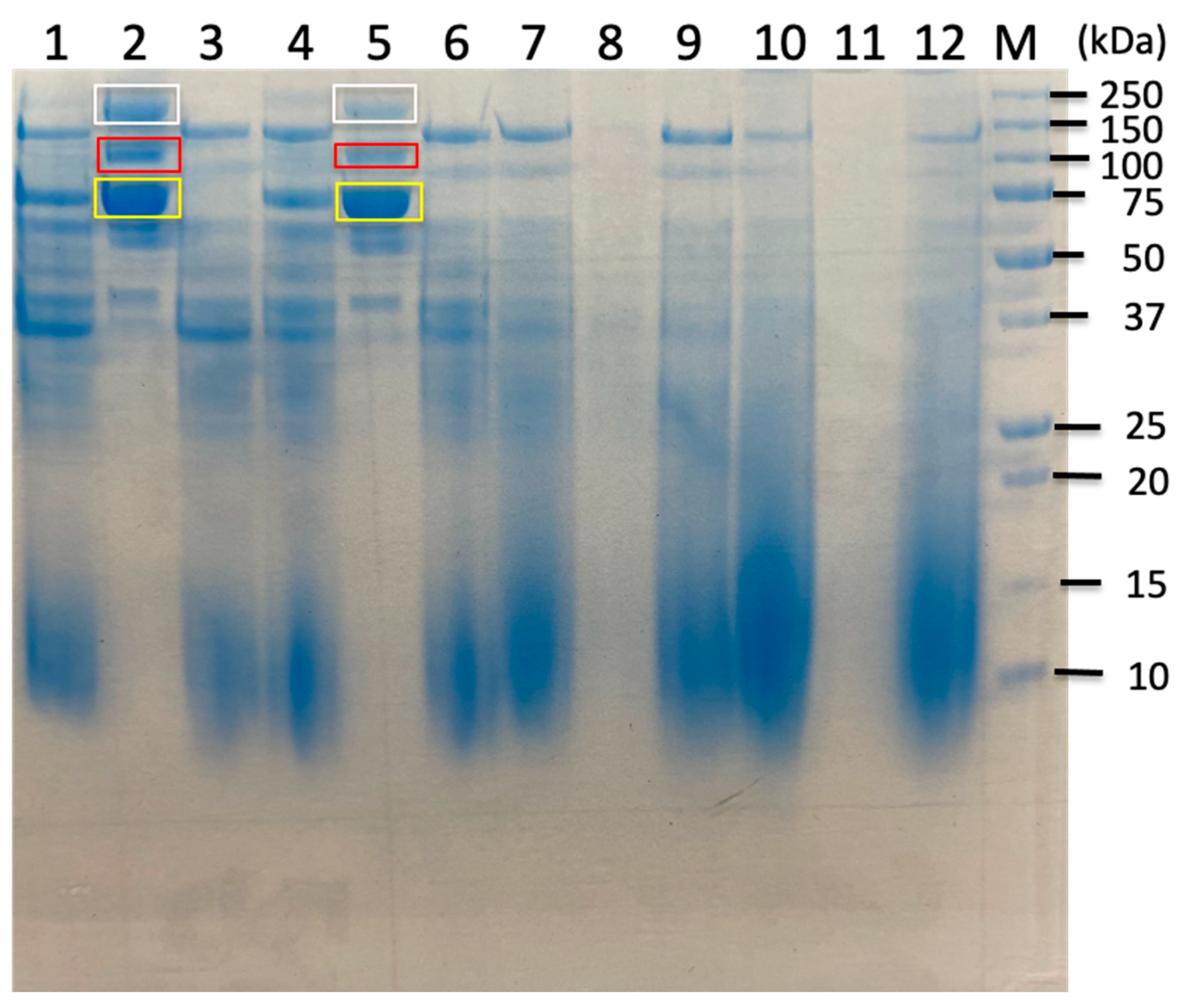
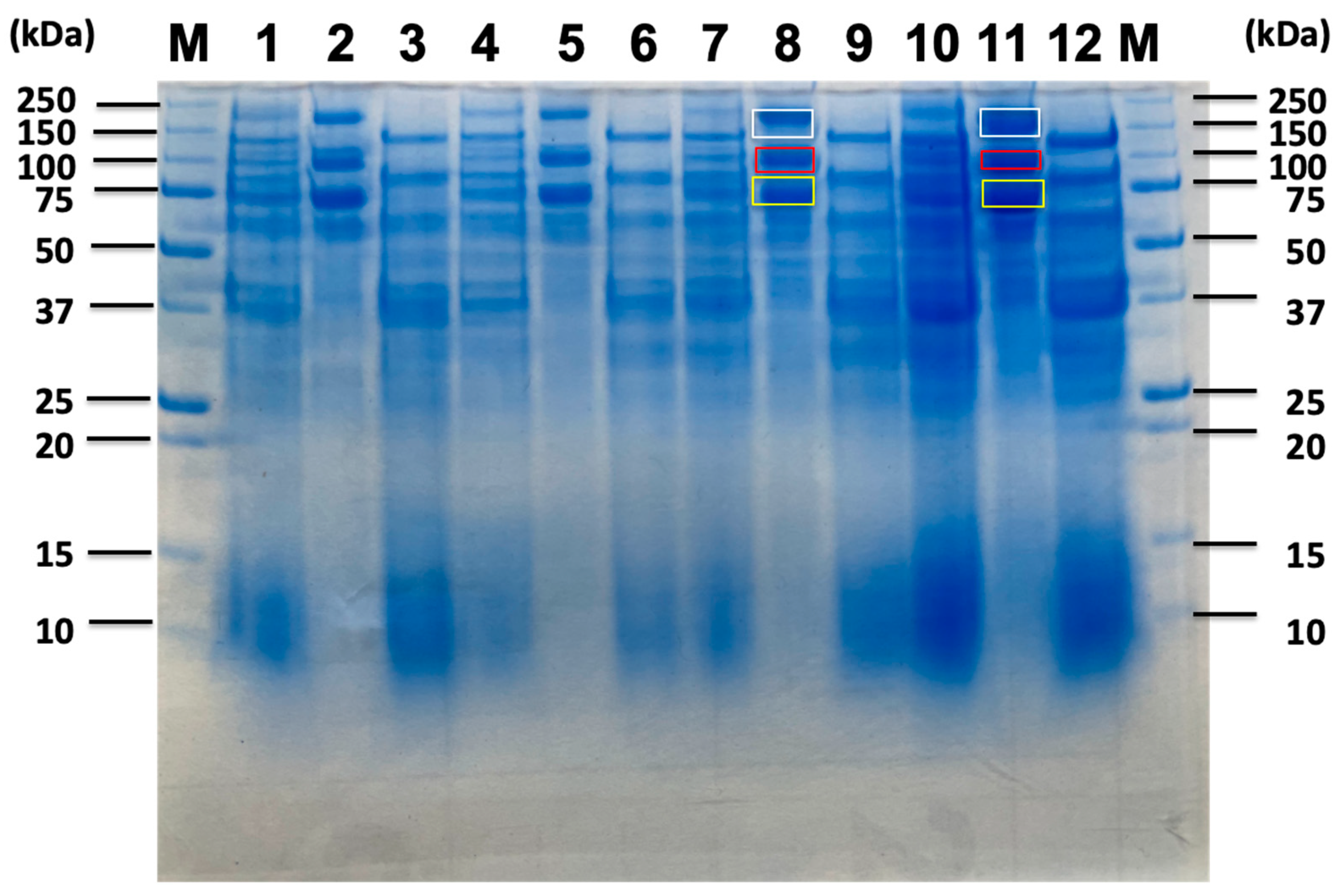
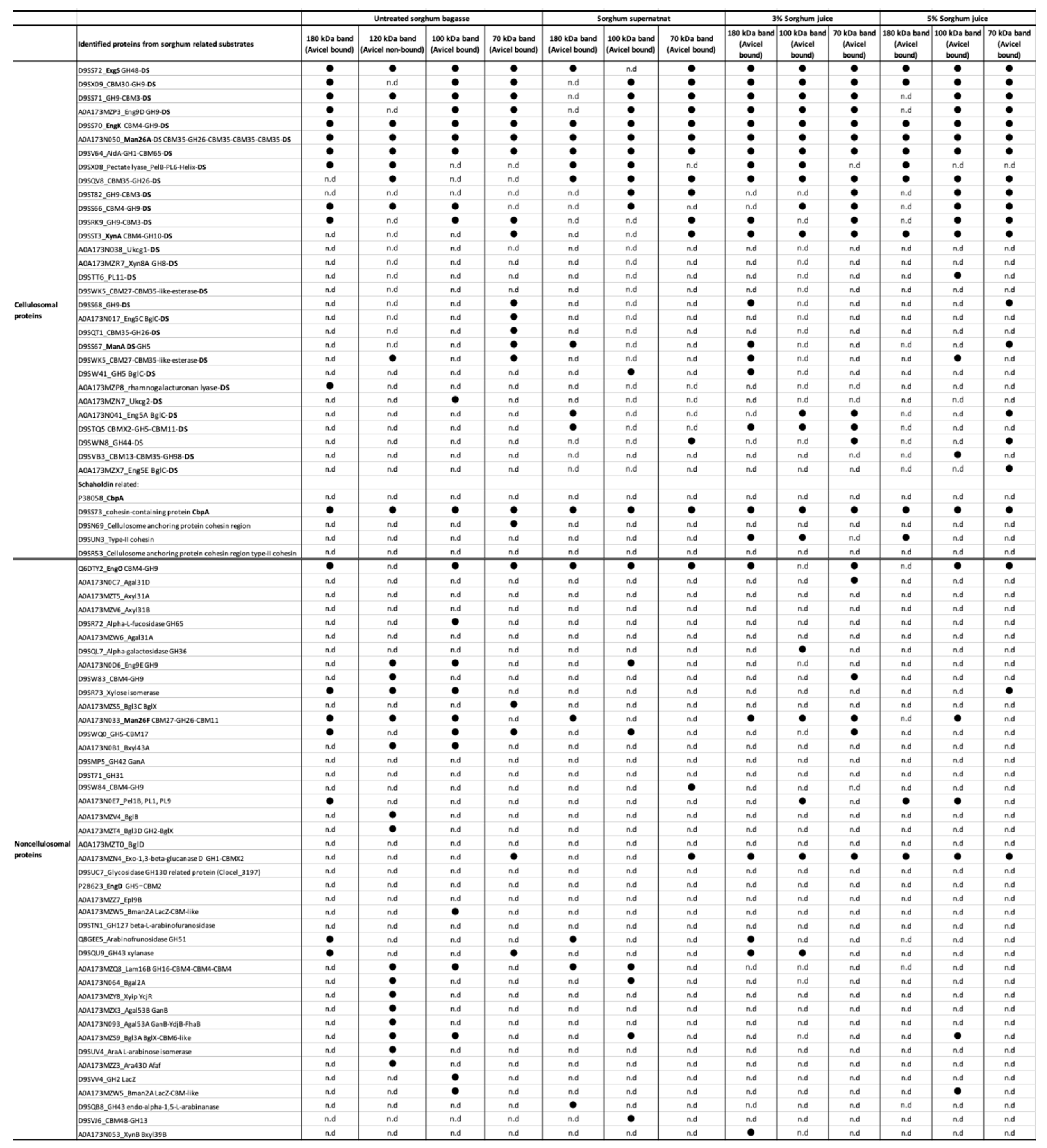
Anaerobic batch cultivations of C. cellulovorans were carried out in a 100-ml medium containing 1% glucose, 0.5% cellobiose, 0.5% sucrose, 1% untreated sorghum bagasse, and 1, 2, 5 and 10% supernatants from untreated sorghum bagasse without shaking. SDS-PAGE analysis revealed similar band patterns in 1% glucose, 0.5% cellobiose, and 1% untreated sorghum bagasse, respectively (Figure 3). Namely, Avicel bound fractions in each substrate had three major bands such as 180-kDa, 100-kDa, and 70-kDa, respectively (Figure 3, lanes 2, 5, and 8). On the other hand, Avicel unbound 120-kDa bands were detected among all substrates (Figure 3, lanes 3, 6, and 9). These results indicated soluble sugars such as glucose and cellobiose might be included and/or generated from untreated sorghum bagasse. Therefore, the supernatants from untreated sorghum bagasse were washed by distilled water and extracted, and then 1, 2, 5 and 10% supernatants in C. cellulovorans (C.c) medium were prepared. Surprisingly, the major three bands in Avicel bound fractions were detected in both 1% and 2% supernatants, whereas no such bands appeared in both 5% and 10% ones (Figure 4). These results suggested that untreated sorghum bagasse contained soluble sugars such as glucose, cellobiose, or sucrose from sorghum juice. On the other hand, whereas 120-kDa bands were detected from all supernatant fractions, high concentration of the supernatants from sorghum bagasse inhibited induction of three major bands in Avicel bound fractions (Figure 4, lanes 8 and 11). Eventually, 180-kDa, 100-kDa, and 70-kDa bands in Avicel bound fractions (Figure 3, lane 8) and a 120-kDa band (Figure 3, lane 9) from untreated sorghum bagasse were cut and applied onto LC-MS/MS. Based on identified proteins from untreated sorghum bagasse and its supernatant, Avicel bound or non-bound fractions was shown in Table 3. Four cellulosomal proteins (EngK, Man26A, AidA-GH1-CBM65-DS, and CbpA (D9SS73) were found in both untreated sorghum bagasse and its supernatant. On the other hand, noncellulosomal proteins, only GH43 endo-alpha-1,5-L-arabinanase (D9SQB8) and CBM48-GH13 (D9SVJ6) were detected in the sorghum supernatant. These results suggested that Avicel bound or unbound proteins were more limited than the proteins listed in Table 2. More interestingly, five cellulosomal proteins, i.e., Ukcg1-DS, Xyn8A (GH8-DS), PL11-DS, and CBM27-CBM35-like-esterase-DS were not detected from Avicel bound fractions (180-kDa, 100-kDa, and 70-kDa bands) or an unbound fraction (120-kDa band), suggesting that these cellulosomal enzymes might not be bound to Avicel by themselves. In contrast, noncellulosomal proteins, GH43 endo-alpha-1,5-L-arabinanase and CBM48-GH13 were specifically induced in the supernatant from untreated sorghum bagasse. Accordingly, sorghum juice was used and added into C.c medium containing 1, 2, 3, and 5% (v/v) sorghum juice. As a result, SDS-PAGE analysis indicated all fractions seemed to have similar patterns of protein bands (Figure 5). Furthermore, the protein expression of Avicel bound bands was dose-dependent on sorghum juice. 180-kDa, 100-kDa, and 70-kDa bands in Avicel bound fractions (Figure 5, lanes 8 and 11) from 3% and 5% sorghum juice were cut and applied onto LC-MS/MS. Between 3% and 5% sorghum juice, the identified cellulosomal proteins seemed similar except for Type-II cohesin (D9SUN3) (Table 3). On the other hand, according to noncellulosomal proteins, alpha-galactosidase GH36 (D9SQL7), arabinofrunosidase GH51 (Q8GEE5), GH43 xylanase (D9SQU9), Lam16B (A0A173MZQ8), and XynB (A0A173N053) were found in 3% sorghum juice, whereas Bgl3A (A0A173MZS9) and Bman2A (A0A173MZW5) were done in 5% sorghum juice.

2.4. Proteomic Analysis of Soluble Sugar-Related Proteins and Their Comparison Based on Untreated Sorghum Bagasse and Its Supernatants, and Sorghum Juice

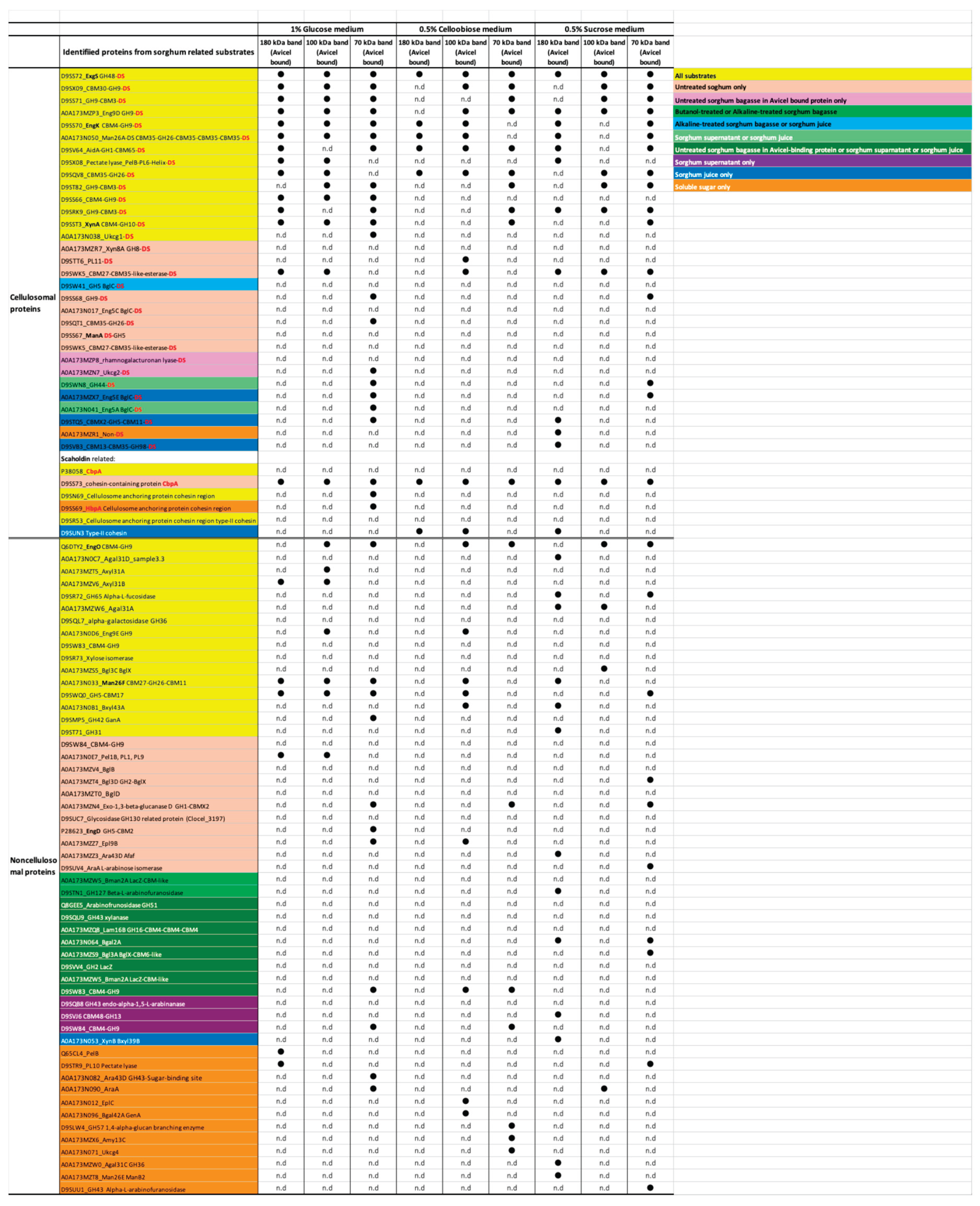
To compare the identified proteins from untreated or treated sorghum bagasse and its supernatant, three major bands (180-kDa, 100-kDa, and 70-kDa) from soluble sugars (1% (w/v) glucose, 0.5% (w/v) cellobiose, and 0.5% (w/v) sucrose) were investigated by LC-MS/MS. The identified proteins are shown in Table 4. Cellulosomal proteins such as Xyn8A (A0A173MZR7), Eng5C (A0A173N017), ManA (D9SS67), and CBM27-CBM35-like-esterase-DS (D9SWK5) from untreated sorghum bagasse only, rhamnogalacturonan lyase-DS in Avicel bound protein only from untreated sorghum bagasse, and BglC (D9SW41) from alkaline-treated sorghum bagasse or sorghum juice were not detected in soluble sugars, while these enzymes were only induced by untreated sorghum. On the other hand, nocellulosomal proteins such as alpha-galactosidase GH36 (D9SQL7), CBM4-GH9 (D9SW83), xylose isomerase (D9SR73), and CBM4-GH9 (D9SW83) from treated and untreated sorghum bagasse or sorghum juice, BglB (A0A173MZV), BglD (A0A173MZT0), GH2 LacZ (D9SVV4), and Glycosidase GH130 related protein (D9SUC7) from untreated sorghum bagasse only, Bman2A (A0A173MZW5) from untreated or butanol-treated sorghum bagasse, Arabinofrunosidase GH51 (Q8GEE5) from untreated sorghum bagasse or its supernatant, GH43 xylanase (D9SQU9) from untreated sorghum bagasse or its supernatant or sorghum juice, Lam16B (A0A173MZQ8) from untreated sorghum bagasse or its supernatant, and Bman2A (A0A173MZW5) from untreated sorghum bagasse in Avicel-binding protein or butanol-treated sorghum bagasse, and GH43 endo-alpha-1,5-L-arabinanase (D9SQB8) from sorghum supernatant only were not found in soluble sugars. These results revealed C. cellulovorans might senses surrounding sugars or glycans. More interestingly, cellobiose was more limited to induce cellulosomal and noncellulosomal proteins than glucose and sucrose.

3. Discussion

In recent decades, the use of lignocellulosic biomass as feedstock for energy production as well as materials for energy storage has gained great interest [11]. One of the important reasons for the utilization of biomass relies on its renewability with reduction of the net emission of carbon dioxide and wide distribution with easy availability. Furthermore, cost reductions can be pursued via either in-paradigm or new-paradigm innovation. Sorghum biomass, which serves multiple purposes such as food, forage, and bioenergy feedstock, encounters challenges in maximizing yield, primarily due to a lack of well-characterized biomass-related genes [12]. Two landmark studies have cloned the key gene controlling the juiciness of sweet sorghum stalks [13,14]. In this study, sweet sorghum as a recourse biomass has planted and yielded at the farm field of Mie University. On the other hand, to elucidate the selection of efficient and synergistic enzymes for the degradation and saccharification of cellulosic biomass, molecular networks with neuromorphic architectures may enable molecular decision-making on a level comparable to gene regulatory networks [15,16]. In fact, enzymatic neural networks have so far been developed and brought tangible benefits over non-enzymatic ones, namely speed of operation, compactness of network, composition of computations, sharpness of decision margins, sensitivity of detection, correction of errors and weighing of analog variables with programmable-gain enzymatic amplification [17]. In this study, to apply the artificial intelligence and machine learning to understand sorghum degradation as a principle and practical model, the basic dataset of enzymatic or non-enzymatic networks was collected with cellulosomal and noncellulosomal proteins from C. cellulovorans.
Consolidated bioprocessing (CBP) between C. celluloborans and fermentable microorganisms has been reported and succeeded by using several unused biomasses such as rice strow, sugarcane bagasse, sugar beet pulp [10,18] and mandarin peels and skins [20,21]. In addition, it has been reported that C. cellulovorans was able to degrade not only cellulose but also corn fibers and plant cell walls such as cultured tobacco and Arabidopsis thaliana by formation of their protoplasts [21,22]. In comparison of biomass degradation with rice strow and sugarcane bagasse, the purified cellulosome cultivated from the C.c medium containing rice strow was the best one among the purified cellulosomes prepared from cellobiose, rice strow, and sugarcane bagasse, whereas the purified cellulosome from the C.c medium containing cellobiose was most degradative among them in case of sugarcane bagasse as a substrate [10]. Furthermore, enzymatic activities of physically treated sugarcane bagasse as a substrate were measured using each enzyme solutions from the C.c medium containing pretreated and untreated sugarcane bagasse and cellobiose. As a result, enzyme solution from cellobiose medium was most efficient among prepared enzyme solution.
In this study, enzyme solutions from C. cellulovorans were prepared by treated and untreated sorghum bagasse, its supernatant and sorghum juice, in addition to soluble sugars such as glucose, cellobiose, and sucrose. At first, it was demonstrated that CMCase activities with enzyme solutions cultivated from cellobiose, filter paper, treated and untreated sorghum bagasse. As a result, enzyme solution from untreated sorghum bagasse had the highest mean specific activity (6.63 ± 0.82 U/mg protein) rather than other enzyme solutions (Table 1). In contrast, CMCase activity in enzyme solution of cellobiose culture was 4.70 U/mg, while degradation activity with pretreated sugarcane bagasse from cellobiose enzyme solution was 0.028 U/mg in the previous study [10]. Thus, enzymatic activity against a target substrate seems dependent on the structure and complexity of cellulose, hemicellulose, and lignin in addition to the content and ratio of carbohydrates. Next, SDS-PAGE analysis was first carried out based on the proteins of culture supernatants, Avicel bound or unbound fractions. As a result, a variety of identified proteins was observed in untreated sorghum bagasse rather than treated one (Table 2). In particular, Bands 3.1 and 3.3 in SDS-PAGE contained more cellulosomal enzymes such as XynA [23] and so on than those of treated sorghum bagasse (Figure 1). These results indicated that untreated and acid-butanol treated bagasse involved in xylan. Its effective hydrolysis requires the concerted action of endoxylanases and β-xylosidases [24]. In case of C. thermocellum, integration of a dual-function GH43 xylan hydrolase from C. clariflavum enhanced xylan hydrolysis in corn stalk [25].
Previous proteomic analysis in C. cellulovorans revealed 37 cellulsomal and 40 noncellulosomal proteins selected from 372 identified proteins based on from the supernatant of stationary phase cultures grown on bagasse, corn germ, or rice straw [1]. As a result, four bagasse-, 11 corn germ-, and six rice straw-specific proteins among individual biomass-specific proteins were identified, respectively. Four bagasse-specific proteins were identified, including one cellulosomal HbpA (Clocel_2820) and three noncellulosomal proteins such as pectate lyase PL9 (Clocel_0873), α-xylosidase GH31 (Clocel_1430), and glycosidase GH130 (Clocel_3197). In this study, HbpA was found in Band 3.3 (Table 2), and 70-kDa band in Avicel bound fraction from untreated sorghum bagasse and 180-kDa band in sorghum supernatant (Table 3). Moreover, noncellulosomal PL9 was detected in Band 3.1 (Table 2), 180-kDa band in untreated sorghum (Table 3), and 100-kDa and 180-kDa bands from glucose medium (Table 4), while GH31 was found in Band 4.1 from acid-butanol treated and Band 5.1 from alkaline-treated sorghum bagasse (Table 2), and 180-kDa band in 0.5% sucrose medium (Table 4). Interestingly, since noncellulosomal GH43 xylanase (D9SQU9) was observed in untreated sorghum bagasse and 3% sorghum juice (Table 3), a dual-function GH43 xylanase would enhance xylan hydrolysis in sorghum bagasse. Furthermore, glycosidase GH130 were only detected in Band 3.3 from untreated sorghum bagasse (Table 2), suggesting that GH130 seems a biomass-specific enzyme. Thus, proteomic analysis may achieve to select the best enzyme cocktail for target biomass.

4. Materials and Methods

4.1. Bacterial Strain and Culture Conditions

C. cellulovorans 743B (ATCC35296) was cultivated in a modified anaerobic basal medium under strictly anoxic conditions at 37 °C. The basal medium per 1,000 mL consisted of 0.3675 g ammonium chloride, 0.9 g sodium chloride, 0.45 g dipotassium hydrogen phosphate, 0.45 g potassium dihydrogen phosphate, 0.1575 g magnesium chloride hexahydrate, 4.0 g yeast extract, 0.12 g calcium chloride dihydrate, 1 mg resazurin, 1.0 g L-cysteine HCl, 5.0 g sodium bicarbonate, and 5.0 g cellobiose. To ensure sufficient micronutrient availability, the medium was supplemented with 100 mL of trace element solution SL-10, consisting of 8.5 mg manganese chloride tetrahydrate, 9.42 mg cobalt chloride hexahydrate, 52 mg disodium EDTA, 15 mg iron (II) chloride tetrahydrate, 0.7 mg zinc chloride, 1 mg boric acid, 0.17 mg copper (II) chloride dihydrate, 0.24 mg nickel chloride hexahydrate, 0.36 mg sodium molybdate dihydrate, 66 mg iron (II) sulfate heptahydrate, and 1 g p-aminobenzoic acid dissolved in 1,000 mL of distilled water. The medium was rendered anaerobically by flushing with CO₂ gas, and the pH was adjusted to 7.0 ± 0.1 using sterile phosphate buffer. Culture medium preparation was carried out as follows: the primary medium components were dissolved in distilled water, and 1% (w/v) sorghum-derived substrates or 1% (w/v) filter paper were incorporated as carbon sources prior to sterilization. The medium was sterilized by autoclaving at 121 °C for 15 min. Heat-labile components, including 1% (w/v) glucose, 0.5% (w/v) cellobiose, or 0.5% (w/v) sucrose, and 1%, 2%, 3%, and 5% (v/v) sorghum juice, sodium bicarbonate, and L-cysteine HCl, were separately prepared, filter-sterilized under a nitrogen atmosphere, and aseptically added to the cooled medium. Final medium assembly and culturing procedures were conducted within an Anaerobic Chamber (Coy Laboratory Products, Inc.) to maintain anaerobic integrity.

4.2. Substrates Preparation

Sorghum species, Kumiai-Hachimitsu (Sorghum bicolor L.), was purchased by JACCNET, Japan. Sorghum was harvested at physiological maturity from the Mie University agricultural research field. Sorghum bagasse was dried to a constant moisture content (<10%) using an EYELA NDO-450ND oven and subsequently ground to a fine particle size with an electrical grinder (Iwatani IFM-800). The dried powder material was subjected to two separate chemical pretreatment protocols. According to acid-butanol pretreatment, sorghum grained power was treated with 25% (v/v) 1-butanol and 0.5% (w/w) H₂SO₄ at 200°C for 60 min. This optimized organosolv pretreatment condition has been demonstrated to achieve the highest cellulose content (84.9%) while maintaining low lignin content (15.3%) [26]. By the alkaline pretreatment, sorghum grained power was treated with 1% (w/v) NaOH solution at 121°C for 60 min in an autoclave, followed by neutralization and extensive washing with distilled water until neutral pH. This treatment, as reported in a previous study, achieved 82.7% lignin removal, reducing the lignin content to 10.9% (w/w) in the pretreated biomass [27]. Next, the supernatants of 1, 2, 5, and 10% (w/v) sorghum ground powder were extracted by distilled water. Each supernatant was used for the basal medium. Precultures were established in the same basal medium containing 0.5% (w/v) cellobiose as the carbon source and incubated for 24 h. 3ml of the precultures were subsequently used to inoculate 100-ml experimental cultures without shaking.

4.3. Enzyme Preparation and Concentration

Culture samples were centrifuged at 8,000 × g for 10 min, 4°C to obtain cell-free supernatants. Extracellular enzymes were concentrated using ammonium sulfate precipitation by gradually bringing supernatants to 80% saturation with constant stirring at 4°C. After overnight incubation at 4°C, samples were centrifuged at 12,000 × g for 20 min at 4°C, and protein pellets were resuspended in 50 mM sodium phosphate buffer (pH 6.8). The resuspended proteins were dialyzed against the same buffer using dialysis membrane (molecular mass cutoff 12-14 kDa) at 4°C for 24 h. The buffer was changed three times. Total protein concentrations were determined using Bio-Rad Protein Assay kit with bovine serum albumin standards.

4.4. SDS-PAGE Analysis and Preparation of Crystalline Cellulose Bound and Non-Bound Fractions

Sample integrity was verified by SDS-PAGE using the ATTO electrophoresis system using pre-cast gradient gels (HERT-520L) under denaturing conditions. Protein mass marker was purchased and used as Precision Plus Protein™ All Blue Prestained Protein Standards (Bio-Rad). Protein concentrations were normalized to 1.0 mg/mL for downstream analysis. After electrophoresis, gels were stained using AE-1340 EzStain Aqua (ATTO), a Coomassie brilliant blue formulation without organic solvents. Gels were immersed in staining solution for 60 minutes at room temperature with gentle agitation, then destained with ultrapure water under continuous agitation until protein bands were clearly resolved against a transparent background. The dialyzed solutions concentrated by ammonium sulfate were fractionated by cellulose-binding or cellulose-nonbinding fractions. 100mg of Avicel PH-101 (Merck) was added into 1 mL of each dialyzed solutions and stored at 4°C for 30 min. After centrifugation at 10,000 × g for 15 min at 4°C, the supernatant as the Avicel non-bound fraction was taken into a new tube. The Avicel-binding protein pellet was resuspended in 50 mM sodium phosphate buffer (pH 6.8) containing 1M NaCl. After centrifugation at 10,000 × g for 15 min at 4°C, the pellet was recovered and resuspended in 50 mM sodium phosphate buffer (pH 6.8) containing 1M NaCl. After centrifugation at 10,000 × g for 15 min at 4°C, 100mL of distilled water was added into the pellet as the Avicel-binding fraction.

4.5. Enzyme Assay

The enzymatic activity of extracellular proteins present in culture supernatants was determined using carboxymethylcellulose (CMC) as the substrate. The reaction mixture consisted of 100 μL of enzyme solution and 900 μL of 0.5% (w/v) CMC prepared in 50 mM sodium phosphate buffer (pH 6.8), yielding a final reaction volume of 1.0 mL with a concentration of 0.45% (w/v) CMC. The assays were carried out at 50°C, which represents the optimal temperature for the activity of the C. cellulovorans cellulosome. Following 30 min of incubation, the reactions were terminated by the addition of 3,5-dinitrosalicylic acid (DNS) reagent, and the amount of reducing sugars released was quantified using the DNS method. Enzyme activity was expressed following the standards, where one unit (U) of enzyme activity is defined as the amount of enzyme required to release 1 μmol of glucose equivalent per minute under the assay conditions.

4.6. LC-MS/MS Analysis and Data Acquisition

Proteomic analysis was performed using an Orbitrap Fusion Tribrid mass spectrometer (Thermo Fisher Scientific) coupled to an EASY-nLC 1000 UPLC system (Thermo Fisher Scientific). Sample preparation followed standard protocols, including tryptic digestion and C18 solid-phase extraction, using the Pierce In-Gel Tryptic Digestion Kit and C18 Spin Tips according to the manufacturer’s instructions (Thermo Fisher Scientific).

4.6.1. Chromatographic Conditions

Peptides were loaded in eluent A (0.1% formic acid) onto a trap column (C18, 3 μm particle size, 2 cm length, 75 μm ID, Acclaim PepMap 100; Thermo Fisher Scientific) and separated using a reverse-phase analytical column (Nano HPLC capillary column, 75 μm × 12.5 cm, 3 μm, ODS; Nikkyo Technos Co., Ltd., Tokyo, Japan) on a Nanospray Flex Ion Source system (Thermo Fisher Scientific). Separation was achieved with a 40-min gradient using eluents A and B (0.1% formic acid in 80% acetonitrile) at a constant flow rate of 300 nL/min. The gradient was programmed as follows: initial elution at 0% B, a linear increase from 0% to 40% B over 20 min, a rapid increase to 95% B over 2 min, and a final hold at 95% B for 18 min.

4.6.2. Mass Spectrometry Parameters

Data were acquired in data-dependent acquisition mode. Full MS scans were acquired at a resolution of 60,000 with an AGC target in standard mode, a maximum injection time of 50 ms, and a scan range of m/z 375-1,500. MS/MS scans employed quadrupole isolation (isolation window 1.6 m/z), higher-energy collisional dissociation (HCD, normalized collision energy 30) for fragmentation, and ion trap detection (AGC target in standard mode, maximum injection time 35 ms).

4.7. Database Searching and Protein Identification

Raw MS data were processed using Proteome Discoverer 3.0 (Thermo Fisher Scientific) with the Sequest HT search algorithm against the UniProt database for C. cellovorans (taxonomy ID: 1493), downloaded on September 3, 2025. A maximum of two missed tryptic cleavage sites was permitted. Precursor and fragment mass tolerances were set to 10 ppm and 0.02 Da, respectively. Methionine oxidation (+15.995 Da) and protein N-terminal acetylation (+42.011 Da) were specified as dynamic modifications, while cysteine carbamidomethylation (+57.021 Da) was defined as a static modification. The Fixed Value PSM Validator was applied for peptide-spectrum match validation.

4.8. Statistics

The data were analyzed for statistical significances using Welch's t-test. Difference was assessed with two-side test with an α level of 0.05.

5. Conclusions

In this study, enzymatic characterization and proteomic analysis were performed in the culture supernatants from C. cellulovorans that contained several sorghum related substrates such as untreated or treated sorghum bagasse, its supernatants, and sorghum juice, in comparison with glucose, cellobiose, and sucrose as a simple substrate. CMCase from untreated sorghum bagasse had the highest activity among cellobiose, filter paper as a pure cellulose, untreated and treated sorghum bagasse, suggesting that untreated sorghum bagasse contained not only cellulose, but also hemicellulose and pectin. SDS-PAGE analysis revealed that Avicel bound fractions from all culture supernatants had three major bands, i.e., 180-kDa, 100-kDa, and 70-kDa, respectively. These bands involved cellulosomal proteins such as the largest scaffolding protein CbpA, cellulases (GH5, GH9, GH48) and b-glucosidase (GH1), mannanases (GH5, GH26), xylanases (GH8, GH10), and pectate lyases (PL6, PL11). Moreover, four bagasse-specific proteins previously reported were identified in this study, including one cellulosomal HbpA and three noncellulosomal proteins such as PL9 pectate lyase, α-xylosidase GH31, and glycosidase GH130. More interestingly, a dual-function GH43 xylanase belonging to a noncellulosomal protein was found from untreated sorghum bagasse and 3% sorghum juice, respectively.
In conclusion, a variety of cellulosomal and noncellulosomal proteins were induced by glucose, while cellobiose induced more limited and smallest cellulosomal proteins. On the other hand, the identified cellulosomal proteins between 3% and 5% sorghum juice seemed similar except Type-II cohesin. Furthermore, according to noncellulosomal proteins, alpha-galactosidase GH36, arabinofrunosidase GH51, GH43 xylanase, Lam16B, and XynB were found in 3% sorghum juice, whereas Bgl3A and Bman2A were done in 5% sorghum juice. Thus, the enzymatic system from C. cellulovorans would elucidate the degradation of sorghum bagasse, suggesting that a best cocktail of the cellulosome and noncellulosomal enzymes might be obtained in the near future.

Supplementary Material

The following supporting information can be downloaded at the website of this paper posted on Preprints.org.

Author Contributions

M.Y.E.; all experiments and writing, F.O.; SDS-PAGE analysis and suggestion of the manuscript. E.H. and N.M.; proteomic analysis and data acquisition, S.H.; preparations of sorghum ground powder and its pretreatments and medium preparations, Y.T.; research design, writing—review and editing, and funding acquisition. All authors have read and agreed to the published version of the manuscript.

Funding

This research was funded by F-REI, grant number JPFR 23-03-01-01.

Institutional Review Board Statement

Not applicable.

Informed Consent Statement

Not applicable.

Data Availability Statement

The data supporting the findings of this study are available from the corresponding author upon reasonable request. Due to privacy and ethical restrictions, the data are not publicly available.

Acknowledgments

The authors thank Dr. Shinji Takahashi at Tohoku University for technical assistance. The authors would like to thank F-REI for supporting the research grant.

Conflicts of Interest

The authors declare no conflicts of interest. The funders had no role in the design of the study; in the collection, analyses, or interpretation of data; in the writing of the manuscript; or in the decision to publish the results.

References

  1. Esaka, K.; Aburaya, S.; Morisaka, H.; Kuroda, K.; Ueda, M. Exoproteome analysis of Clostridium cellulovorans in natural soft-biomass degradation. AMB Express 2015, 5, 1. [Google Scholar] [CrossRef] [PubMed]
  2. de Morais Cardoso, L.; Pinheiro, S.S.; Martino, H.S.D.; Pinheiro-Sant’Ana, H.M. Sorghum (Sorghum bicolor L.): nutrients, bioactive compounds, and potential impact on human health. Crit. Rev. Food Sci. Nutr. 2017, 57, 372–390. [Google Scholar] [CrossRef]
  3. Nghiem, N.P.; Montanti, J.; Johnsto, D.B. Sorghum as a renewable feedstock for production of fuels and industrial chemicals. AIMS Bioengin. 2016, 3, 75–91. [Google Scholar] [CrossRef]
  4. Uddin, M.R.; Kee Woong Park, K.W.; Kim, Y.K.; Sang Un Park, S.U.; Pyon, J.Y. Enhancing sorgoleone levels in grain sorghum root exudates. J. Chem. Ecol. 2010, 36, 914–922. [Google Scholar] [CrossRef]
  5. Tamaru, Y.; Miyake, H.; Kuroda, K.; Nakanishi, A.; Kawade, Y.; Yamamoto, K.; Uemura, M.; Fujita, Y.; Doi, R.H.; Ueda, M. Genome sequence of the cellulosome-producing mesophilic organism Clostridium cellulovorans 743B. J. Bacteriol. 2010, 192, 901–902. [Google Scholar] [CrossRef]
  6. Tamaru, Y.; Miyake, H.; Kuroda, K.; Nakanishi, A.; Matsushima, C.; Doi, R.H.; Ueda, M. Comparison of the mesophilic cellulosome-producing Clostridium cellulovorans genome with other cellulosome-related clostridial genomes. Microbial Biotechnol. 2011, 4, 64–73. [Google Scholar] [CrossRef]
  7. Morisaka, H.; Matsui, K.; Tatsukami, Y.; Kuroda, K.; Miyake, H.; Tamaru, Y.; Ueda, M. Profile of native cellulosomal proteins of Clostridium cellulovorans adapted to various carbon sources. AMB Express 2012, 2, 37. [Google Scholar] [CrossRef]
  8. Aburaya, S.; Aoki, W.; Kuroda, K.; Minakuchi, H.; Ueda, M. Temporal proteome dynamics of Clostridium cellulovorans cultured with major plant cell wall polysaccharides. BMC Microbiol. 2019, 19, 118. [Google Scholar] [CrossRef] [PubMed]
  9. Usai, G.; Cirrincione, S.; Re, A.; Manfredi, M.; Pagnani, A.; Pessione, E.; Mazzoli, R. Clostridium cellulovorans metabolism of cellulose as studied by comparative proteomic approach. J. Proteomics 2020, 216, 103667. [Google Scholar] [CrossRef] [PubMed]
  10. Eljonaid, M.Y.; Tomita, H.; Okazaki, F.; Tamaru, Y. Enzymatic characterization of unused biomass degradation using the Clostridium cellulovorans cellulosome. Microorganisms 2022, 10, 2514. [Google Scholar] [CrossRef]
  11. Wang, F.; Ouyang, D.; Zhou, Z.; Page, S.J.; Liu, D.; Zhao, X. Lignocellulosic biomass as sustainable feedstock and materials for power generation and energy storage. J. Energy Chem. 2021, 57, 247–280. [Google Scholar] [CrossRef]
  12. Liu, F.; Wodajo, B.; Zhao, K.; Tang, S.; Xie, Q.; Xie, P. Unravelling sorghum functional genomics and molecular breeding: past achievements and future prospects. J. Gen. Genom. 2025, 52, 719–732. [Google Scholar] [CrossRef] [PubMed]
  13. Fujimoto, M.; Sazuka, T.; Oda, Y.; Kawahigashi, H.; Wu, J.; Takanashi, H.; Ohnishi, T.; Yoneda, J.I.; Ishimori, M.; Kajiya-Kanegae, H.; Hibara, K.; Ishizuna, F.; Ebine, K.; Ueda, T.; Tokunaga, T.; Iwata, H.; Matsumoto, T.; Kasuga, S.; Yonemaru, J.; Tsutsumi, N. Transcriptional switch for programmed cell death in pith parenchyma of sorghum stems. Proc. Natl. Acad. Sci. U.S.A. 2018, 115, E8783–E8792. [Google Scholar] [CrossRef] [PubMed]
  14. Zhang, L.M.; Leng, C.Y.; Luo, H.; Wu, X.Y.; Liu, Z.Q.; Zhang, Y.M.; Zhang, H.; Xia, Y.; Shang, L.; Liu, C.M.; Hao, D.Y.; Zhou, Y.H.; Chu, C.C.; Cai, H.W.; Jing, H.J. Sweet sorghum originated through selection of Dry, a plant-specific NAC transcription factor gene. Plant Cell 2018, 30, 2286–2307. [Google Scholar] [CrossRef]
  15. Kim, J.; Hopfield, J.J.; Winfree, E. Neural network computation by in vitro transcriptional circuits. Adv. Neural Inf. Process. Syst. 2004, 17, 681–688. [Google Scholar]
  16. Genot, A.J.; Fujii, T.; Rondelez, Y. Scaling down DNA circuits with competitive neural networks. J. R. Soc. Interface 2013, 10, 20130212. [Google Scholar] [CrossRef]
  17. Okumura, S.; Gines, G.; Lobato-Dauzier, N.; Baccouche, A.; Deteix, R.; Fujii, T.; Rondelez, Y.; Genot, A.J. Nonlinear decision-making with enzymatic neural networks. Nature 2022, 610, 496–501. [Google Scholar] [CrossRef]
  18. Tomita, H.; Okazaki, F.; Tamaru, Y. Biomethane production from sugar beet pulp under cocultivation with Clostridium cellulovorans and methanogens. AMB Express 2019, 9, 28. [Google Scholar] [CrossRef]
  19. Tomita, H.; Okazaki, F.; Tamaru, Y. Direct IBE fermentation from mandarin orange wastes by combination of Clostridium cellulovorans and Clostridium beijerinckii. AMB Express 2019, 9, 1. [Google Scholar] [CrossRef]
  20. Tomita, H.; Tamaru, Y. The second-generation biomethane from mandarin orange peel under cocultivation with methanogens and the armed Clostridium cellulovorans. Fermentation 2019, 5, 95. [Google Scholar] [CrossRef]
  21. Koukiekolo, R.; Cho, H.Y.; Kosugi, A.; Inui, M.; Yukawa, H.; Doi, R.H. Degradation of corn fiber by Clostridium cellulovorans cellulases and hemicellulases and contribution of scaffolding protein CbpA. Appl. Environ. Microbiol. 2005, 71, 3504–3511. [Google Scholar] [CrossRef]
  22. Tamaru, Y.; Ui, S.; Murashima, K.; Kosugi, A.; Chan, H.; Doi, R.H.; Liu, B. Formation of protoplasts from cultured tobacco cells and Arabidopsis thaliana by the action of cellulosomes and pectate lyase from Clostridium cellulovorans. Appl. Environ. Microbiol. 2002, 68, 2614–2618. [Google Scholar] [CrossRef] [PubMed]
  23. Kosugi, A.; Murashima, K.; Doi, R.H. Xylanase and acetyl xylan esterase activities of XynA, a key Subunit of the Clostridium cellulovorans cellulosome for xylan degradation. Appl. Environ. Microbiol. 2002, 68, 6399–6402. [Google Scholar] [CrossRef] [PubMed]
  24. Beg, Q.K.; Kapoor, M.; Mahajan, L.; Hoondal, G.S. Microbial xylanases and their industrial applications: a review. Appl. Microbiol. Biotechnol. 2001, 56, 326–338. [Google Scholar] [CrossRef]
  25. Wang, X.; Xiao, M.; Chen, C.; Qi, K.; Chen, C.; Cui, Q.; Kosugi, A.; Liu, Y.J.; Feng, Y. Effective conversion of lignocellulose to fermentable sugars using engineered Clostridium thermocellum with co-enhanced cellulolytic and xylanolytic activities. Bioresour. Technol. 2025, 440, 133466. [Google Scholar] [CrossRef] [PubMed]
  26. Teramura, H.; Sasaki, K.; Oshima, T.; Kawaguchi, H. Effective usage of sorghum bagasse: Optimization of organosolv pretreatment using 25% 1-butanol and subsequent nanofiltration membrane separation. Bioresour. Technol. 2017, 252, 157–164. [Google Scholar] [CrossRef]
  27. Wunna, K.; Nakasaki, K.; Auresenia, J.L.; Abella, L.C.; Gaspillo, P.D. Effect of alkali pretreatment on removal of lignin from sugarcane bagasse. Chem. Engin. Trans. 2017, 56, 1831–1836. [Google Scholar]
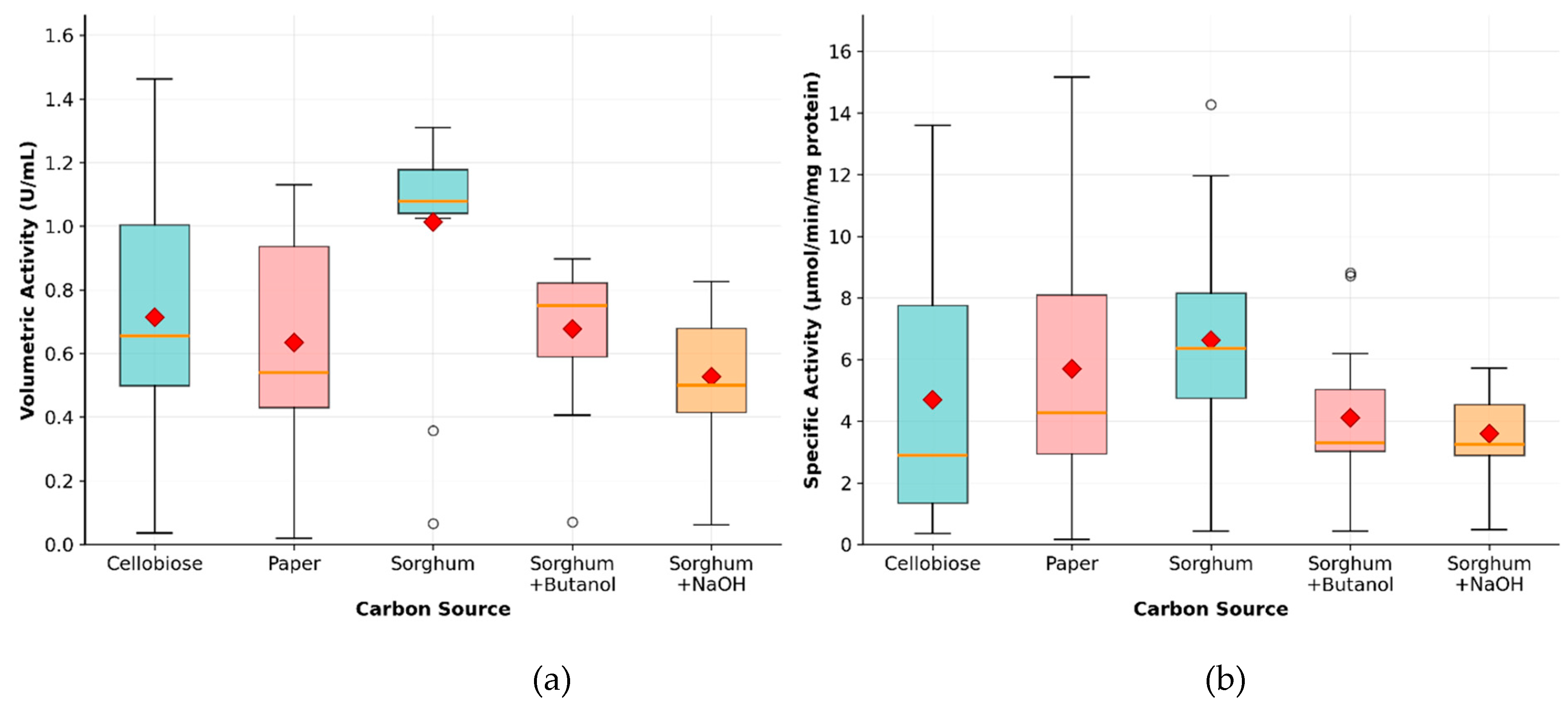
Figure 1. Comparison of CMCase activites cultivated from several carbon sources demonstrating enhanced consistency. (a) Volumetric activity distribution; (b) Specific activity distribution. Box-and-whisker plot showing specific activity (U/mg protein) distributions across all time points. Boxes represent interquartile range (25th-75th percentile), horizontal lines indicate median values, diamonds show means, whiskers extend to minimum and maximum values. The narrower distributions for pretreated substrates indicate superior process reproducibility.
Preprints 184762 g001
Figure 2. SDS-PAGE of the culture supernatants from C. cellulovorans (C.c) medium containing 0.5% cellobiose, 1% filter paper, 1% alkaline-treated sorghum bagasse, and 1% acid-butanol-treated sorghum bagasse. Lane M, molecular mass marker; lane 1, culture supernatant from C.c medium containing 0.5% cellobiose for 2 days; lane 2, culture supernatant from C.c medium containing 1% filter paper for 7 days; lane 3, culture supernatant from C.c medium containing 1% sorghum bagasse for 7 days; lane 4, culture supernatant from C.c medium containing 1% acid-butanol-treated sorghum bagasse for 7 days; lane 5, culture supernatant from C.c medium containing 1% alkaline treated sorghum bagasse for 7 days. Squares of each 3.1, 3.3, 4.1, 4.3, 5.1, and 5.3 indicate cut and fractionated bands, respectively.
Preprints 184762 g002
Figure 3. SDS-PAGE of the culture supernatants from C. cellulovorans (C.c) medium containing 1.0% glucose, 0.5% cellobiose, and 1% sorghum bagasse. Lanes M, molecular mass marker; lane 1, culture supernatant from C.c medium containing 1% glucose for 2 days; lane 2, Avicel bound fraction cultured from C.c medium containing 1% glucose for 2 days; lane 3, Avicel non-bound fraction cultured from C.c medium containing 1% glucose for 2 days; lane 4, culture supernatant from C.c medium containing 0.5% cellobiose for 2 days; lane 5, Avicel bound fraction cultured from C.c medium containing 0.5% cellobiose for 2 days; lane 6, Avicel non-bound fraction cultured from C.c medium containing 0.5% cellobiose for 2 days; lane 7, culture supernatant cultured from C.c medium containing 1% sorghum bagasse for 7 days: lane 8, Avicel bound fraction cultured from C.c medium containing 1% sorghum bagasse for 7 days; lane 9, Avicel non-bound fraction cultured from C.c medium containing 1% sorghum bagasse for 7 days. Squares of each white, red, and yellow indicate cut and fractionated bands from 180 kDa, 100 kDa to 70 kDa, respectively. The orange square indicates a 120 kDa Avicel non-bound band.
Preprints 184762 g003
Figure 4. SDS-PAGE of the culture supernatants from C. cellulovorans (C.c) medium containing 1, 2, 5, and 10% supernatants extracted from sorghum bagasse. Lane M, molecular mass marker; lane 1, culture supernatant at C.c medium containing 1% supernatant of sorghum bagasse for 4 days; lane 2, Avicel bound fraction cultured at C.c medium containing 1% supernatant of sorghum bagasse for 4 days; lane 3, Avicel non-bound fraction cultured in C.c medium containing 1% supernatant of sorghum bagasse for 4 days; lane 4, culture supernatant at C.c medium containing 2% supernatant of sorghum bagasse for 7 days; lane 5, Avicel bound fraction cultured at C.c medium containing 2% supernatant of sorghum bagasse for 7 days; lane 6, Avicel non-bound fraction cultured at C.c medium containing 2% supernatant of sorghum bagasse for 7 days; lane 7, culture supernatant cultured at C.c medium containing 5% supernatant of sorghum bagasse for 7 days: lane 8, Avicel bound fraction cultured in C.c medium containing 5% supernatant of sorghum bagasse for 7 days; lane 9, Avicel non-bound fraction cultured in C.c medium containing 5% supernatant of sorghum bagasse for 7 days; ; lane 10, culture supernatant cultured at C.c medium containing 10% supernatant of sorghum bagasse for 7 days: lane 11, Avicel bound fraction cultured in C.c medium containing 10% supernatant of sorghum bagasse for 7 days; lane 12, Avicel non-bound fraction cultured in C.c medium containing 10% supernatant of sorghum bagasse for 7days. Squares of each white, red, and yellow indicate cut and fractionated bands from 180 kDa, 100 kDa to 70 kDa, respectively.
Preprints 184762 g004
Figure 5. SDS-PAGE of the culture supernatants from C. cellulovorans (C.c) medium containing 1, 2, 3, and 5% sorghum juice. Lanes M, molecular mass marker; lane 1, culture supernatant in C.c medium containing 1% sorghum juice for 4 days; lane 2, Avicel bound fraction cultured in C.c medium containing 1% supernatant of sorghum juice for 4 days; lane 3, Avicel non-bound fraction cultured at C.c medium containing 1% sorghum juice for 4 days; lane 4, culture supernatant at C.c medium containing 2% sorghum juice for 4 days; lane 5, Avicel bound fraction cultured at C.c medium containing 2% sorghum juice for 4 days; lane 6, Avicel non-bound fraction cultured at C.c medium containing 2% sorghum juice for 4 days; lane 7, culture supernatant cultured at C.c medium containing 3% sorghum juice for 4 days: lane 8, Avicel bound fraction cultured at C.c medium containing 3% sorghum juice for 4 days; lane 9, Avicel non-bound fraction cultured at C.c medium containing 3% sorghum juice for 4 days; ; lane 10, culture supernatant cultured at C.c medium containing 5% sorghum juice for 4 days: lane 11, Avicel bound fraction cultured at C.c medium containing 5% sorghum juice for 4 days; lane 12, Avicel non-bound fraction cultured at C.c medium containing 5% sorghum juice for 4 days. Squares of each white, red, and yellow indicate cut and fractionated bands from 180 kDa, 100 kDa to 70 kDa, respectively.
Preprints 184762 g005
Table 1. CMCase activities from the supernatants cultivated with different carbon sources.
Carbon Sources Mean Specific Activity (U/mg) Peak Specific Activity (U/mg) Time to Peak (h) Mean Volumetric Activity (U/mL) Peak Volumetric Activity (U/mL) Time to Peak (h)
Cellobiose 4.70 13.60 123 0.71 1.46 170
Filter paper 5.70 15.17 146 0.63 1.13 146
Untreated sorghum bagasse 6.63 14.27 123 1.01 1.31 84
Sorghum bagasse + butanol 4.11 8.81 123 0.68 0.90 24
Sorghum bagasse + NaOH 3.59 5.72 84 0.53 0.83 24
Table 2. Comparison of the identified cellulosomal and noncellulosomal proteins cultivated from sorghum related substrates.
Preprints 184762 i001
Table 3. Comparison of the identified cellulosomal and noncellulosomal proteins cultivated from untreated sorghum and sorghum supernatants.
Preprints 184762 i002
Table 4. Comparison of the identified cellulosomal and noncellulosomal proteins cultivated from soluble sugars.
Preprints 184762 i003
Disclaimer/Publisher’s Note: The statements, opinions and data contained in all publications are solely those of the individual author(s) and contributor(s) and not of MDPI and/or the editor(s). MDPI and/or the editor(s) disclaim responsibility for any injury to people or property resulting from any ideas, methods, instructions or products referred to in the content.
Copyright: This open access article is published under a Creative Commons CC BY 4.0 license, which permit the free download, distribution, and reuse, provided that the author and preprint are cited in any reuse.
Prerpints.org logo

Preprints.org is a free preprint server supported by MDPI in Basel, Switzerland.

Subscribe

Disclaimer

Terms of Use

Privacy Policy

Privacy Settings

© 2026 MDPI (Basel, Switzerland) unless otherwise stated