Preprint
Article

This version is not peer-reviewed.

Reappraisal of Sugarcane Bagasse for the Optimization of β-Glucosidase Production from Bacillus siamensis JJC33M Using a Box-Behnken Design

Submitted:

07 August 2025

Posted:

08 August 2025

You are already at the latest version

Abstract

B. siamensis JJC33M produces a b-glucosidase (BglJ33) with transglucosylase activity on cellobiose, and hydrolytic activity on cellulose-derived substrates. B. siamensis JJC33M produces BglJ33 using various agro-industrial residues, untreated sugarcane bagasse enriched with yeast extract as one of the most efficient substrates for enzyme production. Optimization studies have not been carried out for BglJ33 production. Therefore, this study optimized BglJ33 production by B. siamensis JJC33M through the valorization of sugarcane bagasse concentration (10, 20, and 30 g/L), yeast extract concentration (2, 5, and 8 g/L), and temperature (35, 37, and 39°C) using a Box-Behnken experimental design. It was found that increasing the carbon source concentration (from 10 to 30 g/L, with 5 g/L yeast extract at 39°C) increased the volumetric activity on carboxymetilcellulose, from 0.015 to 0.055 U/mL, respectively. Intermediate concentration of yeast extract produced the highest activity, suggesting a balance between nitrogen availability and enzyme expression without causing inhibitory effects. Combination of 20 g/L sugarcane bagasse, 5 g/L yeast extract, and 37 °C resulted in the highest volumetric activity, indicating that this may be the system’s optimal condition. In conclusion, all variables had a significant effect, enhancing process efficiency, while reconsidering sugarcane bagasse to produce high-value-added molecules such as enzymes.

Keywords: 
;  ;  
Subject: 
Engineering  -   Bioengineering

1. Introduction

Sugarcane (Saccharum officinarum L. (Poaceae)) is a grass and one of the most important crops worldwide, used for table sugar production, contributing 86% of sweetener output [1]. In 2019, sugarcane cultivation represented 21% of global agricultural production, with Brazil, India, China, Thailand, and Pakistan as leading producers, from which, Mexico stands out contemplating over 56 million tons, placing it among the top ten producers [1,2]. In Mexico, sugarcane holds second place in agricultural importance, which plays a critical role in the nation’s economic development [3]. Furthermore, its Deep-rooted social presence is due to the long-standing cultivation traditions coming from various regions, especially in communal systems, reinforcing its role as a symbol of social identity and cohesion, which has shown to be reflected in the national sugar industry.
Sugarcane primarily consists of juice (70 – 80%, comprising water and soluble solids) and fibrous material (25 – 30%) known as sugarcane bagasse [1]. Bagasse is composed of tightly interconnected polymers: cellulose (36 – 52%), hemicellulose (20 – 27%), and lignin (17 – 22%), whose composition varies according to species, maturity and soil type [1]. Cellulose is a glucose homopolymer joined by β-(1,4) bonds. It is found forming insoluble fibrils that are held together by hydrogen bonds and van der Waals forces, giving rise to crystalline amorphous regions, where amorphous structures are easier to hydrolyze. Its spatial arrangement, as well as the interaction with hemicellulose and lignin, constitute a physical barrier that is difficult to penetrate. Cellulosic fraction can be transformed into glucose by enzymatic hydrolysis using cellulases, and the glucose can then be fermented to obtain ethanol [4,5,6].
Hemicellulose, the second largest carbohydrate in lignocellulosic biomass, is a heteropolymer made up of pentoses (β-D-glucose, β-D-xylose, β-D-arabinose), hexoses (β-D-mannose, β-D -glucose, α-D-galactose), uronic acids (α-D-glucuronic, α-D-galacturonic) and other sugars such as α-L-rhamnose and α-L-fucose, all easily hydrolyzed [4]. This fraction can be transformed into xylitol by fermentation process [7].
Lignin, on the other hand, is a resistant cross-linked phenolic heteropolymer that forms ester bonds with cellulose and hemicellulose, which are hydrolyzed into alkalis and acids; its presence together with hemicellulose makes cellulose inaccessible [8].
Due to sugarcane’s high production volumes, in various countries, such as Mexico, around 12.5 million tons are generated, which sometimes pollute fields or the sugar industry [3]. For years, strategies have been proposed to reuse and value sugarcane bagasse. One of the most common uses is energy generation, where the waste is incinerated and cogenerated to produce steam and electricity within the factories. However, this strategy produces large volumes of CO2 emissions (a greenhouse gas that contributes to global warming) [9,10]. Another option, still under development, is second-generation biofuel production such as bioethanol and butanol; nevertheless, certain treatments for the release of cellulose-derived glucose are needed, which are costly [5,11] On the other hand, there is a non- energy alternative consisting of the use of sugarcane bagasse in food production (substrate for fungi cultivation) or in obtaining high value-added metabolites such as organic acids (citric, lactic, and succinic), sweeteners (xylitol), emerging prebiotics (cellobio-oligosaccharides, xylo-oligosaccharides), or enzymes (cellulases, lipases, amylases) [5,12,13]. Enzymes are important metabolites in various industries (food, energy, animal feed, pharmaceutical), and their use is due to their ability to increase reaction rates while reducing energy costs [14]. Their applications are diverse, ranging from flavor and texture modification in the food sector, detergent production, to pharmaceutical transformations [15,16]. The global enzyme market is meant to be valued at USD 14 billion for 2025 [17].
Among the main enzymes, cellulases highlights, due to the tremendous applications of cellulase enzyme in various industries, it occupies third position in enzyme industry share (≈15%) after amylase (≈25%) and protease (≈18%) in the global market [18]. Cellulases (EC. 3.2.1.4) are a group of enzymes that randomly hydrolyze the β (1-4) glycosidic bonds in the cellulose chain to generate oligosaccharides of different degrees of polymerization. There are several types of cellulases, which are classified according to the way they hydrolyze cellulose, endoglucanases (EC 3.2.1.4), exoglycanases (EC 3.2.1.91) and β-glucosidases (EC 3.2.1.21). Endoglucanases which act on the internal part of the amorphous polymer, increasing the number of reducing and non-reducing ends, and exoglycanases or cellobiohydrolases which act on these ends, releasing cellobiose or cellobioligosaccharides. Finally, β-glucosidases (BGL) hydrolyze cellobioligosaccharides, giving rise to two molecules of glucose [19,20]. BGL has applications in numerous industries include the hydrolysis of lignocellulose for biofuel production, hydrolysis of glycosides in fruit juices and wines for improved aroma, synthesis of bioactive aglycones from glucoside conjugates, as well as the production of alkyl glucosides that are useful ingredients of cosmetics and detergents and emergent prebiotics as cellooligosacarides [21,22,23,24]. The global market for BGLs alone is valued at nearly USD 400 million [21], and remains a field of development and economic expansion.
BGLs are produced by a wide variety of microorganisms, animals, and plants. Among microbial producers, the genus Bacillus stands out: Bacillus: B. subtilis, B. lincheniformis, B. halodurans, Bifidobacterium bifidum [22].
Bacillus siamensis JJC33M was previously isolated from sugarcane-cultivated soils from the Papaloapan region of Mexico and presented activity on CMC and transglucosylase activity on cellobiose [25]. Bacillus siamensis JJC33M sequenced genome including a single gene for a BGL called BglJ33 [26,27]. In previous research, it was found that BglJ33 exhibits inducible characteristics, and it has been found that a high concentration of carbon source promotes its production [25]. Moreover, B. siamensis JJC33M can degrade sugarcane bagasse without the need for pretreatment, which represents an advantage for the saccharification and valorization of raw lignocellulosic residues. This presents a substantial opportunity to produce emergent prebiotics and the release of metabolites in food using lignocellulosic residues. However, the aim is still to increase BglJ33 production. Therefore, this experimental research optimized BglJ33 production using a Box-Behnken design model to analyze the effect caused by the carbon source concentration (raw sugarcane bagasse), nitrogen source concentration, and enzyme expression temperature in B. siamensis JJC33M, revalorizing sugarcane bagasse in the production of high-value molecules such as BGL enzymes.

2. Materials and Methods

2.1. Raw Sugarcane Bagasse Treatment

The sugarcane bagasse was obtained from the Hidalgo market in the city of Veracruz. It was sun-dried at ambient temperature (30–40 °C). The raw sugarcane bagasse was ground using a High-Speed Multifunction GRINDER blender and sieved through a No. 60 mesh for later use.

2.2. Characterization of Lignocellulosic Material

The analysis of the lignocellulosic material was carried out using a double acid hydrolysis method [28]. The first hydrolysis was performed in a water bath for 60 minutes at 30 °C using a 72% H2SO4 solution; the second hydrolysis was carried out with a 4% H2SO4 solution at 121 °C and 1.1 atm for 60 minutes. The purpose of this procedure was to determine the cellulose, hemicellulose, and lignin composition of the material.

2.3. Conservation of B. siamensis JJC33M

The strain of B. siamensis JJC33M was obtained from a collection of strains isolated from soils cultivated with sugarcane [26]. B. siamensis JJC33M was inoculated into a nutrient broth (8 g/L) and incubated at 37 °C, 180 rpm for 24 hours. At the end of the established time, the strain was preserved in 80 % (w/v) glycerol (700 µl of sample and 500 µl of glycerol) at -20 °C and reinoculated on Petri dishes with nutrient agar.

2.4. Inoculum and Growth of B. siamensis JJC33M in Raw Sugarcane Bagasse

To promote the growth of B. siamensis JJC33M, an overnight inoculum of 50 mL was prepared with a vial of the strain stored in glycerol, where the medium consisted of sterilized raw sugarcane bagasse (10 g/L) and yeast extract (2 g/L). The overnight culture was used to inoculate each of the treatments of the experimental design previously established for the optimization model.

2.5. Optimization Design for BglJ33 Production Using the Box–Behnken Model

To optimize BglJ33 production by B. siamensis JJC33M three independent variables were evaluated: raw sugarcane bagasse concentration (X1), yeast extract concentration (X2), and temperature (X3), using a three-level Box–Behnken design (Table 1). The response variable was cellulase activity (U/mL), as detailed below. Fifteen experiments were conducted in duplicate, including three central point repetitions. Fermentations were carried out in 250 mL Erlenmeyer flasks with 100 mL culture medium, concentrations of raw sugarcane bagasse, yeast extract and temperature were added according to the Box–Behnken design (Table 1). Fermentation was carried out at 180 rpm for 15 h. Statistical analysis was performed using NCSS, Version 2025 software (NCSS, LLC, USA) to determine the optimal conditions for raw sugarcane bagasse and nitrogen source concentrations for cellulase production, with a significance level of p = 0.05.

2.6. Determination of Cellulase Volumetric Activity

To determine cellulase activity, CMC was prepared at 2 % w/v and sterilized in an autoclave at 121 °C for 15 minutes. Cellulase activity was measured in 800 µL reactions (50 mM acetate buffer, pH 5.0, 1.0 % w/v CMC at 45 °C), with 0.018 U of enzyme (sample collected directly from the kinetic assays) for approximately 90 minutes. Samples were collected every 30 minutes, and the reducing sugars were quantified using the DNS method (3,5-dinitrosalicylic acid), with a standard curve prepared using D-glucose (Sigma) [22] and absorbance measured at 540 nm (Lambda 25 L600-00BB Perkin Elmer). One enzyme unit of CMCase activity (U) is defined as the amount of enzyme required to transform one µmol of reducing sugar equivalent to glucose per minute.

3. Results and Discussion

3.1. Characterization of the Lignocellulosic Material

The characterization results of sugarcane bagasse showed a composition of 33.4% glucans, 24.25% xylans, and 27.95% lignin, which is consistent with data reported in the literature for lignocellulosic residues [7,30,31], and reflect its potential as a raw material for biotechnological processes aimed at obtaining fermentable sugars and high-value-added compounds, since this composition suggests high availability of fermentable structural carbohydrates, especially glucans, which can be converted into cellobiose through the action of endo- and exoglycanases, and subsequently hydrolyzed into glucose by β-glucosidases such as BglJ33.
The high proportion of structural polysaccharides (glucans and xylans) in sugarcane bagasse indicates good carbohydrate availability; however, the lignin content may represent a challenge for its depolymerization.

3.2. Effect of Raw Sugarcane Bagasse Concentration, Yeast Extract, and Temperature on BglJ33 Production

The analysis of the data obtained from BglJ33 activity using raw sugarcane bagasse as the carbon source indicates a complex interaction between carbon source concentration, yeast extract concentration, and process temperature. Enzymatic activity ranged from 0.006 to 0.058 U/mL, highlighting the potential of raw sugarcane bagasse as an agro-industrial resource for the production of high-value enzymes of biotechnological interest. These results are presented in Figure 1.
One of the variables evaluated in the experimental design was the effect of sugarcane bagasse concentration on BglJ33 production. As shown in Figure 1, at 37 °C, increasing the bagasse concentration from 10 to 30 g/L resulted in an increase in volumetric activity from 0.017 to 0.026 U/mL, respectively, while keeping the yeast extract concentration constant at 2 g/L. Typically, genes encoding BGLs are positively regulated under low glucose and cellobiose concentrations [32]. The observed trend suggests that greater substrate availability leads to higher BglJ33 production, likely due to increased cellobiose concentration, this behavior has been previously reported by various authors [33], who optimized BGL production using delignified bagasse and Saccharomyces spp. yeasts, while [34] evaluated BGL production by B. subtilis using CMC as a substrate, observing that higher carbon source concentrations (1 – 4% CMC) increased enzymatic activity from 0.215 to 1.433 U/mL. Additionally, [35] studied the effect of different agricultural residues as carbon sources (corn bran, wheat bran, orange peel, and a mixture of orange peel and wheat bran) on BGL production by B. stercoris, achieving up to 2.89 U/mg volumetric activity with the mixture, highlighting the potential of combined residues due to the abundance of nutrients they offer for microbial growth.
Likewise, in this study, yeast extract showed a non-linear effect on enzymatic activity. For instance, when using 30 g/L of sugarcane bagasse at 37 °C and increasing the yeast extract concentration from 2 to 8 g/L, the activity decreased from 0.026 to 0.019 U/mL, suggesting that yeast extract is necessary for enzyme expression, particularly cellulases. This is because organic sources like yeast extract not only contain protein hydrolysates and amino acids, but also trace nutrients, some sugars, glucans, vitamin B, and other growth factors that could have a significant effect on gene expression and protein synthesis [36], although, at higher concentrations, yeast extract may sometimes inhibit enzyme expression, as observed in this case.
By evaluating the effect of temperature on enzymatic activity, it was observed that increasing the temperature from 35 to 39 °C led to increased BglJ33 activity, reaching a maximum value of 0.055 U/mL, which suggests that temperatures near 39 °C favor enzymatic activity without causing denaturation. Recent studies have shown that BGL production in Bacillus species occurs within a temperature range of 30–60 °C [37,38,39,40,41], supporting that the temperatures evaluated in this work fall within the optimal range. It is important to note that temperature affects not only enzyme kinetics but also has significant cellular effects; at the molecular level, it influences protein folding, which is essential for maintaining functional activity [42] and mutation tolerance [43]. Moreover, gene expression can be modulated by temperature, as certain regulatory proteins may activate or repress specific promoters, resulting in adaptive responses [44].
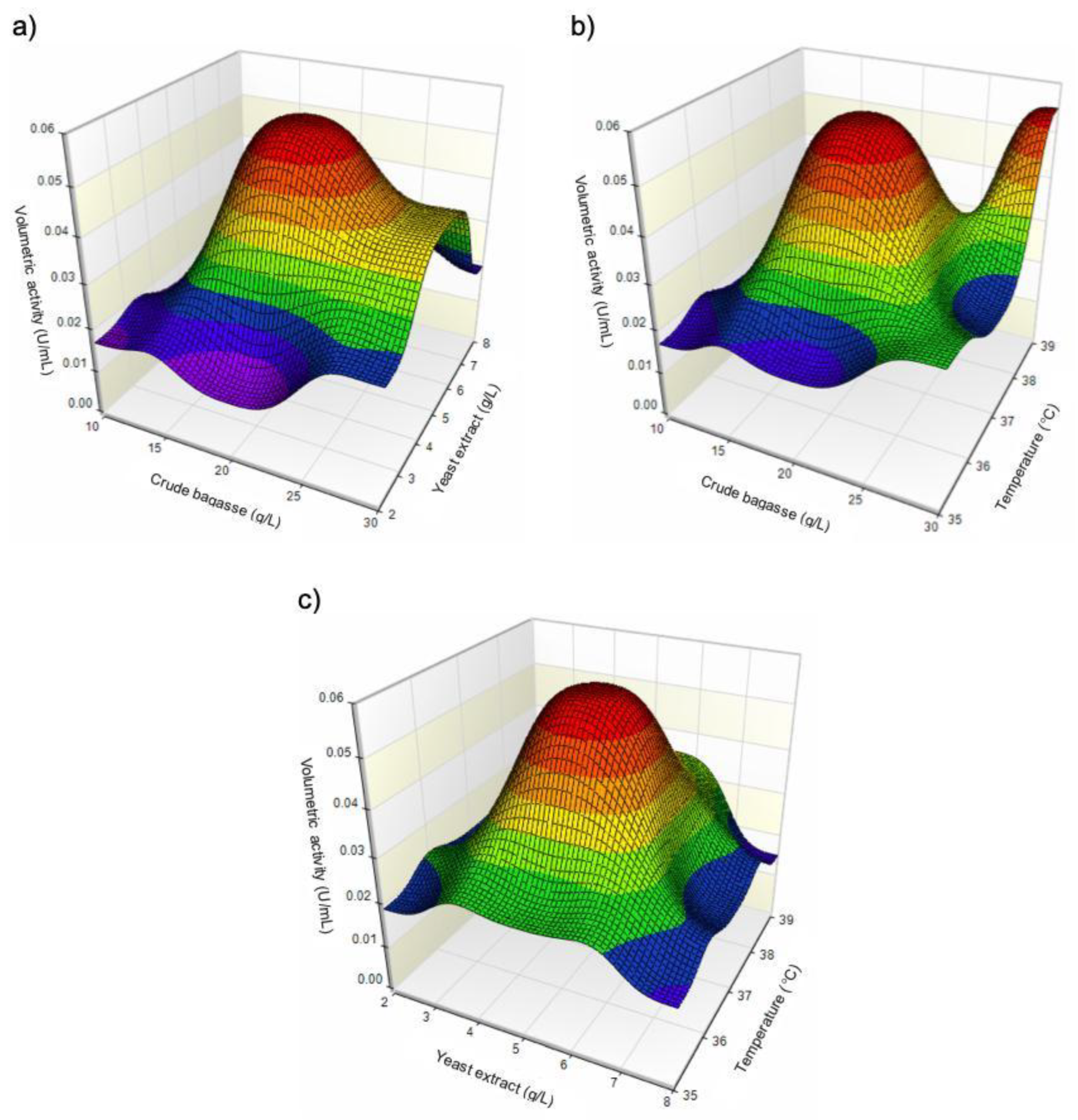
Based on the results shown in Figure 1, it is important to emphasize that the proper concentrations and combinations of sugarcane bagasse for regulating the positive expression of the bglJ33 gene, along with the appropriate concentration of yeast extract as a nitrogen and nutrient source, and the expression temperature, all have significant effects on enzyme expression and activity. A clear example is the use of 20 g/L of sugarcane bagasse with 5 g/L of yeast extract at 37 °C, where activity remained constant at 0.058 U/mL, suggesting operation near the process’s optimal zone. Based on these results, the optimization stage for BglJ33 production was performed to identify the conditions that maximize enzymatic activity. To achieve this, experimental design was used to model system behavior by response surface plots, allowing the identification of an optimal operating zone and analysis of interactions between variables through statistical modeling.

3.3. Optimization of BglJ33 Production

After evaluating the independent variables, the data obtained were modeled using quadratic regression, allowing the identification of the optimal region for maximizing BglJ33 volumetric activity. The model showed an R2 value of 0.867, indicating that 86.7% of the variability in the response can be explained by the variables included in the model. Likewise, the ANOVA analysis (see Table 2) indicated that the quadratic terms for bagasse2, yeast extract2, and temperature2 explained 76.1% of the variability (p = 0.0011), in contrast to the linear variables, which represented only 10.6% and were not statistically significant (p = 0.174). This suggests that the studied variables present a non-linear behavior in enzymatic activity, common in complex enzymatic systems where nutrient excess or deficiency may cause inhibitory or catabolite repression effects [45].
In this study, all studied variables had a significant effect on BglJ33 production, although yeast extract concentration had the most significant effect on the response (p = 0.0016), followed by temperature (p = 0.0194), and sugarcane bagasse (p = 0.0235). These findings highlight the importance of maintaining an appropriate balance between nutrients and carbon sources, as well as thermal balance in bioprocesses. These results may be related to the metabolic characteristics of the microorganism used and the nature of the culture system, since raw sugarcane bagasse was used as the substrate, implying the presence of untreated lignocellulosic components that may affect the availability of fermentable sugars and, consequently, the observed enzymatic activity.
By performing the optimization analysis using the response surface methodology, a mathematical model was obtained, which defines the behavior of the system (Equation 1). This model allows the prediction of enzymatic activity under specific condition combinations. It is important to highlight that the interaction between variables was not considered in the mathematic model due to its low statistical significance in the fit, which suggests their combined effect is not decisive in the final response.
E n z y m a t i c   a c t i v i t y   U m L = 5.95799 + 0.00545   B a g a s s e   + 0.02958333   Y e a s t e x t r a c t + 0.3173125   T e m p e r a t u r e 0.00011625   B a g a s s e 2 0.002958333   Y e a s t   e x t r a c t 2 0.00428125   T e m p e r a t u r e 2
The response surface plots (Figure 2) allow the visualization of regions of maximum performance and facilitate the interpretation of optimal conditions. In Figure 2, an optimal zone in the central region is shown, where enzymatic activity reaches the highest point. Likewise, the optimal combination for maximizing enzymatic activity was identified as 20 g/L of raw sugarcane bagasse, 5 g/L of yeast extract, and a temperature of 37°C. This optimal point suggests an expected enzymatic activity of 0.058 U/mL. This combination was experimentally validated where the obtained result matched the one predicted by the mathematic model, confirming the model’s accuracy and indicating no difference between the predicted and actual values.

4. Conclusion

The results obtained confirm the feasibility of using raw sugarcane bagasse in combination with yeast extract for the production of BGLs in Bacillus strains. A non-linear behavior was identified among the independent variables; likewise, the statistical model was significant, showed good predictive capacity, and exhibited no lack of accuracy. This allowed for the identification of the optimal process region based on these variables, providing a solid foundation for the development of sustainable bioprocesses for BGL production. These enzymes have potential applications in the hydrolysis of lignocellulosic residues, second-generation bioethanol production, or industrial enzyme formulations, particularly in regions where sugarcane bagasse is an abundant by-product.

Author Contributions

JAVH carried out the experiments; MEDR wrote the article and performed the data analysis; and SDM wrote and edited the article, in addition to supervising the research.

Funding

This work was funded by COVEICYDET under project CP 1111/1304.

Conflicts of Interest

The authors have no conflicts of interest.

References

  1. Ungureanu, N.; Vlăduț, V.; Biriș, S. Sustainable Valorization of Waste and By-Products from Sugarcane Processing. Sustainability 2022, 14, 11089. [Google Scholar] [CrossRef]
  2. FAO. World Food and Agriculture – Statistical Yearbook 2021. World Food and Agriculture – Statistical Yearbook 2021. Rome: FAO; 2021.
  3. SADER. Caña de azúcar, una dulce producción. 2025. Available online: https://www.gob.mx/agricultura/articulos/cana-de-azucar-una-dulce-produccion-237168.
  4. Girio, F.M.; Fonseca, C.; Carvalheiro, F.; Duarte, L.C.; Marques, S.; Bogel-Lukasik, R. Hemicelluloses for fuel ethanol: A review. Bioresour Technol. 2010, 101, 4775–4800. [Google Scholar] [CrossRef]
  5. Miranda-Sosa, A.; del Moral, S.; Infanzón-Rodriguez, M.I.; Aguilar-Uscanga, M.G. Reappraisal of different agro-industrial waste for the optimization of cellulase production from Aspergillus niger ITV02 in a liquid medium using a Box–Benkhen design. 3 Biotech. 2024, 14. [Google Scholar] [CrossRef]
  6. Infanzón-Rodríguez, M.I.; del Moral, S.; Gómez-Rodríguez, J.; Faife-Pérez, E.; Aguilar-Uscanga, M.G. Second-Generation Bioethanol Production and Cellulases of Aspergillus niger ITV02 Using Sugarcane Bagasse as Substrate. Bioenergy Res. 2023, 17, 160–172. [Google Scholar] [CrossRef]
  7. Delfín-Ruíz, M.E.; Aguilar-Uscanga, M.G.; Gómez-Rodríguez, J. Xylitol Production by Candida tropicalis IEC5-ITV Using Sugarcane Bagasse Acid Pretreated. Sugar Tech. 2023, 25, 1231–1240. [Google Scholar] [CrossRef]
  8. Yuan, Y.; Jiang, B.; Chen, H.; Wu, W.; Wu, S.; Jin, Y.; et al. Recent advances in understanding the effects of lignin structural characteristics on enzymatic hydrolysis. Biotechnology for Biofuels 2021, 14, 205–225. [Google Scholar] [CrossRef]
  9. Sahu, O. Assessment of sugarcane industry: Suitability for production, consumption, and utilization. Ann Agrar Sci. 2018, 16, 389–395. [Google Scholar] [CrossRef]
  10. Cavalcanti, E.J.C.; Carvalho, M.; da Silva, D.R.S. Energy, exergy and exergoenvironmental analyses of a sugarcane bagasse power cogeneration system. Energy Convers Manag. 2020, 222, 113232. [Google Scholar] [CrossRef] [PubMed]
  11. Pérez-Salazar, Y.I.; Peña-Montes, C.; del Moral, S.; Aguilar-Uscanga, M.G. Cellulases production from Aspergillus niger-ITV-02 using corn lignocellulosic residues. Revista Mexicana de Ingeniería Química 2022, 21, Alim2772–Alim2772. [Google Scholar] [CrossRef]
  12. Barbosa, F.C.; Nogueira, G.P.; Kendrick, E.; Franco, T.T.; Leak, D.; Dias, M.O.S.; et al. Production of cello-oligosaccharides through the biorefinery concept: A technical-economic and life-cycle assessment. Biofuels, Bioproducts and Biorefining 2021, 15, 1763–1774. [Google Scholar] [CrossRef]
  13. Yan, F.; Tian, S.; Du, K.; Xue, X.; Gao, P.; Chen, Z. Preparation and nutritional properties of xylooligosaccharide from agricultural and forestry byproducts: A comprehensive review. Front Nutr. 2022, 13, 977548. [Google Scholar] [CrossRef]
  14. Del Moral, S.; Ramírez-Coutiño, L.P.; García-Gómez, M.J. Aspectos relevantes del uso de enzimas en la industria de los alimentos. Revista Iberoamericana de Ciencias. Available online: https://www.reibci.org/publicados/2015/mayo/1000102.pdf.
  15. Montor-Antonio, J.J.; Hernández-Heredia, S.; Ávila-Fernández, Á.; Olvera, C.; Sachman-Ruiz, B.; del Moral, S. Effect of differential processing of the native and recombinant α-amylase from Bacillus amyloliquefaciens JJC33M on specificity and enzyme properties. 3 Biotech. 2017, 7, 336–350. [Google Scholar] [CrossRef] [PubMed]
  16. Singh, R.; Kumar, M.; Mittal, A.; Mehta, P.K. Microbial enzymes: Industrial progress in 21st century. Vol. 6, 3 Biotech. Springer Verlag, 2016; 174, 185. [Google Scholar]
  17. Markets and markets. Enzymes market, 2024. Available online: https://www.marketsandmarkets.com/Market-Reports/enzyme-market-46202020.html.
  18. Benjamin, S.; Smitha, R.B.; Jisha, V.N.; Pradeep, S.; Sajith, S.; Sreedevi, S.; et al. A monograph on amylases from Bacillus spp. Advances in Bioscience and Biotechnology 2013, 4, 227–241. [Google Scholar] [CrossRef]
  19. Zhang, Y.H.P.; Lynd, L.R. Toward an aggregated understanding of enzymatic hydrolysis of cellulose: Noncomplexed cellulase systems. Biotechnology and Bioengineering. 2004, 88, 797–824. [Google Scholar] [CrossRef]
  20. Lynd, L.R.; Weimer, P.J.; Van Zyl, W.H.; Pretorius, I.S. Microbial Cellulose Utilization: Fundamentals and Biotechnology. Microbiology and Molecular Biology Reviews. 2002, 66, 506–577. [Google Scholar] [CrossRef] [PubMed]
  21. Magwaza, B.; Amobonye, A.; Pillai, S. Microbial β-glucosidases: Recent advances and applications. Biochimie. 2024, 225, 49–67. [Google Scholar] [CrossRef] [PubMed]
  22. Ahmed, A.; Nasim, F.U.H.; Batool, K.; Bibi, A. Microbial β-Glucosidase: Sources, Production and Applications. J Appl Environ Microbiol. 2017, 5, 31–46. [Google Scholar] [CrossRef]
  23. Singhania, R.R.; Patel, A.K.; Sukumaran, R.K.; Larroche, C.; Pandey, A. Role and significance of beta-glucosidases in the hydrolysis of cellulose for bioethanol production. Bioresour Technol. 2013, 127, 500–507. [Google Scholar] [CrossRef]
  24. Cristakopoulus, P.; Goodenough, P.; Kekos, D.; Macris, B.; Claeyssens, M.; Bhat, M. Purification and characterisation of an extracellular beta-glucosidase with transglycosylation and exo-glucosidase activities from Fusarium oxysporum. Eur J Biochem. 1994, 385, 379–385. [Google Scholar] [CrossRef]
  25. Hernández-Heredia, S.; Delfín-Ruiz, M.E.; Gerón-Rodríguez, L.; Sachman-Ruíz, B.; Barrera-Figueroa, B.; Panamá, R.W.; et al. Structural analysis of b-glucosidase (BglJ33) from Bacillus siamensis JJC33M, its biological importance and its production in low-cost culture media. In revision. 2025. [Google Scholar]
  26. Montor-Antonio, J.J.; Olvera-Carranza, C.; Reyes-Duarte, D.; Sachman-Ruiz, B.; Ramírez-Coutiño, L.; Del Moral, S. Biochemical characterization of AmiJ33 an amylase from Bacillus amyloliquefaciens isolated of sugarcane soils at the Papaloapan region. Nova Scientia. 2014, 6, 39–59. [Google Scholar] [CrossRef]
  27. Montor-Antonio, J.J.; Sachman-Ruiz, B.; Lozano, L.; del Moral, S. Draft Genome Sequence of Bacillus amyloliquefaciens JJC33M, Isolated from Sugarcane Soils in the Papaloapan Region, Mexico. Genome A. 2015, 3, e01519–14. [Google Scholar] [CrossRef] [PubMed]
  28. Sluiter, A.; Hames, B.; Ruiz, R.; Scarlata, C.; Sluiter, J.; Templeton, D.; Crocker, D. Determination of structural carbohydrates and lignin in biomass. Laboratory analytical procedure. 2010. TP-510-42618.
  29. Meddeb-Mouelhi, F.; Moisan, J.; Beauregard, M. A comparison of plate assay methods for detecting extracellular cellulase and xylanase activity. Enzyme Microb Technol. 2014, 66, 9–16. [Google Scholar] [CrossRef]
  30. Alokika, A.; Kumar, A.; Kumar, V.; Singh, B. Cellulosic and hemicellulosic fractions of sugarcane bagasse: Potential, challenges and future perspective. Int J Biol Macromol. 2021, 169, 564–582. [Google Scholar] [CrossRef]
  31. López-Velázquez, L.; Salgado-García, S.; Córdova-Sánchez, S.; Valerio-Cárdenas, C.; Ivette Bolio-López, G.; Castañeda-Ceja, R.; Falconi-Calderón, R. Characterization of cellulose and sugarcane (Saccharum spp.) straw from five cultivars grown in the humid tropic of Mexico. Agro Productividad 2021, 14. [Google Scholar] [CrossRef]
  32. Fatani, S.; Saito, Y.; Alarawi, M.; Gojobori, T.; Mineta, K. Genome sequencing and identification of cellulase genes in Bacillus paralicheniformis strains from the Red Sea. BMC Microbiol. 2021, 254–266. [Google Scholar] [CrossRef] [PubMed]
  33. de Araujo Ribeiro, G.C.; de Assis, S.A. β-glucosidases from Saccharomyces cerevisiae: Production, protein precipitation, characterization, and application in the enzymatic hydrolysis of delignified sugarcane bagasse. Prep Biochem Biotechnol. 2024, 54, 317–327. [Google Scholar] [CrossRef]
  34. Neesa, L.; Islam, R.; Jahan, N.; Zohora, U.S.; Shahedur Rahman, M. Optimization of culture conditions and reaction parameters of β-glucosidase from a new isolate of Bacillus subtilis (B1). Journal of Applied Biotechnology Reports 2020, 7, 152–158. [Google Scholar]
  35. Rahman, U.U.; Qasim, S.; Zada, N.S.; Ahmad, S.; Shah, A.A.; Badshah, M.; Khan, S. Evaluation of agricultural wastes as a sustainable carbon source for the production of β-glucosidase from Bacillus stercoris, its purification and characterization. Pakistan J Agric Sci 2023, 60, 367–375. [Google Scholar]
  36. Tao, Z.; Yuan, H.; Liu, M.; Liu, Q.; Zhang, S.; Liu, H.; Jiang, Y.; Huang, D.; Wang, T. Yeast Extract: Characteristics, Production, Applications and Future Perspectives. J Microbiol Biotechnol. 2023, 151–166. [Google Scholar] [CrossRef]
  37. Srivastava, N.; Rathour, R.; Jha, S.; Pandey, K.; Srivastava, M.; Thakur, V.K.; Sengar, R.S.; Gupta, V.K.; Mazumder, P.B.; Khan, A.F.; Mishra, P.K. Microbial Beta Glucosidase Enzymes: Recent Advances in Biomass Conversation for Biofuels Application. Biomolecules 2019, 9, 220–243. [Google Scholar] [CrossRef] [PubMed]
  38. Gaete, A.V.; Martinazzo, A.P.; de Souza Teodoro, C.E. Cellulase production by Bacillus smithii QT03 using agro-industrial waste as carbon source. Waste Management Bulletin 2025, 3, 48–57. [Google Scholar] [CrossRef]
  39. Chettri, D.; Verma, A.K. Statistical optimization of cellulase production from Bacillus sp. YE16 isolated from yak dung of the Sikkim Himalayas for its application in bioethanol production using pretreated sugarcane bagasse. Microbiological Research 2024, 281, 127623. [Google Scholar] [CrossRef]
  40. Pramanik, S.K.; Mahmud, S.; Paul, G.K.; Jabin, T.; Naher, K.; Uddin, M.S.; Saleh, M.A. Fermentation optimization of cellulase production from sugarcane bagasse by Bacillus pseudomycoides and molecular modeling study of cellulase. Current Research in Microbial Sciences 2021, 2, 100013. [Google Scholar] [CrossRef]
  41. da Silva, R.N.; de Melo, L.F.A.; Luna Finkler, C.L. Optimization of the cultivation conditions of Bacillus licheniformis BCLLNF-01 for cellulase production. Biotechnol 2021, 29, e00599. [Google Scholar] [CrossRef] [PubMed]
  42. Guo, M.; Xu, Y.; Gruebele, M. Temperature dependence of protein folding kinetics in living cells. Proc Natl Acad Sci USA 2012, 109, 17863–17867. [Google Scholar] [CrossRef] [PubMed]
  43. Zheng, J.; Guo, N.; Huang, Y. High temperature delays and low temperature accelerate evolution of a new protein phenotype. Nat Commun 2024, 15, 2495–2509. [Google Scholar] [CrossRef] [PubMed]
  44. Alagar Boopathy, L.R.; Jacob-Tomas, S.; Alecki, C.; Vera, M. Mechanisms tailoring the expression of heat shock proteins to proteostasis challenges. J Biol Chem. 2022, 298, 101796–805. [Google Scholar] [CrossRef]
  45. Gelain, L.; da Cruz Pradella, J.G.; da Costa, A.C. Mathematical modeling of enzyme production using Trichoderma harzianum P49P11 and sugarcane bagasse as carbon source. Bioresource Technology 2015, 198, 101–107. [Google Scholar] [CrossRef]
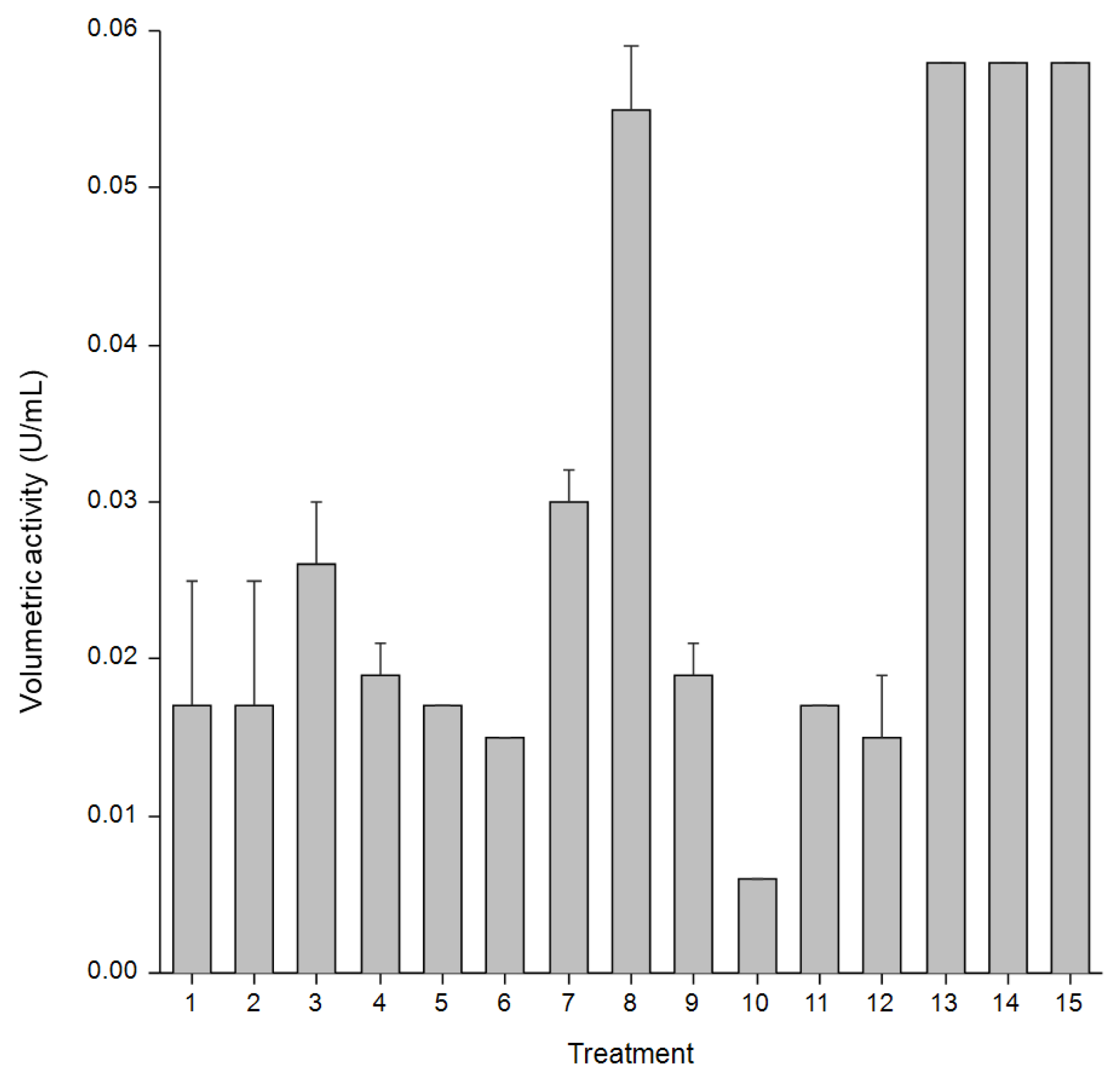
Figure 1. Effect of treatments on the volumetric activity of BglJ33.
Preprints 171612 g001
Figure 2. Response surface analysis for the optimization of BglJ33 volumetric activity as a function of cultivation variables. a) Effect of raw sugarcane bagasse and yeast extract on volumetric activity, b) Effect of raw sugarcane bagasse and temperature on volumetric activity, c) Effect of yeast extract and temperature on volumetric activity.
Preprints 171612 g002
Table 1. Box – Behnken design model for BglJ33 production.
Treatment Raw sugarcane bagasse (g/L),
X1
Yeast extract (g/L), X2 Temperature (°C), X3
1 10 2 37
2 10 8 37
3 30 2 37
4 30 8 37
5 10 5 35
6 10 5 39
7 30 5 35
8 30 5 39
9 20 2 35
10 20 2 39
11 20 8 35
12 20 8 39
13 20 5 37
14 20 5 37
15 20 5 37
Table 2. ANOVA of the second-order polynomial model for BglJ33 production.
Source DG Sum of squares Mean square F - Ratio P - value R2
Regression 6 0.00425 0.00071 8.72 0.00371 86.73
Linear 3 0.00052 0.00017 2.13 0.17429 10.60
Quadratic 3 0.00373 0.00124 15.30 0.00112 76.12
Total error 8 0.00065 8.128E-05 13.26
Lack of fit 6 0.00065 0.00011 0.00 1.0000 13.26
Pure error 2 -1.735E-18 -8.674E-19 0.00
Disclaimer/Publisher’s Note: The statements, opinions and data contained in all publications are solely those of the individual author(s) and contributor(s) and not of MDPI and/or the editor(s). MDPI and/or the editor(s) disclaim responsibility for any injury to people or property resulting from any ideas, methods, instructions or products referred to in the content.
Copyright: This open access article is published under a Creative Commons CC BY 4.0 license, which permit the free download, distribution, and reuse, provided that the author and preprint are cited in any reuse.
Prerpints.org logo

Preprints.org is a free preprint server supported by MDPI in Basel, Switzerland.

Subscribe

Disclaimer

Terms of Use

Privacy Policy

Privacy Settings

© 2026 MDPI (Basel, Switzerland) unless otherwise stated