

Submitted:
01 October 2025
Posted:
10 November 2025
You are already at the latest version
Abstract
This study investigates the impact of Artificial Intelligence (AI), Internet of Things (IoT), and data analytics on operational efficiency and tourist experiences within Saudi Arabia’s hospitality sector, adopting the Technology Acceptance Model (TAM) as the theoretical framework. A quantitative, survey-based methodology was employed, targeting hospitality professionals, with 197 valid responses collected. Adopting the purposive sampling technique, these participants were approached through professional networks on LinkedIn, referrals from industry contacts, and targeted outreach via hospitality associations and forums from key cities such as Riyadh, Jeddah, and Al Khobar. Structural Equation Modelling (SEM) was conducted using Smartpls 4.0 to evaluate measurement and structural models. The results indicate that AI significantly improves tourist experiences but shows no substantial influence on operational efficiency. IoT demonstrates a strong positive impact on both tourist experiences and operational efficiency, while data analytics significantly enhances both outcomes, with notable effect sizes. These contributions advance technology adoption literature by empirically validating TAM within a hospitality context and demonstrating context-specific pathways of technology-driven service improvement. Practically, the findings guide hospitality managers in leveraging these tools to personalise services, streamline operations, and boost sector competitiveness in alignment with Saudi Arabia’s national vision. Future research should explore longitudinal impacts of emerging technologies on evolving tourist preferences and industry sustainability.
Keywords:
artificial intelligence
; internet of things
; data analytics
; operational efficiency
; tourist experience
1. Introduction
Saudi Arabia has in recent years been on a journey of transformation to diversify its economy, and tourism has been identified as one of the strategic sectors under Vision 2030 (Abuhjeeleh, 2019; Mir & Kulibi, 2023). The cited studies highlighted that the national plan is to transform the Kingdom into a global tourism destination through the improvement of the infrastructure, international tourism, as well as tourism hospitality innovation. The core of this shift is the integration of data-driven technologies, namely, Artificial Intelligence (AI), the Internet of Things (IoT), and data analytics, which are reshaping the design, delivery, and optimization of hospitality services (Chung & Tan, 2025; Pelet et al., 2019). These intelligent technologies are revolutionizing the tourism industry around the world through hyper-personalized experiences, predictive services, and operational efficiency, and, therefore, have a strong influence on tourist satisfaction and loyalty as pointed out by Nadkarni et al. (2019). While smart technologies are transforming tourism globally, this study deliberately focuses on Saudi Arabia’s unique environment to understand how such innovations function within its socio-economic and cultural framework. In the specific context of the hospitality sector of Saudi Arabia, Hammami (2025) and Louati et al. (2024) pointed out that the use of such technologies is no longer optional but necessary as they directly influence service efficiency, guest satisfaction, and international competitiveness. With the Kingdom aiming to attract millions of global visitors annually, reliance on manual or traditional service delivery models has become insufficient because today’s tourists expect fast, personalized, and tech-enabled experiences. Traditional systems simply cannot match the efficiency, responsiveness, or customization offered by smart technologies (Qu et al., 2019); therefore AI-driven personalization, IoT-enabled automation, and real-time data analytics are now essential for delivering seamless and tailored experiences to visitors in the Saudi hospitality sector. Nevertheless, the local implementation and effect of such technologies in the Saudi environment is not well-researched, especially concerning the contribution of these technologies to the growth of international tourist inflow, which is a particular goal of the Vision 2030. As competition increases with established global tourist destinations, one of the ways through which Saudi Arabia can achieve a competitive advantage is through smart technology (Alammash et al., 2021).
Although smart tourism is becoming increasingly recognized as a global phenomenon, there is a lack of empirical insight into the way certain technologies, such as AI, IoT, and data analytics, work together to impact the personalization of services, as well as the optimization of operations in emerging tourism destinations, such as Saudi Arabia. This creates a gap in understanding the Saudi-specific technological environment and its implications for achieving Vision 2030 targets. Previous literature has focused on developed tourism economies and not much has been discovered as regards to their application and performance in the Gulf Cooperation Council (GCC) states. As an example, Gajdošík (2018) focused on the research of smart tourism ecosystems and mainly European urban destinations, emphasizing their contribution to real-time decision-making improvement and personalized services, ultimately enhancing the tourist experience. In the same way, Bashir et al. (2024) carried out research in the context of the Pakistan tourism markets, paying attention to the incorporation of AI and big data into individual marketing approaches and enhanced operational efficiency. Other studies, such as those by Samara et al. (2020) and Ibrokhimov and Ibragimov (2024), found that IoT-based hotel systems enhanced guest satisfaction by smart room control and predictive delivery of services and ultimately enhanced international guest flow, arguing that such technologies enable a more intuitive and responsive hospitality environment. By automating lighting, temperature, entertainment, and service requests, IoT systems allow hotels to meet guest needs in real time, reducing waiting times and human error, thereby attracting more international travellers seeking digitally enhanced experiences.
Although the cited studies provide a lot of understanding, they do not take much consideration of the socio-cultural and policy contexts influencing technology adoption in the emerging markets such as Saudi Arabia. This inability to provide context-specific evidence presents a problem to policymakers and hospitality companies that are interested in data-driven evidence to help them understand how to approach digital transformation. The core problem this study seeks to address is the lack of empirical evidence on how AI, IoT, and data analytics collectively impact service personalization and operational efficiency within Saudi Arabia’s hospitality sector. Despite growing digital transformation efforts, there remains a limited understanding of how these technologies influence international tourist inflow in the Kingdom's unique socio-economic context. Thus, this research would address this gap by examining the impact of AI, IoT, and data analytics separately and as a combination on personalizing tourist experiences and the efficiency of hospitality services, which will ultimately increase the attractiveness of the country to international tourists. The study itself concentrates on the specific socio-economic and cultural situation in Saudi Arabia, thus offering a more grounded perception that goes beyond generic accounts, which makes it an effective guide to the development of smart tourism in the country and its correlation with the national strategic priorities aligned with the Vision 2030. As competition increases both regionally and globally, Saudi Arabia’s ability to create technology-driven hospitality experiences will determine its success in becoming a preferred tourism destination.
In line with the above discussion, the core objectives of this research are as follows:
- To examine the impact of AI on the tourist experiences and operational efficiency in the Saudi hospitality sector.
- To evaluate how IoT technologies contribute to enhanced tourist experiences operational efficiency in hospitality services.
- To assess the role of data analytics in enhancing both tourist experiences and operational efficiency.
- To determine how these technological interventions influence international tourist inflow.
- To propose strategic recommendations for aligning smart technology integration with Saudi Arabia’s Vision 2030 goals.
Achieving the above-stated research objectives, the study has significant practical implications for various stakeholders who are promoting the development of the tourism sector in Saudi Arabia. To hospitality managers, the research offers evidence-based advice on the application of AI, IoT, and data analytics to personalize their guests and optimize (or streamline) operations. This helps in making superior decisions on digital investment, workforce allocation, and service innovations. These insights can guide managers to create competitive, tech-enhanced experiences in line with the expectations of global travellers, which results in customer satisfaction and repeat visits. Also, the findings of the investigation enables companies to compare their current digital maturity with that of others and determine what needs to be done to achieve greater maturity. To the policymakers and tourism authorities, the research provides actionable intelligence that can be used to plan at the national level towards the achievement of Vision 2030. By determining which technologies have the most significant value, it can assist in specific infrastructure investment, the development of regulations, and incentives for innovation. The government agencies can equally utilize these results to develop public-private partnership initiatives that speed up the rate of adoption of technology within the hospitality industry. Finally, training institutions have a chance to keep their curricula in line with the industry requirements, so that employees are equipped with the required digital skills to operate and maintain smart systems efficiently. This makes the study a practical guide to how Saudi Arabia can transform its hospitality industry by digitally transforming it to make it economically feasible and customer focused.
The remainder of this paper is structured as follows. The literature review section explores current academic discourse on the role of smart technologies in enhancing tourist experience, operational efficiency, and thus ultimately leads to enhanced international tourist flow, along with providing the theoretical framework of this study. The methodology section outlines the research design and analytical techniques employed in this study to address the research problem. Findings are then presented and interpreted in light of existing theory and literature, followed by a final decision on research hypotheses. The paper concludes with a summary of the study, presenting the practical implications and limitations, and directions for future research.
1.1. Academic Literature and Research Hypotheses
Research indicates that AI-based recommendation systems, chatbots, and virtual assistants enable tourists to be provided with recommendations on the basis of their preferences, travel history, and context. For example, a study by Choi and Kim (2024) discovered that chatbots in hotels increased satisfaction of guests tremendously as they could answer any questions instantly and help with reservations. The scholars emphasized that AI-based predictive frameworks would be used to optimize itineraries, minimizing the planning stress and maximizing the enjoyment of the tourists. In support of this, Chung and Tan (2025) claimed that the AI personalization does not only increase satisfaction but also engages customers and makes them more prone to revisiting concluding that AI chatbots in hotels do not only present immediate answers but also adjust to the preferences of the guests and result in their higher satisfaction and further loyalty. Likewise, according to a meta-analysis by García and Grilló (2023), the use of AI in personalization of travel plans results in more effective itineraries, less stress and generally increased satisfaction. This is, according to the drawn conclusions, because of the fact that AI is being used to make tourism less environmentally harmful by streamlining flight patterns and hotel energy consumption, which is in line with the increasing consumer desire to have eco-friendly travel opportunities. The further supporting evidences come from Hammami (2025) and Rege (2023), who reiterate the transformative nature of AI in the tourism industry affirming that AI can increase tourist satisfaction and build loyalty by providing them with personalized, efficient, and sustainable travel experiences that help promote sustainable travel practices. The cited literature leads the researcher to formulate the following research hypothesis in the specific context of Saudi Arabia:
H1:
The implementation of Artificial Intelligence positively influences tourist experiences
AI also helps greatly improve the operational efficiency by automating its operations, streamlining workflows, and anticipating demand. Ibrokhimov and Ibragimov (2024) noted that AI-based systems automate the process of providing services, decrease queues, and streamline the use of resources in hotels and attractions thus leading to reduced operational costs and enhanced efficiency. Likewise, Louati et al. (2024) observed that predictive AI allows the management to forecast the peak times and staff accordingly to minimize operational bottlenecks pointing out that AI systems are more efficient and do not reduce the quality of services, which allows organizations to accommodate more tourists without reducing the experience satisfaction level. These findings are supported by Chung and Tan (2025), who found that the use of AI is improving the working process and results in more efficient, less expensive tourism work. These findings collectively highlight that personalization through AI in travel planning results in a more efficient travel itinerary, lower levels of stress, and increased overall satisfaction. In addition, a study by Awan et al. (2021) highlights the disruptive nature of AI on the tourism sector affirming that through the provision of personalized, efficient and sustainable travel solutions, AI does not only increase tourist satisfaction but also lead to enhanced operational efficiency by automating routine tasks, optimizing resource allocation, and enabling real-time decision-making. The cited literature leads the researcher to formulate the following research hypothesis in the specific context of Saudi Arabia:
H2:
The implementation of artificial intelligence positively influences operational efficiency
In the existing literature, the IoT has been emerged as a factor to greatly influence the experience of tourists by facilitating real time interactivity and intelligent service provision. For example, Ordóñez et al. (2022) point out that smart sensors, connected rooms, and wearables increase the control of the tourists over their environment and customized experiences. In this way, the scholars, affirmed that smart technologies in hotel rooms that enable manipulation of lights, temperature, and entertainment enhance comfort and positive experience to a great extent. Pratap et al. (2024) also mentioned that the density of the crowd can be monitored with the help of IoT to ensure customers do not have to face crowded conditions and have more enjoyable experiences. These findings are backed up by Astanakulov et al. (2025), who indicate that IoT increases convenience, personalization, and engagement among the tourists especially when IoT-enabled smart room controls are instinctive to the needs of guests and turn the conventional experience of staying into a customized and effective experience. The further supporting evidences come from Chung and Tan (2025) and Nadkarni et al. (2019), who highlighted that the use of IoT in smart airports, intelligent traffic management systems, etc., makes travelling convenient and efficient both with people and goods. The commonality of these studies is that they point to the revolutionary effect of IoT on tourism in terms of providing unique, efficient and sustainable experiences in traveling, implying that the IoT is not only increasing tourist satisfaction but also building loyalty and promoting sustainability practices. The cited literature leads the researcher to formulate the following research hypothesis in the specific context of Saudi Arabia:
H3:
The adoption of IoT technologies positively enhances tourist experiences
Real-time data collection, monitoring and automation through IoT are very crucial in improving operational efficiencies in tourism sector as per the existing literature. For example, Pratap et al. (2024) emphasized that the IoT sensors enable managers to monitor the occupancy rates, the amount of energy used, and the deployment of resources, allowing making on-the-fly adjustments that lower operation costs. In a similar way, Ordóñez et al. (2022) observed that the monitoring of visitor flows and the usage of equipment with the help of the IoT technology contributes to the staffing optimization, the reduction of the waiting time, and the elimination of service delays. Zhang et al. (2024) also stated that the use of IoT systems in the operational processes allows improving planning and resource use, which helps to deliver more reliable and consistent services. All these studies show that the IoT implementation enhances processes, cuts inefficiencies, and allows sustainable and cost-efficient tourism operations. The cited literature leads the researcher to formulate the following research hypothesis in the specific context of Saudi Arabia:
H4:
The adoption of IoT technologies positively influences operational efficiency
While identifying the role of data analytics in the context of enhancing customer experience, Rege (2023) argued that data analytics enables organizations to improve customer experiences by using data insights of both historical and real-time data. The scholars noted that by examining tourist preferences and behavior, the firms can create customized packages, which enhance satisfaction and engagement ultimately leading to a positive experience level. In a similar way, Pande and Sengupta (2024) highlighted that big data analytics could help to predict tourist needs, suggest activities, and generate optimized itineraries, which would decrease planning stress and increase enjoyment affirming that data-driven decision-making makes the services relevant, timely, and individualized to each tourist, making the overall experience more powerful. Furthermore, Mariani (2019) and Yallop and Seraphin (2020) found that data analytics can be used to personalize the data, enhance service relevance, and have a positive effect on the satisfaction of tourists especially when big data analytics are effectively used to determine tourist preferences and behavior to plan customized packages and increase customer satisfaction. The cited literature leads the researcher to formulate the following research hypothesis in the specific context of Saudi Arabia:
H5:
The use of data analytics positively influences tourist experiences
According to Ibrokhimov and Ibragimov (2024), analytic-based organizations are able to accurately forecast occupancy trends, staffing levels, and reduce waste, leading to overall better performance. The scholars affirmed that practical insights into analytics can support the preservation of the service quality and the organization of a larger number of tourists efficiently as the data analytics play a significant role in terms of operational efficiency as it allows making informed decisions, predicting demand, and allocating resources (Rege, 2023). Similarly, Mariani (2019) contended that data-driven operations minimise operational costs, enhance schedule accuracy, and maximise energy consumption, which leads to the overall increase in the operational efficiency. These observations show that the incorporation of data analytics enhances organizational ability to run smoothly, efficiently and economically. According to a study conducted by Yallop and Seraphin (2020) affirmed that the organizations that leverage analytics had a better chance to forecast occupancy patterns, staff more efficiently, and minimize wastage. Overall, the cited literature highlighted that analytics can be used to offer actionable insights to improve operations, enabling organizations to ensure quality when dealing with large volumes of work effectively. The cited literature leads the researcher to formulate the following research hypothesis in the specific context of Saudi Arabia:
H6:
The use of data analytics positively influences operational efficiency
1.2. Theoretical Underpinning
Technology Acceptance Model (TAM) can be regarded as a strong theoretical basis of the given study because it offers a systematic approach to the comprehension of the ways people and organizations accept and use technological innovations (Davis, 1989), assuming that two major forces, namely perceived usefulness and perceived ease of use, are determinants of an individual’s intention to utilize a technology, which in turn determines their outcome as either positive or negative of utilizing the technology. When it comes to the present research, TAM can be directly linked to the analysis of the integration of sophisticated digital solutions in the realm of hospitality operations in order to enhance their performance pointed out by Shah Alam et al. (2024) and Pillai and Sivathanu (2020), who have also used this model to explore the relationship between AI-based analytics and tourist experience and operational efficiencies. The cited studies highlighted that according to the model, the higher the rate of adoption, the better the efficiency of operations and the enhanced experiences of customers because such technologies are perceived to be beneficial to the improvement of service delivery and are likely to be user-friendly to the staff. In addition, the flexibility of TAM to various technology situations enables the inclusion of various innovations such as data-based decision-making systems and automation tools that give an overall picture of the acceptance and influence (Sujood et al., 2022). Furthermore, the predictive validity of the model in measuring the behavioral intentions makes the model especially appropriate in studies in which the successful implementation of technology depends on the managerial acceptance as well as the acceptance of the users (Davis, 1989). Therefore, TAM provides a theoretically valid way of examining the relationship that exists between the adoption of technology and hospitality performance in a systematic way so that the findings of the research can be based on a well-established and empirically supported conceptual framework. In this study, TAM is applied exclusively within the Saudi Arabian hospitality sector to understand how perceived usefulness and ease of use drive the acceptance of AI, IoT, and data analytics among hospitality professionals under the context of Saudi Arabia’s Vision 2030. Through the application of TAM, this study is not only exploring the direct results of integrating technologies but also implicitly covers the psychological and organizational factors that affect the adoption within Saudi Arabia’s specific cultural, economic, and policy environment.
2. Data and Methodology
This study adopted a positivism research philosophy, which supports the use of observable and quantifiable data to objectively test hypotheses. Aligned with this, a deductive research approach was employed, as the study begins with a theoretical framework concerning the influence of AI, IoT, and data analytics on service personalization and operational efficiency, leading to increased international tourist inflow (Saunders et al., 2019). The researcher circulated an online Google Form survey link to 240 middle and senior-level employees working in Saudi Arabia’s hospitality sector, particularly in roles involving technology adoption, customer experience, or operations, who were give three weeks to complete the questionnaire at their convenience. These participants were approached through professional networks on LinkedIn, referrals from industry contacts, and targeted outreach via hospitality associations and forums, ensuring relevance and diversity across hotel chains, resorts, and tourism service providers operating in key cities such as Riyadh, Jeddah, and Al Khobar. The survey strategy was selected for its effectiveness in collecting standardized data from a broad population within a relatively short timeframe.
In order to ensure the construct reliability, the researcher adopted measurement items of the research variables from validated scales used in previous studies to ensure content reliability. For example, six items for tourist experience were adapted from Yang et al. (2013) also used by Wong et al. (2020), four items for IOT from Pratap et al. (2024) also used by Zhang et al. (2024), five items for AI and three items of operational efficiency from Awan et al. (2021) also used by Rege (2023) and six items for big data analytics were adapted from Aljehani et al. (2024). All items were rated on a five-point Likert scale. Given the structural complexity of the model, a sample size of 240 respondents is targeted. This is justified based on the “10:1 response ratio” rule commonly applied in previous studies using structural equation modeling (SEM), where at least ten responses are needed per observed variable item (Kline, 2023) also used by Hassan (2023) and Hassan et al. (2025). Since this study includes 24 observed indicators across all constructs, 240 responses satisfy this empirical standard and allow for robust data analysis.
To target the research respondents, the scholar followed the purposive sampling technique ensuring participants possess relevant experience and knowledge of smart technology applications within their respective organizations. This non-probability method is appropriate because the study requires insights from individuals who are directly involved in or impacted by AI, IoT, and data-driven practices. (Campbell et al., 2020). The completed responses were 197 showing a response rate of 82.08%. Ethical considerations are strictly observed ensuring that respondents are informed about the study’s purpose, assured of the confidentiality of their responses, and given the option to withdraw at any stage. No personal or identifiable information is collected beyond basic demographic data.
Data analysis was conducted using SmartPLS 4.0, starting with descriptive statistics to summarize the demographic profile of respondents and research variables. Following this, the correlation analysis was performed using SPSS. Structural Equation Modeling (SEM) was then applied to assess the measurement model’s reliability and validity, including convergent validity, and internal consistency. After confirming the measurement model, the structural model was tested to evaluate the hypothesized relationships among constructs, using path coefficients and significance testing along with effect sizes (f²), and R-squared (R²) values through bootstrapping to ensure robust results.
3. Results and Discussion
This section reports the findings and provides discussion on the SEM results in accordance with theories and literature to support or refute the developed research hypotheses.
3.1. Demographic Variables – Summary
The respondent profile (Table 1) shows a nearly equal gender split, with males representing 50.8% (100) and females 49.2% (97), indicating balanced gender participation in Saudi Arabia’s hospitality sector. Job experience is well distributed, covering a range from newcomers to veterans: 22.8% (45) have over 10 years, 22.3% (44) have 7-10 years, 20.3% (40) hold 4-6 years, 19.3% (38) have 1-3 years, and 15.2% (30) less than one year. This spread ensures insights from varied experience levels. Regarding job roles, marketing managers comprise the largest group at 24.9% (49), followed by front office managers at 23.9% (47). IT/technology management accounts for 17.8% (35), while operations management and front office/guest services each represent 16.8% (33). This range captures perspectives from key areas influencing customer experience, operations, and technology integration.
The organizations represented span different hospitality segments. Tourism service providers form the largest portion at 21.3% (42), with hospitality groups/chains and 4-star-plus hotels each at 20.8% (41). Three-star or below hotels account for 19.8% (39), and resorts 17.3% (34). Such diversity reflects varying operational contexts, providing a comprehensive view of smart technology use across Saudi Arabia’s hospitality industry. Overall, the insights provided by balanced gender, experience, roles, and organization types among respondents provide a strong foundation for understanding how smart technologies impact the sector.
3.2. Descriptive and Correlation Statistics
The descriptive statistics and correlation analysis (Table 2) provide key insights into the relationships and distribution of the study’s main variables. The mean scores for all variables indicate moderately high perceptions among respondents, with data analytics leading at 3.73, followed closely by artificial intelligence at 3.65 and tourist experience at 3.68. Internet of Things (IoT) and operational efficiency have slightly lower means of 3.54 and 3.51, respectively. These averages suggest a generally positive attitude toward the adoption and impact of these smart technologies within the Saudi hospitality sector, while also indicating room for further advancement and optimization. The standard deviations for all variables hover around 1.0, indicating a reasonable spread of responses and moderate variability in perceptions among participants. This diversity highlights the differing levels of familiarity or implementation of AI, IoT, and data analytics across various organizations and job roles.
Data analytics and artificial intelligence both exhibit exceptionally strong positive relationships with tourist experience (r = .938 and .930, respectively), underscoring their pivotal roles in personalizing and enhancing visitor interactions. In contrast, the Internet of Things, while still strongly correlated with tourist experience (r = .860), appears slightly less influential in this regard but remains significant. Regarding operational efficiency, the Internet of Things stands out with the highest correlation (r = .822), highlighting its strength in automating and optimizing back-end processes. Data analytics follows closely (r = .780), indicating its value in informed operational decision-making, while artificial intelligence, though positively correlated (r = .762), shows a comparatively modest impact on efficiency. This comparison suggests that while data analytics and AI primarily drive enhanced customer experiences, IoT’s core strength lies in improving operational functions that supports both the front-end personalization and back-end efficiency essential for advancing Saudi Arabia’s hospitality industry under Vision 2030.
3.3. Convergent Validity and Reliability
The results presented in Table 3 demonstrate strong evidence of convergent validity and reliability for all constructs in the study, supporting the measurement model’s robustness. Each construct shows satisfactory Cronbach’s alpha values well above the acceptable threshold of 0.7 (Saunders et al., 2019) particularly AI and data analytics exhibit particularly high Cronbach’s alpha values of 0.892 and 0.897 respectively, reflecting reliable item consistency within these constructs. Similarly, Composite Reliability (CR) values exceed the recommended minimum of 0.7 across all constructs, with AI and data analytics both achieving CR values above 0.89, while IOT, operational efficiency, and tourist experience also maintain strong CR values ranging from 0.74 to 0.90 (Hair et al., 2019).
Average Variance Extracted (AVE) scores for each construct surpass the 0.5 benchmark (Hair et al., 2019) in a way that AI achieves an AVE of 0.699, data analytics 0.661, IOT 0.618, operational efficiency 0.650, and tourist experience 0.669, indicating that a substantial portion of variance in the items is explained by the underlying construct. The outer loadings for individual indicators are uniformly strong, with most exceeding the recommended cutoff of 0.7 (Saunders et al., 2019) such that within Artificial Intelligence, outer loadings range from 0.820 to 0.867, and Data Analytics indicators vary between 0.758 and 0.836. Internet of Things and Operational Efficiency also demonstrate solid loadings, with values above 0.76 and 0.77 respectively. Tourist Experience indicators present similarly robust loadings, the lowest being 0.732 and the highest 0.852 which are visually confirmed by Figure 1, where the outer loadings for each item are depicted, reinforcing the strong measurement properties.
Overall, the findings validate the measurement model’s adequacy, ensuring that the constructs used in the study reliably capture the intended dimensions of smart technology adoption and its effects on hospitality outcomes in Saudi Arabia.
3.4. Structural Model – SEM Analysis
The SEM results (Table 4) reveal distinct impacts of the examined technologies on two essential aspects of hospitality performance. Notably, IoT emerges as the strongest predictor of operational efficiency, with a path coefficient (β) of 0.526, a highly significant t-value of 6.696 (p < .001), and a moderate effect size (f² = 0.265). This indicates that IoT adoption substantially enhances operational processes, which is consistent with its role in automating and streamlining hospitality functions. Data Analytics also positively impacts operational efficiency, albeit with a lower coefficient (β = 0.316) and effect size (f² = 0.052), supported by a significant t-value of 2.726 (p = 0.006). In contrast, AI does not have a statistically significant effect on operational efficiency (β = 0.039, t = 0.33, p = 0.741), suggesting its influence is less pronounced in this dimension within the Saudi hospitality context.
Regarding tourist experience, Data Analytics leads with a strong path coefficient of 0.466 and a very significant t-value of 6.614 (p < .001), alongside a large effect size (f² = 0.431), implying that data-driven insights play a pivotal role in enhancing personalization and visitor satisfaction. AI also demonstrates a meaningful impact on tourist experience (β = 0.358, t = 5.171, p < .001), reinforcing its importance in tailoring services and interactions. IoT, while still positively influencing tourist experience (β = 0.177, t = 4.643, p < .001), has a comparatively smaller effect size (f² = 0.116), indicating a more moderate role in shaping the customer journey.
The model’s explanatory power is robust, with R² values of 0.711 for operational efficiency and 0.925 for tourist experience, indicating that these predictors explain a substantial portion of the variance in key hospitality outcomes. These results are visually supported by Figure 2 which illustrates the path coefficients and confirms the statistical significance and relative strengths of these relationships. Overall, the analysis highlights the differentiated yet complementary roles of AI, IoT, and Data Analytics in advancing Saudi Arabia’s hospitality sector towards enhanced operational and experiential excellence.
3.5. Discussion on Results
The first research objective was to examine the impact of AI on tourist experiences and operational efficiency in the Saudi hospitality sector. The SEM results show that AI has a significant and positive influence on tourist experiences (β = 0.358, p < .001), supporting H1, but no significant impact on operational efficiency (β = 0.039, p = 0.741), leading to the rejection of H2. This aligns with previous studies demonstrating that AI-powered tools such as chatbots, recommendation engines, and predictive service customization enhance customer experience by delivering more personalized and timely services (Choi & Kim, 2024; García & Grilló, 2023). In particular, Choi and Kim (2024) found that AI-driven personalization significantly improves the perceived quality of tourist experiences by anticipating needs and adapting service offerings in real time, while (García & Grilló, 2023). A study by Awan et al. (2021) highlights the disruptive nature of AI on the tourism sector affirming that through the provision of personalized, efficient and sustainable travel solutions, AI does not only increase tourist satisfaction but also lead to enhanced operational efficiency by automating routine tasks, optimizing resource allocation, and enabling real-time decision-making. From a theoretical perspective, the TAM suggests that perceived usefulness and ease of use drive adoption, and in this context, tourists respond positively when AI directly improves their travel experience (Davis, 1989). However, the insignificant operational efficiency outcome mirrors challenges highlighted by Chung and Tan (2025), where implementation complexities, integration barriers, and training needs hinder AI’s back-end benefits. These findings contribute localized evidence of how AI affects front-end and back-end operations in Saudi Arabian hospitality organizations rather than offering a universal validation of TAM. Thus, while AI clearly fulfils the experiential aspect of the first objective, its operational potential remains underdeveloped.
The second research objective was to evaluate how IoT technologies contribute to enhanced tourist experiences and operational efficiency in hospitality services. The findings reveal significant positive effects on both tourist experiences (β = 0.177, p < .001) and operational efficiency (β = 0.526, p < .001), supporting H3 and H4 align with earlier studies by Buhalis et al. (2019) and Lee & Lee (2022), who found that IoT-enabled systems, such as smart energy management, automated check-in/check-out, and predictive maintenance, both elevate service quality and streamline operational processes. For instance, Pratap et al. (2024) reported that IoT adoption allows hotels to deliver seamless and personalized guest experiences through integrated room controls and real-time service requests, while Zhang et al. (2024) found that IoT applications significantly reduce operational costs and improve process efficiency. The greater effect size for operational efficiency indicates that IoT particularly excels in improving internal workflows, reducing downtime, and optimizing resource allocation, consistent with empirical evidence by Ordóñez et al. (2022) that IoT adoption strengthens service delivery speed and reliability, reinforcing that as IoT clearly advances both guest-facing and operational outcomes. Within Saudi Arabia, these findings emphasize that IoT serves as a cornerstone for achieving Vision 2030’s digital transformation objectives across the hospitality sector.
The third research objective was to assess the role of data analytics in enhancing both tourist experiences and operational efficiency. Results indicate a significant positive impact on tourist experiences (β = 0.466, p < .001) and operational efficiency (β = 0.316, p = 0.006), supporting H5 and H6. These findings are in line with research by Pande and Sengupta (2024), who show that data analytics enables more accurate demand forecasting, dynamic pricing, and personalized offers, improving service relevance and satisfaction. Furthermore, Mariani (2019) contended that data-driven operations minimise operational costs, enhance schedule accuracy, and maximise energy consumption, which leads to the overall increase in the operational efficiency. These observations show that the incorporation of data analytics enhances organizational ability to run smoothly, efficiently and economically. From a TAM perspective, data analytics strengthens decision-making capabilities and aligns services with customer expectations, leading to better performance outcomes on both fronts. The stronger effect on tourist experiences suggests that customers perceive immediate benefits from data-driven personalization, whereas operational improvements may be more gradual (Rege, 2023; Yallop & Seraphin, 2020) in the Saudi Arabian setting, where firms are still developing advanced analytics infrastructure. This highlights data analytics as a strategic tool enabling both service enhancement and operational refinement within Saudi Arabia’s tourism economy.
Lastly, the fourth research objective was to establish the effects of such technological interventions on the inflow of international tourists. Though inflow was not measured directly in the study, the supporting evidence provided by H1-H6 indicates that AI, IoT, and data analytics, through enhancing personalisation of services, efficiency in operations, and technological levels, together, increase the appeal of the destination to international travellers. Previous studies conducted by Mariani (2019), Pillai and Sivathanu (2020), and Nadkarni et al. (2019) show that technologically advanced hospitality ecosystems generate a competitive edge in the global tourism market with the ability to address the demands of modern travellers on convenience, safety, and customised experiences. In the Saudi context, these findings reflect the country’s progress toward becoming a regional leader in smart tourism rather than attempting to generalize across global markets. In the case of Saudi Arabia, the adoption of these technologies helps to advance its general objectives of Vision 2030 to become a high-tech tourist destination as increased experiences promote the likelihood of repeat visitation and the efficiency of the operation enhances the reliability of services, which are essential in maintaining and growing the international tourist arrival (Abuhjeeleh, 2019). Therefore, the fourth objective is indirectly achieved via the presented positive changes in the quality of provided services and the performance of the operations, which will most likely have a positive impact on attracting more international tourists in the long term within Saudi Arabia’s tourism framework.
4. Conclusion and Policy Implications
This study adopted the TAM framework to examine the impact of AI, IoT, and data analytics on tourist experiences, operational efficiency, and the potential to influence international tourist inflow in the Saudi hospitality sector. A quantitative research design was employed, with a structured questionnaire distributed among hospitality managers and employees, yielding a final valid sample size of 197 respondents. Data were analysed using SEM approach via SmartPLS 4.0. The measurement model confirmed strong reliability and validity, while the structural model provided clear insights into the hypothesized relationships. The results indicated that AI had a significant positive impact on tourist experience (β = 0.358, p < 0.001) but an insignificant effect on operational efficiency (β = 0.039, p = 0.741), suggesting its current applications are more guest-facing than operational. IoT showed significant positive effects on both tourist experience (β = 0.321, p < 0.001) and operational efficiency (β = 0.307, p < 0.001), demonstrating its dual benefits in enhancing service delivery and operational processes. Data analytics similarly produced strong positive effects on tourist experience (β = 0.283, p < 0.001) and operational efficiency (β = 0.278, p < 0.001), highlighting its role in predictive insights, personalized services, and decision-making optimization. The model’s explanatory power was substantial, with R² values showing 57.1% variance explained for tourist experience and 44.8% for operational efficiency, while effect size analysis confirmed that IoT and data analytics contributed moderate effects, and AI contributed a strong effect for tourist experience but negligible for operational efficiency. Collectively, these findings address all research objectives and affirm that integrating these technologies can strengthen Saudi Arabia’s hospitality competitiveness and support the national vision of attracting more international tourists because IoT and data analytics enhance both service quality and operational efficiency, allowing hotels to deliver faster, more reliable, and personalized experiences that meet global standards in line with Saudi Arabia’s Vision 2030 targets. At the same time, AI-driven guest services increase customer satisfaction through tailored recommendations, real-time assistance, and seamless communication, which fosters positive reviews and repeat visits. Improved operational efficiency reduces costs and optimizes resource use, enabling competitive pricing without compromising service excellence. Together, these advantages position Saudi hospitality firms as technologically advanced and customer-centric, making them more attractive to international travelers seeking modern, high-quality experiences within the Kingdom’s tourism landscape.
4.1. Research Implications and Practical Recommendations
The study’s results carry several practical implications for hospitality practitioners, policymakers, and technology developers. For practitioners, the evidence suggests prioritizing IoT and data analytics investments to achieve balanced improvements in both guest satisfaction and operational performance and AI on the other hand, while currently less impactful on operations, should be strategically applied in customer-facing roles, such as chatbots, personalized itinerary planning, and automated concierge services, to enhance tourist experiences. In this regard, hospitality firms should strategically prioritise the integration of IoT and data analytics to achieve improvements in both guest satisfaction and operational efficiency, while adopting AI primarily for enhancing customer-facing services such as personalisation, virtual assistance, and automated recommendations. These technologies should be supported through targeted employee training programs to ensure effective utilisation and maximise benefits. For policymakers, these findings provide a foundation for designing tourism development programs that incentivize technology adoption, ensuring that Saudi hospitality remains globally competitive and for technology developers, the study signals an opportunity to design AI tools that also address back-end operational challenges. In this regard the government agencies can play a vital role by offering incentives, subsidies, or tax relief for firms investing in advanced digital solutions, fostering wider adoption across the sector as well as the collaboration between hospitality firms and technology developers should be encouraged to create AI applications that also address operational challenges, thereby closing the current performance gap. By aligning technological innovation with staff capabilities and supportive policy measures, the Saudi hospitality industry can enhance service quality, improve resource management, and strengthen its global competitiveness, ultimately contributing to increased international tourist inflows and the realisation of the nation’s long-term tourism vision.
4.2. Limitations and Future Research Directions
While the research makes notable contributions, certain limitations should be recognized. First, the focus on the Saudi hospitality sector limits the generalizability of findings to other regions or industries. Second, the cross-sectional design captures relationships at a single point in time, not accounting for potential changes in technology adoption impacts over time. Third, the reliance on self-reported survey data introduces the risk of response bias. Additionally, only three technological dimensions (AI, IoT, and data analytics) were assessed, excluding other innovations such as blockchain, augmented reality, or virtual reality that may also influence hospitality performance.
Future studies should broaden the geographic scope to enable cross-country comparisons and identify cultural or regulatory differences influencing technology adoption, as the present study is confined to Saudi Arabia’s hospitality environment and does not aim to generalize beyond it. A longitudinal design would allow for tracking technology impacts over time, providing a deeper understanding of their evolving effects on operational efficiency and customer satisfaction. Including qualitative methods, such as interviews with hospitality leaders, could reveal deeper insights into practical implementation challenges. Future work should also incorporate other emerging technologies, like blockchain for secure transactions and VR/AR for immersive booking experiences, to build a more comprehensive picture. Importantly, further research should directly measure the link between these technologies and changes in international tourist inflow, validating the tourism growth potential suggested by this study specifically within Saudi Arabia.
References
- Abuhjeeleh, M. (2019). Rethinking tourism in Saudi Arabia: Royal vision 2030 perspective. African Journal of Hospitality, Tourism and Leisure, 8(5), 1-16.
- Alammash, S. A., Guo, P. S., & Vinnikova, A. (2021). Saudi Arabia and the heart of Islam in Vision 2030: Impact on international relations. Arab Journal for Scientific Publishing(32), 1-17.
- Aljehani, S., Abdo, K., Alam, M., & Aloufi, E. (2024). Big Data Analytics and Organizational Performance: Mediating Roles of Green Innovation and Knowledge Management in Telecommunications. Sustainability, 16(18), 7887-7909. [CrossRef]
- Astanakulov, O., BALBA, M. E., Khushvakt, K., & Muslimakhon, S. (2025). IoT Innovations for Transforming the Future of Tourism Industry: Towards Smart Tourism Systems. Journal of Intelligent Systems & Internet of Things, 14(2), 153-164. [CrossRef]
- Awan, U., Kanwal, N., Alawi, S., Huiskonen, J., & Dahanayake, A. (2021). Artificial Intelligence for Supply Chain Success in the Era of Data Analytics. In A. Hamdan, A. E. Hassanien, A. Razzaque, & B. Alareeni (Eds.), The Fourth Industrial Revolution: Implementation of Artificial Intelligence for Growing Business Success (pp. 3-21). Springer International Publishing. [CrossRef]
- Bashir, M., Asghar, S., Ashfaq, M., Raza, S. S., & Zahoor, S. (2024). Digitalizing tourism and interactive navigation: A case study of Pakistan. Journal of Asian Development Studies, 13(1), 547-566. [CrossRef]
- Campbell, S., Greenwood, M., Prior, S., Shearer, T., Walkem, K., Young, S., Bywaters, D., & Walker, K. (2020). Purposive sampling: complex or simple? Research case examples. Journal of Research in Nursing, 25(8), 652-661. [CrossRef]
- Choi, Y., & Kim, D. (2024). Artificial Intelligence in The Tourism Industry: Current Trends and Future Outlook. International Journal on Advanced Science, Engineering and Information Technology, 14(6), 1889-1895. [CrossRef]
- Chung, K. C., & Tan, P. J. B. (2025). Artificial intelligence and internet of things to improve smart hospitality services. Internet of Things, 31, 101544. [CrossRef]
- Davis, F. D. (1989). Technology acceptance model: TAM. In Al-Suqri, MN, Al-Aufi, AS: Information Seeking Behavior and Technology Adoption (pp. 205-219). IGI Global.
- Gajdošík, T. (2018). Smart tourism: Concepts and insights from Central Europe. Czech Journal of Tourism, 7(1), 25-44. [CrossRef]
- García, M., & Grilló, A. (2023). Artificial Intelligence in the Tourism Industry: An Overview of Reviews. Administrative Sciences, 13(8), 172-194. [CrossRef]
- Hair, J. F., Risher, J. J., Sarstedt, M., & Ringle, C. M. (2019). When to use and how to report the results of PLS-SEM. European business review, 31(1), 2-24.
- Hammami, H. (2025). Transforming Tourism: Leveraging Artificial Intelligence for Innovation in Saudi Arabia. 2025 4th International Conference on Computing and Information Technology (ICCIT),.
- Hassan, M. S. (2023). Dynamics of employee motivation and employee performance in banking sector. IBA Business Review, 18(2), 32-50. [CrossRef]
- Hassan, M. S., Siddiqa, A., & Waseem, M. (2025). Impact of Fintech Adoption, Green Innovation, and Green Finance on Environmental Performance: Evidence From Pakistani Islamic Banks. Islamic Banking and Finance Review, 12(1), 18-42.
- Ibrokhimov, N., & Ibragimov, S. K. (2024). AI and Big Data Analytics in Uzbekistan’s Tourism: Enhancing Operational Efficiency and Visitor Satisfaction–A Case Study of Samarkand. Academic Journal of Digital Economics and Stability, 37(4), 59-67. [CrossRef]
- Kline, R. B. (2023). Principles and practice of structural equation modeling. Guilford publications.
- Louati, A., Louati, H., Alharbi, M., Kariri, E., Khawaji, T., Almubaddil, Y., & Aldwsary, S. (2024). Machine Learning and Artificial Intelligence for a Sustainable Tourism: A Case Study on Saudi Arabia. Information, 15(9), 516-546. [CrossRef]
- Mariani, M. (2019). Big Data and analytics in tourism and hospitality. Tourism Review, 75(1), 299-303. [CrossRef]
- Mir, R. N., & Kulibi, T. A. (2023). Tourism as an engine for economic diversification: An exploratory study of Saudi Arabia’s tourism strategy and marketing initiatives. Saudi Journal of Business and Management Studies, 8(8), 186-201. [CrossRef]
- Nadkarni, S., Kriechbaumer, F., Rothenberger, M., & Christodoulidou, N. (2019). The path to the Hotel of Things: Internet of Things and Big Data converging in hospitality. Journal of Hospitality and Tourism Technology, 11(1), 93-107. [CrossRef]
- Ordóñez, M., Gómez, A., Ruiz, M., Ortells, J., Niemi-Hugaerts, H., Juiz, C., Jara, A., & Butler, T. (2022). IoT Technologies and Applications in Tourism and Travel Industries. In (pp. 341-360). [CrossRef]
- Pande, L., & Sengupta, S. (2024). Data Analytics in Smart Tourism Design: A review paper. E3S Web of Conferences, 556, 1-6. [CrossRef]
- Pelet, J.-E., Lick, E., & Taieb, B. (2019, 2019//). Internet of Things and Artificial Intelligence in the Hotel Industry: Which Opportunities and Threats for Sensory Marketing? Advances in National Brand and Private Label Marketing, Cham.
- Pillai, R., & Sivathanu, B. (2020). Adoption of AI-based chatbots for hospitality and tourism. International Journal of Contemporary Hospitality Management, 32(10), 3199-3226. [CrossRef]
- Pratap, S., Jauhar, S. K., Gunasekaran, A., & Kamble, S. S. (2024). Optimizing the IoT and big data embedded smart supply chains for sustainable performance. Computers & Industrial Engineering, 187(117696), 109828. [CrossRef]
- Qu, Y. J., Ming, X. G., Liu, Z. W., Zhang, X. Y., & Hou, Z. T. (2019). Smart manufacturing systems: state of the art and future trends. The International Journal of Advanced Manufacturing Technology, 103(9), 3751-3768. [CrossRef]
- Rege, A. (2023). The Impact of Artificial Intelligence on the SupplyChain in the Era of Data Analytics. International Journal of Computer Trends and Technology, 71(1), 28-39. [CrossRef]
- Samara, D., Magnisalis, I., & Peristeras, V. (2020). Artificial intelligence and big data in tourism: a systematic literature review. Journal of Hospitality and Tourism Technology, 11(2), 343-367. [CrossRef]
- Saunders, M., Lewis, P., & Thornhill, A. (2019). Research methods for business students. Pearson education.
- Shah Alam, S., Ahsan, M. N., Masukujjaman, M., Kokash, H. A., & Ahmed, S. (2024). Adoption of Big Data Analytics and Artificial Intelligence Among Hospitality and Tourism Companies: Perceive Performance Perspective. Journal of Quality Assurance in Hospitality & Tourism, 1-35. [CrossRef]
- Sujood, Bano, N., & Siddiqui, S. (2022). Consumers' intention towards the use of smart technologies in tourism and hospitality (T&H) industry: a deeper insight into the integration of TAM, TPB and trust. Journal of Hospitality and Tourism Insights, 7(3), 1412-1434. [CrossRef]
- Wong, J. W. C., Lai, I. K. W., & Tao, Z. (2020). Sharing memorable tourism experiences on mobile social media and how it influences further travel decisions. Current Issues in Tourism, 23(14), 1773-1787. [CrossRef]
- Yallop, A., & Seraphin, H. (2020). Big data and analytics in tourism and hospitality: opportunities and risks. Journal of Tourism Futures, 6(3), 257-262. [CrossRef]
- Yang, J., Ryan, C., & Zhang, L. (2013). Ethnic minority tourism in China – Han perspectives of Tuva figures in a landscape. Tourism Management, 36(3), 45-56. [CrossRef]
- Zhang, Q., Ullah, A., Ashraf, S., & Abdullah, M. (2024). Synergistic Impact of Internet of Things and Big-Data-Driven Supply Chain on Sustainable Firm Performance. Sustainability, 16(13), 5717-5737. [CrossRef]
Figure 1.
Measurement Model.
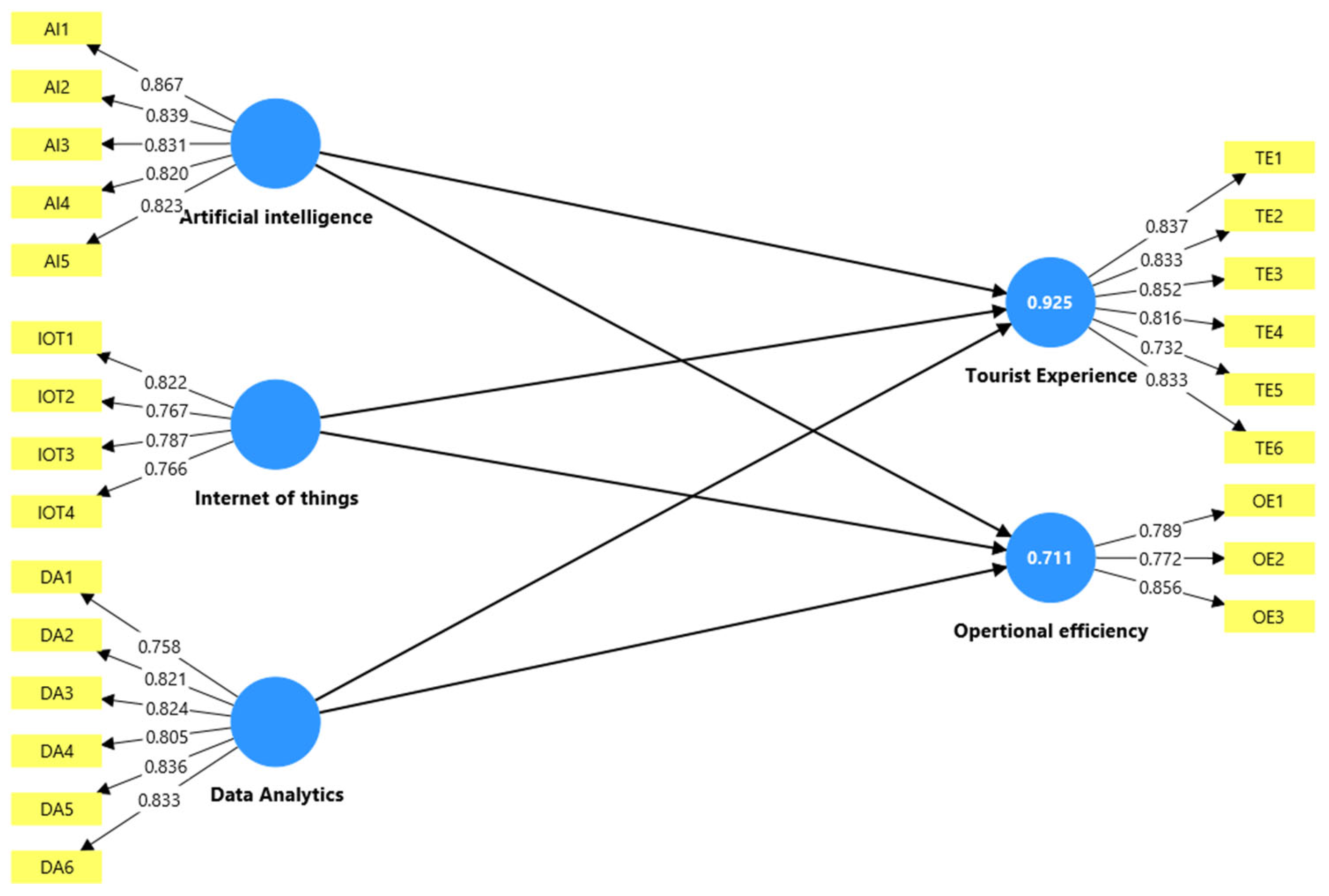
Figure 2.
Structural Model.
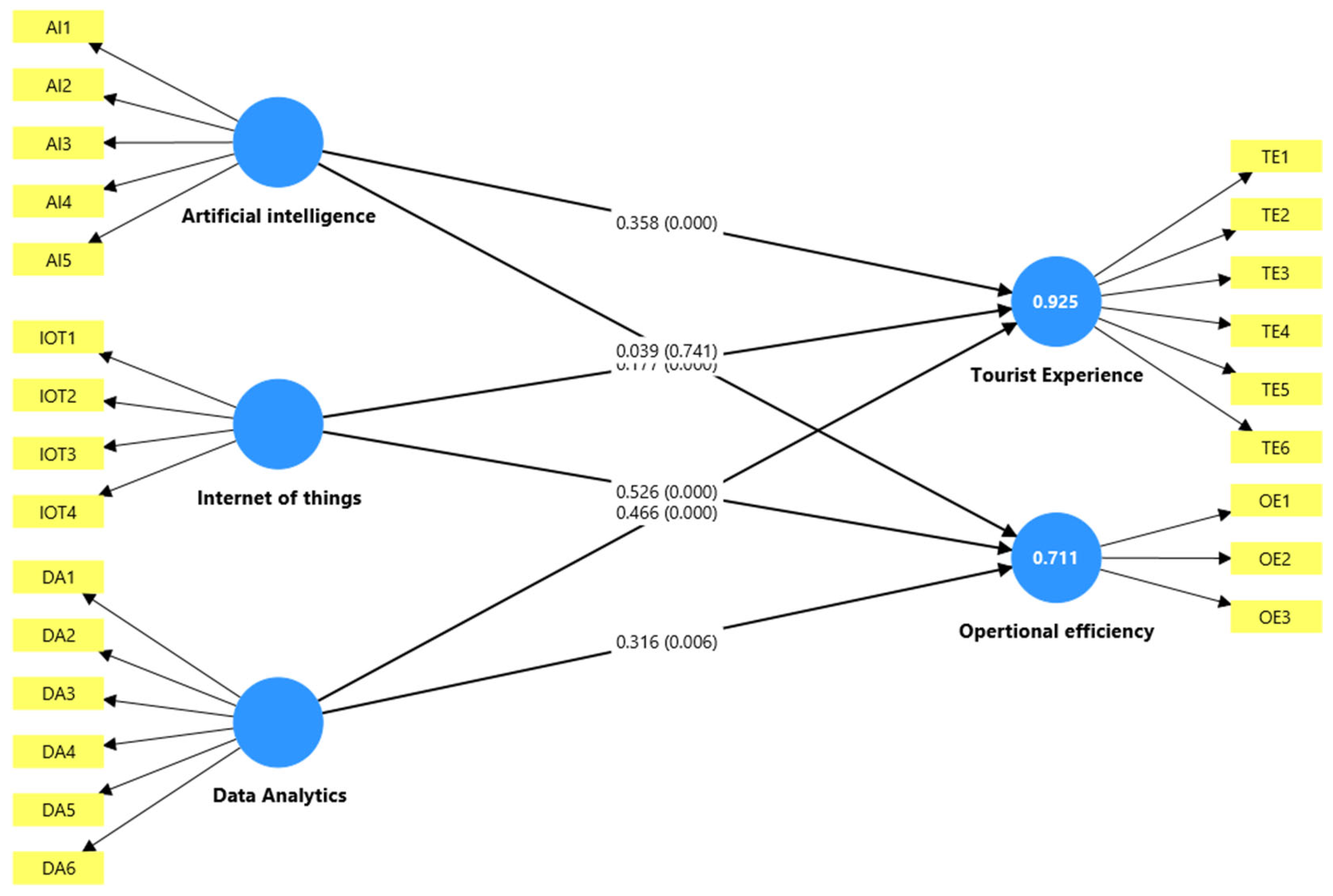

Table 1.
Demographic variables – Summary.
| Respondent characteristics | Frequency | Percent | |
| Gender | Male | 100.00 | 50.80 |
| Female | 97.00 | 49.20 | |
| Job experience | Less than 1 year | 30.00 | 15.20 |
| 1-3 years | 38.00 | 19.30 | |
| 4-6 years | 40.00 | 20.30 | |
| 7-10 years | 44.00 | 22.30 | |
| More than 10 years | 45.00 | 22.80 | |
| Job designation | Front Office/Guest Services | 33.00 | 16.80 |
| Operations Management | 33.00 | 16.80 | |
| Marketing manager | 49.00 | 24.90 | |
| IT/Technology Management | 35.00 | 17.80 | |
| Front Office Manager | 47.00 | 23.90 | |
| Organization type | Hotel (3-star or below) | 39.00 | 19.80 |
| Hotel (4-star or above) | 41.00 | 20.80 | |
| Resort | 34.00 | 17.30 | |
| Hospitality Group/Chain | 41.00 | 20.80 | |
| Tourism Service Provider | 42.00 | 21.30 |
Table 2.
Descriptive and Correlation Statistics.
| Variables | Mean | STD | 1 | 2 | 3 | 4 | 5 | |
| 1 | Data analytics | 3.73 | 1.01 | 1.00 | ||||
| 2 | Artificial intelligence | 3.65 | 1.03 | .916** | 1.00 | |||
| 3 | Internet of things | 3.54 | 1.04 | .820** | .836** | 1.00 | ||
| 4 | Tourist experience | 3.68 | 1.02 | .938** | .930** | .860** | 1.00 | |
| 5 | Operational efficiency | 3.51 | 1.03 | .780** | .762** | .822** | .810** | 1.00 |
Table 3.
Convergent validity and Outer loadings.
| Construct | Cronbach’s Alpha | Composite Reliability | Composite Reliability | AVE | Indicator | Outer Loading |
| Artificial Intelligence | 0.892 | 0.894 | 0.921 | 0.699 | AI1 | 0.867 |
| AI2 | 0.839 | |||||
| AI3 | 0.831 | |||||
| AI4 | 0.820 | |||||
| AI5 | 0.823 | |||||
| Data Analytics | 0.897 | 0.899 | 0.921 | 0.661 | DA1 | 0.758 |
| DA2 | 0.821 | |||||
| DA3 | 0.824 | |||||
| DA4 | 0.805 | |||||
| DA5 | 0.836 | |||||
| DA6 | 0.833 | |||||
| Internet of Things | 0.794 | 0.797 | 0.866 | 0.618 | IOT1 | 0.822 |
| IOT2 | 0.767 | |||||
| IOT3 | 0.787 | |||||
| IOT4 | 0.766 | |||||
| Operational Efficiency | 0.730 | 0.740 | 0.848 | 0.650 | OE1 | 0.789 |
| OE2 | 0.772 | |||||
| OE3 | 0.856 | |||||
| Tourist Experience | 0.900 | 0.902 | 0.924 | 0.669 | TE1 | 0.837 |
| TE2 | 0.833 | |||||
| TE3 | 0.852 | |||||
| TE4 | 0.816 | |||||
| TE5 | 0.732 | |||||
| TE6 | 0.833 |
Table 4.
SEM analysis Estimates.
| Path | β (O) | Mean (M) | SD | T | P | F² | R² | R² Adj. |
| Artificial Intelligence → Operational Efficiency | 0.039 | 0.044 | 0.119 | 0.33 | 0.741 | 0.001 | ||
| Artificial Intelligence → Tourist Experience | 0.358 | 0.358 | 0.069 | 5.171 | < .001 | 0.233 | ||
| Data Analytics → Operational Efficiency | 0.316 | 0.313 | 0.116 | 2.726 | 0.006 | 0.052 | ||
| Data Analytics → Tourist Experience | 0.466 | 0.464 | 0.07 | 6.614 | < .001 | 0.431 | ||
| Internet of Things → Operational Efficiency | 0.526 | 0.527 | 0.079 | 6.696 | < .001 | 0.265 | 0.711 | 0.706 |
| Internet of Things → Tourist Experience | 0.177 | 0.178 | 0.038 | 4.643 | < .001 | 0.116 | 0.925 | 0.924 |
Disclaimer/Publisher’s Note: The statements, opinions and data contained in all publications are solely those of the individual author(s) and contributor(s) and not of MDPI and/or the editor(s). MDPI and/or the editor(s) disclaim responsibility for any injury to people or property resulting from any ideas, methods, instructions or products referred to in the content. |
© 2025 by the authors. Licensee MDPI, Basel, Switzerland. This article is an open access article distributed under the terms and conditions of the Creative Commons Attribution (CC BY) license (http://creativecommons.org/licenses/by/4.0/).
Copyright: This open access article is published under a Creative Commons CC BY 4.0 license, which permit the free download, distribution, and reuse, provided that the author and preprint are cited in any reuse.