Preprint
Article

This version is not peer-reviewed.

Importance of Rajan Risk Score in Predicting Mortality in Patients with Heart Failure Irrespective of Ejection Fraction. mR-hf Score's Prognostic Value in HF

Submitted:

05 November 2025

Posted:

05 November 2025

You are already at the latest version

Abstract

Background and Objectives: To date, the role of the modified Rajan’s heart failure (mR-hf) risk score has been studied in patients with heart failure with reduced (HFrEF) and mid-range ejection fraction (EF). However, it has not been investigated in subjects with preserved EF (HFpEF). We aimed to examine the predictive value of the mR-hf risk score for mortality in both HFrEF and HFpEF. Methods: A total of 220 patients with HFrEF and HFpEF were included in this retrospective study. The study sample was divided into two groups according to mortality. Findings were compared between the groups. Results: The Non-survived group included 27 subjects, while the Survived group comprised 193 patients. The mR-hf risk score was significantly lower in the Non-survived group than the Survived group (p<0.001). According to the multivariate analysis, the mR-hf risk score and New York Heart Association (NYHA) classification were independently associated with all-cause mortality (OR: 0.938, 95% CI: 0.905-0.972; p<0.001 and OR: 2.278, 95% CI: 1.161-4.468; p=0.017, respectively). Furthermore, the mR-hf risk score predicted mortality in both HFrEF and HFpEF (p values, <0.015 and <0.004, respectively). Conclusion: The mR-hf risk score could be a simple tool for predicting mortality in patients with HF, irrespective of EF.

Keywords: 
;  ;  ;  ;  ;  

1. Introduction

Heart failure (HF) is a clinical condition characterized by structural or functional abnormalities in the heart, often accompanied by elevated levels of natriuretic peptides [1]. Despite considerable advancements in HF management, the disease remains associated with high morbidity and mortality rates [2]. Moreover, the prevalence of HF continues to rise, particularly among aging populations [3]. Given the increasing incidence of chronic HF, which is driven in part by demographic changes, precise prognostic assessment is essential for guiding clinical decisions, including choices about advanced treatment and end-of-life planning.
Various models have been developed to predict mortality outcomes in patients with HF [4,5]. However, many of these models, such as the Meta-Analysis Global Group in Chronic Heart Failure (MAGGIC) score [6] and the Seattle Heart Failure Model (SHFM) [4], involve complex mathematical equations. Modified Rajan’s heart failure (mR-hf) risk score is a simpler and more practical tool for risk prediction. Although the predictive value of the mR-hf risk score has been demonstrated in cases of heart failure with reduced ejection fraction (HFrEF) in some studies [7,8,9], its utility in the context of HF with preserved ejection fraction (HFpEF) remains underexplored. Therefore, this study aims to investigate the value of the mR-hf risk score for predicting mortality, both in patients with HFrEF and in those with HFpEF.

2. Materials and Methods

2.1. Study Population

We retrospectively screened data on patients hospitalized with a diagnosis of acute decompensated heart failure between September 1, 2022, and September 1, 2024, whose echocardiographic ejection fractions (EF) were recorded as either below 40% (HFrEF) or above 50% (HFpEF). Demographics, laboratory and echocardiographic data was collected from hospital’s digital records. Patients who suffered cardiogenic shock, required intravenous inotropic support or implantable electronic cardiac devices, or had missing data were excluded from the study. After the exclusion criteria were applied, 110 HFrEF and 110 HFpEF (ischemic or non-ischemic) patients were left, resulting in a total study population of 220 patients. Study population was divided into two groups based on all-cause mortality and data was compared between the two groups (Figure 1).

2.2. Definitions

2.2.1. Heart Failure

HF is defined as a clinical syndrome caused by structural or functional impairment of ventricular filling or blood ejection [10]. According to the 2021 European Society of Cardiology guidelines, HFrEF is diagnosed based on symptoms and/or signs of HF with left ventricular ejection fraction (LVEF) < 40%, while HFpEF refers to the presence of HF symptoms and/or signs with LVEF > 50% [11].
Echocardiography was performed using the General Electric Vivid-7 ultrasonographic machine (General Electric, Milwaukee, WI). All echocardiographic images were reviewed offline and analyzed by two independent investigators blinded to the research data, who used proprietary software (EchoPACTM, version 202, GE Healthcare, Milwaukee, WI). The measurements were conducted in accordance with the American Society of Echocardiography’s guidelines [12,13]. LVEF was measured using the biplane method of disks. Pulsed-wave Doppler echocardiography was used to record transmitral inflow in the apical four-chamber view. Mitral inflow parameters, including peak early (E) and late (A) velocities, as well as the ratio of E to A (E:A), were calculated. Diastolic velocities were measured using tissue Doppler imaging (e′, a′) at the septal and lateral sites, and E:e′ ratios (for septal and lateral walls) were determined.

2.2.2. Rajan Heart Failure Score

The R-hf risk score was defined as the mR-hf risk score in a later study, by adding brain natriuretic peptide (BNP) instead of N-terminal prohormone BNP (NT-proBNP). Consequently, the modified R-hf risk score is recommend using EF×estimated glomerular filtration rate (eGFR)×hemoglobin (Hb)/BNP, using the BNP instead of NT-proBNP [9].

2.3. Statistical Analysis

All statistical analyses were performed using SPSS 22.0 (IBM Corp., Armonk, NY). Descriptive statistics were expressed as numbers and percentages for categorical variables, mean ± standard deviation (SD) for continuous variables following a normal distribution, and medians with 25th and 75th percentiles for non-normally distributed continuous variables. Data distribution normality assed with Kolmogorov Smirnov test. The t-test or Mann–Whitney U test was used for group comparisons of continuous variables, while Fisher’s exact test or the chi-square test was employed for categorical variables. Multicollinearity between components of the mR-hf risk score (e-GFR, Hb, BNP and EF) was assessed using Eigen values and the condition index.
Univariate logistic regression analyses were conducted to identify clinically relevant variables that predicted all-cause mortality. Variables found to be significant in the univariate analysis (p < 0.05) were included in a multivariate logistic regression analysis, with stepwise backward conditional elimination used to identify independently associated predictors. Because we aimed to examine the role of mR-hf risk score for predicting mortality not only in all HF patients but also in both, patients with HFrEF and with HFpEF, we created two additional models assessing multivariate analyses of HFrEF and HFpEF subgroups. A receiver operating characteristic (ROC) analysis was conducted to determine an optimal mR-hf risk score cutoff value for predicting all-cause mortality in all patients with HF. In addition, to further ROC analyses for HFrEF and HFpEF were calculated.

3. Results

Of 220 patients, 78 were female (%35.5). Age of the study sample was 70 (SD, 11). The Survived group (n = 193) and the Non-survived group (n = 27). The patients in the Non-survived group were significantly older than the Survived group (76 ± 10 vs. 69 ± 11 years, p = 0.001). The mR-hf risk scores in whole population, HFrEF, and HFpEF were significantly lower in the Non-survived group [12.9 (IQR: 7.5-19.2) vs. 58.6 (IQR: 27.3-95.6), p<0.001; 8.2 (4.9-14.6) vs. 44.7 (20.6-70.8), p<0.001; 16.3 (12.3-22.7) vs. 81.9 (46.9-131.1), p<0.001, respectively].
Non-survived cases also exhibited higher E:e′ ratios (16 ± 2 vs. 14 ± 4, p<0.001), NYHA classification scores (p<0.001), and markedly increased BNP levels [1822 (1344–2600) vs. 568 (352–1021), p < 0.001]. Renal function, as measured by eGFR, was significantly lower in the Non-survived group (50 ± 19 vs. 70 ± 23, p<0.001). Furthermore, these patients had lower mean e’ velocities (6.0 ± 1 vs. 7.2 ± 2, p<0.001) (Table 1).
In contrast, no significant differences between the two groups were observed in terms of comorbidities, including diabetes mellitus (30.1% vs. 22.2%, p = 0.403), hypertension (72.5% vs. 74.1%, p = 0.867), hyperlipidemia (22.3% vs. 18.5%, p = 0.658), percutaneous coronary intervention (47.2% vs. 48.1%, p = 0.923), and chronic obstructive pulmonary disease (31.6% vs. 37%, p = 0.573). Similarly, there were no differences in the use of medications, including sodium-glucose cotransporter 2 inhibitors (39.4% vs. 29.6%, p = 0.330), renin–angiotensin–aldosterone system inhibitors (60.6% vs. 63%, p = 0.816), mineralocorticoid receptor antagonists (31.1% vs. 37%, p = 0.535), and loop diuretics (71.5% vs. 88.9%, p = 0.055). (Table 1).
Univariate logistic regression analysis revealed significant associations between mortality and variables such as age, higher NYHA classification, lower mean e’ velocities, and lower mR-hf risk scores. In additionally, Univariate logistic regression analysis was showed that the mR-hf scores in HFrEF vs HFpEF subgroups were significantly associated with all-cause mortality (p<0.015 and p=0.004, respectively). These variables were subsequently included in the multivariate model. The multivariate logistic regression analysis identified NYHA classification (odds ratio [OR]: 2.278, 95% confidence interval [CI]: 1.161–4.468, p = 0.017) and mR-hf risk score (OR: 0.938, 95% CI: 0.905–0.972, p <0.001) as independent predictors of mortality in HF patients. Moreover, the mR-hf risk score was found as independent predictors of mortality according to both HFrEF (OR: 0.930, 95% CI: 0.877–0.986, p <0.015) and HFpEF (OR: 0.920, 95% CI: 0.870–0.973, p =0.004) subgroup multivariate analyses. NYHA classification was found an independent predictor of mortality in HFpEF subgroup, as well (OR: 3.703, 95% CI: 1.096–12.513, p=0.035) (Table 2)
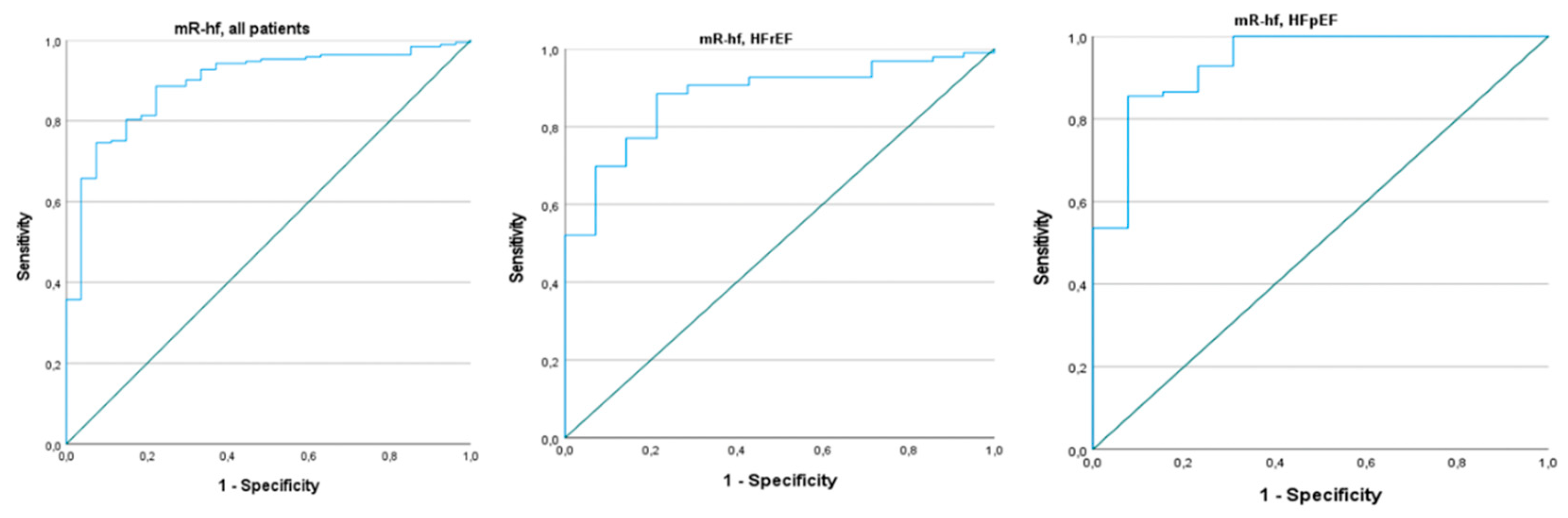
ROC curve analysis was conducted to determine the power of the mR-hf risk score to predict mortality in whole population. The analysis identified an optimal cutoff value of 27.6 with a sensitivity of 92.6% and a specificity of 74.6% for predicting mortality. The area under the curve (AUC) was 0.893 (95% CI: 0.845–0.931, p < 0.001). When we examined the ROC curve for mR-hf score separately in the HFrEF and HFpEF subgroups, the AUC was found to be 0.879 (95% CI: 0.799-0.958, p < 0.001) and 0.937 (95% CI: 0.865-1.000, p < 0.001), respectively (Figure 2).

4. Discussion

The aim of this study was to assess the effectiveness of the mR-HF risk score in predicting mortality among patients with HFrEF as well as those with HFpEF. The results suggest that a low mR-HF risk score is significantly linked to increased mortality in heart failure patients, irrespective of EF status. To the best of our knowledge, this is the first study to confirm the clinical utility of the mR-HF risk score in predicting all-cause mortality in patients with HFpEF.
Globally, an estimated 64 million people suffer from HF, a condition associated with substantial morbidity and mortality [14]. Despite the increased use of guideline-directed medical therapy, mortality and morbidity rates remain high and unpredictable [15,16]. In our study, factors found to be associated with mortality included advanced age, reduced eGFR, elevated BNP, higher NYHA classification, low e′ mean, high E:e′ ratio, and low mR-HF risk score. Previous studies have indicated a strong link between age and HF-related mortality [17,18,19,20]. In elderly HF patients, high comorbidity burdens can exacerbate ischemia and myocardial necrosis, ultimately increasing the risk of death. Consistent with earlier findings, our study confirms that advanced age is a significant predictor of mortality. Despite its limitations, the NYHA classification remains a simple and effective tool for assessing functional status and risk stratification in HF patients [21,22,23,24]. Higher NYHA classification is associated with increased adverse events, clinical deterioration, and reduced responsiveness to HF treatments. Our findings are consistent with prior research suggesting that a higher NYHA classification is associated with increased mortality.
Patients with left heart disease frequently exhibit impaired left ventricular (LV) diastolic function, a condition linked to significant morbidity. Approximately half of all HF hospitalizations occur in patients with HFpEF [25], in whom symptoms primarily arise from ventricular filling abnormalities. Measuring left ventricular diastolic function is crucial for understanding overall cardiac function and disease progression. Diastolic dysfunction involves a combination of impaired LV relaxation, altered restoration forces, increased myocyte lengthening load, and atrial dysfunction, leading to elevated LV filling pressures. Current Doppler echocardiography guidelines recommend using early-to-late diastolic transmitral flow velocity (E:A) for diastolic function assessment and E:e′ to estimate LV filling pressures [26]. In our study population, low e' velocity and high E/e' ratio were found to be associated with poor outcome, consistent with the literature.
The mR-HF risk score utilizes natriuretic peptides, which have been well documented as important biomarkers for HF. Identifying high-risk HF patients can optimize treatment, prevent disease progression, and prolong survival, potentially reducing healthcare costs [27]. Both BNP and NT-proBNP have proven effective for diagnostic and prognostic evaluation in patients with HFrEF and HFpEF [28,29,30,31,32,33,34]. Our study's findings showed that the death group had higher BNP levels, which is in line with previous research.
HF is often accompanied by comorbidities that exacerbate mortality risk. Chronic kidney disease is particularly significant due to its frequent coexistence with HF and shared risk factors, which mutually worsen prognoses [35]. Numerous studies have demonstrated that low eGFR is independently associated with higher mortality in HF patients, regardless of the stage of renal disease [36,37]. Unlike other scoring systems, such as the MAGGIC, the Get With the Guidelines–Heart Failure (GWTG-HF) risk score, and the AHEAD (A: atrial fibrillation; H: hemoglobin; E: elderly; A: abnormal renal parameters; D: diabetes mellitus) score, the mR-HF risk score uses eGFR. It is known that eGFR offers greater accuracy than blood urea nitrogen or creatinine alone. In our study, eGFR levels were significantly lower in the Non-survived group. Along with a higher AHEAD score, these patients had lower Hb and eGFR levels and an increased risk of mortality. A lower Hb level was additionally determined to increase mortality in both patients with HFrEF and those with HFpEF [38], lending this metric prognostic significance. The pathophysiology behind this relationship involves adverse myocardial remodeling secondary to reduced oxygen delivery to metabolizing tissues [39]. In our study, no significant difference in Hb levels was observed between the Non-survived and Survived groups, possibly due to the limited sample size.
Many studies have shown the predictive value of the mR-hf risk score for mortality in patients with HFrEF [7,8,9]. We also found the mR-hf risk score as a predictor of mortality in the same patient group, which is consistent with the literature. Furthermore, we found mR-hf to be a predictor of mortality in patients with HFpEF. As calculated from Hb, EF, eGFR, and BNP, the mR-HF risk score is a simpler tool with similar effectiveness compared to other scoring systems such as the SHFM, the MAGGIC score, and the GWTG-HF risk score. The SHFM requires approximately 20 variables, the MAGGIC score uses 13, and the GWTG-HF risk score employs 7 [4,40,41]. Consequently, the mR-hf risk score is a simple and effective predictor of mortality in HF patients. Regardless of EF, those with lower modified R-hf risk scores experienced higher cumulative all-cause mortality. By demonstrating that the mR-HF risk score is a significant predictor of death in people with HFrEF as well as those with HFpEF, our study highlights the importance of this score.

5. Conclusions

The prognosis of a patient with HF can be easily predicted using the mR-hf risk score. Despite being less complex than more conventional risk determinant scores, such as the MAGGIC, the SHFM, and the AHEAD, it has good predictive value. A lower mR-HF risk score is associated with higher cumulative all-cause mortality. The mR-hf risk score, which is easy to calculate at no extra cost, can be effective in clinical practice for identifying patients with heart failure who face a high risk of mortality, enabling rapid implementation of preventive measures.

6. Limitations

There were certain restrictions on this study. First, because the research was retrospective, it was impossible to identify any data errors. Second, this was a single-center study and may not be generalizable to a larger population. Third, ethnic differences could not be identified because the cohort was gathered mostly from a single location. To get around these restrictions, a multicenter study involving a larger group of HFpEF patients is required.

Author Contributions

D.I. developed the analysis plan and wrote the paper. I.A. ve T.O. undertook the data analysis. A.A., M.K., O.D., Y.E., E.G. and O.K. collected the dataset and provided advice on its analysis. Y.K. and I.R. guided the analysis and made substantial improvements to the paper. Finally, all authors read and approved the manuscript.

Funding

No funding was received for this study. This research did not receive any specific grant from funding agencies in the public, commercial, or not-for-profit sectors.

Data Availability Statement

Data are from Kafkas University Health Research and Application Center and are not available to the public as it may compromise the privacy of research participants. Further enquiries can be directed to the corresponding author (D.I.) upon reasonable request.

Acknowledgments

None to declare.

Conflicts of Interest

The authors declare that the research was conducted in the absence of any commercial or financial relationships that could be interpreted as a potential conflict of interest. The authors declare no conflicts of interest: With the submission of this manuscript, I affirm that it has not been published, accepted for publication, or under review elsewhere. Additionally, my Institute’s representative is fully aware of this submission. The authors have adhered to the ethical standards in the Helsinki Declaration of 1975, as revised in 2013, as well as to the national law. Only individuals who have made significant contributions to the study and are thoroughly familiar with the primary data are listed as authors. All authors are responsible for the content and have read and approved it.

References

  1. Bozkurt, B. , Coats, A. J., Tsutsui, H., Abdelhamid, M., Adamopoulos, S., Albert, N., et al (2021). Universal definition and classification of heart failure: a report of the heart failure society of America, heart failure association of the European society of cardiology, Japanese heart failure society and writing committee of the universal definition of heart failure. Journal of cardiac failure, 27(4), 387-413.
  2. Taylor CJ, Ordóñez-Mena JM, Roalfe AK, Lay-Flurrie S, Jones NR, Marshall T, et al. Trends in survival after a diagnosis of heart failure in the United Kingdom 2000-2017: population based cohort study. BMJ. 2019 Feb 13;364:l223. [CrossRef]
  3. Conrad N, Judge A, Tran J, Mohseni H, Hedgecott D, Crespillo AP, et al. Temporal trends and patterns in heart failure incidence: a population-based study of 4 million individuals. Lancet. 2018 Feb 10;391(10120):572-580. [CrossRef]
  4. Levy WC, Mozaffarian D, Linker DT, Sutradhar SC, Anker SD, Cropp AB, et al. The Seattle Heart Failure Model: prediction of survival in heart failure. Circulation. 2006 Mar 21;113(11):1424-33. [CrossRef]
  5. Aaronson KD, Schwartz JS, Chen TM, Wong KL, Goin JE, Mancini DM. Development and prospective validation of a clinical index to predict survival in ambulatory patients referred for cardiac transplant evaluation. Circulation. 1997 Jun 17;95(12):2660-7. [CrossRef]
  6. Meta-analysis Global Group in Chronic Heart Failure (MAGGIC). The survival of patients with heart failure with preserved or reduced left ventricular ejection fraction: an individual patient data meta-analysis. Eur Heart J. 2012 Jul;33(14):1750-7. [CrossRef]
  7. Rajan R, Al Jarallah M. New Prognostic Risk Calculator for Heart Failure. Oman Med J. 2018 May;33(3):266-267. [CrossRef]
  8. Rajan, R. , Al Jarallah, M., Al Zakwani, I., Dashti, R., Bulbanat, B., Ridha, M., et al. Impact of R-hf risk score on all-cause mortality in acute heart failure patients in the Middle East. Journal of Cardiac Failure, 25(8), S97.
  9. Rajan, R. , Hui, J. M. H., Al Jarallah, M. A., Tse, G., Chan, J. S. K., Satti, D. I., et al. (2024). The modified Rajan’s heart failure risk score predicts all-cause mortality in patients hospitalized for heart failure with reduced ejection fraction: a retrospective cohort study. Annals of Medicine and Surgery, 86(4), 1843-1849. [CrossRef]
  10. McDonagh, T. A. , Metra, M., Adamo, M., Gardner, R. S., Baumbach, A., Böhm, M., et al. (2021). 2021 ESC Guidelines for the diagnosis and treatment of acute and chronic heart failure: Developed by the Task Force for the diagnosis and treatment of acute and chronic heart failure of the European Society of Cardiology (ESC) With the special contribution of the Heart Failure Association (HFA) of the ESC. European heart journal, 42(36), 3599-3726.
  11. Heidenreich, P. A. , Bozkurt, B., Aguilar, D., Allen, L. A., Byun, J. J., Colvin, M. M., et al. 2022 ACC/AHA/HFSA guideline for the management of heart failure: executive summary. Journal of cardiac failure, 28(5), 810-830.
  12. Nagueh, S. F. , Smiseth, O. A., Appleton, C. P., Byrd, B. F., Dokainish, H., Edvardsen, T., et al. (2016). Recommendations for the evaluation of left ventricular diastolic function by echocardiography: an update from the American Society of Echocardiography and the European Association of Cardiovascular Imaging. European Journal of Echocardiography, 17(12), 1321-1360. [CrossRef]
  13. Lang RM, Badano LP, Mor-Avi V, Afilalo J, Armstrong A, Ernande L, et al. Recommendations for cardiac chamber quantification by echocardiography in adults: an update from the American Society of Echocardiography and the European Association of Cardiovascular Imaging. Eur Heart J Cardiovasc Imaging. 2015 Mar;16(3):233-70. [CrossRef]
  14. Savarese G, Becher PM, Lund LH, Seferovic P, Rosano GMC, Coats AJS. Global burden of heart failure: a comprehensive and updated review of epidemiology. Cardiovasc Res. 2023 Jan 18;118(17):3272-3287. [CrossRef]
  15. Writing Group Members; Mozaffarian D, Benjamin EJ, Go AS, Arnett DK, Blaha MJ, Cushman M, et al. American Heart Association Statistics Committee; Stroke Statistics Subcommittee. Heart Disease and Stroke Statistics-2016 Update: A Report From the American Heart Association. Circulation. 2016 Jan 26;133(4):e38-360. [CrossRef]
  16. Zarrinkoub R, Wettermark B, Wändell P, Mejhert M, Szulkin R, Ljunggren G, et al. The epidemiology of heart failure, based on data for 2.1 million inhabitants in Sweden. Eur J Heart Fail. 2013 Sep;15(9):995-1002. [CrossRef]
  17. Angraal S, Mortazavi BJ, Gupta A, Khera R, Ahmad T, Desai NR, et al. Machine Learning Prediction of Mortality and Hospitalization in Heart Failure With Preserved Ejection Fraction. JACC Heart Fail. 2020 Jan;8(1):12-21. [CrossRef]
  18. Voors AA, Ouwerkerk W, Zannad F, van Veldhuisen DJ, Samani NJ, Ponikowski P, et al. Development and validation of multivariable models to predict mortality and hospitalization in patients with heart failure. Eur J Heart Fail. 2017 May;19(5):627-634. [CrossRef]
  19. Ouwerkerk W, Voors AA, Zwinderman AH. Factors influencing the predictive power of models for predicting mortality and/or heart failure hospitalization in patients with heart failure. JACC Heart Fail. 2014 Oct;2(5):429-36. [CrossRef]
  20. Pocock SJ, Ariti CA, McMurray JJ, Maggioni A, Køber L, Squire IB, et al.; Meta-Analysis Global Group in Chronic Heart Failure. Predicting survival in heart failure: a risk score based on 39 372 patients from 30 studies. Eur Heart J. 2013 May;34(19):1404-13. [CrossRef]
  21. Rohde LE, Zimerman A, Vaduganathan M, Claggett BL, Packer M, Desai AS, et al. Associations Between New York Heart Association Classification, Objective Measures, and Long-term Prognosis in Mild Heart Failure: A Secondary Analysis of the PARADIGM-HF Trial. JAMA Cardiol. 2023 Feb 1;8(2):150-158. [CrossRef]
  22. Raphael C, Briscoe C, Davies J, Ian Whinnett Z, Manisty C, Sutton R, et al. Limitations of the New York Heart Association functional classification system and self-reported walking distances in chronic heart failure. Heart. 2007 Apr;93(4):476-82. [CrossRef]
  23. Tran AT, Chan PS, Jones PG, Spertus JA. Comparison of Patient Self-reported Health Status With Clinician-Assigned New York Heart Association Classification. JAMA Netw Open. 2020 Aug 3;3(8):e2014319. [CrossRef]
  24. Greene SJ, Butler J, Spertus JA, Hellkamp AS, Vaduganathan M, DeVore AD, et al. Comparison of New York Heart Association Class and Patient-Reported Outcomes for Heart Failure With Reduced Ejection Fraction. JAMA Cardiol. 2021 May 1;6(5):522-531. [CrossRef]
  25. Bianco CM, Farjo PD, Ghaffar YA, Sengupta PP. Myocardial Mechanics in Patients With Normal LVEF and Diastolic Dysfunction. JACC Cardiovasc Imaging. 2020 Jan;13(1 Pt 2):258-271. [CrossRef]
  26. Mitter SS, Shah SJ, Thomas JD. A Test in Context: E/A and E/e' to Assess Diastolic Dysfunction and LV Filling Pressure. J Am Coll Cardiol. 2017 Mar 21;69(11):1451-1464. [CrossRef]
  27. Blair JE, Huffman M, Shah SJ. Heart failure in North America. Curr Cardiol Rev. 2013 May;9(2):128-46. [CrossRef]
  28. Januzzi JL, van Kimmenade R, Lainchbury J, Bayes-Genis A, Ordonez-Llanos J, Santalo-Bel M, et al. NT-proBNP testing for diagnosis and short-term prognosis in acute destabilized heart failure: an international pooled analysis of 1256 patients: the International Collaborative of NT-proBNP Study. Eur Heart J. 2006 Feb;27(3):330-7. [CrossRef]
  29. Fonarow GC, Peacock WF, Phillips CO, Givertz MM, Lopatin M; ADHERE Scientific Advisory Committee and Investigators. Admission B-type natriuretic peptide levels and in-hospital mortality in acute decompensated heart failure. J Am Coll Cardiol. 2007 May 15;49(19):1943-50. [CrossRef]
  30. Cleland JG, McMurray JJ, Kjekshus J, Cornel JH, Dunselman P, Fonseca C, et al; CORONA Study Group. Plasma concentration of amino-terminal pro-brain natriuretic peptide in chronic heart failure: prediction of cardiovascular events and interaction with the effects of rosuvastatin: a report from CORONA (Controlled Rosuvastatin Multinational Trial in Heart Failure). J Am Coll Cardiol. 2009 Nov 10;54(20):1850-9. [CrossRef]
  31. Paulus WJ, Tschöpe C, Sanderson JE, Rusconi C, Flachskampf FA, Rademakers FE, et al. How to diagnose diastolic heart failure: a consensus statement on the diagnosis of heart failure with normal left ventricular ejection fraction by the Heart Failure and Echocardiography Associations of the European Society of Cardiology. Eur Heart J. 2007 Oct;28(20):2539-50. [CrossRef]
  32. Valle R, Aspromonte N, Feola M, Milli M, Canali C, Giovinazzo P, et al. B-type natriuretic peptide can predict the medium-term risk in patients with acute heart failure and preserved systolic function. J Card Fail. 2005 Sep;11(7):498-503. [CrossRef]
  33. Anand IS, Rector TS, Cleland JG, Kuskowski M, McKelvie RS, Persson H, et al. Prognostic value of baseline plasma amino-terminal pro-brain natriuretic peptide and its interactions with irbesartan treatment effects in patients with heart failure and preserved ejection fraction: findings from the I-PRESERVE trial. Circ Heart Fail. 2011 Sep;4(5):569-77. [CrossRef]
  34. Yan J, Gong SJ, Li L, Yu HY, Dai HW, Chen J, et al. Combination of B-type natriuretic peptide and minute ventilation/carbon dioxide production slope improves risk stratification in patients with diastolic heart failure. Int J Cardiol. 2013 Jan 20;162(3):193-8. [CrossRef]
  35. Whaley-Connell A, Sowers JR. Basic science: Pathophysiology: the cardiorenal metabolic syndrome. J Am Soc Hypertens. 2014 Aug;8(8):604-6. [CrossRef]
  36. Damman K, Valente MA, Voors AA, O'Connor CM, van Veldhuisen DJ, Hillege HL. Renal impairment, worsening renal function, and outcome in patients with heart failure: an updated meta-analysis. Eur Heart J. 2014 Feb;35(7):455-69. [CrossRef]
  37. Huang WM, Chang HC, Lee CW, Huang CJ, Yu WC, Cheng HM, et al. Impaired renal function and mortalities in acute heart failure with different phenotypes. ESC Heart Fail. 2022 Oct;9(5):2928-2936. [CrossRef]
  38. Anand, IS. Anemia and chronic heart failure implications and treatment options. J Am Coll Cardiol. 2008 Aug 12;52(7):501-11. [CrossRef]
  39. Datta BN, Silver MD. Cardiomegaly in chronic anaemia in rats; gross and histologic features. Indian J Med Res. 1976 Mar;64(3):447-58.
  40. Rich JD, Burns J, Freed BH, Maurer MS, Burkhoff D, Shah SJ. Meta-Analysis Global Group in Chronic (MAGGIC) Heart Failure Risk Score: Validation of a Simple Tool for the Prediction of Morbidity and Mortality in Heart Failure With Preserved Ejection Fraction. J Am Heart Assoc. 2018 Oct 16;7(20):e009594. [CrossRef]
  41. Peterson PN, Rumsfeld JS, Liang L, Albert NM, Hernandez AF, Peterson ED, et al; American Heart Association Get With the Guidelines-Heart Failure Program. A validated risk score for in-hospital mortality in patients with heart failure from the American Heart Association get with the guidelines program. Circ Cardiovasc Qual Outcomes. 2010 Jan;3(1):25-32. [CrossRef]
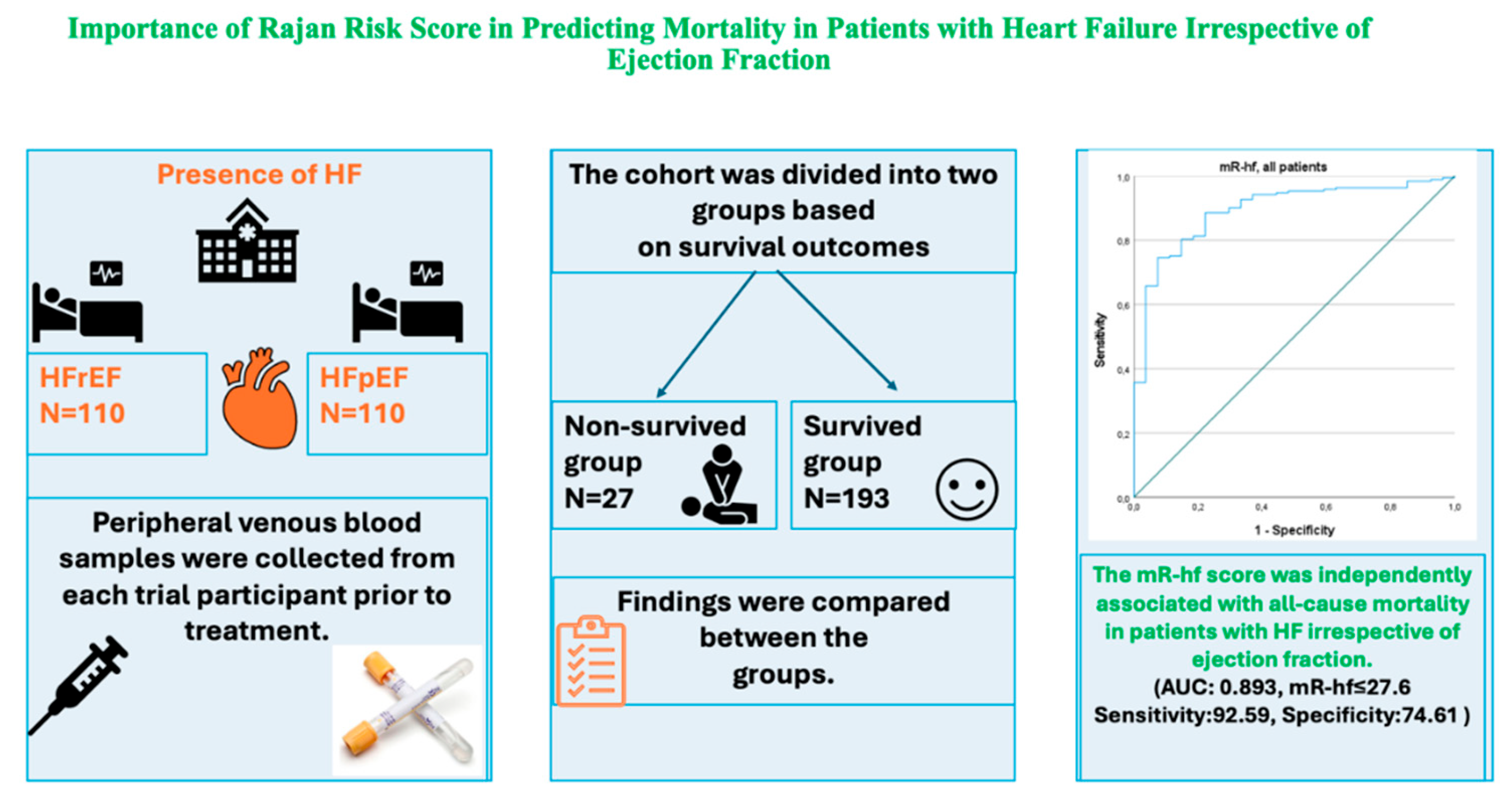
Figure 1. Graphical abstract showing the design of the study. Abbreviations: HFrEF, heart failure with reduced ejection fraction; HFpEF, heart failure with preserved ejection fraction; mR-hf, modified Rajan heart failure.
Preprints 183839 g001
Figure 2. A receiver operating characteristic (ROC) curve analysis of the modified Rajan’s heart failure (mR-hf) risk score in predicting mortality among all patients with HF (AUC: 0.893), and HFrEF (AUC: 0.879) and HFpEF (AUC: 0.937) subgroups, respectively.
Preprints 183839 g002
Table 1. Baseline Characteristics and Clinical Profile of Patients.
Variables Survived (n=193) Non-survived (n=27) Total (n=220) P
Age, years (SD) 69±11 76±10 70±11 0.001
Female, n (%) 72 (37.3) 6 (22.2) 78 (35.5) 0.126
Hypertension, n (%) 140 (72.5) 20 (74.1) 160 (72.7) 0.867
DM, n (%) 58 (30.1) 6 (22.2) 64 (29.1) 0.403
COPD, n (%) 61 (31.6) 10 (37) 71 (32.3) 0.573
Current Smoker, n (%) 34 (17.6) 4 (14.8) 38 (17.3) 0.719
Hyperlipidemia, n (%) 43 (22.3) 5 (18.5) 48 (21.8) 0.658
History of PCI, n (%) 91 (47.2) 13 (48.1) 104 (47.3) 0.923
ASA, n (%) 82 (42.5) 12 (44.4) 94 (42.7) 0.848
Statin, n (%) 76 (39.4) 14 (51.9) 90 (40.9) 0.218
P2Y12-i, n (%) 36 (18.7) 4 (14.8) 40 (18.2) 0.629
RAAS Blockers, n (%) 117 (60.6) 17 (63) 134 (60.9) 0.816
Beta Blockers, n (%) 163 (84.5) 20 (74.1) 183 (83.2) 0.178
MRA, n (%) 60 (31.1) 10 (37) 70 (31.8) 0.535
SGLT2-i, n (%) 76 (39.4) 8 (29.6) 84 (38.2) 0.330
Loop Diuretics, n (%) 138 (71.5) 24 (88.9) 162 (73.6) 0.055
Hemoglobin, g/dL (IQR) 13.6 (12-14.9) 13.2 (12-13.8) 13.5 (12-14.9) 0.170
eGFR, mL/min/1.73m2 (SD) 70±23 50±19 67±24 <0.001
HbA1c, % (SD) 6.4±1.1 6.4±0.7 6.4±1.1 0.354
Glucose, mg/dl (SD) 132±59 128±29 132±56 0.162
Albumin, g/L (SD) 3.5±0.5 3.5±0.3 3.5±0.5 0.508
Platelet, 109/L (SD) 214±71 195±54 211±69 0.172
TSH, mlU/L (IQR) 1.78 (1.10-3.08) 1.60 (1.20-2.33) 1.78 (1.10-3.0) 0.553
ALT, U/L (IQR) 20 (14-33) 28 (22-38) 22 (14-34) 0.128
AST, U/L (IQR) 23 (16-33) 21 (15-32) 23 (16-32) 0.244
NA, mmol/L (SD) 139±4 138±3 138±4 0.100
K, mmol/L (SD) 4.2±0.6 4.2±0.9 4.2±0.6 0.425
BNP, ng/L (IQR) 568 (352-1021) 1822 (1344-2600) 655 (365-1227) <0.001
NYHA Class, n (%) 1 40 (20.1) 1 (3.7) 41 (18.6) <0.001
2 111 (57.6) 7 (25.9) 118 (53.6)
3 37 (19.2) 12 (44.5) 49 (22.3)
4 5 (2.6) 7 (25.9) 12 (%5.5)
EF, % (SD) 41±16 39±14 41±15 0.517
E, cm/sec (SD) 92±17 96±10 92±16 0.113
A, cm/sec (SD) 68±23 62±17 69±22 0.300
E/A ratio (SD) 1.5±0.5 1.7±0.5 1.5±0.5 0.072
e' (mean), cm/sec (SD) 7.2±2 6.0±1 7.0±2 <0.001
E/e' (SD) 14±4 16±2 14±4 <0.001
mR-hf Risk Score (IQR) All patients 58.6 (27.3-95.6) 12.9 (7.5-19.2) 53.6 (22-85.6) <0.001
HFrEF group 44.7 (20.6-70.8) 8.2 (4.9-14.6) 35 (17.5-67.4) <0.001
HFpEF group 81.9 (46.9-131.1) 16.3 (12.3-22.7) 72.3 (30.3-118.9) <0.001
Abbreviations: DM, Diabetes Mellitus; COPD, Chronic obstructive pulmonary disease; PCI, Percutaneous coronary intervention; ASA, Acetylsalicylic acid; P2Y12-i, P2Y12 receptor inhibitors; RAAS, Renin–angiotensin–aldosterone system; MRA, Mineralocorticoid receptor antagonist; SGLT2-i, Sodium-Glucose Transport Protein 2 Inhibitors; eGFR, Estimated glomerular filtration rate; HbA1c, Hemoglobin A1c; TSH, Thyroid stimulating hormone; ALT, Alanine transaminase; AST, Aspartate transferase; NA, Sodium; K, Potassium; BNP, B-type natriuretic peptide; NYHA class, New York Heart Association classification; EF, Ejection fraction; E, Early ventricular filling velocity; A, Late ventricular filling velocity; e', mitral annular early diastolic velocity; mR-hf, Modified Rajan heart failure; HF, Heart failure; HFrEF, HF with reduced EF; HFpEF, HF with preserved EF; IQR, Interquartile Range; SD, Standard deviation.
Table 2. A: Univariate and Multivariate Analyses of Variables Predicting Mortality in Patients with Heart Failure. B: Univariate and Multivariate Analyses of Variables Predicting Mortality in Patients with Heart Failure with Reduced Ejection Fraction. C: Univariate and Multivariate Analyses of Variables Predicting Mortality in Patients with Heart Failure with Preserved Ejection Fraction.
A
Univariate Multivariate
Variables OR 95% C.I. P OR 95% C.I. P
Age 1.073 1.028 1.120 0.001 -
e' (mean) 0.612 0.452 0.827 0.001 -
NYHA class. 4.462 2.475 8.043 <0.001 2.278 1.161 4.468 0.017
mR-hf Risk Score 0.920 0.886 0.956 <0.001 0.938 0.905 0.972 <0.001
B Univariate Multivariate
Variables OR 95% C.I. P OR 95% C.I. P
e’ (mean) 0.480 0.280 0.824 0.008 -
NYHA class. 4.015 1.839 8.768 <0.001 -
mR-hf Risk Score 0.900 0.842 0.963 0.002 0.930 0.877 0.986 0.015
C Univariate Multivariate
Variables OR 95% C.I. P OR 95% C.I. P
Age 1.160 1.068 1.260 <0.001 -
e’ (mean) 0.679 0.477 0.967 0.032 -
NYHA class. 5.344 2.117 13.493 <0.001 3.703 1.096 12.513 0.035
mR-hf Risk Score 0.907 0.850 0.967 0.003 0.920 0.870 0.973 0.004
Abbreviations: e', mitral annular early diastolic velocity; NYHA class, New York Heart Association classification; mR-hf, Modified Rajan’s heart failure.
Disclaimer/Publisher’s Note: The statements, opinions and data contained in all publications are solely those of the individual author(s) and contributor(s) and not of MDPI and/or the editor(s). MDPI and/or the editor(s) disclaim responsibility for any injury to people or property resulting from any ideas, methods, instructions or products referred to in the content.
Copyright: This open access article is published under a Creative Commons CC BY 4.0 license, which permit the free download, distribution, and reuse, provided that the author and preprint are cited in any reuse.
Prerpints.org logo

Preprints.org is a free preprint server supported by MDPI in Basel, Switzerland.

Subscribe

Disclaimer

Terms of Use

Privacy Policy

Privacy Settings

© 2025 MDPI (Basel, Switzerland) unless otherwise stated