

Submitted:
05 November 2025
Posted:
05 November 2025
You are already at the latest version
Abstract
Due to its rich array of bioactive compounds, black pepper (Piper nigrum) is not only a spice in kitchens worldwide, but a plant of significant medicinal interest as well. Among these, piperine has wide-ranging biological effects and has become a focal point in scientific research. Besides piperine, black pepper also contains numerous other phytochemicals, like essential oils, flavonoids, terpenes, and lignans-all of which have shown pharmacological activities. This review offers an in-depth look at the various phytochemicals found in black pepper, detailing both traditional and modern techniques used for their extraction and purification. Particular attention is given to the total synthesis and chemical modifications of piperine and related compounds, outlining major developments and methodologies in this area. The review also briefly touches on the therapeutic applications validated so far. Overall, this work is intended to be a valuable resource for researchers interested in the chemical, synthetic, and medicinal potential of Piper nigrum.
Keywords:
Piper nigrum
; phytochemicals
; piperine
; black pepper
; king of spices
; alkaloid
1. Introduction
Natural products have long served as invaluable resources in drug discovery, with over 60% of currently approved pharmaceuticals being derived from or inspired by natural compounds, particularly in therapeutic areas such as anti-infective, anticancer, and anti-inflammatory agents [1]. Among the numerous botanicals explored for bioactive secondary metabolites, Piper nigrum L., commonly known as black pepper, occupies a distinguished place due to its dual role as a culinary spice and a traditional medicinal agent [2].
Belonging to the Piperaceae family, P. nigrum is native to the Western Ghats of India and is now widely cultivated across tropical regions in Asia and other parts of the world [3,4]. Revered as the “King of Spices,” black pepper has been an integral part of traditional medicine systems such as Ayurveda, Siddha, and Traditional Chinese Medicine. It has been employed for the treatment of various ailments, including gastrointestinal disturbances, respiratory disorders, and inflammatory conditions [5].
Phytochemically, P. nigrum is a rich source of diverse secondary metabolites, including alkaloids, amides, flavonoids, lignans, terpenes, and essential oils [6]. Among these, piperine (1) is the most prominent and bioactive alkaloid, responsible for the characteristic pungency of black pepper. It was first isolated in 1819 by Hans Christian Ørsted as 1-piperoylpiperidine. [7,8]
The structure of piperine was elucidated in 1850 [9], and its stereochemistry (trans–trans configuration) was later verified by Doebner and further by Ladenburg and Scholtz [9]. The crystal and molecular structure were later determined by Grynpas and Lindley [10].
Numerous scientific investigations have confirmed the versatile pharmacological activities of piperine, supporting its ethnomedicinal relevance since ancient times. These include antioxidant, anti-inflammatory, antimicrobial, anticancer, anticonvulsant, insecticidal, antidiabetic, and bioenhancer effects [11]. Other phytochemicals isolated from P. nigrum, such as chavicine, piperidine, β-caryophyllene, and limonene, have also shown significant bioactivity [12].
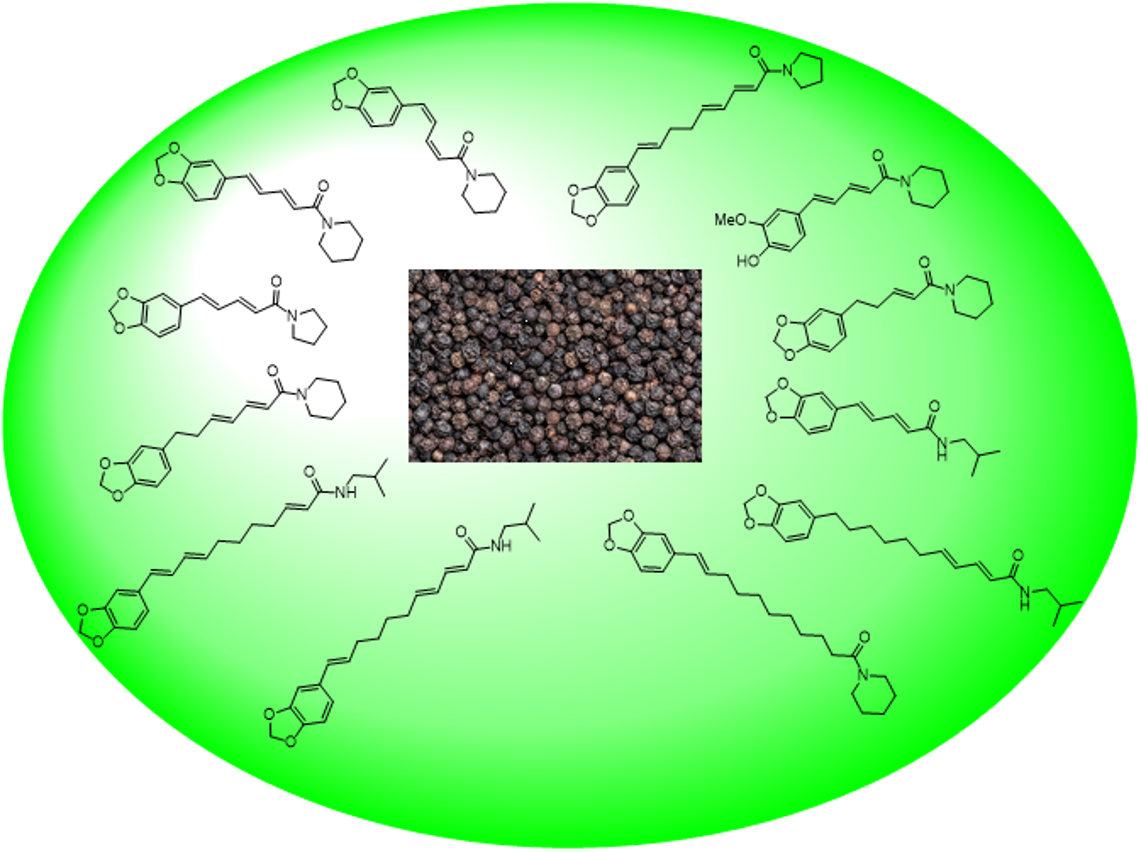
Dyer and colleagues have extensively reviewed the isolation, synthesis, and evolutionary ecology of piperamides, highlighting their ecological significance within the Piper genus [13]. Our previous review similarly underscored the wide-ranging pharmacological effects of black pepper, including its roles in obesity management, neuroprotection, antimicrobial resistance, and more [8]. In a notable study, Tezuka et al. reported the isolation of 19 distinct alkamides from P. nigrum, which exhibited inhibitory effects on the human liver microsomal enzyme CYP2D6 [14]. Figure 1 summarizes some of the major phytochemicals identified in black pepper [15].
Recent research has increasingly focused on the therapeutic versatility of piperine and its analogs across numerous disease models and pharmacological domains, such as: COVID-19 management [16,17], cardiovascular protection [18], synergistic use with cisplatin in apoptosis induction [19], electrochemical behavior [20], autoimmune encephalomyelitis modulation [21], ischemic stroke recovery [22], promotion of autophagic flux [23], c-myc gene regulation [24], hepatocellular carcinoma treatment [25], lipid metabolic improvement [26], anticancer nanoparticle development [27], breast cancer therapy [28], enhancement of drug bioavailability, e.g., domperidone [29], piperine-based urea analogs for cancer [30], neuroprotection in neurological disorders [31].
While multiple reviews have discussed the pharmacological and ethnobotanical relevance of P. nigrum, there is still a space of literature focusing specifically on the isolation techniques, synthetic strategies, and bioactivity assessments of its core phytochemicals—particularly piperine and its derivatives. As synthetic organic chemistry continues to evolve, understanding structure-activity relationships (SAR) and developing more potent, stable, and bioavailable piperine analogs is of growing interest [32].
Therefore, this review aims to present a comprehensive and up-to-date overview of the phytochemicals derived from P. nigrum, with an emphasis on the isolation techniques, synthetic approaches, and bioactivity assessments of its major constituents-particularly piperine. By integrating perspectives from natural product chemistry, medicinal chemistry, and pharmacognosy, this work seeks to highlight both classical foundations and recent advancements, thereby providing a valuable reference for researchers exploring the therapeutic potential and chemical innovation surrounding black pepper phytochemicals.
2. Botanical Description of Black Pepper
Black pepper (Piper nigrum L.), a member of the Piperaceae family, is a perennial woody vine known for its climbing habit, typically reaching up to 10 meters in height with support. Cytogenetically, it is a balanced tetraploid species (2n = 52), though no diploid relatives (2n = 26) have been reported in India [33,34]. Based on morphological and biosystematic analyses, P. wightii, P. trichostachyon, and P. galeatum are believed to be its ancestral species. The plant features dimorphic branching, with monopodial orthotropic (upright) branches for growth and sympodial plagiotropic (horizontal) branches for fruiting. Adventitious roots develop from the base of mature stems and from each node on the orthotropic shoots, aiding in climbing. The leaves are simple, alternate, and borne on grooved petioles (2-5 cm long), with variable blade sizes ranging from 8-20 cm in length and 4-12 cm in width. In Indian conditions, flowering typically begins 2-3 years after planting, aligning with the May-July monsoon [34]. The pendulous inflorescences, or spikes, emerge opposite the leaves on fruiting branches, range from 3-15 cm long, and bear flowers that bloom within 6-10 days of spike emergence. While wild varieties are generally dioecious, cultivated forms are mostly monoecious and primarily self-pollinate, though protogyny (female organs maturing before male) is also observed. The mature fruits are spherical drupes (~5 mm in diameter) that are harvested and sun-dried for use [34,35].
3. Chemical Composition and Major Classes of Compounds in Piper nigrum
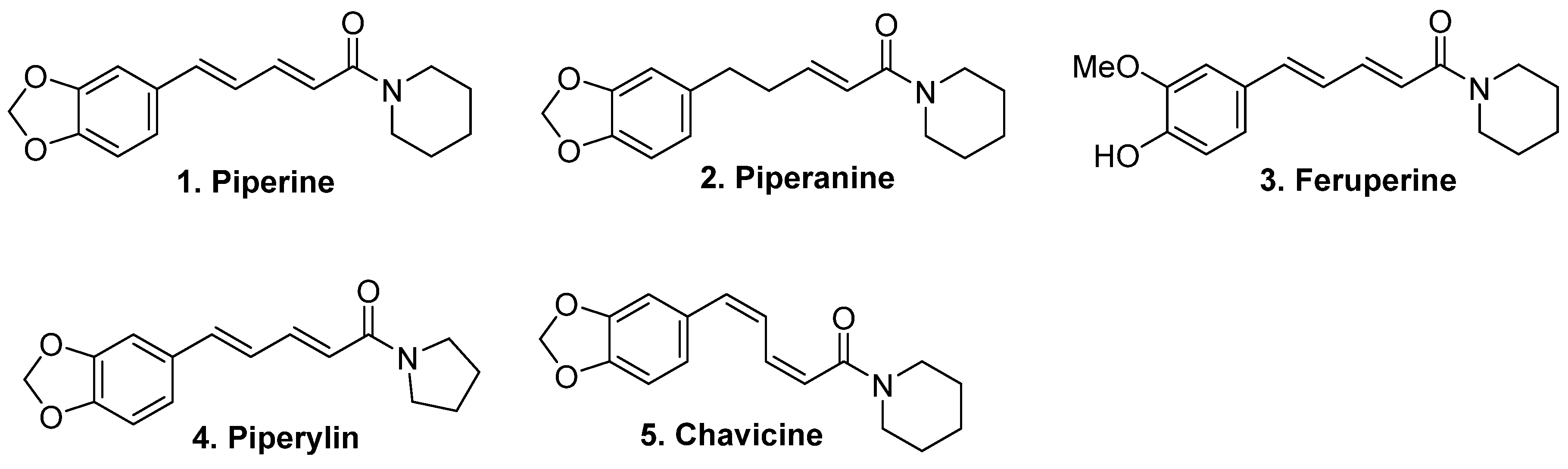
P. nigrum is a rich source of nutrients and bioactive phytochemicals that contribute to its characteristic pungency, aroma, therapeutic properties, and nutritional value. Its chemical composition can be broadly categorized into nutritional components and major classes of secondary metabolites. Table 1 highlights nutritional composition and Table 2 highlights essential oils from P. nigrum. Similarly Figure 1 shows structure of major essential oils and Figure 2 shows major secondary bioactive metabolites from P. nigrum.
A. Nutritional Composition
Black pepper seeds are nutritionally dense. Per 100 grams, they provide approximately 66.5 g of carbohydrates, 10 g of protein, and 10.2 g of fat. The spice is also abundant in essential minerals, including potassium (1200 mg), calcium (400 mg), magnesium (235.8-249.8 mg), and phosphorus (160 mg), along with smaller amounts of sodium, iron, and zinc. These elements play vital roles in human physiological functions [34,36].
In terms of vitamins, black pepper contains appreciable levels of vitamin C and B-complex vitamins such as B1 (thiamine), B2 (riboflavin), and B3 (niacin), which contribute to metabolic and immune support [34,37].
Additionally, black pepper contains polyphenolic compounds, including tannins (2.11-2.80 mg/100 g), flavonoids like catechin, quercetin, and myricetin, as well as carotenoids such as lutein and β-carotene. These compounds exhibit potent antioxidant and anti-inflammatory activities [34].
B. Bioactive Secondary Metabolites
Alkaloids: The principal alkaloid in black pepper is piperine, which is primarily responsible for its pungency and a wide range of biological effects, including antioxidant, anti-inflammatory, and bioenhancing properties. Piperine content in seeds ranges from 2.13% to 5.80% [34]. Many alkamides found in P. nigrum are discussed by Guo and coworkers in their review article published in 2025 [41].
Essential Oils (EOs): Black pepper essential oils are composed of a complex mixture of volatile compounds, predominantly monoterpenes and sesquiterpenes. The EO yield varies depending on the plant part and extraction method-ranging from 1.24-5.06% in berries and 0.15-0.35% in leaves [42,43,44]. Major constituents include β-caryophyllene, α-pinene, limonene, sabinene, and nerolidol, though regional variations exist. Minor EO components include β-elemene, δ-elemene, α-zingiberene, and others in trace amounts. Chemical constituents of essential oils of P. nigrum from seed is discussed in details by Asadi [45].
Oleoresins: Oleoresins represent a concentrated extract of both volatile and non-volatile compounds. Their content ranges from 4.27% to 12.73% across different cultivars and conditions. These extracts are highly valued in the food and pharmaceutical industries for their intense flavor and therapeutic potential [34,39].
Phenolic Compounds: Black pepper is enriched with flavonoids (e.g., catechin, quercetin, myricetin) and carotenoids (e.g., lutein, β-carotene), which function as antioxidants and exhibit various health-promoting effects, including cardiovascular and neuroprotective benefits [34].
Amides: In addition to piperine, black pepper contains a range of amide compounds that share structural similarities and contribute to both the pungency and bioactivity of the spice [34].
Steroids and Triterpenoids: Although present in smaller quantities, these compounds may exert beneficial pharmacological actions, including anti-inflammatory and immunomodulatory effects [34].
Piperine: Piperine is the principal alkaloid in Piper nigrum, accounting for 2–9% of the fruit’s weight. [6] It is responsible for the pungency of black pepper and exhibits a range of biological activities, including: enhancement of nutrient and drug bioavailability [50], anti-inflammatory and antioxidant effects [51], neuroprotective and antimicrobial properties [52].
Chavicine: Chavicine is an isomer of piperine formed during processing. While structurally similar, chavicine lacks pungency and is less stable, often reverting to piperine under heat or light exposure. It contributes to the variability in pepper’s pungency based on storage and processing [53,54].
Essential Oils: Essential oils constitute 0.4-7% of black pepper [6] and include: monoterpenes: α-pinene, β-pinene, limonene [55]; sesquiterpenes: β-caryophyllene, caryophyllene oxide [56]. These volatiles are chiefly responsible for the aroma of black pepper and have antimicrobial and antioxidant effects.
4. Extraction and Isolation Techniques of Phytochemicals from Piper nigrum
The extraction and isolation of phytochemicals from P. nigrum can be viewed in conventional solvent-based methods to advanced green technologies that enhance yield, purity, and sustainability [34]. Traditional extraction methods (TEM) are widely used due to their simplicity, cost-effectiveness, and historical reliability. However, they often involve long extraction times, large solvent volumes, and potential degradation of heat-sensitive compounds [57,58,59,60,61]. Modern methods aim to improve extraction efficiency, reduce solvent usage, and preserve bioactivity. These are more eco-friendly and are suitable for industrial-scale applications [61,62,63,64,65]. Below Table 3 list some TEM and MGET.
5. Chromatographic and Spectroscopic Identification Methods
To identify and analyze the phytochemicals in P. nigrum, a variety of chromatographic and spectroscopic techniques are employed. High-Performance Liquid Chromatography (HPLC) is commonly used for the separation and quantification of compounds like piperine, while Gas Chromatography (GC) is preferred for analyzing essential oils. Thin-Layer Chromatography (TLC) offers a simple and cost-effective method for preliminary analysis, and Flash Chromatography allows for efficient large-scale isolation of target compounds. Spectroscopic methods like UV-Vis Spectroscopy are frequently used for the quantification of piperine, while Fourier Transform Infrared Spectroscopy (FTIR) helps in identifying functional groups within the compounds. Nuclear Magnetic Resonance (NMR) Spectroscopy provides detailed structural information, making it invaluable for structural elucidation of complex compounds. Mass Spectrometry (MS), often coupled with GC-MS or HPLC-MS, provides accurate molecular identification and quantification, particularly for volatile and alkaloid compounds. Finally, Raman Spectroscopy offers a non-destructive approach for molecular identification through vibrational analysis. These combined methods enable precise characterization of bioactive compounds, ensuring comprehensive analysis of black pepper’s phytochemical profile [57,66,67,68,69,70].
6. Synthetic and Semi-Synthetic Approaches for Compounds from Piper nigrum
P.nigrum is a rich source of bioactive compounds, particularly piperine, which is the primary alkaloid responsible for its characteristic pungency. While the extraction of these compounds from natural sources remains common, synthetic and semi-synthetic methods have gained prominence in recent years due to their efficiency, scalability, and ability to produce modified derivatives with enhanced properties. The following sections explore the synthetic approaches to the major compounds from black pepper, including the challenges and advances in their synthesis.
6.1. Isolation of Piperine from Natural Sources and Amide Hydrolysis
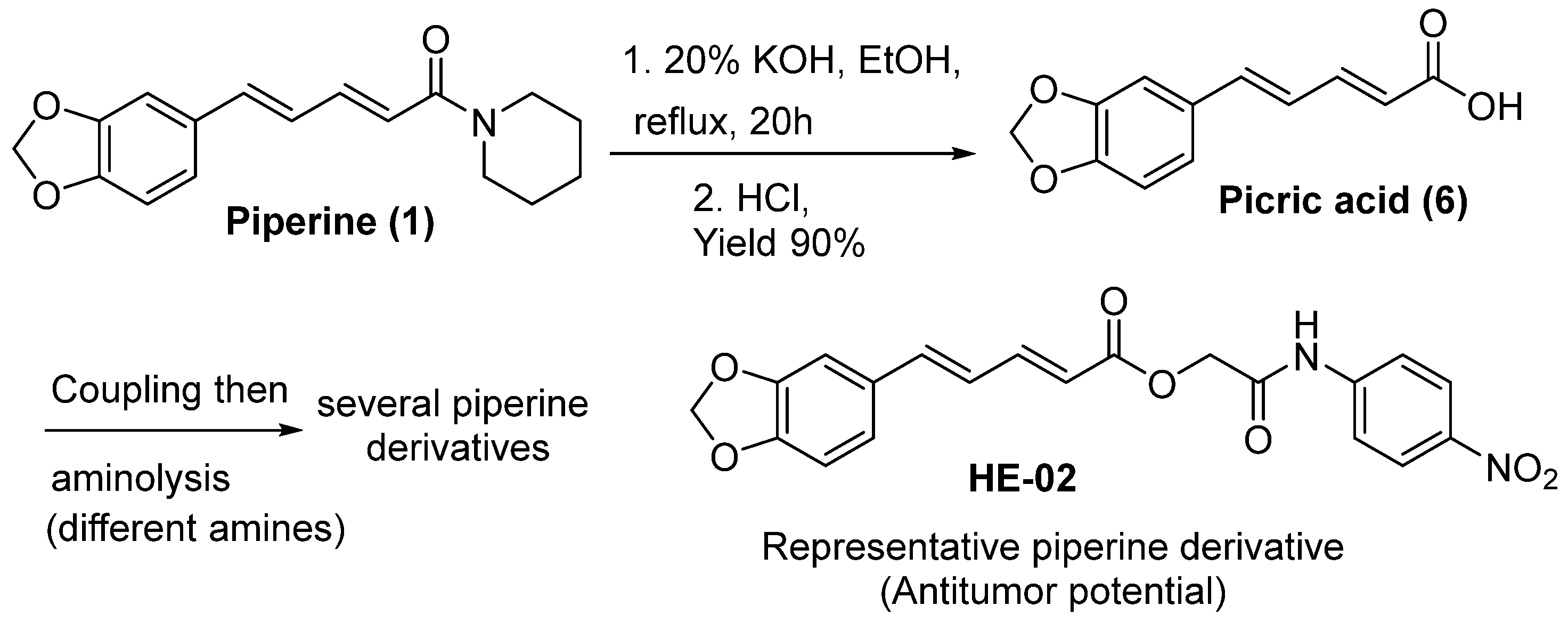
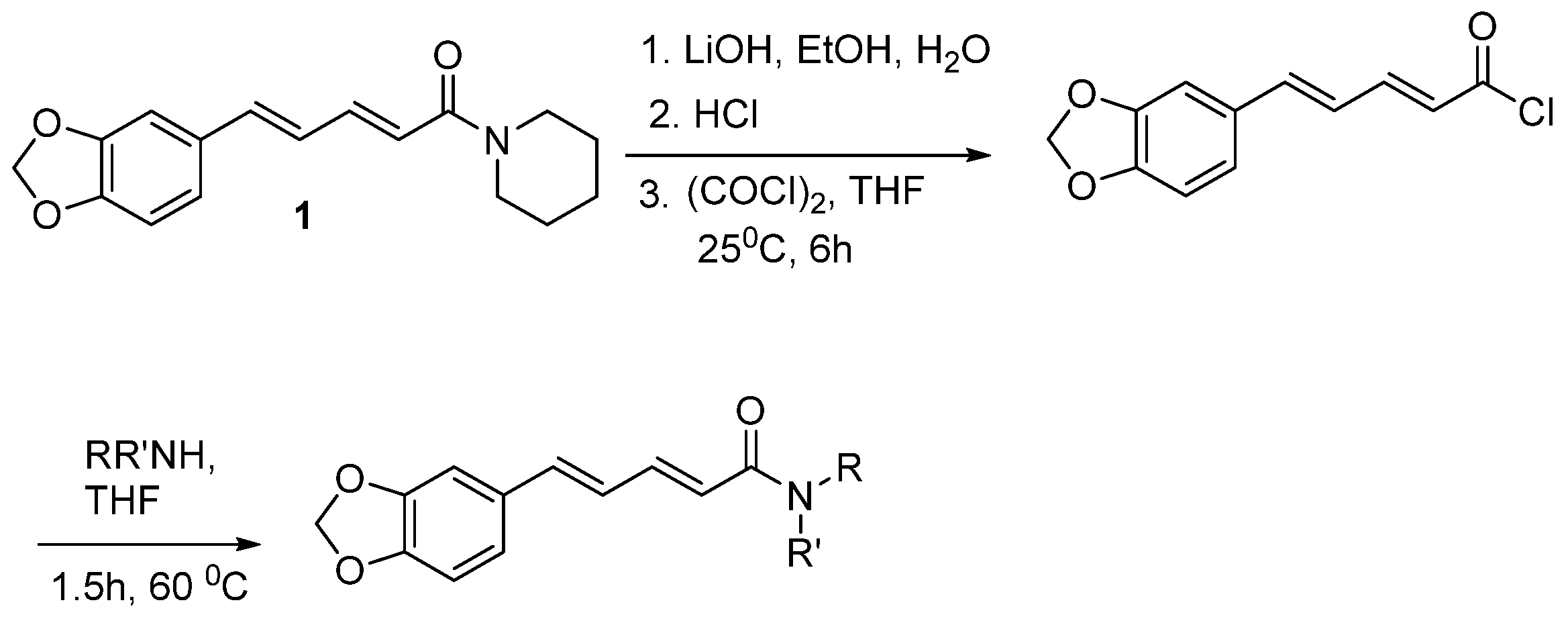
Initially, piperine (1) was isolated from natural sources such as black and white P. nigrum. It was then subjected to alkaline hydrolysis to yield piperic acid (6), which served as a key intermediate for synthesizing various amide derivatives for biological studies, as shown in Scheme 1 [71,72,73]. However, due to the increasing demand for piperine, its natural supply has become insufficient for large-scale applications. This limitation has driven the development of synthetic routes to produce piperine and its analogs more efficiently. These synthetic approaches also enable structural modifications at the amide group, alkyl chain, and piperonal moiety to facilitate structure-activity relationship (SAR) studies.
For the first time, synthesis of piperine (1) was reported by Rtigheimer in 1882 [13,74], where piperidine react with acyl chloride derived from piperic acid (6) via hydrolytic cleavage of the isolated natural piperine. Only after 12 years later in 1894, Ladenburg and Scholtz isolated other additional chemical components from piper and also the structure elucidated via hydrolysis and total synthesis [74,75]. In 1950 Spring and Stark reported the isolation, identification, and synthesis of piperttine from Piper nigrum [76].
6.2. Isolation and Structure Elucidation of Piperanine
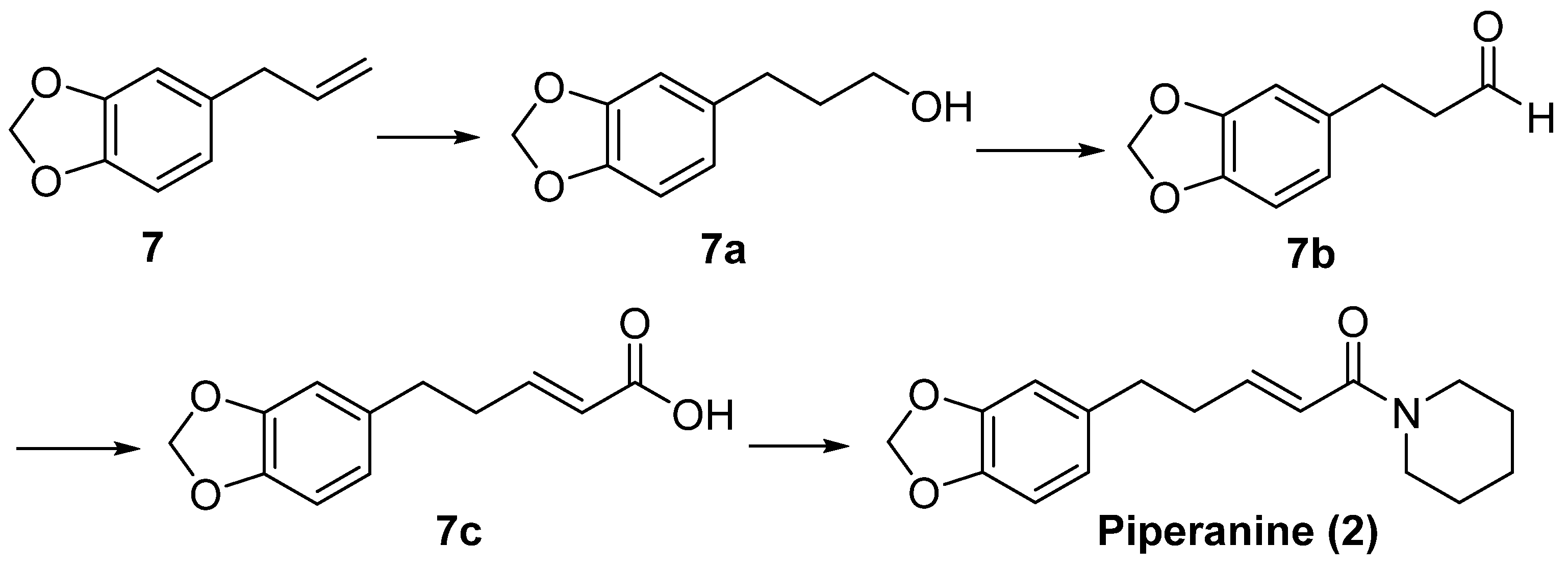
In 1971 James reports isolation, structure elucidation by the synthesis of piperanin (Scheme 2) [77], and reports the trans geometry. Safrole (7) converted to 3-(3,4-methylenedioxyphenyl)propanol (7a) by hydroboration with diborane then alkali hydrogen peroxide treatment. Then (7a) dissolved in DMSO and reacted with anhydrous phosphoric acid then finally added freshly distilled dicyclohexylcarbodiimide to affords 3-(3,4-Methylenedioxyphenyl)propionaldehyde (7b). Carboethoxymethylenetriphenylphosphorane in benzene added to afford acid (7c) which reacted with oxalyl chloride in benzene and added piperidine to afford piperanine(2).
6.3. Isolation and Synthesis of Pipericide and Dihydropipericide from Piper nigrum
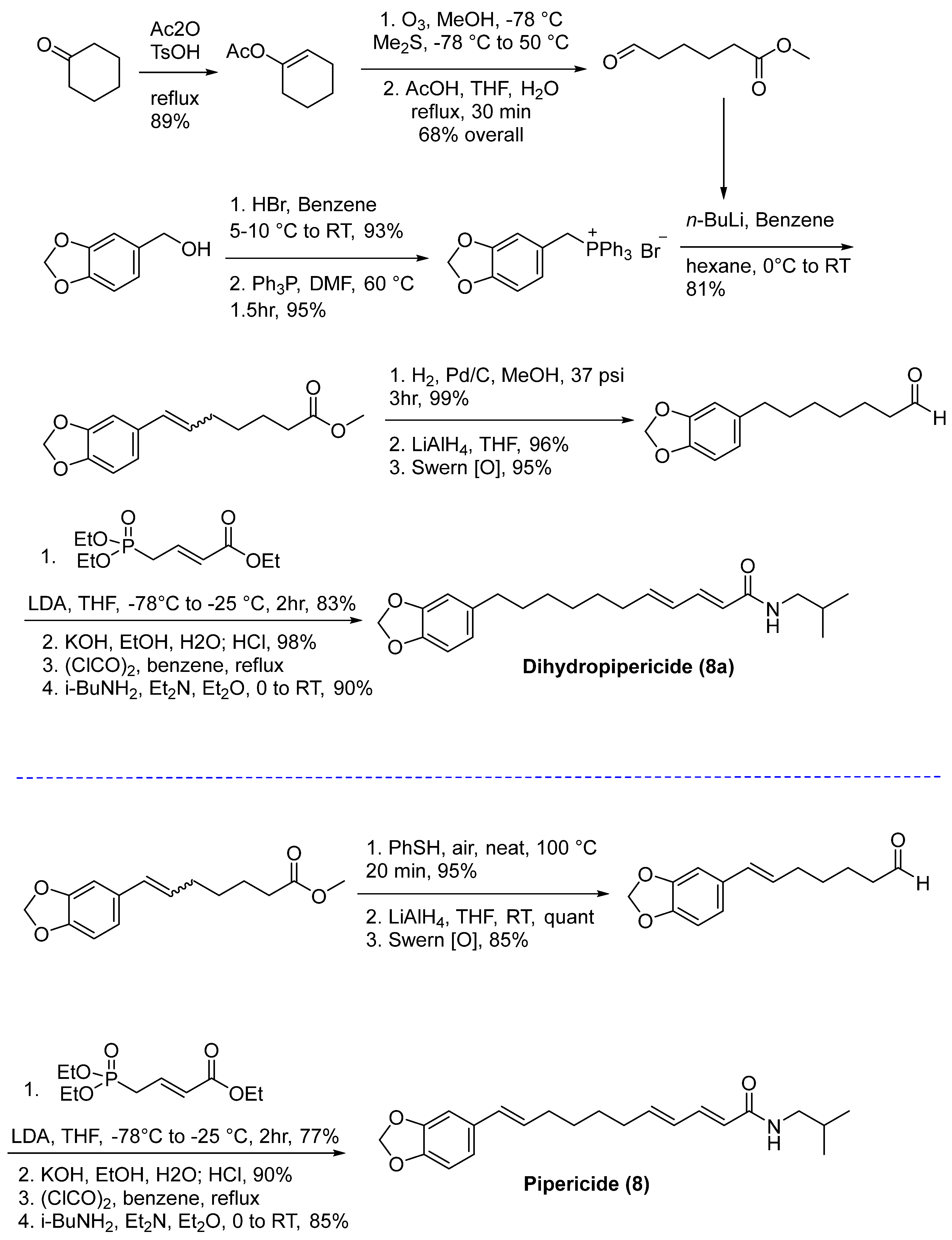
In 1979, two insecticidal amides; pipericide (8) and dihydropipericide (8a) were isolated from P. nigrum by Miyakado and Yoshioka [78,79,80]. Synthesis of both the pipericide and dihydropipericide is reported by Rotherham and Semple in 1998 (Scheme 3) [81]. The coumaperine, N-trans-feruloyl tyramine, N-trans-feruloyl piperidine, (4-hydroxy-3-methoxyphenyl)-2E, 4E-pentadienoyl piperidine, and 3-methoxyphenyl)-2E-pentenoyl piperidine are isolated from P. nigrum in 1980 by Nakatani and coworkers [82], and the structure and synthesis of new Phenolic amides from P. nigrum reported in 1981 by Inatani coworkers [83].
6.4. Synthesis of Piperine from piperonaldehyde
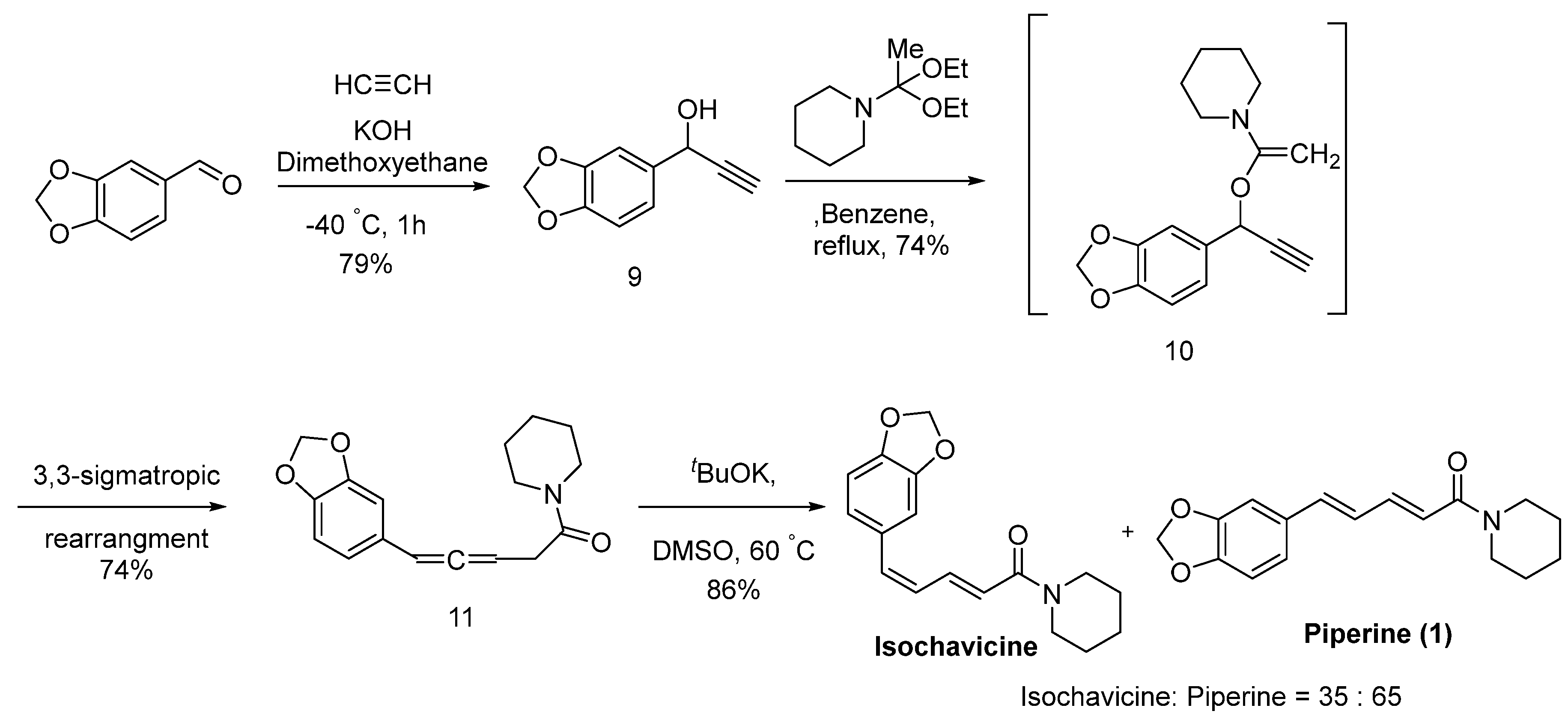
In 1979 Tsuboi and Takeda co-work described three-step synthesis of piperine (Scheme 4) from commercially available piperonal aldehyde. The acetylene solution treated with piperonal in presence of potassium hydroxide at low temperature (-40 oC) to get propargylic alcohol (9) in good yield; then allowed thermal condensation with the N-acetylpiperidine diethyl-acetal to achieve intermediate 10, which undergo (3,3)-sigmatropic rearrangement to give allene amide (11), then under base (tBuOK) furnish a mixture of Isochavicine and Piperine (1) in the ratio of 35:65 with 86% yield [84].
6.5. Stereoselective Synthesis of Piperine and Related Pepper-Derived alkaloids
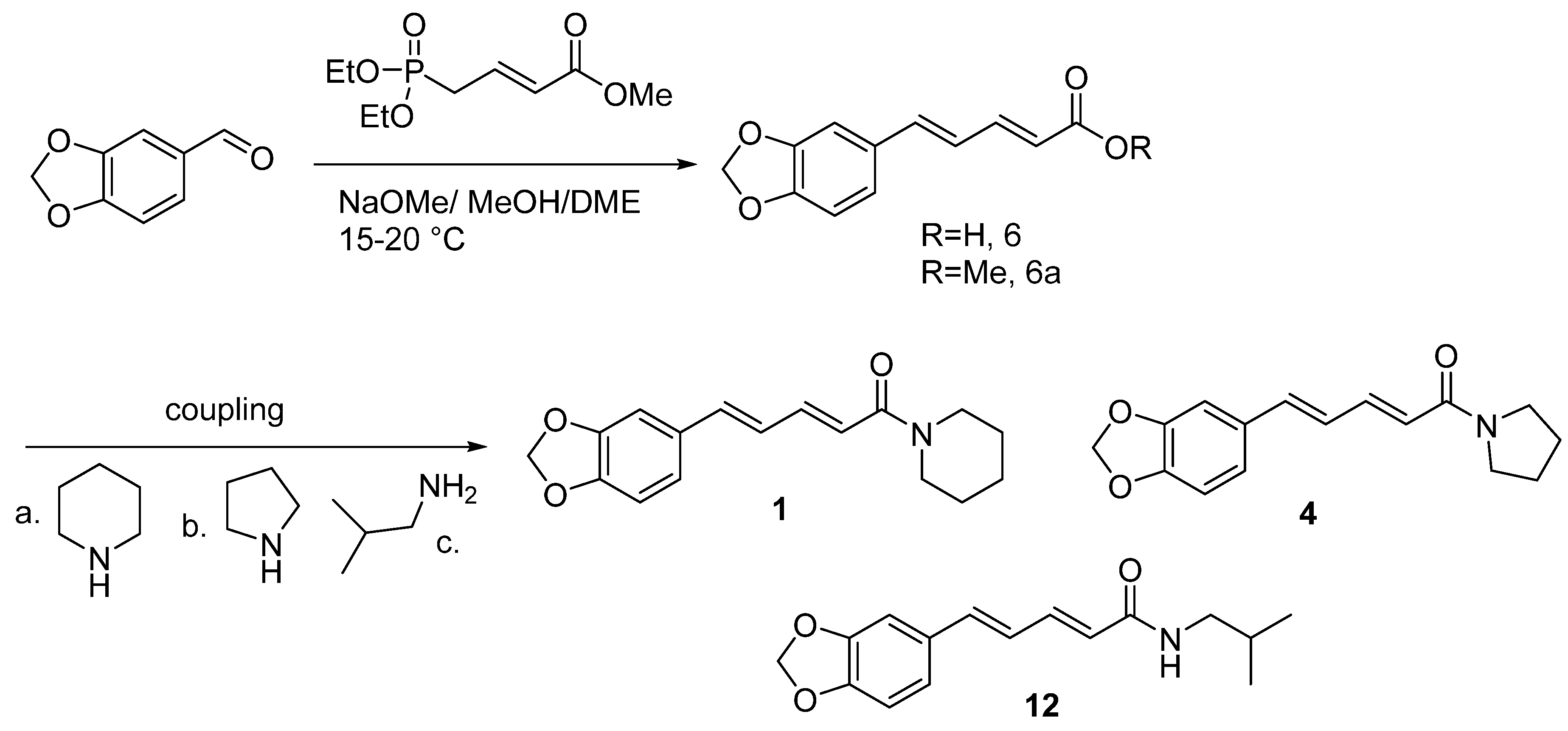
Some earlier syntheses by Feugeas, 1964; Lurik et al., 1971; Dallacker and Schubert, 1975 have suffered from low yield even after several steps [85] having stereoselectivity issue (Tsuboi and Takeda, 1979), so in 1981 Olsen and Spessard reports two steps stereoselective synthesis of piperine and its related pepper alkaloids (Scheme 5). Where piperonal first treated with the ylide made from diethylphosphono-butenoate to afford methyl piperate (6a) then hydrolysis giving piperic acid (6) and subsequent coupling giving various amides; piperine (1), Trichostachine (or also known as Piperylin) (4), Piperlonguminine (12) [73].
6.6. Stereoselective Synthesis of Piperine via a Double Elimination Reaction
In 1986 Mandai and coworkers reported two steps highly stereoselective synthesis of piperine via a double elimination reaction of a beta-acetoxy sulphone (Scheme 6) [86]. Here they prepared sulphone (13) substrate from piperonal and couple with an aldehyde (14) by using a strong base (n-BuLi) to get acetate (15) then treating with t-BuOK gives piperine (1) in good yield (77%) with stereocontrol of 90% ee.
6.7. Other Piperine Synthesis Methods
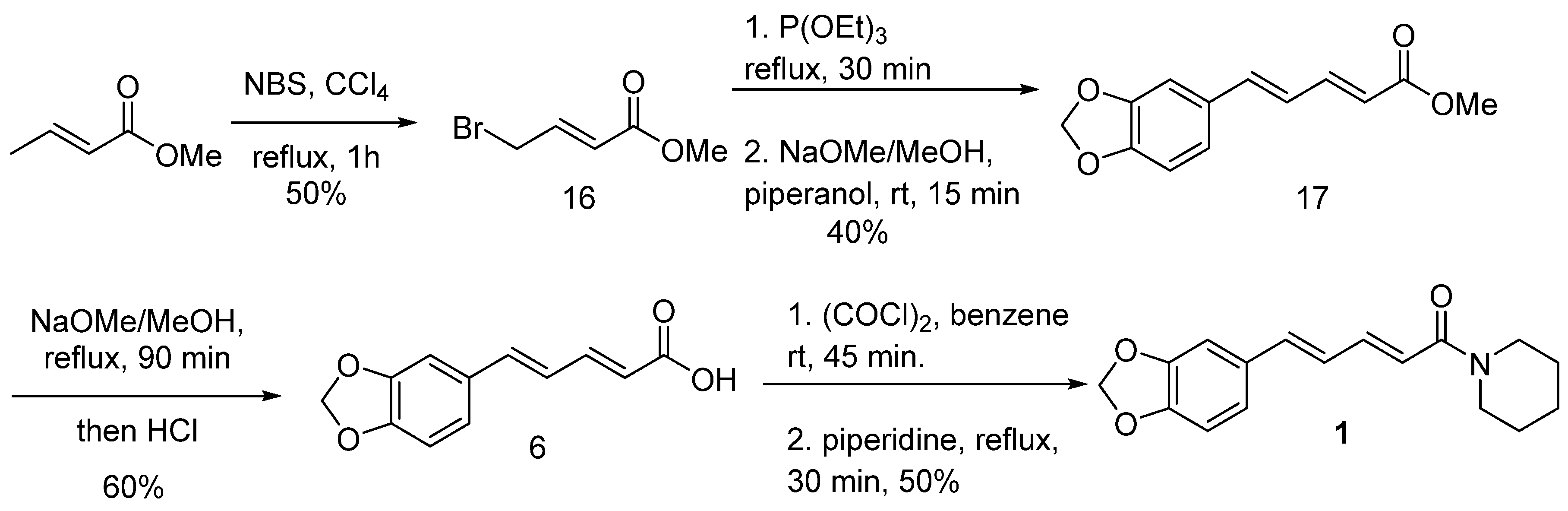
In the year 1995, Sloop reported a synthetic strategy for piperine (Scheme 7) and carpanone [87]. The allylic bromination of the methyl crotonate by treating with NBS (N-bromosuccinamide) and carbon tetrachloride under reflux giving moderate yield (16); which is now available commercially. Then via aldol condensation gives methyl piperate (17), which then undergo ester hydrolysis to afford acid (6) and activation of acid, then aminolysis by piperidine gave piperine (1) with moderate yield (50%).
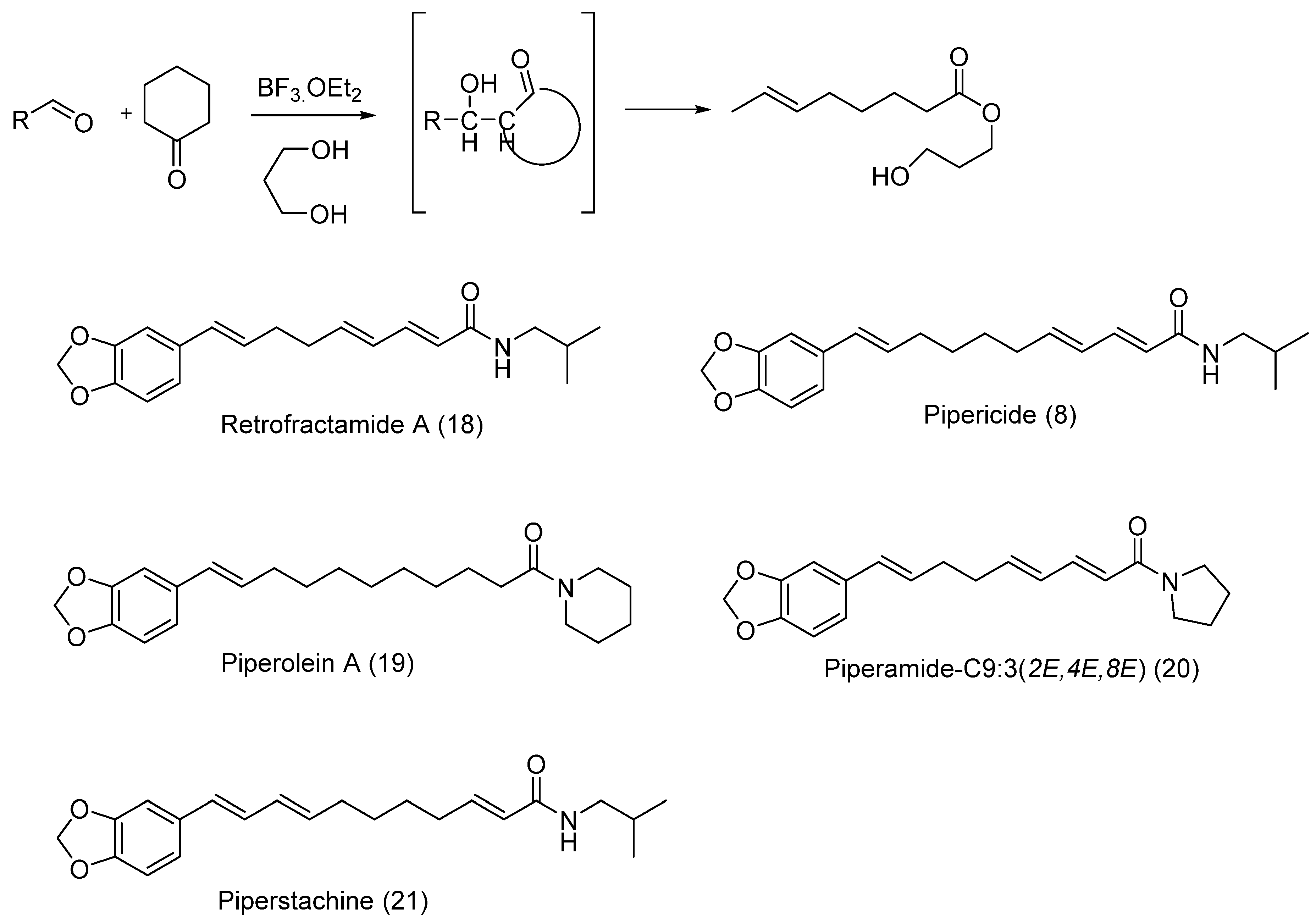
Strunz and Findlay (in 1994 and 1996) reported a Sakai aldol condensation-Grob fragmentation pattern to incorporate unsaturation stereospecifically for the synthesis of several piper amides retrofractamide A (18), pipericide (8), piperolein A (19), piperamide-C9:3(2E,4E,8E)(20) and piperstachine (21), based on piperonyl framework in same work they also report the synthesis of six nonaromatic piper (Scheme 8) [88,89].
In 1999, a palladium-catalyzed alkenylation reported by Schwarz and Braun for the synthesis of piperdardine (22) (Scheme 9) [90].
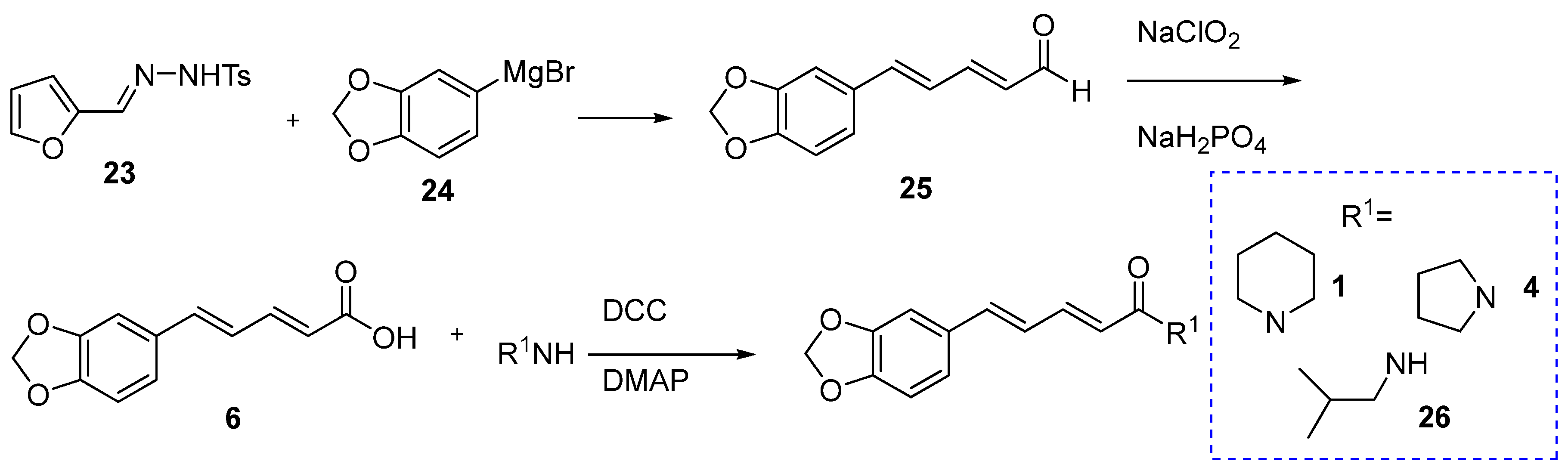
In the year 2000 total synthesis of piperine and its analogs were carried out by Chandrasekhar and coworkers (Scheme 10) [91]. The commercially available furfural converted to its hydrazine (23) which then treated with Grignard reagent, benzodioxole-MgBr (24) in dry THF to afford (2E,4E)-5-(benzo [d] [1,3]dioxol-5-yl)penta-2,4-dienal (25) then converted to piperic acid (6) via Pennick oxidation and coupled with DCC and amine hydrolysis gives different amides; piperine (1) and other congeners piperylin (4) and Piperlonguminine (15).
In 2000 Paula and coworkers synthesized a piperine derivatives (Scheme 11a) and tested the insecticidal activity against Brazilian insects (Ascia monuste orseis, Acanthoscelides obtectus, Brevicoryne brassicae, Protopolybia exigua and Cornitermes cumulans). Where they isolated the piperine and piperiline from P. nigrum, then hydrolyzed it to piperic acid and synthesized the 16 different new amide [92]. The result shows the mortality of insects ranges from 0 to 97.5% varied on the compound and the insect species.
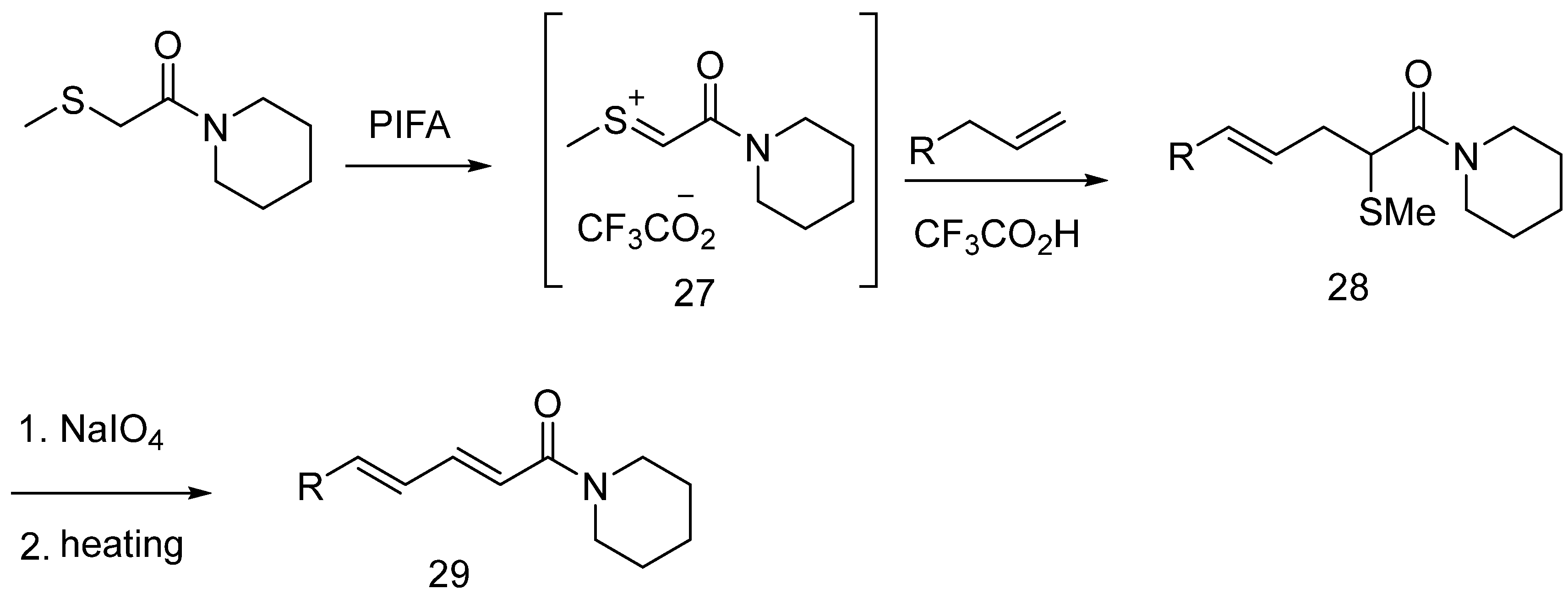
Kang and coworkers used hypervalent iodine (III) for generating a pummerer-type reaction in 2001 [93]. The generated reactive intermediate (27) then undergo ene type reaction to form a olefin type moiety (28) which under heating in presence of hypervalent iodine affords dieneamides (29) as depicted in Scheme 12.
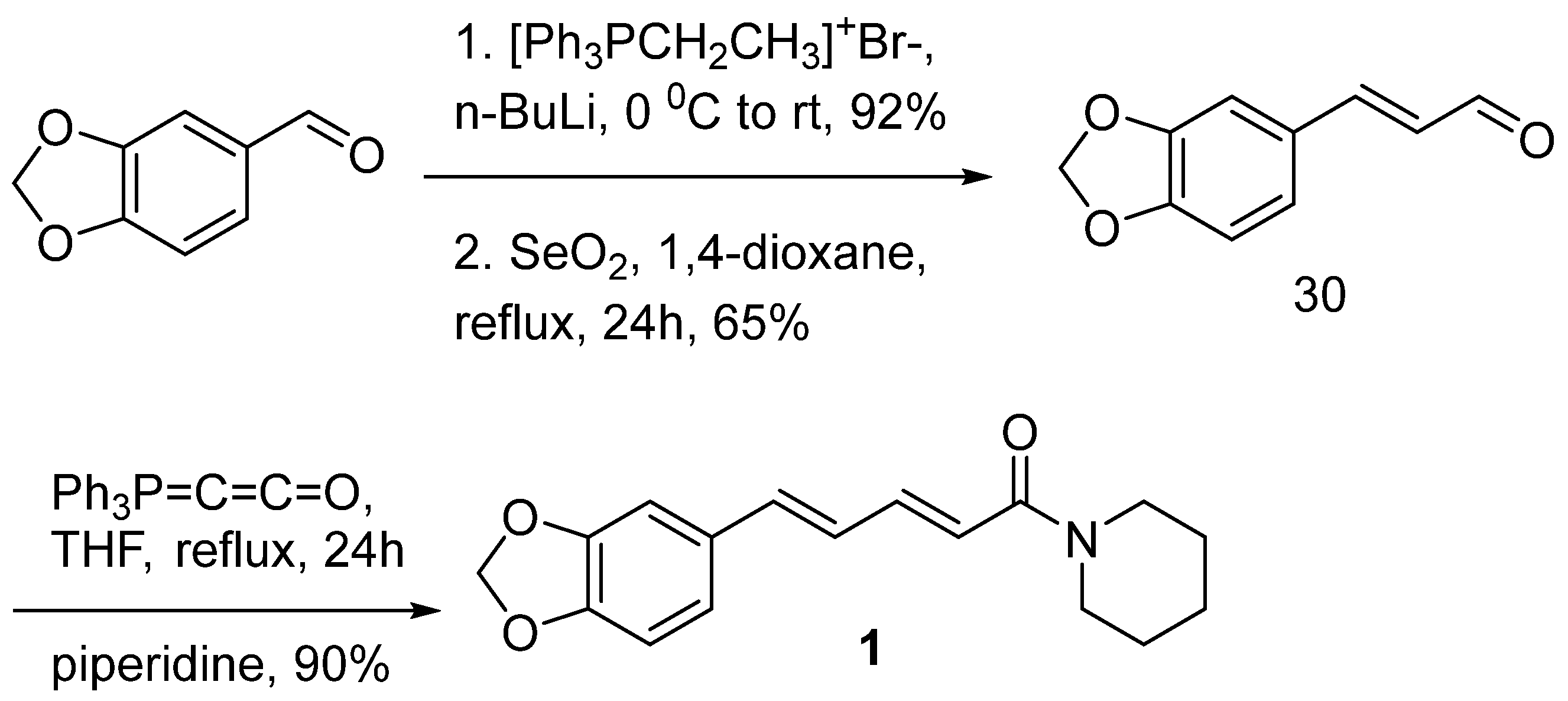
In 2001, Schobert and coworkers reported the synthesis of piperine via intramolecular three-component reaction between the aldehyde, ketenylidenetriphenylphosphorane, and amines (Scheme 13). [73] First the commercially available piperanol converted to corresponding alfa-beta-unsaturated aldehyde (30) by 2 steps: the first generation of cis-trans-isomeric mixtures of 3,4-(methylenedioxy)-b-methylstyrene via olefination with ethylidenetriphenylphosphorane and then selenium dioxide mediated trans-selective allylic oxidation to give E-aldehyde (30) which then undergo three-component domino reaction with the available ketene (Ph3P=C=C=O) and piperidine to obtain desired piperine (1) in good yield (90%).
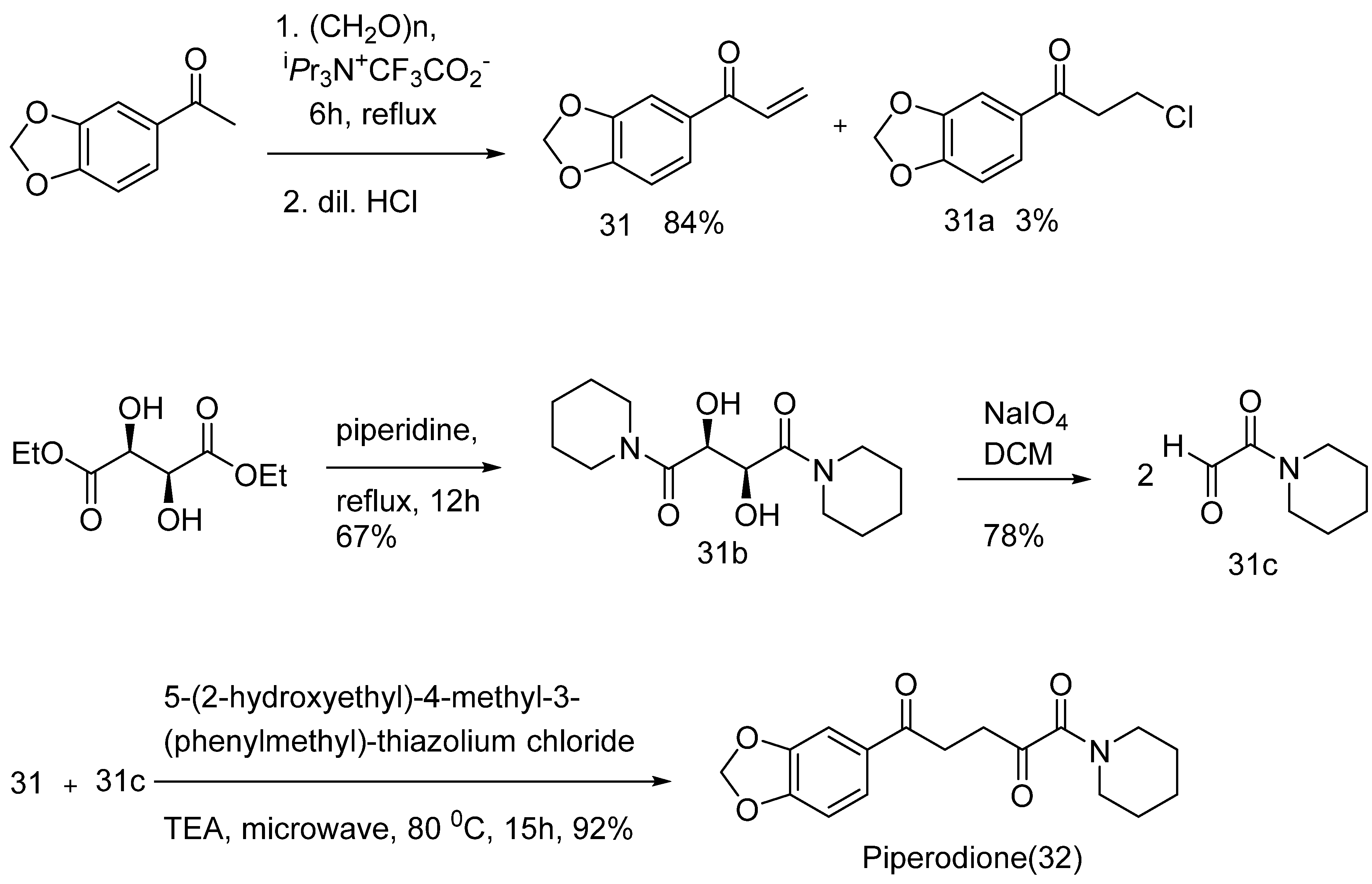
In 2014 Rene Csuk and coworkers reported first-time total synthesis of piperodione (32) and two other analogs having cyclopentane and azitidine amine rings. [94] As shown in Scheme 14; the commercially available dioxyacetophenone allowed Mannich reaction followed by acidic workup afford propanone (31) along with side product 31a. The commercially available diethyl tartrate treated with piperidine under reflux to afford diamide (31b) which undergoes cleavage by silicagel supported NaIO4 to form an aldehyde(31c) which then treated with propanone (31) to get the piperodione (32). [94]
In 2015, Mihovilovic and coworkers reported the synthesis of piperine analogs via Heck cross-coupling reaction of the conjugated dienamides allowing the rapid assembly of piperine derivatives (15 compounds) with modified aromatic core (Scheme 15). [95]. And the biological testing shows high efficacy and selectivity for GABAA or TRPV1 receptors.
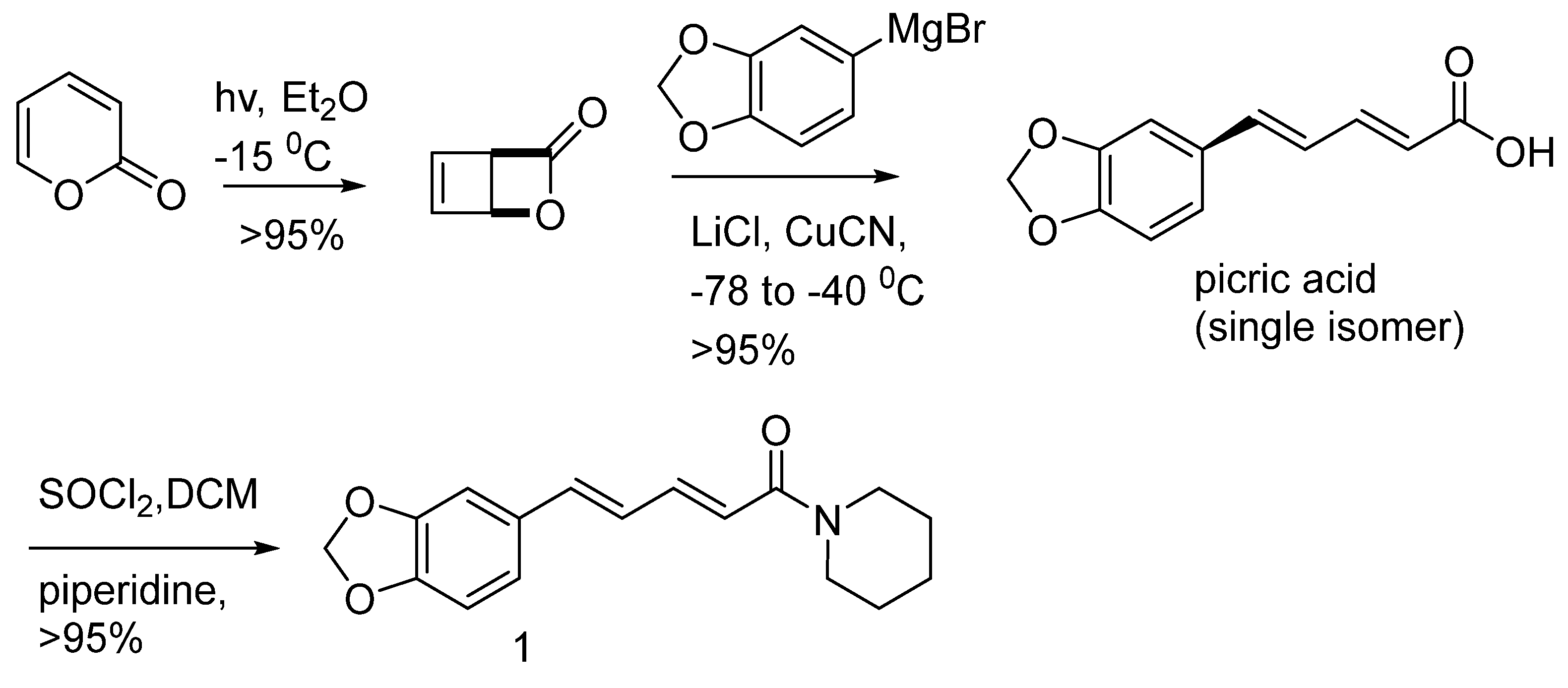
In 2018, Bauer and coworkers presented a short and stereoselective, efficient synthetic pathway for piperine and its analogs (Scheme 16). [96] Here the in-situ generated cuprate undergoes a nucleophilic attack to the cyclobutene lactone. Then the newly formed aryl-substituted cyclobutene naturally undergoes conrotatory 4-pie-electrocyclic ring opening to give a single diastereomer, 4-arylpentadienoic acid which after activation can easily undergo amide hydrolysis to give piperine and various analogs.
7. Bioactivity of Black Pepper and Isolated Phytochemicals
There are several review articles are published highlighting bioactivity of P. nigrum [6,15,18,97,98,99,100,101,102]. Most of the reported bioactivity are antioxidant [103], antibacterial, antimicrobial [103], hepatoprotective, anti-inflammatory, antifertility, antidepressant, antidiabetic, anticancer [104], antihyperglycemic [102]. Similarly the new phytochemicals identification study is also going on. Work purblished in 2023 by Luis and coworkers have done characterization and isolation of 26 different piperamides from P. nigrum [105].
8. Conclusions
Piper nigrum (black pepper) stands out as one of the most important medicinal spices, not only for its culinary value but also for its wide range of phytochemicals and therapeutic potential. This review consolidates extensive data on its nutritional content, essential oils, and diverse classes of secondary metabolites, particularly focusing on piperine-a principal alkaloid with notable pharmacological effects. Traditional and modern extraction techniques have been critically compared, emphasizing the shift toward eco-friendly and high-efficiency methods such as supercritical fluid extraction and ultrasound-assisted extraction. These techniques are instrumental in preserving the bioactivity of thermolabile constituents and facilitating industrial applications. Significant progress has also been highlighted in the total synthesis and structural modification of piperine and its analogs. Despite the extensive pharmacological evaluations, further research is warranted to translate these findings into clinical applications. Future studies should emphasize in vivo models, toxicological safety, formulation development, and clinical trials to fully harness the therapeutic potential of P. nigrum and its derivatives.
Author Contributions
DRJ conceptualized the study, wrote the initial draft, and finalized the manuscript. NA contributed to the literature review and assisted in drafting the manuscript.
Funding
No funding received for this work.
Use of Artificial Intelligence
The authors declare that the content of this manuscript was developed entirely through original human effort and scholarly work. No generative artificial intelligence (AI) tools or automated writing technologies were used at any stage in the preparation, writing, or editing of this manuscript.
Acknowledgments
We would like to sincerely acknowledge our beloved children, Divisha Joshi (5 years old) and Divish Raj Joshi (4 years old), for their patience and understanding while we worked on this manuscript. Their minimal interruptions made this endeavor significantly smoother. Our heartfelt thanks also go to my father, Ganesh Raj Joshi for his unwavering support and for lovingly taking care of the children during this time.
Conflicts of Interest
The authors declare no conflict of interest.
References
- Newman, D.J.; Cragg, G.M. Natural products as sources of new drugs over the nearly four decades from 01/1981 to 09/2019. Journal of natural products 2020, 83, 770–803. [Google Scholar] [CrossRef] [PubMed]
- Srinivasan, K. Black pepper and its pungent principle-piperine: a review of diverse physiological effects. Critical reviews in food science and nutrition 2007, 47, 735–748. [Google Scholar] [CrossRef]
- Hammouti, B.; et al. Black Pepper, the “King of Spices”: Chemical composition to applications. Arab. J. Chem. Environ. Res 2019, 6, 12–56. [Google Scholar]
- Milenković, A.N.; Stanojević, L.P. Black pepper: Chemical composition and biological activities. Advanced technologies 2021, 10, 40–50. [Google Scholar] [CrossRef]
- Meghwal, M.; Goswami, T. Piper nigrum and piperine: an update. Phytotherapy Research 2013, 27, 1121–1130. [Google Scholar] [CrossRef] [PubMed]
- Ashokkumar, K.; et al. Phytochemistry and therapeutic potential of black pepper [Piper nigrum (L.)] essential oil and piperine: A review. Clinical Phytoscience 2021, 7, 52. [Google Scholar] [CrossRef]
- Ørsted, H.C. Über das Piperin, ein neues Pflanzenalkaloid. J. Chem. Phys 1820, 29, 80–82. [Google Scholar]
- Joshi, D.R.; Shrestha, A.C.; Adhikari, N. A review on diversified use of the king of spices: Piper nigrum (black pepper). Int J Pharm Sci Res 2018, 9, 4089–4101. [Google Scholar]
- De Cleyn, R.; Verzele, M. Constituents of peppers: I. Qualitative analysis of piperine isomers. Chromatographia 1972, 5, 346–350. [Google Scholar] [CrossRef]
- Grynpas, M.; Lindley, P.F. The crystal and molecular structure of 1-piperoylpiperidine. Structural Science 1975, 31, 2663–2667. [Google Scholar] [CrossRef]
- Butt, M.S.; et al. Black pepper and health claims: a comprehensive treatise. Critical reviews in food science and nutrition 2013, 53, 875–886. [Google Scholar] [CrossRef]
- Gorgani, L.; et al. Piperine—the bioactive compound of black pepper: from isolation to medicinal formulations. Comprehensive reviews in food science and food safety 2017, 16, 124–140. [Google Scholar] [CrossRef]
- Dyer, L.A.; Richards, J.; Dodson, C.D. Isolation; synthesis, and evolutionary ecology of Piper amides, in Piper: A model genus for studies of phytochemistry, ecology, and evolution. 2004, Springer. p. 117-139.
- Subehan, et al. Alkamides from Piper nigrum L. and their inhibitory activity against human liver microsomal cytochrome P450 2D6 (CYP2D6). Natural Product Communications 2006, 1, 1934578X0600100101.
- Joshi, D.R.; Shrestha, A.C.; Adhikari, N. A review on diversified use of the King of Spices: Piper nigrum (Black Pepper). Int J Pharm Sci & Res 2018, 9, 4089-01. [Google Scholar]
- Askari, G.; et al. Evaluation of curcumin-piperine supplementation in COVID-19 patients admitted to the intensive care: A double-blind, randomized controlled trial, in Application of Omic Techniques to Identify New Biomarkers and Drug Targets for COVID-19. 2023, Springer. p. 413-426.
- Heidari, H.; et al. Curcumin--piperine co--supplementation and human health: A comprehensive review of preclinical and clinical studies. Phytotherapy Research 2023, 37, 1462–1487. [Google Scholar] [CrossRef]
- Wang, D.; et al. Cardiovascular protective effect of black pepper (Piper nigrum L.) and its major bioactive constituent piperine. Trends in Food Science & Technology 2021, 117, 34–45. [Google Scholar] [CrossRef]
- Fattah, A.; et al. The synergistic combination of cisplatin and piperine induces apoptosis in MCF-7 cell line. Iranian Journal of Public Health 2021, 50, 1037. [Google Scholar] [CrossRef] [PubMed]
- Carp, O.E. Electrochemical behaviour of piperine. Comparison with control antioxidants. Food Chemistry 2021, 339, 128110. [Google Scholar] [CrossRef] [PubMed]
- Nasrnezhad, R.; et al. Piperine improves experimental autoimmune encephalomyelitis (EAE) in lewis rats through its neuroprotective, anti-inflammatory, and antioxidant effects. Molecular neurobiology 2021, 58, 5473–5493. [Google Scholar] [CrossRef]
- Kaushik, P.; et al. Harnessing the mitochondrial integrity for neuroprotection: Therapeutic role of piperine against experimental ischemic stroke. Neurochemistry international 2021, 149, 105138. [Google Scholar] [CrossRef]
- Li, R.; et al. Piperine promotes autophagy flux by P2RX4 activation in SNCA/α-synuclein-induced Parkinson disease model. Autophagy 2022, 18, 559–575. [Google Scholar] [CrossRef]
- Pandya, N.; Kumar, A. Piperine analogs arrest c-myc gene leading to downregulation of transcription for targeting cancer. Scientific Reports 2021, 11, 22909. [Google Scholar] [CrossRef]
- Gunasekaran, V.; Elangovan, K.; Devaraj, S.N. Targeting hepatocellular carcinoma with piperine by radical-mediated mitochondrial pathway of apoptosis: An in vitro and in vivo study. Food and Chemical Toxicology 2017, 105, 106–118. [Google Scholar] [CrossRef]
- Hou, X.; et al. Natural piperine improves lipid metabolic profile of high-fat diet-fed mice by upregulating SR-B1 and ABCG8 transporters. Journal of Natural Products 2021, 84, 373–381. [Google Scholar] [CrossRef]
- Kaur, J.; et al. Piperine-loaded PLGA nanoparticles as cancer drug carriers. ACS Applied Nano Materials 2021, 4, 14197–14207. [Google Scholar] [CrossRef]
- Aumeeruddy, M.Z.; Mahomoodally, M.F. Combating breast cancer using combination therapy with 3 phytochemicals: Piperine, sulforaphane, and thymoquinone. Cancer 2019, 125, 1600–1611. [Google Scholar] [CrossRef]
- Athukuri, B.L.; Neerati, P. Enhanced oral bioavailability of domperidone with piperine in male wistar rats: involvement of CYP3A1 and P-gp inhibition. Journal of Pharmacy & Pharmaceutical Sciences 2017, 20, 28–37. [Google Scholar] [CrossRef] [PubMed]
- Elimam, D.M.; et al. Natural inspired piperine-based ureas and amides as novel antitumor agents towards breast cancer. Journal of enzyme inhibition and medicinal chemistry 2022, 37, 39–50. [Google Scholar] [CrossRef]
- Balakrishnan, R.; et al. Neuroprotective effects of black pepper and its bioactive compounds in age-related neurological disorders. Aging and disease 2023, 14, 750. [Google Scholar] [CrossRef] [PubMed]
- Singh, P.; Choudhary, A. Piperine and derivatives: trends in structure-activity relationships. Current topics in medicinal chemistry 2015, 15, 1722–1734. [Google Scholar] [CrossRef]
- Sen, S.; Rengaian, G. A review on the ecology, evolution and conservation of Piper (Piperaceae) in India: future directions and opportunities. The Botanical Review 2022, 88, 333–358. [Google Scholar] [CrossRef]
- Ashokkumar, K.; et al. Phytochemistry and therapeutic potential of black pepper [Piper nigrum (L.)] essential oil and piperine: a review. Clinical Phytoscience 2021, 7, 1–11. [Google Scholar] [CrossRef]
- Chandy, K.; Pillay, V. Functional differentiation in the shoot system of pepper vine [Piper nigrum Linn, India]. Indian Spices 1979, 16. [Google Scholar]
- Tainter, D.R.; Grenis, A.T. Spices and seasonings: A food technology handbook. 2001: John Wiley & Sons.
- Nwofia, G.E.; Kelechukwu, C.; Nwofia, B.K. Nutritional composition of some Piper nigrum (L.) accessions from Nigeria. 2013.
- Ashokkumar, K.; et al. Profiling bioactive flavonoids and carotenoids in select south Indian spices and nuts. Natural product research 2020, 34, 1306–1310. [Google Scholar] [CrossRef]
- Sruthi, D.; et al. Correlation between chemical profiles of black pepper (Piper nigrum L.) var. Panniyur-1 collected from different locations. 2013.
- Feitosa, B.d.S. Chemical composition of Piper nigrum L. cultivar guajarina essential oils and their biological activity. Molecules 2024, 29, 947. [Google Scholar] [CrossRef] [PubMed]
- Guo, R.; et al. A comprehensive review on the main alkamides in Piper nigrum and anti-inflammatory properties of piperine. Phytochemistry Reviews 2025, 1–23. [Google Scholar] [CrossRef]
- Kurian, P.S.; et al. Varietal evaluation of black pepper (Piper nigrum LJ for yield, quality and anthracnose disease resistance in Idukki District, Kerala. Journal of Spices and Aromatic Crops 2002, 11, 122–124. [Google Scholar]
- Feng, X.; et al. Composition comparison of essential oils extracted by hydrodistillation and microwave-assisted hydrodistillation from Amomum tsao-ko in China. Journal of Essential Oil Bearing Plants 2010, 13, 286–291. [Google Scholar] [CrossRef]
- Utpala Parthasarathy, U.P.; et al. Spatial influence on the important volatile oils of Piper nigrum leaves. 2008.
- Asadi, M. Chemical constituents of the essential oil isolated from seed of black pepper, Piper nigrum L.,(Piperaceae). International Journal of Plant Based Pharmaceuticals 2022, 2, 25–29. [Google Scholar] [CrossRef]
- Aziz, S.; et al. Comparative studies on physicochemical properties and GC-MS analysis of essential oil of the two varieties of the black pepper (Piper nigrum Linn.). International Journal of Pharmaceutical and Phytopharmacological Research 2012, 2, 67–70. [Google Scholar]
- Packiyasothy, E.; Balachandran, S.; Jansz, E. Effect of storage (in small packages) on volatile oil and piperine content of ground black pepper. Journal of the National Science Foundation of Sri Lanka 1983, 11. [Google Scholar] [CrossRef]
- Orav, A.; et al. Effect of storage on the essential oil composition of Piper nigrum L. fruits of different ripening states. Journal of Agricultural and Food Chemistry 2004, 52, 2582–2586. [Google Scholar] [CrossRef]
- Silva, A.G.; et al. The essential oil of Brazilian pepper, Schinus terebinthifolia Raddi in larval control of Stegomyia aegypti (Linnaeus, 1762). Parasites & vectors 2010, 3, 79. [Google Scholar]
- Sreedharan, S.; Mahadik, K. Role of piperine as an effective bioenhancer in drug absorption. Pharm Anal Acta 2018, 9, 1–4. [Google Scholar]
- Jaisin, Y.; et al. Antioxidant and anti-inflammatory effects of piperine on UV-B-irradiated human HaCaT keratinocyte cells. Life Sciences 2020, 263, 118607. [Google Scholar] [CrossRef] [PubMed]
- Correia, A.O.; et al. Neuroprotective effects of piperine, an alkaloid from the Piper genus, on the Parkinson’s disease model in rats. 2015.
- Hashimoto, K.; et al. Photochemical isomerization of piperine, a pungent constituent in pepper. Food Science and Technology International, Tokyo 1996, 2, 24–29. [Google Scholar] [CrossRef]
- Sanatombi, K.; Rajkumari, S. Effect of processing on quality of pepper: A review. Food Reviews International 2020, 36, 626–643. [Google Scholar] [CrossRef]
- Dosoky, N.S.; et al. Volatiles of black pepper fruits (Piper nigrum L.). Molecules 2019, 24, 4244. [Google Scholar] [CrossRef]
- Francomano, F.; et al. β-Caryophyllene: a sesquiterpene with countless biological properties. Applied Sciences 2019, 9, 5420. [Google Scholar] [CrossRef]
- Shingate, P.; Dongre, P.; Kannur, D. New method development for extraction and isolation of piperine from black pepper. International Journal of Pharmaceutical Sciences and Research 2013, 4, 3165. [Google Scholar]
- Milenković, A.; et al. The Effect of Extraction Technique on the Yield, Extraction Kinetics and Antioxidant Activity of Black Pepper (Piper nigrum L.) Ethanolic Extracts. Horticulturae 2025, 11, 125. [Google Scholar] [CrossRef]
- Gorgani, L.; et al. Sequential microwave-ultrasound-assisted extraction for isolation of piperine from black pepper (Piper nigrum L.). Food and Bioprocess Technology 2017, 10, 2199–2207. [Google Scholar] [CrossRef]
- Ferreira, S.R.; et al. Supercritical fluid extraction of black pepper (Piper nigrun L.) essential oil. The Journal of Supercritical Fluids 1999, 14, 235–245. [Google Scholar] [CrossRef]
- Wang, Y.; et al. Green and solvent-free simultaneous ultrasonic-microwave assisted extraction of essential oil from white and black peppers. Industrial Crops and Products 2018, 114, 164–172. [Google Scholar] [CrossRef]
- Lwamba, C.; et al. Innovative green approach for extraction of piperine from black pepper based on response surface methodology. Sustainable Chemistry 2023, 4, 40–53. [Google Scholar] [CrossRef]
- Tran, T.H.; et al. The study on extraction process and analysis of components in essential oils of black pepper (Piper nigrum L.) seeds harvested in Gia Lai Province, Vietnam. Processes 2019, 7, 56. [Google Scholar] [CrossRef]
- Barbero, G.F.; Palma, M.; Barroso, C.G. Pressurized liquid extraction of capsaicinoids from peppers. Journal of agricultural and food chemistry 2006, 54, 3231–3236. [Google Scholar] [CrossRef]
- Chandran, J.; et al. Effect of enzyme assisted extraction on quality and yield of volatile oil from black pepper and cardamom. Food Science and Biotechnology 2012, 21, 1611–1617. [Google Scholar] [CrossRef]
- Liang, J.; et al. Chemical analysis and classification of black pepper (Piper nigrum L.) based on their country of origin using mass spectrometric methods and chemometrics. Food Research International 2021, 140, 109877. [Google Scholar] [CrossRef] [PubMed]
- Sing, D.; et al. Rapid estimation of piperine in black pepper: Exploration of Raman spectroscopy. Phytochemical Analysis 2022, 33, 204–213. [Google Scholar] [CrossRef] [PubMed]
- Rivera-Pérez, A.; Romero-González, R.; Frenich, A.G. A metabolomics approach based on 1H NMR fingerprinting and chemometrics for quality control and geographical discrimination of black pepper. Journal of Food Composition and Analysis 2022, 105, 104235. [Google Scholar] [CrossRef]
- Zacometti, C.; et al. Authenticity assessment of ground black pepper by combining headspace gas-chromatography ion mobility spectrometry and machine learning. Food Research International 2024, 179, 11402. [Google Scholar] [CrossRef]
- Mohammed, G.J.; Omran, A.M.; Hussein, H.M. Antibacterial and phytochemical analysis of Piper nigrum using gas chromatography-mass Spectrum and Fourier-transform infrared spectroscopy. International Journal of Pharmacognosy and Phytochemical Research 2016, 8, 977–996. [Google Scholar]
- De Cleyn, R.; Verzele, M. Constituents of peppers. Chromatographia 1972, 5, 346–350. [Google Scholar] [CrossRef]
- Santos, J.; et al. Th1-biased immunomodulation and in vivo antitumor effect of a novel piperine analogue. International journal of molecular sciences 2018, 19, 2594. [Google Scholar] [CrossRef]
- Olsen, R.A.; Spessard, G.O. A short, stereoselective synthesis of piperine and related pepper-derived alkaloids. Journal of Agricultural and Food Chemistry 1981, 29, 942–944. [Google Scholar] [CrossRef]
- Rtigheimer, L.K. Piperin. Berichte der Deutschen chemischen Gesellschaft 1882, 15, 1390–1391. [Google Scholar] [CrossRef]
- Ladenburg, A.a.S.M. Synthese der Piperinsaure und des Piperins. Berichte der Deutschen chemischen GesellschaJt 1894, 27, 2958. [Google Scholar] [CrossRef]
- Spring; E.S.; Stark; J.J. Piperettine from Piper nigrum: Its isolation, identification, and synthesis. Journal of the Chemical Society 1950, 1177-1180.
- Traxler, J.T. Piperanine, a pungent component of black pepper. Journal of Agricultural and Food Chemistry 1971, 19, 1135–1138. [Google Scholar] [CrossRef]
- Miyakado, M.; Yoshioka, H. The Piperaceae amides. II: Synthesis of pipericide, a new insecticidal amide from Piper nigrum L. Agricultural and Biological Chemistry 1979, 43, 2413–2415. [Google Scholar] [CrossRef]
- Shityakov, S.; et al. Phytochemical and pharmacological attributes of piperine: A bioactive ingredient of black pepper. European journal of medicinal chemistry 2019, 176, 149–161. [Google Scholar] [CrossRef]
- Mehta, H.J.; Mishra, S.K.; Sharma, K. Phytochemical studies of Piper nigrum L: a comprehensive review. Pharmacological Benefits of Natural Agents 2023, 31–48. [Google Scholar]
- Rotherham, L.W.; Semple, J.E. A practical and efficient synthetic route to dihydropipercide and pipercide. Journal of Organic Chemistry 1998, 63, 6667–6672. [Google Scholar] [CrossRef]
- Nakatani, N.; Inatani, R.; Fuwa, H. Structures and syntheses of two phenolic amides from Piper nigrum L. Agricultural and Biological Chemistry 1980, 44, 2831–2836. [Google Scholar] [CrossRef]
- Inatani, R.; Nakatani, N.; Fuwa, H. Structure and synthesis of new phenolic amides from Piper nigrum L. Agricultural and Biological Chemistry 1981, 45, 667–673. [Google Scholar]
- Tsuboi, S.A.T. A new synthesis of piperine and isochavicine. Tetrahedron Lett. 1979, 20, 1043–1044. [Google Scholar] [CrossRef]
- Normant, H.; Feugeas, C. CHIMIE ORGANIQUE-SYNTHESE TOTALE DE LA PIPERINE. COMPTES RENDUS HEBDOMADAIRES DES SEANCES DE L ACADEMIE DES SCIENCES 1964, 258, 2846. [Google Scholar]
- Mandai, T.; et al. Highly stereoselective synthesis of (2E, 4E)-dienamides and (2E, 4E)-dienoates via a double elimination reaction. Tetrahedron letters 1986, 27, 603–606. [Google Scholar] [CrossRef]
- Sloop, J.C. Microscale synthesis of the natural products carpanone and piperine. Journal of Chemical Education 1995, 72, A25. [Google Scholar] [CrossRef]
- Strunz, G.M.; Finlay, H. Concise, efficient new synthesis of pipercide, an insecticidal unsaturated amide from Piper nigrum, and related compounds. Tetrahedron 1994, 50, 11113–11122. [Google Scholar] [CrossRef]
- Strunz, G.M.; Finlay, H.J. Expedient synthesis of unsaturated amide alkaloids from Piper spp: exploring the scope of recent methodology. Canadian journal of chemistry 1996, 74, 419–432. [Google Scholar] [CrossRef]
- Schwarz, I.; Braun, M. Synthesis of naturally occurring dienamides by palladium-catalyzed carbonyl alkenylation. Journalfiir Praktische Chemie 1999, 341, 72–74. [Google Scholar] [CrossRef]
- Chandrasekhar, S.M.V.R.; Srinivasa Reddy, K.; Ramarao, C. Addition of carbon nucleophiles to aldehyde tosylhydrazones of aromatic and heteroaromatic-compounds: total synthesis of piperine and its analogs. Tetrahedron Letters 2000, 41, 2667–2670. [Google Scholar] [CrossRef]
- Paula, V.F.d.; et al. Synthesis and insecticidal activity of new amide derivatives of piperine. Pest Management Science 2000, 56, 168–174. [Google Scholar] [CrossRef]
- Kang, I.-J.; et al. Synthesis of dienamide natural products using a hypervalent iodine (III) reagent. The Chinese Pharmaceutical Journal 2001, 53, 199–205. [Google Scholar]
- Sven Sommerwerk, S.K.; Lucie, H.; René, C. First total synthesis of piperodione and analogs. Tetrahedron Letters. 2014, 55, 6243–6244. [Google Scholar] [CrossRef]
- Wimmer, L.; et al. Developing piperine towards TRPV1 and GABA A receptor ligands–synthesis of piperine analogs via Heck-coupling of conjugated dienes. Organic & biomolecular chemistry 2015, 13, 990–994. [Google Scholar]
- Bauer, A.J.-H.N.; Maulide, N.; Short, A. Efficient, and Stereoselective Synthesis of Piperine and its Analogues. Synlett 2019, 30, 413–416. [Google Scholar] [CrossRef]
- Takooree, H.; et al. A systematic review on black pepper (Piper nigrum L.): from folk uses to pharmacological applications. Critical reviews in food science and nutrition 2019, 59 (sup1), S210–S243. [Google Scholar] [CrossRef]
- Dludla, P.V.; et al. Bioactive properties, bioavailability profiles, and clinical evidence of the potential benefits of black pepper (Piper nigrum) and red pepper (Capsicum annum) against diverse metabolic complications. Molecules 2023, 28, 6569. [Google Scholar] [CrossRef]
- Abdallah, E.M.; Abdalla, W.E. Black pepper fruit (Piper nigrum L.) as antibacterial agent: A mini-review. J Bacteriol Mycol Open Access 2018, 6, 141–145. [Google Scholar] [CrossRef]
- Halligudi, N.; Bhupathyraaj, M.; Hakak, M.H.S. Therapeutic potential of bioactive compounds of Piper nigrum L.(Black Pepper): a review. Asian J Appl Chem Res 2022, 12, 17–23. [Google Scholar] [CrossRef]
- Khew, C.Y.; Koh, C.M.M.; Hwang, S.S. A review on the main compound of Black pepper (Piper nigrum), Piperine, in diabetes management: How the everyday spice could improve insulin sensitivity? Focus on Pepper 2022, 12, 55. [Google Scholar]
- Majumdar, B.; Malviya, R.; Sharma, A. Therapeutic benefits of Piper nigrum: a review. Current Bioactive Compounds 2022, 18, 13–20. [Google Scholar] [CrossRef]
- Milenković, A.N.; et al. Chemical composition, antimicrobial and antioxidant activities of essential oils isolated from black (Piper nigrum L.) and cubeb pepper (Piper cubeba L.) fruits from the Serbian market. Journal of Essential Oil Research 2023, 35, 262–273. [Google Scholar] [CrossRef]
- Umapathy, V.R.; et al. Anticancer potential of the principal constituent of Piper nigrum, Piperine: a comprehensive review. Cureus 2024, 16. [Google Scholar] [CrossRef]
- Vargas-Huertas, L.F.; et al. Characterization and Isolation of Piperamides from Piper nigrum Cultivated in Costa Rica. Horticulturae 2023, 9, 1323. [Google Scholar] [CrossRef]
Figure 1.
Chemical structures of predominant essential oil constituents from Piper nigrum [34].
Figure 1.
Chemical structures of predominant essential oil constituents from Piper nigrum [34].
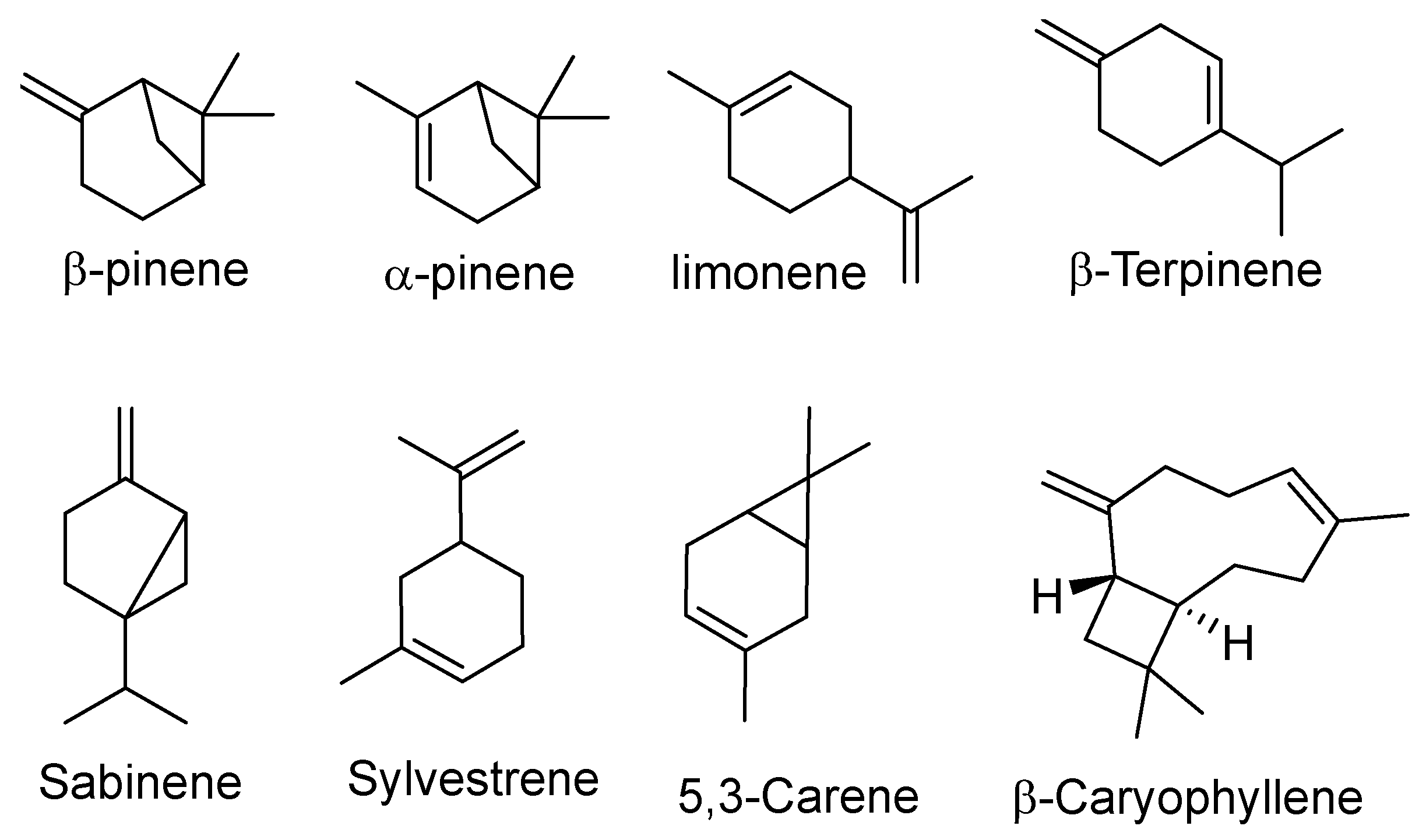
Figure 2.
Some of the compounds isolated from Piper nigrum.
Scheme 1.
Hydrolysis of piperine and further derivatization.
Scheme 2.
Piperanine synthesis by James T. Traxler in 1971.
Scheme 3.
Synthesis of Pipericide and Dihydropipericide.
Scheme 4.
Tsuboi and Tekeda method of synthesis for piperine in 1979.
Scheme 5.
Stereoselective Synthesis of Piperine and Related Pepper-derived alkaloids by Olsen and Spessard in 1981.
Scheme 5.
Stereoselective Synthesis of Piperine and Related Pepper-derived alkaloids by Olsen and Spessard in 1981.
Scheme 6.
Mandai and coworkers synthesis of piperine in 1986.
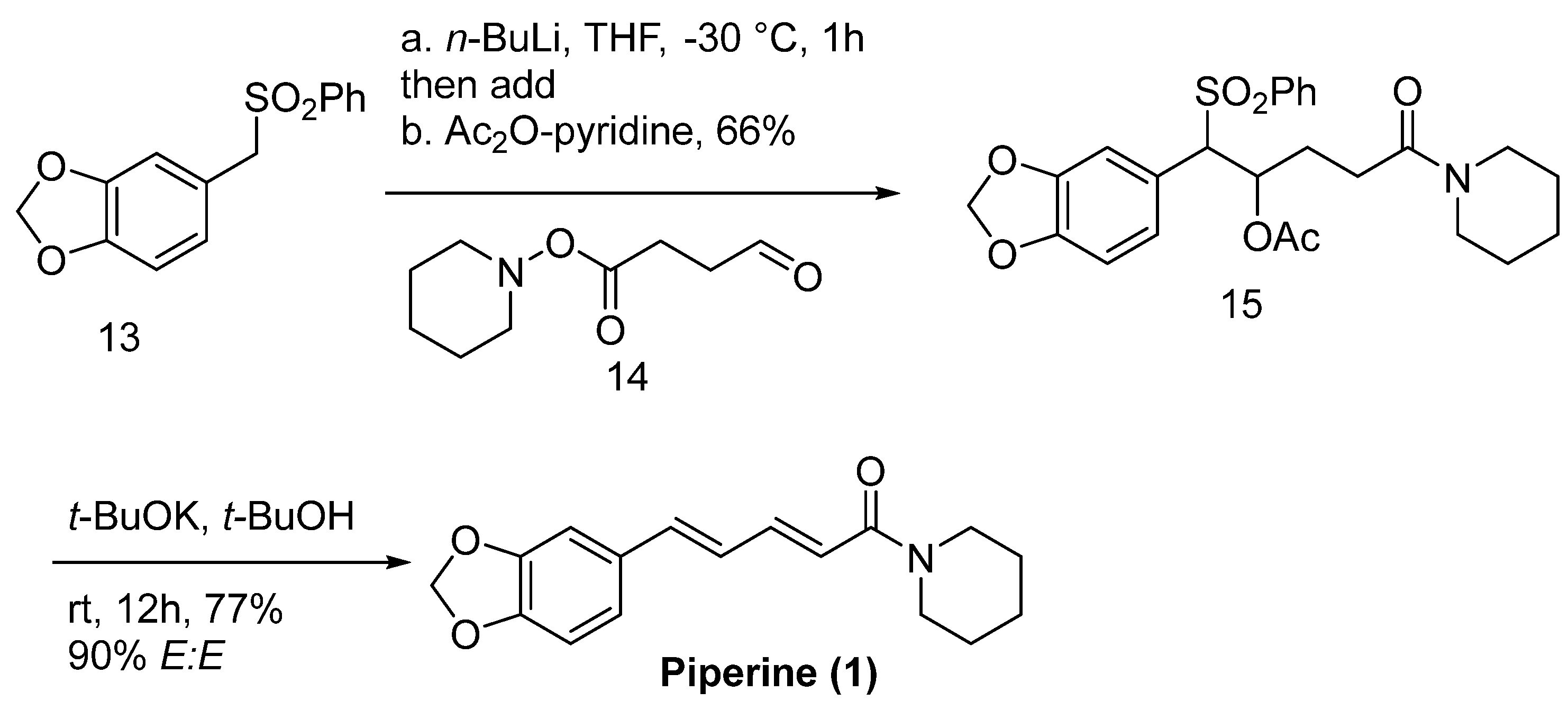
Scheme 7.
Sloop strategy for synthesisi of piperine in 1995.
Scheme 8.
Use of Sakai aldol condensation-grob fragmentation for synthesis of several piper amides by Strunz and Findlay (in 1994 and 1996).
Scheme 8.
Use of Sakai aldol condensation-grob fragmentation for synthesis of several piper amides by Strunz and Findlay (in 1994 and 1996).
Scheme 9.
Synthesis of piperdardine (22) via palladium catalyzed alkenylation in 1999.

Scheme 10.
Total synthesis of piperine and its analogs by Chandrasekhar and coworkers in 2000.
Scheme 11.
Synthesis and insecticidal activity of new amide derivatives of piperine.
Scheme 12.
Synthesis of dieneamides by Kang and coworkers in 2001.
Scheme 13.
Schobert and coworkers synthesis of piperine (1) in 2001.
Scheme 14.
First total synthesis of piperodione by Csuk and coworkers in 2014.
Scheme 15.
Synthesis of piperine analogs via Heck-coupling of conjugated dienes by Mihovilovic and coworkers in 2015.
Scheme 15.
Synthesis of piperine analogs via Heck-coupling of conjugated dienes by Mihovilovic and coworkers in 2015.

Scheme 16.
Three steps synthesis of piperine by Bauer and coworkers in 2018.

| Chemical Composition | Concentration |
| Proximate | |
| Energy (Kcal) | 400.0 |
| Carbohydrate (g) | 66.5 |
| Fat (g) | 10.2 |
| Protein (g) | 10.0 |
| Total Ash (%) | 3.43-5.09 |
| Water (g) | 8.0 |
| Crude Fibre (%) | 10.79-18.60 |
| Minerals | |
| Calcium (mg) | 400.0 |
| Magnesium (mg) | 235.8-249.8 |
| Potassium (mg) | 1200.0 |
| Sodium (mg) | 10.0 |
| Phosphorus (mg) | 160.0 |
| Iron (mg) | 17.0 |
| Zinc (mg) | 1.45-1.72 |
| Vitamins | |
| Vitamin C (mg) | 27.46-32.53 |
| Vitamin B1 (mg) | 0.74-0.91 |
| Vitamin B2 (mg) | 0.48-0.61 |
| Vitamin B3 (mg) | 0.63-0.78 |
| Metabolites | |
| Tannin (mg) | 2.11-2.80 |
| Flavonoids | |
| Catechin (µg) | 410.0 |
| Myricetin (µg) | 56.0 |
| Quercetin (µg) | 13.0 |
| Carotenoids | |
| Lutein (µg) | 260.0 |
| β-Carotene (µg) | 150.0 |
Table 2.
Composition range of major essential oil constituents of Piper nigrum from various origins [34,39,44,46,47,48,49].
| Constituent | Concentration Range (%) |
| β-Caryophyllene | 2.09–26.95 |
| Limonene | 15.13–29.90 |
| Sabinene | 0.00–19.23 |
| α-Pinene | 3.88–20.86 |
| β-Pinene | 12.1–19.0 |
| δ-3-Carene | 9.23–55.43 |
| β-Bisabolene | 1.32–7.96 |
| α-Humulene | 1.11–2.44 |
| α-Copaene | 0.20–5.51 |
| α-Cadinol | 0.18–4.89 |
| α-Thujene | 0.60–2.94 |
| Nerolidol | 0.14–66.32 |
| β-Phellandrene | 3.16–4.80 |
| Myrcene (β-Myrcene) | 1.99–2.9 |
| 1-Napthalenol | 3.00 |
| Sylvestrene | 10.67 |
| Germacrene D | 2.17 |
| Isoterpinolene | 1.40 |
| Linalool | 2.10 |
| β-Terpenine | 19.50 |
| α-Phellandrene | 2.20 |
Table 3.
Different Extraction and Isolation Techniques of Phytochemicals from P. nigrum.
| Category | Extraction Method | Technique/Process | Target Compounds | Advantages | Limitations |
| Traditional Extraction Methods (TEM) | Solvent Extraction | Maceration or Soxhlet with ethanol, methanol, acetone, chloroform, hexane | Piperine, essential oils, alkaloids | Simple, widely used, low cost | Low selectivity, solvent residues, degradation of thermolabile compounds |
| Steam Distillation | Steam passed through crushed pepper to vaporize volatiles | Essential oils | Effective for volatile oils, easy setup | High temperature may degrade sensitive compounds | |
| Cold Pressing / Infusion | Mechanical pressing or soaking in oil | Flavor compounds, minor volatiles | Traditional, non-toxic, culinary use | Low efficiency, not suitable for alkaloid extraction | |
| Modern & Green Extraction Techniques (MGET) | Supercritical Fluid Extraction (SFE) | Supercritical CO2 (often with ethanol) | Piperine, essential oils | High purity, non-toxic, tunable selectivity | Expensive equipment, technical complexity |
| Ultrasound-Assisted Extraction (UAE) | Ultrasonic waves enhance solvent penetration | Piperine, phenolics | Fast, solvent-saving, good for heat-sensitive compounds | Scale-up limitations, equipment cost | |
| Microwave-Assisted Extraction (MAE) | Microwave energy heats plant-solvent matrix | Piperine, flavonoids, polyphenols | High efficiency, less solvent, reduced time | Risk of thermal degradation if not optimized | |
| Pressurized Liquid Extraction (PLE) | High pressure and temperature solvent-based extraction | Polar and non-polar compounds | Rapid, efficient, minimal degradation | Requires specialized apparatus | |
| Enzyme-Assisted Extraction (EAE) | Enzymatic treatment (e.g., cellulase, pectinase) | Phenolics, alkaloids | Mild, eco-friendly, suitable for food-grade products | Enzyme cost, need for process optimization |
Disclaimer/Publisher’s Note: The statements, opinions and data contained in all publications are solely those of the individual author(s) and contributor(s) and not of MDPI and/or the editor(s). MDPI and/or the editor(s) disclaim responsibility for any injury to people or property resulting from any ideas, methods, instructions or products referred to in the content. |
© 2025 by the authors. Licensee MDPI, Basel, Switzerland. This article is an open access article distributed under the terms and conditions of the Creative Commons Attribution (CC BY) license (http://creativecommons.org/licenses/by/4.0/).
Copyright: This open access article is published under a Creative Commons CC BY 4.0 license, which permit the free download, distribution, and reuse, provided that the author and preprint are cited in any reuse.


