Preprint
Article

This version is not peer-reviewed.

Heavy Fruit Load Inhibits the Development of Citrus Summer Shoots Primarily Through Competing for Carbohydrates

Submitted:

30 October 2025

Posted:

03 November 2025

You are already at the latest version

Abstract

Excessively and randomly producing summer shoots will lead to difficulty in citrus orchard management, specially in pest and disease control. Heavy fruit load can reduce the summer shoot number. However, the mechanism is still unclear. In this study, field investigation and de-fruiting treatment confirmed that heavy fruit load reduces the number of citrus summer shoots, which is zero when the yield surpasses 3.3 kg per 125 dm3 of tree canopy. Metabolite analysis indicated that fruits at the cell expansion stage attract more soluble sugars and de-fruiting significantly increase the content of sugars and the transcript levels of sink strength-related genes, CsSUS4/5/6 to over 3.0 fold in the axillary buds. Moreover, exogenous application of some sugar-related DAMs (differently accumulated metabolites) such as sucrose obviously promoted axillary bud outgrowth. Taken together, these results confirmed that heavy fruit load plays a role in inhibiting axillary bud outgrowth or shoot branching primarily through competing for soluble sugars, which provides the basis for the inhibition of summer shoots by increasing the fruit load in citrus orchard and for the improvement of pest and disease management effectiveness.

Keywords: 
;  ;  ;  ;  

1. Introduction

Citrus is one of the important fruit crops in the world with nutritional contribution to human health. It is widely cultivated in the tropical and subtropical regions and can sprout three to six times of new shoots per year under normal environment [1]. Although the bud precocity helps to rapidly expand the tree canopy and bear fruit earlier, excessive and random sprouting or shoot branching usually results in taller and denser trees, which makes the disease and pest control very difficult, reduces yield and fruit quality [2,3,4]. Shoot branching mainly derives from the axillary bud outgrowth. Therefore, it is necessary to investigate the mechanism for the regulation of citrus axillary bud growth, in order to orchestrate shoot branching for the increase of field management efficiency and the improvement of fruit quality.
Shoot branching refers to the formation of shoots from buds [5]. The number, size, density, and spatial distribution of shoots shape the plant structure [6], which continually influences the field management, crop productivity, and production quality especially in fruit trees [3,4]. Because citrus shoots have self-pruning characteristic during the shoot development [1], shoot branching depends on the axillary bud formation and outgrowth [7]. It is well known that the axillary bud is formed from axillary meristem and can be dormant or activated to form a branch [8]. Its behavior is regulated by multiple factors including environmental and developmental signals, as well as hormones and nutrients [9,10]. However, the underlying regulatory metabolites were gradually focused on phytohormones and soluble carbohydrates [10,11,12,13].
The outgrowth of axillary bud is usually suppressed by the apical buds or shoot tips, of which the phenomenon is called apical dominance and is manipulated by the interaction of different phytohormones [14,15]. Of them, auxin is considered the central phytohormone in the regulation of axillary bud outgrowth [15,16]; cytokinin and strigolactone are two other key phytohormones that directly promotes and inhibits axillary bud outgrowth, respectively [17,18]. Interestingly, the apical auxin prevents axillary bud outgrowth via suppressing cytokinin production and promoting strigolactone synthesis [18,19,20]. In addition, abscisic acid (ABA) were reported to inhibit axillary bud outgrowth primarily via interaction with auxin [21,22] while brassinosteroids (BRs) can release the apical dominance through suppressing BRANCHED1 (BRC1) transcript level [23]. Furthermore, gibberellins (GAs) are usually required for internode elongation, leaf growth and development, as well as weakening reproductive development [24]; however, it can repress axillary bud formation by modulating DELLA-SPL9 complex activity [25] or polar auxin transport [26].
Similar to auxin, soluble sugars are the key nutrients as well as signals for the axillary bud growth [27,28,29]. They are mainly transported from source leaves where the carbohydrates are photosynthesized. In most species such as Citrus, sucrose is the main form for transport in phloem [30]. Where does the sucrose unloading depends on the sink strength, which referring to the capacity of a sink organ to attract assimilates [31]; the sink strength is primarily determined by the activities of sucrose synthase (SUS) and cell wall invertase (CwINV) [32]. Interestingly, sugar was even suggested as the initial stimulus to release the apical dominance; when apical tips are removed, sucrose will be quickly redistributed to the axillary buds and promote their growth (Mason et al. 2014). Moreover, numerous reports have established a link between bud dormancy and a low sugar level in axillary buds [29]. When sucrose enter axillary bud cells, it can be metabolized to supply carbon and energy for axillary bud outgrowth [27]. On the other hand, the sucrose can generate signals mainly through the trehalose 6-phosphate (Tre6P) - dependent pathway [33], the hexokinase pathway [34], and the glycolysis-the tricarboxylic acid cycle - the oxidative pentose phosphate pathway [28] to regulate the axillary bud outgrowth.
As mentioned above, auxin and sugars antagonistically regulate apical or bud dormancy. In field practice, decapitation at the proper time often induces axillary buds outgrowth. Li, et al. [16] found that decapitation promotes citrus axillary bud outgrowth by regulating both plant hormone and carbohydrate metabolism, as well as signal transduction. Moreover, it is commonly observed that an increase in fruit load can limit citrus summer shoot development [35,36]. However, how heavy fruit load inhibits the citrus axillary bud outgrowth during the summer is still unclear. In this study, we compared sugar- and hormone-related metabolites between fruits and axillary buds by using GC-MS and LC-MS/MS, respectively. Moreover, we investigated the influence of de-fruiting on axillary bud outgrowth, sugar- and hormone-related metabolites, and transcript levels of sink strength-related genes in axillary buds. On the other hand, we also investigated the influence of exogenous treatment of differently accumulated metabolites (DAMs) on the axillary bud growth. We suggested that the heavy fruit load inhibits the axillary bud growth primarily through carbohydrate competition, which provides the theoretical basis for the application of ‘fruit suppressing sprouting’ technology in the field.

2. Materials and Methods

2.1. Plant Materials and Growth Conditions

The orchard of Seven-year-old ‘Newhall’ navel orange trees (Citrus sinensis ‘Newhall’) grafted on trifoliate orange (Poncirus trifoliata) was used for field investigation and other experiments, which is located at Huazhong Agricultural University, Wuhan, P.R. China (E 114° 21′ 2′′, N 30° 28′ 35′′). Specially, six trees with similar vigor and fruits were selected: fruits on three trees (n=3) were totally removed on June 24, 2022 (after fruit set) and another three trees without de-fruiting were kept as control. Subsequently, the new shoots per branch were counted. Moreover, 10 axillary buds positioned at 1st from the apex were randomly labeled and the length of axillary buds was measured from 0 to 9 days after de-fruiting (DAdF). In addition, at least another 10 axillary buds were collected at 0, 3, 6, and 9 DAdF, respectively for microscopic observation.
On July 17, 2022 (in cell expansion stage), another three trees (n=3) with similar vigor and fruits were selected and fruits on half branches of each tree were removed. In the fruit bearing branches of each tree, at least 100 axillary buds positioned at 1st to 3rd beneath the fruit and four fruits were randomly collected for metabolite analysis. At 3 DAdF, at least 100 axillary buds positioned at 1st to 3rd beneath the fruit/apex were randomly collected from fruit bearing shoots and de-fruting shoots, respectively for metabolite analysis and qRT-PCR. All the samples were quickly treated with liquid nitrogen and stored in the -80 °C for further use.
In addition, Lemon (C. limon) seedlings were cultured in tissue culture tubes under long-day conditions (16 h light/8 h dark, 25 °C). Stems consisting of single nodes (about 1.5 cm length) with an axillary bud were collected from 80-day-old lemon seedlings. After leaf excision, these explants were used for metabolite treatment.

2.2. Microscopic Observation of Axillary Bud Morphology and Length Calculation

The fully automated fluorescence microscope (Leica M205FA, Germany) was employed to investigate the morphology of axillary buds collected from de-fruiting branches at 0, 3, 6, and 9 DAdF. For anatomical examination, axillary buds were bisected at the center with a scalpel and the cross sections were observed. High-resolution images of axillary buds displaying clearly defined shoot apical meristem (SAM) structures were acquired for further analysis. The length of the axillary bud was measured as the vertical distance from the SAM to the line connecting the bases of the two bracts.

2.3. Sugar Content Measurement

Sugar contents in the axillary buds and fruit pulps were analyzed by Gas Chromatography-Mass spectrometry through Agilent 8890-5977B platform situated at MetWare (http://www.metware.cn/). Briefly, 20 mg of powdered samples were extracted with 500 μL of extraction solution [methanol: isopropanol: ddH2O (3:3:2, V/V/V)]. After centrifugation, 12.5 μL of the supernatant was mixed with 20 μL of internal standard (250 μg/mL) and evaporated under nitrogen. The sample was then freeze-dried to obtain the residue. The residue was reconstituted in 100 μL of methoxyamine hydrochloride in pyridine (15 mg/mL). Then, 100 μL of BSTFA was added, and the mixture was incubated at 37°C for 30 minutes for derivatization. The mixture was analyzed by GC-MS using an Agilent 8890 gas chromatograph coupled with a 5977B mass spectrometer and a DB-5MS column (30 m × 0.25 mm × 0.25 μm). Samples (1 μL) were injected in split mode (5:1) with helium carrier gas at 1 mL/min. Oven temperature program: 160°C for 1 min, ramp to 200°C at 6°C/min, ramp to 270°C at 10°C/min, ramp to 300°C at 5°C/min, ramp to 320°C at 20°C/min (hold for 5.5 min). Samples were analyzed in SIM mode (ion source 230°C, transfer line 280°C).

2.4. Hormone Content Measurement

Hormone contents in the axillary buds and fruit pulps were analyzed by Liquid chromatography (coupled with Tandem Mass Spectrometry) through AB Sciex QTRAP 6500 LC-MS/MS platform in MetWare (http://www.metware.cn/). Briefly, 50 mg of the powdered sample was dissolved in 1 mL of a methanol/ddH2O/formic acid mixture (15:4:1, V/V/V). Ten microliters of internal standard solution with a concentration of 100 ng/mL was added. After centrifugation, the supernatant was transferred, evaporated to dryness, reconstituted in 100 μL of 80% methanol, and filtered through a 0.22 μm membrane for LC-MS/MS (UPLC, ExionLC™ AD; MS, Applied Biosystems 6500 Triple Quadrupole) analysis. The UPLC and ESI-MS/MS analytical conditions were performed according to a previously described method [37] with small modifications. The ESI-MS/MS analyses were conducted on a QTRAP® 6500+ LC-MS/MS system (Sciex) equipped with an ESI Turbo Ion-Spray interface and controlled by Analyst 1.6.3 software. The ESI source operation parameters were modified: ion source, ESI+/-; source temperature (550°C), ion spray voltage (+5500 V / −4500 V); curtain gas (CUR, 35 psi). Phytohormones were analyzed using scheduled multiple reaction monitoring (MRM) with optimized declustering potentials (DP) and collision energies (CE) for each transition. MultiQuant 3.0.3 software (Sciex) was used to quantify all metabolites.

2.5. The Application of Metabolites

Single-node stems were vertically inserted into and cultured in Murashige and Tucker medium (MT, sugar-free), supplemented with test metabolites including sucrose, glucose, fructose, xylose, inositol or IAA. Their final concentrations are 10.4 mg/g, 0.22 mg/g, 0.12 mg/g, 0.01 mg/g, 0.63 mg/g, and 25 ng/g, respectively. Each metabolite treatment included three biological replicates (n=3), with each replicate consisting of 10 stems.

2.6. RNA Extraction and Gene Expression Analysis

Total RNA was extracted using a modified Trizol method described previously[38]. A micro-spectrophotometer and agarose gel electrophoresis were used to detect RNA concentration, integrity, and purity. The cDNA was synthesized using the TransScript One-step gDNA Removal and cDNA Synthesis SuperMix Kit (TransGen Biotech, Beijing, China; Code# AT311-03). Gene expression was measured by RT-qPCR with three biological replicates using the QuantStudio 6 Flex system (Applied Biosystems, USA), and the data were analyzed using the 2−ΔΔCt method [39]. The gene-specific primers were designed using the NCBI Primer-BLAST tool based on the representative CDS sequence from CPBD (Citrus Pan-genome to Breeding Database, http://citrus.hzau.edu.cn/), and are listed in table S3.

2.7. Statistical Analysis

Statistical analysis was conducted using IBM SPSS Statistics (v27.0). Differences were considered significant when p < 0.05 by using Student’s t-test or Duncan’s multiple range test.

3. Results

3.1. Fruit Load Affects the Number of Summer Shoots

In the field, it was found that the 'Newhall' navel orange has three peaks of new shoot growth after flowering and during fruit development and ripening; they are at 69–76 DAF (days after flowering), 104–111 DAF, and 125–133 DAF, respectively (Figure 1A). Moreover, the branches with heavy fruit load (BHFL, over 80 fruits) had less than 8 new shoots while branches without fruit load (BLFL) generated about 25 new shoots in the summer (Figure 1B). Specially in any given branch of similar diameter, the number of summer shoots was decreased as the fruit number increased (Figure 1C). In addition, there was a significant negative correlation between the yield and the number of summer shoots; when the yield surpasses 3.3 kg per 125 dm3 of canopy, the number of summer shoots drops to zero (Figure 1D).

3.2. Effects of De-Fruiting on the Development of Axillary Buds

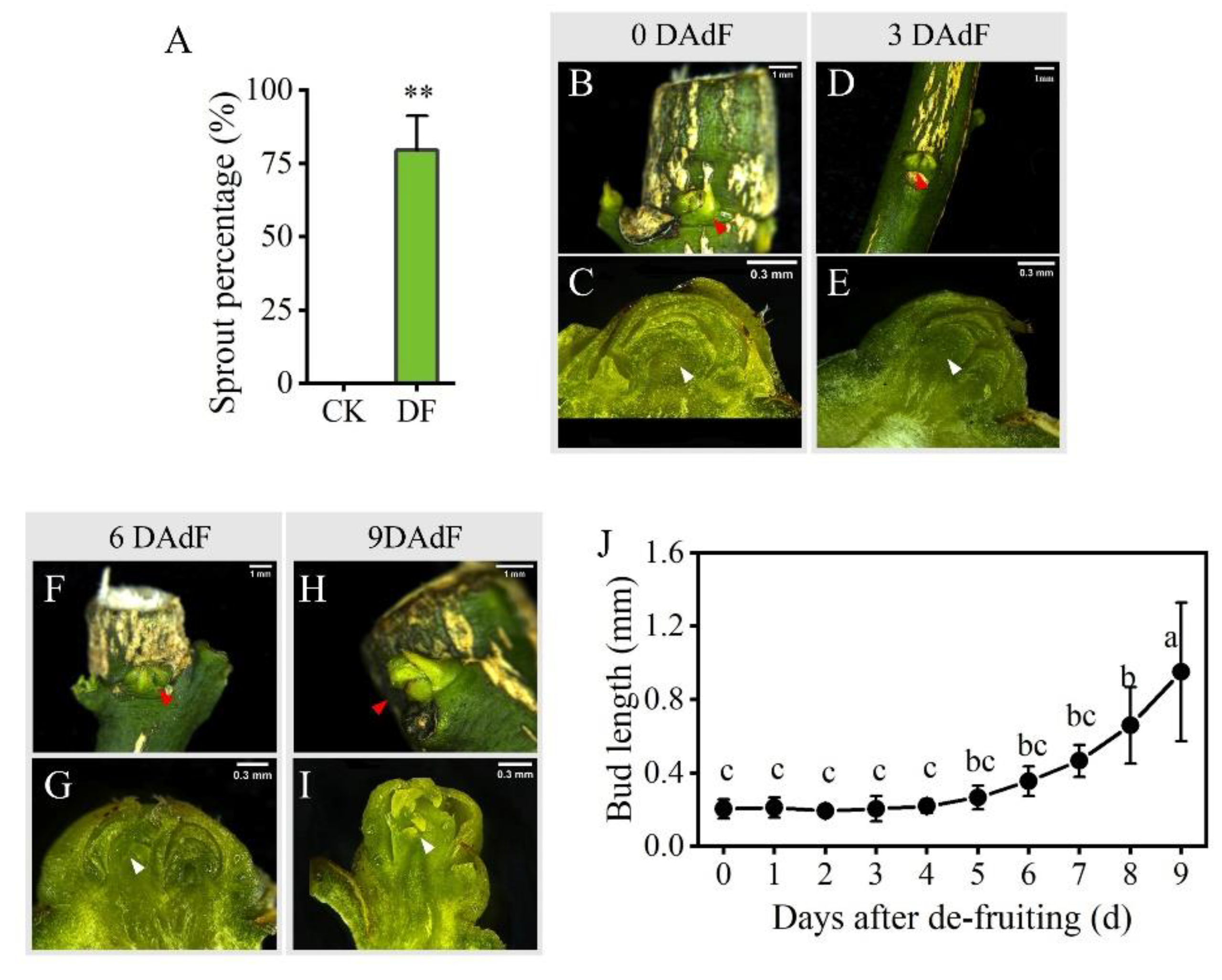
To characterize the effect of fruit on axillary bud outgrowth, we removed fruits and found that over 75% of de-fruiting branches generated new shoots while the sprouting percentage was zero in the control branches at 10 DAdF (Figure 2A). At 0 DAdF, the bud is in dormancy and its SAM was enclosed by leaf primordia and tightly wrapped bracts (Figure 2B and 2C); at 3 and 6 DAdF, the bracts were loosened but the SAM didn’t show obvious elongation (Figure 2D and 2E); at 9 DAdF, the axillary bud broke through the bracts and grew rapidly to form a new shoot (Figure 2H and 2I). Moreover, we also found that the length of axillary buds elongated slowly and showed no significant difference before 7 DAdF, although a slow increase was observed after 4 DAdF. After 7 DAdF, it grew obviously and became new shoots (Figure 2J).

3.3. Comparison of Sugar- and Hormone-Related Metabolites Between Fruits and Axillary Buds on Fruit-Bearing Shoots

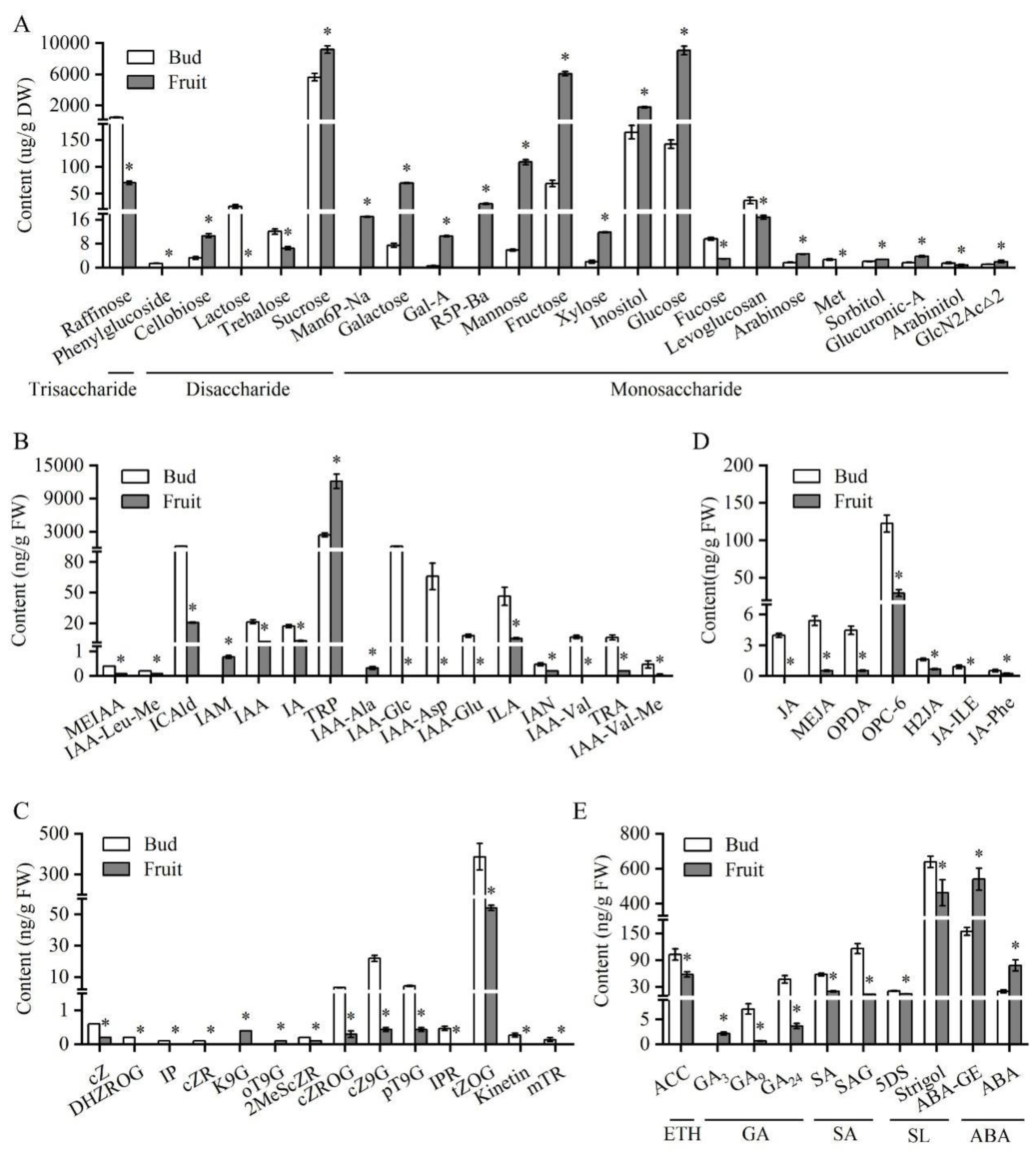
During fruit cell expansion stage or summer shoot development stage, metabolites related to soluble sugars and phytohormones were analyzed in fruits and axillary buds of fruit-bearing shoots. 32 sugar- and 88 hormone-related metabolites were detected (Tables S1 and S2). Among them, contents of 23 sugar-related metabolites and 47 hormone-related metabolites were significantly different between fruits and axillary buds (Figure 3). The DAMs of soluble sugars included 17 monosaccharides, 5 disaccharides, and 1 trisaccharide (Figure 3A). As for phytohormones, the DAMs contained 16 auxin-related metabolites (Figure 3B), 14 cytokinin-related metabolites (Figure 3C), 7 jasmonates (Figure 3D), and 10 other hormones (Figure 3E). Specifically, the contents of sucrose and most monosaccharides were significantly higher in the fruits than those in the axillary buds except for a few soluble sugars such as raffinose, lactose, and fucose of which the contents were significantly lower in the fruits than in the axillary buds (Figure 3A); on the other hand, the contents of most auxin-related and cytokinin-related metabolites were markedly lower in the fruits than those in the axillary buds; in addition, the contents of GA3, ABA-GE, and ABA were significantly higher in fruits than those in the axillary buds (Figure 3B-3E).

3.4. Influence of De-Fruiting on Sugar and Hormone Levels in Axillary Buds

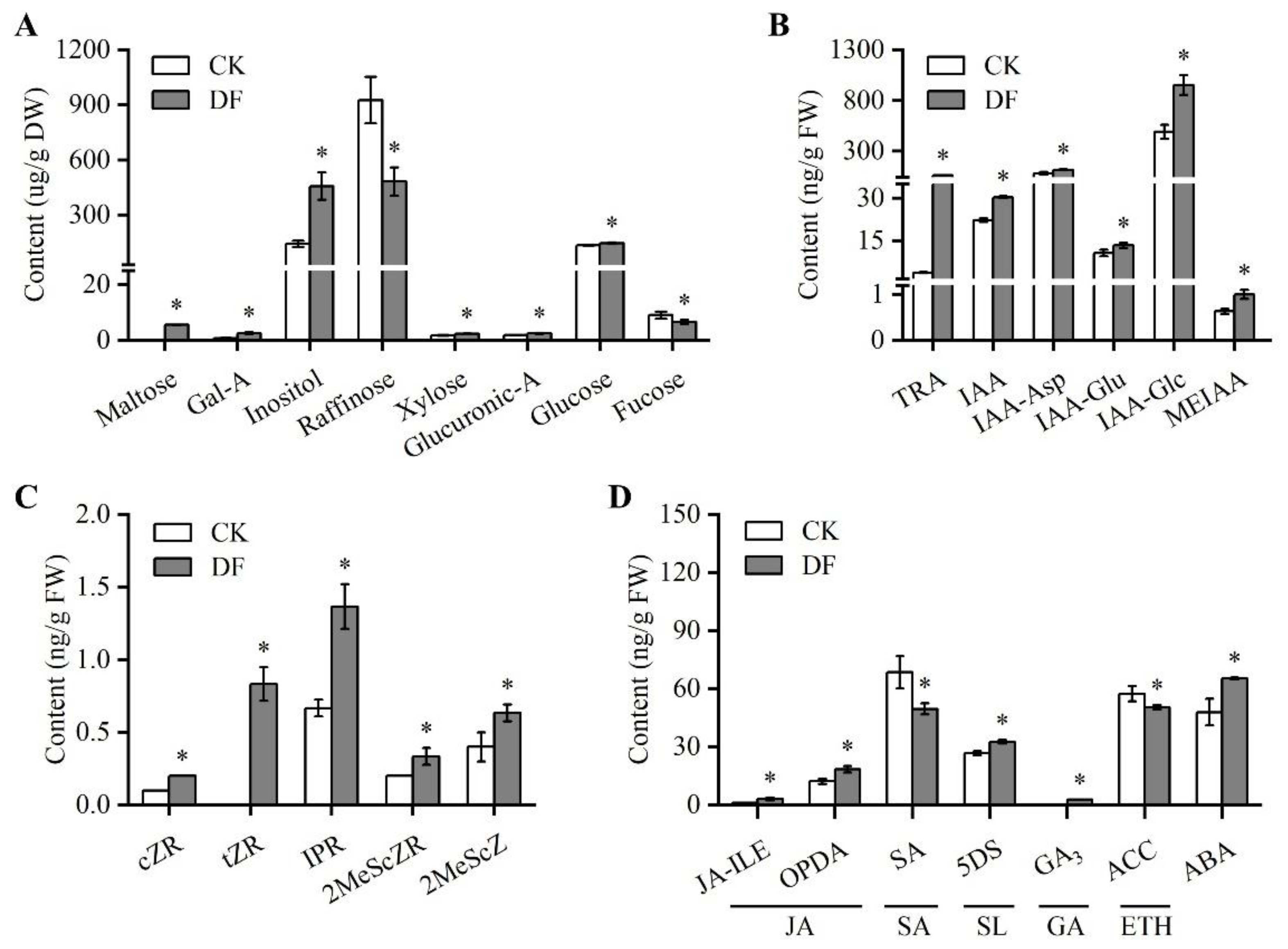
When removing the fruits, we found that the contents of some soluble sugars and phytohormones were significantly influenced in the axillary buds at 3 DAdF (Figure 4). In detail, de-fruiting significantly increased the contents of inositol, glucose, maltose, gal-A, xylose, and glucuronic-A while the contents of raffinose and fucose were obviously decreased (Figure 4A). Moreover, the contents of most detected hormone-related metabolites except for salicylic acid (SA) were also significantly increased by de-fruiting; the contents of maltose (Figure 4B), trans-Zeatin riboside (tZR), and GA3 (Figure 4E and 4G) were undetectable in the dormant axillary buds but were markedly increased by de-fruiting at 3 DAdF.

3.5. Influence of De-Fruiting on Sink Strength-Related Genes in the Axillary Buds

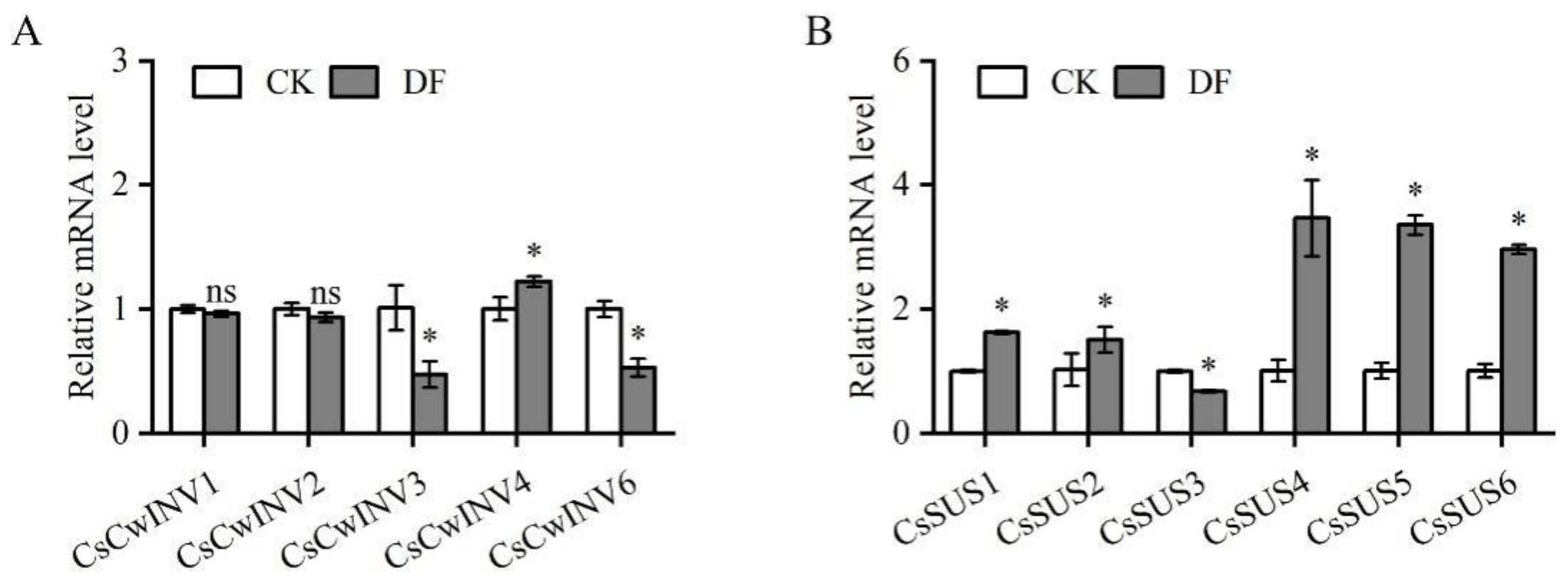
Sucrose partition into sink organs is mainly decided by the sink strength, which is related to the enzyme activities of cell wall invertase and sucrose synthesis [32]. Here, transcripts of genes encoding them were analyzed. Transcript levels of CsCwINV4 (Figure 5A) and CsSUS1/2/4/5/6 (Figure 5B) in the axillary buds were significantly enhanced by de-fruiting. Specifically, transcript levels of CsSUS4/5/6 in the de-fruiting axillary buds were increased to over 3-fold compared with those in the control axillary buds (Fig.5).

3.6. Influence of Applying Sugar-Related DAMs and IAA on Axillary Bud Outgrowth

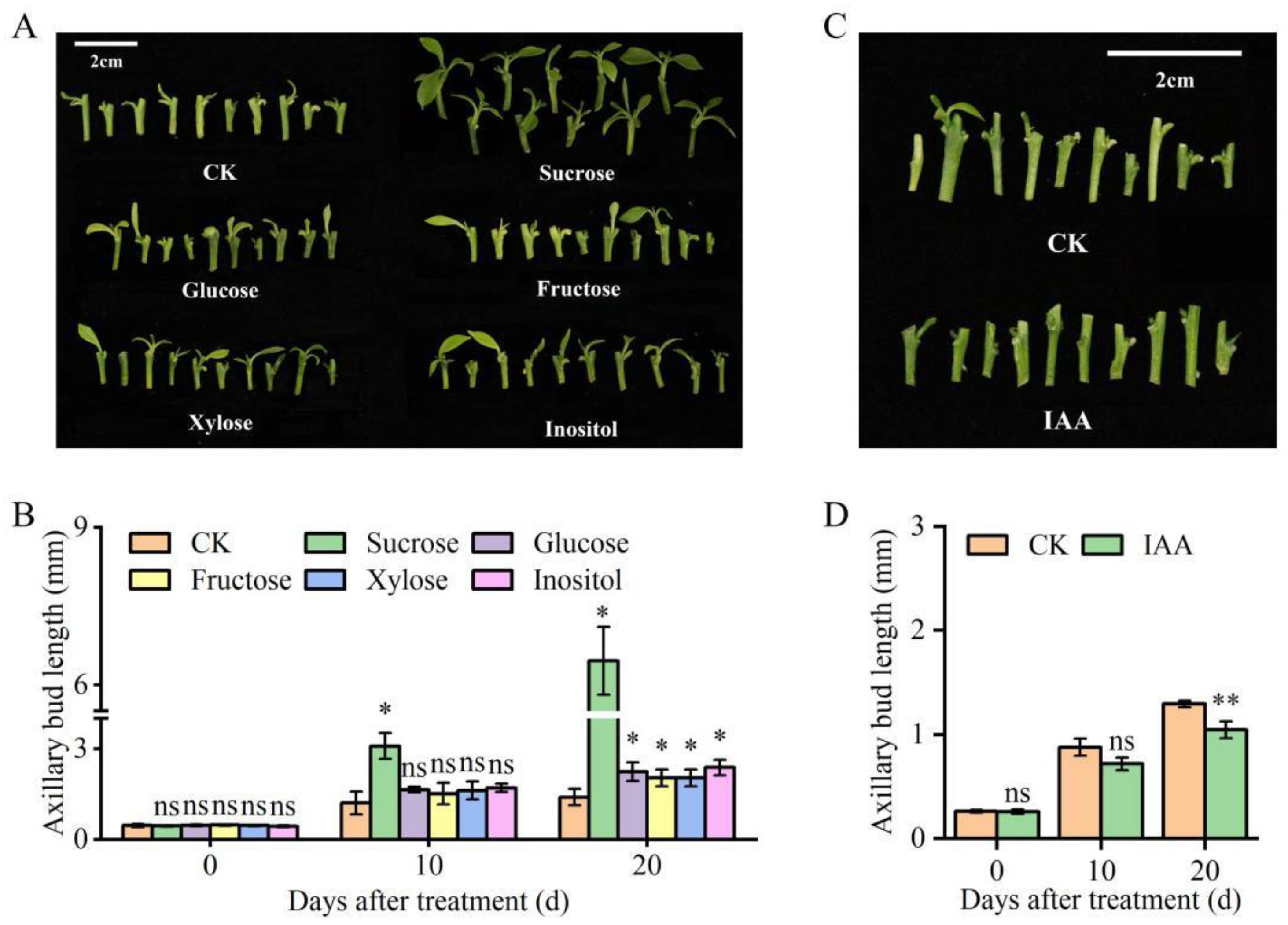
As founded in Figure 3A, the contents of about 15 sugar-related metabolites were significantly higher in fruits than in axillary buds. Here, we supplemented some DAMs such as sucrose, glucose, fructose, xylose, and inositol into the MT medium, respectively. At 10 days after supplement, the axillary buds on lemon stem were significantly elongated by sucrose treatment. At 20 days after supplement, all treatments obviously promoted the axillary bud outgrowth; specially, supplement of sucrose significantly increased the length of young shoots derived from axillary buds to about four-fold compared to the control (Figure 6A). In addition, we also supplemented IAA into the medium with final concentration of 25 ng/g, and found no obvious difference in the young shoots from the control at 10 or 20 days after supplement (Figure 6B).

4. Discussion

Setting fruits and subsequent fruit cell expansion are crucial processes for orchard yield and plant reproduction; these processes are regulated by numerous nutrients and different phytohormones [40]. Moreover, they also influence other developmental processes such as root development [41], flowering and shoot development [42]. Previous reports showed that heavy fruit load weakened the reproductive growth of next season in citrus [43,44], as well as significantly decreased the vegetative growth in coffee [45] and mandarin trees [35]. Here, we found that an increase of fruit numbers significantly reduced the number of ‘Newhall’ summer shoots (Figure 1) while de-fruiting promoted bud outgrowth and significantly increased the number of shoots (Figure 2). These results further demonstrated that heavy fruit load can inhibit the outgrowth of axillary buds, namely decreased the vegetative growth in citrus in the current season.
The regulation of shoot branching or axillary bud outgrowth involves cross-talk between various plant hormones and soluble sugars [10,11,44]. There exists a long disputation whether plant hormones or carbohydrates are the key factor for the outgrowth of axillary buds. Decade ago, much emphasis was given to auxin which was considered the central phytohormone to regulate the dormancy of axillary buds with the auxin transport canalization-based model or the second messenger theory [14,15,18,19,20]. Later, sugar was considered as the initial regulator of apical dominance; when the shoot tips were removed, sugars were rapidly redistributed to and accumulate in axillary buds within a timeframe that correlates with bud release in Pisum sativum [46]. Lots of reports found that dormant buds have a low sugar level [29]. However, it is usually found that decapitation only promotes the outgrowth of the top one to three axillary buds in fruit crop shoots, suggesting sugar redistribution to axillary buds is not enough for its outgrowth in fruit crops. Li, et al. [16] found that decapitation promotes citrus axillary bud outgrowth through comprehensively regulating plant hormone and carbohydrate metabolism. Given that higher auxin concentration inhibits bud growth [47] while soluble sugar is required for bud release [29,48,49], the effect of decapitation on bud outgrowth may be due to the transient decrease of auxin and fast available sugars in the axillary buds. Similar to the apical buds or shoot tips, fruits have the role in inhibiting its beneath axillary bud outgrowth (Figure 2A), while heavy fruit load can significantly reduce the summer shoot number during fruit cell expansion of the whole tree (Figure 1B) [35,36]. However, at the cell expansion stage, the fruits produce much GA3 (Figure 3E) for fruit growth [1], different from the apical bud which produces auxin and flow basipetally [50,51]. This suggested that the underlying mechanism for fruits inhibiting axillary bud outgrowth is different from the apical dominance mechanism.
According to the source-sink model, developing roots, leaves, flowers, and fruits belong to sink organs while the mature leaves belong to the source organ which photosynthesizes and supplies carbohydrates to such sink organs; moreover, these organs usually exchange signals and compete for metabolites [52,53], eventually abide by a ‘feedback-balance’ mechanism or compromise mutually for their own growth and development [42]. As reported before, the apical bud inhibiting the outgrowth of axillary buds, namely branching, is mainly attributed to the basipetal transport of IAA and competition for sucrose [11,15,16]. Goetz, et al. [44] suggested that the inhibition of inflorescence shoot growth by fruit load involved in auxin and sugar signaling during the end of flowering transition. Moreover, Shalom, et al. [43] found that heavy fruit load weakened the reproductive growth of next season through changing the homeostasis of ABA and IAA in citrus buds. Interestingly, Reig, et al. [54] suggested that the strong and significant reduction of root development by loquat fruit development is due to the competition by fruits for carbohydrates and the modulation of ABA and IAA. Here, we found that the fruits accumulated higher levels of most sugars and lower levels of most hormone-related metabolites compared to the dormant axillary buds (Figure 3). However, de-fruiting significantly increased the contents of inositol, glucose, maltose (Figure 4) as well as transcript levels of sink strength-related genes such as CsSUS4/5/6 (Figure 5). Because sucrose distribution into sink organs is mainly decided by the sink strength [32], the transcript induction of these sink strength-related genes after de-fruiting further indicated that more sucrose was allocated into axillary buds for their outgrowth. Moreover, exogenous application of some sugar-related DAMs such as sucrose, glucose, fructose, xylose, and inositol can obviously promote axillary bud outgrowth (Figure 6). It is well known that the most active period of fruit development (cell expansion) has a strong sink strength for carbohydrate [55]. The present results suggested that the developing fruits attract much soluble sugars from the source leaves and limit carbohydrate allocation to axillary buds, which then inhibit axillary bud outgrowth or reduce the summer shoot number. Since contents of most hormone-related metabolites in fruits were obviously lower than those in the dormant axillary buds (Figure 3), the increase of auxin- and cytokinin-related metabolites in axillary buds after de-fruiting (Figure 4) is possibly due to the local biosynthesis for bud outgrowth rather than redistribution. This further supported that it is the carbohydrate rather than plant hormone that plays a key role for fruits inhibiting axillary bud outgrowth in the current season.

5. Conclusions

In this study, we further confirmed that heavy fruit load has the role in inhibiting axillary bud outgrowth or shoot branching at summer shoot development stage. The underlying reason is probably that the fast-developing fruits have the strong ability to compete for soluble sugars against the axillary buds, rather than produce and export hormone to influence the axillary bud outgrowth. This is different from the inhibition of axillary bud outgrowth by apical buds or shoot tips. The present result provides the basis for the inhibition of summer shoots by increasing the fruit load in citrus orchard, which contributes to improving the effectiveness of pest and disease management with less application of pesticides.

Supplementary Materials

The following supporting information can be downloaded at the website of this paper posted on Preprints.org.

Author Contributions

Yin Luo: Visualization, investigation, data analysis, and writing, review & editing. Yu-Jia Li, Yan-Mei Xiao, Hui-Fen Li: Investigation. Shariq Mahmood Alam: Review & editing. Yong-Zhong Liu: Visualization, writing, review & editing.

Acknowledgments

This work was supported by the National Natural Science Foundation of China (Grant No. 32172509) and the earmarked fund for CARS-26.

Conflicts of Interest

There is no conflict of interest.

References

  1. Talon, M.; Caruso, M.; Gmitter, F.G. The Genus Citrus, 1 ed.; Talon, M., Caruso, M., Gmitter, F.G., Eds.; Woodhead Publishing: 2020; ISBN 978-0-12-812163-4.
  2. Dawood Ahmed; Ranjan Sapkota, M. C., Manoj Karkee. Estimating optimal crop-load for individual branches in apple tree canopies using YOLOv8. Comput Electron Agric 2025, 229, 109697. [Google Scholar] [CrossRef]
  3. Doke, A.; Kakade, V.D.; Patil, R.A.; Morade, A.S.; Chavan, S.B.; Salunkhe, V.N.; Nangare, D.D.; Boraiah, K.M.; Thorat, K.S.; Reddy, K.S. Enhancing plant growth and yield in dragon fruit (Hylocereus undatus) through strategic pruning: A comprehensive approach for sunburn and disease management. Sci Hortic 2024, 337, 113562. [Google Scholar] [CrossRef]
  4. McDonald, M.R.; Gossen, B.D.; Kora, C.; Parker, M.; Boland, G. Using crop canopy modification to manage plant diseases. Eur J Plant Pathol 2013, 135, 581–593. [Google Scholar] [CrossRef]
  5. Evers, J.B.; van der Krol, A.R.; Vos, J.; Struik, P.C. Understanding shoot branching by modelling form and function. Trends Plant Sci 2011, 16, 464–467. [Google Scholar] [CrossRef]
  6. Busov, V.B. Manipulation of growth and architectural characteristics in trees for increased woody biomass production. Front Plant Sci 2018, 9, 1505. [Google Scholar] [CrossRef]
  7. Barbier, F.F.; Dun, E.A.; Kerr, S.C.; Chabikwa, T.G.; Beveridge, C.A. An update on the signals controlling shoot branching. Trends Plant Sci 2019, 24, 220–236. [Google Scholar] [CrossRef]
  8. Wang, Y.; Jiao, Y. Axillary meristem initiation—a way to branch out. Curr Opin Plant Biol 2018, 41, 61–66. [Google Scholar] [CrossRef]
  9. Rameau, C.; Bertheloot, J.; Leduc, N.; Andrieu, B.; Foucher, F.; Sakr, S. Multiple pathways regulate shoot branching. Front Plant Sci 2015, 5, 741. [Google Scholar] [CrossRef]
  10. Yuan, Y.; Khourchi, S.; Li, S.; Du, Y.; Delaplace, P. Unlocking the multifaceted mechanisms of bud outgrowth: advances in understanding shoot branching. Plants 2023, 12, 3628. [Google Scholar] [CrossRef]
  11. Moreno, S.R. The bud awakens: Interplay among hormones and sugar controls bud release. Plant Physiol 2023, 192, 703–704. [Google Scholar] [CrossRef] [PubMed]
  12. Chen, Z.; Chen, Y.; Shi, L.; Wang, L.; Li, W. Interaction of phytohormones and external environmental factors in the regulation of the bud dormancy in woody plants. Int J Mol Sci 2023, 24, 17200. [Google Scholar] [CrossRef]
  13. Schneider, A.; Godin, C.; Boudon, F.; Demotes-Mainard, S.; Sakr, S.; Bertheloot, J. Light regulation of axillary bud outgrowth along plant axes: An overview of the roles of sugars and hormones. Front Plant Sci 2019, 10, 1296. [Google Scholar] [CrossRef]
  14. Cline, M.G. Concepts and terminology of apical dominance. Am J Bot 1997, 84, 1064–1069. [Google Scholar] [CrossRef]
  15. Beveridge, C.A.; Rameau, C.; Wijerathna-Yapa, A. Lessons from a century of apical dominance research. J Exp Bot 2023, 74, 3903–3922. [Google Scholar] [CrossRef]
  16. Li, Y.-T.; Liu, D.-H.; Luo, Y.; Khan, M.A.; Alam, S.M.; Liu, Y.-Z. Transcriptome analysis reveals the key network of axillary bud outgrowth modulated by topping in citrus. Gene 2024, 926, 148623. [Google Scholar] [CrossRef]
  17. Dun, E.A.; Brewer, P.B.; Beveridge, C.A. Strigolactones: discovery of the elusive shoot branching hormone. Trends Plant Sci 2009, 14, 364–372. [Google Scholar] [CrossRef] [PubMed]
  18. Mueller, D.; Leyser, O. Auxin, cytokinin and the control of shoot branching. Ann Bot. 2011, 107, 1203–1212. [Google Scholar] [CrossRef] [PubMed]
  19. Chatfield, S.P.; Stirnberg, P.; Forde, B.G.; Leyser, O. The hormonal regulation of axillary bud growth in Arabidopsis. Plant J 2000, 24, 159–169. [Google Scholar] [CrossRef] [PubMed]
  20. Brewer, P.B.; Dun, E.A.; Ferguson, B.J.; Rameau, C.; Beveridge, C.A. Strigolactone acts downstream of auxin to regulate bud outgrowth in pea and Arabidopsis. Plant Physiol 2009, 150, 482–493. [Google Scholar] [CrossRef]
  21. Holalu, S.V.; Finlayson, S.A. The ratio of red light to far red light alters Arabidopsis axillary bud growth and abscisic acid signalling before stem auxin changes. J Exp Bot 2017, 68, 943–952. [Google Scholar] [CrossRef]
  22. Yao, C.; Finlayson, S.A. Abscisic acid is a general negative regulator of Arabidopsis axillary bud growth. Plant Physiol 2015, 169, 611–626. [Google Scholar] [CrossRef]
  23. Xia, X.J.; Dong, H.; Yin, Y.L.; Song, X.W.; Gu, X.H.; Sang, K.Q.; Zhou, J.; Shi, K.; Zhou, Y.H.; Foyer, C.H.; et al. Brassinosteroid signaling integrates multiple pathways to release apical dominance in tomato. Proc Natl Acad Sci U S A 2021, 118, e2004384118. [Google Scholar] [CrossRef]
  24. Robil, J.M.; Awale, P.; McSteen, P.; Best, N.B. Gibberellins: extending the Green Revolution. J Exp Bot 2025, 76, 1837–1853. [Google Scholar] [CrossRef] [PubMed]
  25. Zhang, Q.Q.; Wang, J.G.; Wang, L.Y.; Wang, J.F.; Wang, Q.; Yu, P.; Bai, M.Y.; Fan, M. Gibberellin repression of axillary bud formation in Arabidopsis by modulation of DELLA-SPL9 complex activity. J Integr Plant Biol 2020, 62, 421–432. [Google Scholar] [CrossRef] [PubMed]
  26. Mäkilä, R.; Wybouw, B.; Smetana, O.; Vainio, L.; Solé-Gil, A.; Lyu, M.; Ye, L.L.; Wang, X.; Siligato, R.; Jenness, M.K.; et al. Gibberellins promote polar auxin transport to regulate stem cell fate decisions in cambium. Nat Plants 2023, 9, 631–644. [Google Scholar] [CrossRef]
  27. Van den Ende, W. Sugars take a central position in plant growth, development and, stress responses. A focus on apical dominance. Front Plant Sci 2014, 5, 313. [Google Scholar] [CrossRef] [PubMed]
  28. Wang, M.; Pérez-Garcia, M.D.; Davière, J.M.; Barbier, F.; Ogé, L.; Gentilhomme, J.; Voisine, L.; Péron, T.; Launay-Avon, A.; Clément, G.; et al. Outgrowth of the axillary bud in rose is controlled by sugar metabolism and signalling. J Exp Bot 2021, 72, 3044–3060. [Google Scholar] [CrossRef]
  29. Doidy, J.; Wang, Y.; Gouaille, L.; Goma-Louamba, I.; Jiang, Z.; Pourtau, N.; Le Gourrierec, J.; Sakr, S. Sugar transport and signaling in shoot branching. Int J Mol Sci 2024, 25, 13214. [Google Scholar] [CrossRef]
  30. Lemoine, R.; La Camera, S.; Atanassova, R.; Dédaldéchamp, F.; Allario, T.; Pourtau, N.; Bonnemain, J.-L.; Laloi, M.; Coutos-Thévenot, P.; Maurousset, L.; et al. Source-to-sink transport of sugar and regulation by environmental factors. Front Plant Sci 2013, 4, 272. [Google Scholar] [CrossRef]
  31. Marcelis, L.F.M. Sink strength as a determinant of dry matter partitioning in the whole plant. J Exp Bot 1996, 47, 1281–1291. [Google Scholar] [CrossRef]
  32. Koch, K. Sucrose metabolism: regulatory mechanisms and pivotal roles in sugar sensing and plant development. Curr Opin Plant Biol 2004, 7, 235–246. [Google Scholar] [CrossRef]
  33. Fichtner, F.; Barbier, F.F.; Feil, R.; Watanabe, M.; Annunziata, M.G.; Chabikwa, T.G.; Höfgen, R.; Stitt, M.; Beveridge, C.A.; Lunn, J.E. Trehalose 6-phosphate is involved in triggering axillary bud outgrowth in garden pea (Pisum sativum L.). Plant J 2017, 92, 611–623. [Google Scholar] [CrossRef]
  34. Barbier, F.F.; Cao, D.; Fichtner, F.; Weiste, C.; Perez-Garcia, M.D.; Caradeuc, M.; Le Gourrierec, J.; Sakr, S.; Beveridge, C.A. HEXOKINASE1 signalling promotes shoot branching and interacts with cytokinin and strigolactone pathways. New Phytol 2021, 231, 1088–1104. [Google Scholar] [CrossRef]
  35. Stander, O.P.J.; Barry, G.H.; Cronjé, P.J.R. Fruit load limits root growth, summer vegetative shoot development, and flowering in alternate-bearing 'nadorcott' mandarin trees. J Am Soc Hortic Sci 2018, 143, 213–225. [Google Scholar] [CrossRef]
  36. Smith, H.M.; Samach, A. Constraints to obtaining consistent annual yields in perennial tree crops. I: Heavy fruit load dominates over vegetative growth. Plant Sci 2013, 207, 158–167. [Google Scholar] [CrossRef]
  37. Zhao, Y.; Zhai, G.; Li, X.; Tao, H.; Li, L.; He, Y.; Zhang, X.; Wang, F.; Hong, G.; Zhu, Y. Metabolomics reveals nutritional diversity among six coarse cereals and antioxidant activity analysis of grain sorghum and sweet sorghum. Antioxidants 2022, 11, 1984. [Google Scholar] [CrossRef]
  38. Liu, Q.; Xu, J.; Liu, Y.; Zhao, X.; Deng, X.; Guo, L.; Gu, J. A novel bud mutation that confers abnormal patterns of lycopene accumulation in sweet orange fruit (Citrus sinensis L. Osbeck). J Exp Bot 2007, 58, 4161–4171. [Google Scholar] [CrossRef] [PubMed]
  39. Bustin, S.A.; Benes, V.; Garson, J.A.; Hellemans, J.; Huggett, J.; Kubista, M.; Mueller, R.; Nolan, T.; Pfaffl, M.W.; Shipley, G.L.; et al. The MIQE guidelines: minimum information for publication of quantitative real-time PCR experiments. Clin Chem 2009, 55, 611–622. [Google Scholar] [CrossRef]
  40. Seymour, G.B.; Østergaard, L.; Chapman, N.H.; Knapp, S.; Martin, C. Fruit development and ripening. Annu Rev Plant Biol 2013, 64, 219–241. [Google Scholar] [CrossRef] [PubMed]
  41. de Magalhães, W.; Araújo, S.C.; Cecon, P.R.; Nogueira, M.A.; Martinez, H.E.P. Root growth, leaf and root chemical composition along coffee fruit development. J Soil Sci Plant Nutr 2025, 25, 1968–1981. [Google Scholar] [CrossRef]
  42. Sadka, A.; Walker, C.H.; Haim, D.; Bennett, T. Just enough fruit: understanding feedback mechanisms during sexual reproductive development. J Exp Bot 2023, 74, 2448–2461. [Google Scholar] [CrossRef]
  43. Shalom, L.; Samuels, S.; Zur, N.; Shlizerman, L.; Doron-Faigenboim, A.; Blumwald, E.; Sadka, A. Fruit load induces changes in global gene expression and in abscisic acid (ABA) and indole acetic acid (IAA) homeostasis in citrus buds. J Exp Bot 2014, 65, 3029–3044. [Google Scholar] [CrossRef]
  44. Goetz, M.; Rabinovich, M.; Smith, H.M. The role of auxin and sugar signaling in dominance inhibition of inflorescence growth by fruit load. Plant Physiol 2021, 187, 1189–1201. [Google Scholar] [CrossRef] [PubMed]
  45. León-Burgos, A.F.; Sáenz, J.R.R.; Quinchua, L.C.I.; Toro-Herrera, M.A.; Unigarro, C.A.; Osorio, V.; Balaguera-López, H.E. Increased fruit load influences vegetative growth, dry mass partitioning, and bean quality attributes in full-sun coffee cultivation. Front Sustain Food Syst 2024, 8, 1379207. [Google Scholar] [CrossRef]
  46. Mason, M.G.; Ross, J.J.; Babst, B.A.; Wienclaw, B.N.; Beveridge, C.A. Sugar demand, not auxin, is the initial regulator of apical dominance. Proc Natl Acad Sci USA 2014, 111, 6092–6097. [Google Scholar] [CrossRef]
  47. Thimann, K.V. Hormones and the analysis of growth. Plant Physiol 1938, 13, 437–449. [Google Scholar] [CrossRef]
  48. Bertheloot, J.; Barbier, F.; Boudon, F.; Perez-Garcia, M.D.; Péron, T.; Citerne, S.; Dun, E.; Beveridge, C.; Godin, C.; Sakr, S. Sugar availability suppresses the auxin-induced strigolactone pathway to promote bud outgrowth. New Phytol 2020, 225, 866–879. [Google Scholar] [CrossRef]
  49. Zhu, H.R.; Chen, Z.Q.; Zhang, K.Z.; Cui, J.T. The key role of sugar metabolism in the dormancy release and bud development of Lilium brownii var. viridulum Baker bulbs. Sci Hortic 2024, 336, 113453. [Google Scholar] [CrossRef]
  50. Bartel, B. Auxin biosynthesis. Annu Rev Plant Physiol Plant Mol Biol 1997, 48, 49–64. [Google Scholar] [CrossRef]
  51. Balla, J.; Kalousek, P.; Reinöhl, V.; Friml, J.; Procházka, S. Competitive canalization of PIN-dependent auxin flow from axillary buds controls pea bud outgrowth. Plant J 2011, 65, 571–577. [Google Scholar] [CrossRef]
  52. Rosado-Souza, L.; Yokoyama, R.; Sonnewald, U.; Fernie, A.R. Understanding source-sink interactions: Progress in model plants and translational research to crops. Mol Plant 2023, 16, 96–121. [Google Scholar] [CrossRef] [PubMed]
  53. Reig, C.; Farina, V.; Mesejo, C.; Martínez-Fuentes, A.; Barone, F.; Agustí, M. Fruit regulates bud sprouting and vegetative growth in field-grown loquat trees (Eriobotrya japonica Lindl.): Nutritional and hormonal changes. J Plant Growth Regul 2014, 33, 222–232. [Google Scholar] [CrossRef]
  54. Reig, C.; Mesejo, C.; Martínez-Fuentes, A.; Iglesias, D.J.; Agustí, M. Fruit load and root development in field-grown loquat trees (Eriobotrya japonica Lindl). J Plant Growth Regul 2013, 32, 281–290. [Google Scholar] [CrossRef]
  55. Morinaga, K.; Imai, S.; Yakushiji, H.; Koshita, Y. Effects of fruit load on partitioning of 15N and 13C, respiration, and growth of grapevine roots at different fruit stages. Sci Hortic 2003, 97, 239–253. [Google Scholar] [CrossRef]
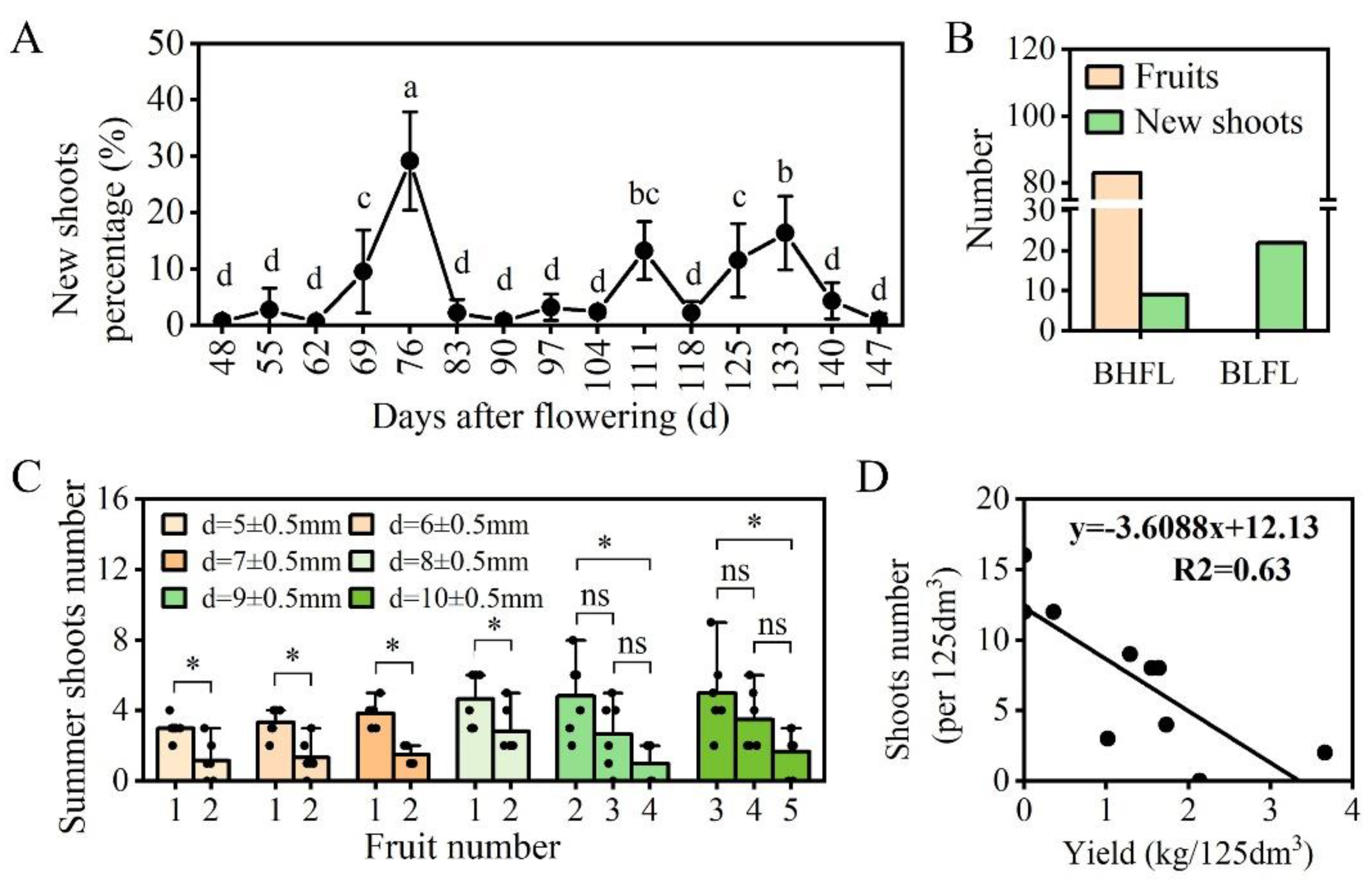
Figure 1. Effect of fruit load on the number of summer shoots. (A) The percentage of new shoots emergence after flowing in ‘Newhall’ navel orange. Data are presented as mean ± SD (n=9 trees). Different lowercase letters indicate statistically significant differences by the Duncan test (P < 0.05). (B) The number of fruits and summer shoots on the branches. BHFL: Branch with heavy fruit load. BLFL: Branch with less fruit load. (C) The numbers of fruits and summer shoots per branch with varying diameter. Data are presented as mean ± SD (n =5 branches). Asterisk (*) indicates significant difference with each other determined by the t-test (P < 0.05). (D) Correlation analysis of yield and number of new summer shoots.
Preprints 182998 g001
Figure 2. De-fruiting induced the outgrowth of axillary bud. (A) Sprouting percentage of fruit-bearing (CK) and de-fruited (DF) branches 10 days after de-fruiting treatment. Data are presented as mean ± SD (n=3 trees). Asterisks (**) indicate significant difference with the control determined by the t-test (P < 0.01). (B-I) The morphological changes of axillary buds after de-fruiting. The red arrowheads indicate the dissected axillary buds. The white arrowheads indicate the position of the SAM in the dissected axillary buds. (J) The length of axillary buds at different times after de-fruiting. Data are presented as mean ± SD (n=10 buds). Different lowercase letters indicate statistically significant differences by the Duncan test (P < 0.05).
Preprints 182998 g002
Figure 3. Differently accumulated metabolites (DAMs) between fruits and axillary buds. Contents of metabolites related to soluble sugars (A), auxin (B), jasmonic acid (C), cytokinin (D), and other phytohormones (E). ETH: ethylene; GA: gibberellin; SA: salicylic acid; SL: strigolactone; ABA: abscisic acid. Data are presented as mean ± SD (n=3). Asterisk (*) indicates significant difference with each other determined by the t-test (P < 0.05). The abbreviations and full names of metabolites are listed in tables S1 and S2.
Preprints 182998 g003
Figure 4. DAMs between the axillary buds of fruit-removed (DF) and fruit-bearing (CK) branches at 3 DAdF. Contents of metabolites related to soluble sugar (A), auxin (B), cytokinin (C), and other phytohormones (D). JA: jasmonic acid; SA: salicylic acid; SL: strigolactone; GA: gibberellin; ETH: ethylene. Data are presented as mean ± SD (n=3). Asterisk (*) indicates significant difference with the control determined by the t-test (P < 0.05). The abbreviations and full names of metabolites are listed in tables S1 and S2.
Preprints 182998 g004
Figure 5. Comparison of CsCwINVs(A) and CsSUSs (B) transcript levels between axillary buds on de-fruiting (DF) and normal (CK) branches at 3 DAdF. CsACTIN (Cs1g05000.1) was used as an internal control. Data are presented as mean ± SD (n=3). Asterisk (*) indicates significant difference with the control determined by the t-test (p < 0.05).
Preprints 182998 g005
Figure 6. The response of axillary buds in lemon single-node stems to sugar-related metabolites or IAA. (A) Representative image of lemon single-node stems cultured on medium supplemented with sugar-related metabolites at 20 days after treatment.(B)The young shoot length derived from the outgrowth of axillary bud in lemon single-node stems cultured in medium supplemented with sugar-related metabolites. (C) Representative image of lemon single-node stems cultured on medium supplemented with IAA at 20 days after treatment. (D) The young shoot length derived from the outgrowth of axillary bud in lemon single-node stems cultured in medium supplemented with IAA. Data are presented as mean ± SD (n =10). Asterisk (*) indicates significant difference with the control determined by the t-test (p < 0.05).
Preprints 182998 g006
Disclaimer/Publisher’s Note: The statements, opinions and data contained in all publications are solely those of the individual author(s) and contributor(s) and not of MDPI and/or the editor(s). MDPI and/or the editor(s) disclaim responsibility for any injury to people or property resulting from any ideas, methods, instructions or products referred to in the content.
Copyright: This open access article is published under a Creative Commons CC BY 4.0 license, which permit the free download, distribution, and reuse, provided that the author and preprint are cited in any reuse.
Prerpints.org logo

Preprints.org is a free preprint server supported by MDPI in Basel, Switzerland.

Subscribe

Disclaimer

Terms of Use

Privacy Policy

Privacy Settings

© 2025 MDPI (Basel, Switzerland) unless otherwise stated