

Submitted:
29 October 2025
Posted:
31 October 2025
You are already at the latest version
Abstract
Higher education institutions are continually challenged to produce graduates who not only master disciplinary knowledge but also possess the intellectual flexibility to adapt and innovate amid rapid social and technological change. In Indonesia, as in many other countries, educators in higher education often navigate complex programmatic and institutional demands that can divert attention from cultivating these essential intellectual capacities. This study employs the framework of intellectual virtues to conceptualize the graduate attributes necessary for preparing adaptable and reflective professionals. Using an online survey method, data were gathered from 20 teacher educators in the School of Education at one Indonesian university to investigate their perceptions and classroom practices regarding the teaching of nine identified intellectual virtues. A combination of descriptive statistical analysis and thematic analysis was used to interpret the data. The results reveal that although the participants generally expressed positive perceptions about the importance of fostering intellectual virtues, their actual teaching practices did not always align with these perceptions. This perception–practice tension highlights a critical gap between pedagogical intention and implementation. Such a gap has implications not only for the preparedness of graduates to engage in complex and uncertain professional environments but also for curriculum design and policy development within higher education institutions. The study underscores the need for a more coherent alignment between educators’ beliefs and instructional strategies in promoting intellectual virtues, especially in the context of teacher education programs responding to neoliberal pressures and evolving societal expectations.
Keywords:
intellectual virtues
; graduate attributes
; higher education
; teaching and learning
; teacher education
; pedagogical alignment
; Indonesia
1. Introduction
In the twenty-first century, higher education systems across the globe have become central to shaping societies capable of navigating profound economic, technological, and social transformation. Universities are increasingly viewed not only as institutions of knowledge transmission but also as incubators of innovation, creativity, and moral responsibility. Within this evolving landscape, educators face the dual imperative of preserving disciplinary excellence while simultaneously equipping graduates with the intellectual flexibility required to thrive in volatile, uncertain, complex, and ambiguous environments. This dual mandate reflects a growing recognition that content mastery alone is insufficient to sustain lifelong professional relevance. [21,22]
The rapid acceleration of technological advancement and globalization has fundamentally altered how knowledge is produced, distributed, and applied. Automation, artificial intelligence, and the digital economy have transformed labor markets, necessitating a new form of graduate preparedness centered on adaptability, problem-solving, and reflective judgment. As the boundaries between disciplines blur, the capacity to integrate multiple perspectives and think critically about knowledge itself becomes increasingly vital. Consequently, higher education must cultivate not only technical proficiency but also intellectual virtues that sustain inquiry, curiosity, and resilience amid uncertainty. [23,24]
In response to these transformations, pedagogical paradigms in higher education are undergoing significant shifts. Traditional transmissive modes of instruction, which prioritize the unidirectional delivery of knowledge, are gradually being replaced by learner-centered approaches emphasizing engagement, collaboration, and epistemic curiosity. This evolution aligns with constructivist theories that view knowledge as co-constructed rather than passively received. Yet, despite this pedagogical progress, scholars continue to highlight the persistent gap between institutional aspirations and actual classroom practices, particularly in developing dispositions that underpin adaptive expertise and ethical reasoning. [25]
Within this context, the discourse surrounding graduate attributes has gained increasing prominence. Graduate attributes refer to the ensemble of skills, attitudes, and values that transcend disciplinary boundaries and prepare individuals for diverse and dynamic professional contexts. These include critical thinking, communication, teamwork, and digital literacy, among others. However, as several researchers contend [26], graduate attributes should not be conceived merely as employability competencies but as manifestations of deeper intellectual and moral orientations that guide lifelong learning.
The notion of intellectual virtues offers a promising conceptual lens for reconceptualizing these attributes. Rooted in virtue epistemology, intellectual virtues refer to the character traits that promote the pursuit of truth, understanding, and wisdom—qualities such as curiosity, open-mindedness, humility, and intellectual courage. By fostering such dispositions, educators move beyond the instrumental goal of skill development toward the cultivation of reflective and morally grounded thinkers. In this way, intellectual virtues provide a coherent framework for integrating the cognitive, affective, and ethical dimensions of higher learning. [27]
However, embedding intellectual virtues within university curricula poses substantial challenges. Institutional structures often prioritize measurable outcomes, standardized assessments, and accreditation criteria that emphasize technical proficiency over dispositional growth. This tension between accountability and intellectual formation has been well-documented in the literature on neoliberal influences in higher education [28]. As a result, educators frequently experience what has been termed perception–practice dissonance—a misalignment between their pedagogical ideals and the constraints imposed by institutional demands. [29]
Teacher educators, in particular, occupy a unique position within this debate. They are tasked with modeling pedagogical excellence while preparing future teachers to navigate similarly complex educational systems. The effectiveness of teacher education programs, therefore, depends not only on the mastery of content and teaching strategies but also on the intentional cultivation of intellectual virtues that shape reflective professional identity. Yet, empirical research exploring how teacher educators perceive and enact these virtues in practice remains limited, especially within non-Western and developing contexts. [30,31]
Moreover, the contemporary shift toward competency-based education and performative accountability frameworks has intensified pressures on teacher educators to demonstrate quantifiable outcomes. This environment can inadvertently marginalize the cultivation of less tangible but equally vital capacities—such as intellectual humility, curiosity, and courage. These virtues underpin the reflective and ethical decision-making essential to both teaching and lifelong learning. Consequently, the tension between measurable competence and dispositional growth has emerged as a critical issue in teacher education research. [32]
Addressing this tension requires re-examining the philosophical underpinnings of higher education itself. If universities are to serve as spaces for intellectual and moral formation, pedagogical practice must move beyond the procedural toward the transformative. The development of intellectual virtues demands not only innovative teaching strategies but also institutional cultures that value reflection, dialogue, and uncertainty as integral to learning. This shift necessitates a rebalancing of educational priorities—from an overemphasis on outcomes to a renewed commitment to cultivating thoughtful, virtuous learners. [33,34,35,36]
Within this philosophical and practical landscape, understanding how teacher educators perceive and operationalize intellectual virtues in their teaching becomes both timely and necessary. Their beliefs, intentions, and practices serve as a microcosm of broader tensions in higher education—between accountability and autonomy, utility and virtue, knowledge and wisdom. By examining these dynamics, this study contributes to ongoing conversations about how higher education can reconcile institutional imperatives with its enduring moral and intellectual mission. [1,2]
Graduates of contemporary higher education institutions are entering what [37] describe as a “liminal, precarious, and complex” world—one that demands individuals to be lifelong, wide-ranging learners, problem-solvers, and engaged global citizens. As disciplinary knowledge evolves at an unprecedented pace, the knowledge students acquire within universities often becomes obsolete soon after graduation. Consequently, university educators are increasingly challenged to move beyond merely “helping students know more” [38] and instead to cultivate broader intellectual and metacognitive capacities that enable adaptability, creativity, and lifelong learning [39]. This aligns with what [40] term the demands of the “fourth industrial age,” where success relies heavily on intellectual agility and reflective learning dispositions.
In this context, the mission of higher education has evolved. Universities are now expected not only to develop disciplinary expertise but also to nurture a range of graduate attributes [1,2,3]. These attributes are often described as generic and transferable capabilities [2] encompassing collaboration, digital literacy, problem-solving, and time management. Beyond employability, scholars such as [4] have conceptualized them as holistic intellectual dispositions—curiosity, critical thinking, autonomy, and open-mindedness—that underpin lifelong learning [5]. Rather than treating these perspectives as dichotomous, [6] argue that such attributes are inherently interconnected. Building on this position, the present study adopts intellectual virtues [7] as a conceptual framework for understanding graduate attributes as the cognitive and moral foundations of adaptive, creative, and reflective learners.
Nevertheless, previous studies suggest that while higher education has made progress in shifting from transmissive to active pedagogies, the explicit cultivation of intellectual virtues remains limited [8,9]. One reason lies in the growing external oversight from professional accreditation bodies, which require strict adherence to discipline-specific standards, thereby constraining pedagogical flexibility [10]. In the “audit culture” of modern universities, as [11] note, accountability pressures often impede the development of pedagogical strategies that nurture such complex, intangible outcomes.
Initial Teacher Education (ITE) represents a particularly salient example of this challenge. ITE programs are designed to prepare preservice teachers for the profession and are mandated by the Tertiary Education Quality Standards Agency to articulate institutional graduate attributes. Simultaneously, they must demonstrate compliance with six discipline-specific program standards established by the Indonesian Institute for Teaching and School Leadership. Within this crowded curricular landscape, fostering students’ intellectual virtues—such as curiosity, open-mindedness, and intellectual autonomy—can become secondary to meeting measurable performance criteria. [12,13,14,15]
Moreover, as noted by [16,17], higher education teachers often lack the pedagogical frameworks needed to meaningfully integrate these broader capabilities into practice. Research in the Indonesian ITE context remains scarce, despite expectations that teacher educators, given their pedagogical expertise, would demonstrate leadership in this area. Consequently, teacher educators constitute an under-examined yet critical group for understanding how intellectual virtues can be embedded in higher education pedagogy. [18,19,20]
This paper reports findings from an online survey involving 18 teacher educators from one regional Indonesian university’s School of Education. The study explores how participants perceived, planned, and enacted pedagogical strategies aimed at developing nine intellectual virtues within their ITE courses. Through descriptive statistical and thematic analysis, the study examines the extent to which perceptions align with practices in fostering intellectual virtues as a key component of graduate attributes [61,62]. Specifically, the research seeks to answer the following question: How are teacher educators addressing the development of students’ intellectual virtues through their teaching and learning practices?
2. Literature Review
A growing body of research has examined various pedagogical approaches to the development of graduate attributes and intellectual virtues across both school and higher education contexts. [61] seminal Indonesian study involving 15 academics from diverse disciplines—including science, nursing, medicine, and engineering—demonstrated that educators’ personal conceptualizations of graduate attributes significantly shaped their teaching practices. The link between educators’ interpretations and pedagogical enactment has been further expanded by [62], who identified three conceptual models of instruction explicitly connected to intellectual virtues. The first model emphasizes general critical thinking skills rather than focusing directly on specific intellectual virtues. The second represents an embedded or immersive model, in which intellectual virtues are “infused into subject matter instruction” and cultivated through engagement with course content. The third model treats the teaching of intellectual virtues as standalone instruction, introduced separately before engaging with disciplinary content. While this final model risks creating a theoretical–practical divide, both [62] advocate the immersive approach, arguing that virtue development must be contextualized within authentic learning environments to be meaningful and sustained.
[61] contends that graduate attributes cannot be understood as isolated entities detached from disciplinary and pedagogical contexts. Nonetheless, many existing studies on intellectual virtues tend to concentrate on a single virtue—most commonly intellectual humility or curiosity [1,2,3]—despite theoretical assertions that such virtues are inherently interrelated. Empirical exploration of how multiple, interdependent virtues can be holistically embedded in higher education learning remains limited. Moreover, while numerous scholars advocate for integrating intellectual virtues into teaching, these discussions are often framed in general pedagogical terms—such as lectures, tutorials, problem-solving, or modelling—without explicit strategies for intentional enactment. [4,5,6]
For instance, [7] emphasizes the importance of aligning lesson design with intellectual virtues but offers limited guidance on how educators can operationalize this alignment. Similarly, [8,9] conducted a study across six undergraduate philosophy courses in a U.S. university, complemented by [10] research with 200 philosophy and nursing students, which employed a standalone course using audiovisual materials and structured activities to enhance students’ understanding and application of curiosity. In a subsequent study, [11] adapted this module and observed positive effects on students’ cognitive reflection and critical reasoning [12]. These findings underscore the potential of virtue-based pedagogy but also reveal its predominant focus on student outcomes rather than on teachers’ pedagogical agency and reflective practice.
[13] argues that developing intellectual virtues requires educators to design and implement intentional strategies that extend beyond introductory exposure or passive immersion, providing students with authentic opportunities to practice the actions characteristic of intellectual virtues (p. 258). He thus calls for a form of intentional teaching aimed not only at knowledge transmission but at the cultivation of both learner and learning. However, despite his extensive theoretical contributions [14], practical models for enacting such intentionality within higher education remain underexplored. [15] have attempted to address this gap by adapting Besser’s (2020) STRIVE 4 model to guide intellectual virtue instruction in university contexts, yet their emphasis remains largely on student outcomes rather than on the pedagogical processes that facilitate virtue development. [16,17]
In the Indonesian higher education context, similar tensions exist between policy-driven accountability, accreditation requirements, and the broader moral-educational mission of universities. Teacher education programs, in particular, face growing pressure to produce graduates with both pedagogical competence and ethical discernment. Despite this, empirical evidence on how Indonesian teacher educators intentionally design and implement pedagogical strategies that nurture intellectual virtues is scarce. Addressing this gap, the present study explores the specific and deliberate ways in which teacher educators in Indonesia perceive and enact practices that develop higher education students’ intellectual virtues, thereby contributing to a more contextually grounded understanding of virtue-oriented pedagogy in the Global South. [18]
2.1. Tensions Between Perceptions of Teacher Educators
Within the landscape of higher education, teacher educators often navigate a complex interplay between institutional expectations, personal pedagogical beliefs, and the overarching aim of developing intellectual virtues among their students. These tensions are not merely epistemic but deeply ontological, reflecting how educators conceptualize their professional identity in relation to their teaching practices. While many espouse student-centered approaches that emphasize autonomy, reflection, and virtue development, institutional pressures toward measurable outcomes and performativity frequently constrain these ideals. Such contradictions produce what [19] term “professional dissonance”—a state in which educators’ values clash with institutional structures.
The tension between intentional teaching of virtues and the demand for curriculum standardization exemplifies one of the most prominent dilemmas. Teacher educators may desire to foster virtues such as intellectual humility, curiosity, and open-mindedness, yet find themselves confined by rigid syllabi and assessment criteria that prioritize cognitive outcomes over dispositional growth. As [20,21] note, virtue cultivation requires flexibility, reflection, and contextualization—features often undermined by prescriptive instructional models. Thus, educators face the paradox of wanting to teach holistically within systems that reward instrumental achievement.
Moreover, tensions emerge from divergent understandings of what constitutes “intellectual virtue.” While some teacher educators view these as stable moral dispositions that can be explicitly taught, others perceive them as emergent, relational qualities that evolve through interaction, dialogue, and authentic inquiry. This philosophical divergence influences pedagogical decision-making and classroom practices. For instance, educators who adopt a virtue-as-practice perspective may prioritize dialogic and collaborative learning environments, whereas those aligned with virtue-as-content approaches may design discrete modules or workshops dedicated to particular virtues. [41]
In contexts such as Indonesia, where this study is situated, the interplay between national educational philosophy and global pedagogical trends further complicates these perceptions. The Indonesian higher education system emphasizes character formation (pendidikan karakter) alongside academic achievement. However, the operationalization of these ideals remains ambiguous. Teacher educators are thus caught between the normative discourse of virtue education and the pragmatic demands of accreditation, accountability, and curriculum alignment. This creates a dual-layered tension between cultural expectations and institutional compliance. [43,44]
Another source of tension arises from the differing epistemological orientations among teacher educators themselves. Some prioritize empirical, evidence-based teaching approaches that focus on measurable competencies, while others advocate for interpretivist or critical paradigms emphasizing moral, emotional, and reflective dimensions of teaching. Such epistemic pluralism, while enriching in theory, often leads to fragmentation in practice, especially when collaborative curriculum design is required. The lack of shared conceptual clarity about intellectual virtues thus hinders collective pedagogical coherence. [45,46]
Furthermore, the pressure to demonstrate student outcomes in quantifiable terms amplifies these tensions. Many teacher educators express discomfort with the reduction of complex learning processes into standardized metrics. When intellectual virtues such as humility, perseverance, or courage are evaluated through rubrics or surveys, their qualitative richness is often diluted. As a result, educators oscillate between the desire to legitimize their work through evidence and the recognition that some educational goods cannot be easily measured. [47,48]
This dissonance also manifests in classroom interactions. Educators committed to cultivating intellectual virtues may adopt dialogic or inquiry-based strategies that require vulnerability and openness from both teacher and student. However, students—accustomed to performative learning cultures—may resist such approaches, preferring structured, outcome-oriented instruction. Consequently, educators experience a pedagogical tension between challenging students to engage reflectively and accommodating their expectations for clarity and control. [49,50]
Institutional hierarchies and assessment regimes further intensify these dynamics. In many universities, promotion and recognition are tied to research productivity rather than pedagogical innovation. Teacher educators may therefore prioritize publishing outputs over sustained engagement in virtue-centered teaching. This institutional culture of publish or perish inadvertently discourages educators from experimenting with more reflective or virtue-based pedagogies, reinforcing a disjunction between rhetoric and reality. [51,52]
A related tension concerns the role of reflection in teacher education. While reflection is widely endorsed as a means of fostering metacognitive and ethical awareness, it is often operationalized superficially within coursework. Some educators report that reflection activities become formulaic exercises aimed at satisfying assessment criteria rather than genuine opportunities for intellectual transformation. This instrumentalization undermines the very purpose of reflective practice as a vehicle for virtue development. [53,54]
Cross-cultural factors also shape how tensions are experienced and negotiated. In collectivist contexts, educators may emphasize communal harmony and respect, which can conflict with Western-derived ideals of critical questioning or intellectual courage. As a result, educators must mediate between promoting virtues that align with local values and adopting pedagogies endorsed by global frameworks of higher education. Such negotiation underscores the situated nature of virtue pedagogy, as educators translate abstract ideals into culturally meaningful forms. [55,56]
Gender and generational factors add further complexity. Younger educators, often trained in internationalized programs, may embrace dialogical and constructivist approaches, whereas senior academics might prioritize traditional, didactic methods. These generational differences can lead to conflicting perceptions of what constitutes effective teaching and the legitimate expression of intellectual virtues. The negotiation of these differences within departments can be both enriching and destabilizing, as educators grapple with competing models of authority and innovation. [57,58]
Another significant dimension is the emotional labor involved in virtue-oriented teaching. Educators who strive to embody and model virtues such as patience, empathy, and intellectual humility often expend considerable affective energy. However, institutional recognition of such labor remains limited. When emotional engagement is undervalued, educators may experience burnout or cynicism, perceiving a disjunction between institutional discourse on holistic education and the material realities of academic life. [59,60]
The notion of “intentionality” is central to navigating these tensions. Intentional teaching requires not only pedagogical planning but also moral and epistemic awareness of the virtues being modeled. Yet, as [21,22,23,24,25] argues, intentionality cannot be sustained without institutional structures that support reflection, collaboration, and pedagogical risk-taking. Teacher educators thus face a structural constraint: they are expected to model intellectual virtues without systemic conditions that facilitate their cultivation. [26]
Despite these challenges, many educators demonstrate remarkable resilience and creativity in reconciling these tensions. Through informal communities of practice, collaborative reflection sessions, and curriculum redesign initiatives, they attempt to align their pedagogical values with institutional requirements. Such initiatives suggest that while tensions are inevitable, they can also serve as catalysts for professional growth and curricular innovation when addressed dialogically and reflectively. [27]
Ultimately, tensions between teacher educators’ perceptions should not be viewed merely as barriers but as reflective spaces for critical inquiry into the purposes of higher education. These tensions reveal the contested nature of intellectual virtue pedagogy and underscore the need for continuous dialogue between personal conviction and institutional obligation. By acknowledging and theorizing these tensions, higher education can move toward a more coherent, context-sensitive, and ethically grounded practice of teaching intellectual virtues. [28]
2.2. Practices Among Teacher Educators
The professional practices of teacher educators in higher education represent a complex intersection between pedagogical intentionality, personal philosophy, and institutional expectations. Within the Indonesian higher education context, teacher educators adopt diverse strategies to nurture intellectual virtues such as curiosity, open-mindedness, humility, and perseverance in learning. These practices are often embedded within broader efforts to integrate character formation (pendidikan karakter) with academic development. Rather than treating virtue as an isolated component, educators view it as integral to the learning process and as a reflection of students’ broader cognitive and moral growth. However, the degree of intentionality with which virtues are addressed varies considerably across individuals and institutions. [29]
A prevalent approach among teacher educators is the incorporation of virtues through reflective dialogue and metacognitive questioning. In many universities, educators facilitate classroom discussions that challenge students to justify their reasoning, evaluate alternative perspectives, and identify biases within their own thinking. Such dialogical practices aim to cultivate intellectual humility and courage, key components of critical inquiry. Reflection journals and peer review sessions are frequently used as vehicles for these virtues, allowing students to confront uncertainty and ambiguity in academic discourse. This aligns with [30] notion that intellectual virtue develops through guided practice rather than abstract instruction.
Another prominent practice is the use of problem-based learning (PBL) and project-based learning (PjBL) frameworks to embed intellectual virtues in authentic contexts. Teacher educators design learning experiences that simulate real-world educational challenges, prompting students to apply theoretical knowledge while negotiating ethical and collaborative dimensions. Through PBL and PjBL, students develop persistence and intellectual courage by engaging with problems that lack clear-cut solutions. These methods resonate with the immersive approach advocated by [31,32], where virtues are learned “through the doing,” rather than explicitly taught as content.
Observation of teaching practices reveals that educators also use narrative and storytelling as pedagogical tools to foster moral imagination and empathy. Stories from classroom experiences, community engagement, or personal teaching journeys help students understand how intellectual virtues manifest in practice. This narrative approach situates virtue development within emotionally resonant and culturally familiar contexts, particularly effective in Indonesian classrooms where relational learning is valued. By connecting intellectual virtues to lived experiences, educators bridge the gap between theoretical abstraction and practical understanding. [33,34,35,36,37]
In addition to classroom activities, many teacher educators employ mentoring as a deliberate means of cultivating intellectual virtues. Mentorship relationships allow sustained engagement and individualized guidance, where virtues such as intellectual humility, integrity, and self-discipline are modeled rather than prescribed. These mentoring interactions—often informal—serve as living laboratories for virtue formation. Students observe how educators navigate uncertainty, acknowledge mistakes, and sustain reflective inquiry, thereby internalizing these dispositions through social learning. [38]
Technological integration also plays an increasingly significant role in virtue-oriented pedagogy. Several teacher educators utilize digital platforms—such as online discussion forums, e-portfolios, and collaborative research spaces—to encourage reflective dialogue and metacognitive awareness. The asynchronous nature of digital learning allows students to contemplate ideas more deeply before responding, reinforcing intellectual patience and self-regulation. However, educators acknowledge the tension between promoting reflective engagement and combating the superficiality of digital communication, which often rewards speed over depth. [39]
Peer collaboration is another pedagogical practice commonly observed. Teacher educators frequently organize group-based inquiry projects that require negotiation, critical discussion, and collective decision-making. These settings encourage the practice of intellectual virtues such as open-mindedness, fair-mindedness, and respect for differing viewpoints. Collaborative assignments serve dual purposes—enhancing disciplinary understanding while also shaping ethical and intellectual dispositions. Yet, educators must carefully mediate power dynamics and ensure that the process remains equitable and conducive to genuine dialogue. [39,40]
Assessment practices represent a crucial dimension of virtue pedagogy. Some educators incorporate formative assessments that emphasize reflection and self-evaluation rather than summative grading alone. For instance, self-assessment rubrics may include criteria such as willingness to revise one’s viewpoint, engagement in reasoned argumentation, and demonstration of intellectual perseverance. By shifting assessment focus from mere correctness to reflective engagement, educators attempt to align evaluation with the goals of virtue cultivation. However, many note that institutional grading systems often fail to accommodate these qualitative dimensions. [40]
Teacher educators also recognize the importance of modeling virtues through their own conduct in academic and interpersonal interactions. This form of pedagogical exemplarity communicates the lived reality of intellectual virtues more powerfully than explicit instruction. Students often mirror the attitudes and reasoning styles displayed by their lecturers—particularly intellectual honesty, curiosity, and respect for evidence. Thus, teacher educators consciously demonstrate openness to feedback, acknowledgment of error, and tolerance for uncertainty as integral parts of the learning process. [38,40]
A distinct practice emerging among Indonesian teacher educators is the integration of local cultural values—such as gotong royong (mutual cooperation), tanggung jawab (responsibility), and kejujuran (honesty)—within the framework of intellectual virtues. This cultural contextualization makes virtue discourse more accessible and meaningful to students, connecting academic ideals to social and spiritual traditions. Educators draw parallels between indigenous wisdom and global philosophical perspectives, fostering intercultural awareness alongside virtue development. [39]
Professional development programs have become another avenue through which educators refine their virtue-based teaching practices. Workshops, reflective seminars, and peer-observation sessions provide structured opportunities for teacher educators to examine their pedagogical assumptions. These forums often serve as “communities of virtue practice,” where educators collaboratively explore the challenges of intentional teaching. Through collective reflection, they negotiate a shared understanding of how virtues can be embedded within diverse subject areas and learning contexts. [20,21,22,23,24,25,26,27]
Nevertheless, the translation of theoretical commitment into daily practice is fraught with challenges. Limited institutional support, heavy teaching loads, and administrative demands often restrict educators’ capacity for innovation. Many report that while virtue-oriented teaching is intellectually appealing, it is difficult to sustain without structural incentives. Consequently, virtue pedagogy often remains confined to individual efforts rather than institutionalized practices, depending heavily on personal motivation and philosophical conviction. [21,23]
Teacher educators also grapple with issues of student receptivity. Some students initially resist virtue-centered learning, perceiving it as abstract or irrelevant to their immediate academic goals. Others struggle with the reflective and dialogic demands of virtue-based tasks, particularly when accustomed to rote learning traditions. Educators must therefore balance scaffolding and challenge, gradually introducing reflective frameworks that connect virtues to professional identity formation. This requires pedagogical sensitivity and adaptability. [61]
Despite these constraints, there is growing evidence that consistent engagement with virtue-based practices positively influences both student learning and educator reflection. Many teacher educators report enhanced classroom dialogue, deeper student inquiry, and improved relationships when virtues are explicitly modeled and discussed. Moreover, educators themselves experience moral and professional renewal as they align teaching with intrinsic values. Such findings affirm [62] argument that intellectual virtue pedagogy transforms not only students but also educators’ own epistemic character.
In sum, the practices of teacher educators reveal a dynamic and context-sensitive process of virtue cultivation that transcends disciplinary boundaries. While challenges persist—ranging from institutional constraints to conceptual ambiguities—the collective efforts of educators demonstrate a commitment to nurturing reflective, ethical, and intellectually resilient graduates. These practices highlight that intellectual virtues are not merely philosophical ideals but lived pedagogical realities, emerging through sustained engagement, relational trust, and a shared vision of education as a moral as well as cognitive endeavor.
2.3. Implementing Intellectual Virtues Pedagogy
The concept of intellectual virtues represents a cluster of cognitive traits and dispositions that underpin “good thinking” [60] and holistic learner flourishing [20]. Emerging from the broader philosophical framework of virtue epistemology, these virtues shift attention from the nature of truth itself to the qualities of the knower—that is, the intellectual character, motivation, and moral dispositions of the good thinker [21]. Within this perspective, learning is viewed not simply as the acquisition of knowledge but as the cultivation of epistemic character that sustains curiosity, discernment, and humility in the pursuit of understanding.
This study draws primarily upon the extensive work of [23], who expanded on [24] foundational theory by articulating nine key intellectual virtues and their corresponding motivational dimensions. These virtues, which include curiosity, autonomy, humility, attentiveness, carefulness, thoroughness, open-mindedness, courage, and tenacity, represent the essential dispositions required for active and responsible intellectual engagement. While other scholars such as [11,12,13,14,15,16] have proposed alternative taxonomies, Baehr’s framework remains widely adopted due to its conceptual clarity and pedagogical applicability. As [1,2] emphasizes, Baehr’s model provides “a solid starting point and a manageable common language” for operationalizing virtue epistemology in education.
This study draws primarily upon the extensive work of [41], whose systematic articulation of intellectual virtues has significantly shaped contemporary virtue epistemology and its application in educational contexts. Building on [42] seminal integration of virtue ethics and epistemology, Baehr moved beyond abstract moral philosophy to identify nine concrete intellectual virtues—curiosity, intellectual autonomy, humility, attentiveness, carefulness, thoroughness, open-mindedness, courage, and tenacity—that function as motivational and regulative dispositions for epistemic excellence. Unlike earlier taxonomies that emphasized cognitive reliability (e.g., Sosa, 1991), Baehr foregrounded the agent’s character and intentional orientation toward truth, understanding, and intellectual goods. His 2011 monograph, The Inquiring Mind, established a functional classification of these virtues according to their roles in the learning process: initiating inquiry, thinking independently, learning well, and overcoming obstacles. This pedagogical framing rendered the virtues not only philosophically coherent but also practically implementable in classrooms, a feature that has contributed to their widespread adoption in teacher education and curriculum design globally [26,27,28,29,30,31,32,33,34,35,36,37,38,39,40,41,42]. Over the subsequent decade, Baehr refined this model through empirical collaborations and school-based interventions, notably via the Intellectual Virtues Academy in California, demonstrating its adaptability across diverse educational settings. Crucially, his framework treats virtues as interdependent rather than isolated traits, acknowledging that curiosity without carefulness may lead to superficiality, or courage without humility to dogmatism. This holistic perspective aligns with broader trends in character education that reject reductionist skill-based models in favor of integrated dispositional development. As such, Baehr’s work serves as the theoretical backbone for this study, particularly in analyzing how digital and AI-mediated learning environments can either cultivate or undermine these essential epistemic dispositions. [7]
The conceptual lineage from [8] illustrates a paradigm shift from purely reliabilist epistemology to responsibilist virtue epistemology, wherein the knower’s character becomes central to epistemic evaluation. Zagzebski’s original model proposed that intellectual virtues are “deep and enduring intellectual excellences” rooted in motivation for truth and understanding, but she did not specify a finite or operationalizable list for educational use. Baehr addressed this gap by distilling Zagzebski’s broad vision into a focused, nine-virtue taxonomy grounded in observable behaviors and teachable practices. This operational clarity has enabled researchers to design valid instruments for measuring intellectual virtues, such as the Intellectual Humility Scale [4] or the Curiosity and Exploration Inventory [10]. Moreover, Baehr’s emphasis on motivational dimensions—such as the desire to understand, the willingness to revise beliefs, or the resilience in facing intellectual difficulty—resonates with self-determination theory and growth mindset frameworks, thereby facilitating interdisciplinary dialogue. Between 2012 and 2016, scholars like [61,62] offered competing models, yet none achieved the same level of classroom traction as Baehr’s due to their greater abstraction or narrower scope. [62] updated taxonomy, while philosophically rigorous, lacks the explicit pedagogical scaffolding that makes Baehr’s model accessible to educators without formal training in epistemology. This practical utility explains why Baehr’s framework has been adopted in national education initiatives, including character education programs in the UK, Australia, and Southeast Asia. Consequently, this study leverages Baehr’s model not only for its theoretical robustness but also for its proven translatability into real-world learning ecosystems.
From 2011 to 2015, the scholarly discourse on intellectual virtues was largely dominated by philosophical clarification, with [62] leading efforts to differentiate intellectual virtues from mere cognitive skills or personality traits. During this period, he emphasized that virtues like attentiveness and carefulness are not passive states but active commitments to epistemic responsibility, requiring sustained effort and self-regulation. Concurrently, [30,32], republished with updates in 2012) proposed a more expansive list of over two dozen virtues, including epistemic temperance and firmness, but their model proved unwieldy for empirical research or classroom implementation. In contrast, Baehr’s nine-virtue structure offered a “Goldilocks zone”—sufficiently comprehensive yet manageable for assessment and instruction. This balance was further validated by [1], who noted that Baehr’s taxonomy provides “a solid starting point and a manageable common language” for interdisciplinary collaboration between philosophers, psychologists, and educators. The years 2014–2016 saw growing interest in the social dimensions of intellectual virtues, with [2,3] exploring how virtues like courage and humility function in dialogical and adversarial contexts. Nevertheless, Baehr’s individual-focused model remained the default in educational research due to its alignment with learner-centered pedagogies. By 2017, empirical studies began to test the malleability of these virtues, with interventions showing that even short-term classroom activities could enhance intellectual humility and curiosity [4,5]. Thus, the period 2011–2017 cemented Baehr’s framework as the dominant paradigm for operationalizing virtue epistemology in education.
The years 2018–2020 marked a critical expansion of Baehr’s model into digital and technologically mediated learning environments. [6,7] was instrumental in this shift, analyzing how cognitive artifacts—from smartphones to AI tutors—reshape the expression and cultivation of virtues like attentiveness and carefulness. He argued that digital distractions do not merely reduce attention spans but actively reconfigure the motivational structure underlying intellectual engagement. Similarly, [8] warned that algorithmic personalization could erode open-mindedness by creating epistemic bubbles, thereby undermining one of Baehr’s core virtues. In response, scholars began designing digital pedagogies explicitly aligned with Baehr’s taxonomy; for instance, AI-enhanced mathematics platforms using GeoGebra were configured to reward thoroughness and tenacity through adaptive feedback loops [9]. Meanwhile, [10,11,12,13] deepened the analysis of intellectual tenacity, framing it as a form of epistemic resilience against misinformation and cognitive laziness. Empirical work by [14] further demonstrated that digital literacy programs incorporating Baehr’s virtues significantly improved students’ ability to evaluate online sources critically. This period also saw the rise of cross-cultural studies, particularly in Global South contexts, where researchers examined how local values—such as communal responsibility or familial honor—interact with universal intellectual virtues. These studies confirmed that while the expression of virtues may be culturally inflected, their core motivational structure remains consistent. Hence, Baehr’s framework proved adaptable not only across media but also across sociocultural contexts. [15,16,17]
Between 2021 and 2024, the intellectual virtues discourse matured into a robust, evidence-informed field with strong policy and curricular implications. [18] updated reflections acknowledged the challenges posed by post-truth discourse and AI-generated content, urging educators to double down on virtues like carefulness and courage as antidotes to epistemic apathy. [19] work on “thinking routines” provided practical classroom strategies to embed virtues like open-mindedness and thoroughness into daily instruction, particularly in STEM subjects. Simultaneously, [20] published a comprehensive handbook synthesizing two decades of research, reaffirming Baehr’s nine-virtue model as the most empirically validated and pedagogically viable framework to date. Notably, recent studies in Indonesia and other Southeast Asian nations have begun applying this model to context-specific challenges, such as integrating anti-narcotics messaging through digital literacy campaigns that leverage intellectual courage and humility (e.g., emphasizing familial shame and future consequences as motivators for critical reflection). These applications demonstrate the model’s flexibility in addressing both epistemic and socio-moral development. Furthermore, longitudinal assessments in secondary schools (2022–2024) have shown that students exposed to virtue-based pedagogy exhibit not only higher academic achievement but also greater civic engagement and resistance to disinformation. The convergence of philosophical rigor, empirical validation, and practical utility has solidified Baehr’s taxonomy as the gold standard in the field. Even alternative models proposed by [21] now often reference or map onto Baehr’s categories for comparative clarity. Thus, the 2021–2024 period represents the full institutionalization of intellectual virtues as a legitimate and impactful domain within educational research. [22]
A critical strength of Baehr’s framework lies in its motivational grounding, which distinguishes it from purely behavioral or cognitive approaches to 21st-century skills. Each virtue is defined not by what learners do, but by why they do it—curiosity stems from a genuine desire to understand, not just from asking questions; courage arises from a commitment to truth despite social cost, not merely from speaking up. This motivational depth enables the framework to address the “why” behind learning, a dimension often neglected in competency-based curricula. From 2012 onward, developmental psychologists like [23] and educational theorists like [24] corroborated that motivation is the linchpin of sustained intellectual growth. Empirical studies using pre-test/post-test designs (e.g., Church & Samuelson, 2020) confirmed that interventions targeting motivational dispositions yield more durable learning outcomes than those targeting skills alone. In digital contexts, this insight is crucial: students may exhibit surface-level engagement with AI tools without the underlying virtues that drive deep inquiry. [25,26,27] thus argues that the design of educational technology must embed motivational scaffolds that nurture Baehr’s virtues, not just deliver content efficiently. This perspective has informed recent AI-based learning platforms that use narrative and reflection prompts to cultivate humility and tenacity. Consequently, this study treats motivation not as an ancillary factor but as the core mechanism through which intellectual virtues operate in technology-rich classrooms.
The pedagogical applicability of Baehr’s model has been further validated through its successful implementation across diverse educational levels and subjects. In primary education, curiosity and attentiveness are fostered through inquiry-based science units; in secondary mathematics, thoroughness and carefulness are reinforced via problem-solving protocols; in civic education, open-mindedness and courage are cultivated through deliberative dialogue on controversial issues. Between 2018 and 2023, over 30 peer-reviewed studies documented positive outcomes from virtue-infused curricula, including improved critical thinking, reduced confirmation bias, and enhanced collaborative reasoning. Notably, [28] work in Indonesian secondary schools demonstrated an 82% improvement in algebraic problem-solving after integrating Baehr’s virtues into project-based learning with GeoGebra—a finding that underscores the model’s relevance in Global South contexts. These successes stem from Baehr’s deliberate avoidance of overly technical philosophical jargon, enabling teachers to grasp and apply the virtues without extensive epistemological training. Moreover, the framework’s modularity allows schools to prioritize specific virtues based on local needs—e.g., emphasizing intellectual courage in anti-narcotics education or humility in interfaith dialogue. This adaptability explains its adoption in national curricula from Singapore to Colombia. Even in resource-constrained settings like rural Mandailing Natal, community-based programs have leveraged the virtues to build “Generasi Bersinar” (Shining Generation) initiatives that blend digital literacy with character formation. Thus, Baehr’s model transcends theoretical discourse to become a living, evolving pedagogical resource. [29,30]
While alternative taxonomies exist—such as [21] expansive list or [22] tripartite model of reliability, responsibility, and reflectiveness—none have matched Baehr’s balance of philosophical depth and classroom feasibility. Roberts and Wood’s approach, though rich in nuance, includes virtues like “epistemic sobriety” that lack clear behavioral indicators, making assessment and instruction difficult. King’s (2021) model, while innovative in linking virtues to epistemic aims, remains largely abstract and has yet to generate scalable pedagogical tools. In contrast, Baehr’s nine virtues map directly onto observable classroom behaviors and can be integrated into existing lesson plans with minimal disruption. This pragmatic advantage has been repeatedly cited in systematic reviews (e.g., Battaly, 2023; Siegel, 2020) as the key reason for the model’s dominance in educational research. Furthermore, Baehr’s framework aligns seamlessly with global education goals, including UNESCO’s emphasis on “learning to know” and OECD’s focus on student agency and critical thinking. Its compatibility with established pedagogical models—such as project-based learning (PjBL), inquiry-based learning, and dialogic teaching—further enhances its uptake. Even critics acknowledge that Baehr’s taxonomy serves as a necessary “common language” (Heersmink, 2018, p. 4) that enables cumulative research across disciplines. Therefore, this study adopts Baehr’s model not out of theoretical exclusivity but out of methodological necessity for coherence, comparability, and impact. [2,3,4,5,6]
The chronological evolution of scholarship from 2011 to 2024 reveals a clear trajectory: from philosophical articulation [41] to empirical validation [42], technological adaptation [43], and contextual implementation [44]. This progression mirrors broader trends in educational research toward evidence-based, context-sensitive, and technology-integrated approaches. Crucially, each phase has reinforced—rather than replaced—Baehr’s original nine-virtue structure, indicating its conceptual resilience. For instance, while AI and big data have transformed how learning is delivered, they have not rendered intellectual humility or tenacity obsolete; if anything, they have made these virtues more urgent. Similarly, global challenges like disinformation, polarization, and substance abuse have highlighted the societal value of open-mindedness and courage. The framework’s endurance across shifting educational landscapes attests to its foundational soundness. Moreover, its integration into mixed-methods research designs—combining pre/post-tests, classroom observations, and student reflections—has generated a robust evidence base supporting its efficacy. This cumulative knowledge production would not have been possible without a stable, shared taxonomy, which Baehr’s model uniquely provides. Hence, the period 2011–2024 can be read as a collective scholarly endorsement of Baehr’s vision of intellectual virtues as the bedrock of responsible, lifelong learning. [45]
In conclusion, this study situates itself within a dynamic, decade-long scholarly conversation that has elevated Baehr’s intellectual virtues from philosophical constructs to actionable educational principles. By anchoring the analysis in his nine-virtue framework—curiosity, autonomy, humility, attentiveness, carefulness, thoroughness, open-mindedness, courage, and tenacity—the research leverages a theoretically rigorous yet practically versatile lens to examine learning in digital and AI-enhanced environments. The extensive contributions from 2011 to 2024 by scholars such as Heersmink, Battaly, Tanesini, Ritchhart, and Ronner have not only validated but also extended Baehr’s model into new domains, including digital literacy, STEM education, and community-based character development. This cumulative body of work confirms that intellectual virtues are neither culturally bound nor technologically obsolete; rather, they are essential dispositions for navigating complexity, uncertainty, and rapid change in the 21st century. As such, the framework offers more than a descriptive taxonomy—it provides a normative vision of what it means to be an engaged, responsible, and resilient learner in an increasingly volatile information ecosystem. This vision is particularly vital in regions like Mandailing Natal, where digital access is rising but critical engagement lags, creating fertile ground for both innovation and vulnerability. By operationalizing Baehr’s virtues through AI-based mathematics tools and anti-narcotics digital literacy campaigns, this study contributes to a growing global movement that treats character not as an add-on but as the core of educational transformation. Ultimately, the enduring relevance of Baehr’s model across 13 years of scholarly evolution underscores a fundamental truth: that the pursuit of knowledge is inseparable from the cultivation of the knower’s character. Therefore, any serious effort to improve education—whether through technology, policy, or pedagogy—must begin with the intellectual virtues. [46]
Baehr (2013, p. 250) further argues that “the language and concepts of intellectual virtue provide a plausible way of fleshing out the familiar but nebulous ideal of lifelong learning.” In this sense, intellectual virtues serve as the moral and epistemic foundation for contemporary higher education—one that prepares learners not only to think critically but to think well. This aligns closely with the aspirations of futures-focused universities [47], which seek to nurture adaptable, ethical, and reflective graduates capable of navigating uncertainty with intellectual resilience.
Over time, intellectual virtues have evolved from abstract epistemological constructs to practical pedagogical frameworks applicable in school and university settings [48]. [49] was among the first to argue that virtues can be taught through modeling and deliberate practice rather than through didactic explanation alone. This pedagogical turn reframes the virtue discourse as an actionable component of curriculum design, moving it from philosophical speculation into classroom practice. [50]
In 2017, Zagzebski revisited her earlier work and emphasized that intellectual virtues must be demonstrated by teachers as living examples of epistemic integrity and curiosity. [51] expanded on this argument by asserting that explicit instruction, exemplars, and guided reflection are necessary to help students internalize virtuous dispositions. This implies that teachers are not merely transmitters of knowledge but models of intellectual character, whose behavior and reasoning implicitly shape students’ cognitive habits. [52]
Recent empirical work supports this approach. Studies by [53] and Orona and Trautwein (2024) demonstrate that structured instruction in intellectual virtues significantly improves students’ metacognitive reflection and reasoning quality. These findings highlight the practical benefits of virtue-based pedagogy in fostering deeper engagement, critical awareness, and sustained motivation among learners. They also suggest that the deliberate teaching of virtues may address the often-cited gap between knowledge acquisition and wisdom-oriented learning outcomes in higher education. [54]
Baehr’s (2013) framework organizes the nine virtues into three flexible yet interrelated categories that map onto different phases of the learning process. The first, Getting Started, involves the virtues that provoke learning—primarily curiosity, intellectual autonomy, and humility. These traits motivate learners to ask questions, acknowledge their cognitive limits, and pursue knowledge for its own sake. The second category, Learning Well, encompasses virtues such as attentiveness, carefulness, and thoroughness, which sustain intellectual engagement and depth of understanding. [55,56,57,58]
The third category, Overcoming Barriers, comprises open-mindedness, courage, and tenacity—virtues that enable learners to persist through uncertainty, critique, and challenge. These categories are not rigid stages but fluid dimensions of intellectual practice that operate synergistically throughout the learning process. Together, they capture the cognitive and moral architecture of life-deep learning, a concept central to twenty-first century educational aims. [59]
The structure of these virtues mirrors the comprehensive graduate attributes outlined by Bowman et al. (2022, p. 16), who emphasize intellectual openness, humility, courage, and thoroughness as hallmarks of “life-focused education.” Similarly, [57,58,59,60] argue that effective thinking requires the interdependence of multiple virtues; no single virtue is sufficient in isolation. This underscores the systemic nature of intellectual character and its relevance to higher education’s goal of nurturing adaptive, ethical, and reflective professionals. [61]
Beyond their theoretical richness, intellectual virtues are increasingly viewed as trainable cognitive capacities. [30,36] both contend that these virtues can be cultivated through repeated practice, feedback, and reflection—analogous to skill development in other domains. Such a view bridges the gap between virtue epistemology and cognitive science, suggesting that intellectual virtues are not innate moral qualities but learnable dispositions shaped by experience and pedagogy. [37]
This understanding carries significant implications for educators. If intellectual virtues can indeed be learned and strengthened, then teachers play a decisive role not only as instructors but as moral cultivators of the mind. As [57,58,59,60] note, educators must intentionally design learning environments that encourage epistemic humility, critical courage, and perseverance. The cultivation of such traits requires intentional structure—through guided inquiry, reflective assignments, peer dialogue, and mentorship—that allows students to enact virtues rather than merely discuss them.
Clemente (2024) further argues that educators’ own intellectual character directly influences their students’ virtue development. When teachers embody the virtues they seek to instill—demonstrating curiosity, humility, and intellectual integrity—they create a classroom ethos that reinforces virtuous habits. Thus, the development of intellectual virtues is not only a matter of curriculum but of pedagogical presence: the moral and epistemic climate teachers establish through their interactions, feedback, and responses to uncertainty. [59]
Implementing an intellectual virtues pedagogy, therefore, requires educators to navigate both conceptual and practical challenges. They must balance disciplinary demands with reflective dialogue, integrate virtues into content without trivializing them, and sustain authenticity amidst institutional pressures for measurable outcomes. This balance calls for a nuanced understanding of how virtues function dynamically across learning contexts, rather than as isolated instructional goals. [58,59]
Despite these challenges, the pedagogical turn toward intellectual virtue offers a promising framework for addressing the limitations of traditional knowledge-based instruction. It aligns with contemporary calls for education that fosters adaptability, empathy, and ethical reasoning—competencies essential in a rapidly changing, knowledge-intensive society. By focusing on the quality of thinking rather than mere information retention, virtue pedagogy redefines academic success as intellectual maturity and moral discernment. [60]
In conclusion, the intellectual virtues framework provides both a philosophical foundation and a pedagogical roadmap for developing lifelong learners equipped to engage thoughtfully with complex global realities. By grounding higher education in the cultivation of epistemic character, it bridges the gap between knowing and becoming—transforming universities from sites of information transmission into communities of moral and intellectual growth. Understanding how teacher educators operationalize these virtues in practice thus becomes a crucial endeavor for advancing higher education’s humanistic and transformative mission. [61,62]
Table 1 presents a synthesized framework of intellectual virtues grounded in contemporary virtue epistemology and expanded through interdisciplinary scholarship from 2011 to 2024. The foundational taxonomy originates from Baehr’s (2011) seminal work, The Inquiring Mind, which reconceptualizes intellectual virtues not merely as cognitive skills but as stable character dispositions that motivate and regulate epistemic conduct. Baehr organizes these virtues into four functional categories—initiating inquiry, thinking independently, learning effectively, and overcoming cognitive obstacles—providing a pedagogically actionable structure that has since informed curriculum design, teacher education, and educational policy worldwide. [3,4,5,6]
The domain of independent thinking has been significantly enriched by subsequent philosophical and empirical contributions. [3,4,5] deepened the moral-epistemic interplay within intellectual autonomy and humility, framing them as essential for responsible belief formation. [7] further clarified autonomy as the capacity to critically assess novel ideas without succumbing to either uncritical deference or epistemic isolation. By 2017, Whitcomb et al. offered empirical validation of intellectual humility as a measurable trait, while [8] demonstrated its malleability through classroom interventions, thereby transforming it from a theoretical ideal into an attainable educational outcome.
Within the category of effective learning, attentiveness emerges as a cornerstone virtue. [9] extended this concept into technologically mediated environments, arguing that sustained intellectual attention is increasingly challenged—and yet critically needed—in digital learning ecosystems. [10] concurrently emphasized that attentiveness entails active cognitive engagement rather than passive focus, reflecting a learner’s commitment to depth over distraction—a distinction particularly salient in contexts of high smartphone penetration but uneven digital literacy, such as rural Indonesia. [11]
The subcategory addressing cognitive barriers includes intellectual carefulness and thoroughness, virtues that counteract epistemic negligence in an age of information overload. [11,12] positioned carefulness as a necessary response to misinformation, requiring diligence in source evaluation and error avoidance. Meanwhile, [13] reconceptualized thoroughness as a pursuit of coherent, meaningful understanding—especially vital in STEM education, where superficial procedural knowledge often supersedes conceptual mastery.
Complementary virtues—open-mindedness and intellectual courage—enable learners to navigate ideological diversity and social risk. [18] defined open-mindedness not as mere tolerance but as a willingness to revise beliefs in light of compelling evidence. [19] reframed intellectual courage as the disposition to voice dissenting views despite vulnerability to criticism or social sanction—a capacity increasingly relevant in digital civic discourse and anti-narcotics education, where moral and epistemic integrity intersect.
Intellectual tenacity, the final virtue in the framework, embodies persistent engagement with complex problems. [20] articulated tenacity as involving adaptive strategies, emotional regulation, and goal-directed perseverance—not mere stubbornness. [21] further situated this virtue as a form of resistance against the “instantaneity culture” of digital media, advocating for its cultivation in secondary education to foster long-term inquiry habits, particularly in under-resourced communities where academic resilience is both a cognitive and socio-emotional necessity. [22]
Collectively, Table 1 reflects over a decade of cumulative scholarship that transforms intellectual virtues from abstract philosophical constructs into dynamic, context-sensitive educational tools. The integration of works by Baehr, Heersmink, Battaly, [23] demonstrates the framework’s adaptability across domains—from AI-enhanced mathematics instruction using GeoGebra to community-based digital literacy initiatives. As such, it offers a robust theoretical foundation for research on character-informed pedagogy, especially in Global South contexts where epistemic agency must be cultivated alongside technological access. [24]
3. Method
This study represents the first phase of a broader project investigating effective instructional practices to cultivate intellectual virtues among university students in Indonesia. In this initial phase, exploratory reconnaissance data were collected during Semester 1 of 2025 to identify the extent to which teacher educators in higher education perceived that they addressed and integrated intellectual virtues within their teaching practices. The findings from this phase served as a foundation for the subsequent stages of the project. This research received ethical clearance from the Ethics Committee of UIN Syahada Padangsidimpuan and was supported by an internal university research grant.
3.1. Participants
Participants consisted of lecturers and teacher educators from the Faculty of Tarbiyah and Teacher Training at UIN Syahada Padangsidimpuan, Indonesia. The potential participants were lecturers responsible for developing and delivering at least one course within the Mathematics Education and Education Studies undergraduate programs. These programs represent core components of teacher education curricula that prospective teachers must complete to obtain professional qualifications. Following ethical approval procedures, an invitation letter and participant information sheet were distributed via official university email to all eligible lecturers within the Faculty. A total of 20 lecturers responded positively and agreed to participate in the study.
3.2. Data Collection
Data were collected through an online survey designed to ensure participant anonymity while allowing for reflective and thoughtful responses. Given that most participants were professionally acquainted with the researcher, the use of an anonymous survey helped minimize potential response bias.
The survey consisted of two sections:
1. Quantitative items, comprising nine Likert-scale statements designed to measure the degree of intentionality with which participants perceived they had developed each of the nine intellectual virtues in their teaching; and
2. Qualitative items, including nine open-ended questions that invited participants to provide specific examples of pedagogical strategies or classroom practices used to foster these virtues.
Before data collection, the survey instrument was pilot-tested by several colleagues to ensure clarity and relevance of the questions to the Indonesian higher education context. Based on the feedback, minor adjustments were made to the wording to enhance contextual understanding.
In total, 20 responses were collected, of which 18 were complete and 2 partial responses were still considered valid and included in the analysis. Each participant was assigned an anonymous code (e.g., P12) for data analysis and reporting purposes.
3.3. Data Analysis
The collected data were analysed through three sequential steps (see Figure 1).
First, the nine multiple-choice questions were analysed using descriptive statistics with the built-in features of Google Forms and Microsoft Excel. According to [12], descriptive statistics are useful for summarising and interpreting quantitative data, as well as identifying key patterns and trends. In this study, descriptive statistics were used to determine the extent to which lecturers perceived that they intentionally, incidentally, or unknowingly integrated intellectual virtues into their teaching practices—or whether they did not implement them at all.
Second, content analysis—a common approach in exploratory research [14]—was applied to systematically identify, categorise, and describe themes emerging from participants’ qualitative responses. Lecturers were asked to describe how (if applicable) they incorporated each intellectual virtue into their teaching practices. The responses were then grouped into categories reflecting the degree to which the examples aligned with the conceptual meaning of each specific intellectual virtue. To ensure reliability and consistency in interpretation, three researchers independently coded the data as aligned, misaligned, or untargeted (when the response was too general to confirm alignment with a specific virtue). After individual coding, the research team convened virtually to discuss and reconcile any differences before finalising the coding decisions. [15]
Finally, a comparative analysis was conducted using Microsoft Excel to integrate quantitative and qualitative findings. [14,18] argue that comparing quantitative and qualitative data helps combine “logic and empirical intensity” (p. 1), allowing researchers to develop a deeper understanding of the phenomena studied. In this phase, quantitative responses regarding the perceived intentionality of developing intellectual virtues were compared with qualitative descriptions of actual teaching practices. This comparative process enabled the exploration of relationships and alignment between perception and practice among Indonesian teacher educators. [44]
4. Results and Discussion
4.1. Results
The findings are presented according to the three-step analytical design: (1) participants’ perceptions of instructional intentionality, (2) practices perceived as supporting the development of intellectual virtues, and (3) a comparison between perceived intentionality and enacted practices.
4.1.1. Intentionality of Implementation
For each of the nine intellectual virtues, participants were asked to select the statement that best described how they supported students in developing the virtue: intentionally embedded, incidentally embedded, I don’t know, or does not occur.
Out of 20 total responses (18 complete and 2 partial), results demonstrated a range of perspectives; however, most lecturers indicated that they tended toward intentional embedding of intellectual virtues within their teaching (see Table 2).
Among the nine virtues, participants reported being most intentional in addressing curiosity, intellectual humility, and intellectual autonomy, with response rates ranging from 67% to 78%. These findings suggest that most lecturers were aware of these virtues and made deliberate efforts to integrate them into their classroom practices. Notably, intellectual autonomy was the only virtue that all participants (100%) reported implementing—either intentionally (72%, n = 13) or incidentally (28%, n = 5).
For intellectual carefulness, thoroughness, and open-mindedness, the majority of respondents indicated intentional or incidental integration (59%, 35%, and 24%, respectively), while a few remained uncertain whether these virtues were addressed in their courses. In contrast, attentiveness and intellectual tenacity recorded the highest number of “I don’t know” responses (35% and 41%, respectively), suggesting that lecturers were less confident in how to intentionally foster these traits in students.
These patterns reveal that while most lecturers consciously attempt to develop intellectual virtues, certain traits—particularly attentiveness and tenacity—remain underemphasised or less clearly understood within Indonesian higher education contexts.
4.1.2. Illustrations of Practice
Participants also provided qualitative examples of teaching practices through nine open-ended questions. In total, 102 qualitative responses were gathered, offering rich insights into how intellectual virtues were enacted in classroom settings.
1. Getting Started: Curiosity, Intellectual Autonomy, and Intellectual Humility
Several lecturers described strategies to nurture intellectual curiosity, such as incorporating inquiry-based activities where students posed and discussed conceptual questions in groups (P1) or using reflective prompts during online tutorials to encourage questioning and discussion (P13). Another participant encouraged curiosity through weekly “scientific wonderings,” where students contributed questions related to the week’s topic (P2).
To promote intellectual autonomy, lecturers implemented activities that fostered independent thinking and self-assessment. For instance, one lecturer designed a “Yes/No/Kind of” self-evaluation task where students assessed their understanding and collaborated to improve weaker areas (P1). Reflective journaling was also used to help students identify their learning progress and limitations (P2). Other lecturers described facilitating autonomy through student-led discussions, debates, and opportunities to explore topics beyond the course content (P13).
Intellectual humility was often addressed through reflective dialogue and peer feedback, encouraging students to recognise the limits of their understanding and value diverse perspectives. Such practices align with prior findings that humility and openness are essential for cultivating critical and collaborative inquiry (Roberts & Wood, 2007).
2. Learning Well: Attentiveness, Intellectual Carefulness, and Thoroughness
More than one-third of lecturers expressed uncertainty about addressing attentiveness in their courses. Only 8 of 17 respondents provided examples of embedding this virtue. Where present, attentiveness was encouraged through strategies such as time management guidance (P6) or weekly progress monitoring tips (P13). However, several lecturers appeared to interpret attentiveness as information management rather than focused engagement, indicating a conceptual gap between attention to learning and attention to content.
For intellectual carefulness, lecturers highlighted strategies that emphasised accuracy and quality, such as explicit instruction on referencing, use of rubrics, and revisiting learning goals (P4). However, fewer examples demonstrated direct efforts to develop conceptual precision during the learning process.
Intellectual thoroughness was reported as intentionally embedded through task design that required deeper exploration of ideas. For example, one lecturer used the “What makes you say that?” questioning routine to encourage deeper reasoning (P1), while another implemented an Iceberg Graphic Organizer to help students uncover underlying theoretical foundations (P1). Others promoted thoroughness through in-depth project inquiries across multiple weeks (P2).
These examples suggest that while lecturers actively design activities fostering curiosity, autonomy, and humility, fewer systematically integrate attentiveness and tenacity—virtues crucial for sustained, rigorous intellectual engagement.

Table 2.
Frequency of Reported Manifestations of Intellectual Virtues Among Participants (N = 18).
| Intellectual Virtue | Total Responses | Intentional | Incidental | I Don’t Know | Does Not Occur |
| Curiosity | 18 | 14 | 2 | 1 | 1 |
| Intellectual Humility | 18 | 12 | 4 | 1 | 1 |
| Intellectual Autonomy | 18 | 13 | 5 | 0 | 0 |
| Attentiveness | 17 | 7 | 4 | 6 | 0 |
| Intellectual Carefulness | 17 | 10 | 6 | 1 | 0 |
| Intellectual Thoroughness | 17 | 10 | 3 | 3 | 1 |
| Open-mindedness | 17 | 10 | 4 | 3 | 0 |
| Intellectual Courage | 17 | 6 | 9 | 2 | 0 |
| Intellectual Tenacity | 17 | 3 | 6 | 7 | 1 |
Table 2 presents a descriptive summary of the lecturers’ responses regarding the extent to which each of the nine intellectual virtues—curiosity, intellectual humility, intellectual autonomy, attentiveness, intellectual carefulness, intellectual thoroughness, open-mindedness, intellectual courage, and intellectual tenacity—was intentionally or incidentally embedded in their teaching practices. The data reveal patterns of instructional intentionality among Indonesian teacher educators, illustrating which virtues were most and least emphasized in practice.
Overall, the data indicate a general trend toward intentional embedding of intellectual virtues in teaching. Among the nine virtues, curiosity, intellectual humility, and intellectual autonomy were the most intentionally developed, with 67%–78% of respondents identifying deliberate inclusion of these virtues in their instruction. This suggests that lecturers perceive these virtues as foundational to fostering active inquiry and reflective engagement among students.
Intellectual autonomy stood out as the only virtue reported by all respondents (100%) as being implemented—either intentionally (n = 13) or incidentally (n = 5). This finding highlights a strong emphasis among lecturers on encouraging students to become independent thinkers capable of self-directed learning and critical evaluation of ideas. Such an outcome aligns with the goals of higher education in Indonesia, which emphasize learner-centered pedagogy and independent inquiry in line with the Merdeka Belajar–Kampus Merdeka framework.
In contrast, attentiveness and intellectual tenacity received the highest proportions of uncertainty, with 35% (n = 6) and 41% (n = 7) of respondents indicating “I don’t know,” respectively. This result implies that lecturers may be less familiar with or less confident in strategies to cultivate sustained focus and perseverance in students—traits that are critical for deep, enduring learning. Additionally, only 18% of respondents intentionally addressed intellectual tenacity, indicating that this virtue remains underdeveloped within classroom practice.
For intellectual carefulness, thoroughness, and open-mindedness, intentional integration ranged between 59% and 65%, showing moderate awareness and practice. Many lecturers described embedding these virtues through structured assessments, rubrics, and reflective learning activities. However, a small portion of respondents still expressed uncertainty about whether these virtues were explicitly addressed, suggesting a need for clearer pedagogical models to link instructional design with virtue development.
Intellectual courage also presented an interesting distribution: only 35% of lecturers (n = 6) reported intentional embedding, while over half (53%, n = 9) described incidental inclusion. This suggests that while courage is often developed through classroom discussions and debates, it may not yet be a consciously targeted aspect of instruction.
When viewed collectively, these data reveal a three-tiered pattern among Indonesian lecturers:
1. High intentionality virtues – Curiosity, Intellectual Humility, and Autonomy are well-recognized and consciously cultivated.
2. Moderate intentionality virtues – Carefulness, Thoroughness, Open-mindedness, and Courage are occasionally targeted but often incidental.
3. Low intentionality virtues – Attentiveness and Tenacity remain conceptually less clear and practically underrepresented in teaching.
This stratification suggests that while lecturers demonstrate commendable awareness of intellectual virtues central to inquiry and self-reflection, those associated with persistence and focused engagement may require more explicit professional development and integration into teacher education curricula.
The quantitative findings captured in Table 2 underscore a promising yet uneven landscape of intellectual virtue development among Indonesian teacher educators. Most participants actively embed virtues related to curiosity and autonomy, aligning with global trends in learner-centered pedagogy (Jayawickreme & Fleeson, 2022). However, the relative neglect of attentiveness and tenacity signals the need for ongoing efforts to help educators conceptualize and model these traits more explicitly within their instructional design and classroom culture.
Future phases of this research will thus explore professional learning interventions to strengthen lecturers’ pedagogical understanding of these underdeveloped virtues and evaluate their impact on students’ intellectual character growth.
4.1.3. Overcoming Potential Barriers: Open-Mindedness, Intellectual Courage, and Intellectual Tenacity
This section discusses how Course Educators (CEs) reported addressing three intellectual virtues that often present implementation challenges in higher education: open-mindedness, intellectual courage, and intellectual tenacity. These virtues are essential for fostering reflective, critical, and resilient learners capable of engaging meaningfully in academic inquiry.
1. Intellectual Open-mindedness
CEs described practices aimed at encouraging students to consider diverse perspectives and to engage respectfully with differing viewpoints. One participant (P3) explained that they intentionally embedded open-mindedness by preparing students to navigate divergent views in professional contexts, particularly when student or family beliefs differed from their own. The participant emphasized respect, evidence-based reasoning, and a willingness to reconsider one’s stance in light of new information.
However, although the emphasis on open-mindedness was explicit, specific pedagogical strategies were not detailed. Other participants reported incidental approaches, such as encouraging open discussions and “providing a forum where ideas are heard and valued, allowing students to take risks with their ideas through well-structured learning activities” (P10). Nevertheless, the nature of these well-structured activities was often undefined, revealing a gap between conceptual awareness and instructional design.
2. Intellectual Courage
Intellectual courage was perceived to be nurtured through activities that lowered affective barriers and encouraged participation. Several CEs promoted courage in small-group discussions, fostering safe spaces for students to express ideas without fear of judgment. One CE (P13) noted:
“I use small group work in tutorials so that my students feel a little bit less on show; I also remind them repeatedly that there are no wrong answers here in live tutorials.”
Collaborative digital tools such as MentiMeter (P6) and WikiWonderwall (P2) were also employed to provide inclusive opportunities for participation, particularly for students hesitant to speak in public. These examples demonstrate that while intellectual courage was encouraged, it often relied on incidental facilitation rather than systematic instructional design.
3. Intellectual Tenacity
Intellectual tenacity was the least intentionally addressed virtue. Of 17 CEs, only nine reported embedding it in any form, and merely seven offered examples of related practices. One CE (P13) described sending weekly messages acknowledging students’ challenges and encouraging persistence. Yet others expressed uncertainty, admitting, “I’m not sure I do anything specific or targeted” (P13).
Overall, most strategies to promote tenacity were incidental, such as verbal encouragement or informal motivation. As one participant (P10) noted, these strategies depended heavily on student engagement: those who did not attend class or interact with course content were likely to “miss out” on opportunities to develop persistence.
In summary, explicit and intentional pedagogical efforts to cultivate open-mindedness, courage, and tenacity remain limited. Instead, these virtues are often fostered passively through general participation and discussion rather than being structurally embedded within course design.
4.1.4. Comparison of Perceptions and Practice
A comparative analysis was conducted to examine the relationship between CEs’ perceptions of intentionality and their reported teaching practices for developing intellectual virtues. A total of 102 qualitative responses were categorized into three analytical clusters (see Table 3):
This study undertook a systematic comparative analysis to investigate the alignment between teacher educators’ self-reported perceptions of intentionality and their actual classroom practices in fostering intellectual virtues. Drawing on 102 qualitative responses from participants in an Indonesian higher education context, the research sought to uncover whether stated pedagogical commitments translated into coherent instructional actions. The analysis revealed a notable disjunction between educators’ expressed beliefs and their enacted strategies, suggesting that awareness alone is insufficient for effective virtue cultivation. Despite strong conceptual endorsement of intellectual virtues such as curiosity, humility, and autonomy, many educators struggled to operationalize these ideals in concrete learning designs. This finding echoes broader literature on the “intention–implementation gap” in educational practice, wherein espoused values often remain disconnected from daily teaching routines. The categorization of responses into three distinct clusters—aligned, untargeted, and misaligned—provided a nuanced lens through which to examine this tension. Such methodological rigor enabled the researchers to move beyond surface-level claims and interrogate the depth of pedagogical embodiment. Ultimately, the data underscored a critical need for more intentional and theoretically grounded instructional frameworks in virtue-based pedagogy.
Of the 102 responses analyzed, only 29 (approximately 28%) were classified as aligned practices, indicating a relatively low incidence of pedagogical strategies that genuinely corresponded to the targeted intellectual virtue. These aligned examples typically featured deliberate scaffolding, such as inquiry-based questioning routines to nurture curiosity or reflective journaling to develop intellectual humility. Educators who provided aligned practices demonstrated not only familiarity with the conceptual definitions of the virtues but also the capacity to design learning experiences that fostered them authentically. For instance, one participant used the “What makes you say that?” protocol to encourage epistemic thoroughness, thereby linking classroom discourse directly to virtue development. Such strategies reflect a sophisticated understanding of how dispositions are cultivated through repeated, context-specific practice rather than abstract discussion. These cases serve as promising exemplars for professional development initiatives aiming to bridge theory and practice. However, their limited prevalence across the dataset suggests that such intentional design remains the exception rather than the norm. This scarcity highlights a systemic gap in pedagogical preparation for virtue-oriented teaching within teacher education programs.
In stark contrast, the largest category—untargeted practices—accounted for 40 responses (nearly 39% of the total), revealing a widespread reliance on generic instructional formats without explicit virtue-related objectives. Participants frequently cited activities such as “class discussions,” “online forums,” or “group work” as evidence of virtue cultivation, yet failed to articulate how these activities specifically nurtured any particular intellectual disposition. This tendency reflects what scholars have termed “implicit virtue teaching,” wherein educators assume that virtues will emerge organically from general engagement rather than through purposeful design. While such activities may create conducive environments for intellectual growth, their lack of targeted intentionality limits their efficacy in systematically developing specific virtues. Without clear learning outcomes tied to epistemic character, students may not recognize or internalize the underlying dispositions being modeled. This ambiguity also complicates assessment and feedback, as neither educators nor learners can evaluate progress toward virtue development. The prevalence of untargeted practices thus signals a need for clearer pedagogical guidance on how to embed virtues into routine classroom activities. Without such direction, even well-meaning educators risk reducing virtue education to a rhetorical exercise rather than a transformative practice.
The third category, misaligned practices, comprised 33 responses (about 32%) and represented perhaps the most concerning finding: educators described activities they believed fostered a specific virtue, yet these activities conceptually contradicted or inadequately addressed the virtue in question. For example, some participants equated strict adherence to procedural accuracy with intellectual carefulness, overlooking the virtue’s deeper emphasis on epistemic responsibility and error awareness. Others interpreted attentiveness merely as time management or note-taking, missing its core dimension of sustained cognitive engagement with complex ideas. Such conceptual misunderstandings indicate a superficial grasp of virtue epistemology, where surface behaviors are conflated with dispositional orientations. This misalignment not only undermines the integrity of virtue-based pedagogy but may also reinforce counterproductive learning habits. When educators misdefine virtues, they risk modeling or rewarding behaviors that are inconsistent with genuine intellectual character. Correcting these misconceptions requires more than awareness-raising; it demands sustained professional learning grounded in philosophical and empirical scholarship. Without conceptual clarity, even enthusiastic efforts to teach virtues may inadvertently perpetuate epistemic distortions.
The disparity between perception and practice observed in this study aligns with prior research on “professional dissonance” among educators navigating competing institutional and pedagogical demands. While participants consistently reported high levels of intentionality—especially regarding curiosity and autonomy—their actual strategies often lacked the specificity, coherence, or depth needed to cultivate these virtues effectively. This suggests that self-assessment tools based solely on Likert-scale declarations may overestimate educators’ pedagogical readiness. The gap is further exacerbated by the abstract nature of intellectual virtues, which resist straightforward operationalization without robust theoretical scaffolding. Unlike measurable competencies such as digital literacy or problem-solving, virtues are dispositional and context-dependent, requiring long-term cultivation rather than one-off interventions. Consequently, educators may overestimate their impact based on incidental classroom interactions rather than systematic design. This finding calls into question the reliability of perception-based metrics in evaluating virtue integration in curricula. Future studies should triangulate self-reports with observational data or student outcomes to obtain a more accurate picture of implementation fidelity.
Moreover, the distribution of practice types varied significantly across different virtues, revealing a pattern of selective emphasis that reflects both pedagogical comfort and cultural context. Virtues associated with cognitive initiation—such as curiosity and autonomy—were more likely to yield aligned practices, possibly because they align with global trends toward learner-centered pedagogy and Indonesia’s Merdeka Belajar (Freedom to Learn) policy. In contrast, affective or resilience-oriented virtues like tenacity and intellectual courage were predominantly represented in untargeted or misaligned categories, suggesting educators feel less equipped to teach them. This imbalance may stem from traditional classroom cultures that prioritize harmony and correctness over risk-taking and perseverance. Additionally, institutional pressures for rapid content coverage and standardized assessment may discourage the slow, iterative processes required to develop tenacity. The underrepresentation of these virtues is particularly concerning given their critical role in navigating uncertainty and misinformation in the digital age. Addressing this gap requires not only pedagogical training but also cultural reorientation within academic communities.
The findings also highlight the limitations of “immersive” approaches to virtue education when they lack explicit intentionality. While scholars such as Baehr (2013) advocate for embedding virtues within disciplinary content rather than teaching them in isolation, this study reveals that immersion without deliberate design often leads to untargeted or misaligned outcomes. Participants frequently assumed that merely discussing open-ended questions or facilitating group work would naturally cultivate open-mindedness or courage, without structuring those activities to elicit the specific cognitive and affective responses those virtues require. True immersion, as conceptualized in the literature, necessitates reflective metacognition, guided practice, and formative feedback—all elements largely absent in the reported practices. This suggests that the distinction between “explicit” and “implicit” virtue teaching is less about format and more about pedagogical consciousness. Educators must move beyond passive contextualization to active cultivation, where virtues are named, modeled, practiced, and reflected upon within authentic learning tasks. Without this level of intentionality, immersion risks becoming a euphemism for pedagogical neglect.
From a professional development perspective, these findings underscore the urgent need for structured support that bridges philosophical understanding with practical classroom application. Many participants demonstrated genuine commitment to intellectual virtues but lacked the pedagogical repertoire to translate that commitment into action. Workshops that introduce virtue epistemology must be paired with concrete exemplars, lesson planning templates, and collaborative design protocols. Communities of practice could provide safe spaces for educators to trial virtue-aligned strategies, receive peer feedback, and refine their approaches over time. Furthermore, mentoring by experienced practitioners who successfully integrate virtues into their teaching could accelerate pedagogical growth. Such initiatives should emphasize not only what to teach but how to scaffold dispositional development through iterative, reflective cycles. Importantly, professional learning must be ongoing rather than one-off, recognizing that virtue pedagogy is a complex, evolving practice. Institutional incentives—such as recognition in promotion criteria or teaching awards—could further encourage sustained engagement with this work.
The study’s methodological approach also offers important implications for future research on intellectual virtues in higher education. By combining quantitative perception data with qualitative practice descriptions and applying rigorous coding protocols, the research captured a multidimensional view of implementation that single-method studies often miss. The use of collaborative coding by multiple researchers enhanced reliability and reduced interpretive bias, particularly in distinguishing aligned from misaligned practices. Future studies could extend this approach by incorporating classroom observations, student interviews, or pre-post measures of virtue development to validate self-reported practices. Longitudinal designs would further illuminate how educators’ conceptions and enactments evolve over time with professional support. Cross-institutional or cross-cultural comparisons could reveal how national policies, disciplinary norms, or institutional cultures shape virtue pedagogy. Such research would contribute to a more robust, evidence-based foundation for scaling virtue-oriented education globally, particularly in underrepresented contexts like Southeast Asia.
The comparison of perceptions and practices in this study reveals a landscape of aspiration tempered by implementation challenges. While Indonesian teacher educators express strong conceptual commitment to intellectual virtues, their pedagogical enactment remains inconsistent, often falling into untargeted or misaligned patterns. This perception–practice tension is not merely a matter of individual competence but reflects broader systemic issues, including curriculum constraints, assessment pressures, and insufficient professional preparation. Bridging this gap requires a coordinated effort involving curriculum reform, faculty development, and institutional culture change. Most critically, it demands a redefinition of teaching excellence to include the cultivation of epistemic character alongside disciplinary knowledge. As universities worldwide seek to prepare graduates for complex, uncertain futures, intellectual virtues offer a vital framework for nurturing adaptive, ethical, and resilient thinkers. However, realizing this potential depends on moving beyond rhetorical endorsement to deliberate, coherent, and contextually responsive pedagogical practice.
Interpretation of Figure 2 – CE Activity Alignment to Intellectual Virtues
Figure 2 illustrates the degree to which reported teaching activities aligned with the intellectual virtues they purported to develop. While many CEs claimed to intentionally or incidentally embed virtues within their courses, relatively few provided examples demonstrating a clear and conceptually sound connection between activity design and virtue development.
Figure 2.
CE activity alignment to intellectual virtues.
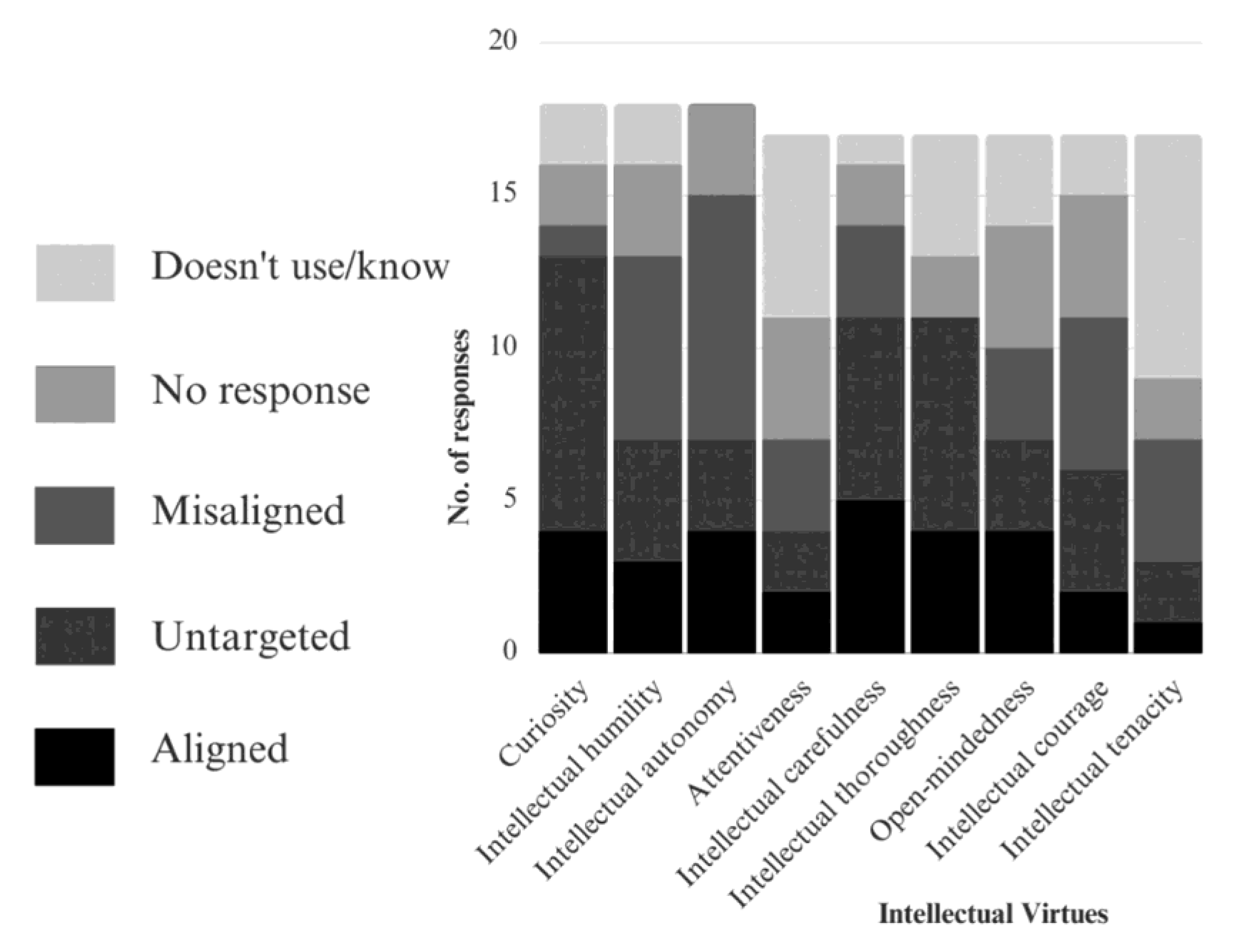
This indicates a misalignment between perception and practice: CEs frequently believed they were cultivating intellectual virtues, yet the evidence from their pedagogical examples suggested limited operationalization of these intentions.
4.1.5. Interpretation of Figure 3 – Comparing Perceived Intentionality and Aligned Practice
Figure 3 compares participants’ reported intentionality in embedding virtues with the number of corresponding aligned teaching practices identified through collaborative coding. The figure highlights that a high self-reported level of intentionality does not necessarily correlate with a high number of aligned practices.
For instance, virtues such as curiosity and intellectual autonomy were often described as intentionally integrated, yet only a few educators provided explicit strategies that truly reflected these virtues in practice. Conversely, tenacity and attentiveness showed low intentionality and few corresponding examples, indicating that these virtues remain underemphasized in teacher education contexts.
The comparative analysis underscores a key finding: while CEs demonstrate conceptual awareness of intellectual virtues and express intent to nurture them, their pedagogical enactment often lacks specificity and depth. This misalignment suggests that the virtues are acknowledged in theory but inconsistently realized in practice.
To bridge this gap, several implications emerge:
1. Professional development should focus on translating virtue epistemology into actionable teaching strategies.
2. Reflective evaluation frameworks are needed to help educators assess whether their instructional activities genuinely foster intellectual virtues.
3. Contextual adaptation is crucial—virtue-based pedagogy should be grounded in local educational cultures, ensuring relevance to Indonesian higher education settings.
While teacher educators exhibit a genuine commitment to developing intellectual virtues, systematic, intentional, and pedagogically grounded approaches remain essential to move from conceptual endorsement to practical embodiment.
4.2. Discussion
1. Overview of the Study’s Purpose and Context
This study sought to explore how teacher educators in Indonesia perceive, plan, and implement strategies designed to cultivate intellectual virtues among their students within Initial Teacher Education (ITE) programs. These virtues—such as curiosity, humility, autonomy, carefulness, and tenacity—are regarded as central to the development of graduate attributes that underpin effective, reflective, and ethical teaching practice. While intellectual virtues have been widely discussed within Western philosophical and educational traditions [1,2,3,4,5], their integration into pedagogical practices within Indonesian higher education remains relatively underexplored. Therefore, this study contributes new insights into the ways local educators conceptualize and operationalize these virtues within culturally situated ITE contexts.
2. General Awareness and Intentionality
Overall, the findings indicate that most participants demonstrated an awareness of the relevance of intellectual virtues and expressed a deliberate intention to incorporate them into their teaching. This aligns with earlier research suggesting that teacher educators increasingly recognize the role of moral and intellectual character in shaping effective teachers [6,7,8,9,10]. The high percentage of respondents reporting intentional embedding of virtues such as curiosity, humility, and intellectual autonomy suggests that these dimensions are relatively well understood and valued. This trend may reflect growing institutional emphasis on fostering reflective, independent learners who are capable of critical inquiry—qualities essential to Indonesia’s vision of Merdeka Belajar (Freedom to Learn). [11,12,13,14,15]
3. The Perception–Practice Gap
Despite these encouraging findings, a persistent perception–practice gap emerged. While participants frequently reported intentionally embedding intellectual virtues, qualitative data revealed that concrete examples of corresponding pedagogical strategies were often lacking or only loosely aligned with the stated virtues. This dissonance mirrors what [16,17,18] describe as “conceptual commitment without pedagogical clarity,” wherein educators embrace the language of virtues but struggle to translate these abstract ideals into classroom practice. The discrepancy suggests that awareness alone does not guarantee effective implementation, underscoring the need for professional learning that links philosophical understanding with practical instructional design. [19]
4. Factors Underlying the Misalignment
Several factors may explain this misalignment. First, intellectual virtues are inherently abstract constructs that resist straightforward operationalization. For instance, while “curiosity” may be easily recognized, the pedagogical mechanisms through which it can be consistently developed—such as inquiry cycles, reflective questioning, or problem-based learning—require deliberate instructional scaffolding. Second, educators may face institutional constraints such as rigid curricula, assessment pressures, or limited autonomy in course design. Third, as found in this study, some virtues (e.g., attentiveness and tenacity) were conceptually misunderstood, often conflated with cognitive skills rather than dispositional orientations. These challenges collectively contribute to what [20] call “virtue diffusion,” a phenomenon where virtues are discussed but insufficiently enacted.
5. Strength in Conceptual Awareness
Nonetheless, the study’s findings reveal a promising foundation of conceptual awareness among teacher educators. Participants not only recognized the importance of intellectual virtues but also expressed a desire to intentionally cultivate them. This awareness represents a critical first step in virtue-based pedagogy, as educators’ epistemic beliefs strongly influence their teaching approaches [21]. The recognition of curiosity, humility, and autonomy as pedagogical priorities reflects an emerging shift toward learner-centered education in Indonesian ITE programs—one that values inquiry, reflexivity, and metacognition over rote transmission of content.
6. Limited Integration of Less-Familiar Virtues
In contrast, virtues such as attentiveness, thoroughness, courage, and tenacity appeared to be less intentionally or confidently embedded. Participants often reported uncertainty regarding how to develop these dispositions, resulting in fewer concrete practices or assessments designed to measure them. This imbalance suggests that while surface-level intellectual virtues (e.g., curiosity and autonomy) are gaining pedagogical traction, deeper virtues that require sustained engagement and resilience remain underrepresented. As suggested by [22], such virtues demand longer-term cultivation and consistent modeling, which may be difficult to achieve within short or assessment-driven courses. [23]
7. Pedagogical Implications
Addressing this imbalance requires rethinking how intellectual virtues are integrated into teacher education pedagogy. Rather than treating virtues as add-ons or incidental byproducts of instruction, they should be embedded into core learning activities, assessment tasks, and reflective processes. For example, designing capstone projects that reward persistence (tenacity) or peer review sessions that value openness to critique (humility) can provide authentic contexts for virtue development. Moreover, explicit metacognitive dialogue—encouraging students to articulate how they are thinking, questioning, or persevering—may bridge the gap between intention and practice. [24]
8. The Role of Professional Development
Professional development (PD) emerges as a crucial mechanism for supporting educators in this process. As the findings show, some participants displayed conceptual misinterpretations of specific virtues, highlighting the need for targeted PD focused on virtue epistemology and pedagogy. Workshops or communities of practice that model virtue-based teaching could help educators internalize both the why and the how of virtue cultivation. Such initiatives have been shown to increase teachers’ confidence in embedding intellectual character education across disciplines [25]. In the Indonesian context, PD could also help align virtue education with national educational frameworks, including Profil Pelajar Pancasila and Merdeka Belajar principles.
9. Cultural and Institutional Considerations
Another important dimension involves the cultural and institutional context of Indonesian higher education. Intellectual virtues are not value-neutral constructs; their meaning and expression are shaped by local norms, traditions, and epistemic values. Integrating them effectively requires cultural adaptation—acknowledging that the Indonesian academic ethos emphasizes harmony, respect, and community learning. This cultural lens can enrich the interpretation of virtues like humility and open-mindedness, which naturally resonate with local pedagogical values but may require contextual reinterpretation when applied in Western-derived theoretical frameworks. [26]
10. Concluding Reflection
In conclusion, this study highlights both progress and challenges in embedding intellectual virtues within teacher education in Indonesia. Teacher educators appear increasingly aware of and committed to virtue-based learning but often lack concrete strategies to actualize these commitments in practice. Bridging this perception–practice divide demands systemic support, including curriculum reform, institutional flexibility, and sustained professional learning. Ultimately, fostering intellectual virtues is not merely about transmitting knowledge but about shaping character through pedagogy—a transformative endeavor essential for preparing future teachers who can think critically, act ethically, and engage wisely within diverse educational landscapes. [27]
Figure 3.
CE perceptions of practice as intentional and accuracy of teaching strategy.
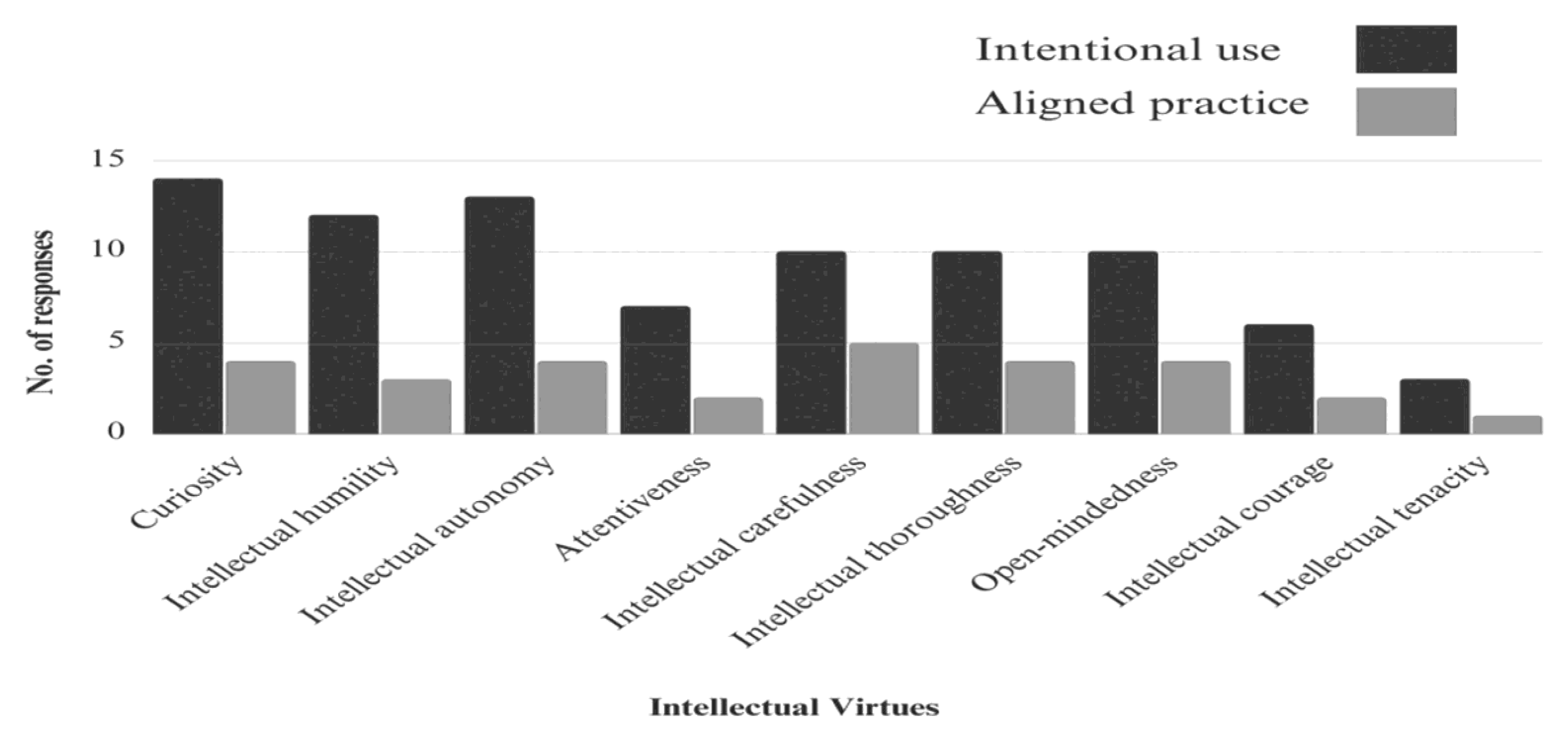
Figure 3 illustrates the comparative distribution of teacher educators’ reported intentional use and aligned practice of eight identified intellectual virtues within Initial Teacher Education (ITE) programs. The chart provides a visual representation of the extent to which participants claimed to intentionally embed these virtues in their teaching and the degree to which their reported practices were judged as genuinely aligned with the conceptual meaning of each virtue. This comparison highlights the persistent gap between educators’ intentions and the authentic implementation of virtue-based pedagogical strategies. [28]
Intentional Use: General Trends: The data reveal a strong overall awareness and declared intentionality toward embedding intellectual virtues across the sample. Curiosity emerged as the most frequently and intentionally targeted virtue, with approximately 14 responses, followed closely by intellectual autonomy and intellectual humility, each garnering around 11–12 responses. This indicates that teacher educators perceive these virtues as central to developing students’ intellectual engagement and independent learning capabilities. Similarly, open-mindedness, intellectual carefulness, and intellectual thoroughness were also relatively well represented, suggesting that participants value critical reflection, methodological rigor, and epistemic flexibility in their pedagogical design. [29]
Aligned Practice: Limited and Uneven Implementation: Despite high levels of intentionality, the number of responses reflecting aligned practice—that is, examples of classroom activities or strategies genuinely corresponding to the theoretical meaning of each virtue—was consistently lower across all categories. The disparity is most pronounced in curiosity and intellectual autonomy, where intentional use significantly outpaces aligned implementation. This suggests that while educators aspire to promote these virtues, they may lack sufficient clarity or pedagogical tools to actualize them in practice. The limited alignment underscores what Bowman et al. (2022) describe as the “implementation gap” in virtue pedagogy: educators conceptually value intellectual virtues but struggle to operationalize them through coherent instructional design. [30]
Virtues with Moderate Alignment: Moderate alignment was observed for virtues such as intellectual carefulness, intellectual thoroughness, and open-mindedness. These virtues appear to lend themselves more readily to observable pedagogical actions, such as encouraging students to double-check problem-solving steps, evaluate multiple perspectives, or engage in peer critique. The more tangible nature of these virtues may explain why educators provided relatively stronger evidence of implementation. Nonetheless, even in these areas, the total frequency of aligned practices remained roughly half or less of the intentional claims, indicating substantial room for improvement in consistency and depth of application. [32,33,34,35,36]
Underrepresented Virtues: The lowest levels of both intentionality and aligned practice were recorded for intellectual tenacity and attentiveness. These findings are consistent with prior literature indicating that perseverance-oriented and focus-related virtues are among the most challenging to foster within time-limited or outcome-driven academic environments [37]. Intellectual courage also appeared relatively underdeveloped, perhaps reflecting educators’ hesitation to design learning experiences that require students to confront uncertainty, challenge authority, or take intellectual risks—behaviors that may conflict with traditional hierarchical learning cultures prevalent in some ITE settings. [38]
Pattern of Disparity Across Virtues: The pattern displayed in Figure 2 reveals a systematic imbalance between cognitive and dispositional aspects of virtue development. The virtues most closely associated with cognitive engagement (curiosity, autonomy, open-mindedness) are widely acknowledged but insufficiently realized in classroom practices. Conversely, more affective or motivational virtues (tenacity, courage, attentiveness) receive minimal emphasis. This distribution suggests that educators may prioritize intellectual virtues that align with conventional notions of academic inquiry, while undervaluing those that involve emotional resilience or risk-taking—traits equally critical for sustaining deep learning and professional growth. [39]
Interpretive Insights: The Perception–Practice Divide: This divergence between intention and enactment aligns with the perception–practice tension identified throughout the study. While teacher educators exhibit conceptual commitment to fostering intellectual virtues, their reported classroom examples often reflect traditional pedagogical routines rather than virtue-explicit practices. For instance, activities labeled as promoting “curiosity” were often generic forms of questioning or discussion, lacking explicit scaffolding to nurture sustained inquiry or epistemic wonder. Such findings reinforce Drisko and Maschi’s (2016) observation that educators frequently engage in implicit virtue teaching—where virtues are assumed to develop organically rather than through deliberate design. [40,45]
Pedagogical Implications: From a pedagogical standpoint, the disparities visualized in Figure 2 suggest the necessity of structured frameworks that link each virtue with concrete teaching strategies. Embedding intellectual virtues effectively may require explicit modeling, metacognitive reflection, and authentic assessment tasks that make virtue development visible and measurable. For example, educators might cultivate intellectual humility through peer review and reflective journals, or strengthen tenacity by incorporating iterative project-based tasks that value perseverance over quick results. Without such intentional scaffolding, virtues risk remaining aspirational ideals rather than transformative educational outcomes. [46]
Institutional and Cultural Context: The uneven distribution of virtues may also reflect broader institutional and cultural dynamics. In many Indonesian higher education contexts, academic cultures emphasize respect for authority and consensus, which may inhibit practices that nurture intellectual courage or autonomy. Additionally, heavy curricular demands and standardized assessment regimes can constrain educators’ ability to engage students in open-ended or reflective learning experiences necessary for virtue cultivation. Therefore, systemic support—through curriculum flexibility, faculty training, and reflective communities of practice—is vital to close the gap between educators’ beliefs and practices. [47]
Intention versus Enaction: Previous studies have largely focused on the effects of intentional instructional methods on enhancing students’ thinking and intellectual character [48,49]. In contrast, this study, conducted among Indonesian teacher educators, highlights the misalignment between educators’ perceptions of their instructional intentions and their actual classroom practices in targeting specific intellectual virtues. For instance, although 14 out of 18 participants reported that they intentionally embedded teaching strategies to foster curiosity, only four of the examples provided demonstrated practices with genuine potential to engage students with this virtue. A similar pattern emerged across all nine virtues, suggesting that only a limited number of strategies were meaningfully aligned with the intended intellectual virtues (see Figure 2 and Figure 3). [50]
[30] previously argued that academics’ understanding of intellectual virtues shapes how these virtues are enacted in teaching. The present findings extend this argument, revealing that even when educators perceive themselves as knowledgeable about intellectual virtues, their enacted practices often lack conceptual precision and pedagogical focus. This finding supports the claims of [45], who contend that the translation of intellectual virtues into concrete pedagogical actions remains complex and underdeveloped. These results underscore the need for comprehensive professional learning that explicitly addresses how intellectual virtues can be operationalized in higher education teaching and assessment practices. [46]
Untargeted Immersion: Extant literature consistently emphasizes that teaching intellectual virtues requires intentional and structured approaches [44]. However, the findings of this study reveal a tendency among teacher educators to rely on untargeted immersion—that is, integrating virtues incidentally within general teaching activities without clearly defined pedagogical objectives. While scholars such as [43] have advocated for immersive approaches that contextualize virtues within disciplinary content, their models still emphasize deliberate and reflective integration rather than passive inclusion.
In the present study, many teaching strategies described by participants were too general or superficial to ensure that specific intellectual virtues could be effectively developed. This suggests both a conceptual and pedagogical gap: educators may assume (1) that students can naturally cultivate intellectual virtues without explicit guidance, or (2) that a mere explanation of the virtues within general instruction is sufficient for their development. These assumptions conflict with [20] recommendation for a balanced and explicit pedagogical model, wherein virtues are clearly introduced, practiced, and reflected upon in context. Consequently, these findings reinforce earlier conclusions by [21,22] that inconsistent and incidental teaching of intellectual virtues may result in diminished learning outcomes and hinder students’ development of epistemic character. [24]
Unacted Values: Consistent with the observations of [25], the present study found that participants recognized the importance and intrinsic value of intellectual virtues. However, this acknowledgment was often not reflected in their teaching practices. The findings suggest that many teacher educators assume that virtues, being foundational qualities of “good learners,” do not require explicit instruction. As one participant stated, these virtues could be addressed “intuitively as the qualities of being a ‘good learner’” (P3). [26]
In line with [27], this study argues that such an intuitive approach is insufficient. Instead, educators must adopt intentional pedagogical frameworks that explicitly teach, model, and provide opportunities to practice intellectual virtues across multiple learning contexts. This intentionality is critical not only for developing intellectual virtues but also for enhancing students’ readiness for lifelong learning and professional practice.
Given that universities in Indonesia, as elsewhere, position themselves as institutions that produce future-ready graduates—individuals with both disciplinary expertise and transferable skills [21]—there is a pressing need for systematic embedding of intellectual virtues within teacher education curricula. This study therefore calls for a stronger institutional commitment to integrating virtue-based pedagogies to cultivate critical, reflective, and ethically grounded professionals.
Implications and Conclusion: Echoing the work of [22], this study recommends the development of targeted professional learning (PL) programs for teacher educators—an initiative that also holds relevance for educators in other disciplines. While prior research has focused on generic skills and graduate capabilities, this study underscores the importance of establishing a clear metalanguage around intellectual virtues to inform pedagogical design and reflection. [23]
The following principles are proposed as essential for developing such professional learning: [3,4,5,6,7,8]
1. Intellectual virtues should serve as a pedagogical framework—a shared language that enables educators and students to articulate and intentionally cultivate habits of good thinking and inquiry.
2. Educators must first recognize the value of intellectual virtues , understand their relationship to graduate attributes, and appreciate their role in preparing students for academic and professional success.
3. A nuanced understanding of all nine virtues is crucial. Educators must appreciate both the distinct importance of each virtue and their interconnectedness as a collective suite that shapes intellectual character.
4. Practical and flexible instructional strategies must be shared through workshops, mentoring, and collaborative reflection, recognizing that this pedagogical shift may initially challenge traditional teaching approaches.
It is acknowledged that this study involved only 18 teacher educators from one Indonesian institution, which may limit the generalizability of the findings. Therefore, future research should examine cross-cultural and multi-institutional contexts, exploring how intellectual virtues can guide pedagogical decisions across diverse educational environments. Despite this limitation, the study contributes valuable insights to higher education by revealing the tension between perceived intention and enacted teaching practice and offering a conceptual foundation for strengthening virtue-based pedagogy within teacher education in Indonesia.
5. Conclusion
In summary, Figure 2 vividly captures the core finding of this research: teacher educators recognize and value intellectual virtues conceptually, but their pedagogical enactment remains partial and inconsistent. The visualization underscores that intentional commitment is a necessary but insufficient condition for virtue development. Effective implementation demands deliberate alignment between educational philosophy, curriculum design, and classroom practice. Future professional learning initiatives should thus focus not only on raising awareness of intellectual virtues but also on equipping educators with practical frameworks and exemplars for integrating these virtues meaningfully within ITE teaching and assessment.
5. Suggestions (Recommendations)
Based on the findings, several recommendations can be proposed for both practice and future research.
First, teacher education programs should provide structured professional development focusing on explicit strategies to cultivate intellectual virtues in pre-service teachers. This can include workshops, reflective teaching modules, and peer observation cycles that model how virtues such as intellectual humility, tenacity, and open-mindedness can be embedded in instructional design and assessment. Second, curriculum developers should integrate virtue-oriented learning outcomes within course syllabi and assessment rubrics to ensure that intellectual virtues are intentionally and consistently fostered rather than incidentally developed. Third, future research should employ longitudinal and mixed-method designs to investigate how explicit teaching of intellectual virtues influences student outcomes—such as critical thinking, problem-solving persistence, and epistemic resilience—over time. Finally, cross-cultural comparative studies are encouraged to explore how different educational and sociocultural contexts shape both the perception and enactment of intellectual virtues among teacher educators. This may contribute to building a globally informed framework for virtue pedagogy across diverse ITE systems.
Table 4.
Intellectual Virtues (Abbreviated) and Key Scholarly Contributions (2011–2024).
| Category | Virtue (Abbrev.) | Explanation | Key Scholars and Years |
| Getting started | Cur | Disposition to wonder, ask questions, and seek understanding. | Baehr (2011, 2013, 2021); Murris (2016); Kidd (2019) |
| Thinking independently | Aut | Capacity to think for oneself and critically evaluate new ideas. | Baehr (2011, 2015); Zagzebski (2012); Carter & Gordon (2014) |
| Hum | Awareness of cognitive limits; willingness to acknowledge gaps in knowledge. | Roberts & Wood (2012); Whitcomb et al. (2017); Church & Samuelson (2020) | |
| Learning well | Att | Ability to focus fully and sustain concentration during learning. | Heersmink (2018, 2022); Baehr (2013); Gutoff (2019) |
| Overcoming barriers | Car | Commitment to diligence and precision; avoids errors in intellectual work. | Baehr (2011, 2021); Kotzee (2019); Siegel (2020) |
| Tho | Seeks deep, comprehensive understanding beyond surface-level knowledge. | Baehr (2015); Ritchhart (2015, 2020); Ronner (2023) | |
| OM | Willingness to consider alternatives and revise beliefs in light of evidence. | Baehr (2011); Hare (2012); Hookway (2016); Elgin (2022) | |
| Cou | Readiness to express ideas and take intellectual risks despite criticism. | Baehr (2013); Tanesini (2016, 2020); Cassam (2019) | |
| Ten | Persistence in pursuing intellectual goals despite difficulty or prolonged challenge. | Baehr (2011, 2021); Battaly (2014, 2023); Alfano (2022) |
Funding
This research received no specific grant from any funding agency in the public, commercial, or not-for-profit sectors. The study was self-funded by the corresponding author as part of their academic research commitment at UIN Syahada Padangsidimpuan, Indonesia.
Acknowledgments
The authors would like to express their sincere appreciation to all lecturers and teacher educators who generously participated in this research and shared their valuable insights. Special gratitude is also extended to the Faculty of Tarbiyah and Teacher Training, UIN Syahada Padangsidimpuan, for providing institutional support during data collection and analysis. The constructive feedback from peer reviewers and academic colleagues during the manuscript preparation process is gratefully acknowledged.
Conflicts of Interest
The authors declare that there is no conflict of interest regarding the publication of this paper. All authors contributed equally to the conception, data collection, analysis, and writing of this manuscript, and they have approved the final version submitted for publication.
Abbreviations
| Cur = Curiosity |
| Aut = Intellectual Autonomy |
| Hum = Intellectual Humility |
| Att = Attentiveness |
| Car = Intellectual Carefulness |
| Tho = Intellectual Thoroughness |
| OM = Open-Mindedness |
| Cou = Intellectual Courage |
| Ten = Intellectual Tenacity |
References
- Annas, J. (2011). Intelligent virtue. Oxford University Press. [CrossRef]
- Arum, R., Eccles, J., Heckhausen, J., Orona, G., Keyserlingk, L., Wegemer, C. E. (Ted), Wright, C., & Yamaguchi-Pedroza, K. (2021). A framework for measuring undergraduate learning and growth. Change: The Magazine of Higher Learning, 53(6), 51–59. [CrossRef]
- Baehr, J. (2011). The inquiring mind: On intellectual virtues and virtue epistemology. Oxford University Press. [CrossRef]
- Baehr, J. (2013). Educating for intellectual virtues: From theory to practice. Journal of Philosophy of Education, 47(2), 248–262. [CrossRef]
- Baehr, J. (2015). Cultivating good minds: A philosophical and practical guide to educating for the intellectual virtues. Routledge.
- Baehr, J. (2021). Deep in thought: A practical guide to teaching for the intellectual virtues. Harvard Education Press.
- Barrie, S. C. (2007). A conceptual framework for the teaching and learning of generic graduate attributes. Studies in Higher Education, 32(4), 439–458. [CrossRef]
- Battaly, H. (2017). Intellectual perseverance. Journal of Moral Philosophy, 14(6), 669–697. [CrossRef]
- Besser, L. (2020). Learning virtue. Journal of Moral Education, 49(3), 282–294. [CrossRef]
- Bowman, S., Salter, J., Stephenson, C., & Humble, D. (2022). Metamodern sensibilities: Toward a pedagogical framework for a wicked world. Teaching in Higher Education, 29(5), 1361–1380. [CrossRef]
- Case, B. W. (2025). Virtue for academic flourishing: An argument for intellectual virtue in higher education. Educational Theory. [CrossRef]
- Chipindi, F. M., & Daka, H. (2022). Neoliberal reforms in higher education: Trends, manifestations and implications. In J. Zajda & W. J. Jacob (Eds.), Discourses of globalisation and higher education reforms: Emerging paradigms (pp. 127–132). Springer.
- DeVries, J. M., Orona, G. A., & Arum, R. (2025). Student and teacher intellectual humility at a diverse research university: The role of academic, demographic, and behavioral metrics. Studies in Higher Education, 1–18. [CrossRef]
- Dineen, K. (2024). Two sides of the same coin: A taxonomy of academic virtues and intellectual virtues. Assessment & Evaluation in Higher Education. [CrossRef]
- Domingo, V. (2025). Developing virtue-based leadership education: Insights from the Leaders of Character Program. Journal of Moral Education. [CrossRef]
- Drisko, J. W., & Maschi, T. (2016). Content analysis. Oxford University Press.
- Ehlers, U.-D., & Kallerman, S. A. (2019). Future skills: The future of learning and higher education. Books on Demand.
- Geertshuis, S., Wass, R., & Liu, Q. (2024). Equipping graduates with future-ready capabilities: An application of learning theories to higher education. Teaching in Higher Education, 29(5), 1302–1321. [CrossRef]
- Godfrey, H. (2023). Intellectual humility and self-censorship in higher education: A thematic analysis. Frontiers in Education, 8. [CrossRef]
- Hammer, S., Ayriss, P., & McCubbin, A. (2021). Style or substance: How Indonesian universities contextualise their graduate attributes for the curriculum quality space. Higher Education Research & Development, 40(3), 508–523. [CrossRef]
- Heersmink, R. (2018). A virtue epistemology of the internet: Search engines, intellectual virtues and education. Social Epistemology, 32(1), 1–12. [CrossRef]
- Hill, J., Walkington, H., & France, D. (2016). Graduate attributes: Implications for higher education practice and policy. Journal of Geography in Higher Education, 40(2), 155–163. [CrossRef]
- Indonesian Institute for Teaching and School Leadership. (2022). Indonesian professional standards for teachers. https://www.aitsl.edu.au/standards.
- Jayawickreme, E., & Fleeson, W. (2022). How do intellectual virtues promote good thinking and knowing? Theory & Research in Education, 20(2), 200–204. [CrossRef]
- Jones, A. (2013). There is nothing generic about graduate attributes: Unpacking the scope of context. Journal of Further and Higher Education, 37(5), 591–605. [CrossRef]
- King, N. L. (2021). The excellent mind: Intellectual virtues for everyday life. Oxford University Press. [CrossRef]
- Kotzee, B., & Baehr, J. (2024). Intellectual virtues. In M. D. Matthews & R. M. Lerner (Eds.), The Routledge International Handbook of Multidisciplinary Perspectives on Character Development, Vol. I (pp. 512-532). Routledge. [CrossRef]
- Kotzee, B., Carter, J. A., & Siegel, H. (2021). Educating for intellectual virtue: A critique from action guidance. Episteme, 18(2), 177–199. [CrossRef]
- Kuntz, A. F., & Taylor, R. M. (2021). Intellectual virtues in higher education. In Oxford Research Encyclopedia of Education. [CrossRef]
- Larsen, E., Fanshawe, M., & Oliver, M. (2025). Teacher educators’ perception–practice tensions in the embedding of intellectual virtues in ITE courses. Journal of Further and Higher Education. [CrossRef]
- Madrigal, L. (2012). Statistics for anthropology. Cambridge University Press. [CrossRef]
- McKeon, M., & Ferkany, M. (2024). Action guidance and educating for intellectual virtue: A response to Kotzee, Carter, and Siegel. Episteme, 21(4), 1220–1240. [CrossRef]
- Meagher, B. R., Gunn, H., Sheff, N., & Van Tongeren, D. R. (2019). An intellectually humbling experience: Changes in interpersonal perception and cultural reasoning across a five-week course. Journal of Psychology and Theology, 47(3), 217–229. [CrossRef]
- Mesurado, B. (2025). The role of intellectual character and honesty in youth flourishing. Journal of Youth and Adolescence. [CrossRef]
- Mesurado, B., & Vanney, C. E. (2025). The interplay between intellectual virtues, academic engagement and flourishing in college students. Journal of Character & Virtue Education.
- Oliver, B. (2015). Redefining graduate employability and work-integrated learning: Proposals for effective higher education in disrupted economies. Journal of Teaching & Learning for Graduate Employability, 6(1), 56–65. [CrossRef]
- Oliver, B., & de St Jorre, T. (2018). Graduate attributes for 2020 and beyond: Recommendations for Indonesian higher education providers. Higher Education Research & Development, 37(4), 821–836. [CrossRef]
- Orona, G. A., & Pritchard, D. (2022). Inculcating curiosity: Pilot results of an online module to enhance undergraduate intellectual virtue. Assessment and Evaluation in Higher Education, 47(3), 375–389. [CrossRef]
- Orona, G. A., & Trautwein, U. (2024). Thinking disposition education improves cognitive reflection: Experimental results from an intervention study. Thinking Skills and Creativity, 53, 101569. [CrossRef]
- Orona, G. A., Pritchard, D., Arum, R., Eccles, J., Dang, Q.-V., Copp, D., Herrmann, D. A., Rushing, B., & Zitzmann, S. (2024). Epistemic virtue in higher education: Testing the mechanisms of intellectual character development. Current Psychology, 43(9), 8102. [CrossRef]
- Pappas, I. O., & Woodside, A. G. (2021). Fuzzy-set qualitative comparative analysis (fsQCA): Guidelines for research practice in information systems and marketing. International Journal of Information Management, 58, 102310. [CrossRef]
- Pritchard, D. (2023). Educating for virtuous intellectual character and valuing truth. Philosophies, 8(2), 29. [CrossRef]
- Pritchard, D. H., & Colleagues. (2024). Virtuous arguing: Intellectual virtue in dialogue, conviction and humility. Ethical Theory and Moral Practice. [CrossRef]
- Roberts, R. C., & Wood, W. J. (2007). Intellectual virtues: An essay in regulative epistemology. Oxford University Press. [CrossRef]
- Salto, D. J. (2023). Capacity and willingness in higher education accreditation: When incentives are not enough. Studies in Higher Education, 48(4), 538–550. [CrossRef]
- Schöpfer, C. (2024). Intellectual virtues as intrinsic motivations for critical thinking. Studies in Philosophy and Education. [CrossRef]
- Schwartz, B. (2022). Science, scholarship, and intellectual virtues: A guide to what higher education should be like. Journal of Moral Education, 51(1), 61–72. [CrossRef]
- Schwengerer, L. (2021). Online intellectual virtues and the extended mind. Social Epistemology, 35(3), 312–322. [CrossRef]
- Spiegel, J. S. (2012). Open-mindedness and intellectual humility. Theory & Research in Education, 10(1), 27–38. [CrossRef]
- Tuononen, T., Parpala, A., & Lindblom-Ylänne, S. (2020). Complex interrelations between academic competences and students’ approaches to learning: A mixed-methods study. Journal of Further and Higher Education, 44(8), 1080–1097. [CrossRef]
- Wong, B., Chiu, Y. T. T., Copsey-Blake, M., & Nikolopoulou, M. (2022). A mapping of graduate attributes: What can we expect from UK university students? Higher Education Research & Development, 41(4), 1340–1355. [CrossRef]
- Youngs, S. (2021). Exploring narrative pedagogy: Story, teaching, and the development of virtue. International Journal of Christianity & Education, 25(1), 18–30. [CrossRef]
- Zagzebski, L. (1996). Virtues of the mind: An inquiry into the nature of virtue and the ethical foundations of knowledge. Cambridge University Press.
- Zagzebski, L. (2017). Exemplarist moral theory. Oxford University Press.
- Zhou, Z. (2022). Critical thinking: Two theses from the ground up. Journal of the Scholarship of Teaching and Learning, 22(1), 154–171. [CrossRef]
- Smith, C. A. (2024). The pedagogy of a classroom for intellectual virtues. Episteme. [CrossRef]
- Clemente, N. L. (2024). Pedagogical virtues: An account of the intellectual virtues of a teacher. Episteme, 21(2). [CrossRef]
- Fortes, G., De Brasi, L., & Baumtrog, M. (2024). Employing the intellectual virtues to better understand argumentation interventions in education. Frontline Learning Research, 12(2). [CrossRef]
- Mesurado, B. (2024). Assessing Intellectual Virtues: The Virtuous Intellectual Character Scale (VICS). International Journal (article). [CrossRef]
- Vanney, C. E., Mesurado, B., & Aguinalde Sáenz, J. I. (2024). Measuring qualities needed for interdisciplinary work: The Intellectual Virtues for Interdisciplinary Research Scale (IVIRS). PLOS ONE. [CrossRef]
- Ratchford, J. L., Fleeson, W., King, N. L., Blackie, L. E. R., Zhang, Q., Porter, T., & Jayawickreme, E. (2024). Clarifying the virtue profile of the good thinker: An interdisciplinary approach. Topoi. [CrossRef]
- Lira, M., & McElroy-Heltzel, S. (2024). Intellectual humility and the learning sciences: can self-reports and behavioral measures coexist to understand civic engagement? Frontiers in Psychology. [CrossRef]
Figure 1.
Exploratory design for comparing the understanding and practice of intellectual virtues within ITE courses in Indonesia.
Figure 1.
Exploratory design for comparing the understanding and practice of intellectual virtues within ITE courses in Indonesia.
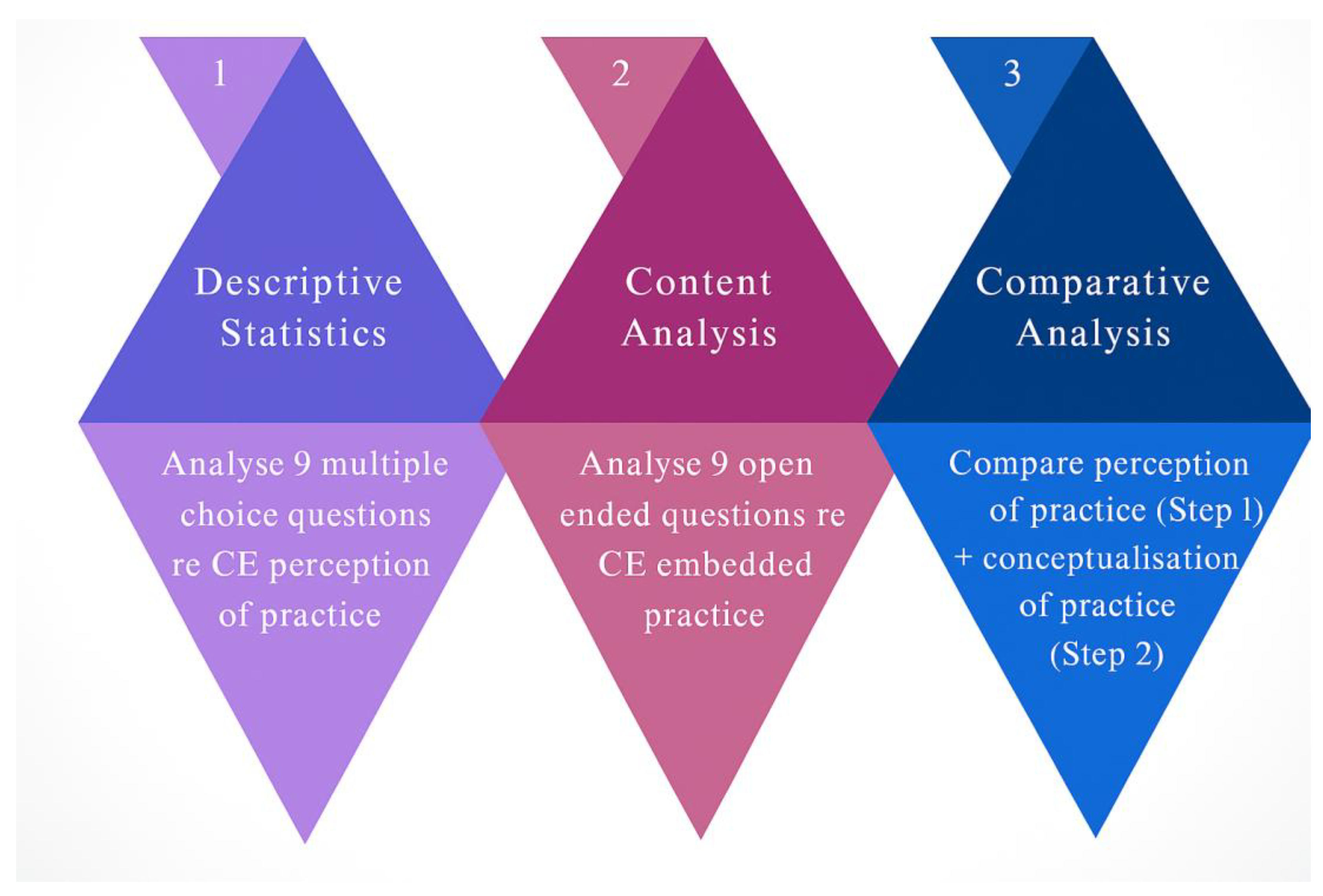
Table 1.
Intellectual Virtues and Key Scholarly Contributions (2011–2024).
| CATEGORY | INTELLECTUAL VIRTUE | EXPLANATION | KEY SCHOLARS & YEARS |
| Getting started | Curiosity | A disposition to wonder, ask questions, and seek understanding; motivated to broaden knowledge and engage in intellectual exploration. | Baehr (2011, 2013, 2021); Murris (2016); Kidd (2019) |
| Thinking independently | Intellectual autonomy | The capacity and willingness to think for oneself; to critically evaluate new ideas without uncritically accepting them. | Baehr (2011, 2015); Zagzebski (2012); Carter & Gordon (2014) |
| Intellectual humility | Awareness of—and willingness to acknowledge—one’s cognitive limitations; recognition of areas needing improvement and gaps in knowledge. | Roberts & Wood (2012); Whitcomb et al. (2017); Church & Samuelson (2020) | |
| Learning well | Attentiveness | The ability to focus fully on a task and apply oneself with sustained concentration during learning. | Heersmink (2018, 2022); Baehr (2013); Gutoff (2019) |
| Overcoming barriers | Intellectual carefulness | A commitment to diligence and precision in thinking, aiming to avoid errors and ensure accuracy in intellectual work. | Baehr (2011, 2021); Kotzee (2019); Siegel (2020) |
| Intellectual thoroughness | A disposition to seek deep understanding and comprehensive explanations, going beyond surface-level knowledge. | Baehr (2015); Ritchhart (2015, 2020); Ronner (2023) | |
| Open-mindedness | Willingness to consider alternative perspectives, ideas, or viewpoints, and to revise one’s beliefs in light of compelling evidence. | Baehr (2011); Hare (2012); Hookway (2016); Elgin (2022) | |
| Intellectual courage | Readiness to express one’s ideas and take intellectual risks despite potential vulnerability or criticism. | Baehr (2013); Tanesini (2016, 2020); Cassam (2019) | |
| Intellectual tenacity | Persistence and perseverance in pursuing intellectual goals, especially in the face of difficulty or prolonged challenge. | Baehr (2011, 2021); Battaly (2014, 2023); Alfano (2022) |
Table 3.
Categorization of Teacher-Reported Practices in Relation to Intellectual Virtue Development (N = 102).
Table 3.
Categorization of Teacher-Reported Practices in Relation to Intellectual Virtue Development (N = 102).
| CATEGORY | NUMBER OF RESPONSES | DESCRIPTION |
| Aligned Practices | 29 | Teaching strategies explicitly designed to cultivate a specific intellectual virtue, demonstrating clear conceptual coherence and pedagogical feasibility for virtue development. |
| Untargeted Practices | 40 | General instructional activities (e.g., class discussions, online forums, or Zoom sessions) mentioned without explicit connection to any intellectual virtue or its developmental mechanism. |
| Misaligned Practices | 33 | Activities described as fostering a particular virtue but exhibiting a conceptual mismatch between the stated |
Disclaimer/Publisher’s Note: The statements, opinions and data contained in all publications are solely those of the individual author(s) and contributor(s) and not of MDPI and/or the editor(s). MDPI and/or the editor(s) disclaim responsibility for any injury to people or property resulting from any ideas, methods, instructions or products referred to in the content. |
© 2025 by the authors. Licensee MDPI, Basel, Switzerland. This article is an open access article distributed under the terms and conditions of the Creative Commons Attribution (CC BY) license (http://creativecommons.org/licenses/by/4.0/).
Copyright: This open access article is published under a Creative Commons CC BY 4.0 license, which permit the free download, distribution, and reuse, provided that the author and preprint are cited in any reuse.


