

Submitted:
29 October 2025
Posted:
29 October 2025
You are already at the latest version
Abstract
Recent biotechnological advancements in agro-technology and sustainable farming practices have led scientific attention in biochar as a multifunctional material for environmental remediation. Among its emerging applications, biochar has demonstrated remarkable potential in wastewater treatment, particularly as an efficient and sustainable adsorbent for pollutant removal. Numerous studies over the past decades have highlighted its effectiveness in eliminating a wide range of contaminants. This efficiency is mainly due to its abundant feedstock availability, simple production processes, and favorable surface and structural properties. This review summarizes current developments in biochar utilization for wastewater treatment, emphasizing its adsorption capabilities and the underlying mechanisms responsible for pollutant removal. Key modification strategies physical, chemical, and biological are discussed in detail to illustrate how biochar performance can be optimized for specific treatment goals. Furthermore, the future prospects of biochar-based technologies are explored, with a focus on their role in addressing both inorganic and organic pollutants. The integration of biochar into sustainable water management systems presents a promising pathway toward achieving long-term environmental and agricultural resilience.
Keywords:
biochar
; sustainable agriculture
; environmental remediation
; adsorption
; functional modification
; circular economy
; advanced oxidation
1. Introduction
The rapid growth of population, industrialization activities, along with changes in how people consume goods, the amount of emerging pollutants (EPs) in both water and soil environments continues to increase [1,2]. The problem of water pollution is now considered an alarming situation for various environmental matrices including human beings [3,4]. The availability and access to clean and safe drinking water are now become a challenging task, although the SDGs have now proposed an agenda about clean water and sanitation [5,6,7]. The emergence of various threatening pollutants such as heavy metals, pesticides, organics, dyes, pharmaceutical waste, antibiotics, surfactants from industrial, agricultural, and household activities represent one of the most significant groups of pollutants discharged into aquatic systems [6,8]. Even at low concentrations of these pollutants can impart strong effect to aquatic life [4,9]. In past research, many technologies like coagulation, flocculation, membrane separation, chemical precipitation, ion exchange, chlorination, coagulation, demulsification electrochemical treatment, solvent extraction, and adsorption have been adopted for wastewater treatment and making them fit for drinking and irrigation purposes [10,11,12]. Similarly various catalysts (SiO2, CeO2, CdS, Fe2O3, SnO2, Fe3O2, NiO, TiO2, GO, g-C3N4, ZnO, ZnS, BiOI, 2D MXenes and WO3) are used for the removal of pollutants [6,8,12,13,14,15,16]. Nevertheless, these existing methods are costly, not the sufficient conversion of pollutants to fewer toxic forms, high operation costs, maintenance, high energy consumption, and tedious reaction process (Figure 1 represent the existing technologies for treating water pollution and its challenges). Also, they are unable to remediate the secondary pollutants arising from primary reactions in the water bodies [11,17]. The growing awareness of environmental issues has encouraged scientific community around the world to find practical ways to reduce environmental pollution challenges. Therefore, the introduction of new, efficient, easily available low-operation techniques is highly required for the abatement of pollutants from the wastewater [17,18]. Now the many researchers moving towards on developing low-cost, affordable, sustainable, and effective adsorbent materials that can help clean up the environment. Adsorption technologies have gained popularity due to their simplicity and efficiency, particularly with the use of biochar as an adsorbent. Biochar, produced through the pyrolysis of biomass residues, is both environmentally friendly and cost-effective [17,19]. Its high carbon content, nutrient richness, specific surface area, and cation-exchange capacity make it an excellent candidate for removing pollutants from wastewater [20]. The effectiveness of biochar as an adsorbent is influenced by various physicochemical characteristics, including its porous structure, elemental composition, and surface functional groups. These properties are largely determined by the feedstock used and the conditions during pyrolysis [21]. Before application, it’s crucial to assess the biochar specific surface area, pore volume, pH, and cation-exchange capacity. Despite its advantages, biochar performance can be limited by interactions with secondary molecules and challenges in separation from the treated medium. To enhance its stability and reactivity, further modifications are necessary, which can improve biochar regeneration capacity and overall effectiveness in adsorption processes.
The main aim of this review is to provide a clear understanding of how biochar is produced, its characteristics, surface functional groups properties, modification of biochar, and their role in improving adsorption performance. The review also highlights the mechanisms involved in pollutant removal, and how its characteristics influence the removal of various EPs from wastewater, along with the challenges and future opportunities for developing efficient biochar-based treatment systems are discussed in current review. By using natural resources in environmentally friendly ways, this research contributes to the advancement of green technologies, recover useful materials that help minimize pollution and make better use of available materials. It also supports several united nations sustainable development goals (SDGs), such as SDG 6 (clean water and sanitation), SDG 9 (Industry, Innovation and Infrastructure), as well as SDG 12 (Responsible Consumption and Production) [22,23]. Finally, this review discusses the future directions and practical applications of biochar in removing pollutants and purifying water. The future directions also highlighting its potential as a sustainable and efficient material for cleaning up different types of environmental pollution.
2. Characteristics of Biochar for Adsorption
Research has extensively examined the relationships between biochar characteristics and adsorption efficiency, revealing that several features significantly influence its performance. The properties of the biochar are outlined in Figure 2. The following characteristics keep in mind while working on the biochar (surface area, porosity, pore size distribution , functional groups , cation-exchange capacity (CEC), elemental composition, pH, and hydrophobicity/hydrophilicity of biochar). A higher specific surface area provides more active sites for adsorbing pollutants, enhancing overall adsorption capacity. The porous structure of biochar facilitates the movement of pollutants into its interior, allowing for greater interaction and adsorption. The size and distribution of pores determine the types of molecules that can be effectively adsorbed, impacting overall efficiency. The assessment of porosity is crucial for determining the adsorption capacities of biochar, particularly in pollutant remediation. Research has shown a linear relationship between the adsorption capacity of toluene and the specific surface area of biochar materials; as the specific surface area increases, more adsorption sites become available, enhancing the biochar ability to capture and remediate pollutants.
Various methods have been developed to increase pore volume during the pyrolysis of feedstocks, which is key for optimizing biochar characteristics [25]. Among these, physical activation methods, such as raising the pyrolysis temperature, facilitate the decomposition of biomass and the release of volatiles, thereby creating a more porous structure. For instance, temperatures exceeding 500 °C can significantly increase the porosity and surface area of the resulting biochar. In contrast, chemical activation methods also effectively enhance porosity. The addition of chemical activators like sulfuric acid (H₂SO₄), phosphoric acid (H₃PO₄), potassium hydroxide (KOH), and NaOH can lead to varying degrees of pore volume enhancement. These chemicals not only contribute to the creation of pores but also can influence the surface chemistry of biochar, potentially improving its adsorption characteristics. Notably, studies have indicated that Fe-modified biochar exhibits a higher degree of nitrobenzene mineralization compared to both Zn-modified and pristine biochar. This improvement is attributed to the enhanced porosity and surface functional groups provided by the iron modification, which facilitates better interaction with pollutants [26,27]. Such findings underscore the importance of both physical and chemical modifications in tailoring biochar for effective environmental remediation applications. Jianhua Qu synthesized the high-performance porous biochar (named as PBC (KOH)) by two-step pyrolysis process using corn straw. This was chemical activated by KOH, and resulting material was utilized for the elimination of both hexavalent chromium Cr(VI) and naphthalene (NAP) from aqueous solutions. Due to the effective KOH activation, the PBCKOH exhibited an exceptionally large specific surface area of 2183.80 m2/g as well as microspores (average particle size of 2.75 nm) and main pore diameters ranging from 1 to 2 nm. The adsorbent PBC (KOH) demonstrated outstanding removal efficiency, with a theoretical monolayer uptake of 116.97 mg/g for Cr(VI). In addition, it exhibited a heterogeneous adsorption capacity of 450.43 mg/g for NAP. Equilibrium was reached within 120 minutes for Cr(VI) and 180 min for NAP. Further investigation into the adsorption mechanisms revealed that the Cr(VI) binding onto PBC(KOH) was mainly due to the ion exchange, electrostatic attraction, reduction and surface complexation. In contrast, the adsorption of NAP was mainly dominated by pore filling effects and π-π stacking interactions [28]. As Figure 3 shown the proposed adsorption mechanisms of Cr(VI) and NAP by PBC(KOH). To optimize biochar adsorption capacity, it is essential to understand and enhance these characteristics through careful selection of feedstock and pyrolysis conditions. The investigation of the relationships between biochar characteristics and the adsorption process has been widely studied. Many characteristics of the biochar have a linear response with the adsorption efficiency. Therefore, it is necessary to employ the role of the chief features for boosting the biochar adsorption capacity.
Similarly in Surface functional groups (hydroxyl, carboxyl) can enhance the adsorption of various contaminants through ionic and hydrogen bonding [29]. The presence of surface functional groups on biochar significantly influences its ability to adsorb contaminants at various adsorption sites. However, the precise identification of these functional groups remains a challenge. The types and quantities of functional groups established on the biochar surface are contingent upon factors such as feedstock selection, pyrolysis conditions, and any pre-treatment processes applied. Functional groups on biochar can be classified as acidic, neutral, or basic, with examples including phenolic, carboxyl, lactonic, pyrone, and chromene groups. Chemical modifications of biochar have been shown to enhance its adsorption affinity for various pollutants. For instance, the introduction of oxygen, nitrogen, and sulfur-containing functional groups has been found to significantly improve adsorption potential by altering pore volume and surface area. Notably, the introduction of hydroxyl groups (-OH) can lead to a threefold increase in the biochar surface area, enhancing its overall adsorption capacity [30]. Furthermore, studies exploring the modification of biochar with nitrogen-containing functional groups have demonstrated improvements in adsorption performance, indicating that these functional groups play a crucial role in enhancing biochar ability to capture a range of pollutants [31]. Yinxue synthesized the different types of biochar (CC, CC600, PB600, NHB600, SBC600, HAPC600, NBC600, MBC600, and HBC600 as shown in Figure 4 a-j) and among the several types of functionalized biochar PB 600 (phosphoric acid activated biochar) exhibited the highest adsorption capacity (under acidic and neutral conditions) for sulfamethoxazole (SMX) achieving 195 and 174 mg/g, respectively. The reason for highest adsorption capacity of PB 600 may be due to the introduction of oxygen containing functional groups (-COOH), which increasing the surface functionalities to 211% as compared to the unmodified biochar. This modification contribution degree of π*−π electron donor-acceptor) interactions, increased from 35 % before functionalization to 48% after post-functionalization treatment at pH 2. Furthermore, in a fixed-bed reactor, the PB600 demonstrated strong continuous adsorption performance capability (dynamic adsorption capacity of up to 191 mg/g) at SMX concentration of 50 mg/L. Under alkaline conditions, the NHB 600 (amino modified biochar) also showed superior performance (155 mg/g). It also maintained good performance when applied in real cattle manure effluent, highlighting the effectiveness of targeted functionalized design of biochar for the removal of SMX) antibiotics. Similarly, amination introduced a large amount of -NH2 groups to increase surface functional groups to up to 336% of the original level and increasing the adsorption contribution degree contribution of negative charge-assisted hydrogen bonding from 14% to 37% at pH 10 (result shown as Figure 4 k-l) [32]. In cation-exchange capacity (CEC) the property related to CEC indicates the biochar ability to retain and exchange cations, which is crucial for removing positively charged pollutants [33]. In Elemental Composition the ratios of carbon, hydrogen, oxygen, and other elements affect the biochar stability and reactivity, influencing its adsorption behavior. The pH level of biochar influences the ionization of functional groups and the availability of charged sites for adsorption [34]. Another important factor influencing the adsorption mechanism of biochar is its hydrophobicity or hydrophilicity. The capacity for adsorption and the interaction between adsorbate (the pollutant) and adsorbent (biochar) can be quantified through a polarity index. Fresh biochar typically exhibits low oxidation activity, rendering it hydrophobic; this characteristic facilitates the adsorption of organic contaminants primarily through partitioning mechanisms. Most organic pollutants adhere to the biochar surface due to hydrophobic interactions, π-π stacking interactions, and pore filling, all of which contribute to the effective removal of these contaminants from water. Hydrophobicity plays a critical role in these processes, as it enhances the attraction between the organic molecules and the biochar matrix. Conversely, various oxidation reactions can increase the hydrophilicity of biochar, thus promoting the adsorption of hydrophilic contaminants. Research has indicated that these oxidation processes are often driven by the presence of surface functional groups, which modify the biochar properties and enhance its interaction with different types of pollutants [35]. Consequently, understanding and manipulating the hydrophobic and hydrophilic characteristics of biochar is essential for optimizing its performance in environmental remediation applications. Such modifications not only enhance the chemical interactions with target contaminants but also contribute to the overall efficacy of biochar as a sustainable solution for environmental remediation.
3. Synthesis and Production of Biochar
Biochar has proven to be an effective sorbent for the removal of various inorganic and organic contaminants from contaminated water and soil. The extensive availability of diverse precursor biomass ranging from agricultural residues to forestry waste facilitates biochar production, and its relatively simple preparation process enhances its appeal for environmental remediation [36]. Figure 5 showing a brief about biochar preparation and characterization. The selected biomass feedstock is first pre-treated through processes (drying, grinding, and sieving) to ensure uniformity before being subjected to pyrolysis under controlled temperature conditions. After carbonization, the resulting biochar is collected, thoroughly washed to remove impurities, and subsequently modified or functionalized depending on the research objective of the study.
Figure 6 illustrates the principal components (biomass feedstocks derived from both plant and animal origins), which serve as precursors for biochar production (by pyrolysis process, hydrolysis, gasification, or carbonization/calcination at high temperature).
The main categories of biomass include the starch, lignocellulose, polysaccharides, and animal-based proteins. Plant-derived biomass primarily consists of starch and lignocellulosic matter. The starch consists of glucose units (connected via glycosidic linkages bond), forming two major molecules (amylose, amylopectin). Lignocellulose composition (made up of cellulose, hemicellulose, and lignin), differing based on the source and depending on its origin (hardwood, softwood, or grasses). Lignin, the second most abundant natural polymer and composed of phenyl propane units. It is highly electronegative and may show the strong binding affinity toward electropositive metal. Similarly, the animal derived biomass contains polysaccharides (chitin, glycogen, and alginates) as well as proteins like gelatin and collagen. Chitin (abundant animal-origin polysaccharides) commonly found in the exoskeletons of insects. The presence of amino abundance of amino and hydroxyl groups in these biopolymers enhances their affinity for the removal/adsorbing of pollutants (metal ions, dyes) as well as providing reactive sites other functional materials modification [37]. Similarly, Cai synthesized the biochar from the wood chips. He first oven-dried in an oven, ground into fine powder, and sieved to obtain small particles size (200-300 mesh). The sieved material was then washed several times with D.I (Deionized water) to remove any remaining surface impurities and then dried again in oven. The dried wood powder was mixed with NaOH and then pyrolyzed at 600 °C for 2 hours (under a continuous nitrogen, flow rate: 20 mL min⁻¹, heating rate of 5 °C min The resulting biochar was repeatedly washed several times with ethanol, and D.I (Deionized water) [38]. Furthermore, the ability to recycle waste materials into biochar contributes to sustainability and waste management efforts. Despite these advantages, pristine biochar often exhibits limited adsorption capacity for pollutants due to its low surface area and specific functional groups. To overcome this limitation, researchers globally have explored a range of modification techniques aimed at enhancing the sorption capacity of biochar, making it more effective in addressing water contamination challenges [27,39]. These modification techniques can be broadly categorized into physical and chemical methods, which can occur before, during, or after the formation of biochar.
4. Modification Method of Biochar
There are the several modification techniques are used for the biochar. Common physical modification methods include the Activation Processes, Physical Blending, chemical activation, and biological modification. Chemical and Physical Modification of Biochar: To enhance its adsorption capacity for specific industrial contaminants, biochar can be modified using chemical agents such as acids, alkalis, or metal oxides, as well as through physical methods like steam activation and ball milling. These modifications can significantly increase the surface area, pore structure, and active functional groups of biochar, making it highly effective in treating industrial wastewater. In the physical modification method, pristine biochar is subjected to structured gasification, a process that occurs at elevated temperatures within a controlled environment. This method significantly alters the textural characteristics of biochar, including surface area, pore volume, distribution, and size. For instance, gasification can enhance the porosity of biochar, resulting in a more extensive surface area that facilitates increased adsorption capacity for contaminants. In Activation Processes, utilizing steam or reactive gaseous agents (like CO₂ or O₂) to enhance porosity and surface area are common. This process increases the availability of active sites for adsorption and can be easily scaled up for industrial applications [26]. Sun reported CO2-activated biochar (AC) synthesis catalyst for persulfate (PS) activation and the degradation of phenol and chlorophenol. The precursor cellulose was first pyrolyzed (500 °C, 10 °C/min, 3 h) under a N2 atmosphere and obtained biochar was activated the tube furnace under a CO2 atmosphere (500 mL/min) for 1 h. SEM/TEM images of CO2-AC are shown in Figure 7 (a, c). These images shown the well-developed microporous structure of CO2-AC was formed. The XRD patterns are in Figure 7 (b). The shown peaks at 26.4° (002) and 44° (100), which represent the diffraction of graphite, (partial graphitization during the activation process). This activation of biochar are beneficial for PS activation via a non-radical mechanism by enhanced the ability of electrons transfer. The N2 sorption curves indicated the surface area of the AC considerably increased (506 m2/g to 2185 m2/g) with predominantly microporous as shown in Figure 7 (d). The XPS analysis revealed that during CO₂ activation of biochar, the ratio of carbonyl to hydroxyl and epoxide groups increased (0.13 to 0.56) indicating a transformation of surface oxygen functionalities). This change, along with the reduction in overall oxygen content (17.4% to 7.8%), enhanced the biochar’s surface reducibility and facilitated [40]. In Physical Blending process, combining biochar with other materials (such as clays or zeolites) to create composite adsorbents that leverage the strengths of both materials [41,42]. Additionally, this modification process also impacts the surface chemical features of biochar, including its polarity, hydrophobicity, and the presence of various functional groups [43]. Changes in polarity and hydrophobicity can influence the interactions between biochar and different types of pollutants, thereby affecting the overall adsorption efficiency. For example, enhanced hydrophobicity may improve the sorption of organic contaminants, while increased polarity can facilitate the adsorption of hydrophilic substances [43,44]. The generation of specific surface functional groups during gasification can further tailor biochar for targeted applications, as these groups can enhance chemical bonding with contaminants. Overall, physical modification through structured gasification not only optimizes the structural and chemical properties of biochar but also improves its effectiveness as a sorbent in environmental remediation efforts.
Steam activation is one of the most commonly employed methods for modifying biochar, utilizing water vapor as the oxidizing agent [45]. This technique is particularly effective for enhancing the structural properties of biochar and for removing byproducts generated during incomplete combustion processes. The activation with steam increases the surface area available for the sorption of adsorbates, thereby improving the material adsorption capacity [46,47]. The steam activation process specifically targets the removal of volatile carbon from pristine biochar, leading to the creation of porosity and an increase in specific surface area. Several factors influence the effectiveness of steam activation, including the rate of steam supply, the nature of the precursor biomass, and its chemical composition [48]. Typically, biochar activated through steam exhibits excellent micro porosity, while contributing minimal mesoporosity. This characteristic is due to the fact that steam activation primarily promotes the development of carbon microspores [49]. Additionally, the process involves the oxidation of biochar materials and the production of syngas, particularly hydrogen, which further enhances the surface area of the resulting biochar [50]. For example, Xie et al. [51] reported that the surface area of biochar derived from silk can be increased by 122 to 197 times after steam activation. This significant enhancement underscores the potential of steam activation as an effective method for optimizing biochar properties for various environmental applications [51]. Recently reported Bamboo activated carbon manufactured by water steam activation at different temperatures and used for adsorption of sulfamethoxazole. In Figure 8, proposed adsorption mechanisms of biochar for pollutant removal shown and demonstrates the key interaction adsorption mechanisms adsorption of steam activation biochar, showing the pore filling, H- bonding, ion exchange and π-π interactions. The pore filling was a stable mechanism for sulfamethoxazole removal (improved by abundant pore structure).
The steam activation biochar increased specific surface area (56.97–87.73 times), with an adsorption capacity of 204.07 mg/g (significantly influenced pore filling adsorption capacity). These combined processes enhance the adsorption capacity by making effective use of its porous structure, active surface functional groups, and mineral constituents [52].
The ball-milling method is a well-established technique for creating nano-sized materials and is widely utilized in industrial applications, often referred to as solid-phase synthesis. In biochar modification, ball milling is increasingly recognized as an effective approach to produce biochar-based adsorbents with enhanced properties. Preparation flow chart of biochar by ball milling method are shown in Figure 9. Materials synthesized using this method exhibit high porosity and good dispersion, significantly improving their efficiency in treating environmental contaminants. This innovative and cost-effective technology allows for the creation of carbon-based composites with superior surface characteristics, enhancing the adsorption capabilities of the biochar [53,54,55]. The physicochemical properties of biochar and biochar nanocomposites, including microporous surface area, porosity, pore volume, and pore distribution, are all improved through ball milling. These enhancements contribute to a marked increase in the adsorption capacity of biochar, enabling it to effectively capture both organic and inorganic contaminants from polluted environments. Research indicates that the efficacy of biochar can be enhanced by up to 200 times following ball milling compared to unmodified biochar materials. For example, Li et al. (2020) demonstrated that ball-milled biochar can effectively remediate pharmaceutical compounds and heavy metal ions from a synthetically prepared solution. Specifically, tetracycline (TC) and mercury (Hg) were successfully removed from contaminated water using magnetic ball-milled Nano biochar, achieving an impressive removal efficiency of approximately 99% [56]. Additionally, a study by Zhang et al. [57] highlighted the ability of ball-milled biochar to efficiently remove organic pollutants, such as methylene blue, from water. In their research, hickory chips were used to prepare biochar, which was then modified through ball milling followed by treatment with a 10% hydrogen peroxide (H₂O₂) solution. This dual modification significantly enhanced the surface properties of the biochar, increasing the number of functional groups, such as hydroxyl and carboxyl groups. As a result, the modified biochar demonstrated effective removal of methylene blue from synthetically prepared solutions [57].
Chemical modification methods often include: (i) Acidic or Alkaline Treatments: These methods modify the surface chemistry of biochar, introducing functional groups that improve adsorption capacity for specific contaminants. (ii) Loading of Nanomaterials: Incorporating nanoparticles (iron oxides or carbon nanotubes) enhances the reactivity and adsorption capabilities of biochar, particularly for heavy metals and organic pollutants [58,59,60].
While chemical modifications can significantly enhance biochar’s performance, they may require costly chemicals and can sometimes lead to secondary environmental concerns due to potential pollution [61,62]. Chemical modification is a prominent approach for enhancing the properties of biochar, employing various agents such as alkaline and acidic solutions, oxidizing agents, and metal oxides or salts. These chemical treatments effectively alter the surface characteristics of biochar, including the creation of surface defects and the modification of the types and concentrations of functional groups [63,64]. Through the application of acids, such as sulfuric or hydrochloric acid, the introduction of acidic functional groups can improve the biochar ability to interact with pollutants. Conversely, alkaline treatments with NaOH or KOH can enhance the porosity and surface area of biochar, promoting the adsorption of contaminants. Oxidizing agents, such as H₂O₂ or ozone, can also be employed to increase the number of oxygen-containing functional groups on the biochar surface. This modification can enhance its hydrophilicity and improve the adsorption capacity for a wider range of pollutants, including both organic and inorganic substances [38,64]. Additionally, the incorporation of metal oxides or salts during the modification process can create composites that leverage the properties of both biochar and the added materials. These modifications not only improve the adsorption efficiency of biochar but also enhance its structural stability and reactivity [65]. Acid modification is an effective method for enhancing the surface characteristics of biochar, particularly for the removal of metals and other contaminants. This treatment introduces a significant number of new functional groups, which can improve the biochar adsorption capacity. According to Wang and Wang [65], the specific surface area of biochar can be modified by acid treatment, with the effects varying depending on the concentration and type of acid used. Acidified biochar has been identified as an excellent soil enhancer. Studies have shown that the addition of acids during the hydrothermal carbonization of biomass can significantly increase the adsorptive capacity of hydro char [66]. For example, Reza et al. [66] reported that the incorporation of acetic acid into wheat straw hydro char during hydrothermal carbonization resulted in enhanced surface area and porosity [67]. Furthermore, He et al. [67] produced biochar from rice straw under oxygen-deficient conditions and subsequently modified it with a 15% solution of H₂O₂ and a mixture of nitric (HNO₃) and sulfuric (H₂SO₄) acids in a 1:1 ratio. This acid modification led to a substantial increase in carboxylic functional groups (-COOH) on the biochar surface [68]. Notably, acid modifications were found to have a more pronounced effect on the functional group composition of biochar compared to oxidation treatments. Ultimately, acid treatment not only alters the functional groups and surface charge of biochar but also enhances the purity of its surface by decreasing the point of zero charge. These modifications are essential for optimizing the properties of biochar materials for various applications, particularly in environmental remediation [27,39].
The primary aim of alkali modification is to enhance the number of oxygen-containing surface functional groups present on biochar materials. Common alkaline chemicals used for this modification include sodium hydroxide (NaOH), KOH, and potassium carbonate (K₂CO₃) [69]. These alkaline agents are effective in augmenting the specific properties of biochar, influencing its surface area and adsorption capabilities. The type of feedstock and the conditions under which biochar is produced also significantly affect its surface characteristics, which can be further modified through alkaline treatments [51]. For instance, Enaime et al. [69] prepared biochar from solid olive waste and activated it using KOH to treat effluent from an olive mill. The KOH-treated biochar exhibited impressive microporous volume and specific surface area, measuring 0.52 cm³/g and 1375 m²/g, respectively. This enhanced structure translated into a high adsorption efficiency for indigo carmine, achieving a capacity of 599 mg/g. In another study, KOH was utilized to modify biochar derived from municipal waste, resulting in an increase in specific surface area to 49.1 m²/g. This modification also improved the biochar’s capacity to remove arsenate (As(V)) effectively [70]. Furthermore, Tang et al. [70] developed an alkali-modified biochar using straw to eliminate emerging contaminants from kitchen waste, including bisphenol A (BPA) and antibiotics such as ofloxacin (OFL) and tetracycline (TC). The modified biochar demonstrated removal efficiencies ranging from 95% to 100%, with sorption capacities of 71.4 mg/g for BPA, 101.0 mg/g for TC, and 54.0 mg/g for OFL. The straw biochar treated with alkaline chemicals exhibited increased hydrophobicity, enhanced surface area, and improved adsorption capabilities, making it highly effective for removing a range of contaminants [71].
In recent years, the production of metal oxides and salts for modifying biochar has gained significant attention. This modification technique enhances the core characteristics of biochar, improving its adsorption capacity, catalytic activity, and magnetic properties [65]. Metal oxide modifications increase biochar ability to bind inorganic and organic contaminants by enhancing ion exchange and functional group interactions. Typically, biochar materials possess a high surface area, elevated pH, and negatively charged surfaces, making them excellent adsorbents for metal cations through mechanisms like precipitation and electrostatic interactions. However, pristine biochar struggles to effectively adsorb oxyanions such as nitrate, arsenic, and phosphate. To address this limitation, metal oxide modification has emerged as a powerful tool. For instance, Amen et al. [21] reported bismuth-modified biochar using rice husk as the precursor. The precursor was pretreated with a solution of bismuth oxide and carbonized at various temperatures ranging from 400 °C to 600 °C. The biochar synthesized at 500 °C demonstrated the highest adsorption capacity for arsenic (As) removal from contaminated water. This biochar exhibited a higher pore volume, surface area, and a maximum adsorption capacity (q max) of around 16 mg/g at a slightly alkaline pH of 9.2. Iron-impregnated biochar, which possesses magnetic properties, has also been synthesized using waste from timber tree leaves, vegetable leaves, and fruit waste. This magnetic biochar showed remarkable efficiency in removing both arsenite (As(III)) and As(V)) from contaminated water [72,73,74,75]. Additionally, manganese-modified biochar has been developed by infusing manganese oxide into Tectona leaf waste. The waste was carbonized under anaerobic conditions at 800 °C for one hour and then applied to remove trivalent arsenic (As (III)) from a synthetically prepared solution [74]. Overall, chemical methods provide versatile and effective means to tailor the surface properties of biochar, making it a more powerful tool for environmental remediation and pollutant removal (Figure 10).
Biological modification, which employs microbial processes to alter the properties of biochar, can also be effective. While scalable, this method often requires longer contact times, which may alter the surface and structural characteristics of the biochar [76]. The biological method has been particularly effective in treating wastewater with low levels of pollutants. The use of microbes to adsorb both organic and inorganic contaminants from polluted water has gained significant attention due to its promising, inexpensive, simple, and efficient nature. Microorganisms such as yeast, fungi, algae, and bacteria found in industrial residual biomass have been shown to effectively accumulate heavy metals. These microbes form biofilms that exhibit a variety of functional sites, including hydroxyl, carbonyl, carboxyl, and amino groups. Enhancing the adsorption potential of biochar materials can be achieved by surface grafting and functional group exchange. Biochar, an inert material with a large surface area, supports the establishment of biofilms with favorable characteristics, facilitating the biological breakdown of organic pollutants. This is often done by inoculating microbes onto the biochar surface to accelerate the degradation process. Chen et al. [ 76] demonstrated the effectiveness of this method by using sewage sludge (SS) and rice husk (RH) to prepare alkaline biochar. The biochar was then modified with phosphate-solubilizing bacteria (PSB) and applied for lead (Pb(II)) reduction in contaminated water. The results showed that Pb(II) removal efficiencies were 24.11% and 60.85% for RHPSB and SSPSB, respectively, highlighting the significant potential of biologically modified biochar in environmental remediation [77]. Figure 11 shown the microbial EPS biochar mediated heavy metal bioremediation mechanisms that illustrate strong surface charge of biochar limits the mobility and environmental impact of heavy metals. It is promoting complex formation and electrostatic attraction. This complex formation decreasing the bioavailability, ecological impact, and leaching potential of heavy metals in depositional environments. The oxygen containing functional groups (present on the biochar surface), facilitate the metal deposition and adsorption (by ion exchange with metal cations). The ionized functional groups serve as active binding sites, and formed organometallic complexes by electrostatic interactions (by lowering the toxicity of heavy metals to microorganisms) [78].
The use of biological methods to modify biochar not only enhances its adsorption capacity but also supports sustainable environmental practices by reducing the need for chemical agents. Microbial-assisted biochar modification focuses on harnessing the natural capabilities of various microorganisms to degrade organic pollutants and immobilize inorganic contaminants. These microbes can utilize the biochar surface as a habitat, where they thrive and perform essential metabolic activities that aid in the bioremediation process [78,79].
There are several Advantages of Biological Modification: (i) Cost-Effectiveness: Since the microbes used in the process often come from residual biomass of industries, the method is cost-efficient and can be scaled for large applications without the need for expensive chemicals. (ii) Eco-Friendly Approach: Biological methods avoid the use of hazardous chemicals, thereby reducing secondary pollution during the treatment process. This makes it a more environmentally friendly approach to wastewater treatment and soil remediation. (iii) Enhanced Bioavailability of Nutrients: Certain microbes, such as PSB, can improve the bioavailability of essential nutrients like phosphates. This can have a dual benefit of pollutant removal and soil fertility enhancement, particularly in agricultural applications. (iv) Synergistic Effects: In many cases, the biochar provides a stable matrix and a large surface area for microbial colonization, creating a synergistic effect where biochar supports microbial activity while the microbes enhance biochar’s adsorption potential for contaminants [80,81].
Key Microbial Mechanisms includes the following characteristic: Biosorption: Microorganisms have functional groups on their cell walls, such as hydroxyl and carboxyl groups, that can bind with heavy metals, allowing for effective adsorption of contaminants like Pb, cadmium (Cd), Hg, and arsenic. Biodegradation: Microbes can break down organic pollutants like hydrocarbons, dyes, and pharmaceuticals into simpler, non-toxic compounds through enzymatic action. This biodegradation process can be enhanced when microbes are supported by biochar’s porous structure [82,83]. Biofilm Formation: Biofilms formed by microbes on biochar surfaces act as an efficient system for pollutant degradation and adsorption. Biofilms provide a protective environment for the microorganisms, enhancing their longevity and activity, which contributes to the long-term sustainability of biochar-based water treatment systems. Biochar presents a viable option for the removal of contaminants; its effectiveness can be significantly improved through tailored modification techniques that enhance its adsorption capacity and adapt it for specific applications. Ongoing research into optimizing these modifications will be crucial for developing sustainable and effective biochar-based solutions for environmental remediation.
5. Applications and Performance of Biochar
5.1. Applications of Biochar
Biochar is utilized in various environmental, agricultural, and industrial applications owing to its large surface area, porous structure, and abundance of active functional groups as shown in Figure 12.
5.1.1. Heavy Metal Removal
Microbial biochar has proven to be effective for removing a wide range of heavy metals, including Pb, Cd, and As, from both water and soil. In treating industrial wastewater, biochar removes contaminants mainly through adsorption, redox processes, and catalytic degradation.
5.1.2. Heavy Metal Adsorption
The negatively charged surface and abundant oxygen-containing functional groups (such as carboxyl, hydroxyl, and carbonyl) on biochar interact with positively charged metal ions (Cu²⁺, Pb²⁺, and Ni²⁺) through electrostatic interactions, ion exchange, and surface complexation, effectively reducing metal concentrations in wastewater [84,85].
5.1.3. Organic Pollutant Degradation
The biological modification of biochar has shown significant results in degrading pharmaceutical compounds, pesticides, and industrial dyes, making it an ideal solution for wastewater treatment [86,87]. Organic pollutants, including dyes, phenols, and hydrocarbons, can be adsorbed onto biochar surfaces via hydrophobic interactions, π-π interactions, and van der Waals forces. Biochar’s ability to adsorb organic compounds helps in treating effluents from industries like textile, chemical manufacturing, and petroleum refineries [86,87,88].
5.1.4. Dye and Textile Industry
The adsorption capacity of biochar for organic dyes, such as methylene blue and indigo carmine, makes it a sustainable alternative for dye-laden wastewater treatment [89]. enhanced soil remediation: biochar modified with nitrogen-fixing bacteria or PSB can also improve soil quality by aiding nutrient cycling, making this method beneficial for both environmental and agricultural applications [90].
5.1.5. Chemical and Petrochemical Industry
Biochar can be used to remove organic pollutants and heavy metals from effluents produced by chemical manufacturing, petroleum refining, and other related industries.
5.1.6. Battery Production
Wastewater generated by battery production processes contains high levels of metals such as Cd, nickel (Ni), and Pb. Wang et al. [90], found that biochar-supported microbial biofilms significantly improved the sorption and degradation of organic pollutants due to the high density of functional sites provided by the biofilm.
5.1.7. Mining and Metal Processing
Biochar is particularly effective in adsorbing heavy metals such as arsenic, Pb, and Hg from wastewater streams generated by mining and metal processing industries.
5.2. Performance of Biochar
The versatility of this approach allows it to be used in various environmental application, making it a promising method for large-scale pollution control [91]. Biochar has gained attention as a promising technology for negative carbon emissions and has also shown significant potential in wastewater treatment. Its porous structure, high surface area, and abundance of functional groups make biochar an excellent material for adsorption-based pollutant removal. Biochar can be employed in various ways to treat wastewater, including as an economical biosorbent to remove contaminants like heavy metals, organic pollutants, and excess nutrients. Additionally, biochar can enhance water quality by improving soil conditions, which is vital in preventing runoff pollution [90,91]. The mechanism of biochar for pollutant removal involves various pathways, influenced by the nature of both the biochar and the pollutants. Understanding these mechanisms is essential to optimizing biochar efficiency in removing contaminants from wastewater. Figure 13 illustrates these possible mechanisms for the removal of both organic and inorganic pollutants [26,79].
The possible mechanisms of biochar for pollutant removal occur through the following routes: adsorption routes, organic pollutant removal mechanisms, and inorganic pollutant removal mechanisms. (i) adsorption route includes the physical adsorption, pore filling and precipitation: physical adsorption involves weak interactions between the biochar surface and the adsorbate, where contaminants are attached to the surface without undergoing any chemical transformation [93]. In pore filling the contaminants can condense and get trapped within the pores of biochar. This depends on the structure of biochar, such as mesoporous and microspores, which influence its adsorption capacity [56,94]. In precipitation the pollutants form a layer over the biochar surface through chemical processes such as precipitation or crystallization [95]; (ii) organic pollutants removal mechanisms involves the hydrophobic interaction, electrostatic attraction and hydrogen bond formation. In hydrophobic interaction organic contaminants, particularly those with hydrophobic properties, can be adsorbed on the hydrophobic biochar surface, which often contains hydrophobic functional groups [70]. In electrostatic attraction biochar, which usually carries a negative charge, can attract positively charged organic pollutants through electrostatic forces. This mechanism becomes prominent for polar organic contaminants, particularly when biochar loses oxygenated functional groups at higher pyrolysis temperatures [96]. In hydrogen bond formation electrostatic repulsion between biochar and negatively charged organic pollutants may also facilitate hydrogen bonding, which enhances the adsorption of organic ions [71,97]; and (iii) inorganic pollutants removal mechanisms involves the surface complexation, electrostatic interaction and precipitation. In surface somplexation oxygenated functional groups, such as carboxyl (-COOH) and hydroxyl (-OH) groups, on biochar can interact with inorganic contaminants like heavy metals via surface complexation, forming stable complexes [72,74]. In electrostatic Interaction, Similar to organic pollutants, inorganic contaminants with positive charges, such as metal cations, are attracted to the negatively charged biochar surface through electrostatic forces [56,94]. In precipitation the heavy metals can precipitate on the biochar surface under certain chemical conditions, contributing to their removal. The specific mechanism of adsorption is influenced by the functional groups present on the biochar surface. Higher pyrolysis temperatures reduce oxygenated and hydrogenated functional groups, making the biochar more aromatic and less polar, thus altering its effectiveness in removing polar contaminants [98]. Inorganic contaminants such as heavy metals interact with biochar mainly through oxygen-containing groups, while changes in biochar surface chemistry before and after adsorption (measured via FTIR) reveal shifts in peaks and bonding intensities, indicating the nature of adsorption interactions. These diverse mechanisms make biochar a highly adaptable material for the treatment of various pollutants in wastewater. The adsorption capacity and efficiency can be tailored by modifying the biochar physical structure and surface chemistry, allowing for the selective removal of different contaminants.
Biochar purifies wastewater primarily through adsorption, ion exchange, and surface complexation mechanisms. Its highly porous structure and abundant functional groups promote strong interactions with contaminants; (i) adsorption: biochar’s porous structure and high surface area allow it to adsorb organic and inorganic contaminants effectively; (ii) ion exchange: functional groups present on biochar surfaces, such as carboxyl and hydroxyl groups, enable ion exchange processes that bind pollutants like heavy metals; (iii) catalytic degradation: biochar modified with metals or nanomaterials can catalyze the breakdown of certain organic pollutants in water; and (iv) synergistic effect with microbes: biochar can serve as a support for microbial communities, enhancing the degradation of pollutants through biological processes [99,100,101].
The Table 1 and 2 below summarized the removal efficiencies and adsorption capacities of biochar for various contaminants. The table highlights biochar versatility and potential in tackling diverse wastewater pollutants. With advancements in biochar modification techniques, its effectiveness continues to improve, making it an attractive option for sustainable water treatment solutions.
Industries are one of the leading sources of wastewater pollution, contributing to the degradation of water quality through the release of both organic and inorganic contaminants. Biochar has emerged as a promising and effective solution for the removal of these industrial contaminants. Its high surface area, porosity, and functional groups make biochar a suitable adsorbent for trapping and immobilizing heavy metals and other toxic compounds present in industrial effluent [88]. The concentration of industrial pollutants has been rapidly increasing due to diverse industrial activities, including battery production, mining, smelting, leather tanning, dye manufacturing, and chemical production [104]. Among the pollutants, heavy metals such as As, copper(Cu), Pb, chromium(Cr), Ni, and Hg are of particular concern due to their toxicity and persistence in the environment [105]. Biochar has garnered considerable attention for its potential to remove organic pollutants like dyes, phenols, and heavy metals from industrial wastewater. For instance, Cr(VI) adsorption using biochar derived from glue residue modified with ZnCl₂ achieved a remarkable adsorption capacity of 325.5 mg/g, the highest reported for this contaminant [106]. This highlights biochar exceptional capacity to treat heavy metals. In another study, Gayathri et al. [106] developed biochar from agricultural waste (jujube seeds) and successfully used it for the removal of Pb and zinc from electroplating industry wastewater. The biochar was first modified with H₂SO₄ and then subjected to ultrasonic wave treatment, which significantly enhanced its adsorption capacity. The biochar achieved an adsorption capacity of 119.8 mg/g for Zn and 221.1 mg/g for Pb. This modified biochar was also effective in removing other metal ions like Ni, Cu, and Cr, commonly generated in electroplating processes [107]. Additionally, acid-modified biochar synthesized from corncob was utilized to treat dye-laden wastewater from the textile industry. The corncob biochar was pyrolyzed at 450-550 °C and impregnated with H₂SO₄ to enhance its adsorption properties. This acid-treated biochar exhibited an impressive decolorization efficiency of 98%, with the highest dye adsorption capacity reaching 6.02 mg/g in just 45 minutes at room temperature [108]. Li et al. [93] demonstrated the removal of Cr from wastewater using Mg-impregnated biochar. The study revealed that the Cr was removed through a combination of electrostatic attraction, bonding with functional groups, and complexation, highlighting the multifunctional role of biochar in adsorbing inorganic contaminants [94]. These examples underline biochar versatility and effectiveness in industrial wastewater treatment, especially for both organic pollutants and heavy metals.
Biochar has been found effective in removing these metal ions from industrial discharge streams. Overall, the use of biochar for industrial wastewater treatment (Table 2) is a promising, cost-effective, and environmentally sustainable approach for mitigating pollution and reducing the harmful impacts of industrial activities on the environment.
Agricultural wastewater, due to the extensive use of fertilizers, pesticides, herbicides, and other chemicals, is becoming a major environmental concern. The release of hazardous substances into farmlands has posed serious threats to human health, food safety, and biodiversity. Heavy metals, pesticides, and other toxic chemicals from agricultural runoff can accumulate in soil and water, leading to long-term contamination of ecosystems and exposure risks to humans and animals [116]. Biochar has emerged as a promising solution for the remediation of agricultural wastewater. Both pristine and modified biochar have been proven to effectively adsorb and remove various pollutants. Biochar porous structure, large surface area, and potential for chemical modification make it an ideal adsorbent for reducing the toxicity of heavy metals, pesticides, and other contaminants. Studies show that biochar can enhance soil fertility while also helping to immobilize pollutants, preventing them from leaching into groundwater or being absorbed by crops. The excessive use of chemicals in agriculture, although beneficial for crop yields and the global economy, can severely disrupt ecological balance, harm non-target species, and pose significant health risks to humans [117]. The application of biochar to treat agricultural wastewater can mitigate these issues by serving as a filter for contaminants, promoting sustainable farming practices while protecting the environment from chemical overuse. Municipal wastewater management has become a critical issue due to rapid urbanization and population growth. The large volume of wastewater generated by households and businesses poses significant environmental challenges, particularly in terms of nutrient pollution. Nitrogen (N) and phosphorus (P) are two of the most prevalent contaminants in municipal wastewater, and their excessive presence can lead to eutrophication a process that results in the excessive growth of algae, which depletes oxygen levels in aquatic environments, endangering aquatic life [118]. Recent studies have shown that biochar can be highly effective in the treatment of municipal wastewater, either used alone or in combination with other advanced treatment technologies. For example, biochar can play a crucial role in the recovery and recycling of phosphorous and nitrogen from wastewater. These nutrients are essential for agricultural use but can cause significant harm to aquatic ecosystems if they reach water bodies in large quantities [119]. The release of phosphorous from both municipal and industrial wastewater is one of the primary human-induced contributors to water pollution, along with agricultural runoff from the use of chemical fertilizers [120]. One promising method involves the impregnation of biochar with aluminum oxyhydroxide (AlOOH), which has been found to efficiently adsorb phosphorous from wastewater through electrostatic attraction. This biochar, once used to capture phosphorous, can be further applied as a slow-release fertilizer, providing a sustainable solution for recycling nutrients [121]. Moreover, innovative technologies combining biochar with membrane filtration systems have been developed. For instance, Zhang et al. [101] designed a municipal wastewater treatment system using an anaerobic membrane bioreactor with biochar as an adsorbent, coupled with reverse osmosis. This integrated system showed improved recovery of valuable nutrients while also effectively treating wastewater. These approaches highlight the potential of biochar to not only reduce the environmental impact of municipal wastewater but also recycle nutrients back into agricultural systems, closing the loop on nutrient management and supporting sustainable water treatment practices [102].
6. Future Prospective and Directions
The use of biochar in wastewater treatment presents a promising avenue for developing sustainable solutions to environmental challenges. Its effectiveness in removing pollutants, coupled with its low carbon footprint, positions biochar as a viable alternative for sustainable wastewater management. Here are some key points regarding the future potential of biochar in this field: (i) Biochar ability to adsorb various contaminants from polluted water enhances water quality and makes it a desirable option for wastewater treatment. As awareness of environmental sustainability grows, biochar can serve as an innovative solution that aligns with the principles of a circular economy by conserving resources and minimizing waste; (ii) beyond its role in wastewater treatment, biochar contributes to climate change mitigation by reducing greenhouse gas (GHG) emissions. Its production from organic waste and subsequent use in soil can sequester carbon, helping to combat climate change while improving soil health; and (iii) biochar is a renewable resource that fits well within the framework of a circular economy. By recycling organic waste into valuable biochar, it not only provides an alternative to waste disposal but also enhances resource efficiency. This approach can lead to significant improvements in resource conservation over extended periods.
Continued research is essential to maximize the potential of biochar in wastewater treatment. Specifically, the following areas require further exploration: feedstock selection: different types of biomass yield biochar with varying properties. Investigating the best feedstock for specific wastewater applications can optimize performance: (i) synthesis conditions: the techniques and parameters used in biochar production such as temperature, time, and chemical treatments can significantly affect its adsorption capacity researching these variables will help produce biochar tailored for specific contaminants; (ii) adsorption mechanisms: While chemically treated biochar have shown improved contaminant adsorption compared to unmodified biochar, more in-depth studies are needed to understand the underlying adsorption mechanisms better; (iii) modification techniques: various modification strategies, including chemical, physical, and biological methods, have been discussed, showcasing how these enhancements can improve biochar porosity, surface area, and functional groups. Such modifications lead to increased adsorptive performance, making biochar a more viable option for wastewater treatment; (iv) adsorption mechanisms: the review emphasizes the critical processes involved in biochar adsorption capabilities, elucidating how its structure and surface properties contribute to its efficiency in capturing contaminants; (v) diverse applications: the properties of biochar and its production methods, alongside innovative modifications, position it as a multifunctional material that can address both organic and hazardous inorganic pollutants effectively; and (vi) research on the interactions between processing variables, feedstock choices, and the regeneration and disposal of biochar is crucial to mitigate any environmental risks. Understanding how to safely manage biochar waste and its potential effects on soil and water systems will be critical as its use becomes more widespread.
In summary, biochar holds significant promise for transforming wastewater treatment into a more sustainable and effective process. By focusing on the critical areas of research and development outlined above, stakeholders can ensure that biochar is used efficiently and effectively, contributing to environmental sustainability and improved water quality.
To unlock the applicability of biochar in wastewater treatment on a larger scale, several areas warrant further investigation: (i) pilot-scale validation: transitioning from lab-scale studies to field trials will help assess long-term performance, regeneration, and scalability; (ii) feedstock optimization: identifying regionally abundant, low-cost biomass sources can enhance sustainability and circular economy integration; (iii) hybrid systems: combining biochar with solar-driven AOPs (Advance oxidation process), IoT-enabled monitoring, or membrane technologies could yield synergistic effects in treatment efficiency; (iv) lifecycle & techno-economic analysis: comprehensive assessments will guide policy, investment, and deployment strategies; and (v) policy integration: establishing regulatory frameworks and incentives for biochar adoption will accelerate its uptake in environmental management.
7. Conclusions
The use of biochar in the removal of emerging inorganic and organic contaminants from water and wastewater has gained considerable traction in recent years. This review has provided a comprehensive overview of the mechanisms and techniques associated with biochar adsorption behavior, highlighting its effectiveness as a treatment option for various pollutants. Biochar stands out as a promising solution for addressing the challenges of water contamination. Continued research and innovation in this field will not only facilitate its practical applications but also contribute significantly to sustainable environmental practices and the remediation of polluted water systems. The versatile nature of biochar has rendered it a sustainable material for the remediation of both organic and inorganic type pollutants in wastewater. This review presented the multifaceted potential from the adsorption mechanisms to advanced modification strategies, positioning biochar as a key player in next-generation water treatment technologies in terms of cost and simplicity. Biochar is not merely an adsorbent, it proposes to be a bridge between agro-waste valorization, clean water access, and climate resilience. By combining interdisciplinary research and stakeholder collaboration, biochar-based technologies will play a transformative role in achieving SDG 6 (clean water and sanitation), SDG 12 (responsible consumption and production), and SDG 13 (climate Action).
Author Contributions
Conceptualization, Z.U. C.G.J. and M.U.; validation, M.Y. M.N.K. A.S.A. and A.K.; investigation, C.G.J. and J.S-H.; resources, J.S-H. and P-P-G.; writing—original draft preparation, Z.U, S.A. and A.K.; writing—review and editing, C.G.J, M.N.K, J.S-H, P-P-G. and M.I.N; supervision, C.G.J.; project administration, C.G.J.; funding acquisition, Z.U. and C.G.J. All authors have read and agreed to the published version of the manuscript. All authors have read and agreed to the published version of the manuscript.
Institutional Review Board Statement
Not applicable.
Informed Consent Statement
Not applicable.
Acknowledgments
The Sunway University in Selangor Darul Ehsan, Kuala Lumpur, Malaysia, is acknowledged by the authors for providing the space needed to carry out this study. Jonathan Suazo-Hernández acknowledges ANID-FONDECYT/Post-Doctoral Grant N° 3230179.
Conflicts of Interest
The authors declare no conflicts of interest.
References
- Liu, C.; Bolan, N.; Rajapaksha, A.U.; Wang, H.; Balasubramanian, P.; Zhang, P.; Nguyen, X.C.; Li, F. Critical review of biochar for the removal of emerging inorganic pollutants from wastewater. Chin. Chem. Lett. 2024, 36. [Google Scholar] [CrossRef]
- Nabeel, M.I.; Hussain, D.; Ahmad, N.; Xiao, H.-M.; Musharraf, S.G. Improved visible light-driven photocatalytic degradation of an industrial dye Acid Orange 7 using metal-free sulfur-doped graphitic carbon nitride. Environ. Sci. Nano 2023, 10, 2810–2830. [Google Scholar] [CrossRef]
- Nabeel, M.I.; Gulzar, T.; Kiran, S.; Ahmad, N.; Raza, S.A.; Batool, U.; Rehan, Z.A. Tailoring Graphitic Carbon Nitride (g-C3N4) for Multifunctional Applications: Strategies for Overcoming Challenges in Catalysis and Energy Conversion. Int. J. Energy Res. 2025, 2025. [Google Scholar] [CrossRef]
- Arif, S. , et al., Enhanced Photocatalytic Activity of Sulfur–Nitrogen Co-Doped TiO2 Nanoparticles Synthesized using Dactylorhiza hatagirea Root Extract. ChemistrySelect, 2025. 10(34): p. e01568.
- Weerasooriya, R.R.; Liyanage, L.P.K.; Rathnappriya, R.H.K.; Bandara, W.B.M.A.C.; Perera, T.A.N.T.; Gunarathna, M.H.J.P.; Jayasinghe, G.Y. Industrial water conservation by water footprint and sustainable development goals: a review. Environ. Dev. Sustain. 2021, 1. [Google Scholar] [CrossRef]
- Nabeel, M.I.; Hussain, D.; Ahmad, N.; Xiao, H.-M.; Ahmad, W.; Musharraf, S.G. Facile one-pot synthesis of metal and non-metal doped g-C3N4 photocatalyst for rapid acetaminophen remediation. Carbon 2025, 243. [Google Scholar] [CrossRef]
- Qasim, M. , et al., Harnessing High-Valent Metals for Catalytic Oxidation: Next-Gen Strategies in Water Remediation and Circular Chemistry, in Preprints. 2025, Preprints.
- Ahmad, N.; Ali, T.; Nabeel, M.I.; Ahmed, K.; Baggash, H.; Hasnain, M.; Hussain, D. Facile modification of nylon filter via vacuum coating with chitosan@MCM-41/GO for efficient oily wastewater treatment. J. Mater. Chem. A 2025. [Google Scholar] [CrossRef]
- Singh, P.K. , et al., Critical review on toxic contaminants in surface water ecosystem: sources, monitoring, and its impact on human health. Environmental Science and Pollution Research, 2024. 31(45): p. 56428-56462.
- Qasem, N.A.A.; Mohammed, R.H.; Lawal, D.U. Removal of heavy metal ions from wastewater: a comprehensive and critical review. npj Clean Water 2021, 4, 1–15. [Google Scholar] [CrossRef]
- Nabeel, M.I.; Hussain, D.; Ahmad, N.; Najam-Ul-Haq, M.; Musharraf, S.G. Recent advancements in the fabrication and photocatalytic applications of graphitic carbon nitride-tungsten oxide nanocomposites. Nanoscale Adv. 2023, 5, 5214–5255. [Google Scholar] [CrossRef]
- Ahmad, N.; Nabeel, M.I.; Ali, S.J.; Fatima, B.; Rashid, H.N.; Najam-Ul-Haq, M.; Musharraf, S.G.; Hussain, D. Hierarchically grown CeO2/GO on nylon filter with enhanced hydrophilicity and permeation flux for oil-water separation. Sustain. Mater. Technol. 2023, 37. [Google Scholar] [CrossRef]
- Ahmad, N.; Rasheed, S.; Mohyuddin, A.; Fatima, B.; Nabeel, M.I.; Riaz, M.T.; Najam-Ul-Haq, M.; Hussain, D. 2D MXenes and their composites; design, synthesis, and environmental sensing applications. Chemosphere 2024, 352, 141280. [Google Scholar] [CrossRef]
- Ali, M.A.; Nabeel, M.I.; Bokhari, T.H.; Arif, S.; Haq, M.H.; Ajmal, Z.; A Awwad, F.; Ismail, E.A.; Mustafa, A.; Rasool, R.T.; et al. Radiation-Induced Degradation of PVA 26 by UV Radiation in the Presence of Zno Nanocatalyst. J. Biomed. Res. Environ. Sci. 2023, 4, 1745–1754. [Google Scholar] [CrossRef]
- Ahmad, W.; Ahmad, N.; Rasheed, S.; Nabeel, M.I.; Mohyuddin, A.; Riaz, M.T.; Hussain, D. Silica-Based superhydrophobic and superoleophilic cotton fabric with enhanced self-cleaning properties for oil–water separation and methylene blue degradation. Langmuir 2024, 40, 5639–5650. [Google Scholar] [CrossRef] [PubMed]
- Khan, N.M.; Moeid, A.; Kiran, S.; Gulzar, T.; Pervez, I.; Shahid, R.; Nabeel, M.I.; Ali, A. Prunus armeniaca assisted green synthesis of Fe2O3/NiO nanohybrids using unripened fruit extract for remediation of acid orange 7 dye: a sustainable environmental cleaner approach. Waste Biomass- Valorization 2024, 16, 581–599. [Google Scholar] [CrossRef]
- Ibrahim, M.N.A.; Joseph, C.G.; Surugau, N.; Nabeel, M.I.; Ismail, S.S. From Waste to Water Cleanup: Preliminary Study on Sargassum-Derived Activated Carbon (AC) for Pollutant Adsorption. Mater. Emerg. Technol. Sustain. 2025. [Google Scholar] [CrossRef]
- Nugraha, M.W.; Kim, S.; Roddick, F.; Xie, Z.; Fan, L. A review of the recent advancements in adsorption technology for removing antibiotics from hospital wastewater. J. Water Process. Eng. 2025, 70. [Google Scholar] [CrossRef]
- Othmani, A.; Magdouli, S.; Kumar, P.S.; Kapoor, A.; Chellam, P.V.; Gökkuş, Ö. Agricultural waste materials for adsorptive removal of phenols, chromium (VI) and cadmium (II) from wastewater: A review. Environ. Res. 2022, 204, 111916. [Google Scholar] [CrossRef]
- Singh, N., V. K. Maurya, and D. Kumar, Biochar: A Sustainable solution for agriculture and environment, in Biochar: A Precious Resource from Biological Waste: Applications for Soil, Plant and Environmental Health. 2025, Springer. p. 21-46.
- Amen, R.; Bashir, H.; Bibi, I.; Shaheen, S.M.; Niazi, N.K.; Shahid, M.; Hussain, M.M.; Antoniadis, V.; Shakoor, M.B.; Al-Solaimani, S.G.; et al. A critical review on arsenic removal from water using biochar-based sorbents: The significance of modification and redox reactions. Chem. Eng. J. 2020, 396. [Google Scholar] [CrossRef]
- Carlsen, L.; Bruggemann, R. The 17 United Nations’ sustainable development goals: a status by 2020. Int. J. Sustain. Dev. World Ecol. 2021, 29, 219–229. [Google Scholar] [CrossRef]
- Hassani, H.; Huang, X.; MacFeely, S.; Entezarian, M.R. Big data and the united nations sustainable development goals (UN SDGs) at a glance. Big Data Cogn. Comput. 2021, 5, 28. [Google Scholar] [CrossRef]
- Ravindiran, G.; Rajamanickam, S.; Janardhan, G.; Hayder, G.; Alagumalai, A.; Mahian, O.; Lam, S.S.; Sonne, C. Production and modifications of biochar to engineered materials and its application for environmental sustainability: a review. Biochar 2024, 6, 1–27. [Google Scholar] [CrossRef]
- Kim, S.; Tsang, Y.F.; Kwon, E.E.; Lin, K.-Y.A.; Lee, J. Recently developed methods to enhance stability of heterogeneous catalysts for conversion of biomass-derived feedstocks. Korean J. Chem. Eng. 2018, 36, 1–11. [Google Scholar] [CrossRef]
- Liu, R.; Zhang, Y.; Hu, B.; Wang, H. Improved Pb(II) removal in aqueous solution by sulfide@biochar and polysaccharose-FeS@ biochar composites: Efficiencies and mechanisms. Chemosphere 2022, 287, 132087. [Google Scholar] [CrossRef] [PubMed]
- Liu, J.; Jiang, J.; Meng, Y.; Aihemaiti, A.; Xu, Y.; Xiang, H.; Gao, Y.; Chen, X. Preparation, environmental application and prospect of biochar-supported metal nanoparticles: A review. J. Hazard. Mater. 2020, 388, 122026. [Google Scholar] [CrossRef] [PubMed]
- Qu, J.; Wang, Y.; Tian, X.; Jiang, Z.; Deng, F.; Tao, Y.; Jiang, Q.; Wang, L.; Zhang, Y. KOH-activated porous biochar with high specific surface area for adsorptive removal of chromium (VI) and naphthalene from water: Affecting factors, mechanisms and reusability exploration. J. Hazard. Mater. 2021, 401, 123292. [Google Scholar] [CrossRef] [PubMed]
- Dong, W.; Xing, J.; Chen, Q.; Huang, Y.; Wu, M.; Yi, P.; Pan, B.; Xing, B. Hydrogen bonds between the oxygen-containing functional groups of biochar and organic contaminants significantly enhance sorption affinity. Chem. Eng. J. 2024, 499. [Google Scholar] [CrossRef]
- Herath, A.; Layne, C.A.; Perez, F.; Hassan, E.B.; Pittman, C.U., Jr.; Mlsna, T.E. KOH-activated high surface area Douglas Fir biochar for adsorbing aqueous Cr(VI), Pb(II) and Cd(II). Chemosphere 2021, 269, 128409. [Google Scholar] [CrossRef]
- Leng, L.; Xu, S.; Liu, R.; Yu, T.; Zhuo, X.; Leng, S.; Xiong, Q.; Huang, H. Nitrogen containing functional groups of biochar: An overview. Bioresour. Technol. 2020, 298, 122286. [Google Scholar] [CrossRef]
- Li, Y.; Cheng, Z.; Shang, H.; Chen, Y.; Li, S.; Wei, X.; Wang, T.; Zhou, W.; Yu, Y. Design of functional groups on biochar for sulfamethoxazole adsorption from adsorption efficiency and adsorption mechanism. J. Environ. Chem. Eng. 2025, 13. [Google Scholar] [CrossRef]
- Munera-Echeverri, J.; Martinsen, V.; Strand, L.; Zivanovic, V.; Cornelissen, G.; Mulder, J. Cation exchange capacity of biochar: An urgent method modification. Sci. Total. Environ. 2018, 642, 190–197. [Google Scholar] [CrossRef]
- Park, C.M.; Han, J.; Chu, K.H.; Al-Hamadani, Y.A.J.; Her, N.; Heo, J.; Yoon, Y. Influence of solution pH, ionic strength, and humic acid on cadmium adsorption onto activated biochar: Experiment and modeling. J. Ind. Eng. Chem. 2017, 48, 186–193. [Google Scholar] [CrossRef]
- Zhang, J.; Wu, S.; Xu, Z.; Wang, M.; Man, Y.B.; Christie, P.; Liang, P.; Shan, S.; Wong, M.H. The role of sewage sludge biochar in methylmercury formation and accumulation in rice. Chemosphere 2019, 218, 527–533. [Google Scholar] [CrossRef]
- Liang, L.; Xi, F.; Tan, W.; Meng, X.; Hu, B.; Wang, X. Review of organic and inorganic pollutants removal by biochar and biochar-based composites. Biochar 2021, 3, 255–281. [Google Scholar] [CrossRef]
- Mian, M.; Liu, G. Recent progress in biochar-supported photocatalysts: synthesis, role of biochar, and applications. RSC Adv. 2018, 8, 14237–14248. [Google Scholar] [CrossRef]
- Shi, C.; An, Y.; Gao, G.; Xue, J.; Algadi, H.; Huang, Z.; Guo, Z. Insights into selective glucose photoreforming for coproduction of hydrogen and organic acid over biochar-based heterojunction photocatalyst cadmium sulfide/titania/biochar. ACS Sustain. Chem. Eng. 2024, 12, 2538–2549. [Google Scholar] [CrossRef]
- Liu, H.; Liu, Y.; Tang, L.; Wang, J.; Yu, J.; Zhang, H.; Yu, M.; Zou, J.; Xie, Q. Egg shell biochar-based green catalysts for the removal of organic pollutants by activating persulfate. Sci. Total. Environ. 2020, 745, 141095. [Google Scholar] [CrossRef]
- Sun, C.; Chen, T.; Huang, Q.; Zhan, M.; Li, X.; Yan, J. Activation of persulfate by CO2-activated biochar for improved phenolic pollutant degradation: Performance and mechanism. Chem. Eng. J. 2020, 380. [Google Scholar] [CrossRef]
- Kukowska, S.; Szewczuk-Karpisz, K. Biochar and zeolite uses in improving immobilization of nutrients and pollutants in soils. Sep. Purif. Rev. 2024, 54, 354–377. [Google Scholar] [CrossRef]
- Maged, A.; Elgarahy, A.M.; Hlawitschka, M.W.; Haneklaus, N.H.; Gupta, A.K.; Bhatnagar, A. Synergistic mechanisms for the superior sorptive removal of aquatic pollutants via functionalized biochar-clay composite. Bioresour. Technol. 2023, 387, 129593. [Google Scholar] [CrossRef] [PubMed]
- Tan, X.-F.; Zhu, S.-S.; Wang, R.-P.; Chen, Y.-D.; Show, P.-L.; Zhang, F.-F.; Ho, S.-H. Role of biochar surface characteristics in the adsorption of aromatic compounds: Pore structure and functional groups. Chin. Chem. Lett. 2021, 32, 2939–2946. [Google Scholar] [CrossRef]
- Clurman, A.M.; Rodríguez-Narvaez, O.M.; Jayarathne, A.; De Silva, G.; Ranasinghe, M.I.; Goonetilleke, A.; Bandala, E.R. Influence of surface hydrophobicity/hydrophilicity of biochar on the removal of emerging contaminants. Chem. Eng. J. 2020, 402. [Google Scholar] [CrossRef]
- Shim, T.; Yoo, J.; Ryu, C.; Park, Y.-K.; Jung, J. Effect of steam activation of biochar produced from a giant Miscanthus on copper sorption and toxicity. Bioresour. Technol. 2015, 197, 85–90. [Google Scholar] [CrossRef] [PubMed]
- Fawzy, S.; Osman, A.I.; Yang, H.; Doran, J.; Rooney, D.W. Industrial biochar systems for atmospheric carbon removal: a review. Environ. Chem. Lett. 2021, 19, 3023–3055. [Google Scholar] [CrossRef]
- Goswami, L.; Kushwaha, A.; Kafle, S.R.; Kim, B.-S. Surface modification of biochar for dye removal from wastewater. Catalysts 2022, 12, 817. [Google Scholar] [CrossRef]
- Panwar, N.L.; Pawar, A. Influence of activation conditions on the physicochemical properties of activated biochar: a review. Biomass- Convers. Biorefinery 2020, 12, 925–947. [Google Scholar] [CrossRef]
- Kwak, J.-H.; Islam, S.; Wang, S.; Messele, S.A.; Naeth, M.A.; El-Din, M.G.; Chang, S.X. Biochar properties and lead(II) adsorption capacity depend on feedstock type, pyrolysis temperature, and steam activation. Chemosphere 2019, 231, 393–404. [Google Scholar] [CrossRef]
- Amusat, S.O.; Kebede, T.G.; Dube, S.; Nindi, M.M. Ball-milling synthesis of biochar and biochar–based nanocomposites and prospects for removal of emerging contaminants: A review. J. Water Process. Eng. 2021, 41. [Google Scholar] [CrossRef]
- Xie, Y.; Wang, L.; Li, H.; Westholm, L.J.; Carvalho, L.; Thorin, E.; Yu, Z.; Yu, X.; Skreiberg, Ø. A critical review on production, modification and utilization of biochar. J. Anal. Appl. Pyrolysis 2022, 161. [Google Scholar] [CrossRef]
- Rong, S.; He, Y.; Ni, L.; Gao, Q.; Feng, X.; Liu, S.; Zhong, Y.; Li, Y.; Liu, Z. Steam-activated biochar for efficient removal of sulfamethoxazole from water: Activation temperature-mediated differences. J. Water Process. Eng. 2025, 72. [Google Scholar] [CrossRef]
- Liang, W.; Wang, G.; Peng, C.; Tan, J.; Wan, J.; Sun, P.; Li, Q.; Ji, X.; Zhang, Q.; Wu, Y.; et al. Recent advances of carbon-based nano zero valent iron for heavy metals remediation in soil and water: A critical review. J. Hazard. Mater. 2022, 426, 127993. [Google Scholar] [CrossRef]
- Levchenko, I.; Baranov, O.; Riccardi, C.; Roman, H.E.; Cvelbar, U.; Ivanova, E.P.; Mohandas, M.; Ščajev, P.; Malinauskas, T.; Xu, S.; et al. Nanoengineered Carbon-Based Interfaces for Advanced Energy and Photonics Applications: A Recent Progress and Innovations. Adv. Mater. Interfaces 2022, 10. [Google Scholar] [CrossRef]
- Zhang, M.; Guo, D.; Zhao, Z.; Li, P.; Su, H.; Feng, W.; Zhang, Z. Enhancing norfloxacin removal from water using nitrogen-doped biochar synthesized via solvent-free ball milling. J. Water Process. Eng. 2025, 71. [Google Scholar] [CrossRef]
- Li, R.; Zhang, Y.; Deng, H.; Zhang, Z.; Wang, J.J.; Shaheen, S.M.; Xiao, R.; Rinklebe, J.; Xi, B.; He, X.; et al. Removing tetracycline and Hg(II) with ball-milled magnetic nanobiochar and its potential on polluted irrigation water reclamation. J. Hazard. Mater. 2020, 384, 121095. [Google Scholar] [CrossRef]
- Zhang, Y.; Zheng, Y.; Yang, Y.; Huang, J.; Zimmerman, A.R.; Chen, H.; Hu, X.; Gao, B. Mechanisms and adsorption capacities of hydrogen peroxide modified ball milled biochar for the removal of methylene blue from aqueous solutions. Bioresour. Technol. 2021, 337, 125432. [Google Scholar] [CrossRef]
- Yu, F.; Pan, J.; Zhang, X.; Bai, X.; Ma, J. Adsorption of contaminants from aqueous solutions by modified biochar: a review. Environ. Chem. 2022, 19, 53–81. [Google Scholar] [CrossRef]
- Kumar, A.; Bhattacharya, T.; Shaikh, W.A.; Chakraborty, S.; Sarkar, D.; Biswas, J.K. Biochar modification methods for augmenting sorption of contaminants. Curr. Pollut. Rep. 2022, 8, 519–555. [Google Scholar] [CrossRef]
- Rajapaksha, A.U.; Ahmad, M.; Vithanage, M.; Kim, K.-R.; Chang, J.Y.; Lee, S.S.; Ok, Y.S. The role of biochar, natural iron oxides, and nanomaterials as soil amendments for immobilizing metals in shooting range soil. Environ. Geochem. Heal. 2015, 37, 931–942. [Google Scholar] [CrossRef]
- Senadheera, S.S.; Yuan, X.; Yi, B.; Im, S.K.; Ok, Y.S. Plasma-modified biochar for energy and environmental sustainability. Curr. Opin. Chem. Eng. 2025, 49. [Google Scholar] [CrossRef]
- Zhang, F.; Lv, J.; Pan, F.; Fu, Q.; Jia, H.; Li, Y.-F.; Hough, R.; Zhang, Z.; Cui, S.; Liu, G. Unveiling the role of nitrogen-related functional groups in Imidacloprid adsorption by chitosan-modified graphitic biochar: A mechanistic insight into N-containing pollutant removal. Environ. Chem. Ecotoxicol. 2025, 7, 1671–1683. [Google Scholar] [CrossRef]
- Sharma, R.K.; Singh, T.P.; Mandal, S.; Azad, D.; Kumar, S. Chemical treatments for biochar modification: opportunities, limitations and advantages, in Engineered biochar: fundamentals, preparation, characterization and applications. 2022, Springer. 65–84.
- Sajjadi, B.; Zubatiuk, T.; Leszczynska, D.; Leszczynski, J.; Chen, W.Y. Chemical activation of biochar for energy and environmental applications: a comprehensive review. Rev. Chem. Eng. 2018, 35, 777–815. [Google Scholar] [CrossRef]
- Weidner, E.; Karbassiyazdi, E.; Altaee, A.; Jesionowski, T.; Ciesielczyk, F. Hybrid metal oxide/biochar materials for wastewater treatment technology: a review. ACS Omega 2022, 7, 27062–27078. [Google Scholar] [CrossRef] [PubMed]
- Wang, J.; Wang, S. Preparation, modification and environmental application of biochar: A review. J. Clean. Prod. 2019, 227, 1002–1022. [Google Scholar] [CrossRef]
- Reza, M.T.; Rottler, E.; Herklotz, L.; Wirth, B. Hydrothermal carbonization (HTC) of wheat straw: Influence of feedwater pH prepared by acetic acid and potassium hydroxide. Bioresour. Technol. 2015, 182, 336–344. [Google Scholar] [CrossRef] [PubMed]
- He, X.; Hong, Z.-N.; Jiang, J.; Dong, G.; Liu, H.; Xu, R.-K. Enhancement of Cd(II) adsorption by rice straw biochar through oxidant and acid modifications. Environ. Sci. Pollut. Res. 2021, 28, 42787–42797. [Google Scholar] [CrossRef]
- Ngo, D.N.G.; Chuang, X.-Y.; Huang, C.-P.; Hua, L.-C.; Huang, C. Compositional characterization of nine agricultural waste biochars: The relations between alkaline metals and cation exchange capacity with ammonium adsorption capability. J. Environ. Chem. Eng. 2023, 11. [Google Scholar] [CrossRef]
- Enaime, G.; Baçaoui, A.; Yaacoubi, A.; Lübken, M. Biochar for wastewater treatment—conversion technologies and applications. Appl. Sci. 2020, 10, 3492. [Google Scholar] [CrossRef]
- Tang, Y.; Li, Y.; Zhan, L.; Wu, D.; Zhang, S.; Pang, R.; Xie, B. Removal of emerging contaminants (bisphenol A and antibiotics) from kitchen wastewater by alkali-modified biochar. Sci. Total. Environ. 2022, 805, 150158. [Google Scholar] [CrossRef]
- Verma, L.; Azad, A.; Singh, J. Performance of a novel iron infused biochar developed from Raphanus sativus and Artocarpus heterophyllus refuse for trivalent and pentavalent arsenic adsorption from an aqueous solution: mechanism, isotherm and kinetics study. Int. J. Phytoremediation 2021, 24, 919–932. [Google Scholar] [CrossRef]
- Verma, L.; Singh, J. Synthesis of novel biochar from waste plant litter biomass for the removal of Arsenic (III and V) from aqueous solution: A mechanism characterization, kinetics and thermodynamics. J. Environ. Manag. 2019, 248, 109235. [Google Scholar] [CrossRef]
- Verma, L. and J. Singh, As(III) removal using engineered biochar synthesized from waste biomass of a Timber plant refuse. J. Appl. Sci. Innov. Technol, 2022. 1(1): p. 6-9.
- Verma, L.; Singh, J. Removal of As(III) and As(V) from aqueous solution using engineered biochar: batch and fixed-bed column study. Int. J. Environ. Sci. Technol. 2022, 20, 1961–1980. [Google Scholar] [CrossRef]
- Nath, H.; Sarkar, B.; Mitra, S.; Bhaladhare, S. Biochar from biomass: a review on biochar preparation its modification and impact on soil including soil microbiology. Geomicrobiol. J. 2022, 39, 373–388. [Google Scholar] [CrossRef]
- Chen, H.; Zhang, J.; Tang, L.; Su, M.; Tian, D.; Zhang, L.; Li, Z.; Hu, S. Enhanced Pb immobilization via the combination of biochar and phosphate solubilizing bacteria. Environ. Int. 2019, 127, 395–401. [Google Scholar] [CrossRef]
- Kayoumu, M.; Wang, H.; Duan, G. Interactions between microbial extracellular polymeric substances and biochar, and their potential applications: a review. Biochar 2025, 7, 1–24. [Google Scholar] [CrossRef]
- Liu, Z.; Xu, Z.; Xu, L.; Buyong, F.; Chay, T.C.; Li, Z.; Cai, Y.; Hu, B.; Zhu, Y.; Wang, X. Modified biochar: synthesis and mechanism for removal of environmental heavy metals. Carbon Res. 2022, 1, 1–21. [Google Scholar] [CrossRef]
- Azad, D.; Pateriya, R.N.; Arya, R.; Sharma, R.K. Biological treatment for biochar modification: opportunities, limitations, and advantages, in Engineered Biochar: Fundamentals, Preparation, Characterization and Applications. 2022, Springer. 85–104.
- García-Prats, M.; Olivera-Begué, E.; González, D.; Sánchez, A. Biochar: An emerging material for the improvement of biological treatment of organic waste. Waste Manag. Bull. 2024, 2, 120–126. [Google Scholar] [CrossRef]
- Thies, J.E. and M.C. Rillig, Characteristics of biochar: biological properties, in Biochar for environmental management. 2012, Routledge. p. 117-138.
- Karimi, A.; Moezzi, A.; Chorom, M.; Enayatizamir, N. Application of biochar changed the status of nutrients and biological activity in a calcareous soil. J. Soil Sci. Plant Nutr. 2019, 20, 450–459. [Google Scholar] [CrossRef]
- Meng, K.; Dong, Y.; Liu, J.; Xie, J.; Jin, Q.; Lu, Y.; Lin, H. Advances in selective heavy metal removal from water using biochar: A comprehensive review of mechanisms and modifications. J. Environ. Chem. Eng. 2025, 13. [Google Scholar] [CrossRef]
- Qiu, B.; Tao, X.; Wang, H.; Li, W.; Ding, X.; Chu, H. Biochar as a low-cost adsorbent for aqueous heavy metal removal: A review. J. Anal. Appl. Pyrolysis 2021, 155. [Google Scholar] [CrossRef]
- Qiu, M.; Hu, B.; Chen, Z.; Yang, H.; Zhuang, L.; Wang, X. Challenges of organic pollutant photocatalysis by biochar-based catalysts. Biochar 2021, 3, 117–123. [Google Scholar] [CrossRef]
- Mukherjee, S.; Sarkar, B.; Aralappanavar, V.K.; Mukhopadhyay, R.; Basak, B.; Srivastava, P.; Marchut-Mikołajczyk, O.; Bhatnagar, A.; Semple, K.T.; Bolan, N. Biochar-microorganism interactions for organic pollutant remediation: Challenges and perspectives. Environ. Pollut. 2022, 308, 119609. [Google Scholar] [CrossRef] [PubMed]
- Zhang, X.; Wang, H.; He, L.; Lu, K.; Sarmah, A.; Li, J.; Bolan, N.S.; Pei, J.; Huang, H. Using biochar for remediation of soils contaminated with heavy metals and organic pollutants. Environ. Sci. Pollut. Res. 2013, 20, 8472–8483. [Google Scholar] [CrossRef] [PubMed]
- Khan, A.A.; Gul, J.; Naqvi, S.R.; Ali, I.; Farooq, W.; Liaqat, R.; AlMohamadi, H.; Štěpanec, L.; Juchelková, D. Recent progress in microalgae-derived biochar for the treatment of textile industry wastewater. Chemosphere 2022, 306, 135565. [Google Scholar] [CrossRef] [PubMed]
- Guo, M.; Song, W.; Tian, J. Biochar-facilitated soil remediation: mechanisms and efficacy variations. Front. Environ. Sci. 2020, 8. [Google Scholar] [CrossRef]
- Wang, Y.; Selvamani, V.; Yoo, I.-K.; Kim, T.W.; Hong, S.H. A novel strategy for the microbial removal of heavy metals: cell-surface display of peptides. Biotechnol. Bioprocess Eng. 2021, 26, 1–9. [Google Scholar] [CrossRef]
- Kapoor, R.T.; Ahmad, P.; Rafatullah, M. Rafatullah, Insights into biochar applications: A sustainable strategy toward carbon neutrality and circular economy, in Catalytic Applications of Biochar for Environmental Remediation: Sustainable Strategies Towards a Circular Economy (Vol 2). 2024, ACS Publications. p. 1-30.
- Lee, X.J.; Ong, H.C.; Ooi, J.; Yu, K.L.; Tham, T.C.; Chen, W.-H.; Ok, Y.S. Engineered macroalgal and microalgal adsorbents: Synthesis routes and adsorptive performance on hazardous water contaminants. J. Hazard. Mater. 2022, 423, 126921. [Google Scholar] [CrossRef]
- Li, A.; Deng, H.; Jiang, Y.; Ye, C. High-efficiency removal of Cr(VI) from wastewater by Mg-loaded biochars: adsorption process and removal mechanism. Materials 2020, 13, 947. [Google Scholar] [CrossRef]
- Neolaka, Y.A.; Lawa, Y.; Naat, J.; Riwu, A.A.; Lindu, Y.E.; Darmokoesoemo, H.; Widyaningrum, B.A.; Iqbal, M.; Kusuma, H.S. Evaluation of magnetic material IIP@GO-Fe3O4 based on Kesambi wood (Schleichera oleosa) as a potential adsorbent for the removal of Cr(VI) from aqueous solutions. React. Funct. Polym. 2021, 166. [Google Scholar] [CrossRef]
- Ji, J.; Yuan, X.; Zhao, Y.; Jiang, L.; Wang, H. Mechanistic insights of removing pollutant in adsorption and advanced oxidation processes by sludge biochar. J. Hazard. Mater. 2022, 430, 128375. [Google Scholar] [CrossRef]
- Tan, X.; Wei, H.; Zhou, Y.; Zhang, C.; Ho, S.-H. Adsorption of sulfamethoxazole via biochar: The key role of characteristic components derived from different growth stage of microalgae. Environ. Res. 2022, 210, 112965. [Google Scholar] [CrossRef]
- Srivastav, A.L.; Pham, T.D.; Izah, S.C.; Singh, N.; Singh, P.K. Biochar adsorbents for arsenic removal from water environment: a review. Bull. Environ. Contam. Toxicol. 2021, 1–13. [Google Scholar] [CrossRef]
- Li, H.; Dong, X.; da Silva, E.B.; de Oliveira, L.M.; Chen, Y.; Ma, L.Q. Mechanisms of metal sorption by biochars: Biochar characteristics and modifications. Chemosphere 2017, 178, 466–478. [Google Scholar] [CrossRef]
- Li, A.Y.; Deng, H.; Jiang, Y.H.; Ye, C.H.; Yu, B.G.; Zhou, X.L.; Ma, A.Y. Superefficient removal of heavy metals from wastewater by Mg-loaded biochars: Adsorption characteristics and removal mechanisms. Langmuir 2020, 36, 9160–9174. [Google Scholar] [CrossRef]
- Shakoor, M.B.; Ali, S.; Rizwan, M.; Abbas, F.; Bibi, I.; Riaz, M.; Khalil, U.; Niazi, N.K.; Rinklebe, J. A review of biochar-based sorbents for separation of heavy metals from water. Int. J. Phytoremediation 2019, 22, 111–126. [Google Scholar] [CrossRef]
- Zhang, X.; Gu, J.; Liu, Y. Necessity of direct energy and ammonium recovery for carbon neutral municipal wastewater reclamation in an innovative anaerobic MBR-biochar adsorption-reverse osmosis process. Water Res. 2022, 211, 118058. [Google Scholar] [CrossRef]
- Verma, L.; Siddique, M.A.; Singh, J.; Bharagava, R.N. As(III) and As(V) removal by using iron impregnated biosorbents derived from waste biomass of Citrus limmeta (peel and pulp) from the aqueous solution and ground water. J. Environ. Manag. 2019, 250, 109452. [Google Scholar] [CrossRef]
- Ramesh, B.; Saravanan, A.; Kumar, P.S.; Yaashikaa, P.; Thamarai, P.; Shaji, A.; Rangasamy, G. A review on algae biosorption for the removal of hazardous pollutants from wastewater: Limiting factors, prospects and recommendations. Environ. Pollut. 2023, 327, 121572. [Google Scholar] [CrossRef]
- Balali-Mood, M.; Naseri, K.; Tahergorabi, Z.; Khazdair, M.R.; Sadeghi, M. Toxic mechanisms of five heavy metals: mercury, lead, chromium, cadmium, and arsenic. Front. Pharmacol. 2021, 12. [Google Scholar] [CrossRef]
- Shi, Y.; Shan, R.; Lu, L.; Yuan, H.; Jiang, H.; Zhang, Y.; Chen, Y. High-efficiency removal of Cr(VI) by modified biochar derived from glue residue. J. Clean. Prod. 2020, 254. [Google Scholar] [CrossRef]
- Gayathri, R.; Gopinath, K.; Kumar, P.S. Adsorptive separation of toxic metals from aquatic environment using agro waste biochar: Application in electroplating industrial wastewater. Chemosphere 2021, 262, 128031. [Google Scholar] [CrossRef]
- Sonu, K.; Sogani, M.; Syed, Z.; Dongre, A.; Sharma, G. Enhanced decolorization and treatment of textile dye wastewater through adsorption on acid modified corncob derived biochar. ChemistrySelect 2020, 5, 12287–12297. [Google Scholar] [CrossRef]
- Du, Q.; Zhang, S.; Song, J.; Zhao, Y.; Yang, F. Activation of porous magnetized biochar by artificial humic acid for effective removal of lead ions. J. Hazard. Mater. 2020, 389, 122115. [Google Scholar] [CrossRef] [PubMed]
- Wu, J.; Wang, T.; Wang, J.; Zhang, Y.; Pan, W.-P. A novel modified method for the efficient removal of Pb and Cd from wastewater by biochar: Enhanced the ion exchange and precipitation capacity. Sci. Total. Environ. 2021, 754, 142150. [Google Scholar] [CrossRef] [PubMed]
- Amin, M.; Alazba, A.; Shafiq, M. Application of biochar derived from date palm biomass for removal of lead and copper ions in a batch reactor: Kinetics and isotherm scrutiny. Chem. Phys. Lett. 2019, 722, 64–73. [Google Scholar] [CrossRef]
- Senthilkumar, R.; Saravanakumar, K.; Prasad, D.M.R.; Prasad, B.S.N.; Shaik, F. Effective batch and column remediation of zinc(II) from synthetic and electroplating effluents using biochar from brown alga. Int. J. Environ. Sci. Technol. 2022, 19, 10317–10324. [Google Scholar] [CrossRef]
- Chahinez, H.-O.; Abdelkader, O.; Leila, Y.; Tran, H.N. One-stage preparation of palm petiole-derived biochar: Characterization and application for adsorption of crystal violet dye in water. Environ. Technol. Innov. 2020, 19. [Google Scholar] [CrossRef]
- Giri, B.S.; Gun, S.; Pandey, S.; Trivedi, A.; Kapoor, R.T.; Singh, R.P.; Abdeldayem, O.M.; Rene, E.R.; Yadav, S.; Chaturvedi, P.; et al. Reusability of brilliant green dye contaminated wastewater using corncob biochar and Brevibacillus parabrevis : hybrid treatment and kinetic studies. Bioengineered 2020, 11, 743–758. [Google Scholar] [CrossRef]
- Chen, X.; Yu, G.; Chen, Y.; Tang, S.; Su, Y. Cow dung-based biochar materials prepared via mixed base and its application in the removal of organic pollutants. Int. J. Mol. Sci. 2022, 23, 10094. [Google Scholar] [CrossRef]
- Hojjati-Najafabadi, A.; Mansoorianfar, M.; Liang, T.; Shahin, K.; Karimi-Maleh, H. A review on magnetic sensors for monitoring of hazardous pollutants in water resources. Sci. Total. Environ. 2022, 824, 153844. [Google Scholar] [CrossRef]
- Vasseghian, Y.; Arunkumar, P.; Joo, S.-W.; Gnanasekaran, L.; Kamyab, H.; Rajendran, S.; Balakrishnan, D.; Chelliapan, S.; Klemeš, J.J. Metal-organic framework-enabled pesticides are an emerging tool for sustainable cleaner production and environmental hazard reduction. J. Clean. Prod. 2022, 373. [Google Scholar] [CrossRef]
- Owodunni, A.A.; Ismail, S.; Kurniawan, S.B.; Ahmad, A.; Imron, M.F.; Abdullah, S.R.S. A review on revolutionary technique for phosphate removal in wastewater using green coagulant. J. Water Process. Eng. 2023, 52. [Google Scholar] [CrossRef]
- Xu, X.; Ma, S.; Jiang, H.; Yang, F. Start-up of the anaerobic hydrolysis acidification (ANHA)- simultaneous partial nitrification, anammox and denitrification (SNAD)/enhanced biological phosphorus removal (EBPR) process for simultaneous nitrogen and phosphorus removal for domestic sewage treatment. Chemosphere 2021, 275, 130094. [Google Scholar] [CrossRef]
- Lage, S.; Toffolo, A.; Gentili, F.G. Microalgal growth, nitrogen uptake and storage, and dissolved oxygen production in a polyculture based-open pond fed with municipal wastewater in northern Sweden. Chemosphere 2021, 276, 130122. [Google Scholar] [CrossRef] [PubMed]
- Zheng, Y.L.; Wang, B.; Elise, W.A.; Chen, J.J.; He, F.; Chen, H.; Gao, B. Reclaiming phosphorus from secondary treated municipal wastewater with engineered biochar. Chem. Eng. J. 2019, 362, 460–468. [Google Scholar] [CrossRef]
Figure 1.
Highlights existing technologies and the challenges in treating water pollution.
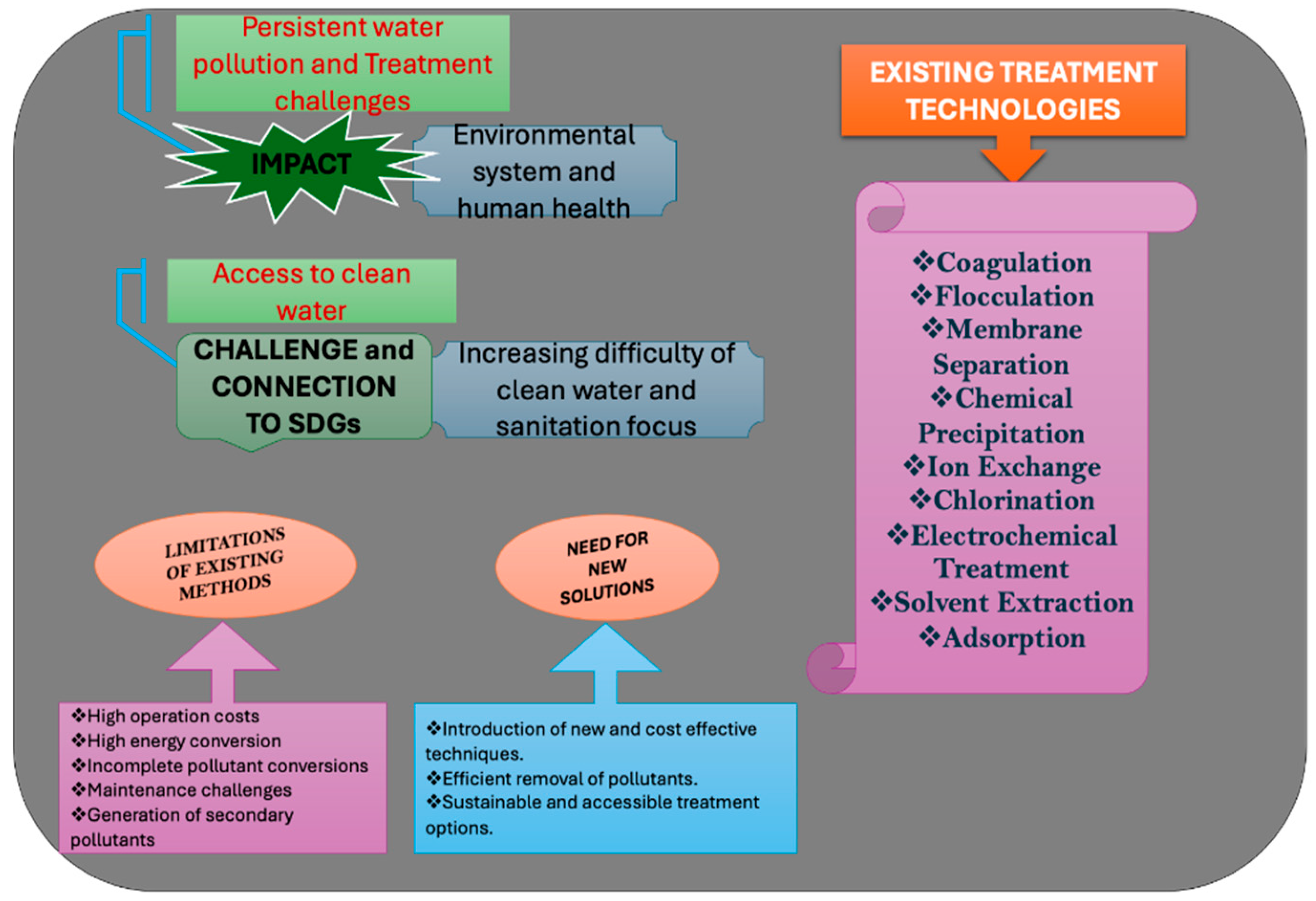
Figure 2.
Properties of engineered biochar (Reproduced with permission Copyright 2024, Springer Nature) [24].
Figure 2.
Properties of engineered biochar (Reproduced with permission Copyright 2024, Springer Nature) [24].
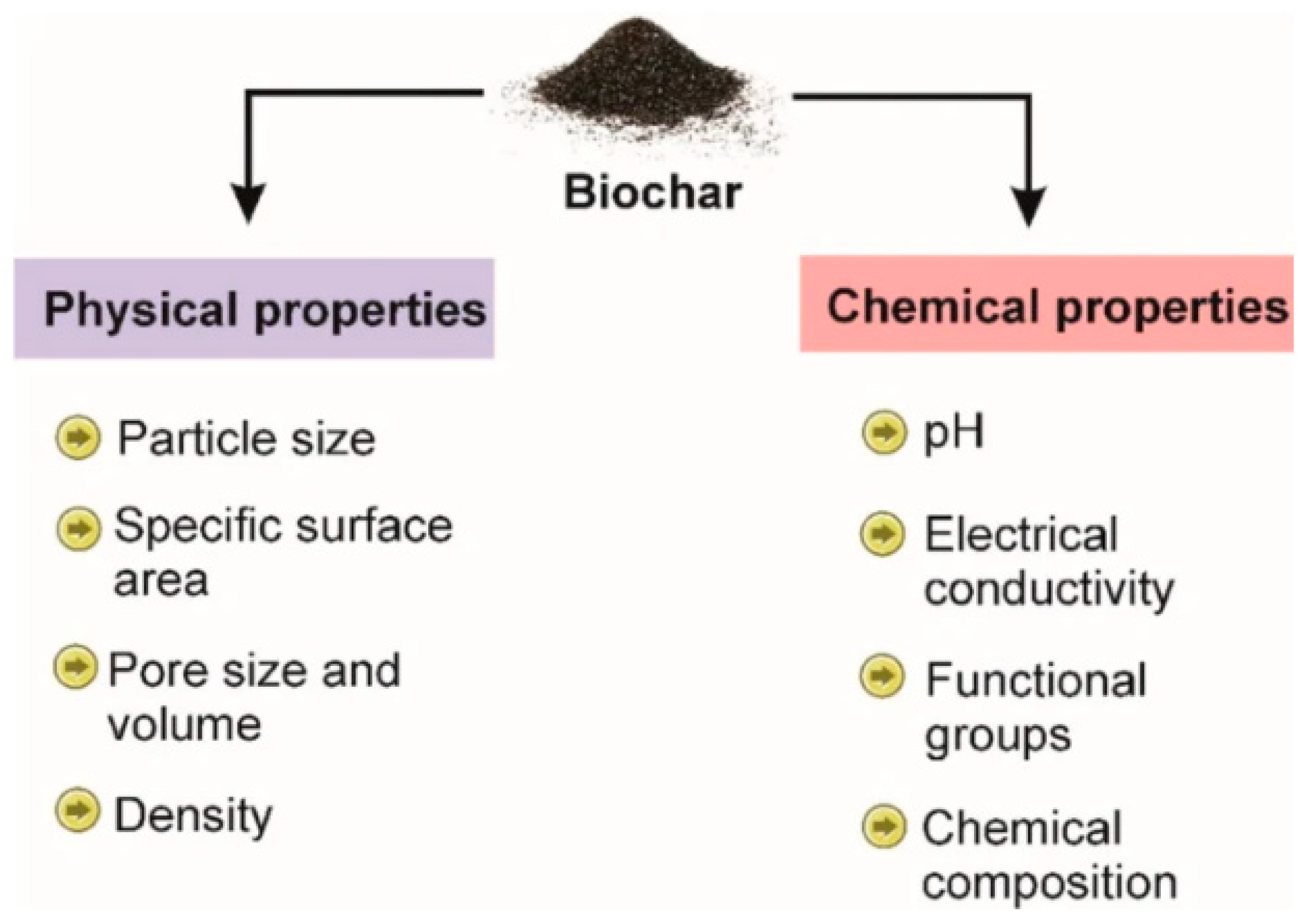
Figure 3.
Schematic illustration of synthesis of high-performance porous biochar and the adsorption mechanisms of Cr(VI) and NAP on PBC(KOH). (Reproduced with permission Copyright 2021, Elsevier) [28].
Figure 3.
Schematic illustration of synthesis of high-performance porous biochar and the adsorption mechanisms of Cr(VI) and NAP on PBC(KOH). (Reproduced with permission Copyright 2021, Elsevier) [28].
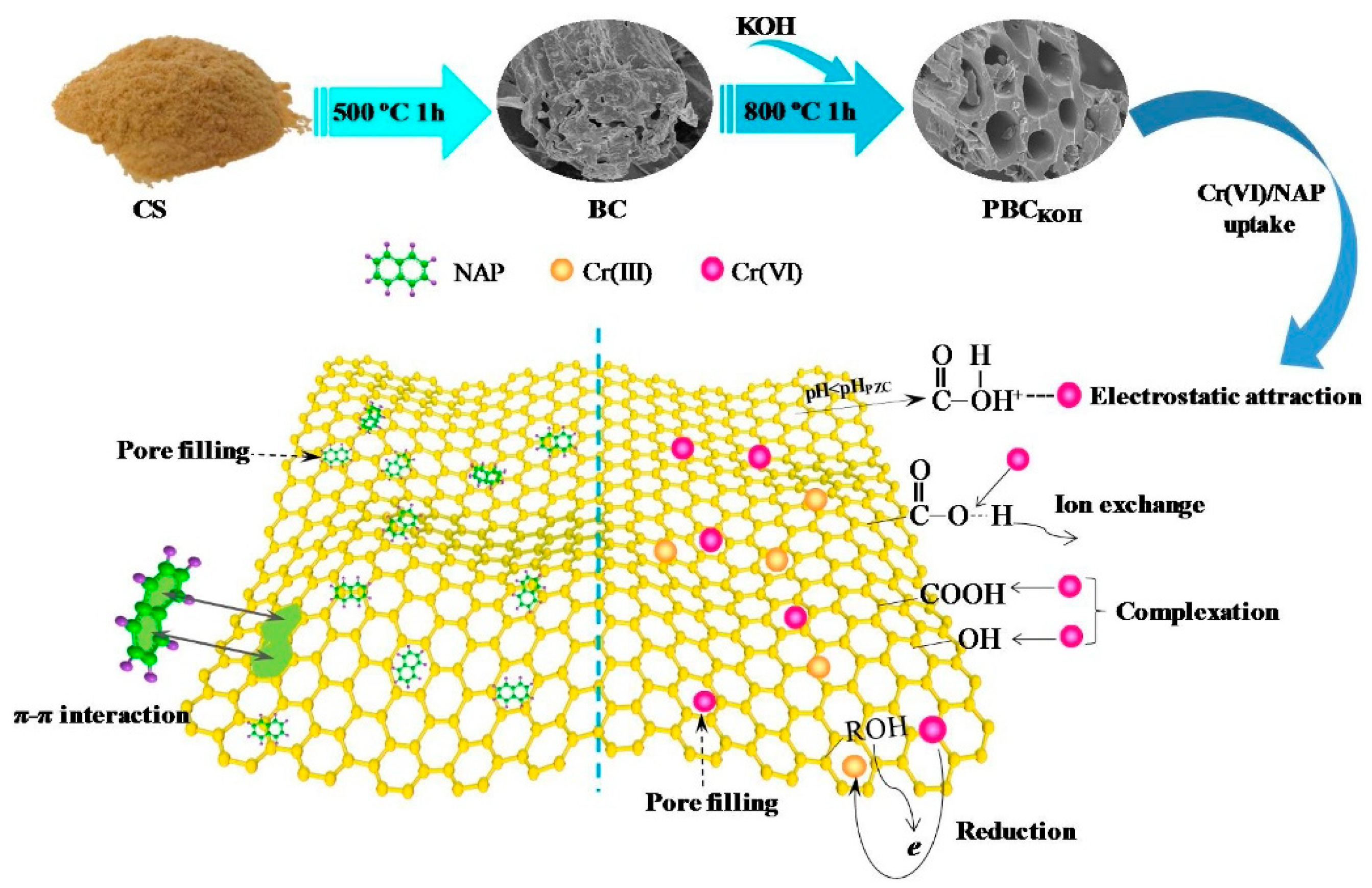
Figure 4.
(a) FTIR spectra and (b-j) SEM of various functionalized biochars, (k) Assignment of adsorption mechanisms for functionalized biochars (l) dynamic absorption of SMX (Reproduced with permission Copyright 2025, Elsevier) [32].
Figure 4.
(a) FTIR spectra and (b-j) SEM of various functionalized biochars, (k) Assignment of adsorption mechanisms for functionalized biochars (l) dynamic absorption of SMX (Reproduced with permission Copyright 2025, Elsevier) [32].
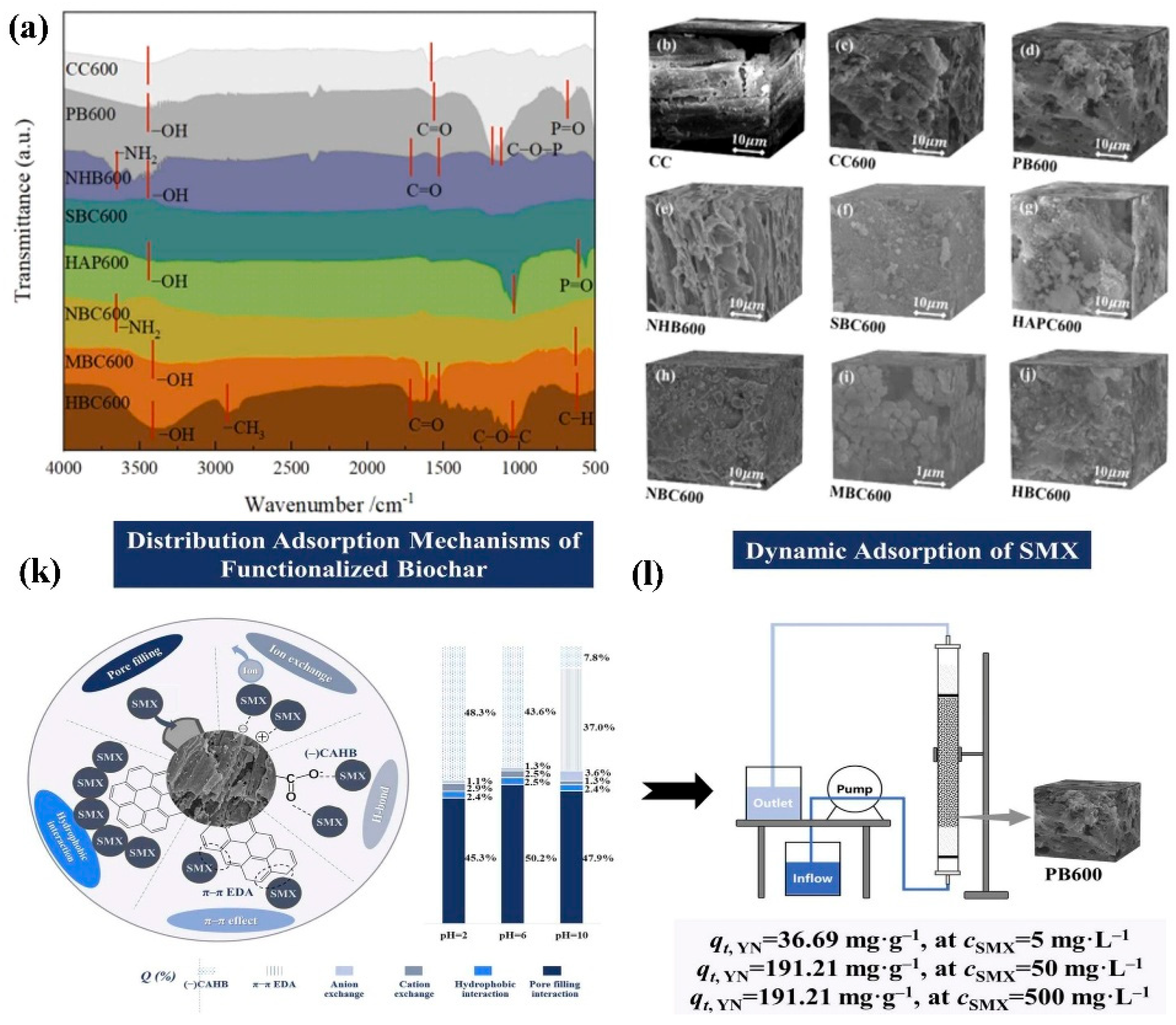
Figure 5.
Schematic representation of the biochar feedstock, its preparation process, and characterization techniques.
Figure 5.
Schematic representation of the biochar feedstock, its preparation process, and characterization techniques.
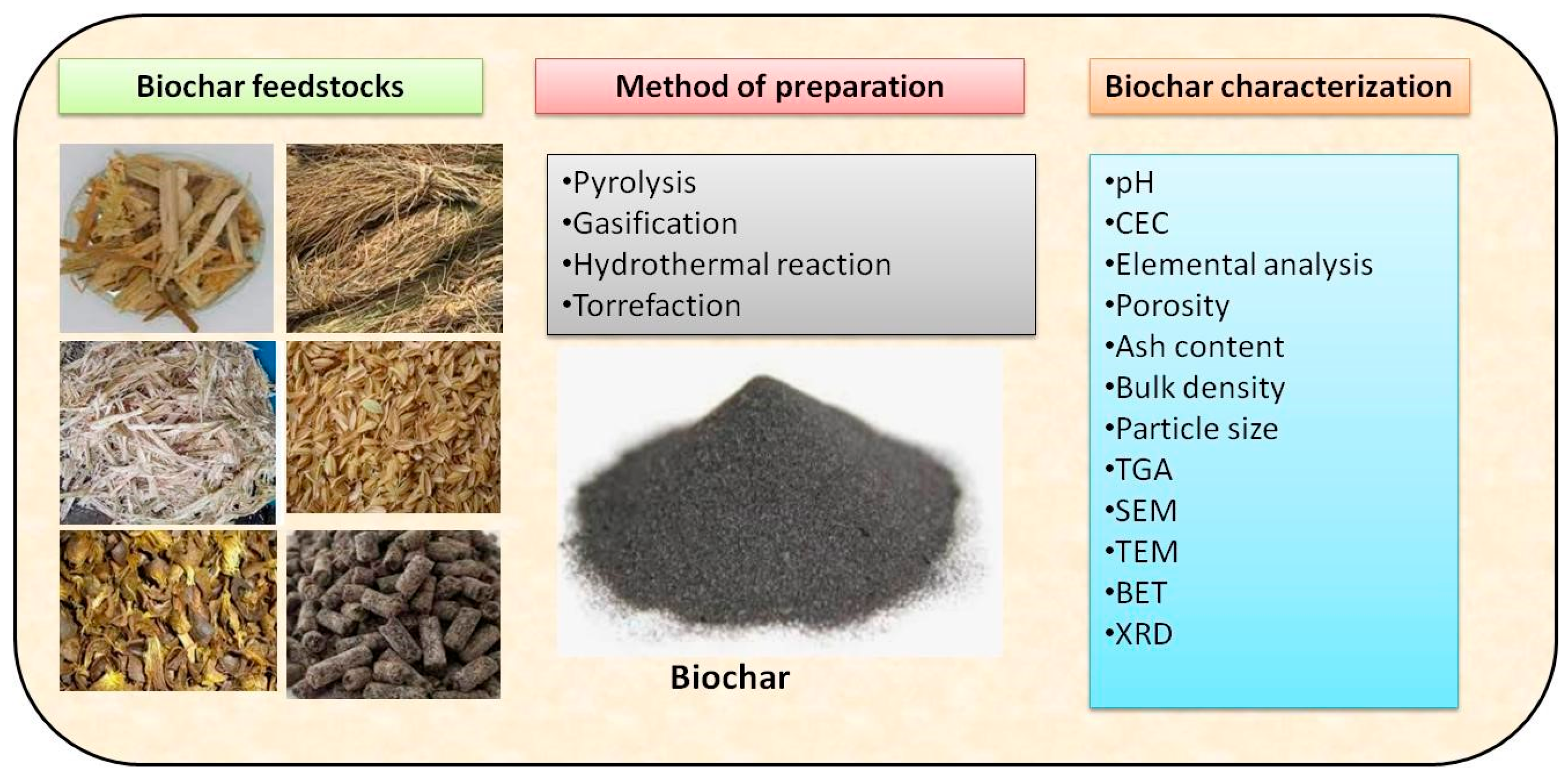
Figure 6.
Representative prominent biochemical fractions of biomass feedstocks derived from plants and animals used for biochar production (reproduced with permission Copyright 2018, Royal Society of Chemistry) [37].
Figure 6.
Representative prominent biochemical fractions of biomass feedstocks derived from plants and animals used for biochar production (reproduced with permission Copyright 2018, Royal Society of Chemistry) [37].
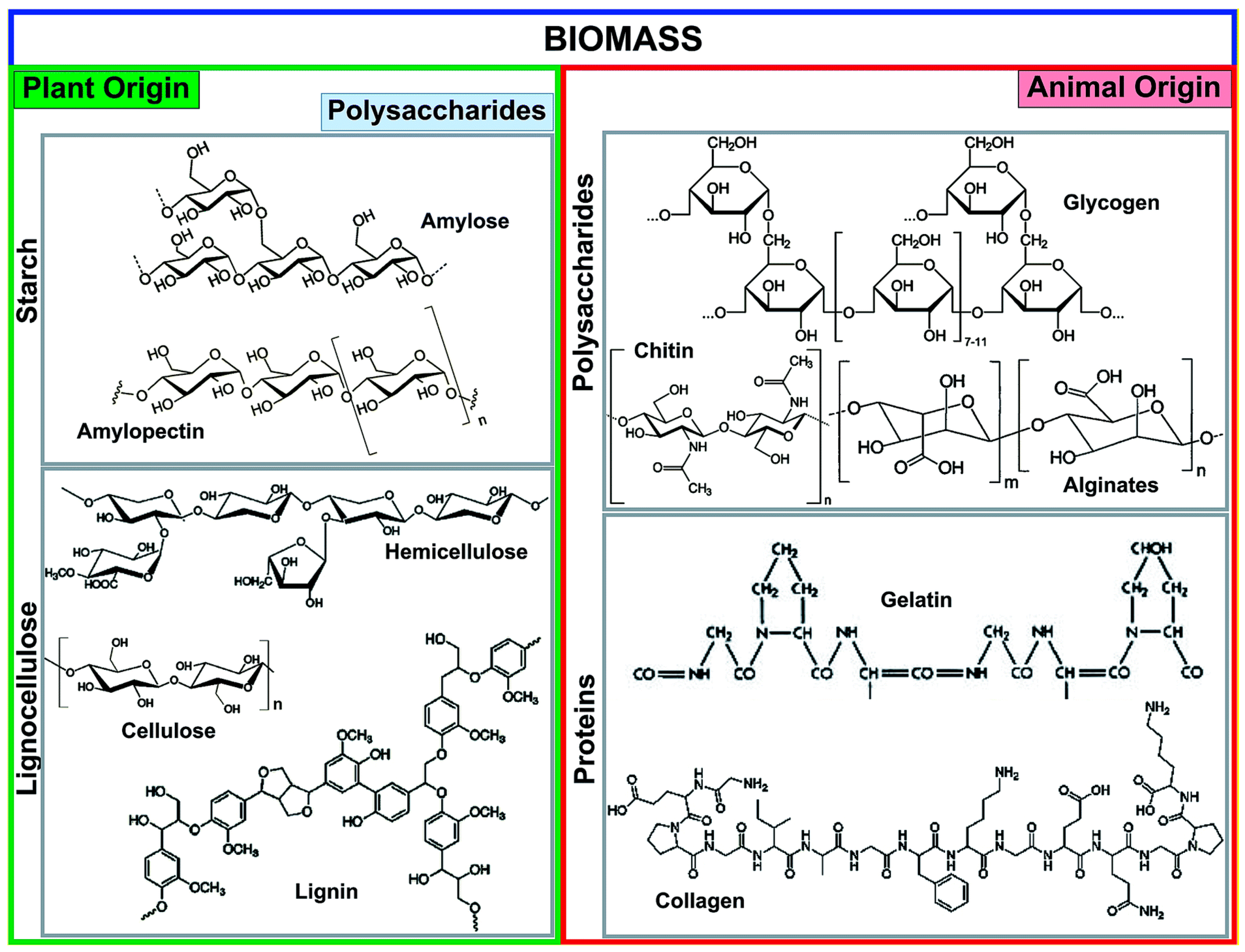
Figure 7.
(a) SEM image (b) N2 adsorption isotherms (c) TEM image (d) the high-resolution of activated biochars SMX (Reproduced with permission Copyright 2020, Elsevier) [40].
Figure 7.
(a) SEM image (b) N2 adsorption isotherms (c) TEM image (d) the high-resolution of activated biochars SMX (Reproduced with permission Copyright 2020, Elsevier) [40].
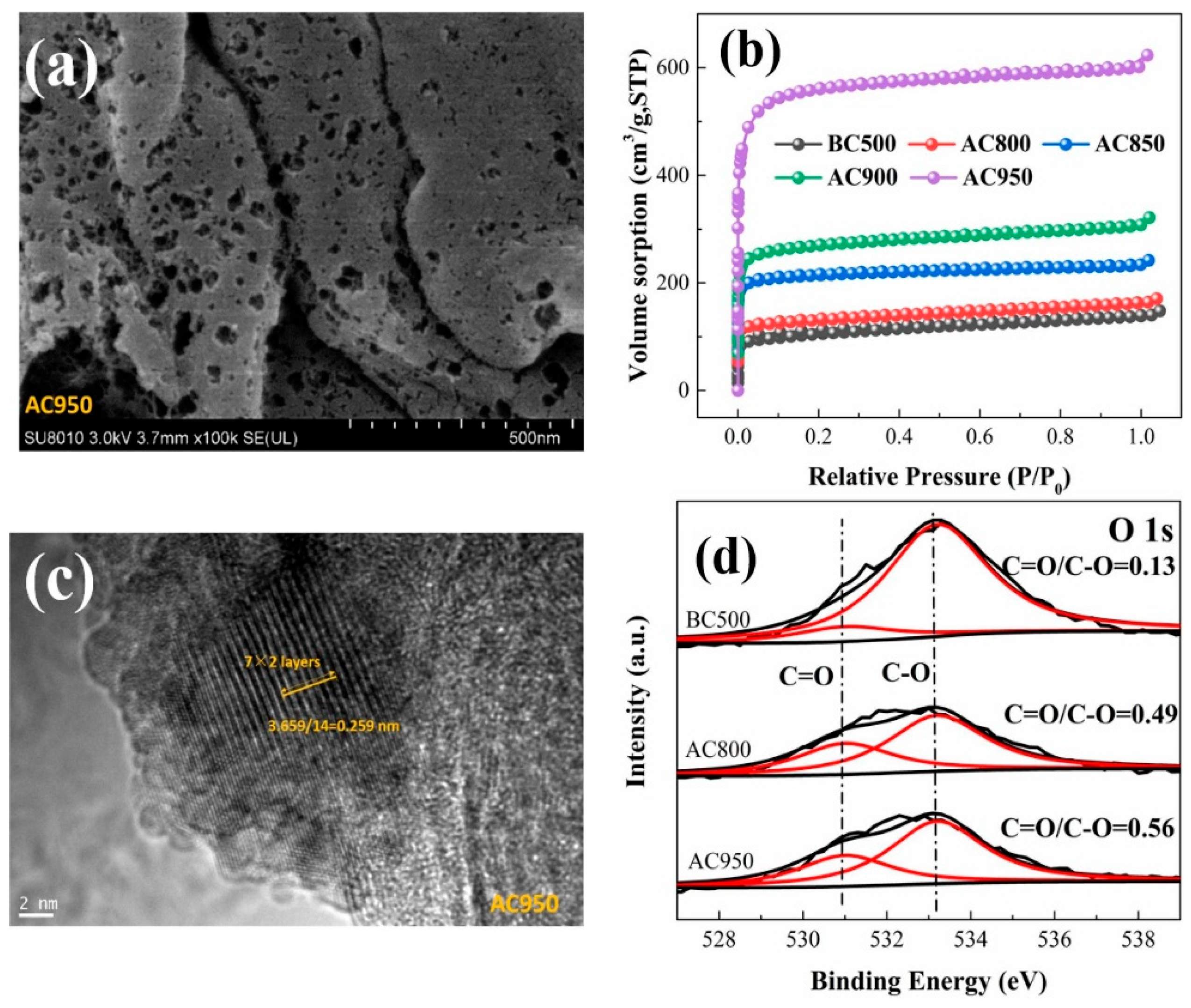
Figure 8.
Proposed adsorption mechanisms of biochar for pollutant removal (Reproduced with permission Copyright 2025, Elsevier) [52].
Figure 8.
Proposed adsorption mechanisms of biochar for pollutant removal (Reproduced with permission Copyright 2025, Elsevier) [52].

Figure 9.
Preparation flow chart of biochar by ball milling method (Reproduced with permission Copyright 2025, Elsevier) [55].
Figure 9.
Preparation flow chart of biochar by ball milling method (Reproduced with permission Copyright 2025, Elsevier) [55].
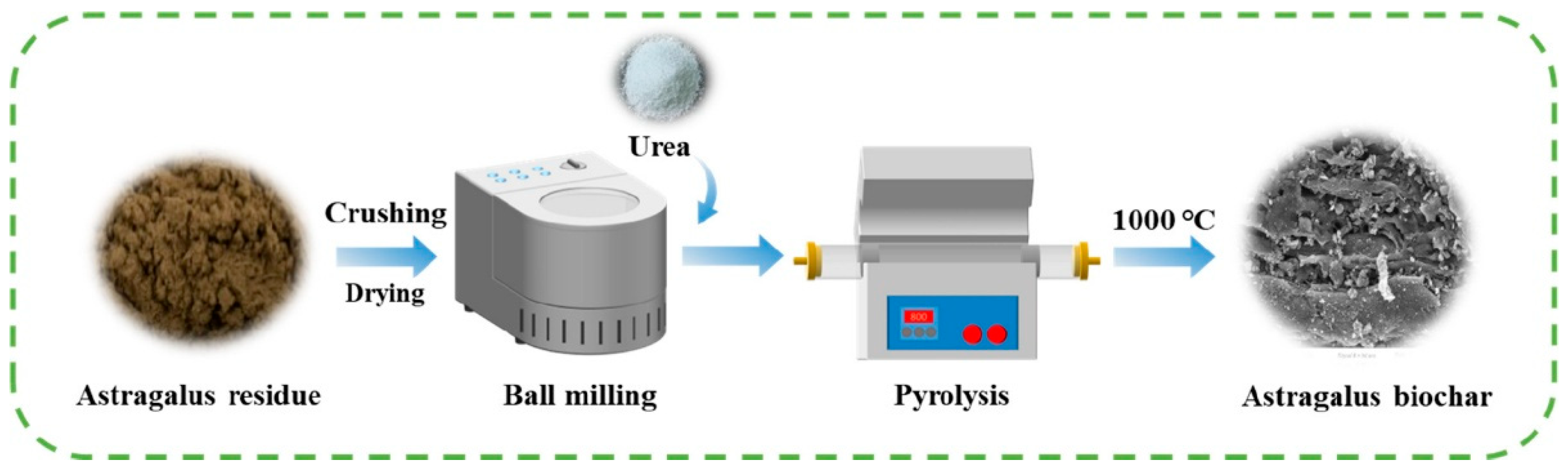
Figure 10.
Chemical modification of biochar showing the chemical activation and surface modification steps applied to raw biochar.
Figure 10.
Chemical modification of biochar showing the chemical activation and surface modification steps applied to raw biochar.
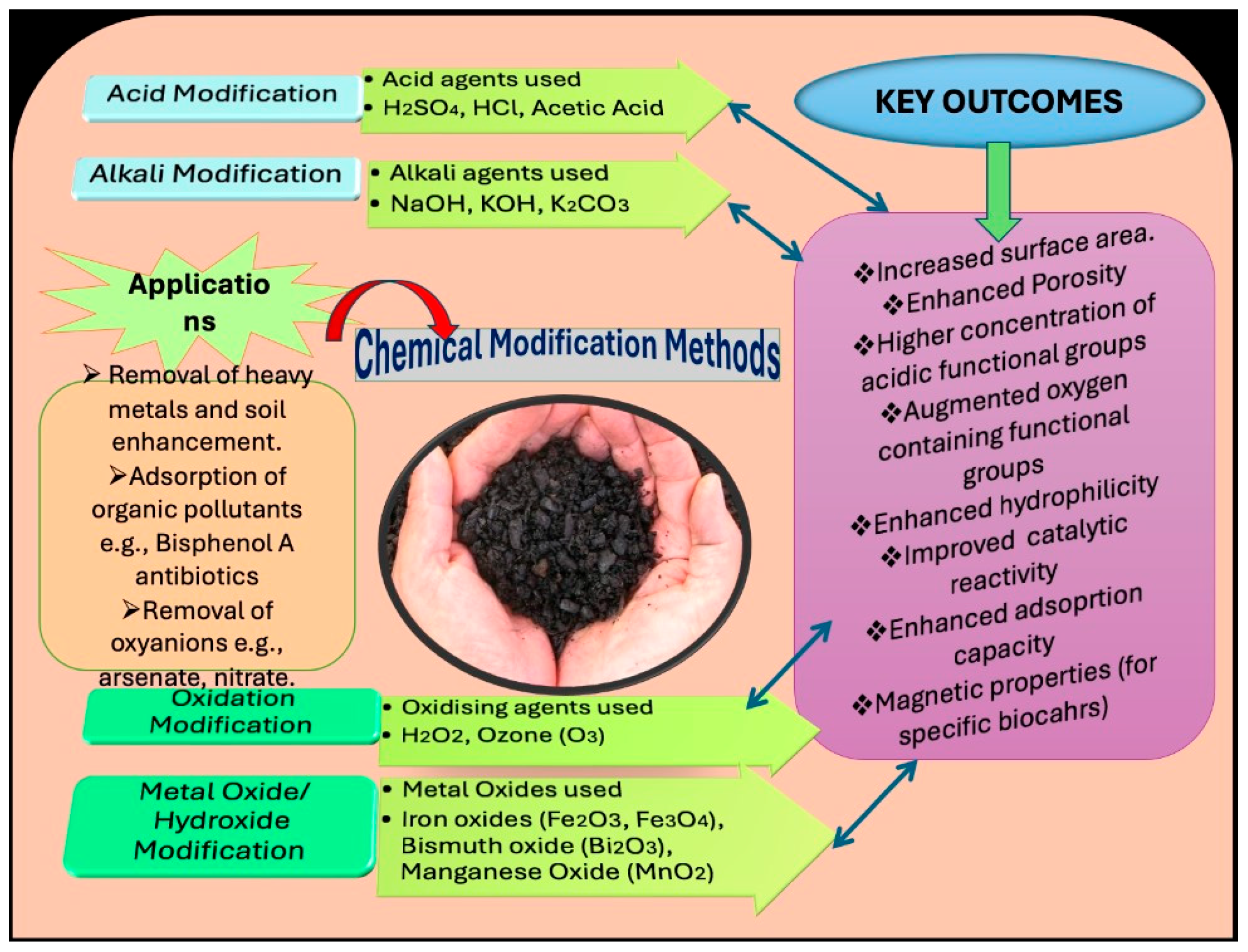
Figure 11.
Represent the microbial-EPS-biochar systems (stabilize heavy metals by electrostatic attraction, H-bonding, ion exchange, and complex formation), mediated heavy metal bioremediation mechanisms, which effectively lowering mobility and potential toxicity (Reproduced with permission Copyright 2025, Springer Nature) [78].
Figure 11.
Represent the microbial-EPS-biochar systems (stabilize heavy metals by electrostatic attraction, H-bonding, ion exchange, and complex formation), mediated heavy metal bioremediation mechanisms, which effectively lowering mobility and potential toxicity (Reproduced with permission Copyright 2025, Springer Nature) [78].
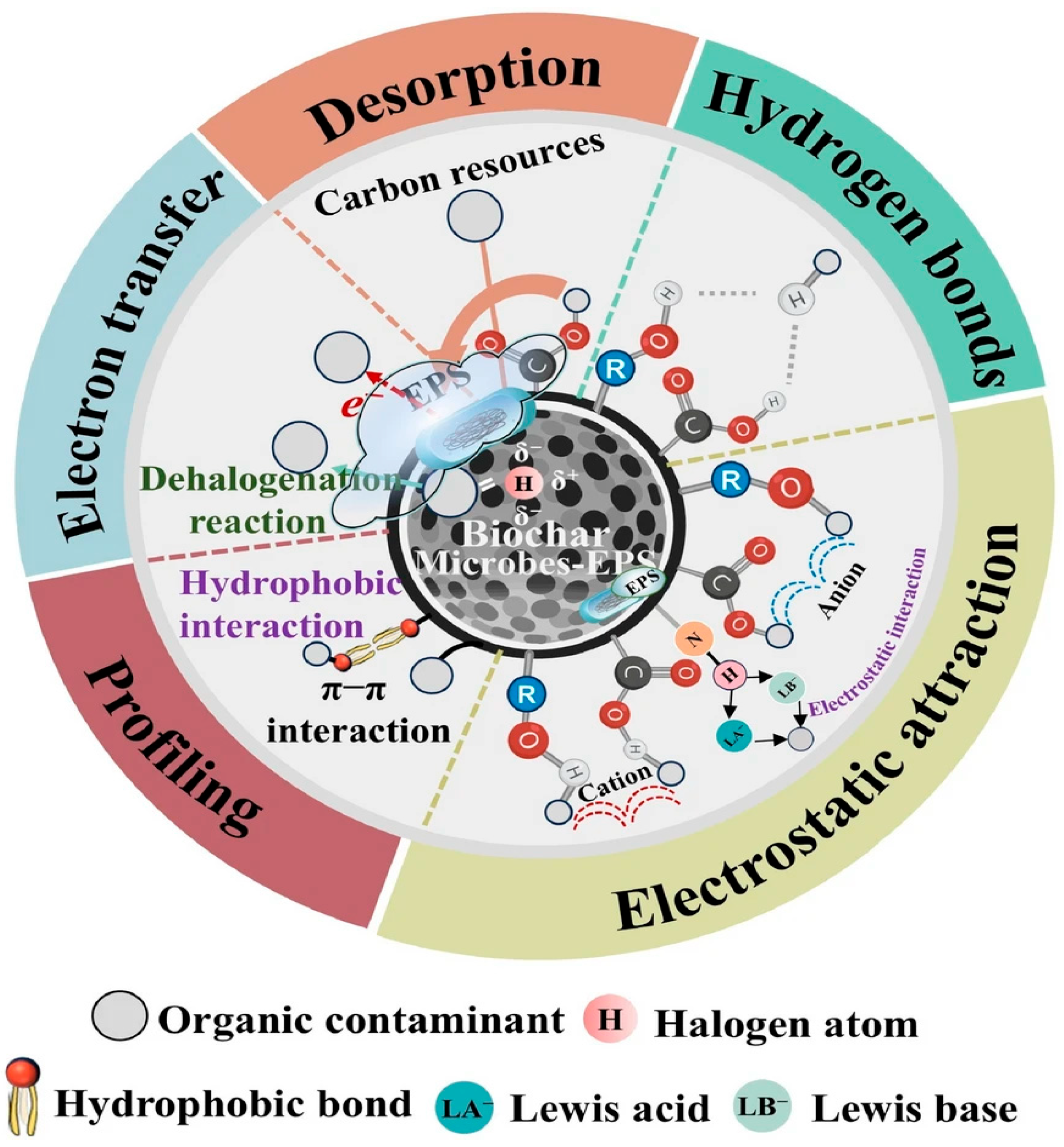
Figure 12.
Different applications of biochar (Reproduced with permission Copyright 2024, American Chemical Society) [92].
Figure 12.
Different applications of biochar (Reproduced with permission Copyright 2024, American Chemical Society) [92].
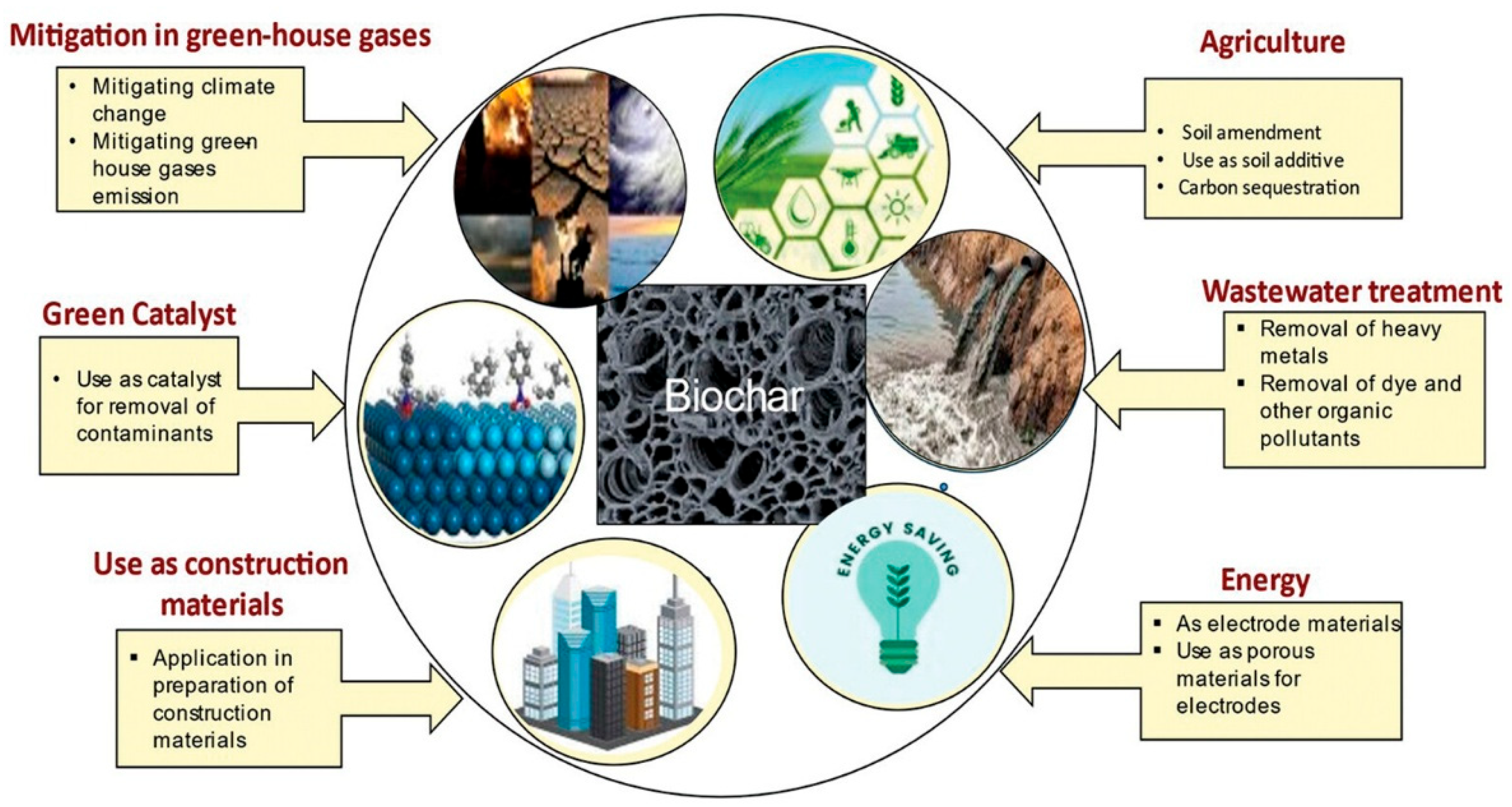
Figure 13.
Possible mechanism of inorganic and organic contaminants adsorption by the use of biochar.
Figure 13.
Possible mechanism of inorganic and organic contaminants adsorption by the use of biochar.
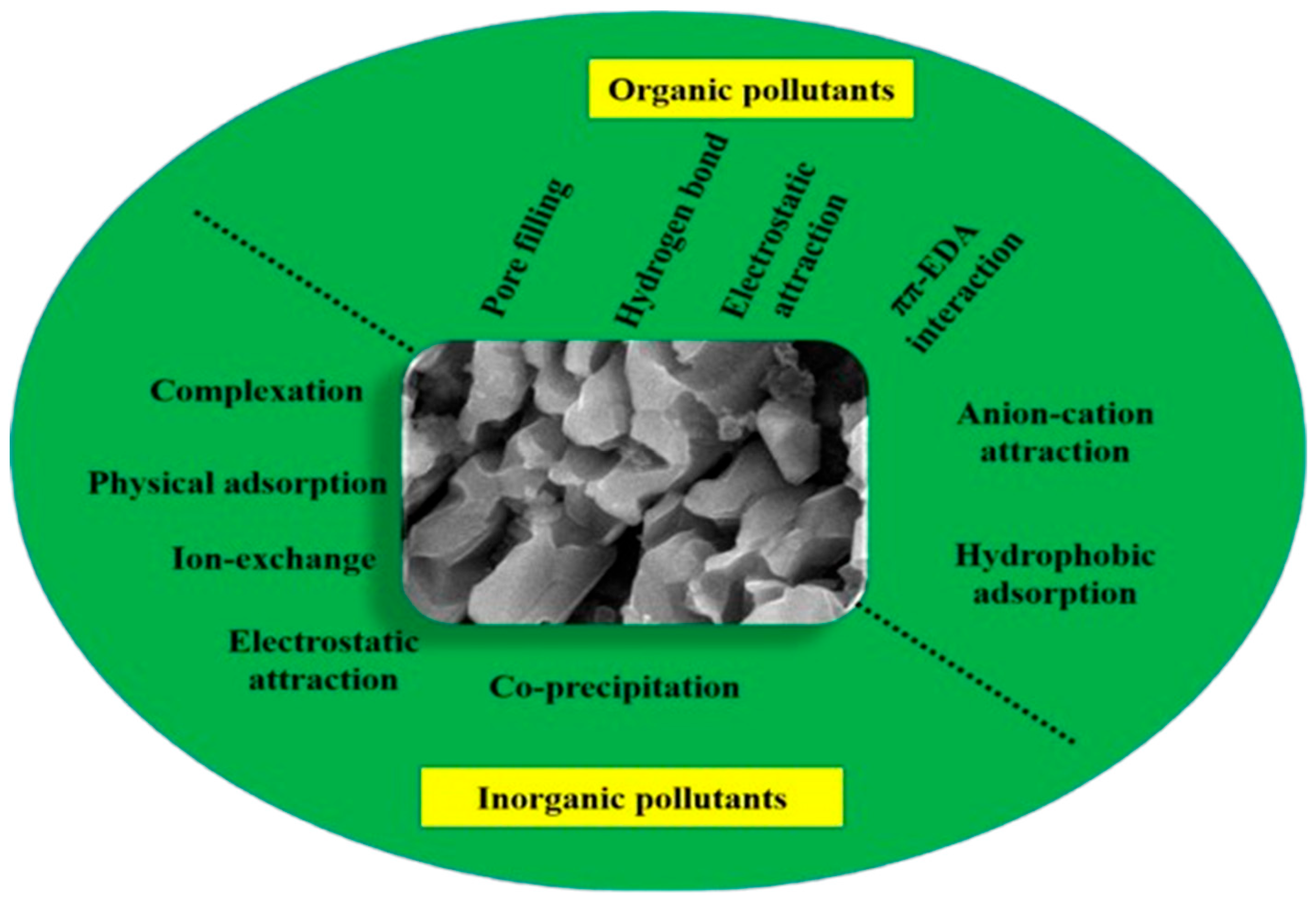

Table 1.
Shown the removal efficiencies and adsorption capacities of biochar for various contaminants.
Table 1.
Shown the removal efficiencies and adsorption capacities of biochar for various contaminants.
| Contaminant | Biochar Source | Modification | Adsorption Capacity (mg/g) | Reference |
| Lead (Pb) | Sewage Sludge (SS), Rice Husk (RH) | Phosphate-solubilizing bacteria (PSB) | 24.11 - 60.85 | [77] |
| Arsenic (As) | Rice Husk | Bismuth-induced modification | 16 | [21] |
| Mercury (Hg) | Municipal Solid Waste | KOH treatment | 101 | [70] |
| Tetracycline (TC) | Wheat straw | Ball-milling | 99% removal | [56] |
| Bisphenol-A (BPA) | Straw | Alkali treatment | 95-100% removal | [71] |
| Indigo Carmine | Olive Mill Waste | KOH treatment | 599 | [70] |
| Methylene Blue | Hickory Chips | Ball-milling, H2O2 treatment | High efficiency | [57,102] |
| Nitrate, Phosphate, Arsenic | Municipal Solid Waste | Alkaline and metal oxide modification | High removal efficiency | [65] |
Table 2.
Biochar and its application of the removal of various organic and inorganic pollutants from wastewater.
Table 2.
Biochar and its application of the removal of various organic and inorganic pollutants from wastewater.
| Biomass for biochar | Pre/post Treatment | Pyrolysis temperature (°C) | Contaminants | Initial concentration (mg/L) |
Biochar dose (g/L) |
Adsorption capacity (mg/g) | Mechanism | References |
| Inorganic Contaminants | ||||||||
| Banana straw | MgCl2 | 430 | Cr(VI) | 50 | 0.02 | 125 | Complexation, electrostatic attraction, functional groups bonding | [94] |
| Eucalyptus leaves | KOH | 200 | Pb2+ | 10 | 50 | - | Co-precipitation, complexation | [109] |
| Cornstalk | Fe2+/ZnCl2 | 700 | Pb2+ | 10 | 10 | 99.82 | ||
| Coconut shell | MgCl2 | 400 | Cd2+ | 300 | 0.5 | 81.7 | Ion-exchange, metal-π electron coordination, mineral precipitation and interaction with oxygenated functional groups | [110] |
| Coconut shell | Bisphenol-A (BPA) | Pb2+ | 300 | 0.5 | 214.4 | |||
| Date palm | NA | 800 | Pb2+ | 50-250 | 1 | 98.9 | NA | [111] |
| Methylene Blue | Cu2+ | 50-250 | 1 | 41 | ||||
| Corn cob | NA | 550 | Pb2+ | 1.95 mg/mL | 4 | NA | Ion diffusion | [21] |
| Cd2+ | 0.95 mg/mL | 4 | NA | |||||
| Brown algae | 300 | Zn2+ | 1-180 | 0.2 | 1.78 | NA | [112] | |
| Organic Contaminants | ||||||||
| Rice husk | Peroxymonosulfate | 450 | Tetracycline | 20-100 | 0.05-0.5 | NA | NA | [71] |
| Bisphenol A | 20-100 | 0.05-0.5 | NA | NA | ||||
| Date palm petiol | NA | 700 | Crystal violet | 5-500 | 0.05 | 209 | Pore filling, ππ-interaction and H-bonding | [113] |
| Corn cob | NA | 500 | Brilliant Green dye | 50-200 | 2 | 39.4 | NA | [114] |
| Egg shell | HCl | 800 | Rhodamine B | NA | 1 | NA | NA | [39] |
|
Cow dung |
KOH/NaOH | 700 | Rhodamine B | 100-300 | 1 | 1241 | π-π-interaction, electrostatic attraction, H-bond |
[115] |
| KOH/NaOH | 700 | Tetracycline hydrochloride | 100-300 | 1 | 1105 | |||
Disclaimer/Publisher’s Note: The statements, opinions and data contained in all publications are solely those of the individual author(s) and contributor(s) and not of MDPI and/or the editor(s). MDPI and/or the editor(s) disclaim responsibility for any injury to people or property resulting from any ideas, methods, instructions or products referred to in the content. |
© 2025 by the authors. Licensee MDPI, Basel, Switzerland. This article is an open access article distributed under the terms and conditions of the Creative Commons Attribution (CC BY) license (http://creativecommons.org/licenses/by/4.0/).
Copyright: This open access article is published under a Creative Commons CC BY 4.0 license, which permit the free download, distribution, and reuse, provided that the author and preprint are cited in any reuse.


