

Submitted:
28 October 2025
Posted:
29 October 2025
You are already at the latest version
Abstract
The rapid integration of wind power plants (WPPs) into modern electrical power systems (MEPSs) is central to global decarbonization but introduces significant technical challenges. Variability, intermittency, and forecasting uncertainty compromise frequency stability, voltage regulation, and grid reliability, particularly at high levels of renewable energy integration. To address these issues, adaptive control strategies have been proposed at the turbine, plant, and system levels, including reinforcement learning–based optimization, cooperative plant-level dispatch, and hybrid energy schemes with battery energy storage systems (BESS). At the same time, interoperability frameworks based on international standards, notably IEC 61850 and IEC 61400-25, provide the communication backbone for vendor-independent coordination; however, their application remains largely limited to monitoring and protection, rather than holistic adaptive operation. Real-Time Automation Controllers (RTACs) emerge as promising platforms for unifying monitoring, operation, and protection functions, but their deployment in large-scale WPPs remains underexplored. Validation of these frameworks is still dominated by simulation-only studies, while real-time digital simulation (RTDS) and hardware-in-the-loop (HIL) environments have only recently begun to bridge the gap between theory and practice. This review consolidates advances in adaptive control, interoperability, and validation, identifies critical gaps, including limited PCC-level integration, underutilization of IEC standards, and insufficient cyber-physical resilience, and outlines future research directions. Emphasis is placed on holistic adaptive frameworks, IEC–RTAC integration, digital twin–HIL environments, and AI-enabled adaptive methods with embedded cybersecurity. By synthesizing these perspectives, the review highlights pathways toward resilient, secure, and standards-compliant renewable power systems that can support the transition to a low-carbon future.
Keywords:
adaptive control
; wind power plants (WPPs)
; IEC 61850
; interoperability
; real-time automation controller (RTAC)
; hardware-in-the-loop (HIL)
; cybersecurity
; digital twin
1. Introduction
The rapid growth of renewable energy technologies has positioned wind power plants (WPPs) as a cornerstone in the global transition toward low-carbon power systems. Over the last two decades, governments, utilities, and private investors have increasingly turned to wind energy as one of the most mature and scalable renewable technologies. Global projections confirm that large-scale wind deployment will remain central to decarbonization strategies, with some nations, such as Germany, expecting more than one-third of electricity demand to be met by wind by mid-century [1]. Other regions, including China, the United States, and parts of Africa, are also rapidly increasing the share of wind generation in their national energy mixes, demonstrating its strategic role in achieving net-zero targets.
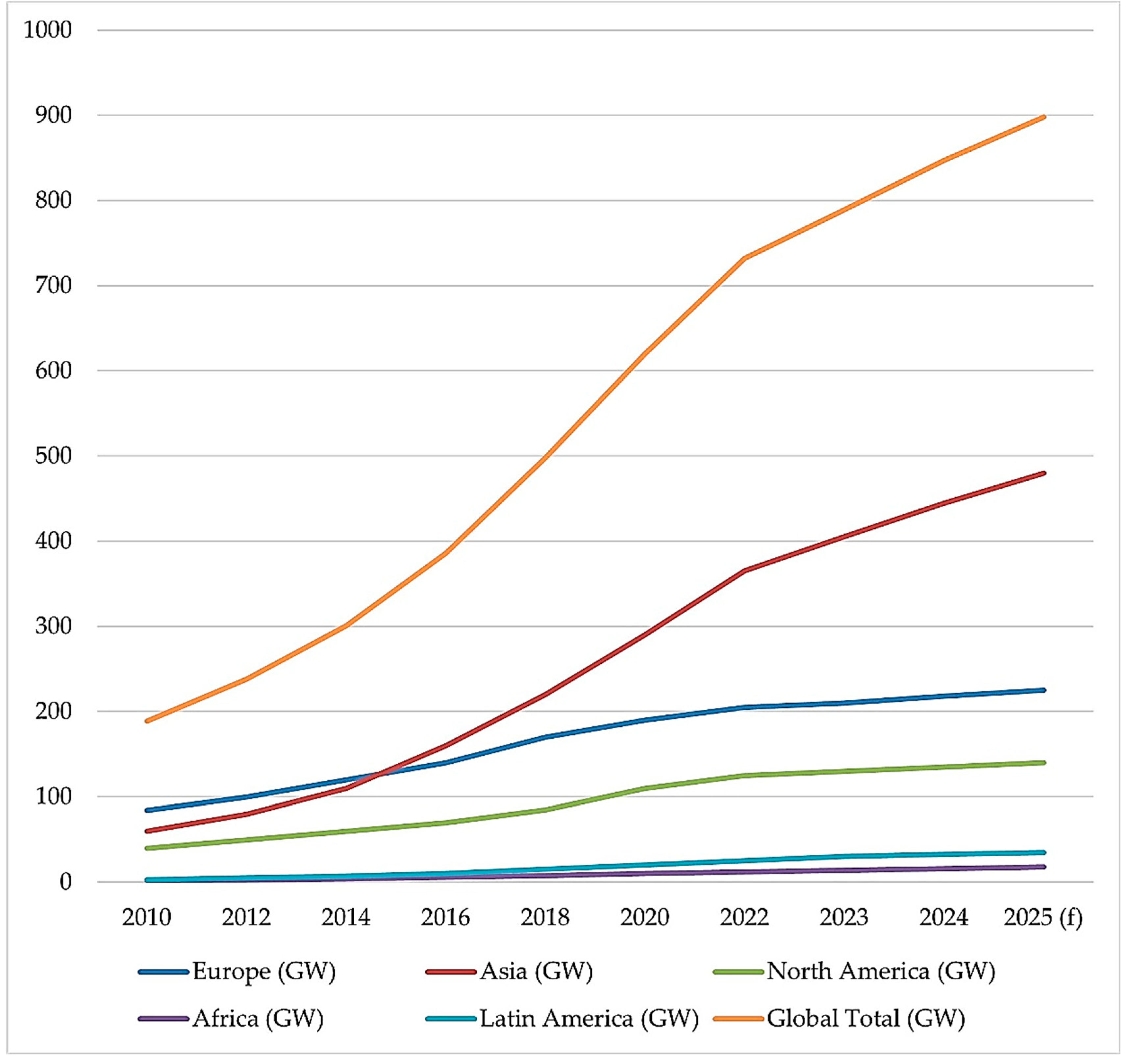
The source for this data is Renewable Capacity Statistics 2024 [2] and Global Wind Report 2024 [3]. Forecast (f) values extrapolated from Global Wind Report 2025 [4].
The global wind capacity has increased more than fivefold since 2010, driven by rapid expansion in Asia. However, the integration of WPPs into modern electrical power systems (MEPSs) presents significant and persistent technical challenges. Chief among these are the intermittency and variability of wind resources, which introduce rapid and often unpredictable power fluctuations that compromise reliability, transient stability, and overall grid resilience [5,6,7]. These fluctuations are particularly problematic when WPPs are deployed at scale, since the aggregate variability can stress conventional generation units, demand-side balancing resources, and protection systems. In contrast to dispatchable fossil-fuel plants, the uncertainty of wind power output requires new approaches to forecasting, scheduling, and adaptive control.
Numerous studies have investigated the operational impact of wind integration at different levels of the power system. Early works established that large-scale WPPs could exacerbate transient stability issues in bulk transmission networks [5,6], particularly when conventional synchronous generators are displaced. More recent research has confirmed that the integration of large fleets of wind turbine units affects both primary and secondary frequency response, as well as voltage regulation during contingencies [7,8,9]. Such findings underscore the urgent need for adaptive and coordinated control strategies that can respond dynamically to disturbances.
To mitigate variability and enhance dispatchability, battery energy storage systems (BESSs) and hybrid renewable configurations have been proposed as critical enablers. By coupling WPPs with energy storage, active and reactive power can be smoothed, improving both frequency security and voltage stability [10,11,12,13]. Hybrid systems that combine wind with solar photovoltaic (PV) or hydropower have also been investigated, aiming to leverage the complementary availability of resources and reduce overall system uncertainty. While these approaches show great promise, barriers such as high deployment costs, limited lifetime of storage technologies, and increased control complexity continue to restrict widespread adoption at the utility scale.
In parallel with advances in generation and storage, the role of monitoring and supervisory frameworks has expanded significantly. Conventional supervisory control and data acquisition (SCADA) systems have historically enabled plant-level monitoring, historical data logging, and operational oversight [14,15]. However, SCADA-based solutions are inherently static, operating on slower timescales and thus limited in their ability to respond to rapidly changing grid conditions. Recent developments have led to the emergence of condition monitoring systems [13,14], as well as substation automation systems based on the IEC 61850 process bus architecture [16,17]. These frameworks have significantly advanced their monitoring and protection capabilities. Yet, most implementations still concentrate on isolated functions such as fault detection or turbine condition assessment, rather than providing integrated solutions. This lack of functional integration remains a recurring challenge in wind-rich power systems [18].
Communication standards are increasingly recognized as foundational enablers of interoperability between WPPs, plant supervisory systems, and grid operators. Surveys on communication architectures [1], together with the development of IEC 61400-25 and IEC 61850 [19], underscore the importance of standardized, vendor-independent data exchange for effective plant–grid coordination. Studies on wind control centers [19] and large-scale offshore SCADA frameworks [14] have further highlighted the urgent need for scalable communication infrastructures that can coordinate hundreds or thousands of turbines across diverse geographies. Still, as emphasized in [18], many renewable-rich systems continue to rely on fragmented communication layers, leading to inconsistent integration between WPPs and system operators. These fragmented architectures not only limit adaptability but also expose systems to vulnerabilities in cybersecurity and interoperability.
Finally, in response to these limitations, researchers have proposed adaptive control methods that move beyond static supervisory approaches. Reinforcement learning-based controllers, intelligent fault detection schemes, and model-reference adaptive strategies for microgrids demonstrate the potential of data-driven and adaptive algorithms to dynamically adjust to fluctuating operating conditions. Cooperative control strategies, adaptive droop-based frameworks for multi-terminal DC systems, and frequency regulation schemes designed for high renewable integration demonstrate significant progress in aligning renewable outputs with system requirements. Yet, despite these promising directions, much of the existing literature remains confined to simulation-only validations, with very limited use of real-time or hardware-in-the-loop (HIL) testing [20,21,22,23,24]. This gap between theoretical proposals and practical validation constrains the deployment of adaptive solutions in real power grids, making it one of the most critical issues to address in the coming years.
Taken together, the reviewed literature reveals three persistent gaps that motivate the present study. First, most adaptive control research continues to focus on turbine-or device-level operation [25,26] rather than system-wide integration at the point of common coupling (PCC). Second, while IEC 61850 has been widely applied for monitoring and protection [17,27,28], its potential to unify monitoring, operation, and adaptive control remains underexplored. Third, real-time validation through HIL environments has only recently begun to gain traction [23,24], leaving a shortage of practical demonstrations that can bridge the simulation–implementation divide.
The purpose of this review is therefore to provide a comprehensive synthesis of adaptive control and interoperability frameworks for wind power plant integration. Specifically, it surveys the evolution of control strategies, the role of IEC communication standards, the application of real-time automation controllers (RTACs), and the extent to which HIL testing has been adopted in the literature. By consolidating these perspectives, this paper aims to highlight both achievements and shortcomings, and to point toward research directions that will accelerate the transition toward resilient, standards-compliant, and adaptive power systems of the future.
The remainder of this paper is organized as follows. Section 2 reviews the state of the art in WPP integration, including technical challenges, traditional and adaptive control approaches, communication and interoperability issues, and the role of international standards. Section 3 focuses on adaptive control strategies, ranging from turbine-level methods to plant-wide frameworks, including hybrid and storage-assisted schemes, as well as emerging AI and machine learning-based techniques. Section 4 discusses interoperability frameworks and standards, with emphasis on IEC 61850, IEC 61400-25, SCADA systems, and associated cybersecurity considerations. Section 5 explores the role of Real-Time Automation Controllers (RTACs), highlighting their applications, advantages, and integration with IEC-based architectures. Section 6 examines validation methods, distinguishing between simulation-only studies, real-time digital simulation platforms, and hardware-in-the-loop (HIL) testing. Section 7 provides a comparative analysis of the reviewed literature, identifying key research gaps. Section 8 outlines emerging opportunities and future research directions, while Section 9 concludes the review with final remarks on the role of adaptive control and interoperability in enabling resilient, standards-compliant power systems.
2. State of the Art in Wind Power Plant Integration
The large-scale deployment of wind power plants (WPPs) introduces major operational challenges for modern electrical power systems (MEPSs). Unlike conventional synchronous generation, which offers inherent inertia, reactive power support, and predictable dispatch, WPPs are characterized by intermittent and variable outputs that depend on weather conditions. These fluctuations in active and reactive power often propagate through the network, influencing not only local feeders but also transmission-level stability. As a result, system operators face growing concerns related to reliability, power quality, and transient stability in grids with high levels of wind integration [5,6,7].
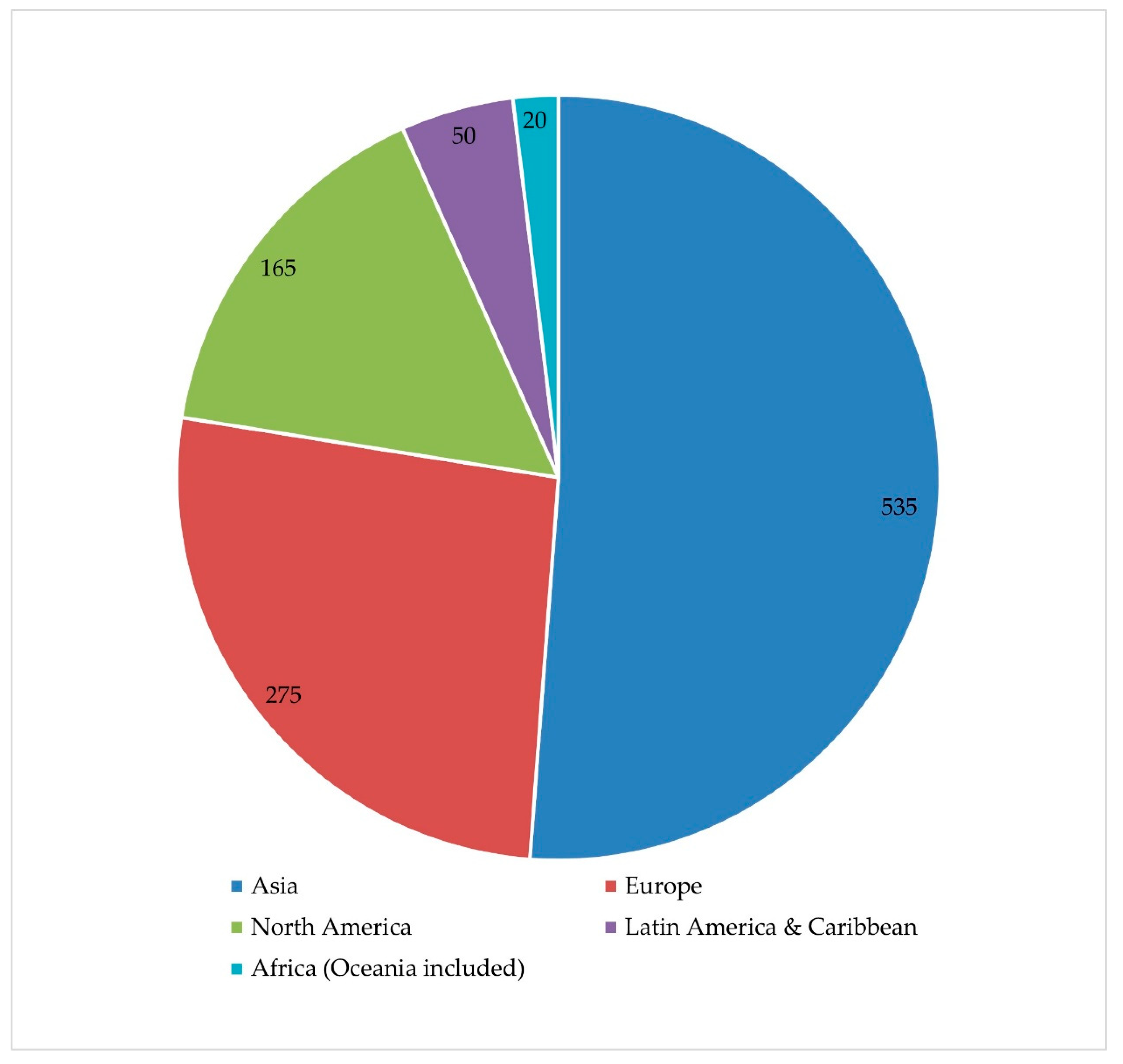
Derived from the same Renewable Capacity Statistics 2024 [2] and Global Wind Report 2024 [3] datasets used in Figure 1.
Studies on transient stability have consistently shown that the dynamic behavior of WPPs can threaten system integrity under high-integration scenarios. For example, large-scale wind injection can amplify oscillations and fault propagation, thereby worsening the severity of disturbances and complicating recovery during contingencies [5,6]. Similarly, overloading conditions resulting from wind variability can reduce voltage margins, leading to potential collapse in stressed networks [29]. These findings highlight that while wind power contributes significantly to sustainable energy goals, its integration requires advanced control and protection measures to maintain acceptable system performance.
2.1. Challenges of Wind Power Plant Integration
The key challenges associated with WPP integration extend beyond simple variability. First, there is the issue of frequency regulation. When wind displaces conventional synchronous units, the ability of the system to provide fast inertial response diminishes, which can result in larger frequency deviations during disturbances [7,8,9]. This problem is particularly acute in weak grids with low short-circuit capacity, where fluctuations in generation immediately affect system stability. Second, voltage regulation becomes more complex as inverter-based wind turbine generators (WTGs) respond differently from synchronous machines during faults and voltage dips. Without adaptive control or coordinated reactive power support, voltage instability can propagate rapidly across interconnected networks. Finally, the intermittent and stochastic nature of wind introduces forecasting uncertainty, which complicates unit commitment and real-time scheduling for system operators.
2.2. Traditional and Adaptive Control Approaches
Historically, supervisory control and data acquisition (SCADA) frameworks have provided the backbone for WPP monitoring and control. These systems offer valuable plant-level oversight and historical data logging, yet they remain limited in adaptability and responsiveness [14,15]. SCADA-based approaches are inherently centralized, often operating on minute-level timescales, and thus cannot fully respond to fast fluctuations caused by sudden wind gusts or faults.
To overcome these limitations, researchers have increasingly proposed adaptive control methods. Reinforcement learning, multi-agent optimization, and model predictive control strategies have been developed to adjust plant operations dynamically and enhance grid support [20,25,30]. While these strategies show promise in simulation environments, most remain proof-of-concept due to challenges of computational cost, interpretability, and real-world validation. Simulation-dominant approaches, such as those presented in [31], also reveals that practical deployment is constrained by limited testing under realistic operating conditions. Consequently, adaptive strategies are recognized as necessary for the future, but their transition from theory to practice remains incomplete.
Adaptive control frameworks can be structured into three levels: turbine-level optimization [18,23,24], plant-level coordination [6,32,33,34,35,36], and system-level grid interaction [35,36].
Figure 3.
Hierarchical levels of adaptive control in wind power plants.
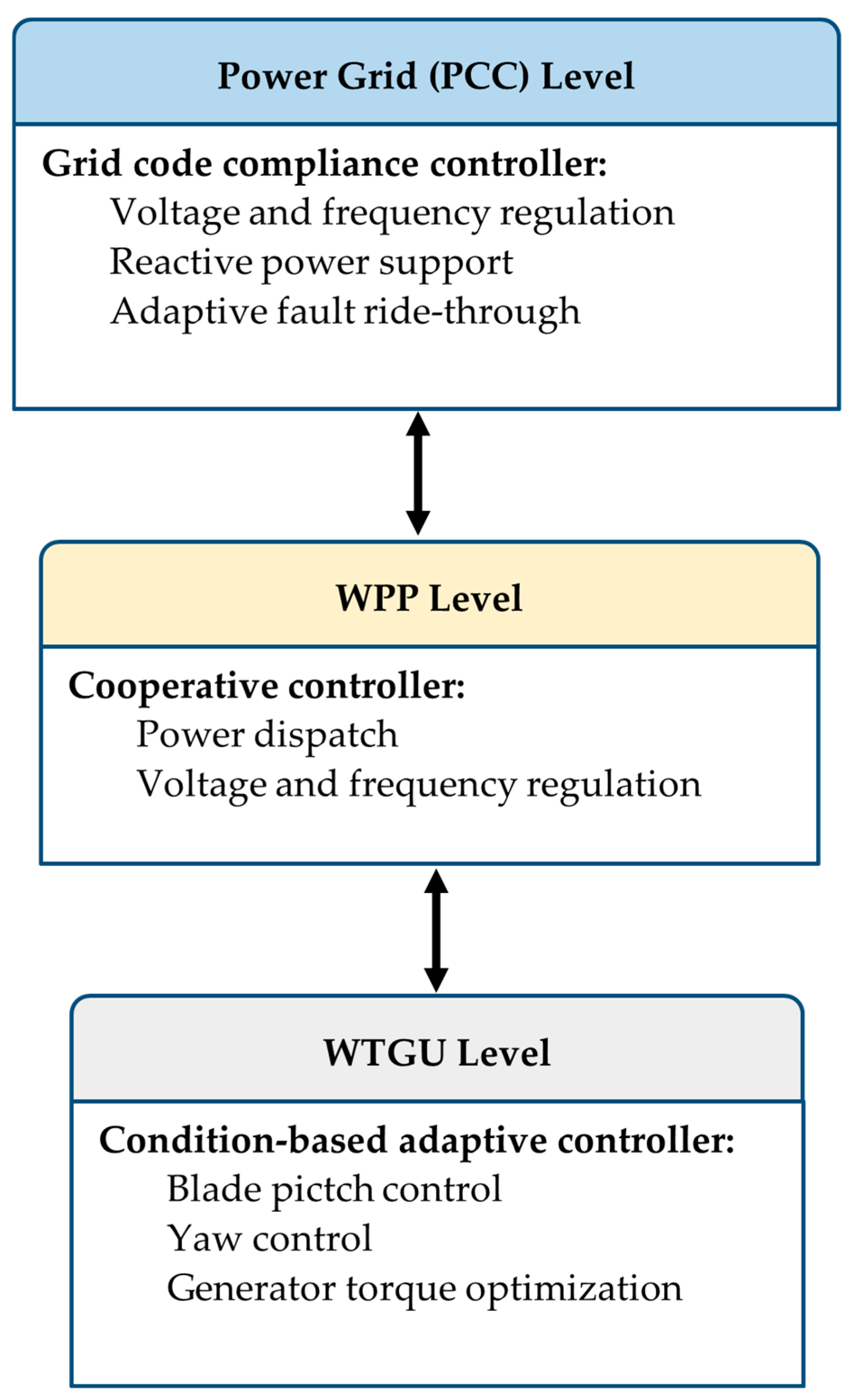
Conceptual diagram developed by the author based on the literature cited above.
Hybrid configurations offer an additional dimension of adaptability. By integrating WPPs with battery energy storage systems (BESS) or other renewable sources, dispatchability and reliability can be improved. Probabilistic sizing of storage has been shown to enhance frequency stability [10], while integrated WTG–BESS control schemes significantly improve active power dispatchability and operational reliability [11]. Studies such as [12] confirm that BESS can also provide active power reserves, mitigating fluctuations and enhancing system resilience. Likewise, hybrid wind–hydro–PV systems [13] demonstrate that coupling complementary resources can reduce system-level intermittency. However, despite these advances, large-scale scalability is limited due to high capital costs, uncertain economic returns, and the complexity of managing hybrid resources [12].
2.3. Communication and Interoperability Issues
Reliable communication infrastructures are increasingly viewed as indispensable for effective WPP integration. The transition from isolated plants toward interconnected, adaptive networks requires robust, real-time, and vendor-independent communication. Existing surveys emphasize the crucial role of communication architectures in smart grid applications [1]. Yet, in practice, many deployments remain fragmented and vendor-specific, restricting interoperability [18].
Figure 4.
Communication and Interoperability Architecture for Modern Wind Power Plants.
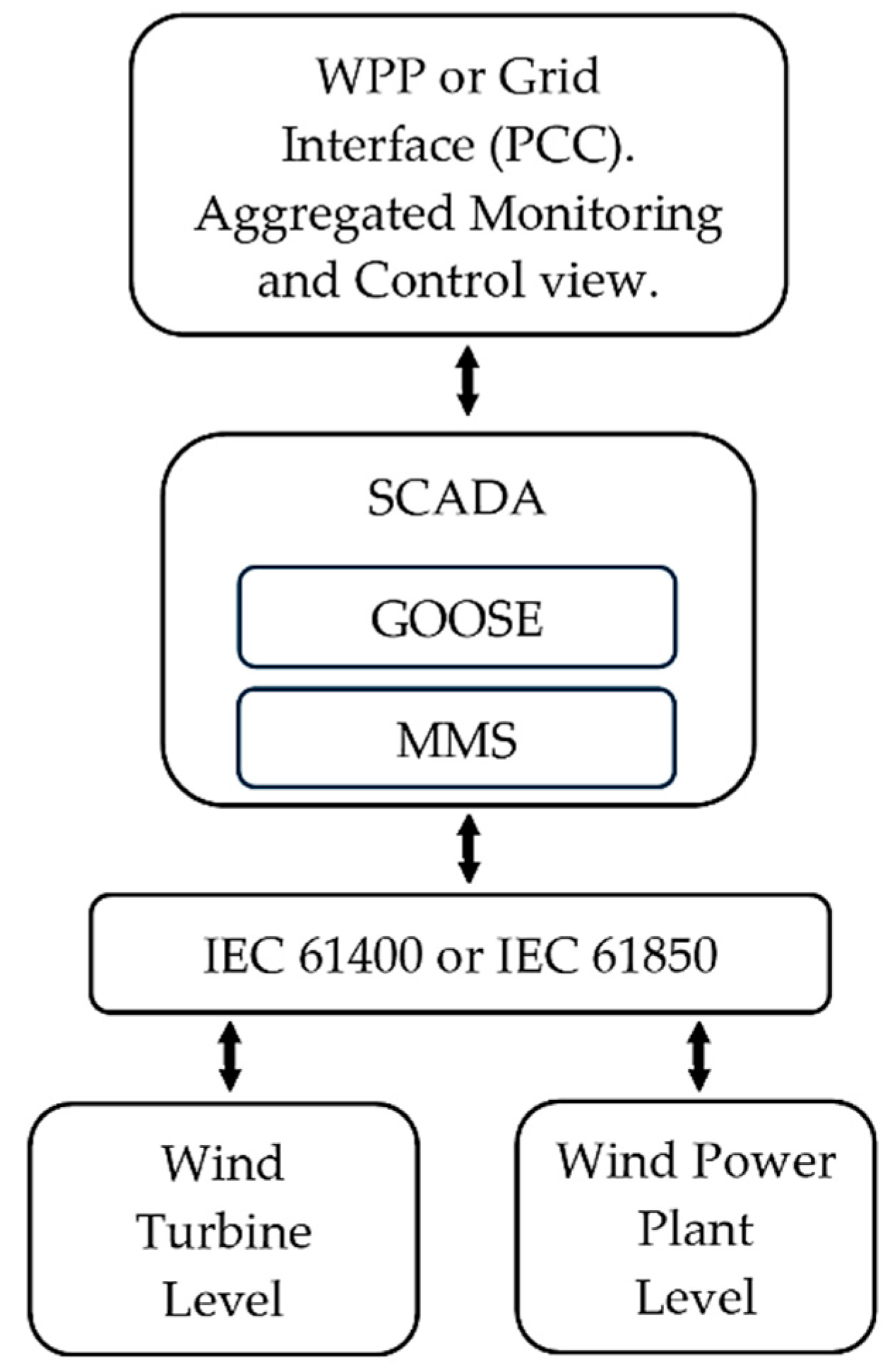
The diagram illustrates the layered interaction between legacy SCADA systems and IEC-based communication standards. IEC 61850 provides event-driven, real-time interoperability at the substation and plant levels through GOOSE and MMS protocols, while IEC 61400-25 extends standardized data modeling to turbine-specific functions. Conceptual diagram developed by the author based on [11,12,14,15,16,17,18,25,29,37].
SCADA systems, though still dominant, are slow to adapt to dynamic conditions [14,15]. In response, international standards such as IEC 61400-25 and IEC 61850 have emerged as enablers of interoperability. IEC 61400-25 was developed specifically for wind applications, standardizing turbine-level condition monitoring and supervisory control [19]. IEC 61850, on the other hand, has already become the backbone of substation automation, offering logical node modeling, GOOSE messaging, and vendor-independent device integration [17,27,28,37]. Despite these standards, many real-world systems continue to operate with fragmented communication layers, leading to inconsistencies between plant controllers, SCADA systems, and grid operators [18]. This fragmentation not only reduces system adaptability but also introduces new cybersecurity vulnerabilities [38,39].
2.4. Standards Overview
The development of international standards has been central to enabling interoperability between wind plants and power systems. The IEC 61850 standard has been widely adopted for monitoring and protection, facilitating communication through logical nodes and high-speed GOOSE messaging [17,27,28,37]. For wind-specific applications, IEC 61400-25 extends these principles to turbine monitoring and supervisory control [19]. Together, these standards provide the foundation for an integrated WPP operation.
However, most implementations remain confined to monitoring and protection functions. Few studies have explored the potential of IEC 61850 to enable adaptive operation, in which monitoring, protection, and control are unified in real-time. Research suggests that extending IEC 61850 for adaptive purposes could dramatically improve system resilience and coordination [40,41]. Nevertheless, widespread adoption has been slow, often constrained by organizational challenges, vendor-specific implementations, and regulatory gaps. Cybersecurity further complicates matters, as IEC-based protocols such as GOOSE and MMS have been shown to be susceptible to malicious intrusion [32,33,34,38]. As WPP integration increases, ensuring both secure and interoperable communication remains a critical research and industry priority.
3. Adaptive Control Strategies for WPPs
Adaptive control strategies for wind power plants (WPPs) have undergone significant evolution as researchers and industry practitioners strive to address the challenges of intermittency, variability, and uncertainty in renewable energy generation. Unlike conventional fixed-scheme controls, adaptive frameworks aim to dynamically adjust system behavior in response to changing operating conditions, grid disturbances, and evolving load demands. This shift reflects the recognition that static supervisory approaches are no longer adequate in renewable-dominated grids, where flexibility and responsiveness are critical for ensuring security and reliability [9,35,36].
3.1. Turbine-Level Adaptive Control
At the turbine level, adaptive control strategies primarily focus on maximizing energy capture while minimizing mechanical stress and fatigue on critical components. Early contributions investigated the dynamic control of wind turbines under variable wind speeds, demonstrating that conventional proportional–integral (PI) controllers could be enhanced with adaptive tuning to improve stability and efficiency [20]. More recent work has explored reinforcement learning (RL) and yaw-based wake steering, where turbines actively adjust their yaw angles to influence wake interactions and improve farm-level power output [25]. These approaches not only increase the total energy yield but also enable a more equitable distribution of fatigue loads across turbine units.
Another promising line of research involves health-aware adaptive control, which integrates structural health monitoring data into control algorithms. For instance, by monitoring blade vibration or gearbox wear, controllers can adapt operating parameters to reduce stress, thereby extending component lifetime [26]. This integration of monitoring and control embodies the principle of “condition-based adaptation,” where turbine operation is continuously optimized based on real-time performance data. Despite these advances, most turbine-level adaptive schemes are demonstrated only in simulation environments or on individual turbines. Large-scale, farm-wide demonstrations remain rare, leaving a gap between academic research and industrial deployment.
3.2. Plant-Level Adaptive Control
While turbine-level adaptation addresses local optimization, plant-level adaptive control focuses on the collective performance of multiple turbines within a WPP. At this level, the main objective is to ensure that the aggregated output supports system stability, particularly in terms of frequency and voltage regulation. Studies have shown that adaptive dispatch strategies can significantly enhance system stability by dynamically allocating power setpoints among turbines in response to frequency deviations [9,35,36,42].
Cooperative control frameworks extend this concept further by enabling turbines to coordinate with one another in providing reactive power support and frequency response. For example, distributed droop-based controllers have been designed for voltage-source converter (VSC) based multi-terminal DC (MTDC) systems, enabling offshore WPPs to contribute actively to system stability [43]. Similarly, cooperative voltage control has been proposed, where turbines adjust their reactive power contributions collectively to maintain bus voltages within secure limits [44]. These approaches underline the importance of plant-level adaptability in balancing wind variability with grid requirements. However, most implementations remain restricted to simulation platforms, and very few have been validated under hardware-in-the-loop (HIL) conditions [23,24].
3.3. Hybrid and Storage-Assisted Adaptive Schemes
Hybrid energy systems that integrate WPPs with other energy resources, such as BESS, PV, or hydropower, introduce a greater degree of adaptability and resilience. In such systems, storage or complementary resources are leveraged to compensate for the variability of wind. Probabilistic sizing of energy storage has been demonstrated as a means to ensure frequency security and reliability [10], while integrated WTG–BESS schemes allow for real-time dispatch of active power that better matches demand forecasts [11]. Other studies confirm that BESS can provide active power reserves, reducing reliance on conventional spinning reserves and enhancing overall system flexibility [12].
Hybrid WPP–PV–hydro models have also been optimized for dispatchability under uncertain weather and load conditions, demonstrating the potential of multi-resource coordination [13]. These hybrid frameworks address intermittency at a systemic level; however, their scalability is limited by high costs, operational complexity, and the difficulty of coordinating multiple energy sources in real-time. Furthermore, as noted in [12], economic feasibility remains a significant barrier, particularly in developing regions where investment in advanced hybrid systems is limited.
3.4. Emerging AI- and ML-Based Adaptive Methods
Artificial intelligence (AI) and machine learning (ML) have emerged as powerful tools for adaptive WPP control, enabling the capture of nonlinear dynamics, enhanced forecasting accuracy, and real-time optimization of operations. Reinforcement learning approaches have been applied to turbine yaw optimization and wake steering, achieving significant improvements in farm-level energy yield [25]. Predictive analytics using ML have been applied to enhance renewable forecasting accuracy, directly informing adaptive dispatch strategies [21].
Digital twin technologies, when combined with AI, further extend adaptive capabilities by enabling continuous virtual testing of control strategies under realistic operating conditions [45,46]. By creating real-time digital replicas of WPPs, operators can evaluate adaptive responses to disturbances before applying them in the field. This concept, though still emerging, promises to bridge the gap between theory and practice, especially when integrated with HIL testbeds.
Despite their promise, AI- and ML-based adaptive methods face several limitations. These include the need for large datasets to train models, high computational costs for real-time applications, and a lack of interpretability in black-box algorithms. Moreover, cybersecurity concerns must be addressed, as data-driven systems are potentially vulnerable to adversarial attacks or false data injection [33,47]. For these reasons, AI-based adaptive control frameworks are still largely confined to experimental research and pilot-scale demonstrations.
5. Interoperability Frameworks and Standards
Interoperability is increasingly recognized as a cornerstone of reliable and resilient renewable integration. In wind power plants (WPPs), where multiple turbines, controllers, and supervisory systems must interact with grid operators, interoperability ensures that devices from different vendors can communicate and respond to system events in a coordinated manner. Without it, plant operators risk fragmented communication, delayed responses, and inconsistent protection or control outcomes [18]. The development of international standards, particularly within the IEC family, has therefore been central to advancing integration beyond the limitations of conventional supervisory control and data acquisition (SCADA) systems.
5.1. Role of IEC 61850 in Renewable Integration
The IEC 61850 standard has emerged as a global benchmark for substation automation and is also increasingly applicable to renewable-rich systems. At its core, IEC 61850 provides a unified communication framework through logical nodes, standardized data modeling, and high-speed GOOSE messaging. These features enable vendor-independent device interoperability, allowing Intelligent Electronic Devices (IEDs), protection relays, and controllers to exchange information in real time [17,27,28,37].
In renewable environments, IEC 61850 has been applied to improve fault detection, enhance reliability, and integrate distributed energy resources with plant- and grid-level systems [40,41]. For example, WPPs equipped with IEC 61850-enabled controllers can exchange trip signals or voltage support commands with substations more quickly than traditional SCADA systems allow, thereby reducing latency in protective actions. Despite these advantages, the use of IEC 61850 in WPPs remains largely confined to monitoring and protection, with fewer studies extending it to adaptive operational control, where monitoring, protection, and control are unified in a single real-time framework. The underutilization of IEC 61850 for adaptive functions represents a major research gap that future work must address.
5.2. IEC 61400-25 and Wind-Specific Communication
Complementing IEC 61850, the IEC 61400-25 standard was developed specifically for wind turbine and WPP communication. It defines standardized information models for turbine condition monitoring, power performance assessment, and plant-level supervisory control [19]. By extending interoperability principles into the wind domain, IEC 61400-25 enables vendors and operators to integrate turbines from different manufacturers into unified control systems, supporting the development of scalable wind control centers [19].
Despite its potential, IEC 61400-25 is still underutilized in practice. Many operators continue to rely on proprietary protocols or limited SCADA interfaces, which hinders interoperability at scale [18]. Its application to adaptive plant-level control remains especially rare, although researchers have pointed out that aligning IEC 61400-25 with IEC 61850 could enable seamless end-to-end interoperability, from turbine sensors to grid operators [40]. Such integration would not only simplify communication but also provide a pathway to adaptive coordination across entire fleets of turbines.
5.3. SCADA versus IEC 61850: Strengths and Limitations
SCADA: systems remain the dominant communication framework in WPPs due to their maturity, familiarity, and widespread adoption in the industrial sector [14,15]. They provide essential supervisory functions, long-term data storage, and plant-level monitoring. However, SCADA architectures are inherently centralized and slower, with polling-based communication cycles that are not suitable for high-speed adaptive responses. As renewable integration increases, these limitations have become more pronounced.
Figure 5.
Comparison between SCADA-based and IEC 61850-based supervisory frameworks for wind power plants.
Figure 5.
Comparison between SCADA-based and IEC 61850-based supervisory frameworks for wind power plants.
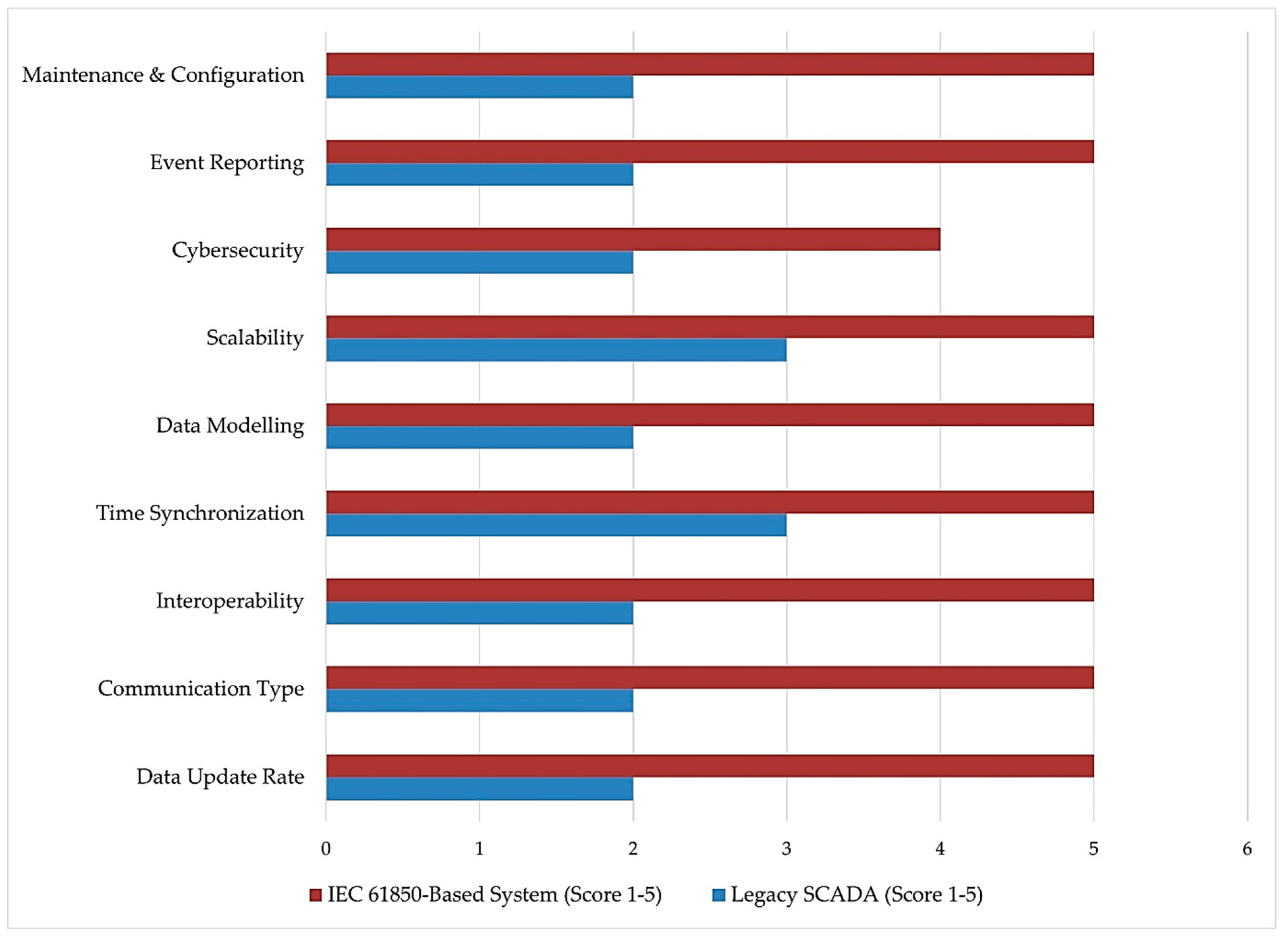
The conceptual comparison in this figure is developed by the author based on [11,12,14]–[16,25,29,37,38].
IEC 61850 offers high-speed, event-driven communication and standardized data modeling, enabling interoperability and scalability that surpass the limitations of legacy SCADA systems.
In contrast, IEC 61850-based architectures are event-driven and designed for real-time communication. Features such as GOOSE and Sampled Values enable low-latency signal exchange, which is essential for fast protection schemes and adaptive plant-level controls [17,27]. Comparative studies confirm that while SCADA systems are effective for high-level oversight, IEC 61850 offers the interoperability, speed, and flexibility required for modern adaptive frameworks [1,18]. Nonetheless, the transition from SCADA-dominated infrastructures to IEC-based systems is far from trivial. It involves high capital investment, organizational coordination among multiple stakeholders, and retraining of operational staff to manage more complex communication structures.
5.4. Cybersecurity and Interoperability Challenges
As WPPs increasingly adopt IEC-based communication frameworks, cybersecurity has emerged as a critical concern. IEC 61850 protocols, such as GOOSE and MMS (Manufacturing Message Specification), enable real-time interoperability but have also been shown to be vulnerable to cyber intrusions, denial-of-service (DoS) attacks, and false data injection [32,38]. The risk is compounded in hybrid communication environments where SCADA, IEC 61400-25, and IEC 61850 coexist, creating multiple points of entry for attackers.
Recent research has sought to address these vulnerabilities. Cyber-resilient controllers have been proposed to enhance resilience against malicious intrusions [47]. Automated cybersecurity testing in digital substations has been developed to identify vulnerabilities before deployment [33]. Furthermore, intrusion detection systems designed specifically for IEC 61850 networks have demonstrated early detection of anomalies in GOOSE traffic [34]. Together, these contributions highlight the need for interoperability frameworks that not only ensure adaptability but also embed cyber-physical resilience.
Another challenge lies in aligning standards across different vendors and regions. While IEC 61850 and IEC 61400-25 provide the theoretical basis for interoperability, inconsistent implementation and proprietary extensions often limit true plug-and-play integration. Achieving universal adoption will therefore require stronger collaboration between equipment manufacturers, utilities, and regulators, as well as the development of certification schemes that ensure compliance with standard specifications [40,41].
Figure 6 quantifies this imbalance, showing that most implementations apply IEC standards solely for monitoring and protection rather than adaptive operational control.
Figure 6.
Application of IEC standards in literature.

6. Real-Time Automation Controllers (RTACs) and Implementation Platforms
Real-Time Automation Controllers (RTACs) have become increasingly important in renewable-rich systems as power grids transition toward adaptive and standards-compliant operation. Unlike conventional supervisory systems, which primarily perform centralized monitoring and logging, RTACs combine programmable logic, protocol conversion, and real-time event handling into a single platform. This multifunctional capability positions RTACs not only as automation devices but also as coordinators of adaptive logic that can respond to wind variability, load fluctuations, and grid contingencies.
Their rise coincides with the limitations of SCADA systems, which, despite their maturity, are unable to deliver the speed and interoperability required in high-renewable environments. In contrast, RTACs can simultaneously communicate using multiple industrial protocols, including IEC 61850 GOOSE, Modbus, and DNP3, thereby bridging diverse vendor devices and creating a more integrated communication ecosystem [18,41]. This ability to act as both a protocol gateway and an adaptive controller makes RTACs uniquely suited for modernizing WPP supervisory systems, where adaptability and resilience are increasingly non-negotiable.
6.1. RTAC Applications in Microgrids and Renewable-Rich Systems
RTACs have already demonstrated their versatility in microgrid and distributed generation environments. They have been deployed to manage supervisory tasks at the point of common coupling (PCC), where distributed renewable resources interact with the bulk grid [44,48]. In such cases, RTACs act as intelligent coordinators, dynamically balancing power flows and responding to contingencies.
Research has also highlighted their use in cyber-physical testbeds, where RTACs are integrated into real-time digital simulators (RTDS) to evaluate resilience under both physical disturbances and cyberattacks [40]. This integration underscores the flexibility of RTACs in bridging hardware, software, and communication domains. By combining programmable logic with real-time adaptability, RTACs support functions such as load shedding, frequency regulation, and even adaptive protection in simulated and laboratory-scale microgrid environments.
6.2. RTACs for WPP Control and Monitoring
Despite these promising applications, the deployment of RTACs in large-scale WPPs remains limited. Most industrial use cases have focused on local automation tasks, such as acting as a communication bridge between turbines and SCADA systems or translating proprietary turbine protocols into IEC 61850-compliant data for grid operators [28,37]. While valuable, these roles underutilize the full potential of RTACs.
Recent studies suggest that RTACs can be configured to unify monitoring, operation, and protection functions in WPPs [28,37,48]. By embedding adaptive logic, RTACs can coordinate turbine-level control with plant-level supervisory requirements and grid support commands. When integrated with IEC 61850 and IEC 61400-25 standards, RTACs provide a pathway toward true adaptive interoperability, where plant operations continuously adjust to changing grid conditions in real-time [33,40,41]. This vision positions RTACs as more than protocol gateways; they become central orchestrators of adaptive control in renewable-dominated grids.
6.3. Advantages over Traditional SCADA
Compared to traditional SCADA frameworks, RTACs provide several key advantages:
- Scalability: RTACs can be deployed in small microgrids, medium-scale WPPs, or even utility-scale renewable clusters, making them versatile across system sizes.
These features make RTACs especially well-suited to renewable-dominated environments, where fast-changing operating conditions demand both responsiveness and interoperability [40].
6.4. Integration with IEC Standards
The true potential of RTACs lies in their integration with IEC-based frameworks. When configured according to IEC 61850 and IEC 61400-25 standards, RTACs serve as central hubs that bridge turbine-level control, plant-level monitoring, and grid-level coordination. They can aggregate turbine data into standardized formats, execute adaptive logic, and forward grid-support commands, all within a single controller.
Studies have already demonstrated RTAC applications in digital substations and IEC 61850-enabled environments [40]. For example, HIL experiments using RTACs in conjunction with RTDS platforms confirm that adaptive logic can be validated under realistic system contingencies, including both electrical faults and cyber-intrusion scenarios [28,40]. However, most contributions remain proof-of-concept or laboratory-scale validations, highlighting a clear research gap. The challenge going forward is to extend RTAC deployment to large-scale WPPs, validated under real-time and HIL conditions, to demonstrate practical scalability and field readiness.
7. Validation Methods: Simulation and Hardware-in-the-Loop (HIL)
The validation of adaptive control and interoperability frameworks is a decisive step in ensuring that theoretical designs can perform under real-world operating conditions. While simulations have traditionally dominated validation studies in wind power integration, the growing complexity of renewable-rich grids has emphasized the limitations of simulation-only approaches. More recently, real-time digital simulation (RTDS, OPAL-RT) and hardware-in-the-loop (HIL) testing have emerged as indispensable tools, bridging the gap between concept development and practical deployment. These methods allow not only the testing of algorithms but also the evaluation of physical devices, communication protocols, and cyber-resilience under controlled yet realistic scenarios.
7.1. Simulation-Only Approaches and Their Limitations
The majority of adaptive control and interoperability studies for WPPs have been validated using time-domain simulations in software environments such as MATLAB/Simulink, DIgSILENT PowerFactory, and PSCAD [20,21,22]. These platforms remain popular because they provide flexibility in modeling turbines, control strategies, and grid dynamics. For example, they are well-suited for analyzing transient stability, frequency deviations, and adaptive responses under variable wind profiles.
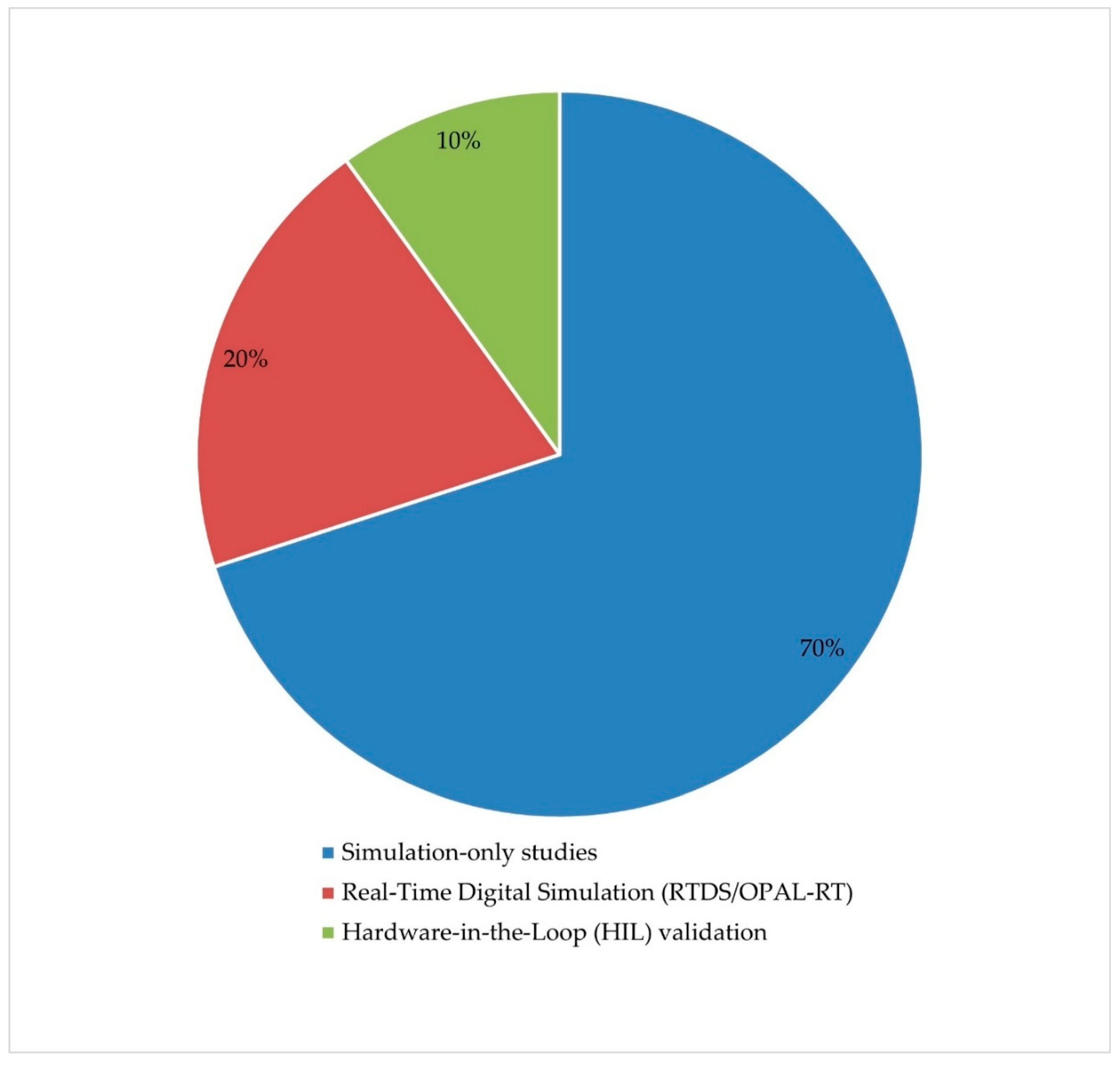
However, simulation-only approaches exhibit critical limitations. They cannot capture hardware-specific delays, nonlinearities in protection devices, or bottlenecks in real communication networks. As a result, proof-of-concept results obtained from simulations may not accurately reflect the behavior of systems once deployed in the field. For instance, fault ride-through (FRT) algorithms or adaptive droop controllers that perform well in MATLAB may respond differently when implemented in protection relays or real-time controllers due to device-level constraints [23]. This discrepancy underscores the importance of complementing simulations with real-time or hardware-inclusive testing before deployment in live networks.
7.2. Real-Time Digital Simulation Platforms
To overcome the limitations of offline simulations, researchers have increasingly employed real-time digital simulators (RTDS and OPAL-RT). These platforms execute electromagnetic transient (EMT) simulations in real-time, allowing for direct interaction between simulated grids and physical hardware. For example, RTDS has been widely used to evaluate the dynamic performance of modular multilevel converters (MMCs) [50], adaptive HVDC voltage stability schemes [51], and distribution network protection systems [52]. OPAL-RT, in turn, has enabled real-time testing of electric vehicle charging systems [23] and distributed energy resources [45].
The key advantage of these platforms is their ability to incorporate real hardware, such as protection relays, RTACs, or phasor measurement units (PMUs), into the simulation loop. This creates a hardware-in-the-loop environment, where algorithms and devices are subjected to realistic grid dynamics. By combining simulation flexibility with hardware realism, real-time digital platforms provide an essential stepping stone toward field validation.
7.3. Relay and Controller Testing with HIL
Hardware-in-the-loop (HIL) testing extends real-time simulation by integrating actual devices, including relays, intelligent electronic devices (IEDs), and automation controllers, into the simulated power system environment. This allows researchers to validate both control algorithms and hardware behavior under realistic conditions such as fault scenarios, communication delays, and cyber-intrusion attempts.
Recent work highlights the growing importance of HIL for adaptive protection and interoperability studies. For instance, HIL setups have been used for differential protection testing [28], adaptive protection in microgrids [39], and resilience assessments of renewable-dominated networks [24]. Moreover, IEC 61850-enabled HIL environments allow interoperability testing, verifying that adaptive logic can be executed consistently across multi-vendor devices [40,41]. These studies confirm that HIL can reveal practical constraints, such as message latency, processor limitations, or cybersecurity vulnerabilities that are invisible in simulation-only studies.
Relay testing is particularly crucial because protection performance directly influences system reliability. Differential and distance protection schemes tested under HIL conditions have revealed variations in trip times and current thresholds that would not be visible in simulations [28]. Similarly, when RTACs are integrated into HIL setups, researchers can validate their ability to coordinate monitoring, operation, and protection functions under fluctuating wind and demand conditions. These insights are invaluable for scaling adaptive frameworks from the laboratory to real grids.
7.5. Trends and Future Directions in HIL Validation
Despite promising advances, HIL validation for adaptive WPP control remains limited. Most existing contributions focus on small-scale demonstrations, often restricted to microgrids, single relays, or isolated control functions [23,39]. Utility-scale validation, where plant-wide adaptive control is tested under realistic transmission-level contingencies, remains rare. Moreover, cybersecurity aspects are seldom included, despite the fact that IEC 61850-based systems are increasingly vulnerable to communication intrusions, such as denial-of-service attacks or false data injection [32]–[34,38].
Emerging trends point to a more integrated approach. The combination of digital twins with HIL testbeds enables continuous, life-cycle validation of adaptive control systems [45,46]. Digital twins replicate the physical WPP in virtual space, while HIL environments provide the testing ground for real-time interactions, creating a closed-loop validation ecosystem. In addition, researchers are beginning to explore cyber-physical HIL platforms, where both electrical contingencies and cyberattacks are simulated simultaneously, ensuring that adaptive controllers are robust under multi-domain threats [33,47].
Looking forward, expanding HIL to include multi-energy interactions (e.g., coupling wind, PV, storage, and electric vehicles), large-scale adaptive coordination, and cyber-resilience testing will be critical to bridging the gap between laboratory-scale studies and field deployment. Such advancements will also strengthen regulatory acceptance, since grid codes are increasingly requiring validation under conditions that traditional simulations cannot adequately represent [29,31,43].
Figure 7 illustrates the prevalence of simulation-only validation compared with RTDS and HIL testing approaches in current adaptive control literature.
8. Comparative Analysis of Literature and Research Gaps
The reviewed literature demonstrates substantial progress in the development of adaptive control, interoperability standards, and validation frameworks for integrating wind power plants (WPPs). However, a close comparative analysis reveals that these advances have often occurred in isolation, with limited integration into holistic frameworks that unify monitoring, operation, and protection across entire systems. This section synthesizes the findings from earlier sections, identifies recurring patterns, and highlights critical research gaps that remain unresolved.
Figure 7.
Distribution of validation methods.
8.1. Comparative Insights Across Approaches
Adaptive control strategies: They advanced considerably at both the turbine and plant levels. Reinforcement learning–based optimization methods [25], cooperative plant-level control [44], and droop-based schemes for converter-dominated grids [43] demonstrate the potential for intelligent, real-time adjustments to system conditions. These methods consistently improve performance in terms of stability, dispatchability, and resilience. Yet, most contributions remain limited to turbine-level adaptation [20,26] or to microgrid-scale case studies [39]. Very few studies extend adaptive control to system-level coordination at the PCC, where integration with the broader transmission grid occurs [31]. This narrow scope restricts the generalizability of existing methods to large-scale deployments.
As summarized in Figure 8, turbine- and plant-level adaptive control dominate current research outputs, while interoperability and validation frameworks remain comparatively underrepresented.
Figure 8.
Research focus areas across the literature.
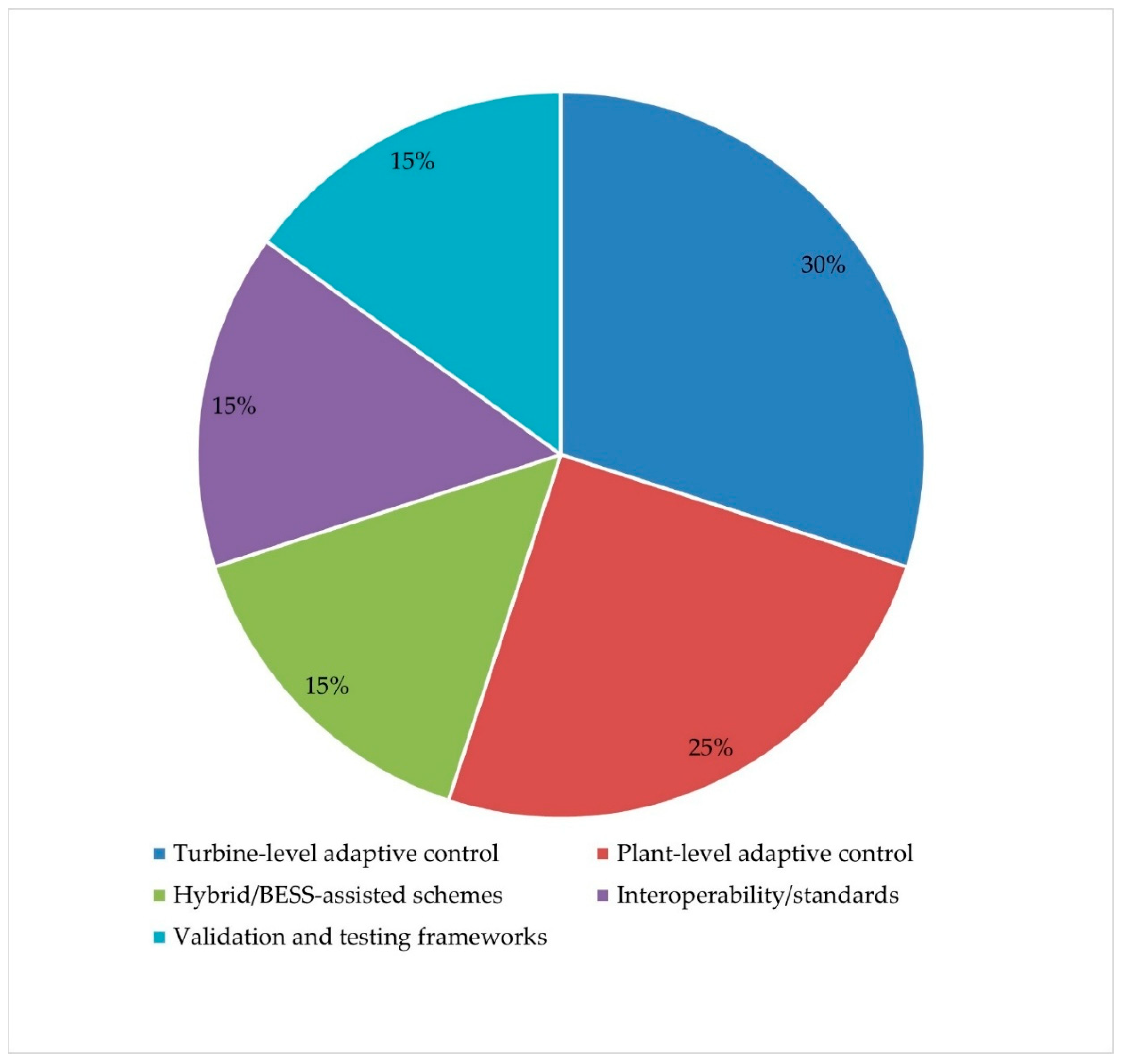
The majority of studies focus on turbine- and plant-level adaptive control, while interoperability and real-time validation frameworks remain comparatively underrepresented.
Hybrid energy integration: It represents another promising approach. Probabilistic sizing of BESS for reliability and frequency stability [10], WTG–BESS integrated dispatch strategies [11], and multi-resource hybrids such as wind–PV–hydro systems [13] confirm that combining resources enhances adaptability and reduces intermittency. However, these solutions face barriers of economic feasibility and scalability [12]. While technically effective, most hybrid frameworks have been validated primarily in simulations, with limited evidence of their utility in actual utility-scale deployments. This lack of real-world validation creates uncertainty about long-term performance under diverse operating conditions.
Communication and interoperability standards: They have shown parallel progress. IEC 61850 and IEC 61400-25 have proven highly effective for monitoring and protection applications [17,27,28], enabling vendor-independent communication. However, their use in adaptive operational control, unifying monitoring, protection, and control, remains minimal [40,41]. SCADA systems, although widely deployed [14,15], cannot meet the latency and interoperability requirements of adaptive frameworks, yet they remain the industry default due to familiarity and cost considerations. The result is a fragmented communication landscape, where standards exist but are not fully leveraged for real-time adaptability.
Validation methods: They reveal the sharpest divide between theory and practice. Simulation-only studies dominate the literature [20]–[22], providing valuable proof-of-concept insights but failing to capture device-level constraints. Hardware-in-the-loop (HIL) testing has begun to bridge this gap [23,24,52], yet most HIL demonstrations remain proof-of-concept, often limited to a single relay, RTAC, or small-scale microgrid. Large-scale adaptive frameworks validated under real-time HIL conditions are still rare, leaving open questions about scalability, robustness, and compliance with evolving grid codes [29,31,43].
Collectively, these comparisons demonstrate that while significant progress has been made across individual domains, integration into a unified adaptive framework remains relatively rare.
8.2. Identified Research Gaps
From this comparative analysis, three critical gaps emerge:
- Focus on local rather than system-level integration. Most adaptive control research is constrained to the turbine-level [25,26] or microgrid-scale applications [39], whereas plant-wide adaptive coordination at the PCC remains underexplored [31]. This creates a disconnect between academic advances and the needs of transmission system operators who must manage high-integration wind on bulk networks.
- Limited application of IEC standards in adaptive operation. While IEC 61850 and IEC 61400-25 are well established for monitoring and protection [17,27,28], their potential to enable real-time adaptive coordination across monitoring, operation, and protection has not been realized. As a result, communication architectures remain fragmented, and true interoperability is lacking [18,40].
- Insufficient real-time and HIL validation. Simulation-only studies remain the norm [20]–[22], with very few adaptive schemes tested under real-time or HIL conditions [23,24]. The lack of large-scale, hardware-inclusive validation undermines confidence in the deployability of these systems. Furthermore, cybersecurity, increasingly a concern in IEC 61850-enabled networks, is rarely addressed in validation studies [33,47].
8.3. Emerging Opportunities
Despite these gaps, several opportunities for advancing the field are evident. First, integrating adaptive control with IEC-based interoperability, supported by RTAC platforms, could create the unified frameworks needed for resilient renewable integration. RTACs, when coupled with IEC 61850 communication, offer a practical path to bridging turbine-level control, plant-level supervision, and system-level coordination [28,40,48].
Second, expanding HIL validation beyond proof-of-concept studies to utility-scale WPPs would significantly strengthen confidence in adaptive frameworks. The integration of digital twins with HIL testbeds [45,46] represents a promising step, enabling life-cycle testing under realistic conditions and accelerating the transition from laboratory models to deployable solutions.
Ultimately, embedding cyber-physical resilience into adaptive frameworks remains a largely untapped opportunity. With studies demonstrating vulnerabilities in IEC 61850-based communication [32,34,38], and emerging solutions such as cyber-resilient controllers [47] and automated security testing [33], there is a clear pathway toward secure and adaptive control systems that can withstand both electrical disturbances and cyber threats.
9. Future Research Directions
The comparative analysis presented in Section 7 highlights persistent gaps in adaptive control, interoperability, and validation frameworks for integrating wind power plants (WPPs). Addressing these gaps is essential to enable large-scale deployment of wind energy in modern power systems. Building on these insights, several future research directions can be identified, ranging from holistic adaptive frameworks to cyber-physical resilience and digital twin applications.
9.1. Toward Holistic Adaptive Frameworks
Future studies should move beyond device-level adaptation to develop system-wide adaptive control frameworks that unify monitoring, operation, and protection at the point of common coupling (PCC). Current research often emphasizes turbine-level optimization [25,26] or microgrid-scale applications [39], which, while valuable, do not address the challenges of transmission-level coordination.
Figure 9.
Proposed holistic adaptive and interoperable framework for wind power plant (WPP) integration. The conceptual diagram is developed based on Sections 2 to 8 [37,40,43,45].
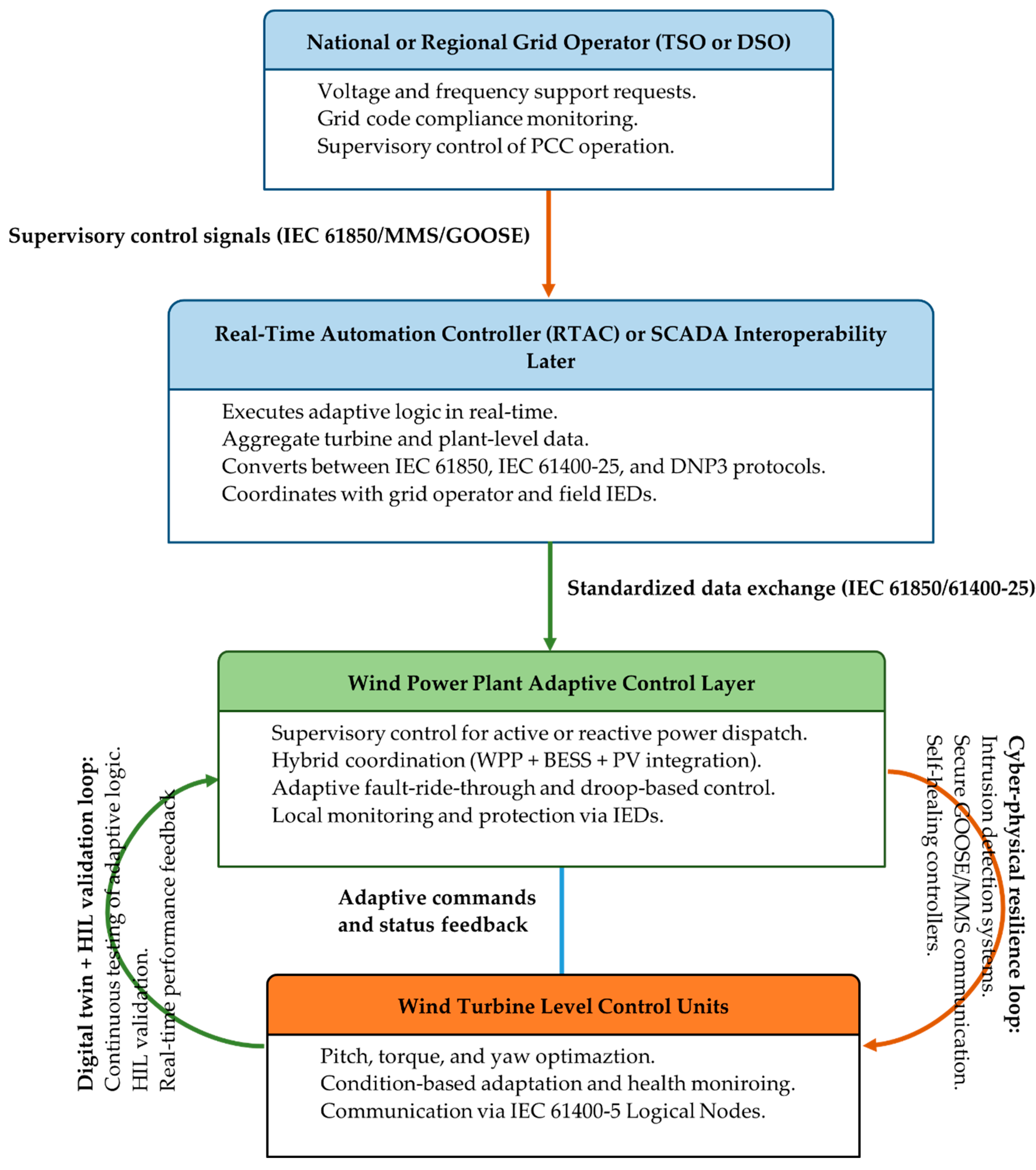
The framework combines hierarchical adaptive control with standardized IEC-based communication, supervisory interoperability via RTAC/SCADA coordination, and continuous validation through HIL or digital twin environments.
A holistic framework must incorporate real-time frequency and voltage support, adaptive fault ride-through strategies, and dynamic load balancing, ensuring compliance with evolving grid codes [29,31,36,43]. Such frameworks would enable coordinated responses across turbines, plants, and system operators, thereby avoiding the fragmented interventions that currently dominate current implementations. This shift toward PCC-level adaptation represents perhaps the most urgent and impactful research frontier.
9.2. Expanding Interoperability with IEC Standards
While IEC 61850 and IEC 61400-25 have proven effective for monitoring and protection [17,19,28], their application to adaptive operational control remains limited. Future research should explore how these standards can be extended to support real-time adaptive logic, such as automated coordination of frequency and voltage support across multiple devices.
One promising pathway lies in combining IEC 61850-based communication with RTAC platforms, which can serve as central hubs for adaptive interoperability [40,41]. This integration would enable vendor-independent coordination, ensuring that WPPs can interact seamlessly with grid operators. Future work should also focus on developing certification schemes and compliance testing, so that IEC-based adaptive frameworks can be standardized across the industry.
9.3. Cyber-Physical Resilience
As WPPs adopt IEC-based communication networks, cybersecurity becomes inseparable from operational reliability. Vulnerabilities in the GOOSE and MMS protocols have already been documented [32,34,38], while emerging studies propose solutions such as cyber-resilient controllers [47] and automated cybersecurity testing in digital substations [33].
Future research must embed cyber-physical resilience directly into adaptive control frameworks. This includes:
- Designing intrusion detection systems tailored for renewable-rich environments.
- Developing self-healing controllers capable of isolating compromised components.
- Extending HIL testbeds to simulate cyberattacks alongside electrical disturbances.
Such advances would ensure that adaptive controllers remain robust under conditions of intrusion, denial-of-service, or false data injection, providing the resilience needed for secure large-scale deployment.
9.4. Integration of Digital Twins and HIL Platforms
The integration of digital twins with HIL platforms represents a powerful tool for bridging the gap between simulation and implementation. Digital twins replicate WPPs in virtual environments, enabling continuous monitoring, predictive analytics, and optimization across the asset life cycle [45,46]. When combined with HIL testbeds, these models enable the validation of adaptive control strategies under realistic conditions before deployment in the field.
Future research should aim to develop scalable digital twin–HIL environments that replicate not only individual turbines but also entire wind farms, including hybrid resources such as PV, BESS, and hydropower. Such environments could also incorporate cyber-physical resilience testing, thereby unifying electrical and cybersecurity validation in a single platform [33,40,53]. This approach would significantly accelerate the transition of adaptive control from concept to utility-grade implementation.
9.5. AI- and Data-Driven Adaptive Methods
Artificial intelligence (AI) and machine learning (ML) are poised to play an increasingly central role in adaptive WPP control. Reinforcement learning–based optimization [25], and predictive analytics for renewable forecasting [21,54] have all shown promise. However, their deployment in real-world systems remains limited by data availability, computational cost, and interpretability.
Future work should prioritize the development of trustworthy, data-driven adaptive frameworks that balance performance with explainability and resilience. For example, explainable AI (XAI) could be used to make adaptive decisions transparent to operators, increasing confidence in automated systems. Moreover, AI-based controllers must be designed with cybersecurity in mind, as adversarial attacks on ML models represent an emerging risk in renewable-rich systems [34,47].
By embedding AI into holistic, IEC-compliant frameworks and validating them under digital twin–HIL environments, researchers can ensure that AI-enhanced adaptive control is both technically effective and operationally secure.
Figure 10 highlights the major emerging research directions, with holistic adaptive frameworks and IEC–RTAC integration leading the field.
Figure 10.
Emerging research themes for future work.

10. Conclusions
The integration of wind power plants (WPPs) into modern electrical power systems (MEPSs) remains a cornerstone of global decarbonization strategies, but it is accompanied by complex technical and operational challenges. This review has presented a comprehensive synthesis of adaptive control strategies, interoperability frameworks, real-time automation controllers (RTACs), and validation methods for WPP integration. By consolidating knowledge across these domains, the study has highlighted not only the progress achieved but also the limitations that constrain the transition from concept to practice.
From the analysis, several key findings emerge. First, adaptive control strategies at both the turbine and plant levels, including reinforcement learning, cooperative droop-based control, and hybrid resource integration, have demonstrated strong potential for enhancing stability, dispatchability, and reliability. However, most contributions remain confined to turbine-level or microgrid-scale studies, with limited evidence of deployment at the point of common coupling (PCC) where system-level integration occurs. Second, interoperability frameworks based on IEC 61850 and IEC 61400-25 have proven effective for monitoring and protection, enabling vendor-independent communication and real-time data exchange. Yet, their application to adaptive operation, unifying monitoring, protection, and control, remains underdeveloped, leaving SCADA systems as the default despite their limited adaptability. Third, validation approaches continue to rely heavily on simulation-only studies. Although real-time digital simulators and hardware-in-the-loop (HIL) testing have begun to bridge the gap, large-scale validation that incorporates adaptive logic, communication delays, and cybersecurity considerations remains scarce.
These findings confirm that, while significant advances have been made in each domain, integrating them into a holistic adaptive framework remains rare. Adaptive control, interoperability standards, and validation platforms often evolve in parallel rather than in interaction. This disconnection explains why many proposed solutions remain proof-of-concept rather than industry-ready implementations.
Looking ahead, the review identifies several priority research directions. The development of system-wide adaptive frameworks that unify monitoring, operation, and protection (MOP) at the PCC is urgently needed to ensure compliance with evolving grid codes [29,31,36,43]. Extending IEC standards, particularly IEC 61850 and IEC 61400-25, to support real-time adaptive logic, in combination with RTAC platforms, represents a promising pathway toward scalable and vendor-independent interoperability [40,41]. At the same time, embedding cyber-physical resilience into adaptive frameworks is essential, given the vulnerabilities of IEC-based communication systems [32]–[34,38]. The integration of digital twins with HIL platforms offers an innovative route to continuous, life-cycle validation, enabling adaptive controllers to be tested under both electrical and cyber contingencies before deployment [45]–[47]. Finally, the adoption of AI- and ML-based adaptive methods should be pursued cautiously, ensuring that performance improvements are balanced with interpretability, explainability, and robust cybersecurity protections.
In conclusion, adaptive control and interoperability represent complementary pillars for a reliable integration of LSWPPs into future smart grids. This review has underscored the need for collaborative research efforts that span multiple domains, integrating adaptive control, IEC-based communication, RTAC deployment, and HIL validation into cohesive frameworks. By bridging the gap between simulation and real-world implementation, the next generation of adaptive frameworks can deliver resilient, secure, and standards-compliant renewable power systems that support the global transition toward a low-carbon future.
References
- Singh, B.K.; Coulter, J.; Sayani, M.A.G.; Sami, S.M.; Khalid, M.; Tepe, K.E. , “Survey on Communication Architectures for Wind Energy Integration with the Smart Grid,” Int. J. Environ. Stud., vol. 70, no. 5, pp. 765–776, 2013. [CrossRef]
- Energy, A.I.R. , “Renewable Capacity Statistics 2024,” 2024. [Online]. Available: www.irena.
- Council, G.W.E. , “Global Wind Report 2024,” 2024.
- Council, G.W.E. , “Global Wind Report 2025,” 2025.
- Xia, S.; Zhang, Q.; Hussain, S.T.; Hong, B.; Zou, W. , “Impacts of Integration of Wind Farms on Power System Transient Stability,” Appl. Sci., vol. 8, no. 8, 2018. [CrossRef]
- Benseddik, A.; Kouba, N.; Boudour, M.; Hasni, M.; Menaa, M. , “Wind Farm Integration Intermittency Impact on Power System Transient Stability,” Proc. 2018 3rd Int. Conf. Electr. Sci. Technol. Maghreb, Cist. 2018, pp. 1–6, 2018. [CrossRef]
- Rachdi, T.; Saoudi, Y.; Mahmoud, I.; Florin, I.; Errachdi, A. , “The Impact of Integration Wind Turbine on the Stability of the Electricity Grid,” 2022 IEEE Inf. Technol. Smart Ind. Syst. ITSIS 2022, pp. 1–6, 2022. [CrossRef]
- Li, L.; et al. , “A Phase-to-Phase Protection Algorithm With the Transient Information for the Wind Power Plant Transmission Line,” IEEE Access, vol. 12, no. June, pp. 100581–100590, 2024. [CrossRef]
- Loza, B.; Minchala, L.I.; Ochoa-Correa, D.; Martinez, S. , “Grid-Friendly Integration of Wind Energy: A Review of Power Forecasting and Frequency Control Techniques,” Sustain., vol. 16, no. 21, pp. 1–22, 2024. [CrossRef]
- Pandit, D.; Bera, A.; Saket, R.K. ; Mitra, “Probabilistic Sizing of Energy Storage Systems for Reliability and Frequency Security in Wind-Rich Power Grids,” IEEE Access, vol. 12, no. September, pp. 4608–4621, 2024. [CrossRef]
- Suboh, S.M.; Sharma, R.; Tushar, W.; Ahamad, N.B. , “Enhancing Active Power Dispatchability of WTG-BESS Through Integrated Control Considering Wind Forecast Error,” IEEE Access, vol. 12, no. January, pp. 2778–2792, 2024. [CrossRef]
- Mndiya, S.J.; Ratshitanga, M.; Krishnamurthy, S. , “Active Power Reserve Provision with Large-scale WES and BESS,” in 2024 IEEE PES/IAS PowerAfrica, PowerAfrica 2024, IEEE, 2024, pp. 1–6. [CrossRef]
- Dufo-López, R.; Lujano-Rojas, J.M. , “Simulation and Optimisation of Utility-Scale PV–Wind Systems with Pumped Hydro Storage,” Appl. Sci., vol. 14, no. 16, 2024. [CrossRef]
- Pettener, A.L. , “SCADA and communication networks for large scale offshore wind power systems,” IET Conf. Publ., vol. 2011, no. 579 CP, p. 11, 2011. [CrossRef]
- Wei, M.; Chen, Z. , “Intelligent control on wind farm,” IEEE PES Innov. Smart Grid Technol. Conf. Eur. ISGT Eur., pp. 1–6, 2010. [CrossRef]
- Ferguson, D.; Catterson, V.M.; Booth, C.; Cruden, A. , “Designing wind Turbine Condition Monitoring Systems Suitable for Harsh Environments,” IET Conf. Publ., vol. 2013, no. 623 CP, 2013. [CrossRef]
- Cardenas, J.; Muthukrishnan, V.; McGinn, D.; Hunt, R. , “Wind Farm Protection Using an IEC 61850 Process Bus Architecture,” in 10th IET International Conference on Developments in Power System Protection (DPSP 2010), Managing the Change, Manchester, UK, 29 March–, 2010, pp. 1–5. 1 April.
- Yu, F.R.; Zhang, P.; Xiao, W.; Choudhury, P. , “Communication systems for grid integration of renewable energy resources,” IEEE Netw., vol. 25, no. 5, pp. 22–29, 2011. [CrossRef]
- Gallardo-Calles, J.M.; Colmenar-Santos, A.; Ontañon-Ruiz, J.; Castro-Gil, M. , “Wind Control Centres: State of the Art,” Renew. Energy, vol. 51, pp. 93–100, 2013. [CrossRef]
- Kusiak, A.; Li, W.; Song, Z. , “Dynamic control of wind turbines,” Renew. Energy, vol. 35, no. 2, pp. 456–463, 2010. [CrossRef]
- Singh, D.; Shah, O.A.; Arora, S. , “Adaptive control strategies for effective integration of solar power into smart grids using reinforcement learning,” Energy Storage Sav., vol. 3, no. 4, pp. 327–340, 2024. [CrossRef]
- Silva, J.G.; van der Hoek, D.; Ferrari, R.; van Wingerden, J.W. , “Wind tunnel testing of wind turbine and wind farm control strategies for active power regulation,” J. Renew. Sustain. Energy, vol. 16, no. 5, pp. 1–16, 2024. [CrossRef]
- Golestan, S.; Golmohamadi, H.; Sinha, R.; Iov, F.; Bak-Jensen, B. , “Real-Time Simulation and Hardware-in-the-Loop Testing Based on OPAL-RT ePHASORSIM: A Review of Recent Advances and a Simple Validation in EV Charging Management Systems,” Energies, vol. 17, no. 19, 2024. [CrossRef]
- Yadav, G.; Liao, Y.; Burfield, A.D. , “Hardware-in-the-Loop Testing for Protective Relays Using Real Time Digital Simulator (RTDS),” Energies, vol. 16, no. 3, 2023. [CrossRef]
- Frutuoso, T.R.L.; Castro, R.; Pereira, R.B.S.; Moutinho, A. , “Advancements in Wind Farm Control: Modelling and Multi-Objective Optimization Through Yaw-Based Wake Steering,” Energies, vol. 18, no. 9, pp. 1–29, 2025. [CrossRef]
- Sierra-García, J.E.; Santos, M. , “Exploring reward strategies for wind turbine pitch control by reinforcement learning,” Appl. Sci., vol. 10, no. 21, pp. 1–23, 2020. [CrossRef]
- Tchakoua, P.; Wamkeue, R.; Ouhrouche, M.; Slaoui-Hasnaoui, F.; Tameghe, T.A.; Ekemb, G. , “Wind Turbine Condition Monitoring: State-of-the-art Review, New Trends, and Future Challenges,” Energies, vol. 7, no. 4, pp. 2595–2630, 2014. [CrossRef]
- Nomandela, S.; Mnguni, M.; Raji, A. , “Busbar Differential Protection System Testing Based on Practical Considerations Using Real-Time Digital Simulator Hardware-In-the-Loop Technique,” in 2024 6th International Conference on Electrical Engineering and Control Technologies (CEECT), Shenzhen, China, : IEEE: Piscataway, NJ, USA, 2024, 2024, pp. 359–363. 20–22 December. [CrossRef]
- Nomandela, S. , “Evaluation of Power Grid Voltage Instability Point using System Overloading Contingency in Real-time Simulation,” in 2024 IEEE PES/IAS PowerAfrica, IEEE, 2024. [CrossRef]
- Ahmadi, F.; Batmani, Y.; Bevrani, H. , “Model Reference Adaptive Controller for Simultaneous Voltage and Frequency Restoration of Autonomous AC Microgrids,” J. Mod. Power Syst. Clean Energy, vol. 12, no. 4, pp. 1194–1202, 2024. [CrossRef]
- Nomandela, S.; Mnguni, M.E.S.; Raji, A.K. , “Modeling and Simulation of a Large-Scale Wind Power Plant Considering Grid Code Requirements,” Energies, vol. 16, no. 6, 2023. [CrossRef]
- Gaspar, J.; Cruz, T.; Lam, C.T.; Simoes, P. , “Smart Substation Communications and Cybersecurity: A Comprehensive Survey,” IEEE Commun. Surv. Tutorials, vol. 25, no. 4, pp. 2456–2493, 2023. [CrossRef]
- Hong, J.; Song, T.J.; Lee, H.; Zaboli, A. , “Automated Cybersecurity Tester for IEC61850-Based Digital Substations,” Energies, vol. 15, no. 21, pp. 1–17, 2022. [CrossRef]
- Elbez, G.; Nahrstedt, K.; Hagenmeyer, V. , “Early Attack Detection for Securing GOOSE Network Traffic,” IEEE Trans. Smart Grid, vol. 15, no. 1, pp. 899–910, 2024. [CrossRef]
- Zhang, J.; et al. , “An adaptive frequency regulation strategy with high renewable energy participating level for isolated microgrid,” Renew. Energy, vol. 212, no. March, pp. 683–698, 2023. [CrossRef]
- Zhang, Y.; Yang, S.; Hao, Z.; Zhang, B. , “Model-Free Fast Frequency Support of Wind Farms for Tracking Optimal Frequency Trajectory,” IEEE Trans. Sustain. Energy, vol. 15, no. 4, pp. 2638–2650, 2024. [CrossRef]
- Nomandela, S.; Mnguni, M.E.S.; Raji, A.K. , “Systematic Development and Hardware-in-the-Loop Testing of an IEC 61850 Standard-Based Monitoring and Protection System for a Modern Power Grid Point of Common Coupling,” Energies, vol. 18, no. 5281, pp. 1–47, 2025. [CrossRef]
- Czechowski, R.; Wicher, P.; Wiecha, B. , “Cyber security in communication of SCADA systems using IEC 61850,” Proc. - Int. Conf. Mod. Electr. Power Syst. MEPS 2015, pp. 1–7, 2015. [CrossRef]
- Chandraratne, C.; Ramasamy, T.N.; Logenthiran, T.; Panda, G. , “Adaptive protection for microgrid with distributed energy resources,” Electron., vol. 9, no. 11, pp. 1–14, 2020. [CrossRef]
- Melo, A.F.S.; Roldan-Fernandez, J.M.; Gonzalez-Longatt, F.; Burgos-Payan, M.; Netto, U.C. , “Novel IEC 61850-based off-site engineering and validation methodology for protection, automation, and control systems,” Electr. Power Syst. Res., vol. 232, no. January, p. 110409, 2024. [CrossRef]
- Das, N.; Haque, A.; Zaman, H.; Morsalin, S.; Islam, S. , “Exploring the Potential Application of IEC 61850 to Enable Energy Interconnectivity in Smart Grid Systems,” IEEE Access, vol. 12, no. April, pp. 56910–56923, 2024. [CrossRef]
- Zhou, Y.; Zhu, D.; Zou, X.; He, C.; Hu, J.; Kang, Y. , “Adaptive Temporary Frequency Support for DFIG-Based Wind Turbines,” IEEE Trans. Energy Convers., vol. 38, no. 3, pp. 1937–1949, 2023. [CrossRef]
- Qian, W.; Zhang, X.-P.; Zhang, Y.; Li, Y. , “Adaptive Droop-Based Hierarchical Optimal Control Strategy for VSC-MTDC Grids with Large-Scale Wind Farm Integration,” in IEC Power Net Zero 2024, Bermingham, UK: IEEE Access: Piscataway, NJ, USA, 2018, 2024, p. 5.
- Li, H.; Li, X.; Xiong, W.; Yan, Y.; Zhang, Y.; Kou, P. , “Cooperative Voltage and Frequency Regulation with Wind Farm: A Model-Based Offline Optimal Control Approach,” Energies, vol. 16, no. 17, 2023. [CrossRef]
- Han, J.; Hong, Q.; Feng, Z.; Syed, M.H.; Burt, G.M.; Booth, C.D. , “Design and Implementation of a Real-Time Hardware-in-the-Loop Platform for Prototyping and Testing Digital Twins of Distributed Energy Resources,” Energies, vol. 15, no. 18, 2022. [CrossRef]
- Hashmi, R.; Liu, H.; Yavari, A. , “Digital Twins for Enhancing Efficiency and Assuring Safety in Renewable Energy Systems: A Systematic Literature Review,” Energies, vol. 17, no. 11, pp. 1–34, 2024. [CrossRef]
- Chandramathi, J.S.V.; Nair, M.G.; Bel, C.A. , “Cyber-Resilient Controllers for Smart Distribution Grid Control Layers,” Energies, vol. 18, no. 15, p. 3916, 2025. [CrossRef]
- Nomandela, S.; Mnguni, M.E.S.; Raji, A.K. , “A Recap of Modern Power Grid Control Systems,” 2024 7th Asia Conf. Energy Electr. Eng., pp. 17–23, 2024. [CrossRef]
- Soe, H.M.; Htet, A. , “A Comprehensive Review of SCADA-Based Wind Turbine Performance and Reliability Modeling with Machine Learning Approaches,” J. Technol. Innov. Energy, vol. 3, no. 3, pp. 68–92, 2024. [CrossRef]
- Difronzo, M.; Biswas, M.M.; Milton, M.; Ginn, H.L.; Benigni, A. , “System level real-time simulation and hardware-in-the-loop testing of mmcs,” Energies, vol. 14, no. 11, pp. 1–22, 2021. [CrossRef]
- Huu, D.N. , “A novel adaptive control approach based on available headroom of the vsc-hvdc for enhancement of the ac voltage stability†,” Energies, vol. 14, no. 11, 2021. [CrossRef]
- Gómez-Luna, E.; De La Cruz, J.; Vasquez, J.C. , “New Approach for Validation of a Directional Overcurrent Protection Scheme in a Ring Distribution Network with Integration of Distributed Energy Resources Using Digital Twins,” Energies, vol. 17, no. 7, 2024. [CrossRef]
- Huang, W.; Zhang, W. , “Research on Distributed wind Power Reactive Voltage Coordinated Control Strategy Connected to Distribution Network,” 2021 4th Int. Conf. Energy, Electr. Power Eng. CEEPE 2021, pp. 529–534, 2021. [CrossRef]
- Ji, Z.; Zhang, J.; Du, K.; Zhou, T. , “A Hybrid Deep Learning and Model Predictive Control Framework for Wind Farm Frequency Regulation,” Sustain., 2025.
Disclaimer/Publisher’s Note: The statements, opinions and data contained in all publications are solely those of the individual author(s) and contributor(s) and not of MDPI and/or the editor(s). MDPI and/or the editor(s) disclaim responsibility for any injury to people or property resulting from any ideas, methods, instructions or products referred to in the content. |
© 2025 by the authors. Licensee MDPI, Basel, Switzerland. This article is an open access article distributed under the terms and conditions of the Creative Commons Attribution (CC BY) license (http://creativecommons.org/licenses/by/4.0/).
Copyright: This open access article is published under a Creative Commons CC BY 4.0 license, which permit the free download, distribution, and reuse, provided that the author and preprint are cited in any reuse.