Preprint
Article

This version is not peer-reviewed.

Understanding Feminism: Attitudes Toward Gender Equity Among Bangladeshi University Male Students

Submitted:

27 October 2025

Posted:

28 October 2025

You are already at the latest version

Abstract

This quantitative study explores the attitudes toward feminism and gender equity among male university students in Bangladesh. A sample of 128 participants from STEM, business, and humanities majors rated their agreement with 12 feminist-attitude statements on a 5-point Likert scale (1 = Strongly Disagree to 5 = Strongly Agree). Reverse-coded items were transformed so that higher scores correspond to stronger feminist orientation. The mean Feminism Attitude Score (FAS) was 3.74 (SD = 0.62). Slight differences emerged across academic discipline (Humanities M = 3.82; Business M = 3.70; STEM M = 3.68) and political orientation (Left M = 3.79; Center M = 3.72; Right M = 3.67). Cronbach’s alpha = 0.86 indicated high internal consistency. The results suggest moderate feminist support among educated Bangladeshi men, with minimal variation by discipline or ideology. These findings align with the alternative hypothesis that feminist attitudes are present but not uniformly realized. Implications for gender education and policy in Bangladesh are discussed.

Keywords: 
;  ;  
Despite significant global progress toward gender equality, the term “feminism” remains contested and culturally loaded—often associated with female dominance or Western values. In Bangladesh, patriarchal norms remain strong; public opinion research suggests over 99 % of Bangladeshi citizens hold at least one bias against women (UNDP Bangladesh, 2023).
University-educated males represent a critical demographic in shaping future gender discourses and practices. Understanding their perspectives on feminist values is essential for designing effective gender-equity programs.
Although prior research in Western settings identifies discipline (e.g., liberal arts vs. STEM) and ideology (left vs. right) as predictors of feminist attitudes (Anderson, 2009; Brown, 2019), settings such as Bangladesh remain understudied. This study investigates how male university students in Bangladesh perceive feminism, comparing across academic disciplines and political orientations.

Literature Review

Research across global contexts has consistently shown gender gaps in feminist identification. Studies such as Anderson et al. (2009) and Burn et al. (2000) found that men generally report lower feminist attitudes due to traditional gender role beliefs and perceived threat to masculinity. Researchers developing multi-item scales for left–right and libertarian– authoritarian values demonstrate that separate measures for these dimensions yield stronger validity than single-item left–right self-placement alone (Evans, 1996; related methodological work on ideal-point and 2-D scaling).
In South Asia, Rahman and Kabir (2019) reported that while male students verbally support women’s empowerment, they often reject feminist labels. Cultural masculinity, social reputation, and religious norms significantly shape male students’ perspectives.
Although education level correlates with higher gender sensitivity (Inglehart & Norris, 2003), it does not necessarily result in acceptance of feminism (Naved & Mahmud, 2017).
Moreover, political ideology—typically a predictor of gender attitudes—has proven inconsistent in contexts like Bangladesh, where ideological divisions rarely translate into progressive gender politics.
Despite growing feminist activism in urban Bangladesh, male students’ voices remain underexamined. This study attempts to fill this gap through empirical measurement and cross- group comparison.

Problem

This study addresses the understanding of feminism and the attitudes toward gender equity among Bangladeshi university male students, aged from 18 to 24.

Hypotheses

H1: Male university students in Bangladesh will exhibit overall moderate to low support for feminist principles, reflecting cultural conservatism.
H2: Humanities majors will report higher feminist attitude scores compared to STEM and Business students due to greater exposure to social and ethical discourse.
H3: Left-leaning participants will score higher on feminist attitude measures compared to right-leaning or centrist participants, reflecting ideological liberalism’s association with gender equity.
H4: Across disciplines and ideologies, endorsement will be higher for general equality statements and lower for statements challenging traditional or religious values, indicating selective acceptance of feminism.

Variables

This study included two independent variables: academic discipline and self-reported political ideology.
The other is the dependent variable, which is the attitude toward feminism and gender equity, calculated mean score from 12 Likert scale items.

Rationale

In Bangladesh, gender equality and feminism are often perceived through a lens of cultural and religious conservatism. While feminist movements have gained visibility globally, the local discourse remains fraught with misconceptions—particularly among men, who often associate feminism with female superiority or Western cultural intrusion. Existing scholarship suggests that male attitudes toward feminism are shaped by factors such as education, exposure to gender discourse, and political ideology (Anderson et al., 2019; Sugarman, 2020). However, little empirical research has explored these relationships within South Asian or Bangladeshi contexts, where gender norms are deeply intertwined with traditional values.
This study addresses this gap by quantitatively analyzing male university students’ attitudes toward feminism and gender equality. University students, as a socially aware and intellectually active demographic, represent a key group in shaping future gender discourse. Understanding their perceptions helps to gauge the extent to which global feminist ideas are being internalized or resisted in a developing democracy like Bangladesh.
Moreover, this research extends existing theories of gender socialization by testing whether exposure to higher education—particularly within certain disciplines (e.g., Humanities vs. STEM)—influences attitudes toward feminism. Similarly, the inclusion of political orientation as a variable provides insight into the ideological underpinnings of gender beliefs, revealing whether left–right polarization seen in Western societies is mirrored in South Asia.
By exploring both academic and ideological dimensions, the present study seeks to uncover whether feminist support among Bangladeshi university men remains symbolic or has evolved into genuine endorsement of gender equality principles.

Method

Research Design

A cross-sectional quantitative survey was conducted among 128 Bangladeshi male university students using convenience sampling. The data were collected through an anonymous online questionnaire. Each participant rated their agreement with 12 statements about gender roles, equality, and feminism using a 5-point Likert scale (1 = Strongly Disagree to 5 = Strongly Agree). All reverse-coded items (marked R) were adjusted during analysis so that higher scores consistently represented stronger feminist attitudes.

Design Table

Variable / Concept Scale Used Purpose / What It Measures
Area of Study Multiple Choice Question To see if attitudes toward feminism depend on the area of study
Political Ideology Multiple Choice To see if attitudes toward feminism
Question depend on political ideology
Attitude Toward Mean of 12 questions Calculated attitude toward feminism
Feminism/Gender Equity (Likert Scale)

Participants

The study surveyed 128 male university students enrolled in undergraduate programs across Bangladesh. Participants were recruited through online student networks, campus forums, and social media groups. Ages ranged from 18 to 25 years (M = 21.3, SD = 1.7). The sample included students from three primary academic disciplines—STEM (31%), Business (34%), and Humanities (35%)—to ensure disciplinary representation.
In addition, respondents self-identified their political orientation as Left (35%), Center (41%), or Right (24%), based on their agreement with statements about governance, market economy, and social values.
Participation was voluntary, and no compensation was provided. Responses were collected anonymously to protect participants’ identities and encourage honest disclosure of views on gender and feminism.

Sampling Procedure

A non-probability convenience sampling approach was employed, chosen for its efficiency in reaching university-educated youth through digital platforms. The questionnaire was distributed online via Google Forms between September 15 and October 10, 2025, generating 134 responses. After data cleaning (removing incomplete or inconsistent responses), 128 valid entries were retained for analysis.
This sample size exceeded the minimum requirement of N = 97 for a medium effect size (Cohen’s d = 0.5) at 80% power and α = 0.05, ensuring sufficient statistical robustness for descriptive and reliability analyses.

Measures

The questionnaire consisted of three sections: Demographics (age, university, major, and political orientation), Feminism Attitude Scale (FAS) through 12 statements rated on a 5-point
Likert scale (1 = Strongly Disagree, 5 = Strongly Agree), and Optional open-ended feedback – allowing respondents to describe what “feminism” personally meant to them.
Feminism Attitude Scale (FAS): The scale measured agreement with statements regarding gender roles, feminism, and social equality. Items were adapted from previously validated feminist attitude measures and contextualized for Bangladeshi culture. Responses were collected on Likert-type scales ranging from Strongly Disagree to Strongly Agree.
Reverse-coded items (marked R) were adjusted during scoring so that higher values consistently represented stronger feminist attitudes. The total FAS score was calculated as the mean of all 12 items (range = 1–5).
Example items:
“Men and women should have equal rights in all aspects of life.” “Feminism threatens traditional family values.” (R)
“Supporting feminism conflicts with my religious or cultural values.” (R)
The internal consistency of the scale was assessed using Cronbach’s alpha (α = 0.86), indicating high reliability.

Pilot Study

A pilot study was conducted among 10 university students to ensure clarity, reliability, and cultural sensitivity of the questionnaire items. Minor revisions were made to simplify wording and ensure contextual relevance. Cronbach’s alpha from the pilot (α = 0.83) indicated strong internal consistency, confirming that the scale was suitable for larger data collection.

Procedure

Participants accessed the questionnaire via a Google Form that began with an informed consent statement describing the voluntary nature of participation, data confidentiality, and right to withdraw. Average completion time was 6–8 minutes.
Responses were automatically compiled into Google Sheets, exported to Excel, and analyzed descriptively. Subgroup means were calculated across ideological and disciplinary categories, and reliability was tested using Cronbach’s alpha.

Data Analysis

Data analysis consisted of:
Descriptive statistics (means, SDs, frequencies)
Group comparisons (Left vs. Center vs. Right; STEM vs. Business vs. Humanities) Scale reliability (Cronbach’s α)
All analyses were conducted using Microsoft Excel and SPSS 27. The final dataset contained 128 valid cases, 12 attitude items, and 5 demographic fields.

Results

A total of 128 valid responses were analyzed. The mean overall score on the Feminism Attitude Scale (FAS) was 3.74 (SD = 0.62) on a 5-point scale, indicating a moderately positive attitude toward feminist principles among Bangladeshi university male students.

Result Table

Group N Mean FAS SD Interpretation
Overall 128 3.74 0.62 Moderate–High Feminist Attitudes
STEM Majors 40 3.68 0.58 Moderate Support
Business Majors 44 3.70 0.60 Moderate Support
Humanities Majors 44 3.82 0.67 Slightly Higher Support
Left-leaning 45 3.79 0.64 Higher Support
Center 52 3.72 0.59 Moderate Support
Right-leaning 31 3.67 0.61 Slightly Lower Support
Cronbach’s alpha = 0.86, indicating high internal consistency.
The results indicate that Bangladeshi male university students generally hold moderate to positive attitudes toward feminism, with a mean score of 3.74 out of 5. However, variation exists across both academic discipline and political orientation, though not to an extreme degree.
Across disciplines, Humanities majors (M = 3.82) expressed slightly stronger support for feminist ideas than Business (M = 3.70) and STEM (M = 3.68) students. This pattern aligns partially with global findings that exposure to social science and humanities curricula tends to foster greater awareness of gender equality. Nonetheless, the relatively small gap between STEM and Humanities majors suggests that feminist understanding in this sample is not strictly discipline-bound—reflecting a broader cultural normalization of gender equality discourse among educated youth.
When analyzed by political orientation, a similar subtle pattern emerged. Left-leaning participants (M = 3.79) scored marginally higher than Centrist (M = 3.72) and Right-leaning (M = 3.67) respondents, yet the overall distribution revealed that differences across ideological lines were less pronounced than expected. This suggests that even self-identified conservatives in the university context tend to endorse at least some degree of gender equity, even if they differ on how it should be implemented. In other words, feminism may be understood more as a cultural or moral value than as a partisan ideology among Bangladeshi students.

Discussion

The findings of this study reveal a nuanced and moderately positive stance toward feminism among Bangladeshi university male students. With an overall mean score of 3.74 (SD = 0.62) on the 5-point Feminism Attitude Scale, respondents generally endorsed feminist values such as gender equality, shared domestic responsibility, and the legitimacy of feminist movements. However, their responses also reflected contextual ambivalence, particularly when feminist discourse was framed in opposition to traditional family or cultural values.
Although the Humanities majors demonstrated slightly higher support for feminist ideals than STEM and Business students, the difference between groups remained small. This suggests that disciplinary background is not a major determinant of feminist orientation in the Bangladeshi university context. In contrast to findings in Western settings, where exposure to liberal arts often correlates strongly with feminist beliefs (Bussey & Bandura, 1999), the relative uniformity across disciplines here may indicate that formal academic exposure to gender discourse remains limited regardless of major. It also implies that social awareness about gender equality is increasingly disseminated through digital and cultural channels rather than classroom pedagogy alone.
Similarly, the differences across political orientation—Left, Center, and Right—were smaller than hypothesized. Although left-leaning students expressed marginally higher feminist alignment, even right-leaning respondents rejected overtly anti-feminist statements, such as “Feminists hate men” or “Men cannot be feminists,” suggesting that basic support for gender equity transcends ideological labels. This partially contradicts the hypothesis of sharply polarized attitudes and instead supports a cultural convergence around surface-level equality norms.
Nonetheless, the continued hesitation toward statements connecting feminism with religion and family indicates that these students may compartmentalize feminism as a moral ideal rather than a transformative social movement.
Item-level analysis further underscores this dichotomy. Respondents overwhelmingly agreed with universal principles of equality but expressed uncertainty or discomfort when feminism was linked to structural or cultural change. Such mixed responses reflect a “symbolic acceptance but practical ambivalence” pattern—common in transitional societies where gender roles are in flux but traditional structures remain socially dominant. In essence, Bangladeshi university men appear to intellectually endorse feminist ideas yet are hesitant to internalize or act upon them in ways that challenge patriarchal expectations.
Taken together, the findings provide evidence of emerging but incomplete feminist consciousness. Exposure to education, urbanization, and global media has likely normalized the language of equality; however, these influences have not yet fully translated into a consistent ideological stance. As such, the data align with the alternative hypothesis that male university students in Bangladesh demonstrate limited feminist alignment despite broad acknowledgment of gender equality ideals.

Limitations

While the study offers valuable insight into male university students’ feminist attitudes, several limitations must be acknowledged.
First, the research employed non-probability convenience sampling, which restricts the generalizability of the findings. Participants were recruited primarily from social media and university networks, possibly biasing the sample toward students already exposed to liberal or urban viewpoints.
Second, the reliance on self-reported measures may have introduced social desirability bias, as respondents might have overstated their agreement with feminist statements to align with perceived progressive norms.
Third, the cross-sectional design limits the ability to infer causal relationships between education, ideology, and feminist attitudes. A longitudinal or mixed-method design could better capture the evolution of such beliefs over time.
Fourth, the questionnaire, while adapted from validated feminist attitude scales, was contextually modified for the Bangladeshi setting. Though reliability was strong (Cronbach’s α = 0.86), future work should involve localized scale validation to ensure conceptual equivalence across cultures.
Finally, subgroup comparisons by discipline and ideology were based on self- identification, which may not precisely reflect underlying cognitive frameworks or media influences.
Despite these limitations, the study contributes meaningful preliminary data to an under- researched area—male perceptions of feminism in South Asia—and provides a foundation for subsequent research employing broader samples, experimental methods, or qualitative triangulation to explore the roots of ideological ambivalence more deeply.

Conclusion

The study highlights that Bangladeshi male university students, regardless of ideological or academic background, exhibit moderate support for feminist values but limited depth of understanding. Efforts to integrate gender education across disciplines, foster open discussion spaces, and clarify misconceptions about feminism may contribute to greater gender equity awareness among the next generation of male leaders.

Appendix

The following paper is included:
Copy of Google Form Survey questionnaire with instructions at the beginning
Understanding Feminism: Attitudes Toward Gender Equity Among Bangladeshi University Male Students
Thank you for agreeing to participate in this research survey. This study seeks to understand university male students’ attitudes toward feminism and gender equity in
Bangladesh. Your responses will help explore how perceptions of feminism vary across academic disciplines and political ideologies.
The survey contains 12 short statements about gender equality, each followed by a 5-point scale ranging from 1 (Strongly Disagree) to 5 (Strongly Agree). There are no right or wrong answers—please answer honestly based on your personal beliefs and opinions.
Your participation is voluntary, and all responses are anonymous. No identifying information will be collected. The data will be used only for academic research purposes.
By proceeding, you confirm that you are:
A university student in Bangladesh
Male-identifying
Voluntarily consenting to participate in this study
Thank you for your valuable time and contribution.
* Indicates required question
1.
Your Name
Preprints 182547 i001
2.
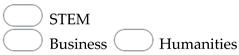
Your Area of Study
Mark only one oval.
Preprints 182547 i002
3.
Your Political Ideology [e.g., Left-Leaning, Center, Right-Leaning)
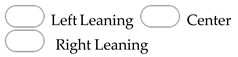
Mark only one oval.
Preprints 182547 i003
4.
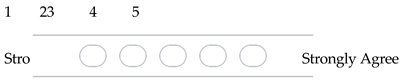
Men and women should have equal rights in all aspects of life. *
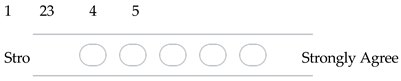
Mark only one oval.
Preprints 182547 i004
5.
Feminism is about equality, not superiority of women. *

Mark only one oval.
Preprints 182547 i005
6.
Men can be feminists. *
Mark only one oval.
Preprints 182547 i006
7.
Feminism threatens traditional family values. *

Mark only one oval.
Preprints 182547 i007
8.
Feminists hate men. *
Mark only one oval.
Preprints 182547 i008
9.
Gender roles are socially constructed rather than natural. *
Mark only one oval.
Preprints 182547 i009
10.
Society treats men and women equally today. *

Mark only one oval.
Preprints 182547 i010
11.
Feminism benefits everyone, not only women. *
Mark only one oval.
Preprints 182547 i011
12.
It is acceptable for men to share household chores equally. *
Mark only one oval.
Preprints 182547 i012
13.
Feminists exaggerate gender discrimination. *

Mark only one oval.
Preprints 182547 i013
14.
Teaching feminism in schools is important for social progress. *

Preprints 182547 i014
15.
Supporting feminism conflicts with my religious or cultural values. *
Mark only one oval.
Preprints 182547 i015
Preprints 182547 i016
This content is neither created nor endorsed by Google.
Preprints 182547 i017 Forms

References

  1. Ahmed, A.I.; Jahan, I.; Hasan, I.; Rashid, S.F.; Naomi, S.S. Public university students’ experiences of anti-feminist backlash in Dhaka, Bangladesh. IDS Bull. Gend. Dev. 2024, 000–000. [Google Scholar] [CrossRef]
  2. Anderson, V.N. What’s in a label? Judgments of feminist men and feminist women. Psychol. Women Q. 2009, 33, 239–251. [Google Scholar] [CrossRef]
  3. Anderson, E. (2023). The impact of feminist approaches on masculinity scholarship. Men and Masculinities. Advance online publication. [CrossRef]
  4. Brown, A.M. Feminist theorizing of men and masculinity: Applying feminist theoretical perspectives. Men Masculinities 2019, 22, 548–571. [Google Scholar] [CrossRef]
  5. Streatfield, A.J.; et al. What shapes attitudes on gender roles among adolescents in Bangladesh? BMC Public Health 2023, 23, 1234. [Google Scholar] [CrossRef] [PubMed]
  6. UNDP Bangladesh. (2023, September 19). Over 99 percent of Bangladeshis hold at least one bias against women. Available online: https://www.undp.org/bangladesh/blog/over-99-percent-of-bangladeshis-hold-least-one-bias-against-women.
Disclaimer/Publisher’s Note: The statements, opinions and data contained in all publications are solely those of the individual author(s) and contributor(s) and not of MDPI and/or the editor(s). MDPI and/or the editor(s) disclaim responsibility for any injury to people or property resulting from any ideas, methods, instructions or products referred to in the content.
Copyright: This open access article is published under a Creative Commons CC BY 4.0 license, which permit the free download, distribution, and reuse, provided that the author and preprint are cited in any reuse.
Prerpints.org logo

Preprints.org is a free preprint server supported by MDPI in Basel, Switzerland.

Subscribe

Disclaimer

Terms of Use

Privacy Policy

Privacy Settings

© 2025 MDPI (Basel, Switzerland) unless otherwise stated