

Submitted:
15 October 2025
Posted:
21 October 2025
You are already at the latest version
Abstract
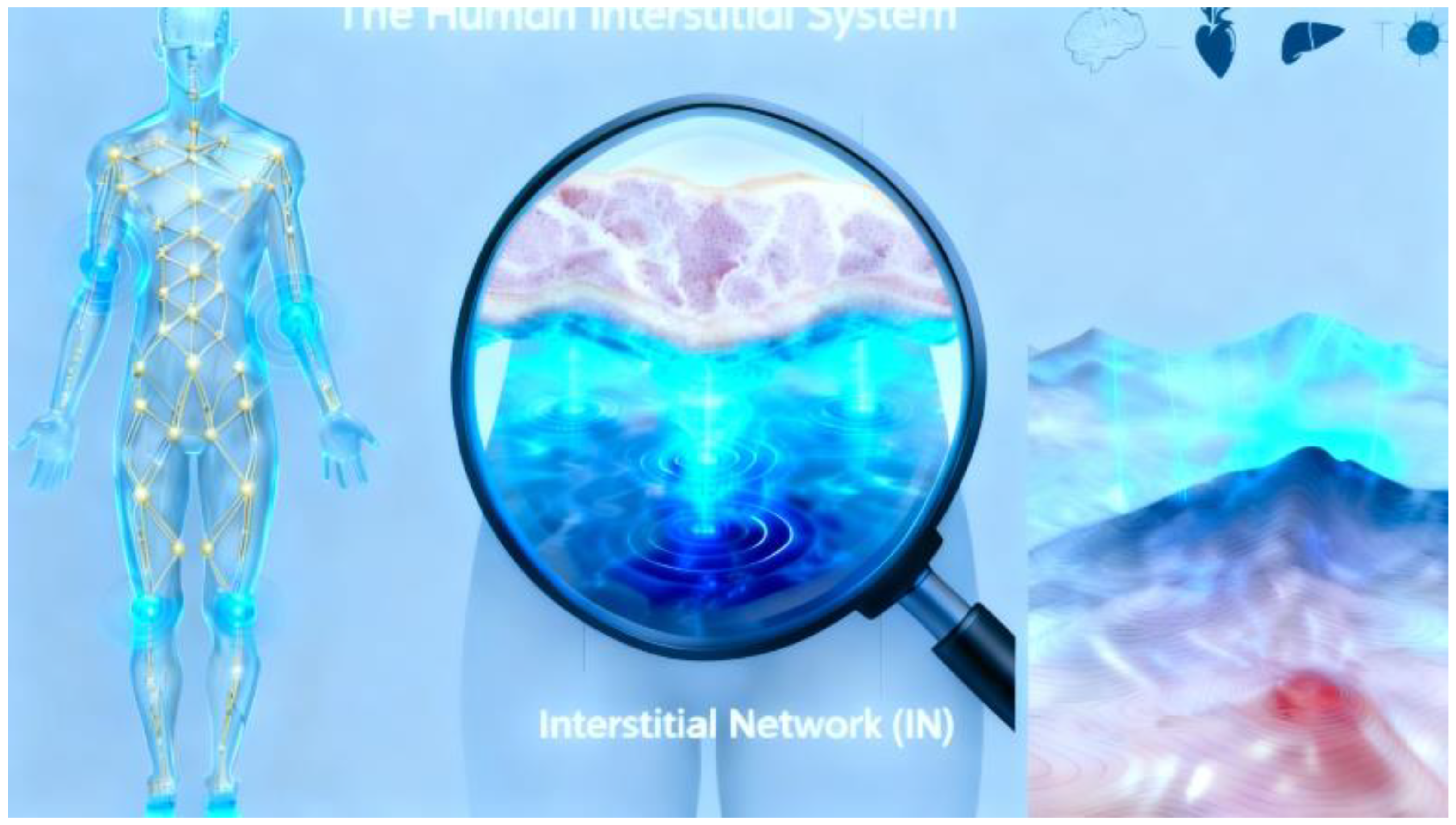
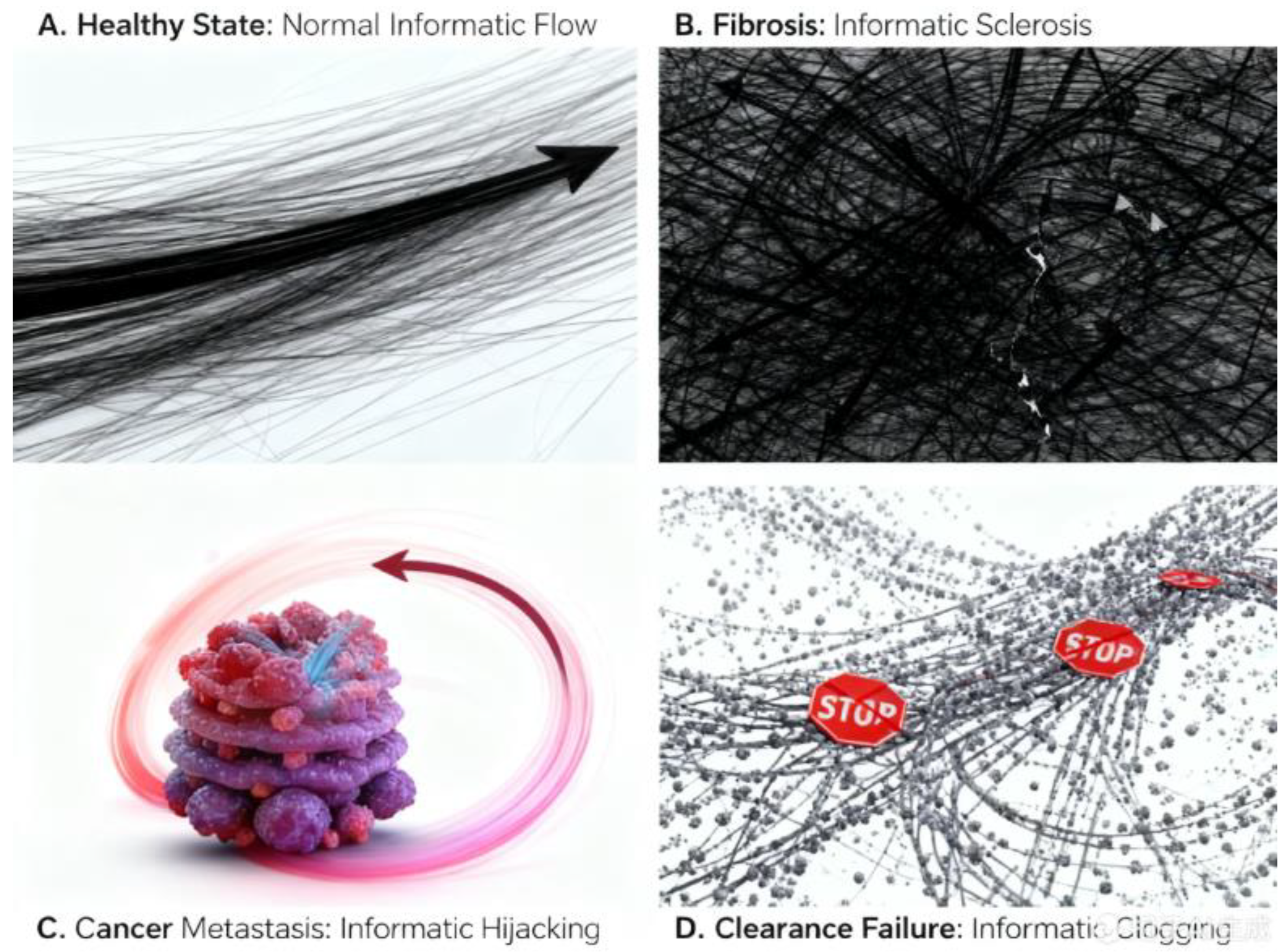
The classical organ-based model of human physiology provides an essential but incomplete framework for understanding whole-body integration. While the nervous and endocrine systems are acknowledged master regulators, they operate upon a continuous physical substrate whose system-level function has been largely overlooked. For centuries, anatomists, physiologists, and clinicians have documented the interstitial spaces—the fluid-filled, matrix-supported regions between cells—as passive conduits and structural supports. Here, we synthesize this vast body of knowledge to propose the Human Interstitial System (HIS). We define the HIS as a fundamental physiological system, characterized by its body-wide continuity and its primary role as a relational matrix that physically and functionally interconnects all discrete anatomical units. We posit that the dynamic architecture of the HIS governs the flow of information, nutrients, and mechanical forces, thereby influencing systemic state emergence. The framework is articulated through four core functions—mediation, filtration, integration, and emergence—and a testable biophysical model based on confined hydrodynamics and wave interference. We propose three decisive, falsifiable experiments to challenge the core tenets of this theory. Establishing the HIS provides a novel paradigm for understanding physiological integration, with profound implications for redefining diseases like fibrosis and developing novel therapeutic strategies.
Keywords:
1. Introduction
2. Defining the Human Interstitial System
3. Core System Functions
4. A Testable Mechanistic Model
5. Decisive Tests: Falsifiable Predictions of the HIS Theory
6. Discussion and Implications
7. Conclusion
Author Contributions
Acknowledgments
Declaration of Interests
Lead Contact
References
- Langevin, H.M.; Yandow, J.A. Relationship of acupuncture points and meridians to connective tissue planes. Anat. Rec. 2002, 269, 257–265. [Google Scholar] [CrossRef] [PubMed]
- Schleip, R. et al. Fascia: The tensional network of the human body. Elsevier (2012).
- Wiig, H.; Swartz, M.A. Interstitial fluid and lymph formation and transport: Physiological regulation and roles in inflammation and cancer. Physiol. Rev. 2012, 92, 1005–1060. [Google Scholar] [CrossRef] [PubMed]
- Ingber, D.E. Mechanobiology and diseases of mechanotransduction. Ann. Med. 2003, 35, 564–577. [Google Scholar] [CrossRef] [PubMed]
- Benias, P.C.; et al. Structure and Distribution of an Unrecognized Interstitium in Human Tissues. Sci. Rep. 2018, 8, 4947. [Google Scholar] [CrossRef] [PubMed]
- Langevin, H.M.; et al. Mechanical signaling through connective tissue: A mechanism for the therapeutic effect of acupuncture. FASEB J. 2001, 15, 2275–2282. [Google Scholar] [CrossRef] [PubMed]
- Wang, Q.; Wang, Y. The Interstitial Integration Hypothesis: A Unified Physical Framework for Emergence and Self-Organization. Preprint at [relevant repository] (2024).
- Fraser, J.R.; Laurent, T.C.; Laurent, U.B. Hyaluronan: Its nature, distribution, functions and turnover. J. Intern. Med. 1997, 242, 27–33. [Google Scholar] [CrossRef] [PubMed]
- Fels, D. Physical principles in the emergence of multicellular organization. BioEssays 2019, 41, 1900007. [Google Scholar]
Disclaimer/Publisher’s Note: The statements, opinions and data contained in all publications are solely those of the individual author(s) and contributor(s) and not of MDPI and/or the editor(s). MDPI and/or the editor(s) disclaim responsibility for any injury to people or property resulting from any ideas, methods, instructions or products referred to in the content. |
© 2025 by the authors. Licensee MDPI, Basel, Switzerland. This article is an open access article distributed under the terms and conditions of the Creative Commons Attribution (CC BY) license (http://creativecommons.org/licenses/by/4.0/).