

Submitted:
14 October 2025
Posted:
16 October 2025
You are already at the latest version
Abstract
The growing resistance to conventional antimicrobials, the prevalence of chronic wounds, and the global burden of metabolic and neurodegenerative disorders have heightened interest in plant-derived bioactives as alternative therapeutic agents. This review explores the multifunctional potential of phytochemicals and plant extracts with proven antimicrobial, enzyme-inhibitory, and wound-healing properties. Drawing from recent in vitro, in vivo, and in silico studies, we examine key phytochemical classes—including flavonoids, alkaloids, terpenoids, and polyphenols—that exhibit broad-spectrum antibacterial, antifungal, and antiviral activities. Emphasis is placed on their mechanisms of enzyme inhibition, targeting urease, α-glucosidase, tyrosinase, and acetylcholinesterase—enzymes implicated in infectious, metabolic, and neurodegenerative diseases. The review further discusses phytochemicals' ability to modulate oxidative stress and inflammatory responses, both central to effective wound healing. Advances in molecular docking, bioavailability enhancement, and synergistic interactions with antibiotics are highlighted. Additionally, we address standardization challenges, safety considerations, and the integration of ethnopharmacological knowledge into modern therapeutic contexts. This synthesis underscores the relevance of plant-based compounds as sustainable, biocompatible alternatives to synthetic drugs and provides a framework for future mechanistic and translational research.
Keywords:
phytochemicals
; antimicrobial resistance
; enzyme inhibition
; wound healing
; polyphenols
; flavonoids
; ethnopharmacology
; plant-derived bioactives
; synergistic interactions
; drug discovery
1. Introduction
The global rise in antimicrobial resistance, the burden of chronic wounds, and the prevalence of enzyme-related disorders such as diabetes and neurodegenerative diseases have catalyzed renewed interest in phytochemicals as potential therapeutic agents. Natural products from plants offer a rich reservoir of bioactive compounds with antimicrobial, enzyme inhibitory, and wound-healing properties, often exhibiting multitarget activity with reduced toxicity compared to synthetic drugs [1,2,3].
Medicinal plants contain diverse secondary metabolites—including flavonoids, alkaloids, terpenoids, tannins, and phenolic acids—that demonstrate potent antibacterial, antifungal, and antiviral effects [4]. Several species within the Lamiaceae family, for instance, have been shown to simultaneously inhibit microbial growth and accelerate tissue repair through modulation of inflammatory pathways [1]. Inhibitory effects on enzymes such as α-glucosidase, acetylcholinesterase, tyrosinase, and urease further highlight the therapeutic versatility of phytochemicals in managing diabetes, Alzheimer’s disease, and skin-related disorders [5,6].
Oxidative stress and microbial colonization are key factors in impaired wound healing. Bioactive plant compounds such as curcumin, asiaticoside, and resveratrol have demonstrated antioxidant and anti-inflammatory properties that support wound closure and collagen synthesis [3,7]. Moreover, advances in green synthesis, nanoformulation, and computational drug design have enabled the development of plant-derived therapeutics with enhanced bioavailability and target specificity [8,9].
Despite these promising findings, challenges remain regarding the standardization, pharmacokinetics, and clinical validation of phytomedicines. Bridging traditional ethnopharmacological knowledge with modern pharmacological and biochemical studies is essential to fully harness the therapeutic potential of plant-based compounds [10].
This review aims to consolidate current findings on the antimicrobial, enzyme-inhibitory, and wound-healing properties of plant extracts and phytochemicals, with a focus on mechanistic insights, structure–activity relationships, and translational potential.
2. Pharmacological Basis of Phytochemicals in Antimicrobial, Enzyme Inhibitory, and Wound-Healing Activities
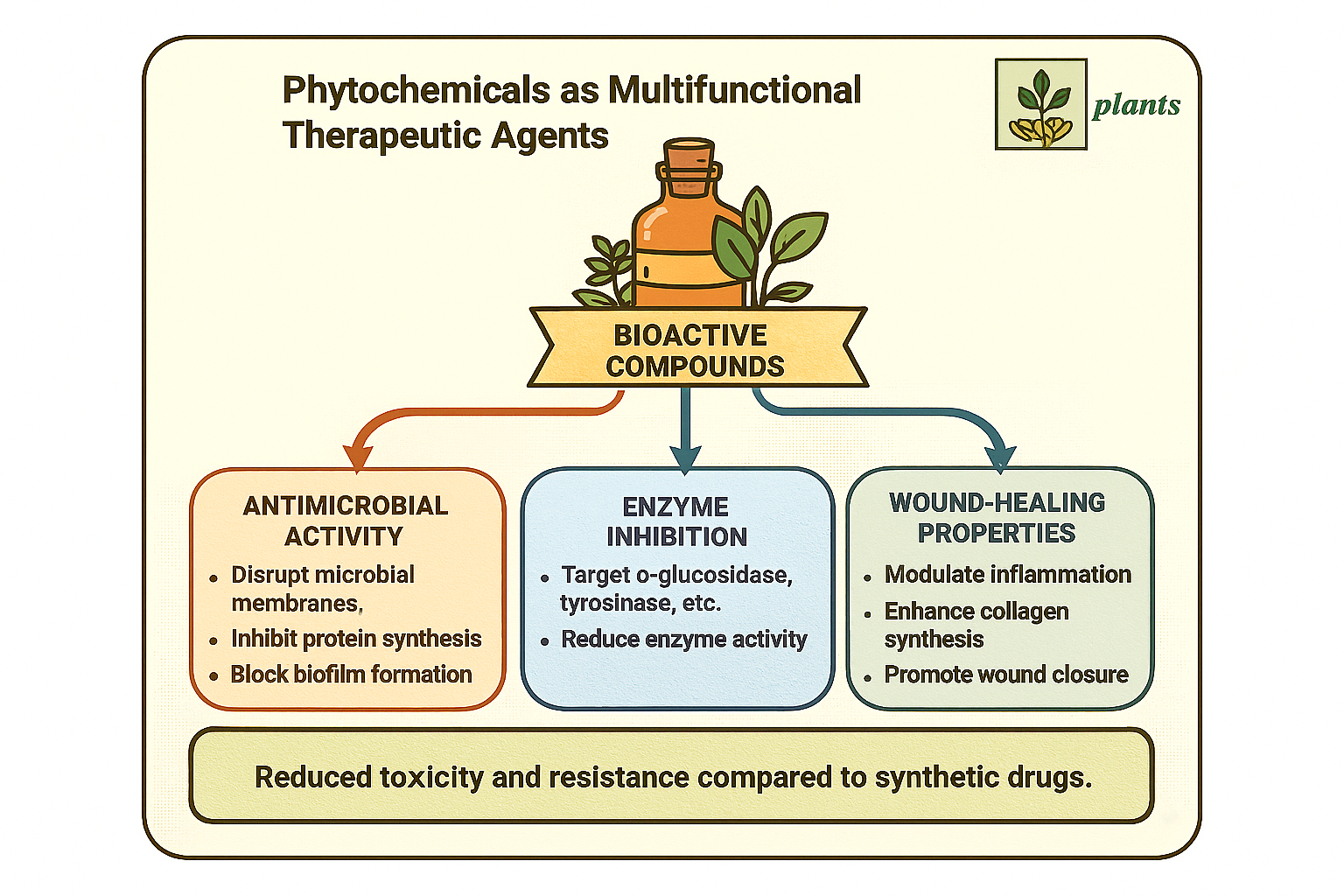
Phytochemicals—naturally occurring secondary metabolites found in plants—are increasingly recognized as multifunctional therapeutic agents. Their activities span antimicrobial defense, enzymatic regulation, and facilitation of wound healing. This section provides an in-depth review of the pharmacological mechanisms and examples of these bioactivities as shown in Table 1.
2.1. Antimicrobial Properties of Phytochemicals
The antimicrobial effects of phytochemicals are attributed to multiple mechanisms, including disruption of microbial membranes, inhibition of protein and nucleic acid synthesis, and interference with quorum sensing and biofilm formation [11]. Flavonoids, tannins, terpenoids, and saponins exhibit potent antibacterial and antifungal activity against Gram-positive and Gram-negative pathogens [12].
For example, Mikania micrantha essential oils exhibited a broad spectrum of antibacterial effects, with notable inhibition zones against Escherichia coli and Staphylococcus aureus [13]. Similarly, Adiantum capillus-veneris demonstrated high antifungal activity due to its triterpenoids and phenolic acids, which impair fungal cell wall integrity [14].
Synergistic effects have also been reported when phytochemicals are combined with conventional antibiotics, enhancing efficacy and potentially reversing resistance mechanisms [15].
2.2. Enzyme Inhibitory Activity of Plant-Derived Compounds
Phytochemicals have shown significant inhibition of enzymes implicated in metabolic and neurodegenerative disorders, such as α-glucosidase (diabetes), acetylcholinesterase (Alzheimer’s disease), tyrosinase (hyperpigmentation), and urease (ulcer pathogenesis) [16,17].
For instance, polyphenols from Majuphal (Quercus infectoria) demonstrated dual inhibition of α-glucosidase and tyrosinase, providing a rationale for its use in diabetes and skin conditions [18]. Likewise, Acacia nilotica extracts showed potent inhibitory activity against urease and cholinesterase, supporting its traditional use in gastrointestinal and cognitive disorders [19].
Molecular docking studies have further confirmed the high binding affinities of flavonoids and alkaloids to enzyme active sites, offering insights into their structure–activity relationships [20].
2.3. Wound-Healing Effects of Phytochemicals
Wound healing is a dynamic and multistage process involving inflammation, cell proliferation, angiogenesis, and tissue remodeling. Phytochemicals contribute to this process by modulating inflammatory cytokines, promoting fibroblast proliferation, enhancing collagen deposition, and scavenging reactive oxygen species (ROS) [21].
A study on Moringa oleifera leaf extracts demonstrated upregulation of transforming growth factor-β (TGF-β) and vascular endothelial growth factor (VEGF), both of which are central to angiogenesis and tissue regeneration [22]. Similarly, Globularia species extracts enhanced keratinocyte migration and reduced oxidative damage in excisional wound models [23].
Flavonoids like quercetin and kaempferol have been shown to stabilize extracellular matrix proteins and accelerate re-epithelialization, while tannins help in clot formation by precipitating proteins and reducing capillary permeability [24].
2.4. Multifunctional Synergy: Antimicrobial, Enzyme Inhibition, and Wound Healing
Several phytochemicals demonstrate simultaneous antimicrobial, enzyme-inhibitory, and wound-healing effects, suggesting a polypharmacological profile. For instance, Mikania micrantha and Adiantum capillus-veneris not only showed antimicrobial activity but also enhanced antioxidant enzyme expression and inhibited cholinesterase enzymes [13,14].
This multifunctionality is crucial for treating chronic wounds and inflammatory conditions, where infections, oxidative stress, and enzymatic imbalances coexist. These findings justify the continued exploration of phytochemicals as lead candidates for multitarget drug development [25].
3. Mechanisms of Action and Molecular Targets of Bioactive Phytochemicals
Bioactive phytochemicals derived from medicinal plants have emerged as promising agents for combating microbial infections, inhibiting disease-associated enzymes, and accelerating wound healing. These diverse functions are underpinned by intricate and multi-layered mechanisms of action, which are increasingly being elucidated through modern biochemical, molecular, and in silico methods. Unlike synthetic drugs, phytochemicals often exert polypharmacological effects, acting on multiple biological targets and pathways simultaneously as shown in Figure 1. This section explores the molecular basis of their antimicrobial, enzyme-inhibitory, and wound-healing activities, shedding light on how these natural compounds modulate pathophysiological processes.
3.1. Antimicrobial Mechanisms of Phytochemicals
The antimicrobial efficacy of plant-based compounds arises from their ability to disrupt essential structures and processes in microbial cells. One of the most common mechanisms is the disruption of microbial cell membrane integrity. Lipophilic terpenes and phenolic compounds, such as thymol and carvacrol, have been shown to insert themselves into lipid bilayers, altering membrane fluidity and increasing permeability. This leads to leakage of ions and metabolites, causing rapid cell lysis and death [26]. These compounds often act synergistically with one another, enhancing antimicrobial potency even at lower concentrations.
Another mechanism involves the direct inhibition of microbial enzymes critical for replication and metabolism. For instance, alkaloids like berberine inhibit bacterial DNA gyrase and topoisomerase IV, enzymes essential for DNA supercoiling and segregation during cell division [27]. Tannins and flavonoids can chelate metal ions such as Fe²⁺ and Zn²⁺, which serve as cofactors for microbial enzymes, thereby impairing metabolic function [28].
Furthermore, several plant extracts have been demonstrated to interfere with microbial quorum sensing (QS), a system that regulates gene expression in response to cell population density. By disrupting QS signaling molecules (such as acyl-homoserine lactones), phytochemicals inhibit biofilm formation and the expression of virulence factors in pathogenic bacteria [29]. Biofilm inhibition is particularly important in the context of antibiotic resistance, as biofilms protect microbes from both host immune responses and pharmacological agents.
Oxidative stress induction is yet another antimicrobial mechanism. Many phytochemicals enhance intracellular production of reactive oxygen species (ROS) in microbial cells. Elevated ROS levels cause oxidative damage to nucleic acids, lipids, and proteins, ultimately leading to apoptosis or necrosis [30]. For example, polyphenols abundant in Quercus infectoria (majuphal)—notably gallic acid—can generate superoxide and other ROS that compromise bacterial viability, and Q. infectoria gall extracts show broad in vitro antibacterial effects. [31].
These antimicrobial activities have been validated not only through in vitro assays but also through in silico docking studies that reveal strong binding affinities of phytochemicals to microbial proteins, affirming their potential as next-generation antimicrobial agents.
3.2. Mechanisms of Enzyme Inhibition
Beyond their antimicrobial roles, phytochemicals serve as potent inhibitors of enzymes implicated in metabolic, infectious, and neurodegenerative diseases. Enzyme inhibition by plant compounds can occur through competitive, non-competitive, and mixed modes, depending on the structure of the active compound and the nature of the enzyme’s binding site.
In the management of type 2 diabetes mellitus, inhibition of carbohydrate-hydrolyzing enzymes such as α-glucosidase and α-amylase is a key therapeutic strategy. Flavonoids such as quercetin and rutin often act as competitive (or mixed-type) inhibitors of α-glucosidase and α-amylase, delaying glucose absorption and lowering postprandial glycemia [32]. Molecular docking studies support these interactions, revealing hydrogen bonding and π–π stacking between flavonoid moieties and amino acid residues in the enzyme binding pockets [33].
Similarly, in neurodegenerative conditions such as Alzheimer’s disease, acetylcholinesterase (AChE) inhibitors are clinically relevant. Natural compounds such as galantamine analogs and coumarins block AChE activity, leading to increased synaptic availability of acetylcholine and improved cognitive function [34]. These inhibitors often show dual functionality, combining antioxidant and neuroprotective effects with enzyme inhibition.
Urease, a nickel-dependent enzyme implicated in gastric ulcer pathogenesis and urinary tract infections, has been shown to be inhibited by Acacia nilotica extracts. The inhibition is consistent with known action of gallotannins and catechins, which may chelate Ni at the urease active site, thereby reducing enzyme activity [35].
Additionally, tyrosinase inhibition is of particular interest in dermatology and cosmetology. This copper-containing enzyme catalyzes the conversion of tyrosine to melanin, and its overactivity leads to hyperpigmentation disorders. Phytochemicals such as arbutin, kojic acid analogs, and resveratrol derivatives act as competitive inhibitors of tyrosinase and exhibit depigmenting and antioxidant effects [36]. These actions are further reinforced by molecular docking studies, which provide insight into binding energies and conformational stability of enzyme-ligand complexes.
The convergence of in vitro, in vivo, and in silico approaches has greatly advanced our understanding of how plant-derived molecules can modulate enzymatic activities and influence disease outcomes.
3.3. Phytochemical Mechanisms in Wound Healing
Phytochemicals contribute significantly to each phase of the wound healing cascade: hemostasis, inflammation, proliferation, and remodeling. One of their most vital roles is the modulation of the inflammatory response. Chronic inflammation impairs wound healing and can result in scar formation or fibrosis. Flavonoids like apigenin and luteolin attenuate the production of pro-inflammatory cytokines such as TNF-α, IL-1β, and IL-6 by suppressing the NF-κB signaling pathway [37].
In addition to modulating inflammation, plant compounds offer strong antioxidant protection at the wound site. Oxidative stress, driven by excessive ROS, impairs collagen synthesis and angiogenesis. Polyphenolic antioxidants from medicinal plants enhance the expression of endogenous antioxidant enzymes like superoxide dismutase (SOD), glutathione peroxidase (GPx), and catalase, thereby protecting dermal and epidermal cells from oxidative injury [38].
Collagen synthesis and fibroblast proliferation are other critical aspects of wound repair. Triterpenoids and tannins have been shown to stimulate fibroblast migration and upregulate the transcription of collagen type I and III genes, promoting extracellular matrix deposition and re-epithelialization [39]. For example, extracts of Moringa oleifera have been reported to increase fibroblast density and granulation tissue formation in wound models, possibly through modulation of transforming growth factor-beta (TGF-β) and vascular endothelial growth factor (VEGF) signaling pathways [40,41].
Angiogenesis, essential for supplying nutrients and oxygen to regenerating tissues, can be enhanced by certain plant constituents. Isothiocyanates, such as erucin, stimulate endothelial cell proliferation, migration, and tube formation by upregulating angiogenic markers including VEGF and activating PI3K/AKT/ERK signaling pathways, thereby contributing to vascular remodeling and wound closure. Some iridoid glycosides have also been reported to promote angiogenesis in ischemic or tissue-repair models, although their effects may vary depending on the biological context. [42,43].
Together, these findings confirm that phytochemicals not only support the immune response and reduce microbial load at the wound site but also actively promote tissue regeneration and structural remodeling.
3.4. Multi-Target and Synergistic Interactions
A remarkable characteristic of phytochemicals is their ability to target multiple biological processes simultaneously. This multi-target nature underpins their efficacy and justifies their use in traditional polyherbal formulations. For instance, phenolic-rich extracts of Globularia species exert antimicrobial, antioxidant, anti-inflammatory, and enzyme-inhibitory activities concurrently [44]. Similarly, combinations of flavonoids and alkaloids have demonstrated synergistic effects when co-administered with conventional antibiotics, enhancing bacterial susceptibility and reducing minimum inhibitory concentrations (MICs) [45].
Such synergistic and pleiotropic mechanisms make phytochemicals uniquely suited for managing multifactorial conditions like chronic wounds, infections, and metabolic syndromes. Advances in systems biology and network pharmacology are further unraveling the complex interactions between plant compounds and host-pathogen networks, reinforcing their therapeutic relevance in integrative medicine.
4. Synergistic Interactions Between Phytochemicals and Conventional Therapeutics
The increasing prevalence of antibiotic resistance and reduced efficacy of synthetic drugs have compelled the global scientific community to seek novel strategies to restore or enhance drug effectiveness. One such promising strategy involves the synergistic combination of phytochemicals with antibiotics or synthetic therapeutics. Phytochemicals, due to their diverse chemical scaffolds and bioactivities, have shown immense potential in not only exerting therapeutic effects independently but also potentiating the action of conventional drugs by multiple mechanisms.
4.1. Rationale for Synergy
The rationale for combining phytochemicals with conventional drugs stems from their ability to modulate bacterial resistance mechanisms, increase cell membrane permeability, inhibit efflux pumps, and provide additional pharmacodynamic benefits. Synergistic interactions may lead to lower effective doses of synthetic drugs, reducing side effects and toxicity, and possibly delaying the emergence of resistance as shown in Figure 2 [46]. These combinations are particularly valuable in treating multidrug-resistant (MDR) pathogens, where monotherapy has failed or becomes unsafe.
Many phytochemicals—such as alkaloids, flavonoids, terpenes, and phenolic acids—exhibit synergistic antibacterial effects when combined with conventional antibiotics. In such combinations, Fractional Inhibitory Concentration (FIC) index values often fall below 0.5, a standard criterion for true pharmacodynamic synergy (i.e., stronger inhibition than expected from simple additivity) [47].
4.2. Synergistic Enhancement of Antibacterial Agents
Among the most studied synergies are those involving antibacterial drugs. For example, flavonoids such as quercetin and kaempferol, when combined with β-lactam antibiotics, have shown enhanced antibacterial activity against Staphylococcus aureus and Escherichia coli [48,49]. These phytochemicals are believed to inhibit bacterial efflux pumps like NorA and AcrAB-TolC, which are responsible for drug expulsion from bacterial cells [50].
Similarly, alkaloids such as berberine, while moderately active on their own, display significant antibacterial effects when co-administered with antibiotics like ciprofloxacin. This combination has been reported to disrupt biofilm formation and downregulate resistance genes in methicillin-resistant Staphylococcus aureus (MRSA) [51]. In another study, curcumin and piperine were found to potentiate the effect of aminoglycosides and fluoroquinolones against Gram-negative bacteria, likely by interfering with DNA replication enzymes and destabilizing the bacterial membrane [52].
In addition to targeting bacteria, phytochemicals may also restore sensitivity to antibiotics that have become ineffective due to resistance. For instance, epigallocatechin gallate (EGCG) from green tea can reactivate the sensitivity of MRSA to oxacillin, a β-lactam antibiotic, by inhibiting penicillin-binding proteins (PBPs) and altering peptidoglycan cross-linking [53].
4.3. Synergy with Antifungal and Antiviral Agents
The potential for phytochemical synergy is not limited to antibacterial agents. Some essential oils and plant-derived terpenoids have exhibited synergistic antifungal effects when used with fluconazole and amphotericin B. For instance, thymol and carvacrol combined with fluconazole significantly reduced the minimum inhibitory concentrations (MICs) against Candida albicans, indicating membrane-targeting synergy [54].
Antiviral synergies have also been explored, particularly in the context of influenza and herpes simplex virus (HSV) infections. Flavonoids and lignans, through their antioxidant and anti-inflammatory effects, reduce viral replication when combined with antivirals like acyclovir and oseltamivir. These compounds may also modulate host immunity, adding a layer of host-targeted therapy to viral inhibition [55].
4.4. Potentiation of Enzyme Inhibitors and Anti-inflammatory Drugs
Phytochemicals have been observed to enhance the efficacy of enzyme inhibitors used in managing metabolic and neurodegenerative diseases. For instance, galantamine’s acetylcholinesterase inhibition is significantly potentiated by co-treatment with naringenin, resulting in improved cognitive function in animal models of Alzheimer’s disease [56].
In the context of diabetes management, phytochemicals such as chlorogenic acid and cinnamic acid derivatives have shown synergistic inhibition of α-glucosidase and α-amylase when combined with synthetic antidiabetics like acarbose [57]. This effect allows for dose reduction and lower gastrointestinal side effects, a common limitation of acarbose monotherapy.
Anti-inflammatory synergy is another key domain. Boswellic acids, curcuminoids, and flavones enhance the effect of non-steroidal anti-inflammatory drugs (NSAIDs) like ibuprofen, reducing cyclooxygenase (COX)-2 activity while minimizing gastric mucosal damage [58]. This represents a promising approach for treating chronic inflammatory diseases with a lower adverse event profile.
4.5. Mechanisms Underlying Synergistic Effects
Mechanistically, synergy between phytochemicals and drugs can be attributed to:
- Biofilm disruption: Many plant compounds interfere with biofilm matrix formation, exposing pathogens to drug action [50].
- Enzyme inhibition: Co-inhibition of target enzymes by phytochemicals and drugs amplifies metabolic disruption [56].
- Pharmacokinetic modulation: Some phytochemicals act as bioenhancers (e.g., piperine), increasing the bioavailability of poorly absorbed drugs [51].
These diverse mechanisms, often acting simultaneously, underscore the multi-target pharmacology of phytochemical-drug combinations.
4.6. Clinical Potential and Challenges
Despite promising in vitro and in vivo results, clinical translation of phytochemical-drug combinations faces several challenges. These include standardization of plant extracts, pharmacokinetic variability, and potential herb-drug interactions. Moreover, differences in metabolic pathways across individuals may alter the extent of synergy or result in unintended antagonistic effects [59].
Nonetheless, emerging approaches using nanocarrier systems and co-crystal formulations are helping to surmount the limitations of phytochemical-drug combinations by improving stability, targeted delivery, and controlled release. In wound care settings, topical herbal formulations (e.g. Plantago major gel in diabetic foot ulcers) have shown enhanced healing compared to standard care in clinical trials, and registered clinical studies are underway to test phytochemical-antibiotic co-therapies as adjuvants in diabetic foot and chronic wound infections [60].
As the field advances, systems biology and AI-assisted screening are playing a pivotal role in predicting and validating synergistic phytochemical-drug pairs, accelerating the discovery of safe and effective integrative therapies [61].
5. Standardization, Safety, and Toxicity Assessments of Bioactive Plant Extracts
As the therapeutic use of plant-based bioactive compounds becomes increasingly widespread, standardization, safety, and toxicity assessments emerge as indispensable pillars for translating laboratory findings into reliable clinical applications. Although phytochemicals demonstrate promising pharmacological effects—including antimicrobial, enzyme inhibitory, and wound-healing activities—their efficacy and safety remain highly dependent on factors such as extraction methods, chemical variability, dosage, formulation, and interactions with other bioactive or synthetic agents. Establishing rigorous quality control frameworks and comprehensive toxicological evaluations is therefore essential for their integration into evidence-based medicine. [62].
5.1. The Necessity of Standardization
Standardization refers to the process of ensuring consistency in the composition, quality, and efficacy of herbal products, primarily through the quantification of key active constituents and adherence to predefined manufacturing practices. Unlike synthetic drugs with a singular active compound, plant extracts are chemically complex and can vary widely depending on environmental, geographical, seasonal, and genetic factors [63]. For instance, the content of curcumin in Curcuma longa can fluctuate significantly depending on harvest timing and processing, impacting its therapeutic action [64].
Standardization is not only essential for regulatory compliance but also for batch-to-batch reproducibility in clinical trials. Parameters such as total phenolic content (TPC), flavonoid content, high-performance liquid chromatography (HPLC) fingerprints, and chromatographic purity profiles are routinely used to establish chemical consistency [65]. Furthermore, advances in metabolomics and chemometrics now allow for holistic profiling of plant extracts, thereby improving quality assurance [66]. Figure 3 illustrates key pillars of phytochemical product standardization.
5.2. Safety Assessment and Dose Determination
Safety assessment of plant-derived therapeutics involves both acute and chronic toxicity studies, typically conducted in rodent models prior to clinical translation. Parameters such as behavioral changes, biochemical markers, and histopathology are monitored to detect systemic toxicity. Among these, the LD₅₀ (lethal dose required to kill 50% of test animals) continues to serve as a foundational metric in preliminary toxicity screening, guiding safe dose ranges for further pharmacological and clinical studies [67]. However, modern safety assessment includes sub-chronic testing, organ-specific toxicity, mutagenicity, teratogenicity, and hepatotoxicity evaluations.
For example, ethanolic extracts of Azadirachta indica (neem) and Ocimum sanctum (holy basil), while considered safe at traditional doses, have demonstrated hepatic stress and alterations in liver enzyme levels when administered at higher concentrations or over extended periods in animal models. These findings emphasize the importance of dose optimization and chronic toxicity testing in ensuring the safe therapeutic use of plant-based bioactives [68,69]. Moreover, the potential for cytochrome P450 enzyme inhibition by certain flavonoids, such as naringin and quercetin, raises important concerns about herb–drug interactions and altered drug metabolism. These interactions may lead to either enhanced toxicity or reduced efficacy of conventional drugs, underscoring the necessity of comprehensive pharmacokinetic evaluations during the development of phytochemical-based therapies [70,71].
Toxicity also varies with the route of administration, as compounds that are considered safe when ingested orally may display adverse effects when applied topically or injected. Oral delivery often subjects phytochemicals to first-pass metabolism, which reduces systemic exposure, whereas parenteral or dermal administration can bypass detoxification pathways and result in higher local or systemic concentrations, leading to irritation or organ-specific toxicity [72]. For example, tea tree oil (Melaleuca alternifolia) is generally safe in diluted topical formulations but can cause neurotoxicity and central nervous system depression if ingested [73]. Similarly, Aloe vera latex has been used orally as a laxative in small doses, yet excessive intake can trigger severe diarrhea, electrolyte imbalance, and nephrotoxicity, while its latex-containing preparations may also irritate the skin when applied externally [74]. These cases underscore the importance of route-specific safety assessments in the development of plant-derived therapeutics [72]. It becomes critical to establish a therapeutic window and no-observed-adverse-effect level (NOAEL) for each formulation under specific conditions.
5.3. Toxicological Challenges in Polyherbal Formulations
Polyherbal formulations, which are common in ethnopharmacology and traditional medicine systems, present unique challenges in modern pharmacological evaluation. While phytochemical synergy within these combinations can enhance therapeutic efficacy, it may also give rise to unpredictable toxicity or antagonistic interactions. The absence of rigorous standardization frequently means that the exact concentration and ratio of active phytoconstituents remain undefined, complicating pharmacokinetic profiling, dose optimization, and comprehensive risk assessment. Establishing standardized compositional markers and validated analytical methods is therefore essential to ensure both safety and reproducibility in the clinical translation of polyherbal therapeutics. [75].
This is particularly concerning in vulnerable populations such as children, pregnant women, and patients with chronic illnesses, where metabolism and immune responses may differ [74]. Moreover, many over-the-counter herbal products lack clear labeling of active ingredients, dosages, or safety warnings, leading to adverse drug reactions or hepatotoxic events [76].
5.4. Regulatory Frameworks and Quality Control
Globally, efforts to regulate herbal medicinal products have gained momentum. The World Health Organization (WHO), European Medicines Agency (EMA), and U.S. Food and Drug Administration (FDA) have all issued guidelines on botanical drug standardization and safety testing [74]. However, regulatory disparities across countries still result in inconsistent quality control.
For instance, the EMA requires a monograph-based approach, where the therapeutic claim must be supported by pharmacognostic evidence and preclinical data. In contrast, several countries classify herbal remedies as food supplements, exempting them from rigorous testing [75]. This inconsistency hampers international trade, research comparability, and patient safety.
To mitigate variability and ensure reproducibility, modern quality control frameworks emphasize the use of standardized reference materials, authenticated botanical vouchers, and adherence to Good Manufacturing Practices (GMP) for herbal products. Contemporary protocols integrate DNA barcoding for botanical confirmation, HPLC-MS/MS quantification of active constituents, checks for microbial contamination, and pesticide residue analyses. Together, these measures help safeguard consistency, safety, and regulatory compliance in the development and clinical use of herbal therapeutics [76].
5.5. Ethical Considerations and Future Directions
Beyond technical and regulatory dimensions, ethical imperatives must guide the therapeutic development of plant-based bioactives. Many of these discoveries build on centuries of traditional knowledge held by indigenous and local communities. Bioprospecting without prior informed consent, mutually agreed terms, and fair benefit-sharing risks exploitation or biopiracy. To avoid perpetuating inequities, research must adopt ethical protocols, respect indigenous data sovereignty, and ensure that communities providing knowledge or genetic materials receive equitable returns—monetary or non-monetary—for their contributions [77]. Furthermore, traditional toxicity studies in animals raise legitimate concerns about animal welfare and the ethical justification for repeated in vivo experimentation. This has driven growing interest in alternative models, including organ-on-a-chip systems, 3D tissue-engineered constructs, and in silico toxicity prediction platforms. These approaches offer high-throughput, human-relevant data while minimizing animal use and aligning with the principles of the 3Rs—Replacement, Reduction, and Refinement—in toxicological research [78].
Looking ahead, a truly effective path forward for phytotherapeutic development demands a multidisciplinary framework integrating toxicology, pharmacognosy, ethnomedicine, and computational biology. Such synergy will facilitate the design of safe, reproducible, and efficacious plant-based medicines. Simultaneously, regulatory harmonization across national borders and the inclusion of standardized phytomedicines in essential drug lists, once rigorous quality criteria are met, will reinforce their credibility and pave the way for their widespread adoption in mainstream healthcare systems. [79].
6. Integration of Ethnopharmacological Knowledge into Modern Therapeutics
The interface between ethnopharmacology and modern therapeutic systems has become an area of intensified scientific interest. Ethnopharmacology, which involves the study of traditional uses of medicinal plants and indigenous healthcare knowledge, provides a rich source of bioactive compounds for drug development and public health innovation. The integration of such knowledge into mainstream medicine not only enhances therapeutic options but also preserves cultural heritage and supports sustainable biodiversity use.
Historically, many modern drugs have their roots in traditional remedies. For example, compounds like quinine from Cinchona bark and artemisinin from Artemisia annua were discovered through traditional knowledge systems and validated through pharmacological studies [80]. These successes underscore the immense potential of traditional medicine as a discovery pipeline for modern therapeutics. Through systematic ethnopharmacological investigations, researchers have identified plants long used by indigenous communities to manage infections, inflammation, pain, and chronic illnesses. Remarkably, many of these traditional applications correlate with contemporary pharmacological targets, including antimicrobial resistance, oncogenesis, and autoimmune dysregulation. This convergence illustrates how indigenous knowledge can guide the rational discovery of bioactive compounds relevant to unmet global health challenges [81,82].
The scientific community has progressively refined systematic frameworks to convert traditional knowledge into rigorously validated therapeutics. These methodologies often begin with ethnobotanical surveys and prioritization of candidate plants, followed by bioassay-guided fractionation to isolate active constituents, comprehensive phytochemical characterization (e.g., HPLC, MS, NMR), and preclinical evaluation in relevant disease models (in vitro, in vivo, or ex vivo). Such an integrated workflow bridges tradition and modern pharmacology, enhancing both the credibility and translational potential of plant-based medicines [83]. Integration of traditional medicine into modern healthcare further requires pharmacovigilance, toxicological evaluation, and well-designed clinical trials to confirm efficacy and safety across genetically and culturally diverse populations. A notable example is Curcuma longa (turmeric), a plant traditionally used to treat inflammatory and metabolic disorders. Its principal bioactive compound, curcumin, has been extensively studied for anti-inflammatory, anticancer, and neuroprotective properties, leading to several ongoing preclinical and clinical evaluations that exemplify the successful translation of ethnomedicinal knowledge into evidence-based therapeutics [84].
Recent frameworks emphasize a transdisciplinary paradigm in drug discovery and healthcare innovation—one that unites ethnobotanists, pharmacologists, anthropologists, clinicians, and community knowledge holders. Such collaboration ensures that indigenous wisdom is preserved, contextualized, and ethically integrated with evidence-based biomedical practices. This approach not only enriches pharmacological research but also promotes cultural respect, sustainability, and equitable benefit-sharing in the global utilization of medicinal plant resources [85]. Databases such as NAPRALERT (Natural Products Alert) and international frameworks like the WHO Traditional Medicine Strategy have played a pivotal role in consolidating global ethnopharmacological knowledge, facilitating the documentation, regulation, and evidence-based integration of plant-derived therapeutics into modern healthcare systems [86]. These platforms have become essential in identifying patterns of use, cross-cultural similarities, and high-potential plants, thereby enhancing drug development strategies.
However, translating ethnopharmacological insights into clinical applications remains challenging. Critical barriers include the lack of standardization in plant material sourcing and preparation, poor reproducibility of pharmacological results due to chemotypic variability, and complex issues surrounding intellectual property rights (IPR) and benefit-sharing. Traditional formulations often comprise multiple botanical components or involve distinctive preparation methods that differ markedly from the use of isolated active compounds in conventional pharmaceuticals, complicating both regulatory assessment and patent protection [87]. This discrepancy between traditional and modern pharmaceutical paradigms can result in inconsistencies in clinical outcomes when the original context of use—including formulation methods, dosage, and cultural practices—is not adequately preserved. Moreover, the absence of standardized dosage regimens, botanical authentication protocols, and validated processing techniques continues to impede regulatory approval and widespread adoption of herbal medicines. Robust quality assurance frameworks integrating chemical fingerprinting, DNA barcoding, and Good Agricultural and Collection Practices (GACP) are therefore essential to ensure product reproducibility and clinical reliability [88]. To address these challenges, concerted efforts are being made to develop standardized formulations that remain faithful to traditional recipes while meeting modern pharmaceutical quality standards. This includes the implementation of Good Agricultural and Collection Practices (GACP) to ensure consistent raw-material quality, and the application of advanced analytical platforms such as liquid chromatography–tandem mass spectrometry (LC-MS/MS) and nuclear magnetic resonance (NMR) spectroscopy for comprehensive phytochemical fingerprinting. Such integrative approaches enhance reproducibility, authenticity, and regulatory compliance in the formulation of plant-derived therapeutics [89].
Intellectual property rights and benefit-sharing represent critical ethical dimensions in the commercialization of traditional medicinal knowledge. Many indigenous and local communities, who have acted as long-term custodians of ethnobotanical wisdom, have historically been excluded from the financial and social benefits arising from its industrial exploitation. International legal frameworks such as the Convention on Biological Diversity (CBD, 1992) and the Nagoya Protocol on Access and Benefit-Sharing (2010) establish mechanisms to ensure fair and equitable sharing of benefits derived from the utilization of genetic resources and associated traditional knowledge. Effective implementation of these frameworks is essential for fostering trust, protecting indigenous rights, and promoting sustainable bioprospecting practices [90]. Ethical integration into modern therapeutics thus necessitates community participation, legal frameworks, and capacity building to ensure mutual benefit.
Beyond drug discovery, the integration of ethnopharmacology into public health frameworks offers significant benefits, particularly in resource-limited settings where access to conventional pharmaceuticals remains constrained. In such contexts, scientifically validated traditional remedies provide cost-effective, culturally congruent, and locally accessible alternatives for primary healthcare. For instance, Aerva lanata has been traditionally employed in the management of urinary tract disorders and has demonstrated diuretic, nephroprotective, and antiurolithiatic activity in preclinical and clinical evaluations. Similarly, Mimosa pudica, a plant long used for wound healing and anti-inflammatory purposes, has gained increasing pharmacological validation through recent ethnopharmacological and in vivo studies, underscoring its therapeutic relevance in community-based healthcare [91,92].
Advanced computational and artificial intelligence (AI) tools are increasingly being deployed to analyze large ethnopharmacological datasets, enabling the prediction of biological activities and the identification of potential drug leads. These approaches integrate cheminformatics, network pharmacology, and molecular docking to uncover structure–activity relationships within complex phytochemical matrices. By providing insights into target interactions, toxicity predictions, and synergistic compound behavior, such tools effectively bridge traditional knowledge systems and modern biomedical research, accelerating the rational development of phytotherapeutics [93]. When combined with omics technologies—including genomics, proteomics, transcriptomics, and metabolomics—the ethnopharmacology–informatics interface forms an integrated systems model that elucidates the molecular mechanisms underlying traditional remedies. This convergence facilitates the identification of biomarkers, pathway mapping, and target validation, thereby accelerating the translation of traditional formulations into precision medicine frameworks. Such multidimensional approaches bridge empirical knowledge with molecular evidence, strengthening the scientific foundation of plant-based therapeutics [94].
Despite considerable scientific progress, fostering mutual respect and collaboration between traditional healers and biomedical practitioners remains a critical prerequisite for effective integration. This process demands culturally sensitive dialogue, educational initiatives, and policy frameworks that recognize traditional knowledge as a complementary rather than competing paradigm. Several nations—most notably China and India—have successfully implemented integrative health systems wherein Traditional Chinese Medicine (TCM) and Ayurveda operate alongside allopathic medicine under formal government regulation. These models demonstrate the feasibility of pluralistic healthcare, offering valuable templates for other countries seeking to harmonize traditional and modern medical systems [95,96].
In conclusion, the integration of ethnopharmacological knowledge into modern therapeutics offers profound opportunities for innovation in global healthcare. By drawing upon traditional wisdom, it not only expands the pharmacopeia but also promotes biodiversity conservation, cultural inclusivity, and sustainable healthcare interventions attuned to local contexts. Yet, realizing this potential requires a rigorous ethical and scientific framework—one that ensures validation, standardization, intellectual property protection, and equitable benefit-sharing among knowledge holders and scientific stakeholders. As modern science continues to interrogate and substantiate ancient practices through advanced technologies such as omics, AI, and network pharmacology, the boundary between tradition and innovation becomes increasingly porous, pointing toward a future of holistic, integrative, and effective healthcare systems [97].
Funding
This research received no external funding.
Acknowledgments
During the preparation of this manuscript, the author used Grammarly for the purposes of grammar check. The author has reviewed and edited the output and takes full responsibility for the content of this publication.
Conflicts of Interest
The author declares no conflicts of interest.
References
- Karageçili, H.; Gülçin, İ. The Lamiaceae Family Plants: Ethnobotanical Properties, Ethnopharmacological Uses, Phytochemical Studies and Their Utilization in Public or Current Clinical Practices—A Review. Rec. Nat. Prod. 2025, 19, 466–487. [Google Scholar] [CrossRef]
- Kaushal, K.; Kumar, M.; Thakur, A.; Kaur, T. An Overview of the Phytochemical and Therapeutic Potential of the White Button Mushroom (Agaricus bisporus (J.E. Lange) Imbach). J. Phytonanotechnol. Pharm. Sci. 2025, 5, 34–40. [Google Scholar] [CrossRef]
- Abbigeri, M.B.; Thokchom, B.; Singh, S.R.; Bhavi, S.M. Antioxidant and Antidiabetic Potential of the Green Synthesized Silver Nanoparticles Using Martynia annua Root Extract. Nano TransMed 2025, 6, 9–17. [Google Scholar]
- Mali, S.N.; Saied, E.M.; dos Santos, C.B.R.; Cruz, J.N. Medicinal Chemistry for Neglected Tropical Diseases Using In Vitro, In Vivo and In Silico Approaches. Front. Chem. 2025, 13, 1689034. [Google Scholar] [CrossRef]
- Topcu, K.S.B.; Genç, N.; Celik, A.; Sağ, V.; Yıldırım, B.; Karaismailoğlu, M.C.; Kisa, D. Liquid Chromatography–Tandem Mass Spectrometry Analysis of Three Endemic Plants in Brassicaceae Family: An Integrative Analysis with In Vitro and In Silico Study to Assess Biological Potential. Chem. Biodivers. 2025, 22, e202500715. [Google Scholar] [CrossRef]
- Bouaïfa, Z.; Boudjelal, A.; Bouaziz-Terrachet, S. Arisarum vulgare: Bridging Tradition and Science through Phytochemical Characterization and Exploring Therapeutic Potential via In Vitro, In Vivo, and In Silico Biological Activities. ChemistrySelect 2024, 9, e202402754. [Google Scholar] [CrossRef]
- Sahariah, G.; Dutta, K.N.; Gam, S.; Talukdar, S.; Boro, D.; Deka, K.; Siangshai, S.; Bora, N.S. A Review of the Ethnopharmacology, Phytochemistry and Pharmacological Activities of Mikania micrantha Kunth.: An Asian Invasive Weed. Int. J. Plant Res. 2025. [Google Scholar] [CrossRef]
- Deore, D.A.; Ahire, S.; Mahajan, S.K. Herbal Medicine Meets Nanotechnology: A Transformative Approach. Asian J. Pharm. Res. 2025. [Google Scholar] [CrossRef]
- Alshahrani, M.Y.; Alshahrani, K.M.; Tasleem, M.; Akeel, A.; Almeleebia, T.M.; Ahmad, I.; Asiri, M.; Alshahrani, N.A.; Alabdallah, N.M.; Saeed, M. Computational Screening of Natural Compounds for Identification of Potential Anti-Cancer Agents Targeting MCM7 Protein. Molecules 2021, 26. [Google Scholar] [CrossRef] [PubMed]
- Patwardhan, B. Ethnopharmacology and Drug Discovery. J. Ethnopharmacol. 2005, 100, 50–52. [Google Scholar] [CrossRef] [PubMed]
- El-Seedi, H.R.; Sabry, A.; Abolibda, T.Z.; Guo, Z.; Nahar, L.; Sarker, S.D.; Saeed, A.; Karav, S. Unraveling the Role of Globularia Species in Modern Medicine Based on Evidence from Phytochemistry, Traditional Uses and Biological Activities. Phytomedicine 2025, 156466. [Google Scholar] [CrossRef] [PubMed]
- Jaafer, M.F.; Mahood, W.S.; Alyam, M.S.S. Adiantum capillus-veneris L.: A Comprehensive Review of Its Phytochemical Composition, Pharmacological Activities, and Therapeutic Potential. Baghdad J. Biochem. Appl. Biol. Sci. 2025, 6, 85–99. [Google Scholar] [CrossRef]
- Khan, M.A.; El-Kersh, D.M.; Islam, M.S. Mikania micrantha Kunth: An Ethnopharmacological Treasure Trove of Therapeutic Potential. Chem. Biodivers. 2023, 20(8), e202300392. [Google Scholar] [CrossRef]
- Kashkooe, A.; Sardari, F.A.; Mehrabadi, M.M. M. Curr. Drug Discov. Technol. 2021, 18(4), 522–534. [Google Scholar] [CrossRef]
- Darko, D.; Kwekutsu, E.; Idoko, B.; Idoko, I.P. Synergistic Effects of Phytochemicals in Combating Chronic Diseases with Insights into Molecular Mechanisms and Nutraceutical Development. Int. J. Innov. Sci. Res. Technol. 2025, 10, 1865–1883. [Google Scholar] [CrossRef]
- Kumari, S.; Swer, T. Acacia nilotica Linn: A Comprehensive Review of Its Nutritional Profile, Pharmacological Activities, and Food Applications. Phytochem. Rev. 2025. [Google Scholar] [CrossRef]
- Farahin, P.N.; Nadia, N.; Susanti, D.; Hasniza, N.; Abd Halim, K.B.; Haron, N. Molecular Docking of Polyphenol Compounds from Anacardium occidentale with Alpha-Glucosidase and Dipeptidyl-Peptidase-4 Enzymes. Malays. J. Fundam. Appl. Sci. 2021, 17, 202–216. [Google Scholar] [CrossRef]
- Vadaga, A.; Gudla, S.S. Phytochemical Composition and Pharmacological Benefits of Majuphal. Pharmacol. Res.—Nat. Prod. 2025, 8, 100342. [Google Scholar] [CrossRef]
- Kumari, S.; Swer, T. Acacia nilotica Linn: A Comprehensive Review of Its Nutritional Profile, Pharmacological Activities, and Food Applications. Phytochem. Rev. 2025. [CrossRef]
- Ghalloo, B.A.; Khan, K.-u.-R.; Ahmad, S.; Aati, H.Y.; Al-Qahtani, J.H.; Ali, B.; Mukhtar, I.; Hussain, M.; Shahzad, M.N.; Ahmed, I. Phytochemical Profiling, In Vitro Biological Activities, and In Silico Molecular Docking Studies of Dracaena reflexa. Molecules 2022, 27, 913. [Google Scholar] [CrossRef]
- Cedillo-Cortezano, M.; Campos-García, J.; Contreras-Garduño, J.; Lugo-Ortiz, C. Use of Medicinal Plants in the Process of Wound Healing. Pharmaceutics 2024, 17, 303. [Google Scholar] [CrossRef]
- Al-Ghanayem, A.A.; Alhussaini, M.S.; Asad, M.; Joseph, B. Effect of Moringa oleifera Leaf Extract on Excision Wound Infections in Rats: Antioxidant, Antimicrobial, and Gene Expression Analysis. Molecules 2022, 27, 4481. [Google Scholar] [CrossRef] [PubMed]
- Alsarayreh, A.Z.; Oran, S.A.; Shakhanbeh, J.M. In Vitro and In Vivo Wound Healing Activities of Globularia arabica Leaf Methanolic Extract in Diabetic Rats. J. Cosmet. Dermatol. 2022, 21(10), 4888–4900. [Google Scholar] [CrossRef] [PubMed]
- Zulkefli, N.; Che Zahari, C.N.M.; Sayuti, N.H.; Kamarudin, A.A.; Saad, N.; Hamezah, H.S.; Bunawan, H.; Baharum, S.N.; Mediani, A.; Ahmed, Q.U.; Ismail, A.F.H.; Sarian, M.N. Flavonoids as Potential Wound-Healing Molecules: Emphasis on Pathways Perspective. Int. J. Mol. Sci. 2023, 24, 4607. [Google Scholar] [CrossRef]
- Rahman, M.M.; Rahaman, M.S.; Islam, M.R.; Hossain, M.E.; Mithi, F.M.; Ahmed, M.; Saldías, M.; Akkol, E.K.; Sobarzo-Sánchez, E. Multifunctional Therapeutic Potential of Phytocomplexes and Natural Extracts for Antimicrobial Properties. Antibiotics 2021, 10, 1076. [Google Scholar] [CrossRef]
- Omojate, G.C.; Enwa, F.O.; Jewo, A.O.; Eze, C.O. Mechanisms of Antimicrobial Actions of Phytochemicals against Enteric Pathogens—A Review. Res. J. Pharm. Biol. Chem. Sci. 2014, 2, 77–85. [Google Scholar]
- Elsaman, T.; Mohamed, M.A.; Mohamed, M.S.; Eltayib, E.M.; Abdalla, A.E. Microbial-Based Natural Products as Potential Inhibitors Targeting DNA Gyrase B of Mycobacterium tuberculosis: An In Silico Study. Front. Chem. 2025, 13, 1524607. [Google Scholar] [CrossRef] [PubMed]
- Zulkefli, N.; Che Zahari, C.N.M.; Sayuti, N.H.; Kamarudin, A.A.; Saad, N.; Hamezah, H.S.; Bunawan, H.; Baharum, S.N.; Mediani, A.; Ahmed, Q.U.; Ismail, A.F.H.; Sarian, M.N. Flavonoids as Potential Wound-Healing Molecules: Emphasis on Pathways Perspective. Int. J. Mol. Sci. 2023, 24, 4607. [Google Scholar] [CrossRef]
- Kalia, V.C.; Patel, S.K.S.; Kang, Y.C.; Lee, J.-K. Quorum Sensing Inhibitors as Antipathogens: Biotechnological Applications. Biotechnol. Adv. 2019, 37, 68–90. [Google Scholar] [CrossRef]
- Wichayapreechar, P.; Prasansuklab, A.; Charoongchit, P.; Charoenjittichai, R. The Potential of Tecoma stans (Linn.) Flower Extract as a Natural Antioxidant and Anti-Aging Agent for Skin Care Products. Cosmetics 2024, 11, 214. [Google Scholar] [CrossRef]
- Wang, Q.; Tao, R.; Liu, F.; Ge, L.; Zhang, X.; et al. On Mechanism behind UV-A Light Enhanced Antibacterial Activity of Gallic Acid and Propyl Gallate against Escherichia coli O157:H7. Sci. Rep. 2017, 7, 3027. [Google Scholar] [CrossRef]
- Shen, H.; Wang, J.; Ao, J.; Hou, Y.; Xi, M.; Cai, Y.; Li, M.; Luo, A. ; Luo, A. Structure-activity relationships and the underlying mechanism of α-amylase inhibition by hyperoside and quercetin: multi-spectroscopy and molecular docking analyses. Spectrochim. Acta A Mol. Biomol. Spectrosc. 2023, 285, 121797. [Google Scholar] [CrossRef]
- Man, Z.; Feng, Y.; Xiao, J.; Yang, H.; Wu, X. Structural Changes and Molecular Mechanism Study on the Inhibitory Activity of Epigallocatechin against α-Glucosidase and α-Amylase. Front. Nutr. 2022, 9, 948027. [Google Scholar] [CrossRef] [PubMed]
- Dos Santos, T.C.; Gomes, T.M.; Pinto, B.A.S.; Camara, A.L.; Paes, A.M.A. Naturally Occurring Acetylcholinesterase Inhibitors and Their Potential Use for Alzheimer’s Disease Therapy. Front. Pharmacol. 2018, 9, 1192. [Google Scholar] [CrossRef] [PubMed]
- Amin, M.; Anwar, F.; Naz, F.; Mehmood, T.; Saari, N. Anti-Helicobacter pylori and Urease Inhibition Activities of Some Traditional Medicinal Plants. Molecules 2013, 18, 2135–2149. [Google Scholar] [CrossRef] [PubMed]
- Zolghadri, S.; Bahrami, A.; Khan, M.T.H.; Muñoz, E.; García-Serna, J.; García-Lobo, J.M.; et al. J. Enzyme Inhib. Med. Chem. 2019, 34(1), 279–309. [CrossRef]
- Mushtaq, Z.; Sadeer, N.B.; Hussain, M.; Mahwish, *!!! REPLACE !!!*; Alsagaby, S.A.; Imran, M.; Mumtaz, T.; Umar, M.; Tauseef, A.; Al Abdulmonem, W.; Al Jbawi, E.; Mahomoodally, M.F. Therapeutical Properties of Apigenin: A Review on the Experimental Evidence and Basic Mechanisms. Toxicol. Mech. Methods 2023, 33, 632–650. [Google Scholar] [CrossRef]
- Taïlé, J.; Arcambal, A.; Clerc, P.; Gauvin-Bialecki, A.; Gonthier, M.-P. Medicinal Plant Polyphenols Attenuate Oxidative Stress and Improve Inflammatory and Vasoactive Markers in Cerebral Endothelial Cells during Hyperglycemic Condition. Antioxidants 2020, 9, 573. [Google Scholar] [CrossRef]
- Ghiulai, R.; Roşca, O.J.; Antal, D.S.; Mioc, M.; Mioc, A.; Racoviceanu, R.; Macaşoi, I.; Olariu, T.; Dehelean, C.; Crețu, O.M.; et al. Tetracyclic and Pentacyclic Triterpenes with High Therapeutic Efficiency in Wound Healing Approaches. Molecules 2020, 25, 5557. [Google Scholar] [CrossRef]
- Al-Ghanayem, A.A.; Alhussaini, M.S.; Asad, M.; Joseph, B. Moringa oleifera Leaf Extract Promotes Healing of Infected Wounds in Diabetic Rats: Evidence of Antimicrobial, Antioxidant and Proliferative Properties. Pharmaceuticals 2022, 15, 528. [Google Scholar] [CrossRef]
- Shady, N.H.; Mostafa, N.M.; Fayez, S.; Abdel-Rahman, I.M.; Maher, S.A.; Zayed, A.; Saber, E.A.; Khowdiary, M.M.; Elrehany, M.A.; Alzubaidi, M.A.; Altemani, F.H.; Shawky, A.M.; Abdelmohsen, U.R. Mechanistic Wound Healing and Antioxidant Potential of Moringa oleifera Seeds Extract Supported by Metabolic Profiling, In Silico Network Design, Molecular Docking, and In Vivo Studies. Antioxidants 2022, 11, 1743. [Google Scholar] [CrossRef]
- Genah, S.; Ciccone, V.; Filippelli, A.; et al. Erucin, a Natural Isothiocyanate, Exerts Pro-Angiogenic Properties in Cultured Endothelial Cells and Reverts Angiogenic Impairment Induced by High Glucose. Phytother. Res. 2024, 38(6), 2641–2655. [Google Scholar] [CrossRef]
- Yao, R.-Q.; Zhang, L.; Wang, W.; Li, L. Cornel Iridoid Glycoside Promotes Neurogenesis and Angiogenesis and Improves Neurological Function after Focal Cerebral Ischemia in Rats. Brain Res. Bull. 2009, 79, 69–76. [Google Scholar] [CrossRef]
- Friščić, M.; Petlevski, R.; Kosalec, I.; Madunić, J.; Matulić, M.; Bucar, F.; Hazler Pilepić, K.; Maleš, Ž. Globularia alypum L. and Related Species: LC–MS Profiles and Antidiabetic, Antioxidant, Anti-Inflammatory, Antibacterial and Anticancer Potential. Pharmaceuticals 2022, 15, 506. [Google Scholar] [CrossRef]
- Othman, L.; Sleiman, A.; Abdel-Massih, R.M. Antimicrobial Activity of Polyphenols and Alkaloids in Middle Eastern Plants. Front. Microbiol. 2019, 10, 911. [Google Scholar] [CrossRef]
- Tegos, G.P.; Stermitz, F.R.; Lomovskaya, O.; Lewis, K. Multidrug Pump Inhibitors Uncover Remarkable Activity of Plant Antimicrobials. Antimicrob. Agents Chemother. 2002, 46, 3133–3141. [Google Scholar] [CrossRef]
- Abrar, A.; Zafar, A.; Fatima, M.; Muntaqua, D.; Naz, I.; Fatima, H.; Ul Haq, I. Mechanistic Insight into the Synergistic Antimicrobial Potential of Fagonia indica Burm.f. Extracts with Cefixime. Saudi Pharm. J. 2024, 32, 101893. [Google Scholar] [CrossRef] [PubMed]
- He, X.; Zhang, W.; Cao, Q.; Li, Y.; Bao, G.; Lin, T.; Bao, J.; Chang, C.; Yang, C.; Yin, Y.; Xu, J.; Ren, Z.; Jin, Y.; Lu, F. Global Downregulation of Penicillin Resistance and Biofilm Formation by MRSA Is Associated with the Interaction between Kaempferol Rhamnosides and Quercetin. Microbiol. Spectr. 2022, 10(6), e02782-22. [Google Scholar] [CrossRef]
- Zhang, Y.; Chen, C.; Cheng, B.; Gao, L.; Qin, C.; Zhang, L.; Zhang, X.; Wang, J.; Wan, Y. Discovery of Quercetin and Its Analogs as Potent OXA-48 Beta-Lactamase Inhibitors. Front. Pharmacol. 2022, 13, 926104. [Google Scholar] [CrossRef] [PubMed]
- Ramalingam, S.; Chandrasekar, M.J.N. Plant-Based Natural Products as Inhibitors for Efflux Pumps to Reverse Multidrug Resistance in Staphylococcus aureus: A Mini Review. Mini-Rev. Med. Chem. 2024. [Google Scholar] [CrossRef] [PubMed]
- Zhou, H.; Wang, W.; Cai, L.; Yang, T. Potentiation and Mechanism of Berberine as an Antibiotic Adjuvant Against Multidrug-Resistant Bacteria. Infect. Drug Resist. 2023, 16, 3545–3562. [Google Scholar] [CrossRef]
- Moghadamtousi, S.Z.; Kadir, H.A.; Hassandarvish, P.; Tajik, H.; Abubakar, S.; Zandi, K. A Review on Antibacterial, Antiviral, and Antifungal Activity of Curcumin. Biomed Res. Int. 2014, 2014, 186864. [Google Scholar] [CrossRef]
- Cho, Y.S.; Schiller, N.L.; Oh, K.H. Antibacterial Effects of Green Tea Polyphenols on Clinical Isolates of Methicillin-Resistant Staphylococcus aureus. Curr. Microbiol. 2008, 57(6), 542–546. [Google Scholar] [CrossRef] [PubMed]
- Ahmad, A.; Khan, A.; Akhtar, F.; Yousuf, S.; Xess, I.; Khan, L.A.; Manzoor, N. Fungicidal Activity of Thymol and Carvacrol by Disrupting Ergosterol Biosynthesis and Membrane Integrity Against Candida. Eur. J. Clin. Microbiol. Infect. Dis. 2011, 30, 41–50. [Google Scholar] [CrossRef] [PubMed]
- Hassan, S.T.S. Mechanistic Perspectives on Herpes Simplex Virus Inhibition by Phenolic Acids and Tannins: Interference with the Herpesvirus Life Cycle. Int. J. Mol. Sci. 2025, 26(13), 5932. [Google Scholar] [CrossRef]
- Liao, Y.; Mai, X.; Wu, X.; Hu, X.; Luo, X.; Zhang, G. Exploring the Inhibition of Quercetin on Acetylcholinesterase by Multispectroscopic and In Silico Approaches and Evaluation of Its Neuroprotective Effects on PC12 Cells. Molecules 2022, 27, 7971. [Google Scholar] [CrossRef] [PubMed]
- Zhang, B.; Li, X.; Sun, W.; Xing, Y.; Xiu, Z. Dietary Flavonoids and Acarbose Synergistically Inhibit α-Glucosidase and Lower Postprandial Blood Glucose. J. Agric. Food Chem. 2017, 65(49), 10877–10884. [Google Scholar] [CrossRef]
- Ammon, H.P.T. Modulation of the Immune System by Boswellic Acids. Phytomedicine 2010, 17, 862–867. [Google Scholar] [CrossRef]
- Ekor, M. The Growing Use of Herbal Medicines: Issues Relating to Adverse Reactions and Challenges in Monitoring Safety. Front. Pharmacol. 2014, 4, 177. [Google Scholar] [CrossRef]
- Huang, Y.-Y.; Lin, C.-W.; Cheng, N.-C.; Cazzell, S.M.; Chen, H.-H.; Huang, K.-F.; Tung, K.-Y.; Huang, H.-L.; Lin, P.-Y.; Perng, C.-K.; Shi, B.; Liu, C.; Ma, Y.; Cao, Y.; Li, Y.; Xue, Y.; Yan, L.; Li, Q.; Ning, G.; Chang, S.-C. Effect of a Novel Macrophage-Regulating Drug on Wound Healing in Patients with Diabetic Foot Ulcers: A Randomized Clinical Trial. JAMA Netw. Open 2021, 4(9), e2122607. [Google Scholar] [CrossRef]
- Tao, L.; Willighagen, E.L.; Allard, P.-M.; Wishart, D.S.; Choudhary, K.; van Santen, J.A.; Schulze, T.; Fan, T.; Chen, Y.; Wolfender, J.-L.; Zhang, L. Artificial Intelligence for Natural Product Drug Discovery. Nat. Rev. Drug Discov. 2024, 23, 135–153. [Google Scholar] [CrossRef]
- Wang, H.; Chen, Y.; Wang, L.; Liu, Q.; Yang, S.; Wang, C. Advancing Herbal Medicine: Enhancing Product Quality and Safety through Robust Quality Control Practices. Front. Pharmacol. 2023, 14, 1265178. [Google Scholar] [CrossRef] [PubMed]
- Edo, G.I.; Obasohan, P.; Makia, R.S.; Abiola, T.O.; Umelo, E.C.; Jikah, A.N.; Yousif, E.; Isoje, E.F.; Igbuku, U.A.; Opiti, R.A.; Essaghah, A.E.A.; Ahmed, D.S.; Umar, H. The Use of Quality Control Parameters in the Evaluation of Herbal Drugs: A Review. Discover Medicine 2024, 1, 168. [Google Scholar] [CrossRef]
- Anukanon, S.; Saeng-ngoen, K.; Ngamnon, Y.; Rapan, N.; Seelarat, W.; Takolpuckdee, P.; Pakvilai, N.; Chatree, Y. Comparative Analysis of Curcuminoid Content, Antioxidant Capacity, and Target-Specific Molecular Docking of Turmeric Extracts Sourced from Thailand. Food Chem. (Oxf.) 2025, 11, 100291. [Google Scholar] [CrossRef] [PubMed]
- Mukherjee, P.K.; Banerjee, S.; Das Gupta, B.; Kar, A. Evidence-Based Validation of Herbal Medicine: Translational Approach. In Evidence-Based Validation of Herbal Medicine; Academic Press: Cambridge, MA, USA, 2022; pp. 1–41. [Google Scholar] [CrossRef]
- Lee, K.-M.; Jeon, J.-Y.; Lee, B.-J.; Lee, H.; Cho, H.-K. Application of Metabolomics to Quality Control of Natural Product Derived Medicines. Biomol. Ther. (Seoul) 2017, 25(6), 559–568. [Google Scholar] [CrossRef] [PubMed]
- Sofowora, A.; Ogunbodede, E.; Onayade, A. The Role and Place of Medicinal Plants in the Strategies for Disease Prevention. Afr. J. Tradit. Complement. Altern. Med. 2013, 10, 210–229. [Google Scholar] [CrossRef]
- Chattopadhyay, R.R. Possible Biochemical Mode of Anti-Inflammatory Action of Azadirachta indica A. Juss. in Rats. Indian J. Exp. Biol. 1998, 36, 418–420. [Google Scholar]
- Pattanayak, P.; Behera, P.; Das, D.; Panda, S.K. Ocimum sanctum Linn.—A Reservoir Plant for Therapeutic Applications: An Overview. Pharmacogn. Rev. 2010, 4, 95–105. [Google Scholar] [CrossRef]
- Flores-Peña, R.; Monroy-Ramirez, H.C.; Caloca-Camarena, F.; Arceo-Orozco, S.; Salto-Sevilla, J.A.; Galicia-Moreno, M.; Armendariz-Borunda, J. Naringin and Naringenin in Liver Health: A Review of Molecular and Epigenetic Mechanisms and Emerging Therapeutic Strategies. Antioxidants 2025, 14, 979. [Google Scholar] [CrossRef]
- Mohos, V.; Fliszár-Nyúl, E.; Ungvári, O.; Kuffa, K.; Needs, P.W.; Kroon, P.A.; Telbisz, Á.; Özvegy-Laczka, C.; Poór, M. Inhibitory Effects of Quercetin and Its Main Methyl, Sulfate, and Glucuronic Acid Conjugates on Cytochrome P450 Enzymes, and on OATP, BCRP and MRP2 Transporters. Nutrients 2020, 12, 2306. [Google Scholar] [CrossRef]
- Stielow, M.; Witczyńska, A.; Kubryń, N.; Fijałkowski, Ł.; Nowaczyk, J.; Nowaczyk, A. The Bioavailability of Drugs—The Current State of Knowledge. Molecules 2023, 28, 8038. [Google Scholar] [CrossRef]
- Carson, C.F.; Hammer, K.A.; Riley, T.V. Melaleuca alternifolia (Tea Tree) Oil: A Review of Antimicrobial and Other Medicinal Properties. Clin. Microbiol. Rev. 2006, 19, 50–62. [Google Scholar] [CrossRef]
- Boudreau, M.D.; Beland, F.A. An Evaluation of the Biological and Toxicological Properties of Aloe Barbadensis (Miller), Aloe Vera. J. Environ. Sci. Health C 2006, 24, 103–154. [Google Scholar] [CrossRef] [PubMed]
- Balekundri, A.; Mannur, V. Quality Control of the Traditional Herbs and Herbal Products: A Review. Future J. Pharm. Sci. 2020, 6, 67. [Google Scholar] [CrossRef]
- Klein-Junior, L.C.; de Souza, M.R.; Viaene, J.; Bresolin, T.M.B.; de Gasper, A.L.; Henriques, A.T.; Vander Heyden, Y. Quality Control of Herbal Medicines: From Traditional Techniques to State-of-the-art Approaches. Planta Med. 2021, 87, 964–988. [Google Scholar] [CrossRef]
- Vandebroek, I.; Balick, M.J. Globalization and Loss of Plant Knowledge: Challenging the Paradigm. PLoS ONE 2012, 7, e37643. [Google Scholar] [CrossRef]
- Zingales, V.; Esposito, M.R.; Torriero, N.; Taroncher, M.; Cimetta, E.; Ruiz, M.J. The Growing Importance of Three-Dimensional Models and Microphysiological Systems in the Assessment of Mycotoxin Toxicity. Toxins 2023, 15, 422. [Google Scholar] [CrossRef] [PubMed]
- 79. Mukherjee, P.K.; Wahile, A. Integrated Approaches Towards Drug Development from Ayurveda and Other Indian Systems of Medicines. J. Ethnopharmacol. 2006, 103, 25–35. [Google Scholar] [CrossRef] [PubMed]
- Tu, Y. The Discovery of Artemisinin (Qinghaosu) and Gifts from Chinese Medicine. Nat. Med. 2011, 17, 1217–1220. [Google Scholar] [CrossRef] [PubMed]
- Fabricant, D.S.; Farnsworth, N.R. The Value of Plants Used in Traditional Medicine for Drug Discovery. Environ. Health Perspect. 2001, 109 (Suppl 1), 69–75. [Google Scholar] [CrossRef]
- Heinrich, M.; Gibbons, S. Ethnopharmacology in drug discovery: an analysis of its role and potential contribution. J. Pharm. Pharmacol. 2001, 53, 425–432. [Google Scholar] [CrossRef]
- Heinrich, M.; Gibbons, S. Ethnopharmacology in Drug Discovery: An Analysis of Its Role and Potential Contribution. J. Pharm. Pharmacol. 2001, 53, 425–432. [Google Scholar] [CrossRef]
- Gupta, S.C.; Patchva, S.; Aggarwal, B.B. Therapeutic Roles of Curcumin: Lessons Learned from Clinical Trials. AAPS J. 2013, 15, 195–218. [Google Scholar] [CrossRef]
- Fong, H.H.S. Integration of Herbal Medicine into Modern Medical Practices: Issues and Prospects. Integr. Cancer Ther. 2002, 1, 287–293. [Google Scholar] [CrossRef]
- Hostettmann, K.; Marston, A.; Ndjoko, K.; Wolfender, J.-L. The Potential of African Plants as a Source of Drugs. Curr. Org. Chem. 2000, 4, 973–1010. [Google Scholar] [CrossRef]
- Heinrich, M.; Edwards, S.; Moerman, D.E.; Leonti, M. Ethnopharmacological Field Studies: A Critical Assessment of Their Conceptual Basis and Methods. J. Ethnopharmacol. 2009, 124, 1–17. [Google Scholar] [CrossRef] [PubMed]
- Booker, A.; Johnston, D.; Heinrich, M. Value Chains of Herbal Medicines—Research Needs and Key Challenges in the Context of Ethnopharmacology. J. Ethnopharmacol. 2012, 140, 624–633. [Google Scholar] [CrossRef] [PubMed]
- Xie, P.; Chen, S.; Liang, Y.; Wang, X.; Tian, R.; Upton, R. Chromatographic Fingerprint Analysis—A Rational Approach for Quality Assessment of Traditional Chinese Herbal Medicines. J. Chromatogr. A 2006, 1112, 171–180. [Google Scholar] [CrossRef] [PubMed]
- Ansari, A.H.; Laxman, L.K.P. A Review of the International Framework for Access and Benefit Sharing of Genetic Resources with Special Reference to the Nagoya Protocol. Asia Pac. J. Environ. Law 2013, 16, 105–139. [Google Scholar]
- Sarma, S.K.; Kumar, A.A.; Vishnuvardhan, S.; Yamini, C.; Santhalahari, C.; Lahari, C.; Chaitany, G.; Ejitha, M. Antiurolithiatic Activity on Aerva lanata. J. Adv. Zool. 2024, 45, 48–57. [Google Scholar]
- Singh, M.P.; Bharghava, S.; Bhaduaria, R.S.; Sharma, C.S. Wound Healing Potential of Alcoholic Extract of Mimosa pudica Linn. Leaves. Pharmacologyonline 2010, 2, 32–38. [Google Scholar]
- Zhang, R.; Zhu, X.; Bai, H.; Ning, K. Network Pharmacology Databases for Traditional Chinese Medicine: Review and Assessment. Front. Pharmacol. 2019, 10, 123. [Google Scholar] [CrossRef] [PubMed]
- Liu, Z.; Guo, F.; Wang, Y.; Li, C.; Zhang, X.; Li, H.; Diao, L.; Gu, J.; Wang, W.; Li, D.; He, F. BATMAN-TCM: A Bioinformatics Analysis Tool for Molecular Mechanism of Traditional Chinese Medicine. Sci. Rep. 2016, 6, 21146. [Google Scholar] [CrossRef] [PubMed]
- Patwardhan, B. Where Lies the Future of Ayurveda-Inspired Drug Discovery? Expert Opin. Drug Discov. 2023, 18, 947–949. [Google Scholar] [CrossRef] [PubMed]
- Rizvi, S.A.A.; Einstein, G.P.; Tulp, O.L.; Sainvil, F.; Branly, R. Introduction to Traditional Medicine and Their Role in Prevention and Treatment of Emerging and Re-Emerging Diseases. Biomolecules 2022, 12, 1442. [Google Scholar] [CrossRef]
- Khare, S.; Andersson, S.; Mahadik, S.; Diwan, V. Why Do We Need an Integrative Approach to Solve the Health Problems in the Modern Society? Cent. India J. Med. Res. 2024, 3. [Google Scholar] [CrossRef]
Figure 1.
Multifunctional roles of phytochemicals in antimicrobial, enzyme inhibition and wound healing activities.
Figure 1.
Multifunctional roles of phytochemicals in antimicrobial, enzyme inhibition and wound healing activities.
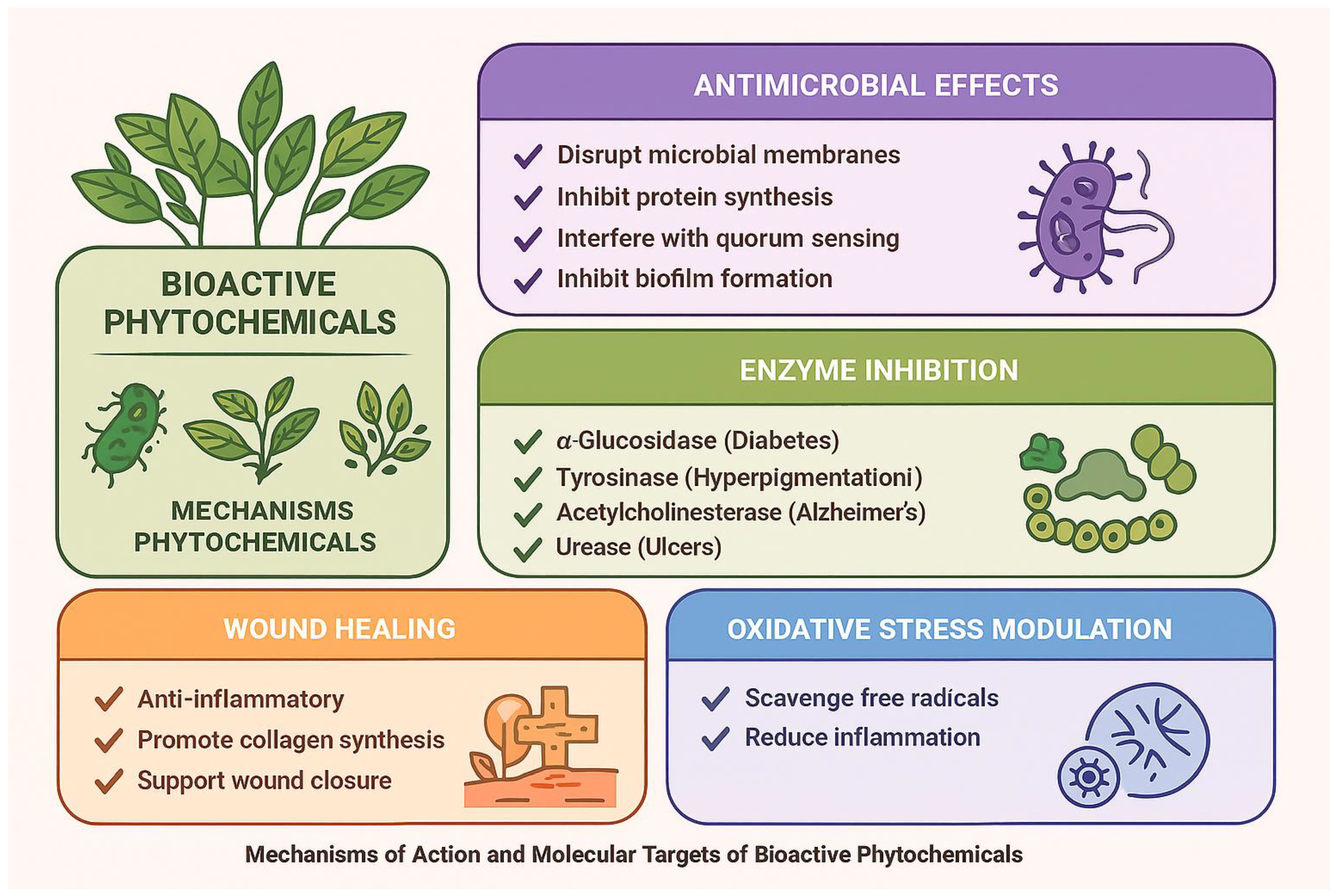
Figure 2.
Synergistic benefits of phytochemicals and conventional drugs.
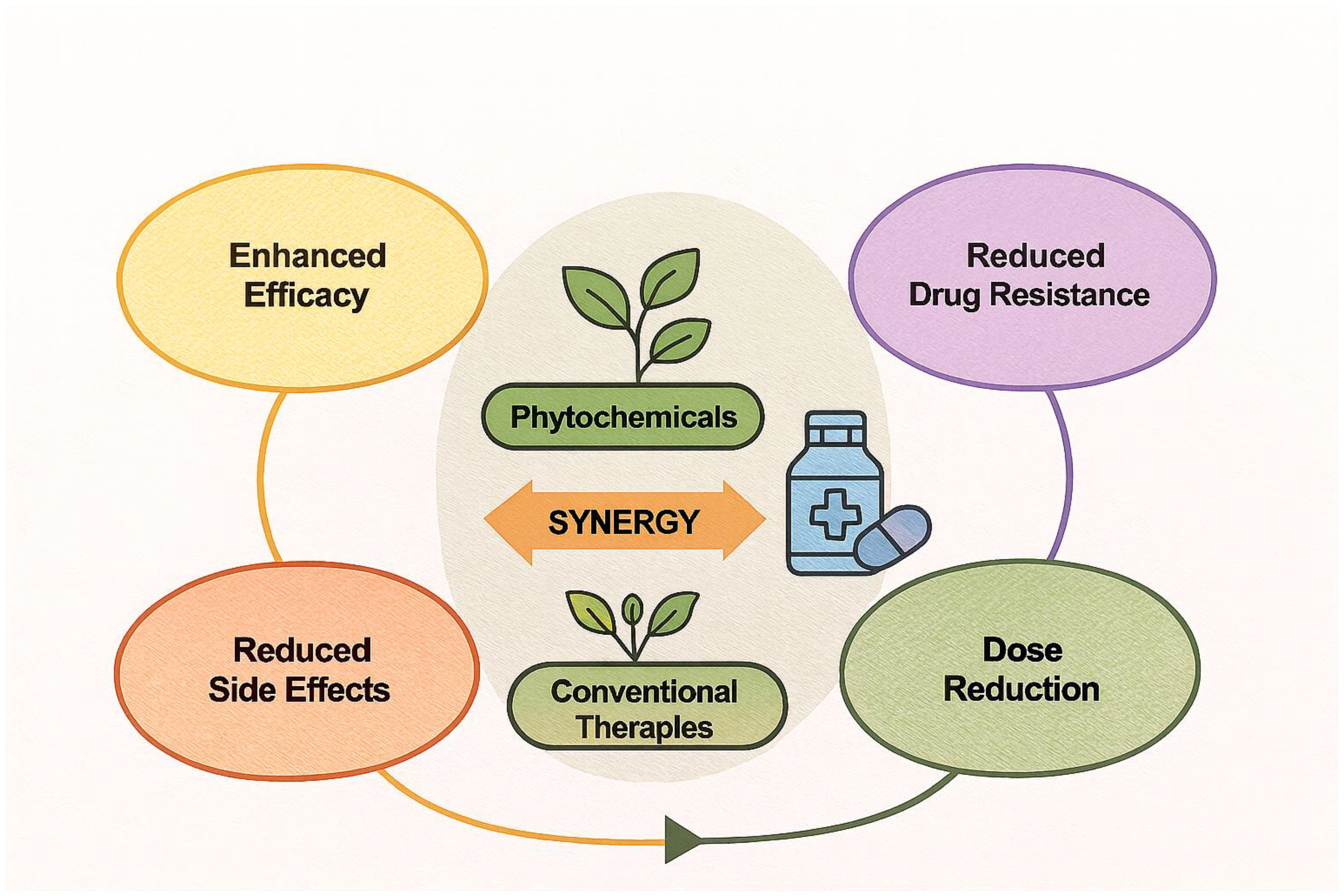
Figure 3.
Key pillars of phytochemical product standardization.
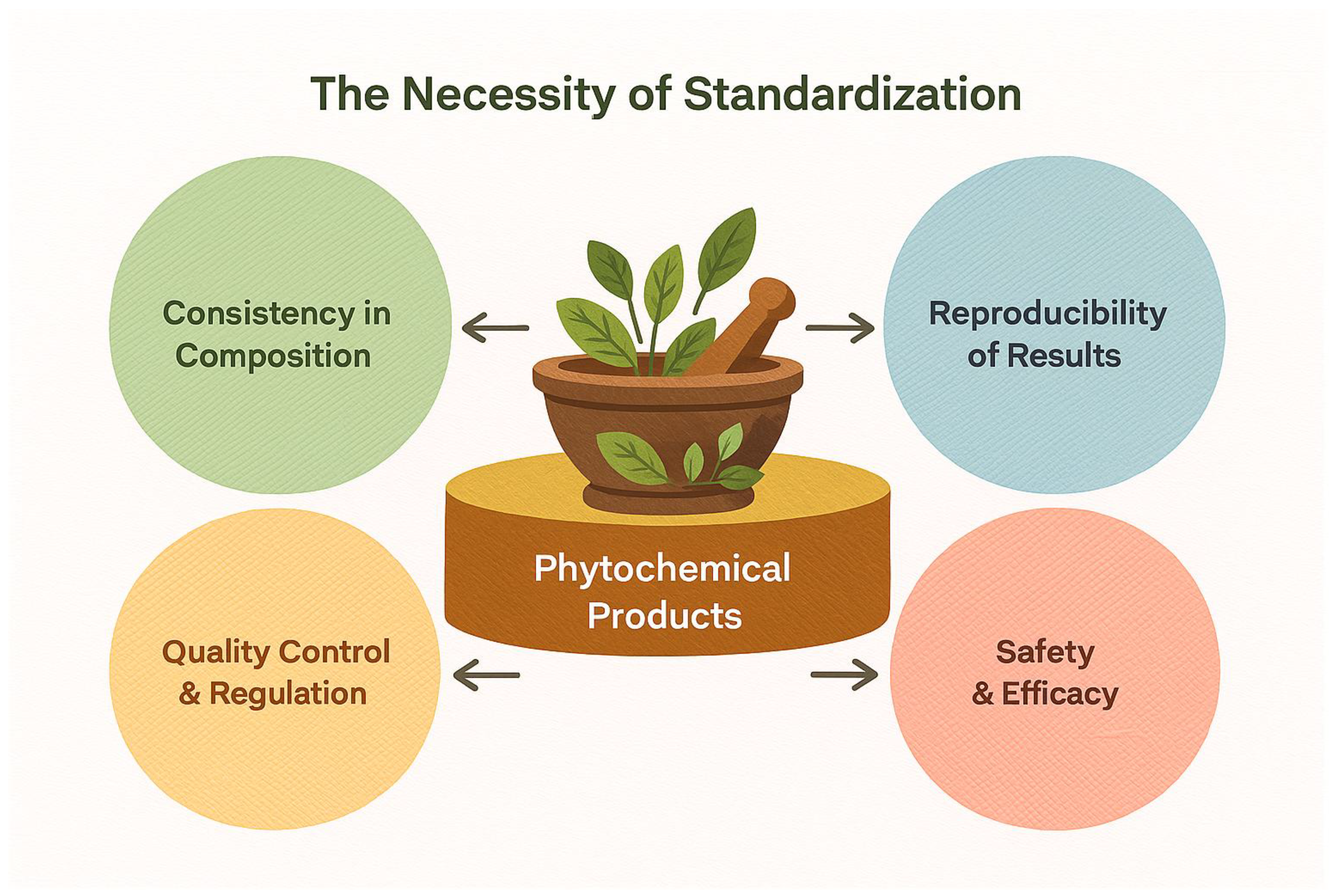

Table 1.
Overview of selected plant species, their bioactive compounds, therapeutic effects, and relevant references.
Table 1.
Overview of selected plant species, their bioactive compounds, therapeutic effects, and relevant references.
| Plant Species | Key Phytochemicals | Antimicrobial Activity | Enzyme Inhibitory Activity | Wound Healing Activity |
|---|---|---|---|---|
| Mikania micrantha | Essential oils, Flavonoids | Strong (bacteria/fungi) | Cholinesterase | Anti-inflammatory, antioxidant [13] |
| Adiantum capillus-veneris | Triterpenoids, Phenolic acids | Antibacterial, Antifungal | Cholinesterase | Collagen stabilization [14] |
| Majuphal (Quercus infectoria) | Gallotannins, Polyphenols | Broad-spectrum | α-glucosidase, Tyrosinase | Anti-inflammatory [18] |
| Acacia nilotica | Flavonoids, Alkaloids | Antibacterial | Urease, AChE | Tissue repair promotion [19] |
| Moringa oleifera | Isothiocyanates, Flavonoids | Antibacterial | MMPs (indirect) | VEGF, TGF-β modulation [22] |
| Globularia species | Iridoids, Phenolic glycosides | Moderate | Multiple enzymes | Keratinocyte proliferation [23] |
Disclaimer/Publisher’s Note: The statements, opinions and data contained in all publications are solely those of the individual author(s) and contributor(s) and not of MDPI and/or the editor(s). MDPI and/or the editor(s) disclaim responsibility for any injury to people or property resulting from any ideas, methods, instructions or products referred to in the content. |
© 2025 by the authors. Licensee MDPI, Basel, Switzerland. This article is an open access article distributed under the terms and conditions of the Creative Commons Attribution (CC BY) license (http://creativecommons.org/licenses/by/4.0/).
Copyright: This open access article is published under a Creative Commons CC BY 4.0 license, which permit the free download, distribution, and reuse, provided that the author and preprint are cited in any reuse.


