

Submitted:
14 October 2025
Posted:
15 October 2025
You are already at the latest version
Abstract
The synthesis and systematic investigation of inorganic and organic compounds represent a crucial area in medicinal and pharmaceutical chemistry, particularly in the pursuit of novel therapeutic agents. This study reports on the preparation, structural analysis, and evaluation of selected inorganic and organic compounds with emphasis on their physicochemical characteristics and biological activities. Both categories of compounds were examined for their potential therapeutic relevance, including anticancer, antimicrobial, and anti-inflammatory properties. Inorganic complexes, particularly those incorporating transition metals, demonstrated promising activity that may be attributed to their ability to interact with bimolecular targets and modulate cellular pathways. Similarly, organic derivatives revealed bioactive features that merit further exploration. Collectively, the results underscore the therapeutic potential of synthesized compounds and contribute to the growing field of drug design involving both inorganic and organic frameworks. This work emphasizes the integration of synthetic chemistry, as well as natural products with biological evaluation as a pathway toward identifying effective molecules with clinical relevance. Here, we highlighted some of the most recently developed Au(I/III), Pt(II/IV) and Ru(II/III) complexes that have shown significant in vivo antitumor properties between 2016 and 2025, as well as the antimicrobial and anti-inflammatory properties of different inorganic and organic compounds. Our review emphasizes on gold, platinum and ruthenium complexes synthesis and characterizations of inorganic and organic compounds with biomedical potential. The main focus is on the antitumor effects reported in 89 articles of inorganic and organic compounds, 53 on antimicrobial action and 17 on anti-inflammatory activities. In our review we cover the synthesis (30 articles) and characterizations (30 papers) of inorganic and organic compounds with potential biological and therapeutic effects. It is anticipated that this review will serve as a valuable resource in the future, particularly for professionals engaged in clinical, medical, and health-related disciplines.
Keywords:
inorganic compounds
; organic compounds
; metallodrugs
; anticancer
; antimicrobial
; anti-inflammatory properties
; gold(I/III)-based anti-cancer compounds
; platinum(II/IV)-based anti-cancer compounds
; ruthenium(II/III)-based anti-cancer compounds
1. Introduction
In recent years, cancer has been a scourge of modern society that is global and widespread. Oncogenes is may occur through the synergistic influence of two principal classes of exogenous agents: chemical carcinogens (including asbestos, tobacco-derived polycyclic aromatic hydrocarbons, aflatoxins, and arsenic compounds), physical carcinogens (notably ultraviolet radiation and ionizing radiation), and endogenous genetic susceptibilities arising from individual hereditary backgrounds. Metal-based therapeutic and diagnostic agents occupy a crucial position in modern medicine due to their widespread application in the treatment and detection of diverse pathological conditions. Many metallopharmaceuticals are currently being evaluated in clinical trials, highlighting the therapeutic potential of metal-containing compounds in disease treatment. The core mechanisms responsible for the bioactivity of metallodrugs and imaging agents are now well understood.
This review will focus on the use and potential of metal complexes and the biological activity of organic compounds as important therapeutic agents for the treatment of cancer. Our review provides a more focused, updated, and detailed perspective on the synthesis and characterizations of inorganic and organic compounds with biological effect, especially antitumor, antibacterial and anti-inflammatory activities. Unlike other reviews, we include not only metal complexes with potential therapeutic properties, but also organic compounds and natural products with anticancer, anti-inflammatory and antibacterial effects. We hope this review will be useful in the future especially for people who work in the areas of clinical, medical and other health applications.
1.1. The Synthesis of Metal Complexes
The preparation of coordination complexes has advanced remarkably, utilizing both traditional and contemporary methodologies to enhance their efficiency, durability, and performance (refer to Scheme 1 and Scheme 2). Analytical approaches, including spectroscopic, crystallographic, and electrochemical techniques, are essential for elucidating their structural details and directing their practical use.
1.2. Analytical Approaches, Including Spectroscopic, Crystallographic, and Electrochemical Techniques for Characterization of Coordination Compounds
The characterization of metal complexes involves examining their chemical composition, structural attributes, and electronic properties to better understand their reactivity, functionality, and potential applications (see Scheme 3 and Scheme 4). A variety of analytical and spectroscopic techniques are employed for this purpose. X-ray crystallography [4,8,9,10,12,13,17,23,24,25,26,27,31,32,33,34,35,36,37,38,39,40] serves as a cornerstone for elucidating the three-dimensional atomic arrangement, yielding accurate geometrical information about the coordination environment. The molecular structures of some copper complexes are presented in Figure 1 and Figure 2, respectively [9,27]. UV–Vis spectroscopy [6,12,41,42,43,44,45] provides valuable information on electronic transitions in metal–ligand systems, thereby shedding light on ligand-field effects and electronic structures. Infrared (IR) spectroscopy is instrumental in identifying functional groups and vibrational modes, clarifying ligand types and binding patterns [4,7,10,12,13,46,47,48,49,50,51,52]. Moreover, NMR spectroscopy—in either solution or solid state [7,12,53,54,55,56,57,58,59,60]—offers detailed information on the nuclear environments within ligands, particularly in diamagnetic complexes.
Cheng and colleagues emphasized the catalytic role of the cobalt complex they obtained with 4′-pyridyl: 2,2′;6′,2′′-terpyridine [10], as well as the anticancer activities of a dinuclear Fe(III) complex [10]. Lavrenova and co-worker synthesized novel complex of copper(II) with 2,5-bis(ethylthio)-1,3,4-thiadiazole with compositions Cu(L1)2Br2 [27]. The metal Cu²⁺ ion was coordinated by two nitrogen atoms from monodentate ligands along with two bromide ions, forming a {CuN₂Br₂} coordination polyhedron [27]. Figure 1 illustrates the molecular structure of the copper(II) complex.
Recently, Golobič et al. reported the successful synthesis of new copper(II) complexes containing acetato and chlorido ligands with methylammonium as the counterion [9]. The structures of these complexes were determined by X-ray crystallography (see Figure 2). The analysis revealed a dinuclear coordination anion, [Cu₂(Ac)₄Cl₂]²⁻, featuring bridging acetato ligands in a paddle-wheel arrangement and square-pyramidal coordination geometry around the Cu(II) centers [9].
This paper aims to summarize recent advances in the synthesis, characterization, and anticancer, antimicrobial and anti-inflammatory evaluation of inorganic and organic compounds, emphasizing gold(I/III), platinum(II/IV), ruthenium(II/III)-based anti-cancer compounds, to highlight their therapeutic potential and guide future design of more effective and selective anticancer agents useful for clinical, medical and health applications.
1.3. Biological and Medicinal Application of Inorganic Compounds
Gold(I/III)-Based Anti-Cancer Compounds
The medicinal use of gold dates back to antiquity, with Au(I) and Au(III) identified as the therapeutically active oxidation states. These gold-based compounds exhibit excellent biocompatibility and possess a broad spectrum of pharmacological activities, including anticancer, anti-inflammatory, and antirheumatic properties [61,62]. Gold-based complexes, particularly those containing carbene, phosphine, porphyrin, or dithiocarbamate ligands, act via mechanisms such as DNA disruption, apoptosis induction, and angiogenesis inhibition. Gold nanoparticles can also serve as targeted delivery systems, minimizing harm to healthy tissues [63]. Advances in Au(I)–N-heterocyclic carbene structures and other noble metal complexes highlight their promise as selective anticancer agents [64,65]. Figure 3 depicts representative Au(I) and Au(III) complexes investigated for anticancer activity.
Gold(I) phosphine complexes showed strong cytotoxic effect against colon, lung, and ovarian cancer cells, with IC₅₀ values comparable to or surpassing cisplatin [66]. Four novel mononuclear gold(I) complexes also exhibited potent effects against HeLa, PC-3, A549, and HT-1080 cell lines, with one complex displaying IC₅₀ values as low as 0.08 μM [67]. Their anticancer mechanism involves inhibition of TrxR and disruption of ATP levels, ultimately leading to cell death [65] (see Figure 4).
In 1985, Mirabelli et al. highlighted the anticancer potential of auranofin, a gold(I) complex, opening new avenues in gold-based chemotherapy [68]. Subsequent developments include doxorubicin-loaded, PEG-functionalized gold nanoparticles, which have shown selective cytotoxicity in cancer cells in vitro and in vivo [69]. Despite persistent challenges such as poor solubility, the emergence of drug resistance and systemic toxicity, ongoing research continues to focus on enhancing the pharmacokinetic properties and minimizing the adverse effects of gold-based therapeutics. Among these, gold(I) phosphane and azolate/phosphane complexes have exhibited remarkable cytotoxicity, including efficacy against chemoresistant cancer cell lines [70,71], underscoring their promise as selective anticancer agents. Carbene-derived gold(I) complexes, such as Au-1 and 2,3,4,6-tetra-O-acetyl-α-D-glucopyranosyl-1-thiolate, have demonstrated potent antiproliferative effects both in vitro and in vivo, with Au-1 notably reducing Ki67 expression, thereby highlighting its significant anticancer potential [72]. Representative examples of the anticancer activities of gold complexes are summarized in Table 1. Gold(III)–N-heterocyclic carbene complexes, exemplified by Au-3 synthesized via radioactive ¹²⁴I₂ labeling, have facilitated in vivo imaging and exhibited low-micromolar IC₅₀ values, emphasizing the critical role of Au(III) to Au(I) reduction in achieving therapeutic efficacy [73]. Furthermore, structural modifications in phosphine ligands have been shown to markedly influence biological activity. Both auranofin and newly developed gold complexes effectively inhibited multiple myeloma tumor progression and induced apoptotic cell death [74]. The square-planar Au(III) complex Au-5 showed high selectivity toward malignant cells, with significantly reduced toxicity to normal cells and IC₅₀ values ranging from 20 to 34 μg/mL, suggesting superior tumor-targeting potential relative to cisplatin [75]. Schiff base ligands, recognized for their chelating versatility and pharmacological activity, have been widely applied in Au(III) coordination chemistry. Several Schiff base-derived Au(III) complexes exhibited cytotoxicity against hepatocellular carcinoma models, coordinating via azomethine nitrogen and phenolic oxygen in square-planar geometries. Mirzadeh et al. introduced mixed-valent Au(I)–Au(III) dinuclear complexes that selectively inhibit thioredoxin reductase, with confirmed physiological stability [76]. Notably, Au-6 displayed enhanced hydrophilicity, while chiral Au(III) complexes such as Au-7 demonstrated potent cytotoxicity (IC₅₀ = 1.3–2.95 μM), induced ROS generation, mitochondrial dysfunction, and apoptosis in aggressive cancer cell lines, and modestly reduced tumor growth in vivo, highlighting their therapeutic potential [77].
Recent investigations have underscored the anticancer potential of diverse gold-based complexes. Kumar et al. reported that Au(I) complexes incorporating thiolate, dithiocarbamate, and Schiff base ligands display pronounced cytotoxicity across multiple cancer cell lines [78]. Checconi et al. reported new Au(I) complexes with anticancer and antiviral activity [79]. Marinova et al. synthesized Cu(II), Pd(II), and Au(III) complexes with 2-thiouracil and related derivatives, evaluating their biological activity [80,81,82,83]. Comprehensive reviews by Komeda et al. and Todorov et al. discussed platinum-based drugs, such as cisplatin, and alternative metal complexes—including gold, ruthenium, lanthanum, and gallium—emphasizing their mechanisms and therapeutic potential [84,85]. Wang et al. identified an all-Au(I) phosphine complex with potent cytotoxicity against prostate cancer cells, surpassing the antitumor effects of cisplatin and auranofin [86].
Platinum-Based Anti-Cancer Compounds
Platinum-based chemotherapeutics continue to play a pivotal role in medicinal inorganic chemistry, with ongoing efforts aimed at enhancing cytotoxicity, improving selectivity, and minimizing systemic toxicity. To this end, novel mononuclear Pt(II) complexes featuring diverse ligands have been developed to augment anticancer efficacy across various tumor models. Cis-diamminedichloroplatinum (cisplatin), first synthesized in 1844 by Michele Peyrone, exhibited remarkable biological activity when its properties were identified by Barnett Rosenberg in 1965. Following initial bacterial assays, cisplatin progressed to clinical trials in 1971 and received FDA approval in 1978, establishing a foundation for modern platinum-based chemotherapy [87,88,89,90,91]. Figure 5 illustrates platinum drugs currently in clinical use [91].
Platinum(II)-Based Anti-Cancer Drugs
Recent studies have described a range of mononuclear Pt(II) complexes exhibiting potent anticancer activity. Selected examples of the anticancer properties of these platinum(II) complexes are summarized in Table 2. Bazsefidpar et al. obtained Pt-8 and Pt-9, incorporating 1,3-dimethylpentylglycine, with Pt-9 showing strong cytotoxicity (IC₅₀ = 15 μM) against SKBR3 breast cancer cells and significant antitumor effects in 4T1 allograft mice [92]. Dimitrijević Stojanović et al. developed Pt-10 with a 2,2-dimethylmalonic acid ligand, demonstrating selective cytotoxicity and in vivo tumor suppression [93]. Qin et al. reported Pt-11 and Pt-12, a cryptolepine-based complexes, with superior cytotoxicity (IC₅₀ = 0.2 μM) and apoptosis induction via mitochondrial pathways, reducing T-24 xenograft tumor growth more effectively than cisplatin [94]. Maciel et al. identified Pt-13, a naphthyl-substituted complex, highly selective against MDA-MB-231 cells and reducing xenograft tumor growth by 65.4% [95]. Ruiz et al. demonstrated that Pt-14, a hydroxyquinolate complex, impaired osteosarcoma cell viability and inhibited tumor growth without renal or hepatic toxicity [96]. Mo et al. synthesized Pt-15 and Pt-16, 8-hydroxyquinoline–tropolone derivatives, with Pt-15 exhibiting potent cytotoxicity (IC₅₀ = 3.6 μM), ROS generation, cell cycle arrest, and effective tumor suppression in vivo, comparable to cisplatin [97]. Collectively, these studies highlight the structural diversity and therapeutic potential of Pt(II) complexes as selective anticancer agents.
Franich et al. synthesized dinuclear cationic aqua Pt(II) complexes with pyridine-based bridges, demonstrating strong DNA binding, overcoming cisplatin resistance, and inhibiting tumor angiogenesis and melanoma metastasis in zebrafish-mouse xenograft models [98]. Gadre et al. developed heterobimetallic Pt(II)-ferrocene complexes that selectively targeted tumor cells via OCT2-mediated uptake, induced ROS-mediated non-apoptotic cell death, and suppressed A2780 xenograft tumors more effectively than oxaliplatin [99]. Hu et al. reported bis(N-heterocyclic carbene) Pt(II) complexes capable of overcoming cisplatin resistance, reducing NCI-H460 tumor growth by 70% in vivo through ASNS targeting [100]. Six Pt(II) complexes based on a naphthalenebenzimidazole scaffold exhibited IC₅₀ values of 2.36–11.61 μM across eight cancer cell lines, outperforming cisplatin in SMMC-7721 and U251 cells [101]. Collectively, these studies highlight the structural diversity, enhanced selectivity, and potent anticancer activity of Pt(II) complexes, emphasizing the role of rational ligand design in developing next-generation platinum-based therapeutics.
In summary, recent advances in platinum-based complexes demonstrate that rational ligand design can significantly enhance anticancer efficacy, selectivity, and safety profiles compared to classical cisplatin. While numerous derivatives have shown promising in vitro and in vivo activity, challenges remain in optimizing pharmacokinetics, overcoming drug resistance, and ensuring minimal off-target toxicity. Future research should focus on systematic structure–activity relationship studies, targeted delivery strategies, and detailed mechanistic investigations to facilitate the translation of these novel Pt(II) complexes into clinically viable therapeutics.
Platinum(IV)-Based Anti-Cancer Drugs
Pt(IV) complexes represent a promising class of anticancer agents with octahedral geometry, greater kinetic inertness, and reduced off-target interactions compared to Pt(II) drugs. Pt(IV)-17 showed strong in vitro efficacy and reduced tumor mass by 72.5% in a Lewis Lung Carcinoma model, although neurotoxicity was observed [102]. Pt(IV)-18, a cisplatin/oxoplatin derivative incorporating a TDO inhibitor, demonstrated exceptional potency against TDO-overexpressing HepG2 cells (IC₅₀ = 0.30 μM), induced S-phase arrest, ROS generation, mitochondrial apoptosis, and enhanced antitumor immunity, reducing xenograft tumor growth by 70.5% [103]. Structure–activity studies indicated that mono-naproxen Pt(IV) derivatives, such as Pt(IV)-19, effectively overcame drug resistance and displayed strong cytotoxicity (IC₅₀ ~5.4 μM) with reduced toxicity in vivo [104]. Jin et al. developed Pt(IV)–naproxen derivatives (Pt(IV)-21 and Pt(IV)-22), with Pt(IV)-22 exhibiting potent cytotoxicity (IC₅₀ = 0.16–0.34 μM), significant tumor suppression in MDA-MB-231 xenografts, and anti-inflammatory effects without major toxicity [105,106]. These studies highlight Pt(IV) prodrugs as selective, efficacious anticancer agents with potential added immunomodulatory and anti-inflammatory benefits.

Table 3.
Summary table with a few examples of anti-cancer activity of platinum(IV) complexes.
| Structure of Platinum(IV) Complexes | In Vitro Activity | In Vivo Activity | References |
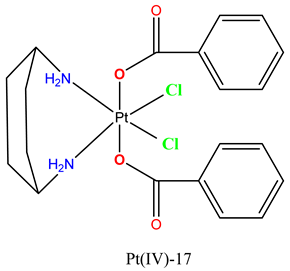 |
No data available. | In a murine LLC model, administration of the complex (5 mg/kg) reduced tumor mass by 72.5%. | Barbanente et al. 2022 [102] |
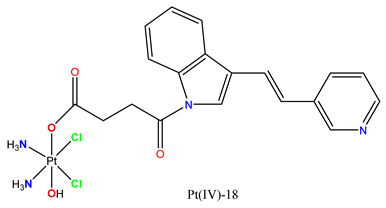 |
Caused cell death in HEPG2 cells. | In mice, HepG2 tumor xenograft growth was inhibited, with activation of T cells enhancing antitumor immunity. | Hua et al. 2019 [103] |
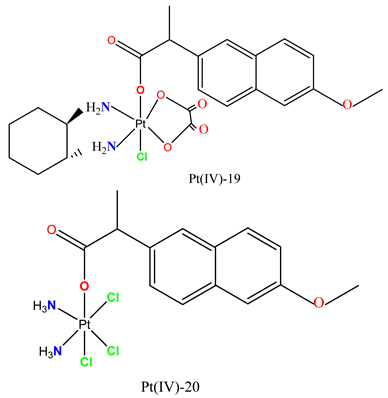 |
Reduced growth of cancer cells such as A549, A549R, SKOV-3, and CT-26. | In BALB/c mice, CT26 tumor growth was inhibited to a level comparable with oxaliplatin and cisplatin. | Chen et al. 2020 [104] |
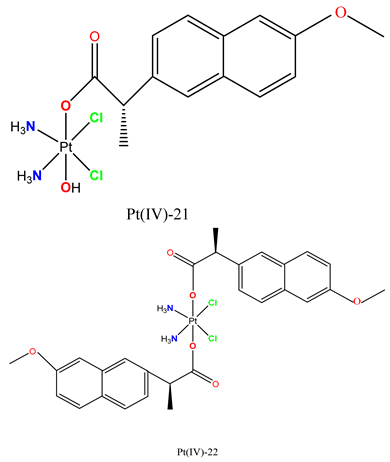 |
In human cancer cell lines (MCF-7, MDA-MB-435, MDA-MB-231), proliferation was inhibited and cytotoxicity induced, while MCF-7 cell migration was delayed in a wound healing assay. | In female Balb/C mice, MDA-MB-231 tumor growth was inhibited. | Jin et al. 2020 [106] |
Cisplatin-derived Pt(IV) complexes incorporating medium-chain fatty acids as axial ligands, such as octanoate (OA) and its branched isomer valproate (VPA), have demonstrated remarkable antiproliferative activity in cellular studies [107,108]. Novohradsky and colleagues reported a compound, [Pt(IV)diOA], containing two axial OA ligands, which exhibited strong cytotoxic effects against various tumor cell lines [109].
Ruthenium-Based Anti-Cancer Compounds
Ruthenium-based compounds are extensively studied for therapeutic applications due to their ability to interact with biomolecules such as DNA and proteins. Under physiological conditions, Ru(II) (d⁶, diamagnetic) and Ru(III) (d⁵, paramagnetic) are stable, with Ru(II) being more reactive and exhibiting ligand exchange rates comparable to Pt(II). Ru(II)-arene complexes, including those with 5,7-dihalogenated-2-methyl-8-quinolinol or aryl-bis(imino) acenaphthene ligands, demonstrated selective cytotoxicity against HeLa and CT26 cells, induced ROS, inhibited migration, and reduced tumor growth in xenograft models [110,111]. Table 4 presents a few of the examples of the anti-cancer activity of ruthenium complexes. Acylthiourea- and 2-aminophenyl benzimidazole–containing Ru complexes showed enhanced distribution, DNA/protein interactions, and anticancer activity [112,113,114]. Polypyridyl Ru(II) complexes exhibited limited activity alone but showed strong cytotoxicity (IC₅₀ ~3.4 μM) when liposome-encapsulated, inducing G2/M arrest, ROS generation, ferroptosis, and autophagy [115]. Incorporation of dipyridophenazine (dppz) ligands into Ru(II)-arene scaffolds formed reactive species capable of DNA binding and degradation, with p-cymene arene substitution enhancing activity 17-fold and improving selectivity in HCT116 cells [116,117]. These findings underscore the potential of Ru(II)-based complexes as selective and potent anticancer agents.
Alessio and Messori conducted a comparative analysis of landmark Ru(III) complexes, NAMI-A and KP1019/KP1339, emphasizing their pharmacological profiles, mechanisms of action, and clinical significance [118]. Ruthenium-based anticancer agents, including NAMI-A, KP1019, KP1339 (in clinical trials), and DW1/2 (preclinical), exhibit considerable therapeutic potential, with DW1/2 functioning as a protein kinase inhibitor [119,120]. New obtained Ru(II) complexes, such as 5-chloro-8-hydroxyquinoline–valine isomers and Ru(II) arene chlorido complexes, demonstrated strong cytotoxicity (IC₅₀ = 0.3–0.71 μM), selectively induced apoptosis, and caused G2/M cell cycle arrest in various cancer cell lines, while sparing normal cells [121,122]. Additionally, cyclometalated Ru(II) and biotin-conjugated polypyridyl complexes exhibited improved solubility, stability, organelle targeting, and potential for phototherapeutic applications [123,124,125]. Collectively, these findings underscore the significant therapeutic promise of Ru-based complexes, although further research and clinical validation are required to facilitate their translation into effective cancer therapies.
Organic Compounds with Anti-Cancer Properties
Cancer continues to represent a major global health challenge, motivating the ongoing pursuit of safe and effective therapeutic strategies. Among therapeutic candidates, organic small molecules—particularly those derived from natural products, heterocyclic scaffolds, and rationally designed hybrids—have emerged as a cornerstone in modern medicinal chemistry. The attractiveness of these compounds stems from several intrinsic advantages: favorable pharmacokinetic and pharmacodynamic profiles, oral bioavailability, structural diversity, and synthetic accessibility [126]. Since 2017, drug discovery efforts have delivered a notable wave of small-molecule anticancer agents—including kinase inhibitors, PARP inhibitors, and novel purine hybrids—demonstrating improved potency, selectivity, and reduced systemic toxicity when compared to classical chemotherapies [127].
Natural products continue to serve as rich reservoirs for anticancer scaffolds. Plant-based small molecules, such as flavonoids and phytochemicals, have shown chemopreventive and therapeutic activity, particularly through kinase pathway modulation in precision oncology approaches [128]. Synthetic innovations are also accelerating progress—for instance, purine-based hybrids, incorporating structural features like chalcones or triazoles, have achieved potent activity across multiple cancer types in recent studies [129]. Overall, the synergy of natural product inspiration and synthetic design is generating versatile, multi-targeted organic compounds with promising anticancer activity, setting the stage for their potential translation into the clinic. Recently, Atanasov et al. reviewed current technological advances facilitating natural product-based drug discovery, highlighting selected applications and discussing key opportunities [130]. Newman and Cragg in 2020 quantified how often organic natural products underpin approved anticancer drugs [131]. Chunarkar-Patil et al. published a review of NP-derived small molecules and mechanisms in cancer [132]. Liu et al. reported a comprehensive map of approved and clinical-stage small-molecule cancer inhibitors [133]. Zhong and colleagues presented a review on targets, successes, and resistance for small-molecule oncology drugs [134]. Xue et al. focused on organic small-molecule–based nanomedicines and delivery [135]. Feng et al. explored emergent epitranscriptomic small molecules for cancer therapy [136]. Anticancer activities of natural and synthetic steroids was published by Mendoza Lara et al. [137]. This extensive review examined spirooxindole—a highly promising synthetic scaffold—exploring its diverse derivatives and their notable anticancer potential [138]. It presented structure–activity relationship (SAR) insights, covering mechanisms like cell cycle arrest, apoptosis, anti-angiogenesis, and anti-metastasis across multiple cancer types, including breast, lung, colon, and prostate [138]. Different authors focused on design and synthesis of organic molecules as antineoplastic agents [139,140,141,142,143,144,145,146,147,148,149].
Inorganic and Organic Compounds with Antimicrobial Properties
Saidin et al. presented a review captured a wide spectrum of antimicrobial strategies—including organic molecules (e.g., quaternary ammonium salts, guanidines, halogenated amines) and inorganic agents (including nanoparticles)—and discussed their mechanisms, stability, and applicability in biomedical contexts [150]. It’s an excellent resource if you’re looking to understand how both chemical domains contribute to combating bacterial infections. Both organic and inorganic antibacterial agents have gained significant attention as alternatives to conventional antibiotics, particularly in light of rising multidrug resistance. The review by Hess emphasized inorganic and organometallic antibacterials, highlighting rational design strategies that exploit metal-specific reactivity and redox properties to overcome bacterial defenses [151]. In contrast, the review of Saidin et al. provided a broader classification of both organic compounds (e.g., triclosan, polyaniline, chlorhexidine) and inorganic agents (e.g., silver, copper, zinc), focusing on their mechanisms of action and biomedical applications. Taken together, these works illustrate how combining the tunability of organic compounds with the unique physicochemical advantages of metal-based agents could yield synergistic antibacterial strategies, paving the way for next-generation therapeutics.
The development of antibacterial agents has increasingly focused on both organic and inorganic compounds, as well as hybrid systems, to combat the growing challenge of antimicrobial resistance. Inorganic compounds, particularly polyoxometalates, have shown promising antibacterial properties due to their structural diversity and ability to interact with bacterial membranes and enzymes [152]. Similarly, organometalated drugs and metal-based materials have been explored for their broad-spectrum activity, offering unique mechanisms of action compared to conventional antibiotics [153]. Organic approaches, on the other hand, include synthetic small molecules and naturally derived polymers with antibacterial effects, such as modified biopolymers that enhance stability and selectivity [154].
Gold(I/III)-Based Compounds with Antimicrobial Properties
Gold complexes, Au(I) and Au(III) in particular, have demonstrated promising antimicrobial activities against bacteria, fungi and even multidrug-resistant bacteria. The FDA-approved antiarthritic drug auranofin has demonstrated notable antibacterial activity, particularly against Gram-positive bacteria [155,156]. Specifically, auranofin exhibited a minimum inhibitory concentration (MIC) of 0.215–0.25 µg/mL against Staphylococcus aureus, whereas significantly higher MIC values were observed against Escherichia coli (31.25 µg/mL) and Pseudomonas aeruginosa (>250 µg/mL) [157]. Wiederholt et al. (2017) reported antifungal activity of auranofin against various Candida species, with MIC values ranging from 0.25 to 16 µg/mL [156]. Additionally, Torres et al. (2016) demonstrated that auranofin effectively disrupted biofilms of S. aureus and P. aeruginosa, with minimum biofilm eradication concentrations of 7.99 and 6.24 µg/mL, respectively [155]. Many authors have attempted to synthesize auranofin analogues in order to broaden and improve its antimicrobial spectrum [158,159,160]. Various other Au(I) complexes exhibited antimicrobial properties. Frik et al. (2012) synthesized posphine gold (I) complexes with activity against E. coli, Bacillus cereus, S. aureus and Saccharomyces cerevisiae [161]. Chen et al. (2023) demonstrated that a series of Au(I) selenium NHC complexes effectively inhibited multidrug-resistant bacteria, in some cases exhibiting markedly superior activity to auranofin both in vitro and in vivo [162]. Ndugire et al. (2022) synthesized phosphine-capped gold nanoclusters and glycosylated them to produce auranofin analogues with mixed TPPMS/Ac₄GlcSH ligand shells, enhancing activity against Gram-negative bacteria while reducing toxicity toward human A549 cells [163]. The proposed antibacterial mechanism is DNA degradation and irreversible inhibition of the cell’s thioredoxin reductase activity, which leads to cell metabolism dysfunction due to oxidative stress [162,163]. Organometalic complexes with Au(III) have also been investigated for antimicrobial activity, although in a lesser extent than Au(I) comlexes. Cyclometalated complexes are the main focus of researchers because of their stability and chemical plasticity [164]. A gold (III) 1,2 thiolene cyclometalated complex exhibited activity against S. aureus and S. heamolyticus, as well as interference with the formation of biofilms by both staphyloccocal strains [165]. Chakraborty et al. (2021) reported on gold (III) complexes inhibiting S. aureus, B. subtilis and to a lesser extent – Enterococcus faecium and E. coli [166]. The Au(III) N-heterocyclic carbene complexes of Bussing et al. (2021) demonstrated activity against S. aureus, Klebsiella pneumoniae, E. faecium, E. coli, P. aeruginosa and Acinetobacter baumannii [167]. The precise mechanism of action of these complexes remains unclear; however, it is likely to involve disruption of cellular membranes [164].
Platinum (II/IV)-Based Compounds with Antimicrobial Activities
Platinum is also included in metal complexes with different ligands. The synthesized compounds are investigated for antimicrobial activity against various microorganisms. Pereira et al. (2020) examined Pt(II) complexes with adamantine derivatives and found that there was a significant improvement in the inhibitory effect against Gram-positive bacteria S. aureus and Bacillus cereus for all three complexes, and the Pt-memantine complex was effective against E. coli (MIC ≤ 0.14 mmol/L) [168]. In another study 3 cyclometalated complexes with Pt (II) were investigated for antibacterial activity against S. aureus and MRSA (Methicillin-resistant Staphylococcus aureus) [169] and all of them showed improved or comparable results to that of the ligand. Lunagariya et al. also observed improvement in the antimicrobial activity of their 5-quinoline 1,3,5-trisubstituted pyrazole based platinum(II) complexes in comparison with the ligand expressed by lower MICs [170]. The antibacterial properties of ciprofloxacine against Campylobacter jejuni were improved significantly (with an average 34.8-fold reduction in the MIC value) by the addition of a Pt(II) complex with 5-amino-1,3,4-thiadiazole-2(3H)-thione and the complex by itself demonstrated a stronger effect than ciprofloxacine [171]. The proposed mechanisms for antimicrobial activity of the Pt(II) complexes is the Tweedy’s chelate theory: chelation facilitates the penetration of the cell membrane by the complex [172].
Radić et al. investigated a Pt(IV) complex bearing a meso-1,2-diphenyl-ethylenediamin-N,N′-di-3-propanoate ligand against multiple microorganisms and observed low to moderate antimicrobial activity, with MIC values ranging from 125 μg/mL to >1000 μg/mL and MMC values from 500 μg/mL to >1000 μg/mL. At the tested concentrations, growth of clinical isolates of S. aureus, E. coli, E. faecalis, Proteus mirabilis, Salmonella enterica, Aspergillus flavus and Candida albicans was not inhibited [173]. A heteroscorpionate-derived Pt(IV) complex emerged as a promising therapeutic candidate against methicillin-resistant Staphylococcus aureus (MRSA) [174], inhibiting the growth of MRSA planktonic cells (with an MIC eight times lower than that of the free ligand) and reducing biofilm formation in both conventional biofilm-inducing media and wound-like environments. Pt(IV) complexes incorporating N-alkylphenothiazines also demonstrated activity against bacilli, MRSA, and E. coli [175]. Additionally, Frei et al. (2021) evaluated 14 platinum(IV) cyclooctadiene complexes, reporting activity primarily against Gram-positive bacteria [176] and ten of these compounds exhibited some activity against the Gram-positive bacteria included in the panel and/or C. albicans and Candida neoformans with two of them showing excellent effect on S. aureus, Staphylococcus epidermidis, B. subtilis and MRSA.
Ruthenium(II/III)-Based Compounds with Antimicrobial Activities
Ruthenium is the most common element found in organometal complexes [177]. Multiple studies have investigated Ru(II) complexes with different compositions – mononuclear, [178,179,180], polynuclear [181,182], hetero-metalic complexes, Ru-based carbon-monoxide-releasing molecules [183,184]. Wang et al. explored the in vitro antibacterial effect of four mononuclear Ru(II) complexes against S. aureus and detected MICs between 0.0156 and 0.2500 mg/mL. The most effective complex was further investigated and the authors determined, that it interrupted biofilm formation and toxin secretion by S. aureus, enhanced the antibiotic activity of 9 commonly used antibiotics and ointments containing this complexes were highly active against mouse skin infections [185]. A 3,3’-dicarboxy-2,2’- bipyridine complex with Ru(II) displayed MIC of 35 µg/mL against S. aureus and 35 µg/mL against E. coli [186]. Huang et al. reported on ruthenium complexes containing phenylseleny with excellent antimicrobial activity against S. aureus in vitro (MIC 1.56–6.25 μg/mL), biofilm inhibition and the ability to clear infections in vivo in a mouse and laravae model [187]. The arene-Ru(II) complex synthesized by Namiecińska et al. (2020) inhibited the growth of Gram-positive bacteria such as S. aureus, S. epidermidis and E. faecalis, but not – Gram-negative and yeasts [188]. Zhou et al. (2025) determined, that and aromatic ruthenium (II) complex demonstrated in vitro significant activity against S. aureus, and the infection in vivo in wound and a sepsis models was effectively inhibited. At a molecular level the complex disrupted biofilm formation and decreased toxin secretion by S. aureus [189]. Gorle et al. (2014) investigated the antimicrobial activity of tri- and tetra-nuclear polypyridyl ruthenium(II) complexes against four bacterial strains, including Gram-negative E. coli and P. aeruginosa and methicillin-resistant S. aureus (MRSA), as well as Gram-positive S. aureus [190]. The complexes exhibited excellent antimicrobial activity with rapid uptake and high level of accumulation of the tetranuclear complexes in bacteria cells. In recent studies CORMs have displayed bactericidal activity against antibiotic-resistant P. aeruginosa [191], H. pylori [192], and E. coli [193] strains. Stringer et al. (2017) synthesized a heterobimetallic complex from a Schiff base-derived isonicotinyl ferrocene complex using ruthenium dimers, which exhibited activity against Mycobacterium tuberculosis [194]. The antimicrobial activity of ruthenium(III) complexes is less studied. Tao et al. investigated ruthenium coordination polymer composites incorporating chitosan quaternary ammonium polymers and shikimic acid, which demonstrated enhanced antimicrobial activity against S. aureus compared to the free ligand and retained efficacy in time-kill assays [195]. These composites also inhibited S. aureus biofilm formation in a dose-dependent manner, likely through disruption of cell membrane integrity, inhibition of Ca²⁺-Mg²⁺-ATPase activity, and modulation of intracellular Ca²⁺ levels. Similarly, ruthenium(III) complexes with Schiff base ligands exhibited greater antibacterial activity than their corresponding free ligands under comparable conditions [196]. Recent reviews highlight the importance of combining organic and inorganic strategies for biomedical applications. Saidin et al. emphasized that hybrid organic-inorganic antibacterial systems can improve therapeutic efficiency by enhancing bioavailability, targeting, and reducing toxicity [150]. Natural and semi-synthetic compounds, such as polyphenols and essential oil derivatives, are also being integrated with nanomaterials to yield synergistic antibacterial effects [197,198]. More recently, novel antibacterial agents with new mechanisms, such as cell wall biosynthesis disruption or membrane destabilization, have been reported, providing alternatives to overcome multidrug-resistant strains [199,200]. Importantly, applied studies, such as the use of compound organic acids to treat Staphylococcus aureus-induced infections in poultry, demonstrate the translational potential of organic antibacterial strategies in clinical and agricultural settings [201]. Overall, the integration of organic, inorganic, and hybrid antibacterial compounds presents a promising frontier in drug development, aiming to deliver safe, effective, and resistance-evading therapies. Future research should focus on structure-activity relationships, targeted delivery mechanisms, and comprehensive pharmacological evaluations to accelerate clinical translation.
Inorganic and Organic Compounds with Anti-Inflammatory Properties
The search for effective anti-inflammatory agents increasingly spans both organic and inorganic chemistry, combining traditional and novel approaches.
Organic Heterocycles—Pyrimidines. Synthetic pyrimidines have shown considerable promise as anti-inflammatory agents. Their structure–activity relationships (SARs) highlight activity against key mediators, including prostaglandin E₂ (PGE₂), inducible nitric oxide synthase (iNOS), NF-κB, TNF-α, leukotrienes, and multiple interleukins, underscoring their therapeutic potential [202]. Gallium-based agents have demonstrated consistent anti-inflammatory activity across preclinical studies between 2000–2019, with evidence for their action through diverse inflammatory pathways. These findings support further development of gallium compounds as anti-inflammatory therapeutics [203].
Organometallic NSAID Complexes. The coordination of non-steroidal anti-inflammatory drugs (NSAIDs) with metal ions has emerged as a promising strategy to enhance therapeutic potency while mitigating adverse effects. For example, a copper–aspirin complex demonstrated enhanced COX-2 inhibition with fewer gastrointestinal side effects compared to aspirin alone. Similarly, zinc–aceclofenac complexes were reported to reduce gastric inflammation by masking the drug’s carboxyl groups [204].
Flavonoids and Metal Complexes. Flavonoids, chromones, and coumarins—and their respective metal complexes—exhibit anti-inflammatory, antioxidant, and antimicrobial activity. Metal conjugation often improves their stability and biological performance, suggesting significant therapeutic value [205].
Organosulfur Natural Products. Natural organosulfur compounds (OSCs), widely found in garlic and onions, downregulate inflammatory mediators (NO, PGE₂, IL-1β, IL-6, TNF-α, IL-17) and suppress NF-κB signaling, providing strong evidence of their anti-inflammatory and antioxidant efficacy [206]. Thirteen heterocyclic coxib-like 4,5-diarylfuran-3(2H)-ones and their fused phenanthro [9,10-b]furan-3-one derivatives were synthesized and evaluated for anti-inflammatory activity, COX-1/2 inhibition, and cytotoxicity against MCF-7 and HSC-3 cell lines [207]. Among these, the fluorinated –SOMe furan-3(2H)-one exhibited the highest activity, with a COX-1 IC₅₀ of 2.8 μM, 54% anti-inflammatory effect, and IC₅₀ values of 10 μM and 7.5 μM against MCF-7 and HSC-3 cells, respectively. This compound also displayed synergistic effects with gefitinib and 5-fluorouracil, with a phenanthrene derivative showing the most pronounced synergy [207].
Nanomaterials. Inorganic nanostructures are also being investigated for inflammation control. Fullerene-like tungsten disulfide (IF-WS₂) nanoparticles have been shown to reduce the expression of pro-inflammatory cytokines, including TNF-α, IL-1β, IL-8, and MCP-1, in peripheral blood mononuclear cells, highlighting their immunomodulatory potential [208]. Mebeverine hydrochloride, an antispasmodic agent that regulates bowel movements and relaxes intestinal smooth muscle, is limited in clinical use due to certain adverse effects. In this context, Stoyanova et al. investigated the effects of previously synthesized MBH-loaded silver nanoparticles (AgNPs) on smooth muscle contractility and their anti-inflammatory properties, proposing them as a potential alternative delivery system [209].
Ivanov et al. synthesized new compounds by combining 2-aminobenzothiazole with various profens [210]. Derivatives 3b (HPSA IC₅₀ = 60.24 µg/mL) and 3c (HPSA IC₅₀ = 67.71 µg/mL) exhibited strong antioxidant activity and significant anti-inflammatory effects, with IAD values of 54.64 µg/mL and 64.44 µg/mL, respectively [210]. Dimitrova and co-worker reported the synthesis through N,N′-dicyclohexylcarbodiimide-mediated and characterization of five trimetazidine–profen hybrids [211]. Antioxidant activity (HRSA) and anti-inflammatory potential (IAD) were assessed [211]. Ivanov et al. synthesized five novel compounds by conjugating flurbiprofen with various substituted 2-phenethylamines [212]. Molecular docking studies further elucidated the in vitro results, providing insights into the molecular mechanisms underlying their observed biological activities (see Figure 6).
Compounds 4a–e exhibit pronounced intravenous toxicity, with 4e being four times more toxic than flurbiprofen [212]. The presence of methoxy substituents, particularly in 4b–d, correlates with reduced toxicity. Due to complete bioavailability, intravenous administration results in lower lethal doses. Among the series, 4d shows the lowest intraperitoneal toxicity (toxicity order: Flu > 4b > 4c > 4a > 4e > 4d). In contrast, oral administration of 4b–d markedly decreases toxicity—by more than threefold compared with flurbiprofen—highlighting the oral route as a safer and more favorable mode of delivery [212]. Polyphenolic fractions of Helichrysum italicum (hexane, chloroform, EtOAc, butanol) were analyzed by HPLC-PDA and UHPLC-MS/MS, identifying 60 compounds (several reported for the first time) by Bojilov et al. [213]. The EtOAc fraction showed strongest antioxidant/nitrosative activity, while hexane and chloroform fractions exhibited superior anti-inflammatory effects. It should be noted that all fractions exhibited anti-arthritic potential [213]. The synthesis of four newly hybrid molecules, derived from ketoprofen (2-(3-benzoylphenyl)propanoic acid) and nitrogen-containing heterocyclic compounds—including piperidine, pyrrolidine, 1,2,3,4-tetrahydroquinoline, and 1,2,3,4-tetrahydroisoquinoline—has been reported [214]. All compounds were evaluated for their in vitro anti-inflammatory and antioxidant activities. Additionally, Manolov et al. described the synthesis of novel hybrid molecules combining amphetamine with ibuprofen, flurbiprofen, ketoprofen, naproxen, and carprofen [215]. The in vitro inhibitory activity of the synthesized compounds against albumin denaturation was evaluated, revealing significant effects. The IC₅₀ values of the resulting amphetamine–profen derivatives were found to range between 92.81 and 159.87 µg/mL. The findings reported by Panova et al. suggest that Moringa oleifera possesses considerable potential as a candidate for antimicrobial, antioxidant, anti-inflammatory, and antispasmodic applications, supporting its use in the development of alternative pharmaceutical and nutraceutical products [216]. Todorova and co-workers present the synthesis of a new styryl quinolinium derivative, as well as an evaluation of its anti-inflammatory and antioxidant activities [217]. Stoyanova et al. synthesized new mebeverine analogs and evaluated their spasmolytic properties ex vivo, as well as their anti-inflammatory activities both ex vivo and in vitro [218]. Gerasimova et al. investigated the metabolic profile, elemental composition antimicrobial, antioxidant and anti-inflammatory activities of Passiflora caerulea L. cultivated in Bulgaria [219]. Their analyses revealed that glucose, fructose, and sucrose were present in the pulp and leaves, whereas amino acids were predominantly found in the fruits.
2. Conclusions
This study demonstrates that both inorganic and organic compounds possess significant therapeutic potential, including anticancer, antimicrobial, and anti-inflammatory activities. The main emphasis is on the antitumor effect 89 articles of inorganic and organic compounds, 53 with antimicrobial action and 17 - anti-inflammatory activities. Transition metal-based inorganic complexes (especially with Au(I/III), Pt(II/IV), Ru(II/III)) and bioactive organic derivatives showed promising interactions with biomolecular targets. These findings underscore the value of integrating synthetic chemistry and natural compounds with biological evaluation to guide the development of effective drug candidates and support the ongoing exploration of metallodrugs and organic therapeutics for clinical applications.
Acknowledgments
We acknowledge the financial support from the Fund for Scientific Research of the Plovdiv University, project СП 23-ХФ-006 and the European Union—Next Generation EU, through the National Recovery and Resilience Plan of the Republic of Bulgaria, project DUECOS BG-RRP-2.004-0001-C01.
Conflicts of Interest
The authors declare no conflicts of interest.
Abbreviations
The following abbreviations are used in this manuscript:
| 1H NMR | proton nuclear magnetic resonance |
| 13C NMR | carbon-13 nuclear magnetic resonance |
| ESI-HRMS | electrospray ionization high-resolution mass spectrometry |
| ESI-MS | electrospray ionization mass spectrometry |
| FT-IR | fourier transform infrared |
| ICP-MS | inductively coupled plasma mass spectrometry |
| TrxR | thioredoxin reductase |
| DMSO | dimethyl sulfoxide |
| AuNPs | gold nano particles |
| NP | nano particle |
| ATP | adenosine triphosphate |
| PEG | polyethylene glycol |
| PET | positron emission tomography |
| MM | multiple myeloma |
| HCC | hepatocellular carcinoma |
| ROS | reactive oxygen species |
| FDA | Food and Drug Administration |
| 4T1 | mouse mammary carcinoma cell line |
| Bcl-2 | B-cell lymphoma 2 |
| Apaf-1 | Apoptotic Protease-Activating Factor 1 |
| MDA-MB-231 | A human breast adenocarcinoma cell line established from a patient with metastatic mammary adenocarcinoma |
| MCF-7 | Another human breast cancer cell line used in cancer research |
| A549 | A human lung carcinoma cell line |
| PC3 | A human prostate cancer cell line |
| BXPC-3 | A human pancreatic cancer cell line |
| PBMCn | Peripheral Blood Mononuclear Cells |
| SAR | Structure–activity relationship |
| CT-DNA | calf thymus-Deoxyribonucleic acid |
| MMP | mitochondrial membrane potential |
| CDK1 | cyclin-dependent kinase 1 |
| Cdc25A | cell division cycle 25 A |
| B16-F10 | a specific murine melanoma cell line derived from the B16 tumor line |
| A2780 | ovarian cancer cell line |
| ASNS | asparagine synthetase |
| HepG2 | A human liver carcinoma cell line |
| HeLa | A common human cervical cancer cell line |
| SKOV3 | A human ovarian cancer cell line |
| BEL-7404 | A human hepatocellular carcinoma cell line |
| NCI-H460 | A human large cell lung carcinoma cell line |
| U251 | A human glioblastoma cell line |
| SMMC-7721 | A human hepatocellular carcinoma cell line |
| LLC | Lewis Lung Carcinoma |
| C57BL | inbred laboratory mouse strain |
| TDO | tryptophan-2,3-dioxygenase |
| AHR | aryl hydrocarbon receptor |
| NSAIDs | non-steroidal anti-inflammatory drugs |
| COX-2 | cyclooxygenase-2 |
| COXs | cyclooxygenases |
| IL | interleukin |
| OA | octanoate |
| HL-7702 | non-malignant human liver cells |
| CT26 | murine (mouse) cell line representing a highly immunogenic colorectal carcinoma |
| SGC-7901 | human gastric cancer cell line |
| dppz | dipyridophenazine |
| HCT116 | human colorectal cell line |
| HSA | human serum albumin |
| AIE | aggregation-induced emission |
| PARP | poly (ADP-ribose) polymerase |
| MIC | minimum inhibitory concentration |
| TPPMS | triphenylphosphine monosulfonate |
| MMCs | minimum microbiocidal concentration |
| MRSA | Methicillin-Resistant Staphylococcus Aureus |
| Ca2+-Mg2+-ATPase | Calcium Magnesium adenosine triphosphatase |
| PGE₂ | prostaglandin E₂ |
| iNOS | nitric oxide synthase |
| TNF-α | Tumor Necrosis Factor-alpha |
| NF-κB | Nuclear Factor kappa-light-chain-enhancer of activated B cells |
| MCP-1 | Monocyte Chemoattractant Protein-1 |
References
- Xu, M.; Wu, R.; Wang, S.; Xu. H.; Zhong S. Preparation and Room Temperature Phosphorescent Properties of Cd(II) Homo- and Zn(II), Cd(II) Heterometallic Coordination Polymers Microstructures. J Inorg Organomet Polym 2024, 34, 4072–4081. [CrossRef]
- Tsoneva, S.; Milusheva, M.; Burdzhiev, N.; Marinova, P.; Varbanova, E.; Tumbarski, Y.; Mihaylova, R.; Cherneva, E.; Nikolova, S. Antimicrobial Activity of Ethyl (2-(Methylcarbamoyl)phenyl) carbamate and Its Mixed Ligand Ni(II) and Co(II) Complexes. Inorganics, 2025, 13, 267. [CrossRef]
- Marinova, P.E.; Tsoneva, S.H.; Nikolova, S.A.; Ivanov, I.I. Novel complexes of n-substituted-4,5-dimethoxy-phenylethyl-2-arylketoamides with metal ions. Bulg. Chem. Commun. 2019, 51, 8–11.
- Enikeeva K.R., Kasimov A.I., Litvinov I.A., Lyubina A.P., Voloshina A.D., Musina E.I., Karasik A.A. Synthesis of Nickel(II) Complexes Based on Dialkylphosphorylpyridines and Their Cytotoxic Activity. Žurnal neorganičeskoj himii. 2023; 68(9), 1137-1145. https://journals.rcsi.science/0044-457X/article/view/136457/114391. [CrossRef]
- Petja Marinova, Stoyanka Nikolova, Slava Tsoneva, Synthesis of N-(1-(2-acetyl-4,5-dimethoxyphenyl)propan-2-yl)benzamide and its copper(II) complex, Russ. J Gen. Chem., 2023, 93(1), 161-165. [CrossRef]
- Marinova, P.; Hristov,M.; Tsoneva, S.; Burdzhiev,N.; Blazheva, D.; Slavchev, A.; Varbanova, E.; Penchev, P. Synthesis, Characterization, and Antibacterial Studies of New Cu(II) and Pd(II) Complexes with 6-Methyl-2-Thiouracil and 6-Propyl-2-Thiouracil. Appl. Sci. 2023, 13, 13150. [CrossRef]
- Kulikova V.A., Shubina E.S., Filippov O.A., Yakhvarov D.G., Sakhapov I.F., Kagilev A.A., Gafurov Z.N., Gutsul E.I., Kirkina V.A., Belkova N.V. Basicity and Hydride-Donating Ability of Palladium(II) Hydride Complex with Diarylamido-bis-phosphine Pincer Ligand, Žurnal neorganičeskoj himii. 2023, 68(9), 1226-1234. [CrossRef]
- Agnieszka Czylkowska, Bartłomiej Rogalewicz, Anita Raducka, Natalia Błaszczyk, Tomasz Maniecki, Kinga Wieczorek and Paweł Mierczy ’ nski. Synthesis, Spectroscopic, Thermal and Catalytic Properties of Four New Metal (II) Complexes with Selected N- and O-Donor Ligands. Materials 2020, 13, 3217; [CrossRef]
- Golobiˇc, A.; Dojer, B.; Jagodiˇc, M.; Siher, A.; Pegan, A.; Kristl, M. Synthesis and Characterization of New Copper(II) Coordination Compounds with Methylammonium Cations. Inorganics 2024, 12, 261. [CrossRef]
- Cheng, S.-Y.; Zhang, Q.; Tang, Q.; Neary, M.C.; Zheng, S. Diverse Cobalt(II) and Iron(II/III) Coordination Complexes/Polymers Based on 4′-Pyridyl: 2,2′;6′,2′′-Terpyridine: Synthesis, Structures, Catalytic and Anticancer Activities. Chemistry 2024, 6, 1099–1110. [CrossRef]
- Yan V. Demyanov, Taisiya S. Sukhikh, Irina Yu. Bagryanskaya, Alexander S. Novikov, Marianna I. Rakhmanova, Alexander V. Artem’ev. Homo- and heterometallic complexes designed on group 11 metals and tris(6-methyl-2-pyridyl)phosphine: Synthesis, metallophilic interactions and room-temperature phosphorescence. Polyhedron, 2024, 252, 116901. [CrossRef]
- Atefe Haghi Khaje Ghiaci, Robabeh Alizadeh, Hakimeh Ahmadi, Nasim Qaedi Nejat, Parastoo Bayrami Aghabagher, Vahid Amani, Two new lead(II) discrete complex and coordination polymer & ultrasound-assisted synthesis of their nanostructures: synthesis, characterization, crystal structure determination, thermal & X-ray powder diffraction studies. Journal of Molecular Structure, 2023, 1289, 135874. [CrossRef]
- N.L. Sheeba, S. Meenakshi Sundar, Critical evaluation of silver nanoparticles synthesized at room temperature/microwave irradiation: A green approach, Next Nanotechnology, 2024, 6, 100083, . [CrossRef]
- Beauty Kumari, Khursheed Ahmad, Copper Coordination Dynamics: Synthesis and Structural Insights Utilizing DFT, Hirshfeld, and Antimicrobial Analysis, Inorg. Chem. Commun., 2024, 160, 111992. [CrossRef]
- Siddiqui SA, Prado-Roller A, Shiozawa H. Room temperature synthesis of a luminescent crystalline Cu-BTC coordination polymer and metal-organic framework. Mater Adv. 2021 3(1), 224-231. [CrossRef]
- Castiñeiras A, Fernández-Hermida N, García-Santos I, Gómez-Rodríguez L, Frontera A, Niclós-Gutiérrez J. Synthesis, Structural Characterisation, and Electrochemical Properties of Copper(II) Complexes with Functionalized Thiosemicarbazones Derived from 5-Acetylbarbituric Acid. Molecules. 2024, 29(10), 2245. [CrossRef]
- Mónica Benito, Ghodrat Mahmoudi, Elies Molins, Ennio Zangrando, Masoumeh Servati Gargari, Rosa M. Gomila, Antonio Frontera and Damir A. Safin. Versatile copper(II) discrete and polymeric coordination compounds with (pyridine-2-yl)methylenenicotinohydrazide and azelaic acid. Cryst Eng Comm, 2025, 27, 164-175. [CrossRef]
- Wei, Y-S., Fan, Z., Luo, C. Horike. S. Desolvation of metal complexes to construct metal–organic framework glasses. Nat. Synth 2024, 3, 214–223. [CrossRef]
- Zhen-Zhong Mei, Hong-Yu Wang, Chao Ren, Ying Yang and Jin-Zhong Gu. Hydrothermal synthesis, structures, and catalytic performance of five coordination compounds driven by 5-aminoisophthalic acid. RSC Adv., 2024, 14, 28160-28167. [CrossRef]
- Gabano, E.; Ravera, M. Microwave-Assisted Synthesis: Can Transition Metal Complexes Take Advantage of This “Green” Method? Molecules 2022, 27, 4249. [CrossRef]
- Er, A., Ay, Ç., Yılmaz, N. Bozkuş, S. İ.; Acar, N.; Karaca B.; Atakol. O. Two novel energetic Ag(I) complexes: synthesis, crystal structure, and thermal investigations. J Therm Anal Calorim 2025, 150, 10935–10949. [CrossRef]
- Baimuratova, R.K., Zhinzhilo, V.A., Uflyand, I.E. et al. Low-Temperature Synthesis of Metal–Organic Coordination Polymers Based on Oxo-centered Iron Complexes: Magnetic and Adsorption Properties. Russ. J. Phys. Chem. 2023, 97, 735–748. [CrossRef]
- Trofimova O.Y., Pashanova K.I., Ershova I.V., Arseniev M.V., Yakushev I.A., Dorovatovsky P.V., Aisin R.R., Piskunov A.V. Copper(II) Catecholate Complexes with Polypyridyl Ligands, Žurnal neorganičeskoj himii. 2023, 68(9), 1154-1164. https://journals.rcsi.science/0044-457X/article/view/136462/114396. [CrossRef]
- Ivakhnenko E.P., Vitkovskaya Y.G., Lysenko K.A., Kislitsyn S.E., Starikov A.G., Knyazev P.A., Tereshchenko A.A., Minkin V.I. Zinc(II) Chelate Complexes with Redox-Active o-Indophenols: Synthesis and Structure, Žurnal neorganičeskoj himii. 2023. 68(9), 1181-1191. [CrossRef]
- Petrov P.A., Nikolaevskii S.A., Yambulatov D.S., Starikova A.A., Sukhikh T.S., Kiskin M.A., Sokolov M.N., Eremenko I.L. Heteroleptic Anionic Cobalt(II) Pivalate Complex with a Bridging Trimethylsiloxy Ligand: Synthesis, Structure, and Formation Mechanism. Žurnal neorganičeskoj himii. 2023. 68(9), 1255-1264. [CrossRef]
- Kal’tenberg A.A., Bashilova A.D., Somov N.V., Malysheva Y.V., Grishin I.D. Ruthenium Complexes Based on C2B9-nido-Carborane and Tridentate Phosphorus- and Nitrogen-Containing Ligands. Žurnal neorganičeskoj himii. 2023. 68(9), 1277-1286. [CrossRef]
- Lavrenova, L.G.; Sukhikh, T.S.; Glinskaya, L.A.; Trubina, S.V.; Zvereva, V.V.; Lavrov, A.N.; Klyushova, L.S.; Artem’ev, A.V. Synthesis, Structure, and Magnetic and Biological Properties of Copper(II) Complexes with 1,3,4-Thiadiazole Derivatives. Int. J. Mol. Sci. 2023, 24, 13024. [CrossRef]
- Giorgio Cagossi, Polo P. Mazzeo, Aessia Bacchi, Polo Pelagatti, Comparison between mechanochemical and solution synthesis of Zn and Cu complexes containing pyridine and p-halogen substituted benzoates. RSC Mechanochemistry 2025, 2(3), 475-481. [CrossRef]
- Vakhid A. Mamedov, Vera L. Mamedova, Victor V. Syakaev, Tmur A. Kushatov, Ditry E. Korshin Il’dar Kh Rizvanov, Aidar T. Gubaidullin. Synthesis and crystal structure of the new copper(II) coordination polymer with N1-(2-сarboxyphenyl)-N2-(4-ethylcarboxyphenyl)oxalamide ligand. Tetrahedron 2024, 150, 133751. [CrossRef]
- Shyam Sundar Mothuku, Uwe Monkowius, Marko Hapke. Triptycepenes: Synthesis, Metal Complexes, and Their Reactivity in Catalytic Reactions. Organometallics 2025, 44, 11, 1200–1209. [CrossRef]
- Majumdar, D., Philip, J.E., Roy, S. B. Gassoumi, Ghalla, H. Synthesis, characterization, crystal engineering, DFT, and biological evaluation of a novel Cu(II)-perchlorate Schiff base complex. BMC Chemistry 2025, 19, 227. [CrossRef]
- Dmitry I. Nazarov, Jorge Labella, Alexey V. Kuzmin, Maxim A. Faraonov, Evgenii N. Ivanov, Salavat S. Khasanov, Tomas Torres, Mikhail K. Islyaikin and Dmitri V. Konarev. Expanded Porphyrin Exhibiting Off-Centered Out-of-Plane Coordination to Dysprosium. CCS Chem. 2024, 6, 1731–1738. [CrossRef]
- Zhong, R. M., Xu, Q. B., Wang, G. Y., Zheng, L. L., Wu, J. Z., & Ou, Y. C. Synthesis, crystal structures, and electrochemical properties of metal complexes based on 1,10-phenanthroline-5,6-dione. Journal of Coordination Chemistry, 2023, 76(2), 271–278. [CrossRef]
- Roger D. Sommer. How to grow crystals for X-ray crystallography. 2024, 80(8), 337-342. [CrossRef]
- Blake, A. J. Crystal Growth, Evaluation and Handling. 2024. https://www.nottingham.ac.uk/~pczajb2/growcrys.htm. Accessed: March 5, 2024.
- Boyle, P. D. Crystal Growing Guides. 2023. https://xray.chem.uwo.ca/Guides.html. Accessed: December 14, 2023.
- Carroll, R. C. & Coles, S. J. Developing the application of the crystalline sponge method. Acta Cryst. A 2023, 79, C1303.
- Tamás Pivarcsik, Jakob Kljun, Sergio Clemente Rodriguez, David Cortéz Alcaraz, Uroš Rapuš, Márta Nové, Egon F Várkonyi, József Nyári, Anita Bogdanov, Gabriella Spengler, Iztok Turel, Éva A. Enyedy. Structural and Solution Speciation Studies on fac-Tricarbonylrhenium(I) Complexes of 2,2′-Bipyridine Analogues. ACS Omega 2024, 9, 44, 44601–44615. [CrossRef]
- Tyler, A. R., Ragbirsingh, R., McMonagle, C. J., Waddell, P. G., Heaps, S. E., Steed, J. W., Thaw, P., Hall, M. J. & Probert, M. R. Encapsulated Nanodroplet Crystallization of Organic-Soluble Small Molecules. Chem, 2020, 6, 1755–1765. https://www.cell.com/action/showPdf?pii=S2451-9294%2820%2930177-7.
- Virovets, A. V., Peresypkina, E. & Scheer, M. Structural Chemistry of Giant Metal Based Supramolecules. Chem. Rev. 2021, 121, 14485–14554. [CrossRef]
- Shrestha, P. UV-Vis Spectroscopy: Principle, Parts, Uses, Limitations. 2023. https://microbenotes.com/uv-vis-spectroscopy/.
- Khalid, K.; Ishak, R.; Chowdhury, Z.Z. Chapter 15—UV–Vis spectroscopy in non-destructive testing. In Non-Destructive Material Characterization Methods; Elsevier: Amsterdam, The Netherlands, 2024; pp. 391–416. [CrossRef]
- Harris, D.C. Quantitative Chemical Analysis, 7th ed.; 3rd printing; W. H. Freeman: New York, NY, USA, 2007.
- Diffey, B.L. Sources and measurement of ultraviolet radiation. Methods 2002, 28, 4–13. [CrossRef]
- Namioka, T. Diffraction Gratings. In Vacuum Ultraviolet Spectroscopy; Experimental Methods in Physical Sciences; Elsevier: Amsterdam, The Netherlands, 2000; Volume 1, pp. 347–377. [CrossRef]
- Nakamoto, K. Infrared and Raman Spectra of Inorganic and Coordination Compounds Part A: Theory and Applications in Inorganic Chemistry, 6th ed.; John Wiley & Sons, Inc.: Hoboken, NJ, USA, 2009.
- Nakamoto, K. Infrared and Raman Spectra of Inorganic and Coordination Compounds Part B: Applications in Coordination, Organometallic, and Bioinorganic Chemistry, 6th ed.; John Wiley & Sons, Inc.: Hoboken, NJ, USA, 2009.
- El-Azazy, M.; Al-Saad, K.; El-Shafie, A.S. (Eds.) Infrared Spectroscopy: Perspectives and Applications; Books on Demand: 2023. ISBN 1803562811/9781803562810. London, UNITED KINGDOM.
- James, M. Thompson, Infrared Spectroscopy, 1st ed.; Jenny Stanford Publishing, New York, NY, USA, 2018. [CrossRef]
- Barbara, H. Stuart, Infrared Spectroscopy: Fundamentals and Applications; John Wiley & Sons: Hoboken, NJ, USA, 2004. ISBN 9780470854273. [CrossRef]
- Idim, V.D. The transition metal-based coordination complex: Synthesis, spectroscopic characterization and the review of the applications. International Journal of Chemical and Biological Sciences 2023, 5(2), 49-52. [CrossRef]
- Graci, M. R., Awwadi, F. F., Dickie, D. A., Landee, C. P., & Turnbull, M. M. Synthesis, coordination modes, structures, and magnetic properties of halogen-substituted 2-hydroxypyridine copper(II) chloride coordination compounds. Journal of Coordination Chemistry, 2024, 77(1–2), 79–100. [CrossRef]
- An, Y.; Sedinkin, S.L.; Venditti, V. Solution NMR methods for structural and thermodynamic investigation of nanoparticle adsorption equilibria. Nanoscale Adv. 2022, 4, 2583–2607. [CrossRef]
- Mohan, M.; Andersen, A.B.A.; Mareš, J.; Jensen, N.D.; Nielsen, U.G.; Vaara, J. Unravelling the effect of paramagnetic Ni2+ on the 13C NMR shift tensor for carbonate in Mg2−xNix Al layered double hydroxides by quantum-chemical computations. Phys. Chem. Chem. Phys. 2023, 25, 24081–24096. [CrossRef]
- Zhang, Y.; Fei, H.T.; Liu, G.T.; Wang, W.; Sun, Y.J.; Wu, C.J. Exploring paramagnetic NMR and EPR for studying the bonding in actinide complexes. Dalton Trans. 2023. [CrossRef]
- Göthner, E.; Lehmann, K.; Grote, D.; Spek, A.L.; Hill, J.P.; Ikeda, M. NMR studies on manganese(II) complexes for enhanced relaxivity in MRI applications. Inorg. Chem. 2023. [CrossRef]
- Shin, H.K.; Lee, S.J.; Kim, T.J.; Lee, K.G.; Kang, D.H.; Son, J.T. Analyzing 31P NMR shifts in molybdenum phosphide nanoclusters. J. Mol. Struct. 2023, 1289, 135896. [CrossRef]
- Adams, D.; Hines, C.J.; Rodriguez, M.L. Utilizing high-field NMR for detection of low-spin iron(III) centers in bioinorganic complexes. J. Inorg. Biochem. 2023. [CrossRef]
- Bai, T.; Lee, A.Y.; Chen, J.; Ma, Z. Coordination dynamics in copper(I) complexes: A study through variable-temperature NMR. Inorg. Chem. Commun. 2023. [CrossRef]
- Brett, G.L.; Armstrong, R.D.; Thomas, S.P.; McQueen, C.J. Exploring transition metal complex environments via 1H and 31P NMR spectroscopy. Chem. A Eur. J. 2023. [CrossRef]
- Balfourier, A.; Kolosnjaj-Tabi. J.; Luciani, N.; Carn, F.; Gazeau, F. Gold-based therapy: From past to present. Proc. Natl. Acad. Sci. 2020, 117, 22639–22648, . [CrossRef]
- Lu, Y.; Ma, X.; Chang, X.; Liang, Z.; Lv, L.; Shan, M.; Lu, Q.; Wen, Z.; Gust, R.; Liu, W. Recent development of gold(I) and gold(III) complexes as therapeutic agents for cancer diseases. Chem. Soc. Rev. 2022, 51, 5518–5556, . [CrossRef]
- Penninckx, S.; Heuskin, A.-C.; Michiels, C.; Lucas, S. Gold nanoparticles as a potent radiosensitizer: a transdisciplinary approach from physics to patient, Cancers 2020, 12, 2021, . [CrossRef]
- Ansari, E; Kumar, R.; Ratnam, A. Gold–NHC complexes: from synthetic aspects to anti-cancer activity. Dalton Trans. 2025, 54, 7553-7601, . [CrossRef]
- Stefanache, A.; Miftode, A.M.; Constantin, M.; Bogdan Goroftei, R.E.; Olaru, I.; Gutu, C.; Vornicu, A.; Lungu, I.I. Noble Metal Complexes in Cancer Therapy: Unlocking Redox Potential for Next-Gen Treatments. Inorganics, 2025, 13(2), 64. [CrossRef]
- Conceição, N. R.; Mahmoud, A. G.; Dietl, M. C.; Caligiuri, I.; Rizzolio, F.; Carabineiro, S. A. C.; Rudolph, M.; Fátima M. C. Guedes da Silva; Pombeiro, A. J. L.; Stephen, A.; Hashmi, K.; Scattolin, T. Exploring the catalytic and anticancer activity of gold(I) complexes bearing 1,3,5-triaza-7-phosphaadamantane (PTA) and related ligands. New J. Chem., 2025, 49, 7216-7226. [CrossRef]
- Reddy, T. S.; Privér, S. H.; Ojha, R.; Mirzadeh, N.; Velma, G. R.; Jakku, R.; Hosseinnejad, T.; Luwor, R.; Ramakrishna, S.; Wlodkowic, D.; Plebanski, M.; Bhargava, S. K. Gold(I) complexes of the type [AuL{κC-2-C6H4P(S)Ph2}] [L = PTA, PPh3, PPh2(C6H4-3-SO3Na) and PPh2(2-py)]: Synthesis, characterisation, crystal structures, and In Vitro and In Vivo anticancer properties. Eur J Med Chem, 2025, 281, 117007 http://dx.doi.org/10.1016/j.ejmech.2024.117007.
- Mirabelli, C.K.; Johnson, R.K.; Sung, C.M.; Faucette, L.; Muirhead, K.; Crooke, S.T. Evaluation of the in vivo antitumor activity and in vitro cytotoxic properties of auranofin, a coordinated gold compound, in murine tumor models, Cancer Res 1985, 45, 32–39.
- Du, Y.; Xia, L.; Jo, A.; Davis, R.M.; Bissel, P.; Ehrich, M.F.; Kingston, D.G.I. Synthesis and evaluation of doxorubicin-loaded gold nanoparticles for tumor-targeted drug delivery, Bioconjug. Chem. 2018, 29, 420–430, . [CrossRef]
- Astolfi, P.; Pisani, M.; Giorgini, E.; Rossi, B.; Damin, A.; Vita, F.; Francescangeli, O.; Luciani, L.; Galassi, R. Synchrotron characterization of hexagonal and cubic lipidic phases loaded with azolate/phosphane gold(I) compounds: a new approach to the uploading of gold(I)-based drugs, Nanomaterials 2020, 10, 1851, . [CrossRef]
- Adhikari, S.; Nath, P.; Das, A.; Datta, A.; Baildya, N.; Duttaroy, A. K.; Pathak, S. A review on metal complexes and its anti-cancer activities: Recent updates from in vivo studies. Biomedicine & Pharmacotherapy 2024, 171, 116211. [CrossRef]
- Walther, W.; Althagafi, D.; Curran, D.; O’Beirne, C.; Carthy, C. Mc; Ott, I.; Basu, U.; Büttner, B.; Sterner-Kock, A.; Müller-Bunz, H.; S’anchez-Sanz, G.; Zhu, X.; Tacke, M. In-vitro and in-vivo investigations into the carbene-gold anticancer drug candidates NHC*-Au-SCSNMe2 and NHC*-Au-S-GLUC against advanced prostate cancer PC3, Anticancer. Drugs 2020, 31, 672–683, . [CrossRef]
- Guarra, F.; Terenzi, A.; Pirker, C.; Passannante, R.; Baier, D.; Zangrando, E.; G’omez-Vallejo, V.; Biver, T.; Gabbiani, C.; Berger, W.; Llop, J.; Salassa, L. 124 I Radiolabeling of a Au III -NHC Complex for In Vivo Biodistribution Studies, Angew. Chem. Int. Ed. 2020, 59, 17130–17136, . [CrossRef]
- Sze, J.H.; Raninga, P.V.; Nakamura, K.; Casey, M.; Khanna, K.K.; Berners-Price, S.J.; Trapani, G. Di; Tonissen, K.F. Anticancer activity of a Gold(I) phosphine thioredoxin reductase inhibitor in multiple myeloma, Redox Biol. 2020, 28, 101310, . [CrossRef]
- Sankarganesh, M.; Raja, J.D.; Revathi, N.; Solomon, R.V.; Kumar, R.S. Gold(III) complex from pyrimidine and morpholine analogue Schiff base ligand: Synthesis, characterization, DFT, TDDFT, catalytic, anticancer, molecular modeling with DNA and BSA and DNA binding studies, J. Mol. Liq. 2019, 294, 111655, . [CrossRef]
- Mirzadeh, N.; Telukutla, S.R.; Luwor, R.; Priv’er, S.; Velma, G.R.; Jakku, R.K.; Andrew S. N.; Plebanski, M.; Christian, H.; Bhargava, S. Dinuclear orthometallated gold(I)-gold(III) anticancer complexes with potent in vivo activity through an ROS-dependent mechanism, Metallomics 2021, 13 . [CrossRef]
- Arojojoye, A.S.; Kim, J.H.; Olelewe, C.; Parkin, S.; Awuah, S.G. Chiral gold(III) complexes: speciation, in vitro, and in vivo anticancer profile, Chem. Commun. 2022, 58, 10237–10240, . [CrossRef]
- Pooran Kumar, P.N. Navya, Amrin Begum, Ruchika Ojha, Magdalena Plebanski, Suresh K. Bhargava. Unveiling the anticancer potential of gold-sulfur complexes: Mechanisms, delivery strategies, and clinical progression. Coord. Chem. Rev. 2025, 541, 216809 . [CrossRef]
- Checconi, P.; Mariconda, A.; Catalano, A.; Ceramella, J.; Pellegrino, M.; Aquaro, S.; Sinicropi, M.S.; Longo, P. Searching for New Gold(I)-Based Complexes as Anticancer and/or Antiviral Agents. Molecules 2025, 30, 1726. [CrossRef]
- Marinova, P.; Tsoneva, S.; Frenkeva, M.; Blazheva, D.; Slavchev A.; Penchev, P. New Cu(II), Pd(II) and Au(III) complexes with 2-thiouracil: Synthesis, Characteration and Antibacterial Studies, Russ. J. Gen. Chem. 2022, 92(8), 1578-1584. [CrossRef]
- Marinova, P.; Stoitsov, D.; Burdzhiev, N.; Tsoneva, S.; Blazheva, D.; Slavchev, A.; Varbanova, E.; Penchev, P. Investigation of the Complexation Activity of 2,4-Dithiouracil with Au(III) and Cu(II) and Biological Activity of the Newly Formed Complexes. Appl. Sci., 2024, 14, 6601. [CrossRef]
- Marinova, P.; Burdzhiev, N.; Blazheva, D.; Slavchev, A. Synthesis and Antibacterial Studies of a New Au(III) Complex with 6-Methyl-2-Thioxo-2,3-Dihydropyrimidin-4(1H)-One. Molbank 2024, M1827. [CrossRef]
- Marinova, P.E.; Tamahkyarova, K.D. Synthesis and Biological Activities of Some Metal Complexes of 2-Thiouracil and Its Derivatives: A Review. Compounds 2024, 4, 186–213. [CrossRef]
- Komeda S.; Casini, A. Next-generation anticancer metallodrugs. Curr. Top. Med. Chem., 2012, 12(3), 219–235. [CrossRef]
- Todorov, L.; Kostova, I. Recent Trends in the Development of Novel Metal-Based Antineoplastic Drugs, Molecules, 2023, 28(4), 1959. [CrossRef]
- Wang Y.; Yuan H.; Fang R.; Lu J.; Duo J.; Li G.; Wang W.J. A new gold(I) phosphine complex induces apoptosis in prostate cancer cells by increasing reactive oxygen species. Mol Cell Biochem. 2025, 480(4), 2265-2276. [CrossRef]
- Kauffman, G.B.; Pentimalli, R.; Doldi, S.; Hall, M.D. Michele Peyrone (1813-1883), discoverer of cisplatin, Platin. Met. Rev. 2010, 54, 250–256, . [CrossRef]
- Rosenberg, B. Van Camp, L.; Krigas, T. Inhibition of cell division in escherichia coli by electrolysis products from a platinum electrode, Nature 1965, 205, 698–699, . [CrossRef]
- Shen, D.-W.; Pouliot, L.M.; Hall, M.D.; Gottesman, M.M. Cisplatin resistance: a cellular self-defense mechanism resulting from multiple epigenetic and genetic changes, Pharmacol. Rev. 2012, 64, 706–721, . [CrossRef]
- Johnstone, T.C.; Park, G.Y.; Lippard, S.J. Understanding and improving platinum anticancer drugs–phenanthriplatin, Anticancer Res 2014, 34, 471–476. http://www.ncbi.nlm.nih.gov/pubmed/24403503.
- Kenny, R. G.; Marmion C. J. Toward Multi-Targeted Platinum and Ruthenium Drugs—A New Paradigm in Cancer Drug Treatment Regimens? Chem Rev., 2019, 119(2), 1058–1137. [CrossRef]
- Bazsefidpar, P.; Eftekhar, E.; Jahromi, M.Z.; Nikpoor, A.R.; Moghadam, M.E.; Zolghadri, S. In-vitro cytotoxicity and in-vivo antitumor activity of two platinum complexes with 1,3-dimethyl pentyl glycine ligand against breast cancer, J. Inorg. Biochem. 2023, 241 112144, . [CrossRef]
- Dimitrijević Stojanovi’c, M.N.; Franich, A.A.; Juriˇsevi’c, M.M.; Gajovi’c, N.M.; Arsenijevi’c, N. N.; Jovanovi’c, I.P.; Stojanovi’c, B.S.; Mitrovi’c, S.L.; Kljun, J.; Rajkovi’c, S.; ˇZivkovi’c, M.D. Platinum(II) complexes with malonic acids: synthesis, characterization, in vitro and in vivo antitumor activity and interactions with biomolecules, J. Inorg. Biochem. 2022, 231, 111773, . [CrossRef]
- Qin, L.-Q.; Wei, Z.-Z.; Yang, L.; Qin, Q.-P.; Zeng, J.-J.; Tan, M.-X.; Liang, H. Strong in vitro and in vivo cytotoxic effects of two platinum(II) complexes with cryptolepine derivatives, Med. Chem. Res. 2021, 30, 1419–1426, https://doi. org/10.1007/s00044-021-02739-0.
- Maciel, L.L.F.; Silva, M.B.; Moreira, R.O.; Cardoso, A.P.; Fernandes, C.; Horn, A.; Almeida, J. C. de Aquino; Kanashiro, M.M. In vitro and in vivo relevant antineoplastic activity of platinum(II) complexes toward triple-negative MDA-MB-231 breast cancer cell line, Pharmaceutics 2022, 14, 2013, . [CrossRef]
- Ruiz, M.C.; Resasco, A.; Di Virgilio, A.L.; Ayala, M.; Cavaco, I.; Cabrera, S.; Aleman, J.; Le’on, I. E. In vitro and in vivo anticancer effects of two quinoline–platinum(II) complexes on human osteosarcoma models, Cancer Chemother. Pharmacol. 2019, 83, 681–692, . [CrossRef]
- Mo, X.; Chen, K.; Chen, Z.; Chu, B.; Liu, D.; Liang, Y.; Xiong, J.; Yang, Y.; Cai, J.; Liang, F. Antitumor activities for two Pt(II) complexes of tropolone and 8-hydroxyquinoline derivative, Inorg. Chem. 2021, 60, 16128–16139, https://doi. org/10.1021/acs.inorgchem.1c01763.
- A.A. Franich, M.D. ˇZivkovi’c, T. Ili’c-Tomi’c, I.S. Đorđevi’c, J. Nikodinovi’c-Runi’c, A. Pavi’c, G.V. Janji’c, S. Rajkovi’c, New minor groove covering DNA binding mode of dinuclear Pt(II) complexes with various pyridine-linked bridging ligands and dual anticancer-antiangiogenic activities, J. Biol. Inorg. Chem. 25 2020, 395–409, . [CrossRef]
- S. Gadre, M. Manikandan, P. Duari, S. Chhatar, A. Sharma, S. Khatri, J. Kode, M. Barkume, N.K. Kasinathan, M. Nagare, M. Patkar, A. Ingle, M. Kumar, U. Kolthur-Seetharam, M. Patra, A rationally designed bimetallic platinum (II)- ferrocene antitumor agent induces non-apoptotic cell death and exerts in vivo efficacy, Chem. – A Eur. J. 2022, 28, . [CrossRef]
- D. Hu, C. Yang, C. Lok, F. Xing, P. Lee, Y.M.E. Fung, H. Jiang, C. Che, An Antitumor Bis(N-Heterocyclic Carbene)Platinum(II) Complex That Engages Asparagine Synthetase as an Anticancer Target, Angew. Chem. 2019, 131, 11030–11034, . [CrossRef]
- G.-B. Liang, Y.-C. Yu, J.-H. Wei, W.-B. Kuang, Z.-F. Chen, Y. Zhang, Design, synthesis and biological evaluation of naphthalenebenzimidizole platinum (II) complexes as potential antitumor agents, Eur. J. Med. Chem. 2020, 188, 112033, . [CrossRef]
- A. Barbanente, V. Gandin, C. Ceresa, C. Marzano, N. Ditaranto, J.D. Hoeschele, G. Natile, F. Arnesano, C. Pacifico, F.P. Intini, N. Margiotta, Improvement of kiteplatin efficacy by a benzoato Pt(IV) prodrug suitable for oral administration, Int. J. Mol. Sci. 2022, 23, 7081, . [CrossRef]
- S. Hua, F. Chen, G. Xu, S. Gou, Multifunctional platinum(IV) complexes as immunostimulatory agents to promote cancer immunochemotherapy by inhibiting tryptophan-2,3-dioxygenase, Eur. J. Med. Chem. 2019, 169, 29–41, . [CrossRef]
- Y. Chen, Q. Wang, Z. Li, Z. Liu, Y. Zhao, J. Zhang, M. Liu, Z. Wang, D. Li, J. Han, Naproxen platinum( <scp>iv</scp>) hybrids inhibiting cycloxygenases and matrix metalloproteinases and causing DNA damage: synthesis and biological evaluation as antitumor agents in vitro and in vivo, Dalt. Trans. 2020, 49, 5192–5204, . [CrossRef]
- B.W.J. Harper, E. Petruzzella, R. Sirota, F.F. Faccioli, J.R. Aldrich-Wright, V. Gandin, D. Gibson, Synthesis, characterization and in vitro and in vivo anticancer activity of Pt( <scp>iv</scp>) derivatives of [Pt(1S,2S-DACH)(5,6- dimethyl-1,10-phenanthroline)], Dalt. Trans. 2017, 46, 7005–7019, https://doi. org/10.1039/C7DT01054K.
- S. Jin, N. Muhammad, Y. Sun, Y. Tan, H. Yuan, D. Song, Z. Guo, X. Wang, Multispecific platinum(IV) complex deters breast cancer via interposing inflammation and immunosuppression as an inhibitor of COX-2 and PD-L1, Angew. Chem. Int. Ed. 2020, 59, 23313–23321, . [CrossRef]
- J. Yang, X. Sun, W. Mao, M. Sui, J. Tang, Y. Shen, Conjugate of Pt(IV)–histone deacetylase inhibitor as a prodrug for cancer chemotherapy, Mol. Pharm. 2012, 9, 2793–2800, . [CrossRef]
- M. Alessio, I. Zanellato, I. Bonarrigo, E. Gabano, M. Ravera, D. Osella, Antiproliferative activity of Pt(IV)-bis(carboxylato) conjugates on malignant pleural mesothelioma cells, J. Inorg. Biochem. 2013, 129, 52–57, https://doi. org/10.1016/j.jinorgbio.2013.09.003.
- V. Novohradsky, I. Zanellato, C. Marzano, J. Pracharova, J. Kasparkova, D. Gibson, V. Gandin, D. Osella, V. Brabec, Epigenetic and antitumor effects of platinum(IV)-octanoato conjugates, Sci. Rep. 2017, 7, 3751, . [CrossRef]
- G. Tamasi, A. Merlino, F. Scaletti, P. Heffeter, A.A. Legin, M.A. Jakupec, W. Berger, L. Messori, B.K. Keppler, R. Cini, Ru(CO) x}-Core complexes with benzimidazole ligands: synthesis, X-ray structure and evaluation of anticancer activity in vivo, Dalt. Trans. 2017, 46, 3025–3040, . [CrossRef]
- Z. Xu, J. Huang, D. Kong, Y. Yang, L. Guo, X. Jia, G. Zhong, Z. Liu, Potent half-sandwich Ru(II) N^N (aryl-BIAN) complexes: lysosome-mediated apoptosis, in vitro and in vivo anticancer activities, Eur. J. Med. Chem. 2020, 207, 112763, . [CrossRef]
- S. Swaminathan, J. Haribabu, N.K. Kalagatur, M. Nikhil, N. Balakrishnan, N.S. P. Bhuvanesh, K. Kadirvelu, P. Kolandaivel, R. Karvembu, Tunable anticancer activity of furoylthiourea-based RuII–arene complexes and their mechanism of action, Chem. – A Eur. J. 2021, 27, 7418–7433, . [CrossRef]
- C. Gossens, I. Tavernelli, U. Rothlisberger, DNA structural distortions induced by ruthenium arene anticancer compounds, J. Am. Chem. Soc. 2008, 130, 10921–10928, . [CrossRef]
- S.A. Elsayed, S. Harrypersad, H.A. Sahyon, M.A. El-Magd, C.J. Walsby, Ruthenium(II)/(III) DMSO-based complexes of 2-aminophenyl benzimidazole with in vitro and in vivo anticancer activity, Molecules 2020, 25, 4284, . [CrossRef]
- Y. Chen, W. Li, Y. Yang, R. Zhong, H. Hu, C. Huang, J. Chen, L. Liang, Y. Liu, Significant increase of anticancer efficacy in vitro and in vivo of liposome entrapped ruthenium(II) polypyridyl complexes, Eur. J. Med. Chem. 2023, 257, 115541, . [CrossRef]
- B. Kar, P. Paira, One pot three component synthesis of DNA targeting phototoxic Ru( <scp>ii</scp>)- p -cymene dipyrido [3,2- a:2,3′- c]phenazine analogues, Dalt. Trans. 2022, 51, 15686–15695, . [CrossRef]
- S. Nikoli’c, J. Arakelyan, V. Kushnarev, S. Mutasim Alfadul, D. Stankovi’c, Y. I. Kraynik, S. Grguri’c-ˇSipka, M.V. Babak, Coordination of Ru(II)-Arene Fragments to Dipyridophenazine Ligands Leads to the Modulation of Their In Vitro and In Vivo Anticancer Activity, Inorg. Chem. 2023, 62, 8188–8199, . [CrossRef]
- Alessio, E.; Messori, L. NAMI-A and KP1019/1339, Two Iconic Ruthenium Anticancer Drug Candidates Face-to-Face: A Case Story in Medicinal Inorganic Chemistry, Molecules 2019, 24, 1995. [CrossRef]
- Thota, S.; Rodrigues, D. A.; Crans D. C.; Barreiro, E. J. Ru(II) Compounds: Next-Generation Anticancer Metallotherapeutics? J. Med. Chem. 2018, 61, 14, 5805–5821. [CrossRef]
- Zarić, R. Ž.; Pirković, M. S.; Hamzagić, N. Ruthenium(II) Complexes as Potential Apoptosis Inducers in Cancer Therapy. Experimental and Applied Biomedical Research (EABR), 2024, 25(1), 71–79. [CrossRef]
- Shi, J.; Xie, L.; Gong, W.; Bai, H.; Wang, W.; Wang, A.; Cao, W.; Tong, H.; Wang, H. Insight into the anti-proliferation activity and photoinduced NO release of four nitrosylruthenium isomeric complexes and their HSA complex adducts. Metallomics, 2024, 16(2). [CrossRef]
- Khan, T. A.; Bhar, K.; Samanta, R.; Bhatt, S.; Singh, M.; Rani, R.; Kumar, V.; Sharma, A.K. A bis-quinoline ruthenium(II) arene complex with submicromolar cytotoxicity in castration-resistant prostate cancer cells. Chem. Commun., 2024, 60, 1579-1582. [CrossRef]
- Chen, L.; Yu, W.; Tang, H.; Zhang, S.; Wang, J.; Ouyang, Q.; Guo, M.; Zhu, X.; Huang, Z.; Chen, J. Cyclometalated ruthenium complexes overcome cisplatin resistance through PI3K/mTOR/Nrf2 signaling pathway. Metallomics, 2024, 16(1), mfae002. [CrossRef]
- Wei, L.; He, X.; Zhao, D.; Kandawa-Shultz, M.; Shao, G.; Wang, Y. Biotin-conjugated Ru(II) complexes with AIE characteristics as mitochondria-targeted photosensitizers for enhancing photodynamic therapy by disrupting cellular redox balance.Eur. J Med.Chem., 2024, 264, 115985. [CrossRef]
- Bhattacharya, S.; Adon, T.; Dsouza, K.; Kumar, H. Y. Exploring the Future of Metal-Based Anticancer Agents: A Comprehensive Review of Ruthenium-Based Complexes. Chemistry Select, 2025, 10(9). [CrossRef]
- Rahman, A.F.M.M.; Alam, M.S.; Kwon, Y. Editorial: Small organic molecules with anticancer activity. Front Chem. 2023, 11, 1254312. PMID: 37681208; PMCID: PMC10482230. [CrossRef]
- Liang X, Wu P, Yang Q, Xie Y, He C, Yin L, Yin Z, Yue G, Zou Y, Li L, Song X, Lv C, Zhang W, Jing B. An update of new small-molecule anticancer drugs approved from 2015 to 2020. Eur J Med Chem. 2021, 220,113473. [CrossRef]
- Zhang Y, Fu L, Farooq Awan MU, Wang Y. Editorial: Discovery of small molecule lead compounds: a driving force to unravel new anti-cancer targets and mechanisms, Volume II. Front Pharmacol. 2024, 15, 1519858. PMID: 39744135; PMCID: PMC11688810. [CrossRef]
- Muhammad Aown Hashmia, Aqsa Kanwala, Umme Habibah Siddiquab, Nasir Rasoola and Ayesha Malik. From molecule to medicine: introducing emerging strategies to synthesize potent anticancer purine scaffolds. RSC Adv., 2025, 15, 21604-21638. [CrossRef]
- Atanasov, A. G.; Zotchev, S. B.; Dirsch, V. M.; Supuran, C. T. Natural products in drug discovery: advances and opportunities, Nat Rev Drug Discov. 2021, 20, 200-216. [CrossRef]
- Newman, D. J.; Cragg, G. M. Natural Products as Sources of New Drugs over the Nearly Four Decades from 01/1981 to 09/2019. J Nat Prod. 2020. [CrossRef]
- Chunarkar-Patil, P.; Kaleem, M.; Mishra, R.; Ray, S.; Ahmad, A.; Verma, D.; Bhayye, S.; Dubey, R.; Singh, H.N.; Kumar, S. Anticancer Drug Discovery Based on Natural Products: From Computational Approaches to Clinical Studies. Biomedicines 2024, 12, 201. [CrossRef]
- Liu, G.-H.; Chen, T.; Zhang, X.; Ma, X.-L.; Shi, H.-S. Small molecule inhibitors targeting the cancers. Med Comm. 2022, 3:e181. [CrossRef]
- Zhong, L.; Li, Y.; Xiong, L.; Wang, W.; Wu, M.; Yuan, T.; Yang, W.; Tian, C.; Miao, Z.; Wang, T.; Yang S. Small molecules in targeted cancer therapy: advances, challenges, and future perspectives. Signal Transduct Target Ther. 2021, 6:201. [CrossRef]
- Xue, X.; Lindstrom, A.; Qu, H.; Li, Y. Recent advances on small-molecule nanomedicines for cancer treatment. WIREs Nanomed Nanobiotechnol. 2019, e1607. [CrossRef]
- Feng, G., Wu, Y., Hu, Y. et al. Small molecule inhibitors targeting m6A regulators. J Hematol Oncol 2024, 17, 30. [CrossRef]
- Mendoza Lara DF, Hernández-Caballero ME, Terán JL, Ramírez JS, Carrasco-Carballo A. Anticancer Activities of Natural and Synthetic Steroids: A Review. ACS Omega. 2025, 10(8), 7493-7509. [CrossRef]
- Pradhan G, Juvale K. Structure activity relationship for anticancer activities of spirooxindole derivatives: A comprehensive review. Bioorg Chem. 2025, 154,107975. [CrossRef]
- Boga, C.; Micheletti, G. Design and Synthesis of Organic Molecules as Antineoplastic Agents. Molecules 2020, 25, 2808. [CrossRef]
- Amewu, R.K.; Sakyi, P.O.; Osei-Safo, D.; Addae-Mensah, I. Synthetic and Naturally Occurring Heterocyclic Anticancer Compounds with Multiple Biological Targets. Molecules 2021, 26, 7134. [CrossRef]
- Ohta, K.; Kaise, A.; Taguchi, F.; Aoto, S.; Ogawa, T.; Endo, Y. Design and Synthesis of Novel Breast Cancer Therapeutic Drug Candidates Based upon the Hydrophobic Feedback Approach of Antiestrogens. Molecules 2019, 24, 3966. [CrossRef]
- Sirakanyan, S.N.; Spinelli, D.; Geronikaki, A.; Hakobyan, E.K.; Sahakyan, H.; Arabyan, E.; Zakaryan, H.; Nersesyan, L.E.; Aharonyan, A.S.; Danielyan, I.S.; et al. Synthesis, Antitumor Activity, and Docking Analysis of New Pyrido [3′,2′:4,5]furo(thieno)[3,2-d]pyrimidin-8-amines. Molecules 2019, 24, 3952. [CrossRef]
- An, R.; Hou, Z.; Li, J.-T.; Yu, H.-N.; Mou, Y.-H.; Guo, C. Design, Synthesis and Biological Evaluation of Novel 4-Substituted Coumarin Derivatives as Antitumor Agents. Molecules 2018, 23, 2281. [CrossRef]
- Spivak, A.; Khalitova, R.; Nedopekina, D.; Dzhemileva, L.; Yunusbaeva, M.; Odinokov, V.; D’yakonov, V.; Dzhemilev, U. Synthesis and Evaluation of Anticancer Activities of Novel C-28 Guanidine-Functionalized Triterpene Acid Derivatives. Molecules 2018, 23, 3000. [CrossRef]
- Kędzia, J.; Bartosik, T.; Drogosz, J.; Janecka, A.; Krajewska, U.; Janecki, T. Synthesis and Cytotoxic Evaluation of 3-Methylidenechroman-4-ones. Molecules 2019, 24, 1868. [CrossRef]
- Defant, A.; Mancini, I. Design, Synthesis and Cancer Cell Growth Inhibition Evaluation of New Aminoquinone Hybrid Molecules. Molecules 2019, 24, 2224. [CrossRef]
- Smolobochkin, A.; Gazizov, A.; Sazykina, M.; Akylbekov, N.; Chugunova, E.; Sazykin, I.; Gildebrant, A.; Voronina, J.; Burilov, A.; Karchava, S.; et al. Synthesis of Novel 2-(Het)arylpyrrolidine Derivatives and Evaluation of Their Anticancer and Anti-Biofilm Activity. Molecules 2019, 24, 3086. [CrossRef]
- Calonghi, N.; Boga, C.; Telese, D.; Bordoni, S.; Sartor, G.; Torsello, C.; Micheletti, G. Synthesis of 9-Hydroxystearic Acid Derivatives and Their Antiproliferative Activity on HT 29 Cancer Cells. Molecules 2019, 24, 3714. [CrossRef]
- Constantinescu T, Lungu CN. Anticancer Activity of Natural and Synthetic Chalcones. Int J Mol Sci. 2021, 22(21):11306. PMID: 34768736; PMCID: PMC8582663. [CrossRef]
- Saidin S, Jumat MA, Mohd Amin NAA, Saleh Al-Hammadi AS. Organic and inorganic antibacterial approaches in combating bacterial infection for biomedical application. Mater Sci Eng C Mater Biol Appl. 2021, 118, 111382. [CrossRef]
- Hess, J. Rational approaches towards inorganic and organometallic antibacterials. Biol Chem. 2021, 403(4), 363–375. [CrossRef]
- Bijelic, A.; Aureliano, M.; Rompel, A. The antibacterial activity of polyoxometalates: structures, antibiotic effects and future perspectives. Chem Commun (Camb). 2018, 54(10), 1153-1169. [CrossRef]
- Biegański P, Szczupak Ł, Arruebo M, Kowalski K. Brief survey on organometalated antibacterial drugs and metal-based materials with antibacterial activity. RSC Chem Biol. 2021, 2(2), 368-386. [CrossRef]
- Rofeal M, Abdelmalek F, Steinbüchel A. Naturally-Sourced Antibacterial Polymeric Nanomaterials with Special Reference to Modified Polymer Variants. Int J Mol Sci. 2022, 23(8), 4101. [CrossRef]
- Torres, N. S.,; Abercrombie, J. J.; Srinivasan, A.; Lopez-Ribot, J. L.; Ramasubramanian, A. K.; Leung, K. P. Screening a commercial library of pharmacologically active small molecules against Staphylococcus aureus biofilms. Antimicrob. Agents Chemother 2016. 60, 5663–5672. [CrossRef]
- Wiederhold, N. P.; Patterson, T. F.; Srinivasan, A.; Chaturvedi, A. K.; Fothergill, A. W.; Wormley, F. L.; et al. Repurposing auranofin as an antifungal: in-vitro activity against a variety of medically important fungi. Virulence 2017, 8, 138–142. [CrossRef]
- Cassetta, M. I.; Marzo, T.;, Fallani, S.; Novelli, A.; Messori, L. Drug repositioning: auranofin as a prospective antimicrobial agent for the treatment of severe Staphylococcal infections. Biometals 2014, 27, 787–791. [CrossRef]
- de Almeida, A.M.; de Oliveira, B.A.; de Castro, P.P. et al. Lipophilic gold(I) complexes with 1,3,4-oxadiazol-2-thione or 1,3-thiazolidine-2-thione moieties: synthesis and their cytotoxic and antimicrobial activities. Biometals 2017, 30, 841–857. [CrossRef]
- Epstein, T.D.; Wu, B.; Moulton, K.D.; Yan, M.; Dube, D.H. Sugar-Modified Analogs of Auranofin Are Potent Inhibitors of the Gastric Pathogen Helicobacter pylori. ACS Infectious Diseases 2019, 5 (10), 1682-1687. [CrossRef]
- Wu, B.; Yang, X.; Yan. M. Synthesis and Structure–Activity Relationship Study of Antimicrobial Auranofin against ESKAPE Pathogens. Journal of Medicinal Chemistry 2019, 62 (17), 7751-7768. [CrossRef]
- Frik, M.; Jiménez, J.; Gracia, I.; Falvello, L. R.; Abi-Habib, S.; Suriel, K. et al. Luminescent di- and polynuclear organometallic gold(I)-metal (Au2, {Au2Ag}n and {Au2Cu}n) compounds containing bidentate phosphanes as active antimicrobial agents. Chem. Eur. J. 2012, 18, 3659–3674. [CrossRef]
- Chen, X.; Sun, S.; Huang, S.; Yang, H.; Ye, Q.; Lv, L.; Liang, Y.; Shan, J.; Xu, J.; Liu, W.; Ma, T. Gold(I) selenium N-heterocyclic carbene complexes as potent antibacterial agents against multidrug-resistant gram-negative bacteria via inhibiting thioredoxin reductase. Redox Biology 2023, 60, 102621. [CrossRef]
- Ndugire, W.; Raviranga, N.G.H.; Lao, J.; Ramström, O.; Yan, M. Gold Nanoclusters as Nanoantibiotic Auranofin Analogues. Adv. Healthcare Mater. 2022, 11, 2101032. [CrossRef]
- Ratia, C.; Ballén, V.; Gabasa, Y.; Soengas, R.G.; Velasco-de Andrés, M.; Iglesias M.J.; Cheng, Q.; Lozano, F.; Arnér, E.S.J.; López-Ortiz, F.; Soto, S.M. Novel gold(III)-dithiocarbamate complex targeting bacterial thioredoxin reductase: antimicrobial activity, synergy, toxicity, and mechanistic insights. Front Microbiol. 2023, 14, 1198473. [CrossRef]
- Pintus, A.; Aragoni, M. C.; Cinellu, M. A.; Maiore, L.; Isaia, F.; Lippolis, V, et al. [Au(pyb-H)(mnt)]: a novel gold(III) 1,2-dithiolene cyclometalated complex with antimicrobial activity (pyb-H=C-deprotonated 2-benzylpyridine; mnt=1,2-dicyanoethene-1,2-dithiolate). J. Inorg. Biochem. 2017, 170, 188–194. [CrossRef]
- Chakraborty, P.; Oosterhuis, D.; Bonsignore, R.; Casini, A.; Olinga, P.; Scheffers, D. J. An organogold compound as potential antimicrobial agent against drug-resistant bacteria: initial mechanistic insights. Chem. Med. Chem. 2021, 16, 3060–3070. [CrossRef]
- Büssing, R.; Karge, B.; Lippmann, P.; Jones, P. G.; Broönstrup, M.; Ott, I. Gold(I) and gold(III) N-heterocyclic carbene complexes as antibacterial agents and inhibitors of bacterial thioredoxin reductase. Chem. Med. Chem. 2021, 16, 3402–3409. [CrossRef]
- Pereira, A. K.DS; Manzano, C.M.; Nakata, D.H.; Clavijo, J.C.T.; Pereira, D.H.; Lustri, W.R.; Cobri, P.P. Synthesis, crystal structures, DFT studies, antibacterial assays and interaction assessments with biomolecules of new platinum(ii) complexes with adamantane derivatives. New J. Chem., 2020, 44, 11546-11556. [CrossRef]
- Yu, W.-H.; Yiu, S.-C.; Lau, M.-T.; Ho, P.-Y.; Lam, P.-L.; Chui, C.-H.; Wong, W.-Y. Synthesis and Characterization of Neutral Cyclometalated Platinum(II) Complexes and their Antibacterial and Cytotoxic Evaluations. European Journal of Inorganic Chemistry 2023, 26 (3), 1434-1948. [CrossRef]
- Lunagariya, M.V.; Thakor, K.P.; Varma, R.R.; Waghela, B.N.; Pathak, C.; Patel, M.N. Synthesis, characterization and biological application of 5-quinoline 1,3,5-trisubstituted pyrazole based platinum(ii) complexes. Med. Chem. Commun. 2018, 9, 282-298. [CrossRef]
- Lacerda, M.L.d.; Rossi, D.A.; Lourenzatto, E.C.A.; Takeuchi, M.G.; Souza, W.A.; Silva, R.T.C.; Julio, L.G.; Guerra, W.; Melo, R.T.d. Antimicrobial Resistance Challenged with Platinum(II) and Palladium(II) Complexes Containing 1,10-Phenanthroline and 5-Amino-1,3,4-Thiadiazole-2(3H)-Thione in Campylobacter jejuni. Antibiotics 2022, 11, 1645. [CrossRef]
- Tümer, M.; Ekinci, D.; Tümer, F.; Bulut, A. Synthesis, characterization and properties of some divalent metal(II) complexes: Their electrochemical, catalytic, thermal and antimicrobial activity studies. Spectrochimica Acta Part A: Molecular and Biomolecular Spectroscopy 2007, 67(3–4), 916–929. [CrossRef]
- Radić, G.P.; Glođović, V.V.; Ratković, Z.R.; Novaković, S.B.; Garcia-Granda, S.; Roces, L.; Menéndez-Taboada, L.; Radojević, I.D.; Stefanović, O.D.; Čomić, L.R.; Trifunović, S.R. Synthesis, characterization and antimicrobial activity of novel platinum(IV) and palladium(II) complexes with meso-1,2-diphenyl-ethylenediamine-N,N′-di-3-propanoic acid – Crystal structure of H2-1,2-dpheddp·2HCl·H2O. Journal of Molecular Structure 2012, 1029, 180-186. [CrossRef]
- Nam-Cha, S.H.; Domínguez-Jurado, E.; Tinoco-Valencia, S.L.; Pérez-Tanoira, R.; Morata-Moreno, N.; Alfaro-Ruiza, R.; Lara-Sánchez, A.; Esteban, J.; Luján, R.; Alonso-Moreno, C.; Seguí, P.; Ocaña, A.; Gónzalez, Á.L.; Aguilera-Correa, J.J.; Pérez-Martínez, F.C.; Alarcón, M.M. () Synthesis, characterization, and antibacterial activities of a heteroscorpionate derivative platinum complex against methicillin-resistant Staphylococcus aureus. Front. Cell. Infect. Microbiol. 2023, 13, 1100947. [CrossRef]
- Poljarević, J. M.; Krstić, M. P.; Grgurić-Šipka, S.; Sovilj, S. P.; Mišić, D. R.; Sabo, T. J. Platinum(IV) complexes with N-alkylphenothiazines: synthesis, characterization, and antibacterial activity. Journal of Coordination Chemistry 2013, 66(21), 3760–3769. [CrossRef]
- Frei, A.; Ramu, S.; Lowe, G. J.; Dinh, H.; Semenec, L.; Elliott, A. G.; Zuegg, J.; Deckers, A.; Jung, N.; Bräse, S.; Cain, A. K.; Blaskovich, M. A. T. Platinum Cyclooctadiene Complexes with Activity against Gram-positive Bacteria. Chem. Med. Chem. 2021, 16, 3165. [CrossRef]
- Frei, A.; Zuegg, J.; Elliott, A.G.; Baker, M.; Braese, S.; Brown, C.; Chen, F.G.; Dowson, C.; Dujardin, G.; Jung, N.; et al. Metal complexes as a promising source for new antibiotics. Chem. Sci. 2020, 11, 2627–2639. [CrossRef]
- de Sousa, A.P.; Ellena, J.; Gondim, A.C.S.; Lopes, L.G.F.; Sousa, E.H.S.; de Vasconcelos, M.A.; Teixeira, E.H.; Ford, P.C.; Holanda, A.K.M. Antimicrobial activity of cis-[Ru(bpy)2(L)(L′)]n+ complexes, where L = 4-(4-chlorobenzoyl)pyridine or 4-(benzoyl)pyridine and L′ = Cl− or CO. Polyhedron 2018, 144, 88–94. [CrossRef]
- Liao, X.; Jiang, G.; Wang, J.; Duan, X.; Liao, Z.; Lin, X.; Shen, J.; Xiong, Y.; Jiang, G. Two ruthenium polypyridyl complexes functionalized with thiophen: Synthesis and antibacterial activity against Staphylococcus aureus. New J. Chem. 2020, 44, 17215–17221. [CrossRef]
- Bu, S.; Jiang, G.; Jiang, G.; Liu, J.; Lin, X.; Shen, J.; Xiong, Y.; Duan, X.; Wang, J.; Liao, X. Antibacterial activity of ruthenium polypyridyl complexes against Staphylococcus aureus and biofilms. J. Biol. Inorg. Chem. 2020, 25, 747–757. [CrossRef]
- Li, F.; Weber, D.K.; Morgan, J.L.; Collins, J.G.; Keene, F.R. An approach to therapeutic agents through selective targeting of destabilised nucleic acid duplex sequences. Dalt. Trans. 2012, 41, 6528–6535. [CrossRef]
- Sun, B.; Sundaraneedi, M.K.; Southam, H.M.; Poole, R.K.; Musgrave, I.F.; Keene, F.R.; Collins, J.G. Synthesis and biological properties of tetranuclear ruthenium complexes containing the bis [4(4′-methyl-2,2′-bipyridyl)]-1,7-heptane ligand. Dalt. Trans. 2019, 48, 14505–14515. [CrossRef]
- Southam, H.M.; Smith, T.W.; Lyon, R.L.; Liao, C.; Trevitt, C.R.; Middlemiss, L.A.; Cox, F.L.; Chapman, J.A.; El-Khamisy, S.F.; Hippler, M.; et al. A thiol-reactive Ru(II) ion, not CO release, underlies the potent antimicrobial and cytotoxic properties of CO-releasing molecule-3. Redox Biol. 2018, 18, 114–123. [CrossRef]
- Nobre, L.S.; Jeremias, H.; Romão, C.C.; Saraiva, L.M. Examining the antimicrobial activity and toxicity to animal cells of different types of CO-releasing molecules. Dalt. Trans. 2016, 45, 1455–1466. [CrossRef]
- Wang, L.; Liu, L.; Wang, X.; Tan, Y.; Duan, X.; Zhang, C.; Cheng, J.; Xiong, Y.; Jiang, G.; Wang, J.; Liao, X. Ruthenium(II) complexes targeting membrane as biofilm disruptors and resistance breakers in Staphylococcus aureus bacteria. European Journal of Medicinal Chemistry 2022, 238, 114485. [CrossRef]
- Al-Wahish, M.A.; Saadh, M.; Salama, A.H. Synthesis, characterization and antibacterial activity of ruthenium complex bearing 3,3’-dicarboxy-2,2’-bipyridine ligand. Pharmacia 2023, 70(2), 405-410. [CrossRef]
- Huang, H.-Y.; Wang, Q.; Zhang, C.-Y.; Chen, Z.-X.; Wang, J.-T.; Liao, X.-W.; Yu, R.-J.; Xiong, Y.-S. Synthesis and biological evaluation of ruthenium complexes containing phenylseleny against Gram-positive bacterial infection by damage membrane integrity and avoid drug-resistance. Journal of Inorganic Biochemistry 2023, 242, 112175. [CrossRef]
- Namiecińska, E.; Grazul, M.; Sadowska, B.; Więckowska-Szakiel, M.; Hikisz, P.; Pasternak, B,; Budzisz, E. Arene-Ruthenium(II) Complexes with Carbothiamidopyrazoles as a Potential Alternative for Antibiotic Resistance in Human. Molecules. 2022, 27(2), 468. [CrossRef]
- Zhou, R,; Gao, J.; Li, Y.; Raziq, K.; Afrasiyab, Chen, L.; Sun, D. An aromatic ruthenium complex with high antimicrobial efficiency by disrupting biofilms and recruiting M2 macrophages. Inorganica Chimica Acta 2025, 578, 122546. [CrossRef]
- Gorle, A.K.; Feterl, M.; Warner, J.M.; Wallace, L.; Keene, F.R.; Grant Collins, J. Tri- and tetra-nuclear polypyridyl ruthenium(ii) complexes as antimicrobial agents. Dalton Trans. 2014, 43, 16713-16725. [CrossRef]
- Desmard, M.; Davidge, K.S.; Bouvet, O.; Morin, D.; Roux, D.; Foresti, R.; Ricard, J.D.; Denamur, E.; Poole, R.K.; Montravers, P.; Morterlini, R.; Boczkowski, J. A carbon monoxide-releasing molecule (CORM-3) exerts bactericidal activity against Pseudomonas aeruginosa and improves survival in an animal model of bacteraemia. The FASEB Journal 2009, 23, 1023-1031. [CrossRef]
- Tavares, A.F.; Parente, M.R.; Justino, M.C.; Oleastro, M.; Nobre, L.S. et al. () The Bactericidal Activity of Carbon Monoxide–Releasing Molecules against Helicobacter pylori. PLoS ONE 2013, 8(12), e83157. [CrossRef]
- Carvalho, S.M.; Marques, J.; Romão, C.C.; Saraiva, L.M. Metabolomics of Escherichia coli Treated with the Antimicrobial Carbon Monoxide-Releasing Molecule CORM-3 Reveals Tricarboxylic Acid Cycle as Major Target. Antimicrob. Agents Chemother. 2019, 63 . [CrossRef]
- Stinger, T.; Seldon, R.; Liu, N.; Warner, D.F.; Tam, C.; Cheng, L.W.; Land, K.M.; Smith, P.J.; Chibale, K.; Smith, G.S. Antimicrobial activity of organometallic isonicotinyl and pyrazinyl ferrocenyl-derived complexes. Dalton Trans. 2017, 46, 9875-9885. [CrossRef]
- Tao, R.; Lu, Y.; Xia, W.; Zhang, C.; Wang, C. Characterization and antibacterial activity of ruthenium-based shikimate cross-linked chitosan composites. International Journal of Biological Macromolecules 2022, 217, 890-901. [CrossRef]
- Vadivel, T.; Dhamodaran, M. Synthesis, characterization and antibacterial studies of ruthenium(III) complexes derived from chitosan schiff base. International Journal of Biological Macromolecules 2016, 90, 44-52. [CrossRef]
- Pancu DF, Scurtu A, Macasoi IG, Marti D, Mioc M, Soica C, Coricovac D, Horhat D, Poenaru M, Dehelean C. Antibiotics: Conventional Therapy and Natural Compounds with Antibacterial Activity-A Pharmaco-Toxicological Screening. Antibiotics (Basel). 2021,10(4), 401. [CrossRef]
- Shabalina, A.V.; Kozlov, V.A.; Popov, I.A.; Gudkov, S.V. A Review on Recently Developed Antibacterial Composites of Inorganic Nanoparticles and Non-Hydrogel Polymers for Biomedical Applications. Nanomaterials 2024, 14, 1753. [CrossRef]
- Butler MS, Vollmer W, Goodall ECA, Capon RJ, Henderson IR, Blaskovich MAT. A Review of Antibacterial Candidates with New Modes of Action. ACS Infect Dis. 2024, 10(10), 3440-3474. [CrossRef]
- Meneghetti F, Barlocco D. Novel Antibacterial Agents 2022. Pharmaceuticals (Basel). 2024, 17(3), 370. PMID: 38543156; PMCID: PMC10974457. [CrossRef]
- Liu G, Gui Y, Shi W, Yang H, Feng S, Liang S, Zhou C, Zhou Q, Li H, Li G, Si H, Ou C. Therapeutic efficacy of compound organic acids administration on methicillin-resistant Staphylococcus aureus-induced arthritis in broilers. Poult Sci. 2024, 103(12), 104219. [CrossRef]
- Nasr, A.M.; Abdel-Latif, H.M.R.; Abdel-Rahman, M.S.; Shalaby, M.A.; Abdel-Rahman, A.M. Pyrimidines as anti-inflammatory agents: Structure–activity relationship and mechanism of action. Eur. J. Med. Chem. 2020, 199, 112399. [CrossRef]
- Costa, P.A.; Vieira, H.L.A.; Silva, E.M.; Gallium compounds as potential anti-inflammatory agents: A systematic review. J. Inorg. Biochem. 2021, 218, 111371. [CrossRef]
- de Freitas, M.R.; Santos, R.C.; Organometallic NSAID complexes: Enhanced anti-inflammatory activity and reduced side effects. J. Med. Chem. 2019, 62, 10435–10450. [CrossRef]
- Ahmed, S.; Ali, R.; Flavonoid and chromone metal complexes as anti-inflammatory and antioxidant agents. Pharmacol. Res. 2021, 167, 105534. [CrossRef]
- Arreola, R.; Quintero-Fabián, S.; López-Roa, R.I.; Natural organosulfur compounds: Mechanisms of anti-inflammatory and antioxidant action. Molecules 2015, 20, 12502–12529. [CrossRef]
- Semenok, D.; Medvedev, J.; Giassafaki, L.-P.; Lavdas, I.; Vizirianakis, I.S.; Eleftheriou, P.; Gavalas, A.; Petrou, A.; Geronikaki, A. 4,5-Diaryl 3(2H)Furanones: Anti-Inflammatory Activity and Influence on Cancer Growth. Molecules 2019, 24, 1751. [CrossRef]
- Dos Santos, G.; Brás, J.L.; Anti-inflammatory activity of inorganic nanoparticles: Case of IF-WS₂ fullerene-like nanoparticles. Int. J. Mol. Sci. 2020, 21, 9543. [CrossRef]
- Stoyanova, M.; Milusheva, M.; Gledacheva, V.; Todorova, M.; Kircheva, N.; Angelova, S.; Stefanova, I.; Pencheva, M.; Vasileva, B.; Hristova-Panusheva, K.; et al. Silver Nanoparticles with Mebeverine in IBS Treatment: DFT Analysis, Spasmolytic, and Anti-Inflammatory Effects. Pharmaceutics 2025, 17, 561. [CrossRef]
- Ivanov, I.; Manolov, S.; Bojilov, D.; Stremski, Y.; Marc, G.; Statkova-Abeghe, S.; Oniga, S.; Oniga, O.; Nedialkov, P. Synthesis of Novel Benzothiazole–Profen Hybrid Amides as Potential NSAID Candidates. Molecules 2025, 30, 107. [CrossRef]
- Dimitrova, D.; Manolov, S.; Ivanov, I.; Bojilov, D.; Dimova, N.; Marc, G.; Oniga, S.; Oniga, O. Trimetazidine–Profen Hybrid Molecules: Synthesis, Chemical Characterization, and Biological Evaluation of Their Racemates. Pharmaceuticals 2025, 18, 1251. [CrossRef]
- Ivanov, I.; Manolov, S.; Bojilov, D.; Marc, G.; Dimitrova, D.; Oniga, S.; Oniga, O.; Nedialkov, P.; Stoyanova, M. Novel Flurbiprofen Derivatives as Antioxidant and Anti-Inflammatory Agents: Synthesis, In Silico, and In Vitro Biological Evaluation. Molecules 2024, 29, 385. [CrossRef]
- Bojilov, D.; Manolov, S.; Ahmed, S.; Dagnon, S.; Ivanov, I.; Marc, G.; Oniga, S.; Oniga, O.; Nedialkov, P.; Mollova, S. HPLC Analysis and In Vitro and In Silico Evaluation of the Biological Activity of Polyphenolic Components Separated with Solvents of Various Polarities from Helichrysum italicum. Molecules 2023, 28, 6198. [CrossRef]
- Manolov, S.; Bojilov, D.; Ivanov, I.; Marc, G.; Bataklieva, N.; Oniga, S.; Oniga, O.; Nedialkov, P. Synthesis, Molecular Docking, Molecular Dynamics Studies, and In Vitro Biological Evaluation of New Biofunctional Ketoprofen Derivatives with Different N-Containing Heterocycles. Processes 2023, 11, 1837. [CrossRef]
- Manolov, S.; Ivanov, I.; Bojilov, D.; Nedialkov, P. Synthesis, In Vitro Anti-Inflammatory Activity, and HRMS Analysis of New Amphetamine Derivatives. Molecules 2023, 28, 151. [CrossRef]
- Panova, N.; Gerasimova, A.; Tumbarski, Y.; Ivanov, I.; Todorova, M.; Dincheva, I.; Gentscheva, G.; Gledacheva, V.; Slavchev, V.; Stefanova, I.; et al. Metabolic Profile, Antioxidant, Antimicrobial, Contractile, and Anti-Inflammatory Potential of Moringa oleifera Leaves (India). Life 2025, 15, 583. [CrossRef]
- Todorova, M.; Bakalska, R.; Feizi-Dehnayebi, M.; Ziarani, G.M.; Pencheva, M.; Stojnova, K.; Milusheva, M.; Nedialkov, P.; Cherneva, E.; Kolev, T.; et al. Synthesis, Anti-Inflammatory Activity, and Docking Simulation of a Novel Styryl Quinolinium Derivative. Appl. Sci. 2025, 15, 284. [CrossRef]
- Stoyanova, M.; Milusheva, M.; Gledacheva, V.; Stefanova, I.; Todorova, M.; Kircheva, N.; Angelova, S.; Pencheva, M.; Stojnova, K.; Tsoneva, S.; et al. Spasmolytic Activity and Anti-Inflammatory Effect of Novel Mebeverine Derivatives. Biomedicines 2024, 12, 2321. [CrossRef]
- Gerasimova, A.; Nikolova, K.; Petkova, N.; Ivanov, I.; Dincheva, I.; Tumbarski, Y.; Yanakieva, V.; Todorova, M.; Gentscheva, G.; Gavrilova, A.; et al. Metabolic Profile of Leaves and Pulp of Passiflora caerulea L. (Bulgaria) and Their Biological Activities. Plants 2024, 13, 1731. [CrossRef]
Scheme 1.
Preparation of coordination compounds at ambient temperature.
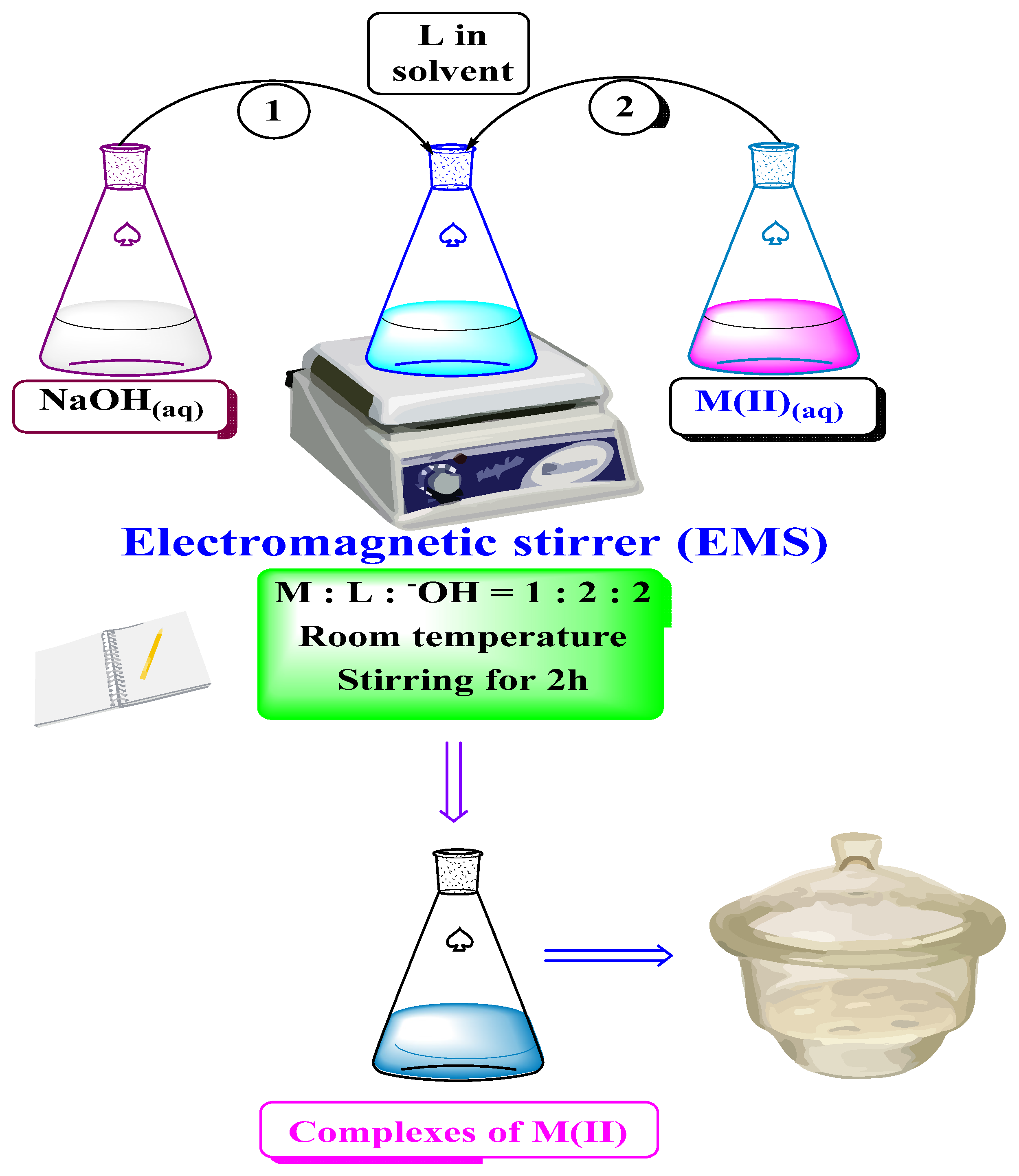
Scheme 2.
Synthesis of complexes under heating conditions.
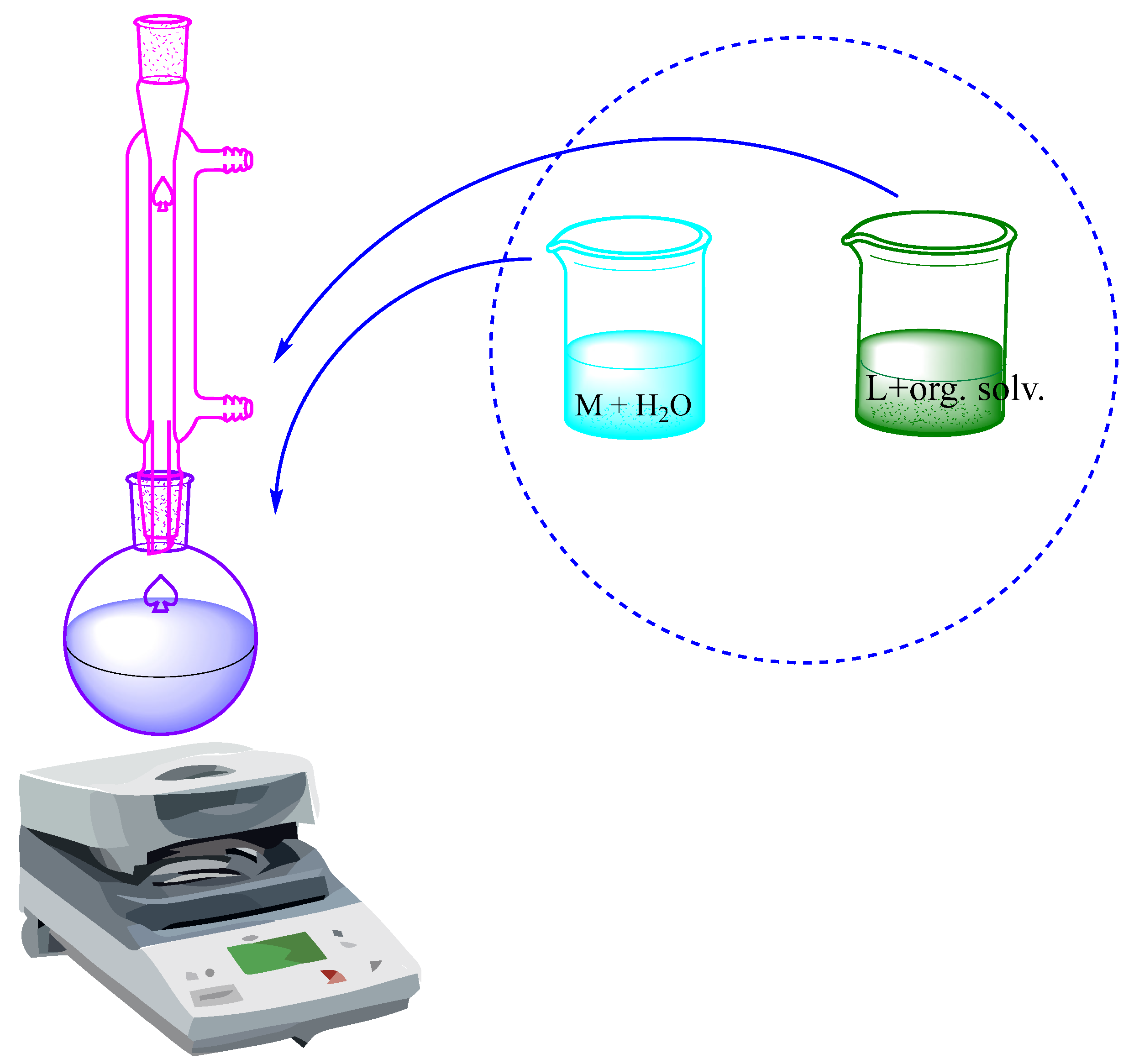
Scheme 3.
Selected spectroscopic techniques for study of coordination compounds.
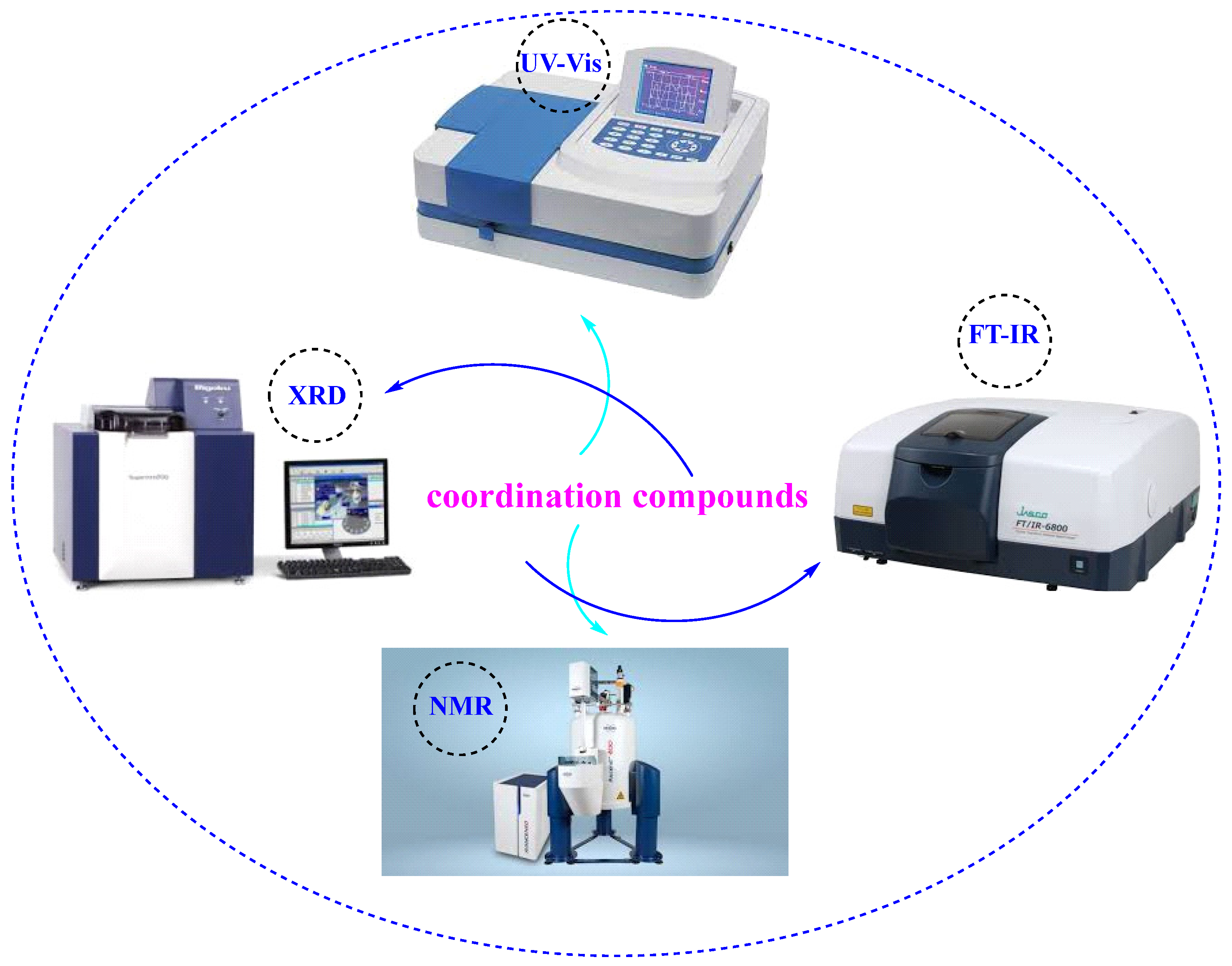
Scheme 4.
Inorganic and organic compounds including their potential therapeutic and other applications.
Scheme 4.
Inorganic and organic compounds including their potential therapeutic and other applications.
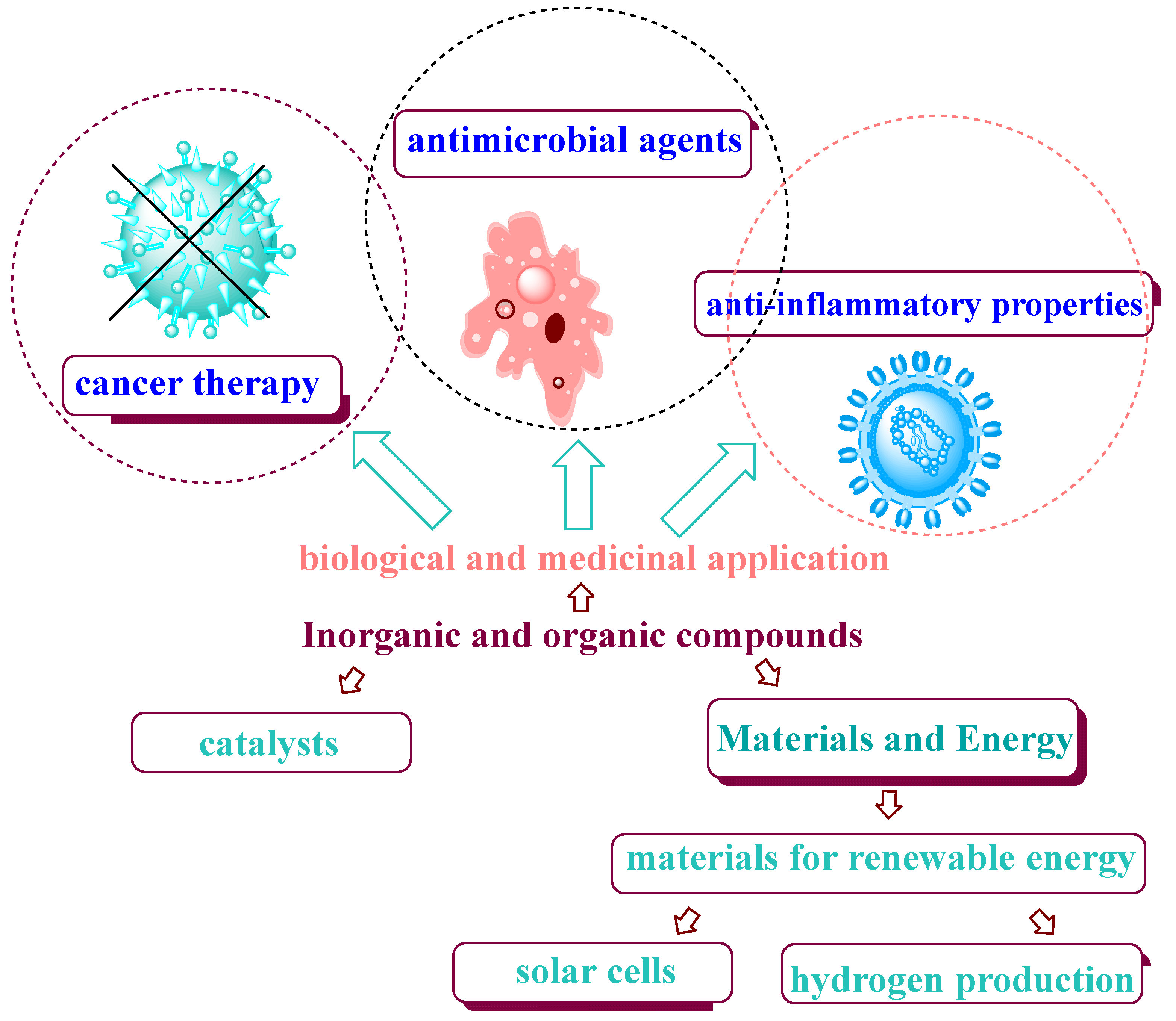
Figure 1.
Structure of the molecule of copper(II) complex [27].
Figure 1.
Structure of the molecule of copper(II) complex [27].
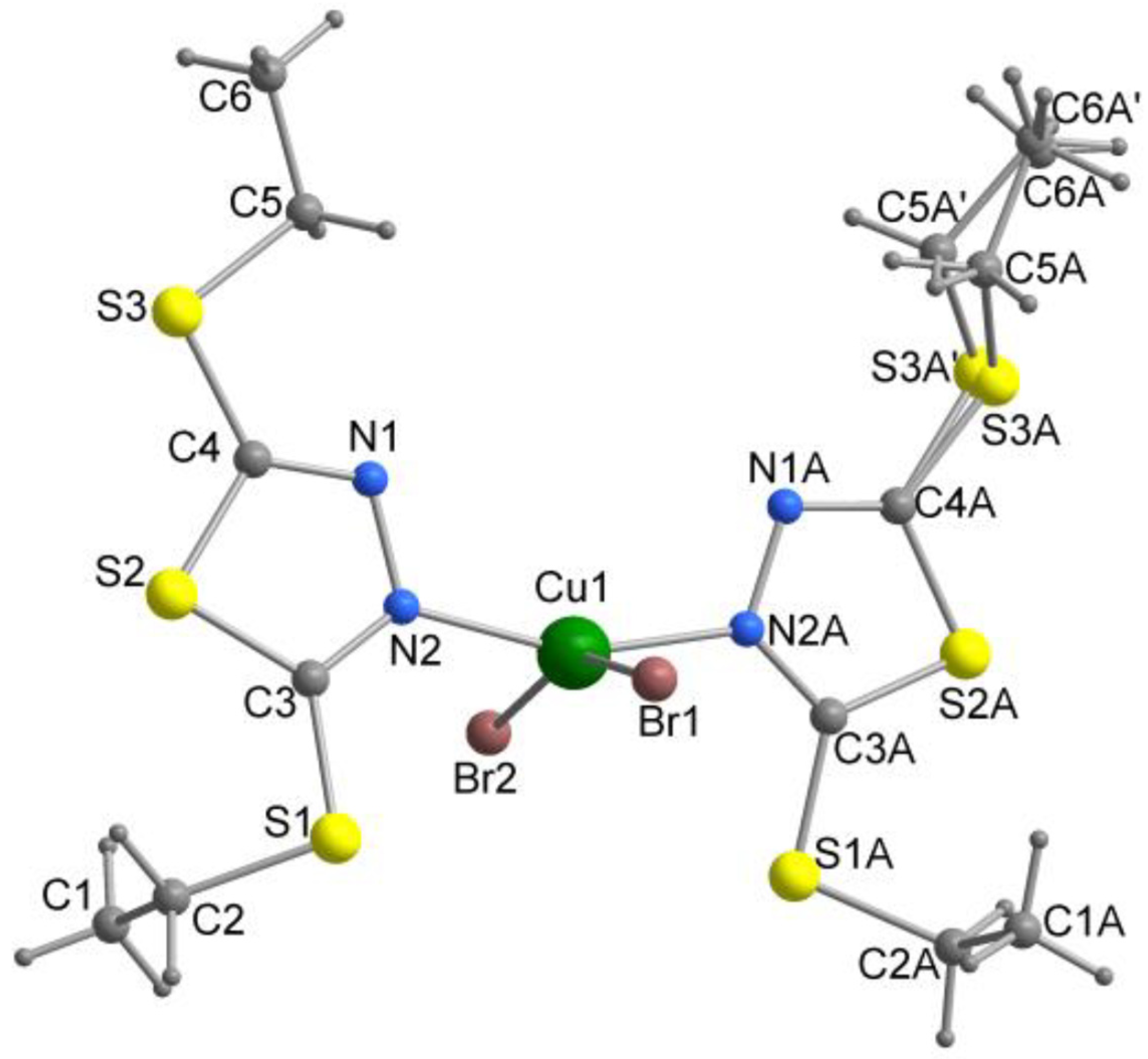
Figure 2.
ORTEP drawing of copper complex with labelling of non-H atoms. Ellipsoids are drawn at 50% level. (i: x + 1, −y, −z + 1.) [9].
Figure 2.
ORTEP drawing of copper complex with labelling of non-H atoms. Ellipsoids are drawn at 50% level. (i: x + 1, −y, −z + 1.) [9].
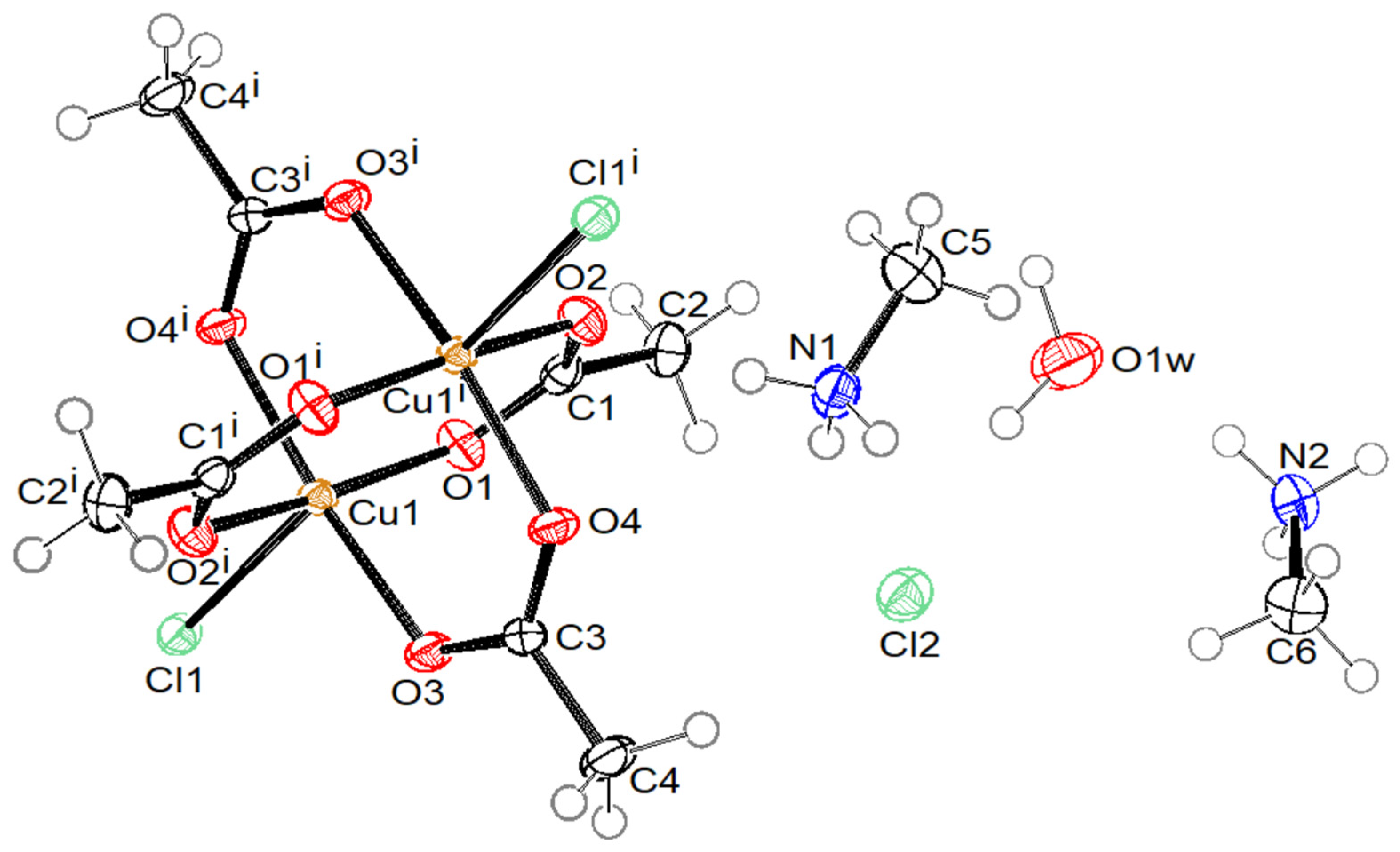
Figure 3.
Au(I) and (III) complexes, reported in the literature for their effects as possible anticancer drugs [65].
Figure 3.
Au(I) and (III) complexes, reported in the literature for their effects as possible anticancer drugs [65].
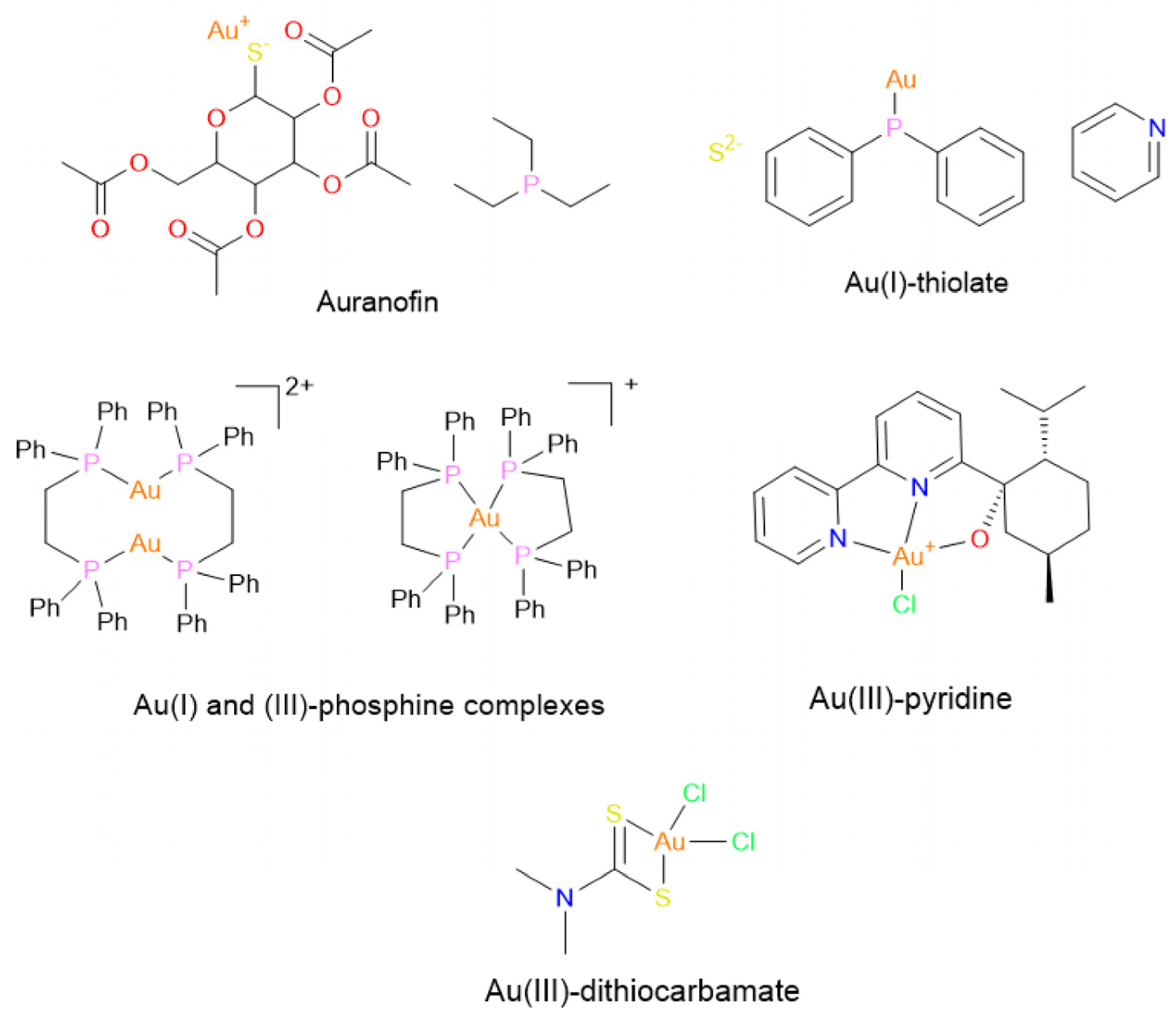
Figure 4.
Mechanism of action of auranofin and gold complexes by interfering with TrxR and destabilizing ATP levels, causing cell death [65].
Figure 4.
Mechanism of action of auranofin and gold complexes by interfering with TrxR and destabilizing ATP levels, causing cell death [65].
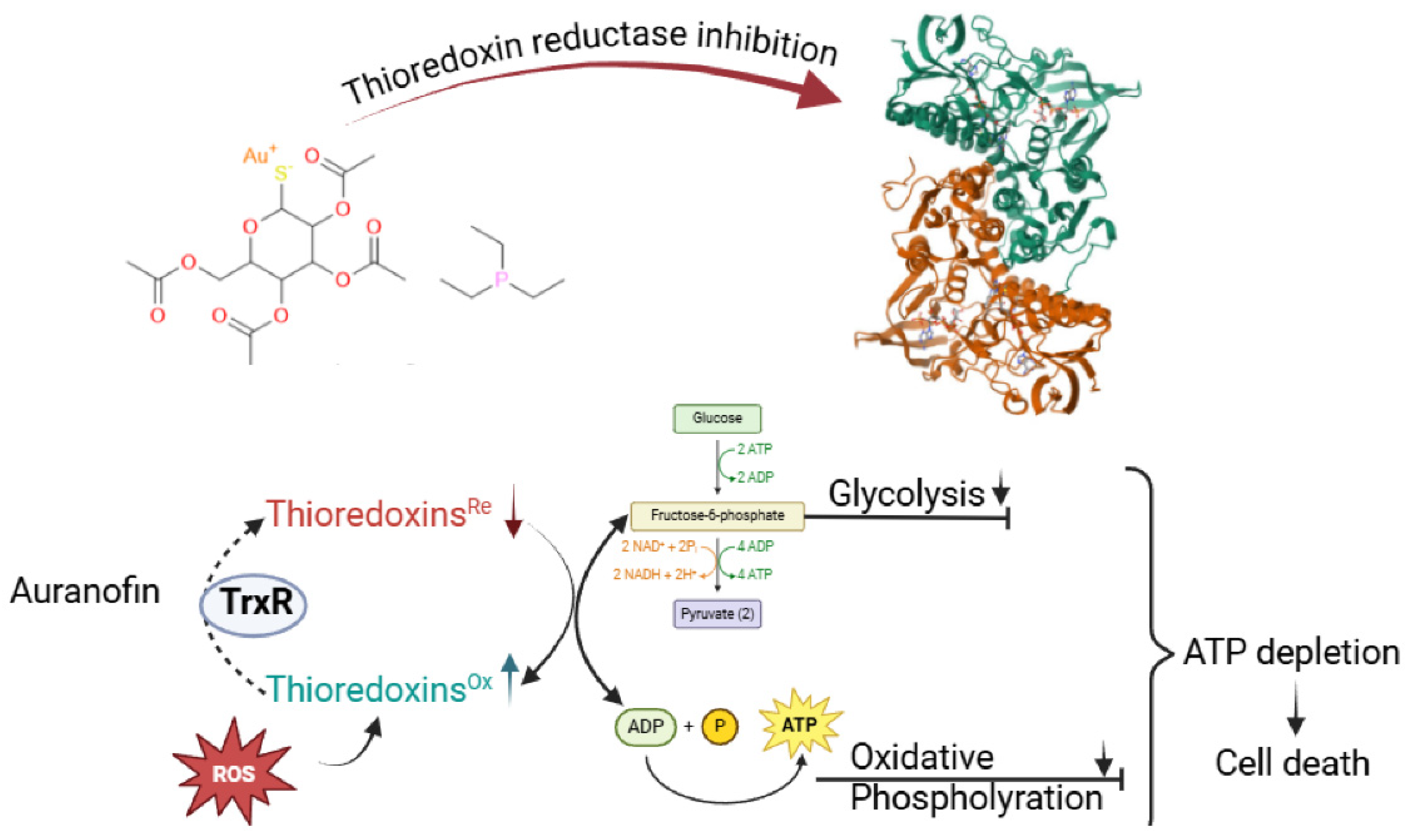
Figure 5.
Platinum drugs in clinical use (with generic names in brackets), together with the years in which they received either global or limited regulatory approval [91].
Figure 5.
Platinum drugs in clinical use (with generic names in brackets), together with the years in which they received either global or limited regulatory approval [91].
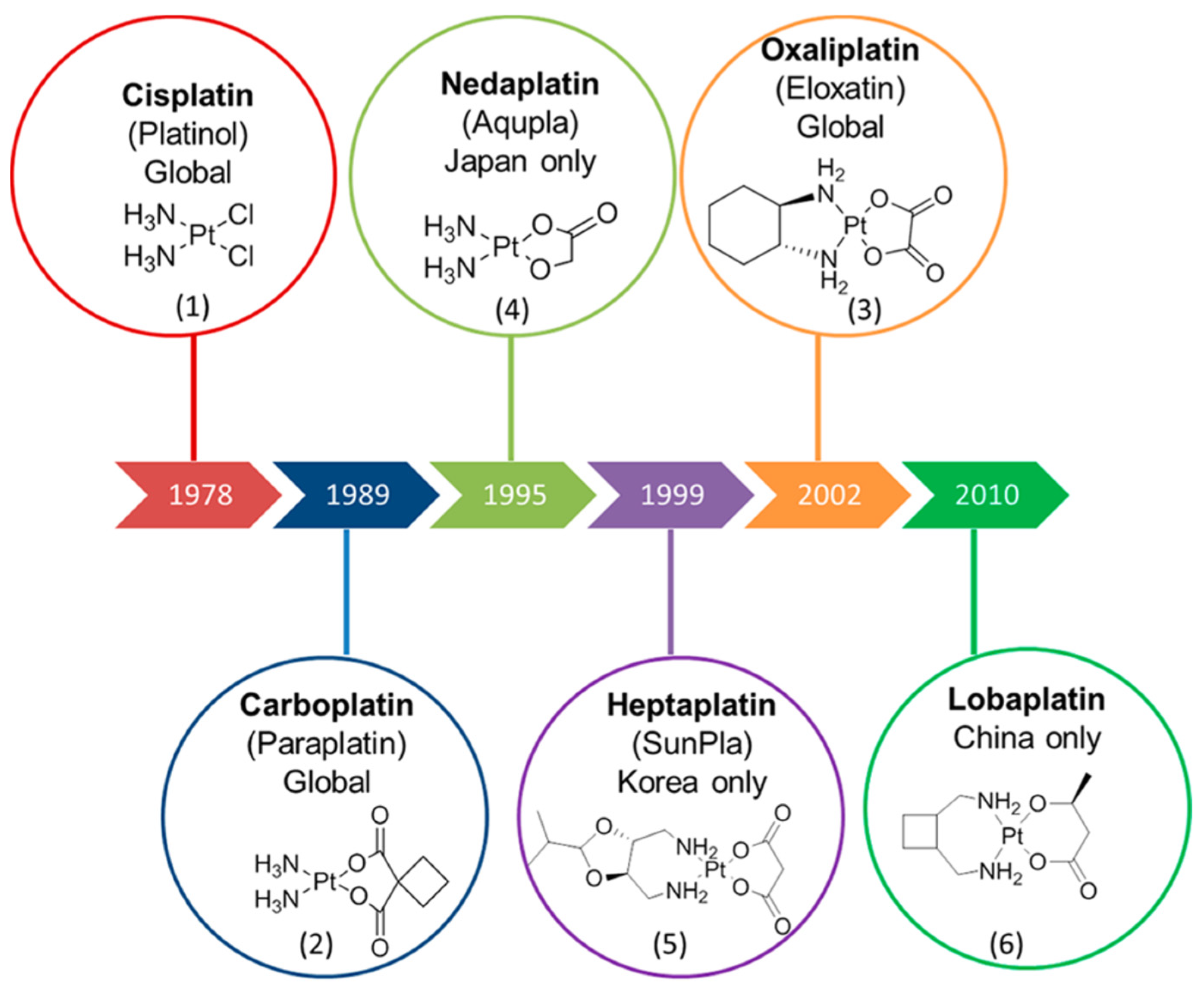
Figure 6.
Predicted binding of compound (S)-4e within the active site of trypsin, as determined by AutoDock Vina in rigid mode [212]. The compound engages in a π–π stacking interaction with Trp193, donates a hydrogen bond from its amide group to His40, and positions its meta-chlorobenzene moiety within a pocket formed by three glycines, a valine, and a serine. The figure illustrates the protein’s tertiary structure, key heavy atoms, and relevant hydrogen atoms.
Figure 6.
Predicted binding of compound (S)-4e within the active site of trypsin, as determined by AutoDock Vina in rigid mode [212]. The compound engages in a π–π stacking interaction with Trp193, donates a hydrogen bond from its amide group to His40, and positions its meta-chlorobenzene moiety within a pocket formed by three glycines, a valine, and a serine. The figure illustrates the protein’s tertiary structure, key heavy atoms, and relevant hydrogen atoms.
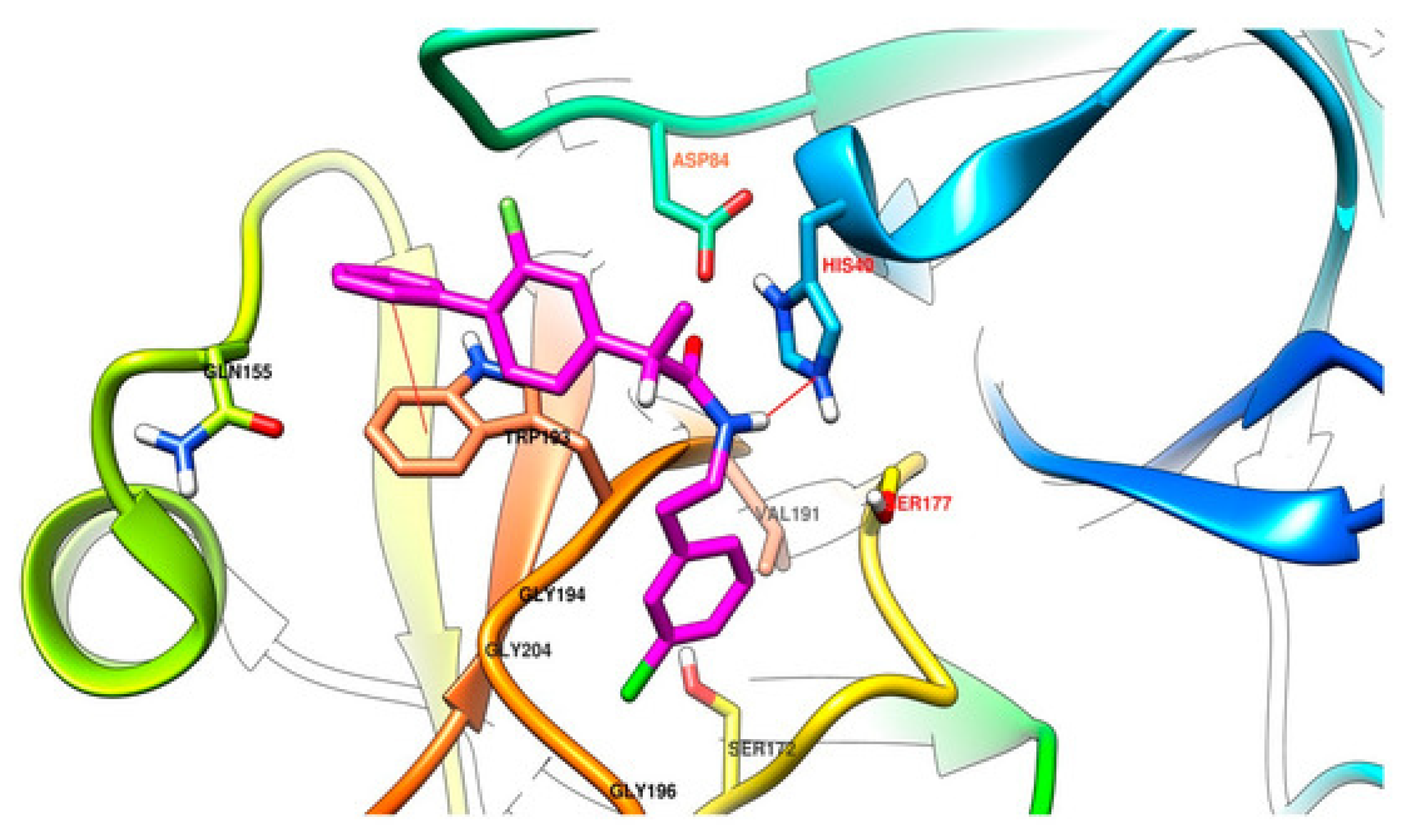
Table 1.
Summary table with a few of the examples of the anti-cancer activity of gold complexes.
| Structure of Gold Complexes | In Vitro Activity | In Vivo Activity | References |
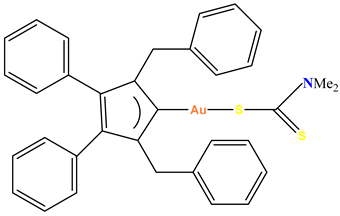 Au-1 |
demonstrated significant anti-tumor effect towards prostate cancer cell line PC3 |
Inhibited tumor progression in mice bearing PC3 xenografts.. | Walther et al. 2020 [72] |
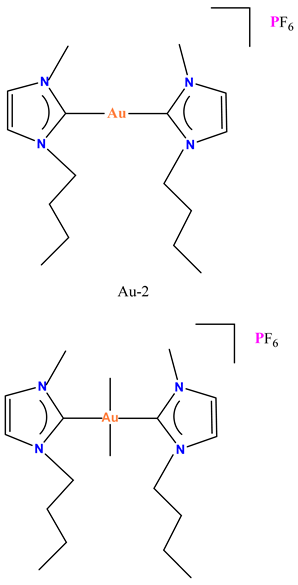 Au-3 |
Both compounds exhibited potent antiproliferative effects against multiple cancer cell lines, including A2780, A2780cis, HCT116-p53wt, and MCF-7. | Following labeling with radioactive iodine and administration to rats, the second complex rapidly distributed to major organs within 1–5 minutes. | Guarra et al. 2020 [73] |
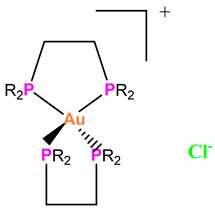 Au-4 |
Strongly blocked TrxR activity in myeloma cells, whether sensitive or resistant to bortezomib, which slowed their growth. | Reduced the growth of RPMI8226 myeloma tumors in NOD/SCID mice.. | Sze et al. 2020 [74] |
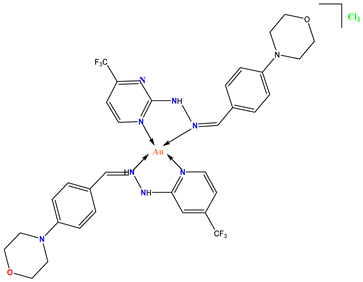 Au-5 |
The Au(III) compound attacked cancer cells but did not harm normal cells. | In vivo studies in tumor-bearing mice demonstrated the anticancer potential of the Au(III) derivative. | Sankaeganesh et al. 2019 [75] |
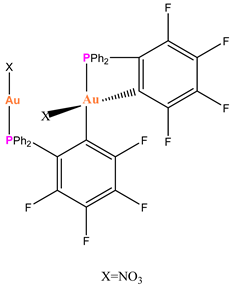 Au-6 |
Exhibited cytotoxicity and suppressed the proliferation of multiple cancer cell lines, including HeLa and DU145. | Reduced the growth of HeLa tumors in Balb/c nude mice. | Mirzadeh et al. 2021 [76] |
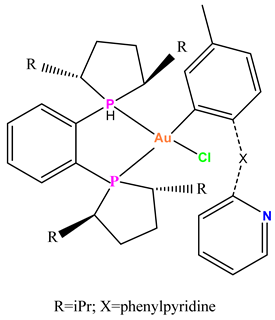 Au-7 |
Showed toxic activity against four aggressive cancer cell types, including H460, MDA-MB-231, MDA-MB-468 and BT-33 glioblastoma at micromolar levels. | At 10 mg/kg, tumor growth in 4T1-inoculated Balb/c mice was slightly lower than in untreated mice.. | Arojojoye et al. 2022 [77] |
Table 2.
Summary table with a few of the examples of the anti-cancer activity of platinum(II) complexes.
Table 2.
Summary table with a few of the examples of the anti-cancer activity of platinum(II) complexes.
| Structure of Platinum(II) Complexes | In Vitro Activity | In Vivo Activity | References |
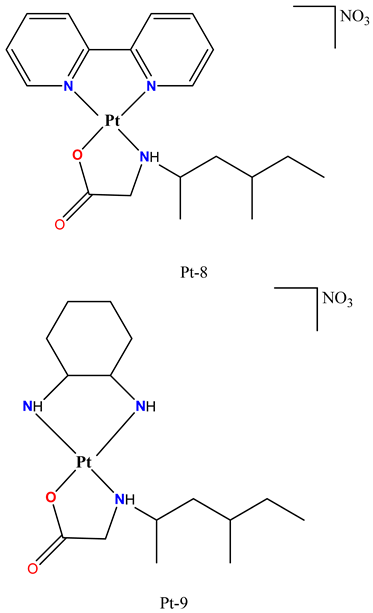 |
Exhibited stronger cytotoxicity against SKBR3 cells than oxaliplatin and carboplatin. | Showed anticancer activity in a 4T1 allotransplanted breast tumor model in Balb/c mice, significantly reducing tumor volume. | Bazsefidpar et al. 2023 [92] |
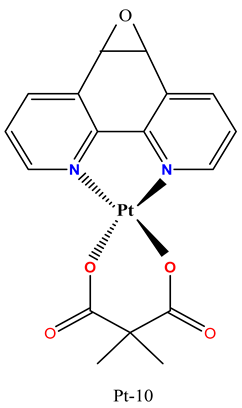 |
Exhibited significant cytotoxic effect against multiple cancer cell lines, including HCT116, 4T1 and CT26. | Pt-10 showed significant anticancer activity in an orthotopic 4T1 mouse tumor model without histopathological toxicity in the heart, lung, liver, or kidney. | Dimitrijević Stojanović et al. 2022 [93] |
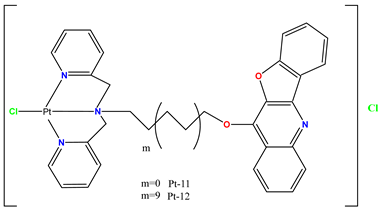 |
Induced programmed cell death in T-24 cells more efficiently than cisplatin. | Administration of the Pt(II) complex (2.0 mg/kg every 2 days) reduced T-24 xenograft growth in mice. | Qin et al. 2021 [94] |
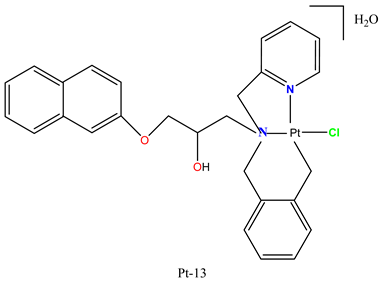 |
Pt-13 induced cytotoxicity in multiple tumor cell lines, including A549, PC3, MDA-MB-231, MCF-7, BXPC-3, and PBMC. | Strongly suppressed MDA-MB-231 tumor xenograft growth in BALB/c nude mice. | Maciel et al. 2022 [95] |
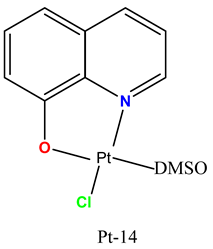 |
Quinoline–platinum complexes induced cytotoxicity in cisplatin-resistant human osteosarcoma MG-63 cells. | Inhibited growth of human osteosarcoma xenografts in mice. | Ruiz et al. 2019 [96] |
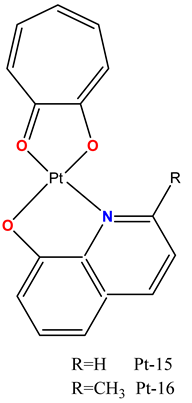 |
Induced cytotoxicity in HeLa, A549, T24, and NCI-H460 cells more efficiently than cisplatin. | In female Balb/c nude mice, tumor xenograft growth was inhibited with efficacy comparable to cisplatin. | Mo et al. 2021 [97] |
Table 4.
Summary table with a few of the examples of the anti-cancer activity of ruthenium(II)/(III) complexes.
Table 4.
Summary table with a few of the examples of the anti-cancer activity of ruthenium(II)/(III) complexes.
| Structure of Ruthenium Complexes | In Vitro Activity | In Vivo Activity | References |
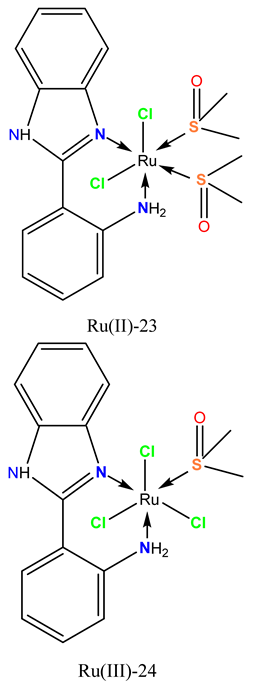 |
Exhibited cytotoxicity against multiple human tumor cell lines, including MCF-7 and Caco-2. | In the EAC mouse model, the treatment inhibited liver cancer cell proliferation by inducing apoptosis, increasing Bax and Caspase-3 levels, and decreasing Bcl-2 levels in the liver. | Elsayed et al. 2020 [114] |
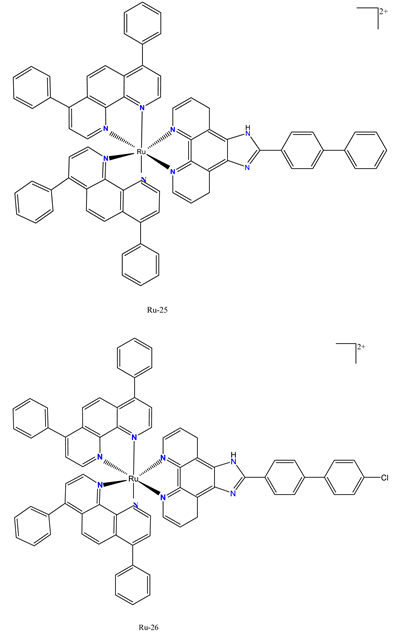 |
The Ru-25 and Ru-26- exhibited strong antiproliferative effect against SGC-7901cells. |
In nude mice, SGC-7901 tumor xenograft growth was inhibited by 53.5% and 72.9% at doses of 1.23 and 2.46 mg/kg, respectively. | Chen et al. 2023 [115] |
Disclaimer/Publisher’s Note: The statements, opinions and data contained in all publications are solely those of the individual author(s) and contributor(s) and not of MDPI and/or the editor(s). MDPI and/or the editor(s) disclaim responsibility for any injury to people or property resulting from any ideas, methods, instructions or products referred to in the content. |
© 2025 by the authors. Licensee MDPI, Basel, Switzerland. This article is an open access article distributed under the terms and conditions of the Creative Commons Attribution (CC BY) license (http://creativecommons.org/licenses/by/4.0/).
Copyright: This open access article is published under a Creative Commons CC BY 4.0 license, which permit the free download, distribution, and reuse, provided that the author and preprint are cited in any reuse.


