

Submitted:
10 October 2025
Posted:
11 October 2025
You are already at the latest version
Abstract
The rapid expansion of CFRP applications in aerospace, automotive, and energy sectors has intensified concerns over end-of-life waste and the absence of efficient recycling solutions. Plasma-assisted solvolysis has emerged as a promising hybrid approach, combining oxidative chemical treatment with plasma activation to accelerate matrix degradation. In this study, CFRP cylinders were processed in a closed-loop plasma-solvolysis system under varied operational parameters. The mechanical performance of the recovered carbon fibers was assessed through single-fiber tensile and microbond tests, evaluating both tensile and interfacial properties. In most cases, the recycled fibers retained—or even exceeded—the tensile strength of their virgin counterparts, while Young’s modulus exhibited either reductions or enhancements depending on treatment conditions. Elongation at break generally increased, particularly in the 24K fiber sets, suggesting improved surface ductility. Weibull statistical analysis indicated higher consistency in 3K fiber batches compared to 24K, whereas interfacial shear strength was moderately retained across conditions. Importantly, the closed-loop process minimized chemical waste through nitric acid recovery and reuse, supporting broader sustainability goals. Overall, the findings validate plasma-assisted solvolysis as a viable route for recovering high-performance fibers suitable for structural reuse, in alignment with circular economy principles.
Keywords:
carbon fibers reinforced polymers
; chemical recycling
; plasma-assisted solvolysis
; mechanical characterization
; single fiber tension test
; microbond test
1. Introduction
Carbon Fiber Reinforced Polymers (CFRPs) are extensively employed in aerospace, wind energy, and automotive sectors owing to their outstanding mechanical properties, particularly their high strength-to-weight ratio. Modern aircraft, such as the Boeing 787 and Airbus A350, make extensive use of CFRP components, which constitute more than 50% of their structural mass, thereby enhancing fuel efficiency and enabling lightweight design [1]. Beyond aerospace, the adoption of CFRP composites in automotive structures and high-pressure storage vessels is rapidly expanding. These materials provide significant weight savings and superior crashworthiness, with energy absorption capacities reaching up to 250 kJ/kg—far exceeding the ~20 kJ/kg typical of steel. Such advantages have driven their increasing use in compressed natural gas (CNG) and hydrogen storage systems, particularly in filament-wound pressure vessels designed for vehicles and industrial transport applications [2,3].
As CFRPs gain industrial traction, global market projections forecast growth from $27.6 billion in 2024 to $56.9 billion by 2034 [4]. With CFRP waste from the aviation and wind energy sectors expected to surpass 840,000 tons annually by 2050 and European composite waste nearing 683,000 tons per year, the current global recycling capacity of under 100,000 tons highlights a critical gap, prompting regulatory pressure and urgent demand for sustainable end-of-life solutions [5]. This trend increases the need for efficient end-of-life recycling. Thermoset-based CFRPs, unlike thermoplastics, cannot be remelted due to permanent cross-linking in their resin, posing a challenge to traditional recycling methods [6].
Several recycling strategies have been developed over the past decades. Mechanical recycling, which involves shredding or grinding composites into smaller particles, is cost-effective but lowers the fiber quality [7]. Thermal methods, such as pyrolysis, can recover fibers but involve high infrastructure costs and produce harmful by-products. Chemical recycling, on the other hand, offers high retention of material properties through effective resin removal using solvent systems [8]. Among recent advancements, plasma-assisted solvolysis, a hybrid approach combining oxidative chemicals and plasma, has shown promise in degrading matrix material while protecting fiber structure [9].
The significance of recycling CFRPs lies not only in addressing environmental challenges but also in its ability to recover fibers with properties suitable for reuse in high-performance applications. Notably, mechanical recycling was evaluated by reinforcing polymer composites with recycled carbon fibers (rCFs). Composites showed 208% higher stiffness and 105% tensile strength [10]. In addition, a process involving microwave pyrolysis followed by oxidation was used to recover clean carbon fibers and the rCFs retained tensile strength at 73% relative to virgin carbon fibers (vCFs) [11]. In a recent study, model composites were recycled three times via pyrolysis and partial oxidation. While stiffness of the rCFs increased up to 130.9% of vCFs, tensile strength decreased progressively with each cycle, retaining only 25% with rapid heating [12]. However, mechanical recycling faces limitations such as poor interfacial adhesion between rCFs and the new polymer matrix, caused by fiber surface damage and shortening during processing [7]. Pyrolysis can produce gas and liquid feedstocks; however, char formation negatively impacts the mechanical properties of the fibers [13].
Recently, chemical recycling of CFRPs has shown promising advances. A comparative study involving methanesulfonic acid (MSA), acetic acid, and nitric acid, found MSA most effective, reducing residual resin to 5%. The rCFs experienced a 27.6% reduction in tensile strength, the Young’s modulus a 19.2% loss, and the elongation at break a 10.5%, indicating moderate mechanical degradation [14]. Similarly, a one-step oxidative solvolysis method using peracetic acid achieved full resin removal with more than 90% recovery of solvents, while preserving the tensile strength of the rCFs [15]. Additionally, using a special catalyst in a dimethylacetamide solvent enabled nearly complete resin degradation without visible surface damage. However, the mechanical evaluation showed the recycled fibers retained 82.8% of their original strength [16]. In another environmentally friendly approach, CFRPs were immersed in nitric acid followed by sodium bicarbonate, both at 80°C. Interfacial shear strength (IFSS) and tensile strength increased by 2.7 and 1.6 times, respectively, while maintaining a comparable elastic modulus [17]. Furthermore, energy-efficient solvolysis using meta-Chloroperoxybenzoic acid (mCPBA) at 40°C decomposed resin in 6 h; rCFs retained 93.6% of their strength and 26% higher IFSS [18]. A catalytic method employed a monoethanolamine- potassium hydroxide (MEA–KOH) solvent achieved 99% decomposition. Tensile testing, analyzed using Weibull statistics, showed that tensile strength and modulus were retained at 96% and 95%, respectively [19]. Recently, the rCFs recovered through a microwave-assisted chemical recycling retained 98.3% of the original tensile strength, 94.1% of Young’s modulus, and 96.2% of the elongation at break [20]. A semi-continuous flow process using near- and super-critical water and water/ethanol mixtures demonstrated the tensile strength of the rCFs was statistically comparable to unsized virgin fibers [21]. Moreover, a supercritical solvolysis using n-propanol achieved, despite the elevated temperature, the tensile properties of the rCFs show no significant deviation, however, there was a reduction in IFSS [22]. Additionally, a two-step method employing H₂O₂ and N,N-dimethylformamide, enabled over 90% matrix decomposition, with the recovered fibers retaining up to 97% [23]. A hybrid approach combining chemical swelling and electrochemical oxidation in dimethyl sulfoxide at ambient conditions achieved resin removal of over 90.3%. The rCFs maintained 93.6% of the tensile strength, while their IFSS improved significantly, reaching 118.76% of the original values [24]. Further, supercritical 1-propanol with a catalyst improved resin breakdown while the rCFs retained 95% of their tensile strength at temperatures up to 330°C, but at 340°C, strength retention dropped to 88.6%, highlighting the process’s temperature sensitivity [25]. Superheated steam was used to recycle CFRP, yielding recycled fibers with lower tensile strength. Tensile modulus was nearly the same, and Weibull analysis showed strength decreased with longer gauge lengths [26]. An optimized recovery method using supercritical acetone enabled nearly complete matrix removal. Carbon fibers treated under 300°C and 60 minutes retained and even exceeded the tensile strength of vCFs [27]. Finally, in a preliminary study using water- and acetone-based solvolysis under subcritical and supercritical conditions, resin decomposition reached 90–100%. Equally important, rCFs retained over 70% of their tensile strength and 61% of their Young’s modulus [28].
In the evolving field of solvolysis, assisted techniques such as sonication and plasma treatment have shown promise in enhancing resin removal efficiency under milder conditions. For instance, sonochemical treatment using diluted nitric acid and hydrogen peroxide significantly increased the decomposition rate up to 95%, while preserving the tensile strength of recovered fibers. This approach reduces the need for harsh chemicals, high temperatures, or pressures [29]. Plasma-assisted solvolysis using nitric acid has demonstrated complete epoxy matrix decomposition, independent of composite geometry, without the use of extreme thermal and pressure conditions. Treatment time was reduced to under 180 minutes, while morphological analyses confirmed clean fiber surfaces. The rCFs retained 70% of the tensile strength, 74% of the strain at break, and 95% of the Young’s modulus, indicating strong structural preservation [30,31]. This aligns with a study showing that plasma-enhanced nitric acid accelerates matrix dissolution by enhancing oxidation and mass transport, with mass transport remaining the main rate-limiting step [32].
Overall, previous studies demonstrate that solvolysis methods—and plasma-assisted solvolysis in particular—can recover carbon fibers with minimal loss of mechanical performance and, in some cases, even enhanced properties. The present work evaluates the extent to which the mechanical properties of carbon fibers are preserved after plasma-assisted solvolysis, compared with their virgin counterparts. Multiple CFRP batches were recycled under different plasma-solvolysis conditions, and the recovered fibers were subjected to mechanical characterization. Single fiber tension tests were conducted to measure tensile strength, Young’s modulus, and elongation at break, while microbond tests were performed to assess the interfacial shear strength (IFSS). Statistical analyses were applied to examine property retention across processing conditions. By investigating how plasma-assisted solvolysis influences fiber mechanics, this study addresses key challenges in CFRP recycling. The results advance understanding of hybrid chemical–plasma recycling processes, supporting the development of circular economy strategies for advanced composites and promoting the sustainable expansion of CFRP applications.
2. Experimental
2.1. Materials
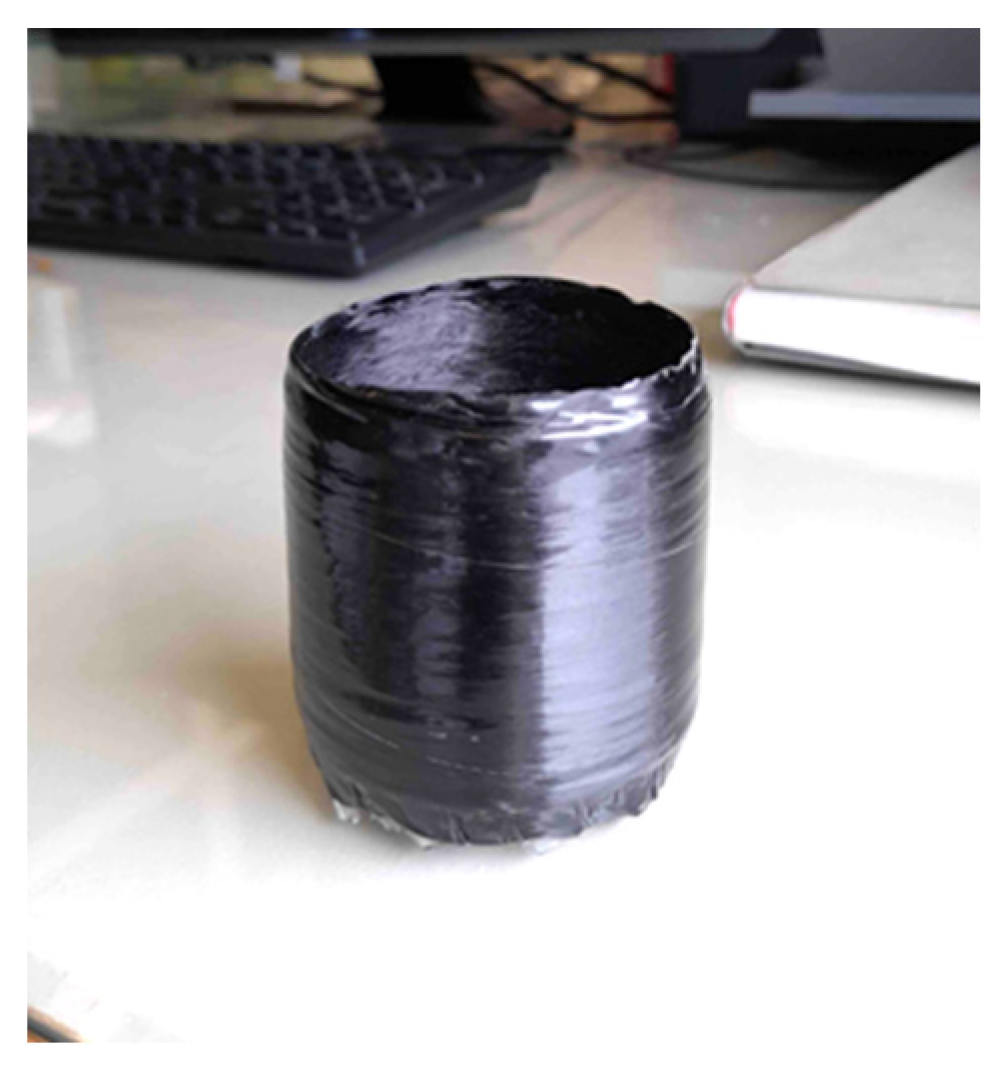
The CFRPs examined in this study were sourced from composite cylinders produced by filament winding (Figure 1), a technique widely employed for fabricating cylindrical structures. The cylinders were custom-manufactured by Β&Τ Composites, Florina Greece, using filament winding method. Each specimen measured 6.4–6.5 cm in height, with an internal diameter of 5.5 cm and an external diameter of 6.0 cm, yielding a wall thickness of approximately 0.25 cm.
The reinforcement material used in this study comprised virgin carbon fibers supplied by Fibermax Ltd., specifically the TR30S grade in 3K and 24K tow configurations. These fibers are recognized for their high tensile strength and uniform structural quality, making them a standard choice in performance-critical applications. The total fiber mass was 1.80 kg, corresponding to an overall fiber length of approximately 5,000 m [33].
Figure 1.
Custom-manufactured CFRP composite cylinder produced via filament winding.
The polymer matrix employed in this study was SR 1700, a high-performance epoxy laminating system designed for demanding applications in the automotive, naval, and aerospace industries. This resin system is characterized by its high modulus, excellent stiffness, low water absorption after curing, and strong adhesion to various reinforcements, including carbon fibers. The curing process incorporated the SD 2803 and SD 2806 hardeners, which can be blended in variable proportions to tailor reactivity and processing time. The resulting composite structure demonstrated good mechanical integrity, with a service temperature capability of up to 60–70°C. The key properties of the resin system, as provided in the technical datasheet, are summarized in Table 1 [34].
2.2. The Plasma-Assisted Solvolysis Process
The plasma-assisted solvolysis process is a closed-loop recycling method designed to recover carbon fibers from CFRP composite, while minimizing chemical waste and emissions. This multi-stage system incorporates chemical pre-treatment, plasma-induced degradation and waste regeneration to enhance process sustainability and resource recovery.
The recycling process begins with pre-treatment, swelling the composite in a low-concentration nitric acid solution, typically 4–6 M. This step enhances the accessibility of the resin matrix, improving its sensitivity to oxidative degradation during the plasma-assisted phase. The pre-treatment is essential for facilitating uniform plasma exposure and efficient resin breakdown.
Following pre-treatment, the composite is transferred to a 2 liters glass reactor and is submerged in 1.2 liters of a higher concentration nitric acid solution, about 10–14 M. The reactor is mounted on a stainless-steel baseplate, which serves as the grounded electrode. Four vertically oriented cylindrical electrodes, referred to as plasma heads, are inserted into the solution. Each electrode is enclosed in a glass tube that delivers a controlled flow of inert gases, argon (Ar) and nitrogen (N₂), in a fixed 2:0.5 volumetric ratio, forming bubbles within the solution to support plasma generation. The electrodes are powered by an alternating current (AC) generator (IGBT143, Martignoni Elettrotecnica, Milano, Italy) operating at 30 kHz, with a maximum output of 2 kW. Under these conditions, plasma is generated within the liquid medium, initiating oxidative decomposition of the polymer matrix. Plasma treatment accelerates resin degradation, enabling the release of clean carbon fibers. Throughout the process, solution temperature can reach 110°C within 60 minutes due to plasma-induced heating. Real-time monitoring of process voltage, via passive high voltage probes, ensures consistent control of input power [31,32]. Upon completion of the plasma treatment, the recovered carbon fibers are mechanically separated from the solution and washed with acetone to remove residual matrix and acid contaminants. Around 1 liter of acetone is sufficient for cleaning 1 kg of fibers. The resulting fibers exhibit clean surfaces, suitable for reuse in composite applications.
During the solvolysis process, nitrogen oxide (NOₓ) gases are generated as byproducts. These emissions are directed into a wet scrubbing system, where fraction of the NOₓ is converted into nitric acid. This recovered solution is then reused in the pre-treatment stage, forming part of a closed-loop chemical cycle. In addition, the residual liquid remaining in the reactor undergoes a regeneration process involving the addition of fresh nitric acid, hydrogen peroxide (H₂O₂) and the scrubber-derived acid. This mixture restores the reactivity of the solution, allowing its reuse across multiple cycles without significant performance loss [35]. The sequence and setup of this process are illustrated in Figure 2.
To systematically assess the recycling performance of carbon fibers, we conducted a series of 20 experiments varying solvolysis parameters such as plasma power, gas composition, acid concentration and process duration. For instance, generator power levels ranged from 400 W up to 1700 W, with plasma gases consisting of either pure nitrogen or nitrogen-argon mixtures. Gas flow rates varied between 1 to 4 liters per minute and HNO3 concentration between 8-14.4 M. The ratio of composite material to nitric acid spanned from 1.9 to 9.4 grams per mole and reaction times were varied between 4 and 6 h. Additionally, set 7 was treated by thermal nitric acid solvolysis without plasma. Set 1 corresponds to virgin fibers, serving as a baseline for comparison. Virgin fibers of both 3K and 24K types were included as references to benchmark the recycling outcomes. A comprehensive overview of all experiment sets is provided in Table 2.
2.3. Characterization of Fibers
2.3.1. Single-Fiber Tension Test
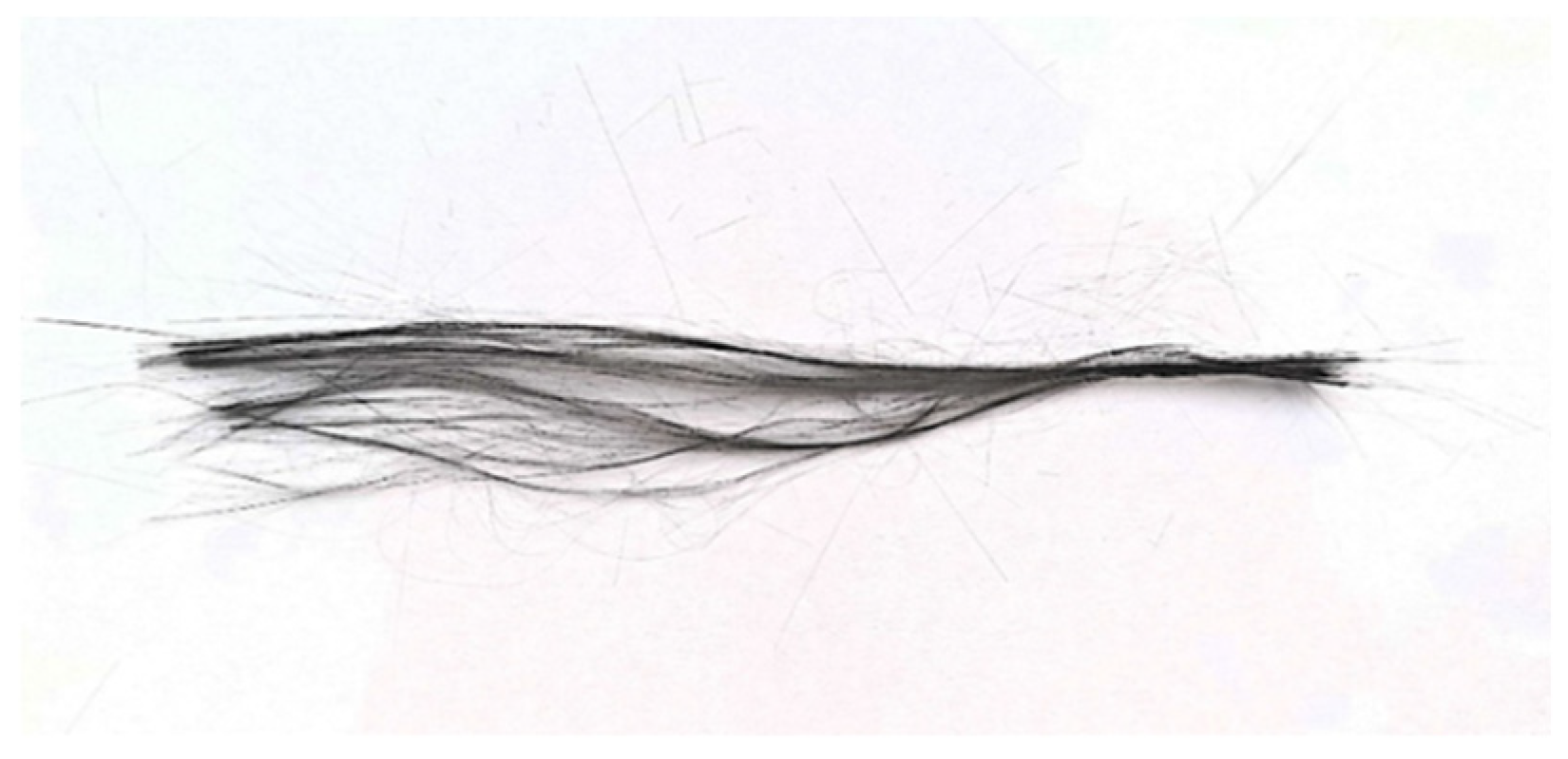
Recycled carbon fiber batches obtained from plasma-assisted solvolysis were visually inspected prior to mechanical testing. Figure 3 shows a typical batch, with fibers retaining linear structure and appearing largely free of visible resin residues.
The mechanical properties of the recycled carbon fibers were assessed using a Minimat 2000 material tester in accordance with ASTM C1557-14 [36]. Testing was performed at a gauge length of 25 mm with a slow displacement-controlled speed of 2 mm/min to ensure accurate and precise load measurements. For sample preparation, individual fibers were carefully mounted on paper frames using a two-part epoxy adhesive applied at both ends. The fibers were aligned carefully to avoid any pre-tension, ensuring reliable test results. The tensile strength, Young’s modulus and elongation at break of each fiber were then calculated based on the recorded force and displacement data. These properties were derived using the following equations:
Figure 3.
A typical batch of rCF after plasma-assisted solvolysis treatment.
- Tensile strength :
- Young’s modulus :
- Elongation at break ε:
A representative force–displacement curve obtained from the tensile testing is shown in Figure 4, illustrating the raw output, from the testing machine, used to extract mechanical properties.
Data collection focused exclusively on specimens that were fractured within the gauge length, excluding any tests where failure occurred outside this region. Each reported value represents the average from at least 25 valid tests. Prior to calculating the mean values of the mechanical properties, interquartile range (IQR) analysis was employed to remove outliers caused by slipping or grinding problems, providing a statistically robust dataset. From these measurements, tensile strength, Young’s modulus and elongation at break were calculated to evaluate the effect of plasma-assisted solvolysis on the mechanical performance of the rCF compared to vCF. The experimental setup is illustrated in Figure 5.
2.3.2. Microbond Test
To evaluate the fiber–matrix interfacial properties, microbond tests were conducted. For each fiber type, both virgin and recycled, three independent tests were performed, with each test comprising at least 25 single fiber droplet measurements. The parameters that recorded were fiber diameter, embedded length, droplet area, and maximum debonding force. The droplet area, , was calculated assuming a cylindrical shape using the formula:
where is the fiber diameter and is the embedded length of the droplet.
Interfacial shear strength was determined by calculating the slope of the linear fit between the applied force and the embedded droplet area, providing a more reliable metric than maximum load alone. Mean IFSS values were computed for each test to ensure statistical robustness. It is important to note that the microbond test is highly sensitive to accurate measurement of droplet dimensions and the resin curing conditions and variability in results often reflects differences in fiber–matrix interactions rather than experimental error. The resin droplets were prepared from AralditeⓇLY5052 epoxy and AradurⓇ5052 hardener. Force and strain data were collected at a sampling frequency of 50 Hz using a FIBRObond microdroplet tester [37]. The experimental setup used for microbond tests is shown in Figure 6.
3. Results
3.1. Preliminary Statistical Analysis
After calculating the mechanical properties for each set of rCF, a statistical evaluation was performed using a two-tailed t-test. This method was selected to determine whether the observed differences in properties between recycled and virgin fibers were statistically significant, or simply due to random variation. The t-test is a well-established statistical tool that helps assess whether the difference between two groups is likely due to actual changes, from the recycling process. Each rCF batch was compared to the virgin fiber reference group, and the corresponding p-values were computed. A p-value less than 0.05 was considered statistically significant, indicating that the recycling process had a measurable effect on the fibers [38].
Due to variability in surface condition, mainly from uneven resin removal during solvolysis, rCFs often show significant scatter in tensile strength measurements. Residual epoxy clusters can act as micro-defects, subtly alter fiber geometry and cause localized stress concentrations under load. These irregularities affect how individual fibers deform, leading to performance differences within the same batch.
To interpret this scatter and assess the reliability of tensile data, a two-parameter Weibull distribution was applied, commonly used for brittle materials where failure is governed by surface flaws. The failure probability for a given stress and gauge length , relative to a reference length , is described by the Weibull expression:
Here, is the scale parameter (characteristic strength), at which 63.2% of fibers are expected to fail, and is the shape parameter (Weibull modulus), which indicates strength consistency—a higher value means lower scatter.
To calculate these, tensile strength values for each rCF set were ranked in ascending order. The failure probability for each value was estimated using:
where is the total number of samples. A linearized form of the Weibull equation:
was used to extract the slope and intercept . This analysis helps quantify how uniformly the recycled fibers perform under tensile stress and offers insight into the presence of defects introduced during the recycling process [39,40].
To evaluate the effect of plasma-assisted solvolysis on the mechanical performance of rCFs, tensile tests were conducted for each recycled set and compared to their corresponding virgin fiber types (3K and 24K). The results are presented as bar charts for three mechanical properties: tensile strength, Young’s modulus, and elongation at break (Figure 7, Figure 8, Figure 9, Figure 10, Figure 11 and Figure 12). For each property, both mean values and standard deviations are reported.
3.2. Mechanical Properties of Fibers
The tensile strength results are summarized in Figure 7 for the 3K fibers and in Figure 8 for the 24K. Virgin 3K fibers exhibited an average tensile strength of 2264.33 MPa, while virgin 24K fibers reached 2632.31 MPa. Among the recycled sets, notable reductions were observed in a few cases, particularly in sets 4, 11, 2 and 9, where the strength decreased significantly compared to virgin reference. According to the t-test analysis, these sets showed statistically significant differences (p < 0.05), indicating that the recycling conditions affected the fibers. In contrast, several other sets retained their original tensile strength or even exhibited improvements, with sets 16, 18, and 21 showing the most substantial increases.
As shown in Figure 9 and Figure 10, Young’s modulus values did not show major degradation. Some of the recycled sets showed a drop in modulus. In particular, sets 2, 4, 5 and 9 exhibited clear reductions. However, many sets had an improvement, like sets 15, 16, 17, 18 and 20. The t-test confirmed that the modulus differences were statistically significant in these recycled sets. This suggests that modulus may be more sensitive to recycling conditions than tensile strength.
Figure 11 and Figure 12 display the elongation at break across all samples. A general increase in strain capacity was observed among recycled fibers, particularly in the 24K series. This improvement could be attributed to changes on the fiber’s surface, making it smoother and more ductile after treatment. However, the statistical analysis indicated that not all observed increases were significant. For instance, set 4, 6, and 8-13, 15, 17 and 18 retained elongation values similar to their vCFs.
3.3. Retention Analysis
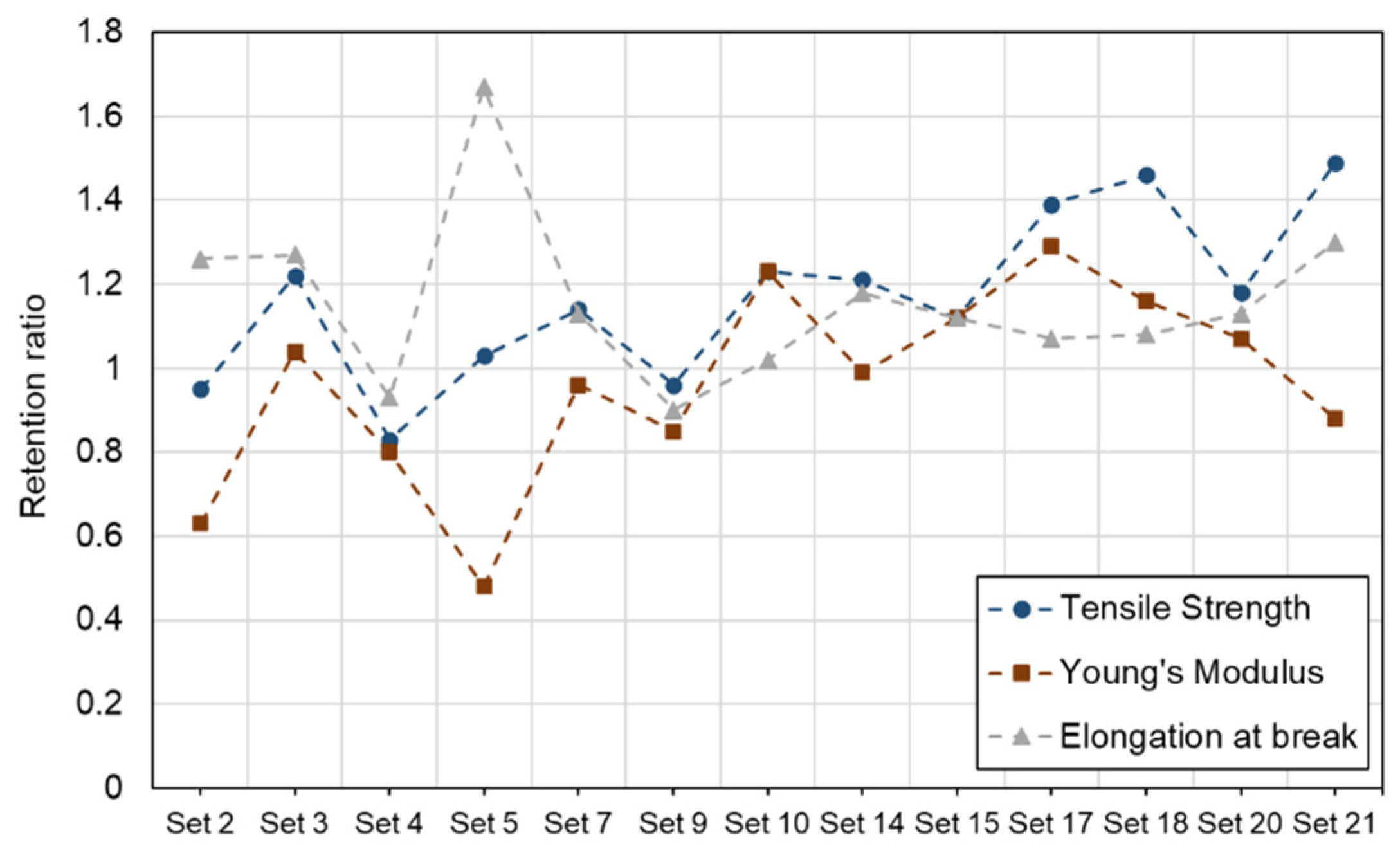
To better understand the overall effect of recycling on mechanical performance, a retention analysis was conducted. Figure 13 and Figure 14 illustrate the normalized property retention for 3K and 24K fiber batches, respectively, by comparing each recycled set to the reference. The 3K fibers exhibited a strong agreement between the tensile properties. In most sets, the modulus and elongation at break followed the same trend as tensile strength. When tensile strength was preserved or improved, the modulus typically showed a similar behavior, and elongation at break also tended to change in the same direction. This consistent trend suggests that the integrity of 3K fibers responds uniformly to the recycling treatment.
In contrast, the 24K fiber sets (Figure 14) showed more scattered behavior. In several cases, a higher retention of elongation at break was accompanied by a noticeable reduction in modulus, or vice versa. Additionally, while tensile strength was generally well preserved across most sets, the modulus was significantly degraded in some, indicating an inconsistent mechanical response to the recycling process.
Figure 14.
Retention ratio for tensile strength, Young's modulus and elongation at break of 24K recycled sets.
Figure 14.
Retention ratio for tensile strength, Young's modulus and elongation at break of 24K recycled sets.
3.4. Weibull Analysis
To further evaluate the reliability of the tensile strength data, a two-parameter Weibull analysis was conducted for each set. The resulting scale and shape parameters are presented in Table 3. The 3K fibers generally exhibited higher shape factors, suggesting more consistent mechanical performance across the sets. In contrast, the 24K fibers showed lower and more variable shape values, highlighting greater inconsistency, likely due to uneven treatment or internal defects. These findings align with the retention trends discussed earlier. Results demonstrated that virgin fibers exhibited one of the highest shape parameters, indicating lower variability. Among recycled sets, variations in Weibull parameters reflected the effects of residual surface defects, particularly due to uneven matrix removal. In some cases, the rCF exceeded the performance of the virgin ones, suggesting that certain solvolysis conditions can preserve mechanical integrity.
To complement the numerical Weibull parameters presented in Table 3, Figure 15 and Figure 16 show the linearized Weibull plots for tensile strength of selected fiber sets. Figure 15 compares the virgin 3K fibers with the best-performing recycled 3K set, based on the Weibull parameters, while Figure 16 shows the corresponding comparison for the 24K fibers. Among the recycled samples, set 16 is considered the best-performing 3K set in terms of mechanical properties, exhibiting both the highest scale and shape factors. In contrast, no single set was clearly identified as the best among the 24K fibers, however, set 21 demonstrated a good balance between the two Weibull parameters, indicating strong consistency and strength retention.
3.5. Interfacial Shear Strength
IFSS was assessed for both virgin and recycled carbon fibers using the microbond test. All the 3K fibers were detected due to their more reliable and consistent behavior. As expected, the virgin fibers consistently exhibited higher IFSS values compared to the recycled sets, owing to their unharmed surface and optimized sizing. The interfacial shear strength of the virgin fibers was 53.7 MPa. Among the rCFs, the 3K sets generally retained a high proportion of their original IFSS, with some showing only a moderate reduction. The most significant drop was observed for set 6, which decreased by 30%, while set 19 showed the lowest reduction of 16%. This suggests that the plasma-assisted solvolysis process preserved surface integrity to some extent. Figure 17 presents all the sets. For the 24K fibers, only set 2 was compared to the virgin ones. The virgin fibers had an IFSS of 51.7 MPa, while the recycled fibers showed 54.3 MPa. However, this increase was not significant according to the t-test.
The observed reduction in IFSS of the recycled fibers can also be attributed to the absence of sizing, which is removed during the solvolysis process. Sizing plays a critical role in promoting fiber/matrix adhesion by enhancing surface energy, wettability, and interfacial chemical interactions. Several studies have shown that appropriate sizing agents, particularly epoxy- or polymer-based ones, can significantly increase the IFSS and fracture toughness of CFRPs by improving stress transfer across the interface. In contrast, the unsized recycled fibers lack this optimized interphase, which likely explains the lower IFSS values compared to the virgin fibers [41].
4. Conclusions
Plasma-assisted solvolysis integrates plasma treatment with chemical depolymerization, enabling efficient matrix removal from CFRPs within a closed-loop system. Overall, the process reduces NOₓ emissions, enables multiple reuses of nitric acid, thereby lowering the consumption of fresh chemicals and enhancing the sustainability of carbon fiber recycling without compromising recycling performance.
Set 16 represents the most beneficial combination of processing parameters in terms of rCFs mechanical properties. The specific conditions for this set were: plasma heads of four, plasma power of 800 W, plasma gas as a N₂/Ar mixture, flow rate of 1/4 L/min, acid concentration of 12 M, composite mass-to-solvent volume ratio of 2.3 g/mol, and reaction time of six hours. Under these conditions, set 16 balanced tensile strength, modulus, and strain while maintaining acceptable IFSS. Overall, 3K fibers showed more consistent performance and a more uniform response to recycling compared to 24K fibers.
Different properties responded differently. The tensile strength of most recycled fibers was well retained, with several sets showing comparable or even improved values relative to virgin fibers, demonstrating that plasma-assisted solvolysis can preserve structural integrity under certain conditions. In particular, strength was robust under moderate plasma power (800–1200 W), as shown by sets 16 and 3. Additionally, balanced acid concentrations (10–12 M) and lower composite-to-acid ratios (2.1–2.3 g/mol) also yielded favourable strength values, as observed in sets 16, 18, and 21.
Young’s modulus exhibited greater variability, leading to both reductions and notable increases in some cases. Modulus benefited from a 12 M acid concentration and 2.3 g/mol ratio, exemplified in sets 16–18. It is worth noting that virgin 3K and 24K fibers exhibited nearly identical properties, with only a slight difference in Young’s modulus. Although the sizing was effectively removed, the observed improvements in stiffness could be partially explained by increased oxygen content and the formation of new surface functional groups, factors previously reported to influence modulus, depending on fiber type and treatment conditions [42].
Elongation at break generally increased, particularly in 24K fiber sets, suggesting greater surface ductility due to microstructural smoothing during treatment.
These observations also highlight the importance of surface condition in maintaining interfacial performance, with the 3K recycled fibers showing consistency and retention of IFSS values. Overall, IFSS remained relatively insensitive to processing variations.
Weibull analysis confirmed that sets with higher shape factors exhibited more consistent mechanical behavior across recycled batches. However, higher plasma powers, such as in sets 8, 10, 15, and 18, resulted in lower Weibull shape factors, indicating more scatter and reduced reliability. This observed scatter in lower-performing batches may be linked to morphological inconsistencies, such as fiber twisting or localized degradation from plasma exposure.
In a potential next phase, a multi-objective optimization approach could be employed to identify process conditions that balance all the tensile properties. Based on the existing mechanical dataset, a model may be developed to simultaneously maximize performance, constrained within experimentally validated parameter ranges to ensure feasibility. The predicted optimal parameters could then guide future solvolysis trials to support model validation.
Author Contributions
Conceptualization, I.T., K.T., D.M., E.F. and E.A.; methodology, I.T., K.T.; validation, I.T., K.T., D.M., E.F. and E.A.; formal analysis, I.T., K.T.; investigation, I.T., K.T., D.M., E.F. and E.A.; resources, I.T., K.T., D.M., E.F. and E.A.; data curation, I.T., K.T., D.M., E.F. and E.A.; writing—original draft preparation, I.T.; writing—review and editing, K.T.; visualization, I.T.; supervision, K.T.; project administration, K.T., E.A.; funding acquisition, K.T., E.F. and E.A. All authors have read and agreed to the published version of the manuscript.
Funding
This research was implemented in the framework of H.F.R.I call “Basic research Financing (Horizontal support of all Sciences)” under the National Recovery and Resilience Plan “Greece 2.0” funded by the European Union – NextGenerationEU (H.F.R.I. Project Number: 15231).
Data Availability Statement
All data are presented in the manuscript.
Acknowledgments
The authors would like to thank the Laboratory of Biomechanics and Biomedical Engineering of the University of Patras for helping and providing access to the Miniature Materials Tester Minimat 2000 and B&T Composites, Florina, Greece for providing the composites.
Conflicts of Interest
The authors declare no conflicts of interest.
References
- Recent Developments in the Synthesis of Composite Materials for Aerospace: Case Study - MedCrave Online Available online: https://medcraveonline.com/MSEIJ/recent-developments-in-the-synthesis-of-composite-materials-for-aerospace-case-study.html (accessed on 26 June 2025).
- Zhang, J.; Lin, G.; Vaidya, U.; Wang, H. Past, Present and Future Prospective of Global Carbon Fibre Composite Developments and Applications. Composites Part B: Engineering 2023, 250, 110463. [CrossRef]
- Basri, M.H. APPLICATION OF CARBON FIBER REINFORCED PLASTICS IN AUTOMOTIVE INDUSTRY: A REVIEW. 2018, 1.
- High Performance Composites Market Size to Hit USD 159.35 Bn by 2034 Available online: https://www.precedenceresearch.com/high-performance-composites-market (accessed on 26 June 2025).
- Composite Waste: Understanding Regulations and Finding Circular Solutions for a Growing Problem Available online: https://www.circularise.com/blogs/composite-waste-understanding-regulations-and-finding-circular-solutions-for-a-growing-problem (accessed on 8 July 2025).
- Morici, E.; Dintcheva, N.Tz. Recycling of Thermoset Materials and Thermoset-Based Composites: Challenge and Opportunity. Polymers 2022, 14, 4153. [CrossRef]
- Aldosari, S.M.; AlOtaibi, B.M.; Alblalaihid, K.S.; Aldoihi, S.A.; AlOgab, K.A.; Alsaleh, S.S.; Alshamary, D.O.; Alanazi, T.H.; Aldrees, S.D.; Alshammari, B.A. Mechanical Recycling of Carbon Fiber-Reinforced Polymer in a Circular Economy. Polymers 2024, 16, 1363. [CrossRef]
- Qureshi, J. A Review of Recycling Methods for Fibre Reinforced Polymer Composites. Sustainability 2022, 14, 16855. [CrossRef]
- Ateeq, M. A State of Art Review on Recycling and Remanufacturing of the Carbon Fiber from Carbon Fiber Polymer Composite. Composites Part C: Open Access 2023, 12, 100412. [CrossRef]
- Ventura, A.M.; Kneissl, L.M.; Nunes, S.; Emami, N. Recycled Carbon Fibers as an Alternative Reinforcement in UHMWPE Composite. Circular Economy within Polymer Tribology. Sustainable Materials and Technologies 2022, 34, e00510. [CrossRef]
- Ren, Y.; Xu, L.; Shang, X.; Shen, Z.; Fu, R.; Li, W.; Guo, L. Evaluation of Mechanical Properties and Pyrolysis Products of Carbon Fibers Recycled by Microwave Pyrolysis. ACS Omega 2022, 7, 13529–13537. [CrossRef]
- Alguacil, M.C.; Umeki, K.; You, S.; Joffe, R. Evolution of Carbon Fiber Properties during Repetitive Recycling via Pyrolysis and Partial Oxidation. Carbon Trends 2025, 18, 100438. [CrossRef]
- Charitidis J. Panagiotis Recycling of Carbon Fiber-Reinforced Composites-A Review. IJARSCT 2024, 431–445. [CrossRef]
- Zhang, X.; Sibari, R.; Chakraborty, S.; Baz, S.; Gresser, G.T.; Benner, W.; Brämer, T.; Steuernagel, L.; Ionescu, E.; Deubener, J.; et al. Epoxy-Based Carbon Fiber-Reinforced Plastics Recycling via Solvolysis with Non-Oxidizing Methanesulfonic Acid. Chemie Ingenieur Technik 2024, 96, 987–997. [CrossRef]
- Das, M.; Chacko, R.; Varughese, S. An Efficient Method of Recycling of CFRP Waste Using Peracetic Acid. ACS Sustainable Chem. Eng. 2018, 6, 1564–1571. [CrossRef]
- Torkaman, N.F.; Bremser, W.; Wilhelm, R. Catalytic Recycling of Thermoset Carbon Fiber-Reinforced Polymers. ACS Sustainable Chem. Eng. 2024, 12, 7668–7682. [CrossRef]
- Sakai, A.; Kurniawan, W.; Kubouchi, M. Chemical Recycling of CFRP in an Environmentally Friendly Approach. Polymers 2024, 16, 143. [CrossRef]
- Jeong, J.; Oh, D.; Ju, Y.; Goh, M. Energy-Efficient Chemical Recycling of CFRP and Analysis of the Interfacial Shear Strength on Recovered Carbon Fiber. Waste Management 2024, 187, 134–144. [CrossRef]
- Zhao, Q.; An, L.; Li, C.; Zhang, L.; Jiang, J.; Li, Y. Environment-Friendly Recycling of CFRP Composites via Gentle Solvent System at Atmospheric Pressure. Composites Science and Technology 2022, 224, 109461. [CrossRef]
- Patre, R.; Rani, M.; Zafar, S. Insights into Environmental Sustainability of Microwave Assisted Chemical Recycling of CFRP Waste Using Life Cycle Assessment. Waste Management Bulletin 2025, 3, 100194. [CrossRef]
- Henry, L.; Schneller, A.; Doerfler, J.; Mueller, W.M.; Aymonier, C.; Horn, S. Semi-Continuous Flow Recycling Method for Carbon Fibre Reinforced Thermoset Polymers by near- and Supercritical Solvolysis. Polymer Degradation and Stability 2016, 133, 264–274. [CrossRef]
- Jiang, G.; Pickering, S.; Lester, E.; Turner, T.; Wong, K.; Warrior, N. Characterisation of Carbon Fibres Recycled from Carbon Fibre/Epoxy Resin Composites Using Supercritical n-Propanol. Composites Science and Technology 2009, 69, 192–198. [CrossRef]
- Xu, P.; Li, J.; Ding, J. Chemical Recycling of Carbon Fibre/Epoxy Composites in a Mixed Solution of Peroxide Hydrogen and N,N-Dimethylformamide. Composites Science and Technology 2013, 82, 54–59. [CrossRef]
- Pei, C.; Chen, P.; Kong, S.-C.; Wu, J.; Zhu, J.-H.; Xing, F. Recyclable Separation and Recovery of Carbon Fibers from CFRP Composites: Optimization and Mechanism. Separation and Purification Technology 2021, 278, 119591. [CrossRef]
- Yan, H.; Lu, C.; Jing, D.; Chang, C.; Liu, N.; Hou, X. Recycling of Carbon Fibers in Epoxy Resin Composites Using Supercritical 1-Propanol. New Carbon Materials 2016, 31, 46–54. [CrossRef]
- Cai, G.; Yin, G.; Wada, M.; Kitaoka, S.; Wei, H.; Ohsawa, I.; Takahashi, J. INFLUENCE OF RECYCLING PROCESS ON THE TENSILE PROPERTY OF CARBON FIBER. 2017.
- Sokoli, H.U.; Beauson, J.; Simonsen, M.E.; Fraisse, A.; Brøndsted, P.; Søgaard, E.G. Optimized Process for Recovery of Glass- and Carbon Fibers with Retained Mechanical Properties by Means of near- and Supercritical Fluids. The Journal of Supercritical Fluids 2017, 124, 80–89. [CrossRef]
- Vogiantzi, C.; Tserpes, K. A Preliminary Investigation on a Water- and Acetone-Based Solvolysis Recycling Process for CFRPs. Materials 2024, 17, 1102. [CrossRef]
- Das, M.; Varughese, S. A Novel Sonochemical Approach for Enhanced Recovery of Carbon Fiber from CFRP Waste Using Mild Acid–Peroxide Mixture. ACS Sustainable Chem. Eng. 2016, 4, 2080–2087. [CrossRef]
- Bruggeman, P.J.; Kushner, M.J.; Locke, B.R.; Gardeniers, J.G.E.; Graham, W.G.; Graves, D.B.; Hofman-Caris, R.C.H.M.; Maric, D.; Reid, J.P.; Ceriani, E.; et al. Plasma–Liquid Interactions: A Review and Roadmap. Plasma Sources Sci. Technol. 2016, 25, 053002. [CrossRef]
- Marinis, D.; Farsari, E.; Alexandridou, C.; Amanatides, E.; Mataras, D. Chemical Recovery of Carbon Fibers from Composites via Plasma Assisted Solvolysis. J. Phys.: Conf. Ser. 2024, 2692, 012017. [CrossRef]
- Marinis, D.; Farsari, E.; Amanatides, E. Dissolution Kinetics in Plasma-Enhanced Nitric Acid Solvolysis of CFRCs. Materials 2025, 18, 4242. [CrossRef]
- Δέσμη ανθρακονημάτων 3Κ, 1.80 kg, 5 km Available online: https://www.fibermax.eu/el-gr/anthrakoyfasmata/nimata/nimata-provoli-olon/desmi-anthrakonimaton-3k-1-kg-5-km.html (accessed on 26 June 2025).
- SR 1700 - System for Manufacturing Composite Structures. Sicomin.
- Marinis, D.; Markatos, D.; Farsari, E.; Amanatides, E.; Mataras, D.; Pantelakis, S. A Novel Plasma-Enhanced Solvolysis as Alternative for Recycling Composites. Polymers 2024, 16, 2836. [CrossRef]
- C28 Committee ASTM International. Test Method for Tensile Strength and Youngs Modulus of Fibers. [CrossRef]
- Laurikainen, P.; Kakkonen, M.; Von Essen, M.; Tanhuanpää, O.; Kallio, P.; Sarlin, E. Identification and Compensation of Error Sources in the Microbond Test Utilising a Reliable High-Throughput Device. Composites Part A: Applied Science and Manufacturing 2020, 137, 105988. [CrossRef]
- Borkar, A.; Hendlmeier, A.; Simon, Z.; Randall, J.D.; Stojcevski, F.; Henderson, L.C. A Comparison of Mechanical Properties of Recycled High-density Polyethylene/Waste Carbon Fiber via Injection Molding and 3D Printing. Polymer Composites 2022, 43, 2408–2418. [CrossRef]
- Rahimizadeh, A.; Tahir, M.; Fayazbakhsh, K.; Lessard, L. Tensile Properties and Interfacial Shear Strength of Recycled Fibers from Wind Turbine Waste. Composites Part A: Applied Science and Manufacturing 2020, 131, 105786. [CrossRef]
- Cai, G.; Wada, M.; Ohsawa, I.; Kitaoka, S.; Takahashi, J. Influence of Treatment with Superheated Steam on Tensile Properties of Carbon Fiber. Composites Part A: Applied Science and Manufacturing 2018, 107, 555–560. [CrossRef]
- Joo, J.-H.; Kim, S.-H.; Yim, Y.-J.; Bae, J.-S.; Seo, M.-K. Interfacial Interlocking of Carbon Fiber-Reinforced Polymer Composites: A Short Review. Polymers 2025, 17, 267. [CrossRef]
- Sakai, A.; Kurniawan, W.; Kubouchi, M. Recycled Carbon Fibers with Improved Physical Properties Recovered from CFRP by Nitric Acid. Applied Sciences 2023, 13, 3957. [CrossRef]
Figure 2.
Schematic of the plasma-assisted solvolysis process.
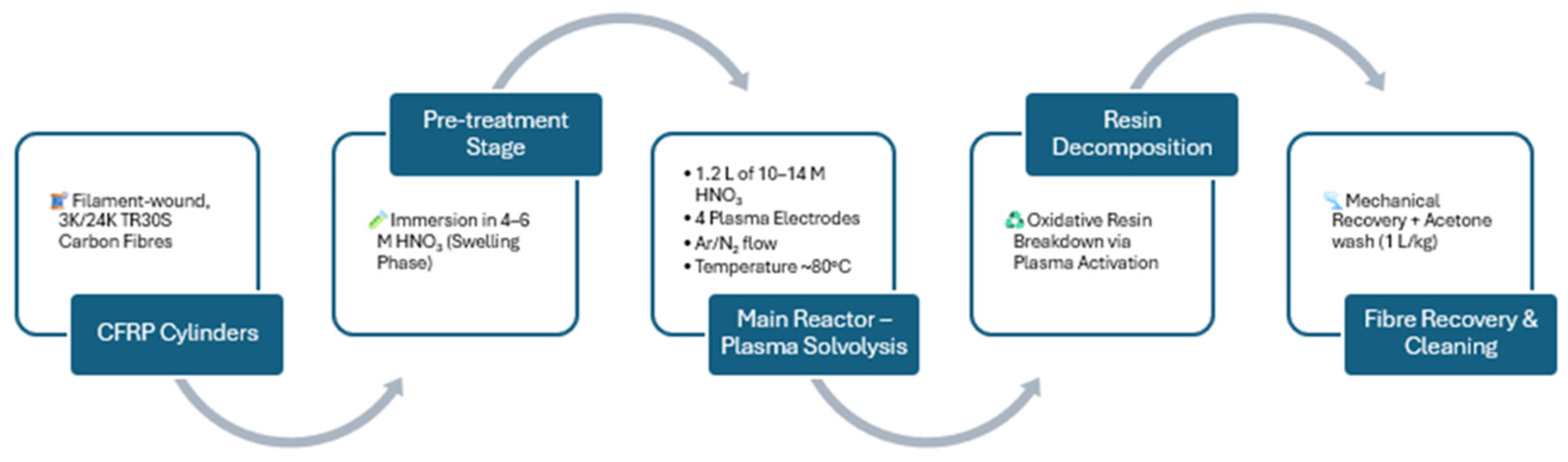
Figure 4.
Representative force–displacement curve of a single-fiber tension test on a recycled carbon fiber.
Figure 4.
Representative force–displacement curve of a single-fiber tension test on a recycled carbon fiber.
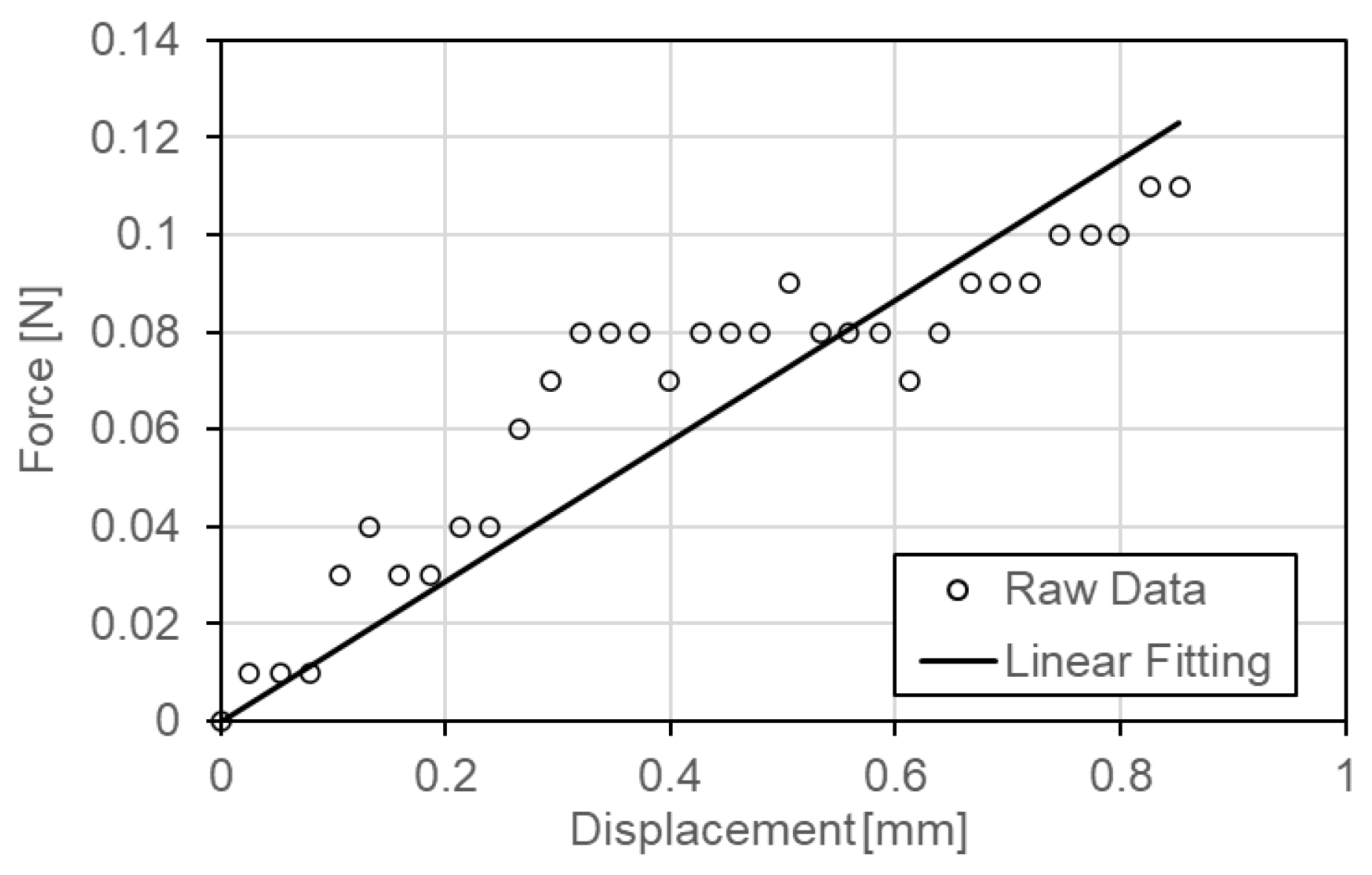
Figure 5.
The Miniature Materials Tester (Minimat 2000).
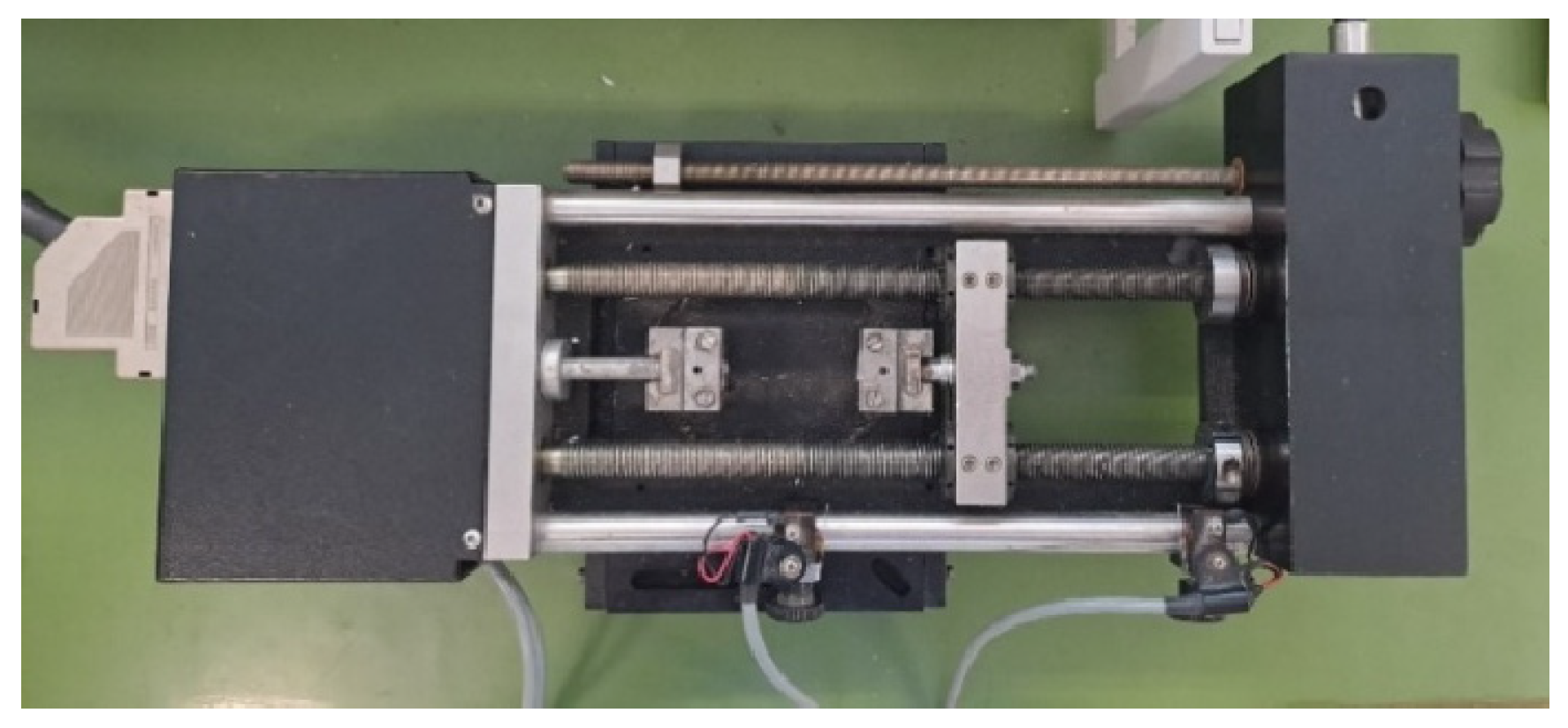
Figure 6.
Experimental setup of the microbond test using the FIBRObond microdroplet tester for interfacial shear strength measurements.
Figure 6.
Experimental setup of the microbond test using the FIBRObond microdroplet tester for interfacial shear strength measurements.
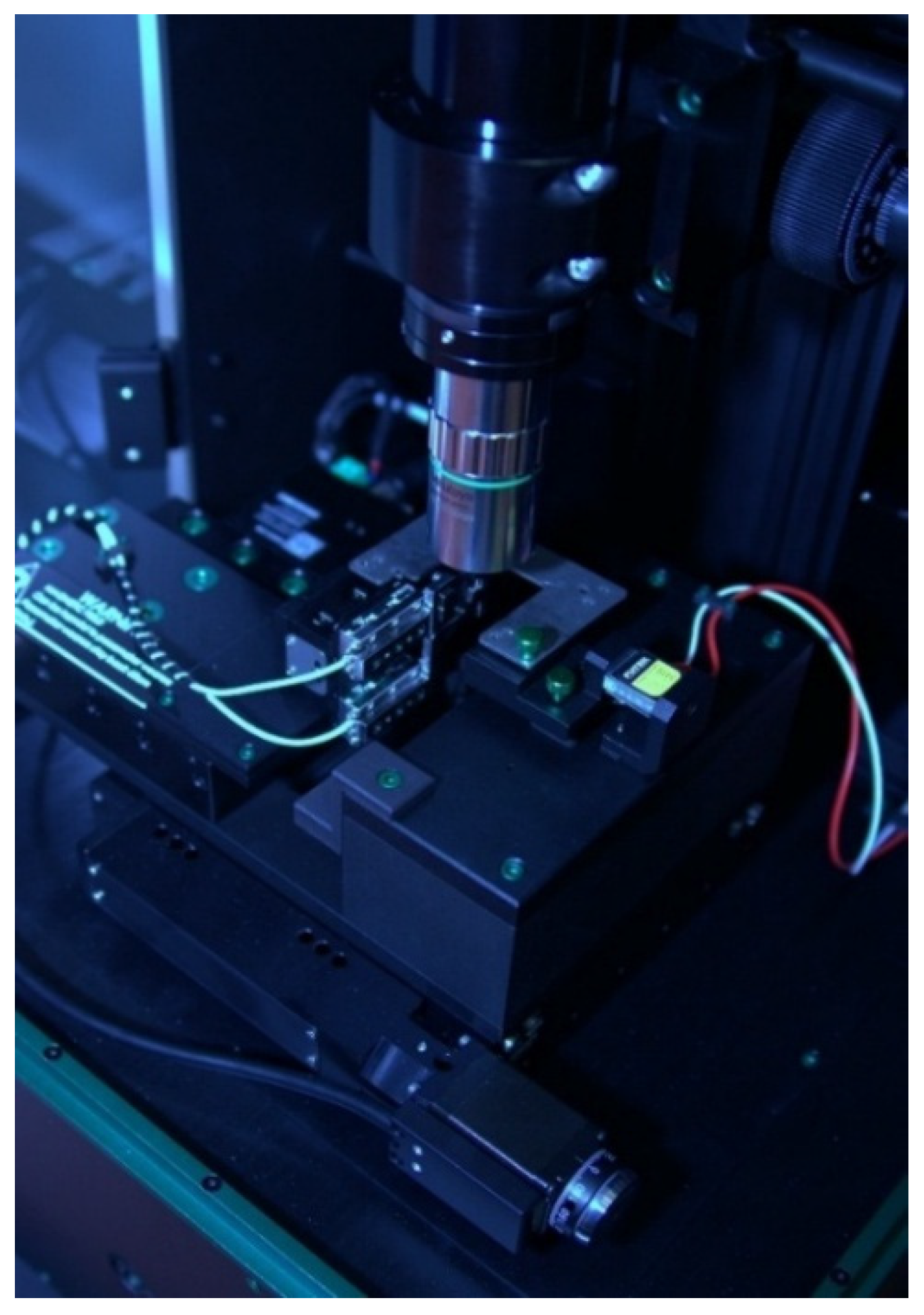
Figure 7.
Tensile strength of 3K recycled fiber sets.
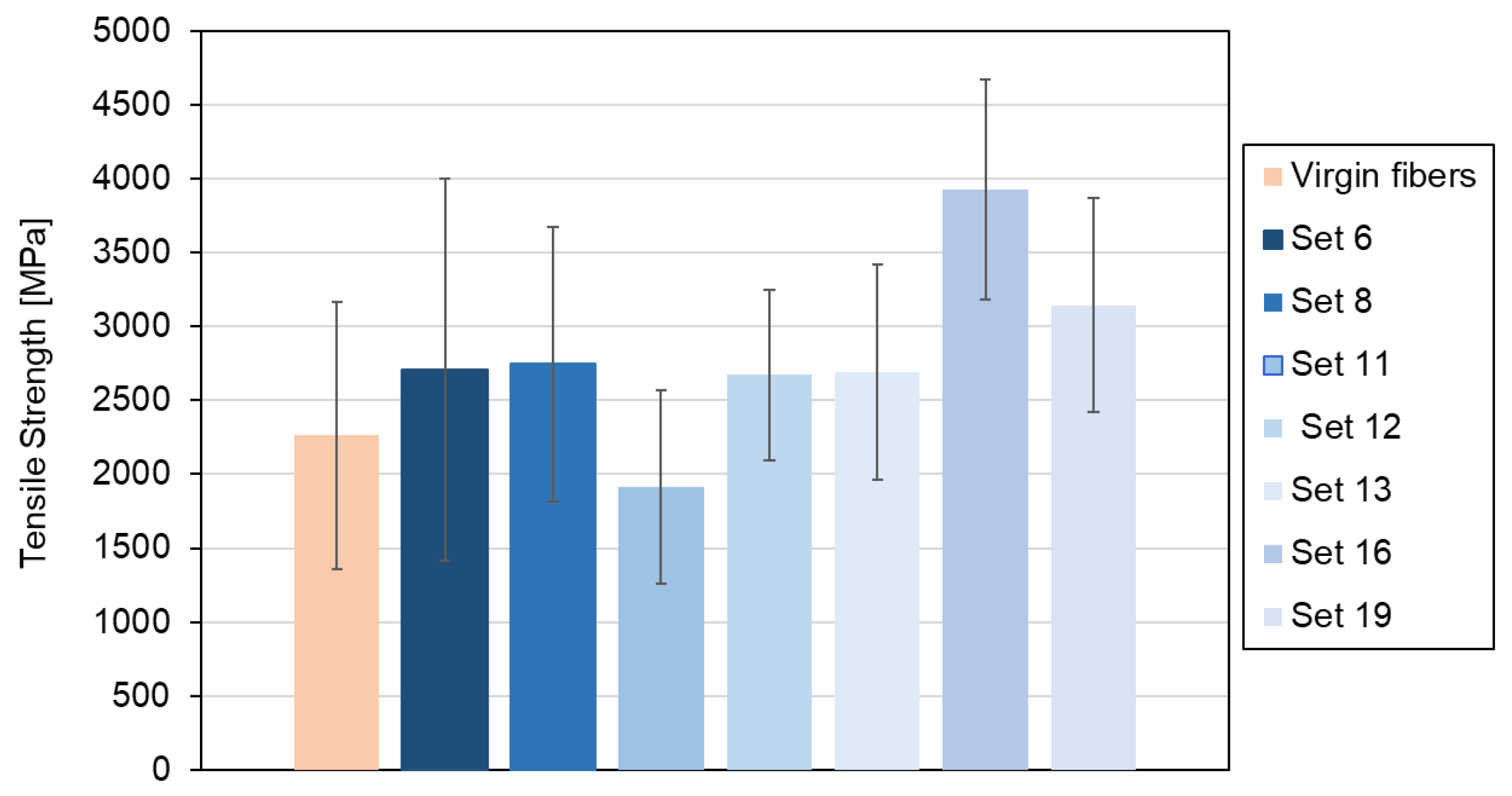
Figure 8.
Tensile strength of 24K recycled fiber sets.
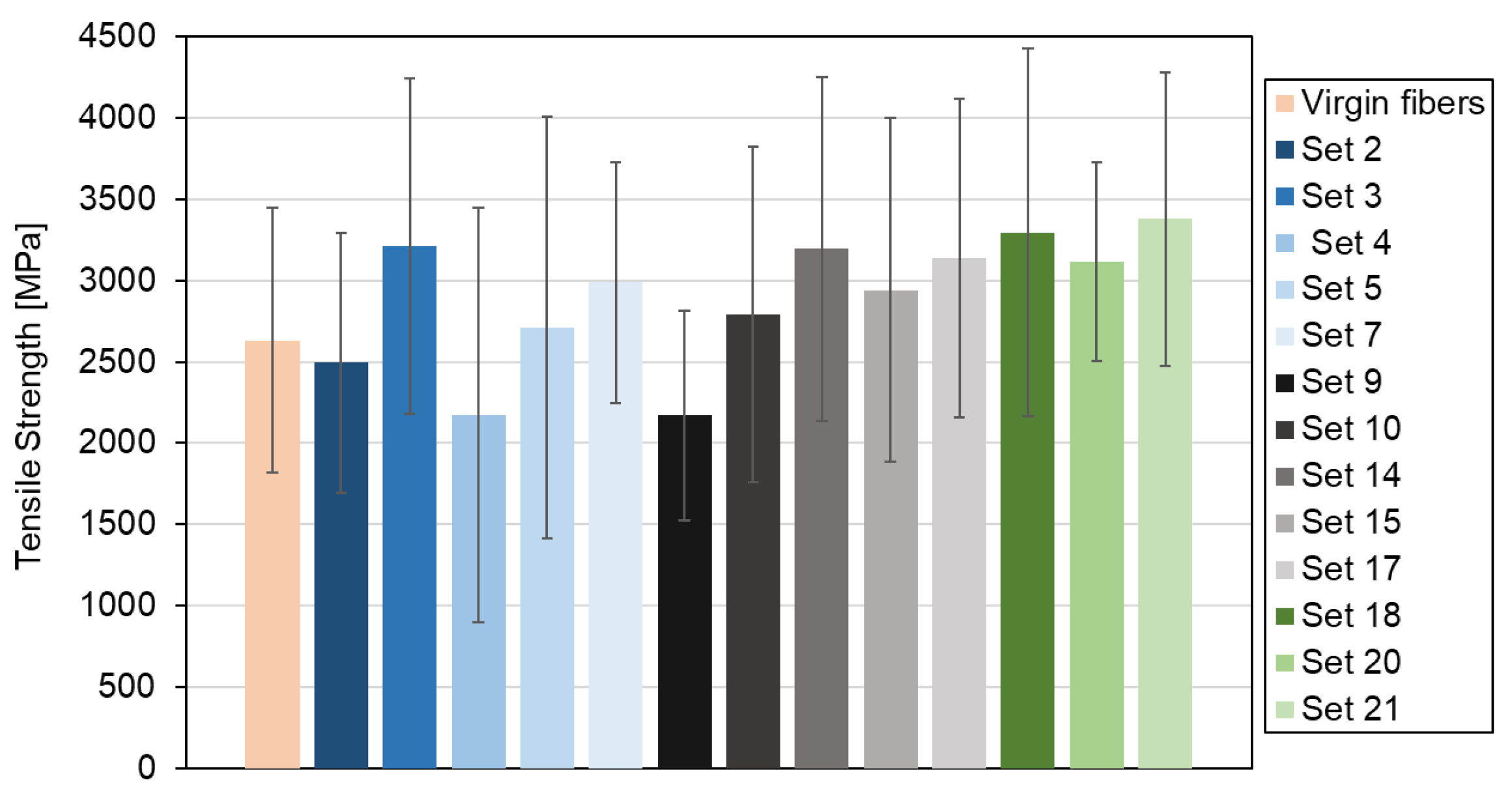
Figure 9.
Young's modulus of 3K recycled sets, including standard deviations.
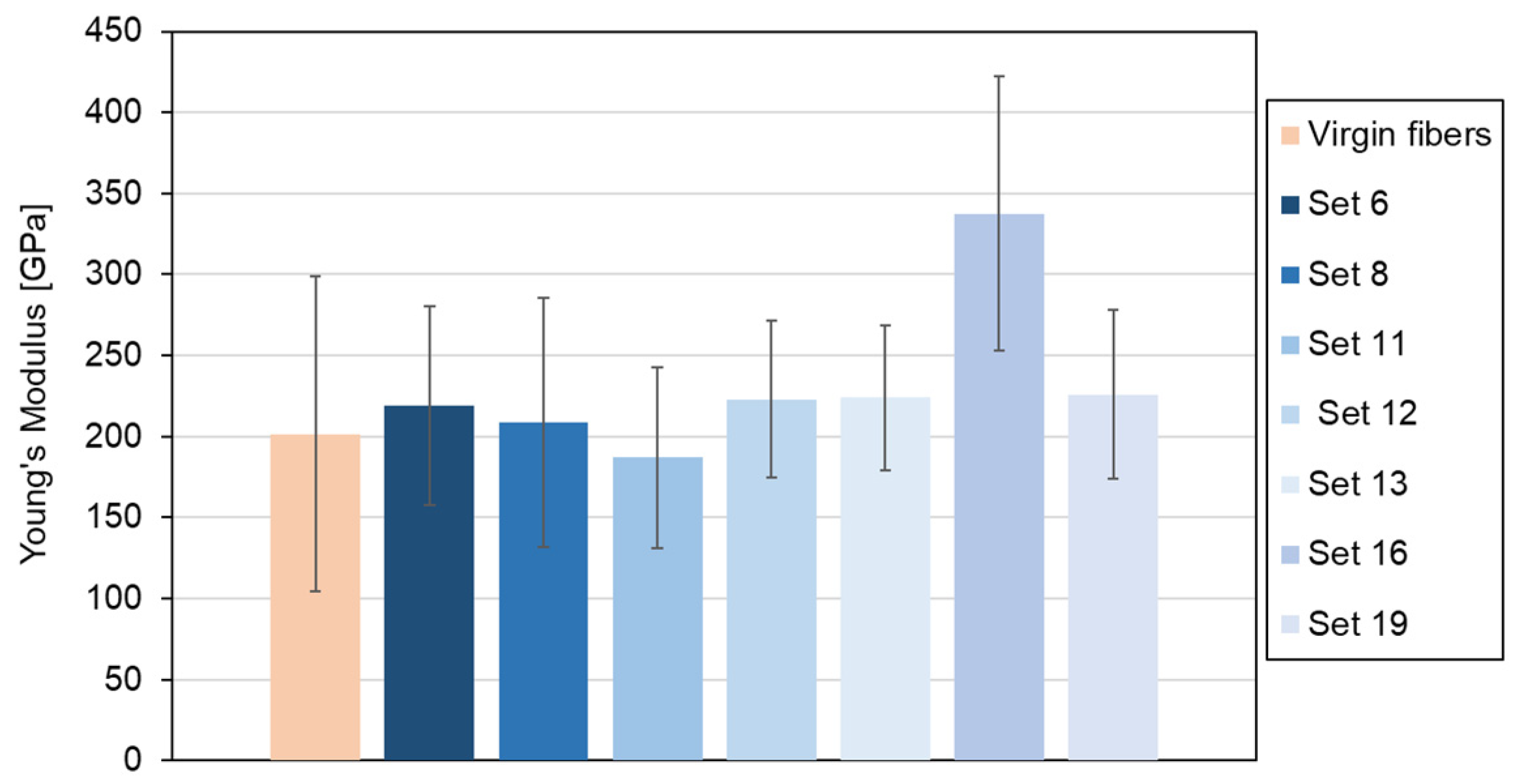
Figure 10.
Young's modulus of 24K recycled sets, including standard deviations.
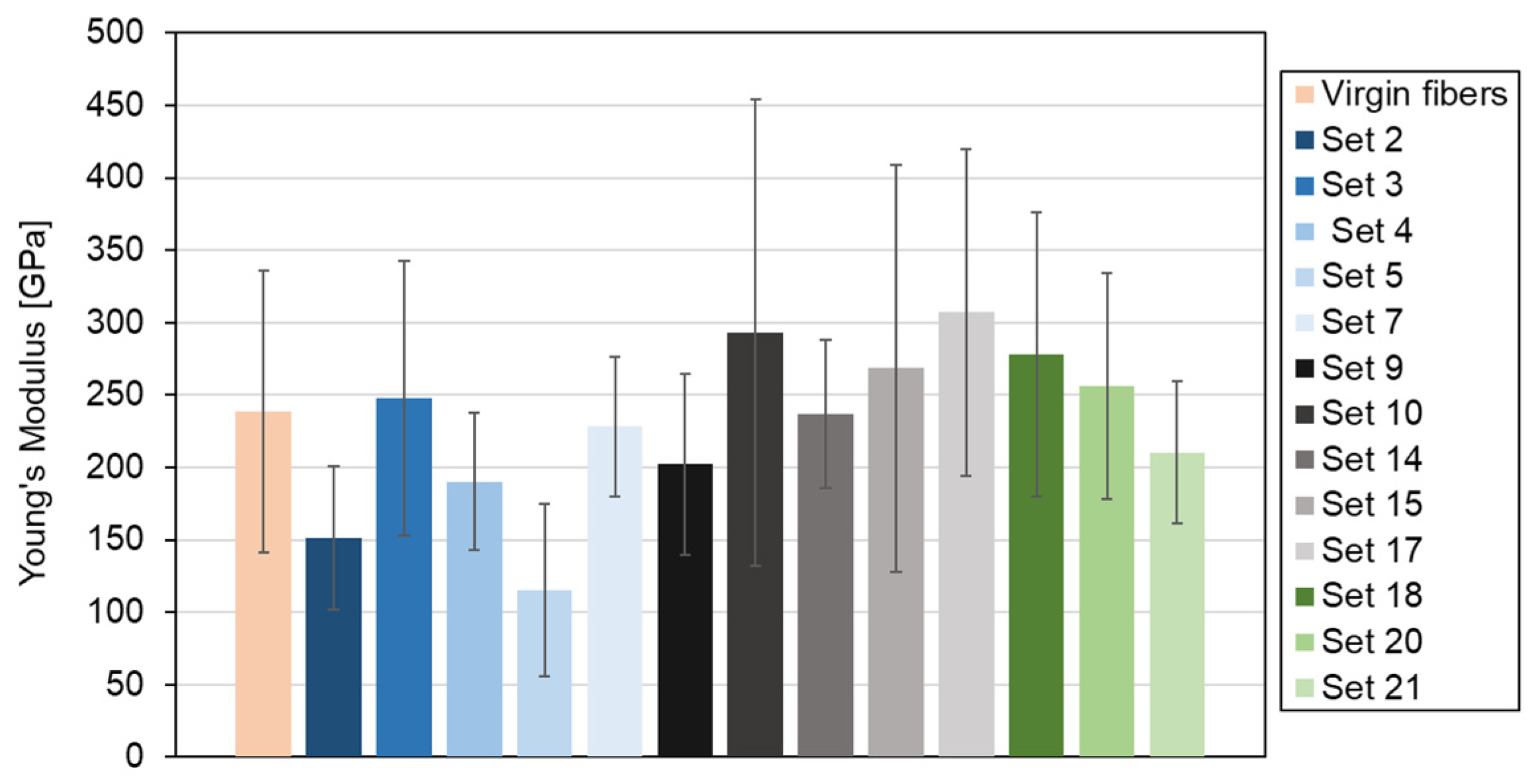
Figure 11.
Elongation at break of 3K recycled sets, including standard deviations.
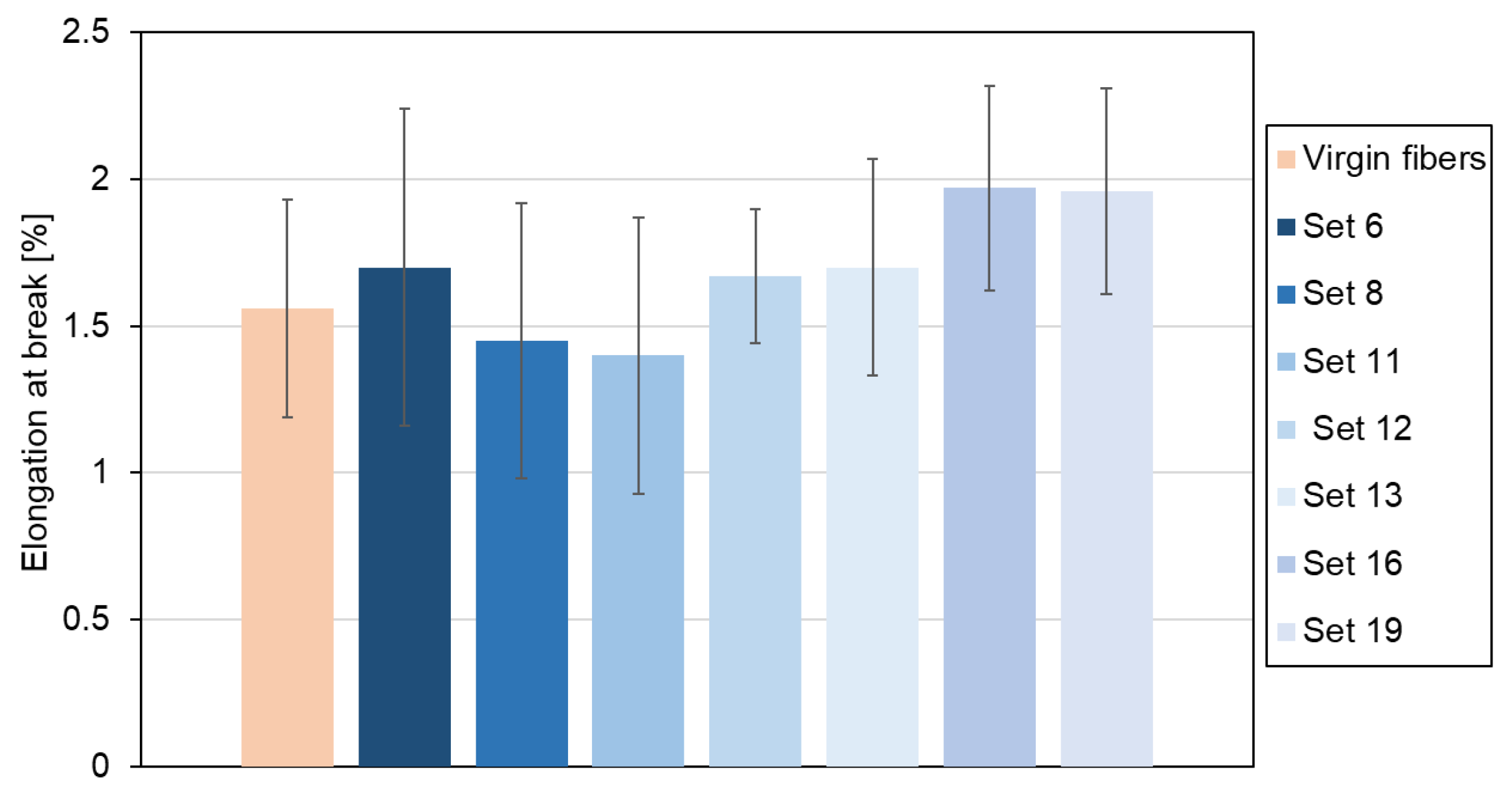
Figure 12.
Elongation at break of 24K recycled sets, including standard deviations.
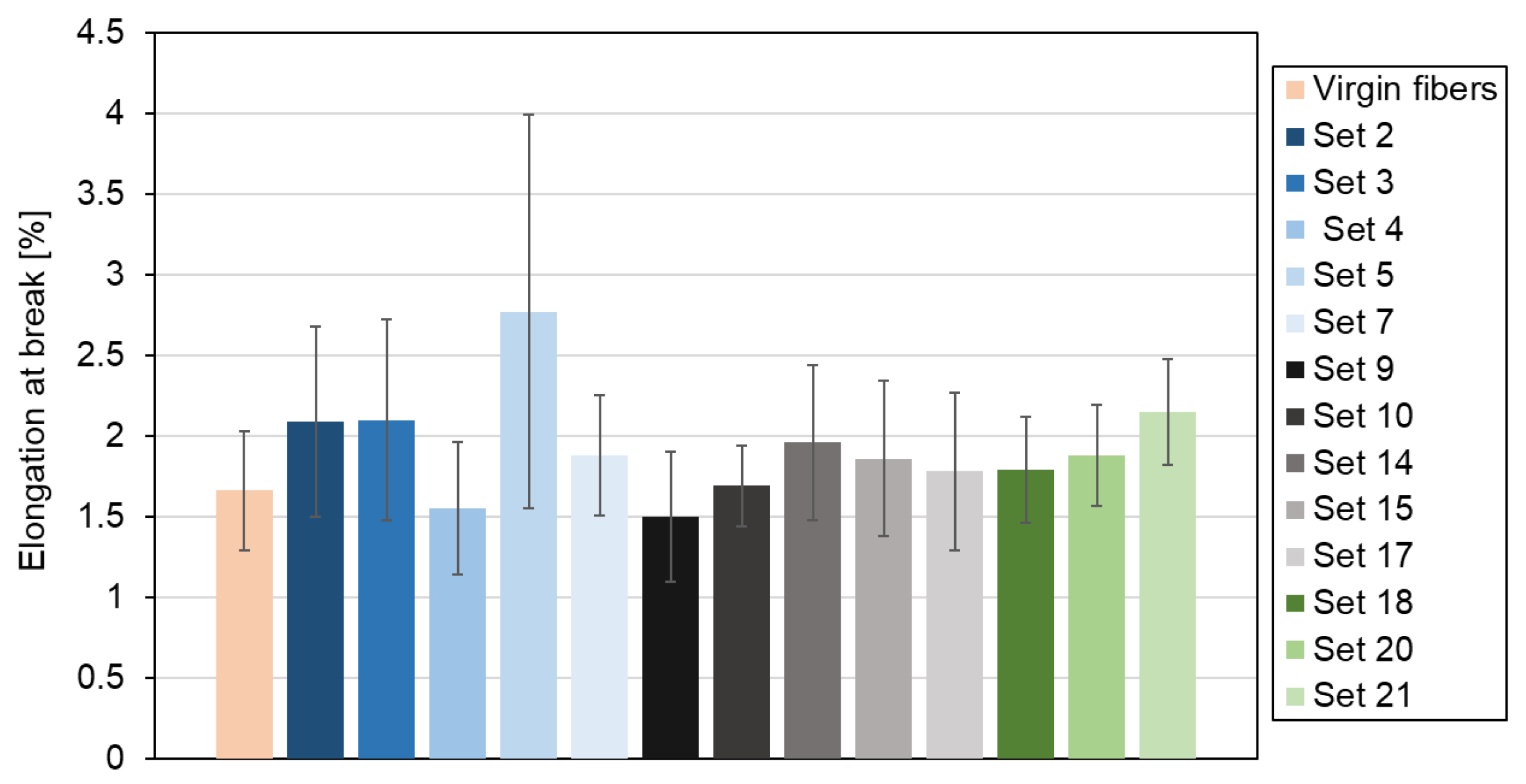
Figure 13.
Retention ratio for tensile strength, Young's modulus and elongation at break of 3K recycled sets.
Figure 13.
Retention ratio for tensile strength, Young's modulus and elongation at break of 3K recycled sets.
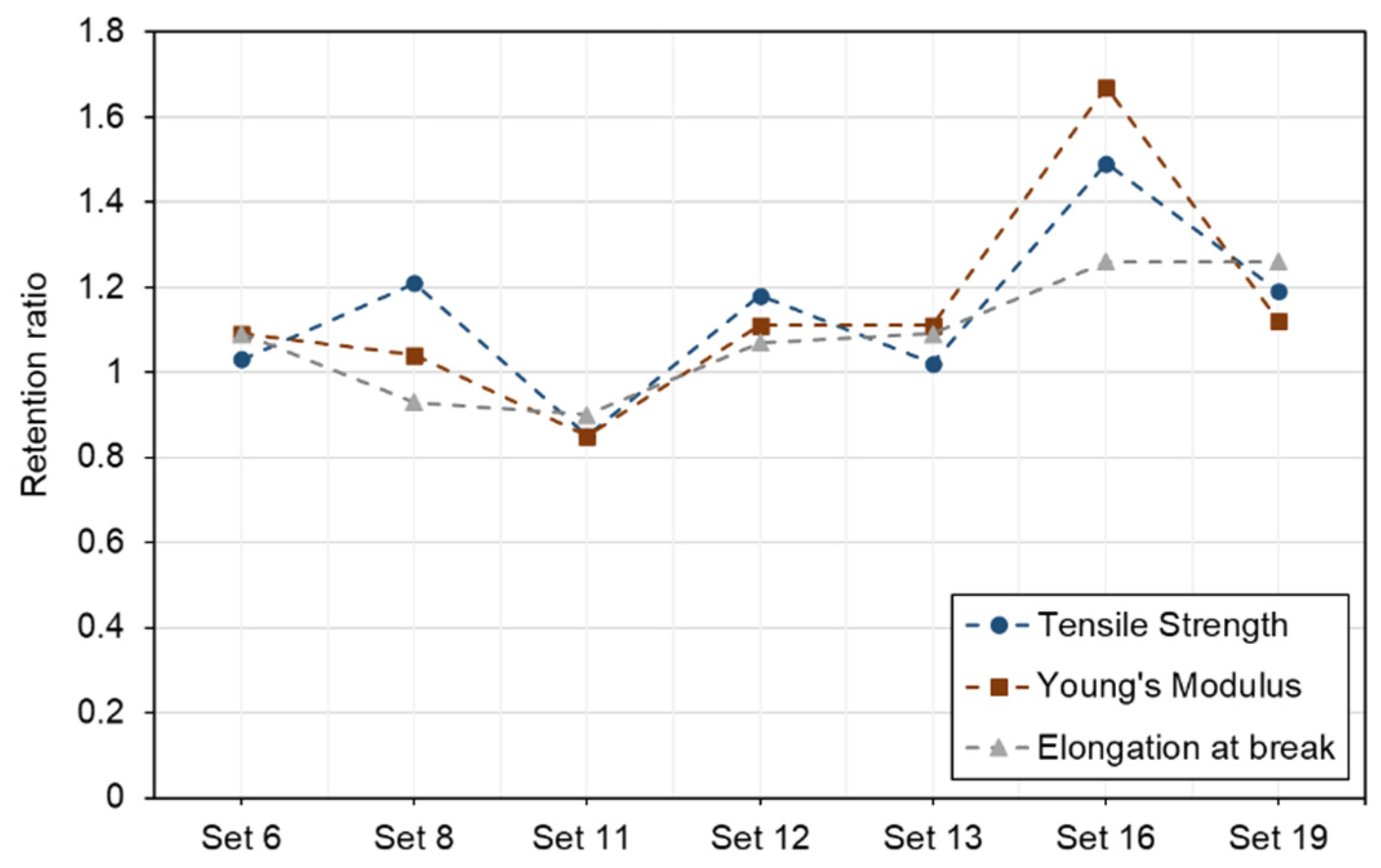
Figure 15.
Weibull function plot for the tensile strength of virgin and recycled 3K carbon fibers: (a) virgin fibers; (b) best-performing recycled set based on Weibull parameters.
Figure 15.
Weibull function plot for the tensile strength of virgin and recycled 3K carbon fibers: (a) virgin fibers; (b) best-performing recycled set based on Weibull parameters.
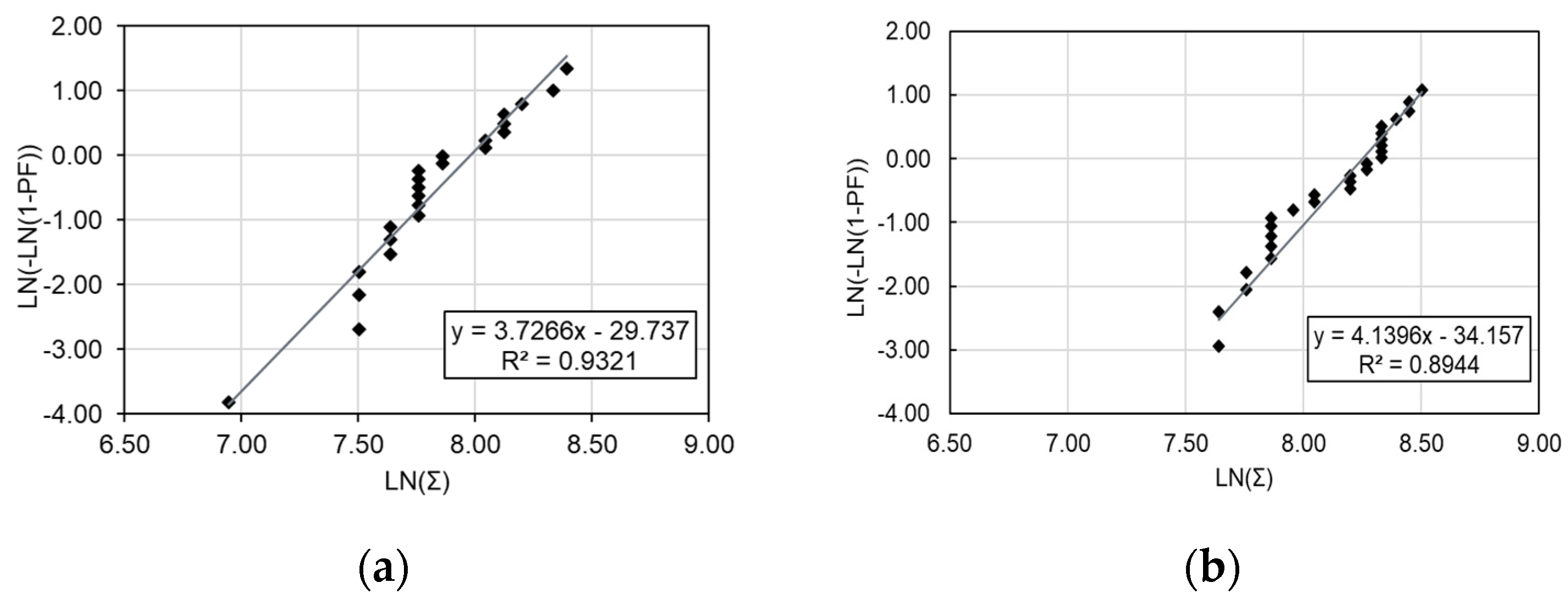
Figure 16.
Weibull function plot for the tensile strength of virgin and recycled 24K carbon fibers: (a) virgin fibers; (b) best-performing recycled set based on Weibull parameters.
Figure 16.
Weibull function plot for the tensile strength of virgin and recycled 24K carbon fibers: (a) virgin fibers; (b) best-performing recycled set based on Weibull parameters.
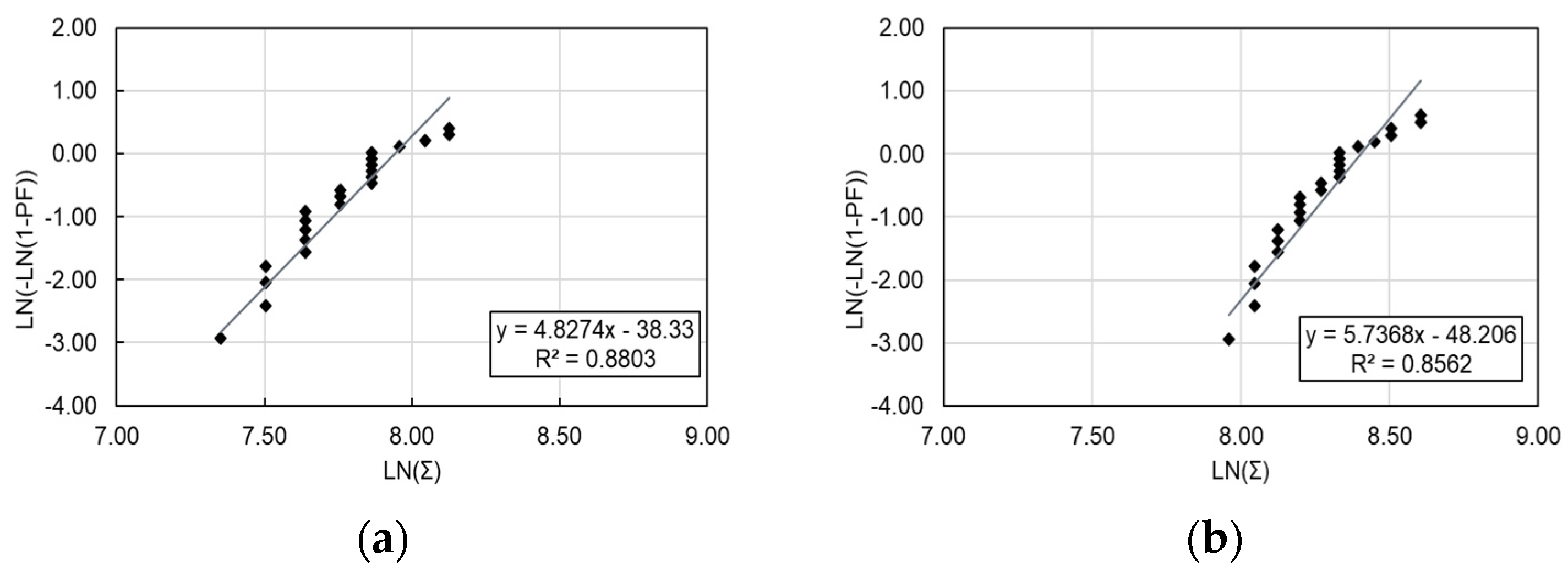
Figure 17.
IFSS of recycled 3K fibers.
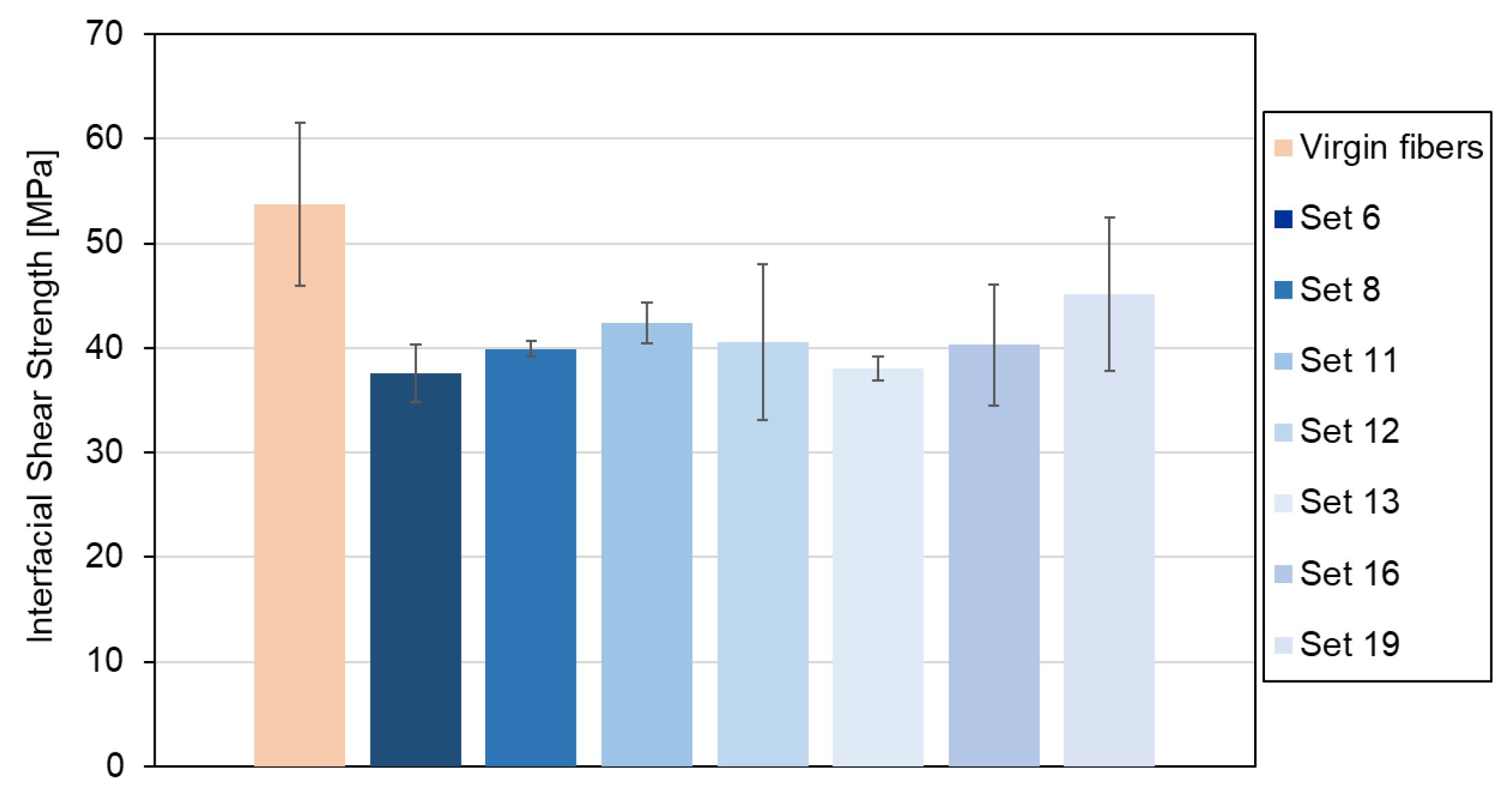

Table 1.
Tensile properties of the SR 1700 epoxy resin system as provided by the manufacturer’s technical datasheet [34].
Table 1.
Tensile properties of the SR 1700 epoxy resin system as provided by the manufacturer’s technical datasheet [34].
| Tensile properties | Units | Value |
|---|---|---|
| Modulus of elasticity | MPa | 3400 |
| Maximum resistance | MPa | 90 |
| Resistance at break | MPa | 87 |
| Elongation at maximum resistance | % | 4.2 |
| Elongation at break | % | 5.1 |
Table 2.
Parameters applied in each plasma-assisted solvolysis test.
| Sample ID | Solvolysis Parameters | ||||||
|---|---|---|---|---|---|---|---|
| Plasma heads | Plasma Power input (W) | Plasma Gas Mixture | Flow (L/min) | HNO3 Concentration (M) | Composite/HNO3 ratio (g/mol) | Time (h) | |
| Set 1 | - | - | - | - | - | - | - |
| Set 2 | 1 | 800 | N2 | 4 | 14.4 | 2 | 5.5 |
| Set 3 | 1 | 800 | N2 | 4 | 14.4 | 2.1 | 4.5 |
| Set 4 | 1 | 800 | N2 | 4 | 14.4 | 4.4 | 4.3 |
| Set 5 | 1 | 800 | N2 | 4 | 14.4 | 6.2 | 5.2 |
| Set 6 | 1 | 800 | N2 | 4 | 14.4 | 9.4 | 5.3 |
| Set 7 | 0 | 0 | - | - | 14.4 | 2.1 | 18 |
| Set 8 | 4 | 1680 | N2/Ar | 1/3 | 14.4 | 2.2 | 4.1 |
| Set 9 | 4 | 1680 | N2/Ar | 1/3 | 12 | 2.7 | 4.5 |
| Set 10 | 4 | 1680 | N2/Ar | 1/3 | 10 | 3.3 | 6 |
| Set 11 | 4 | 1680 | N2/Ar | 1/3 | 8 | 4 | 6 |
| Set 12 | 4 | 1200 | N2/Ar | 1/4 | 14.4 | 1.9 | 6 |
| Set 13 | 4 | 460 | N2/Ar | 1/4 | 14.4 | 1.9 | 6 |
| Set 14 | 4 | 800 | N2/Ar | 1/4 | 14.4 | 1.9 | 6 |
| Set 15 | 4 | 1200 | N2/Ar | 1/4 | 14.4 | 1.9 | 6 |
| Set 16 | 4 | 800 | N2/Ar | 1/4 | 12 | 2.3 | 6 |
| Set 17 | 4 | 1200 | N2/Ar | 1/4 | 12 | 2.3 | 6 |
| Set 18 | 4 | 1600 | N2/Ar | 1/4 | 12 | 2.3 | 6 |
| Set 19 | 4 | 800 | N2/Ar | 1/4 | 10 | 2.7 | 6 |
| Set 20 | 4 | 1200 | N2/Ar | 1/4 | 10 | 2.7 | 6 |
| Set 21 | 4 | 1600 | N2/Ar | 1/4 | 10 | 2.7 | 6 |
Table 3.
Weibull distribution parameters for tensile strength of 3K and 24K recycled carbon fiber sets.
Table 3.
Weibull distribution parameters for tensile strength of 3K and 24K recycled carbon fiber sets.
| Fiber Type | Set | Shape factor | Scale factor |
|---|---|---|---|
| 3K fiber tow | Virgin | 4.83 | 2795.64 |
| Set 6 | 3.06 | 3021.74 | |
| Set 8 | 1.83 | 3654.35 | |
| Set 11 | 3.39 | 2137.65 | |
| Set 12 | 4.59 | 3100.18 | |
| Set 13 | 4.32 | 2899.29 | |
| Set 16 | 5.74 | 4442.42 | |
| Set 19 | 4.79 | 3442.83 | |
| 24K fiber tow | Virgin | 3.73 | 2920.94 |
| Set 2 | 3.24 | 2805.79 | |
| Set 3 | 3.08 | 3960.58 | |
| Set 4 | 3.43 | 2494.89 | |
| Set 5 | 2.50 | 3050.85 | |
| Set 7 | 3.95 | 3453.69 | |
| Set 9 | 3.57 | 2656.16 | |
| Set 10 | 2.99 | 3141.17 | |
| Set 14 | 4.16 | 3736.71 | |
| Set 15 | 2.87 | 3635.88 | |
| Set 17 | 3.22 | 3857.46 | |
| Set 18 | 2.97 | 4022.52 | |
| Set 20 | 5.47 | 3565.86 | |
| Set 21 | 4.14 | 3832.25 |
Disclaimer/Publisher’s Note: The statements, opinions and data contained in all publications are solely those of the individual author(s) and contributor(s) and not of MDPI and/or the editor(s). MDPI and/or the editor(s) disclaim responsibility for any injury to people or property resulting from any ideas, methods, instructions or products referred to in the content. |
© 2025 by the authors. Licensee MDPI, Basel, Switzerland. This article is an open access article distributed under the terms and conditions of the Creative Commons Attribution (CC BY) license (http://creativecommons.org/licenses/by/4.0/).
Copyright: This open access article is published under a Creative Commons CC BY 4.0 license, which permit the free download, distribution, and reuse, provided that the author and preprint are cited in any reuse.


