

Submitted:
09 October 2025
Posted:
09 October 2025
You are already at the latest version
Abstract
Biotextronics is a new field of knowledge that may help in treatment of lower uri-nary tract inflammations. Such solution is a mobility form of a steam baths and it was called BioTexPants. It is an underwear with a biotextronics 4-layer insert with applied essential oil with antibacterial and anti-inflammatory activity. It has many advantages, e.g. ensures mobility while using, it is easy to use and contains natural materials. Bio-TexPants was designed and created to be controlled via an app by the user, however the doctor can have access to monitor the therapy and its frequency. It is possible to use indi-vidual functions in the application tabs: calendar, history, and online preview of work. The antibacterial activity of designed insert was proved in previous research.
Keywords:
biotextronics
; BioTexPants
; textronics
; lower urinary tract inflammations
; essential oils
; application
; antibacterial activity
1. Lower Urinary Tract Inflammation
Inflammation of the lower urinary tract occurs 50 times more often in women than in men. This is caused by a short urethra and a short distance between its opening and the vaginal opening and anus. This distance is important because the most common cause of inflammation of the lower urinary tract is infection with Escherichia coli bacteria living in the large intestine [1,2]. The conducted research shows that 68% of women in Poland try to treat lower urinary tract infections on their own. 20% are sure of their diagnosis at the first infection, and at the next infection – this value increases to 33% [3]. Over-the-counter drugs containing nitrofurantoin, commonly called furagine, are available in pharmacies [4]. Antibiotics are usually used, but their frequent use may lead to vaginal and intestinal dysbiosis, as well as antibiotic resistance of microorganisms. Therefore, preventive measures to prevent urinary tract inflammation are desirable. Numerous clinical studies indicate that substances of natural origin can provide effective prevention in the event of recurrent infections. The most effective are considered to be, among others: cranberries, berberine, essential oils, probiotics and vitamins [5,6]. Treatment should be supplemented with a high-protein diet and vitamin C, including: parsley or celery. As a prevention and support for the treatment of inflammation of the lower urinary tract, it is recommended to drink cranberry juice from large cranberries or preparations standardized for the presence of proanthocyanidins, which prevent bacteria Escherichia coli from adhering to a given substrate and forming a biofilm. Cranberries have a diuretic effect, helping to naturally flush microorganisms from the urinary tract. Cranberry juice also acidifies urine, which also reduces the risk of infections [7].
Home methods of alleviating the symptoms occurring during urethral and bladder inflammation include staying warm. In the case of relieving pain located in the lower abdomen, warming baths, lasting no longer than 5-10 minutes, may be helpful [[8]. You can use essential oils with anti-inflammatory and aseptic properties for bathing, including: chamomile or sage essential oil [9]. In addition to pharmacological treatment, a common method in the fight against inflammation of the lower urinary tract are steam baths, also known as sitz baths. Some doctors recommend using them from several times a week to even 2-3 times a day in the initial phase of treatment, for 15-20 minutes each. In its traditional form, a steam bath involves a bath during which the patient stands over a bowl of hot water in such a way that the warm water or steam washes the buttocks and hips. Heat increases blood flow, which speeds up healing and reduces discomfort. Various essential oils are often added to water, including: from common chamomile or sage, which support treatment and relieve the feeling of discomfort [10]. In the prevention of urinary tract infections, the textile aspect, i.e. the type of underwear worn, is also important. First of all, it should be fresh and not too tight. It is also important that it does not cause excessive heating of intimate areas and does not increase sweating, as this promotes the development of pathogens. Antimicrobial finishing of textiles protects users against pathogenic microorganisms [11]. Underwear can be finished, for example, with silver, which has antibacterial properties [12].
Obtaining aseptic products is also possible by using essential oils, which have antibacterial properties [13]. Introducing essential oils into fabrics is a relatively new area of research that can also be used in textronics applications.
2. Textronics and Biotextronics in Healthcare
The development of smart textile technology and wearable electronics has resulted in the emergence of a new area of knowledge, including smart textiles containing electronic components. Therefore, textronics is a synergistic combination of fields such as textiles, electronics and computer science, as well as knowledge in the field of automation, metrology and physiology [14,15].
The use of textronics systems enables the creation of applications that contribute to improving the quality of life of users. Textronics products are usually manufactured as everyday clothes, but with electronic systems, power supply systems and sensors. Modifications of this type should not impair the comfort of wearing the clothing. For this reason, electronic devices integrated with textiles should have the following properties [14]:
- high flexibility;
- lightness;
- resistance to mechanical and operational exposure;
- resistance to moisture (sweat, washing);
- resistance to weather conditions (variable temperature, rain, humidity).
The minimization of electronic devices and the development of innovative textronics materials have enabled the integration of specialized sensors that monitor vital parameters in everyday clothes. The use of sensors in clothes that measure blood pressure, heart rate, respiratory rate, temperature or ECG makes it possible to detect irregularities and threats to health or life [18]. Textronics applications also enable therapy to be conducted at the point of application, e.g. using electrostimulation or thermostimulation. Possible applications of textronics systems are presented below.
One example of the applications described above is a textronics system for protecting older people. It comes in the form of a T-shirt and does not require specialized personnel to operate it. The system measures basic vital parameters: pulse, respiratory rate, body temperature and tracks the user's location inside and outside buildings. It is intended for older people, especially patients in hospitals and nursing homes. If one of the mentioned parameters changes in a life-threatening way, the appropriate medical services are notified. Embedded software ensures continuous data collection and generating alarm signals in the form of reports such as SMS or e-mails for caregivers of the elderly. The system also allows elderly people to be remotely monitored in their homes by their family. Textile sensor elements and textile signal lines are implemented in the structure of the clothing and this is the main innovation of this type of systems. Moreover, the measurement of physiological parameters is non-invasive, which means that it does not directly interfere with the human body. The system is completely safe because it is powered by a battery, such as those used in mobile phones. The GPS (Global Positioning System) function allows you to determine the patient's location. The IPS system (Intrusion Detection System) indicates the user's position inside the building [15,16].
Another example of a textronics application is the Baby Tex system, combining the functionality of children's clothing with elements of measurement electronics, designed to control two vital parameters of young children: body temperature and respiratory rate. The solution makes it possible to detect problems that pose a threat to health and life, especially Sudden Infant Death Syndrome (SIDS) and the sudden occurrence of high fever or cold of the body [17].
Electrotherapy is an important part of physical therapy used for therapeutic purposes. The applied electric current can produce a therapeutic effect of the stimulus and analgesic (neuromuscular stimulation, pain relief, improvement of tissue perfusion, reduction of muscle tension, alleviation of inflammation, acceleration of the absorption of swelling, improvement of metabolism, tissue regeneration, etc.). An optimal design of textile electrodes intended for muscle electrostimulation has been developed, in the form of a textile knee stiffener or elbow bandage. The system may be useful in the case of muscle spasms as a result of limb immobilization or as a training device [18].
It is possible to use textronics systems with antiseptic properties. A solution was proposed in which the spacer fabric covering the mattress was integrated with a sterilization system using UV-C radiation. This allowed for a significant reduction in the number of microorganisms in the patient's immediate environment. Fiber optics with UV diodes with wavelengths in the range of 265-275 nm are woven into the structure of the knitted fabric. The conducted research showed that the solution enabled the reduction of microbiological contamination by 60% during 2 hours of exposure, at low power of LED sources (3x5 mW)[19] .
Textronics systems allow to create applications that contribute to improving the comfort of human life. Textronics products are usually manufactured in the form of everyday clothes containing electronic systems (power systems and sensors) and are used in therapeutic products and vital signs monitoring products. The research included in the scope of the doctoral thesis is a combination of textronics and biologically active substances, creating a new area called biotextronics (Figure 1). Biotextronics systems may use substances of natural origin (essential oils, plant extracts, enzymes) and synthetic substances.
The advantages of biotextronics systems include multidirectional biological effects (e.g. anti-inflammatory, antibacterial, antifungal). These systems can warn against biological contamination, e.g. of food in production plants, and support pharmacological treatment with substances of natural origin, e.g. in clothing supporting the circulatory system.
The aim of the research was to design, manufacture and optimize an innovative, biotextronics system with antibacterial activity, intended for use in the prevention and support of the treatment of lower urinary tract inflammation. The developed system is a combination of a textronics system using aseptic essential oils released from an appropriately developed matrix.
3. Materials and Methods
The biotextronics system for the prevention and treatment of lower urinary tract infections (Figure 2) consists of an underwear (1), with a permanently attached textronics insert (4), on which a disposable, replaceable insert (5) where is applied an essential oil (6) with anti-inflammatory and antibacterial properties e.g. chamomile or thyme essential oil, released from the substrate under the higher temperature. The textronics (heating) insert consists of four layers: A-D. Layers B and D are electrically insulating layers, with layer B characterized by good thermal conductivity properties. Layer C is made of electroconductive textile materials, it is the heating element of the system and is connected via a textile signal line (2) to the regulation system (3) that ensures maintaining the appropriate temperature during the therapy. The textronics insert together with the replaceable insert that contains essential oil makes the textronics system a biotextronics. Power is supplied via a 5 V lithium-polymer battery.
In a biotextronics system it is important to select the materials of each element of the biotextronics insert to select an essential oil with anti-inflammatory and antibacterial properties, and to select a substrate that will enable the oil to remain on the insert during storage and to be released under the higher temperature during the therapy.
The functionality of the system developed as part of this work, apart from the use of increased temperature, is also determined by its implementation in the form of reusable underwear with a disposable outer insert that contains essential oil. This ensures comfort and mobility of use. The use of essential oils, not typical pharmaceutical drugs, means that the system is not a medical product and can be freely available for sale. The use of electroconductive materials and electronics coupled with the underwear causes the release of active compounds from the biotextronics insert in a programmable manner. After putting on the underwear, place a replaceable insert with active substances in it and program the temperature of 40°C on the temperature regulator. The proposed duration of therapy is 20 minutes. After completing the therapy session, the regulator can be disconnected from the system, the replaceable part of the insert can be thrown away, and the remaining part of the system can be left at the therapy site to gradually cool down the underwear and intimate areas.
4. Advantages of the Biotextronics System for the Prevention and Treatment of Lower Urinary Tract Inflammation
In a previous research there was an investigation of 5 essential oils from: Matricaria chamomilla L., Salvia officinalis L., Salvia lavandulaefolia Vahl., Juniperus communis L., Thymus vulgaris L., which are written to have an anti-inflammatory and antibacterial activity. EOs were investigated to examine their antimicrobial activity against bacteria that cause lower urinary tract inflammations: Escherichia coli, Staphylococcus saprophyticus, Staphylococcus epidermidis, Pseudomonas aeruginosa and Enterococcus faecalis, Figure 3.
The high antibacterial activity of thyme essential oil is attributed to volatile compounds such as thymol, α- and β-pinenes, 1,8-cineole, and p-cymene ([13,21]According to literature data, the MIC value of thyme oil in the gas phase against Staphylococcus aureus bacteria is 0.26 µl/cm3 [5,22], while in the presented study, thyme oil at the lowest concentration of 0.054 µl/cm3 limited the growth of two species of bacteria from the genus Staphylococcus: S. saprophyticus and S. epidermidis by 2.9 and 26.7%, respectively.
The satisfying results were also obtained for chamomile EO, however the highest biomass loss of E. coli which is the most often cause of lower urinary tract inflammations was obtained for thyme EO thus it was chosen for further tests.
In the paper there is an investigation of
4.1. Materials
Materials used in the outer insert preparation was listed in Table 1.
Characteristic of thyme EO is presented in Table 2.
4.2. Methods
4.2.1. Gas Chromatography–Mass Spectrometry (GC-MS)
The quantitative and qualitative composition of gas phase above the model inserts was determined by gas chromatography coupled with mass spectrometry (GC-MS). A coupled gas chromatograph was used with a Pegasus 4D mass spectrometer, with a TOF MS spectrometer (LECO, USA).
First dimension column: Stabilwax-DA (Restek, France) 30 m long, 0.25 mm internal diameter and 0.25 µm stationary phase film thickness; second dimension column: BPX-50 (SGE Analytical Science, Australia) with a length of 2 m, an internal diameter of 0.1 mm and a stationary phase film thickness of 0.1 µm. Carrier gas: helium, constant flow 1 ml/min. First dimension furnace temperature program: 50°C (1 min), 4°C/min to 245°C (30 min); temperature program of the second dimension furnace shifted by +5°C compared to the first dimension furnace. Two-stage modulator cooled to -80°C. Modulation time 8 s. Cold pulse time 2.4 s. Hot pulse time 1.6 s (+20°C relative to the first dimension furnace). SSL dispenser: temperature 250°C with a division of 1:30. Transfer line temperature: 280°C. TOF mass spectrometer, detector voltage 1600 V, ion source temperature 200°C, ionization energy 70 eV, mass range 33-350 amu, scanning frequency 150 spectra/s.
Compounds were identified by chromatographic analysis of mass spectra, indices, and retention times, which were compared to Wiley, Adams, and Nist libraries.
The GC-MS was also used in detection compounds released in Solid Phase Microextraction.
4.2.2. Preparing the Model Inserts
The model inserts were prepared to fit into the SPME vials dimensions. Circle with diameters of 2.2 cm were cut out from the viscose and put into the vials. Agar was dissolved in hot water with constant stirring, cooled and essential oil mixed with cellulose or microcrystalline cellulose was added to it. Then 3.2 ml of agar with cellulose and EO were put onto the inserts in vials. Such prepared inserts were model materials investigated for compounds in a gas phase above the inserts in the temperature of 40°C which is the temperature of the therapy, on the day of their preparation (time 0) and also after 7, 14, 28 and 56 days of their storage.
4.2.3. Solid Phase Microextraction (SPME)
Essential oil from chamomile was applied to the model insert and retained on it using an agar film with the addition of cellulose or microcrystalline cellulose, which constituted a model system. Volatile oil compounds released under the influence of elevated temperature (40°C) were determined during solid phase microextraction (SPME) and identified using gas chromatography coupled with mass spectrometry. Solid phase microextraction conditions:
- temperature: 40°C;
- conditioning time: taq = 5 and 10 min;
- extraction time: tex = 20 min;
- no mixing;
- fiber: ternary DVB/CAR/PDMS (Sigma-Aldrich, USA).
5. Results
5.1. Chemical Part
38 chemical compounds were identified in common thyme essential oil (Figure 4, Table 3). Thymol was found in the largest amount (42.29%). This amount is consistent with both the chromatographic profile of the manufacturer, Avicenna Oil, and the requirements of the European Pharmacopoeia (37.0-55.0%; 36.0-55.0%, respectively), as well as literature data (10.0-85.0%[24,25] Other chemical compounds present in the majority of quantities are: p-cymene (23.84% and 0.05%), γ-terpinene (9.04%), and linalool (5.73%). The percentage content of p-cymene and γ-terpinene is consistent with both the oil manufacturer's specifications, the European Pharmacopoeia, and the data reported in the literature (respectively: specification: 14.0-28.0%, FE: 15.0-28.0% and literature: 8-44% for p-cymene and specification: 4.0-12.0%, FE: 5.0-10.0% and literature: 0.1-50.0% for γ-terpinene)[26]. Linalool (5.73%) (according to the manufacturer's specifications: 1.5-6.5%, according to FE: 4.0-6.5%) is reported in the literature to be present in thyme essential oil at levels of up to 4% . Terpinen-4-ol was detected at 0.72%, which is consistent with both the oil manufacturer's specifications and the requirements of the European Pharmacopoeia (0.1-2.5% and 0.2-2.5%, respectively). α-thujene was detected at 1.28%, while carvacrol methyl ether was found at 0.25%, which is consistent with the chromatographic profile provided by the oil manufacturer (Avicenna Oil, Poland) (0.2-1.5% and 0.05-1.5%, respectively). These compounds are not listed in the requirements for thyme oil in the European Pharmacopoeia.
The presence of β-myrcene, listed as one of the main ingredients in the manufacturer's specifications and in the European Pharmacopoeia, was not detected in thyme oil.
The antimicrobial activity of thyme essential oil is primarily attributed to the presence of thymol ([25]. Thymol was the main component in the tested oil. The content of α- and β-pinenes, 1,8-cineole, and p-cymene also influences the antiseptic properties of thyme oil ([13,27]. This oil was used in further research on the biotextronics insert.
The total number of compounds isolated in the headspace of cellulose-agar media with essential oil is presented below (Table 4). For each matrix containing oils, the main compounds were identified and recorded after a specified incubation time. As the inserts were stored in the model systems, a decrease in the number of compounds in the headspace of the matrix was observed.
In the headspace above the thyme oil matrices, on the day of their preparation, 16 to 19 compounds were identified for the cellulose matrix and 20-27 compounds for the microcrystalline cellulose matrix. The highest number of detected compounds was found in the system with a 1:3 OE:CM ratio. After 7 days of matrix storage, 5-15 compounds were detected in the atmosphere above the cellulose inserts and 8-10 above the microcrystalline cellulose inserts (the highest number in the OE:C 1:1 system). During the remaining insert storage periods (14, 28, and 56 days), the number of detected compounds ranged from 3 to 6 for the cellulose matrix and from 2 to 7 for the microcrystalline cellulose matrix. In Table 5 there are listed compounds identified in the gas phase above the surface of agar-cellulose matrices with cellulose or microcrystalline cellulose and chamomile essential oil.
On the day of testing, the presence of 16 chemical compounds was detected in the headspace above all matrices: β-thujene, α-pinene, camphene, myrcene, γ-terpinene, p-cymene, limonene, 1,8-cineole, γ-terpinene, linalool, borneol, terpinen-4-ol, carvacrol methyl ether, thymol, β-caryophyllene, and α-caryophyllene. In the thyme essential oil, five of the above-mentioned compounds were outside the detection and quantification ranges for the given method: myrcene, p-cymene, γ-terpinene, borneol, and carvacrol methyl ether. The predominant compound in the headspace in the model system was p-cymene, ranging from 32.17% to 51.10%.
In the headspace above the insert, compounds not previously identified in thyme essential oil were detected: myrcene, p-cymene, α-phellandrene, sabinene, β-ocimene, γ-terpinene, terpinolene, camphor, borneol, carvacrol methyl ether, aromadendrene, and δ-cadinene. According to the literature, all of these compounds are present in the oil [28]. After 7 days of incubation of the inserts in the headspace above all tested matrices, the presence of five compounds was detected: p-cymene, 1,8-cineole, γ-terpinene, linalool, and thymol. Borneol, terpinen-4-ol, and β-caryophyllene were also identified above most of the matrices; they were not detected only for the EO:C 1:2 system. After 14 days of insert storage, p-cymene, 1,8-cineole, linalool, and thymol were detected above all matrices. After 28 days of matrix incubation, thymol was detected in the headspace of all matrices, and after 56 days of incubation, linalool was additionally detected, which was not detected on the 28th day only for the EO:MC 1:3 system.
In thyme oil applications, the anti-inflammatory effect is attributed to carvacrol and α-pinene Carvacrol was detected on the day of preparation of the matrices for the essential oil-cellulose system in 1:2 and 1:3 ratios and all inserts with microcrystalline cellulose. Its presence was also detected after 56 days of incubation for the EO:C 1:1 and 1:3 inserts (3.22% and 2.11%, respectively) and EO:MC 1:1 and 1:2 inserts (4.22% and 4.80%, respectively). α-pinene was determined for all matrices on the day of their preparation (from 0.49% to 0.73%) and after 7 days in the essential oil:cellulose 1:1 (0.63%) and essential oil:microcrystalline cellulose 1:1 (1.76%) systems. After 14, 28, and 56 days of insert incubation, no α-pinene was detected in the headspace.
Thymol has strong bactericidal, fungicidal, and parasitic effects [26]. Its antibacterial properties have been found to be three times stronger than those of thyme oil. Antibacterial activity has also been attributed to camphor, α- and β-pinenes, 1,8-cineole, and p-cymene [29,30,31]
Thymol was detected in all tested matrices for each storage period. On the day of testing, its amount in the headspace ranged from 2.52% to 4.17%. p-cymene and 1,8-cineole were detected in the headspace of all matrices on the day of testing, as well as after 7 (36.80-58.19% and 3.59-8.57%, respectively) and 14 days of incubation (5.21-32.75% and 3.72-14.42%, respectively), where they constituted the main components. After 28 days of storage, p-cymene was detected only in the headspace of the cellulose matrices (EO:C 1:1 (5.70%) and 1:3 (3.47%)), while 1,8-cineole was detected in the EO:C 1:2 (6.18%) and 1:3 (10.35%) systems and EO:MC 1:1 (9.64%) and 1:3 (18.06%) systems. No p-cymene or 1,8-cineole was detected after 56 days of incubation of the matrices. Camphor was identified after 7 days of incubation of EO:C 1:1 inserts (0.83%), after 14 days of incubation of EO:C 1:1 matrix (5.58%), after 28 days of storage of EO:C 1:1 and 1:2 inserts (9.38% and 22.90%, respectively) and after 56 days of their incubation (10.27% and 17.24%, respectively).
Based on the data contained in the literature, it can be expected that the strongest antibacterial properties will be obtained for all systems on the day of production of the inserts, after 7 and 14 days of storage, and for the EO:C 1:3 system.
5.2. Software Part
From the point of view of system functionality, it is important to manage the course of therapy using the application. The designed biotextronics system was named BioTexPants and was managed by a web application of the same name embedded on the Synology DS1010+ data server. The biotextronics system, apart from the hardware part (insert + underwear), consists of a control module and a software part. The software allows archiving the time of individual therapies on a data server. Data regarding the intensity of therapy can be viewed and analysed after logging in to the server, access to which is secured with a login and password set by the user and managed by the administrator. The server is designed to inform the user about planned therapy dates by displaying alerts in the form of defined colours. The software was created as an application on a server, so it can be run on various hardware platforms with web browsers. The software part has been designed in such a way as to enable the simplest and most intuitive operation of the system. The application operation diagram is shown in Figure 5.
The textronics insert control unit, together with the communication module, connects to the data server. Access to your personal account via the website is done by logging in using established names and passwords. Accounts are divided into two groups: users (people using therapy) and administrators (doctors supervising therapy), depending on the assigned permissions. At the administrator level, it is possible to add devices (further biotextronics systems), assign them names, data and alert levels, etc. Users can supervise the therapy (function of monitoring performed treatments and planning subsequent treatments). From this level, you only have access to alerts, and you can view events and alert history in a separate tab. Individual notifications are marked with a time variable and a device number.
It is very important to monitor the frequency of the therapy with the doctor even if it is only a preventive treatment, because lower urinary tract inflammations are known to be recurring. If a urinary tract infection occurs at least 3 times in a year or 2 times in 6 months, it is said to have recurred. Every fifth sexually active woman struggles with this problem [8]. A study conducted in 1987 showed that economic losses due to interstitial cystitis were estimated at $1.7 billion per year [24].
The application is available for various mobile devices: smartphones, tablets or notebooks. The requirement to use it is a web browser and the type of operating system (Android / iOS / Windows) does not matter. The main application panel (screenshot) supporting login pages is shown in Figure 6. The home application is the login page.
The functional diagram of the BioTexPants application is shown in Figure 7. The application panel was divided into two levels (W1 and W2). From the W1 level, registration and login to the application took place using a password set by the user. Level W2 included support for application functions, both on the administrator and user side. The administrator had the ability to add users, modify their profiles, view the history of use and online operation of the device. When planning therapy, the user could use the calendar function, with the option of sending therapy reminders via the device. There was also a tab with the history of therapies performed and their duration. The user could also turn the device on and off online, set the system to turn off automatically after 20 minutes, and use the safety switch. The application also provided information about the time since the start of therapy and the temperature of the insert.
It is possible to use individual functions in the application tabs: calendar, history, and online preview of work. In the calendar it is possible to plan subsequent therapies with the option of sending a reminder. In the history tab, the user can view all his previous treatments including the time they were performed. The PREVIEW tab allows patient to view the currently ongoing therapy and provides information about the system temperature and the time remaining until the end of a single use.
6. Discussion and Conclusions
Modern technologies including in the area of biotextronics make it possible to replace uncomfortable conventional therapy with new, convenient systems in which essential oils with healing properties are applied to a textile base. An innovative product is created, enabling comfort of use.
In cases of health problems related to lower urinary tract infections, it is important to prevent the infection in addition to undergoing pharmacological treatment. Steam baths are recommended by doctors however they are very uncomfortable to be taken. A patient needs a secluded place, where she or he can sit above the bowl with hot water. The BioTexPants is intended to replace steam baths with a mobile form that is not burdensome and convenient to use. It can be used also while working if needed.
After covid-19 pandemic people are more willing to use telemedicine and avoid visiting to the doctor in person. That is why the BioTexPants seem to be a good solution for women who suffers lower urinary tract infections.
The big advantage of the BioTexPants is the use of natural substances such as essential oils. Also during the pandemic people started to become interested in natural medicine and essential oils have been used for centuries for healing.
The mentioned essential oil that is taken into account to be the part of the system is from thyme (Thymus vulgaris L.). Its main compound is thymol which has a strong bactericidal, fungicidal and parasite-killing effect. Thyme oil has also antibacterial properties. The bacteria Staphylococcus aureus, Staphylococcus epidermidis, Enterococcus faecalis, Klebsiella pneumoniae, (MIC of 0.5 mg/ml) also turned out to be sensitive to its action. In relation to the bacteria Escherichia coli the effect of the essential oil was slightly weaker (MIC equal to 1.0), while the weakest (MIC equal to or above 4.0 mg/ml) was found against the bacteria Pseudomonas aeruginosa. All of these bacteria are the main ones that cause lower urinary tract inflammations.
The thyme essential oil has also anti-inflammatory properties. It is used in preparations used to treat rheumatic, joint and muscle pain as well as neuralgia. The antibacterial activity in gas phase of both essential oils releasing from the textile material (non-woven viscose) which was used for an outer insert has been proved in previous research. Therefore the next step in the research is to investigate the antibacterial properties of the insert in laboratory conditions similar to similar to real ones.
Based on the literature and the investigation of chemical compounds obtained above the insert, we can assume that biotextronics system will be useful in preventive and anti-inflammatory treatment against lower urinary track inflammations.
References
- B. Abelson et al., “Sex differences in lower urinary tract biology and physiology,” Biol Sex Differ, vol. 9, no. 1, pp. 1–13, 2018. [CrossRef]
- P. H. Henning and K. F. Jureidini, “Urinary tract infection.,” Aust Fam Physician, vol. 18, no. 3, pp. 1–2, 1989.
- K. Dickson, J. Zhou, and C. Lehmann, “Lower Urinary Tract Inflammation and Infection: Key Microbiological and Immunological Aspects.,” J Clin Med, vol. 13, no. 2, Jan. 2024. [CrossRef]
- A. Wasik-Olejnik, “Recurrent urinary tract infections \– prophylaxis and treatment,” Przewodnik Lekarza/Guide for GPs, pp. 18–23, 2009, [Online]. Available: https://www.termedia.pl/Recurrent-urinary-tract-infections-8211-prophylaxis-and-treatment,8,13276,1,1.html.
- S. Das, “Natural therapeutics for urinary tract infections—a review,” Futur J Pharm Sci, vol. 6, no. 1, 2020. [CrossRef]
- S. Pulipati, P. Srinivasa Babu, M. Lakshmi Narasu, C. Sowjanya Pulipati, and N. Anusha, “An overview on urinary tract infections and effective natural remedies,” ~ 50 ~ Journal of Medicinal Plants Studies, vol. 5, no. 6, pp. 50–56, 2017, [Online]. Available: https://www.plantsjournal.com/archives/2017/vol5issue6/PartA/5-6-7-566.pdf.
- R. H. Latham, K. Running, and W. E. Stamm, “Urinary tract infections in young adult women caused by Staphylococcus saprophyticus.,” JAMA, vol. 250, no. 22, pp. 3063–3066, Dec. 1983.
- M. Holecki et al., Rekomendacje diagnostyki, terapii i profilaktyki zakażeń układu moczowego u dorosłych. 2015.
- M. Loose, E. Pilger, and F. Wagenlehner, “Anti-bacterial effects of essential oils against uropathogenic bacteria,” Antibiotics, vol. 9, no. 6, 2020. [CrossRef]
- J. L. Miller and J. N. Krieger, “Urinary tract infections cranberry juice, underwear, and probiotics in the 21st century,” Urologic Clinics of North America, vol. 29, no. 3, pp. 695–699. [CrossRef]
- G. Song, “Improving Comfort in Clothing,” Improving Comfort in Clothing, pp. 1–459, 2011. [CrossRef]
- B. Filipowska, E. Rybicki, A. Walawska, and E. Matyjas-Zgondek, “New method for the antibacterial and antifungal modification of silver finished textiles,” Fibres and Textiles in Eastern Europe, vol. 87, no. 4, pp. 124–128, 2011.
- M. S. Abu-Darwish, E. A. D. M. Al-Ramamneh, V. S. Kyslychenko, and U. V. Karpiuk, “The antimicrobial activity of essential oils and extracts of some medicinal plants grown in Ash-shoubak region - South of Jordan,” Pak J Pharm Sci, vol. 25, no. 1, pp. 239–246, 2012.
- M. Guennes, J. Cunha, and I. Cabral, “Smart Textile Design: A Systematic Review of Materials and Technologies for Textile Interaction and User Experience Evaluation Methods,” Technologies (Basel), vol. 13, no. 6, 2025. [CrossRef]
- M. Frydrysiak and L. Tesiorowski, “Wearable textronic system for protecting elderly people,” in 2016 IEEE International Symposium on Medical Measurements and Applications (MeMeA), 2016, pp. 1–6. [CrossRef]
- M. Frydrysiak and Ł. Tęsiorowski, “Wearable Care System for Elderly People,” International Journal of Pharma Medicine and Biological Sciences, vol. 5, no. 3, pp. 171–177, 2016. [CrossRef]
- E. Łada-Tondyra and A. Jakubas, “Modern applications of textronic systems,” Przeglad Elektrotechniczny, vol. 94, no. 12, pp. 198–201, 2018. [CrossRef]
- E. Frydrysiak, A. Kunicka-Styczyńska, K. Śmigielski, and M. Frydrysiak, “The impact of selected essential oils applied to non-woven viscose on bacteria that cause lower urinary tract infections—preliminary studies,” Molecules, vol. 26, no. 22, 2021. [CrossRef]
- E. Łada-Tondyra, A. Jakubas, B. Jabłońska, and E. Stańczyk-Mazanek, “The research and analysis of the bactericidal properties of the spacer knitted fabric with the UV-C system,” Opto-Electronics Review, vol. 29, no. 4, pp. 192–200, 2021. [CrossRef]
- E. Frydrysiak, K. Śmigielski, J. Zabielska, A. Kunicka-Styczyńska, and M. Frydrysiak, “Antibacterial activity of essential oils potentially used for natural fiber pantiliner textronic system development,” Procedia Eng, vol. 200, pp. 416–421, 2017. [CrossRef]
- A. Russo et al., “Chemical composition and anticancer activity of essential oils of Mediterranean sage (Salvia officinalis L.) grown in different environmental conditions,” Food and Chemical Toxicology, vol. 55, pp. 42–47, 2013. [CrossRef]
- S. Das, B. Horváth, S. Šafranko, S. Jokić, A. Széchenyi, and T. Koszegi, “Antimicrobial activity of chamomile essential oil: Effect of different formulations,” Molecules, vol. 24, no. 23, pp. 1–17, 2019. [CrossRef]
- E. Frydrysiak, K. Śmigielski, A. Kunicka-Styczyńska, and M. Frydrysiak, “Investigation of Releasing Chamomile Essential Oil from Inserts with Cellulose Agar and Microcrystalline Cellulose Agar Films Used in Biotextronics Systems for Lower Urinary Tract Inflammation Treatment,” Materials, vol. 17, no. 16, 2024. [CrossRef]
- A. Kędzia, B. Dera-Tomaszewska, M. Ziółkowska-Klinkosz, A. W. Kędzia, B. Kochańska, and A. Gębska, “Aktywność olejku tymiankowego (Oleum Thymi) wobec bakterii tlenowych,” Postępy Fitoterapii, vol. 2, pp. 67–71, 2012.
- Kędzia, M. Ziółkowska-Klinkosz, Ł. Lassmann, A. Włodarkiewicz, A. Kusiak, and B. Kochańska, “Wrażliwość na olejek tymiankowy (Oleum Thymi) bakterii mikroaerofilnych wyizolowanych z zakażeń jamy ustnej,” Postępy Fitoterapii, vol. 3, pp. 159–162, 2013.
- Lis, A. Lis, and P. Łódzka., Najcenniejsze olejki eteryczne. in Monografie / Politechnika Łódzka. Łódź : Wydawnictwo Politechniki Łódzkiej,. [Online]. Available: http://www.nukat.edu.pl/nukat/icov/L30/xx003024897.jpg.
- D. Scholes, T. M. Hooton, P. L. Roberts, A. E. Stapleton, K. Gupta, and W. E. Stamm, “Risk factors for recurrent urinary tract infection in young women.,” J Infect Dis, vol. 182, no. 4, pp. 1177–1182, Oct. 2000. [CrossRef]
- P. Satyal, B. L. Murray, R. L. McFeeters, and W. N. Setzer, “Essential oil characterization of thymus vulgaris from various geographical locations,” Foods, vol. 5, no. 4, pp. 1–12, 2016. [CrossRef]
- K. Wińska, W. Mączka, J. Łyczko, M. Grabarczyk, A. Czubaszek, and A. Szumny, “Essential oils as antimicrobial agents—myth or real alternative?,” Molecules, vol. 24, no. 11, pp. 1–21, 2019. [CrossRef]
- F. Reyes-Jurado, A. R. Navarro-Cruz, C. E. Ochoa-Velasco, E. Palou, A. López-Malo, and R. Ávila-Sosa, “Essential oils in vapor phase as alternative antimicrobials: A review,” Crit Rev Food Sci Nutr, vol. 60, no. 10, pp. 1641–1650, 2020. [CrossRef]
- F. Reyes-Jurado, A. R. Navarro-Cruz, C. E. Ochoa-Velasco, E. Palou, A. López-Malo, and R. Ávila-Sosa, “Essential oils in vapor phase as alternative antimicrobials: A review,” Crit Rev Food Sci Nutr, vol. 60, no. 10, pp. 1641–1650, 2020. [CrossRef]
Figure 1.
Biotextronics as a synergy connections of textiles electronics and bioactive substances.
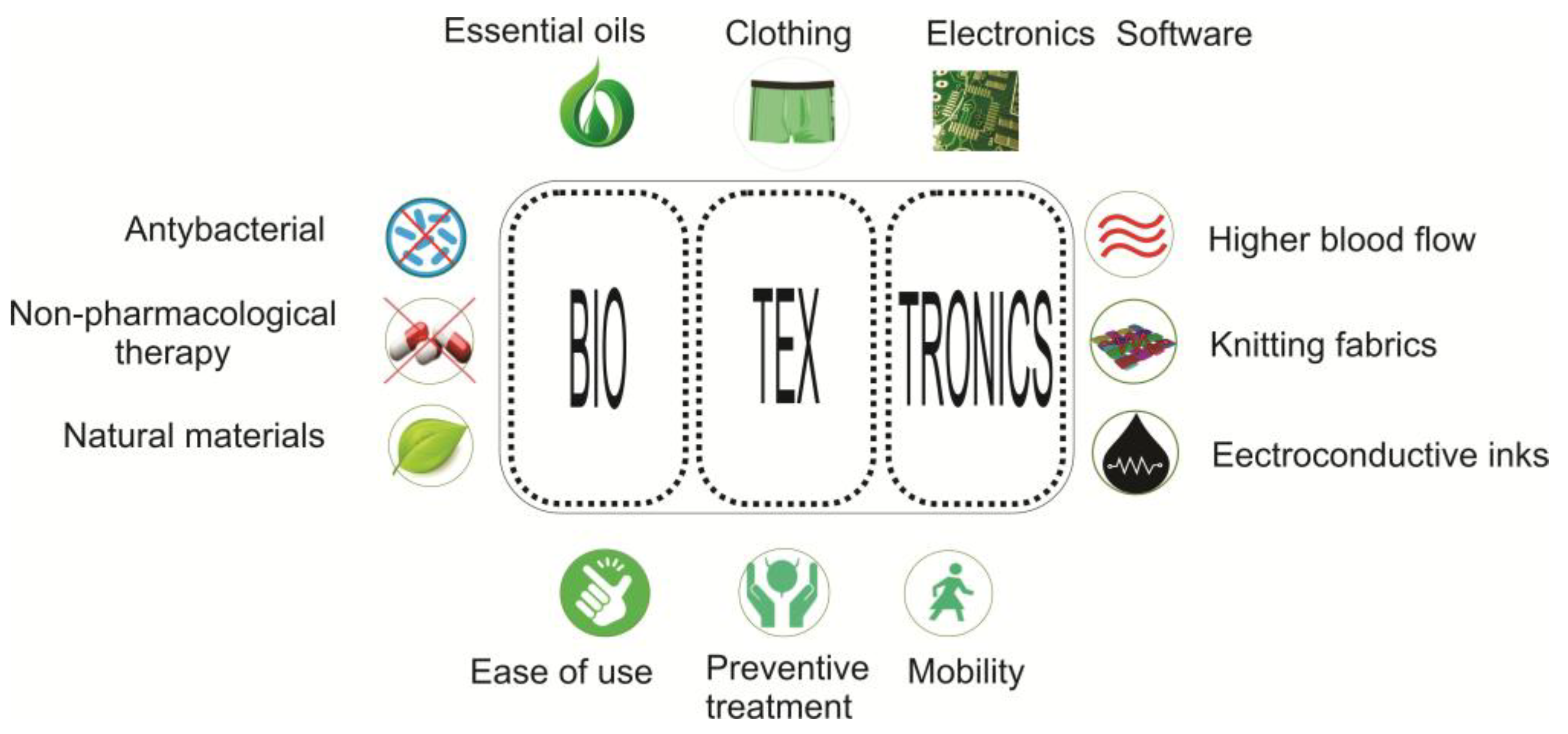
Figure 2.
Schematic diagram of the biotextronics system, where: 1 - textronics underwear; 2 - textile signal line; 3 - regulation system; 4 - biotextronics insert( A - insert with applied essential oil; B and D - electrical insulating layers; C - system heating element); 5 - outer insert; 6 - essential oils placed on the insert [20]
Figure 2.
Schematic diagram of the biotextronics system, where: 1 - textronics underwear; 2 - textile signal line; 3 - regulation system; 4 - biotextronics insert( A - insert with applied essential oil; B and D - electrical insulating layers; C - system heating element); 5 - outer insert; 6 - essential oils placed on the insert [20]
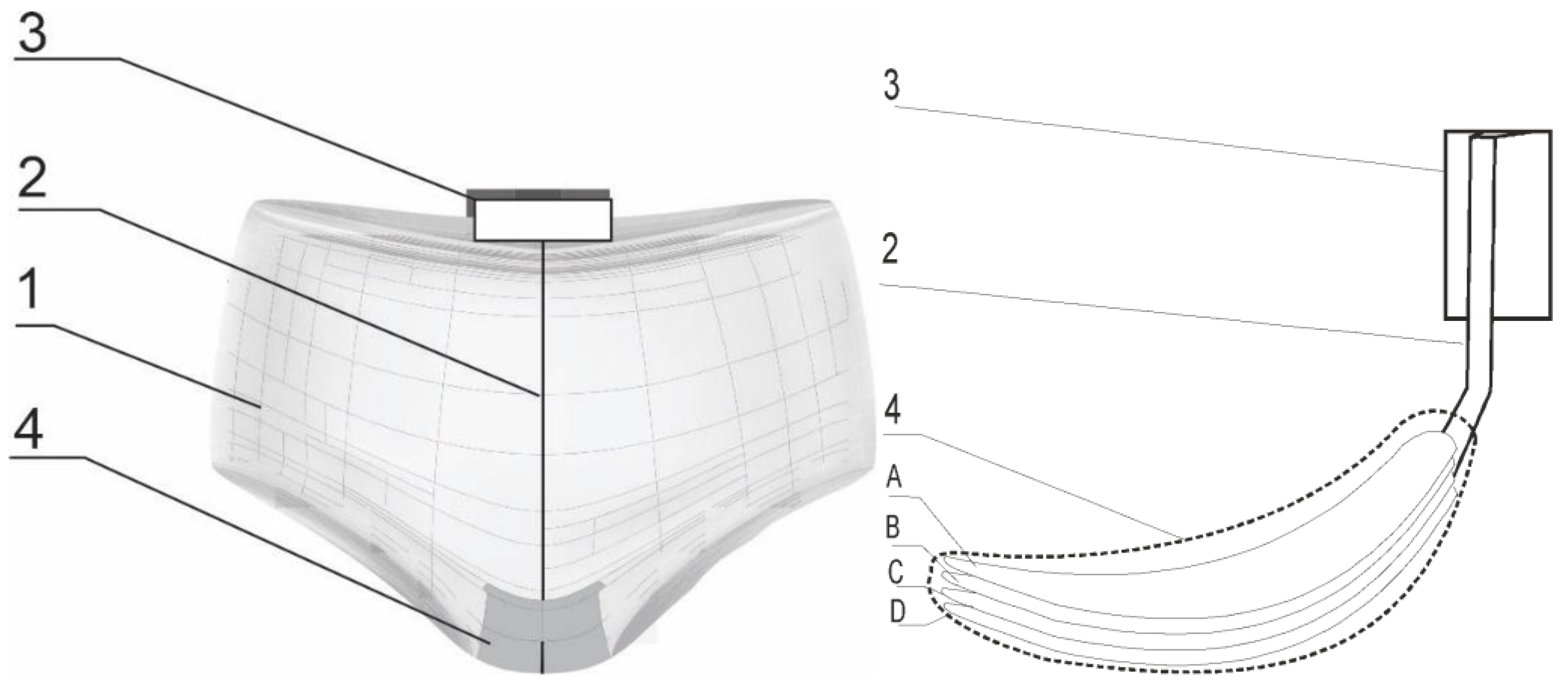
Figure 3.
Antimicrobial activity of essential oils in a vapor phase at the oil concentration of 0.054 µL/cm3 in the atmosphere, where: M – Matricaria chamomilla L., S1 – Salvia officinalis L., S2 – Salvia lavandulaefolia Vahl., MS1 – Matricaria chamomilla L. with Salvia officinalis L., MS2 – Matricaria chamomilla L. with Salvia lavandulaefolia Vahl., J – Juniperus communis L., T – Thymus vulgaris L.; results are presented as an average value of three repetitions with ±SD < 0.01 (values of SD placed above the bars); all the results were statistically different (p < 0.05) [23].
Figure 3.
Antimicrobial activity of essential oils in a vapor phase at the oil concentration of 0.054 µL/cm3 in the atmosphere, where: M – Matricaria chamomilla L., S1 – Salvia officinalis L., S2 – Salvia lavandulaefolia Vahl., MS1 – Matricaria chamomilla L. with Salvia officinalis L., MS2 – Matricaria chamomilla L. with Salvia lavandulaefolia Vahl., J – Juniperus communis L., T – Thymus vulgaris L.; results are presented as an average value of three repetitions with ±SD < 0.01 (values of SD placed above the bars); all the results were statistically different (p < 0.05) [23].
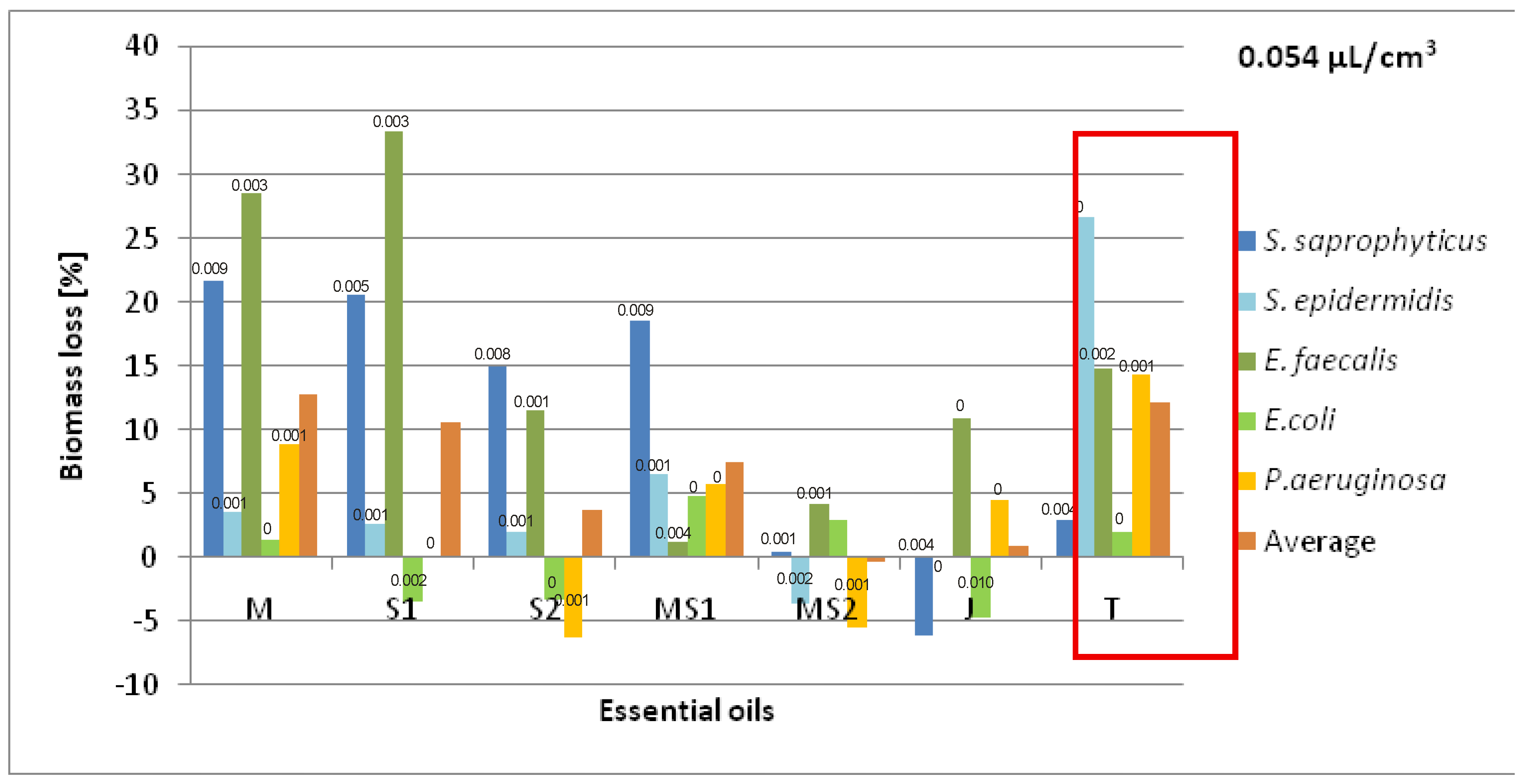
Figure 4.
Chromatogram of thyme essential oil (GC-MS); main compounds: 1 – p-cymene; 2 – γ-terpinene; 3 – linalool; 4 – thymol; 5 – carvacrol.
Figure 4.
Chromatogram of thyme essential oil (GC-MS); main compounds: 1 – p-cymene; 2 – γ-terpinene; 3 – linalool; 4 – thymol; 5 – carvacrol.
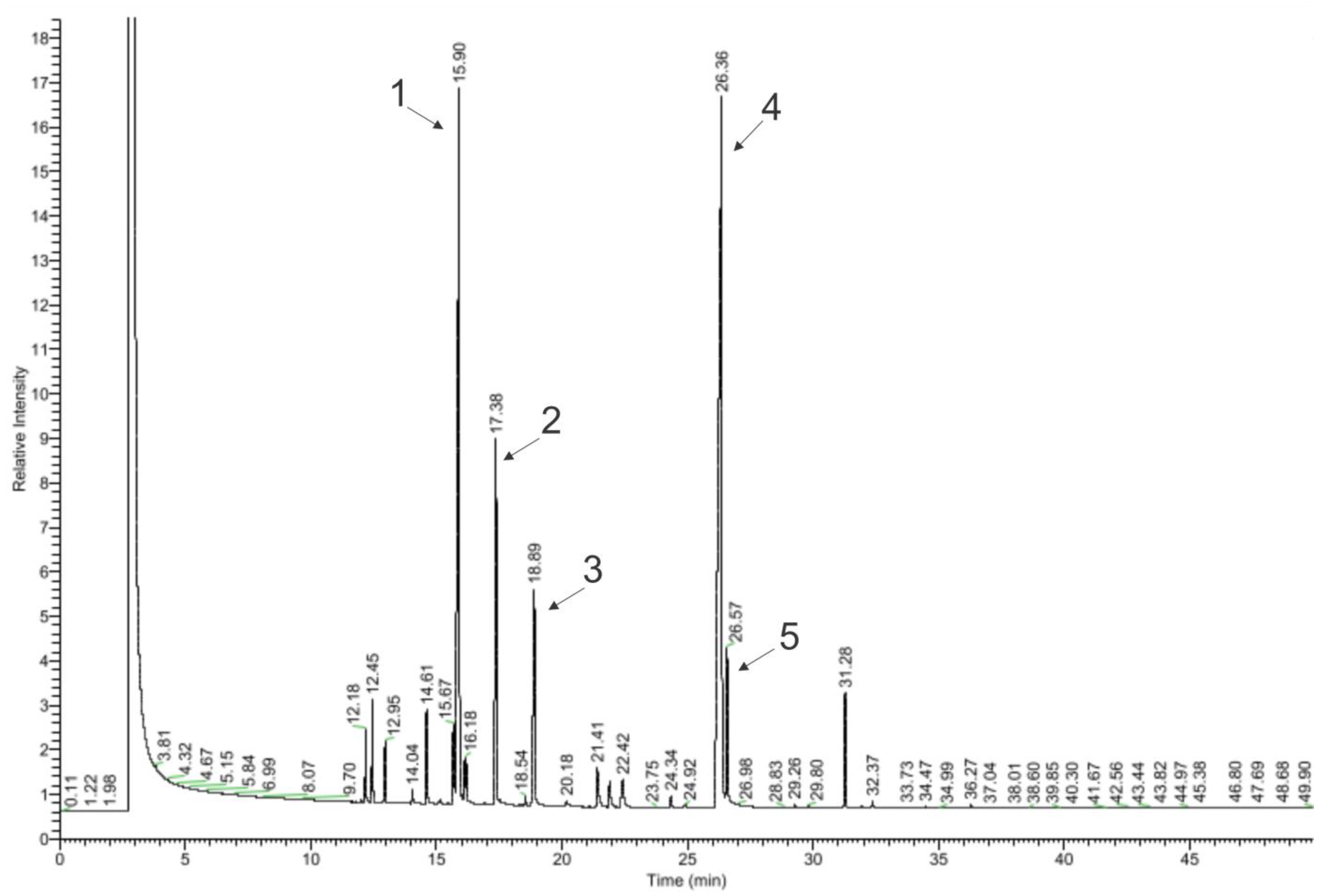
Figure 5.
The principle of operation of the biotextronics software of the BioTexPants system.
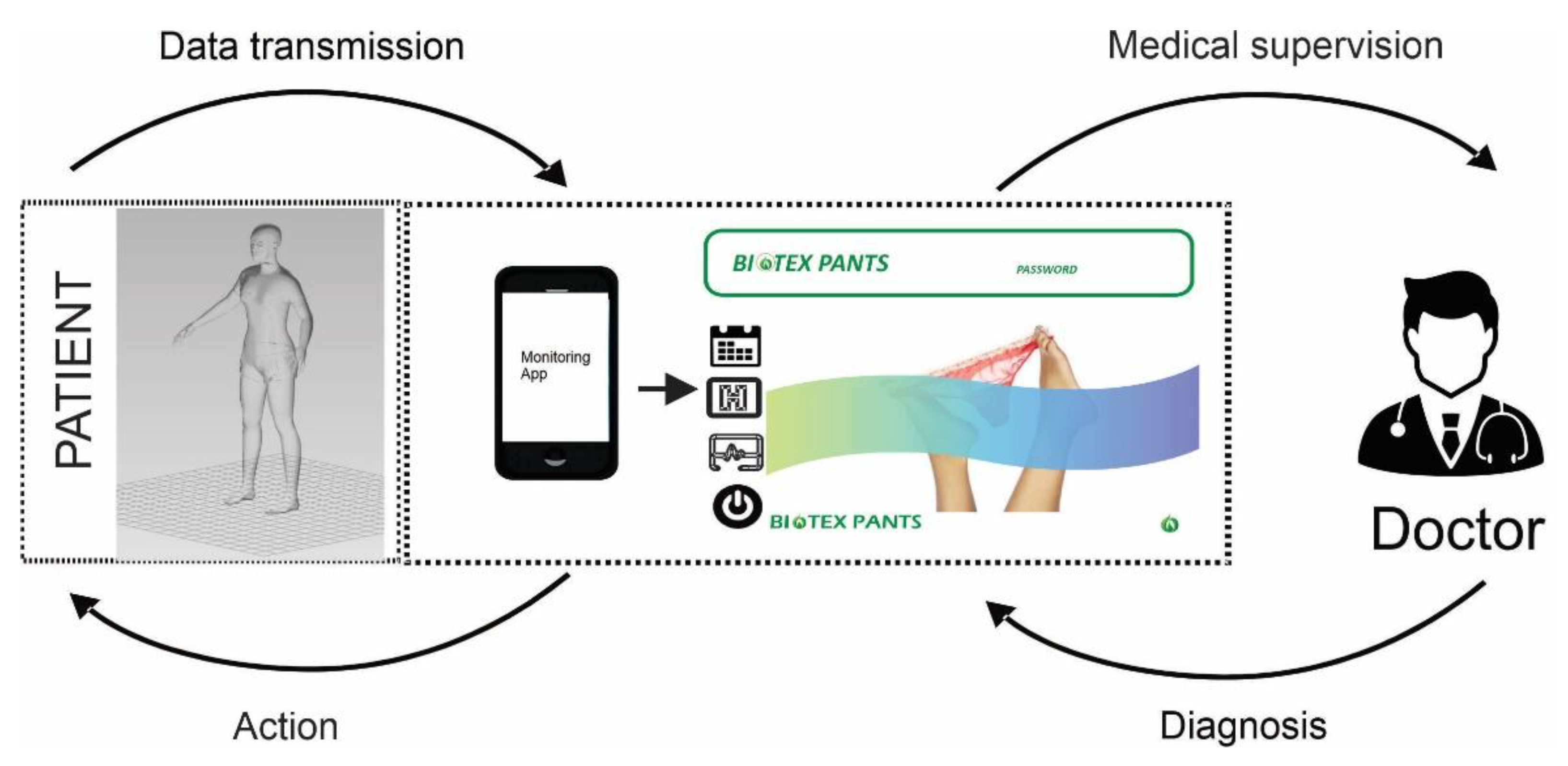
Figure 6.
Patient monitoring software page view: a) login page; b) monitoring page.
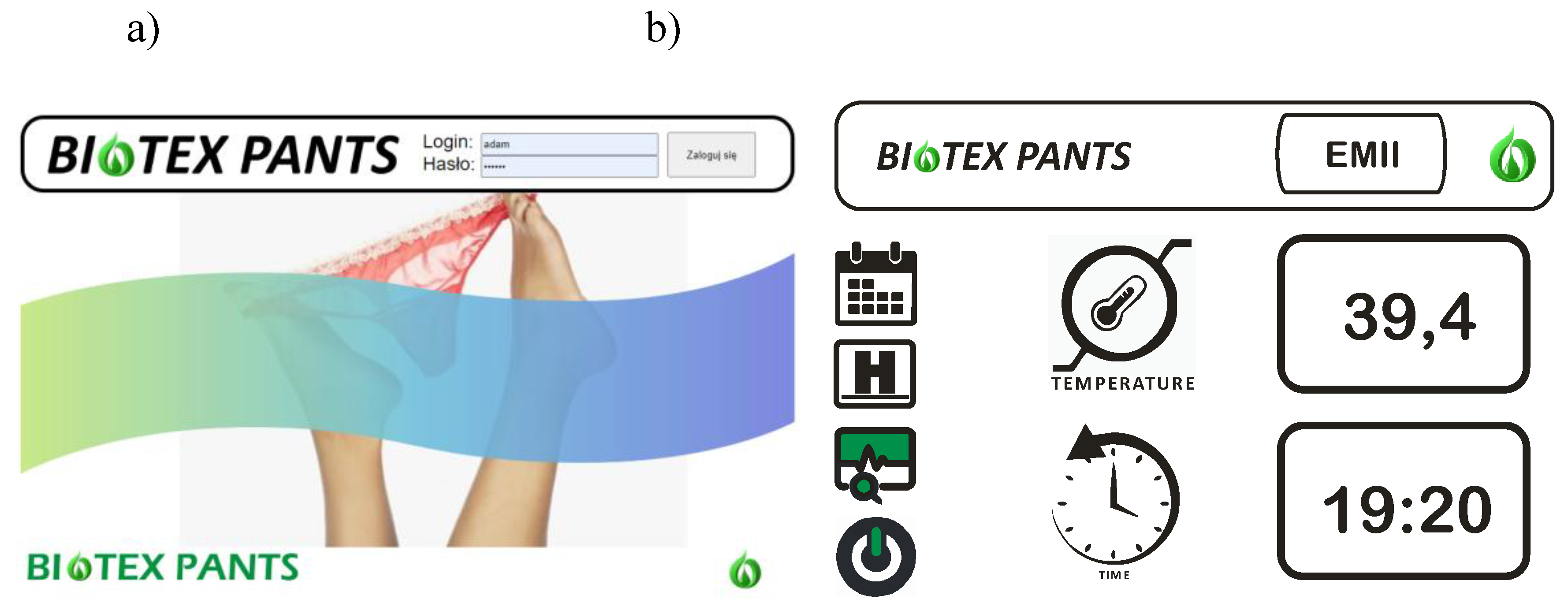
Figure 7.
Schematic diagram of the functions of the BioTexPants application.
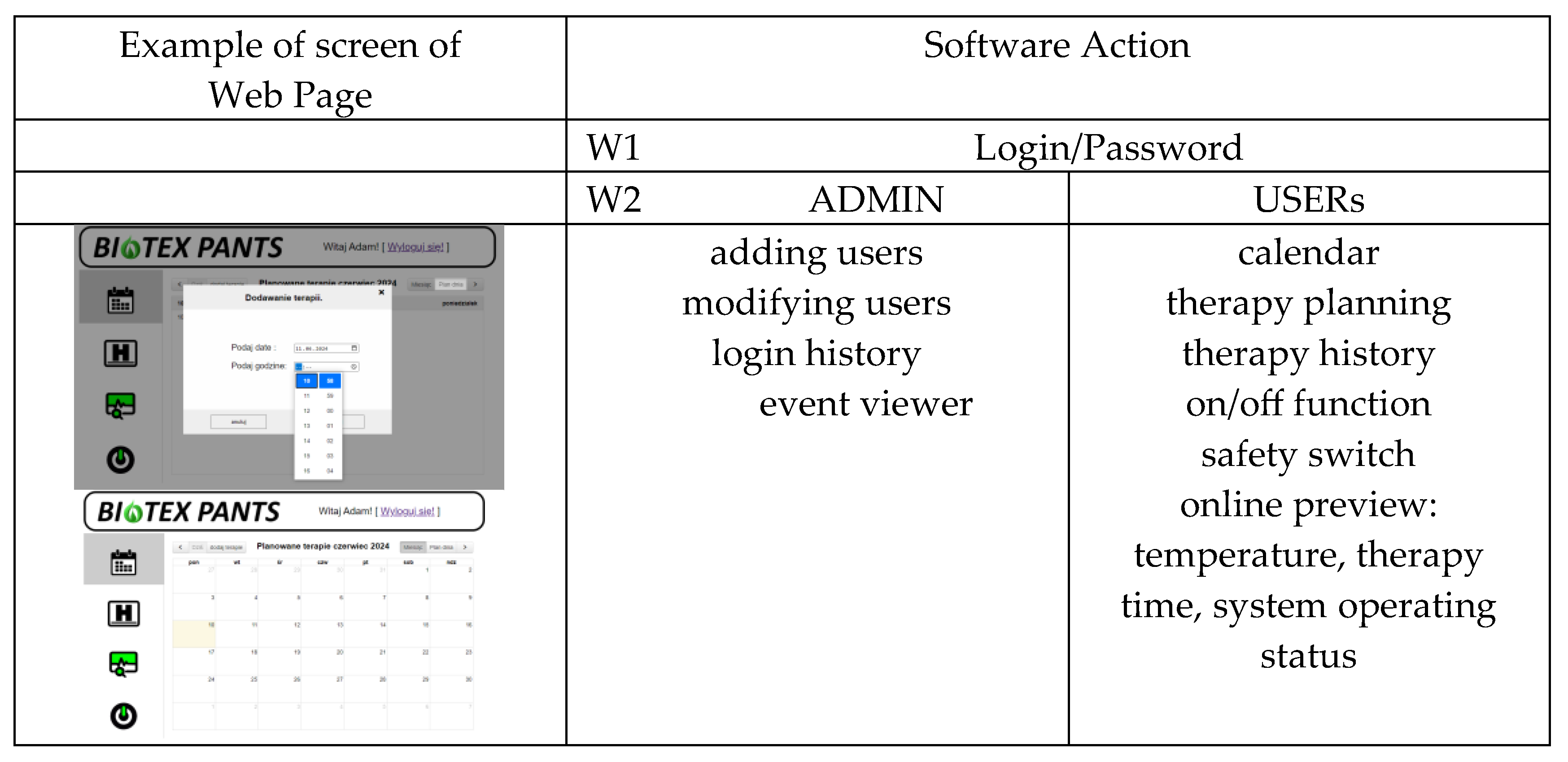

Table 1.
Materials used in the outer insert preparation.
| Compound | Producer | Target of using |
|---|---|---|
| Non-woven viscose | Lentex S.A. (Poland) | Outer insert layer for EO immobilization |
| Thyme essential oil | Avicenna Oil® (Poland) | Antibacterial activity |
| Cellulose / Microcrystalline cellulose | RETTENMAIER Polska Sp. z o.o. (Poland) | Carrier for EO |
| Agar-agar | Sigma-Aldrich® (USA) | Film for EO immobilization |
Table 2.
Characteristic of thyme EO.
| Organoleptic description | Analytical data | Chromatographic profile |
|---|---|---|
| clear liquid, yellow to dark reddish-brown in color, with a strong odor of thymol | density (at 20 °C): 0.915-0.935 g/cm3 refractive index (at 20 °C): 1.490–1.505 optical rotation: -7° to +3° flash point: 58°C |
α-thujene: 0.2-1.5% β-myrcene: 1.0-3.0% α-terpinene: 0.9-2.6% ρ-cymene: 14.0-28.0% γ-terpinene: 4.0-12.0% linalool: 1.5-6.5% terpinen-4-ol: 0.1-2.5% methyl carvacrol ether: 0.05-1.5% thymol: 37.0-55.0% carvacrol: 0.5-5.5% |
Table 3.
Chemical composition of thyme essential oil.
| No. | Chemical compounds | Content in EO [%] |
Content according to manufacturer's specifications Avicenna Oil [%] | Content according to European Pharmacopoeia 7 [%] |
|---|---|---|---|---|
| 1 | Tricyclene | 0.04 | NA | NA |
| 2 | α-Thujene | 1.28 | 0.2-1.5 | NA |
| 3 | α-Pinene | 1.81 | NA | NA |
| 4 | Camphene | 1.08 | NA | NA |
| 5 | β-Pinene | 0.25 1.81 |
NA | NA |
| 6 | Pseudolimonene | 0.05 | NA | NA |
| 7 | α-Phellandren | 0.09 | NA | NA |
| 8 | Hydroxy-trans-sabinene | 0.05 | NA | NA |
| 9 | α-Terpinene | 1.78 | 0.9-2.6 | NA |
| 10 | p-Cymene | 23.84 | 14.0-28.0 | 15.0-28.0 |
| 11 | β-Cymene | 0.05 | NA | NA |
| 12 | 1.8-Cineole | 0.62 | NA | NA |
| 13 | Limonene | 0.76 | NA | NA |
| 14 | γ-Terpinene | 9.04 | 4.0-12.0 | 5.0-10.0 |
| 15 | cis-Sabinene hydrate | 0.04 | NA | NA |
| 16 | cis-Linalool oxide | 0.03 | NA | NA |
| 17 | α-Terpinolene | 0.20 | NA | NA |
| 18 | Linalool | 5.73 | 1.5-6.5 | 4.0-6.5 |
| 19 | Camphor | 0.13 | NA | NA |
| 20 | Camphor | 0.05 | NA | NA |
| 21 | trans-Borneole | 1.04 | NA | NA |
| 22 | Terpinen-4-ol | 0.72 | 0.1-2.5 | 0.2-2.5 |
| 23 | α-Terpineol | 0.96 | NA | NA |
| 24 | Methyl carvacrol ether | 0.26 | 0.05-1.5 | NA |
| 25 | Linalyl anthranilate | 0.03 | NA | NA |
| 26 | Linalyl anthranilate | 0.06 | NA | NA |
| 27 | Thymol | 42.29 | 37.0-55.0 | 36.0-55.0 |
Table 4.
Quantitative composition of volatile compounds in the gas phase above agar-cellulose matrices with thyme EO: C – cellulose; MC – microcrystalline cellulose.
Table 4.
Quantitative composition of volatile compounds in the gas phase above agar-cellulose matrices with thyme EO: C – cellulose; MC – microcrystalline cellulose.
| Time of storage [days] |
Total number of identified compounds | |||||
|---|---|---|---|---|---|---|
| EO : C | EO: MC | |||||
| 1:1 | 1:2 | 1:3 | 1:1 | 1:2 | 1:3 | |
| 0 | 16 | 19 | 19 | 20 | 21 | 27 |
| 7 | 15 | 5 | 9 | 10 | 10 | 8 |
| 14 | 6 | 4 | 5 | 5 | 7 | 4 |
| 28 | 4 | 4 | 5 | 3 | 2 | 2 |
| 56 | 5 | 3 | 6 | 5 | 5 | 3 |
Table 5.
Lists of compounds identified in the gas phase above the surface of agar-cellulose matrices with cellulose or microcrystalline cellulose and chamomile essential oil.
Table 5.
Lists of compounds identified in the gas phase above the surface of agar-cellulose matrices with cellulose or microcrystalline cellulose and chamomile essential oil.
| No. | Chemical compouNAs | EO : C | EO : MC | EO | |||||||
|---|---|---|---|---|---|---|---|---|---|---|---|
| 1:1 | 1:2 | 1:3 | 1:1 | 1:2 | 1:3 | ||||||
| On the day of preparation | |||||||||||
| 1 | α-Thujene | 0,39 | 0,46 | 0,41 | 0,36 | 0,35 | 0,37 | 1,28 | |||
| 2 | α-Pinene | 0,73 | 0,65 | 0,60 | 0,49 | 0,62 | 0,59 | 1,81 | |||
| 3 | Camphene | 0,52 | 0,50 | 0,59 | 0,43 | 0,41 | 0,47 | 1,08 | |||
| 4 | Myrcene | 1,52 | 1,46 | 1,83 | 1,84 | 1,71 | 1,72 | ND | |||
| 5 | γ-Terpinene | 1,14 | 1,03 | 1,46 | 1,54 | 1,88 | 2,10 | 9,04 | |||
| 6 | p-Cymene | 51,10 | 41,22 | 47,61 | 48,98 | 36,24 | 32,17 | ND | |||
| 7 | Limonene | 2,24 | 2,23 | 2,37 | 2,20 | 1,94 | 1,94 | 0,76 | |||
| 8 | α-PhellaNArene | ND | ND | ND | ND | 1,98 | 0,15 | ND | |||
| 9 | Sabinene | ND | ND | ND | ND | ND | 1,93 | ND | |||
| 10 | 1,8-Cineoly | 2,86 | 2,21 | 3,45 | 3,27 | 1,93 | 1,93 | 0,62 | |||
| 11 | β -Ocimene | ND | 19,49 | ND | ND | 17,88 | 18,30 | ND | |||
| 12 | β -Ocimene | ND | ND | ND | ND | ND | 0,28 | ND | |||
| 13 | γ-Terpinene | 21,38 | 19,49 | 22,12 | 20,54 | 17,88 | 16,37 | ND | |||
| 14 | Terpinolene | ND | 0,23 | 0,48 | 0,27 | 0,30 | 0,40 | ND | |||
| 15 | Linalool | 5,69 | 3,55 | 5,67 | 7,61 | 4,09 | 4,18 | 5,73 | |||
| 16 | Camphor | ND | ND | ND | 0,39 | ND | 0,17 | ND | |||
| 17 | Borneole | 0,41 | 0,18 | 0,41 | 0,50 | 0,29 | 0,24 | ND | |||
| 18 | Terpinen-4-ol | 0,33 | 0,26 | 0,48 | 0,59 | 0,36 | 0,29 | 0,72 | |||
| 19 | α-Terpineol | ND | ND | 0,23 | 0,42 | 0,15 | 0,15 | 0,96 | |||
| 20 | Methyl carvacrol ether | 0,40 | 0,24 | 0,68 | 0,44 | 0,35 | 0,56 | ND | |||
| 21 | Thymol | 2,93 | 2,52 | 3,46 | 4,17 | 3,15 | 3,75 | 42,29 | |||
| 22 | Carvacrol | ND | 0,27 | 0,23 | 0,29 | 0,22 | 0,25 | 2,87 | |||
| 23 | Kopaene | ND | ND | ND | ND | ND | 0,13 | 0,04 | |||
| 24 | β- Caryophyllene | 7,99 | 3,74 | 7,41 | 5,43 | 7,86 | 10,56 | 2,42 | |||
| 25 | AromadeNArene | ND | ND | ND | ND | ND | 0,16 | ND | |||
| 26 | α- Caryophyllene | 0,37 | 0,24 | 0,40 | 0,25 | 0,40 | 0,63 | 0,15 | |||
| 27 | δ-Cadinene | ND | ND | ND | ND | ND | 0,17 | ND | |||
| After 7 days | |||||||||||
| 1 | α-Thujene | 0,31 | ND | ND | ND | ND | ND | NA | |||
| 2 | α-Pinene | 0,63 | ND | ND | 1,76 | ND | ND | NA | |||
| 3 | Camphene | 0,40 | ND | ND | ND | ND | ND | NA | |||
| 4 | Myrcene | 1,55 | ND | ND | 1,10 | 1,69 | ND | NA | |||
| 5 | p-Cymene | 58,19 | 37,35 | 46,70 | 36,80 | 48,46 | 53,63 | NA | |||
| 6 | β-Ocimene | ND | ND | ND | ND | ND | ND | NA | |||
| 7 | Limonene | 1,91 | ND | ND | ND | ND | ND | NA | |||
| 8 | 1,8-Cineole | 3,59 | 8,57 | 7,31 | 6,88 | 6,56 | 6,37 | NA | |||
| 9 | γ-Terpinene | 14,64 | 6,29 | 5,34 | 13,95 | 9,24 | 9,61 | NA | |||
| 10 | Linalool | 8,07 | 30,77 | 18,80 | 17,03 | 16,17 | 13,71 | NA | |||
| 11 | Camphor | 0,83 | ND | ND | ND | ND | ND | NA | |||
| 12 | Borneole | 0,47 | ND | 0,92 | 1,36 | 1,26 | 1,44 | NA | |||
| 13 | Terpinen-4-ol | 0,61 | ND | 2,79 | 1,70 | 1,22 | 1,28 | NA | |||
| 14 | Thymol methyl ether | 0,40 | ND | 1,07 | ND | 1,29 | ND | NA | |||
| 15 | Thymol | 4,41 | 17,01 | 14,10 | 17,34 | 9,66 | 10,17 | NA | |||
| 16 | β- Caryophyllene | 4,00 | ND | 2,97 | 2,08 | 4,45 | 3,78 | NA | |||
| After 14 days | |||||||||||
| 1 | p-Cymene | 32,75 | 9,88 | 5,21 | 20,63 | 17,18 | 7,11 | NA | |||
| 2 | 1,8-Cineole | 3,72 | 9,53 | 14,42 | 13,17 | 9,90 | 11,35 | NA | |||
| 3 | γ-Terpinene | 5,04 | ND | ND | ND | 4,09 | ND | NA | |||
| 4 | Linalool | 30,16 | 44,10 | 38,23 | 37,19 | 33,09 | 40,93 | NA | |||
| 5 | Camphor | 5,58 | ND | ND | ND | ND | ND | NA | |||
| 6 | Borneole | ND | ND | 3,30 | 2,32 | 4,16 | ND | NA | |||
| 7 | Terpinen-4-ol | ND | ND | ND | ND | 5,11 | ND | NA | |||
| 8 | Thymol | 22,74 | 36,49 | 38,84 | 26,69 | 26,48 | 40,61 | NA | |||
| After 28 days | |||||||||||
| 1 | p-Cymene | 5,70 | ND | 3,47 | ND | ND | ND | NA | |||
| 2 | 1,8-Cineole | ND | 6,18 | 10,35 | 9,64 | ND | 18,06 | NA | |||
| 3 | Linalool | 44,87 | 31,32 | 43,78 | 46,97 | 43,47 | ND | NA | |||
| 4 | Camphor | 9,38 | 22,90 | ND | ND | ND | ND | NA | |||
| 5 | Borneole | ND | ND | 3,33 | ND | ND | ND | NA | |||
| 6 | Thymol | 40,05 | 39,61 | 39,08 | 43,40 | 56,53 | 81,94 | NA | |||
| After 56 days | |||||||||||
| 1 | Linalool | 38,42 | 30,08 | 37,91 | 37,73 | 29,22 | 31,06 | NA | |||
| 2 | Camphor | 10,27 | 17,24 | ND | 12,60 | 11,08 | ND | NA | |||
| 3 | Borneole | ND | ND | 1,43 | ND | ND | ND | NA | |||
| 4 | Terpinen-4-ol | 5,68 | ND | 6,32 | 6,02 | 4,32 | 12,77 | NA | |||
| 5 | α-Terpineole | ND | ND | 4,25 | ND | ND | ND | NA | |||
| 6 | Thymol | 42,41 | 52,68 | 47,98 | 39,42 | 50,58 | 56,17 | NA | |||
| 7 | Carvacrol | 3,22 | ND | 2,11 | 4,22 | 4,80 | ND | NA | |||
EO – essential oil; C – cellulose; MC – microcrystalline cellulose; ND – not detected; NA – not applicable.
Disclaimer/Publisher’s Note: The statements, opinions and data contained in all publications are solely those of the individual author(s) and contributor(s) and not of MDPI and/or the editor(s). MDPI and/or the editor(s) disclaim responsibility for any injury to people or property resulting from any ideas, methods, instructions or products referred to in the content. |
© 2025 by the authors. Licensee MDPI, Basel, Switzerland. This article is an open access article distributed under the terms and conditions of the Creative Commons Attribution (CC BY) license (http://creativecommons.org/licenses/by/4.0/).
Copyright: This open access article is published under a Creative Commons CC BY 4.0 license, which permit the free download, distribution, and reuse, provided that the author and preprint are cited in any reuse.


