

Submitted:
03 October 2025
Posted:
07 October 2025
You are already at the latest version
Abstract
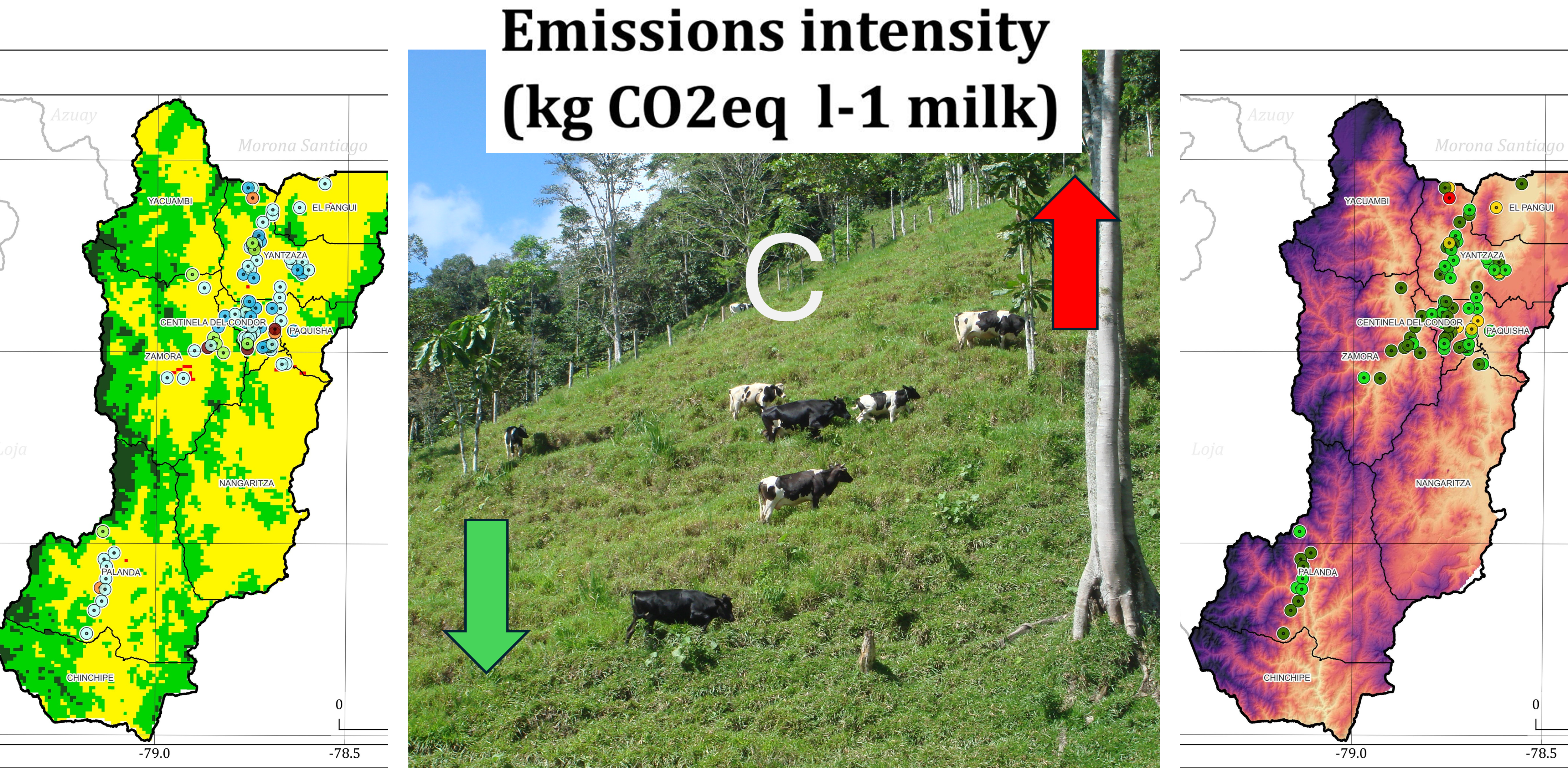
Agricultural production in Zamora Chinchipe is primarily focused on dairy farming, an activity that constitutes a key component of land use in the region. Accordingly, the following objectives were established: (a) to estimate greenhouse gas (GHG) emissions from dairy farms using the GLEAM model; and (b) to evaluate the influence of altitude and livestock management practices on soil properties and the estimated GHG emis-sions associated with cattle production. This study encompassed 100 dairy farms, where the GLEAM methodology was applied to quantify emissions-related data. In addition, 300 soil samples (three per farm) were collected, and the perimeter of each farm, as well as the remaining forest areas, was mapped. The results indicate that although the farms generate CO₂-equivalent emissions associated with livestock activities, the remaining forest areas contribute to mitigation by storing carbon in the soil. Altitude was found to positively influence soil quality, increasing organic matter and nitrogen content, whereas overgrazing negatively affected key soil properties and was associated with higher levels of GHG emissions. These findings underscore the need to implement sustainable management strategies that integrate agricultural production with the conservation of ecosystem services.
Keywords:
Greenhouse gas emissions
; farming practices
; livestock
1. Introduction
Livestock farming is one of the principal economic activities in Latin America, constituting a major source of income and employment, particularly in countries such as Ecuador [1,2]. However, the expansion of this activity has been closely associated with land-use change, including the deforestation of extensive areas to convert natural ecosystems into pastures in order to meet the increasing demand for livestock fodder [3,4]. This land-use conversion, together with agricultural and forestry practices, contributes substantially to greenhouse gas (GHG) emissions. According to [5], the Land Use, Land-Use Change, and Forestry (LULUCF) sector accounts for 21.6% (16282,86 Gg CO₂-eq) of national emissions, whereas the agricultural sector represents 20.8% (15699,45 Gg CO₂-eq).
Within this context, livestock farming plays a leading role, being responsible for emissions of carbon dioxide (CO₂), nitrous oxide (N₂O), and methane (CH₄)—gases with high global warming potential [6,7]. [8] estimated that emissions range from 3,41 to 7,33 kg CO₂-eq/kg of meat and from 0,90 to 1,10 kg CO₂-eq/kg of energy-corrected milk (ECM). In particular, methane generated through enteric fermentation in ruminants constitutes one of the principal sources of GHG emissions in livestock systems [9,10]. Another contributing factor is the application of fertilizers to pastures to enhance forage production, which increases nitrous oxide (N₂O) emissions. Furthermore, deforestation for pasture expansion reduces the carbon sequestration capacity of ecosystems, thereby exacerbating the climate crisis [11].
In livestock systems, high stocking densities per hectare contribute to soil degradation, compaction, loss of fertility, and a substantial increase in emissions per unit area [12]. In the Amazon region of Ecuador, for instance, low productivity—characterized by average milk yields of only 3,5 liters per cow per day and weight gains of less than 0,25 kg per day reflects the structural limitations of these systems [13]. Numerous studies have evaluated greenhouse gas (GHG) emissions from livestock systems worldwide, including in regions such as North America, Europe, Asia, and Africa [14,15,16,17]. In Latin America, although some relevant research has been conducted [18], it remains limited compared to other regions.
In the specific case of Ecuador, scientific literature on GHG emissions from livestock farms is scarce [19], and studies employing tools such as the GLEAM model are even rarer. The GLEAM model (Global Livestock Environmental Assessment Model), developed by the FAO, enables the estimation of GHG emissions generated by livestock across multiple scales from the global level to the farm level and incorporates diverse factors such as production efficiency, management practices, animal breeds, and feeding strategies [20]. This tool is essential for analyzing the environmental impacts of livestock systems and for designing mitigation strategies tailored to local contexts.
Climate change exerts direct impacts on livestock farming, including heat stress in animals, reduced water availability, and declines in both the quantity and quality of forage [21,22,23,24]. These stressors compromise feed efficiency and animal welfare, thereby undermining the sustainability of production systems. Under these circumstances, understanding the dynamics of greenhouse gas (GHG) emissions in small-scale livestock systems is critical for developing effective mitigation strategies. [21,25] identify four fundamental lines of action: (1) improving productivity; (2) modifying management systems; (3) managing livestock products appropriately; and (4) reducing herd size.
Similarly, interventions such as optimizing animal nutrition, improving manure management, integrating agroforestry systems, and adopting renewable energy sources can substantially reduce the carbon footprint of these systems [26,27]. Nevertheless, many local livestock farmers remain reluctant to adopt sustainable practices because the associated benefits are not immediate and typically require investment, training, and a period of adaptation [9]. This resistance can be mitigated through access to technical assistance, financing, and institutional support factors that facilitate the transition to more sustainable livestock practices.
The conservation and restoration of forest areas likewise constitute key measures for maintaining ecosystem services, preserving soil fertility, and functioning as carbon sinks, thereby reducing net GHG emissions [28,29]. Within this context, the objectives of the present study were: (a) to estimate GHG emissions from livestock farms using the GLEAM model; and (b) to evaluate the influence of altitudinal gradients and livestock management practices on soil properties and the estimated GHG emissions associated with beef production. The resulting information will support the design and implementation of more sustainable livestock production strategies at the farm level, contributing to climate change mitigation and the conservation of natural resources, while safeguarding the economic viability of small-scale rural producers.
2. Materials and Methods
2.1. Study Area
The study was conducted in Zamora Chinchipe Province, located in southeastern Ecuador within the Andean–Amazonian region. The area is characterized by a humid tropical climate, with a mean annual temperature of approximately 22,5 °C and annual precipitation ranging from 2000 to 3500 mm, conditions that sustain high levels of biodiversity [30]. The landscape presents a pronounced altitudinal gradient, extending from 800 to 2279 m above sea level (m a.s.l.), with a mean elevation of approximately 1150 m a.s.l.
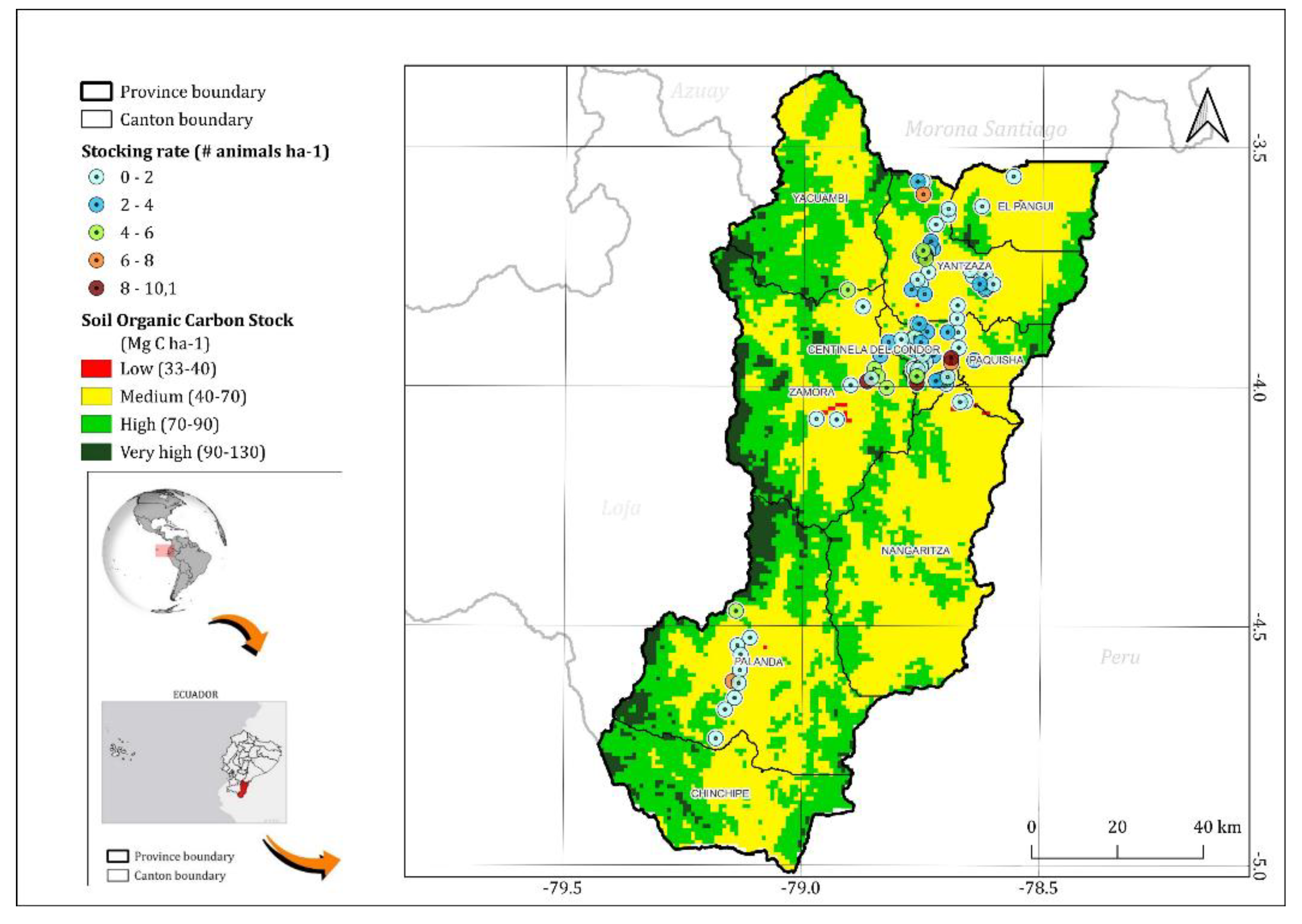
Figure 1.
stocking rate and spatial distribution of the farms included in the study and elevation data for Zamora Chinchipe Province, derived from the Geopedological Map of Continental Ecuador (2009–2015) at a scale of 1:25,000, published by the [31].
Figure 1.
stocking rate and spatial distribution of the farms included in the study and elevation data for Zamora Chinchipe Province, derived from the Geopedological Map of Continental Ecuador (2009–2015) at a scale of 1:25,000, published by the [31].
In the Ecuadorian Amazon, the composition of grass species is strongly influenced by altitude and site-specific environmental conditions. Grazing pastures in the study areas commonly include Brachiaria brizantha, Brachiaria decumbens, Brachiaria hybrid, Brachiaria dictyoneura, Brachiaria humidicola Rendle, Axonopus scoparius, Panicum maximum Jacq., Setaria splendida, Echinochloa polystachya, Dactylis glomerata, and Lolium multiflorum [2,13]. Forage grasses primarily used for cut-and-carry feeding include Pennisetum purpureum, Pennisetum violaceum, Pennisetum clandestinum, Saccharum officinarum, and Tripsacum laxum.
Woody forage species frequently integrated into livestock systems comprise Leucaena leucocephala, Gliricidia sepium Jacq. Stend., Flemingia macrophylla Willd. Merr., Morus alba, and Trichanthera gigantea [13]. Commonly occurring legumes include Arachis pintoi Krap., Centrosema pubescens, Lotus pedunculatus, Trifolium repens, Tithonia diversifolia, Desmodium ovalifolium Wall., Desmodium heterophyllum Willd., and Stylosanthes guianensis Sw. Aubl. [2,13]. Dominant tree species within pasture systems vary with elevation and include Jacaranda copaia (lowlands), Nectandra spp. (mid-elevations), and Ficus sp. (highlands) [32].
Cattle breeds commonly used in the region comprise Holstein, Normande, Jersey, Brown Swiss, Brahman, Charolais, Santa Gertrudis, and various local genotypes [33]. Livestock systems in the Ecuadorian Amazon are primarily oriented toward milk and meat production. The mean stocking rate is 9.96 adult bovine units per hectare, although this varies according to landscape position lowland, mid-altitude hills, or high mountains [32]. In specific study areas, production is predominantly focused on dairy farming.
2.2. Data Collection
For this study, a total of 100 dairy farms located in Zamora Chinchipe Province were selected. In addition to serving as regular milk suppliers to dairy companies, these farms have already initiated the implementation of various conservation practices. A structured survey was administered to one member of each household on the selected farms [20], and the resulting data were systematically recorded in a field notebook, as summarized in Table 1.
2.3. Greenhouse Gas Emissions Estimation
Using the data collected during the data survey (Table 1), the GLEAM (Global Livestock Environmental Assessment Model) developed by the Food and Agriculture Organization of the United Nations (FAO) was used. This model considers all stages of the livestock production chain, from feed production to enteric methane emissions and manure management [20]. This study focused on dairy cattle.
The GLEAM model calculates greenhouse gas emissions from the production and processing of livestock feed (grasses, legumes), both primary feed and supplements. It also calculates methane and nitrous oxide emissions from manure management. Furthermore, it estimates carbon dioxide emissions, taking into account the impact of land use change and the production of agricultural inputs. The calculation is based on the methodology of the Intergovernmental Panel on Climate Change (IPCC) [34,35], using spatial and sectoral data, combining information from livestock censuses, animal productivity, and management practices.
N₂O emissions from manure deposited in pastures are estimated based on protein consumption and the fraction of nitrogen excreted. A direct emission factor is then applied to this value, indicating the amount of N₂O emitted per kg of nitrogen deposited in the pasture (according to the IPCC). The formula used is:
EFd = Direct emission factor
44/28 = conversion factor of N2O-N to N2O
The N₂O emissions from manure management are estimated based on whether the manure is incorporated into the soil or used to produce compost, and a specific emission factor is applied accordingly (IPCC) [34,35].
EFd = Direct emission factor
44/28 = conversion factor of N2O-N to N2O
Enteric methane (CH₄) was estimated based on the annual gross energy intake, multiplied by the percentage of that energy converted into methane, following IPCC guidelines [34,35]. The resulting value was then adjusted using the energy conversion factor for methane emissions per kilogram of CH₄, based on 365 days of feed consumption.
GE = Total energy consumed per animal (MJ/day)
Ym = Percentage of total energy converted into methane (Approximately 4 to 7% for cattle)
365 days a year
55,65 energy in MJ released per kg of CH4 (IPCC)
The CH4 emissions from manure management are methane generated by the anaerobic fermentation of manure; These emissions are estimated using the following formula:
where: Vs = Volatile organic matter content
Bo = Conversion factor to methane
MCF = Correction factor depending on the type of management system
0,67 = Conversion factor from m3 CH4 to kg CH4
The total emissions are the sum of all greenhouse gas emissions from the system, including enteric methane (CH4), methane from manure management, nitrous oxide (N2O) from pastures and manure handling, and CO2 from indirect inputs such as fertilizers and feed concentrates.
The emissions intensity per liter of milk (kgCO2-eq/liter) includes emissions associated with feed production and consumption, enteric emissions, manure management, energy use, and other inputs. The formula used is:
2.4. Sampling and Soil Analysis
Soil samples were collected from the upper 20 cm of the soil profile on farms supplying milk to local markets. From each farm, three composite samples were obtained, each consisting of several subsamples. The samples were air-dried, sieved through a 2 mm mesh, and prepared for subsequent analyses. A portion of each sample was submitted to the laboratory of the National Institute of Agricultural Research [36] for determination of soil properties, including texture, pH, organic matter, total nitrogen (N), available phosphorus (P), exchangeable potassium (K), calcium (Ca), magnesium (Mg), sulfur (S), boron (B), zinc (Zn), copper (Cu), iron (Fe), and manganese (Mn) [36]. In addition, a subsample of the sieved soil was analyzed at the Soil Laboratory of the Technical University of Loja (UTPL), where organic matter content was quantified using the ignition method described by [37]. Organic carbon content was subsequently estimated from these data, and soil carbon stocks were calculated using the following equation:
SOC = z * Pb * C
where:
z: Sample depth (cm).
Pb: Bulk density (g cm-³)
C: Carbon concentration of each sample
The total stock of C (Mg ha -1)
Data analysis
To evaluate whether the variables under study differed significantly across the altitudinal gradient, a one-way analysis of variance (ANOVA) was performed at a significance level of p < 0,05, following verification of the normality of the data distribution. When statistically significant differences were detected, post hoc comparisons were conducted using homogeneous subset tests at p < 0,05. Additionally, Pearson correlation analyses were carried out at significance levels of p < 0,05 and p < 0,01. All statistical analyses were performed using SPSS version 20,0 for Windows (IBM Corp., Armonk, NY, USA).
3. Results
3.1. Livestock Emission
The livestock farms evaluated had an average area of 41 hectares, with sizes ranging from <5 hectares to >200 hectares. Notably, 70% of the farms encompassed <50 hectares, underscoring the predominance of small-scale livestock production systems in the region. Regarding greenhouse gas (GHG) emissions associated with manure management and enteric fermentation, it was estimated that manure deposited directly on pastures generated an average of 18,89 t CO₂-eq of nitrous oxide (N₂O) per farm. Manure management (storage and disposal) contributed an additional 9,45 t CO₂-eq of N₂O emissions, while methane (CH₄) emissions from manure management reached 3,19 t CO₂-eq per farm. Enteric fermentation—the principal source of CH₄ in livestock systems—accounted for an average of 85,72 t CO₂-eq per farm. Overall, the total estimated GHG emissions per farm amounted to 117,27 t CO₂-eq. When normalized to milk production as the functional unit, the emission intensity was 4,73 kg CO₂-eq per liter of milk (Figure 2).
Methane (CH₄) from enteric fermentation represented the largest share of total emissions, accounting for 73% of the total, thereby confirming its role as the primary contributor to GHG emissions in the livestock systems evaluated. Nitrous oxide (N₂O) emitted from manure deposited directly on pastures ranked second, comprising 16% of total emissions and underscoring the significance of field-based manure management as a major emission source. Emissions specifically associated with manure management contributed an additional 9% as N₂O and 2% as CH₄, indicating that although these sources are comparatively smaller than enteric fermentation, they remain important targets for mitigation strategies.
The emission intensity, expressed in kg CO₂-eq per liter of milk, was below 7 in most of the farms evaluated, suggesting relatively good efficiency in terms of climate sustainability. Only a small percentage of farms (less than 10%) had values above 9 kg CO₂-eq/L, indicating higher greenhouse gas emissions per unit of product (Figure 3).
3.2. Altitude and Animal Density
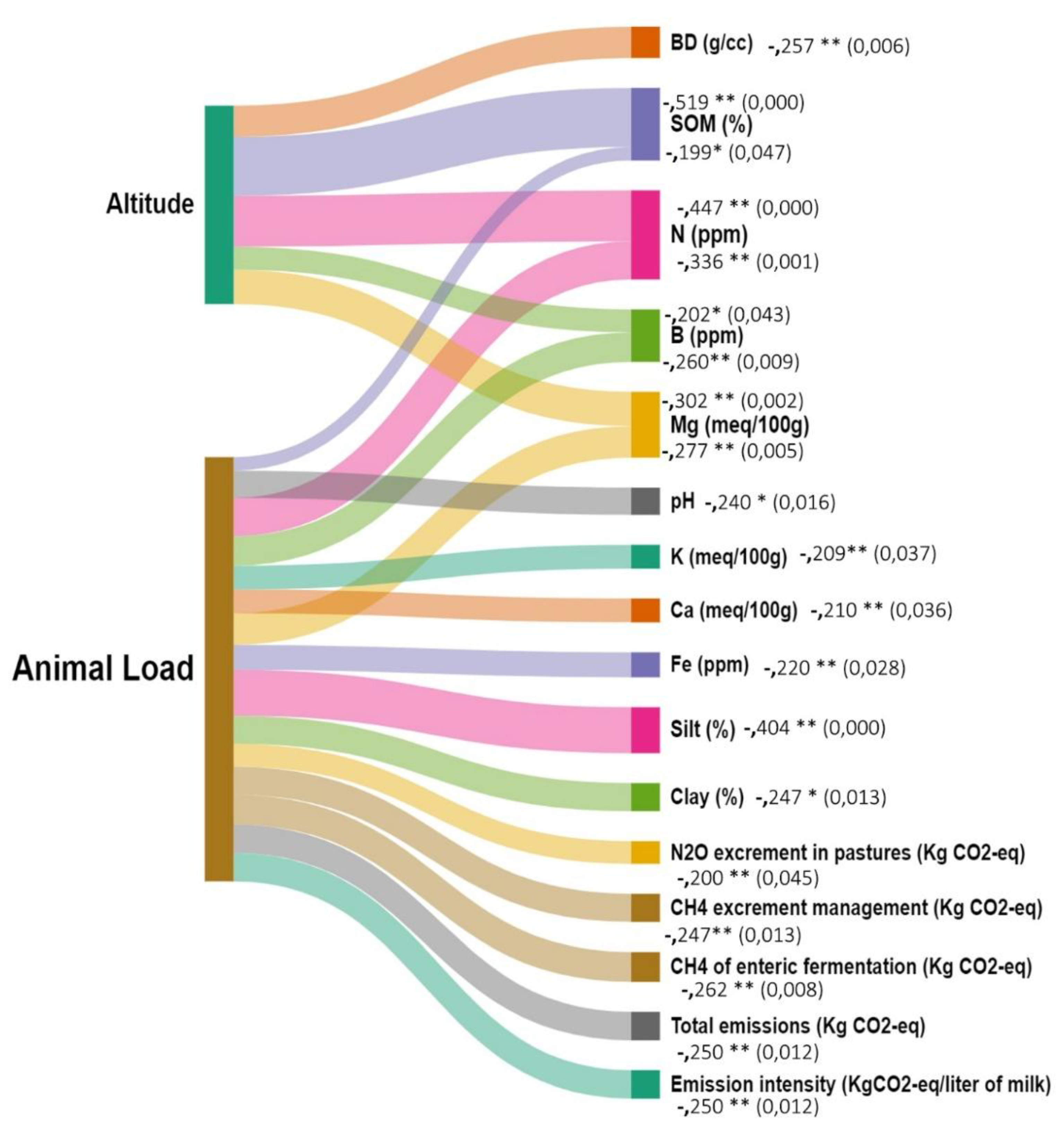
The results demonstrated that altitude exerted a significant influence on multiple soil properties. Increasing altitude was associated with higher soil organic matter content and reduced bulk density. Similarly, total nitrogen exhibited a positive trend with altitude, likely reflecting greater organic matter inputs and slower mineralization rates at higher elevations. In contrast, certain nutrients, including boron (B) and magnesium (Mg), displayed significantly higher concentrations in soils at lower altitudes (Table 2).
Correlation analyses revealed significant relationships between livestock density and several physicochemical soil properties. Livestock density was positively correlated with organic matter, total nitrogen, and iron contents. Conversely, negative correlations were observed between livestock density and other key soil fertility indicators, such as pH, boron, potassium, calcium, and magnesium. With respect to soil texture, the proportions of sand, silt, and clay were significantly correlated with livestock density, suggesting an interaction between soil texture class and grazing pressure (Table 2).
Regarding greenhouse gas emissions, positive correlations were detected between livestock density and estimated nitrous oxide (N₂O) and methane (CH₄) emissions, particularly those derived from manure deposited on pastures. Significant associations were also observed with emission intensity (expressed per unit area or per animal) and total GHG output, indicating that higher livestock density is linked to an increased global warming potential of these systems.
Figure 4.
Correlations between management practices and altitude with soil nutrients and estimated greenhouse gas emissions in 100 farms in Zamora Chinchipe. BD: bulk density, SOM: soil organic matter, N: nitrogen, B: boron, Mg: magnesium, K: potassium, Ca: calcium, Fe: iron. ** The correlation is significant at the 0,01 level (two-tailed). * The correlation is significant at the 0,05 level (two-tailed).
Figure 4.
Correlations between management practices and altitude with soil nutrients and estimated greenhouse gas emissions in 100 farms in Zamora Chinchipe. BD: bulk density, SOM: soil organic matter, N: nitrogen, B: boron, Mg: magnesium, K: potassium, Ca: calcium, Fe: iron. ** The correlation is significant at the 0,01 level (two-tailed). * The correlation is significant at the 0,05 level (two-tailed).
3.3. Soil Carbon Stocks
Analysis of the surveyed farms revealed that the average forested area per farm was approximately 41 hectares. In terms of forest cover distribution, nearly 50% of the farms lacked any remaining forested area, whereas the other 50% maintained at least some forest cover, albeit often of limited extent (Table 3). The mean soil carbon stock across the study sites was approximately 90 Mg ha⁻¹.
4. Discussion
With respect to the altitudinal gradient, a consistent pattern of increasing soil organic matter and total nitrogen content with elevation was observed, whereas magnesium (Mg) and boron (B) concentrations exhibited a significant decline. These findings are consistent with previous research along altitudinal gradients reporting similar trends [38]. The enrichment of organic matter and nitrogen at higher elevations is primarily attributed to lower ambient and soil temperatures, which reduce the rates of decomposition and mineralization of organic residues [39,40]. This deceleration of organic matter turnover promotes its accumulation, thereby contributing to reduced soil bulk density [41].
Regarding nitrogen, its concentration increased with elevation, a pattern in agreement with that reported by [42]. In their study of alpine grasslands along an altitudinal gradient in the Swiss Alps, soil nitrogen content increased between 1300 and 1800 m a.s.l., an elevation range comparable to that of the present study area. However, at elevations above 2400 m a.s.l., the authors documented a decline in the relative contribution of biologically fixed nitrogen to the total available nitrogen pool. This reduction was attributed to lower biomass of N₂-fixing legumes, likely driven by lower temperatures and less favorable environmental conditions that limit the symbiotic activity between legumes and rhizobia.
The results underscore the significant influence of livestock stocking density on multiple soil properties, highlighting its role as a critical factor to be integrated into farm management strategies to prevent the progressive degradation of soil resources. Among the main effects observed, a decline in soil pH with increasing stocking density was particularly evident. Such acidification can disrupt the availability of essential nutrients, thereby impairing plant nutrient uptake [43], especially under conditions of overgrazing.
Another important finding was the positive association between stocking density and soil organic matter, total nitrogen, and iron content. This enrichment can be attributed to the effective return of nutrients to the soil via animal excreta. According to [44], between 60% and 95% of the nutrients ingested by grazing animals are returned to the soil through urine and dung, which may explain the observed increases. While this process can enhance soil fertility and pasture productivity, its benefits are contingent on maintaining an appropriate stocking density. In Zamora Chinchipe, however, [45] reported that nutrient inputs from livestock excreta do not always compensate for losses due to grazing, suggesting the potential for nutrient depletion under certain conditions.
With respect to soil physical properties, livestock trampling particularly at high stocking densities can modify soil structure. Although soil texture itself (a property determined by the mineral fraction) remains unaffected, indirect impacts occur on aggregate stability, compaction, and porosity [44]. Reduced porosity and increased bulk density constrain water infiltration and aeration, adversely affecting root growth and microbial activity [45]. These findings emphasize the need to account for stocking density as a key management variable, balancing its benefits for nutrient recycling with its detrimental effects on soil structure and chemistry.
Determining sustainable stocking density thresholds will therefore be essential to reconciling livestock production with long-term soil conservation. Although outcomes largely depend on the management system (extensive vs. intensive), studies such as [47] have demonstrated that methane emissions from ruminants can be reduced by up to 1,8 fold under intensive feeding systems. Regardless of production strategy, complementary measures can help mitigate emissions and improve forage utilization efficiency. For instance, the integration of nitrogen-fixing species such as Gliricidia sepium, Flemingia macrophylla, and Leucaena leucocephala can enhance forage quality and contribute to soil fertility [48]. Similarly, the establishment of protein banks, for example with Arachis pintoi (forage peanut), can diversify animal diets, increase protein intake, and reduce enteric methane emissions [49].
Livestock density also exerted a marked influence on greenhouse gas (GHG) emissions derived from manure management and enteric fermentation. Two contrasting management practices were identified: (i) farms where livestock manure is left exposed to environmental conditions without treatment, and (ii) farms that either incorporate manure directly into the soil or process it through composting to produce organic fertilizers. The latter group demonstrates more efficient and environmentally responsible waste management [50], as manure handling directly affects GHG emissions particularly methane (CH₄).
Storage systems under humid conditions tend to generate higher CH₄ emissions compared to those in drier environments because the former create optimal anaerobic conditions for methanogenesis [51]. This observation is particularly relevant to the study area, where annual precipitation exceeds 2000 mm, favoring anaerobic decomposition processes. These findings underscore the need to promote improved manure management practices in livestock systems, simultaneously leveraging the fertilizing potential of manure and mitigating its contribution to climate change.
The emission intensity observed in this study (4,73 kg CO₂-eq per liter of milk) compares favorably with provincial records reported by the Ministry of Agriculture and Livestock of Ecuador 6,75 t CO₂-eq in 2017, 4,89 t CO₂-eq in 2018, and 3,82 t CO₂-eq in 2020 [52] which reflect a decreasing trend in overall emissions from the dairy sector at the regional scale. According to [52], this reduction is attributable to improvements in production efficiency, the adoption of sustainable management practices, and/or changes in herd size.
In this context, the farm-level carbon intensity of 4,73 kg CO₂-eq per liter of milk is broadly consistent with international estimates for production systems in developing countries, which range from 2,5 to 7,5 kg CO₂-eq per liter [53,54]. This indicates that, although mitigation efforts at the provincial scale are evident, considerable potential remains to enhance the efficiency of individual farms. Strategies such as optimized feeding, improved manure management, selective animal breeding, and the implementation of agroforestry and silvopastoral systems can substantially increase carbon sequestration in both biomass and soil without compromising productivity [55,56].
In tropical regions such as Zamora Chinchipe, this form of carbon sequestration is particularly strategic given the pressures of deforestation, agricultural expansion, and the ongoing intensification of mining activities [57]. However, widespread adoption of sustainable practices by producers requires time, continuous training, and crucially tangible outcomes such as increased milk yields, which are essential to ensure both producer acceptance and the long-term sustainability of these interventions.
5. Conclusions
The livestock systems assessed in Zamora Chinchipe, with an average farm size of 41 ha and a mean emission intensity of 4,73 kg CO₂-eq per liter of milk produced, retain forest remnants that function as carbon sinks, thereby contributing substantially to carbon storage in both biomass and soil and partially offsetting on-farm emissions. Altitude emerged as a key determinant of soil properties: at higher elevations, organic matter and total nitrogen contents were greater, resulting in lower soil bulk density. Conversely, higher concentrations of nutrients such as boron and magnesium were detected at lower elevations, indicating a distinct altitudinal pattern in element distribution.
Livestock stocking density also exerted significant effects on multiple soil attributes. Higher densities were associated with increased organic matter, total nitrogen, and iron contents, while parameters such as pH, boron, calcium, and magnesium tended to decline. A clear correlation between stocking density and greenhouse gas emissions was also observed, underscoring the necessity of more efficient and sustainable livestock management practices. Taken together, these findings highlight the critical role of integrating forest conservation with rational livestock management as complementary strategies to reduce the environmental footprint of livestock production in tropical mountain regions.
Supplementary Materials
The following supporting information can be downloaded at the website of this paper posted on Preprints.org.
Author Contributions
Daniel C.: Investigation, Formal analysis, Validation. Natacha F. Jefferson L. and, Junior R.: Field work, Methodology, Investigation, Rubén Carrera, Validation, Supervision, Project administration - UTPL, Methodology, Investigation. Juan Bermeo and Juan Merino, Validation, Supervision, Project administration – PROAmazonía (Pago Por Resultados REDD+ Ecuador). Leticia J.: Writing – original draft, Methodology, Investigation. All co-authors reviewed and edited the manuscript.
Funding
This research was funded by Universidad Técnica Particular de Loja (PROY_PROY_ARTIC_BA_2022_3651) and Programa de las Naciones Unidas para el Desarrollo: PROAmazonía (Pago Por Resultados REDD+ Ecuador)
Data Availability Statement
The original contributions presented in this study are included in the article/Supplementary Materials. Further inquiries can be directed to the corresponding author.
Acknowledgments
Programa de las Naciones Unidas para el Desarrollo - PROAmazonía (Pago Por Resultados REDD+ Ecuador). We deeply thank the producers of Zamora Chinchipe for allowing us to carry out this work. Special thanks to ECOLAC, Luis Aníbal Sánchez and Patricio Jaramillo for their help in developing the project.
Conflicts of Interest
The authors declare that they have no known competing financial interests or personal relationships that could have appeared to influence the work reported in this paper.
References
- Rodríguez, D. I. , Anríquez, G., & Riveros, J. L. Food security and livestock: The case of Latin America and the Caribbean. Ciencia e Investigación Agraria 2016, 43, 5–15. [Google Scholar] [CrossRef]
- Torres, B. , Andrade, V., Heredia-R, M., Toulkeridis, T., Estupiñán, K., Luna, M.,... & García, A. Productive Livestock Characterization and Recommendations for Good Practices Focused on the Achievement of the SDGs in the Ecuadorian Amazon. Sustainability 2022, 14, 10738. [Google Scholar] [CrossRef]
- Carrera, R. , Fierro, N., Jiménez, L., & Capa-Mora, D. Buenas prácticas de ganadería sostenible en ecosistema de Páramo y Bosque Alto Andino, una alternativa de resiliencia al cambio climático. Fave. Sección Ciencias Agrarias 2021, 20, 7–19. [Google Scholar]
- Jiménez, L. S. , Mezquida, E. T., Benito Capa, M., & Rubio Sánchez, A. Cambio en las propiedades del suelo por transformación de áreas boscosas en pastizales en Zamora-Chinchipe (Ecuador). Cuadernos de la Sociedad Española de Ciencias Forestales 2007, 22, 65–70. [Google Scholar]
- Ministerio del Ambiente y Agua y Transición Ecológica (MAATE). 4ta Comunicación Nacional y 2do Informe Bienal de Actualización del Ecuador a la Convención Marco de las Naciones Unidas sobre el Cambio Climático 2022. https://drive.google.
- Cornejo, C. , & Wilkie, A. C. Greenhouse gas emissions and biogas potential from livestock in Ecuador. Energy Sustain. Dev. 2010, 14, 256–266. [Google Scholar] [CrossRef]
- Mottet, A. , Henderson, B., Opio, C., Falcucci, A., Tempio, G., Silvestri, S.,... & Gerber, P. J. Climate change mitigation and productivity gains in livestock supply chains: insights from regional case studies. Regional Environmental Change 2017, 17, 129–141. [Google Scholar] [CrossRef]
- Kristensen, T. , Mogensen, L., Knudsen, M. T., & Hermansen, J. E. Effect of production system and farming strategy on greenhouse gas emissions from commercial dairy farms in a life cycle approach. Livestock Science 2011, 140, 136–148. [Google Scholar] [CrossRef]
- Arango, J. , Ruden, A. , Martinez-Baron, D., Loboguerrero, A. M., Berndt, A., Chacón, M.,... & Chirinda, N. Ambition meets reality: achieving GHG emission reduction targets in the livestock sector of Latin America. Frontiers in Sustainable Food Systems 2020, 4, 65. [Google Scholar] [CrossRef]
- Lassey, K. R. Livestock methane emission: From the individual grazing animal through national inventories to the global methane cycle. Agricultural and Forest Meteorology 2007, 142, 120–132. [Google Scholar] [CrossRef]
- Kopittke, P. M. , Menzies, N. W., Wang, P., McKenna, B. A., & Lombi, E. Soil and the intensification of agriculture for global food security. Environment International 2019, 132, 105078. [Google Scholar] [CrossRef]
- Lai, L. , & Kumar, S. A global meta-analysis of livestock grazing impacts on soil properties. PloS one 2020, 15, e0236638. [Google Scholar] [CrossRef]
- Grijalva, J. , & Ramos Veintimilla, R. Pasturas para sistemas silvopastoriles: alternativas para el desarrollo sostenible de la ganadería en la Amazonia Baja del Ecuador. Boletín técnico N 156. Programa Nacional de Forestería del INIAP. 2011. Impresión: NINA Comunicaciones, Quito, Ecuador, 24 p.
- Bashar, M. K. , Sarker, N. R., Sultana, N., & Hossain, S. M. J. Assessment of GHG emissions in dairy production systems based on existing feed resources through the GLEAM model under different climatic zones of Bangladesh and their mitigation options. Journal of Advanced Veterinary and Animal Research 2024, 11, 664. [Google Scholar] [CrossRef] [PubMed]
- Caro, D. , Kebreab, E., & Mitloehner, F. M. Mitigation of enteric methane emissions from global livestock systems through nutrition strategies. Climatic Change 2016, 137, 467–480. [Google Scholar] [CrossRef]
- Stewart, A. A. , Little, S. M., Ominski, K. H., Wittenberg, K. M., & Janzen, H. H. Evaluating greenhouse gas mitigation practices in livestock systems: an illustration of a whole-farm approach. The Journal of Agricultural Science 2009, 147, 367–382. [Google Scholar]
- Yan, M. J. , Humphreys, J., & Holden, N. M. An evaluation of life cycle assessment of European milk production. Journal of Environmental Management 2011, 92, 372–379. [Google Scholar] [CrossRef]
- Gaitán, L. , Läderach, P., Graefe, S., Rao, I., & Van der Hoek, R. Climate-smart livestock systems: an assessment of carbon stocks and GHG emissions in Nicaragua. PLoS One, 2016, 11, e0167949. [Google Scholar] [CrossRef]
- Gutiérrez-León, F. A. , Bolívar Lastra-Bravo, X., & Cali Aguirre, V. A. Estimación de la huella de carbono de las ganaderías de leche de la zona andina del Ecuador. Chilean Journal of Agricultural & Animal Sciences 2023, 39, 305–318. [Google Scholar] [CrossRef]
- MacLeod, M. J. , Vellinga, T., Opio, C., Falcucci, A., Tempio, G., Henderson, B.,... & Gerber, P. J. Invited review: a position on the global livestock environmental assessment model (GLEAM). Animal 2018, 12, 383–397. [Google Scholar] [CrossRef]
- Garnett, T. Livestock-related greenhouse gas emissions: impacts and options for policy makers. Environmental Science & Policy 2009, 12, 491–503. [Google Scholar] [CrossRef]
- Polley, H. W. , Briske, D. D., Morgan, J. A., Wolter, K., Bailey, D. W., & Brown, J. R. Climate change and North American rangelands: trends, projections, and implications. Rangeland Ecology & Management 2013, 66, 493–511. [Google Scholar] [CrossRef]
- Thornton, P. K. Livestock production: recent trends, future prospects. Philosophical Transactions of the Royal Society B: Biological Sciences 2010, 365, 2853–2867. [Google Scholar] [CrossRef] [PubMed]
- Lin, D. , Xia, J., & Wan, S. Climate warming and biomass accumulation of terrestrial plants: a meta--analysis. New Phytologist 2010, 188, 187–198. [Google Scholar] [CrossRef] [PubMed]
- Garnett, T. Meat and dairy production and consumption: Exploring the livestock sector’s contribution to the UK’s greenhouse gas emissions and assessing what less greenhouse gas intensive systems of production and consumption might look like. Food Climate Research Network. 2007. [Google Scholar]
- Kome, G. K. , Enang, R. K., & Yerima, B. P. K. Knowledge and management of soil fertility by farmers in western Cameroon. Geoderma Regional 2018, 13, 43–51. [Google Scholar] [CrossRef]
- Suzuki, W. , Sugawara, M., Miwa, K., & Morikawa, M. Plant growth-promoting bacterium Acinetobacter calcoaceticus P23 increases the chlorophyll content of the monocot Lemna minor (duckweed) and the dicot Lactuca sativa (lettuce). Journal of Bioscience and Bioengineering 2014, 118, 41–44. [Google Scholar] [CrossRef]
- Dumanski, J. , & Peiretti, R. Modern concepts of soil conservation. International Soil and Water Conservation Research 2013, 1, 19–23. [Google Scholar] [CrossRef]
- Harvey, C. A. , Komar, O., Chazdon, R., et al. Integrating agricultural landscapes with biodiversity conservation in the Mesoamerican hotspot. Conservation Biology 2008, 22, 8–15. [Google Scholar] [CrossRef]
- Sánchez, D., Merlo, J., Haro, R., Acosta, M., & Bernal, G. Soils from the Amazonia. In The soils of Ecuador (pp. 113-137). Cham: Springer International Publishing. 2017. [CrossRef]
- Ministerio de Agricultura y Ganadería (MAG). Mapa Geopedológico del Ecuador continental (versión editada por el Ministerio de Agricultura y Ganadería en 2019), escala 1:25.000, año 2009 – 2015. 2019. http://geoportal.agricultura.gob.ec/geonetwork/srv/spa/catalog. 5722.
- Torres, B. , Bravo, C., Torres, A., Tipán-Torres, C., Vargas, J. C., Herrera-Feijoo, R. J.,... & García, A. Carbon Stock Assessment in Silvopastoral Systems along an Elevational Gradient: A Study from Cattle Producers in the Sumaco Biosphere Reserve, Ecuadorian Amazon. Sustainability 2022, 15, 449. [Google Scholar] [CrossRef]
- Torres, B. , Eche, D., Torres, Y., Bravo, C., Velasco, C., & García, A. Identification and assessment of livestock best management practices (BMPs) using the REDD+ approach in the Ecuadorian Amazon. Agronomy 2021, 11, 1336. [Google Scholar] [CrossRef]
- Eggleston, H. S. , Buendia, L., Miwa, K. IPCC guidelines for national greenhouse gas inventories. 2006.
- FAO. Agriculture Organization of the United Nations (FAO). Via delle Terme di Caracalla, 100. 2017.
- Instituto Nacional de Investigaciones Agropecuarias, “Análisis Químico y físico en muestras de suelos, plantas y aguas. Tomado in February (2025). https://www.iniap.gob.
- Konen, M. E. , Jacobs, P. M., Burras, C. L., Talaga, B. J., & Mason, J. A. Equations for predicting soil organic carbon using loss--on--ignition for north central US soils. Soil Science Society of America Journal 2002, 66, 1878–1881. [Google Scholar] [CrossRef]
- Solano, M. H. S. , Ramón, P.., Gusmán, E., Burneo, J. I., Quichimbo, P.., & Jiménez, L. S. Efecto del gradiente altitudinal sobre las reservas de carbono y nitrógeno del suelo en un matorral seco en Ecuador. Ecosistemas 2018, 27, 116–122. [Google Scholar]
- Shedayi, A. A. , Xu, M., Naseer, I., & Khan, B. Altitudinal gradients of soil and vegetation carbon and nitrogen in a high altitude nature reserve of Karakoram ranges. SpringerPlus. 2016, 5, 320. [Google Scholar] [CrossRef] [PubMed]
- Baul, T. K. , Peuly, T. A., Nandi, R., Schmidt, L. H., & Karmakar, S. Carbon stocks of homestead forests have a mitigation potential to climate change in Bangladesh. Scientific Reports 2021, 11, 9254. [Google Scholar] [CrossRef]
- Toru, T. , & Kibret, K. Carbon stock under major land use/land cover types of Hades sub-watershed, eastern Ethiopia. Carbon Balance and Management 2019, 14, 7. [Google Scholar] [CrossRef]
- Jacot, K. A. , Lüscher, A., Nösberger, J., & Hartwig, U. A. The relative contribution of symbiotic N2 fixation and other nitrogen sources to grassland ecosystems along an altitudinal gradient in the Alps. Plant and Soil 2000, 225, 201–211. [Google Scholar] [CrossRef]
- Neina, D. The role of soil pH in plant nutrition and soil remediation. Applied and Environmental Soil Science 2019, (1), 5794869. [Google Scholar] [CrossRef]
- Taboada, M. A. , Rubio, G., & Chaneton, E. J. Grazing impacts on soil physical, chemical, and ecological properties in forage production systems. Soil Management: Building a Stable Base for Agriculture 2011, 301-320. [CrossRef]
- Bahr, E. , Zaragocin, D. C., & Makeschin, F. Soil nutrient stock dynamics and land-use management of annuals, perennials and pastures after slash-and-burn in the Southern Ecuadorian Andes. Agriculture, Ecosystems & Environment 2014, 188, 275–288. [Google Scholar] [CrossRef]
- Rayne, N. , & Aula, L. Livestock manure and the impacts on soil health: A review. Soil Systems 2020, 4, 64. [Google Scholar] [CrossRef]
- Broom, D. M. , Galindo, F. A., & Murgueitio, E. Sustainable, efficient livestock production with high biodiversity and good welfare for animals. Proceedings of the Royal Society B: Biological Sciences 2013, 280, 20132025. [Google Scholar] [CrossRef]
- Valarezo, J. J. M. Los sistemas silvopastoriles como alternativa para la producción sostenible de bovinos en la amazonía sur ecuatoriana. Cedamaz 2012, 2. [Google Scholar]
- Bravo, C. , Benítez, D. , Vargas Burgos, J. C., Alemán, R., Torres Navarrete, S. B., & Marín, H. Caracterización socio-ambiental de unidades de producción agropecuaria en la Región Amazónica Ecuatoriana: Caso Pastaza y Napo. Revista Amazónica. Ciencia Y Tecnología 2015, 4, 03–31. [Google Scholar] [CrossRef]
- Delgado, J. A. , Groffman, P. M., Nearing, M. A., Goddard, T., Reicosky, D., Lal, R.,... & Salon, P. Conservation practices to mitigate and adapt to climate change. Journal of Soil and Water Conservation 2011, 66, 118A–129A. [Google Scholar] [CrossRef]
- Casey, J. W. , & Holden, N. M. Analysis of greenhouse gas emissions from the average Irish milk production system. Agricultural Systems 2005, 86, 97–114. [Google Scholar] [CrossRef]
- Ministerio de Agricultura y Ganadería (MAG). Informe de emisiones de gases de efecto invernadero en el sector agropecuario. Ministerio de Agricultura y Ganadería del Ecuador. 2020.
- FAO. Greenhouse Gas Emissions from the Dairy Sector: A Life Cycle Assessment. Food and Agriculture Organization of the United Nations. 2010.
- Opio, C. , Gerber, P., Mottet, A., Falcucci, A., Tempio, G., MacLeod, M.,... & Steinfeld, H. Greenhouse gas emissions from ruminant supply chains–A global life cycle assessment. FAO, 2013.
- Nair, P. R. Climate change mitigation: a low-hanging fruit of agroforestry. In Agroforestry-the future of global land use (pp. 31–67). Dordrecht: Springer Netherlands. 2012. [CrossRef]
- Montagnini, F. , & Nair, P. R. (2004). Carbon sequestration: an underexploited environmental benefit of agroforestry systems. Agroforestry Systems 2004, 61, 281–295. [Google Scholar] [CrossRef]
- Delgado Fernández, E. , León Peralta, M., Cantos Guamán, C., & Guzmán Juárez, M. Effect of mining activity on biodiversity in a sector of the Paquisha parish, province of Zamora Chinchipe-Ecuador. LA GRANJA. Revista de Ciencias de la Vida 2023, 38, 106–123. [Google Scholar]
Figure 2.
Estimation of greenhouse gas emissions in livestock farming systems in the study area.
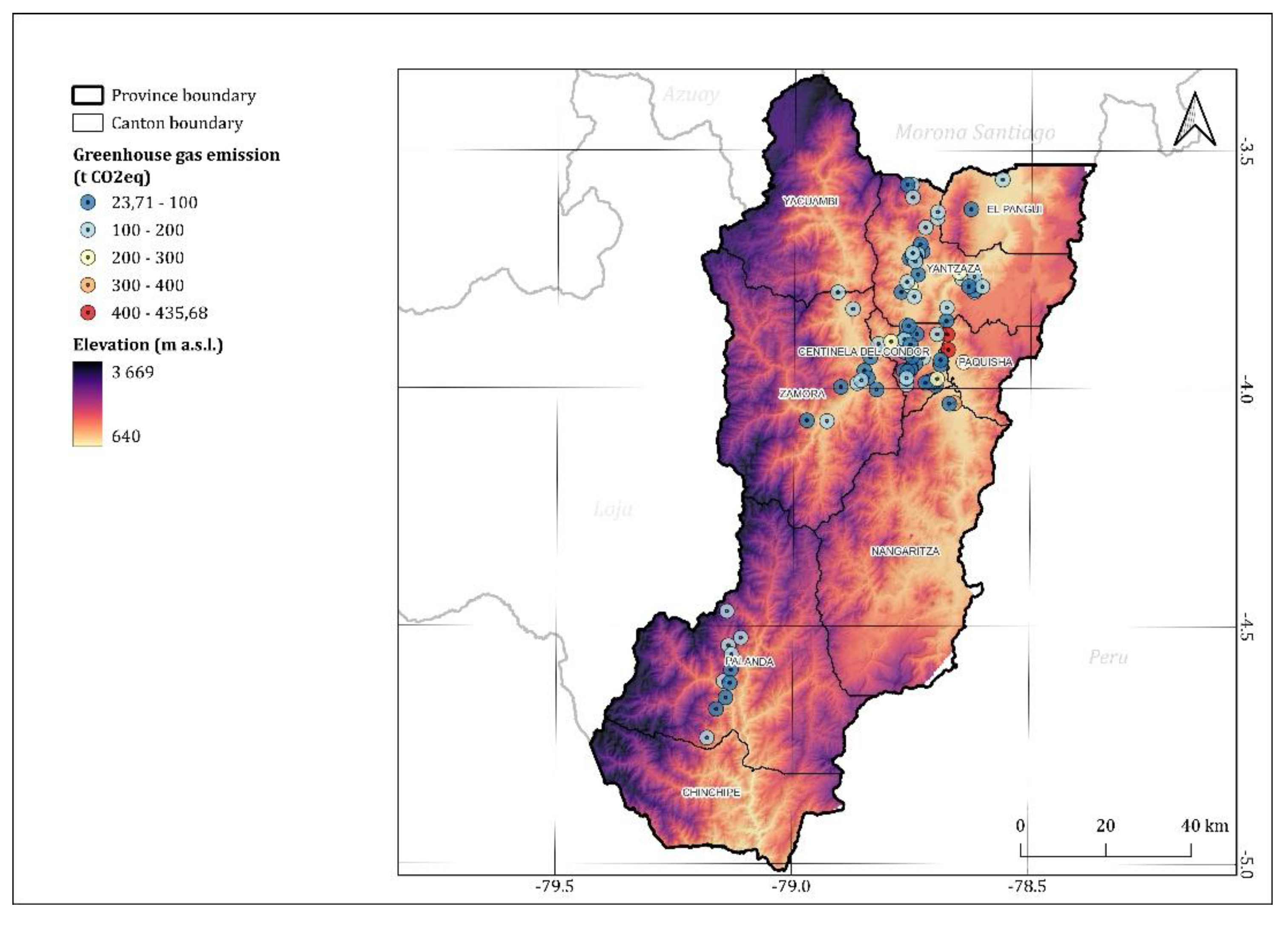
Figure 3.
Emission intensity in kg CO₂eq per liter of milk associated with livestock production systems in Zamora Chinchipe Province.
Figure 3.
Emission intensity in kg CO₂eq per liter of milk associated with livestock production systems in Zamora Chinchipe Province.
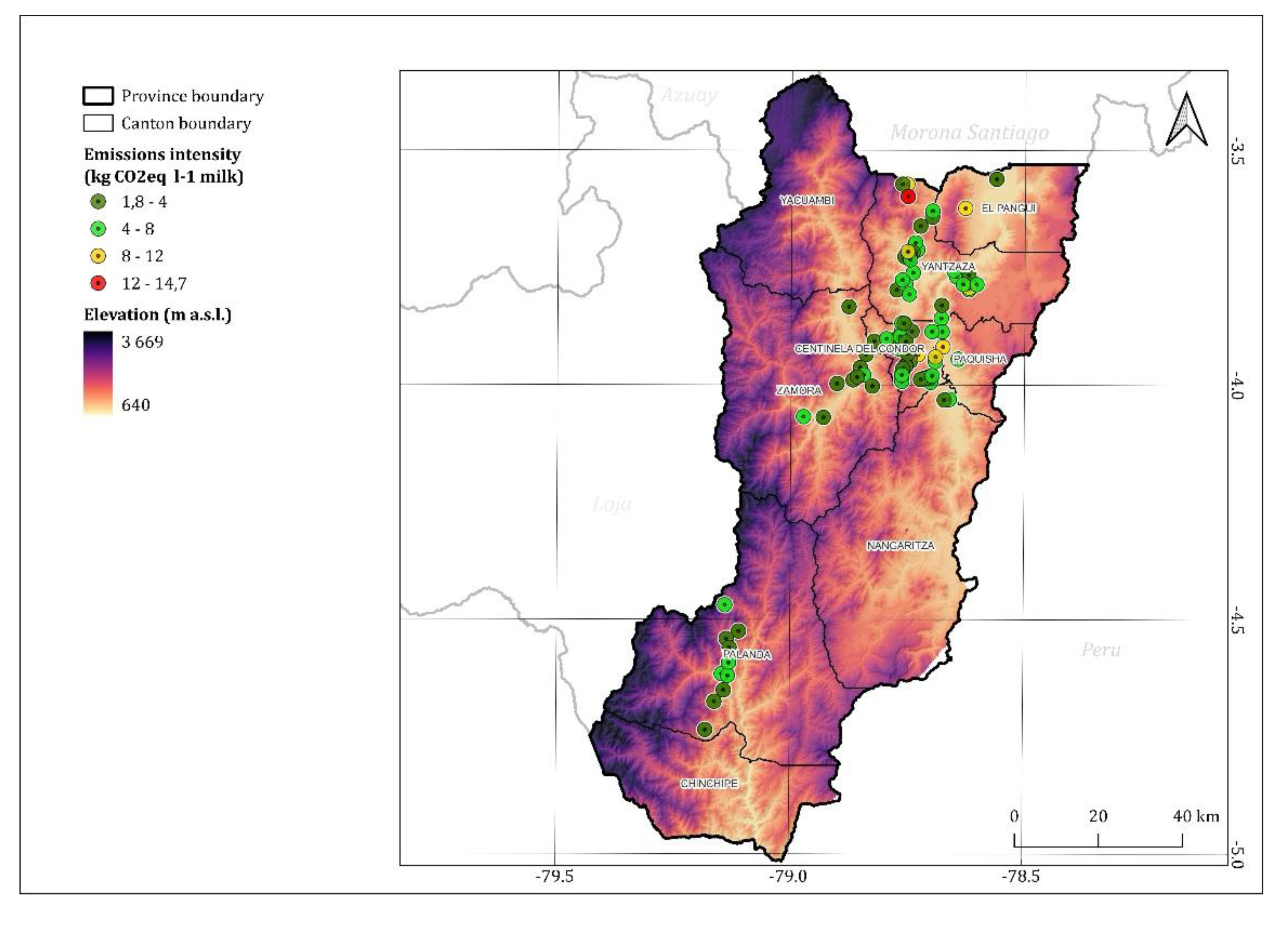

Table 1.
Survey administered to the producers of the farms selected for the study.
| Parameter Queried | Specific Features | |
|---|---|---|
| General Information | Farm name, main product (meat or milk), canton, parish | |
| Production system | Marginal (Traditional farming practices; income sources are not primarily from the farm itself; the farm generates little surplus for selling products) Commercial (Products from the farm are regularly sold; the main source of labor on the farm is family labor; low level of mechanization) Mixed (Semi-mechanized; the main source of labor is hired workers; products from the farm are regularly sold) Enterprise-level (Highly mechanized; production is intended for the agro-industry and export markets) |
|
| Weights (minimum of three animals per category (cows, bulls, etc.) are weighed; the average weight is reported (excluding sick animals) |
Live weight of cows, heifers, bulls, and calves (kg/animal). Live weight at slaughter or sale of young heifers and bulls (kg/animal). Weight at culling of cows (kg/animal) |
|
| Herd composition | Number: Cows, cows in production, heifers (1-2 years old), calves (under 1 year old), bulls, bull calves (1-2 years old), newborn calves, dead cows and calves, dead bulls and bull calves, cows slaughtered and sold, bulls slaughtered and sold, total births, age at first calving (months) | |
| Production | Percentage of fat and protein in milk, milk production (liters/animal/day). Average over the period (lactation period in months). | |
| Main pasture | None Ahicoria Alfalfa Brachiarias Estrella Festuca Gramalote Kikuyo King Grass Llantén Maní forrajero Maralfalfa Pasto azul Pasto miel Rye Grass Saboya Trébol blanco Trébol rojo |
Cichorium intybus L. Medicago sativa L. Urochloa spp. (sin. Brachiaria spp.) Cynodon nlemfuensis Vanderyst Festuca arundinacea Schreb. Bouteloua curtipendula (Michx.) Torr. Cenchrus clandestinus (Hochst. ex Chiov.) Morrone Pennisetum purpureum × Pennisetum glaucum Plantago major L. Arachis pintoi Krapov. & W.C.Gregory Pennisetum sp. (probably a cultivar of P. purpureum) Poa pratensis L. Melinis minutiflora P. Beauv. Lolium perenne L. Trifolium repens L. Trifolium pratense L. |
| Main forage consumption | Time for cows to return to the pasture (days), time for heifers, bulls, and young bulls to return to the pasture (days) | |
| Feed supplementation for cows (kg/animal/day). Other categories |
Hay or silage from legumes and grasses, corn silage, wheat, corn, rice and sugarcane byproducts, corn kernels, other grain byproducts, palm oil meal, molasses, balanced feed, alfalfa silage, and brewery byproducts. | |
| Manure (%) |
Composting, anaerobic digester, liquid sludge, daily spreading, no management | |
| Areas (ha) | Farm, total pasture area (includes native pastures, fodder mixtures, cut forage crops, and other areas used for livestock feeding), fodder mixtures, crops grown for livestock feed, pastures under agroforestry systems | |
| Pasture management | Do you plant or replant grasses on your farm? Do you fertilize your pastures? Do you practice paddock division or rotational grazing? Please indicate the area of land where you implement these practices. | |
| Forage mixtures and cut grass | The same species mentioned in the main pasture section are listed here. | |
| Forage consumption (cut grass) (kg/animal/day) | Amount of cut grass consumed by cows. Amount of cut grass consumed by other categories (heifer calves, bulls, bull calves) | |
Table 3.
Soil carbon stocks and farm areas in the study regions.
| Parameter | Mean | Standard Deviation |
|---|---|---|
| Farm area (ha) | 41,48 | ± 39,13 |
| Forest area (CUT 2022-MAATE) (ha)* | 8,43 | ± 18,58 |
| Soil carbon stocks Mg/ha |
94,72 | 32,98 |
*CUT 2022 – MAATE, forest cover area, includes natural forests and forest plantations (Unified Land Cadastre (CUT) of the Ministry of Environment, Water and Ecological Transition of Ecuador - MAATE, 2022).
Disclaimer/Publisher’s Note: The statements, opinions and data contained in all publications are solely those of the individual author(s) and contributor(s) and not of MDPI and/or the editor(s). MDPI and/or the editor(s) disclaim responsibility for any injury to people or property resulting from any ideas, methods, instructions or products referred to in the content. |
© 2025 by the authors. Licensee MDPI, Basel, Switzerland. This article is an open access article distributed under the terms and conditions of the Creative Commons Attribution (CC BY) license (http://creativecommons.org/licenses/by/4.0/).
Copyright: This open access article is published under a Creative Commons CC BY 4.0 license, which permit the free download, distribution, and reuse, provided that the author and preprint are cited in any reuse.


