

Submitted:
04 October 2025
Posted:
08 October 2025
You are already at the latest version
Abstract
To address the critical challenges in achieving precise target tracking and engagement with high-energy laser systems under complex atmospheric conditions, this paper begins by introducing an indirect detection strategy leveraging laser spot characteristics. The essence of this approach lies in analyzing the two-dimensional scattered spot distribution generated after the laser beam interacts with the target surface, including morphological variations and energy concentration patterns, thereby enabling indirect characterization of target surface features. Furthermore, a multidimensional coupled model is established that integrates atmospheric transmission effects, tracking-strike errors, and strike efficiency. This model aims to systematically enhance the laser system's tracking accuracy and strike effectiveness assessment by integrating the attenuation and distortion effects of laser propagation through atmospheric turbulence and aerosols, as well as tracking and pointing error algorithms. The research results not only quantify the impact of atmospheric environmental factors (such as visibility and turbulence intensity) on laser propagation but also indirectly reveal how these factors affect tracking and strike effectiveness, providing new technical support for target perception and assessment of laser system effectiveness in complex environments.
Keywords:
indirect detection
; target surface characteristics
; atmospheric transmission
; tracking error
; strike effectiveness
1. Introduction
High-energy laser systems have broad applications in both military and civilian fields; however, their tracking and strike performance is limited by several complex factors. First, distance represents a key constraint. As the range increases, laser energy attenuation and spot diffraction intensify, making accurate detection and effective engagement of distant targets increasingly difficult [1]. Second, atmospheric conditions critically influence laser propagation and target detection. Turbulence induces wavefront distortion, beam jitter, and beam broadening, thereby reducing focus ability and pointing accuracy [2]. In addition, aerosols and particulates cause absorption and scattering, resulting in substantial energy loss and lower hit probability. Finally, target surface characteristics, such as material composition and roughness, strongly affect laser–target interactions, leading to variations in reflection, absorption, and scattering behaviors [3,4].
Given these challenges, it is of paramount importance to investigate and quantify the coupled effects of atmospheric propagation and target surface properties on laser transmission. After the laser beam propagates through the atmosphere and interacts with the target, the physical quantities of the on-target spot and the reflected spot, such as morphology, intensity distribution, and energy attenuation, do not simply replicate the characteristics of the incident laser. Instead, they carry rich information about the target’s intrinsic properties and atmospheric propagation effects. These indirectly observable physical quantities, which contain information about the target and its environment, can provide more comprehensive informational support for laser system decision-making through precise analysis.
Existing research has made significant progress in laser atmospheric propagation effects and tracking and pointing error [5,6], laying the foundation for understanding laser propagation characteristics in complex environments. However, current studies rarely systematically utilize laser spot features after interaction with the target as a key information source for indirect detection of target characteristics. On this basis, there is limited work that deeply couples the atmospheric propagation process with the laser’s tracking and pointing accuracy for targets, thereby comprehensively evaluating the overall tracking and strike effectiveness of laser weapons. This study aims to address this research gap. Firstly, this paper proposes an indirect detection method based on laser spot characteristics. Through refined analysis of the two-dimensional distribution of the reflected spot (including morphological variations and energy concentration degree), this method enables indirect detection of the target’s surface characteristics. Additionally, this paper further constructs a multi-dimensional coupled model integrating atmospheric propagation effects, tracking and pointing error, and strike effectiveness. This model will deeply analyze the impact of atmospheric turbulence and aerosols on laser propagation and further explore how these indirectly observable effects influence target tracking and strike, ultimately assessing the laser weapon’s tracking and strike effectiveness in different environments.
2. Materials and Methods
2.1. Indirect Inversion of Target Surface Properties Based on Spot Characteristics
Investigating surface scattering characteristics of targets constitutes a fundamental aspect of indirect detection research. As illustrated in Figure 1, when a laser beam emitted from the source impinges on a target surface, it undergoes scattering and is subsequently collected by detection devices, thereby enabling indirect inversion of the target’s surface properties [7]. The Bidirectional Reflectance Distribution Function (BRDF), as a key optical parameter, provides a comprehensive description of a target’s spectral scattering characteristics within a hemispherical space [8,9]. It quantitatively characterizes surface scattering behavior under varying incident and detection geometries. In this study, the FOI model is selected for analysis. Developed by the Swedish Defence Research Agency based on extensive experimental datasets, this empirical model demonstrates applicability to diffuse-scattering surfaces, specular-scattering surfaces, and rough targets, thus ensuring broad generality. Its mathematical formulation is expressed as follows [10]:
Whereis the angle of incidence,is the diffuse reflection coefficient,is the surface slope parameter,is the diffuse reflection amplitude coefficient, anis the specular reflection amplitude coefficient.
The BRDF model indicates that surface roughness, incidence angle, and material composition are the primary factors governing target surface scattering behavior. To analyze the influence of these variables on laser scattering, this study employs optical simulation techniques.
2.2. Analysis of Atmospheric Transmission Effects on Laser Propagation
2.2.1. Establishing the Laser Field Distribution Model
The spatial distribution of the beam energy determines the strike effectiveness of a high-energy laser system. Typically, the output from a stable resonator exhibits a Gaussian intensity profile, characterized by a high central peak that gradually decreases toward the periphery, as illustrated in Figure 2.
Based on the particular solution of the weak Helmholtz wave equation, the laser field distribution model on the target plane can be expressed as [11]:
Whereis the amplitude constant,is the wavenumber,is the beam waist radius,is the beam radius, is the radius of curvature, and is to the additional phase factor.
The intensity distribution of a Gaussian beam can be written as:
As the laser beam propagates through the atmosphere toward the target, its intensity distribution is strongly influenced by the combined effects of aerosol scattering and absorption as well as turbulence-induced phase perturbations. These effects result in beam expansion, drift, and even splitting. Accordingly, it is essential to establish a model that accurately characterizes the spatial energy distribution of the laser spot on the target surface [12,13]. Since the particle size distribution of aerosols is generally obtained empirically, the atmospheric transmittance can be approximated using the following empirical relation:
Where V is atmospheric visibility, and q is the empirical atmospheric factor.
Accordingly, based on Equation (3), the aerosol transmission coefficient of the laser can be defined as:
Therefore, the Gaussian beam intensity distribution on the target, including aerosol-induced attenuation, can be expressed as:
2.2.2. Simulation of Turbulent Atmosphere
In addition to aerosol attenuation, atmospheric turbulence exerts a significant influence on laser propagation [6,14]. Due to its inherent randomness, turbulence induces both spatial and temporal fluctuations in the optical field, resulting in beam broadening, drift, and other distortions [15]. These effects are major contributors to laser targeting errors. In this study, deviations in the tracking system are indirectly inferred by monitoring variations in the morphology and characteristics of the laser spot on the target surface.
As a laser beam propagates through a turbulent atmosphere, fluctuations in the refractive index across the beam cross-section generate random phase shifts, forming a distorted phase front. To simulate this process, the multilayer phase screen method is employed. This approach involves generating a complex random phase field based on the turbulence power spectrum and then applying a Fourier transform to obtain its spatial phase distribution. The Kolmogorov spatial frequency power spectral density of refractive index fluctuations is given by [16]:
Where is the spatial wavenumber (m−1) and Cn2 is the atmospheric refractive index structure constant.
The relationship between the phase coherence function and the Kolmogorov spectrum is expressed as:
Where is the phase correlation function.
The relationship between the phase correlation function and the two-dimensional phase spectrum is given by:
Thus, the relationship between the two-dimensional phase spectrum and the Kolmogorov spectrum can be expressed as:
By applying Gaussian filtering and Fourier transformation to the two-dimensional phase spectrum, the spatial random phase field can be generated, representing the phase distribution on a phase screen:
Where is complex Gaussian random white noise.
2.2.3. Analysis and Characterization of Laser Tracking and Strike Errors
Due to the stochastic nature of atmospheric turbulence, the laser optical field exhibits significant spatial and temporal fluctuations. These fluctuations not only induce beam broadening and lateral displacement but also result in irregular distortions and splitting of the spot energy distribution. Such effects are major contributors to the failure of high-energy laser systems to accurately engage targets at long ranges or under complex environmental conditions [17]. Accordingly, this study focuses on quantifying the impact of turbulence-induced beam deflection on laser tracking and targeting performance.
The beam deflection model arising from atmospheric turbulence during laser propagation can be expressed as [18]:
Where Parameter A = α·V - β, B = δ - γlnV, φ is the beam deflection angle, L is the distance to the target plane, V is the wind speed, α, β, γ, and δ are functions of height h above ground level.
Based on near-surface experimental data, the following approximate expressions are obtained:
Whereis the average atmospheric temperature, is the height above ground level, and is the average atmospheric pressure.
Assuming the Airy spot (which contains 83.8% of the total power) is defined as the laser spot acting on the target, a model for evaluating the strike effectiveness of laser weapons has been established. This model correlates the laser emission power with the on-target power density damage threshold, maximum target damage distance, wavelength λ, beam quality factor β, atmospheric transmittance τ1, launch optics transmittance, launch aperture D, missile casing surface laser reflectivity r, and the angle α between the laser incidence direction and the target surface normal, through the following formula [19]:
Based on the above model, specific analysis and evaluation of the tracking error and strike effectiveness of laser weapons are conducted.
3. Results and Discussion
3.1. Influence of Target Surface Characteristics on Laser Scattering
An experimental simulation environment was established using the optical analysis software TracePro. Based on the Monte Carlo method, the accuracy of the simulation is determined by the number of rays traced: the greater the number of rays, the closer the results converge to experimental reality. In this study, 67,051 rays were simulated, each with an irradiance of 1 W/m2, a wavelength of 1.06μm, and a Gaussian optical density distribution.
3.1.1. Target Surface Roughness
The scattering of laser light is predominantly governed by the roughness of the target surface. Three target surfaces with different roughness levels were constructed, as shown in Figure 3. Among them, Rough Surface 1 has the lowest roughness, while Rough Surface 3 has the highest roughness.
Using TracePro simulations at a fixed incidence angle of 0°, the scattering behavior of the material surfaces was analyzed. A 100 × 100 mm receiving plate was positioned at the specular reflection angle to record the scattering distribution from surfaces of varying roughness. The resulting distributions are illustrated in Figure 4.
When a laser beam strikes a rough surface, shadowing effects occur, and part of the scattered waves are obstructed by surface irregularities, preventing them from reaching the observation point. With increasing roughness, this blocking effect becomes more pronounced, leading to a progressive reduction in received power. As shown in Figure 4a, a smooth surface produces a typical specular reflection, characterized by a high-intensity peak at the center and a rapid intensity drop-off on both sides. However, as roughness increases, the scattered intensity distribution on the receiving plate becomes increasingly random, and the total received power gradually decreases, as illustrated in Figure 4b–d. These results indicate that smoother surfaces yield stronger mirror-like reflections, while increased roughness enhances diffuse scattering. Consequently, variations in spot characteristics can serve as an indirect basis for estimating the surface roughness of a target.
3.1.2. Laser Incidence Angle
By calculating the relative position between the laser emission point and the target surface, adjust the laser emission angle to evaluate the BRDF distribution at four different incidence angles: 0°, 30°, 45°, and 60°. As shown in Figure 5, Surface 1 with lower roughness exhibits a distinct reflective peak, with maximum ratios of 0.23 at 0°, 0.25 at 30°, 0.27 at 45°, and 0.3 at 60°. The scattering peak consistently appears in the specular reflection direction, with a rapid decline in scattering intensity on both sides compared to the other two surfaces, which have higher roughness. This further confirms that smoother surfaces result in higher specular peaks and narrower peak widths. Moreover, as surface roughness increases, the scattering intensity near the specular peak decreases, indicating that rougher surfaces exhibit lower reflectivity and more pronounced diffuse scattering characteristics. These laser spot variations induced by different incidence angles can also serve as a basis for indirectly detecting target orientation.
3.1.3. Target Material Properties
This section examines the influence of material properties on target surface scattering characteristics. Rough Surface 1 was selected as the baseline, and its surface attributes were modified in TracePro to represent three different materials: silver, silicon carbide, and iron. As shown in Figure 6, the scattering distributions of these material surfaces exhibit similarities to those observed for varying roughness, with a maximum intensity consistently occurring at the specular reflection angle. However, unlike the roughness results, the scattering curves for different materials do not intersect; instead, each curve remains entirely above its respective maximum. This behavior can be attributed to differences in the absorption rates of the 1.06 µm laser across materials. Therefore, analysis of the scattering spot patterns under varying material conditions enables indirect inference of target material properties, providing an additional diagnostic pathway for laser-based target characterization.
By analyzing the scattering distribution of the target surface, it is possible to indirectly infer both the angular relationship between the target and the detection point as well as the intrinsic material parameters of the target. These results provide a theoretical basis for enhancing the accuracy of laser-based tracking and characterization of real-world targets.
3.2. Evaluation of Tracking/Engagement Performance Under Atmospheric Conditions
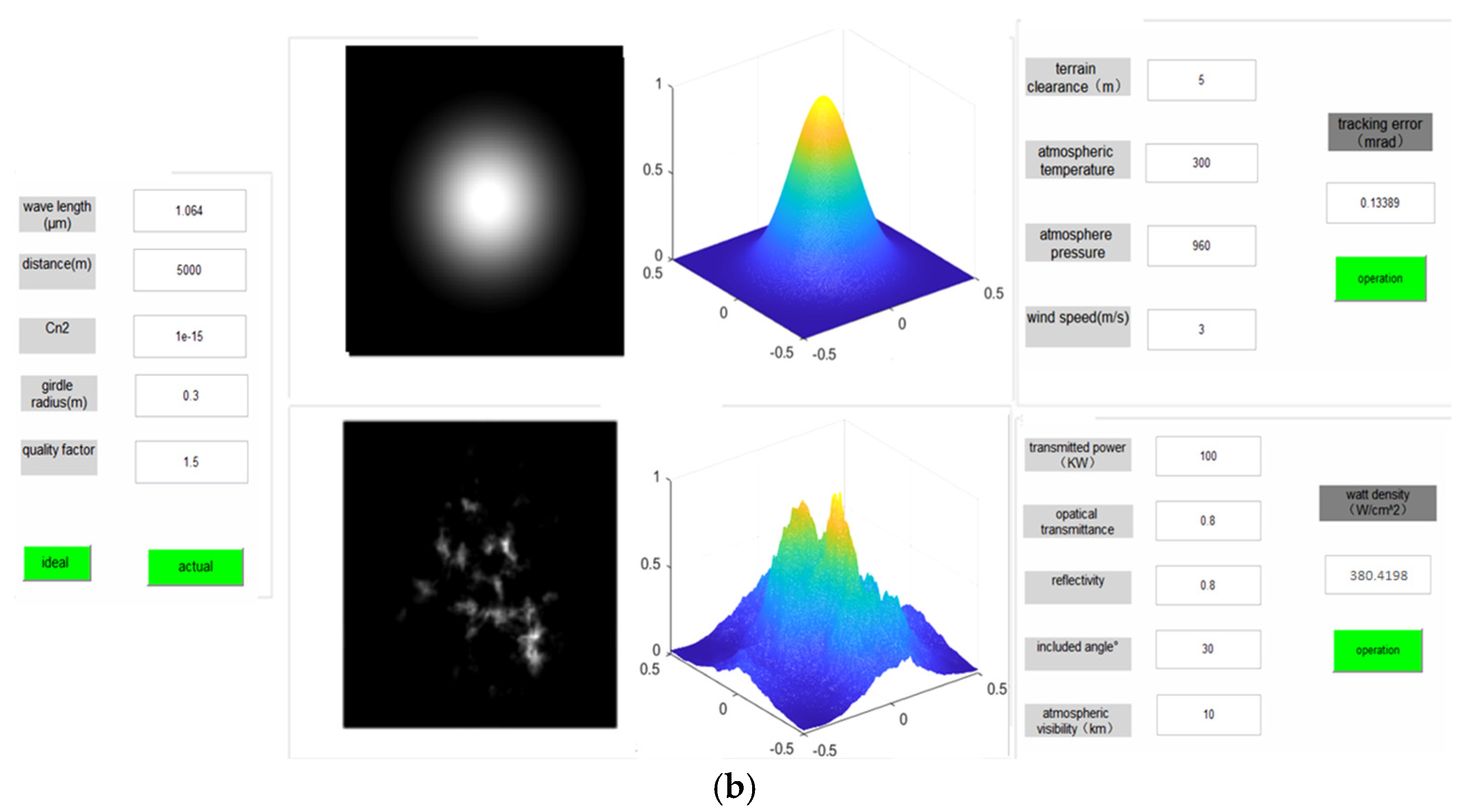
The impact of atmospheric conditions on laser tracking and power density on target is a comprehensive manifestation of multiple factors. Reduced atmospheric visibility markedly decreases transmission efficiency, while strong turbulence exacerbates beam divergence and splitting, thereby lowering the power density incident on the target surface and increasing tracking errors. To address these challenges, this study establishes a comprehensive high-power laser transmission assessment model that incorporates key atmospheric parameters, including pressure, wind speed, and incidence angle. The model simulates the actual post-transmission energy distribution on missile targets and compares it against idealized conditions. By quantifying deviations in energy delivery and strike effectiveness across varying atmospheric states, the study provides a deeper understanding of the coupled effects of atmospheric transmission on both tracking accuracy and strike performance. These evaluation results will provide a crucial reference for the operational effectiveness of laser weapon systems in complex environments and guide system designers to dynamically adjust tracking or strike strategies under varying atmospheric conditions to improve hit probability.
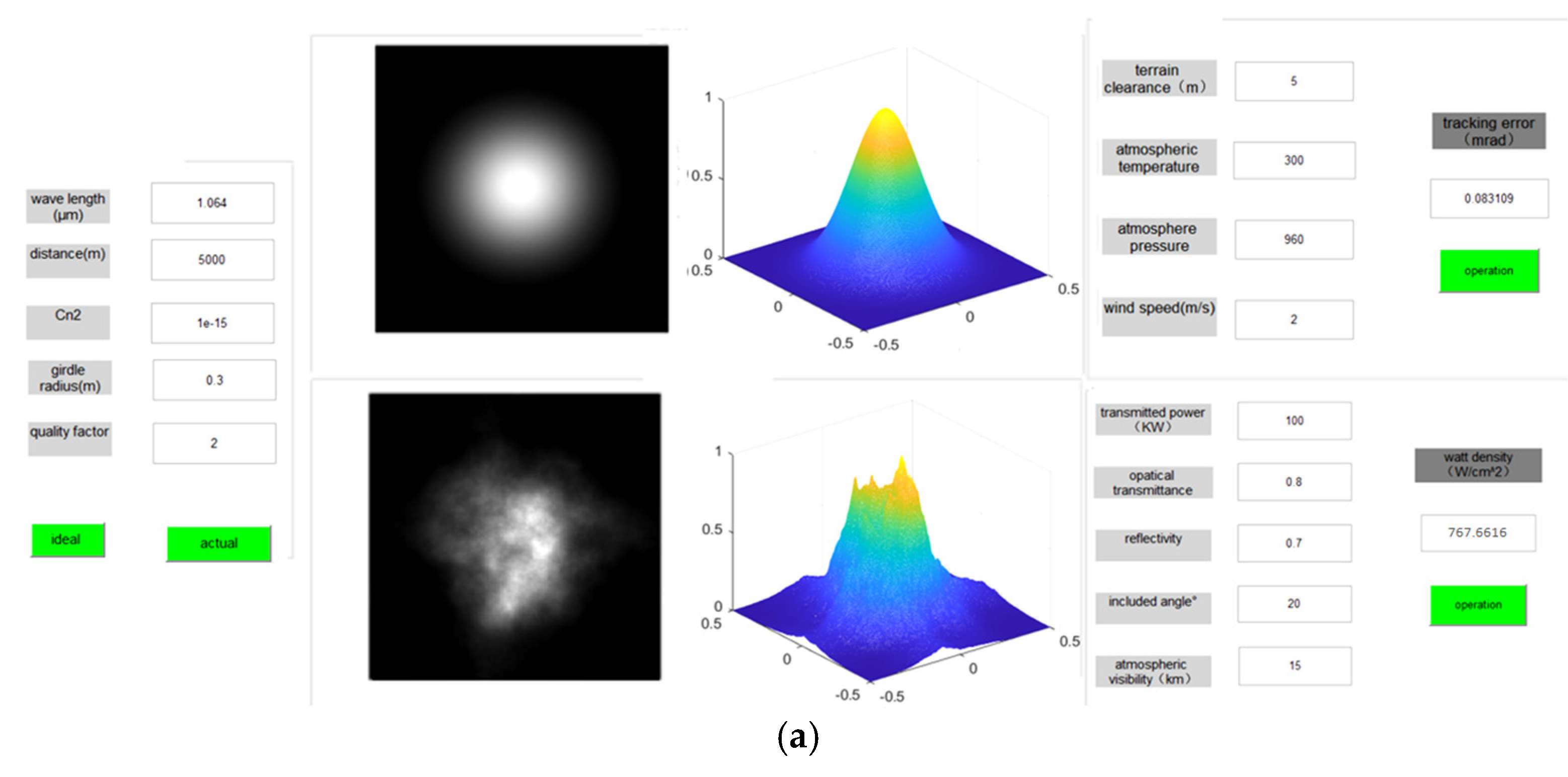
As can be observed from the results in Figure 7 and Figure 8, the impact on laser tracking and strike effectiveness is a comprehensive manifestation of multiple factors. As atmospheric conditions worsen, the spot distribution becomes increasingly fragmented, severely affecting the power density reaching the target surface, while tracking errors intensify. This demonstrates that environmental factors are among the key elements influencing the operational effectiveness of laser weapons.
5. Conclusions
This study systematically evaluated the effectiveness of laser tracking and strike operations by examining the indirect influence of target surface characteristics on laser scattering and by establishing a coupled analysis model of atmospheric transmission, tracking, and engagement performance. The main findings can be summarized as follows:
1)An indirect detection method based on laser spot characteristics is proposed to analyze the two-dimensional distribution of reflected spots formed by the interaction between laser beams and target surfaces, thereby enabling indirect detection of surface features. Measurement data indicate that rough surfaces significantly affect laser scattering, with the strongest reflected signals observed near the specular reflection direction. The specular reflection intensity increases with larger incidence angles. Besides angular variations, the target’s optical parameters also influence the laser scattering distribution. Among the three calculated coatings, under consistent surface roughness conditions, the silicon carbide coating exhibits higher light absorption (with a maximum value not exceeding 0.05), resulting in lower specular reflection compared to the other two coatings. Its scattering distribution approximates a Lambertian surface distribution.
2)A multidimensional coupling model integrating atmospheric transmission effects, tracking and aiming errors, and strike effectiveness has been developed. This model thoroughly analyzes the influence of atmospheric turbulence and aerosols on laser transmission and investigates how these observable effects impact target tracking and strike accuracy, thereby providing insights into their implications for indirect detection. The research results quantify the effects of atmospheric environmental factors (such as visibility, turbulence intensity, and wind speed) on laser transmission and reveal how these factors directly affect tracking and strike performance, thereby offering new technical support for target perception and effectiveness evaluation of laser systems in complex environments.
This paper integrates target surface characteristics and atmospheric effects into a unified analytical framework, thereby enriching the performance evaluation system for laser-guided targeting and strike systems. It provides new insights for subsequent research and assessment of laser systems.
Acknowledgments
This work is supported by the Natural Science Foundation of Shaanxi Province (2024JC-YBMS-517); Project 111 (B17035)
References
- Liu, Z.; Mao, Y.; Chen, S.; et al. Analyses of Laser Action Distance and Echo Influence on Laser Ranging Accuracy. IEEE Access 2022, *10*, 9898102.
- Elsayed, E.E. Investigations on OFDM UAV-based free-space optical transmission system with scintillation mitigation for optical wireless communication-to-ground links in atmospheric turbulence. Opt. Quantum Electron. 2024, *56*, 837.
- Chen, Q.; Yam, J.W.; Chua, S.Y.; et al. Characterizing the performance impacts of the target surface on the underwater pulse laser ranging system. J. Quant. Spectrosc. Radiat. Transfer 2020, *255*, 107267.
- Huang, B.; Peng, B.; Ren, Q.; et al. Modeling and analysis of spectral polarization BRDF based on microfacet theory. J. Quant. Spectrosc. Radiat. Transfer 2024, *313*, 108830.
- Al-Gazzi, E.K.; Ali, E.H.; Mohammed, A.J. Development and execution of an FSO communication system to track the scattered laser beam during atmospheric turbulence. J. Opt. 2025, *54*, 1218–1225.
- Wu, J.; Liu, W.; Lu, Y.; et al. Calibration of the geometric error parameters of laser trackers in site environments. IEEE Sens. J. 2023, *23*, 7077–7086.
- Sun, J.; Zhou, X.; Fan, Z.; et al. Investigation of light scattering properties based on the modified Li-Liang BRDF model. Infrared Phys. Technol. 2022, *120*, 103992.
- Yang, Y.; Yang, K.; Zhang, A. Influence of Target Surface BRDF on Non-Line-of-Sight Imaging. Photonics 2024, *11*, 198.
- Fu, Q.; Liu, X.; Yang, D.; et al. Improvement of pBRDF Model for Target Surface Based on Polarization Characteristics. Remote Sens. 2023, *15*, 3481.
- Paleologue, A. Active infrared systems: possible roles in ballistic missile defense. In Proceedings of the SPIE, Orlando, Florida, USA, 17 April 2006; Volume 6214, p. 621401. [Google Scholar]
- Kogelnik, H.; Li, T. Laser beams and resonators. Appl. Opt. 1966, *5*, 1550–1567.
- Yang, X.; Wang, C.; Liu, X. Research on the Attenuation Characteristics of LiDAR Transmission Energy in Different Atmospheric Environments. Atmosphere 2025, *16*, 210.
- Gast, B.; Jiménez, C.; Ansmann, A.; et al. Invisible aerosol layers: improved lidar detection capabilities with fluorescence lidar. Atmos. Chem. Phys. 2025, *25*, 3995–4014.
- Lukin, I.; Lukin, V. Propagation of a Partially Coherent Bessel–Gaussian Beam in a Uniform Medium and Turbulent Atmosphere. Photonics 2024, *11*, 562.
- Wu, Z.; Feng, Z.; Ye, S.; Song, B.; Wei, R.; Yu, C. Beam Properties of a Partially Coherent Beam Propagating Horizontally in Atmospheric Turbulence. Photonics 2023, 10, 477. [Google Scholar] [CrossRef]
- Shi, J.; Sun, S.; Xie, J.; et al. Simulation Analysis of Dynamic Damage Probability Modelling for Laser Systems. Mathematics 2023, *11*, 4097.
- Wei, L.; Zhang, L.; Wenfeng, W.; et al. Damage capability of laser system in ground-air defense environments. Chin. J. Aeronaut. 2025, *103625*.
- Bendersky, S.; Kopeika, N.S.; Blaunstein, N.Sh. Prediction and modeling of line-of-sight bending near ground level for long atmospheric paths. In Proceedings of the SPIE Conference on Target-in-the-Loop: Atmospheric Tracking, Imaging, and Compensation, Denver, Colorado, USA, 18 October 2004; Volume 5552. [Google Scholar]
- Li, Y.; Wang, M.L.; Zhang, J. Study on Damage Capability of High-Energy Laser Weapons against Ballistic Missiles. Infrared Laser Eng. 2006, *35*, 588–592.
Figure 1.
Schematic of indirect inversion of target surface characteristics.
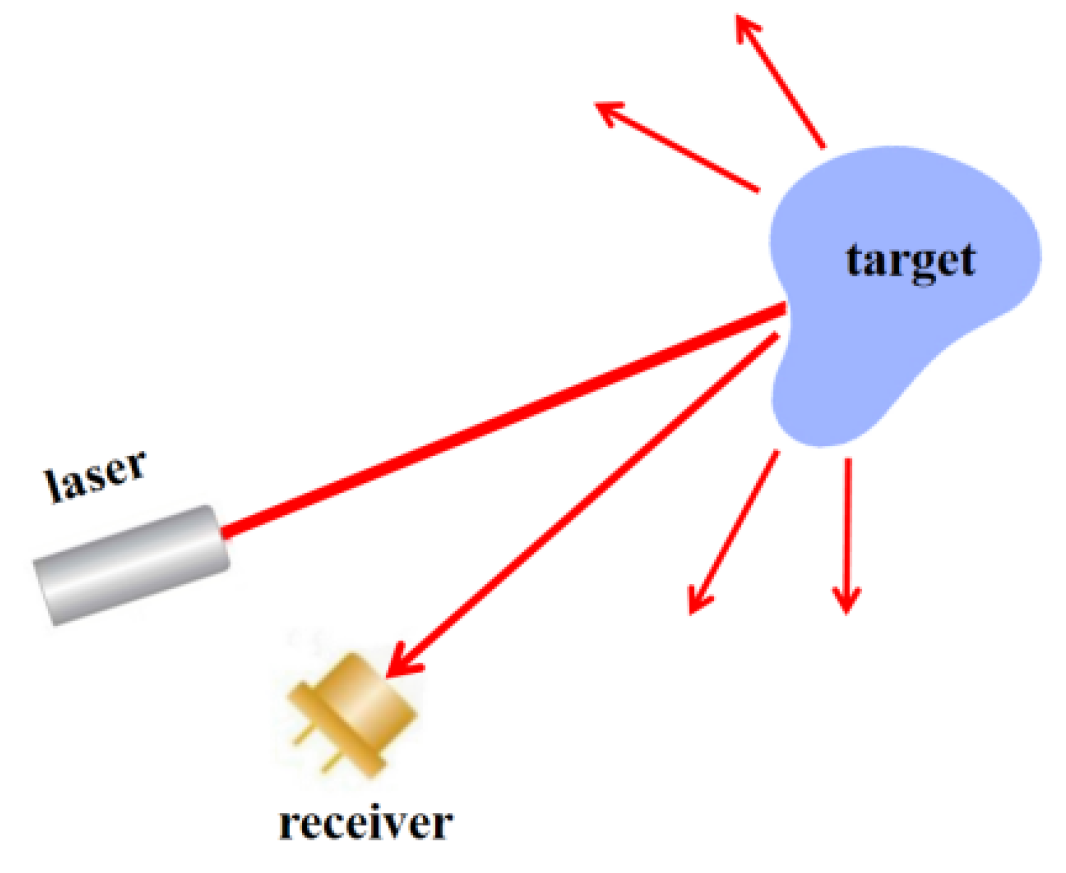
Figure 2.
Schematic diagram of the laser beam.
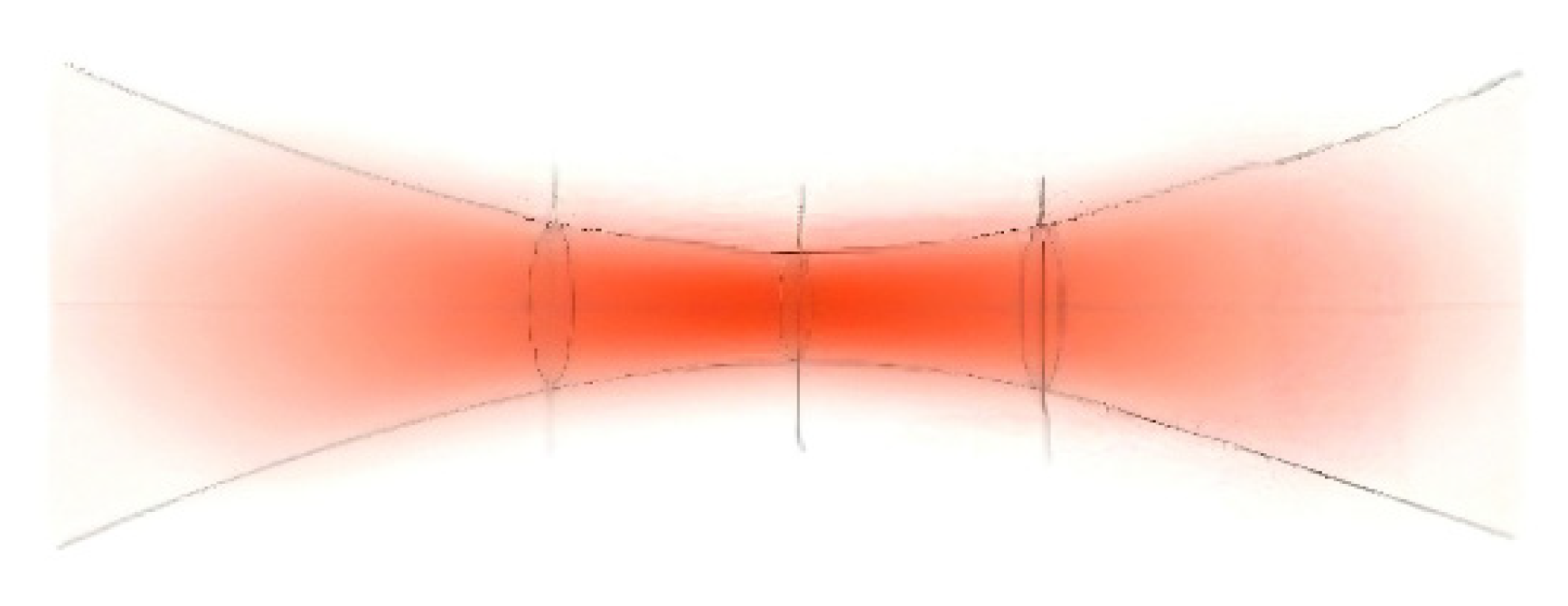
Figure 3.
Effect of target surface roughness on scattering characteristics. (a) Rough surface 1. (b) Rough Surface 2. (c) Rough Surface 3.
Figure 3.
Effect of target surface roughness on scattering characteristics. (a) Rough surface 1. (b) Rough Surface 2. (c) Rough Surface 3.
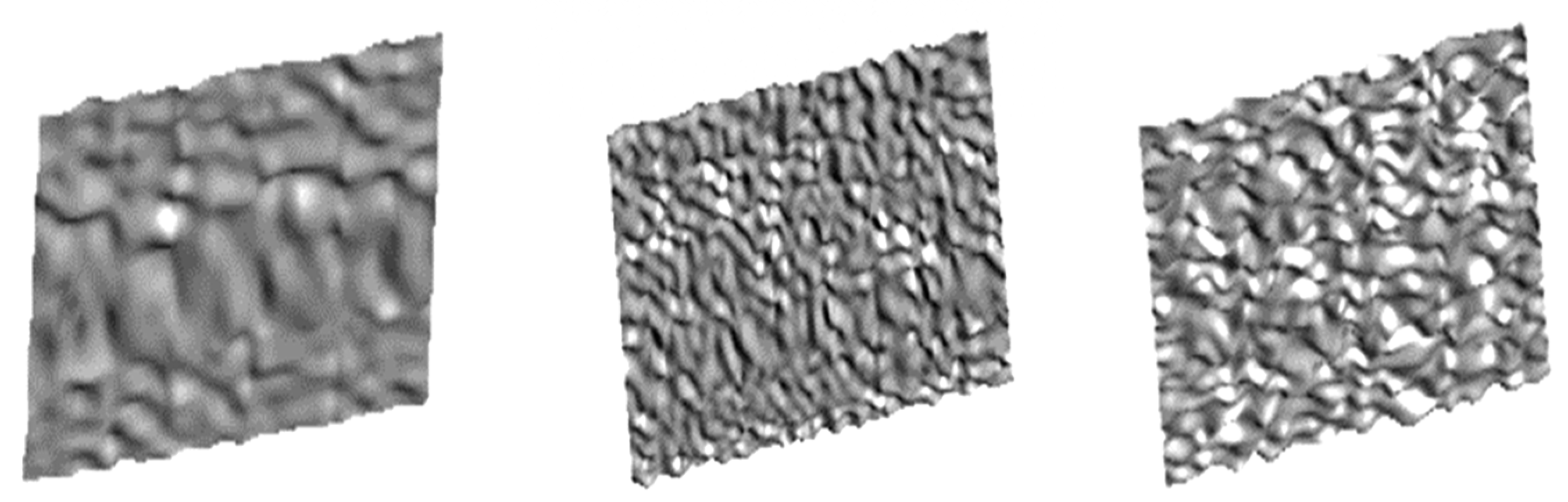
Figure 4.
Scattered light patterns received from four roughness surfaces.(a) Smooth surface. (b) Rough surface 1. (c) Rough Surface 2. (d) Rough Surface 3.
Figure 4.
Scattered light patterns received from four roughness surfaces.(a) Smooth surface. (b) Rough surface 1. (c) Rough Surface 2. (d) Rough Surface 3.
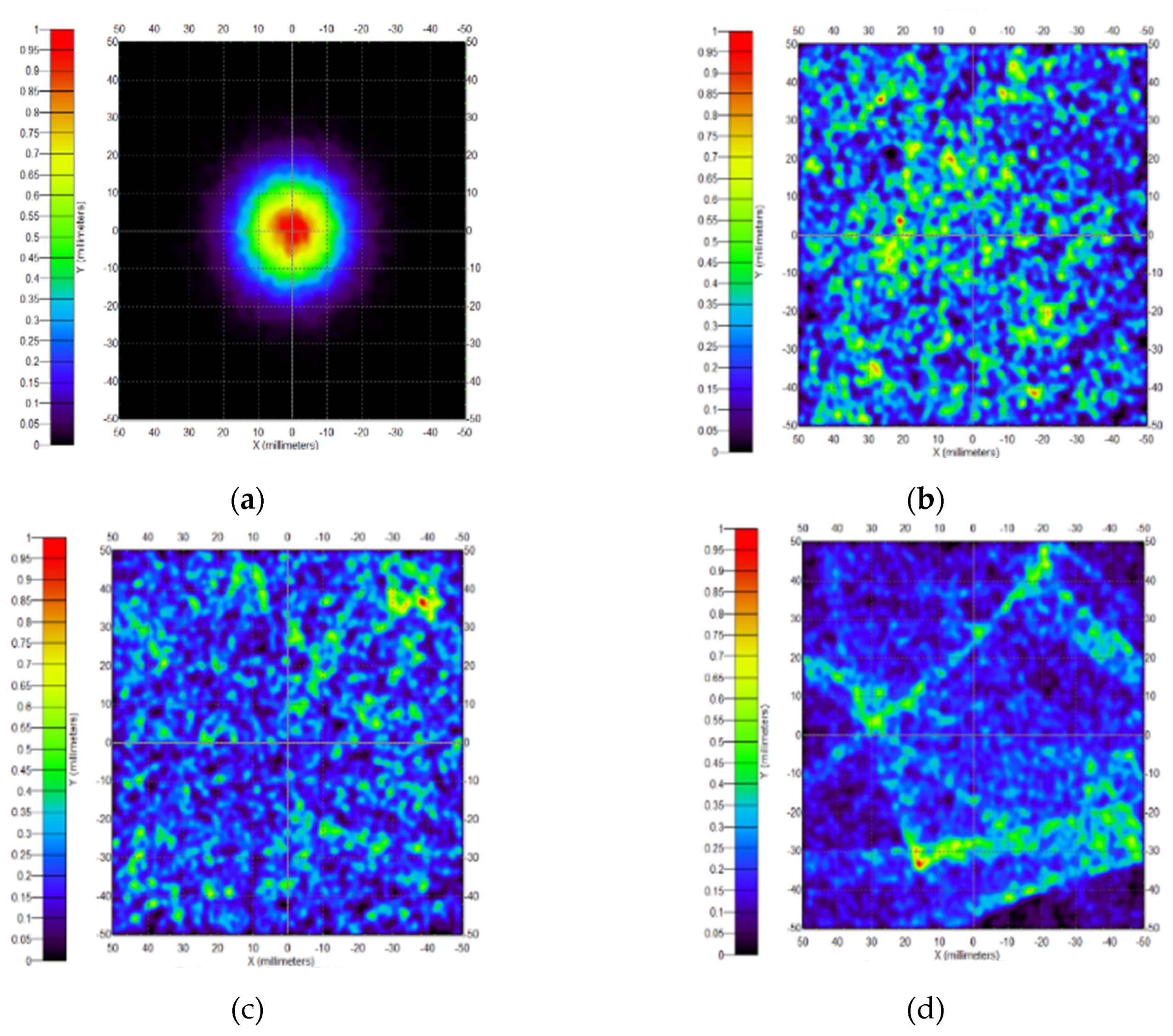
Figure 5.
Effect of Laser Incidence Angle on Scattering Properties. (a) 0°. (b) 30°. (c) 45°. (d) 60°.
Figure 5.
Effect of Laser Incidence Angle on Scattering Properties. (a) 0°. (b) 30°. (c) 45°. (d) 60°.
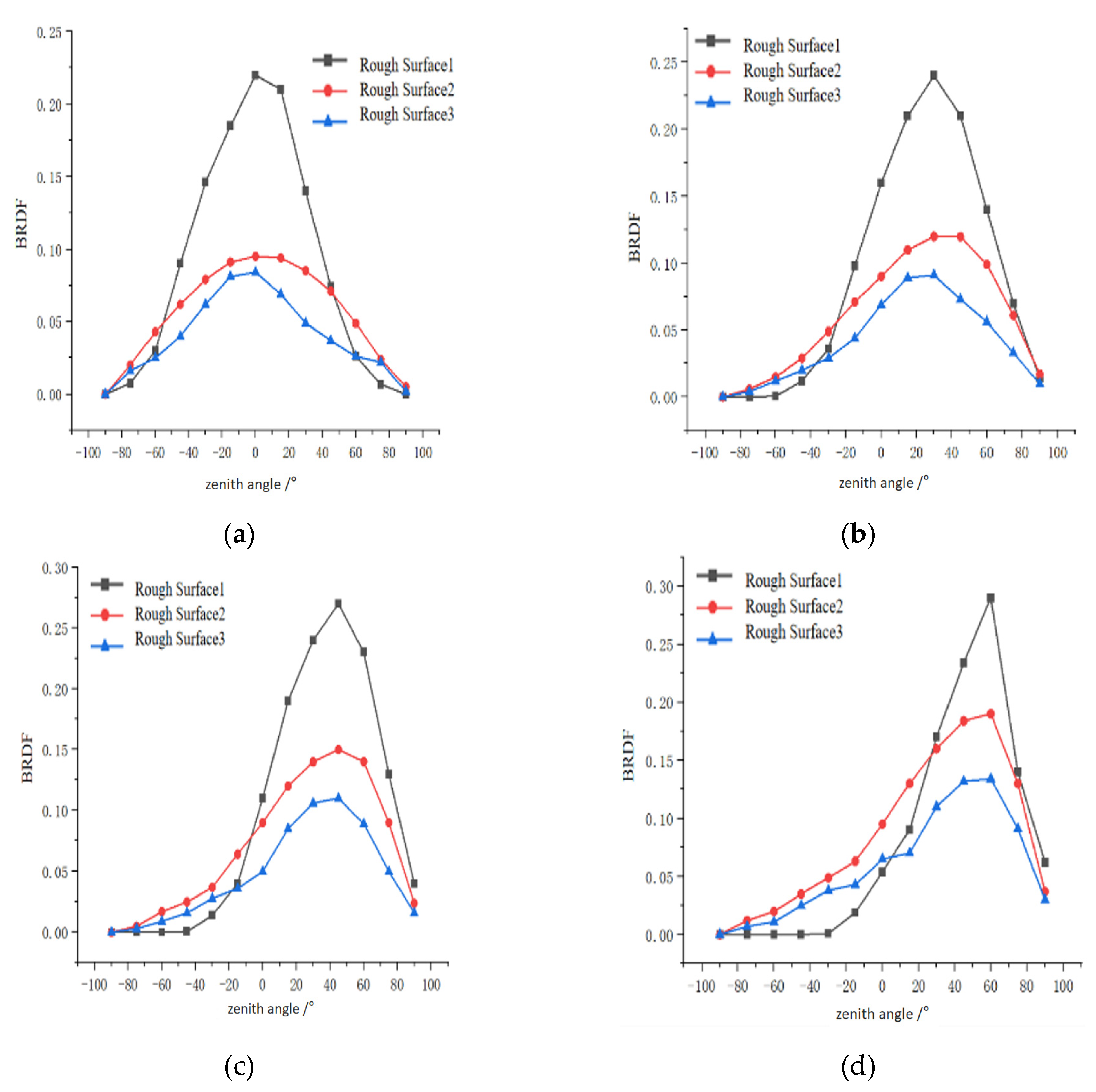
Figure 6.
Influence of Target Surface Material on Scattering Characteristics. (a) 0°. (b) 30°. (c) 45°. (d) 60°.
Figure 6.
Influence of Target Surface Material on Scattering Characteristics. (a) 0°. (b) 30°. (c) 45°. (d) 60°.
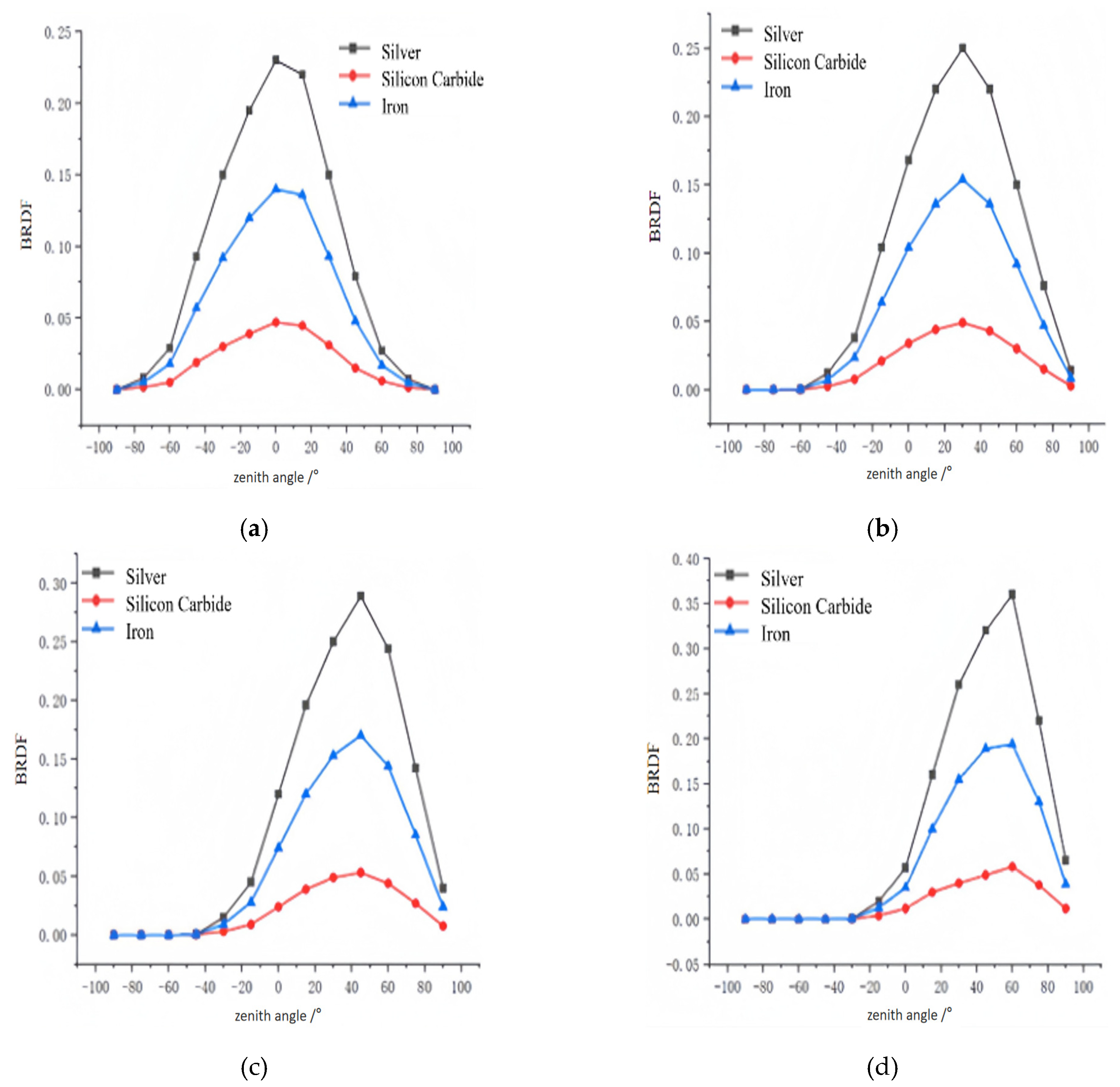
Figure 7.
Effect of varying atmospheric turbulence on follow-on and strike effectiveness. (a)
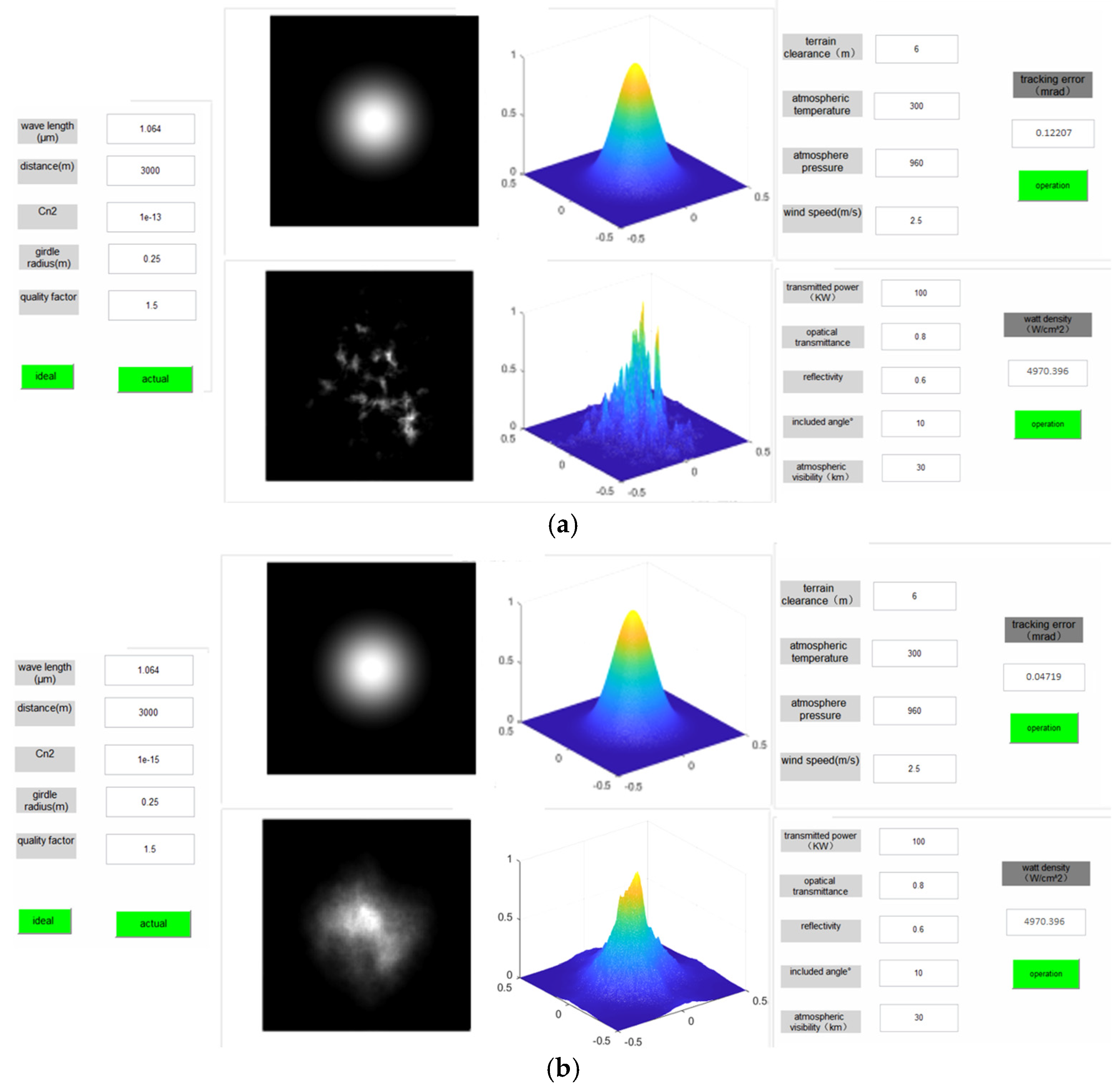
Figure 8.
Effect of varying atmospheric conditions on follow-through and strike effectiveness. (a)quality factor=2, wind speed=2m/s, reflectivity=0.7, included angle=20, atmospheric visibility=15. (b)quality factor=2, wind speed=3m/s, reflectivity=0.8,included angle=30, atmospheric visibility=10.
Figure 8.
Effect of varying atmospheric conditions on follow-through and strike effectiveness. (a)quality factor=2, wind speed=2m/s, reflectivity=0.7, included angle=20, atmospheric visibility=15. (b)quality factor=2, wind speed=3m/s, reflectivity=0.8,included angle=30, atmospheric visibility=10.
Disclaimer/Publisher’s Note: The statements, opinions and data contained in all publications are solely those of the individual author(s) and contributor(s) and not of MDPI and/or the editor(s). MDPI and/or the editor(s) disclaim responsibility for any injury to people or property resulting from any ideas, methods, instructions or products referred to in the content. |
© 2025 by the authors. Licensee MDPI, Basel, Switzerland. This article is an open access article distributed under the terms and conditions of the Creative Commons Attribution (CC BY) license (http://creativecommons.org/licenses/by/4.0/).
Copyright: This open access article is published under a Creative Commons CC BY 4.0 license, which permit the free download, distribution, and reuse, provided that the author and preprint are cited in any reuse.