

Submitted:
02 October 2025
Posted:
03 October 2025
You are already at the latest version
Abstract
The evolution of digital technologies affects parliaments worldwide, triggering investigations to change their operational functions. Being rather conservative organizations, parliaments use dig-ital tools and services that tend to adopt mature emerging technologies (ParlTech) for their digi-tal transformation. Inevitably, digital parliamentary environments become amalgams of several components, features, and types. This research effort is mainly a literature review of the term ‘digital parliament’, and the digital technologies used for the creation of a digital parliamentary environment. It discusses the findings during the last years and identify the research gaps on them. A set of answers is also provided as a roadmap for ‘digital’ parliament creation.
Keywords:
digital parliament
; digital institutionalization
; cooperative technology platforms
; parliamentary environment
; ParlTech
1. Introduction
In a modern democracy, a parliament is placed as the center of effective legislation design, formulation, and adoption, that crafts robust public policies with the support of ‘legal informatics’, that used for evidence policy making in parliaments [1]. In public policy-making, the parliamentary stakeholders and their communities face several political, administrative, and organizational and digital challenges [2,3,4,5,6,7], such as new hybrid models of representation, digital innovations, disruptive technologies evolution. So they tend to handle inclusive, participative democracy; openness of dialogue and communication involving all these users in the policy cycle; ethical and moral standards; learning capacities, so they are searching solutions based on several forms of knowledge [8,9,10,11,12]. Nowdays, this knowledge is mostly based on a digital strategy for evidence-based policy making in parliaments [13].
To achieve it parliaments follow strategic goals of renovation, reform, and social welfare promotion for all stakeholders, users and decision-makers engaged in policy-making processes, with several sets of digital tools, instruments, and concepts in the form of cooperative digital platforms [14]. They are based mostly on Information Communication Technologies (ICT) support that is taking place within a sustainable digital environment, with new approaches, digital emerging technologies, new ways of thinking, and innovative methods, able to deal with societal complexity and uncertainty and provide added value to long-established ‘analogue’ approaches [15]. Given the ongoing digitalization of parliaments, this article analyses the evolution of adopting trends in the ParlTech [16] and the digital technologies’ use in parliamentary operations. The necessity to move beyond the ‘classical’ legal informatics approach or the term “e-parliament’ in the study of relevant phenomena [4,17,18]. In doing so, specific steps toward a responsible digital parliament could be suggested and determined. The subsequent section describes a scientific gap analysis that led to the identification of several research gaps which are addressed in this article. These encompass a set of Facts, Gaps and Questions (extended listing presented as part of discussion in the last chapter). To address these gaps, a trilogy of research questions has been formulated and systematically addressed:
Q1: Which is the evolution of the term ‘digital parliament’ the last decades? Is it a feasible concept that is acknowledgeable, valid and has an institutional character?
Q2: Which digital technologies can be incorporated within a “digital parliament”?
Q3: Which are the basic elements of this digital environment? Is any classification among the users, the information systems, the parliamentary functions, and the tools engaged?
Attempting to answer these questions the current research raises further secondary considerations, for instance about the digital technologies that would be used, the sequence and specifications of their deployment, their role in parliamentary functions, the type of users (intra- and extra-parliament ones), moral and ethical issues that stand out [19], and which digital platforms, tools, applications process are suitable to make the users’ collaboration feasible.
The current paper comprises seven sections, extending beyond the introductory one (Section 1). Section 2 outlines the methodological approach for a comprehensive literature review on the topic. Section 3 provides both qualitative and quantitative findings from the literature review. Following this, Section 4 delineates the term digital parliament and is followed by Section 5 scrutinizes the digital technologies commonly utilized in parliaments. Furthermore, Section 6 elucidates the tools and platforms in a digital environment. Section 7 offers a detailed discussion of the results. The concluding section outlines the next steps for this ongoing research endeavor (Section 8).
The ultimate scope of the researchers is to create a structured, institutional approach for parliamentary digitalization, so that any given parliamentary organization can create, retain, and spread public value in a digital world in a controlled manner, through the successful adoption and regulation of emerging disruptive technologies [20].
2. Literature Review
Methodological Framework
For the conduction of a literature review to identify the research gaps for the “evolution of digital parliament”, a suitable methodological framework used that answers several methodological questions, with a proper taxonomy of the literature review [21], as follows:
- i.
- Focus was placed on research papers’ outcomes and methods with emphasis on practices for the creation of digital workspaces or platforms in public organisations, especially in parliaments, with focus in the inclusive/participatory organizational processes with digital tools suitable for all users.
- ii.
- The goal is to integrate and make a synthesis of research outcomes in different domains (digital technologies, digital transformation, inclusiveness) from an integrative point of view with emphasis on processes/tools, platforms/workspaces, addressed to all users.
- iii.
- Our perspective is a rather neutral representation of literary interpretations from several researchers all around the world.
- iv.
- Our coverage strategy includes research papers that are representative and correlated with several research works mainly from journals in several research fields (e.g., disruptive technologies, knowledge management, e-participation, performance measurement) in addition to the previous research domains.
- v.
- The conceptual organisation of the papers uses the research themes’ abstracts, in historical chronological order.
- vi.
- Finally, the audience addressed could be categorised to policymakers, decision makers, stakeholders and specialised research audiences in e-governance and parliaments and additionally in management science.
Search Strategy
Having this taxonomy as a basic research framework the researchers moved to a set of concrete steps for conducting the literature review. These steps are answering the questions raised by [22] for the literature’s four phases (design, conduct, analysis, structuring, and writing). Based on that, a combination of PRISMA methodology within an integrative review was utilized.
A thorough scan of the research domains was conducted, to assess the existing research works, allowing to the authors to define further their research questions, already posed. An integrative approach to the identified research domains was used, which are rather broad, but it may have some overlaps. Hence, they were grouped into neutral research expressions/categories that constitute the main themes of the current research review (for example users, achievement, outcome, dimension, measurement, mean) to find a common research ground.
Eligibility Criteria
Four main keywords were used as main research topics (Digital, Parliament, and Platform or Workspace). In effect, the query was (“parliamentary technology”) and (“Digital Parliament”) and language (“English”) and type (“article” or “conference proceedings” or “book chapter”) and publication years (>2006 AND <2024).
Information Sources
The selection of papers has been primarily conducted through Google Scholar, Scopus, relevant conferences, and other websites such as Mendeley and ResearchGate. Additionally, specific research works have been identified through the analysis of review papers. The sample of 510 research papers contains articles, books, and other published texts (e.g., studies, position papers, working papers), mainly from journals and in some cases from conferences and books. Subsequently, a preliminary assessment of a batch of research work (up to 255 papers screened thoroughly) was conducted to justify that the research gaps derived from the literature coincide with the indicated research questions. Furthermore, after the review design, this process allows to test the search terms and apply exclusion and inclusion criteria. As a result, the research came up with the final sample of 55 papers.
Data Collection Process
The data collection process has been conducted between November 2023 and February 2024. Overall, 55 research articles were selected, from which a database with 40 research papers was created that fulfil the initial eligibility criteria. Research work that does not contain any significant input for the 4 keywords, especially in the abstract and the keywords sections, was excluded, so 4 research papers were excluded at this stage.
Data Items
The database contains all the metadata used for the data collection process (e.g., topics, keywords, themes, methods, outputs, shortcomings, statistics, publications mean) allowing us to have a homogenised repository with all the relevant research work. As we scanned the research work, we were able to find phrases, paragraphs, and sections that contain a synthesis of our keywords and respond to our research questions.
Synthesis Methods
Part of the guidelines, suggestions, and steps proposed by [22] was used to evaluate the state and the status of research findings for digital parliamentary platforms and workspaces towards a digital parliament evolution. The approach taken is multidisciplinary having a critical and synthesis path, not covering all the research articles published in several of the domains examined (e.g., knowledge, performance, digital transformation, inclusiveness, integration) but in their common research sectors, close to the main research term “evolution of digital parliament”. Common research grounds and sectors were searched, with emphasis in “digital parliamentary workspaces or platforms”. Considering the keywords and the above-mentioned research questions (Q1-Q3), a set of research themes was determined (i.e., a set of keywords with a broader hyper title as a category that interconnects some keywords) as well as the relevant research topics (i.e., keywords to provide emphasis in the conducted research) for the selection of the literature review papers that have been identified. The results analysis is mostly qualitative, with some quantitative results nonetheless (e.g., keywords classification, correlation of keywords with topics and main themes). The analysis ultimately enables the identification of research gaps.
The ultimate scope of this research is to conceptualise a solid research framework integrating the research domains that are close to the research questions. For this reason, a research method for a focused integrative literature review was adopted with the following steps: 1) research domain(s) identification, 2) research papers selection, 3) research papers classification and relevancies assessment, 4) data selection, and 5) data synthesis and integration.
Selection Process
The broader research framework was utilised to conduct a literature review, aiming to determine if integrated digital workspaces, systems or platforms could be incorporated into organizational parliamentary processes with suitable tools for all users. Existing knowledge was gathered per keyword, per theme (comprising a set of identical keywords), and per topic (encompassing keywords with a high presence in research papers), with an attempt made to incorporate as many keywords as possible. Papers dedicated solely to one major topic or synthesizing only two keywords (e.g., digital parliament, parliamentary users, parliamentary technologies) were then excluded, along with papers published before 2009 (except for 2-3 historical reference regarding ICT in parliaments and digital evolution). Subsequently, the 36 papers were classified using the method outlined in Table 1:
Data Collection Process
Using Table 1 as reference point of literature review design, a clear database has been created with the classification of 36 research papers. The process has been done manually without any automation tools. That’s why the data collection process was incremental. In the beginning the basic research articles regarding ICT in parliaments, e-parliament concept and digital parliament evolution have been identified. Afterwards other significant keywords closely related with the research questions have been identified. Consequently, the literature review has been designed based on 11 research themes and their 26 keywords that support their research domains.
Data Items
The most significant data items from this literature review could be summarized in the following Table 2:
Synthesis Methods
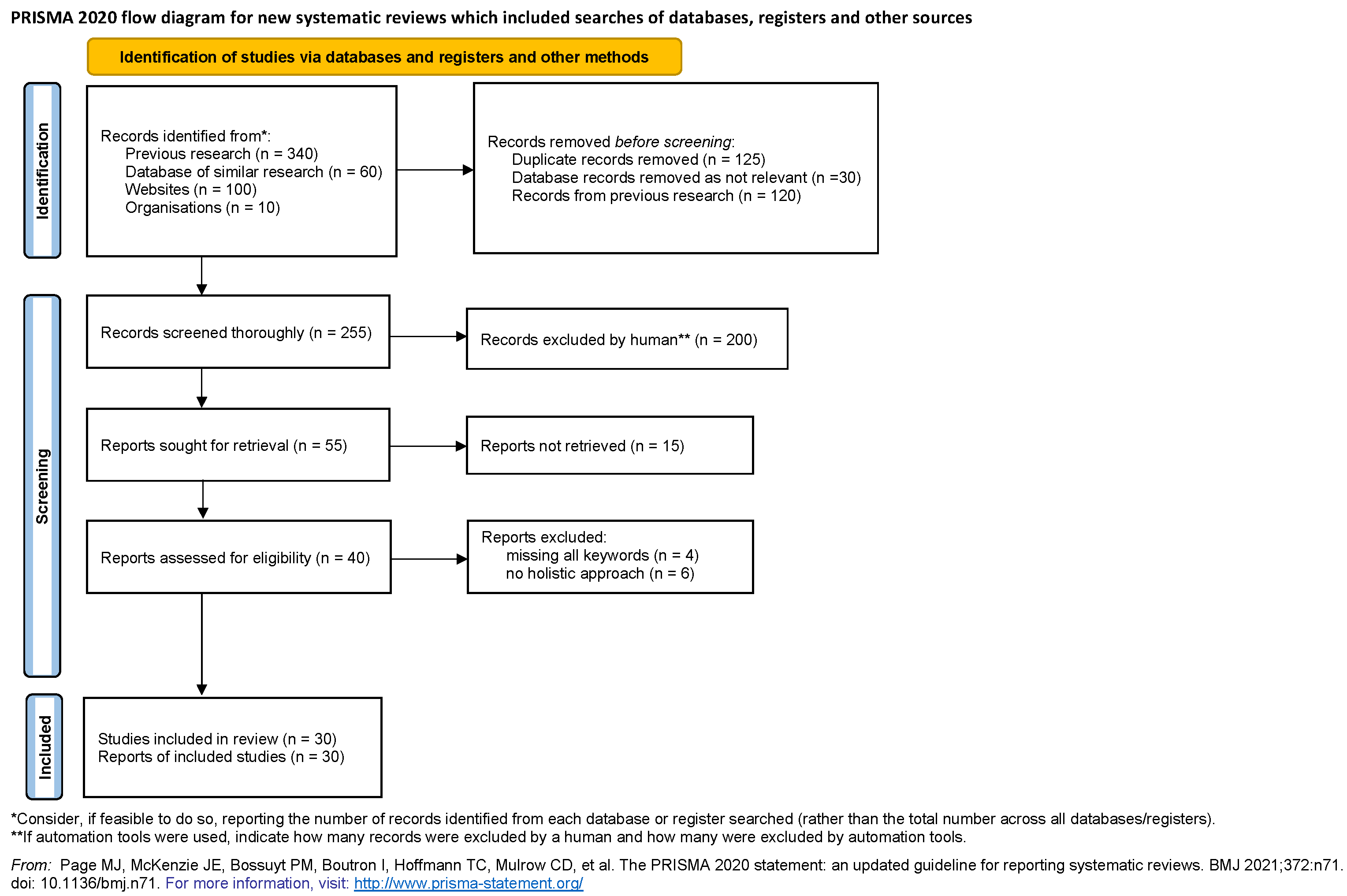
These 36 research papers belong fully (100%) to the Governmental/Parliamentary research dimension and the keywords Process/Tools have also been identified on all of them. To make a synthesis of their results it is inevitable to have the term ‘digital’ on the literature results or even a previous term like e-parliament. Additionally, the research theme Technology and the respective keywords should also be included in this synthesis. Finally, the respective Users is a major research theme and one of the relevant keywords described in Table 2 should be part of this synthesis report. The ultimate synthesis is the identification of all the research themes and the respective keywords in one single report as a narrative of our review. The whole process is presented in the following graph that follows PRISMA 2020 flow diagram [23].
3. Results from the Literature Review
Analysis of Results
30 research papers out of the above mentioned 36 research have a holistic and binding approach where keywords like Users, Process/Tools, Government/Parliament, Performance, Inclusive/Participatory are their major holistic research topics as the keywords are part of research themes and on top of that the keywords, the topics and the themes are strongly correlated as integrated terms. So, through the synthesis of these papers’ results and after the reply to the 3 major research questions a narrative could be formulated later in the “Discussion Chapter” with all the outcomes as a synthesis. Before in this chapter an analysis of the literature findings presents the main research outlook of the 3 research questions raised before.
Moreover, a lot of research articles (>90%) also belong to other several research domains focusing on Digital Technologies and their Users, as well as Performance Measurement (effectiveness, efficiency) in parliamentary operations. The term Digital Parliament could be found in 97% of the research articles as well as terminologies for inclusive/participatory Models. The term Platform or alternatively the term Workspace or even the term Systems could be found in 94% of the research articles. But these terms (‘platforms or workspaces’ or ‘systems’) do not have a strong correlation with their main theme (‘mean’) and don have a close relation among them. On the other hand, while the terms ‘users,’ ‘efficient and effective performance’ and ‘inclusive/participatory’ have a significant presence (up to 50% presence in these papers), they are not as strong as keywords/terms/themes in comparison to the other two strong holistic terms (‘Government/Parliament,’ ‘Process/Tools’) that are present in most of them (up to 90%). Finally, the term ‘Digital’ has up to 50% strong presence in these research papers.
After the keywords’ analysis and their broader role definition in the literature review, the research papers final analysis was conducted, all the research domains and their keywords were fully covered.
So, 30 research papers (source: 58% Journals, 27% Conferences, 12,5% Books and the rest 2,5% from working papers in workshops) were gathered for the analysis, covering the main domains, 4 themes & keywords, with a holistic approach, as presented in Table 2.
Synthesis of Results
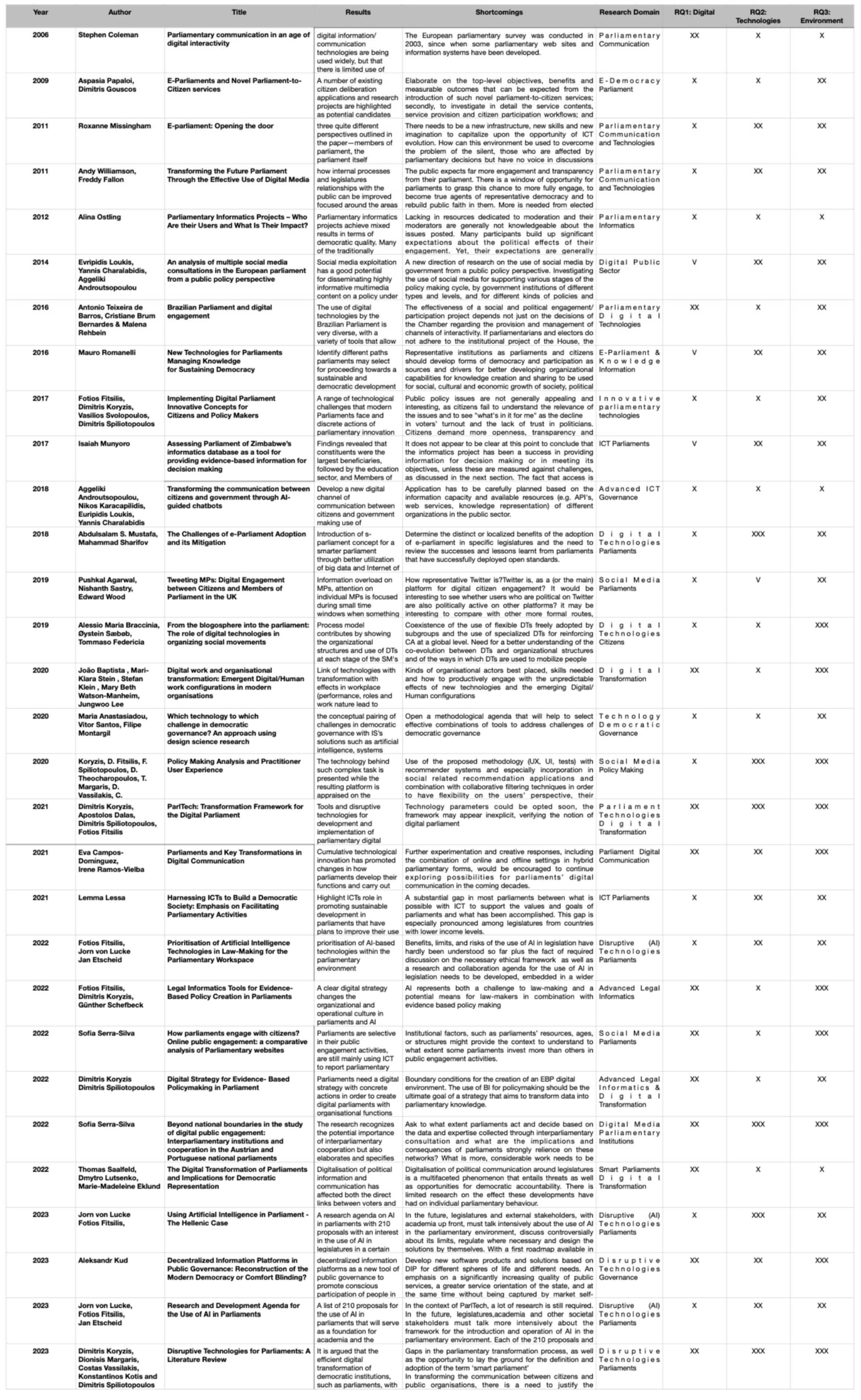
In the following tables these 30 papers are presented with their research domains and outputs that are closely relevant to the 3 main research questions of the current literature review and more explicitly: RQ1 Digital Parliament; RQ2 Digital Technologies; RQ3 Digital Environment. With this database at hand, part of the research questions could be covered initially. From the analysis of these papers, it seems that the concept of digital parliament is still vague, where the digital technologies seem to be more mature. On top of that there are several attempts the last years to identify the suitable digital environment and its’ basic elements with a lot of shortcomings on that.
On top of that, the initial 11 main keywords (or group of keywords with their research topics/themes) were validated in these tables and provide a clear path to conduct a future literature review to examine if in governmental Dimension and especially in organizations like Parliaments, their internal and external Users (stakeholders, decision/policy makers, agents, teams, and groups) are seeking for an integrated operational Framework through inclusive/participatory digital platforms/workspaces. The application of plethora Technologies like Blockchain, IoT, RS and AI adapted in their everyday digital Tools used in their business Processes is suitable for an efficient and effective organizational Performance towards their knowledge-based digital transformation? The underlined basic keywords and their research themes, provide a synthesis as a narrative that could be used for another research effort. The evolution of the term ‘digital parliament’ is more visible the last 5 years -only 40% of the selected papers give emphasis on the term- with focus in disruptive technologies, as during the past decades it was used the term ICT. Moreover, as AI seems to be the ‘hot’ term the last 5 years, the digital technologies used in parliaments are covering a wide spectrum and it will be analyzed thoroughly later. Finally, it seems that there is a significant effort to identify the elements for the creation of a digital parliamentary environment in the 87% of the selected papers.
So, in the next chapters we present a part of the research papers results that synthesize the emerging topic of ‘digital parliament evolution’ in correlation with a user-centric approach. In the following chapters we are trying also to present also the digital inclusive technologies and the platforms/workspaces/systems, the process/tools, used in digital parliamentary environment as derived from the selected research papers and their correlated references as well.
4. Parliamentary Operations in a Digital Parliament
Based on Inter-Parliamentary Union (IPU) surveys and the last e-Parliament Reports, there is increasing use of digital services, platforms, and their tools by parliaments, as the parliamentary operational processes are using more and more digital technologies for publication and dissemination to their users mostly, with open access [24]. Parliament’s digitalization improves citizens, parliamentarians, and other legislators access to the legislative data and information [25]. Based on IPU the term “digital parliament” is strongly correlated with e-parliament [17], with emphasis on a holistic ICT approach, digital strategies with focus on emergent technologies.
In the last few years, even several discussions about a virtual or a full digital parliament, we face the challenge to encourage and support or operate parliaments with hybrid models creating a networking culture for our democratic systems representation [2].
Originally, being physically together in one space seemed to be the best way to develop networks, discuss ideas, hold debates, cast votes, and build consensus on public issues. However, new experiences of conducting operations virtually will likely have a lasting legacy [3]. As parliaments need new procedures for their operations, hybrid functions can be linked with a virtual parliament, where digital tools, applications, and platforms are combined and utilized within a digital cooperation environment [26]. Holding virtual inquiry committees, for instance, that provide evidence via teleconferencing is certainly more convenient and surely more cost-efficient than organizing their physical counterparts.
Based on IPU reports for the e-parliament [24], there is a core group of the main parliamentary operations that are closely related to ICT with following six broad categories:
- Infrastructure Services Applications and Training,
- Legislative documents and Information,
- Libraries and Research Services, Parliaments online,
- Communication between citizens and parliament,
- Inter-parliamentary cooperation,
- Core Parliamentary functions support (Plenaries, Committees).
However, there are still missing elements to enable a fully functional digital parliament as the parliaments should review the way of their operation. For this reason, the parliamentary operations could be based on a broader digital transformation framework for the creation of a digital parliament [16]. A digital parliament needs a digital strategy [1] with a set of minimum digital technologies and an operational plan with a roadmap where an Evidence-Based Parliament (EBP) is a priority [13].
A clear implementation and operational plan (roadmap) with measures inevitably need to deal with e-legislation, legal informatics applications, and the relevant parliamentary operational procedures, among others. Evidence-Based Parliament (EBP) should be a priority for a fully operational digital parliament, where data is handled and transformed into an information [27] and knowledge is the proof of this evidence [9,28].
Collaboration through these digital cooperation frameworks, in virtual spaces or environments is a trend that tends to replace traditional means and bureaucratic instruments. In this sense, a possible equilibrium between classic bureaucratic parliamentary tasks and electronic/automated legislative processes should be sought [13]. Hence, public organizations seem to display increasingly complex and hybrid behaviour, in the sense of following a digital-first, virtual, and human-centric approach to their operations. At the same time, their users and stakeholders try to impose a variety and plethora of ideas, sometimes conflicting ones, taking into account several considerations and demands, based on other structures and cultural elements [29]. However, digital democracy is not the panacea and hybridization is not the ultimate tool or the durable process to achieve it, as there are participation inequalities [2].
Yet it seems unfair to discuss the relationship of parliamentary operations with digital technologies while leaving the fact about the digital gap between low- and high-income countries outside of the equation. In most parliaments, there is such a gap, where on one hand ICT tools, actions, and services could support the values and goals of parliaments but what has been implemented so far is below expectations [30]. It must be noted that this gap could be determined especially in countries with lower income levels, and it has implications not only in the efficiency of parliamentary operations and functions but also in the relations between parliament and citizens. To fill this gap, parliaments could use more user-friendly digital tools or applications based on digital media fields [31] or engage citizens [32]. It is also essential to extend the knowledge bases that allow them to organize all relevant internal and external information resources into a coherent system that facilitates parliamentary work for all members, staff, and the public [33].
There is no doubt that intra-parliamentary digital systems and ICT tools are invaluable operational elements of any modern parliament. Among others, they internally link the various parliamentary departments and seamlessly guarantee access to information to civil servants, parliamentary administrators, and parliamentarians, while linking the latter to advisory services. Recent findings also underline the need to support inter-parliamentary collaboration and empower innovation actions [24]. In other words, solving complex problems through intra and inter-collaboration can save time and resources, and drive innovation faster with the use of emerging digital technologies.
5. Digital Technologies for Parliaments
The data, the digital tools, the information systems, the parliamentary services, and the digital technologies can be classified under the general notion of ParlTech (Parliamentary Technology) and may have several facets and different scopes to address the aforementioned policy-making challenges based on a certain digital transformation framework [16]. The digital technologies proposed have been mapped into the parliamentary process, and functions, effectively transferring them into the parliamentary working environment. Among the digital technologies surveyed [16], the following are rather mature (between 2.8-3.5) and usefull (between 3.2-3.8) in Likert scale (0-5).
The most favourable combination of technologies could be done through Big Data analytics for linked open parliamentary data (BOLD) and Augmented Reality (AR) or Mixed Reality (MR) for a virtual (VR) or even better a Hybrid parliament. Although Social media analytics (SM), Legal & Compliance Analytics & Rapid Digital Transformation are also rather promising, in parallel Artificial Intelligence (AI), Machine Learning (ML), Internet of Things (IoT), and Blockchain are not very attractive or understandable by parliamentary users, in comparison with the previous ones.
Big Data analytics for linked open parliamentary data (BOLD), enables organizations like parliaments to create personalized services that target user needs and generate multi-stakeholder value [34].
Augmented Reality (AR) and Mixed Reality (MR) for a virtual (VR) or Hybrid parliament [26,35] are horizontal technologies that enable improved customer experience and facilitate user/citizen participation [36]. AR/MR may transform traditional practices (e.g., training), methods (e.g., organization/citizen interaction), and processes (e.g., management and quality assurance)[37] and also into participatory activities that the public sector and the citizen participate in to, in environments that focus on user-experience [38]
Social media analytics (SM) in parliaments is related to social data, something that has been examined through several projects, attempts to detect how the citizens react and understand political agendas [39,40,41].
Legal & Compliance Analytics that assist parliamentary users to analyse legal rules and make decisions based on legal and regulatory documents [42] offering interoperability solutions, new integrated tools [43], and services suitable for parliaments.
Rapid Digital Transformation [44], transforms the major parliamentary business functions and creates a collaborative parliament consisting of composable and adaptable APIs [45,46] promoting also parliamentary operational transformation using technological advances (e.g., cloud, digital identity, digital lifestyles)
Artificial Intelligence (AI) dedicated to legal issues [19,47] and Machine Learning (ML) are key technologies for managing information resources and enabling the automation of e-government tools and services [48] AI adoption in public organizations enables organizations and their interconnected organizational counterparts and citizen services to explore data and utilize the prediction power of AI for the common good [49]. The AI-enabled data handling and support for data-driven policy formulation in public organizations is an important technological pillar for digital transformation [50] Adaptive ML could be used also in recommender systems in parliamentary settings [51]. The last years AI in parliaments seems to have a significant research interest with a lot of proposals for with a research a development agenda [19,52,53,54].
Internet of Things (IoT) dedicated especially in the parliamentary environment, has enabled the deployment of applications that collect data from connected devices and smart sensors [55]. Moreover, in closed-connected organizations, IoT technologies support decision-making delegation to smart objects, thus enabling a fully interconnected decentralized collective intelligence [56].
Blockchain-enabled smart legislation applications in the parliamentary voting systems field [57]. It has also introduced as the technology for Decentralized Information Platforms in public governance [58].
Trying to cover all these digital technologies from a broader perspective, we can use the term Business Intelligence (BI) for the collective processes that aim to exploit information for improving decision-making. BI adoption in public organizations requires anti-fragile management that can fully integrate automated decision systems and BI processes to enable robustness against disruption [59]. Furthermore, BI adoption enhances the digital transformation output in terms of effectiveness and efficiency, through informed action-taking for short-term tasks to policy making for the future [60]. The generation of organizational intelligence through this digital transformation process is demanding and complex in public sector, even it assists them to be efficient and effective through a participatory process [61,62]
Based on the above results, the users/stakeholders (MPs, citizens, policymakers, governmental officials, scientific advisors, administrators, and others) need to apply a complex approach to integrate policy-making tools with these emergent digital technologies within the parliamentary environment. For its achievement, it is essential to switch between different functions, tasks, and applications at the same time, when completing the different levels of the whole policy-making process.
The digital technologies presented above, are the main batch of technologies’ ready for adoption by society and businesses and the main driver for a digital transformation in governmental organizations like parliaments.
6. Parliamentary Cooperation in a Digital Environment
In the present time, considering all these facts, there is a need to adopt new ways of communication, collaboration, and cooperation and in parallel transform the way of operating and working. On the other hand, the rapid technological changes boost parliaments to prioritize their digital transformation plans and strategies, as presented in the previous chapters. As the parliaments transform their operations and their business approaches, they also engage citizens and their main stakeholders in these processes, so they develop an extensive portfolio of digital tools and services boosting their interaction with these communities.
Such digital tools almost certainly will include cooperation platforms (e.g., social, collaborative, interacting, virtual, on/off-line) with explorative innovative activities and services to meet the updated, upcoming, and emerging societal and organizational demands [63,64], allow them to increase their performance targets. It must be noted that the term ‘digital’ or ‘online platform’ refers to several business-wise web services (e.g., search engines, social media, creative outlets, app stores, communications services) for a ‘collaborative’ or ‘sharing’ or ‘gig’ economy [65], something that has to be considered also in the case of parliaments, as modern organizations.
ParlTech framework is dedicated to parliaments mostly as a set of tools, platforms, systems, and processes, where the use of digital emerging technologies fuels disruptions in society. However, other researchers [66] presented a broader technology-integrated framework where information systems, tools, and platforms are working as a whole, without a clear distinction among them. So, it is essential through the current research effort to investigate the links and ties between different building elements or blocks of the digital parliamentary cooperation platforms. These may include strategies, systems, tools, technologies, or even other platforms that are integrated into larger systems as ICT has the potential to impact all of these elements [67].
For instance, in e-participation platforms, a concept since the early 2000s, several ad-hoc concepts have been proposed and implemented, where citizens could engage in different degrees in decision-making processes [39]. Nonetheless, a recent review [68] saw the need for more relevant research focusing particularly on the organizational and institutional factors of e-participation. In this context, the role of public administrations needs to be further elucidated, along with additional criteria necessary for the operation of parliamentary platforms. A related study [69] proposed the following democratic criteria for a platform’s operation: legitimacy; transparency; and influence on policymaking. Apart from a set of barriers and drivers for the institutionalization of an e-participation platform, the former study concluded that a high level of procedural formalization can increase platform legitimacy. Rather unsurprisingly, it was also mentioned that the organizational design, ownership, and collaboration among stakeholders are rather important for the proper operation and further sustainability of the platform.
There are several examples or use cases of e-participation platforms between parliaments and citizens. However, according to the IPU Parline platform, https://data.ipu.org/, with global parliamentary data, only 1/3 of them are active in the e-participation field. Only 53 parliaments allow their citizens to submit comments on draft legislation on the parliamentary website [70]. For instance, in Estonia concepts like e-governance or e-voting were rather successful, even the ‘Estonian paradox’ of the e-democracy concept failed, due to the fact politicians lacked support for this transformation and the citizens did not take advantage of early developed technologies [71]. On the other hand, in Brazil, there has been an e-democracy platform since 2009, that encourages citizens’ participation in policymaking, but policymakers should be encouraged to use the platform functionalities and enhance social participation [72]. The abovementioned facts validate once more the fact that there are still unsolved challenges for inclusive, effective, and efficient use of ICT tools in all stages of the policy-making [14].
There are also other examples of inter-parliamentary digital cooperation with other stakeholders. In Argentina, for instance, the ‘Change of Roles’ program, developed by the Circle of Legislators of the Nation (CLNA) in association with dozens of universities across the country, would allow for testing new technologies. The activity, led by university students, consists of reproducing the entire process of law formation from its origin to debate and its final adoption, considering all intermediate instances. Another recent example of potential added value for the wider parliamentary community is the ‘world constitution comparator’ created by the Library of Congress of Chile. It allows user-friendly access to the constitutional texts of 194 countries in 326 databases, and 142 translations [73].
In another study dedicated to the European context, inter-parliamentary cooperation was found to be based on several -analogue and digital- platforms for administrative collaboration [74]. Through these platforms, the users (Members of Parliaments, scientific advisors, administrators, and certified users) can have formal and informal information exchange, regular meetings, and document exchange, thus improving the regular interaction between national parliaments. During the pandemic, such collaboration and mutual support among parliaments became more international and more frequent, thus contributing to the faster development of digital solutions, with less risk [24].
The previous use cases are indicative, consequently, several research questions have arisen. Which digital technologies are applicable? Can we classify the users, actors, stakeholders, and their relations? Which parliamentary functions we can support? In this research effort, we intend to indicate the complexity of the topic and lower the expectations for a soon-to-come, all-around and generalized approach to institutionalize the concept of a digital parliamentary workspace. In Table 1, we summarize the findings so far, so we present the parliamentary operations and the most relevant or applicable emerging digital technologies and the respective users.

Table 1.
Digital Technologies for Parliamentary Operations and their Users.
| Parliamentary Operations | Digital Technologies | Users |
| Core Parliamentary Functions | Hybrid, BOLD | Parliamentarians, Parliamentary officials |
| Infrastructure Services Applications and Training | All | Parliamentary officials |
| Legislative documents and Information | ML, AI | Parliamentarians, Parliamentary officials, Citizens |
| Libraries and Research Services | Legal & Compliance Analytics | Parliamentarians, Parliamentary officials, Citizens |
| Parliaments online | Hybrid | Parliamentarians, Parliamentary officials, Citizens |
| Communication between citizens and parliament | SM | Parliamentarians, Parliamentary officials, Citizens |
| Inter-parliamentary cooperation | Hybrid, BOLD | Parliamentarians, Parliamentary officials |
7. Discussion
In this section we are homogenized the set of research questions posed in the beginning of this article. Furthermore, the research papers analysis gave us the opportunity to identify a set of indicative results as well their shortcomings and gaps as questions in the research domains discussed before, so in the following paragraphs we used a part of them as a synthesis of shortcomings and indicative or primary answers that are closely correlated with the research questions posed before, the narrative and the scope of this literature review.
Status, Facts, Gaps, and additional Questions
Research Question 1: Which is the evolution of the term ‘digital parliament’ the last decades? Is it a feasible concept that is acknowledgeable, valid and has an institutional character?
The term Digital Parliament is rather new as until now e-Parliament seems to be a feasible and acceptable concept as a term where citizens could actively participate and be engaged in the policy making process having an interaction with members of parliament (MPs) [27]. Even some politicians and political bureaucrats find e-Democracy concepts rather disruptive, they are not motivated to use ICTs, or use ICTs more effectively, engaging citizens [75] for successful adoption of these novel e-parliament service offerings [18]. It remains essential to identify the specific or localized advantages of implementing e-parliament in certain legislatures, as well as to assess the achievements and insights gained from parliaments that have effectively utilized open standards [4].
Additionally, scholars are eager to define and embrace the concept of a ‘smart parliament’. Moreover, in order to enhance communication between citizens and public entities such as parliaments, it is essential to substantiate the available information capabilities, current knowledge frameworks, and existing resources, by employing real-world examples to support the implementation of democratic innovations in a user-focused digital landscape [76].
Since early 00s when some parliamentary web sites and the respective Information Systems (IS) have been developed [77] the parliaments acquired new infrastructure, new personnel skills and new imagination from the decision makers to capitalize upon the opportunity of ICT evolution [78] for the creation of a digital parliament. But their expectations are generally disappointed by lack of impact of digitization [79].
Research Question 2: Which digital technologies could be incorporated within a “digital parliament”?
Parliamentary digital applications and tools must be thoughtfully designed according to the information capacity and available resources with emphasis in their APIs, web services, and the way of knowledge representation [80]. Numerous parliaments could indeed be anticipated to enhance their efforts in engaging and connecting these applications with their citizens. For this reason additional qualitative research is necessary to assess the degree to which parliamentary applications are refreshed, maintained, and utilized [31]. Additionally, it is possible to establish a methodological framework that will aid in choosing effective tools, applications and platforms combinations to tackle the issues of democratic governance [5]. Future studies should evaluate how parliaments are modifying practices taken from other contexts to fit their political, social, and cultural norms as well as their parliamentary traditions. Additionally, they should examine the potential technological challenges that may exist [81]. So it is essential to develop new software products and solutions based on Decentralised Information Platforms (DIP) in public governance based on blockchain technology for different spheres of life and different needs, where they are channeling their inquiries to non-personalized electronic requests for public services within a limited “principal–agent” framework [58].
A significant accomplishment would be if all involved parties effectively meet their need for a deeper comprehension of the co-evolution between adaptable Digital Technologies (DTs) and organizational frameworks, as well as how DTs are utilized to engage users (citizens, MPs, stakeholders) [82]. So the question is which digital technologies’ parameters could be opted as soon as possible, allowing to incorporate them in a digital transformation framework, verifying the notion of digital parliament? [16]. Additionally, more investigation is necessary regarding concepts such as expert systems, rule-based systems, chatbots, agent-based systems, and algorithms [76]. Artificial Intelligence (AI) poses challenges for regulatory frameworks while also offering law-makers a valuable tool in conjunction with evidence-based policy development (EBP) [1]. So, a wider research and collaboration agenda for AI use in legislation needs to be developed [52]. Its only AI, Recommender Systems (RS) and Business Intelligence (BI) the digital technologies and the main tools for the creation of an EBP digital environment? The application of BI in policymaking ought to be the primary objective of a strategy focused on converting data into knowledge for parliament [13]. In the coming years, lawmakers and external parties, with academia leading the charge, need to engage in thorough dialogues regarding the implementation of AI in legislative contexts, debate its boundaries critically, impose regulations when needed, and develop solutions independently. With an initial roadmap outlined in the Hellenic example (Hellenic Parlaiment), all participants should prepare for the significant effort that lies ahead [54]. In the context of ParlTech digital transformation framework, a lot of research is still required on digital technologies use [16], as there are gaps in the parliamentary transformation process [76]. For instance leveraging digital technologies will greatly enhance parliamentary service in the context of an inclusive, accessible and innovative digital environment [83].
In the coming years, legislative bodies, academic institutions, and various societal groups (stakeholders) need to engage in more in-depth discussions regarding the structure for implementing and managing AI within the parliamentary context. Researchers have raised proposals and unanswered questions in recent years concerning the application of AI in the digital realm of parliament, which should be thoroughly examined and assessed using a SWOT analysis [53].
Research Question 3: Which are the basic elements of this digital environment? Is any classification among the users, the information systems, the parliamentary functions, and the tools engaged?
It is important to highlight that in the current digital landscape, digital parliaments must address the issue of silent citizens—those who are impacted by parliamentary decisions yet lack a voice in discussions and debates [78]. The public expects greater levels of engagement and transparency from their parliament, so decision-makers (MPs) should leverage digital media [84] to facilitate more effective interaction with the community, thereby restoring trust through genuine political involvement [72] or peer-to-peer communication [27].
As a result, significant effort is required to understand the broader implications and added value of utilizing the web and other information and communication technologies (ICT) within parliament, particularly concerning its various functions and services (such as legislative, oversight, and scrutiny) [85]. There exists a notable disparity as a gap in many parliaments between the potential that ICT offers to enhance the values and objectives of parliamentary work and the actual progress that has been made. This discrepancy is particularly evident among legislatures in countries with lower income levels [86].
Continued experimentation and innovative approaches, particularly the integration of online and offline environments in hybrid parliamentary formats as a primary digital landscape, should be promoted to further investigate the potential for parliaments’ digital communication in the future [84]. The digital transformation of political communication linked to legislatures is a complex issue that presents both risks and benefits for democratic accountability. Research on the impact of these changes on the behavior of individual parliament members is still quite limited [25].
So, there are restrictions and obstacles associated with digital services pertaining to digital parliamentary data, particularly regarding their extent, organization, quality, and user-friendliness. In what ways can topic models be utilized to analyze political focus, and likewise, how can dynamic topic models aid historians in examining changes over time in historical parliamentary data? [87]. What is the impact of data and knowledge gathered through interparliamentary discussions, and what are the effects and repercussions of parliaments heavily depending on these networks with citizens, considering their significant party-oriented characteristics? [81] Additionally, various institutional elements, including the resources, ages, or structures of parliaments, could help explain the degree to which certain parliaments allocate more to public engagement initiatives than others [32].
In parallel, parliaments as representative institutions could develop also organizational abilities to create and share knowledge, harnessed for the social, cultural, and economic advancement of society, as well as for the development of political and human communities [10]. So in this new digital environment there is a need of updated organizational aspects, new personnel skills needed with a major question “how to meaningfully interact with the unforeseen impacts of new technologies and the evolving digital/human relationships?” [67].
Outputs and Shortcomings
Research Question 1: Which is the evolution of the term ‘digital parliament’ the last decades? Is it a feasible concept that is acknowledgeable, valid and has an institutional character?
The term parliamentary informatics or legal informatics used the last decades to attract some people among these users, who are normally not engaged in politics, however, users do not consider transparency of information to be enough [79]. On top of that digital channels have improved the information accessible to citizens, lawmakers, MPs and parliamentary parties; they have enabled new forms of communication and information through new links [25].
An alternative approach involves the implementation of the s-parliament idea to create a more intelligent parliamentary system by optimizing the use of big data and the Internet of Things (IoT), enhancing document management and storage solutions, adopting XML-based standardized software, strengthening ICT security, boosting public confidence, and improving citizen involvement in the decision-making process [4].
Research Question 2: Which digital technologies could be incorporated within a “digital parliament”?
ICT technologies (Digital now on) are being used widely in parliaments from 00s [77]. There are positive prospects that arise from the use of the latest ICT technologies in Parliaments have impacts, like citizen adoption and application-to-end-user acceptance, where end users are parliamentarians and citizens alike [27]. For this reason parliamentary websites used to be an appropriate medium to effectively supplement, augment, or replace traditional analogue communication instruments [31]. Various tools and emerging technologies for the development and execution of digital transformation in parliament are established and emphasized within a specific framework [16], as presented above.
Emerging technologies (ET) are seen as essential components of digital strategies aimed at revitalizing governance and enhancing democratic culture [76]. However, there is criticism directed at parliaments and governments for failing to adjust traditional political structures and processes to reflect society’s growing dependence on digital media; merely adding new electronic communication channels to existing frameworks or placing information online does not automatically lead to an ideal democratic environment. Eventhough, some politicians lack the motivation to effectively utilize information and communication technologies (ICTs) for engaging with citizens, while politicians and bureaucrats who perceive e-Democracy as disruptive may struggle to adopt ICTs more efficiently [75].
However, in today’s world, Digital Technologies (DT) have transformed the interaction between Social Movements and Parliaments, making it essential to grasp the mutual development between DTs and organizational frameworks, as well as how DTs are utilized to rally individuals and maintain their efforts throughout the lifecycle of these movements [82].
The conceptual association of issues in democratic governance with solutions like artificial intelligence, systems integration, or blockchain technologies, when utilized in a critical, transparent, and accountable manner, has the potential to enhance the provision of superior public services and help foster citizen trust and political engagement [5].
Research Question 3: Which are the basic elements of this digital environment? Is any classification among the users, the information systems, the parliamentary functions, and the tools engaged?
Parliaments used to select different paths for advancing towards sustainable and democratic growth by adopting new technologies to establish the concept of an e-parliament that aligns with an information or knowledge-based framework as its technological and organizational foundation [10]. Three quite different kind if users—members of parliament, the parliamentary administration and citizens who wish to engage with broader public debate themselves could be taking account for the developments of a truly effective e-parliament [78].
ICTs role became crucial in promoting sustainable development in parliaments that have plans to improve their use of technology to support their stated values and goals [86]. The need of a clear digital strategy that will change the organizational and operational culture in parliaments where ET technologies with emphasis on AI today could be applied in the decision-making processes [1]. Legislative bodies must develop a digital strategy that includes specific actions to establish genuine digital parliaments, equipping them with organizational capabilities that propel their digital transformation journey while embracing new values for parliamentary processes, people, and systems [13].
Using rather innovative scientific tools and these technologies in policy formulation stage where parliaments interact with citizens and governmental officials where a lot of users/stakeholders are typically involved, appear to have rather limited results [14], even this market of Web 3.0 content is already quite developed and highly competitive.
The interconnection between DT and transformation impacts the workplace by influencing performance, roles, and the nature of work, resulting in structural changes. To enhance performance, it is essential to integrate digital capabilities with human intention [67]. It is contended that effectively transforming democratic institutions like parliaments through advanced e-governance tools and disruptive technologies necessitates strategic methods for their adoption, acceptance, and the adaptation of services to be more inclusive. Furthermore, these technologies depend on and promote inclusive user-centered approaches employing personalization techniques, leading to broader applicability[76].
Last years, there was an emphasis on enhancing the interaction between citizens and government, and in certain instances with parliament, by utilizing AI-driven chatbots. This initiative aims to establish a new digital communication channel between citizens and the government by employing data that is well-structured and semantically annotated [80], so [52] made a prioritisation of AI-based technologies within the parliamentary environment with 210 proposals [54] and a roadmap [53].
Various current citizen deliberation applications and research initiatives are identified as potential candidates for implementing innovative extrovert parliament-to-citizen services aimed at enhancing citizen participation. Furthermore, concentrating on the process from inclusion to feedback will provide valuable insights into all the factors essential for the successful adoption of new e-parliament services [18].
There are many institutions, participants, networks, and means of interparliamentary collaboration that can help parliaments utilize these avenues of interaction and exchange to further their efforts in involving the public [81]. A possibility is the creation of decentralized information platforms as a novel instrument of public governance aimed at encouraging informed engagement of citizens in civic affairs and democracy. This would facilitate the establishment of a new network model of democratic governance leveraging blockchain technology, ensuring a maximum level of public trust in governmental institutions [58].
Additionally, the use of Social Media (SM) offers significant opportunities for spreading informative multimedia content regarding policies that are still in the formulation phase within parliaments, resulting in the gathering of valuable ideas, knowledge, and opinions in an economical way [40]. Over the last several decades, many MPs lacked familiarity with digital tools for communicating with their constituents. Only a small number utilized social media. Consequently, it was suggested that they receive more education and training on the effective use of digital tools for parliamentary activities [83].
Despite the fact that there are opportunities to enhance internal processes and the relationship between legislatures and the public, particularly in areas like modernizing procedures, increasing access to information, fostering engagement, and leveraging technology effectively, parliaments tend to be selective in their public engagement initiatives. As a result, they primarily utilize ICT to communicate about parliamentary activities [32].
A possible digital strategy includes using a simple methodology (UX, UI, tests) alongside recommendation systems, particularly targeting integration within socially driven recommendation apps. This, in conjunction with collaborative filtering methods, provides adaptability in grasping user perspectives, their likes, and the ability to recognize subtle traits. Additionally, given the technical difficulties, thorough user training workshops and multiple design prototyping iterations are crucial for ensuring effective usability [14].
The synthesis of results for the 30 selected papers is presented in the following
Table 2.
Selected Research Papers for Digital Parliament evolution.
8. Conclusions and Outlook
The current paper presented a broad review of ongoing research activities within the wider parliamentary community and their stakeholders on interdisciplinary topics covering digital parliament operations, digital technologies, and digital environment components (platforms, functions, tools, workspaces) with an emphasis on inter and intra-parliamentary cooperation among the parliamentary stakeholders for all stages of the policy-making process.
As parliaments are complex organizations, digital technologies embedded in comprehensive integrated platforms with the appropriate digital tools, applications, and services for all parliamentary functions and processes could be the basis of a sustainable cooperation framework. The creation of digital parliamentary cooperation platforms in a web-based environment could interconnect the current ad hoc digital applications and tools in the intra- and inter-parliamentary domain. It was proposed to create a digital parliamentary workspace where common commercial platforms will operate in parallel with ParlTech-related digital technologies (e.g., artificial intelligence, big open legal data, machine learning, augmented reality), having a common control point adopting ethical rules.
Even though recent digital technologies are rather mature to be adopted in traditional organizational environments like parliaments, it is difficult to create a new organizational digital culture for all users and stakeholders, especially in the internal bureaucratic parliamentary world. The interconnection and transferability of current ‘analogue’, ‘old-fashioned, and non-web-based systems, applications, and functions is something that the parliamentary administrations should take care of. A first step could be the creation of a hybrid environment, with a functional roadmap for parliamentary digital evolution with concrete steps. Other parameters that need to be considered include the degree of openness and transparency of parliaments and their willingness to transform digitally. Although, in this research article we have presented the steps needed for the digitalization of the core parliamentary operations in a digital parliamentary workspace.
On-going research activity in several parallel domains is in progress, so there is a necessity to move beyond the ‘classical’ legal informatics approach in the study of relevant phenomena, incorporating digital technology adoption in complex business environments like parliaments, ensuring inclusiveness for all users. This can be done in a future research effort that will cover interdisciplinary and inter-sectoral research goals (e.g., political science, management science, information technology). A research outlook is needed over and above IPU reports categorizing intra- and inter-parliamentary environments and their users, as well as the tools, applications, systems, technologies, platforms, add-ins used, their classification (e.g., mobile, or not, encrypted or not, public or not) per parliamentary function or sector (e.g., legislative, administrative, supportive, communication, intra-parliamentary).
The application of the preliminary research findings might have a broader impact on bureaucratic institutions like parliaments. It is the first attempt to put on the same framework different scientific disciplines under the notion of a digital parliamentary workspace, where digital strategy plays a central role in the use of suitable digital technologies and their digital platforms in parliamentary operations.
To conclude the term digital parliament seems to be rather mature nowadays even there are other similar terms used like e-parliament or smart parliament. The digital technologies used in parliaments cover a significant spectrum where AI seems to be the most promising one. But there are several readings of a digital parliamentary environment, so concentrated research is needed on the clear definition of it.
Author Contributions
Conceptualization, D.K., D.M., C.V., F.F. and D.S.; methodology, D.K., D.M., C.V., F.F. and D.S.; validation, D.K., D.M., C.V., F.F. and D.S.; formal analysis, D.K., D.M., C.V., F.F. and D.S.; investigation, D.K., D.M., C.V., F.F. and D.S.; resources, D.K., D.M., C.V., F.F. and D.S.; writing—original draft preparation, D.K., D.M., C.V., F.F. and D.S.; writing—review and editing, D.K., D.M., C.V., F.F. and D.S.; visualization, D.K., D.M., C.V., F.F. and D.S.; supervision, D.K., D.M., C.V., F.F. and D.S.; project administration, D.K., D.M., C.V., F.F. and D.S. All authors have read and agreed to the published version of the manuscript.
Funding
This research received no external funding.
Institutional Review Board Statement
Not applicable.
Informed Consent Statement
Not applicable.
Data Availability Statement
Not applicable.
Conflicts of Interest
The authors declare no conflict of interest.
References
- Fitsilis, F.; Koryzis, D.; Schefbeck, G. Legal Informatics Tools for Evidence-Based Policy Creation in Parliaments. International Journal of Parliamentary Studies 2022, 1–25. [Google Scholar] [CrossRef]
- Mencarelli, A. Parliaments Facing the Virtual Challenge: A Conceptual Approach for New Models of Representation. Parliamentary Affairs 2021. [Google Scholar] [CrossRef]
- Murphy, J. Parliaments and Crisis: Challenges and Innovations; International Institute for Democracy and Electoral Assistance (International IDEA) and INTER PARES, 2020. ISBN 978-91-7671-308-2.
- Mustafa, A.S.; Sharifov, M. The Challenges of E-Parliament Adoption and Its Mitigation. 2018, 5.
- Anastasiadou, M.; Santos, V.; Montargil, F. Which Technology to Which Challenge in Democratic Governance? An Approach Using Design Science Research. Transforming Government: People, Process and Policy 2021, 15, 512–531. [Google Scholar] [CrossRef]
- Burns, T.R. The Evolution of Parliaments and Societies in Europe: Challenges and Prospects. European Journal of Social Theory 1999, 2, 167–194. [Google Scholar]
- Fitsilis, F.; Costa, O. Parliamentary Administration Facing the Digital Challenge. In The Routledge Handbook of Parliamentary Administrations; Routledge, 2023; pp. 105–120.
- Sanderson, I. Making Sense of ‘What Works’: Evidence Based Policy Making as Instrumental Rationality? Public Policy and Administration 2002, 17, 61–75. [Google Scholar] [CrossRef]
- Mair, D.; Smillie, L.; La Placa, G.; Schwendinger, F.; Raykovska, M.; Pasztor, Z.; Bavel, R. van Understanding Our Political Nature : How to Put Knowledge and Reason at the Heart of Political Decision-Making; Publications Office of the European Union, 2019. ISBN 978-92-76-08620-8.
- Romanelli, M. New Technologies for Parliaments Managing Knowledge for Sustaining Democracy. Management Dynamics in the Knowledge Economy Journal 2016, 4, 649–666. [Google Scholar]
- Campos, R.; Miranda, R.; Rodrigues De Assis, N. Initiatives of Knowledge Management in Brazilian Chamber of Deputies; 2016; Vol. 1, pp. 2470–4407.
- Miranda, R.C.R. Identifying Conditions to Implement Strategic Knowledge Management in Brazilian Corporations SKM Math Model Application; 2009; Vol. 8, pp. 67–77.
- Koryzis; Spiliotopoulos Digital Strategy for Evidence-Based Policymaking in Parliament. In Smart Parliaments, Data-Driven Democracy; Fitsilis Fotios, Mikros George, Nestoras Antonios, Eds.; ELF, 2022. ISBN 978-2-39067-036-0.
- Koryzis, D.; Fitsilis, F.; Spiliotopoulos, D.; Theocharopoulos, T.; Margaris, D.; Vassilakis, C. Policy Making Analysis and Practitioner User Experience; 2020; Vol. 12423 LNCS. ISBN 978-3-030-60113-3.
- Janssen, M.; Wimmer, M.A. Introduction to Policy-Making in the Digital Age. In Policy Practice and Digital Science: Integrating Complex Systems, Social Simulation and Public Administration in Policy Research; Janssen, M., Wimmer, M.A., Deljoo, A., Eds.; Public Administration and Information Technology; Springer International Publishing: Cham, 2015; pp. 1–14. ISBN 978-3-319-12784-2.
- Koryzis, D.; Dalas, A.; Spiliotopoulos, D.; Fitsilis, F. ParlTech: Transformation Framework for the Digital Parliament. Big Data and Cognitive Computing 2021, 5, 15. [Google Scholar] [CrossRef]
- IPU World E-Parliament Report 2022 Parliaments after the Pandemic; Inter-Parliamentary Union: Geneva, 2022. ISBN 978-92-9142-856-4.
- Papaloi, A.; Gouscos, D. E-Parliaments and Novel Parliament-to-Citizen Services. JeDEM - eJournal of eDemocracy and Open Government 2011, 3. [Google Scholar] [CrossRef]
- Fitsilis, F. Artificial Intelligence (AI) in Parliaments – Preliminary Analysis of the Eduskunta Experiment. The Journal of Legislative Studies 2021, 27, 621–633. [Google Scholar] [CrossRef]
- Kołacz, M.K.; Quintavalla, A.; Yalnazov, O. Who Should Regulate Disruptive Technology? European Journal of Risk Regulation 2019, 10, 4–22. [Google Scholar] [CrossRef]
- Cooper, H.M. Organizing Knowledge Syntheses: A Taxonomy of Literature Reviews. Knowledge in Society 1988, 1, 104. [Google Scholar] [CrossRef]
- Snyder, H. Literature Review as a Research Methodology: An Overview and Guidelines. Journal of Business Research 2019, 104, 333–339. [Google Scholar] [CrossRef]
- Page, M.J.; McKenzie, J.E.; Bossuyt, P.M.; Boutron, I.; Hoffmann, T.C.; Mulrow, C.D.; Shamseer, L.; Tetzlaff, J.M.; Akl, E.A.; Brennan, S.E.; et al. The PRISMA 2020 Statement: An Updated Guideline for Reporting Systematic Reviews. Systematic Reviews 2021, 10, 89. [Google Scholar] [CrossRef]
- IPU World E-Parliament Report 2020; Inter-Parliamentary Union: Geneva, 2021; ISBN 978-92-9142-805-2.
- Saalfeld, T.; Lutsenko, D.; Eklund, M.-M. The Digital Transformation of Parliaments and Implications for Democratic Representation. ELF 2022, 9. [Google Scholar]
- Williamson, A. Virtual Members: Parliaments During the Pandemic. Political Insight 2020, 11, 40–40. [Google Scholar] [CrossRef]
- Munyoro, I. Assessing Parliament of Zimbabwe’s Informatics Database as a Tool for Providing Evidence-Based Information for Decision Making. Journal of Librarianship and Information Science 2019, 51, 218–227. [Google Scholar] [CrossRef]
- Rose, D.C.; Kenny, C.; Hobbs, A.; Tyler, C. Improving the Use of Evidence in Legislatures: The Case of the UK Parliament. Evidence & Policy: A Journal of Research, Debate and Practice 2020, 16, 619–638. [Google Scholar] [CrossRef]
- Christensen, T.; Lægreid, P. Complexity and Hybrid Public Administration—Theoretical and Empirical Challenges. Public Organization Review 2011, 11, 407–423. [Google Scholar] [CrossRef]
- Lessa, L. Harnessing ICTs to Build a Democratic Society: Emphasis on Facilitating Parliamentary Activities. 2021, 14.
- Theiner, P.; Schwanholz, J.; Busch, A. Parliaments 2.0? Digital Media Use by National Parliaments in the EU. In Managing Democracy in the Digital Age: Internet Regulation, Social Media Use, and Online Civic Engagement; Schwanholz, J., Graham, T., Stoll, P.-T., Eds.; Springer International Publishing: Cham, 2018; pp. 77–95. ISBN 978-3-319-61708-4.
- Serra-Silva, S. How Parliaments Engage with Citizens? Online Public Engagement: A Comparative Analysis of Parliamentary Websites. The Journal of Legislative Studies 2022, 28, 489–512. [Google Scholar] [CrossRef]
- European E-Democracy in Practice; Hennen, L., van Keulen, I., Korthagen, I., Aichholzer, G., Lindner, R., Nielsen, R.Ø., Eds.; Studies in Digital Politics and Governance; Springer International Publishing: Cham, 2020. ISBN 978-3-030-27183-1.
- Günther, W.A.; Rezazade Mehrizi, M.H.; Huysman, M.; Feldberg, F. Debating Big Data: A Literature Review on Realizing Value from Big Data. The Journal of Strategic Information Systems 2017, 26, 191–209. [Google Scholar] [CrossRef]
- Mazurek, A.; Glasier, G. Hybrid Parliament: European Union Liaison Offices in the Canadian Context. 2020.
- Flavián, C.; Ibáñez-Sánchez, S.; Orús, C. The Impact of Virtual, Augmented and Mixed Reality Technologies on the Customer Experience. Journal of Business Research 2019, 100. [Google Scholar] [CrossRef]
- Yim, M.Y.-C.; Chu, S.-C.; Sauer, P.L. Is Augmented Reality Technology an Effective Tool for E-Commerce? An Interactivity and Vividness Perspective. Journal of Interactive Marketing 2017, 39, 89–103. [Google Scholar] [CrossRef]
- Farshid, M.; Paschen, J.; Eriksson, T.; Kietzmann, J. Go Boldly! Business Horizons 2018, 61, 657–663. [Google Scholar] [CrossRef]
- Fitsilis, F.; Koryzis, D.; Svolopoulos, V.; Spiliotopoulos, D. Implementing Digital Parliament Innovative Concepts for Citizens and Policy Makers; 2017; Vol. 10293 LNCS. ISBN 978-3-319-58480-5.
- Loukis, E.; Charalabidis, Y.; Androutsopoulou, A. An Analysis of Multiple Social Media Consultations in the European Parliament from a Public Policy Perspective. 2014.
- Stieglitz, S.; Dang-Xuan, L. Social Media and Political Communication: A Social Media Analytics Framework. Social network analysis and mining 2013, 3, 1277–1291. [Google Scholar] [CrossRef]
- Joshi, K.P.; Gupta, A.; Mittal, S.; Pearce, C.; Finin, T. Alda: Cognitive Assistant for Legal Document Analytics. In Proceedings of the 2016 AAAI Fall Symposium Series; 2016.
- Ashley, K.D. Artificial Intelligence and Legal Analytics: New Tools for Law Practice in the Digital Age; Cambridge University Press, 2017. ISBN 1-316-77291-8.
- Hai, T.N.; Van, Q.N.; Thi Tuyet, M.N. Digital Transformation: Opportunities and Challenges for Leaders in the Emerging Countries in Response to COVID-19 Pandemic. Emerging Science Journal 2021, 5, 21–36. [Google Scholar] [CrossRef]
- Nascimento, R.P.C.; Martins, J.A.C.; Pinto, J.M.S. Portuguese E-Parliament System as a Case Study of the FloWPASS-Framework to Workflow Process Automation Systems. Proc. E-Activities 2002, 226–232.
- Thurnay, L.; Riedl, B.; Novak, A.-S.; Schmid, V.; Lampoltshammer, T.J. Solving an Open Legal Data Puzzle With an Interdisciplinary Team. IEEE Software 2021, 39, 55–60. [Google Scholar] [CrossRef]
- Clarke, R. Regulatory Alternatives for AI. Computer Law & Security Review 2019, 35, 398–409. [Google Scholar] [CrossRef]
- Al-Mushayt, O.S. Automating E-Government Services With Artificial Intelligence. IEEE Access 2019, 7, 146821–146829. [Google Scholar] [CrossRef]
- van Noordt, C.; Misuraca, G. Exploratory Insights on Artificial Intelligence for Government in Europe. Social Science Computer Review 2022, 40, 426–444. [Google Scholar] [CrossRef]
- Zuiderwijk, A.; Chen, Y.-C.; Salem, F. Implications of the Use of Artificial Intelligence in Public Governance: A Systematic Literature Review and a Research Agenda. Government Information Quarterly 2021, 38, 101577. [Google Scholar] [CrossRef]
- de Campos, L.M.; Fernández-Luna, J.M.; Huete, J.F.; Redondo-Expósito, L. Positive Unlabeled Learning for Building Recommender Systems in a Parliamentary Setting. Information Sciences 2018, 433–434. [Google Scholar] [CrossRef]
- Fitsilis, F.; von Lucke, J.; Etscheid, J. Prioritisation of Artificial Intelligence Technologies in Law-Making for the Parliamentary Workspace; Wroxton Workshop, 2022.
- von Lucke, J.; Fitsilis, F.; Etscheid, J. Research and Development Agenda for the Use of Ai in Parliaments. In Proceedings of the Proceedings of the 24th Annual International Conference on Digital Government Research; 2023; pp. 423–433.
- von Lucke, J.; Fitsilis, F. Using Artificial Intelligence in Parliament - The Hellenic Case. In Proceedings of the Electronic Government; Lindgren, I., Csáki, C., Kalampokis, E., Janssen, M., Viale Pereira, G., Virkar, S., Tambouris, E., Zuiderwijk, A., Eds.; Springer Nature Switzerland: Cham, 2023; pp. 174–191.
- Kumar, S.; Tiwari, P.; Zymbler, M. Internet of Things Is a Revolutionary Approach for Future Technology Enhancement: A Review. Journal of Big Data 2019, 6, 111. [Google Scholar] [CrossRef]
- Langley, D.J.; van Doorn, J.; Ng, I.C.L.; Stieglitz, S.; Lazovik, A.; Boonstra, A. The Internet of Everything: Smart Things and Their Impact on Business Models. Journal of Business Research 2021, 122, 853–863. [Google Scholar] [CrossRef]
- Skotnica, M.; Aparício, M.; Pergl, R.; Guerreiro, S. Process Digitalization Using Blockchain: EU Parliament Elections Case Study. In Proceedings of the Proceedings of the 9th International Conference on Model-Driven Engineering and Software Development; SCITEPRESS - Science and Technology Publications, 2021; pp. 65–75.
- Kud, A. Decentralized Information Platforms in Public Governance: Reconstruction of the Modern Democracy or Comfort Blinding? International Journal of Public Administration 2023, 46, 195–221. [Google Scholar] [CrossRef]
- Figueroa, J.L.P.; Pérez, C.V. Collective Intelligence: A New Model of Business Management in the Big-Data Ecosystem. European Journal of Economics and Business Studies 2018, 10, 208. [Google Scholar] [CrossRef]
- Trieu, V.-H.; Burton-Jones, A.; Green, P.; Cockcroft, S. Applying and Extending the Theory of Effective Use in a Business Intelligence Context. MIS Quarterly 2022, 46, 645–678. [Google Scholar] [CrossRef]
- Ramakrishnan, S.; Wong, M.S.; Chit, M.M.; Mutum, D.S. A Conceptual Model of the Relationship between Organisational Intelligence Traits and Digital Government Service Quality: The Role of Occupational Stress. International Journal of Quality & Reliability Management 2022, 39, 1429–1452. [Google Scholar] [CrossRef]
- Stenvall, J.; Virtanen, P. Intelligent Public Organisations. Public Organiz Rev 2017, 17, 195–209. [Google Scholar] [CrossRef]
- Kobarg, S.; Wollersheim, J.; Welpe, I.M.; Spörrle, M. Individual Ambidexterity and Performance in the Public Sector: A Multilevel Analysis. International Public Management Journal 2017, 20. [Google Scholar] [CrossRef]
- Cannaerts, N.; Segers, J.; Warsen, R. Ambidexterity and Public Organizations: A Configurational Perspective. Public Performance & Management Review 2020, 43. [Google Scholar] [CrossRef]
- Gawer, A.; Srnicek, N. Online Platforms: Economic and Societal Effects; European Parliament, 2021.
- Vial, G. Understanding Digital Transformation: A Review and a Research Agenda. The journal of strategic information systems 2019, 28, 118–144. [Google Scholar] [CrossRef]
- Baptista, J.; Stein, M.-K.; Klein, S.; Watson-Manheim, M.B.; Lee, J. Digital Work and Organisational Transformation: Emergent Digital/Human Work Configurations in Modern Organisations. The Journal of Strategic Information Systems 2020, 29. [Google Scholar] [CrossRef]
- Steinbach, M.; Sieweke, J.; Süß, S. The Diffusion of E-Participation in Public Administrations: A Systematic Literature Review. Journal of Organizational Computing and Electronic Commerce 2019, 29, 61–95. [Google Scholar] [CrossRef]
- Vooglaid, K.M.; Randma-Liiv, T. The Estonian Citizens Initiative Portal: Drivers and Barriers of Institutionalized e-Participation. In Engaging Citizens in Policy Making; Edward Elgar Publishing, 2022.
- IPU IPU Comparative Data on The Agendas of Plenary Meetings Are Published Online in Advance Available online: https://data.ipu.org/compare?field=chamber%3A%3Afield_adv_pub_ag_plen_meet (accessed on 24 November 2022).
- Toots, M.; Kalvet, T.; Krimmer, R. Success in eVoting–Success in eDemocracy? The Estonian Paradox. In Proceedings of the International conference on electronic participation; Springer, 2016; pp. 55–66.
- de Barros, A.T.; Bernardes, C.B.; Rehbein, M. Brazilian Parliament and Digital Engagement. The Journal of Legislative Studies 2016, 22. [Google Scholar] [CrossRef]
- Chile, B.B. del C.N. de Comparador de Constituciones. Proceso Constituyente | Biblioteca del Congreso Nacional de Chile Available online: http://www.bcn.cl/procesoconstituyente/comparadordeconstituciones/home (accessed on 24 November 2022).
- Fitsilis, F. Inter-Parliamentary Cooperation and Its Administrators. Perspectives on Federalism 2018, 10, 28–55. [Google Scholar] [CrossRef]
- Dai, X.; Norton, P. The Internet and Parliamentary Democracy in Europe. The Journal of Legislative Studies 2007, 13. [Google Scholar] [CrossRef]
- Koryzis, D.; Margaris, D.; Vassilakis, C.; Kotis, K.I.; Spiliotopoulos, D. Disruptive Technologies for Parliaments: A Literature Review. Future Internet 2023, 15, 66. [Google Scholar] [CrossRef]
- Coleman, S. Parliamentary Communication in an Age of Digital Interactivity. Aslib Proceedings 2006, 58, 371–388. [Google Scholar] [CrossRef]
- Missingham, R. E-Parliament: Opening the Door. Government Information Quarterly 2011, 28, 426–434. [Google Scholar] [CrossRef]
- Ostling, A. Parliamentary Informatics Projects – Who Are Their Users and What Is Their Impact? JeDEM 2012, 4, 279–300. [Google Scholar] [CrossRef]
- Androutsopoulou, A.; Karacapilidis, N.; Loukis, E.; Charalabidis, Y. Transforming the Communication between Citizens and Government through AI-Guided Chatbots. Government Information Quarterly 2019, 36, 358–367. [Google Scholar] [CrossRef]
- Serra-Silva, S. Beyond National Boundaries in the Study of Digital Public Engagement: Interparliamentary Institutions and Cooperation in the Austrian and Portuguese National Parliaments. Policy & Internet 2022, n/a. [Google Scholar] [CrossRef]
- Braccini, A.M.; Sæbø, Ø.; Federici, T. From the Blogosphere into the Parliament: The Role of Digital Technologies in Organizing Social Movements. Information and Organization 2019, 29, 100250. [Google Scholar] [CrossRef]
- Akin-Fakorede, O.O.; Oyelude, A.A. Leveraging Digital Technologies to Support Inclusive Accessible and Innovative Parliamentary Services in Cross River State, Nigeria. 2023.
- Williamson, A.; Fallon, F. Transforming the Future Parliament Through the Effective Use of Digital Media. Parliamentary Affairs 2011, 64, 781–792. [Google Scholar] [CrossRef]
- Leston-Bandeira, C. The Impact of the Internet on Parliaments: A Legislative Studies Framework. Parliamentary Affairs 2007, 60. [Google Scholar] [CrossRef]
- Lessa, L. Harnessing ICTs to Build a Democratic Society: Emphasis on Facilitating Parliamentary Activities. 2021, 14.
- Mela, M.L.; Norén, F.; Hyvönen, E. Digital Parliamentary Data in Action (DiPaDA 2022) – Introduction. 2022.
Table 1.
Overview of information collected and method of analysis.
| Category | Metadata | Description |
| Descriptive Info | Paper ID | Study number assigned in a excel sheet |
| Author | Names of authors (APA ref style is also available) | |
| Year | Year of publication | |
| Source | Full Name of source | |
| Mean of publication |
The type of publication (e.g., Journal, Conference) |
|
| Citation Metrics | Q status from SCIMAGO, Scopus Cite score | |
| Approach classification |
Status | Short description of research status and the research questions |
| Method | The research method used | |
| Results | The research contributions | |
| Shortcomings | Research gaps identification | |
| Analysis | Keywords with a hyper theme | Which keywords could be found? Strong keywords with high presence in research papers highlighted. Hyper theme expresses their role in the research paper |
| Relevance | Initial Relevance of the research paper with the current research (High, Medium, Low) | |
| Accuracy | Number of keywords per research paper / number of total keywords | |
| Light Keywords |
When a keyword is unrepresented in the research paper (less than 2 times) | |
| Strong Keywords |
When a keyword is repeated in all pages of a research paper then it becomes a strong keyword | |
| Diversification | Number of light keywords per research paper / number of total keywords | |
| Holistic Topic Strong correlation Keywords & Theme Total Strength |
Basic keywords will be correlated for holistic Topics identification covering a lot of scientific domains, with at least (> 75% presence & accuracy, <25% presence so it’s a light keyword) When a hyper theme is expressed with a lot of keywords, and they have strong correlation Strong correlation + Strong Keyword |
Table 2.
Major research themes and their keywords.
| Themes | Keywords | Advanced Search |
| Dimension | Parliaments, Government |
Parliaments or Public Sector or Governmental Sector |
| Users | Stakeholders Agents |
Stakeholders Agents or Individuals |
| Teams | Teams | |
| Groups | Groups | |
| Decision/Policy Makers | Decision/Policy Makers as Users |
|
| Framework | Integration | Integrative or integrated or Collaborative or Coordination |
| Model | Inclusive, Participatory |
Inclusiveness, participatory or including several parameters |
| Technologies | IoT, AI, RS, Blockchain, ICT | Technologies like IoT and AI and RS or other (e.g., big data, machine learning, blockchain) or previous digital Technologies in legal informatics as well as ICT |
| Mean | Process/Tools Platforms/ Workspaces/ Systems |
Focus on business process as a mean or tool Digital collaborative environment (platforms, workspaces, systems) |
| Context | Digital | Digital Parliament evolution |
| Measurement | Performance | Efficiency and Effectiveness as Performance measurements |
| Outcome | Knowledge, Transformation |
Transformation through Business Knowledge acquisition |
Disclaimer/Publisher’s Note: The statements, opinions and data contained in all publications are solely those of the individual author(s) and contributor(s) and not of MDPI and/or the editor(s). MDPI and/or the editor(s) disclaim responsibility for any injury to people or property resulting from any ideas, methods, instructions or products referred to in the content. |
© 2025 by the authors. Licensee MDPI, Basel, Switzerland. This article is an open access article distributed under the terms and conditions of the Creative Commons Attribution (CC BY) license (http://creativecommons.org/licenses/by/4.0/).
Copyright: This open access article is published under a Creative Commons CC BY 4.0 license, which permit the free download, distribution, and reuse, provided that the author and preprint are cited in any reuse.


