

Submitted:
07 October 2025
Posted:
08 October 2025
Read the latest preprint version here
Abstract
Chronic inflammation is a central factor in the pathogenesis of obesity, cancer, and type 2 diabetes (T2DM). This article explores an integrated therapeutic strategy, administered via injection, that combines dimethyl sulfoxide (DMSO), coenzyme Q10 (CoQ10), alpha-lipoic acid (ALA), curcumin, Glutathione (GSH), and miR-146a mimetics. Injectable administration optimizes the bioavailability and tissue targeting of these agents, which act synergistically through anti-inflammatory, antioxidant, and metabolic modulating mechanisms. The main focus is on the role of miR-146a in regulating the IRAK1 and TRAF6 signaling pathway, crucial for immunometabolic homeostasis. This multidimensional approach has the potential to modulate chronic inflammation, optimize mitochondrial function, and restore metabolic balance, representing a new frontier in the treatment of chronic inflammatory diseases.
Keywords:
Obesity
; Chronic Inflammation
; Type 2 Diabetes
; Cancer
; Injectable Therapies
; miR-146a
; DMSO
; CoQ10
; ALA
; Curcumin
; Glutathione (GSH)
Introduction
Obesity and overweight constitute a global epidemic, with over 1.9 billion adults overweight and 650 million obese, representing a public health challenge [1]. This increase is driven by dietary changes and sedentary lifestyles, resulting in a positive energy balance and adipose tissue accumulation [2,3]. Obesity is a complex neuroimmunoendocrine condition where adipose tissue acts as a metabolically active and immunologically dynamic organ. Adipose expansion leads to macrophage and lymphocyte infiltration and elevated secretion of pro-inflammatory cytokines (TNF-α, IL-6, leptin), with reduced adiponectin, an anti-inflammatory and insulin-sensitizing molecule [4,5]. This dysregulation establishes a state of low-grade chronic inflammation, central to the link between obesity and various chronic diseases [6].
Clinical and experimental evidence correlates excess adiposity with a higher prevalence of non-communicable chronic diseases (NCDs), such as type 2 diabetes mellitus (T2DM), cardiovascular diseases (CVD), neoplasms, and non-alcoholic steatohepatitis (NASH) [7,8]. In the pathophysiology of T2DM and insulin resistance, systemic inflammation mediated by adipose tissue is determinant [9]. Recent research indicates that the inflammation-obesity axis is regulated by epigenetic mechanisms, including inflammatory microRNAs such as miR-146a and miR-155, which modulate the transcription of immunometabolic signaling molecules [10,11,12]. Thus, obesity is a central factor in the genesis and progression of NCDs, requiring innovative preventive and therapeutic approaches that consider its inflammatory and systemic nature.
Mechanisms in Inflammation
Low-grade chronic inflammation is a crucial mechanistic link in the etiology and progression of non-communicable diseases such as cancer, obesity, and type 2 diabetes (T2DM) [1]. This persistent inflammatory state dysregulates immunometabolic signaling pathways, such as NF-κB and JNK [2,3,4], orchestrating the production of pro-inflammatory cytokines (TNF-α, IL-6, IL-1β). These cytokines contribute to insulin resistance, tumor progression, and adipose tissue dysfunction [1,5].
MicroRNAs (miRNAs) are essential post-transcriptional regulators in the modulation of inflammatory responses. MiR-146a and miR-155 are notable for their opposing roles: miR-146a attenuates excessive inflammatory signaling, while miR-155 promotes pro-inflammatory responses [6,7,8]. The dysregulation of these miRNAs is common in chronic inflammation and exacerbates conditions such as cancer, obesity, and T2DM [9,10,11].
Injectables
Conventional therapeutic approaches face limitations such as low bioavailability and rapid degradation. Injectable formulations offer significant advantages, including greater systemic bioavailability, rapid onset of action, precise dose control, and effective tissue targeting [12,13]. This strategy is promising for sensitive molecules, such as miRNA mimetics.
Integrated therapeutic strategies combining dimethyl sulfoxide (DMSO), coenzyme Q10 (CoQ10), alpha-lipoic acid (ALA), curcumin, and miR-146a mimetics in injectable formulations demonstrate anti-inflammatory, antioxidant, and metabolic modulating effects. Evidence suggests the clinical potential of this integrated strategy in multifactorial chronic inflammatory diseases, although translational and clinical validation is necessary.
Molecular Mechanisms and Role of miR-146a in Inflammation Regulation
MiRNAs (19–25 nucleotides) regulate gene expression post-transcriptionally by binding to 3′ UTRs of mRNAs, resulting in degradation or translational repression [14]. This mechanism adjusts cellular processes such as immunity, proliferation, and differentiation.
MiR-146a is a negative regulator of innate immune responses, suppressing components of the TLR and IL-1R signaling pathway. It directly represses IRAK1 and TRAF6 [6,15], adaptor proteins that activate the NF-κB cascade, leading to the expression of pro-inflammatory cytokines (TNF-α, IL-6, IL-1β) [16]. Thus, miR-146a establishes a negative feedback loop, essential for preventing excessive inflammation and maintaining immune homeostasis [6,17].
MiR-146a deficiency is associated with increased tumor inflammation, favoring growth and metastasis [18]. In obesity and T2DM, reduced miR-146a correlates with exacerbated systemic inflammation, insulin resistance, and metabolic dysfunction [9,10,19]. Reduced serum miR-146a levels are detected in patients with T2DM [20] and are associated with fibrosis and systemic complications [21]. The therapeutic use of miR-146a mimetics (synthetic oligonucleotides) is promising. Preclinical models have shown that mimetics encapsulated in nanoparticles reduced inflammation and fibrosis in diabetes and cancer [22,23]. Injectable formulations are advantageous, protecting the molecule and optimizing its absorption and tissue targeting [12,24].
Justification for Injectable Formulations
The injectable route overcomes oral administration by avoiding gastrointestinal degradation and first-pass metabolism, resulting in greater systemic bioavailability [12,25]. It provides a rapid onset of pharmacological action, essential for immediate control of inflammation [26,27], and allows precise dose adjustment in multimodal therapies [28,29]. For miRNA mimetics, nanocarriers or injectable exosomes protect the molecules and optimize their absorption and tissue targeting [12,24,30,31].
Selected Injectable Agents
Dimethyl Sulfoxide (DMSO)
Dimethyl sulfoxide (DMSO) is an amphipathic solvent that facilitates the bioavailability of co-administered compounds. It possesses intrinsic anti-inflammatory and antioxidant effects, with clinical use in inflammatory and neurological conditions [32,33,34,35,36]. Its multifaceted action makes it valuable in integrated injectable formulations.
Coenzyme Q10 (CoQ10)
Coenzyme Q10 (CoQ10) is a vital lipid-soluble antioxidant for the mitochondrial electron transport chain, essential for ATP synthesis and neutralization of reactive oxygen species (ROS). In models of obesity and T2DM, CoQ10 reduces systemic inflammation and improves metabolic balance [36,37,38,39]. Injectable formulations overcome low oral absorption, ensuring effective therapeutic levels [40,41].
Alpha-Lipoic Acid (ALA)
Alpha-lipoic acid (ALA) is a mitochondrial dithiol compound with broad antioxidant action, regenerating endogenous antioxidants and modulating insulin sensitivity. It inhibits inflammatory pathways such as NF-κB and JNK, protecting pancreatic β-cells and target tissues in T2DM and obesity [42,43,44,45,46,47,48]. Injectable administration optimizes its delivery and efficacy.
Curcumin
Glutathione (GSH)
Glutathione (GSH), a tripeptide and the main intracellular antioxidant, is essential for neutralizing reactive oxygen species and maintaining cellular redox balance [54]. Intravenous GSH administration rapidly restores its levels in deficient tissues. Its role is well established, showing a reduction in inflammatory markers [55]. In T2DM, GSH reduces oxidative stress and improves insulinotropic function, but clinical trials are limited [56]. In cancer, it acts to protect normal cells but may protect tumor cells [57]. The safety of IV GSH is generally good in regulated products [58].
Discussion and Future Perspectives
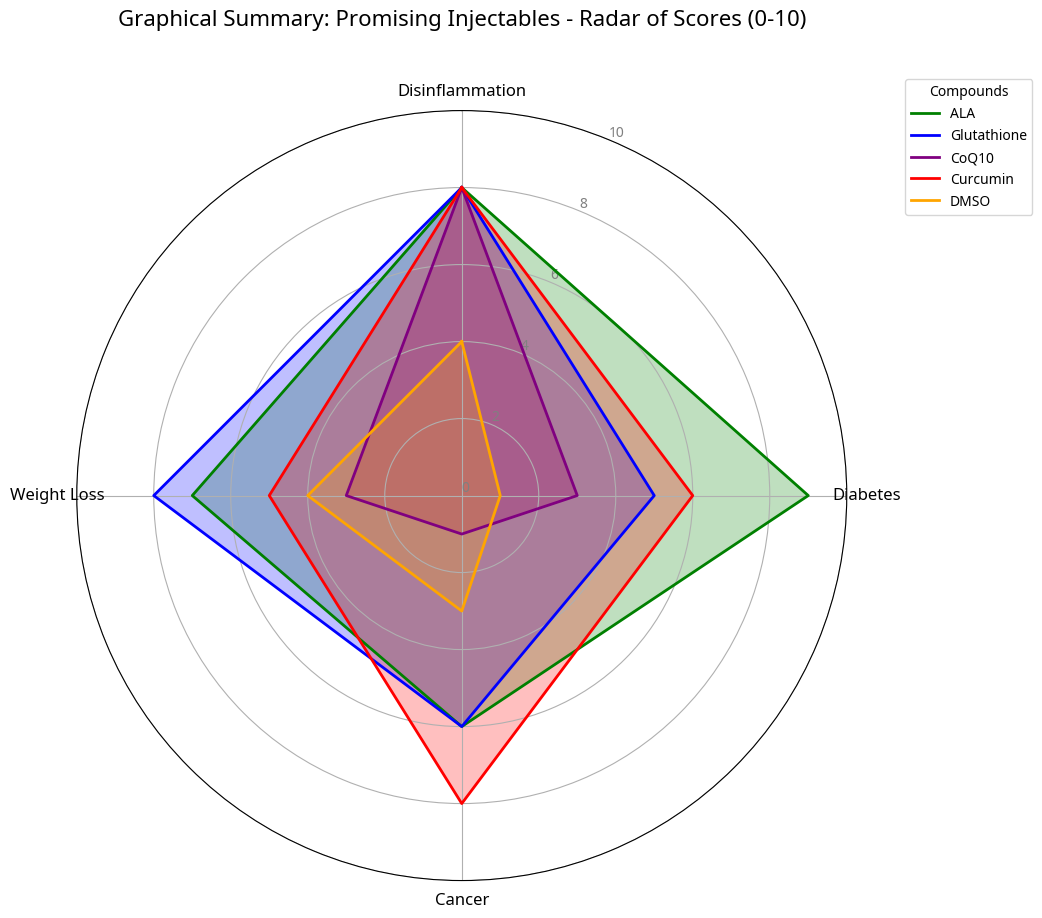
The relationship between chronic inflammation, cancer, obesity, and T2DM is a clinical challenge. The integrated strategy of DMSO, CoQ10, ALA, curcumin, and miR-146a mimetics, administered via injection, offers multimodal therapeutic synergy. Each agent acts on complementary targets: miR-146a inhibits inflammation; CoQ10 and ALA reinforce antioxidant defense; curcumin suppresses NF-κB and induces miR-146a; and DMSO enhances bioavailability. This integration suggests greater efficacy than monotherapies.
Clinical translation requires controlled and large-scale trials to evaluate safety, efficacy, and dosage. Patient stratification by circulating miRNA profiles can optimize therapeutic personalization [59] and minimize side effects [60]. Advances in release nanotechnology are crucial for improving tissue-targeted delivery, reducing toxicities. Mechanistic investigation of miRNA modulation is fundamental for new therapeutic pathways.
Conclusion
The interrelationship between chronic inflammation, cancer, obesity, and T2DM demands innovative therapeutic strategies. The integrated approach with DMSO, CoQ10, ALA, curcumin, GSH, and miR-146a mimetics, administered via injection, is promising. This strategy acts on key inflammatory pathways, optimizes mitochondrial function, and restores metabolic homeostasis, offering a comprehensive intervention.
The synergistic actions of these agents—potentiation of delivery and anti-inflammatory effects of DMSO, antioxidant properties of CoQ10 and ALA, anti-inflammatory and miR-146a-inducing effects of curcumin, and immunomodulation of miR-146a mimetics—provide a robust mechanistic and clinical basis.
Rigorous translational and clinical validation is imperative to establish safety, efficacy, and optimal application. Future research should focus on well-designed clinical trials, personalized medicine guided by biomarkers (e.g., miRNA profiles), and advances in nanodelivery. This integrated strategy has great potential to revolutionize the management of chronic inflammatory diseases, improving clinical outcomes and the understanding of immunometabolic health.
Supplementary Materials
The following supporting information can be downloaded at the website of this paper posted on Preprints.org.
References
- World Health Organization. Obesity and overweight [Internet]. 2021. Available online: https://www.who.int/news-room/fact-sheets/detail/obesity-and-overweight (accessed on 22 September 2025).
- Swinburn BA, Sacks G, Hall KD, et al. The global obesity pandemic: shaped by global drivers and local environments. Lancet. 2011, 378, 804–814. [Google Scholar] [CrossRef] [PubMed]
- Popkin BM, Reardon T. Obesity and the food system transformation in Latin America. Obes Rev. 2018, 19, 1028–1064. [Google Scholar] [CrossRef] [PubMed]
- Ouchi N, Parker JL, Lugus JJ, Walsh K. Adipokines in inflammation and metabolic disease. Nat Rev Immunol. 2011, 11, 85–97. [Google Scholar] [CrossRef] [PubMed]
- Fantuzzi, G. Adipose tissue, adipokines, and inflammation. J Allergy Clin Immunol. 2005, 115, 911–919. [Google Scholar] [CrossRef] [PubMed]
- Hotamisligil, GS. Inflammation and metabolic disorders. Nature. 2006, 444, 860–867. [Google Scholar] [CrossRef] [PubMed]
- Czernichow S, Kengne AP, Stamatakis E, Hamer M, Batty GD. Body mass index, waist circumference and waist-hip ratio: which is the better discriminator of cardiovascular disease mortality risk? Eur J Clin Nutr. 2011, 65, 1250–1257. [Google Scholar] [CrossRef] [PubMed]
- Calle EE, Kaaks R. Overweight, obesity and cancer: epidemiological evidence and proposed mechanisms. Nat Rev Cancer. 2004, 4, 579–591. [Google Scholar] [CrossRef] [PubMed]
- Donath MY, Shoelson SE. Type 2 diabetes as an inflammatory disease. Nat Rev Immunol. 2011, 11, 98–107. [Google Scholar] [CrossRef] [PubMed]
- Quinn SR, O’Neill LA. A trio of microRNAs that control Toll-like receptor signaling. Int Immunol. 2011, 23, 421–425. [Google Scholar] [CrossRef] [PubMed]
- Rottiers V, Näär AM. MicroRNAs in metabolism and metabolic disorders. Nat Rev Mol Cell Biol. 2012, 13, 239–250. [Google Scholar] [CrossRef] [PubMed]
- Mousavi S, Bieber K, Zirpel H, Vorobyev A, Olbrich H, Papara C, De Luca DA, Thaci D, Schmidt E. Large-scale analysis highlights obesity as a risk factor for chronic, non-communicable inflammatory diseases. Front Endocrinol 2025, 16, 1516433. [Google Scholar] [CrossRef] [PubMed]
- Hotamisligil, GS. Inflammation, metaflammation and immunometabolic disorders. Nature 2017, 542, 177–185. [Google Scholar] [CrossRef] [PubMed]
- Taganov KD, Boldin MP, Chang KJ, Baltimore D. NF-κB-dependent induction of microRNA miR-146, an inhibitor targeted to signaling proteins of innate immune responses. Proc Natl Acad Sci U S A. 2006, 103, 12481–12486. [Google Scholar] [CrossRef] [PubMed]
- Aggarwal BB, Shishodia S. Suppression of the nuclear factor-kappaB activation pathway by spice-derived phytochemicals: reasoning for their chemopreventive and therapeutic potential. Ann N Y Acad Sci. 2004, 1030, 434–441. [Google Scholar] [CrossRef] [PubMed]
- Cai D, Liu T. Inflammatory cause of metabolic syndrome via brain stress and NF-κB. Aging (Albany NY). 2012, 4, 98–115. [Google Scholar] [CrossRef] [PubMed]
- Zhou C, et al. MicroRNA-146a inhibits NF-κB activation and pro-inflammatory cytokine production by regulating IRAK1 expression in THP-1 cells. Exp Ther Med. 2019, 18, 3078–3084. [Google Scholar] [CrossRef] [PubMed]
- Boldin MP, Taganov KD, Rao DS, Yang L, Johnson CL, Anderson SM, et al. miR-146a is a significant brake on autoimmunity, myeloproliferation, and cancer in mice. J Exp Med. 2011, 208, 1189–1201. [Google Scholar] [CrossRef] [PubMed]
- O’Connell RM, Taganov KD, Boldin MP, Cheng G, Baltimore D. MicroRNA-155 is induced during the macrophage inflammatory response. Proc Natl Acad Sci U S A. 2007, 104, 1604–1609. [Google Scholar] [CrossRef] [PubMed]
- Balasubramanyam M, Aravind S, Gokulakrishnan K, Prabu P, Sathishkumar C, Ranjani H, Mohan V. Impaired miR-146a expression links subclinical inflammation and insulin resistance in Type 2 diabetes. Mol Cell Biochem. 2011, 351, 197–205. [Google Scholar] [CrossRef] [PubMed]
- Roganović, J. Downregulation of microRNA-146a in diabetes, obesity and hypertension may contribute to severe COVID-19. Obes Rev. 2021, 22, e13239. [Google Scholar] [CrossRef] [PubMed]
- Baldeón, RL. Decreased Serum Level of miR-146a as Sign of Chronic Inflammation in Type 2 Diabetic Patients. PLoS One. 2014, 9, e115209. [Google Scholar] [CrossRef] [PubMed]
- Jacob SW, Herschler R. Pharmacology of dimethyl sulfoxide in cardiac and CNS damage. Ann N Y Acad Sci. 1974, 243, 7–28. [Google Scholar] [CrossRef] [PubMed]
- Rupaimoole R, Slack FJ. MicroRNA therapeutics: towards a new era for the management of cancer and other diseases. Nat Rev Drug Discov. 2017, 16, 203–222. [Google Scholar] [CrossRef] [PubMed]
- Davis ME, et al. Nanoparticle-based therapeutics: an emerging technology for cardiovascular disease. J Cardiovasc Transl Res. 2010, 3, 331–340. [Google Scholar] [CrossRef] [PubMed]
- Torchilin, VP. Targeted polymeric micelles for delivery of drugs and DNA. Adv Drug Deliv Rev. 2007, 59, 758–770. [Google Scholar] [CrossRef] [PubMed]
- Anselmo AC, Mitragotri S. An overview of clinical and commercial advanced drug delivery technologies. J Control Release. 2014, 195, 15–23. [Google Scholar] [CrossRef] [PubMed]
- Langer, R. Drug delivery and targeting. Nature 1998, 392, 5–10. [Google Scholar] [CrossRef] [PubMed]
- Allen TM, Cullis PR. Liposomal drug delivery systems: from concept to clinical applications. Adv Drug Deliv Rev. 2013, 65, 36–48. [Google Scholar] [CrossRef] [PubMed]
- Valadi H, et al. Exosome-mediated transfer of mRNAs and microRNAs is involved in cell-cell communication. Nat Cell Biol. 2007, 9, 654–659. [Google Scholar] [CrossRef] [PubMed]
- Loyer X, et al. Exosomes in cardiovascular diseases: a new therapeutic strategy. Cardiovasc Res. 2014, 101, 13–21. [Google Scholar] [CrossRef] [PubMed]
- Brayton, CF. Dimethyl Sulfoxide (DMSO): A Review. J Am Vet Med Assoc. 1986, 188, 489–493. [Google Scholar] [PubMed]
- Santos NC, et al. Dimethyl sulfoxide: a review of its use in experimental and clinical medicine. Pharmacol Rep. 2003, 55, 126–134. [Google Scholar] [PubMed]
- Jacob SW, Herschler R. Pharmacology of dimethyl sulfoxide. Cryobiology. 1986, 23, 14–27. [Google Scholar] [PubMed]
- Praud C, et al. Dimethyl sulfoxide (DMSO) in clinical practice: a review. J Clin Pharm Ther. 2018, 43, 10–18. [Google Scholar] [CrossRef] [PubMed]
- Gaby, AR. Nutritional approaches to inflammation. Altern Med Rev. 2006, 11, 1–16. [Google Scholar] [PubMed]
- Saini, R. Coenzyme Q10: The essential nutrient. J Pharm Bioallied Sci. 2011, 3, 466–467. [Google Scholar] [CrossRef] [PubMed]
- Littarru GP, Tiano L. Bioenergetic and antioxidant properties of coenzyme Q10: recent developments. Mol Biotechnol. 2007, 37, 31–37. [Google Scholar] [CrossRef] [PubMed]
- Hernández-Camacho JD, et al. Coenzyme Q10 Supplementation in Aging and Disease. Front Physiol. 2018, 9, 44. [Google Scholar] [CrossRef] [PubMed]
- Hosoe K, et al. Study on safety and bioavailability of ubiquinol (Kaneka QH) after single and 4-week multiple oral administration to healthy volunteers. Regul Toxicol Pharmacol. 2007, 47, 19–28. [Google Scholar] [CrossRef] [PubMed]
- Bhagavan HN, Chopra RK. Coenzyme Q10: absorption, tissue uptake, metabolism and pharmacokinetics. Free Radic Res. 2006, 40, 445–453. [Google Scholar] [CrossRef] [PubMed]
- Packer L, et al. Alpha-lipoic acid as a biological antioxidant. Free Radic Biol Med. 1995, 19, 227–250. [Google Scholar] [CrossRef] [PubMed]
- Rochette L, et al. Alpha-lipoic acid: molecular mechanisms and therapeutic potential in diabetes. Can J Physiol Pharmacol. 2015, 93, 1021–1027. [Google Scholar] [CrossRef] [PubMed]
- Goraca A, et al. Lipoic acid as a therapeutic agent for diabetes and obesity. Pharmacol Rep. 2011, 63, 873–888. [Google Scholar] [CrossRef] [PubMed]
- Sola S, et al. Irbesartan and lipoic acid improve endothelial function and reduce oxidative stress in patients with type 2 diabetes mellitus. Circulation. 2005, 111, 343–348. [Google Scholar] [CrossRef] [PubMed]
- Pershadsingh, HA. Alpha-lipoic acid: a new therapeutic agent for diabetes. Endocr Pract. 2007, 13, 189–192. [Google Scholar] [CrossRef] [PubMed]
- Koya D, King GL. Protein kinase C activation and the development of diabetic complications. Diabetes. 1998, 47, 859–866. [Google Scholar] [CrossRef] [PubMed]
- Konrad D, et al. The antiobesity effect of alpha-lipoic acid is mediated by the activation of AMPK in the hypothalamus. Nat Med. 2004, 10, 601–607. [Google Scholar] [CrossRef] [PubMed]
- Jurenka, JS. Anti-inflammatory properties of curcumin, a major constituent of Curcuma longa: a review of preclinical and clinical research. Altern Med Rev. 2009, 14, 141–153. [Google Scholar] [PubMed]
- Aggarwal BB, et al. Curcumin: the Indian solid gold. Adv Exp Med Biol. 2007, 595, 1–75. [Google Scholar] [CrossRef] [PubMed]
- Shishodia S, et al. Curcumin (diferuloylmethane) inhibits nuclear factor-kappaB activation and expression of COX-2 and LOX-5, and modulates the expression of apoptosis-related genes by inhibiting protein kinase B (Akt) and mitogen-activated protein kinase (MAPK) pathways in human pancreatic cancer cells. Biochem Pharmacol. 2005, 70, 700–713. [Google Scholar] [CrossRef] [PubMed]
- Anand P, et al. Bioavailability of curcumin: problems and promises. Mol Pharm. 2007, 4, 807–818. [Google Scholar] [CrossRef] [PubMed]
- Kunnumakkara AB, et al. Curcumin and cancer: an update. Biofactors. 2008, 34, 1–15. [Google Scholar] [CrossRef] [PubMed]
- Meister A, Anderson ME. Glutathione. Annu Rev Biochem. 1983, 52, 711–760. [CrossRef] [PubMed]
- Dröge W, Breitkreutz R. Glutathione and immune function. Proc Nutr Soc. 2000, 59, 595–600. [Google Scholar] [CrossRef] [PubMed]
- Sekhar RV, et al. Deficient synthesis of glutathione in type 2 diabetes mellitus. Diabetologia. 2011, 54, 1153–1162. [Google Scholar] [CrossRef] [PubMed]
- Traverso N, et al. Role of glutathione in cancer progression and chemoresistance. Oxid Med Cell Longev. 2013, 2013, 972913. [Google Scholar] [CrossRef] [PubMed]
- Herschler, RC. The pharmacology of DMSO. Ann N Y Acad Sci. 1983, 411, 1–12. [Google Scholar] [CrossRef] [PubMed]
- Chen Y, et al. Circulating microRNAs as biomarkers for inflammatory diseases. Biomark Res. 2014, 2, 20. [Google Scholar] [CrossRef] [PubMed]
- Fichtlscherer S, et al. Circulating microRNAs as biomarkers for the detection of coronary artery disease. Circ Res. 2010, 106, 670–676. [Google Scholar] [CrossRef] [PubMed]
- Acta. 2009, 1790, 1149–1160. [CrossRef] [PubMed]
Disclaimer/Publisher’s Note: The statements, opinions and data contained in all publications are solely those of the individual author(s) and contributor(s) and not of MDPI and/or the editor(s). MDPI and/or the editor(s) disclaim responsibility for any injury to people or property resulting from any ideas, methods, instructions or products referred to in the content. |
© 2025 by the authors. Licensee MDPI, Basel, Switzerland. This article is an open access article distributed under the terms and conditions of the Creative Commons Attribution (CC BY) license (http://creativecommons.org/licenses/by/4.0/).
Copyright: This open access article is published under a Creative Commons CC BY 4.0 license, which permit the free download, distribution, and reuse, provided that the author and preprint are cited in any reuse.