

Submitted:
26 September 2025
Posted:
30 September 2025
You are already at the latest version
Abstract
The food industry generates substantial waste, raising economic and environmental concerns. Green Chemistry (GC) highlights extraction as key to waste valorization, driving interest in sustainable methods to recover valuable compounds efficiently. This review focuses on evaluating the sustainability of some of the most used emerging technologies, namely Microwave, Ultrasound, Enzyme-assisted, and Supercritical Fluid Extraction, and their compliance with GC principles. The review begins by exploring the principles, key parameters, and main advantages and disadvantages of each technique. Subsequently, the sustainability of these extraction techniques is evaluated in selected studies using the Analytical GREEnness Metric Approach (AGREEprep). By calculating the Greenness Score (GS), this metric assesses the adherence of extraction processes with sustainability standards. The analysis reveals variations within the same extraction technique, driven by factors such as the choice of solvents and operating conditions, as well as differences across the various extraction methods.
Keywords:
sustainability
; greenness score
; valorization
; green chemistry
; agricultural wastes
; microwave
; ultrasound
; enzymes
; supercritical fluids
1. Introduction
Sustainability has aroused a huge concern for the scientific community in the last 4 decades. This term was defined as the development that meets the needs of the present without compromising the ability of future generations to meet their own needs [1], which implies that the industry has to reach a balance of the impact at each stage of the supply chain in terms of economic, social, environmental and technological sustainability [2]. In this sense, the European Community established the European Green Deal as strategy to be transformed into a climate neutral Europe by 2050 [3]. The core of this strategy is to achieve a sustainable food system from a circular bioeconomy point of view [4]. These initiatives agree with the United Nations 2030 Agenda [5] along with its 17 Sustainable Development Goals [6]. Specifically, goals 12.3 and 12.5 are committed to reduce 50 % food loss at production sector and supply chain, employing prevention an 3R strategy for waste management: reduce, reuse, and recycle [5,6,7].
The food industry, as one of the largest industries around the world, will lead to a sharp increase in food production in the upcoming 50 years due to population increases [2]. In 2022, the European Union (EU) estimated that this production generated 132 kg per inhabitant of which 46 % corresponds to the food supply chain. Indeed, from the 59 million tons of fresh mass generated, a 19 % and 8 % accounted for the processing and manufacturing and the primary production sectors, respectively [8,9]. In fact, to be in line with sustainable food production and consumption, the EU target is to reduce food waste to a 10 % for processing and manufacturing sector by 2030 [6]. Thus, one of the major challenges in food industry is to upgrade this biomass loss (co- and by-products) from its production due to the high economic and environmental impact [2,6].
In view of this aim, several strategies have been developed for biomass valorization into animal food, landfilling, biofuel, composting and the recovery and reuse of high-added-value constituents from food residues [2]. From them, this last is in the spotlight due to the application of these compounds as novel food ingredients to increase the product shelf-life, supply sustainable nutrient-dense foods, and reduce food processing contaminants as part of the challenges that the food industry also must face [10,11,12]. Furthermore, the recovery of high-added-value constituents from biomass comprises five stages according to the Universal Recovery Strategy stated by Galanakis [12,13]. Briefly, from an Analytical Chemistry (AC) point of view, it consisted of sample preparation and isolation of target components, where extraction is the most decisive stage of this process [12,13].
In addition to being the key step from this process, extraction is also the most critical step due to the concern towards environmental issues [14,15]. Bearing the concept of sustainability in mind, concepts like green and white AC have gained attention meaning that AC adopted the 12 principles of the Green Chemistry (GC) to become into Green AC (GAC), or White AC (WAC) if it also comprises analytical efficiency and practical aspects [14,15,16]. For WAC, the blue applicability grade index (BAGI) has been presented using the Red-Green-Blue model to complement GAC tools [17], whereas for GAC, several metrics such as analytical eco-scale, National Environmental Methods Index (NEMI) [18], Green Analytical Procedure Index (GAPI), Analytical Greenness calculator (AGREE) [19], and the update versions complementary GAPI (ComplexGAPI) [20], complementary modified GAPI (ComplexMoGAPI) [20] and AGREE for sample preparation (AGREEprep) [15] were developed to measure the 12 GC principles.
Although the integration of these principles is hard to accomplish since a “solvent free” extraction and low energy consumption, nowadays, a stunning effort is being done to develop sustainable extraction methods [14,15]. Advanced analytical extraction techniques, namely Microwave-assisted Extraction (MAE), Ultrasound-assisted Extraction (UAE), Enzyme-assisted Extraction (EAE), and Supercritical Fluid Extraction (SFE), among others, and their combinations have been developed as a solution for sustainable extraction [12,21]. These techniques have demonstrated to overcome traditional extraction problems, better recoveries of bioactive compounds, and are considered more sustainable compared to other advanced extraction techniques [22,23]. Furthermore, conventional extractions are also adapting to those principles using non-toxic, reusables and biodegradables reagents such as natural deep eutectic solvents (NADESs) which are considered a sustainable alternative with the benefit of enhancing the antioxidant capacity of the extract [24,25,26]. Besides, latest articles of advanced analytical extraction techniques also include the use of NADESs as a greener upgrade solution [24]. Thus, the aim of this review is to evaluate and analyze the grade in which the analytical extraction techniques employed for food wastes valorization are aligned with GC principles employing the AGREEprep tool, since it refers to the step of sample preparation focusing on extraction methodology.
2. Methodology
To prepare this review on sustainable extraction techniques, namely MAE, UAE, EAE, and SFE, for managing industrial food waste, a comprehensive search was conducted across the Scopus database, including articles, review papers, and books. Keywords used in the search included “waste”, alongside the full name of the respective technique, “food waste”, “valorization”, “agricultural waste”, “sustainable extraction”, “green chemistry”, “emerging technologies”, “industrial waste”, and “by-products”.
Given the primary objective of this review, focusing on evaluating the sustainability of common emerging extraction technologies as alternatives to conventional methods, the environment impact of these technologies was assessed. For this purpose, and due to the limited availability of standardized metrics for evaluating extraction processes sustainability, the Greenness Score (GS) was calculated using the AGREEprep tool [15]. This metric reflects compliance with GC criteria, each with assigned weights expressed in brackets, to visually represent adherence to sustainability standards:
- Favor in situ preparation (1)
- Use safer solvents and reagents (5)
- Target sustainable, reusable and renewable materials (2)
- Minimize waste (4)
- Minimize sample, chemical and material amounts (2)
- Maximize sample throughput (3)
- Integrate steps and promote automation (2)
- Minimize energy consumption (4)
- Choose the greenest possible post-sample preparation configuration for analysis (2)
- Ensure safe procedures for the operator (3)
Criterion 2 is assigned the highest weight (5 out of 28) due to the significant impact of solvents and reagents on the green attributes of the entire extraction process. Following this, criteria 4, 8, and 10, which address waste, energy demands, and operator safety, play a critical role in the GS assessment and are assigned the second-highest weight (4 out of 28). This metric uses clear, colorful round pictograms to visually represent the results. The inner circle displays the overall GS, as both a color and a score, resulting from the scores of each criterion and their respective weights. The GS ranges from 0 to 1, where 0 (reddest) indicates the worst performance across all criteria, and 1 (greenest) represents the best, reflecting the greenest possible process. Around the inner circle, the performance of the ten evaluated criteria is depicted as individual segments, with the length of each segment proportional to the criterion’s weight in the overall score and the color providing a visual representation of its performance.
To select studies on emerging technologies relevant to this review, specific criteria were applied to ensure a minimum of 20 articles after the literature screening process. The search was limited to English-language articles published within selected dates in the Scopus database. Identified references were screened based on exclusion criteria, and the final selected studies were assessed for their integration into GC principles through GS determination.
For MAE, articles published from 2022 and 2024 were identified using the search terms “microwave” AND “assisted” AND “extraction”, in the title, abstract, and keywords, restricted to the “Agricultural and Biological Sciences” subject area. The search included the keywords: “waste”, “microwave-assisted extraction”, “microwave assisted extraction”, “microwave radiation”, “microwave-assisted”, “microwaves”, “microwave irradiation”, “microwave”, “microwave-assisted technique”, “microwave-assisted hydrothermal”, and “microwave extraction. This yielded 41 documents, of which 4 were excluded for not using agricultural waste as raw material, 1 for not being in English, 5 for being review articles despite being classified as research papers, 2 for evaluating microwave technology combined with other methods, and 4 for lacking information on operational extraction parameters making GS estimation impossible. After screening, 25 articles were selected for GS determination.
For UAE, articles published between 2023 and 2024 were identified using the terms “ultrasound” AND “assisted” AND “extraction” in the title, abstract, and keywords, within the “Agricultural and Biological Sciences” subject area. The search included keywords “waste”, “ultrasound assisted extraction”, “ultrasound-assisted extraction”, “ultrasonics”, and “ultrasound”, yielding 48 articles. After screening, 2 articles were excluded for not focusing on agricultural waste, 6 for being review articles mislabeled as research papers, 1 for lacking free access, 4 for insufficient information on operational parameters for GS estimation, and 12 for using combined extraction techniques. This resulted in 23 final articles selected for GS determination.
For EAE, no date or subject area restrictions were applied. Articles containing “enzyme-assisted” AND “extraction” in the title, abstract, and keywords were searched using “waste” as an additional keyword. This yielded 89 articles, but only 24 articles were selected after applying exclusion criteria. 12 were excluded for focusing on non-agricultural waste, 9 for being review articles instead of research papers, 21 for addressing enzyme-related topics unrelated to agricultural waste valorization, 3 for lacking operational extraction parameters requires for GS estimation, and 20 for employing enzymatic extraction in combination with other technologies.
For SFE, articles published between 2022 and 2024 were identified using the terms “supercritical” AND “fluid” AND “extraction” in the title, abstract, and keywords, within the “Agricultural and Biological Sciences” subject area. The search included keywords “waste”, “supercritical fluid extraction” and “supercritical fluid”, yielding 50 articles. After screening, 4 articles were excluded for not focusing on agricultural waste, 14 for being review articles mislabeled as research papers, 1 for lacking free access, 6 for insufficient information on operational parameters for GS estimation, and 3 for using combined extraction techniques. This resulted in 22 final articles selected for GS determination.
Figure 1 provides a detailed overview of the literature search process, including the search, screening, and selection after applying the specific exclusion criteria for each technique.
3. Microwave-Assisted Extraction (MAE)
3.1. Principle
Microwave-assisted Extraction (MAE) is an innovative and efficient extraction technology that uses non-ionizing electromagnetic waves within a frequency range of 300 MHz to 300 GHz [27]. These electromagnetic waves are composed of electric and magnetic fields that oscillate perpendicularly to one another and can heat materials by converting absorbed energy into thermal energy [28]. The extraction process using microwaves relies on the capacity of particles within a matrix to absorb this radiation [29]. During MAE, energy transfer occurs through two mechanisms: ionic conduction and dipole rotation. When electromagnetic waves are applied, ions migrate through the solution, and the solution resistance to this ions movement generates friction, leading to uniform heat throughout the system. Dipole rotation, on the other hand, involves molecules reorientation in response to the applied electric fields, causing thermal agitation as they return to a disordered state when the waves are removed [27,30]. This microwave-induced heating of solvents and matrices accelerates the extraction process [7].
The MAE process follows these key steps: first, microwave irradiation transfers heat from the solvent to the sample matrix, causing rapid and uniform heating. The rise in temperature causes moisture within the matrix to evaporate, dehydrating the cells and increasing the internal pressure. This increase in pressure leads to cell swelling and rupture, which increases porosity and releases the intracellular components [7,28,30,31]. This enhanced mass transfer, with heat and mass moving in the same direction, shortens extraction time, reduces use of solvents, and improves extraction yield [30]. Efficiency of dielectric heating, which depends on the power and frequency of the microwaves, allows MAE to selectively extract different target compounds [31]. The effectiveness of MAE depends on the dielectric properties of both the solvent and the matrix, making it particularly suitable for extracting compounds of medium to high polarity. Since polar molecules absorb microwave radiation, solvents typically used in MAE are polar, such as methanol, ethanol, and water, as well as mixtures of solvents with varying dielectric constants to prevent overheating [31]. As a result, MAE is usually considered as a combination of traditional solvent extraction methods combined with the use of microwave energy [30,32].
3.2. Influencing Parameters
The key parameters influencing MAE that can be adjusted to optimize extraction efficiency include the solvent selection, SSR, temperature, processing time, irradiation power, and additional factors such as stirring rate and the characteristics of the sample matrix [32,33,34]. Although MAE can be performed without a solvent, known as microwave-assisted solvent-free extraction, the use of a solvent generally enhances extraction efficiency. As in conventional extraction, solvent selection is crucial, and it must efficiently absorb microwave energy to facilitate rapid heating. A solvent with a higher dielectric constant and dissipation factor will distribute heat more uniformly throughout the sample matrix, resulting in increased extraction yields [30,35]. Other solvent-related factors to consider include its selectivity for the target compound, solubility, penetration capacity, and interactions with the extraction matrix [30]. Regarding the SSR, its effect depends on the nature of the sample matrix. At very low ratios, the reduced solvent surface area hinders microwave penetration into the material, lowering extraction efficiency. Conversely, a high SSR requires more time to reach the needed temperature, reducing the extraction efficiency [35]. The solvent volume should be sufficient to fully immerse the sample matrix during microwave treatment, but not excessively high to avoid increased time and energy consumption [30]. Temperature and irradiation power are closely linked, as microwave power supplies the energy needed to increase the matrix temperature. Higher microwave power leads to increased temperature, which enhances solvent penetration into the matrix and increases extraction yields while reducing extraction time. However, temperature control is essential to avoid unwanted reactions such as isomerization, transesterification, or thermal degradation [35]. While longer processing times generally result in higher extraction yields, prolonged exposure to heat can degrade thermosensitive compounds. Therefore, MAE requires balancing extraction yield and the stability of thermosensitive compounds by carefully adjusting operational parameters [30]. The sample matrix characteristics, including its dielectric properties, pretreatment, particle size, and moisture content, also affect MAE efficiency. For instance, reducing particle size through milling increases the surface area in contact with the solvent, enhancing mass transfer and extraction yield. However, very fine particles may complicate the separation of the extract from the residue, necessitating an additional separation step to obtain a pure extract [31]. Additionally, moisture content in the matrix aids extraction by acting as a solvent that, when heated and evaporated, increases pressure and enhances the extraction [30].
3.3. Advantages and Limitations
Compared to traditional extraction methods, MAE is a more efficient and cost-effective technology [34,36]. It utilizes a noncontact heating source that generates uniform heat, leading to increased efficiency and selectivity in the extraction process [27]. Additionally, MAE is time-saving, as it requires less time than conventional methods that rely on convention or conduction [29]. MAE consistently demonstrates higher efficiency than conventional extraction techniques, offering greater yields in shorter operational times [27,30,36,37]. During MAE, achieving maximum extraction efficiency depends heavily on selecting the optimal process parameters [38]. Furthermore, it is easy to operate [30] and provides reproducible results [35], with low equipment and energy costs [39] along with reduced solvent consumption, which minimizes environmental contamination [34].
A key limitation of MAE is temperature control. While higher temperatures typically improve extraction yields, excessive heat can damage or degrade thermolabile compounds [27]. Similarly, increasing power levels, which intensify microwave heating, can reduce yields and introduce undesired compounds into the extract. Therefore, finding optimal extraction conditions is essential [7]. The lack of selectivity in MAE, along with the presence of residual materials and extracted compounds, reduces the purity and quality of the extracts, often requiring a post-extraction separation step [7,27]. Additionally, the composition and characteristics of the matrix affect the MAE process, as complex matrices can impede the uniform penetration of microwave energy, resulting in incomplete extraction or compound degradation [7].
3.4. Integration into Green Chemistry
In recent years, numerous studies have evaluated the use of MAE for valorizing food waste, primarily focusing on the recovery of phenolic compounds from various sources such as fruit by-products, dried fruit shells, and grain residues [40,41,42,43,44,45], as well as the extraction of pectin from fruit peels like pomelo, tangerine, pineapple, orange, and banana [46,47,48,49,50]. The literature review and screening of MAE-related studies identified 41 relevant articles, of which 25 were selected for assessment against GC principles after applying specific exclusion criteria (Figure 1). Table 1 summarizes the raw materials used, operational conditions, target compounds and optimal yields, as well as estimated GS values according to the detailed methodology.
The average GS value across the evaluated studies was 0.42±0.09, with 72 % of the studies scoring from 0.35 to 0.55, and 12 % of the studies scoring above (Table 1). Only four out of the 25 studies scored below 0.35. Although high scores might be expected due to the inherently sustainable nature of microwave technology, several criteria negatively impacted the overall GS values.
The lowest scores were observed for criterion 2, related to the “use of safer solvents and reagents”. C2 scored poorly due to the use of hazardous substances such as acidic and basic solutions during extraction, pressurizing agents, and hazardous/toxic reagents in the precipitation or washing steps (e.g., acids, methanol and other alcohols), as the use of more than 10 mL of hazardous solvents leads to a score of 0 for C2, significantly lowering the GS. In contrast, Montemurro et al. [51] valorized spent coffee ground using MAE with water as the solvent, achieving a high C2 score and the highest GS (0.58).
Other criteria with consistently low scores included criterion 6, due to limited sample throughput per hour, and criterion 8, due to high energy consumption from prolonged microwave exposure. The worst scores for C6 were found in studies on pomegranate [52], corn cobs [53], and hazelnut by-products [54] to obtain phenolic-rich extracts, with extraction times ranging from 30 to 80 min. Likewise, low C8 scores were observed in studies using microwave power levels of 500 to 1,500 W for up to 80 min [42,47,52,53,54], resulting in high energy usage. Significant improvements in these criteria were achieved by Arora et al. [46], who conducted the fastest extraction (1.8 min), enabling 33 samples per hour and reducing energy consumption to just 18 Wh/sample, resulting in high scores for C6 and C8 and an overall GS of 0.49. Similarly, Barrios et al. [55] obtained GS values between 0.45-0.47 by using a multiwave reactor capable of processing 16 samples simultaneously, which reduced both time and energy use (< 35 Wh/sample) and minimized operator exposure risks.
The lowest GS (0.18) was obtained in a study focusing on tangerine peel valorization using acidified water under 5 bar of pressure [47]. The use of nitrogen as a pressurizing agent reduced scores for criteria 4 and 10 due to waste generation and safety risks. Additional steps in the pressurization process affected C7, while the use of citric acid and HCl (pH 1-2) increased hazard levels and waste generation, lowering C2, C10, and C4. High energy consumption (300 Wh/sample) also led to a poor C8 score, cumulatively resulting in the lowest overall GS.
Conversely, the highest (greenest) GS values were primarily associated with criteria 5 and 9, which generally scored yellow to green. These reflect the small sample quantities used for extraction (typically up to 5 g) and the adoption of spectroscopic methods such as UV-vis spectrophotometry for post-analysis. Among the six studies with GS above 0.5, several achieved high scores in C4 and C10 by using safer solvents like water, ethanol, and weak acid solutions (e.g., citric acid), generating less than 1 g of waste (C4) and fewer than 2 hazards (C10), yielding overall GS values between 0.51 and 0.58 [43,48,51,56,57,58].
In conclusion, the analyzed MAE studies generally aligned with Green Chemistry principles, but their GS values were not as high as might be expected from a green extraction technology. This is largely due to the use of non-green solvents in extraction and pre/post-processing stages. To further enhance the sustainability of these processes, the use of greener solvents should be prioritized. Additionally, implementing parallel extraction systems could improve throughput and reduce energy consumption, thereby boosting overall GS performance.
4. Ultrasound-Assisted Extraction (UAE)
4.1. Principle
Non-conventional methods are increasingly being applied to overcome the limitations of conventional methods for efficient and sustainable extractions [59]. In this sense, the ultrasound technology has garnered the community interest and has been widely used for the pretreatment or treatment of solid–liquid extraction of a bast number of bioactive compounds from a wide range of sources turning it into a perfect tool for agro-food biomass valorization [60,61,62,63].
Ultrasound is defined as sound waves with frequencies above the threshold for human hearing (> 16 kHz) [63,64]. These ultrasound waves propagate through the media generating cycles of compression and shearing forces (decompression) [65] due to intense localized changes in pressure and temperature [64,66]. This propagation depends on the excitation characteristics and the properties of the media and generates the rising of cavitation bubbles [64,65,67]. For example, the normal frequency for bubbles generated in water is between 5 and 25 kHz due to their radio (1-100 μm) [67], although in the food industry frequencies from 20 kHz to 10 MHz are employed [64]. The propagation ends with the shock waves and the bubbles collapsing [64,65].
In depth, the process of acoustic cavitation results from several stages (in general, phase changes and nucleation) and two phenomena: sonocapillarity and sonoporation [67]. Thanks to them, plant cell walls are disrupted during this process enhancing the penetration of the solvent into the matrix due to the reduction of particle size and accelerating the mass transfer by the diffusion of the intracellular analytes into the solvent [59,61,63,65,66,67,68,69]. Thus, the use of this principle for the release and solubilization of target compounds is recognized as ultrasound-assisted extraction (UAE), or sonication, [63].
Besides, UAE is also considered as non-thermal technology [62] although the cavitation process induces an increase in temperature in the propagation and sample media. However, the combination of UAE and heat enhances the extraction and changes in functional and structural properties of target compounds [70].
4.2. Influencing Parameters
This technique is considered a green extraction method due to the possibility to select the suitable extraction parameters [77]. In fact, several process parameters affected the extraction efficiency and its suitability as green technique [66,78]. They could be divided into parameters that depends on the ultrasound process such as ultrasound power [59,78], frequency [78], ultrasound amplitude [68] and pulse rate [77], and parameters that depends on the chemical equilibrium like type of solvent [68], solvent composition [68,78], pH [66], raw material to solvent mass ratio [59,66,68,77], temperature [59,66,68,77,78], and extraction time [66,68,77,78]. Among them, it seems that key factor is the solvent (type and concentration) [78].
Moreover, two configurations are available for ultrasound devices that affect the efficiency of the process. The most common is the ultrasonic bath, where the waves pass through the sample container, and the probe, which is directly inserted onto the sample and the waves propagate on it. This last allows working in continuous or pulse mode contributing to the reduction of power consumption [79].
4.3. Advantages and Limitations
In view of the principle and the process parameters, UAE is usually the choice due to its versatility, safety [80], simplicity [64,68], practicality [68], low price [64,68], and because of its environmentally sustainable character [62].
In depth, this technique has low energy requirements [59,61,62,79,80], preserves phytochemicals in the extracts by controlling the temperature [63,81], reduces the necessary extraction time compared to conventional methods [61,62,66,79,81], requires a minimum amount of solvent to extract [61,68,79], and is effective for compounds that are difficult to release [60,81], thus improving extraction yields [59,62,66,79] with high compounds purity [66,79].
In contrast, the high initial expenses of the equipment are the main UAE limitation, and from the GS point of view, despite being a simple technique, it requires many steps to obtain the final extract, not being possible to fully automatize the technique. However, these drawbacks are compensated by the advantages of the technique [66].
4.4. Integration into Green Chemistry
UAE is widely employed as sample treatment for different matrices to recover a bast of compounds of different nature. Besides, the use of low quantities of solvent and short times with good recovery yields make considering it as green technology [82]. For instance, UAE literature review returned 50 potential articles, of which 23 were selected for assessment against GC principles after applying specific exclusion criteria (Figure 1). Table 2 summarizes the raw materials used, operational conditions, target compounds and optimal yields, as well as estimated GS values according to the detailed methodology.
The average GS value for the evaluated studies was 0.51±0.15 with over 35% of the studies scoring above 0.5 (yellow to green), 31% scoring above 0.6 (green) and 27% below 0.5. Four works under a GS of 0.3 notably influence the poor result of this technique. It is noteworthy that the aim of these works is to recover proteins by employing the conventional extraction solvent, alkalinized water [80,83,84]. In fact, a low score is also noticeable for C2, 3, and 10 in other works that employ acidified solvents [84] or solvent such as ethyl acetate [62], methanol [85] or acetone [78] with accounted for several hazards. In contrast, the opposite trend is showed when solvents such as water [65,81,86], ethanol [59,61,68,79,87,88], enzymatic solutions [64], extra virgin olive oil (EVOO) [89], and NADES [60,84,90,91,92], which are considered safe and GRASS solvents are used. Despite being GRASS, the use of ethanol negatively affects the score due to hazards for operator’s safety (C10). Besides, the use of NADES supposes energy consumption due to their viscosity which reduces the capacity of the wave to penetrate implying higher amplitudes and extraction times (C8).
Special mention should be made of the work that provided the lowest GS (0.17). In addition to abovementioned, the main drawbacks are that researchers also employed large amounts of sample, solvent and powerful devices at lab and pilot-scales [83]. For both extraction strategies, the same score is obtained due to the limitation of the criteria, thus it is difficult to evaluate properly the differences between scalable processes, something really concerning due to the important role of the industry. In this sense, the use of advanced analytical techniques for the identification and quantification the analytes with higher sensibility are penalized due to the high energy consumption [59,61,86,89]. Nevertheless, these tools are necessary for a precise characterization of the compounds present in the extract to emphasize the biomass valorization.
Regarding the available configurations for this technique several differences are noticed although it is hard to determine which is the best option since similar results were obtained when they were compared at similar and different conditions [79,86,90]. On the one hand, good scores are obtained with an UAE-bath because it allowed the preparation of higher number of samples per hour (C6) even if the extraction time exceed 30 min [60,64,81,87,92], whereas the horn limits the extraction to one sample at a time so it is time-depending [61,65,68,84,88,89,90,91]. On the other hand, the GS of UAE, probe are positively influenced in some cases since it facilitates the reduction of energy consumption (C8) thanks to the amplitude modulation [61,62,84,85,89], which is not possible when a bath is employed. In the case of power consumption using pulse cycles, it cannot be compared since it has not been reported in every work, so it has been assumed that they work in continuous mode, as well as for those work that did not include the amplitude.
In conclusion, viewing of the highest GS values [86,90], an effort should be done to align UAE process with Green Chemistry principles controlling extraction time to minimize energy consumption and maximize sample throughput, reducing sample amount and the use of hazard solvents, as well as combining extraction strategies would be promising strategies to further extend the green character of this technique.
5. Enzyme-Assisted Extraction (EAE)
5.1. Principle
Enzyme-assisted Extraction (EAE) is an eco-friendly, non-thermal technology developed over the past decade [95]. This method utilizes enzymes in water under mild conditions and short time frames, leveraging their substrate specificity [31]. Plant cells, however, possess structural barriers that can impede the extraction process. The cell wall, composed of complex structural polysaccharides like cellulose and hemicellulose, provides mechanical strength but also restricts access to bioactive compounds located within the intracellular matrix. Pectin contributes to tissue rigidity, integrity, intracellular adhesion, and water retention, while lignin adds strength and protects against environmental stress, pathogens, and animals. Proteins and other components further enhance the stability and resistance of the cell wall, making the extraction of intracellular components challenging [96]. EAE overcomes these challenges by employing enzymes to hydrolyze cell wall components, disrupting cell integrity, increasing wall permeability, and facilitating the release of target bioactive compounds [7,97]. Enzymes achieve this by undergoing conformational changes that optimize their interaction with substrates, inducing stress and strain that ultimately lead to bond hydrolysis and rupture [97]. During the EAE process, enzymes are added to the sample matrix and incubated under specific temperature, pH, time, and enzyme concentration to maximize enzyme activity and the release of the desired compounds [98]. Hydrolases, which break covalent bonds using water, are the primary enzymes used in EAE. This environmentally friendly approach is gaining popularity in food biotechnology due to its high specificity [99]. Since the plant cell wall comprises diverse components, various enzymes can be employed to degrade it, depending on the target compounds. Cellulases, hemicellulases, and proteases, derived from microorganisms and plants, are the most used enzymes in EAE processes [96]. Overall, EAE represents a promising alternative due to its high substrate specificity, efficiency, and minimal environmental impact, making it ideal for applications in sensitive ecosystems [97].
5.2. Influencing Parameters
During EAE, selecting an appropriate extraction plan tailored to the compounds of interest in the raw material is crucial. This requires considering parameters that influence catalytic potential and EAE efficiency [100]. Key factors include enzyme composition, enzyme concentration, temperature, extraction time, pH, substrate particle size, and the enzyme-to-sample ratio [7,36]. To optimize enzyme selection, it is essential to understand the biochemical and morphological characteristics of the biomass undergoing enzymatic treatment. This allows for the choice of specific enzymes or enzyme mixtures that provide complementary activities, facilitating complete cell wall fragmentation [101]. PH and temperature are critical for activating enzymatic catalytic potential. Commercial enzymes generally work across a broad pH and temperature range, but these parameters can vary depending on the substrate [31]. Higher temperatures typically reduce the viscosity of extraction medium, improving mass transfer rates and solubilization, which increases extraction yield. However, excessive heat can denature enzymes and degrade bioactive compounds [101]. In this sense, mild temperatures generally used during EAE, are ideal for recovering thermosensitive components like polyphenols or volatile compounds [100]. Regarding pH, acidic environments destabilize hydrogen bonds, increasing cell wall plasticity [101]. Carbohydrases perform optimally in mildly acidic conditions, while proteases favor slightly alkaline environments [102]. Buffer salts are often used during extraction to maintain a stable pH, preserving enzyme integrity and extract quality. Extraction time is another critical parameter. Although longer durations can increase yields, extended times risk degrading extracted compounds due to heat or oxidation, reducing yield and raising energy costs [100]. Enzyme concentration also affects extraction time, as doubling the enzyme concentration can halve the required time, and vice versa [101]. Lower enzyme concentrations limit contact with the substrate, reducing extraction efficiency [99], while higher concentrations enhance cell wall degradation and improve yields [100]. Conversely, increasing substrate concentration enhances enzymatic efficiency up to a limiting point [97]. Lastly, substrate particle size significantly impacts extraction efficiency. Pretreatment to reduce particle size improves substrate availability for enzyme active sites, resulting in higher yields and cost-effective extraction [100].
5.3. Advantages and Limitations
EAE is a sustainable and environmentally friendly technology that aligns with Green Chemistry principles. Unlike traditional extraction methods that rely on harsh chemicals and organic solvents, EAE uses water or buffer solutions, making it a greener alternative [96]. Key advantages of EAE include the ability to use entire plant materials, fewer processing steps, mild reaction conditions, and substrate specificity. As previously highlighted, controlling temperature and extraction time is crucial in EAE. Operating under mild conditions reduces energy consumption compared to conventional methods, leading to cost savings, minimized equipment corrosion, improved extract quality, and the ability to recover thermosensitive compounds [29,99,100]. The high specificity of enzymes in EAE allows for efficient extraction of targeted biomolecules under optimized conditions, resulting in purer extracts with fewer contaminants. This preserves the biochemical structure and biological activity of the compounds, yielding higher-quality products [100]. Furthermore, EAE does not require expensive equipment, and optimizing extraction parameters can further reduce costs and energy use [96].
However, the primary limitation of EAE is the high cost of enzymes, which poses challenges for scaling up to industrial levels [31]. Strategies such as enzyme immobilization have been developed to address this issue, enabling enzyme reuse while maintaining activity and specificity, thereby reducing process costs [36,100]. Additionally, the production of high-quality compounds through EAE can command premium prices in industries like pharmaceuticals and cosmetics, making the process more economically viable [100].
5.4. Integration into Green Chemistry
EAE has been widely documented in the literature as a method for recovering multiple bioactive compounds from plant by-products. Most studies are focused on extracting phenolic compounds, including flavonoids, phenolic acids, and anthocyanins, from matrices such as fruit by-products [103,104,105,106,107,108,109,110,111,112,113,114,115] and other plant wastes [51,116,117,118,119,120]. Additionally, enzymes have been used to extract the lipid fraction from plant waste [111,113,114], including saturated, monounsaturated, and polyunsaturated fatty acids [105,113,114,117,121], as well as lipidic compounds like tocopherols, phytosterols, and squalene [105,113,114]. Other compounds obtained using EAE include sugars [51,109,111,122], proteins [121,123], pectin [124], and fiber [125]. The GS of the EAE process applied to different plant wastes was estimated and compiled in Table 3 to evaluate environmental impact. From an initial 89 potential articles, only 24 met the inclusion criteria after screening (Figure 1). Many studies treated EAE as a pretreatment step or combined it with other extraction methods, such as conventional solvent extraction, UAE, or MAE. Future research could explore how enzymatic pretreatment could enhance the green character of these techniques. Table 3 shows the GS values for studies using EAE as the primary extraction method, including the key parameters employed during EAE, such as temperature, pH, enzyme type, and concentration.
The enzymes used in these studies, including those in commercial preparations, are primarily carbohydrases such as cellulase, hemicellulase, ꞵ-glucosidase, xylanase, and proteases and pectinases. These enzymes target the plant cell wall, which is composed of cellulose, hemicellulose, pectin, and proteins, forming a complex structure. As previously stated, cells constitute a limiting factor for reaching the intracellular media, thus the enzymes breaking down these barriers, releasing intracellular content. EAE typically operates under mild conditions, with temperatures around 40°C, and uses green solvents such as water and buffered solutions (Table 1). This makes it a promising alternative to conventional extraction methods. Acidic pH is generally used with carbohydrases, while proteases require more basic conditions. For example, Kaur et al. [125] performed sequential EAE on pearl millet bran using α-amylase, protease, and amyloglucosidase, adjusting the pH to 6.0, 7.5, and 4.5, respectively, for each enzyme optimal activity.
The average GS value for EAE studies was 0.30±0.13, with 52% scoring above, and 24% scoring below 0.20. All the studies scored bad in criteria 1, 6, and 8, reflecting the need for sample transport to labs for analysis, low sample throughput, and high energy consumption. Despite EAE technology simplicity, maintaining a specific temperature for long durations results in significant energy use. For example, 21% of evaluated studies consumed 2,000-5,000 Wh per sample, while 46% exceeded 5,000 Wh. Long extraction times, often over nine hours [51,108,111,112,113,121,123] and sometimes extending to 24-48 hours [103,104,106,110,115,117,122], further limited process efficiency, negatively affecting criterion 6. One of the lowest GS values (0.1) was collected from a study using enzymes to recover the lipid fraction and total phenolic content (TPC) from raspberry by-products [114]. Although the process used a green extraction approach, conducting it under nitrogen atmosphere introduced a hazardous residue in the process, lowering scores for criteria 2, 4 and 10. Another study, yielding the same poor GS (0.1) extracted phenolic compounds using carbohydrases and their mixtures, scoring poorly in criteria 1, 6, and 8, associated to long extraction times (12h) and high energy consumption (12,000Wh/sample). Moreover, it obtained low scores in criteria 7 because of the high numbers of extraction stages and in criteria 2, 4, and 10 related to the use of hazardous solvents like hexane for the defatting step, and ethanol and formic acid during the extraction and post-extraction stages [108].
The highest scores were obtained in criteria 4 and 5, due to reduced waste generation and minimal sample usage, respectively. Gómez-García et al., who used grape residues to obtain a phenolic-enriched extract using different commercial enzymatic formulations, achieved the highest GS value (0.54). Their study performed strongly in criteria 2 and 10, in addition to 4 and 5, thanks to the use of safer solvents and reagents, as well as non-hazardous materials for extraction. The study with the second-highest GS value (0.51) focused on extracting soluble sugars and TPC from winery solid residues using spectrophotometric detection and quantification. It achieved a high score in criterion 9, which, along with strong performance in criteria 2 and 4 due to the use of safe reagents, contributed to its overall high GS. The third-highest GS value (0.5) was reported in a study on the valorization of fruit by-products. The use of safe and less hazardous solvents and reagents, combined with the spectroscopic techniques to assess TPC and TFC recovery, led to good performance in criteria 2, 4, 9, and 10.
Based on the above findings and considering the weighted contribution of each criterion to the overall GS, the difference between high (≥ 0.5) and poor (< 0.2) performance in GS during EAE is primarily determined by criteria 2, 4, and 10. The use of safer, non-hazardous solvents and reagents, along with waste minimization, has been key to achieving high GS values. Conversely, the use of acids, bases, and other hazardous substances significantly lowered GS performance.
6. Supercritical Fluid Extraction (SFE)
6.1. Principle
SFE is an extraction technique based on the use of a solvent in its supercritical conditions which are limited by the critical pressure (Pc) and temperature (Tc). At these conditions, the solvent behaviour is between liquid and gas favouring the extraction thanks to a higher diffusivity and solvating capacity compared to a liquid solvent [126,127], with solubility of target compounds being affected at these conditions [127]. Thus, the main extraction mechanism is based on the diffusion of target compounds from solid matrix to the extraction medium [128]. In fact, three mass-transfer mechanism are clearly differentiated in the extraction curve. Briefly, a convective mass transfer establishes a constant extraction rate period until the thermodynamic equilibrium of the solute followed by slower extraction rate due to the competition of two mechanisms, diffusion and convection. Finally, the curve ends controlled by a diffusion period when target compounds are recovered [128].
Among the solvents used as fluids, carbon dioxide (CO2) is the most used due to its unique properties [126,128,129,130]. The principal reason is that Tc and Pc values of this solvent are easily achievable (31.1 °C and 7.3 MPa, respectively) [128]. Moreover, other benefits of using CO2 include: its non-toxicity, chemical stability, non-flammability, non-explosiveness, as well as the obtention of free-solvent extracts [128,129]. Therefore, in addition to the inert atmosphere, the possibility of working at low temperatures makes this technique and this solvent suitable for heat-sensitive compounds [128,129,131]. Furthermore, due to the nature of CO2, this technique is efficient for non-polar o low-polar compounds [128,132] although its selectivity could be varied by its combination with an organic solvent to recover a wider range of target compounds [127,129].
6.2. Influencing Parameters
As has been stated in the principle of the technique, the extraction process is dominated by mass-transfer mechanism. Hence, parameters affecting the properties of CO2 and sample will contribute to accelerating or decreasing the extraction kinetics [128]. Specifically, the optimization of parameters such as pressure, temperature, flow rate, extraction time, and mean particle size improves the extraction yield [128,133]. Besides, the use of co-solvent and the optimization of its percentage, partially enhance the effectiveness of polar bioactive compounds [131,134].
Among them, temperature and pressure are the factors that greatly influence the solvent density of CO2 and solubility of target compounds. In fact, an increase in the fluid density allows a better mass transfer rate and improves the extraction yield. However, the combination of both parameters could affect the diffusivity of the fluid decreasing the extraction yield [126,127,135].
On the one hand, temperature is usually established above the Tc and up to 60 °C to avoid thermal degradation of target compounds [126]. However, several works employed lower values when the aim is to work under CO2 liquid conditions [135,136], or higher values due to previous experiences or parameters optimization [22,127,137,138,139]. This parameter has two opposite effects: an increase implies a lower density of the fluid and consequently, its solvation power and the target compounds solubility, lowering the yield, and implies an enhancement of the yield due to the increase of the target compounds vapor pressure and solubility [127,135]. On the other hand, selected pressure is above the Pc considering that values near 30 MPa provided better extraction yields, and below (15-20 MPa) lower yields are obtained, whereas higher values could increase the energy consumption and the cost of the process [126]. Contrary to the effect of the temperature, the density of CO2 increases when the pressure is increased, although the solubility of target compounds is also increased. In contrast, higher values affect the diffusivity of CO2 and lead sample compaction [128].
Furthermore, increases in flow rate, extraction time, and the use of co-solvent generally enhance the extraction yield since the mass-transfer of target compounds in the extraction medium is favored, while the opposite trend is shown with particle size due to a higher exchange surface although the diffusion inside the solid is limited [128].
6.3. Advantages and Limitations
Traditionally, extraction of non-polar bioactive compounds has been done by distillation employing organic solvents. This technique requires long extraction time and labor operations to reach low yields due to the degradation of thermolabile compounds and toxic residues [22]. To overcome the main drawbacks of the conventional extraction techniques, SFE-CO2 has merged as a sustainable alternative for the recovery of non-polar compounds [128].
The main advantages that it offers are related to the unique properties of using an environment-friendly solvent which allows the recovery of free-solvent extracts with high purity yield at mild conditions [22,128,132,140]. In addition, this technique exhibits great selectivity for thermolabile non and low-polar compounds, that can be modified by changing the extraction conditions (P y T), and the possibility of enhancing the solubility of polar compounds by the addition of a low percentage of an organic solvent [131,140]. The amount of organic solvents employed for tuning the solubility of target compounds is minimal; thus, the environmental impact is low [131]. Besides, this technique also minimizes the number of extraction steps, increasing the automatization of the process and contributing to reducing the environmental impact [128].
In contrast, the main drawbacks are related to the high energy consumption of the equipment and the long time required to complete the extraction of valuable compounds [140]. In fact, although the technique is scalable as it shows efficiency at industrial scale [132], the operational costs hinder this application [131,140]. In this sense, the economic profitability of the process could also be affected by the conditions employed for the extraction [128].
6.4. Integration into Green Chemistry
SFE is widely employed as sample treatment for different matrices to recover mostly non-polar compounds, and a low content of polar compounds if extraction conditions are modified employing small amounts of an organic co-solvent. As has been above mentioned, the use of this kind of solvent, even in small quantity, as well as energy consumption, are the major limitations of this extraction technique. For the purpose of the work, SFE literature search returned 50 potential articles, of which 22 were selected for assessment against GC principles after applying specific exclusion criteria (Figure 1). Table 4 summarizes the raw materials used, operational conditions, target compounds, and optimal yields, as well as estimated GS values according to the detailed methodology.
As can be seen, the average GS value for the evaluated studies was 0.49±0.09 with over 44 % of the studies scoring above 0.5 (yellow to green), 28 % scoring above 0.6 (green) and 28 % below 0.5. Only one work under a GS of 0.12 notably influences the poor result of this technique. In view of the results, as happened with the other techniques, C1 and C9 penalized all the reviewed works, unless they used simple techniques to determine the total content of the analyzed compounds or were only interested in the yield. Furthermore, it is noteworthy in every reviewed work that although the technique reduces the extraction time compared to the traditional method, SFE still requires long extraction times which causes the score to decrease due to high throughput needed to prepare a sample (C5). This fact clearly impacts criterion 8 causing energy consumption to skyrocket. Another important factor which contributes to this technique having such a low result, is the use of large quantities of sample due to the large size of the extractors both on laboratory and industrial scales (C6). Fortunately, this only showed a worst impact on the score if the authors used any toxic solvent (C2), that causes the sample to be considered waste (C4) [127]. In addition to this, the use of co-solvents, a reduction on the sustainability, renewability and reusability of the materials employed (C3), and the increasing number of hazards (C10) is also observed [131,135,145,149] and is especially noticeable in the case of using methanol [127].
In this regard, these differences have been noticed among Romano et al. works from 2020 to 2022 [135,136,145]. The influence of the use of ethanol to recover phenolic compounds in this extraction technology introduces more steps to the process and it also implies more hazards for the operator’s safety. Although in their last work [135] cosolvent was eliminated under vacuum instead of using a nitrogen stream [145], the last criterium does not reflect it and in both instances contribute equally. Despite the goal of recovering the greatest amounts of bioactive compounds, the values obtained with this technique demonstrate how unsustainable it is. This confirms the technique's limitations due to the lipophilic nature of the compounds to be obtained. Regarding the yield, the extraction with liquid CO2 provided the same results, thus it would be an option to reduce energy consumption. However, even though the criterium is still unfavorable, the energy calculated for that process is reduced by half.
To sum up and in view of the highest GS values [136,141], a little effort should be made to align SFE process with GC principles. In this sense, controlling extraction time to minimize energy consumption and maximize sample throughput, and reducing sample amount and organic solvents, would be promising strategies to further extend the green character of this technique. In contrast, the low score obtained in reviewed articles reflects the need to adapt these metrics to semi-industrial and industrial-scale processes, since sustainability is as important as the needs of industry and the population demands.
7. Comparative of Emerging Technologies
When compared to other emerging extraction technologies, MAE, with its moderate equipment costs, proves to be less expensive than SFE [30], though slightly more expensive than UAE. UAE demonstrates superior mass transfer and cell wall disruption, leading to higher extraction efficiency. However, MAE offers faster and simpler extraction processes (Table 5). While MAE operates at lower temperatures than traditional methods, it generally uses higher temperatures than UAE, increasing the risk of degrading thermolabile compounds [30]. Conversely, EAE requires minimal equipment but relies on the use of enzymes, making it particularly expensive for large-scale applications.
In terms of environmental sustainability, UAE is associated with long extraction times and high ultrasound power, negatively impacting several criteria in the metrics and resulting in a low GS (Table 6). For MAE, although extraction times are generally shorter, the high-power consumption also leads to a low. On the other hand, while EAE has the lowest equipment requirements, it demands extremely long extraction times, leading to high energy consumption and low sample yield efficiency. Furthermore, achieving a high (green) GS depends significantly on the use of a green solvent. Environmental results indicated that SFE technology exhibits the lowest environmental impact, whereas UAE performs the worst due to its high energy consumption. Electricity represents the primary hotspot with the greatest impact, followed by steam demands and solvent use. Comparing the information for the different techniques, is noticeable that in SFE no post-treatment is needed, contributing to increase the GS due to the absence of solvents prior to the analysis.
8. Conclusions and Future Challenges
Based on the Greenness Score (GS) results for MAE, UAE, EAE, and SFE, it can be concluded that these technologies generally align with Green Chemistry principles. However, further efforts are needed to enhance their alignment by optimizing extraction times or implementing parallel extraction processes to reduce energy consumption and increase sample throughput. Additionally, a crucial factor in achieving a higher GS and, thus, better adherence to GC principles is the substitution of hazardous solvents with greener alternatives.
Author Contributions
All the authors contributed equally to this work. All authors have read and agreed to the published version of the manuscript.
Funding
This research received no external funding.
Data Availability Statement
All data generated or analyzed during this study are included in this published article.
Acknowledgments
Esther Trigueros thanks for Grant PID2023-153356OB-I00, funded by MICIU/AEI/ 10.13039/501100011033 and by ERDF/EU and Grant CLU-2025-2-06, funded by Consejeria de Educacion of the regional government of Castilla y León and by ERDF/EU.
Conflicts of Interest
The authors declare no conflicts of interest.
References
- Brudtland, G.H. O: of the World Comission on Environment and Development, 1987.
- Despoudi, S.; Bucatariu, C.; Otles, S.; Kartal, C. Food Waste Management, Valorization, and Sustainability in the Food Industry. In Food Waste Recovery: Processing Technologies, Industrial Techniques, and Applications; INC, 2020; pp. 3–19 ISBN 9780128205631.
- Fetting, C. The European Green Deal; Vienna. 2020. [Google Scholar]
- EU Commission Farm to Fork Strategy. For a Fair, Healthy and Environmentally-Friendly Food System. 2020.
- United Nations Transforming Our World: The 2030 Agenda for Sustainable Development. Sustainable Development Goals 2015, 1–35. [CrossRef]
- Eurostat Sustainable Development in the European Union. Monitoring Report on Profress towards the SDGs in an EU Context. 2024 Edition. 2024.
- Chaudhary, K.; Khalid, S.; Zahid, M.; Ansar, S.; Zaffar, M.; Hassan, S.A.; Naeem, M.; Maan, A.A.; Aadil, R.M. Emerging Ways to Extract Lycopene from Waste of Tomato and Other Fruits, a Comprehensive Review. J Food Process Eng 2024, 47, e14720. [Google Scholar] [CrossRef]
- Casonato, C.; García-Herrero, L.; Caldeira, C.; Sala, S. What a Waste! Evidence of Consumer Food Waste Prevention and Its Effectiveness. Sustain Prod Consum 2023, 41, 305–319. [Google Scholar] [CrossRef]
- Eurostat Food Waste and Food Waste Prevention - Estimates. 2025.
- Miller, K.B.; Eckberg, J.O.; Decker, E.A.; Marinangeli, C.P.F. Role of Food Industry in Promoting Healthy and Sustainable Diets. Nutrients 2021, 13, 2740. [Google Scholar] [CrossRef]
- Perez-Vega, S.B. Food Processing and Value Generation Align with Nutrition and Current Environmental Planetary Boundaries. Sustain Prod Consum 2022, 33, 964–977. [Google Scholar] [CrossRef]
- Galanakis, C.M. Recovery of High Added-Value Components from Food Wastes: Conventional, Emerging Technologies and Commercialized Applications. Trends Food Sci Technol 2012, 26, 68–87. [Google Scholar] [CrossRef]
- Galanakis, C.M. The Universal Recovery Strategy. In Food Waste Recovery: Processing Technologies, Industrial Techniques, and Applications; INC, 2021; pp. 51–68 ISBN 9780128205631.
- Fernández, M. de los Á.; Boiteux, J.; Espino, M.; Gomez, F.J.V.; Silva, M.F. Natural Deep Eutectic Solvents-Mediated Extractions: The Way Forward for Sustainable Analytical Developments. Anal Chim Acta 2018, 1038, 1–10. [Google Scholar] [CrossRef] [PubMed]
- Wojnowski, W.; Tobiszewski, M.; Pena-Pereira, F.; Psillakis, E. AGREEprep – Analytical Greenness Metric for Sample Preparation. rends in Analytical Chemistry 2022, 149, 116553. [Google Scholar] [CrossRef]
- Nowak, P.M.; Wietecha-Posłuszny, R.; Pawliszyn, J. White Analytical Chemistry: An Approach to Reconcile the Principles of Green Analytical Chemistry and Functionality. Trends in Analytical Chemistry 2021, 116223. [Google Scholar] [CrossRef]
- Manousi, N.; Wojnowski, W.; Płotka-Wasylka, J.; Samanidou, V. Blue Applicability Grade Index (BAGI) and Software: A New Tool for the Evaluation of Method Practicality. Green Chemistry 2023, 25, 7598–7604. [Google Scholar] [CrossRef]
- Tobiszewski, M.; Marć, M.; Gałuszka, A.; Namies̈nik, J. Green Chemistry Metrics with Special Reference to Green Analytical Chemistry. Molecules 2015, 20, 10928–10946. [Google Scholar] [CrossRef]
- Płotka-Wasylka, J.; Wojnowski, W. Complementary Green Analytical Procedure Index (ComplexGAPI) and Software. Green Chemistry 2021, 23, 8657–8665. [Google Scholar] [CrossRef]
- Mansour, F.R.; Omer, K.M.; Płotka-Wasylka, J. A Total Scoring System and Software for Complex Modified GAPI (ComplexMoGAPI) Application in the Assessment of Method Greenness. Green Analytical Chemistry 2024, 10, 100126. [Google Scholar] [CrossRef]
- Usman, M.; Nakagawa, M.; Cheng, S. Emerging Trends in Green Extraction Techniques for Bioactive Natural Products. Processes 2023, 11, 3444. [Google Scholar] [CrossRef]
- Devani, B.M.; Jani, B.L.; Balani, P.C.; Akbari, S.H. Optimization of Supercritical CO2 Extraction Process for Oleoresin from Rotten Onion Waste. Food and Bioproducts Processing 2020, 119, 287–295. [Google Scholar] [CrossRef]
- Yang, M.; Wang, S.; Zhou, R.; Zhao, Y.; He, Y.; Zheng, Y.; Gong, H.; Wang, W.D. Optimization and Component Identification of Ultrasound-Assisted Extraction of Functional Compounds from Waste Blackberry (Rubus Fruticosus Pollich) Seeds. J Sci Food Agric 2024, 104, 9169–9179. [Google Scholar] [CrossRef] [PubMed]
- Kavas, S.; Erbaşar, A.; Kurtulbaş, E.; Fiorito, S.; Şahin, S. Developing a Recovery Process for Bioactives from Discarded By-Products of Winemaking Industry Based on Multivariate Optimization Method: Deep Eutectic Solvents as Eco-Friendly Extraction Media. Phytochemical Analysis 2024, 1–10. [Google Scholar] [CrossRef] [PubMed]
- Messa, F.; Giotta, L.; Troisi, L.; Perrone, S.; Salomone, A. Sustainable Extraction of Hydroxytyrosol from Olive Leaves Based on a Nature-Inspired Deep Eutectic Solvent (NADES). ChemistrySelect 2024, 9, e202403476. [Google Scholar] [CrossRef]
- Wan Chik, M.A.; Yusof, R.; Shafie, M.H.; Mohamed Hanaphi, R. Extraction Optimisation and Characterisation of Artocarpus Integer Peel Pectin by Malonic Acid-Based Deep Eutectic Solvents Using Response Surface Methodology. Int J Biol Macromol 2024, 280, 135737. [Google Scholar] [CrossRef]
- Gomez, L.; Tiwari, B.; Garcia-Vaquero, M. Emerging Extraction Techniques: Microwave-Assisted Extraction; Elsevier Inc., 2020; ISBN 9780128179437.
- Boateng, I.D. Mechanisms, Capabilities, Limitations, and Economic Stability Outlook for Extracting Phenolics from Agro-Byproducts Using Emerging Thermal Extraction Technologies and Their Combinative Effects; Springer US, 2024; Vol. 17; ISBN 0123456789.
- Kultys, E.; Kurek, M.A. Green Extraction of Carotenoids from Fruit and Vegetable Byproducts: A Review. Molecules 2022, 27. [Google Scholar] [CrossRef]
- Nonglait, D.L.; Gokhale, J.S. Review Insights on the Demand for Natural Pigments and Their Recovery by Emerging Microwave-Assisted Extraction (MAE). Food Bioproc Tech 2024, 17, 1681–1705. [Google Scholar] [CrossRef]
- Gil-Martín, E.; Forbes-Hernández, T.; Romero, A.; Cianciosi, D.; Giampieri, F.; Battino, M. Influence of the Extraction Method on the Recovery of Bioactive Phenolic Compounds from Food Industry By-Products. Food Chem 2022, 378. [Google Scholar] [CrossRef]
- Castro-Muñoz, R.; Díaz-Montes, E.; Gontarek-Castro, E.; Boczkaj, G.; Galanakis, C.M. A Comprehensive Review on Current and Emerging Technologies toward the Valorization of Bio-Based Wastes and by Products from Foods. Compr Rev Food Sci Food Saf 2022, 21, 46–105. [Google Scholar] [CrossRef]
- Gupta, Y.; Barrett, B.; Vlachos, D.G. Understanding Microwave-Assisted Extraction of Phenolic Compounds from Diverse Food Waste Feedstocks. Chemical Engineering and Processing - Process Intensification 2024, 203, 109870. [Google Scholar] [CrossRef]
- Méndez-Carmona, J.Y.; Ascacio-Valdes, J.A.; Alvarez-Perez, O.B.; Hernández-Almanza, A.Y.; Ramírez-Guzman, N.; Sepúlveda, L.; Aguilar-González, M.A.; Ventura-Sobrevilla, J.M.; Aguilar, C.N. Tomato Waste as a Bioresource for Lycopene Extraction Using Emerging Technologies. Food Biosci 2022, 49. [Google Scholar] [CrossRef]
- Frosi, I.; Montagna, I.; Colombo, R.; Milanese, C.; Papetti, A. Recovery of Chlorogenic Acids from Agri-Food Wastes: Updates on Green Extraction Techniques. Molecules 2021, 26, 1–22. [Google Scholar] [CrossRef]
- Valisakkagari, H.; Chaturvedi, C.; Rupasinghe, H.P.V. Green Extraction of Phytochemicals from Fresh Vegetable Waste and Their Potential Application as Cosmeceuticals for Skin Health. Processes 2024, 12. [Google Scholar] [CrossRef]
- Hadidi, M.; Aghababaei, F.; Gonzalez-Serrano, D.J.; Goksen, G.; Trif, M.; McClements, D.J.; Moreno, A. Plant-Based Proteins from Agro-Industrial Waste and by-Products: Towards a More Circular Economy. Int J Biol Macromol 2024, 261, 129576. [Google Scholar] [CrossRef]
- Chang, Y.; Shi, X.; He, F.; Wu, T.; Jiang, L.; Normakhamatov, N.; Sharipov, A.; Wang, T.; Wen, M.; Aisa, H.A. Valorization of Food Processing Waste to Produce Valuable Polyphenolics. J Agric Food Chem 2022, 70, 8855–8870. [Google Scholar] [CrossRef]
- PM, Y.; Morya, S.; Sharma, M. Review of Novel Techniques for Extracting Phytochemical Compounds from Pomegranate (Punica Granatum L.) Peel Using a Combination of Different Methods. Biomass Convers Biorefin. [CrossRef]
- García-Martín, J.F.; Feng, C.-H.; Domínguez-Fernández, N.-M.; Álvarez-Mateos, P. Microwave-Assisted Extraction of Polyphenols from Bitter Orange Industrial Waste and Identification of the Main Compounds. Life 2023, 13, 1864. [Google Scholar] [CrossRef]
- Kocer, S.; Utku Copur, O.; Ece Tamer, C.; Suna, S.; Kayahan, S.; Uysal, E.; Cavus, S.; Akman, O. Optimization and Characterization of Chestnut Shell Pigment Extract Obtained Microwave Assisted Extraction by Response Surface Methodology. Food Chem 2024, 443, 138424. [Google Scholar] [CrossRef]
- Loan, L.T.K.; Tai, N. Van; Thuy, N.M. Microwave-Assisted Extraction of “Cẩm” Purple Rice Bran Polyphenol: A Kinetic Study [Pdf]. Acta Sci Pol Technol Aliment 2023, 22, 341–349. [Google Scholar] [CrossRef]
- Maccarronello, A.E.; Cardullo, N.; Margarida Silva, A.; Di Francesco, A.; Costa, P.C.; Rodrigues, F.; Muccilli, V. From Waste to Bioactive Compounds: A Response Surface Methodology Approach to Extract Antioxidants from Pistacia Vera Shells for Postprandial Hyperglycaemia Management. Food Chem 2024, 443, 138504. [Google Scholar] [CrossRef] [PubMed]
- Zakaria, N.A.; Abd Rahman, N.H.; Rahman, R.A.; Zaidel, D.N.A.; Hasham, R.; Illias, R.M.; Mohamed, R.; Ahmad, R.A. Extraction Optimization and Physicochemical Properties of High Methoxyl Pectin from Ananas Comosus Peel Using Microwave-Assisted Approach. Journal of Food Measurement and Characterization 2023, 17, 3354–3367. [Google Scholar] [CrossRef]
- Mali, P.S.; Kumar, P. Simulation and Experimentation on Parameters Influencing Microwave-Assisted Extraction of Bioactive Compounds from Punica Granatum Waste and Its Preliminary Analysis. Food Chemistry Advances 2023, 3, 100344. [Google Scholar] [CrossRef]
- Arora, S.; Kataria, P.; Ahmad, W.; Mishra, R.; Upadhyay, S.; Dobhal, A.; Bisht, B.; Hussain, A.; Kumar, V.; Kumar, S. Microwave Assisted Green Extraction of Pectin from Citrus Maxima Albedo and Flavedo, Process Optimization, Characterisation and Comparison with Commercial Pectin. Food Anal Methods 2024, 17, 105–118. [Google Scholar] [CrossRef]
- Benmebarek, I.E.; Gonzalez-Serrano, D.J.; Aghababaei, F.; Ziogkas, D.; Garcia-Cruz, R.; Boukhari, A.; Moreno, A.; Hadidi, M. Optimizing the Microwave-Assisted Hydrothermal Extraction of Pectin from Tangerine by-Product and Its Physicochemical, Structural, and Functional Properties. Food Chem X 2024, 23, 101615. [Google Scholar] [CrossRef]
- Ovatlarnporn, C.; Basit, A.; Paliwal, H.; Nalinbenjapun, S.; Sripetthong, S.; Suksuwan, A.; Mahamud, N.; Olatunji, O.J. Untargeted Metabolomics, Optimization of Microwave-Assisted Extraction Using Box–Behnken Design and Evaluation of Antioxidant, and Antidiabetic Activities of Sugarcane Bagasse. Phytochemical Analysis 2024, 35, 1550–1564. [Google Scholar] [CrossRef]
- Zioga, M.; Tsouko, E.; Maina, S.; Koutinas, A.; Mandala, I.; Evageliou, V. Physicochemical and Rheological Characteristics of Pectin Extracted from Renewable Orange Peel Employing Conventional and Green Technologies. Food Hydrocoll 2022, 132, 107887. [Google Scholar] [CrossRef]
- Quoc, L.P.T. Physicochemical Characteristics and Antioxidant Activities of Banana Peels Pectin Extracted With Microwave-Assisted Extraction. Agriculture and Forestry 2022, 68, 145–157. [Google Scholar] [CrossRef]
- Montemurro, M.; Casertano, M.; Vilas-Franquesa, A.; Rizzello, C.G.; Fogliano, V. Exploitation of Spent Coffee Ground (SCG) as a Source of Functional Compounds and Growth Substrate for Probiotic Lactic Acid Bacteria. LWT - Food Science and Technology 2024, 198, 115974. [Google Scholar] [CrossRef]
- Ballistreri, G.; Amenta, M.; Fabroni, S.; Timpanaro, N.; Platania, G.M. Sustainable Extraction Protocols for the Recovery of Bioactive Compounds from By-Products of Pomegranate Fruit Processing. Foods 2024, 13, 1793. [Google Scholar] [CrossRef] [PubMed]
- Frosi, I.; Balduzzi, A.; Colombo, R.; Milanese, C.; Papetti, A. Recovery of Polyphenols from Corn Cob (Zea Mays L.): Optimization of Different Green Extraction Methods and Efficiency Comparison. Food and Bioproducts Processing 2024, 143, 212–220. [Google Scholar] [CrossRef]
- Bener, M.; Şen, F.B.; Önem, A.N.; Bekdeşer, B.; Çelik, S.E.; Lalikoglu, M.; Aşçı, Y.S.; Capanoglu, E.; Apak, R. Microwave-Assisted Extraction of Antioxidant Compounds from by-Products of Turkish Hazelnut (Corylus Avellana L.) Using Natural Deep Eutectic Solvents: Modeling, Optimization and Phenolic Characterization. Food Chem 2022, 385, 132633. [Google Scholar] [CrossRef]
- Barrios, C.; Fernández-Delgado, M.; López-Linares, J.C.; García-Cubero, M.T.; Coca, M.; Lucas, S. A Techno-Economic Perspective on a Microwave Extraction Process for Efficient Protein Recovery from Agri-Food Wastes. Ind Crops Prod 2022, 186. [Google Scholar] [CrossRef]
- Tran, N.T.K.; Nguyen, V.B.; Tran, T. Van; Nguyen, T.T.T. Microwave-Assisted Extraction of Pectin from Jackfruit Rags: Optimization, Physicochemical Properties and Antibacterial Activities. Food Chem 2023, 418, 135807. [Google Scholar] [CrossRef]
- Pourramezan, H.; Khodaiyan, F.; Hosseini, S.S. Extraction Optimization and Characterization of Pectin from Sesame (Sesamum Indicum L.) Capsule as a New Neglected by-Product. J Sci Food Agric 2022, 102, 6470–6480. [Google Scholar] [CrossRef]
- Marđokić, A.; Maldonado, A.E.; Klosz, K.; Molnár, M.A.; Vatai, G.; Bánvölgyi, S. Optimization of Conditions for Microwave-Assisted Extraction of Polyphenols from Olive Pomace of Žutica Variety: Waste Valorization Approach. Antioxidants 2023, 12, 1175. [Google Scholar] [CrossRef]
- Yang, M.; Wang, S.; Zhou, R.; Zhao, Y.; He, Y.; Zheng, Y.; Gong, H.; Wang, W.D. Optimization and Component Identification of Ultrasound-Assisted Extraction of Functional Compounds from Waste Blackberry (Rubus Fruticosus Pollich) Seeds. J Sci Food Agric 2024, 104, 9169–9179. [Google Scholar] [CrossRef]
- de Lima, N.D.; Wanderley, B.R. da S.M.; Ferreira, A.L.A.; Pereira-Coelho, M.; Haas, I.C. da S.; Vitali, L.; Madureira, L.A. dos S.; Müller, J.M.; Fritzen-Freire, C.B.; Amboni, R.D. de M.C. Green Extraction of Phenolic Compounds from the By-Product of Purple Araçá (Psidium Myrtoides) with Natural Deep Eutectic Solvents Assisted by Ultrasound: Optimization, Comparison, and Bioactivity. Food Research International 2024, 191, 114731. [Google Scholar] [CrossRef]
- Sulejmanović, M.; Milić, N.; Mourtzinos, I.; Nastić, N.; Kyriakoudi, A.; Drljača, J.; Vidović, S. Ultrasound-Assisted and Subcritical Water Extraction Techniques for Maximal Recovery of Phenolic Compounds from Raw Ginger Herbal Dust toward in Vitro Biological Activity Investigation. Food Chem 2024, 437, 137774. [Google Scholar] [CrossRef]
- Kumar, S.; Rawson, A.; Kumar, A.; Sunil, C.K.; Vignesh, S.; Venkatachalapathy, N. Lycopene Extraction from Industrial Tomato Processing Waste Using Emerging Technologies, and Its Application in Enriched Beverage Development. Int J Food Sci Technol 2023, 58, 2141–2150. [Google Scholar] [CrossRef]
- Ma, N.B.; Ton, N.M.N.; Le, N.L. Co-Optimization of Polysaccharides and Polyphenols Extraction from Mangosteen Peels Using Ultrasound-Microwave Assisted Extraction (UMAE) and Enzyme-Ultrasound Assisted Extraction (EUAE) and Their Characterization. Journal of Food Measurement and Characterization 2024, 18, 6379–6393. [Google Scholar] [CrossRef]
- Han, K.N.; Meral, H.; Demirdöven, A. Recovery of Carotenoids as Bioactive Compounds from Peach Pomace by an Eco-Friendly Ultrasound-Assisted Enzymatic Extraction. J Food Sci Technol 2024, 61, 2354–2366. [Google Scholar] [CrossRef]
- Mounya, K.S.; Chowdary, A.R. Optimization of Ultrasound-Assisted Pectin Recovery from Cocoa by-Products Using Response Surface Methodology. J Sci Food Agric 2024, 104, 6714–6723. [Google Scholar] [CrossRef] [PubMed]
- Garcia, S.R.; Orellana-Palacios, J.C.; McClements, D.J.; Moreno, A.; Hadidi, M. Sustainable Proteins from Wine Industrial By-Product: Ultrasound-Assisted Extraction, Fractionation, and Characterization. Food Chem 2024, 455, 139743. [Google Scholar] [CrossRef] [PubMed]
- Soto-Castro, D.; Castellanos, F. Influence of Frequency on Ultrasound-Assisted Extraction of Betalains from Stenocereus Queretaroensis Peel. J Food Process Eng 2023, 46, e14133. [Google Scholar] [CrossRef]
- Muangrat, R. Optimizing Ultrasound Probe Extraction for Anthocyanin and Phenolic Content from Purple Waxy Corn’s Dried Cobs: Impact of Extraction Temperatures and Times. Current Research in Nutrition and Food Science 2023, 11, 830–843. [Google Scholar] [CrossRef]
- Saurabh, V.; Vathsala, V.; Yadav, S.K.; Sharma, N.; Varghese, E.; Saini, V.; Singh, S.P.; Dutta, A.; Kaur, C. Extraction and Characterization of Ultrasound Assisted Extraction: Improved Functional Quality of Pectin from Jackfruit (Artocarpus Heterophyllus Lam.) Peel Waste. Journal of Food Measurement and Characterization 2023, 17, 6503–6521. [Google Scholar] [CrossRef]
- Jeerakul, C.; Kitsanayanyong, L.; Pansawat, N.; Boonbumrung, S.; Klaypradit, W.; Tepwong, P. Effects of Different Preparation Methods on the Physical, Chemical and Functional Properties of Protein Powders from Skipjack Tuna (Katsuwonus Pelamis) Liver. Food Res 2024, 8, 64–77. [Google Scholar] [CrossRef]
- Kaushal, R.; Kaur, B.; Panesar, P.S.; Anal, A.K.; Chu-Ky, S. Valorization of Pineapple Rind for Bromelain Extraction Using Microwave Assisted Technique: Optimization, Purification, and Structural Characterization. J Food Sci Technol 2024, 61, 551–562. [Google Scholar] [CrossRef] [PubMed]
- Mali, P.S.; Kumar, P. Optimization of Microwave Assisted Extraction of Bioactive Compounds from Black Bean Waste and Evaluation of Its Antioxidant and Antidiabetic Potential in Vitro. Food Chemistry Advances 2023, 3, 100543. [Google Scholar] [CrossRef]
- Mao, Y.; Dewi, S.R.; Harding, S.E.; Binner, E. Influence of Ripening Stage on the Microwave-Assisted Pectin Extraction from Banana Peels: A Feasibility Study Targeting Both the Homogalacturonan and Rhamnogalacturonan-I Region. Food Chem 2024, 460, 140549. [Google Scholar] [CrossRef] [PubMed]
- Şen, E.; Göktürk, E.; Uğuzdoğan, E. Microwave-Assisted Extraction of Pectin from Onion and Garlic Waste under Organic, Inorganic and Dual Acid Mixtures. Journal of Food Measurement and Characterization 2024, 18, 3189–3198. [Google Scholar] [CrossRef]
- Ouatmani, T.; Haddadi-Guemghar, H.; Boulekbache-Makhlouf, L.; Mehidi-Terki, D.; Maouche, A.; Madani, K. A Sustainable Valorization of Industrial Tomato Seeds (Cv Rio Grande): Sequential Recovery of a Valuable Oil and Optimized Extraction of Antioxidants by Microwaves. J Food Process Preserv 2022, 46, e16123. [Google Scholar] [CrossRef]
- Solaberrieta, I.; Mellinas, C.; Jiménez, A.; Garrigós, M.C. Recovery of Antioxidants from Tomato Seed Industrial Wastes by Microwave-Assisted and Ultrasound-Assisted Extraction. Foods 2022, 11, 3068. [Google Scholar] [CrossRef]
- Kaur, S.; Panesar, P.S.; Chopra, H.K. Sequential Extraction of Functional Compounds from Citrus Reticulata Pomace Using Ultrasonication Technique. Food Chemistry Advances 2023, 2, 100155. [Google Scholar] [CrossRef]
- Zia, S.; Khan, M.R.; Aadil, R.M.; Medina-Meza, I.G. Bioactive Recovery from Watermelon Rind Waste Using Ultrasound-Assisted Extraction. ACS Food Science and Technology 2024, 4, 687–699. [Google Scholar] [CrossRef]
- Turksever, C.; Gurel, D.B.; Sahiner, A.; Çağındı, O.; Esmer, O.K. Effects of Green Extraction Methods on Antioxidant and Antimicrobial Properties of Artichoke (Cynara Scolymus L.) Leaves. Food Technol Biotechnol 2024, 62, 279–291. [Google Scholar] [CrossRef]
- Estivi, L.; Brandolini, A.; Catalano, A.; Di Prima, R.; Hidalgo, A. Characterization of Industrial Pea Canning By-Product and Its Protein Concentrate Obtained by Optimized Ultrasound-Assisted Extraction. LWT 2024, 207, 116659. [Google Scholar] [CrossRef]
- Castro, L.E.N.; Barroso, T.L.C.T.; Ferreira, V.C.; Sganzerla, W.G.; Burgon, V.H.; Queiroz, M.; Ribeiro, L.F.; Forster-Carneiro, T. Application of Functional Compounds from Agro-Industrial Residues of Brazilian’s Tropical Fruits Extracted by Sustainable Methods in Alginate-Chitosan Microparticles. Bioactive Carbohydrates and Dietary Fibre 2024, 32, 100441. [Google Scholar] [CrossRef]
- Kaur, S.; Panesar, P.S.; Chopra, H.K. Extraction of Dietary Fiber from Kinnow (Citrus Reticulata) Peels Using Sequential Ultrasonic and Enzymatic Treatments and Its Application in Development of Cookies. Food Biosci 2023, 54, 102891. [Google Scholar] [CrossRef]
- Chaji, S.; Capaldi, G.; Gallina, L.; Grillo, G.; Boffa, L.; Cravotto, G. Semi-Industrial Ultrasound-Assisted Extraction of Grape-Seed Proteins. J Sci Food Agric 2024, 104, 5689–5697. [Google Scholar] [CrossRef] [PubMed]
- Sánchez-Elvira, A.; Hernández-Corroto, E.; García, M.C.; Castro-Puyana, M.; Marina, M.L. Sustainable Extraction of Proteins from Lime Peels Using Ultrasound, Deep Eutectic Solvents, and Pressurized Liquids, as a Source of Bioactive Peptides. Food Chem 2024, 458, 140139. [Google Scholar] [CrossRef]
- Kaur, S.; Singh, V.; Chopra, H.K.; Panesar, P.S. Extraction and Characterization of Phenolic Compounds from Mandarin Peels Using Conventional and Green Techniques: A Comparative Study. Discover Food 2024, 4. [Google Scholar] [CrossRef]
- Serna-Jiménez, J.A.; Torres-Valenzuela, L.S.; Villarreal, A.S.; Roldan, C.; Martín, M.A.; Siles, J.A.; Chica, A.F. Advanced Extraction of Caffeine and Polyphenols from Coffee Pulp: Comparison of Conventional and Ultrasound-Assisted Methods. LWT 2023, 177, 114571. [Google Scholar] [CrossRef]
- Dauber, C.; Romero, M.; Chaparro, C.; Ureta, C.; Ferrari, C.; Lans, R.; Frugoni, L.; Echeverry, M. V.; Calvo, B.S.; Trostchansky, A.; et al. Cookies Enriched with Coffee Silverskin Powder and Coffee Silverskin Ultrasound Extract to Enhance Fiber Content and Antioxidant Properties. Applied Food Research 2024, 4, 100373. [Google Scholar] [CrossRef]
- Kiani, A.; Torabi, P.; Mousavi, Z.E. Green Recovery of Phenolic Compounds from Almond Hull Waste Using Ultrasound-Assisted Extraction: Phenolics Characterization and Antimicrobial Investigation. J Food Sci Technol 2024, 61, 1930–1942. [Google Scholar] [CrossRef] [PubMed]
- Marinaccio, L.; Zengin, G.; Bender, O.; Dogan, R.; Atalay, A.; Masci, D.; Flamminii, F.; Stefanucci, A.; Mollica, A. Lycopene Enriched Extra Virgin Olive Oil: Biological Activities and Assessment of Security Profile on Cells. Food Biosci 2024, 60, 104466. [Google Scholar] [CrossRef]
- Cerdá-Bernad, D.; Pitterou, I.; Tzani, A.; Detsi, A.; Frutos, M.J. “Novel Chitosan/Alginate Hydrogels as Carriers of Phenolic-Enriched Extracts from Saffron Floral by-Products Using Natural Deep Eutectic Solvents as Green Extraction Media. ” Curr Res Food Sci 2023, 6, 100469. [Google Scholar] [CrossRef] [PubMed]
- Mesquita, L.M. de S.; Sosa, F.H.B.; Contieri, L.S.; Marques, P.R.; Viganó, J.; Coutinho, J.A.P.; Dias, A.C.R.V.; Ventura, S.P.M.; Rostagno, M.A. Combining Eutectic Solvents and Food-Grade Silica to Recover and Stabilize Anthocyanins from Grape Pomace. Food Chem 2023, 406, 135093. [Google Scholar] [CrossRef]
- Santos-Martín, M.; Cubero-Cardoso, J.; González-Domínguez, R.; Cortés-Triviño, E.; Sayago, A.; Urbano, J.; Fernández-Recamales, Á. Ultrasound-Assisted Extraction of Phenolic Compounds from Blueberry Leaves Using Natural Deep Eutectic Solvents (NADES) for the Valorization of Agrifood Wastes. Biomass Bioenergy 2023, 175. [Google Scholar] [CrossRef]
- Devi, Y.B.; Dhar, P.; Kumari, T.; Deka, S.C. Development of Functional Pasta from Pineapple Pomace with Soyflour Protein. Food Chemistry Advances 2023, 2, 100198. [Google Scholar] [CrossRef]
- Garcia, S.R.; Orellana-Palacios, J.C.; McClements, D.J.; Moreno, A.; Hadidi, M. Sustainable Proteins from Wine Industrial By-Product: Ultrasound-Assisted Extraction, Fractionation, and Characterization. Food Chem 2024, 455, 139743. [Google Scholar] [CrossRef]
- Boateng, I.D.; Clark, K. Trends in Extracting Agro-Byproducts’ Phenolics Using Non-Thermal Technologies and Their Combinative Effect: Mechanisms, Potentials, Drawbacks, and Safety Evaluation. Food Chem 2024, 437, 137841. [Google Scholar] [CrossRef]
- Łubek-Nguyen, A.; Ziemichód, W.; Olech, M. Application of Enzyme-Assisted Extraction for the Recovery of Natural Bioactive Compounds for Nutraceutical and Pharmaceutical Applications. Applied Sciences 2022, 12, 3232. [Google Scholar] [CrossRef]
- Khan, R.; Anwar, F.; Ghazali, F.M.; Mahyudin, N.A. Valorization of Waste: Innovative Techniques for Extracting Bioactive Compounds from Fruit and Vegetable Peels - A Comprehensive Review. Innovative Food Science and Emerging Technologies 2024, 97, 103828. [Google Scholar] [CrossRef]
- Morón-Ortiz, Á.; Mapelli-Brahm, P.; Meléndez-Martínez, A.J. Sustainable Green Extraction of Carotenoid Pigments: Innovative Technologies and Bio-Based Solvents. Antioxidants 2024, 13, 239. [Google Scholar] [CrossRef]
- Hernández Becerra, E.; De Jesús Pérez López, E.; Zartha Sossa, J.W. Recovery of Biomolecules from Agroindustry by Solid-Liquid Enzyme-Assisted Extraction: A Review. Food Anal Methods 2021, 14, 1744–1777. [Google Scholar] [CrossRef]
- Costa, J.R.; Tonon, R. V.; Cabral, L.; Gottschalk, L.; Pastrana, L.; Pintado, M.E. Valorization of Agricultural Lignocellulosic Plant Byproducts through Enzymatic and Enzyme-Assisted Extraction of High-Value-Added Compounds: A Review. ACS Sustain Chem Eng 2020, 8, 13112–13125. [Google Scholar] [CrossRef]
- Gligor, O.; Mocan, A.; Moldovan, C.; Locatelli, M.; Crișan, G.; Ferreira, I.C.F.R. Enzyme-Assisted Extractions of Polyphenols – A Comprehensive Review. Trends Food Sci Technol 2019, 88, 302–315. [Google Scholar] [CrossRef]
- Fatima, A.; Singh, P.; Pandey, V.K.; Singh, R.; Rustagi, S. Exploring the Significance of Protein Concentrate: A Review on Sources, Extraction Methods, and Applications. Food Chemistry Advances 2024, 5, 100771. [Google Scholar] [CrossRef]
- De Paula Menezes Barbosa, P.; Roggia Ruviaro, A.; Mateus Martins, I.; Alves Macedo, J.; Lapointe, G.; Alves Macedo, G. Effect of Enzymatic Treatment of Citrus By-Products on Bacterial Growth, Adhesion and Cytokine Production by Caco-2 Cells. Food Funct 2020, 11, 8996–9009. [Google Scholar] [CrossRef] [PubMed]
- Barbosa, P. de P.M.; Ruviaro, A.R.; Macedo, G.A. Conditions of Enzyme-Assisted Extraction to Increase the Recovery of Flavanone Aglycones from Pectin Waste. J Food Sci Technol 2021, 58, 4303–4312. [Google Scholar] [CrossRef]
- Pu, S. min; Liang, R. hong; Chen, J.; Liu, C. mei; Xu, C. jin; Chen, M. shun; Chen, J. Characterization and Evaluation of Majia Pomelo Seed Oil: A Novel Industrial by-Product. Food Chemistry Advances 2022, 1, 100051. [Google Scholar] [CrossRef]
- Ruviaro, A.R.; Barbosa, P. de P.M.; Macedo, G.A. Enzyme-Assisted Biotransformation Increases Hesperetin Content in Citrus Juice by-Products. Food Research International 2019, 124, 213–221. [Google Scholar] [CrossRef]
- Santana, Á.L.; Macedo, G.A. Effects of Hydroalcoholic and Enzyme-Assisted Extraction Processes on the Recovery of Catechins and Methylxanthines from Crude and Waste Seeds of Guarana (Paullinia Cupana). Food Chem 2019, 281, 222–230. [Google Scholar] [CrossRef]
- Rakariyatham, K.; Liu, X.; Liu, Z.; Wu, S.; Shahidi, F.; Zhou, D.; Zhu, B. Improvement of Phenolic Contents and Antioxidant Activities of Longan (Dimocarpus Longan) Peel Extracts by Enzymatic Treatment. Waste Biomass Valorization 2020, 11, 3987–4002. [Google Scholar] [CrossRef]
- Syrpas, M.; Valanciene, E.; Augustiniene, E.; Malys, N. Valorization of Bilberry (Vaccinium Myrtillus l.) Pomace by Enzyme-Assisted Extraction: Process Optimization and Comparison with Conventional Solid-Liquid Extraction. Antioxidants 2021, 10, 773. [Google Scholar] [CrossRef]
- Gómez-García, R.; Martínez-Ávila, G.C.G.; Aguilar, C.N. Enzyme-Assisted Extraction of Antioxidative Phenolics from Grape (Vitis Vinifera L.) Residues. 3 Biotech 2012, 2, 297–300. [Google Scholar] [CrossRef]
- Tobar, P.; Moure, A.; Soto, C.; Chamy, R.; Zúñiga, M.E. Winery Solid Residue Revalorization into Oil and Antioxidant with Nutraceutical Properties by an Enzyme Assisted Process. Water Science and Technology 2005, 51, 47–52. [Google Scholar] [CrossRef]
- Islam, M.R.; Haque, A.R.; Kabir, M.R.; Hasan, M.M.; Khushe, K.J.; Hasan, S.M.K. Fruit By-Products: The Potential Natural Sources of Antioxidants and α-Glucosidase Inhibitors. J Food Sci Technol 2021, 58, 1715–1726. [Google Scholar] [CrossRef]
- Ozyurt, V.H.; Çakaloğlu, B.; Otles, S. Optimization of Cold Press and Enzymatic-Assisted Aqueous Oil Extraction from Tomato Seed by Response Surface Methodology: Effect on Quality Characteristics. J Food Process Preserv 2021, 45, e15471. [Google Scholar] [CrossRef]
- Saad, N.; Louvet, F.; Tarrade, S.; Meudec, E.; Grenier, K.; Landolt, C.; Ouk, T.S.; Bressollier, P. Enzyme-Assisted Extraction of Bioactive Compounds from Raspberry (Rubus Idaeus L.) Pomace. J Food Sci 2019, 84, 1371–1381. [Google Scholar] [CrossRef] [PubMed]
- Ruviaro, A.R.; Barbosa, P. de P.M.; Alexandre, E.C.; Justo, A.F.O.; Antunes, E.; Macedo, G.A. Aglycone-Rich Extracts from Citrus by-Products Induced Endothelium-Independent Relaxation in Isolated Arteries. Biocatal Agric Biotechnol 2020, 23, 101481. [Google Scholar] [CrossRef]
- Amulya, P.R.; ul Islam, R. Optimization of Enzyme-Assisted Extraction of Anthocyanins from Eggplant (Solanum Melongena L.) Peel. Food Chem X 2023, 18, 100643. [Google Scholar] [CrossRef]
- Constantin, O.E.; Milea, A.S.; Bolea, C.; Mihalcea, L.; Enachi, E.; Copolovici, D.M.; Copolovici, L.; Munteanu, F.; Bahrim, G.E.; Râpeanu, G. Onion (Allium Cepa L.) Peel Extracts Characterization by Conventional and Modern Methods. International Journal of Food Engineering 2021, 17, 485–493. [Google Scholar] [CrossRef]
- Baiano, A.; Fiore, A. Enzymatic-Assisted Recovery of Antioxidants from Chicory and Fennel by-Products. Waste Biomass Valorization 2024. [Google Scholar] [CrossRef]
- Lau, T.; Harbourne, N.; Oruña-Concha, M.J. Optimization of Enzyme-Assisted Extraction of Ferulic Acid from Sweet Corn Cob by Response Surface Methodology. J Sci Food Agric 2020, 100, 1479–1485. [Google Scholar] [CrossRef]
- Teng, X.; Zhang, M.; Mujumdar, A.S.; Wang, H. Inhibition of Nitrite in Prepared Dish of Brassica Chinensis L. during Storage via Non-Extractable Phenols in Hawthorn Pomace: A Comparison of Different Extraction Methods. Food Chem 2022, 393, 133344. [Google Scholar] [CrossRef]
- Lolli, V.; Viscusi, P.; Bonzanini, F.; Conte, A.; Fuso, A.; Larocca, S.; Leni, G.; Caligiani, A. Oil and Protein Extraction from Fruit Seed and Kernel By-Products Using a One Pot Enzymatic-Assisted Mild Extraction. Food Chem X 2023, 19, 100819. [Google Scholar] [CrossRef] [PubMed]
- Biel-Nielsen, T.L.; Li, K.; Sørensen, S.O.; Sejberg, J.J.P.; Meyer, A.S.; Holck, J. Utilization of Industrial Citrus Pectin Side Streams for Enzymatic Production of Human Milk Oligosaccharides. Carbohydr Res 2022, 519, 108627. [Google Scholar] [CrossRef]
- Fetzer, A.; Herfellner, T.; Stäbler, A.; Menner, M.; Eisner, P. Influence of Process Conditions during Aqueous Protein Extraction upon Yield from Pre-Pressed and Cold-Pressed Rapeseed Press Cake. Ind Crops Prod 2018, 112, 236–246. [Google Scholar] [CrossRef]
- Bezus, B.; Esquivel, J.C.C.; Cavalitto, S.; Cavello, I. Pectin Extraction from Lime Pomace by Cold-Active Polygalacturonase-Assisted Method. Int J Biol Macromol 2022, 209, 290–298. [Google Scholar] [CrossRef]
- Kaur, R.; Panesar, P.S.; Riar, C.S. Green Extraction of Dietary Fiber Concentrate from Pearl Millet Bran and Evaluation of Its Microstructural and Functional Properties. Biomass Convers Biorefin 2024, 14, 30269–30278. [Google Scholar] [CrossRef]
- Casquete, R.; Benito, M.J.; Martín, A.; Martínez, A.; Rivas, M. de los Á.; Córdoba, M. de G. Influence of Different Extraction Methods on the Compound Profiles and Functional Properties of Extracts from Solid By-Products of the Wine Industry. LWT 2022, 170. [Google Scholar] [CrossRef]
- Galarce-Bustos, O.; Fernández-Ponce, M.T.; Montes, A.; Pereyra, C.; Casas, L.; Mantell, C.; Aranda, M. Usage of Supercritical Fluid Techniques to Obtain Bioactive Alkaloid-Rich Extracts from Cherimoya Peel and Leaves: Extract Profiles and Their Correlation with Antioxidant Properties and Acetylcholinesterase and α-Glucosidase Inhibitory Activities. Food Funct 2020, 11, 4224–4235. [Google Scholar] [CrossRef]
- Mrkonjić; Pezo, L. ; Brdar, M.; Rakić, D.; Mrkonjić, I.L.; Teslić, N.; Zeković, Z.; Pavlić, B. Valorization of Wild Thyme (Thymus Serpyllum L.) Herbal Dust by Supercritical Fluid Extraction – Experiments and Modeling. J Appl Res Med Aromat Plants 2024, 40. [Google Scholar] [CrossRef]
- Castro-Vargas, H.I.; Baumann, W.; Ferreira, S.R.S.; Parada-Alfonso, F. Valorization of Papaya (Carica Papaya L.) Agroindustrial Waste through the Recovery of Phenolic Antioxidants by Supercritical Fluid Extraction. J Food Sci Technol 2019, 56, 3055–3066. [Google Scholar] [CrossRef] [PubMed]
- Akanda, M.J.H.; Sarker, M.Z.I.; Norulaini, N.; Ferdosh, S.; Rahman, M.M.; Omar, A.K.M. Optimization of Supercritical Carbon Dioxide Extraction Parameters of Cocoa Butter Analogy Fat from Mango Seed Kernel Oil Using Response Surface Methodology. J Food Sci Technol 2015, 52, 319–326. [Google Scholar] [CrossRef]
- Motti, P.; Bastiaens, L.; Geelen, D.; Mangelinckx, S. An Exploratory Study of Extractions of Celery (Apium Graveolens L.) Waste Material as Source of Bioactive Compounds for Agricultural Applications. Ind Crops Prod 2024, 218. [Google Scholar] [CrossRef]
- Bukhanko, N.; Attard, T.; Arshadi, M.; Eriksson, D.; Budarin, V.; Hunt, A.J.; Geladi, P.; Bergsten, U.; Clark, J. Extraction of Cones, Branches, Needles and Bark from Norway Spruce (Picea Abies) by Supercritical Carbon Dioxide and Soxhlet Extractions Techniques. Ind Crops Prod 2020, 145. [Google Scholar] [CrossRef]
- Kitrytė, V.; Narkevičiūtė, A.; Tamkutė, L.; Syrpas, M.; Pukalskienė, M.; Venskutonis, P.R. Consecutive High-Pressure and Enzyme Assisted Fractionation of Blackberry (Rubus Fruticosus L.) Pomace into Functional Ingredients: Process Optimization and Product Characterization. Food Chem 2020, 312. [Google Scholar] [CrossRef]
- Galarce-Bustos, O.; Fernández-Ponce, M.T.; Montes, A.; Pereyra, C.; Casas, L.; Mantell, C.; Aranda, M. Usage of Supercritical Fluid Techniques to Obtain Bioactive Alkaloid-Rich Extracts from Cherimoya Peel and Leaves: Extract Profiles and Their Correlation with Antioxidant Properties and Acetylcholinesterase and α-Glucosidase Inhibitory Activities. Food Funct 2020, 11, 4224–4235. [Google Scholar] [CrossRef]
- Romano, R.; De Luca, L.; Aiello, A.; Rossi, D.; Pizzolongo, F.; Masi, P. Bioactive Compounds Extracted by Liquid and Supercritical Carbon Dioxide from Citrus Peels. Int J Food Sci Technol 2022, 57, 3826–3837. [Google Scholar] [CrossRef]
- Romano, R.; Aiello, A.; Pizzolongo, F.; Rispoli, A.; De Luca, L.; Masi, P. Characterisation of Oleoresins Extracted from Tomato Waste by Liquid and Supercritical Carbon Dioxide. Int J Food Sci Technol 2020, 55, 3334–3342. [Google Scholar] [CrossRef]
- Sezer Okur, P.; Ciftci, O.N. Value-Added Green Processing of Tomato Waste to Obtain a Stable Free-Flowing Powder Lycopene Formulation Using Supercritical Fluid Technology. Food Bioproc Tech 2024, 17, 2048–2060. [Google Scholar] [CrossRef]
- Ubeyitogullari, A.; Ciftci, O.N. Enhancing the Bioaccessibility of Lycopene from Tomato Processing Byproducts via Supercritical Carbon Dioxide Extraction. Curr Res Food Sci 2022, 5, 553–563. [Google Scholar] [CrossRef] [PubMed]
- Squillace, P.; Adani, F.; Scaglia, B. Supercritical CO2 Extraction of Tomato Pomace: Evaluation of the Solubility of Lycopene in Tomato Oil as Limiting Factor of the Process Performance. Food Chem 2020, 315. [Google Scholar] [CrossRef]
- Dienaitė, L.; Baranauskienė, R.; Rimantas Venskutonis, P. Lipophilic Extracts Isolated from European Cranberry Bush (Viburnum Opulus) and Sea Buckthorn (Hippophae Rhamnoides) Berry Pomace by Supercritical CO2 – Promising Bioactive Ingredients for Foods and Nutraceuticals. Food Chem 2021, 348. [Google Scholar] [CrossRef]
- Danilović, B.; Đorđević, N.; Milićević, B.; Šojić, B.; Pavlić, B.; Tomović, V.; Savić, D. Application of Sage Herbal Dust Essential Oils and Supercritical Fluid Extract for the Growth Control of Escherichia Coli in Minced Pork during Storage. LWT 2021, 141. [Google Scholar] [CrossRef]
- Ndayishimiye, J.; Ferrentino, G.; Nabil, H.; Scampicchio, M. Encapsulation of Oils Recovered from Brewer’s Spent Grain by Particles from Gas Saturated Solutions Technique. Food Bioproc Tech 2020, 13, 256–264. [Google Scholar] [CrossRef]
- Li, X.; Song, L.; Xu, X.; Wen, C.; Ma, Y.; Yu, C.; Du, M.; Zhu, B. One-Step Coextraction Method for Flavouring Soybean Oil with the Dried Stipe of Lentinus Edodes (Berk.) Sing by Supercritical CO2 Fluid Extraction. LWT 2020, 120. [Google Scholar] [CrossRef]
- Narváez-Cuenca, C.E.; Inampues-Charfuelan, M.L.; Hurtado-Benavides, A.M.; Parada-Alfonso, F.; Vincken, J.P. The Phenolic Compounds, Tocopherols, and Phytosterols in the Edible Oil of Guava (Psidium Guava) Seeds Obtained by Supercritical CO2 Extraction. Journal of Food Composition and Analysis 2020, 89. [Google Scholar] [CrossRef]
- Romano, R.; Aiello, A.; Meca, G.; De Luca, L.; Pizzolongo, F.; Masi, P. Recovery of Bioactive Compounds from Walnut (Juglans Regia L.) Green Husk by Supercritical Carbon Dioxide Extraction. Int J Food Sci Technol 2021, 56, 4658–4668. [Google Scholar] [CrossRef]
- Rosa, A.; Nieddu, M.; Masala, C.; Marincola, F.C.; Porcedda, S.; Piras, A. Waste Salt from the Manufacturing Process of Mullet Bottarga as Source of Oil with Nutritional and Nutraceutical Properties. J Sci Food Agric 2020, 100, 5363–5372. [Google Scholar] [CrossRef]
- Sulejmanović, M.; Jerković, I.; Zloh, M.; Nastić, N.; Milić, N.; Drljača, J.; Jokić, S.; Aladić, K.; Vidović, S. Supercritical Fluid Extraction of Ginger Herbal Dust Bioactives with an Estimation of Pharmacological Potential Using in Silico and in Vitro Analysis. Food Biosci 2024, 59. [Google Scholar] [CrossRef]
- Tan, W.K.; Lee, S.Y.; Lee, W.J.; Hee, Y.Y.; Zainal Abedin, N.H.; Abas, F.; Chong, G.H. Supercritical Carbon Dioxide Extraction of Pomegranate Peel-Seed Mixture: Yield and Modelling. J Food Eng 2021, 301. [Google Scholar] [CrossRef]
- Velarde-Salcedo, A.J.; De León-Rodríguez, A.; Calva-Cruz, O.J.; Balderas-Hernández, V.E.; De Anda Torres, S.; Barba-de la Rosa, A.P. Extraction of Bioactive Compounds from Rubus Idaeus Waste by Maceration and Supercritical Fluids Extraction: The Recovery of High Added-Value Compounds. Int J Food Sci Technol 2023, 58, 5838–5854. [Google Scholar] [CrossRef]
Figure 1.
Flow diagram illustrating literature search and screening process, including specific exclusion criteria for each technique, to select relevant studies for GS calculation and evaluation within Green Chemistry principle.
Figure 1.
Flow diagram illustrating literature search and screening process, including specific exclusion criteria for each technique, to select relevant studies for GS calculation and evaluation within Green Chemistry principle.
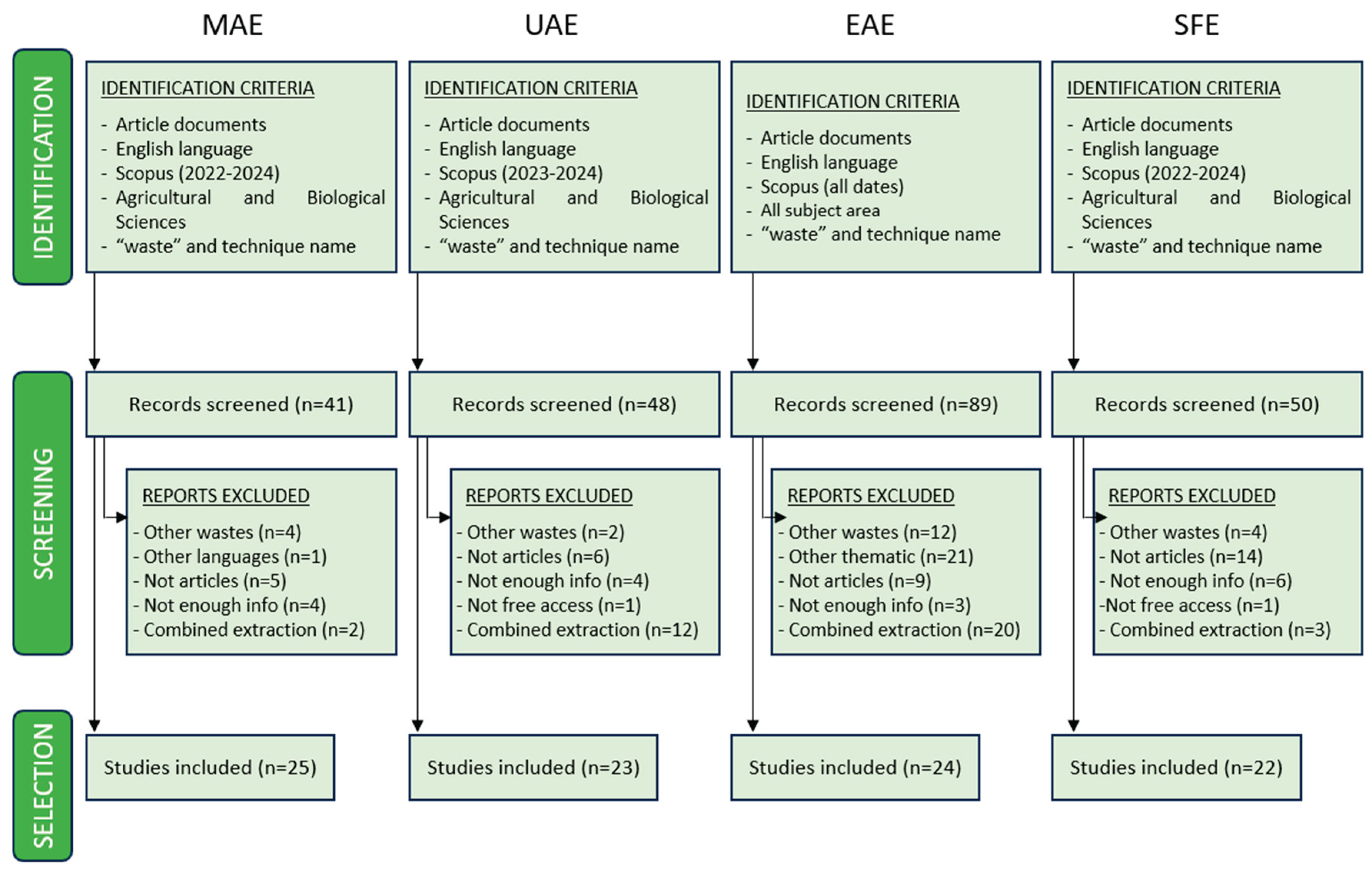

Table 1.
Summary of studies on Microwave Assisted Extraction (MAE) from agricultural wastes, detailing the raw materials studied, key extraction parameters, and the greenness score (GS) estimation based on Wojnowski et al. [15].
Table 1.
Summary of studies on Microwave Assisted Extraction (MAE) from agricultural wastes, detailing the raw materials studied, key extraction parameters, and the greenness score (GS) estimation based on Wojnowski et al. [15].
| Raw material | Solvent | SSR ratio | MP (W) | T (°C) | t (min) | Compound | Optimal yield | GS | Ref. | |
| 1 | Pomelo peels | Water acidified with HCl (pH 2.0) | 1:10-1:20 | 300-600 | n.r. | 1.3-1.8 | Pectin | 3.09-5.57 % EY |  |
[46] |
| 2 | Tangerina peels | Aqueous acid solutions (pH 1-2) | 1:5-1:50 | 1500 | 70-110 | 4-12 | Pectin | 30±2 % EY | [47] | |
| 3 | Corn cobs | 30-80 % Ethanol | 1:15-1:45 | 500-800 | 40-90 | 5-30 | TPC | 274,147.2 mAu*s | [53] | |
| NADESs: Choline chloride/lactic acid (1:2, v/v); Choline chloride/glycerol (1:2, v/v); Choline chloride/1,2-propanediol (1:2, v/v); Choline chloride/urea (1:1, v/v) | 1:20-1:40 | 500-800 | 50-90 | 5-30 | TPC | 86,047.5 mAu*s | ||||
| 4 | Orange waste | 50-100 % Ethanol and acetone solutions | 1:20 | 500 | 45-75 | 10-20 | TPC; Hesperidin; Neohesperidin; Naringenin; Naringin | 16.68 %; 2.08 %; 3.82 %; 2.04 %; 6.32 % EY | [40] | |
| 5 | Pineapple rind | Water, ethanol, acetone |
1:3-1:10 | 100-300 | n.r. | 5-15 | Bromelain | 127.8 Units BA/mL; 2.55 mg/mL protein content | [71] | |
| 6 | Chestnut shell | NaOH (0-0.2 M) | 1:25 | 200-1000 | n.r. | 3-15 | TPC; Melanin | 274.09 mgGAE/g; 26.11 % EY | [41] | |
| 7 | Rice bran | 60 % Ethanol | 1:10 | 90-800 | n.r. | 30 | TPC | 60.69±0.61 % EY | [42] | |
| 8 | Pistachio shells | 20-90 % Ethanol | 1:20-1:35 | 150-1000 | ≤ 64 | 0.83-4.5 | TPC | 20.57±0.92 mgGAE/g |  |
[43] |
| 9 | Pomegranate waste | 20-100 % Ethanol | 1:10-1:30 | 150-750 | n.r. | 2-10 | TPC; TEC; TFC | 432.05 mgGAE/g; 279.2 mgTAE/g; 25.0 mgQE/g | [45] | |
| 10 | Black bean waste | Ethanol:water (100:0-0:100 v/v) with 1 % lactic acid | 1:20-1:50 | 100-600 | n.r. | 2-6 | TPC; TFC; TAC | 197.23±0.02 mgGAE/g; 87.65±0.06 mgQE/g; 34.14±0.03 mg/g | [72] | |
| 11 | Banana peel | Water | 1:3.4 | 800 | 50-170 | 0-15 | Homogalacturonan; Rhamnogalacturonan-I | 837.2 mg/g; 111.1 mg/g of alcohol-insoluble solids | [73] | |
| 12 | Olive pomace | 52.7 % Ethanol | 1:8.3-1:50 | 100-800 | n.r. | 1-3 | TPC | 15.30 mgGAE/g | [58] | |
| 13 | Spent coffee ground |
Water | 1:3 | 850 | 55-200 | 10 | Melanoidinds; Sugars; Chlorogenic acid; Caffeic acid | 35.55±0.16 mg/g; <10 mg/g; 1.97±0.11 mg/g; 0.05±0.04 mg/g | [51] | |
| 14 | Onion and garlic waste | 0.1 N Citric/acetic acids/HCl/H2SO4 solutions |
1:30 | 600 | n.r. | 4 | Galacturonic acid | 67.15±0.64 % EY | [74] | |
| 15 | Jackfruit rags | Citric acid solutions (pH 1-2) | 1:20-1:30 | 50 | 60-70 | 5-15 | TPC; Pectin; Protein content; | 4.64±0.04 mg/g pectin; 29.78 % EY; 2.10±0.01 % EY | [56] | |
| 16 | Pomegranate by-products |
Water | 1:10 | 1,250 | < 40 | 80 | TPC; Punicalins; Punicalagins; Ellagic acid | 0.296±0.001 gGAE/100g; 0.057±0.002 g/100g; 0.195±0.001g/100g; 0.045±0.002 g/100g | [52] | |
| 17 | Sugarcane waste (bagasse) |
60-80 % Ethanol | 1:10 | 100-500 | n.r. | 1-5 | TPC | 12.83±0.66 mgGAE/g |  |
[48] |
| 18 | Pineapple peels | 0.5 N Sulfuric acid (pH 1.5-2.5) | 1:10-1:30 | 400-600 | 80 | 2.5 | Pectin; AUA | 2.44 % EY; 54.40 % EY | [44] | |
| 19 | Brewer's spent grain | NaOH (0-0.64 M) | 1:10 | 1,800 | 56-124 | 0-12.56 | Proteins; TPC; TFC; Total sugars |
92.05 % EY; 48.42 mgGAE/g; 8.68 mgCE/g; 13.84 g/L | [55] | |
| Spent coffee ground | NaOH (0-1.31 M) | 1.59-18.41 | 58.99 % EY; 52.08 mgGAE/g; 15.95 mgCE/g; 5.50 g/L | |||||||
| Kale stems | Water and NaOH (0.16-1.84 M) | 1.59-18.41 | 95.23 % EY; 34.32 mgGAE/g; 2.46 mgCE/g; 15.20 g/L | |||||||
| 20 | Hazelnut by-products |
NADESs: Choline chloride/1,2-butandiol (1:4, v/v); Choline chloride/1,2-propylene glycol (1:4, v/v); Choline chloride/glycerol (1:4, v/v); Choline chloride/DL-malic acid:water (1:1:2, v/v); Sucrose/lactic acid:water (1:5:7, v/v); Fructose/lactic acid:water (1:5:5, v/v); Sucrose/choline chloride/water (1:4:4, v/v); Fructose/choline chloride/water (2:5:5 v/v) | 1:10-1:20 | 1,500 | 50-100 | 10-40 | D-(-)-Quinic acid; Gallic acid; Protocatechuic acid; Catechin; Quercetin-3-O-rhamnoside | 24.38±0.61 mg/kg; 6.80±0.15 mg/kg; 6.95±0.17 mg/kg; 7.32±0.15 mg/kg; 13.99±0.21 mg/kg | [54] | |
| 21 | Tomato seeds | 80 % Methanol, 80 % ethanol, 80 % acetone | 1:20-1:50 | 200-800 | n.r. | 0.33-2 | TPC | 265.31±7.87 mgGAE/100g | [75] | |
| 22 | Seedless sesame capsules | Acidified water with citric acid (pH 1.5-3) | 1:20-1:50 | 300-700 | n.r. | 1-5 | Pectin | 138±4 g/kg | 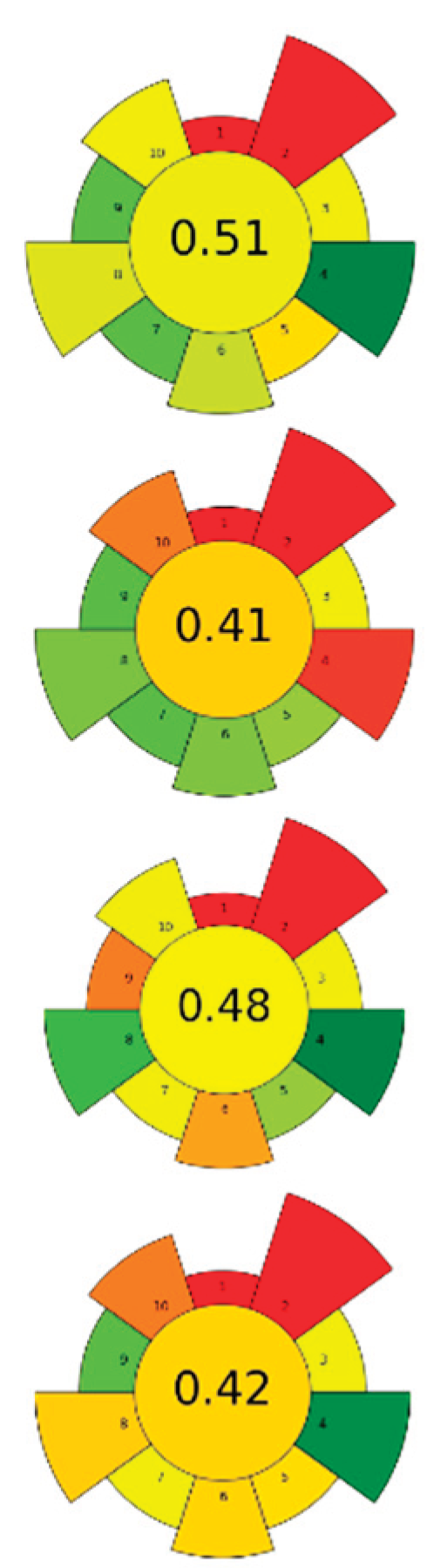 |
[57] |
| 23 | Orange peels | Acidified water with 0.1 N HCl (pH 1.5) | 1:25 | 620 | n.r. | 3 | Pectin | 19.3±0.16 % EY | [49] | |
| 24 | Tomato seeds | 40-80 % Ethanol | 1:50-1:80 | 92.7 | 40-80 | 5-15 | TPC; Chlorogenic acid; Rutin; Naringenin | 1.72±0.04 mgGAE/g; 1.11±0.34 mg/100g; 1.38±0.02 mg/100g; 2.99±0.11 mg/100g | [76] | |
| 25 | Banana peels | Citric acid (0.1 M), tartaric acid (0.1 M) | 1:20 | 420-613 | n.r. | 5-10 | Pectin | 15.23±0.52 % EY | [50] |
SSR: Solid-to-solvent ratio (w/v); MP: Microwave power; TPC: Total phenolic content; TFC: Total flavonoid content; TAC: Total anthocyanin content; TEC: Total ellagitannin content; AUA: Anhydrouronic acid content; n.r.: not reported; EY: extraction yield; BA: bromelain activity.
Table 2.
Summary of studies on Ultrasound Assisted Extraction (UAE) from agricultural wastes, detailing the raw materials studied, key extraction parameters, and the greenness score (GS) estimation based on Wojnowski et al. [15].
Table 2.
Summary of studies on Ultrasound Assisted Extraction (UAE) from agricultural wastes, detailing the raw materials studied, key extraction parameters, and the greenness score (GS) estimation based on Wojnowski et al. [15].
| Raw material | Solvent | SSR | Frecuency (kHz) | UP (W) | Amplitude (%) | t (min) | Compound | Optimal yield | GS | Ref. | |
| 1 | Grape pomace (GP), jabuticaba peel (JP) and dragon fruit husk (DFH) | Water | 1/100 | 35 | 160 | n.a. | 90 | TPC; TAC; TBC | GP: 5.01 ± 0.94 mg GAE/g, 0.86 ± 0.05 mg C3G/g, n.d.; JP: 26.82 ± 1.92, 1.03 ± 0.05 mg C3G/g, n.d.; DFH: 3.14 ± 0.08 mg GAE/g, n.d., 78.22 ± 1.35 mg/g |  |
[81] |
| 2 | Saffron tepals and stamen | L-Proline:Glycerol (1:2)/water (90:10) (w/w) | 1:20 | n.r. | 180 | n.r. | 20 | Phenolic compounds and flavonoids | Flowers: TPC: 88.96 ± 1.08 mg GAE/g d.w., TFC: 4.36 ± 0.48 mg CE/g d.w. Stigmas: TPC: 95.66 ± 9.34 mg GAE/g d.w.; TFC: 9.56 ± 0.60 mg CE/g d.w. | [90] | |
| 3 | Grape seeds | Water (pH 11; NaOH 6M) | 1:10 | 40 | 200 | n.r. | 180 | Proteins | 378.31 g/kg | [83] | |
| 29 | 2,000 | n.a. | |||||||||
| 4 | Coffee silverskin | 75% aqueous ethanol | 0.05:1 | 37 | 180 | n.a. | 60 | Phenolic compounds and caffeine | EY: 8.8 % wt; TPC: 36.8 mg GAE/g; 62.7 μmol caffeine/g | [87] | |
| 5 | Red grapes skins | Nicotinamide-acetic acid (1:1); 40%water. | 0.03:1 | 20 | 240 | n.r. | 25 | Anthocyanins | 21 mg anthocyanins/g biomass | [91] | |
| 6 | Pineapple pomace | Alkaline water | 1:39.88 | 20 | 700 | 20.32 | 27.23 | Dietary fiber (DF) | 69.14% | [93] | |
| 7 | Purple guava peels and seeds | choline chloride: Glycerol (1:1), 20%water | 0.1:5 | 37 | 165 | n.a. | 60 | Phenolic compounds | TPC (LC-ESI-MS/MS) 462.40 ± 16.87 mg/g; TPC (F-C): 1045.15 ± 9.39 mg GAE/g |  |
[60] |
| 8 | Pea canning by-product | Alkalized water (pH = 11) | 1:20 | 24 | 400 | 80 | 60 | Proteins | 66,60% EY | [80] | |
| 9 | Peach pomace | Pectinase solution (8.5%) | 1: 7 | 37 | 550 | n.a. | 50,36 | Carotenoids | TPC: 761.10 mg GAE/L | [64] | |
| 10 | Mandarin peels | 80% methanol | 1/30 | 20 | 500 | 31% | 15 | Phenolic compounds | TPC: 3.78 mg GAE/ g d.w. | [85] | |
| 11 | Almond hulls | 80% ethanol | 1: 22.28 | 20 | 400 | 50.18 | 27.26 | Phenolic compounds | 47.37 ± 0.24 mg GAE/g d.w. | [88] | |
| 12 | Tomato peels | ethanol: ethyl acetate, 2:3, v/v | 1/20 | 26 | 200 | 60% | 20 | Lycopene | 2.92% EY | [62] | |
| 13 | Tomato peels | EVOO | 1: 20 | 20 | 400 | 70% | 20 | Lycopene | Lycopene content (HPLC-DAD): 0.9 ± 0.2 mg lycopene/g EVOO TPC: 30.95 ± 0.50 mg GAE/g; TFC: 0.07 ± 0.01 mg RE/g | [89] | |
| 14 | Cocoa pulp mucilage (CPM), cocoa pod husk (CPH), and cocoa bean shell (CBS) | Acidified water with citric acid (pH 2.5) | 1/22.5 | 20 | 750 | n.r. | 20 | Pectin | EY for CPH, CBS, and CPM (16.2 ± 0.28%, 8.32 ± 0.35%, and 2.98 ± 0.17%), anhydrouronic acid content (68.59 ± 0.2% CPH, 50.7 ± 0.5% CBS, and 43.97 ± 0.17% CPM) | [65] | |
| 15 | Purple waxy corn's cobs | Ethanol 50% | 1: 20 | 20 | 500 | 50% | 25 | Anthocyanin and phenolic compounds | TAC: 305.40 μg C3G/g d.w., TPC: 25.50 mg GAE/g d.w. |  |
[68] |
| 16 | Defatted grapeseeds |
Alkalinized water (pH = 11; 0.1 M NaOH) | 1/16 | 40 | 200 | n.a. | 37 | Proteins | EY: 14.3 ± 0.9%; Protein content: 55.1 ± 1.8% | [94] | |
| 17 | Mexican/Spanish Lime peels | 100 mM Tris-HCl buffer [0.25% SDS (w/v) and 0.25% DTT (w/v)/ 0.25% SDS (w/v) and 0% DTT (w/v), pH 7.5] | 0.3/5 | 20 | 130 | 30 | 1 | Proteins | Protein content Mexican and Spanish peels: 0.06 ± 0.01 and 0.11 ± 0.01 g protein/100 g d.w. | [84] | |
| choline chloride ChCl:urea:water (1:1:3) | 0.22/ n.r. | 20 | 130 | 70 | 30 | Protein content Mexican and Spanish peels: 1.00 ± 0.06 and 1.14 ± 0.04 g protein/100 g d.w. | |||||
| 18 | Blueberry leaves | Choline chloride:oxalic acid (1:1) | 0.2:1.5 | 40 | 350 | n.a. | 45 | Phenolic compounds, anthocyanins | TPC: 195.5 ± 1.1 mg GAE/g d.w.; TAC: 217.9 ± 4.3mg C3GE/100 g d.w.; | [92] | |
| 19 | Coffee pulp | Water | 1:10 | 37 | 370 | n.a. | 5.5 | Caffeine and polyphenols | Caffeine: 15.6 ± 0.3 g/kg d.w.; TPC: 12.4 ± 0.2 g GAE/kg, | [86] | |
| 20 | Ginger herbal dust | 50% aqueous ethanol | 1/20 | 24 | 400 | 100 | 2.5 | Phenolic compounds; 6-ginerol; 6-shogaol; 8-ginerol | EY: 13.14%; TPC: 112.26 ± 0.06 mg GAE/g d.w.; gingerol (44.57 mg/g dw), 8-gingerol (8.62 mg/g dw), and 6-shogaol (6.92 mg/g dw). | [61] | |
| 21 | Artichoke leaves | 50% aqueous ethanol | 1: 10 | 24 | 400 | n.r. | 30 | Phenolic compounds | TPC: 2.7±0.6 mg GAE/g; TFC: 6.5±0.7 mg CE/g | 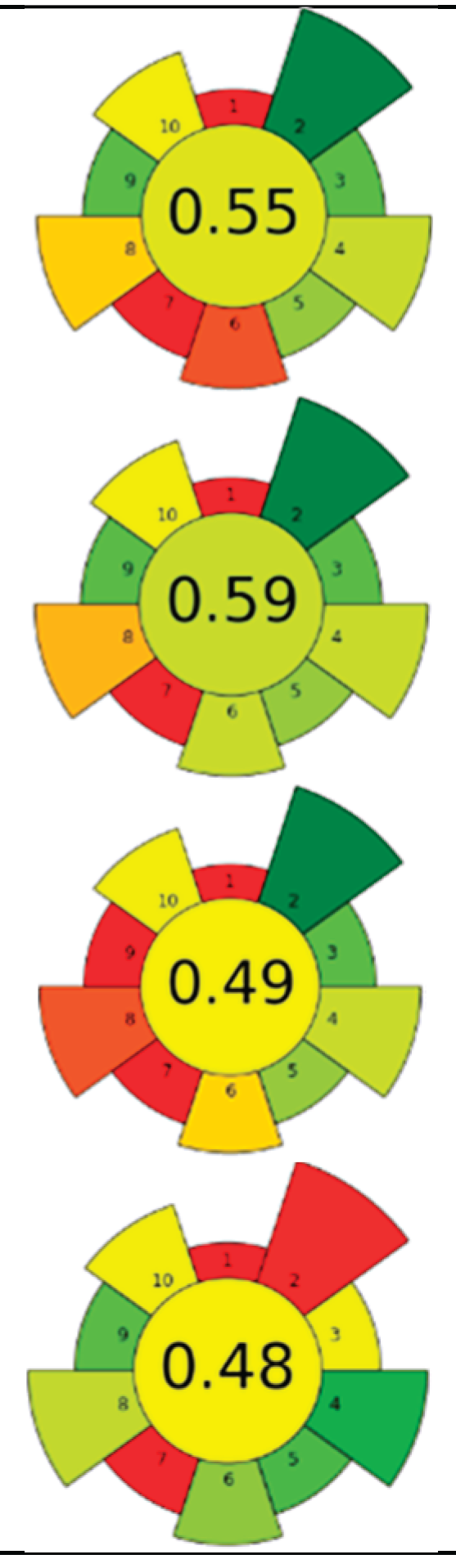 |
[79] |
| 35 | 240 | n.a. | TPC: 2.5±0.6 mg GAE/g; TFC: 5.3±0.2 mg CE/g | ||||||||
| 22 | Blackberry seeds | 56% aqueous ethanol | 0.07 | n.r. | 260 | n.a. | 60 | Phenolic compounds | EY: 0.062 g/ g; TSC: 633.91 mg glucose/g; TPC: 36.21 mg GAE/g; TAC: 3.07 mg C3G/ g | [59] | |
| 23 | Watermelon rinds and peels | 80% aqueous acetone | 0.5/7 | 35 | 144 | n.a. | 20 | Phenolic compounds | TPC: 3.13 mg GAE/g; TFC 3.76 mg QE/g |
[78] |
SSR: Solid-to-solvent ratio (w/v); UP: Ultrasounds power; UAE: Ultrasound assisted extraction; EY: extraction yield; TPC: Total phenolic content; TFC: Total flavonoid content; TAC: Total anthocyanin content; TBC: Total betalain content; TSC: Total sugars content; GAE: gallic acid equivalents; CE: catechin equivalents, C3GE: cyanidin-3-glucoside equivalents; d.w.: dry weight; n.a.: not applicable; n.r.: not reported; n.d.: not detected.
Table 3.
Summary of studies on Enzyme-Assisted Extraction (EAE) from agricultural wastes, detailing the raw materials studied, key extraction parameters, and the greenness score (GS) estimation based on Wojnowski et al. [15].
Table 3.
Summary of studies on Enzyme-Assisted Extraction (EAE) from agricultural wastes, detailing the raw materials studied, key extraction parameters, and the greenness score (GS) estimation based on Wojnowski et al. [15].
| Raw material | Enzyme | Concentration | Solvent | SSR ratio | T (°C) | t (h) | pH | Compound | Optimal yield | GS | ||
| 1 | Eggplant peel | Cellulase | 5-15 % | Water, ethanol, citric acid (50:48:2, v/v/v) | 1:20 | 35-60 | 1-4.5 | n.r. | TPC; TAC | 2,040.87 mgGAE/L; 578.66 mgC3G/L |  |
[116] |
| 2 | Citrus by-products | ꞵ-glucosidase and tannase | 10 U/g | 20 mM Acetate buffer | 1:25 | 40 | 24 | 5.0 | Narirutin; Naringin; Naringenin; Hesperidin; Hesperetin; Diosmetin; Tangeritin |
1.11±0.05 µg/mg; 0.33±0.09 µg/mg; 3.86±0.2 µg/mg; 12.05±0.57 µg/mg; 44.08±2.22 µg/mg; 1.22±0.24 µg/mg; 0.36±0.02 µg/mg | [103] | |
| 3 | Citrus pectin by-product | ꞵ-glucosidase, tannase, cellulase, and their mixtures | 5 U/g | 20 mM Acetate buffer | 1:12.5 | 40 | 24 | 5.0 | TPC; Gallic acid; Narirutin; Naringenin; Hesperidin; Hesperetin; Tangeretin | >300 mgGAE/100g; 6.75±0.23 mg/100g; 31.93±0.72 mg/100g; 41.48±1.31 mg/100g; 204.53±2.61 mg/100g; 407.90±2.69 mg/100g; 5.67±0.29 mg/100g; | [104] | |
| 4 | Lemon and orange by-products | Cellulase | 150 µL/g | 50 mM Phosphate buffer |
1:1,000 | 40 | 24 | 5 | Fucose; Arabinose; Rhamnose; Galactose; Glucose; Xylose; Mannose; Galacturonic acid; Glucuronic acid | 17.3±0.0 µmol/g; 205.4±3.9 µmol/g; 76.2±4.3 µmol/g; 186.1±4.4 µmol/g; 1,205.4±64.0 µmol/g; 173.3±4.6 µmol/g; 242.6±16.0 µmol/g; 449.1±10.1 µmol/g; 2.8±0.2 µmol/g | [122] | |
| 5 | Onion peel | Zymorouge® EG complex | 2 mL | 0.2 M Sodium acetate buffer | 1:28 | 40 | 24 | 5.0 | TPC; TFC; Quercetin; 1,2-Dihydroxybenzene; n-Hexadecanoic acid; 9,12-Octadecadienoic acid | 108.36±3.62 mgQE/g; 25.19±3.56 mgGAE/g; 4.92 % TFC r.a.; 21.05 % r.a.; 18.03 % r.a.; 25.81 % r.a. |
 |
[117] |
| 6 | Pumpkin and exotic fruits by-products | Protease | 1:100 (w/w) (enzyme/substrate) | 10 mM Phosphate buffer | n.r. | 60 | 16 | 7.5 | Lipids; SFA; MUFA; PFA; Protein | 117±25 % EY; 55.3±0.4 % r.a.; 35.6±0.6 % r.a.; 50.72±0.05 % r.a.; 71±2 % EY |
[121] | |
| 7 | Spent coffee ground | Viscozyme®L; Celluclast ®1.5L |
0.4-80 µL/g; 0.2-40 µL/g |
Acidified water | 1:3 | 25-55 | 1-14 | 4.65-5.95 | Mannose; Glucose; Galactose; Arabinose; Caffeic acid; Chlorogenic acid; Melanoidins |
30-40 mg/g; 10-20 mg/g; 10-20 mg/g; 0-10 mg/g; 1.73±0.04 mg/g; 0.15±0.02 mg/g; 32.37±0.08 mg/g |
[51] | |
| 8 | Pomelo seeds | Complex enzyme (alkaline protease, pectinase, cellulase, 1:1:1) | 1 % (w/w) | Basified water | 1:8 | 50 | 2 | 9 | SFA; MUFA; PUFA; Tocopherols; Phytosterol; Squalene; TPC | 34.75±0.06 %; 19.60±0.04 %; 45.42±0.04 % of total fatty acids; 95.85±1.41 mg/kg; 2,056.94±14.09 mg/kg; 35.70±0.09 mg/kg; 340.41±1.71 mgGAE/kg | [105] | |
| 9 | Citrus juice by-products | Tannase, ꞵ-glucosidase, cellulase, pectinase, and their mixtures | 5-15 U/g | 20 mM Sodium acetate buffer | 1:12.5 | 40 | 6-24 | 5.0 | TPC; Narirutin; Hesperidin; Tangeritin; Naringenin; Hesperetin |
aprox. 1000 mgGAE/100g; 50.9±4.5 mg/100g; 255.2±6.9 mg/100g; 1.7±0.2 mg/100g; 24.2±0.9 mg/100g; 148.7±6.8 mg/100g | [106] | |
| 10 | Guarana seeds | Pectinase, cellulase, and their mixture | 1 U/mL | Citrate buffer | 1:3 | 40-50 | 4 | 5.70-6.10 | TPC; Catechin; Epicatechin; Epicatechin gallate; Caffeine; Theobromine; Theophylline | aprox. 520 mgGAE/100g; 17.19±0.07 g/100g; 10.90±0.06 g/100g; 0.08±0.03g/100g; 14.16±0.02 g/100g; 0.12±0 g/100g; 1.30±0.04 g/100g |  |
[107] |
| 11 | Hawthorn pomace | Cellulase:pectinase (1:1, w/w) |
0.2 mg/mL | Acidified water | 1:3 | 40 | 3 | 4.5 | TPC; TFC; Quercetin; Epicatechin; Phlorizin; Rutin; Ferulic acid |
729.68±5.53 mg/kg; 524.09±3.85 mg/kg; 100.12±13.76 mg/kg; 48.63±5.12 mg/kg; 79.63±0.73 mg/kg; 49.47±2.24 mg/kg; 49.71±3.43 mg/kg |
[120] | |
| 12 | Chicory and fennel by-products | Mix of pectinlyase, polygalacturonase, pectinesterase, arabinase, cellulase, and acid protease / Xylanase | 0.03-0.3 mL/0.1 g | Acidified water | 1:10-1:15 | 50 | 1.5 | 4-4.5 | TPC; Epicatechin; Chlorogenic acid; Rutin; Rosmarinic acid; Kaempferol; Gallic acid; Epigallocatechin; Sinapic acid; Epicatechingallate | 6 mg/g; 17.43±0.43 mg/100g; 53.39±0.20 mg/100g; 6.49±0.37 mg/100g; 31.8±0.21 mg/100g; 18.58±0.56 mg/100g; 10.01±0.44 mg/100g; 24.24±0.11 mg/100g; 11.34±0.44 mg/100g; 17.83±0.19 mg/100g | [118] | |
| 13 | Longan peels | Cellulase, amylase, protease, ꞵ-glucosidase, and their mixtures |
0.24-210 U | Phosphate buffer and 80 % ethanol with 0.1 % formic acid | 1:5 | 40-50 | 12 | 6.5 | TPC; Ellagic acid; Gallic acid; Corilagin; o-Coumaric acid; Ferulic acid; Chlorogenic acid; Quercetin; Kaempferol |
446.0±22.4 µmolGAE/g; 6,932.50±306.43 µg/g; 120.16±6.10 µg/g; 16.25±1.18 µg/g; 44.71±5.50 µg/g; 26.74±1.21 µg/g; 80.19±3.67 µg/g; 135.28±6.67 µg/g; 15.56±0.65µg/g | [108] | |
| 14 | Lime pomace | Polygalacturonase | 0.115 U/mL | Water | 1:31.25 | 20 | 0.5-2 | 3.50 | Pectin | 15.09±0.44 % EY |  |
[124] |
| 15 | Pearl millet bran | α-amylase followed by protease and amyloglucosidase |
50 µL, 100 µL, 200 µL | 0.08 M Phosphate buffer, 0.275 N NaOH, 0.325 N HCl | 1:50 | 60 | 1.5 | 6.0, 7.5, 4.5 | Fiber | 48 % EY | [125] | |
| 16 | Bilberry pomace |
Viscozyme ®L | 2-10 U/g | Citrate buffer | 1:10 | 30-50 | 1-7 | 3-5 | TPC; Sucrose; Glucose; Fructose; Anthocyanin |
13.26 mg/GAE/g; 4.5±0.3 mg/g; 109.5±1.4 mg/g; 121.9±4.7 mg/g; 3,194.0±123.6 µgcyan-glu/g | [109] | |
| 17 | Rapeseed press cake | Protease | 1 % | NaCl (0-1.0 M) | 1:9-1:19 | 20-70 | 0.75-12 | 5.8-12 | Protein | 78.3 % EY | [123] | |
| 18 | Grape residues |
Celluclast ®, Pectinex ® Ultra, Novoferm ® | 100 µL | 0.2 M Acetate buffer | 1:14 | 40 | 0-48 | 3.5 | TPC | aprox. 40 mgGAE/100g | [110] | |
| 19 | Winery solid residue | Ultrazym-Celluclast (3:1, w/w) |
2 % | Water | n.r. | 35-55 | 9 | n.r. | Oil; Soluble sugars; TPC | aprox. 70 % EY; aprox. 11 mg/g; aprox 39 mg/g | [111] | |
| 20 | Fruit by-products |
Viscozyme ®L | 2 % | 0.1 M Phosphate buffer | 1:20 | 35-55 | 0-12 | 3.0-7.0 | TPC; TFC | 76.18±2.63 mgGAE/g; 30.57±1.64 mgQE/g | [112] | |
| 21 | Sweet corn cob | Ferulic acid esterase and endo-1,4-ꞵ-xylanase | 0.01-18,093.50 U/g | Phosphate citrate buffer | n.r. | 45-65 | 3 | 4.5-6.5 | Ferulic acid | 1.45 g/kg | 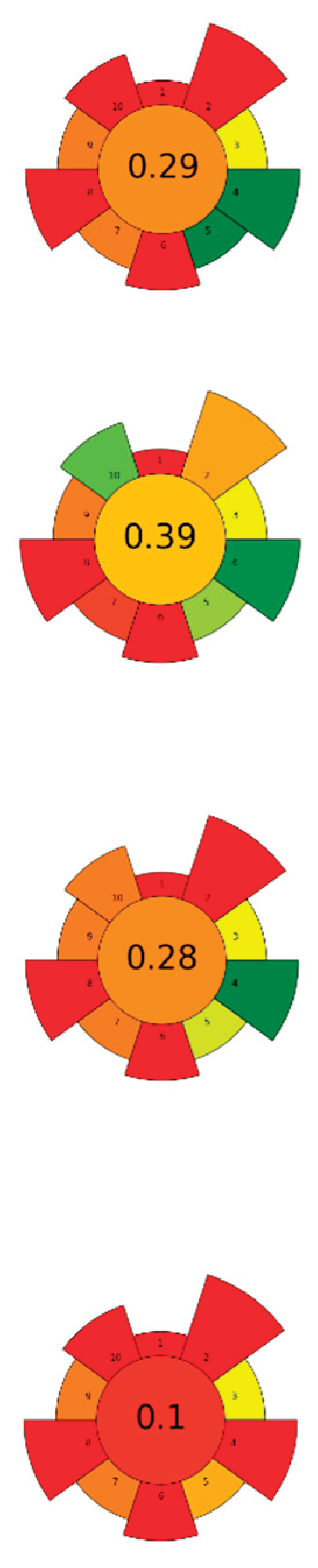 |
[119] |
| 22 | Tomato seeds | Alcalase 2.4L | 0.75-3.75 mL | 0.6 M Phosphate buffer | n.r. | 60 | 4-12 | 7.5 | Oil; TPC; ꞵ-Tocopherol, δ-Tocopherol; Oleic acid; Linoleic acid | 9.66 % extraction yield; 3.3±0.00 mgGAE/kg; 128.51±1.14 ppm; 209.88±0.5 ppm; 25.29±0.35 g/100g; 57.77±0.28 g/100g | [113] | |
| 23 | Citrus by-products |
Tannase and ꞵ-glucosidase (1:1, w/w) | 20 U/g | 20 mM Acetate buffer | 1:12.5 | 40 | 30 | 5.0 | Narirutin; Hesperidin; Naringenin; Hesperetin; Diosmetin; Tangeritin | 0.83±0.03 mg/g; 11.11±0.39 mg/g; 3.49±0.10 mg/g; 43.70±0.79 mg/g; 1.03±0.06 mg/g; 0.37±0.02 mg/g | [115] | |
| 24 | Raspberry pomace | Alcalase 2.4L, neutrase, pepsin, papain, cellulase, pectinase, xylanase | 1.2-3.6 U/100g | Water | 1:3-1:9 | 40-60 | 1-3 | 7-9 | Oil; TPC; PUFA; Total tocols; Total phytosterols | 2.64 g/100g; 3.56±0.077 g/100g; 84.3±0.23 % of total fatty acids; 125.9±5.02 mg/100g; 259.7±6.4 mg/100g | [114] |
SSR: Solid-to-solvent ratio (w/v); U: Units; TPC: Total phenolic content; TAC: Total anthocyanin content; TFC: Total flavonoid content; SFA: Saturated fatty acids; MUFA: monounsaturated fatty acids; PFA: polyunsaturated fatty acids; EY: extraction yield; r.a.: relative area; n.r.: not reported.
Table 4.
Summary of studies on Supercritical Fluid Extraction (SFE) from agricultural wastes, detailing the raw materials studied, key extraction parameters, and the greenness score (GS) estimation based on Wojnowski et al. [15].
Table 4.
Summary of studies on Supercritical Fluid Extraction (SFE) from agricultural wastes, detailing the raw materials studied, key extraction parameters, and the greenness score (GS) estimation based on Wojnowski et al. [15].
| Raw material | Sample (g) | CO2 (kg) | Flow rate (mL/min) | Co-solvent (%, v/v) | Energy (Wh) | Temperature (°C) | Pressure (MPa) | t (min) | Compound | Optimal yield | GS | Ref. | |
| 1 | Picea abies (cones, branches, needles and bark) | 50 | 4.8 | 46 | - | 4,400 | 50 | 30 | 120 | Lipophilic extractives | Branches (5.3 %), needles (3.3%), and bark (2.4 %) |  |
[132] |
| 2 | Stalks (wine by-product) | 40 | 338.3 | 2,000 | - | 7,128 | 50 | 30 | 194.4 | Bioactive compounds | 1.4 % EY | [126] | |
| 3 | Sage herbal dust | 35 | - | n.r. | - | 8,800 | 40 | 10 | 240 | Essential oil | - | [141] | |
| 4 | Sage herbal dust | 35 | - | n.r. | - | 8,800 | 40 | 30 | 240 | Essential oil | - | ||
| 5 | Rotten onion waste | 30 | 98.4 | 2,000 | - | 2,200 | 80 | 40 | 60 | Oleoresin | 1 % EY | [22] | |
| 6 | Viburnum opulus (VOP) pomace | 131 | 1,444.8 | 2,000 | - | 30,800 | 60 | 35 | 840 | Triacylglycerol; tocopherol; phytosterol; fatty acids | 26.24% of lipids, β-sitosterol: 514.5 mg/100 g; α-tocopherol 118.6 mg/100 g. | [140] | |
| Hippophae rhamnoides (SBP) berry pomace | 1,612.8 | 50 | 50 | 16.99 % of lipids; β-sitosterol 359.5 mg/100 g and α-tocopherol 65.38 mg/100 g | |||||||||
| 7 | Apple seeds | 80 | 2.0 | 16.7 | - | 2,567 | 40 | 24 | 140 | TPC | 20.5±1.5 % EY | [142] | |
| 8 | Cherimoya peel and leaves | 15 | 3.6 | 85.7 | Methanol 15 % | 6,600 | 75 | 10 | 180 | Alkaloids and phenolic compounds | 862.51±18.89 - 3496.49±280.68 - μg BE/g |  |
[127] |
| 9 | Dried Lentinus edodes (Berk.) sing stipe | 150 | 15.7 | 500 | - | 1,467 | 50 | 20 | 40 | Flavour compounds | 50.47±3.19 μg/mL TPC | [143] | |
| 10 | Celery (Apium graveolens L.) waste | 4.8 | n.r. | n.r. | Isopropyl Alcohol 15, 25, 100 % | 9,900 | 50 | 30 | 270 | Bioactive compounds | 10.84 ± 1.2 % EY | [131] | |
| 11 | Wild thyme (Thymus serpyllum L.) herbal dust | 35 | 1.2 | 7.7 | - | 9,900 | 50 | 35 | 180 | Oil recovery | 3.36 % EY | [128] | |
| 12 | Guava (Psidium guava) seeds | 250 | 4.5 | 33.5 | - | 5,500 | 52 | 35.7 | 150 | Phenolic compounds; tocopherols; phytosterols | 8.6±1.2 g oil/100 g guava seeds | [144] | |
| 13 | Brewer spent grains | 80 | 0.6 | 13.3 | - | 2,200 | 55 | 20 | 60 | Oil recovery and encapsulation | Mx. encapsulation efficiency: 63.8 ± 0.8% | [142] | |
| 14 | Tomato seeds and peels | 12 | 0.5 | 10 | - | 2,200 | 60 | 34 | 60 | Oil recovery | 12.5 % EY | [136] | |
| 0.3 | 5 | - | 1,000 | 20 | 15 | 12.9 % EY | |||||||
| 15 | Walnut green husk | 15 | 1.7 | 10 | Ethanol 20 % | 7,150 | 50 | 30 | 195 | Phenolic compounds; juglone; fatty acids; VOCs | Polyphenols (10750 mg GAE/100 g) and juglone (1192 mg/100 g) |  |
[145] |
| 16 | Orange (Citrus sinensis), tangerine (Citrus reticulata) and lemon (Citrus limon) peels | 12 | 1.2 | 10 | Ethanol 20 % | 11,000 | 60 | 30 | 300 | Oil; phenolic compounds; VOCs | 17.20, 17.60 and 31.24 % in orange, tangerine and lemon, respect. | [135] | |
| 1.4 | 10 | Ethanol 20 % | 5,000 | 20 | 20 | 300 | 17.49, 17.60 and 28.84 % in orange, tangerine and lemon respect. | ||||||
| 17 | Waste salt from the salting process of mullet raw roes | 500 | n.r. | n.r. | - | 17,600 | 40 | 30 | 480 | n-3 PUFAs | 28.4 %; 122±7 g n-3 PUFA/ kg of oil | [146] | |
| 18 | Tomato waste | 12 | 178.9 | 1,000 | - | 9,533 | 80 | 30 | 240 | Lycopene | n.r. | [137] | |
| 19 | Tomato pomace | 1,000 | 70 | 305 | - | 93,333 | 80 | 38 | 280 | Lycopene | 48.4 % EY | [139] | |
| 20 | Ginger herbal dust | 30 | 2.0 | 9.2 | - | 10,267 | 40 | 30 | 240 | Nonpolar and low-polar bioactive compounds | 7.60±0.21 % EY | [147] | |
| 21 | Pomegranate peels and seeds | 25.2 | 1,147 | 10,000 | - | 4,400 | 40 | 40 | 120 | Bioactive compounds | 11.5 % EY | 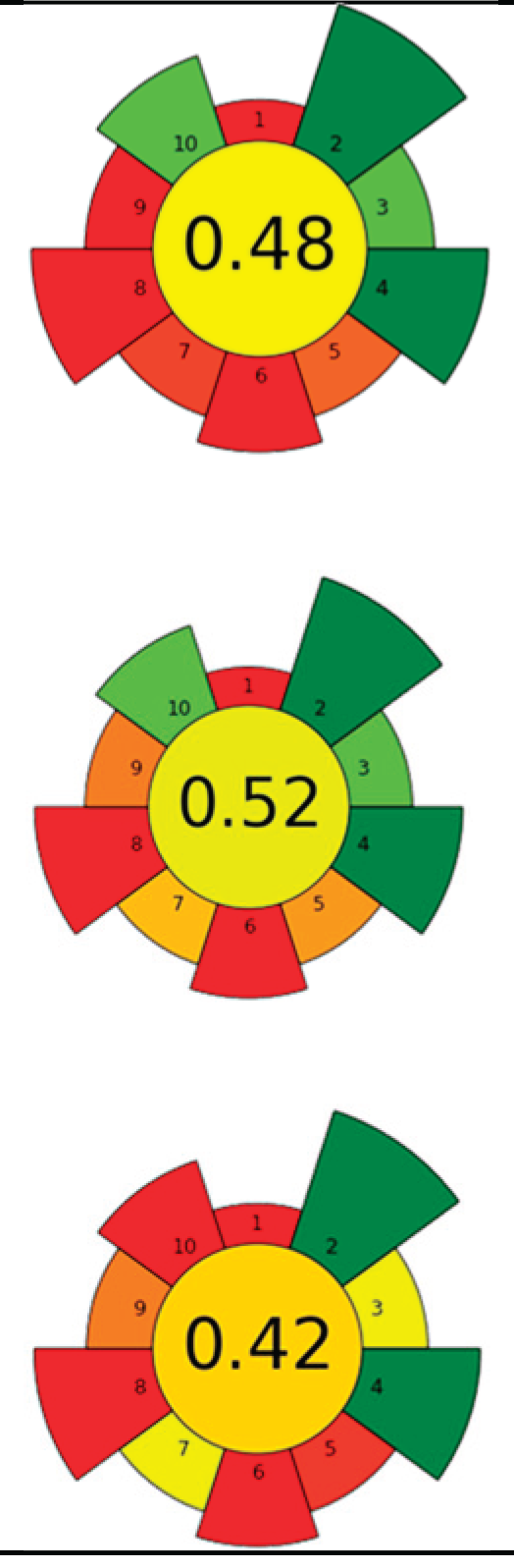 |
[148] |
| 22 | Tomato pomace | 12 | 179 | 1,000 | - | 8,800 | 80 | 30 | 240 | Lycopene and other nonpolar and low-polar bioactive compounds | 11.5 % EY; (Z)-lycopene 69 % EY | [138] | |
| 23 | Red raspberries wasted fruit | 50 | 0.8 | 24 | Ethanol 7 % (with 0.2 % acetic acid) | 1,467 | 40 | 20 | 40 | Oleoresin; TPC; TFC | TPC: 185 mg GAE/g; TFC: 11.0 mg QE/g | [149] |
EY: extraction yield; n.r.: not reported; TPC: Total phenolic content; BE: boldine equivalent; VOCs: volatile organic compounds; GAE: gallic acid equivalents; n-3 PUFAs: n-3 polyunsaturated fatty acids; TFC: Total flavonoid content.
Table 5.
Comparison of emerging technologies: key parameters, strengths, weaknesses, solvent use, energy consumption, and scalability.
Table 5.
Comparison of emerging technologies: key parameters, strengths, weaknesses, solvent use, energy consumption, and scalability.
| Microwave-assisted Extraction | Ultrasound-assisted Extraction | Enzyme-assisted Extraction | Supercritical Fluid Extraction | |
| Key parameters | Solvent, SSR, temperature, time, irradiation power, sample particle size. | Solvent, SSR, temperature, time, pH, ultrasound power, frequency, amplitude, pulse rate, sample particle size. | Enzyme composition, enzyme concentration, temperature, time, pH, ESR, SSR, sample particle size. | Temperature, pressure, time, solvent flow rate, SSR, co-solvent, sample particle size. |
| Strengths | Easy to operate, shorter operational times, low equipment costs, reduced solvent consumption, short extraction times. | Simplicity of the process, compatible with thermosensitive compounds, low cost, short extraction times. | Suitable for whole plant materials, fewer processing steps, simplicity of the process, high specificity, mild reaction conditions, compatible with thermosensitive compounds, high-quality pure extracts, cheap equipment. | Solvent recyclability, tunable solvent power (modifying T and P), selectivity, suitable for thermosensitive compounds, pure and solvent-free extracts, no purification stage needed, short extraction times. |
| Weaknesses | High initial investment, difficulty maintaining temperature, excessive heat/power can degrade thermolabile compounds, high energy consumption, low selectivity and extract purity (purification steps). | High initial investment, many steps to obtain the final extract, difficult to automatize. | Enzyme cost, long extraction times (high energy consumption). | High initial investment, significant energy consumption, requires co-solvents for polar and intermediate-polar compounds. |
| Solvent use | Methanol, ethanol, acetone, water, NADESs. Acid/basic solutions. Microwave-assisted solvent-free extraction (without solvent): lower extraction efficiency. | Methanol, ethyl acetate, acetone, water, ethanol, enzyme solutions, NADESs. Acid/basic solutions. | Water and buffer solutions. Acid/basic solutions. | CO2 - Most used: mild critical conditions (31.1 °C and 73.8 bar), inert, nonflammable, non-corrosive, eco-friendly, non-polar (co-solvents like ethanol or water for polar compounds). |
SSR: solvent-to-solid ratio; ESR: enzyme-to-sample ratio; T: temperature; P: pressure; NADESs: natural deep eutectic solvents.
Table 6.
Comparison of greenness score (GS) performance of studies on the analyzed emerging technologies from agricultural waste collected from Tables 1-4.
Table 6.
Comparison of greenness score (GS) performance of studies on the analyzed emerging technologies from agricultural waste collected from Tables 1-4.
| Microwave-assisted Extraction | Ultrasound-assisted Extraction | Enzyme-assisted Extraction | Supercritical Fluid Extraction | |
| Average GS | 0.42±0.09 | 0.51±0.15 | 0.30±0.13 | 0.49±0.09 |
| Best performed criteria | C5 and C9 | C2 and C10 | C4 and C5 | C2 and C4 |
| Worst performed criteria | C1, C2, C6, and C8 | C1 and C7 | C1, C6, and C8 | C5, C6 and C8 |
| Gaps for GS improving | Prioritize the use of greener solvents and employ parallel extraction (multi-sample system) to enhance sample throughput and reduce energy consumption | Control extraction time to minimize energy consumption and maximize sample throughput, reduce the use of hazardous solvents, promote combining extraction techniques | Use safer, non-hazardous solvents and reagents to minimize waste generation, and perform simultaneous extractions to reduce energy consumption | Discrimination among different scale technologies, advanced analytical techniques, increase flow to reduce time and save energy |
C1: Favor in situ preparation; C2: Use safer solvents and reagents; C3: Target sustainable, reusable and renewable materials; C4: Minimize waste; C5: Minimize sample, chemical and material amounts; C6: Maximize sample throughput; C7: Integrate steps and promote automation; C8: Minimize energy consumption; C9: Choose the greenest possible post-sample preparation configuration for analysis; C10: Ensure safe procedures for the operator.
Disclaimer/Publisher’s Note: The statements, opinions and data contained in all publications are solely those of the individual author(s) and contributor(s) and not of MDPI and/or the editor(s). MDPI and/or the editor(s) disclaim responsibility for any injury to people or property resulting from any ideas, methods, instructions or products referred to in the content. |
© 2025 by the authors. Licensee MDPI, Basel, Switzerland. This article is an open access article distributed under the terms and conditions of the Creative Commons Attribution (CC BY) license (https://creativecommons.org/licenses/by/4.0/).
Copyright: This open access article is published under a Creative Commons CC BY 4.0 license, which permit the free download, distribution, and reuse, provided that the author and preprint are cited in any reuse.