

Submitted:
28 September 2025
Posted:
30 September 2025
You are already at the latest version
Abstract
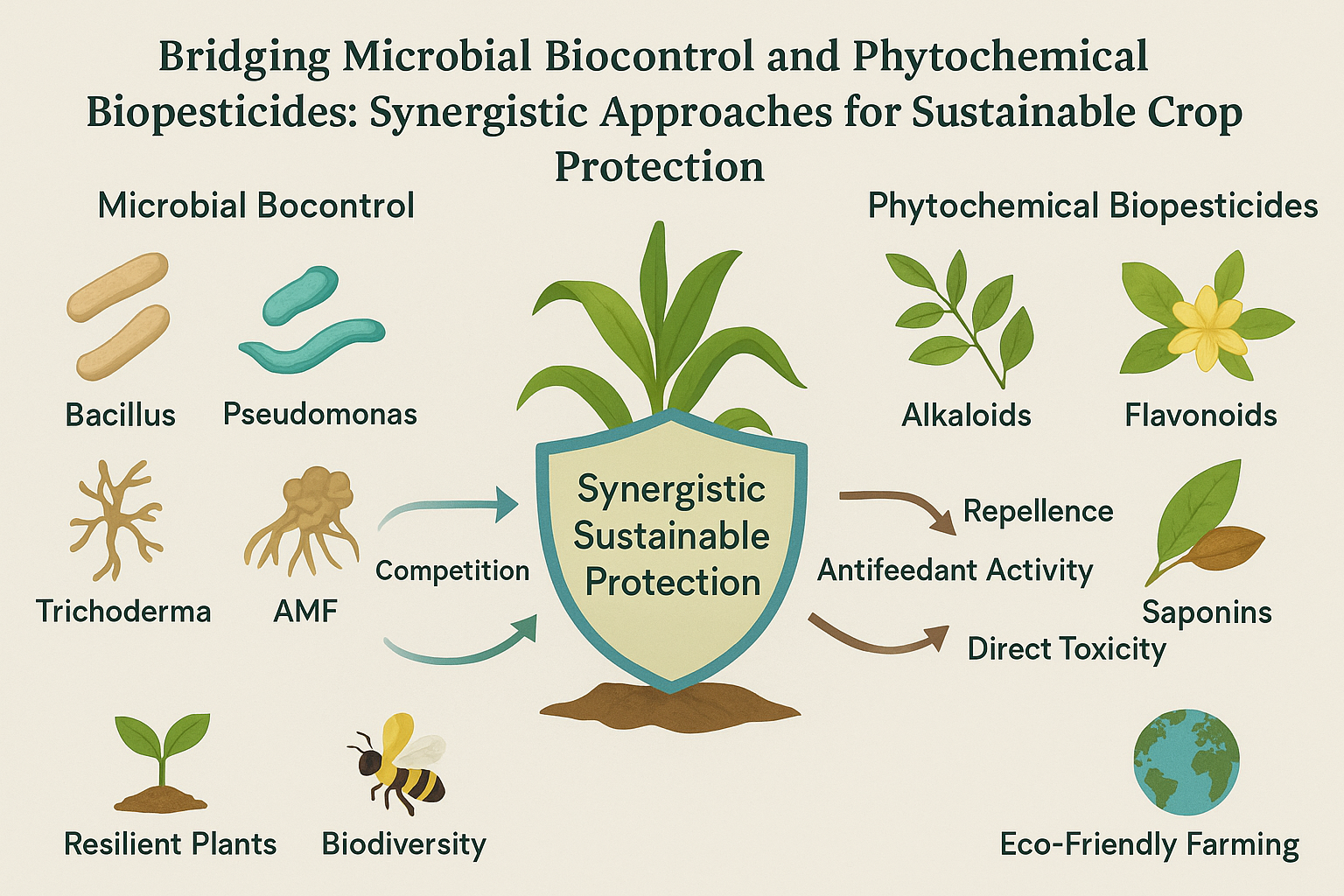
The increasing prevalence of pests and diseases in agriculture necessitates innovative strategies for crop protection that mitigate environmental impacts. This review paper investigates the synergistic potential of combining microbial biocontrol agents and phytochemical biopesticides as sustainable alternatives to chemical pesticides. Through a comprehensive review of recent literature, we analyze how microbial agents, including bacteria and fungi, enhance plant resilience and suppress pest populations. Concurrently, we explore the diverse modes of action of phytochemicals derived from plants, emphasizing their role in pest deterrence and disease resistance. Our findings indicate that integrated approaches leveraging microbial and phytochemical interventions improve pest management efficacy and promote soil health and biodiversity. The study underscores the necessity for interdisciplinary research to develop effective, eco-friendly pest control strategies that align with sustainable agricultural practices. Ultimately, this work advocates for a paradigm shift in pest management, encouraging the adoption of synergistic biocontrol methods that contribute to resilient agroecosystems.
Keywords:
microbial biocontrol
; phytochemical biopesticides
; sustainable agriculture
; crop protection
; synergistic approaches
1. Introduction to Sustainable Crop Protection
Sustainable crop protection refers to the systematic management of various biological, chemical, and physical components that collectively affect crop development, yield, and quality, while simultaneously aiming to minimize negative impacts on the environment and society. According to Montesinos, sustainable agriculture can be characterized as employing biocontrol agents effectively. These agents include natural microbial antagonists that target diseases and arthropod pest management and biopesticides derived from natural sources instead of synthetic chemicals [1,2]. As a result, pest management transcends conventional practices, highlighting microorganisms' vital role in fostering crop plants' health and robustness [3]. This sustainable approach embraces environmentally friendly methodologies, integrating pest and nutrient management techniques with comprehensive pollution control measures and prudent conservation of critical agricultural resources [4]. By emphasizing these eco-conscious strategies, we can cultivate a more harmonious agricultural ecosystem, ensuring that farming practices not only enhance productivity but also safeguard our planet's health and future generations' well-being.
2. Overview of Microbial Biocontrol Agents
Microorganisms play an incredibly crucial and significant role in the biological control of various plant diseases, and at the same time, they can also be pathogens themselves. Microbial biocontrol agents (BCAs) can suppress a wide array of plant pathogens and can effectively enhance plant resistance against these pathogens or even other environmental stresses. The major types of BCAs include a diverse range of bacteria, such as Pseudomonas spp. and Bacillus spp., as well as fungi, including species like Trichoderma spp., and also include viruses that specifically target harmful plant pathogens or pests. The mechanisms of action employed by these microorganisms include antibiosis, where one organism produces substances harmful to another; parasitism, which involves one organism living off another; predation, where one organism hunts and consumes another; and competition for vital nutrients or space. Additionally, they can induce plant defense responses that bolster a plant's resilience to disease [5] (Figure 1). Microbial BCAs present several valuable advantages, such as their broad-spectrum activity, their suitability and effectiveness for integrated pest management strategies, their target specificity, safety to non-target organisms, and their compliance with organic farming regulations, which makes them an appealing choice for farmers looking to farm sustainably [6]. Nonetheless, it is essential to note that their efficacy can be variable and often unpredictable due to various environmental conditions and complex interactions with the native microbiota present in the soil and plant environment [7]. Furthermore, developing long-term sustainable strategies for their use in agriculture remains a significant challenge that researchers are actively working to address [8,9].
2.1. Types of Microbial Biocontrol Agents
Microbial biocontrol agents (MBAs) are an alternative to conventional crop-protection strategies offering improved environmental sustainability [10]. Several types of microbial agents are commonly employed, amongst which the most relevant are Bacillus, Pseudomonas, and Trichoderma species, which together comprise approximately 80 % of the total biopesticide global market, plus mycorrhizal fungi and endophytes. Bacillus spp. Includes both saprophytes and facultative endophytes. These bacteria promote plant growth by fixing nitrogen in the soil and solubilizing phosphates, but also can produce extracellular hydrolases that degrade pathogen cellular walls and a variety of secondary metabolites with multiple bioactivities. Among these, the most important for crop protection are cyclic lipopeptides and a range of polyketides with antibacterial, antifungal, antiviral, and nematicidal properties [9,11]. Some of this genus's more common biocontrol species are B. subtilis, B. amyloliquefaciens, B. velezensis, and B. thuringensis. Pseudomonas species have been used for decades as efficient biocontrol agents against diverse crop diseases. They are mostly saprophytic but can colonize both the rhizosphere and plant tissues. Their main modes of action in crop protection are the synthesis of PR proteins that stimulate the plant immune system, the competition for resources, and the synthesis of an extensive range of bioactive secondary metabolites. These include cyclic lipopeptides, siderophores, antibiotics such as 2,4 diacetyl phloroglucinol (DAPG), phytohormones, hydrolytic enzymes, and insecticidal toxins. Trichoderma species are one of the most important genera of filamentous fungi involved in commercial biocontrol products. Their action modes encompass a range of beneficial effects, including the supply of nutrients, the production of secondary metabolites with bioactivities similar to those of the two bacterial genera above, and the induction of systemic resistance in the host [12]. This genus includes both saprophytes and facultative endophytes, and species such as T. virens, T. harzianum, and T. atroviride are among the most commonly used across various crops. Arbuscular Mycorrhizal fungi (AMF) are obligate symbionts establishing mutualistic associations with the roots of over 80 % of terrestrial plants. Besides improving nutrient acquisition, they also induce immune responses via the production of defense signaling molecules such as jasmonic acid, salicylic acid, and ethylene [13,14,15]. Mycorrhizal fungi include arbuscular mycorrhizal fungi (AMF) and ectomycorrhizal fungi (ECM), of which AMF are more widely used as biocontrol agents. Endophytes inhabit plant tissues without damaging the host and confer resistance to biotic and abiotic stresses. Several reports have shown successful strategies using AMF to prevent fungal disease in strawberry [16]. These microorganisms supply nutrients, synthesize phytohormones and bioactive secondary metabolites, induce systemic resistance, and compete with pathogens for space and nutrients.
2.2. Mechanisms of Action
The utilization of microbial biocontrol agents serves a vital purpose in suppressing various plant pathogens while simultaneously fortifying the overall resilience of plants. A substantial and continuously growing body of literature meticulously explores and elaborates on the intricate mechanisms of pathogenesis. These pathogens significantly rely on a sophisticated process known as quorum sensing, which allows them to coordinate the production of critical virulence factors. This process entails the accumulation of a diffusible chemical signal that, upon reaching a specific threshold concentration, effectively binds to a cognate receptor, initiating the expression and activation of targeted genes that increase their pathogenicity [17]. Microorganisms have developed various strategies to disrupt and hinder this crucial communication process. These strategies can include the inhibition of the synthesis of signaling molecules, enzymatic digestion of these molecules, deactivation of the produced signals, antibody binding, and competition for receptor occupancy, as well as the inhibition of gene activation that would otherwise facilitate the pathogenic response [18]. Employing microbial consortia has emerged as a promising avenue, capitalizing on the complex interspecies interactions and intricate trophic networks aimed at enhancing the effectiveness of biocontrol measures [7]. However, notable challenges persist regarding potential incompatibilities among different microbial species, the unpredictability of their interactions, and the possible adverse effects that antimicrobial compounds produced by certain biocontrol strains may exert on other components of the consortium. The phyllosphere, which encompasses a diverse array of microorganisms, including bacteria, yeast, and fungi that reside on the aerial surfaces of plants, portrays a dynamic environment. These microorganisms exhibit remarkable adaptability to changing environmental conditions through various mechanisms that also confer antagonistic activity against opportunistic pathogens. Biocontrol factors can broadly be categorized into direct interactions, such as microbe–microbe interactions, and indirect interactions involving host plants, referred to as host–microbe interactions (Figure 1). A comprehensive understanding of the genetic basis underpinning these mechanisms, combined with well-structured laboratory and field experiments designed to detect their presence, is essential for the rational design and formulation of effective microbial consortia. By implementing such strategic approaches, the overarching goal is to secure effective disease control measures without negatively impacting the growth and productivity of the plants. This dual focus is critically important in light of the main challenges posed by the need to sustain high agricultural productivity while minimizing detrimental environmental effects, particularly in the context of a rapidly growing global population. In addition to these measures, microorganisms can induce systemic resistance in plants as well. They can enhance overall plant immunity through various means, including the introduction of elicitors or through endophytic colonization. Furthermore, these beneficial microorganisms can trigger intricate hormonal crosstalk and complex signal transduction pathways that effectively activate several essential defense genes, helping to prime the entire plant against both pathogens and pests [9,19].
2.3. Advantages and Limitations
Microbial biocontrol agents, including fungi, bacteria, and viruses, effectively control a broad spectrum of phytopathogens, nematodes, and insect pests with high specificity and minimal toxicity toward non-target organisms and the environment. Their modes of action encompass antibiosis, competition, parasitism, and induced systemic resistance [9]. Despite these advantages, microbial agents exhibit several limitations. Their high host specificity restricts applicability to particular pests, requiring precise diagnosis. Complex and costly mass culturing, storage, and formulation processes hinder large-scale production [20]. Furthermore, their efficacy is vulnerable to environmental factors such as temperature, humidity, sunlight, and soil pH [1,21]. Phytochemical biopesticides derived mainly from crude plant extracts or essential oils demonstrate activity against various pathogens including bacteria, fungi, viruses, insects, and nematodes. They serve as biodegradable botanical pesticides providing safer and more effective alternatives to synthetic agrochemicals [22].
3. Phytochemical Biopesticides: An Overview
Plants are an incredibly rich source of bioactive biochemicals, which exhibit a diverse array of biological properties. A wide range of agrochemicals has been developed from these phytochemicals, contributing significantly to agricultural practices. Among these phytochemicals, secondary metabolites such as alkaloids, flavonoids, phenolics, saponins, and essential oils play crucial roles in ecological processes. They act as natural antifeedants and repellents, providing essential defense mechanisms that protect plants from feeding insects and other herbivores [23]. The biopesticide process that utilizes these phytochemicals generally consists of several key steps. Initially, it involves the collection of the raw plant material, which is then dried to preserve its integrity and potency. Following this, the chemical constituents are extracted from the dried plant parts using various appropriate solvents, such as methanol or acetone, to isolate the active ingredients effectively [24]. Bioactive plant extracts are increasingly considered safer alternatives to the more conventional synthetic pesticide products commonly used in agriculture today. Notably, approximately 95% of the world’s pesticides are synthesized from chemical sources, posing significant harmful effects not only on humans but also on animals and the wider environment [25]. In contrast, using phytochemical biopesticides represents a more eco-friendly approach, offering several advantages. These products provide the potential for safer and more effective pest management solutions, utilizing readily available raw materials, maintaining reasonably low production costs, and ensuring perceived safety for consumers. Furthermore, compared to their synthetic counterparts, botanical pesticides generally exhibit lower toxicity levels to mammals. Many of these natural alternatives have been tested for incorporation into integrated pest-management programs, showcasing their viability and effectiveness in sustainable agriculture practices. By applying these innovative solutions, the agriculture sector can move closer to a more sustainable and environmentally responsible future [8,26].
3.1. Sources of Phytochemicals
Phytochemicals are natural substances derived from plants that often serve as primary or secondary metabolites, protecting against most general stressors. Phytochemical biopesticides are a significant component of integrated pest management programs and are generally safer and more selective toward target pests than conventional pesticides [9] (Figure 2). Bioprospecting for new plant phytochemical agents typically follows two main approaches; first, the recovery of phytochemicals leads is responsible for specific observed properties such as pest repellency. For example, neem-based flea repellents use azadirachtin as an active ingredient. Second, the explicit construction of the formulation utilizes ethnobotanical information concerning plants and their preparation against a range of harmful target pests [10]. Phytochemical biopesticides are obtainable from numerous plant matrices. Most effective phytochemicals are isolated from medicinal herbs. For example, suppose pure compounds are isolated from waste rich in essential oils. In that case, these residues are considered a good source for isolating bioactive compounds for biopesticides, for which other plants are mixed in specific proportions. Phytochemicals associated with phytochemical biopesticides include aliphatic and aromatic compounds, essential oils, and alkaloids, which disrupt enzymatic activities and the nervous system of the pests. Essential oils are constituents of nearly every part of the plant and play a crucial role in defending against herbivores and invading pathogens. Essential oils, aromatics, and aliphatic phytochemicals possibly adopt their biological properties by interaction with the lipids of the digestive system and the membranes of target animals, causing the lysis of cells. During storage, phytochemicals or their purified extracts accomplish very promising insecticidal, fungicidal, bactericidal, and fumigant activities. The extractable phytochemicals typically possess broad-spectrum activity against numerous agricultural pests; most biodegrade quickly into compost [27].
3.2. Extraction and Formulation Techniques
Solvent extraction remains a primary technique for recovering essential oils from aromatic plants, alongside alternative methods such as carbon dioxide supercritical extraction. The recovery system type depends on the starting materials' corresponding physical or chemical nature. The extraction system treats crude vegetable oils, whereas the recovery of cooking oils and oils from fried fast food industries is conducted by adsorption and membrane processes. Several technologies have been developed for the extraction of essential oils, such as solvent extraction, steam distillation, enfleurage, and maceration. Enfleurage is rarely used at the industrial scale, and the volatile solvents used for solvent extraction are hazardous and harmful to the environment. Although more common, steam distillation exhibits several limitations, such as time and high energy consumption [1]. In chemical-free techniques adaptation, essential oils are extracted by solvent-free microwave extraction, a newer and promising approach that provides better product quality and faster extraction [28,29]. Advances in biocontrol formulation of bioagents have offered several alternatives: liquid formulations, encapsulation methods, spray drying or freeze drying, and other techniques to improve microbial viability. Attention may be placed on selecting appropriate biostimulants and hydrogel-forming polymers as promising alternatives to conventional agricultural practices [30].
3.3. Efficacy and Safety Profiles
While the efficacy of a microbial agent plays a crucial role in its industrial development and application, it is just as important to thoroughly examine and understand the potential effects that the active compound may exert on humans and other non-target organisms within the ecosystem. For instance, some specific microbial pesticide strains utilized in agricultural practices may pose significant risks, as they can be pathogenic for individuals who are immunocompromised and thus more vulnerable to infections. Certain members of the Bacillaceae family are notably associated with opportunistic infections, particularly B. cereus or B. anthracis, which can lead to serious health complications [31,32]. In sharp contrast, several subspecies of B. thuringiensis and B. subtilis employed in biocontrol and bioremediation efforts have, to date, never been linked to any known infections in human or animal hosts. This distinction highlights the necessity of evaluating potential risks. Furthermore, various antibiotic metabolites produced by P. fluorescens are toxic to particular species of earthworms, which was established through systematic laboratory tests designed to assess their effects on these non-target organisms. Understanding these complex interactions is essential for the responsible application of microbial agents in various industries [1]. Another example is the Yucca shidigera extract, a plant-derived compound rich in saponines, which promotes germination and, at the same time, is a natural fungicide [33].
4. Synergistic Approaches in Biocontrol Strategies
Synergistic approaches combining microbial biocontrol agents with phytochemical biopesticides offer promising solutions for effective and long-lasting crop protection [8]. Biological control broadly defines the use of living organisms and/or their by-products to reduce the effects of plant pathogens. Microorganisms employed as biological control agents may act as antagonists by different mechanisms, including parasitism, antibiosis, and competition. Their effectiveness depends on several environmental and physiological factors. Biopesticides derived from plant secondary metabolites typically consist of essential oils, alkaloids, flavonoids, or coumarins extracted from herbs, spices, or aromatic plants [9]. These have demonstrated strong insecticidal, fungicidal, nematicidal, or bactericidal activities on many phytopathogens and offer enhanced safety to crop production systems compared to traditional products. Combining microbial antagonists with plant-derived biochemicals has yielded synergistic or additive effects against multiple phytopathogens and insect pests across various crops [34,35]. A broader application of such synergistic biocontrol approaches would provide new avenues to reduce reliance on chemical crop protection products [36].
4.1. Combining Microbial and Phytochemical Agents
Integrated pest management (IPM) has gained unprecedented momentum and is now considered a universal methodology for controlling plant diseases. IPM strategies allow combinations of the most environmentally friendly crop protection techniques, such as biological control, host plant resistance, physical methods, and utilization of cultural and chemical practices matching the principles of sustainability as well as food and environmental safety (Figure 3). A crucial aspect to consider is that eco-friendly solutions must be equally or more effective in combating diseases than synthetic pesticides to be truly viable. Recent investigations demonstrate that approaches involving biocontrol agents (BCAs) can outperform chemical controls with appropriate management, enabling the development of efficient and sustainable crop protection strategies [5,26].
Biocontrol agents consist of microorganisms used for controlling phytopathogens, and phytochemical biopesticides are plant-derived products evaluated for their efficacy in plant protection [9]. Investigations examining the combination of these two strategies reveal synergistic effects that enhance the prevention of phytopathogen development and disease spread, yielding greater efficacy than either agent applied separately [37] (Figure 4). The greater the discrepancy in the mode of action or environmental persistence between the two components, the more reliable the combination strategy. Numerous microorganisms exploit multiple mechanisms in biological control, such as parasitism, competition, production of bioactive metabolites, and induction of plant resistance, among others. Extensive studies apply various techniques or materials possessing these modes of action to assess their potential as innovative, eco-friendly solutions for disease management.
Despite the evolution of chemical fungicides, their widespread usage after 1945 remains a significant concern regarding food and environmental safety and human health. Numerous chemical fungicides exhibit toxicity and possibly mutagenic, carcinogenic, and teratogenic effects while depleting the ozone layer. Accumulation of food residues can cause various physiological reactions, inciting chronic and acute toxicity. Therefore, strategies that are efficacious, sustainable, environmentally benign, and safeguard human and environmental health must be sought. In recent research, biopesticides—encompassing living organisms, extracts, essential oils, and various fractions—are increasingly considered. Biopesticides are naturally derived materials mimicking the biochemical defense mechanisms in plants, animals, and other organisms, enabling the development of innovative and sustainable approaches for crop protection. Because of their natural origin, these options exhibit safety and shorter persistence.
4.2. Case Studies of Successful Synergies
Integrating complementary approaches remains imperative to developing effective and economically viable methods for crop protection. Complex, integrated disease management strategies offering wide-spectrum control and adequate crop protection from seed to harvest represent promising directions. Effective and sustainable use of biocontrol may require practices rooted in ecological understanding rather than direct chemical substitution. Combined applications of bacterial and fungal biocontrol agents, or combinations of Bacillus species providing Bacillus thuringiensis toxins and lipopeptides, can deliver additive or synergistic benefits against insects and fungi. Enhanced synergistic antifungal activity has been observed in mixtures of arbuscular mycorrhizal fungus, Bacillus pumilus, and Pseudomonas alcaligenes [10]. Biological control using single microorganisms faces challenges, including competition from native organisms, environmental factors, and limited efficacy under fluctuating conditions. Microbial consortia comprising multiple microorganisms with diverse mechanisms of action are among the most promising approaches for reducing the magnitude and improving the stability of pathogens and the diseases they cause [9]. Despite extensive research, few microbial consortia-based formulations are commercially available, highlighting the need for further exploration to enhance sustainable plant cultivation management.
5. Challenges in Implementation
Biopesticides comprising microbials or phytochemicals are often regulated differently from their synthetic counterparts. Microbial biopesticides face considerable regulatory hurdles because they are living organisms. These challenges act as one of the primary bottlenecks for their commercial exploitation and widespread adoption [1,20]. General regulatory challenges affecting biopesticide market penetration and growth relate to establishing the efficiency and safety of new microbial- or plant-based products (Figure 5). Studies have documented issues restricting the broader adoption of microbial biocontrol agents, but these issues still need to be addressed and resolved [2,26]. These challenges provide essential insights into problems with phytochemical biopesticides since both types of biopesticide rely on simple organisms such as fungi or plants to produce bioactive compounds. Hence, developing phytochemical products and their use alongside microbial agents requires a better understanding of the factors influencing commercial exploitation.
Market penetration for biofungicides remains comparatively low, despite the substantial research and development generated over the last few years. Some of the challenges that need to be addressed soon relate to an appropriate technological platform to ensure the commercialization and development of a booming market. The availability of microbial control products remains limited, and they still suffer from quality control and a restricted shelf life that discourages widening utilization [38]. Lack of farmer awareness and inadequate extension services limit familiarity with appropriate dosages and the potential for resistance outbreaks when biofungicides are subjected to intense use. Studies have shown that combining biocontrol agents with low doses of synthetic fungicides in integrated management systems can protect seeds and seedlings; improve overall fungicide effectiveness; and reduce the use of highly toxic compounds. Incorporating different biocontrol agents with synthetic fungicides creates alternatives for managing a wide range of phytopathogens. The integration of biological control in agricultural production systems faces multiple challenges. Limits on some biocontrol agents' optimum storage conditions and shelf life require extra planning in advance of purchase and application. Most biocontrol agents require earlier application than chemical strategies; this necessitates different pest thresholds or timings for biocontrol deployment. Many biocontrol agents are less tolerant of adverse weather conditions than their chemical counterparts. If control of one pest requires the use of a toxic chemical to a biocontrol agent in the system, the latter’s application will be hampered or prevented; in such instances, a different pest management approach may become mandatory. The compatibility of biocontrol organisms with chemical pest control has often been tested only in limited cases or with unclear and inconsistent results; information gaps and contradictions complicate pest management decisions [39]. Crop production practices, regulatory frameworks, pest management strategies, and public perceptions are evolving in ways that are expected to influence the integration of biocontrol approaches. Changes in chemical pesticide labels, new invasive pests, and consumer preferences for reduced pesticide use influence biocontrol suitability. Regulatory emphasis on pollinator protection presents new opportunities for pollinator-safe biocontrol strategies, particularly when combined with species-rich perennial plantings designed to sustain beneficial insect populations. The growing availability of biocontrol products, especially bacteria and fungi, together with a sizeable body of valuable positive field efficacy reports, suggests that biocontrol approaches will increasingly become a desirable and cost-effective option in pest management schemes.
5.1. Regulatory Hurdles
Introducing biopesticides to the market, even for well-established products, often proves more costly, time-consuming, and complex than anticipated. Regulatory scrutiny and the conservative stance of many farmers frequently elevate the hurdles biopesticides face above those confronting conventional pesticides. Although extensive data regarding microbial biopesticides suggests that risks are appropriately evaluated, the regulation of phytochemical biopesticides remains inconsistent across various jurisdictions [1]. The lack of a uniform regulatory framework hampers access to these products and constrains market penetration, even while the demand for biopesticides is expanding [26]. The challenges associated with biopesticides have not escaped the attention of regulatory authorities. Thanks to concerted efforts by biopesticide manufacturers, organizations such as the European Union and the United States Environmental Protection Agency are engaged in ongoing discussions to refine regulatory policies and laws to accommodate biopesticide market access better. A consistent and streamlined regulatory framework has become a paramount priority for the sector's growth and long-term sustainability [40].
5.2. Market Acceptance and Economic Viability
Alternative plant-protection methods must be practical and cheaper than synthetic pesticides if they are meant to achieve widespread acceptance in agricultural practices. Although microbial pesticides frequently maintain comparable effectiveness to their synthetic counterparts, they are often more expensive. In the context of the economic efficiency characteristic of traditional agricultural practices, microbial pesticides cannot be justified purely because of their long-term advantages, even though their contributions to overall crop protection are significant. Selling points like “low environmental impact” and “reduced consumer health risks” do not yet carry the weight necessary to command premium prices in the current market landscape. As a result, microbial-biocontrol agents tend to be relegated to alternative-market segments, such as organic farming, which unfortunately represent only a relatively small fraction of the total farmland available. These limitations hinder broader adoption of microbial pesticides and raise questions about their viability in mainstream agricultural markets, necessitating a reevaluation of their strategic positioning [1,20].
6. Field Trials and Practical Applications
The successful implementation of sustainable crop protection programs depends on the design, execution, and analysis of field trials. No well-established experimental methods exist that specifically assess the effect of synergistic combinations of microbial biocontrol agents and phytochemical biopesticides. Furthermore, little data is available that can facilitate the development of such methods for large-scale deployment. However, collating unpublished results from small independent trials has provided an initial dataset demonstrating the potential of integrating microbial and phytochemical agents [41]. This is quite logical, as recent research has shown that the combination of plant growth-promoting bacteria and biostimulants has a synergistic effect against abiotic stress, so that a similar effect could be expected in biotic stress response [42,43]. Further research is required before the synergistic approach can become a widely accepted methodology. Large-scale field tests are essential to validate the efficacy of novel synergistic combinations. Over the past decade, numerous investigations have demonstrated that the efficacies of many microbial biocontrol agents can be significantly enhanced by treatment with piperitenone oxide. This phytochemical also exhibits direct repellent and insecticidal activity [1]. The combined effects ensure a highly cost-effective and intensive biocontrol strategy that meets the demand for sustainable crop protection options. In addition to efficacy, key parameters for optimization include impact on non-target organisms, environmental persistence, and spectrum of control.
6.1. Designing Effective Field Trials
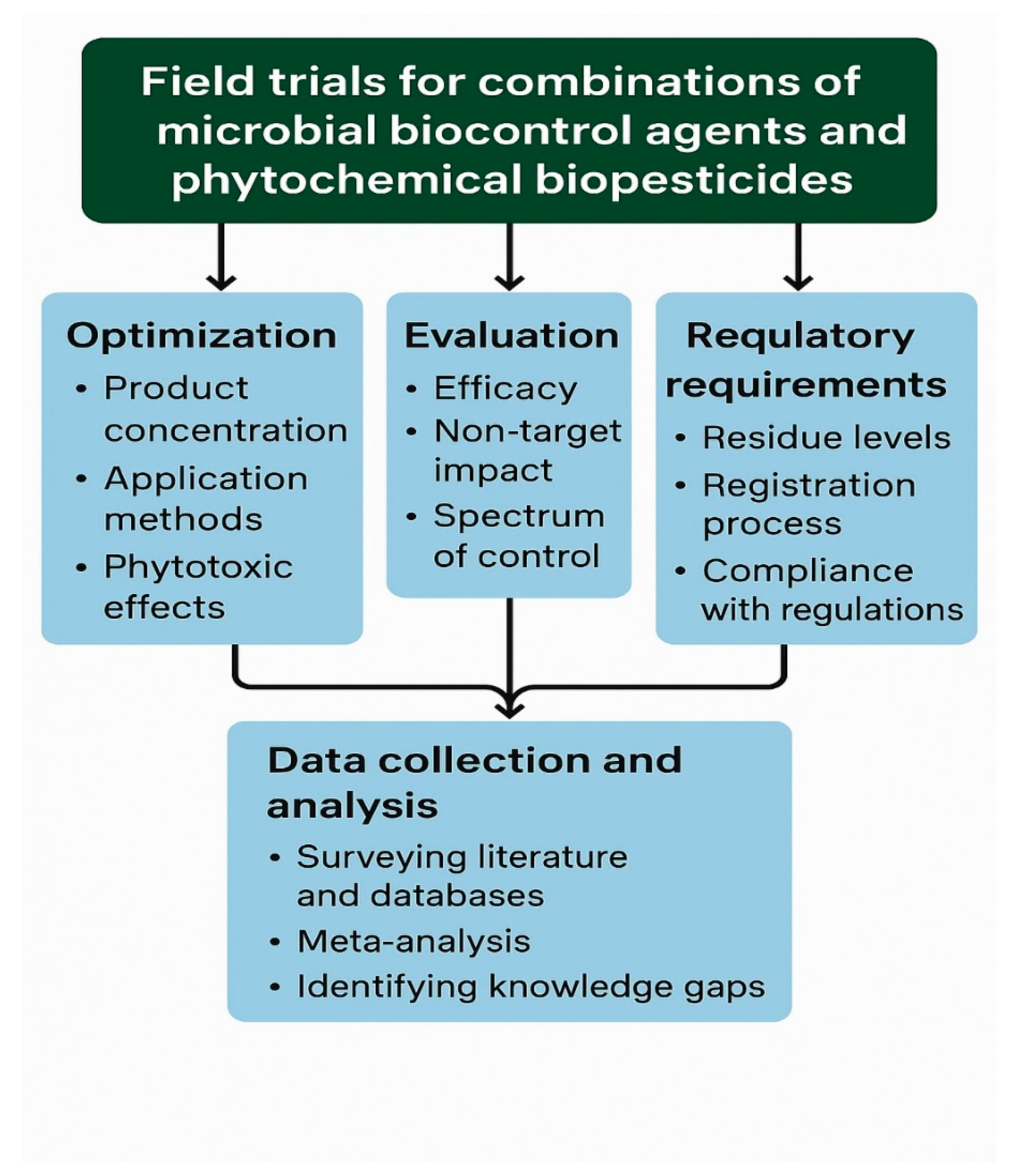
Field trials are critical for demonstrating laboratory or greenhouse efficacy of new plant-disease-control products under real conditions (Figure 6). They allow optimization of product concentration; application methods, including timing, frequency, and mode of delivery; and can uncover any phytotoxic effects. Results of such trials form the basis for registration-presentation dossiers. Commercial products based on plant extracts usually conform to maximum residue levels (MRLs) for major active-ingredient components naturally found in foods and beverages. Hydrodistilled essential oils can be relatively phytotoxic even when diluted, and after-effect testing is recommended before commercial use; testing after application up to the time of first harvest is essential. Extracts of unprocessed botanicals are generally safe regarding food residues, provided that appropriate practices are followed. Exposure of bees to biopesticides (microbial- and plant-extract–based) is usually considered nonhazardous; the persistence of microbial products is short, and repellency is often high [1]. Regulatory requirements for new biopesticidal products are controlled by governmental bodies worldwide. Registration data must be submitted in a standard format and evaluated according to transparency and confidentiality rules. Final registration decisions are based on rigorous examination of scientific evidence submitted, including efficacy, toxicity, and persistence. Maintaining transparency and intellectual property protection is mandatory and depends on governmental policies. Multi-ingredient compositions meeting regulatory requirements can usually be subdivided into dossier presentations [26]. Time-to-registration schedules are generally longer for new semi-chemicals than for biopesticides from microorganisms or botanicals. Compliance with EU regulations on biocides is an additional non-negligible objective. Extracted compounds should comply with Annexes II or III of Regulation 2021/383/EU and benefit from the “natural origin” status; regulatory status must be verified with the appropriate national authority before product registration. The European Food Safety Authority (EFSA) has already excluded most extracted compounds included in Annex II that may have devastating effects (the most toxic compounds are banned in Annex III), and the priority concerning European registration is set on production technologies of these materials to be eligible for legislation on plant protection products. The combination of microbial and phytochemical biopesticides has been the subject of several recent investigations. For example, the fungal parasite Metarhizium anisopliae and the extracted botanical insecticide pyrethrum synergize against the European bean aphid (Aphis fabae) by increasing insect-mortality rates [44,45]. Botrytis cinerea exhibits decreased fungicide-resistance development when botanical formulations are added to microbial biofungicides. The combined and integrated use of microbial biocontrol agents with extracted biopesticidal phytochemicals might become a key component of sustainable-protection strategies for orchard and arable crops.
6.2. Data Collection and Analysis
Data can be collected by systematically surveying and analyzing existing literature and databases on microbial biocontrol agents and phytochemical biopesticides. Comprehensive analytical techniques, such as rigorous meta-analyses, can then be strategically applied to the collected data to assess the efficacy, modes of action, and compatibility of different biocontrol agents [46,47]. By extracting key information from reliable sources and pertinent studies, researchers can effectively identify significant knowledge gaps and specific areas where findings might be productively incorporated into practical applications. This comprehensive approach ensures a well-rounded understanding of the subject matter.
7. Future Directions in Sustainable Crop Protection
Modern crop cultivation faces a variety of significant challenges that are increasingly pressing today’s agricultural landscape: rising food demands driven by a growing global population, limited arable land available for cultivation, and escalating infestations caused by phytopathogenic organisms that threaten crop yields. Additionally, the development of resistance in phytopathogenic microbes severely restricts the effectiveness of available synthetic and semi-synthetic agrochemicals, complicating the management of plant diseases and necessitating the search for alternative solutions. Consequently, the agricultural industry is strongly emphasizing the sustainable development of novel and efficient agrochemicals that minimize environmental impact and safely preserve the quality and yield of crops. Microbial biocontrol agents (MBCA) have emerged as potential candidates to bridge the gap between effective pest control and sustainability. Yet, several obstacles related to their manufacturing processes, application methods, and overall product development significantly hinder their commercialization [35]. These difficulties highlight the need for supportive strategies to help facilitate the integration of MBCA into farming practices. Conversely, phytochemical biopesticides stand out as promising synergistic partners for enhancing existing biocontrol formulations. They also have the added benefit of being utilized as agrochemicals, exhibiting highly effective antimicrobial activity coupled with enhanced environmental safety profiles. Therefore, the formulation of synergistic combinations of microbial biocontrol agents alongside phytochemical biopesticides represents a pivotal and innovative strategy toward achieving sustainable crop protection and advancing modern cultivation practices effectively [8,26,48].
7.1. Innovations in Biocontrol Technologies
The phytochemical biopesticides are chemical compounds derived from plants. Owing to their widespread availability and straightforward processing, they serve as effective active ingredients and provide a potential source of new pesticides. Extracted from essential oils, flowers, leaves, stems, and seeds using various solvent-extraction techniques, these chemicals are typically less toxic to non-target organisms and humans than synthetic pesticides. Nevertheless, challenges related to market acceptance, strict regulations, and the high cost and labor intensity of production hinder utilization. When used together, microbial biocontrol agents and phytochemical biopesticides can interact synergistically. Alleviation of regulatory hurdles and encouragement of synergistic biocontrol strategies could therefore increase the adoption of biopesticides and contribute meaningfully to sustainable crop protection [26,48].
7.2. Integrating Biocontrol in Agricultural Practices
Formulations based on microbial consortia continue to hold significant application potential in crop protection for the improvement of the antipathogenic effects of BCAs. Microbial protection with the use of BCAs appears as a promising alternative to chemical plant protection methods. Nonetheless, the efficacy of currently available BCAs leaves much to be desired. Microbial consortia comprising two or more microorganisms with different modes of antagonistic actions advance considerable promise for augmenting the protection of plants against pathogens. Today still very few biocontrol formulations based on microbial consortia are available on the market despite scientific interest in them. The formulation of highly efficacious crop plant protection products with long-lasting effects stands as one of many challenges for the years to come. By the use of microbial consortia, the potential benefits of BCAs-based biocontrol may be fully unlocked and a bright and sustainable future for plant protection may be ensured.
8. Environmental Impact of Biocontrol Agents
Microbial biocontrol agents are regarded as environmentally friendly alternatives for pest management strategies, and there is an impressive variety of plant-protection products that are based on these beneficial microbial biocontrol agents. These products are designed to be non-harmful to the environment and are now readily available on the market for commercial use. The origin and beneficial nature of most microbial PGPR (plant growth-promoting rhizobacteria) as well as biological control agents (BCAs) align perfectly with the principles of sustainable agriculture that are being increasingly embraced and adopted around the globe [49]. Furthermore, phytochemical biopesticides should be regarded as a highly effective and immensely useful tool for protecting plants, as they significantly contribute to sustainable crop production practices. The majority of these biopesticides possess lower toxicity and shorter persistence in the environment when compared to conventional chemical pesticides, which makes them a highly favorable option for farmers. By utilizing these biopesticides, farmers can protect their crops effectively while concurrently minimizing their overall environmental impact, promoting a healthier ecosystem and ensuring a more sustainable approach to agriculture [8,26,50].
8.1. Ecosystem Health Considerations
Biopesticides derived from microbial biocontrol agents and plant extracts have emerged as promising tools for sustainable crop protection. It is critical to address relevant ecosystem-health and biopesticide-compatibility issues to limit unintended impacts on biodiversity. Microbial biocontrol agents may be sensitive to naturally occurring biopesticides. Successful combinations have included a Fusarium oxysporum biocontrol agent and Cymbopogon citratus (lemongrass) essential oils. At the same time, some practices may be contraindicated, such as combinations of Aspergillus with Ocimum basilicum (basil) extracts or Bacillus with Syzygium aromaticum (clove) or Cinnamomum zeylanicum (cinnamon) essential oils [8]. Conversely, microbial biocontrol agents can impart positive effects. Pseudomonas sp., Bacillus subtilis, and Bacillus velezensis may improve the solubilization and uptake of many biopesticide components. Natural products obtained with aqueous solvents promote the growth of several biocontrol agents used singly or in consortia [9]. In addition to their own biopesticides, several plants produce materials that enhance the effectiveness of other treatments or facilitate microbial biocontrol survival.
8.2. Biodiversity and Biocontrol
Several groups of microorganisms have shown effective biocontrol activity in horticultural crops. Review of studies on their control activity against different phytopathogens reveals several modes of action, among which antibiosis, induced systemic resistance (ISR), competition, and mycoparasitism are the most common. Significant advantages of these microbial agents include broad-spectrum activity when used in a consortium, safety for humans and the environment, and easy production and formulation. Despite their potential, commercial microbial biocontrol products face regulatory, marketing, and economic hurdles, which may be overcome by combining the microorganisms with other control strategies, such as phytochemical biopesticides. Phytochemical biopesticides are chemical compounds isolated from plants and selected for their safety, high bioactivity, and high content in plants amenable to economical large-scale production. The ability of plants to synthesize a wide variety of natural chemical compounds that protect them from insects, diseases, and weeds is well known. These phytochemicals can also be used to protect crops. Their extraction from plants is the most commonly used method. Still, this approach has the disadvantage of potentially limiting their availability according to the season of production or harvest and lacking consistency in the amount or efficacy of the extracted phytochemicals. For these reasons, plant tissue culture can represent an alternative technology for phytochemical production [51].
9. Economic Implications of Biopesticide Use
Economic considerations are decisive for the widespread adoption of microbial and phytochemical biopesticides on a commercial scale. The cost-effectiveness of biopesticides in crop protection is currently difficult to determine due to limited price per unit area, insufficient data on dosage and irrigation space requirements, and generally lower yields compared to chemical pesticides. Most farmers remain reluctant to adopt these insecticides primarily because of higher prices [20,26]. Although biopesticides incur higher costs than chemical pesticides, this premium may be justified. Chemical pesticides impose significant disposal expenses and negatively impact farmer health, whereas biopesticides present safer and more environmentally friendly alternatives. Economic, social, and political factors influence market acceptance, thereby affecting the adoption of sustainable crop protection technologies [40]. Government initiatives to popularize biopesticides and raise awareness through media channels are critical in encouraging their use. Integrating biopesticides with pest management tactics can mitigate costs and reduce pesticide resistance. Such practices will likely become more attractive once consumers develop a greater appreciation for organic products; initial consumer education efforts can foster this awareness. Adopting synergistic combinations of microbial biocontrol agents and phytochemical biopesticides will depend on economic viability and farmers' willingness to pay.
9.1. Cost-Benefit Analysis
Cost-benefit analyses (CBAs) are increasingly adopted as a pragmatic approach for screening pest management strategies, estimating their net return over a control period [26]. A partial budget study examined three scenarios: expert-recommended strategies, two commercial grower approaches, and assumed biopesticide use. The specialist-recommended plan involved the rotation of pesticides with different modes of action to prevent resistance and suppress target populations, resulting in effective control but higher production costs than grower approaches, where the conventional strategy with rotated pesticides incurred the least cost [52]. Biopesticides, including microbial formulations such as Met 52 and QRD 452, are also subject to CBA studies, given their registration status and demonstrated efficacy. Their slower mode of action relative to conventional pesticides entails higher purchase prices—likely reflecting unique product attributes—although such premiums tend to diminish with the entry of additional competitors. More broadly, CBAs underscore the potential of biopesticides as a sustainable alternative to synthetic pesticides [20]. Investigations into microbial, phytochemical, and nano-biopesticides emphasize environmental safety, modulation of the soil microbiome, and support for integrated crop management practices [53]. Likewise, the application of microbial inoculants for biological control and crop promotion strengthens these prospects, with various perspectives consistently highlighting the role of microbial biopesticides in agroecosystem health. Regulatory and developmental frameworks remain pivotal to ensure their optimal utilization. Furthermore, biopesticides can provide environmentally benign solutions for specific pest concerns—for instance, the pine processionary moth—offering an opportunity to decrease reliance on synthetic chemicals.
9.2. Impact on Farming Practices
The widespread adoption of microbial and phytochemical biopesticides has dramatically modified farming practices. Farmers have significantly reduced their use of synthetic pesticides and benefited from fewer problems associated with chemical residues, including contamination of agricultural products and the environment. The shift toward biopesticides allows the cultivation of a wide range of crops and the rotation of different crops and varieties, expanding the planted surface area and contributing to healthier and less polluted soil. Diversifying crops and varieties enhances biodiversity, contributing to the eco-management of pests and pathogens. Microbial biocontrol agents (MBAs) provide an innovative avenue for sustainable crop protection by offering diverse mechanisms—such as competition, antibiosis, and parasitism—for controlling pathogens. Distinct microbial groups contribute unique mechanisms of action; for instance, Bacillus spp. Induce systemic resistance and produce antimicrobial metabolites; Trichoderma spp. Prey on pathogens and compete for niches; Pseudomonas spp. Regulate plant resistance genes and nitrification; and Rhizobium spp. Fix atmospheric nitrogen and attract beneficial organisms [8,49,54].
10. Consumer Perspectives on Biopesticides
The growing demand for sustainable crop protection reflects the increasing demand for environmentally conscious approaches to enhance food security in a rapidly changing world. As global populations rise, effective food production practices must adapt to meet society's needs without compromising our planet's health. When implemented judiciously, biocontrol methods offer an innovative and economically viable strategy for supplying high-quality food that is free from harmful chemical residues. This creates a more favorable option for consumers prioritizing their health and well-being. However, the impact of biopesticides extends well beyond merely cultivating paint-free fruits and vegetables; they address several critical concerns that consumers weigh when evaluating biopesticide use in agriculture today. These concerns include the increasing application of alternative control methods, which are essential for the successful implementation of integrated pest management programs that harmonize various techniques to combat pest challenges sustainably; the avoidance of pesticide residues, which significantly affect food safety and public health standards; the stress placed on the environment, which encompasses pressing issues of ecosystem health and biodiversity preservation; and the effects on farm workers, directly related to the safety and health of those applying these pesticides in the fields. Public awareness of biopesticides remains generally low, challenging their acceptance in mainstream agriculture. Understanding the extent of consumer acceptance and apprehension regarding biopesticide applications is crucial when considering strategies to enhance and develop greater global market capitalization for these more sustainable agricultural practices. As efforts continue to promote biopesticides as a viable alternative, consumers are being engaged and informed about the benefits and safety of these methods in the quest for a more sustainable food production system [40].
10.1. Public Awareness and Education
Farmers increasingly cultivate a diverse range of crops not only for export but also to meet domestic supply needs and for processing purposes. This exposes them to various trade and consumer requirements that can generate numerous conflicts, payment delays, and challenges. Local marginal producers and agricultural traders often find themselves lacking the necessary surplus funds to procure essential inputs in a timely manner. It is crucial to develop and provide more accessible financing sources and improved access to crops and food resources to support these farmers effectively [55]. Conservation practices within agriculture require better and more reliable information and strong motivation to ensure the safe application of agricultural chemicals and proper removal of residues and untreated crops, thus significantly reducing the negative impacts typically associated with agrochemical use. Moreover, different interest groups tend to have a limited understanding of farmers' real difficulties and challenges within their specific context. Therefore, it becomes essential to undertake comprehensive, concerted short- to medium-term actions within a national and regional framework, supplemented by appropriate technical partnerships and support mechanisms vital for the sustainable production, supply, and consumption of agricultural produce. Additionally, programs aimed at improving market awareness regarding pesticide residues and their potential environmental impacts can greatly assist stakeholders in effectively selling their products while ensuring they are contamination-free [56]. These proactive measures are essential for promoting a more sustainable agricultural sector that benefits the farmers and consumers at large [26].
10.2. Consumer Acceptance Studies
The impact that arises from the use of biopesticides on consumer attitudes and behaviors has garnered considerable academic and industrial interest, particularly from consumer perspectives. As consumers become more aware and concerned about their food choices, their demand for biopesticides has led to a noticeable increase in the availability of market alternatives for adequate crop protection. Consequently, several studies have rigorously examined the impact of various biopesticide offerings on overall consumer acceptability and behavior. Appropriate and effective communication regarding biopesticides, along with targeted retail intervention strategies, has notably enhanced consumer acceptability levels. This, in turn, directly influences consumers' intention to purchase certified organic fruits and vegetables that are produced without synthetic chemicals. Understanding consumer behavior towards biopesticides is increasingly recognized as a key driver in developing effective policies and regulations that support environmentally friendly agricultural practices [57,58]. However, additional studies are still essential to provide clear and comprehensive information on the potential effectiveness of different information strategies aimed at increasing biopesticide acceptability, especially in comparison to their conventional use by farmers. Biopesticides are generally considered safe for humans and the environment, and they also support integrated pest management practices while being economically advantageous for farmers. In practical application, however, their relatively slow action and variability in effectiveness under diverse field conditions contribute to a continued preference for the widespread use of synthetic pesticides. And the fact that some of them are toxic. Combining microbial biological control agents with phytochemical biopesticides is emerging as an attractive and potentially more effective strategy to enhance pest control and improve sustainable agricultural practices overall [1,26].
11. Conclusion
Sustainable crop protection embodies a vast and intricate array of innovative technological approaches meticulously designed to significantly reduce the reliance on synthetic agrochemicals, thereby enhancing the defense of plants and their precious products against many biotic stress factors. This biotic stress arises from various sources, including a wide range of pests, numerous pathogens, and diverse diseases, all posing considerable threats to crop yield, health, and overall quality. In the contemporary agricultural landscape, farming communities increasingly recognize and embrace two primary categories of biopesticides, as they align seamlessly with the stringent criteria established by sustainability principles: microbial biocontrol agents (MBCAs) and phytochemicals. It is essential to underscore that both categories of biopesticides originate from a shared source—they are fundamentally rooted in the original chemical signals produced by living organisms, which serve as crucial agents in facilitating effective interactions with their surrounding environment. These naturally derived methods present innovative phytoprotective strategies that shield crops from adverse conditions and satisfy the varied operational demands that farmers face. These demands place a significant emphasis on safety profiles that, importantly, parallel those of traditional chemical products, while also delivering high levels of effectiveness and reliability—qualities that are indispensable for the prosperity of modern farming enterprises. Furthermore, MBCAs and phytochemicals have showcased concrete economic advantages, allowing farmers to achieve enhanced profit margins while still adhering to sustainable agricultural practices. These biopesticide methodologies' strategic and deliberate integration can lead to a remarkable synergy of benefits that significantly promote environmental health and agricultural productivity. Over time, adopting this progressive approach will dramatically contribute to the resilience and sustainability of farming practices, ensuring that agrarian systems remain conducive not only to present needs but also to future challenges and uncertainties that may arise in the ever-evolving landscape of agriculture.
Author Contributions
Conceptualization, Y.R.D; writing—original draft preparation, Y.R.D; writing—review and editing, J.M.M and R.P.; supervision, Y.R.D; All authors have read and agreed to the published version of the manuscript.
Funding
This research received no external funding.
Conflicts of Interest
The authors declare no conflicts of interest.
References
- Montesinos, E. Development, Registration and Commercialization of Microbial Pesticides for Plant Protection. Int. Microbiol. 2003, 6, 245–252. [Google Scholar] [CrossRef]
- Tyagi, A.; Lama Tamang, T.; Kashtoh, H.; Mir, R.A.; Mir, Z.A.; Manzoor, S.; Manzar, N.; Gani, G.; Vishwakarma, S.K.; Almalki, M.A.; et al. A Review on Biocontrol Agents as Sustainable Approach for Crop Disease Management: Applications, Production, and Future Perspectives. Horticulturae 2024, 10, 805. [Google Scholar] [CrossRef]
- Jaiswal, D.K.; Gawande, S.J.; Soumia, P.S.; et al. Biocontrol Strategies: An Eco-Smart Tool for Integrated Pest and Disease Management. BMC Microbiol. 2022, 22, 324. [Google Scholar] [CrossRef]
- Prabhu, S.; Poorniammal, R.; Dufossé, L. Microbial Metabolites: A Sustainable Approach to Combat Plant Pests. Metabolites 2025, 15, 418. [Google Scholar] [CrossRef] [PubMed]
- Villavicencio-Vásquez, M.; Espinoza-Lozano, F.; Espinoza-Lozano, L.; Coronel-León, J. Biological Control Agents: Mechanisms of Action, Selection, Formulation and Challenges in Agriculture. Front. Agron. 2025, 7, 1578915. [Google Scholar] [CrossRef]
- Vermelho, A.B.; Moreira, J.V.; Akamine, I.T.; Cardoso, V.S.; Mansoldo, F.R.P. Agricultural Pest Management: The Role of Microorganisms in Biopesticides and Soil Bioremediation. Plants 2024, 13, 2762. [Google Scholar] [CrossRef] [PubMed]
- Al Raish, S.M.; Sourani, O.M.; Abu-Elsaoud, A.M. Plant Growth-Promoting Microorganisms as Biocontrol Agents: Mechanisms, Challenges, and Future Prospects. Appl. Microbiol. 2025, 5, 44. [Google Scholar] [CrossRef]
- Pandit, M.A.; Kumar, J.; Gulati, S.; Bhandari, N.; Mehta, P.; Katyal, R.; Rawat, C.D.; Mishra, V.; Kaur, J. Major Biological Control Strategies for Plant Pathogens. Pathogens 2022, 11, 273. [Google Scholar] [CrossRef]
- Maciag, T.; Kozieł, E.; Rusin, P.; Otulak-Kozieł, K.; Jafra, S.; Czajkowski, R. Microbial Consortia for Plant Protection against Diseases: More than the Sum of Its Parts. Int. J. Mol. Sci. 2023, 24, 12227. [Google Scholar] [CrossRef]
- Lee, J.H.; Anderson, A.J.; Kim, Y.C. Root-Associated Bacteria Are Biocontrol Agents for Multiple Plant Pests. Microorganisms 2022, 10, 1053. [Google Scholar] [CrossRef]
- Lee, J.; Kim, S.; Jung, H.; et al. Exploiting Bacterial Genera as Biocontrol Agents: Mechanisms, Interactions and Applications in Sustainable Agriculture. J. Plant Biol. 2023, 66, 485–498. [Google Scholar] [CrossRef]
- Guzmán-Guzmán, P.; Etesami, H.; Santoyo, G. Trichoderma: A Multifunctional Agent in Plant Health and Microbiome Interactions. BMC Microbiol. 2025, 25, 434. [Google Scholar] [CrossRef] [PubMed]
- Rezaee Danesh, Y.; Kariman, K.; Keskin, N.; Najafi, S. Characterization of Arbuscular Mycorrhizal Fungal Communities Associated with Vineyards in Northwestern Iran. Turk. J. Agric. For 2022, 46, 271–279. [Google Scholar] [CrossRef]
- Chaudhary, R.; Khan, M.A.; Jahangir, M.; Rehman, A.U.; Naz, S.; Shah, Z. Microbial Bio-Control Agents: A Comprehensive Analysis on Sources, Mode of Action, and Formulation. J. Agric. Food Res. 2024, 18, 101421. [Google Scholar]
- Boyno, G.; Rezaee Danesh, Y.; Çevik, R.; Teniz, N.; Demir, S.; Demirer Durak, E.; Farda, B.; Mignini, A.; Djebaili, R.; Pellegrini, M.; Porcel, R.; Mulet, J.M. Synergistic Benefits of AMF: Development of Sustainable Plant Defense System. Front. Microbiol. 2025, 16, 1551956. [Google Scholar] [CrossRef]
- Demir S, Durak ED, Güneş H, Boyno G, Mulet JM, Rezaee Danesh Y, Porcel R. Biological Control of Three Fungal Diseases in Strawberry (Fragaria × ananassa) with Arbuscular Mycorrhizal Fungi. Agronomy 2023, 13, 2439. [CrossRef]
- Zhu, X.; Chen, W.J.; Bhatt, K.; Zhou, Z.; Huang, Y.; Zhang, L.H.; Chen, S.; Wang, J. Innovative Microbial Disease Biocontrol Strategies Mediated by Quorum Quenching and Their Multifaceted Applications: A Review. Front. Plant Sci. 2023, 13, 1063393. [Google Scholar] [CrossRef]
- Rai, R.; Rai, M.N. Tackling Bacterial Diseases in Crops: Current and Emerging Management Strategies. Phytopathol. Res. 2025, 7, 58. [Google Scholar] [CrossRef]
- Legein, M.; Smets, W.; Vandenheuvel, D.; Eilers, T.; Muyshondt, B.; Prinsen, E.; Samson, R.; Lebeer, S. Modes of Action of Microbial Biocontrol in the Phyllosphere. Front. Microbiol. 2020, 11, 1619. [Google Scholar] [CrossRef]
- Wend, K.; Zorrilla, L.; Freimoser, F.M.; et al. Microbial Pesticides—Challenges and Future Perspectives for Testing and Safety Assessment with Respect to Human Health. Environ. Health 2024, 23, 49. [Google Scholar] [CrossRef]
- Haq, I.U.; Rahim, K.; Yahya, G.; Ijaz, B.; Maryam, S.; Paker, N.P. Eco-Smart Biocontrol Strategies Utilizing Potent Microbes for Sustainable Management of Phytopathogenic Diseases. Biotechnol. Rep. 2024, 44, e00859. [Google Scholar] [CrossRef] [PubMed]
- Poslinski, H.; Hatley, M.; Tramell, J.; Song, B.-H. Harnessing Phytochemicals in Sustainable and Green Agriculture. J. Agric. Food Res. 2025, 19, 101633. [Google Scholar] [CrossRef]
- Pavela, R.; Kovaříková, K.; Novák, M. Botanical Antifeedants: An Alternative Approach to Pest Control. Insects 2025, 16, 136. [Google Scholar] [CrossRef]
- Lee, J.E.; Jayakody, J.T.M.; Kim, J.I.; Jeong, J.W.; Choi, K.M.; Kim, T.S.; Seo, C.; Azimi, I.; Hyun, J.M.; Ryu, B.M. The Influence of Solvent Choice on the Extraction of Bioactive Compounds from Asteraceae: A Comparative Review. Foods 2024, 13, 3151. [Google Scholar] [CrossRef] [PubMed]
- Ayilara, M.S.; Adeleke, B.S.; Akinola, S.A.; Fayose, C.A.; Adeyemi, U.T.; Gbadegesin, L.A.; Omole, R.K.; Johnson, R.M.; Uthman, Q.O.; Babalola, O.O. Biopesticides as a Promising Alternative to Synthetic Pesticides: A Case for Microbial Pesticides, Phytopesticides, and Nanobiopesticides. Front. Microbiol. 2023, 14, 1040901. [Google Scholar] [CrossRef]
- Fenta, L.; Mekonnen, H. Microbial Biofungicides as a Substitute for Chemical Fungicides in the Control of Phytopathogens: Current Perspectives and Research Directions. Scientifica 2024, 2024, 5322696. [Google Scholar] [CrossRef]
- Cavaco, T.; Faria, J.M.S. Phytochemical Volatiles as Potential Bionematicides with Safer Ecotoxicological Properties. Toxics 2024, 12, 406. [Google Scholar] [CrossRef]
- Qiu, Y.; Wang, Y.; Li, Y. Solvent-Free Microwave Extraction of Essential Oils from Litsea cubeba (Lour.) Pers. at Different Harvesting Times and Their Skin-Whitening Cosmetic Potential. Antioxidants 2022, 11, 2389. [Google Scholar] [CrossRef]
- Xie, Y.; Zhang, L.; Wu, W.; et al. Sustainable and Green Extraction of Citrus Peel Essential Oil Using Intermittent Solvent-Free Microwave Technology. Bioresour. Bioprocess. 2025, 12, 48. [Google Scholar] [CrossRef]
- Khan, A.; Singh, A.V.; Gautam, S.S.; Agarwal, A.; Punetha, A.; Upadhayay, V.K.; Kukreti, B.; Bundela, V.; Jugran, A.K.; Goel, R. Microbial Bioformulation: A Microbial Assisted Biostimulating Fertilization Technique for Sustainable Agriculture. Front. Plant Sci. 2023, 14, 1270039. [Google Scholar] [CrossRef]
- Messelhäusser, U.; Ehling-Schulz, M. Bacillus cereus—A Multifaceted Opportunistic Pathogen. Curr. Clin. Microbiol. Rep. 2018, 5, 120–125. [Google Scholar] [CrossRef]
- Lotte, R.; Chevalier, A.; Boyer, L.; Ruimy, R. Bacillus cereus Invasive Infections in Preterm Neonates: An Up-to-Date Review of the Literature. Clin. Microbiol. Rev. 2022, 35, e0008821. [Google Scholar] [CrossRef]
- Benito, P.; Ligorio, D.; Bellón, J.; Yenush, L.; Mulet, J.M. Use of Yucca (Yucca schidigera) Extracts as Biostimulants to Promote Germination and Early Vigor and as Natural Fungicides. Plants. 2023, 12, 274. [Google Scholar] [CrossRef] [PubMed]
- Minchev, Z.; Kostenko, O.; Soler, R.; Pozo, M.J. Microbial Consortia for Effective Biocontrol of Root and Foliar Diseases in Tomato. Front. Plant Sci. 2021, 12, 756368. [Google Scholar] [CrossRef] [PubMed]
- Tadesse Mawcha, K.; Malinga, L.; Muir, D.; Ge, J.; Ndolo, D. Recent Advances in Biopesticide Research and Development with a Focus on Microbials. F1000Research 2025, 13, 1071. [Google Scholar] [CrossRef] [PubMed]
- Palmieri, D.; Ianiri, G.; Del Grosso, C.; Barone, G.; De Curtis, F.; Castoria, R.; Lima, G. Advances and Perspectives in the Use of Biocontrol Agents against Fungal Plant Diseases. Horticulturae 2022, 8, 577. [Google Scholar] [CrossRef]
- Zhou, W.; Arcot, Y.; Medina, R.F.; Bernal, J.; Cisneros-Zevallos, L.; Akbulut, M.E.S. Integrated Pest Management: An Update on the Sustainability Approach to Crop Protection. ACS Omega 2024, 9, 41130–41147. [Google Scholar] [CrossRef]
- Karaoğlan, B.; Alkassab, A.T.; Borges, S.; et al. Microbial Pesticides: Challenges and Future Perspectives for Non-Target Organism Testing. Environ. Sci. Eur. 2024, 36, 205. [Google Scholar] [CrossRef]
- Dunn, A. Opportunities and Needs for Biological Control in New York. New York State Integrated Pest Management Program Publication, Cornell University: Ithaca, NY, USA, 2017.
- Chandler, D.; Bailey, A.S.; Tatchell, G.M.; Davidson, G.; Greaves, J.; Grant, W.P. The Development, Regulation and Use of Biopesticides for Integrated Pest Management. Philos. Trans. R. Soc. B Biol. Sci. 2011, 366, 1987–1998. [Google Scholar] [CrossRef]
- George, D.R.; Banfield-Zanin, J.A.; Collier, R.; Cross, J.; Birch, A.N.; Gwynn, R.; O’Neill, T. Identification of Novel Pesticides for Use against Glasshouse Invertebrate Pests in UK Tomatoes and Peppers. Insects 2015, 6, 464–477. [Google Scholar] [CrossRef]
- Benito, P.; Trigueros, S.; Celdrán, M.; Sánchez, V.; Coronado, A.; Bellón, J.; Arbona, V.; González-Guzmán, M.; Porcel, R.; Yenush, L.; Mulet, J.M. The combined effect of a newly designed biostimulant and a plant growth-promoting bacterium increases tomato yield under salt stress by increasing the cytokinin isopentenyladenine riboside content. Chem. Biol. Technol. Agric. 2025, 12, 117. [Google Scholar] [CrossRef]
- Benito, P.; Celdrán, M.; Bellón, J.; Arbona, V.; González-Guzmán, M.; Porcel, R.; Yenush, L.; Mulet, J.M. The combination of a microbial and a non-microbial biostimulant increases yield in lettuce (Lactuca sativa) under salt stress conditions by up-regulating cytokinin biosynthesis. J. Integr. Plant Biol. 2024, 66, 2140–2157. [Google Scholar] [CrossRef]
- Fernández-Grandon, G.M.; Harte, S.J.; Ewany, J.; Bray, D.; Stevenson, P.C. Additive Effect of Botanical Insecticide and Entomopathogenic Fungi on Pest Mortality and the Behavioral Response of Its Natural Enemy. Plants 2020, 9, 173. [Google Scholar] [CrossRef] [PubMed]
- Tong, S.-M.; Qi, D.-Y.; Tang, X.-Y.; Shao, Y.-Z.; Hu, S.-T.; Zheng, Y.-P.; Zheng, X.-Y.; Yan, L.-L.; Feng, M.-G. Low-Cost–High-Efficacy Control of Faba Bean Aphids by Fungal and Chemical Insecticides Co-Applied at Low and Sublethal Rates. Insects 2025, 16, 565. [Google Scholar] [CrossRef] [PubMed]
- Collares, L.J.; Turchen, L.M.; Guedes, R.N.C. Research Trends, Biases, and Gaps in Phytochemicals as Insecticides: Literature Survey and Meta-Analysis. Plants 2023, 12, 318. [Google Scholar] [CrossRef] [PubMed]
- Serrão, C.P.; Ortega, J.C.G.; Rodrigues, P.C.; de Souza, C.R.B. Bacillus Species as Tools for Biocontrol of Plant Diseases: A Meta-Analysis of Twenty-Two Years of Research, 2000–2021. World J. Microbiol. Biotechnol. 2024, 40, 110. [Google Scholar] [CrossRef]
- Felipe de Lima Andreata, M.; Mian, S.; Andrade, G.; de Freitas Bueno, A.; Ventura, M.U.; Marcondes de Almeida, J.E.; Fonseca Ivan, E.A.; Mosela, M.; Simionato, A.S.; Robaina, R.R.; Gonçalves, L.S.A. The Current Increase and Future Perspectives of the Microbial Pesticides Market in Agriculture: The Brazilian Example. Front. Microbiol. 2025, 16, 1574269. [Google Scholar] [CrossRef]
- Ansabayeva, A.; Makhambetov, M.; Rebouh, N.Y.; Abdelkader, M.; Saudy, H.S.; Hassan, K.M.; Nasser, M.A.; Ali, M.A.A.; Ebrahim, M. Plant Growth-Promoting Microbes for Resilient Farming Systems: Mitigating Environmental Stressors and Boosting Crops Productivity—A Review. Horticulturae 2025, 11, 260. [Google Scholar] [CrossRef]
- Yang, P.; Condrich, A.; Scranton, S.; Hebner, C.; Lu, L.; Ali, M.A. Utilizing Plant Growth-Promoting Rhizobacteria (PGPR) to Advance Sustainable Agriculture. Bacteria 2024, 3, 434–451. [Google Scholar] [CrossRef]
- Danova, K.; Pěnčík, A.; Petřík, I.; Novák, O.; Dobrev, P. Plant Tissue Culture and Secondary Metabolites Production. Plants 2022, 11, 3312. [Google Scholar] [CrossRef]
- Yue, X. A Linear Programming Model and Partial Budget Analysis to Optimize Management Strategies of Western Flower Thrips in Greenhouse Impatiens Production. Master’s Thesis, The Ohio State University, Columbus, OH, USA, 2013. [Google Scholar]
- Reyes-Ávila, A.; Chiquito-Contreras, R.G.; Martínez-Domínguez, R.; Villanueva-Arce, R.; López-Martínez, L.X.; Gómez-Sánchez, M.A. Comprehensive Analysis of Commercial Biopesticides: Composition, Targeted Compounds and Efficacy. Food Chem. 2023, 405, 134857. [Google Scholar]
- Santoyo, G.; Orozco-Mosqueda, M.d.C.; Afridi, M.S.; Mitra, D.; Valencia-Cantero, E.; Macías-Rodríguez, L. Trichoderma and Bacillus Multifunctional Allies for Plant Growth and Health in Saline Soils: Recent Advances and Future Challenges. Front. Microbiol. 2024, 15, 1423980. [Google Scholar] [CrossRef] [PubMed]
- Khan, F.U.; Nouman, M.; Negrut, L.; Abban, J.; Cismas, L.M.; Siddiqi, M.F. Constraints to Agricultural Finance in Underdeveloped and Developing Countries: A Systematic Literature Review. Int. J. Agric. Sustain. 2024, 22, 2329388. [Google Scholar] [CrossRef]
- Gurbuz, I.B. Analysis in Terms of Environmental Awareness of Farmers’ Decisions and Attitudes: Reducing Pesticide Use and Risks. Sustainability 2024, 16, 4323. [Google Scholar] [CrossRef]
- Kamboj, S.; Goyal, P.; Sharma, A.; Kumar, D. Examining Consumer Purchase Intention towards Organic Food: Influence of Functional Value, Social Norms, and Innovativeness. Food Qual. Prefer. 2023, 105, 105638. [Google Scholar]
- Daraban, G.M.; Hlihor, R.M.; Suteu, D. Pesticides vs. Biopesticides: From Pest Management to Toxicity and Impacts on the Environment and Human Health. Toxics 2023, 11, 983. [Google Scholar] [CrossRef]
Figure 1.
Biocontrol mechanisms in plant disease management are categorized into direct interactions (microbe–microbe interactions) and indirect interactions (host–microbe interactions). These mechanisms disrupt pathogen processes through inhibition of signaling molecule synthesis, degradation of signals, receptor competition, gene expression inhibition, and induction of plant systemic resistance.
Figure 1.
Biocontrol mechanisms in plant disease management are categorized into direct interactions (microbe–microbe interactions) and indirect interactions (host–microbe interactions). These mechanisms disrupt pathogen processes through inhibition of signaling molecule synthesis, degradation of signals, receptor competition, gene expression inhibition, and induction of plant systemic resistance.
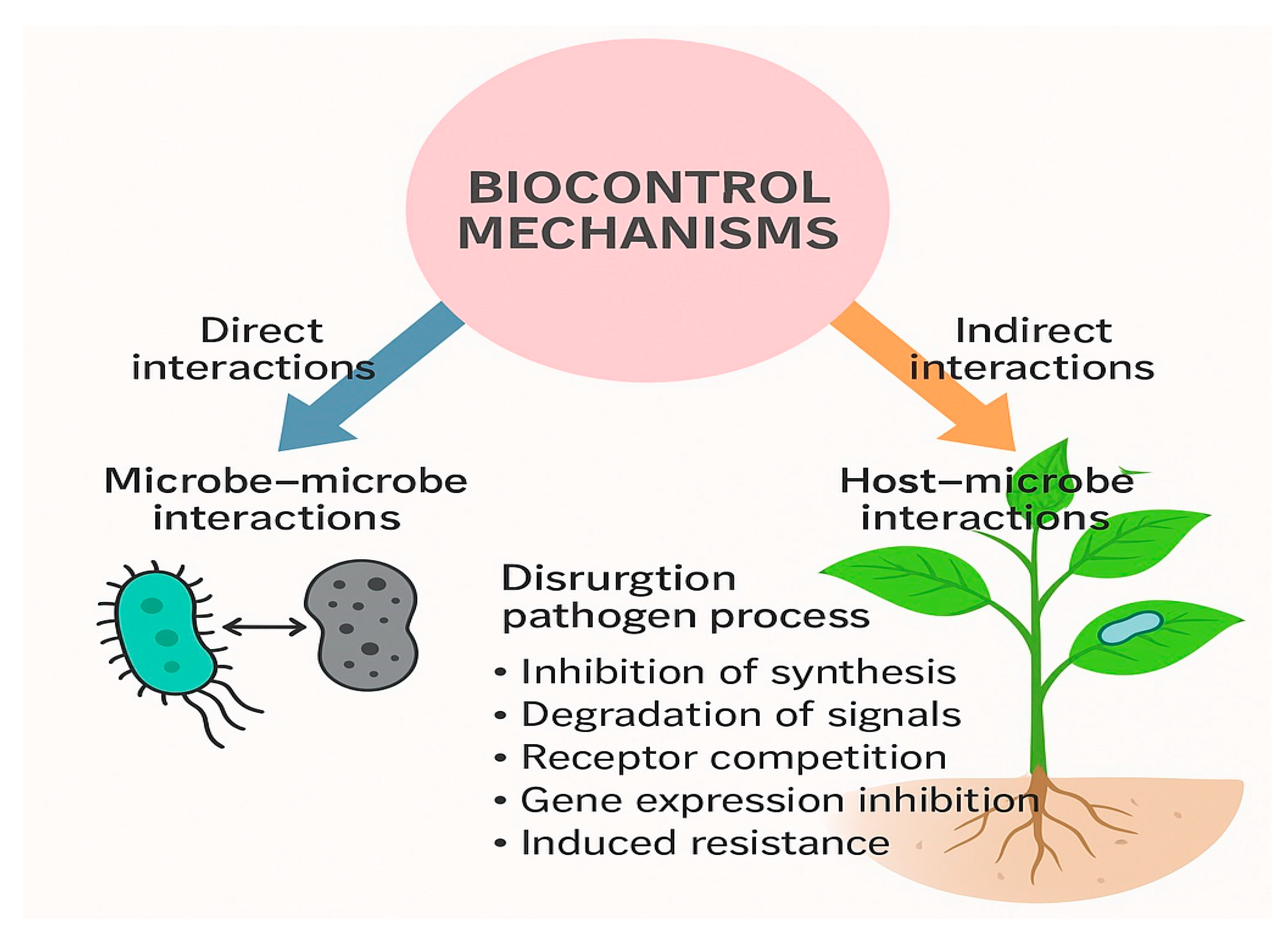
Figure 2.
Conceptual framework of phytochemical biopesticides showing their plant-derived origin, major compound classes (essential oils, aliphatics, alkaloids), two main bioprospecting approaches (lead recovery and ethnobotanical knowledge), and their broad-spectrum biological activities (insecticidal, fungicidal, bactericidal, and fumigant).
Figure 2.
Conceptual framework of phytochemical biopesticides showing their plant-derived origin, major compound classes (essential oils, aliphatics, alkaloids), two main bioprospecting approaches (lead recovery and ethnobotanical knowledge), and their broad-spectrum biological activities (insecticidal, fungicidal, bactericidal, and fumigant).
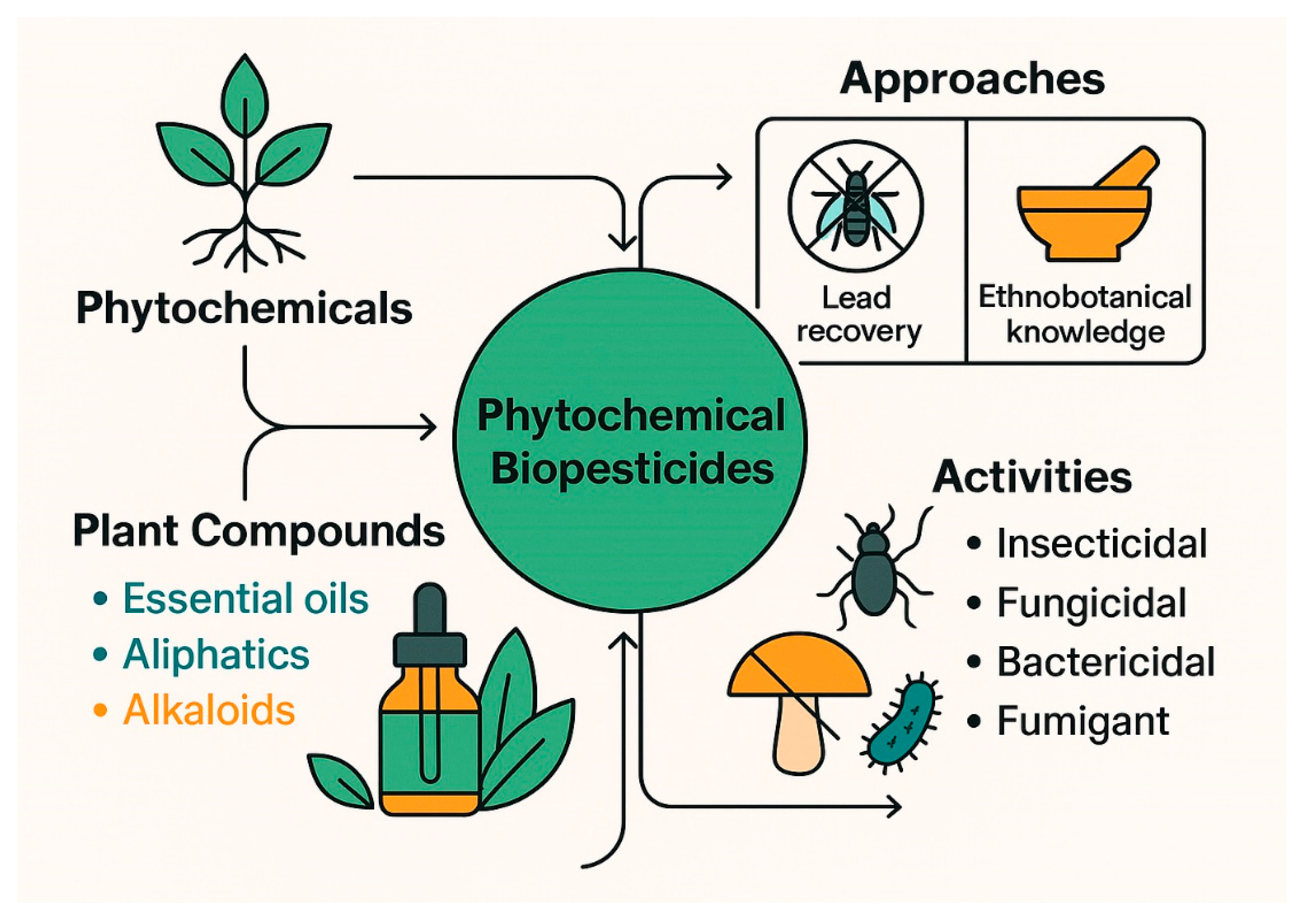
Figure 3.
Integrated Pest Management (IPM) framework illustrating the combination of eco-friendly approaches, including biocontrol agents, phytochemical biopesticides, biological control, host plant resistance, cultural practices, and reduced chemical control, all contributing to effective and sustainable crop protection.
Figure 3.
Integrated Pest Management (IPM) framework illustrating the combination of eco-friendly approaches, including biocontrol agents, phytochemical biopesticides, biological control, host plant resistance, cultural practices, and reduced chemical control, all contributing to effective and sustainable crop protection.
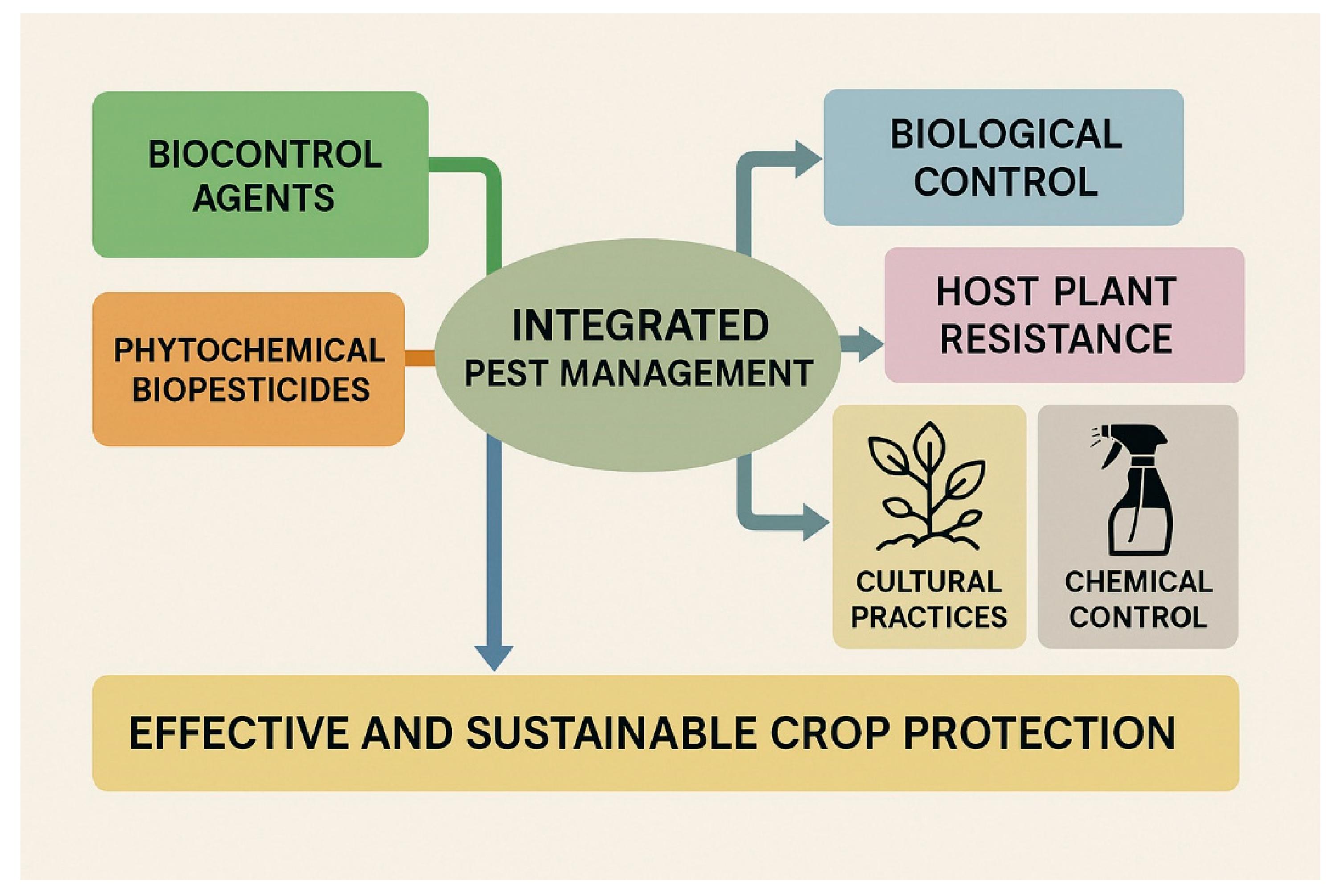
Figure 4.
Synergistic integration of microbial agents and phytochemicals.
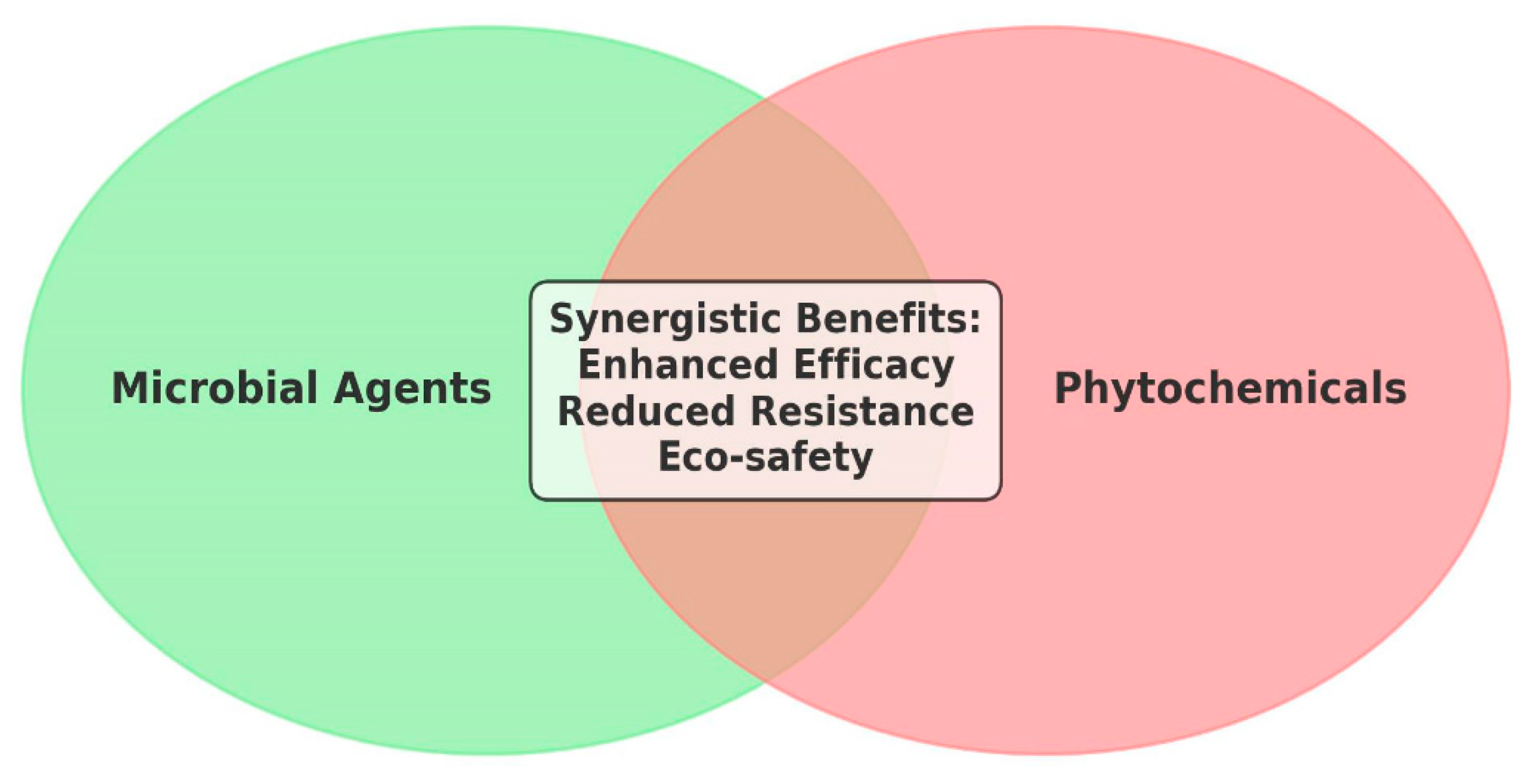
Figure 5.
Key challenges limiting the adoption and commercialization of biopesticides. These include regulatory hurdles (efficiency and safety of new products), formulation and quality issues (technological platform and limited availability), farmer awareness (lack of familiarity and inadequate extension services), and integration with chemicals (compatibility issues and pest management considerations).
Figure 5.
Key challenges limiting the adoption and commercialization of biopesticides. These include regulatory hurdles (efficiency and safety of new products), formulation and quality issues (technological platform and limited availability), farmer awareness (lack of familiarity and inadequate extension services), and integration with chemicals (compatibility issues and pest management considerations).
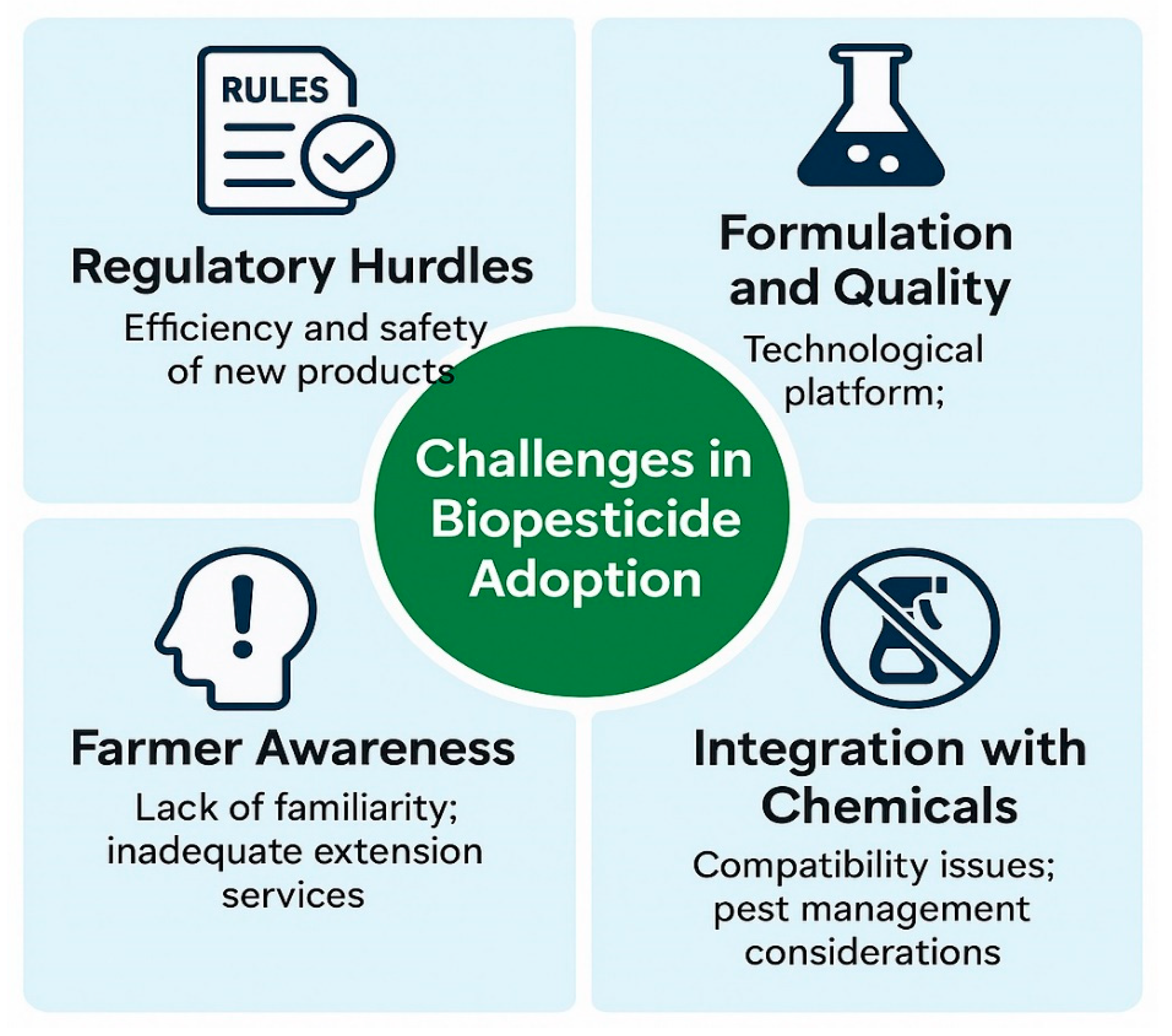
Figure 6.
Workflow for field trials combining microbial biocontrol agents and phytochemical biopesticides. Essential steps include optimization (concentration, application methods, phytotoxicity), evaluation (efficacy, non-target impact, spectrum of control), regulatory requirements (residue levels, registration process, compliance), and data collection and analysis (literature surveys, meta-analysis, identification of knowledge gaps).
Figure 6.
Workflow for field trials combining microbial biocontrol agents and phytochemical biopesticides. Essential steps include optimization (concentration, application methods, phytotoxicity), evaluation (efficacy, non-target impact, spectrum of control), regulatory requirements (residue levels, registration process, compliance), and data collection and analysis (literature surveys, meta-analysis, identification of knowledge gaps).
Disclaimer/Publisher’s Note: The statements, opinions and data contained in all publications are solely those of the individual author(s) and contributor(s) and not of MDPI and/or the editor(s). MDPI and/or the editor(s) disclaim responsibility for any injury to people or property resulting from any ideas, methods, instructions or products referred to in the content. |
© 2025 by the authors. Licensee MDPI, Basel, Switzerland. This article is an open access article distributed under the terms and conditions of the Creative Commons Attribution (CC BY) license (http://creativecommons.org/licenses/by/4.0/).
Copyright: This open access article is published under a Creative Commons CC BY 4.0 license, which permit the free download, distribution, and reuse, provided that the author and preprint are cited in any reuse.


